
I like dusty blue on a cake because it sits between colors instead of shouting one. It gets along with ivory, blush, sage, silver and soft gold, and it can lean coastal or vintage depending on the finish. What I look for in a design is whether it will still hold up on a real reception table at nine at night, not only in a styled photo. Smooth buttercream, painted washes, sugar flowers, pressed florals and pearl work all pass that test, in any season. Here are twenty versions, with notes on how each one is made and who it suits.
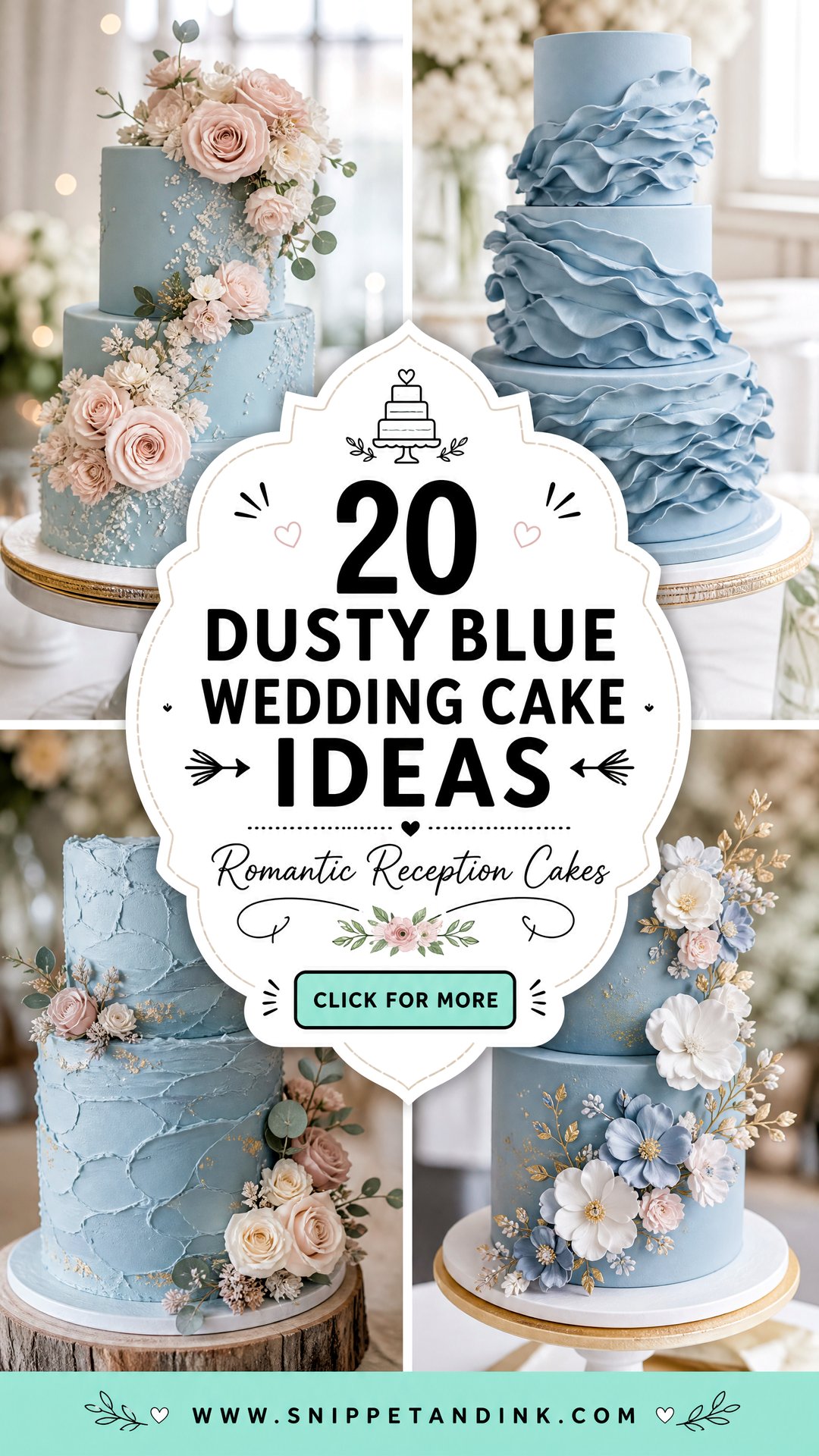
A Fully Blue Cake or a White Cake With Blue Touches?
This is the first decision I’d make, before flowers or metals, because it changes how the cake is built. A cake frosted blue on every tier needs a large amount of colored buttercream mixed to one consistent shade, so the baker makes it in a single batch; topping up halfway rarely matches. It also commits you to that shade under every kind of light. A white or ivory cake with blue arriving through watercolor, ribbon, flowers or one colored tier is far more forgiving. If the blue turns out slightly off, it reads as an accent rather than a mistake.
When full blue works
- The room is lit by daylight or cool white lights, which keep grey-blue from drifting green.
- You’ve seen a sample tier or a frosted swatch in person, not only in a photo.
- The decorations are white or ivory, giving enough contrast that the cake doesn’t look flat.
When a white base is the better call
Candlelit barns, tents with warm string lights and late evening receptions all push colors toward yellow, and a white base copes with that far better. It’s also the easier route if you’re matching blue bridesmaid dresses. Fabric and frosting rarely agree exactly, and a smaller amount of blue on the cake hides the gap.
1. Dusty Blue Wedding Cake With White Flowers
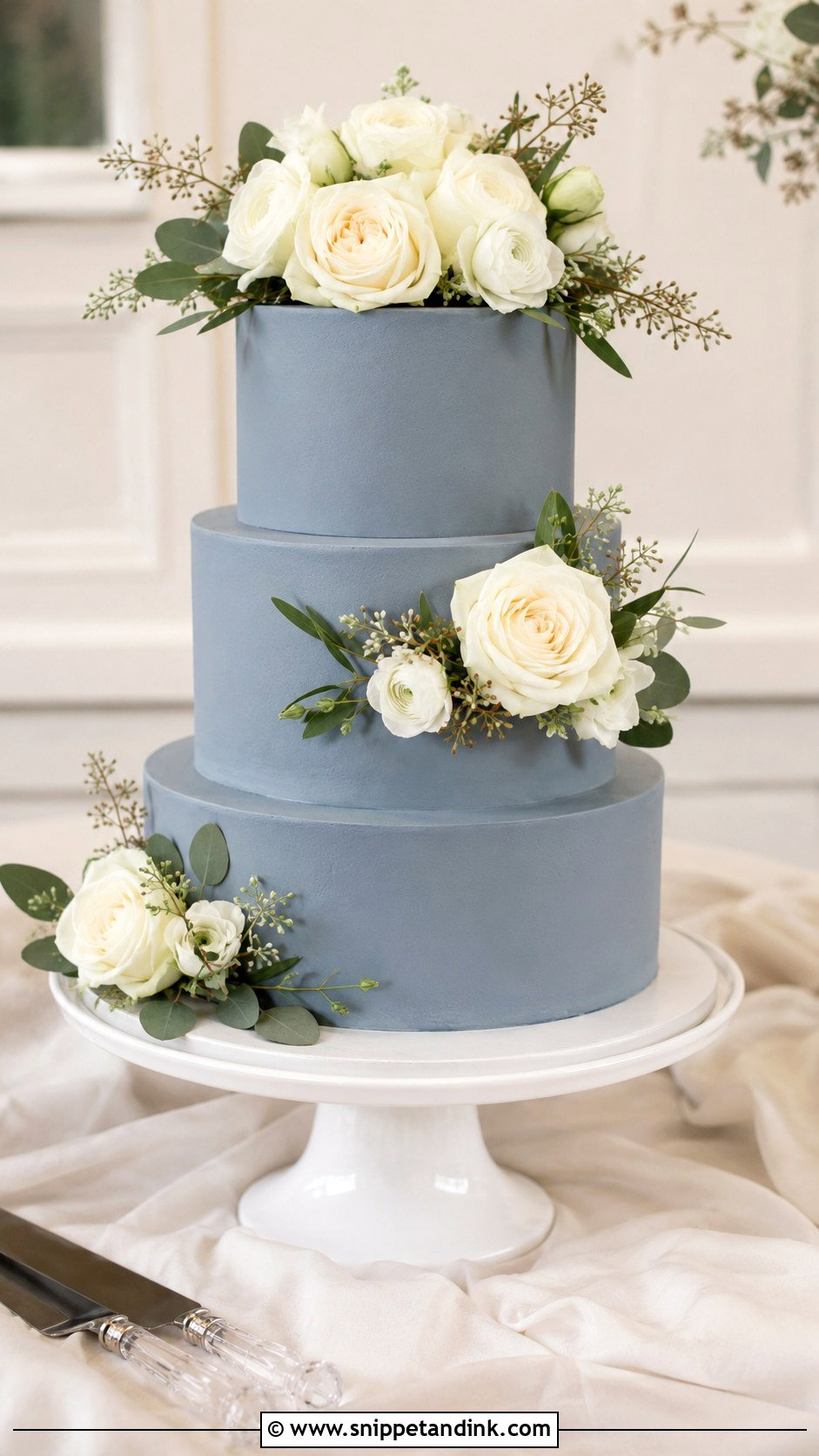
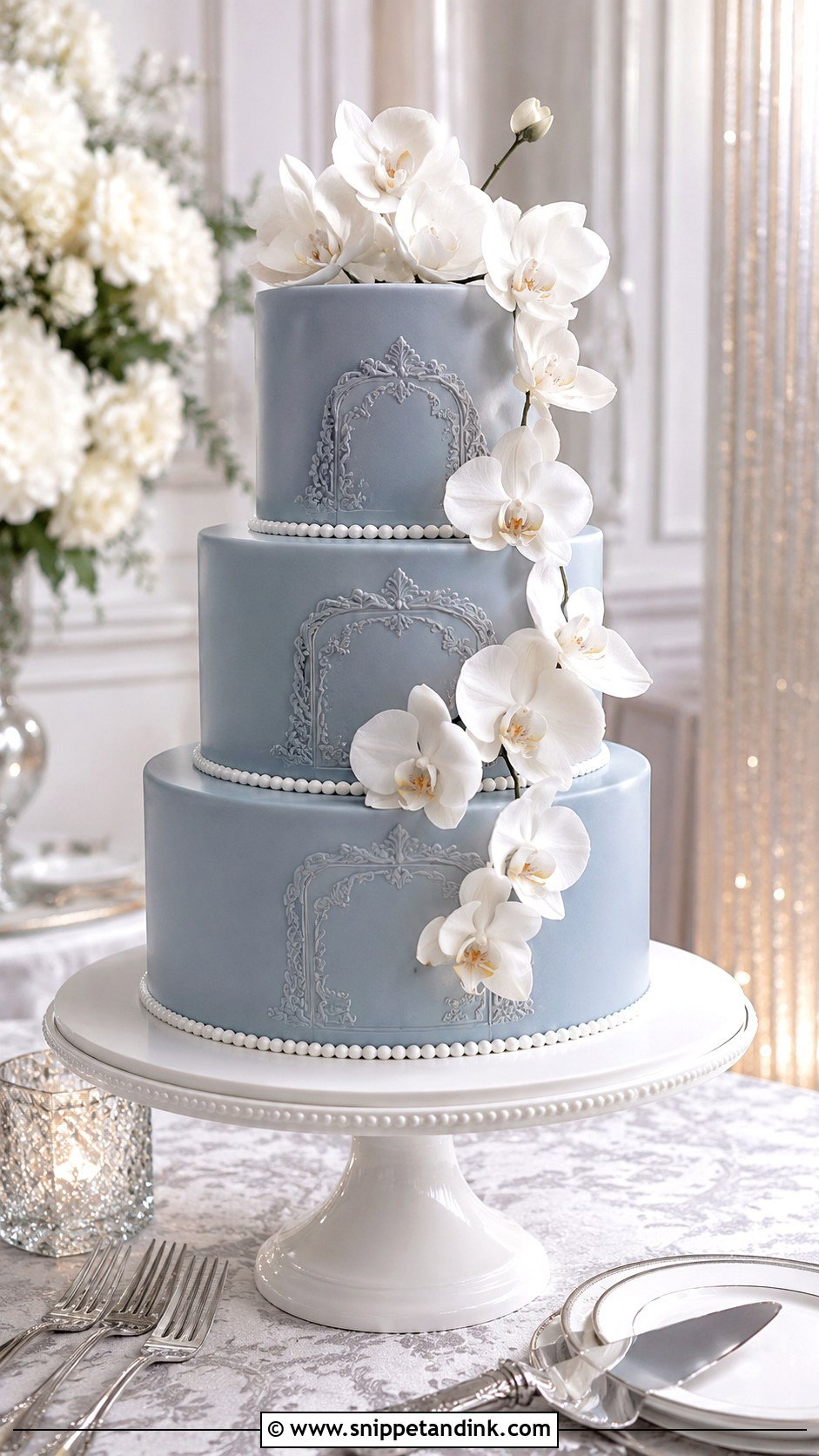
White flowers are the quickest way to make blue read as wedding rather than baby shower. Two tiers, three or a single tall tier all work, and on smooth dusty blue buttercream I’d reach for roses, ranunculus, orchids or sugar peonies. The thing I watch is the white itself. Bright florist white can make an ivory-leaning frosting look dingy beside it, so I match the flowers to the cream undertone of the cake rather than to the dress. A little greenery keeps it fresh.
2. Dusty Blue Wedding Cake With Gold
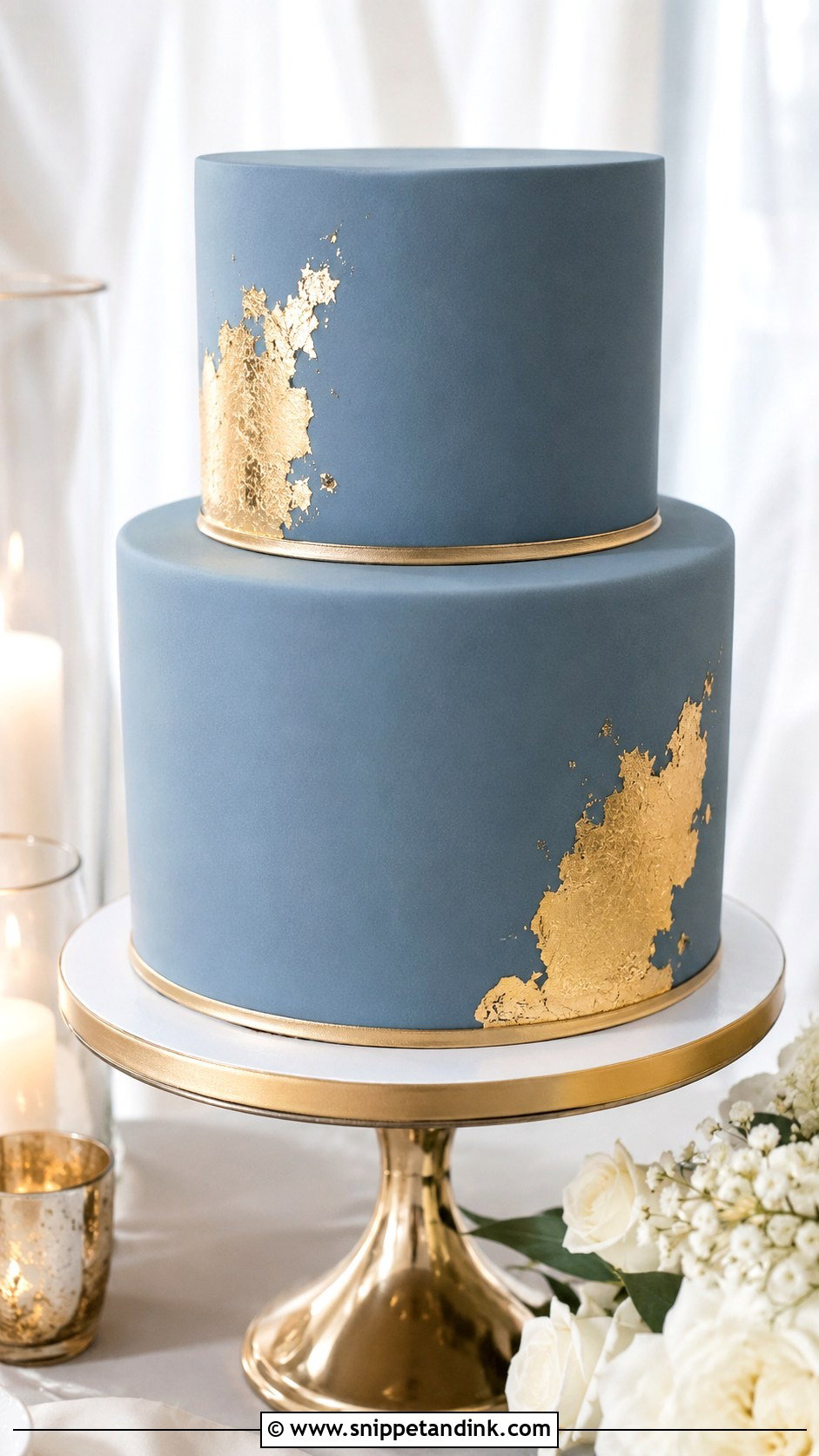
Cool blue and warm gold balance each other, and the amount of gold decides whether the cake whispers or shouts. A smooth blue tier with scattered edible gold leaf looks modern, while a white base with blue watercolor and a thin gold edge feels softer. Painted gold is lustre dust mixed with a drop of clear alcohol, which evaporates and leaves the metal behind, and it only goes on cleanly over fondant or well-chilled buttercream. Keep the flowers minimal. Candlelight at an evening reception catches the metal best.
3. Dusty Blue Wedding Cake With Pearls
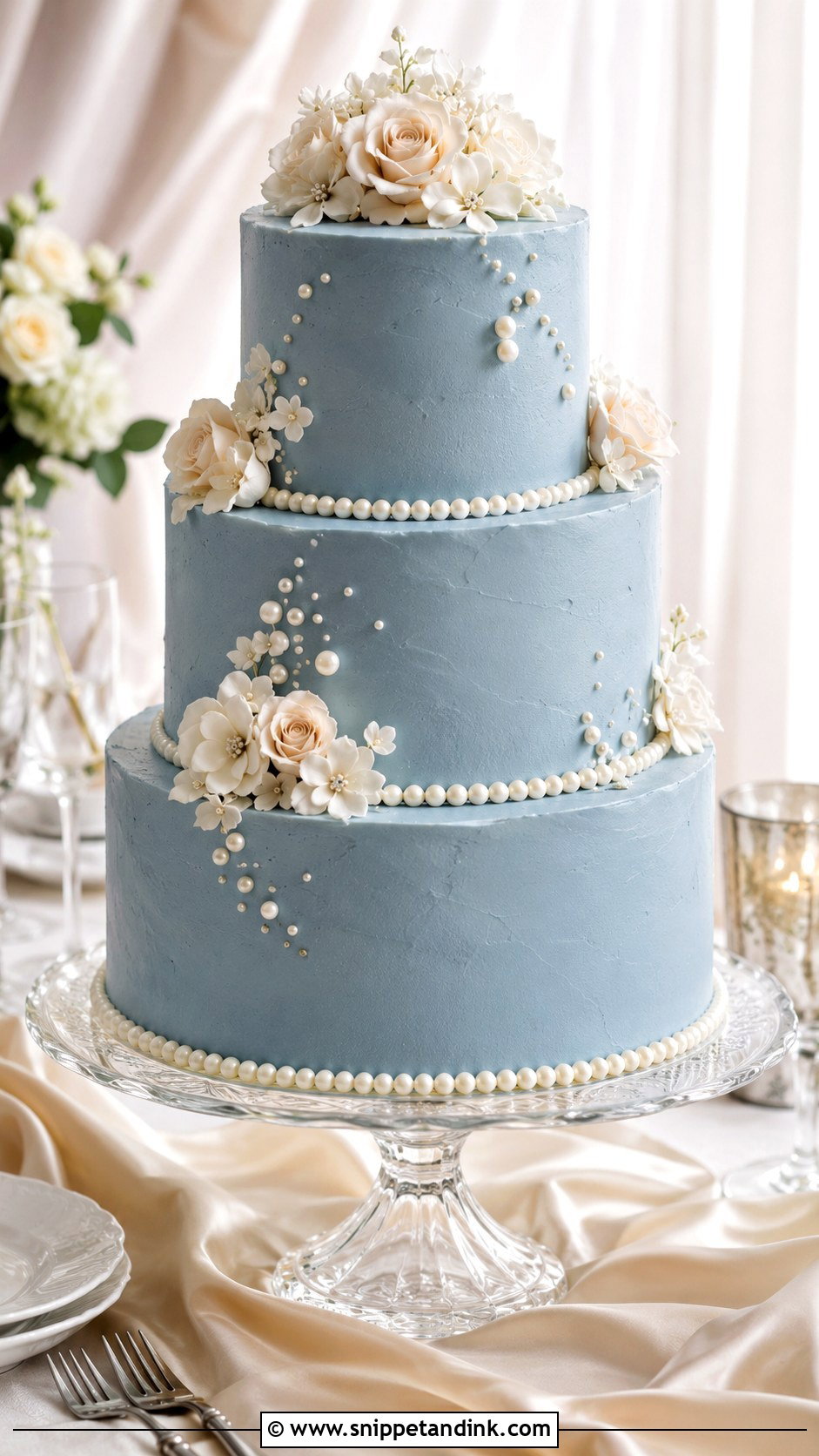
Pearls soften the blue and add texture without clutter. I scatter tiny ones across a tier, run a border round the base, or set clusters that look like a brooch, always on smooth buttercream or fondant so they have a clean background. One practical note: sugar pearls are hard, and a full border of large ones is unpleasant to bite into. On the tiers that will actually be served, I keep them small. Ivory flowers or a satin ribbon finish the look for close-up photos.
4. Dusty Blue Wedding Cake With Blush Flowers
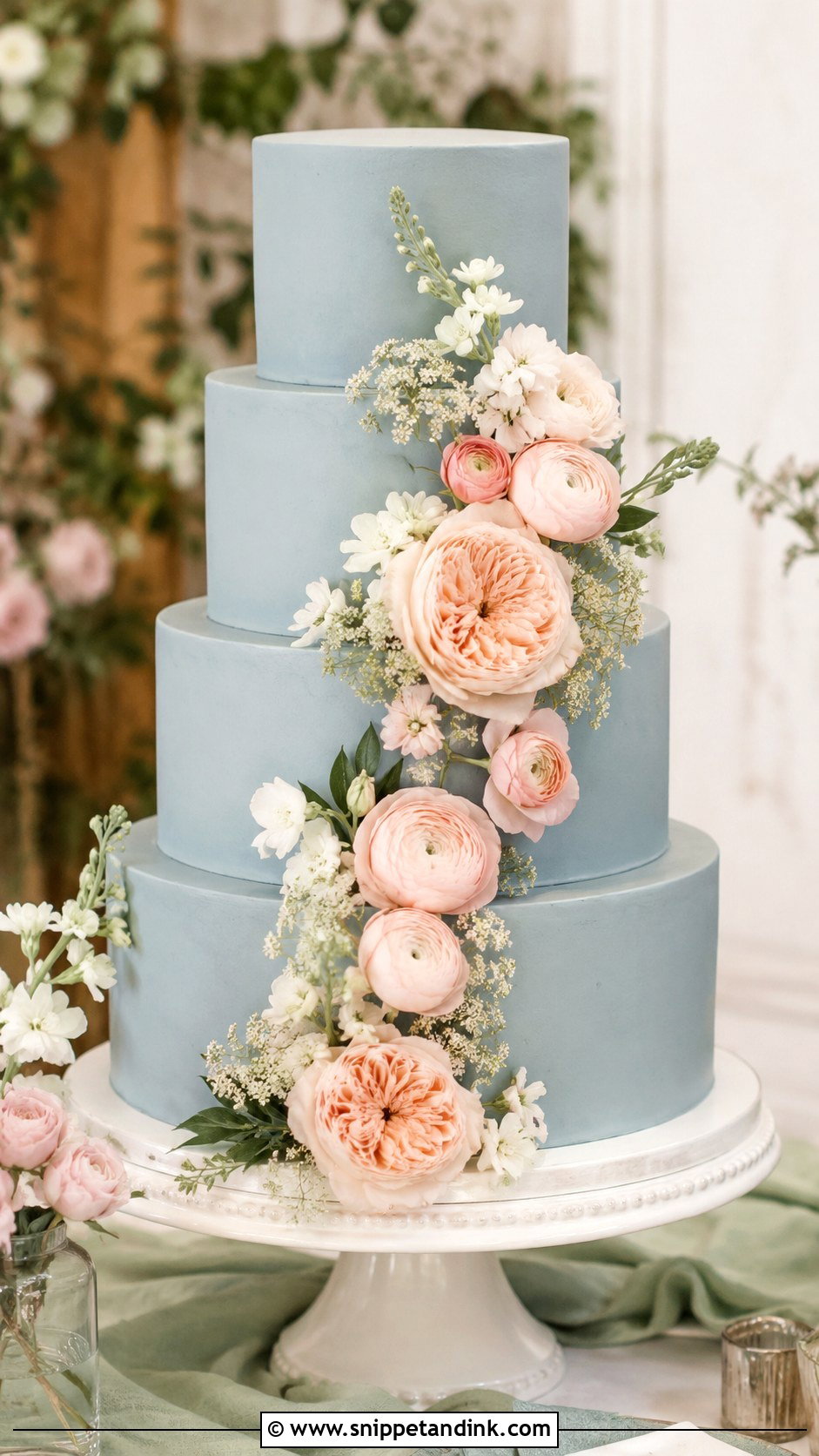
When dusty blue feels too cool for a spring wedding, blush is what I use to warm it. Garden roses, peonies and ranunculus in pale pink, fresh or sugar, sit best in loose clusters along one side. You can build it two ways: blue buttercream on every tier with pink flowers, or a white cake with the blue arriving through painted panels or ribbon. The second is more forgiving when your pinks and blues are hard to match, because the white separates them. Watch that the blush doesn’t lean peach next to a grey-blue. That pairing turns muddy.
5. Dusty Blue Wedding Cake With Silver
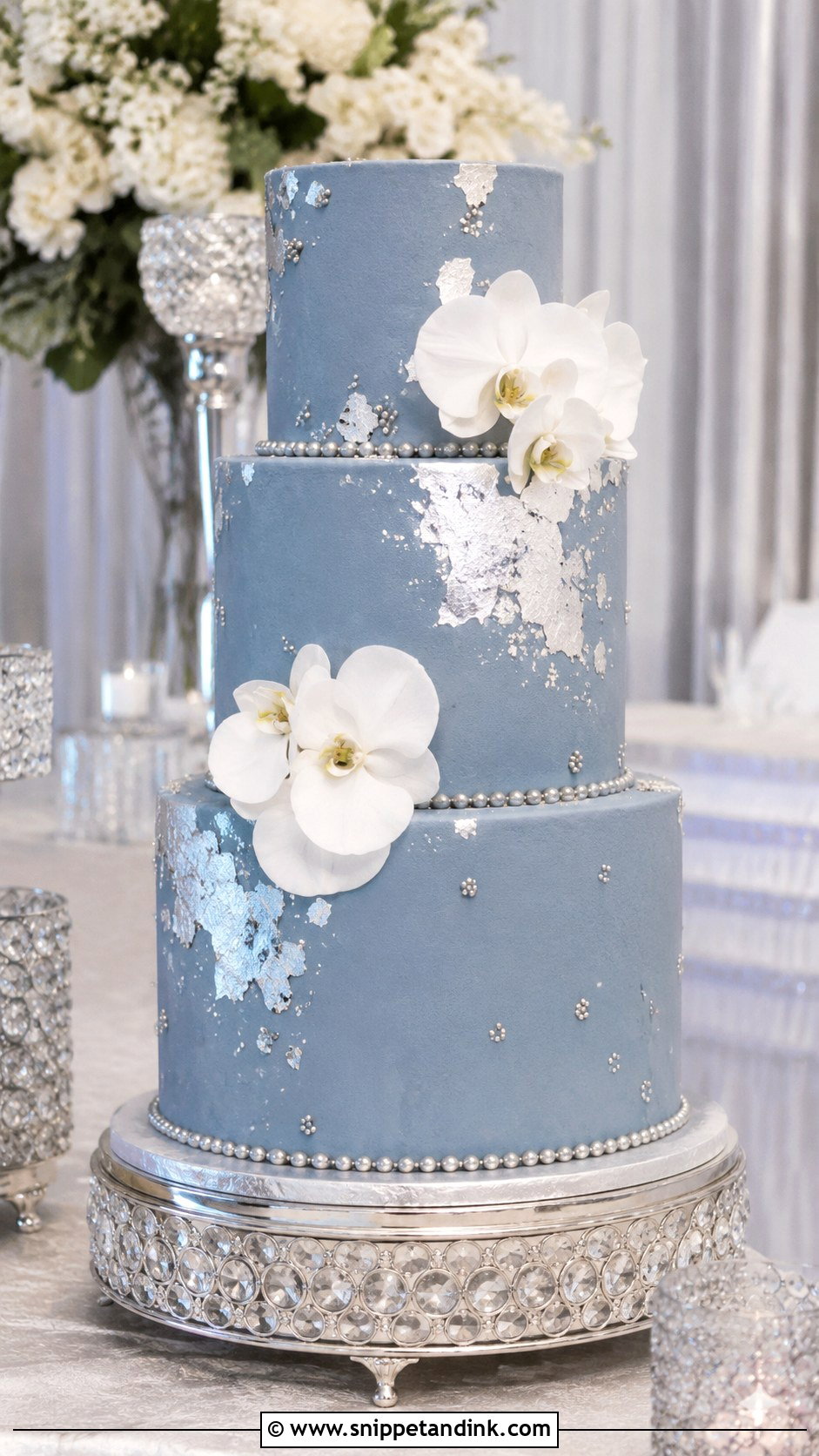
Silver makes dusty blue crisp. It suits winter receptions and rooms full of crystal, mirror or marble, and it can arrive as edible leaf, painted edges, metallic splatter, sugar beads or a thin ribbon. Silver leaf is less forgiving than gold, because fingerprints and tiny wrinkles show on it, so I handle it with tweezers and lay it over a firm, chilled surface. Pair it with white buttercream or pale blue fondant and keep the flowers simple. If your bridesmaids are already in blue, this is the easiest cake on the list to tie in.
6. Dusty Blue Wedding Cake With Hydrangeas
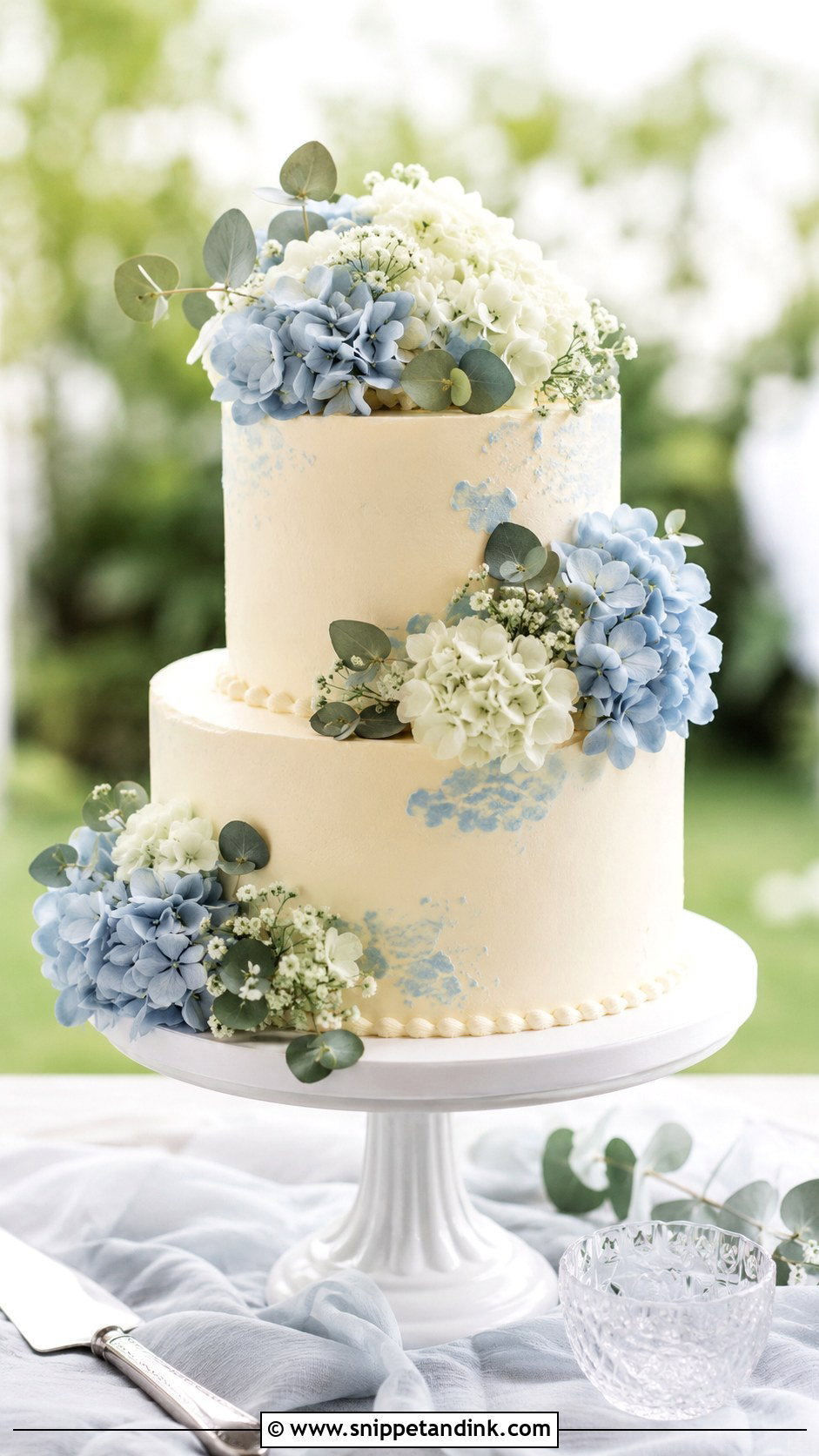
Hydrangea clusters carry that airy blue on their own. An ivory cake dressed with blue heads reads garden fresh; a blue cake with white ones is bolder. Real hydrangeas can go on a cake if the florist conditions them and the stems are wrapped, but they’re known for flopping once out of water, so I treat them as a short-lived decoration. Sugar hydrangeas are worth it when the color has to match exactly, though each head is dozens of small petals and takes hours. Smooth buttercream or light piping lets them stand out and echoes the table arrangements.
7. Dusty Blue Wedding Cake With Sage Green
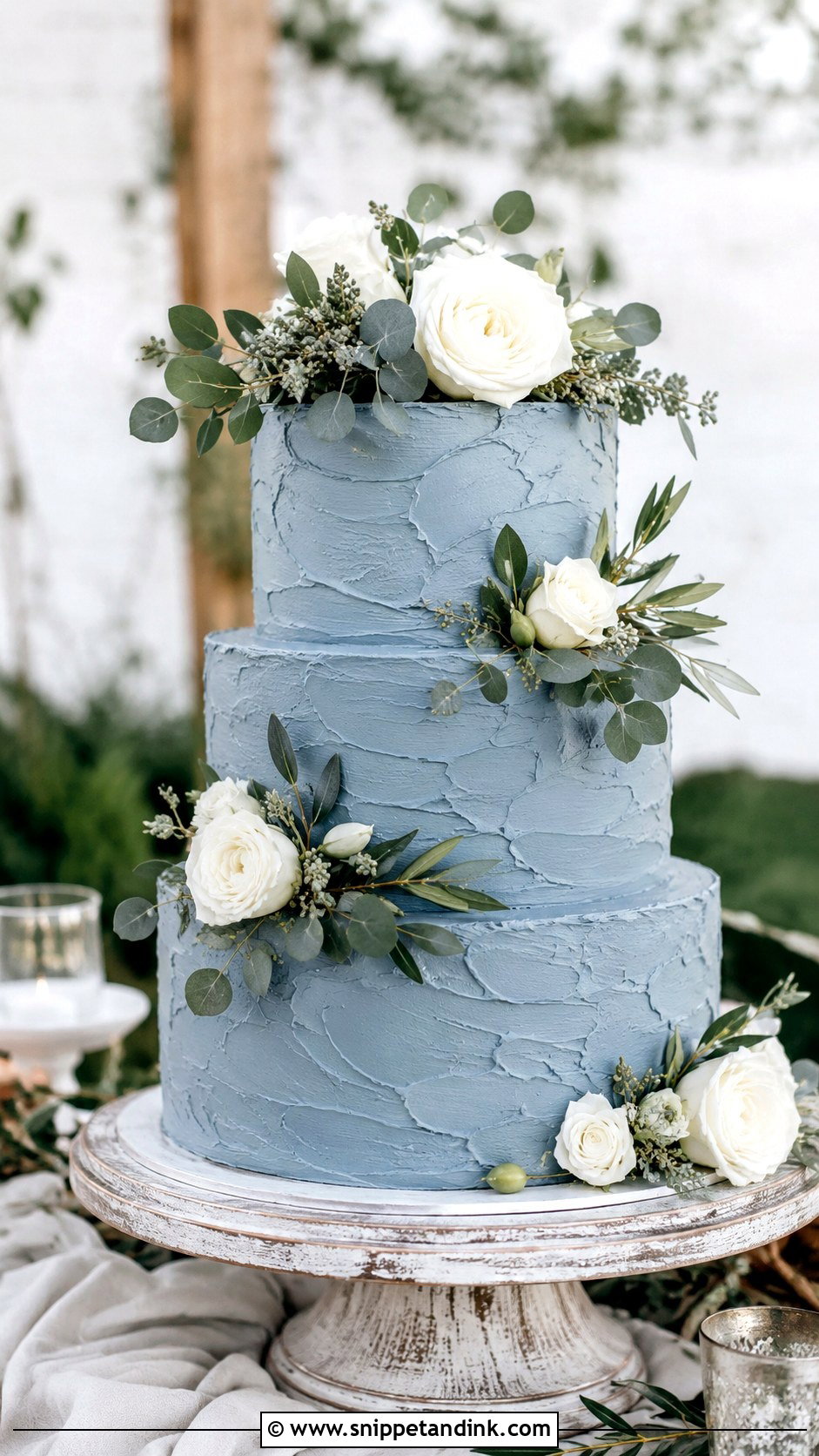
Dusty blue and sage share a grey base, which is why they sit so quietly together. On a cake the greenery does the work: sage eucalyptus, olive leaves, ferns or sugar foliage, brightened with a few white flowers. Real eucalyptus is one I’m careful with. It shouldn’t touch frosting that will be eaten, so it needs wrapping or a barrier, or I make the leaves in sugar instead. For a modern version I’d do one clean cascade on smooth buttercream; for a barn or garden reception, a semi-naked cake tied with blue ribbon.
8. Dusty Blue Wedding Cake With Roses
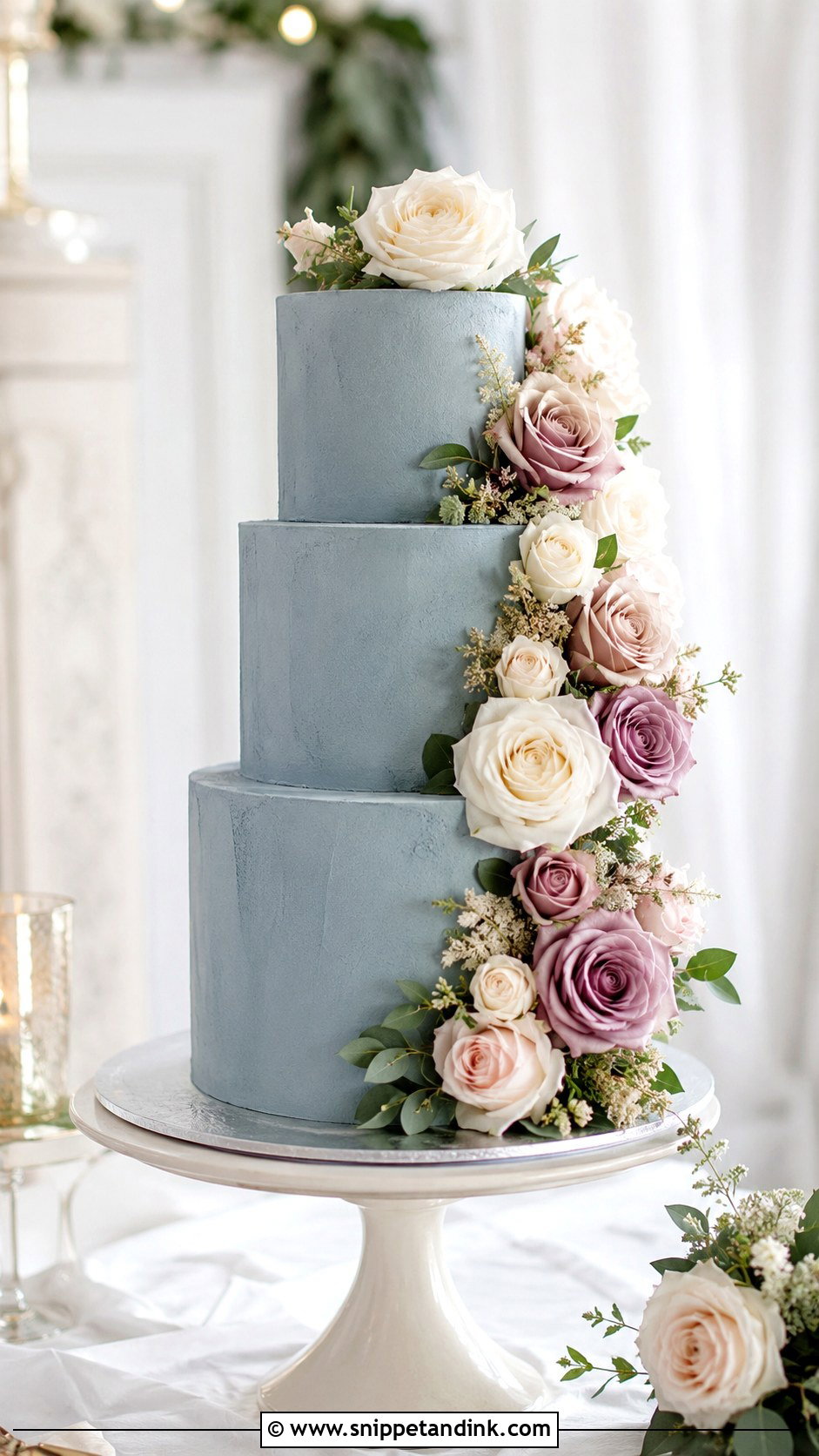
Rose color sets the tone. White is clean and bridal, blush adds warmth, and muted mauve brings a depth that suits autumn. Roses ringed around the base of a single smooth tier look simple, while a cascade down a taller cake looks formal. Garden roses open quickly in a warm room, which can look generous or blown depending on timing, so for a long reception I’d lean toward sugar roses. Roses are the safe pick here, and I mean that kindly. Everyone recognizes them, and they never look out of place.
9. Dusty Blue Wedding Cake With Watercolor
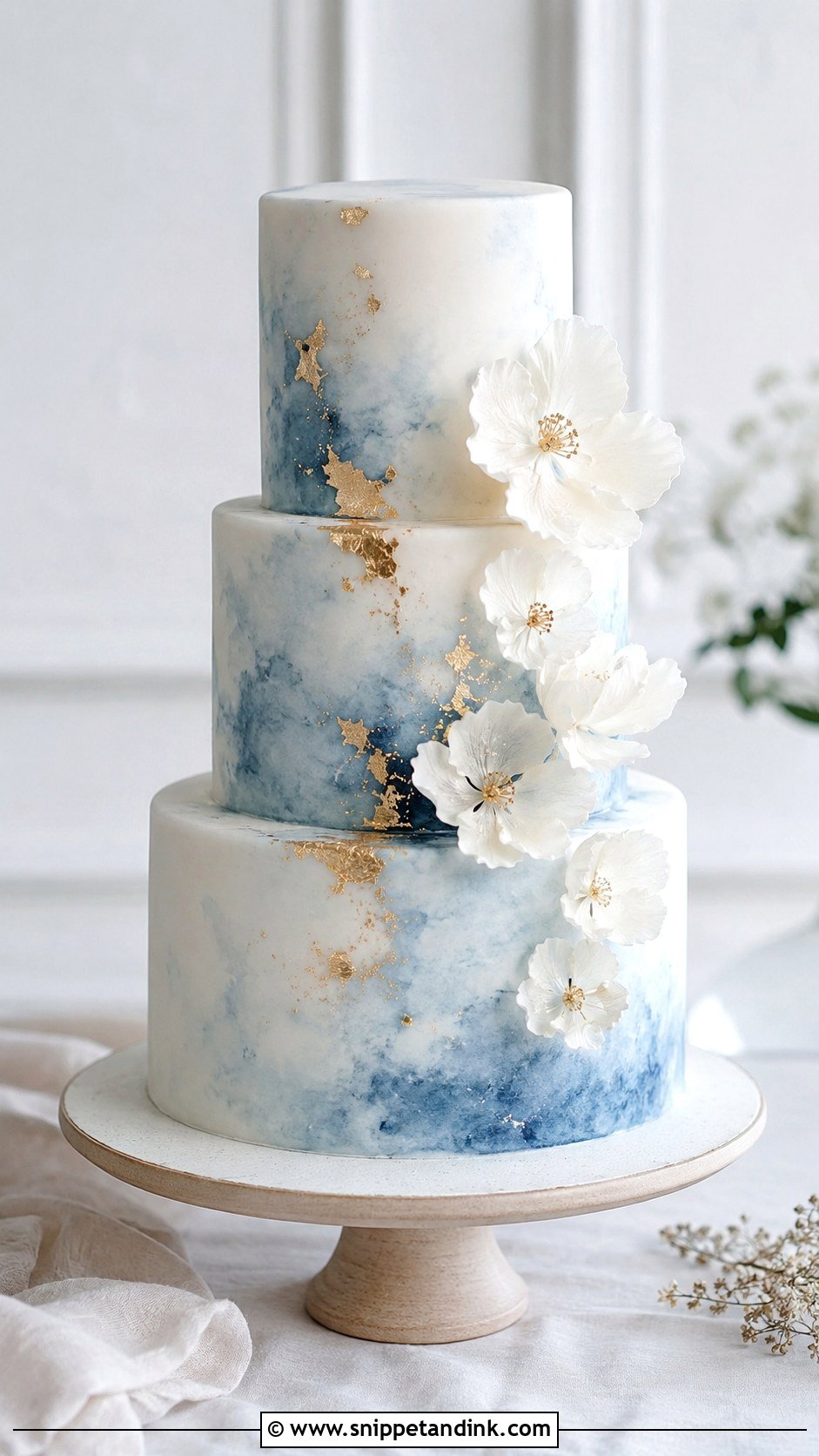
Watercolor gives you blue on the cake without coloring every tier. A dusty blue watercolor wedding cake starts as white frosting with pale washes swept over it, blending from light blue into grey-blue. On fondant I paint it with thinned gel color. On buttercream I smear small amounts of tinted frosting and scrape back, which leaves softer edges. It needs restraint, because too many strokes turn a wash into a smudge. Gold leaf or fine piping is all the extra detail it wants.
10. Dusty Blue Wedding Cake With Ombre
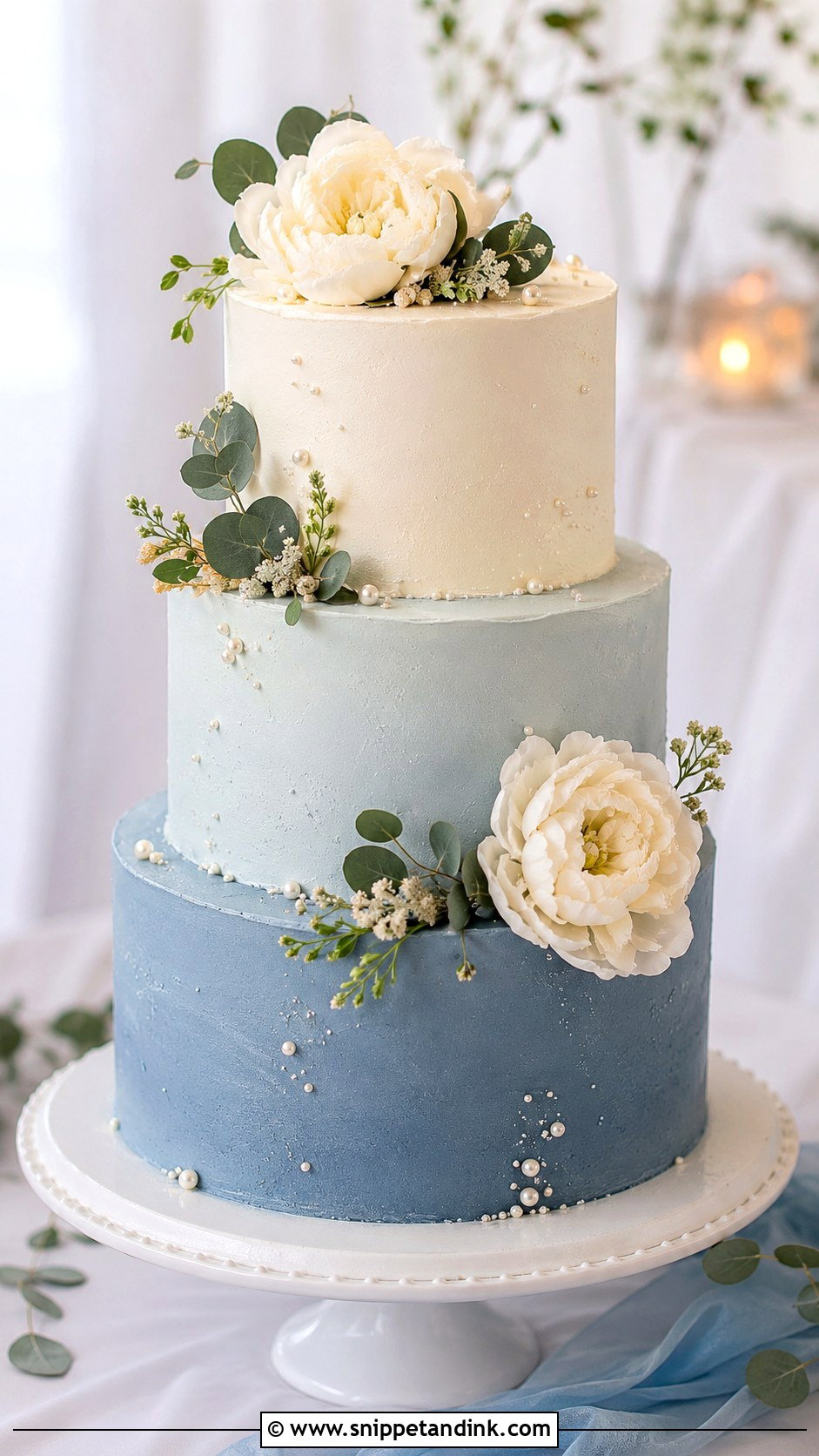
Ombre moves the color in one direction, ivory to pale blue to a deeper dusty shade, either tier by tier or around the sides of one tall cake. Buttercream blends it most naturally. The tier-by-tier version is easier to get right because each tier is a single flat color; a continuous fade needs every shade applied at once and scraped together while still soft. A few white flowers or pearl beads are enough on top. It’s a good answer if you love blue but don’t want it saturated.
11. Dusty Blue Wedding Cake With Lace
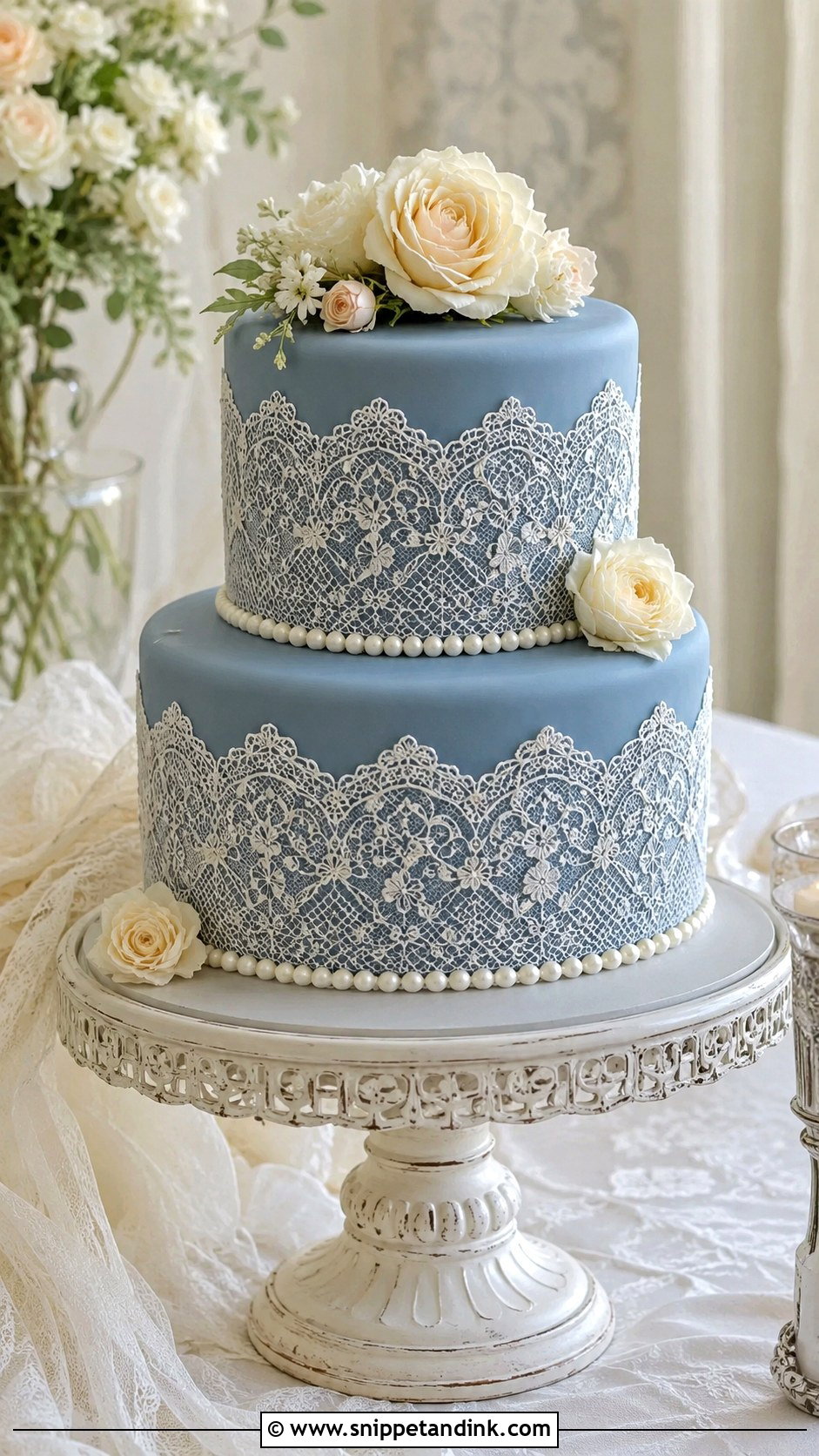
Lace can be piped in royal icing, pressed into fondant with a mold, or cut from edible lace sheets. White lace over a dusty blue tier shows the pattern most clearly, and blue lace piping on a white cake is the reverse, which reads more vintage. Royal icing lace is fine and brittle. It can crack on a bumpy delivery, so for long drives I either finish the piping on site or switch to pressed fondant. Pearls and small floral clusters suit it. Keep the blue soft, or the lace starts to look heavy.
12. Dusty Blue Wedding Cake With Ruffles
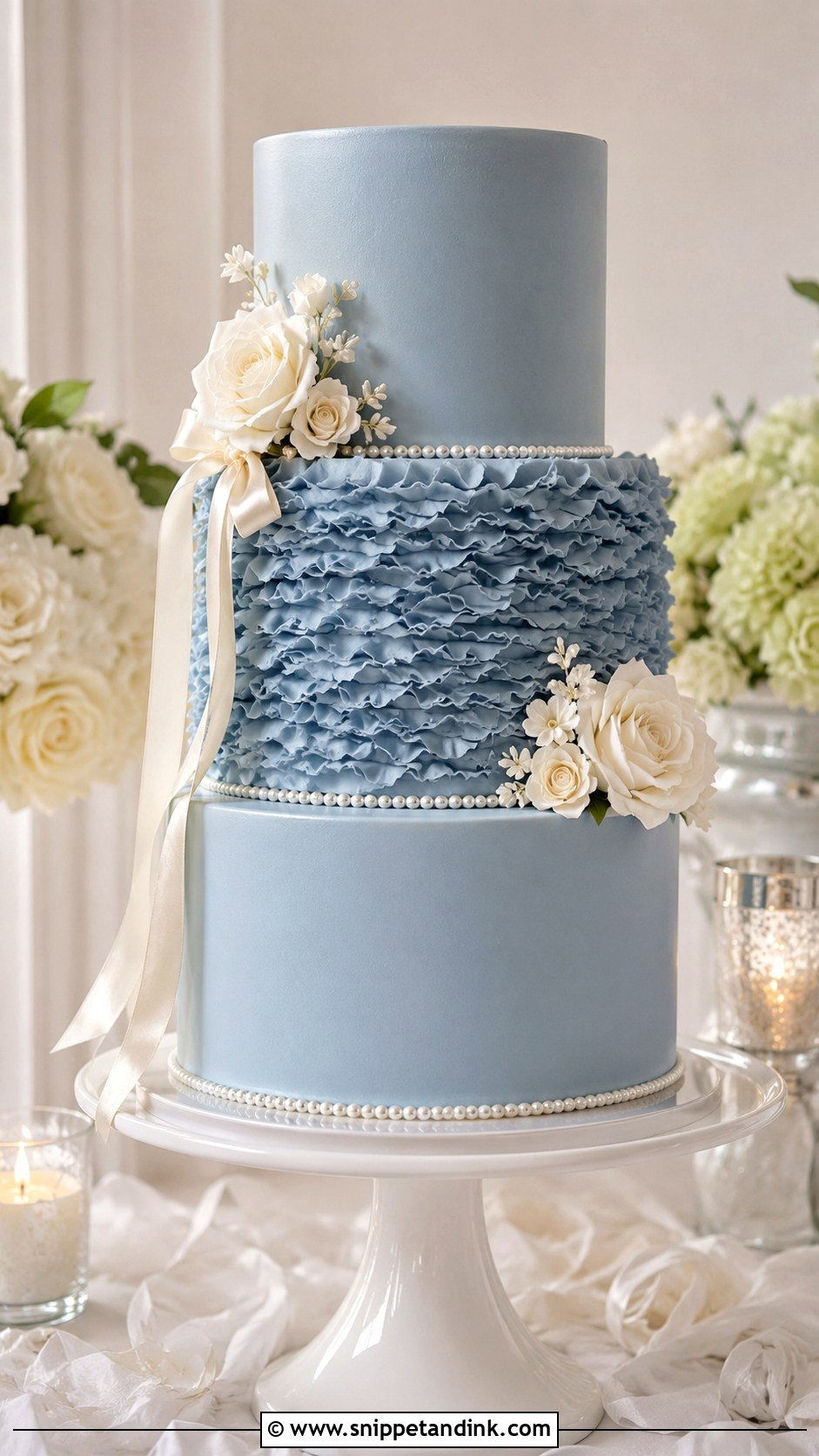
Ruffles are texture without flowers. Buttercream ruffles look airy, fondant ruffles look structured, and one blue ruffled tier between smooth ivory tiers is the balance I like most. Each fold casts a shadow, so the camera picks up the texture from almost any angle. The weakness of buttercream ruffles is repair: a bump in transit flattens a section that can’t be piped back invisibly. If the venue is a long drive away, fondant or wafer paper ruffles hold up better. A ribbon or a few pearls finishes it.
13. Dusty Blue Wedding Cake With Buttercream Texture
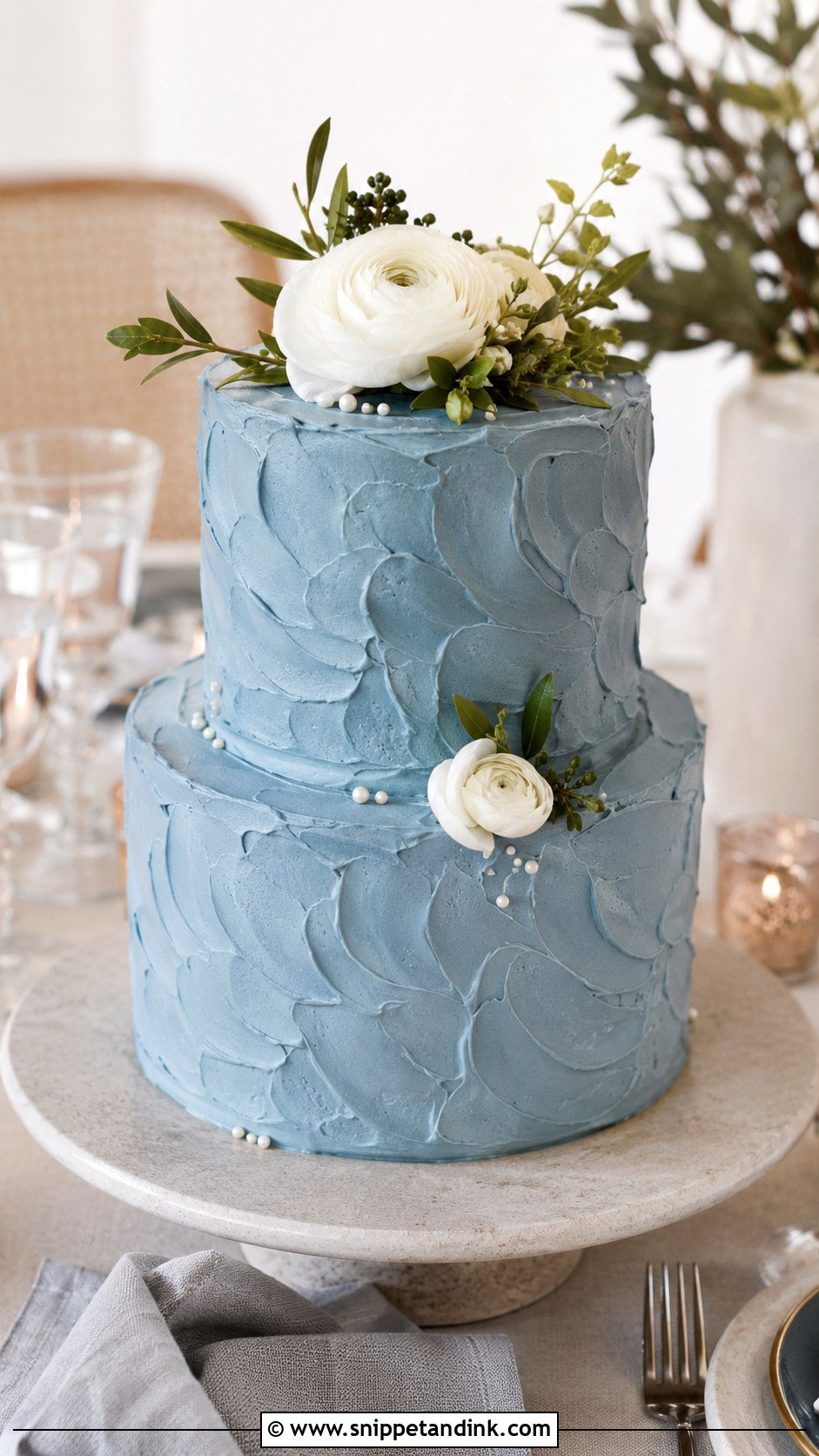
Of everything on this list, a textured finish forgives the most. Palette knife strokes, horizontal ridges or soft waves give it a handmade look, and they hide small marks that a perfectly smooth coat would show. That makes it sensible for outdoor weddings, where a little softening in the heat won’t ruin anything. White flowers and simple greenery suit it. If you’re torn between this and smooth buttercream, think about how close guests will get to the cake. Texture rewards a close look.
14. Dusty Blue Wedding Cake With Fondant
Fondant is the one I recommend when you want sharp edges, sculpted tiers or a perfectly even color. Use it on every tier or on a single statement tier between white ones. It’s also the right base for geometric panels, quilted patterns and embossing, which buttercream simply can’t hold. Underneath there is still buttercream or ganache, and plenty of guests peel the fondant off and leave it on the plate, so I roll it thin. It belongs at a formal hotel reception or with anyone who wants a very neat cake.

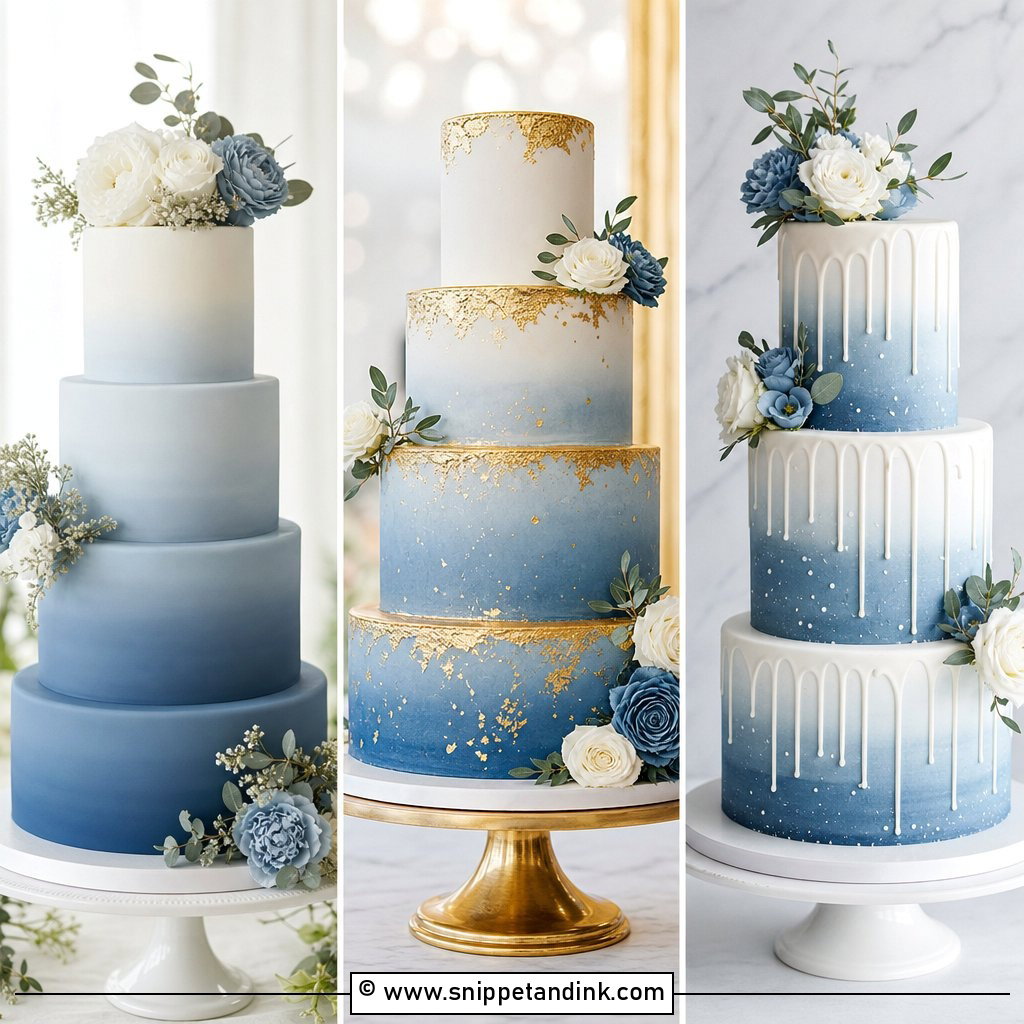
15. Dusty Blue Wedding Cake With Fresh Flowers
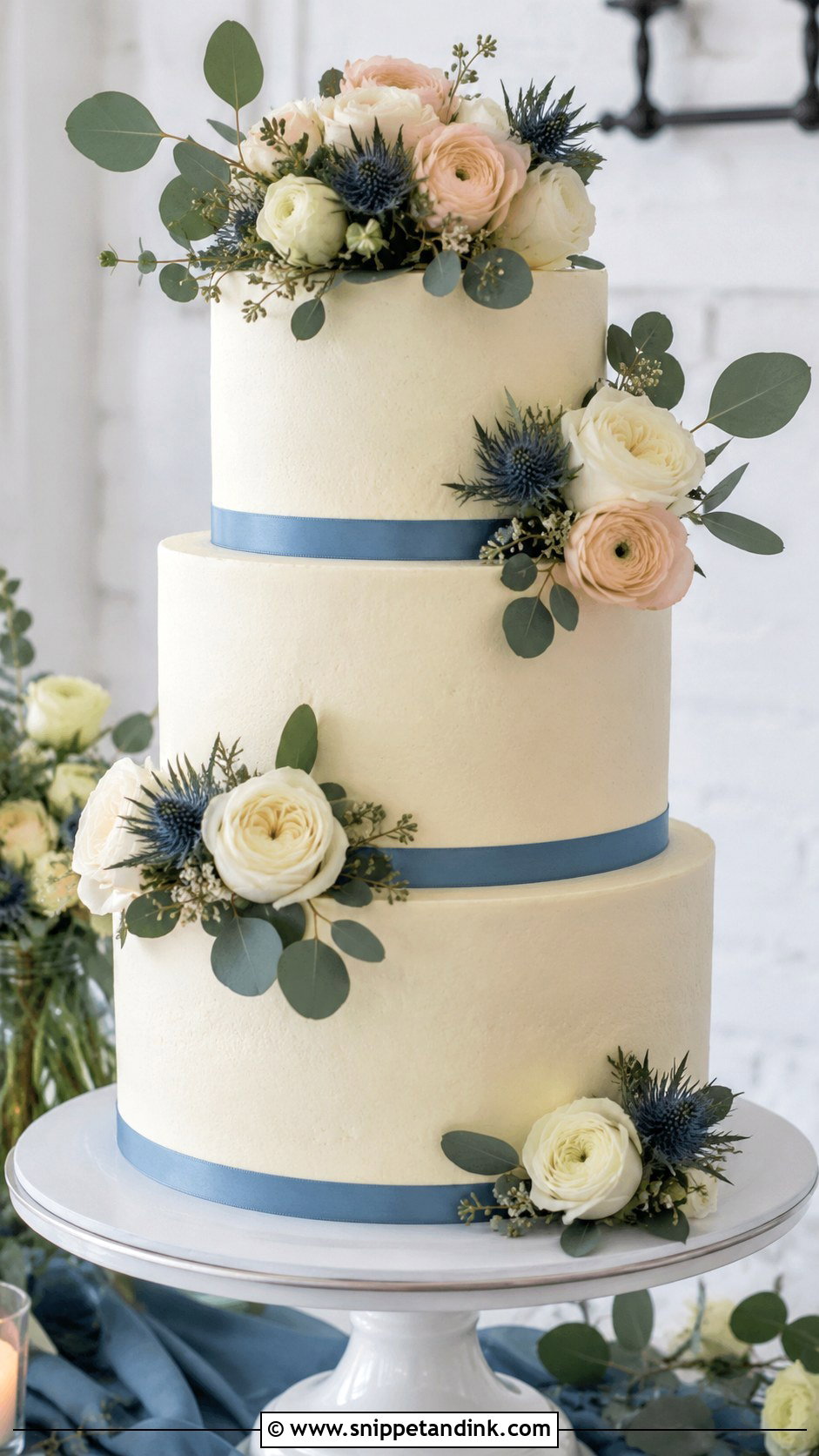
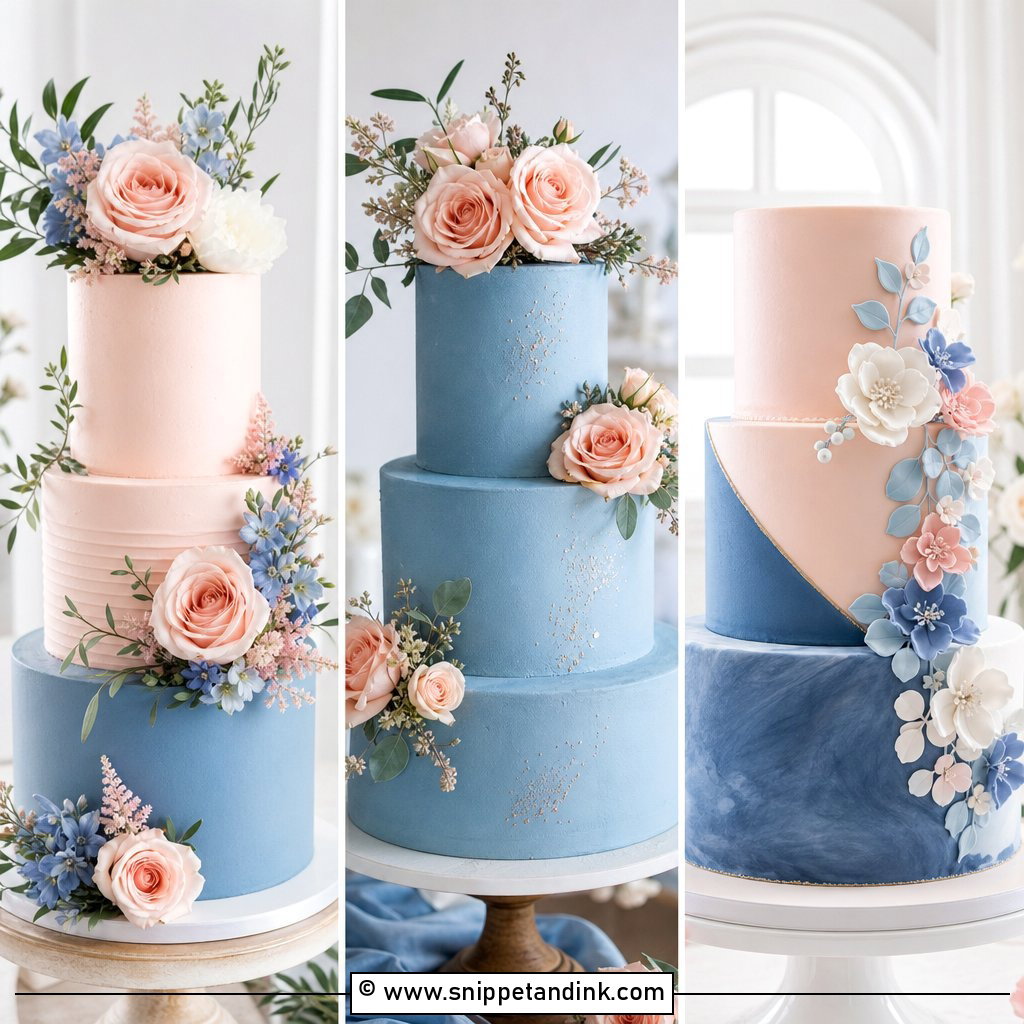
Fresh flowers tie the cake to the bouquet when the florist uses the same blooms. White roses, blush ranunculus, blue thistle, hydrangeas and greenery all suit dusty blue, on a white, ivory or fully blue cake. Coordination is everything. I want to know who supplies the flowers, who places them and when, and that every stem is food safe or wrapped. Thistle is prickly and sheds, so it goes into small sealed picks. Done properly, fresh flowers add height and shape that sugar work struggles to match for the same budget.
16. Dusty Blue Wedding Cake With Sugar Flowers
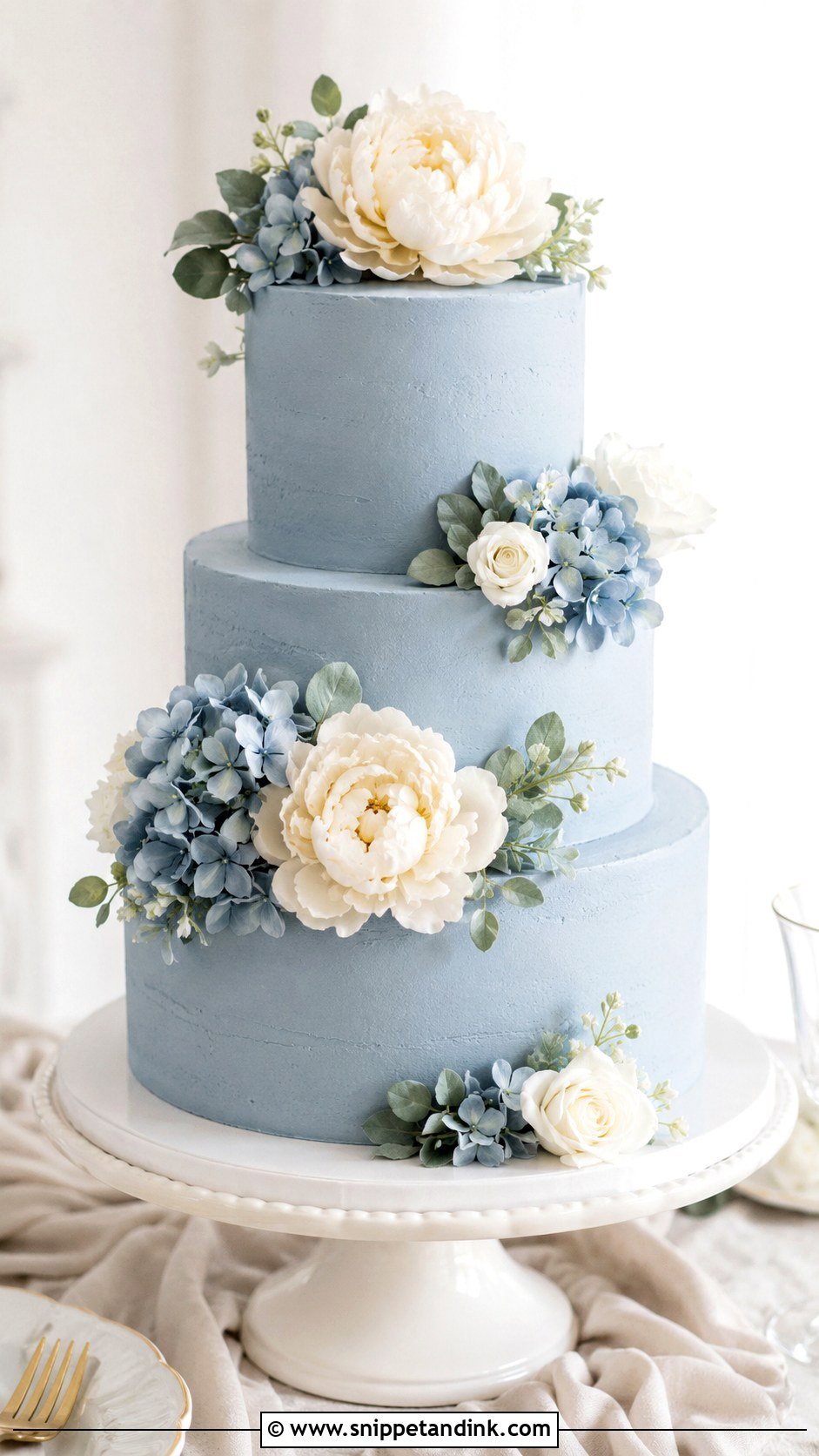
Sugar flowers win when the color has to be exact. I can tint them white, ivory, blush, sage or blue to sit inside your palette, and roses, peonies, orchids and hydrangeas all translate well. Unlike fresh blooms they don’t droop in summer heat, which is why I steer destination and outdoor couples toward them. They do take time. Most sugar artists make them weeks ahead so the petals dry fully, and fine detail costs hours. The payoff is a cake that looks the same at the last dance as it did at the first look.
17. Dusty Blue Wedding Cake With Macarons
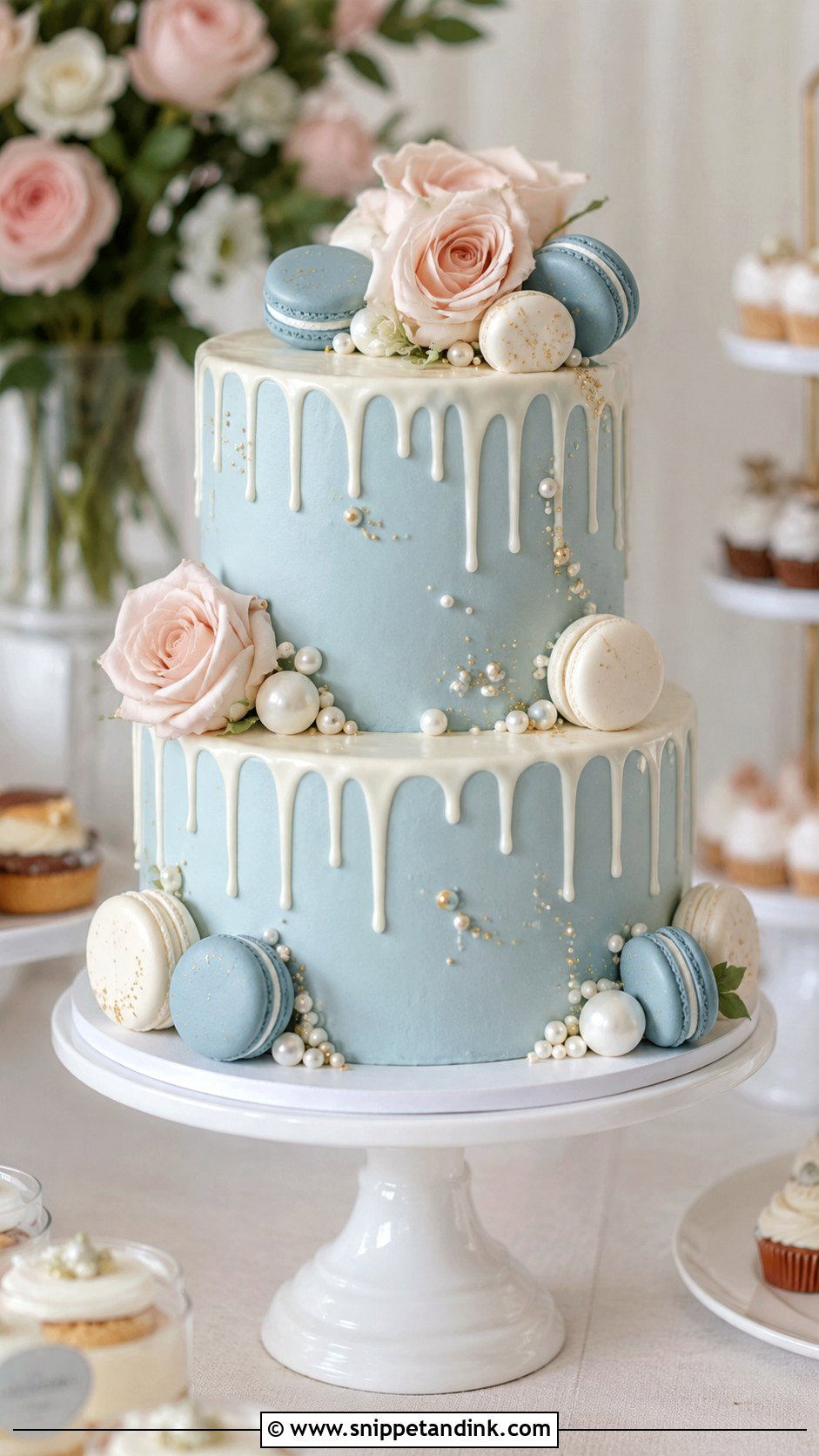
Macarons make the cake more playful. Match them to the frosting or bring in ivory, blush, pale grey and sage, then stack them around the base, run them in a cascade or tuck them between flowers. They sit best on smooth buttercream. Macaron shells absorb moisture, so they soften fairly quickly against frosting; I attach them close to service and keep spares for the dessert table. Hold back on quantity, or the cake looks more like a sweets display than the wedding cake. A brunch wedding is where this one shines.
18. Dusty Blue Wedding Cake With Marble
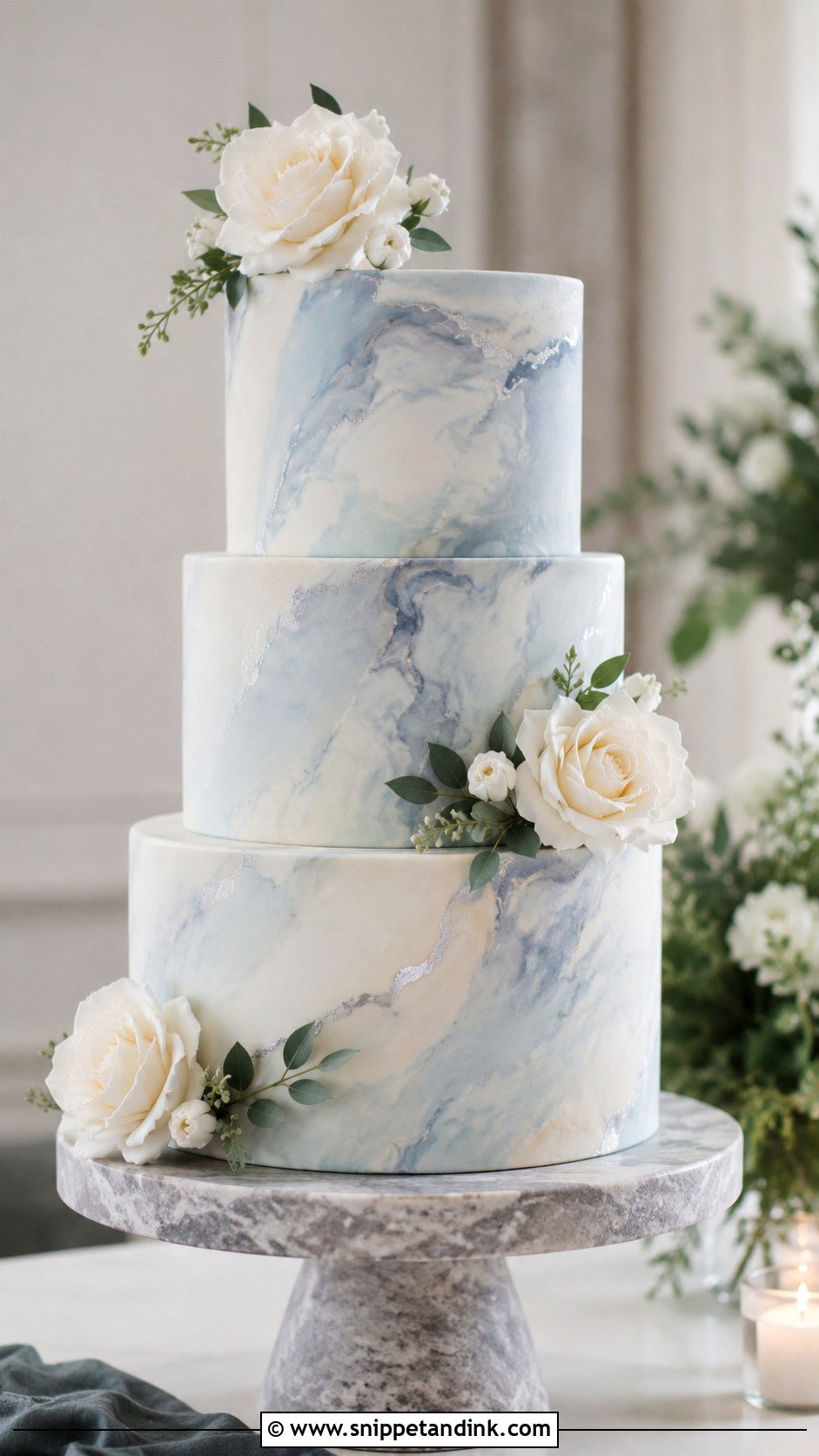
Marble blends blue, white and grey, sometimes with a fine vein of silver or gold. On fondant it’s made by twisting colored pastes together and rolling them out, which gives a polished stone surface, while in buttercream it becomes softer swirls. The fondant version is crisper, but every rolled sheet is unique, so the tiers won’t match exactly. I’d call that part of the charm rather than a flaw. Keep flowers minimal and let the pattern lead, ideally in a gallery-style or modern venue.
19. Dusty Blue Wedding Cake With Drip
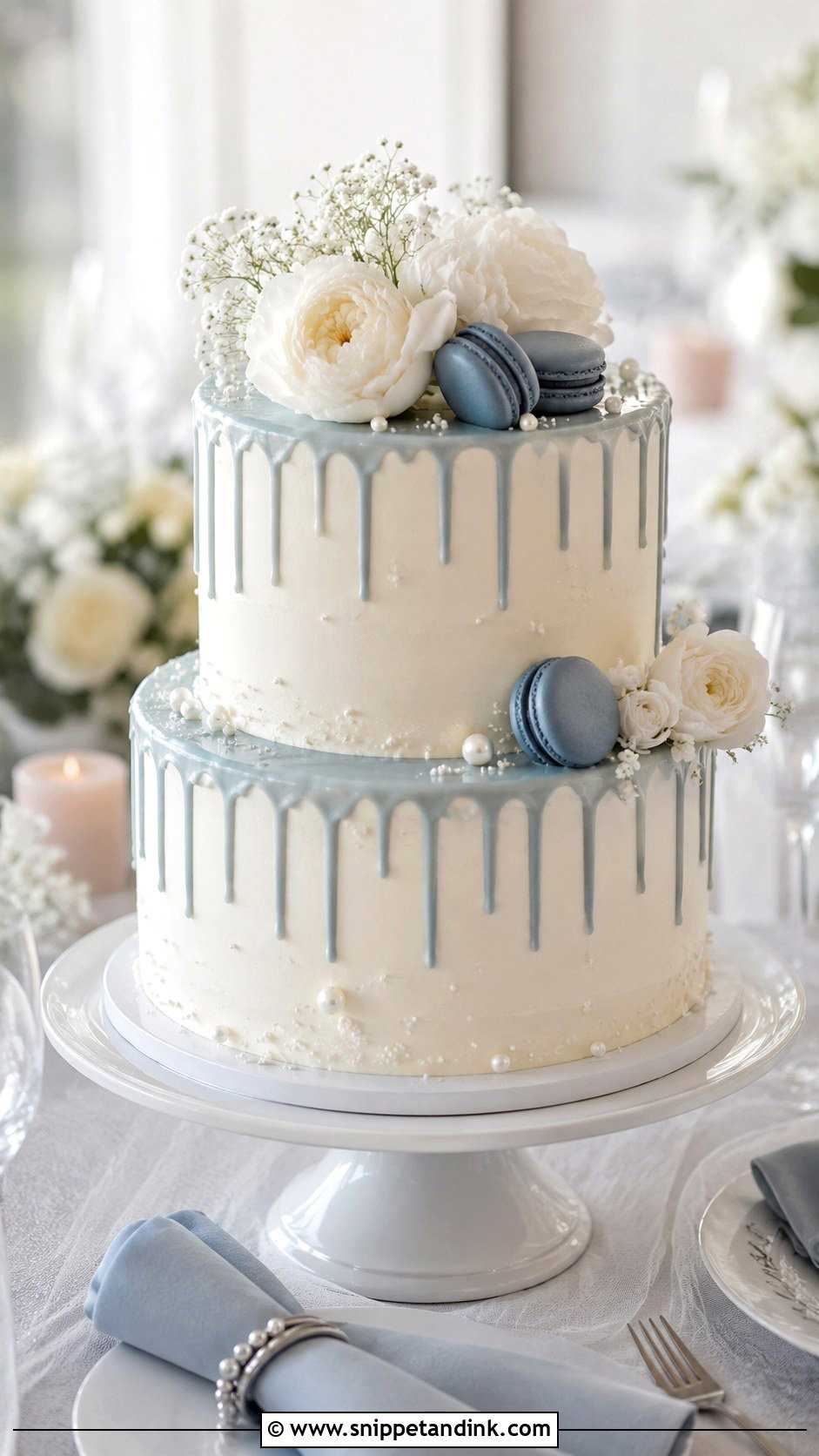
Drips divide people. A white cake with a dusty blue drip looks fresh, and a blue cake with a white chocolate drip looks sweeter. Either way I keep the drips short and evenly spaced, because long, uneven ones read casual very quickly. Ganache drips also need a properly chilled cake, or they keep running down to the board. Flowers, macarons or pearls on top finish it. It’s for couples who want something less traditional, and it shows best from the front of a dessert table.



20. Dusty Blue Wedding Cake With Ribbon
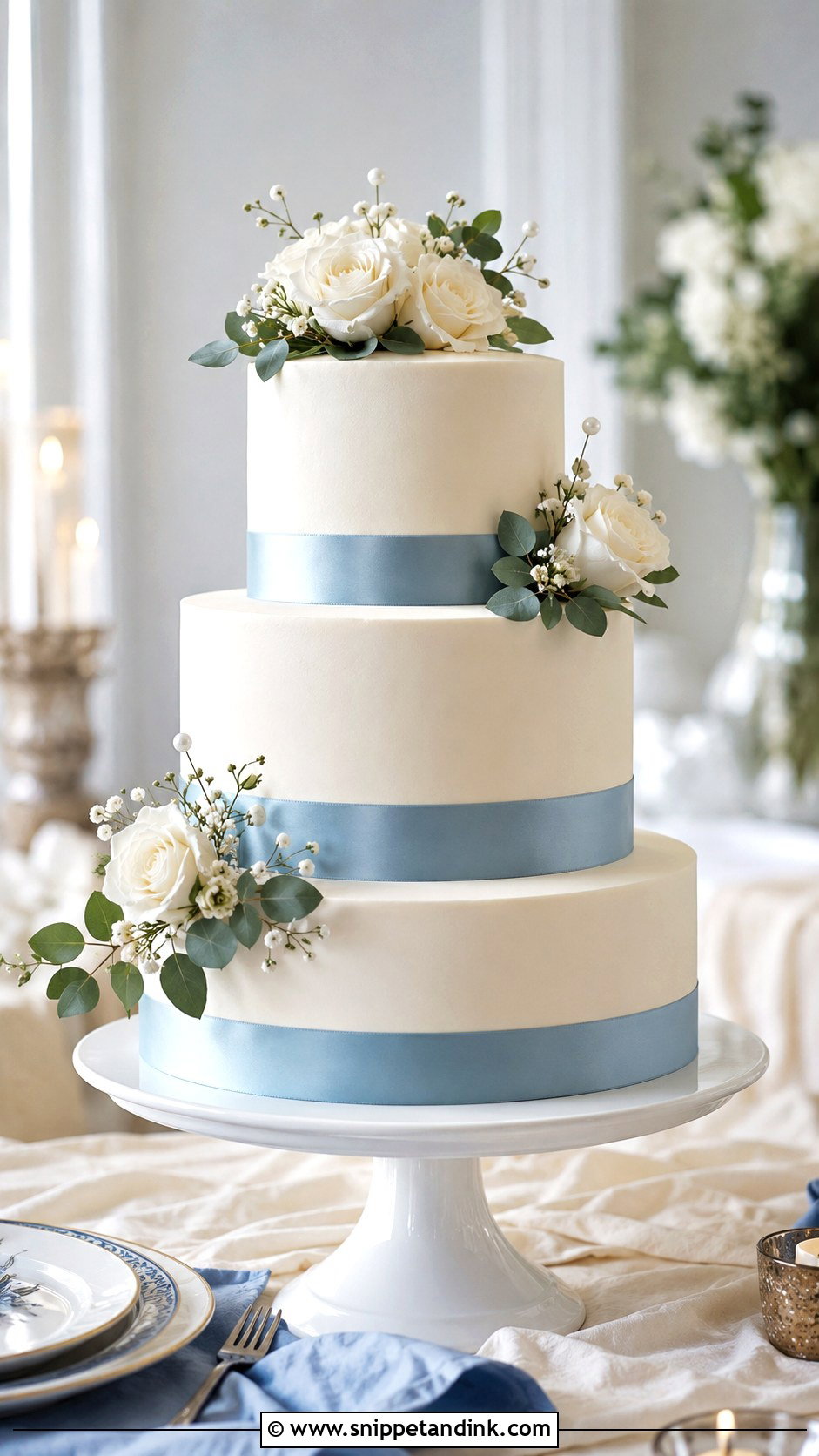
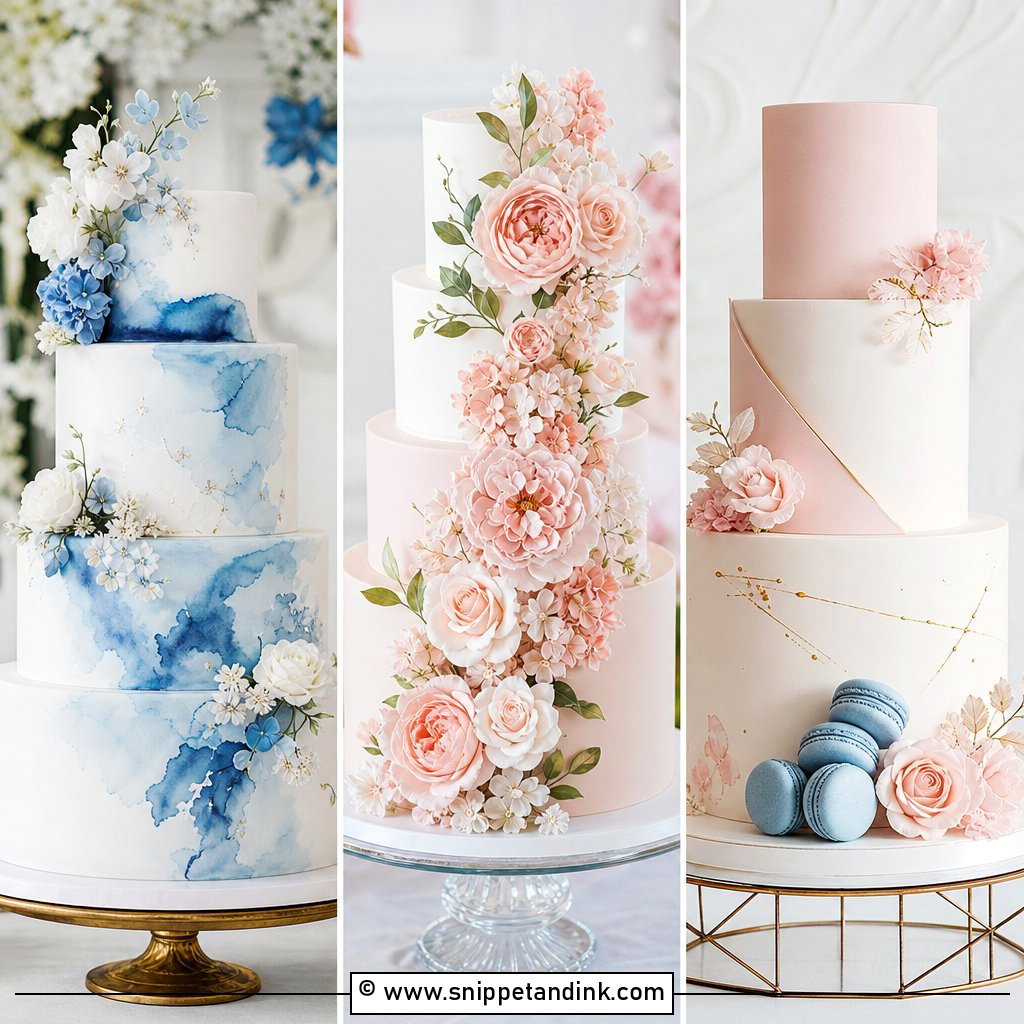
Ribbon is the simplest cake here and still one of the most elegant. Satin, silk or chiffon can wrap every tier or just one: white cake with blue ribbon, or blue cake with ivory. What most people don’t realize is that ribbon set straight onto buttercream soaks up fat and develops greasy spots within hours, so I line it with a thin strip of parchment first. It’s fixed at the back seam with a dab of frosting, never with pins. Small flowers or a monogram topper are enough, and the ribbon makes it easy to echo your invitations or linens.
Lead Times for Sugar Flowers, Painting and Fondant Work
Several designs in this list take far longer than a plain buttercream cake, and that affects when you book. Sugar flowers are usually made weeks ahead so the petals can dry hard, and painted, lace or marbled fondant adds hours in the final days before the wedding. Popular bakers often fill their peak-season calendars months in advance, though that varies a lot by area. My suggestion: secure the baker once the venue and date are fixed, hold the tasting a few months out, and confirm the final numbers and colors a few weeks before.
Who Takes the Ribbon and Wires Off Before Slicing
Ribbon, wired sugar flowers, flower picks and the dowels that hold up each tier are not food, and someone has to remove them before the cake is cut. Usually that falls to the venue’s catering team, but they can only do it well if they know what’s inside. Ask your baker for a short note for the caterer listing every inedible piece and where the supports sit. It takes two minutes to write and spares a guest from biting into a wire.
How Soft Should the Blue Stay?
There’s a dusty blue cake for almost any wedding: soft with blush flowers, formal with silver or gold, natural with sage, modern with marble or a painted wash. I’d decide by the venue and your flowers first, and the dress second. If the color already appears in your linens, invitations or bridesmaid dresses, the cake only needs to echo it, not repeat it at full strength. Keep the finish clean and give every decoration a reason to be there. A blue that stays soft is the one that still looks right in your photos years from now.
You'll Like These Ideas:






Leave a Reply