
Smaller wedding cakes are popular for good reason: they suit an intimate reception, they’re easier to style, and far less of them goes to waste. The details couples ask me for most right now are vintage piping, pearls, a little metallic, botanical decoration and fresh fruit, and each of them reads better on a modest cake than stretched across five tiers. Two tiers give enough height for a real centerpiece without crowding the dessert table. Here are twenty two-tier designs, from plain ivory to marble and drip, with a note on what each one asks of your baker and your venue.
Fondant or Buttercream on a Small Cake?
This is usually the first decision I settle at a consultation, because it shapes which of the designs below are even possible. Most couples prefer the taste of buttercream. Fondant gives a smoother, sharper surface and protects the cake underneath, but a lot of guests leave it on the plate.
Where fondant earns its place
- Square tiers and very sharp edges, where every corner has to be crisp.
- Marbling and fine hand painting, which need a firm, smooth canvas.
- A long display time in a moderate room, since it seals the sponge and keeps it moist.
Its weak point is moisture. A fondant cake taken from a cold fridge into a warm, humid room beads with condensation, and the surface turns tacky. I let fondant cakes come up to room temperature slowly, still boxed, rather than unboxing them straight into a hot marquee.
Where buttercream wins
For flavor, for textured and piped designs, for naked and semi-naked finishes, and for anything with fresh flowers or fruit, I’d choose buttercream. It does soften in heat, so in summer ask your baker which recipe they use outdoors. Some couples split the difference, with buttercream underneath and a thin fondant layer only on the tier that needs the sharp finish.
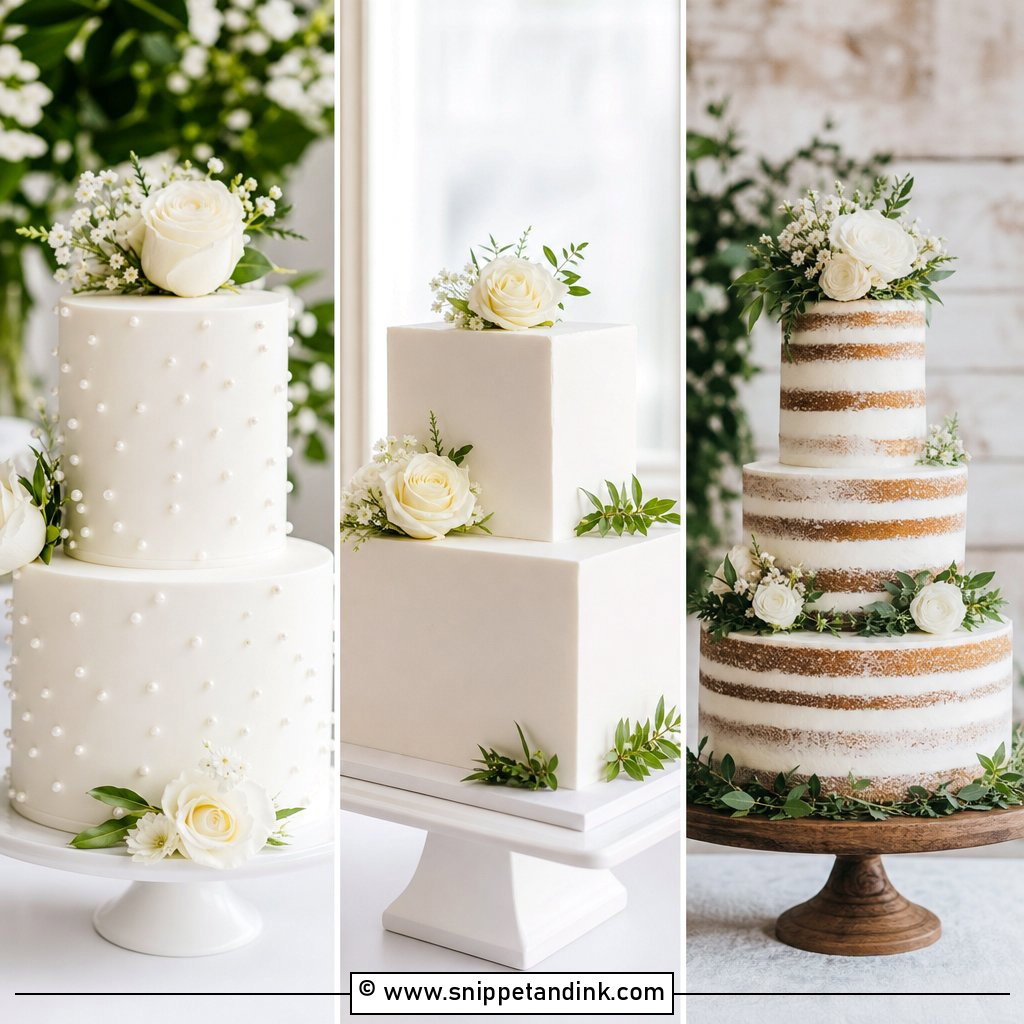
1. Two Tier Buttercream Wedding Cake
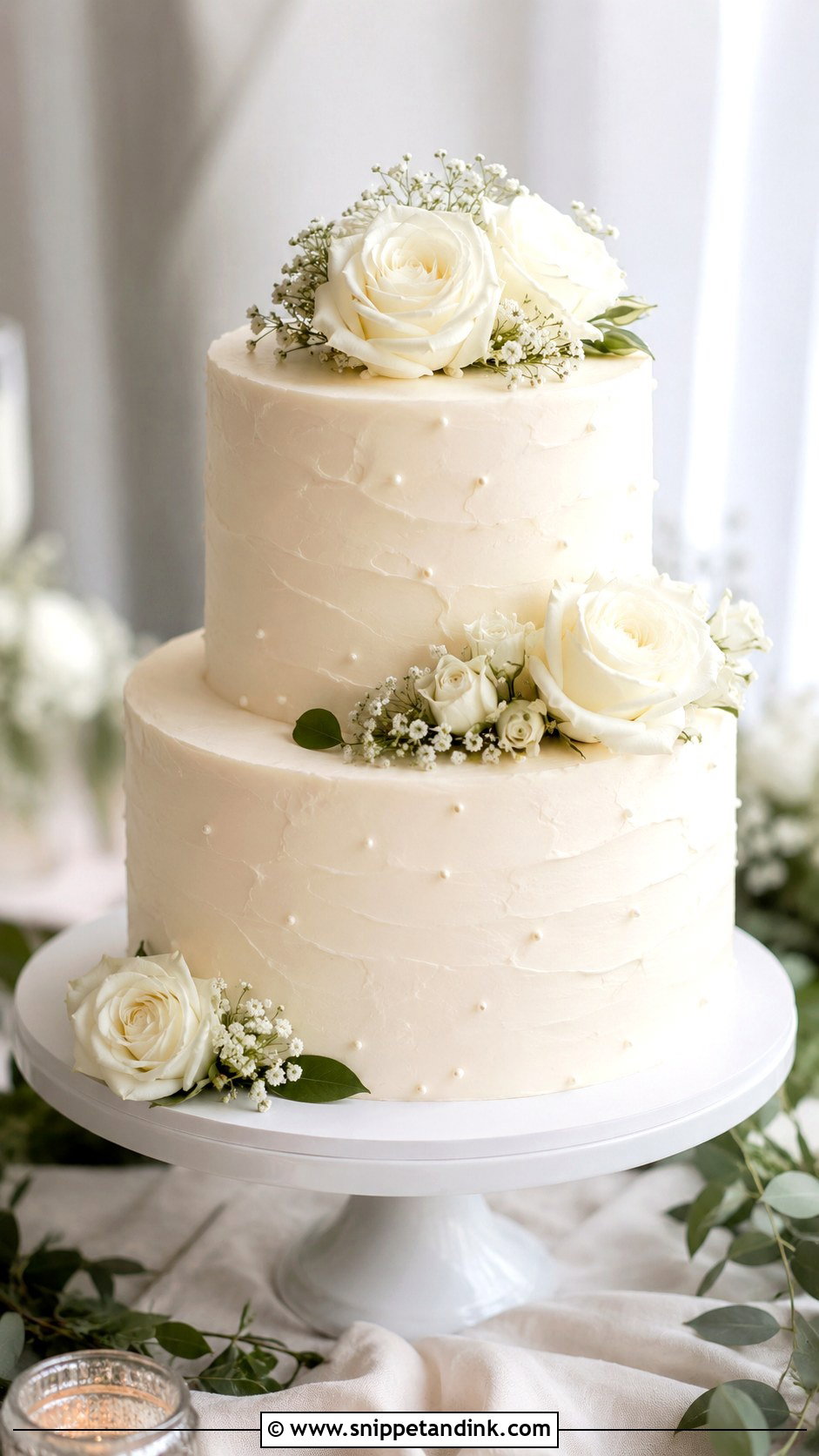
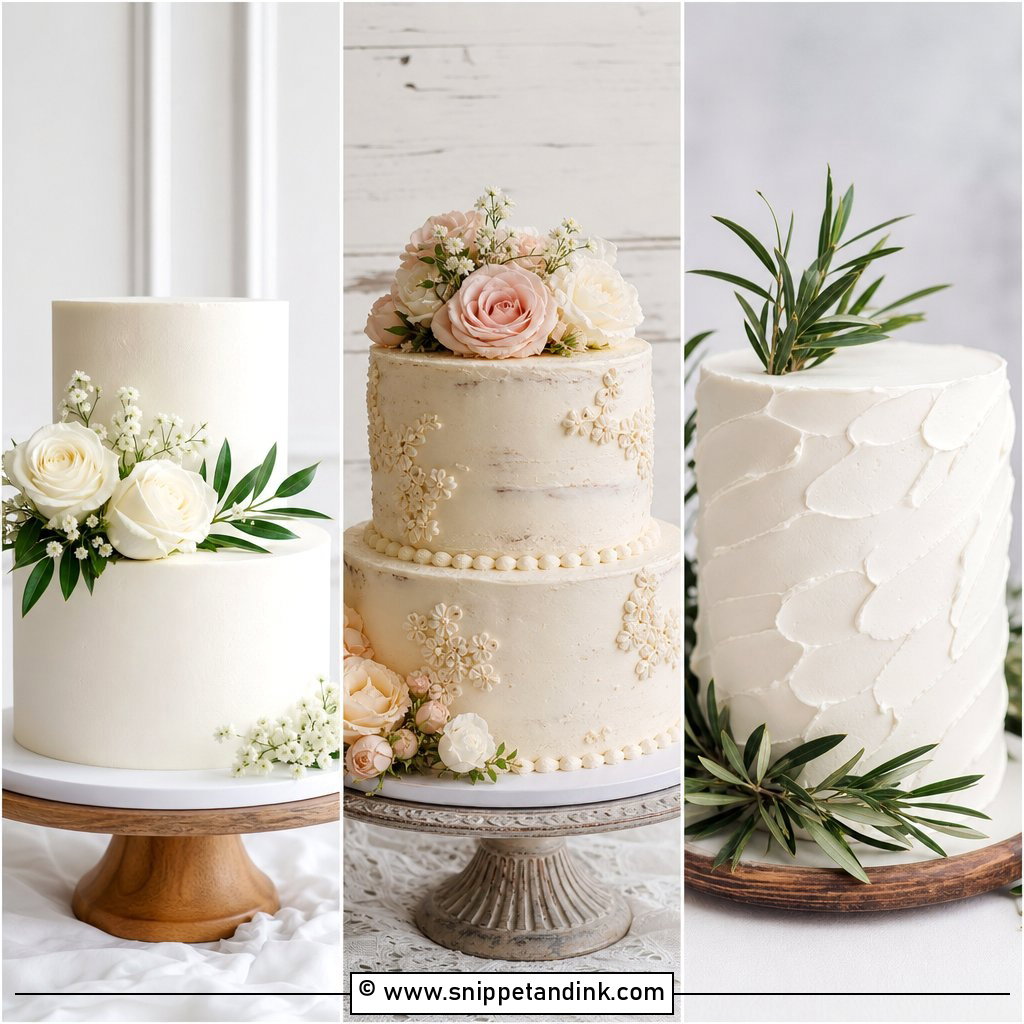
If you can’t decide, start here. Smooth ivory buttercream goes with almost any reception, and a little spatula texture stops it looking flat. The neutral outside lets the sponge take the lead, so vanilla, almond, lemon or champagne all suit. Add a small flower cluster or a few pearl dots and then stop. My one request: keep it chilled until shortly before display, because buttercream picks up fingerprints and dents the moment it warms.
2. Two Tier Floral Wedding Cake
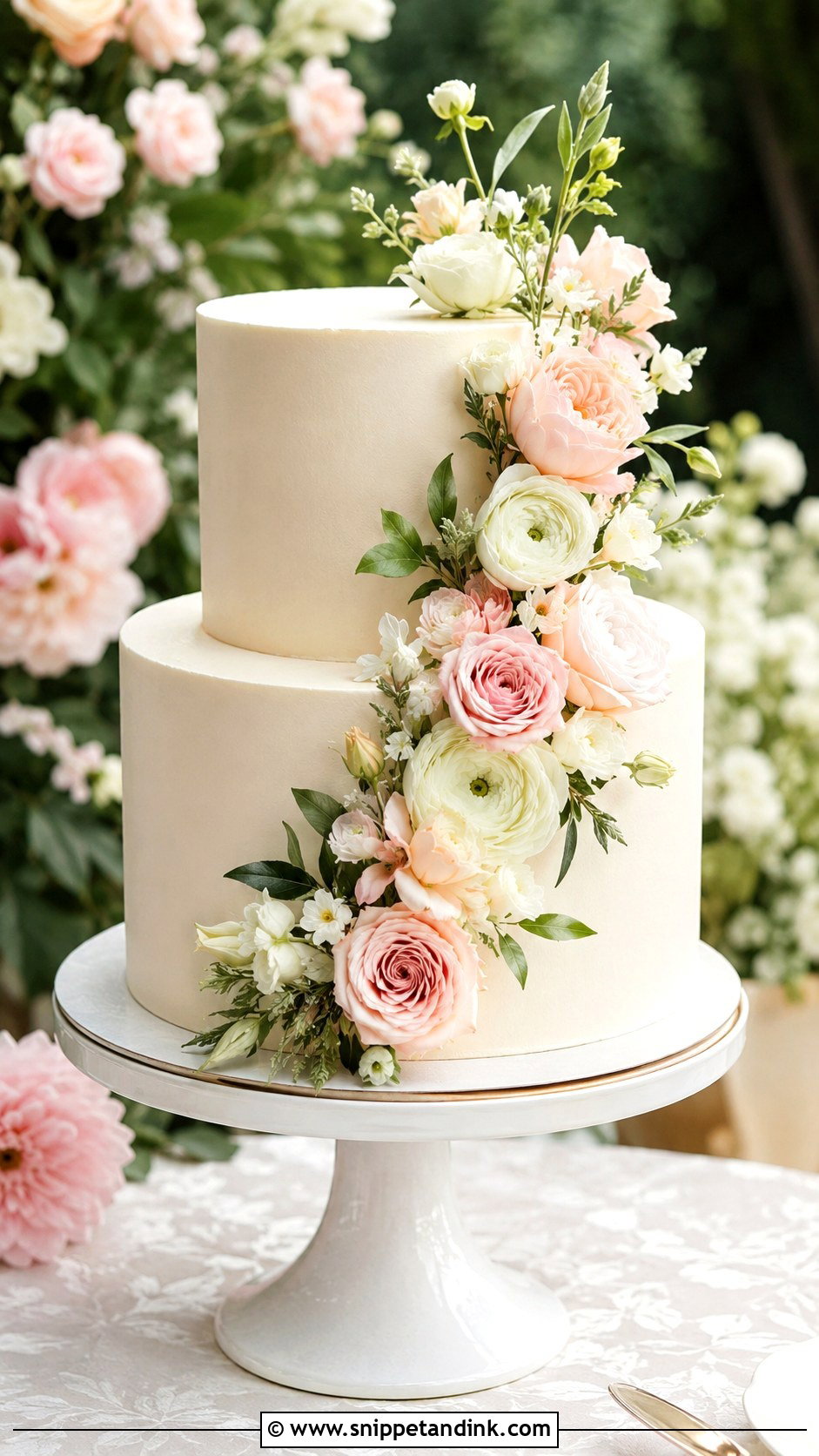
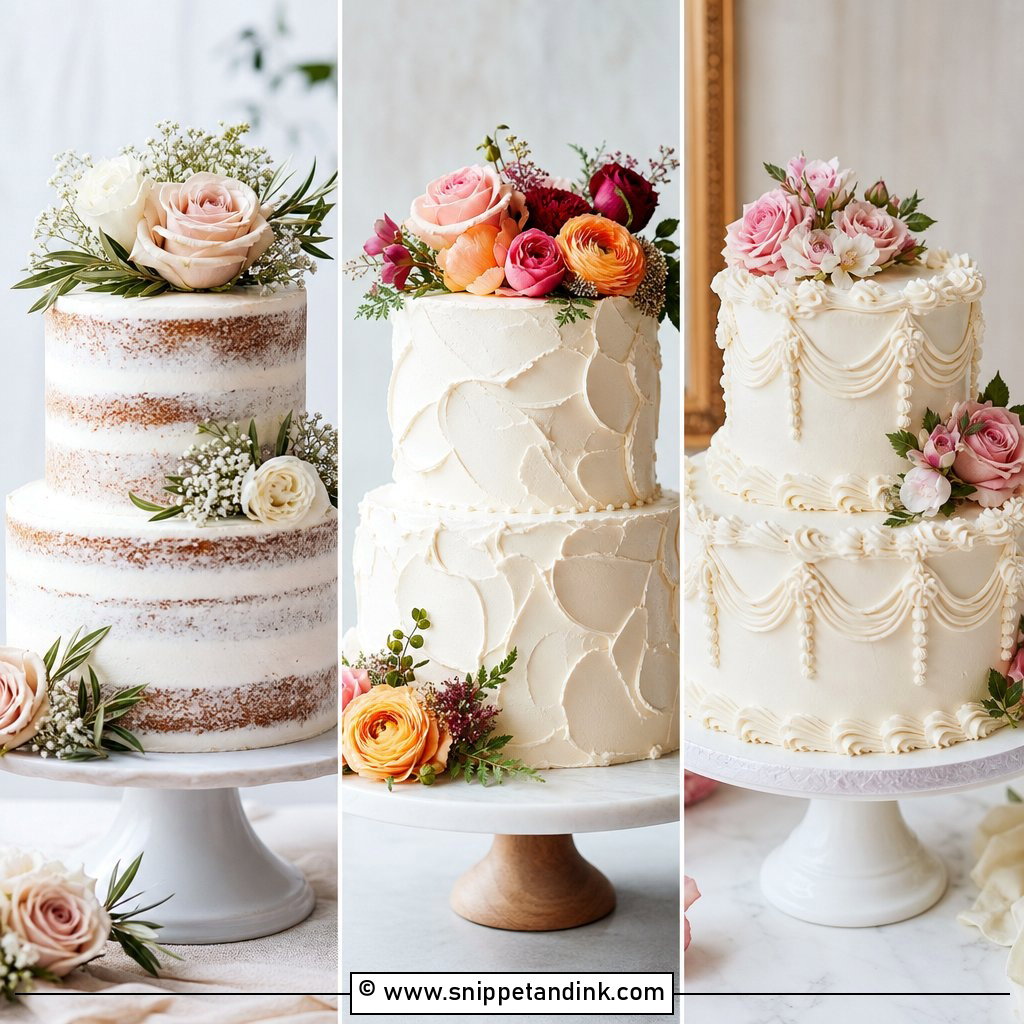
Flowers give a short cake the height and movement a third tier otherwise would. I begin with a plain base and set the stems in a loose diagonal from the top tier down across the lower one, which carries the eye over the whole cake instead of stopping at the top. Roses, ranunculus, lisianthus and orchids hold up well out of water; pressed edible flowers are the choice if you’d rather nothing inedible touched the frosting. Ask your florist for unsprayed stems for the cake and have them handed to your baker before set-up, so they can be taped and picked properly. Matching the bouquet colours makes the cake look planned rather than added.
3. Two Tier Vintage Wedding Cake
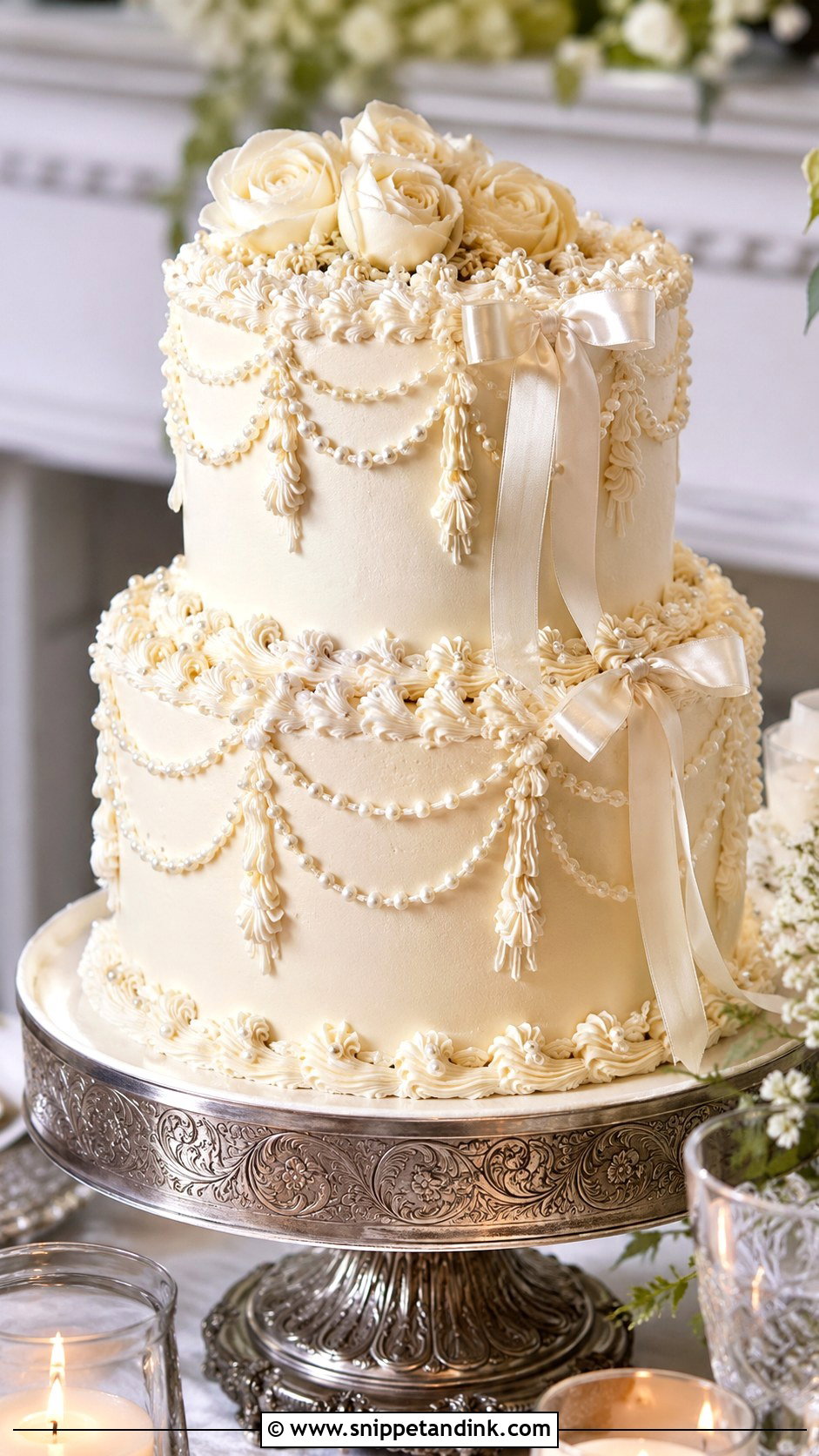
Scalloped swags, shell borders and piped rosettes need restraint more than anything. Too much piping on two small tiers looks heavy, so I usually overpipe one tier fully and keep the other lighter. Ivory, cream, blush or pale blue buttercream all make a good ground, with small pearls and a ribbon or two. The piping mix has to be stiffer than the coating, made with less liquid, or the swags sag once the room warms up. A pedestal stand with candles nearby suits the old-fashioned feel.
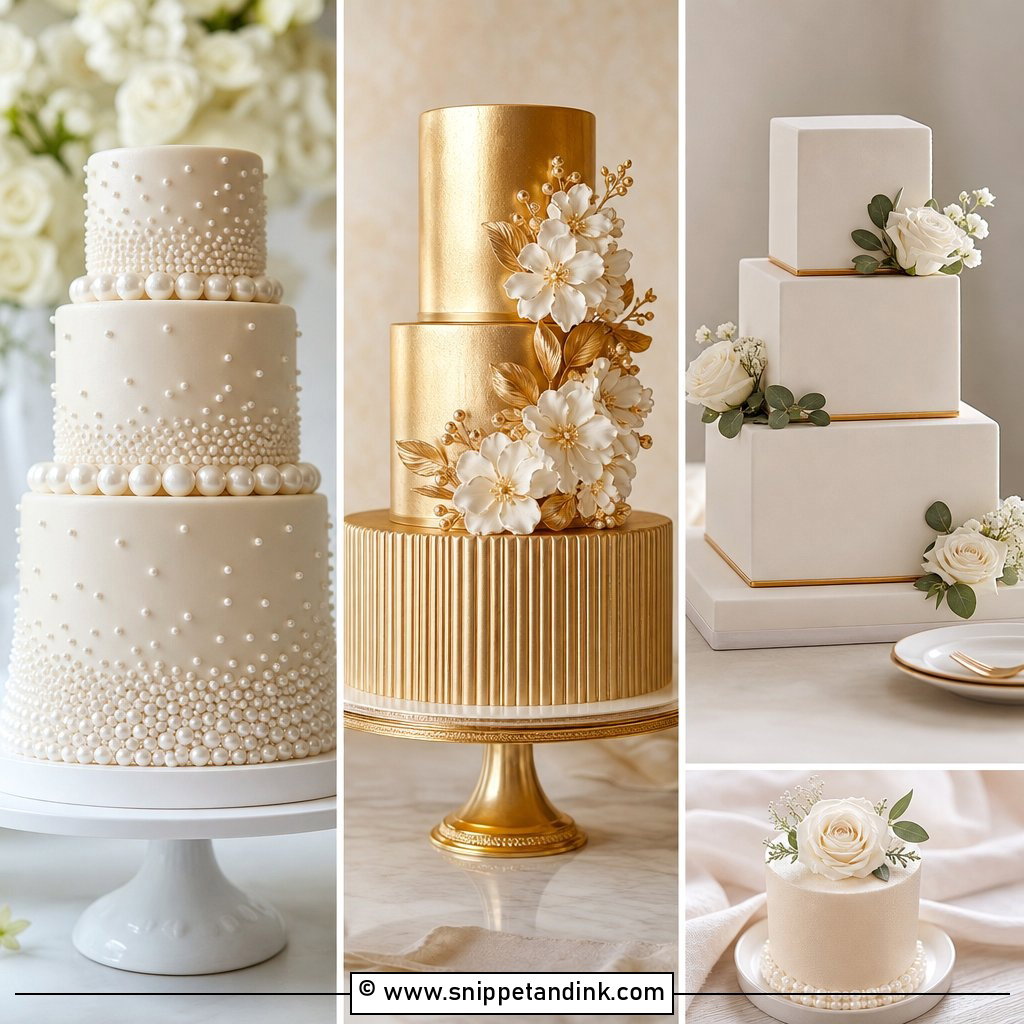
4. Two Tier Pearl Wedding Cake
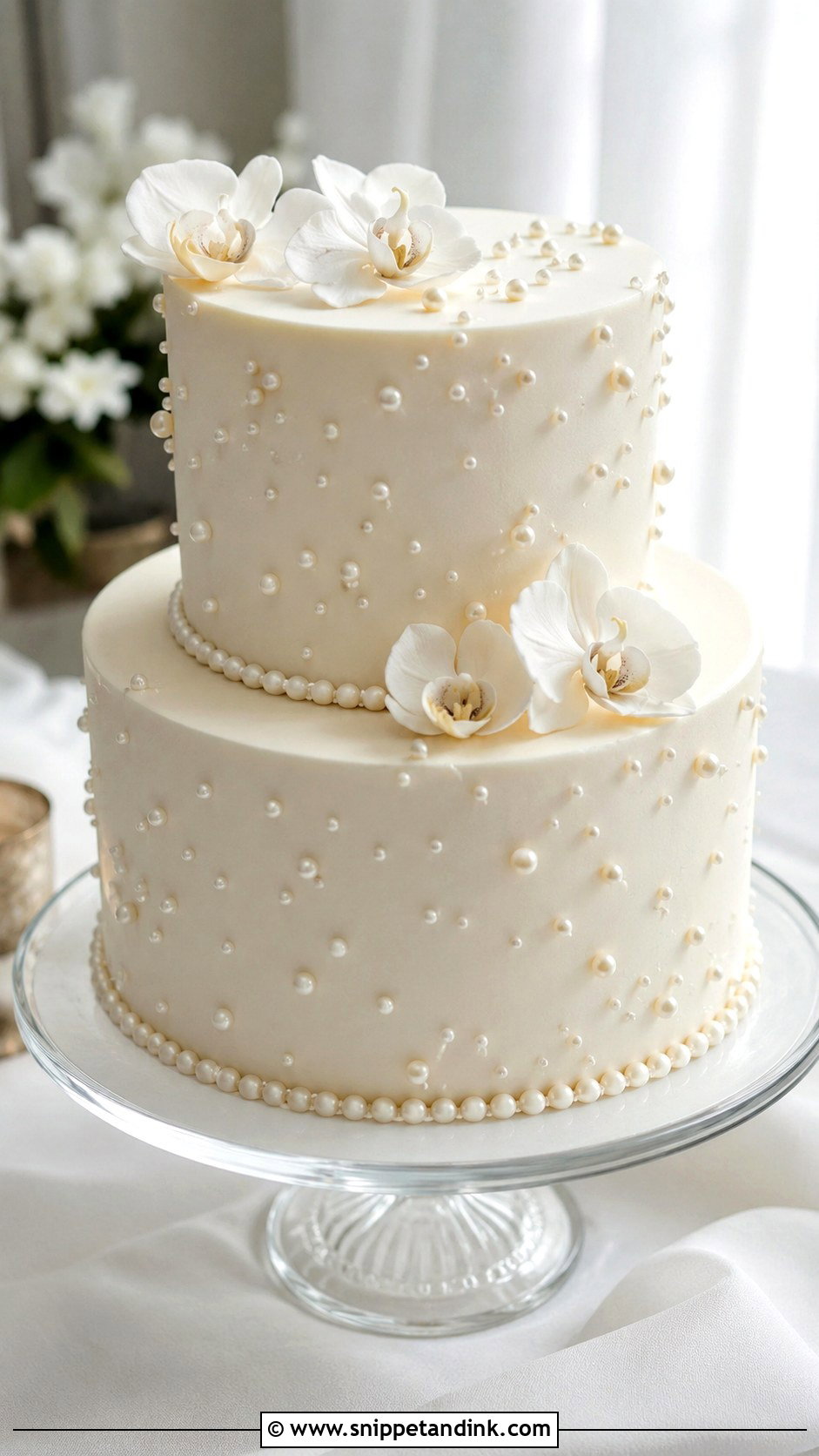
Pearls are quiet enough for a ballroom and simple enough for a small reception. The most useful place for them is around the base of each tier, where they hide the join between cake and board. After that, scatter more across the sides or set them in soft curves. Mixed sizes look more modern than even rows. Ivory buttercream, white chocolate ganache and fondant all hold them, though on soft buttercream they can slide, so I always set them on a chilled cake. Satin linens and white flowers suit the mood.
5. Two Tier Gold Wedding Cake
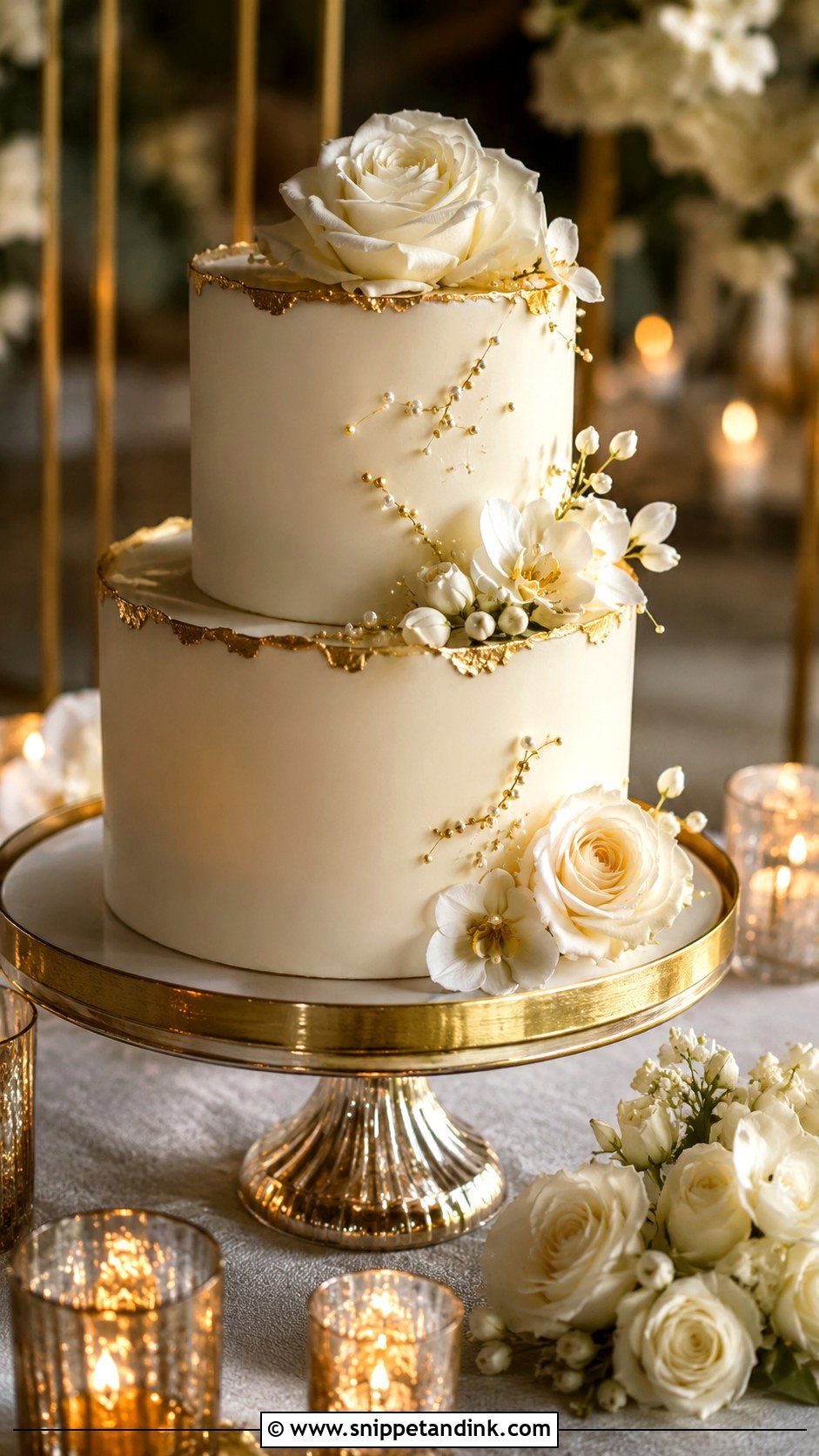
Gold reads very differently in daylight and candlelight. Under evening candles, leaf and painted edges glow; in bright afternoon sun they can look flat or brassy, so for an outdoor lunch I’d steer you toward a small gold accent rather than a fully gilded tier. Warm ivory, champagne and soft white bases let the metal show. A brushed gold bottom tier is done with edible gold paint, which needs time to dry fully before anything is stacked on it. White roses, orchids or a little greenery keep the shine from taking over.
6. Two Tier Minimalist Wedding Cake
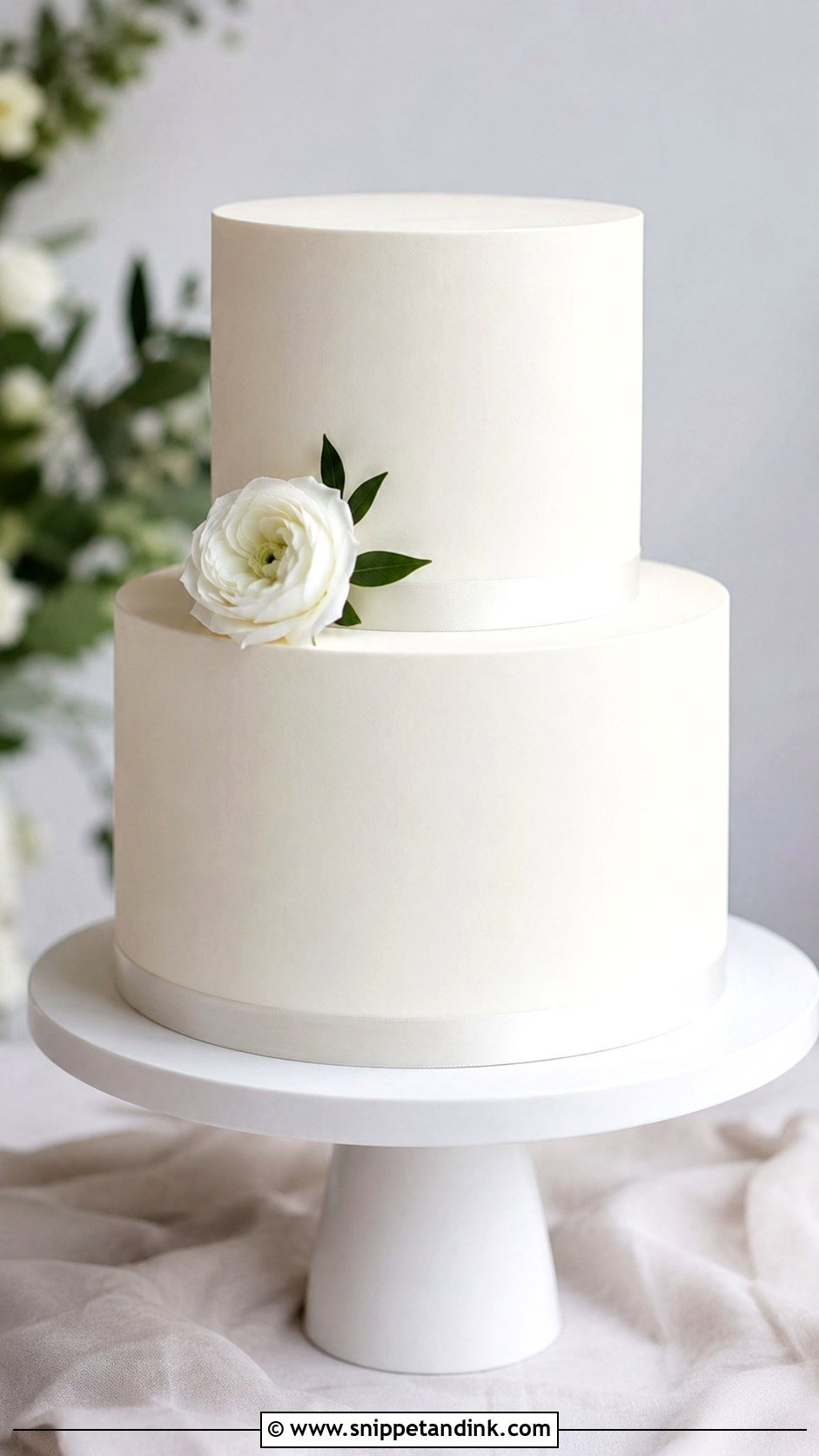
With so little on the cake, the stand and table carry half the look, so plan them together: a plain linen cloth, soft lighting, perhaps a few stems laid beside the cake. The cake itself depends on proportion and finish. Crisp white or ivory buttercream, then one small floral accent, a single ribbon or nothing at all. Ask your baker to show you their plain cakes specifically, since sharp edges and a level top are exactly what you’re paying for here. A courthouse celebration or a modern venue suits it well.
7. Two Tier Rustic Wedding Cake
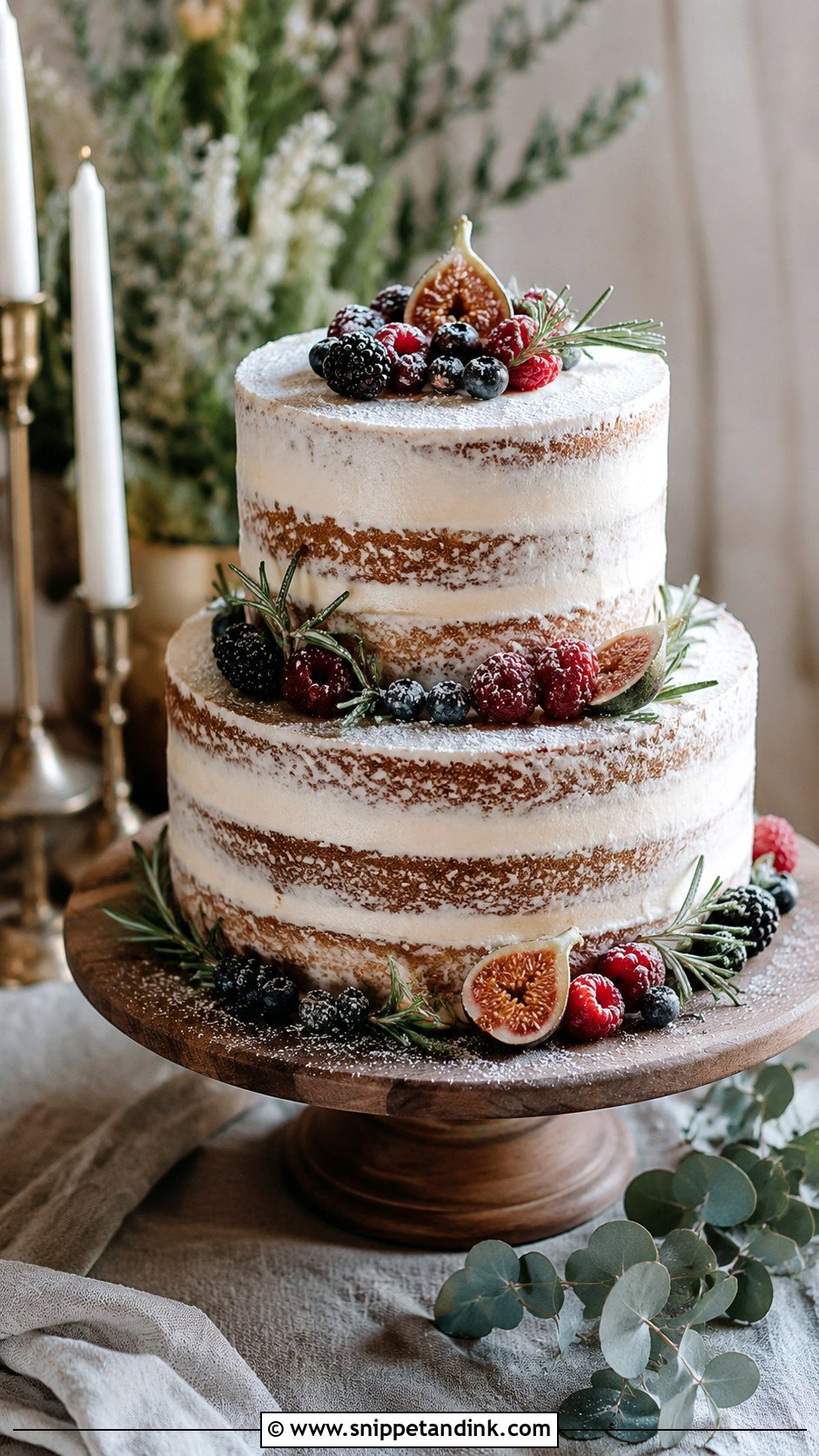
Barn and countryside venues bring warm air and the odd insect, so the semi-naked finish here needs a crumb coat good enough to seal the sponge properly. Layers peeking through keep it relaxed, and vanilla, spice, carrot or almond sponge fits. Berries, figs, herbs and loose greenery give the earthy look. If you love a wood slice stand, I always put a food-safe board or a round of parchment between wood and cake, because raw timber isn’t sealed for food. The aim is decoration that looks gathered, which is harder to achieve than it sounds.
8. Two Tier Boho Wedding Cake
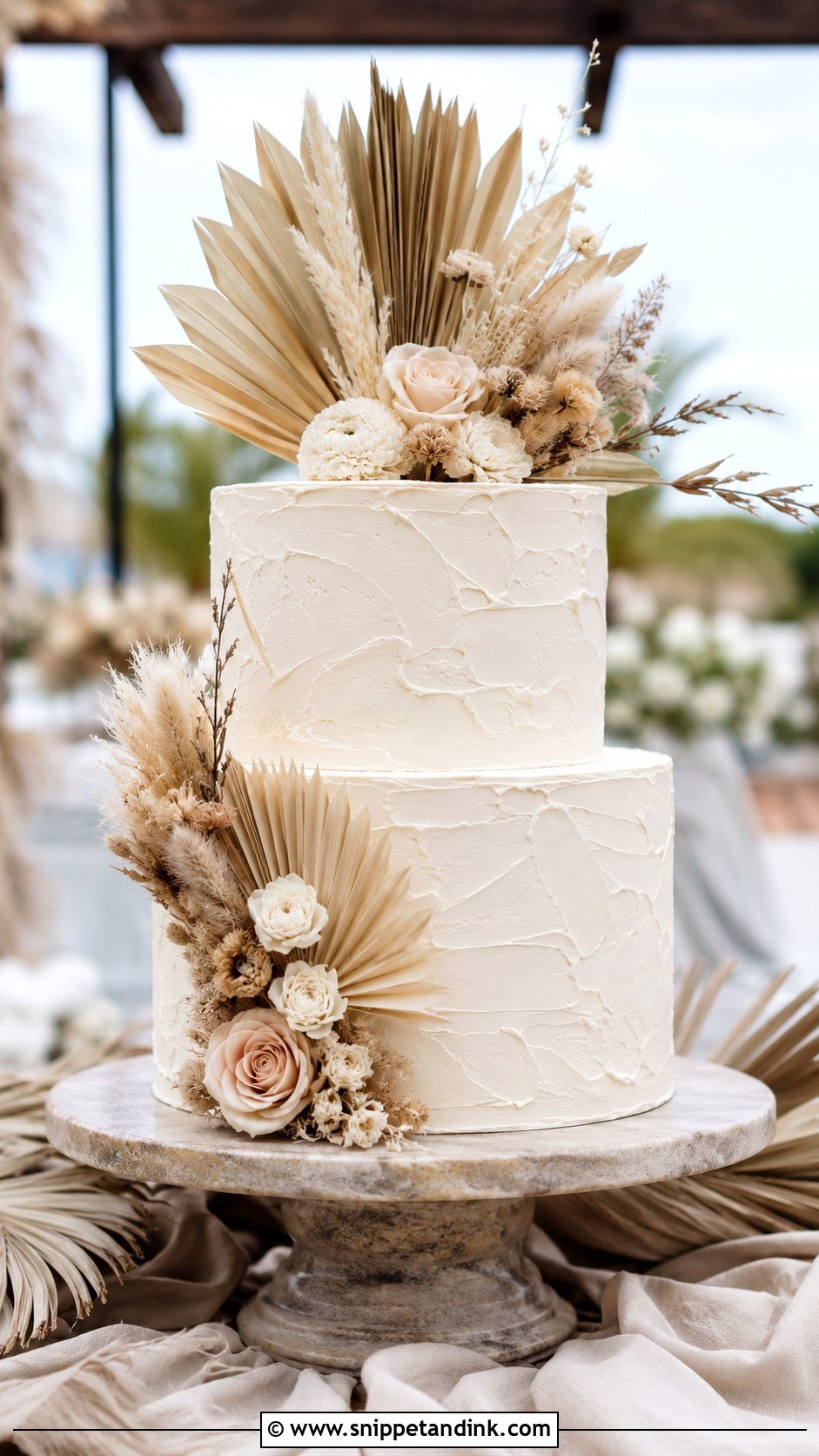
Boho cakes run on dried flowers, earth tones, pampas grass and textured buttercream, arranged with movement rather than symmetry. A warm beige or ivory base is the easiest starting point. Dried palms, bunny tails and preserved blooms are light, which matters on soft frosting, since they don’t sink the way heavy fresh stems can. They aren’t edible, though, so they sit on picks and come off before cutting. A rough buttercream finish adds texture, and the whole look sits naturally at a desert ceremony or against a neutral palette.
9. Two Tier Naked Wedding Cake
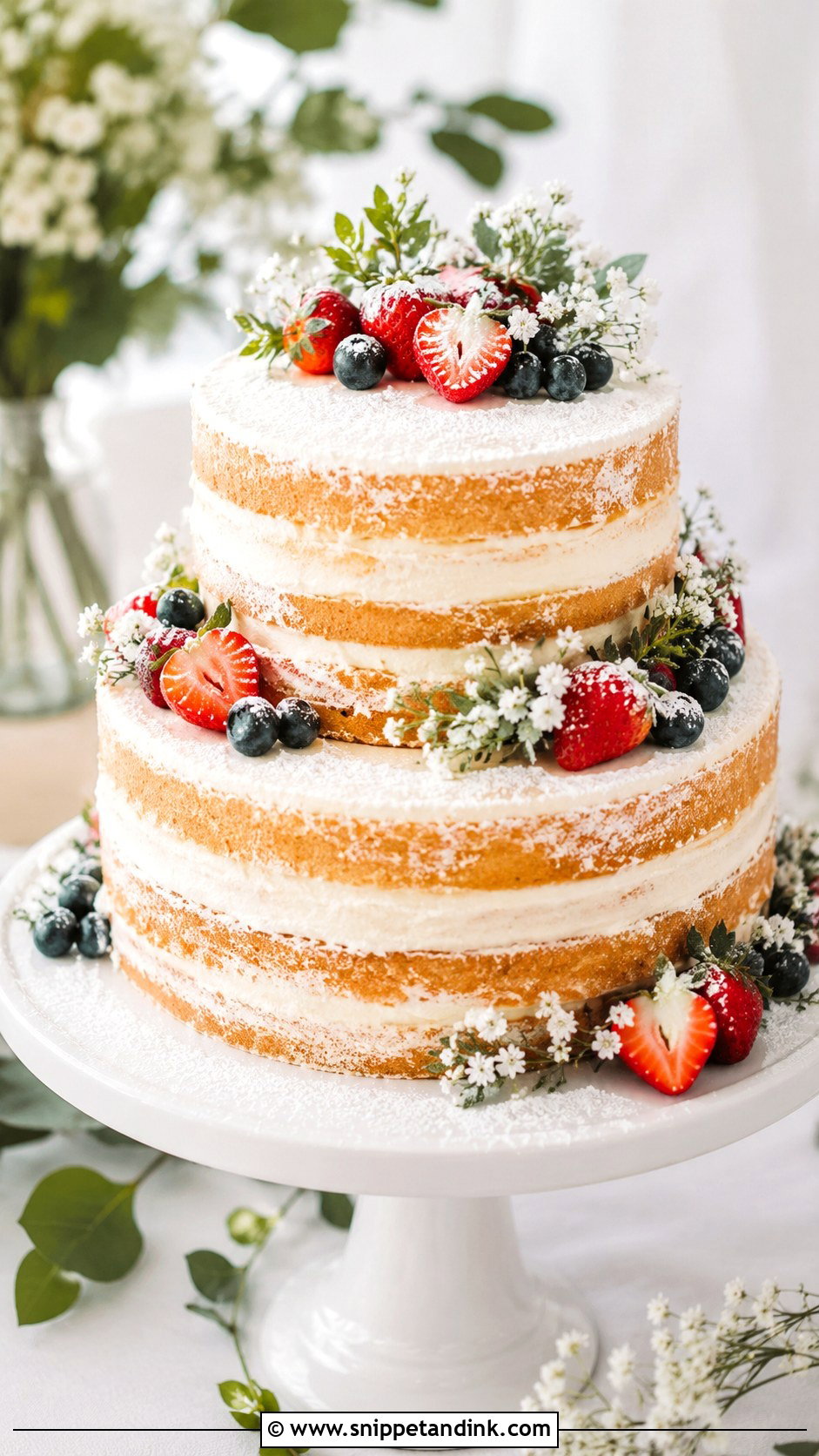
Naked cakes have the shortest life of anything on this list. With the sides barely covered, the sponge starts drying at the edges after a few hours in open air, so I bake, fill and stack them as close to the wedding as I can and keep them wrapped until display. The fillings show, so they need to look good as well as taste good: berry jam with vanilla sponge, lemon curd, chocolate with cream. Be wary of whipped cream at a warm outdoor venue, since it needs refrigeration and won’t sit happily for hours. Fruit, flowers and a dust of powdered sugar finish it.
10. Two Tier White Wedding Cake
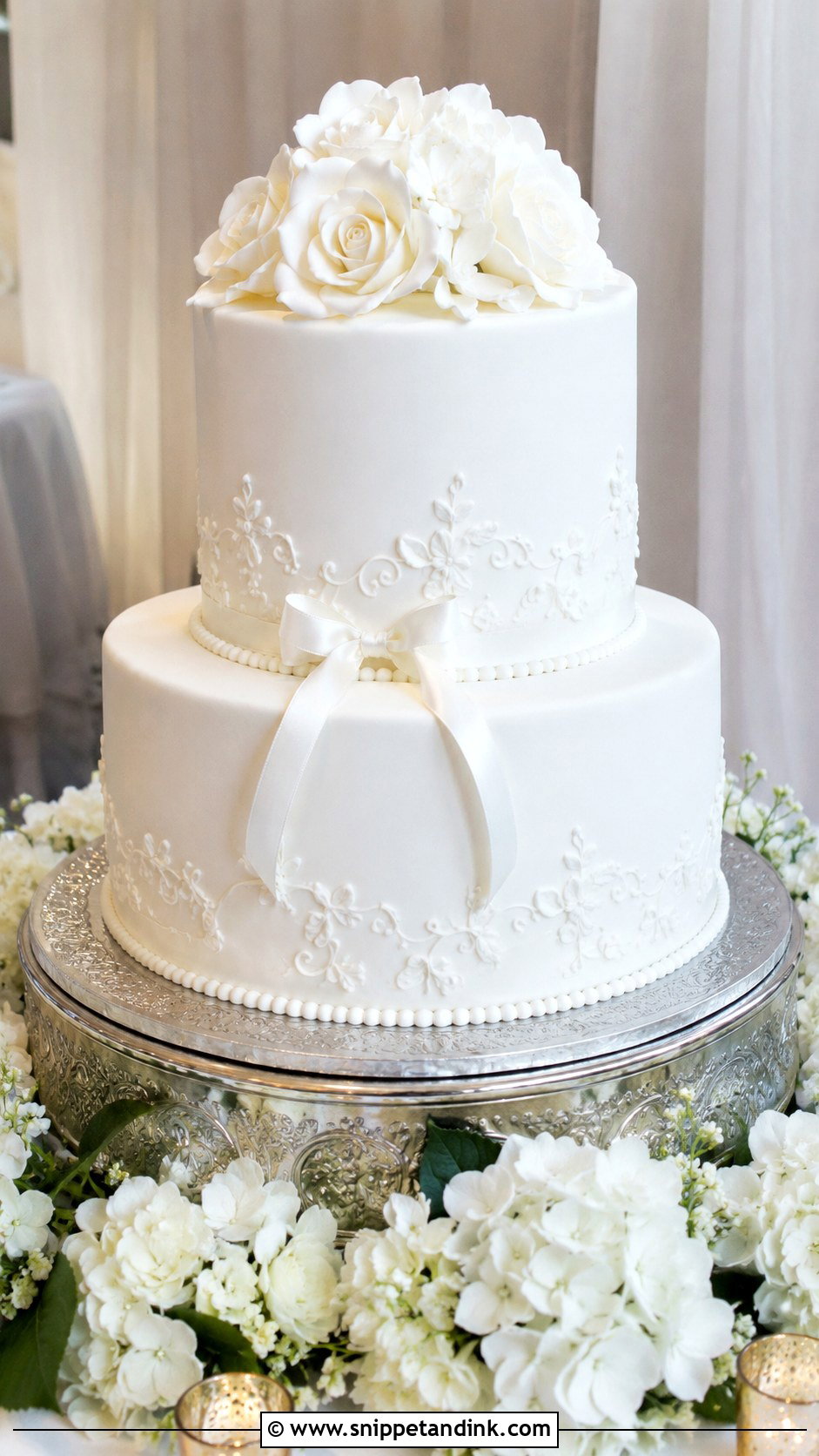
All-white is the classic, but a plain white cake can look flat in photos because cameras lose detail on large bright surfaces. The fix is texture that throws small shadows: smooth fondant with pearl trim, faint vertical lines combed into buttercream, or white-on-white piping. White roses, sugar flowers or a satin ribbon finish it without adding contrast. It belongs in a chapel or a traditional formal venue, where the shape of the cake does the work.
11. Two Tier Blush Wedding Cake
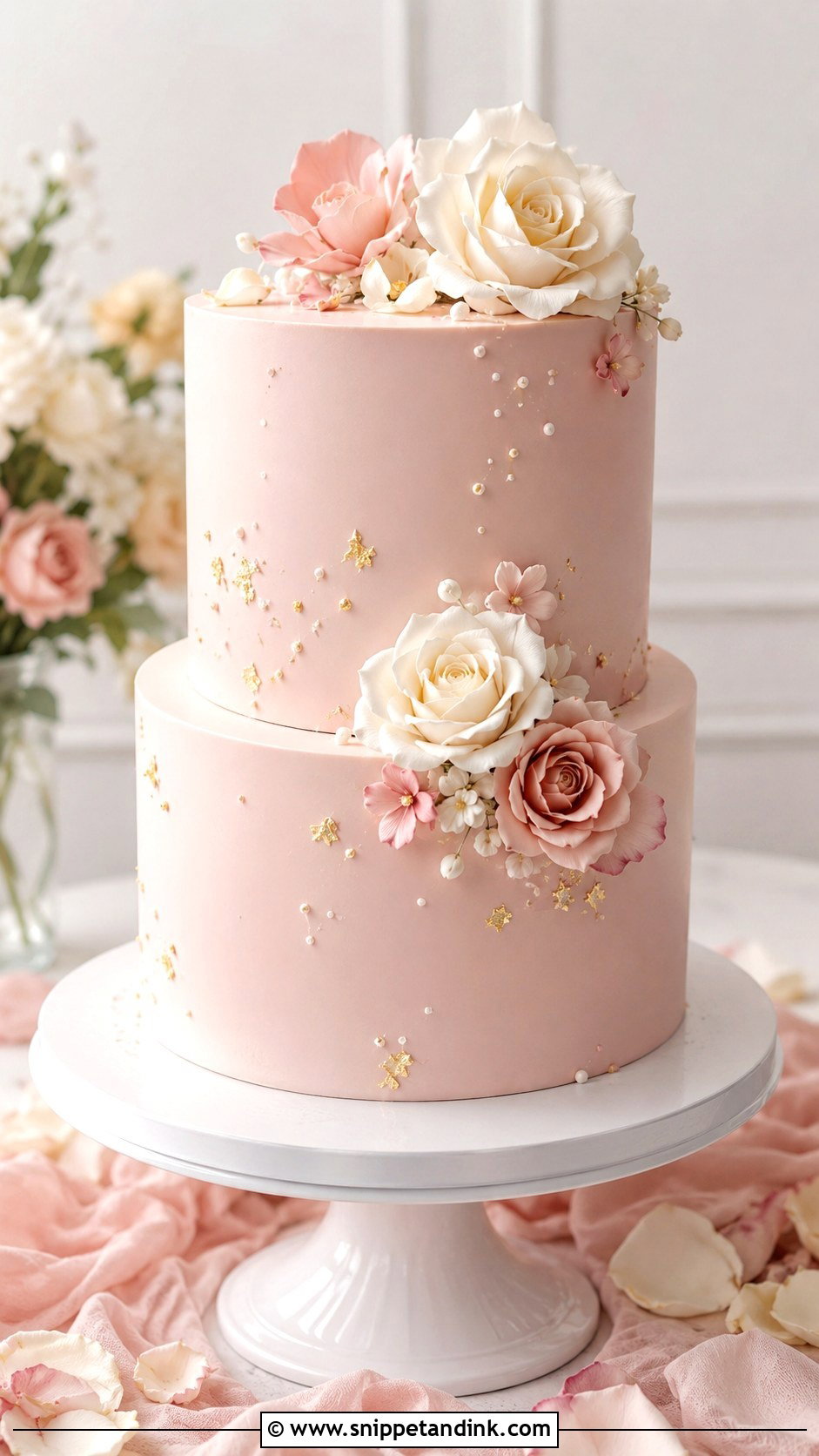
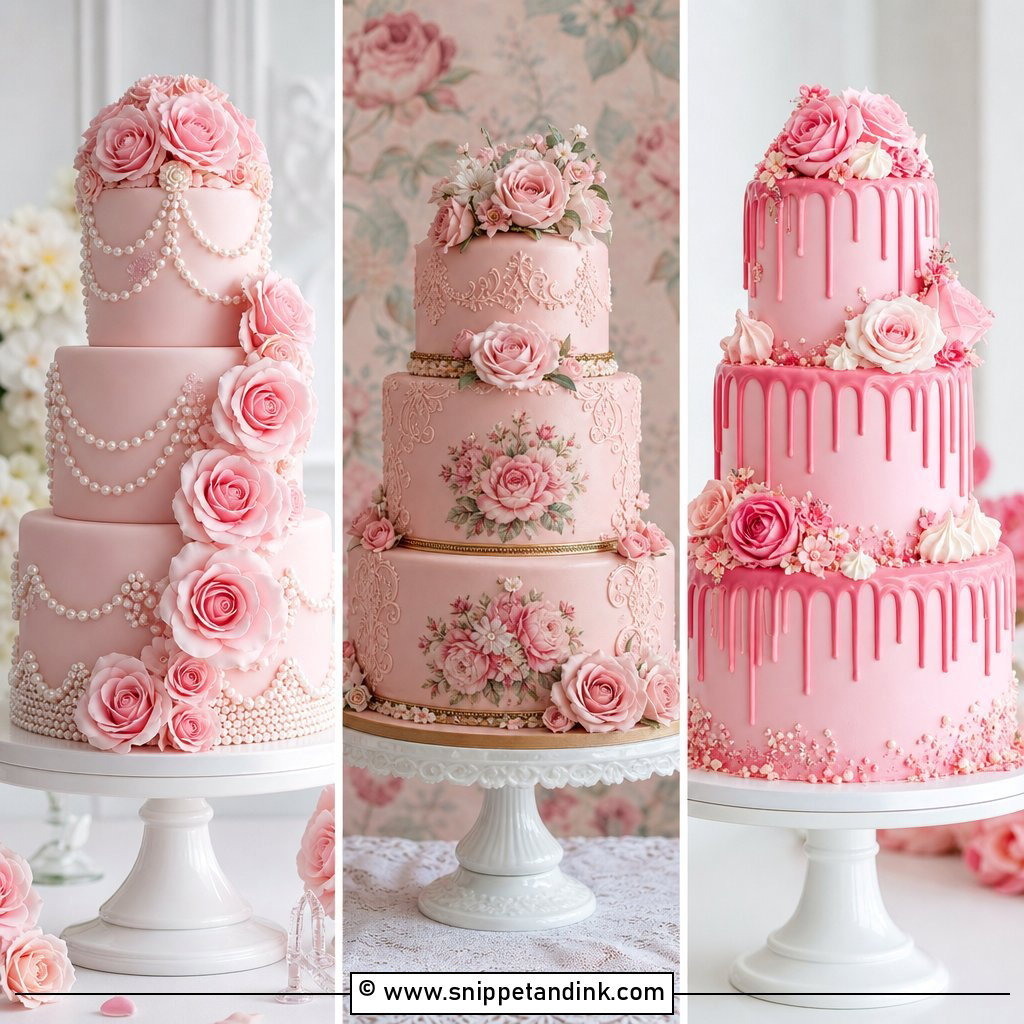
Blush is easiest used gently, as a pale buttercream, a watercolor wash or a floral accent on white. I tint it a shade lighter than the sample you bring, because buttercream colour keeps deepening for several hours after mixing. Ivory, champagne, dusty rose and soft greenery all sit comfortably beside it. Buttercream flowers make it sweet; gold leaf makes it more formal. It’s a flattering color next to most wedding flowers, which is why it turns up so often at spring and garden receptions.
12. Two Tier Blue Wedding Cake
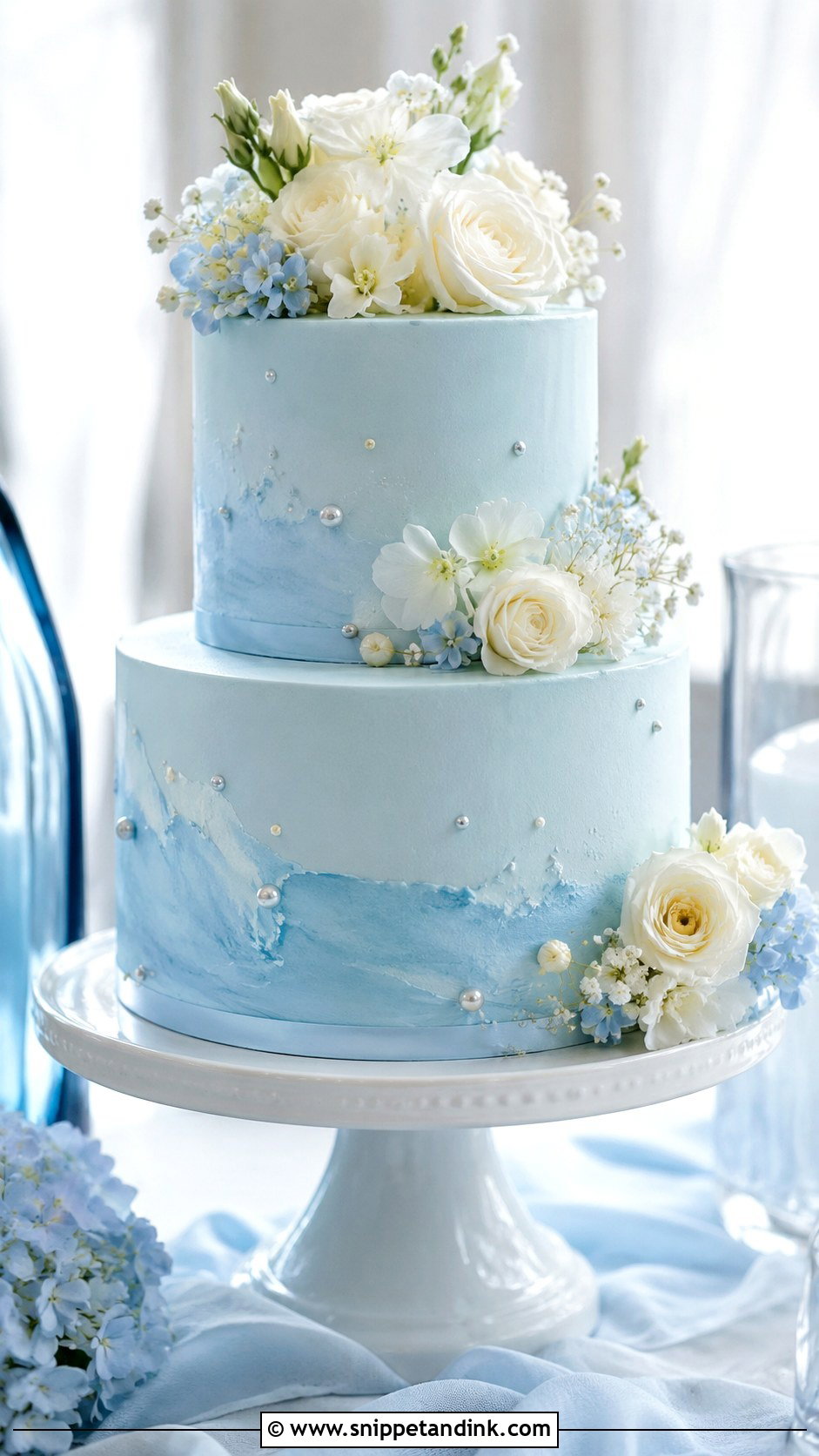
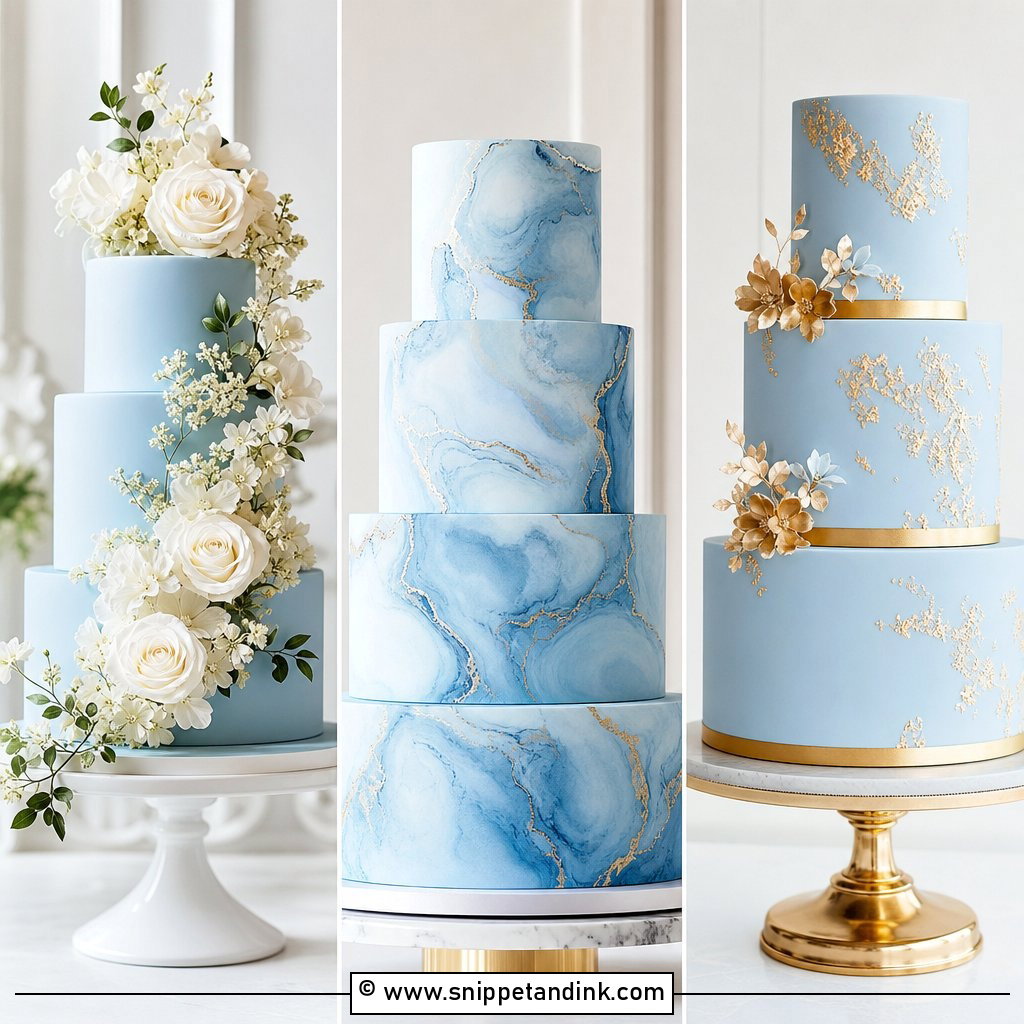
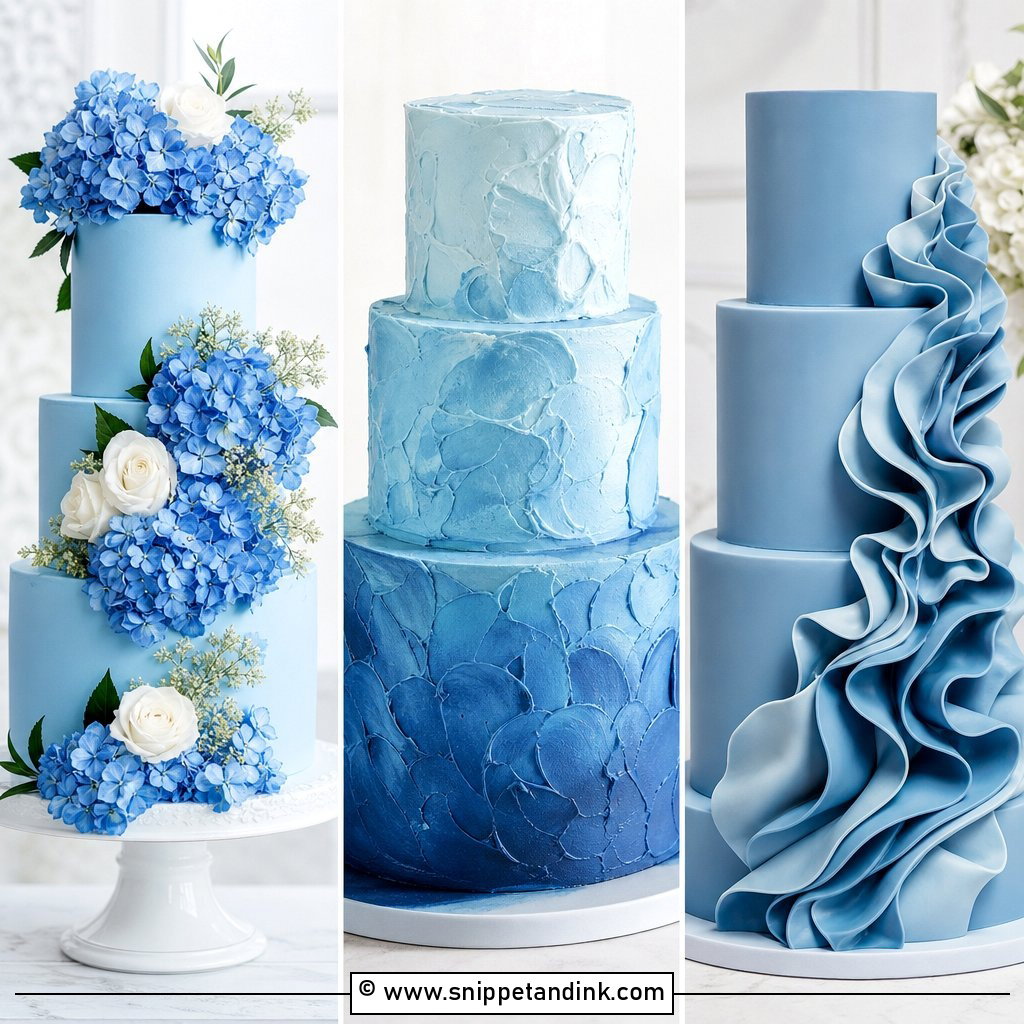
Kept pale, blue suits coastal weddings and garden parties. Dusty or powder blue frosting with white flowers and ivory accents stays soft. Smooth buttercream with a few pearls leans modern; watercolour shading with sugar flowers leans romantic. The thing I check is the table around it. Blue beside grey linens and silver cutlery can look cold under cool lighting, so I’ll often add warmth with ivory blooms or a cream ribbon at the base.
13. Two Tier Greenery Wedding Cake
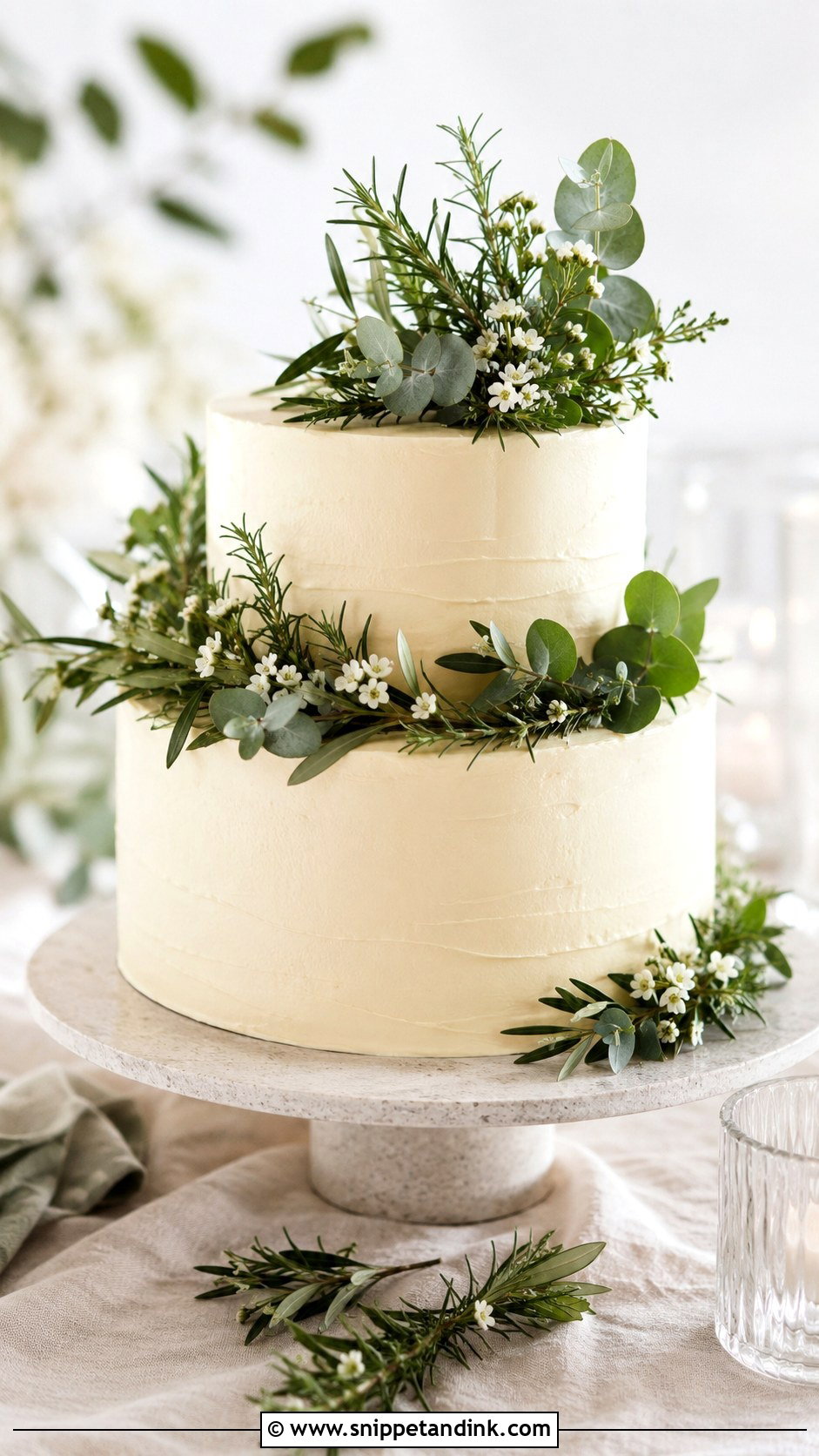
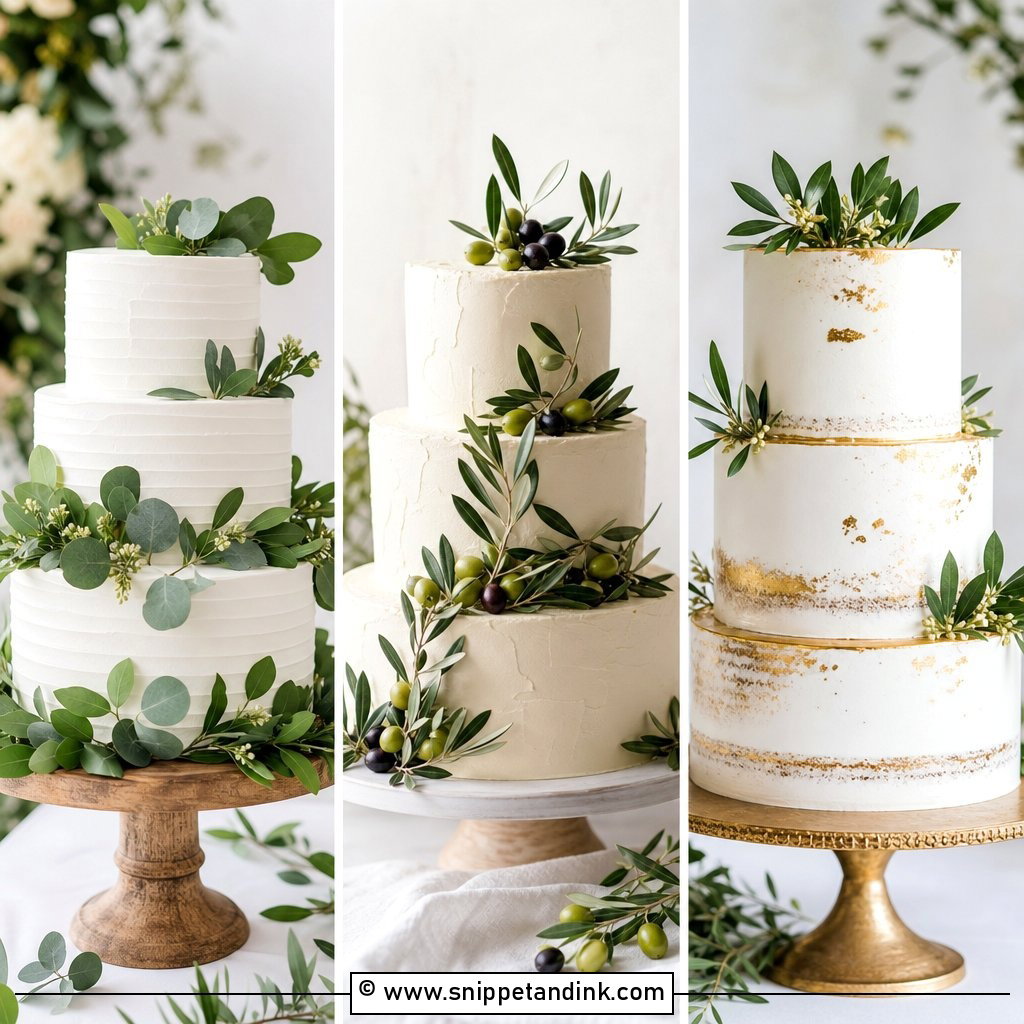
Leaves can wrap the tiers, run down one side or sit in small clusters at the join, over a smooth ivory buttercream base. Rosemary and olive are fine against frosting. Eucalyptus and some ferns are not safe to eat, so those are either kept off the cake or fully wrapped and picked. Greenery outlasts flowers but still curls at the tips under warm lights, so I add it at the venue rather than in the kitchen. It suits a simple palette at an outdoor or garden wedding.
14. Two Tier Watercolor Wedding Cake
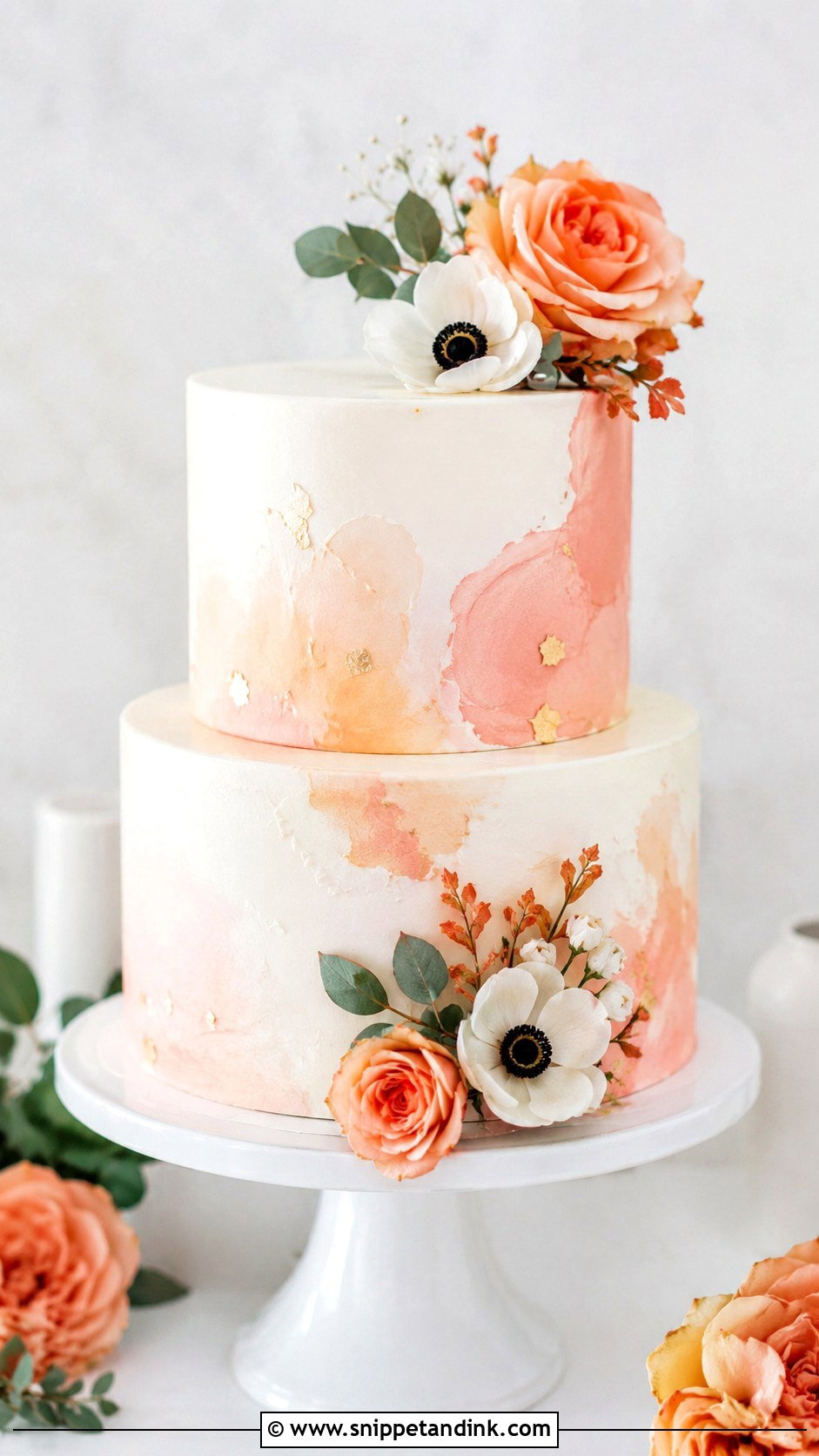
The painted effect comes from colour applied in thin layers, either brushed onto fondant with diluted gel or blended into buttercream with a palette knife using two or three shades. Blush, lavender, peach and soft green blend well with floral palettes. The buttercream version is softer and less predictable, so I ask couples to accept some variation from the inspiration photo. Keep the decoration minimal, a few sugar flowers or gold flecks at most. You get a custom look without a tall or complicated structure.



15. Two Tier Marble Wedding Cake
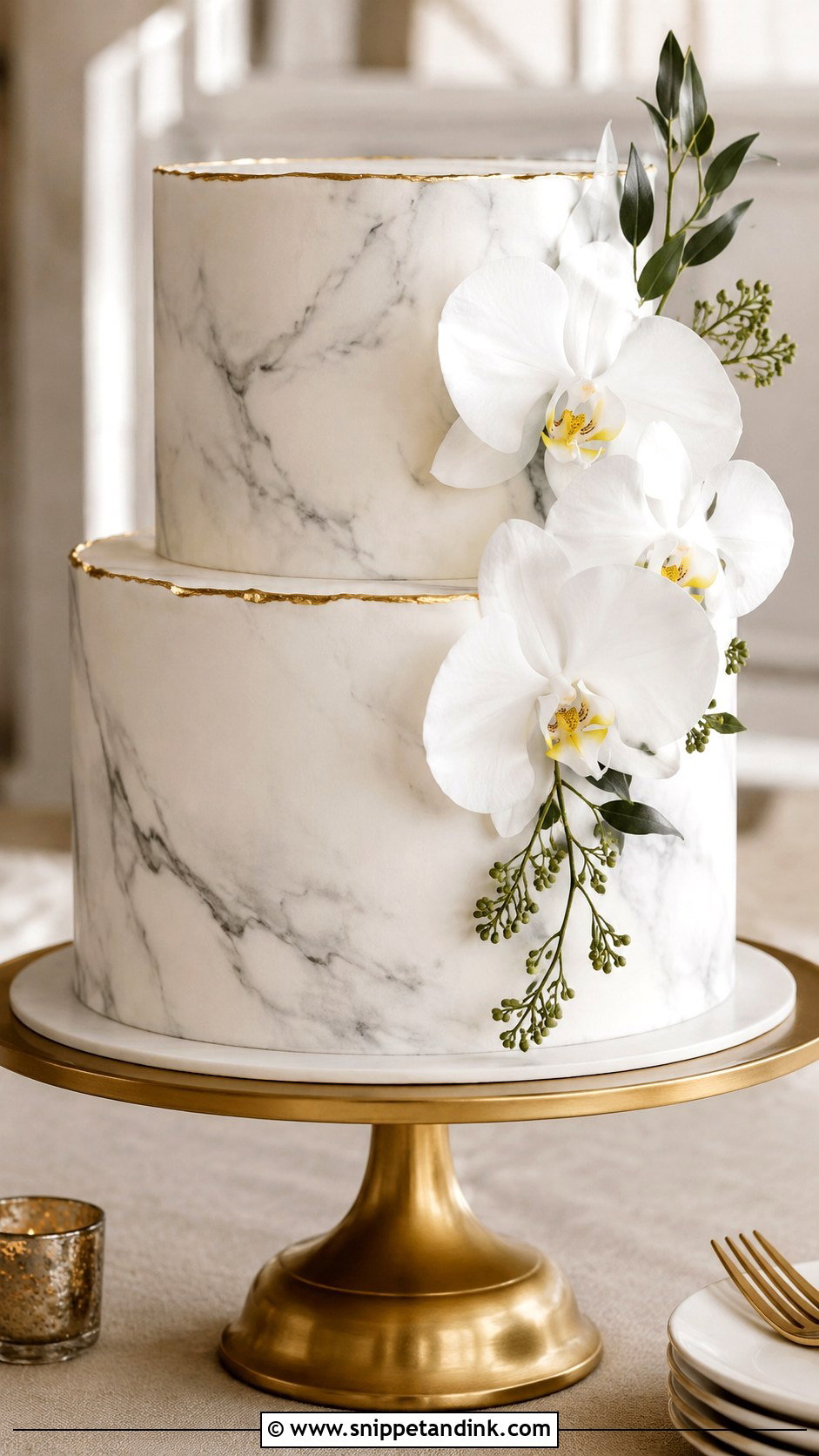
Marbling works best on fondant, because the colours are kneaded through before rolling and the veins stay sharp. Grey, white, beige or blush swirl together like stone. Grey marble alone can feel cold, so a thin gold edge or a small floral cluster warms it. Keep the table plain so the pattern stands out at a hotel or modern venue. One honest downside: plenty of guests peel fondant off, so I keep it thin over a buttercream worth eating.
16. Two Tier Ruffle Wedding Cake
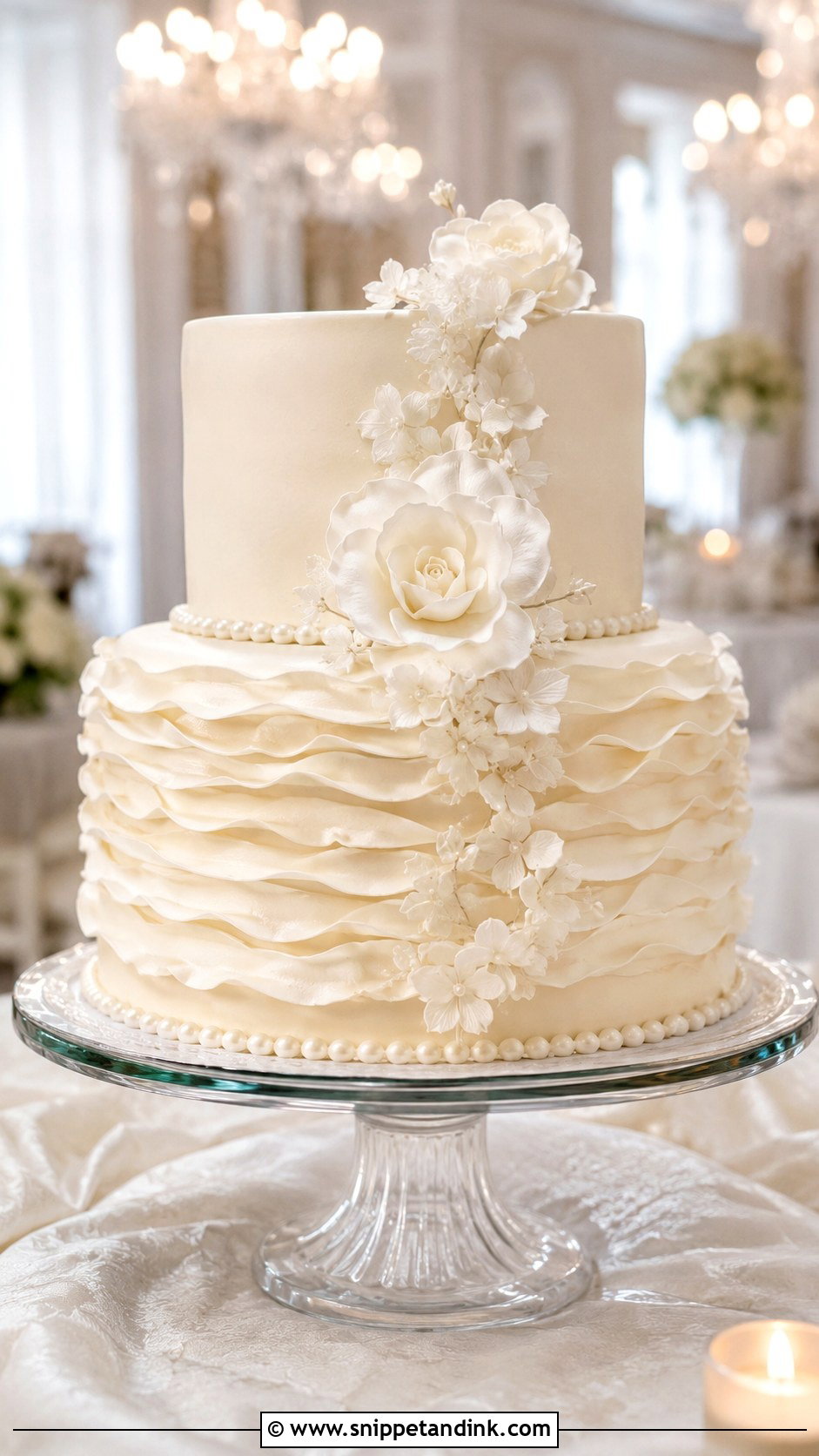
Ruffles are piped with a petal tip in buttercream, or cut and frilled from thin fondant strips, and both take time. That’s why ruffling only the lower tier is a common way to keep cost and weight down while still getting the effect. Neat rows look refined; loose ones look airy. White, ivory, blush and champagne keep it bridal. Buttercream ruffles are the most fragile finish to transport, and their edges are the first thing to soften in a warm room. A small floral topper or nothing at all suits it.
17. Two Tier Drip Wedding Cake
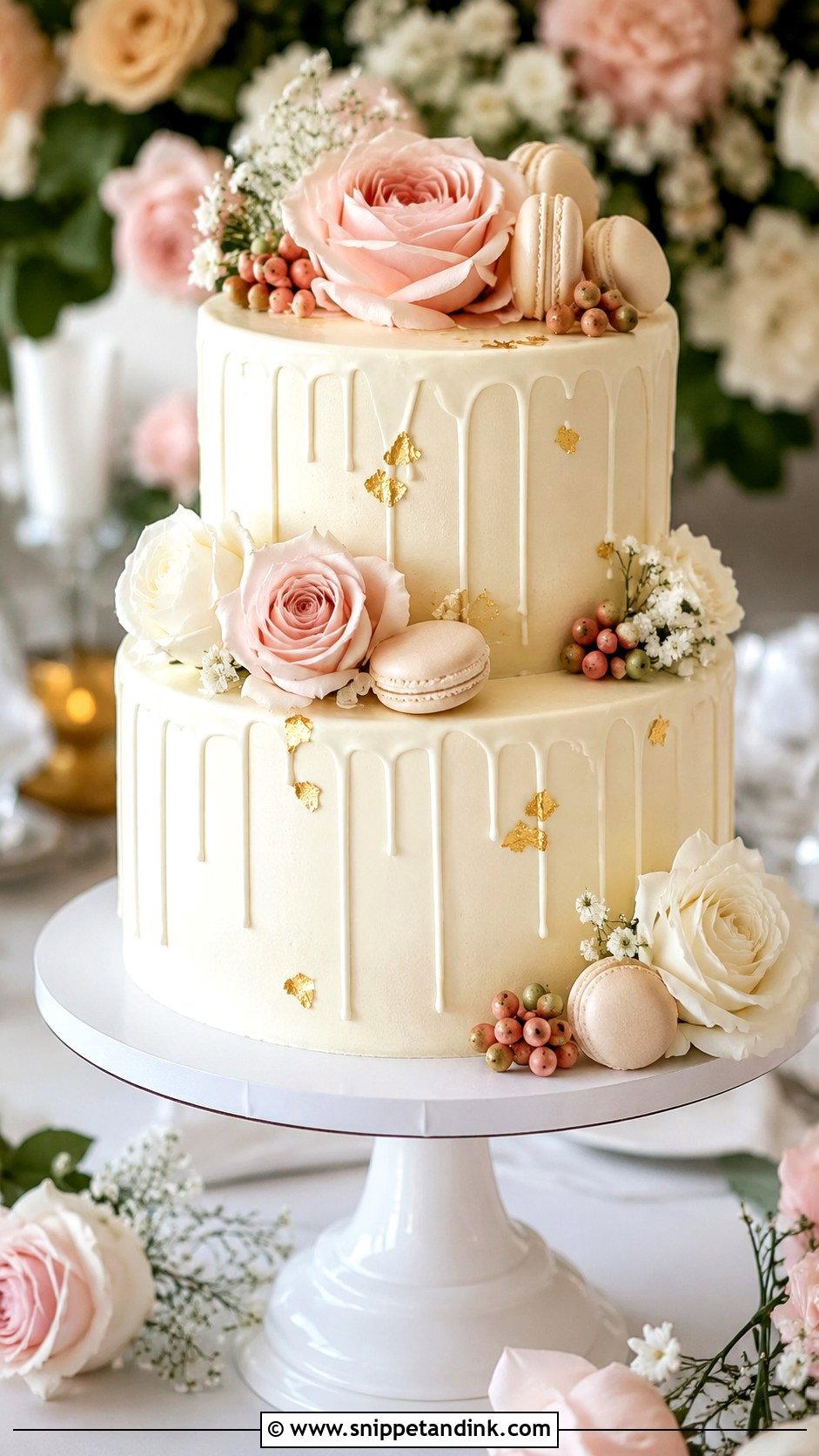
A drip is a consistency job. Ganache poured too warm runs straight to the board; too cool, it stops in stubby blobs. I test one drip on a chilled tier before going round. White chocolate over ivory buttercream is soft and bridal, caramel warms up an autumn wedding, and a gold drip over smooth white is the glamorous version, painted over a set white chocolate drip. Controlled drips read polished; uneven ones look messy fast. Flowers, macarons or berries finish the top.
18. Two Tier Fruit Wedding Cake
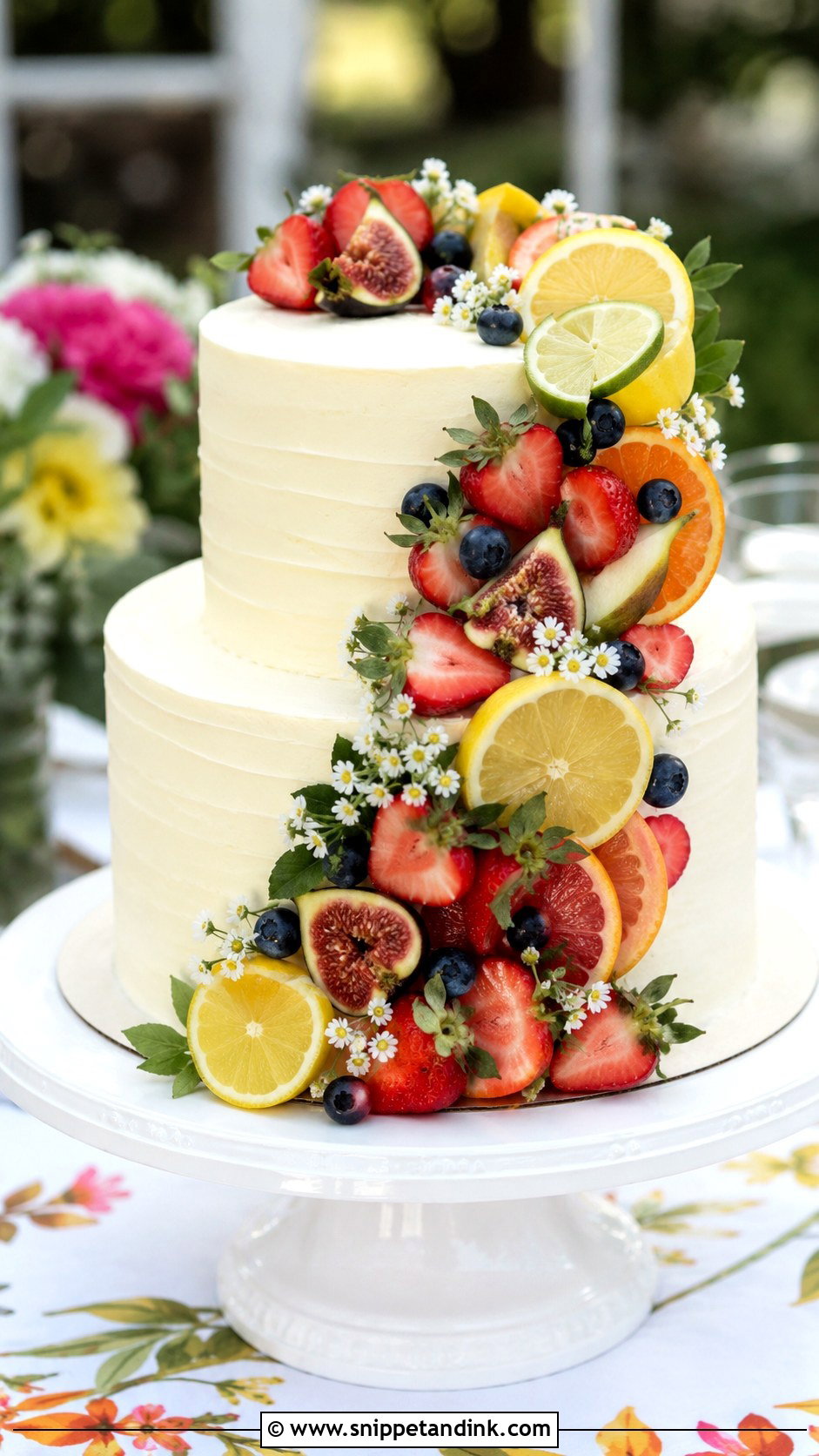
A two tier fruit wedding cake is my usual answer for hot weather, because fruit brings color without heavy sugar decorations that can sweat. Berries, figs, citrus slices, grapes and cherries all work over smooth buttercream or a semi-naked finish. Place it with a plan, such as a crown on the top tier and a small cascade down one side. I never press cut fruit into frosting until the last minute, since the juice bleeds and leaves pink streaks in white buttercream. Lemon, vanilla, almond and berry sponge match it at a brunch or summer reception.
19. Two Tier Chocolate Wedding Cake
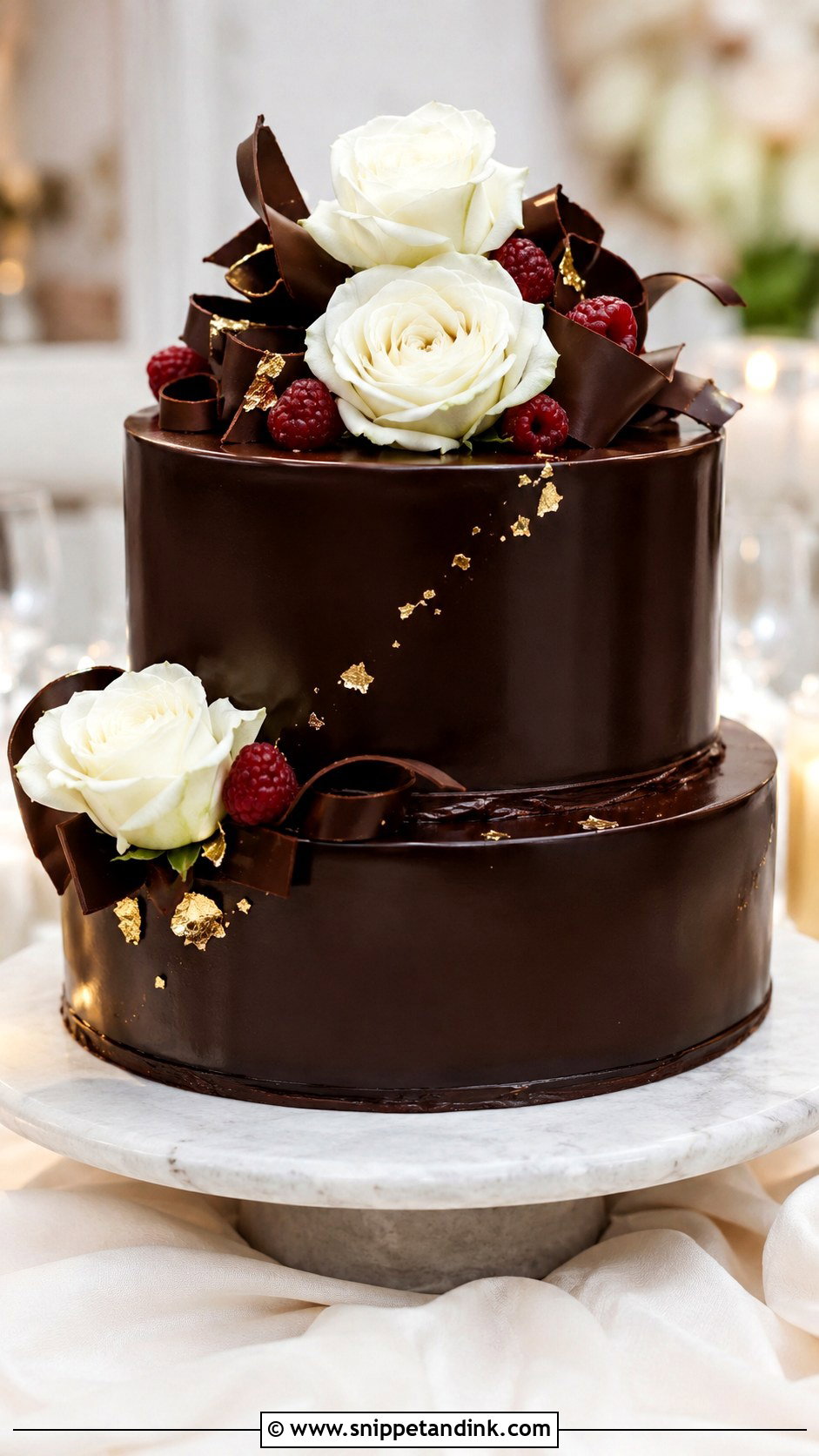
A two tier chocolate wedding cake suits couples who’d rather skip the usual white. Dark ganache looks sleek and formal; chocolate buttercream feels softer and more rustic. Brown cakes can disappear in photos against dark wood or low light, so I put them on a pale stand or table and add white flowers, gold leaf or berries for contrast. Raspberry, espresso, caramel and hazelnut fillings all pair well, and here the flavor really does lead the design.

20. Two Tier Square Wedding Cake
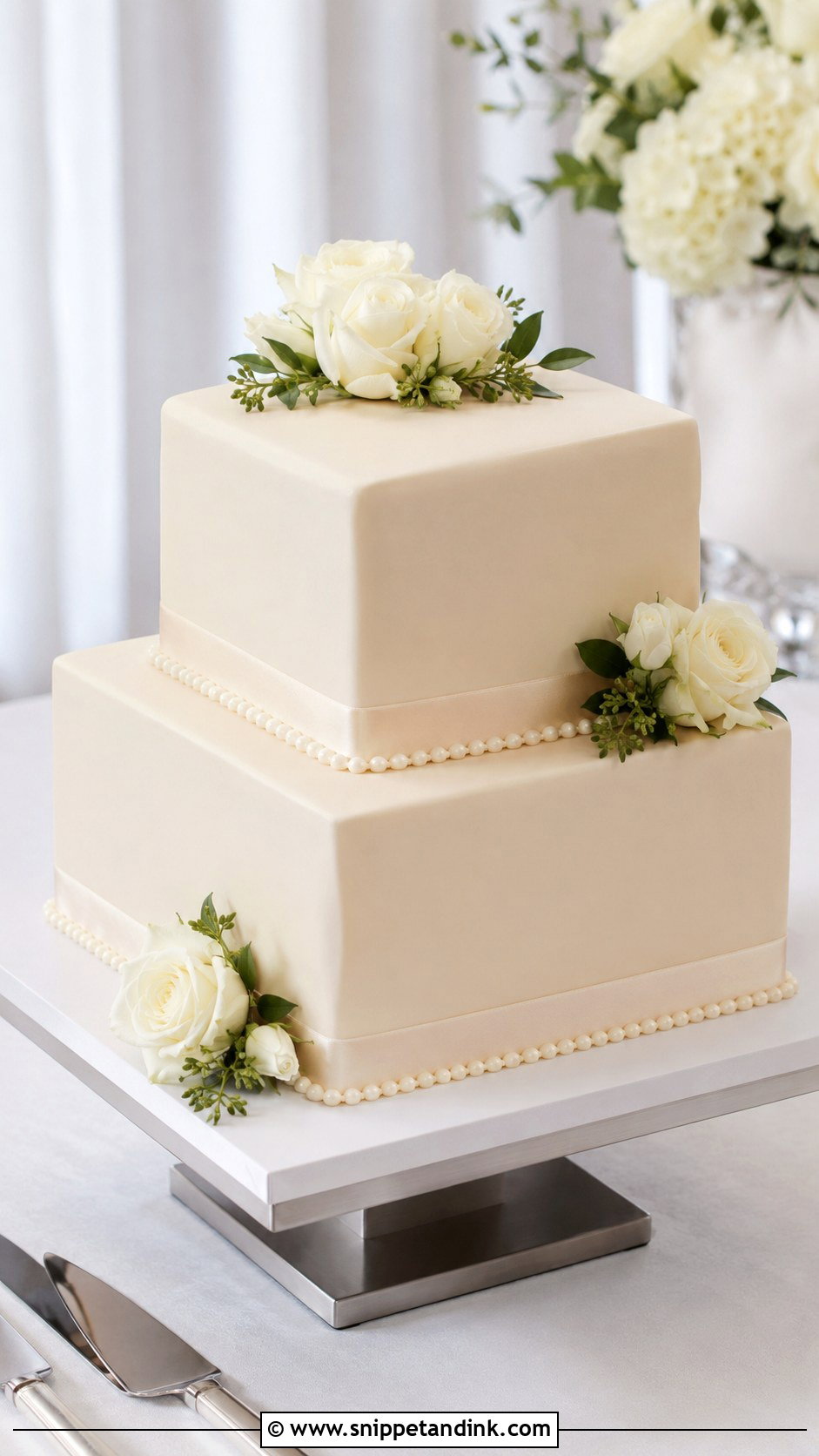
Square tiers look tailored and architectural, but they’re harder to finish than rounds: four corners each need to be sharp, and any bulge shows along a straight side. That’s why so many are covered in fondant. A practical bonus is that they cut into neat, even portions and serve a few more guests than a round of the same width. Ribbon borders, pearl trim, painted details or small flower clusters at the corners suit the shape. Ivory, champagne or soft blush keeps it traditional despite the modern outline.
Ordering Timeline, From Tasting to Delivery
Wedding bakers can only make a few cakes each weekend, and the busy months fill early. A small cake still takes the same planning as a large one, just less baking. This is roughly how the process runs with me:
- Several months out: book your baker once your date and venue are fixed. Popular summer and autumn Saturdays go first.
- At the tasting: bring two or three inspiration photos, your invitation or colour swatches, and your florist’s details. Taste fillings and sponges together, since that is how guests will eat them.
- After the tasting: approve a sketch, flavours per tier and the stand, and pay the deposit to hold the date.
- Two to four weeks before: confirm your final guest count, because that sets the tier sizes and any kitchen cake.
- The week of the wedding: send the venue address, delivery access, set-up time, an on-site contact, and where the cake table will stand.
If you’re watching the budget, the things that add most to the cost are hand work, not size. Sugar flowers made petal by petal, dense overpiping, hand painting and fondant all take hours. Fresh flowers from your florist, a simple buttercream finish and fruit keep a two-tier cake far more affordable without making it look cheap.
Let the Venue Settle Half the Design
A two tier wedding cake shows that small doesn’t have to mean plain. Your venue and season decide half of it for you: a warm outdoor reception rules out some finishes, and a candlelit ballroom invites others. Classic receptions sit naturally with buttercream, pearls or soft flowers. Modern ones suit marble, square tiers, watercolor or metallic touches. Outdoors, the naked, fruit and greenery cakes feel at home. Whichever you pick, keep the frosting colour, decoration and stand talking to each other. One clear idea on a small cake always looks better than five.
You'll Like These Ideas:





Leave a Reply