
A Punjabi wedding is a week of events, not a single day, and each one asks something different of what you wear. Brides, bridesmaids, sisters and guests all end up packing for a mehndi, a sangeet, a ceremony and a reception, often with a jaggo or chooda ceremony in between. When I plan these weddings, outfits come up in almost every run-sheet conversation, because a heavy lehenga or an unpinned dupatta can slow a whole schedule. The ideas below cover lehengas, Patiala suits, phulkari, shararas, ghararas, Anarkalis and fusion looks, with notes on where each one fits in the week and what it needs to work on the day.
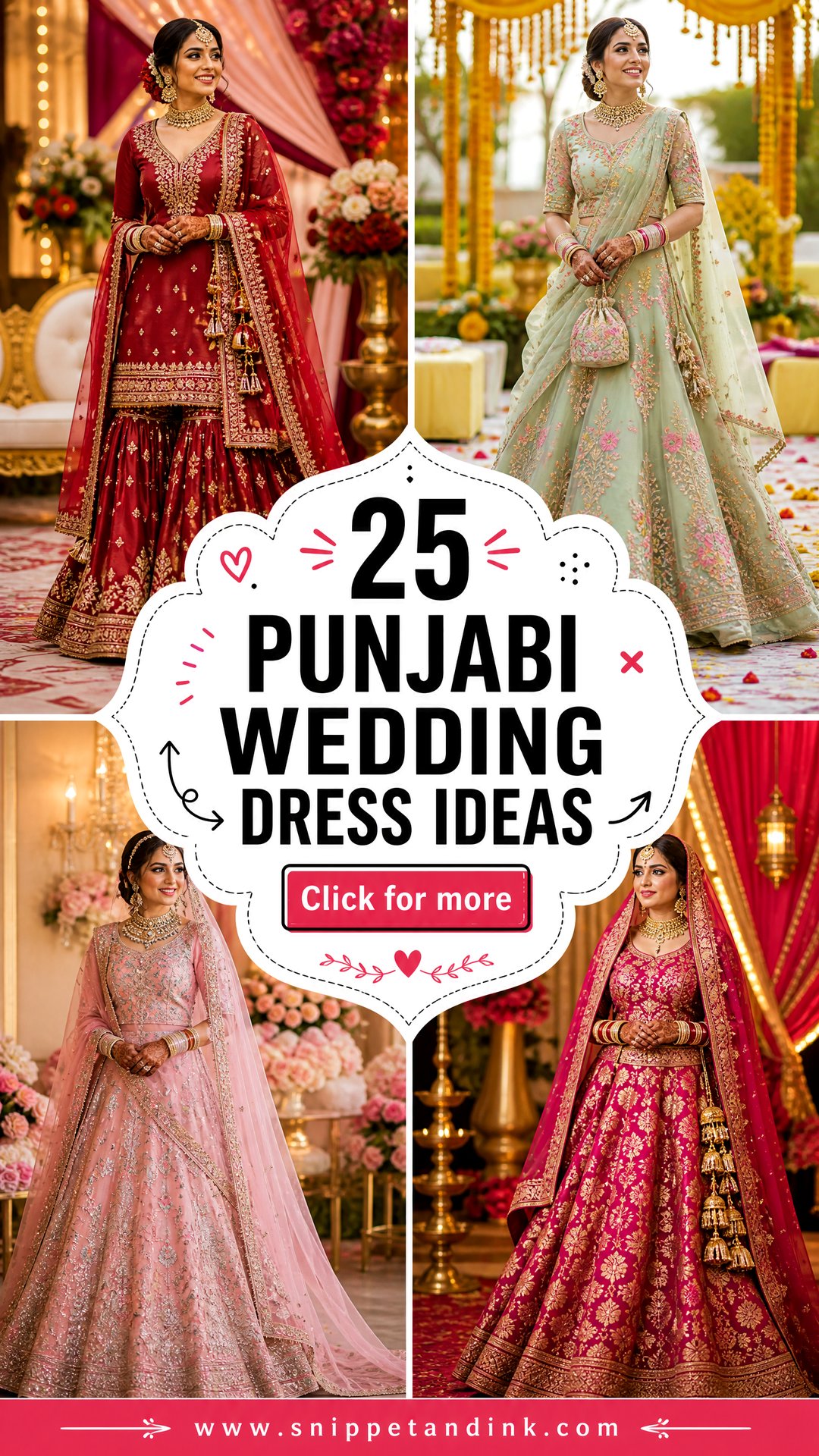
Mapping Outfits Across a Punjabi Wedding Week
The first outfit question I ask a couple is not about colour but about the calendar. A typical Punjabi wedding can run from roka or chunni through mehndi, jaggo, sangeet, the chooda ceremony, the Anand Karaj or pheras and the reception, and some of those land on the same day. Writing them down in order shows quickly where you need heavy pieces and where you need something you can sit, dance or get messy in.
- Give each event a weight: light for haldi and mehndi, medium for sangeet and jaggo, heavy for the ceremony and reception.
- Mark the events that are outdoors, on the floor or involve turmeric or henna, and keep delicate fabric away from them.
- Look for back-to-back events. A ceremony followed by a reception the same day needs a change slot with time for hair and jewellery.
- Note who helps with each change. Lehengas and pinned dupattas need two pairs of hands.
Once that list exists, outfits fall into place, and so does packing. I’d hang each outfit with its dupatta, jewellery box, shoes and pins together and label the bag with the event name. On a busy wedding morning, that single step saves a surprising amount of time.
1. Red Punjabi Bridal Lehenga
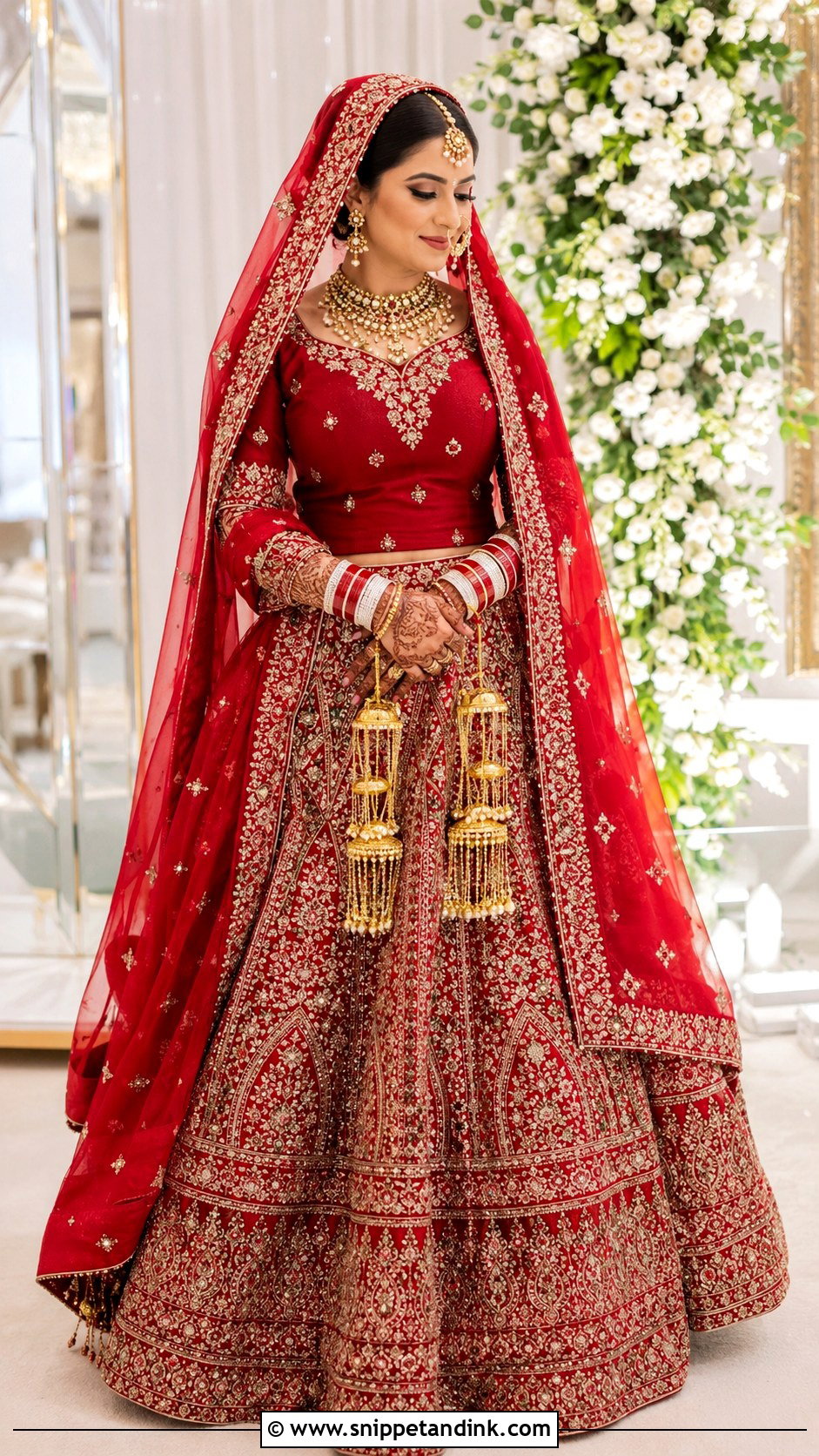
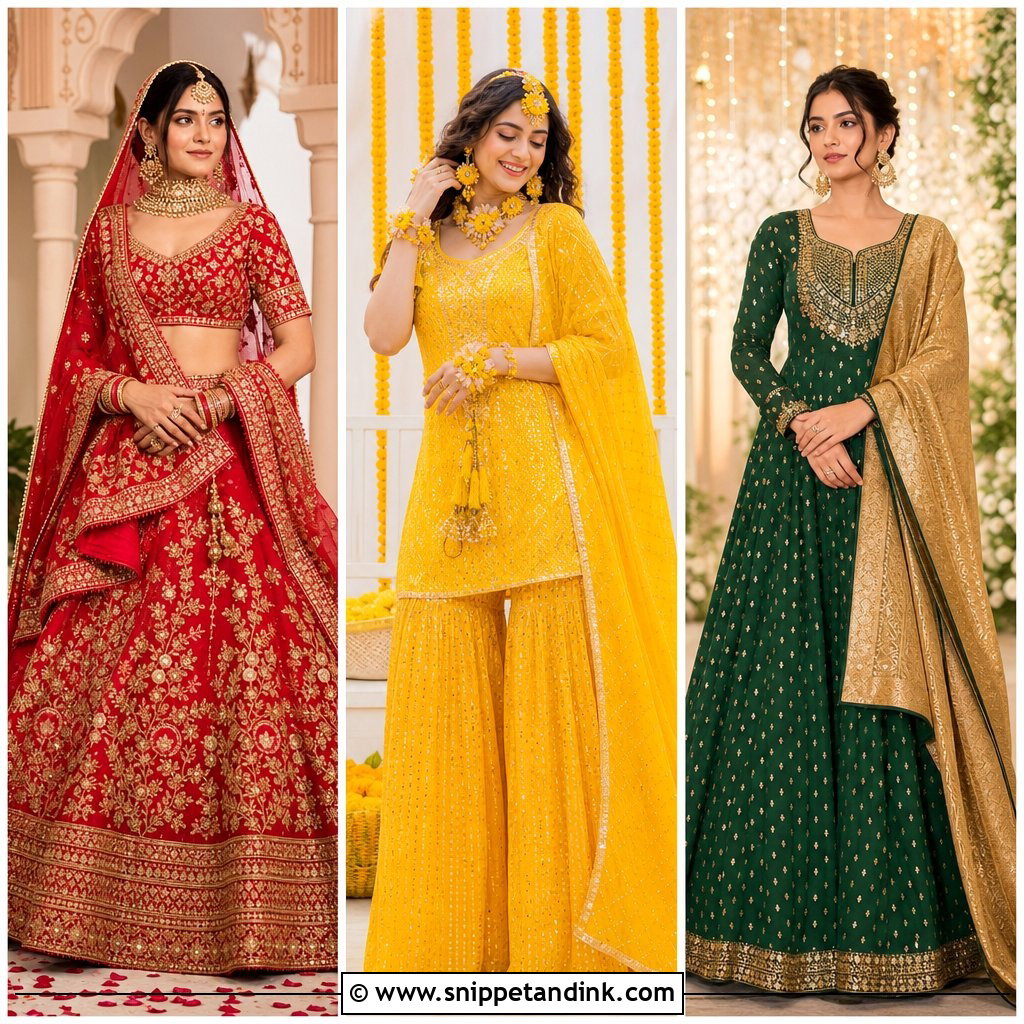
For the main ceremony, the red lehenga is still the anchor of most Punjabi weddings: deep red, sindoor or maroon, worked in zardozi, dabka, gota or resham. A fitted blouse with a modest neckline sits well under a heavy dupatta draped over the head or across one shoulder. Add chooda, kaleere, a passa, maang tikka, a layered necklace and embroidered juttis. From a scheduling view, this is the outfit that takes longest to put on, so I block at least forty-five minutes for dressing and dupatta setting after hair and makeup are done.
2. Pink Punjabi Lehenga With Phulkari Dupatta
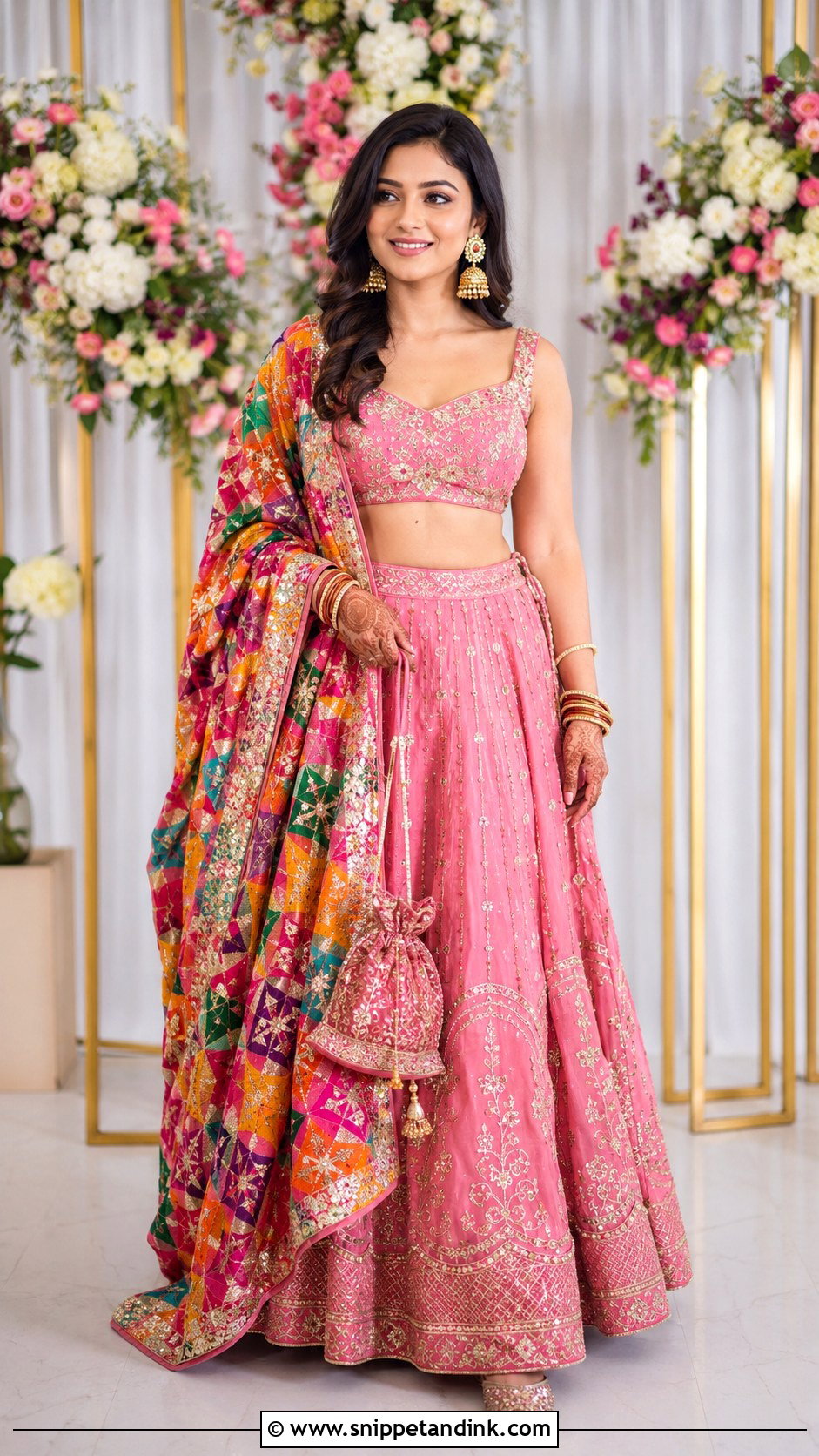
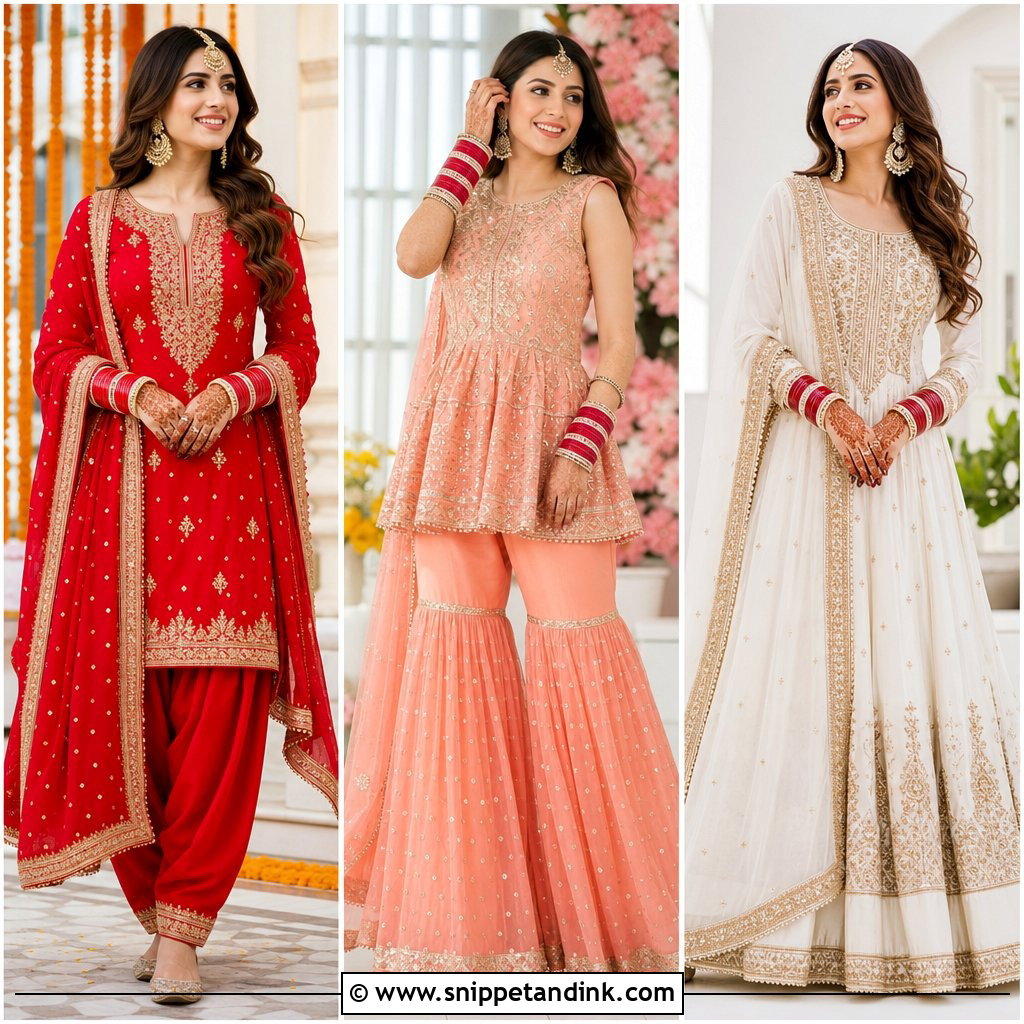
Pink with a phulkari dupatta gives you contrast without weight: a blush, rose or rani pink lehenga with light mirror or thread work, and the phulkari as the statement. It fits a mehndi, sangeet or daytime function. Lehengas at a mehndi have one practical issue. The bride sits for hours with wet henna, so I make sure someone is assigned to hold her dupatta and lift her skirt when she stands. Gold jhumkas, bangles, a small potli and juttis finish it; add a paranda braid and bindi for a more traditional feel.
3. Punjabi Patiala Suit With Short Kameez
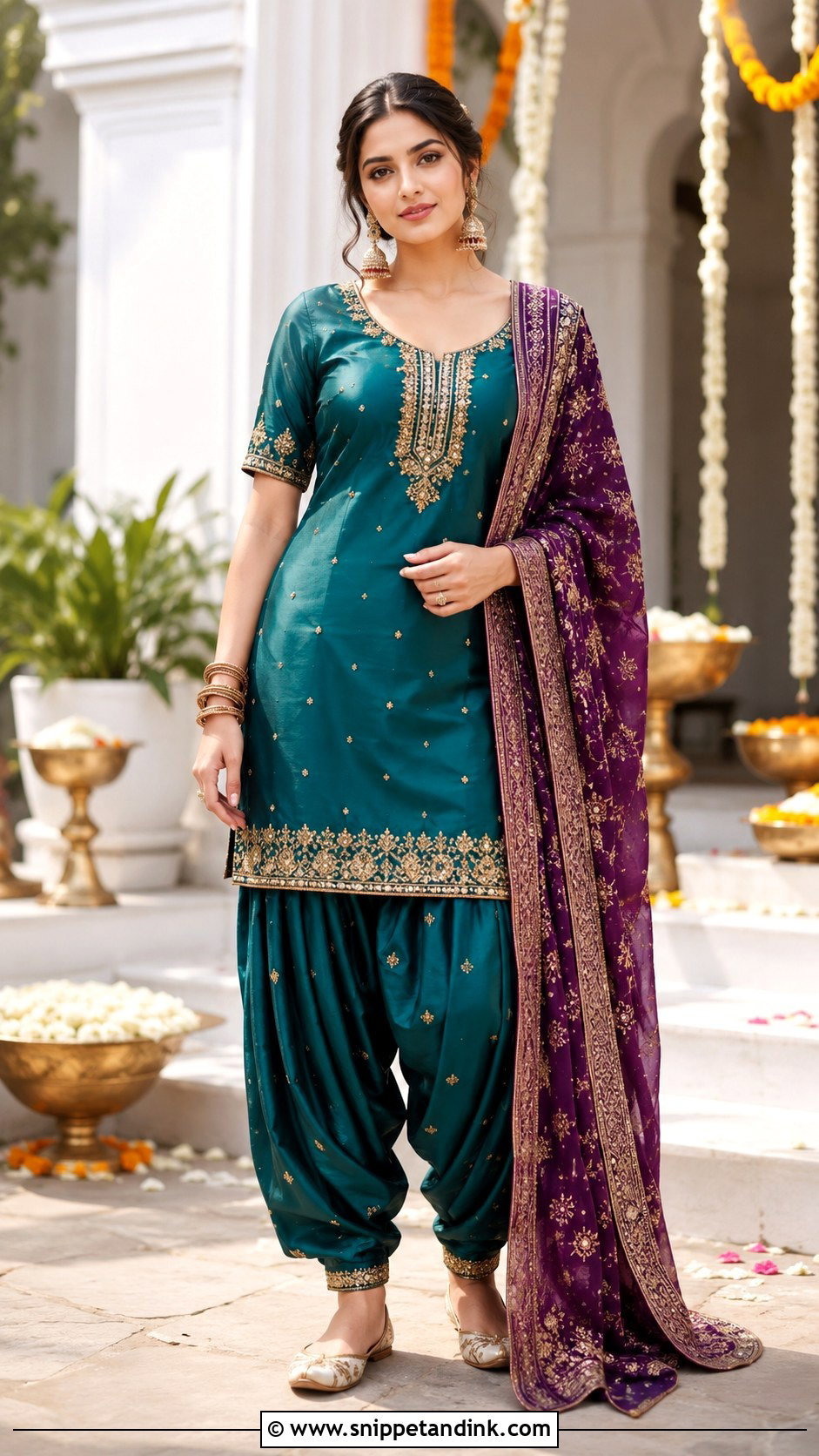
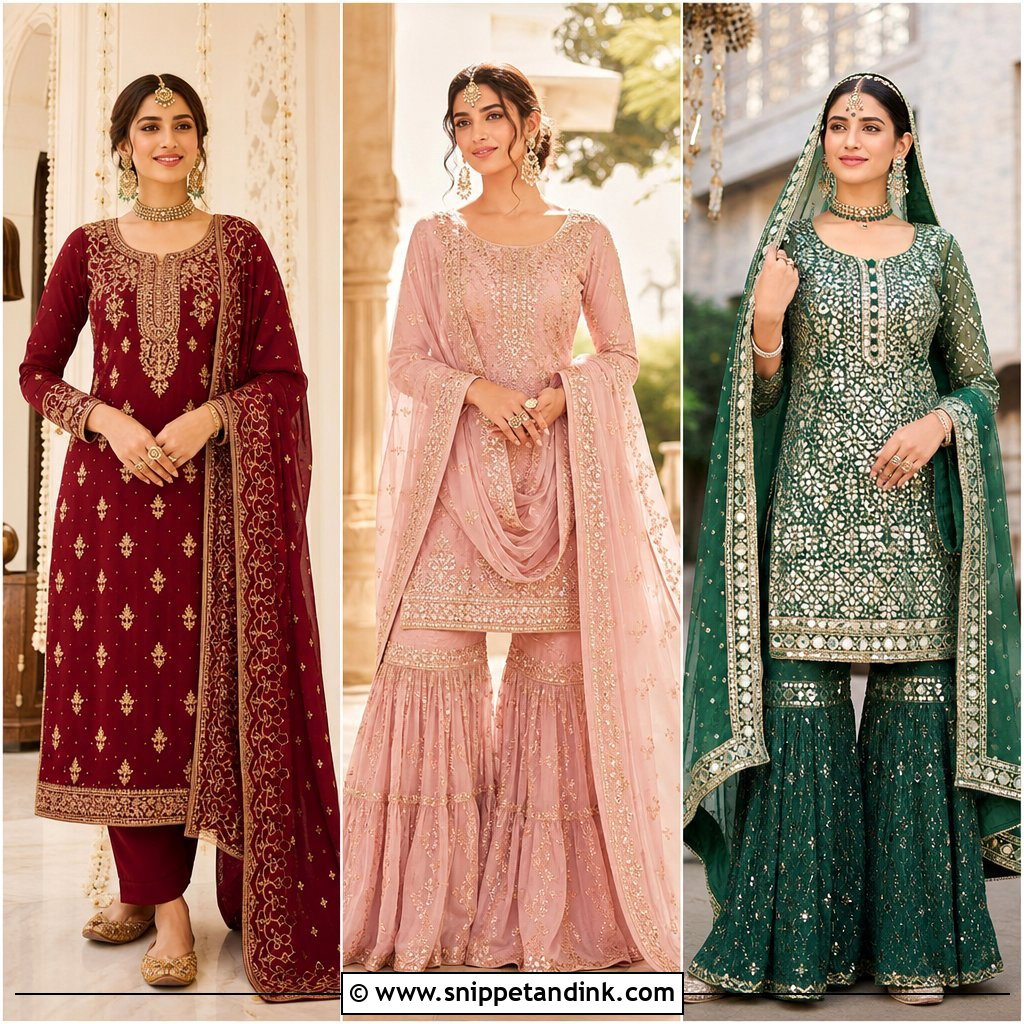
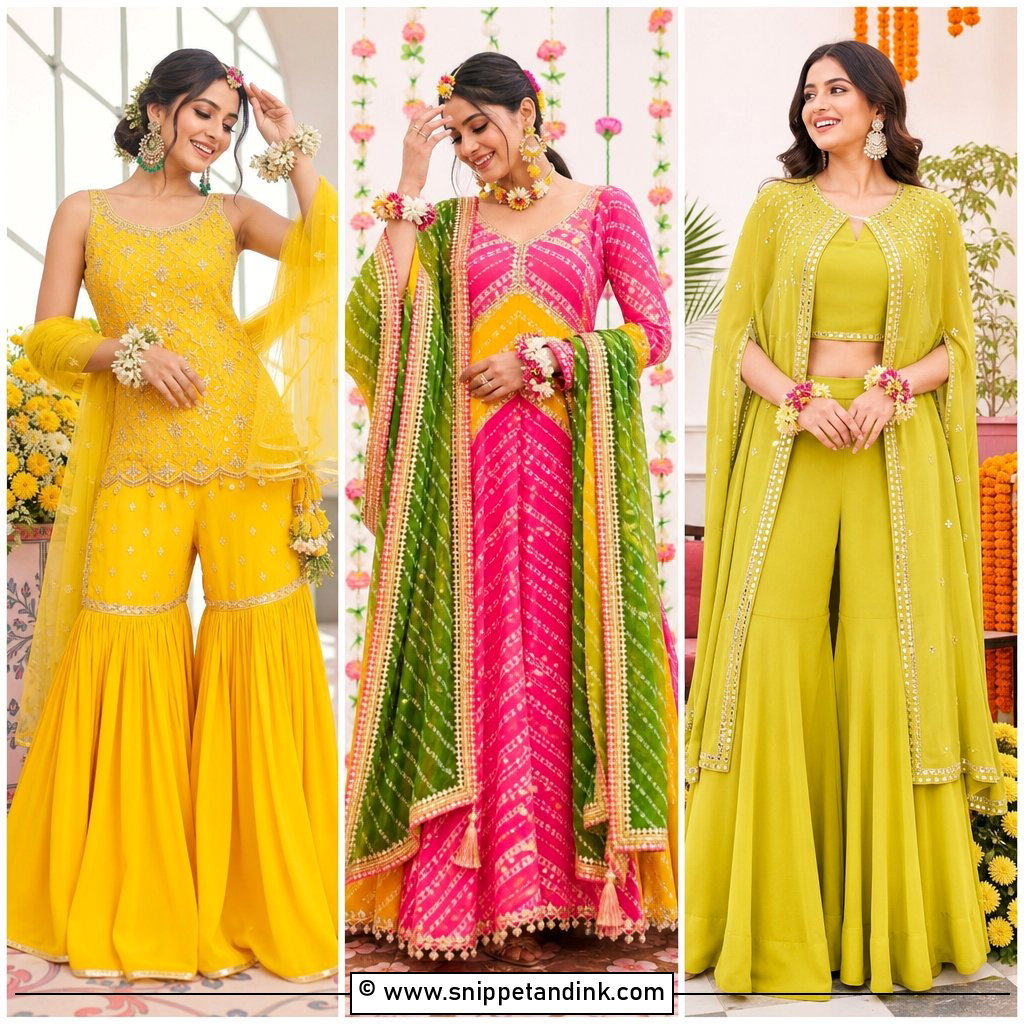
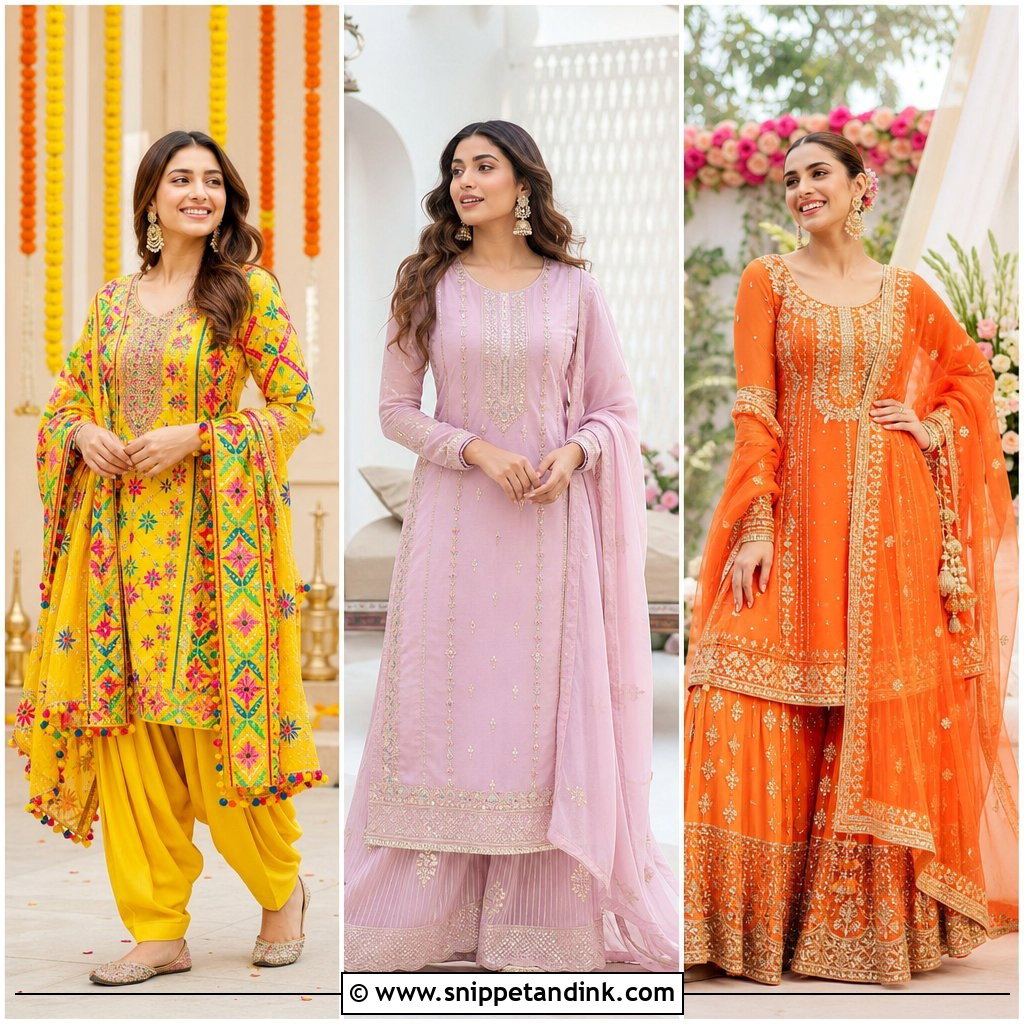
A Punjabi Patiala suit with a short kameez is the most recognisable Punjabi outfit of all. The pleats give volume and freedom, and the short kameez keeps it traditional. For a wedding, choose silk, georgette or brocade over plain cotton, in emerald, magenta, mustard, royal blue or maroon. Pair it with a heavily embroidered dupatta, jhumkas, glass bangles and juttis. It is the outfit I most often see on cousins and sisters who are also helping out, since it is easy to run errands in between dances.
4. Punjabi Sharara Suit For Wedding
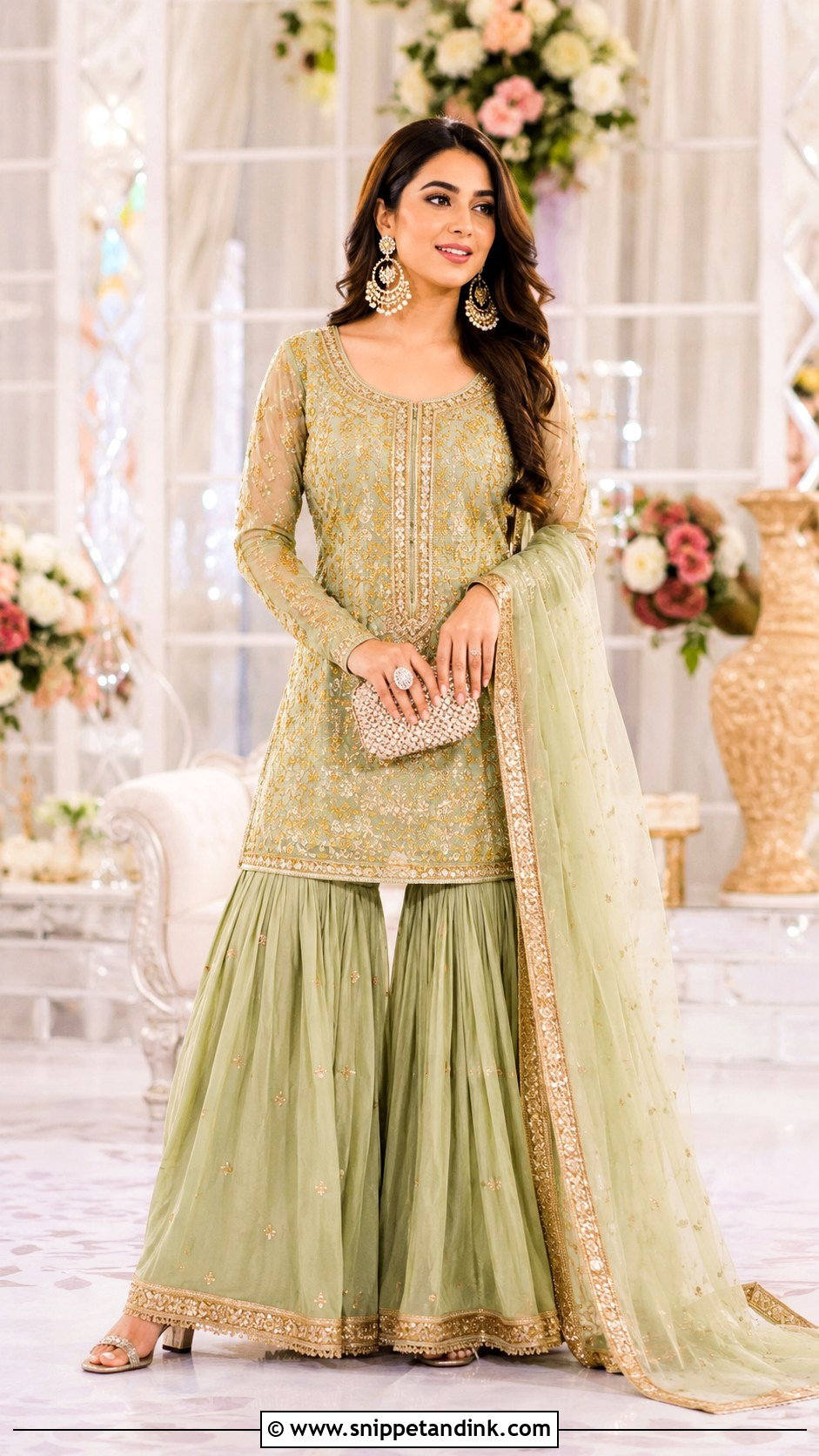
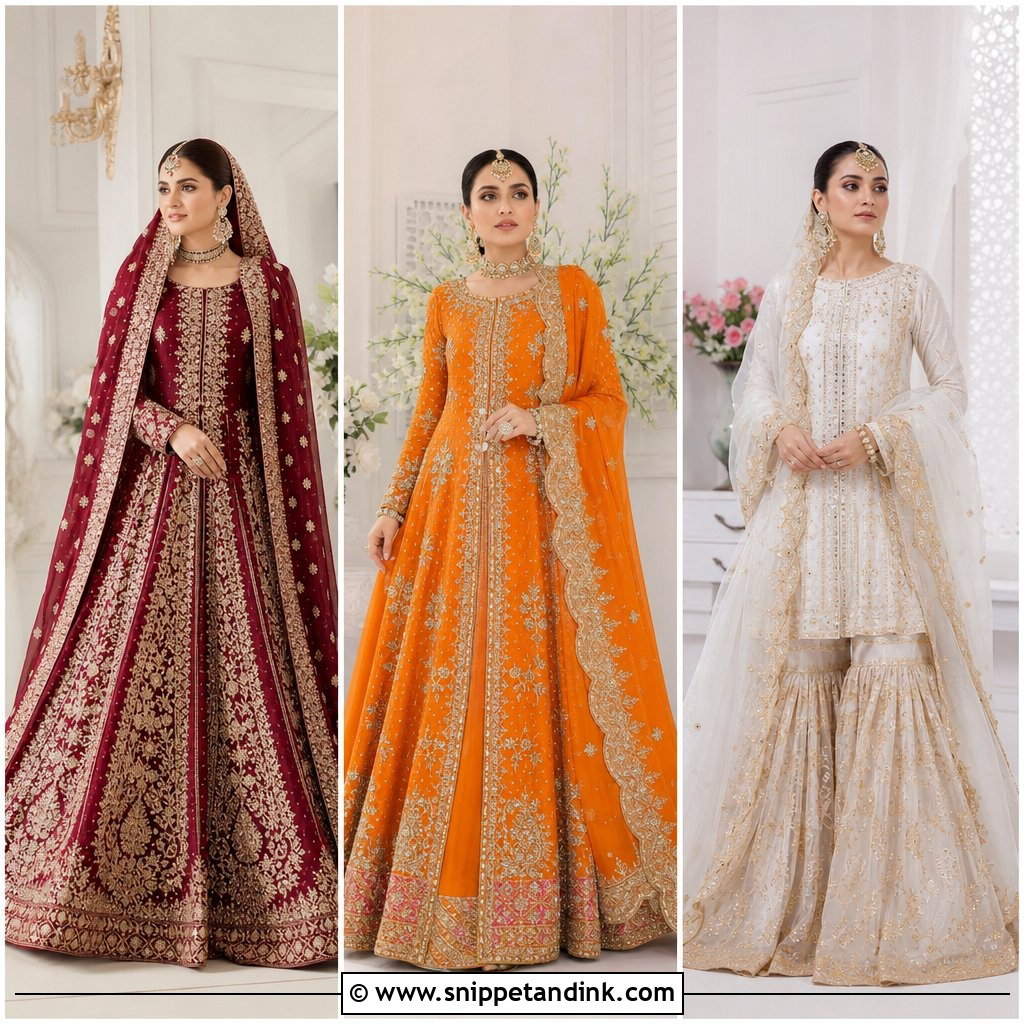
A sharara gives drama without lehenga weight. The pants flare, and the kurti can be short, straight, peplum or lightly flared. Silk, organza, velvet, georgette or net with gota patti, sequins, mirrors or zari borders makes it rich. A matching dupatta looks polished; a contrast one adds personality. The sharara’s width matters on a crowded dance floor and on venue stairs, so I flag it to anyone walking a stage entrance at the sangeet. Chandbalis, a statement ring and block-heel sandals or juttis complete it.
5. Punjabi Gharara Suit For Wedding
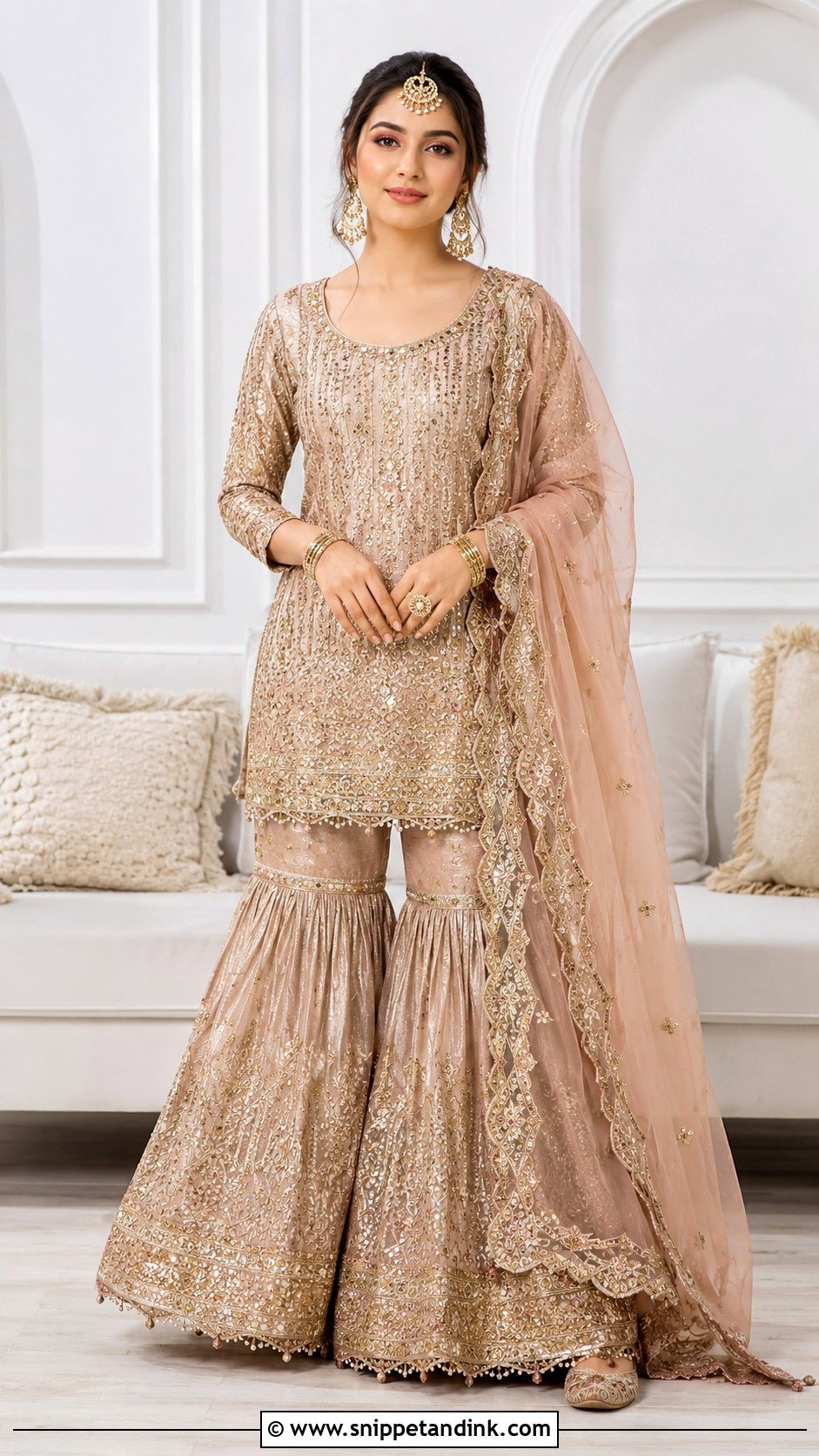
A gharara is fitted above the knee and flares below, which gives it a structured, slightly regal shape that stands out in family group photos. A short kurti with heavy borders, a scalloped dupatta and embroidery at the flare complete it. Ivory and gold, deep green, wine, navy and dusty pink feel elegant in the evening. Ghararas take a bit more skill to walk in quickly, so for anyone doing a choreographed entry I’d suggest a rehearsal in the actual outfit. Add a maang tikka, drop earrings and a small embroidered bag.
6. Punjabi Anarkali Suit For Wedding
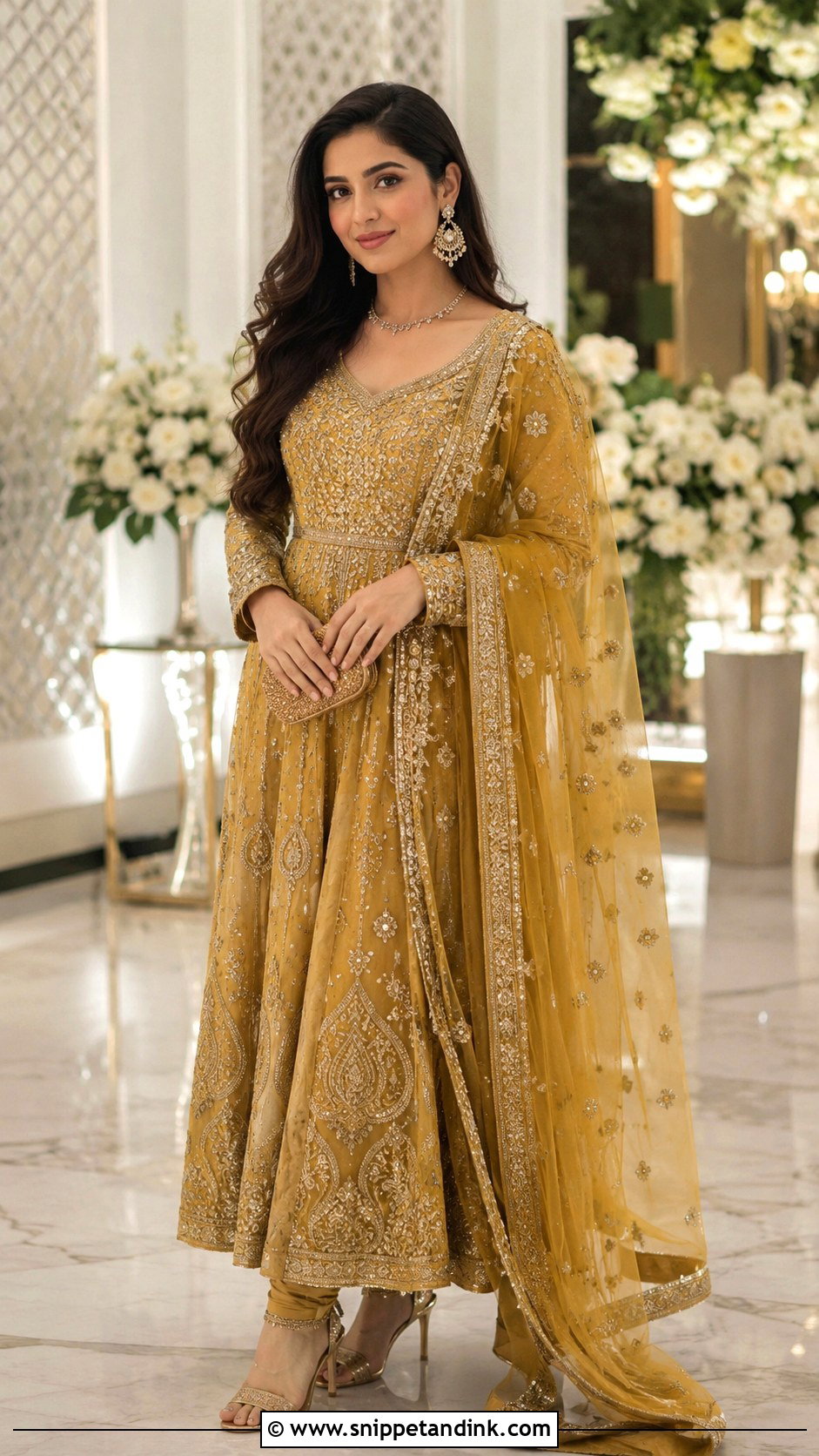
Anarkalis suit many body types: the long flared line gives a royal effect without a separate skirt. For a Punjabi wedding, look for embroidery on the bodice, cuffs and hem, with churidar, a flowing dupatta and comfortable heels or juttis. Jewel colours suit evening; pastels and ivory suit daytime. I like Anarkalis for guests who are travelling between venues, since there is only one main piece to steam and it packs better than a lehenga. Kundan earrings, a fine necklace and a sleek bun or soft curls finish it.
7. Punjabi Velvet Lehenga For Winter Wedding
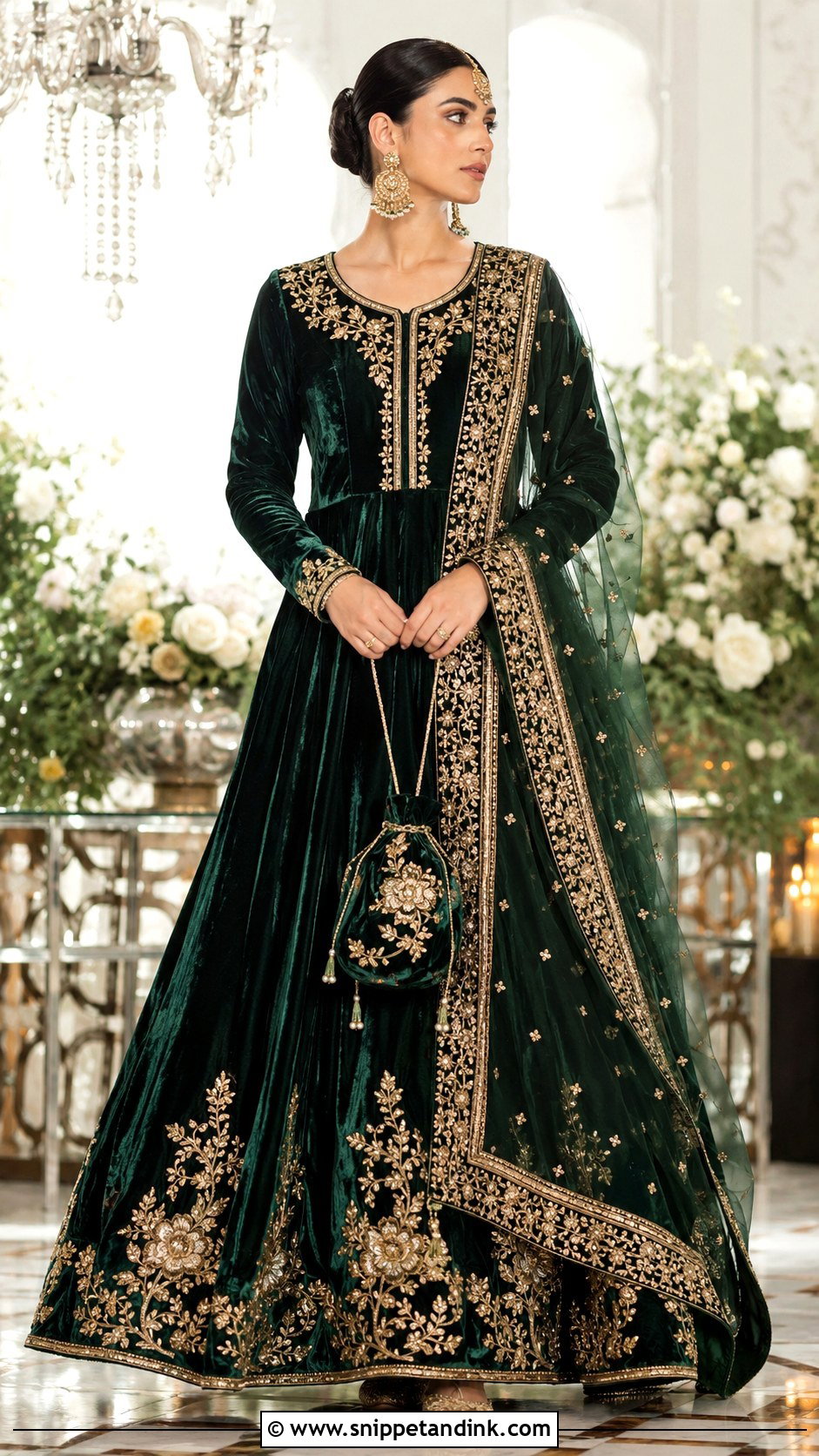
In a winter wedding, velvet is both luxurious and practical, and it doesn’t need heavy embellishment to look special. Maroon, emerald, navy, plum or bottle green with antique gold embroidery look rich. A full-sleeve blouse or velvet jacket blouse adds warmth. Pair it with a net or organza dupatta to lighten it. Evening ceremonies and outdoor venues in cold months suit it; indoors with heaters running, velvet gets hot fast, so I ask venues to keep the temperature moderate. Polki jewellery, a structured potli and velvet juttis complete it.
8. Punjabi Silk Salwar Kameez For Wedding
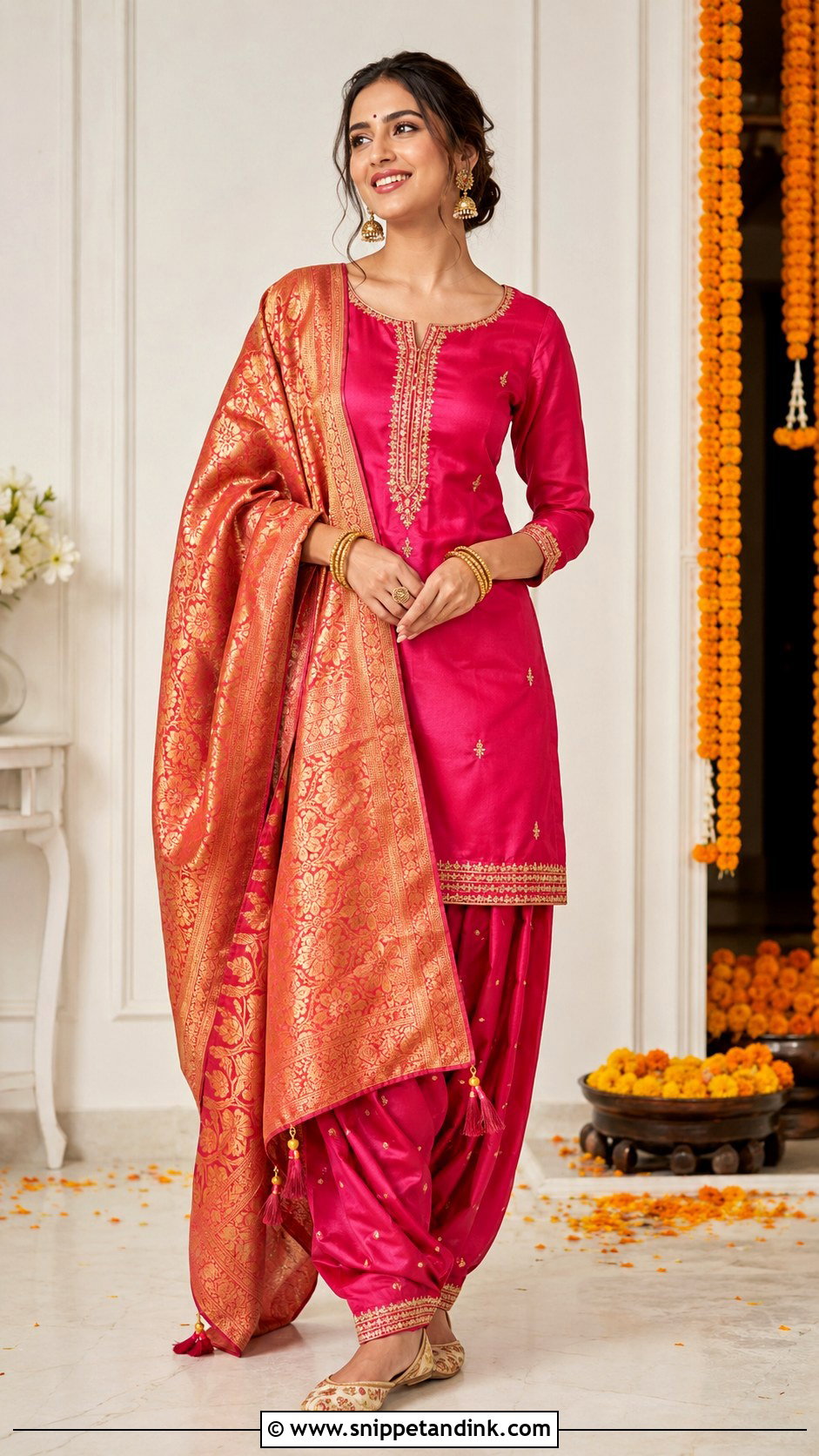
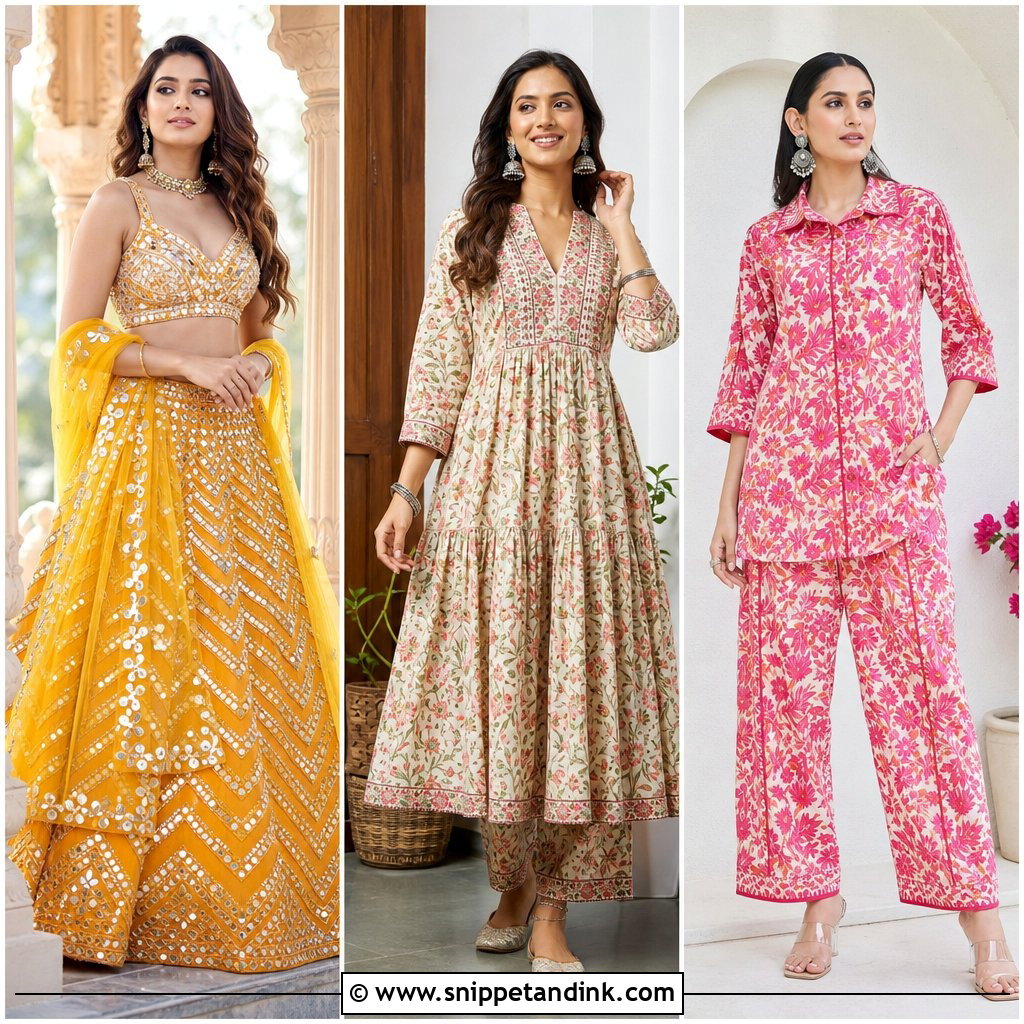
A silk salwar kameez is the lowest-fuss way to look traditional. Silk shines on its own, so even a simple cut looks dressed up. A straight or slightly flared kameez with matching salwar and a contrast dupatta, such as phulkari, banarasi or gota-bordered, transforms it. Turmeric yellow, hot pink, orange, teal and red are bright for pre-wedding functions. Relatives attending several ceremonies get the most out of it, because the same base can be restyled with a different dupatta for a second event. Gold earrings, bangles, a bindi and thread-work juttis finish it.
9. Punjabi Phulkari Suit For Mehndi
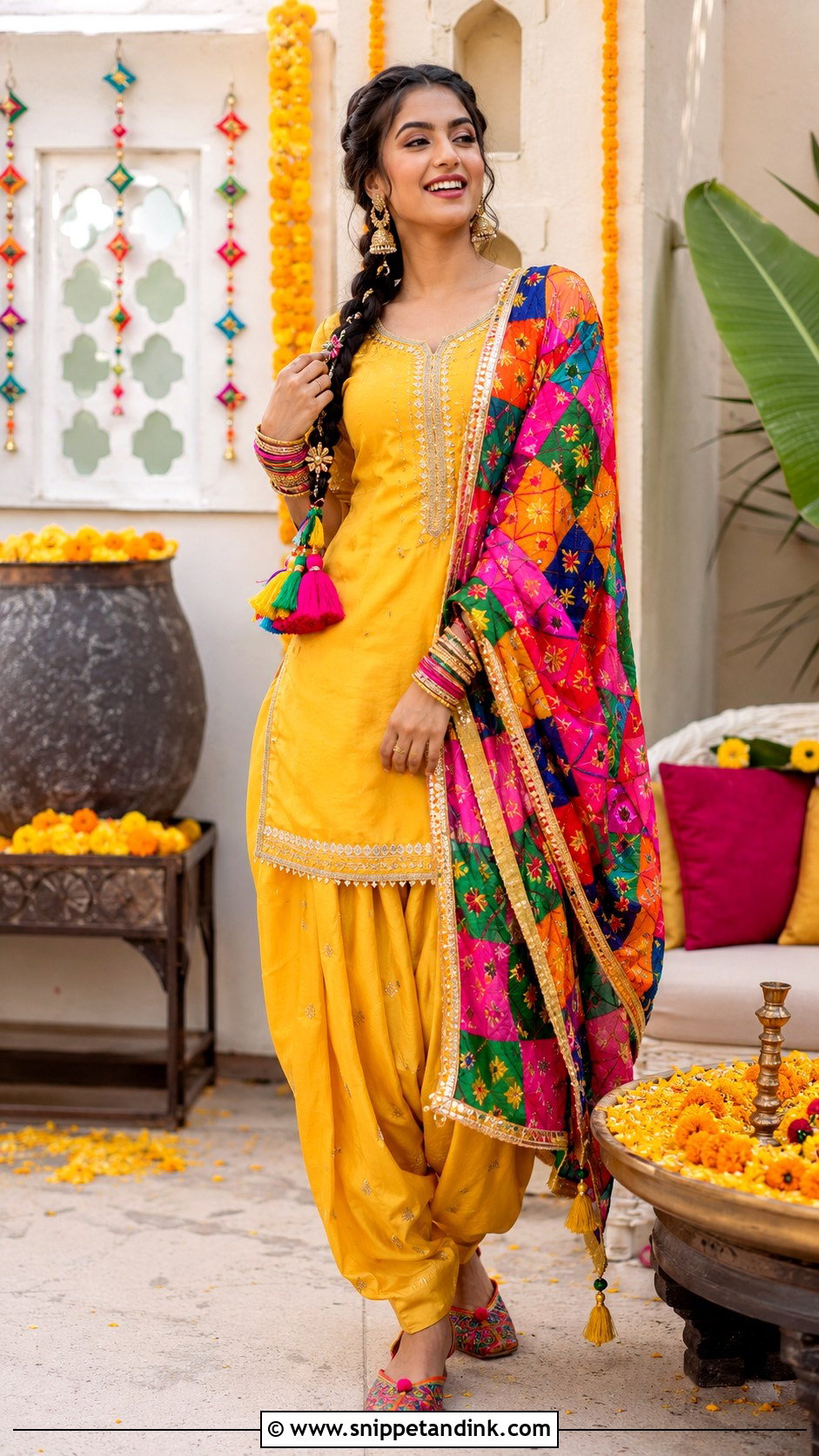
A Punjabi phulkari suit for mehndi keeps a daytime celebration bright. A plain or lightly embroidered kurta and salwar let the phulkari dupatta lead, in yellow, green, orange, pink or red. Choose a Patiala salwar for the classic look or straight pants for a cleaner version. This works for brides, bridesmaids, cousins and guests alike. Mehndi afternoons often run long, and guests queue to get their own henna, so I’d go for short sleeves or sleeves that roll easily. Paranda, jhumkas, stacked bangles and juttis complete it.
10. Punjabi Mirror Work Lehenga
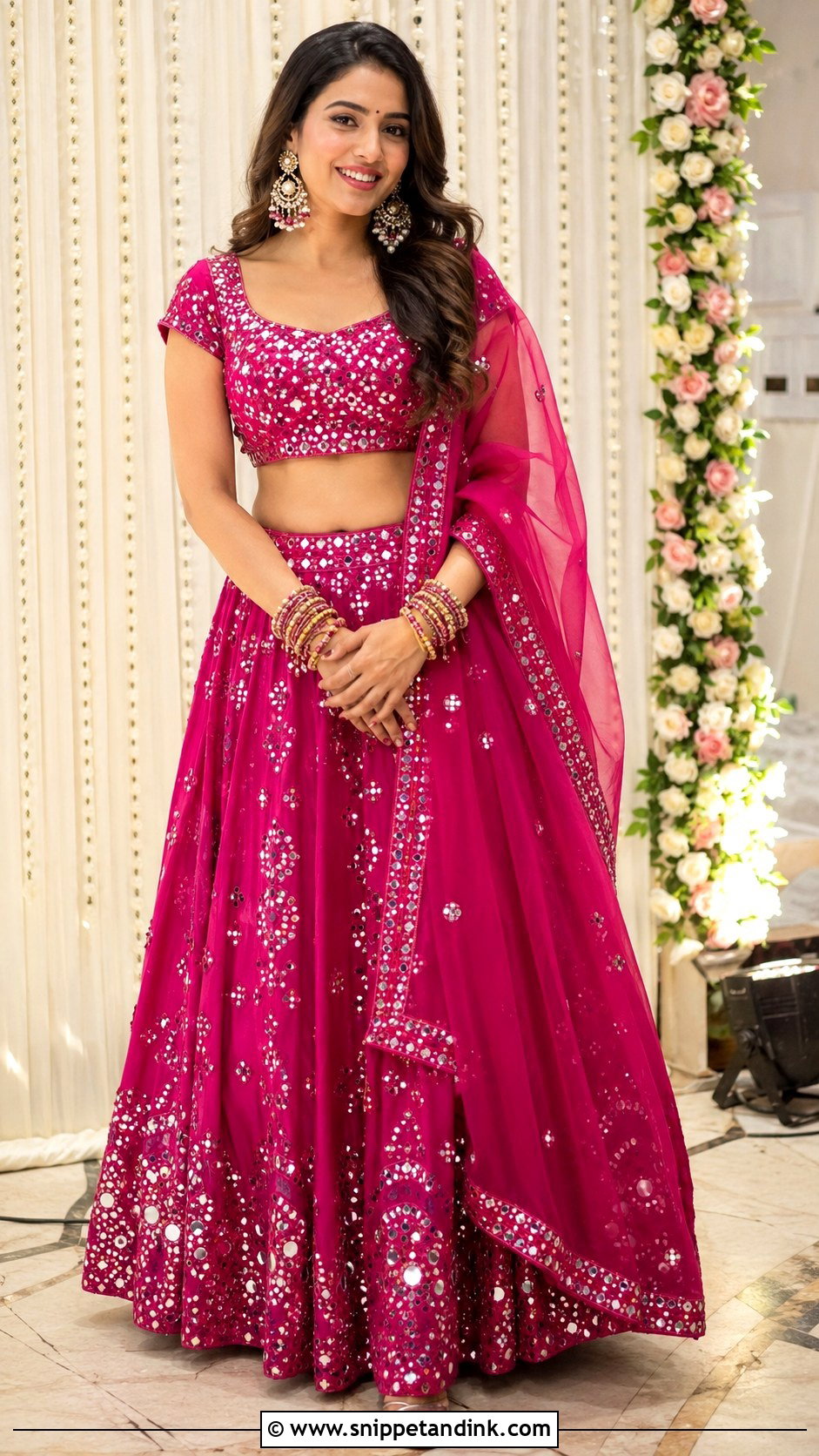
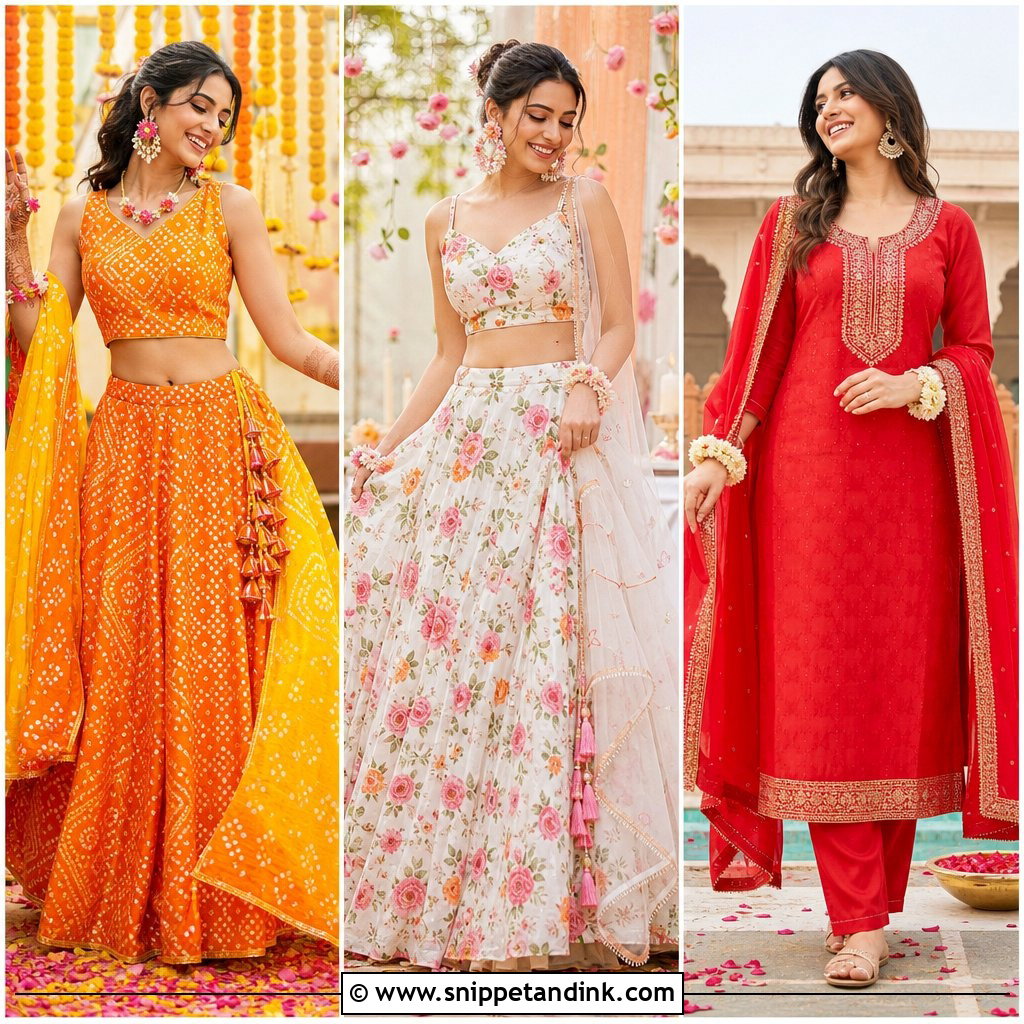
Mirror work brings sparkle to the sangeet or a cocktail night, and the small mirrors throw light around under stage lighting. Fuchsia, turquoise, lime, orange or purple give it a playful Punjabi feel. A cropped blouse with mirror detail and a light dupatta keeps it balanced. With a heavily worked lehenga, swap the necklace for statement earrings and bangles. Real mirror work is heavier than it looks, so I suggest trying a full dance routine in it before the night. Metallic sandals or embroidered juttis depending on the floor.
11. Punjabi Gota Patti Lehenga
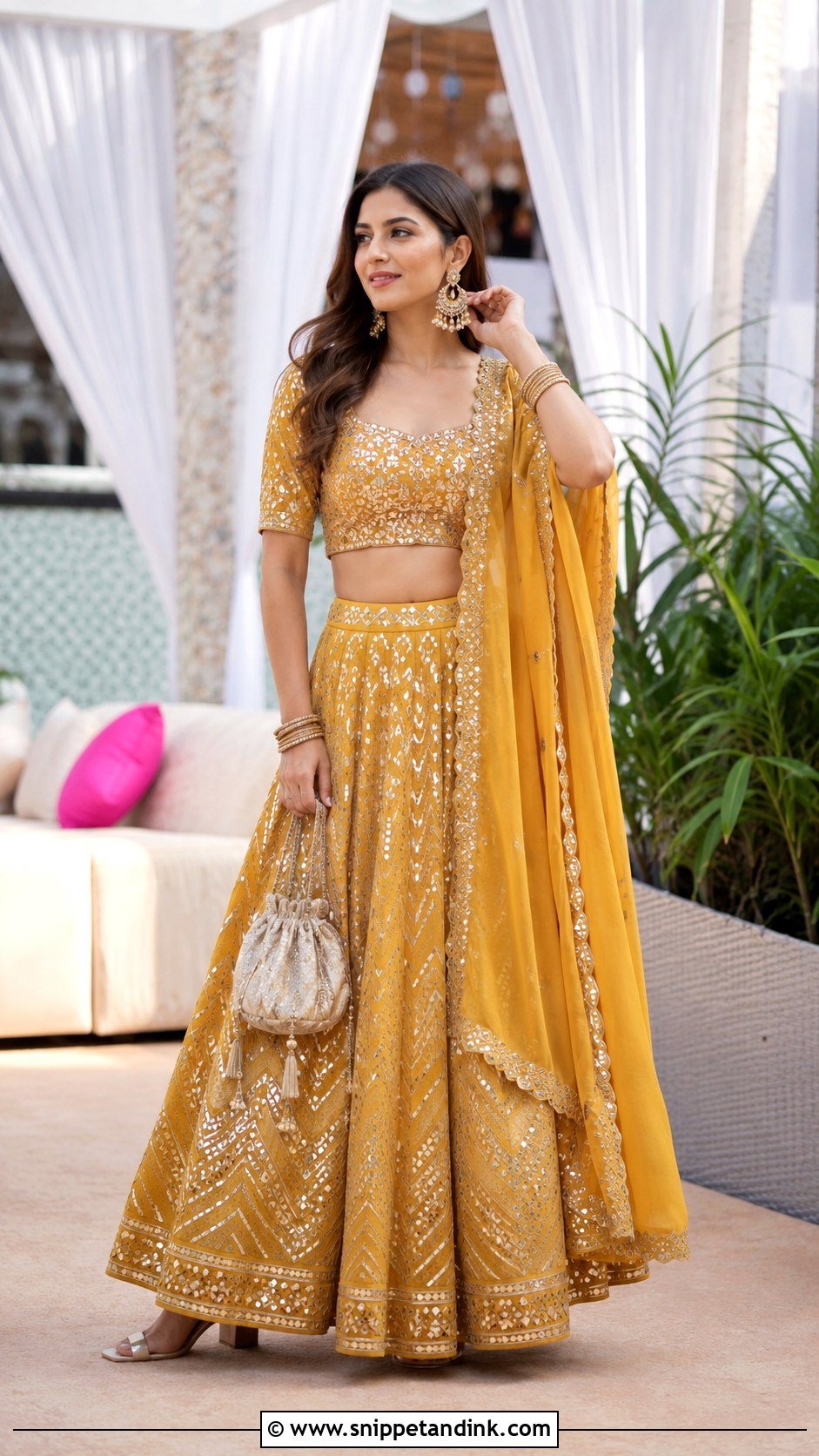
Gota patti gives shine without much weight, which is why bridesmaids, sisters and guests reach for it. It suits georgette, organza, chiffon and silk, in mustard, peach, mint, red or royal blue with a matching blouse and dupatta. The folded metallic ribbon reads as traditional and festive. It’s a fit for mehndi, haldi, sangeet or a daytime wedding. Group orders of gota lehengas for a bridal party take time, so I’d place them early in the planning timeline. A clean blouse shape and a few accessories keep it modern.
12. Punjabi Organza Lehenga For Day Wedding
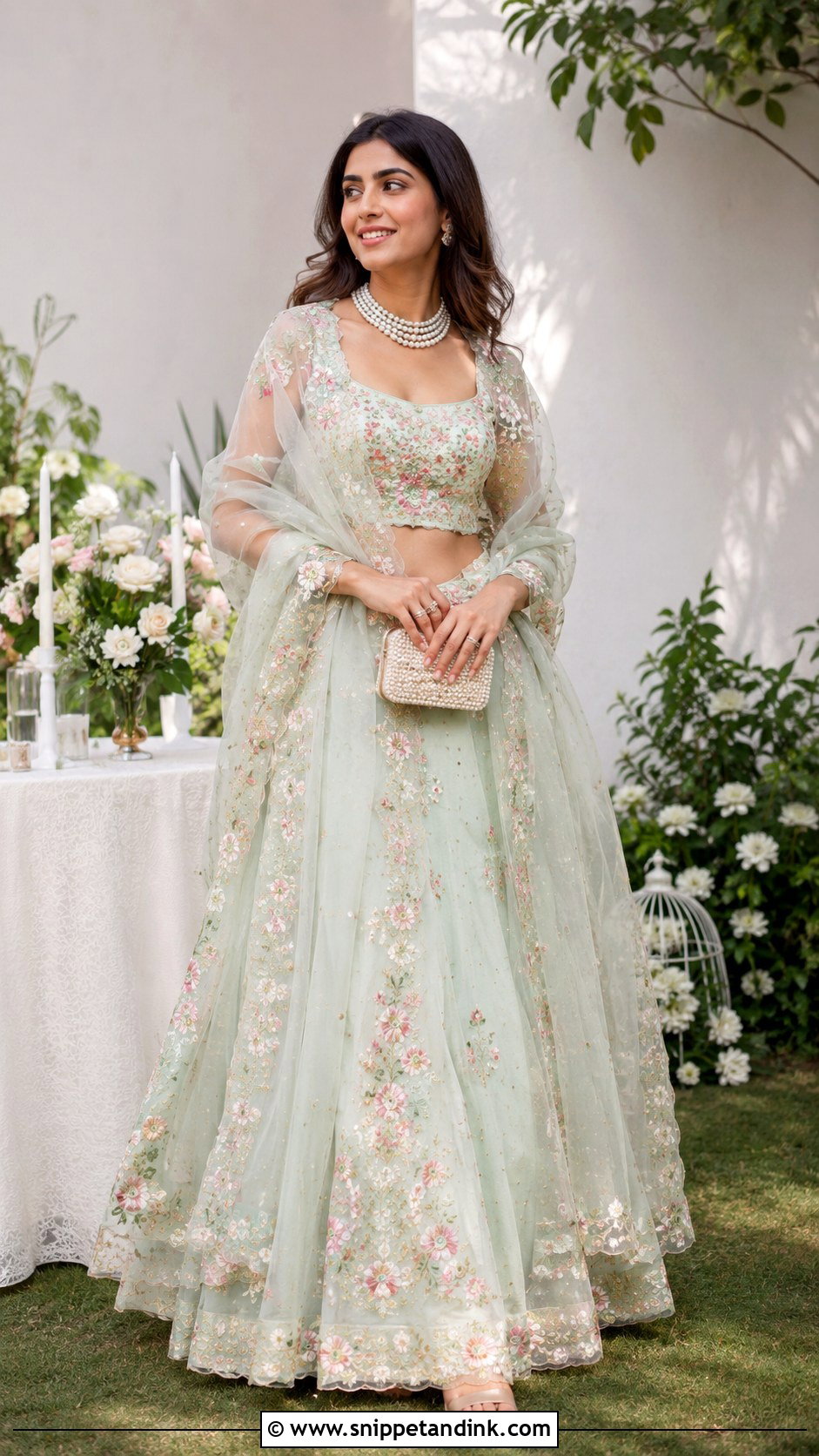
Organza holds a soft volume that glows in natural light, which is why it shines at outdoor and daytime functions. Powder blue, blush, mint, lavender or ivory with delicate embroidery look fresh. A fitted blouse and sheer dupatta keep it light. On breezy outdoor sites, organza dupattas lift and fly, so I keep a few spare pins on the planning kit for exactly this. Pearl jewellery, soft gold bangles and low block heels suit lawns better than stilettos, with a low bun or loose waves.
13. Punjabi Yellow Suit For Haldi
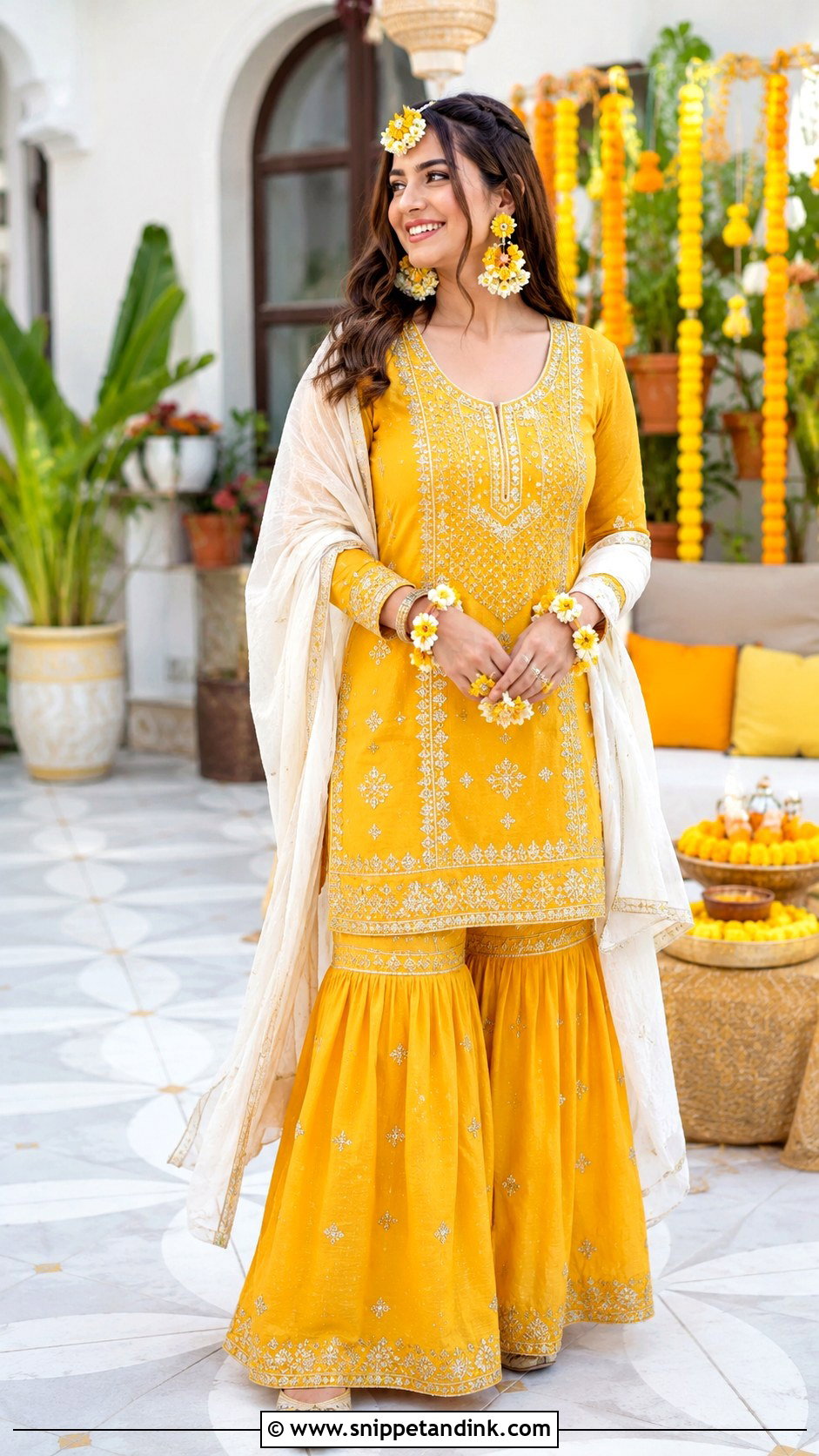
A Punjabi yellow suit for haldi needs to be cheerful and easy to move in. A yellow kurta with salwar, palazzo, sharara or Patiala, with light embroidery, mirror borders or gota, is enough for a playful ceremony. A white, green or orange dupatta adds contrast. Brides can go heavier with a yellow Anarkali or sharara; guests can keep to a straight kurta and printed dupatta. Turmeric stains, so I always ask the family to lay old sheets around the seating and warn guests not to wear anything precious. Floral jewellery and simple juttis finish it.
14. Punjabi Green Lehenga For Mehndi
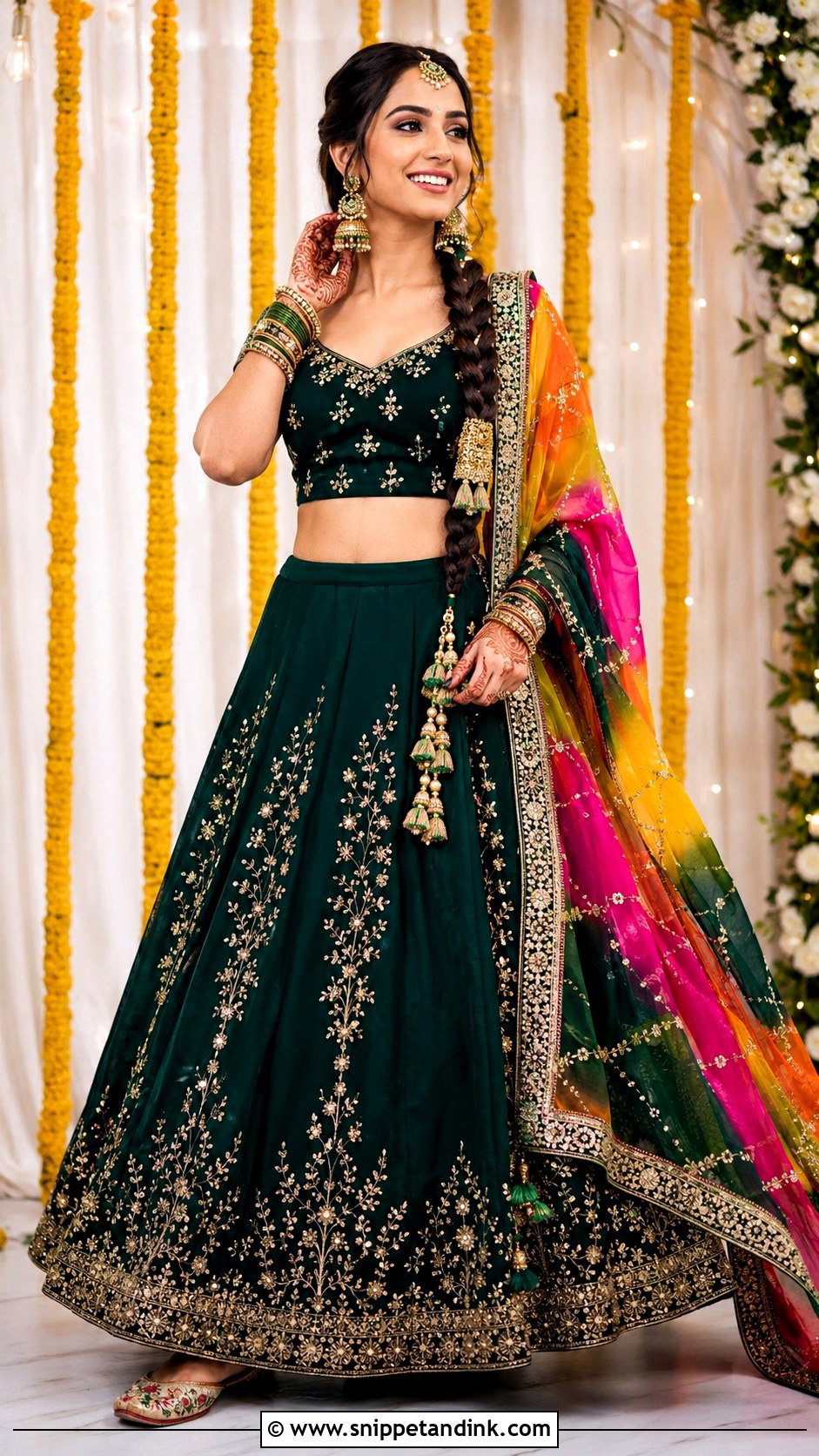
Green ties neatly into a mehndi theme, from mint for daytime with a colourful dupatta to emerald with gold or mirror work in the evening. A short blouse, statement earrings, bangles and juttis keep you able to dance. A braid with a paranda or fresh flowers adds a Punjabi touch. Fresh flowers wilt quickly in heat, so if you plan floral hair for a summer mehndi, I’d have the florist deliver them as late as possible. It suits brides, bridesmaids and close cousins who want something festive but not formal.
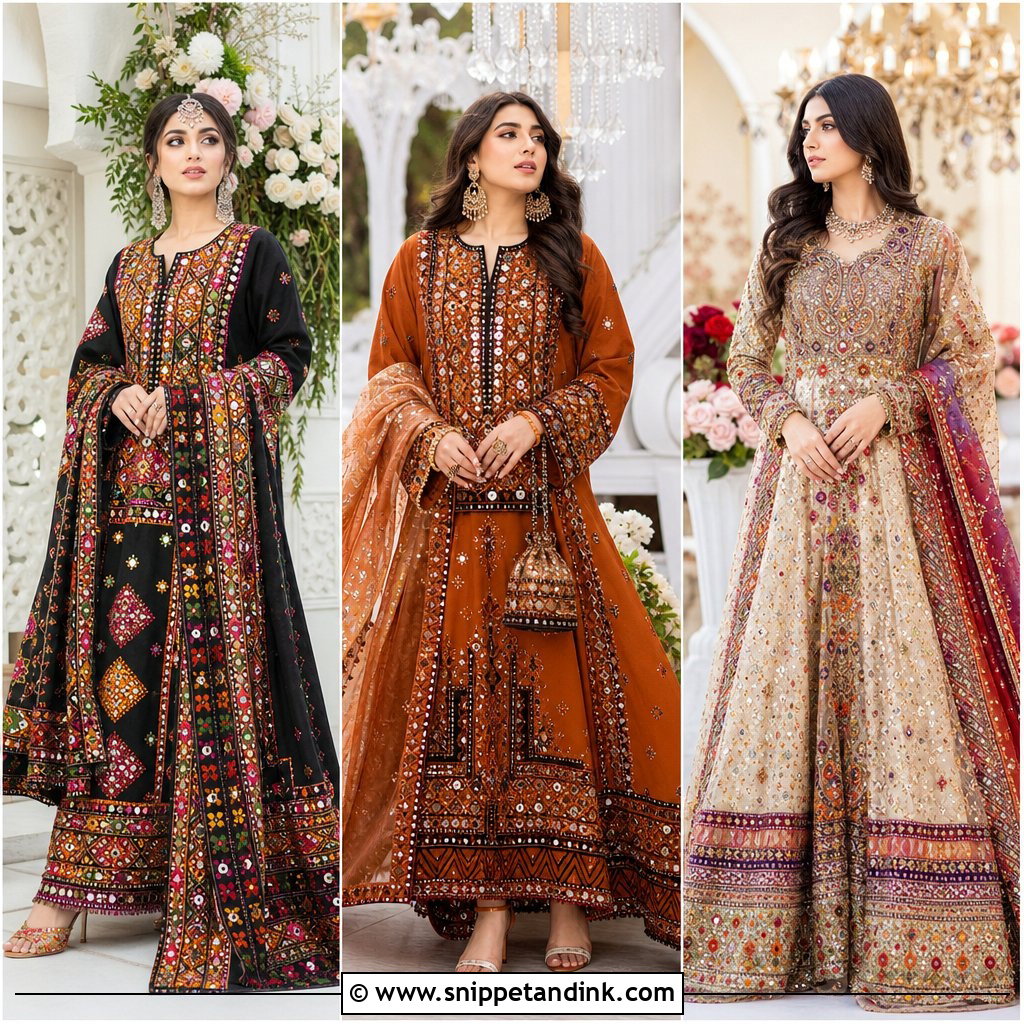


15. Punjabi White And Gold Anarkali
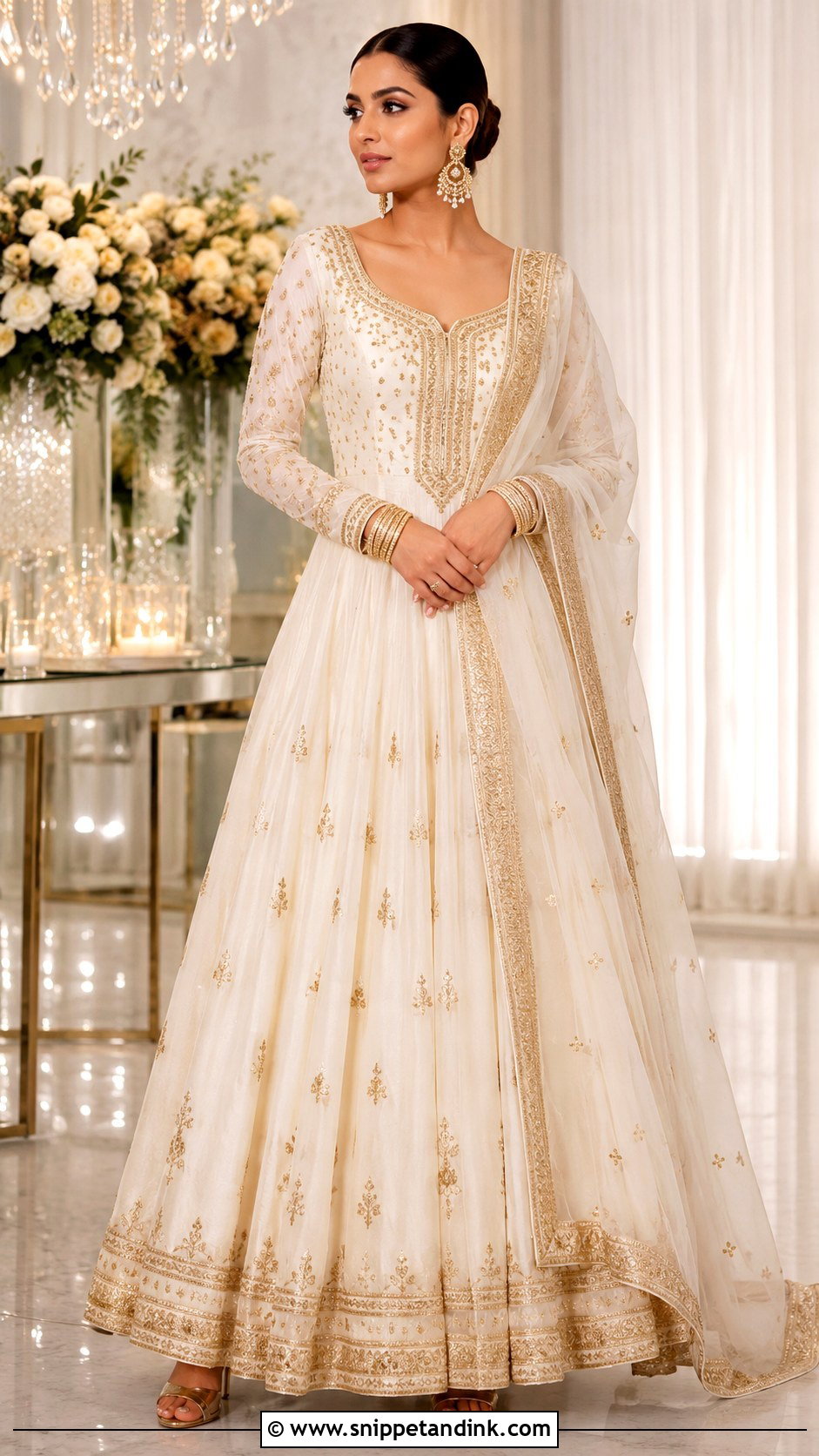
White and gold looks graceful at a reception or formal family event: the white keeps it clean and the gold embroidery adds the festive detail. A floor-length Anarkali with a fitted bodice, flared skirt and sheer dupatta is the classic shape. Gold jhumkas, a kundan set, bangles and metallic heels complete it. Ivory is softer than bright white and more forgiving in flash photos. If you’re a guest, check with the family first, since some households avoid white at weddings. A sleek bun and rose lip suit it.
16. Punjabi Pastel Lehenga For Reception
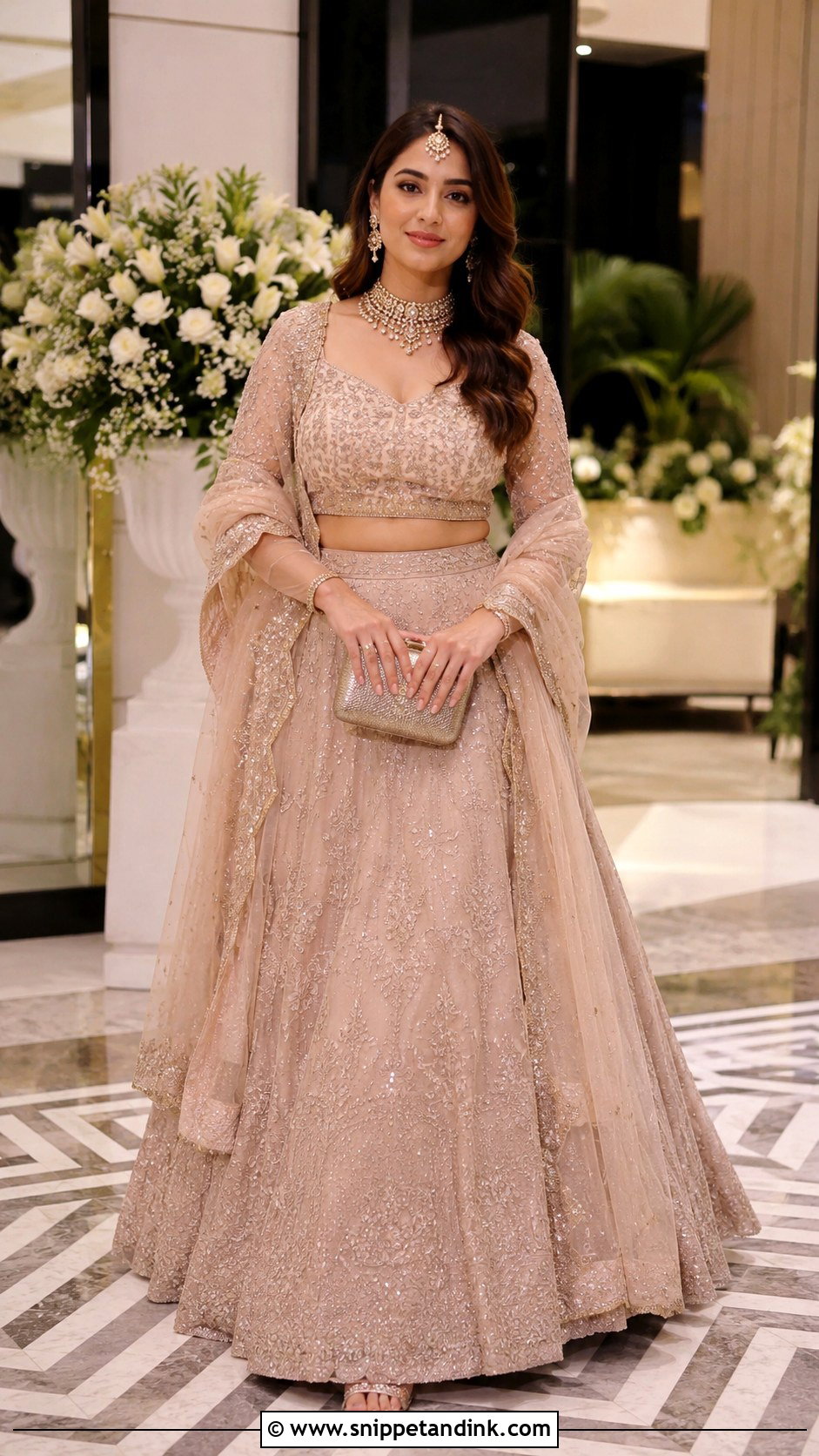
Pastels have become a popular choice for the bride’s reception change: blush, champagne, lavender, ice blue, pistachio or peach with shimmer or fine embroidery. A detailed blouse and flowing dupatta keep it soft. Because pastels can look subtle under evening light, bring the sparkle through kundan, pearls or polki. If the bride changes from her ceremony lehenga into a pastel for the reception, I schedule the change with at least an hour between events so hair and jewellery can be adjusted too. Embellished sandals and soft curls finish it.
17. Punjabi Maroon Salwar Suit For Wedding
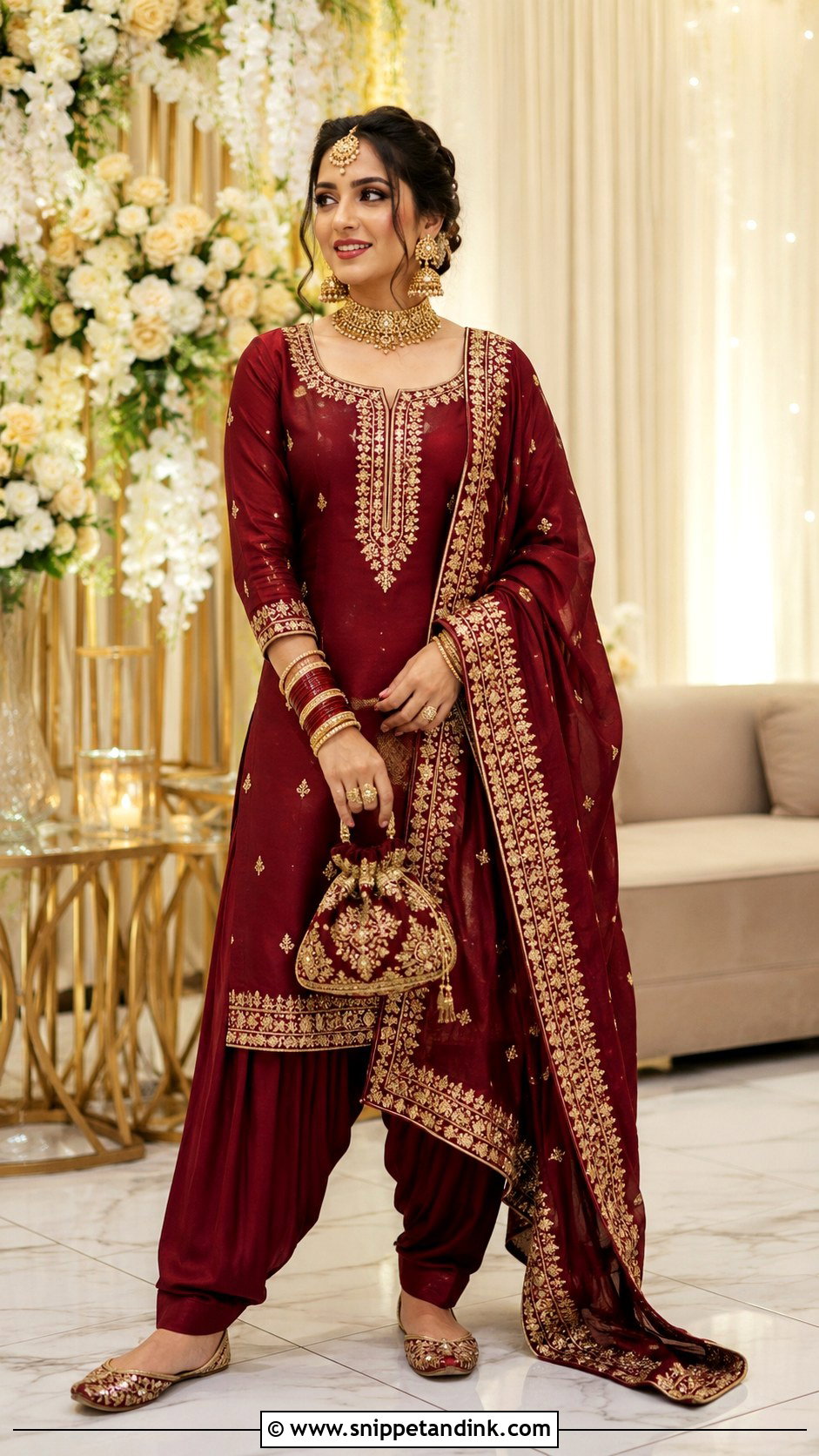
Maroon gives a rich, traditional look without a bridal lehenga’s weight, and it flatters many skin tones in evening light. A silk, velvet or georgette kameez with zari, dabka or sequins, a matching salwar or churidar and a heavily bordered dupatta suit mothers, aunts, sisters and guests. Gold jewellery, chooda-style bangles, a potli and juttis finish it. Mothers of the couple often greet guests for hours, so I always suggest a cushioned insole inside their juttis. A neat bun, kohl and a deep rose lip complete it.
18. Punjabi Banarasi Lehenga
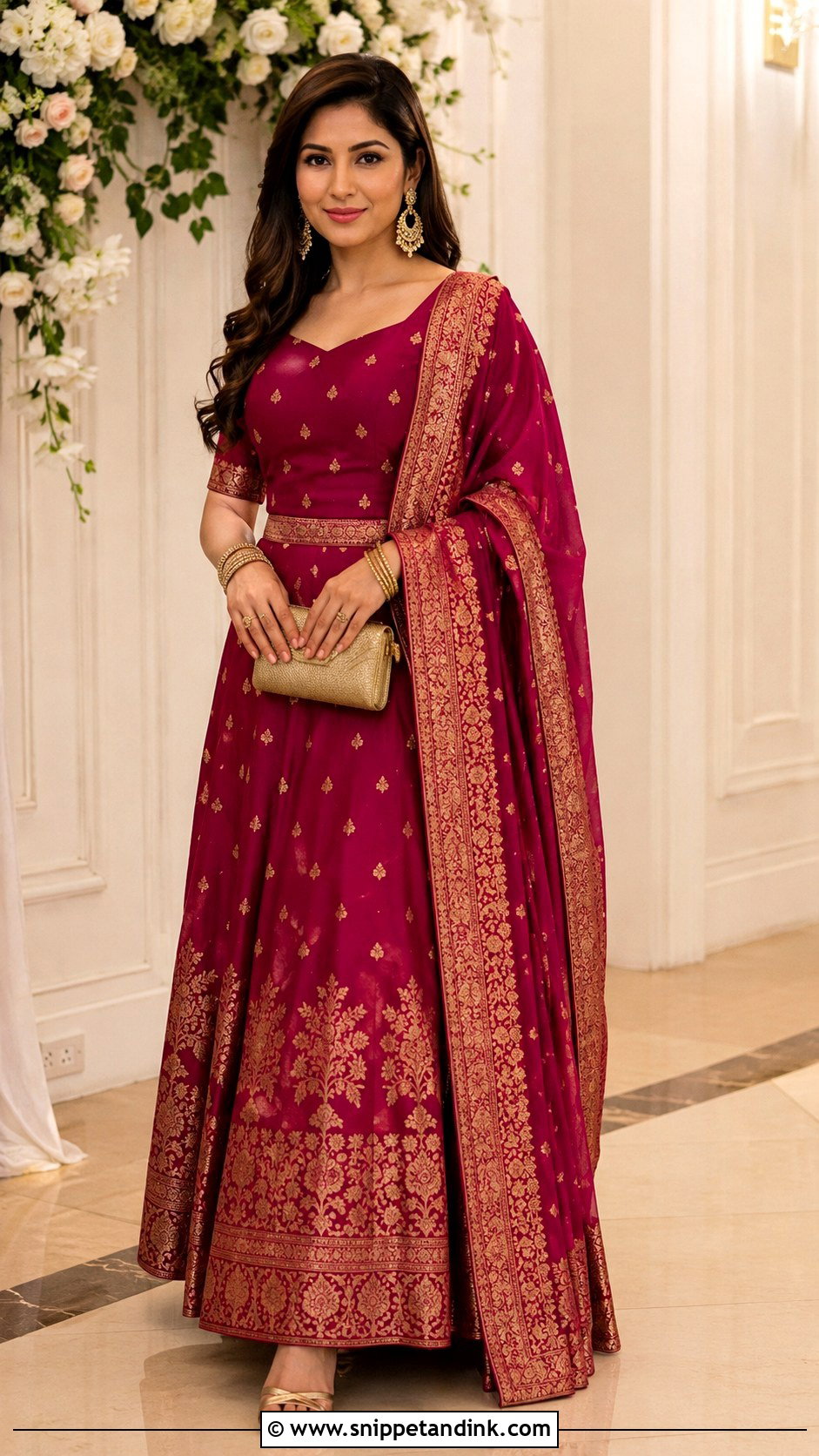
Banarasi silk lets the fabric do the styling: the woven zari pattern looks festive even with almost no embroidery. Red, magenta, emerald, purple, gold or rust make a strong wedding look, with a fitted silk blouse and a zari-bordered dupatta. Temple jewellery or kundan earrings and bangles complete it. It is quite heavy and stiff, so I’d allow a proper steaming slot before the event, since folds from the suitcase show clearly on woven silk. Keep the hair and makeup polished rather than dramatic.
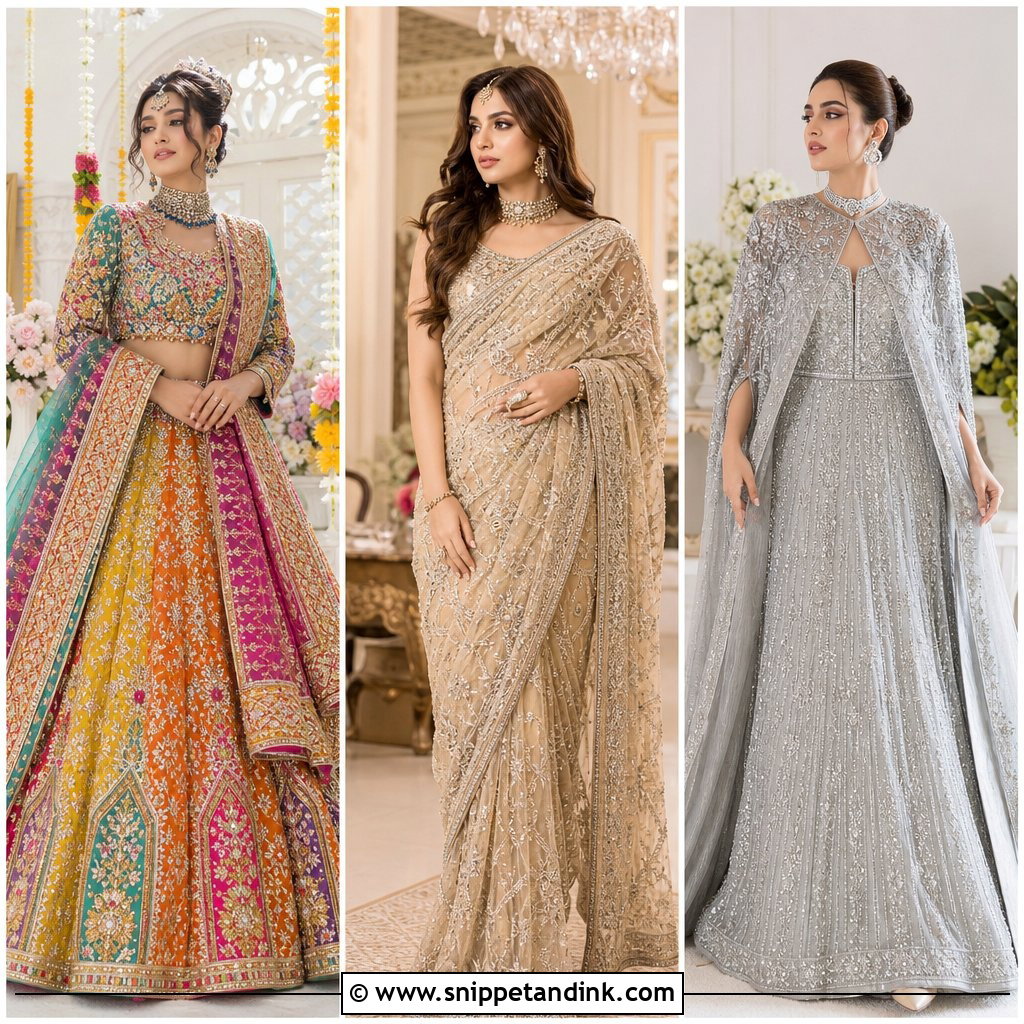
19. Punjabi Cape Lehenga Outfit
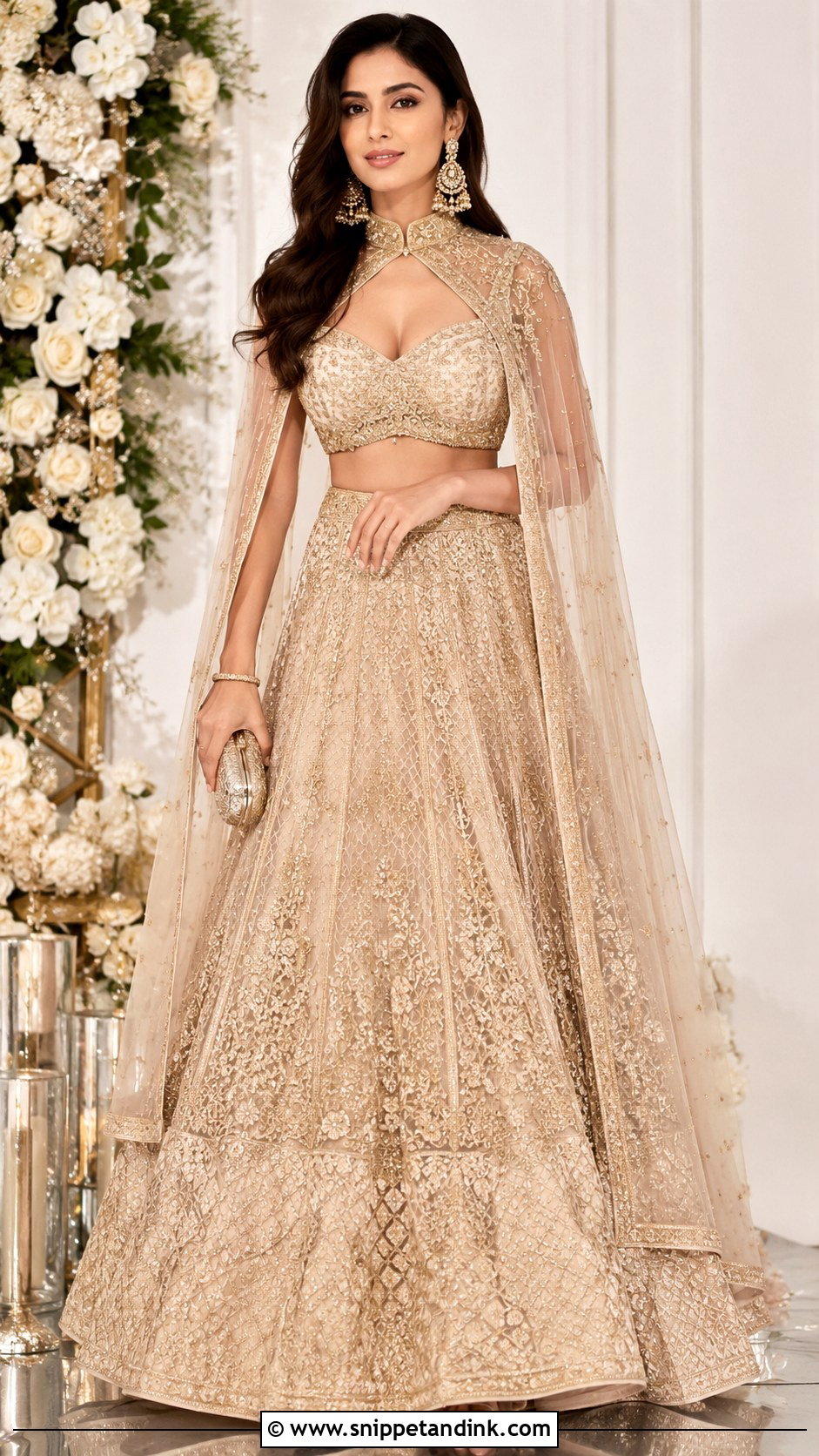
A cape replaces the dupatta with a sheer, embellished layer over the blouse, giving coverage and movement while freeing both hands. Light embroidery on the lehenga keeps it balanced. It suits receptions, sangeet nights and pre-wedding parties, in champagne, rose gold, teal, navy or mauve. Statement earrings, sleek heels and a structured clutch finish it, with a minimal necklace since the cape frames the shoulders. For anyone hosting or giving a speech, I recommend a cape over a dupatta, because there’s nothing to hold or readjust at the mic.

20. Punjabi Peplum Sharara Suit
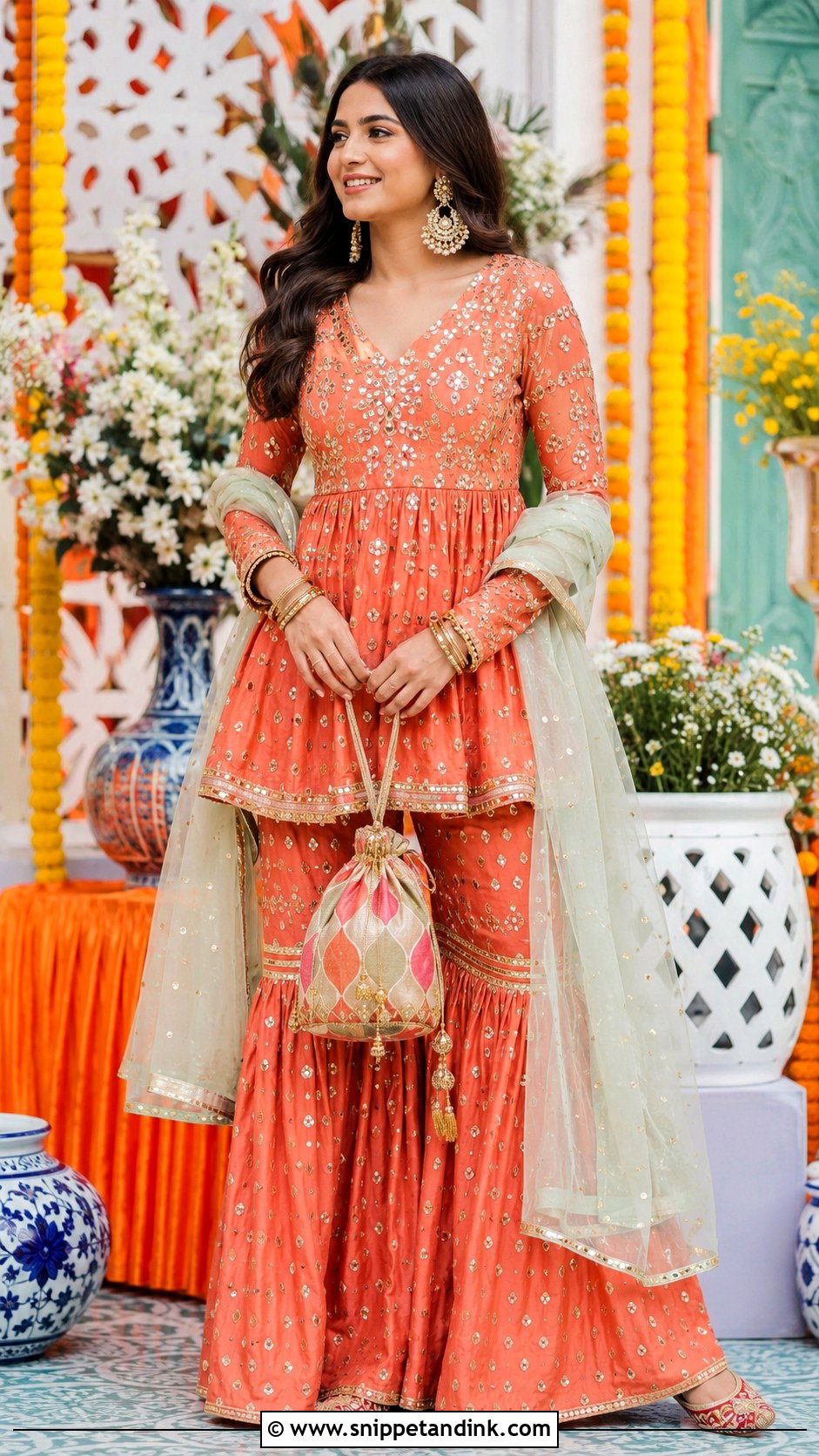
A peplum top defines the waist while the sharara adds volume, which makes it a good pick for sangeet, mehndi, or bridesmaid looks. Mirror work, gota patti, sequins or thread embroidery suit different events, in coral, lime, pink, turquoise or mustard. Add chandbalis, bangles, a small potli and comfortable sandals or juttis. A longer peplum with a sheer dupatta reads more formal. For bridesmaid groups, peplum shararas are easy to coordinate across different body types, since the waist can be fitted individually.
21. Punjabi Palazzo Suit For Wedding
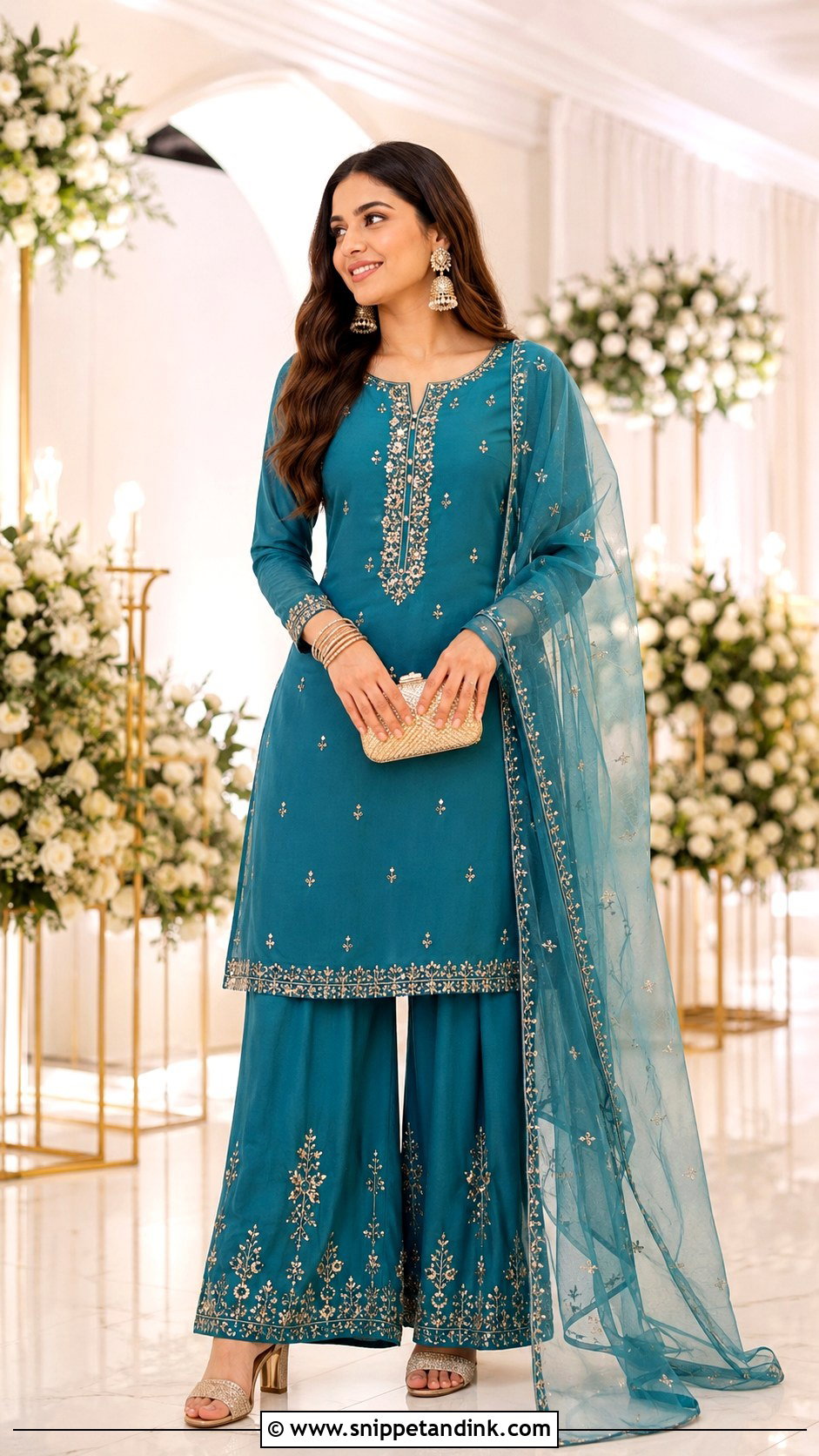
Palazzos are the comfort pick for long ceremonies and days with lots of travel between venues. A straight or A-line kurta with wide palazzos and a festive dupatta, with embroidery at the neck, sleeves and hem, is plenty for a wedding. Jewel tones, metallic prints, silk blends and organza dupattas lift it. Jhumkas, bangles, block heels and a clutch complete it. I often suggest palazzos to older relatives, since they make getting in and out of cars and sitting at long dinners much easier.
22. Punjabi Jacket Lehenga Outfit
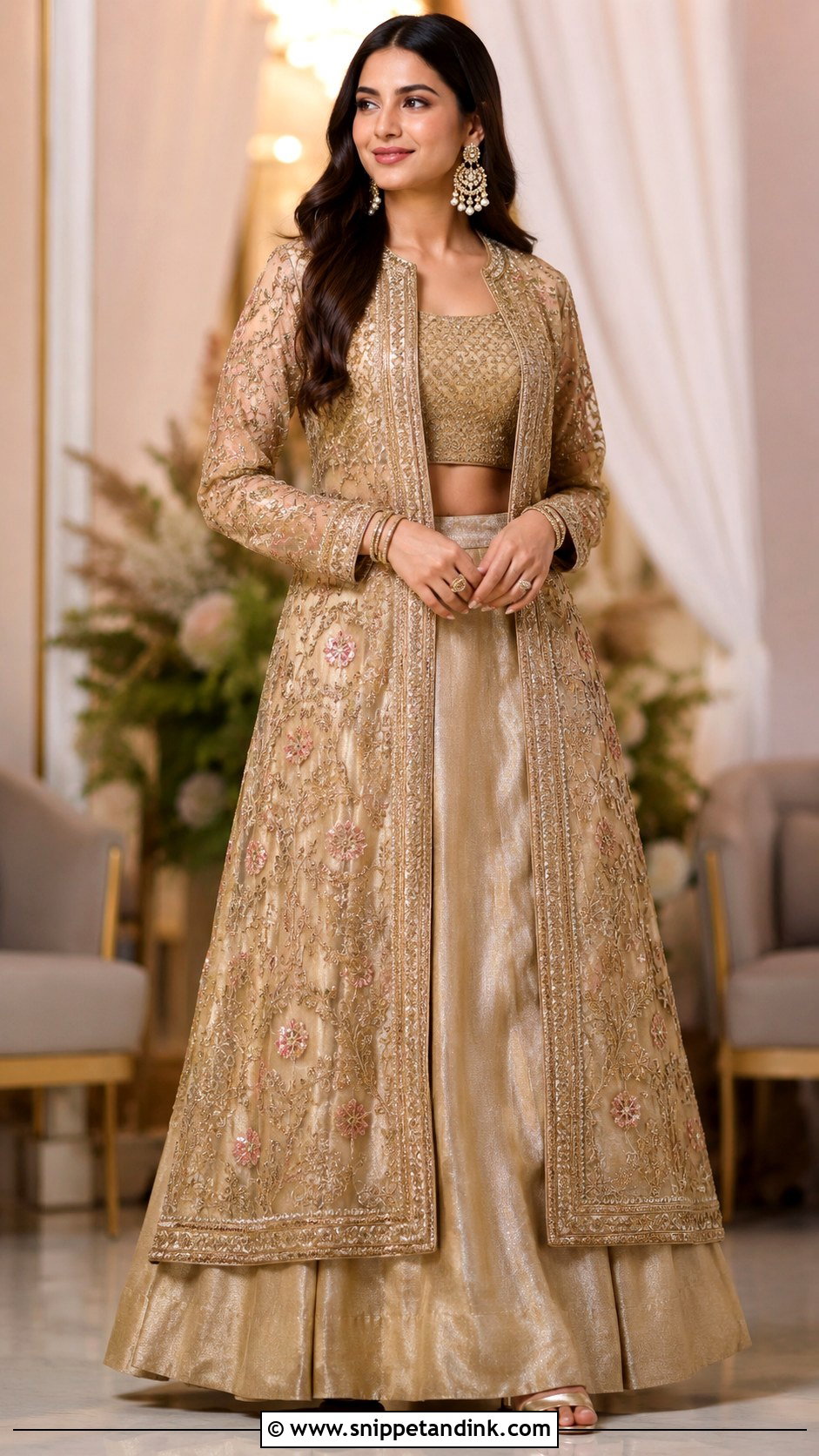
A jacket over a lehenga and blouse adds structure and coverage, whether long, cropped, sheer, embroidered or in silk brocade. Long jackets suit receptions; cropped ones feel younger and easier at a sangeet. Match the jacket embroidery to the lehenga border so the two look like one outfit. Keep the necklace light if the jacket has a high neck. For winter outdoor events, a jacket lehenga solves the shawl problem, since guests can stay warm without covering the outfit in photos.
23. Punjabi Chikankari Sharara Suit
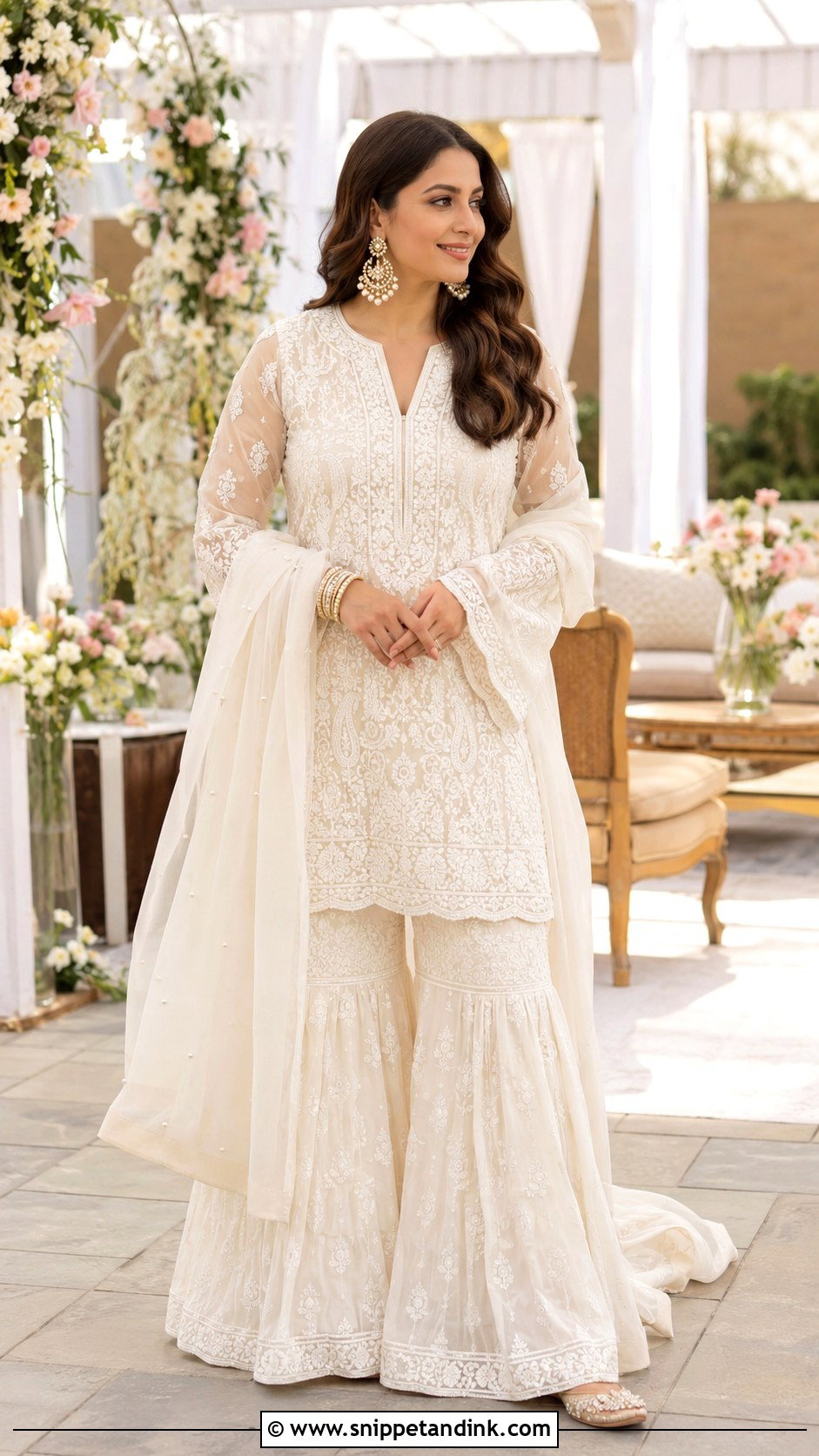
Chikankari is fine hand embroidery from Lucknow, white-on-pale in its classic form, which gives a sharara a soft, textured look in ivory, blush, mint, lemon, powder blue or peach. Sequins, pearl accents or a gota border make it wedding-ready. Pair it with a sheer dupatta, pearl earrings, bangles and juttis. It suits guests who want something graceful but not bold, and bridesmaids at smaller ceremonies. Chikankari is usually on light cotton or georgette, so it’s comfortable on hot days, with soft hair and fresh makeup.
24. Punjabi Sequin Saree Outfit
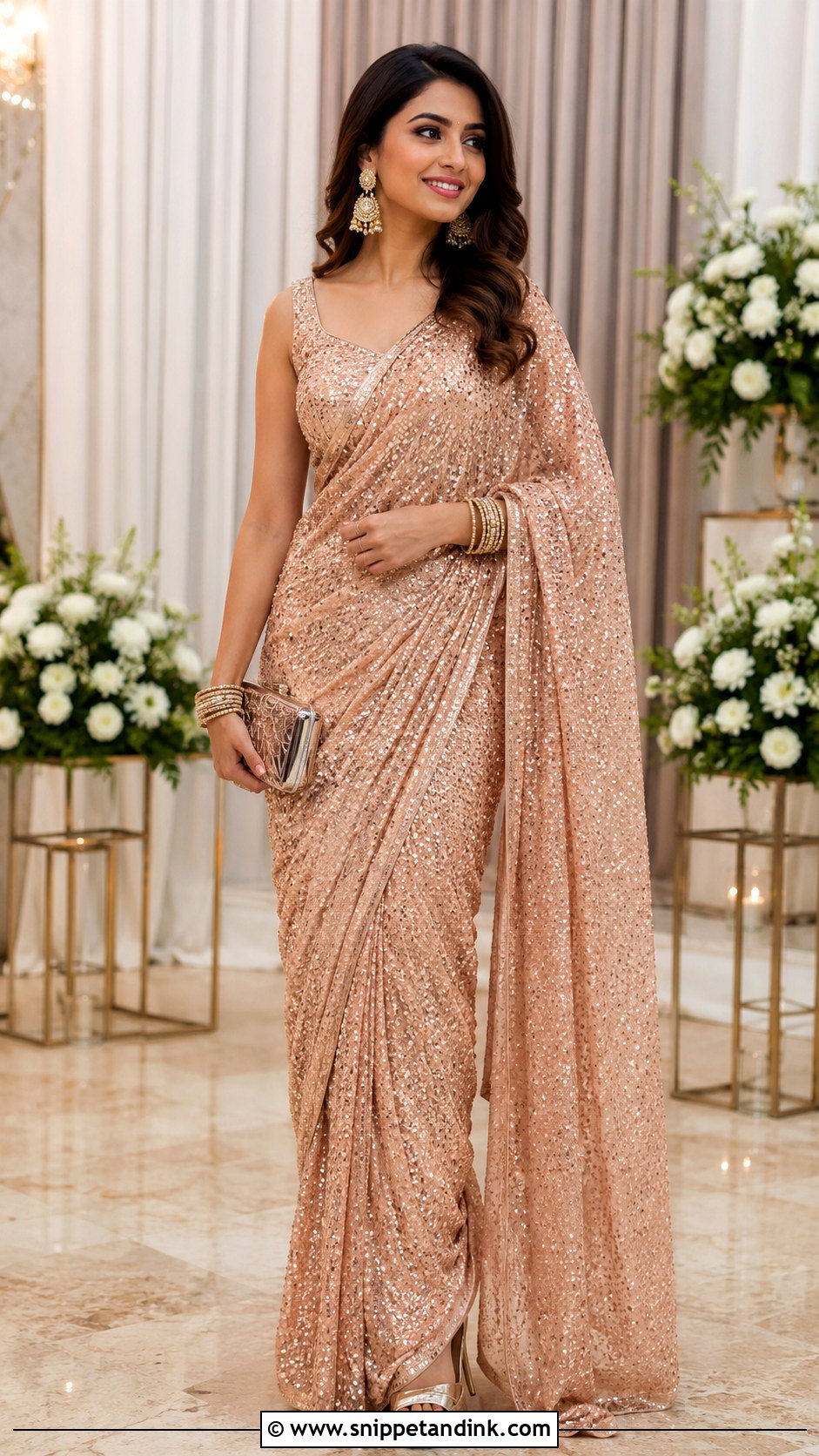
Lehengas and suits are more traditional at Punjabi weddings, but a sequin saree can work well for a reception, sangeet or formal evening. A lightweight sequin saree in champagne, silver, rose gold, emerald or navy with a fitted blouse, statement earrings, bangles and metallic heels looks glamorous. Add a bindi and jhumkas for more Punjabi flavour. If you don’t usually wear a saree, have it draped by someone experienced or choose a pre-stitched version, since a slipping pleat during the bhangra is no fun. It suits guests and friends of the couple.

25. Punjabi Dhoti Kurta Outfit
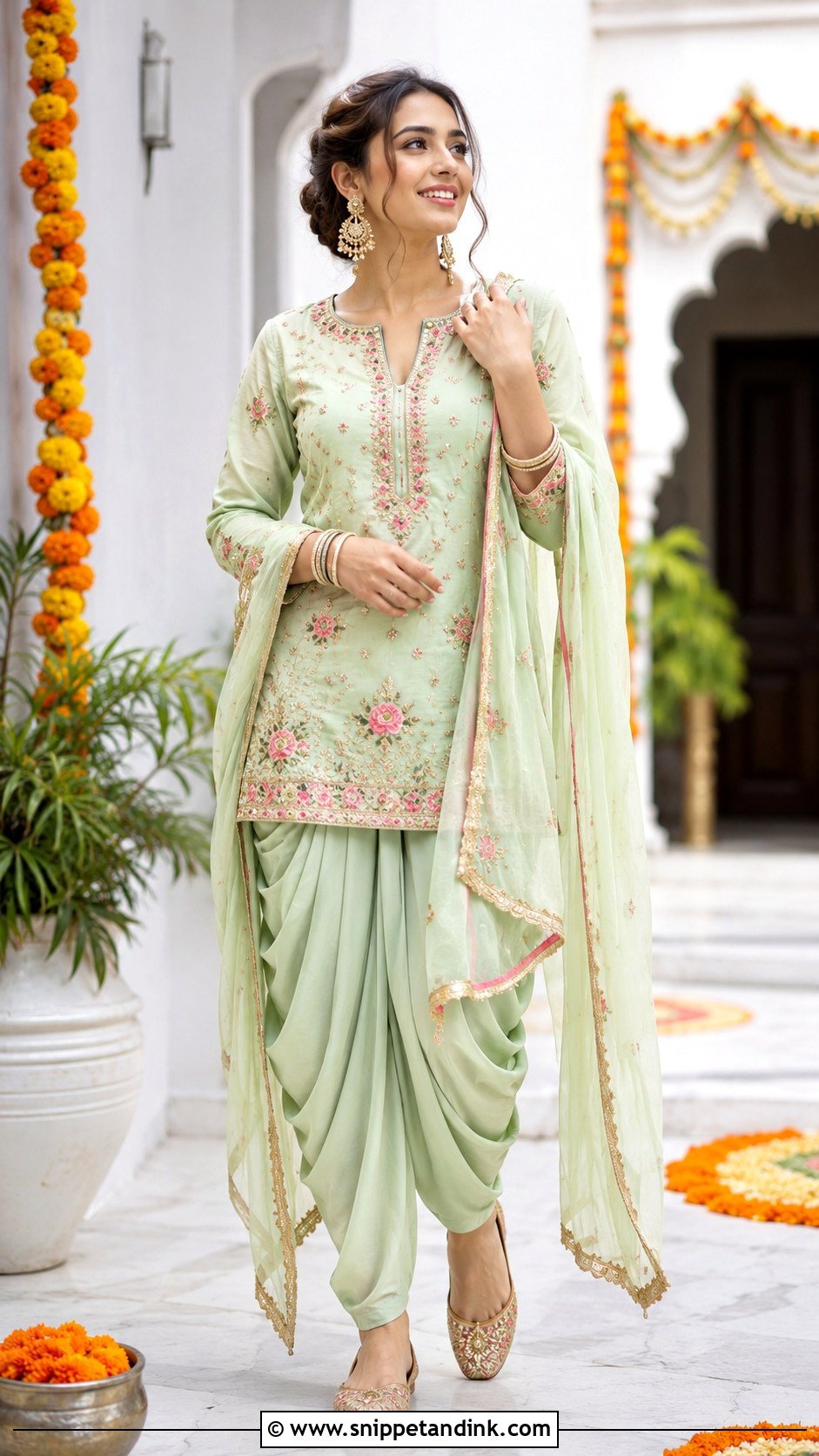
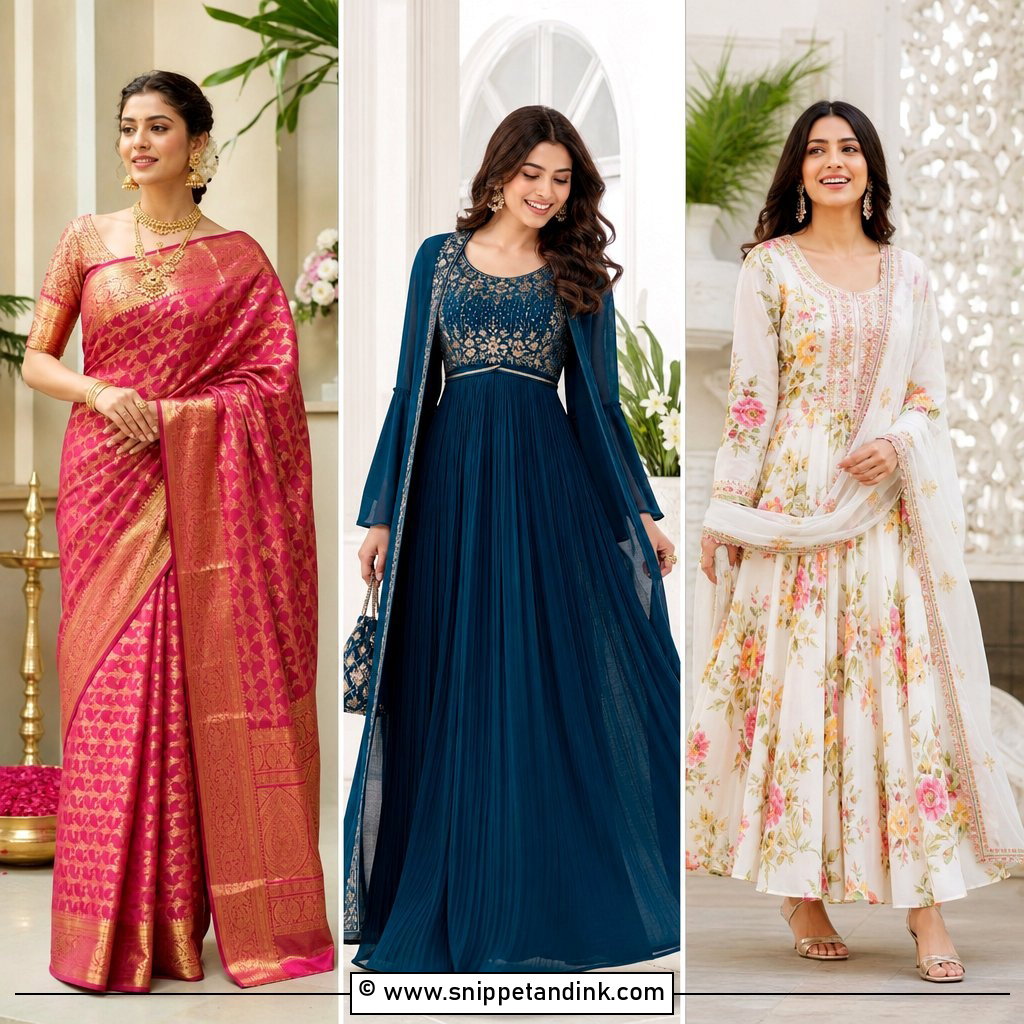
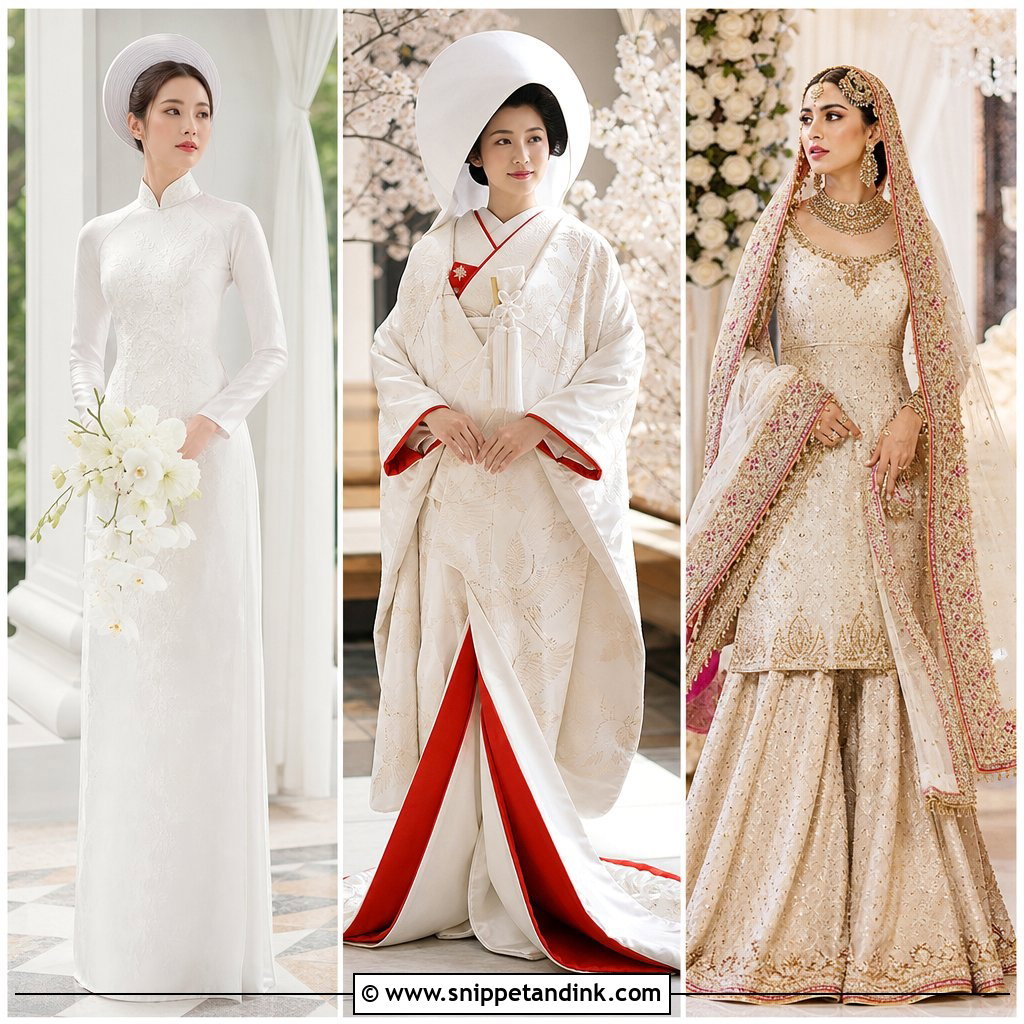
The dhoti kurta is a fusion choice for smaller events, mehndi or post-wedding gatherings: a dhoti-style bottom with a short or asymmetric kurta in embroidery, mirror or gota. A light dupatta, cape or embroidered jacket completes it. Statement earrings, stacked bangles and juttis or block heels finish the look. I’d keep it for the relaxed events of the week, since some older relatives may find it too informal for the ceremony itself. Bright colours for day, jewel tones for evening.
When the Lehenga Meets Summer Heat or a Cold Marquee
Many Punjabi weddings are planned for the cooler months, but plenty happen in heat, rain or outdoor marquees, and weather changes outfit choices more than anything else.
Hot days
Lighter fabrics, such as georgette, chiffon, chikankari cotton and organza, breathe far better than velvet or heavy brocade. Ask for cotton linings, keep the heaviest outfits for evening events and plan shaded waiting areas for photos. Makeup artists will also thank you for a fan in the getting-ready room.
Cold evenings and outdoor tents
Velvet, jacket lehengas and full-sleeve blouses keep you warm without a shawl hiding the outfit. If a shawl is unavoidable, choose one that coordinates with the outfit so it doesn’t look like an afterthought in photos. Check the venue’s heating plan, and keep a pair of flat juttis for the walk across damp grass. If rain is possible, have a large umbrella and someone ready to lift the lehenga hem off wet ground.
Plan the Week, Then Dress the Day
Punjabi wedding outfits can be traditional, modern, simple or heavily worked, but they all come down to comfort and fit for the event. The red lehenga anchors the ceremony; phulkari, Patiala, sharara, gharara and Anarkali carry the pre-wedding events; and pastel lehengas, capes, sequin sarees, and jacket lehengas suit the reception. Think through the dupatta, jewellery, shoes, bag, hair and makeup as one plan. Map the week first, then choose each outfit for what that day actually involves.
You'll Like These Ideas:




Leave a Reply