
Indian occasion wear gives you more room to play than almost any other dress tradition, and the skill lies in balancing that tradition with what you actually like wearing. The outfits below cover sarees, relaxed kurta sets, statement lehengas and fusion pieces, each with the colours, jewelry, shoes and bag I’d put with it. Some are made for a wedding function, others for festivals, family dinners or a college event. What makes any of them work is fabric you’re comfortable in for hours, proportions that suit you, and accessories that support the outfit instead of burying it.
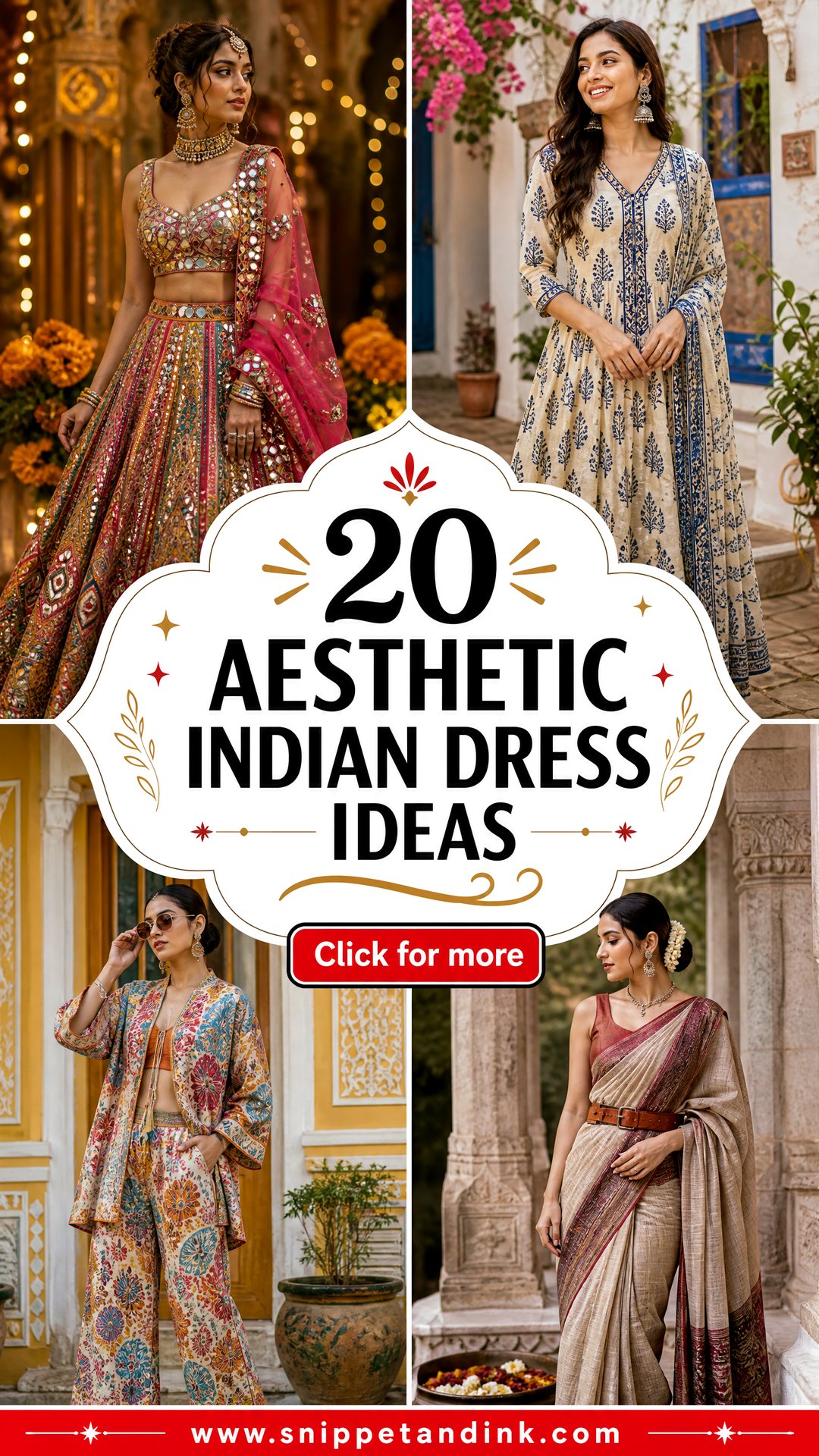
Matching the Outfit to Each Wedding Function
An Indian wedding is usually several events, and each one asks something different of your clothes. Customs vary a lot between regions and families, so treat this as a starting point and ask the hosts if you’re unsure.
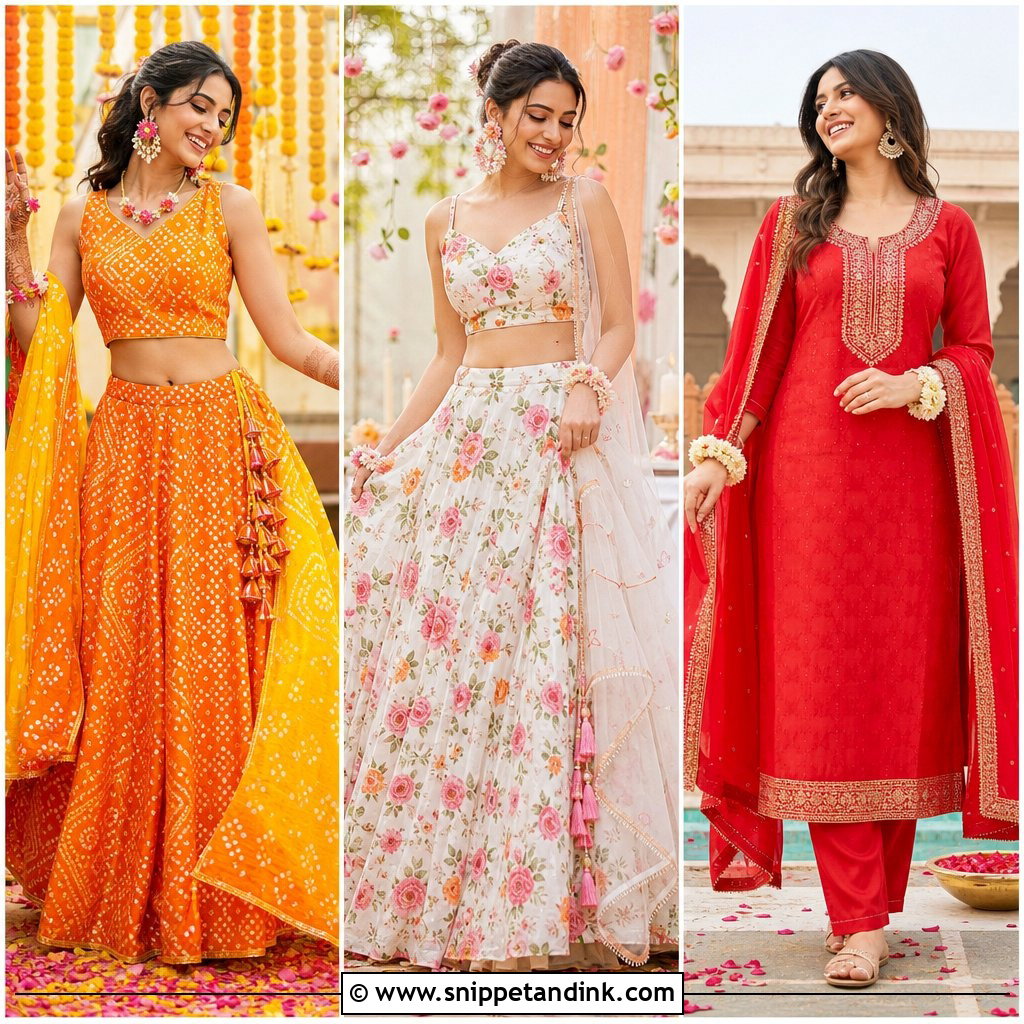
Haldi
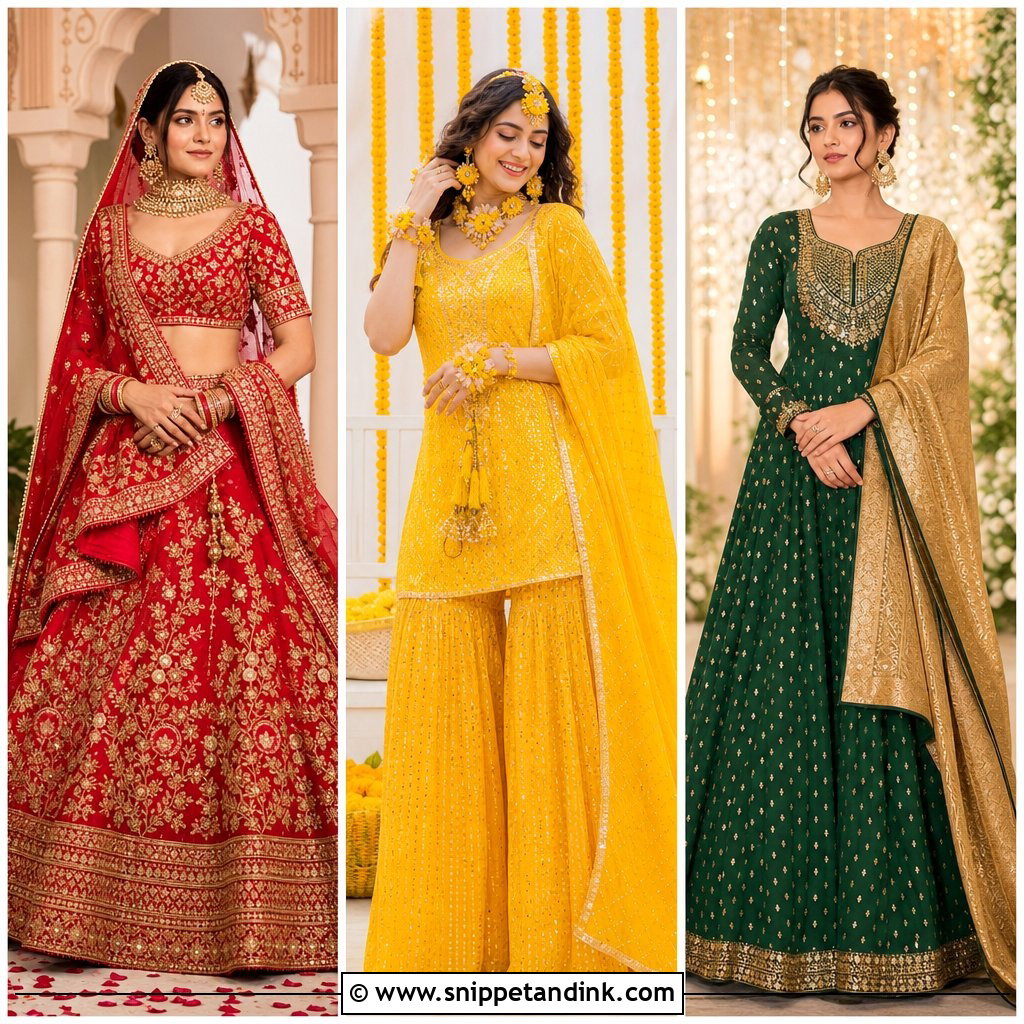
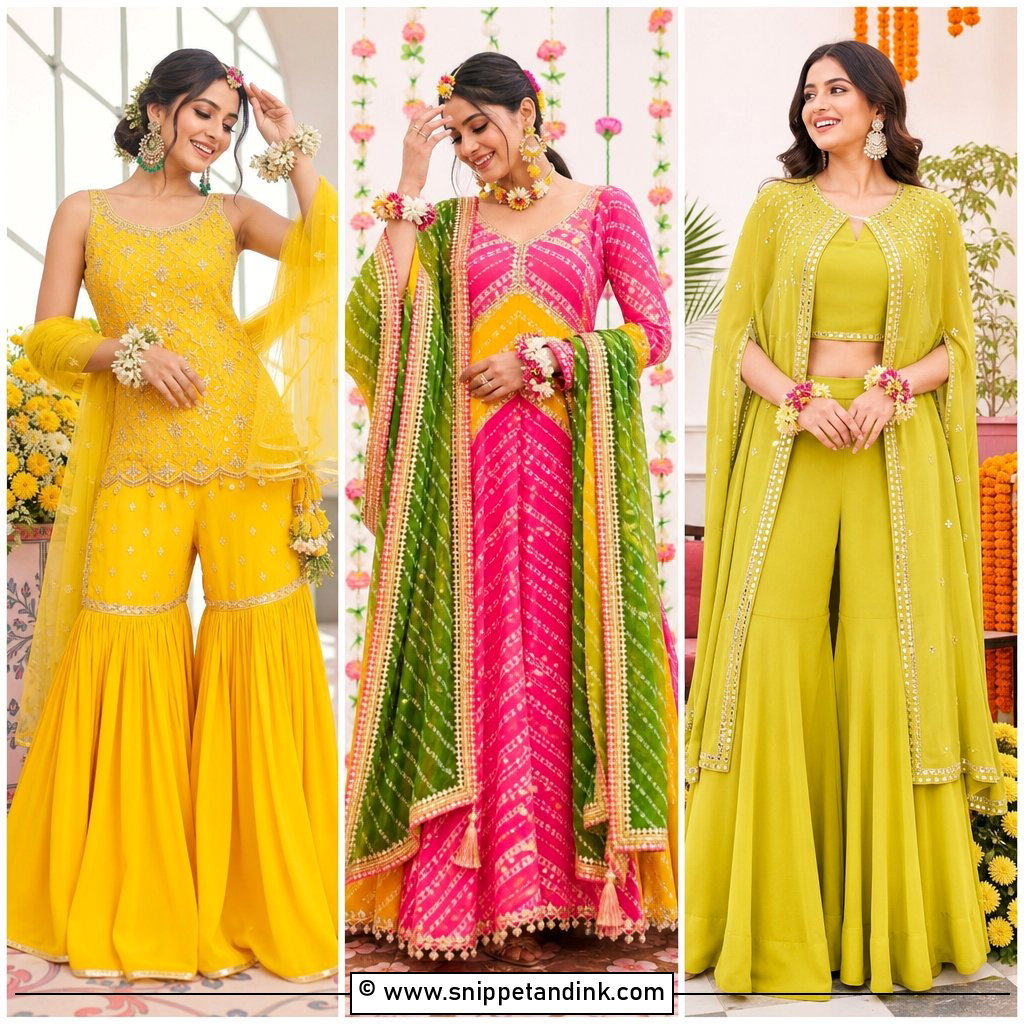
Turmeric paste stains cotton and silk alike and rarely washes out completely. Wear yellow or something you don’t mind marking, in washable cotton, and leave heavy embroidery and your best jewelry at home.
Mehndi
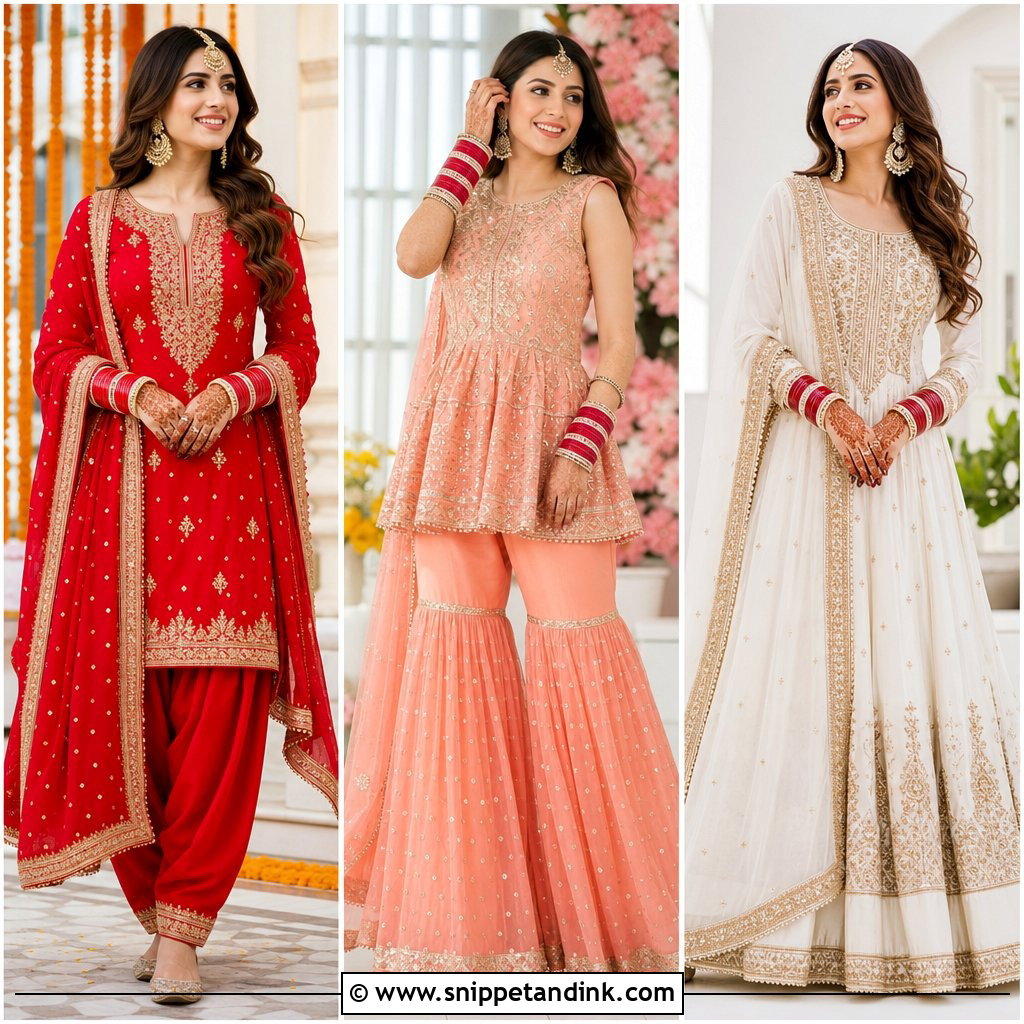
Bright colours and short or easily rolled sleeves work best. If you’re having henna applied, wear something you can sit in for a long time and get out of later without touching your hands while the paste dries.
Sangeet
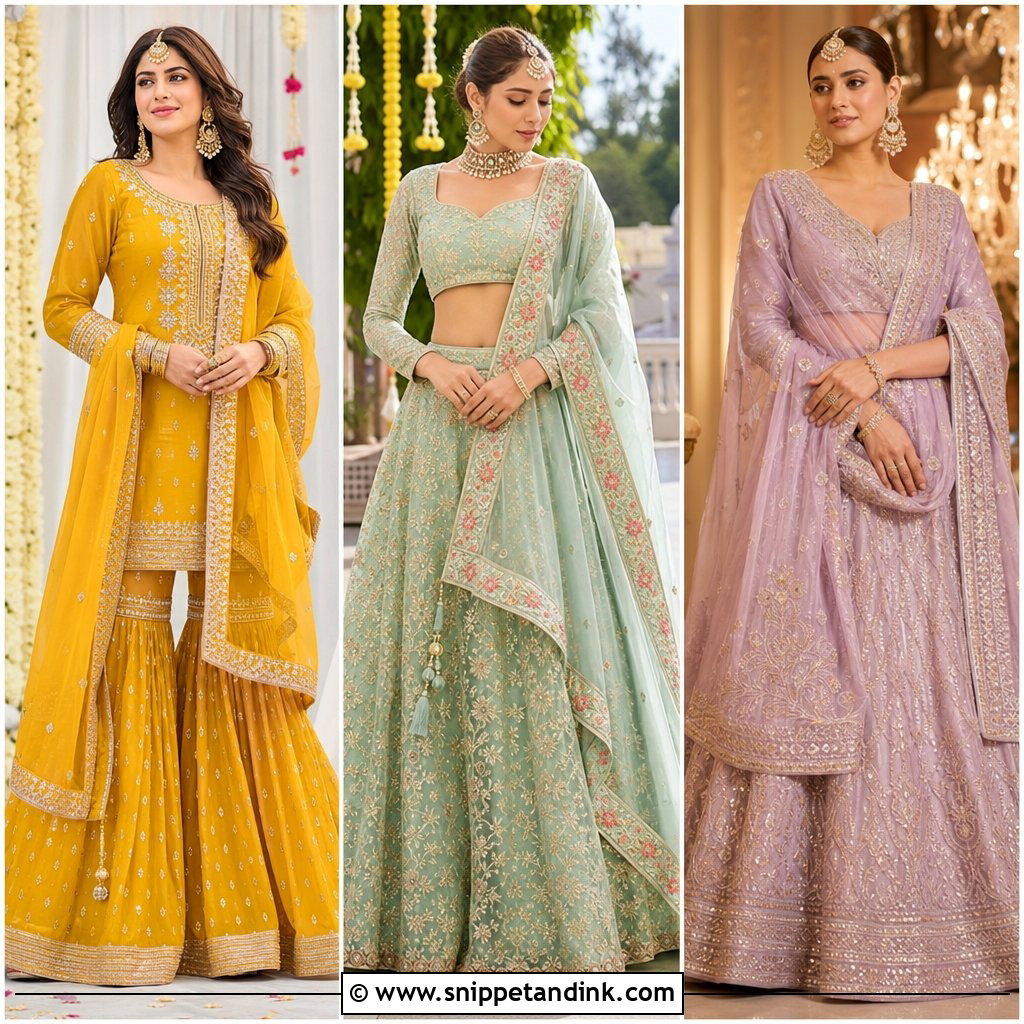
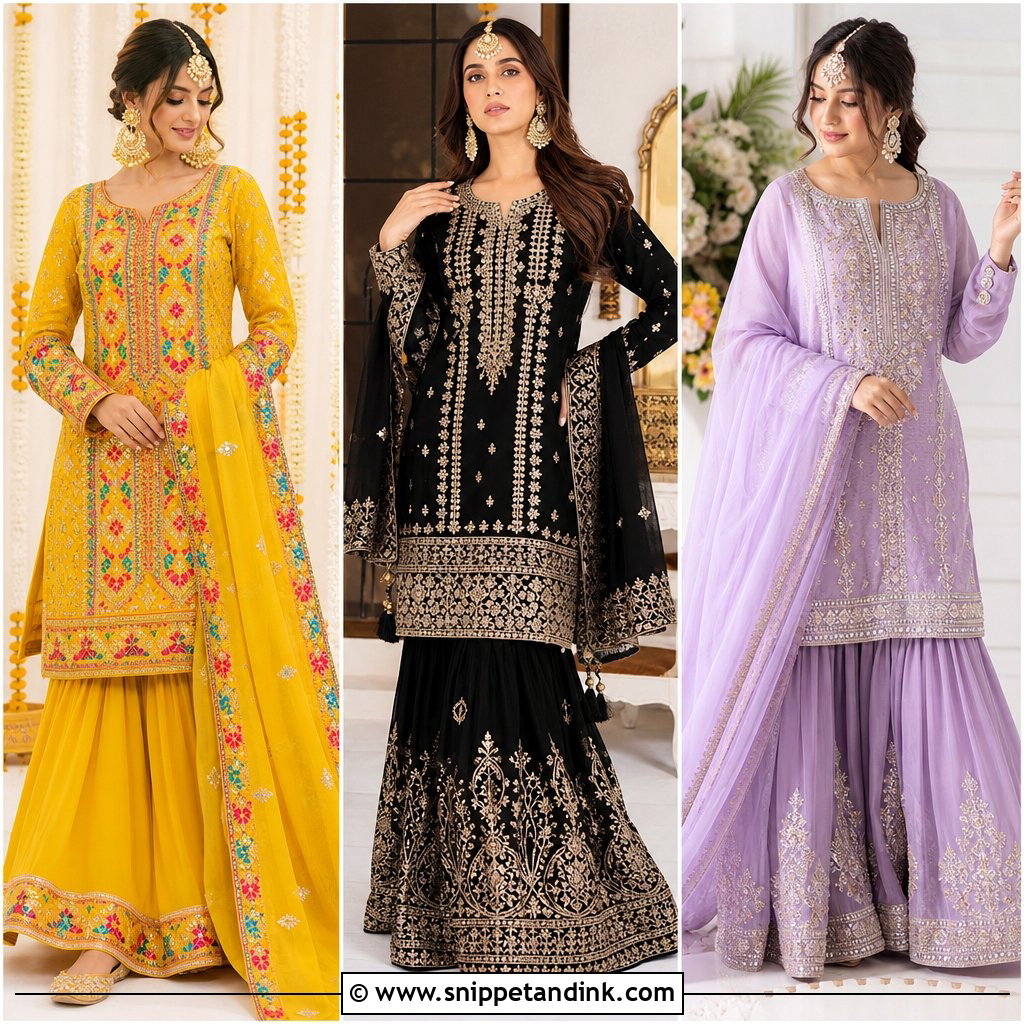
You’ll dance, so pick a sharara, a light lehenga or an Anarkali you can move and spin in, with flat or low shoes.
Ceremony and reception
The ceremony is the time for silk sarees and richer lehengas. Many families prefer guests not to wear bridal red, and some avoid all-black or all-white at the ceremony, so save black, velvet and Indo-western cuts for the evening reception.
1. Pastel Anarkali Dress
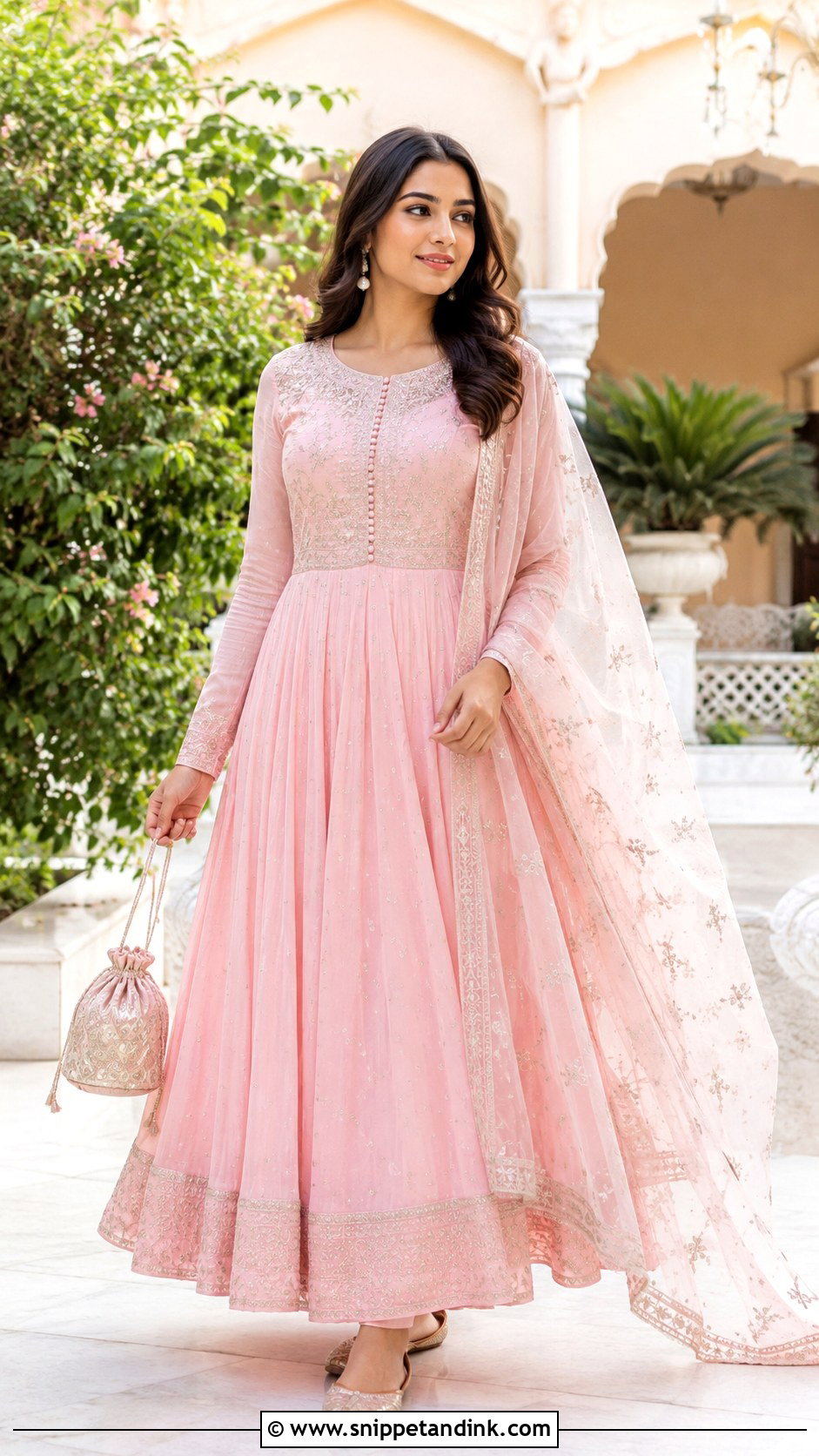
Pastel Anarkalis rely on the flare, and the flare relies on the fabric. Georgette and chiffon swing when you walk, organza holds a crisper bell, and cotton silk sits somewhere between. Blush, powder blue, pistachio, peach and lavender all suit the shape. I ask for the bodice to define the waist without gripping, since you’ll be sitting through a long ceremony and a meal. Throw a sheer embroidered dupatta over one shoulder so the silhouette shows. Pearl earrings, a fine bracelet, a small potli and metallic juttis or low block heels keep it light, with rosy cheeks and a muted pink lip. Loose waves, a braided bun or a sleek low ponytail all finish it.
2. Floral Organza Saree Outfit
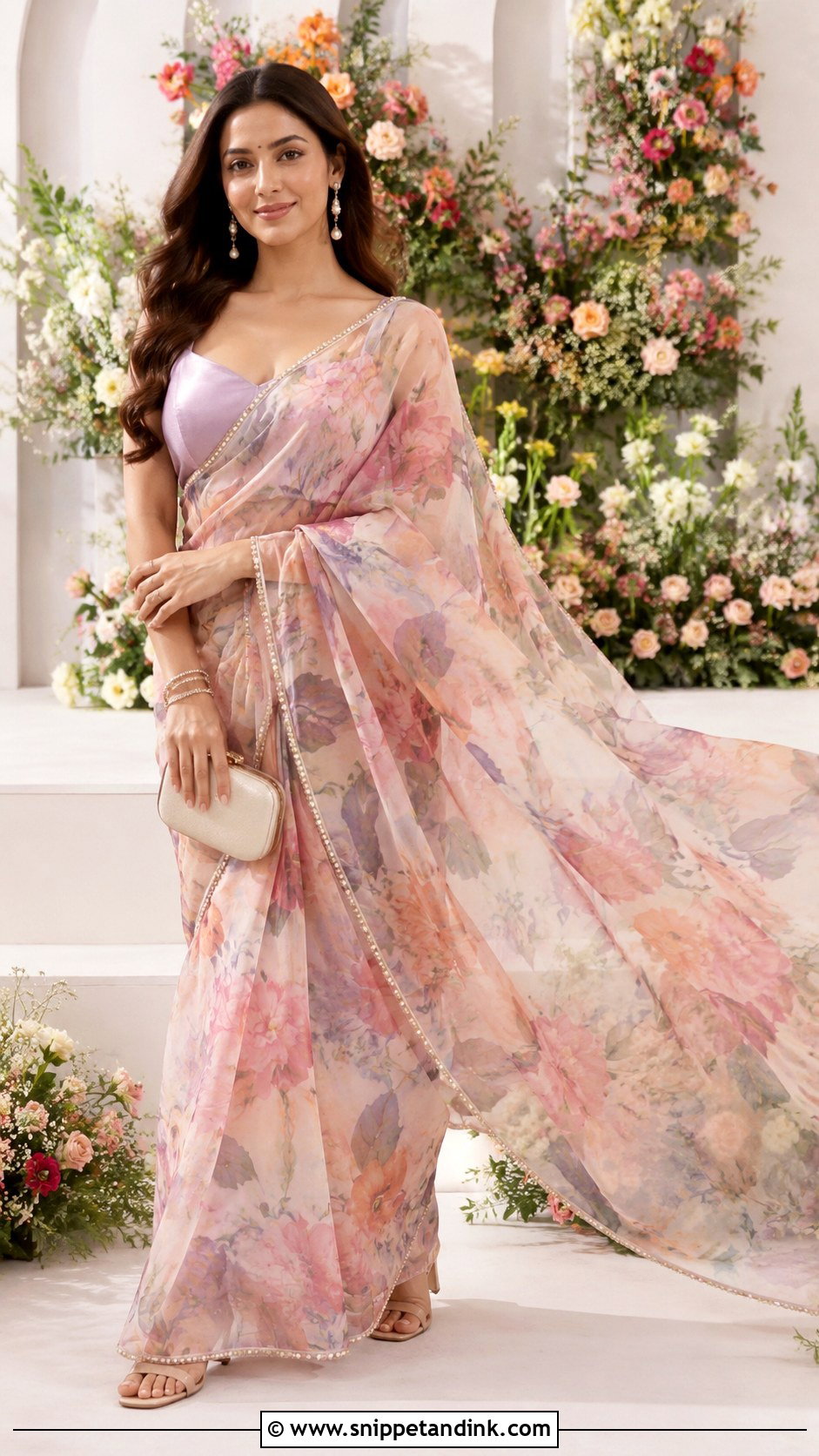
Organza is the saree I’d pick for a daytime function, because the sheer, slightly stiff fabric catches outdoor light so well. Watercolour florals, fine threadwork or a painted border all suit it. The sheer drape needs a blouse with some weight, so I’d choose a fitted satin, raw silk or embroidered one; a square neck or modest sweetheart neckline updates the look. Organza is springy and slippery and won’t settle into pleats the way soft silk does, so pin the pleats at the waist, and pin the pallu too if you want it structured. Pearl drops, pastel bangles and a compact clutch suit it, with kitten heels or embellished sandals, luminous makeup, a small bindi and a low bun with floral pins.
3. Ivory Chikankari Kurta Set
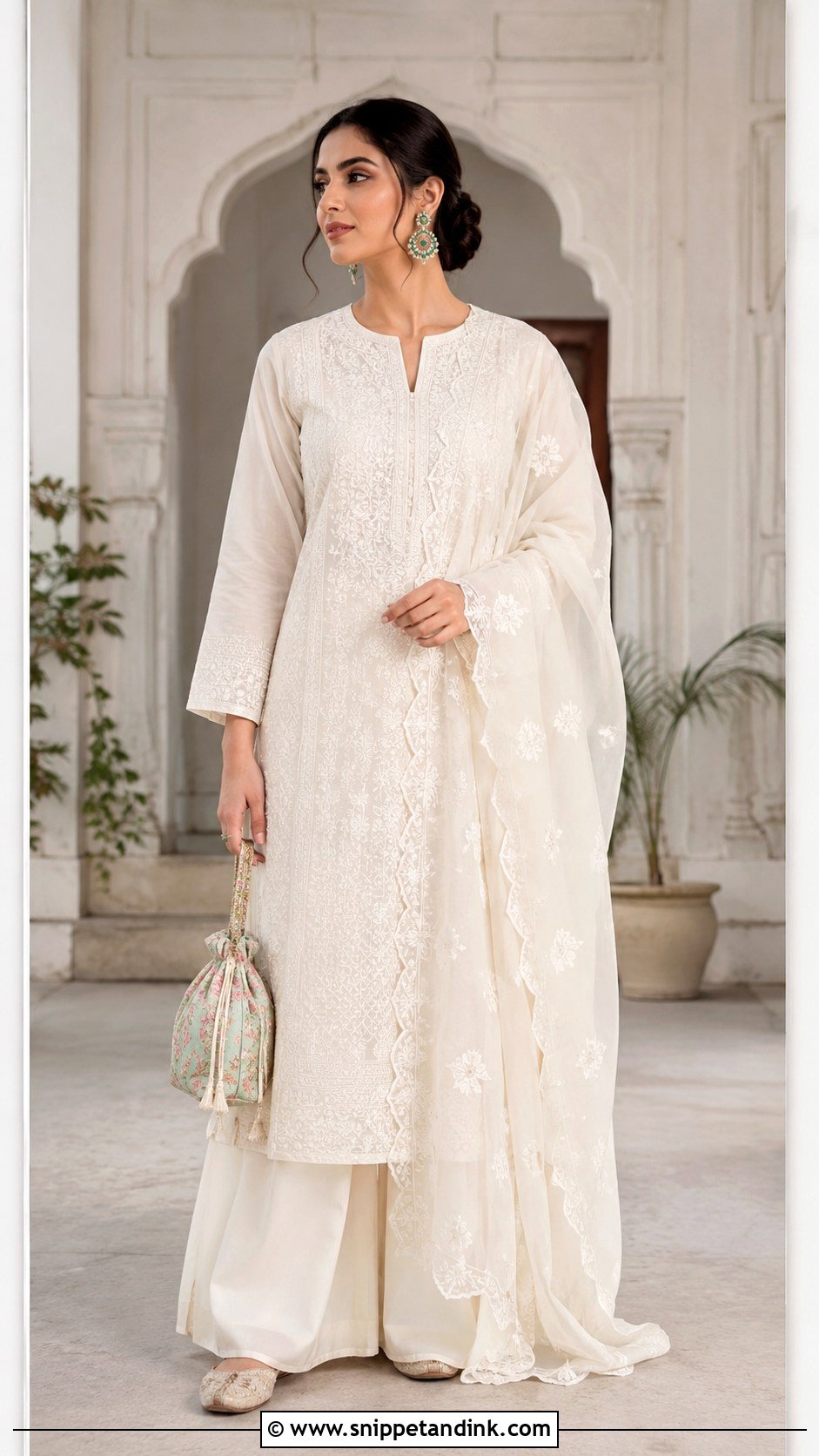
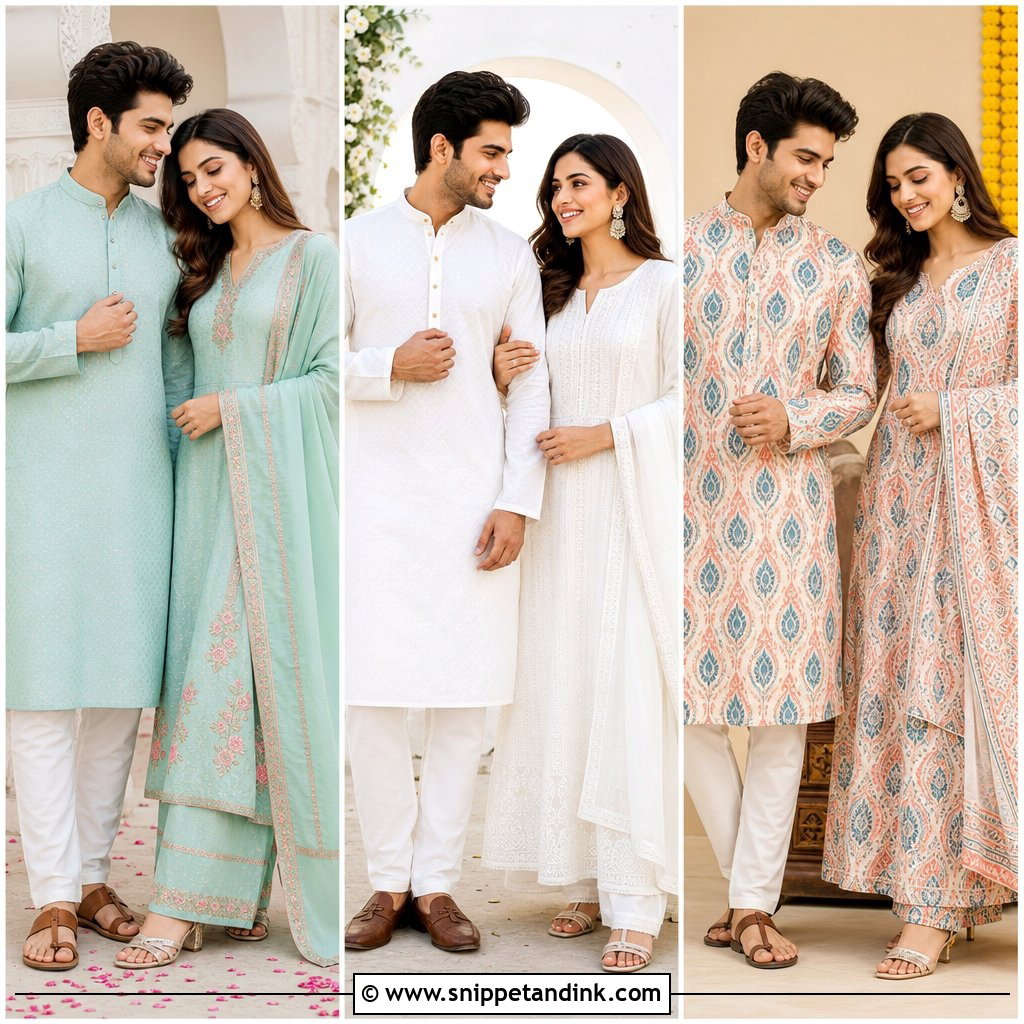
Chikankari is hand embroidery on fine fabric, usually tone on tone, and white on white is its classic form. It looks understated from a distance and detailed up close. I’d choose a straight or slightly flared kurta with a breathable lining, since fine cotton and georgette are often sheer, and pair it with narrow pants for a clean line or palazzos for movement. A light chiffon dupatta with a scalloped edge keeps the palette single-colour. Bring colour in through accessories instead: emerald earrings, turquoise bangles or a pastel potli. Neutral juttis or low gold heels finish it for daytime functions and festive lunches. Wash chikankari gently by hand or have it dry cleaned, because rough machine washing pulls the threads.
4. Black Indo Western Dhoti Dress
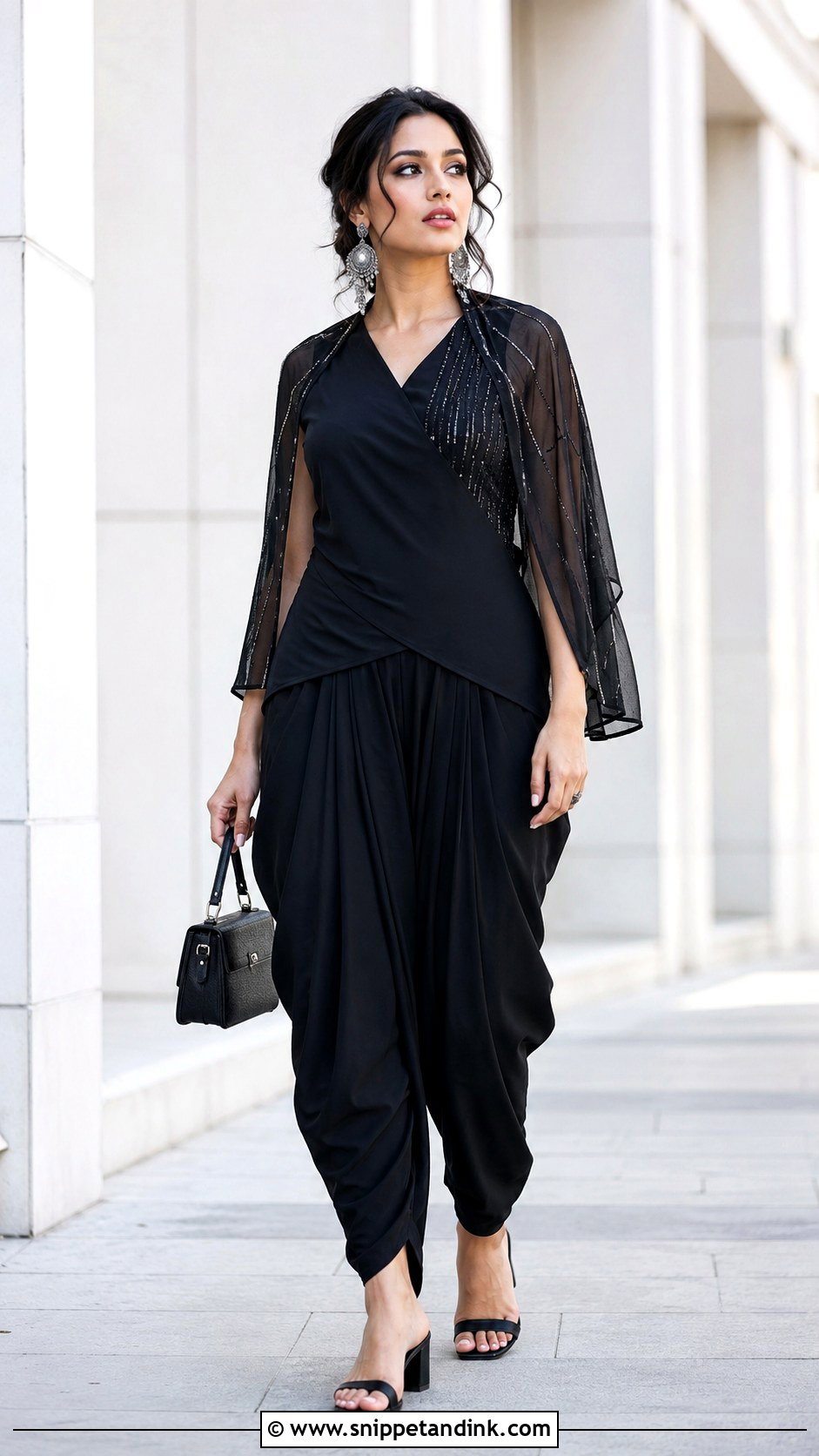
Black is the colour I’d check with the family first. Some households are relaxed about it, while others consider it unlucky at a wedding ceremony, so I save this Indo-western dhoti look for receptions, cocktail nights and evening events. A fitted top or short kurta over pleated dhoti pants gives definition and lets you move freely. One embroidered border, metallic buttons or restrained mirror work is plenty. A cropped jacket or sheer cape adds cover. Oxidised silver earrings, stacked cuffs and a structured mini bag suit it, with black block heels, metallic sandals or embroidered juttis, a sleek bun and softly lined eyes.
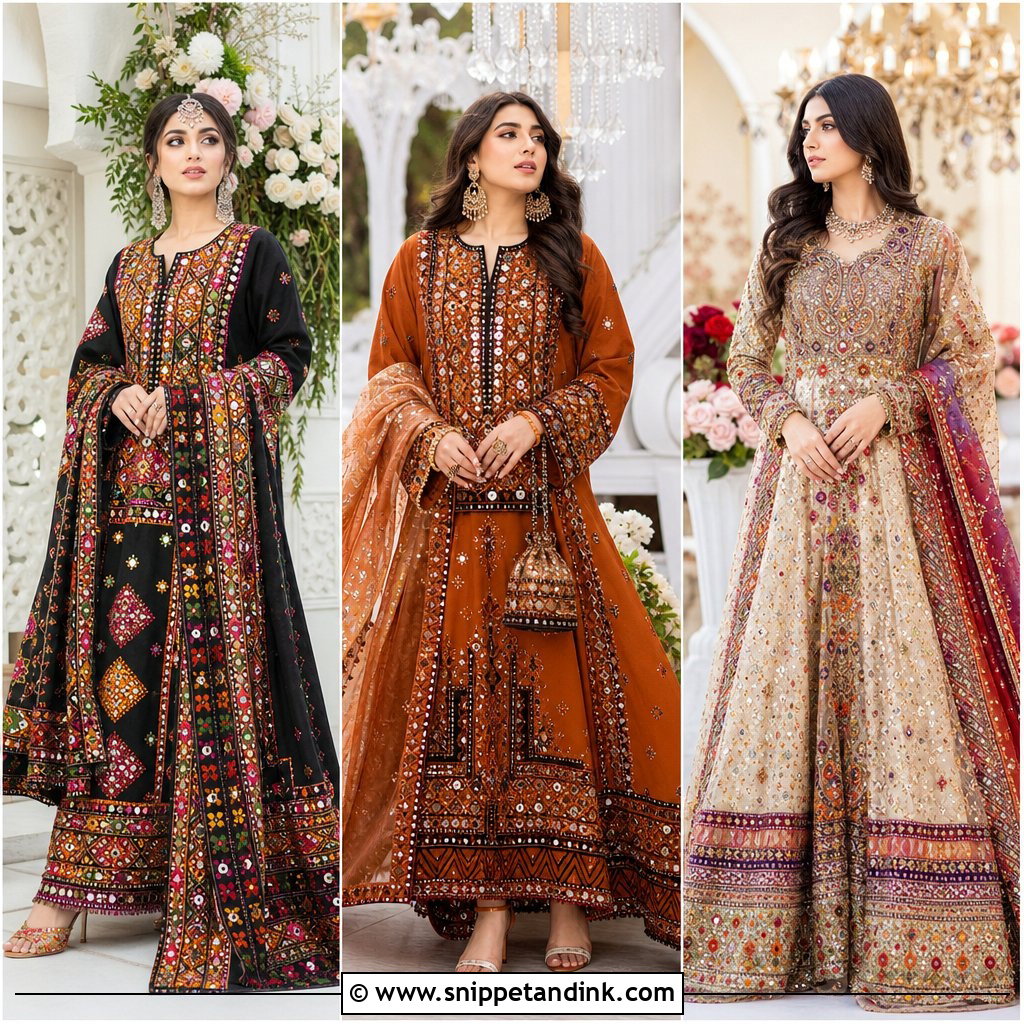
5. Mirror Work Lehenga Outfit
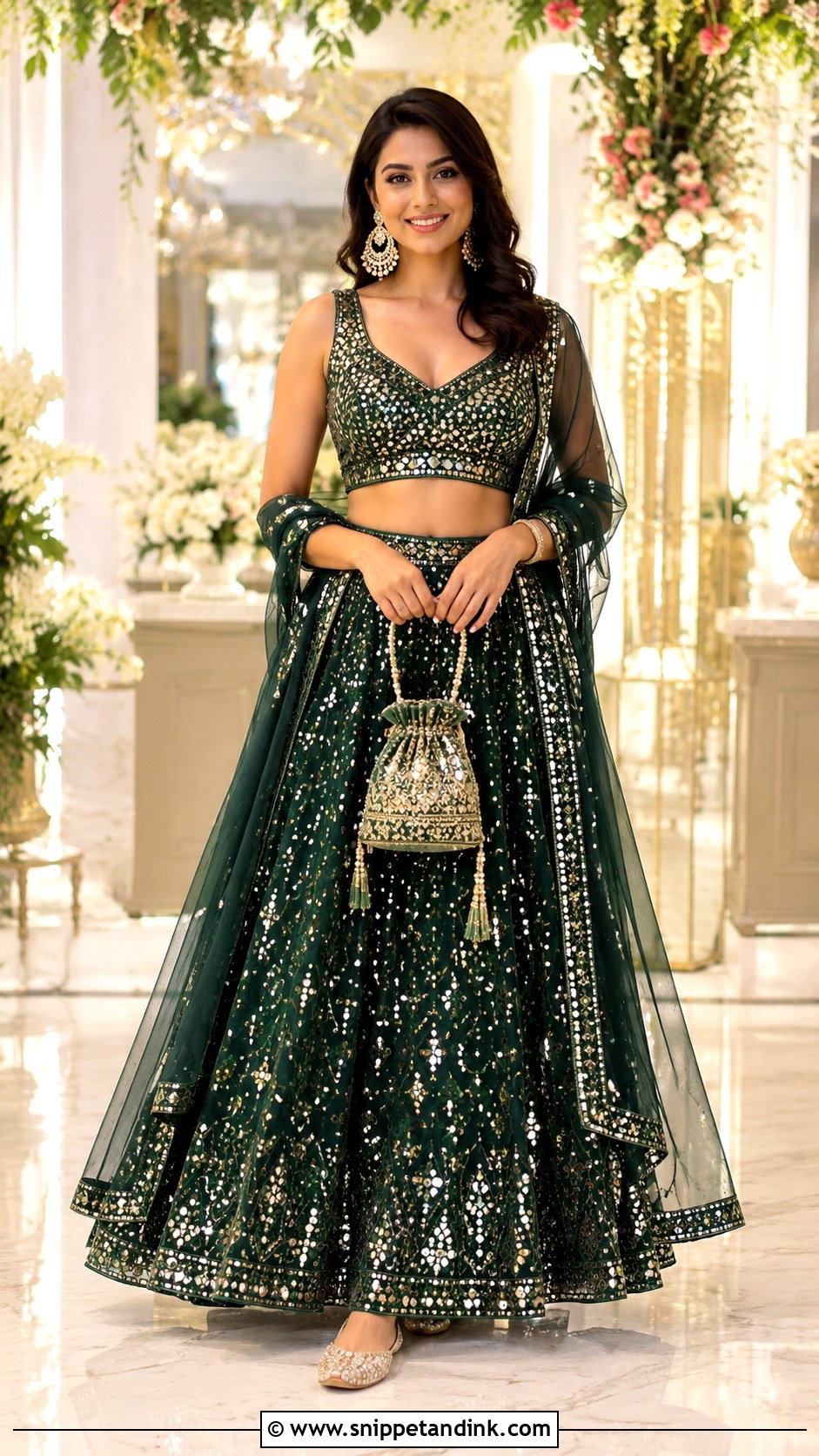
Mirrors do the job jewelry would, which is why a mirror work lehenga needs much less of it. Emerald, cobalt, fuchsia and deep purple all show the glints well. Balance is the skill: a heavily mirrored skirt wants a blouse with a higher neck and less work, while a plain skirt can carry a statement dupatta. Real glass mirror work is heavy, so try the skirt on and walk in it; the waistband should sit comfortably and the hem should clear your shoes. Medium chandbalis, a slim bangle stack and a small potli are enough. Pin the dupatta over one shoulder or across the body so it stays put when you dance.
6. Cotton Block Print Indian Dress
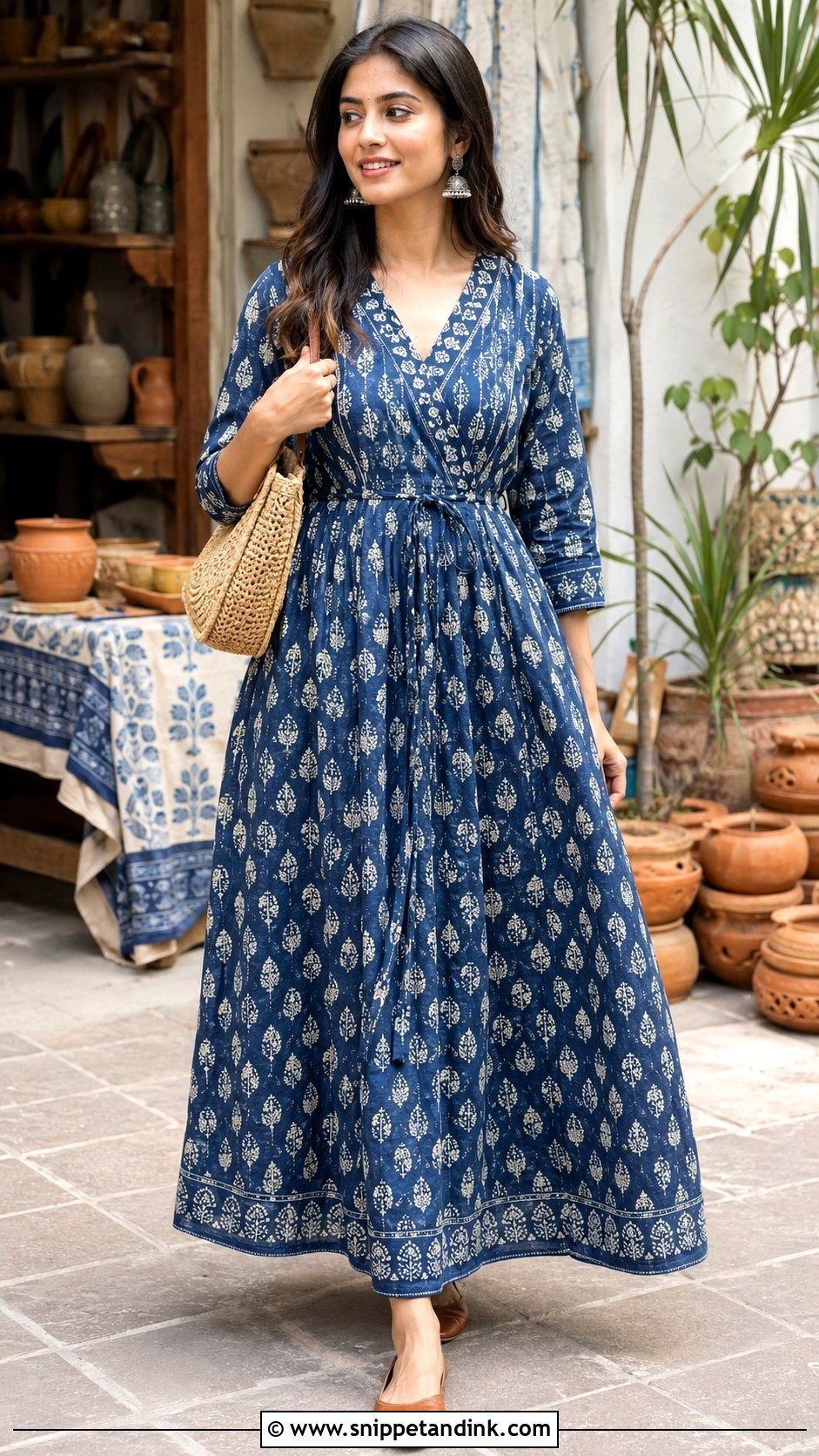
Hand block printing leaves small irregularities in the pattern, and that’s part of the appeal, not a flaw. A cotton block print Indian dress in an A-line or tiered ankle-length cut suits hot days and relaxed functions. Indigo, rust, maroon, mustard and sage are easy to accessorise. Wear the matching tie belt or leave it loose. Silver jhumkas, a woven bag and leather flats suit it, and a light printed scarf adds a layer if you want one. Hand-dyed cotton can bleed in its first few washes, so wash it separately in cold water. A braid, loose bun or natural curls keep it easy.
7. Monochrome Sharara Set
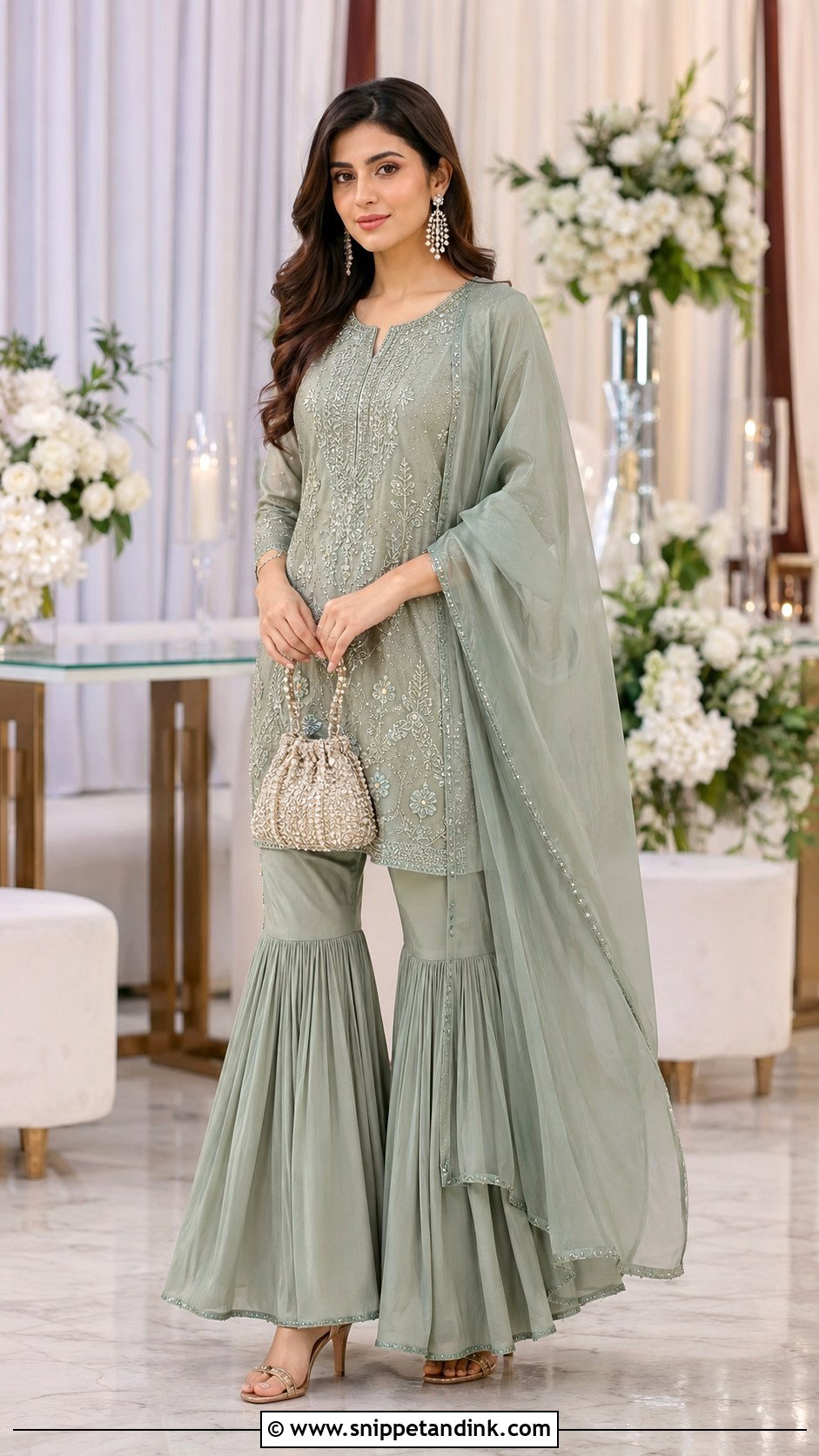
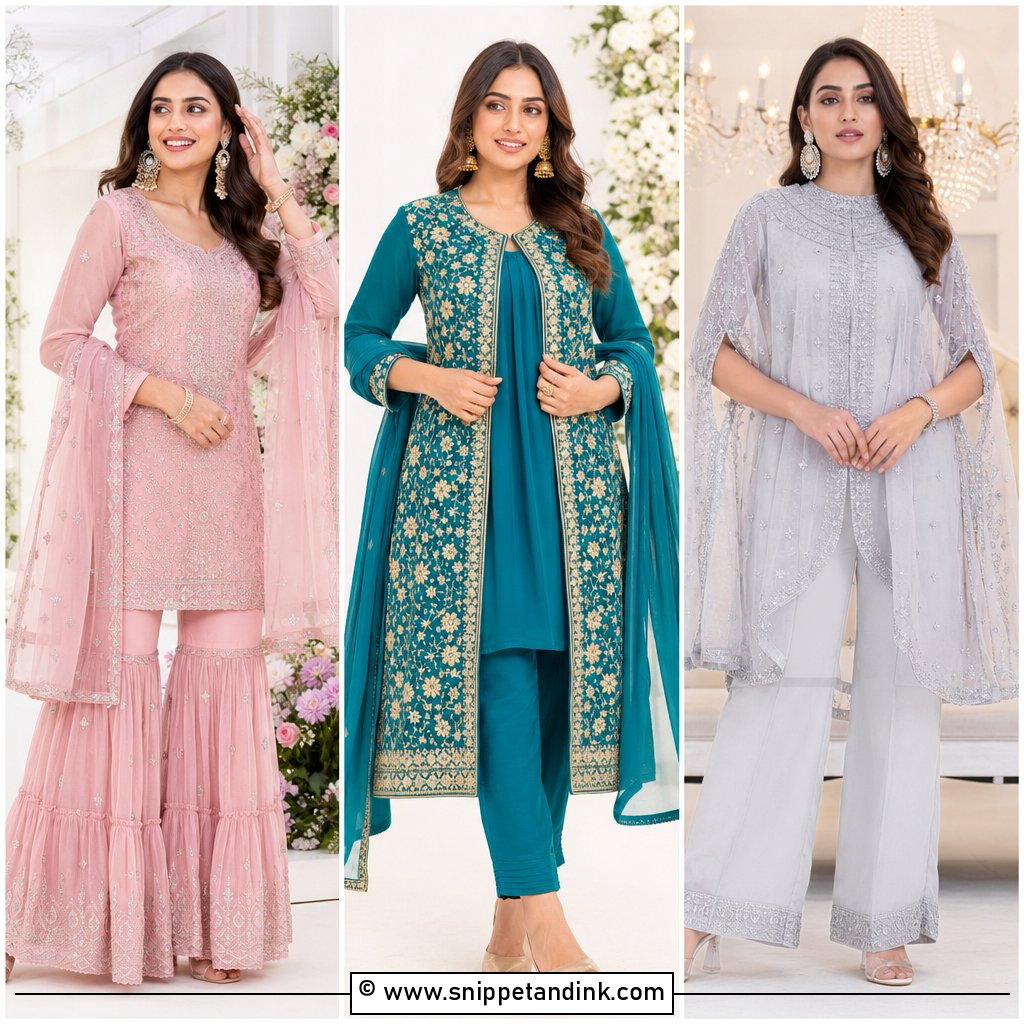
Dressing in one colour makes a sharara look taller and cleaner, as long as the undertones match. A sage kurta with slightly yellower sage pants looks like a mistake rather than a choice, so check both pieces together in daylight. Sage suits daytime, wine suits evening, and navy works at formal events. Pair a short embroidered kurta with high-waisted, deeply flared sharara pants and a matching dupatta with a narrow border. Tonal heels, a compact embellished bag and jewelry in one metal finish it; drop earrings and one ring are plenty. Have the length set with your shoes on, because a sharara that’s too long is easy to trip on.
8. Silk Saree With Modern Blouse
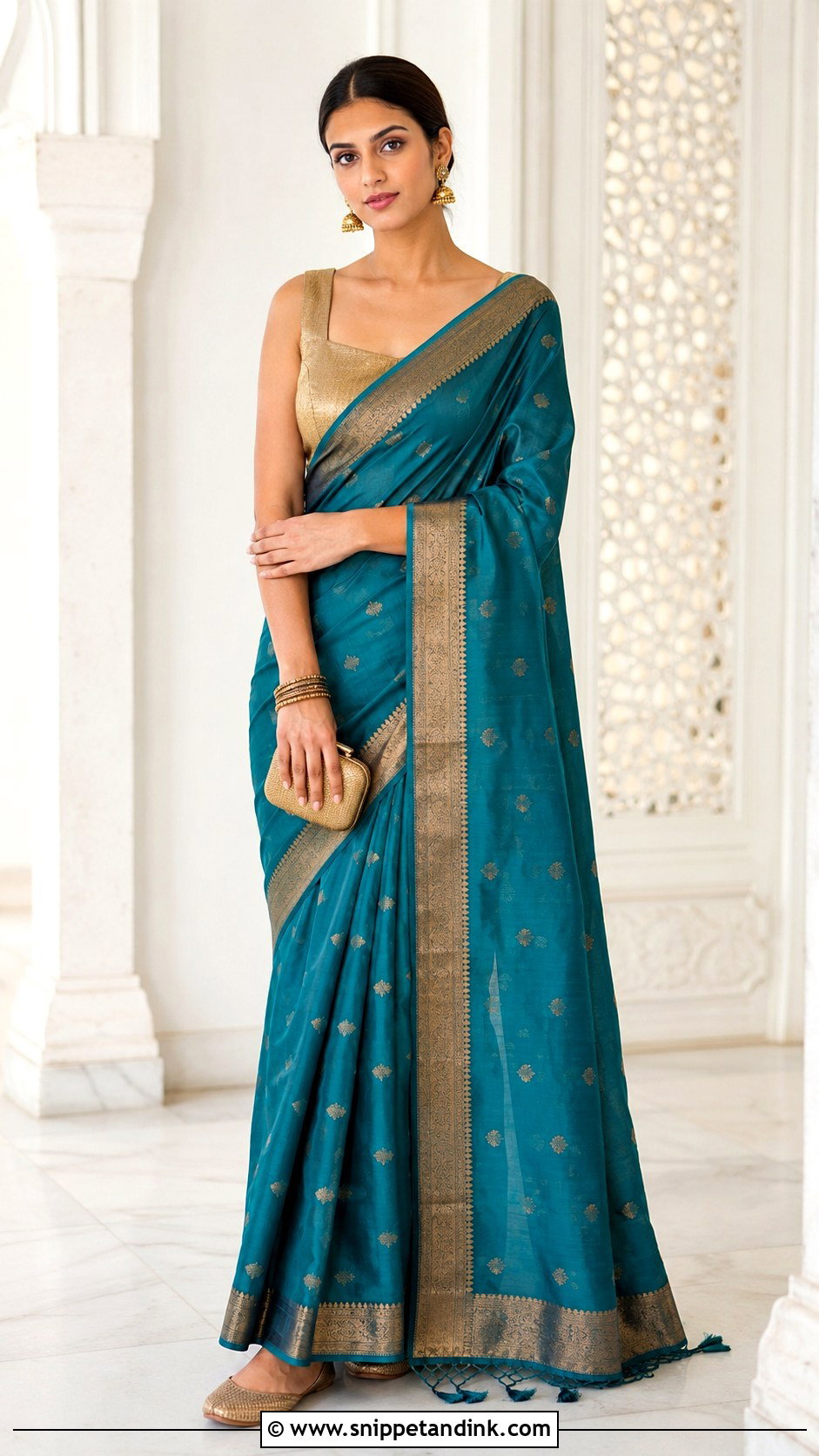
A heavy silk saree looks current when the blouse is clean and simple. Banarasi, Kanjeevaram, handloom or soft silk all work, and it’s worth picking a colour you’ll wear again, because good silk lasts for decades. Choose one hero, either the border or the blouse; a boat-neck, elbow-sleeve, square-neck or structured sleeveless blouse lets the saree lead. Silk pleats hold well, but pin them at the waist anyway so they stay crisp. Traditional gold earrings, a few bangles, a small clutch and pointed metallic flats or stable heels suit it, with a low bun and fresh or fabric flowers. Between wears, wrap it in cotton and refold it every few months, since zari can crack along permanent folds.
9. Jacket Style Lehenga Outfit
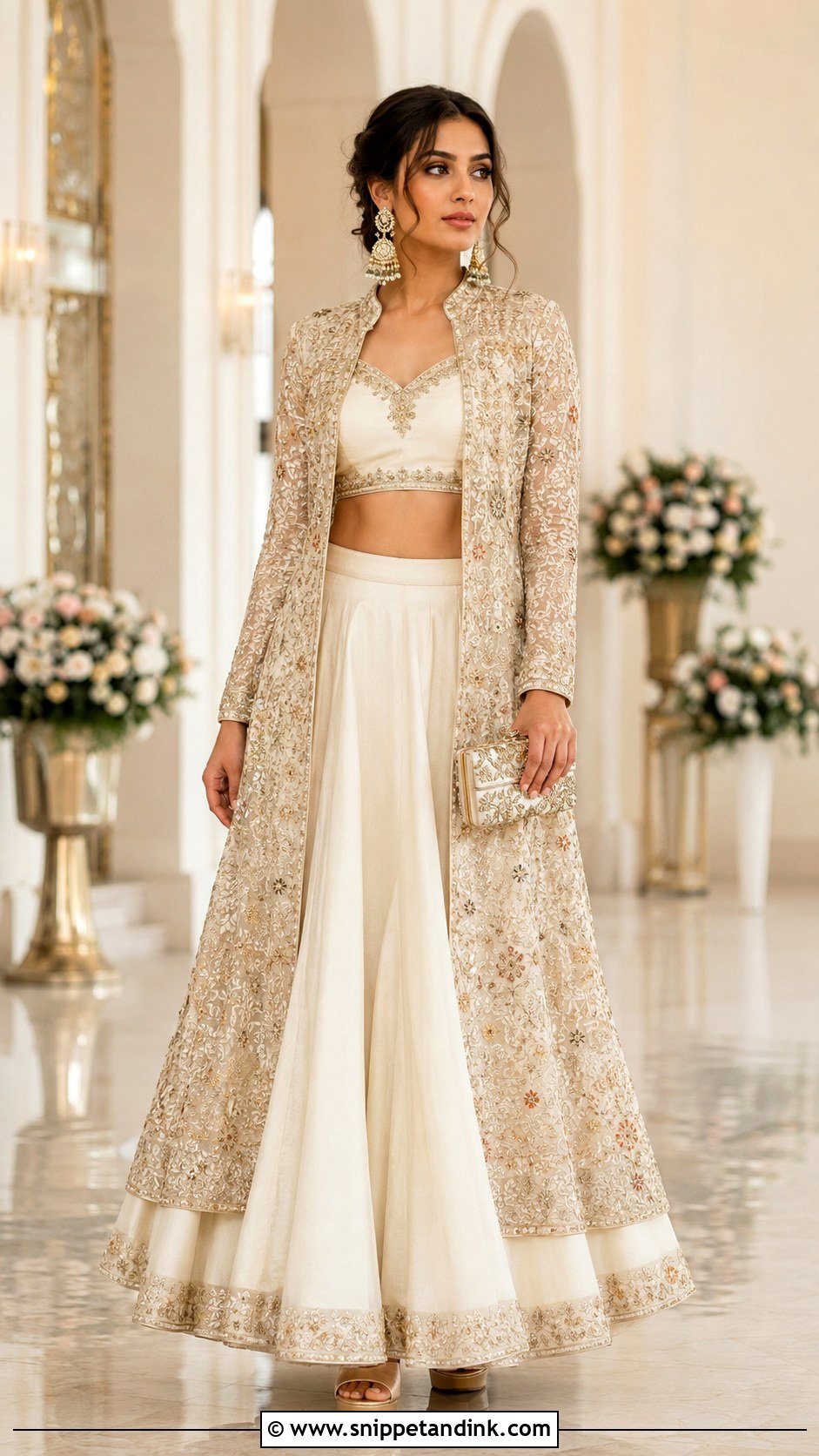
A jacket lehenga solves the dupatta problem: no long length of fabric to manage while you eat, greet people and dance. Start with a flowing skirt and fitted blouse in complementary colours, then add a waist-length, knee-length or floor-length embroidered jacket. Jacket length is mostly about height. Petite women usually balance better in shorter jackets, while long open-front styles draw a lengthening vertical line. If the jacket is densely embroidered, keep the skirt simpler. Statement earrings, a slim ring, a small box clutch and platform sandals or block heels that stop the hem dragging complete it. It’s especially good for winter weddings.
10. Bandhani Kurta Palazzo Set
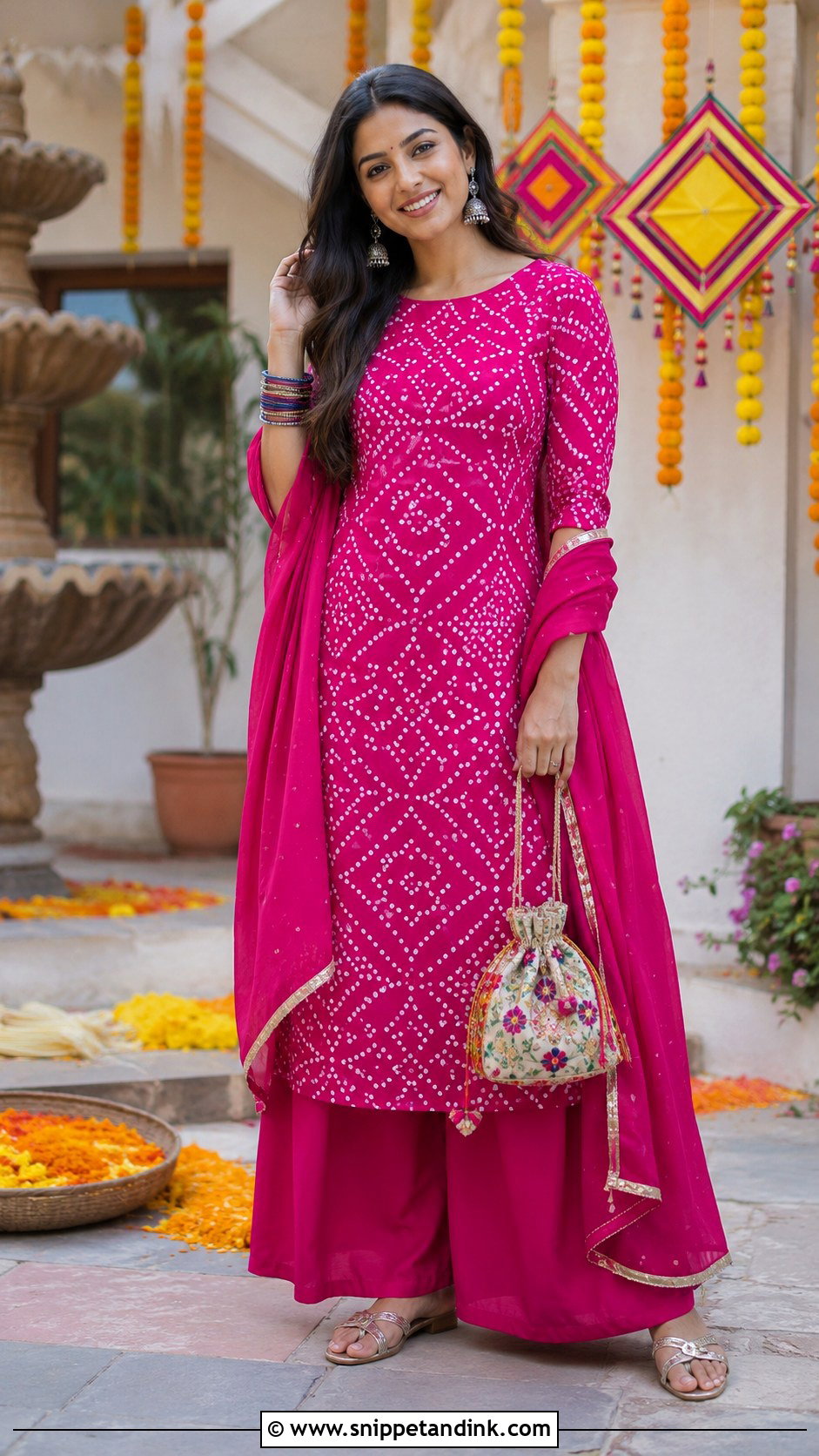
Bandhani is tie-dye made by pinching and binding tiny points of cloth before dyeing, which leaves the familiar dotted pattern. It’s bright and busy, so pair a printed kurta in red, magenta, green or royal blue with solid palazzos, or reverse it with a plain kurta and printed pants. A lightly bordered dupatta ties the two together. Oxidised jhumkas, colourful bangles and an embroidered potli suit it, with neutral juttis or flat metallic sandals for long hours. If you want to keep the crinkled texture, steam it lightly rather than pressing it flat with a hot iron. A small bindi and a loose braid finish it.
11. Cape Style Indian Dress
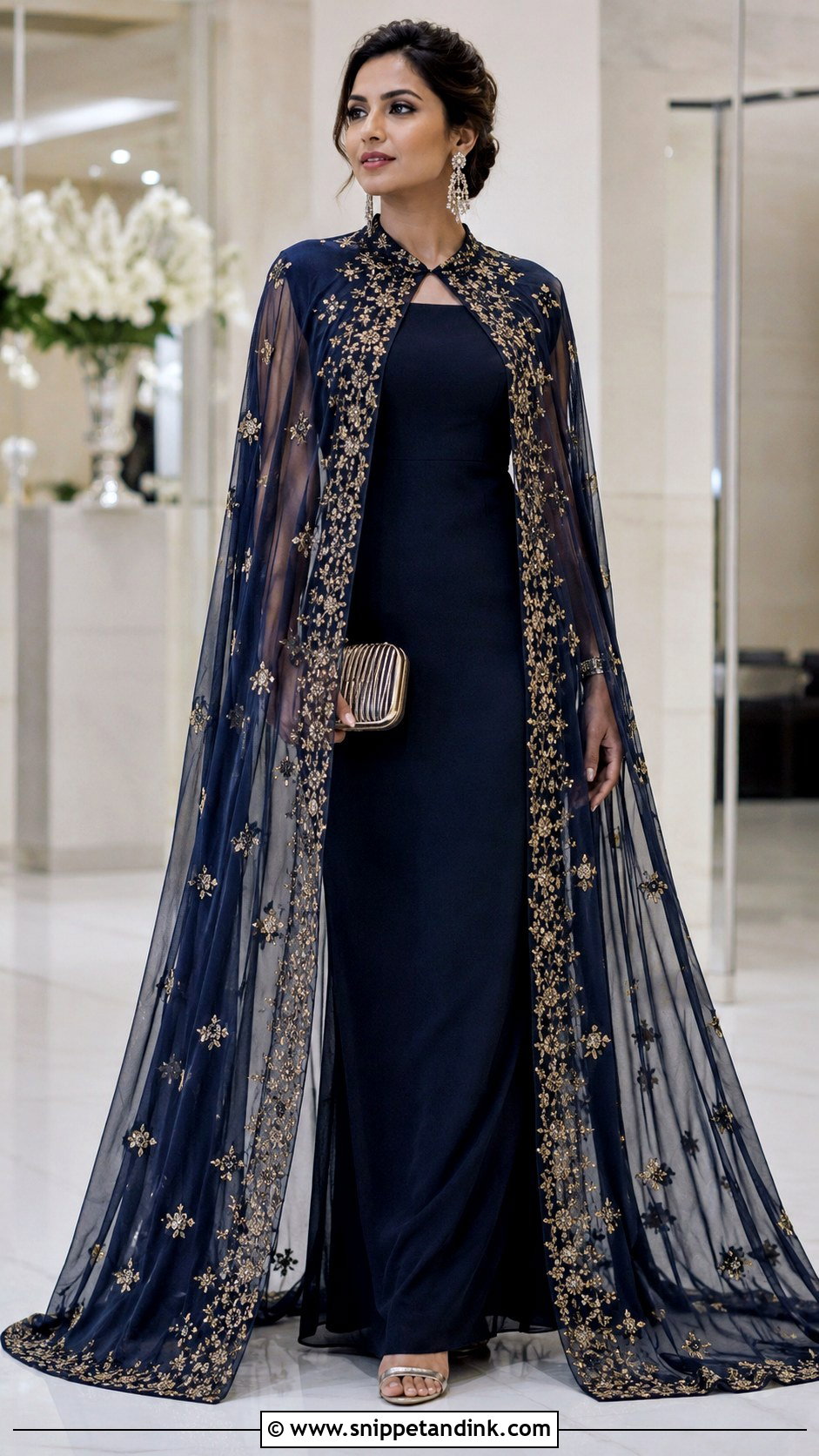
A cape replaces the dupatta with something that stays where you put it. Choose a fitted gown, lehenga set or straight kurta outfit as the base, then add a sheer cape embroidered around the shoulders and edges. A waist-length cape shows your shape; a long one gives movement and coverage. Keep the base simple so the layers don’t compete. Skip the necklace and wear drop earrings, so the cape neckline stays clear. A metallic clutch and coordinating heels or embellished flats complete it, with a polished ponytail or soft waves. It’s a reception and evening look. Ask for a small hook at the front of the cape so it doesn’t slide back off your shoulders.
12. White Kurta With Colorful Dupatta
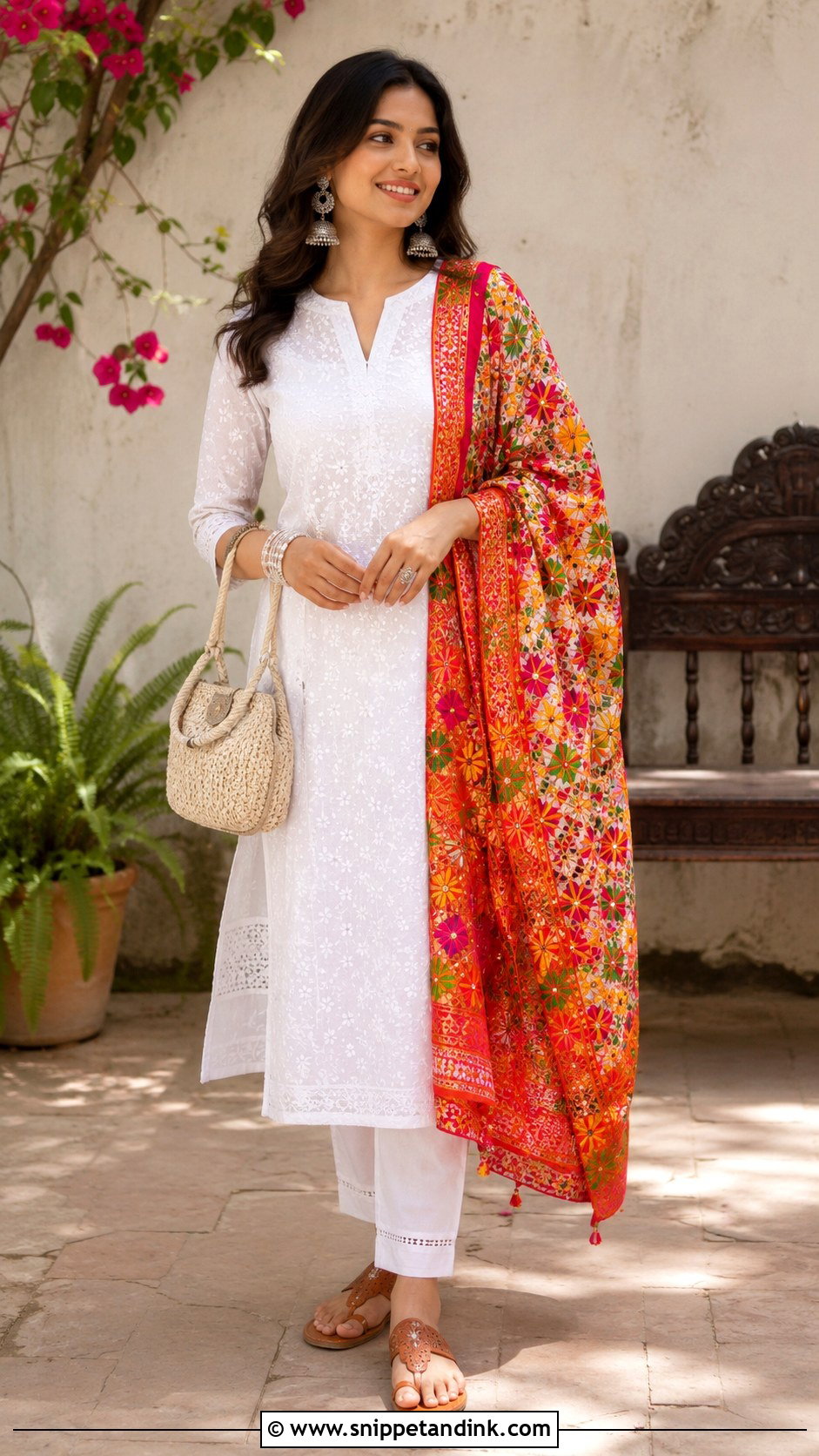
White kurtas are the easiest base for a colorful statement dupatta, and the dupatta is where you show regional craft. Phulkari, Bandhani, Ajrakh, Kalamkari and block prints all work over a cotton, linen or chikankari kurta with white straight pants or ankle-length palazzos. Pull one or two colours from the dupatta into your accessories rather than matching every shade. Silver jhumkas, glass bangles, a woven bag and tan kolhapuris suit it. White shows every crease, so press it just before you leave, and keep it away from the haldi, where yellow stains are close to guaranteed.
13. Velvet Indian Dress Outfit
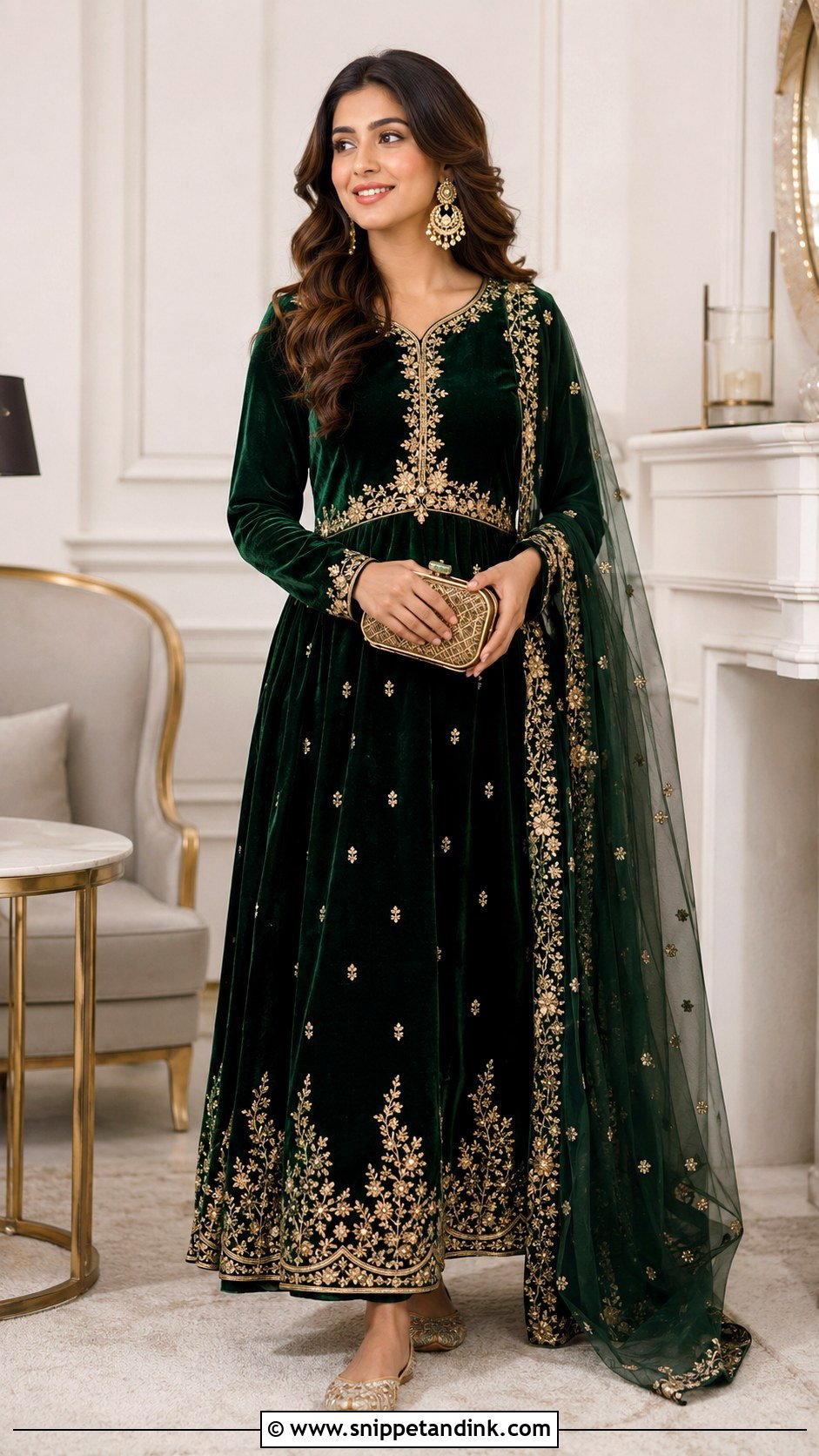
Velvet suits winter weddings because it reads rich with very little decoration. Burgundy, navy, forest green, plum and black all deepen beautifully in it. A velvet Anarkali, straight kurta set or long jacket keeps you warm, and small zari borders or crystal accents are enough. Pair the heavy fabric with a light chiffon or organza dupatta. Antique gold earrings, a structured clutch and closed-toe heels or embroidered juttis finish it, with a low bun and softly defined makeup. Velvet crushes wherever it’s pressed, so hang it rather than folding it, and steam it instead of ironing the pile.
14. Printed Ethnic Co Ord Set
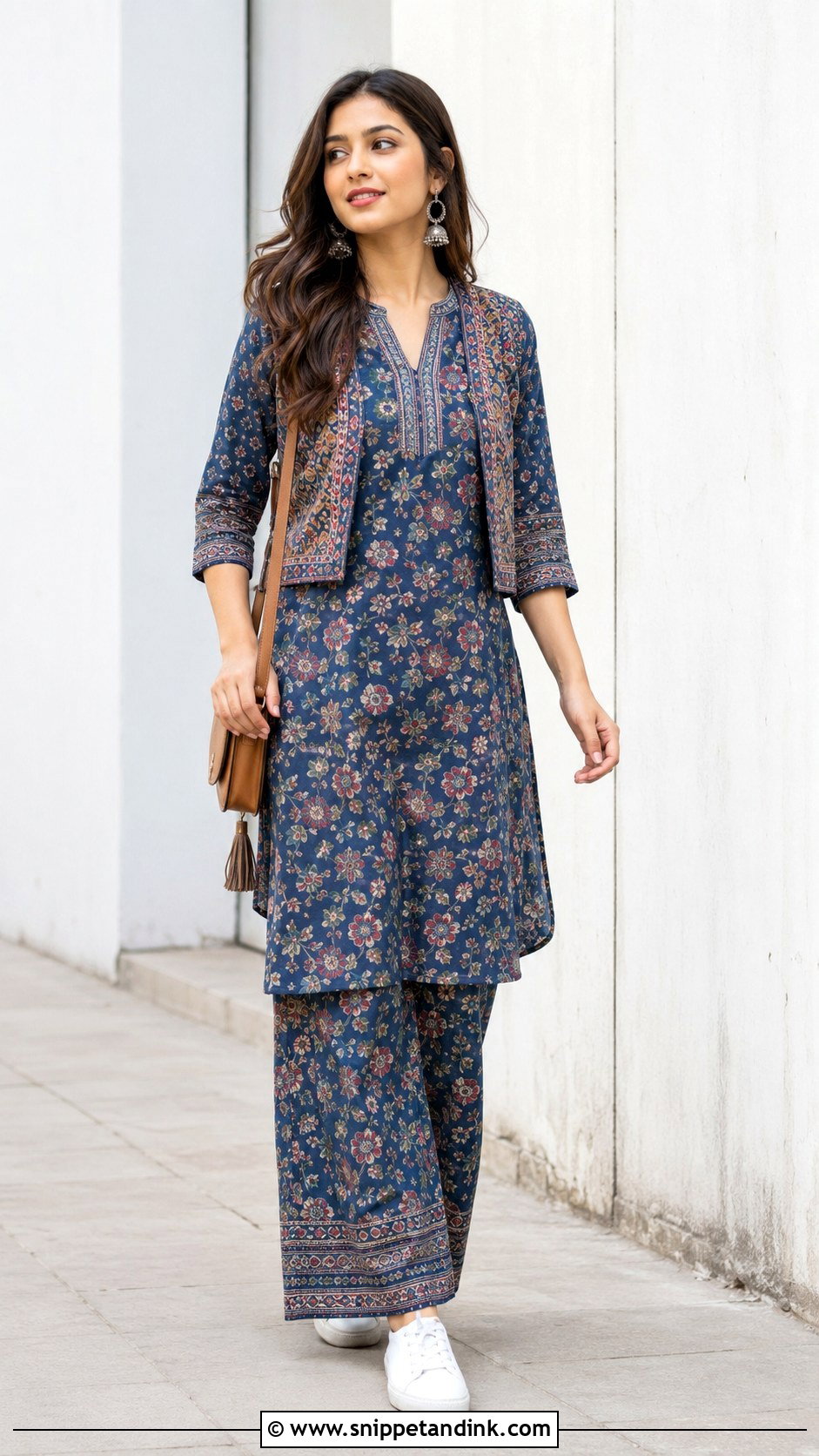
A co-ord set is what I recommend for travel days and the smaller events around a wedding week. Choose a matching kurta and wide-leg pants in breathable cotton, rayon or a linen blend; small florals and geometric prints are easy, and big motifs make more of a statement. A cropped jacket, short overlay or matching scarf adds a layer. Hoop-style jhumkas, a crossbody bag and clean leather flats suit it, and white sneakers work when the cut is modern and the day is casual. Rayon shrinks in hot water, so wash it cold. Have the sleeves set at a flattering point on the forearm, then keep makeup natural and hair in a neat ponytail.

15. Ruffle Saree Outfit
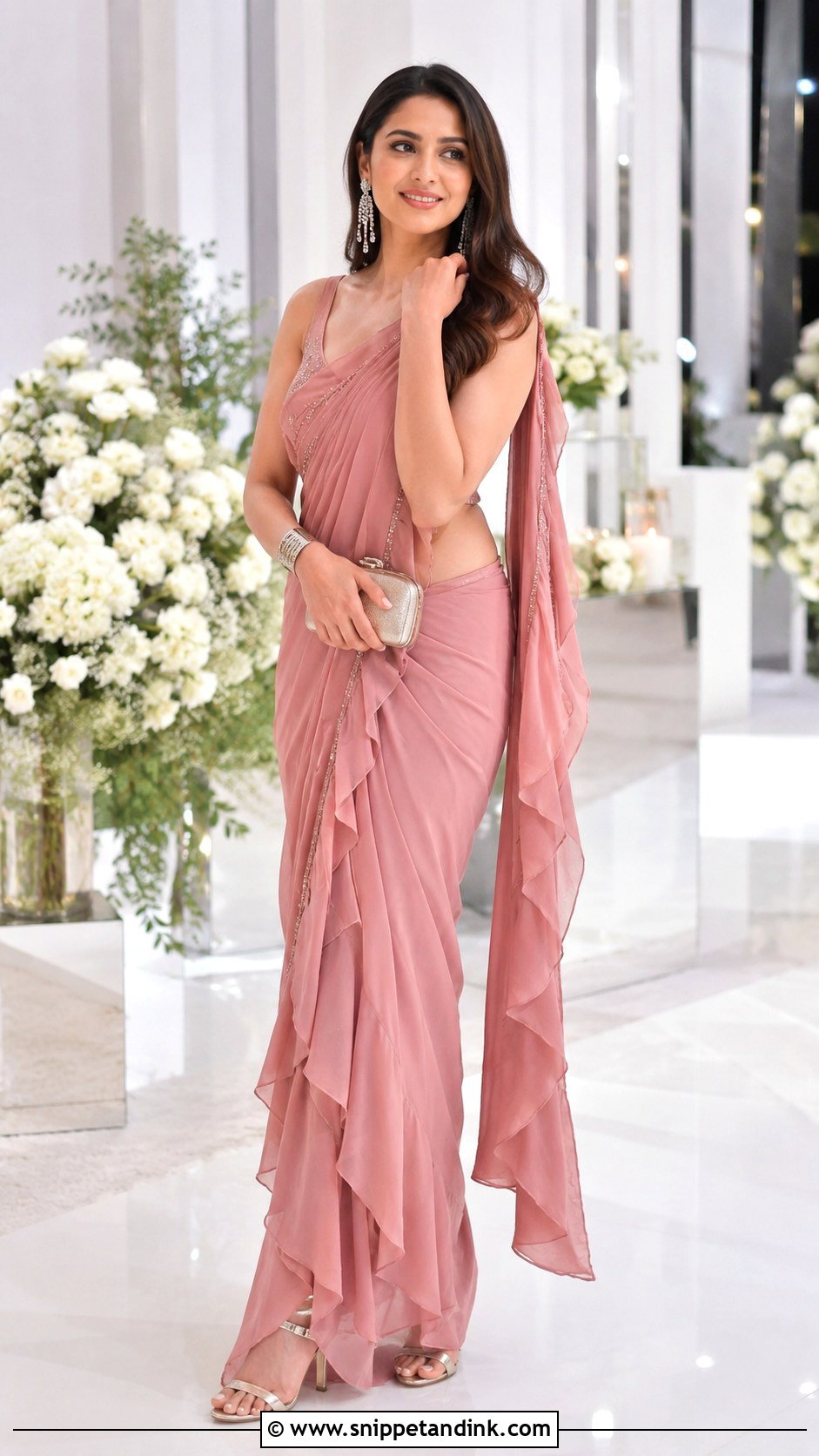
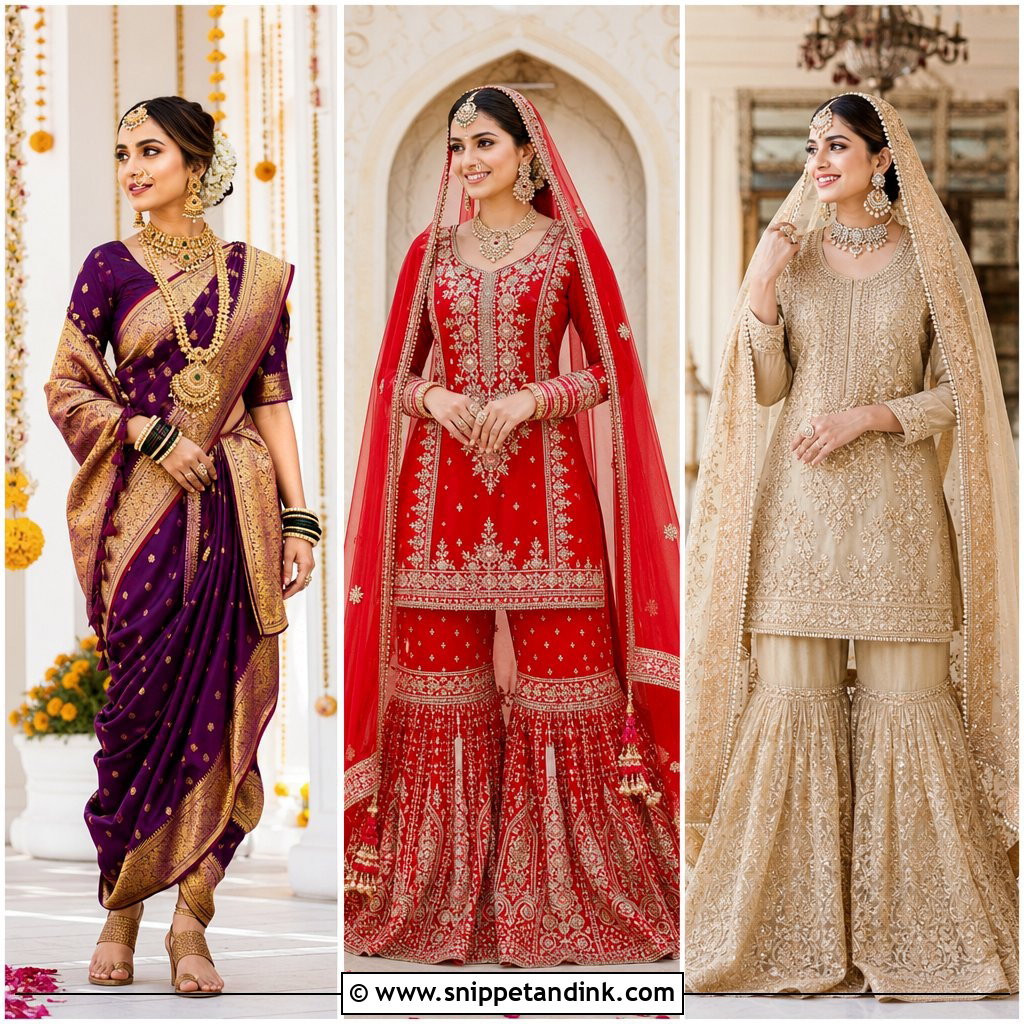
Ruffles need light fabric. In georgette or chiffon they fall softly; in anything stiffer they stand out and add bulk at the hem. Pair the saree with a fitted blouse that balances the ruffled border, sleeveless, one-shoulder or three-quarter sleeve depending on your comfort. All that extra fabric slips, so pin the pleats firmly and fix the pallu at the shoulder. Choose one strong accessory, crystal earrings or a decorated cuff, and keep the rest minimal. A sleek clutch, stable heels, a smooth ponytail or low bun and defined eyes complete it. Practise walking upstairs in it at home, because ruffled hems catch on heels.
16. Angrakha Kurta Skirt Set
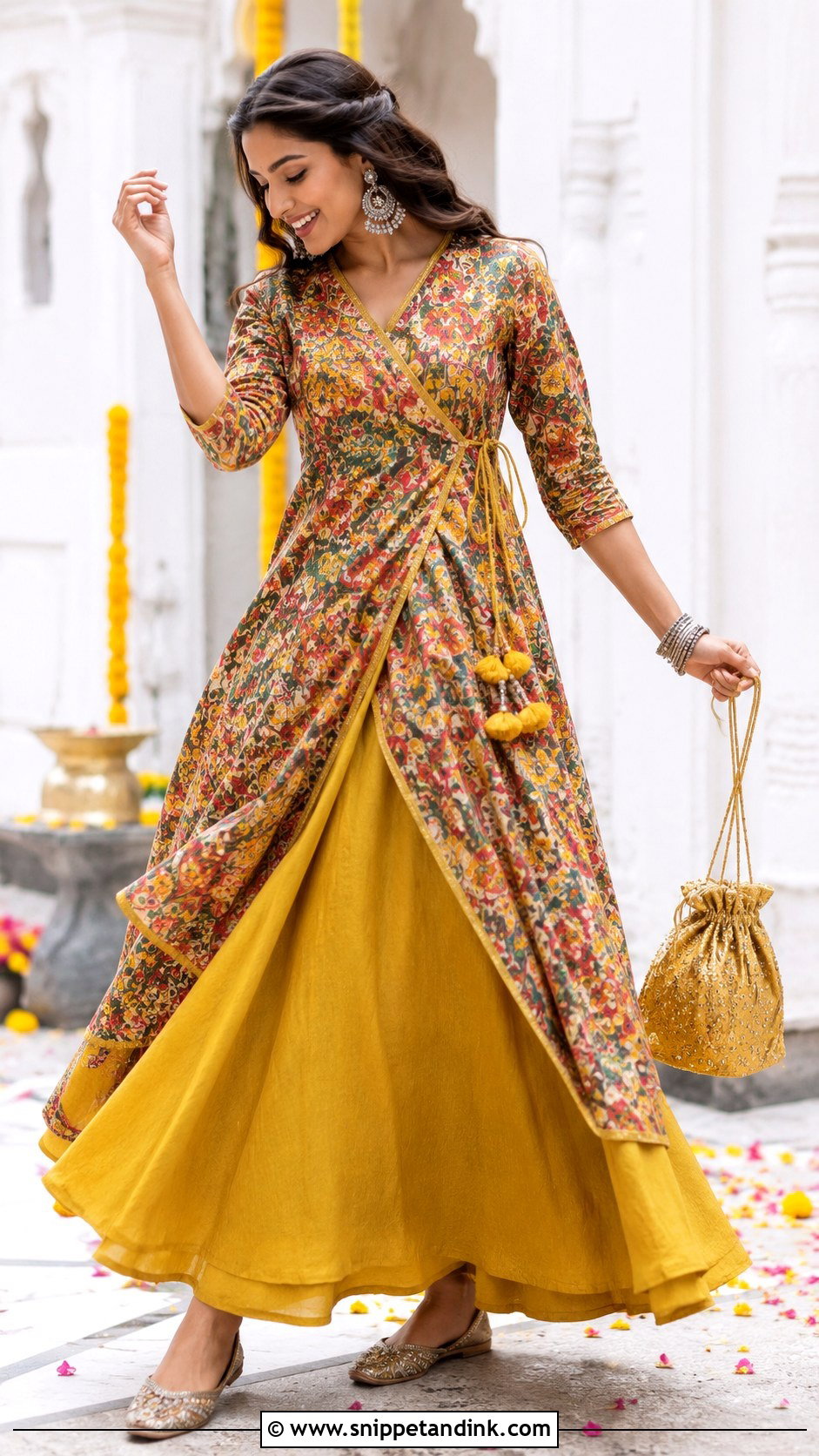
The angrakha wraps across the body and ties at the side, so you can loosen or tighten it after a big lunch. That adjustability is why I like it for long functions. Choose a short or mid-length kurta with side ties, tassels or a contrasting border, and pair it with a solid flared skirt when the top is printed, or a plain top with a patterned skirt. The wrap marks the waist naturally. Add a dupatta only if the event is formal. Oxidised earrings, stacked bangles, a drawstring potli and flat juttis keep it grounded, with a loose braid or half-up style. Check the overlap while you’re seated, since a shallow wrap can gape.
17. Peplum Top And Gharara Set
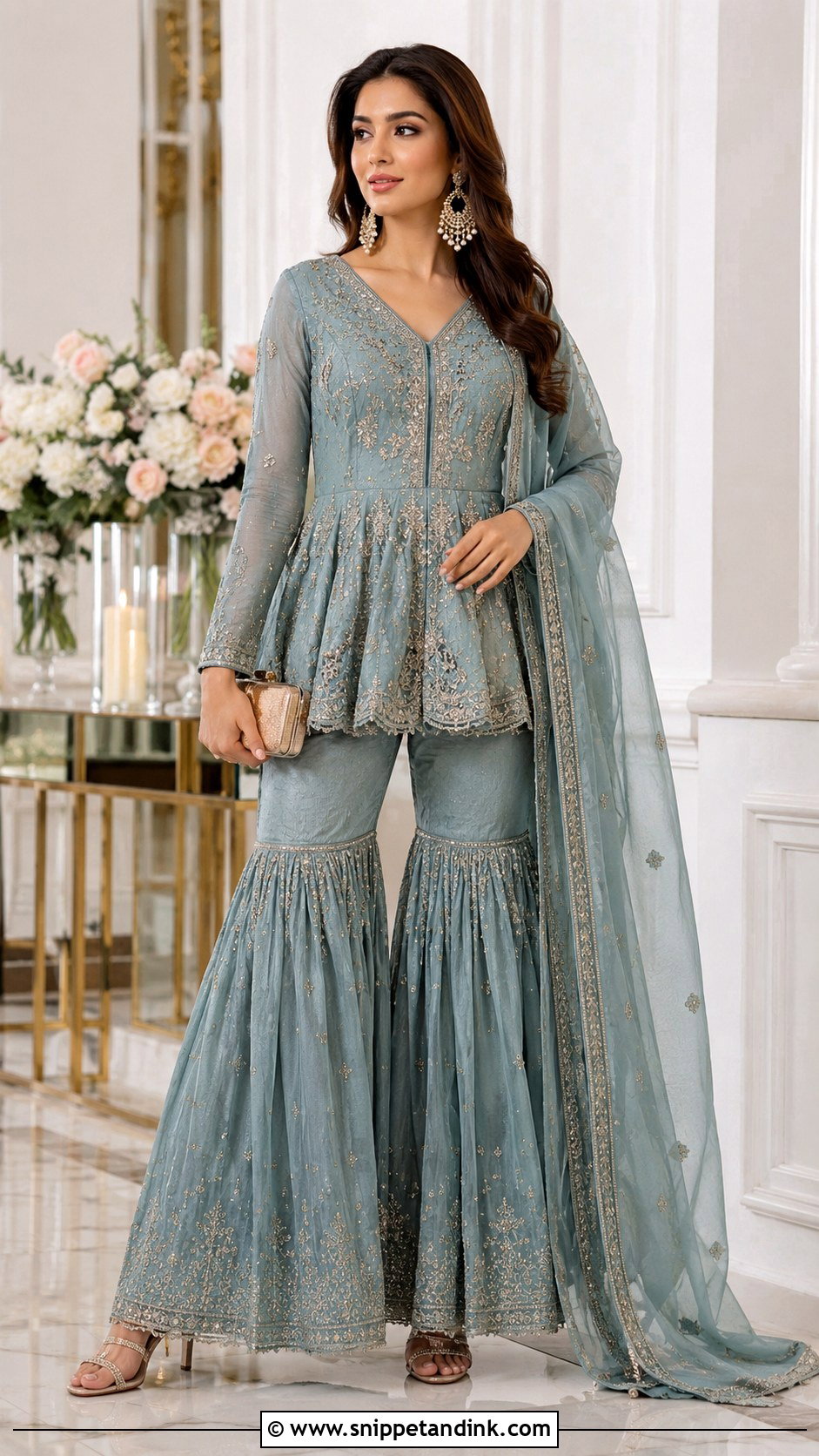
A peplum top paired with gharara pants gives you a defined waist and a big flared bottom half. The gharara is joined and gathered around the knee, so the fit above it matters: it should sit easily through the thigh before the flare begins, or sitting cross-legged on a floor cushion becomes a struggle. The peplum should end near the upper hip. Matching embroidery across both pieces looks polished, and a sheer dupatta softens it. Teal, dusty rose, mustard, lilac and deep red all work. Chandelier earrings, a small clutch and block heels or embellished flats suit it; skip a necklace if the neckline is worked. Finish with a sleek bun, soft curls or a side braid.
18. Kalamkari Maxi Dress
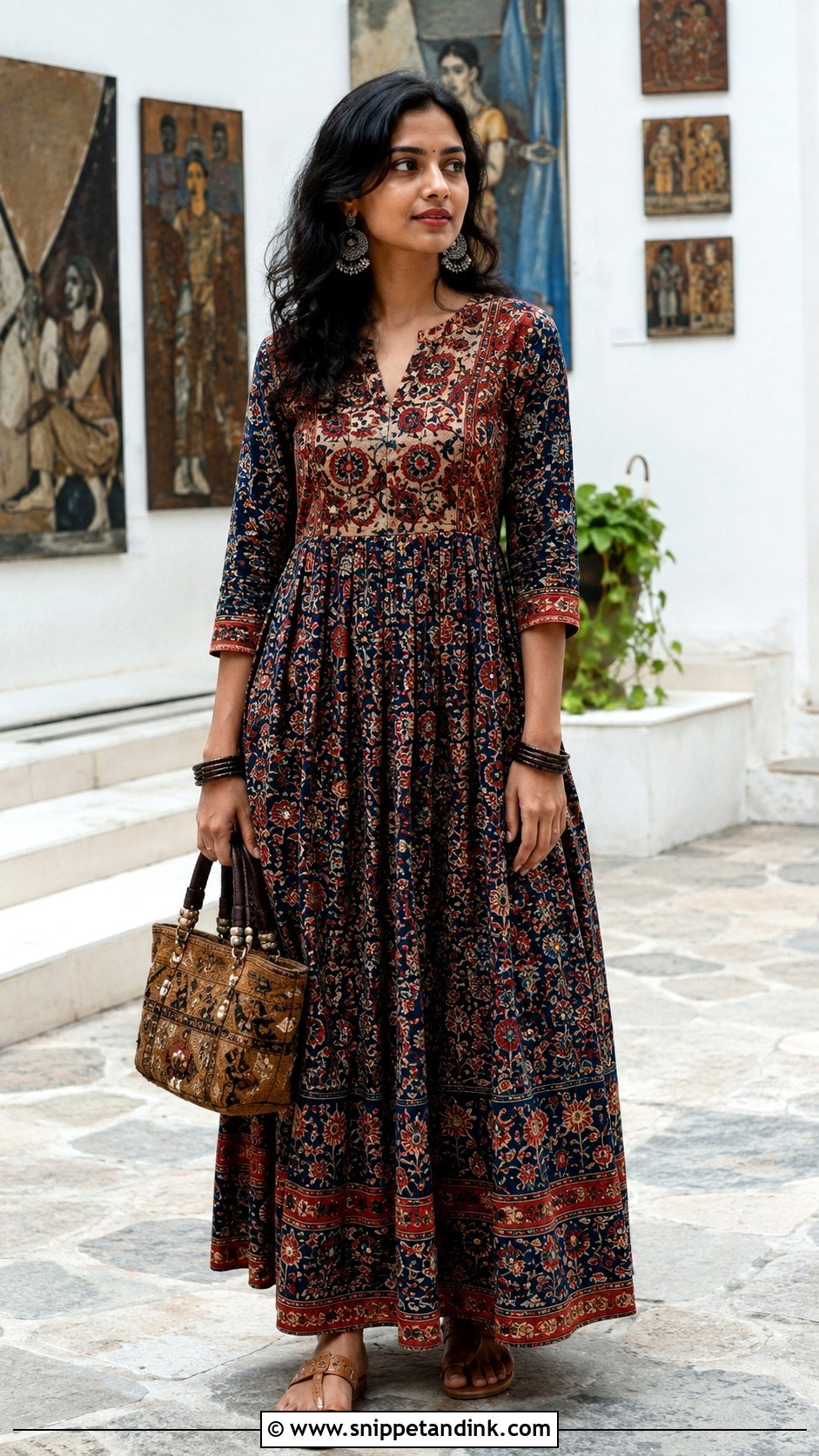
Kalamkari is hand-painted or block-printed cotton, traditionally coloured with natural dyes, and its detailed figurative patterns are the whole point of the dress. Choose a floor-skimming or ankle-length maxi with a defined waist and enough skirt to move. Brick red, ochre, indigo, olive and black suit the patterns. Three-quarter sleeves and a modest V or round neck keep it versatile. Oxidised silver earrings, wooden bangles, a fabric bag and kolhapuris or leather flats support the handmade feel. Don’t add another print on top; the dress already has plenty. Natural dyes can fade in strong sun, so dry it in the shade.
19. Handloom Saree With Belt
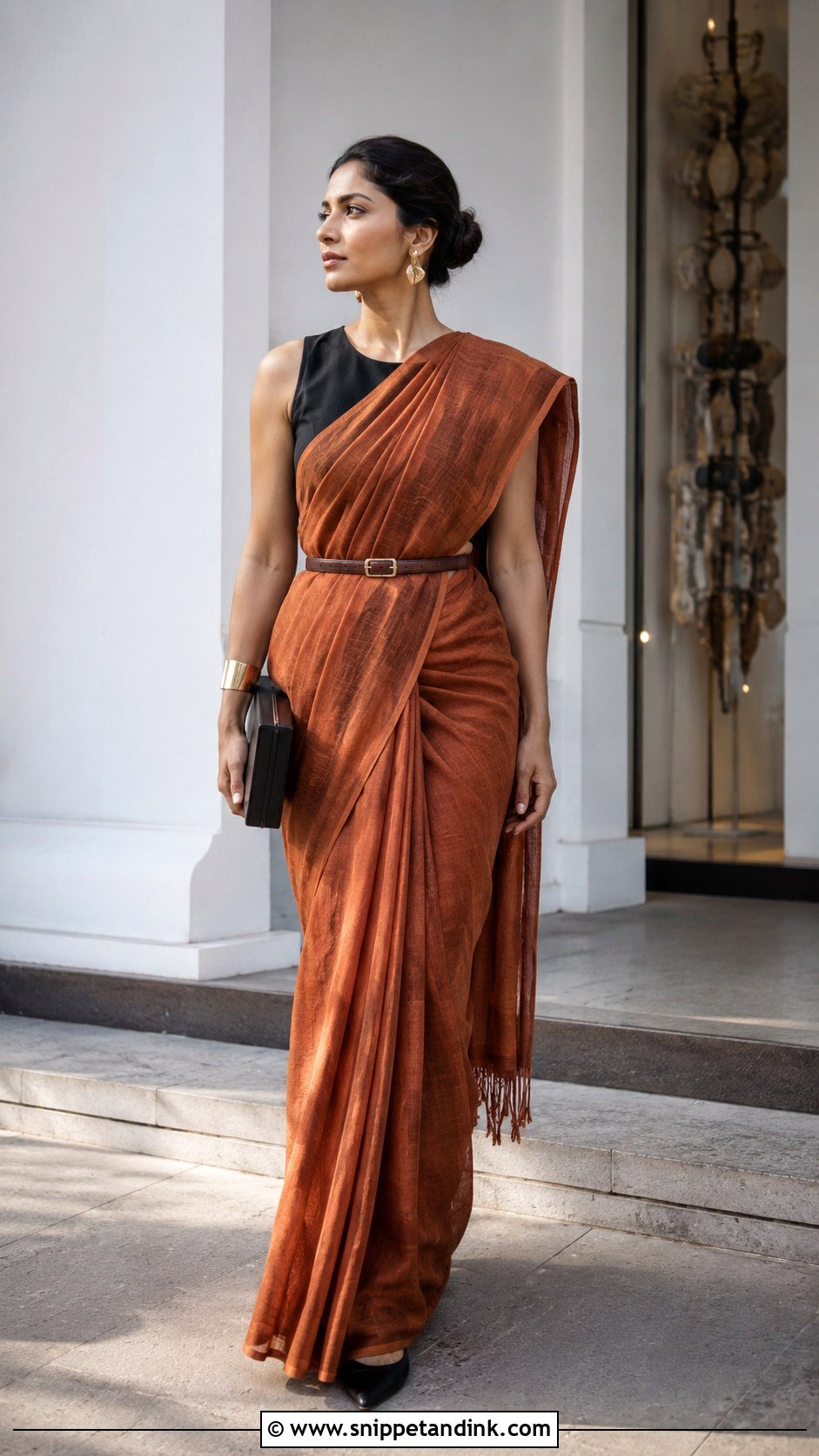
A belt does two jobs on a handloom saree: it adds structure, and it holds the drape so you’re not adjusting the pallu all evening. Linen, cotton and woven silk with a distinctive border or texture all suit it, over a fitted blouse in a complementary solid colour. Arrange the pallu first, then fasten a slim leather, embroidered or metallic belt at the natural waist. If it squeezes or bunches the pleats, it’s too tight or too wide. Sculptural earrings, a cuff and a rectangular clutch suit it, with low heels or pointed flats and a sleek ponytail, bun or short waves. It’s my pick for modern functions and formal lunches.

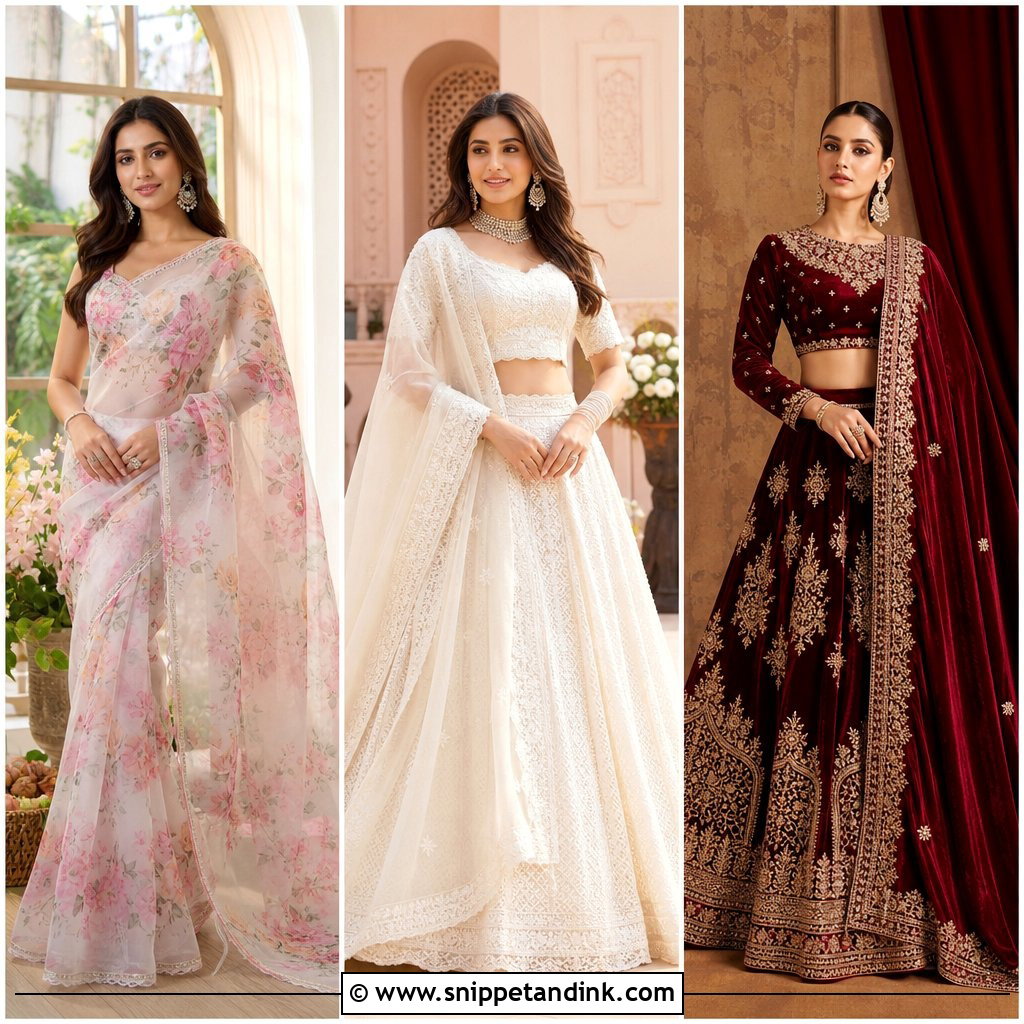
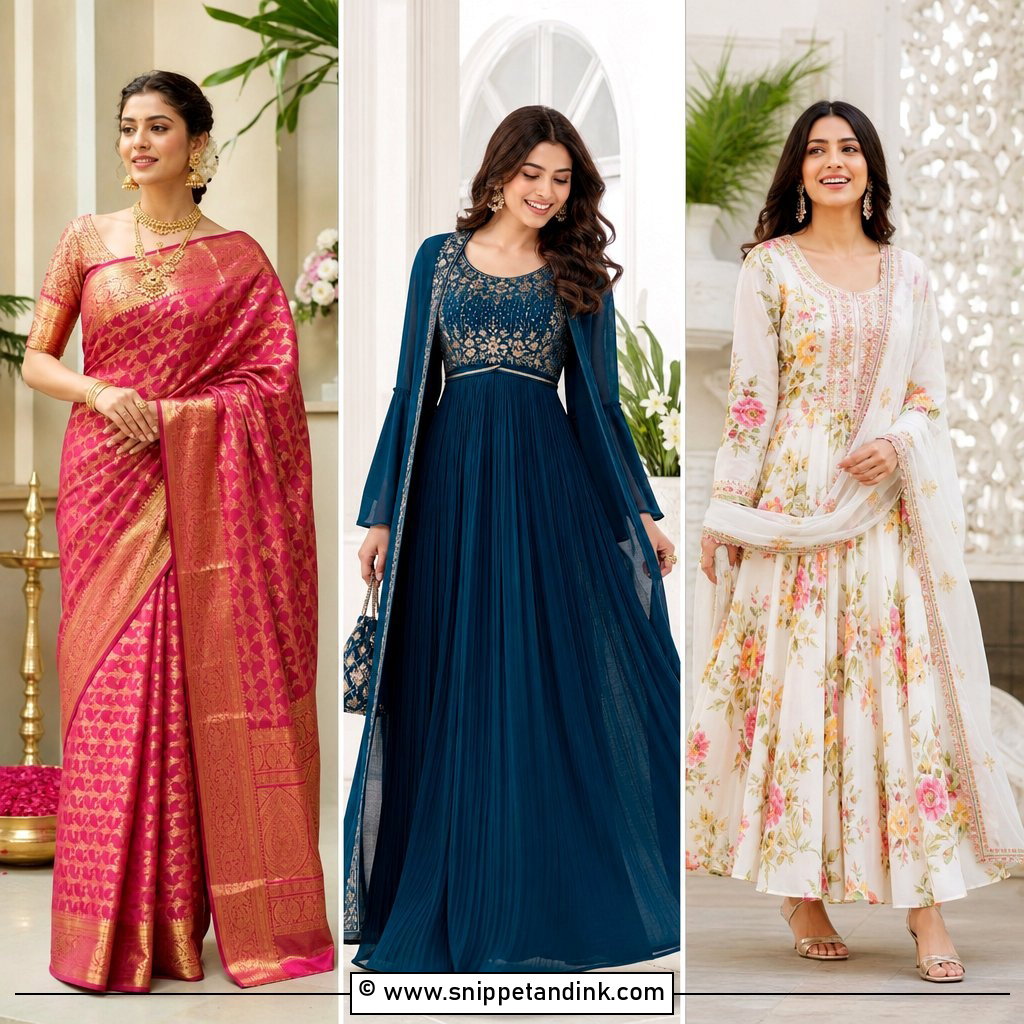

20. Minimal Salwar Suit Outfit
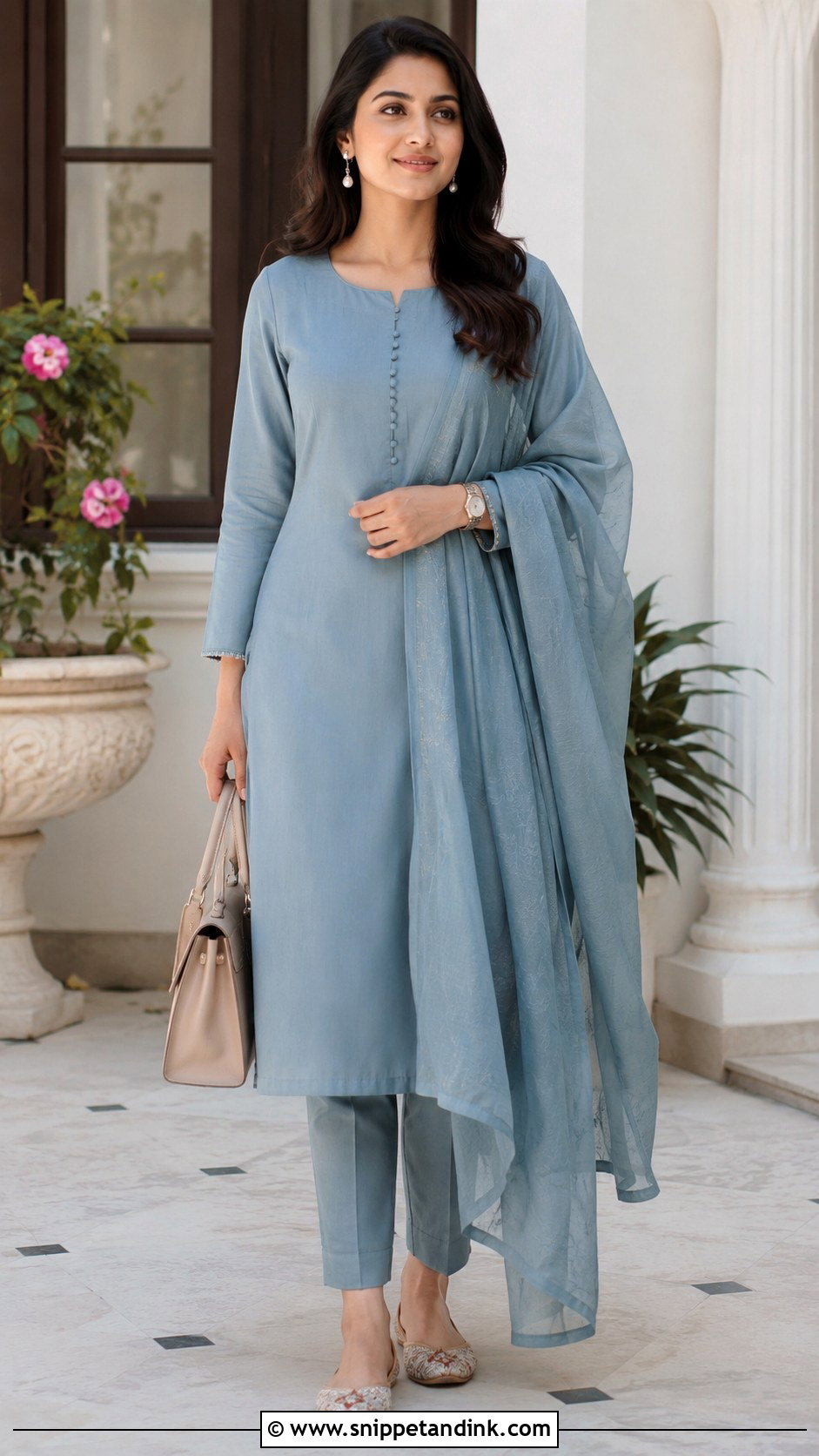
Sometimes the most striking outfit is also the plainest. A well-tailored salwar suit in one calm colour, such as beige, dusty blue, olive, muted rose or charcoal, depends almost entirely on fit, fabric and finishing. Check that the side slits sit level and the shoulder seams end at the shoulder bone. A straight kurta with narrow pants or a softly pleated salwar gives a clean base, and a light dupatta with a subtle woven border or small motifs adds just enough. Small gold hoops, pearl drops or silver studs are plenty. Neutral juttis, a structured handbag, fresh makeup and a tidy bun or ponytail finish it, and it moves easily between work, family dinners and cultural events.
Pins, Blouse Margins and Other Things That Stop an Outfit Slipping
Most outfit problems at Indian weddings aren’t about style. They come from fabric shifting over a long day of greeting, eating and dancing, and a little preparation fixes nearly all of it.
- Ask your tailor to leave extra seam margin in blouses and kurtas. It’s standard practice, and it lets the fit be let out later or for another event.
- Pin saree pleats together at the waist and the pallu at the shoulder, using small safety pins on the inside so they don’t show.
- Tie the petticoat firmly. The saree is tucked into it, so a loose drawstring means a sagging drape by dinner.
- Pin a lehenga dupatta at the shoulder and again at the waist on the opposite side, so it stays on when you lift your arms.
- Carry a small kit with safety pins, bobby pins, fashion tape and a spare earring back.
Try the complete outfit on at home once, jewelry and shoes included, and sit on the floor in it. If anything pulls or slides, you’ll find out there rather than in front of the whole family.
Dress for the Function, Then Make It Yours
Ethnic wear should feel comfortable and like you, not just look right in a photo. The outfits above show how traditional shapes sit with modern colours and practical accessories: pastel Anarkalis and organza sarees on the soft side, dhoti dresses, belted sarees and co-ords on the contemporary side, and handloom and regional prints adding character without heavy embellishment. Before you choose, think about the function, the weather, the weight of the fabric and how much walking and floor-sitting the day involves. Then get the tailoring right, because a secure fit makes even the simplest outfit look considered.
You'll Like These Ideas:





Leave a Reply