
Matching Fabric Weight to the Month and the Venue
Every gown below uses the same neckline, so the real decision is the fabric underneath it. I start every appointment with two questions: how warm will the day be, and how much of it will you spend outdoors or dancing? The answers narrow the rail faster than any mood board.
Warm weather and outdoor ceremonies
Chiffon, tulle and lightweight crepe breathe and move. Long sleeves in these fabrics are bearable in summer; long sleeves in satin usually aren’t. Mikado or heavy duchess satin in high summer often means a damp bodice by the speeches.
Cool months and formal rooms
This is where mikado, faille, duchess satin and jacquard come into their own. They hold structure, they shrug off creasing under a coat, and long sleeves look right in them rather than cautious. Heavier fabrics also hide undergarment lines better.
Three fabric checks I do in the shop
- Squeeze a handful of skirt for a few seconds. If the creases are still there a minute later, they’ll be there after the car ride.
- Hold the bodice up to a window. If you can see your hand through fabric and lining together, daylight will show your undergarments.
- Ask what the fabric is made of, not only what it’s called. Satin can be silk or polyester, and the two crease, breathe and photograph differently.
1. Boatneck Satin A-Line Wedding Gown
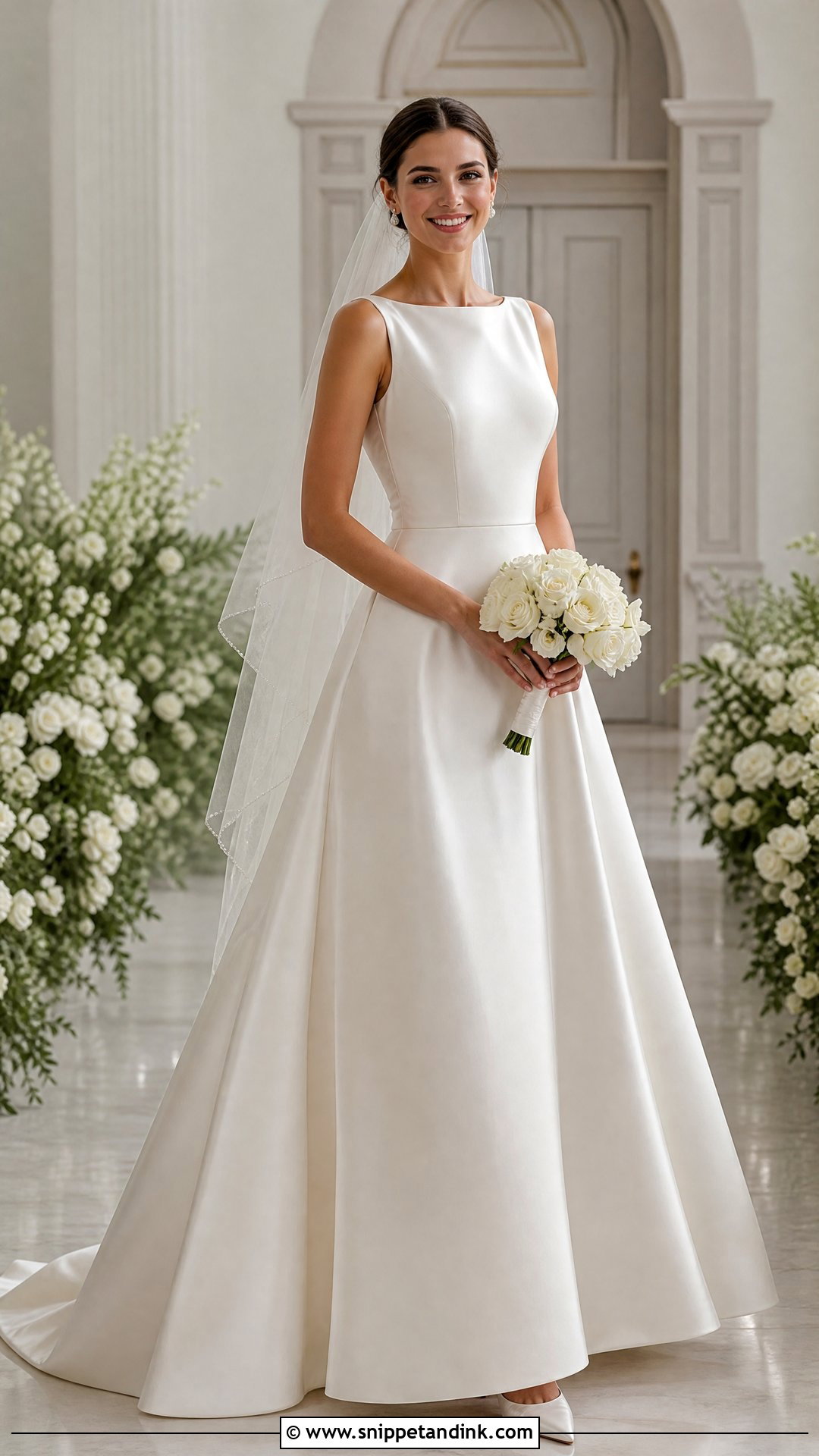
Start here if you’re not sure what you want yet. The satin A-line is the shape I pull first for brides who like clean, classic lines, because it shows how a boatneck sits on your collarbones without any distraction. Duchess satin has a soft glow and enough weight to hang well; mikado is stiffer and holds the skirt out on its own. Covered buttons down the back add detail without breaking up the plain front. Pearl studs, a smooth low bun and pointed satin pumps are enough. A fingertip veil keeps the mood relaxed, a cathedral veil makes it formal, and white flowers with greenery keep the construction in focus.
2. Boatneck Long Sleeve Wedding Gown
Long sleeves and a boatneck belong together in cool weather and formal rooms. The sleeves should be cut as part of the bodice, not stitched on afterwards. You can see the difference at the shoulder seam, which sits smooth on a designed sleeve and pulls on an added one. Crepe gives a sleek modern finish, satin more structure. Look for sleeves that taper at the wrist but still let you raise your arms to dance, and consider a low open back as contrast to the covered front. I’d go with a neat chignon, drop earrings and closed-toe heels, with a long veil placed beneath the bun so the neckline stays visible, and a compact bouquet that won’t hide the waist.
3. Boatneck Lace A-Line Wedding Gown
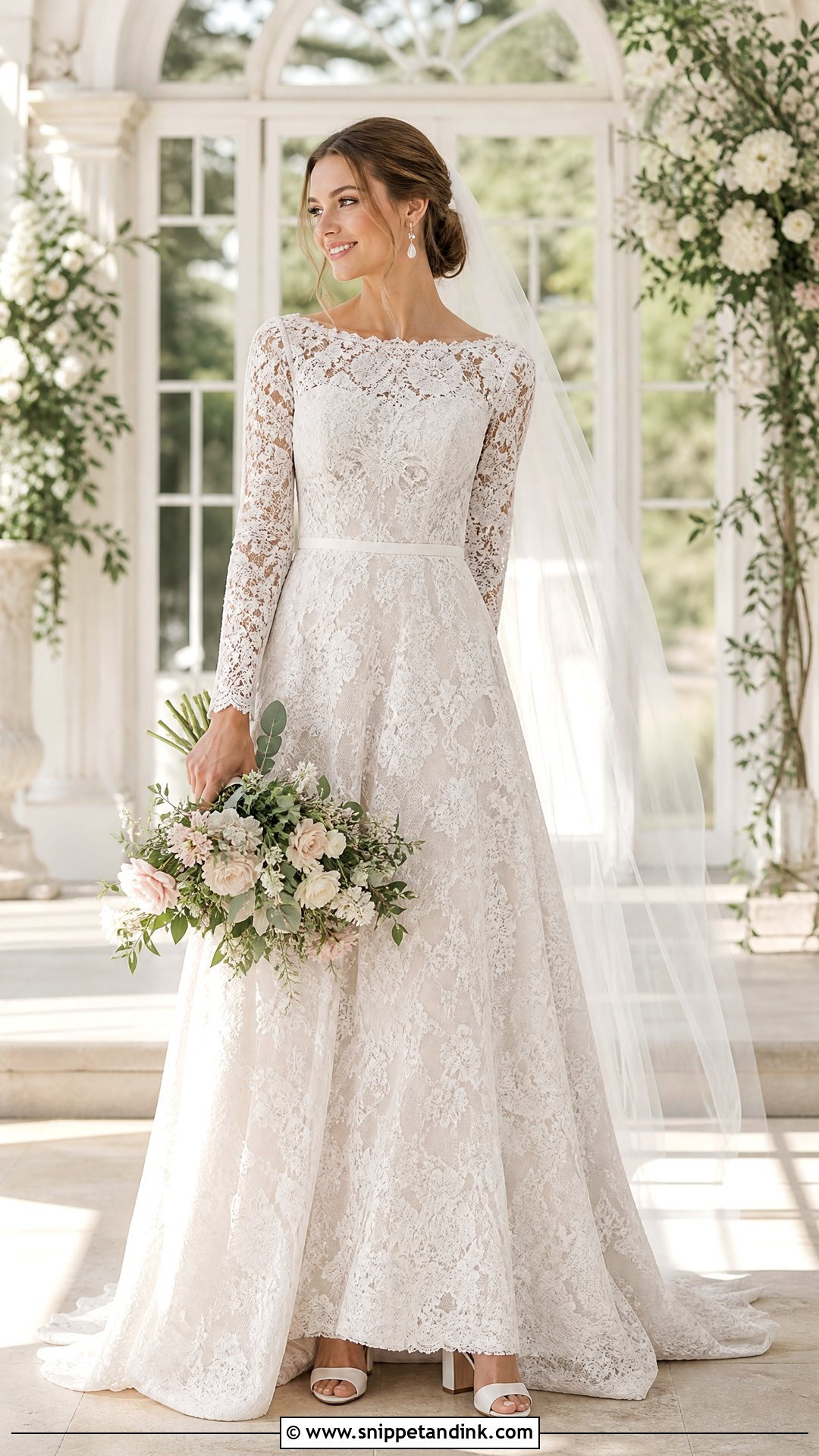
Lace softens the boatneck’s straight edge. On an A-line, floral or botanical lace reads graceful rather than fussy, as long as the placement makes sense: following the neckline, marking the waist, then thinning out onto the skirt. I check that the lace motifs are cut around the neckline edge rather than sliced straight through, because a scalloped edge is how good lace gets finished. A lightly lined bodice gives comfortable coverage, and sheer sleeves add delicacy. Small pearl earrings, an airy tulle veil, steady block-heeled ivory shoes and a loose low bun go with it. Highly detailed lace doesn’t need a necklace, and garden-style flowers suit the texture.
4. Boatneck Mermaid Wedding Gown
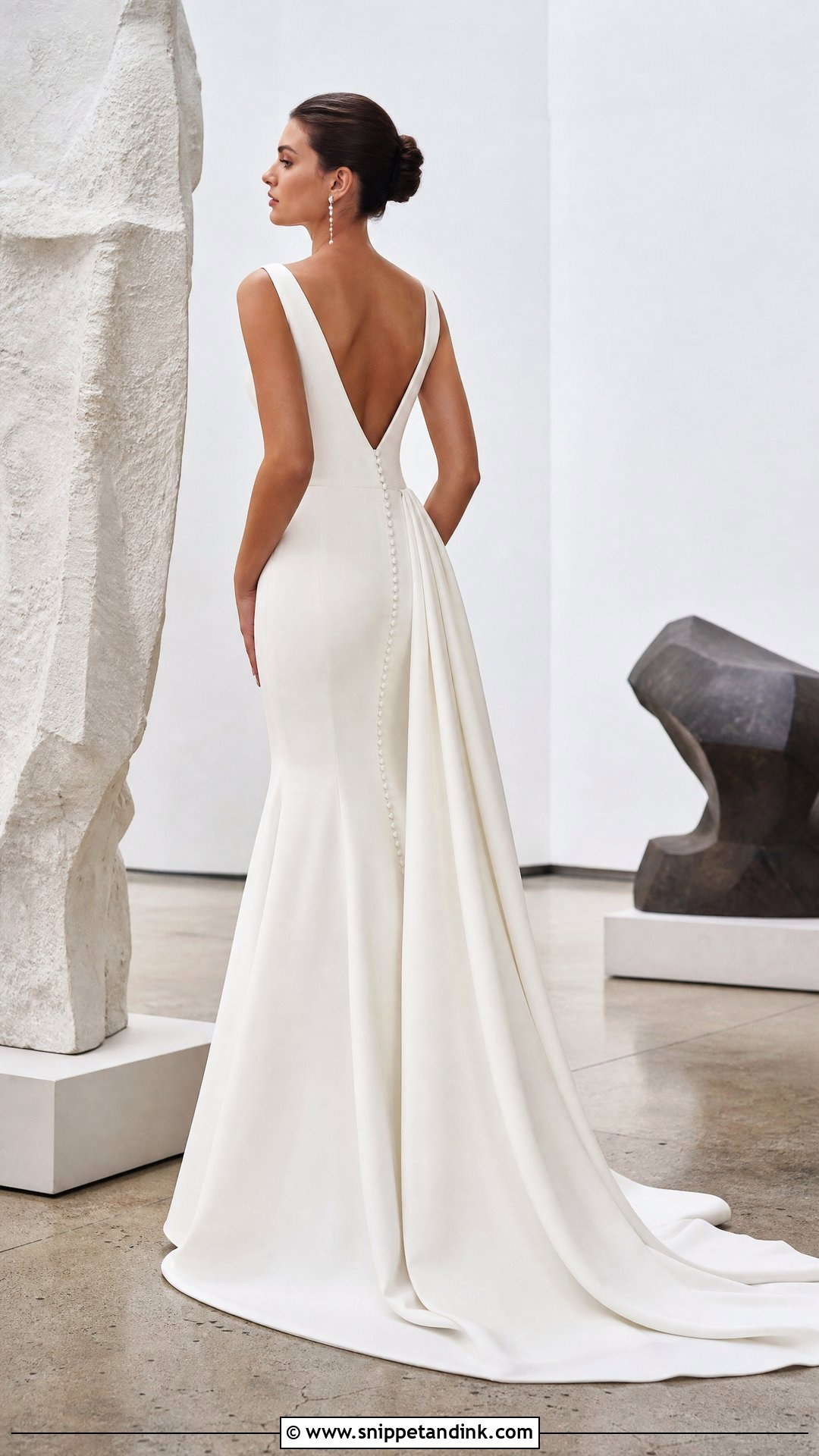
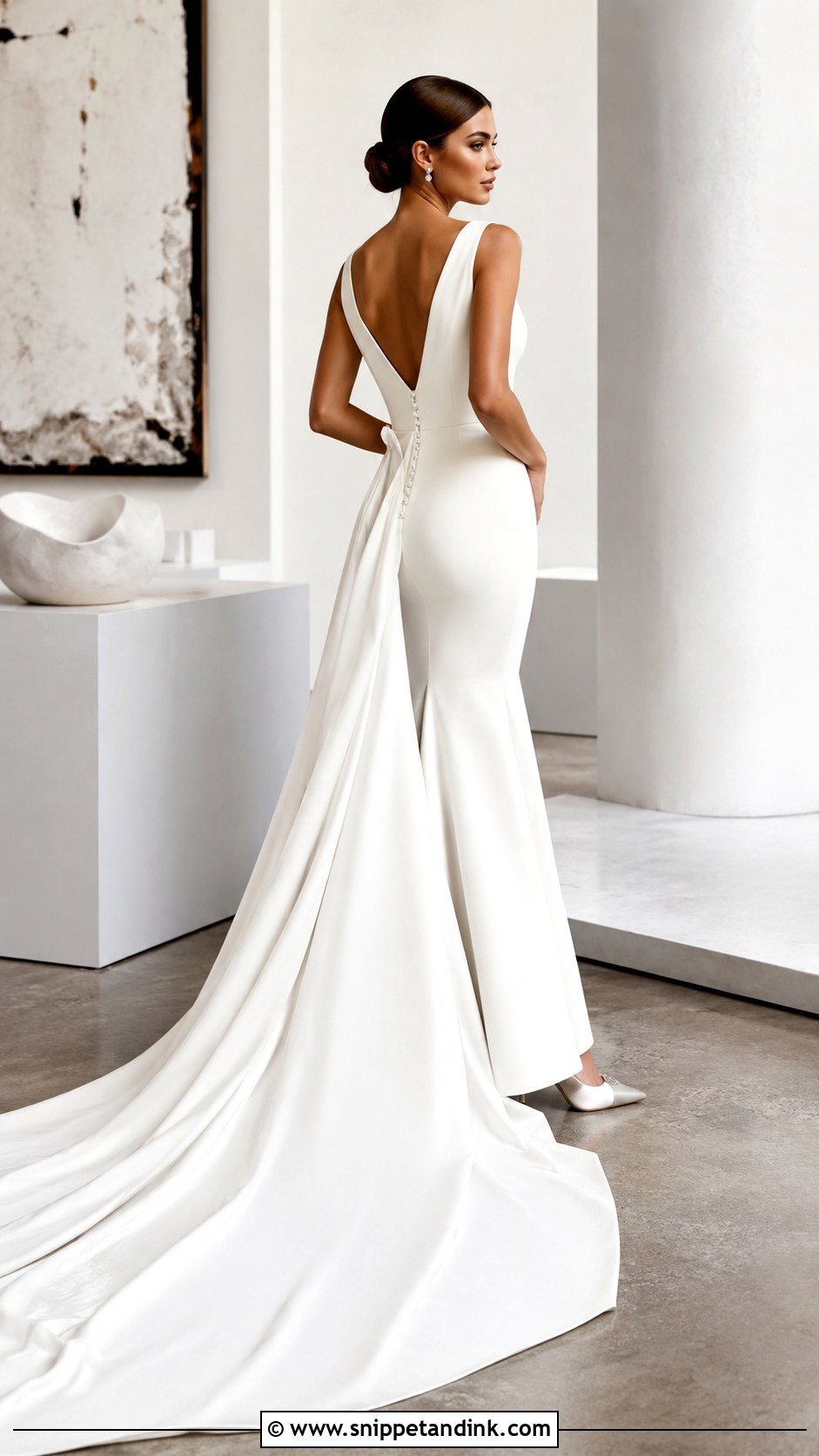
Coverage up top and real shape below: that’s the mermaid boatneck. It covers the bodice, then traces the waist, hips and thighs before flaring near the knee. Stretch crepe is the comfortable choice because it gives as you move. Satin and mikado look more sculptural but have no stretch at all, so they need precise fitting. A deep V-back, covered buttons or a detachable train adds interest from behind, and sleek earrings, a polished updo and pointed pumps finish the front. This is the silhouette where undergarments and alterations matter most, since every line and wrinkle shows across the hips. Keep the veil simple and the bouquet narrow to protect the long line.
5. Boatneck Ball Gown Wedding Dress
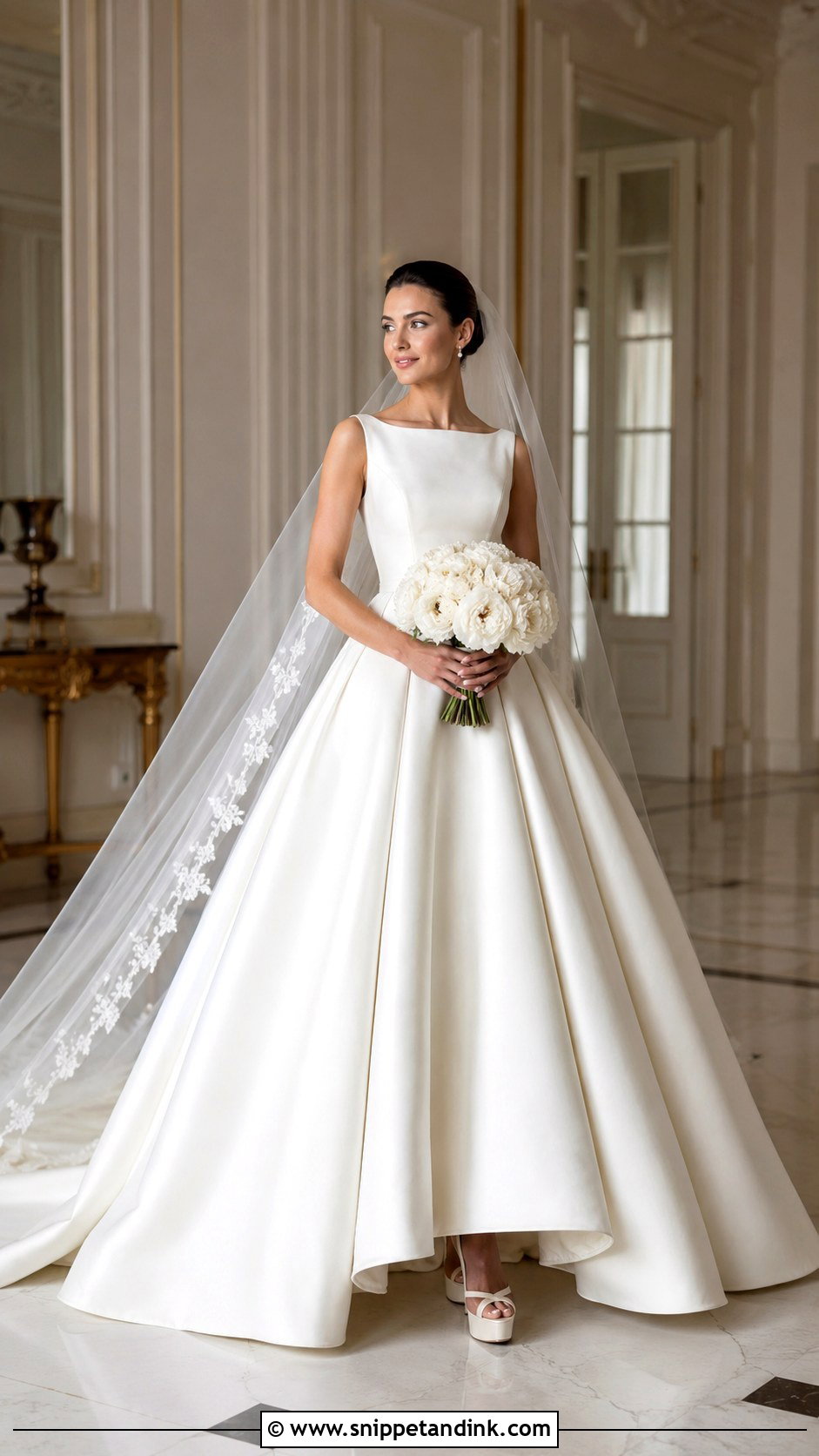
Few pairings feel as regal as a boatneck bodice over a full ball gown skirt. The wide neckline balances all that volume, and a fitted waist keeps the shape defined. Structured mikado, satin or faille holds crisp pleats through a long ceremony without collapsing, and hidden pockets fit easily into a skirt this size. A clean bodice looks modern; subtle embroidery adds dimension. I’d style it with a high bun, pearl or crystal earrings and comfortable platforms under the skirt, since nobody sees your shoes anyway. In a large room, a cathedral veil matches the scale. Keep the bouquet medium-sized: too small looks lost against the skirt, too big covers the waist.
6. Boatneck Crepe Column Wedding Gown
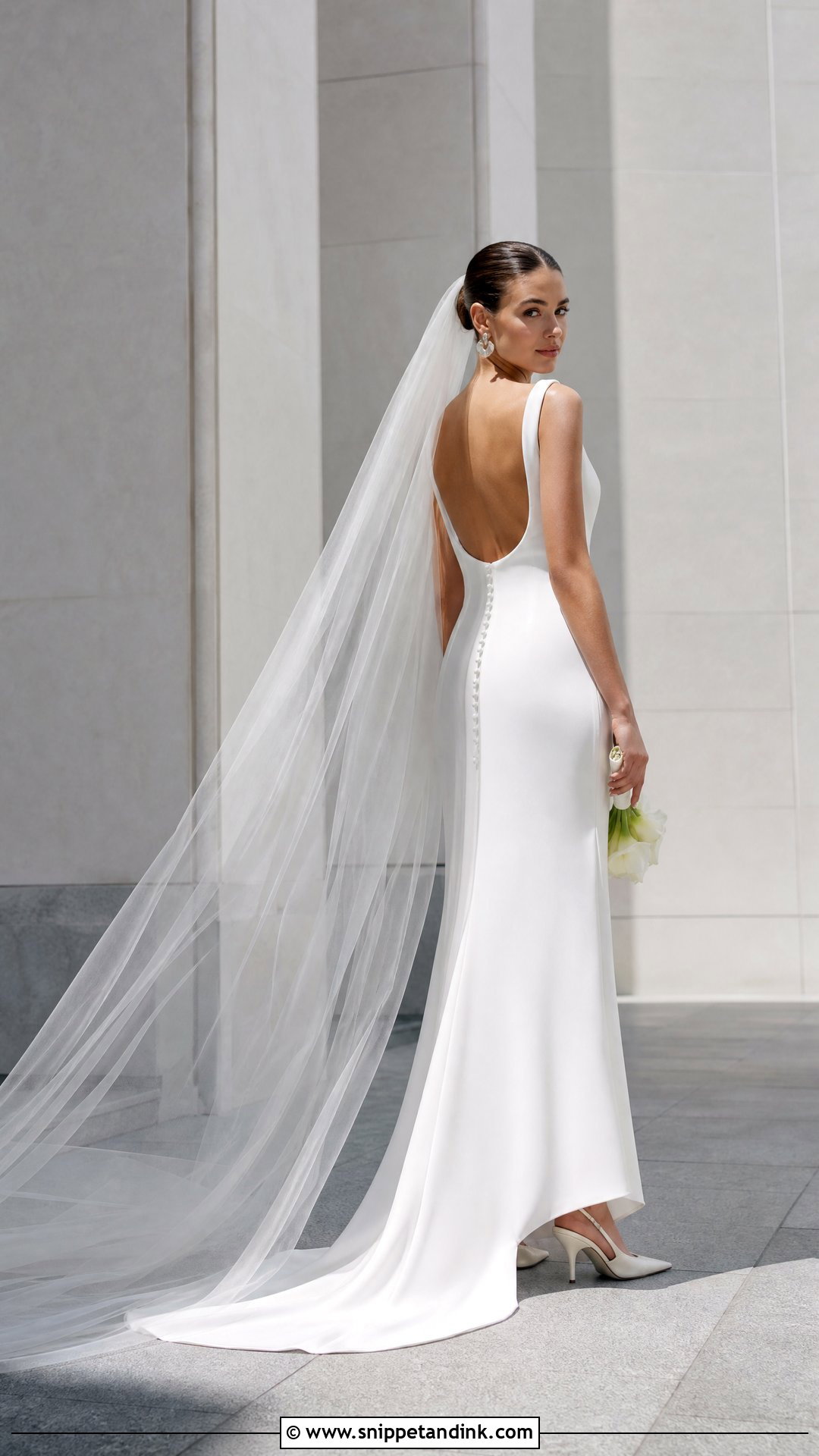
Heavyweight crepe is what makes a column work. Thin crepe clings and shows every seam and undergarment, while a heavier one with good lining drapes straight and smooth. The boatneck draws attention to the shoulders as the straight skirt falls close to the body, with none of a mermaid’s flare. A low scoop back, button detail or narrow train adds interest. Sculptural earrings, a sleek bun and pointed slingbacks keep the line modern, and a sheer cathedral veil softens it for the ceremony. In a less formal venue, I’d swap the veil for a simple hair comb and carry a streamlined bouquet.
7. Boatneck Wedding Gown With Open Back
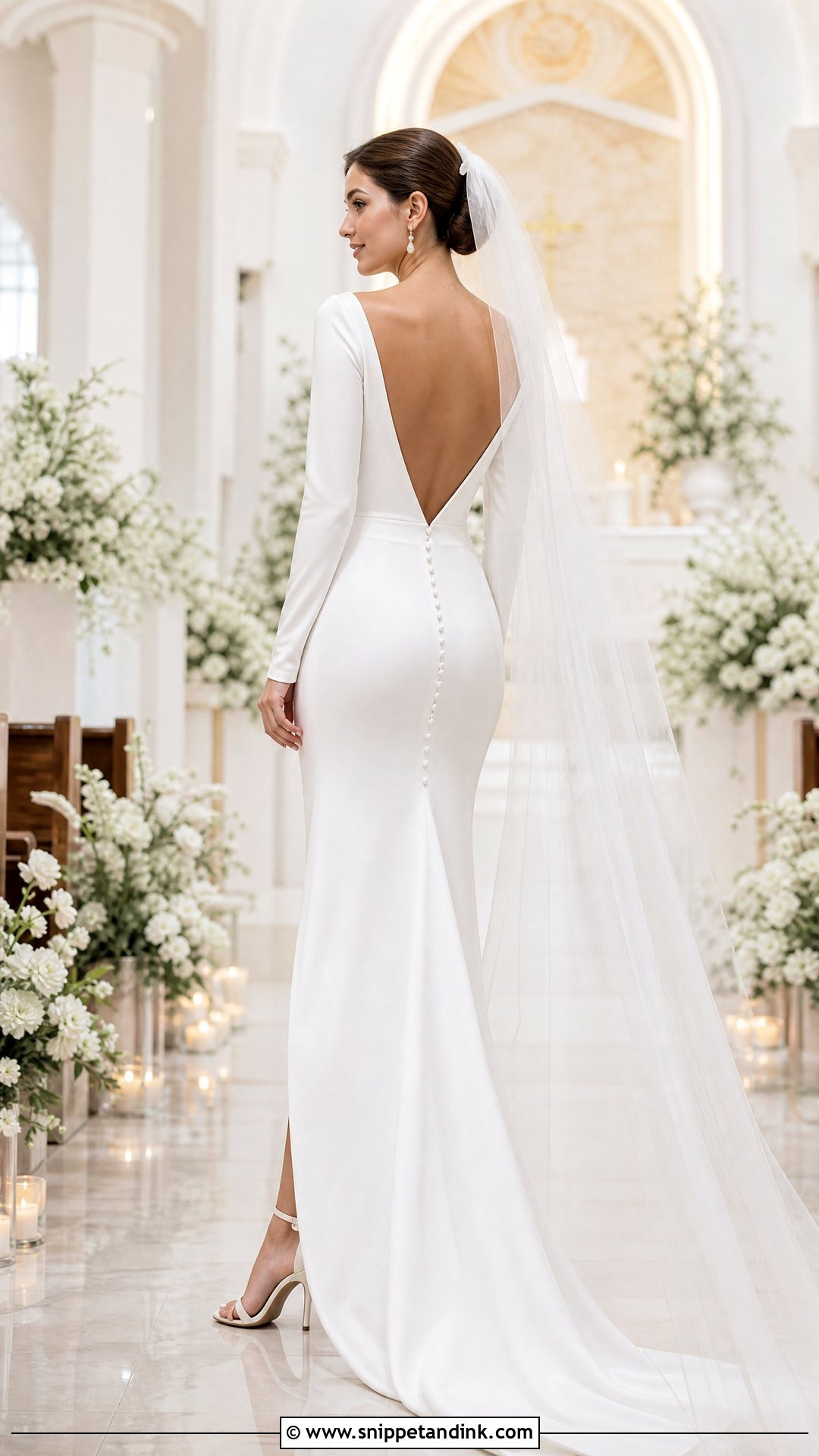
From the front, reserved. Turn around, and the open back changes everything. It might be a low scoop, a deep V or a geometric keyhole, and the right one depends on how much support you need. Crepe and satin make the edges crisp; lace softens them. The back has to be fitted so it lies flat against your spine as you move, because a gap there is one of the most common faults on open-back gowns. Hair up, drop earrings and an understated veil attached below the bun show off the design, and ankle-strap heels echo the lines. Adhesive support or built-in cups keep the back clear of straps.
8. Boatneck Wedding Gown With Cap Sleeves
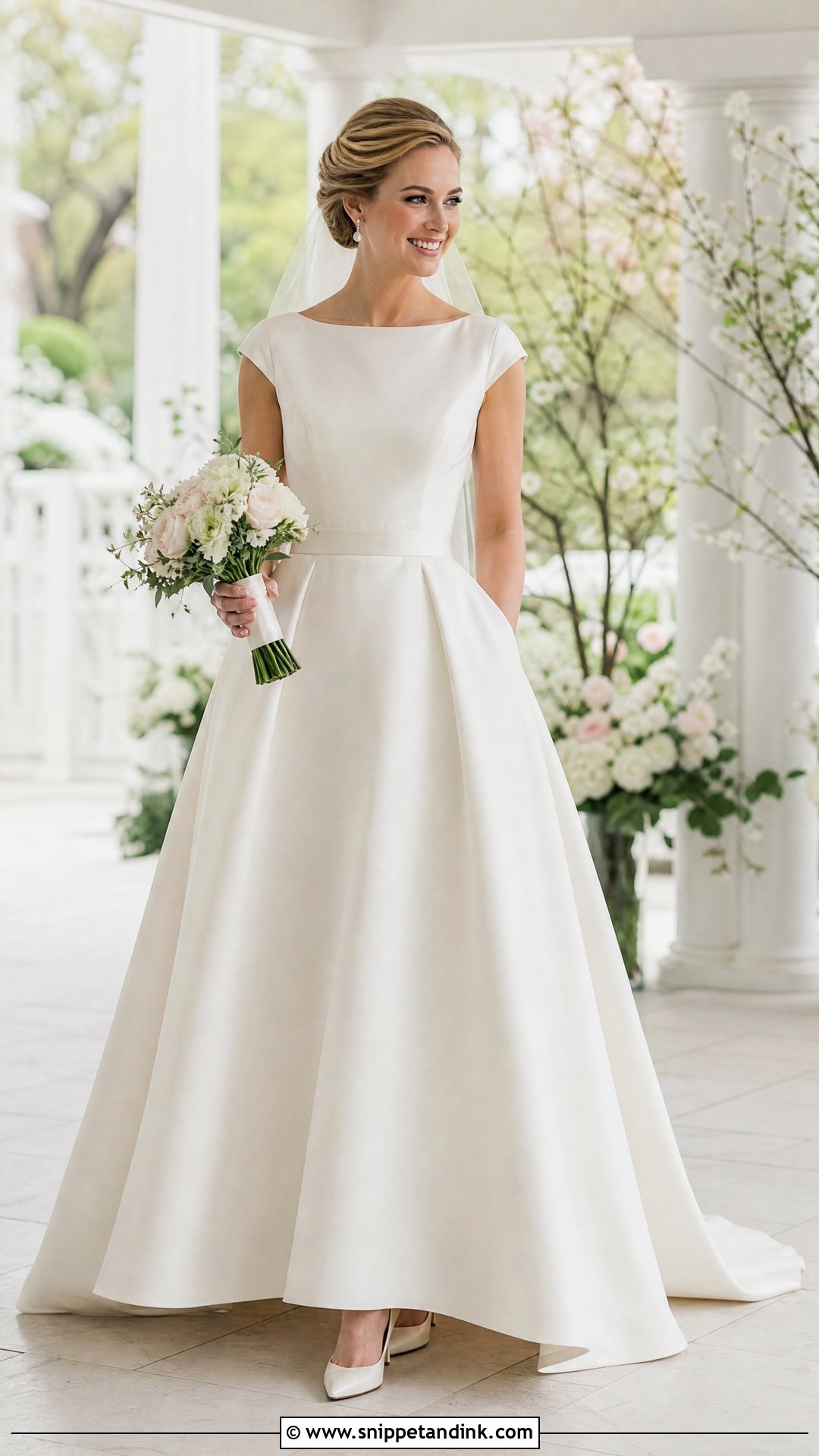
Cap sleeves extend the boatneck just over the shoulder, giving light coverage without the formality of long sleeves. They’re a natural fit for spring, daytime weddings and a vintage-leaning shape. Satin keeps the sleeve crisp, lace makes it romantic, and lightweight crepe drapes more softly. A defined natural waist and A-line skirt balance it. Short veil, pearl earrings, ivory pumps, and a smooth French twist or low chignon to keep the sleeve shape on show. Because cap sleeves fit close around the upper arm, they limit how high you can reach. Test that during alterations; if raising your arms drags the whole neckline up, the armhole needs recutting.
9. Boatneck Tea Length Wedding Gown
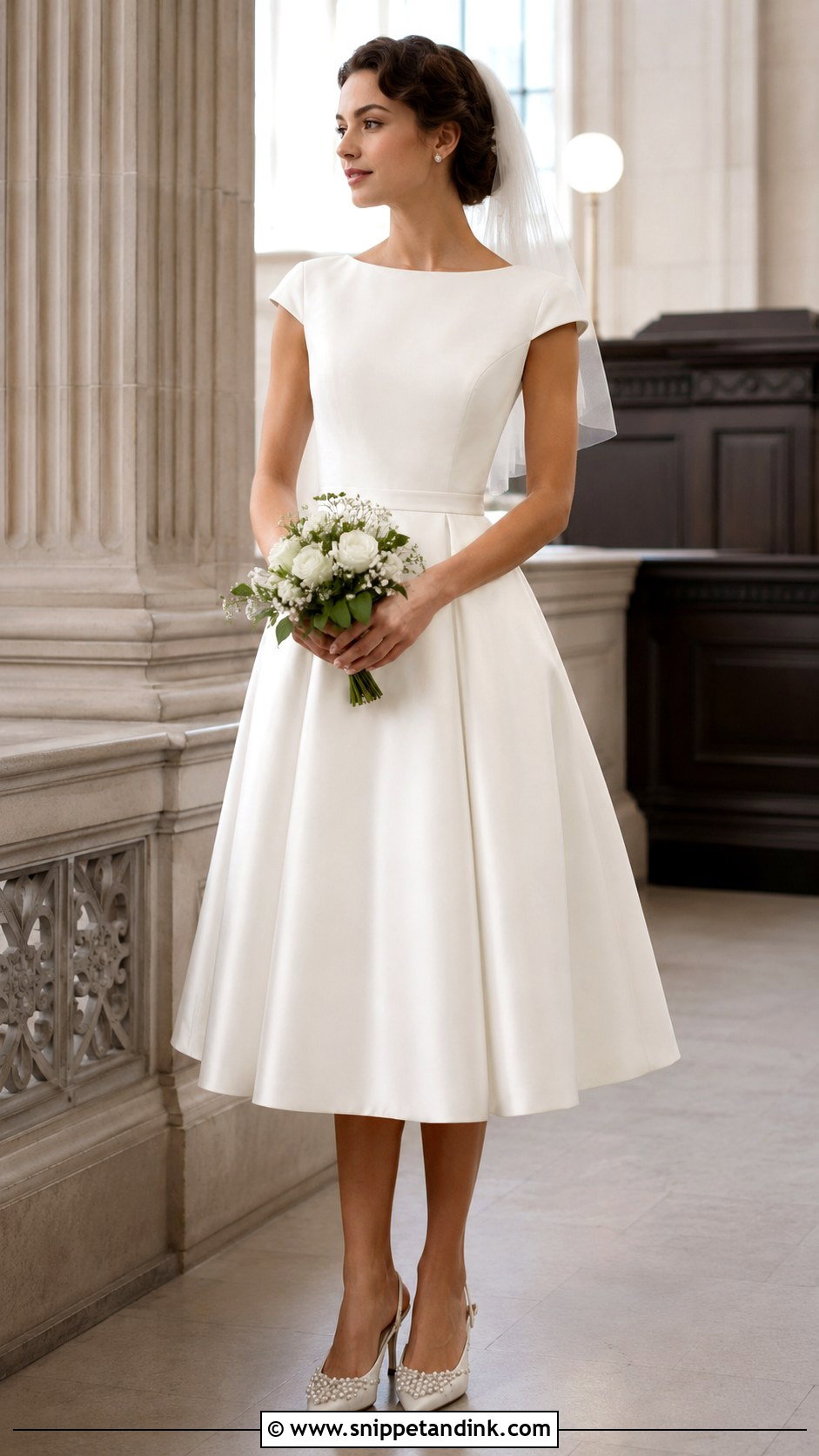
Tea length with a boatneck is about as retro as bridal gets, and it’s practical too. The hem lands between knee and ankle, so the shoes become part of the outfit. A fitted waist, a softly structured skirt and optional cap sleeves give a balanced 1950s-inspired silhouette. Satin, organza and mikado have enough body to hold the skirt out, and if it starts to droop, a crinoline petticoat underneath fixes it. Pointed pumps, slingbacks or embellished block heels all suit it. Pearl studs, a small veil and a polished updo complete the vintage feel for a courthouse ceremony or garden party, and pockets slip in easily.
10. Boatneck Pearl Wedding Gown
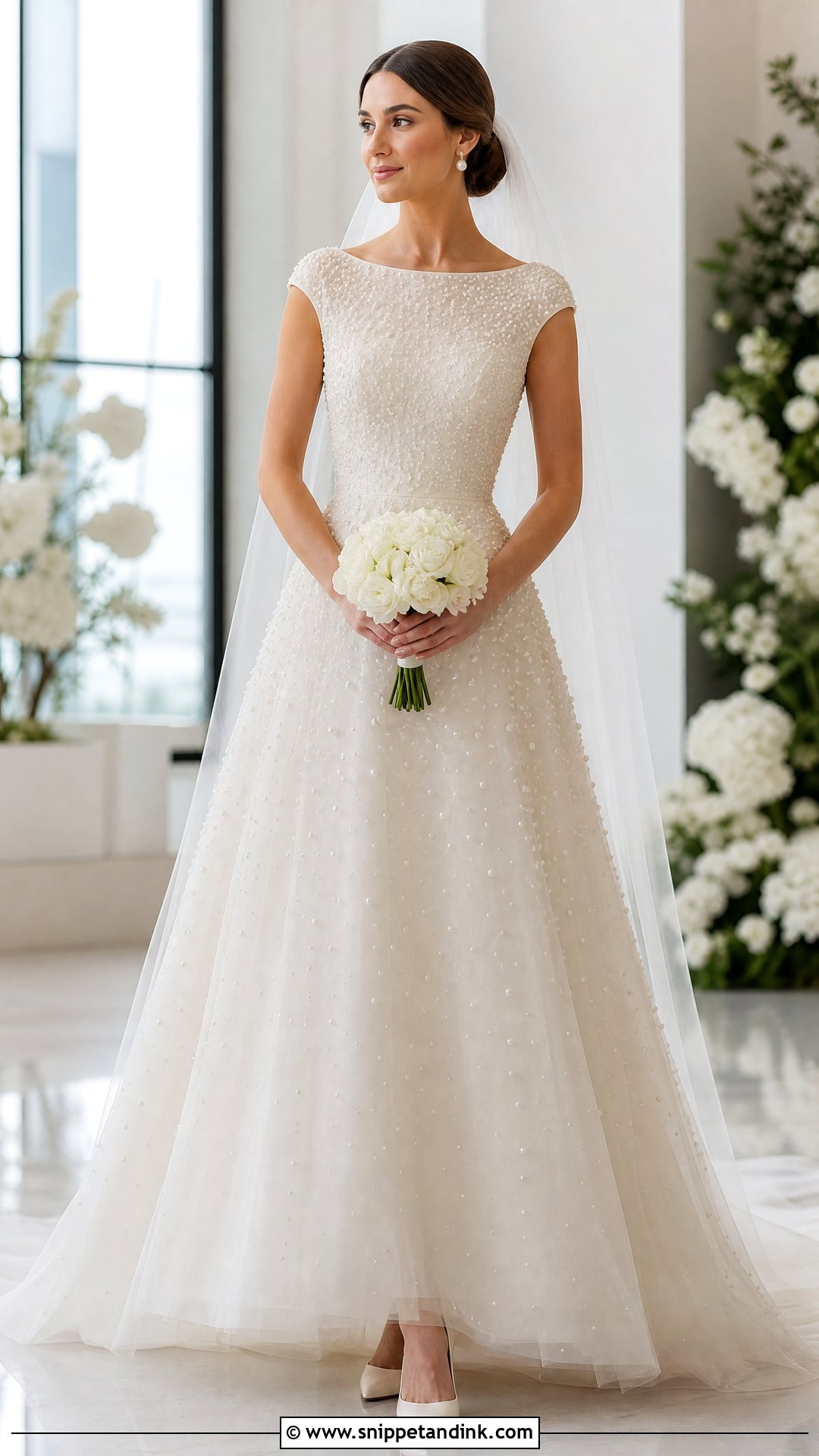
Pearls add soft light rather than sparkle. Scattered on tulle, they look airy; densely placed, they look rich and heavy, and they genuinely are heavy. A fitted column reads contemporary, an A-line softer. With that much decoration already on the dress, I keep jewelry to pearl studs or small drops, and the hair to a clean bun with a sheer veil. Satin pumps or minimal ankle straps finish it. Tug gently on the pearls around the underarms and waist during your fitting. Those areas get the most friction, and a loose one there tends to drop off by the end of the night. A small white bouquet keeps the attention on the gown.
11. Boatneck Wedding Gown With Basque Waist
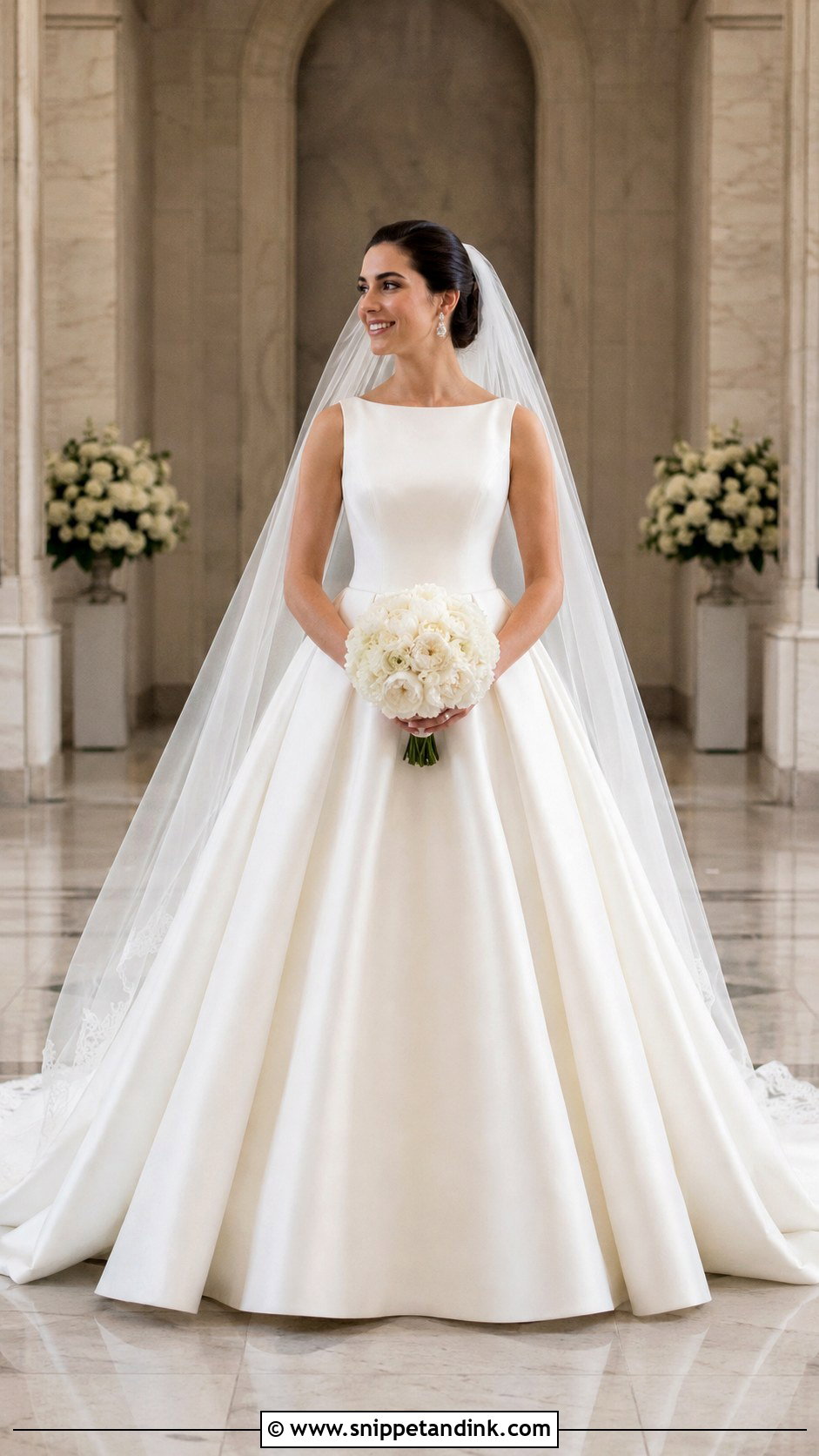
A basque waist gives the boatneck a historical, structured feel. The bodice extends into a V or U below the natural waist, defining the torso before the full skirt opens, and satin and mikado hold that seam cleanly. For a modern take, I’d choose subtle boning and a smooth bodice over heavy embellishment. A cathedral veil, drop earrings and hidden platforms under the long skirt finish it, with a high or mid-height bun to show the neckline and the long waist. Sit and walk in it at every fitting. The point should stay flat, and if it folds or juts out when you sit, it needs shortening or more support.
12. Boatneck Wedding Gown With Detachable Overskirt
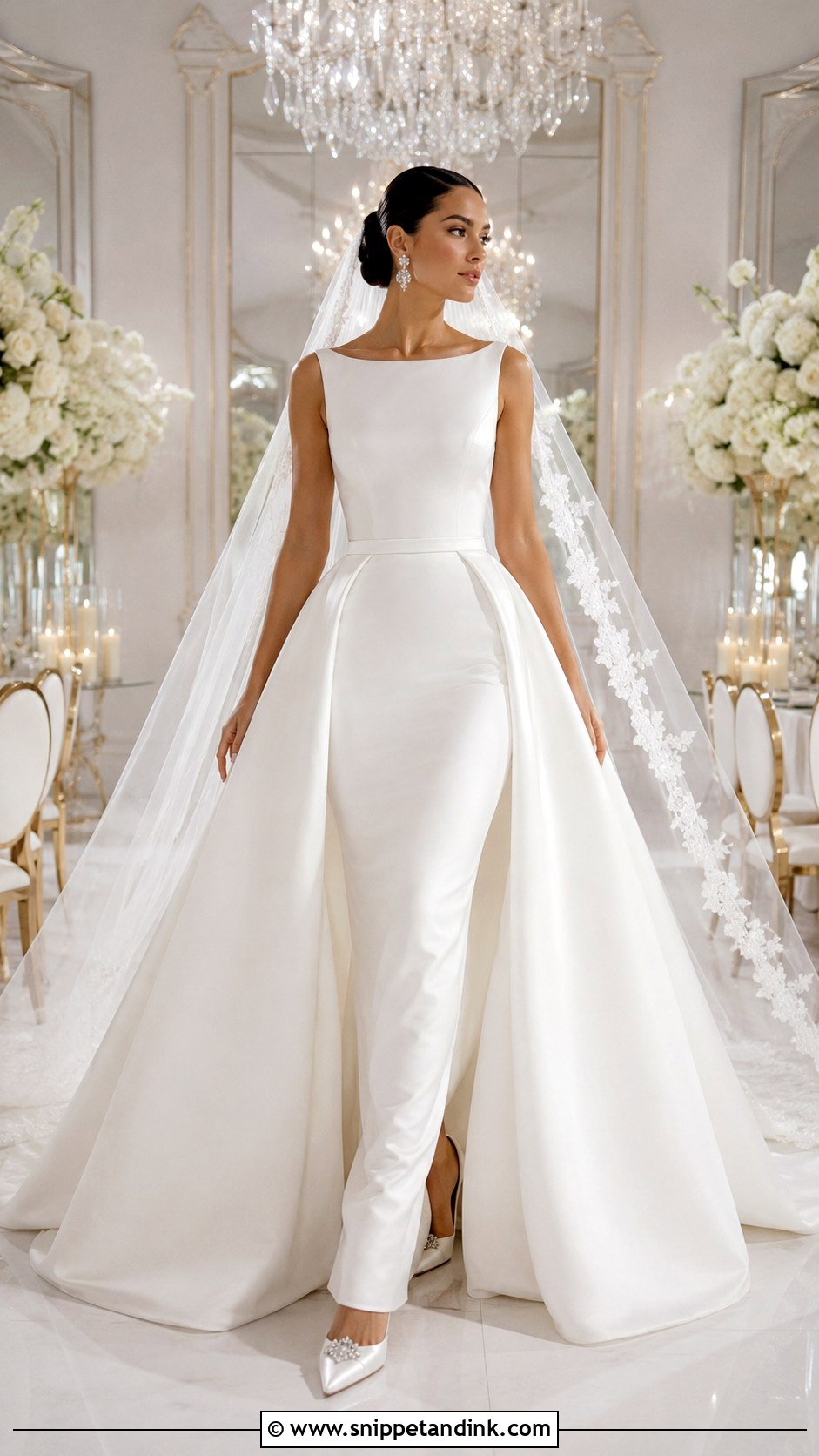
One gown, two looks, thanks to a detachable overskirt. You walk the aisle in a full boatneck ball gown shape, then lift off the outer layer to reveal a fitted column or mermaid for the reception. The overskirt should attach smoothly at the waist and match the gown’s fabric and color exactly; ivory shades vary more than most brides expect. Satin, mikado and organza give reliable volume. Keep the same earrings, updo and heels in both versions so the change looks planned, and let the cathedral veil come off with the overskirt. Have one person from the wedding party practice the fastenings with you beforehand so the change takes minutes.
13. Boatneck Tulle Wedding Gown
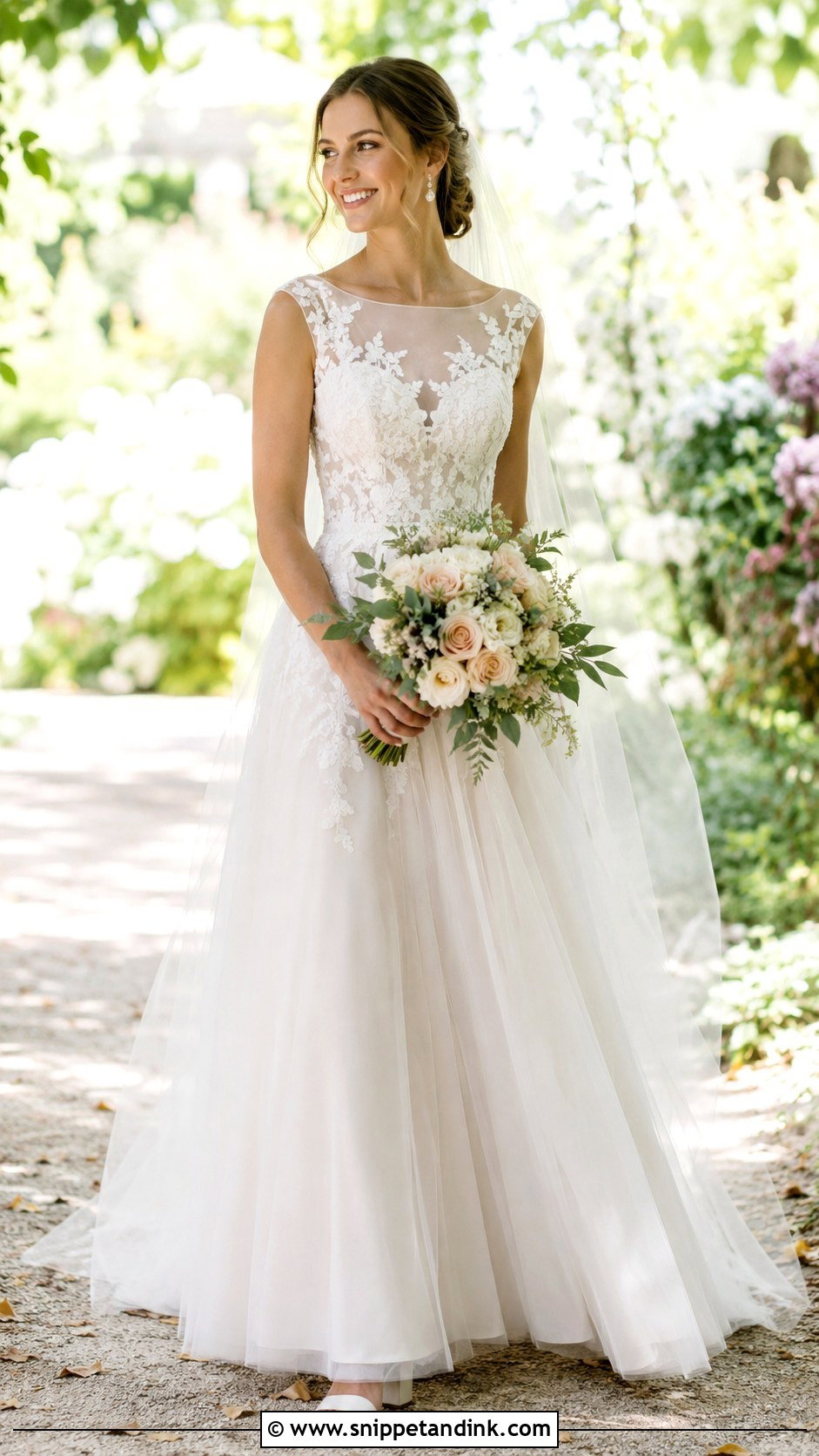
Tulle makes a boatneck feel light and easy to move in. A sheer bateau panel over a lined bodice gives delicate coverage, and a flowing A-line skirt keeps everything soft below the waist. I look for appliqué placed around the neckline and bodice, because it makes the switch from sheer to opaque look intentional rather than abrupt. Floral earrings, a loose low bun and ivory sandals or block heels suit it, with a single-layer veil so the volume doesn’t pile up, and a bouquet with trailing greenery that moves with the skirt. Tulle catches on anything rough, from old floorboards to chair legs, so walk the venue and bustle the train before the dancing starts.
14. Boatneck Mikado Wedding Gown
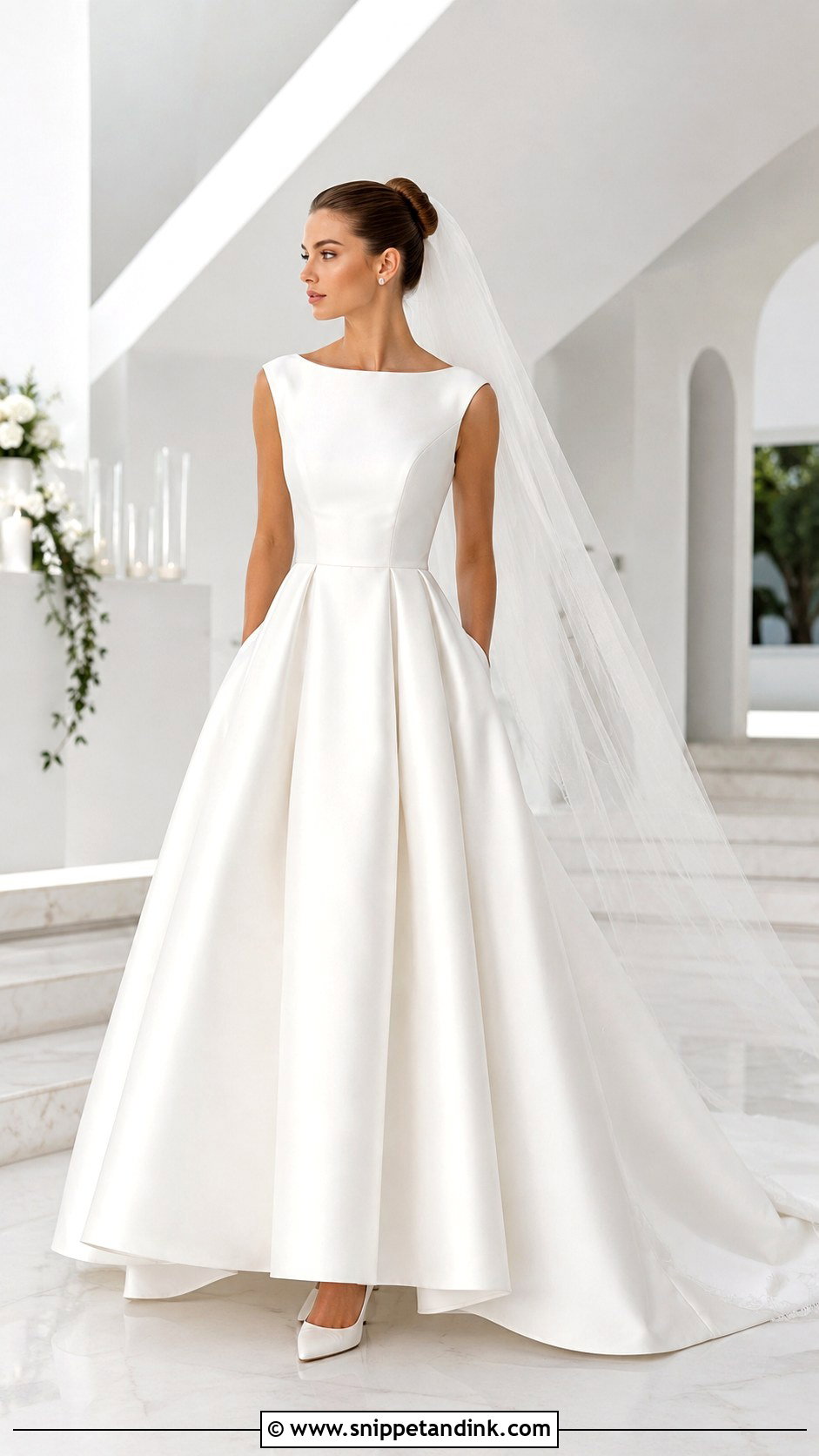
Mikado gives the boatneck an architectural presence. Its smooth surface and real weight suit A-lines and ball gowns with pleats, box folds or a defined train, and it photographs cleanly because the construction does the work. A fitted bodice, natural waist and covered back buttons are enough. Crystal studs, a structured veil and classic pointed heels finish it, with a polished bun or smooth ponytail. Mikado weighs considerably more than chiffon or tulle. The inside of the dress should carry that weight on a firm waist stay at your waist and hips, not hang it from your shoulders, and a secure bustle makes the reception far easier.



15. Boatneck Chiffon Wedding Gown
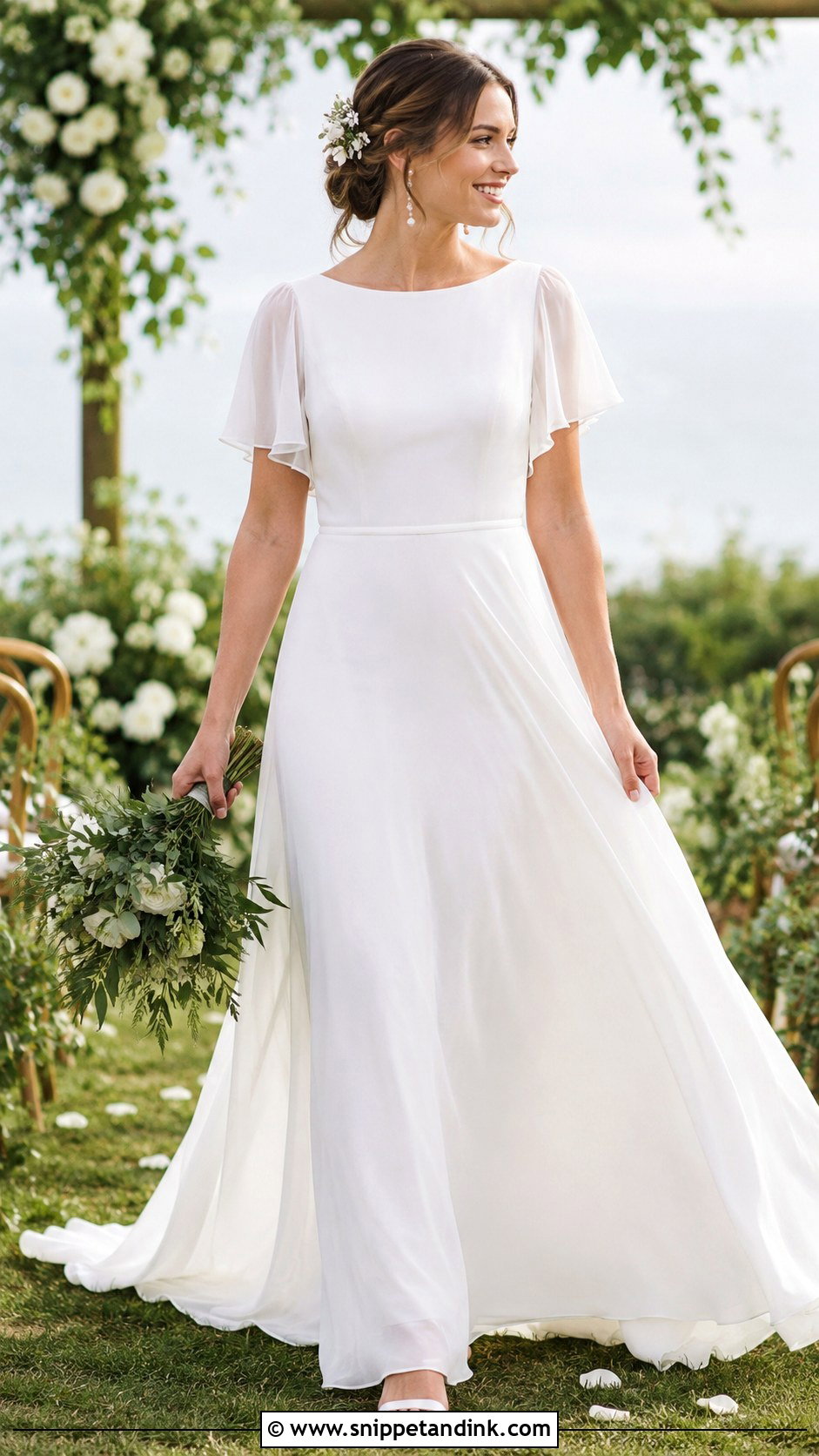
Chiffon is for the bride who’d rather have movement than volume. It floats outdoors and feels less formal than structured fabrics. Look for a lined bodice under a sheer chiffon overlay, a lightly gathered waist and a flowing A-line skirt. Flutter sleeves or a small cape detail continue the neckline without adding weight. Delicate earrings, a relaxed updo and low block-heel sandals that stay steady on grass finish it, along with a fingertip veil or floral comb. Underwear matters more with chiffon than almost any other fabric, because strong lines and lace edges show straight through it. Go smooth and close to your skin tone.
16. Boatneck Wedding Gown With Bow Back
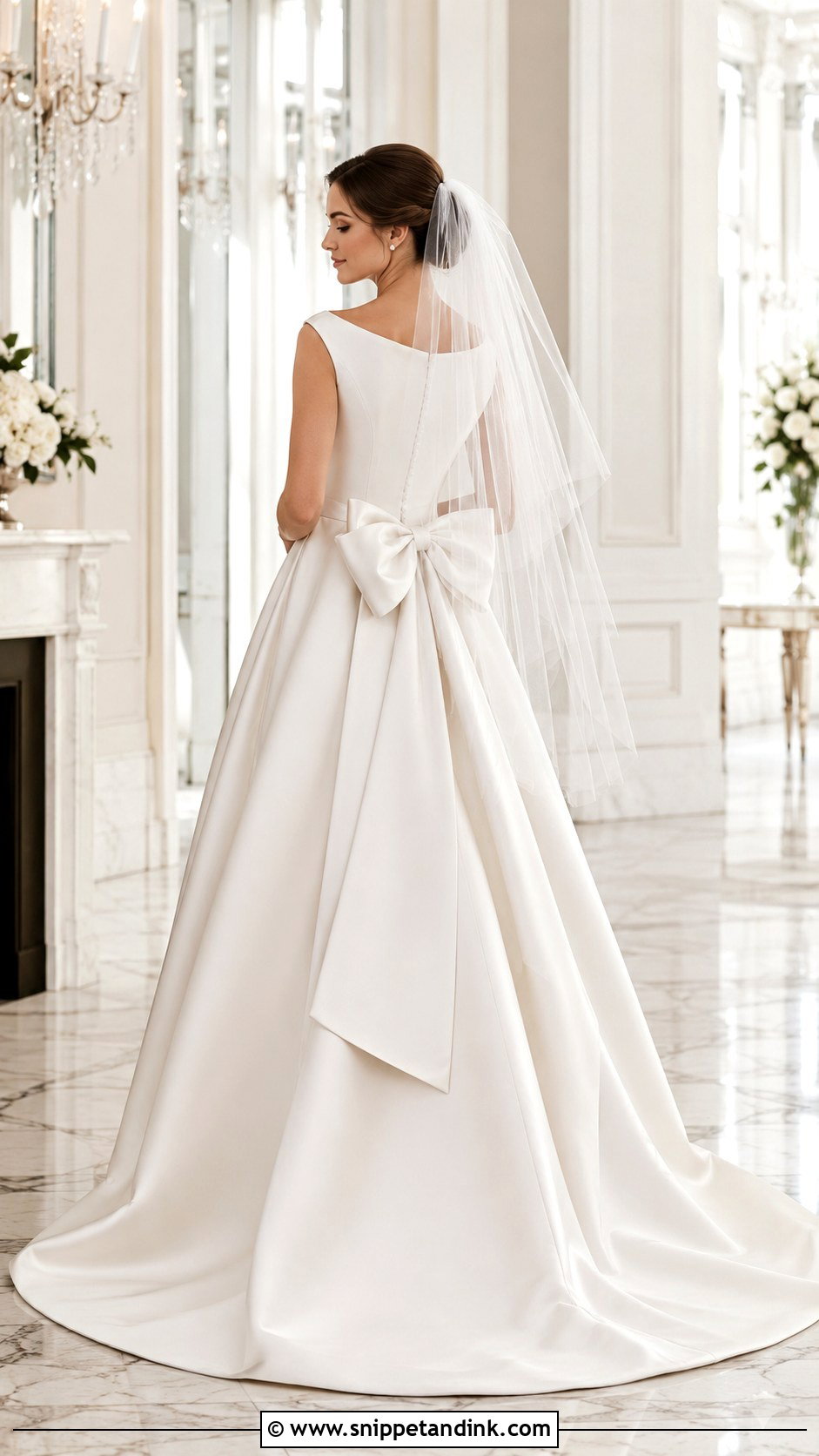
A bow at the back turns a plain boatneck into something guests remember. It can sit at the waist, the lower back or the top of a detachable train. Satin and mikado hold crisp loops; organza gives a softer, slightly see-through bow. Keep the front clean so the back gets the attention. With an updo, position the veil above or below the bow rather than draping it over, or the tulle flattens the loops. Pearl studs and plain satin pumps are all the rest needs. A removable bow is worth asking about. It comes off after the ceremony, and leaning back in a chair becomes possible again.
17. Boatneck Illusion Wedding Gown
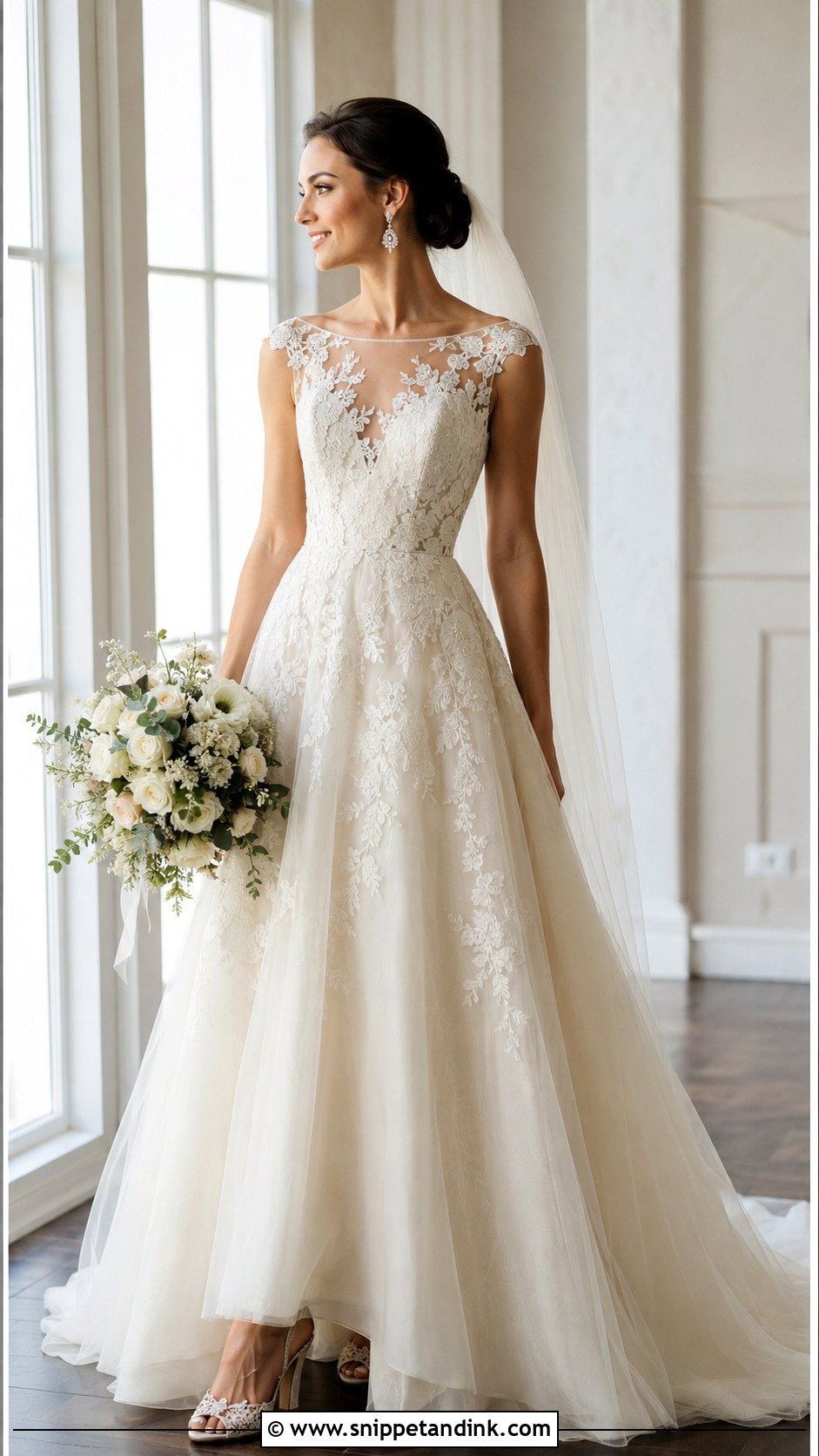
An illusion boatneck uses fine mesh or tulle to create a high neckline that seems to float. Lace appliqué, pearls or beading can sit across the sheer panel for coverage without weight. Match the mesh to your skin tone as closely as you can, otherwise it shows as a band of colour across the chest. An A-line skirt is classic, a fitted crepe skirt more modern. Small crystal earrings, a smooth updo and ivory heels with fine detail suit it. No necklace here, since it fights the appliqué at the collarbone, and a plain veil is nearly always better. Check the illusion fabric in daylight and with flash at your fittings, because some meshes that vanish in the salon turn grey or shiny in photos.
18. Boatneck Floral Embroidered Wedding Gown
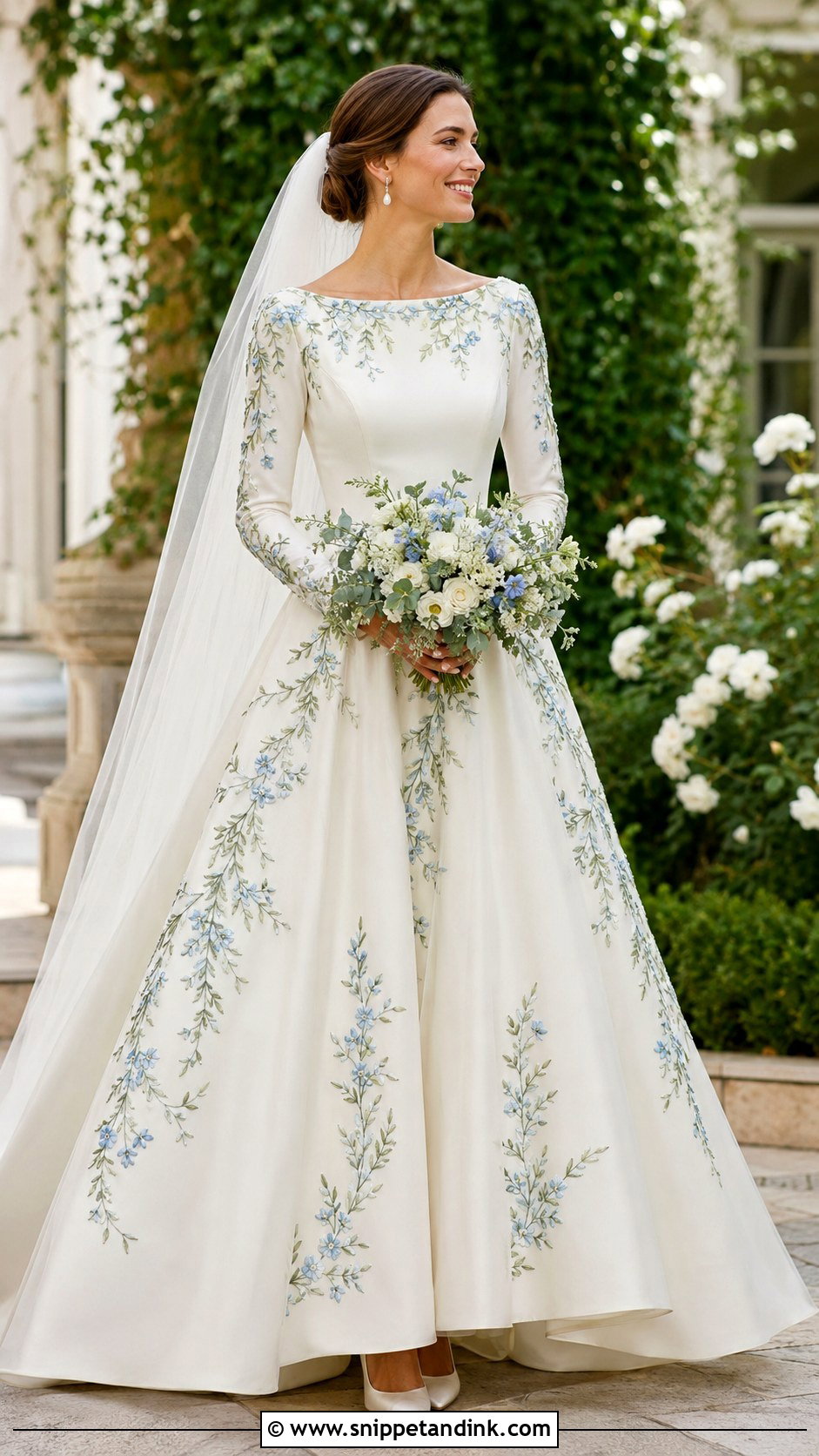
Embroidery brings colour or tonal texture to the boatneck’s clean line. White-on-white vines look traditional, while pale blue, blush or green accents feel more personal. My favourite placement frames the neckline, trails down the sleeves and thins out toward the skirt, so the eye travels downward. Pair the embroidered bodice with an A-line or soft ball gown. Simple earrings, a low bun and plain satin heels keep the embroidery central, and a sheer veil with minimal edging beats an embellished one. Pull one or two colours from the embroidery into the bouquet, but don’t chase an exact match. Flowers rarely hit the precise shade of a thread, and a near-miss looks worse than a clear contrast.
19. Boatneck Short Wedding Gown
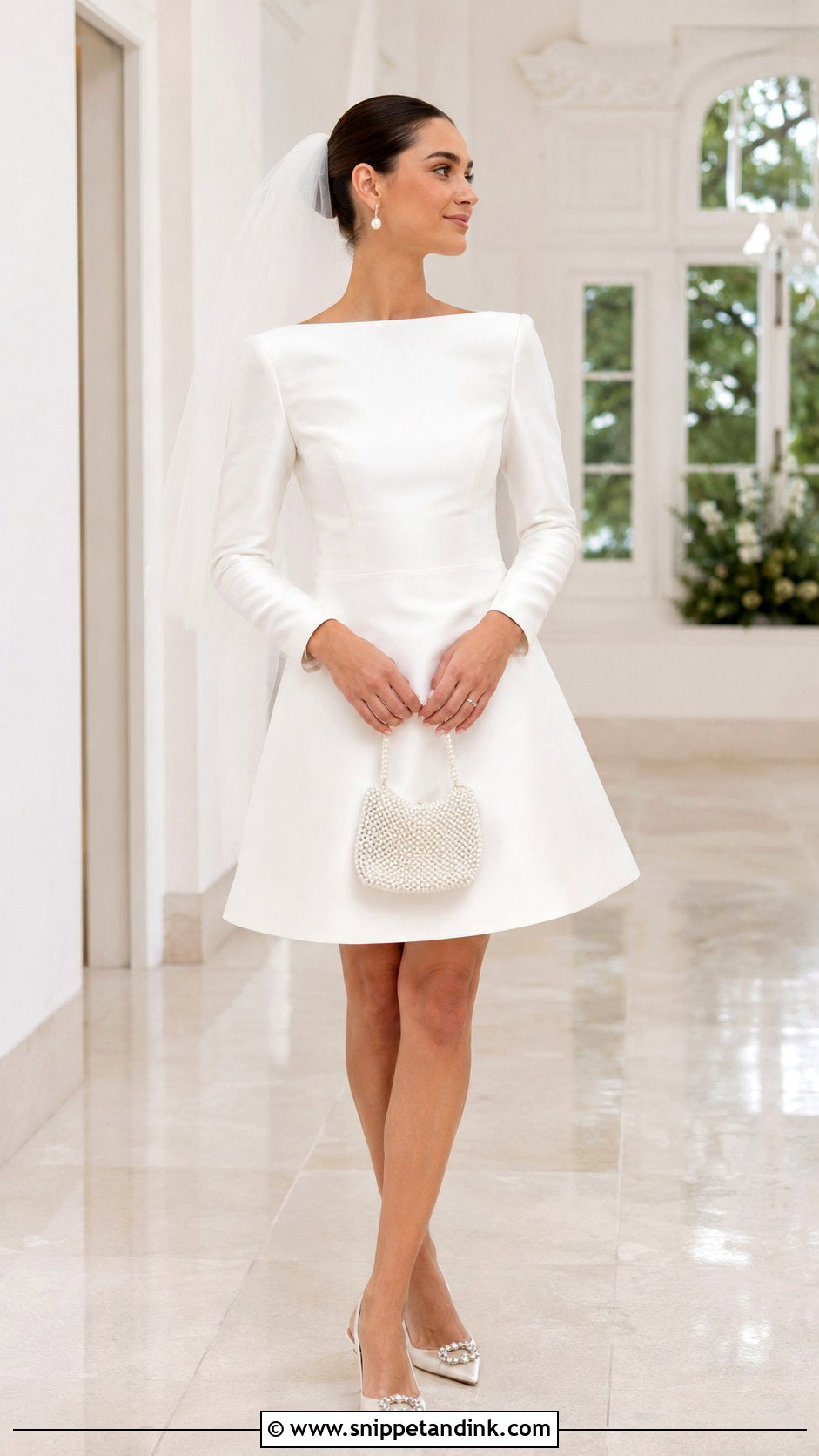
A short boatneck wedding gown suits civil ceremonies, small weddings and reception changes. A knee-length sheath looks sleek; a fit-and-flare feels more playful. Structured crepe, satin or mikado keeps a short dress looking bridal rather than like cocktail wear. Your legs and shoes are on show, so pick shoes you’d happily have photographed close up, whether that’s a standout pump or a refined slingback. Pearl earrings, a small top-handle bag and a short veil or sculptural hair piece finish it. Long sleeves balance a mini; cap sleeves suit knee length. Sit in front of a mirror before approving the hem, since a short skirt rises noticeably when you sit.


20. Boatneck Wedding Gown With Bridal Cape
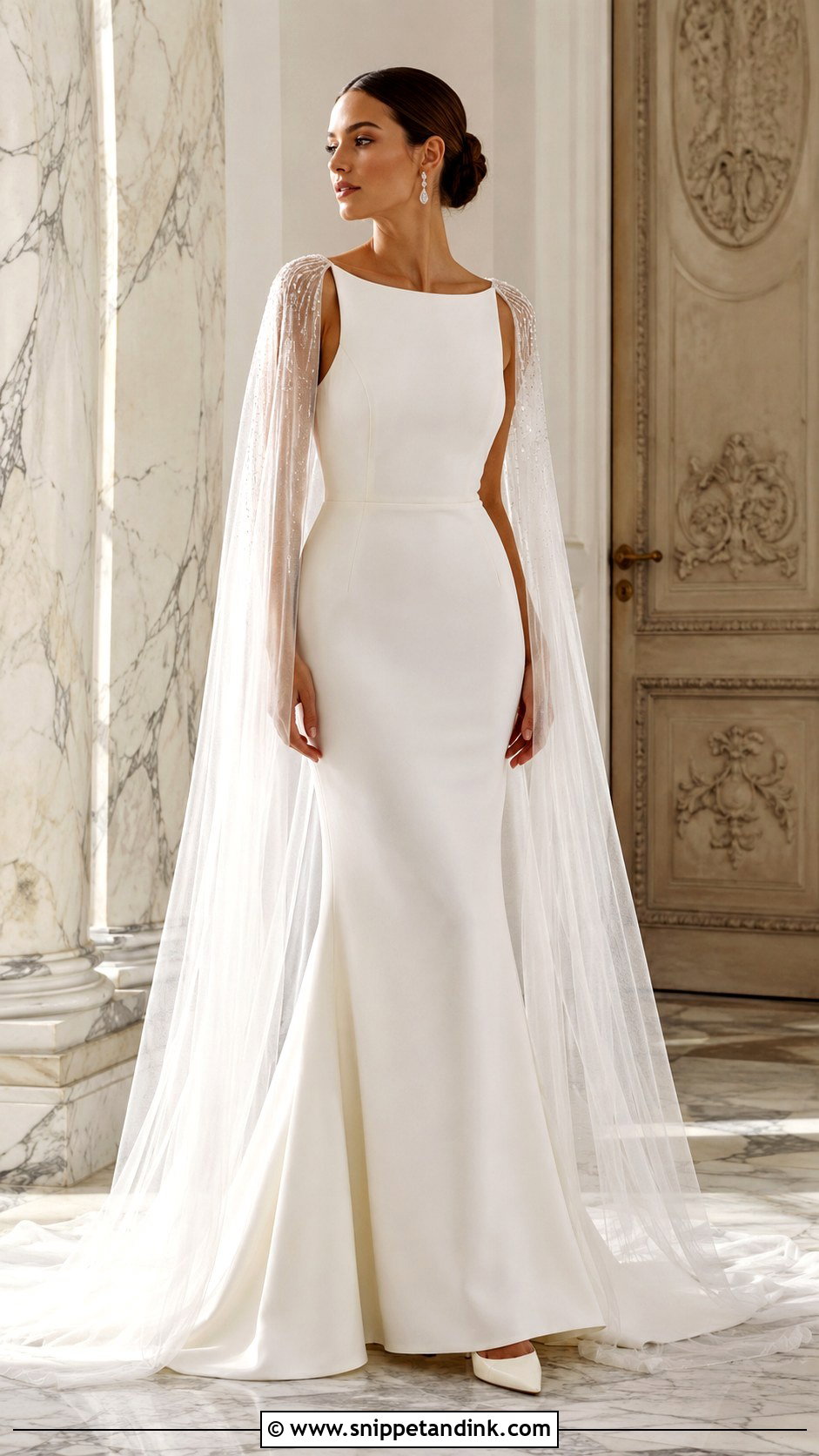
A cape gives a boatneck movement and ceremony drama without covering the neckline itself. It should fasten discreetly at the shoulders or upper back and fall in a clean line behind the dress. Sheer tulle feels light, crepe or satin more formal, and a simple fitted gown underneath works best. Sleek bun, drop earrings, pointed heels. If the cape has a long train, I’d skip the veil, because two long lengths of tulle behind you compete and tangle. Take the cape off after the ceremony or portraits for an easier reception. Before you buy, wear it for a good while. The fastenings carry all the weight, and a heavy cape slowly tugs the neckline backward.
Lead Times, Fittings and Where Alterations Get Expensive
A made-to-order gown usually takes several months to arrive, and alterations need their own window on top of that. Where possible, I tell brides to start shopping around nine to twelve months out, which leaves room for a delivery delay without panic. Off-the-rack and sample gowns cut that time dramatically, but you give up some choice of size and color.
How the fittings usually run
Most gowns need two or three fittings. The first handles the structural changes, the second refines them, and the last is a check with your shoes, undergarments and jewelry in place. Book that final one a couple of weeks before the wedding rather than the week of, and don’t change your shoes after it.
The costly work sits at the top
Hemming a plain skirt is usually simple. The work that adds up on this neckline happens at the shoulders: resetting shoulder seams, reshaping an illusion panel, recutting armholes, or shortening lace sleeves where motifs have to be moved and restitched by hand. Layered and lace-edged hems also cost more than plain ones. Prices vary widely by region and seamstress, so ask for an itemized quote at the first fitting, before any pins go in.
The Neckline Stays the Same, Everything Below It Changes
Satin A-lines, crepe columns, lace, ball gowns, tea length and detachable separates all share this one neckline, which says a lot about how adaptable it is. What changes the experience of wearing them is shoulder fit, sleeve mobility, internal support, fabric weight and how the back is built. Keep accessories to the ones that reveal the neckline: an updo, restrained earrings and a carefully placed veil. And try several silhouettes in person. The boatneck you saved online may not be the one that suits you, while a shape you’d never have picked can surprise you in the mirror.
You'll Like These Ideas:





Leave a Reply