
More and more of the brides I dress want a Filipiniana gown, and many of them live far from the Philippines. For them the dress is a way of bringing family history into the room. The range is wide. You can go fully traditional with a Maria Clara, clean and modern with a pared-back terno, or sculpted and bold with a serpentina silhouette and high butterfly sleeves. Below are 25 directions, from piña and jusi to detachable sleeves and overskirts, with what I’d check on each before you commission or buy.
What Piña Asks of You Before and After the Wedding
Piña is the most loved of the Filipino fabrics in these gowns, and also the most delicate. Fine fiber, hand weaving and hand embroidery all mean it needs gentler treatment than satin or crepe. Most of the problems I see come from treating it like an ordinary wedding dress.
- Never press piña with a hot iron directly. Steam it from a distance, or press on low heat through a clean cotton cloth.
- Keep perfume, hairspray and deodorant off it; dress after your hair and makeup are done and let sprays dry first.
- Spot clean only with a damp white cloth on the day. Rubbing roughens the surface and can pull embroidery threads.
- After the wedding, have a cleaner who handles delicate natural fibers look at it before storage.
For storage, I’d roll the piña sections around acid-free tissue rather than folding them, since sharp folds left for years can weaken the fiber. Keep the gown in a breathable cotton bag, away from damp and direct light, and check on it once a year.
1. Modern Terno Wedding Gown
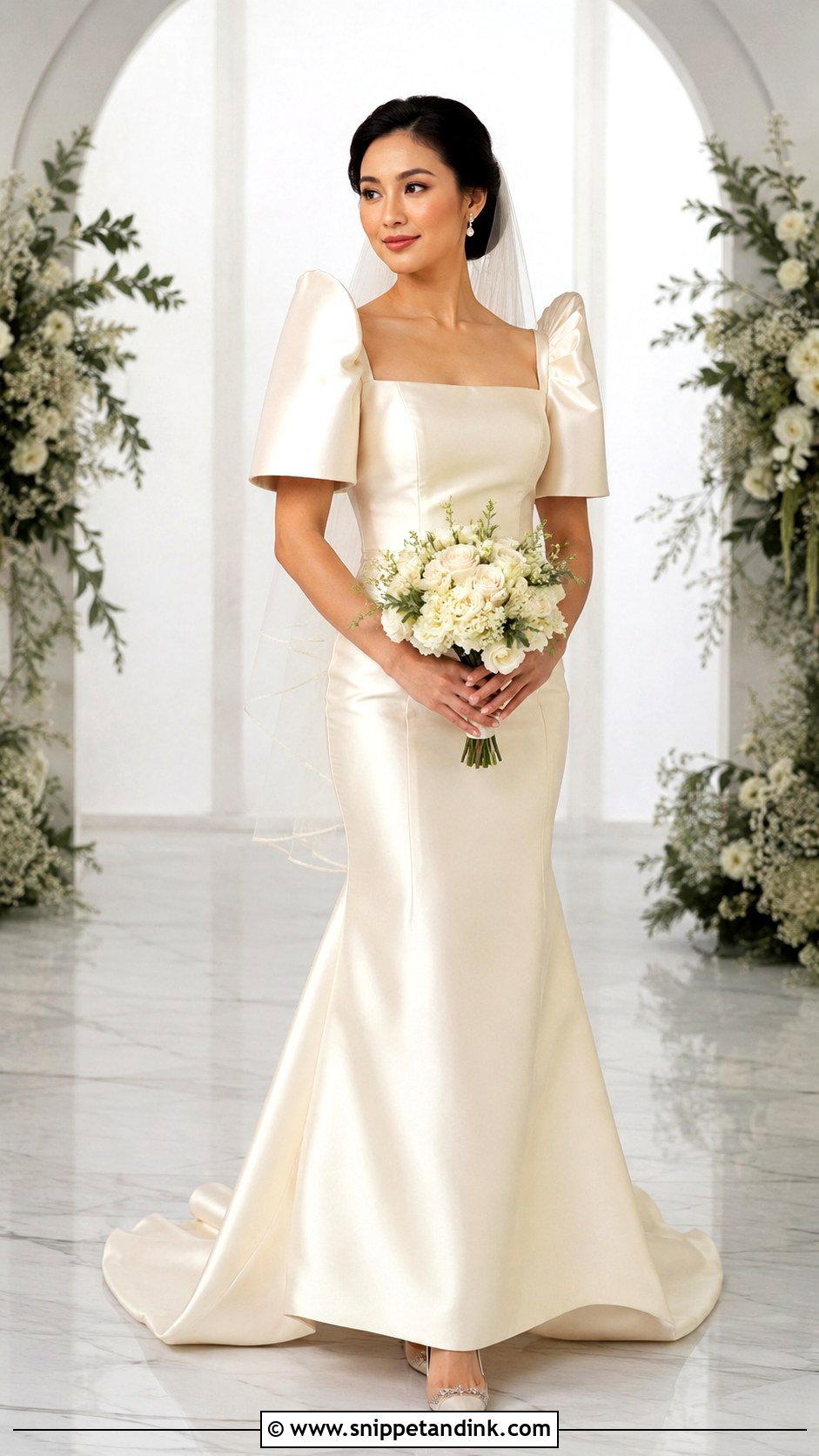
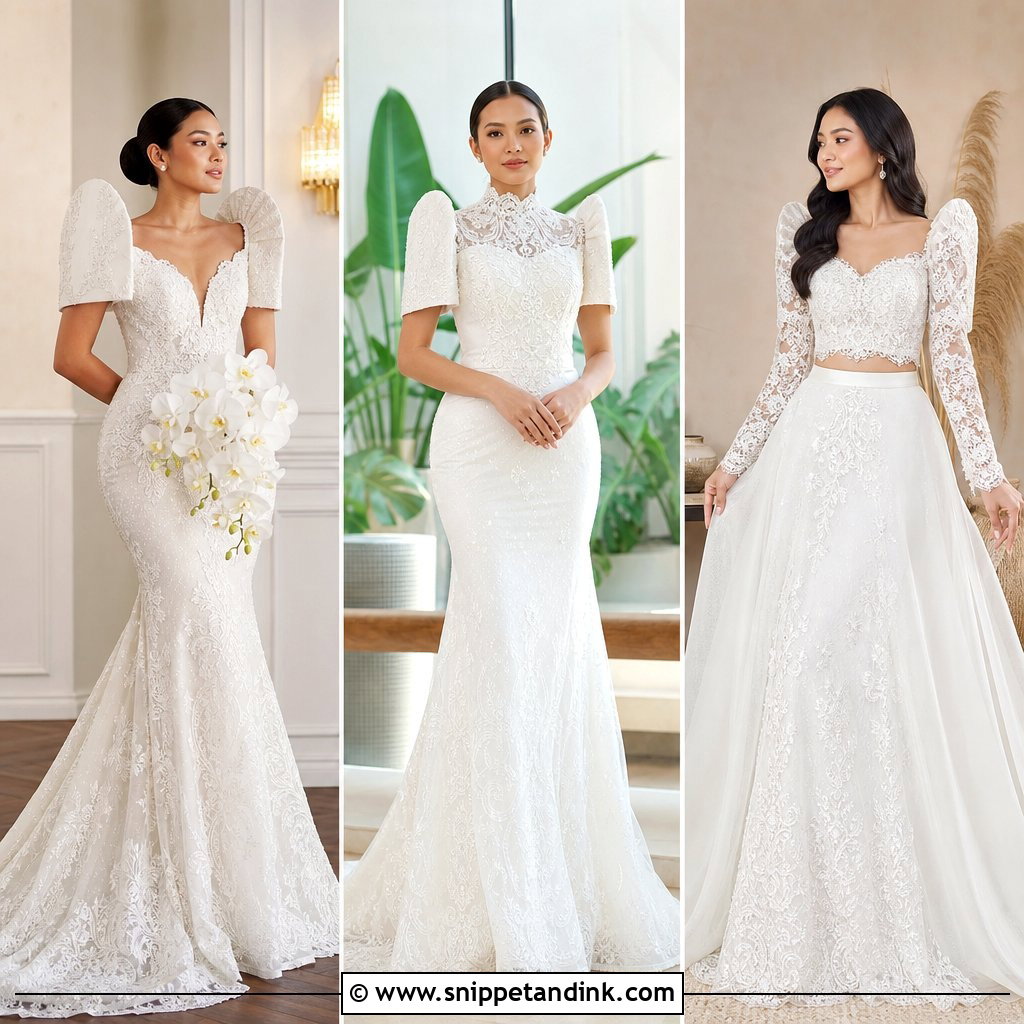
The terno’s butterfly sleeves are what people recognize first, and a modern cut keeps them while trimming everything else back: a fitted bodice, a defined waist and a flowing skirt in ivory satin, silk gazar or piña-style fabric. Pearl earrings, a sleek low bun and pointed heels are all it needs, with a cathedral veil for drama or a short one to keep it light. Sleeve scale is the fitting I spend longest on. The sleeve should rise just past the shoulder line and match your shoulder width; too tall and it swallows a petite bride, too small and it reads as a puff sleeve.
2. Maria Clara Wedding Gown
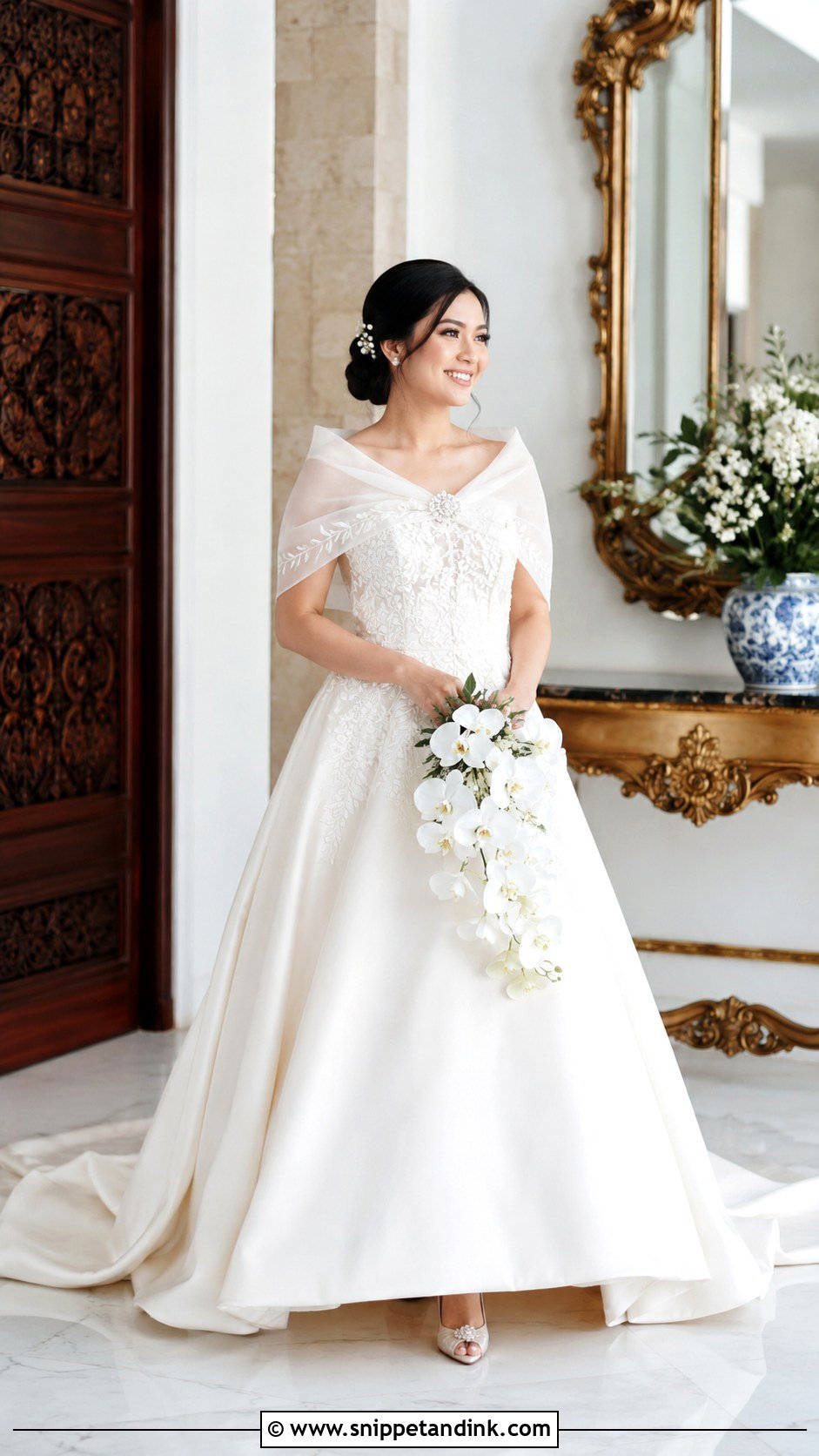
A Maria Clara wedding gown is the classic, old-world version: a blouse-like baro, a pañuelo folded over the shoulders and a full skirt that sways as you walk. Sheer piña, jusi or organza keeps the layers light, with fine embroidery at the neckline, sleeves or hem. A low chignon, pearl pins and embroidered shoes finish it. The pañuelo slips as you move, so I pin it discreetly at the shoulders and the center back. Without that it slowly creeps sideways through the ceremony.
3. Piña Wedding Gown
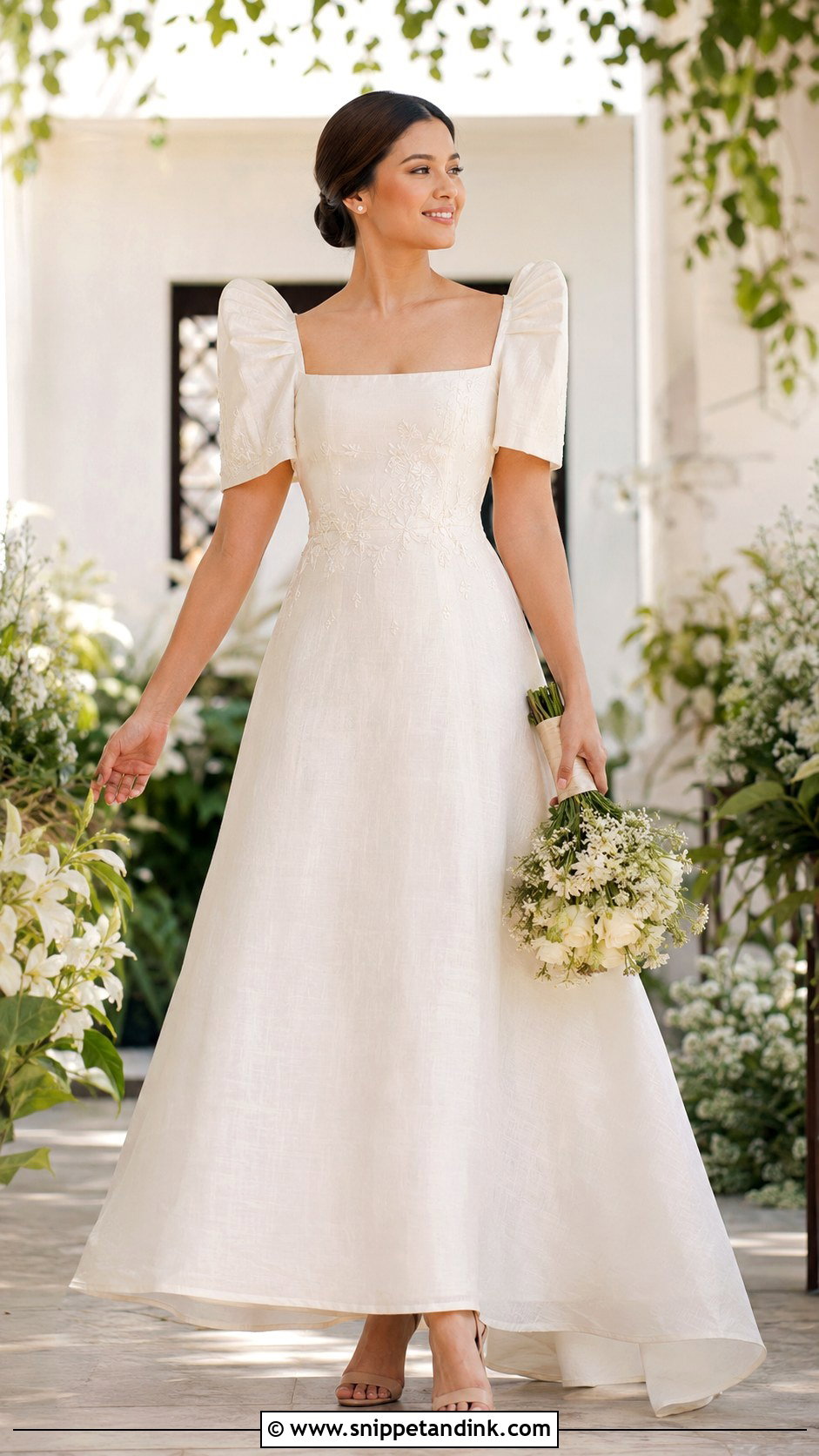
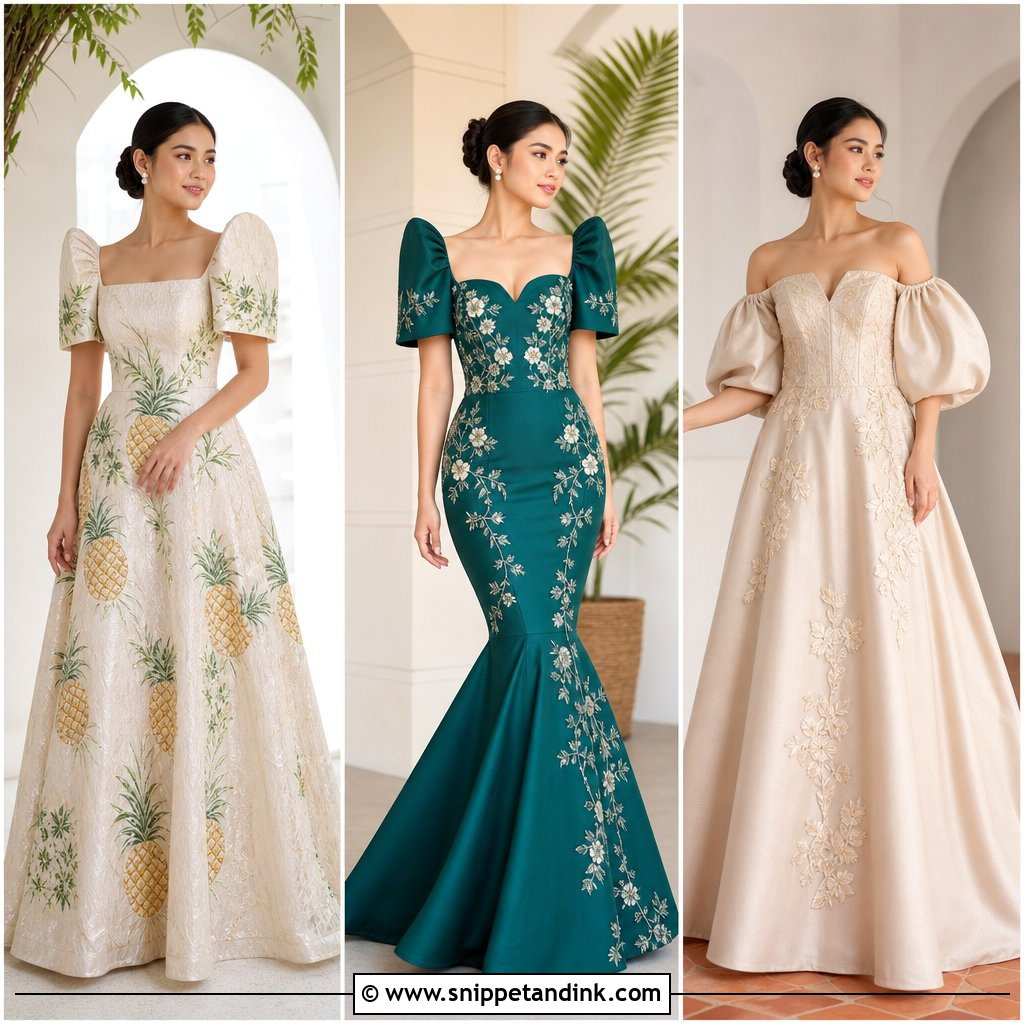
Piña is woven from pineapple leaf fiber, mostly by hand, and it has a faint natural sheen and a slightly crisp hand. That is why the cloth itself feels like part of the story. It suits butterfly sleeves, sheer overlays and embroidered panels, or a whole gown over a soft A-line skirt. Keep jewelry minimal, perhaps pearl studs, a slim bracelet and a plain veil, with nude or ivory heels. True piña is naturally ecru rather than bright white. Hold it next to your veil and shoes in daylight so nothing looks grey or yellow beside it.
4. Jusi Wedding Gown
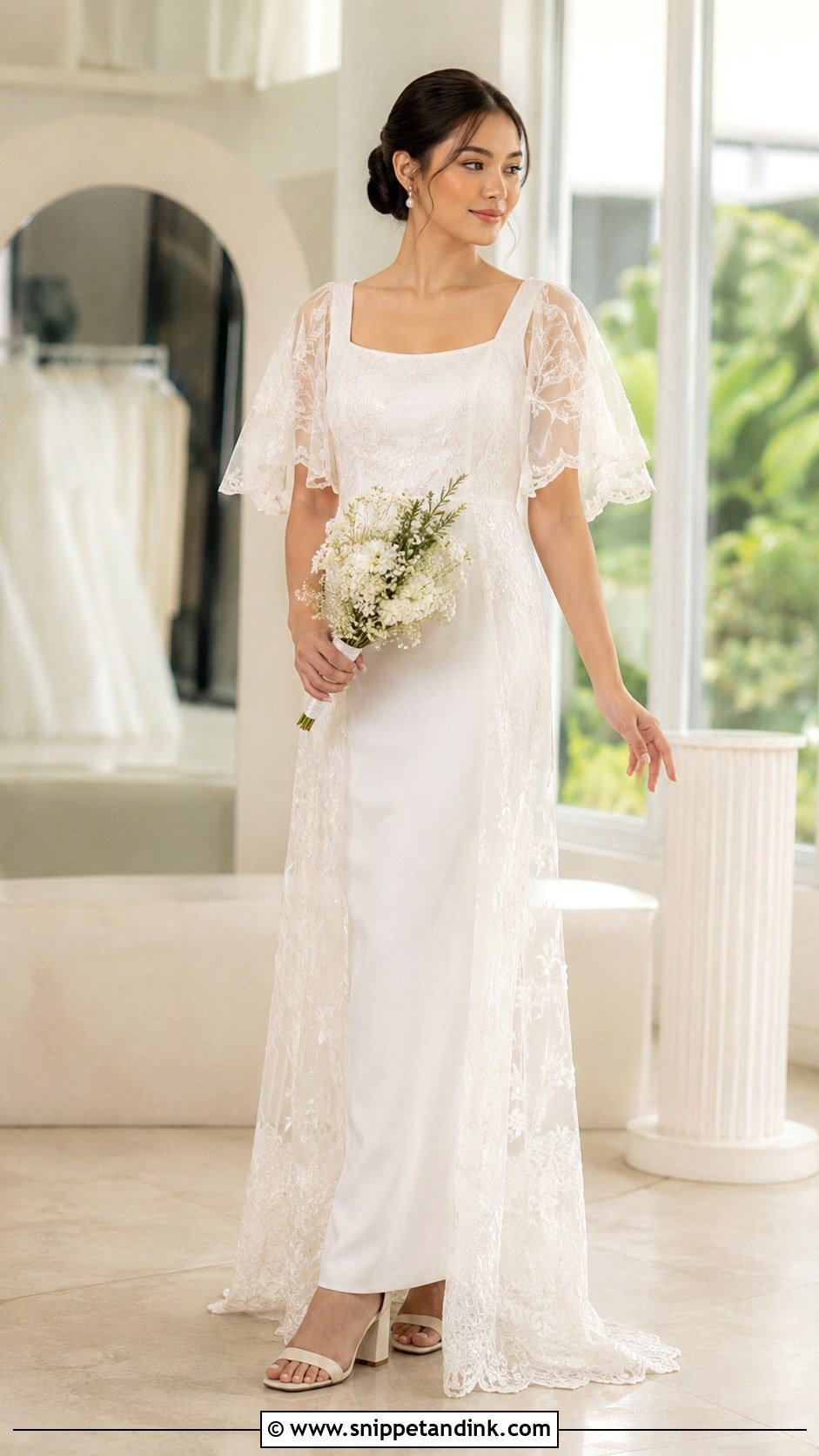
Jusi gives you the sheer, crisp look of traditional Filipino fabric at a lighter weight and usually a gentler price. It works for overlays, sleeves and embroidered bodices over a fitted inner gown. Warm-weather weddings suit it, since it breathes. A neat bun, pearl drops and low block heels if comfort comes first. Most jusi today is machine-made and some is blended with synthetic fiber, so ask what you’re actually buying; blends hold a crease less sharply and can feel warmer.
5. Butterfly Sleeve Ball Gown
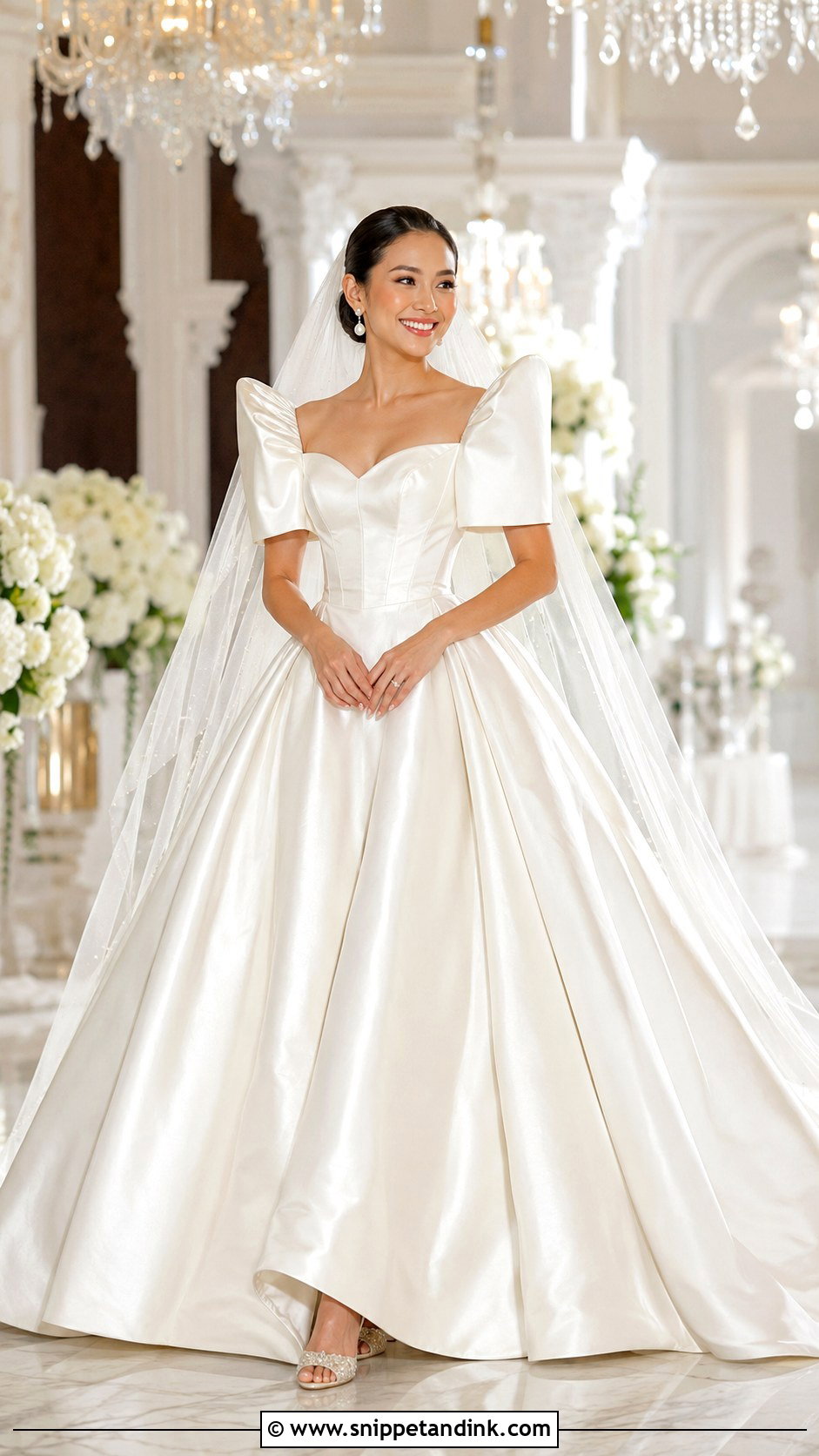
Pairing the sleeves with a full skirt gives you the grandest entrance on this list. Ivory mikado, duchess satin or embroidered organza hold the shape well. To stop it looking heavy, I keep the bodice fitted and start the skirt cleanly at the natural waist. A long veil, soft glam and a structured bouquet finish it. Petite brides do best with a slightly slimmer skirt and medium sleeves, which keeps the proportions regal instead of swamped.
6. Filipiniana Mermaid Wedding Gown
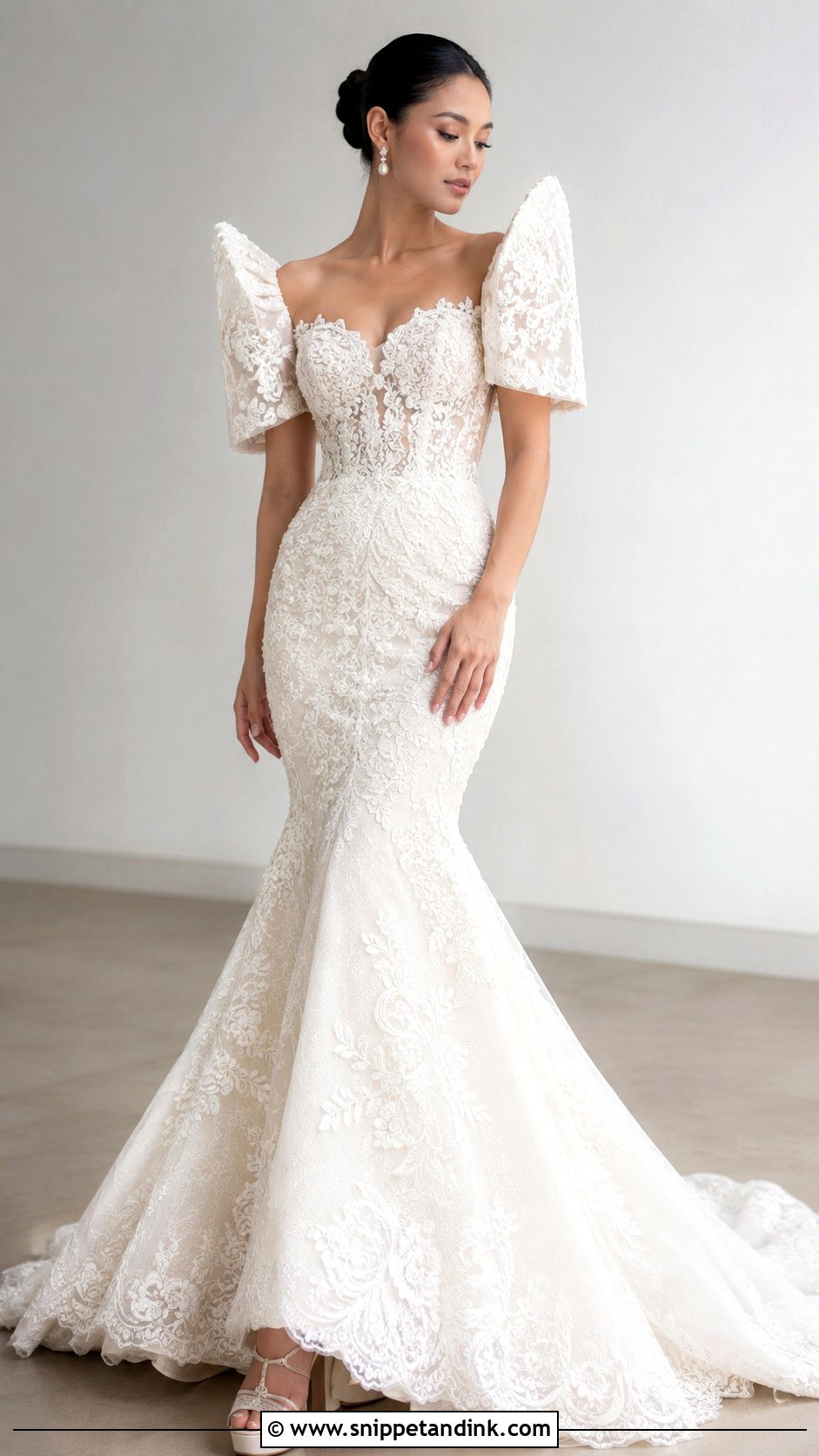
A mermaid follows the body through bodice and hips, then flares near the knee. Butterfly sleeves balance the shoulders, especially over a sweetheart, bateau or square neckline, while lace, beadwork or piña appliqué softens the fitted line. Hair should be sleek because the shape is already strong. Get your shoes before the hem is set. The flare drags if the heel is too low, and if the flare starts too far down the leg you’ll find stairs hard to manage.
7. Filipiniana A Line Wedding Gown
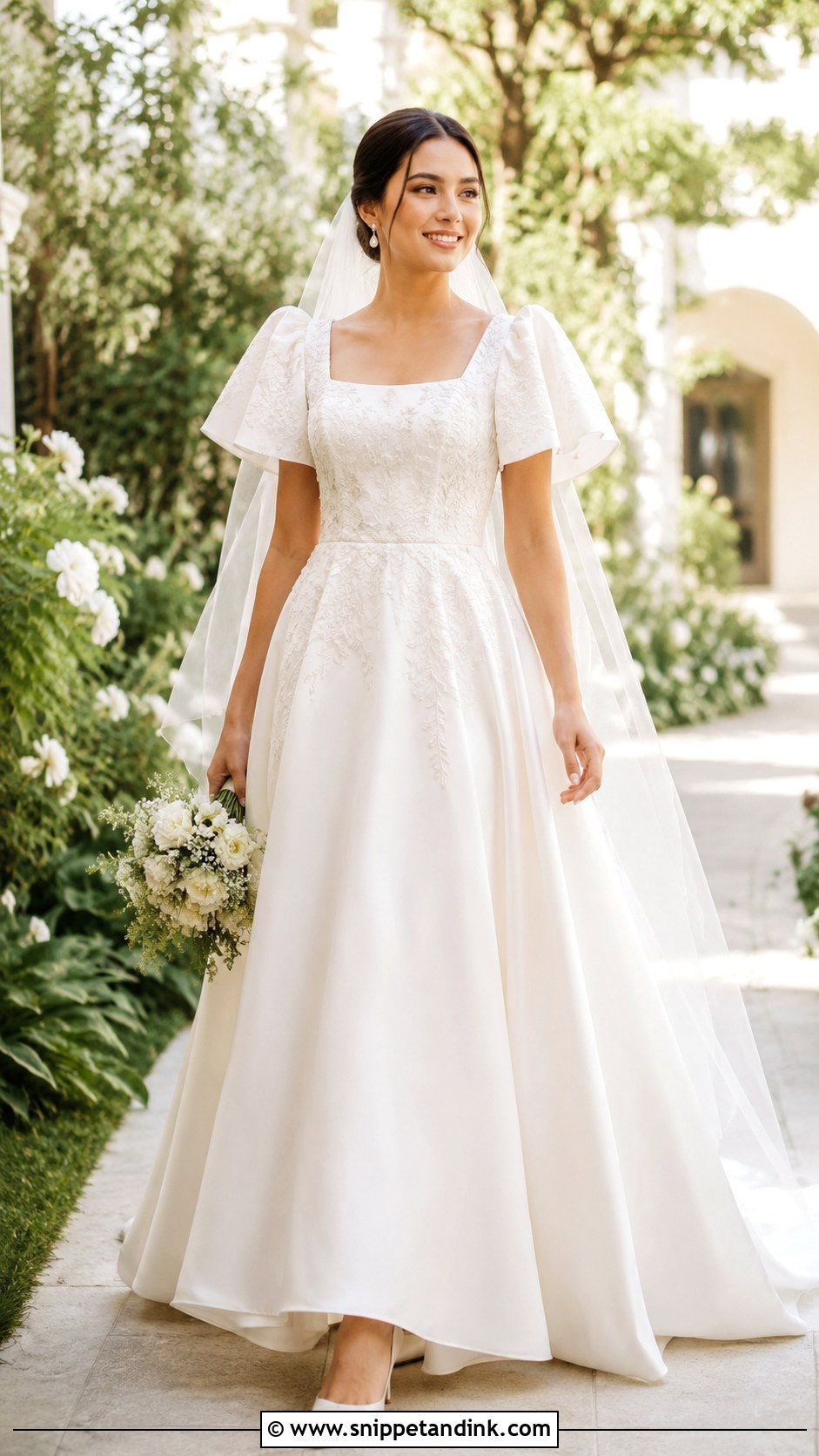
Comfortable from first look to last dance, the A-line defines the waist and widens gently over the hips. Add butterfly sleeves for the terno feel or a pañuelo-style detail for something softer. It suits many figures because it shapes without clinging. Pearl earrings, soft waves and ivory pumps or sandals, with embroidery along the bodice or skirt border. This is the shape I’d suggest for a bride who has never worn a structured gown and doesn’t want to spend the day managing one.
8. Filipiniana Wedding Gown With Detachable Train
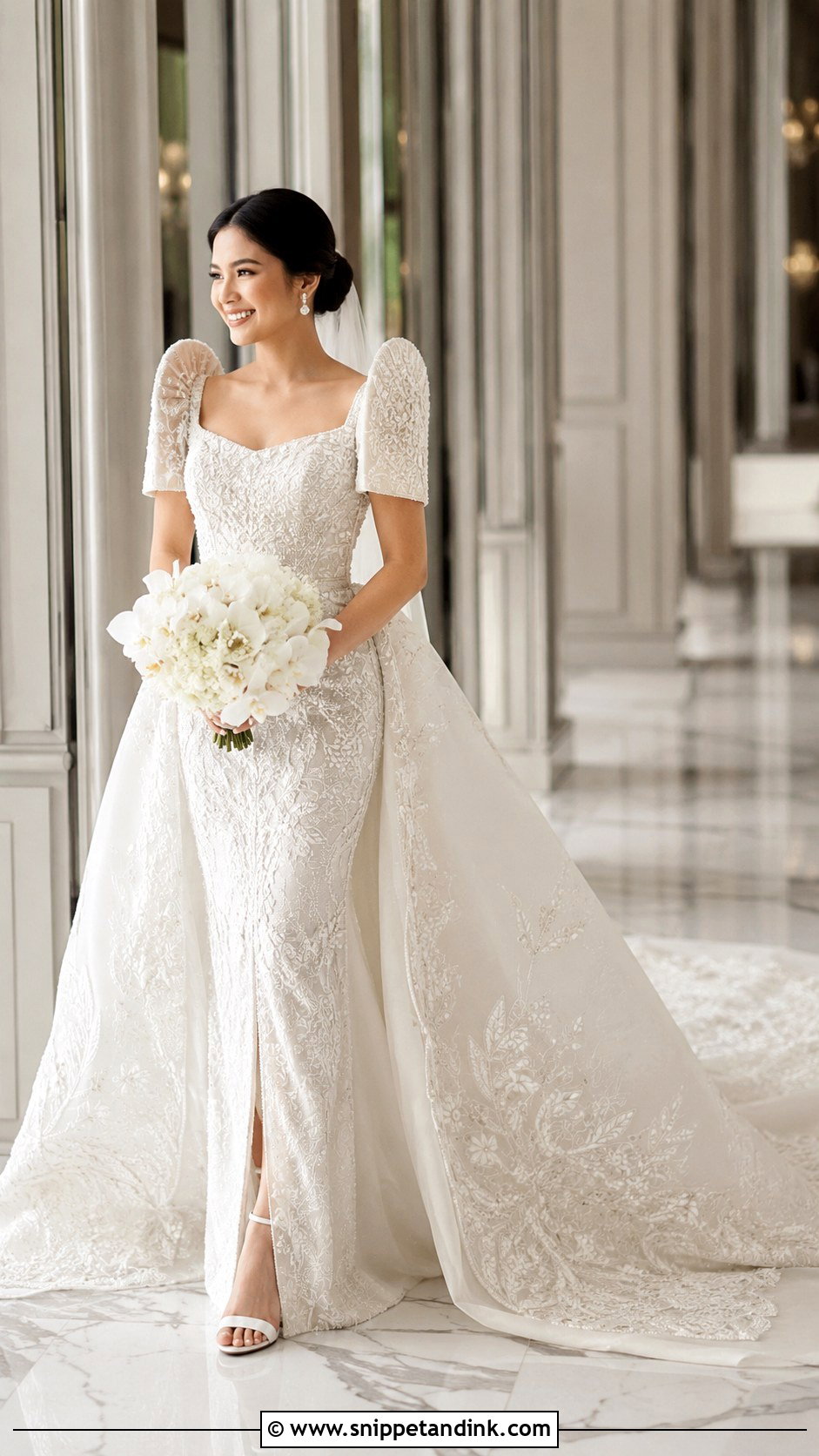
A detachable train gives you a formal ceremony and an easy reception without changing dresses. It works on a fitted terno, a mermaid or a plain sheath with butterfly sleeves, in organza, piña-style fabric or embroidered tulle. Keep the base gown sleek so the train looks planned. The attachment point matters more than people think. Hidden hooks or snaps along the waist seam hold best; buttons at the back alone can pull the waist down when someone steps on the train.
9. Filipiniana Wedding Gown With Detachable Sleeves
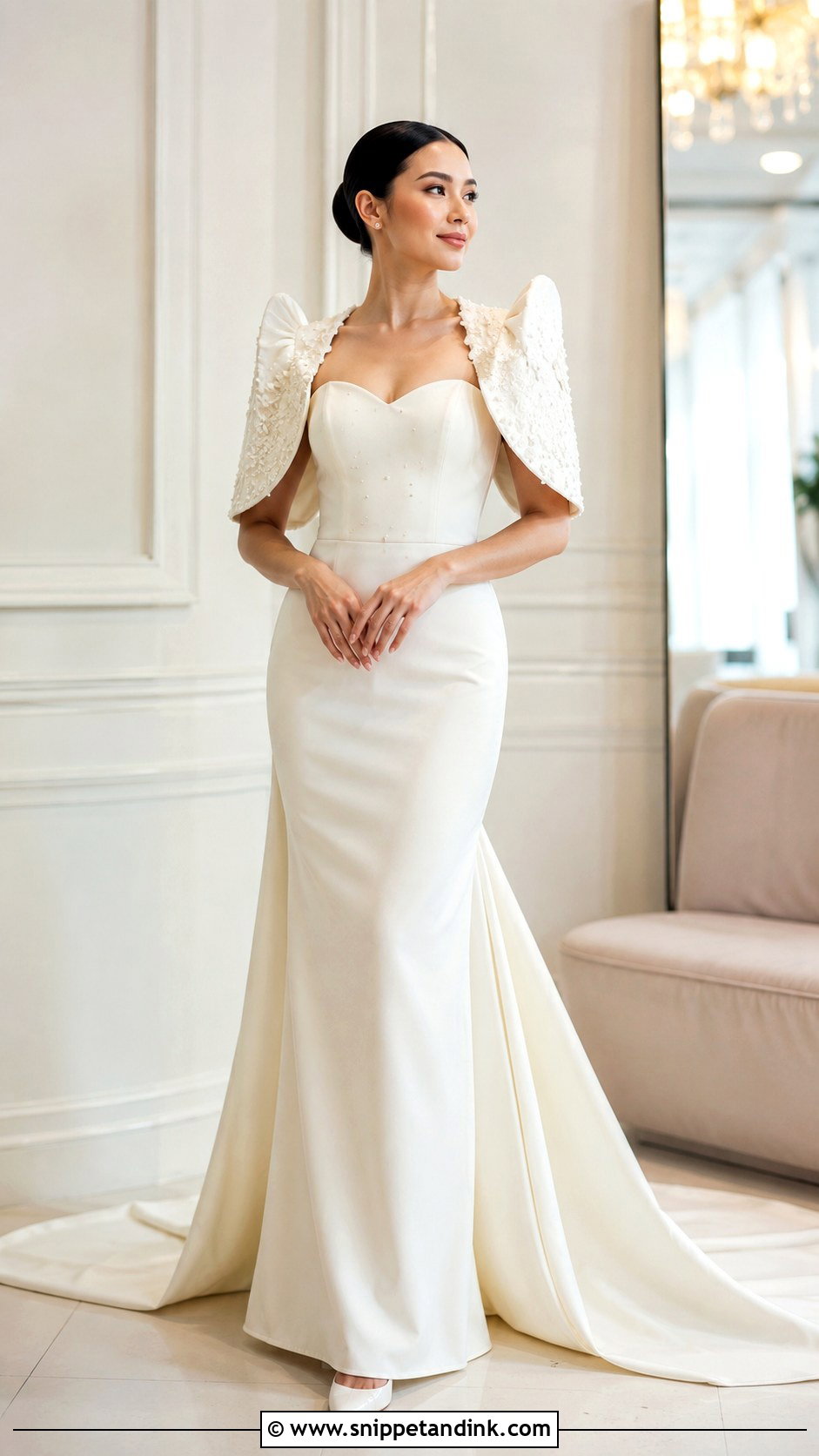
Detachable sleeves let you keep tradition for the ceremony and lose the structure for dancing. They can be a bolero, a sleeve overlay or a structured piece that blends into the bodice, coming off to reveal a strapless, sleeveless or off-shoulder gown. Warm climates and destination weddings suit it. I insist on a secure base gown, since a strapless bodice built to sit under sleeves is often cut looser than one meant to stand alone. Test it without the sleeves at a fitting, dancing.
10. Minimalist Filipiniana Wedding Gown
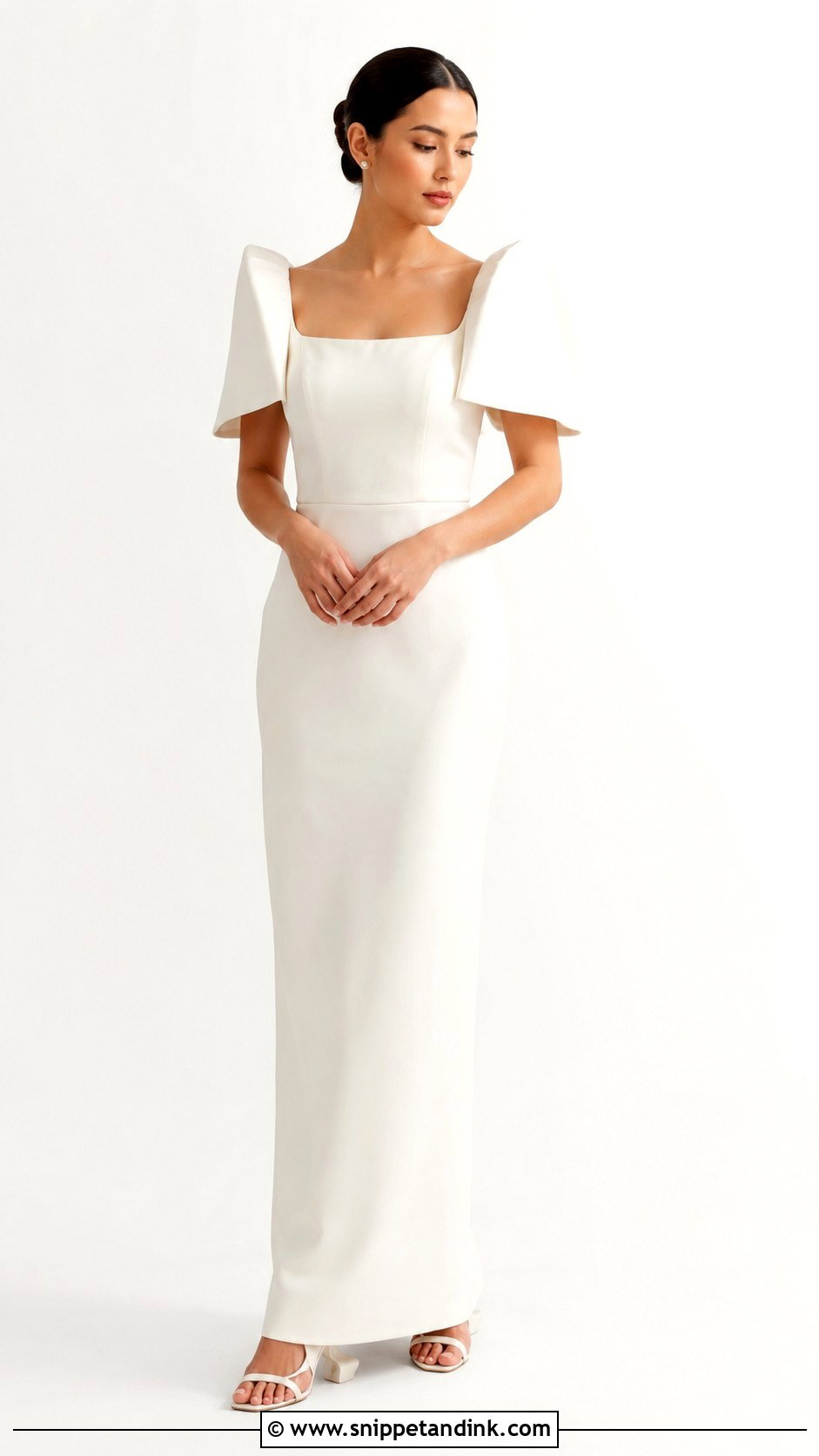
Heavy embellishment isn’t what makes a Filipiniana gown special. Clean structure, good cloth and a precise silhouette do it just as well. Smooth crepe, mikado or silk satin with crisp butterfly sleeves over a column, A-line or fit-and-flare. A center-part bun, pearl studs and sculptural white heels, with a plain veil or none at all. It’s an ideal frame for heirloom jewelry. The sleeves have to be perfect here, with no wrinkle in the pleat, because there is nothing else on the dress to draw the eye.
11. Embroidered Filipiniana Wedding Gown
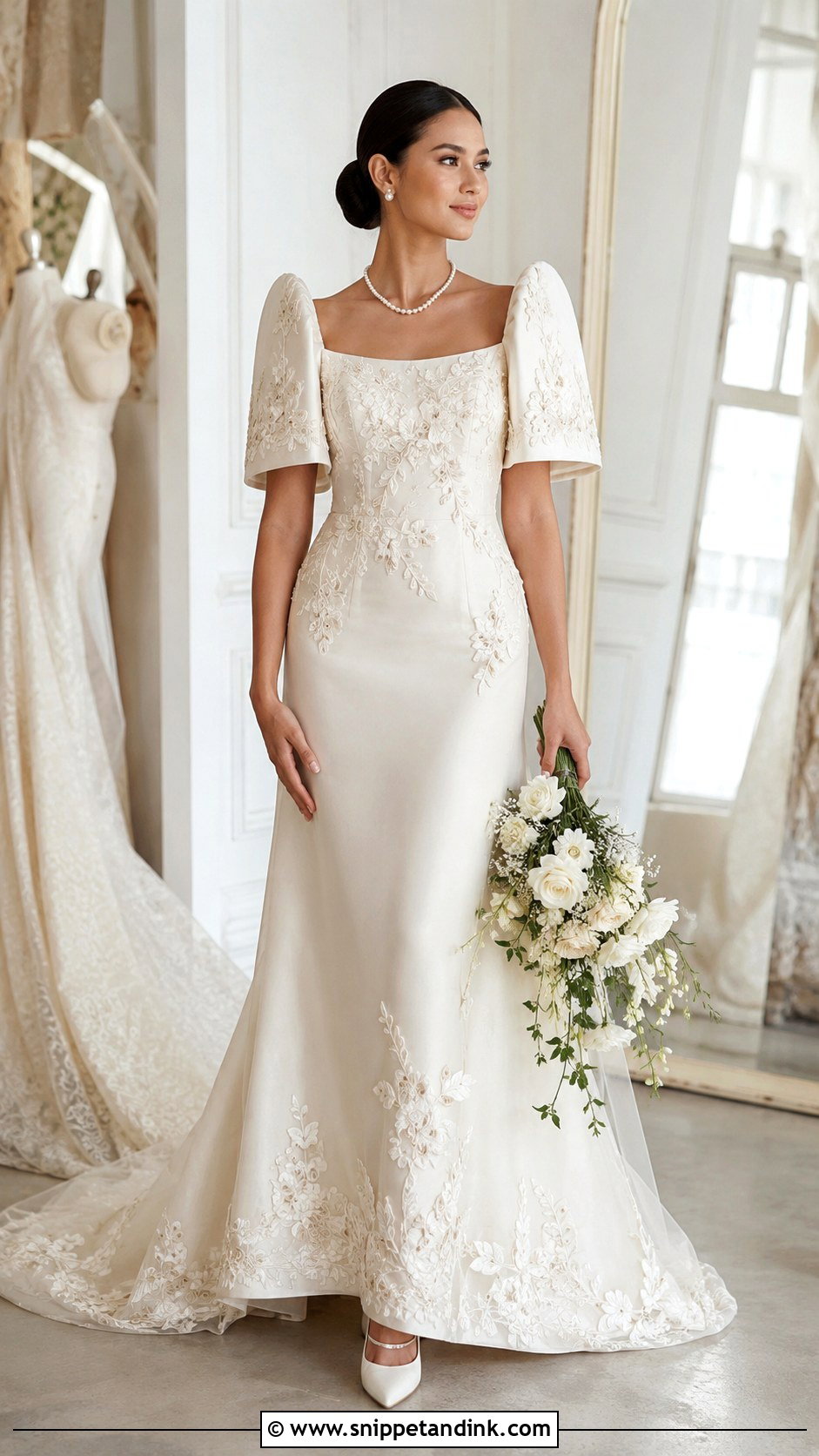
Embroidery is where a gown can carry something personal: flowers, local motifs, initials, family symbols or a fine vine along the sleeves, bodice, train or hem. Piña, jusi, organza and tulle all show stitching clearly. I’d keep the cut simple, an A-line or sheath, so the work has room. Soft makeup, pearls and plain shoes. Hand embroidery on piña is slow, careful work, so if you want a custom motif, start the conversation with your designer very early.
12. Beaded Filipiniana Wedding Gown
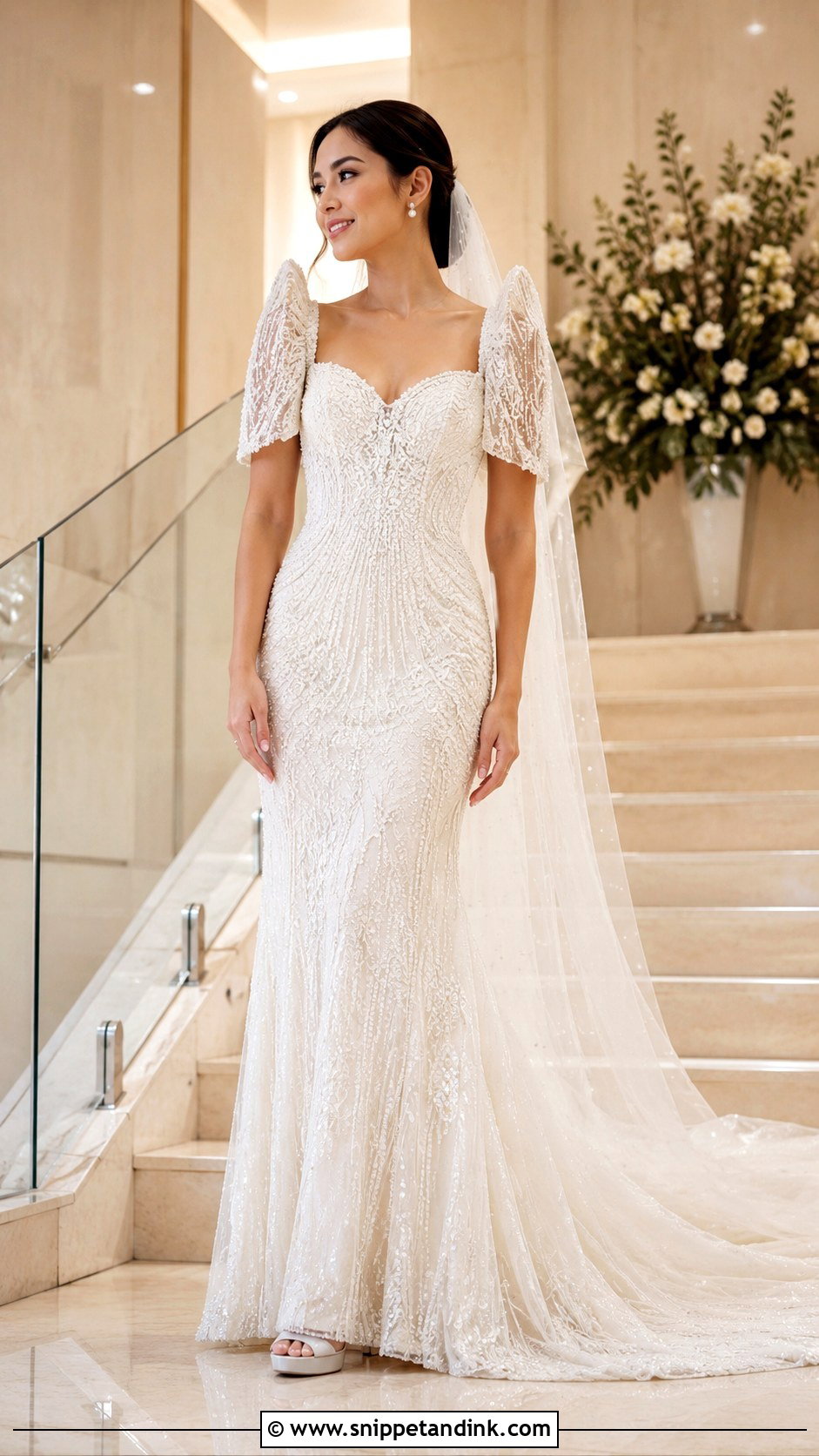
Beading adds shimmer while keeping the heritage shape. Fine work can trace the sleeves, neckline, waist or train, in ivory, pearl, silver or champagne beads. Because beading adds weight, it suits a clean silhouette such as a fitted column or a soft mermaid, with minimal jewelry, a sleek bun and a delicate veil. Heavy beads on sheer piña or jusi will drag the fabric, so ask for a lining or backing under any dense areas.
13. Lace Filipiniana Wedding Gown
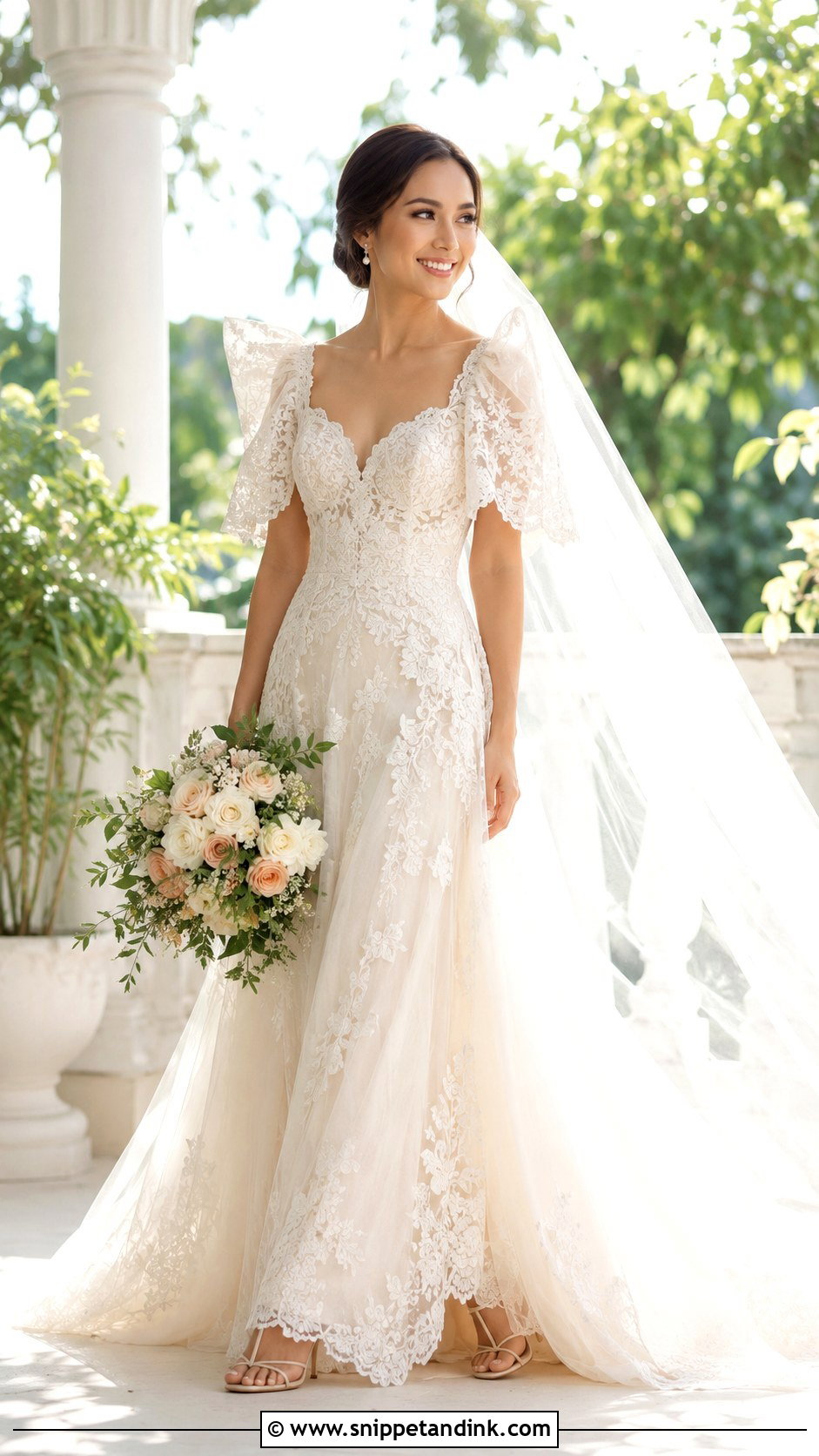
Lace softens the butterfly sleeve’s structure and adds texture to bodice, skirt or train. Floral lace over ivory lining is the classic route; lace on the sleeves only, with a smooth gown, is the modern one and makes the sleeves stand out. Pearl earrings, a soft veil and ivory or nude heels. Lace needs a stiffener inside to hold a butterfly shape, so I’d ask how the sleeve is built before you choose; soft lace alone will collapse by evening.
14. Off Shoulder Filipiniana Wedding Gown
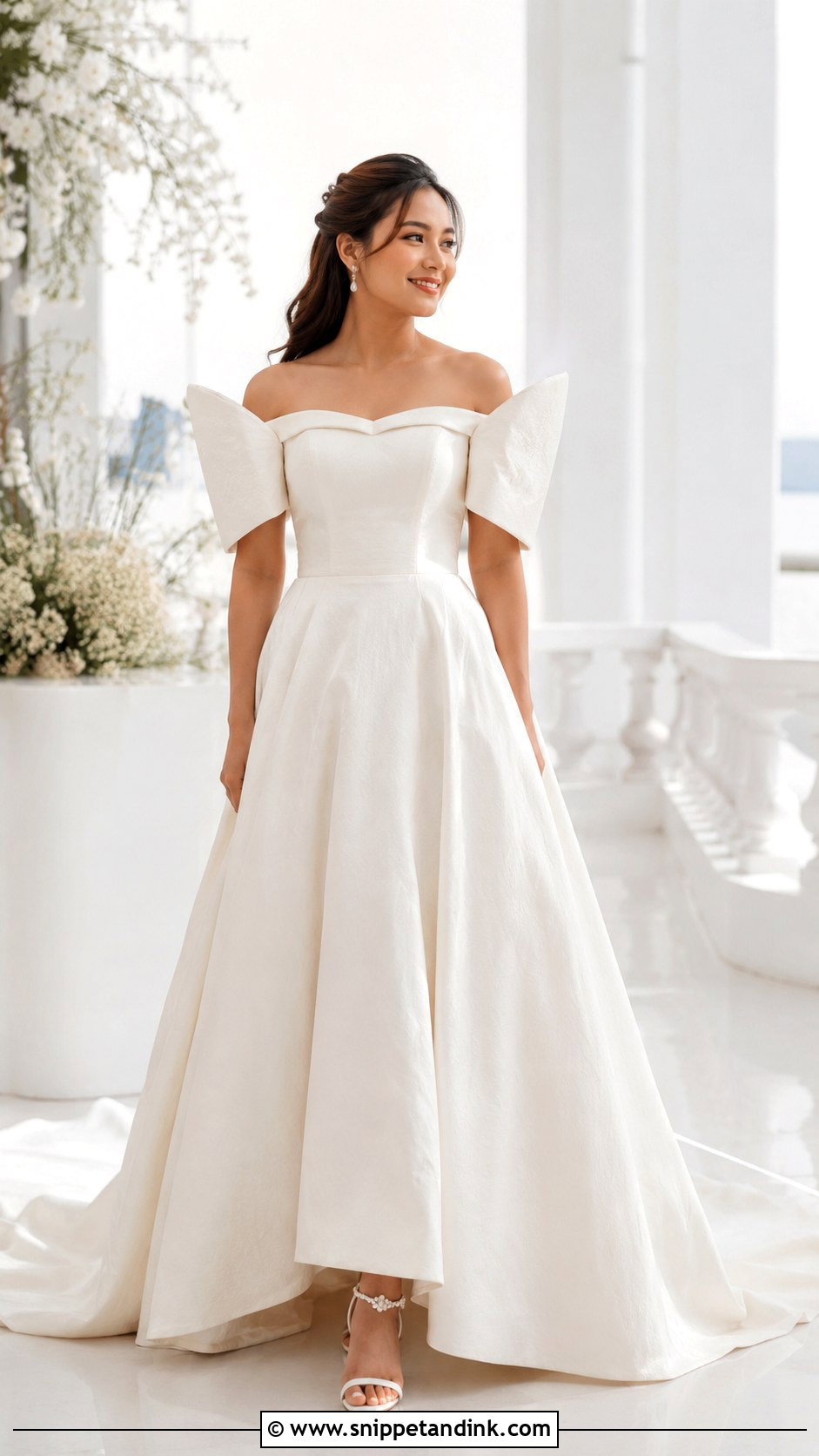
Opening the neckline gives the traditional silhouette a softer, more current feel, while butterfly sleeves or structured side sleeves keep its identity clear. A fitted bodice over an A-line or mermaid skirt both work. Wear a necklace only if the neckline is very clean; otherwise earrings are enough. A low bun or swept-back waves show the collarbones. The sleeves have to be anchored to the bodice, not your arms, so I check that they stay put when you lift your bouquet.

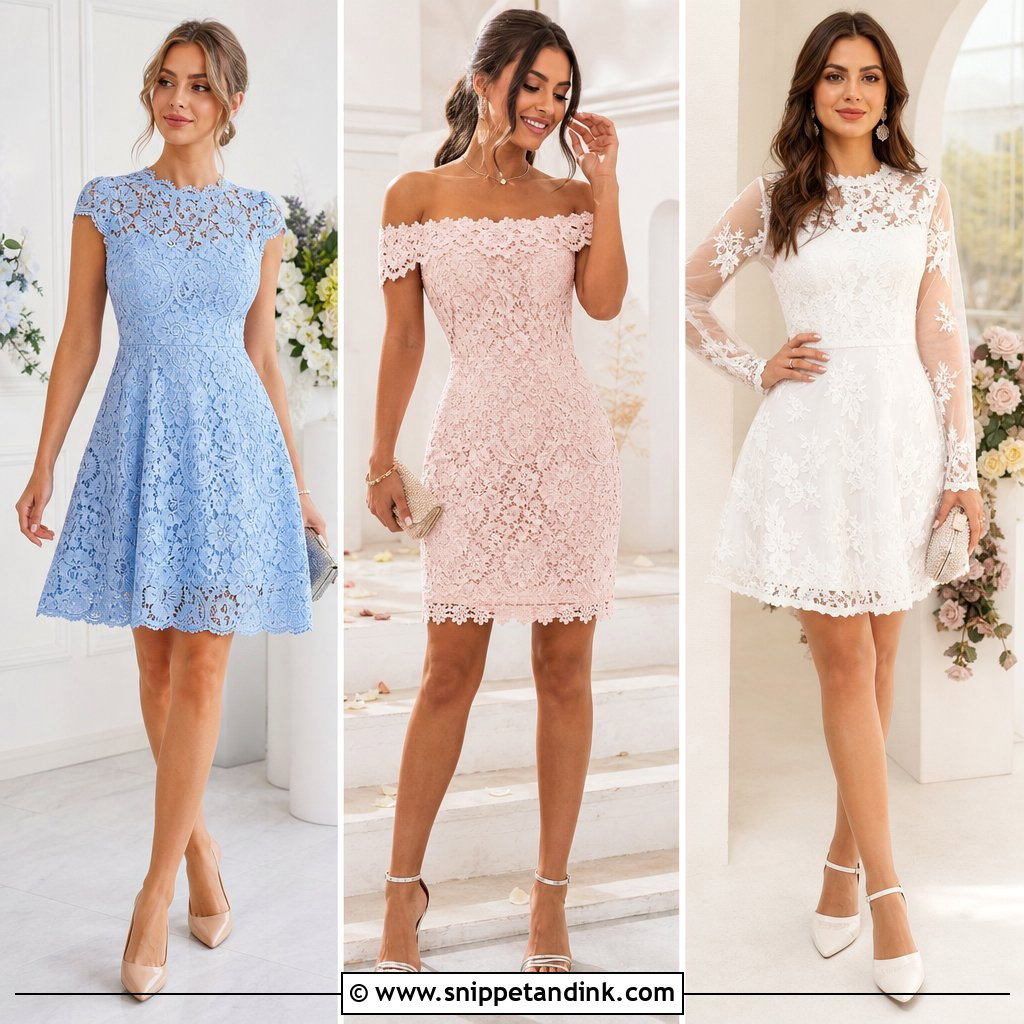
15. High Neck Filipiniana Wedding Gown
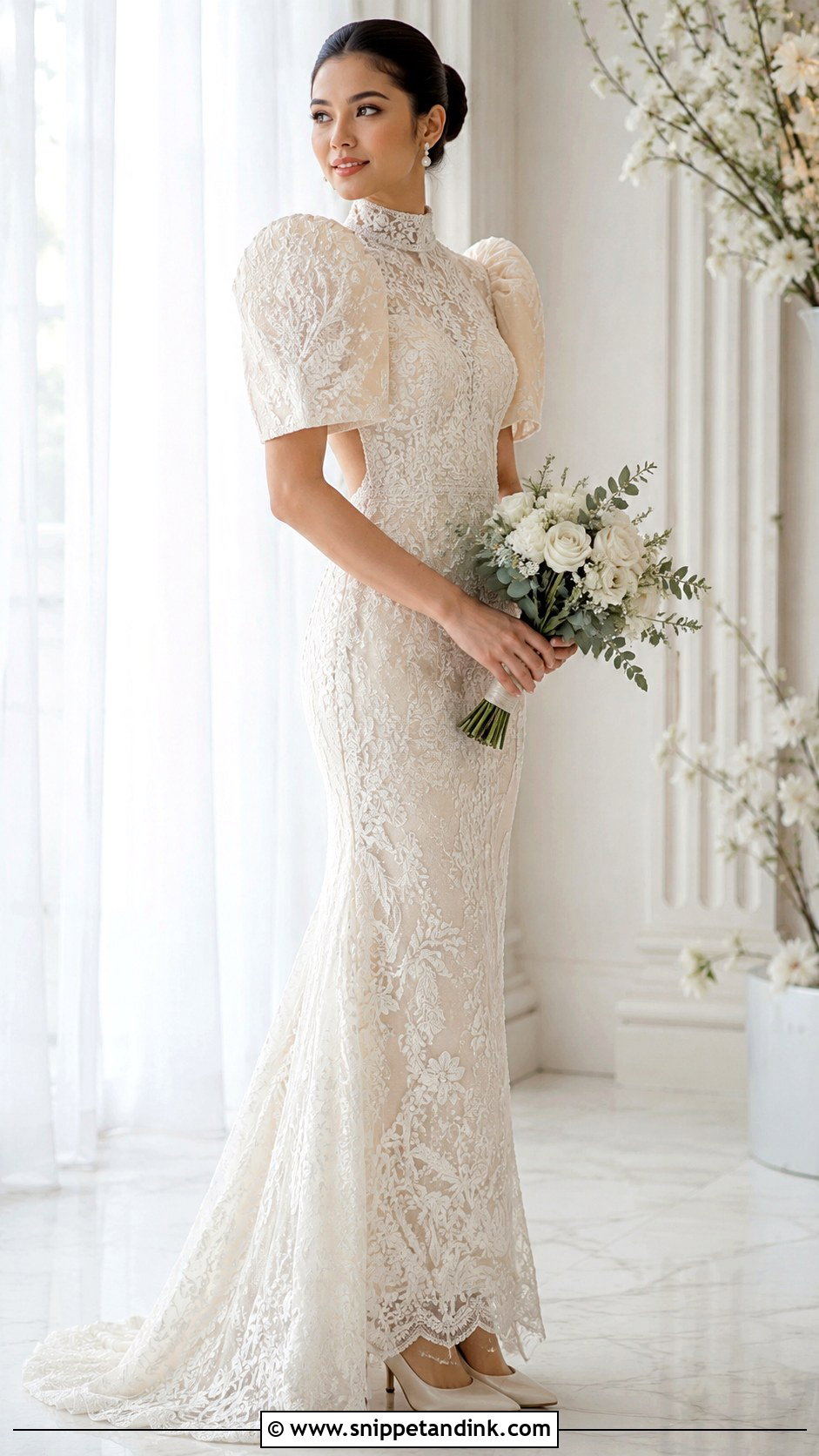
A high neck draws a long line from chin to waist, and butterfly sleeves add structure. Sheer lace, embroidered piña or smooth crepe over a covered bodice all suit it. To keep it from feeling heavy, think about an open back, a sheer yoke or a slim skirt. Delicate earrings and a polished updo work best. In a humid climate, a high neck in a closed fabric gets hot, so I’d choose a sheer yoke for an outdoor ceremony in the Philippines.
16. Filipiniana Wedding Gown With Cape
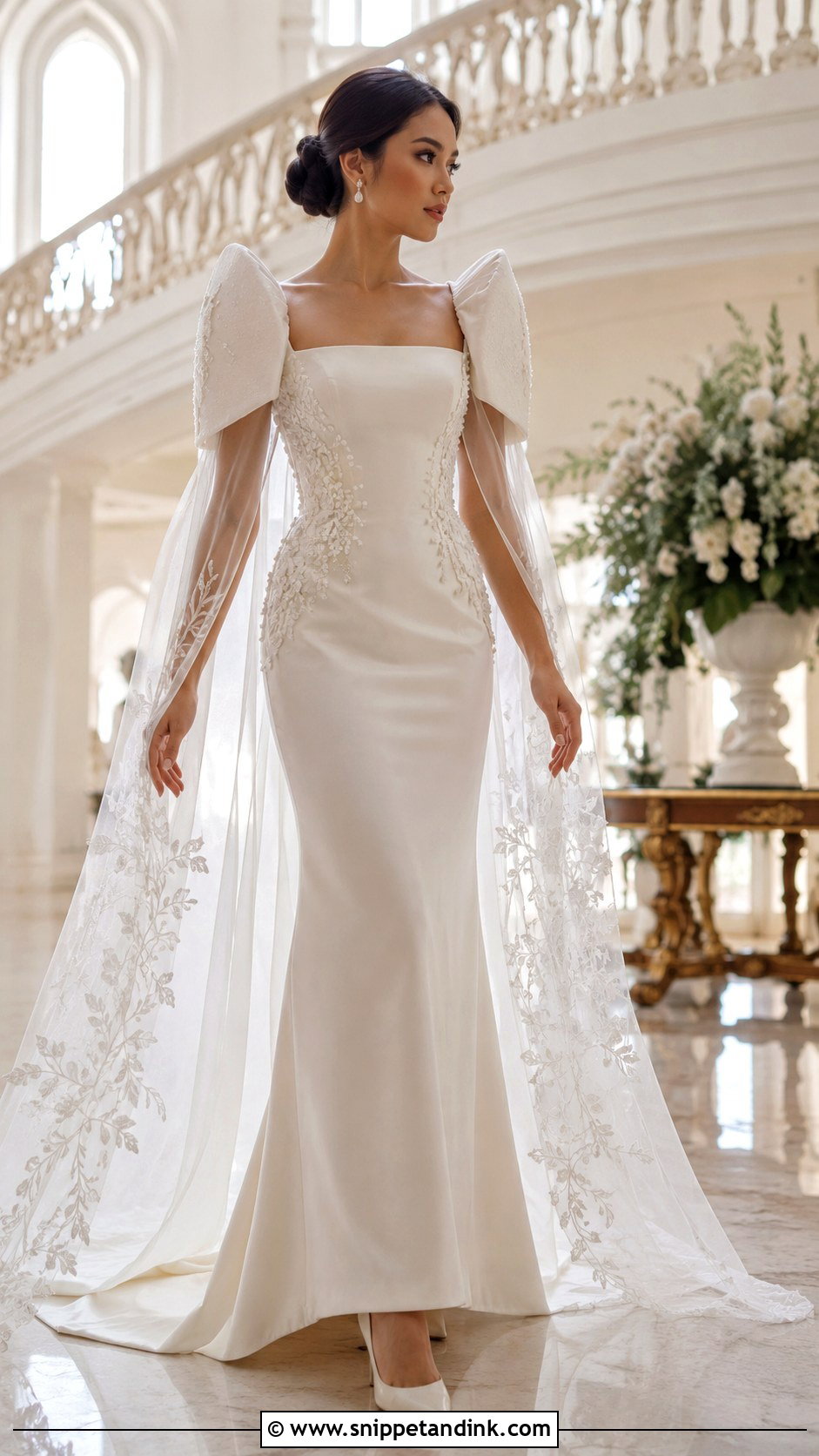
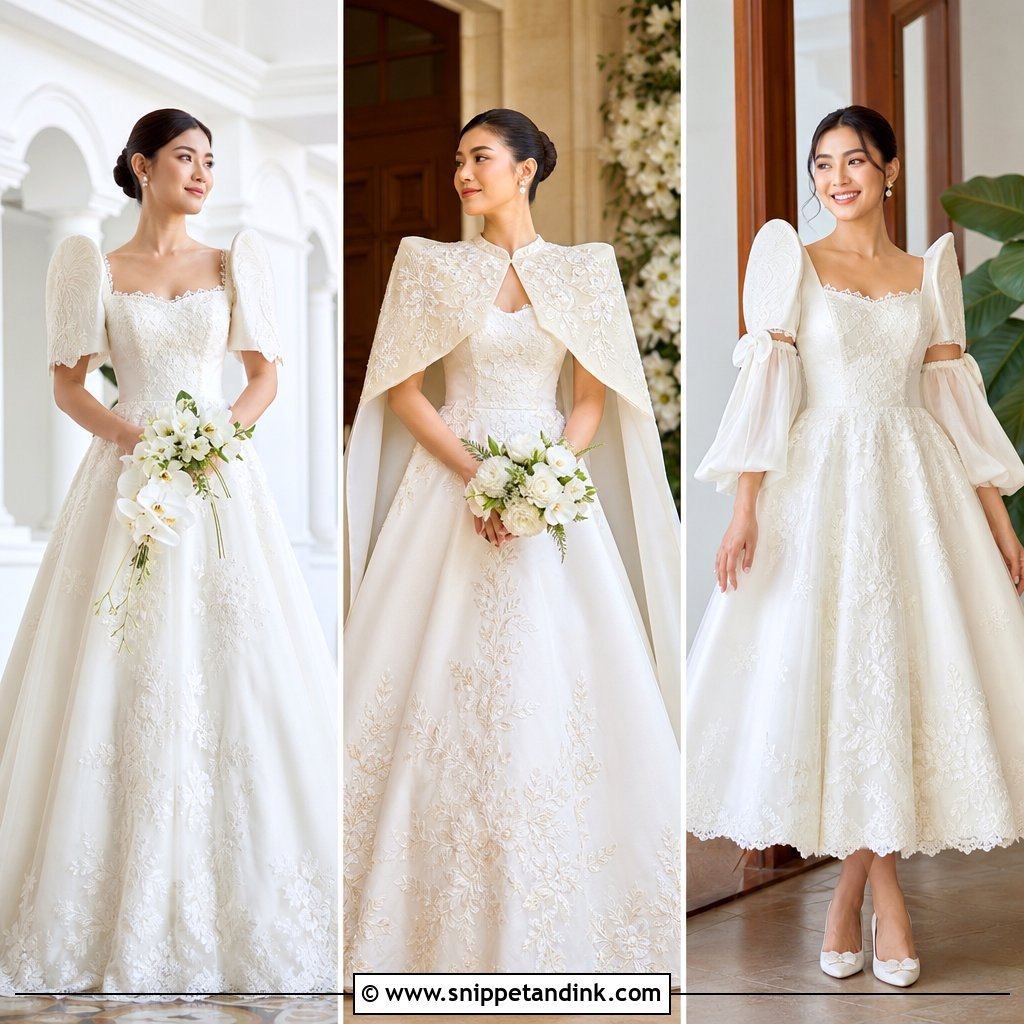
A cape can replace the veil and give the gown a regal line. It can be sheer, embroidered or soft organza falling from the shoulders or back bodice, and with butterfly sleeves it moves well in photos. Keep the gown underneath fitted so the volume stays controlled. Simple heels and small earrings. Ask where the cape fastens: at the shoulder seam it can push the butterfly sleeves forward, so I’d usually anchor it at the back of the bodice instead.
17. Filipiniana Wedding Gown With Bolero
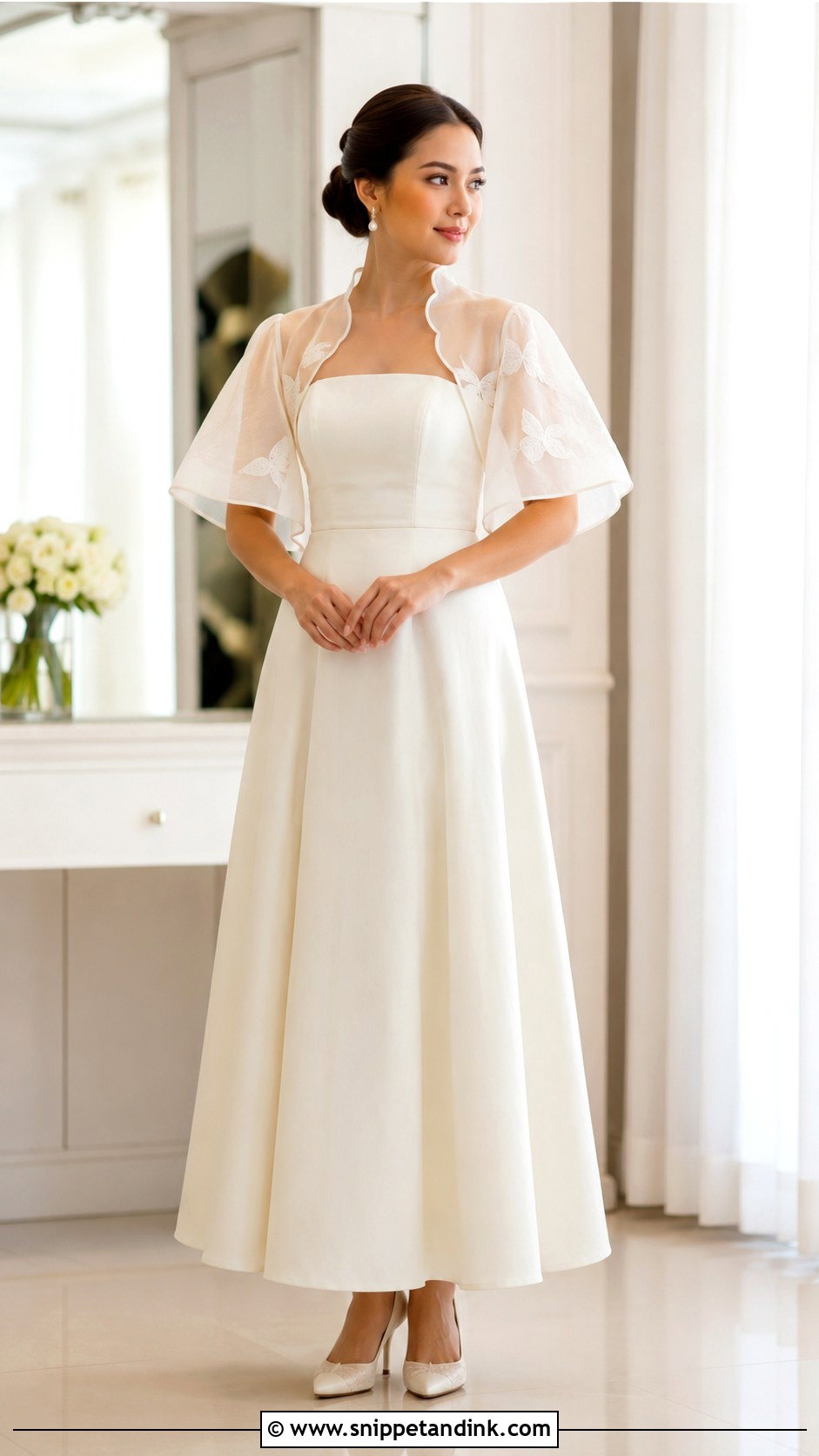
A Filipiniana wedding gown with a bolero splits the outfit into a ceremony layer and a reception dress. The bolero can carry butterfly sleeves, piña embroidery, lace or sheer jusi over a simple strapless or sleeveless base. It’s also a good way to get modest coverage for a church ceremony without sleeves all day. Pearl earrings, a neat bun and classic pumps. Fit is the risk. A bolero that isn’t shaped to your shoulders and waist looks borrowed, so I’d have it made or altered alongside the gown, not separately.
18. Filipiniana Tea Length Wedding Dress
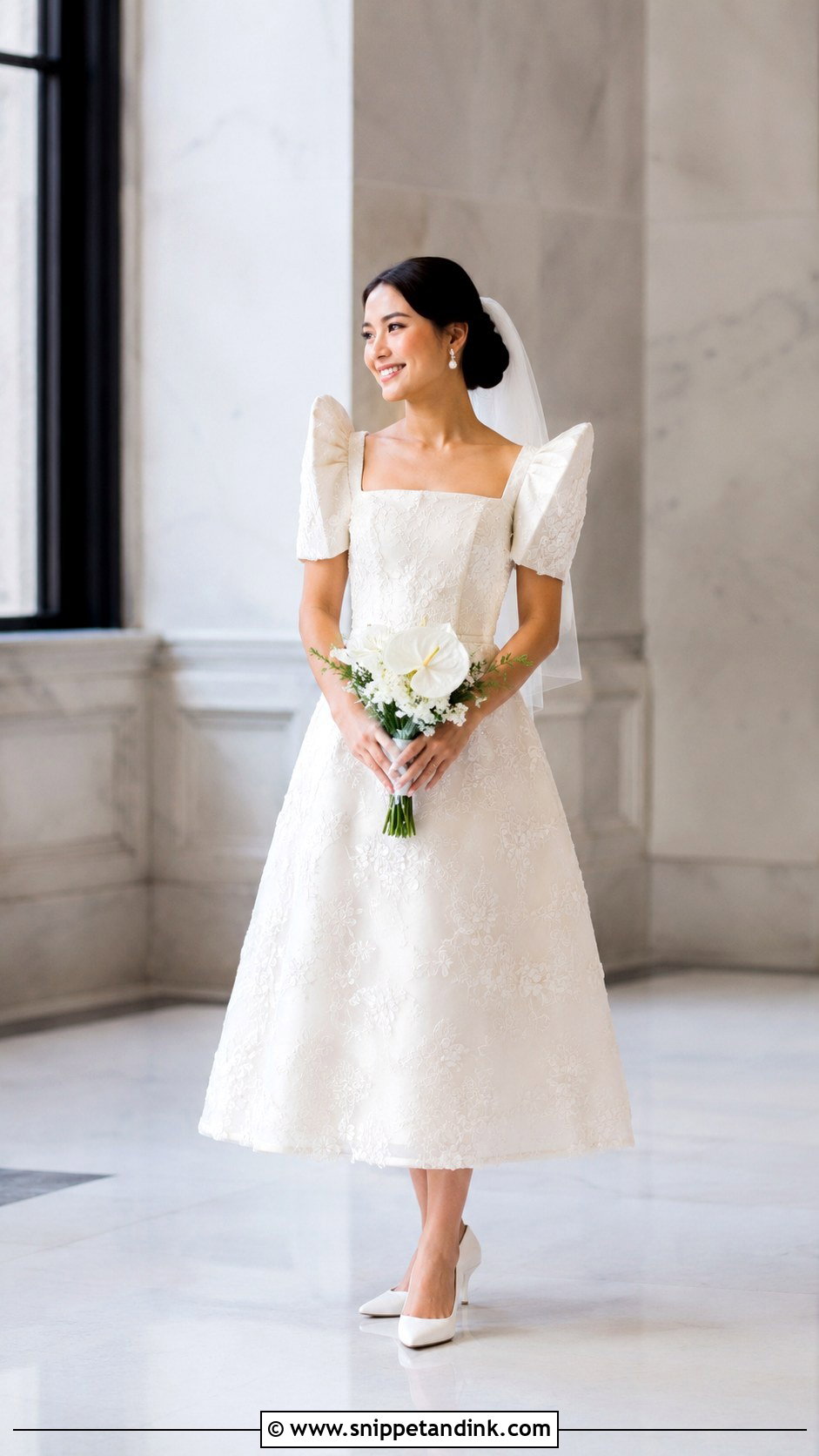
Tea length falls between knee and ankle, which makes shoes part of the outfit. Butterfly sleeves over a fitted bodice and flared skirt, in embroidered fabric, lace or crisp organza, keep the shorter hem bridal. Pointed pumps, slingbacks or embellished heels. Civil weddings, small celebrations and second looks all suit it. Shorter skirts show the slip or lining when you sit, so check the underlayer is as finished as the outside.
19. Filipiniana Mini Wedding Dress
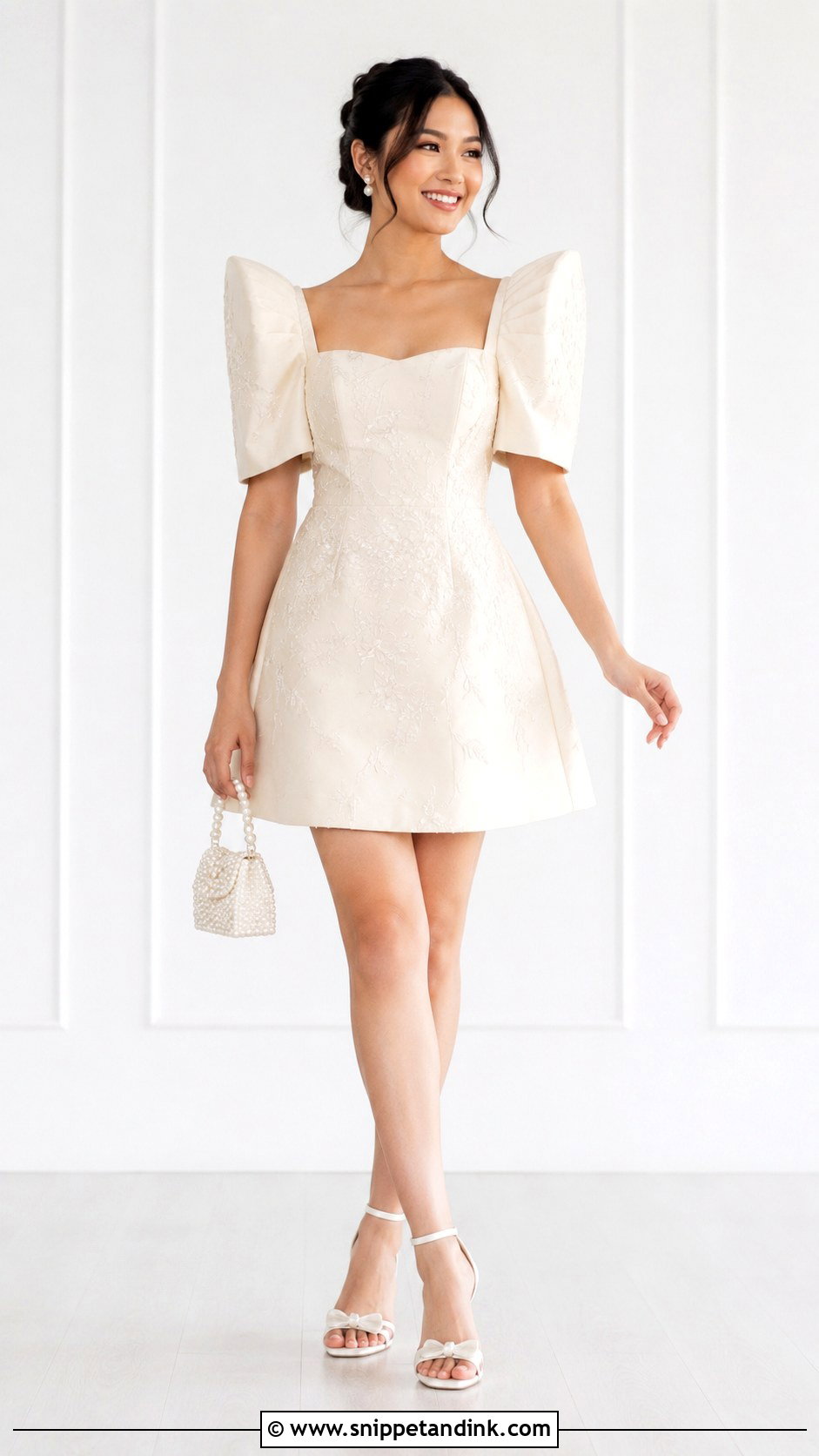
A mini is the fun option: an after-party change, a reception look or a courthouse wedding. Butterfly sleeves keep it Filipiniana while the hem keeps it modern. A structured mini in ivory crepe, satin or piña-style fabric, with subtle embroidery on the sleeves or hem if you want it. Elegant heels, pearl earrings, a small bag, maybe a short veil or a bow. Proportion is the challenge. Big sleeves on a short dress can look top-heavy, so I’d keep them a size smaller than on a full-length gown.

20. Barong Inspired Wedding Gown
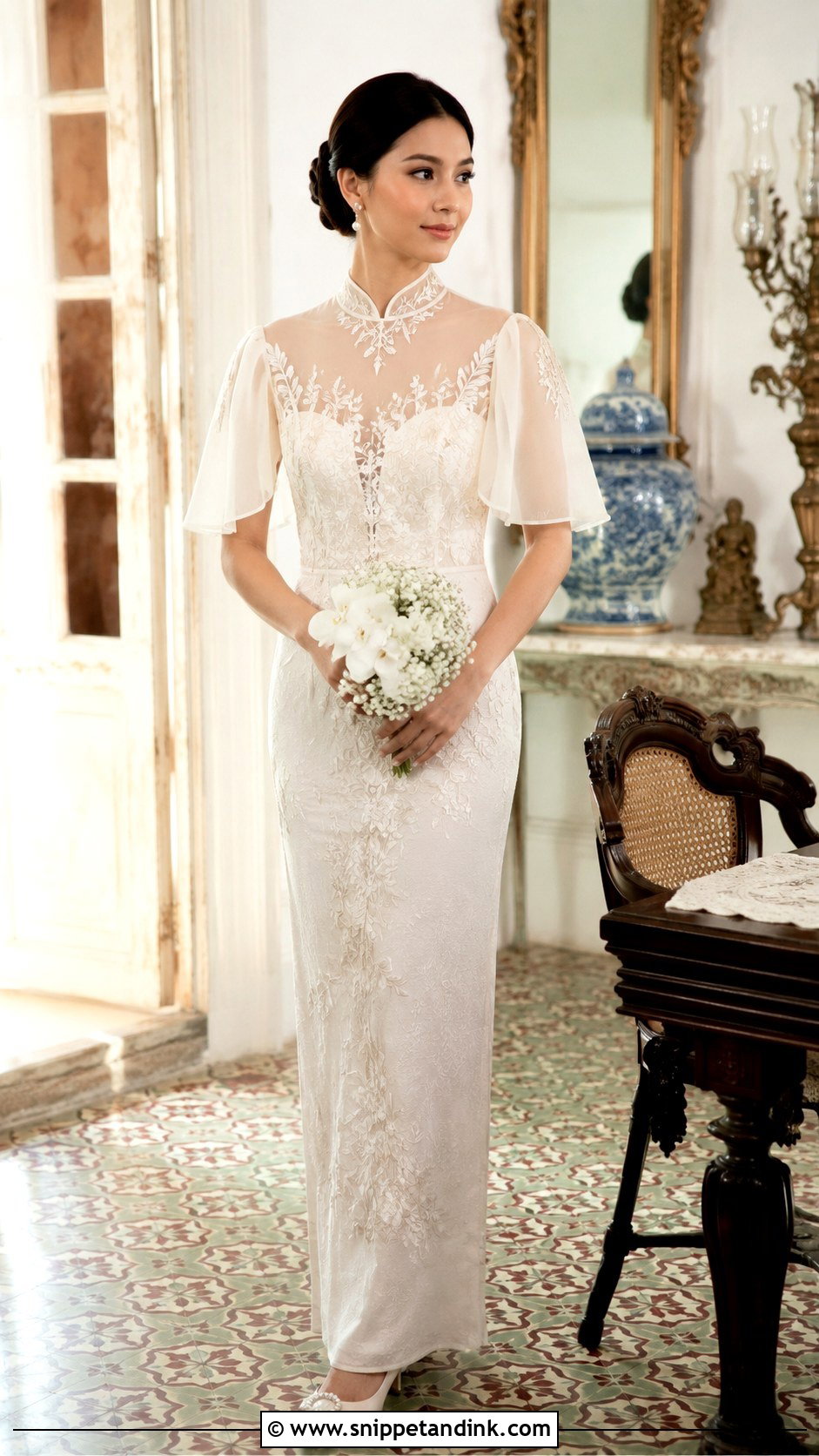
The barong is traditional Filipino menswear, and its details translate well to a bridal gown: sheer embroidered panels, front buttons, a neat collar and light piña or jusi. A sheath, A-line or tailored column with subtle butterfly sleeves carries it. Low heels, pearl earrings and a smooth updo. It’s refined and slightly unexpected. It can also tie the bride and groom together if he wears a barong, but I’d pick embroidery patterns that echo rather than match his.
21. Filipiniana Two Piece Wedding Gown
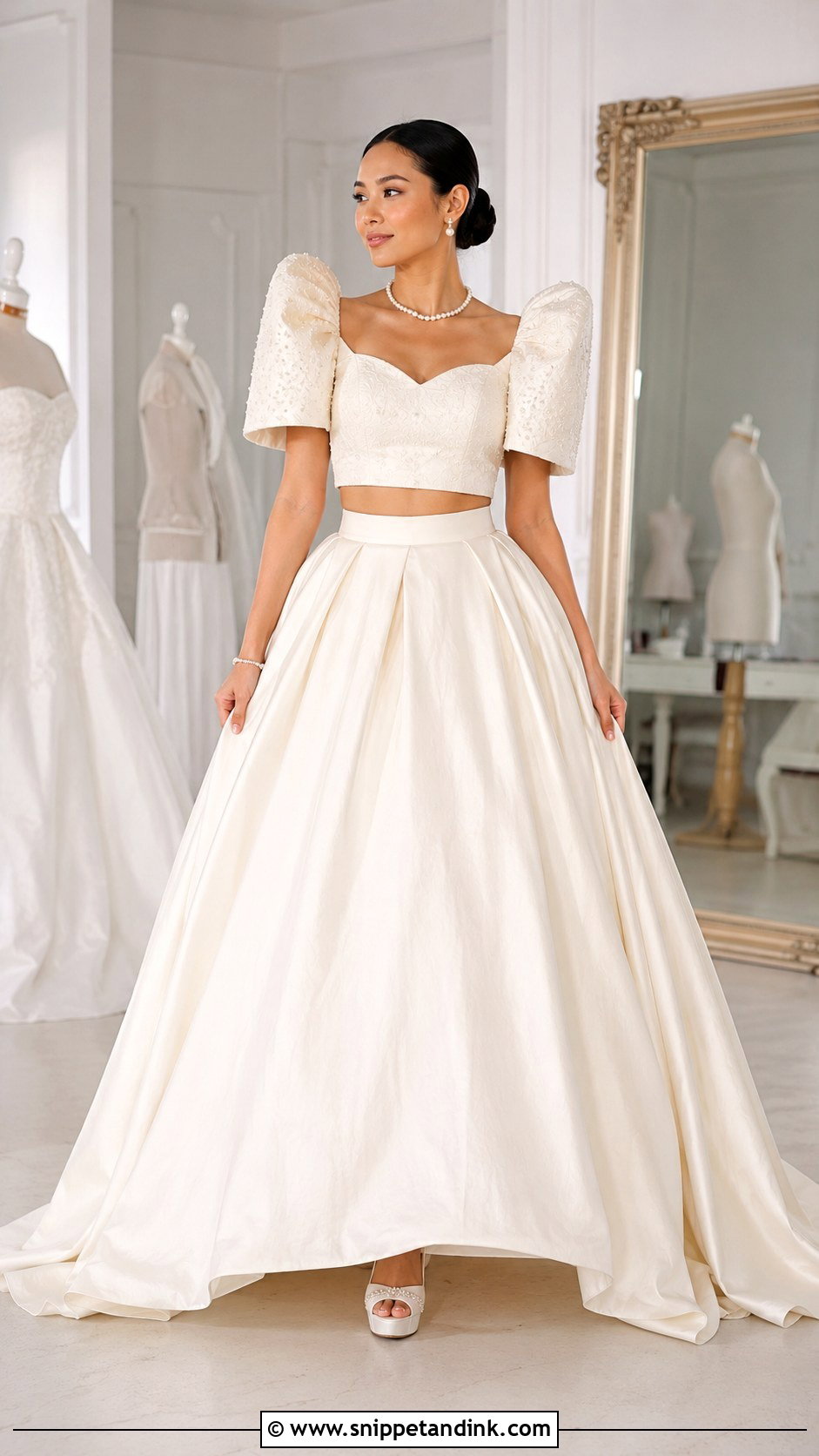
Separates feel current while still honoring the traditional shape. A cropped terno top with butterfly sleeves over a high-waisted ball skirt, or a longer embroidered blouse with a sleek skirt. It suits brides with different sizes above and below the waist, and you may rewear the top later. Matching fabrics read formal; piña sleeves with a satin skirt give soft contrast. Pearls, bridal heels and a clean hairstyle keep it polished. Have the waist tailored so the gap between top and skirt stays consistent when you lift your arms.
22. Filipiniana Wedding Gown With Overskirt
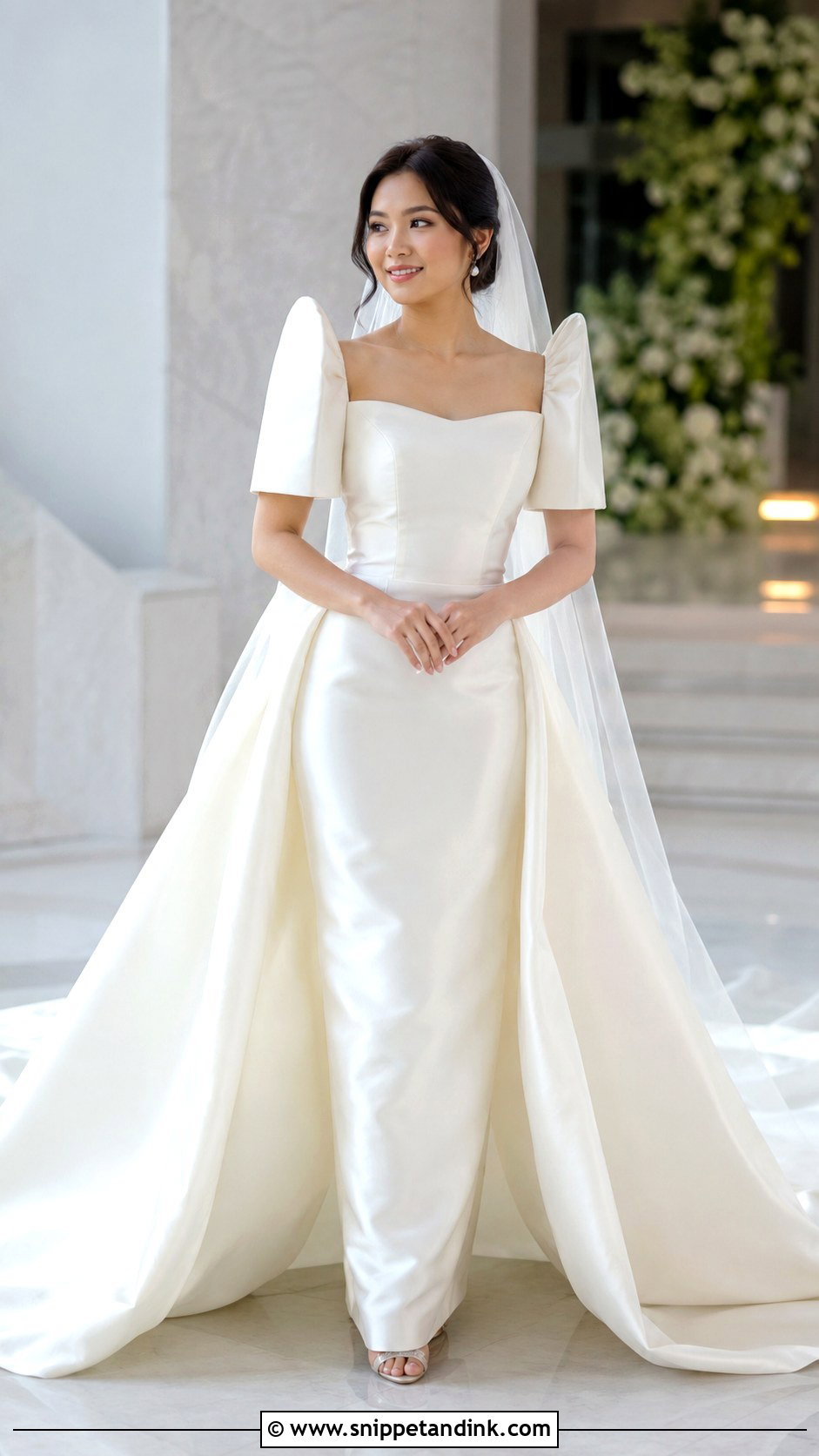
An overskirt turns a slim column or mermaid into a full ball gown for the ceremony, then comes off for the reception. Butterfly sleeves balance the volume below. Organza, tulle, piña-style fabric or embroidered lace, with the waist fastening hidden so the join doesn’t show. Simple earrings, a classic veil and comfortable heels. Practice taking it off with whoever will help you on the day. Most overskirts fasten with hooks or snaps, and doing it quickly in a bathroom is harder than at a fitting.
23. Filipiniana Sheath Wedding Gown
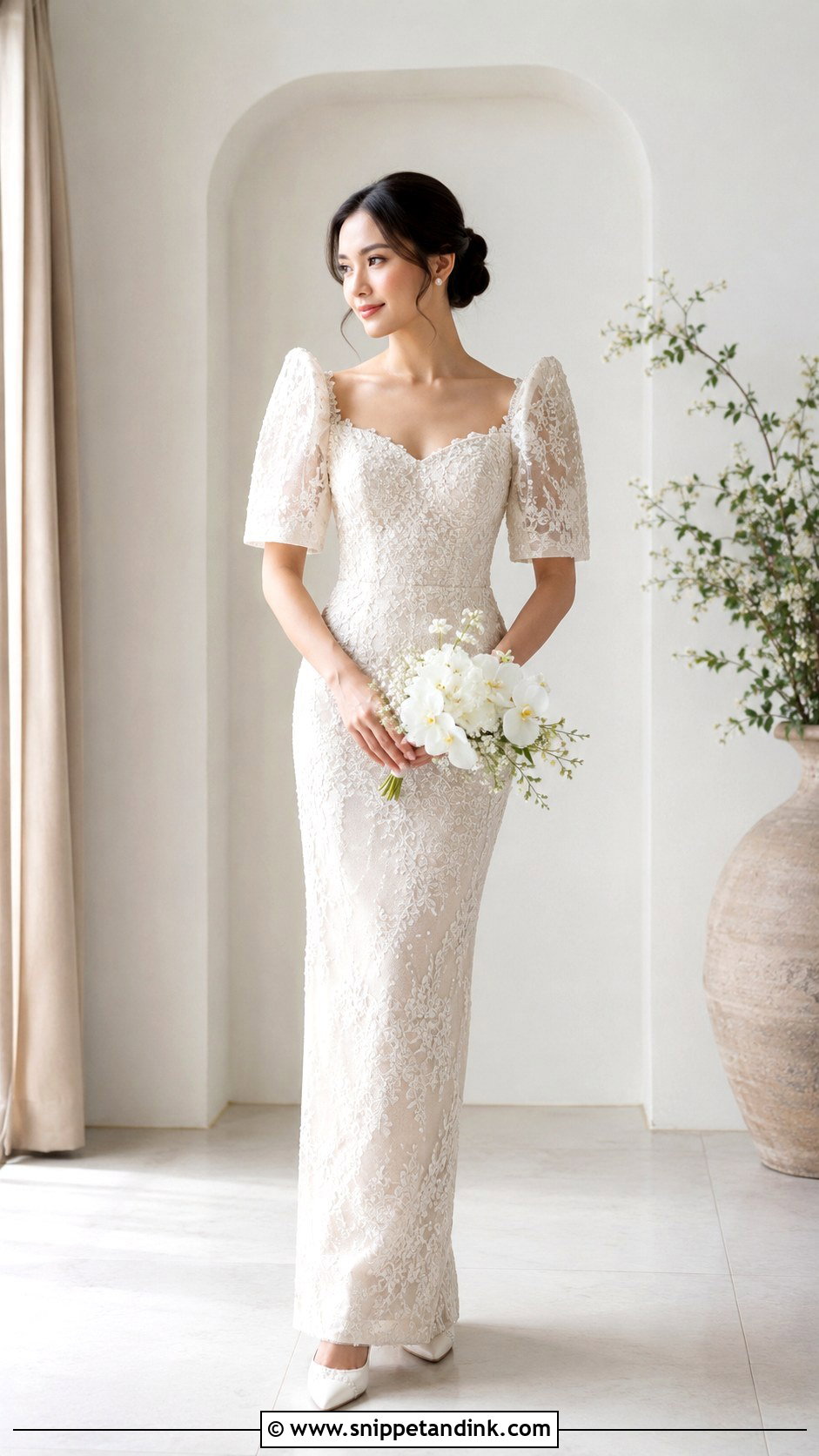
Clean lines and no flare define a Filipiniana sheath wedding gown. Butterfly sleeves give the top structure while embroidery or lace softens the whole. On a petite bride it lengthens the frame without adding volume. Crepe, silk or a jusi overlay moves smoothly. Pointed heels, pearl studs and a low bun. A sheath shows the line of everything underneath, so I fit it with the actual shapewear you’ll wear, and ask for a walking slit if the skirt is narrow.
24. Champagne Filipiniana Wedding Gown
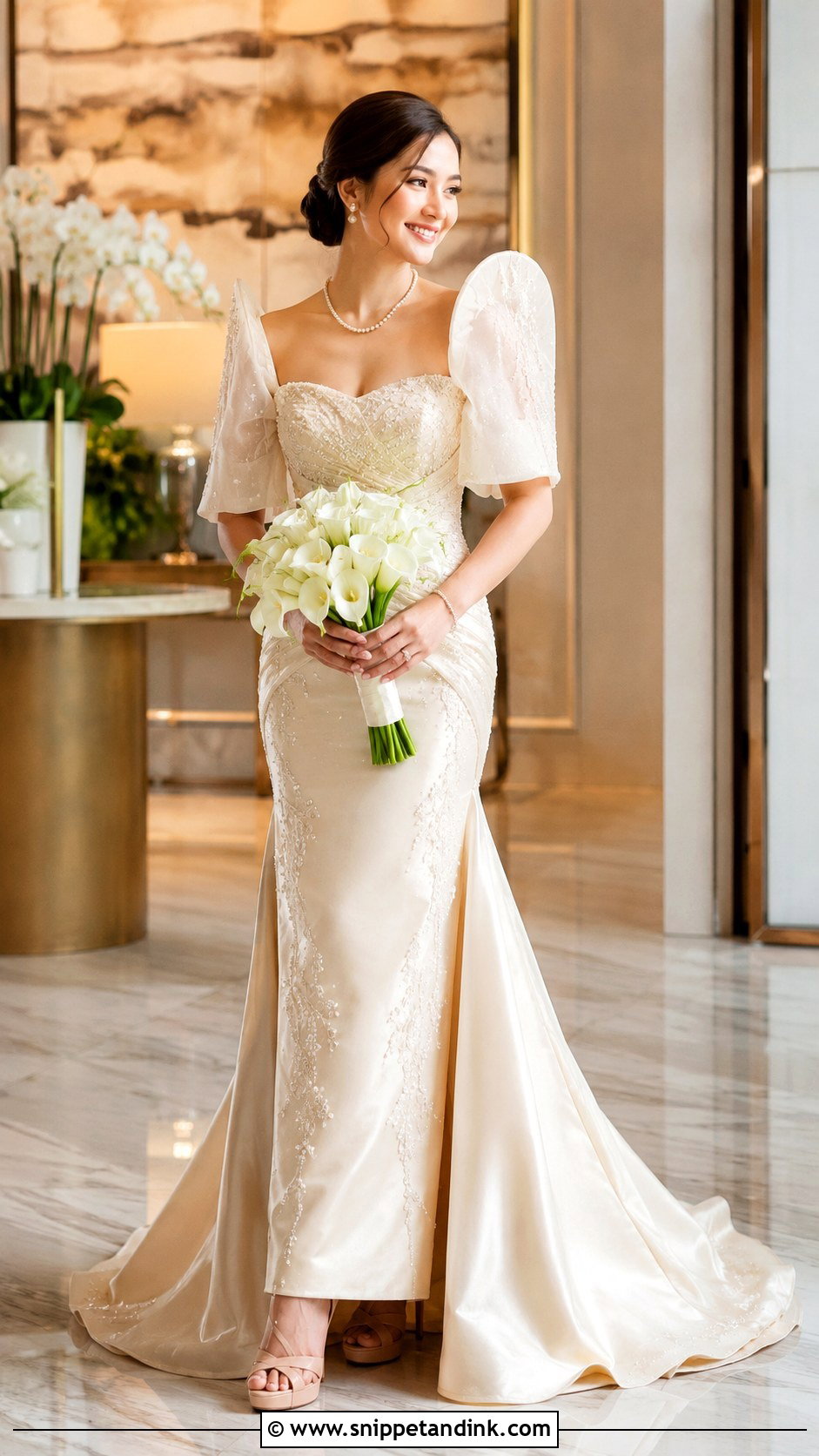
Champagne is a warm alternative to white or ivory and suits many skin tones, especially with piña-style fabric, lace appliqué, beading or satin. Butterfly sleeves in champagne organza stay delicate and still hold structure. Pearl, gold or clear crystal accessories, nude heels and soft makeup. The shade varies a lot between fabrics. A champagne satin and a champagne organza can look like two colors side by side, so I’d see all the pieces together in daylight before ordering.


25. Blush Filipiniana Wedding Gown
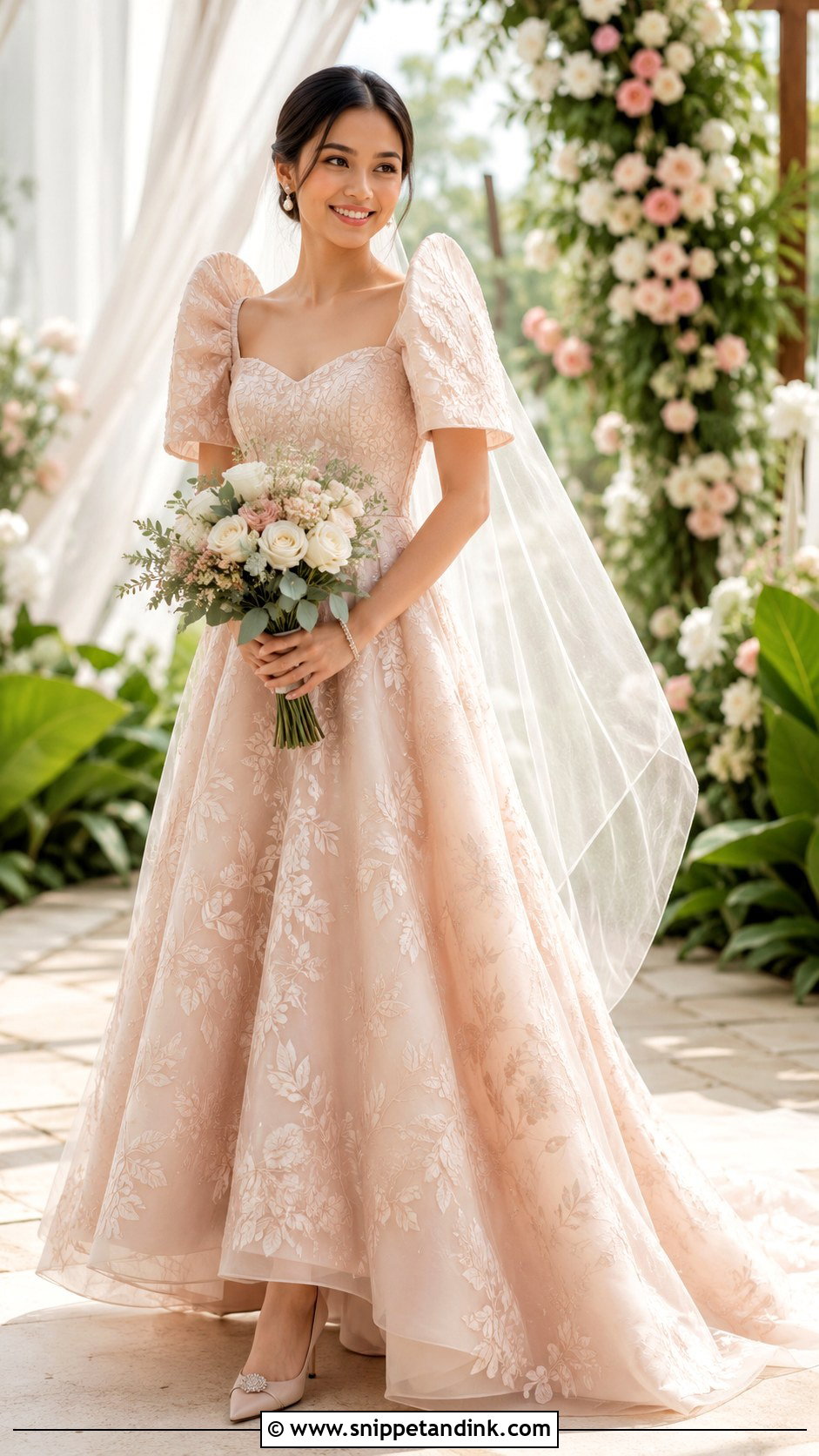
Blush gives a soft pink twist that still reads bridal. It works with butterfly sleeves, lace overlays and floral embroidery. For a subtle version, put blush lining under an ivory gown; for a stronger one, use blush tulle, organza or satin throughout. Pearl earrings, rose-gold accents and soft makeup suit it. Keep the shape refined, such as an A-line, ball gown or fitted terno, for garden weddings and spring dates. Blush lining under sheer piña can look peach depending on the fiber’s natural tone, so test it as a sample first.
Commissioning a Terno From Overseas
Many brides commission their gown from a designer in the Philippines while living abroad. It can work very well, but it needs more time and clearer communication than buying locally. I’d give a custom terno with handwoven fabric and hand embroidery a generous lead time of several months, and more if you want a personalized motif.
Questions I’d put to the designer
- Is the fabric handwoven piña, a piña blend or machine-made jusi? This affects price, drape and care.
- How are the butterfly sleeves built, and will they hold their shape in heat and humidity?
- How many fittings are planned, and can one be done by video with a local seamstress measuring you?
- Is there spare fabric for alterations or repairs later?
Getting it home safely
If you’re flying with the gown, carry it on in a garment bag and ask the airline ahead of time about storage for long items. Pad the sleeves with tissue so they don’t flatten. Then book a local seamstress for a final check and steam a week or two before the wedding, since travel and climate both change how the fabric sits.
A Gown That Carries Filipino Craft Into Your Day
Filipiniana gowns carry family pride, culture and your own taste in a single dress, which is why they feel so different to wear. A Maria Clara, a clean terno, a dramatic overskirt or a short reception dress can each suit your venue and your comfort. Settle the fit first, then the fabric, sleeve shape, embroidery and accessories. Above all, you should be able to move freely and still feel the weight of what you’re wearing in the best sense.
You'll Like These Ideas:


Leave a Reply