
A Realistic Gown Timeline, From First Appointment to Final Fitting
The most common stress I see isn’t about which gown. It’s about time. Many bridal gowns are made to order after you choose them, and production alone often takes several months, before alterations start. Lead times vary by designer and season, so ask at the first appointment, but this is roughly how I’d plan it.
- Nine to twelve months out: start trying on. Try several silhouettes even if you think you know your shape.
- Seven to nine months out: order. Leave room for delivery delays, which happen more than shops admit.
- Two to three months out: first alteration fitting. Bring the actual shoes and the underwear you’ll wear.
- Four to six weeks out: second fitting, plus the bustle and how the veil sits.
- One to two weeks out: final fitting. Bring whoever will dress you on the morning so they can learn the fastenings.
Off-the-rack and sample gowns skip the production wait, which is useful if the date is close. You’ll still need time for alterations, and samples may need cleaning or small repairs first.
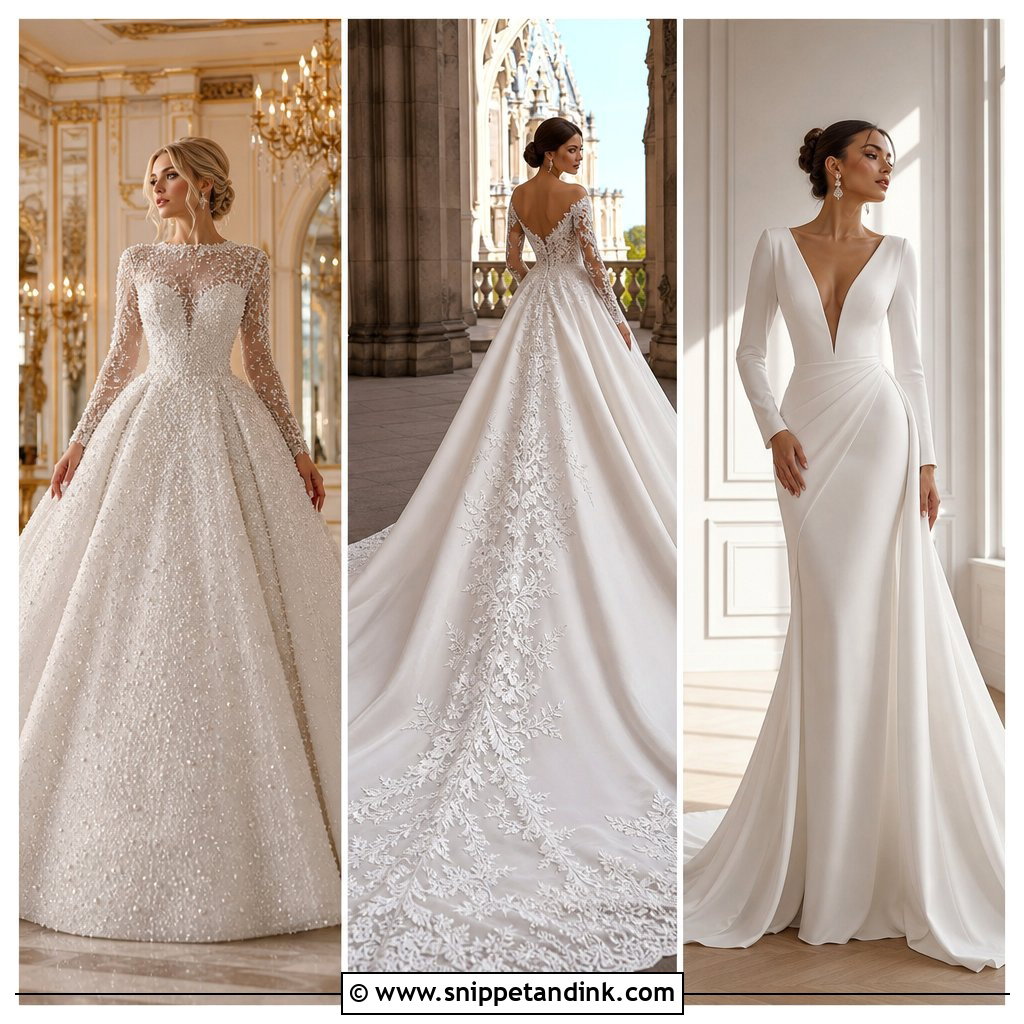
1. Satin Ball Gown for Bride
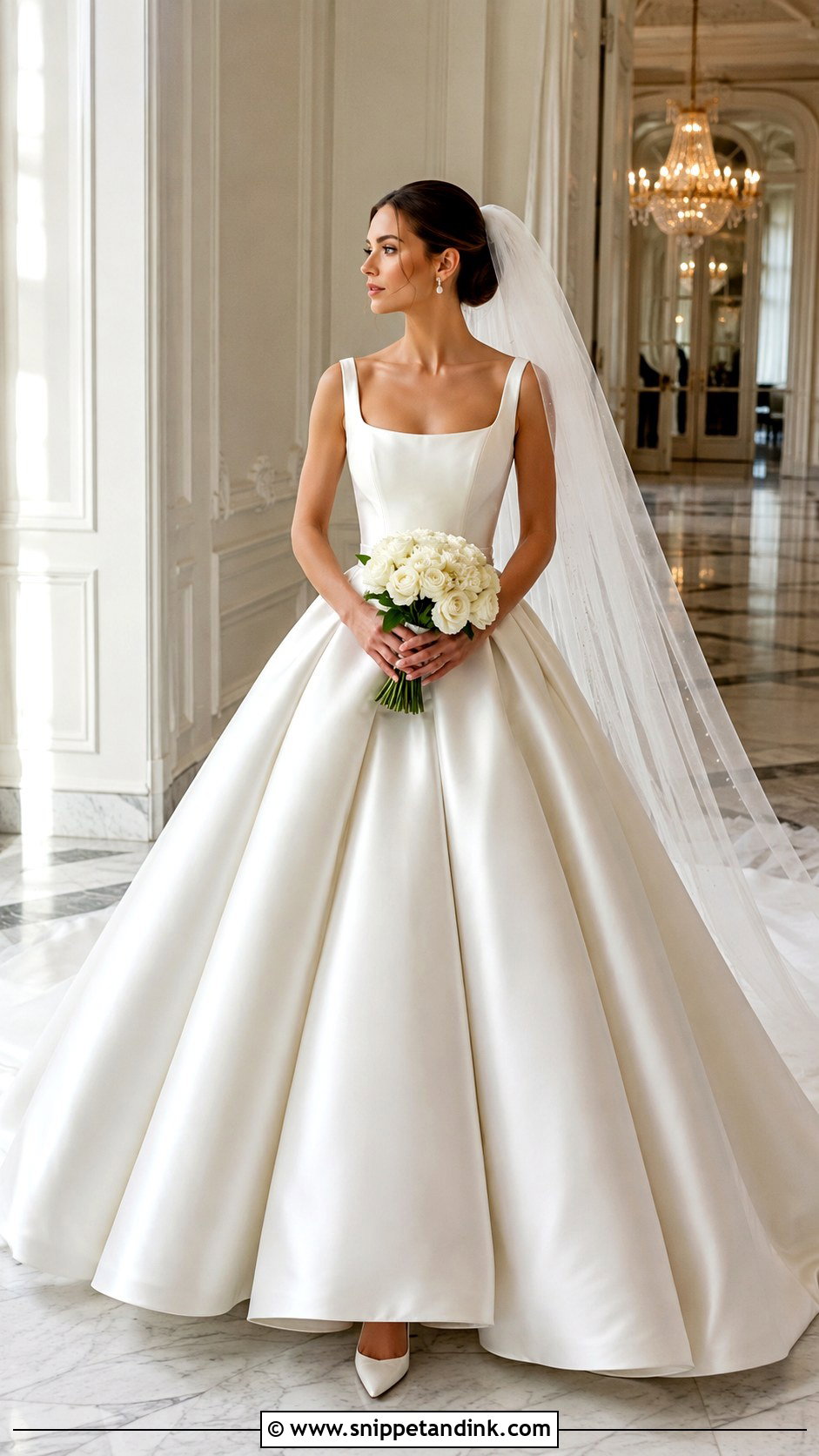
Satin ball gowns depend on structure. The bodice carries the weight of the skirt, so I check that the waist seam sits at your natural waist and doesn’t ride up when you lift your arms. A strapless, square or off-shoulder neckline balances that much skirt better than a high neck. Ivory or soft white satin has a rich sheen under hotel and ballroom lighting, and it needs very little decoration. Pearl earrings, a long veil and pointed satin pumps. Keep the hair smooth so it doesn’t fight with the clean lines of the fabric.
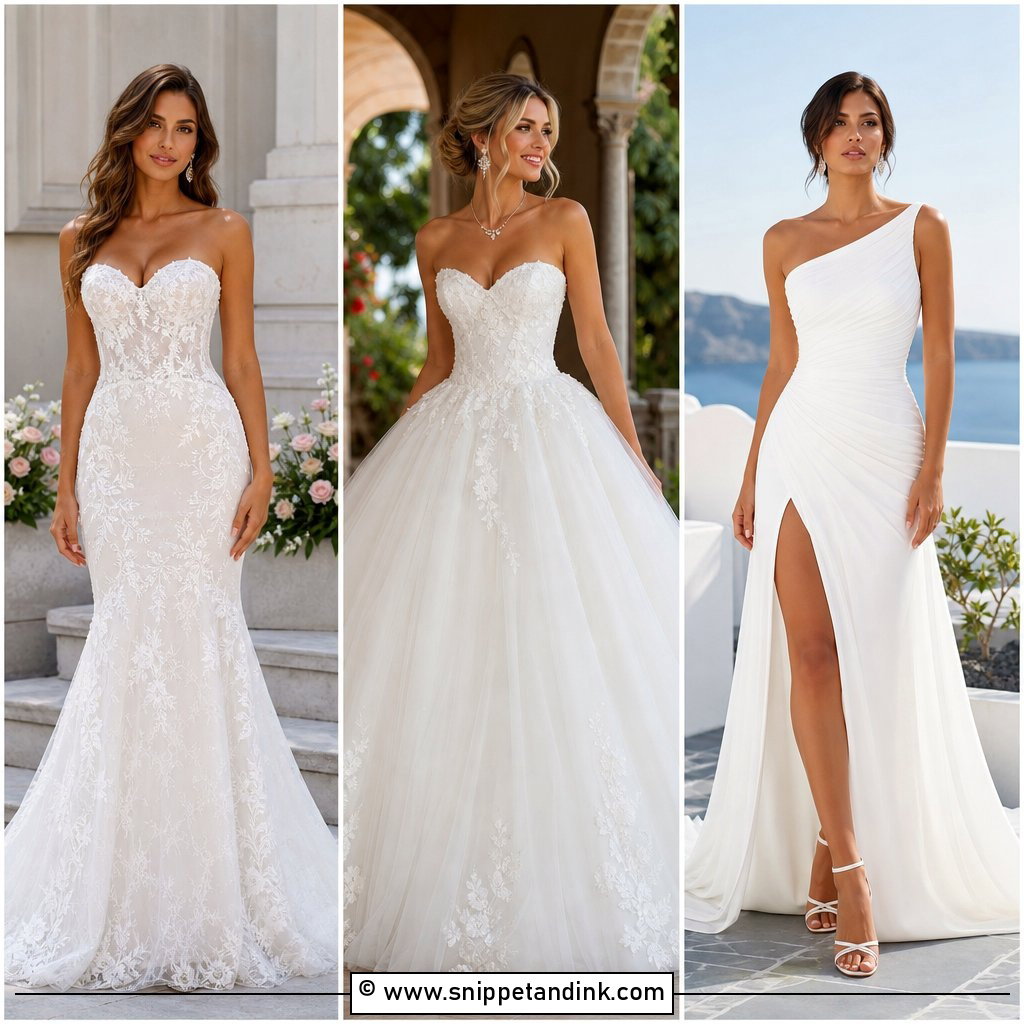
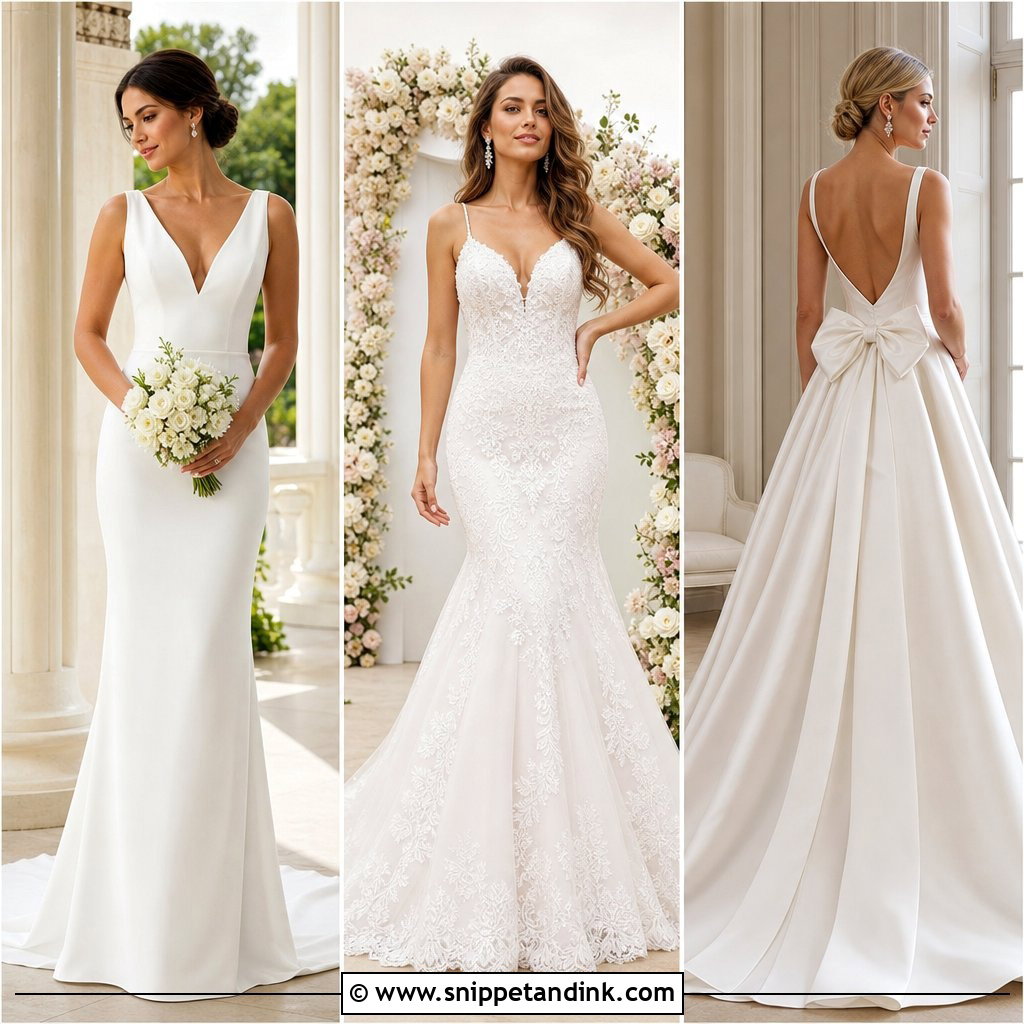
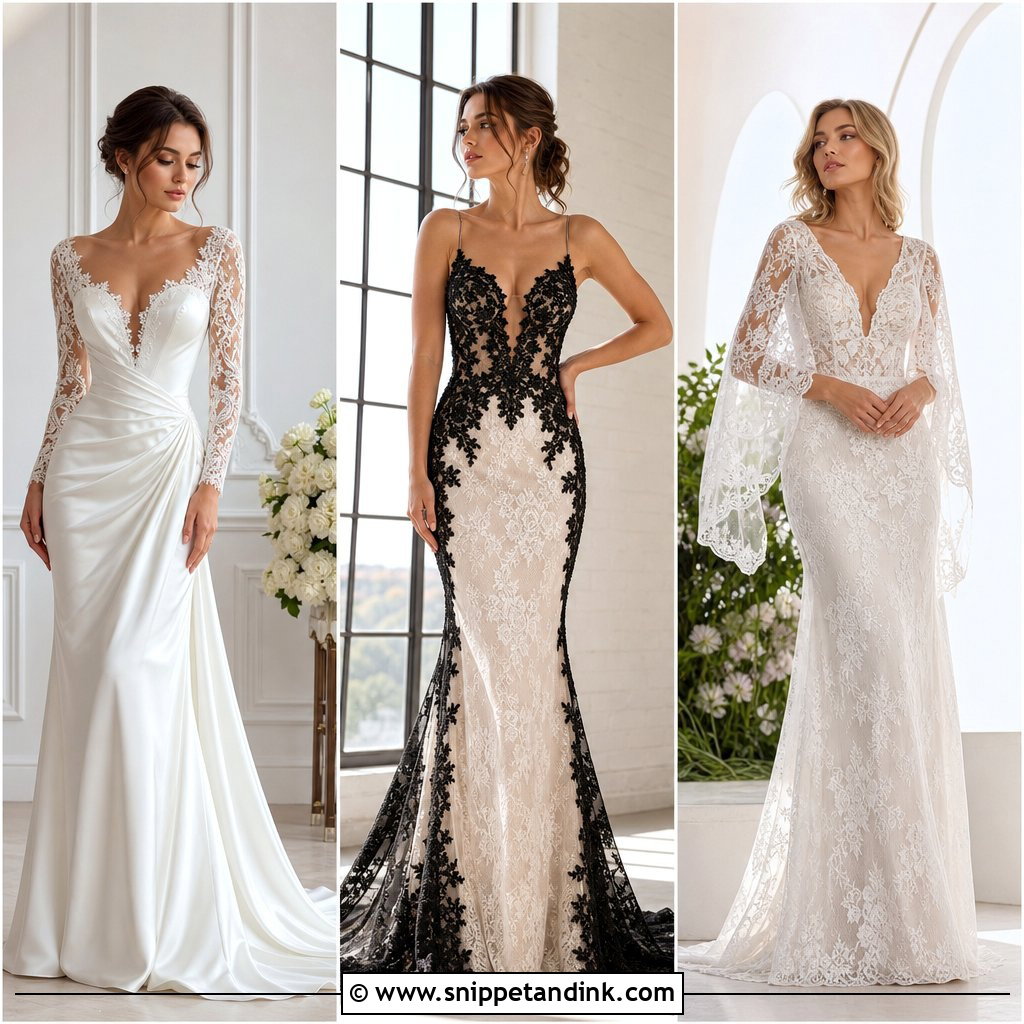
2. Lace Mermaid Gown for Bride
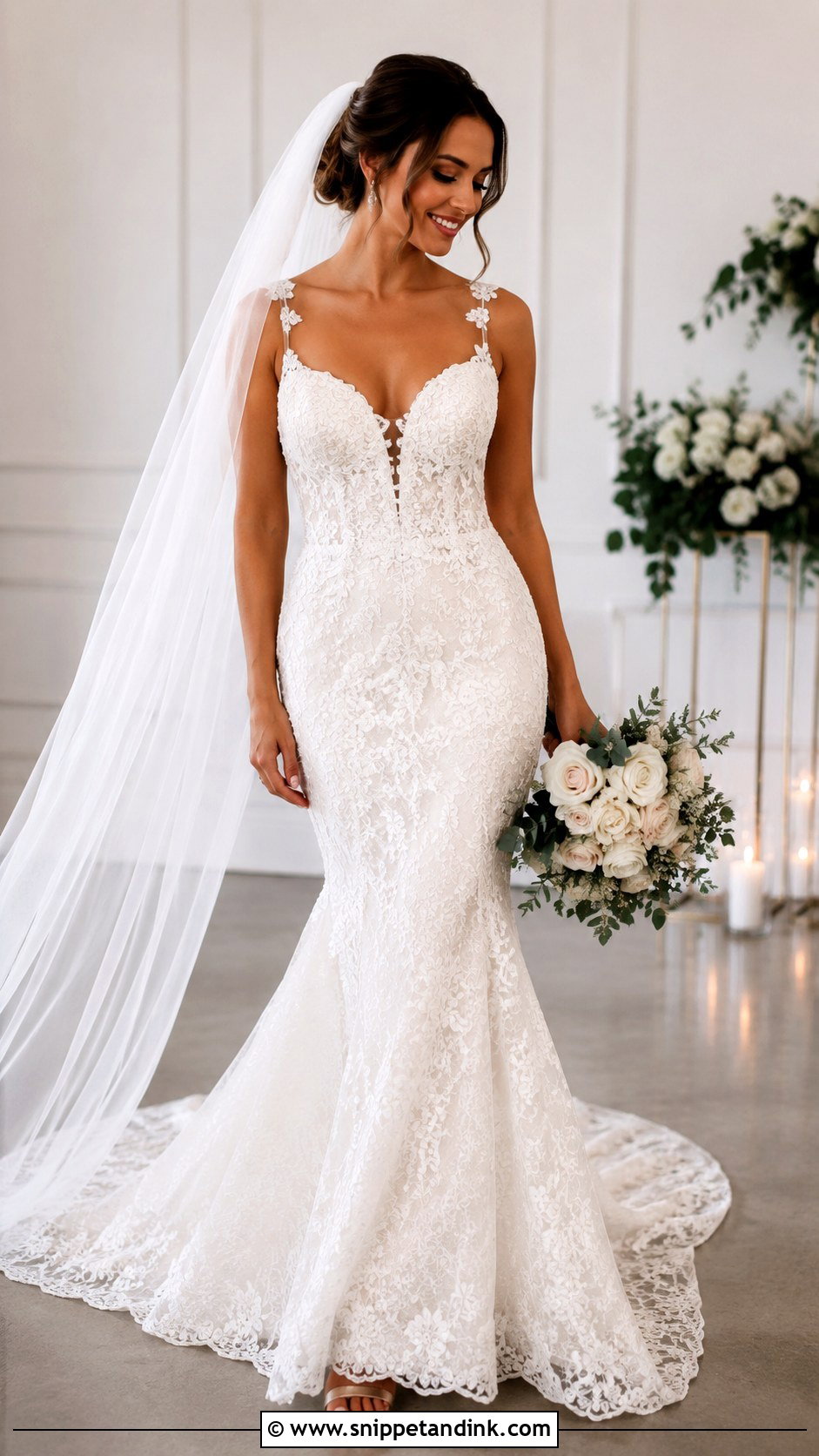
A lace mermaid fits through bodice, waist and hips and flares near the knee. It’s the shape I’m most careful to test in motion. Walk, sit, take a step up. If any of those is a struggle, the flare point can usually be lowered by your seamstress. Floral lace with scalloped edges and a modest train keeps it classic. Drop earrings, a sheer veil and heeled sandals or pumps. A low bun or side-parted waves follow the line; a huge bouquet hides it, so go medium.
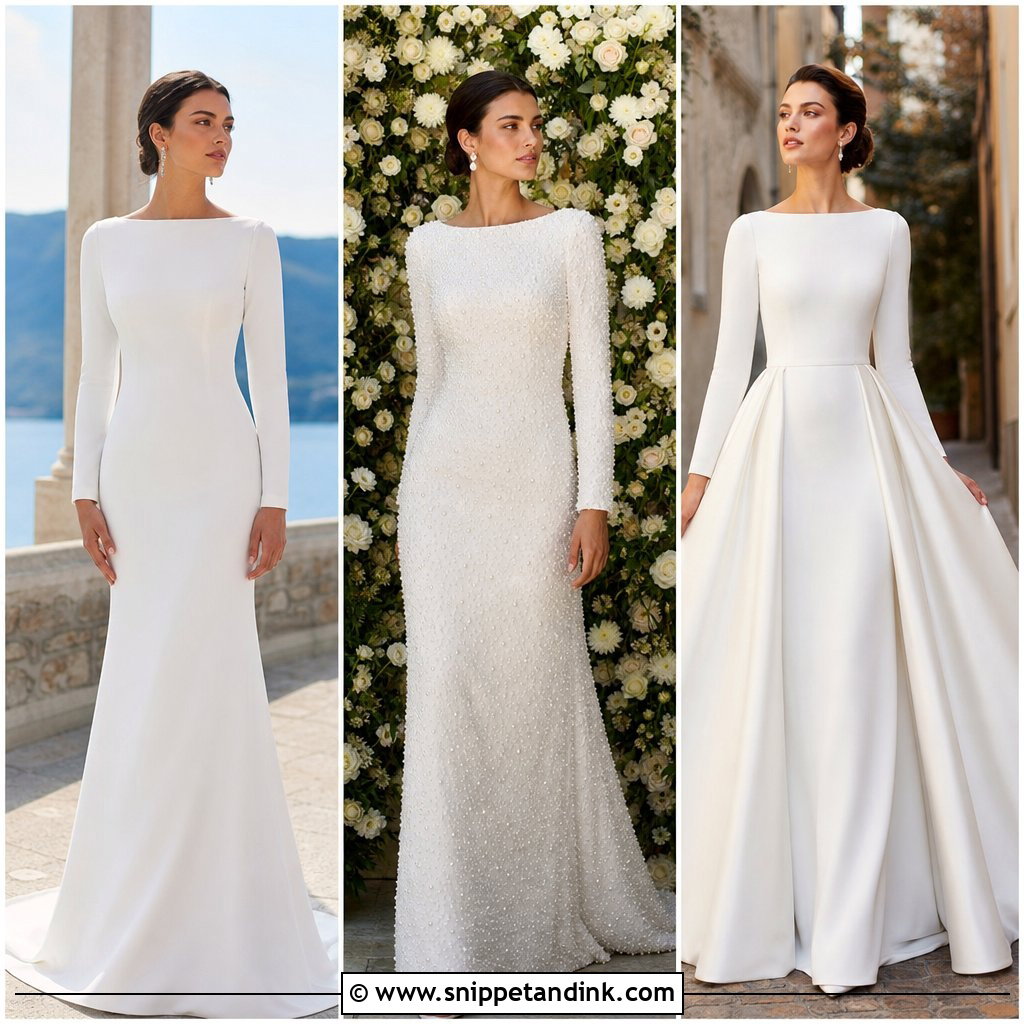
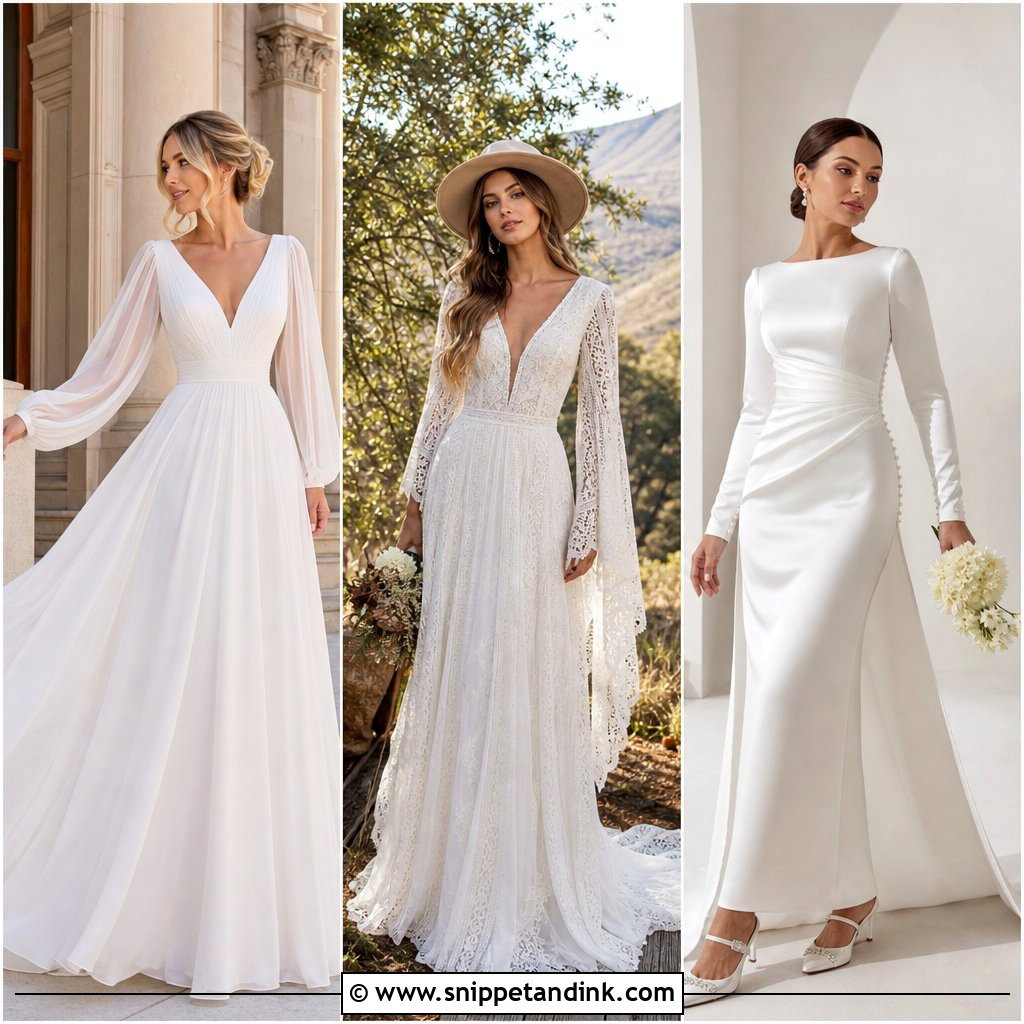
3. Long Sleeve Gown for Bride
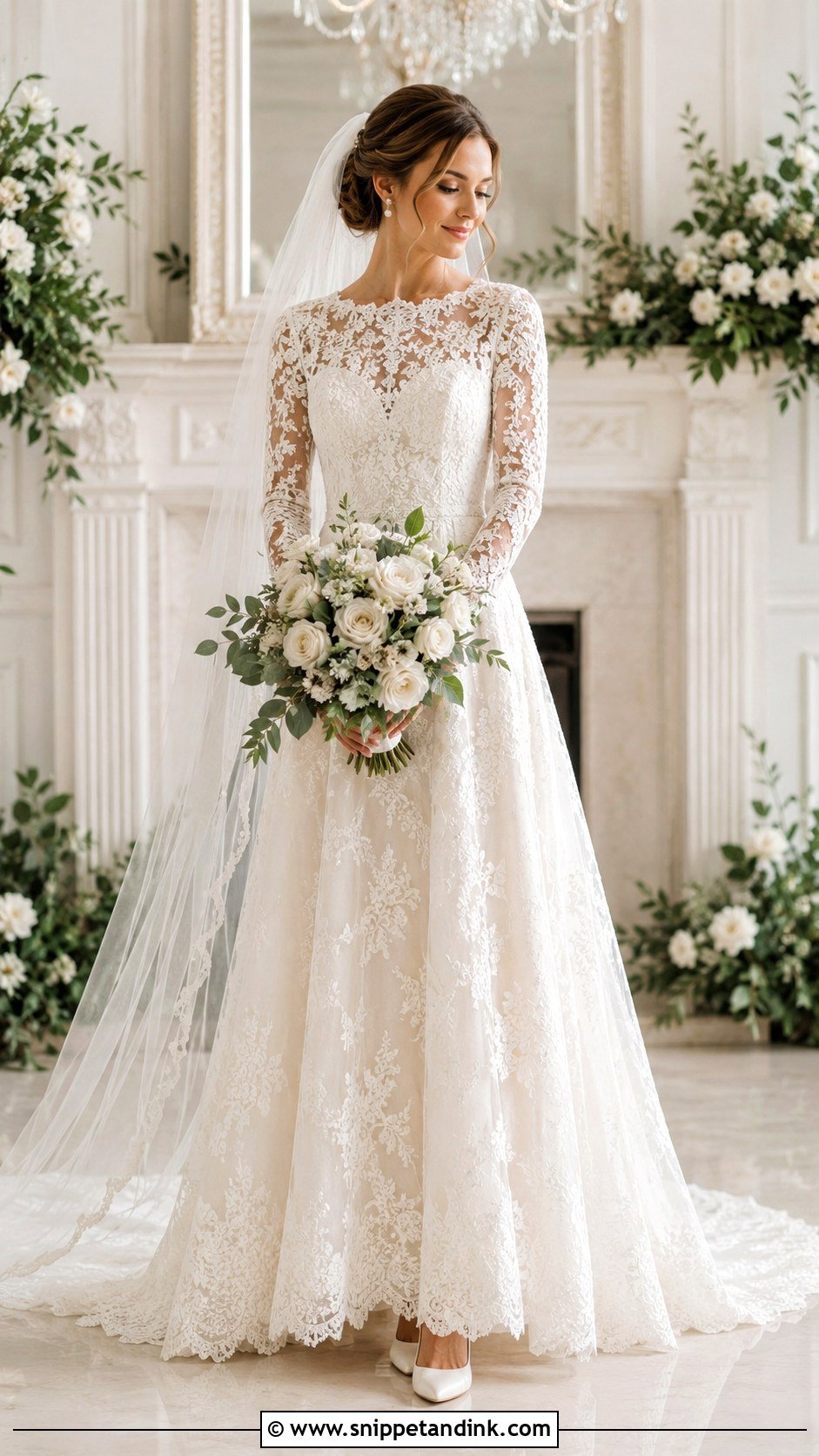
Long sleeves give coverage and a graceful line, and they’re my first suggestion for cooler months or religious ceremonies that ask for covered arms. Sheer lace is soft; satin or crepe is cleaner. A fitted bodice with an A-line skirt suits most bodies. Lift your arms right up at every fitting, since set-in sleeves can pin you down when it’s time to hug or dance. With detailed sleeves, wear pearl studs and nothing more. A soft updo keeps the neckline clear.
4. Off Shoulder Gown for Bride
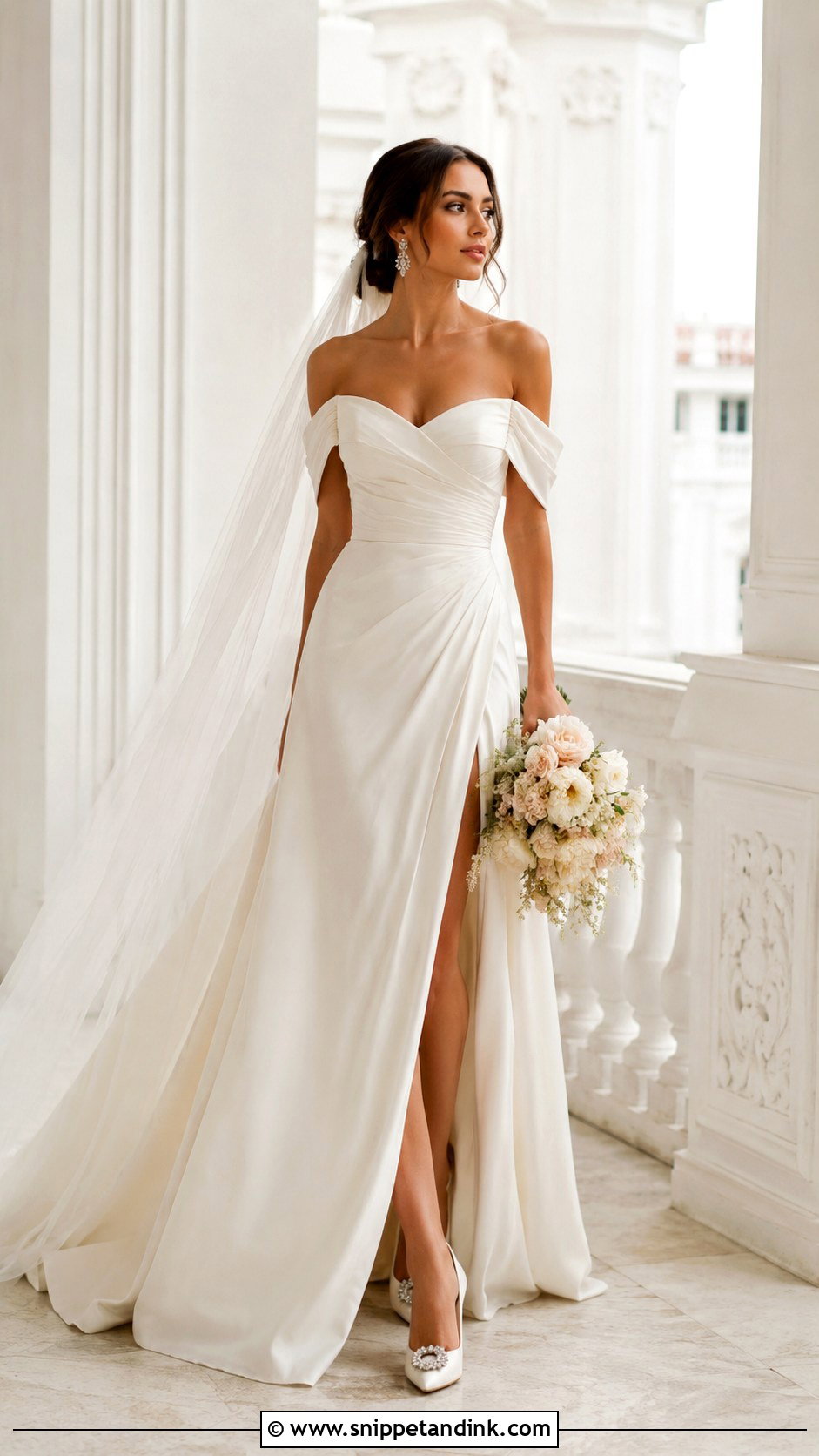
An off-shoulder neckline frames the collarbones and suits mermaid, ball gown and A-line skirts alike. Smooth satin or mikado reads classic; tulle or lace feels softer. My first question is always how it stays up. A good one has boning or a silicone grip band inside, so you aren’t pushing it back onto your shoulders all day. Either a fine necklace or statement earrings, not both. A loose bun or half-up style, pointed heels and a medium-length veil.
5. Minimalist Crepe Gown for Bride
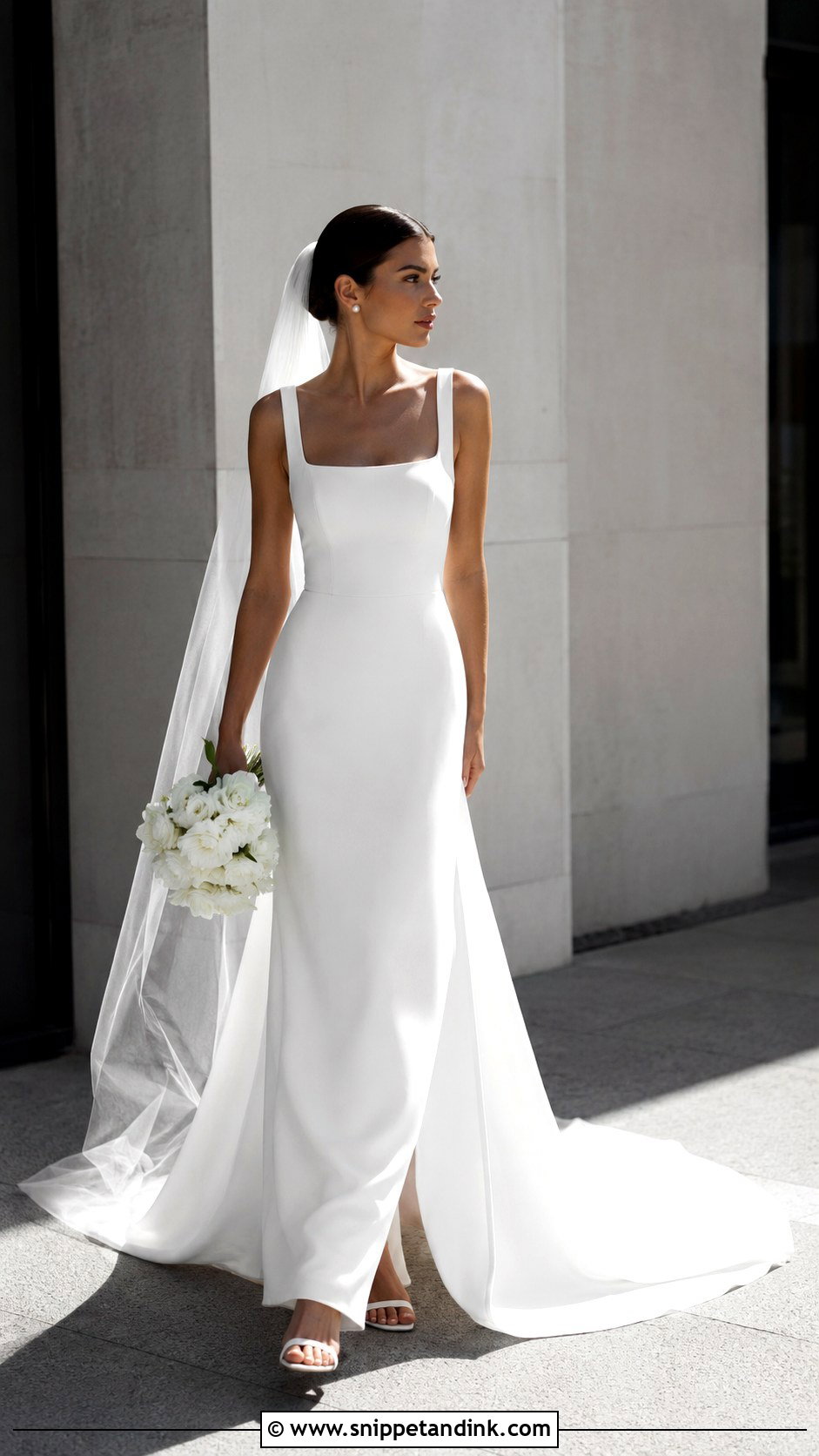
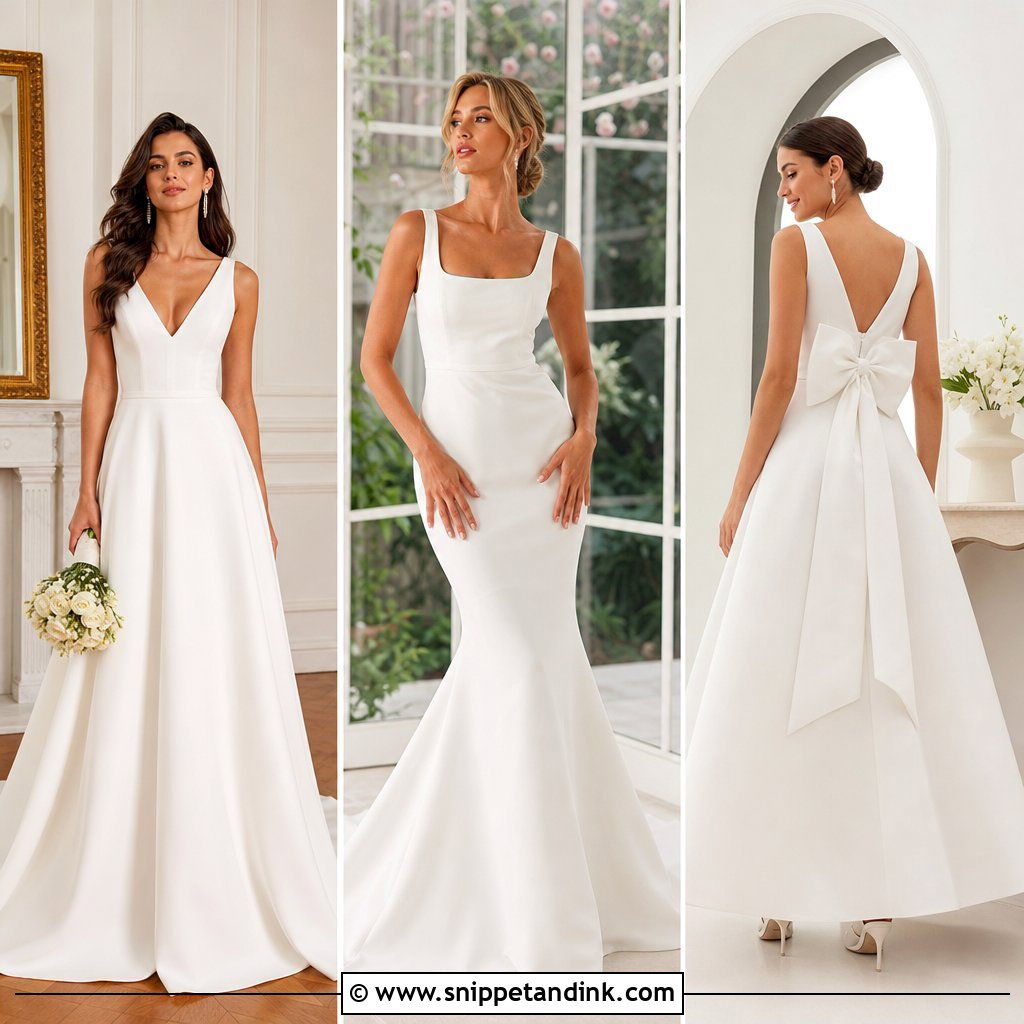
Crepe has a matte surface and a little weight, so it skims the body with no shine to distract from the cut. A square, bateau or scoop neckline gives it shape. Crepe is honest fabric, though. It shows every seam and every line underneath, so this is a gown where smooth, line-free underwear and an exact fit are essential. Sleek heels, studs and a structured veil suit city and courthouse weddings. If you want one statement, a long train or an open back is enough.
6. A Line Gown for Bride
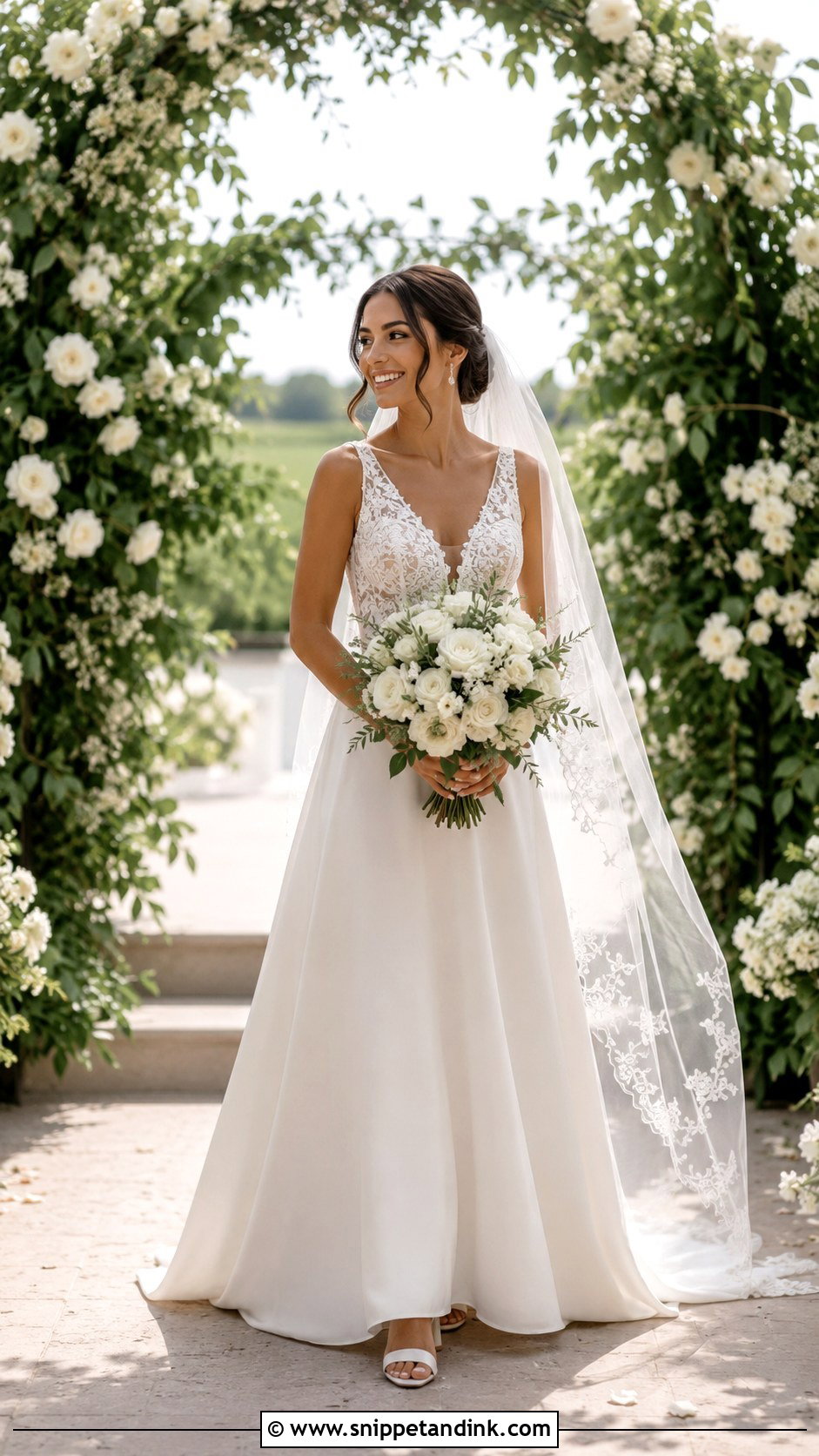
A-line is the shape I send most brides home in, because it defines the waist and then stops asking anything of you. The skirt widens gently, so walking, sitting and dancing all feel normal. Lace, satin or tulle all work. For outdoor ceremonies, I’d pair it with block heels, since the skirt hides your shoes anyway. A fingertip veil, small earrings and a loose garden bouquet. It’s the gown you forget you’re wearing, in a good way.
7. Corset Gown for Bride
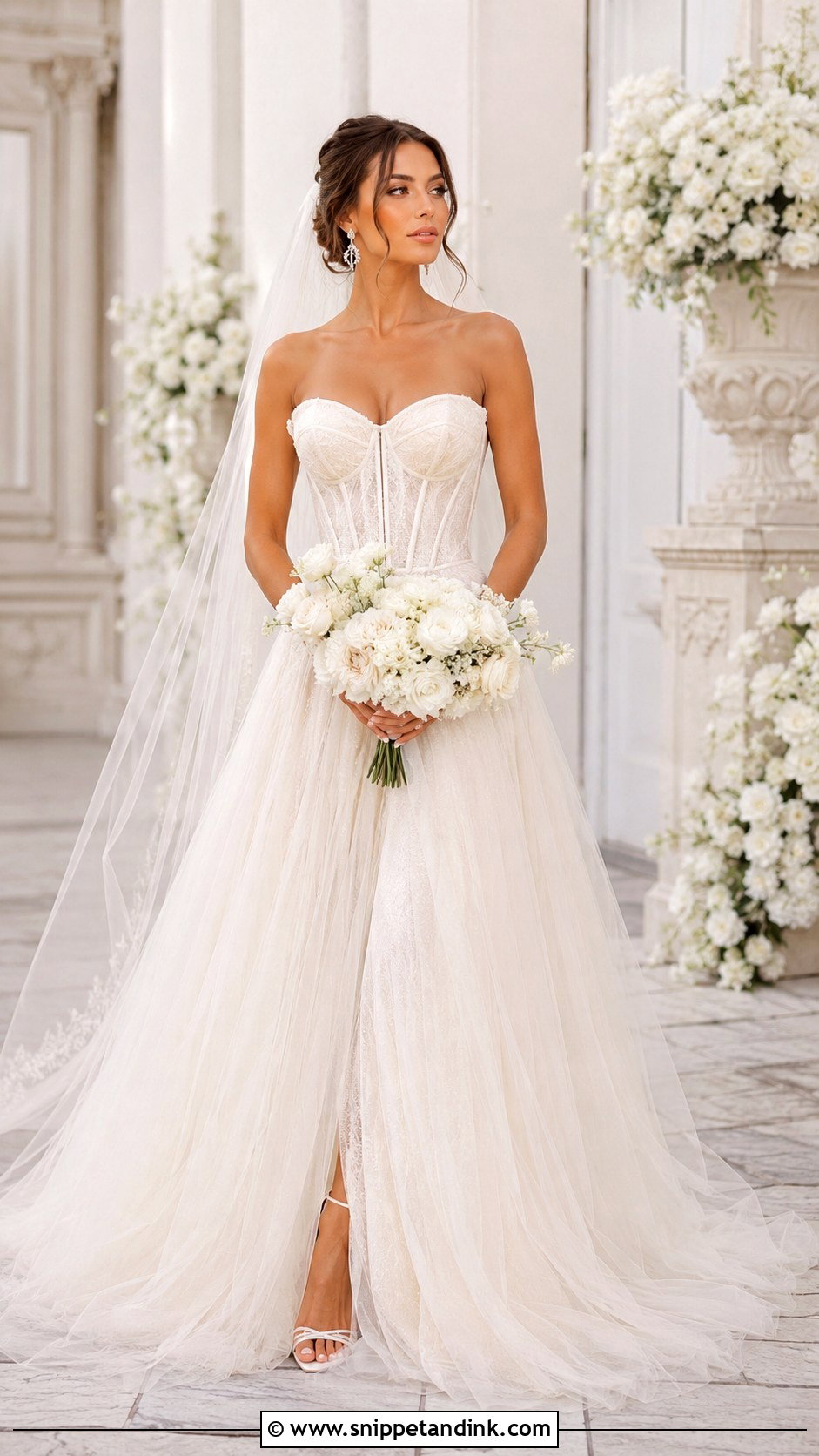
Corset gowns shape the waist through boning, and the quality of that boning decides your day. Spiral steel bends with you; cheap plastic boning can kink and dig when you sit. Press on the bodice at the fitting and sit down for a full minute. A lace corset over tulle is soft; a satin corset over a full skirt is more dramatic. Long veil, small earrings and shoes matched to the formality. If the bodice is busy, keep the bouquet calm.
8. Square Neck Gown for Bride
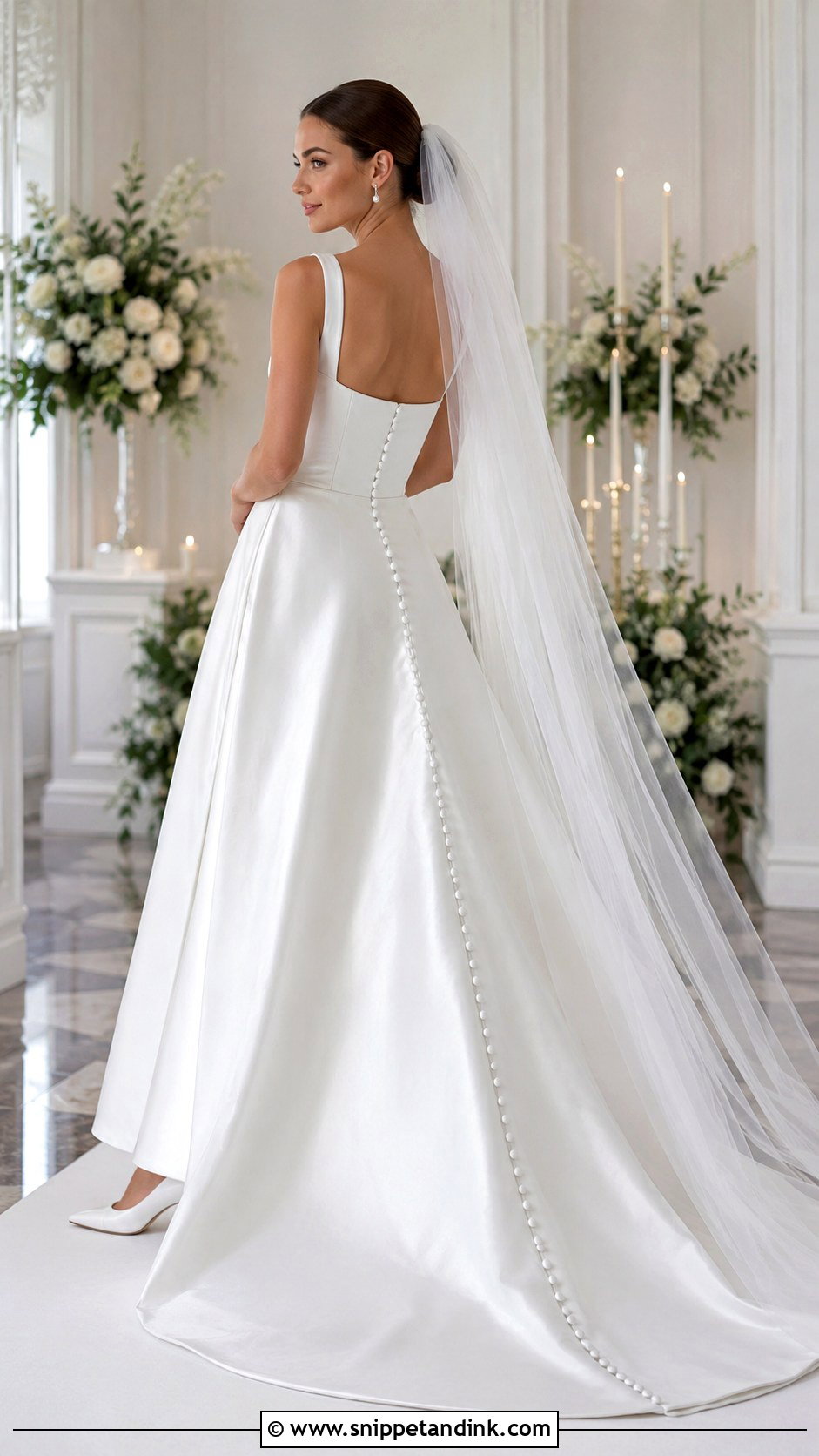
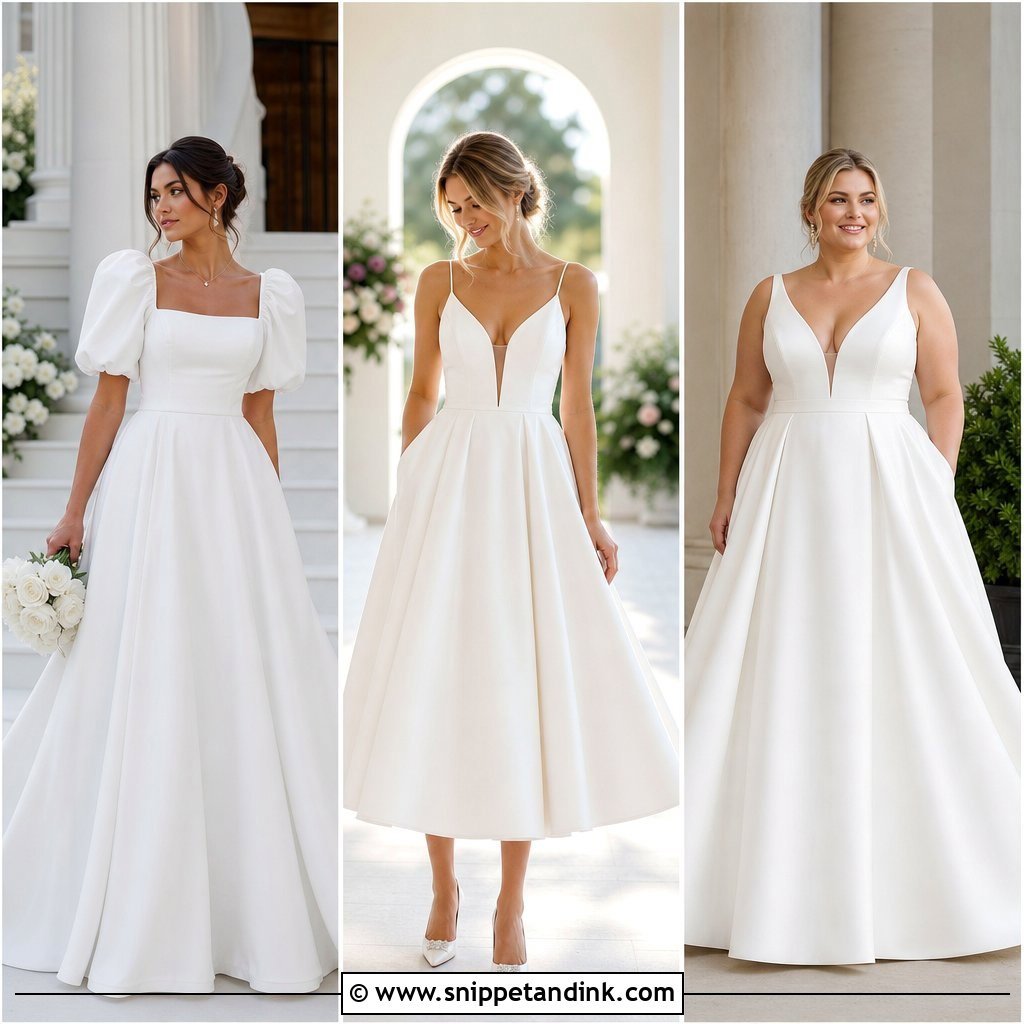
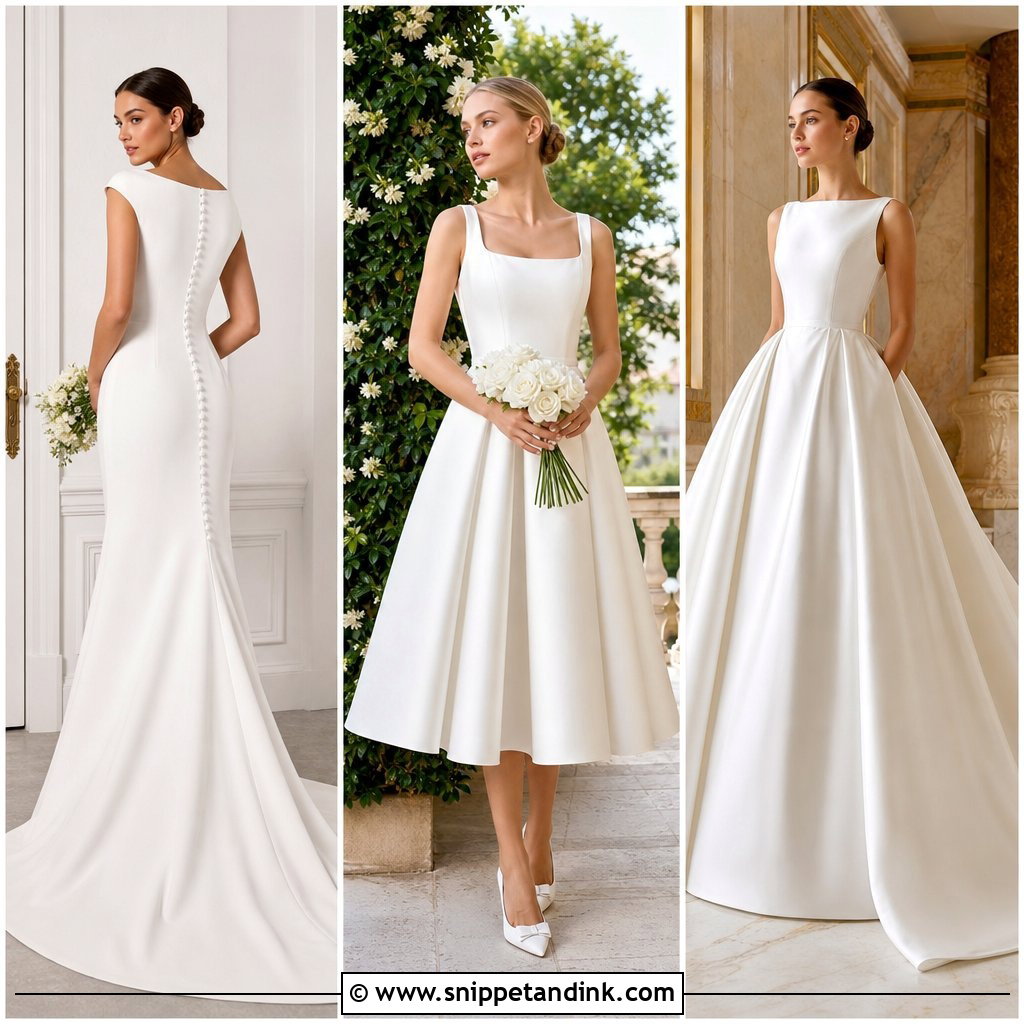
A square neck opens the chest in a straight line, so it looks structured and slightly vintage. Satin feels classic, lace more romantic. Square necklines suit broad shoulders well because the horizontal line balances them. The width matters: too wide and straps slip, too narrow and it looks pinched, so ask for it to be adjusted at the first fitting. Small pearl earrings and a smooth veil. Buttons down the back or a low back add interest without touching the front.
9. Strapless Gown for Bride
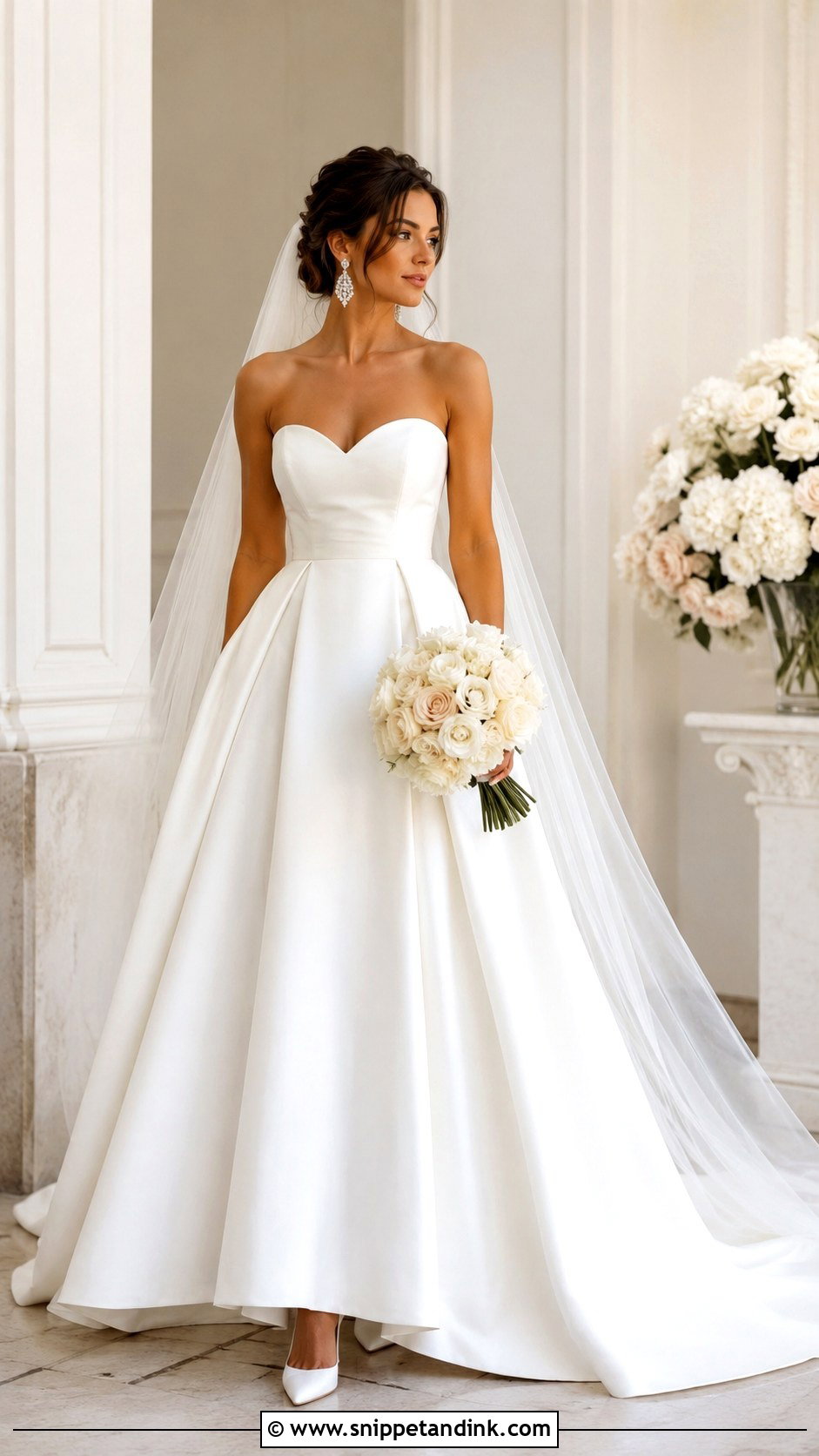
Strapless gives you the most styling freedom, which is why it stays popular. It works on ball gowns, mermaids, sheaths and A-lines. The fit must be exact at the top of the bodice, snug enough that it doesn’t move when you hug someone. A straight neckline is minimal, a sweetheart is romantic and a cat-eye neckline is more modern. A bolero, scarf or cape gives coverage for a religious ceremony. Satin pumps are a safe shoe with almost any strapless gown.
10. Floral Embroidered Gown for Bride
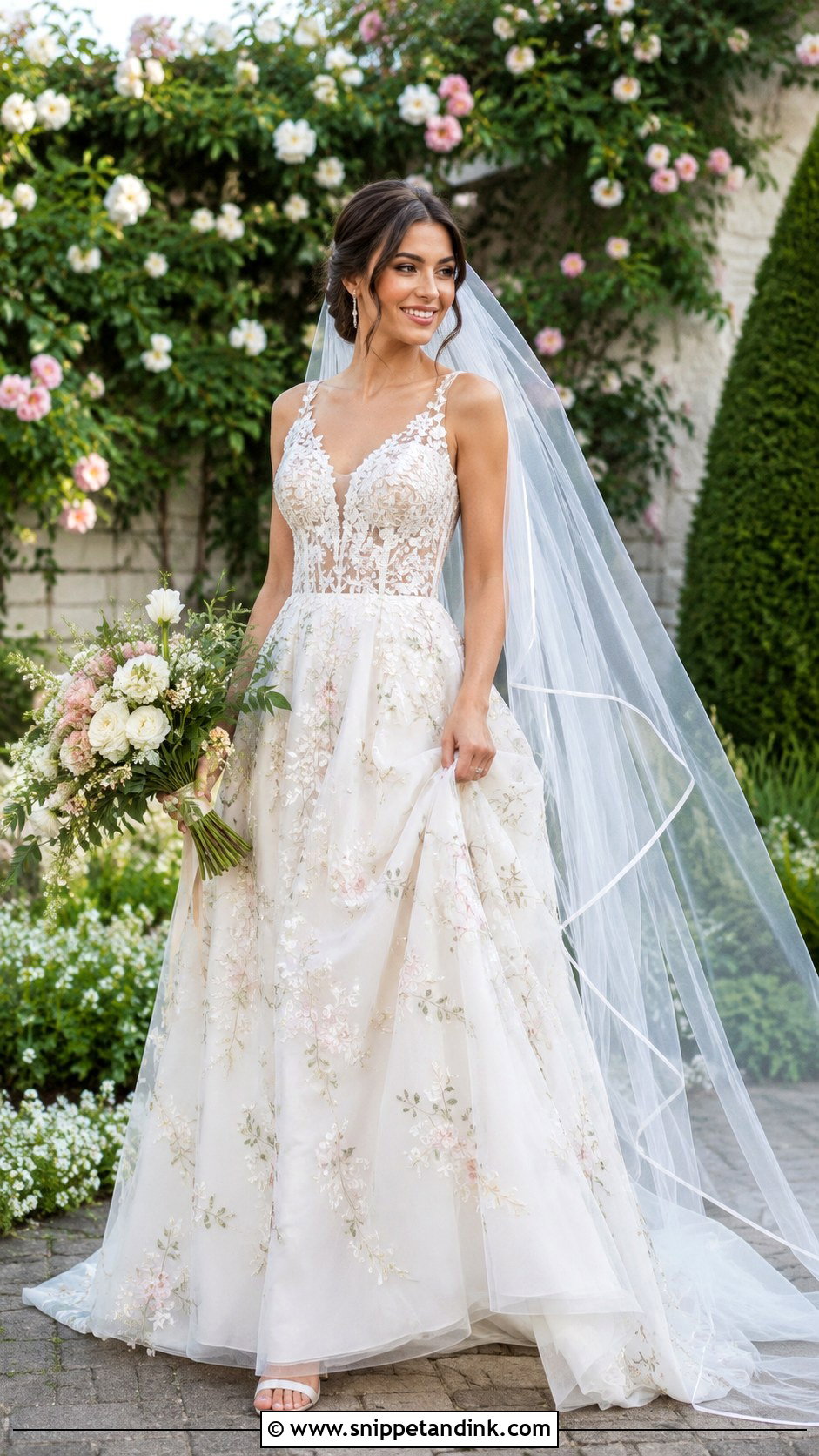
Floral embroidery adds texture and suits garden and spring weddings. Tone-on-tone thread is subtle; raised appliqué catches side light and shows up well in photos. A fitted bodice with a flowing skirt keeps it comfortable. Raised flowers catch on lace veils, so I’d choose a veil with a plain edge or matching floral trim kept sparse. Soft makeup, small earrings and light sandals or heels. A loose updo finishes it.
11. Beaded Gown for Bride
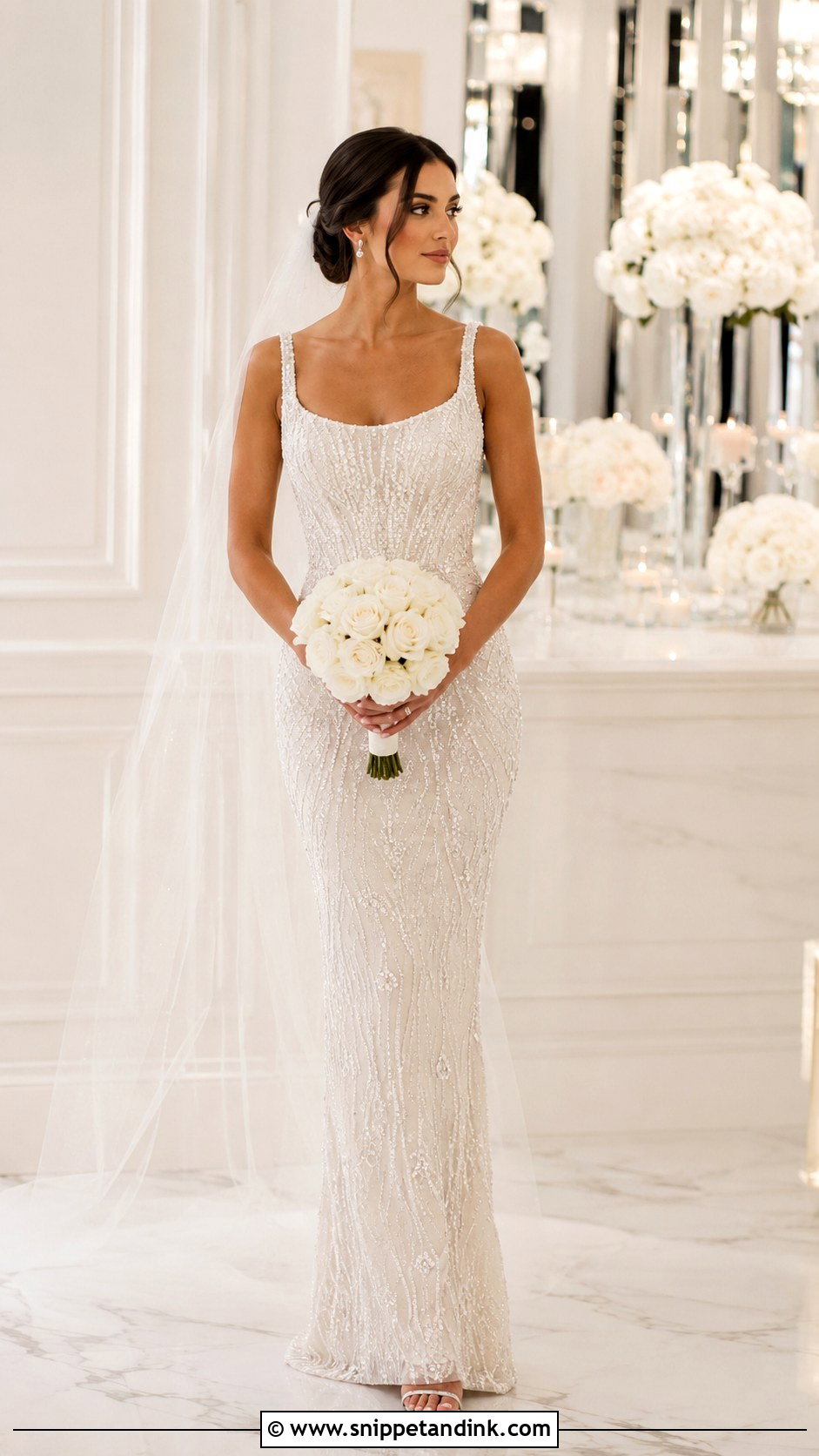
Beading catches the light as you move, which makes it best for evening and formal receptions. A fitted sheath or mermaid lets the beadwork follow the body. Heavily beaded gowns are heavy, sometimes very heavy, so check that the straps or bodice are reinforced and that the skirt doesn’t drag your shoulders down by the end of the night. Simple heels, small earrings and a soft veil. Skip chunky jewelry. A sleek bun or old-Hollywood waves.
12. Tulle Princess Gown for Bride
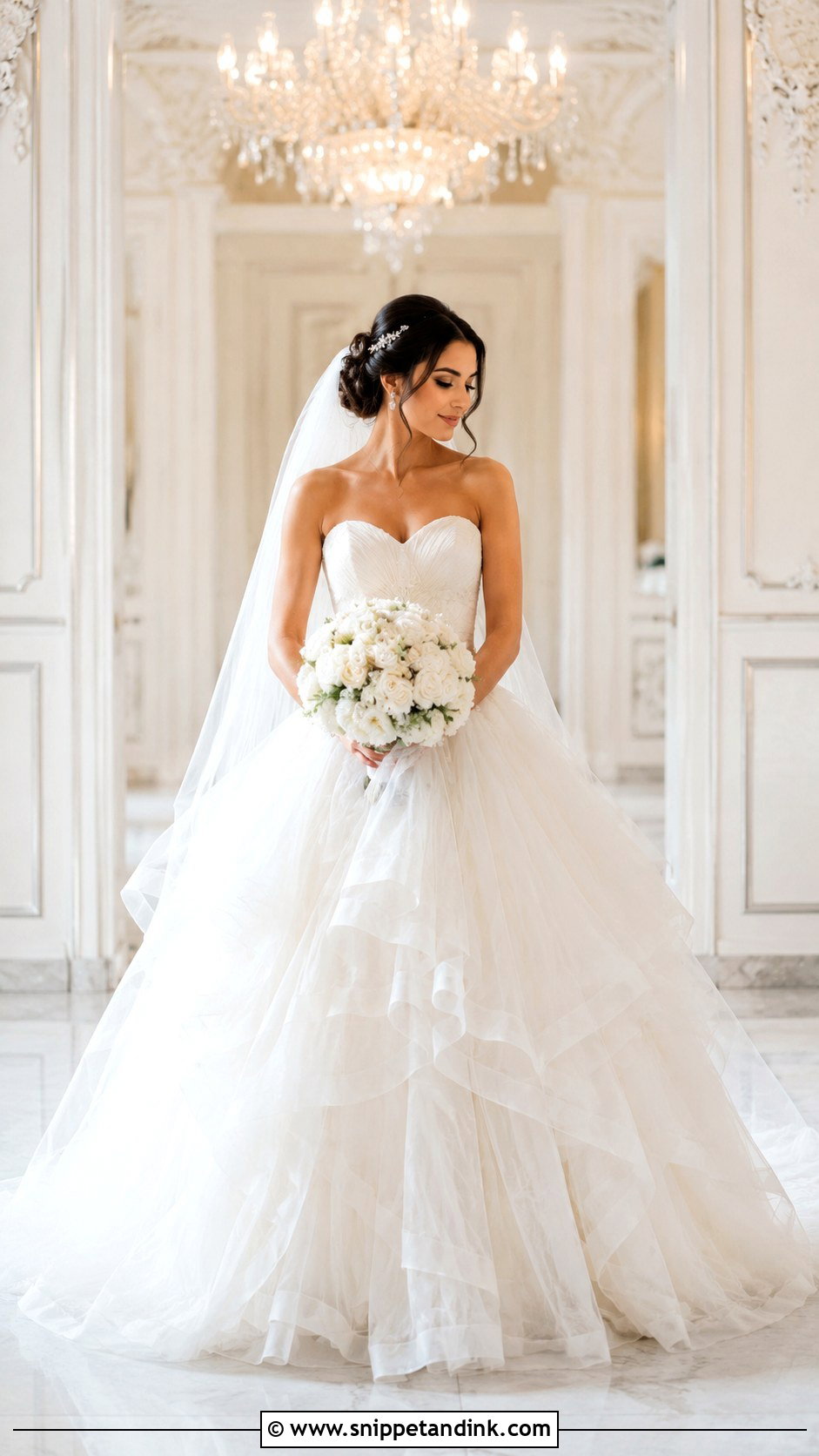
A tulle princess gown gives huge volume with less weight than satin or taffeta, so it’s easier to wear than it looks. A fitted bodice keeps the shape balanced; sweetheart, off-shoulder or illusion necklines add character. Tulle crushes when packed and needs steaming on the morning, and it snags on bracelets. A long veil, a fine tiara or pins and comfortable heels hidden under the skirt. A medium bouquet won’t compete with the volume.
13. Sheath Gown for Bride
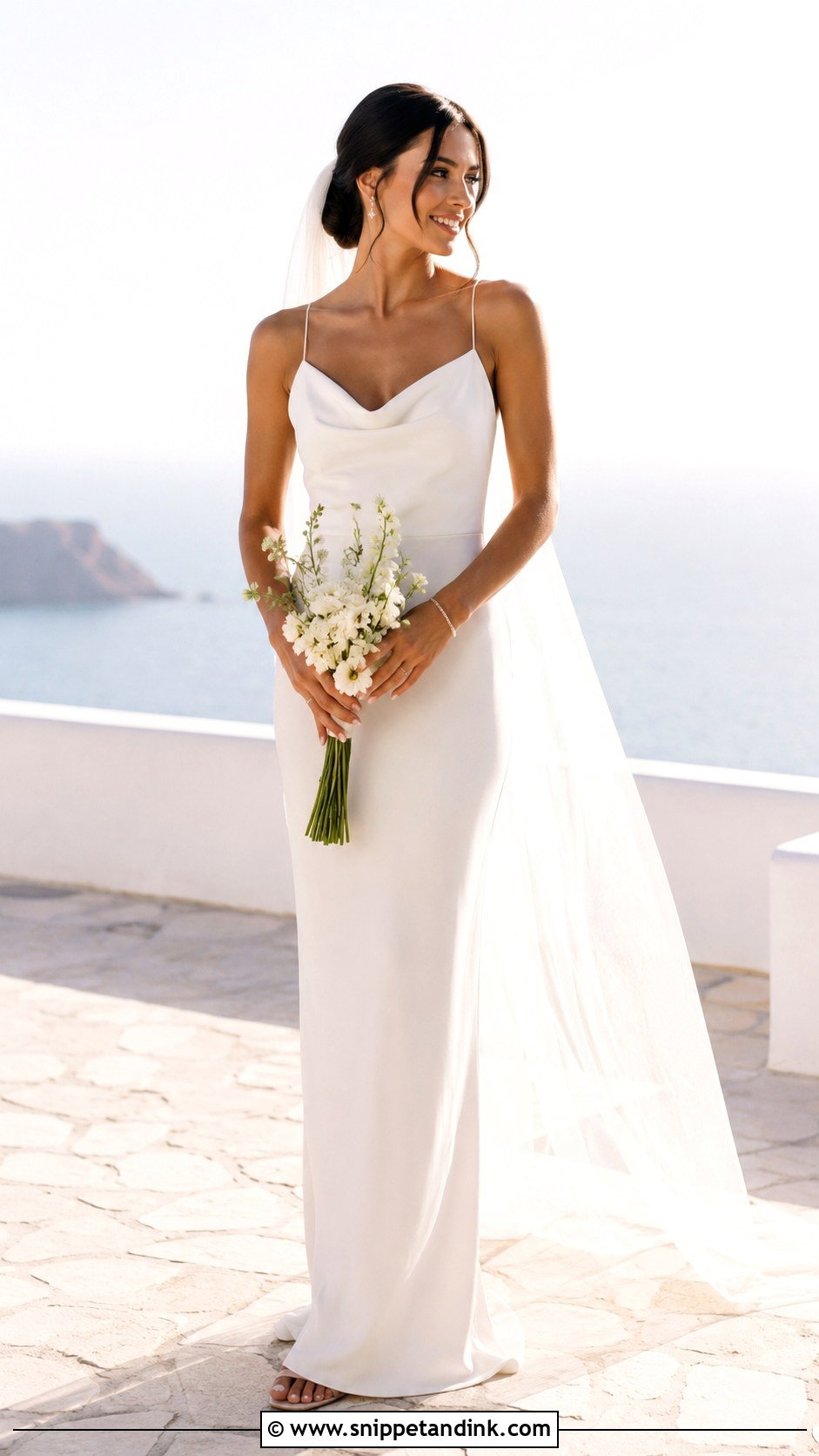
A sheath follows the body without a flare or volume, so it’s light and easy, which makes sense for beach, destination and courthouse weddings. Crepe, satin and soft lace all work. With no skirt to hide in, the fit through the hips needs to be exact and the hem has to clear sand or stone. Strappy heels, a clean veil and understated jewelry. Wear your hair up if there’s a low back. A slim bouquet keeps the line long.
14. Drop Waist Gown for Bride
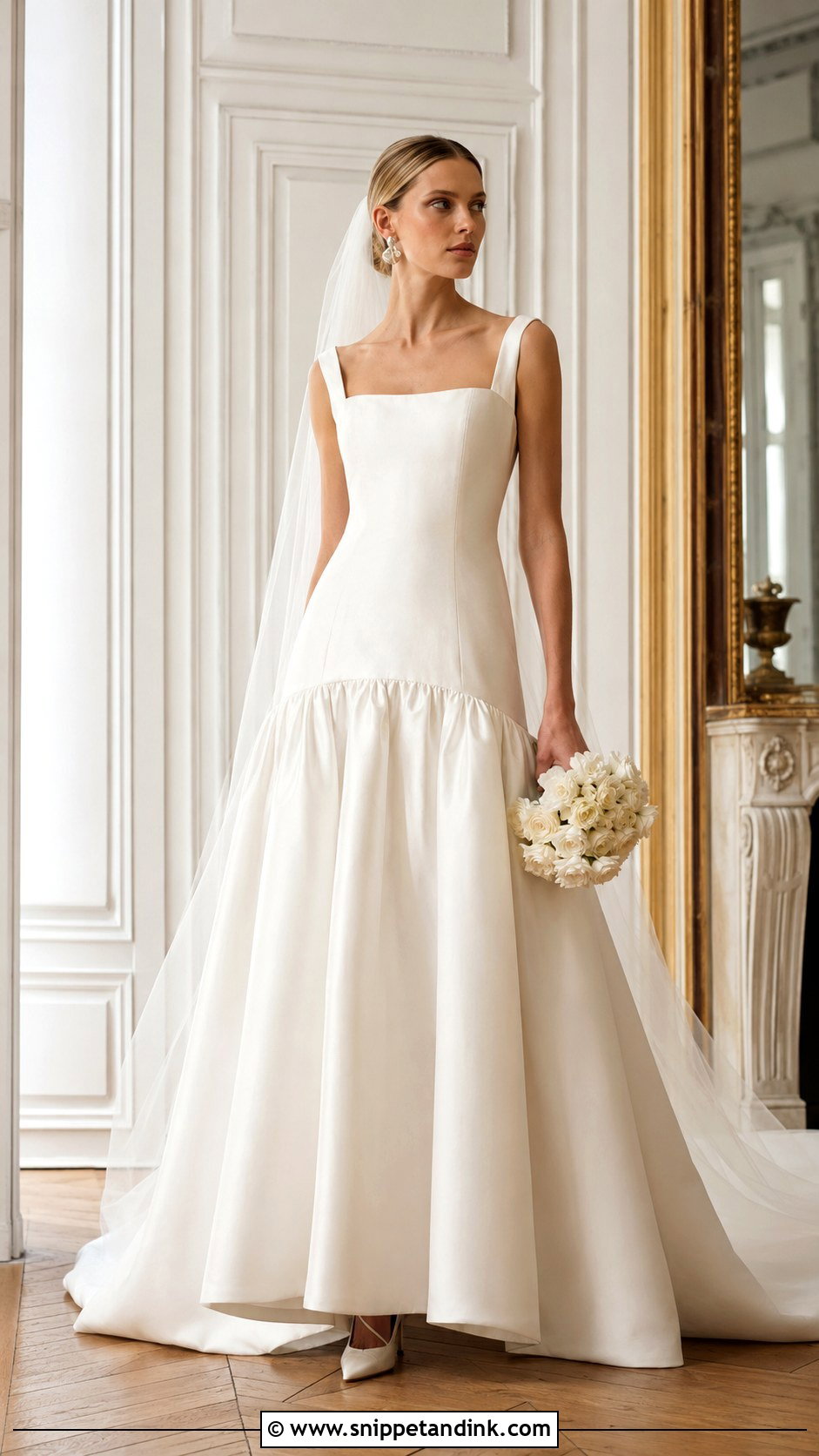
A drop waist sets the seam at the hips, which lengthens the torso and suits long-waisted or petite-busted brides. It’s strongest in satin, mikado or taffeta because those fabrics hold a crisp transition into the skirt. It’s not a shape I’d recommend if you’re short-waisted, since it can make the legs look shorter. Pointed heels, sculptural earrings and a smooth veil. Keep the bouquet simple and the hair polished.
15. High Neck Gown for Bride
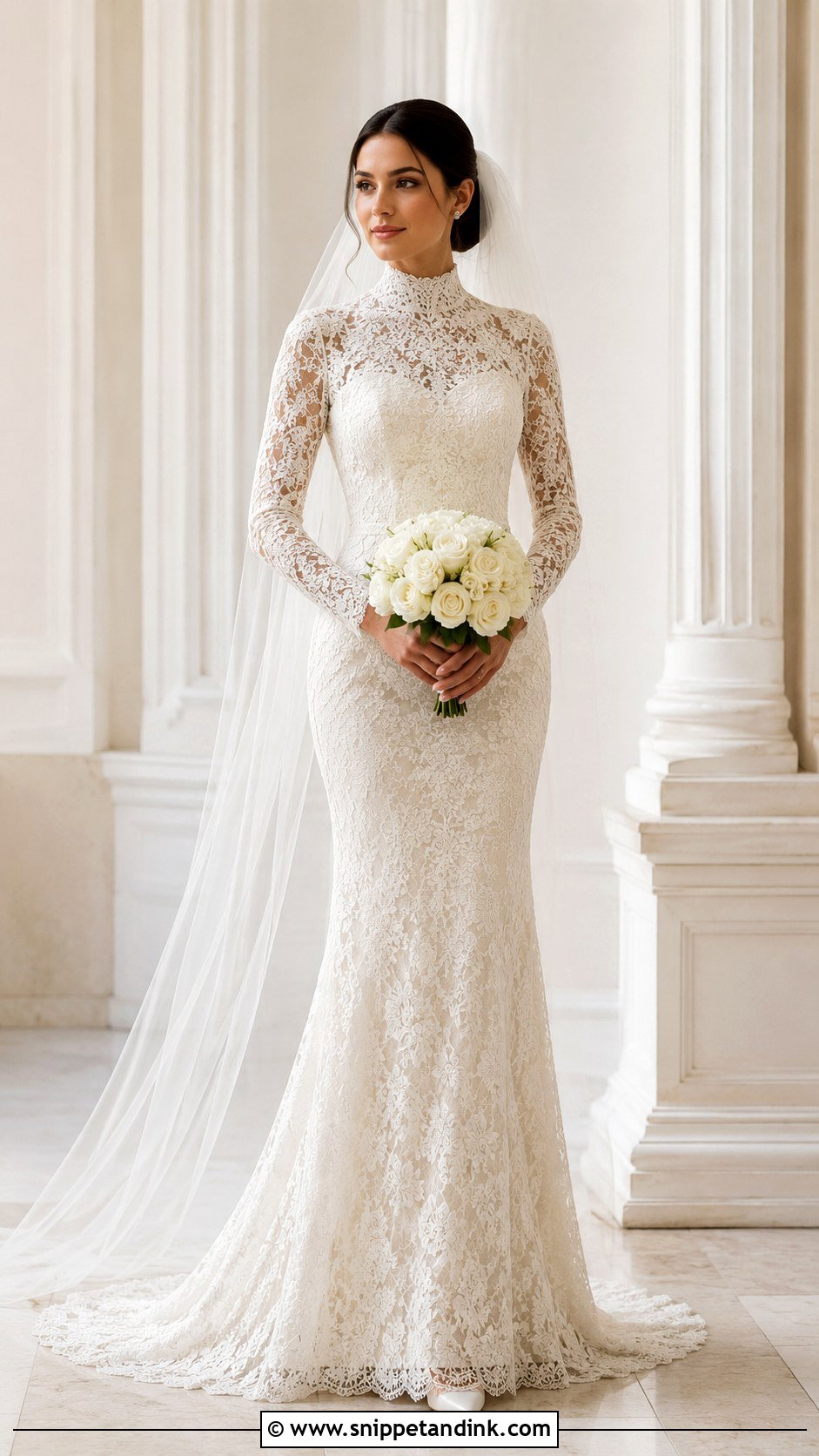
A high neck puts the focus on your face and posture. Lace is romantic; crepe or satin looks architectural. Since the neckline is the detail, I’d wear studs or small drops and skip a necklace. A low bun keeps the collar visible. Check the collar when you look down at your bouquet; too snug and it presses on your throat. Closed-toe heels, a simple veil and a soft bouquet.
16. Open Back Gown for Bride
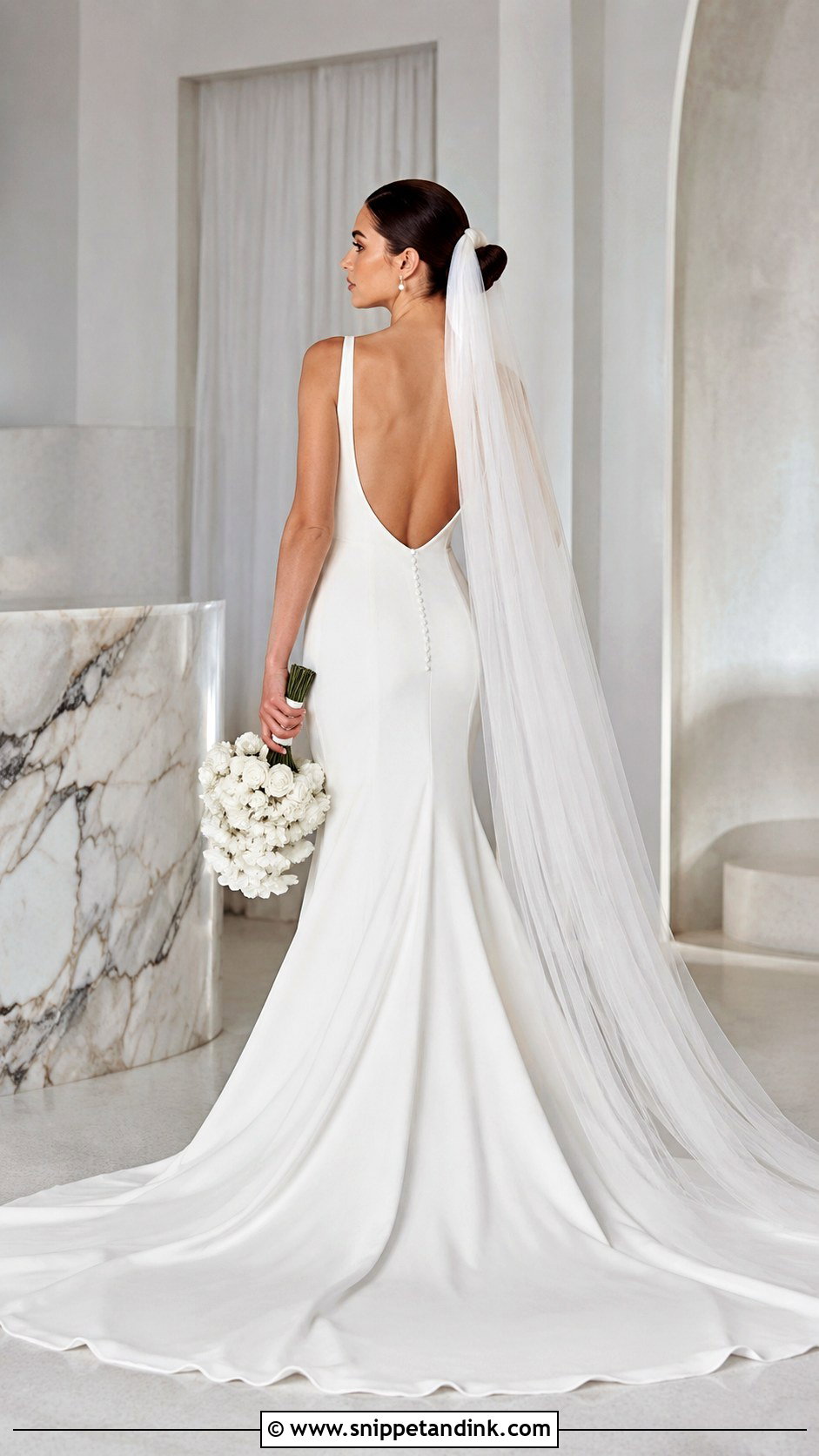
The open back is the detail guests see during the vows, since they’re looking at your back for most of the ceremony. A low scoop is subtle; a deep V or open keyhole shape is dramatic. It works in crepe, satin, lace and beaded fabrics. Sort the underwear early, as support is the main challenge. An updo shows the back, and a long veil should be sheer enough not to cover it entirely. Simple heels.
17. Cape Gown for Bride
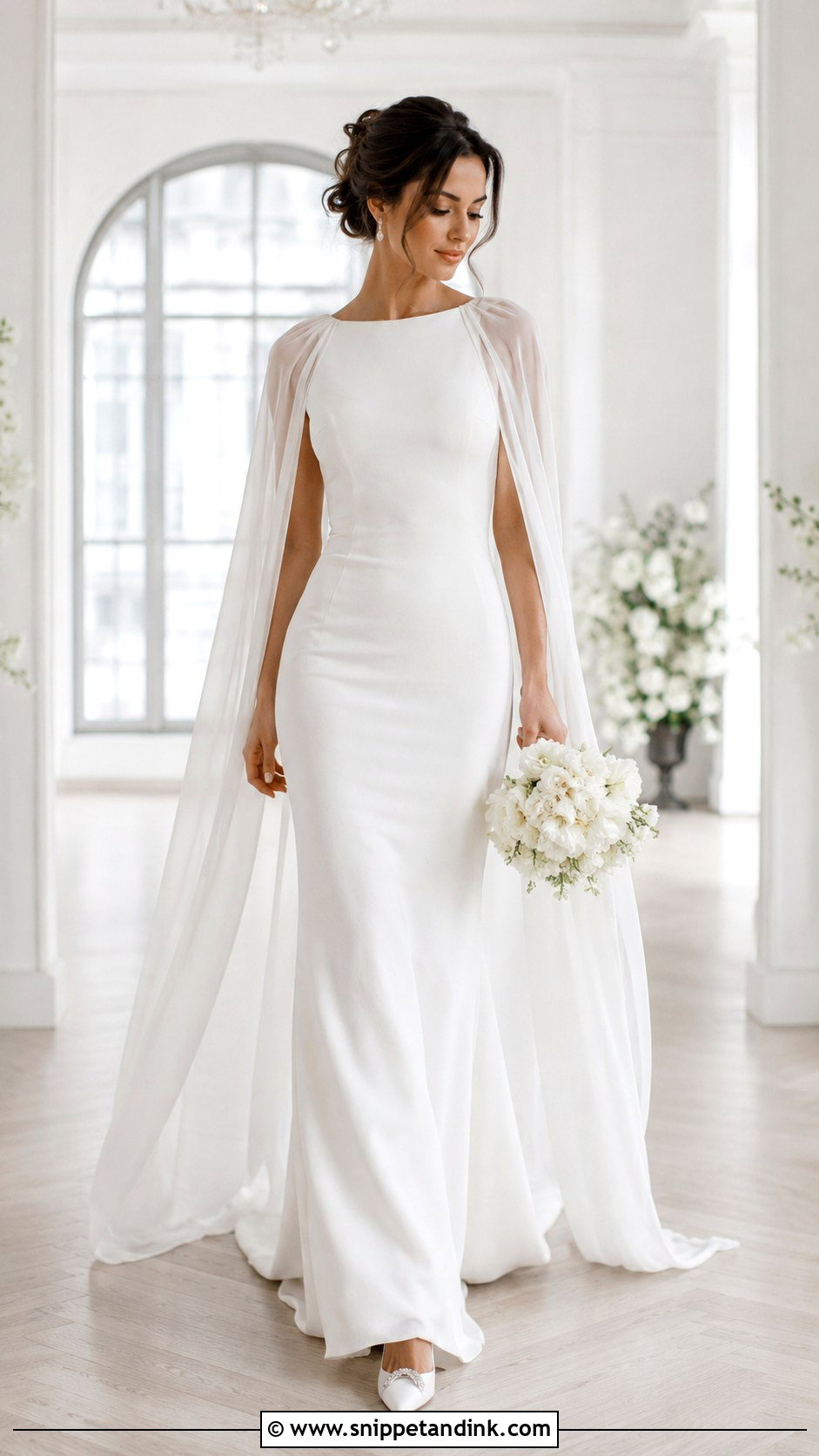
A cape gives you movement and coverage without a train. Sheer, lace-trimmed, pearl-edged or tulle, it suits simple fitted gowns where it can be the statement. You probably won’t need a veil as well. I’d ask how it attaches; small hooks or snaps at the shoulder seam sit more securely than a tie at the neck. Clean earrings, pointed heels and a smooth hairstyle.
18. Detachable Train Gown for Bride
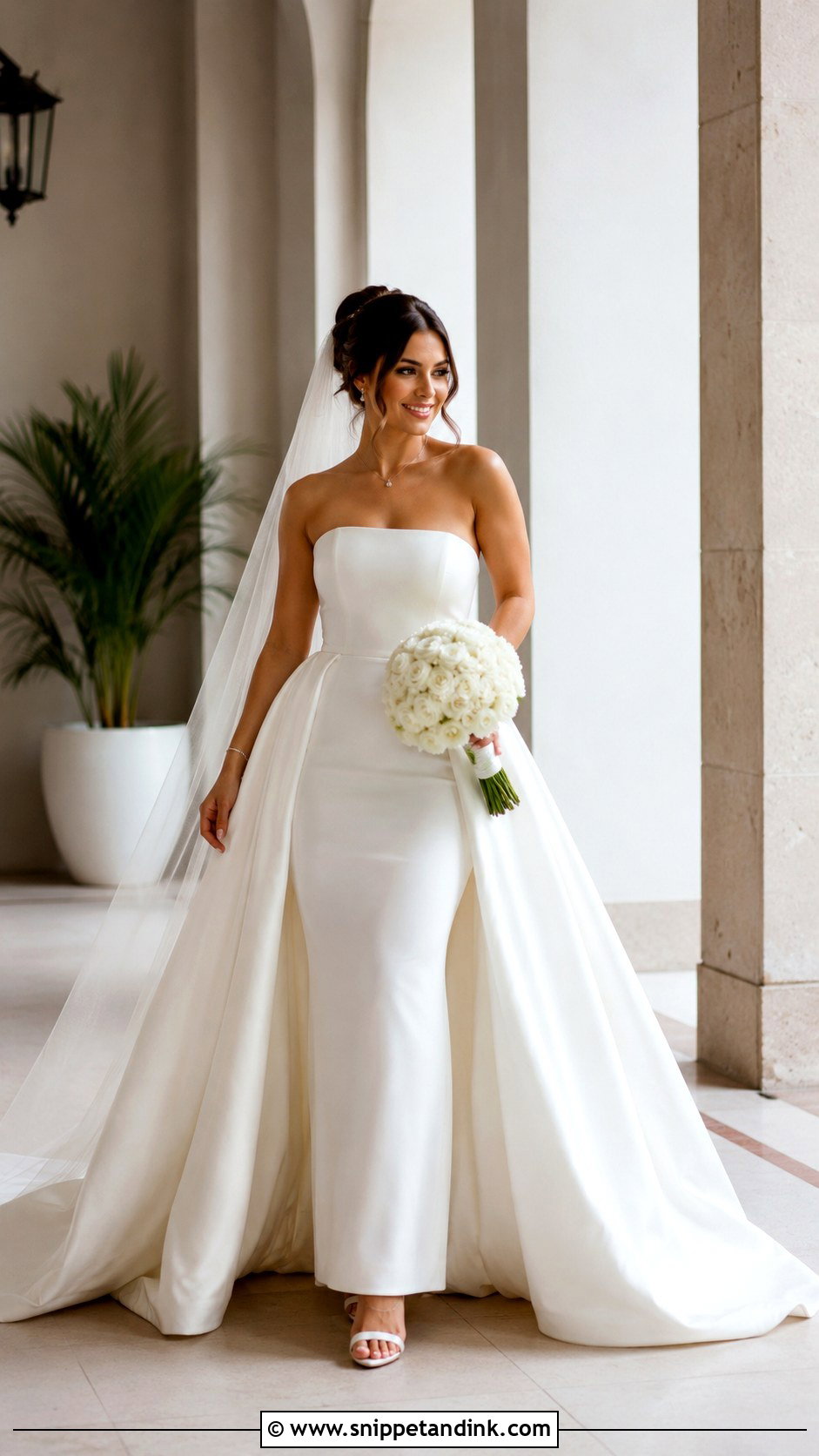
A detachable train gives ceremony drama and reception freedom. It can attach at the waist, hips or back. After the formal photos it comes off, and the gown underneath feels like a second look. Practice removing it with whoever will help on the day; hidden hooks and buttons are fiddly under pressure. It works well with fitted crepe, lace mermaids and satin. Secure heels and simple jewelry.
19. Pearl Gown for Bride
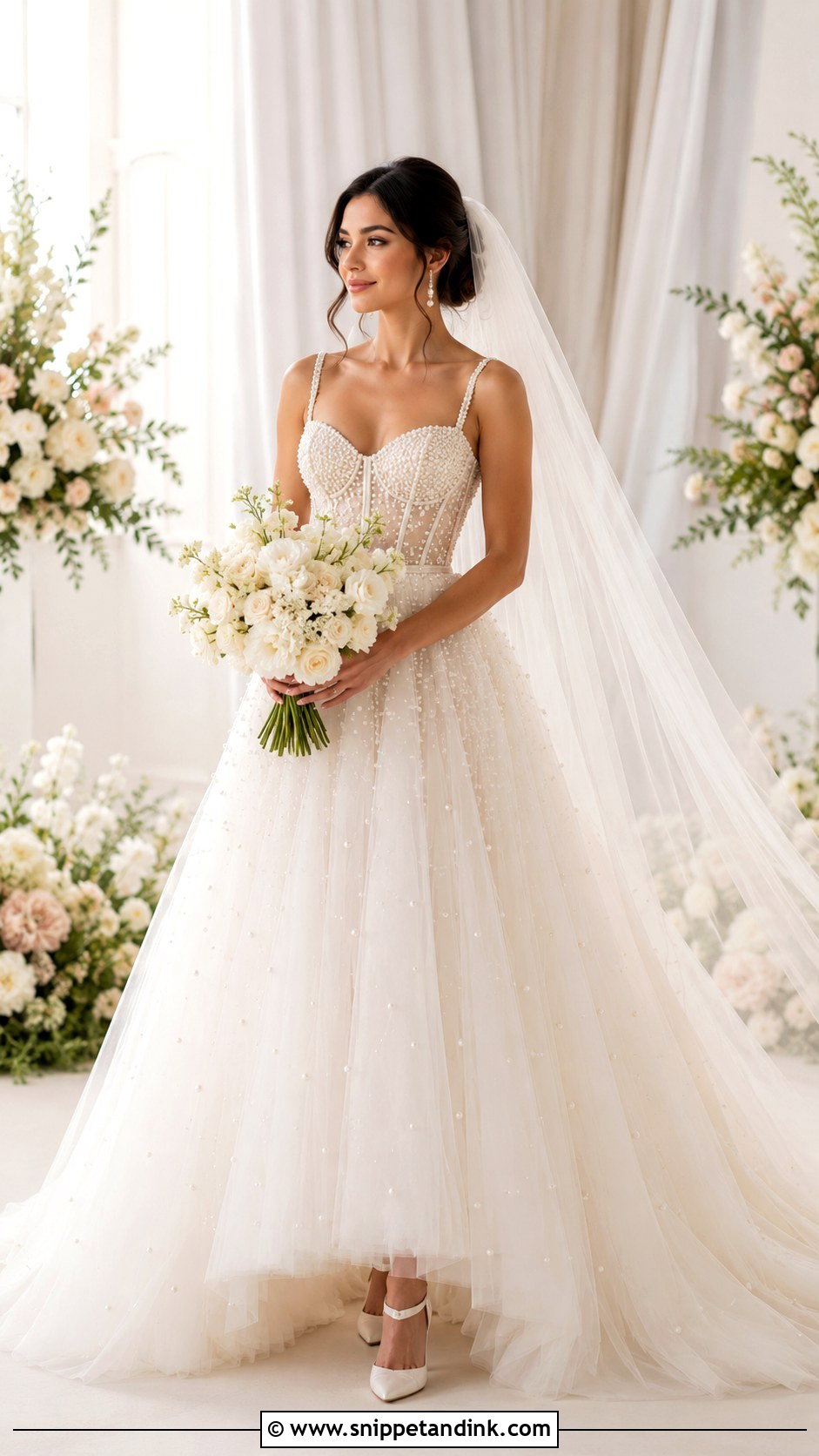
Pearls add detail without sparkle. Scattered pearls are subtle; pearl straps, sleeves or a pearl-covered bodice make more impact. They look best on tulle, lace or sheer overlays. Pearl beading is heavier than it looks, and loose ones drop off during the day, so ask whether each pearl is individually knotted or stitched. Pearl earrings, satin heels and a simple veil. Add nothing else; the pearls already carry the texture.
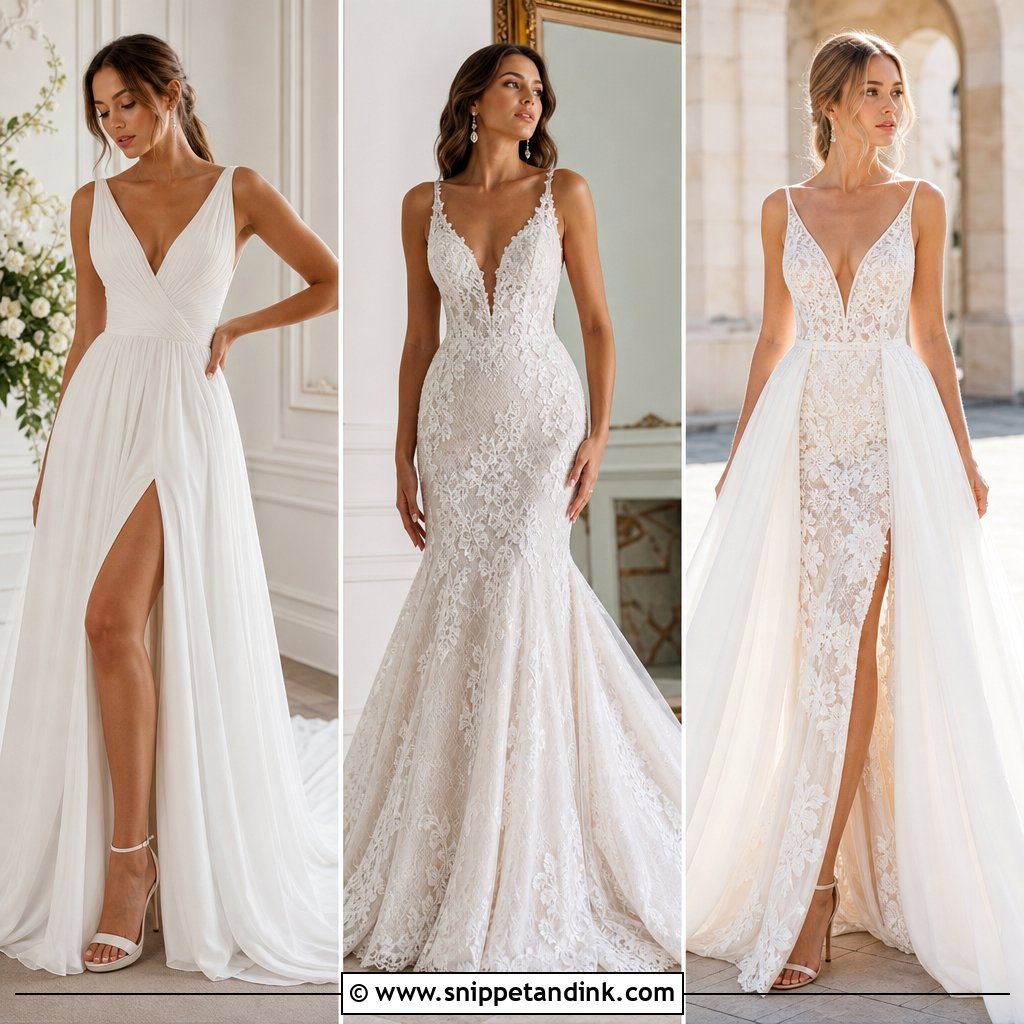
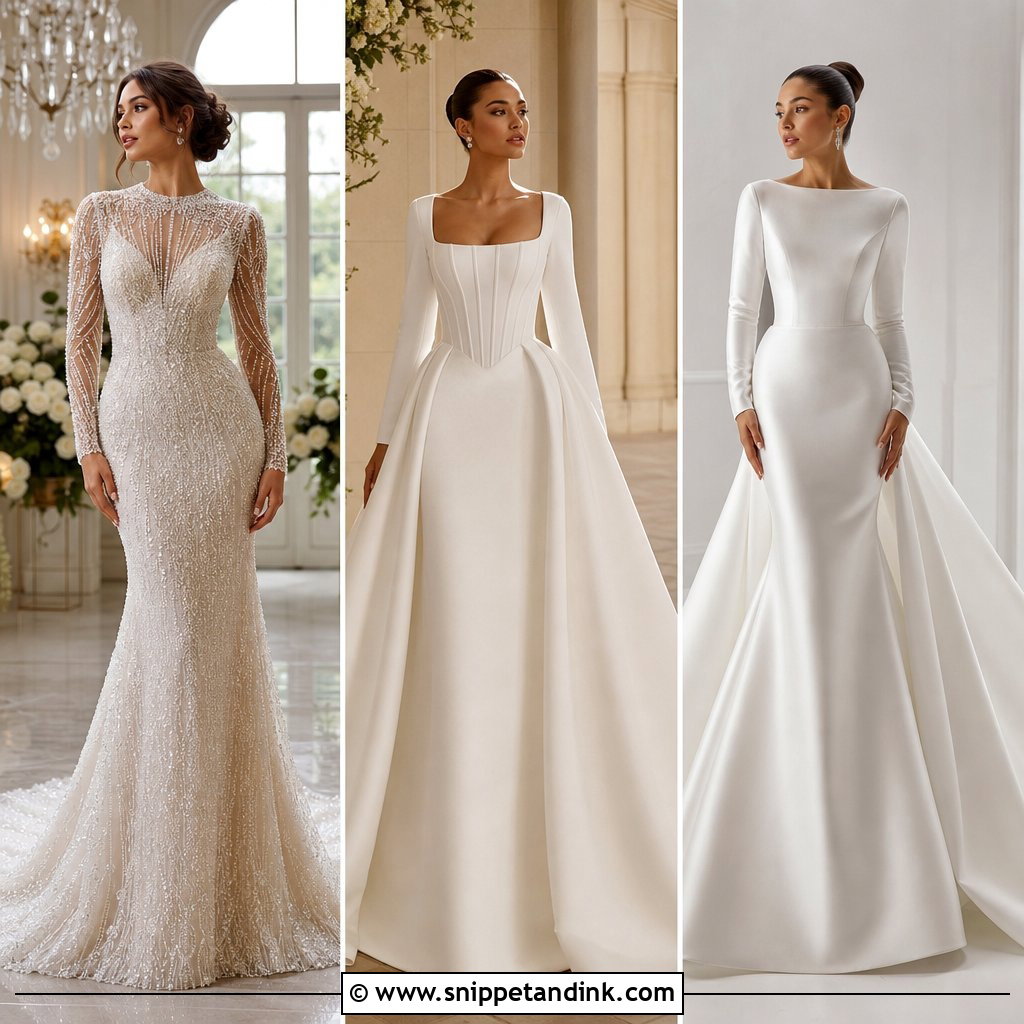
20. Champagne Gown for Bride
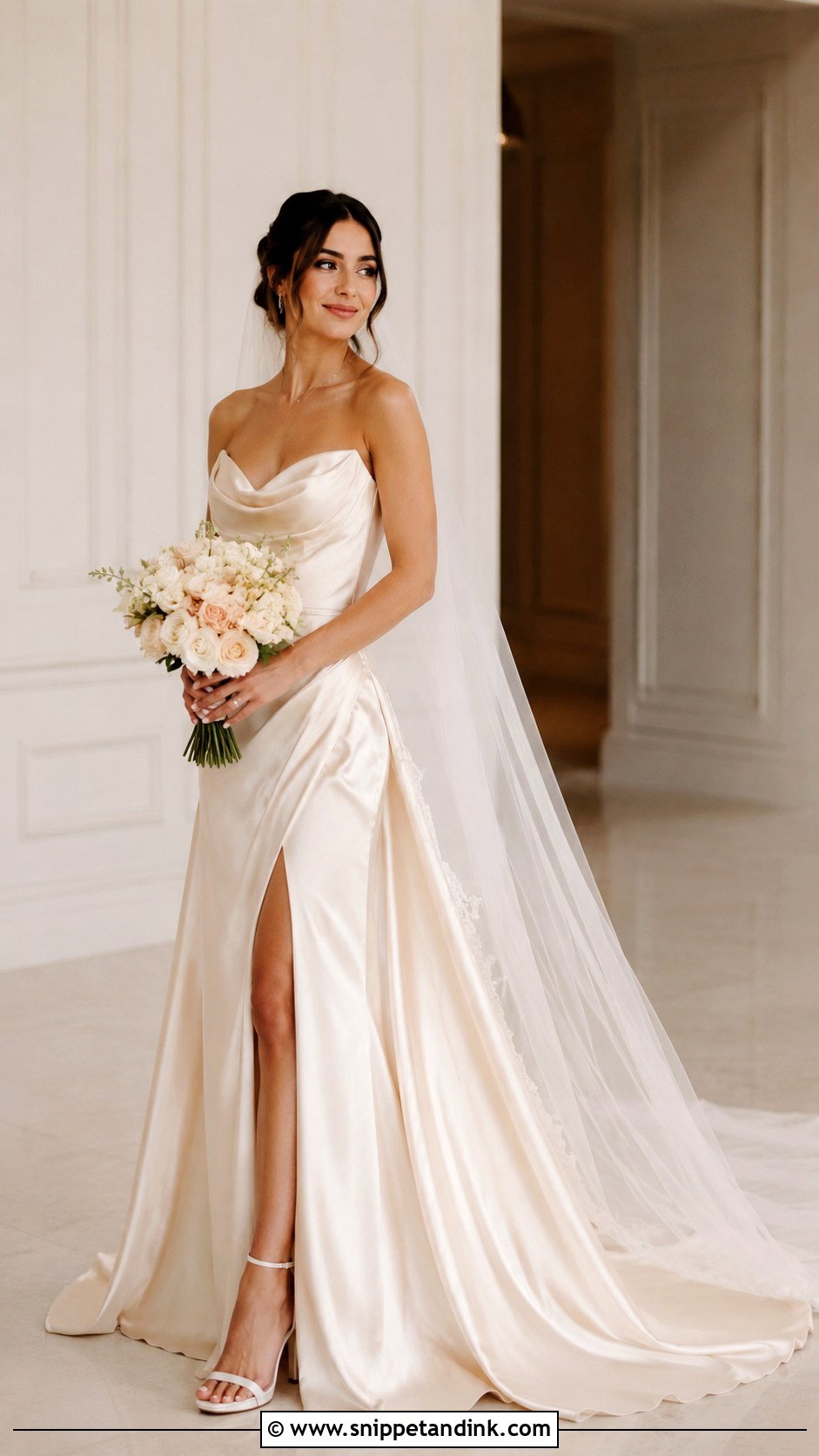
Champagne gives warmth without leaving tradition behind. The beige-gold tone flatters many skin tones, especially olive and warmer complexions, and looks rich in satin, tulle or beading. It can also wash out very fair, cool skin, so test it in daylight against your face. Ivory shoes, gold-tone jewelry and a bouquet in cream, blush or greenery. Hold the veil against the gown outdoors before choosing; a bright white veil can make champagne look dingy.
21. Tea Length Gown for Bride
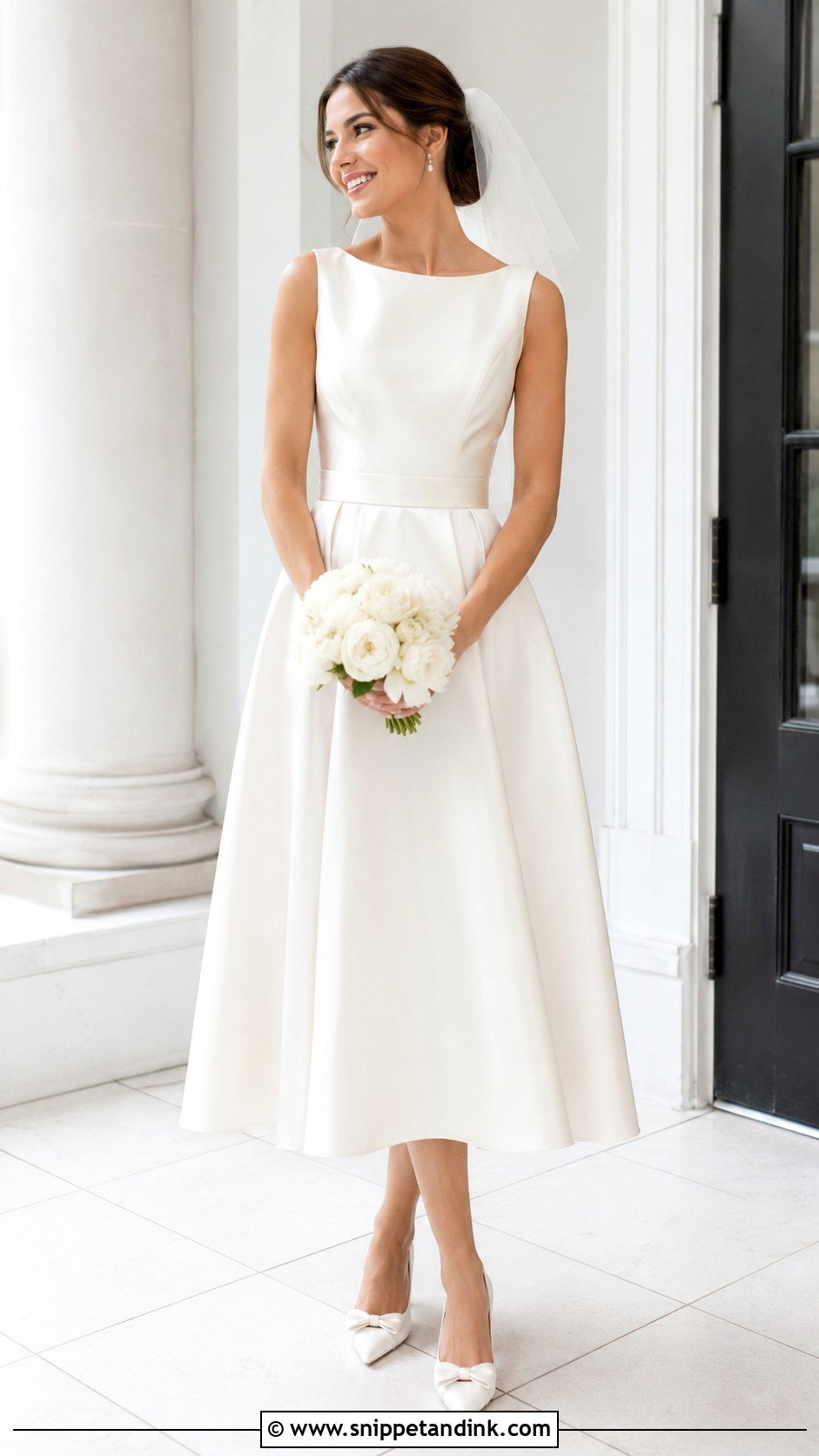
Tea length falls between knee and ankle, so your shoes become part of the outfit. Satin for polish, lace for romance, tulle for volume. It suits courthouse and garden weddings and vintage-inspired brides. Pointed pumps, bow heels or ankle straps all work, so pick the pair you want seen. A petticoat keeps the skirt full; choose soft tulle over stiff crinoline, which scratches. Pearl earrings, short gloves and a shoulder-length veil.
22. Boho Lace Gown for Bride
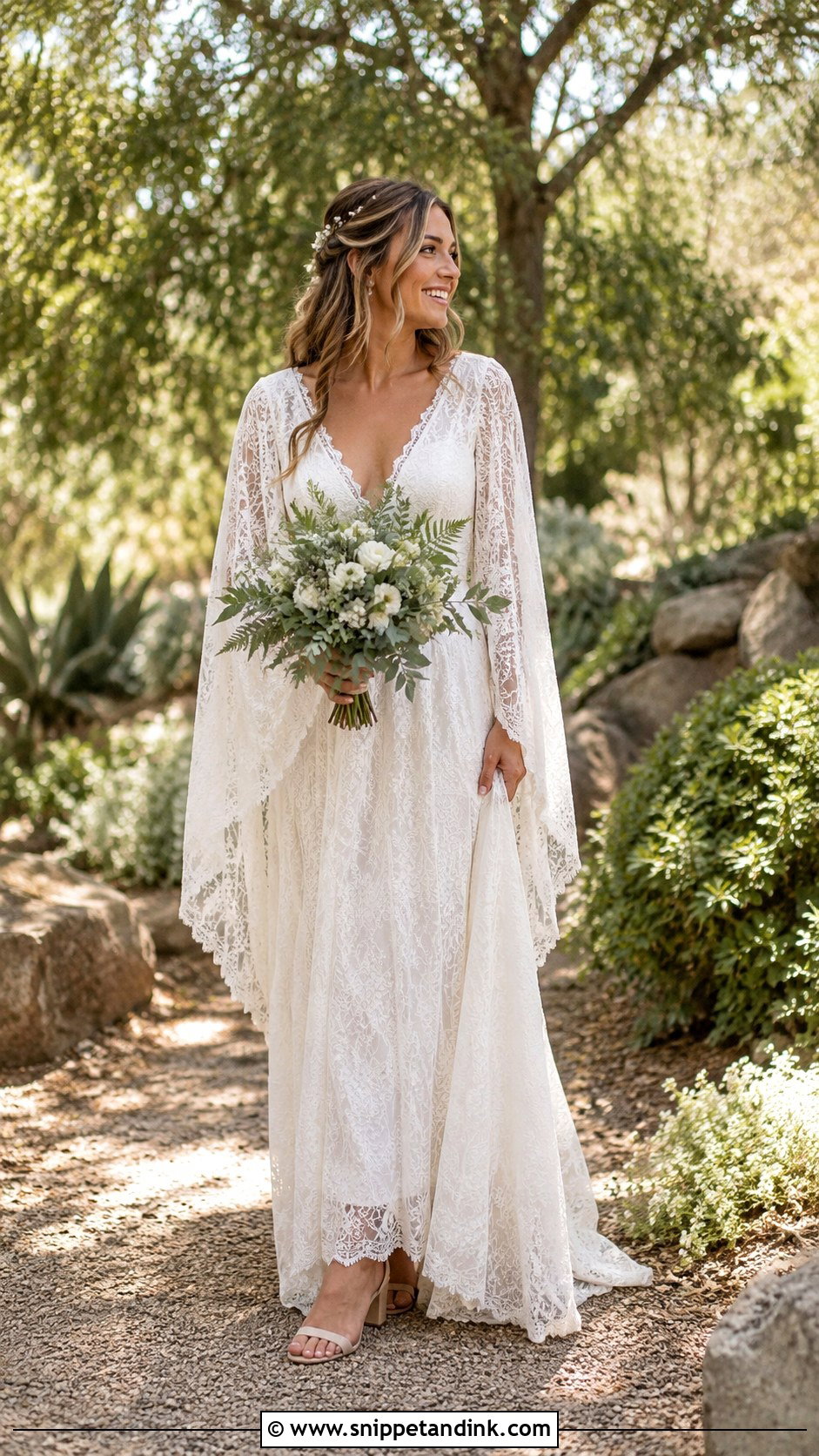
A boho lace gown should move easily and feel light. Soft lace, flowing sleeves, a relaxed waist and a skirt that doesn’t need managing. It suits beach, garden, mountain and rustic venues. Choose shoes for the ground: block heels, flat sandals or low wedges. Loose waves, fine hair pins and a natural bouquet. Avoid formal jewelry. Lace this light is see-through in strong sunlight, so check the lining outdoors before you commit.
23. Satin Slip Gown for Bride
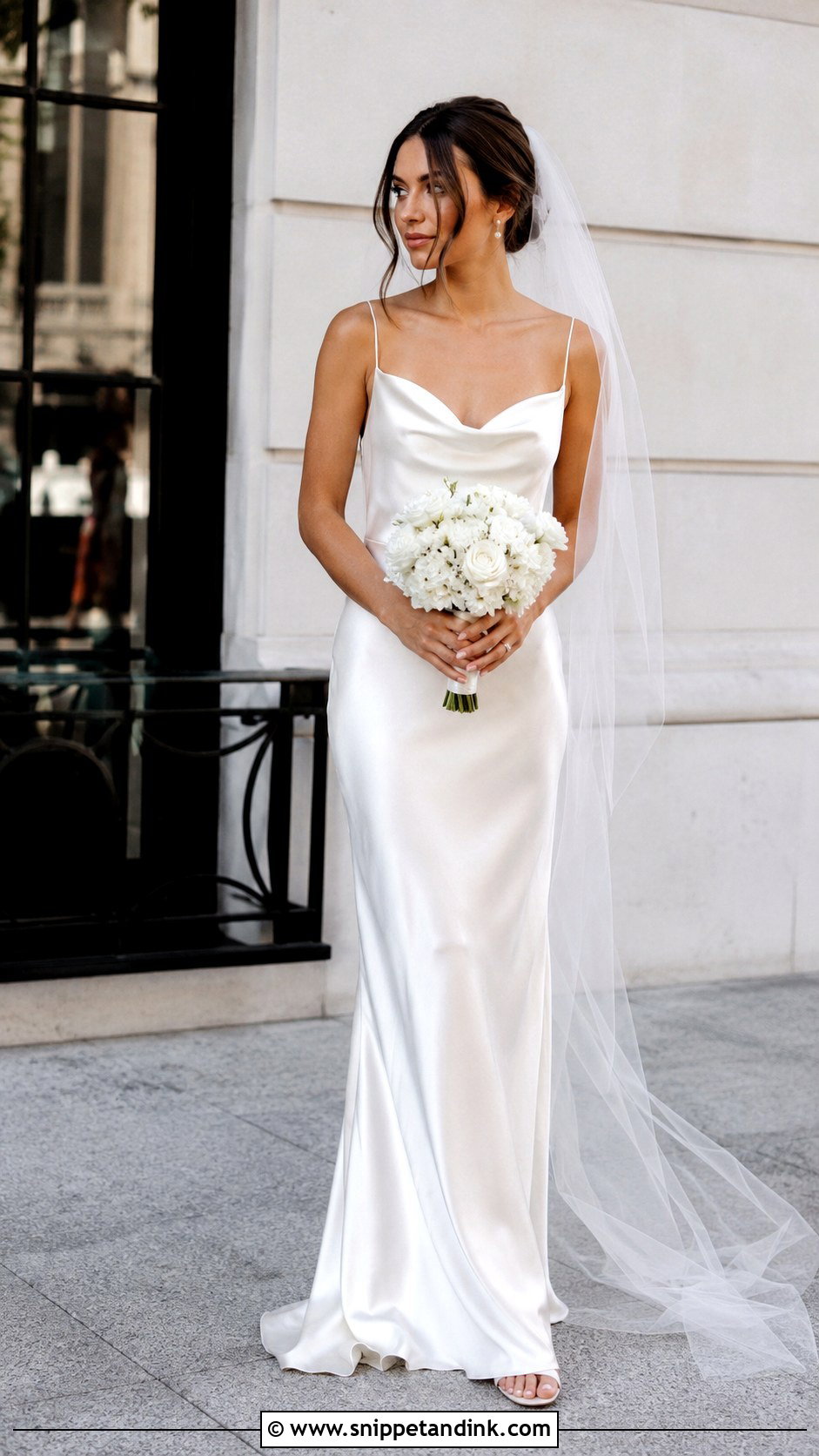
A satin slip drapes close to the body, which is why fit and fabric quality matter more here than anywhere else. Cheap satin shows every ripple. A cowl neck, fine straps or low back is enough detail. Bias-cut satin stretches slightly over time, so the final fitting should be close to the date. Minimal heels, pearl studs and a sheer veil. For more coverage, add a tailored bridal blazer or sheer scarf. It’s an easy fit for city weddings and smaller celebrations.
24. Ruffle Gown for Bride
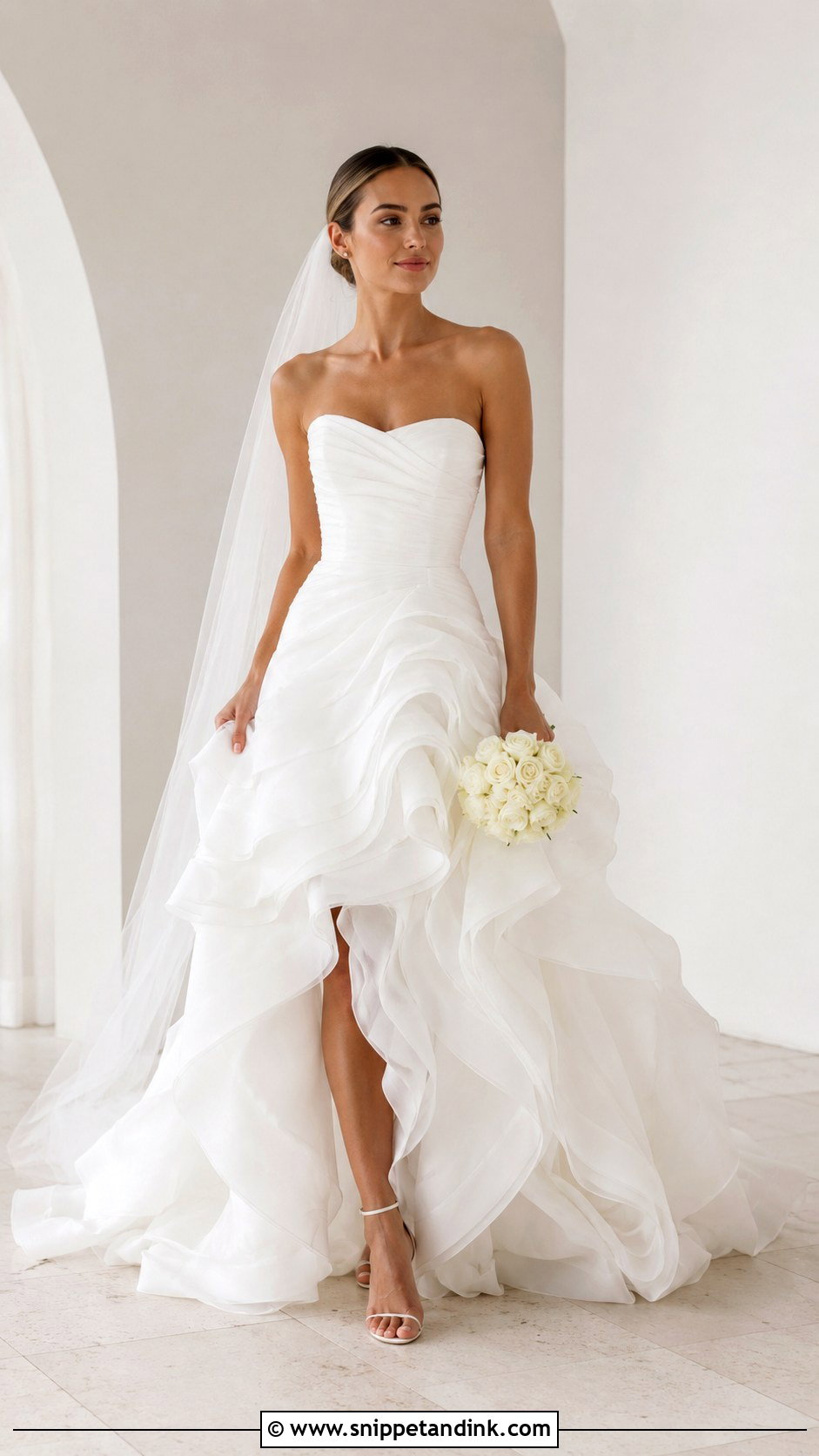
Ruffles give volume through texture rather than sparkle. Soft ruffles on tulle are romantic; sculptural ones on organza or taffeta look bolder. A fitted bodice balances a tiered or ruffled skirt. Organza ruffles crush easily if you sit on them, so practise sweeping the skirt forward as you sit. Simple heels, small earrings and a clean veil. A neat updo keeps the look fresh.
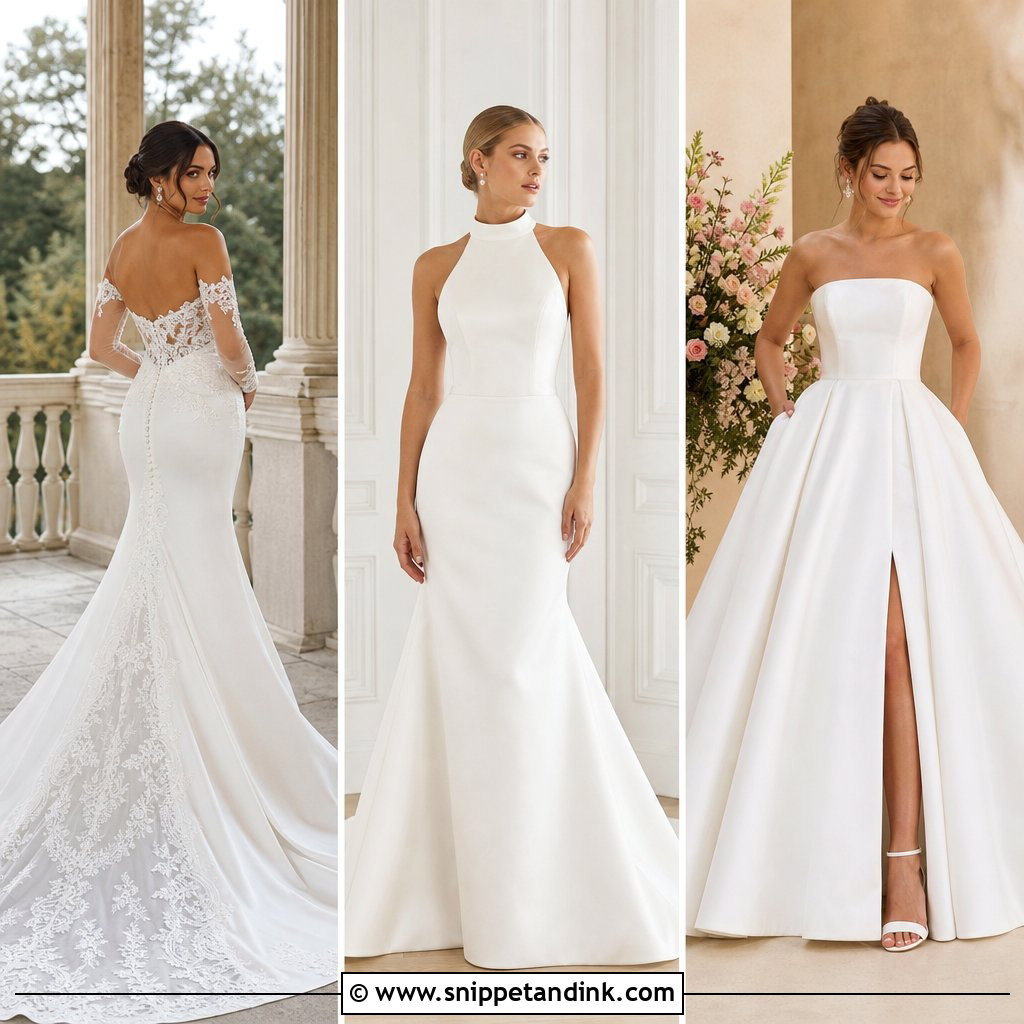
25. Reception Gown for Bride
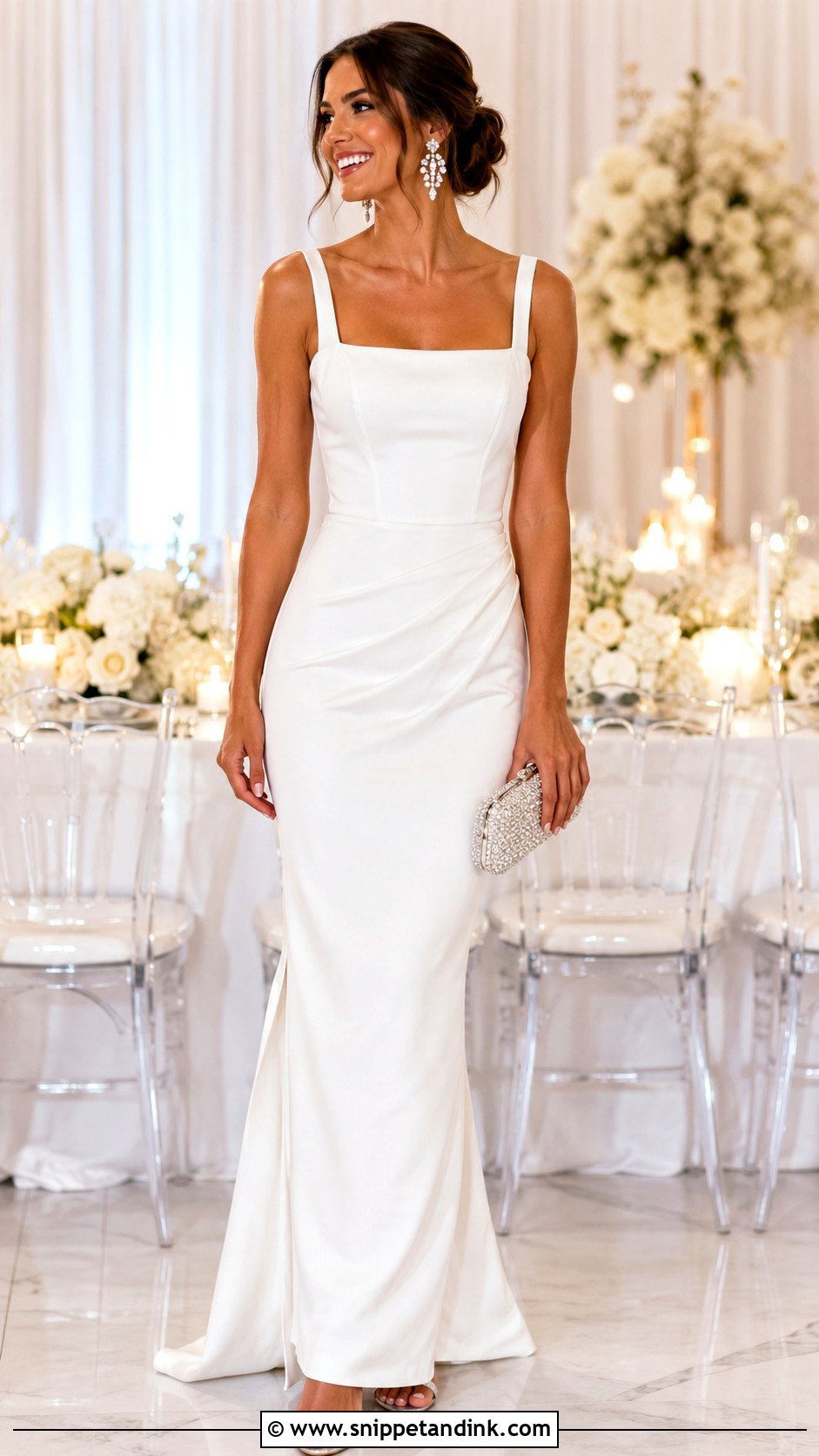
A reception dress gives you a second look that’s easier to dance in. A column, tea-length dress, satin slip or modern mini all work. It should still feel bridal, not like an afterthought. Comfortable straps, lighter fabric and a hem that suits your shoes matter most. Plan where you’ll change and how long it takes; fifteen minutes is realistic once you include hair and jewelry. Statement earrings and heels you can actually dance in.
What Goes Underneath, Neckline by Neckline
Underwear changes how a gown fits, so I ask for it at the first fitting, not the last. A bodice altered over one bra will sit differently over another.
Strapless, sweetheart and off-shoulder
Most structured bodices can have cups sewn in, which is more secure than any strapless bra. If you prefer a bra, a longline strapless with a firm band stays put better than a standard one.
Open and low backs
Sewn-in cups again, or adhesive cups if the gown has little structure. Test adhesive ones for a full day beforehand, since they can lose grip in heat.
Satin slips, crepe and sheaths
Bonded, no-seam underwear in a shade close to your skin, not white, which can show through ivory. Light shapewear smooths the line but should never be so tight it creates a ridge at the edge.
Illusion panels and sheer sleeves
Here the mesh shows whatever is under it, including bra straps and the edge of a band. I’d rather have support built into the opaque part of the bodice so nothing crosses the sheer areas. Ask for the illusion mesh to be matched to your skin tone; the default shade on a sample rarely suits everyone.
Try the Shape You Think Won’t Suit You
The right gown is the one you forget you’re wearing by the second hour. Trends help, but the venue, your body, the season and how you’ll move matter more. A satin ball gown reads classic, crepe reads modern, lace reads romantic, and a reception dress gives you freedom later. Build the full look: veil, shoes, jewelry, hair and bouquet all shape it. Try on more than one silhouette before you decide, even the ones you think won’t suit you. They often surprise people.
You'll Like These Ideas:







Leave a Reply