
Long lace sleeves turn up in almost every decade of bridal fashion, which is why they can look Victorian, Edwardian, Art Deco or pure 1970s depending on everything around them. The sleeve shape tells most of the story. A fitted sleeve reads formal; a bishop or bell sleeve reads softer and looser. After that, the neckline, the scale of the lace and the skirt volume decide which era a gown points to. I also look hard at color: antique ivory, champagne and bright white each change how lace looks against skin. Below are twenty complete looks, with the shoes, veils and accessories I’d put with each one.
Chantilly, Alençon or Guipure? Reading the Lace First
Two dresses with the same silhouette can look a century apart because of the lace. When a bride brings me a photo, the first thing I work out is what kind of lace it is, since each one behaves differently on a long sleeve.
- Chantilly is fine and flat with delicate outlined flowers on a soft net. It drapes well on fitted sleeves and suits bias cuts and Edwardian looks.
- Alençon has a corded outline that raises the motifs slightly. It holds its shape and gives Victorian and 1950s gowns their richer texture.
- Guipure has no net at all; the motifs are joined to each other. It is heavier and more graphic, better for structured bodices than for flowing sleeves.
- Point d’esprit is tulle scattered with small dots. It reads light and romantic and is often used for sheer sleeves over a lace bodice.
Feel the lace on your arm, not just your hand. Corded and guipure laces can scratch the inner elbow when you bend, and a long sleeve rubs there all day. If you love a heavy lace, ask whether the sleeve can be lined in soft tulle.
1. Victorian High Neck Lace Wedding Dress
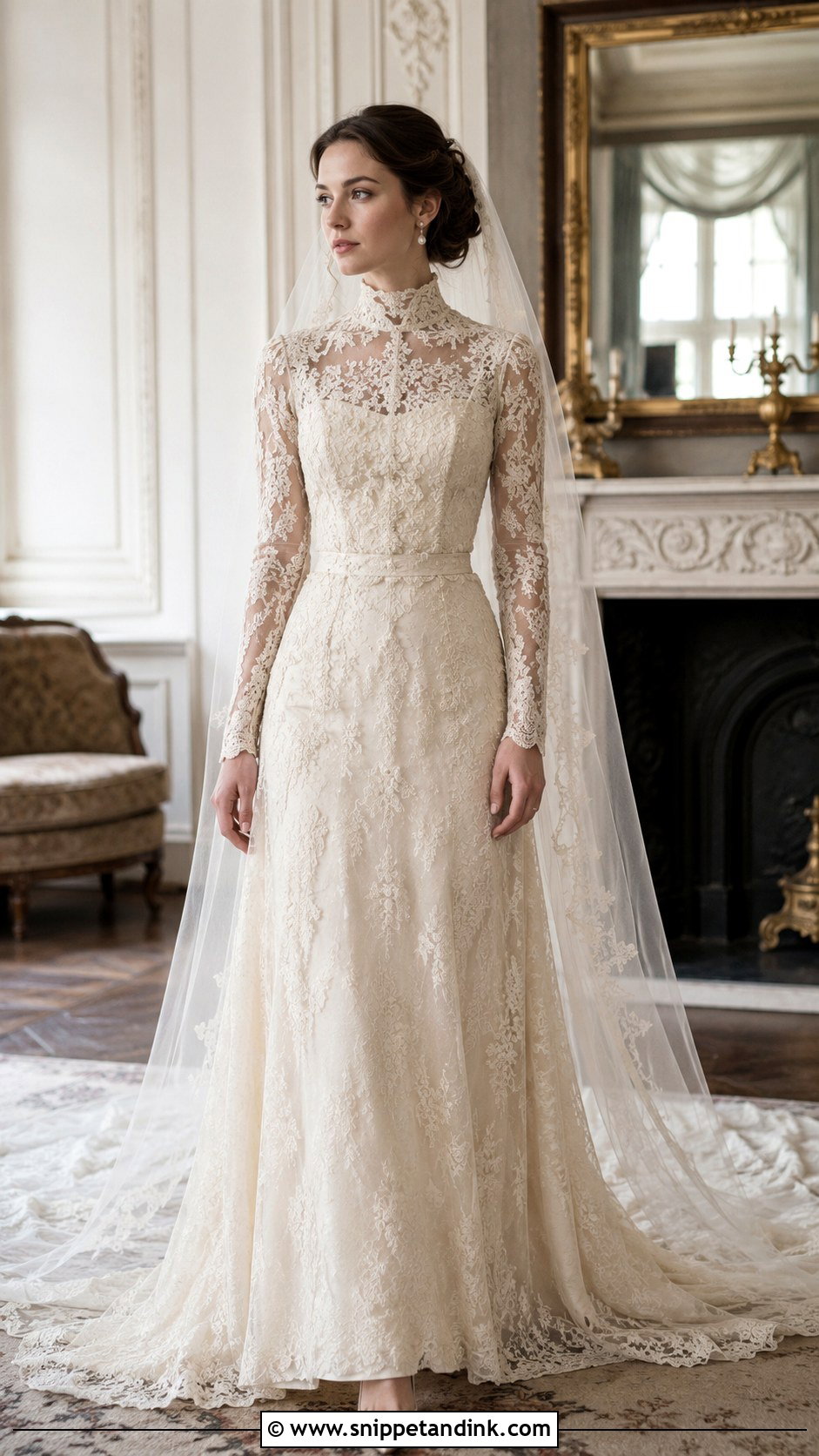
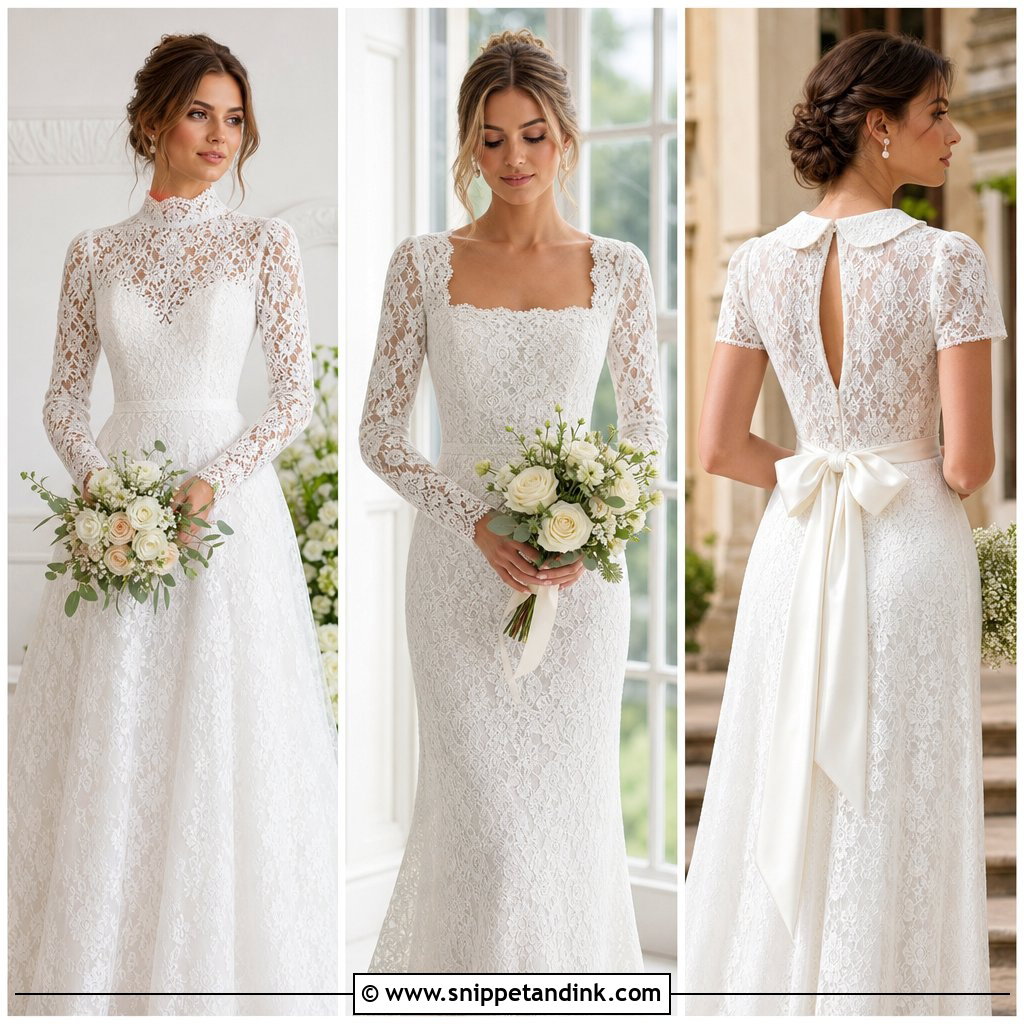
A Victorian high-neck lace wedding dress is the most formal gown on this list. A fitted bodice, a defined waist and sheer sleeves finishing in a small cuff carry the look, and floral or scrolling lace keeps it period. With the throat covered, I skip necklaces altogether and put pearl drops with a neat low bun. A chapel veil anchored below the bun lets the collar show. High lace collars can scratch along the jaw, so ask for the inner edge to be finished with a soft silk binding.
2. Edwardian Bishop Sleeve Lace Wedding Dress
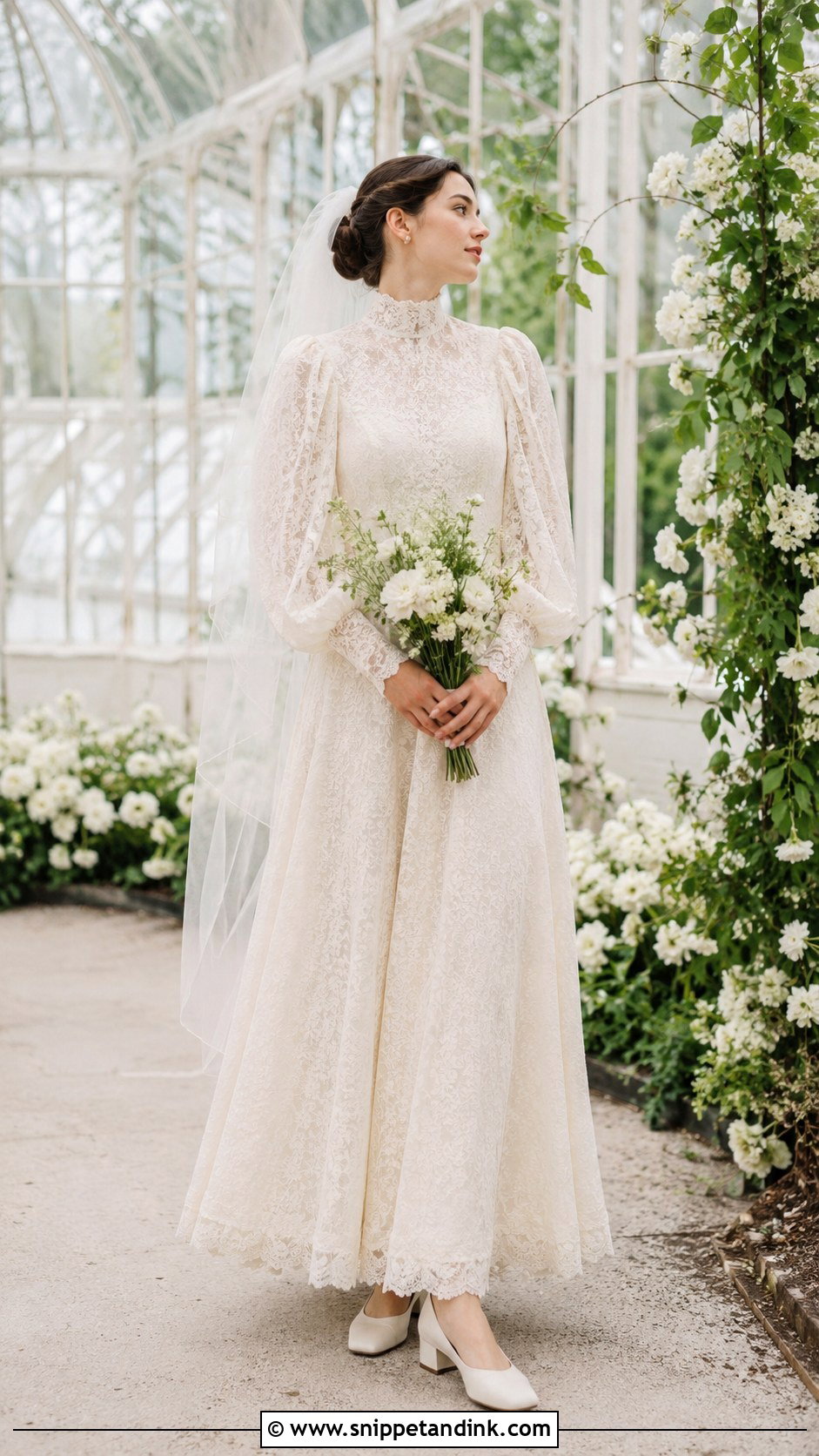
Bishop sleeves gather into a narrow cuff, which gives an Edwardian lace wedding dress volume at the forearm while leaving your hands free. A modest neckline, a lightly fitted bodice and an A-line skirt keep it gentle. Antique ivory with botanical lace looks naturally aged. I like a loose braided updo, pearl studs, a raw-edge fingertip veil and cream block heels. One fitting note: the cuff decides how the sleeve hangs. Too loose and the volume slides down over your hand; too tight and it pulls when you bend your elbow.
3. 1930s Bias Cut Lace Wedding Dress
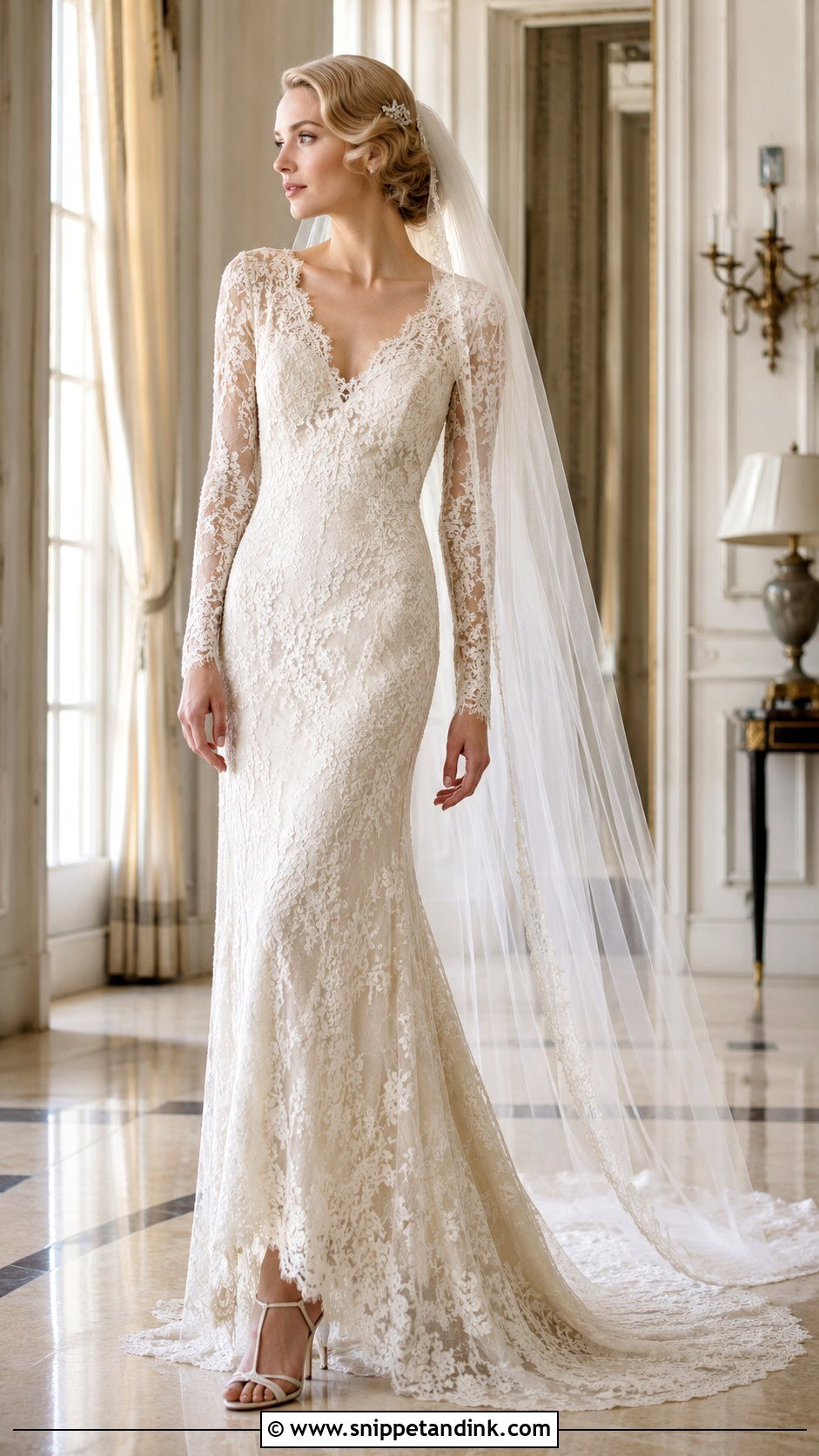
Lace and bias cutting are an unusual pair. A 1930s bias-cut lace wedding dress works best when the lace is light and laid over bias-cut satin, so the satin provides the drape and the lace simply follows it. Heavy corded lace on the bias tends to twist at the hem. A soft V or draped bodice suits the narrow line. Side-parted waves, crystal pins, a single-layer veil and low ivory T-straps finish it. Keep the bouquet compact; a big one breaks the long, narrow shape.
4. 1950s Ball Gown Lace Wedding Dress
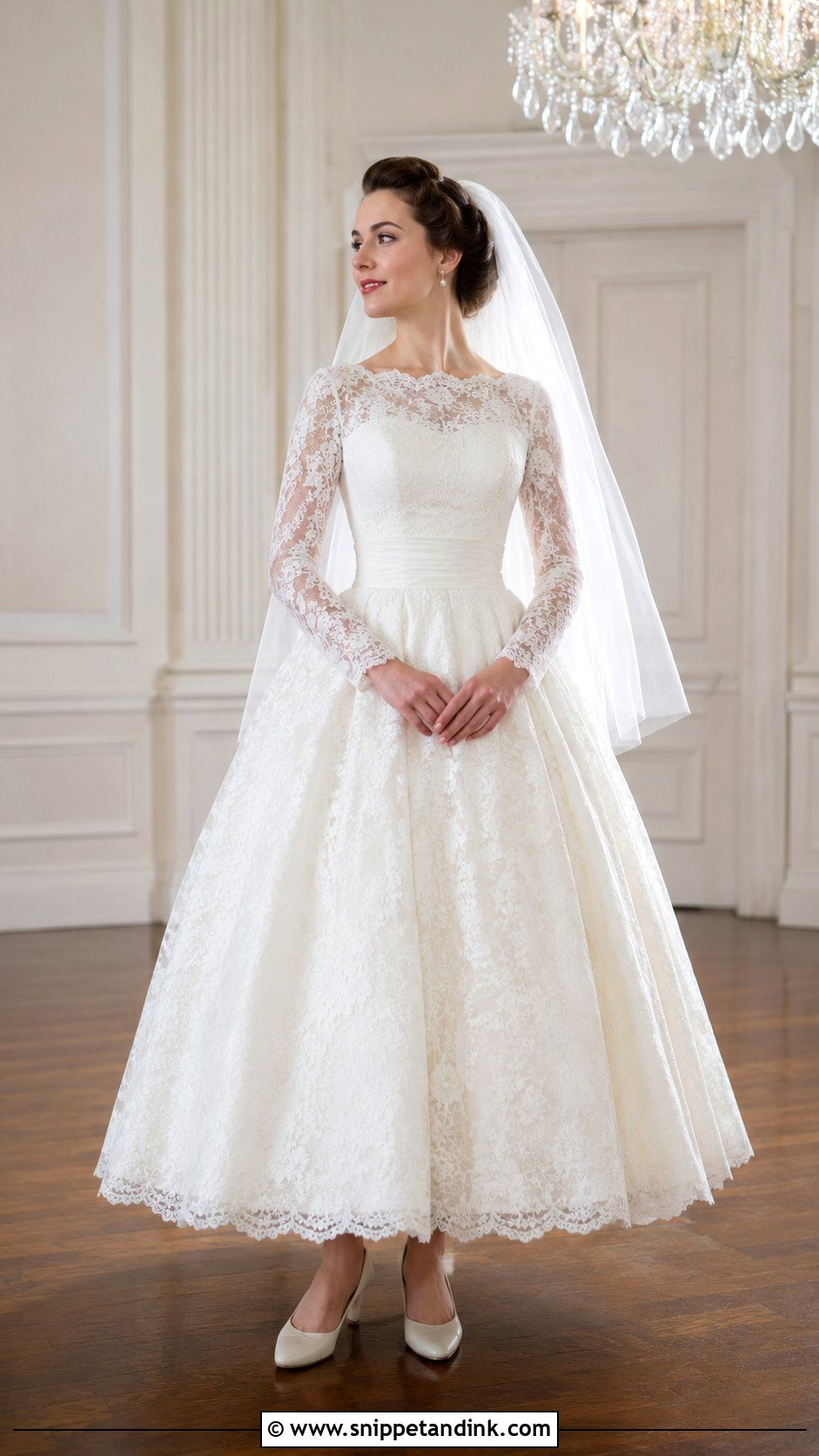
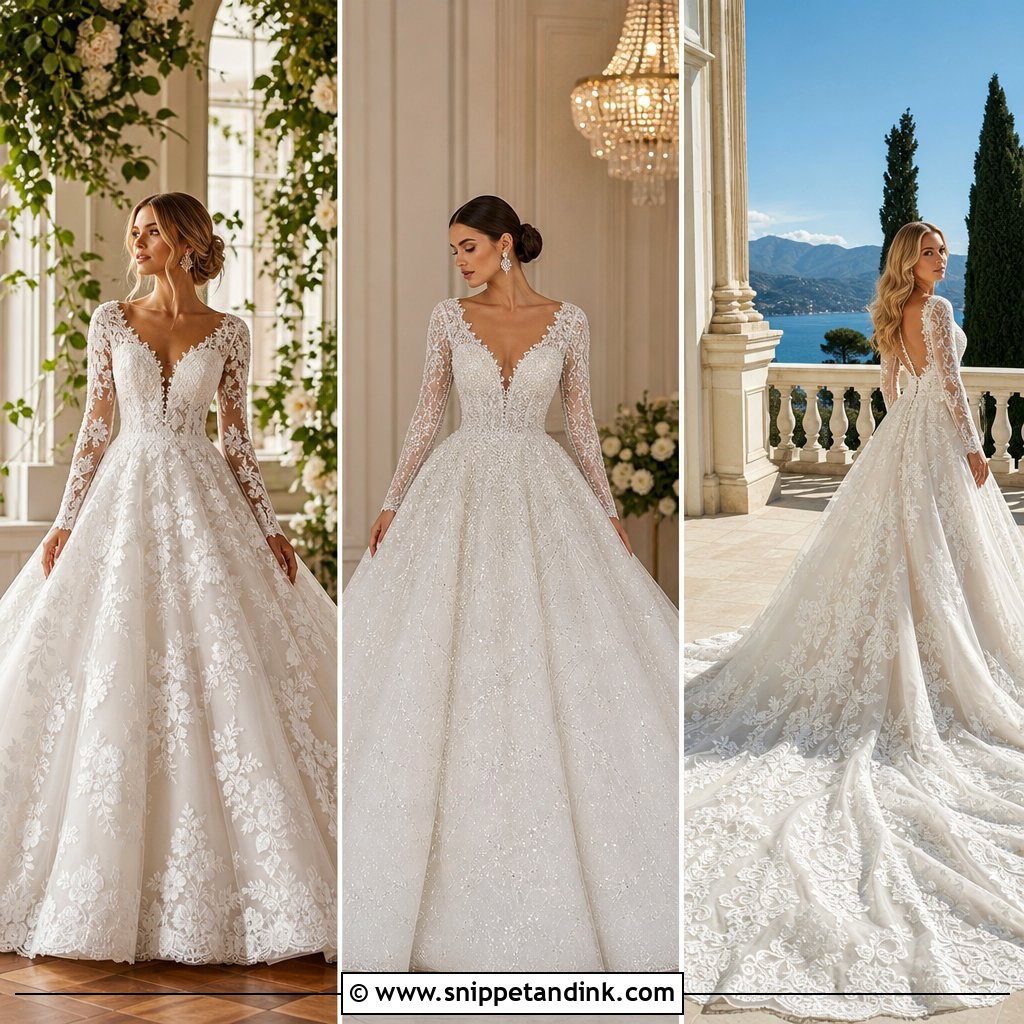
Lace on a full 1950s skirt needs to be continuous, so check that the pattern carries right down to the hem rather than stopping at the hip, which some cheaper gowns do. A structured bodice, long fitted sleeves and a bateau, illusion sweetheart or shallow V frame the face. I keep the veil at waist length so it sits on top of the waist detail instead of hiding it. Rounded pumps, pearl earrings and smooth waves or a low chignon finish it. A moderate petticoat is enough. Overly stiff ones make walking up stairs a two-handed job.
5. 1970s Boho Lace Wedding Dress
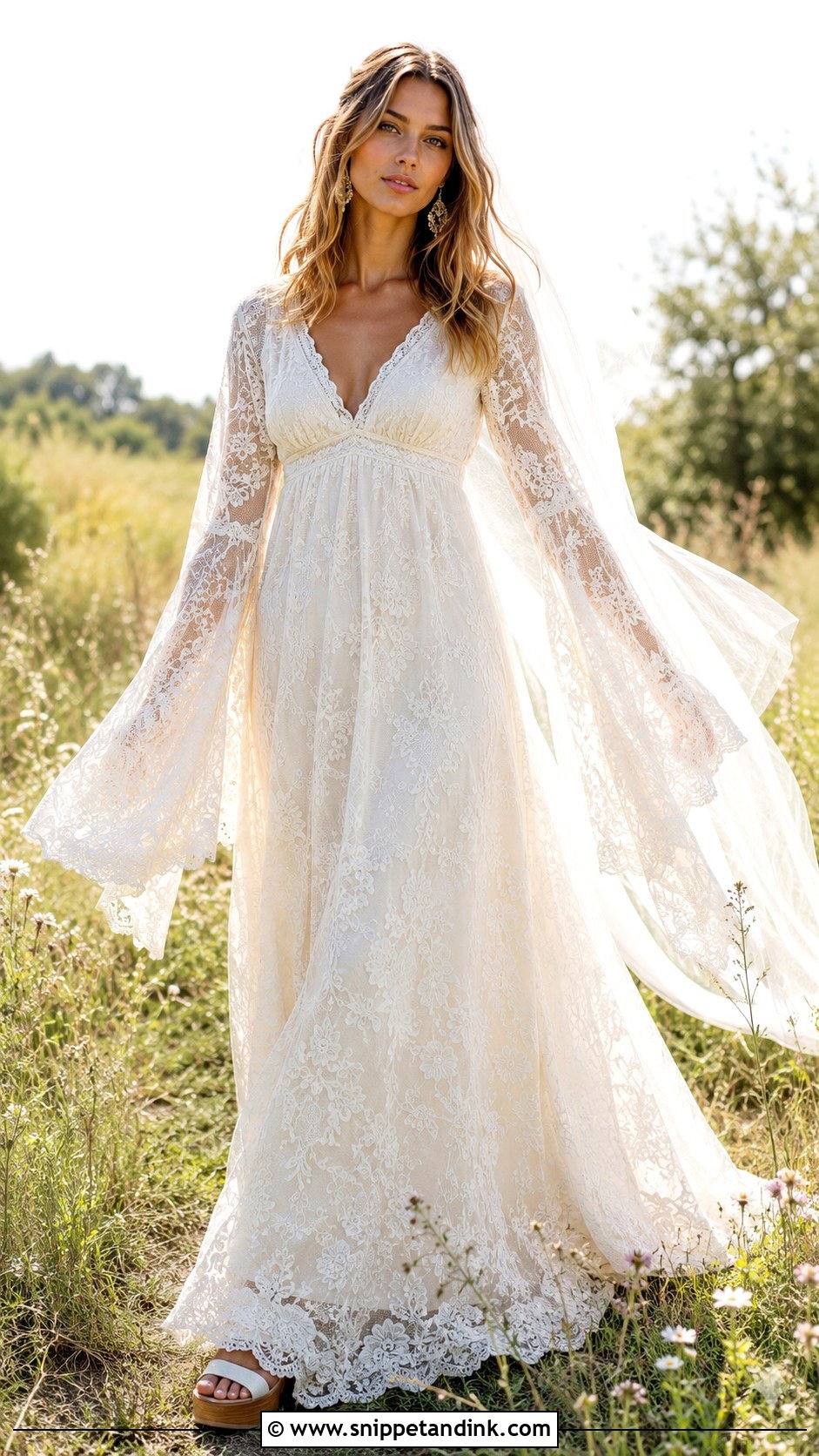
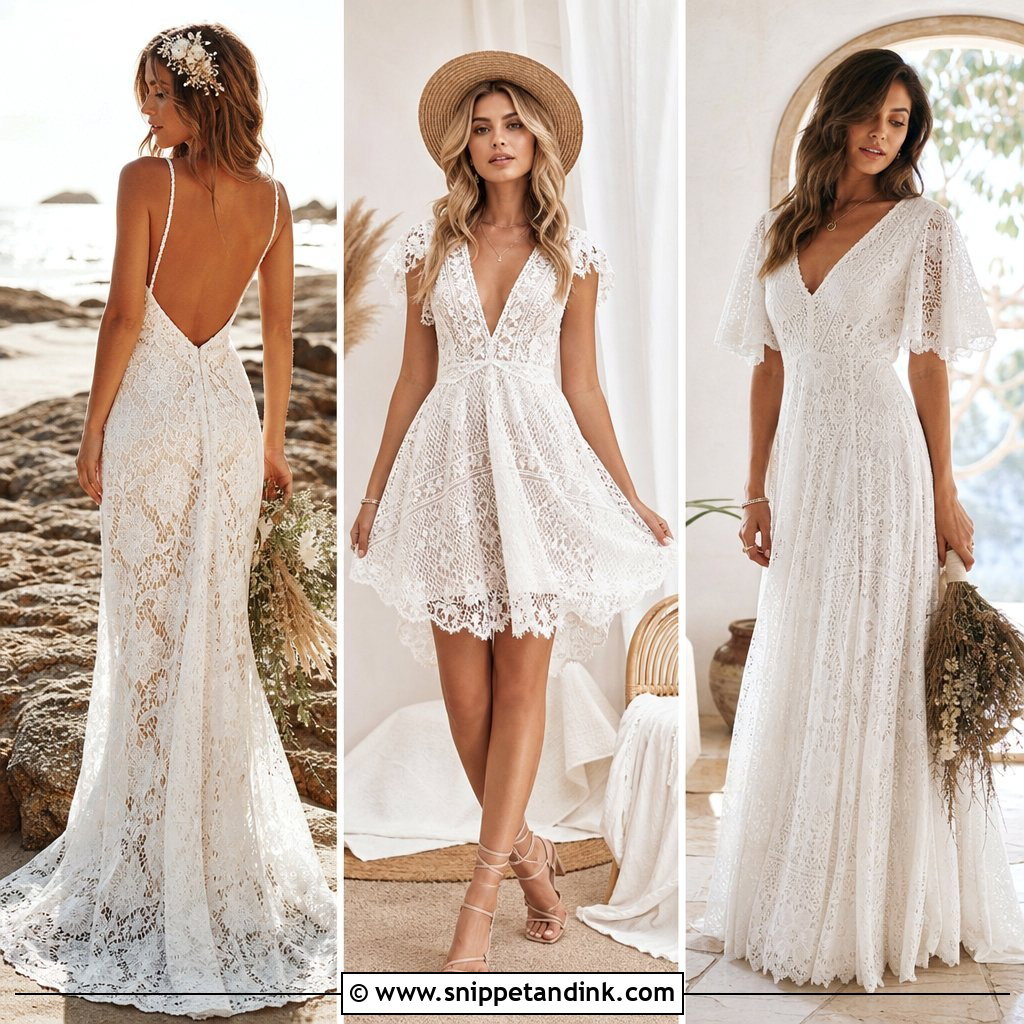
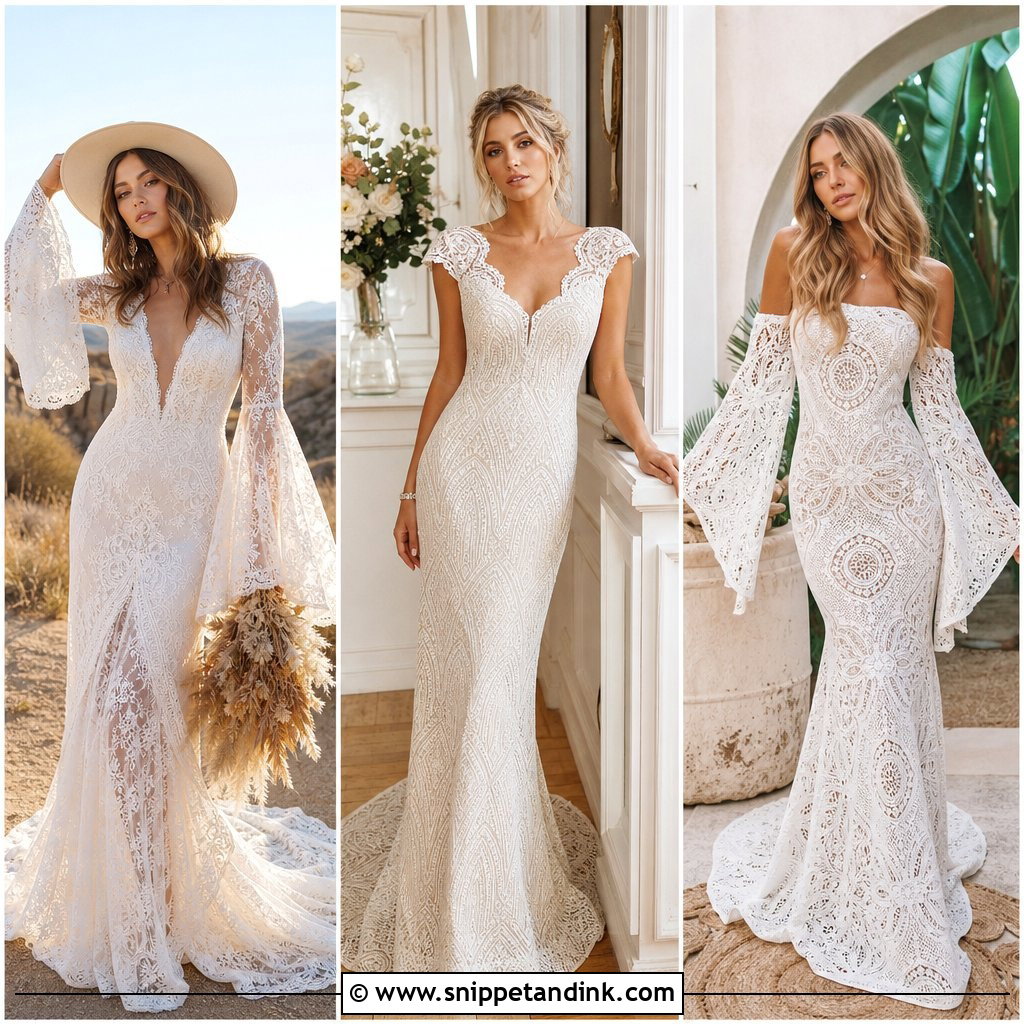
Empire waists, bell or bishop sleeves and open botanical lace give a 1970s boho lace wedding dress its looseness. The lining should be light, because a heavy lining under open lace makes the skirt bulky and kills the movement. Loose waves, a floral comb and a simple veil at the back of the head keep it relaxed. Platform sandals or low block heels cope with grass and gravel. Don’t over-coordinate this one. A slightly undone bouquet and minimal gold jewelry look more natural with it than matched sets.
6. Square Neck Lace Wedding Dress
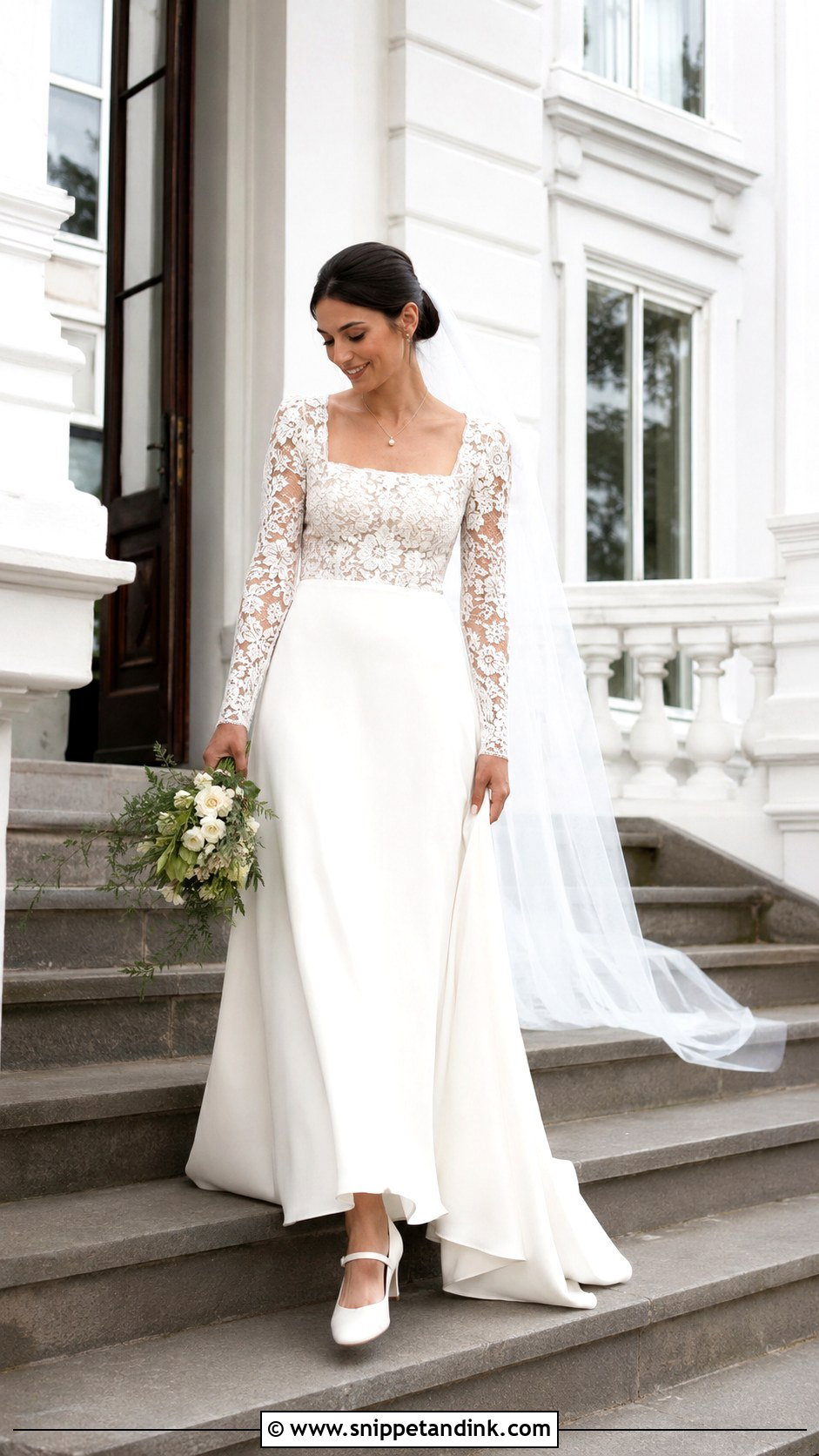
Square necks sit across the collarbones and give a lace bodice a firm architectural line, with more coverage than a plunge. Fitted lace sleeves, a shaped bodice and a softly flared skirt balance it. A fine chain with a small pendant fits neatly inside the square; pearl earrings alone are enough too. I’d keep the hair in a low center-parted bun with a plain cathedral veil. The corners of a square neck can gape when you lean forward, so test that at fittings and ask for a stay tape along the edge if they do.
7. Illusion Neckline Lace Wedding Dress
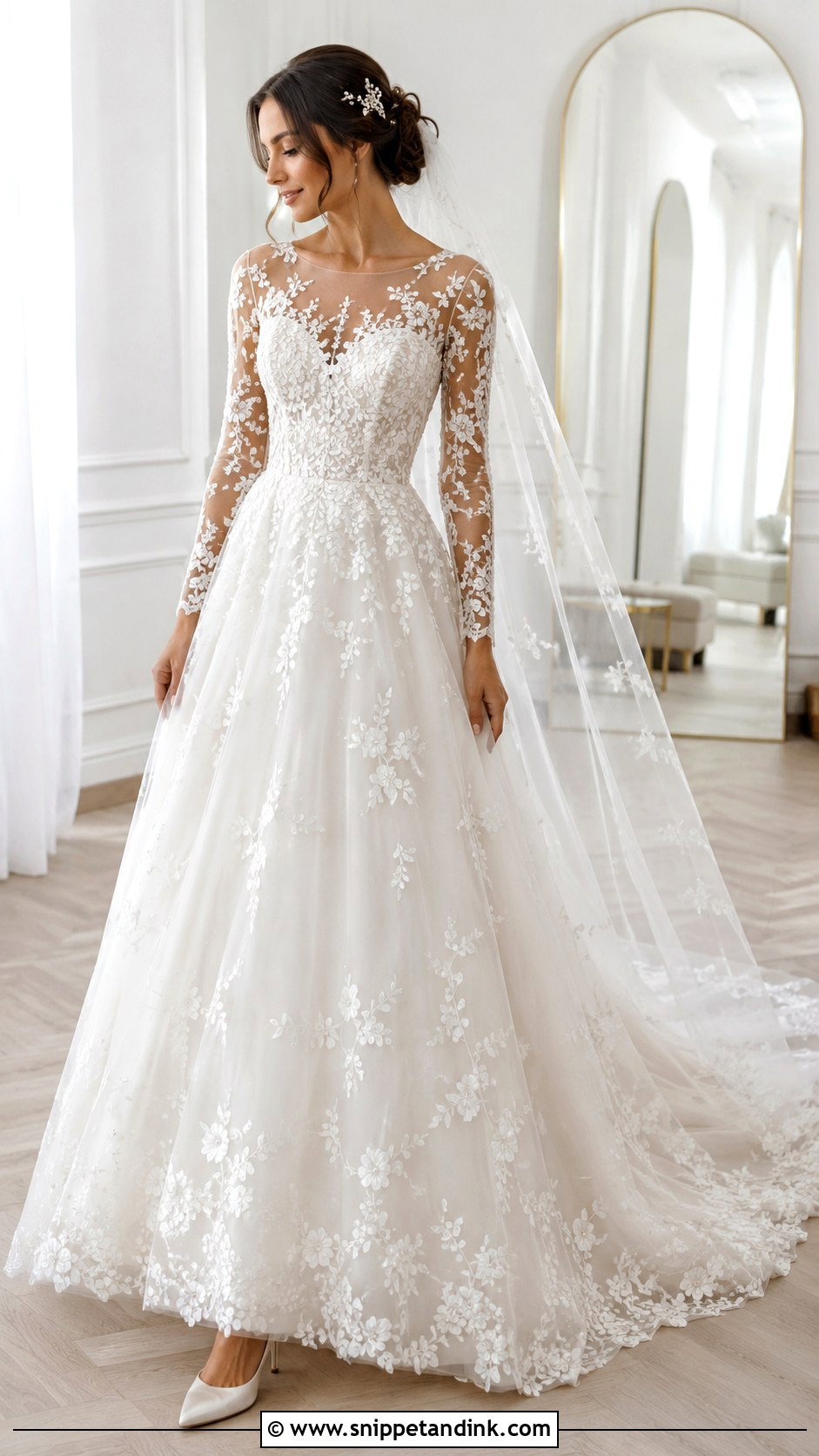
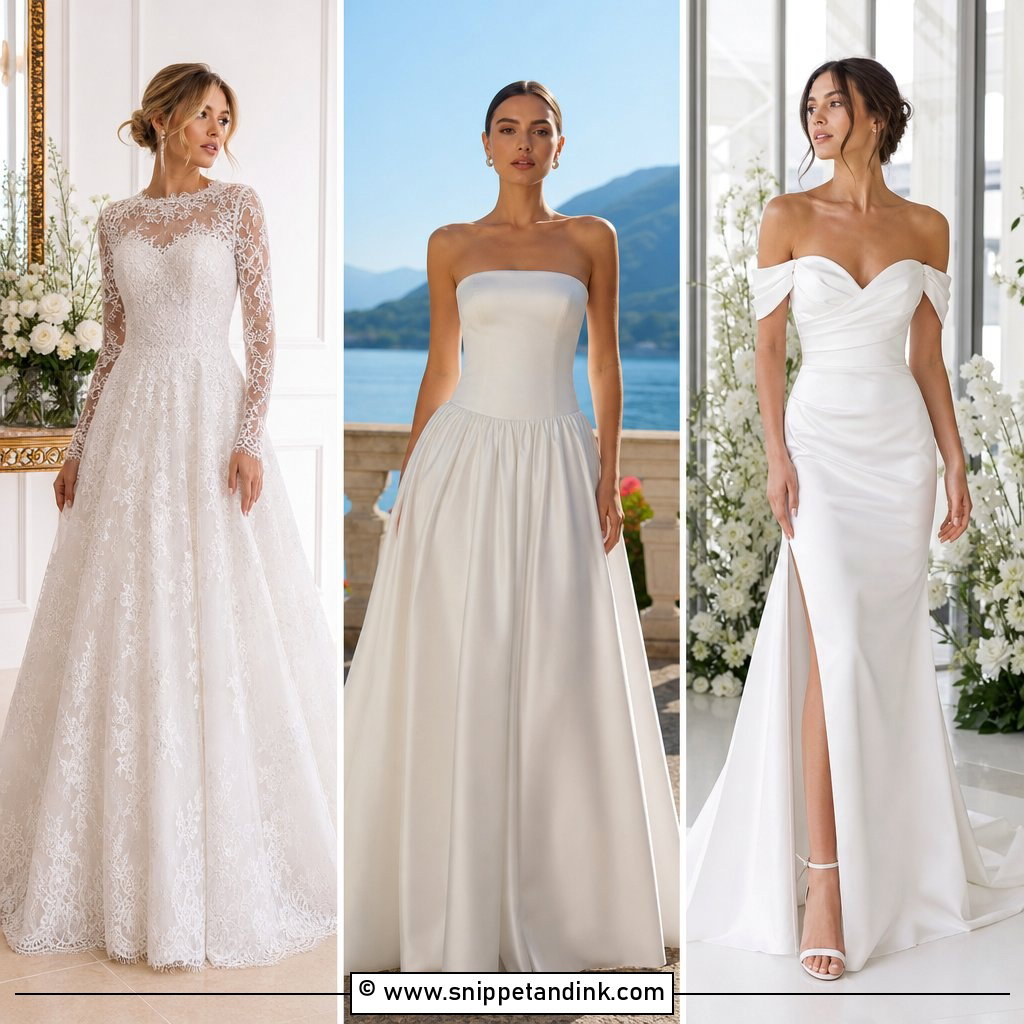
With an illusion neckline, lace appliqués sit on fine mesh so they appear to float across the shoulders. The mesh color is the detail I check first. Hold the gown against your chest in daylight; mesh that’s a shade too pink or too pale shows up as a visible band in photos. Fitted sleeves and a structured A-line skirt suit this neckline, and covered buttons down the back add one more traditional touch. A low twisted updo with pearl pins and a veil below it keeps the neckline clear.
8. Off Shoulder Lace Wedding Dress
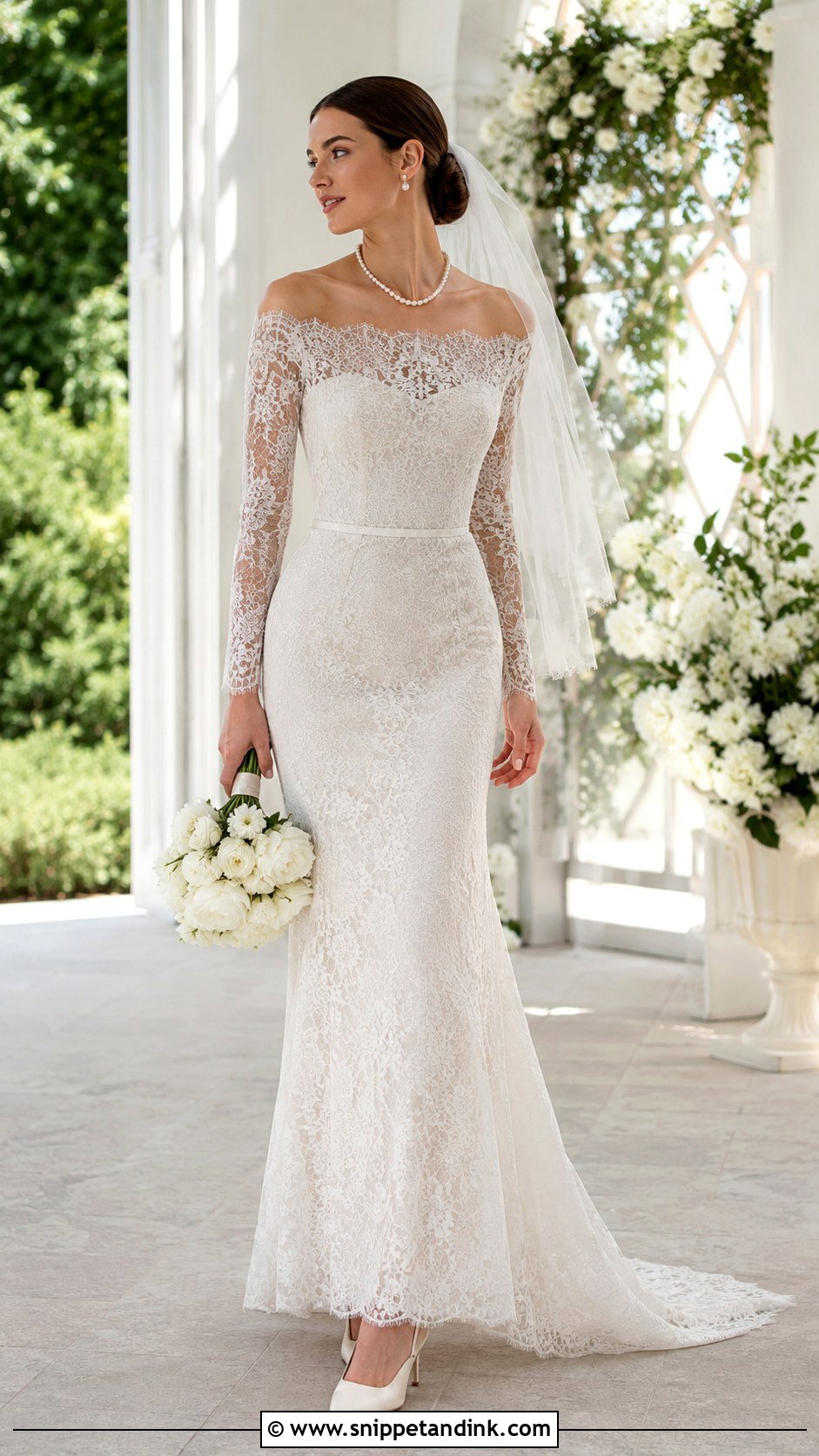
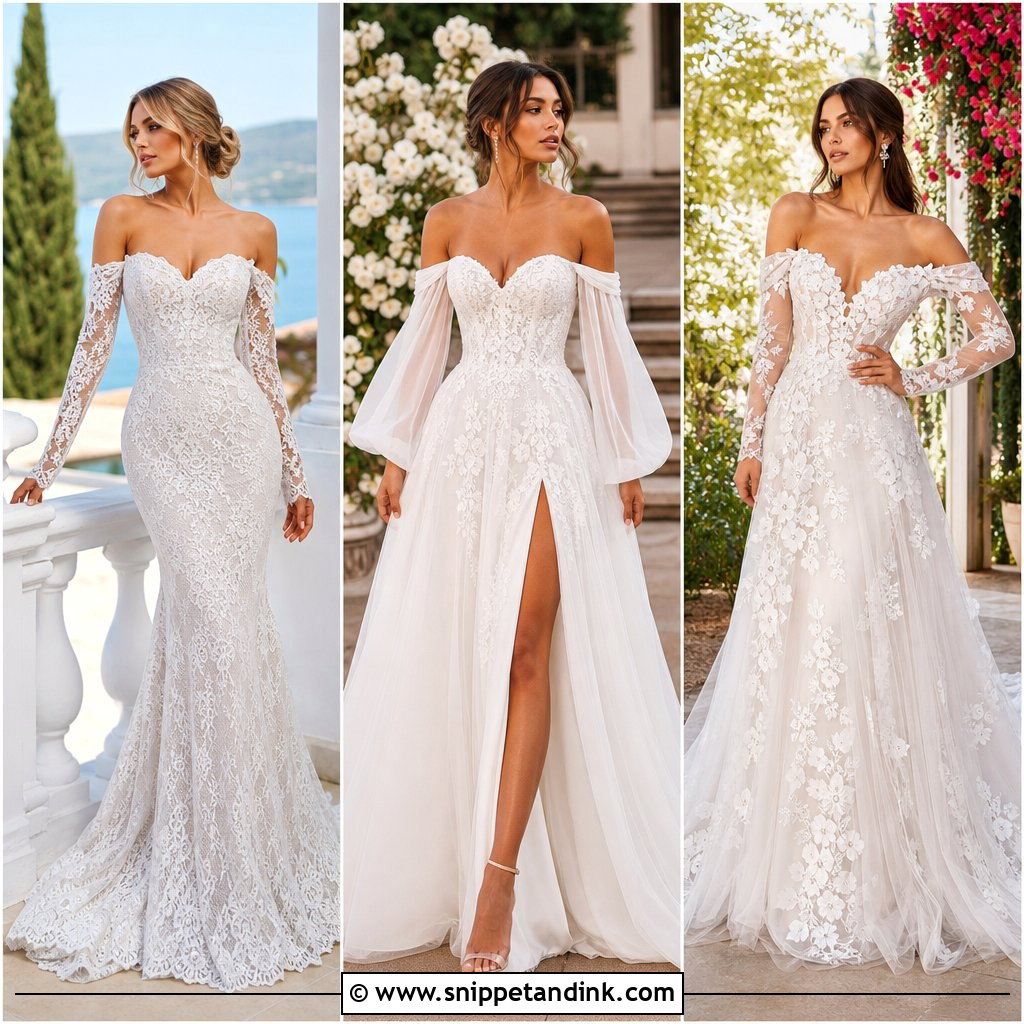
Off-the-shoulder necklines are tricky with long sleeves because the sleeves hold the bodice up. If they’re cut wrong, you can’t raise your arms without the neckline riding up or sliding down. I’d only choose this style with a fold-over lace band that is attached firmly to the sleeves and a bodice with internal structure. A fitted waist and gently flared skirt keep the vintage outline. Choose either a short pearl necklace or larger drop earrings, then a smooth chignon and a shoulder-length veil. Ivory slingbacks finish it.
9. Button Back Lace Wedding Dress
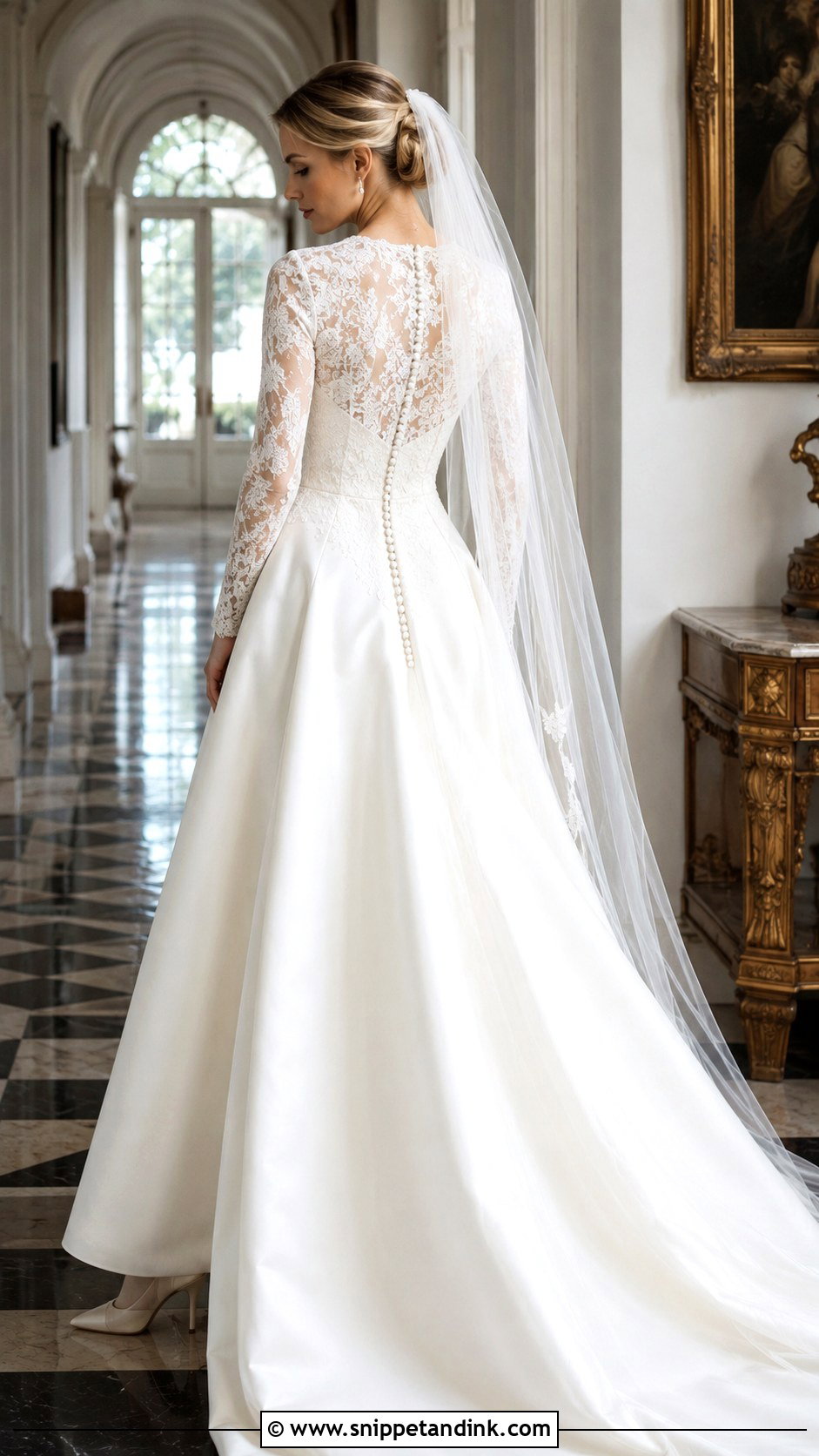
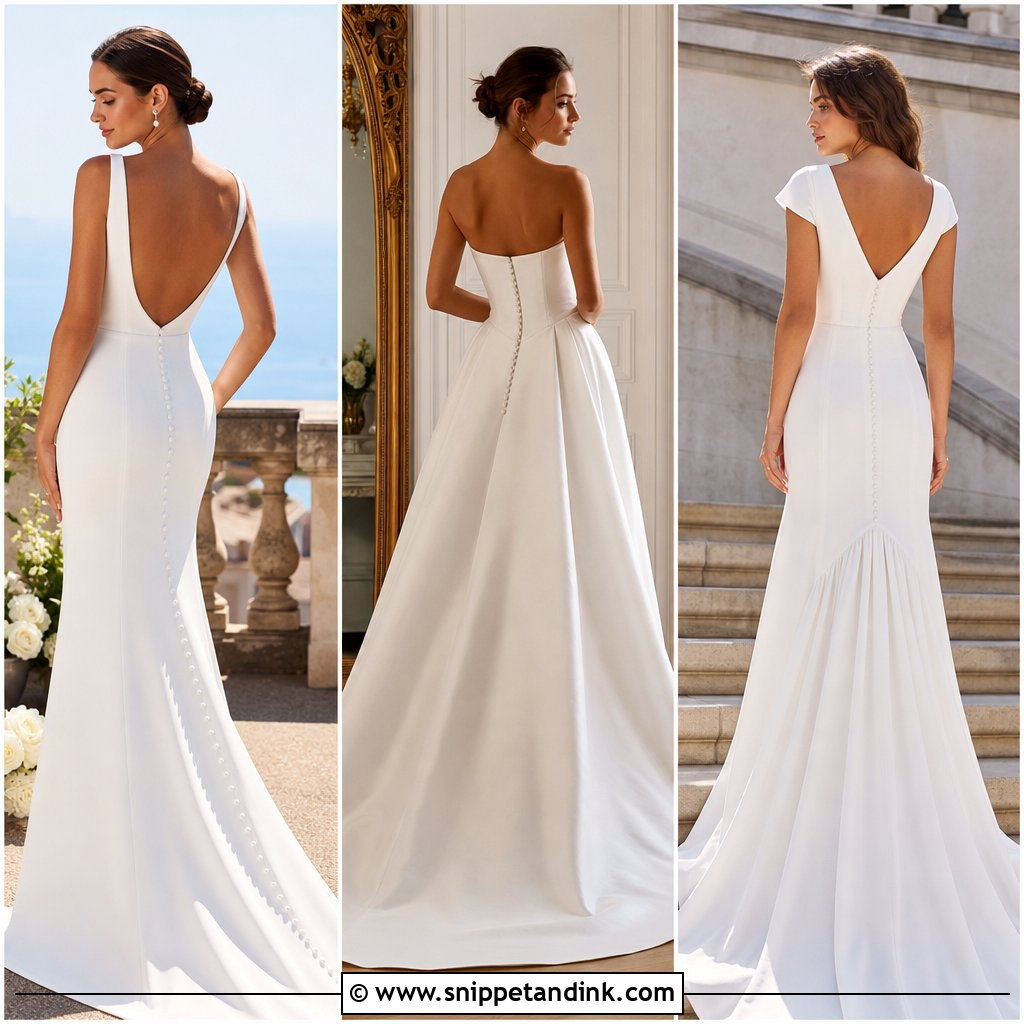
Most of this dress happens behind you. A row of covered buttons running from the neckline to the waist, or on down the train, is what guests see through the whole ceremony. Fine floral lace, narrow sleeves and an A-line skirt keep it traditional. Lift the updo high enough to show the top buttons, and choose a single-layer veil so they show through it. Fifty loops take a long time to fasten, so I always ask whether there’s a hidden zip under the buttons; most brides are grateful for one.
10. Corset Bodice Lace Wedding Dress
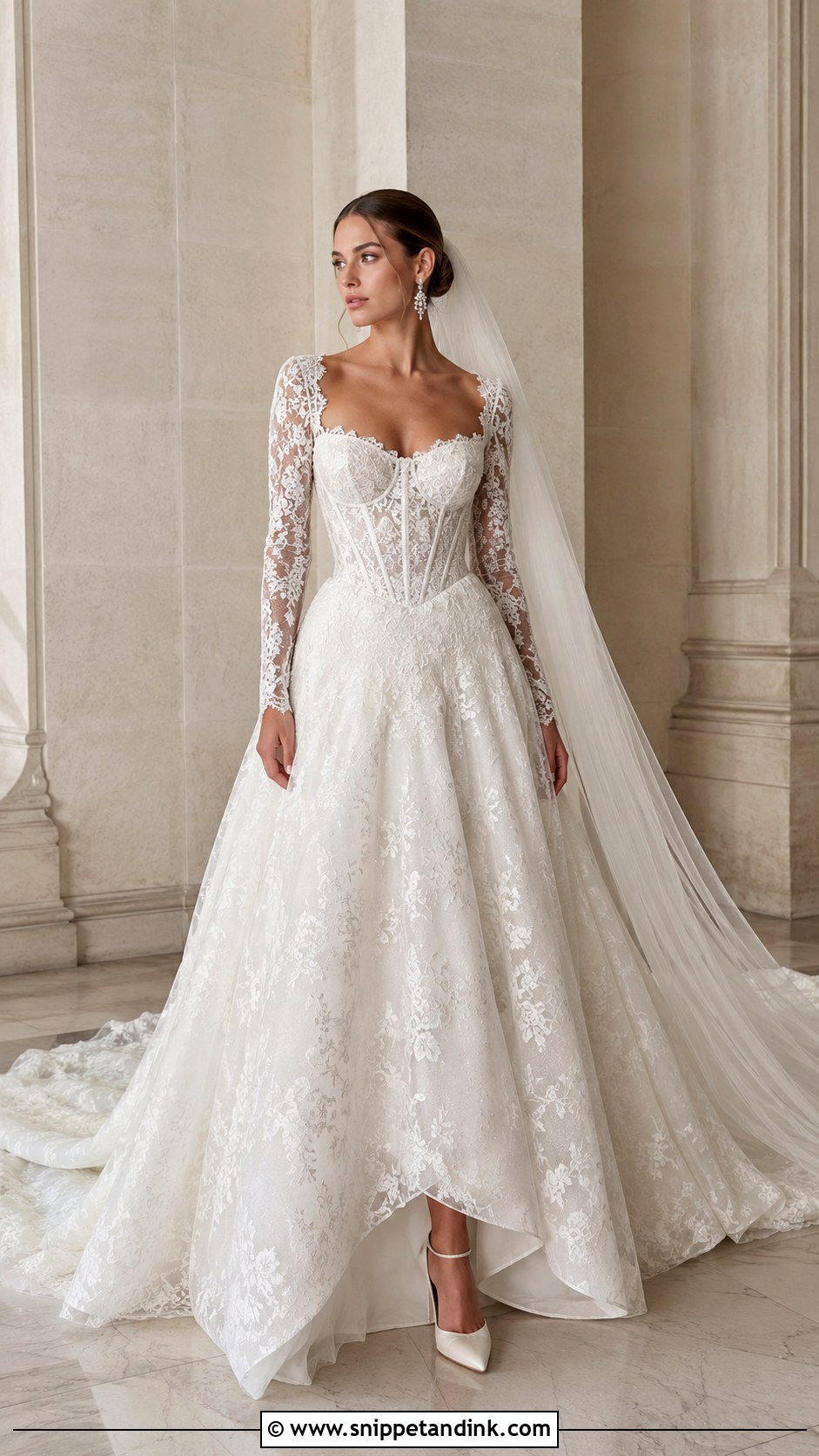
A corset bodice gives shape and real support, which matters if you can’t wear a bra with the neckline. Subtle boning, a softly curved neckline and long lace sleeves keep it refined. An A-line or full skirt balances the fitted top. When the boning shows through the lace, the lace should be delicate and the accessories plain. My fitting test is simple: sit down and eat something. If the boning digs into your ribs during a short fitting, a ten-hour day will be miserable. Ankle-strap ivory heels, crystal studs and a neat bun finish it.
11. Empire Waist Lace Wedding Dress
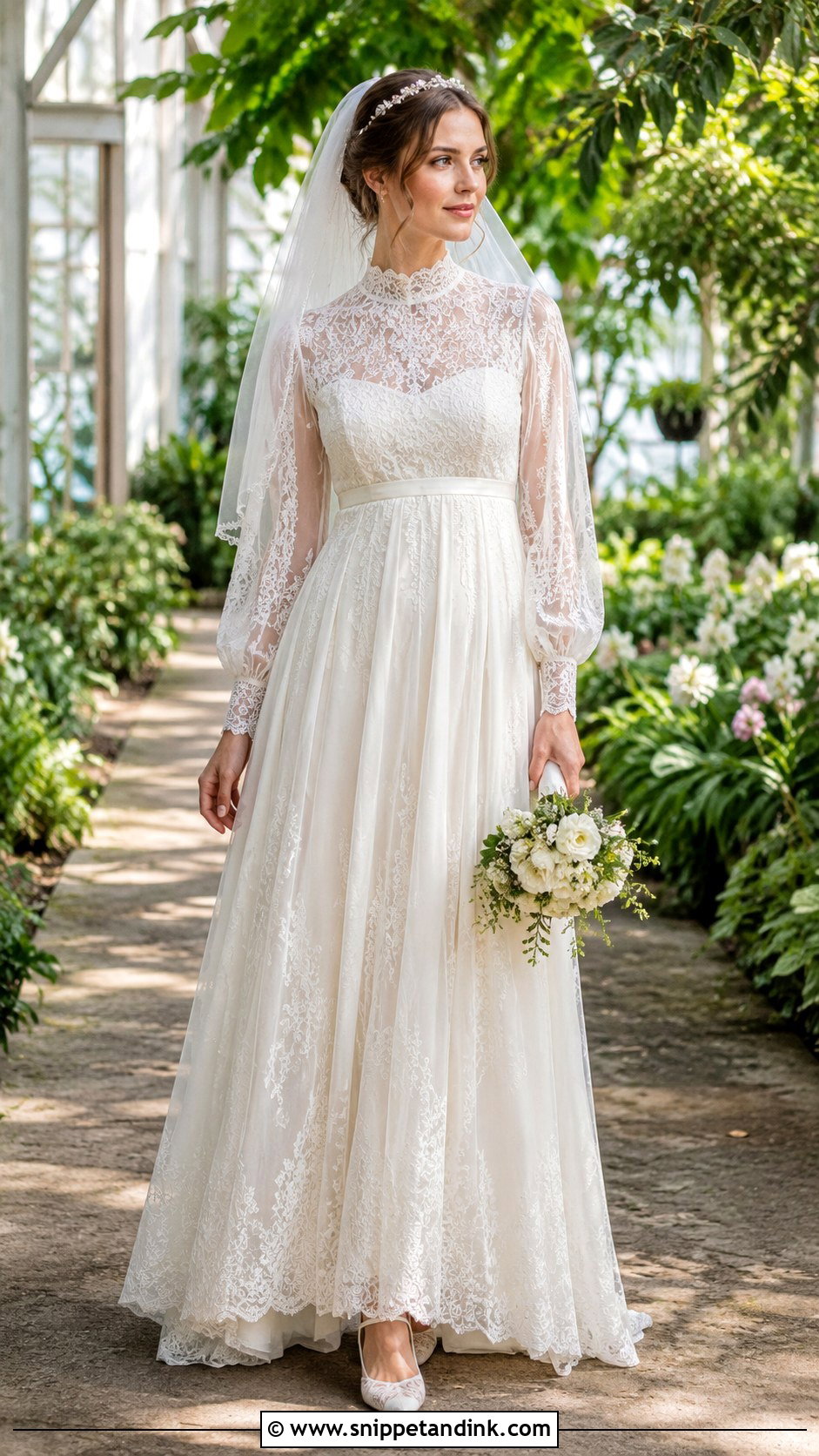
Empire seams sit just below the bust, and the skirt falls loosely from there, which leaves plenty of room through the waist and hips. A high lace neckline, sheer bishop sleeves and a light skirt give it vintage character. A tonal velvet or satin ribbon can mark the raised waist. I’d style soft curls with a delicate headband and a fingertip veil near the crown, and pair low lace-up shoes or ballet flats. Get the hem right. A fluid skirt that’s even slightly long collects around your feet and catches on every step.
12. Tea Length Lace Wedding Dress
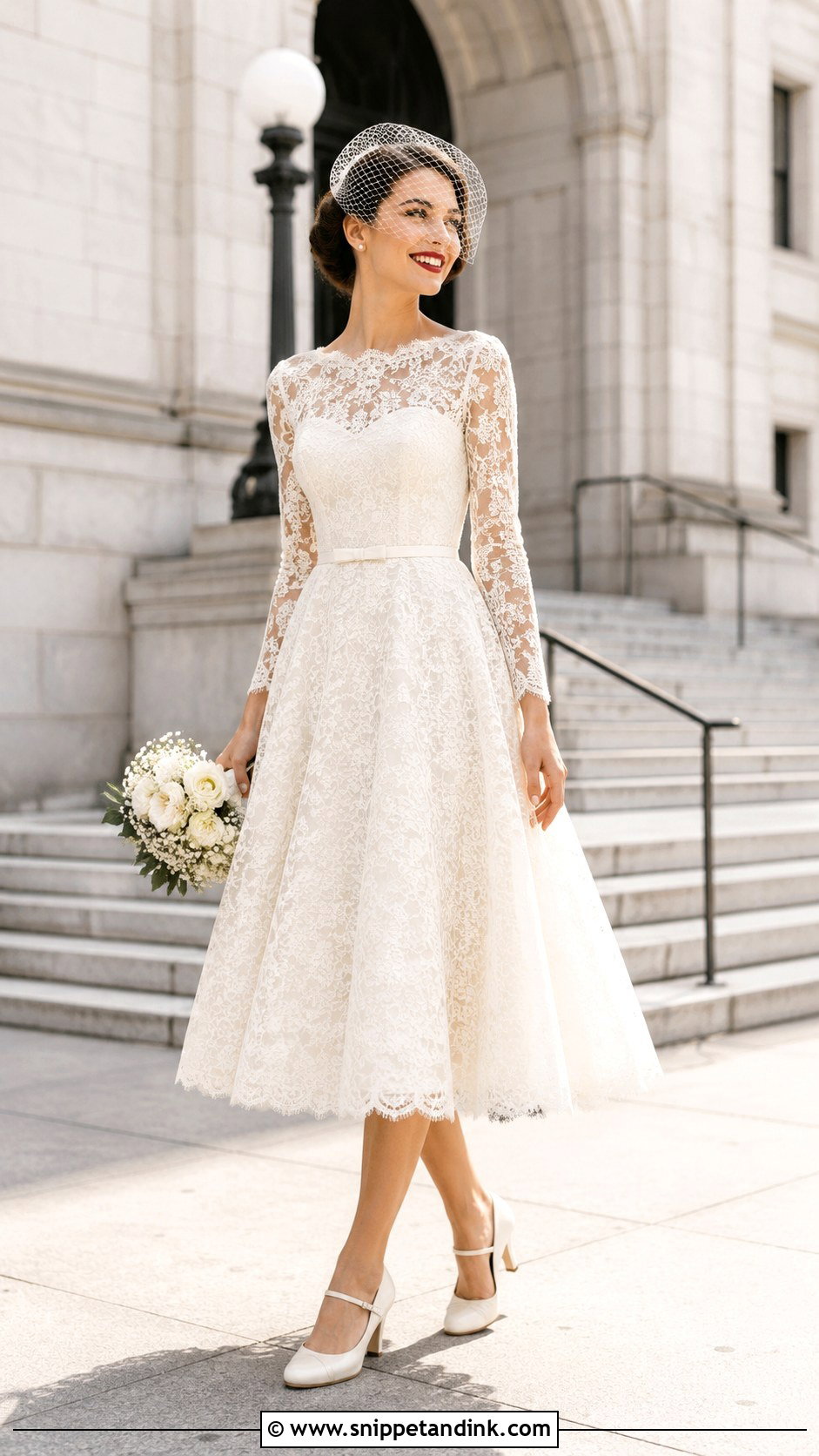
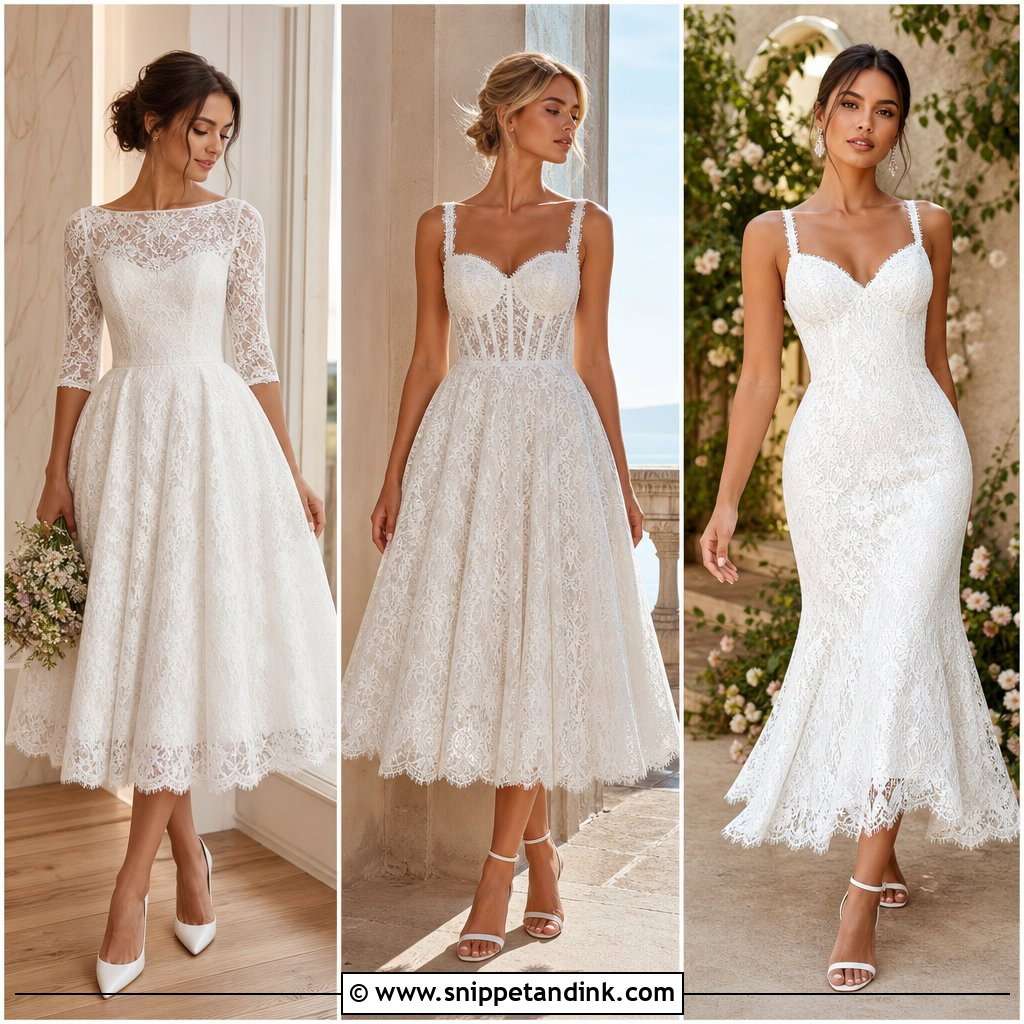
Tea length ends between the lower calf and the ankle, so your shoes become part of the look. A fitted bodice, full long sleeves and a softly flared skirt point to the 1950s, and lighter lace keeps a shorter dress from feeling stiff. Mary Jane pumps, slingbacks or low block heels with a small buckle all work. A birdcage veil and pearl studs suit the length, and a narrow satin belt defines the waist. This is the gown I suggest for courthouse ceremonies and gardens where you’ll walk and dance a lot.
13. Mermaid Lace Wedding Dress
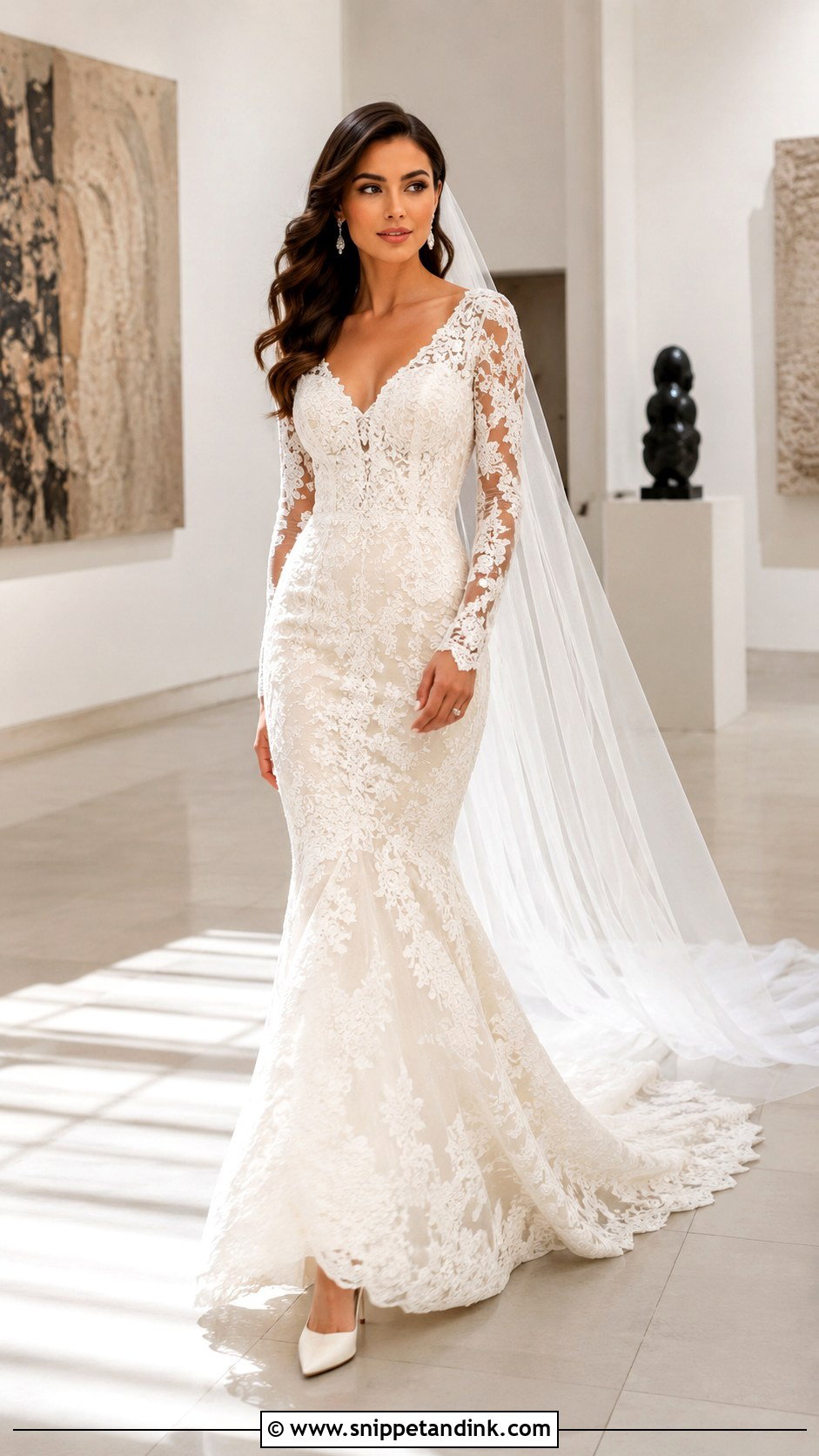
A mermaid shape follows the body through the hips before flaring near the knee, and long lace sleeves with a modest V-neck balance that closeness. Lace scale matters more here than on any other silhouette. An elongated floral pattern draws the eye downward in one line, while large, widely spaced motifs land at random points on the hips. Side-swept waves or a low bun, a plain cathedral veil and pointed pumps continue the long line. Walk, sit and climb a step at the fitting. If the flare starts too low, you’ll shuffle all day.
14. A Line Lace Wedding Dress
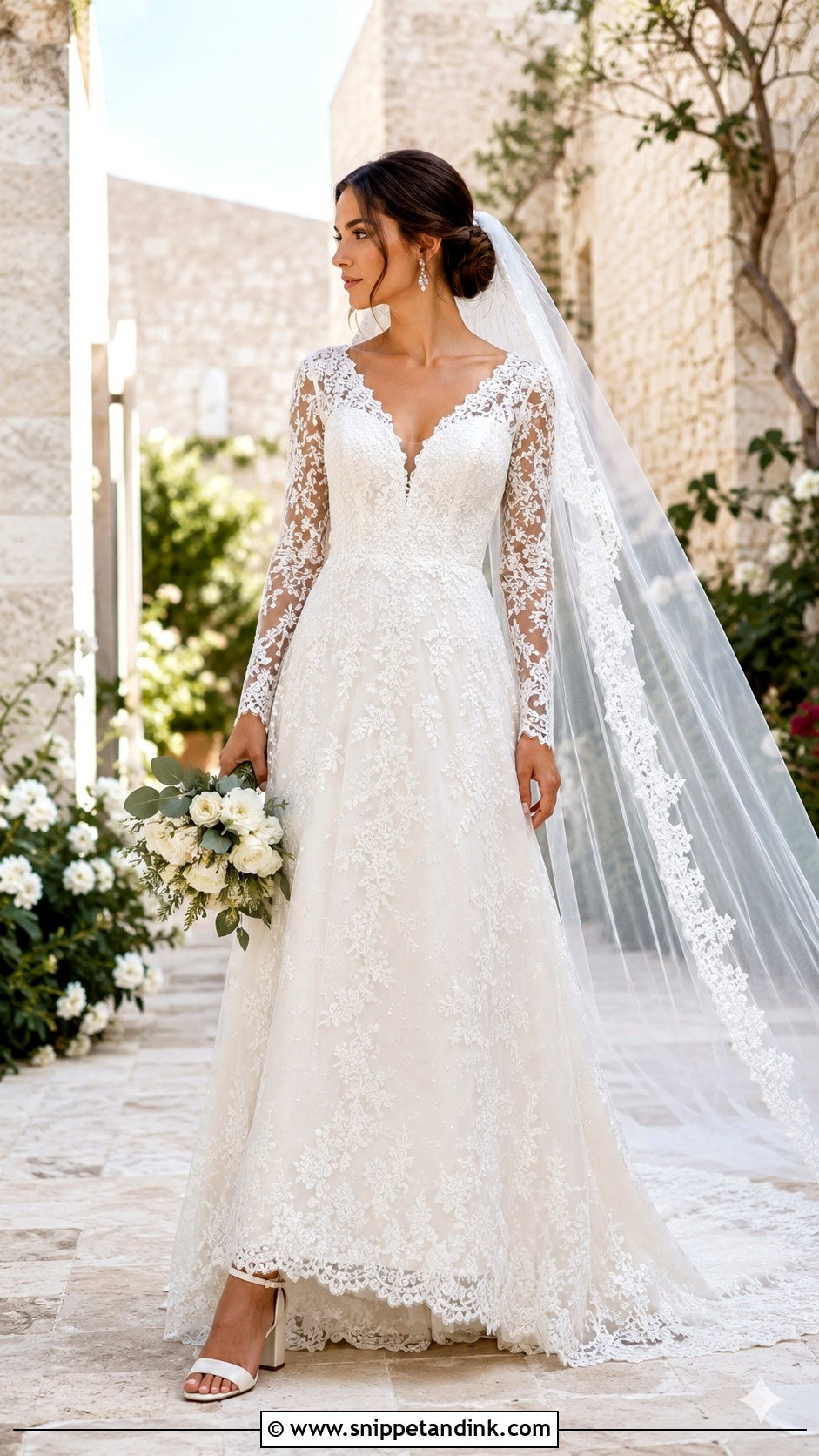
The A-line is the shape I recommend most often to a bride who’s unsure, because it fits so many bodies and can be adjusted in so many ways. The fitted bodice shows the upper body, and the skirt widens gradually from the waist without a restrictive underskirt. A soft V-neck, delicate floral lace and a medium train keep it easy. I adjust it through waist placement, sleeve fit and skirt volume. A low chignon, pearl-and-crystal earrings, a lace-edged fingertip veil and ivory block heels finish the look.
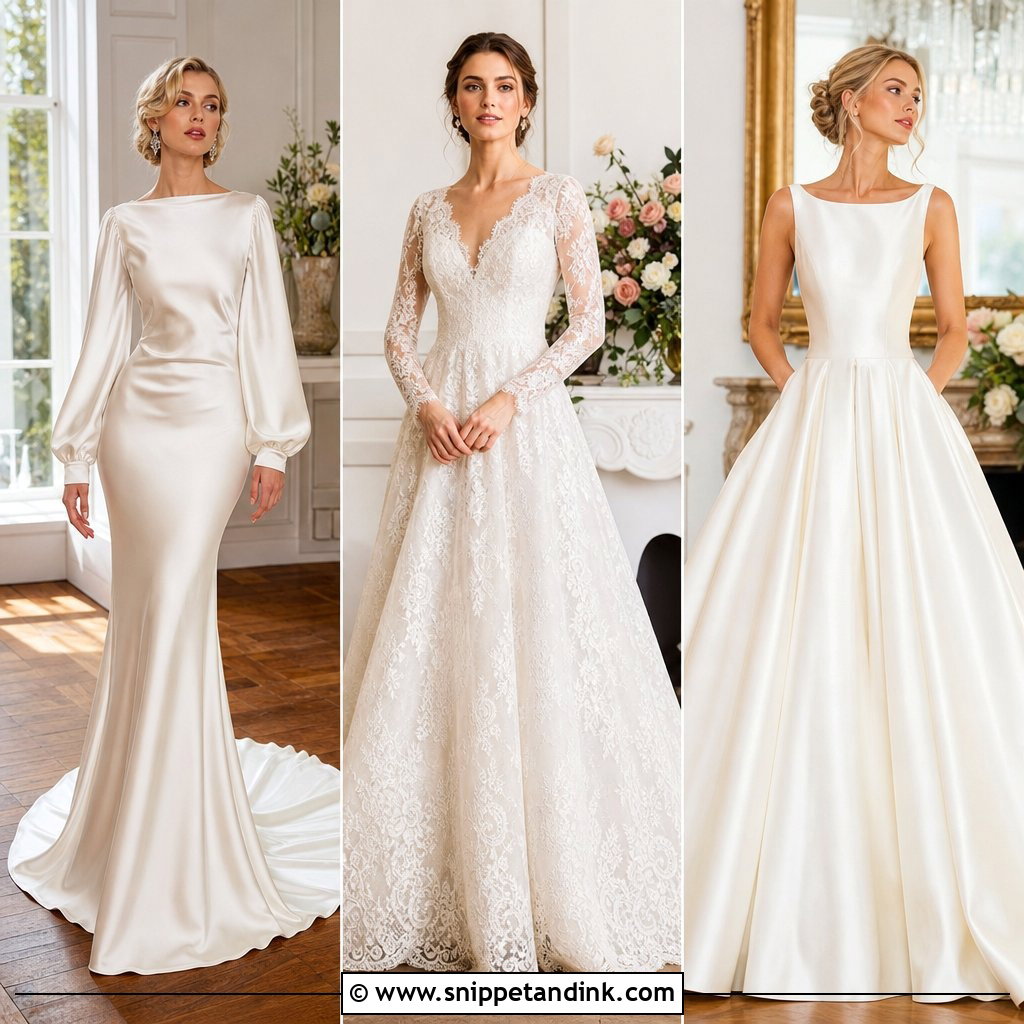
15. Art Deco Drop Waist Lace Wedding Dress
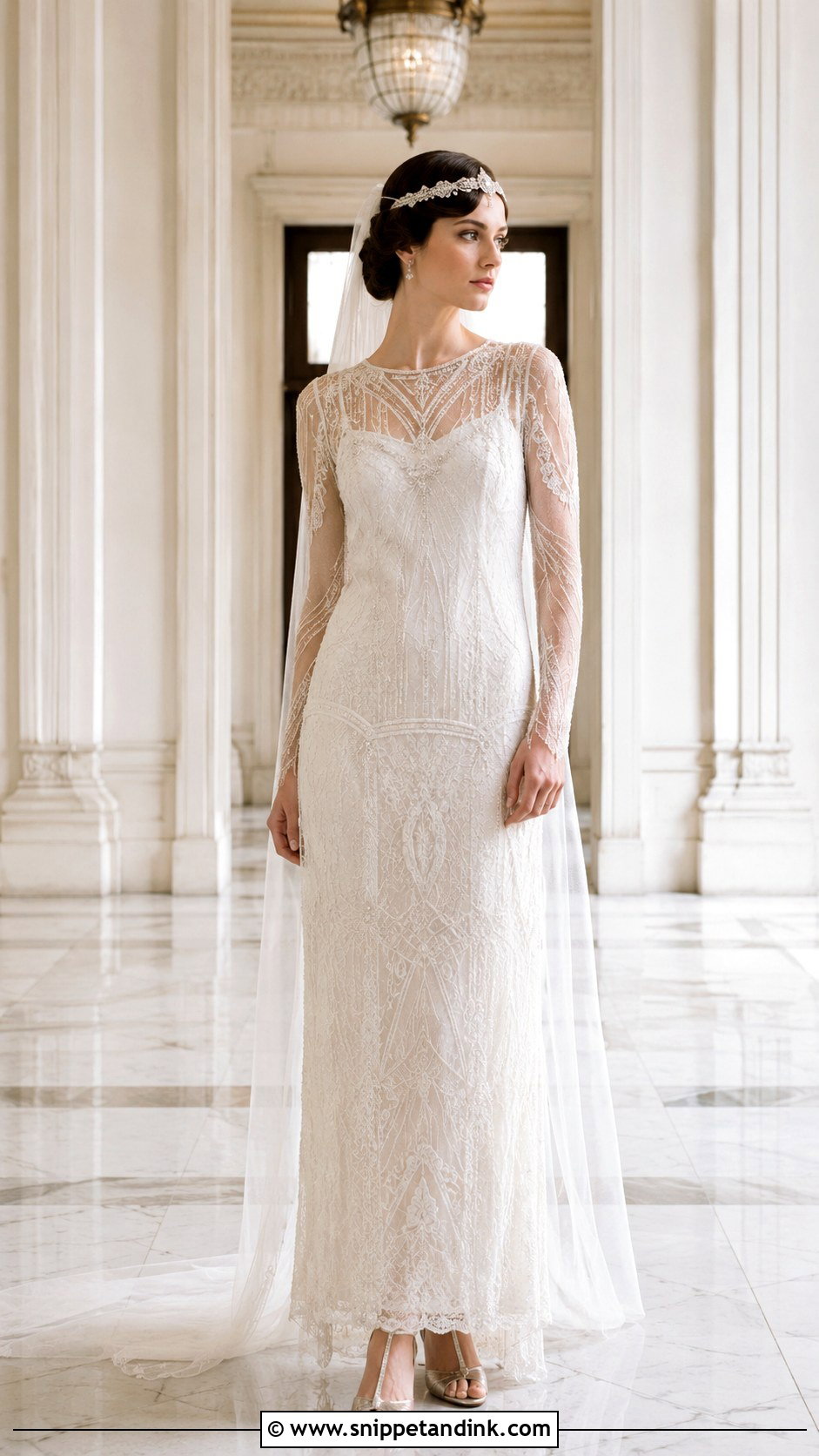
Geometric lace, vertical seaming, subtle beading and fitted sheer sleeves give a drop-waist gown its Art Deco feel. A narrow column or softly flared hem works; a full ball-gown skirt fights the long torso. Smooth finger waves, a crystal headband, small geometric earrings and silver T-strap shoes keep it period. Where the seam falls is personal, so I always try a few positions with pins. Too low and it pulls across the hips when you sit. Too high and it loses the long-torso effect that makes the dress.
16. Bell Sleeve Lace Wedding Dress
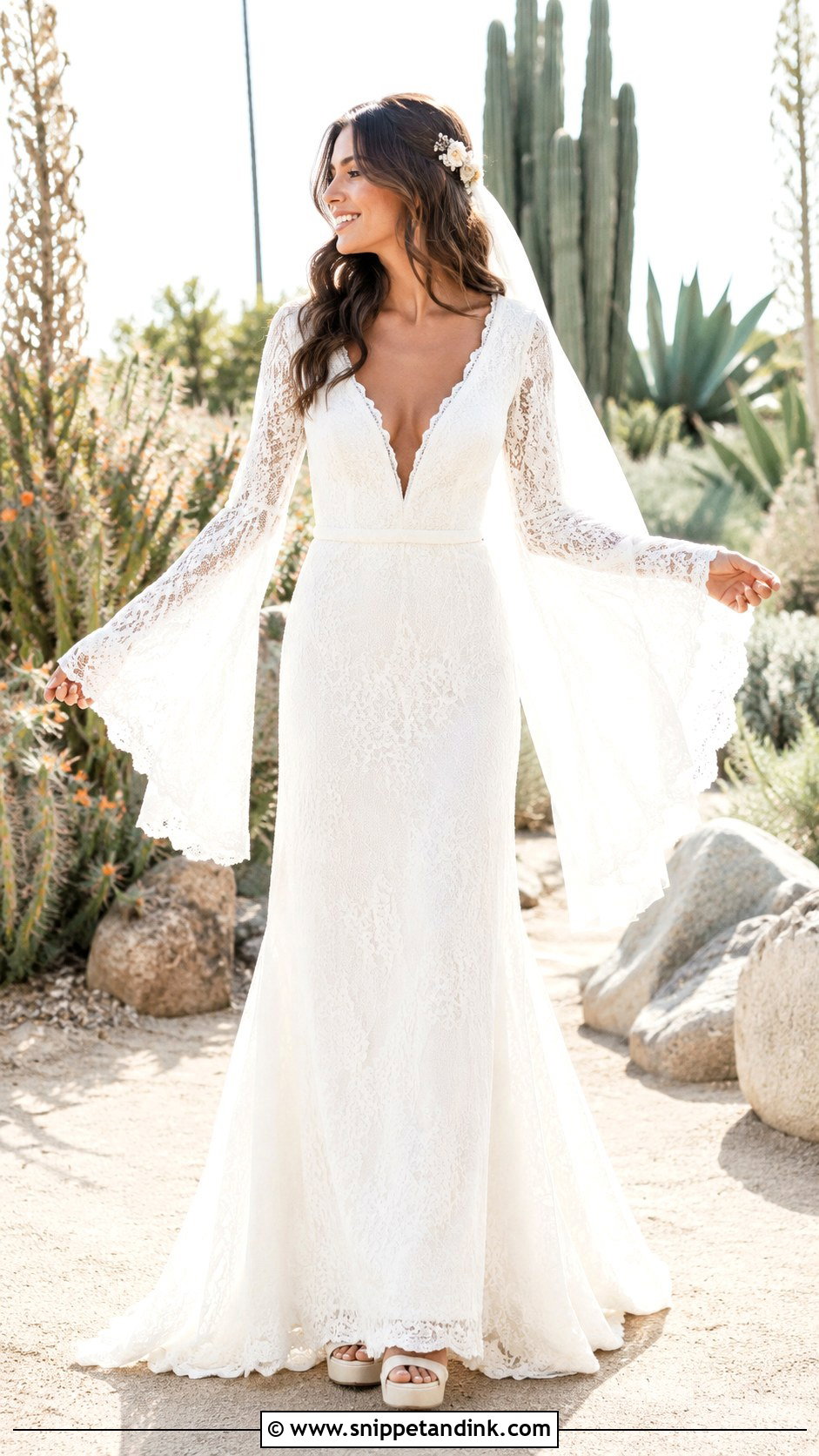
Wide bell sleeves look best when they stay fitted above the elbow and only open below it, so the dress doesn’t swamp your frame. A clean V-neck bodice and a narrow A-line skirt let them be the feature. Loose center-parted waves, a small floral comb and a low veil suit them, and platform block heels or ivory boots lean into the 1970s. Hold your arms at your sides at the fitting. If the lace falls over your fingers, it will drag through dinner and tangle in the bouquet, so have the hem of the sleeve lifted.
17. Puff Sleeve Lace Wedding Dress
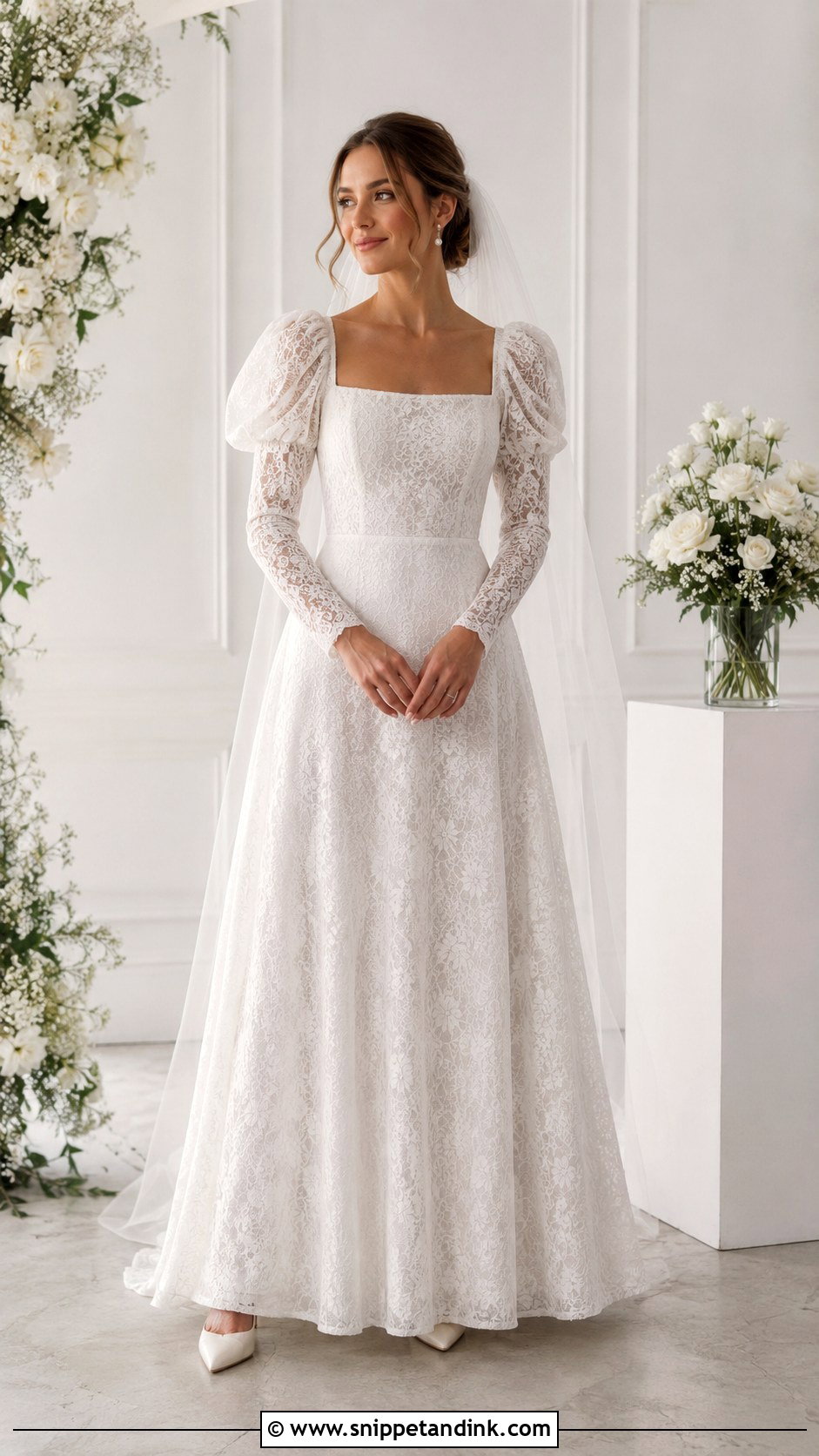
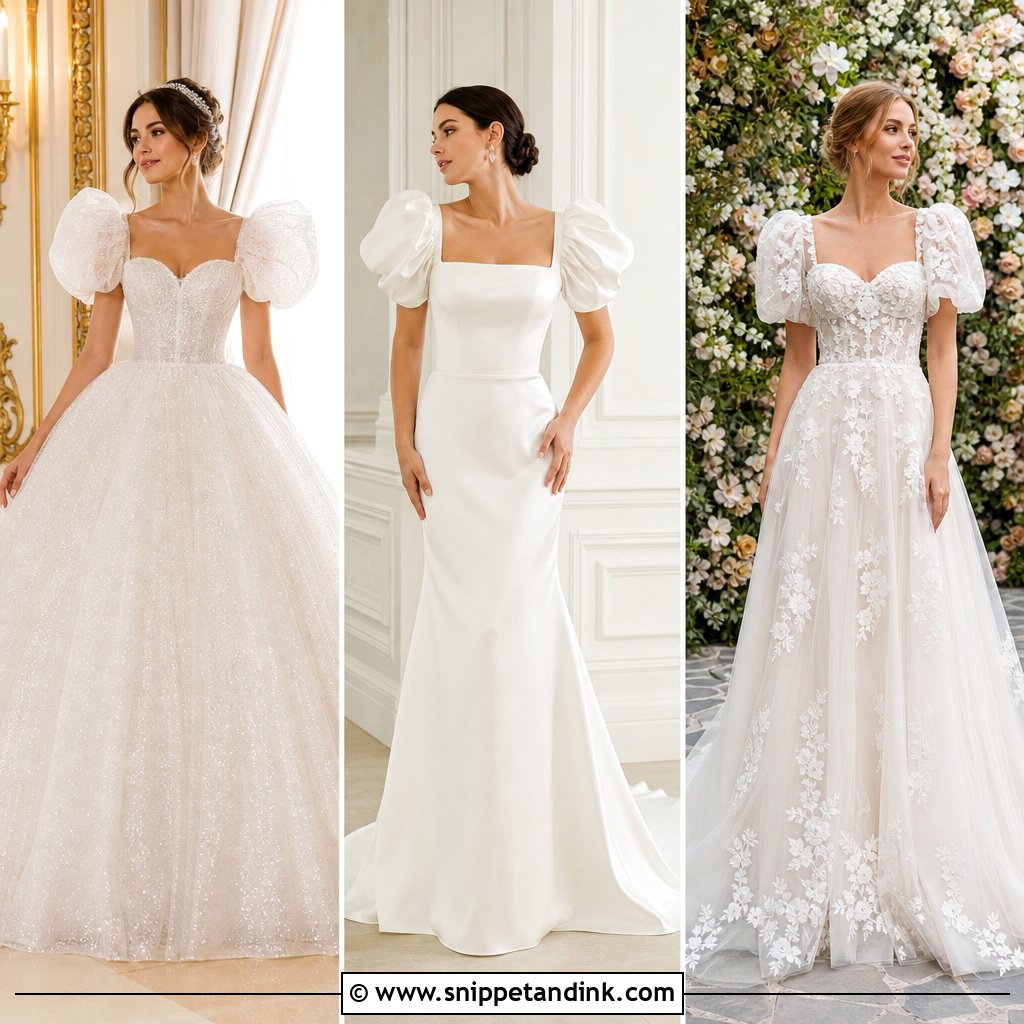
Puff sleeves need a calm dress underneath. I’d look for controlled volume at the shoulder, a fitted lower arm and narrow wrist cuffs, then a square neckline, a defined waist and a simple floor-length skirt. A smooth center-parted bun with the veil placed beneath it, small pearl drops and pointed heels add polish without adding more shape. Scale is personal. On a petite frame I reduce the puff; a taller bride can carry more volume and still look balanced.
18. Champagne Lace Wedding Dress
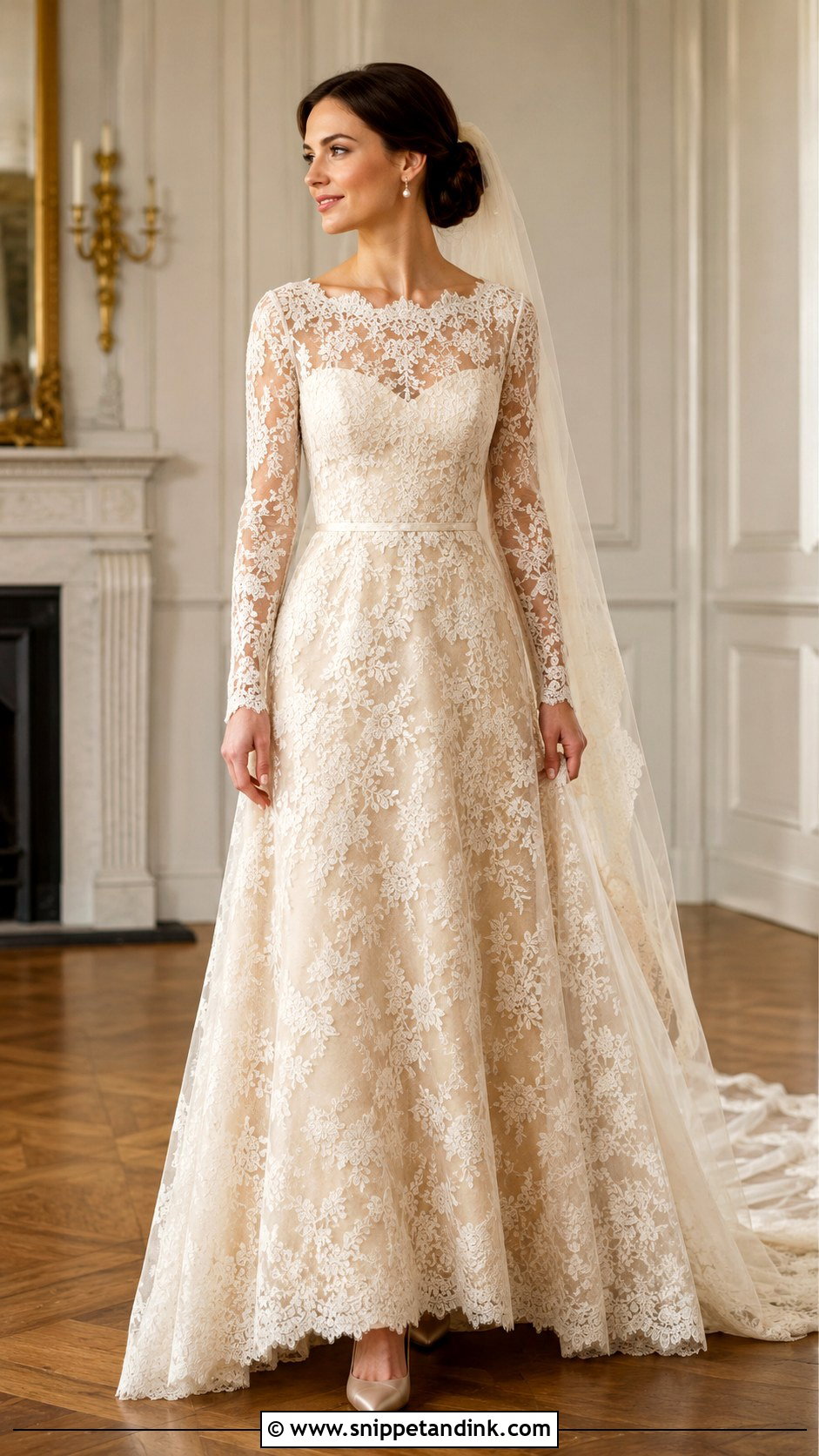
Champagne lining is one of my favorite tricks for lace. Ivory or soft white lace over a warm golden base makes every flower in the pattern show, where white on white can look flat in photos. Fitted sleeves, a lightly structured bodice and an A-line skirt keep it cohesive. Bright white accessories look harsh against it, so I match the veil to the lace and choose champagne satin pumps and ivory pearls. Cream flowers suit better than stark white blooms. Look at the swatch in daylight, indoors and on camera before deciding.
19. Plus Size Lace Wedding Dress
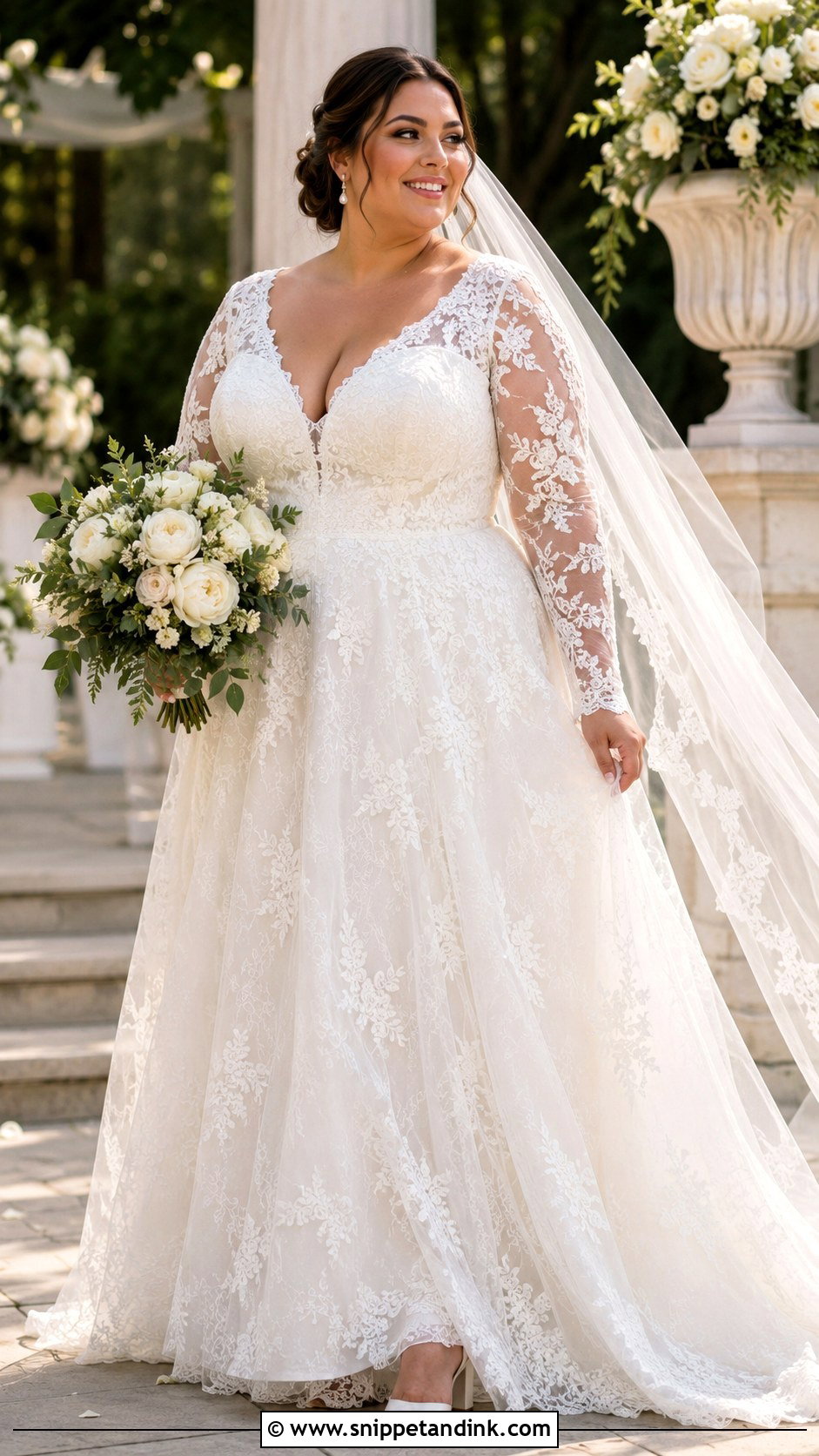
I start a plus-size fitting with construction, not with rules about hiding anything. A structured V-neck bodice, comfortably fitted long sleeves, a defined waist and an A-line or soft ball-gown skirt give a supported, balanced shape. Medium-scale lace reads clearly across a larger gown, and lining can add coverage wherever you want it. Stable block heels and a veil scaled to the train finish it. Ask whether the sample has the same sleeve width, bodice structure and lace placement as the dress you’ll receive. Samples in a different size often don’t, and alterations will matter more than any neckline.
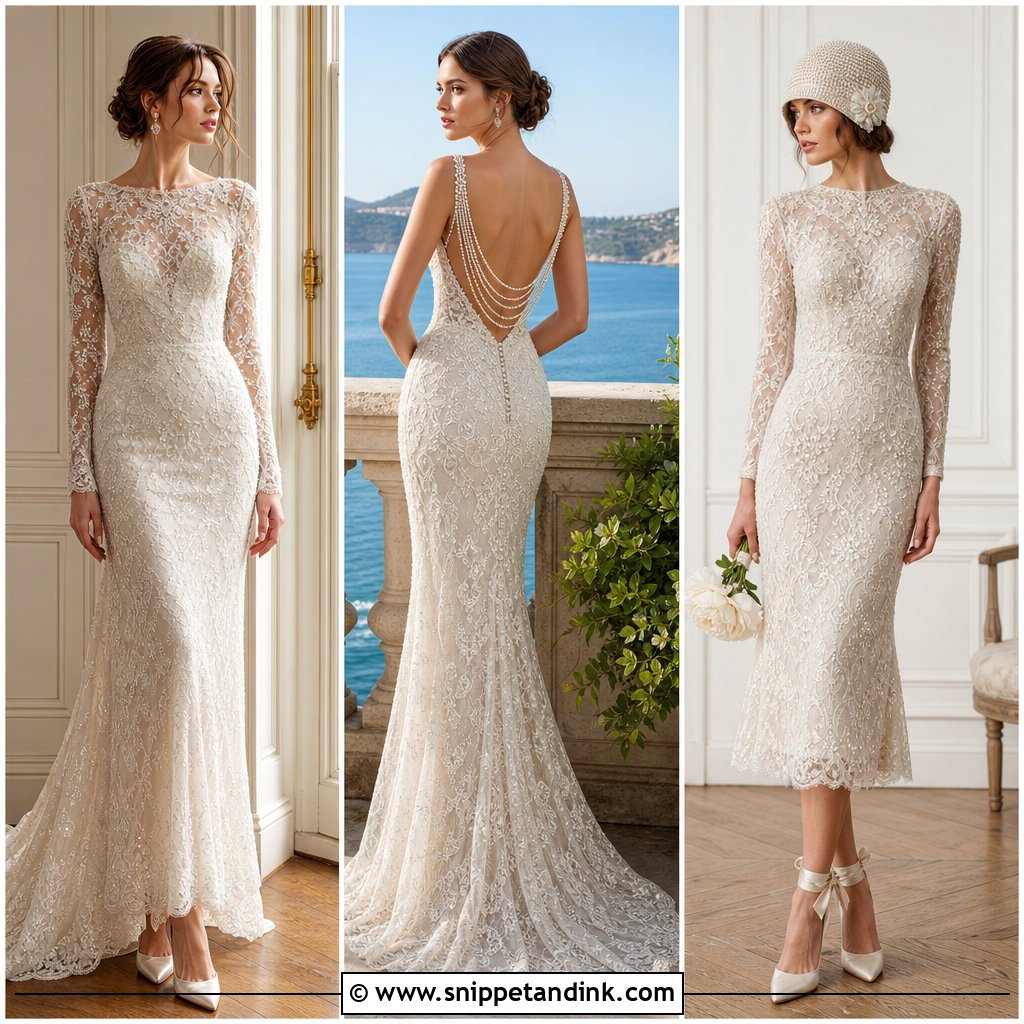
20. Winter Lace Wedding Dress With Satin Skirt
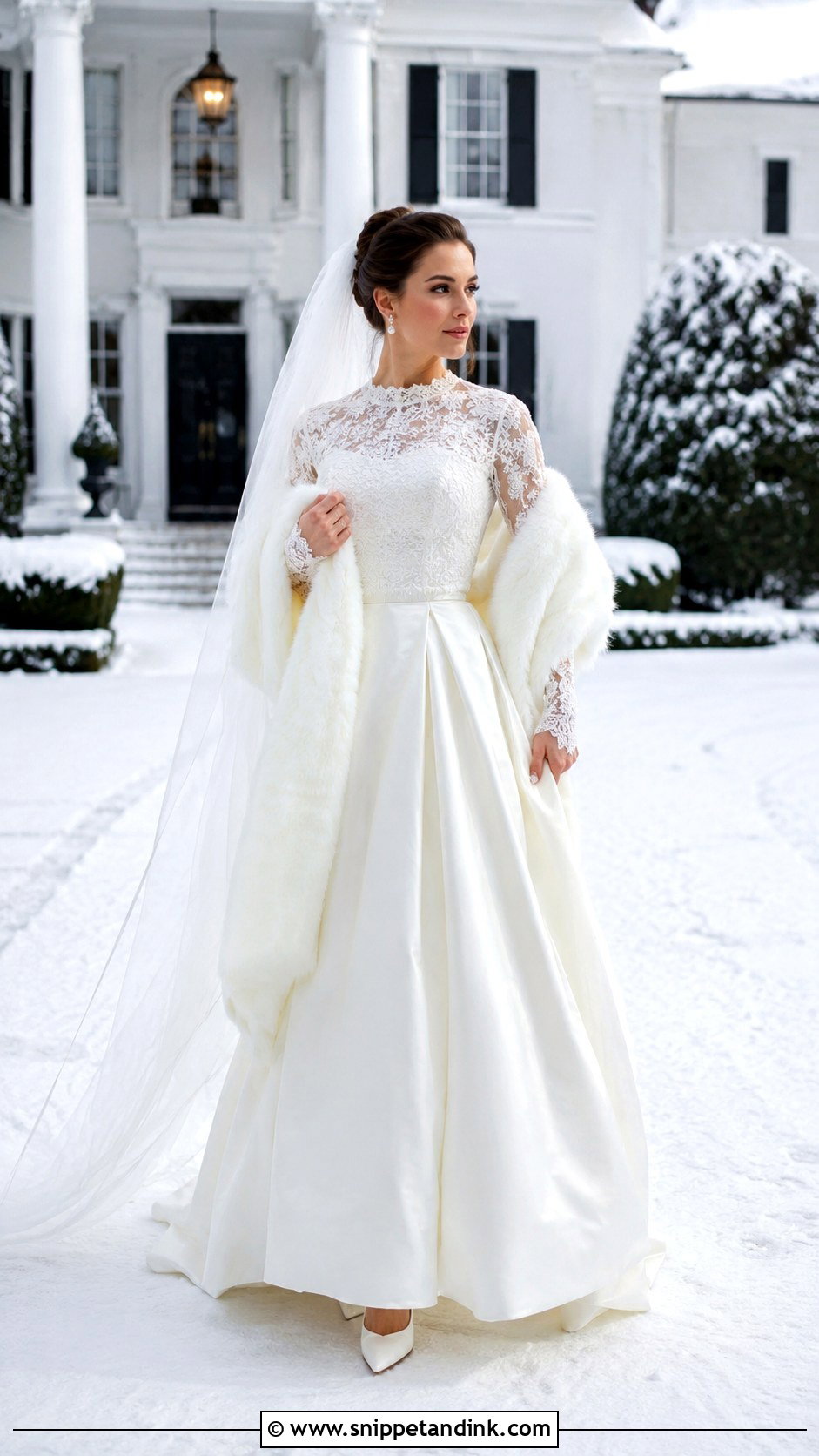
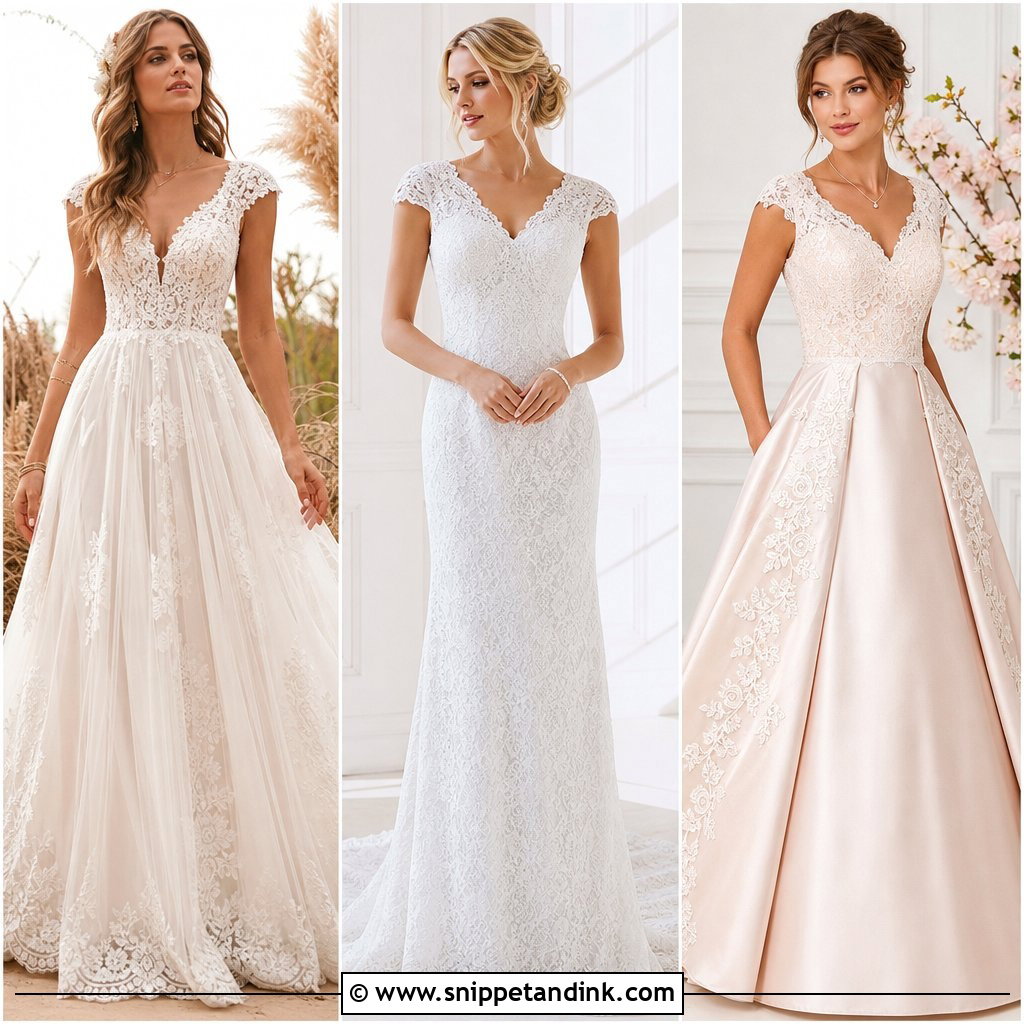
Winter weddings can carry a heavier skirt, and satin or mikado gives a full skirt real structure while the lace softens the top. A fitted lace bodice, lined sleeves and covered buttons complete the gown. Pair it with a cathedral veil, pearl earrings and closed-toe ivory pumps. A removable faux-fur wrap keeps you warm outdoors and comes off for the ceremony. Pin the hair in a secure low bun that won’t be disturbed by the wrap. Mikado is heavy, so I always suggest pockets and a proper bustle for the reception.
Shortening a Lace Sleeve Without Losing the Scallop
Sleeves on sample gowns are usually cut long, and most brides need them shortened. On plain fabric that is a simple hem. On lace, the finished edge, often a scalloped border, is part of the design, so a good seamstress removes it, shortens the sleeve from above and then hand-stitches the scallop back on. It takes longer and costs more than a basic hem, so ask for a quote at your first fitting.
I check sleeve length with the arms relaxed at the sides and then bent, as if holding a bouquet. The cuff should end at the wrist bone when the arm is straight. Any shorter and it creeps up the forearm when you move.
Long Lace Sleeves at a Summer Wedding
Long sleeves aren’t only for winter, but they need the right materials in heat. Open lace on unlined tulle sleeves breathes far better than lace laid over a satin sleeve lining. I’d avoid polyester linings in the bodice for an outdoor summer wedding and ask for cotton or silk where it touches the skin. Keep a cool room or shaded spot available between the ceremony and photos, and use sweat-resistant underarm shields so lace doesn’t mark.
Lace Scale, Sleeve Shape and the Decade You Love
One pairing, lace and a long sleeve, covers an enormous range: Victorian collars feel formal, 1930s bias cuts look fluid, 1950s skirts bring volume and 1970s sleeves move freely. What decides the right one for you is your proportions, your venue and how much you want to move. At fittings, I pay most attention to lace scale, how far you can lift your arms, the lining color, shoe height and where the veil attaches. Keep the accessories in the same era as the dress, and the tailoring will do the rest.
You'll Like These Ideas:







Leave a Reply