
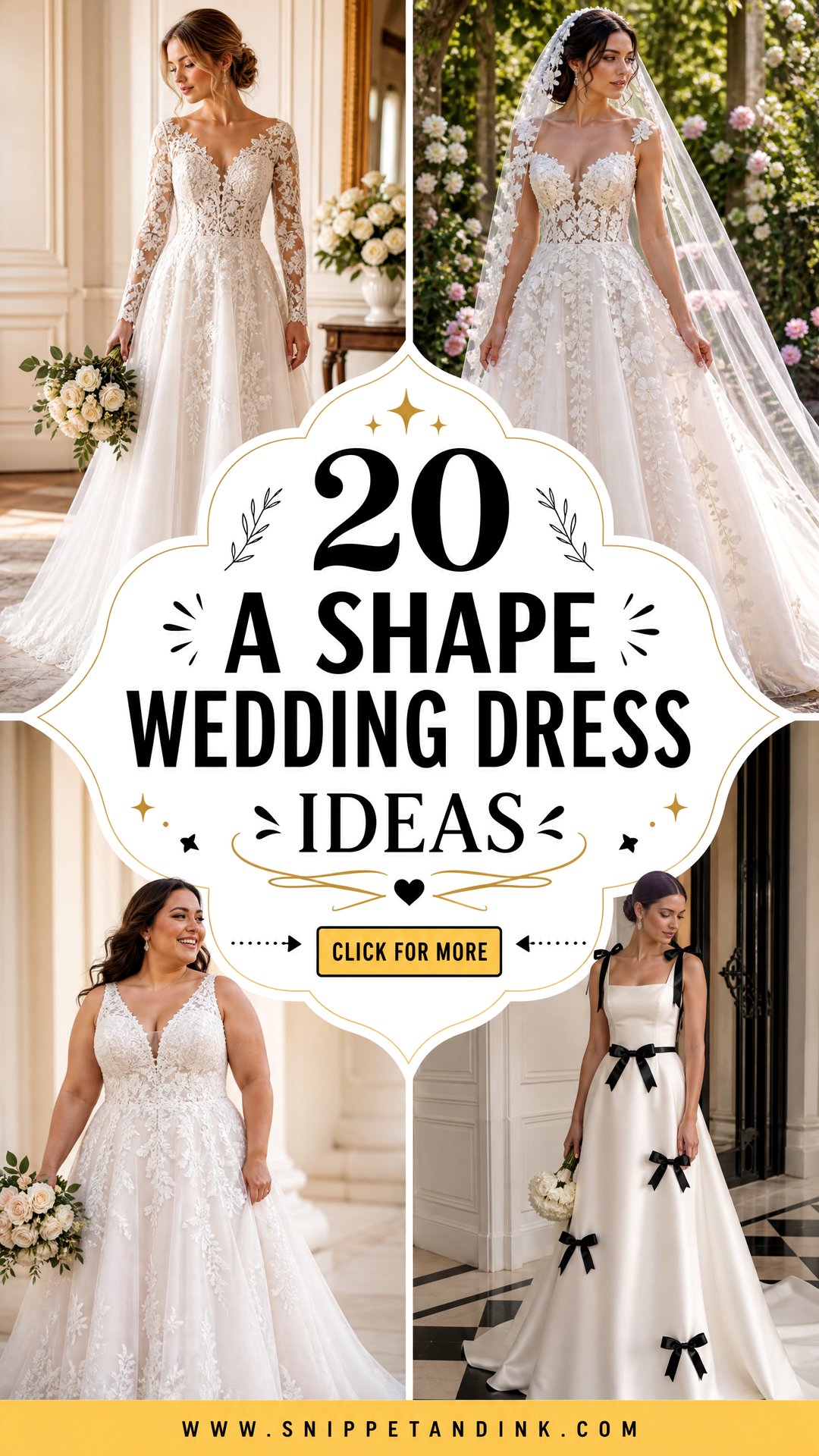
An A-shape wedding dress, which most salons call an A-line, is fitted through the bodice and then widens gradually from the waist to the hem, like a capital A. It is the silhouette I pull first for a bride who walks in unsure, because it defines the waist without gripping the hips and lets you sit, climb stairs and dance without negotiating with your skirt. What changes it from one bride to the next is fabric and detail: satin holds a crisp outline, chiffon falls close to the legs, and tulle sits somewhere in between. Below are twenty complete looks, from structured ballroom versions to beach-ready ones, along with what I check at fittings for each so the dress works on your body and in your venue.
Where an A-Line Skirt Should Start on Your Body
Every A-line flares from a waist seam, and the position of that seam decides most of how the dress looks on you. I look at it before the neckline, the lace or the veil, because if the flare begins in the wrong place, no accessory fixes it.
- A natural waist seam, at the narrowest point of your torso, suits most bodies and is the safest place to start.
- An empire seam just under the bust lengthens the legs and is kind to a fuller middle or an early pregnancy, though it can look young on a petite bride.
- A dropped or basque waist, sitting lower in a V, lengthens a short torso but can shorten long legs visually.
- Skirt fullness matters as much as seam height. A gentle flare in crepe or chiffon reads modern; a wide tulle or mikado skirt reads closer to a ball gown.
At a first appointment I ask brides to try three versions of the same idea: a soft-flare crepe, a structured satin and a tulle. Fifteen minutes in each usually settles the question better than any amount of scrolling, because you feel the difference in weight and movement straight away.
The Bustle Question Nobody Mentions at the Salon
Any A-line with a train longer than a sweep will need bustling for the reception, and the style of bustle changes how the back looks for the rest of the night. It’s worth asking about at the fitting where the hem is set, not the week before.
- An over bustle hooks the train up onto the outside of the skirt, which suits satin and plain fabrics and creates a soft swag.
- A French or under bustle tucks the train beneath itself with ribbons, which suits lace and tulle and keeps the surface flat.
- Cathedral trains often need several points, and heavier satin may need extra hooks to stop them tearing away mid-dance.
Ask the seamstress to show your maid of honour or mother how it works, ideally twice. Colour-coded ribbons help a great deal when someone is doing it in a dark corridor after the ceremony.
1. Satin A-Line Wedding Dress With Cathedral Veil
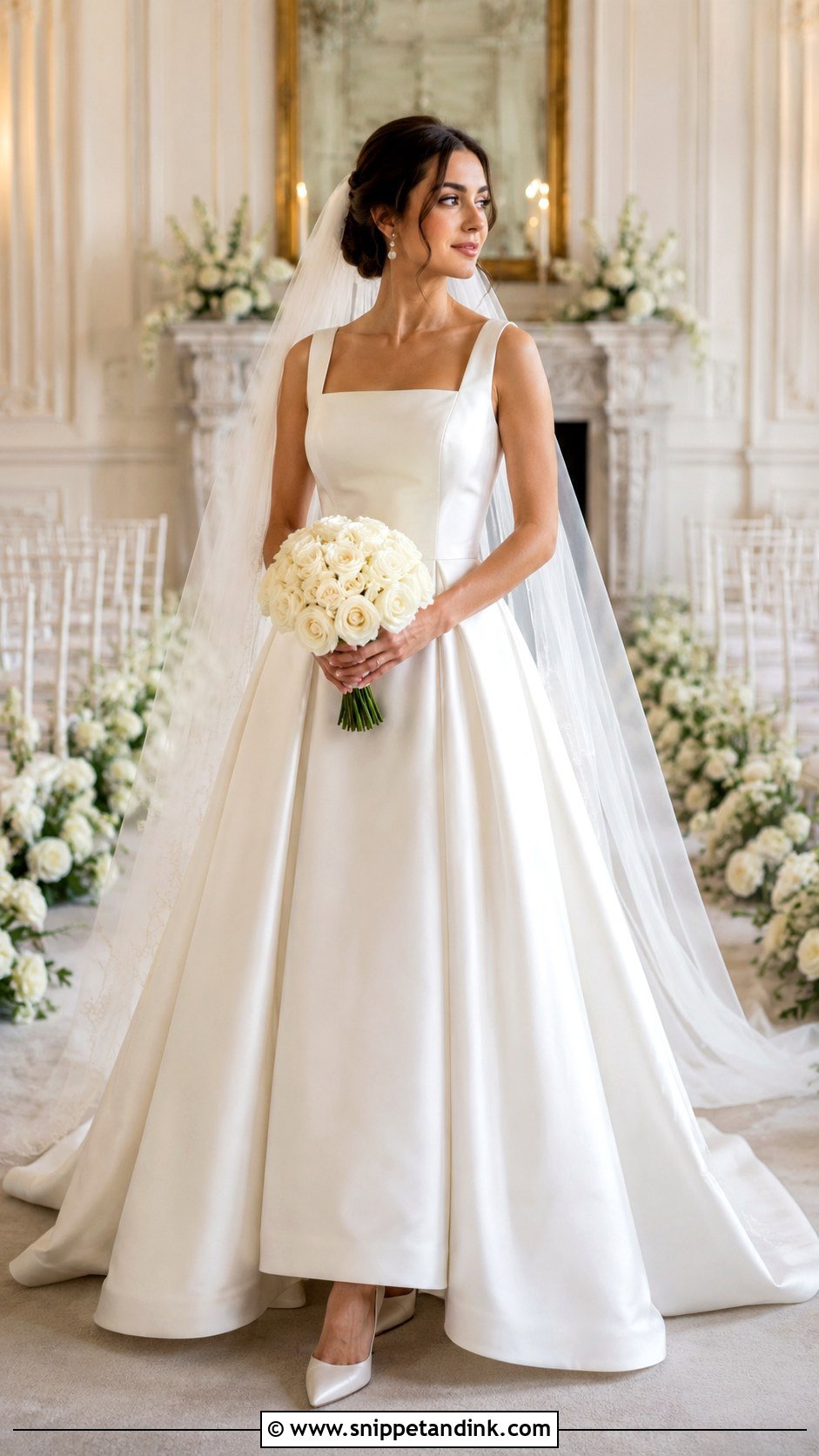
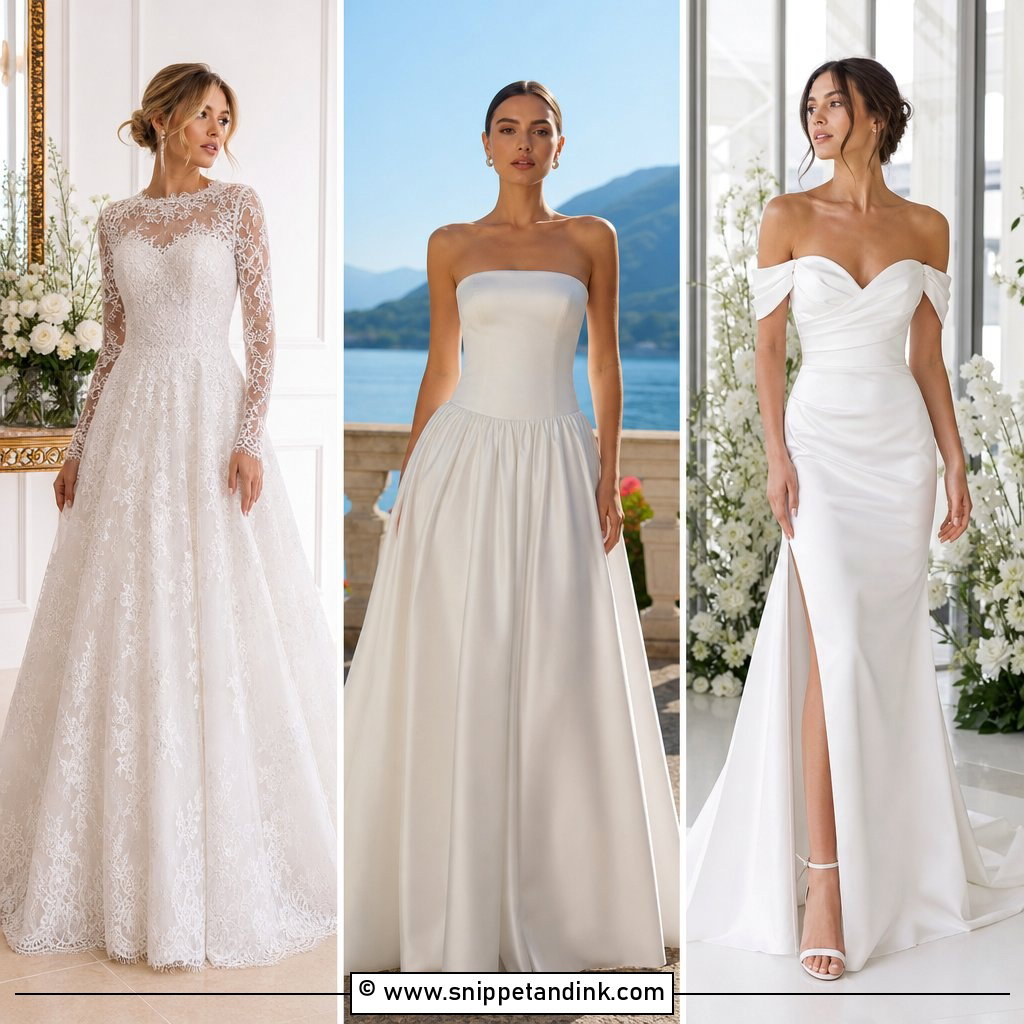
Satin is the fabric that shows an A-line’s shape most honestly, which is both its appeal and its risk: every seam and every pressing mark reads in photographs. A structured bodice with a square neckline frames the collarbone, and soft pleats at the waist give fullness without tipping into ball gown territory. A cathedral veil with a narrow satin edge matches the finish of the dress, while pearl drops, pointed ivory pumps and a compact white rose bouquet keep the mood restrained. I always ask for the gown to be steamed on the hanger the morning of, because satin creases fast at the hip once you sit in the car. Keep the hair sleek or in a low chignon so the veil falls cleanly down the back.
2. Lace A-Line Wedding Dress With Long Sleeves
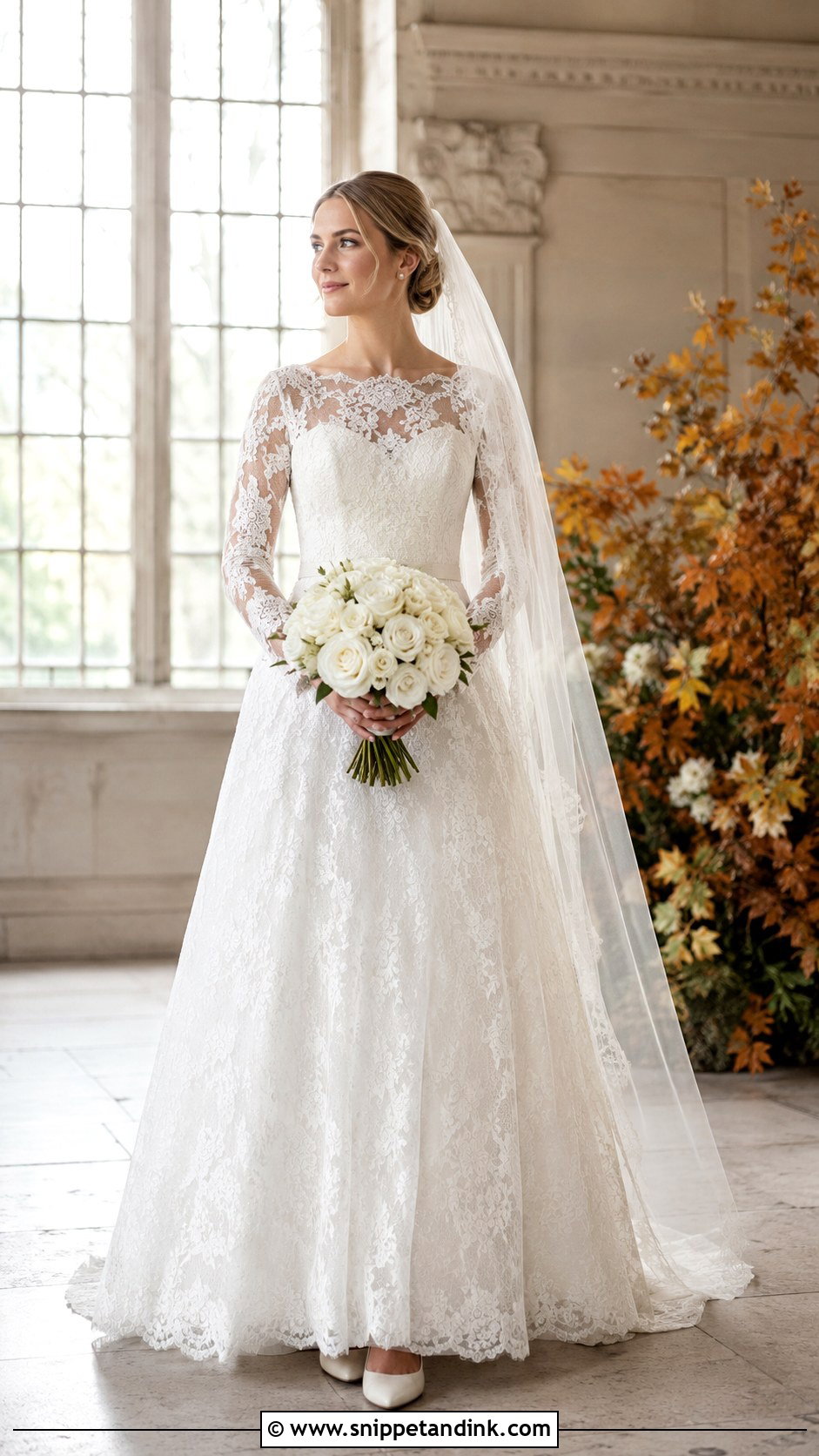
Long lace sleeves give coverage without weight, as long as the lace is set on a fine mesh rather than a lined sleeve. Look for an illusion neckline with floral lace that trails gently onto the skirt; an ivory lining under the lace warms it and makes the motif read clearly, where a bright white base can flatten it. A fingertip veil, small pearl studs and closed ivory satin heels let the lace stay the focus. My first test at the fitting is simple: arms straight up, then hugging an imaginary guest. If the sleeve pulls at the armhole, it needs a gusset or a higher armscye before you sign off on alterations. This one feels most at home at fall and winter ceremonies indoors.
3. Strapless A-Line Wedding Dress With Pearl Veil
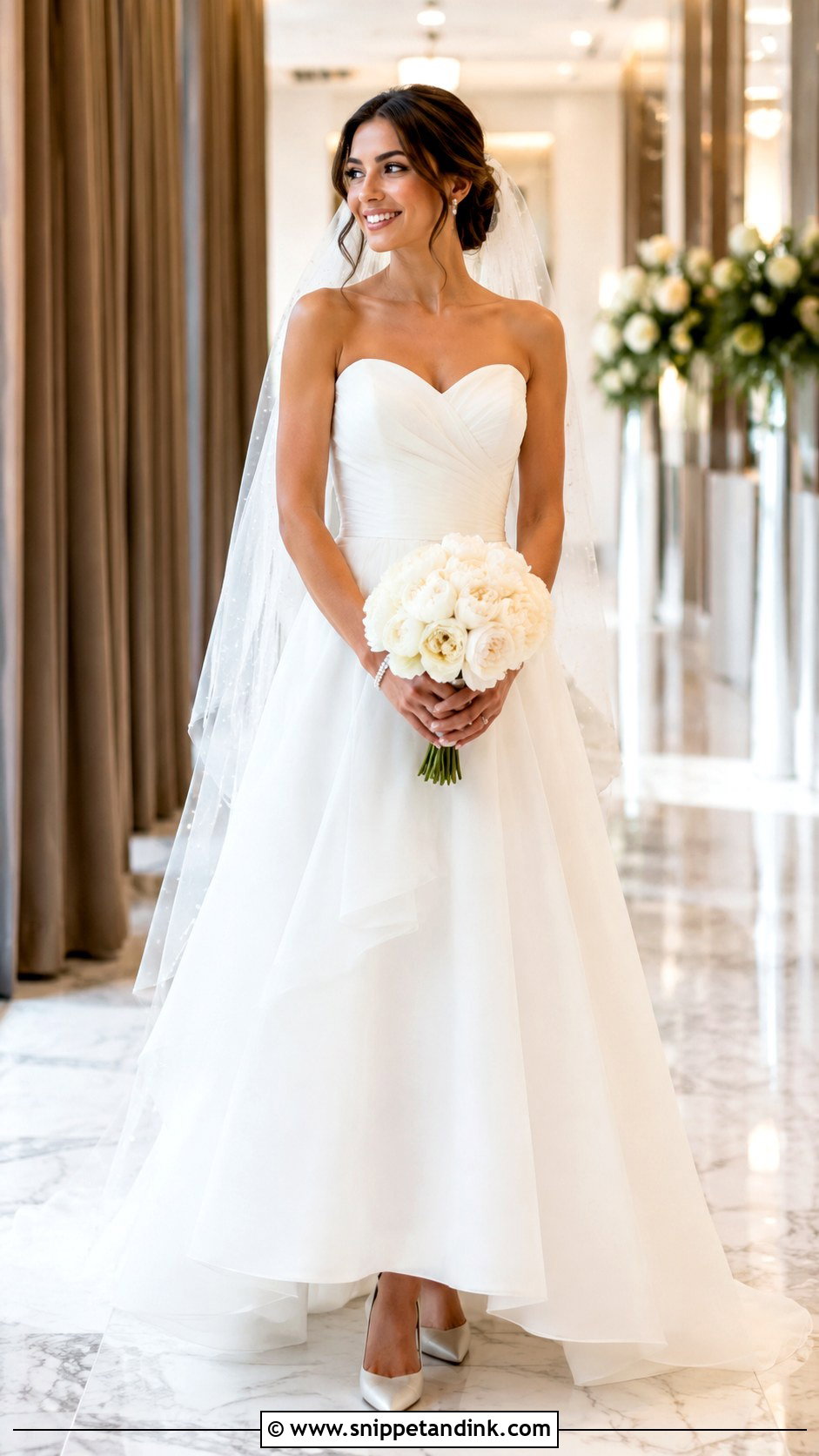
A strapless bodice is only as good as what’s inside it. A sweetheart neckline softens the top edge, but it’s the internal corset or boning, plus a waist stay, that keeps the dress from sliding down by the first dance. Mikado gives the skirt a sculpted outline, satin a smoother drape, layered tulle a softer one. A pearl-dotted veil adds texture, and crystal or pearl earrings with a slim bracelet are enough sparkle with bare shoulders. An updo keeps the neckline open. When I fit strapless gowns, I have the bride sit, lean forward to sign a register and raise both arms; if the top edge gapes or she tugs it up afterwards, the bodice needs taking in at the side seams, not a stronger tape.
4. Off-Shoulder A-Line Wedding Dress With Tulle Skirt
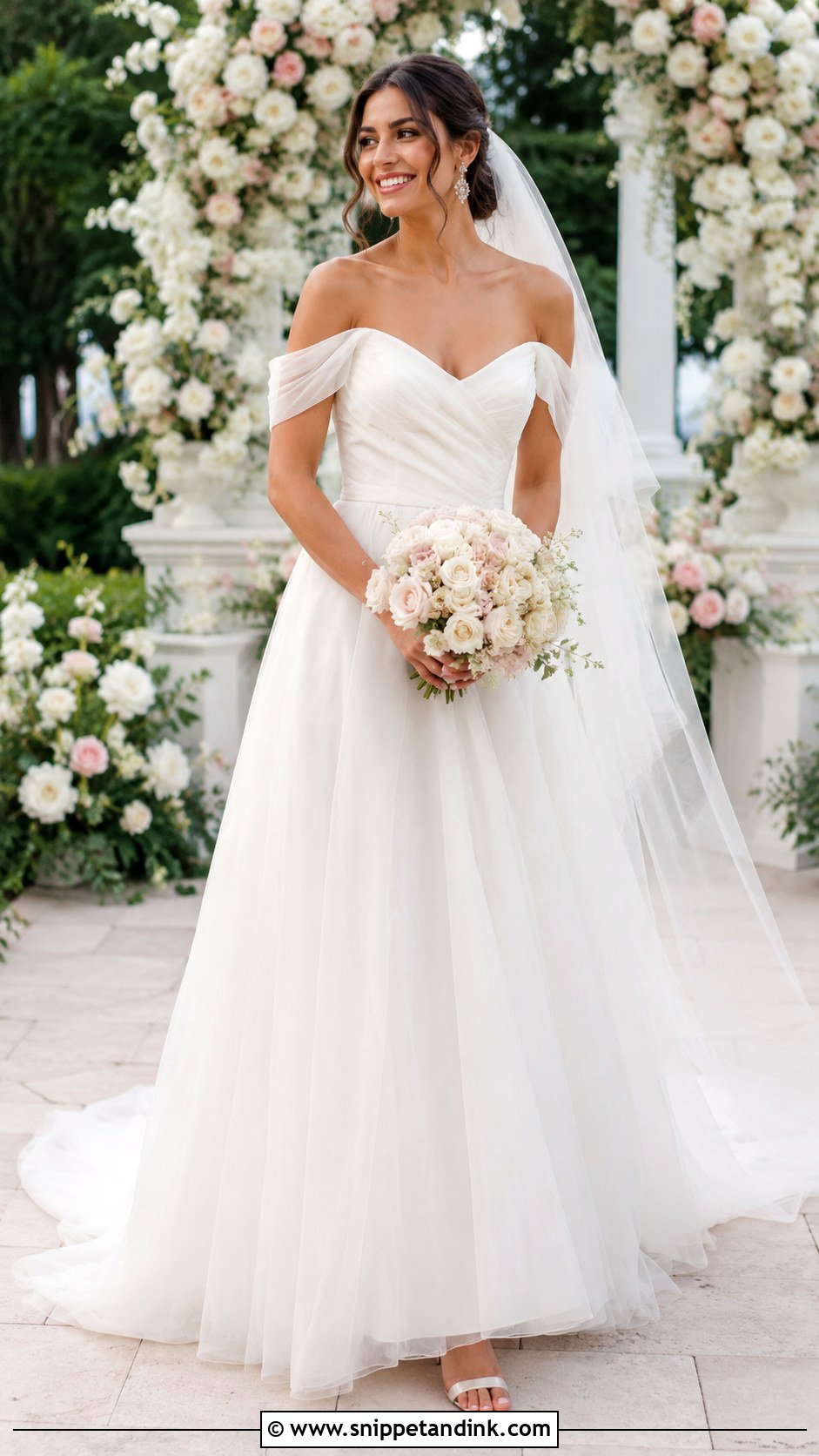
Off-shoulder sleeves pull the eye to the collarbone and balance a full tulle skirt nicely, but they are usually decorative. The bodice underneath has to do the holding, so check that it fits snugly on its own before the sleeves are even considered. A chapel-length veil suits the airy skirt without drowning it. Crystal earrings, a fine pendant and block heels hidden under the hem keep the outfit grounded, and a loose updo with face-framing pieces suits the neckline. Carry ranunculus and roses in pale tones. The thing I warn brides about is hugging: low sleeves bind the upper arm, so if you can’t lift your arms to shoulder height comfortably, ask for a touch of elastic or a slightly higher sleeve line.
5. Minimalist Crepe A-Line Wedding Dress With Short Veil
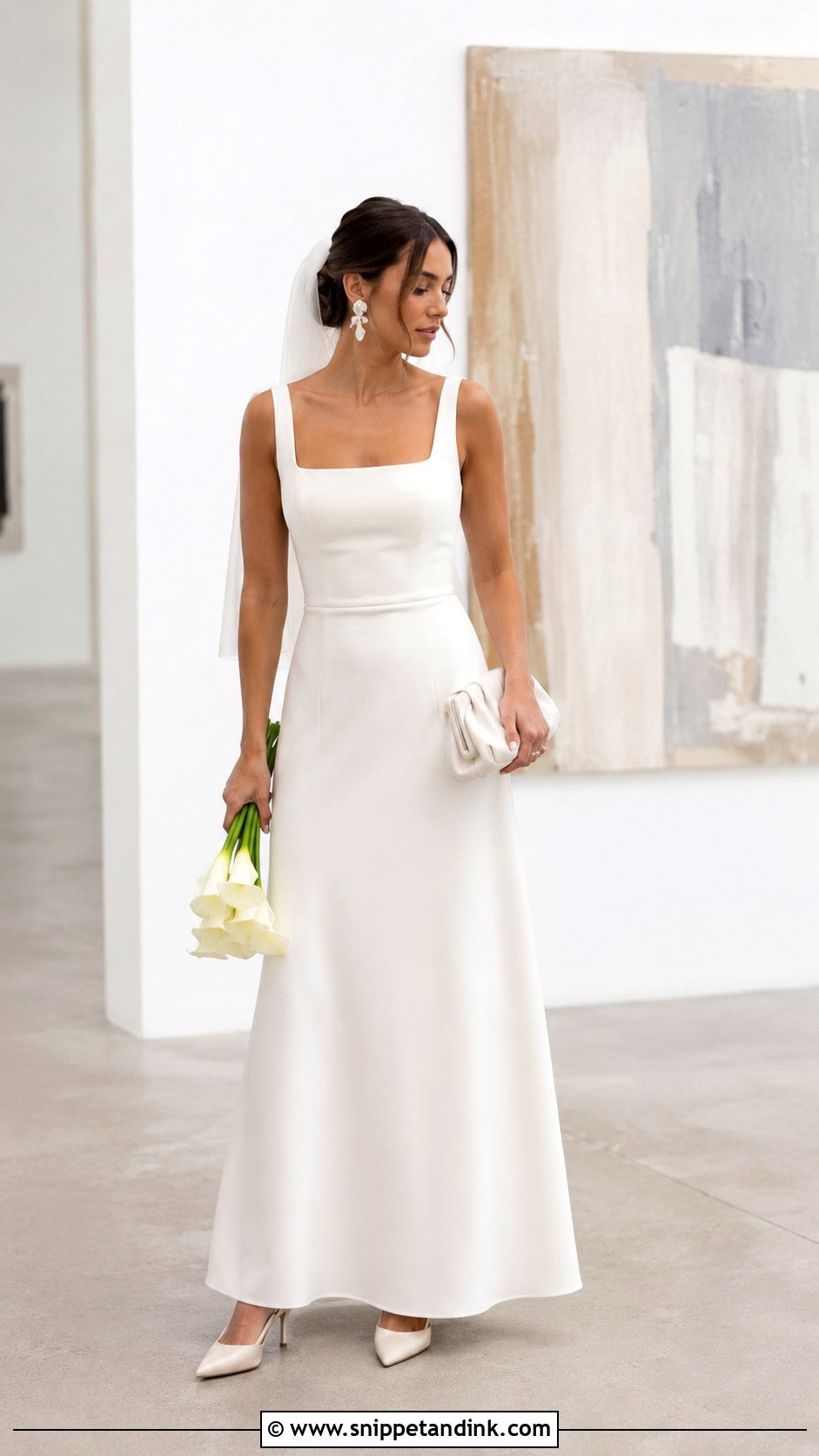
Crepe has no lace or beading to hide behind, so the impact comes entirely from the cut. That’s why I’m fussier with crepe A-lines than any other fabric: a seam that’s a few millimetres out, or a bra line underneath, shows straight away. A bateau, square or soft V-neck with wide straps gives clean structure. A short blusher or shoulder-length veil keeps it modern, and sculptural earrings with pointed slingbacks finish it. A sleek bun or glossy waves match the mood, and calla lilies or plain white roses keep the bouquet just as spare. Bring your actual undergarments to every fitting, and ask about an extra lining layer if the crepe is lightweight.
6. Floral Appliqué A-Line Wedding Dress With Garden Veil
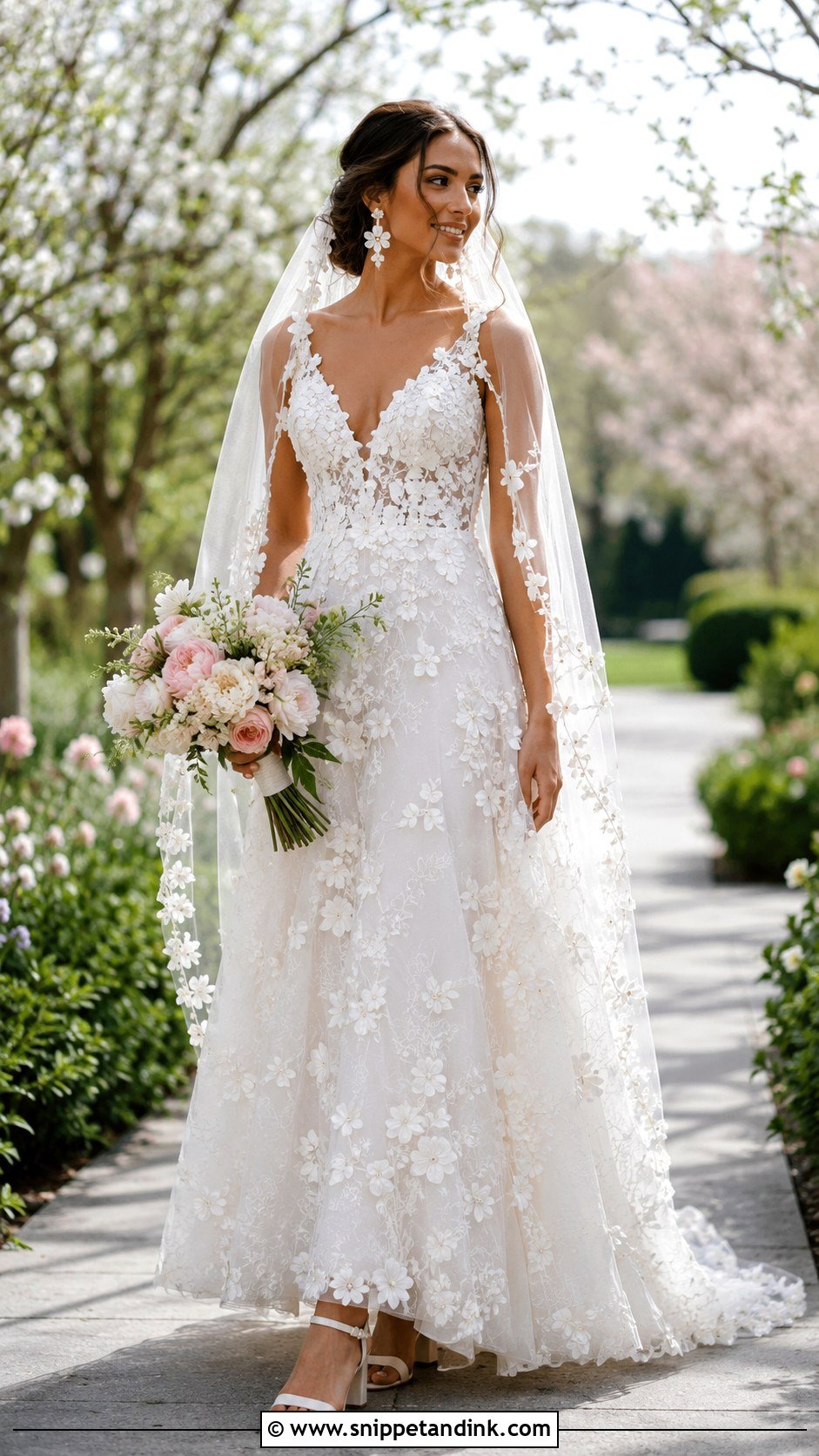
Appliqué works best when it’s densest on the bodice and thins out as it travels down the skirt. Placed that way, the flowers draw the eye to the waist and the skirt stays light; scattered evenly, they can make the whole dress look busy. A light veil with matching floral edging ties things together if the motifs truly match, but a plain veil is safer if they don’t. Botanical earrings, ivory block-heel sandals and a relaxed updo with a few pins suit spring and summer gardens. When I compare appliqué gowns with a bride, I stand her a few metres from the mirror, because placement that looks fine up close can land exactly on the hip from a distance. Most appliqué can be moved by a good seamstress if it sits in the wrong spot.
7. Beaded A-Line Wedding Dress With Sparkling Accessories
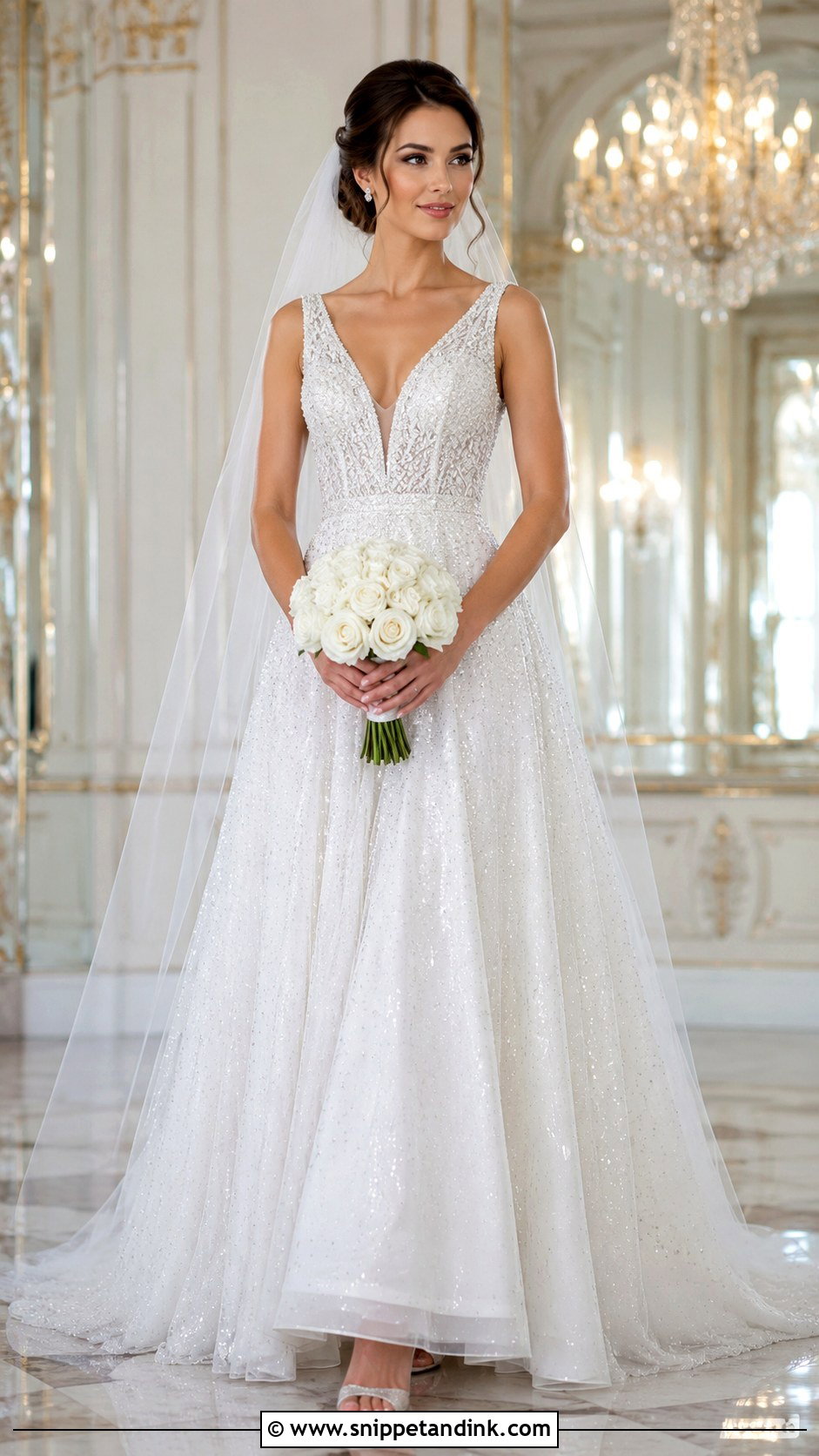
Heavy beading changes how a dress behaves. A fully beaded bodice can weigh noticeably more than the plain version, and that weight hangs from the shoulders or the waist for ten hours, so I always ask brides to wear a beaded sample for a good few minutes before deciding. The most flattering versions concentrate crystals on the bodice and fade them out toward the skirt, with a V-neck or scoop that lets the beadwork sit close to the face. Skip the necklace; crystal studs, metallic ivory heels and an evening clutch are plenty. A plain fingertip veil and white roses balance the shine. Ask too whether the beads are hand-sewn or glued, since glued stones can pop off in the steamer.
8. Boho Chiffon A-Line Wedding Dress With Flower Crown
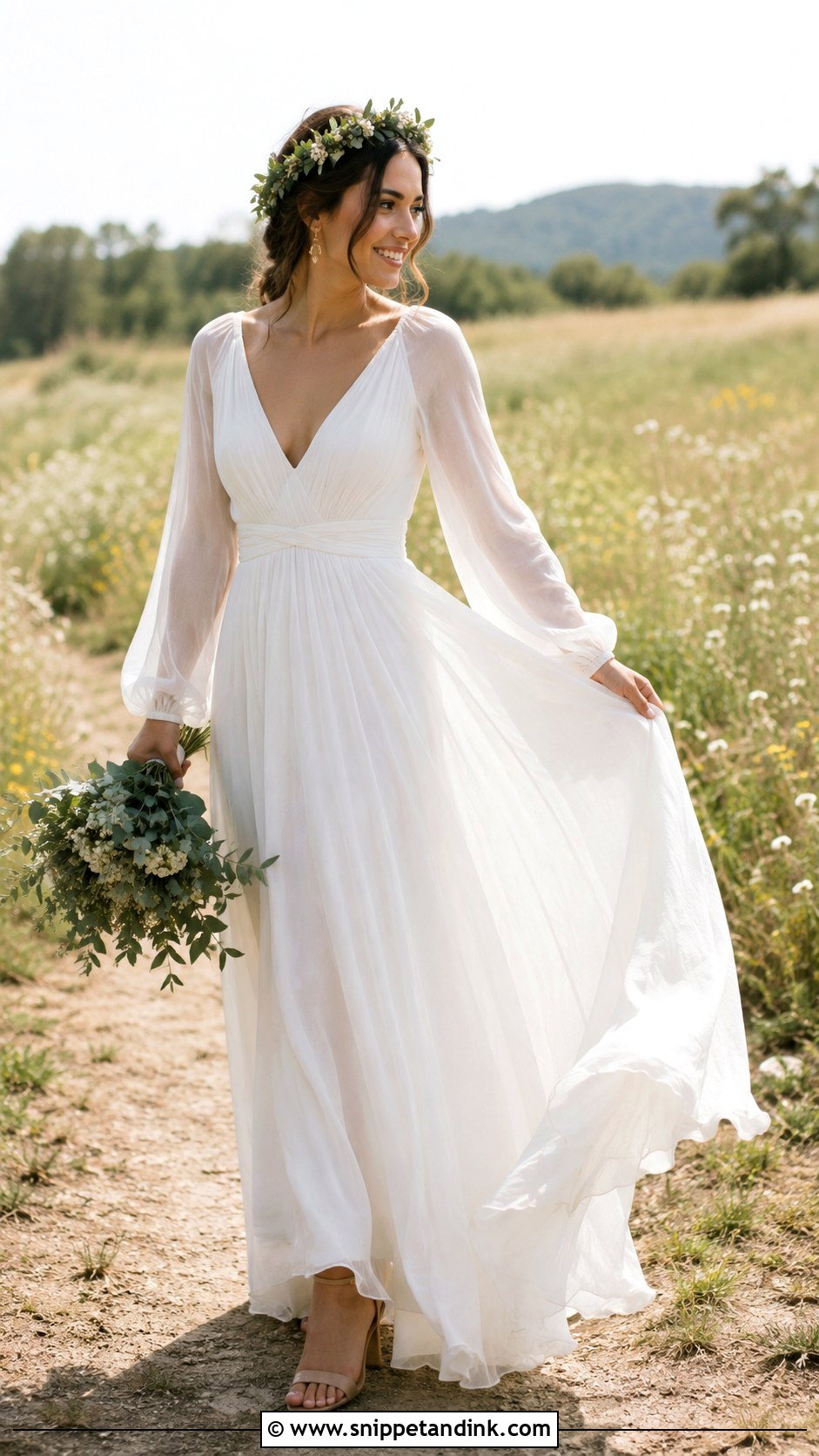
Chiffon moves with every breath of wind, which is lovely in a meadow and a nuisance at a clifftop ceremony. Look for a soft V-neck, a defined waistband and a skirt that floats rather than holds a rigid line; Flutter sleeves or sheer bishop sleeves add movement and some coverage. A delicate flower crown, fine gold earrings and neutral block-heel sandals that won’t sink into grass suit the setting, as do a loose braid or textured waves. A hand-tied bouquet with a few dried stems keeps the feel relaxed. For breezy sites I ask the seamstress for a lined skirt and small weights stitched into the hem, which stops the chiffon wrapping around your legs during the vows.
9. Beach A-Line Wedding Dress With Flat Sandals
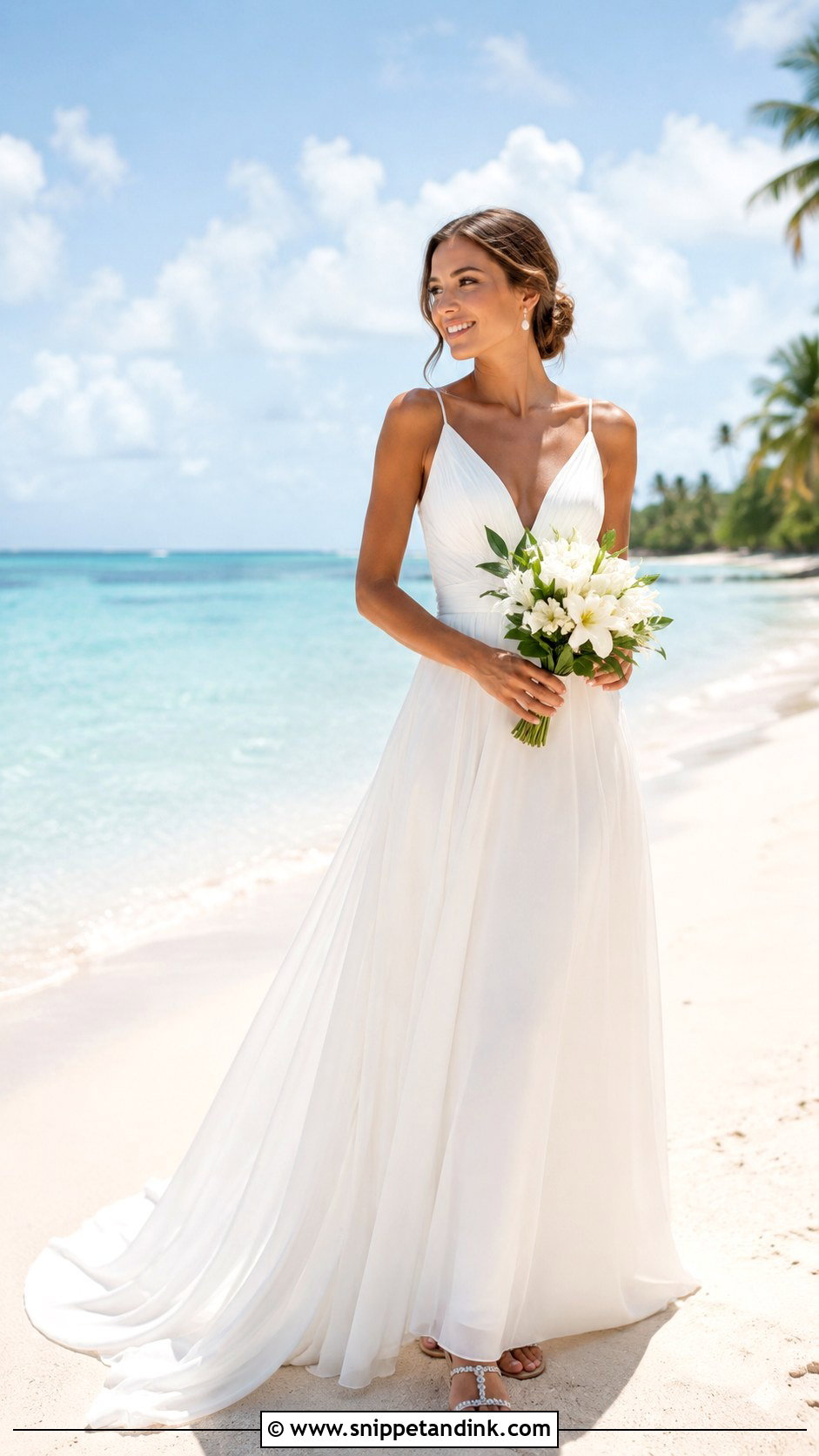
Sand is hard on long hems, so a beach A-line needs a lighter fabric and a shorter train than the dress you’d wear in a ballroom. Chiffon, organza or soft tulle breathe in the heat; a V-neck bodice with slim straps keeps the outline open. Choose a sweep train or a hem that just skims the floor, because anything longer collects sand and drags. Embellished flat sandals, pearl earrings and a veil you can take off once the wind picks up are practical choices, as is a compact white bouquet. Soft waves or a secure low bun both hold near the water. My firm rule: the hem gets measured while you’re wearing the exact sandals you’ll stand in, since flats drop a hem by several centimetres compared with heels.
10. High-Neck A-Line Wedding Dress With Vintage Veil
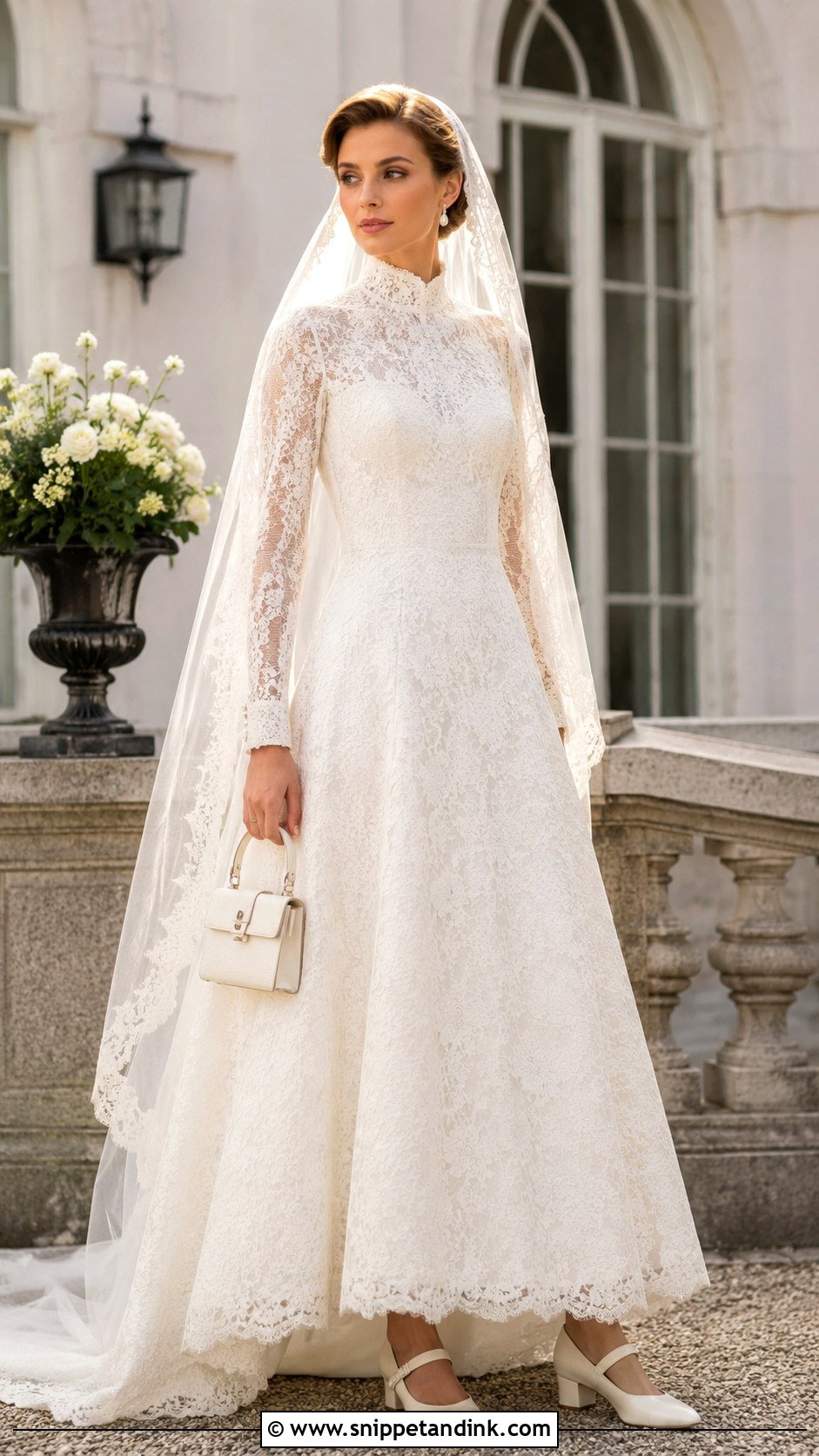
A high neck gives coverage with a vintage edge, and a slightly sheer yoke keeps it from feeling heavy. Pair a fitted lace or embroidered bodice with a smooth, gently flared skirt, then add a lace-edged fingertip veil or a small blusher pinned beneath a low bun. Pearl earrings, ivory Mary Jane heels and a small structured bag fit the period mood, and white roses with lily of the valley keep the colours quiet. Historic houses and formal gardens suit it well. The detail I watch for is the collar: if it rubs your jaw or folds when you turn your head, it needs lowering by a few millimetres, and you’ll feel that difference all day.
11. Corset A-Line Wedding Dress With Sheer Gloves
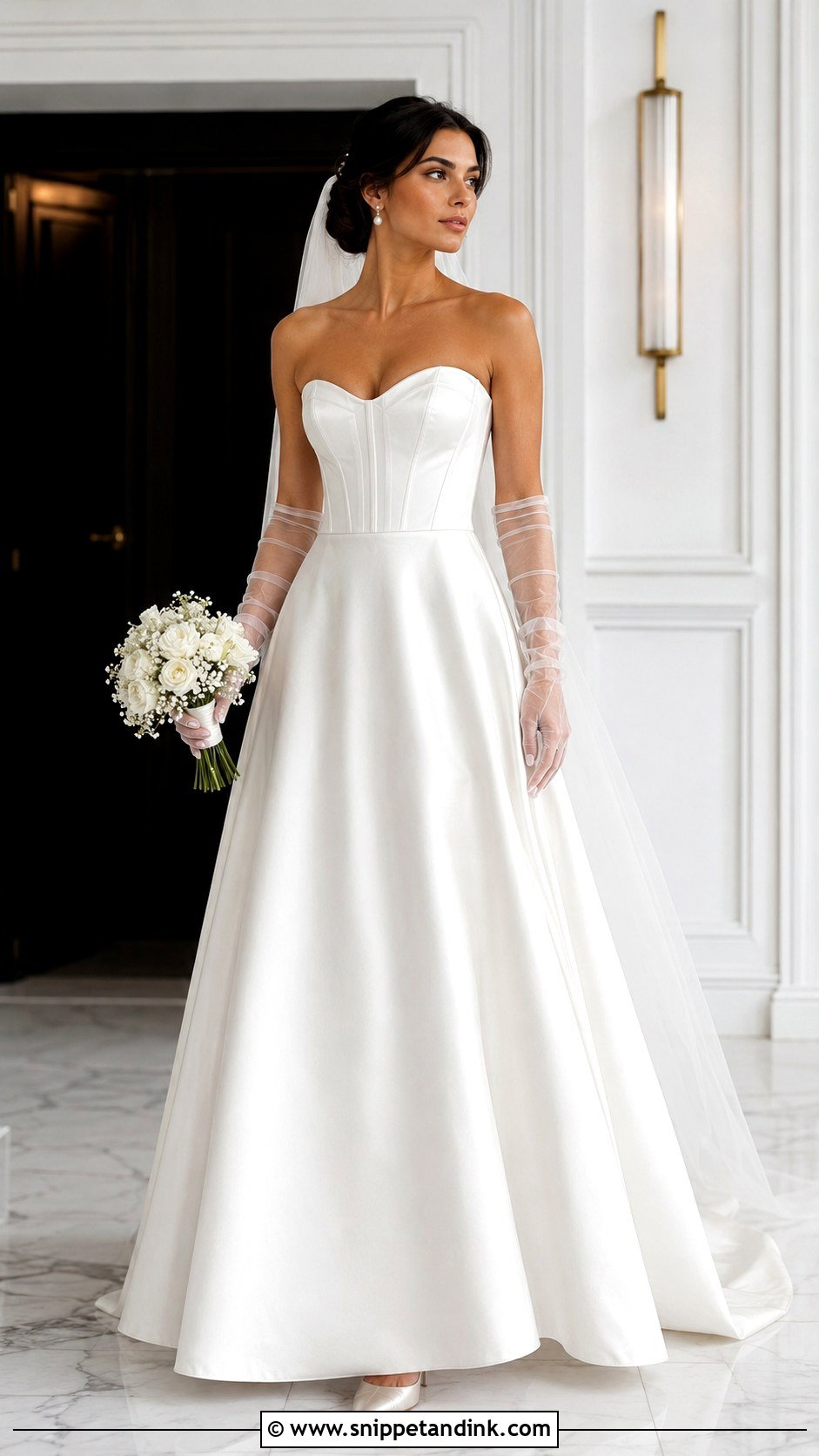
Visible corsetry is all about seam placement. On a well-made corset A-line, the seams curve toward the waist and the boning sits flat; on a poor one, the bones twist and show through the fabric after an hour of wear. The skirt can be satin, mikado or layered tulle depending on how much drama you’d like. Sheer wrist-length gloves give it a fashion edge, and a plain veil, pearl earrings, pointed pumps and a compact bouquet keep the corset as the main feature. Wear a smooth bun or brushed waves. I always have a bride take a deep breath and sit down in a corset bodice at the fitting. Definition is good; a dress you can’t eat dinner in is not.
12. Drop-Waist A-Line Wedding Dress With Chapel Train
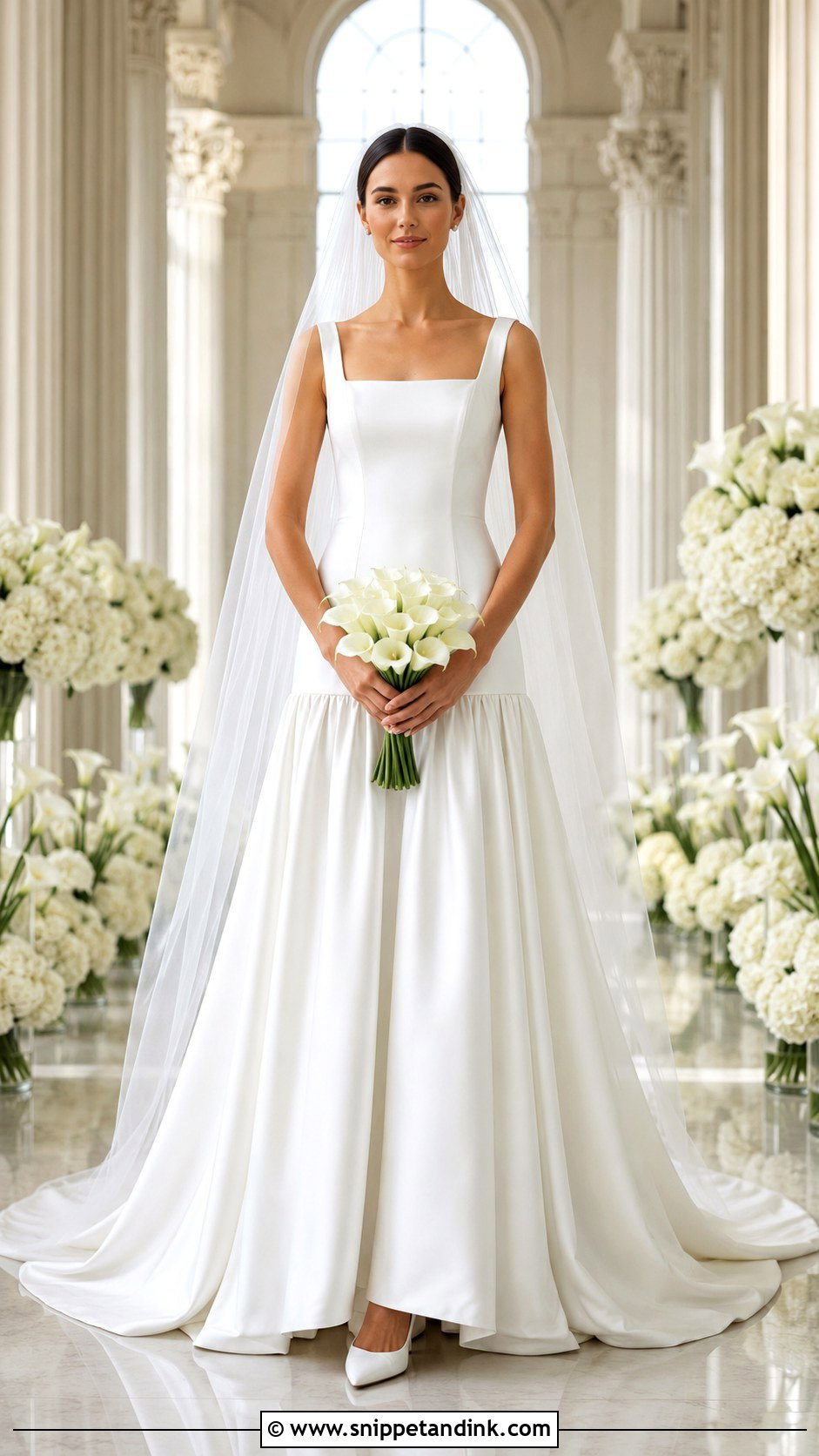
A drop waist extends the bodice past the natural waistline before the skirt opens, which lengthens the torso and gives a slightly vintage feel. Balance that long line with a square or curved neckline, and look for princess seams that follow the body. A chapel train adds drama without becoming hard to manage, and a plain tulle veil, button earrings, satin pumps and calla lilies suit its clean lines. A sleek updo keeps the focus on the shape. I’m cautious with this one on very short torsos, where the dropped seam can cut the body in an odd place. Where the waist sits should be adjusted to you, then checked sitting down, because a long bodice can buckle at the hip when you sit.
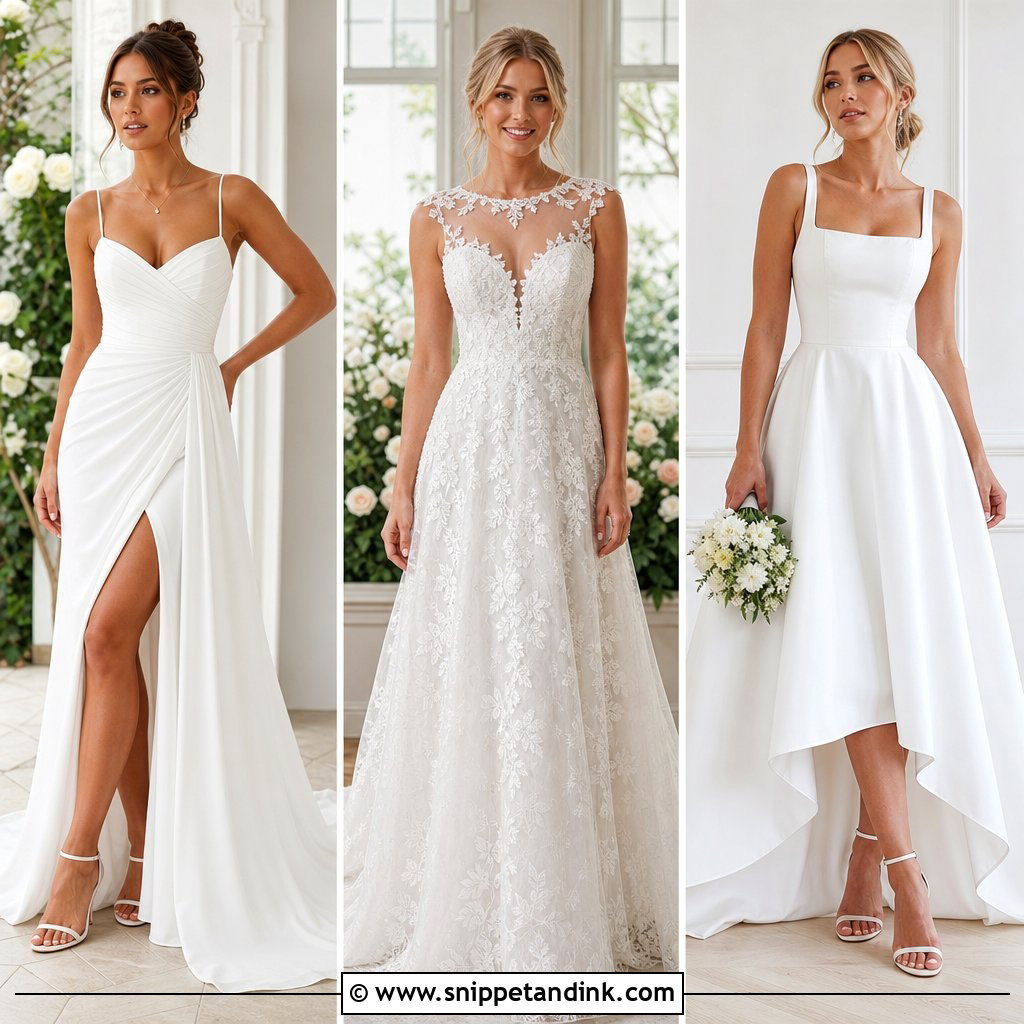
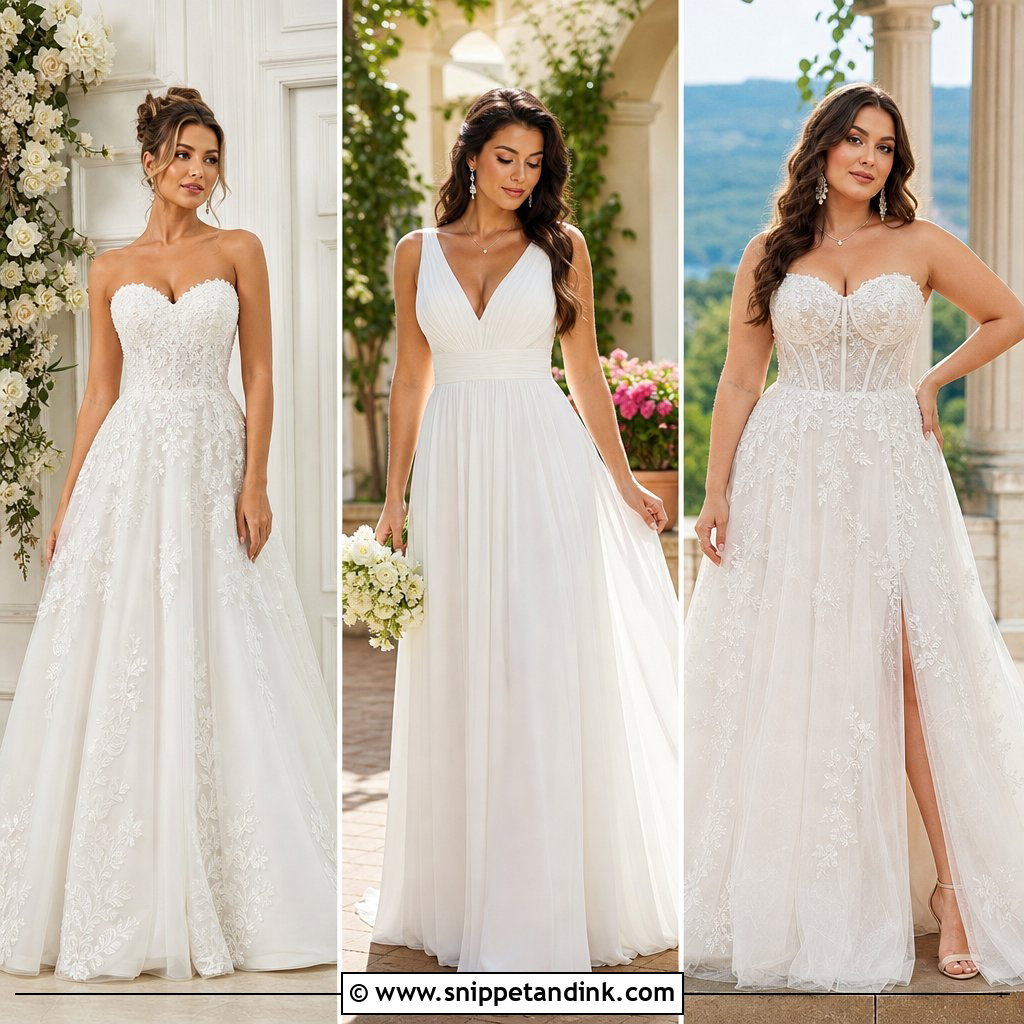
13. Plus-Size A-Line Wedding Dress With V-Neck Bodice
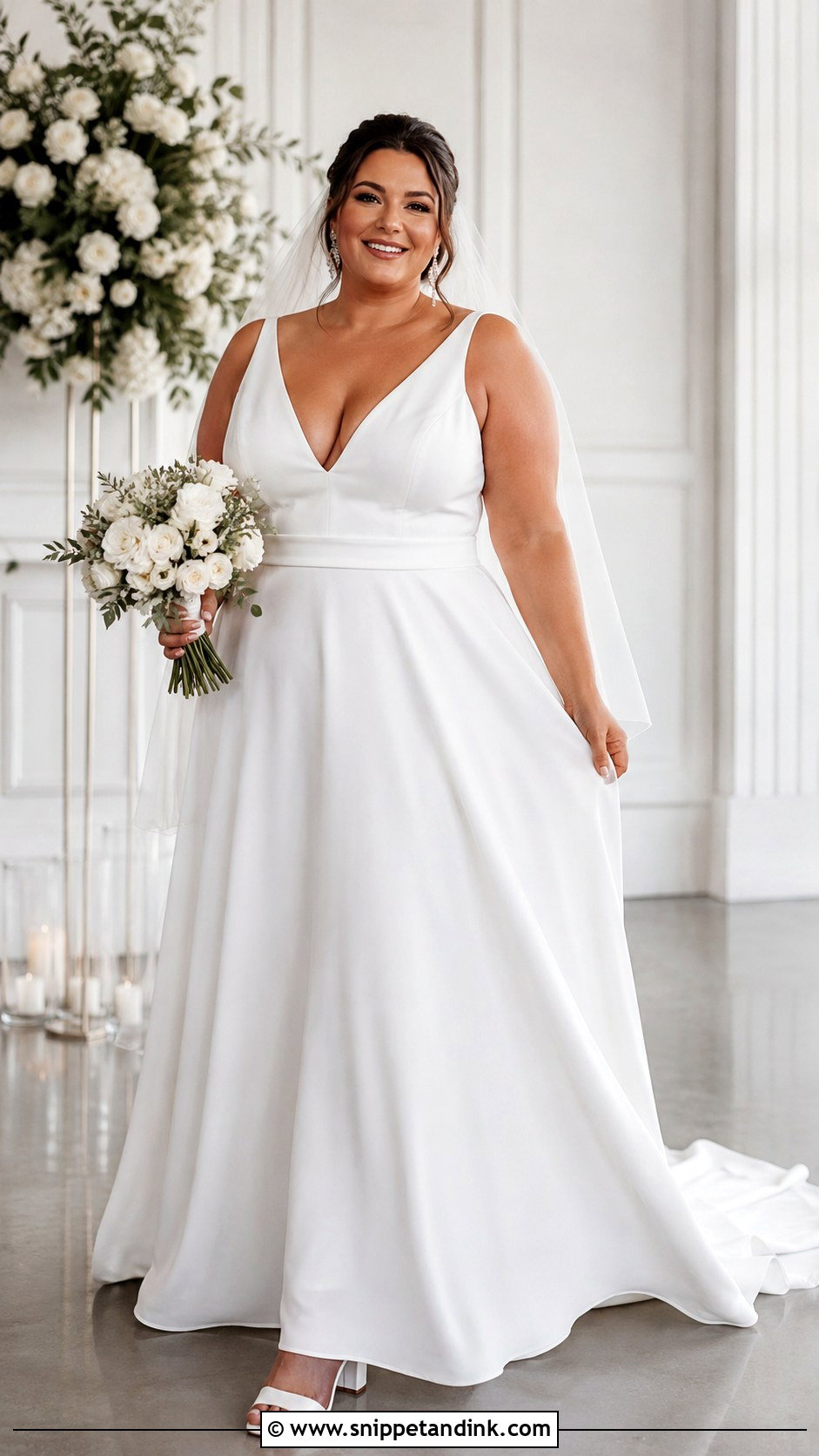
Support is the first conversation I have with plus-size brides, before anything about lace or necklines. A V-neck bodice with wider straps, built-in cups and boning shaped to your measurements will hold you far better than a dress relying on the zip. A waistband or carefully placed lace marks the natural waist, and a soft skirt skims the hips. A medium-length veil, statement earrings, supportive block heels and a bouquet scaled to your height round it out, while a half-up style keeps the neckline visible. Bridal sizes run small and vary between designers, so ignore the label. Judge the gown on where the waist sits, how the straps feel after twenty minutes and what alterations can realistically achieve.
14. Petite A-Line Wedding Dress With Simple Accessories
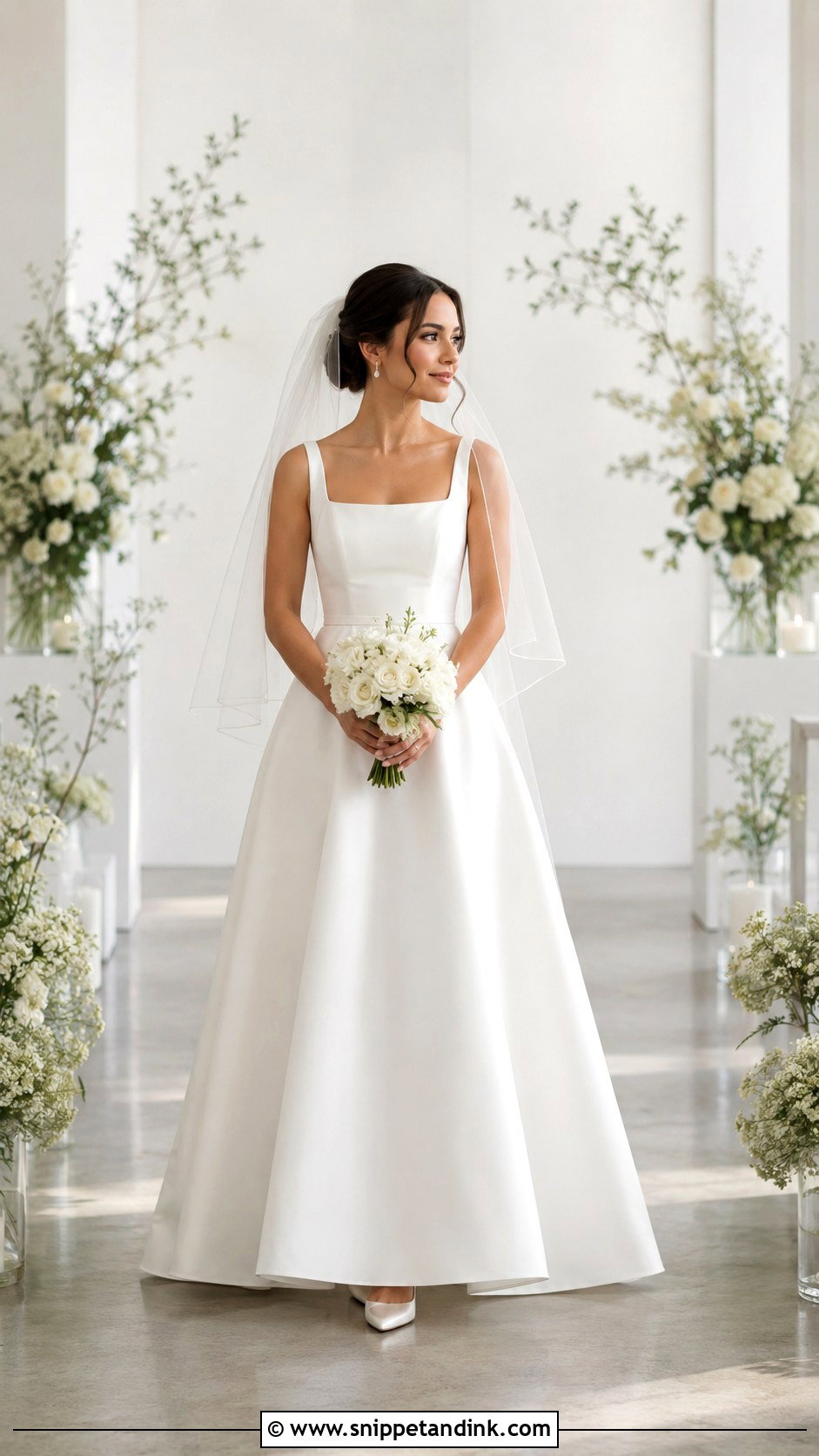
On a petite frame, the main risk with an A-line is fullness that swallows you. Keep the skirt moderate, the natural waist clearly defined and the train proportioned to the room. A V-neck or narrow square neck lengthens the upper body, and concentrated embellishment reads better than detail spread everywhere. A single-layer fingertip veil, small drop earrings, pointed heels and a compact bouquet add little visual weight, and a high bun can buy a bit of height. Here’s what I tell every petite bride: shortening only the hem rarely fixes the proportions. The waist, strap length and appliqué placement often need moving up too, which is a bigger alteration and worth budgeting time for.
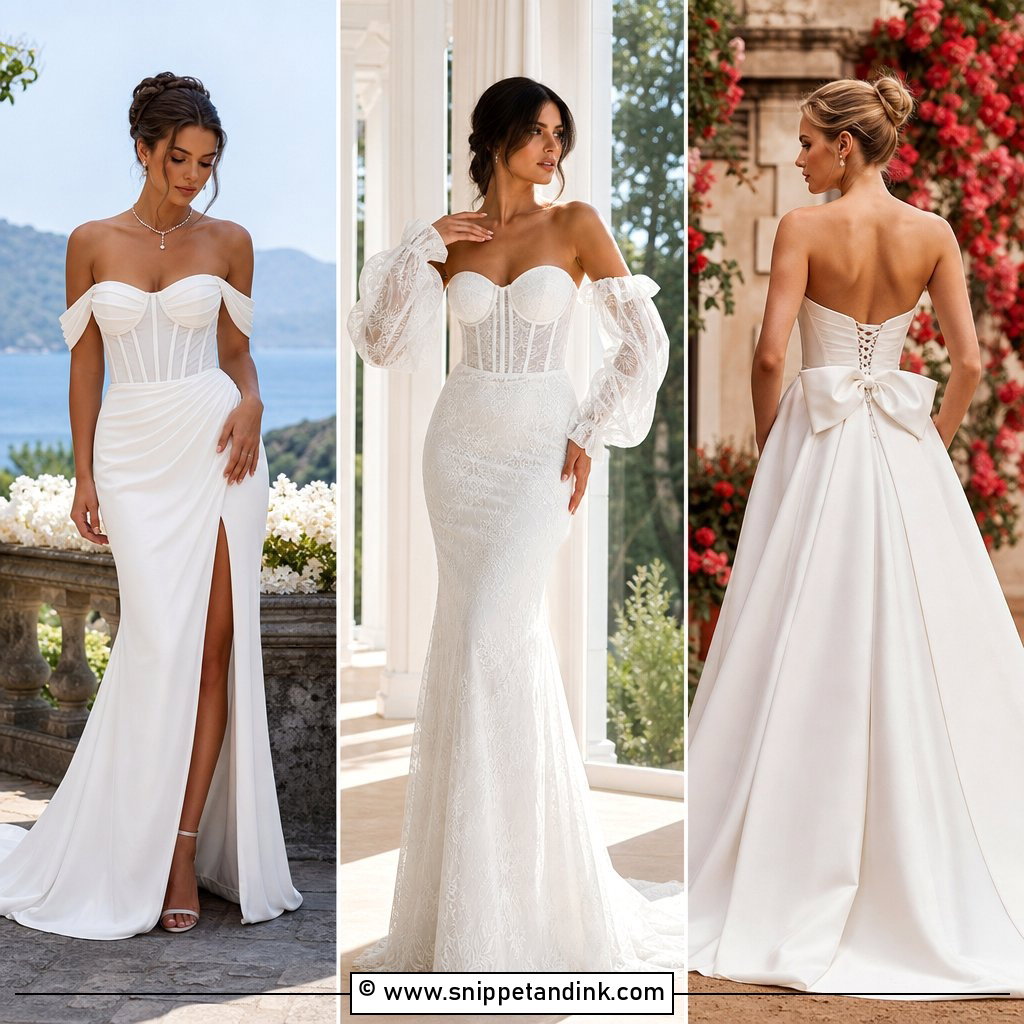
15. Modest A-Line Wedding Dress With Three-Quarter Sleeves
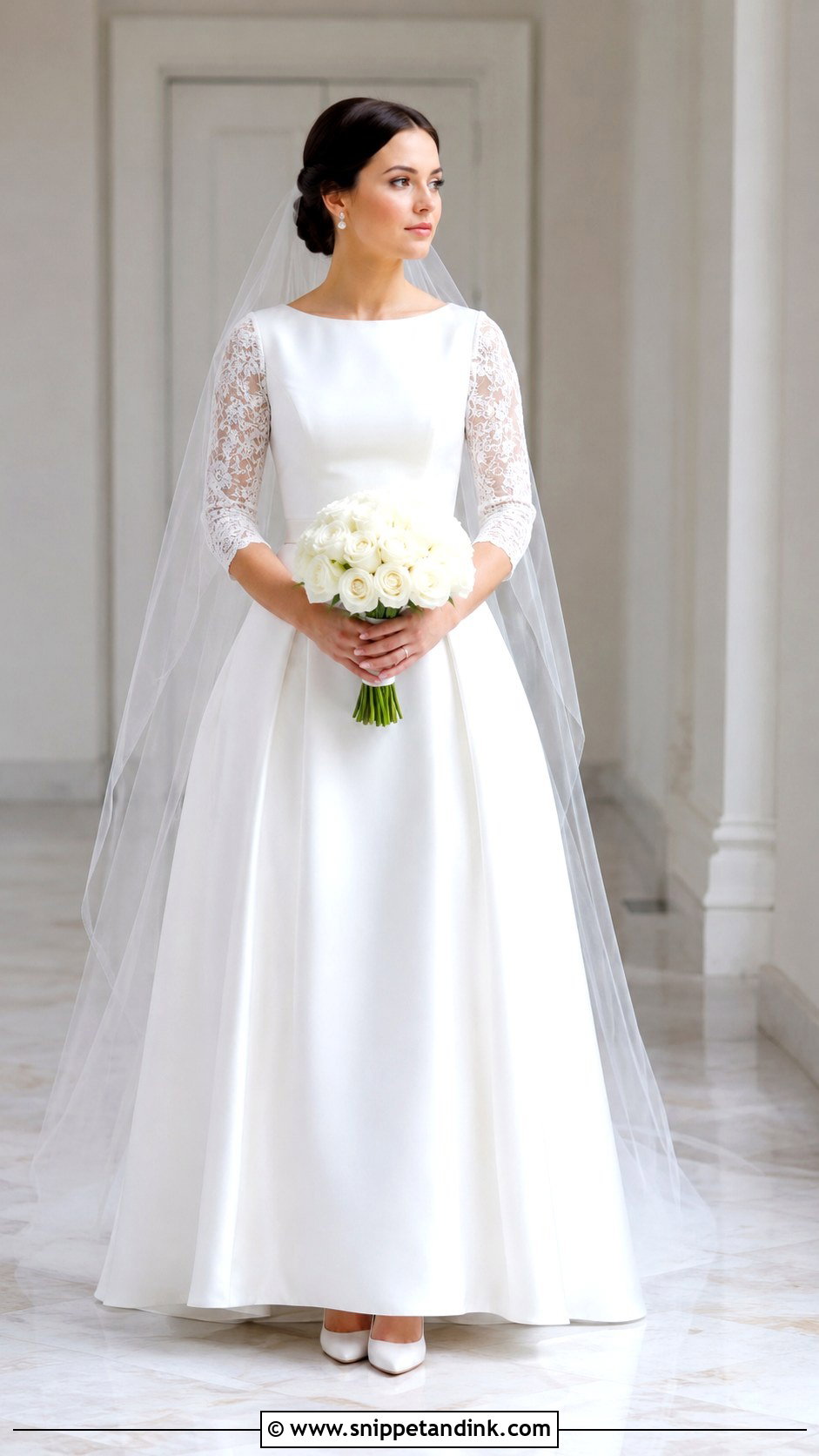
A modest A-line wedding dress can give full coverage and still feel light. Look for an opaque bodice, a higher scoop or bateau neckline and fitted three-quarter sleeves; a gently pleated satin skirt contrasts nicely with a lace or crepe top half. A chapel veil, pearl earrings, closed-toe pumps and structured white roses keep it polished, as do a low chignon and covered buttons down the back. Before committing, I take the dress to a window and then under the fitting-room lights, because some linings that look opaque indoors turn see-through in bright sun. Check the sleeve at the elbow as well, since you’ll be greeting and hugging all day.
16. A-Line Wedding Dress With Black Bow Details
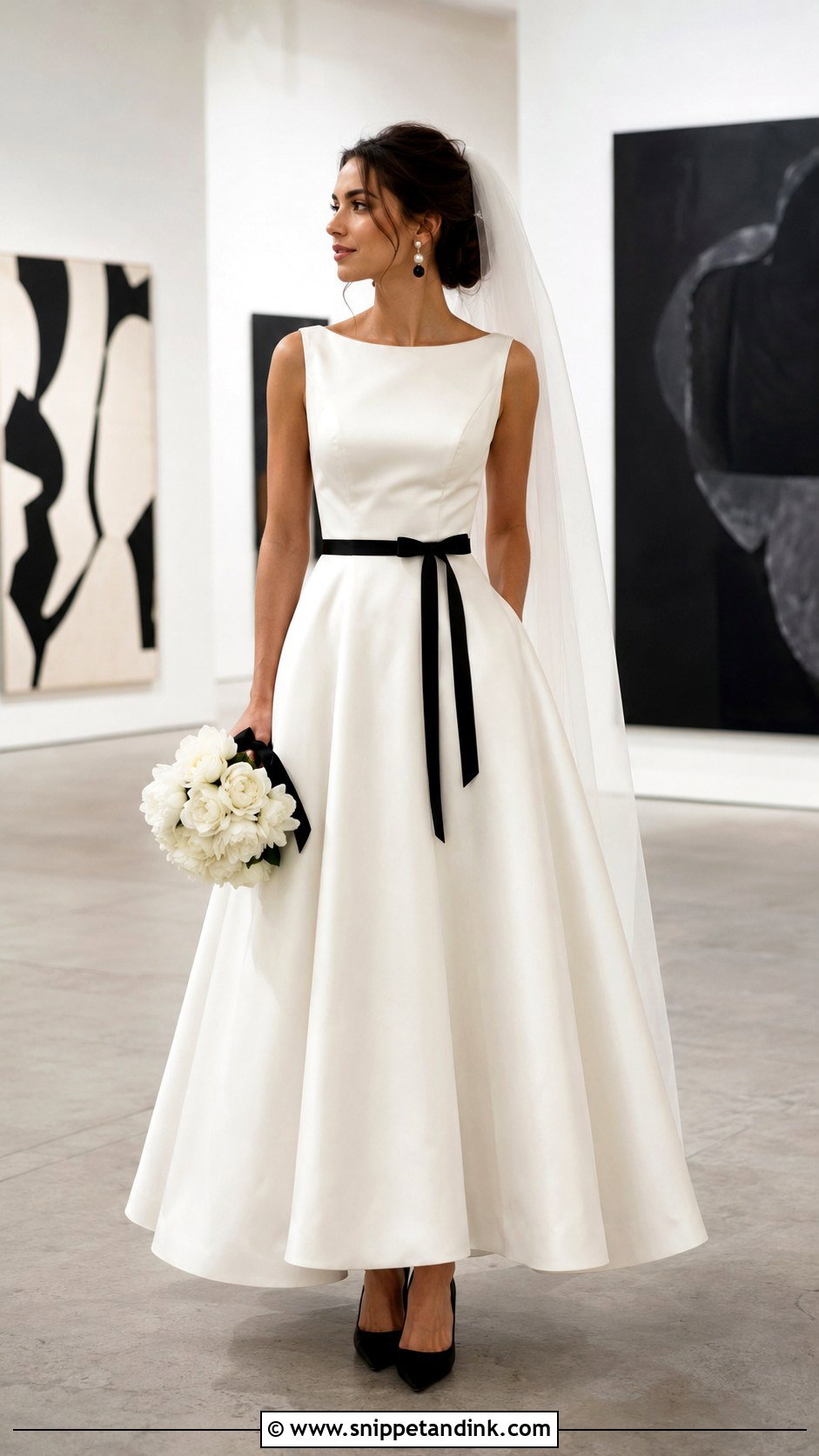
One or two black accents on an ivory gown look intentional; four or five start to look like a costume. A clean satin A-line with a narrow black waist bow, small shoulder bows or a removable ribbon at the back is enough. Black pointed pumps, pearl-and-black earrings and a plain ivory veil keep the palette disciplined, and a sleek bun with white flowers tied in black ribbon finishes it. Galleries, hotels and city venues suit it best. I prefer the bows to be removable: you can walk down the aisle in all ivory for a traditional family, then add the black for the reception. Check that the black dye won’t bleed onto ivory if the bow gets damp.
17. Champagne A-Line Wedding Dress With Gold Accessories
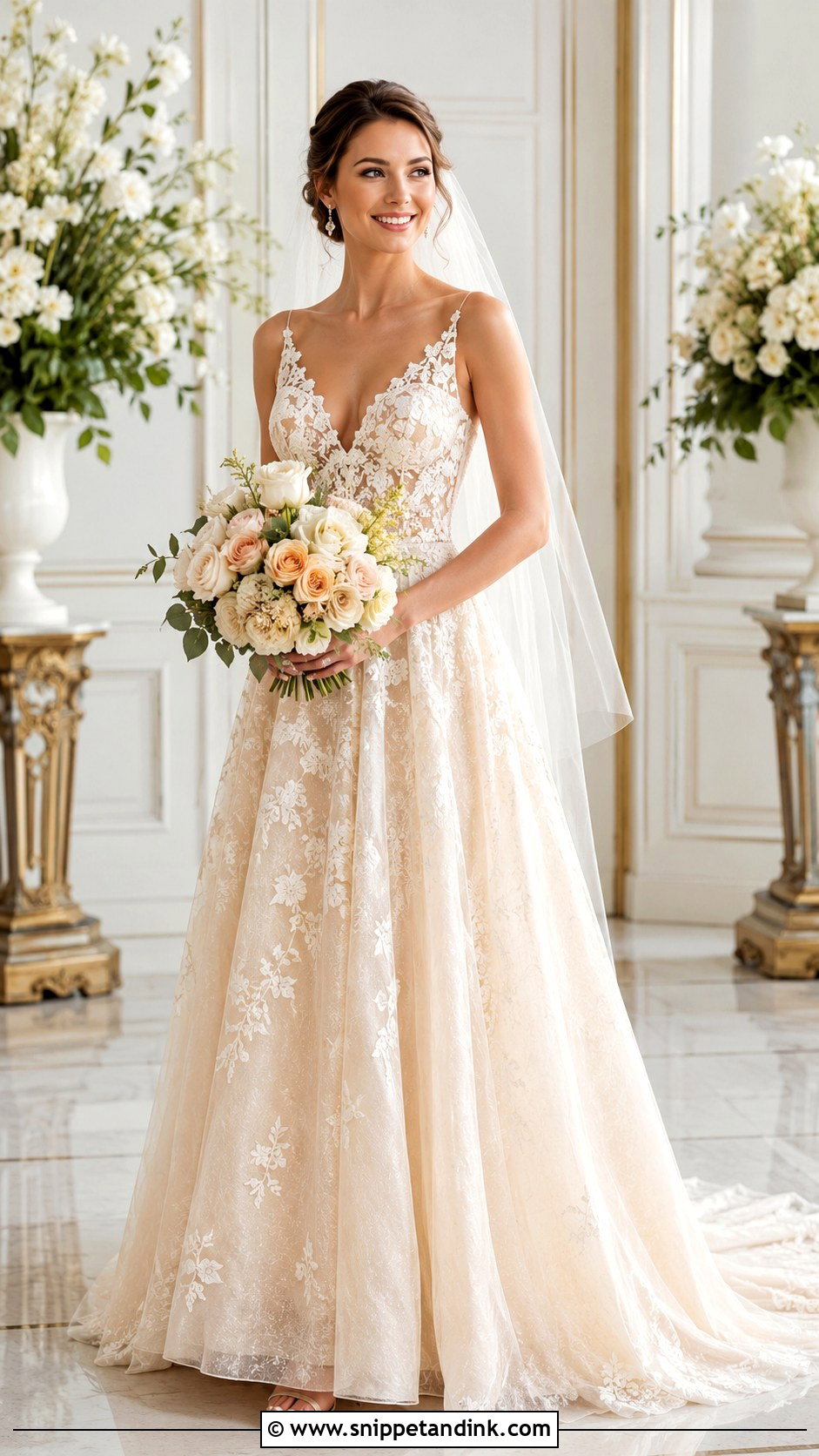
Champagne is warmer than white but still reads as bridal, and it’s often more flattering than bright white on olive and deeper skin tones. It shows lace, embroidered tulle and beadwork clearly because the contrast is stronger. Choose an ivory veil, not a white one, so the dress doesn’t look yellow beside it. Gold earrings, champagne-toned heels and a slim bracelet suit the warmth, alongside peach or rose makeup and polished waves or a relaxed updo. Cream, blush and pale peach flowers sit well against it. I always look at a champagne sample in daylight and again under warm indoor light, because the same gown can swing from blush to beige depending on its lining and the room.
18. Winter A-Line Wedding Dress With Bridal Cape
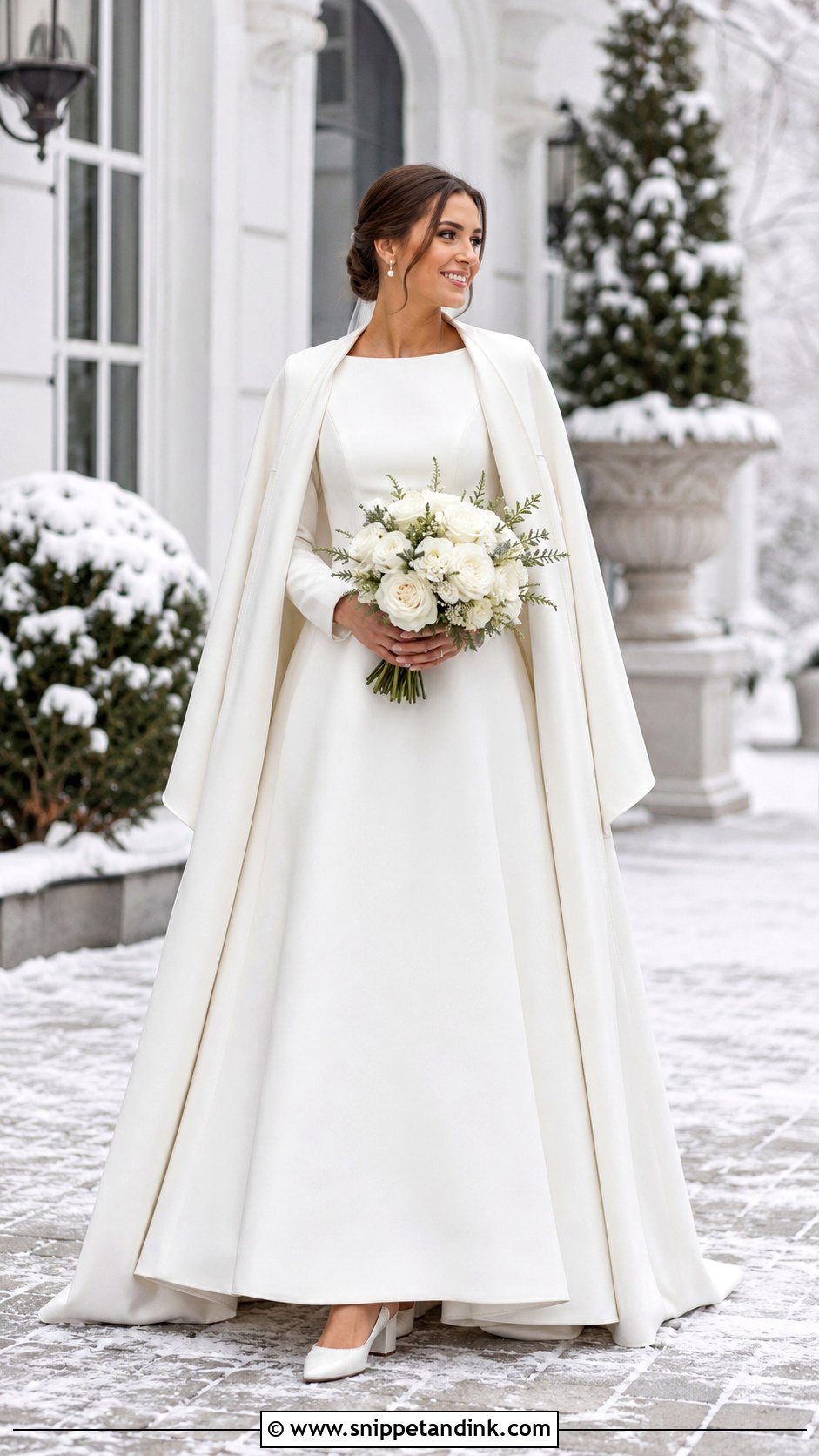
Winter calls for a gown with some weight and a layer you can remove. Start with a structured mikado or satin A-line with long sleeves and a square or bateau neckline, then add a floor-length cape in crepe, lined satin or lightly embellished tulle. The cape makes an entrance outdoors and comes off inside. Pearl earrings, closed-toe block heels and white roses with some seasonal greenery keep it calm, and a low bun stops the hair and cape fighting at the neck. Thermal shorts under the skirt are a sensible secret for outdoor portraits. The cape attachment is what I check most: if it pulls the neckline backward when you walk, it needs anchoring at the shoulder seams instead.
19. A-Line Wedding Dress With Detachable Sleeves
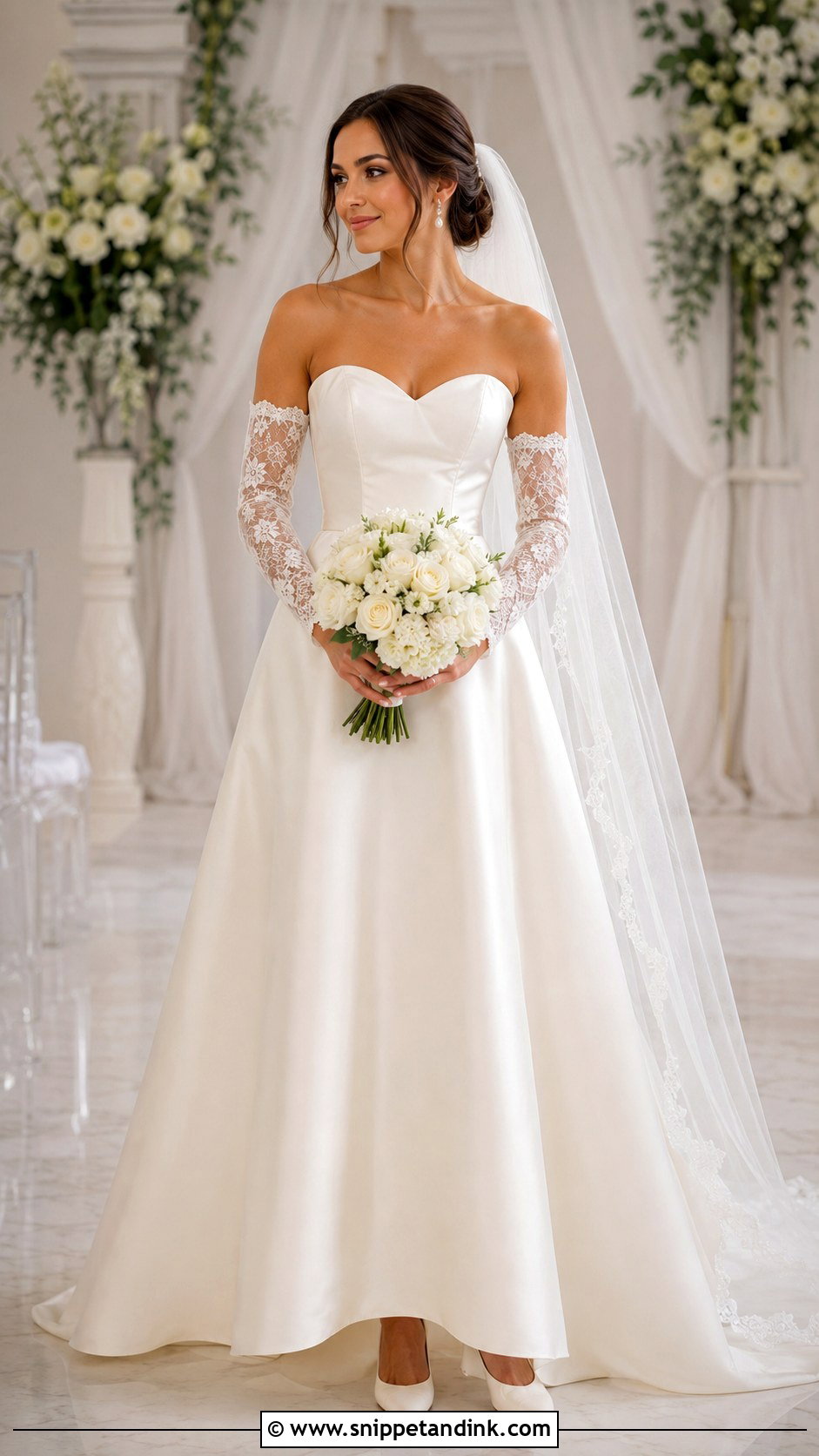
Detachable sleeves turn one A-line into two looks. Begin with a strapless or sleeveless gown with a fitted bodice and a satin or tulle skirt, then add off-shoulder, puff or fitted lace sleeves for the ceremony with a long veil, pearl earrings and classic pumps. After the formal photos, remove them and switch to bolder earrings or a shorter veil. A neat updo works for both versions and keeps hair out of the fastenings. Sleeves made by the same maker as the gown are worth it, since ivory varies a lot between mills. I have brides practise taking them off at the final fitting, because you want that change to take a couple of minutes, not twenty.

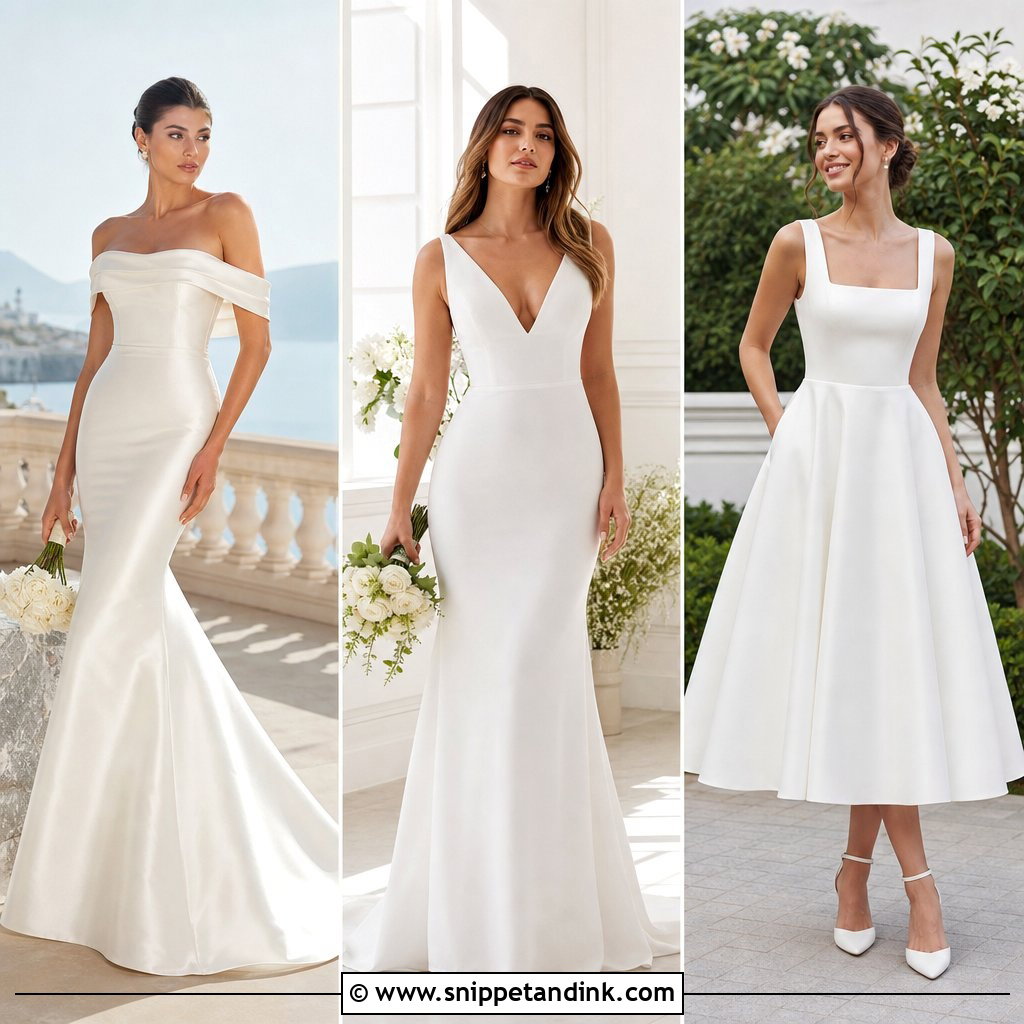
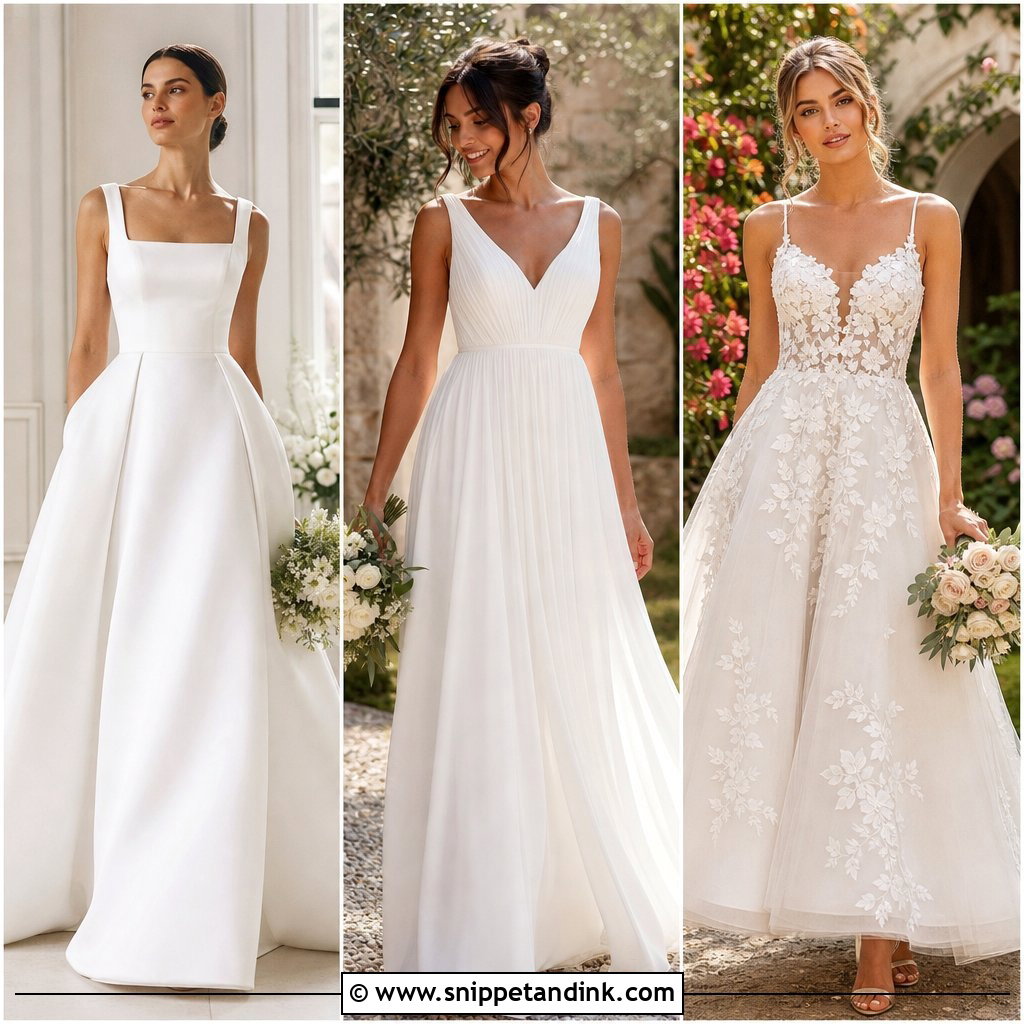
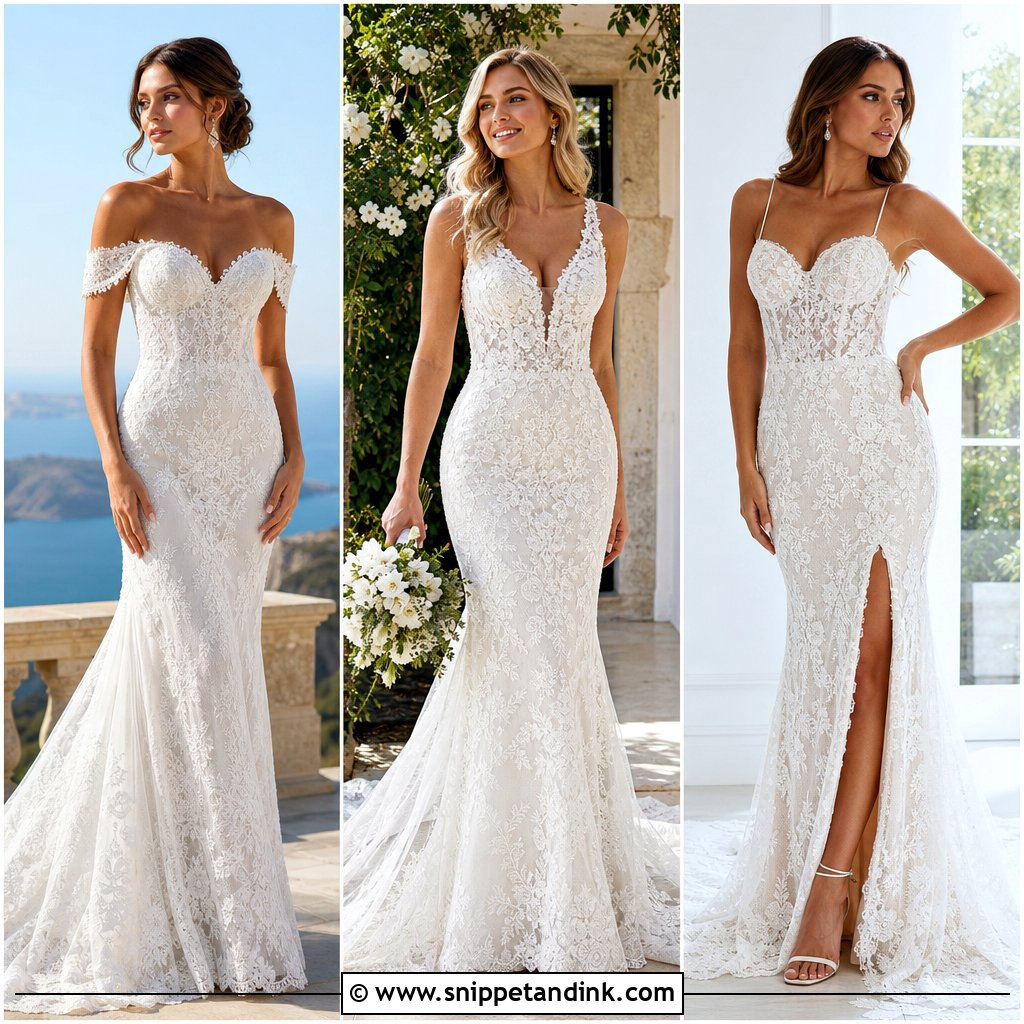
20. A-Line Wedding Dress With Pockets And Bow Back
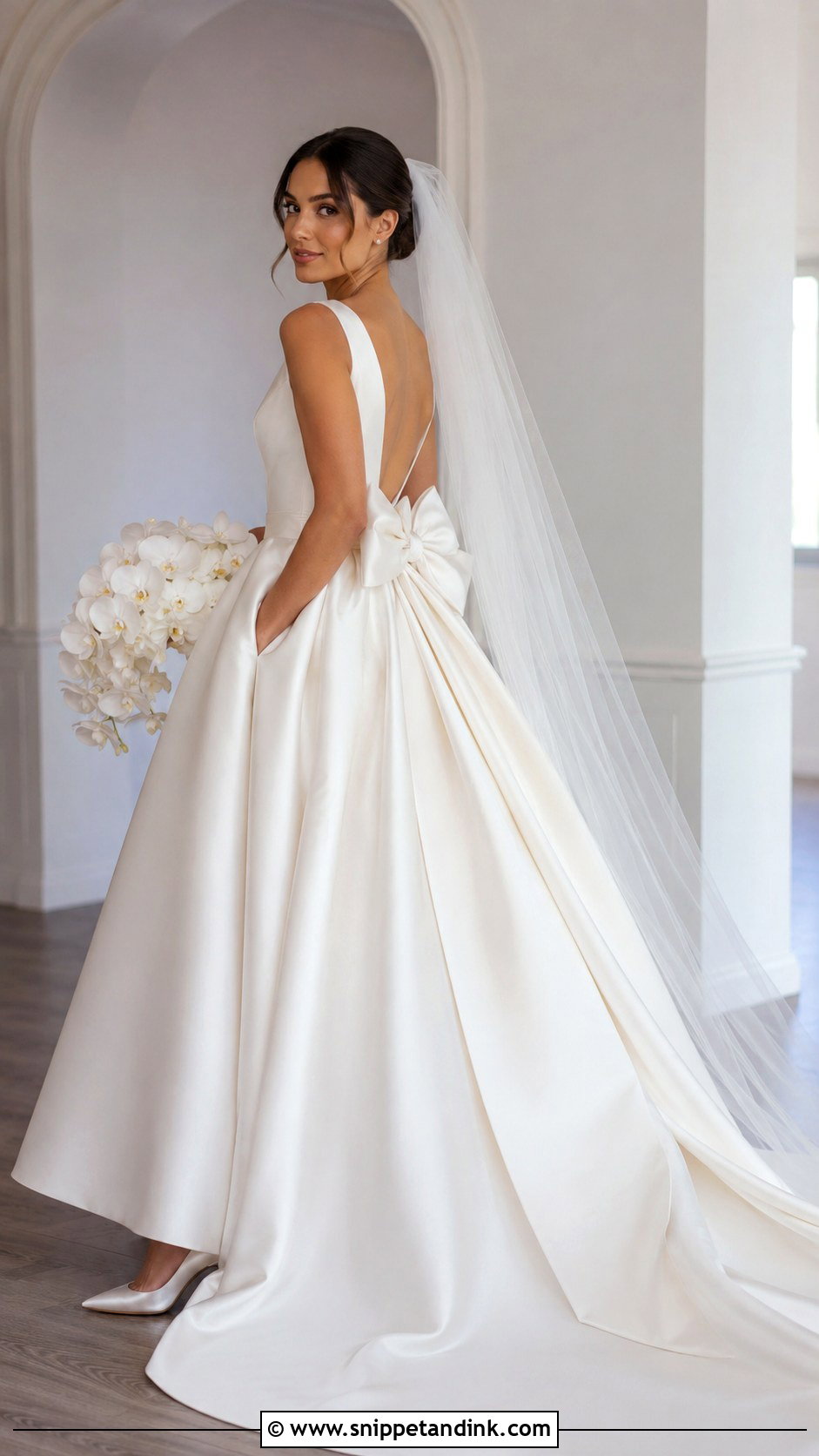
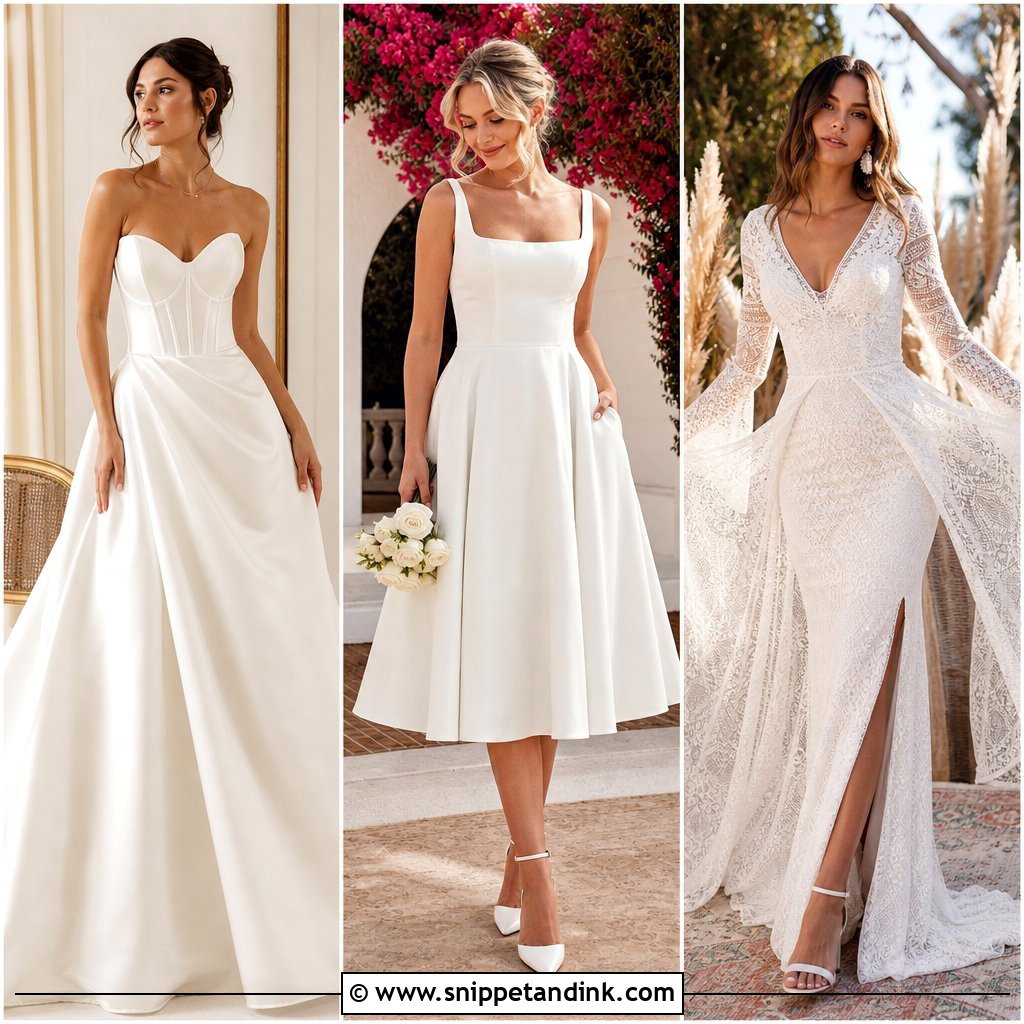
Pockets are the detail brides thank me for later. A structured satin or mikado gown with hidden side pockets holds a tissue, lip colour or the rings, and an oversized removable bow at the back gives the aisle view something to look at without cluttering the front. A plain cathedral veil, stud earrings and pointed ivory pumps let the bow lead, with a smooth bun and white orchids or roses alongside. Two cautions: pockets must lie flat when empty, and anything heavy will drag the skirt, so keep the phone with your planner. A detachable bow can come off for dancing.
Getting the Gown Home Clean After the Last Dance
The hours after a wedding are when most dress damage happens, usually because the gown gets thrown over a chair. A little planning keeps it in good shape whether you’ll preserve it, sell it or pass it on.
- Hang it by the inner hanging loops, not the shoulders or straps, so the skirt weight doesn’t stretch the bodice.
- Don’t rub at wine, grass or makeup marks. Blot gently and point them out to the cleaner, who needs to know what each stain is.
- Sugary spills like champagne and cake can be invisible at first and turn brown months later, so mention them even if you can’t see them.
- Take it to a cleaner who specialises in bridal fabrics within a few weeks rather than leaving it in the bag for a year.
- Store it in an acid-free box or a breathable cotton bag, away from plastic covers, damp lofts and direct light.
Beaded and heavy satin gowns are better stored flat in a box than hanging long term, since their own weight slowly pulls at the shoulder seams. Lighter chiffon and crepe versions can hang if you have the space.
Walk, Sit, Turn and Lift Your Arms in It
The A-line that’s right for you balances your style, a construction that lets you move, and the feel of the day. Satin gives structure, chiffon movement, lace texture and crepe a clean modern line. Sleeves, veils, bows, capes and accessories then build the silhouette into a full outfit. Treat these twenty looks as starting points rather than rules, and try a few necklines, fabrics, waist positions and skirt volumes before you decide. At every fitting, walk, sit, turn and lift your arms. If the dress passes all four and you forget you’re wearing it, you’ve found it.
You'll Like These Ideas:







Leave a Reply