
Lace is the fabric I’m asked about more than any other, usually by a bride who already knows she wants it and isn’t sure which kind. Its history runs through almost every decade of bridalwear, from Victorian high neck gowns and Edwardian sleeves to fifties tea length, seventies boho and the slim shapes of the nineties. Right now I’m seeing a lot of corset bodices, basque waists, long sleeves, detachable overskirts and heirloom-style veils. Below are thirty ways lace can be worn, with the fit and styling notes I’d give in the fitting room.
Telling Chantilly From Alençon in a Fitting Room
Most brides know they love lace before they know which one. Learning the main types helps, because each behaves very differently on the body, and labels in shops are not always precise. Here’s how I explain them when a bride runs her hand across a sample.
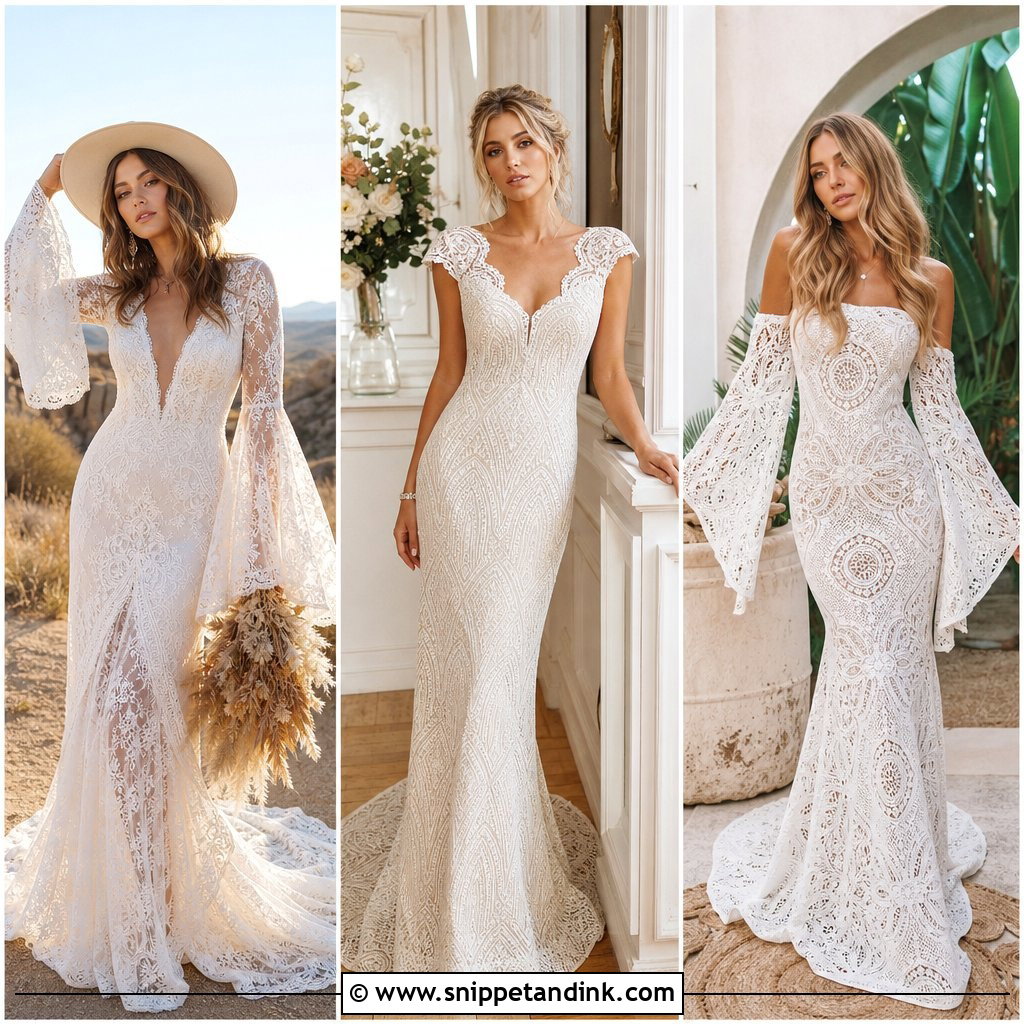
- Chantilly: very fine net with delicate floral patterns outlined in thin thread. Soft, drapey and light, ideal for sleeves and overlays, but it snags easily on rings and bracelets.
- Alençon: a similar fine ground with a raised cord outlining each motif. It has more body and holds a shape well on bodices and appliqué.
- Guipure and Venise: heavy, sculptural lace with no net behind it, the motifs joined by small bars. Dramatic, but stiff and warm. Best on simple, structured shapes and cooler days.
- Crochet-style lace: open, textured and casual, the seventies look. Comfortable, though it can stretch out of shape if the dress isn’t well lined.
A quick test: rub the lace gently between finger and thumb near your wrist. If it scratches there, it’ll scratch at the underarm all day, so ask about a softer lining or a different lace for the sleeves.
1. Long Sleeve Lace Wedding Dress
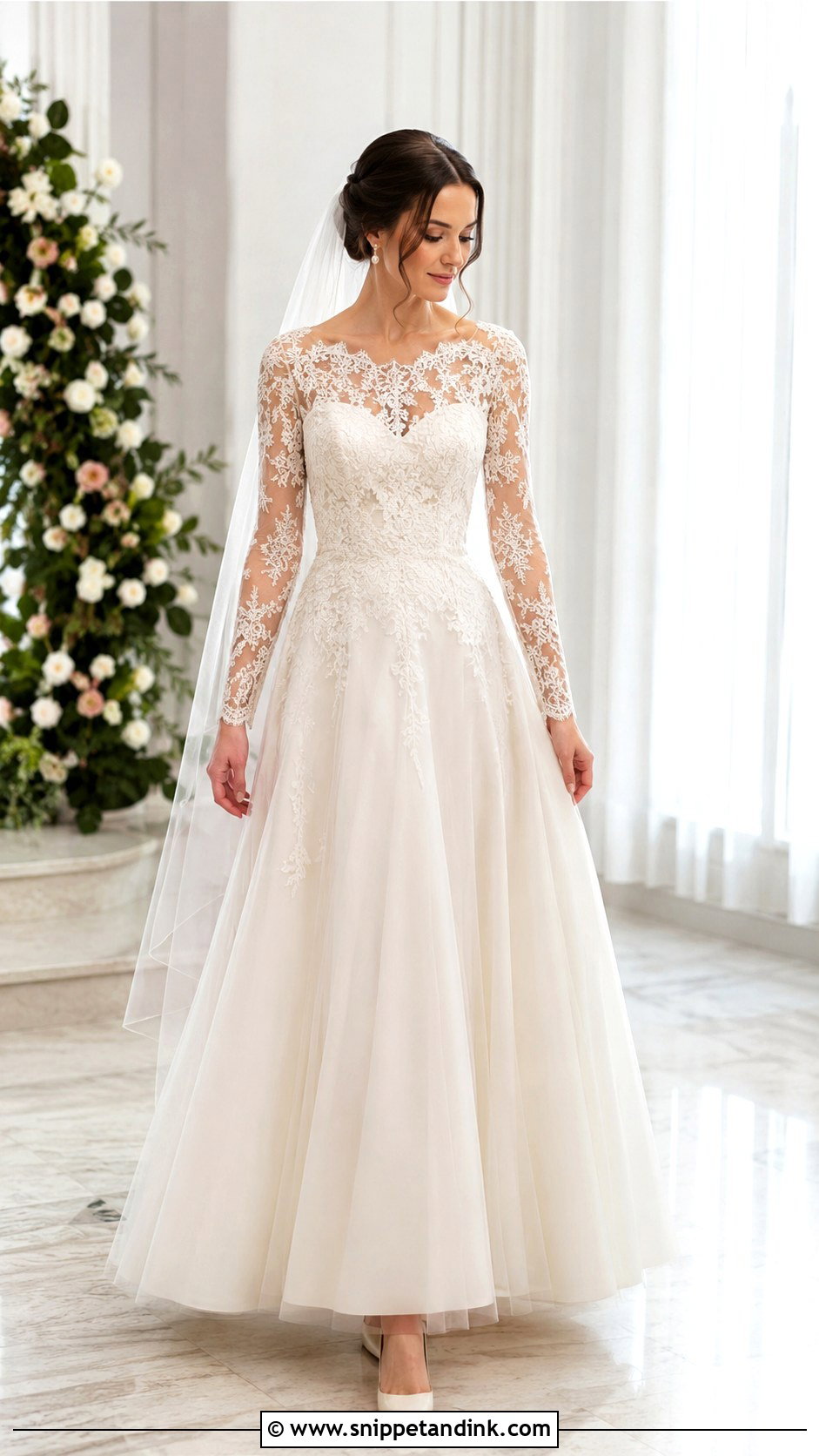
Long lace sleeves are the classic for a reason, but they’re also the most fit-sensitive part of a gown. Fitted sleeves look crisp; sheer illusion sleeves with lace motifs floating on them feel softer and allow more movement. Either way, the lace should end at the wrist bone, not drag over the hand when you hold your bouquet. A fitted bodice and A-line skirt suit most figures. Pearl earrings, a low bun and pointed ivory heels finish it. With busy lace, choose a plain veil so the sleeves stay the focus.
2. High Neck Lace Wedding Dress
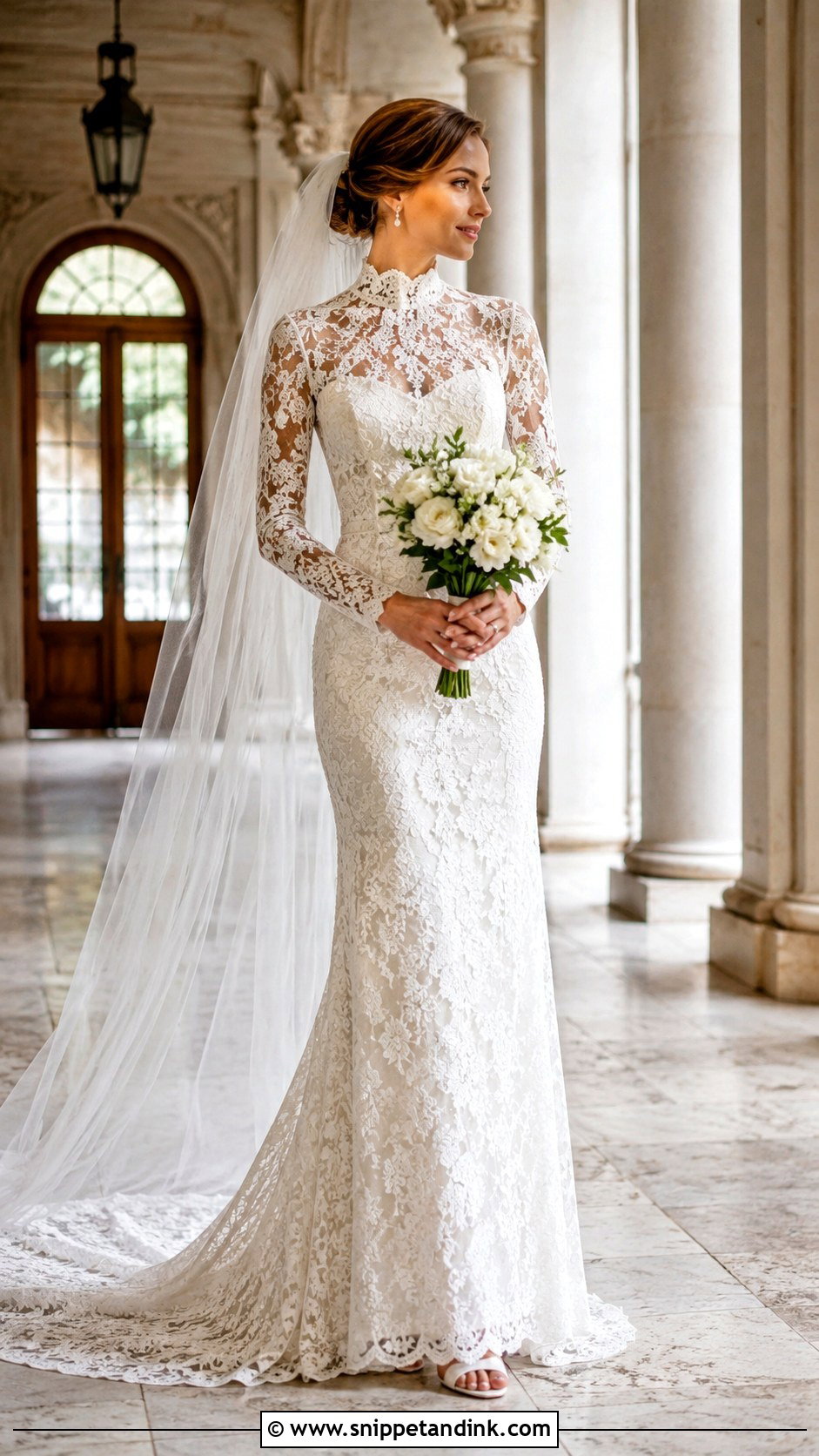
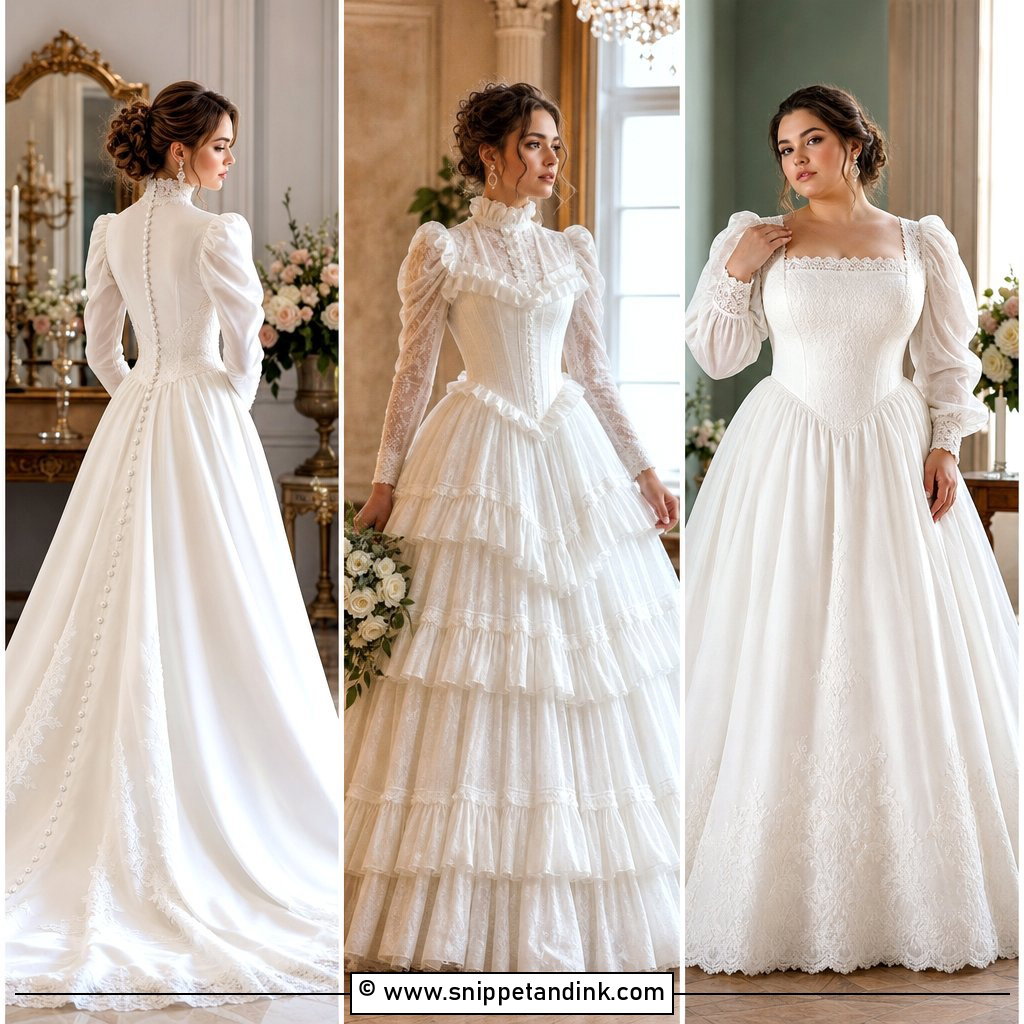
A high lace neck reads Victorian, and on a modern gown it works best when the lace sits on sheer tulle rather than solid fabric. That way the neck looks covered but never closed in. Covered buttons down the back pair naturally with it. Balance the detail with a smooth skirt or a gentle flare. In my experience brides who worry it’ll feel hot are surprised: open lace breathes far better than a satin collar. A neat updo is close to essential so hair doesn’t snag on the lace, and a cathedral veil suits a formal ceremony.
3. Lace Ball Gown Wedding Dress
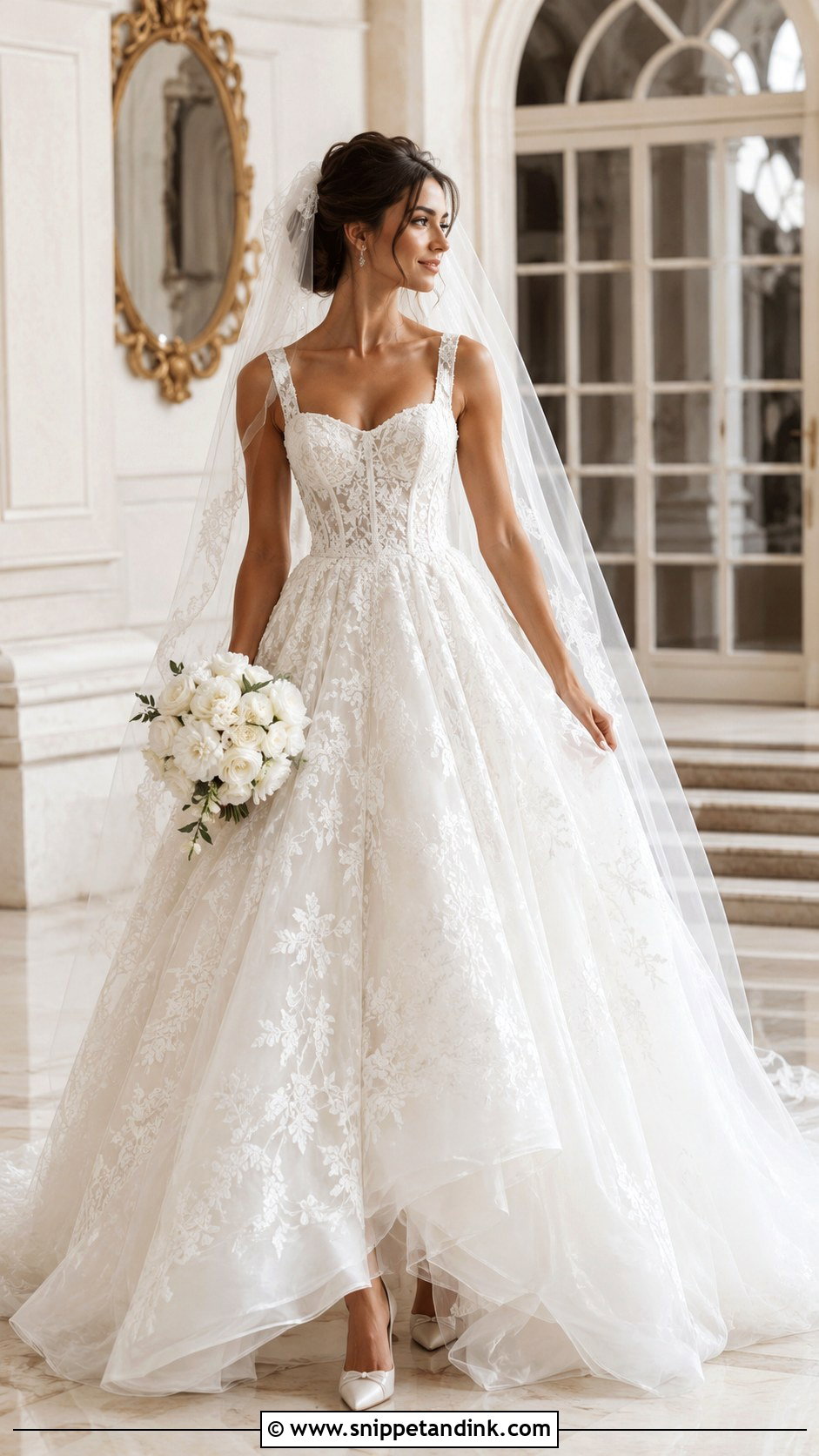
A lace ball gown has real presence, but lace on a big skirt can look flat unless it’s placed with care. I look for appliqué that starts dense on the bodice and thins out down the skirt, so the volume still reads as tulle and air. The bodice must be structured and the waist defined, or the skirt swamps you. Grand venues and estate weddings are its natural setting. Keep jewellery simple, choose a long veil and carry a small bouquet; a big one hides the waist you just paid to have fitted.
4. Tea Length Lace Wedding Dress
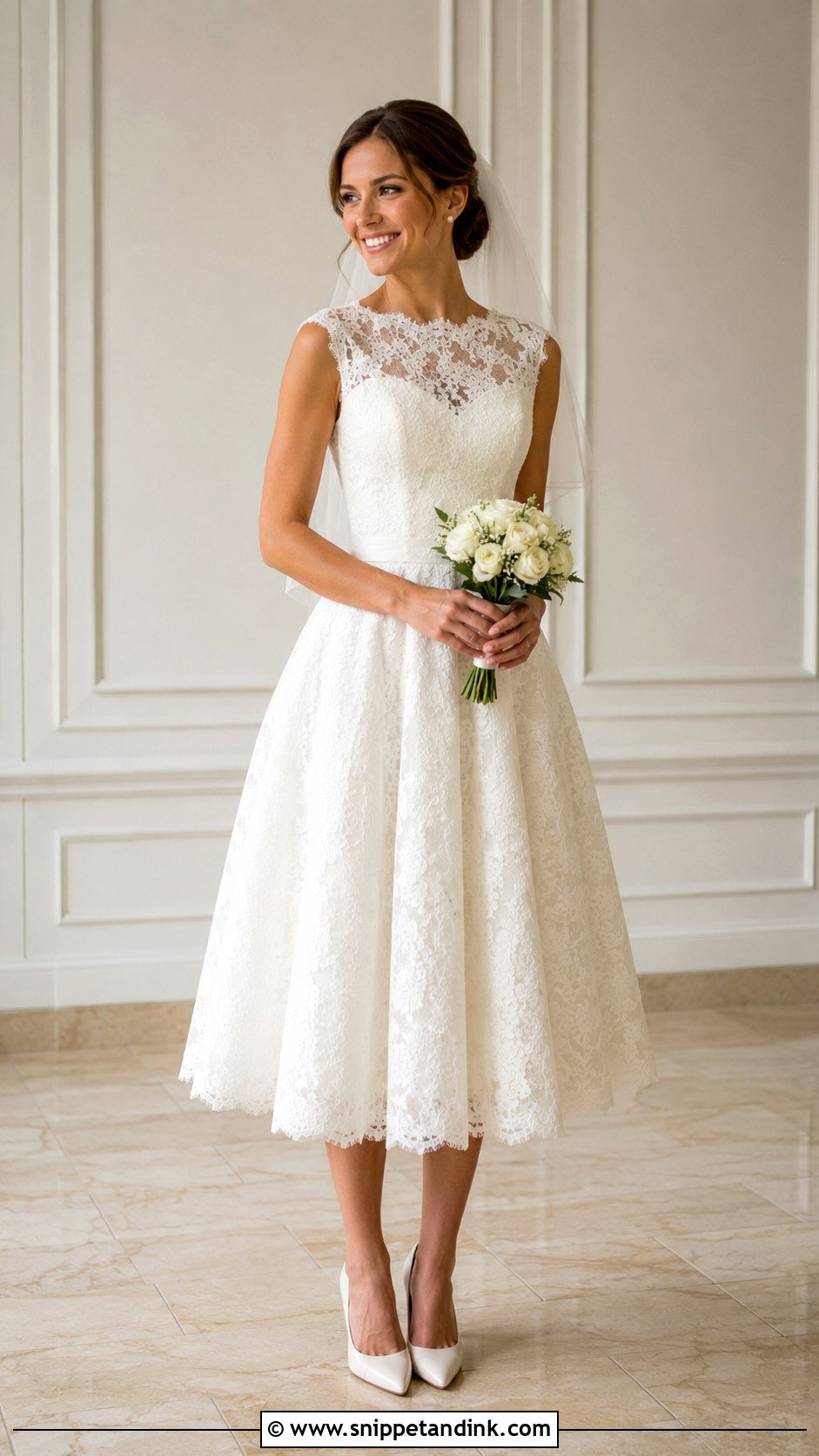
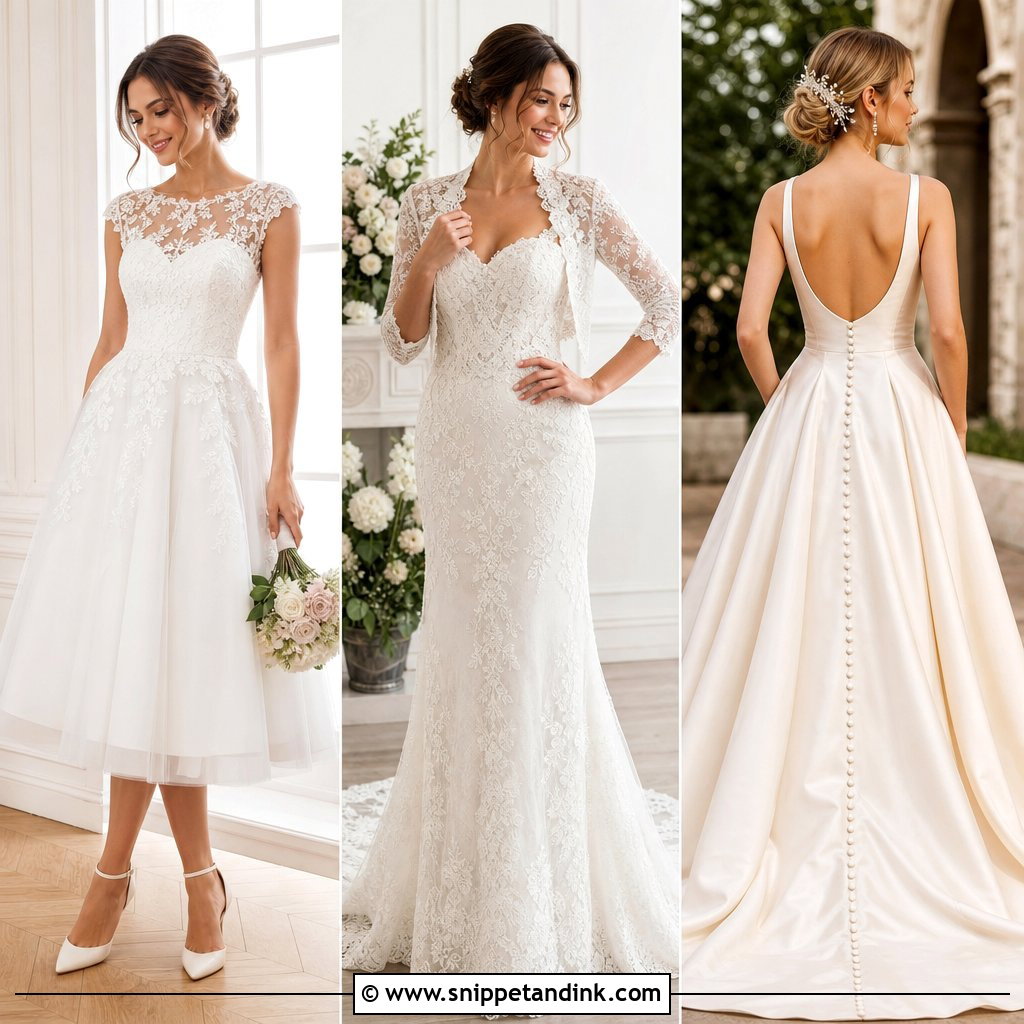
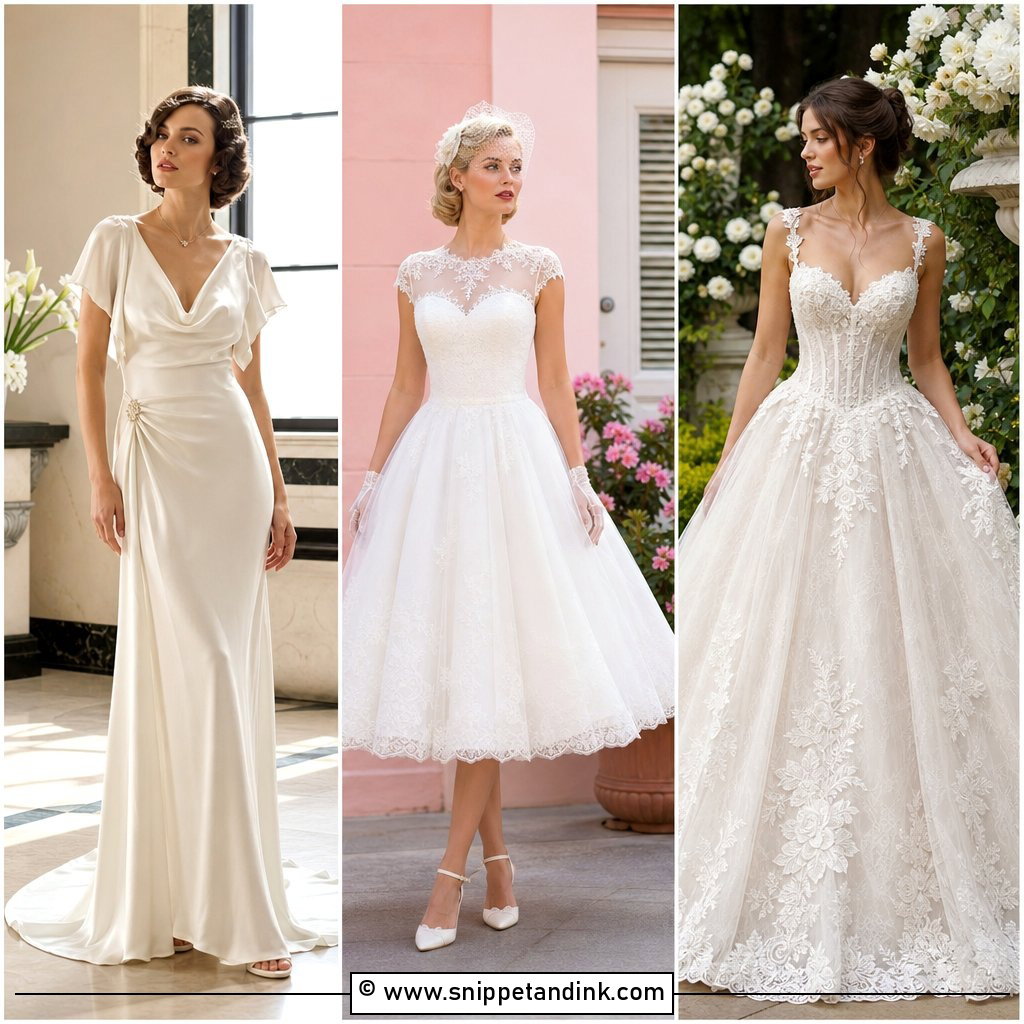
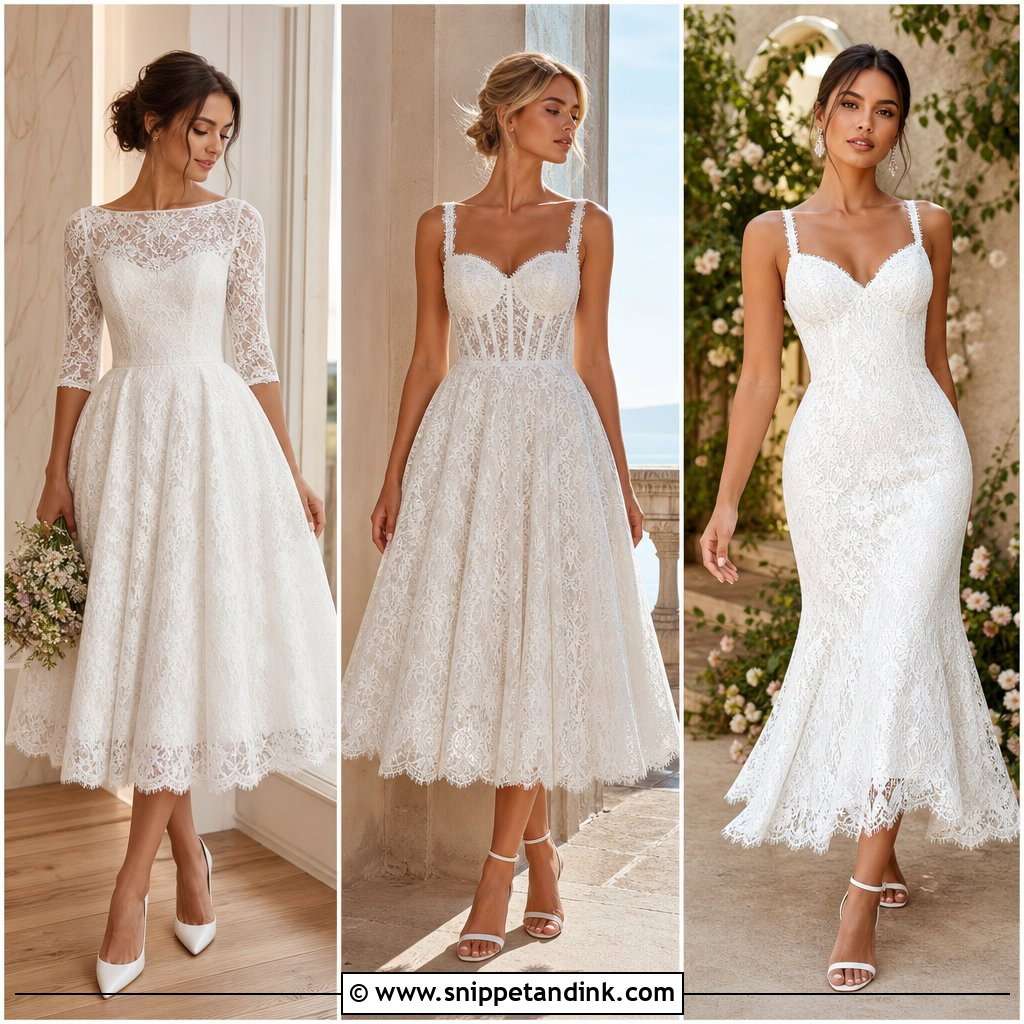
A tea length lace wedding dress stops between knee and ankle, which gives fifties charm and lets you actually walk. Lace hems on short dresses are the first thing to catch on chair legs, so look for a scalloped edge that’s been finished rather than raw-cut. A full skirt feels playful; a slimmer cut feels quieter. I’d send a bride in one to a courthouse, a garden or the reception change. Low block heels, pearl studs and a short veil or bow headband keep the proportions right.
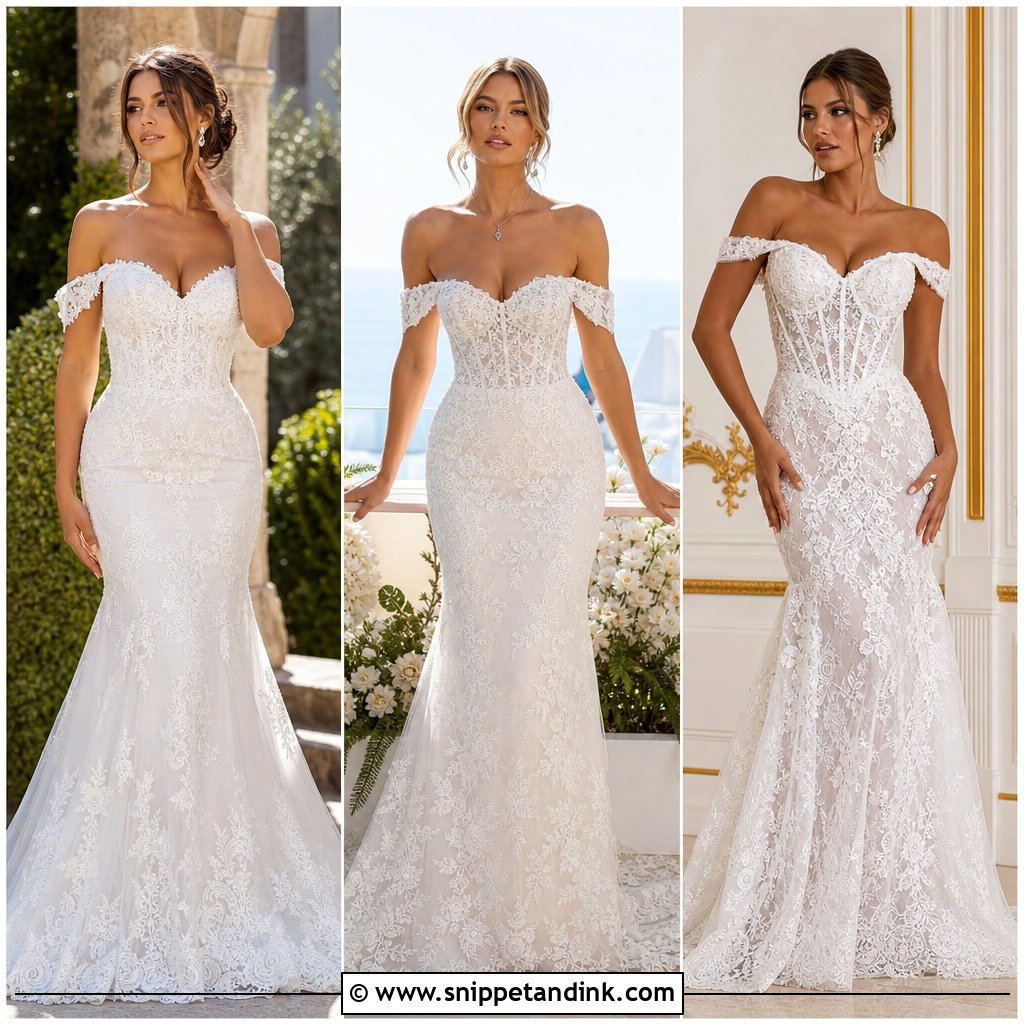
5. Off Shoulder Lace Wedding Dress
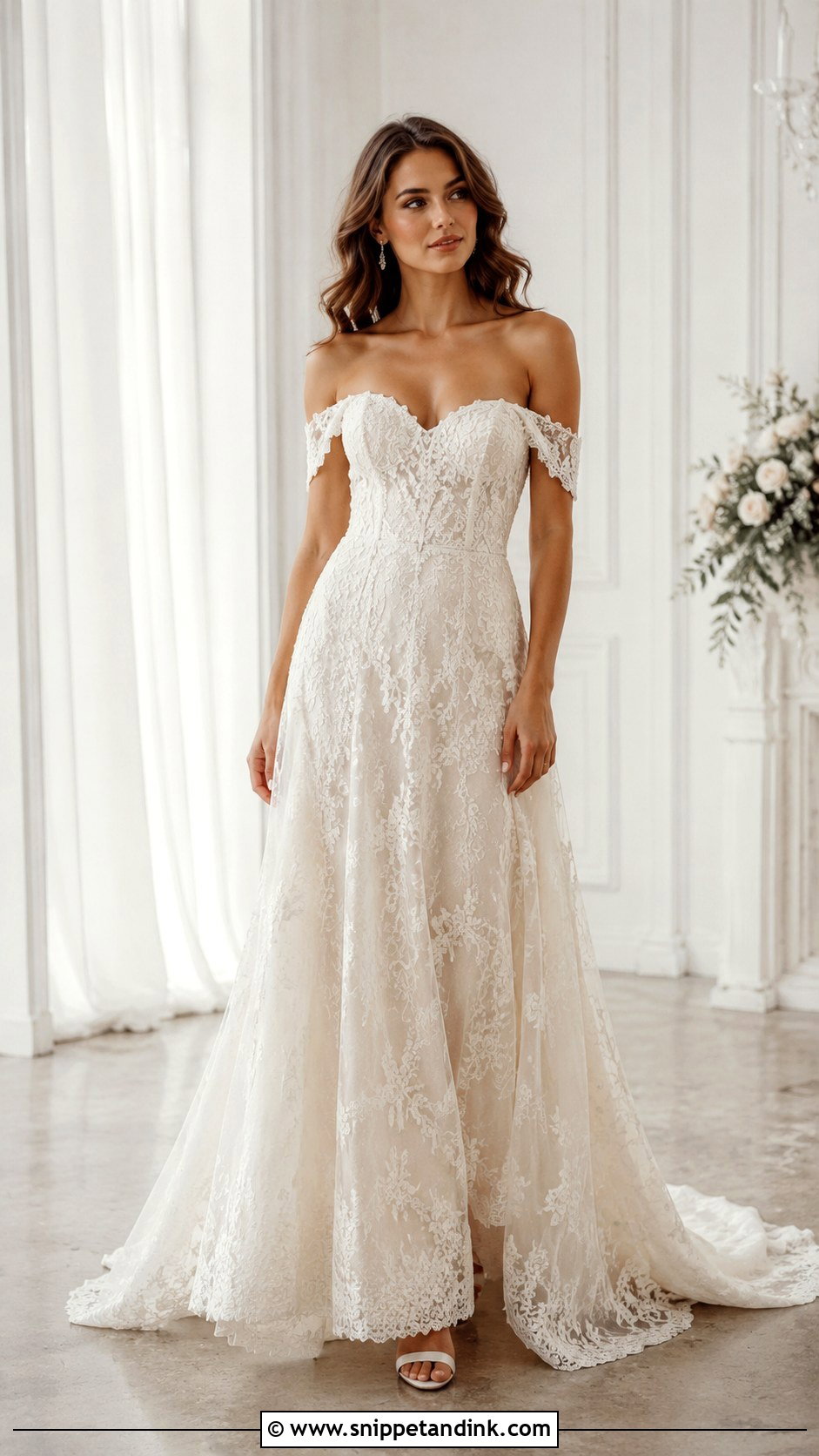
Off-shoulder lace sits on the upper arm and frames the collarbone. My main concern is support. The neckline should be held by a hidden corset or a boned bodice, not by the lace band itself, which will stretch through the day. Ask to sit and raise your arms at the fitting before you sign off. A fitted waist and flowing skirt suit it, and loose waves with pearl pins keep things soft. A fingertip veil, ivory heels and light jewellery let the neckline lead.
6. Corset Lace Wedding Dress
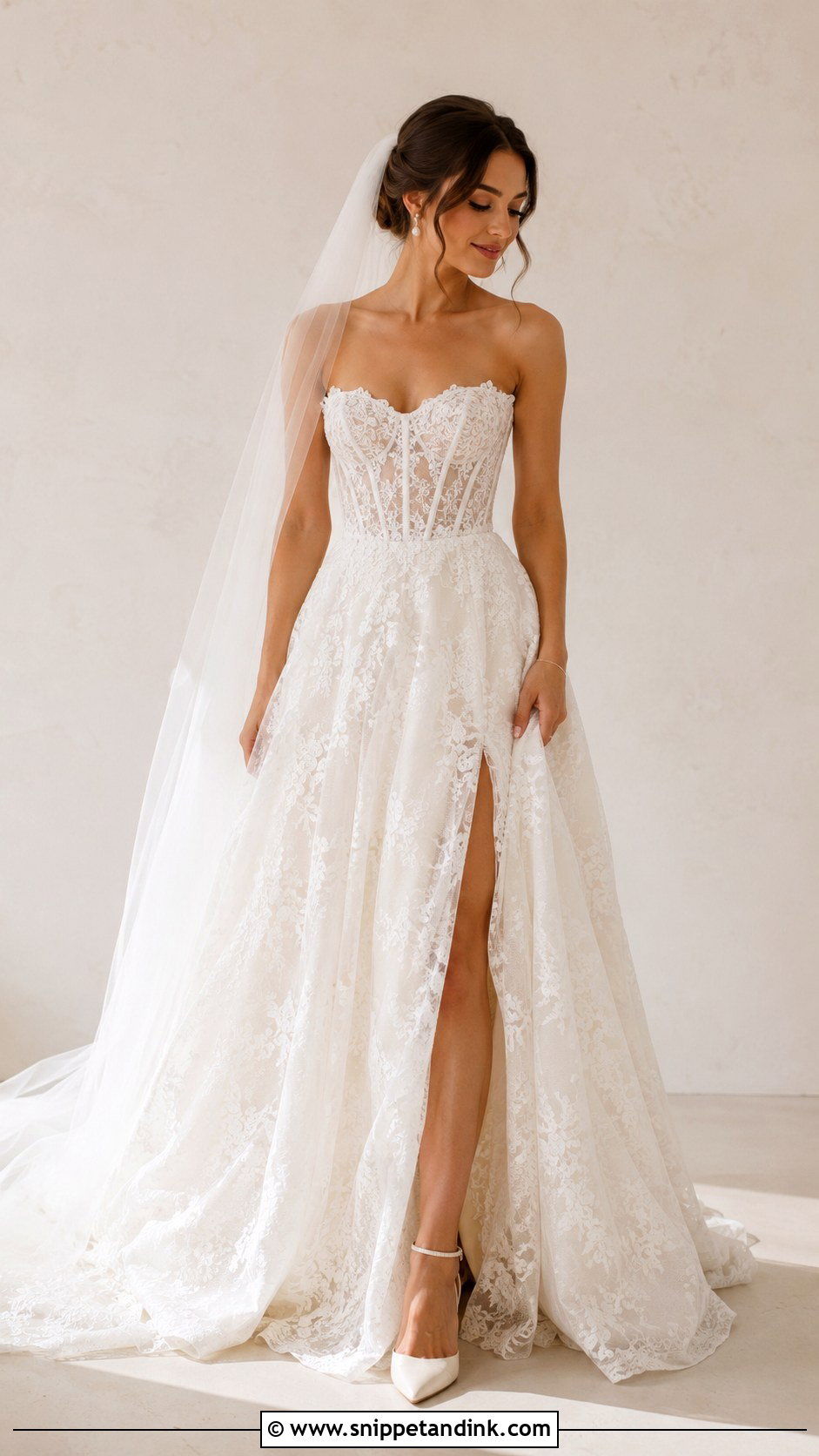
Structure and softness are the whole point of a corset bodice in lace. Boning can be visible under sheer panels or hidden under lace overlay. It suits full tulle skirts and fitted shapes alike. For an heirloom look, I’d choose ivory or antique white rather than bright white, which can make lace look new and stiff. The fit is the real test: you need to be able to sit, eat and dance. If you can’t take a full breath at the final fitting, it’s too tight for a ten-hour day.
7. Basque Waist Lace Wedding Dress
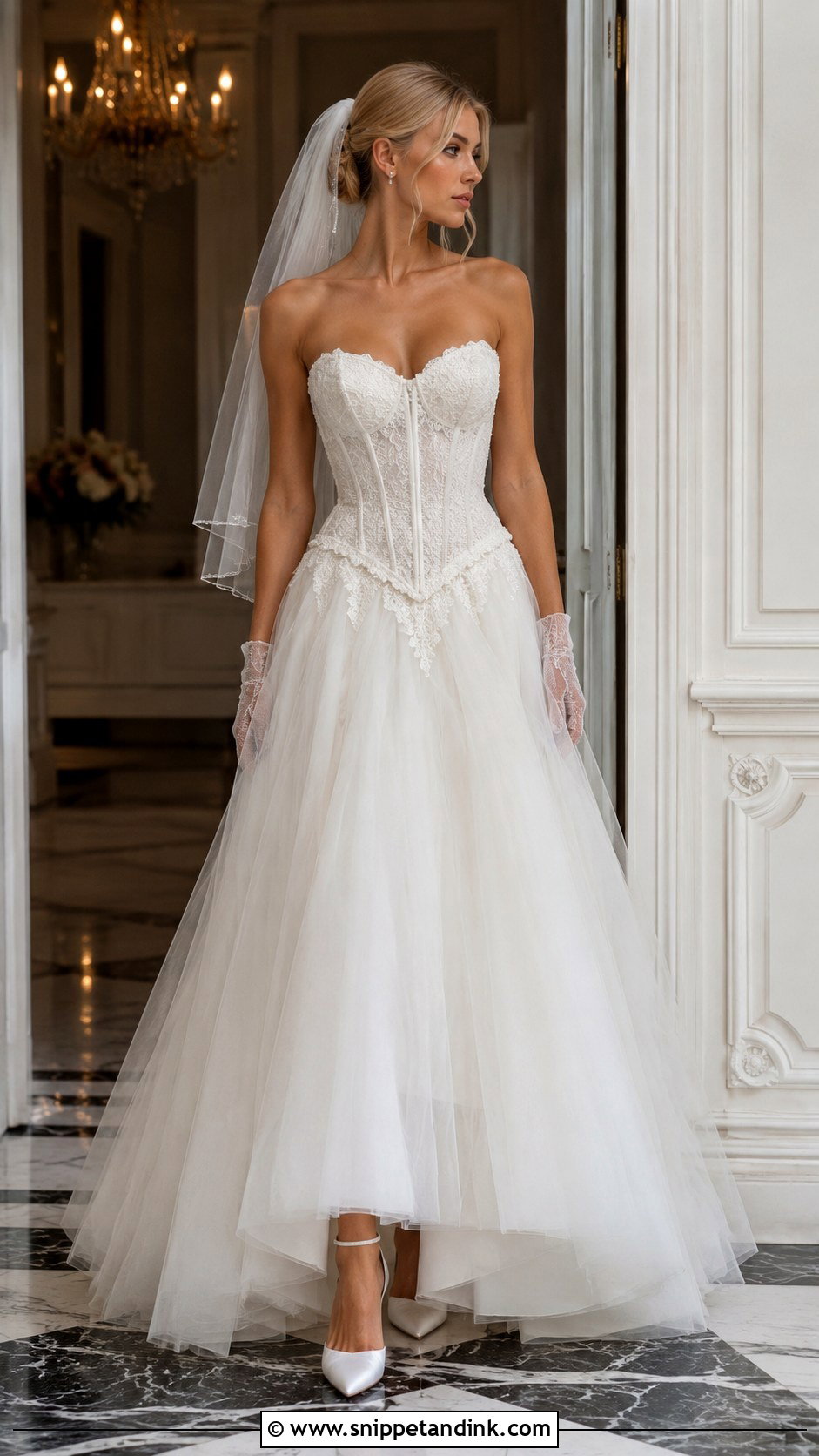
The basque waist lace wedding dress is everywhere at the moment, and it deserves the attention. The dipped V waist lengthens the torso and gives a couture shape without any sparkle, and lace softens how structured it is. A full skirt or layered tulle completes it. Pay attention to where the point of the V sits on your body; it should land just above the hip bone. Skip belts and heavy beading, then add pearl studs, a clean veil and satin shoes.
8. Drop Waist Lace Wedding Dress
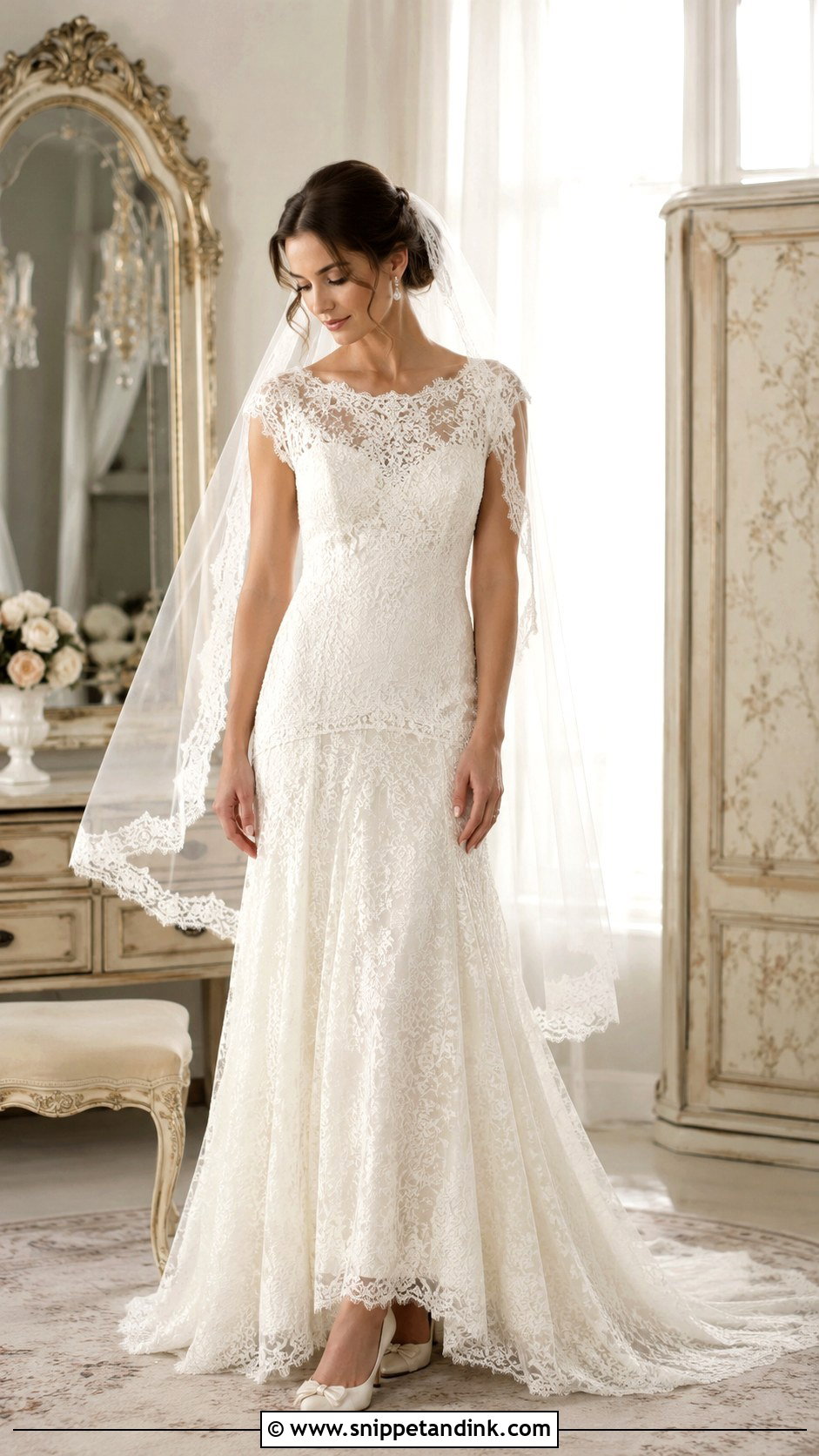
Drop waists sit lower than a basque and feel looser through the body, borrowing from the 1920s and early 1930s. Lace that runs continuously from bodice to skirt suits the shape best, because a seam at the hip draws a hard line. A lightly flared skirt adds movement, a straight one feels sleeker. This silhouette is less forgiving on very short torsos, so try it on before ruling it in. A lace-trimmed veil, small earrings and low heels finish it nicely.
9. Sheath Lace Wedding Dress
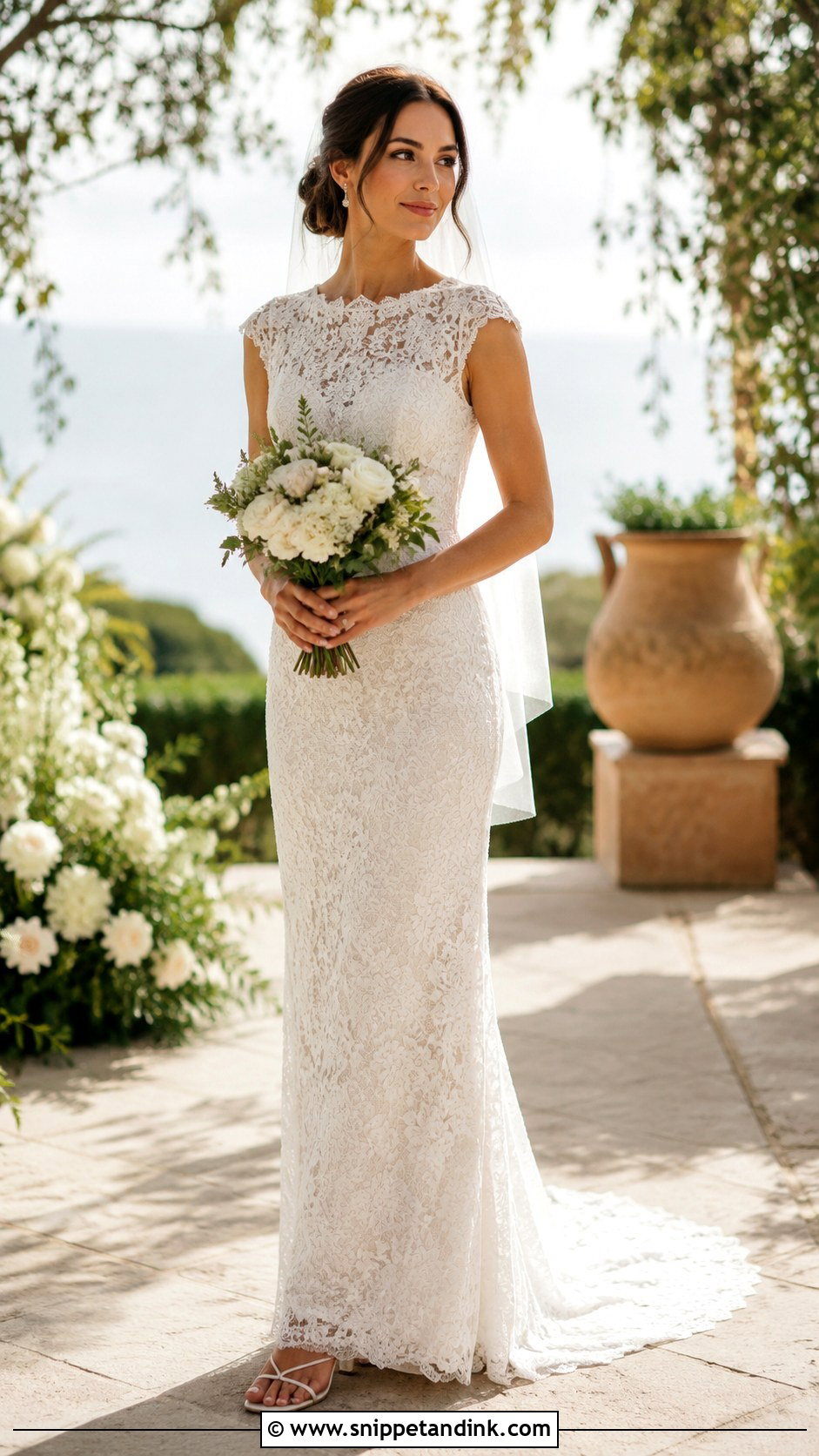
A lace sheath is the lightest way to wear the fabric. With no volume to manage, it packs into a suitcase for a destination wedding and feels comfortable on sand or grass. Soft lace and a good lining are non-negotiable; scratchy corded lace directly against skin gets uncomfortable within a couple of hours. Check the fit at the hips while seated. A low back or cap sleeves add interest. Strappy heels, a soft veil and minimal jewellery keep it simple and clean.
10. A Line Lace Wedding Dress
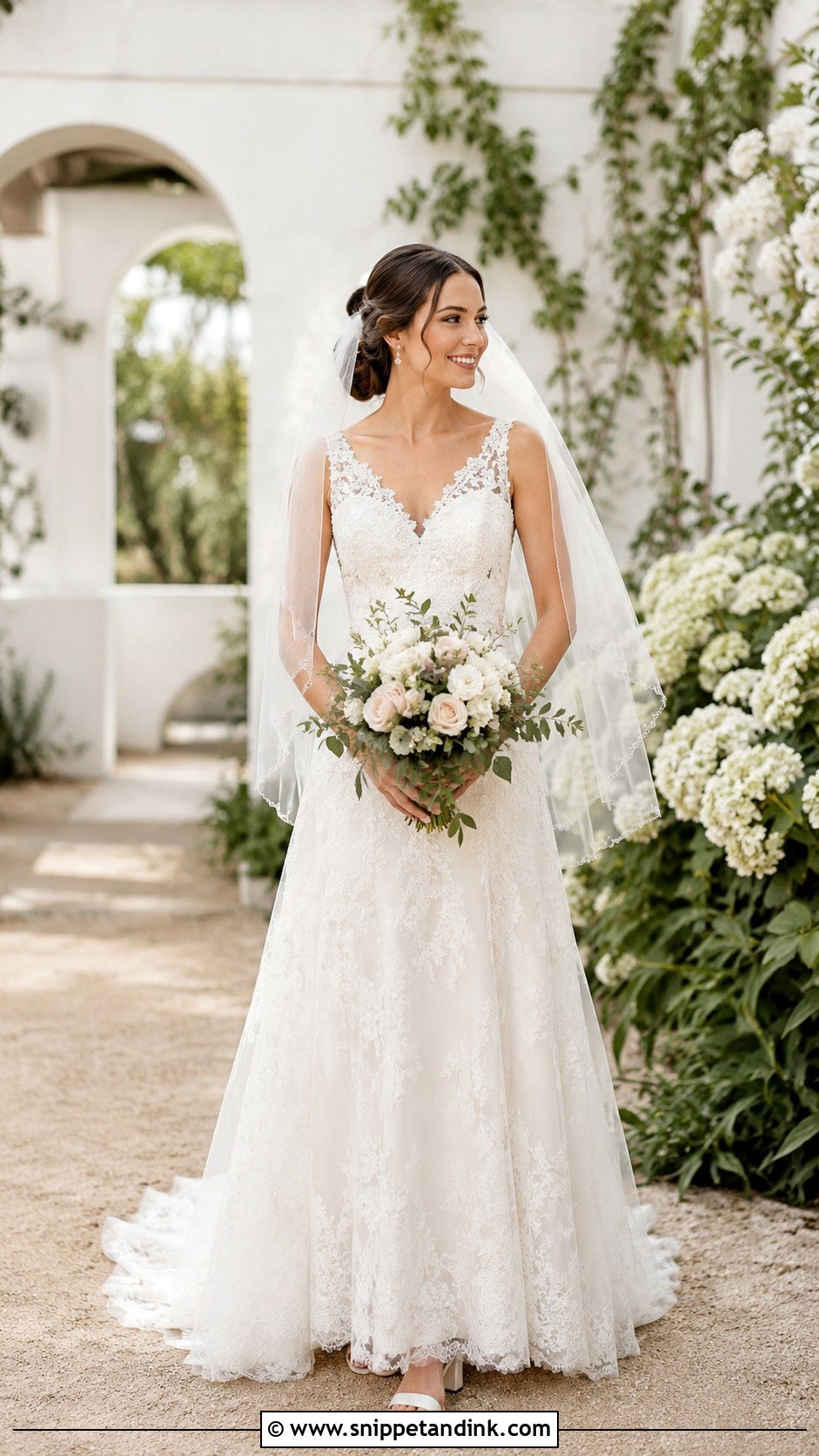
If you’re unsure what suits you, start here. A lace A-line flatters the waist and skims over the hips, and it works anywhere from a ballroom to a field. Lace sleeves push it traditional; a lace bodice over a plain skirt mixes old and new. A soft train adds a little ceremony without weight. If you’ll be standing through a long service, consider comfortable block heels under the hem. Nobody sees them, and you’ll thank yourself at the receiving line.
11. Mermaid Lace Wedding Dress
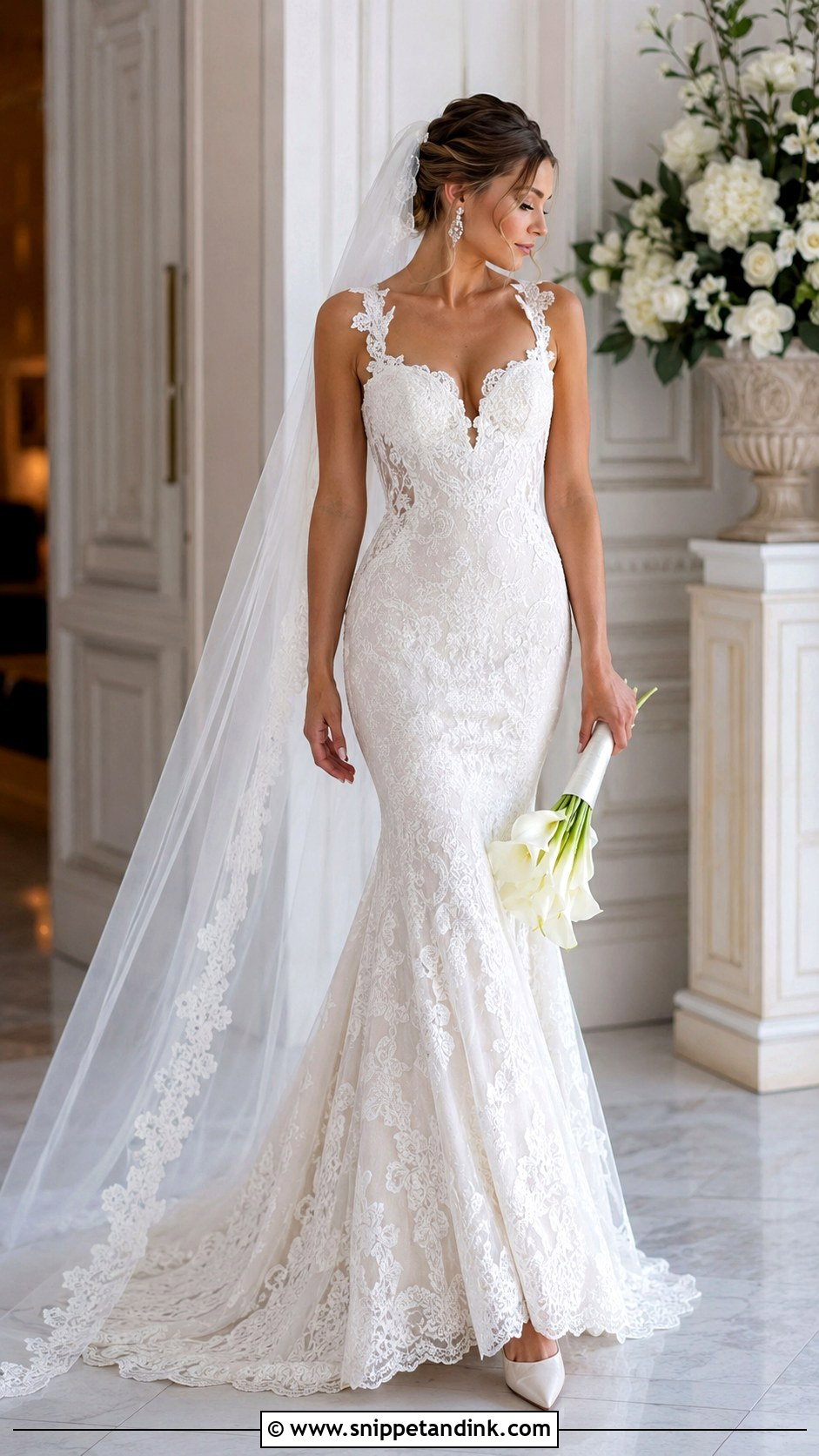
Mermaid lace hugs the bodice, waist and hips, then flares near the knee. It’s dramatic, and fit is everything: the flare should start at or just above the knee so you can walk and climb steps. Too low and you’ll shuffle all night. Scalloped edges or floral appliqué make the shape feel bridal rather than evening wear. Choose a long veil, drop earrings and sleek heels. A narrow, trailing bouquet suits the line better than a round one. Save it for a formal room with smooth floors.
12. Lace Wedding Dress With Cape
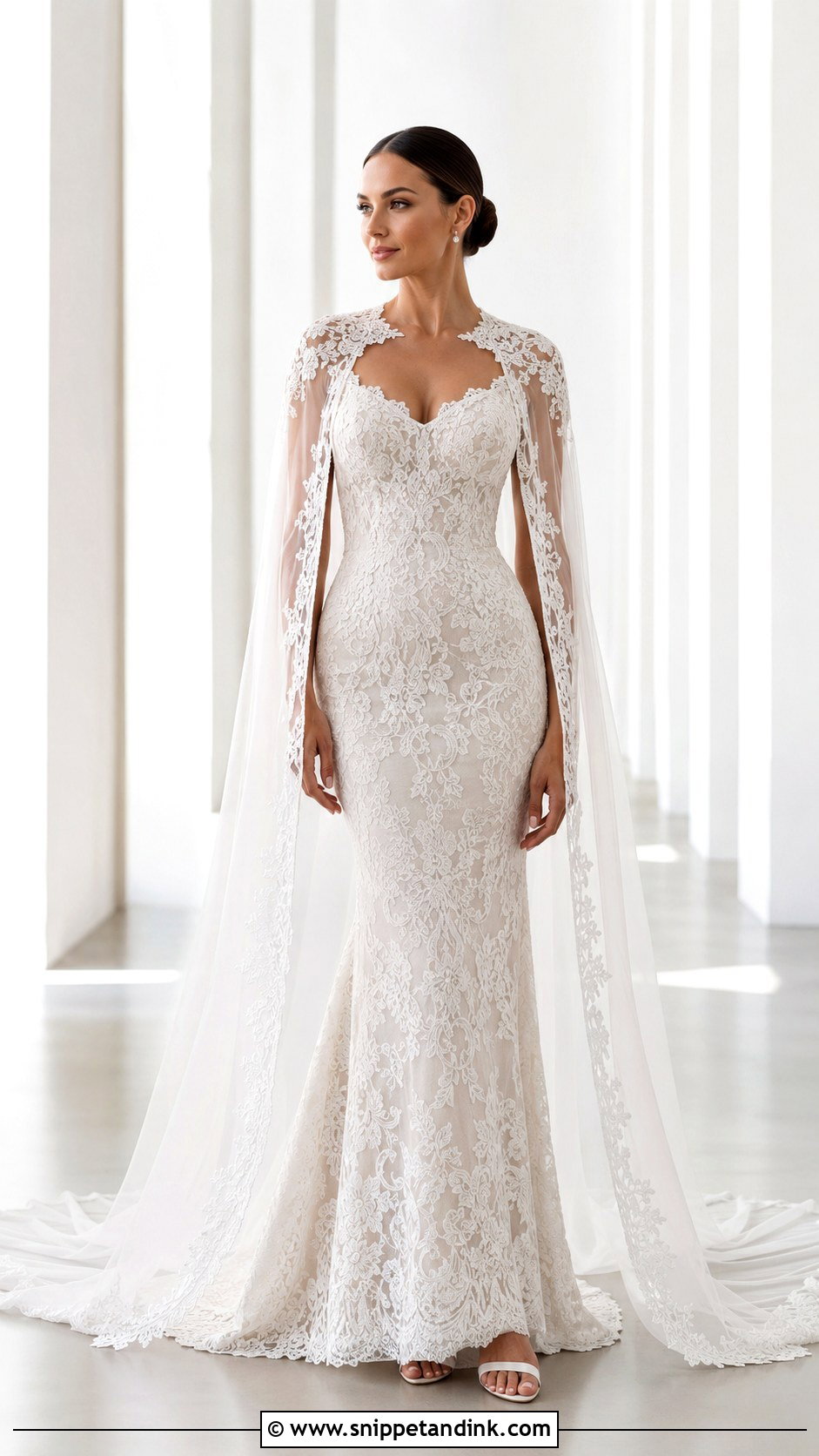
A lace cape is an alternative to a veil that gives the same drift in photographs. It can be sheer, edged in lace or fully appliquéd. It suits a simple sheath, an A-line or a corset dress, and it’s useful for a religious ceremony that asks for covered shoulders. Get the cape attached with hooks or snaps rather than relying on a neck tie, which pulls when you turn your head. Smooth hair stops it tangling, and small earrings with clean ivory heels are all you need.
13. Lace Wedding Dress With Detachable Sleeves
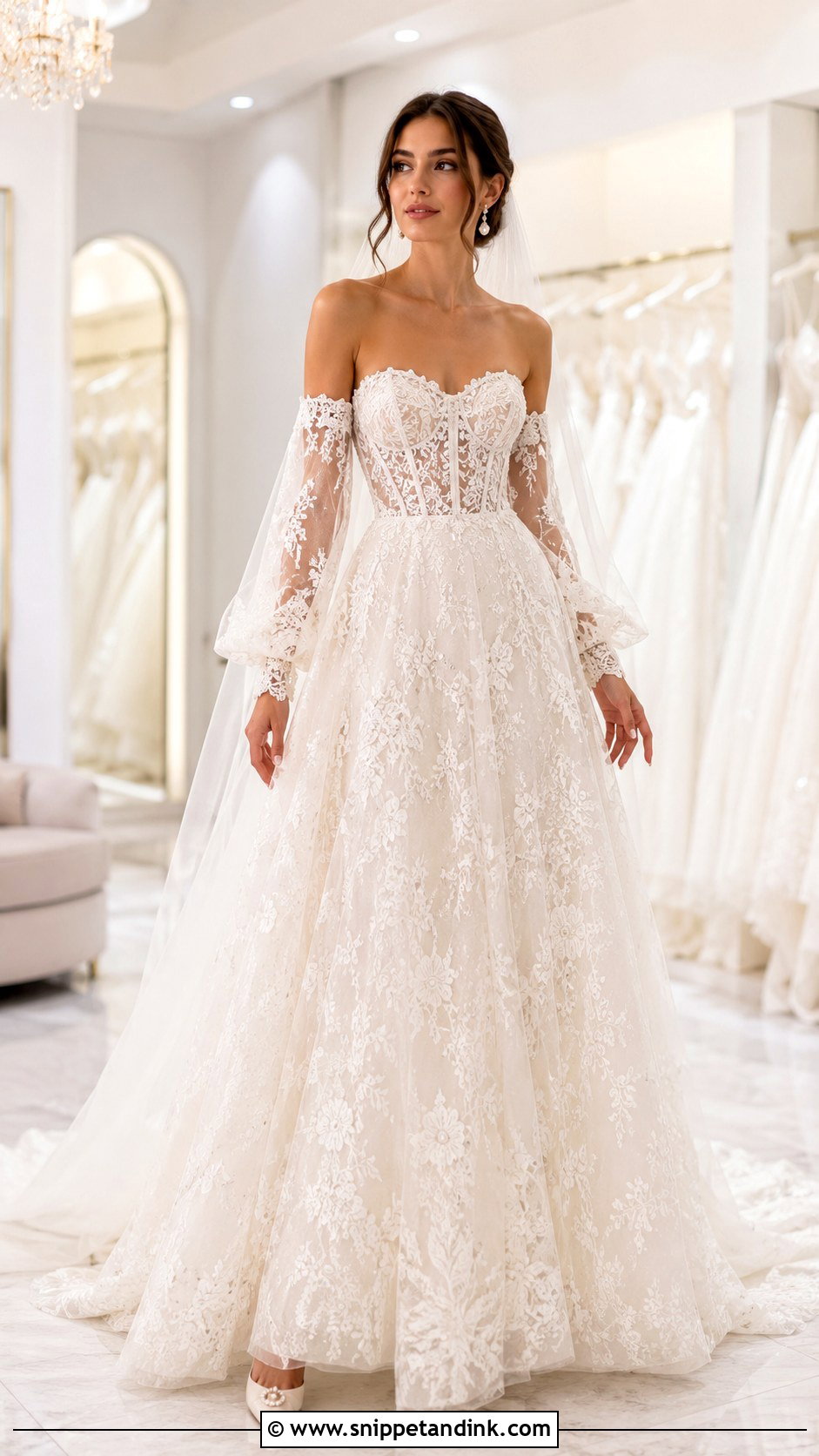
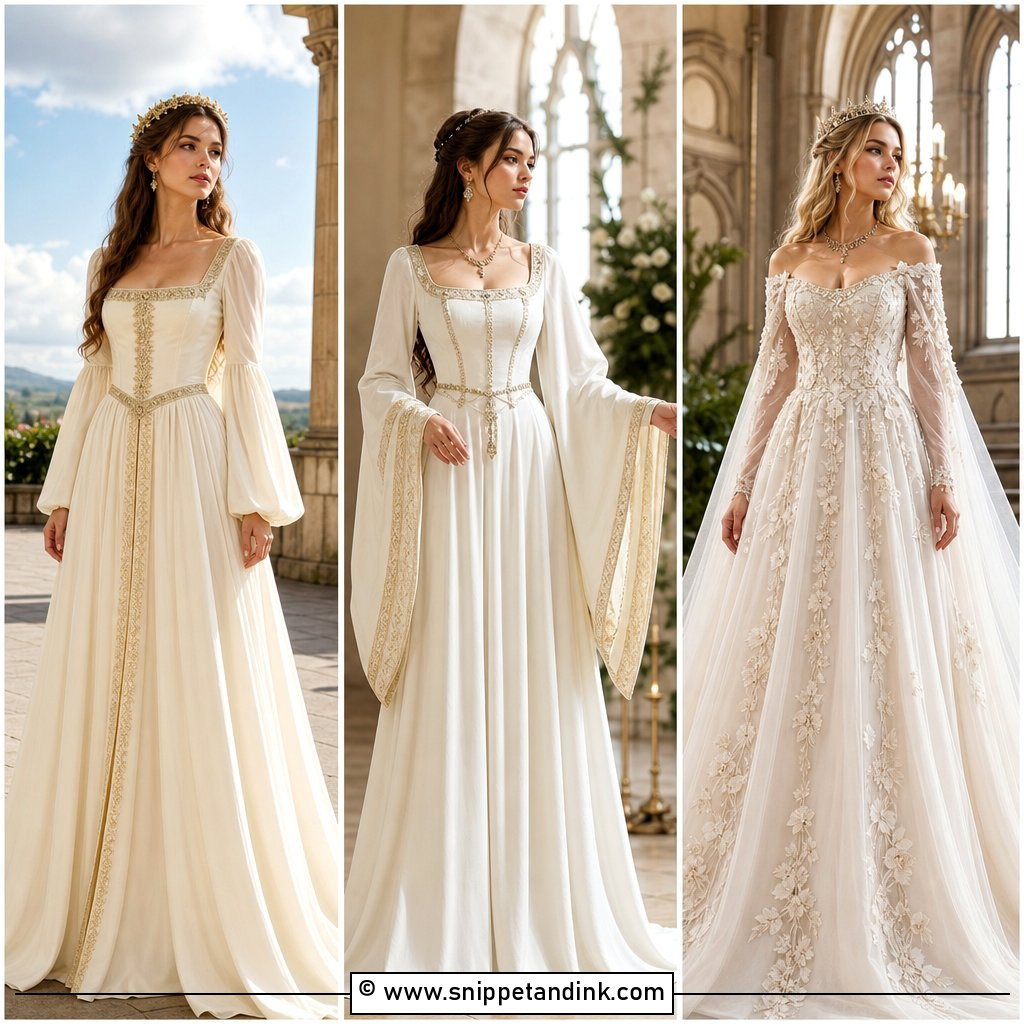
Detachable sleeves give you two looks without a costume change. Wear them for the ceremony, then slip them off for dinner. They work with strapless lace, corset bodices and simple A-lines. Fitted sleeves are classic; puff sleeves feel more historical. Ask how they attach: elastic bands at the top tend to dig in, while sleeves that button to a hidden strap stay put. Keep accessories flexible too, with a veil you can lift off after portraits.
14. Lace Wedding Dress With Puff Sleeves
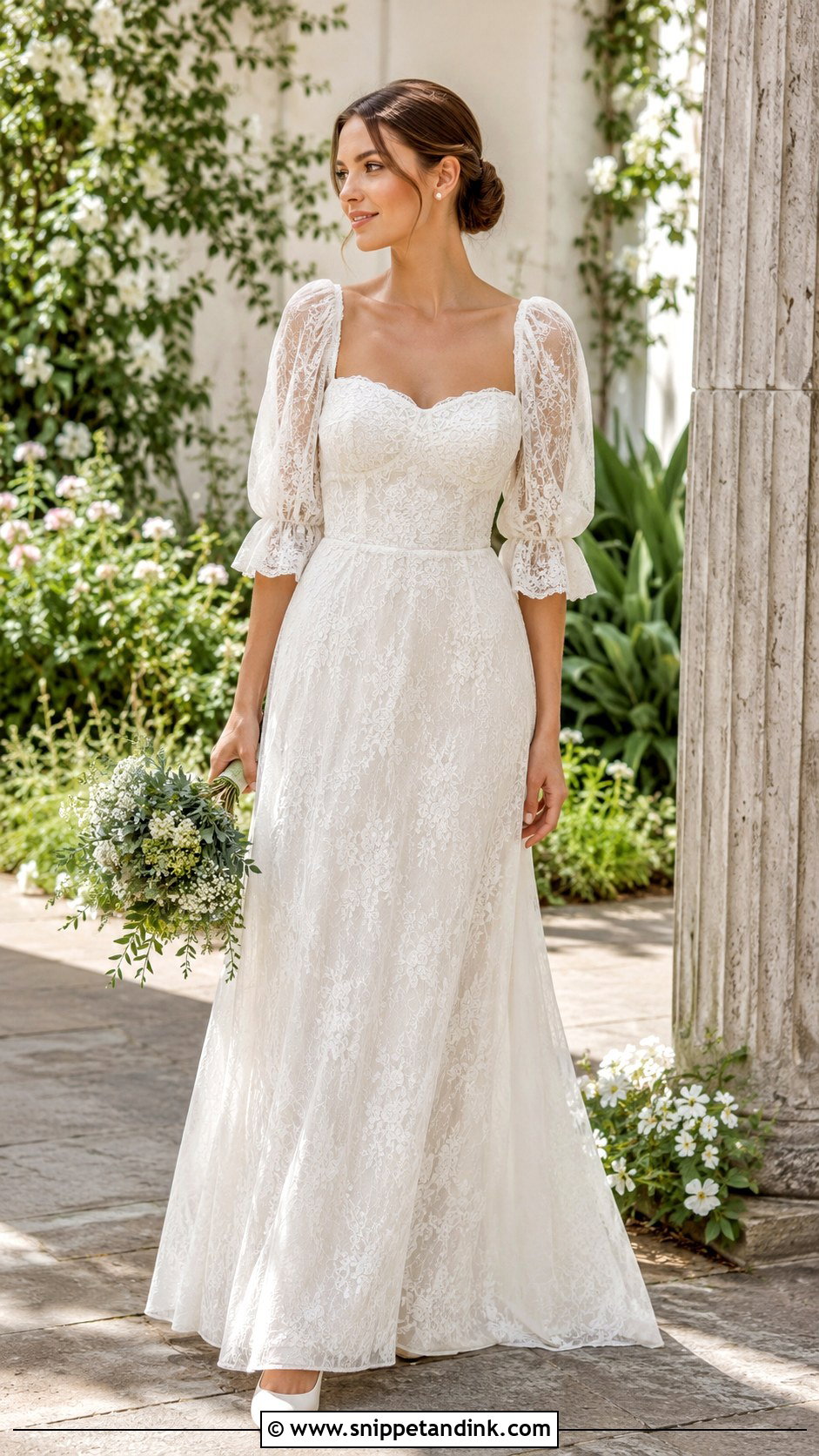
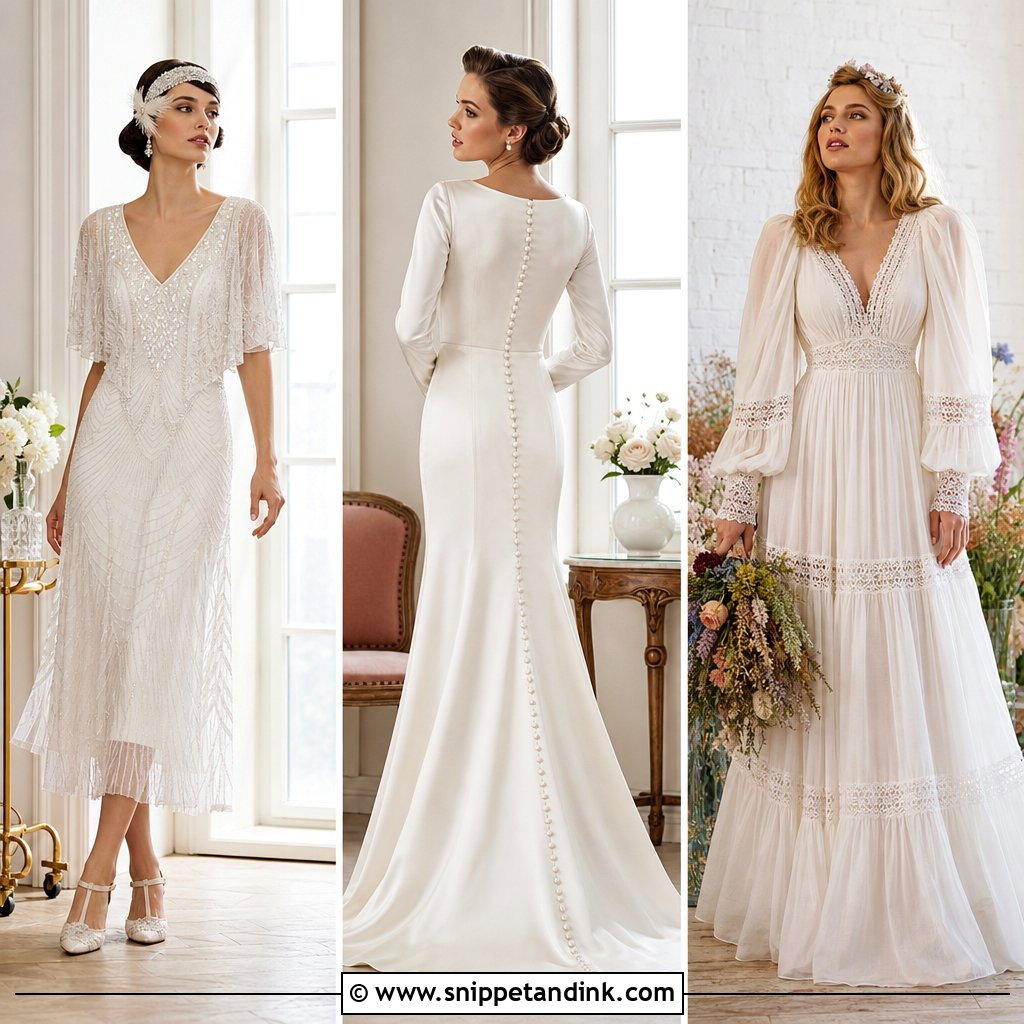
Puff sleeves in lace look nostalgic and sweet, from short gathered caps to long sleeves with a full shoulder. Light lace is a must, because heavy lace pulls the puff down and it collapses. A fitted bodice and plain skirt keep the proportions right. I’d recommend trying them in front of a full-length mirror and from the side, since puffs can widen the shoulders more than you notice face-on. A low bun, pearl studs and a simple veil finish it for a garden or historic venue.
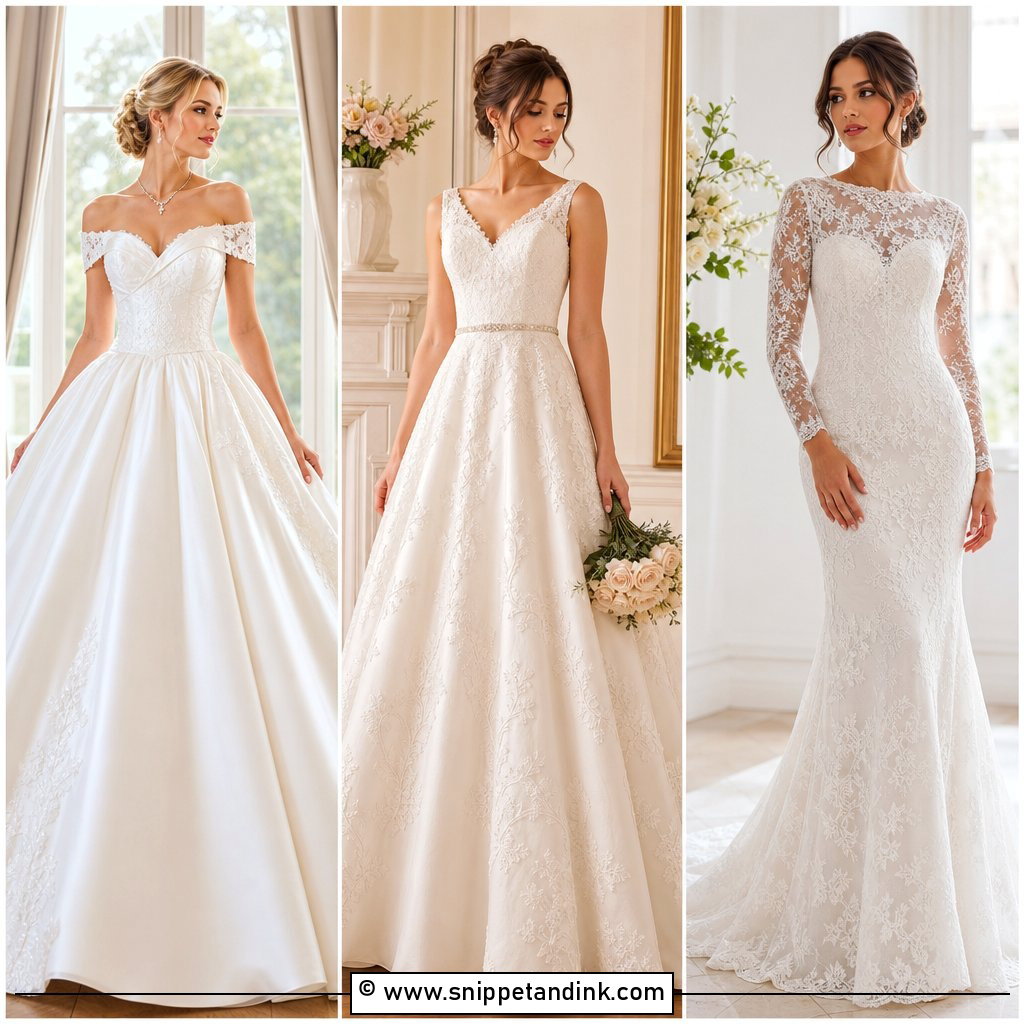
15. Lace Wedding Dress With Square Neckline
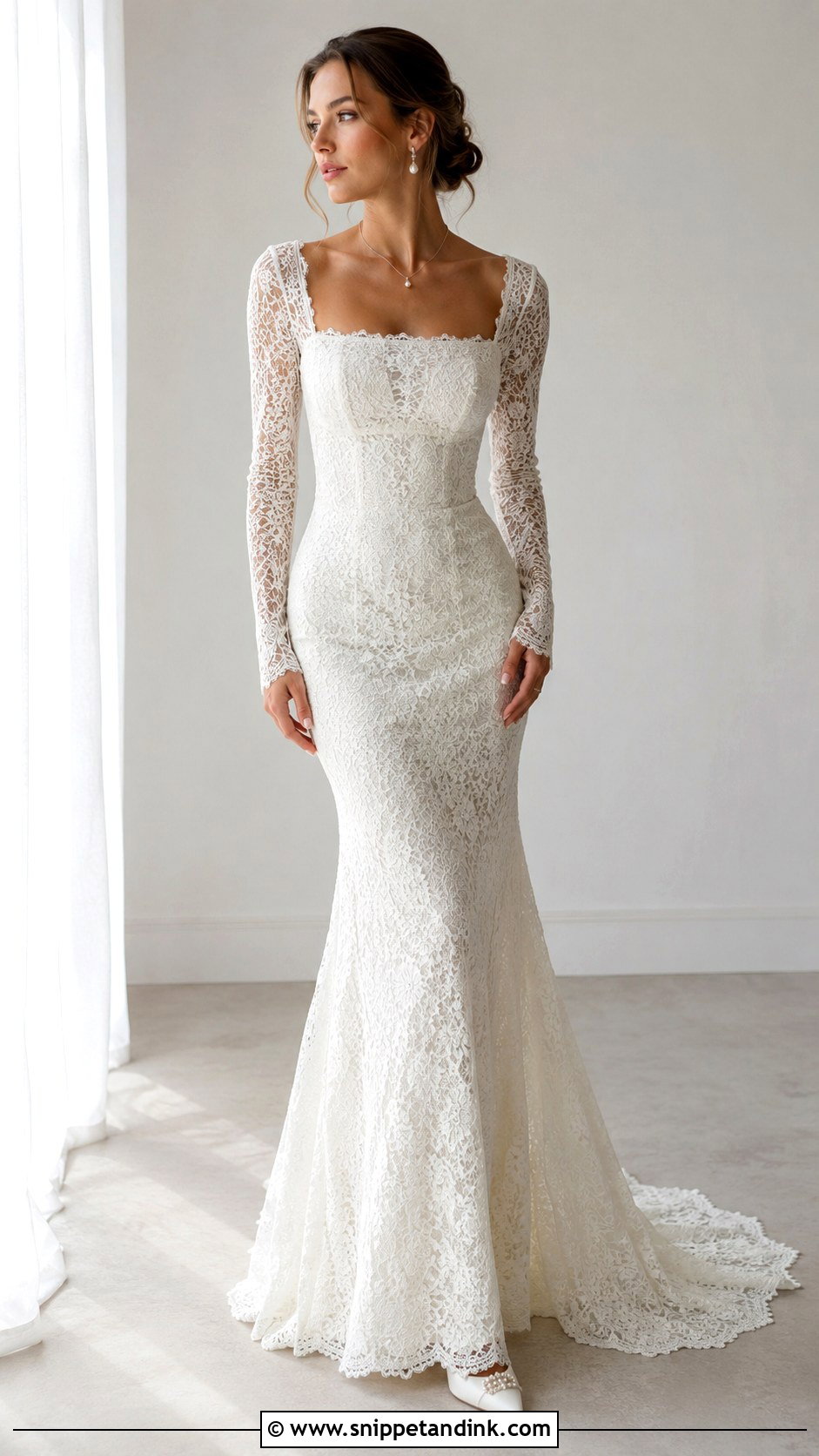
Square necklines frame the shoulders and collarbone cleanly, and they look vintage without tipping into costume. Long sleeves push them traditional; wide straps suit a warm-weather wedding. They pair with an A-line, a slim sheath or a corset bodice. Watch the corners of the square at your fittings, as lace can stretch there and the neckline begins to gape. A small pearl or fine chain is plenty of jewellery, with ivory heels and a soft veil.
16. Lace Wedding Dress With Peter Pan Collar
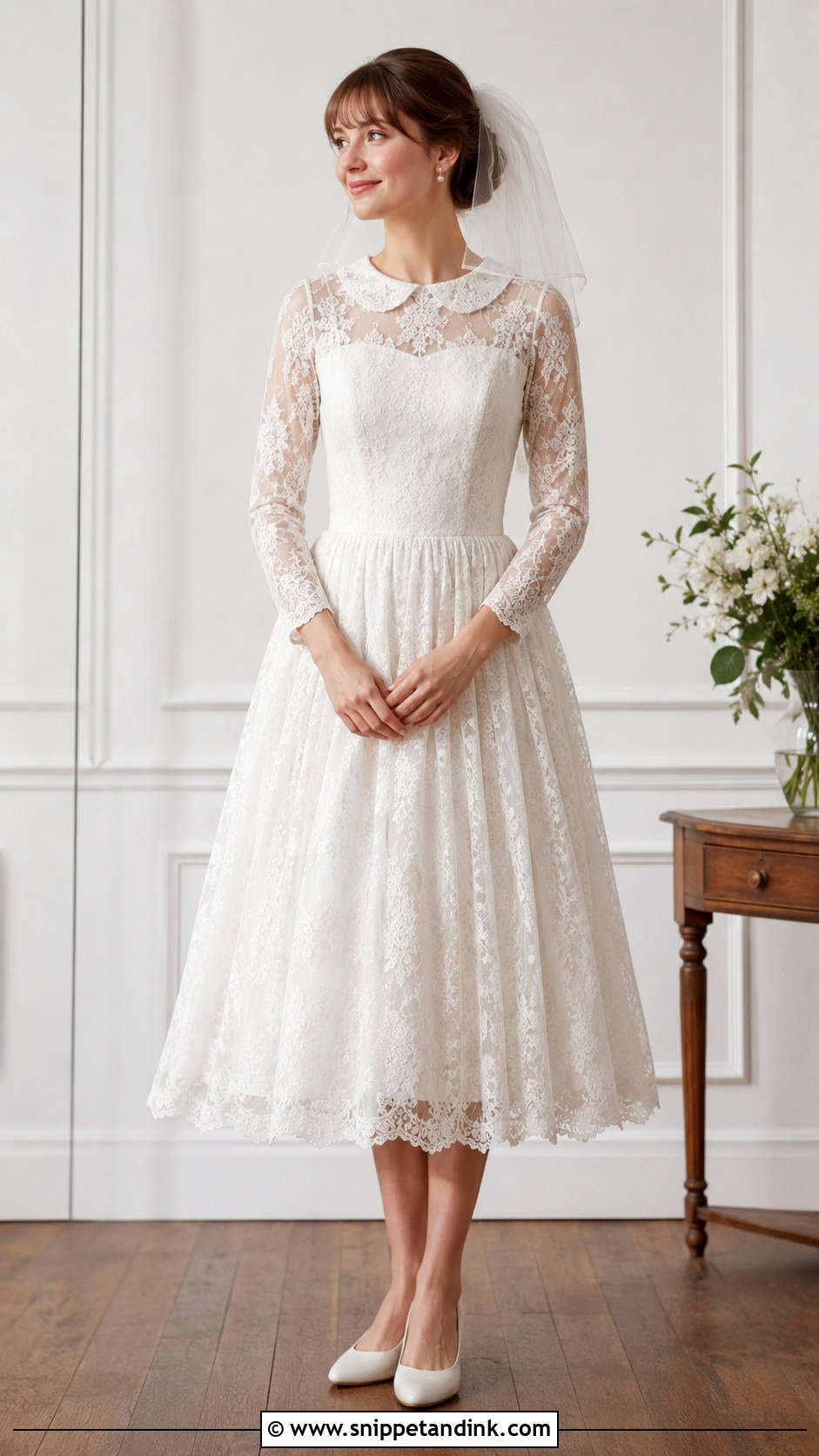
A Peter Pan collar is sweet and modest, a rounded collar that pairs with sheer sleeves, covered buttons and a gathered skirt. The risk is looking younger than you’d like. I avoid that by choosing refined lace in the collar and keeping the silhouette clean, ideally tea length or a simple A-line. Low heels, pearl earrings and a neat bun or soft waves suit it. A short veil or a small bow is enough. Anything more and it starts to look like a party dress for a child.
17. Lace Wedding Dress With Bow Back
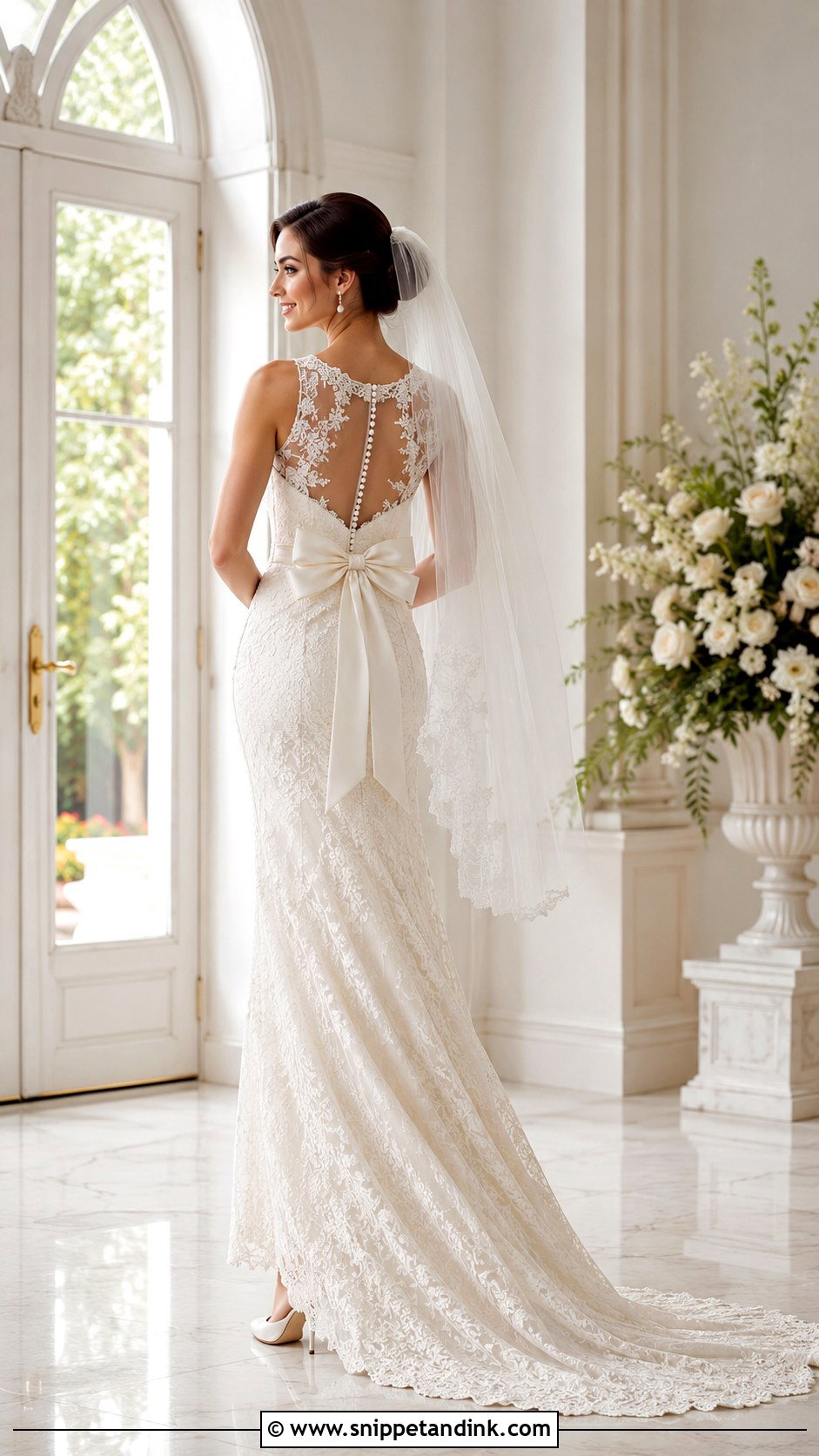
A bow at the back gives guests something to see during the vows. It can sit at the waist, upper back or at the start of the train. Keep the front plain so the back looks deliberate. A large bow and a long veil can clash, so I’d usually suggest a veil that sits below the bow or a short one above it. If the bow is big, skip heavy necklaces and bracelets. Pearl earrings and classic heels complete the look.
18. Lace Wedding Dress With Button Back
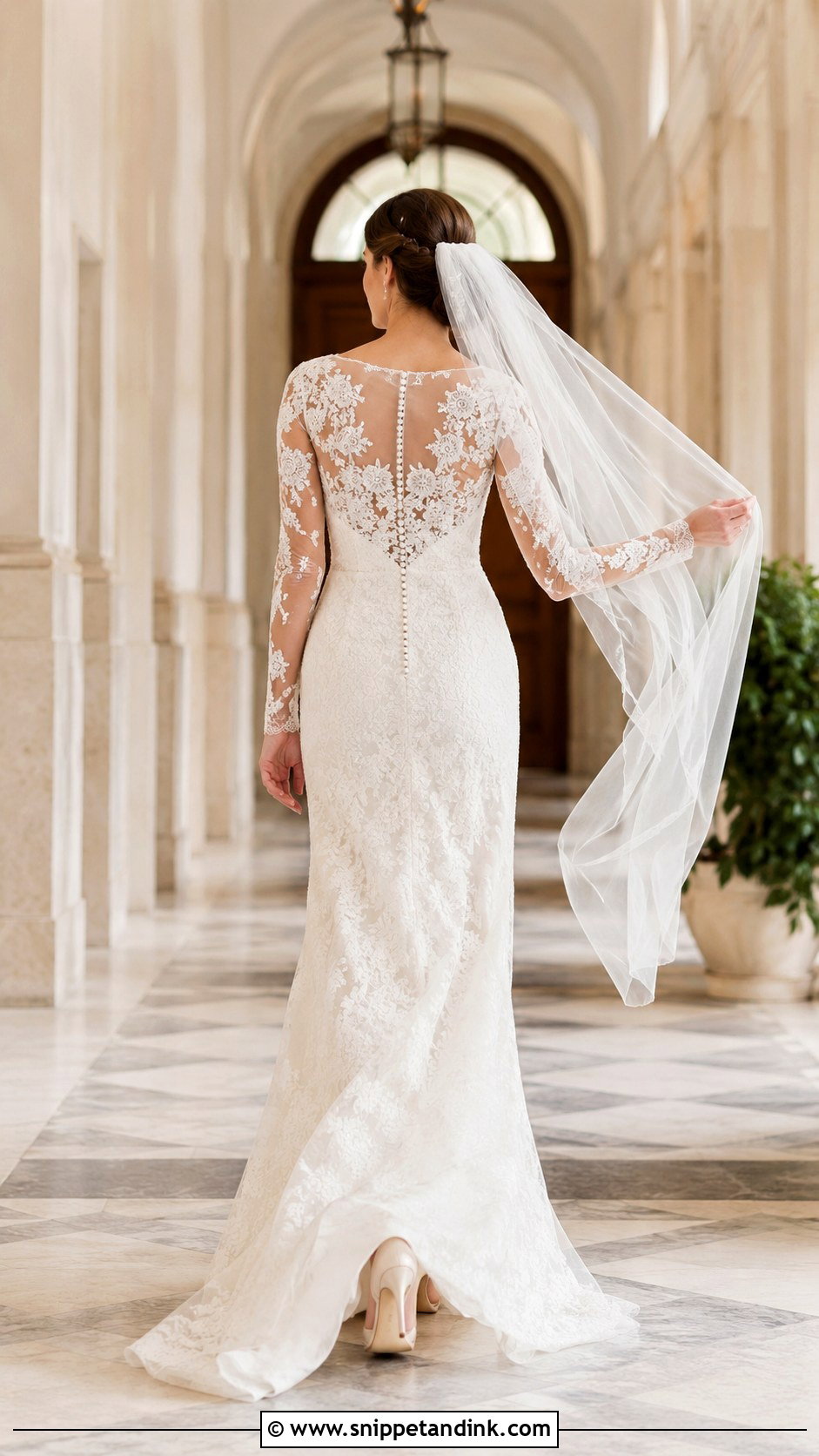
Covered buttons over sheer lace or illusion fabric give the back of a gown a beautiful finish. They suit long sleeves, high necks and fitted lace shapes. Most modern gowns hide a zip under decorative buttons, and I’d always check for that, because fastening real loops takes ages. With heavy lace at the back, wear your hair up and away from the dress so the buttons stay visible in ceremony photos. A simple veil, delicate earrings and ivory shoes keep everything else quiet.
19. Lace Wedding Dress With Scalloped Hem
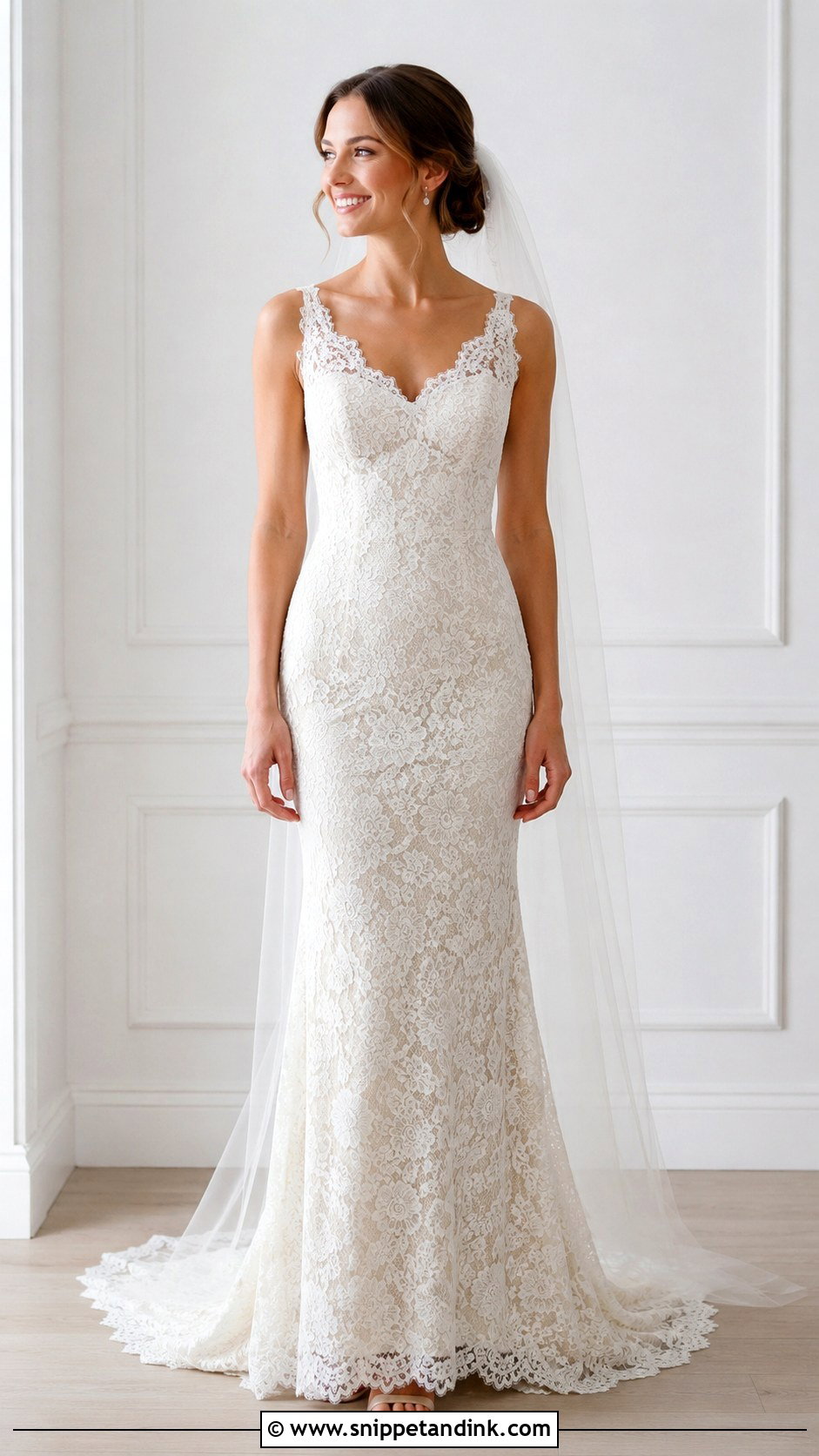
Scalloping is lace cut along its pattern edge, so the hem, neckline, sleeves or train end in soft curves rather than a straight line. It’s a sign of careful construction. It shows best on sheath, mermaid and A-line dresses, where the outline is clear. A detailed scalloped hem calls for simple shoes; a plainer one can take lace heels. Choose a plain veil so the edge stands out. It suits brides who prefer craftsmanship over sparkle.
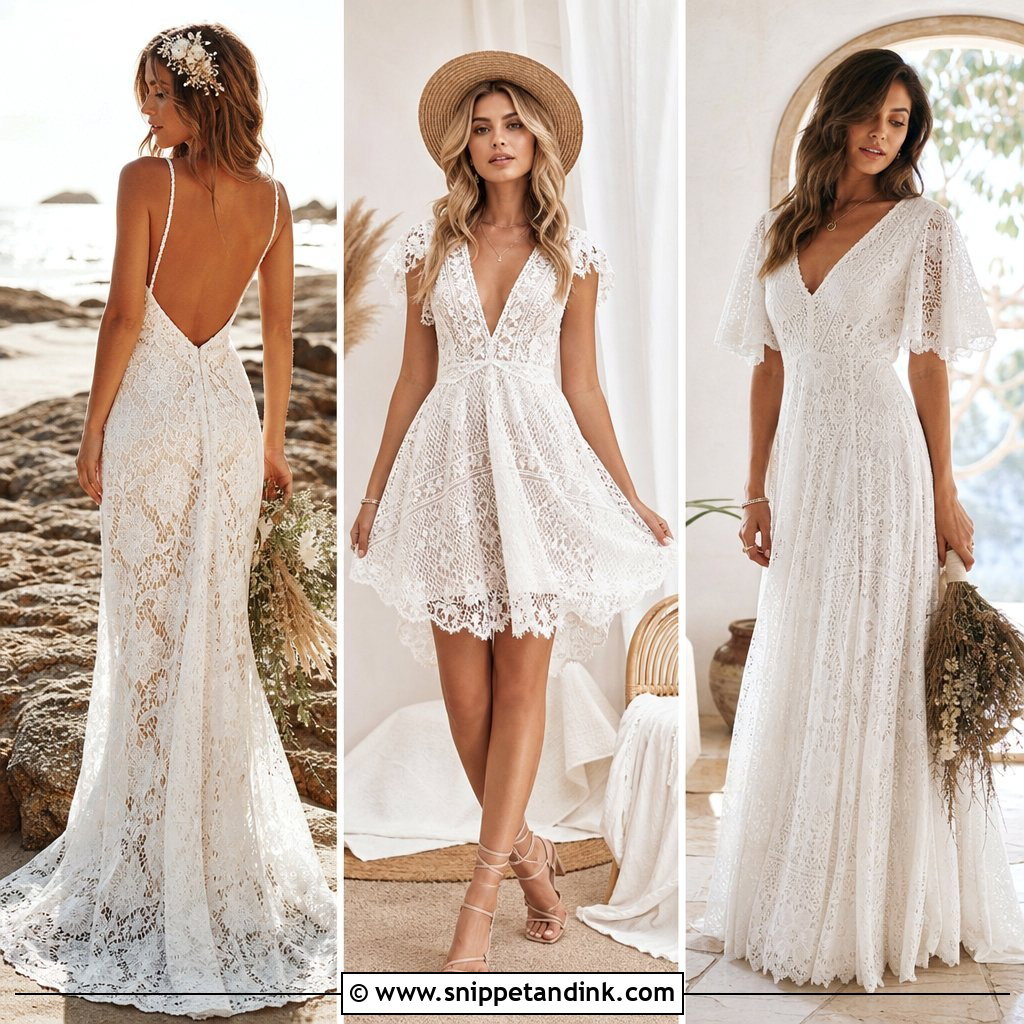



20. Lace Wedding Dress With Illusion Neckline
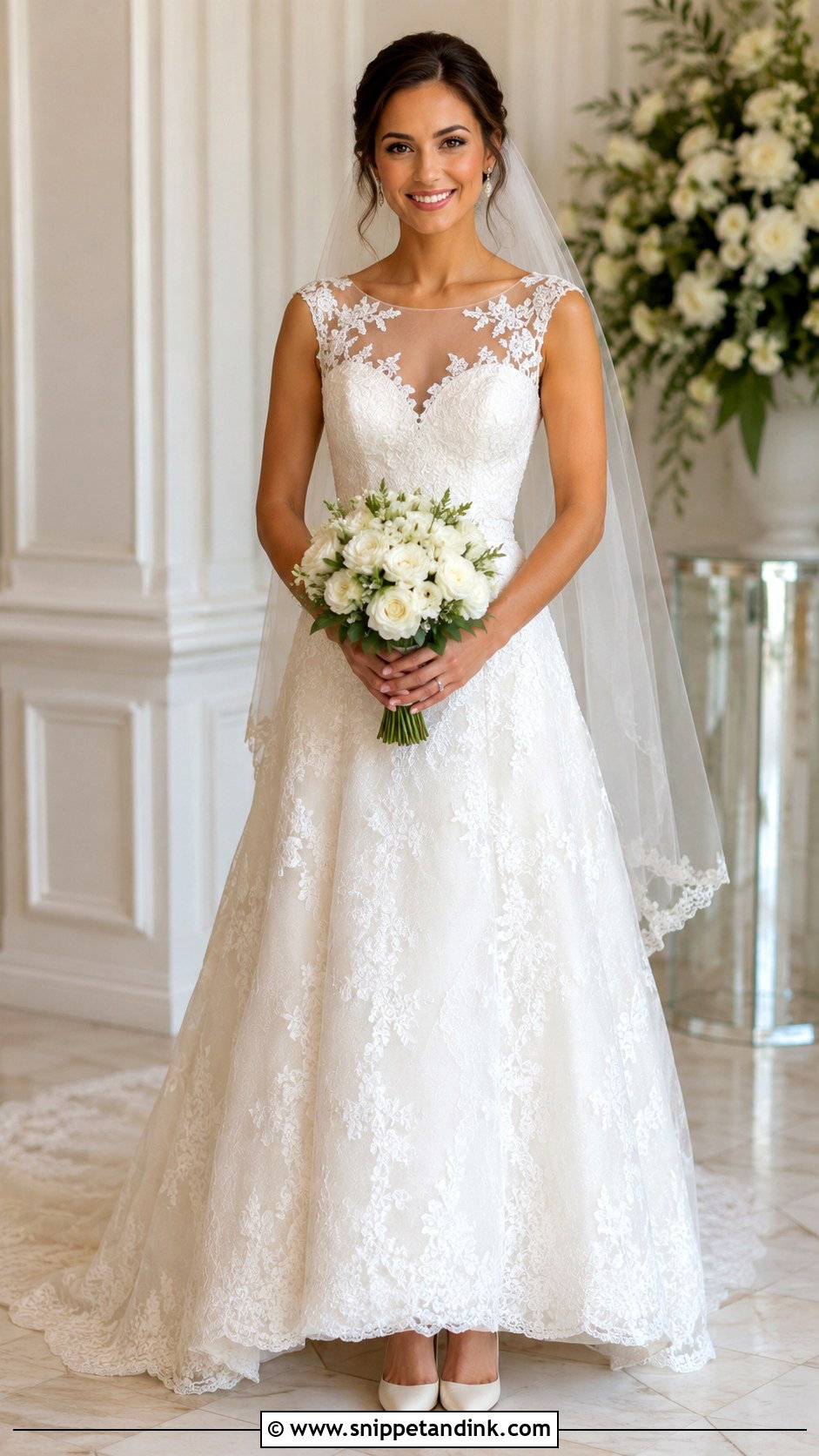
Illusion necklines float lace motifs on fine sheer net across the chest, shoulders or sleeves. You get coverage and lightness at once, and the lace sits near the face where photographs will show it. The net should match your skin tone closely; ask whether the shop offers more than one shade, because the wrong one looks grey or pink in daylight. Updos keep the lace visible. Choose an A-line or fitted skirt, small earrings and a delicate veil.
21. Lace Wedding Dress With Open Back
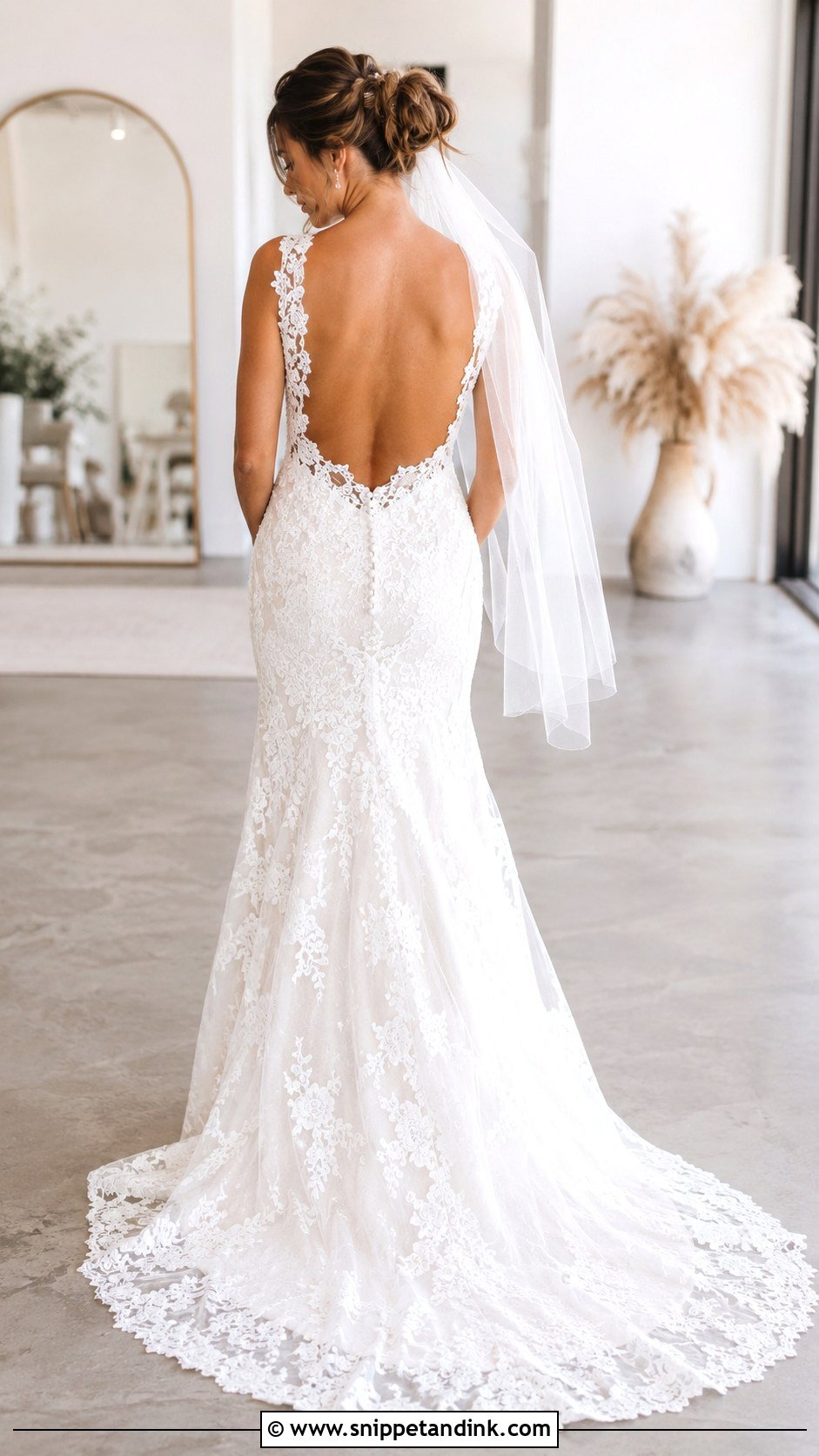
An open back gives lace a modern twist, especially when the front is modest. Look for lace trim around the opening, covered buttons at the base, or a sheer panel if you need more support. Bra options shrink fast with this cut, so plan for a backless option or sewn-in cups and bring them to your first fitting. An updo or side-swept hair keeps the back on show. Simple earrings and a light veil you can see through work best.
22. Lace Wedding Dress With Tulle Skirt
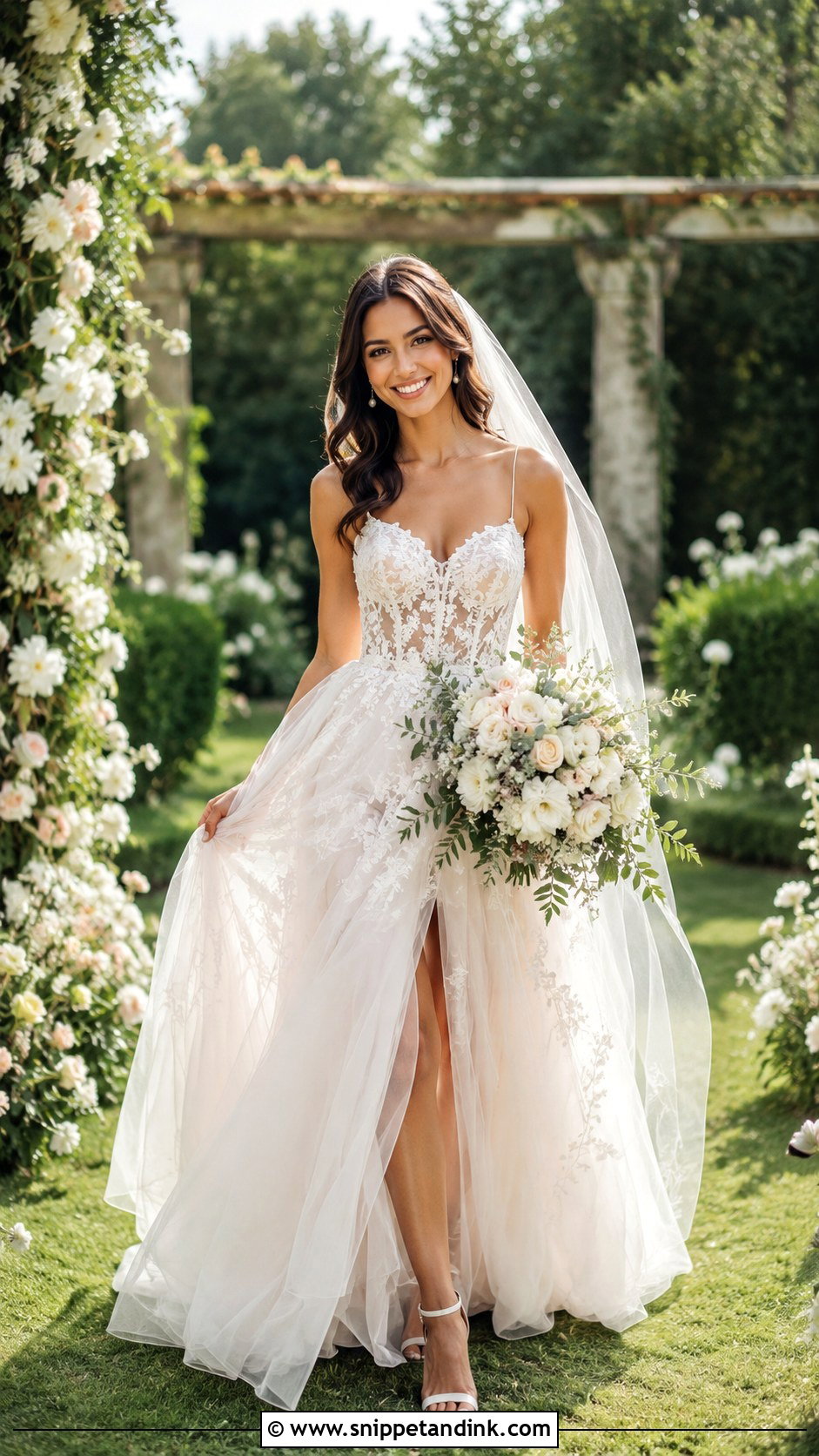
Lace bodice, tulle skirt: structure on top, air below. It pairs well with corset bodices, basque waists and long lace sleeves. Layered tulle gives a fuller vintage shape; a single soft layer feels lighter. Tulle does crease and catch, so ask your venue for a clear path without rough stone or wire. Keep accessories gentle with pearl earrings, a thin veil and ivory heels. It suits a garden, an estate or an indoor romantic setting.
23. Lace Wedding Dress With Satin Skirt
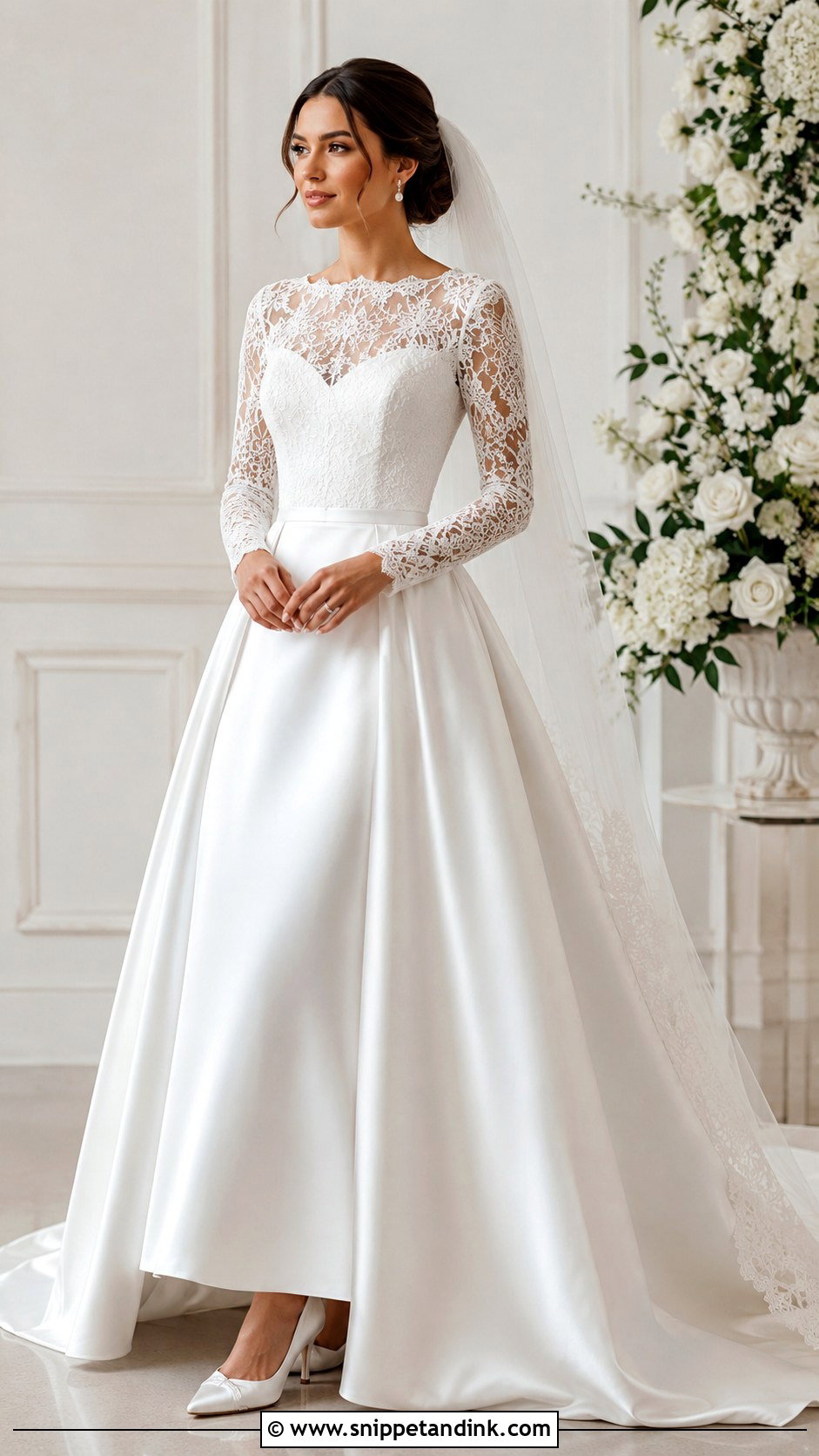
Mixing a lace bodice with a satin skirt gives detail near the face and clean, smooth movement below. It’s a formal combination that never looks overdone. A square neck, corset bodice or long-sleeve lace top all pair with satin. One warning from experience: satin creases when you sit, especially in the car on the way. I suggest a quick steam on arrival and asking the driver for a wide back seat. Satin heels, pearl earrings and a smooth veil complete it.
24. Lace Wedding Dress With Lace Veil
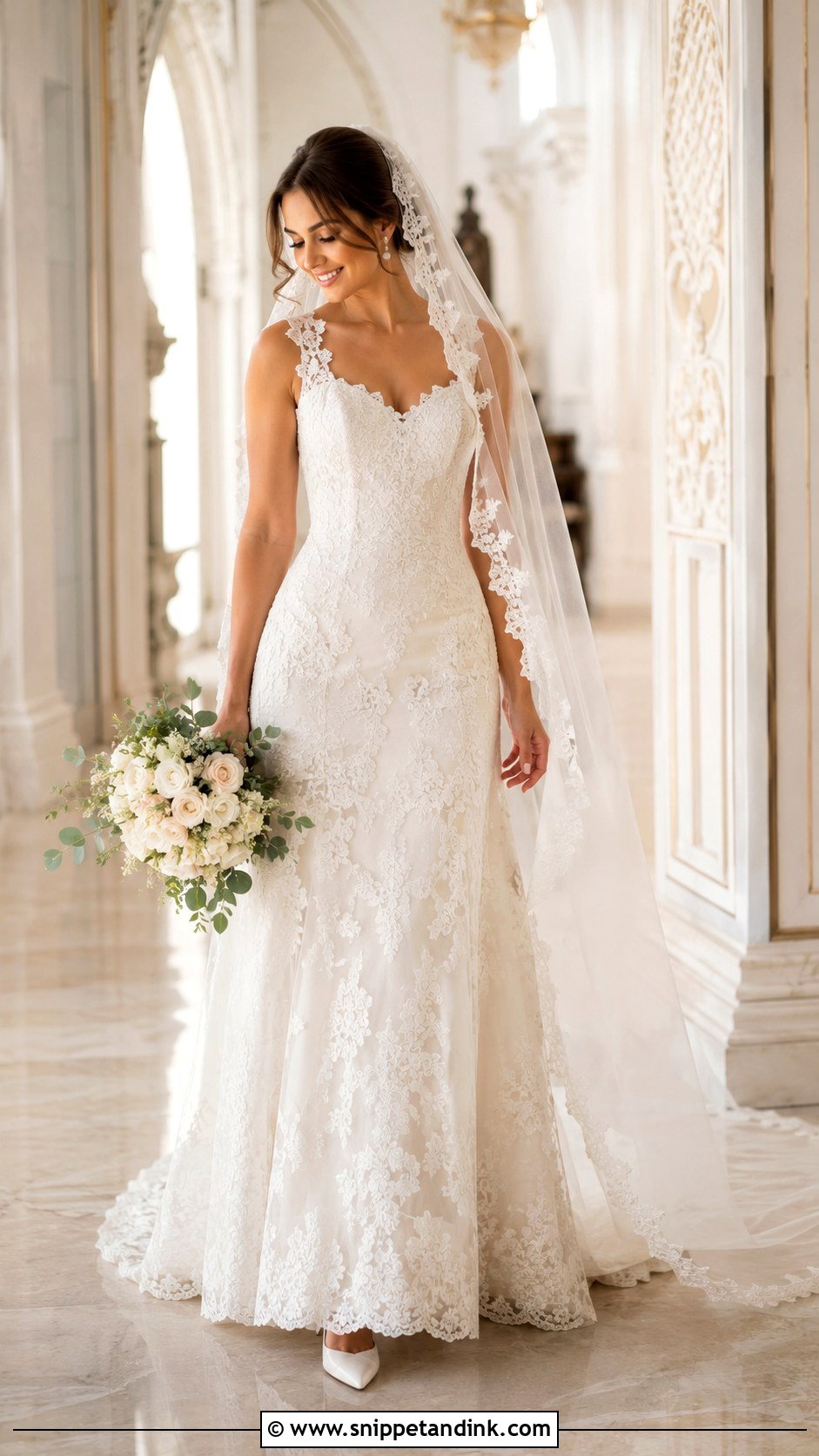
Lace dress, lace veil: a full heirloom look, as long as the patterns cooperate. Heavy floral lace calls for a veil with a soft lace border only. A simple gown can take a more detailed veil. Bring a swatch of the dress lace to the veil appointment, as ivories vary and two slightly different whites look grubby together in daylight. Keep jewellery small and the hair neat. It suits long sleeves, A-line shapes and fitted silhouettes.


25. Vintage Lace Wedding Dress With Gloves
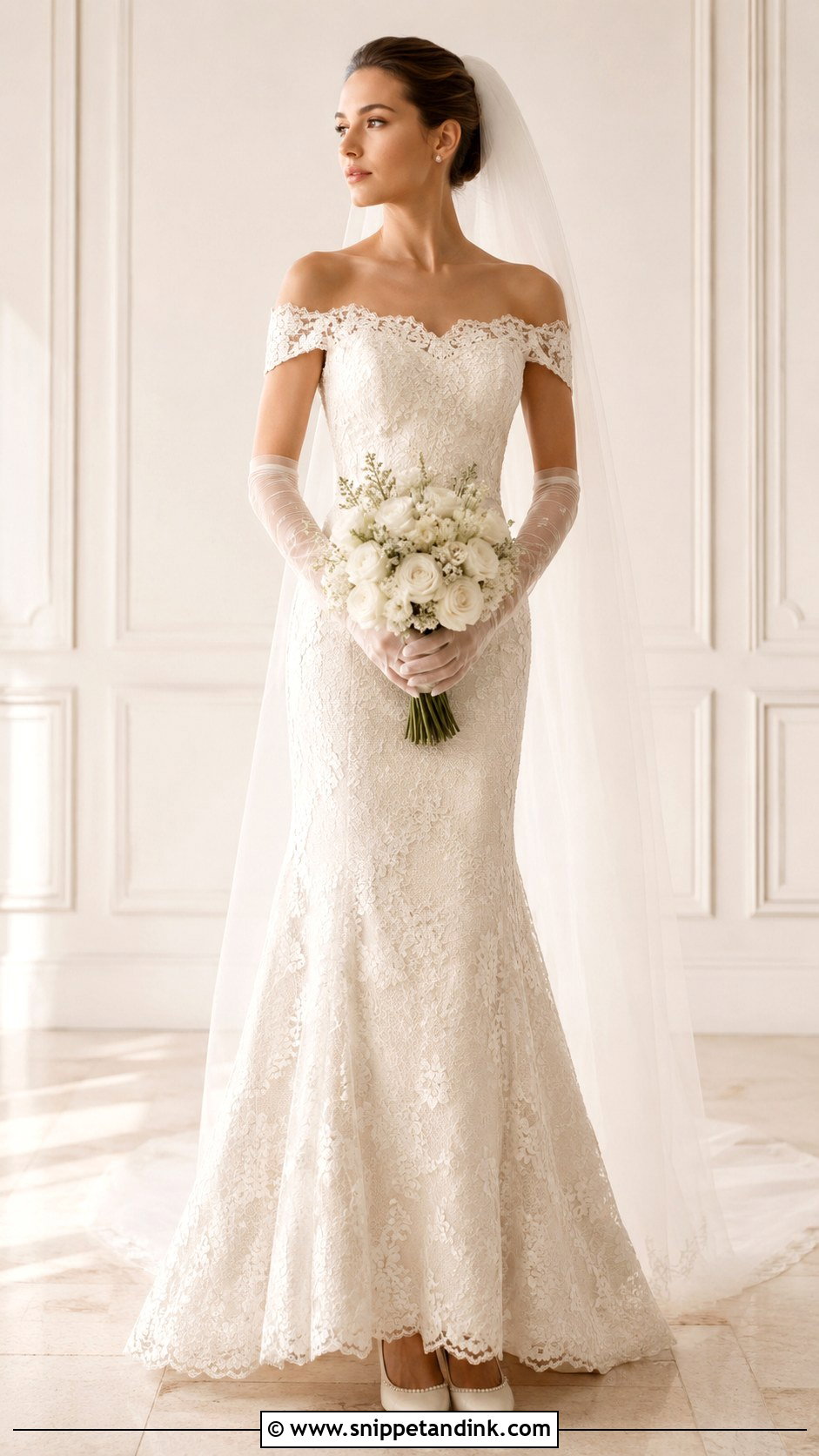
Gloves add Old Hollywood polish to vintage lace, in sheer net, satin or lace. Long opera gloves suit strapless and off-shoulder gowns; short wrist gloves suit tea length. Remember the ring exchange. You’ll need gloves with a slit at the ring finger or a plan to take the left glove off, ideally rehearsed. Keep everything else refined: pearl studs, a structured bouquet and classic heels. Then take them off for dinner and dancing.
26. Vintage Lace Wedding Dress With Pearl Accessories
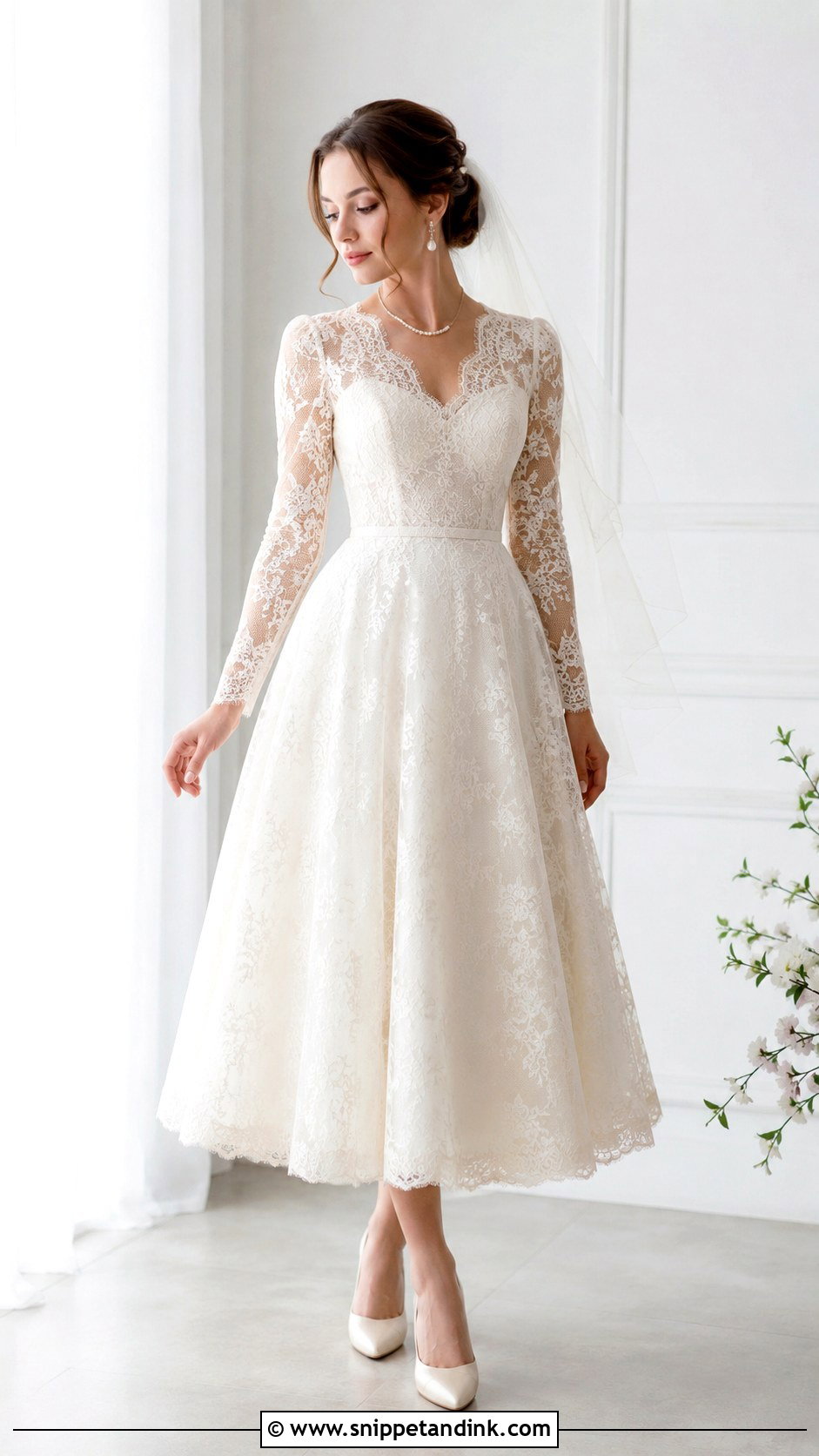
Pearls and lace have gone together for generations. The trick is restraint: pearl studs, a single strand, pearl hair pins or a pearl-edged veil, but rarely all four. Heavy lace needs small pearls; a plain gown can carry a bolder pearl headband or larger earrings. Match pearl tone to lace tone, so cream pearls with ivory lace, white pearls with bright white. Ivory heels and a soft bouquet finish a look that suits almost any silhouette.
27. Vintage Lace Wedding Dress With Blusher Veil
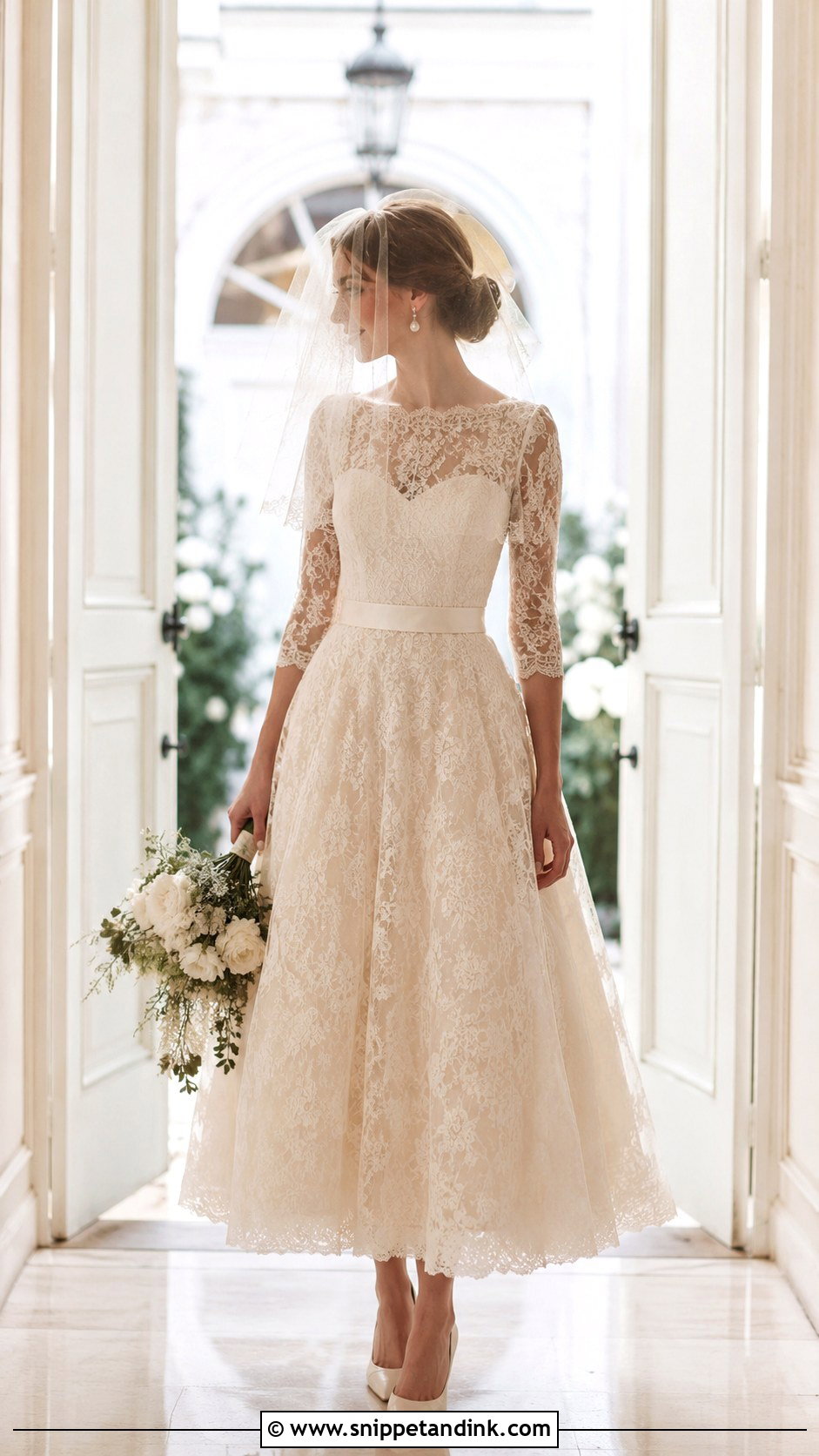
A blusher veil is the short layer over the face, lifted at the altar or by your partner at the start of the ceremony. It’s a lovely piece of tradition. Choose a plain blusher if your dress lace is busy, or a lace-edged one if the gown is minimal. Practise lifting it at the rehearsal so it doesn’t catch on your earrings or hair pins. A low bun gives it something stable to sit on, and pearl earrings stay out of the way.
28. Vintage Lace Wedding Dress For Courthouse Wedding
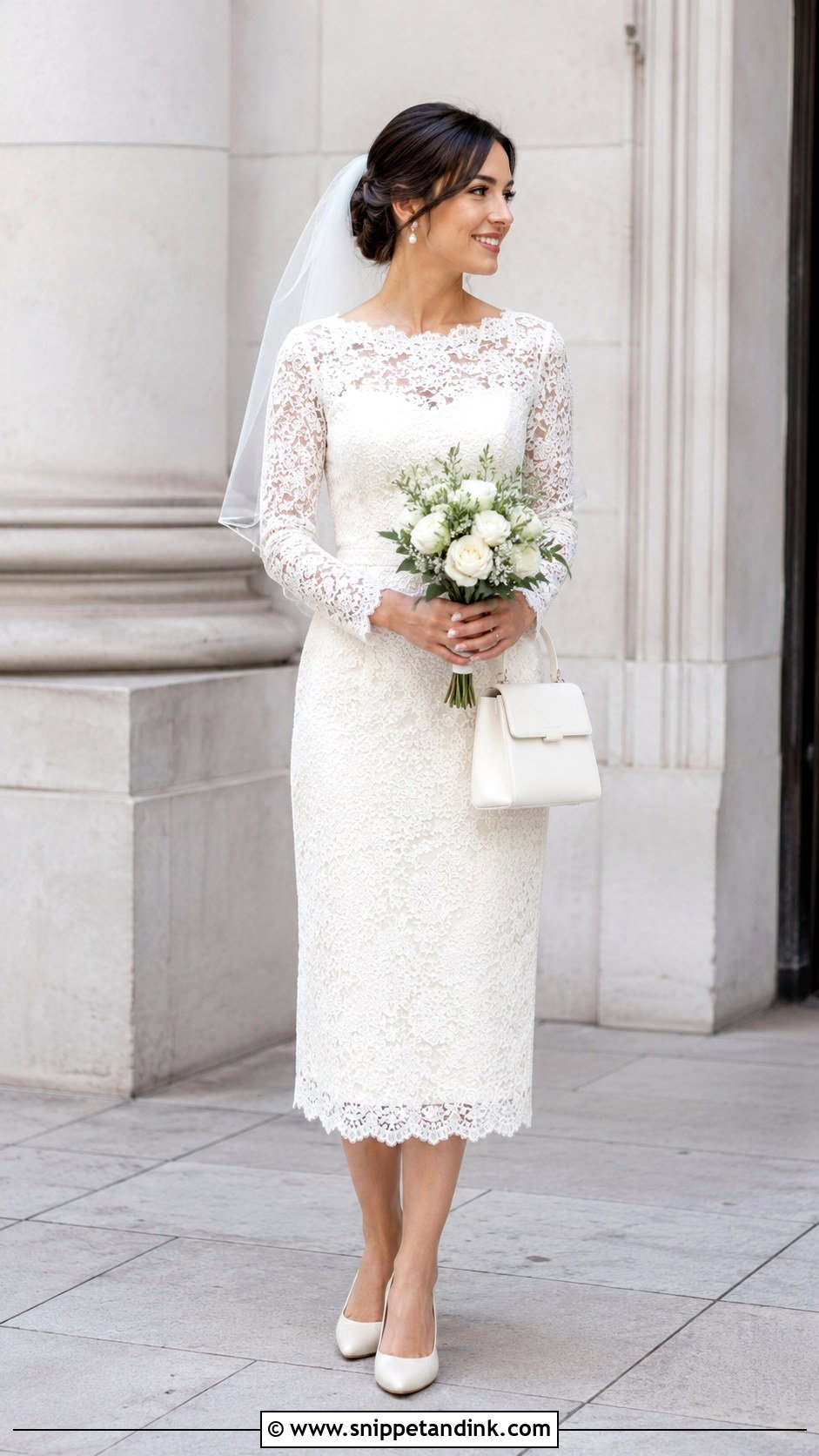
Courthouse weddings need a dress you can sit in, walk in and climb steps in. A tea-length lace dress, slim midi or plain lace sheath are the ones I’d suggest. Plain government rooms make lace the main detail in every photo, so let the fabric carry it. Low heels, a small bouquet and pearl earrings are enough, and a short veil, bow headband or small bag adds personality. Expect a lot of standing in hallways while you wait, which is one more reason to keep the dress light.
29. Vintage Lace Wedding Dress For Garden Wedding
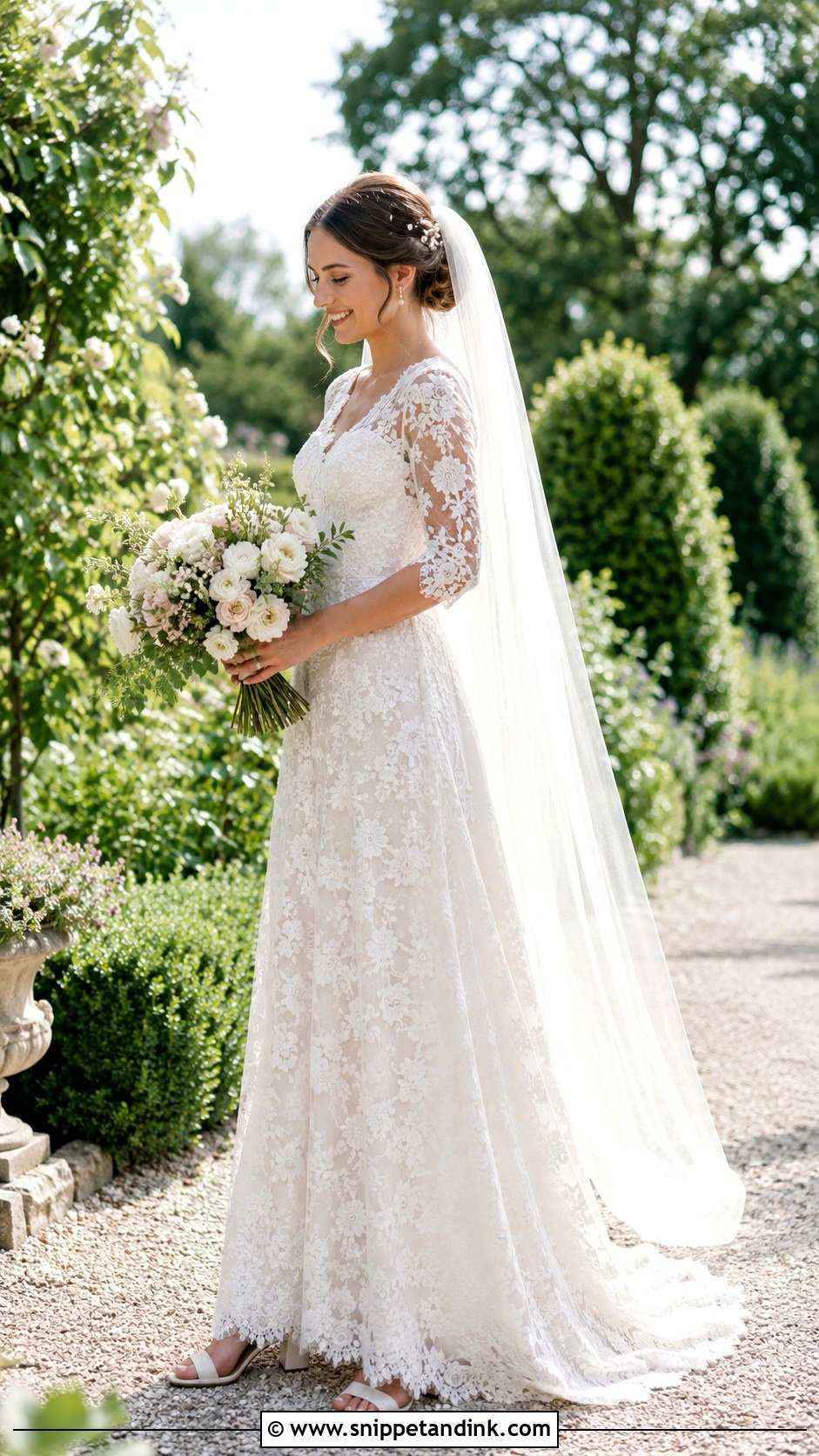
Garden weddings test a dress hard. Grass, gravel and evening dew all reach the hem. I’d choose floral lace, light sleeves and a skirt that moves freely: an A-line, a sheath, or a tulle skirt under a lace bodice. Skip a long train unless there’s a proper path. Block heels or flats stop you sinking into the lawn. Pearl pins, a soft veil and a bouquet of greenery and pale flowers fit an outdoor setting.
30. Vintage Lace Wedding Dress For Reception
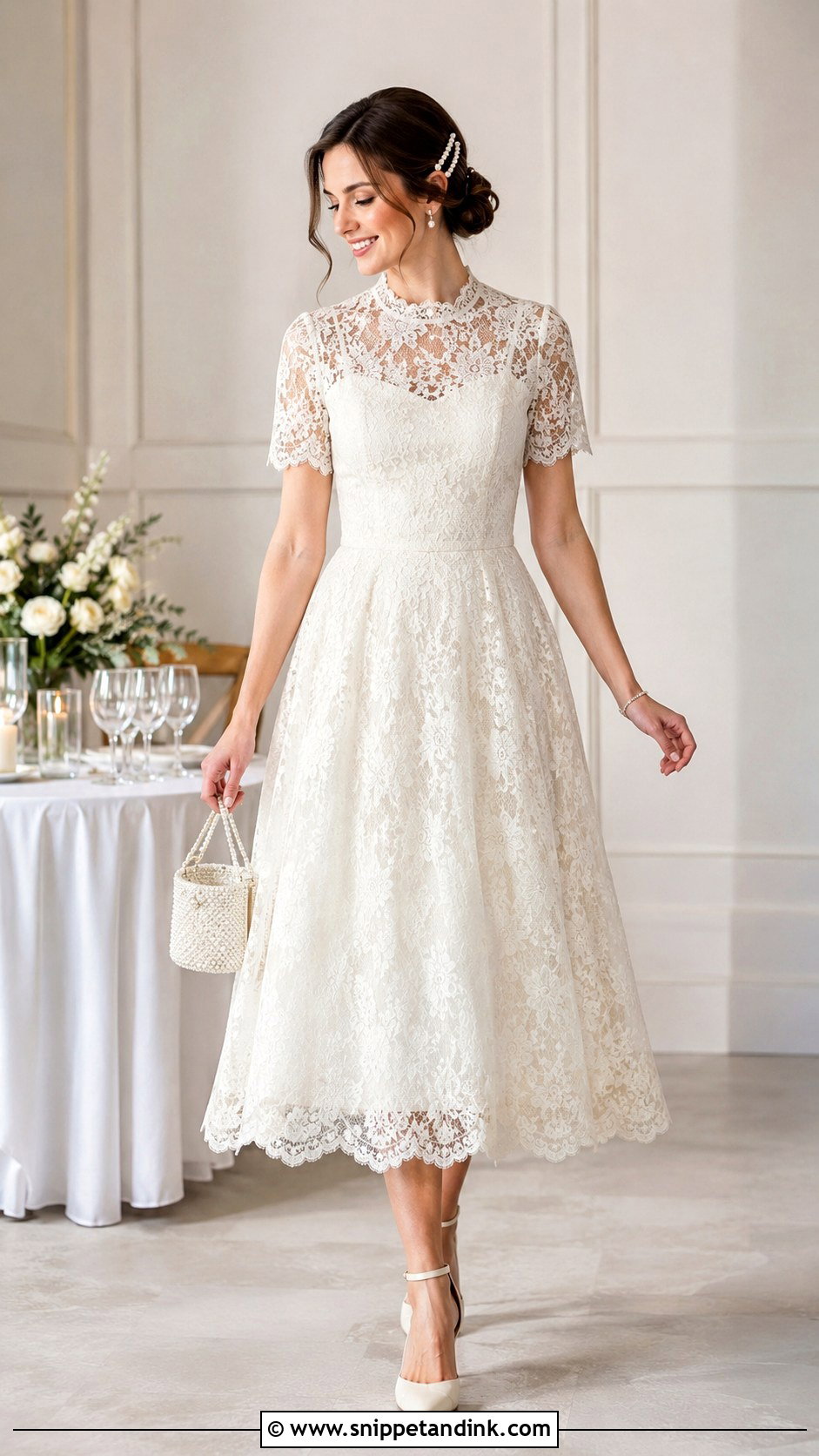
A second dress for the reception has one job: letting you sit, hug and dance without thinking about it. A lace mini dress, a tea-length gown or a slim sheath will do it. Short sleeves, scalloped edges, a bow back or pearl buttons keep it playful. Swap a heavy veil for a bow or pearl clips, choose heels you can last in, and carry a small bag for lipstick. It keeps the lace story going into the evening.
Snags, Grass Stains and a Torn Hem on the Morning
Lace is tougher than it looks, but it has a few weak points I always prepare a bride for.
What goes in my pouch for a lace gown
- Clear nail polish and a fine needle with ivory thread, for a pulled thread or a small hole in net.
- Small scissors to clip a loose thread instead of pulling it, which makes a ladder.
- Baby powder or chalk to dust over a fresh grass or makeup mark on ivory lace until it can be cleaned properly.
- Extra safety pins for a bustle loop that breaks during dancing.
Have the bustle shown to whoever will do it on the day, ideally at the final fitting, and take a phone video. Lace trains are heavy and often need several hooks; a rushed bustle pulls the scallops out of line. Before you dress, take off any bracelet with a rough clasp, and avoid steaming lace too close, since some synthetic laces glaze or pucker with direct heat.
Lace Has to Feel Like You at Midnight Too
Lace keeps its hold on brides because it carries romance and history without much effort. From long sleeves and corset bodices to basque waists, tea length and courthouse dresses, there’s a lace for nearly every venue. The best gown isn’t always the prettiest on the hanger; it’s the one that still feels comfortable, balanced and like you after hours of wear. Look closely at fit, lace weight and neckline before you look at accessories. Then keep the rest simple.
You'll Like These Ideas:





Leave a Reply