
A vintage cake can be piped to perfection and still disappear if it’s set on a bare trestle in a corner. Most of what people call “wow factor” is decided around the cake, not on it: the height of the stand, what’s behind it, the cloth, the light and how much empty space surrounds it. When I style a cake table, I think of it as a small stage set with one lead actor. The twenty displays below range from ballroom formal to backyard casual, and each one comes with notes on what makes it work in a real room.
Placing the Cake Table So Guests Actually See It
Before I think about stands or flowers, I walk the room and decide where the cake will live. A gorgeous display in the wrong spot spends the evening behind the DJ booth. These are the checks I run on every floor plan:
- Sightline from the entrance. Guests should see the cake within a few steps of walking in.
- Distance from heat. Keep it well away from radiators, patio heaters, kitchen doors and south-facing windows.
- Distance from traffic. Not on the route to the bar or the toilets, and never at the edge of the dance floor.
- Room behind it. You need clear space for the couple to stand behind the cake for the cutting photos.
- A plain backdrop. A wall, drape or greenery behind the cake beats a window, which turns it into a silhouette.
Ask the venue for the table size early, too. A round table about a metre across suits one tiered cake; a longer rectangular table is better if you’re adding a dessert spread or several mini cakes.
1. Vintage Lambeth Wedding Cake Display
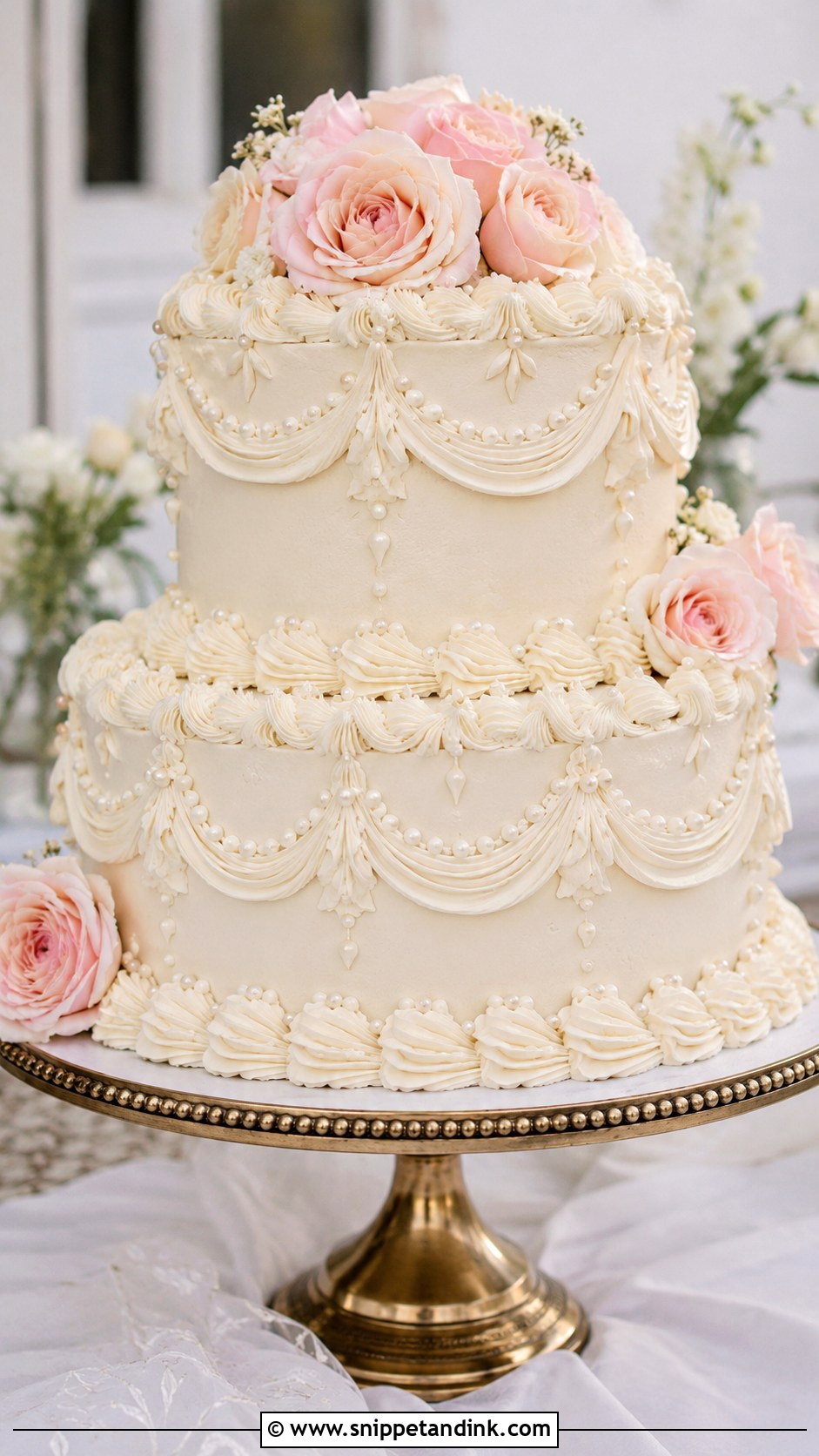
Lambeth piping is all relief and shadow, so the display has to let light rake across it. A vintage Lambeth wedding cake display needs a tall stand that lifts the lowest swags above the table clutter, and a plain backdrop so the piping isn’t competing with a busy wall. I keep the flowers low and to the sides for the same reason. Taper candles, framed table numbers and a thin garland round the base give it period mood without crowding. Ivory, butter yellow and baby blue all hold up; just avoid a cloth in the same shade as the cake, or the base dissolves into it.
2. Vintage Heart Wedding Cake Display
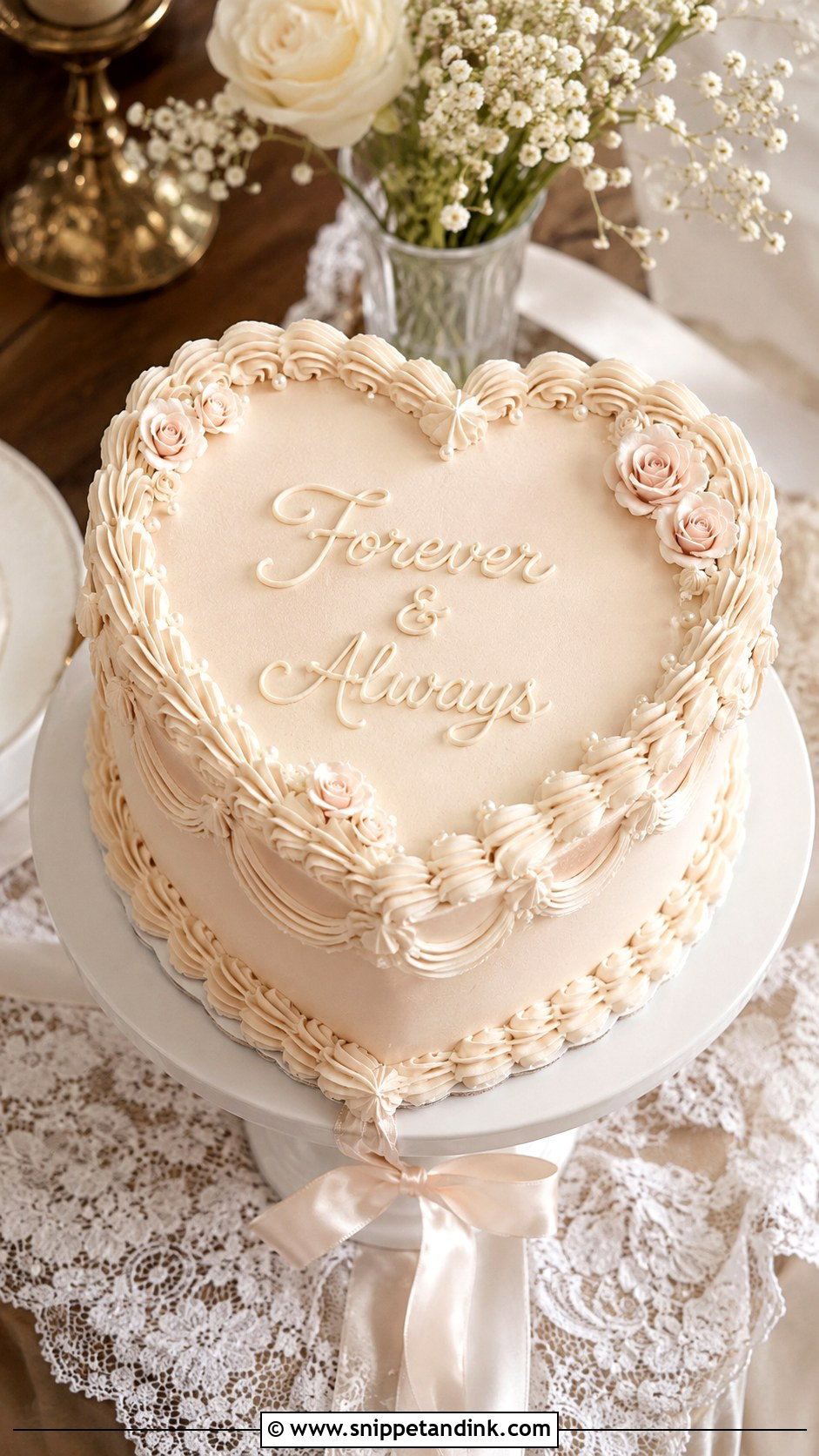
Hearts only read as hearts from the front or from above, which is the catch with this display. Turn the point toward the room and set the cake on a round pedestal low enough that standing guests look slightly down onto it. If it’s going on a sweetheart table, check the angle from the couple’s chairs too, because a heart viewed side-on is just a lumpy oval. A lace runner, a few small roses and a length of satin ribbon trailing off the stand are all it needs.
3. Vintage Tiered Wedding Cake Display
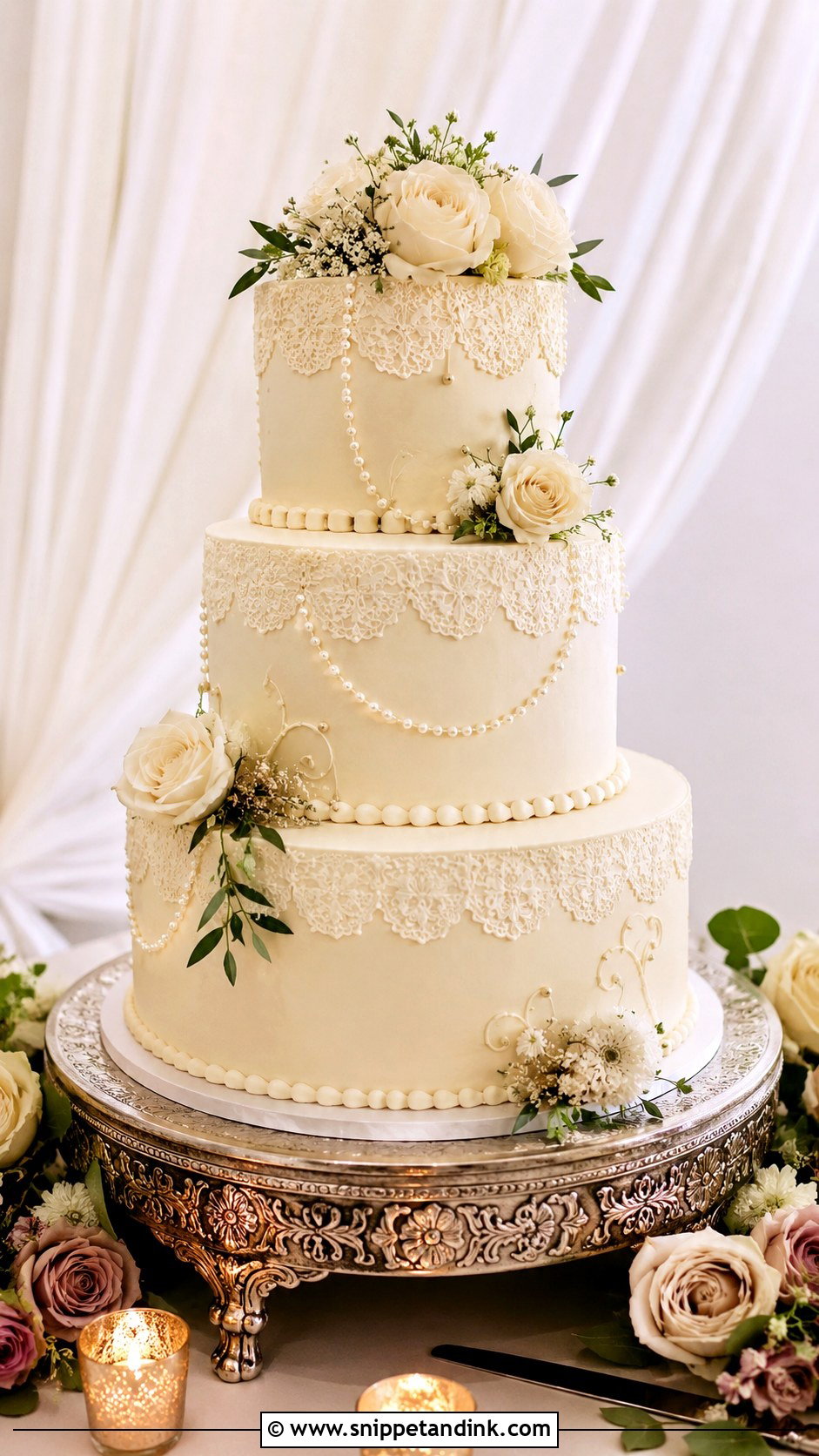
Tiers bring the height, so the styling around a tiered cake should stay low and loose. I’d use votives, a few vintage plates and flowers that echo the bouquet, kept below the line of the bottom tier. Two or three tiers are plenty when the piping is detailed. Mixing round and scalloped tiers is charming, but ask the baker to show you the stacked proportions first. Rooms with chandeliers or carved panelling suit this display best, since the architecture already does half the work.
4. Vintage Pearl Wedding Cake Display
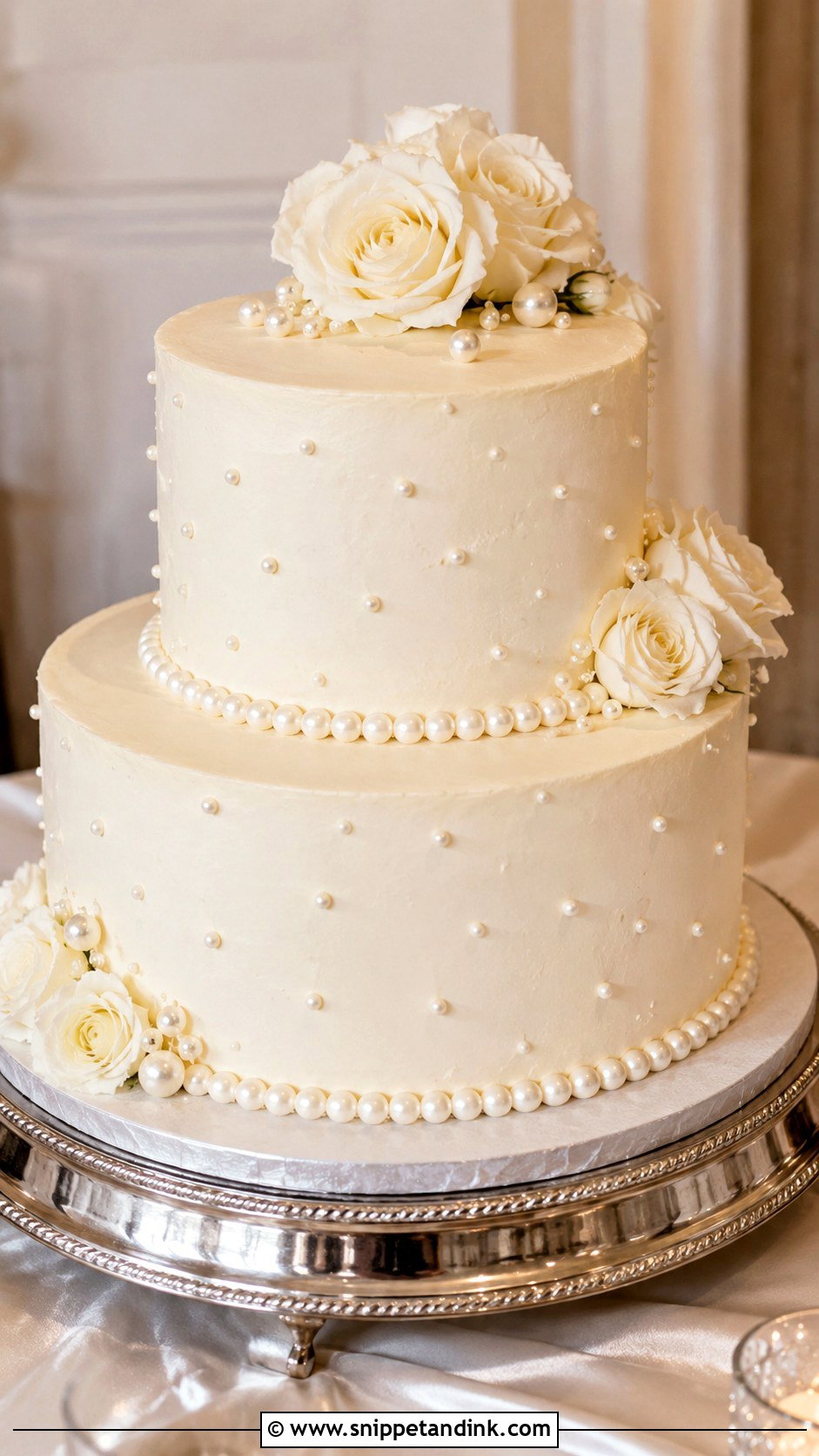
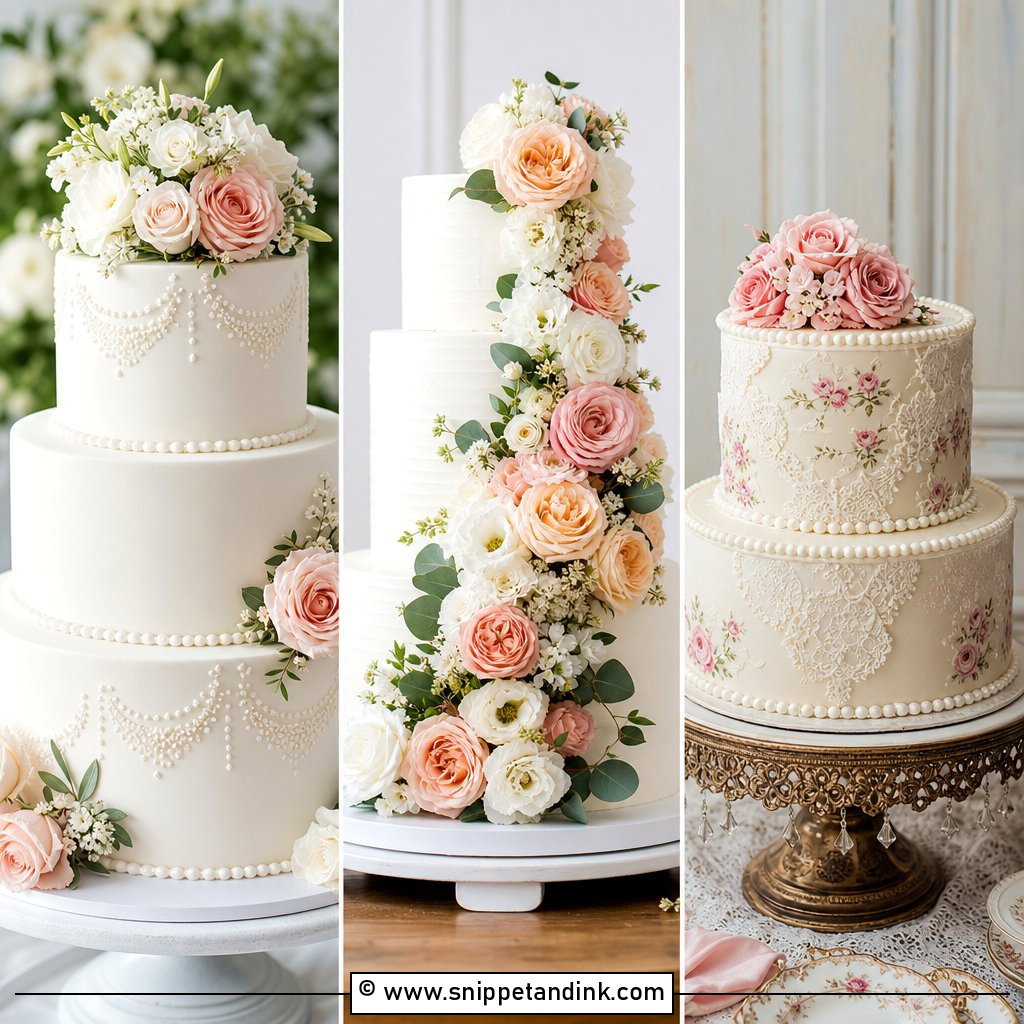
Pearls are tiny highlights, and highlights need contrast. On an ivory or soft white cake they glow best against something slightly darker or with a sheen: a satin or silk cloth under the stand, a polished pedestal, small touches of gold. Put a pearl cake on a white cotton cloth in flat daylight and the detail all but vanishes. White roses and a little gypsophila keep the palette quiet. I’d keep the rest of the table clear, because pearls look expensive only when nothing is fighting them.
5. Vintage Lace Wedding Cake Display
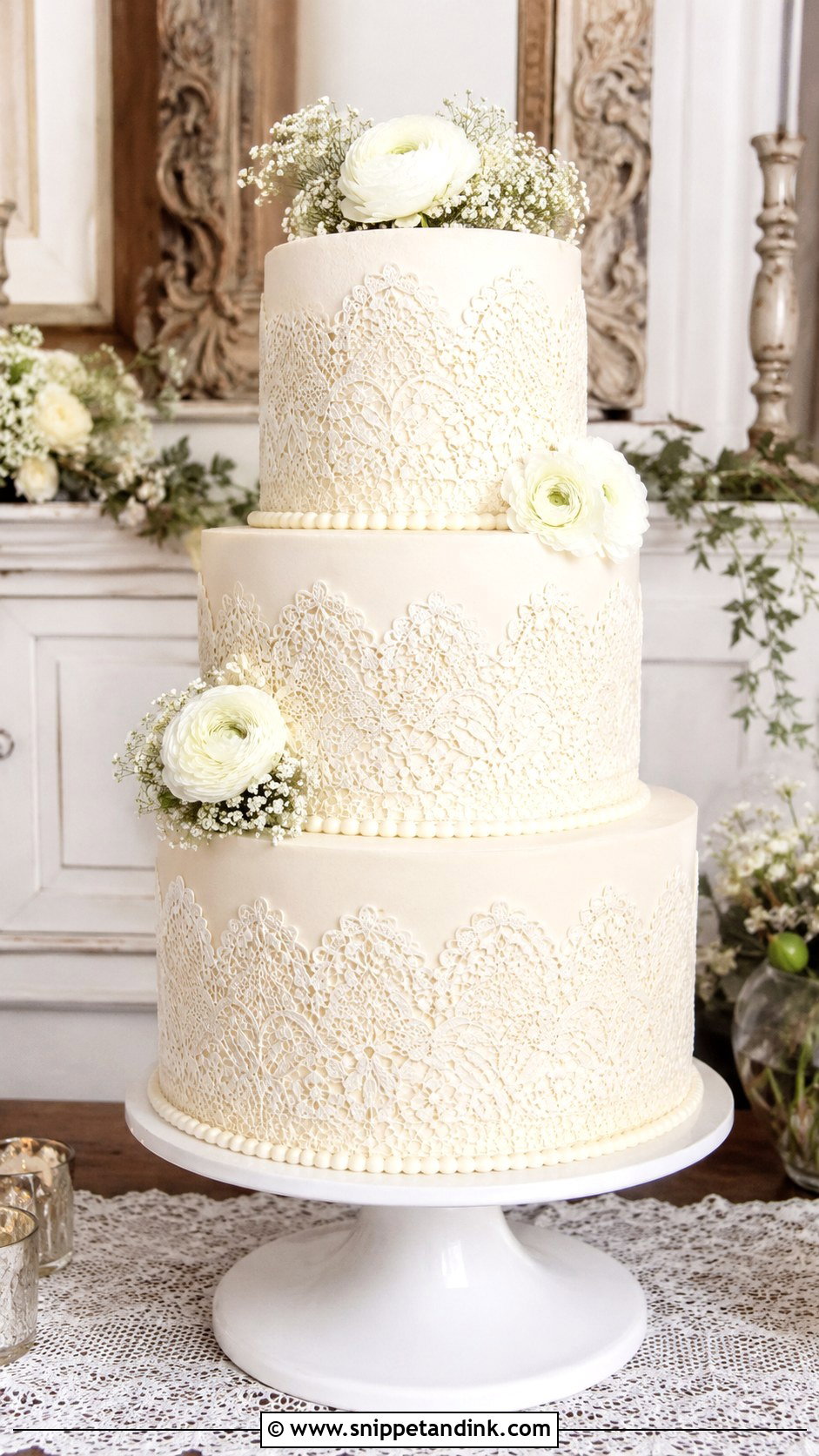
The mistake I see most with lace is doubling it everywhere: lace cake, lace cloth, lace runner, lace on the signage. Pick one place for the strongest pattern. If the cake carries piped or fondant lace, give it a plain linen cloth and a simple stand; if the cake is smooth, a vintage lace cloth can carry the texture. It feels most personal when the motif mirrors the gown or an heirloom veil. Ranunculus and a little greenery soften the base without adding more pattern.
6. Vintage Floral Wedding Cake Display
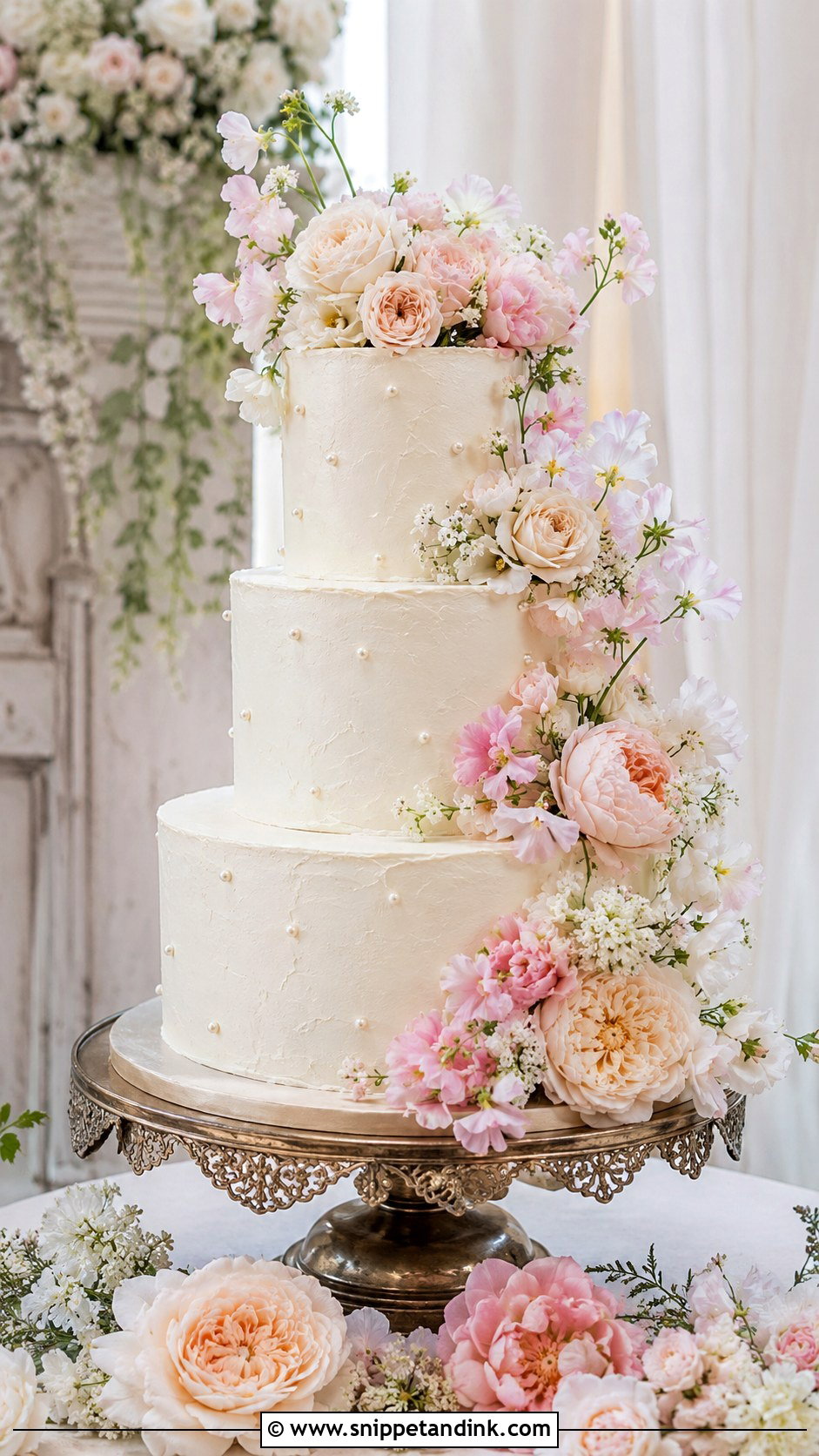
Let flowers trail off the stand and across the table rather than sitting only on the cake. That gives the display a shape, usually a gentle diagonal, which photographs far better than a cake with a flower crown. Roses, peonies, sweet peas and hydrangea in faded tones suit the period. Hydrangea is thirsty, though, and wilts fast out of water, so I use water tubes or keep it to the cooler part of the evening. The cake should still be the star. If guests have to search for it, cut the flowers back by a third.
7. Vintage Garden Wedding Cake Display
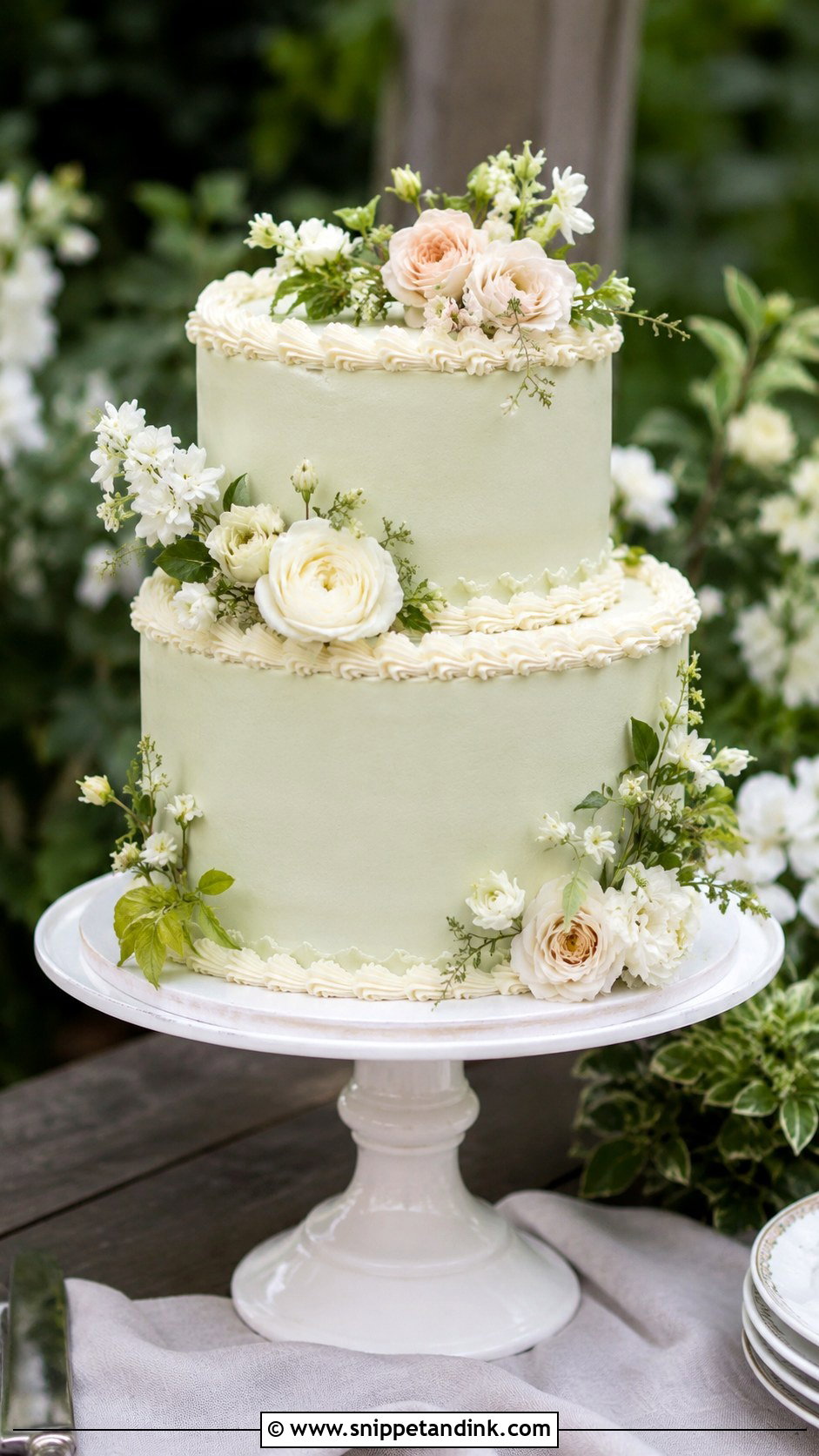
Outdoors, this one almost styles itself. A buttercream cake with soft piping or ruffled edges, a white pedestal, a light linen cloth and loose blooms are enough, and the trees behind it are the backdrop. What does need planning is shade. Buttercream in direct summer sun softens within the hour, so I set garden cake tables under a canopy or tree and bring the cake out shortly before guests arrive. Pale green, ivory, blush and soft yellow all look at home against real foliage.
8. Vintage Blue Wedding Cake Display
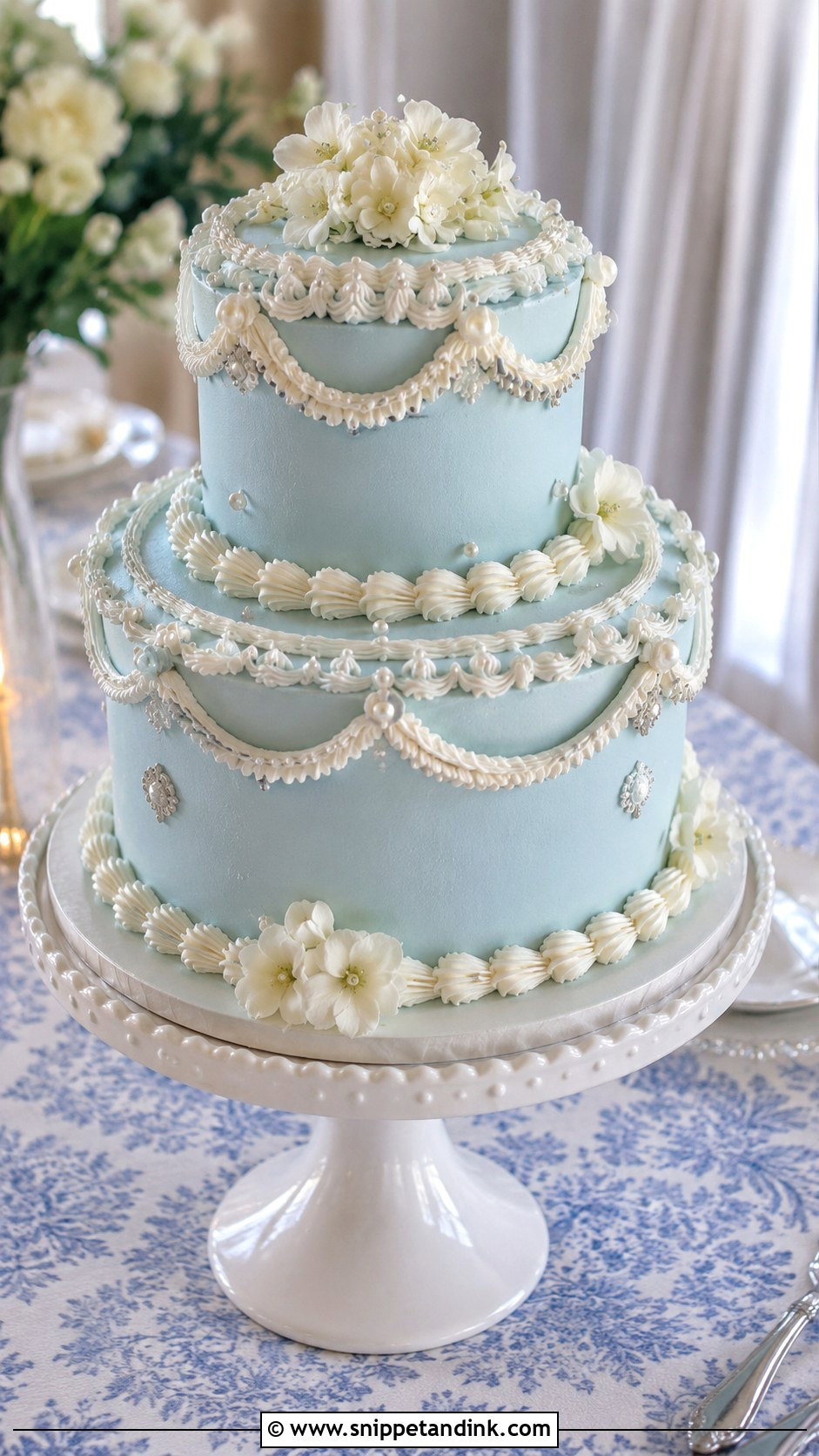
Blue is the colour that changes most under different light. Powder and dusty blue look clean in daylight but can go grey under warm tungsten bulbs, so I always ask the baker for a swatch and look at it under the venue’s actual lighting. A white pedestal keeps the cake crisp, and a blue patterned cloth works if the pattern is small. White flowers, pearls and a few silver accents finish it. It’s a good route for anyone who wants their cake remembered without going loud.
9. Vintage Pink Wedding Cake Display
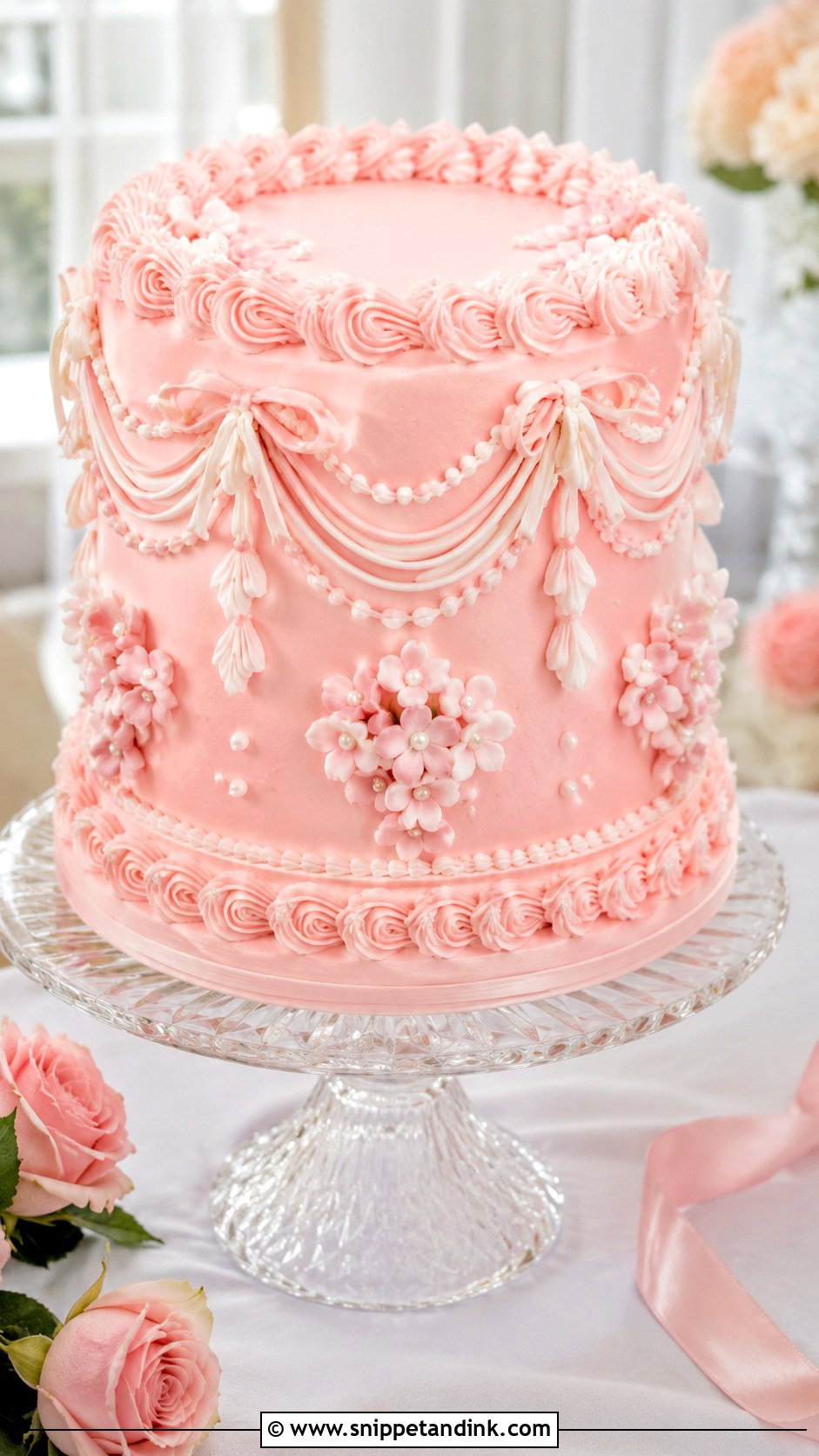
Pale pink buttercream with white piping and tiny sugar flowers has an easy, romantic warmth. Set it on glass or a white stand so the colour isn’t muddied, and use a cream cloth rather than pure white, which can make blush look dingy by comparison. For a bolder retro take, deeper rose piping round the borders gives it more punch. Blush roses and a ribbon are enough. I’d keep the backdrop neutral here; pink cakes against pink walls lose their edges in photos.
10. Vintage Cherry Wedding Cake Display
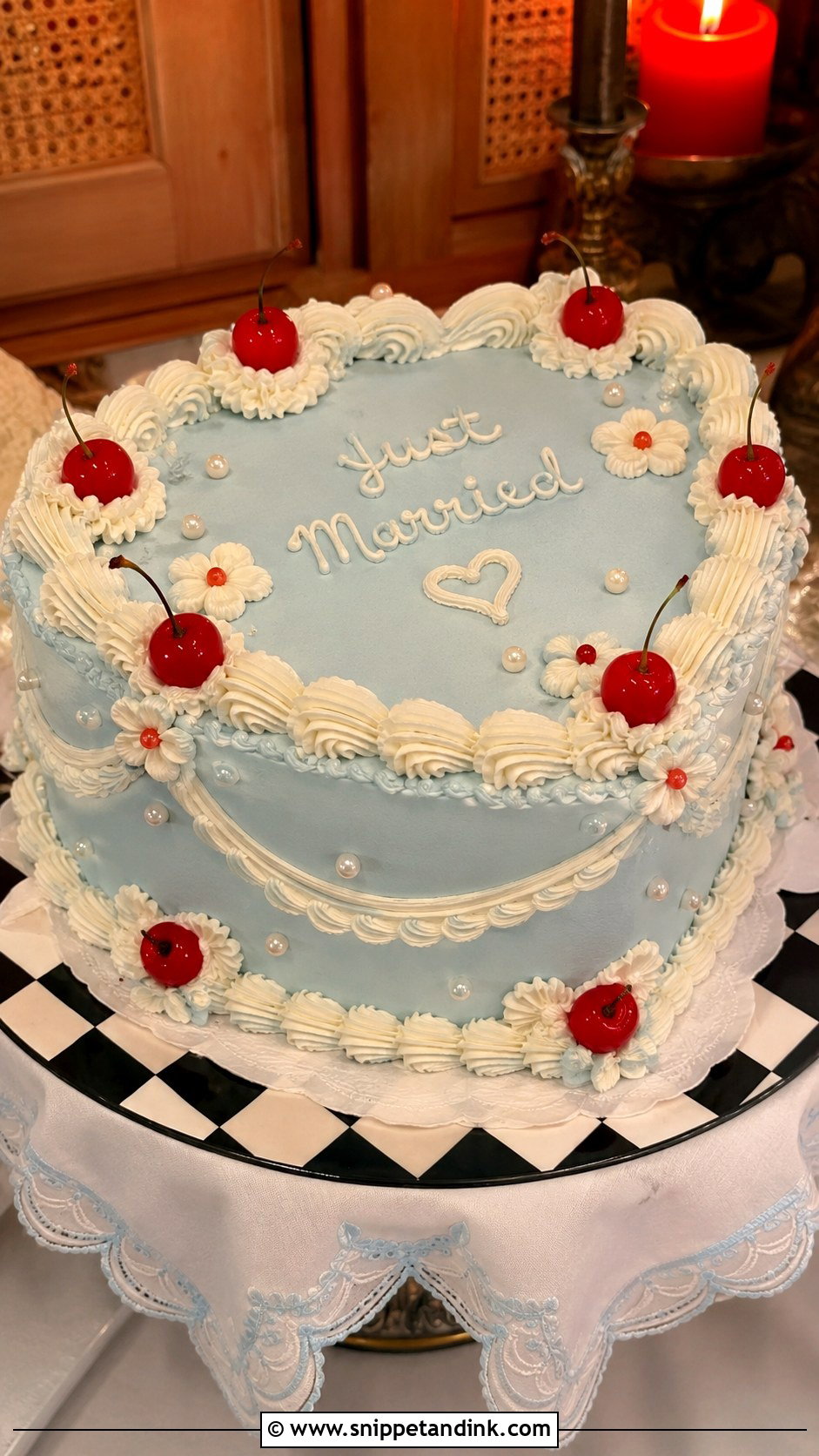
Cherries make this the most playful display on the list. A vintage cherry wedding cake display works because the red gives the eye points to land on, especially across a baby blue or soft pink Lambeth cake. Use them sparingly or the cake starts to look like a sundae. A checkered stand or a scalloped cloth leans into the diner mood. One practical point: glossy cherries can bleed red syrup into pale buttercream over a few hours, so ask the baker to blot them well or place them late.
11. Vintage Sheet Wedding Cake Display
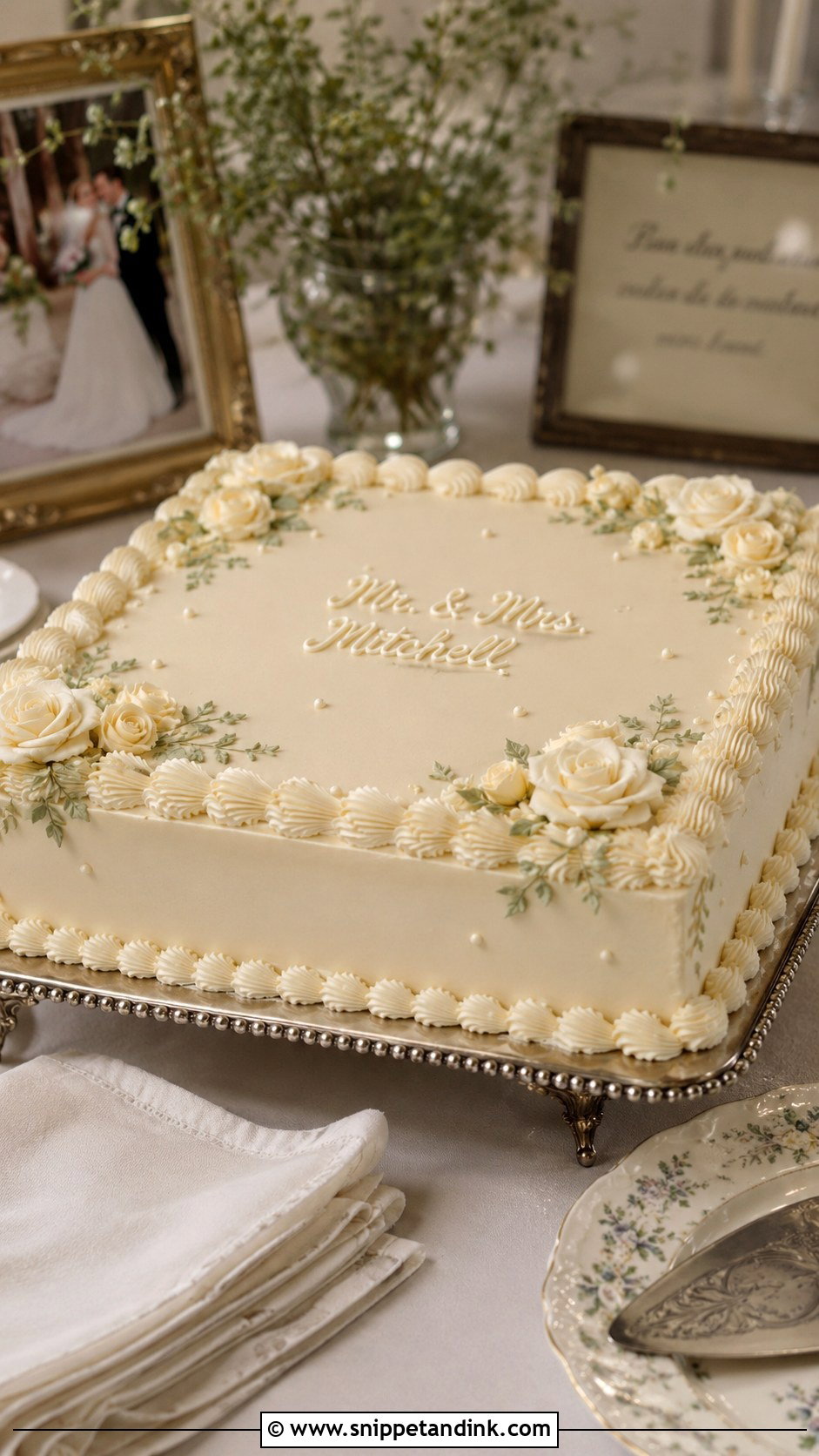
Sheet cakes used to be hidden in the kitchen, and I think that’s a waste. A rectangular cake with piped borders, floral corners and a short message reads as nostalgic bakery charm once it’s raised on a tray or a vintage platter. Flat cakes need lift, otherwise they look like they’re waiting to be cut. Around it, arrange smaller desserts, fresh flowers and folded linen napkins. It’s the most practical way to feed a large crowd from one cake table.
12. Vintage Mini Wedding Cake Display
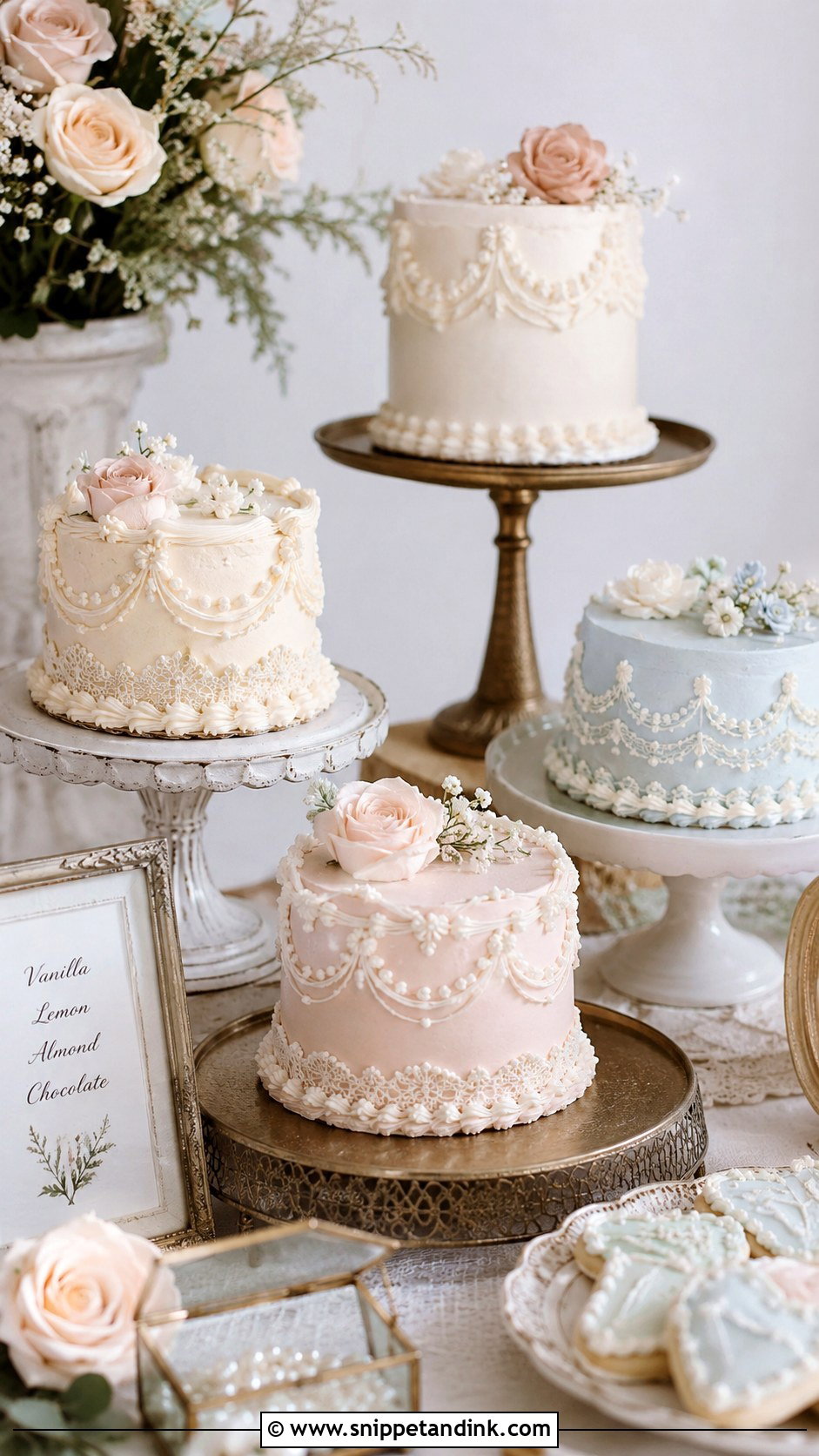
Several small cakes give you variety in flavour and a more interesting skyline. Set several smaller cakes on stands at staggered heights, tallest at the back or centre, and connect them with one palette and one repeated detail, such as the same pearl border on every cake. Odd numbers group more naturally than even ones. Antique stands that don’t match exactly look collected, but keep them in the same metal or glass family so the table doesn’t look borrowed from five houses.
13. Vintage Wedding Cake Table Display
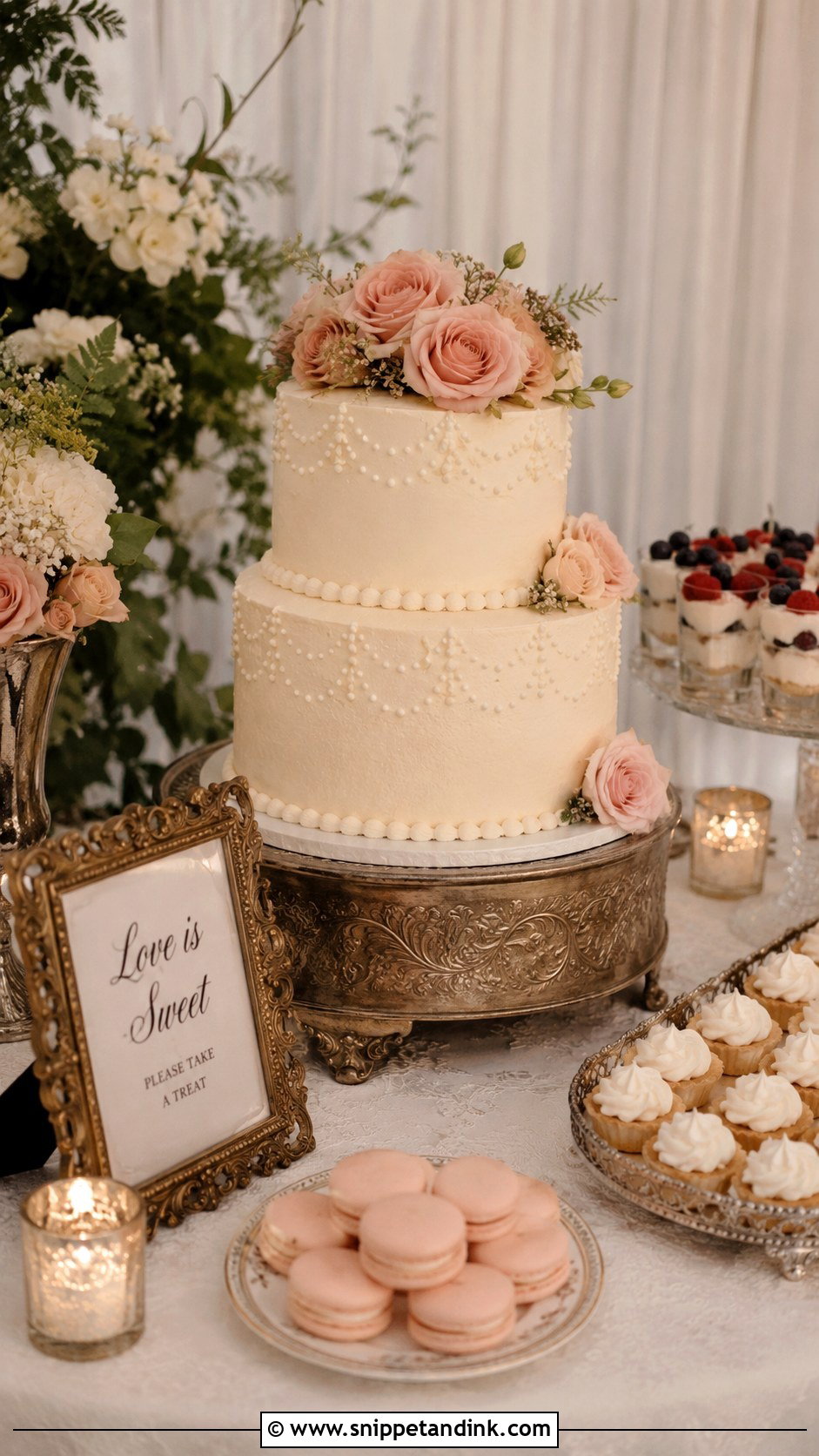
Build the table outward from the cake. I start with the cloth, then the cake on its stand, then the tallest supporting piece slightly behind it, then flowers, candles and signage, checking from about three metres away after each layer. If something draws the eye before the cake does, it goes. Soften the wedding palette with cream, blush or dusty pastels, and leave clear space on either side of the cake. Curtains, greenery, brick or a plain wall all make better backdrops than a busy window.
14. Vintage Wedding Cake Stand Display
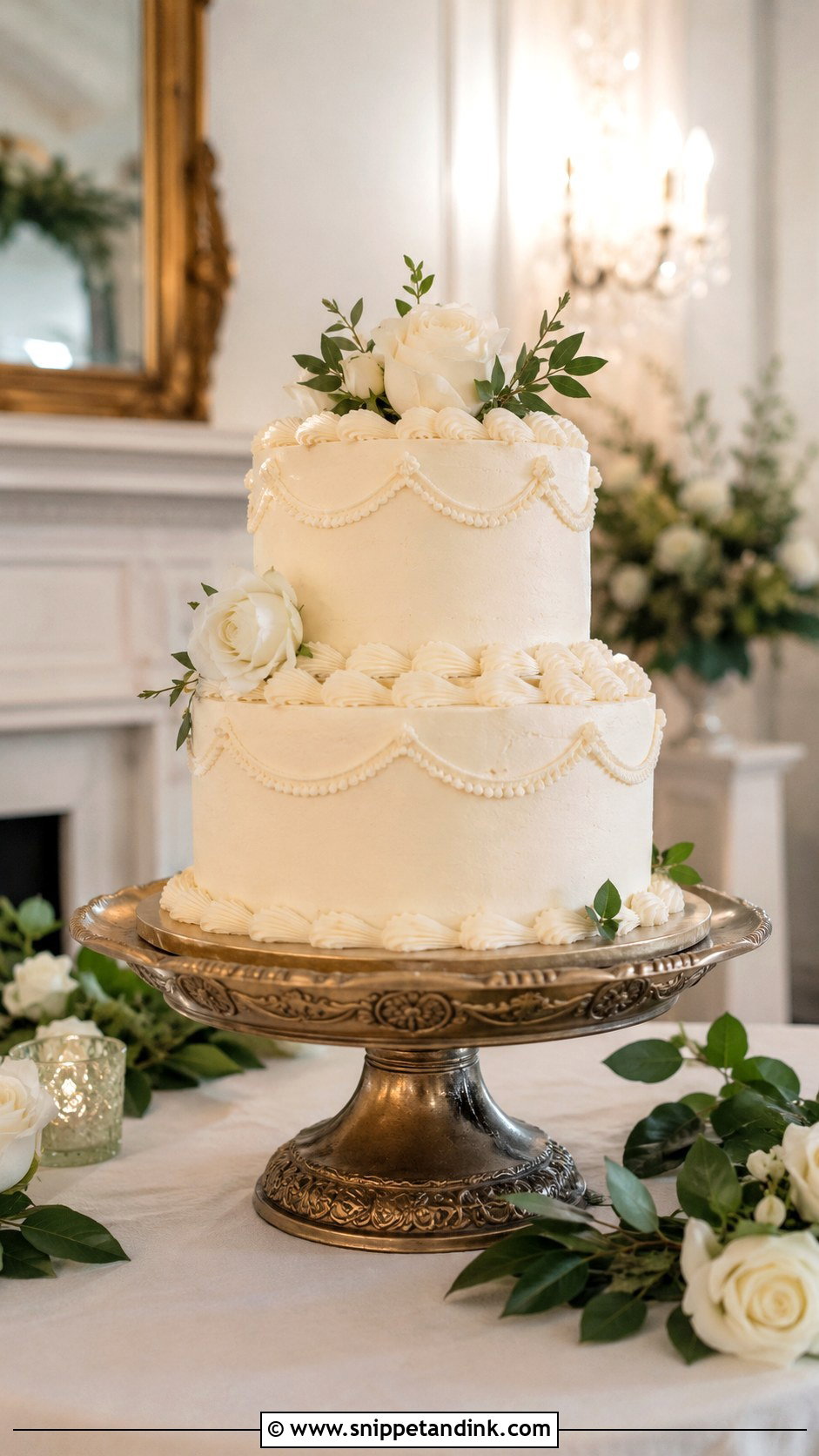
The stand can change the whole mood, and it should be chosen before the cake is finalised. Height and weight matter: a three-tier cake can be heavy, and many delicate antique stands simply aren’t built for it. Milk glass, silver, ornate pedestals and scalloped ceramic all have a vintage feel. Pair a heavily piped cake with a simpler stand, and give a plain buttercream cake the decorative one. Flowers at the base are fine, but don’t bury the foot of the pedestal; it’s part of the design.
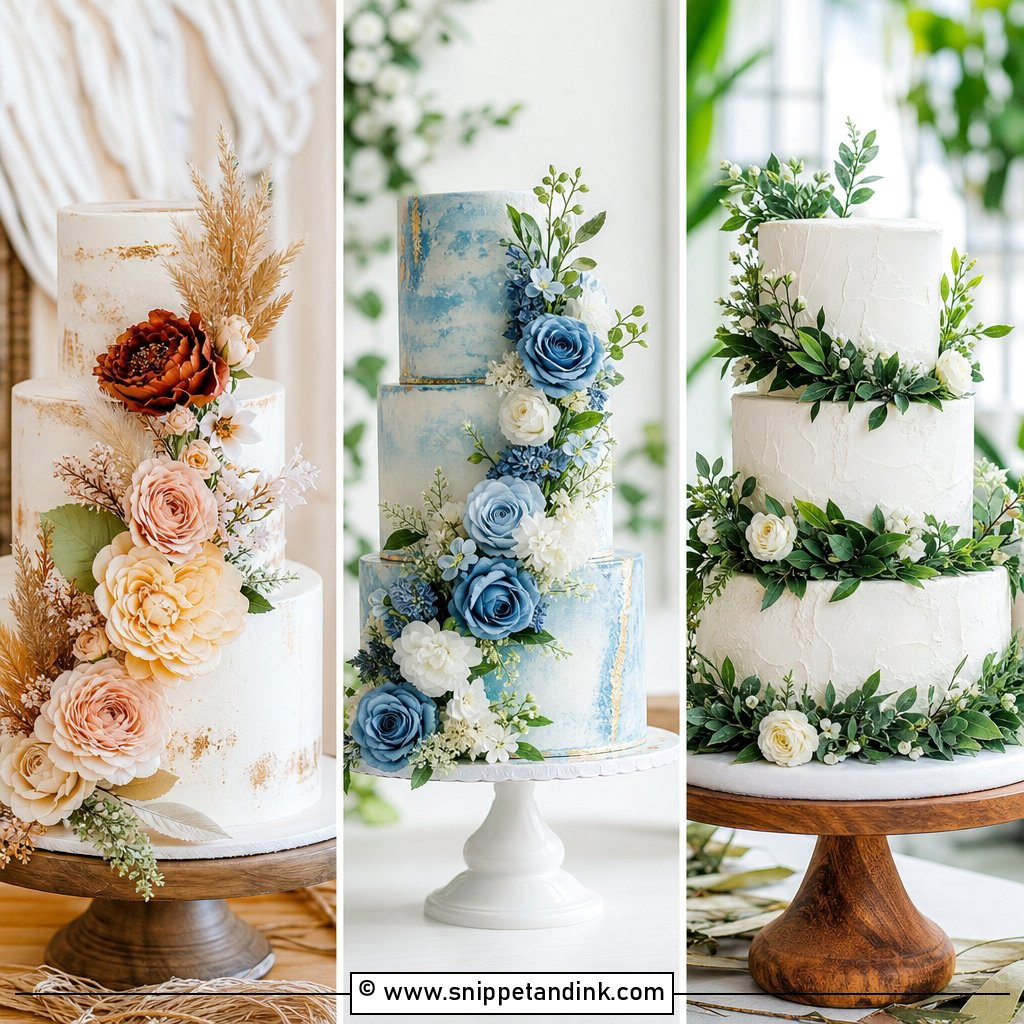
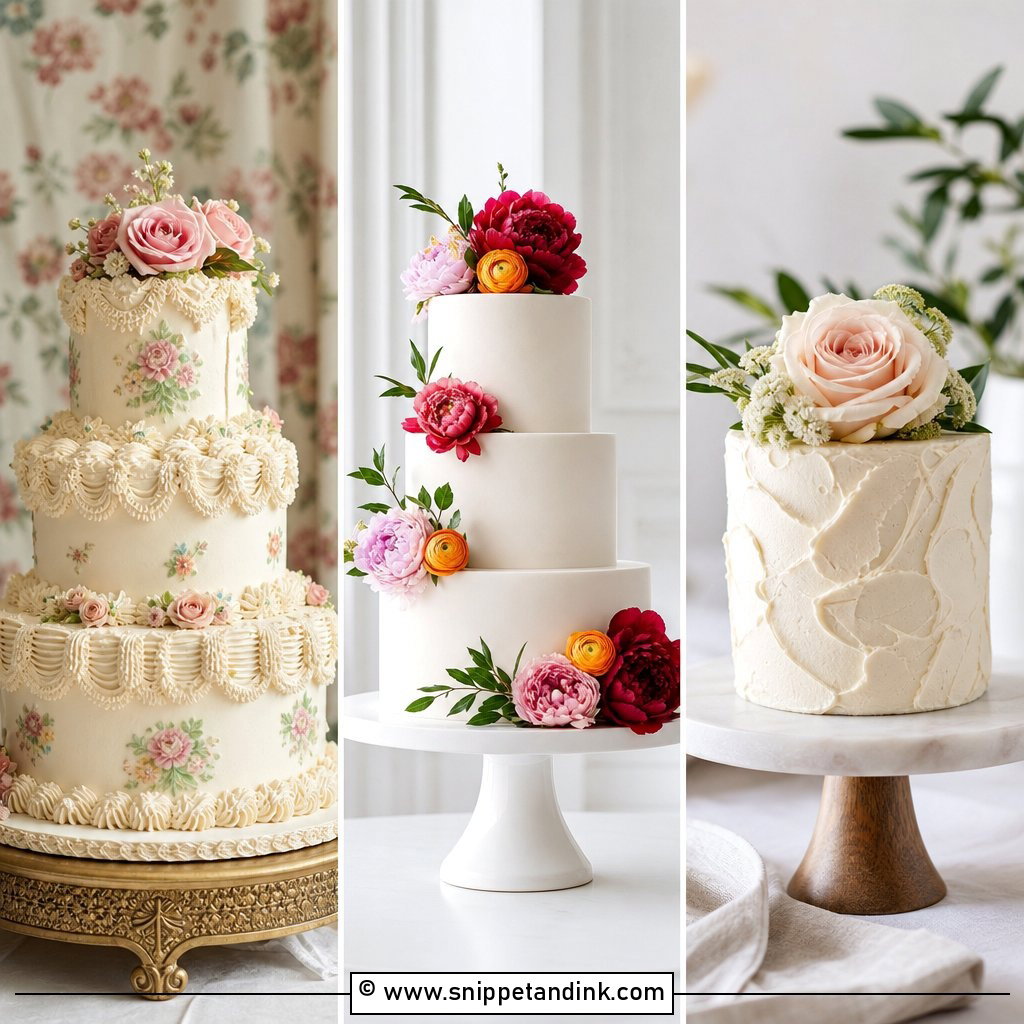
15. Vintage Dessert Table Wedding Cake Display
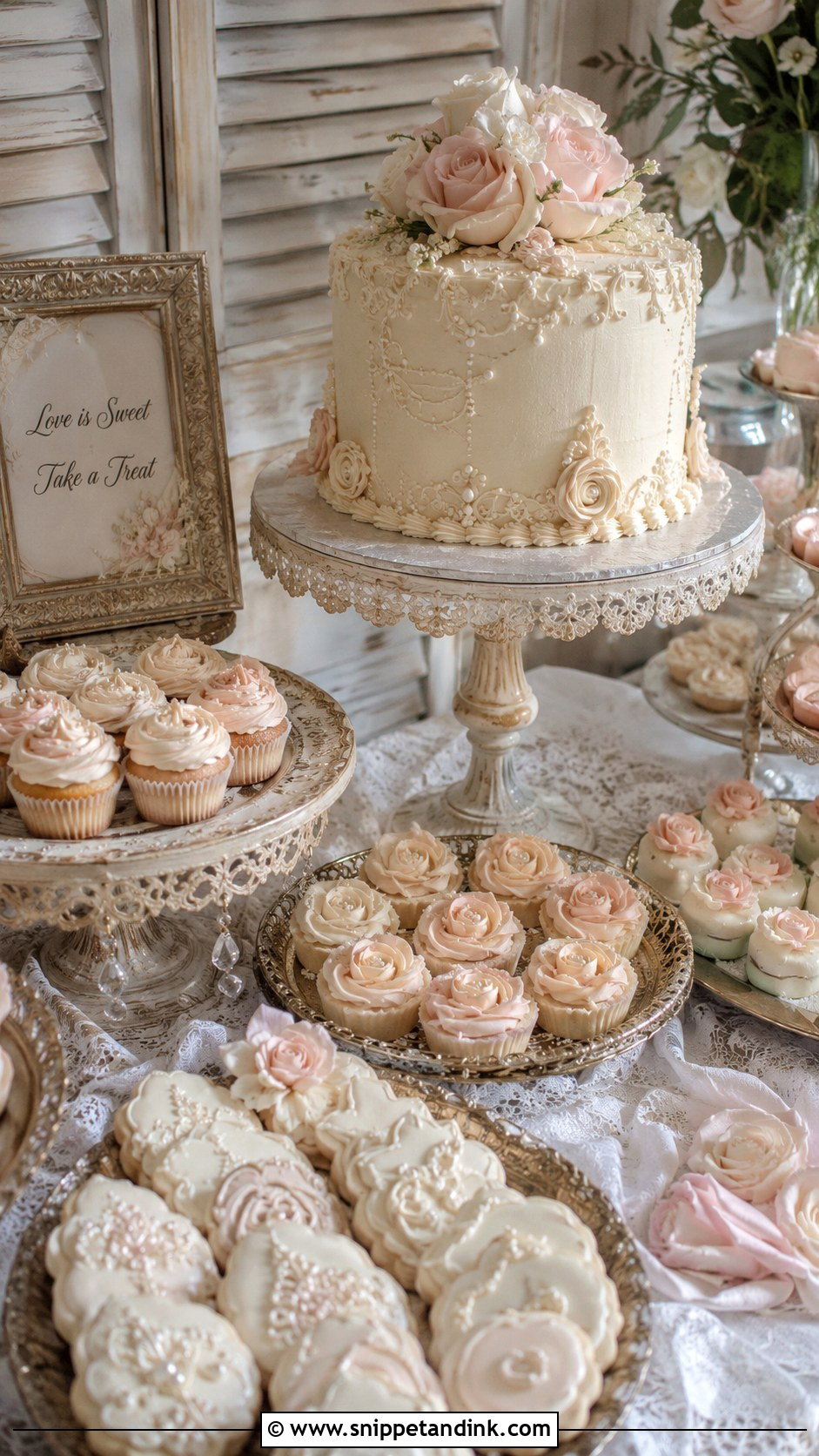
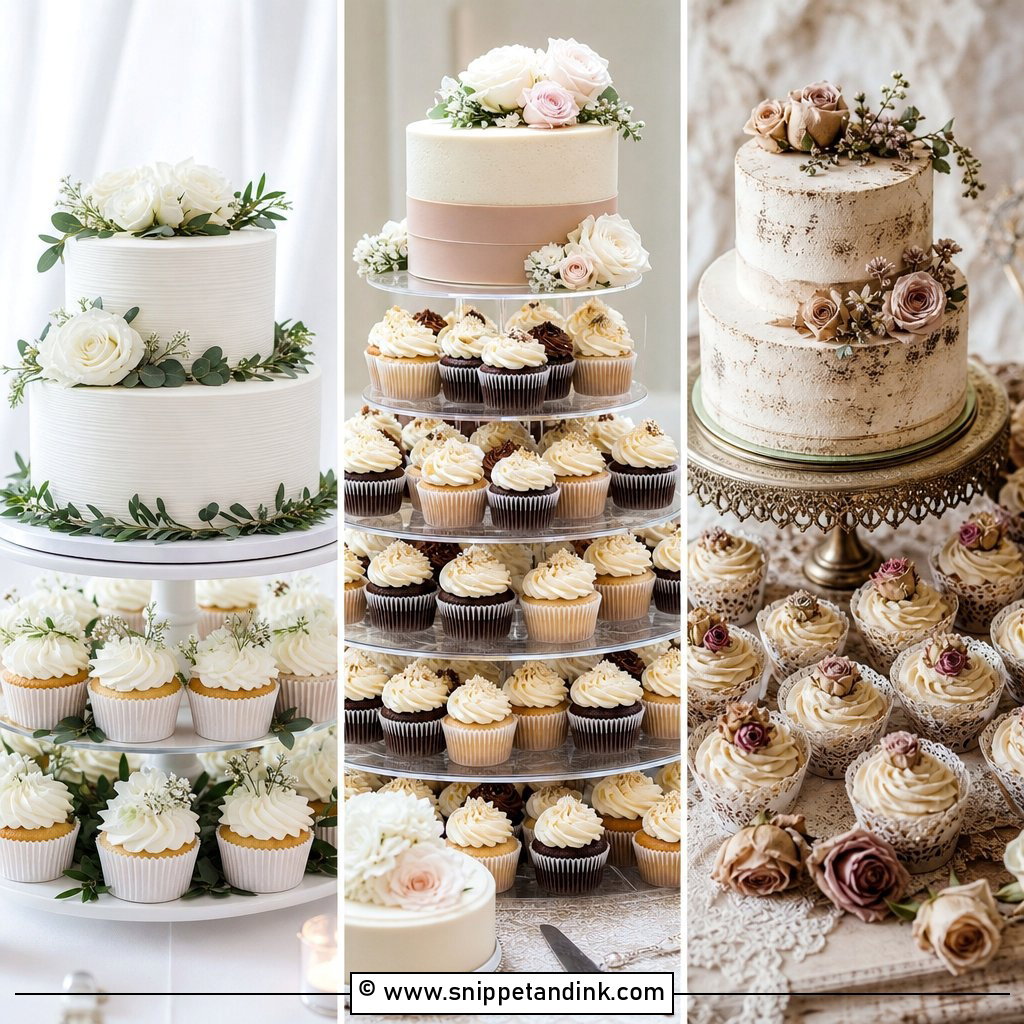
On a full dessert table, the wedding cake has to be the highest point and the first thing guests see. I put it at the centre or slightly off-centre, then step cupcakes, mini tarts, cookies and pastries down onto lower trays on either side. Repeating the same flower and the same serving-piece finish ties everything together. Clutter is the real risk. Leave a clear ring of space around the cake, even if that means a second small table for overflow sweets.
16. Vintage Buttercream Wedding Cake Display
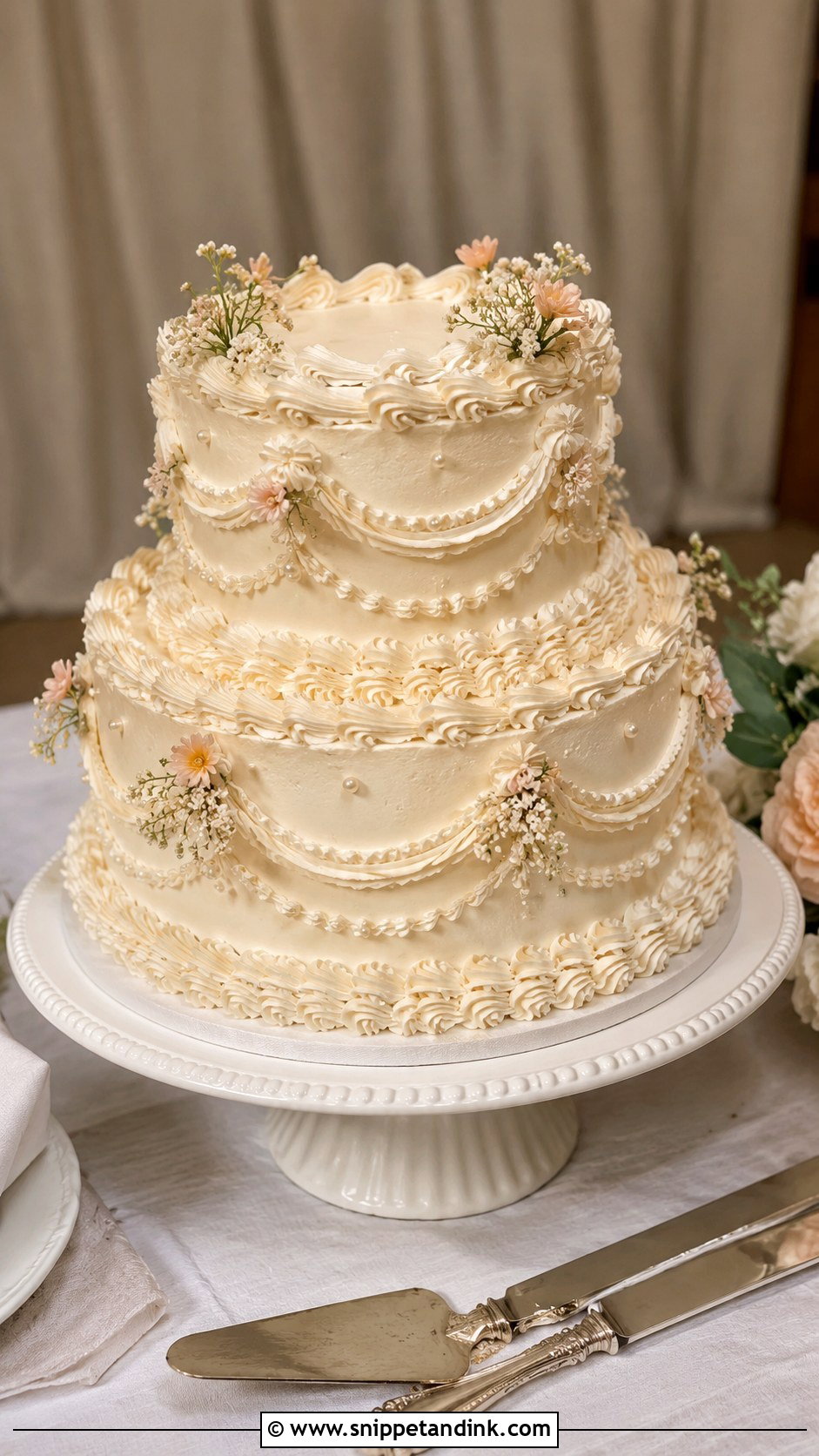
Buttercream catches light softly, with a creamy sheen rather than the flatness of fondant, so it rewards side lighting more than overhead light. Shell borders, ruffles and basketweave all show best when a window or a lamp sits to one side. A sturdy pedestal and a plain linen cloth keep the focus on the texture. Plan where it’ll sit with temperature in mind, though: buttercream near a radiator, a heater or a sunny window starts to slump well before the cutting.
17. Vintage Bow Wedding Cake Display
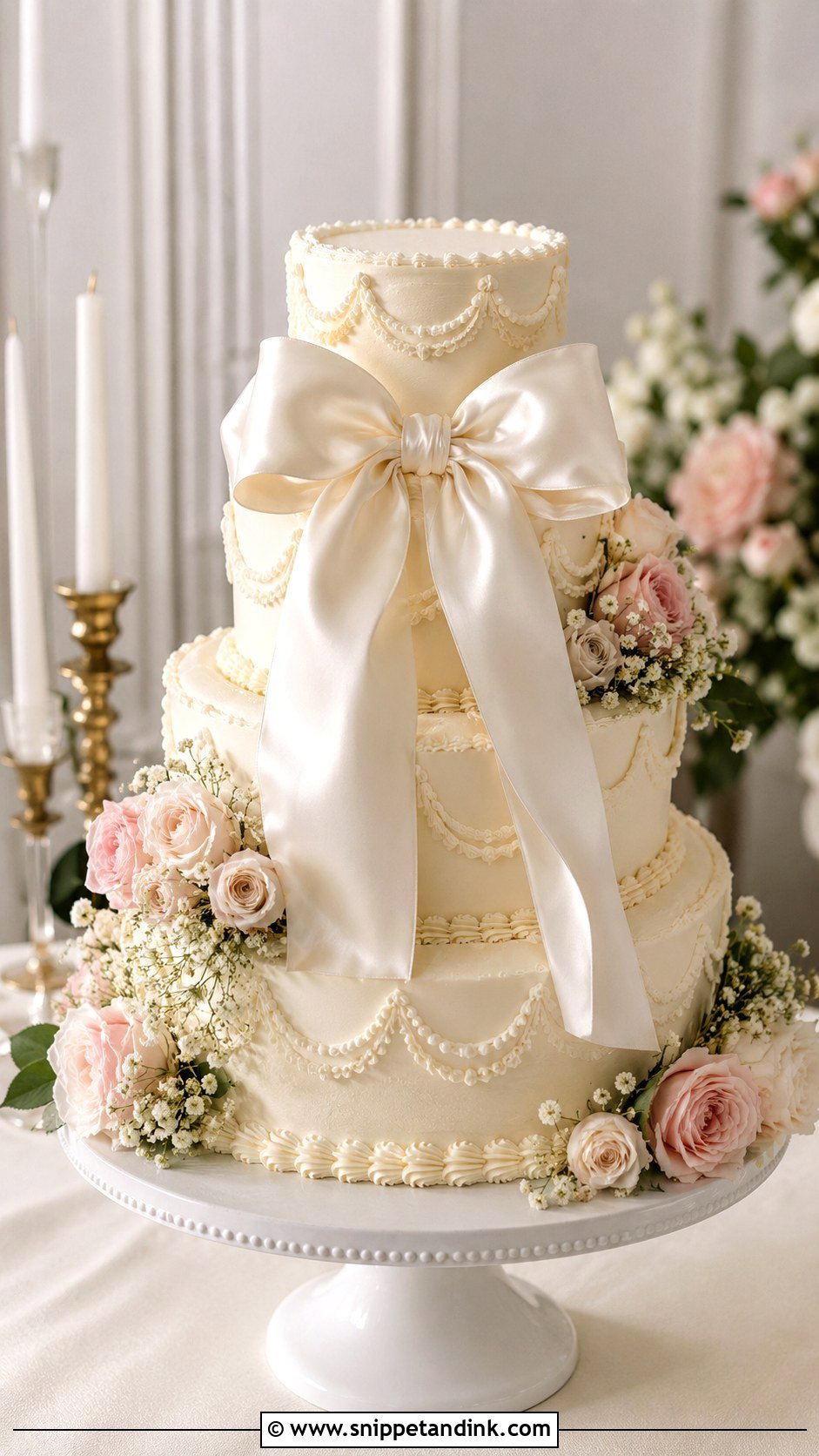
A bow is a simple way to give a cake personality. It can be satin ribbon, fondant or piped buttercream. One large bow at the base of a tier reads as dramatic; small bows round the edges feel delicate. If you’re using real satin ribbon, check the baker puts a barrier behind it, because butter seeping through leaves dark patches that show in every close-up. Ivory cake with champagne or pale blue ribbon is my default pairing. Then a clean pedestal and a smooth cloth, and nothing else competing.
18. Vintage Monogram Wedding Cake Display
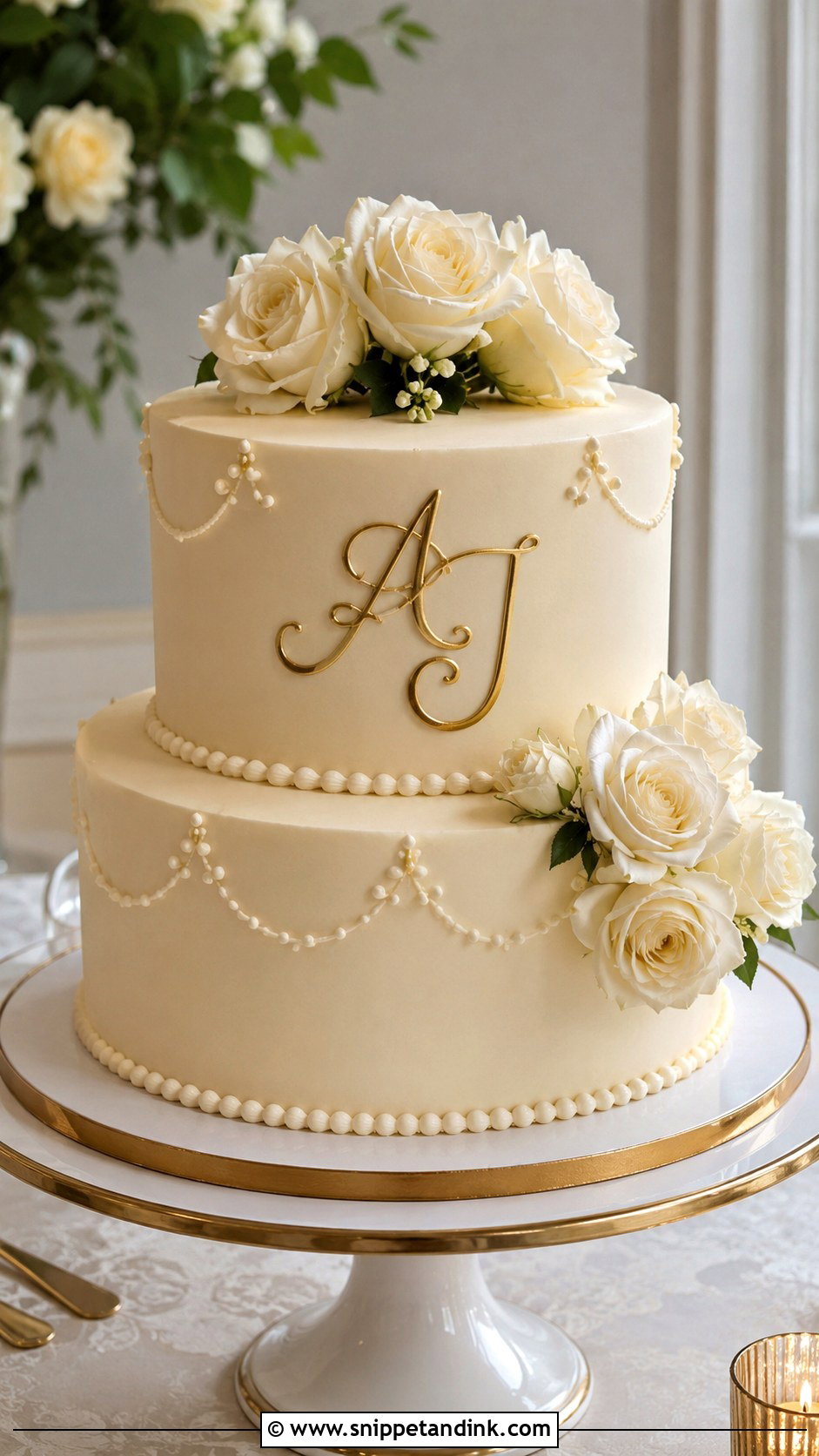
A monogram only works on display if it faces the room. Agree with the baker which side is the front before delivery, and mark it on the box, because cakes get rotated on set-up more often than you’d think. Initials can be piped, cut from fondant or set as a small topper, and they sit nicely with pearl borders and soft lace. Ivory, white and champagne with a little gold feel formal without fuss. It’s a fitting choice for traditional and family-focused weddings.
19. Vintage Scalloped Wedding Cake Display
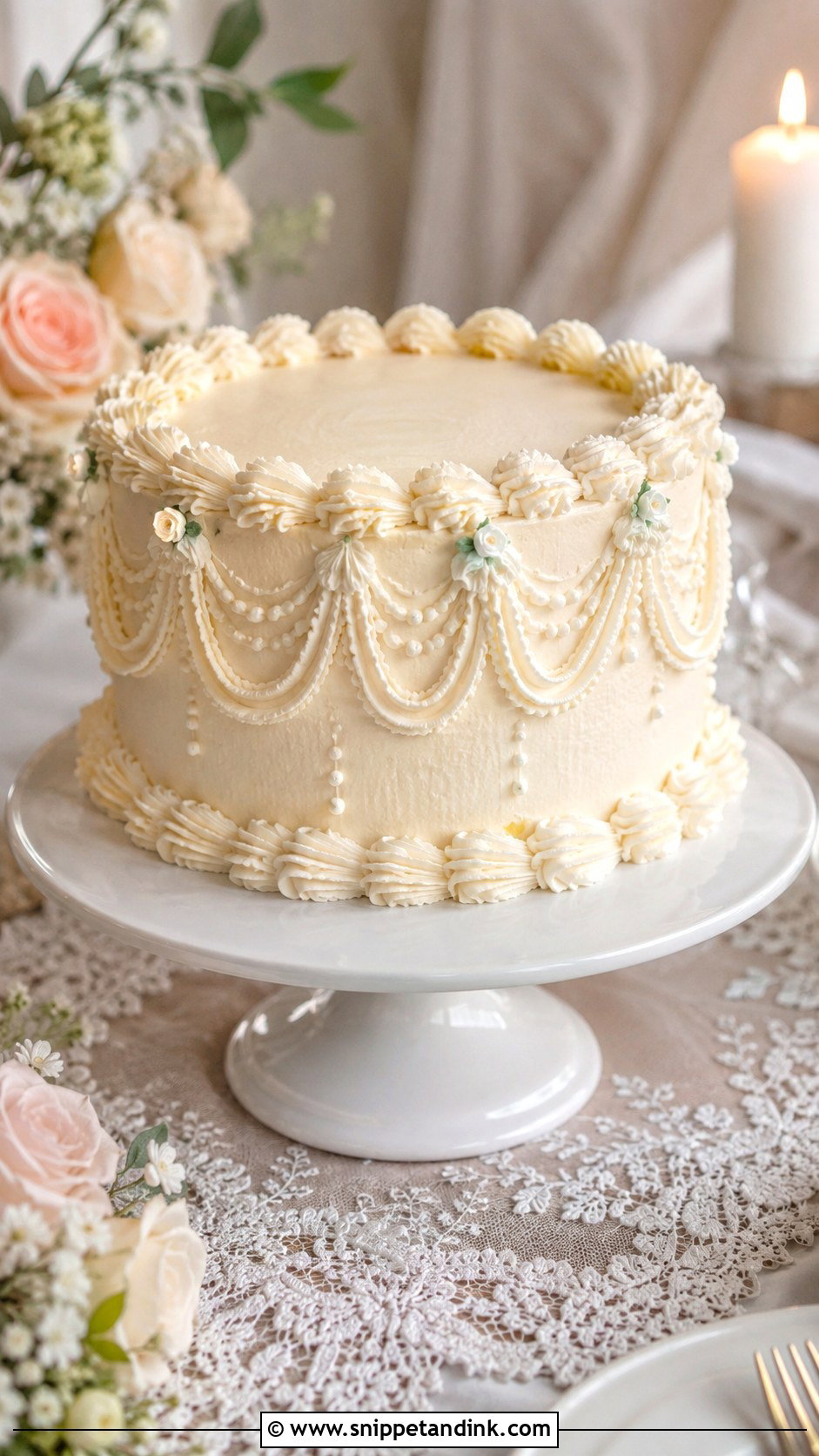
Scallops are a quiet detail and get lost against anything fussy. Choose a stand with a plain edge and a runner with a straight hem, so the scalloped piping or fondant panels have something clean to contrast with. They suit round and heart shapes in ivory or pastel buttercream. In candlelight the shadows under each scallop deepen, which is when this display is at its best. Pearls, tiny flowers and a lace runner finish it.
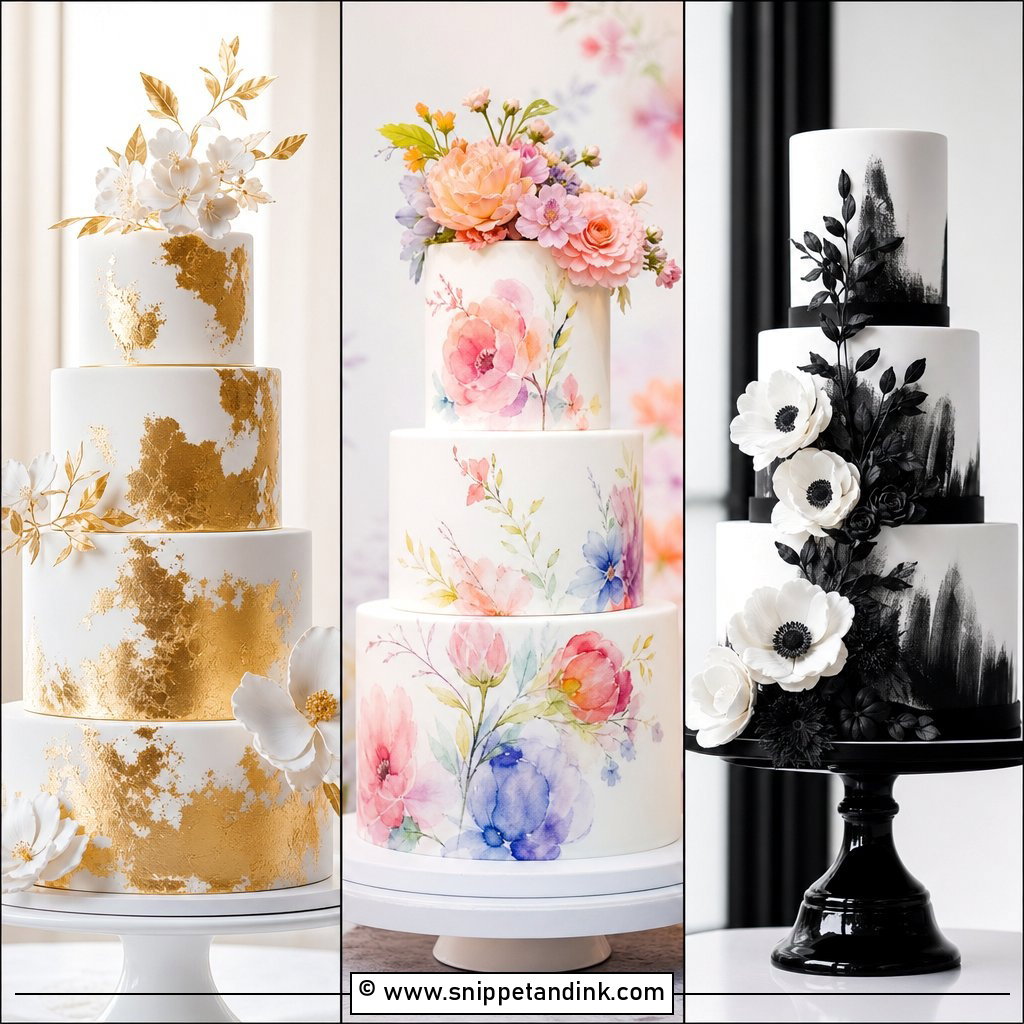



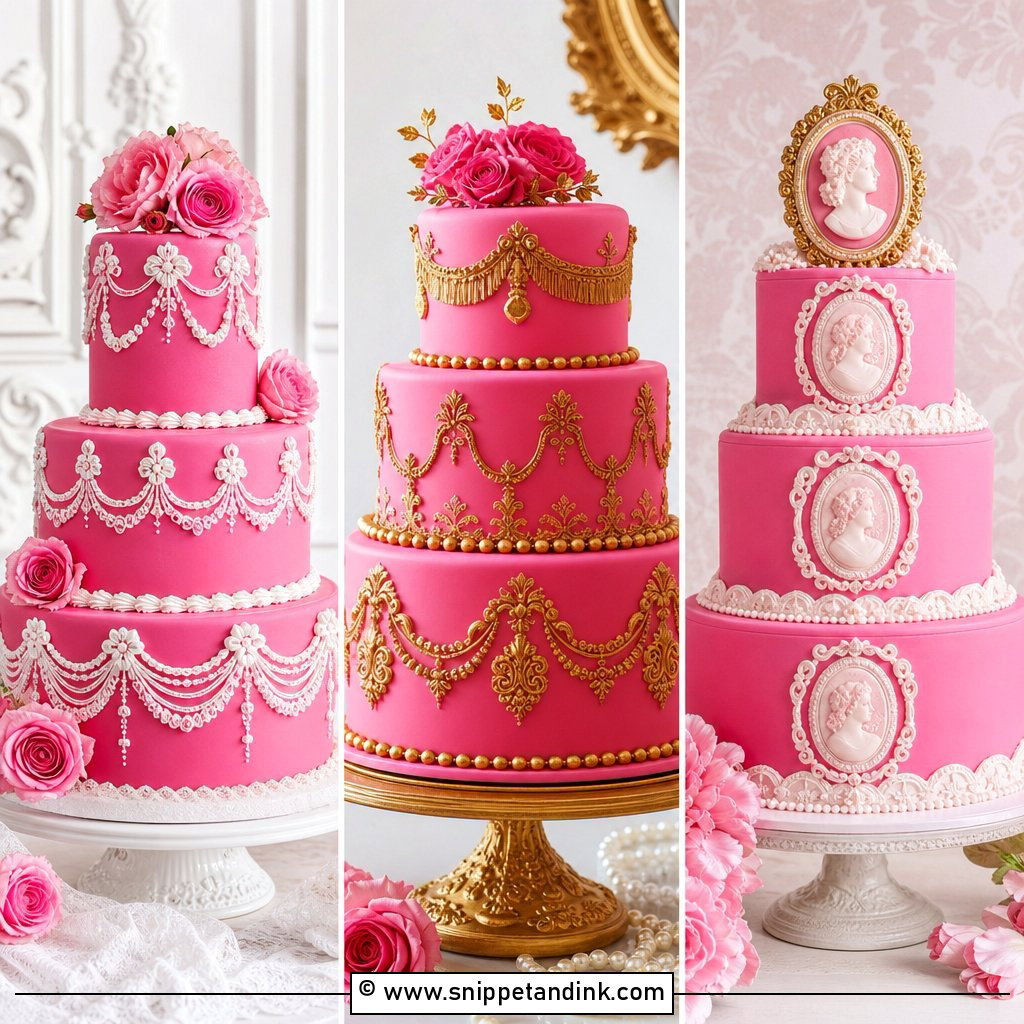
20. Vintage Gold Wedding Cake Display
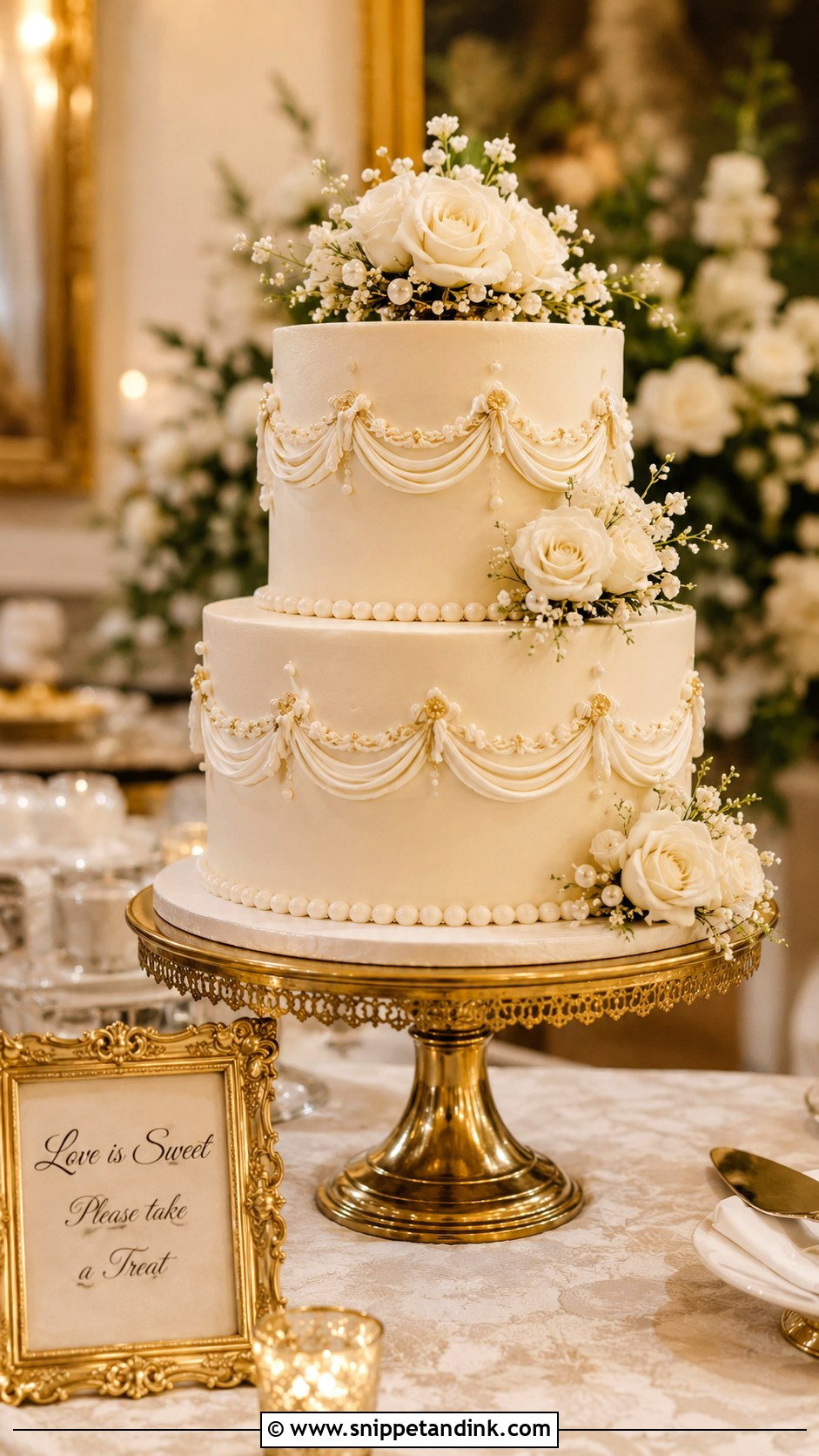
Gold belongs on the edges and the details: piped borders, pearl highlights, a monogram, the centres of sugar flowers, or the stand itself. Cover a whole cake in gold and it reads heavy, especially in photos taken with flash. Ivory buttercream with gold touches feels warm and formal. A gold pedestal lifts even a simple cake, and cream linens with white flowers keep the table calm. Evening receptions and ballrooms suit it, because gold needs warm light to glow.
Lighting a Vintage Cake After Sunset
Most cake tables are styled in daylight and photographed in the dark. Piping, pearls and lace need directional light to show their relief, and the general glow of a reception room is rarely enough.
If your venue or lighting supplier offers a pin spot, a small, focused light aimed at the cake, it’s one of the most effective things you can add. Failing that, I place a cluster of candles slightly to one side so the light falls across the cake rather than straight on it. Real flames need sensible distance from sugar flowers, ribbon and anything dry, and some venues only allow enclosed or LED candles, so check before you buy. Avoid coloured uplighting right behind the cake. Blue or purple wash can turn an ivory cake an odd shade in every photo.
Leave Space for the Cutting, Not Only the Photos
A cake table also has a job to do. Once the couple has cut the first slice, the cake usually goes back to the kitchen to be portioned, and somebody has to lift it off a crowded table without knocking over candles and flowers. I leave a clear path to the stand and keep loose petals and votives at the front edge rather than tucked under the cake board.
Set the knife and server on the table before guests sit down, with a small plate and two forks for the couple. Tell the caterer who is responsible for moving the cake, and whether the top tier is being saved. It sounds minor, but a five-minute muddle at the cake table is exactly where a styled display gets wrecked.
Start With the Cake, Then Build the Table Around It
A memorable display is mostly restraint. Decide on the cake first, then pick one stand, one cloth and one strong decorative idea, and build outward from there. Lambeth piping, pearls, lace, cherries, bows and monograms each want slightly different light and backdrop, so match the setting to the cake rather than the other way round. Add linens, flowers, candles, trays and a backdrop that suits your room, step back three metres, and take away anything that pulls the eye before the cake does.
You'll Like These Ideas:





Leave a Reply