
A glam cake should read as the centerpiece of the room before anyone picks up a fork. Shimmer, pearls, metal leaf, sugar crystals and tall tiers are the tools, but the cakes I’m proudest of only use one or two of them at full volume. Everything else on the cake stays quiet so that one feature has room to catch the light. The other half of the job is fit: the finish has to sit comfortably beside your flowers, your linens and the lighting in your venue, because a cake that sparkles in a ballroom can look flat in a sunny marquee. Below are twenty directions I’d happily build, with notes on how each one behaves once it leaves my kitchen.
Edible Glitter, Lustre Dust and the Labels Worth Reading
Most glam finishes come down to a few materials: lustre and highlighter dusts, edible metal leaf, sanding sugar, sugar pearls and isomalt. They are not all equal. Some shimmer products are made only for decorations that get removed before serving, and the packaging will say “non-toxic” or “for decorative use” rather than “edible”. I won’t brush those onto anything a guest will eat, and I’d gently question any baker who does.
When you look at inspiration photos, it helps to know what you’re seeing so you can ask the right questions:
- Flat, mirror-like gold is usually leaf or heavily painted lustre on fondant. Buttercream gives a softer, brushed look.
- Gems that look like glass are often isomalt. They’re edible but hard, and most guests leave them on the plate.
- Very dark colours like black or navy need a lot of colouring, which can stain mouths. Ask whether it’s only on the outer layer.
- Glitter that reads as a solid sparkly band is usually sanding sugar or edible glitter pressed onto a tacky surface, and it does shed a little when cut.
If you’re unsure what a finish is made of, ask your baker to name the product. A good one won’t mind.
1. Gold Wedding Cake
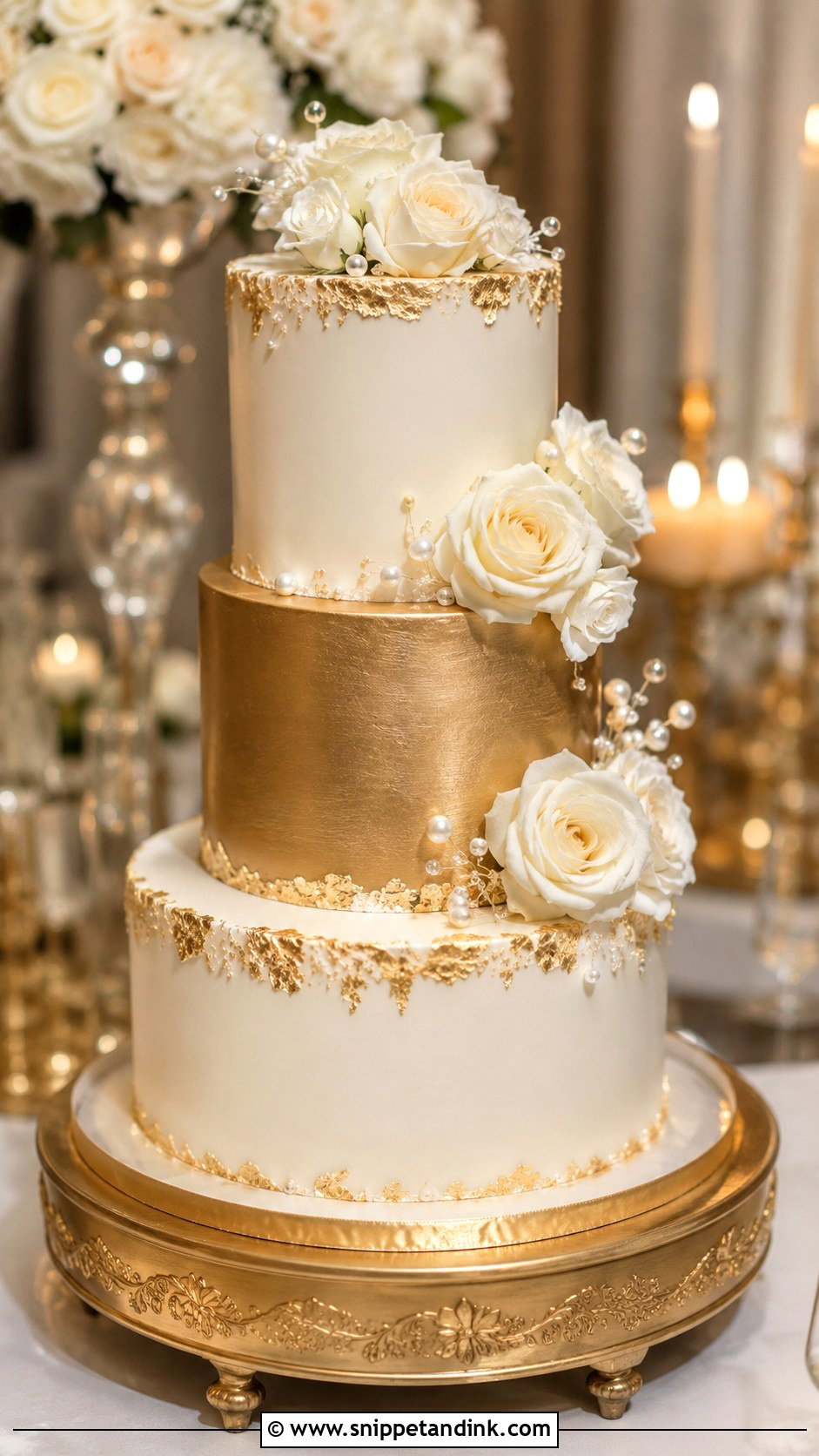
Gold is the fastest way to make a cake look formal, and the first thing I ask is how much of it you really want. A full gold tier is usually fondant painted with edible lustre mixed into alcohol, and it needs a perfectly smooth surface because every dent shows once it’s metallic. Brushed edges or patches of gold leaf over ivory buttercream are far more forgiving. My usual balance is three tiers: one gold, one smooth ivory, one textured. Under warm evening light the gold glows; under cold daylight it can look a little brassy, so I check your reception time before mixing the shade.
2. Pearl Wedding Cake
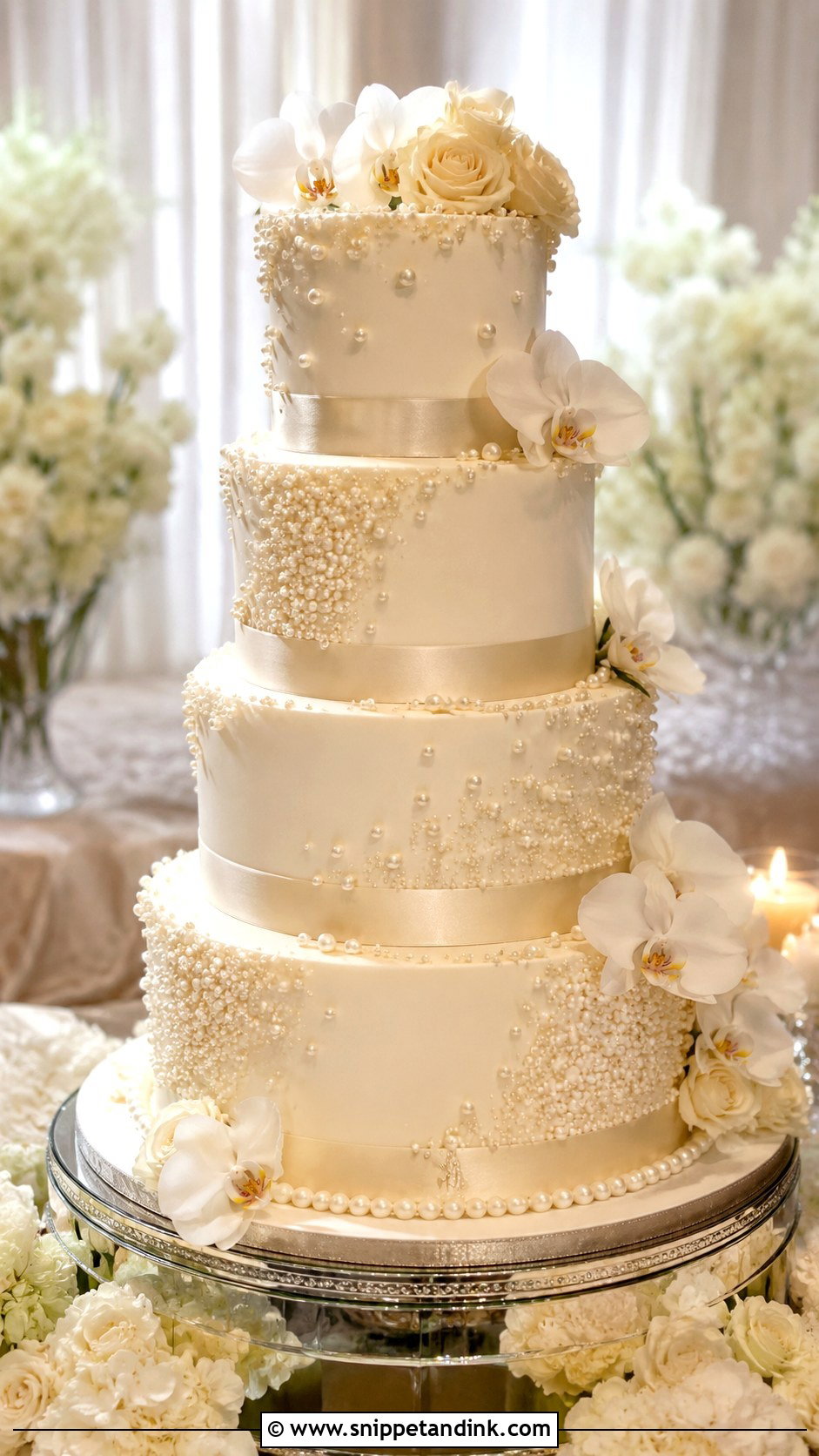
Pearls give a soft glow rather than sparkle, which is why they suit ivory, blush and pale gold palettes so well. Sugar pearls are hard, so I set them into buttercream before it crusts or attach them to fondant with a dot of royal icing; pressed in too late, they pop off in transit. A smooth fondant tier dusted with pearl lustre gives the same mood with less fuss. Satin ribbon or a few white orchids are enough alongside. On a mirrored stand the sheen doubles without turning flashy.
3. Crystal Wedding Cake
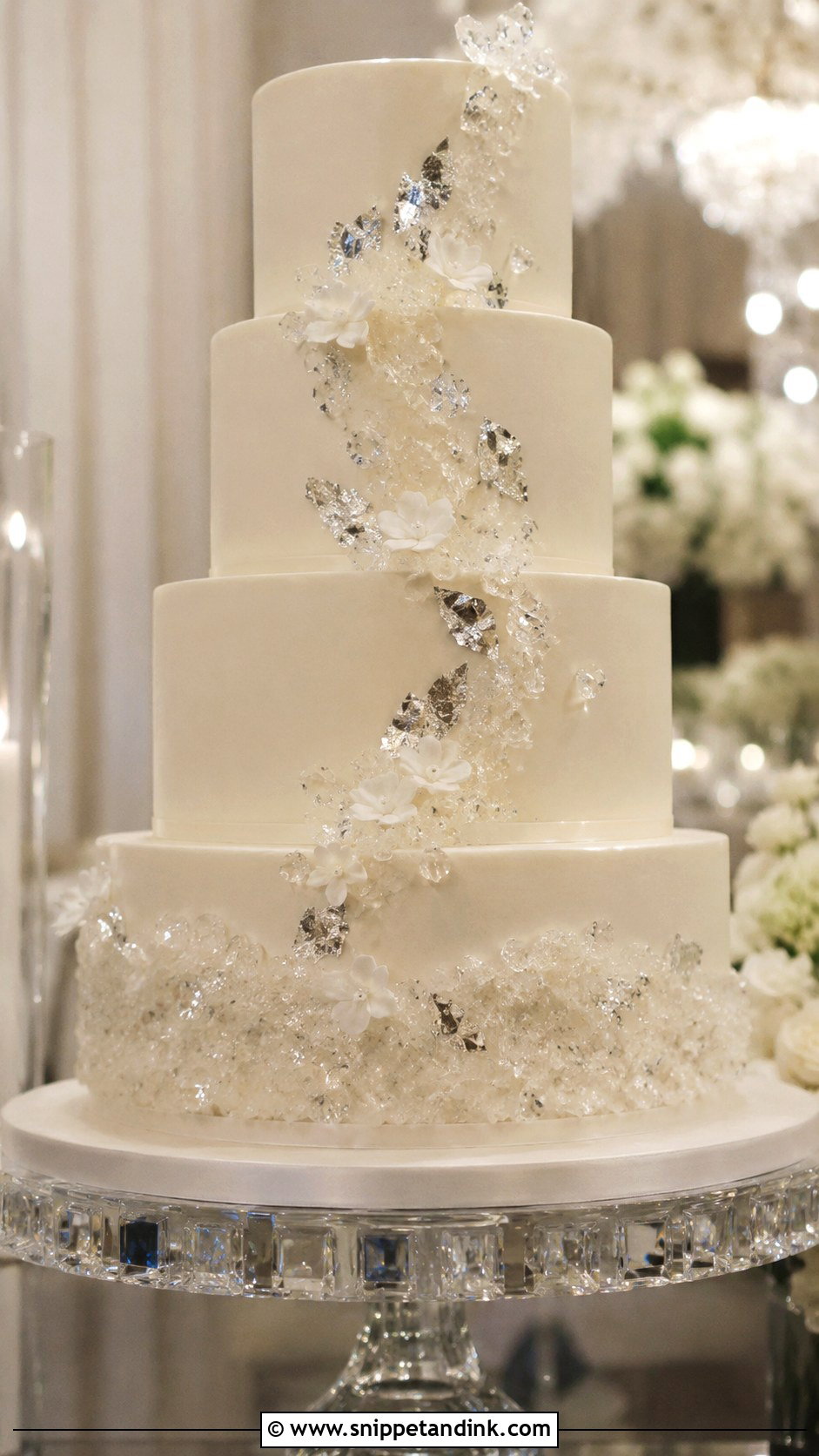
This is the cake I’d suggest for a black-tie evening. The jewels are usually isomalt, a sugar substitute that cooks clear and sets like glass, though rock candy and set sugar gems do the job too. Isomalt is beautiful and also moody: humidity makes it cloudy and sticky, so I add the gems as late as I can and keep them away from fresh flowers that sweat. A smooth white base lets the crystals do the talking, with silver, white or pale blush flowers around them. A crystal cake topper adds height if the room has high ceilings. Hotel ballrooms with dimmed, directional lighting show it off best.
4. Silver Wedding Cake
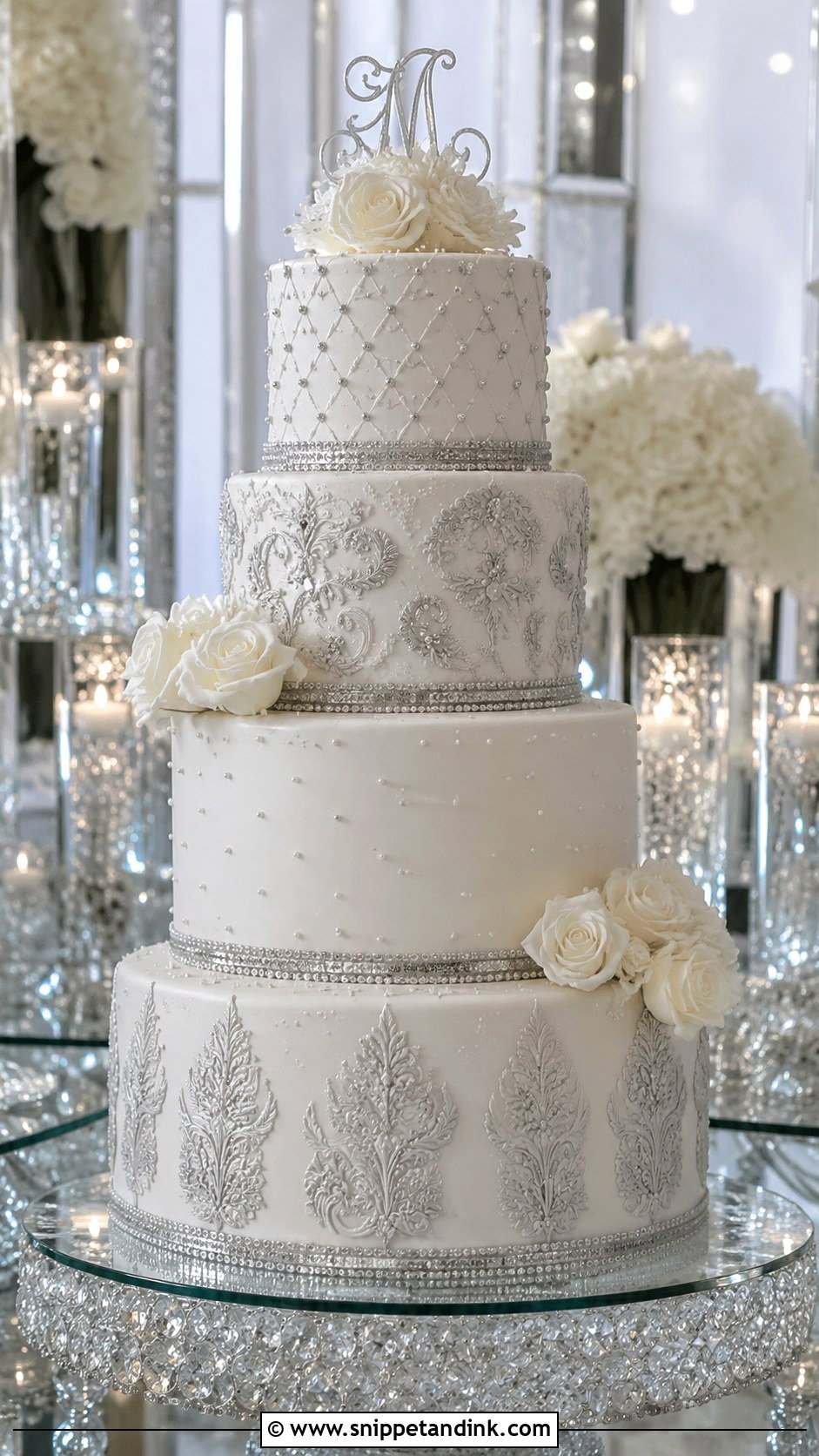
Silver reads cooler and more modern than gold, so it suits winter receptions, city venues and rooms full of mirrors or glass. I can do it as a full metallic tier, a stencilled pattern, a hand-painted lace design or a light shimmer over buttercream. Pure silver lustre goes grey and dull if it’s painted thin, which is why I build it up in two or three coats. White, ivory and pale grey are the safest companions, and fresh white flowers soften the chill. Clear acrylic stands and glass chargers on the tables make the whole setup look deliberate.
5. Champagne Wedding Cake
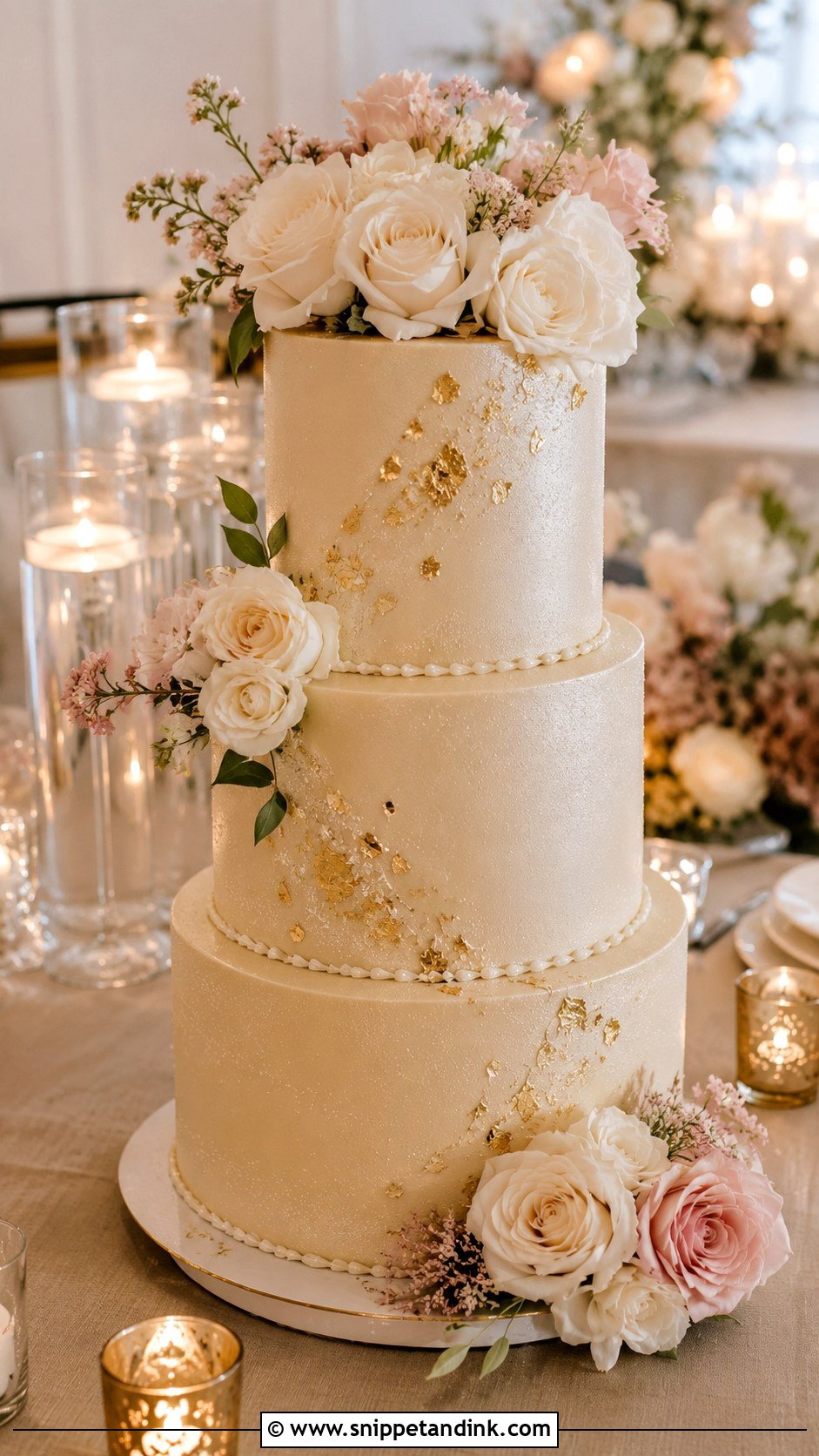
Champagne sits between ivory, gold and beige, which is exactly why it gets along with almost every palette. I tint the buttercream or fondant very slightly warm and then dust it with a pale gold shimmer, rather than painting it fully metallic. It pairs naturally with cream roses, blush peonies and gold leaf accents. Tall tiers with smooth sides and a narrow pearl border keep it formal. One thing to know: champagne tones shift with white balance in photos, so I’d show your photographer a swatch if the colour matters to you.
6. Black And Gold Wedding Cake
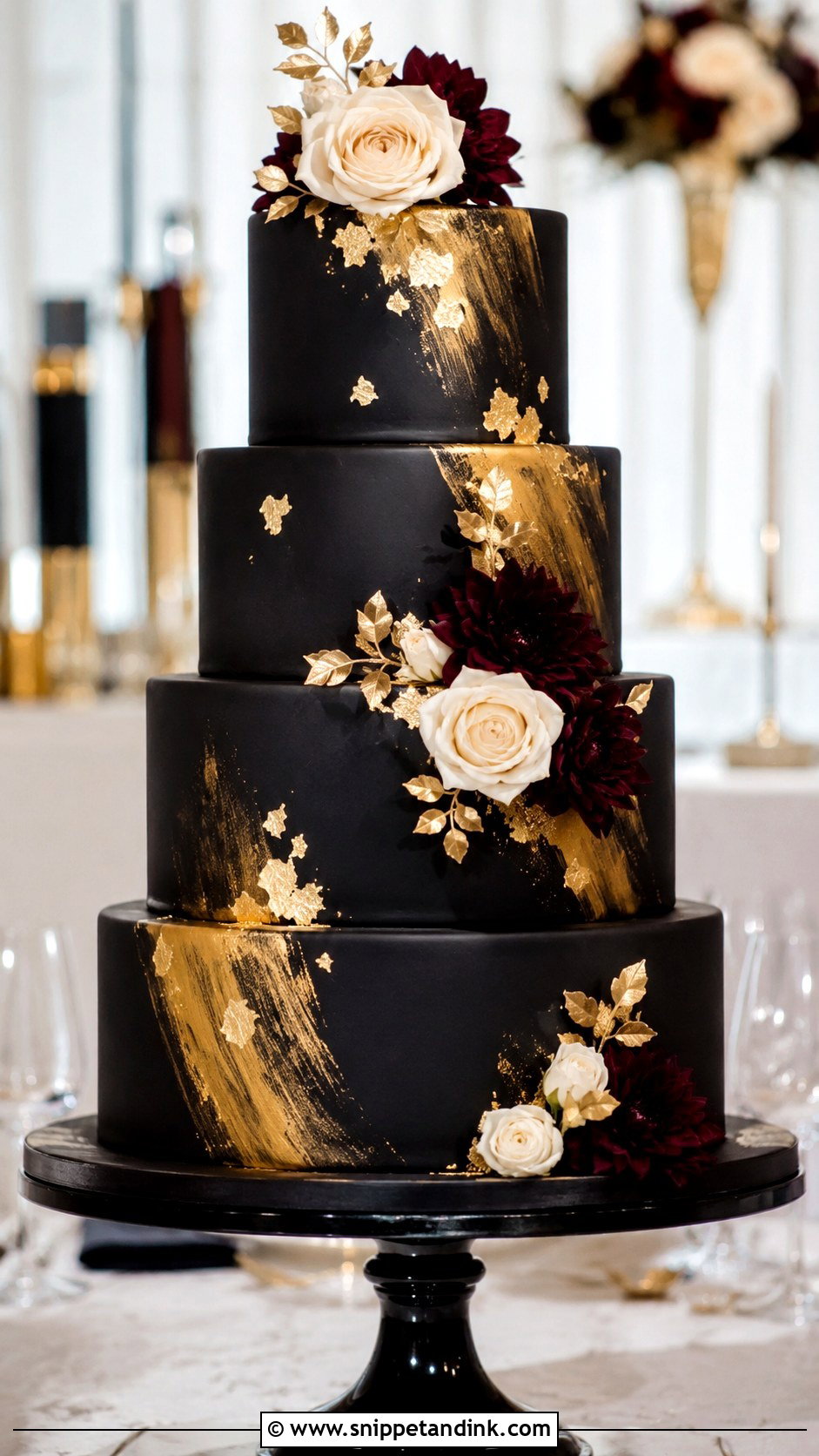
Black and gold is pure drama, and it needs a confident room around it. Matte black fondant gives the cleanest base, but black icing takes a lot of colouring, and guests notice it on their teeth and lips. I usually keep the black on the outside covering and fill the cake with a light buttercream, then add gold leaf, brushstrokes or piped gold detail. Ivory roses, white orchids or deep burgundy blooms keep the contrast tidy. Art deco themes and late-evening receptions carry it well; a bright daytime barn usually doesn’t.
7. White And Gold Wedding Cake
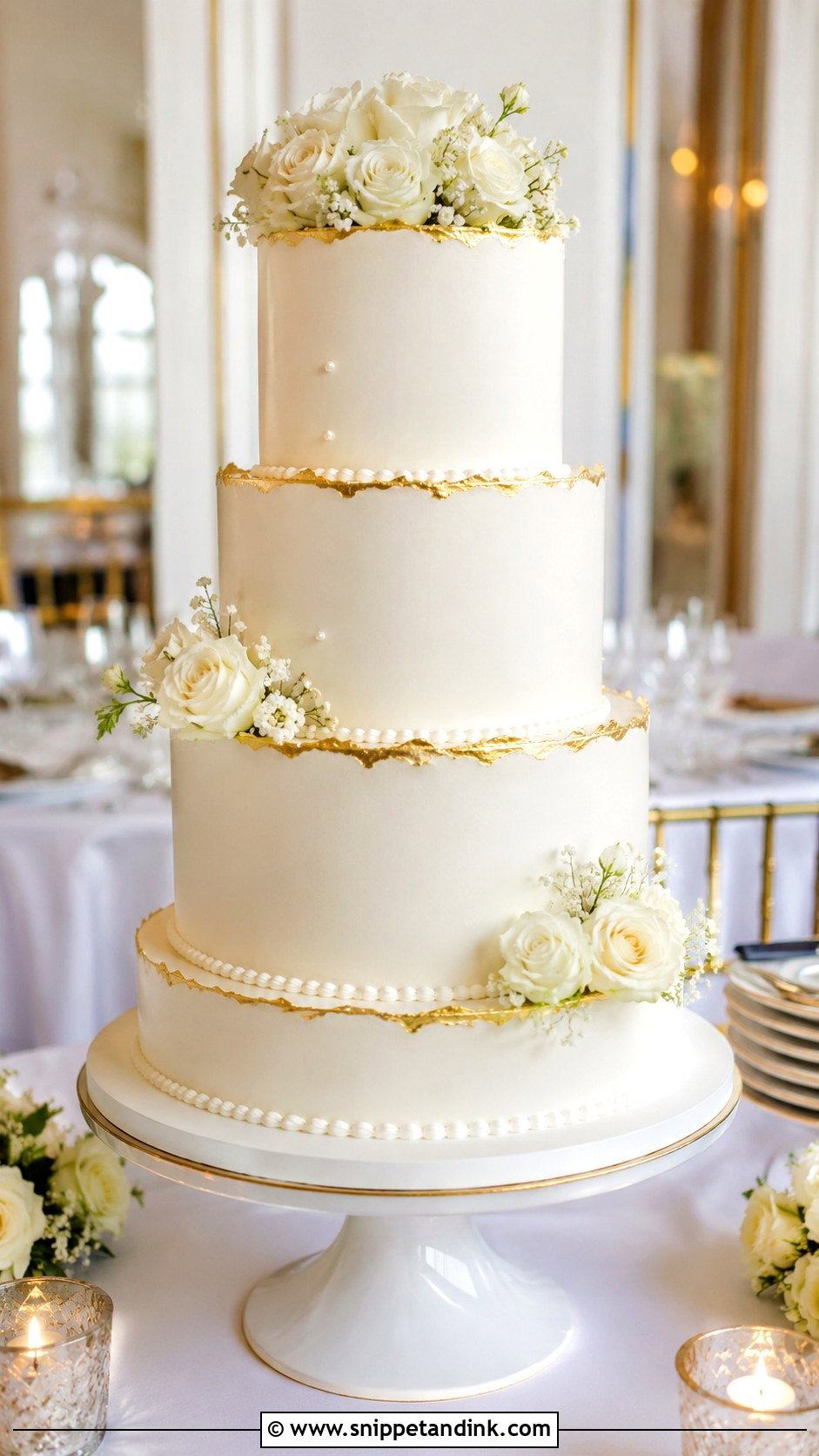
White and gold is the version I can place in nearly any venue without worry. Buttercream gives a softer look, fondant a crisp formal one, and textured frosting adds movement for a modern room. My favourite detail is gold leaf applied just along the top edge of each tier: it’s quick to read from across the room and doesn’t overwhelm the white. White roses, orchids or sugar flowers can add height at the top. If you’re torn between styles, this is the safe and very pretty middle.
8. Blush Pink Wedding Cake
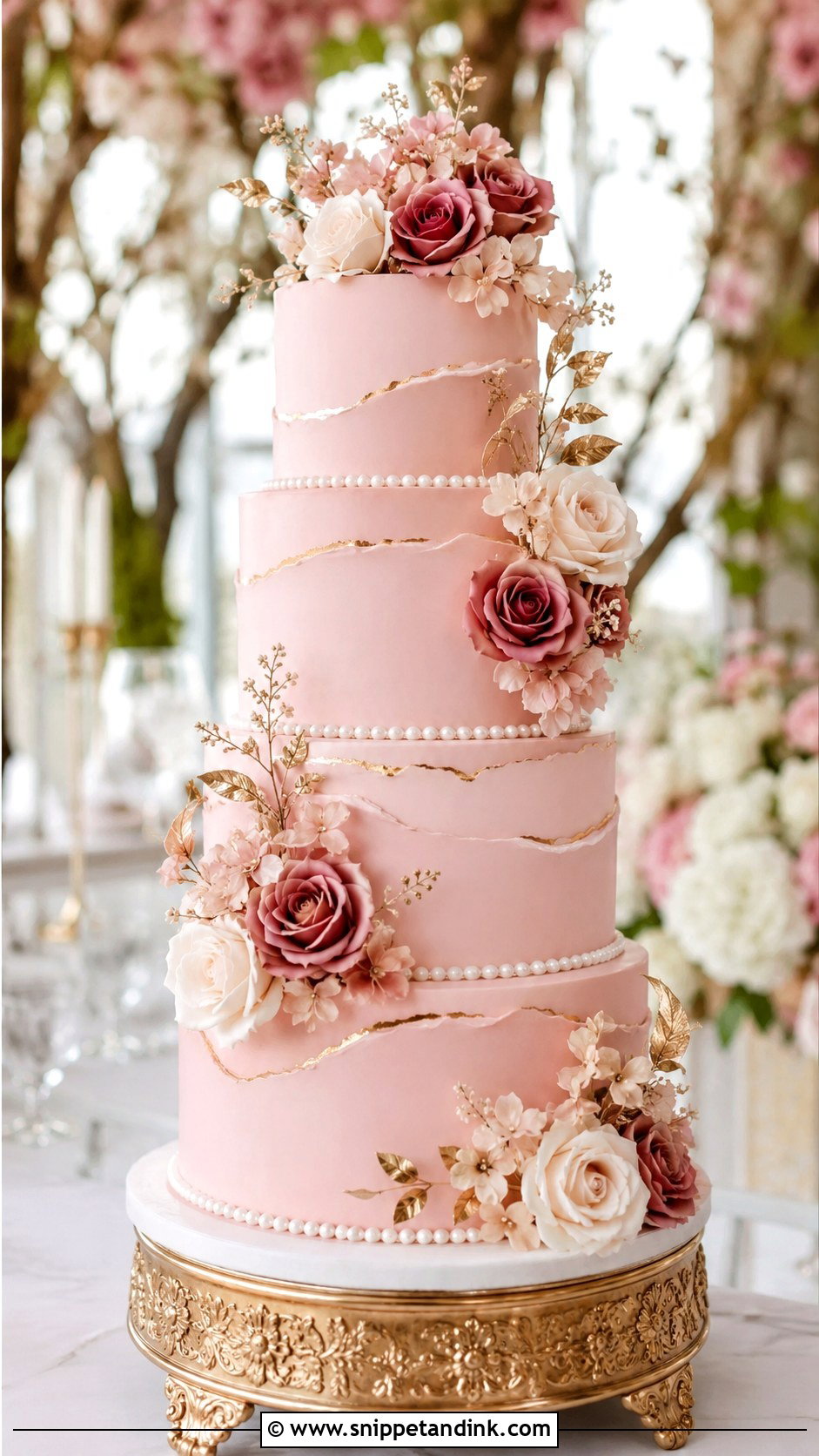
A blush pink wedding cake carries glam gently, but it tips into sweet very easily. I keep the structure strict to stop that happening: tall tiers, sharp edges, and the softness kept to the colour and the flowers. Blush fondant with gold accents, ruffled buttercream or sugar flowers in cream and dusty rose all work. Natural pink colouring fades under strong light over a few hours, so a blush cake displayed in a sunny room may look paler by the cutting. Spring and garden receptions with rose gold décor suit it best.
9. Rose Gold Wedding Cake
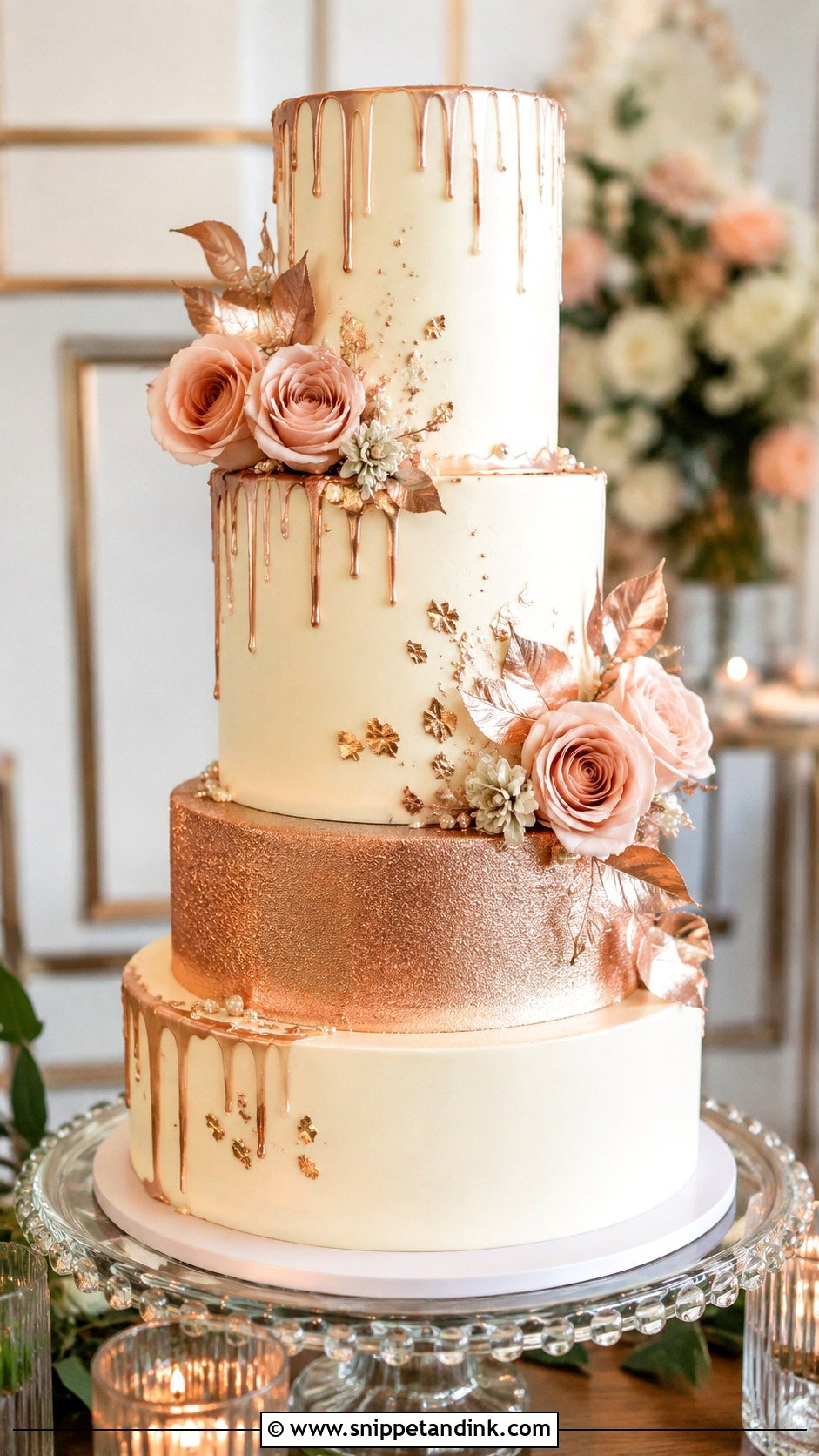
Rose gold gives you the shine of metal with a warmer, softer cast than yellow gold. Ivory, blush, mauve, champagne and soft grey all sit happily beside it. I can do it as a drip, a painted tier, foil accents or shimmered buttercream, but I’d keep it to one tier. A single rose gold tier between two neutral ones nearly always looks more expensive than a fully coated cake, which can start to look like a party balloon. Pale roses or a few dried blush flowers finish it.
10. Sequin Wedding Cake
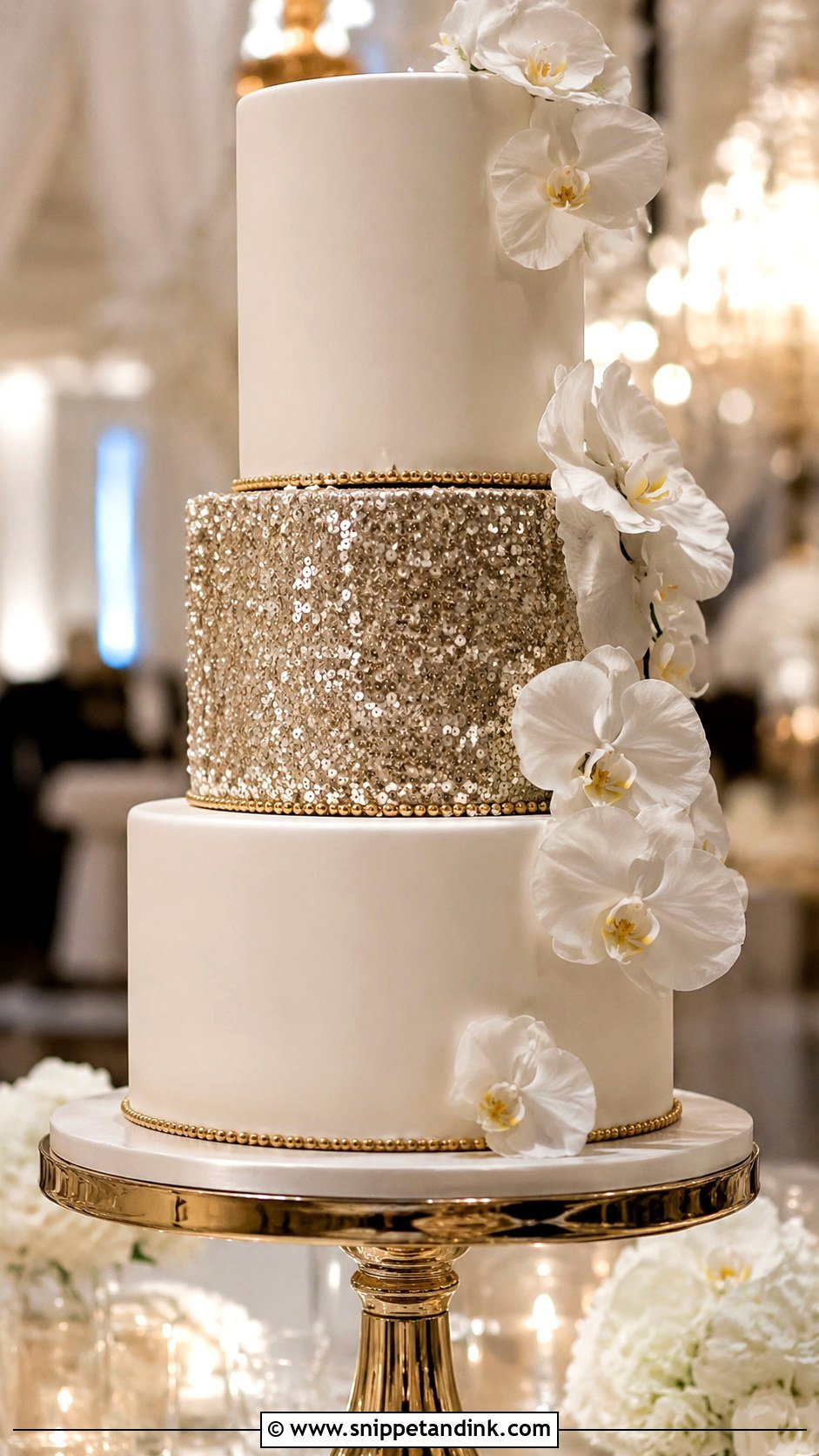
Sequins are for couples who want sparkle from every angle. I make them from tiny sugar discs or edible sequins pressed on one by one, or from piped dots painted with shimmer, and it is slow work, so I limit it to one statement tier. The neighbouring tiers stay smooth or lightly textured. Gold, silver, pearl and champagne all photograph well under reception lighting. New Year’s Eve weddings and formal evening parties suit it, and a plain topper with a few white flowers keeps attention on the shimmer.
11. Glitter Wedding Cake
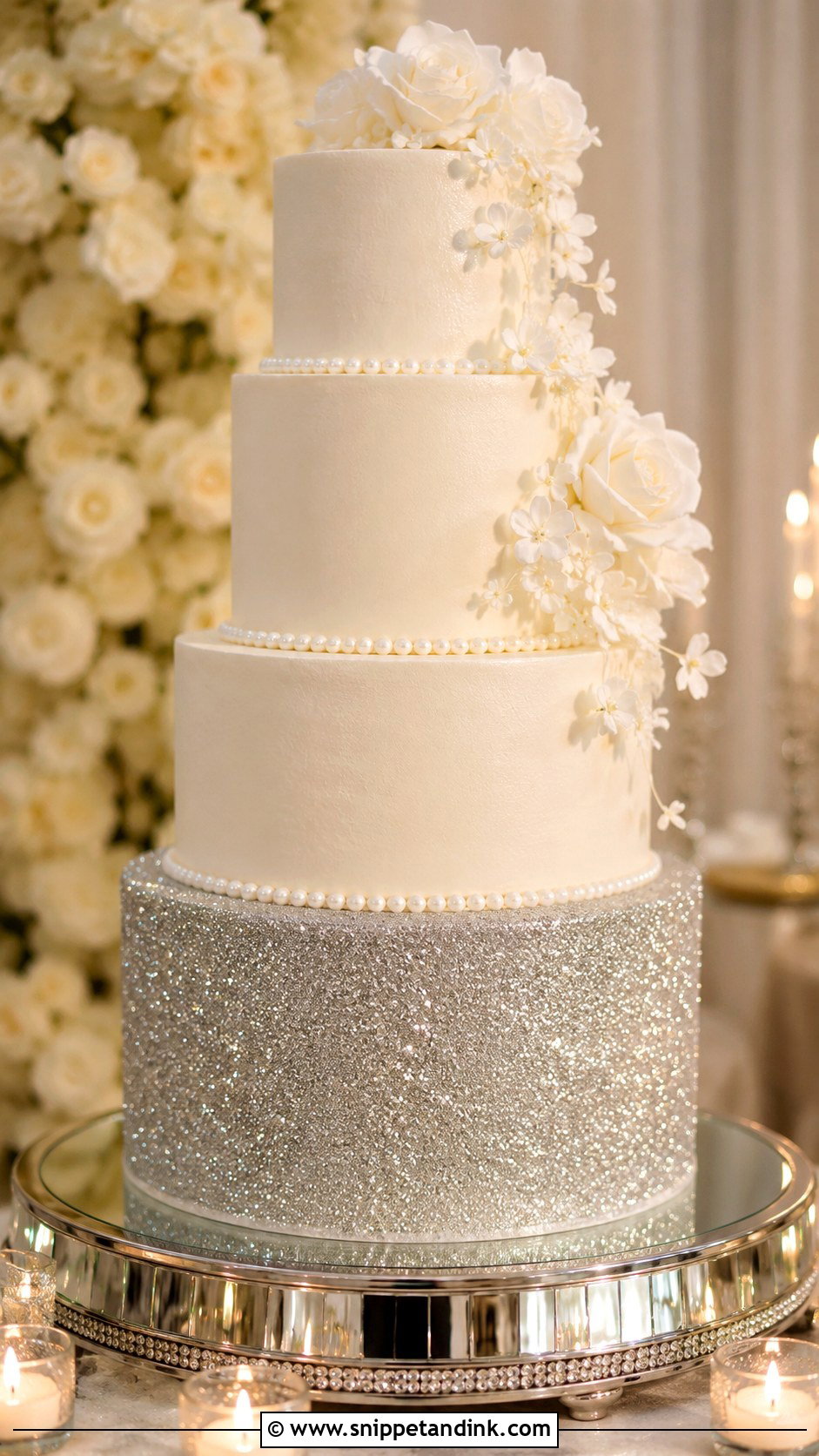
Glitter divides couples more than any other finish, and the deciding question is whether it’s genuinely edible. A lot of craft-shop “cake glitter” is labelled non-toxic, which is not the same thing, so I only use products sold as edible or sanding sugar on anything guests will eat. Controlled is the word: a glitter band between smooth white tiers, or a jewelled-looking bottom tier. Silver reads icy, gold reads warm, champagne sits softer. Under moving reception light, the shimmer catches as guests walk past, which is the whole point.
12. Marble Wedding Cake
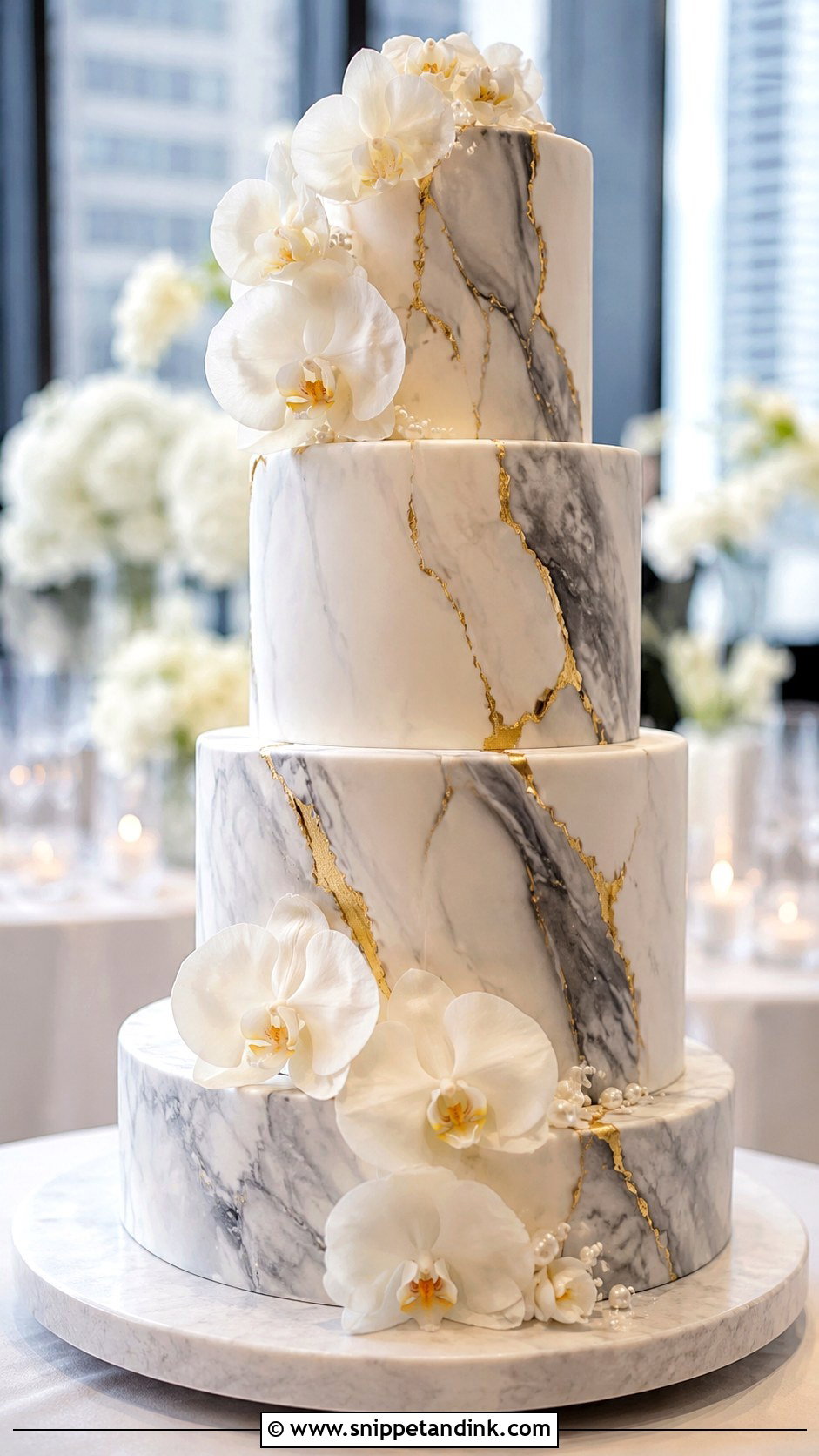
Marble is modern glam that needs almost no decoration. I fold coloured fondant through white to create the veining, and every cake comes out slightly different, so I’d always show you a test piece first. White and grey is the classic; blush, champagne or black marble can look excellent too. Gold leaf traced along the veins makes it feel luxurious. Keep the tiers tall and the edges sharp. Orchids, anthuriums or a minimal sugar flower are plenty for a rooftop or a museum venue.
13. Geode Wedding Cake
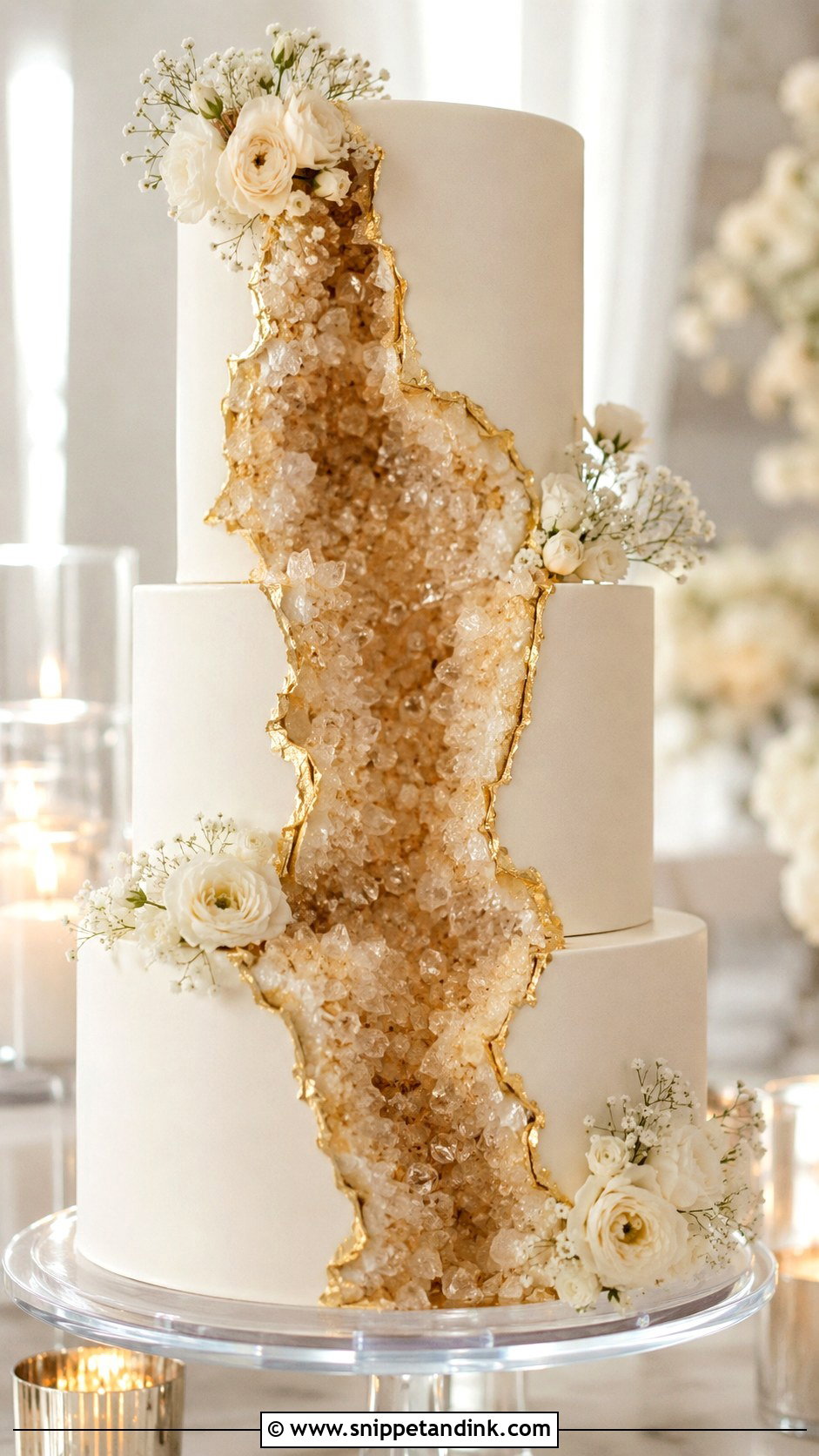
A geode cake has a carved-out opening filled with sugar or isomalt crystals that look like the inside of a split stone. It is labour-heavy, and like the crystal cake it dislikes humidity, so I’d steer you away from it for an outdoor summer reception. For weddings I keep the crystal tones to white, champagne, blush, gold or a pale lavender. The rest of the cake stays plain so the opening reads as deliberate, and a gold painted edge around it gives a jewellery finish. Candles and simple flowers on the table are all it needs.
14. Vintage Lambeth Wedding Cake
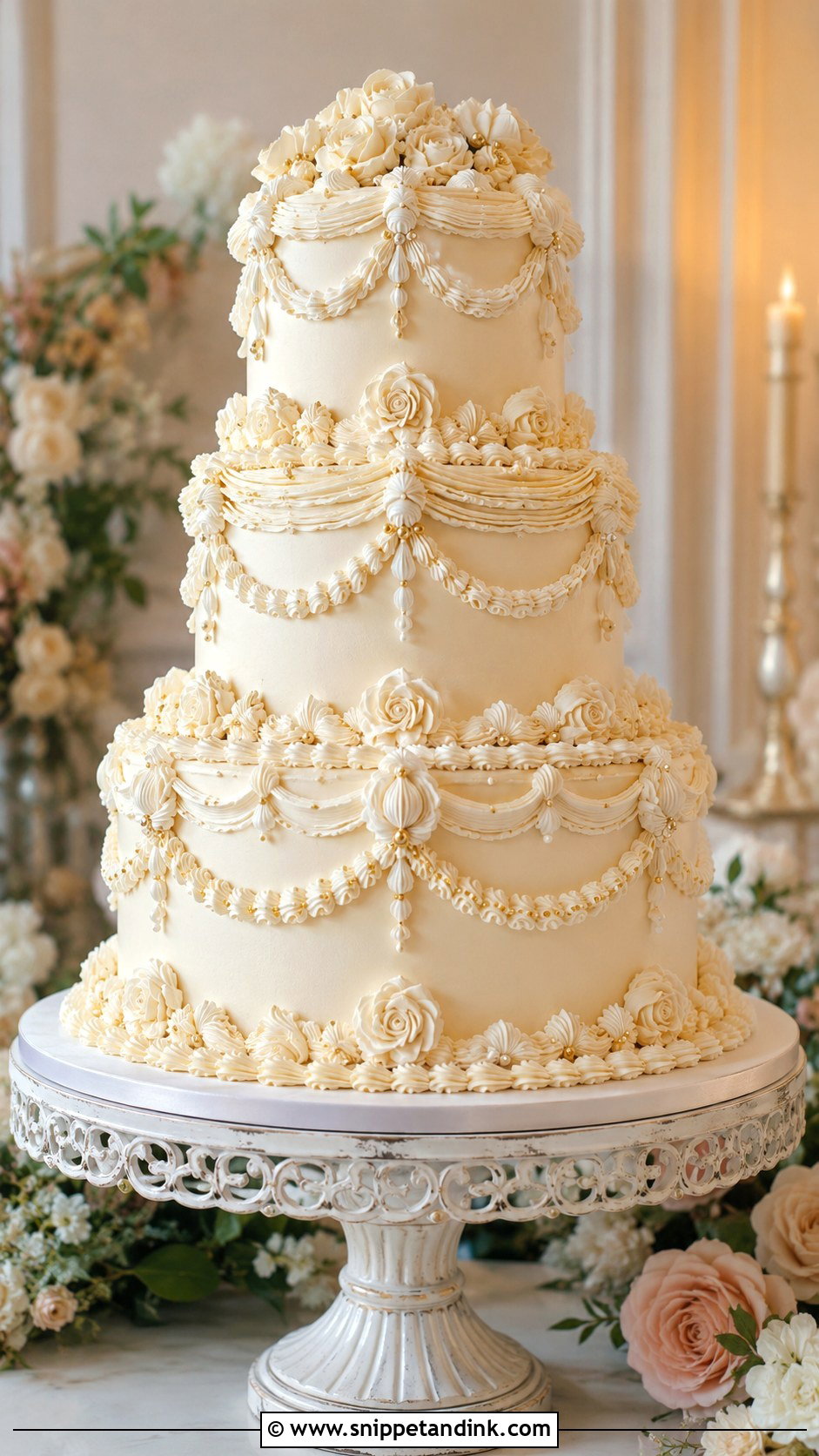
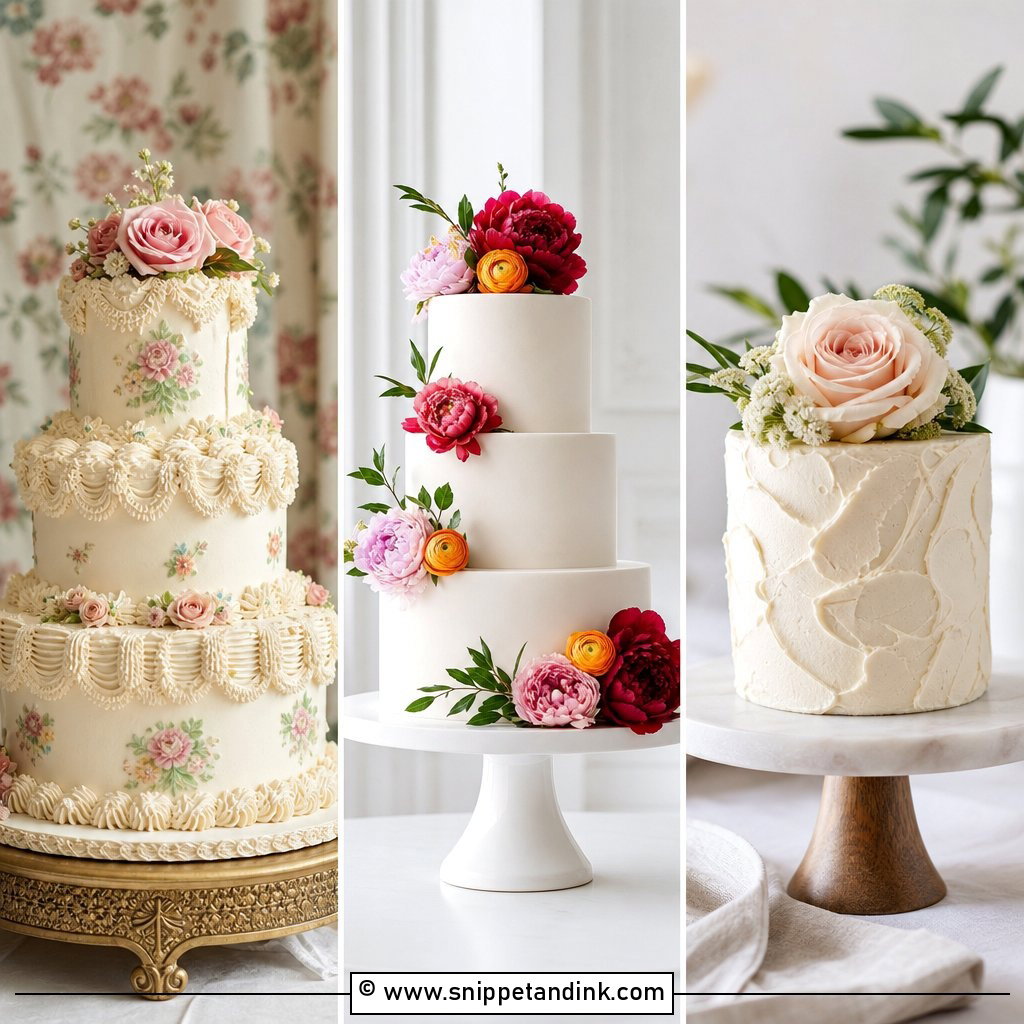
Lambeth piping is old-school, ornamental and back in demand, with layered piping stacked into shells, swags, borders and overpiped scrolls. Done properly in buttercream, it is one of the most time-consuming styles I make, and it needs a cool room because the fine piping slumps first when the cake warms up. Ivory, white, blush or champagne buttercream with pearls and a hint of metallic keeps it glam. It works as a tall single tier or a stacked centerpiece. Modern flowers and a clean table stop it looking like a costume piece.



15. Bow Wedding Cake
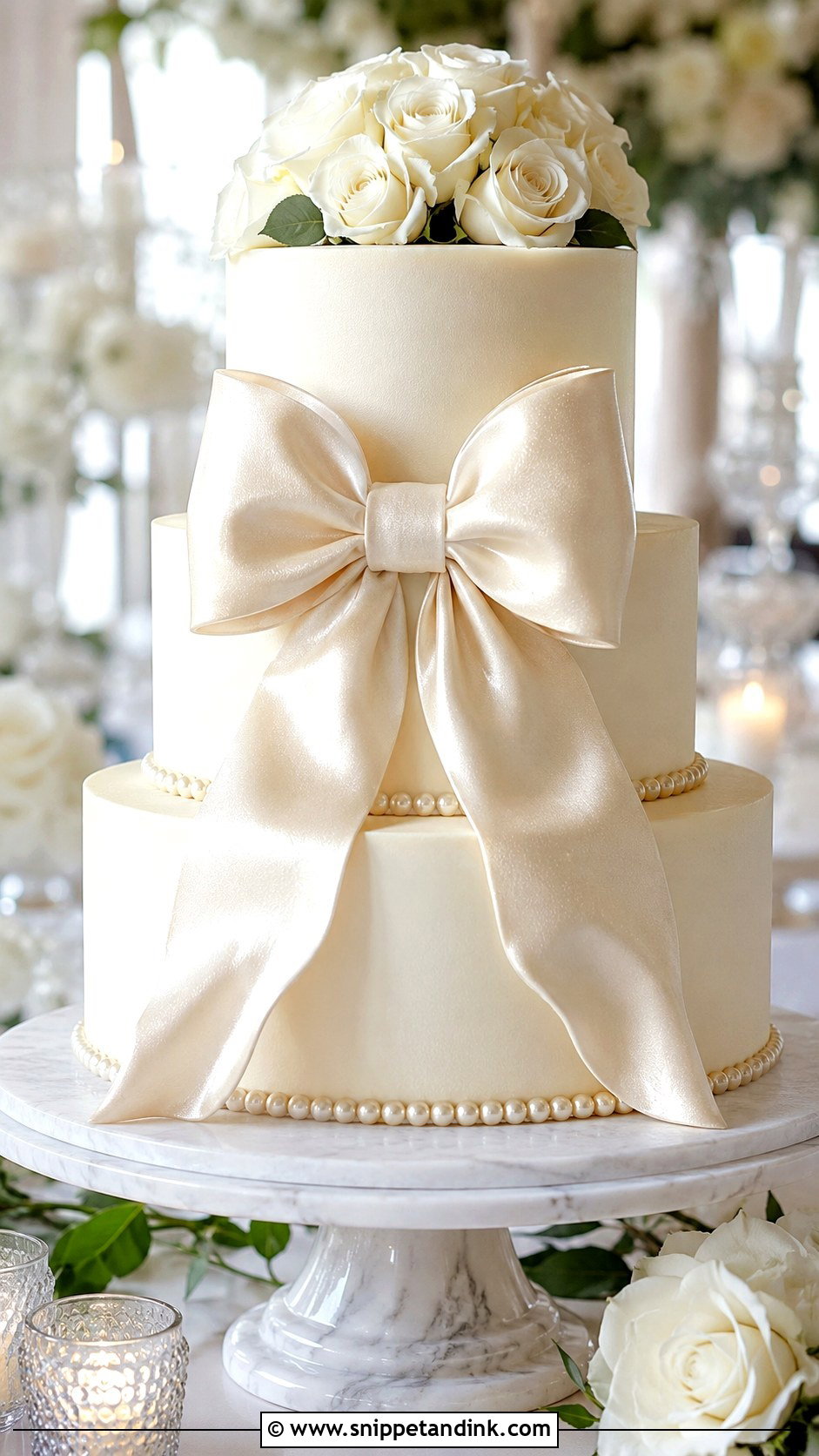
Bows are everywhere in bridal fashion right now, and cakes followed. The bow might be one large fondant bow on the front, a satin ribbon tied around a tier, or small sugar bows between piped details. A big fondant bow needs time to dry and firm up before it goes on, or the loops sag by evening. Ivory buttercream, pearls and a touch of champagne shimmer keep it grown-up. If the palette stays soft, it reads fashionable rather than childish, and it echoes satin dresses and pearl accessories nicely.
16. Floral Cascade Wedding Cake
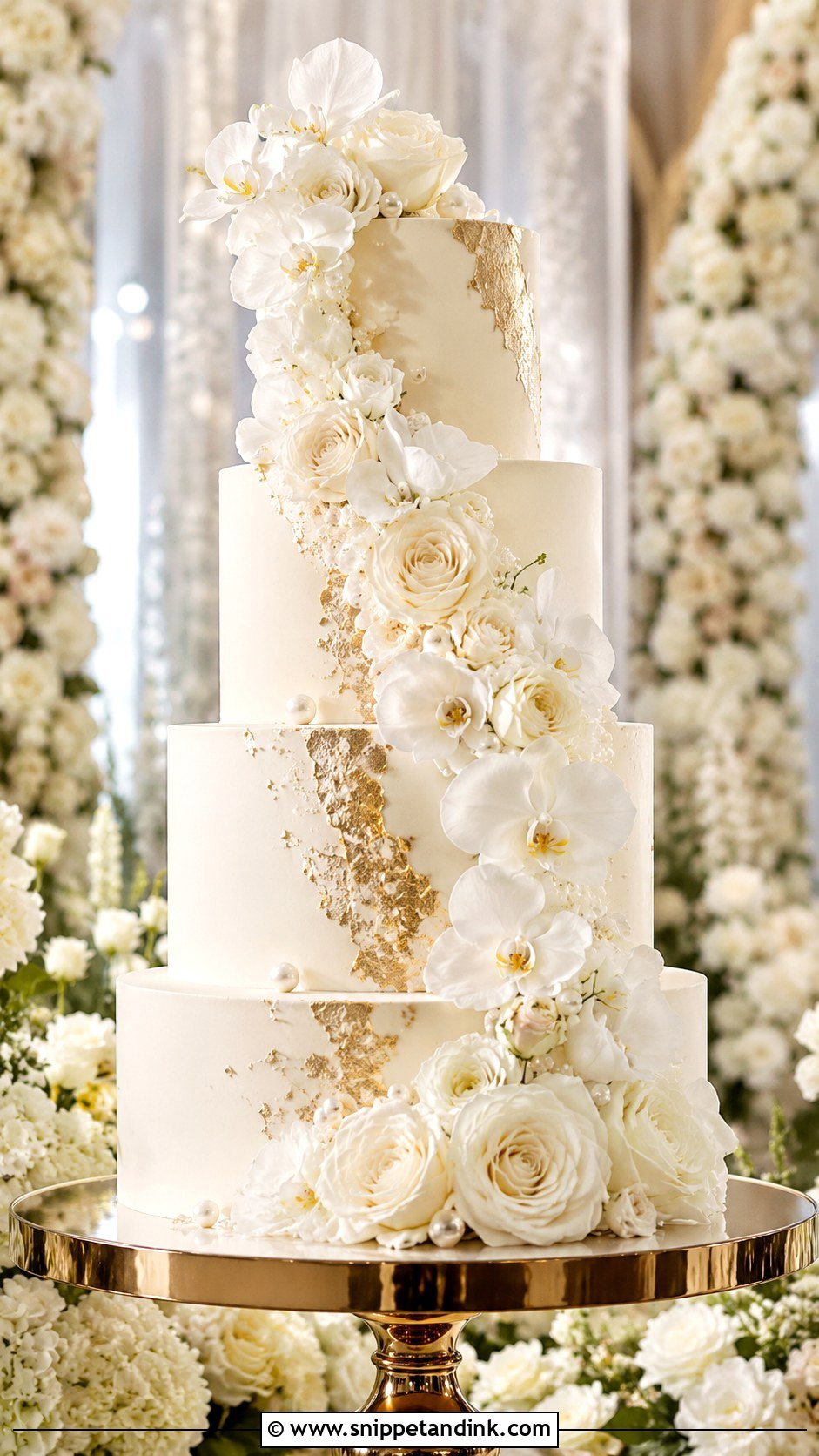
The flowers run down the tiers on a diagonal, which gives height and movement without any other decoration. White roses, orchids and ranunculus all work, in fresh or sugar form, mixed with a few pearls or touches of gold leaf. If they’re fresh, I need to know they’re unsprayed and I always place a barrier, such as a small food-safe pick or a flat pad of icing, between stems and cake. The cascade needs a tall cake to fall properly; on a short two-tier it looks squashed. It suits ballrooms, gardens and estates alike.
17. Ruffle Wedding Cake
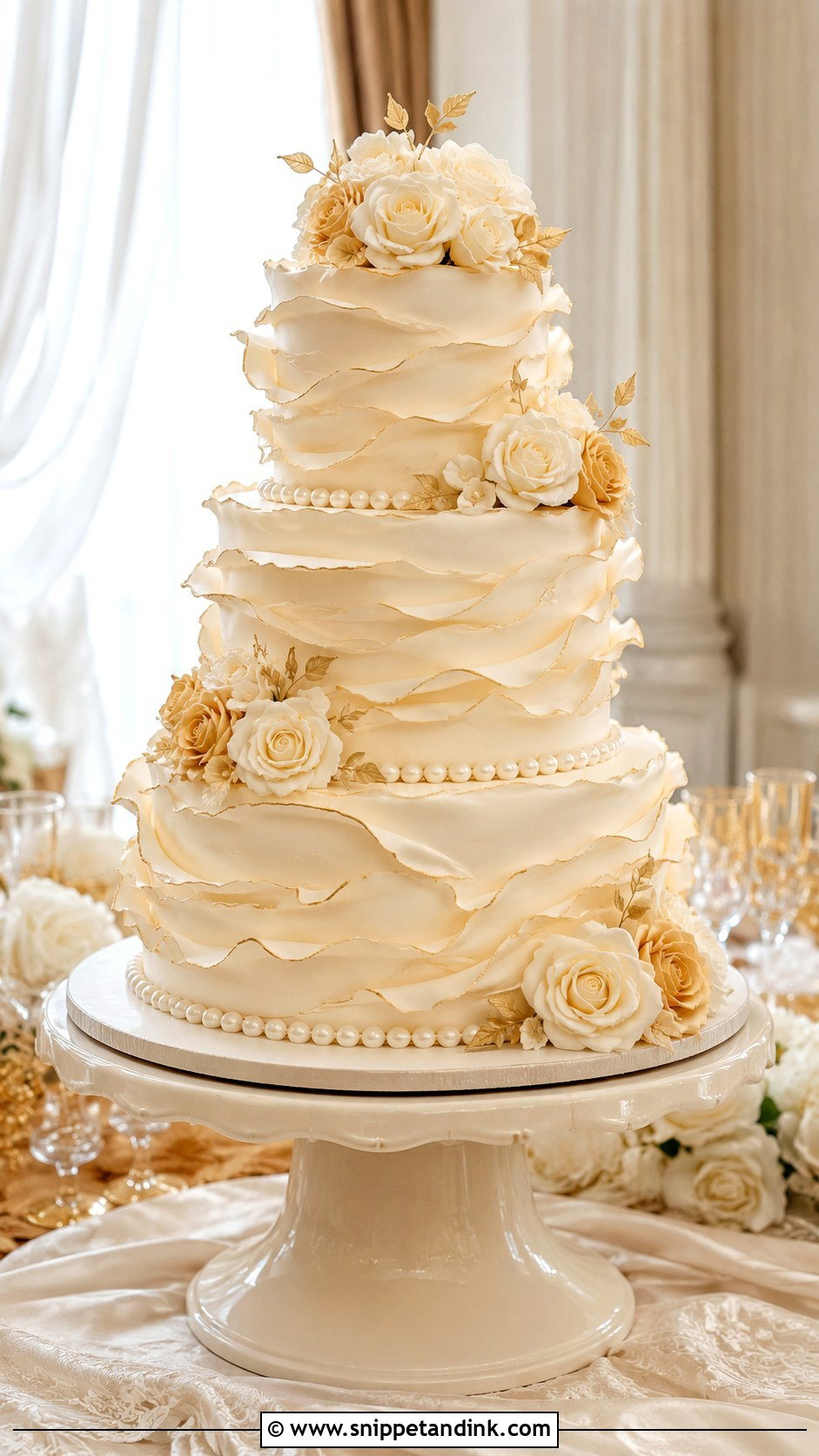
Ruffles give movement and texture without hard sparkle. I make them from fondant, wafer paper or buttercream, and each behaves differently: wafer paper is the lightest and most delicate but softens and curls in humidity, while fondant ruffles hold shape but add weight. One ruffled tier or the whole cake both work. White and ivory read bridal, blush and champagne read warmer. Add a pearl border or a metallic edge if you want extra glam. The folds catch light and shadow, so the cake looks dimensional from every side.
18. Mirror Glaze Wedding Cake
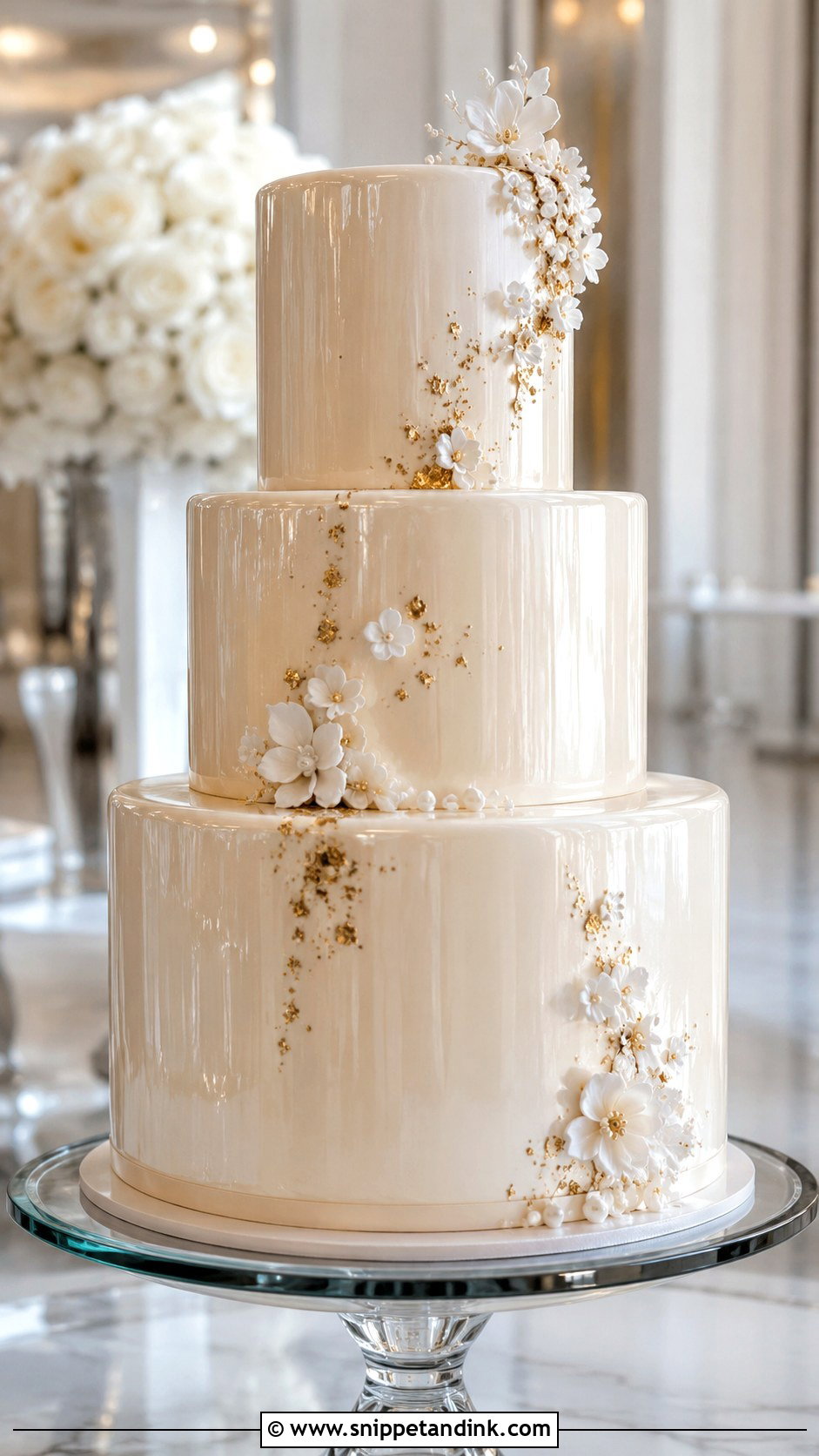
Mirror glaze is a gelatin-set coating poured over a frozen cake, and it gives that wet, reflective shine. It is also one of the least travel-friendly finishes I offer, because the glaze needs to stay cold and loses its gloss in warm air, so I’d only recommend it for a climate-controlled venue with short display time. Pearl white, champagne, blush or pale gold glaze suits a wedding better than bright colours. Round tiers with smooth sides reflect best, and a few sugar flowers or a little gold leaf are enough on top.
19. Monogram Wedding Cake
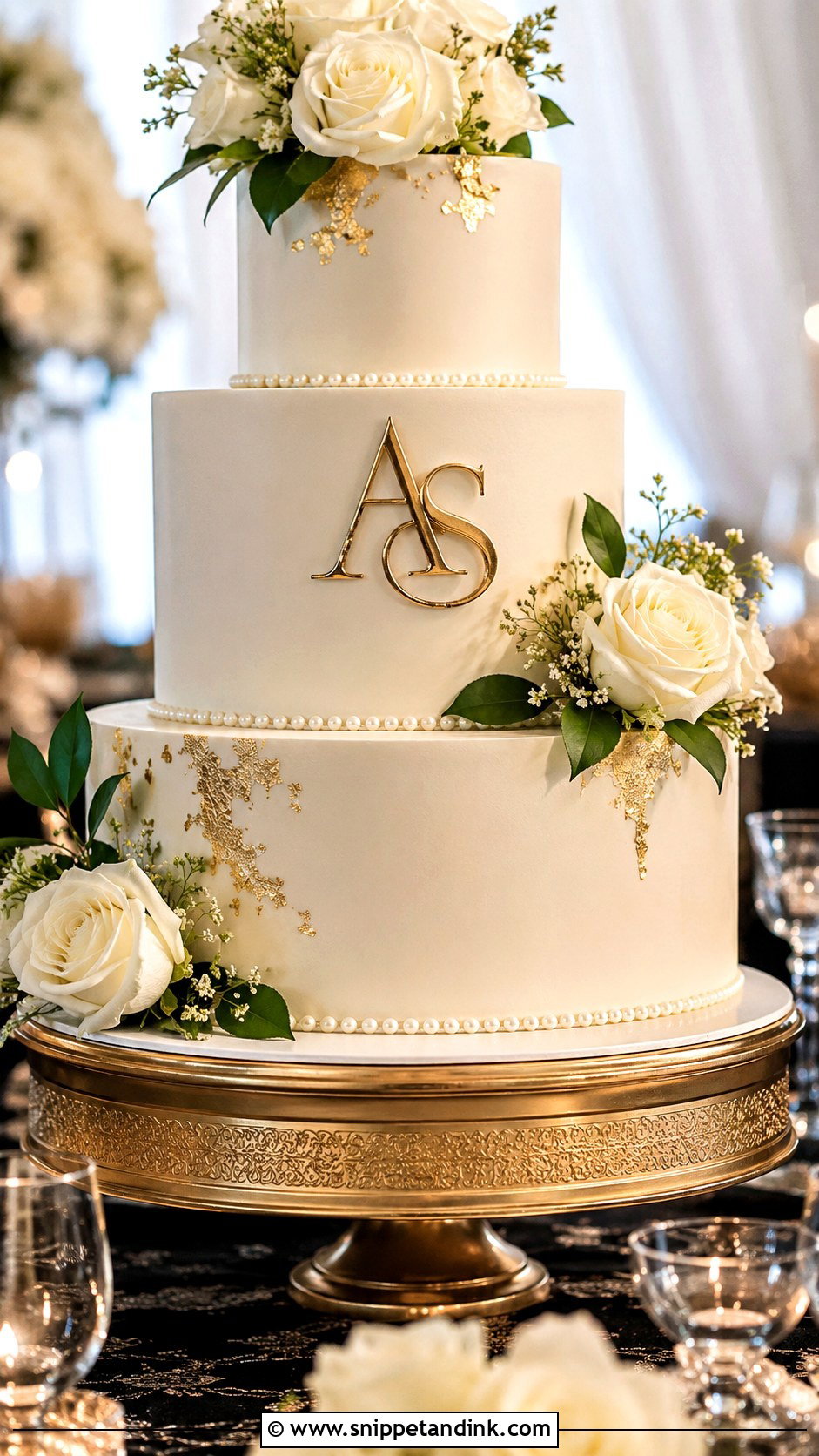
A monogram makes the cake personal and formal at once. The couple’s initials can be a gold topper, piped lettering, embossed fondant or a painted crest on the front tier. I’d keep everything around it calm: smooth ivory icing, a pearl border, a little lace or gold leaf. Lettering is the detail most likely to be misread from across a room, so I draw the monogram to scale for you to approve before I pipe or paint it. Black-tie weddings suit it especially well.
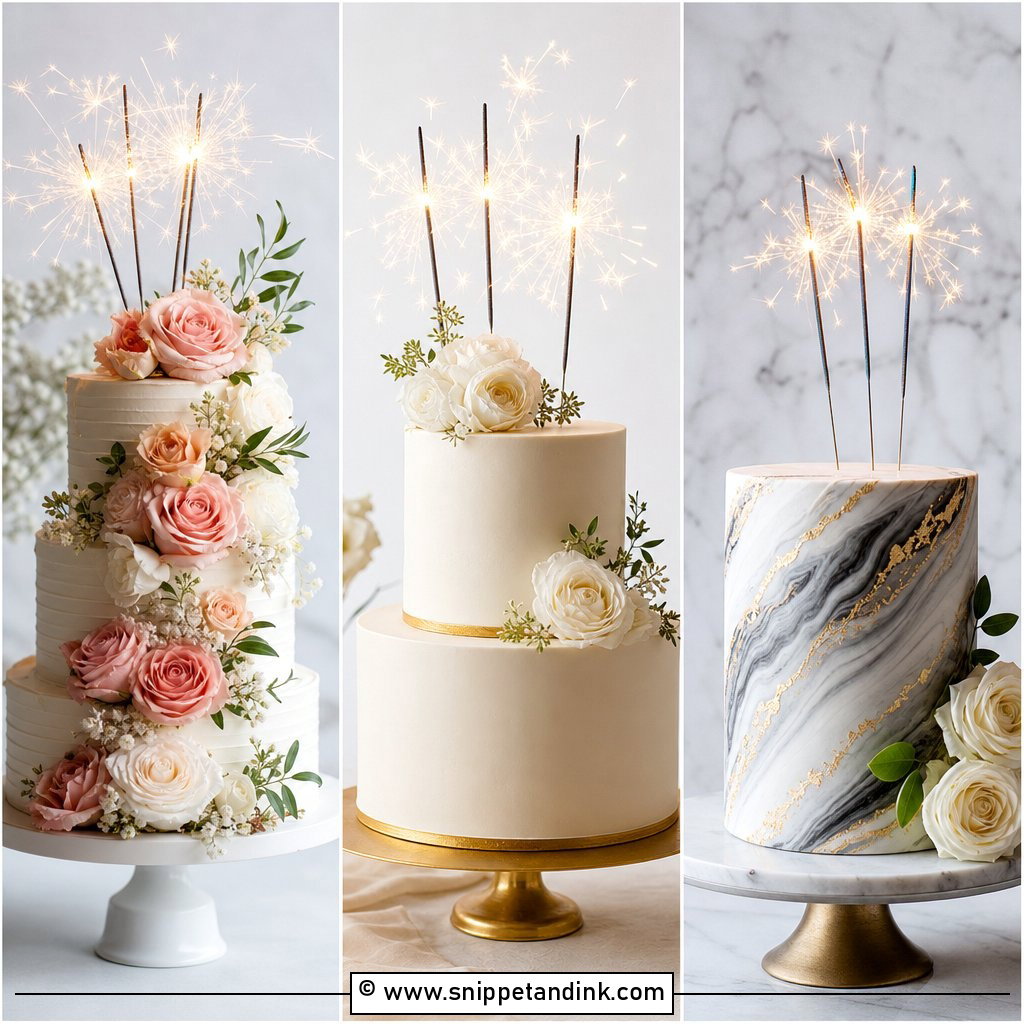
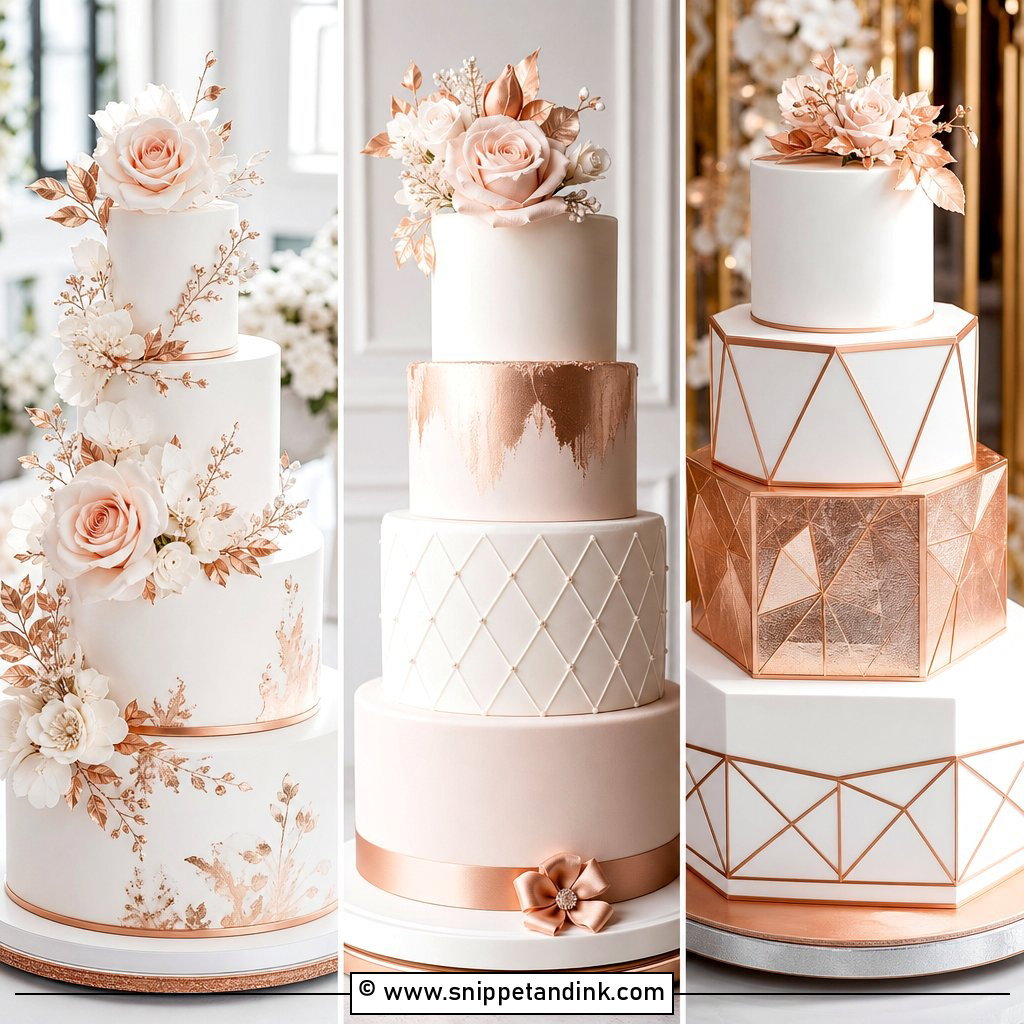

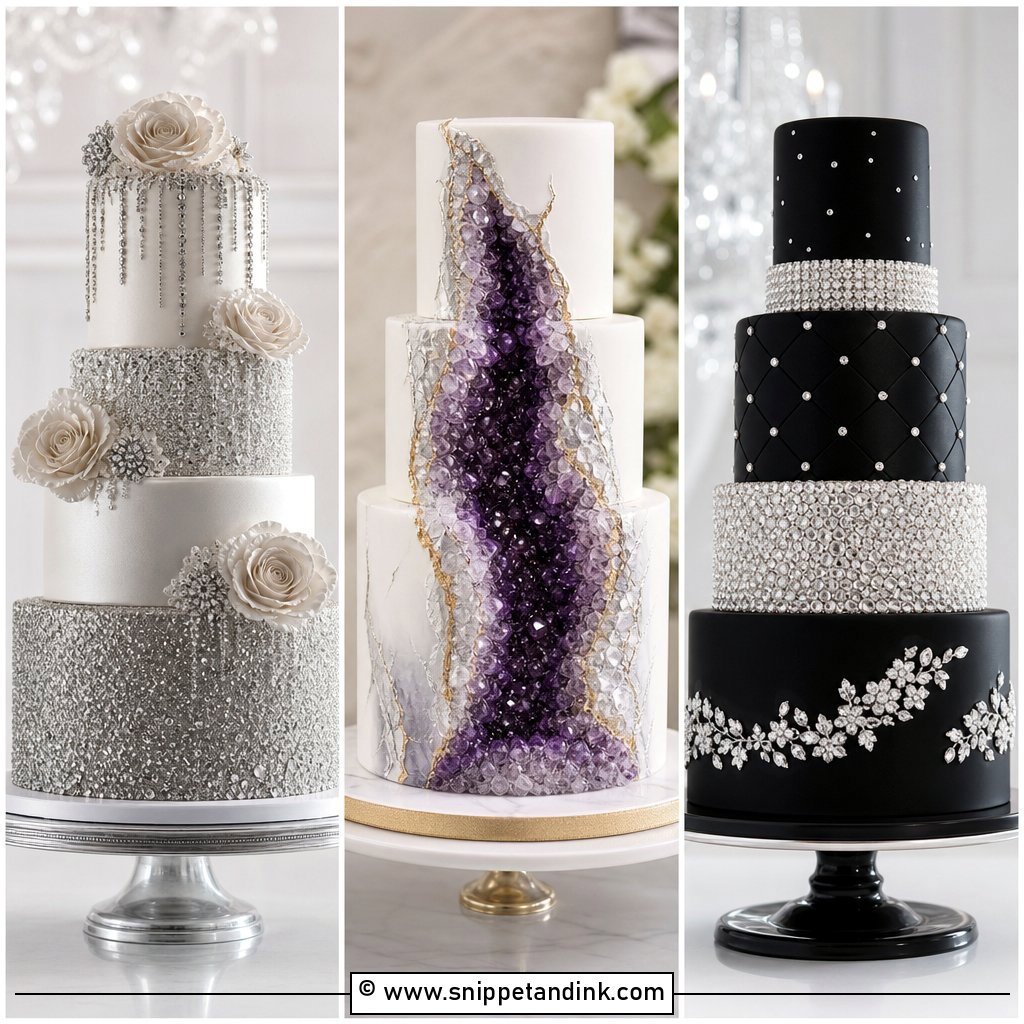
20. Tall Tiered Wedding Cake
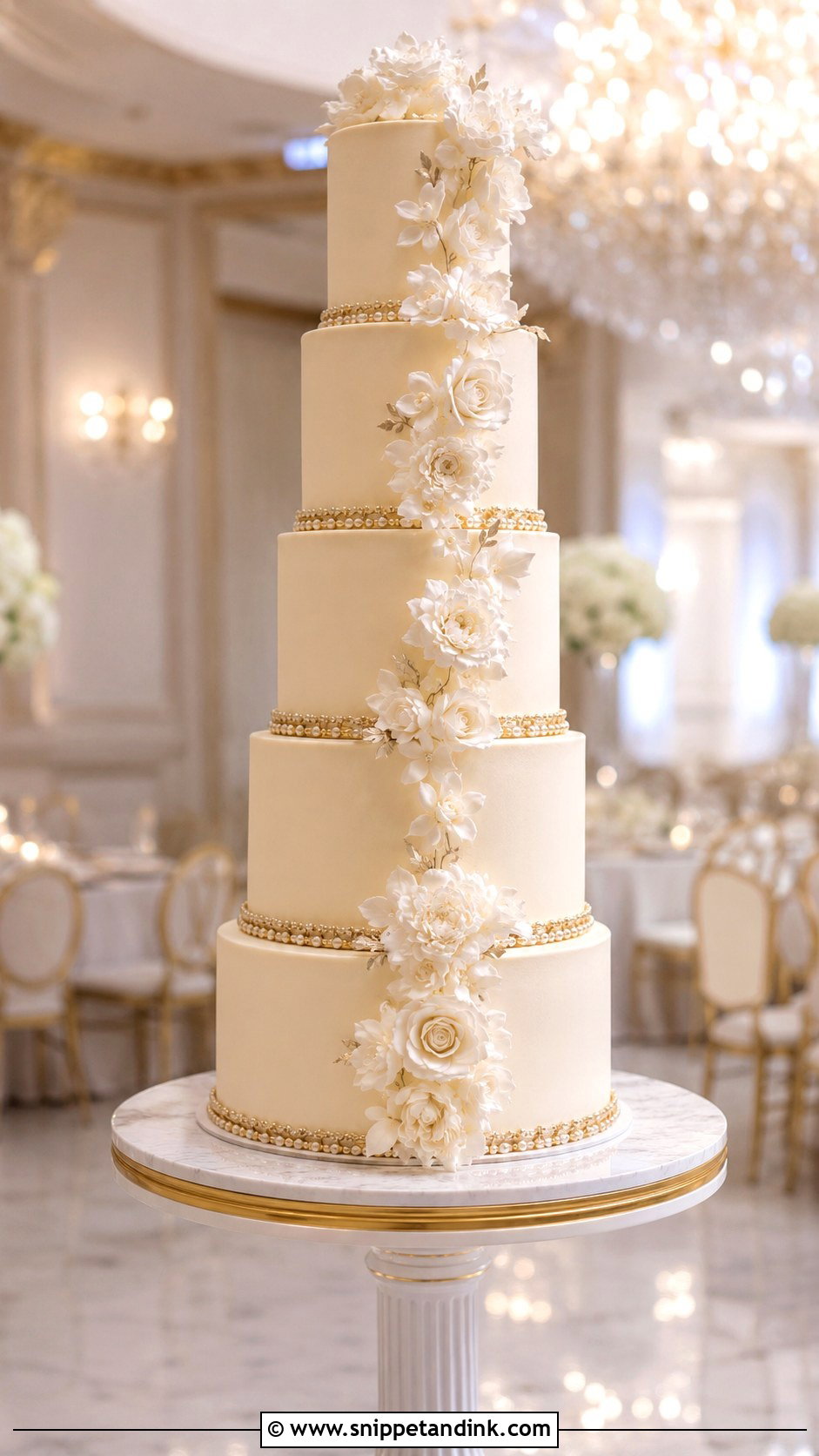
Height is the cheapest way to make a cake look grand. Even a plain white cake feels luxurious when the tiers are slim, tall and well proportioned. Behind that height is internal support: dowels or a central rod through every tier, and fillings firm enough to hold weight, so I’ll steer you away from loose mousse or fresh fruit layers in a very tall build. Metallic borders, pearls, sugar flowers or a topper add the glam. A raised stand, good lighting and a plain backdrop help it stand out in a large venue where a smaller cake would disappear.
Heat, Humidity and the Long Wait Before the Cutting
Glam finishes are some of the most fragile things I make, and the trouble usually starts in the two or three hours a cake sits on display. Before you commit to a design, tell your baker where the cake will stand, when it arrives and when you’ll cut it.
What each finish hates
- Isomalt crystals and geode centres turn cloudy and tacky in damp air.
- Mirror glaze loses its gloss and can start to slide once it warms up.
- Buttercream piping, Lambeth work and ruffles soften and droop in direct sun or near a heater.
- Fondant pulled from a cold van into a warm room beads with condensation, which spots lustre and lifts leaf.
What you can control
Put the cake table away from windows, candles placed right under it and the dance floor speakers, which shake tall tiers. Ask your venue to keep the room cool until guests arrive. For an outdoor or summer wedding, choose finishes that tolerate warmth, such as painted gold on fondant, sugar flowers or sugar pearls, and save mirror glaze and isomalt for an air-conditioned room. If you love a fragile finish, ask whether it can go on a single small tier that’s added at the venue.
One Shiny Feature, Then Let the Rest Stay Quiet
A glam cake doesn’t need every shiny technique at once. Pick the one feature that excites you most, whether that’s gold leaf, pearls, crystals, ruffles, a bow or simple height, and let me build the rest of the design to support it. Then bring me your venue photos, a swatch of your colours, your flower plan and your reception time. Those four things tell me more about how your cake will look on the night than any inspiration picture, and they’re what turn a pretty idea into a centerpiece that holds up from setup to cutting.
You'll Like These Ideas:





Leave a Reply