
Faux flowers solve a problem I run into every wedding season: the bloom the couple wants is out of season, or it wilts the minute it meets a warm marquee. Silk, foam and fabric flowers hold their shape all day, and they can be matched petal for petal to the bouquet and the arch. The catch is that none of them are food, so the real skill lies in how they’re prepared and seated on the cake. Below are twenty designs I’d happily build, from a modest two-tier to a full cascade, with notes on what each one asks of the decorator.
Prepping Silk Stems So Nothing Inedible Reaches the Sponge
Shop-bought faux flowers arrive dusty, sometimes with glitter or loose glue, and their stems are wire wrapped in plastic or paper. None of that should touch food. Before a single stem goes near a cake, I work through the same short routine.
- Wipe or rinse the heads and leaves, then let them dry completely on a towel. Foam flowers can’t be washed, so I brush them with a clean dry paintbrush instead.
- Snip each stem with wire cutters to roughly the depth it will sit in the cake, plus a little extra to grip.
- Wrap the cut end in floral tape so no bare wire is exposed.
- Push the taped stem into a food-safe posy pick or a wide plastic straw, and only the pick goes into the cake.
- For heads that rest on the surface, slide a small disc of parchment, wafer paper or acetate underneath.
It sounds fussy, but it takes an evening for a whole cake’s worth of flowers, and it’s the step most home-decorated cakes skip. If your baker is placing the flowers, ask them directly how they insulate stems. A confident answer tells you a lot.
1. White Wedding Cake With Artificial Roses
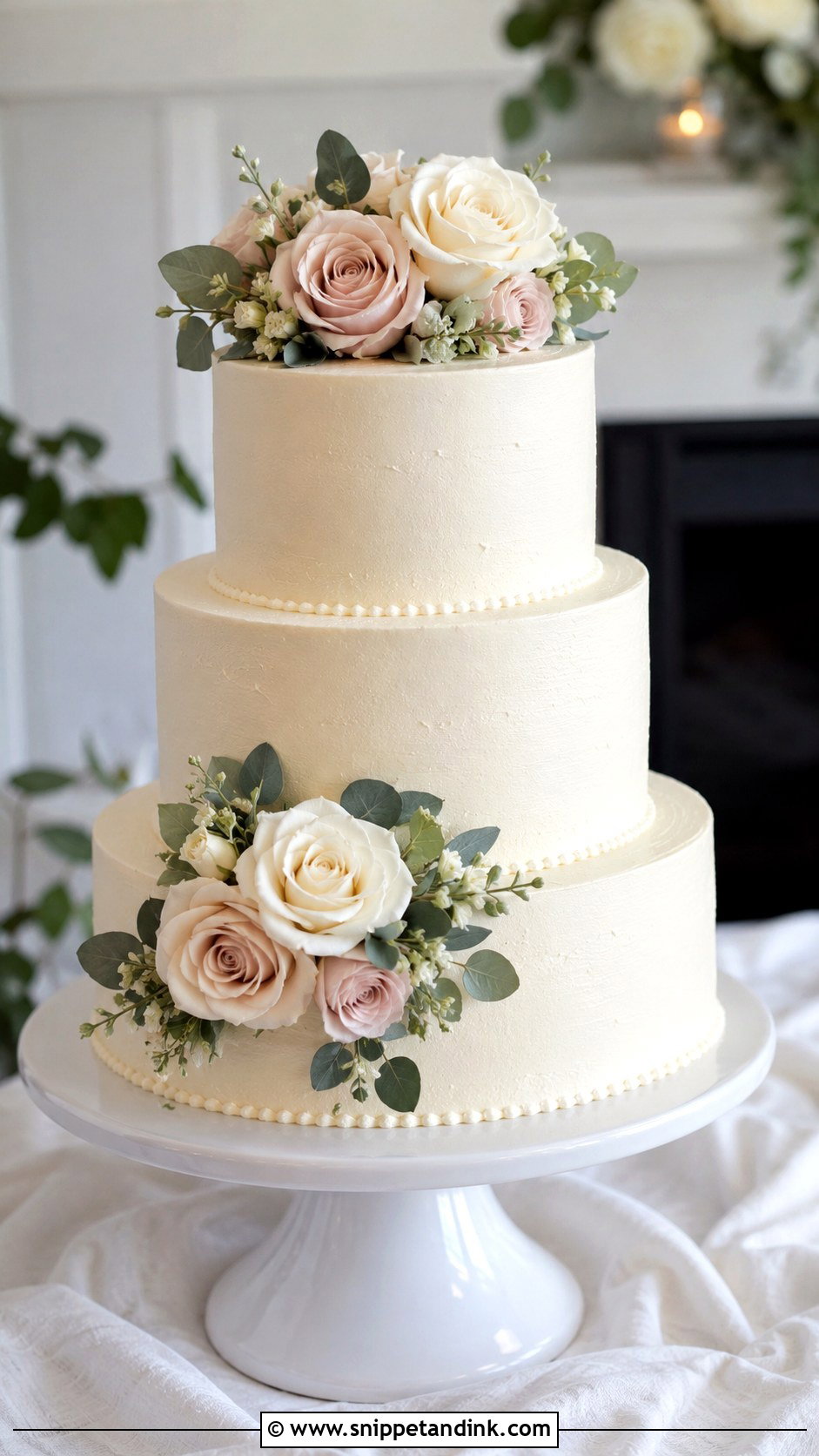
White icing is the most forgiving canvas for faux roses, because it hides any slight colour mismatch between silk petals. I put the biggest heads low on the bottom tier and taper to buds at the top, which keeps the eye travelling upward. A few silk eucalyptus sprigs break up the outline. The thing I watch is crowding: three well-spaced clusters read as expensive, while eight read as a craft-shop bag emptied onto a cake.
2. Two Tier Wedding Cake With Artificial Flowers
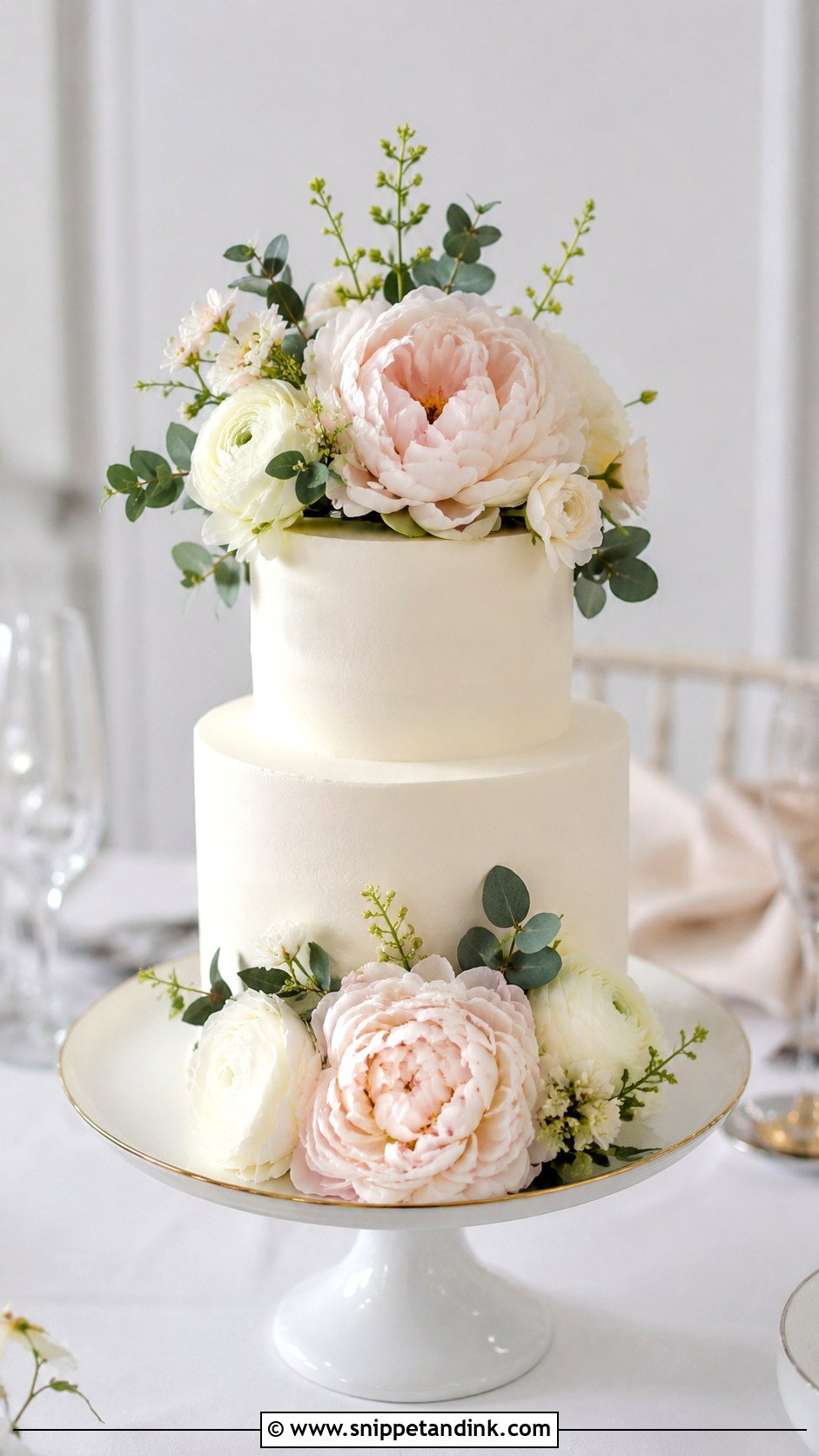
Two tiers usually feed somewhere between thirty and fifty guests depending on tier depth, so this is the size I build most for courthouse and backyard weddings. One cluster on the top tier and a second at the base gives the illusion of height without a third tier. Ranunculus and small peonies suit this scale far better than full garden roses, which can swallow a six-inch top. Pearls or a thin ribbon at each base finish it without fuss.
3. Three Tier Wedding Cake With Artificial Flowers
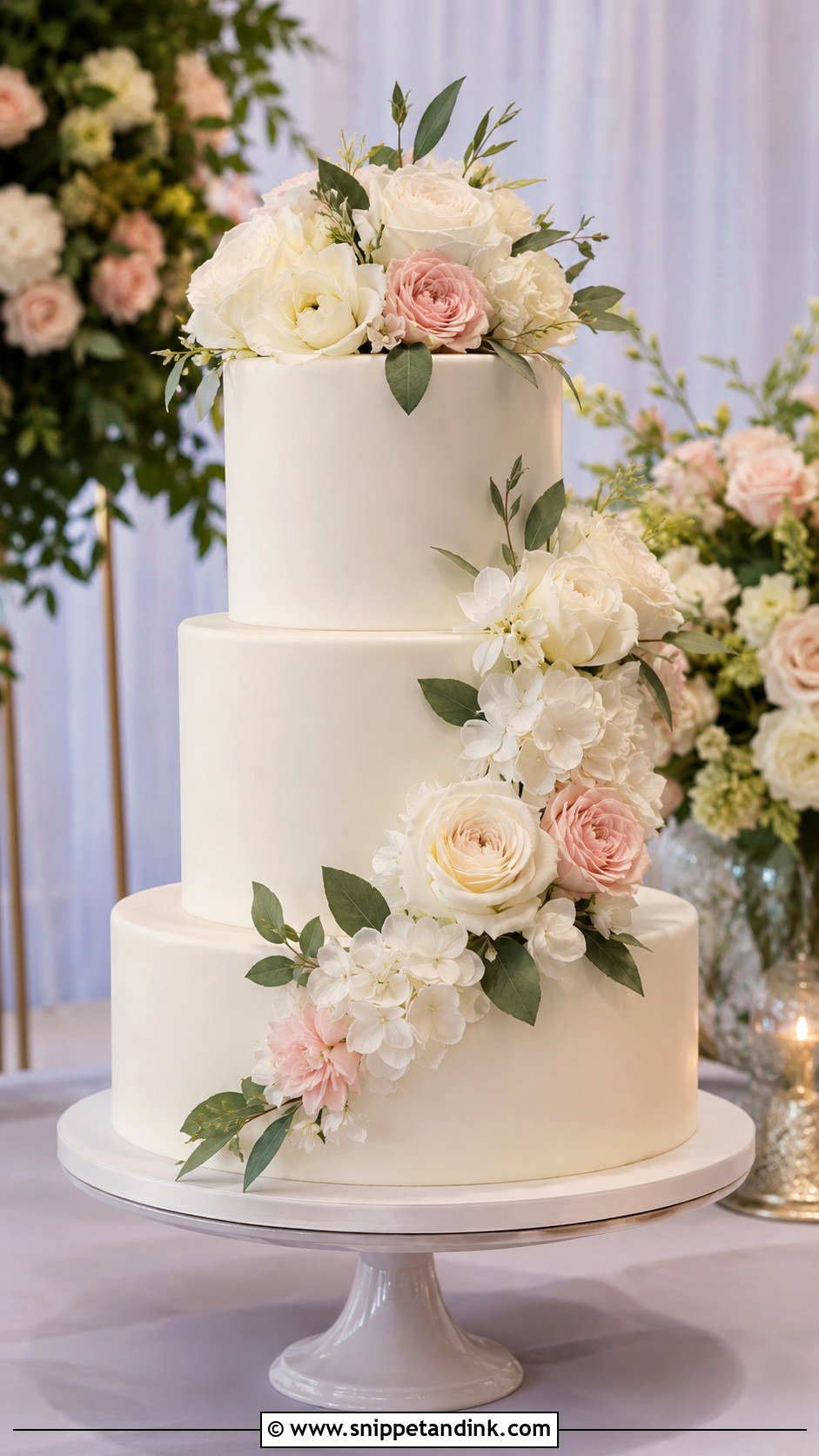
With three tiers you finally have enough vertical space for a diagonal line of flowers to read as movement rather than decoration. I sketch the path on paper first, because once a pick goes into the sponge it leaves a hole if you change your mind. Large blooms anchor the turns and smaller ones fill between. On ivory or champagne icing the flowers carry the whole design, so the finish underneath has to be very smooth; every ripple shows beside silk petals.
4. Rustic Wedding Cake With Artificial Flowers
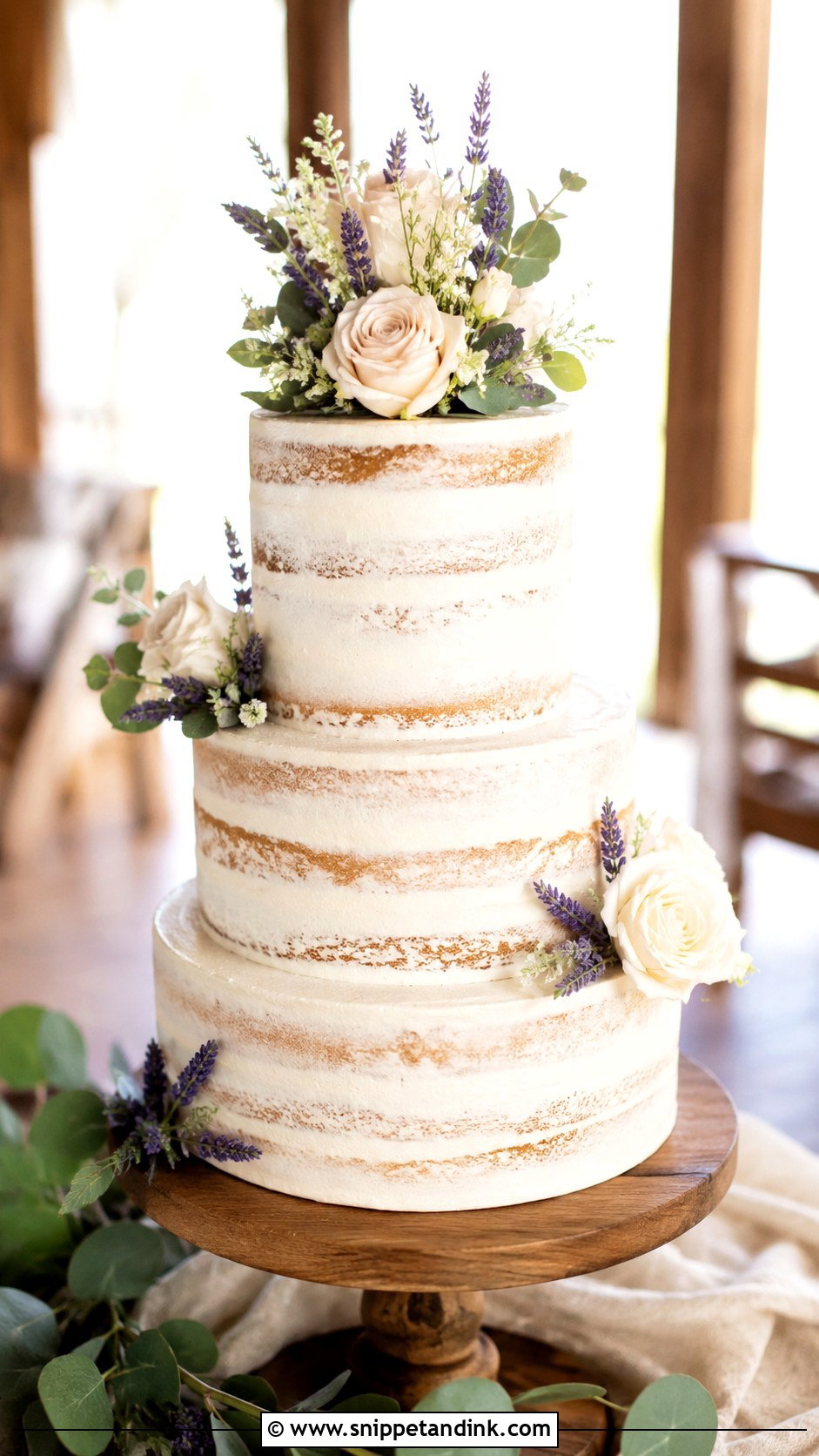
Semi-naked sides and buttercream ridges pair naturally with faux wildflowers, dusty eucalyptus, lavender and baby’s breath. Here’s the honest snag: dried-look silk stems often carry loose fibres and dust from the shop, so I give them a wipe and a shake before they go anywhere near icing. A wooden stand suits the mood. Keep the palette muted, cream, sage and tan, and the cake will sit comfortably in a barn or under a garden tent.
5. Modern Wedding Cake With Artificial Orchids
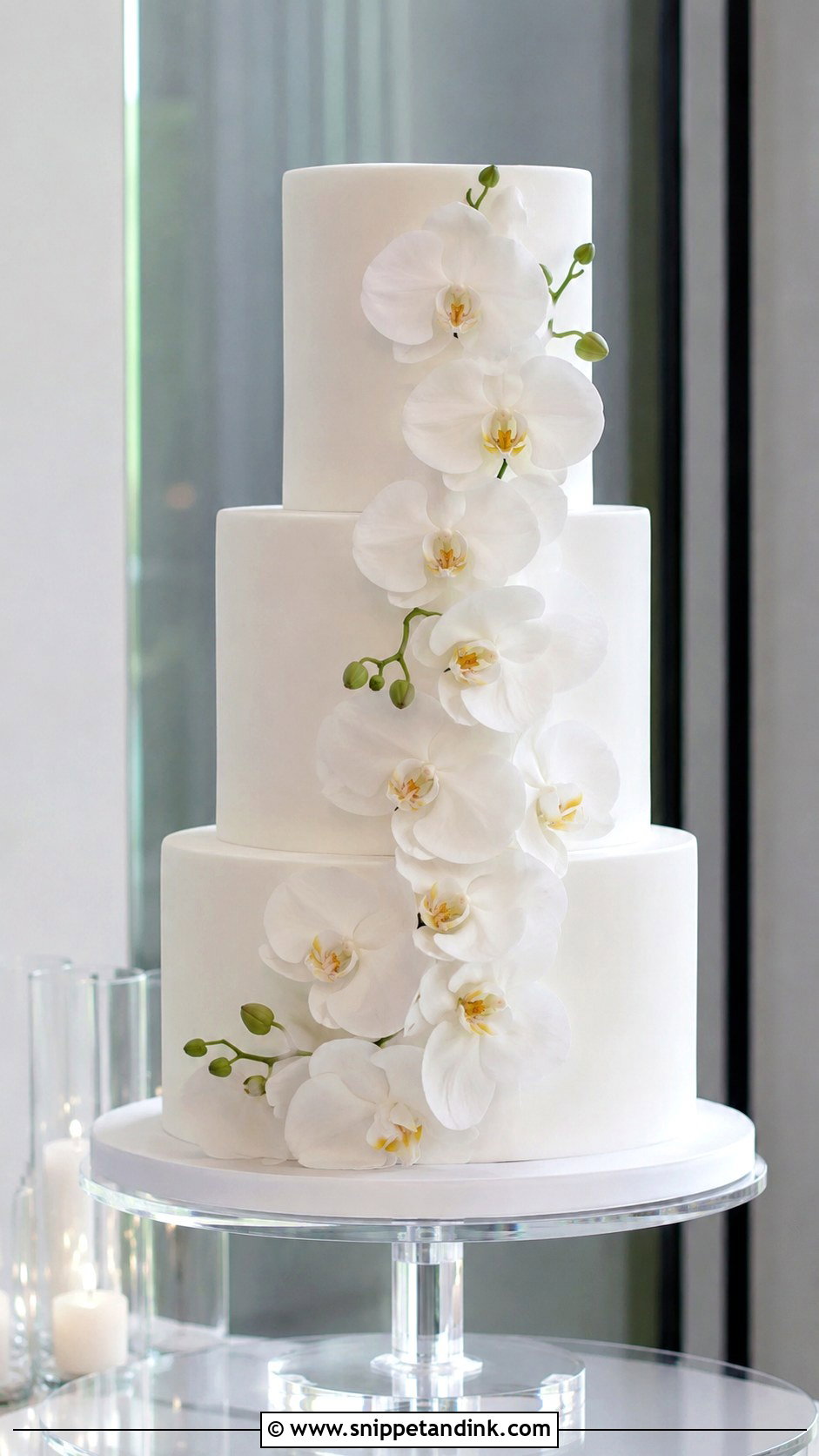
Orchids are my favourite faux flower to work with, because a phalaenopsis spray is already sculptural and the good silk versions are hard to tell from real ones at arm’s length. White on white is quietly modern; burgundy or mauve gives more personality. They need a flat, sharp-edged fondant or a very smooth buttercream behind them. I run them in one vertical line or a single curve and add nothing else, since orchids lose their impact the moment anything competes.
6. Simple Wedding Cake With Artificial Flowers
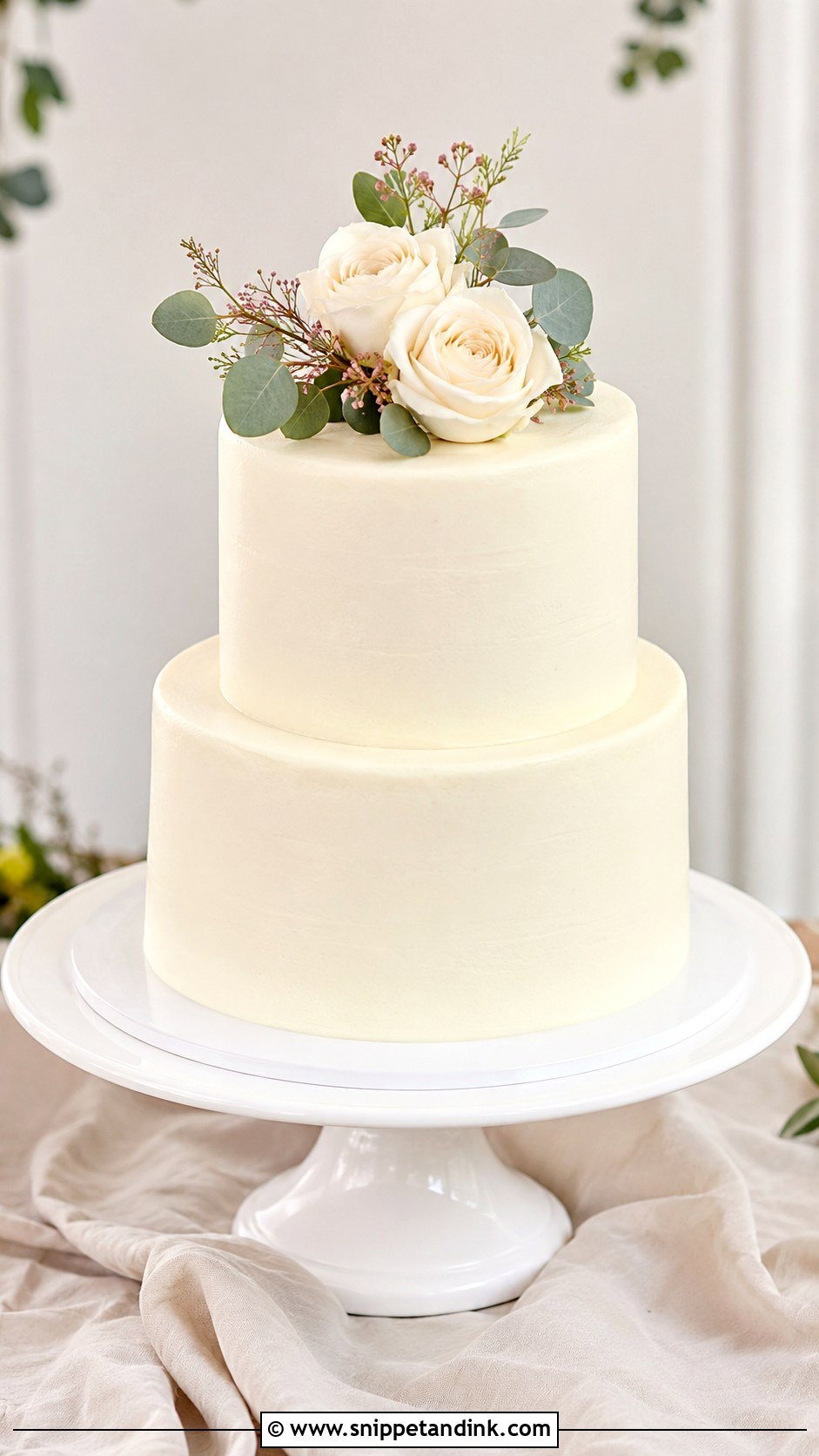
Restraint is harder than it looks. A smooth white or ivory cake with one small cluster on top, or a few blooms along one side, only works if the placement is exact, so I set the flowers on the cake in the studio, photograph it from the guests’ eye level and adjust before delivery. Neutral silk tones keep it soft. If it feels bare, add a couple of greenery tips or a scatter of sugar pearls rather than more flowers.
7. Boho Wedding Cake With Artificial Flowers
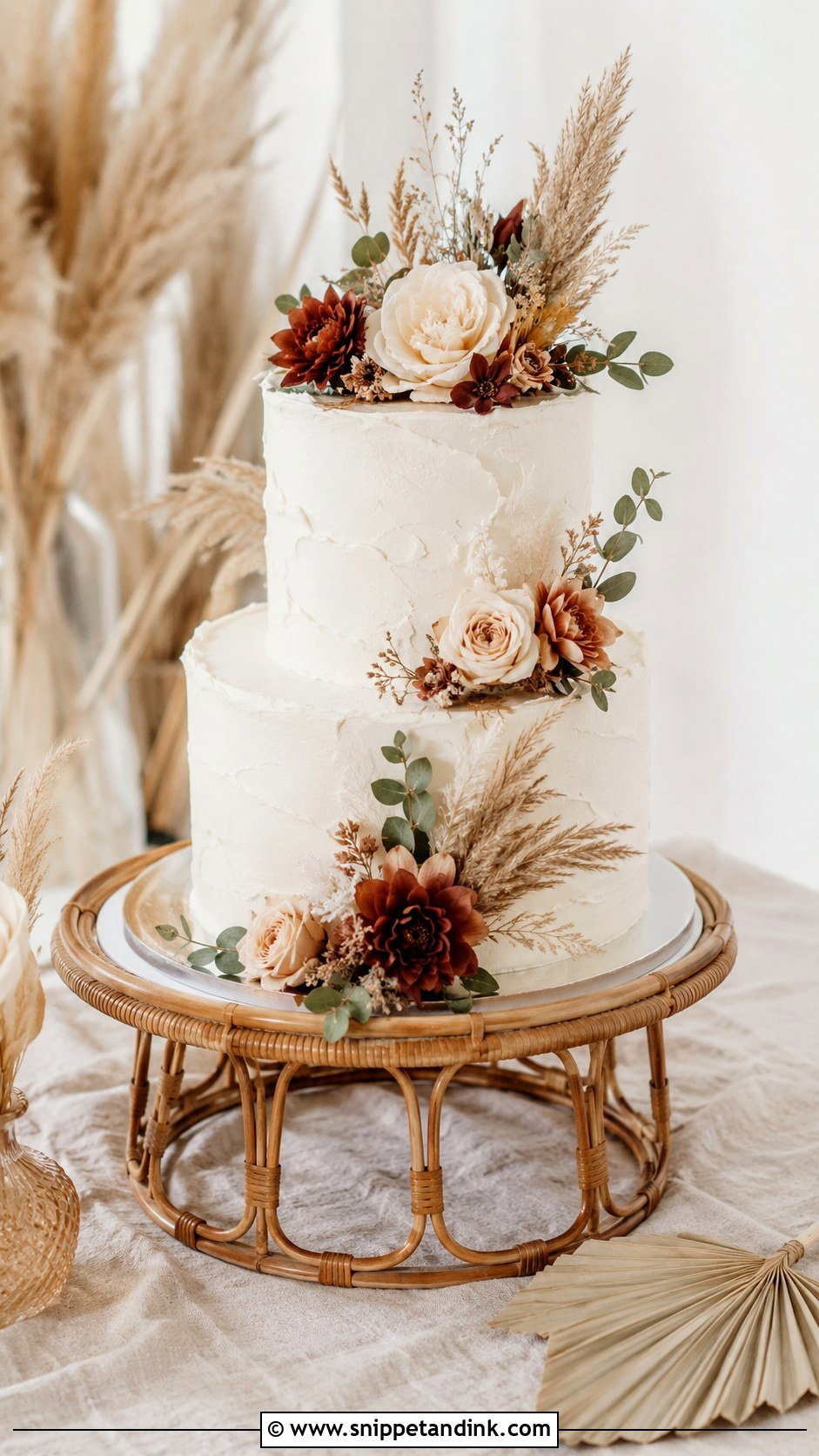
A boho wedding cake leans on texture, so I reach for faux pampas, rust and beige blooms, and palette-knife strokes in caramel or warm ivory buttercream. Faux pampas sheds, though, and so does some real dried pampas sold as decor, so I seal the plumes with a light mist of hairspray the day before and keep them on a barrier. Asymmetrical clusters suit this style. On a rattan table it looks right at home.
8. Blush Wedding Cake With Artificial Flowers
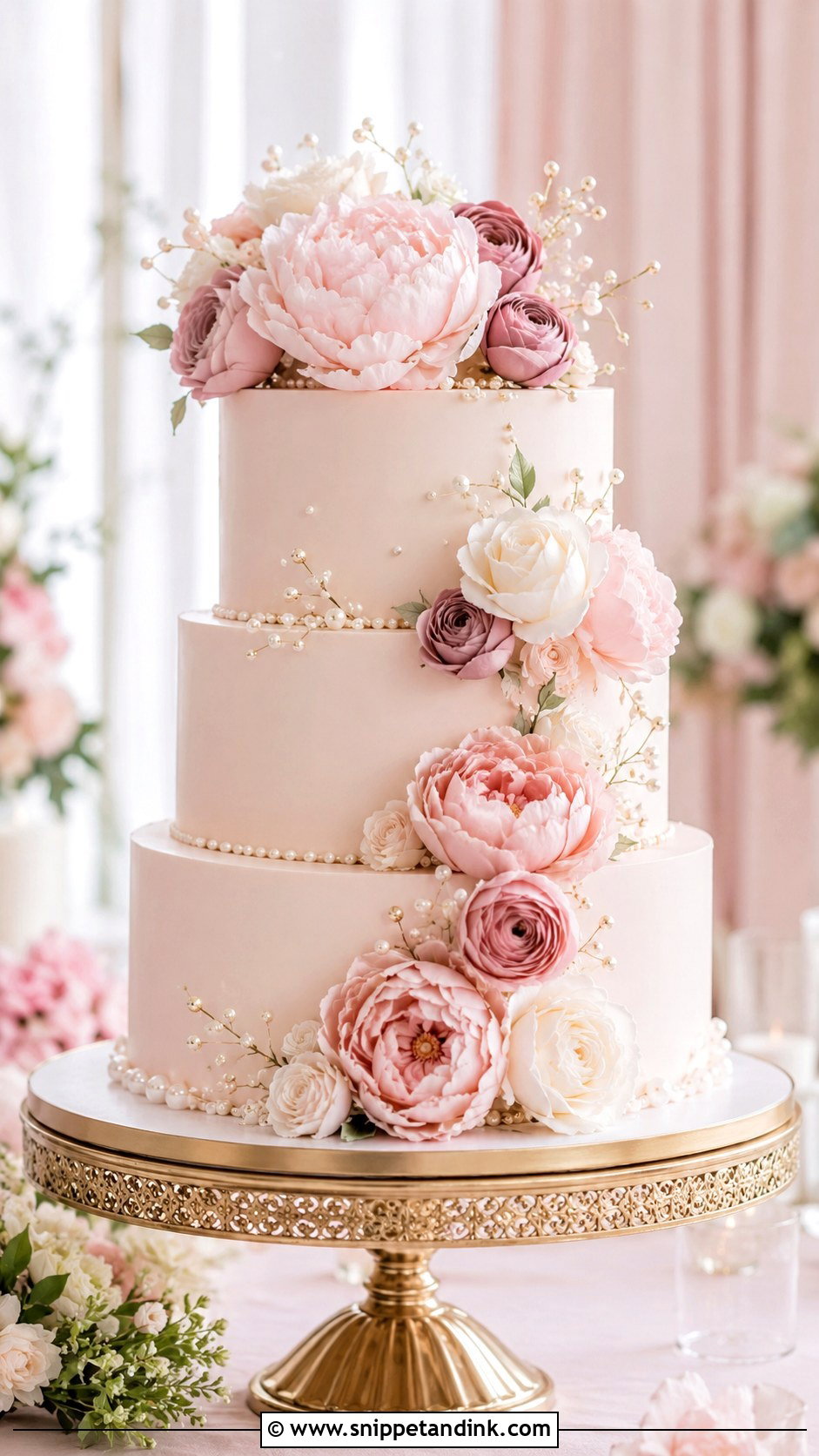
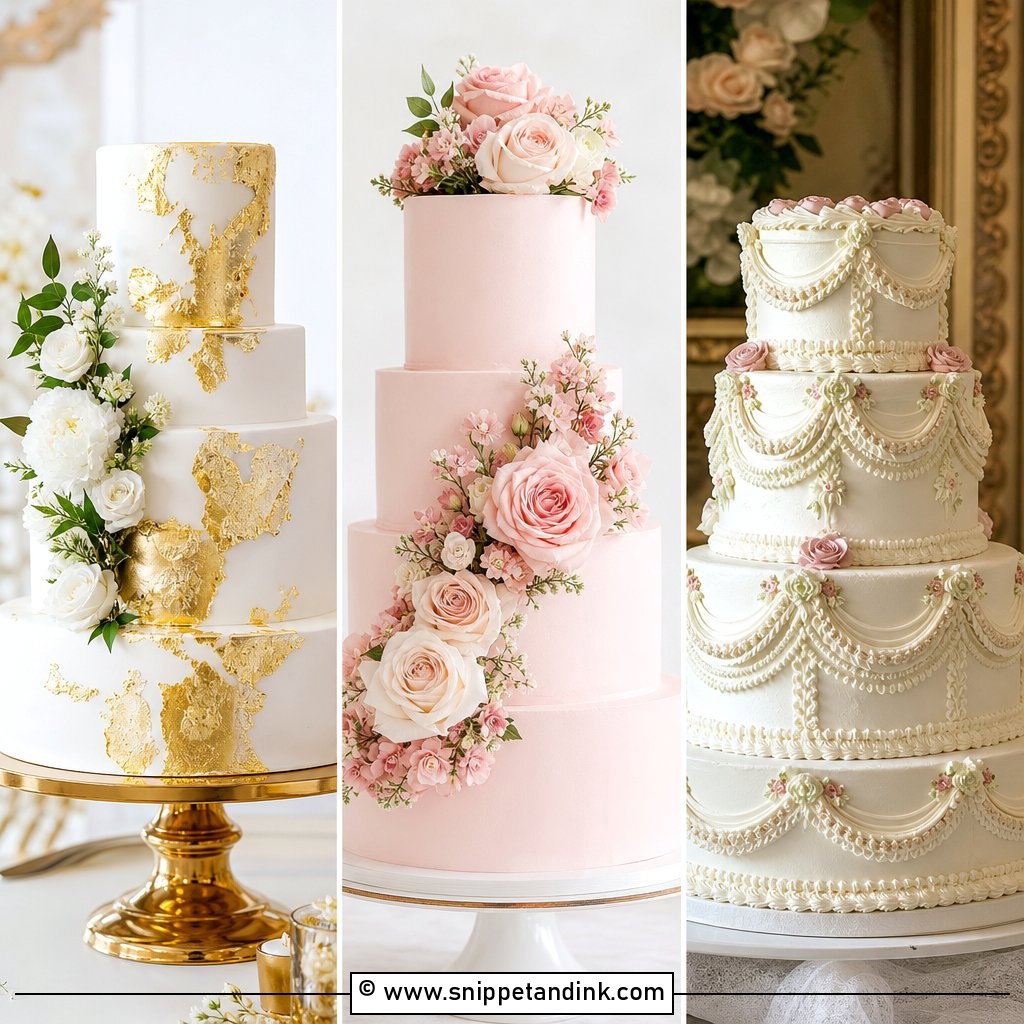
Blush can live in the icing, in the flowers or in both, and the decision changes the whole cake. Ivory icing with blush roses and ranunculus stays subtle. Pale pink buttercream with ivory and mauve blooms reads bolder. I always match the silk flowers to a dried swatch of the actual icing, because pink buttercream shifts a shade warmer as it sets, and a cool blush silk rose can suddenly look grey beside it. A little gold leaf or satin ribbon is enough trim.
9. Blue Wedding Cake With Artificial Flowers
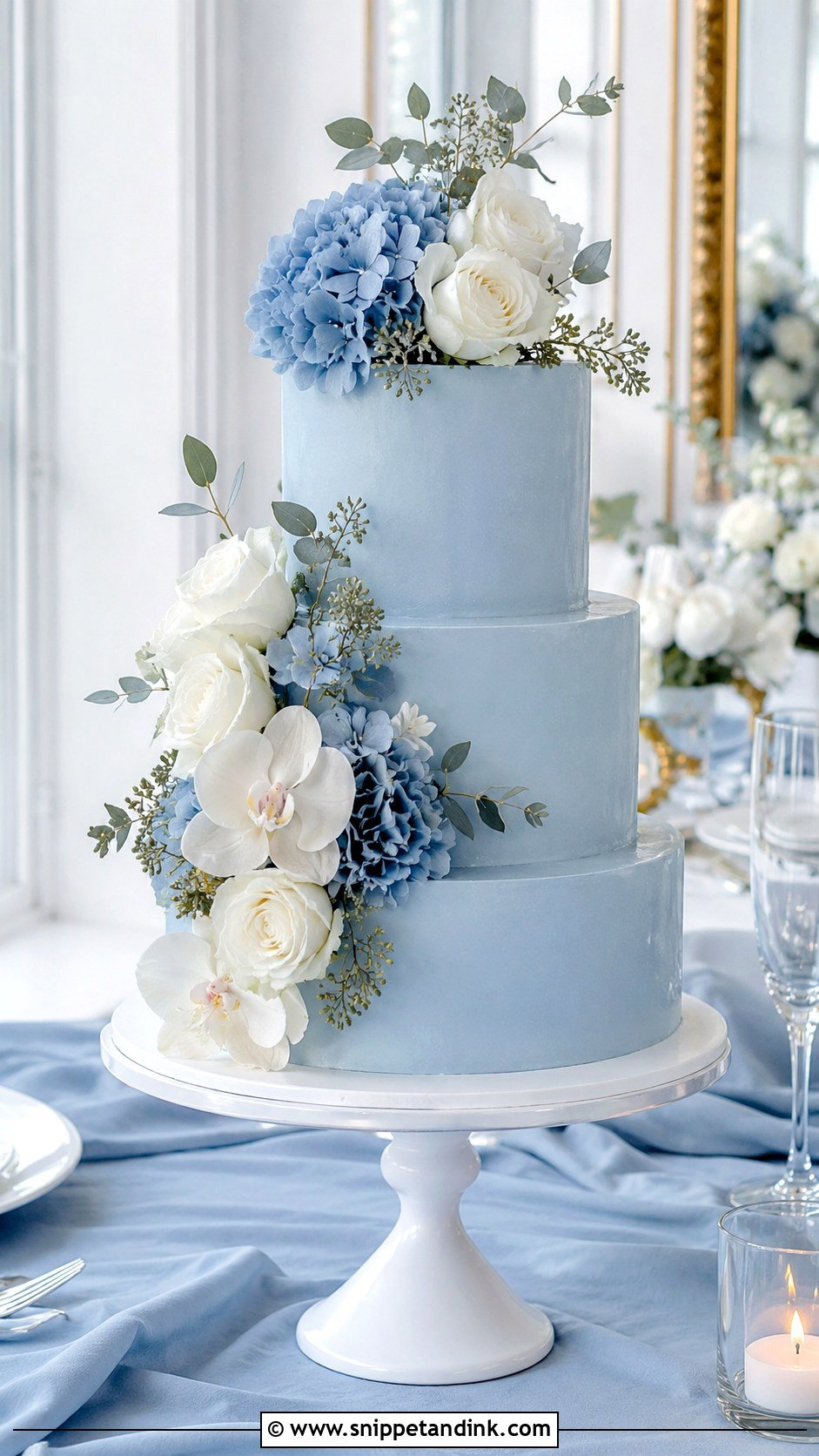
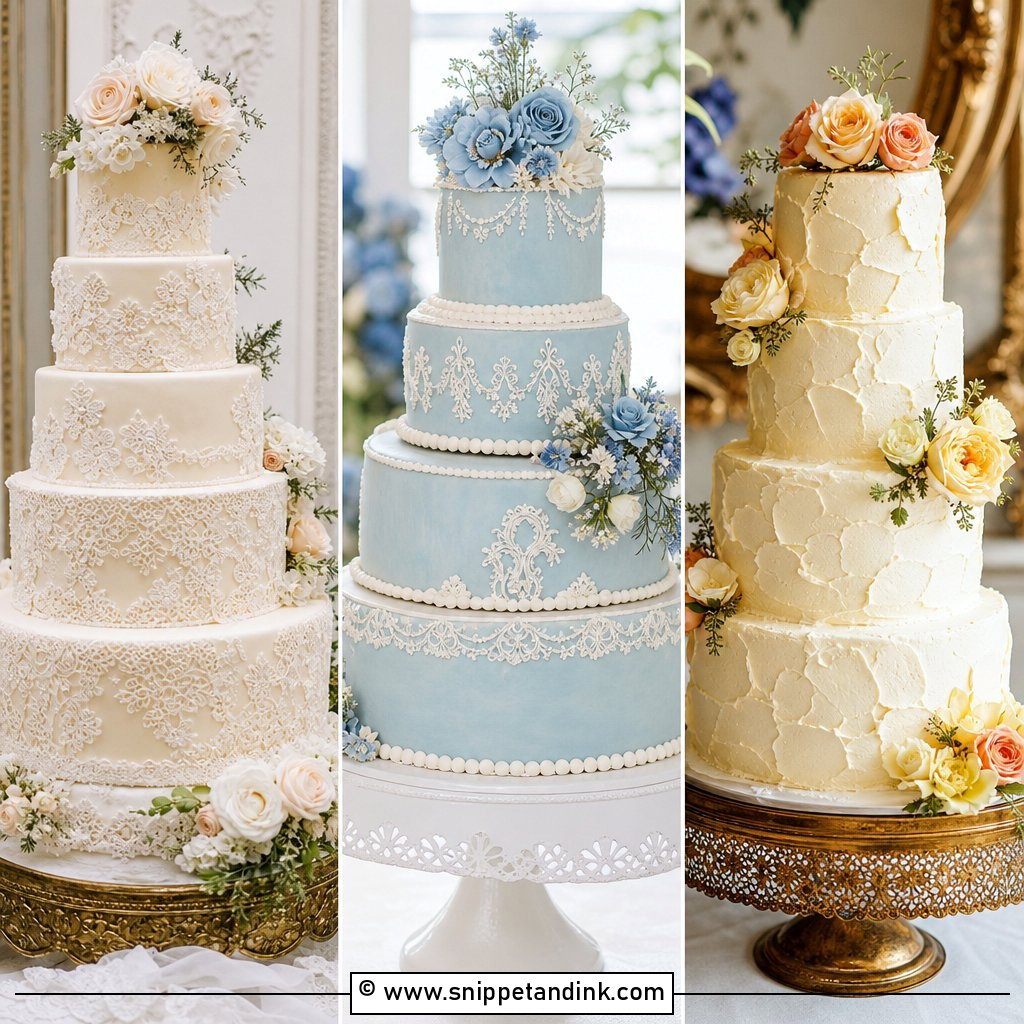
Blue is where faux flowers earn their keep. Real blue blooms are scarce and hard to colour match, while silk hydrangeas come in exactly the dusty shade you need. A blue wedding cake in soft dusty buttercream takes ivory roses and white orchids well, and navy accents push it formal. One caution from the kitchen: blue icing colour fades under strong window light, so I keep the cake shaded until it’s displayed.
10. Greenery Wedding Cake With Artificial Flowers
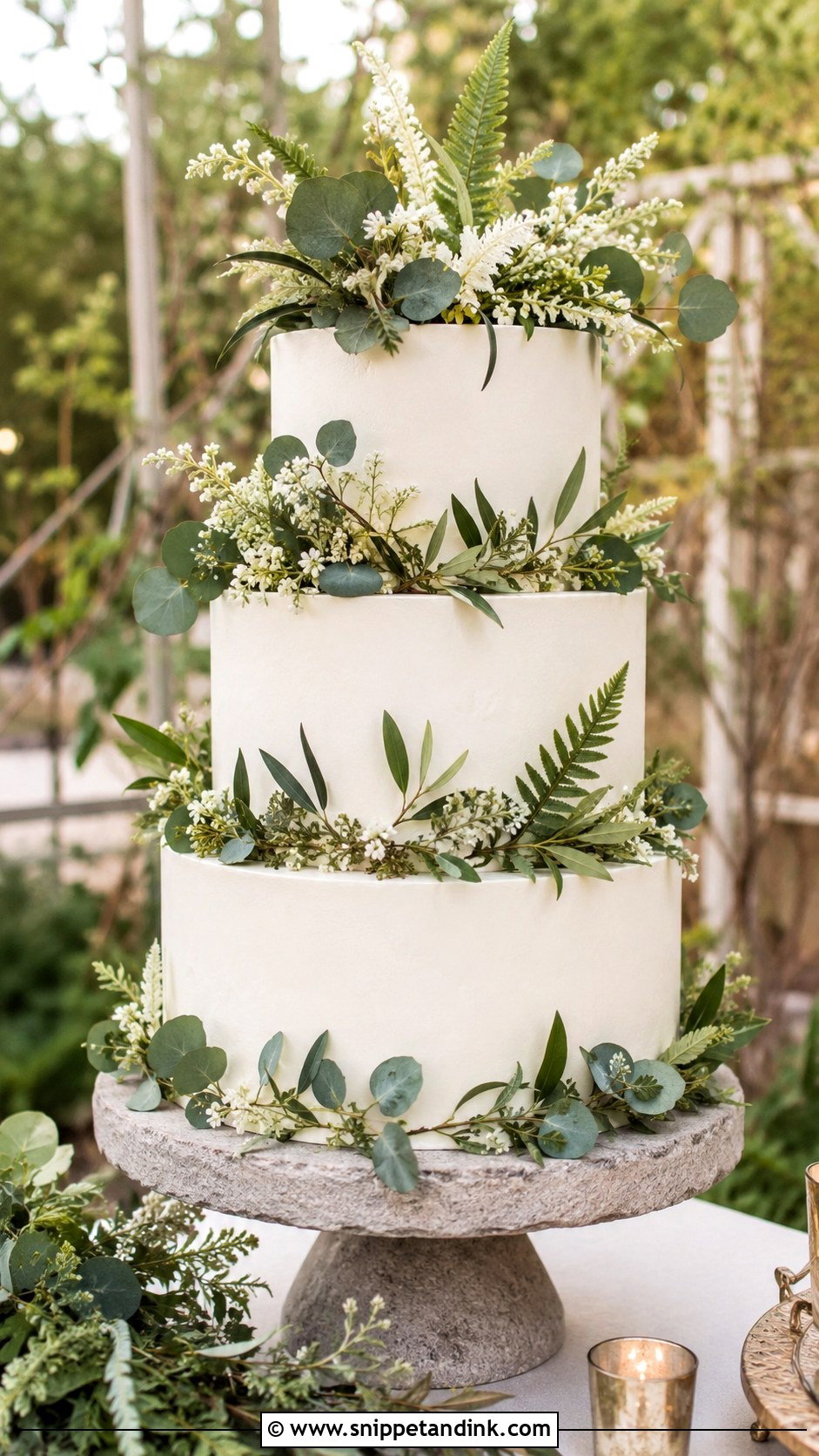
Trailing greenery is the lightest-looking option and the one I recommend when the couple wants florals without colour. Faux eucalyptus, olive and fern wrap a tier or trail down one side, with a few small cream blooms tucked in. Greenery picks have long wires, so I trim them short and tape the cut ends; a sharp wire end under a garland is easy to miss when cutting. On white buttercream the green reads crisp.
11. Floral Cascade Wedding Cake With Artificial Flowers
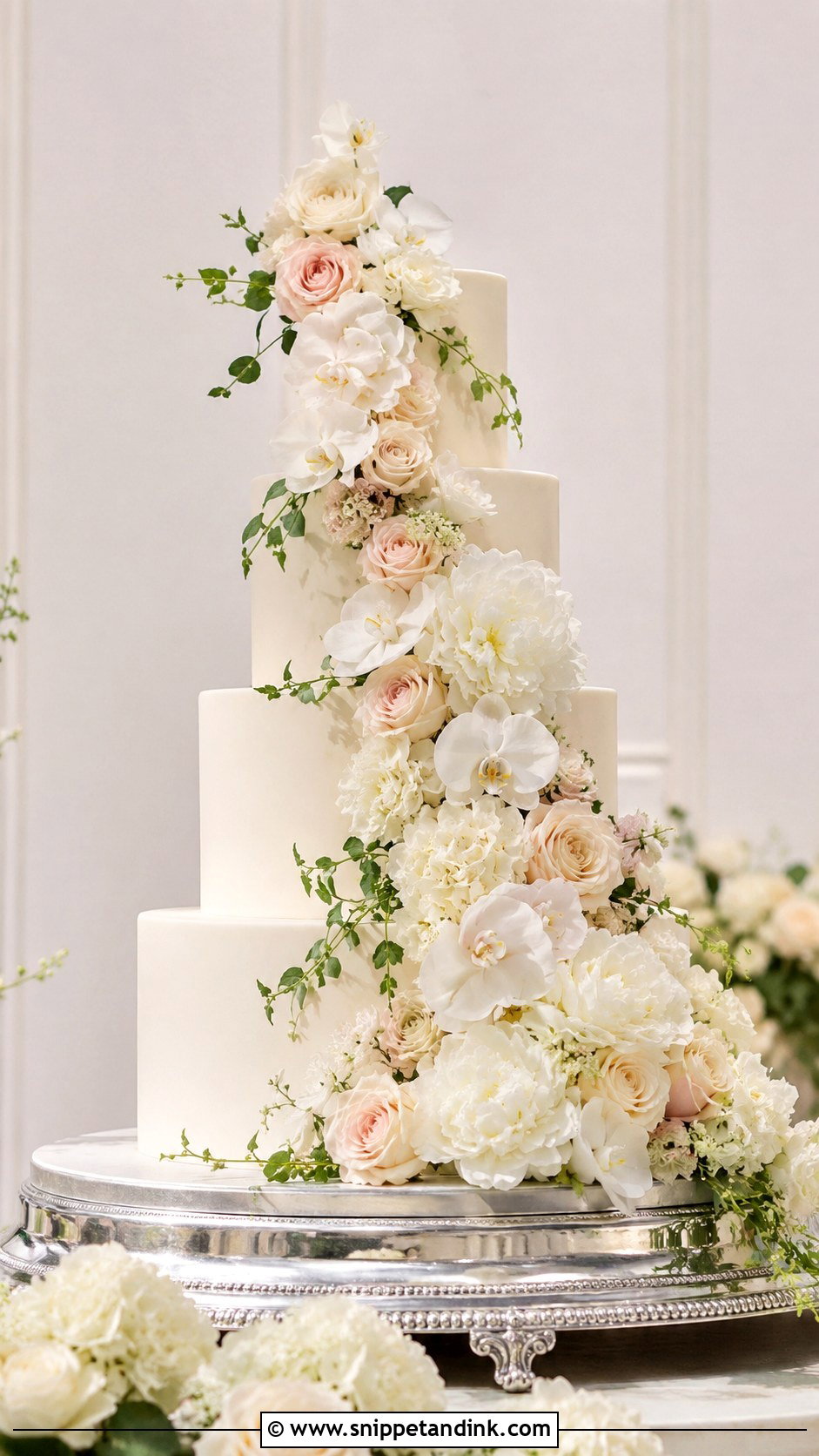
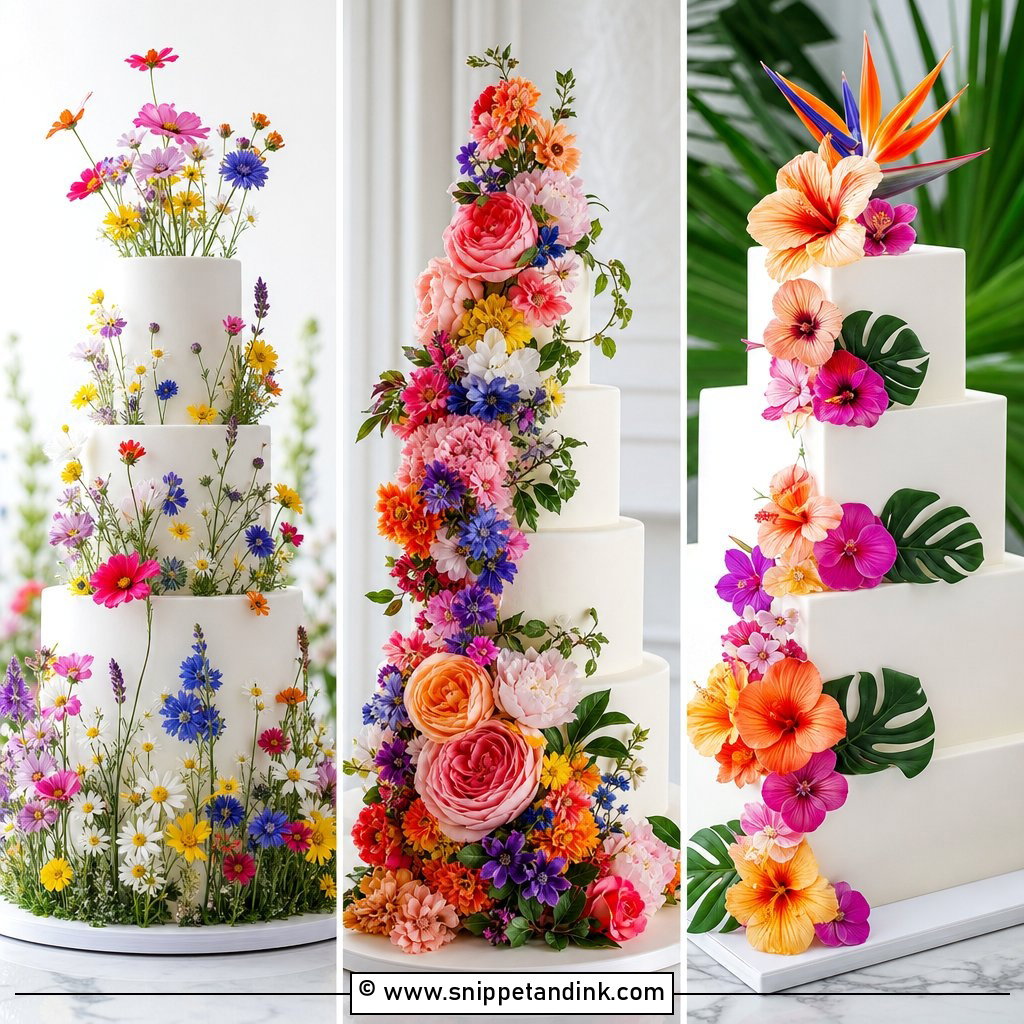
A cascade is the most dramatic layout here and the most demanding to build. The flowers start near the top tier and fall in a soft diagonal, mixing large heads, fillers and greenery. Because faux stems can be arranged days ahead, I pre-build the cascade on a dummy cake of the same dimensions, then transfer it piece by piece at the venue. That way the design is settled before the real sponge is ever pierced.
12. Minimalist Wedding Cake With Artificial Flowers
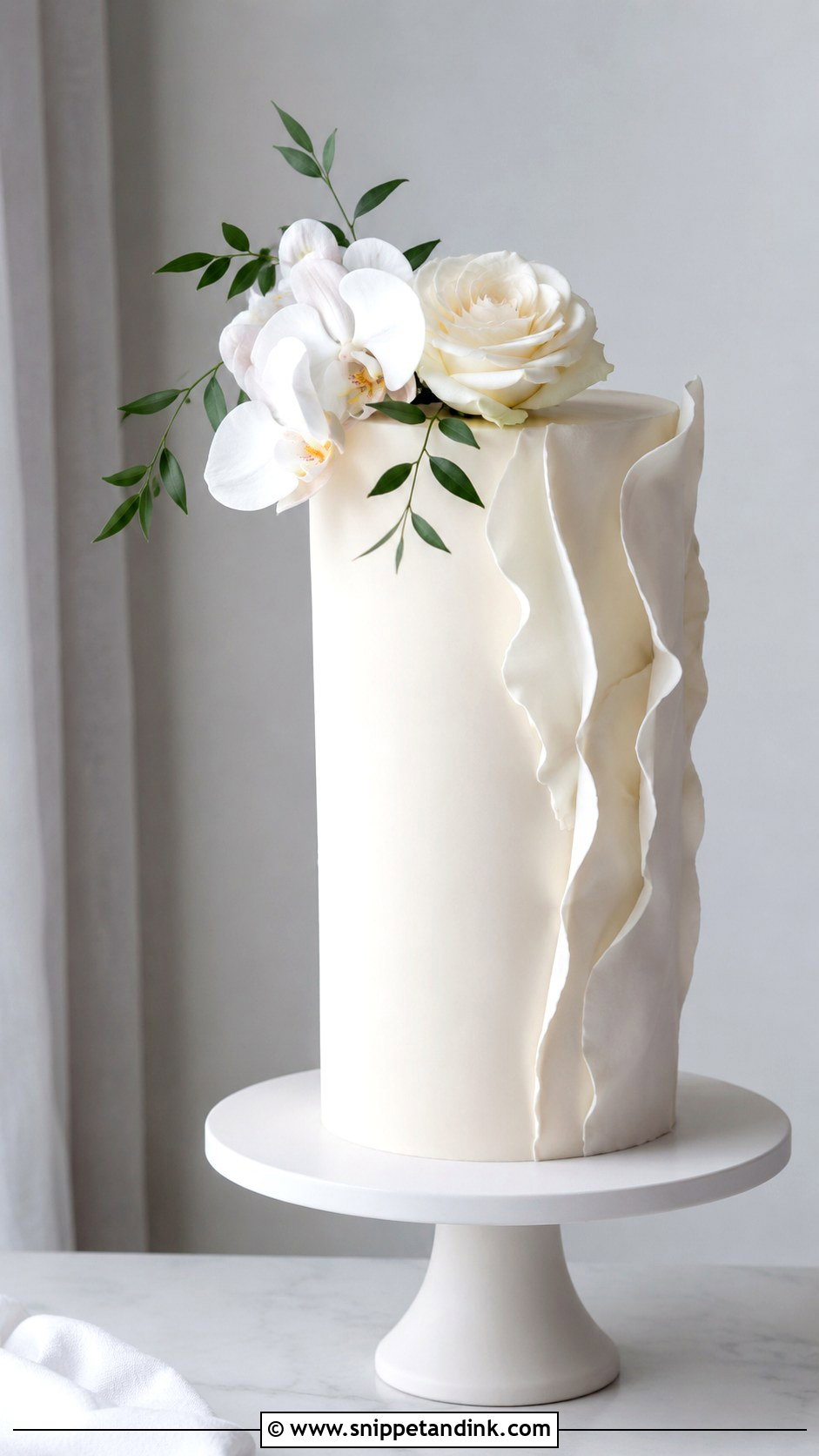
One or two statement flowers and a lot of empty icing. That’s the brief, and it lives or dies on sharp fondant edges and a slim, tall tier profile. Faux anemones, calla lilies and orchids have strong outlines that hold up alone; fluffy peonies tend to look lost. I place the single accent off-centre on the lower tier, where it catches the eye at table height, and keep the stand plain.
13. Garden Wedding Cake With Artificial Flowers
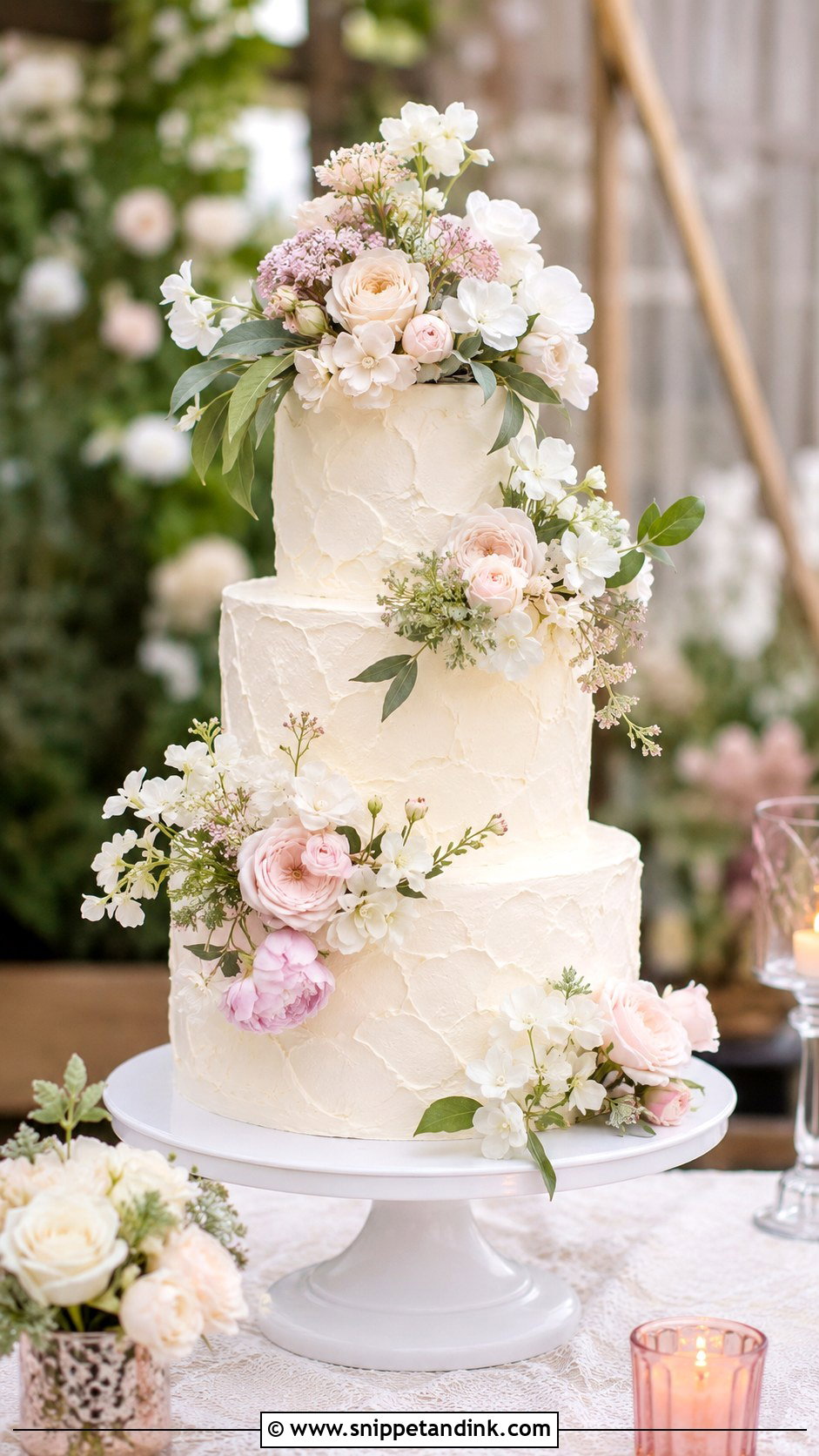
This one should look as if someone walked through a garden with a basket. Faux sweet peas, peonies, hydrangeas and loose greenery go on in clusters rather than lines, and I let a few stems lean out at odd angles on purpose. Pastels like lilac and butter yellow suit it. If the cake sits in a tent on a hot afternoon, a smooth buttercream finish will soften, so I’d ask your baker about a firmer crusting buttercream or ganache underneath.
14. Black And White Wedding Cake With Artificial Flowers
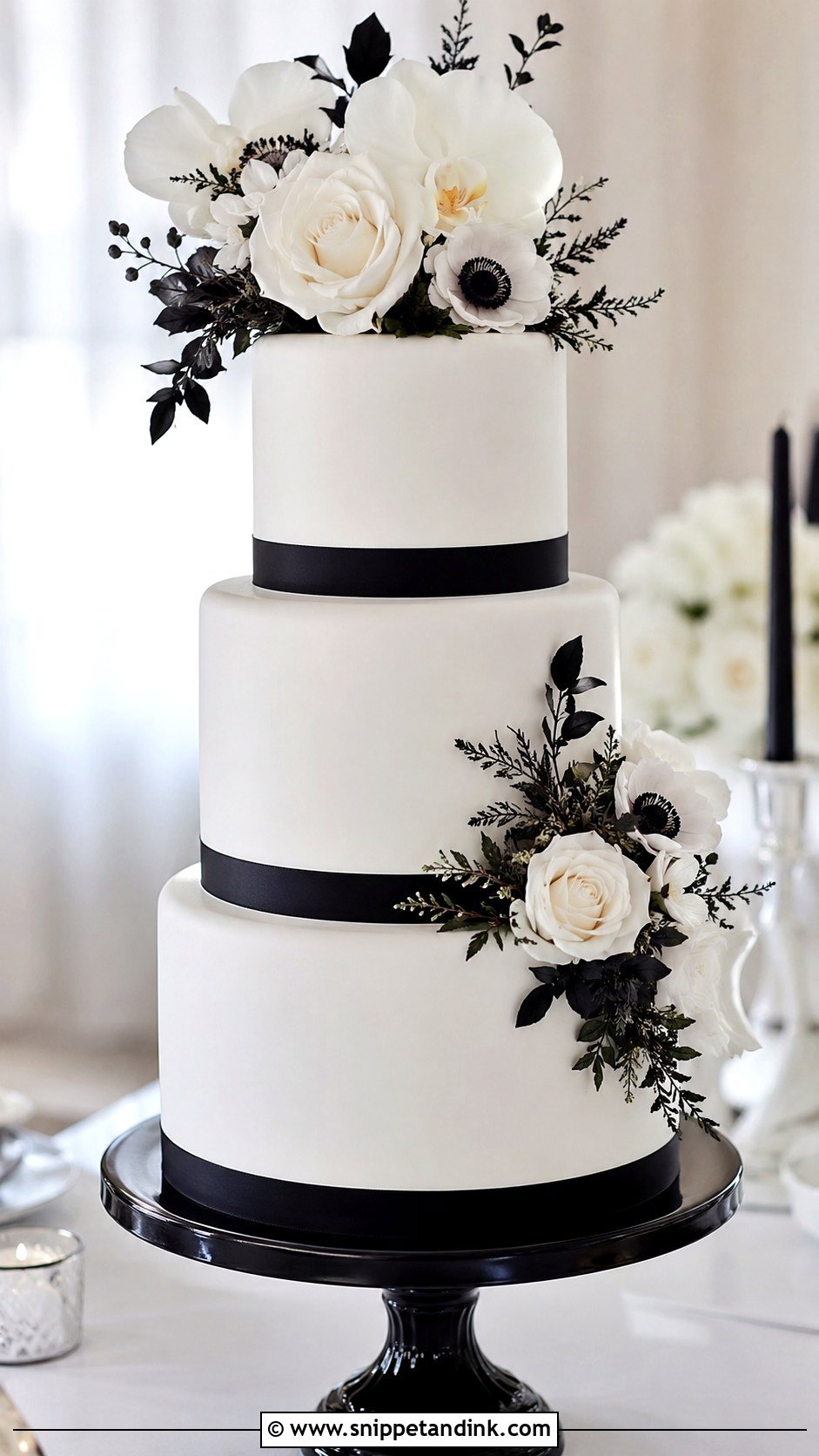
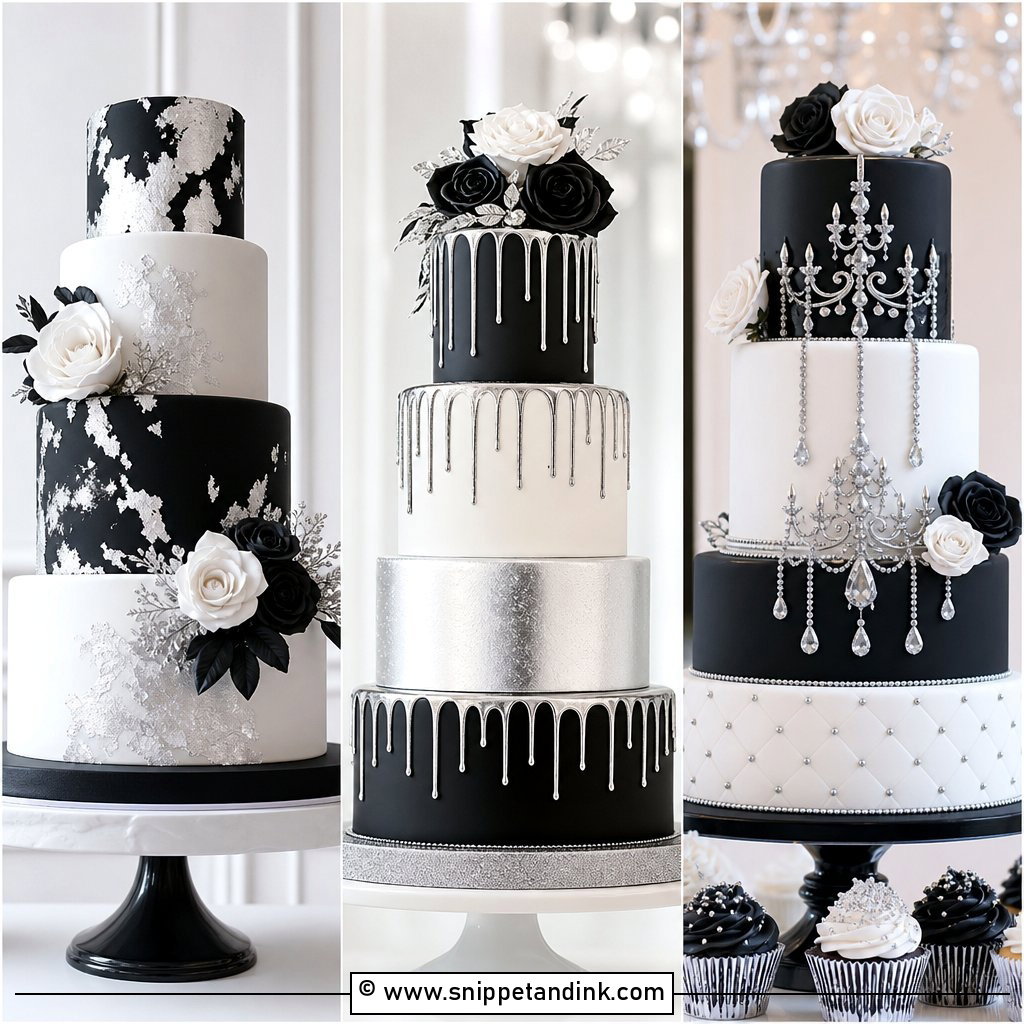
A black and white wedding cake gets its contrast from black ribbon, black fondant detail or one charcoal tier against white. White silk roses or anemones keep it bridal. Faux anemones with black centres tie the palette together better than anything else I’ve tried. A word on black icing: it takes a lot of colouring and can stain lips and teeth, so I usually confine it to a decorative tier or ribbon rather than the layers that get served.



15. Gold Wedding Cake With Artificial Flowers
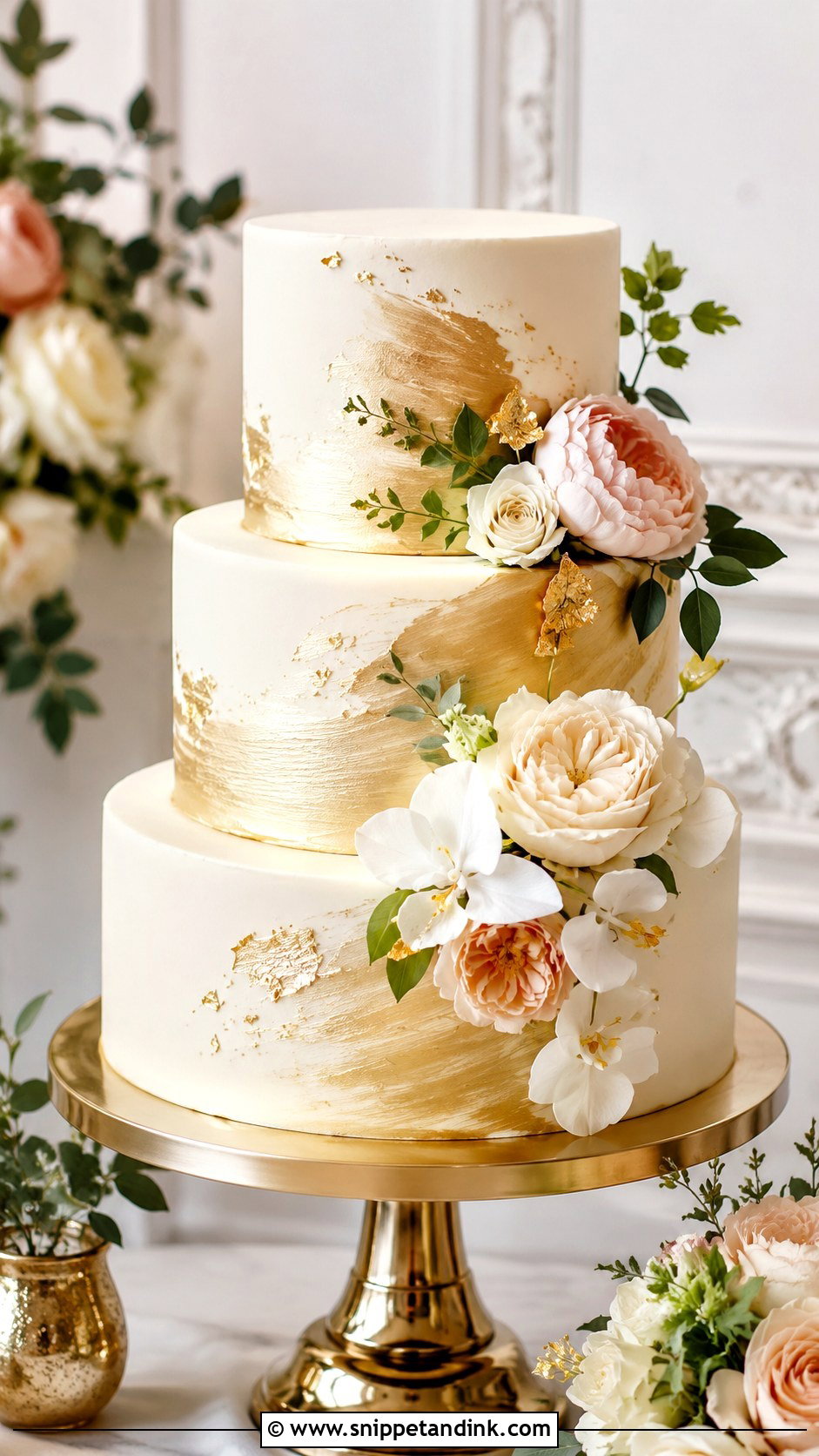
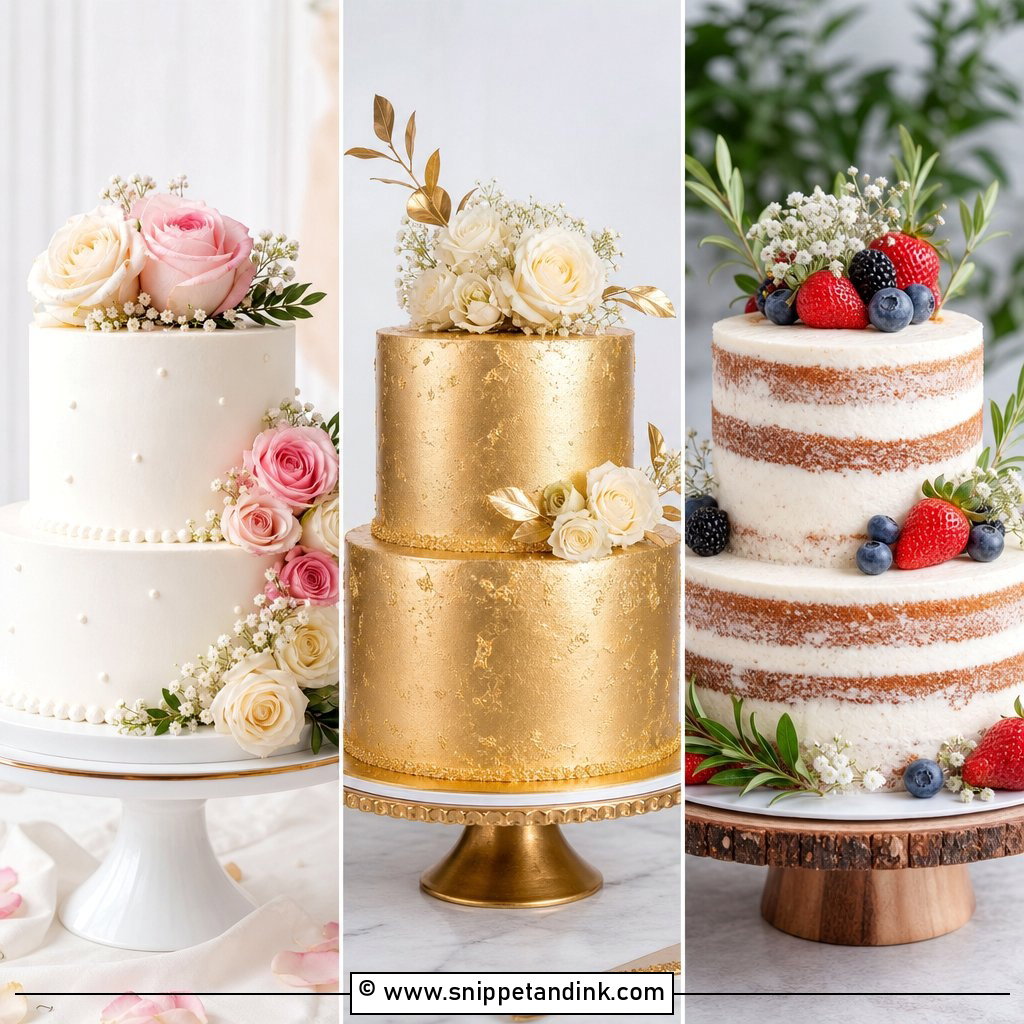
Gold leaf, brushed metallic paint or a champagne tier can lift a plain cake. I pair it with ivory silk roses or white orchids and stop there. Gold reflects flash, so heavy coverage turns into glare in photos; a few patches of leaf at tier edges look richer than a fully gilded tier. Check that any metallic you use on the cake itself is sold as edible, since many shimmer dusts are labelled for decoration only.
16. Square Wedding Cake With Artificial Flowers
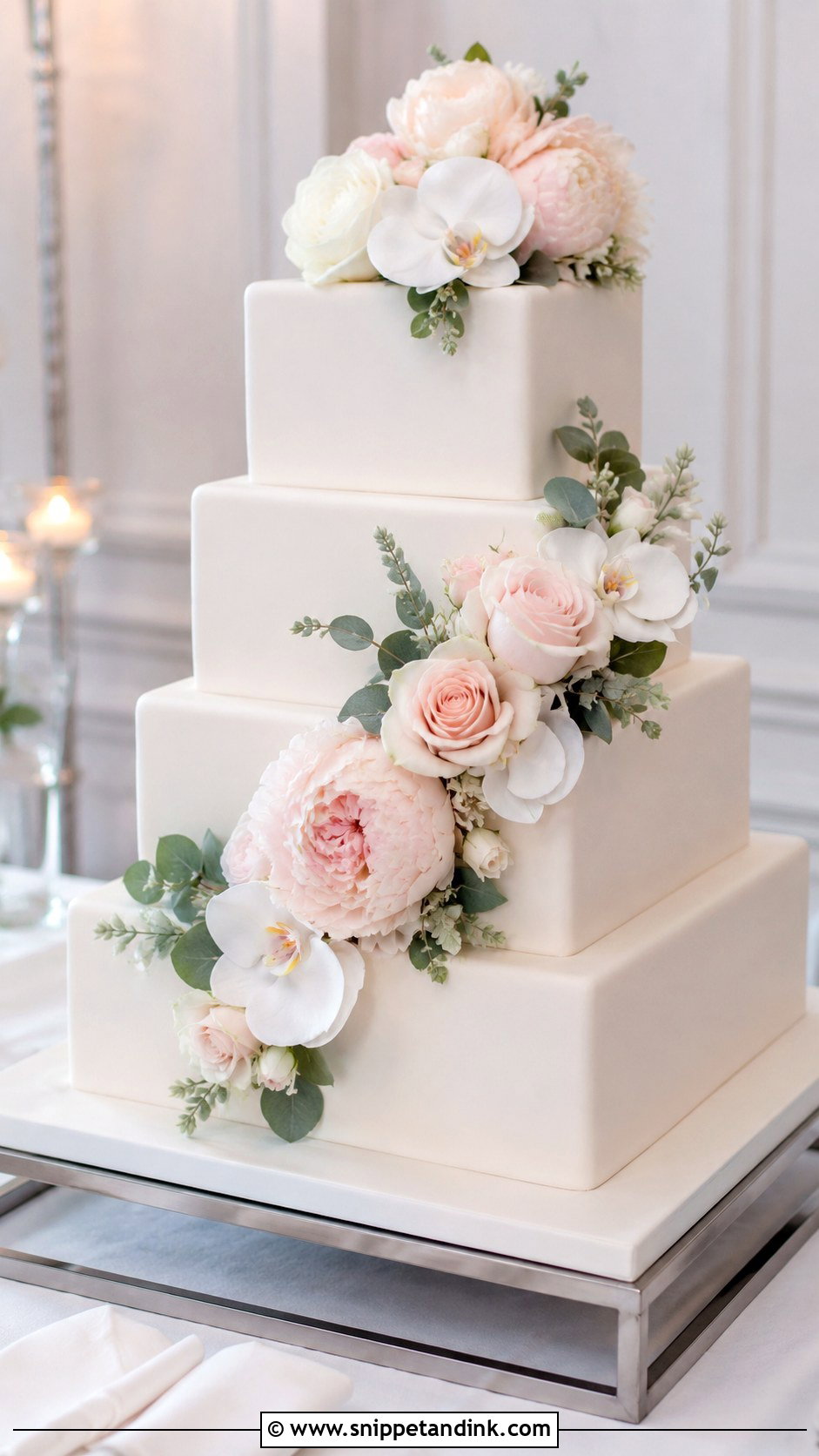
A square wedding cake shows off every corner, so it needs smooth fondant pulled to sharp edges. Faux roses or orchids sit naturally at a corner or along one diagonal, softening the geometry. I offset the flowers slightly from dead centre; perfectly symmetrical placement on a square cake can look stiff. Square tiers also give more servings than round tiers of the same width, which helps if your guest list is creeping up.
17. Semi Naked Wedding Cake With Artificial Flowers
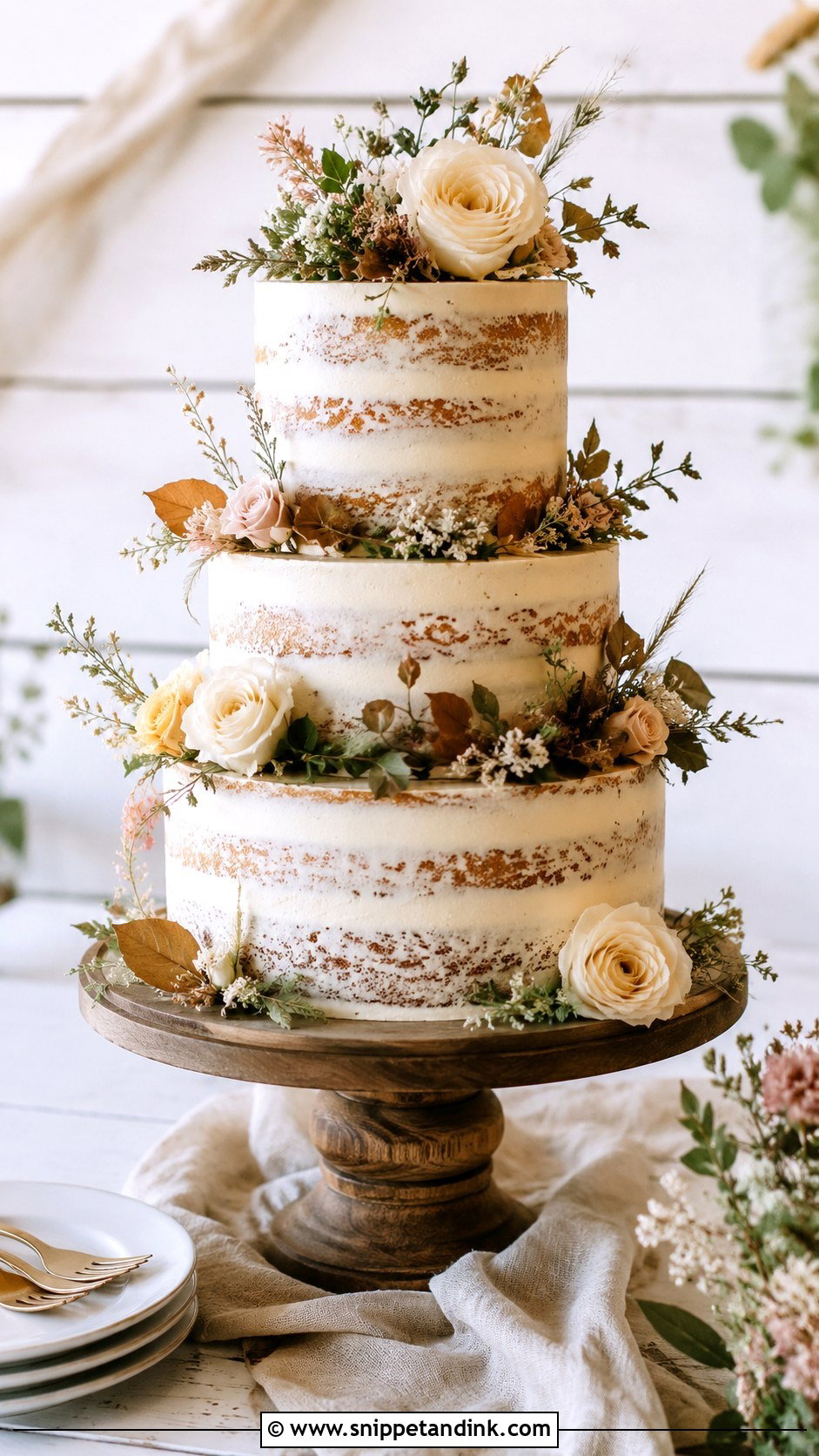
A semi-naked cake shows its layers through a thin scrape of icing, and that exposed sponge is exactly why barriers matter here. There’s less icing between a flower and the cake, so every faux stem goes into a pick, never straight into the crumb. Exposed sponge also dries out faster, so I’d keep this one covered until shortly before guests arrive. Faux roses and small wildflowers at the base and top, on a wooden or ceramic stand, finish it.
18. Small Wedding Cake With Artificial Flowers
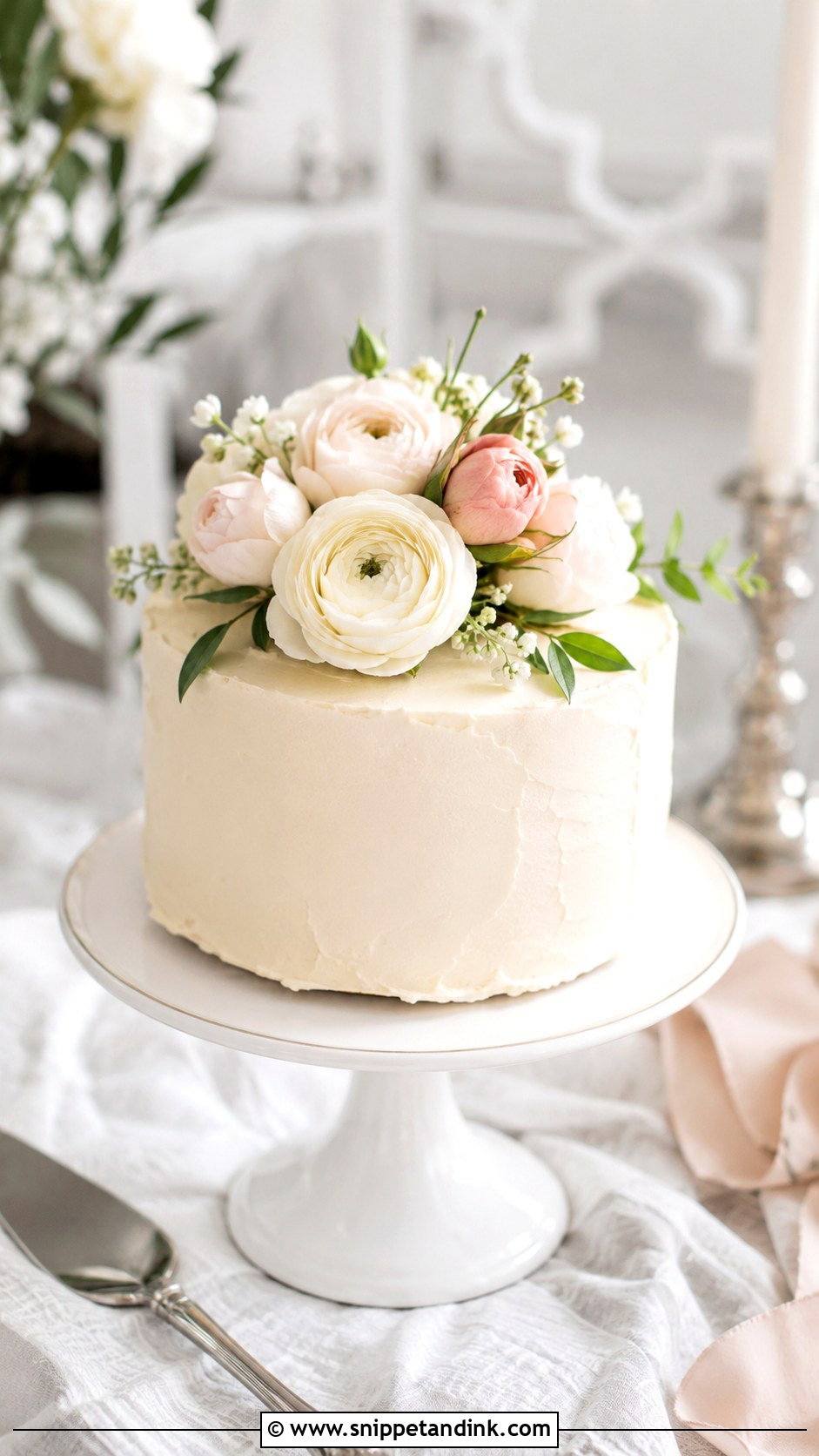
A single tier or petite two-tier cake, often backed up by a kitchen sheet cake, suits elopements and dessert tables. Scale is everything at this size. One statement faux flower with two or three tiny accents looks deliberate, while full-size roses make a four-inch tier look like a pin cushion. Mini roses and small ranunculus are the right proportion. I’d skip a topper unless it’s very slim.
19. Tall Wedding Cake With Artificial Flowers
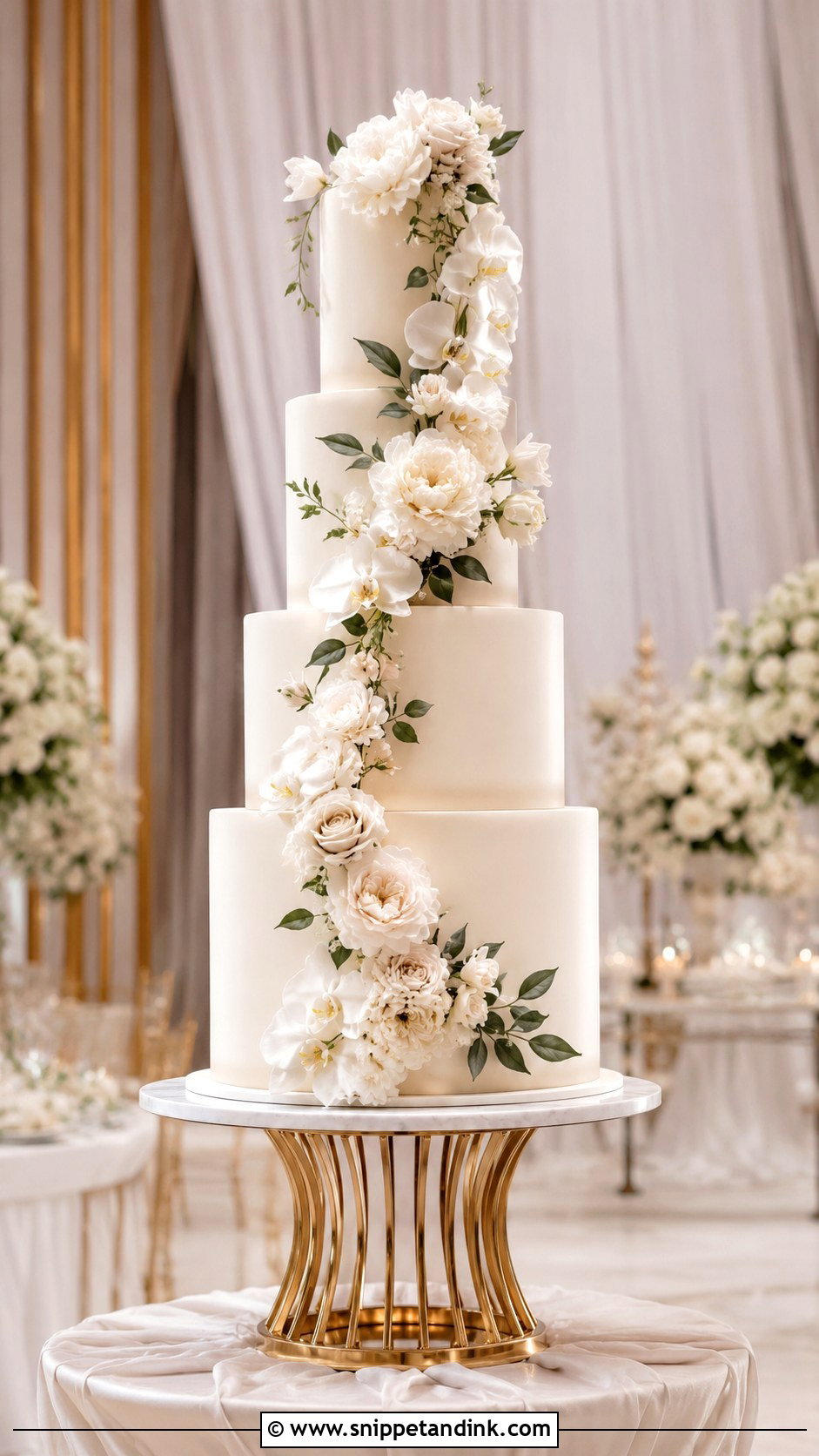
Height can come from extra tiers, extended-depth layers or separator spaces between tiers. Flowers climbing upward in a loose vertical line exaggerate it further. Tall cakes need internal dowels and a central rod, and I keep the heaviest floral clusters low, because weight near the top makes a tall cake feel less steady in transit. Orchids and cascading roses suit a ballroom scale.


20. Pearl Wedding Cake With Artificial Flowers
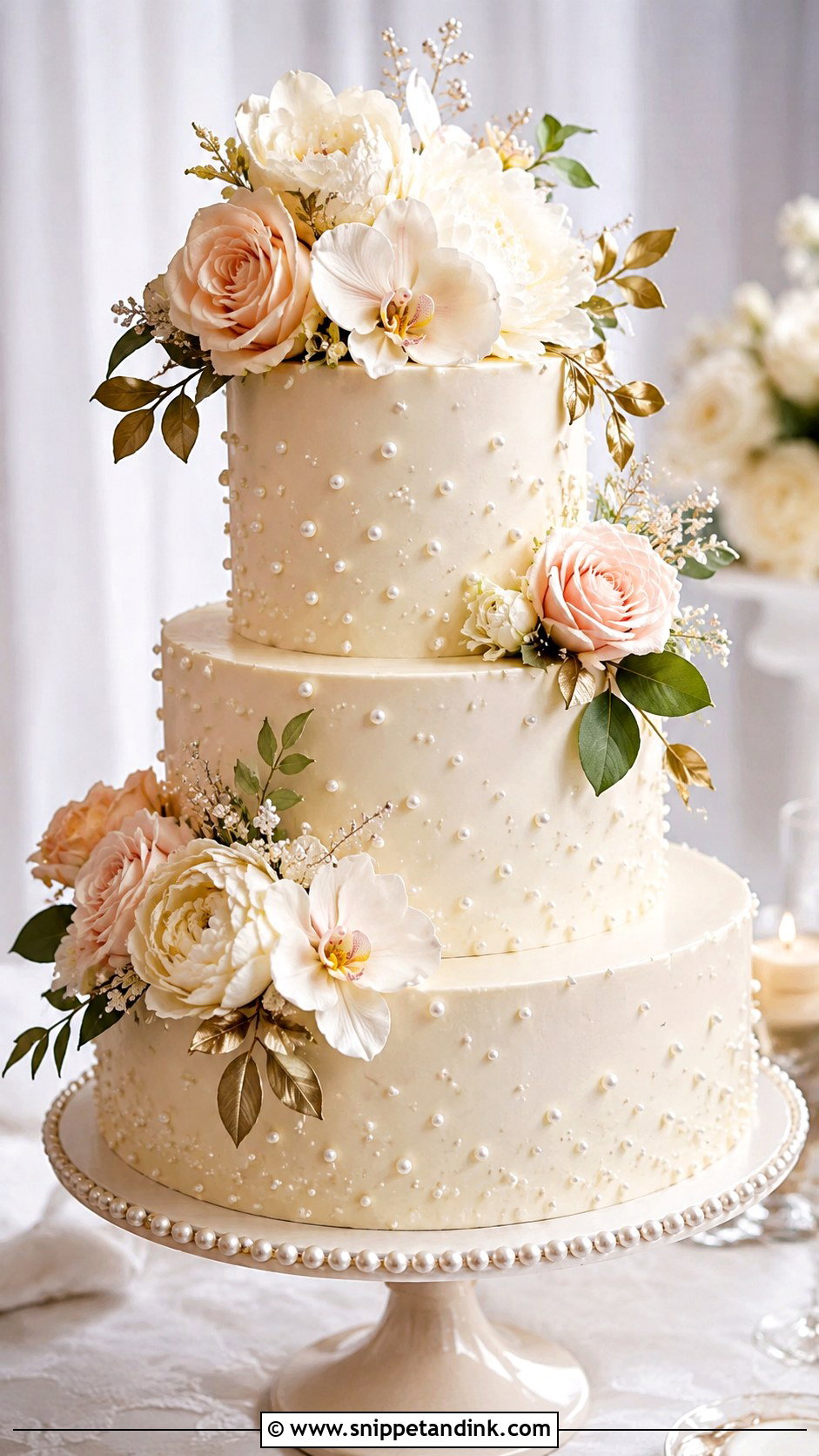
Pearls can be piped in royal icing, pressed into fondant or set as sugar beads, and they pair naturally with ivory faux roses or orchids. I keep the pearls away from the flowers’ immediate edge so the two textures don’t blur together; a gap of a centimetre or so lets each read clearly. Real pearl-headed pins from a craft shop sometimes find their way onto cakes, and they shouldn’t, so ask your baker which beads are edible.
Who Supplies the Flowers, and When They Should Reach the Baker
Some bakers source faux flowers themselves; others only arrange what the couple or florist hands over. Settle this at the tasting, because it changes both the quote and the timeline. If you’re supplying them, bring a sample stem to the consultation so the baker can check its scale against the tier sizes.
I prefer to receive client-supplied flowers at least a week before the wedding. That leaves time to clean and pick every stem, swap anything that looks plasticky up close, and test the arrangement on a dummy tier. Flowers that turn up on the morning of the wedding usually go on the cake unprepared or not at all.
Ordering enough, and a few spares
Buy about a third more than the mock-up suggests. Silk heads vary from one batch to the next, and a few will always have a bent petal or a seam that catches the light. Spares also let the venue team replace a bloom if one gets knocked during setup.
What Happens to the Flowers at Cutting Time
Faux flowers come off before the cake is portioned. I tell the catering team which side to start from and leave a small tray beside the cake for the stems and picks, so nothing ends up on a guest’s plate. Pull each pick straight out rather than twisting it, which tears the icing.
The upside of silk is that the topper cluster can go home with you. A quick wipe of any buttercream smears with a damp cloth, a day to dry, and it makes a neat keepsake for an anniversary cake a year later. Store it in a box away from sunlight, since silk fades if it sits on a bright windowsill.
Faux Blooms Look Real Only When the Groundwork Is Done
Faux flowers give you control over colour and timing that fresh stems never quite do. What separates a cake that looks intentional from one that looks improvised is the unglamorous part: realistic stems, sensible scale for each tier, and a barrier between every flower and the sponge. Get those right and any of the twenty designs above will hold up from the first photo to the last slice.
You'll Like These Ideas:





Leave a Reply