
A big cake changes a reception room. Guests walk in, see it, and drift over before they’ve found their seats. Right now couples are asking for height, sculpted shapes, old-style piping, oversized flowers, cakes that run the length of a table, and a lot more texture and colour than a decade ago. Size doesn’t have to mean stiff. What decides the right design is less about trends than about your venue, guest count, season and how the cake will be cut and served. These thirty ideas are the ones I’d talk a couple through, with notes on how each holds up between delivery and the last slice.
Sizing a Tall Cake So It Feeds the Room Without Leftovers
Height and servings aren’t the same thing. A wedding portion is smaller than a party slice, usually a narrow finger of cake about an inch wide, so a four-tier stack feeds more people than most couples expect. As a rough guide, a 6, 8, 10 and 12 inch round stack gives somewhere around a hundred and twenty to a hundred and fifty wedding portions, depending on tier height and how it’s cut. Every baker portions slightly differently, so ask for her own chart.
- Want more height than you need cake? Ask about one or two styrofoam dummy tiers decorated to match. They look identical from the dance floor.
- Need more servings than the display cake gives? A plain iced kitchen cake of the same flavour can be cut out of sight and plated alongside.
- Taller tiers, five or six inches instead of four, add drama without adding another layer to support.
- Plan for not everyone eating cake, especially after a late dinner or if there’s a dessert table too.
When to start talking to a baker
Many custom bakers take only a handful of wedding cakes per weekend, and popular dates fill early. I’d make first contact several months ahead for a large or detailed cake, book a tasting, and confirm the final design and guest count a few weeks before the date. Sugar flowers, hand painting and sculpted structures need long lead times, because they’re made days or weeks in advance.
1. Tall White Wedding Cake
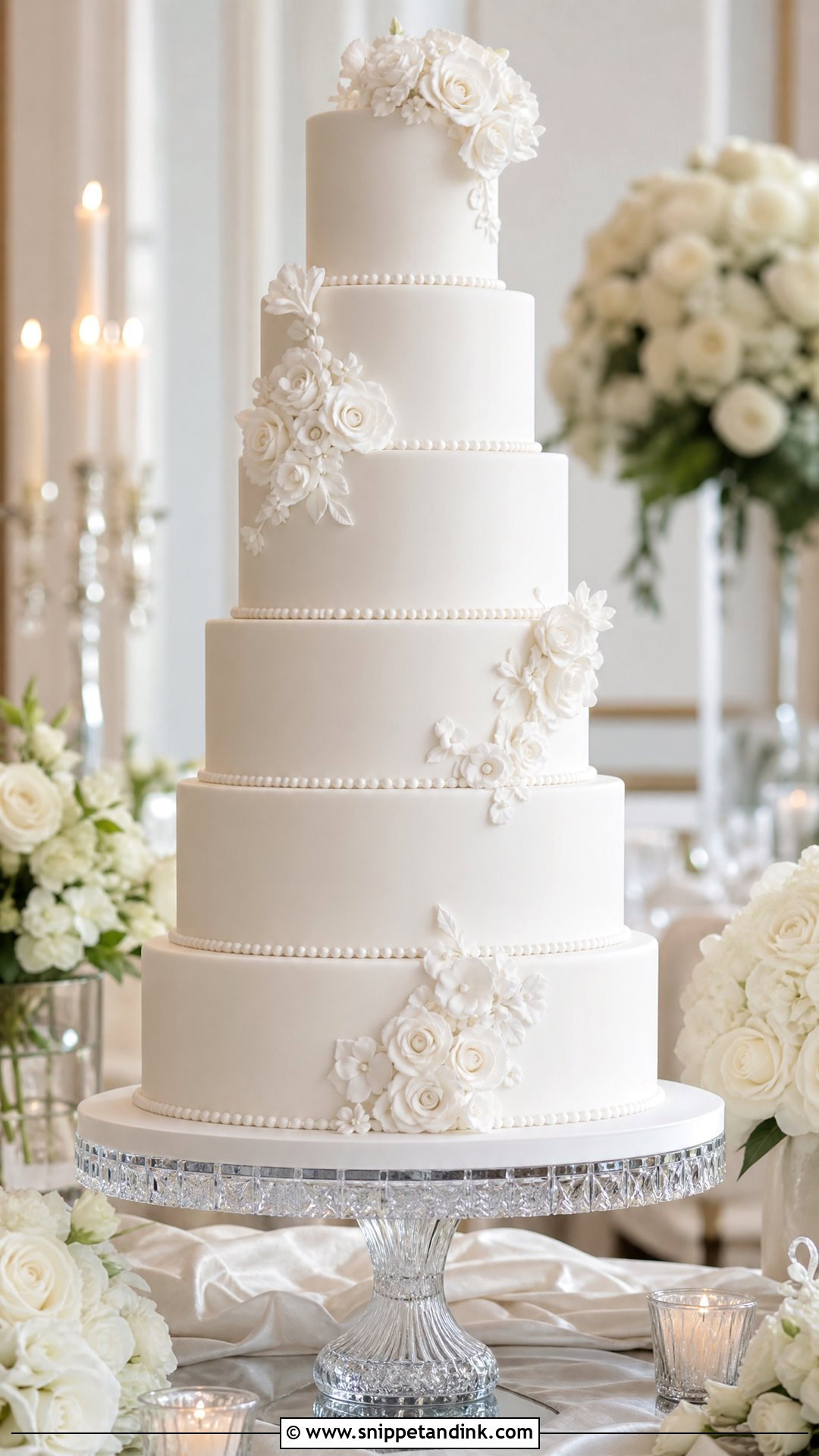
A tall white wedding cake still reads as the most formal centrepiece you can put in a room. Four to six tiers give it real presence, and keeping it all white stops the height from feeling busy. Smooth buttercream looks softer; fondant gives sharper edges and holds better in a warm ballroom. Each tier above the base sits on its own board and supports, so height is engineering as much as decoration. White sugar flowers, pearl piping or pressed texture add detail without colour.
2. Big Round Wedding Cake
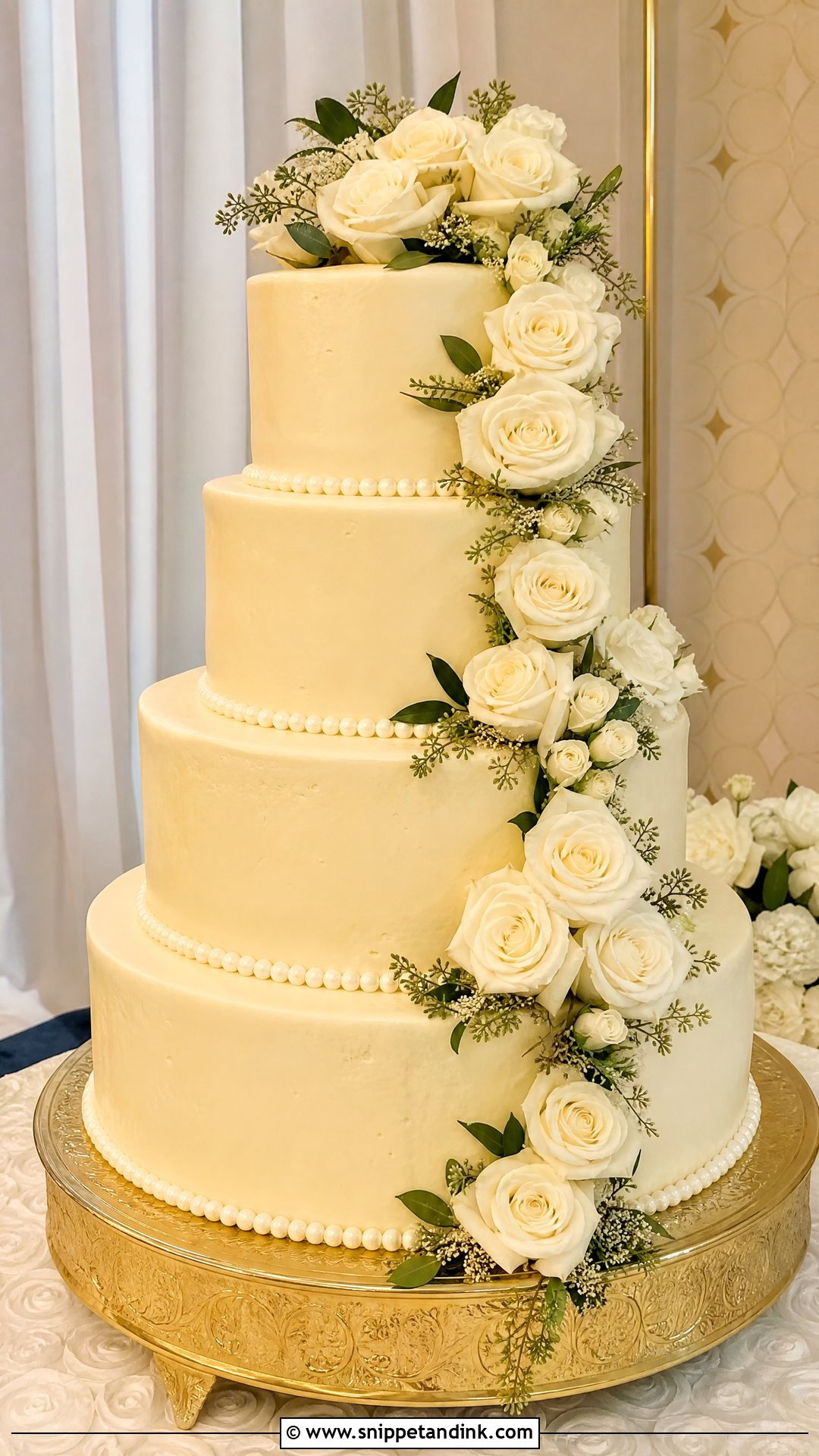
Round tiers are the easiest shape to stack, cut and photograph, and they suit nearly every theme. I often suggest taller tiers, six inches or so instead of the usual four, which gives a dramatic silhouette without adding more layers to support. Ivory buttercream warms it up; crisp white fondant makes it formal. Flowers can trail down one side, sit between tiers or ring the base. Be honest with me about the room’s ceiling height and the table, because a tall round stack on a small table looks precarious.
3. Six Tier Wedding Cake
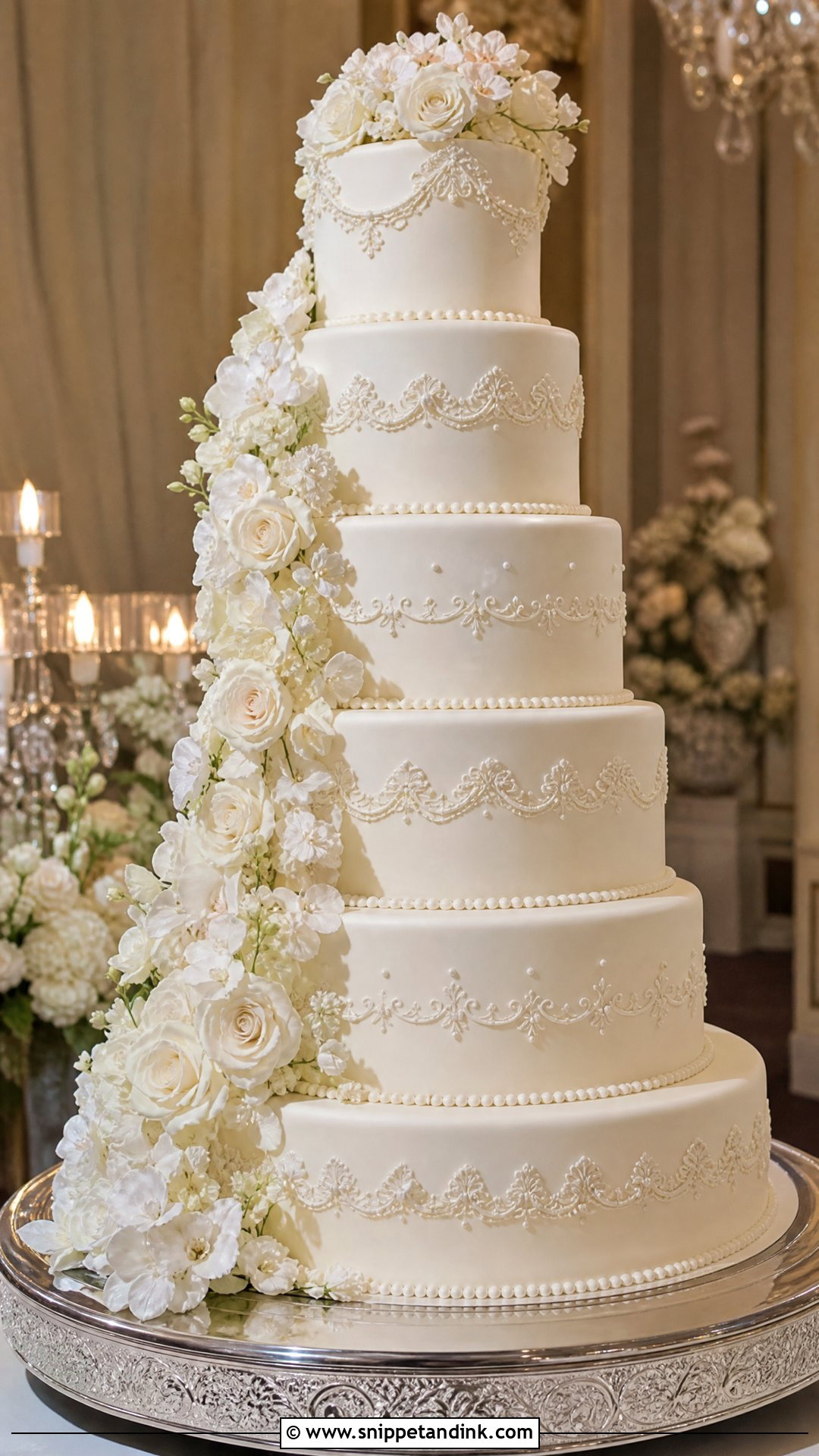
Six tiers belong in a room with high ceilings and a long guest list, and they become part of the decor. Very tall cakes need a simple colour scheme, or the detail starts to look cluttered from across the room. Smooth ivory, fine piping and a flower cascade are reliable. For something modern, alternate round and square tiers or texture every other tier. Most cakes this tall are assembled on site with a central support running through the tiers, and they need a solid stand and a table that doesn’t wobble.
4. Floral Wedding Cake
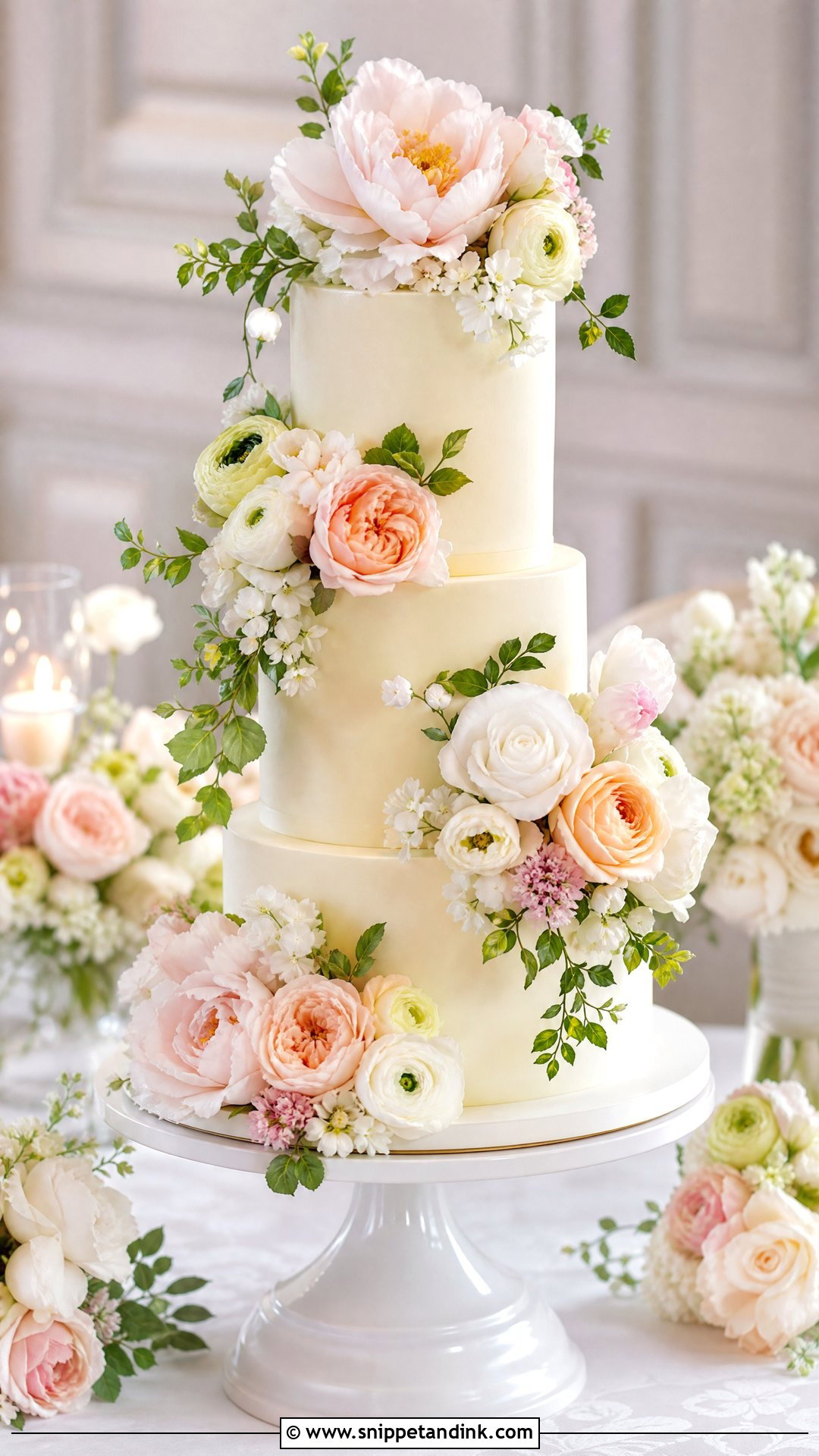
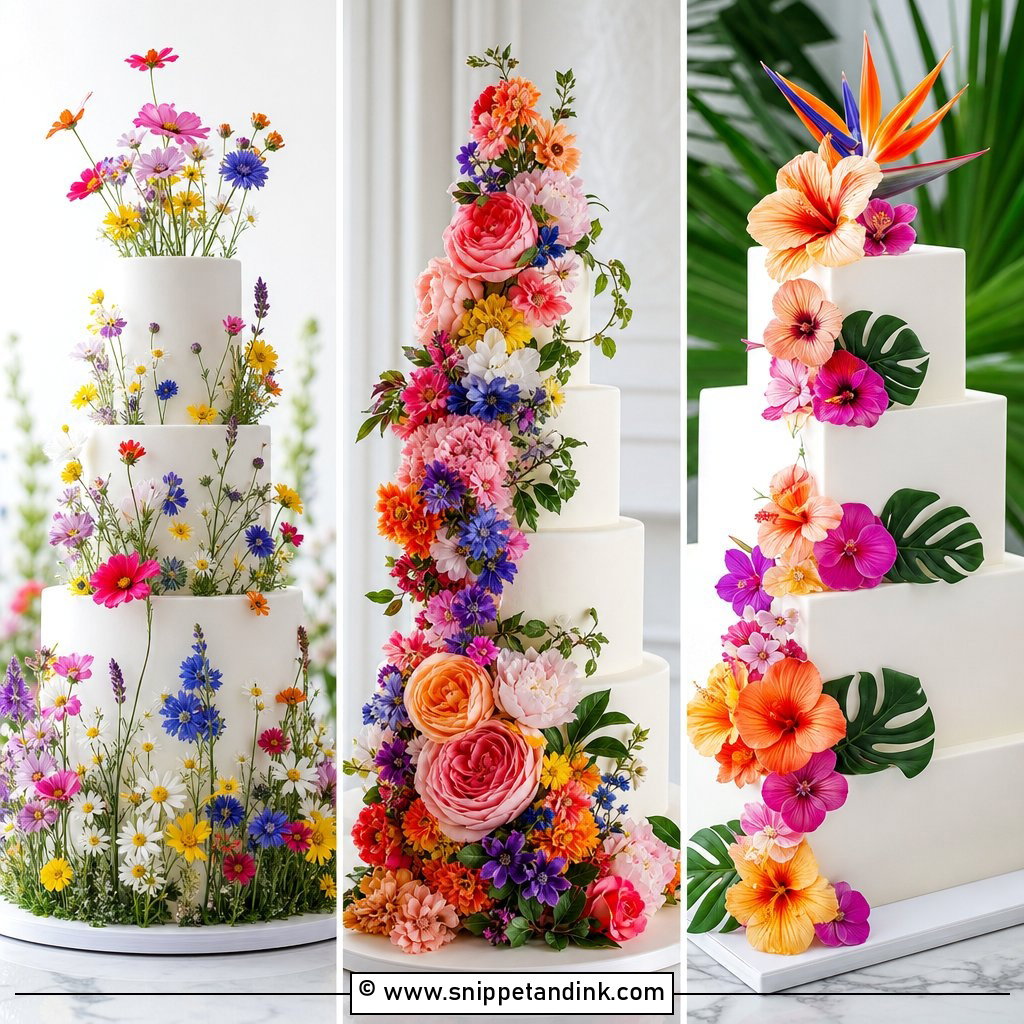
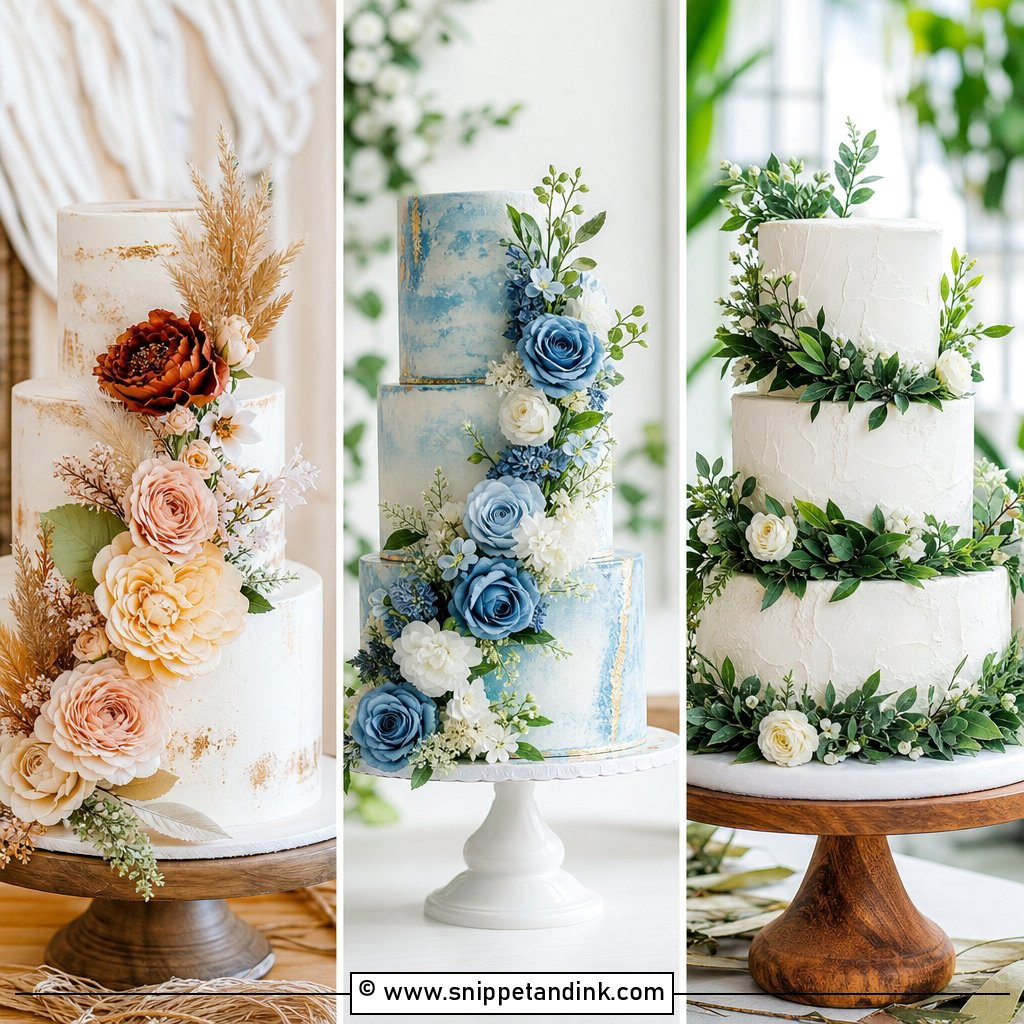
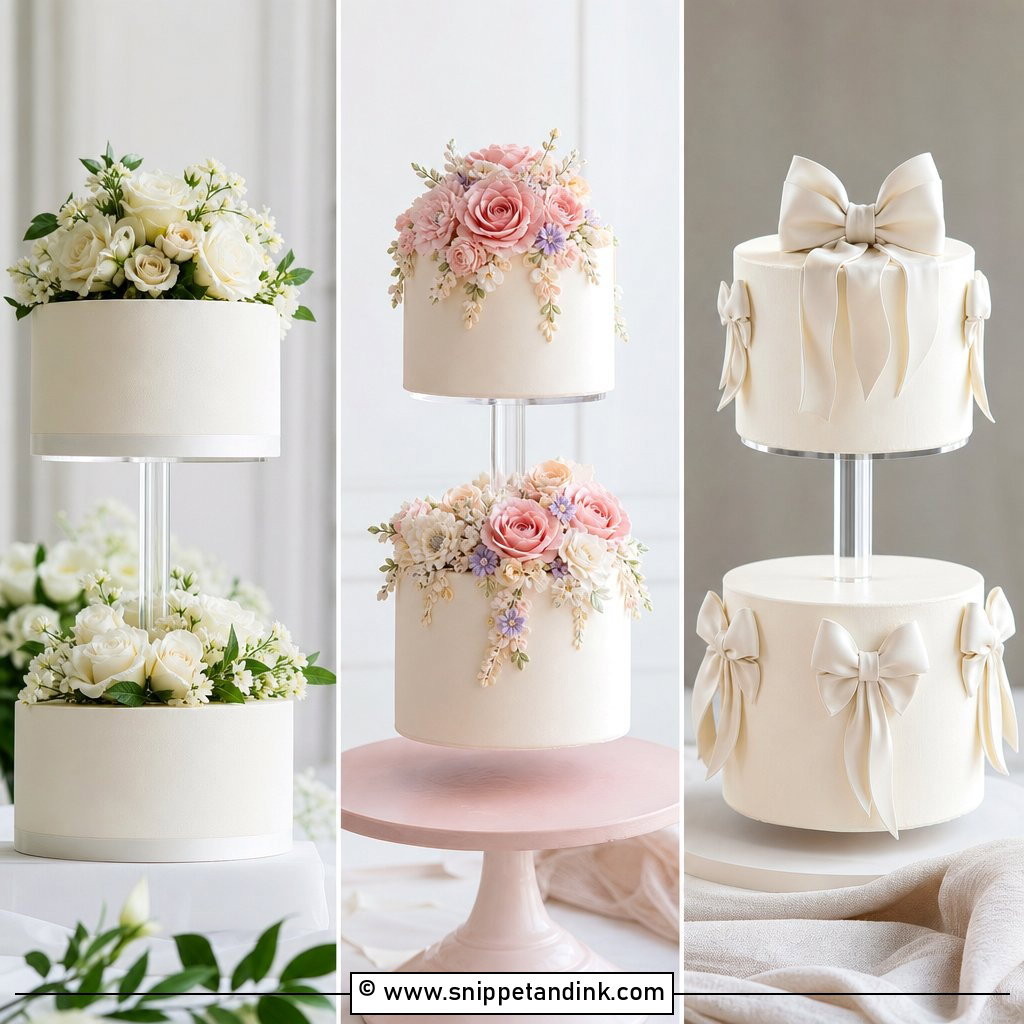
A floral cake ties the dessert to the bouquet, ceremony flowers and centrepieces. On a big cake the flowers can cascade, ring each tier or cluster at the base. Real blooms look natural, but they must be pesticide-free, non-toxic and wrapped or picked at the stem so they never touch the cake directly. Sugar flowers cost more in labour, yet they last for hours on display and let you have petals and colours that nature doesn’t offer in your season. Keep the icing plain so the flowers lead.
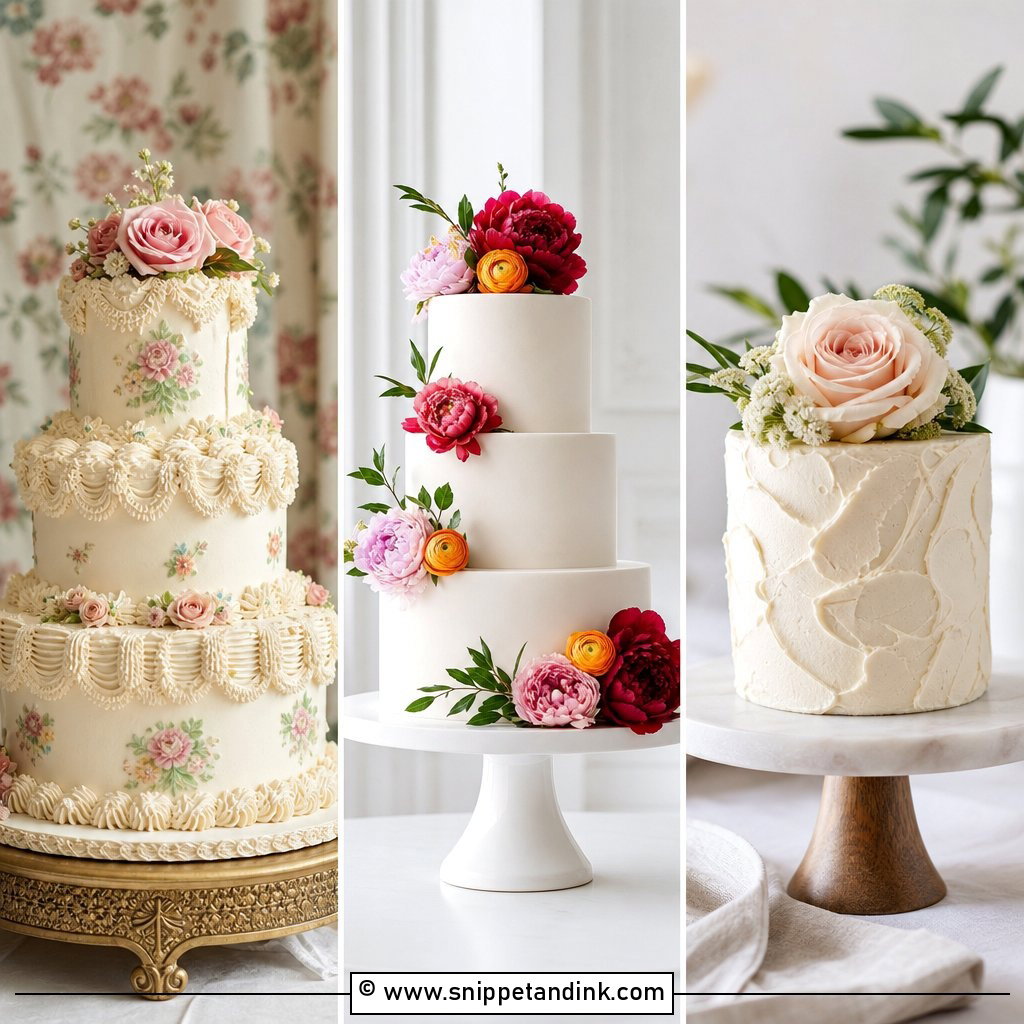
5. Vintage Wedding Cake
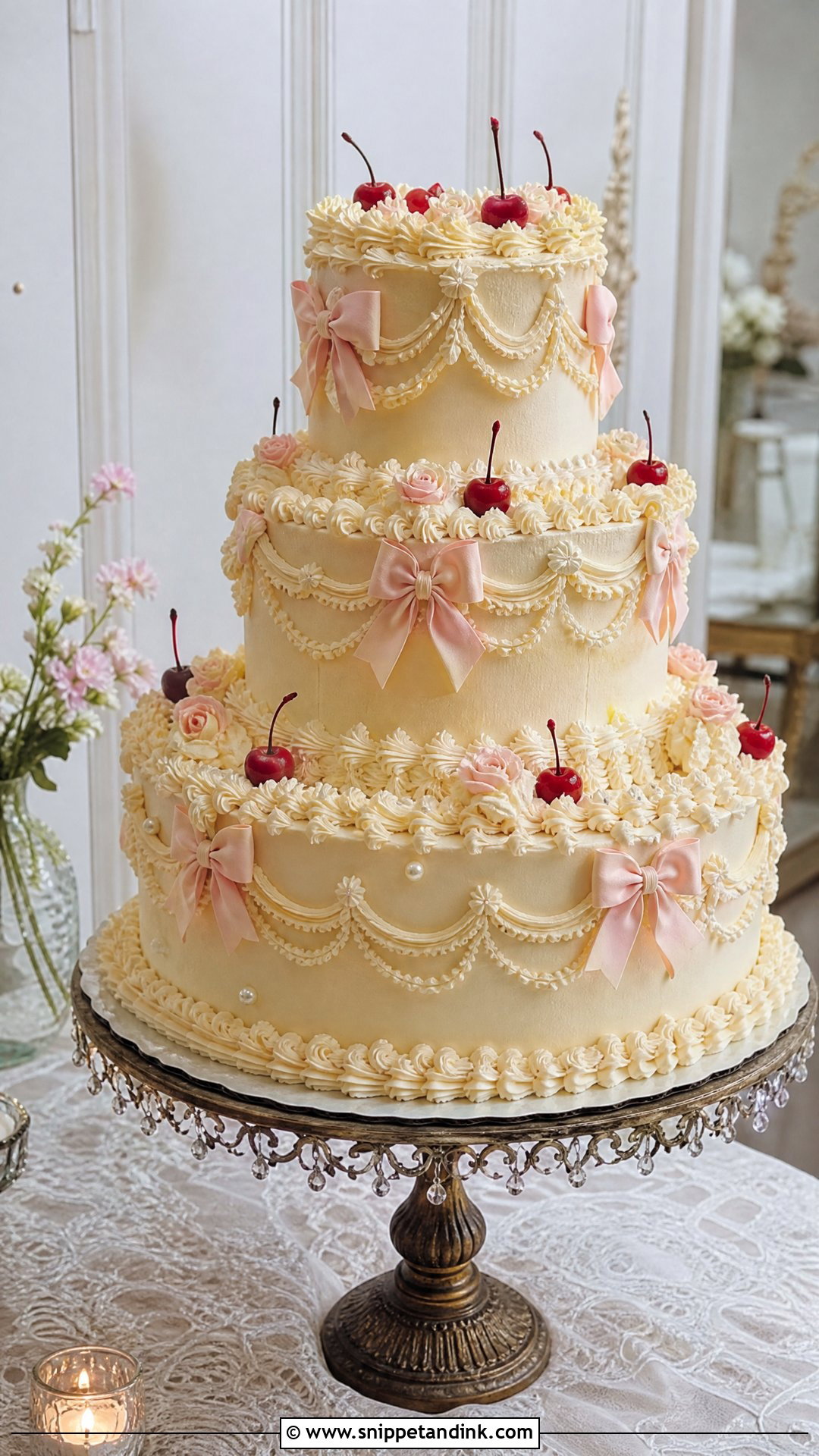
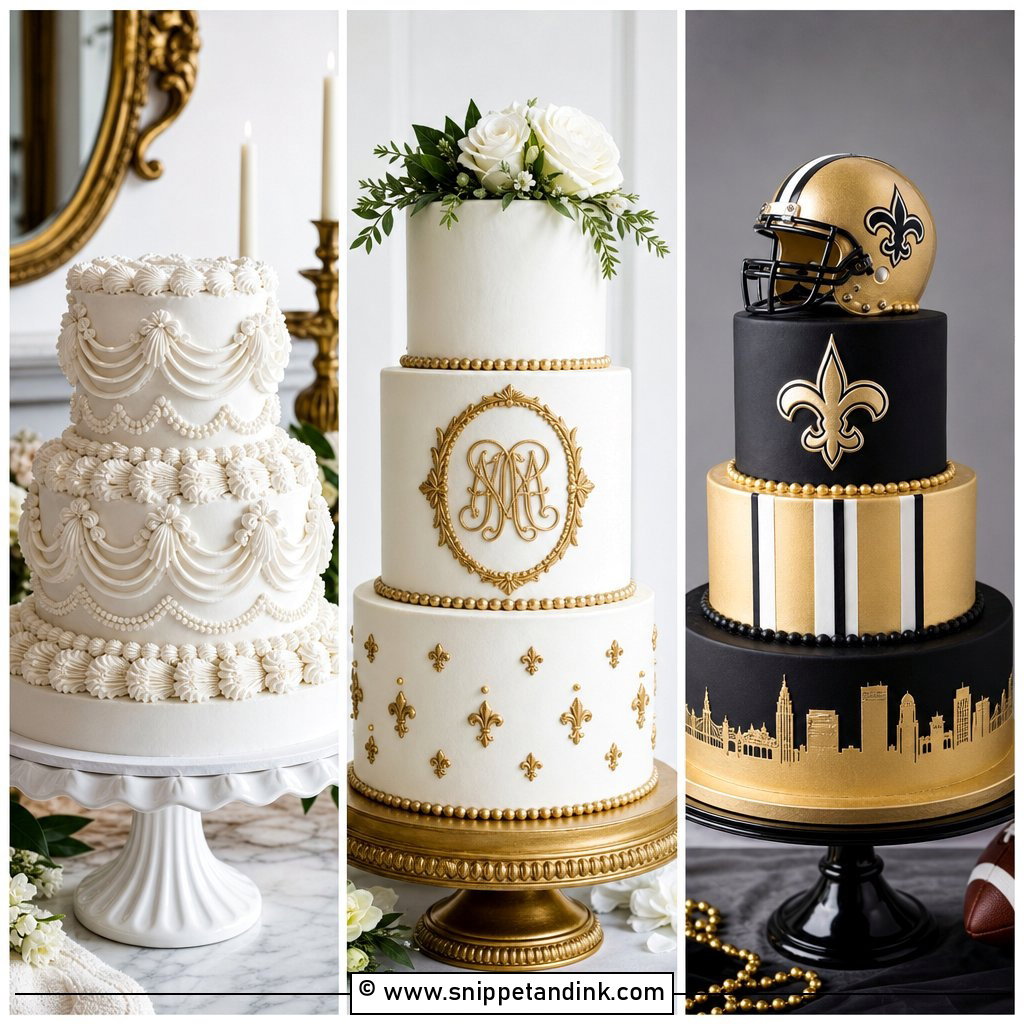
Vintage cakes bring back heavy piping, scalloped borders, pearls and soft colours. Lambeth-style overpiping, layer upon layer of piped borders, is the signature, and it takes a steady bag and a lot of hours. Three to five tall tiers give the piping room. Ivory, blush, pale blue and butter-yellow keep it nostalgic rather than costume-like, with cherries, bows, sugar pearls or tiny piped flowers as accents. Piped buttercream softens in heat, so I’d save this style for a cool room or candlelit evening.
6. Modern Wedding Cake
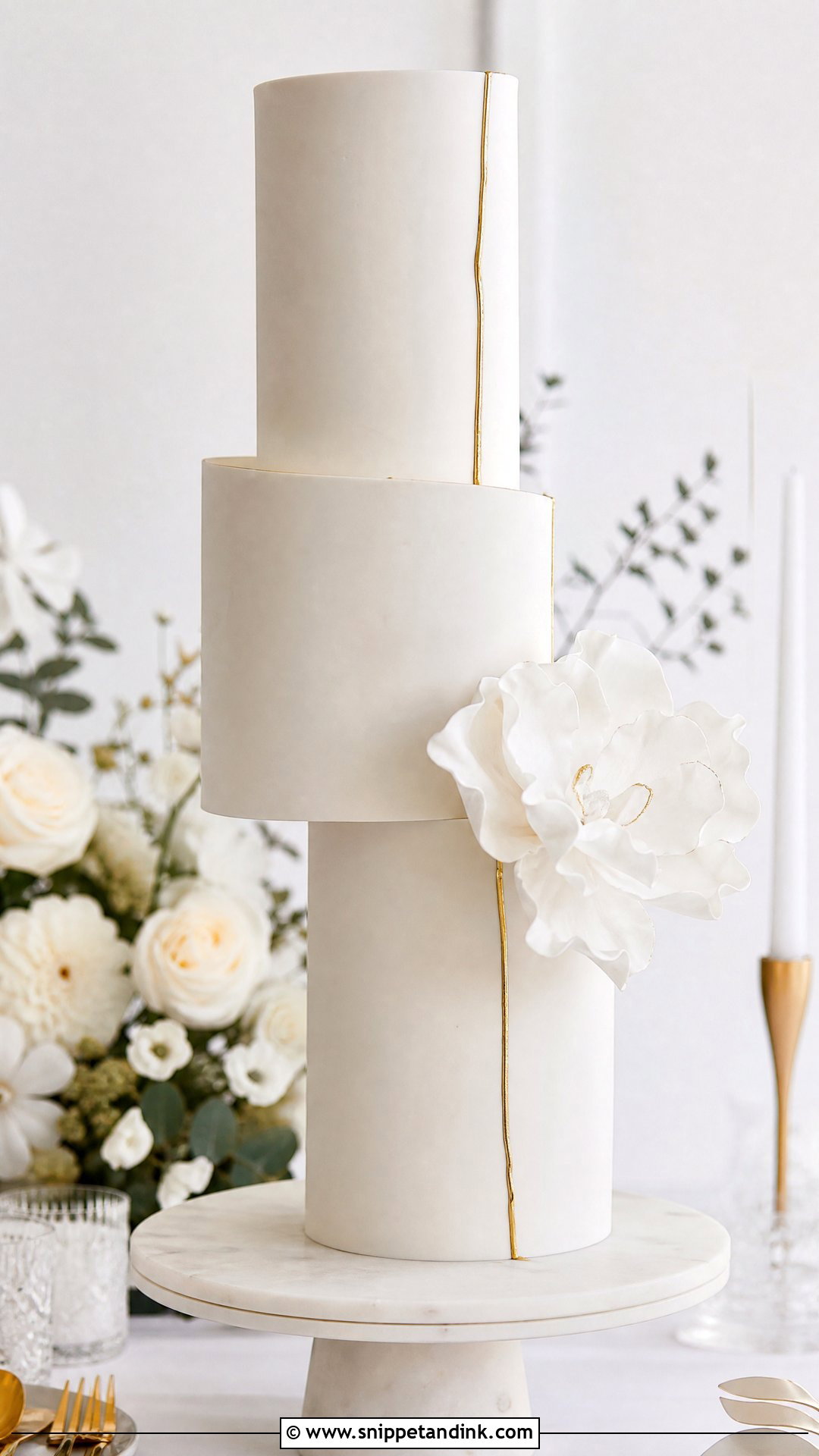
Modern cakes are about restraint: clean lines, a strong silhouette and very little decoration. stacked square tiers, offset rounds or a tall single column give a big modern cake its shape. Sharp edges show every flaw, so this is where fondant or ganache earns its place, since buttercream rarely holds a crisp corner in a warm room. White, ivory, taupe, black and muted pastels all work. One oversized sugar flower, a thin metallic line or a fondant ribbon is enough. Lofts, galleries and modern hotels suit it.
7. Square Wedding Cake
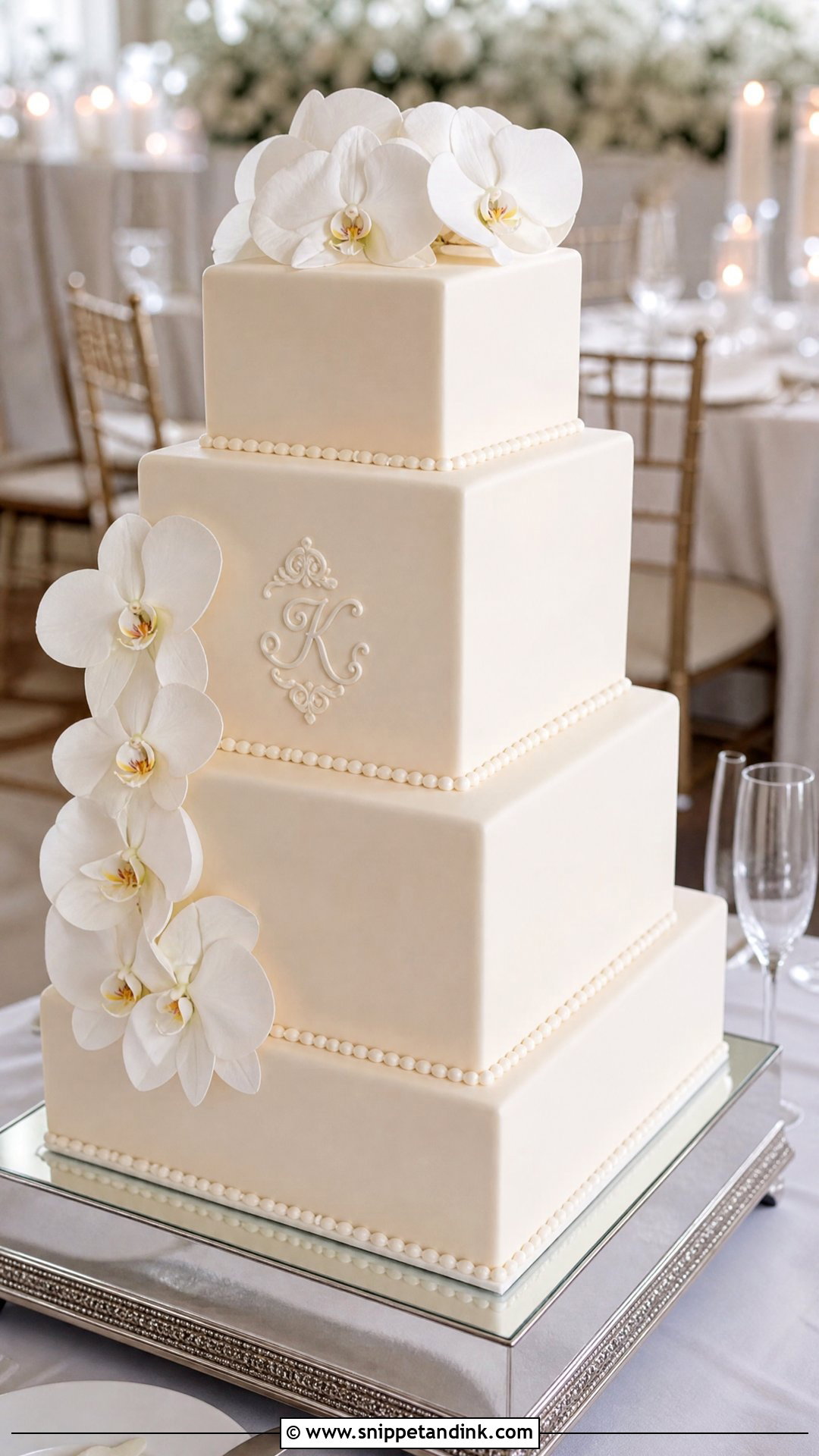
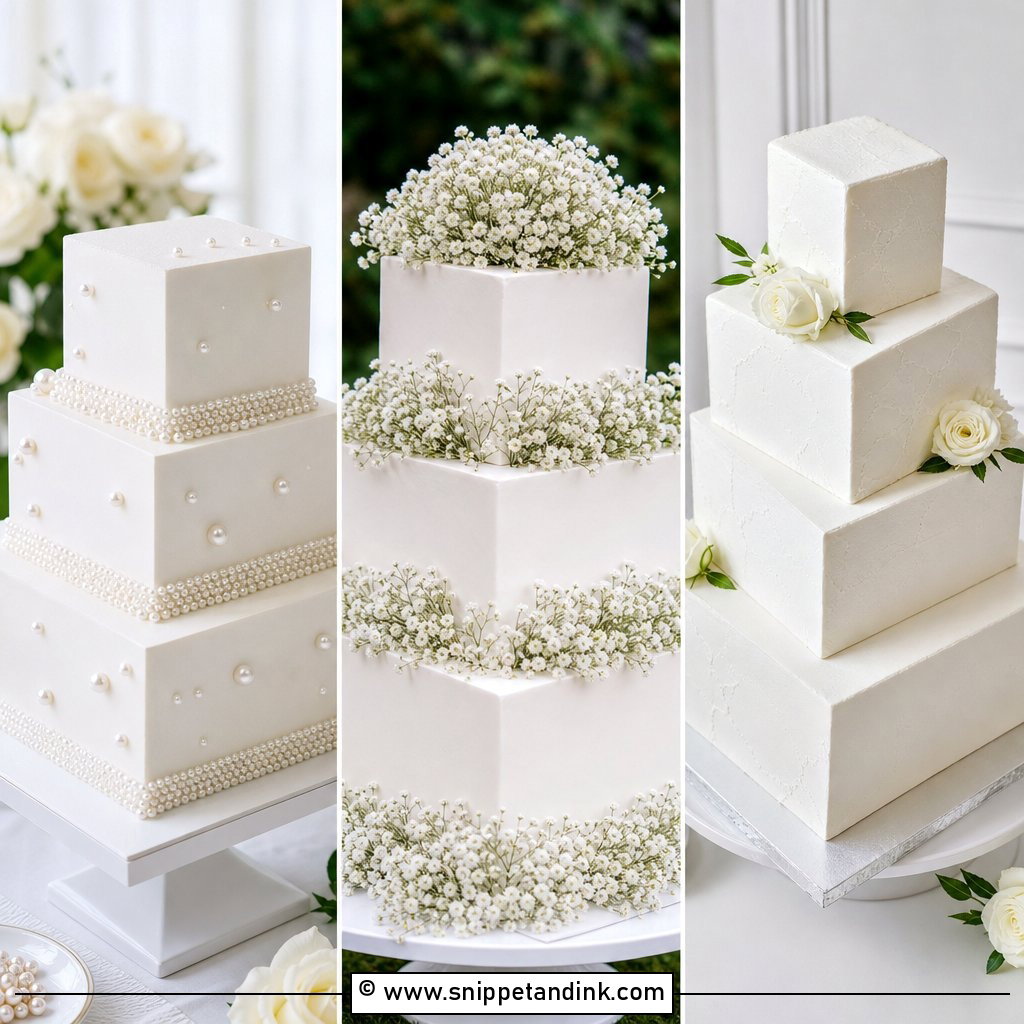
Square tiers look architectural and more modern than rounds, yet still romantic in ivory. Four square tiers in fondant are formal; textured buttercream softens them. A practical note: square tiers take more icing and more time to finish, and the corners are the first place a buttercream cake sags, so I’d steer warm outdoor weddings toward fondant here. Flowers at the corners, a monogram on the front tier or fine piping along the edges all suit it.
8. Black And White Wedding Cake
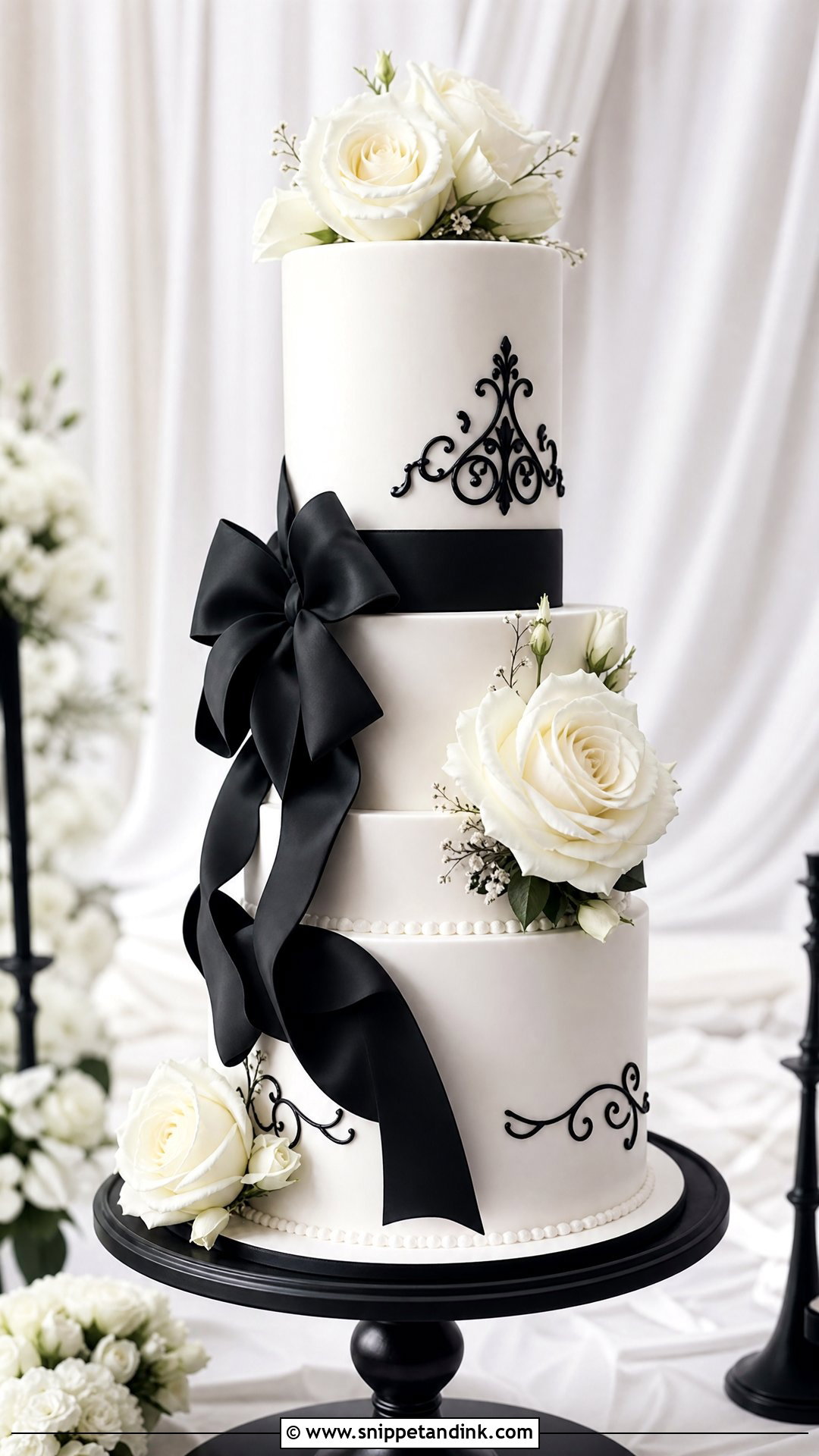
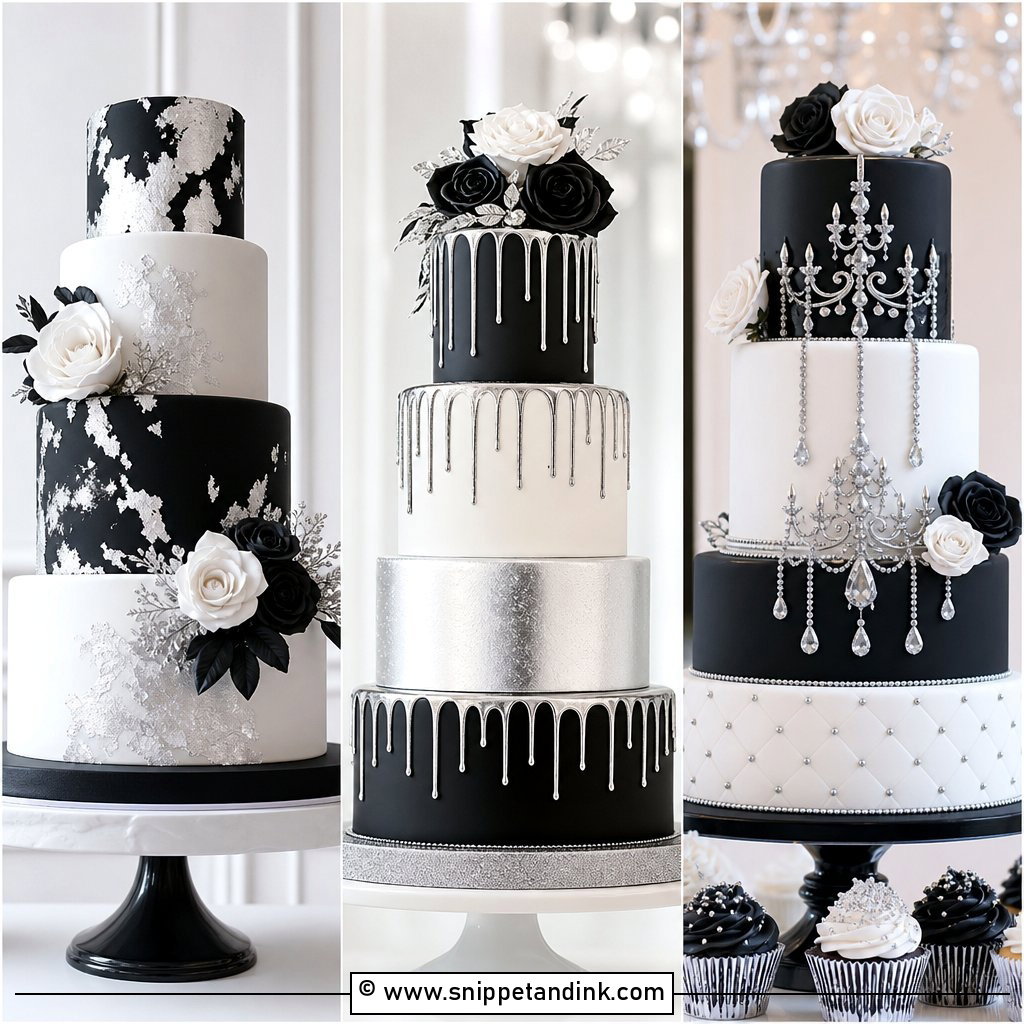
Black and white cakes are dramatic but still feel like wedding cakes, provided white stays the dominant colour. Black works best in details: ribbon, piping, stencilling or sugar flowers. A single black base tier grounds the whole design. Deep black icing needs a lot of colouring, which can affect taste and stain lips and teeth, so I usually keep black on fondant accents and decorations rather than the icing people actually eat. Vanilla bean, dark chocolate or marble flavours suit it.
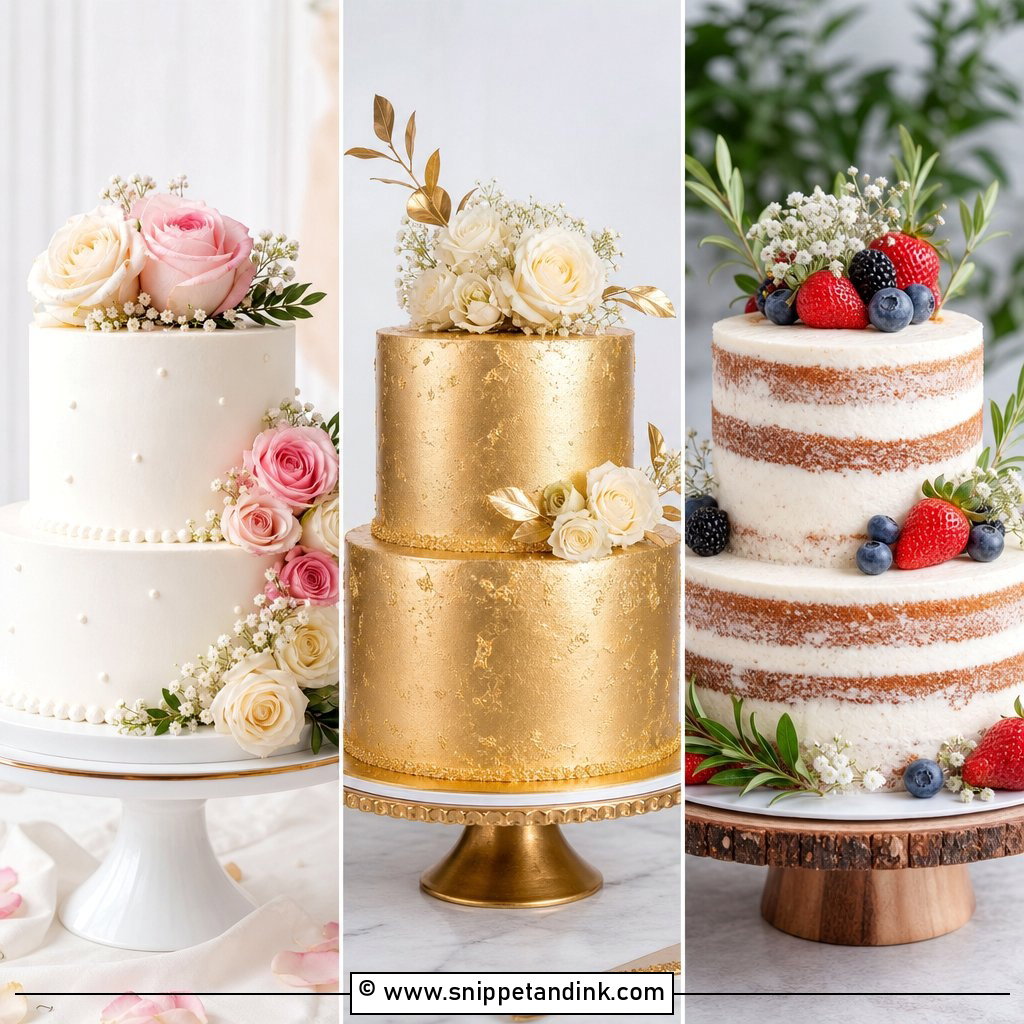
9. Gold Wedding Cake
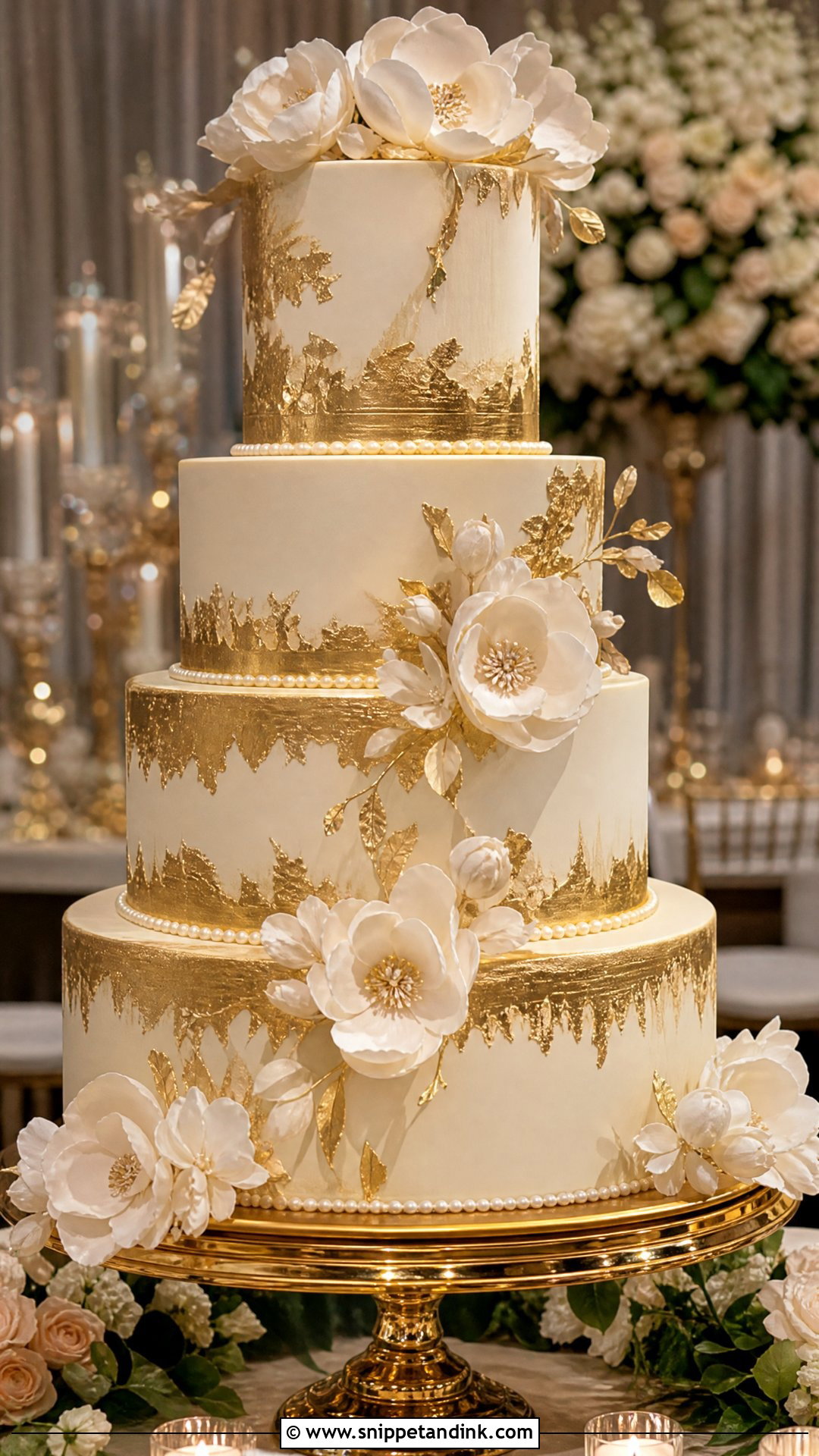
Gold reads as luxury quickly, so a little goes a long way: gold leaf, painted edges, metallic bands or a brushed texture over ivory, white, champagne, blush or beige. On a tall cake I’d gild one or two tiers rather than all of them, unless glamour is the whole point. Use edible gold leaf or lustre only; some craft glitters sold as “decorative” aren’t food-safe. Warm evening lighting is where gold looks its best.
10. Pearl Wedding Cake
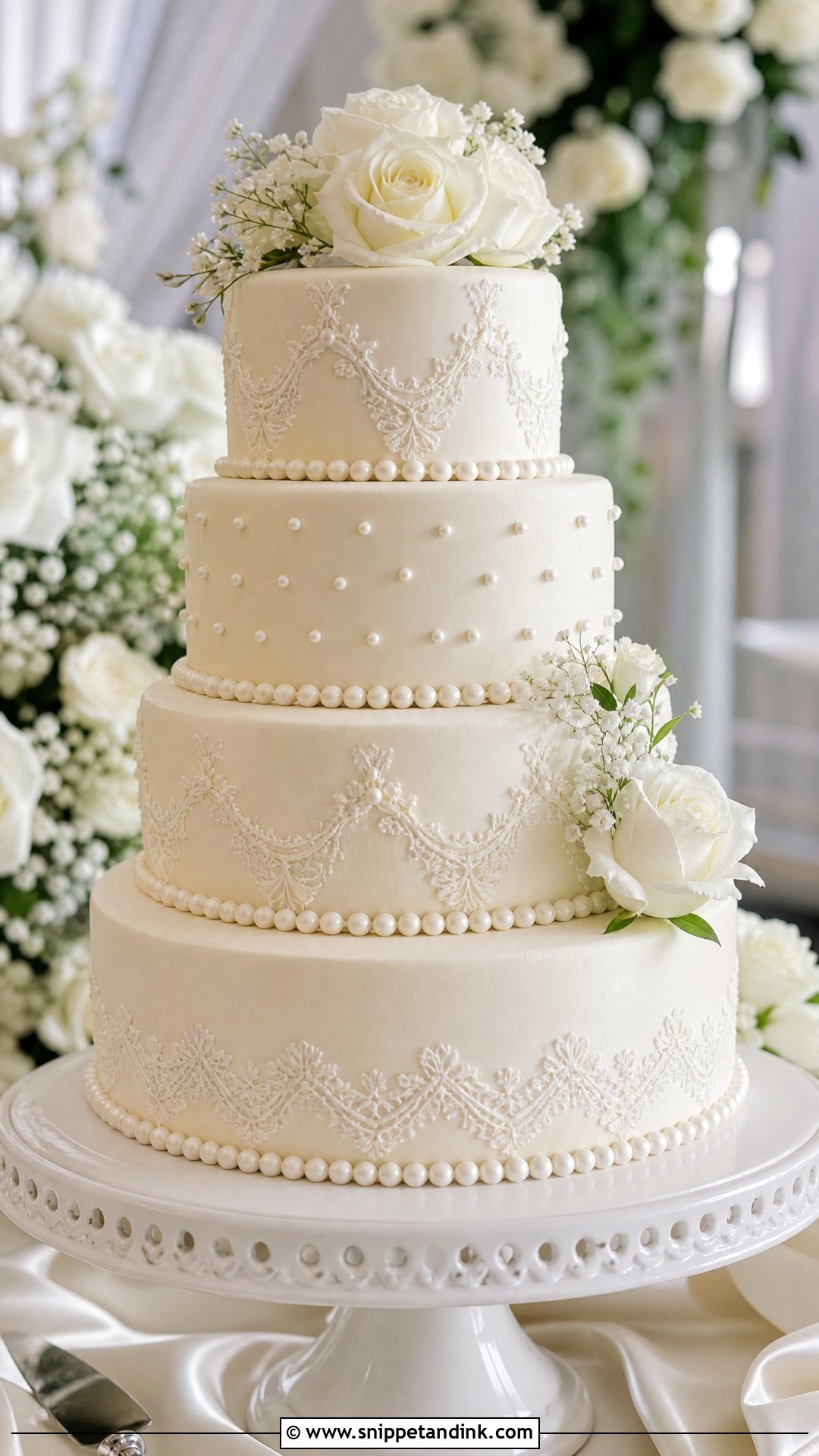
Sugar pearls add texture without noise: borders, scattered across tiers or set in neat patterns for a couture finish. Each pearl is placed by hand, so dense pearl patterns are slow work and that shows up in the quote. On a big cake they fill space quietly. An ivory base keeps the effect soft, and white roses, satin ribbon effects or lace piping tie it to a satin gown and pearl accessories.
11. Bow Wedding Cake
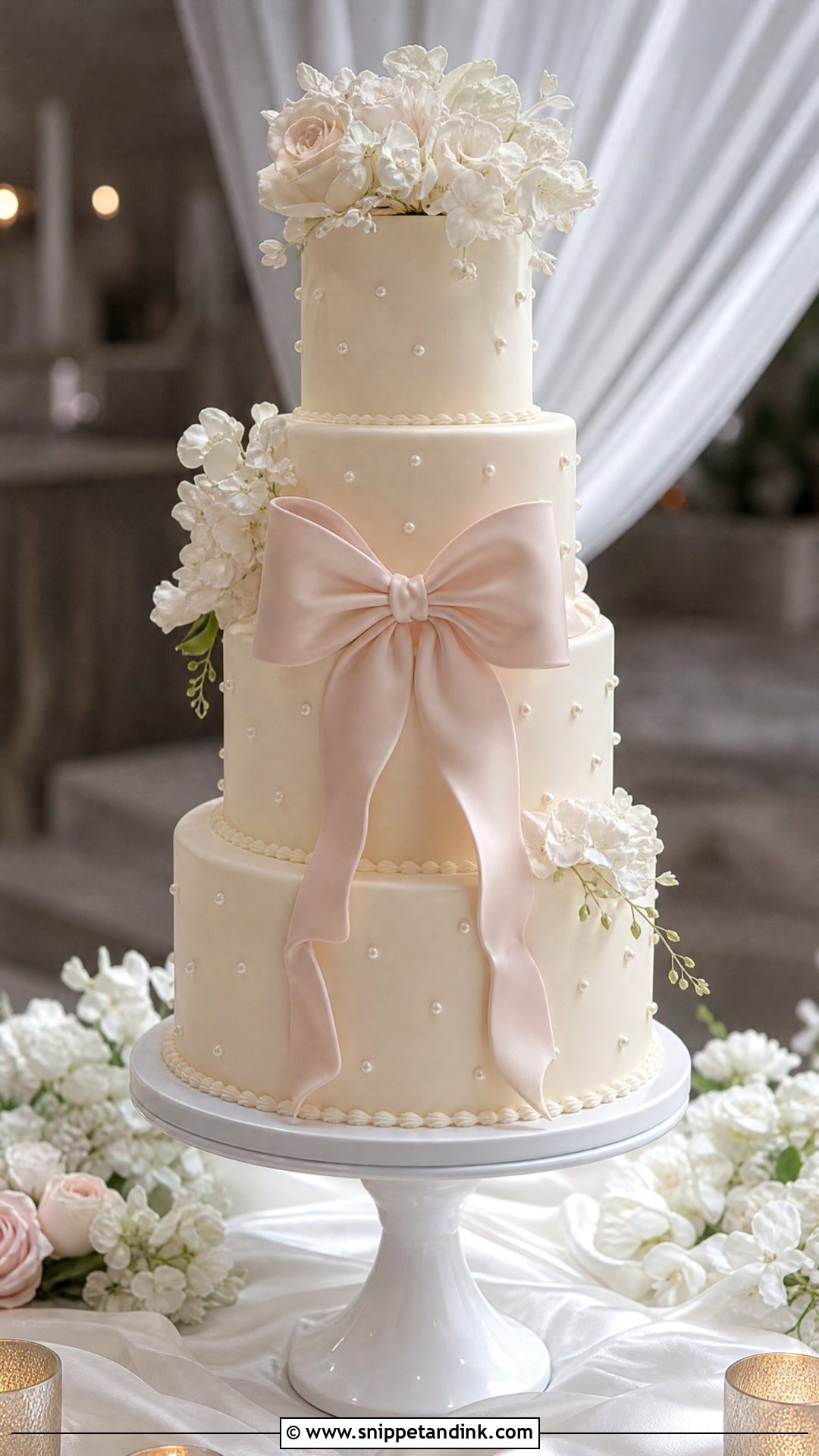
Bows have moved from vintage to fashion, and a big fondant or sugar bow turns a plain tiered cake into something people photograph. One oversized bow on a middle tier is the bolder version; small bows between tiers are softer. White on white is classic, while blush, blue or black can match the palette. Large bows are made in advance and left to dry so they hold their loops, which is why they’re usually sugar or modelling paste rather than buttercream.
12. Buttercream Wedding Cake
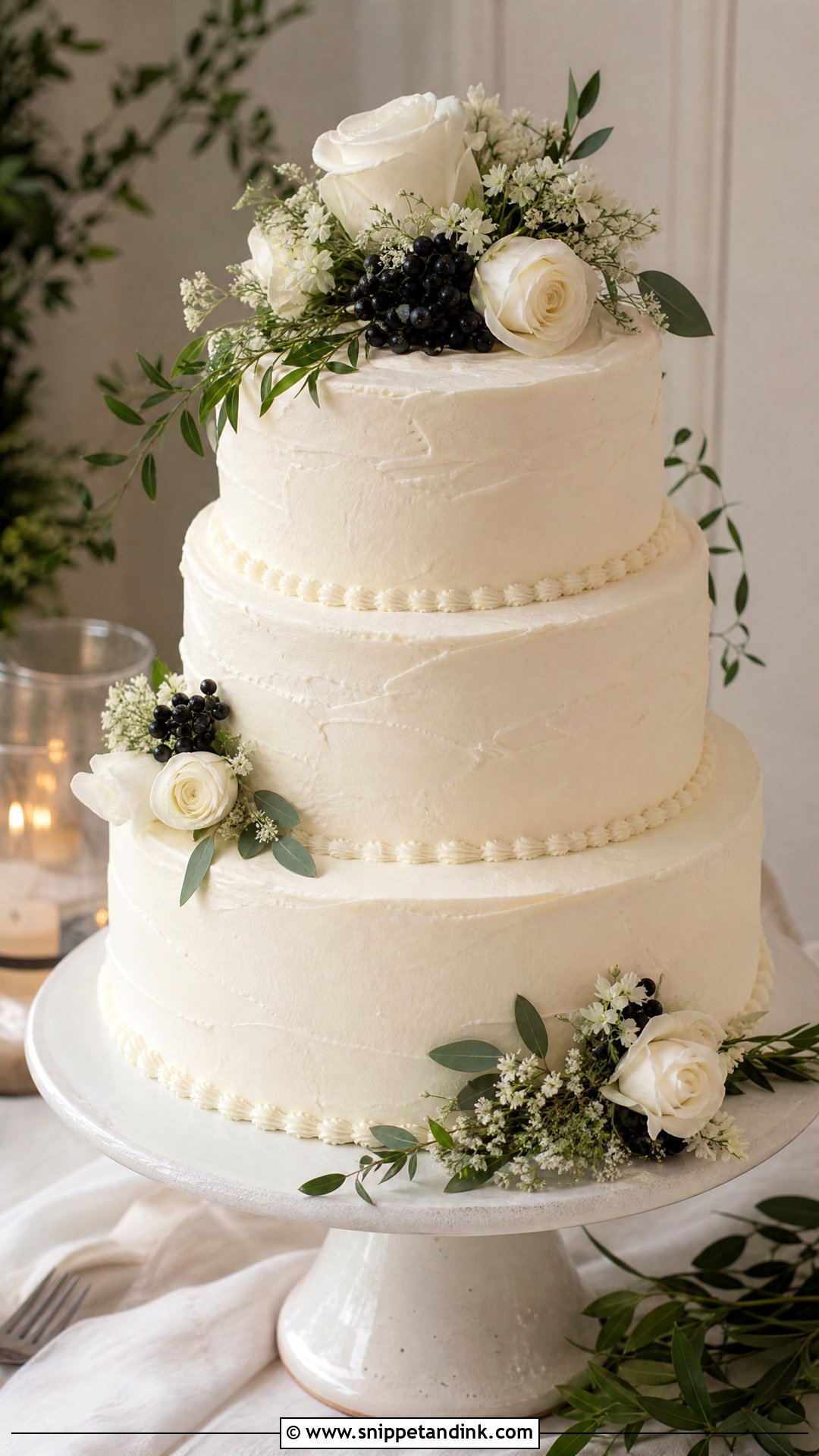
Buttercream is the icing people actually enjoy eating, and it pairs with vanilla, almond, lemon, chocolate, berry and caramel layers. It can be smooth, lightly textured, piped, ruffled or left rustic. Heat is the honest concern. Classic American buttercream softens and slides in a hot tent, while meringue-based Swiss or Italian buttercream is smoother but melts faster. For outdoor summer weddings I ask where the cake will stand and for how long, and plan the recipe around that.
13. Fondant Wedding Cake
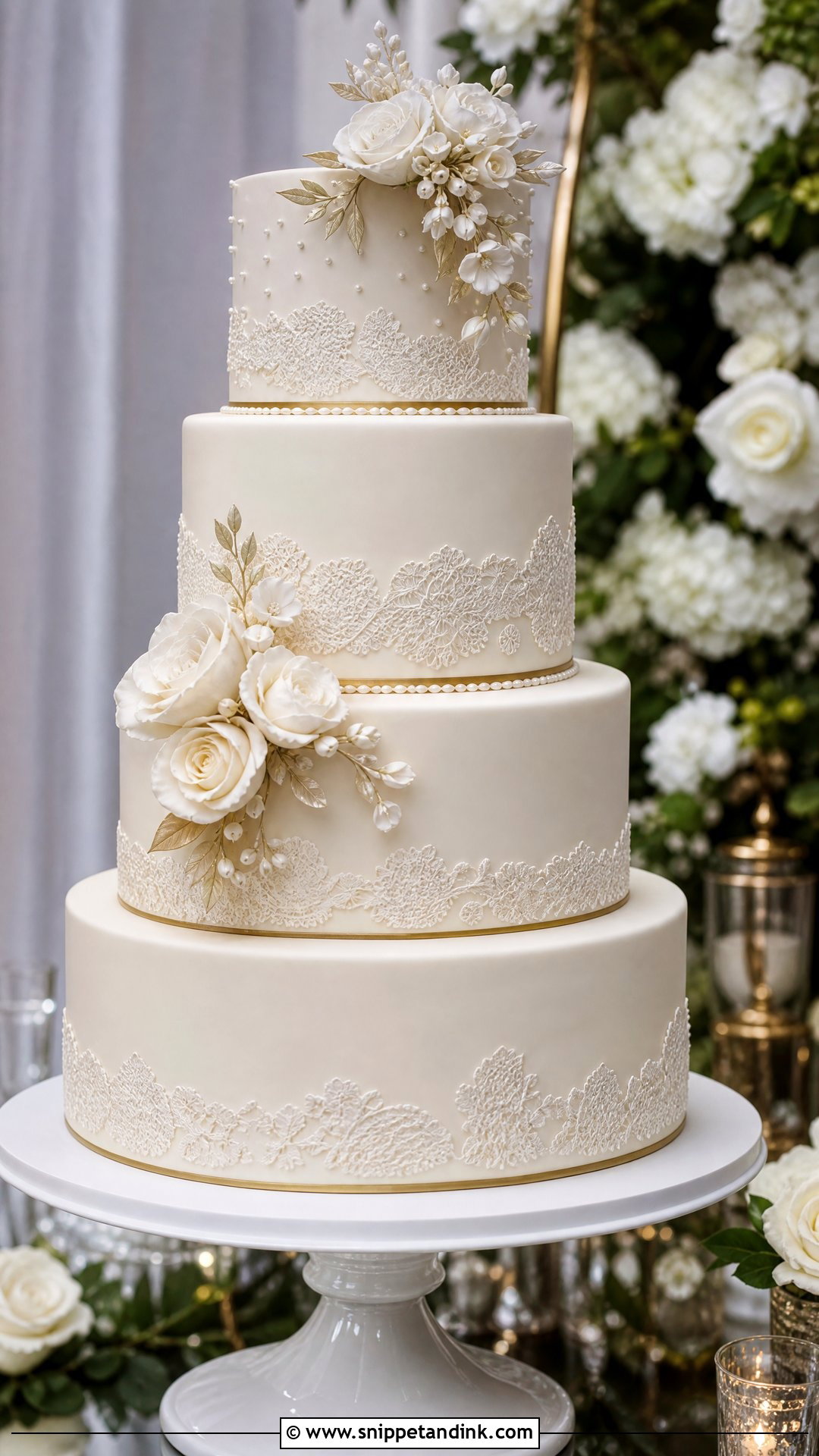
Fondant gives sharp edges and a perfectly smooth surface, so it suits tall tiers and detailed decoration: painting, lace impressions, metallics, sculpted flowers and geometric shapes. It also protects the cake underneath from drying out during a long display. Plenty of guests peel it off, so I roll it thin over a well-flavoured buttercream or ganache. Fondant does sweat if moved from a cold fridge into a warm room, so a fondant cake should never be refrigerated just before delivery.
14. Cascading Flower Wedding Cake
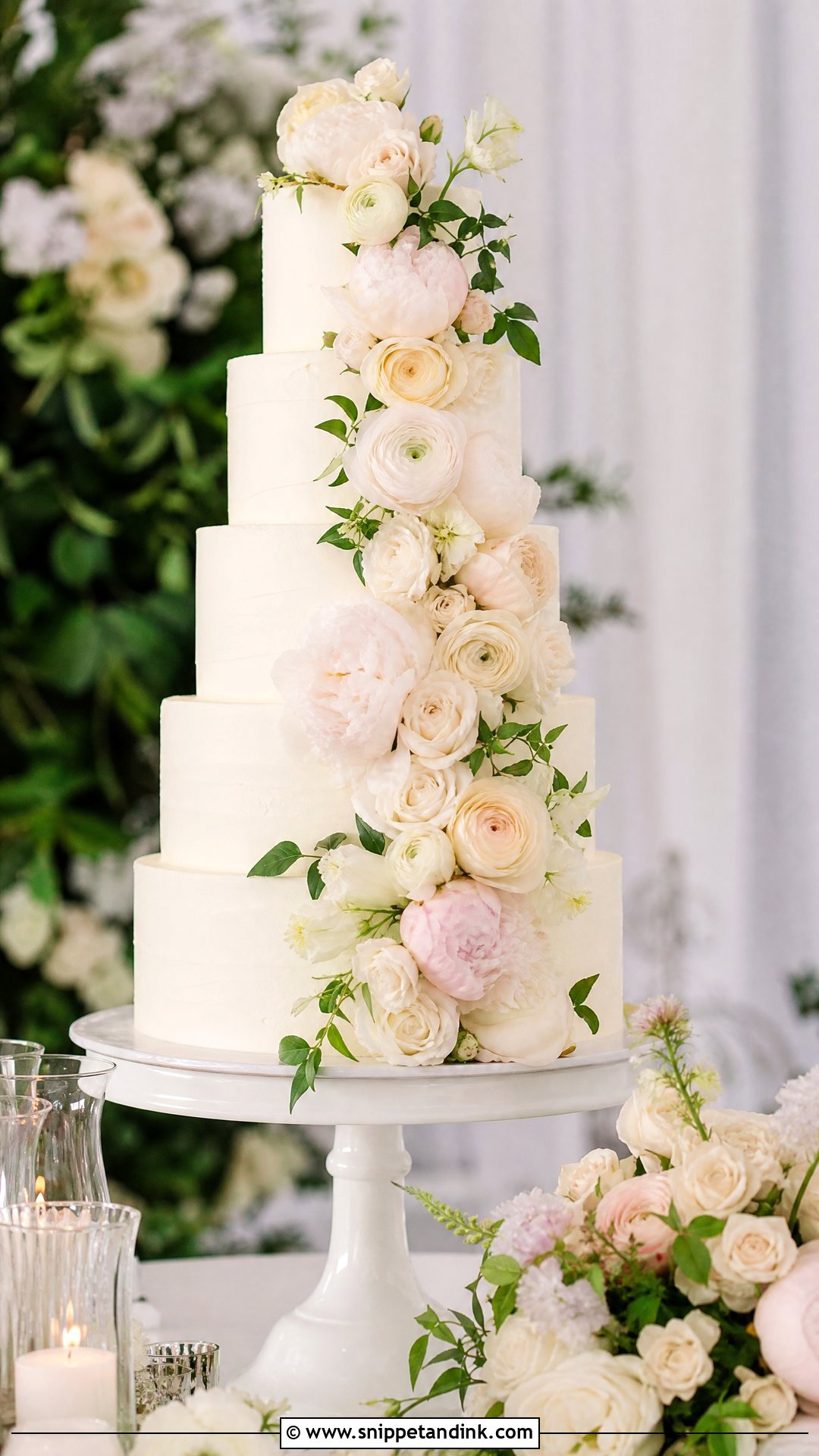
A flower cascade runs from the top tier to the base, giving a big cake height, movement and a focal line. Use roses, orchids, peonies, ranunculus or sugar flowers. Keep the base icing plain, smooth ivory buttercream or white fondant, so the line of flowers is the design. Real flowers for a cascade go on at the venue, usually by the florist or me, so the stems spend as little time on the cake as possible. Matching the cascade to the bouquet makes the room feel connected.



15. Greenery Wedding Cake
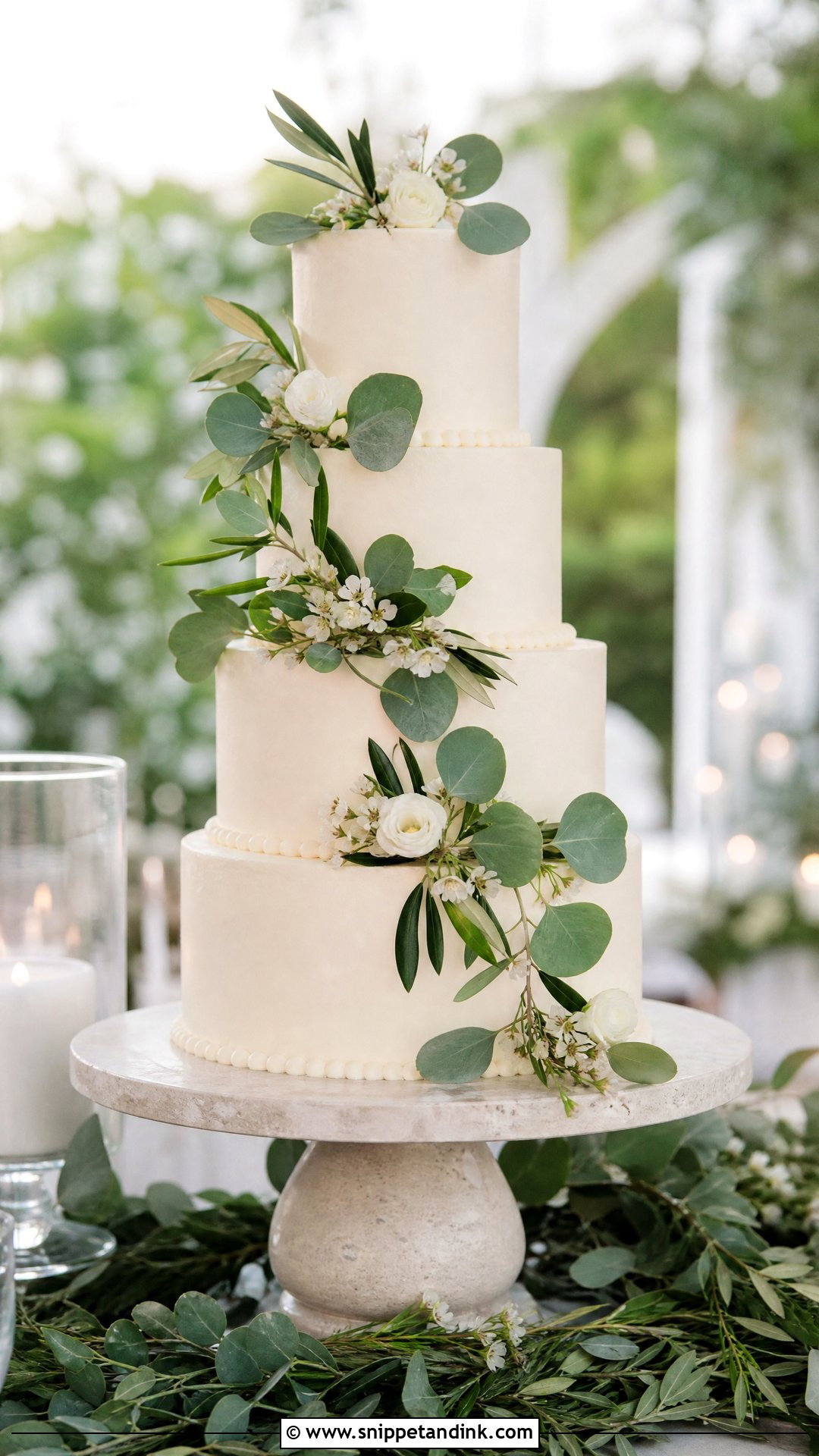
Greenery gives a cake shape without heavy flowers: eucalyptus, olive leaves, fern or sugar leaves wrapping around tiers or trailing down one side. Not all greenery is safe near food, and some eucalyptus and ornamental foliage can be toxic, so I wrap stems or use sugar leaves where the foliage touches icing. White, ivory or beige frosting suits it. A few white flowers soften it; leaving it green keeps it botanical. Barns, gardens and outdoor receptions suit it.
16. Rustic Wedding Cake
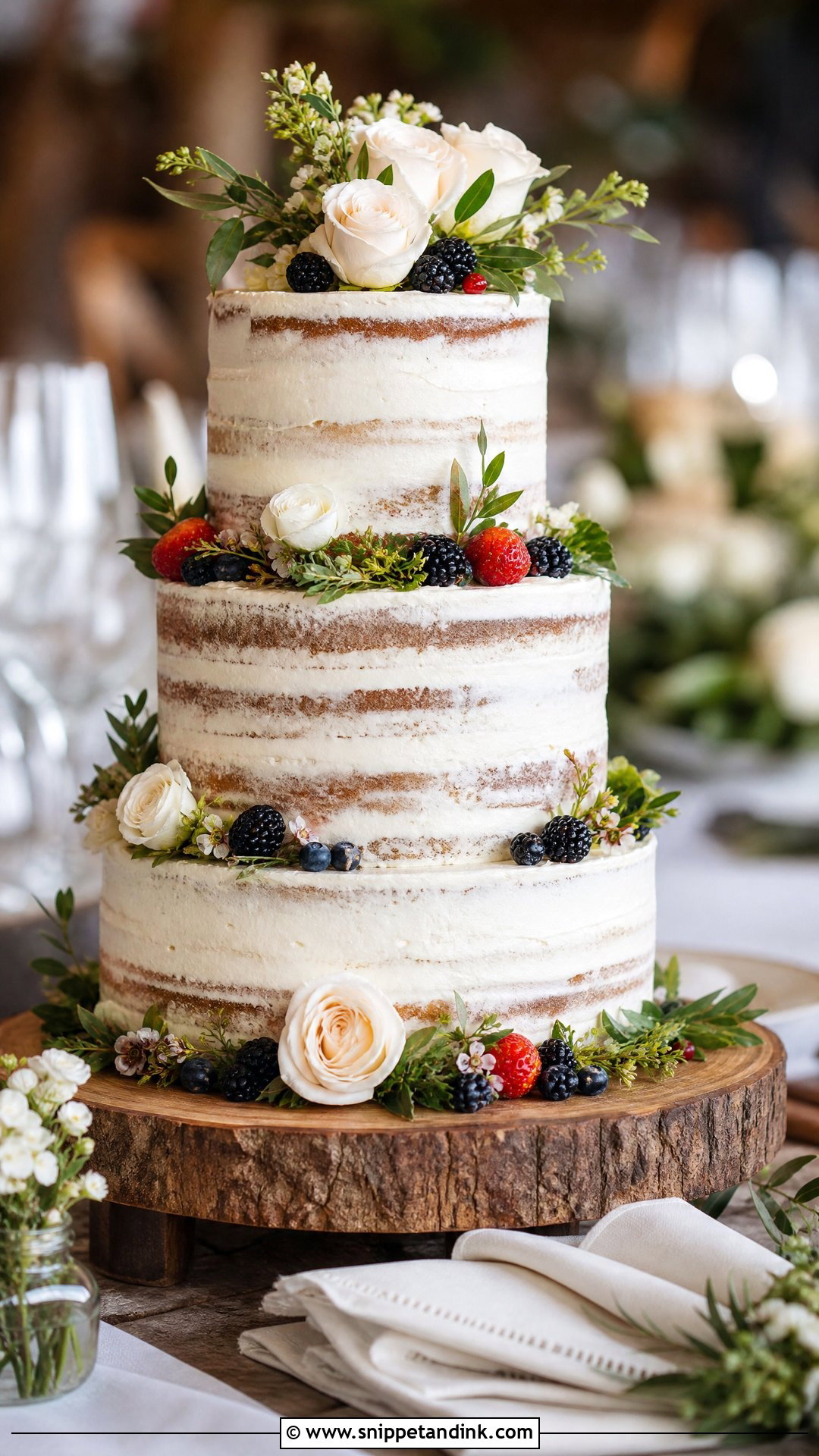
Rustic cakes are deliberately relaxed: semi-naked icing, textured buttercream, flowers, berries or greenery, with layers that look handmade. Semi-naked cakes dry out faster than fully iced ones because the sponge is exposed, so I ice and decorate them as close to delivery as possible. Vanilla bean, carrot, spice, lemon or chocolate flavours suit the look. Barns, farms, lodges and back gardens are its home.
17. Luxury Wedding Cake
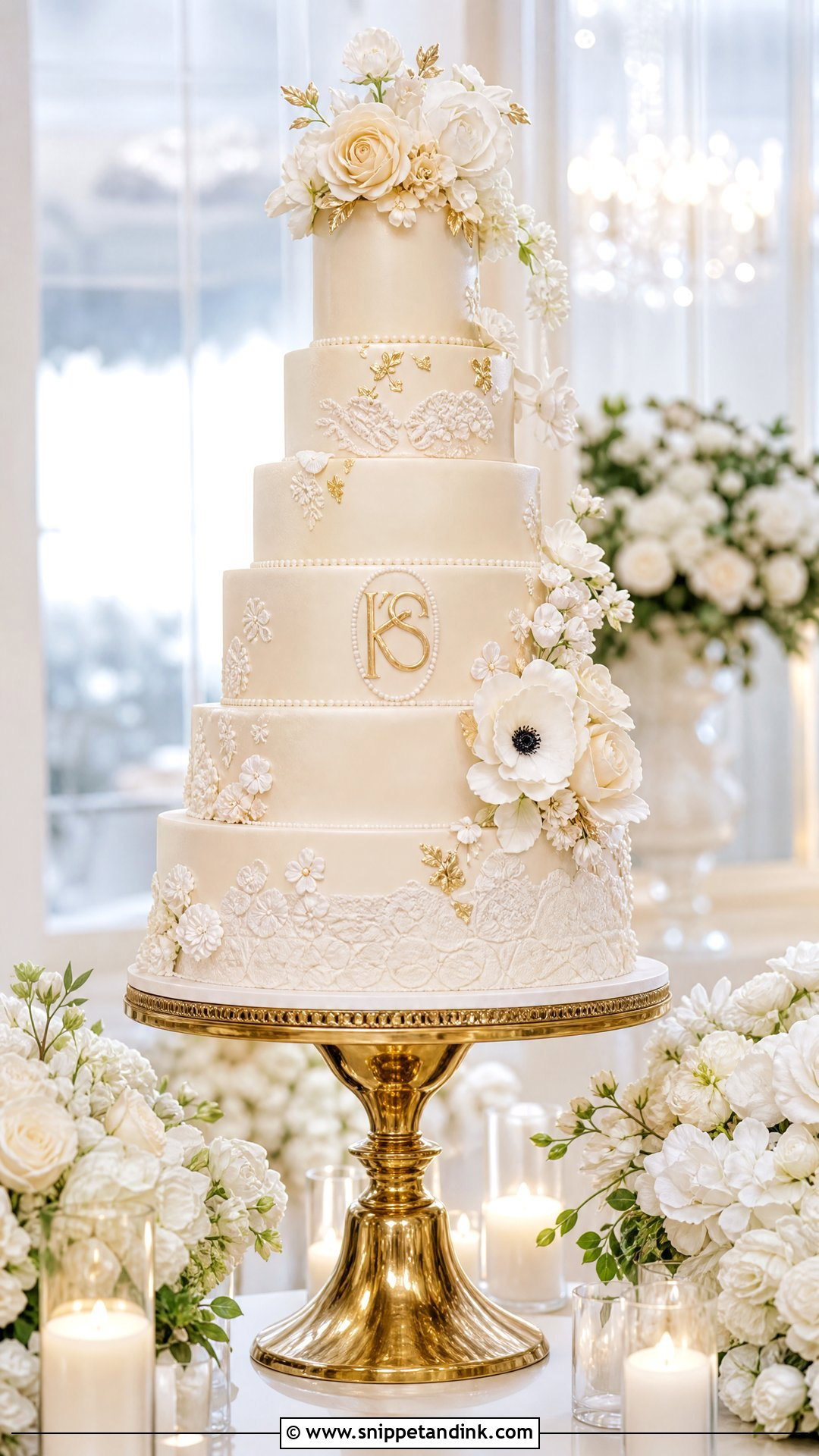
Luxury comes from precision rather than quantity: tall tiers, flawless icing, exact detail and a clear design story. Sugar flowers, gold leaf, pearls, lace texture, monograms or hand painting can all appear, but chosen and controlled, not all at once. Ivory, white, champagne and blush are reliable. Display is part of it, a grand stand with flowers or fabric at the base. Formal receptions and evening weddings suit it.
18. Simple Wedding Cake
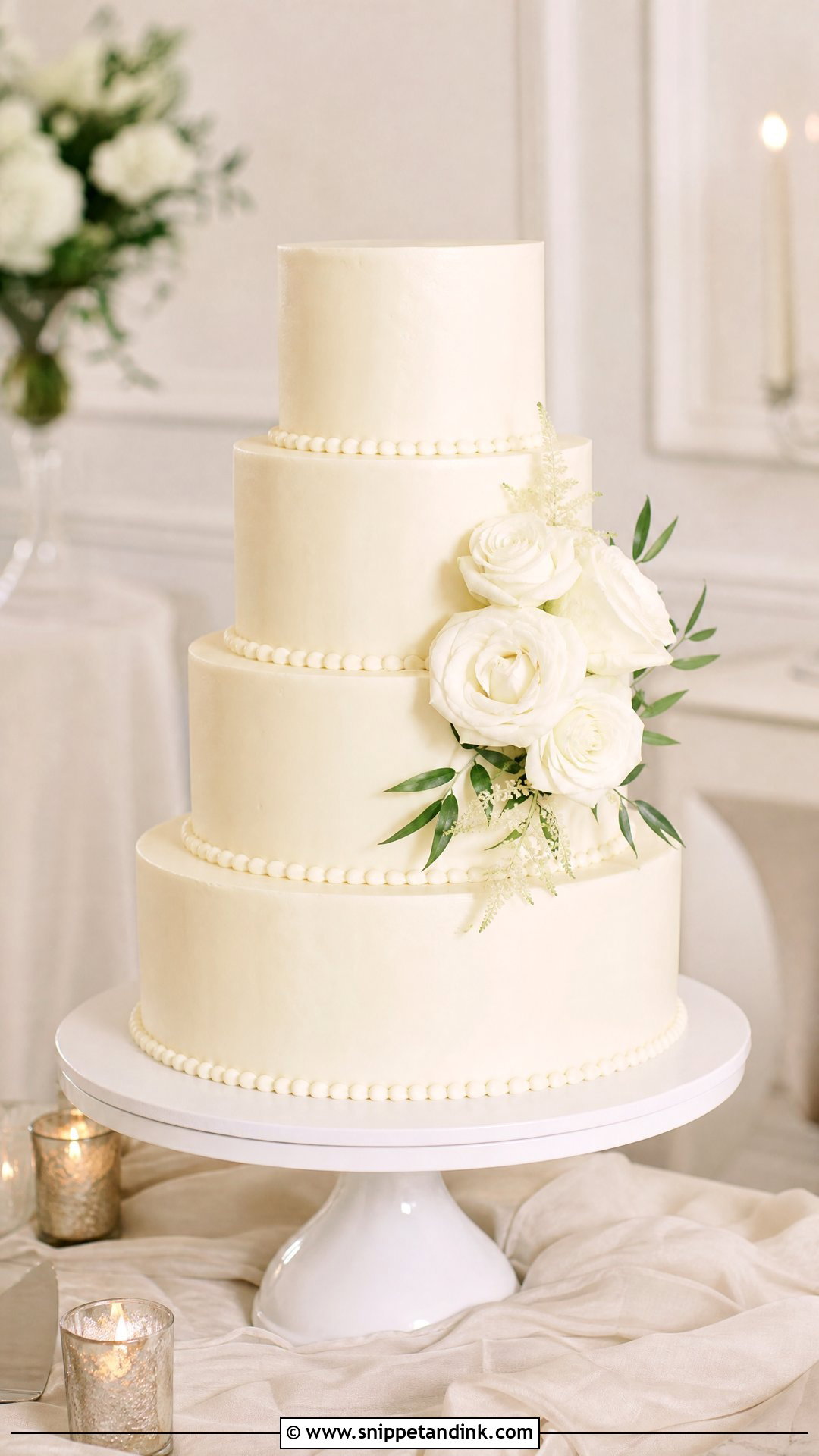
A simple cake can still be big. Scale, a clean finish and careful placement do the work. Tall tiers in smooth buttercream or fondant with one detail, a few flowers, a ribbon or fine piping, look calm and confident. This is my recommendation when the room already has heavy florals or texture, because a busy cake competes with it. Clean finishes are actually harder to hide mistakes on, so look at a baker’s plain cakes in her portfolio, not just the decorated ones.
19. Elegant Wedding Cake
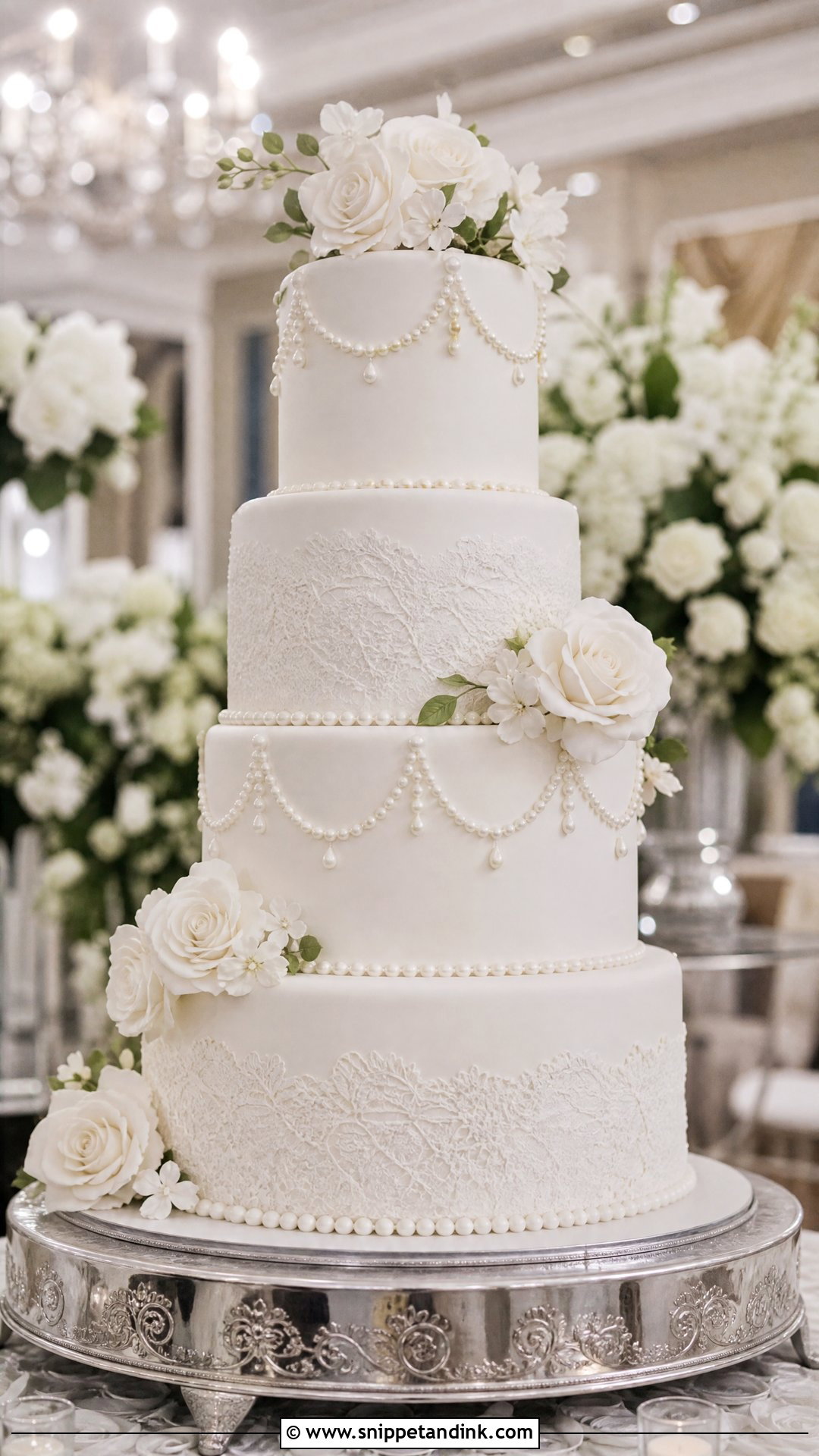
Elegance on a big cake means four or five tiers that read well from across the room and reward a close look: soft ivory, delicate piping, pearls, lace texture, fine borders, white sugar flowers and very little colour. The trap is adding one more thing. I usually remove a detail at the design stage rather than add one. It won’t date in photos, and it suits formal dining rooms, candlelit receptions and garden venues.

20. Heart Wedding Cake
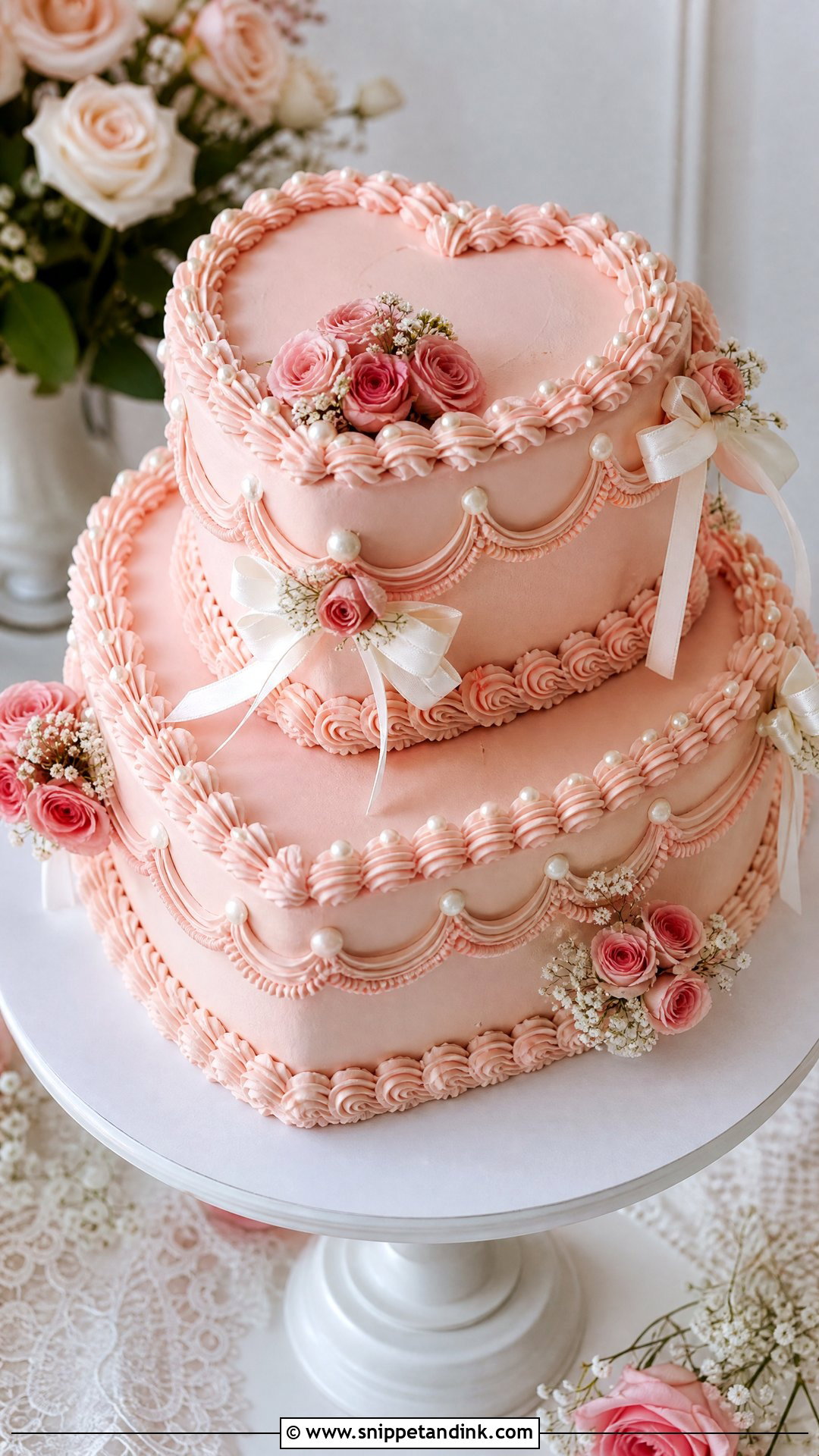
Heart cakes are romantic and a bit playful. For a large wedding, stack heart-shaped tiers or make one big heart and support it with matching side cakes for serving. Vintage piping works especially well because it frames the curves. White, blush, red or pale blue all suit it. Heart tiers are trickier to stack than rounds because the point and the lobes need separate support, so stick to two or three tiers.
21. Sheet Wedding Cake
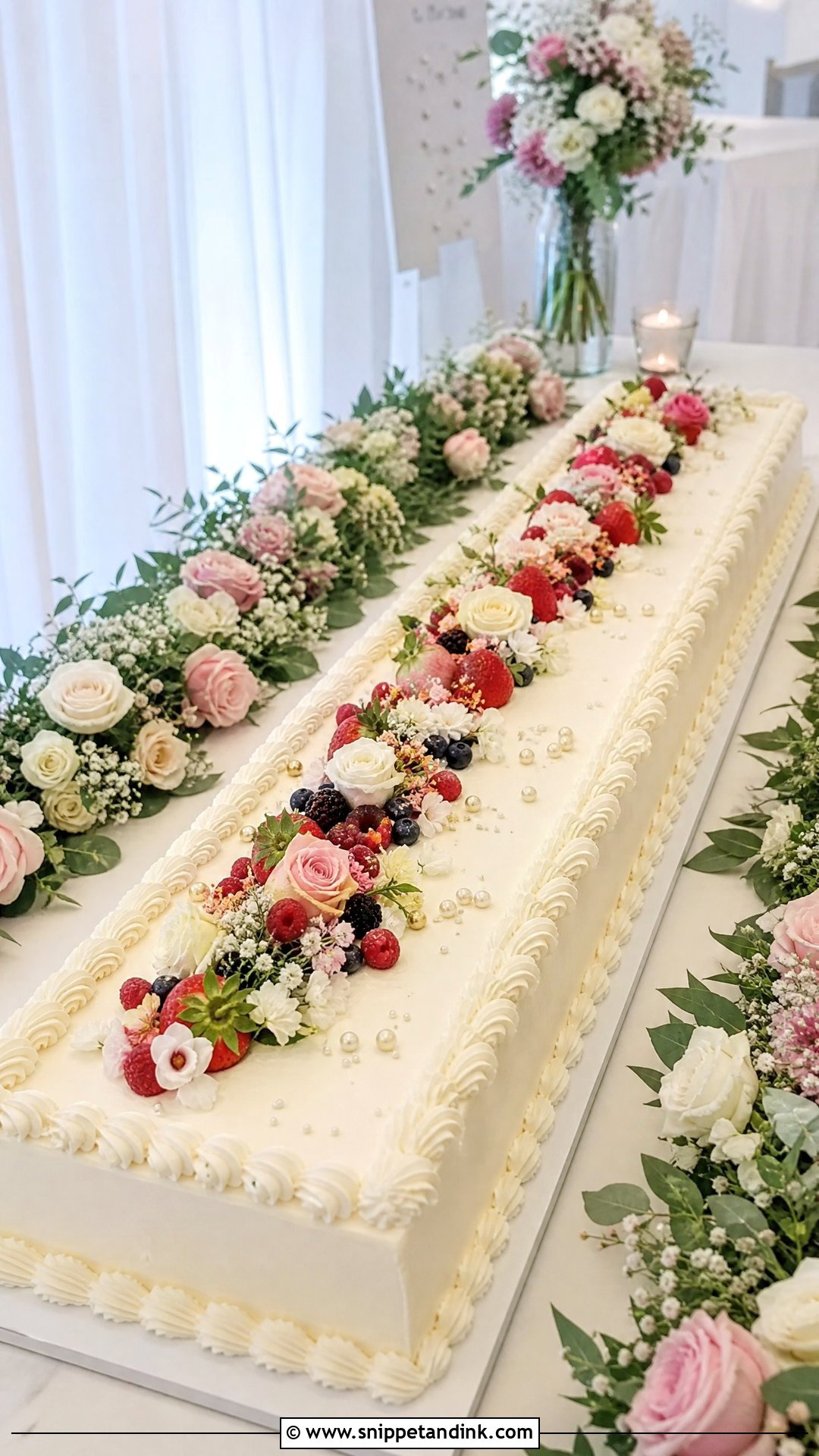
Sheet cakes used to hide in the kitchen. Now Large rectangular cakes sit on display as the centrepiece, decorated with piped borders, fruit, edible flowers or long floral arrangements across the top. A white or ivory base keeps it bridal. They’re the easiest cakes to cut and portion evenly, which matters with big guest counts and limited catering staff. Outdoor receptions and family-style dinners suit them.
22. Long Wedding Cake
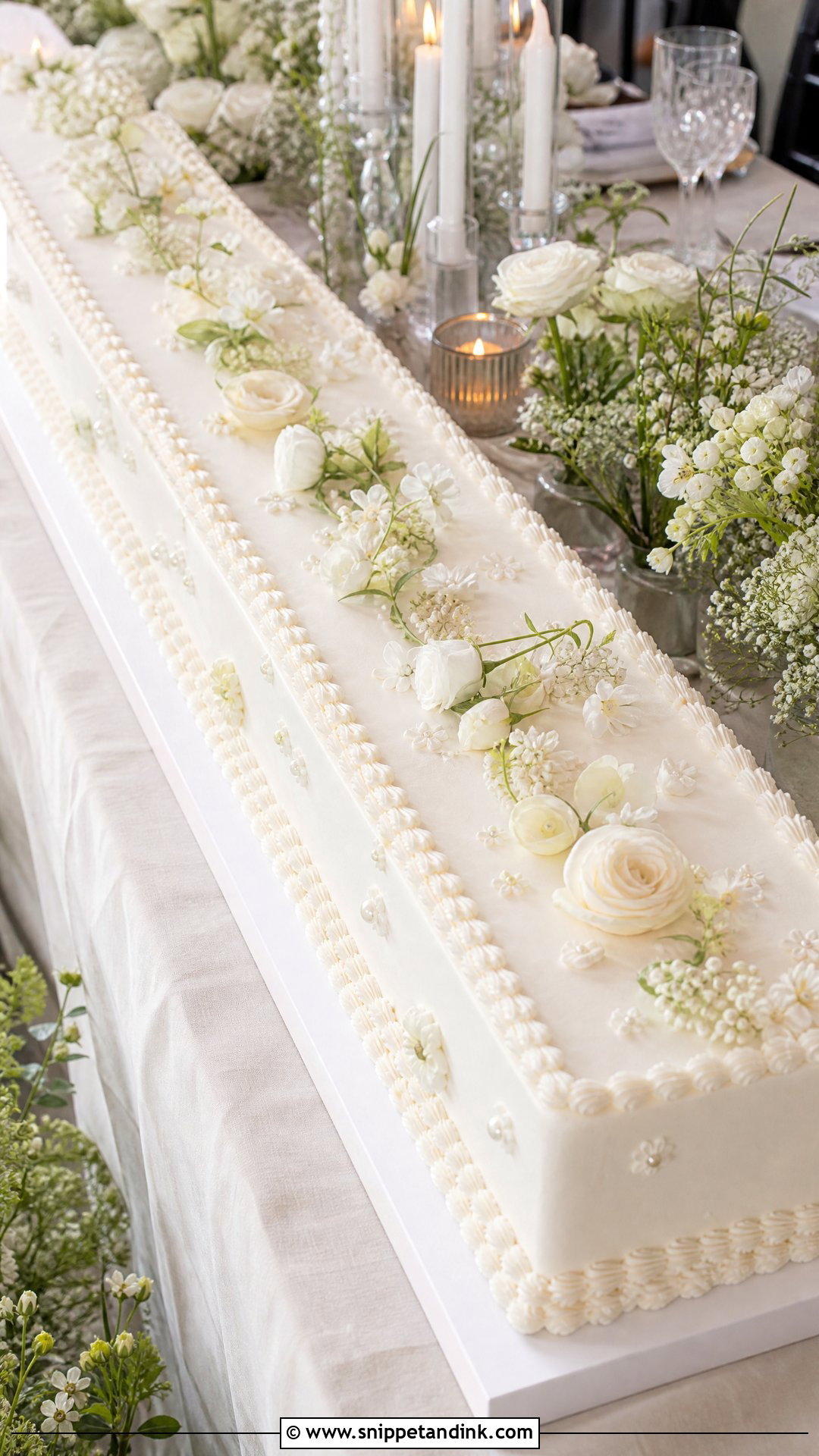
A long cake runs across the table like a dessert centrepiece. It can be one rectangular slab or several cakes joined and decorated as one. Keep the top design consistent end to end; any break in the pattern shows where the pieces meet. Piped borders, berries, edible flowers or sugar details all suit it. Long cakes need a long table that’s perfectly level and set up before delivery, because they can’t be moved once they’re down.
23. Oval Wedding Cake
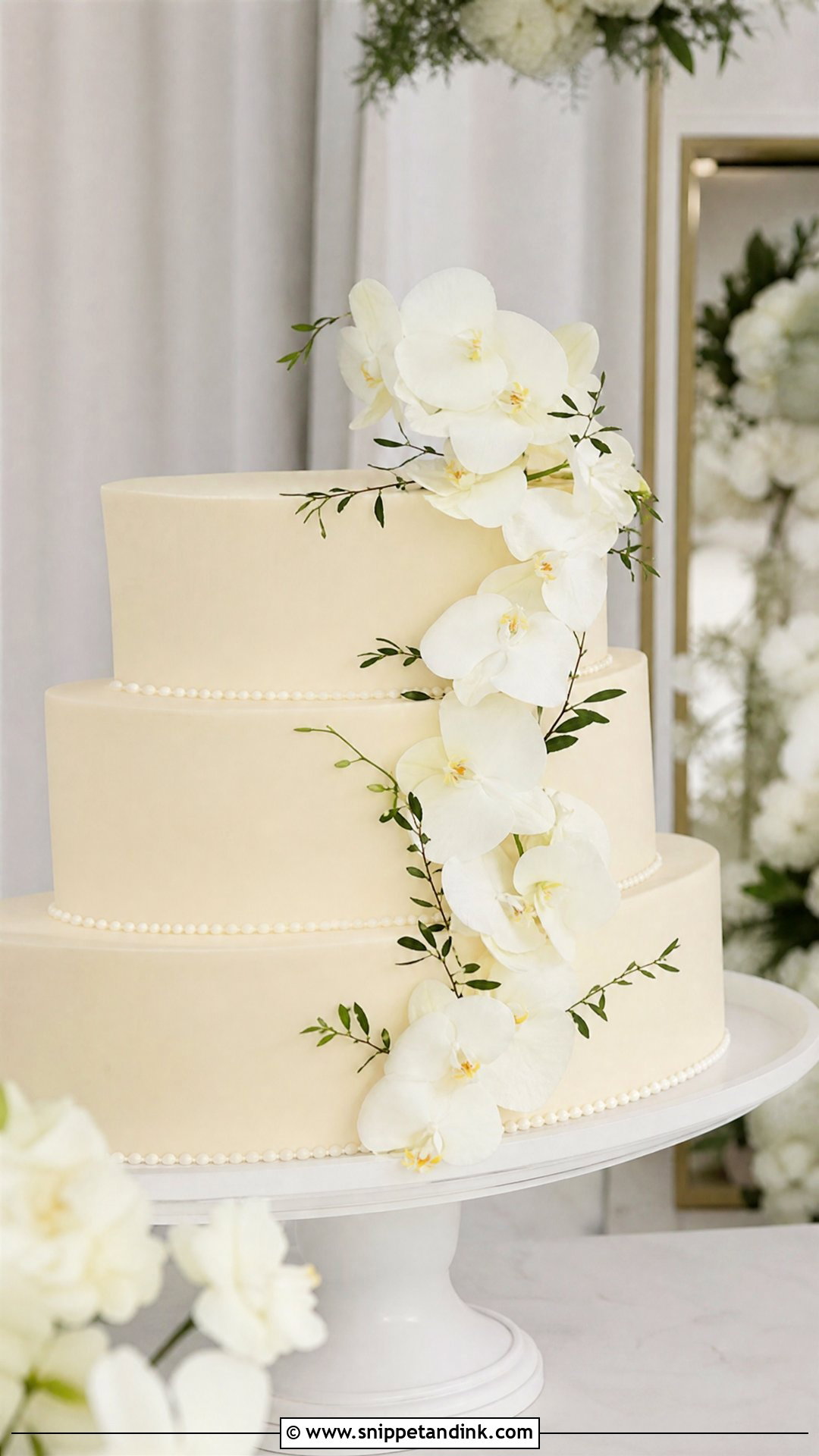
Ovals feel soft and modern, a little unexpected without the sharpness of squares. Stack two or three wide oval tiers, or make one long single tier with dramatic decoration. Smooth buttercream, fondant or glossy ganache all suit the shape. Flowers look natural along one curved edge or across the top in a loose garden style. Ovals cut into fewer clean wedding portions than rounds of the same width, so plan servings with your baker.
24. Sculptural Wedding Cake
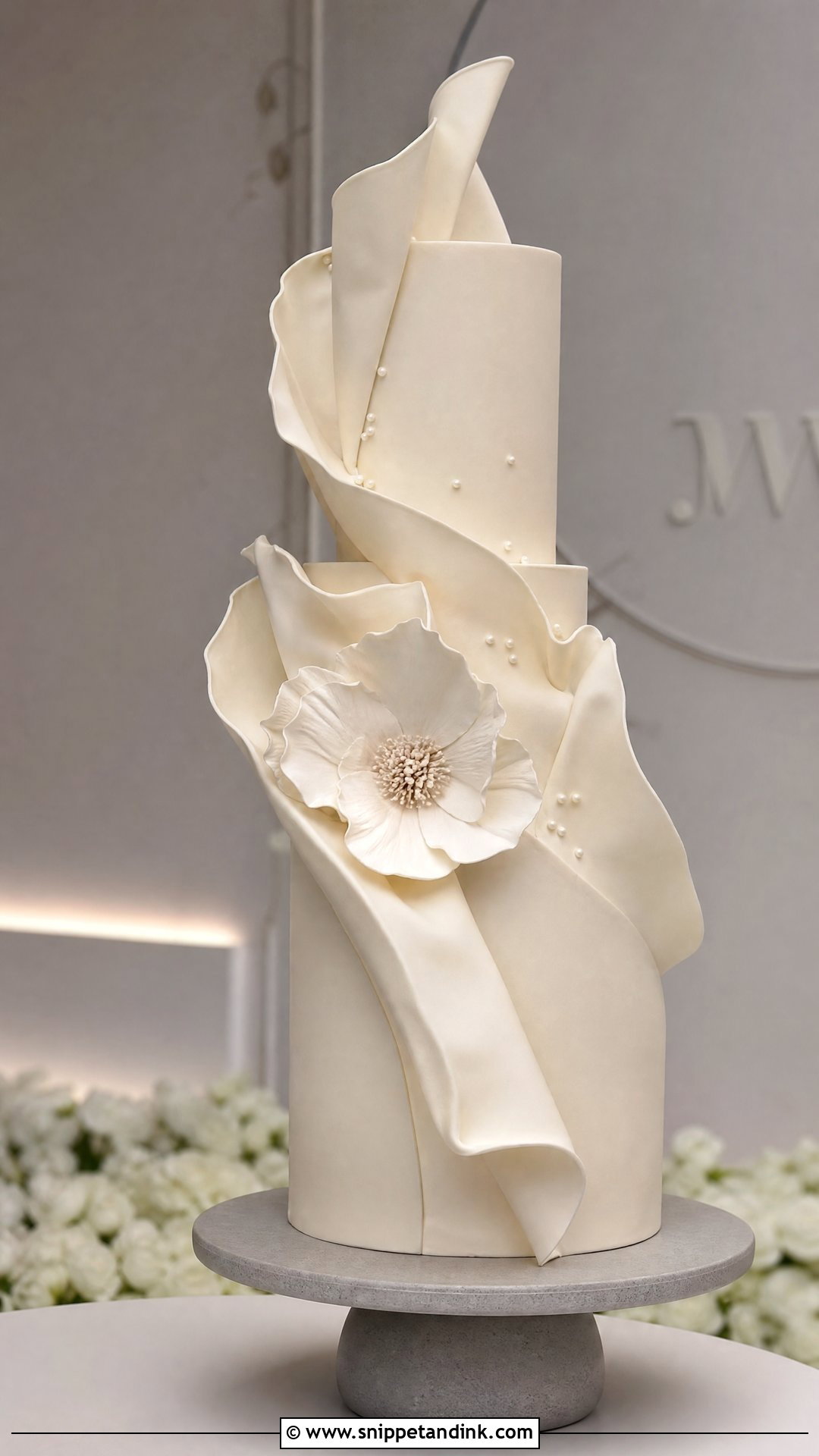
Sculptural cakes are built to look like art: curved tiers, abstract texture, angled stacking, folded fondant or soft waves. In a big room, they can replace other decor. Keep the colour tight, white, ivory, stone, blush or muted green, so the shape leads. Angled and offset tiers need hidden internal structure, which is specialist work, so ask to see examples the baker has actually built. Galleries, museums and minimalist venues suit them.

25. Textured Wedding Cake
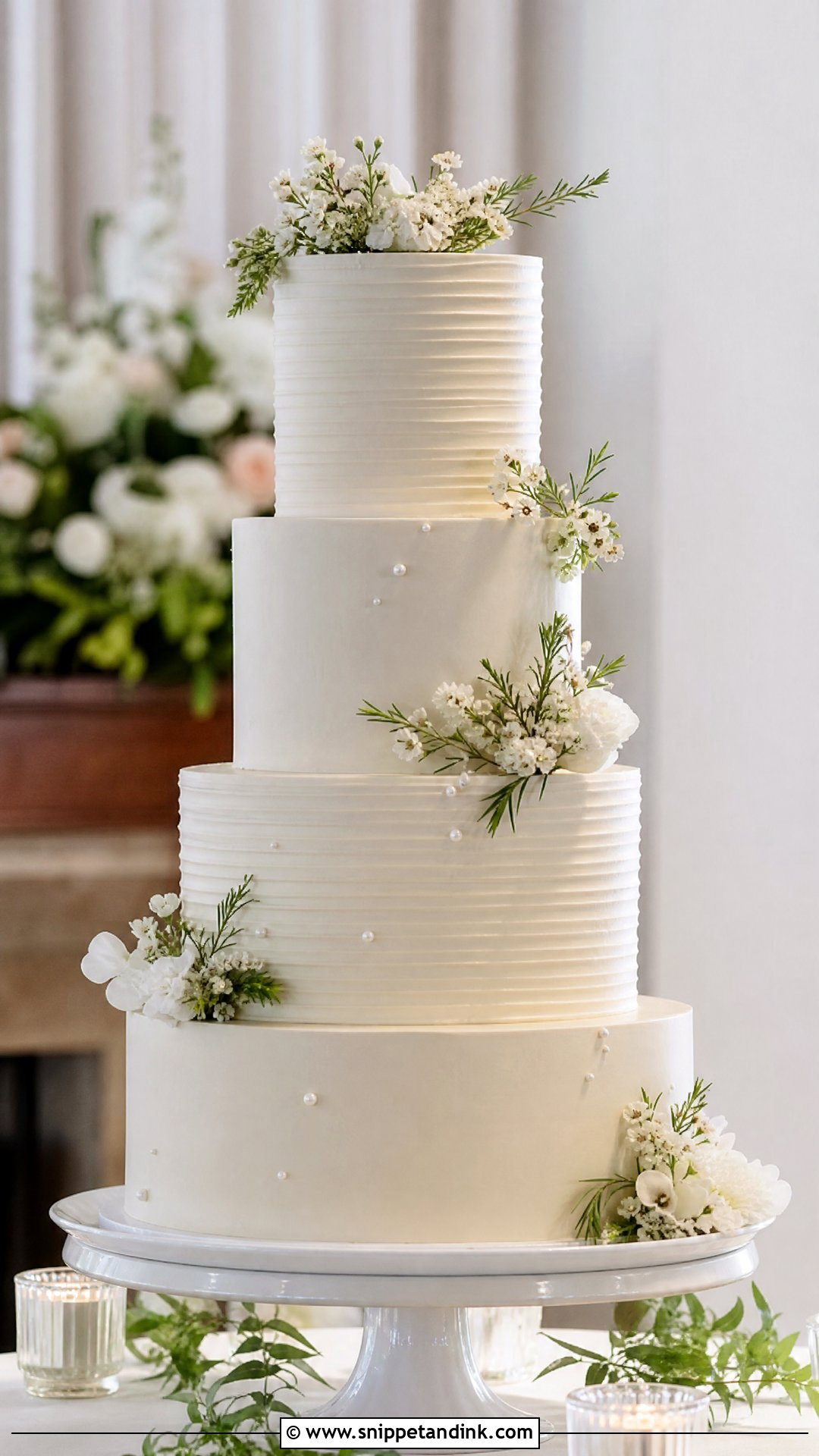
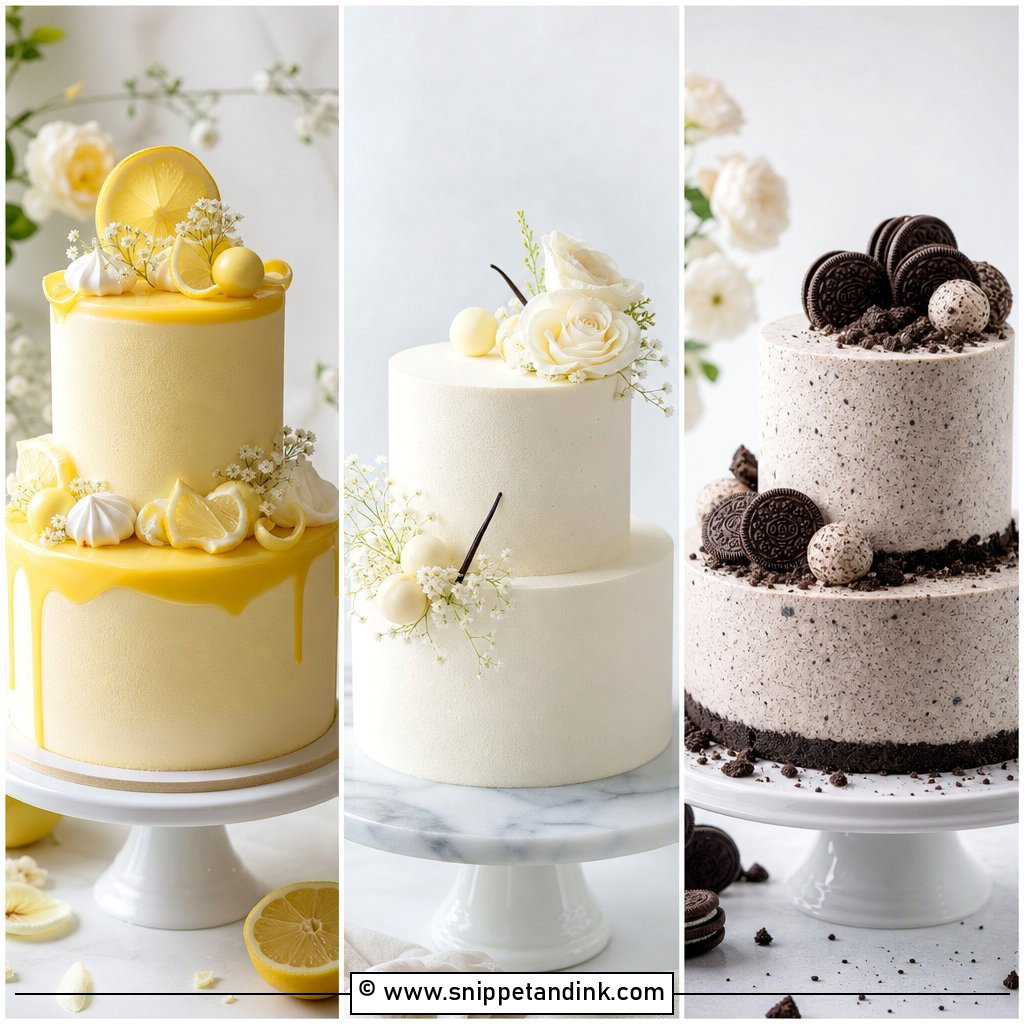
Texture adds depth without colour: buttercream ridges, pressed patterns, lace, pleats, waves or a rough stone finish. Tall cakes need it most, because large white tiers look flat in photos without something to catch shadow. Pick one texture and repeat it, or alternate smooth and textured tiers. Small flowers, pearls or greenery soften it. It suits rustic and modern weddings equally.
26. Watercolor Wedding Cake
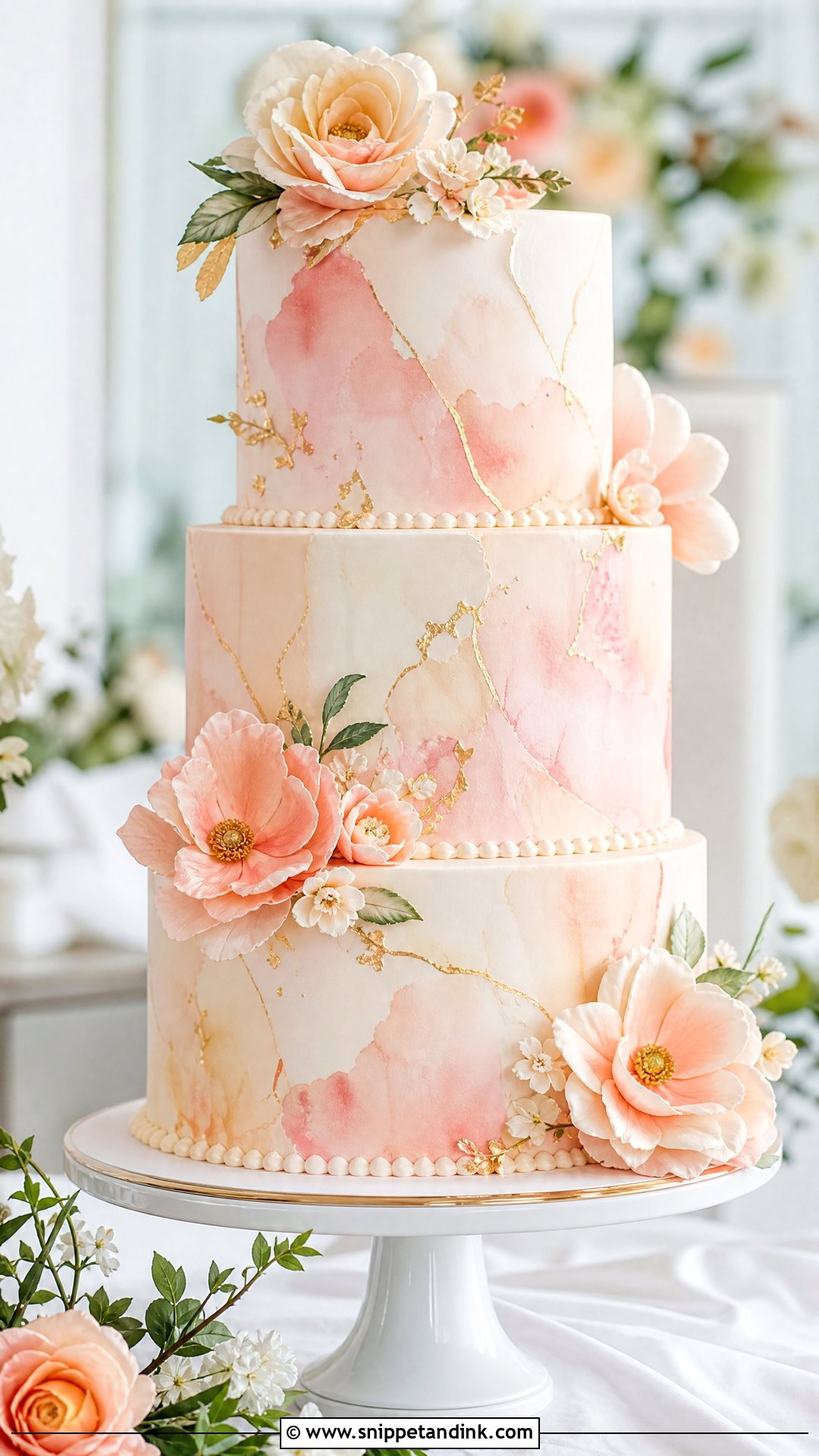
Watercolour cakes blend soft, brushed tones across the icing. On a big cake the effect needs a very smooth fondant or buttercream surface, because ridges break the wash. Blush and peach, blue and white, lavender and ivory, or sage and cream are typical palettes. The colour is painted or blended by hand, so no two tiers come out quite the same. Sugar flowers, gold accents or fine piping finish it. Spring and garden receptions suit it.
27. Hand Painted Wedding Cake
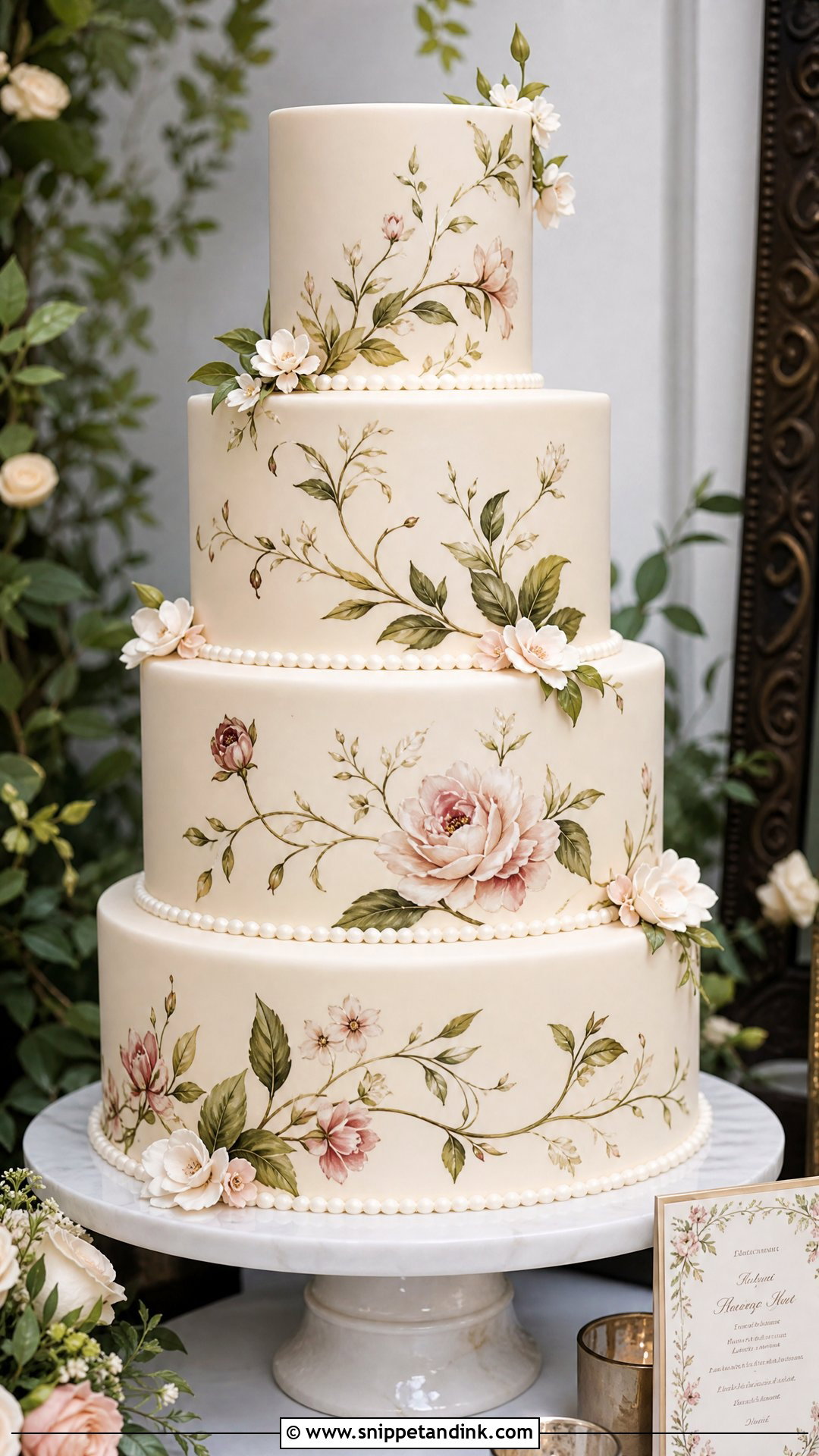
Hand painting lets the cake carry your own details: your flowers, venue, invitation motif or a favourite pattern. On a big cake there’s room for vines, florals, birds, lace motifs or fine botanicals. Smooth fondant gives the cleanest surface for painting with edible colours. Bring your invitation or a fabric swatch to the tasting; I’d rather paint from your actual references than a theme description. Keep the flavours classic and let the outside be the surprise.
28. Monogram Wedding Cake
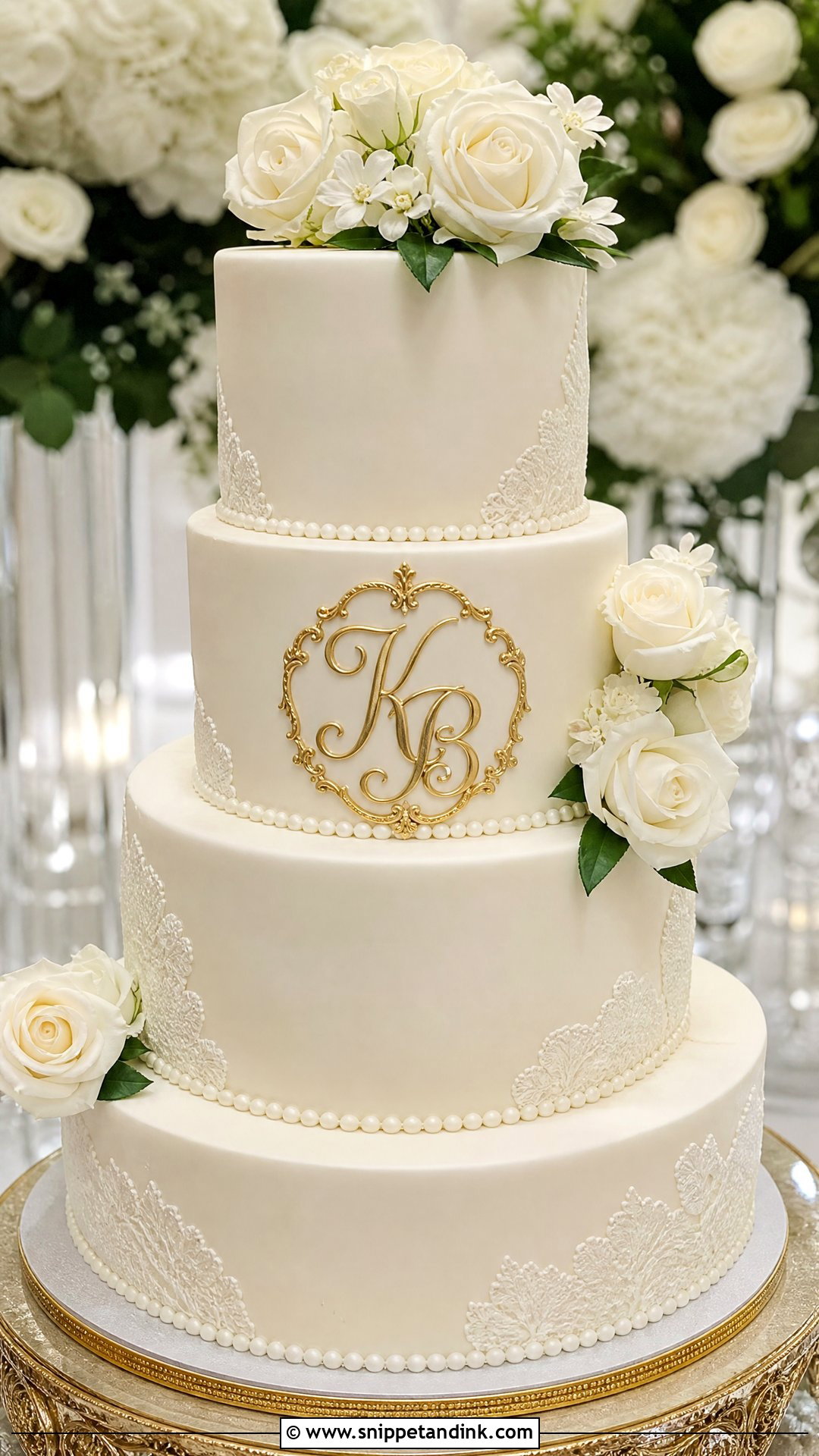
A monogram finishes a big cake with something personal: initials piped, painted, embossed or cut from sugar and set on the front tier. Ivory with gold or pearl reads formal; flowers, lace texture or a fondant ribbon softens it. A large cake gives the monogram room. Match the lettering to your invitations and signage so it looks like part of the same set.
29. Blue Wedding Cake
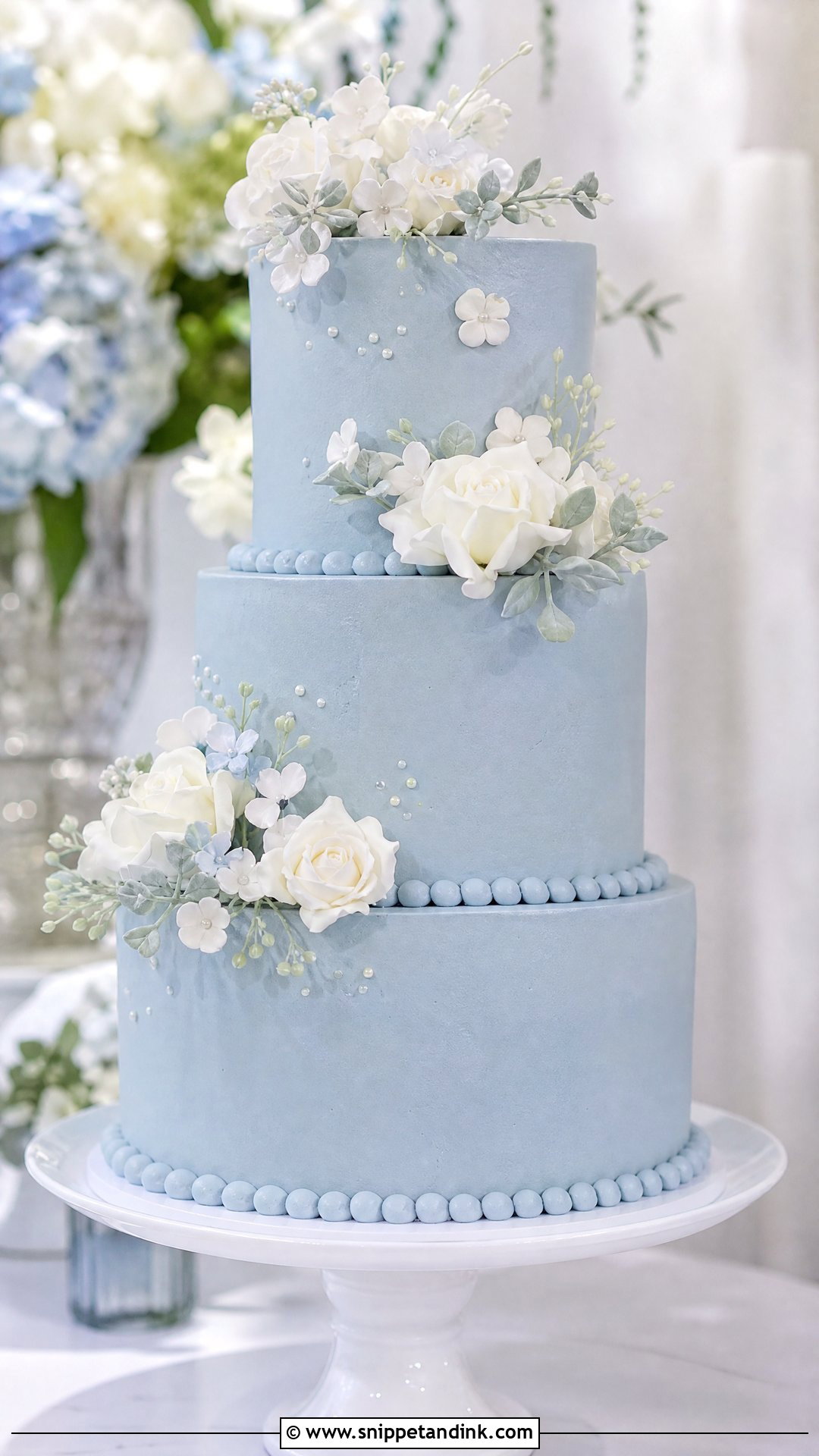
Blue works in many moods: pale blue reads vintage, dusty blue soft and polished, and navy formal and evening. On a big cake it can be the main icing colour or an accent in piping, flowers, ribbons or painting. White sugar flowers and pearls look crisp against it. Strong blues need a lot of colouring, which can taste bitter and stain, so I’d keep deep navy for fondant and use paler blues in buttercream. Vanilla, lemon, almond or blueberry fillings suit it.
30. Pink Wedding Cake
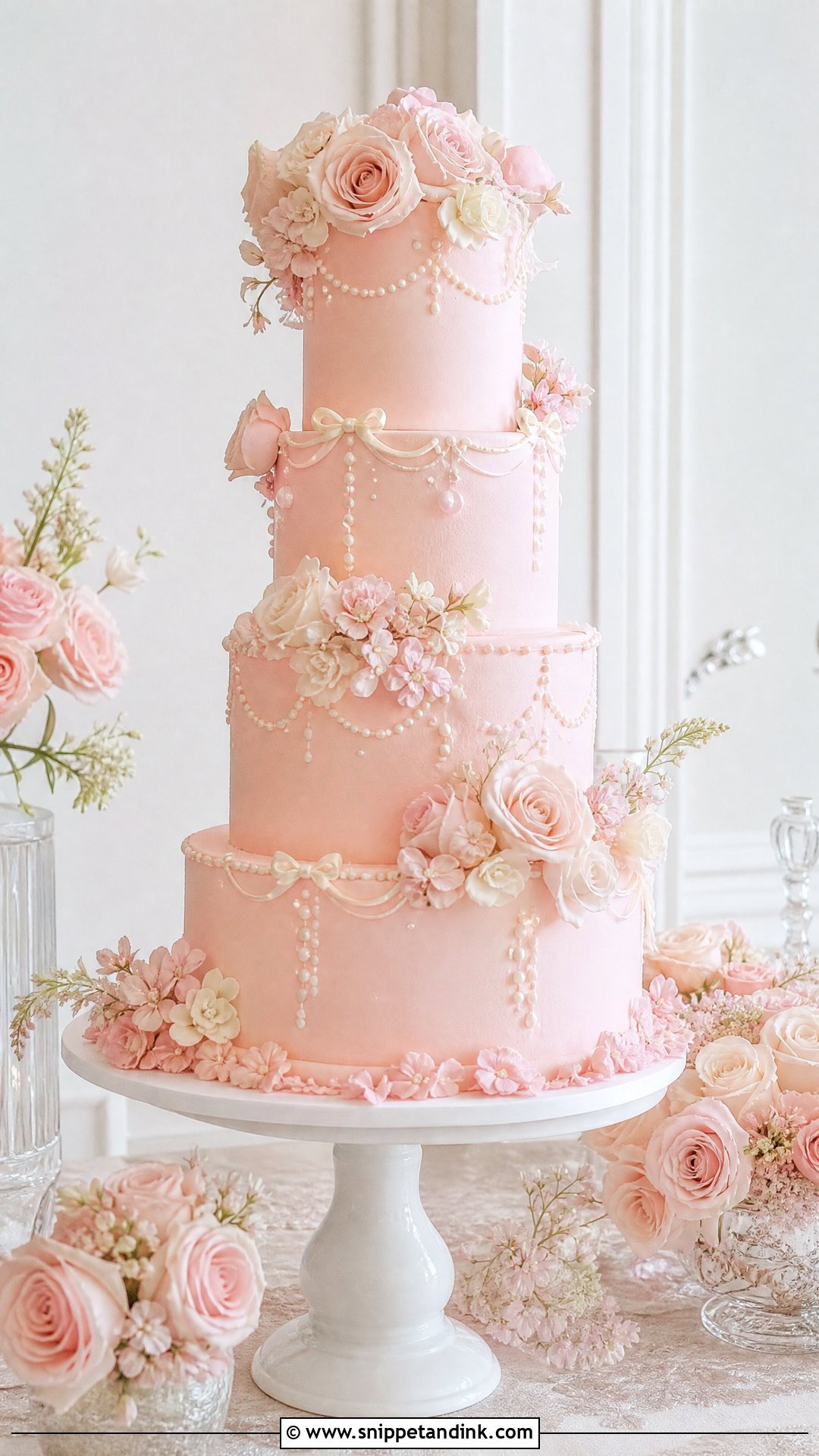
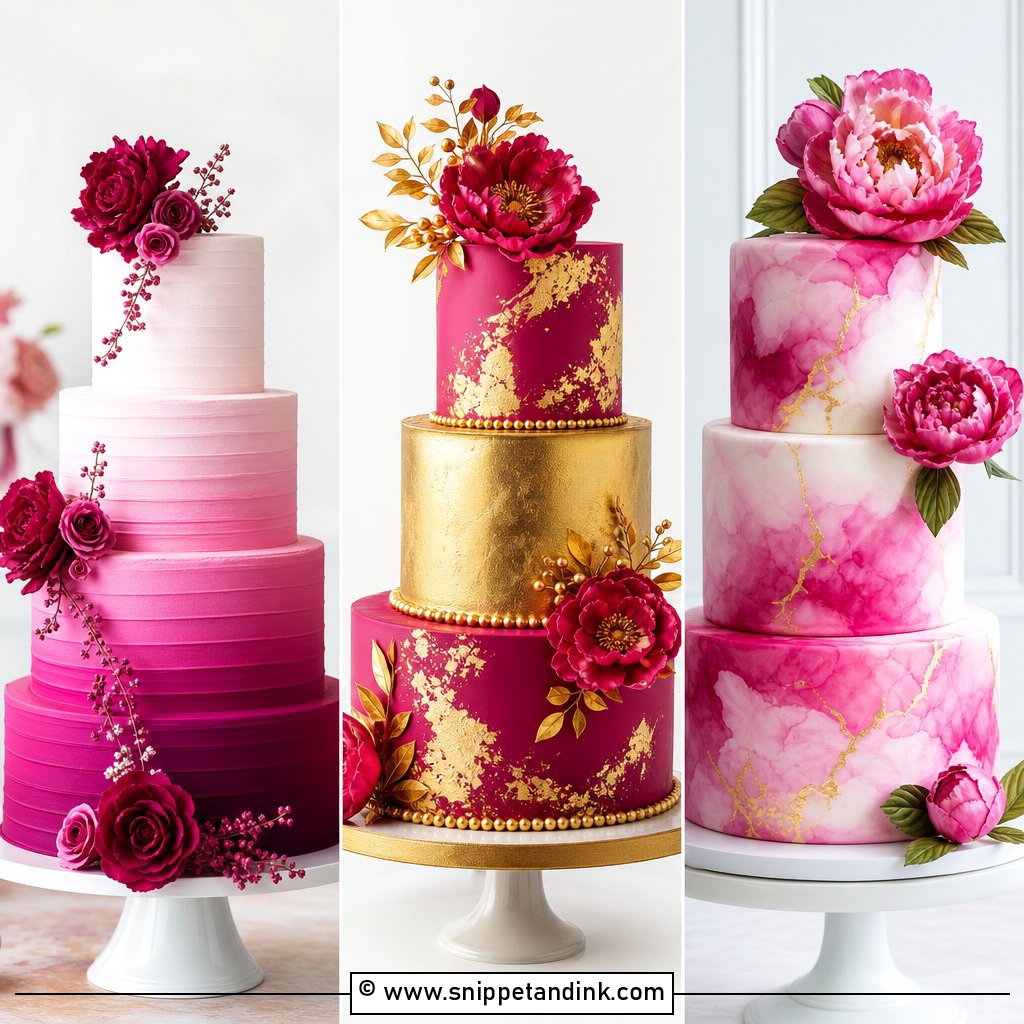
Pink ranges from blush, which is soft and bridal, to rose, which reads vintage, to deep pinks that look playful. It suits smooth buttercream, ruffles, piped borders and sugar flowers. Balance it with ivory, white or gold so it stays elegant. Natural fruit colourings fade in light, so for a long display I’d use food colouring that holds its shade under room lights. Strawberry, vanilla bean, almond, raspberry or champagne-style flavours suit it.
Getting a Five-Tier Cake From the Kitchen to the Cake Table
The design is the fun part. The delivery is where big cakes are won or lost, and a few decisions you make with your venue matter as much as the baker’s skill.
Inside the cake
Every tier above the base rests on a cake board supported by dowels or rods pushed into the tier below, so the weight goes to the board under the cake rather than squashing the sponge. Tall cakes often get a central rod through all the tiers as well. Very tall or heavy designs are usually transported in pieces and stacked on site, then finished there with the flowers and any piping that hides the joins.
What the venue needs to provide
- A sturdy, level table that won’t be bumped. Round cake tables in walkways get knocked by guests and staff.
- Shade and cool air. Keep the cake out of direct sun and away from heaters, uplights and windows, especially for buttercream.
- Room to work: delivery access, a clear route from the door and somewhere close to finish the cake.
- A plan for cutting. Agree who cuts and serves it, and give them the baker’s portion guide.
If the reception is outdoors in summer, have that conversation early. A firmer icing, a ganache coat under the fondant or a later display time makes a real difference. A buttercream cake left in a warm tent for several hours will soften and lean, however well it’s built.
Let the Room, the Season and the Serving Plan Set the Size
Match the cake to the feel of the celebration, not only the number of guests. Tall tiers bring tradition and drama; long, oval and sculptural cakes feel newer. Flowers, pearls, bows and vintage piping add romance; texture, painting and monograms make it personal. Before you decide, talk through your venue, season, display table, lighting, serving plan and favourite flavours with your baker. A cake that’s planned around those things tastes as good at the last slice as it looked at the first.
You'll Like These Ideas:





Leave a Reply