
An elaborate cake earns its place at a reception because it does the job of a centerpiece as well as dessert. Height, piping, sugar work and flowers all have to agree with each other, and getting them to agree is where most of my design time actually goes. The requests I see most right now are dramatic tiers, vintage Lambeth piping, sugar flowers, pressed botanicals, sculpted texture and fruit, usually on cakes that will be seen from every side of the room. Detailed doesn’t have to mean cluttered, though. Below are 20 designs, with notes on how each one is built and where it tends to go wrong.
Giving a Cake Designer Enough Detail to Quote Honestly
Elaborate cakes are priced on hours as much as on servings. A sugar flower cascade or a fully piped Lambeth tier can take longer than the baking itself, so a photo and a guest count aren’t enough for me to give you a number I’d stand behind. These are the things I ask for before I quote:
- How many guests will actually eat cake, and whether a plain kitchen cake could cover part of that number.
- The venue, whether the cake sits indoors or out, and if the room is air conditioned.
- What time the cake goes on display and roughly when it will be cut.
- Three or four pictures you love and one you dislike. The one you dislike often tells me more.
- Your florist’s flower list, so fresh blooms on the cake match the bouquets and are safe to use.
- Any allergies, since nut-based fillings and some sugar decorations are common in detailed work.
Commit to one hero technique
The cakes that look most expensive usually commit to one main technique and let everything else support it. Lambeth piping plus a sugar flower cascade plus gold leaf plus marbling is four cakes fighting on one stand. I’ll often suggest picking the technique you’d be sad to lose and scaling the others back to small accents.
Lead time for detailed work
Designers who do heavy sugar work tend to fill their peak season months ahead, so I’d reach out as soon as the date and venue are fixed. Plan to settle the final design about a month before the wedding. Sugar flowers are made in advance and need days to dry, and changing the color scheme late can mean starting them again.
1. Five Tier Floral Wedding Cake
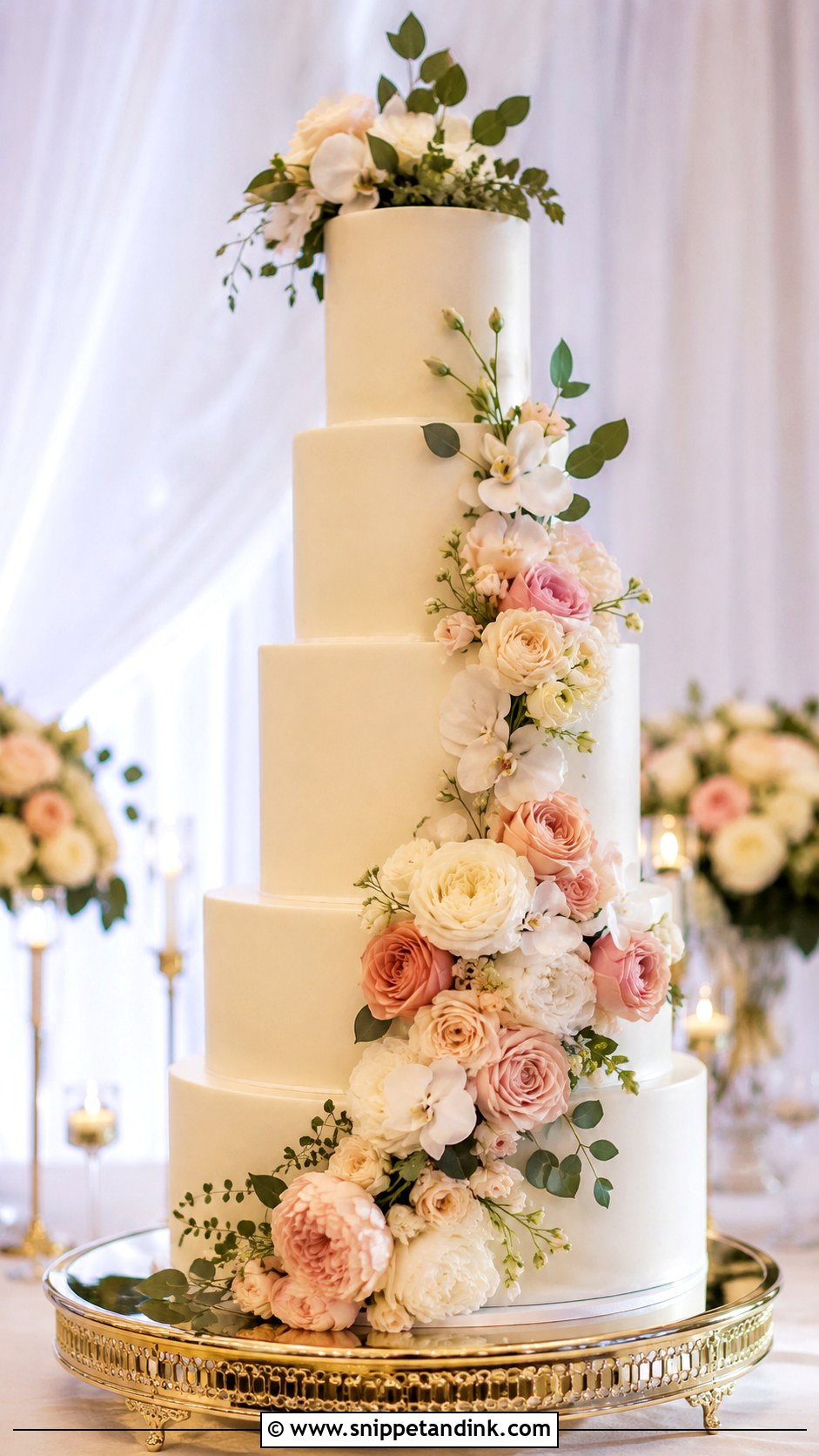
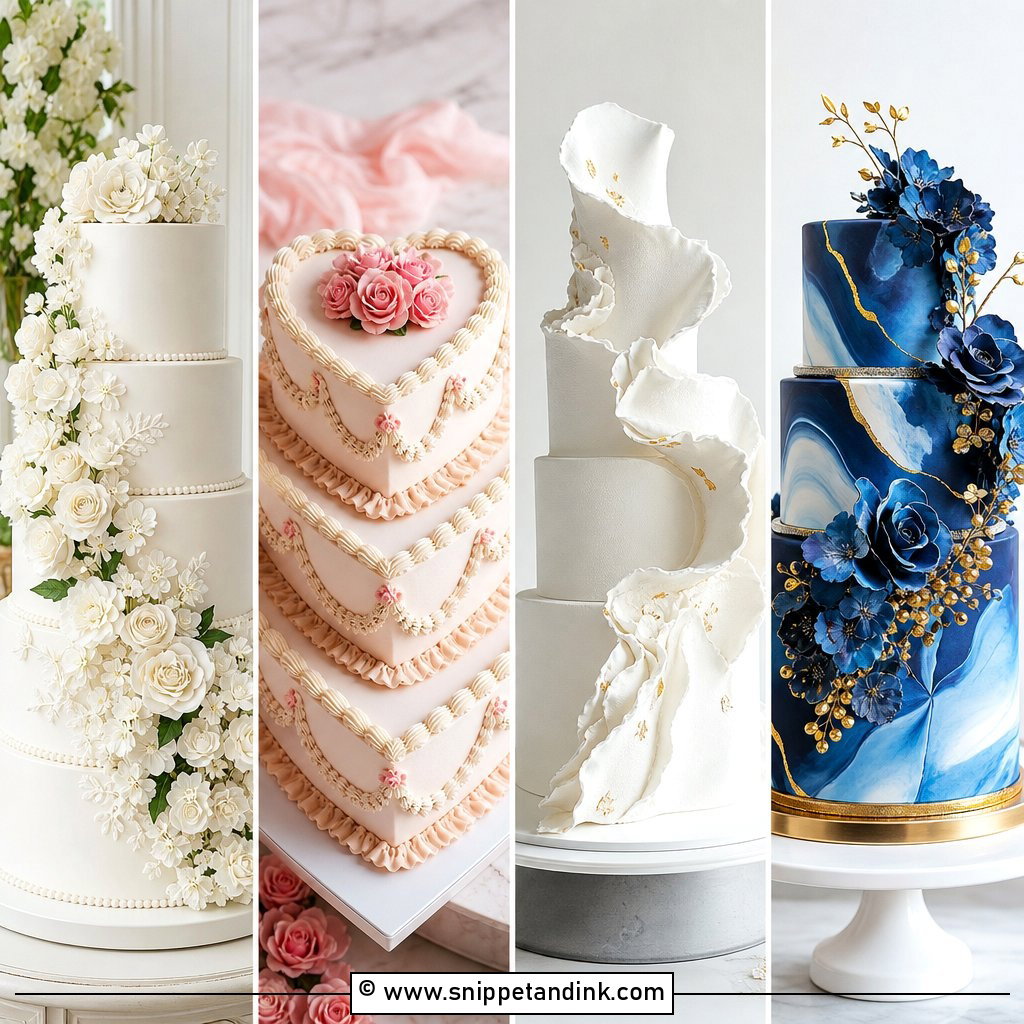
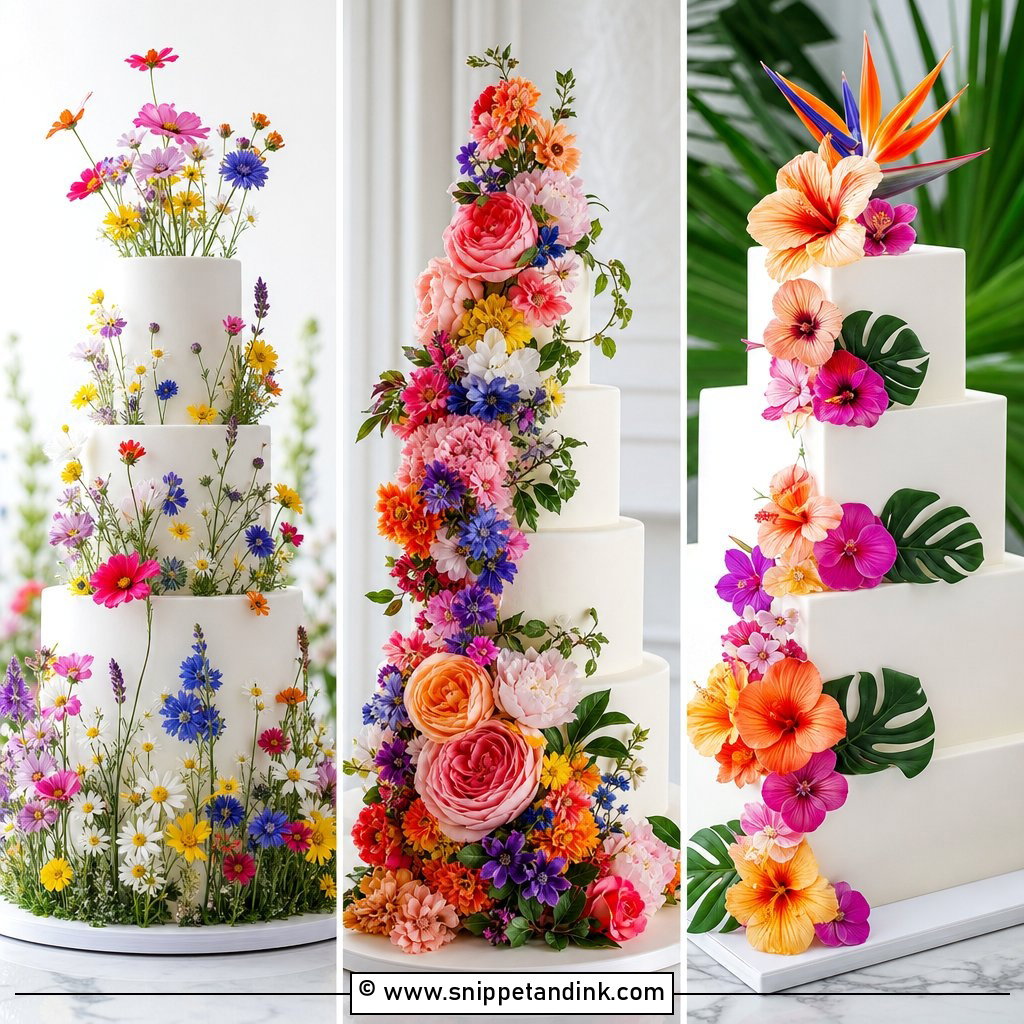
Five tiers read from the doorway of a big ballroom, which is why I suggest a five tier floral wedding cake for large rooms rather than a forty-person dinner. I build it on a clean ivory buttercream with flowers falling from the top tier down one side. Roses, peonies, ranunculus, orchids and small greenery all sit well, but every fresh stem gets wrapped or set in a pick so sap never touches the icing. Keep the blooms inside the wedding palette. One honest note: this height needs supports in every tier and a central dowel, so it is usually stacked at the venue rather than driven fully assembled.
2. Lambeth Wedding Cake
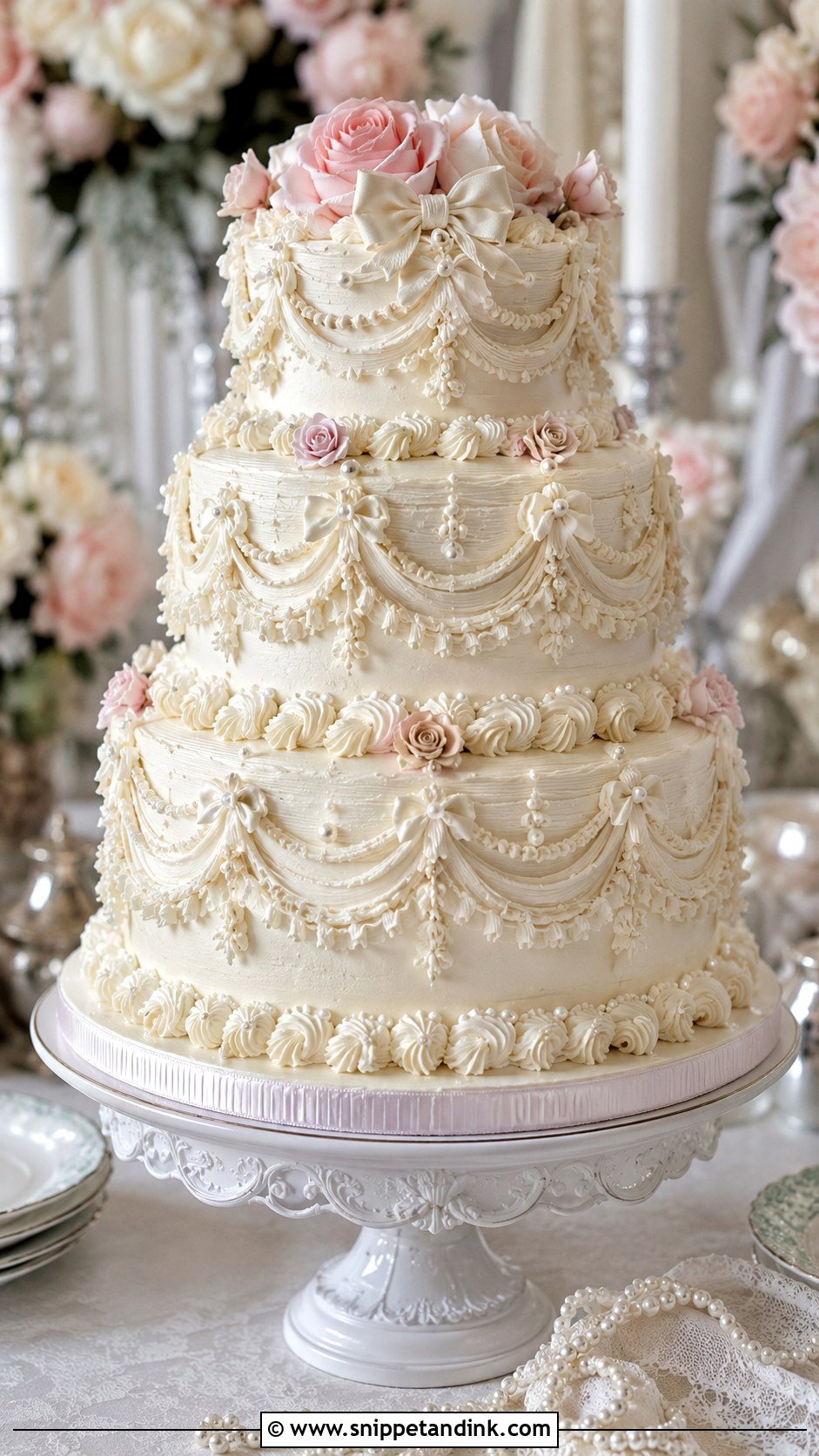
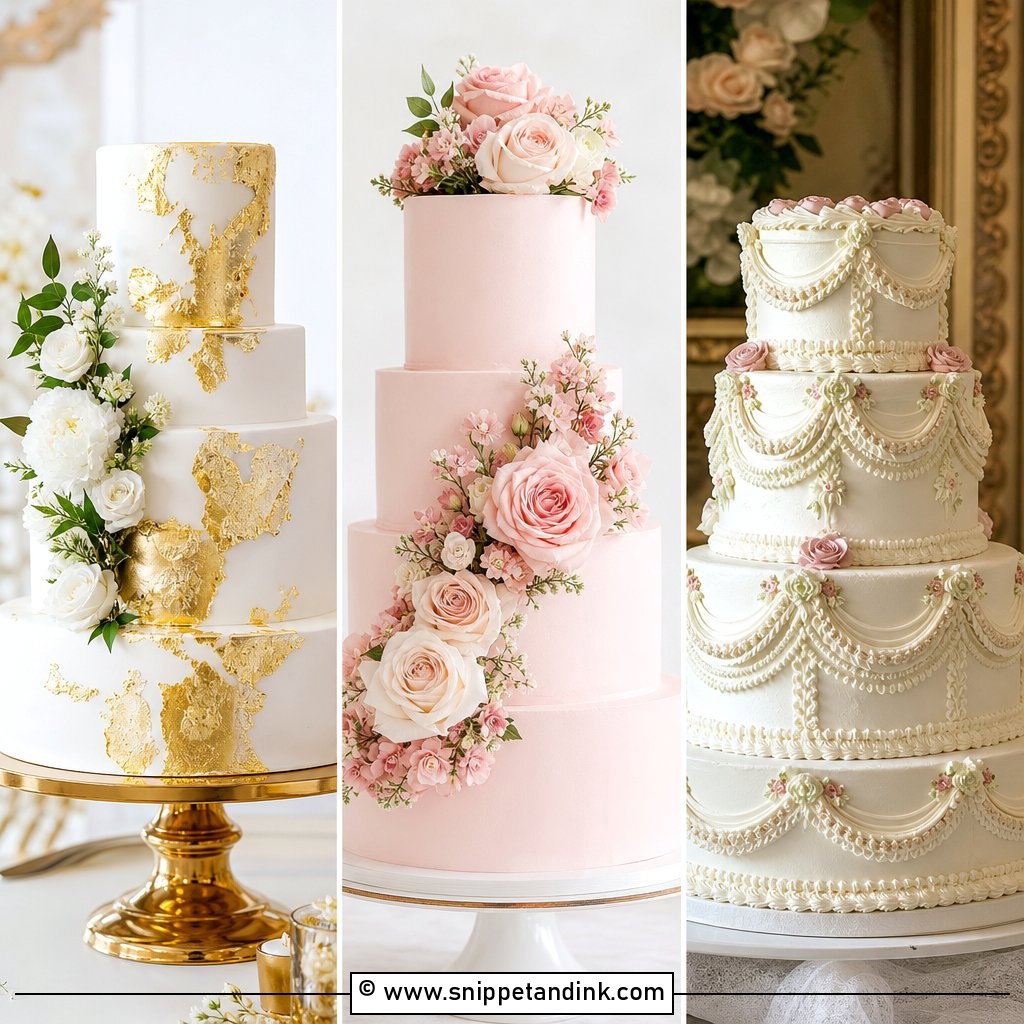
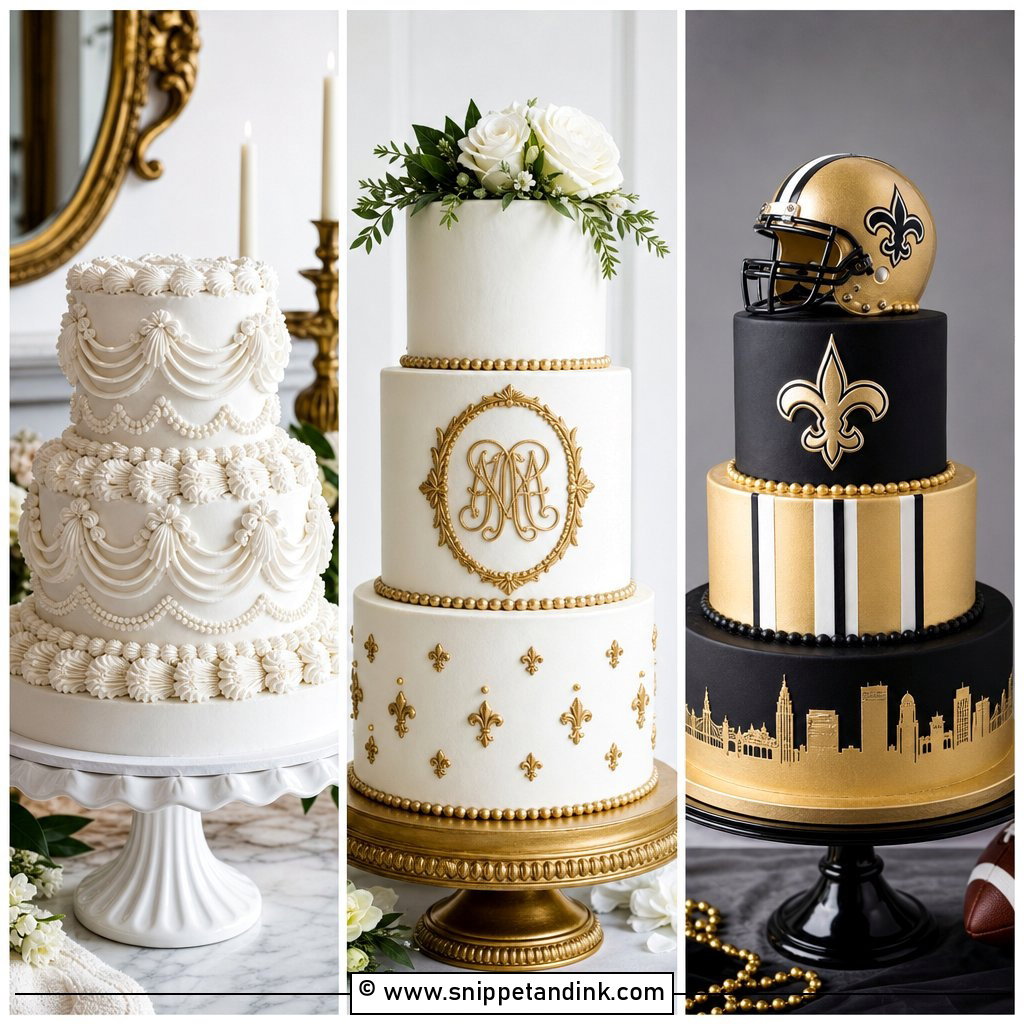
Lambeth is an over-piping technique: borders are built up in layers of scrolls, shells, dots and ruffles until the edge looks almost carved, and that depth is where the drama comes from. A Lambeth wedding cake in white, ivory, pale blue, blush or butter yellow stays bridal as long as you hold the palette to one or two colors, because the piping already carries a lot. Two or three tall tiers can look as rich as something twice the size, since every inch is worked. Cherries, pearls, bows or sugar roses finish it. Expect it to be slow work. Each layer of piping has to firm before the next goes on, and that time shows up in the quote.
3. Pearl Wedding Cake
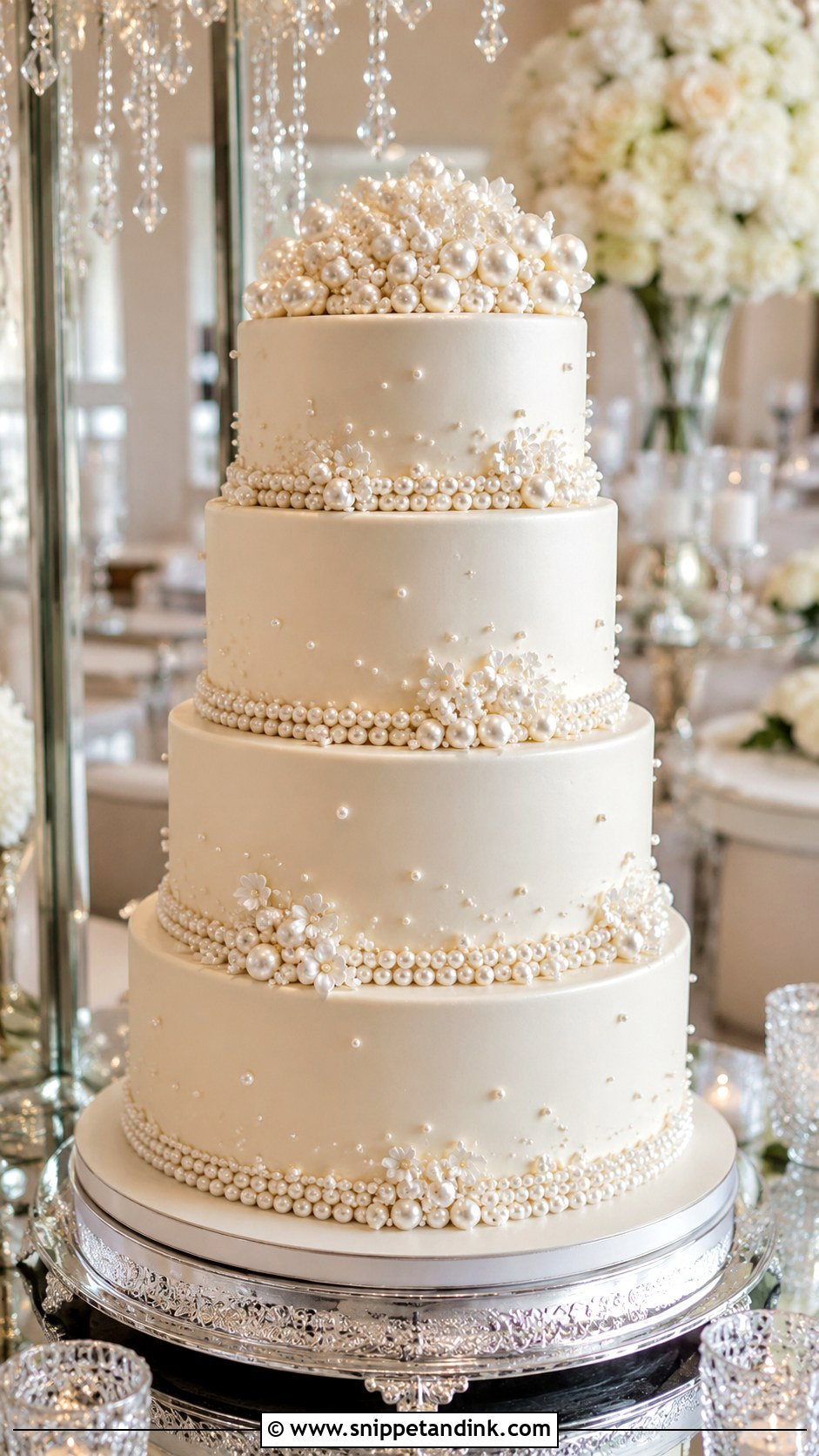
Edible pearls are one of the quieter ways to add detail, and they suit a formal room where strong color would feel out of place. I set them on smooth fondant in neat vertical lines, scatter them, or build lace-like patterns around each tier, and I mix two or three sizes so the surface has some movement. Ivory reads classic; champagne or blush warms it. The practical catch is that hard sugar pearls are tough on teeth, so I keep the heaviest pearl work on tiers that are mostly for display. Satin linens, crystal lighting and a black-tie hotel reception are its natural setting.
4. Sugar Flower Wedding Cake
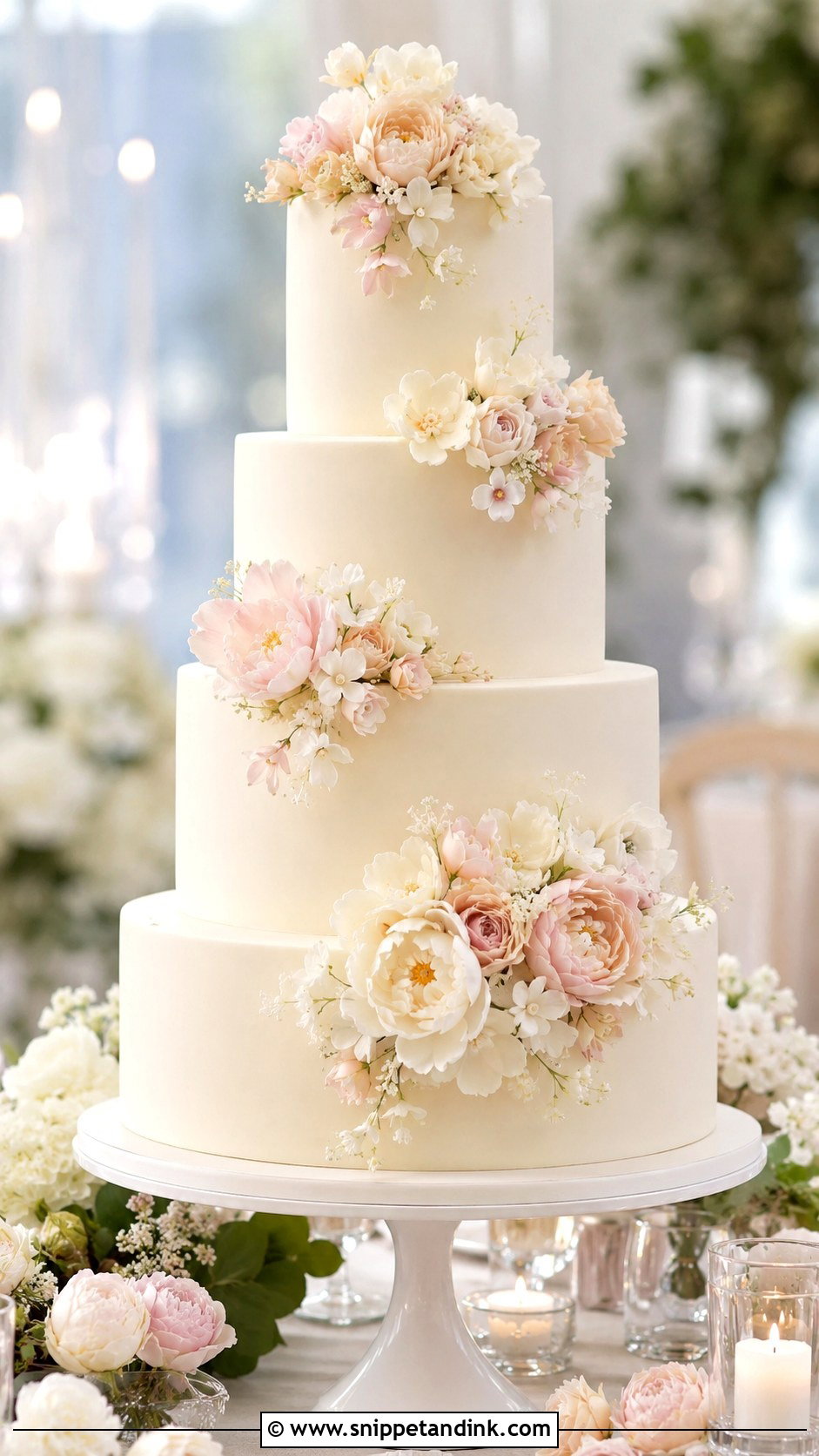
Sugar flowers are where a detailed cake gets its most custom work. Each petal is rolled thin from gum paste, wired, shaped and left to dry, which means I can make blooms that are out of season or far too fragile to sit on a cake fresh. I often combine roses, sweet peas, peonies, gardenias and tiny filler blossoms, then place them in a diagonal cascade, along the tier edges or in full clusters. They aren’t really meant to be eaten, and they are the piece couples most often keep afterwards. Order early. A full spray takes days of drying and wiring, and a humid week slows it down further.
5. Pressed Flower Wedding Cake
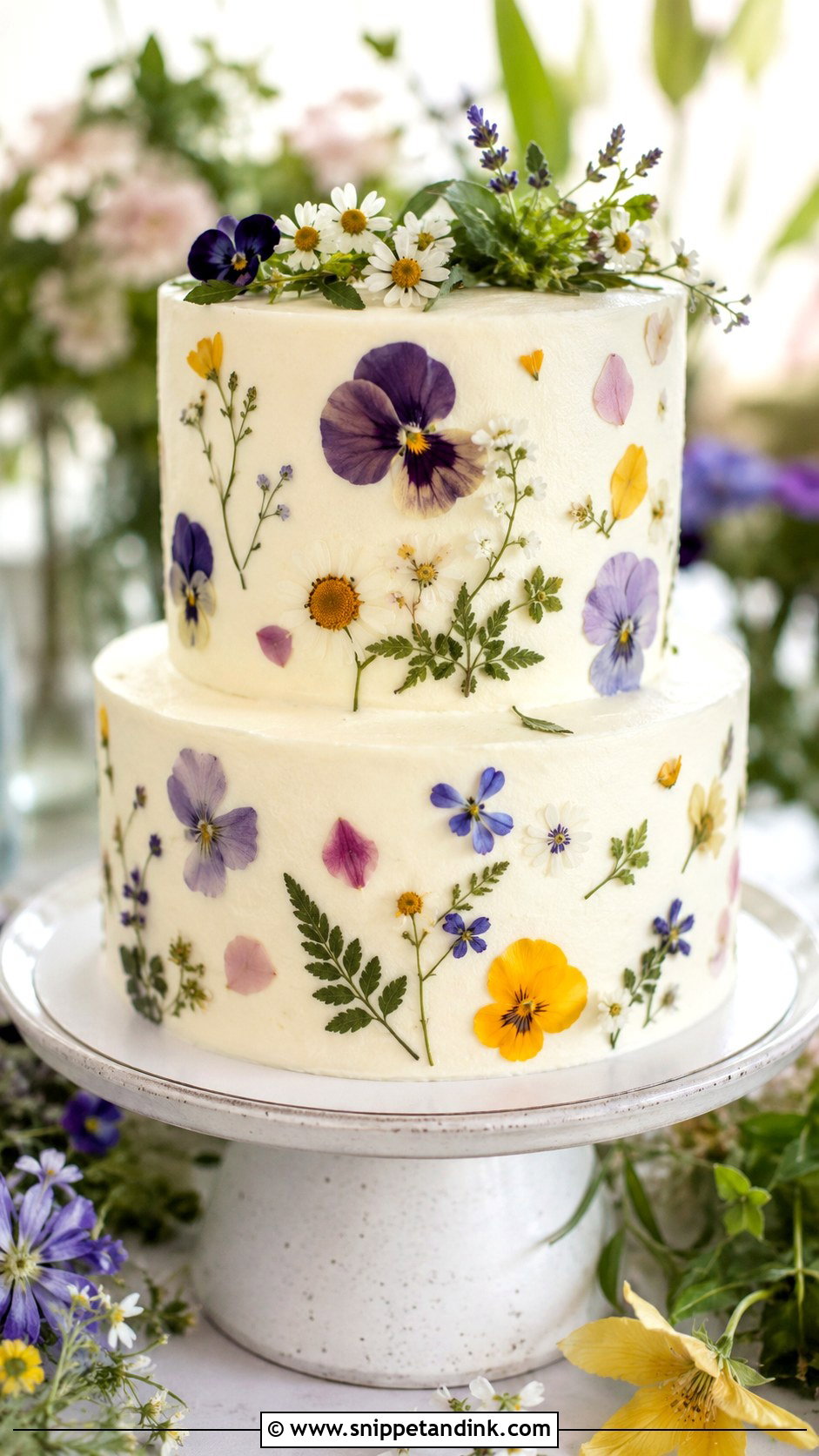
Pressed flowers lie flat, so you get a garden effect across buttercream or fondant without any bulk. I only use edible blooms grown without sprays, such as violas, pansies, cornflowers and small herb flowers, and I plan the pattern on paper before a single petal goes on, because random placement just looks accidental. Wrap them around each tier, build a dense meadow at the base, or fade from heavy at the bottom to a few petals at the top. Spring and summer outdoor weddings suit it best. In direct sun the petals can curl or darken as they draw moisture from the frosting, so I add them as close to serving as the schedule allows. Lemon, vanilla bean, almond or elderflower fit the look.
6. Gold Leaf Wedding Cake
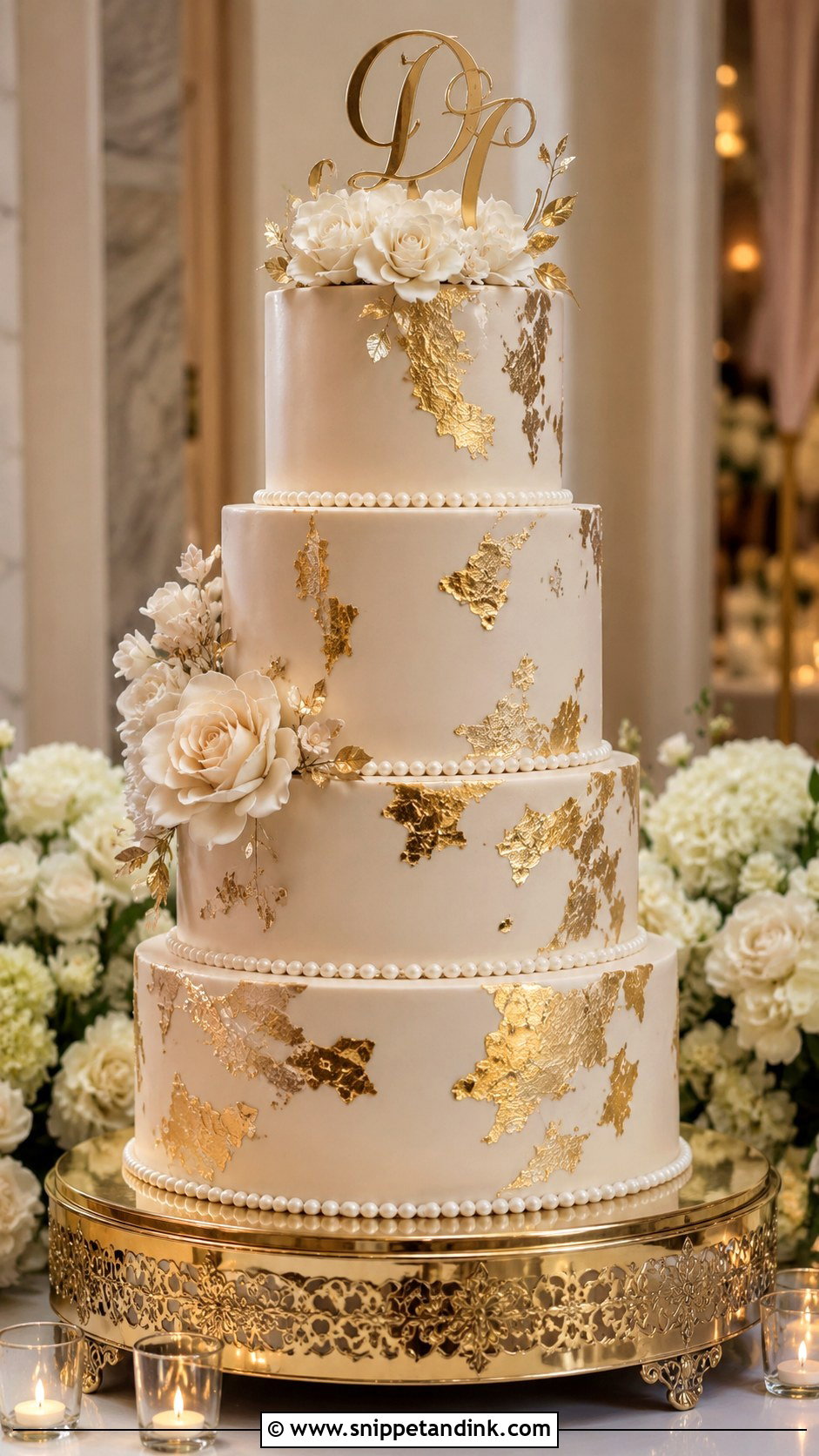
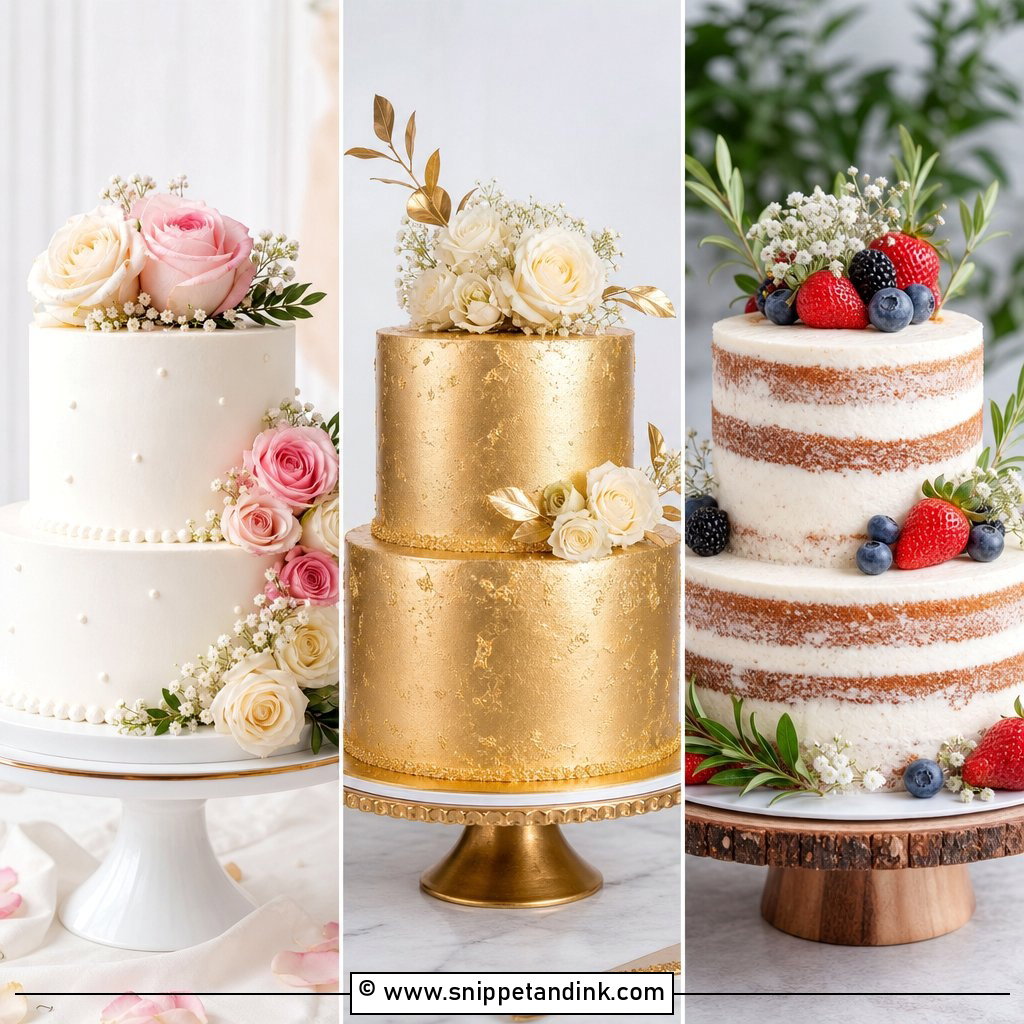
Gold leaf is so thin it tears if you breathe near it, which is exactly why I apply it in uneven patches instead of trying to wrap a whole tier. The broken edges look more artistic anyway. A gold leaf wedding cake sits well on white fondant, ivory buttercream, marble or soft blush, with sugar flowers, piped borders or a subtle metallic monogram if you want more. On a tall cake the leaf picks up light from different angles as people move around, so it earns its keep at evening ballroom receptions. Ask for edible-grade leaf; decorative craft leaf is not safe to eat.
7. Ruffle Wedding Cake
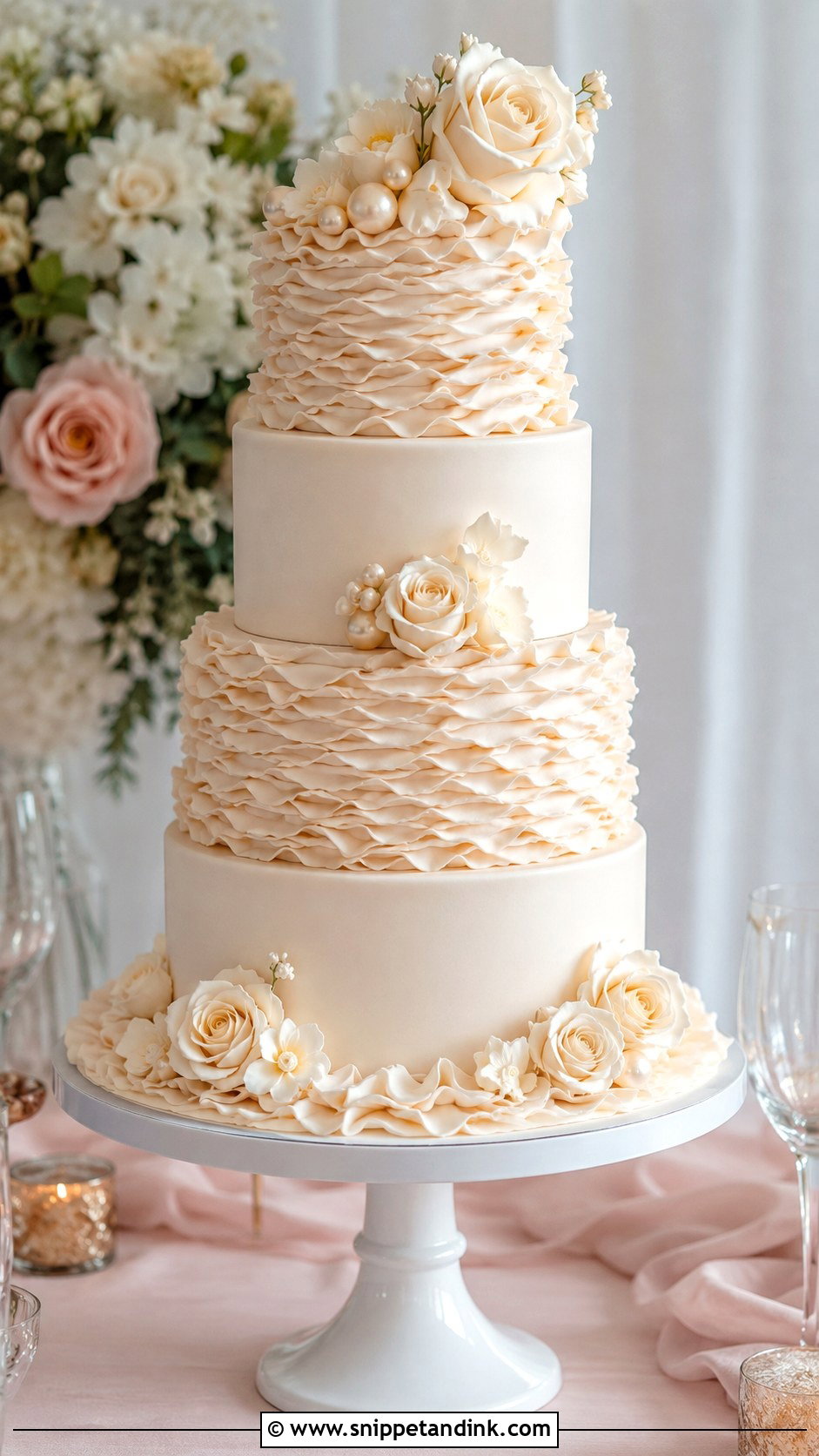
Ruffles can read as fabric, petals or soft pleats depending on how thin I roll the fondant and how tightly I gather it. I’d cover one or two tiers and leave the rest smooth, because a cake that is ruffled top to bottom loses its outline from a distance. Ivory is classic, blush is softer, and pale blue or champagne feels more fashion-led. A few sugar flowers tucked between tiers are plenty. Buttercream ruffles piped with a petal tip are nicer to eat, but they slump in a warm room, so for a summer date I lean toward fondant.
8. Lace Wedding Cake
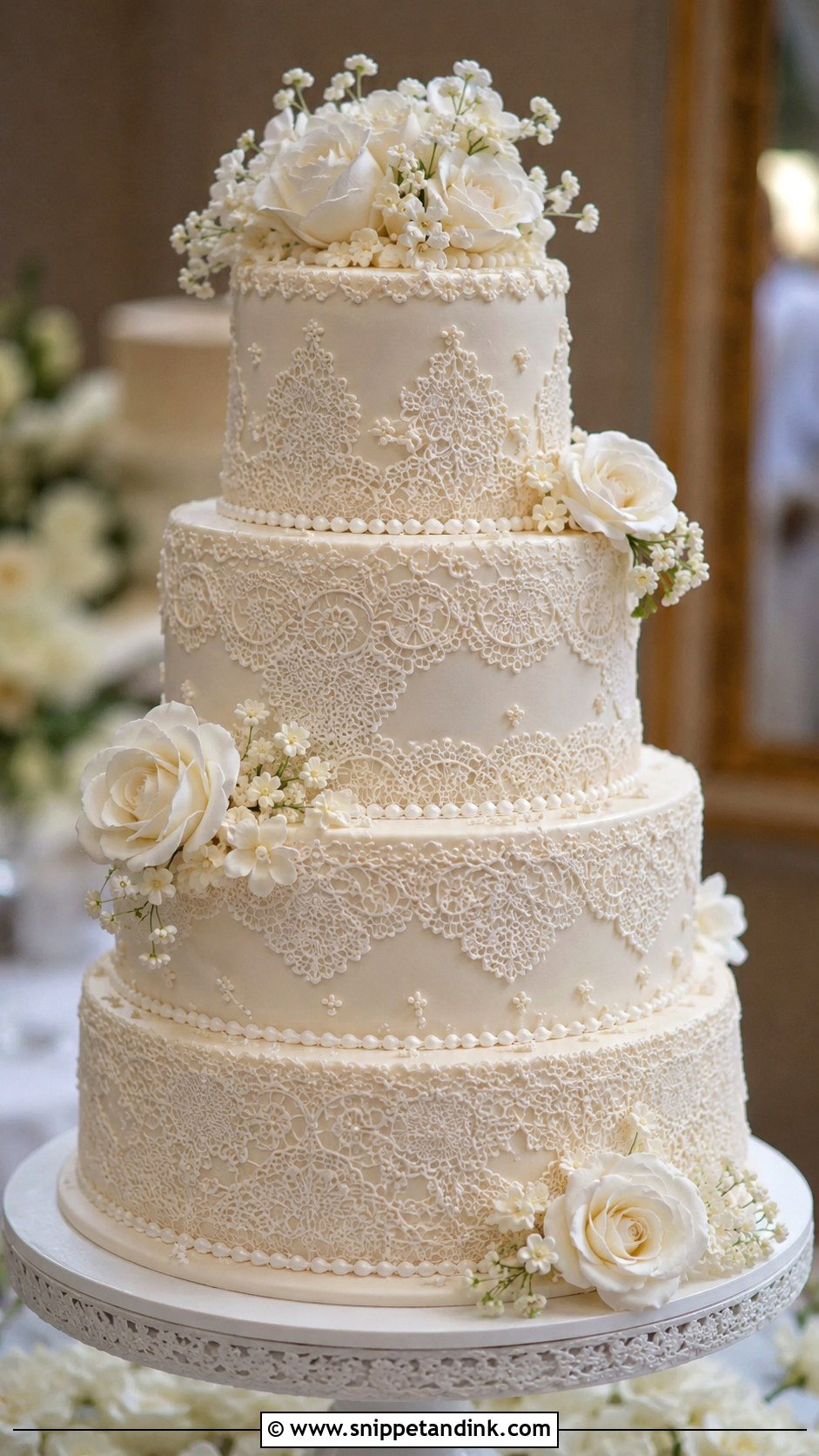
Lace is the easiest way I know to tie a cake to the gown. Bring a photo or a scrap of the fabric and I can echo the motif with piped royal icing, edible lace sheets, stenciling or fondant appliques. Up close they look quite different: piped lace is raised and clearly handmade, while lace from a mold gives a crisp repeating pattern. I like a different pattern on each tier with the color kept soft and consistent. White on white is classic, and ivory or champagne warms it. Tiny pearls, sugar blossoms or a simple floral topper finish it for a cathedral ceremony or an estate reception with vintage details.
9. Watercolor Wedding Cake
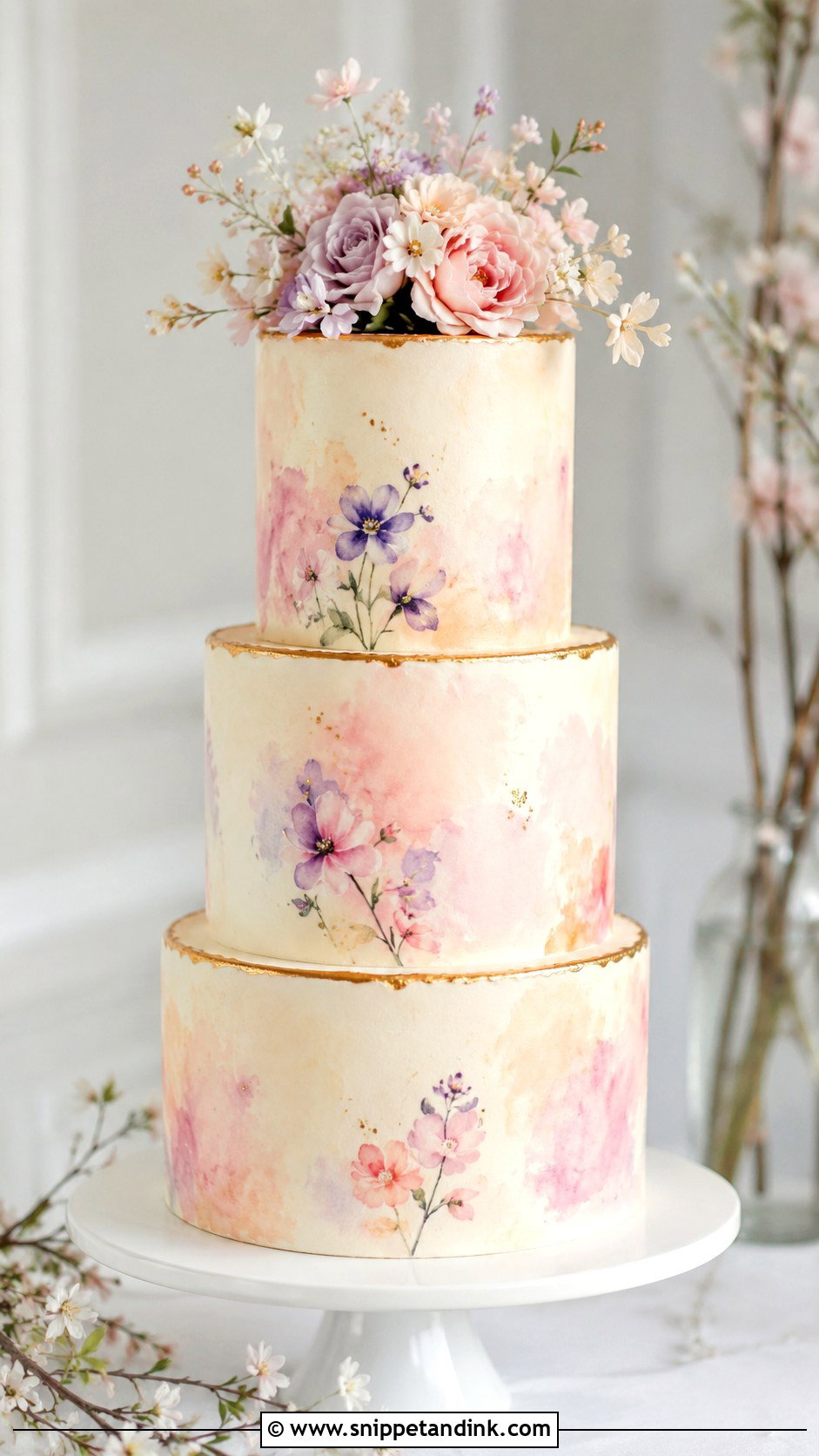
Watercolor on a cake is diluted gel color or petal dust brushed over a firm surface, so it works far better on chilled buttercream or fondant than on a soft finish. A watercolor wedding cake can stay very pale, with washes of blush, blue, lavender or peach. For more detail I add hand-painted florals, metallic edges or sugar flowers in the painted shades, and I pull those colors from the bouquets or bridesmaid dresses so it looks planned. My one caution is restraint. Layer too many washes and they go muddy, and the softness that made you want it disappears.
10. Marble Wedding Cake
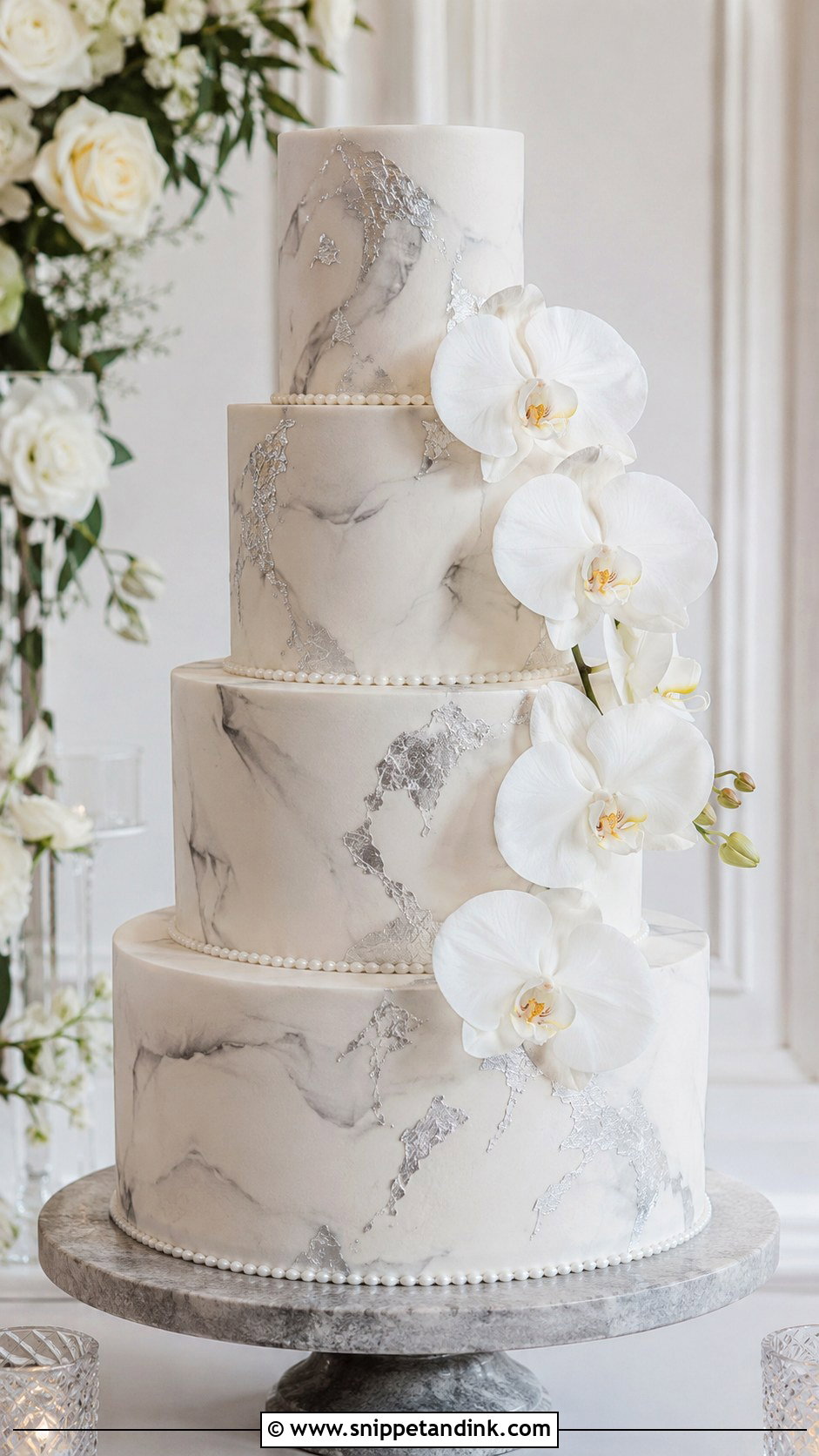
Marbled fondant is made by folding colors together before rolling, so no two tiers come out the same and I can’t promise exactly where a vein will fall. White and gray feel classic, while blush, green or beige stone tones feel more current. Add metallic edging, sugar flowers or one solid tier in a coordinating color if you want more going on. A tall marble cake sits naturally in a venue with stone, glass or strong architecture. From across the room it reads minimal, and up close the veining gives guests something to study.
11. Cascading Orchid Wedding Cake
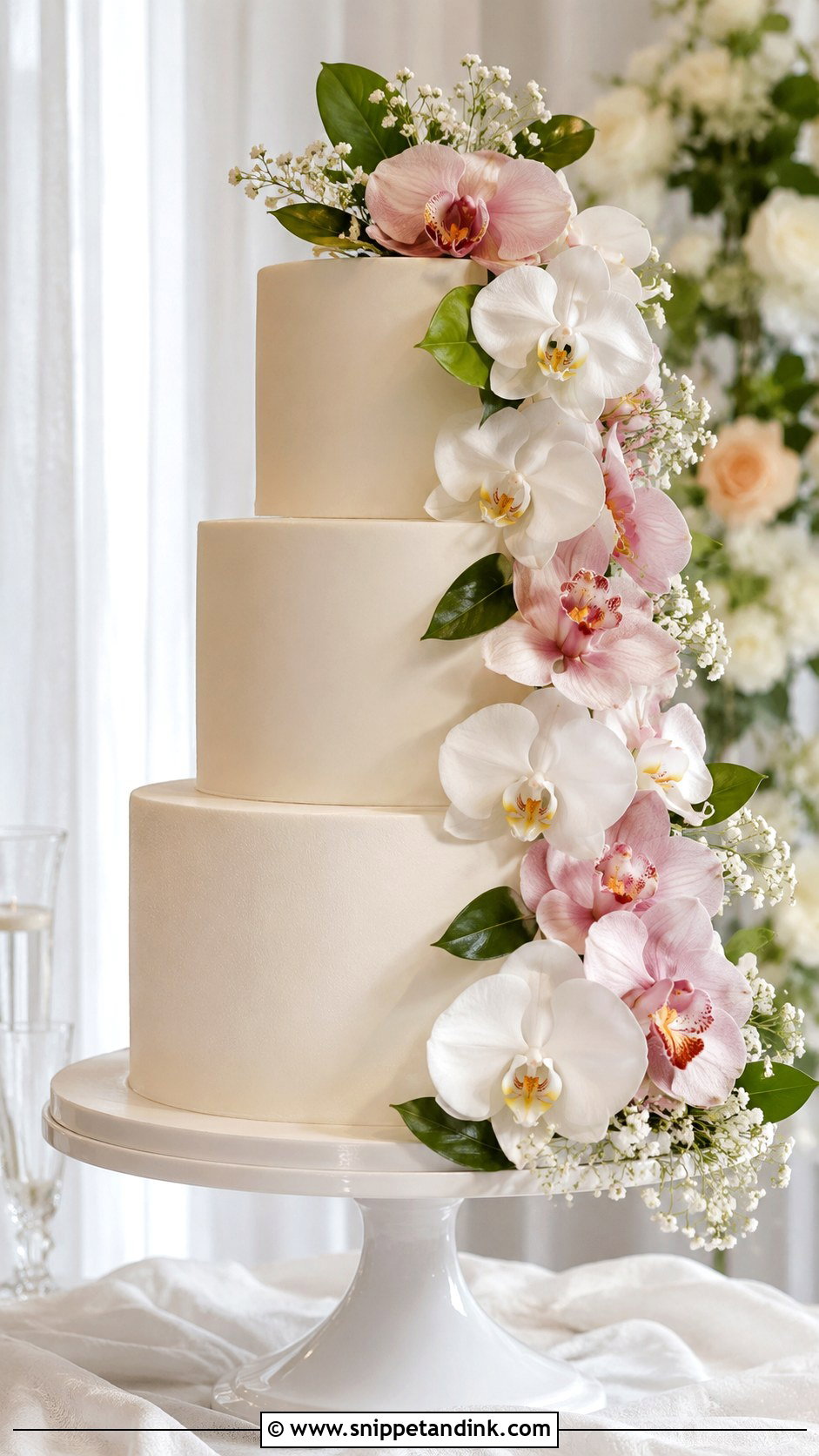
Orchids have such a sculptural shape that a cascading orchid wedding cake needs fewer blooms than people expect. White orchids on ivory buttercream look clean; blush, lavender or coral bring more personality. I let them travel from the top tier to the base in a loose diagonal, add a few glossy leaves or tiny fillers for depth, and then stop. Fresh orchids need their stems wrapped and should never sit directly in the icing, so I coordinate with the florist on which stems are suitable. Sugar orchids avoid the question entirely and hold up better in tropical heat at a destination wedding or hotel reception.
12. Tall White Wedding Cake
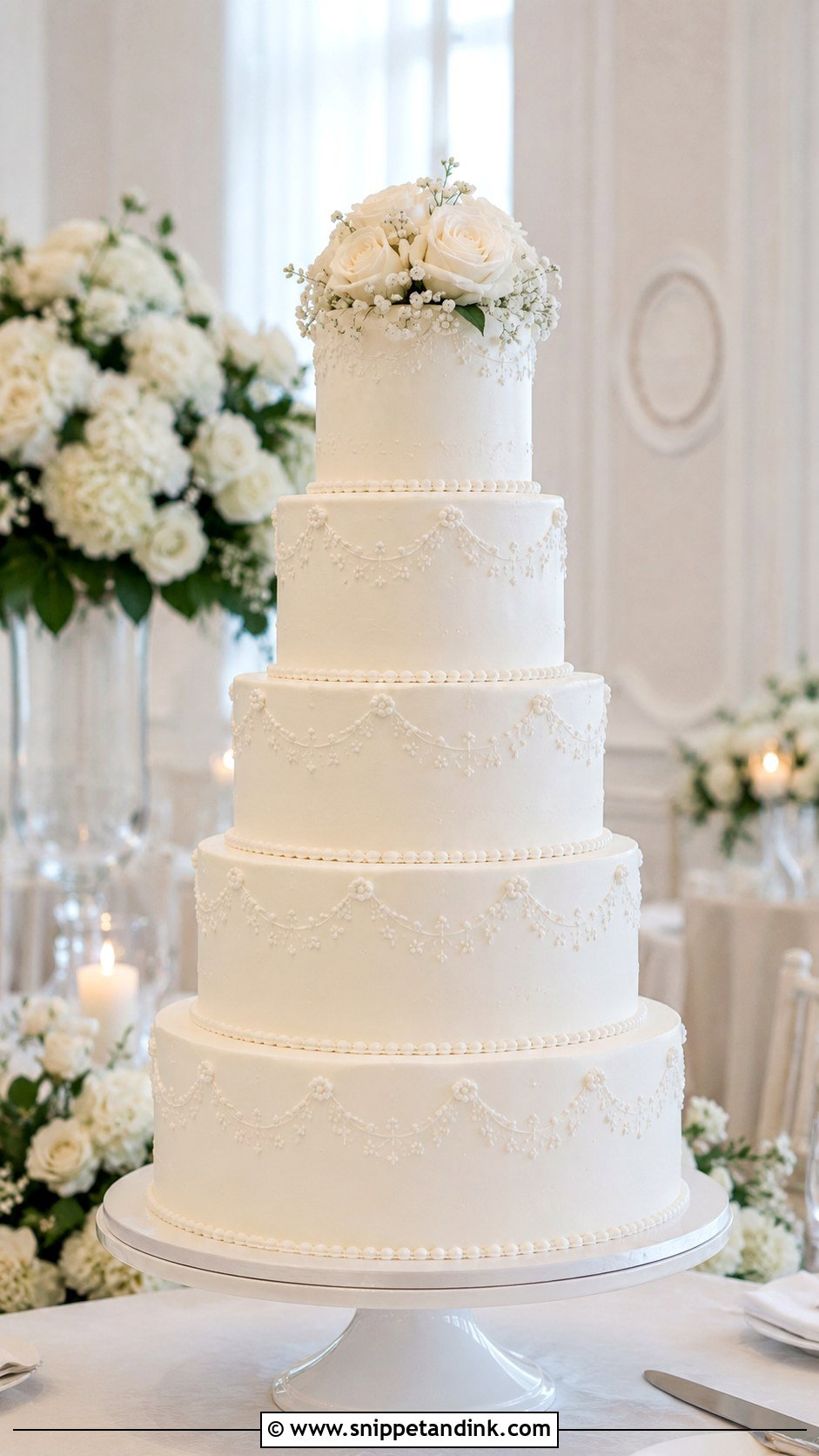
A tall white wedding cake is a classic, and it still looks elaborate once height and texture do the work. Four or five clean tiers, subtle piping, tiny sugar flowers and pearl borders are enough. With no color to hide behind, every flaw in the icing shows, which is why a white cake is the clearest test of a baker’s finishing. It goes with almost any palette. Raise it on a stand with flowers at the base if the room is large.
13. Garden Wedding Cake
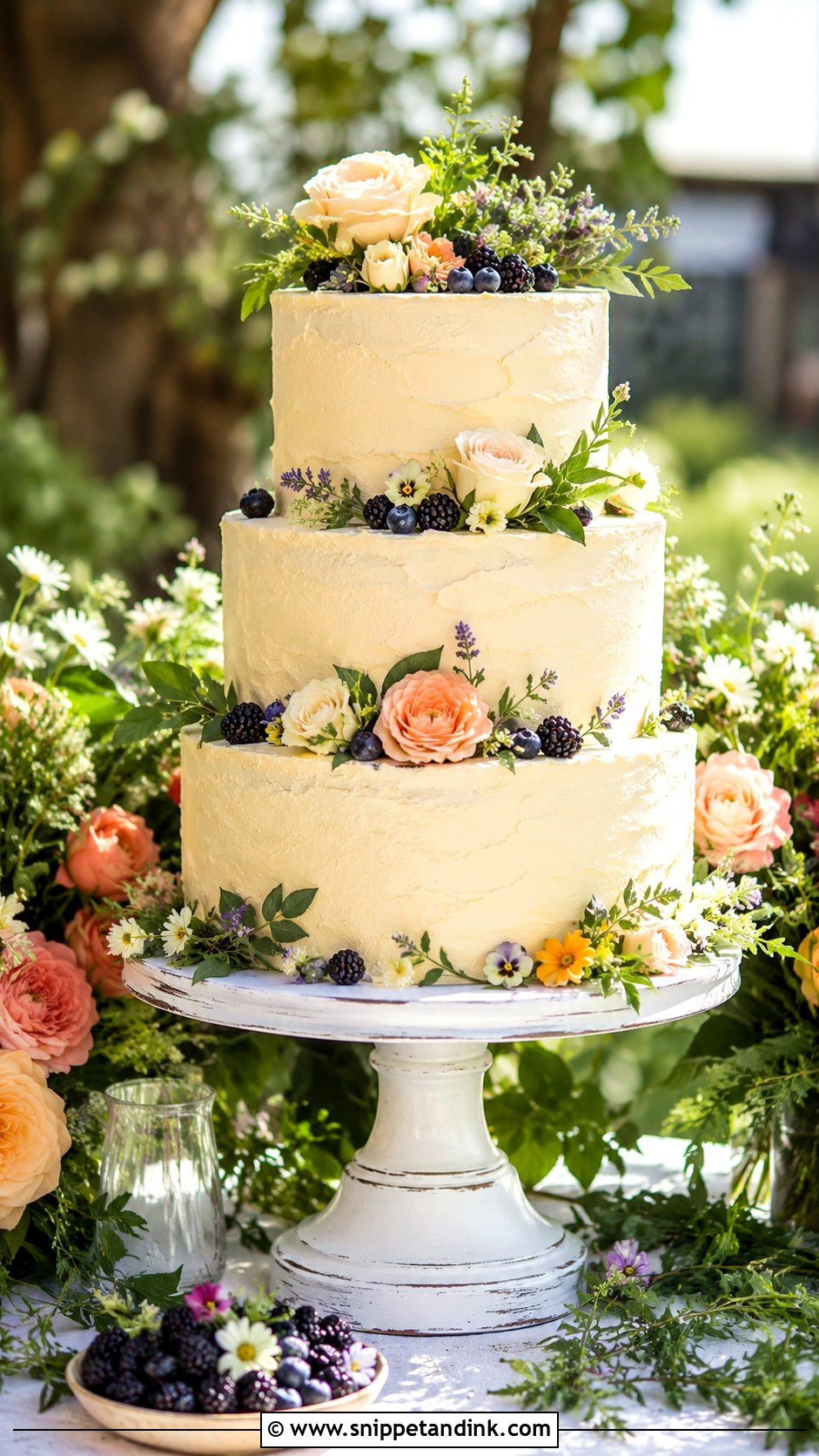
A garden cake should look as if the flowers are growing around it, not arranged on top. I place blooms, greenery, berries and herbs at different heights across several tiers, over buttercream with a slightly rough spatula finish. Lemon, vanilla, almond, raspberry or lavender flavors suit it. The trouble with outdoor ceremonies, greenhouse receptions and backyard summer weddings is heat: buttercream softens quickly in sun, cut berries weep and soft herbs wilt within an hour or two. I ask the planner to keep the cake in shade and bring it out as late as possible.
14. Black And White Wedding Cake
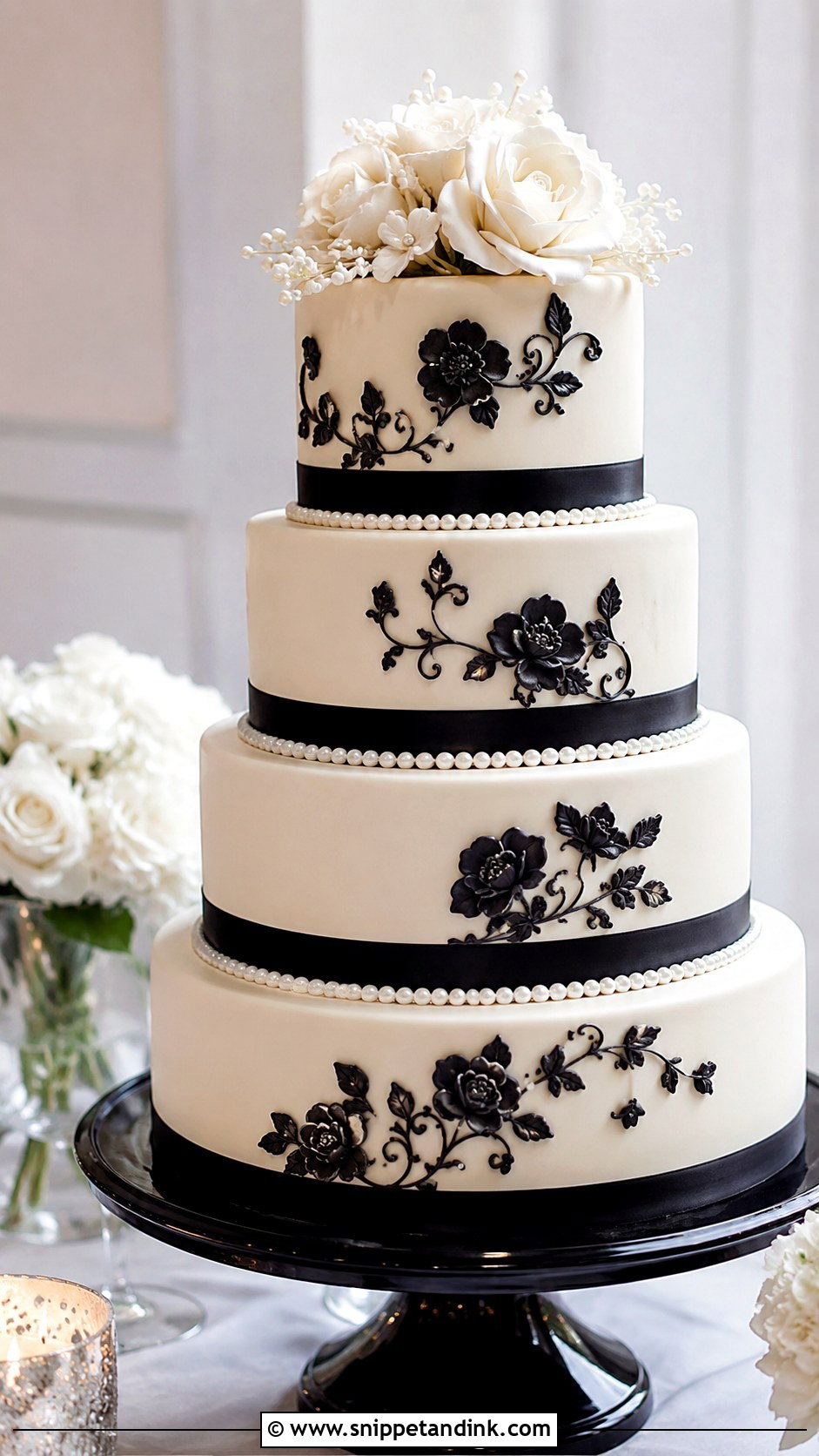
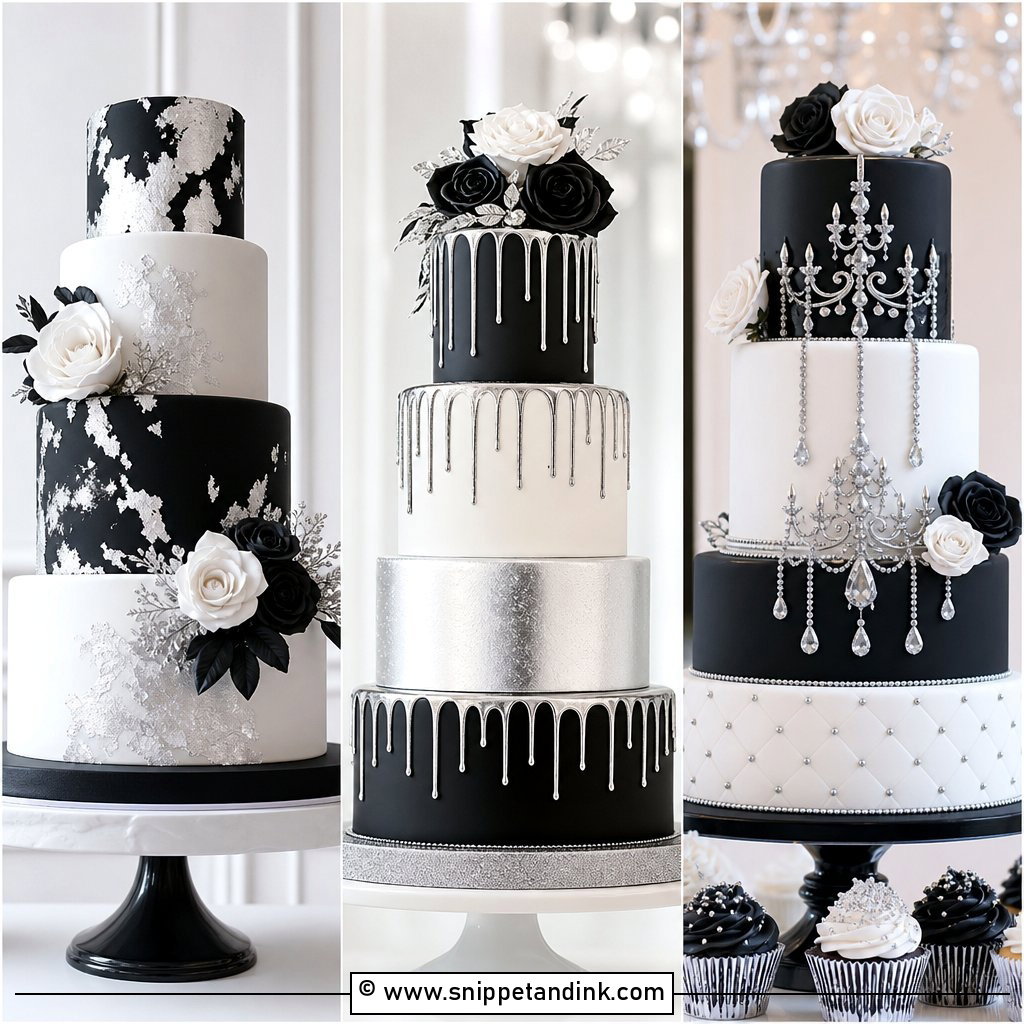
High contrast is unforgiving. On a black and white cake every smudge of black shows on the white tiers, so I add the dark details last with a clean brush nearby. White tiers with black piping, ribbon-style bands, painted florals or one deep black accent tier all work, and mixing smooth fondant with lace patterns, sugar flowers and pearls adds depth. Keep the shape clean so the contrast looks deliberate. Black icing needs a lot of color and can stain teeth, which is why I keep the darkest work on fondant details guests can set aside. At an evening black-tie reception every line reads crisply in photos.
15. Blush Pink Wedding Cake
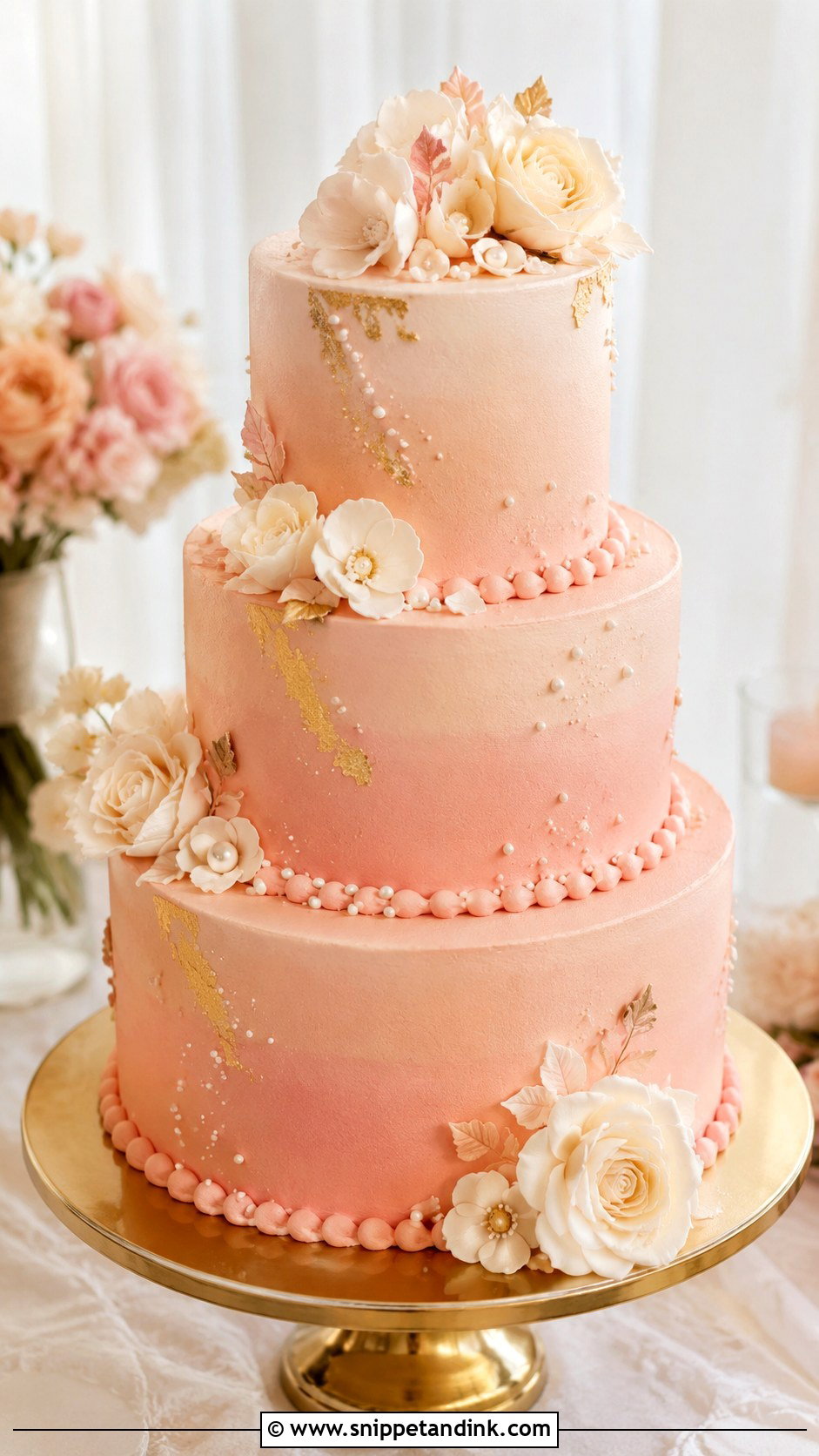
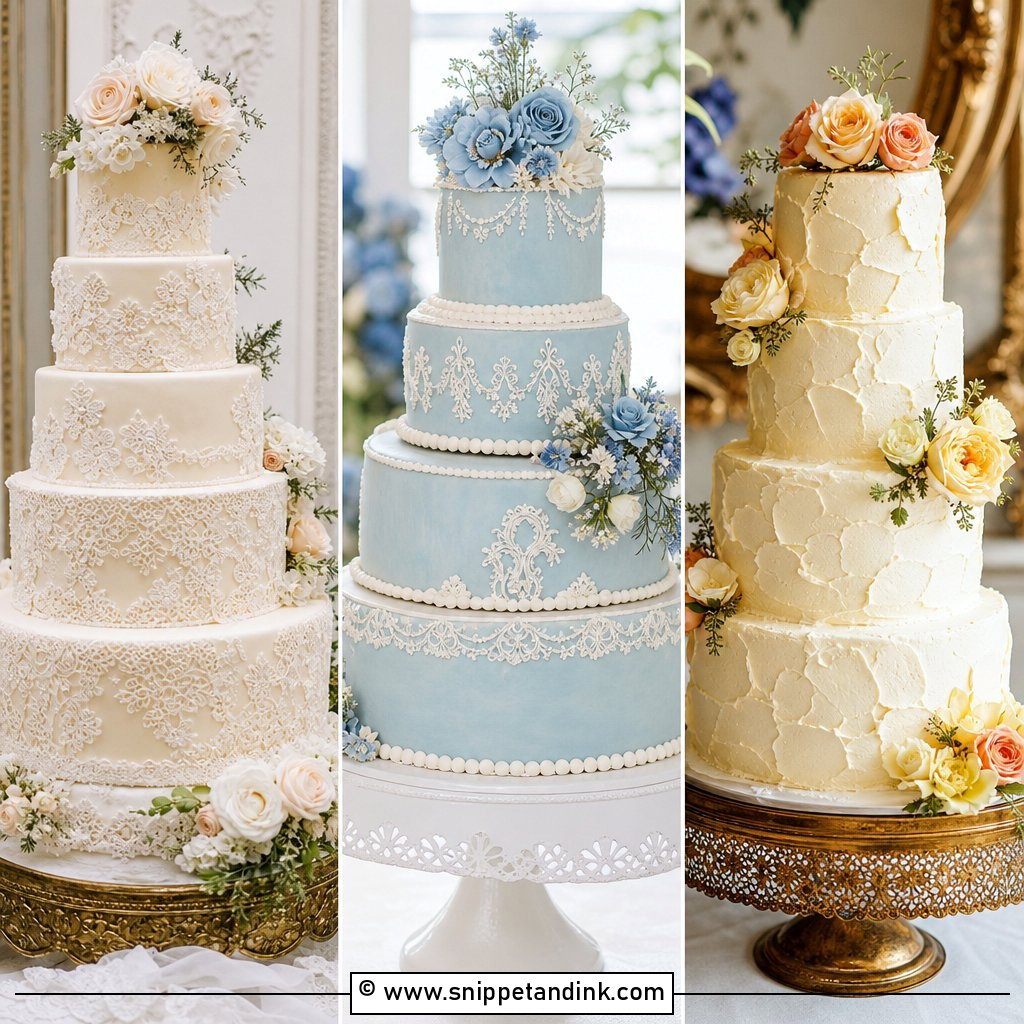
Blush gives you color without losing the bridal softness. I pair blush buttercream or fondant with ivory sugar flowers, pearl accents and a touch of gold leaf, or I do ombré tiers that fade from deeper rose at the base to pale blush at the top. For the ombré I tint every tier from the same base batch so the steps stay even. Garden roses, champagne linens and candlelight all sit well beside it. Warm lighting can push pale blush toward peach in photos, so look at a sample under the venue’s light if you can.
16. Blue Wedding Cake
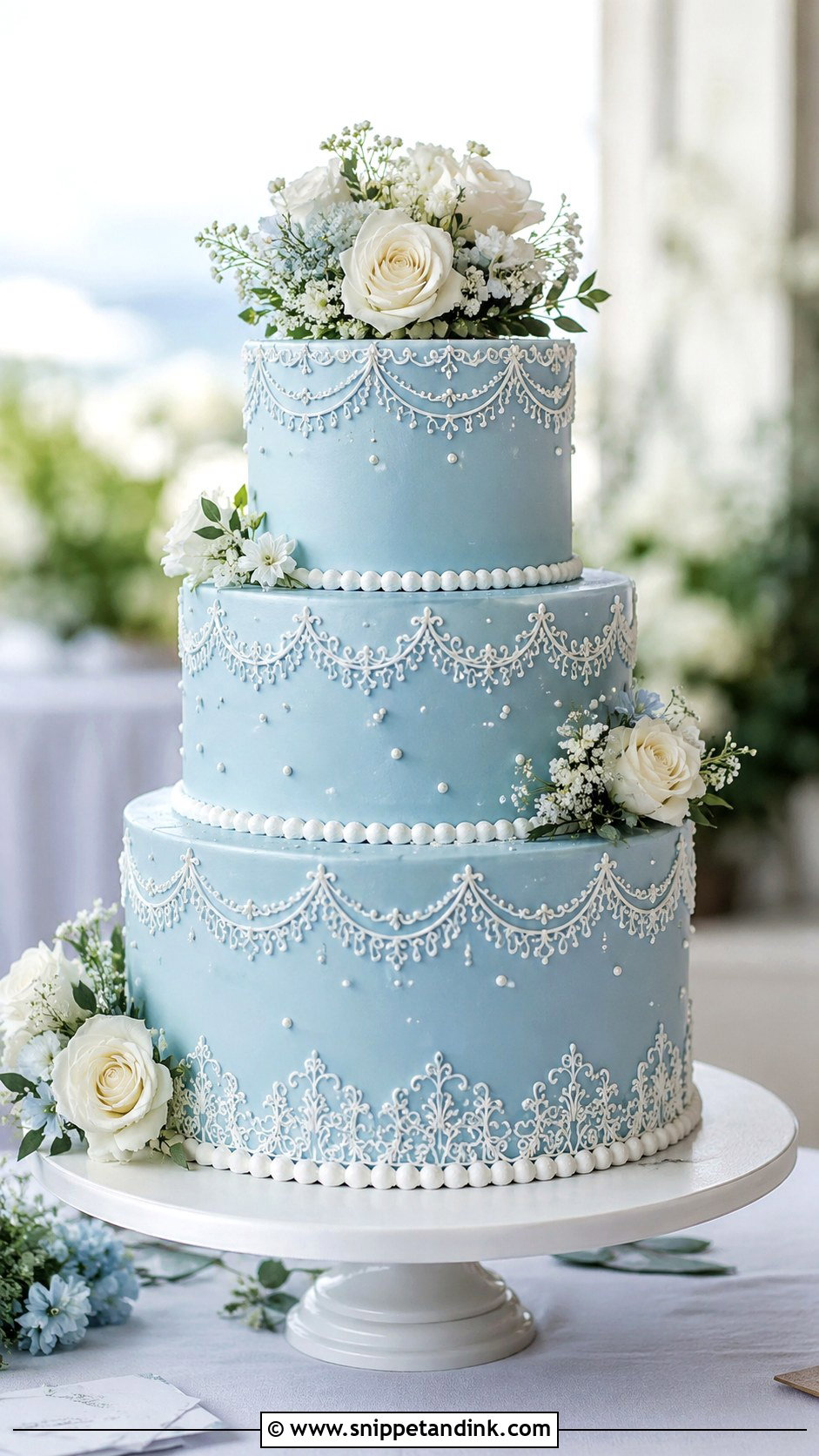
Blue is one of the harder colors to get right in icing. Too much gel turns it bright and childish, and some blues lean green under warm bulbs, so I mix pale, dusty or slate blue a shade lighter than the swatch and let it deepen as it sits. Those softer tones pair well with white flowers and greenery. Smooth blue fondant or buttercream with piped white work, sugar flowers, pearls or painted accents gives it detail, and a single Lambeth-inspired tier adds a vintage touch. It fits coastal weddings and receptions where the bridesmaids or table decor already carry blue.
17. Champagne Wedding Cake
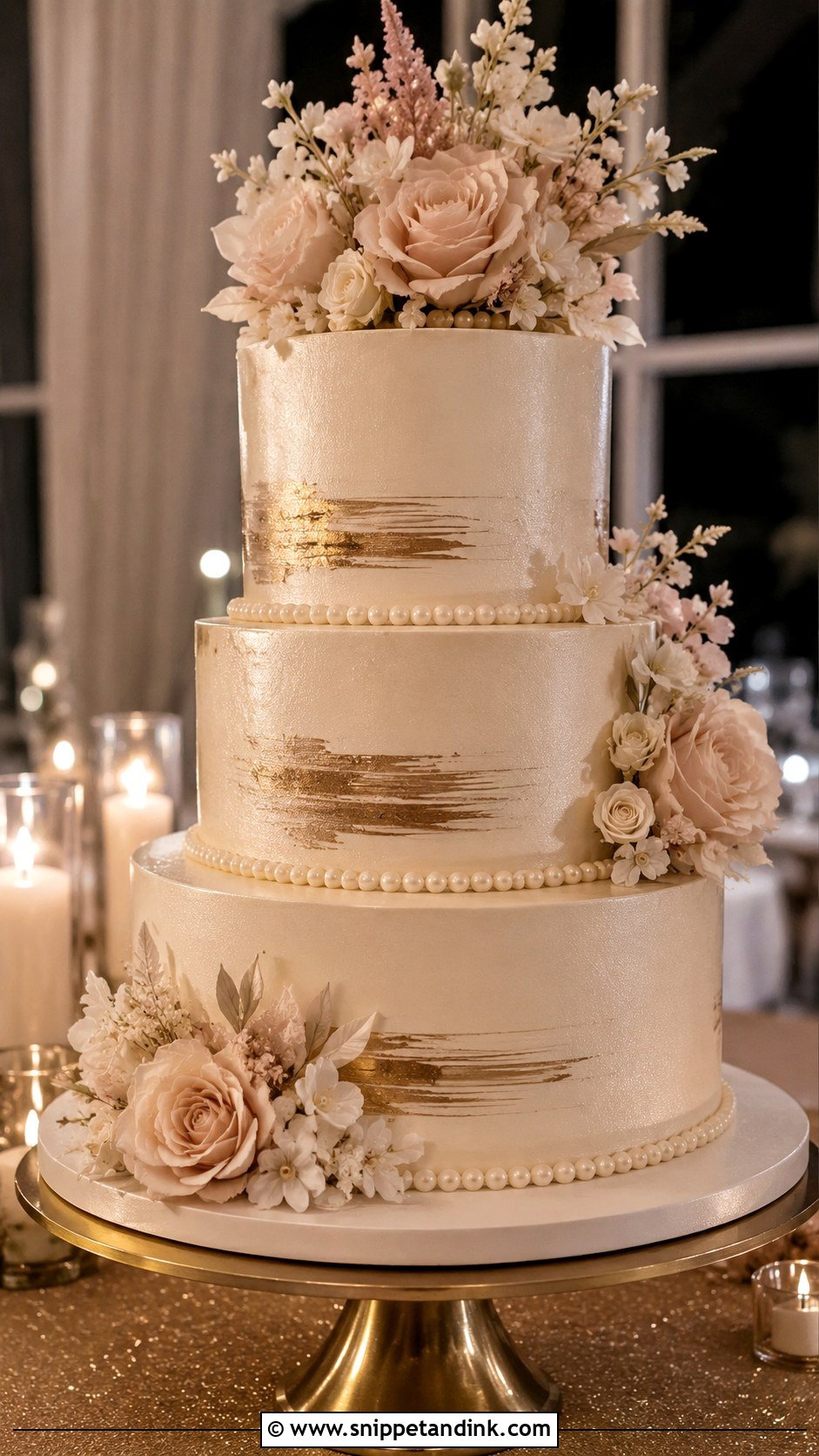
Champagne sits between ivory, beige and soft gold, so it goes with more palettes than most couples expect. I use champagne-toned fondant or buttercream with metallic brush strokes, pearl borders, pleated texture or sugar flowers in cream and blush. Under soft reception lighting the warm tone glows without shouting, which makes it a strong pick for fall and evening weddings in rooms with gold accents. Check it beside your actual linens first. Next to a cool bright-white tablecloth, champagne can look a little dingy.
18. Heart Shaped Wedding Cake
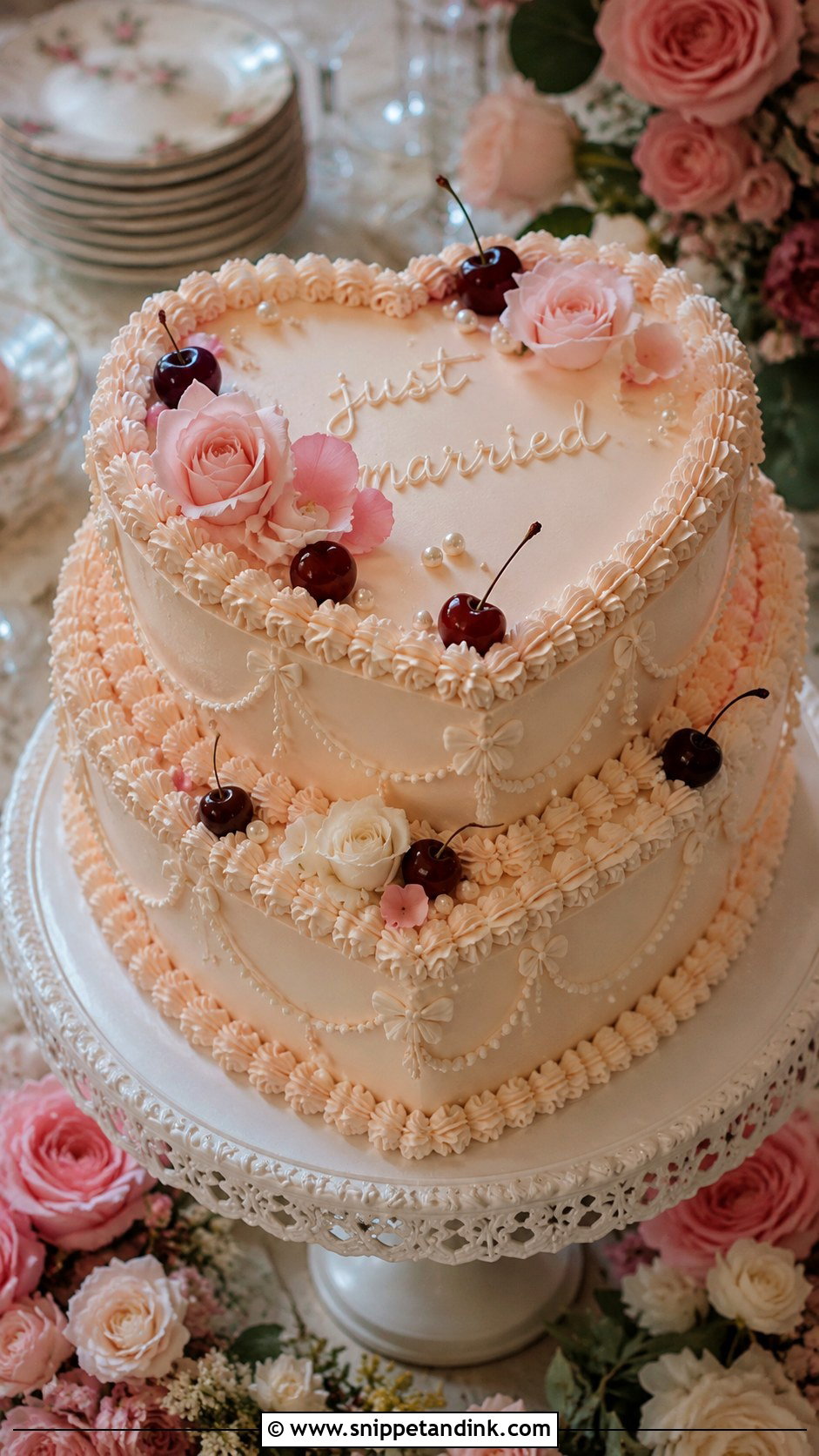
A heart is a nostalgic shape that pulls attention by itself, so the decoration can stay tidy: clean piping, layered borders, pearls and a soft palette. Two tiers are enough to feel elaborate. Ivory, blush, pale blue or butter yellow frosting all work, finished with sugar roses, cherries, bows or delicate script on the top tier. Stacking hearts is fussier than stacking rounds because the points have to line up exactly, and the shape gives fewer neat slices for its size. I’d save it for an intimate wedding or a couple who likes a bit of play in their romance.
19. Long Sheet Wedding Cake
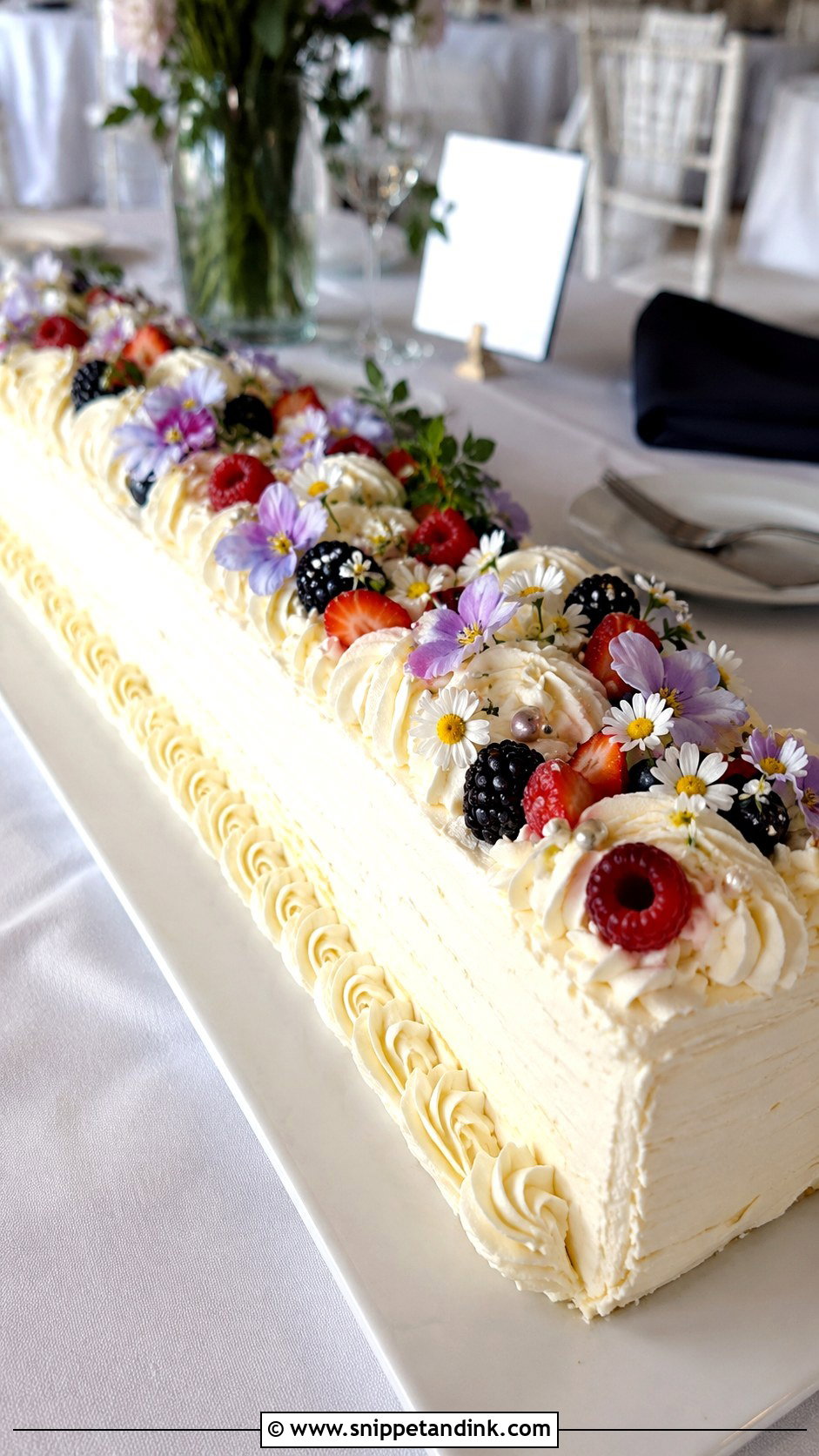
A long sheet cake builds drama across the table instead of upward, which helps when a ceiling is low or you’d rather skip a tall stand. The surface leaves room for piped borders, fresh fruit, edible flowers, frosting swirls and sections that look abundant. It’s also quick to serve, since the caterer cuts straight from the board, and it still looks generous in photos at a family-style reception or a long banquet table. I keep the piping neat, hold the palette tight and trail flowers along its length. Make sure the venue has a table long and level enough, and that the board is rigid enough not to flex when it’s carried.




20. Floating Tier Wedding Cake
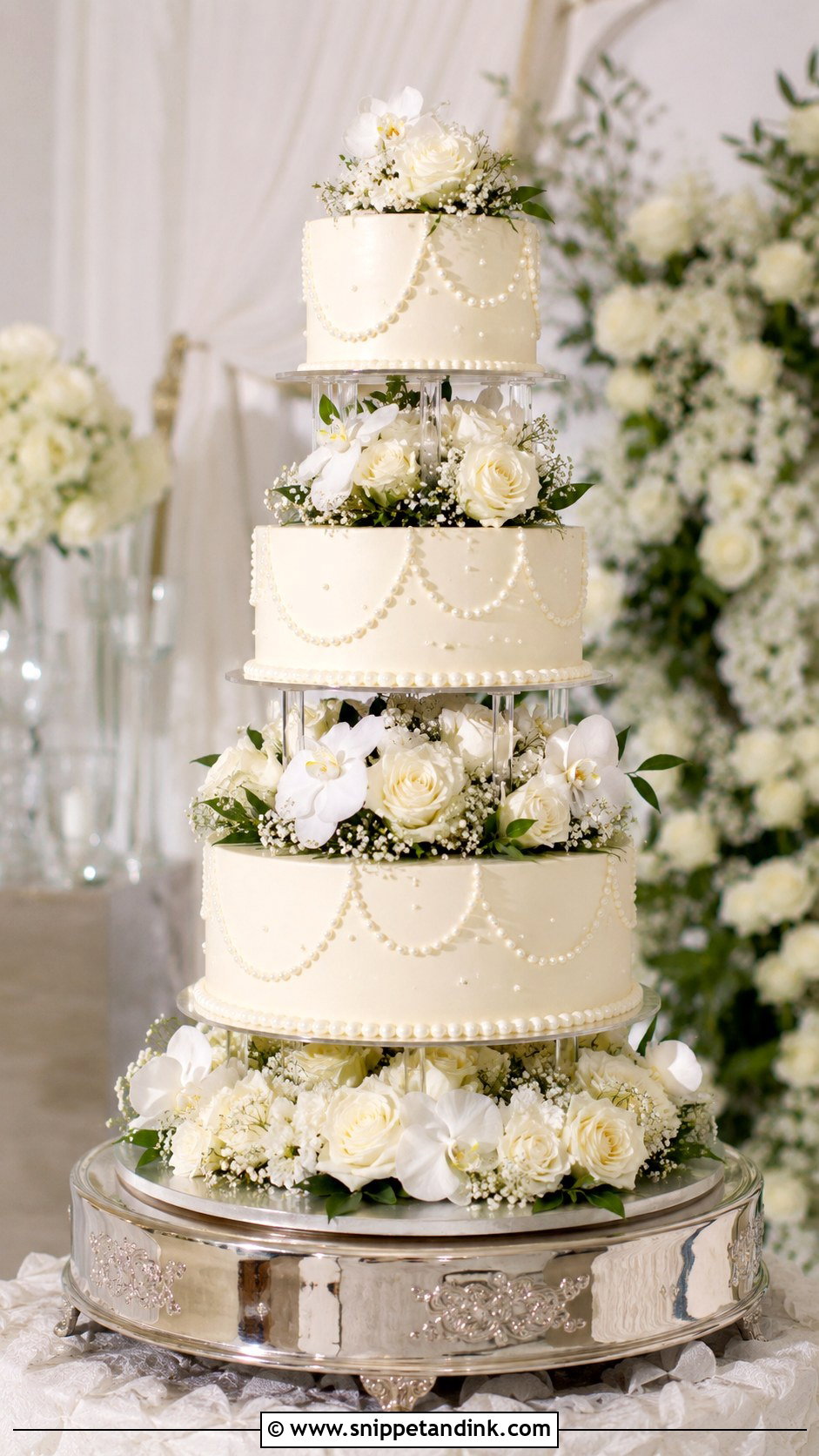
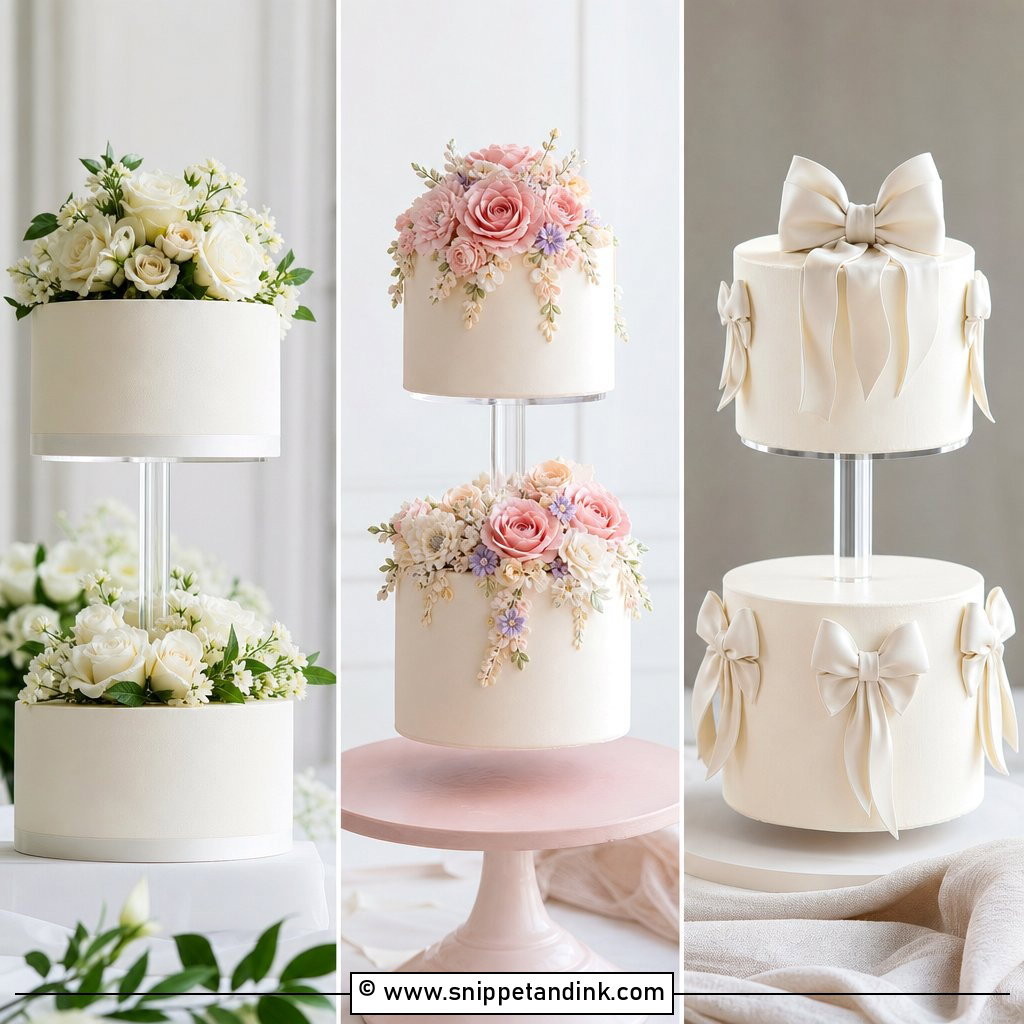
Floating tiers look light because each one is separated by clear stands, floral columns or hidden supports. I fill those gaps with flowers, greenery, pearls or delicate sugar work and keep the frosting plain so the suspended effect stays the focus. White, ivory, champagne or soft pastel tiers all suit it. This is not a design to attempt at home. The supports have to carry real weight and sit dead level, and the hardware is usually rented from the baker, so ask about deposits and when it has to be returned. In a large reception it reads grand from across the room.
What Happens Between My Kitchen and the Cake Table
Most cake disasters happen in transit or in the first hour on display, not in the oven. Tall cakes travel chilled and in sections, flat on a non-slip mat in an air-conditioned vehicle, then get stacked and finished on site. Every tier sits on its own board with dowels underneath carrying the weight above, and a long central dowel keeps the whole thing from shifting.
Heat and humidity are the other enemies. Buttercream starts to soften in a warm room, and fondant that comes out of a cold van into humid air can sweat, beading with moisture until it settles. Sugar flowers absorb humidity too and can droop. That’s why I ask for a sturdy, level table set away from sunny windows, heaters, the kitchen doors and the dance floor speakers, which shake more than you’d think.
Real Tiers, Dummy Tiers and Getting Everyone a Slice
If you love a five tier look but are feeding eighty people, ask about dummy tiers. These are foam rounds iced and decorated exactly like the real cake, and they let me build height without baking cake nobody will eat. A plain sheet cake of the same flavor can sit in the kitchen and be cut alongside the display cake, so service stays quick.
Ask how your baker counts servings, too. Wedding portions are usually cut as small rectangles, noticeably slimmer than a birthday wedge, so a cake quoted for a hundred servings won’t feed a hundred people at party-sized slices. If you plan to keep the top tier for your anniversary, take it out of the count before you order.
Matching the Detail to Your Room and Guest Count
The detailed cakes I’m happiest with all started from the mood of the wedding, and only then did shape, color, texture and decoration get decided. A grand floral cake suits a lush reception, and Lambeth piping brings vintage charm. Pearl, lace and tall white designs stay classic, while marble, black and white or floating tiers lean modern. Whichever way you go, talk through structure, servings, flower safety and setup with your baker early. Get those right and the cake becomes one of the most photographed details of the day.
You'll Like These Ideas:








Leave a Reply