
Two hundred guests changes how I design a cake. It has to stand up to its own weight, cut cleanly in a hurry and still taste fresh on the last plate out of the kitchen. Most of the big orders I take end up as a five-tier display cake, a four-tier cake backed by kitchen cakes, or a tall cake with mixed tier heights that fills a large room. A plain finish at the right scale can look as grand as heavy sugar work. Below are twenty approaches I’d consider for a crowd this size, with the serving and structure questions each one raises.
How the Serving Chart Adds Up to Two Hundred Slices
Wedding slices are smaller than party slices, usually about one inch wide, two inches across and four inches tall. Most bakers work from a chart built on that size. On a typical chart, round tiers give roughly 12 slices from a six-inch, 24 from an eight, 38 from a ten, 56 from a twelve and 78 from a fourteen. Charts vary, so treat these as a guide and ask for your baker’s own numbers.
- 14, 12, 10, 8 and 6 inch rounds: about 208 slices, enough for two hundred with a small margin.
- 12, 10, 8 and 6 inch rounds: about 130 slices, so plan roughly 70 more from kitchen cake.
- Saving the top tier for your anniversary? Subtract it from the count before you order.
Not every guest eats cake, especially when there’s a dessert table, but I’d still order for the full headcount. Running out halfway through service is far worse than boxing up a few leftovers for the wedding party.
1. Five Tier Wedding Cake
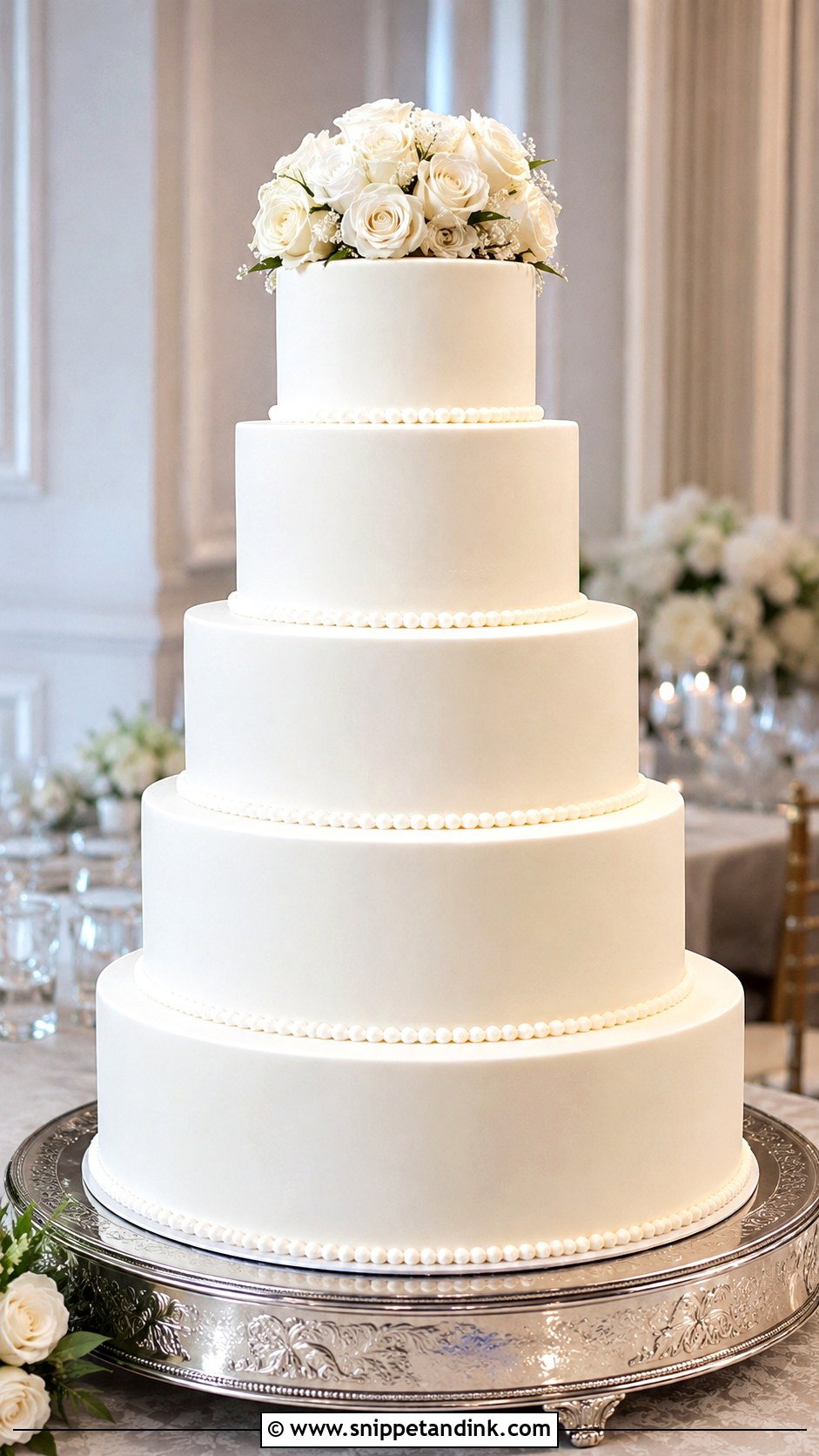
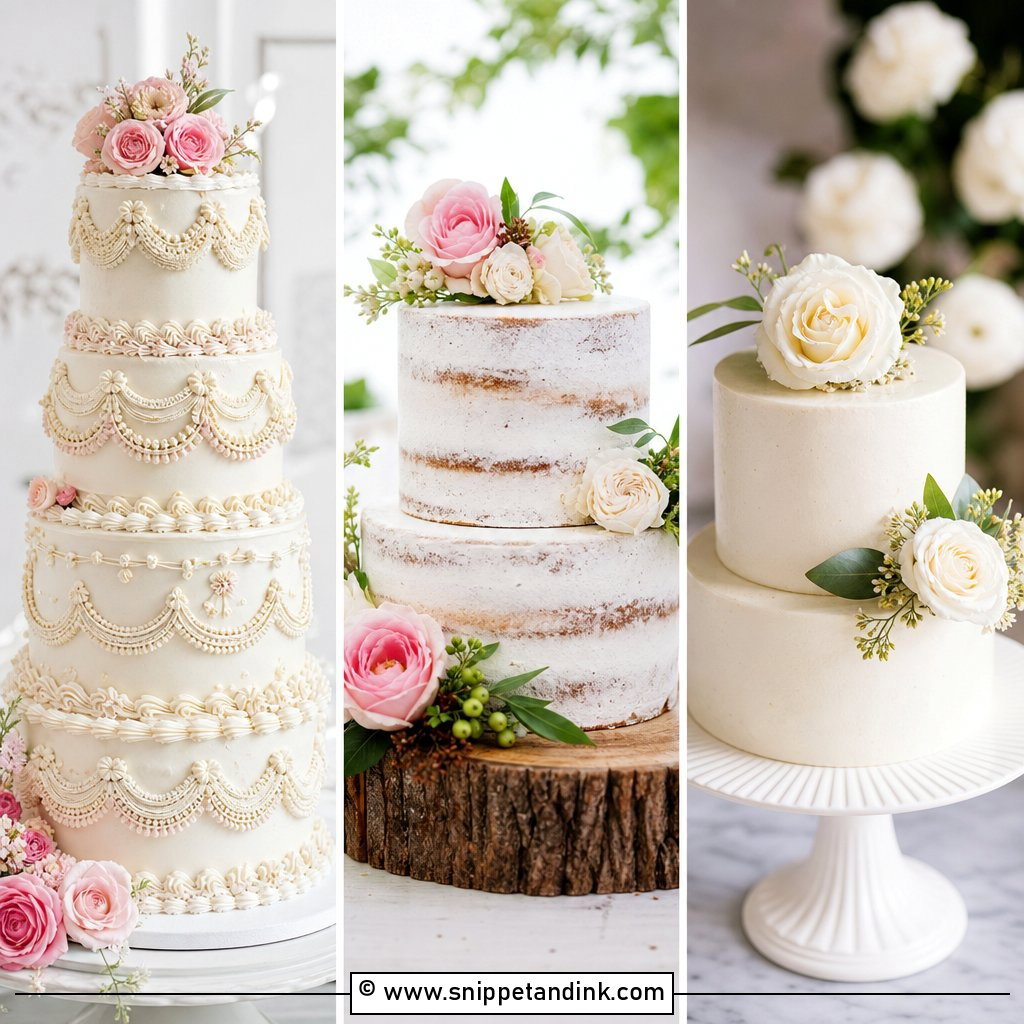
Five tiers is the classic answer, and the numbers back it up. A stack of 14, 12, 10, 8 and 6 inch rounds yields roughly two hundred wedding-size slices on most bakers’ charts, so the whole cake gets eaten rather than displayed. A cake that tall weighs a great deal, which is why every tier sits on its own board with dowels underneath and a central rod through the stack. I keep the decoration calm: smooth ivory buttercream, a line of pearl piping, a few flowers. Decide early whether the top tier is served or boxed for later, because it changes the count.
2. Four Tier Wedding Cake With Sheet Cake
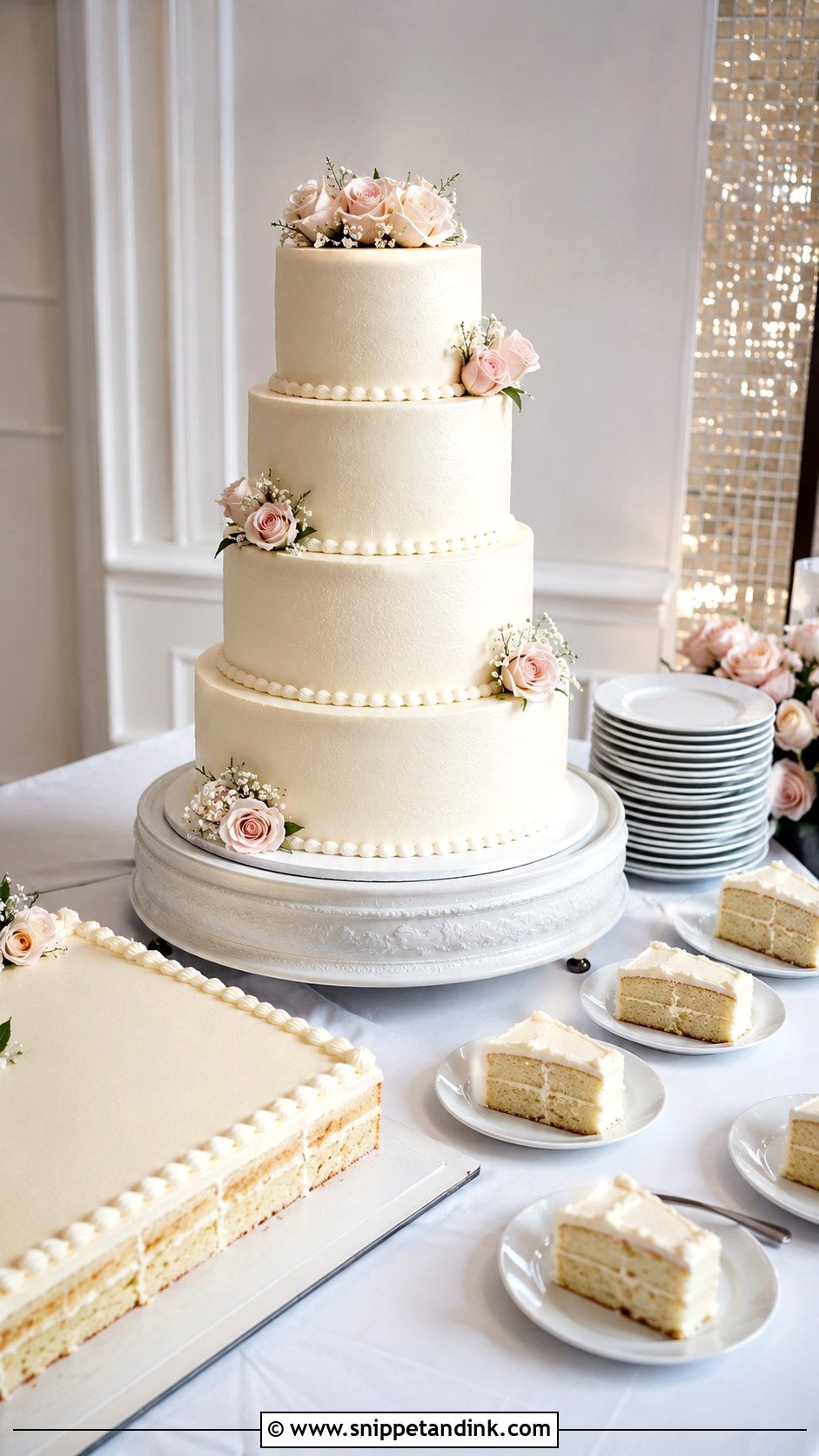
This is the combination I recommend most often for a big reception. A four-tier display of 12, 10, 8 and 6 inches gives you the cutting photo and a tall table, and matching kitchen cakes cover the rest of the guests. The kitchen team can start slicing those during dinner, so plates go out faster. Style the display generously with tall tiers, flowers and a strong stand so it doesn’t look undersized in a big room. Bake the kitchen cakes in the same flavors and fillings, so every guest gets the same cake.
3. White Buttercream Wedding Cake
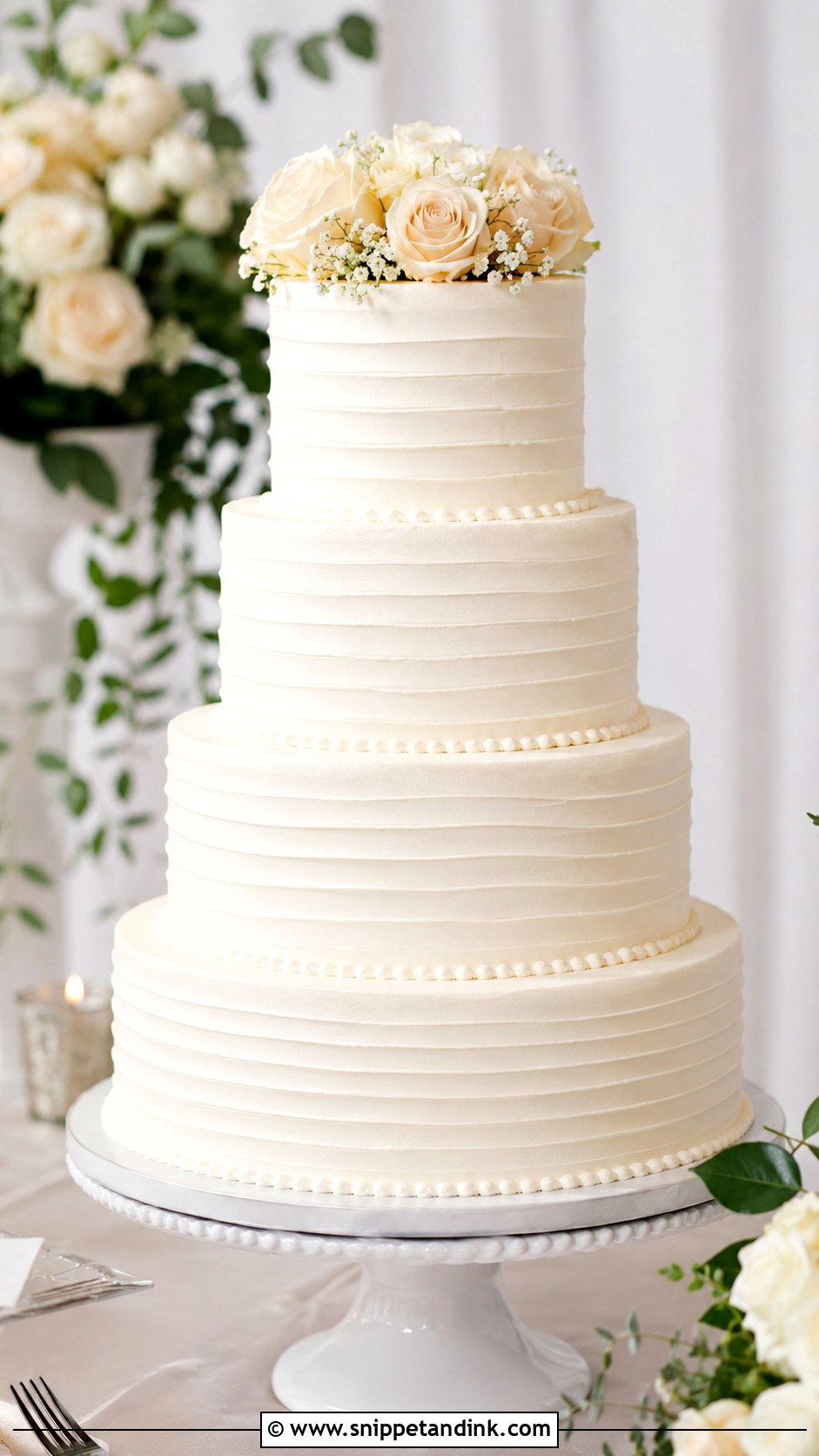
Buttercream is my default for a large wedding because it’s familiar and easy to cut. But not all buttercream behaves the same. American buttercream is sweet and forms a slight crust; Swiss and Italian meringue buttercreams are smoother and less sweet but soften sooner in heat. For a warm or outdoor reception I’d ask which one your baker uses and how long the cake will sit out. Smooth, lightly textured or ridged finishes all suit four or five tiers, and vanilla bean, almond, lemon or raspberry fillings please most of a crowd.
4. Fondant Wedding Cake
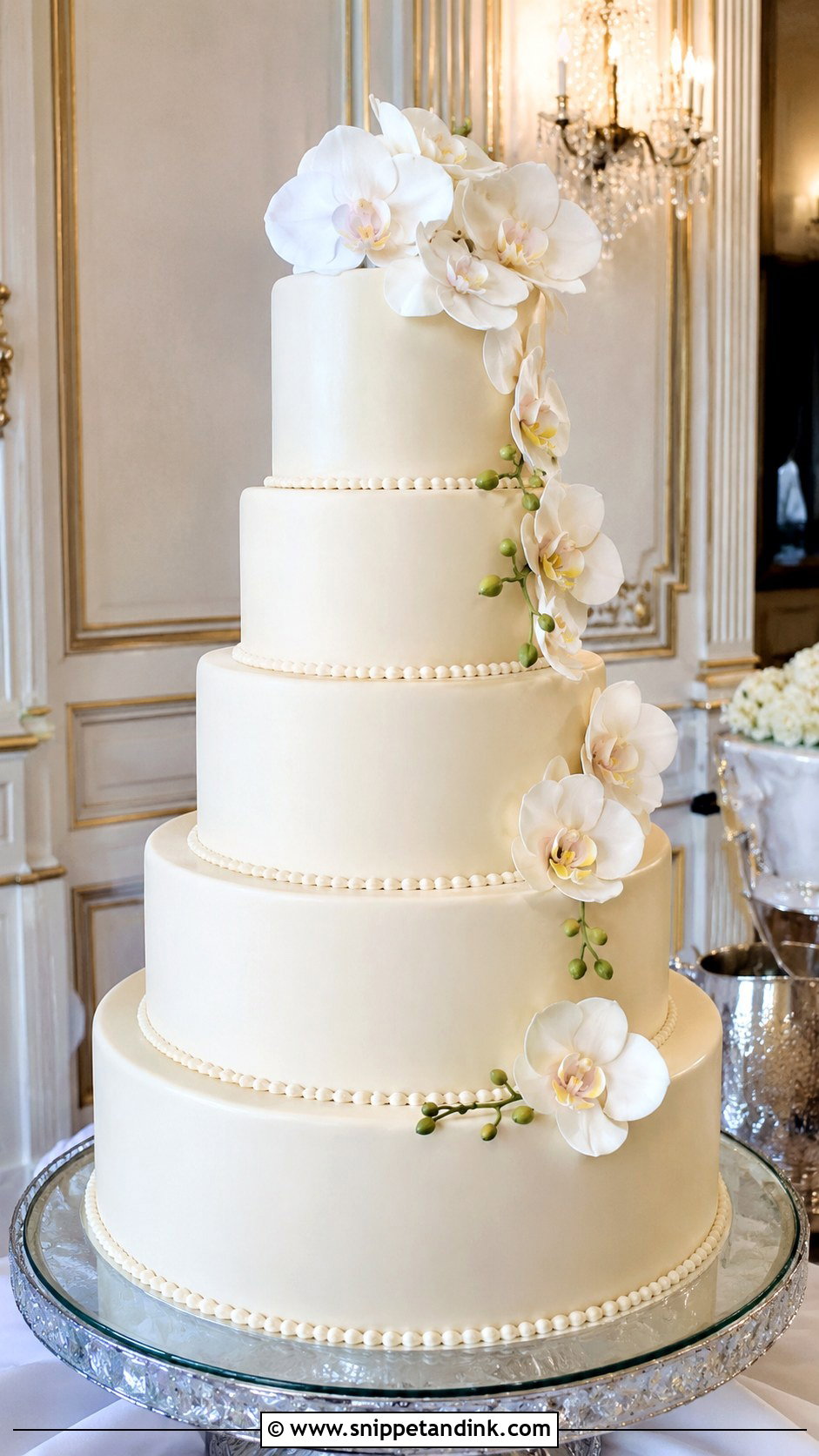
A fondant wedding cake gives the sharpest edges and the most even surface on a tall cake, and it protects the cake underneath during delivery. That’s why I reach for it with complicated designs, painted details or monograms. Underneath, the cake should be covered in buttercream or ganache; ganache sets firm and holds the shape better in a warm room. Many guests peel fondant off, which is fine. Keep the palette refined at this scale: ivory with a subtle pattern, a few sugar flowers and fine piping.
5. Square Wedding Cake
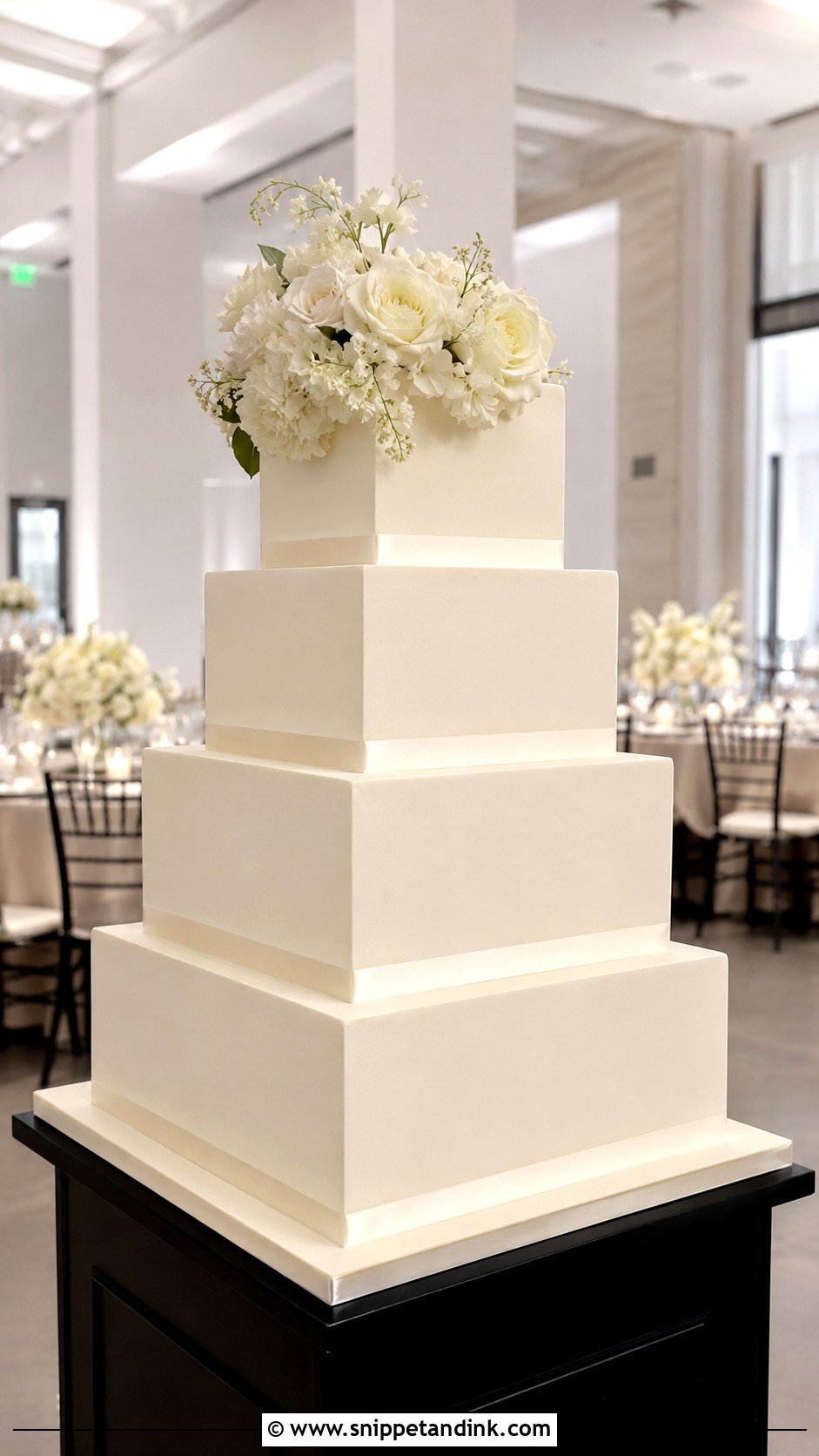
Square tiers serve more than round tiers of the same width, because you lose no cake to the curve. That makes them a practical choice for two hundred guests. The shape reads as architectural, which suits hotel ballrooms and minimalist rooms, and a ribbon, flowers or a soft buttercream texture keep it from looking severe. Getting sharp square corners is harder work, so expect that to show in the quote. Square tiers also portion into neat rectangles quickly. Vanilla almond, chocolate and lemon all cut cleanly.
6. Round Wedding Cake
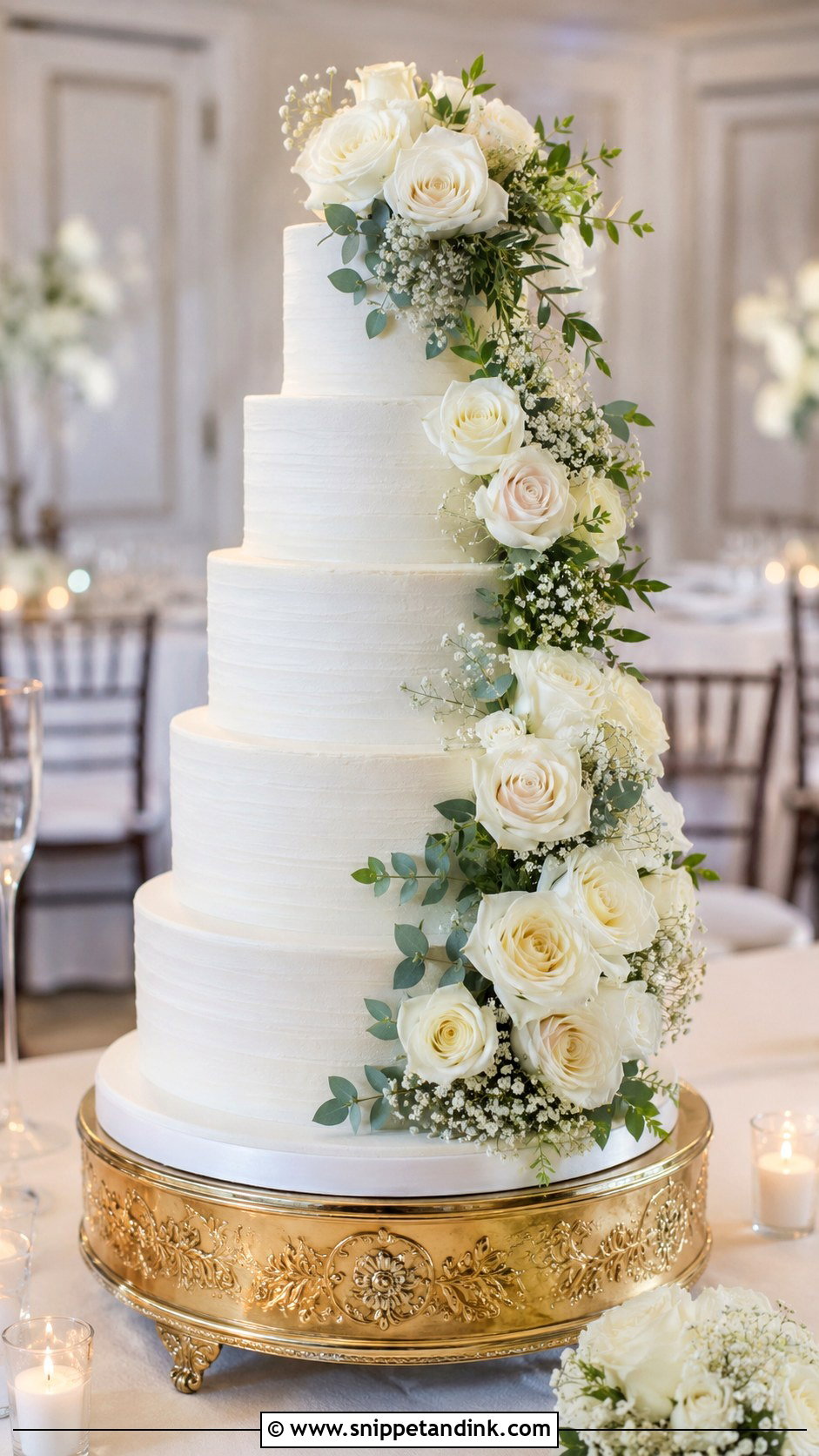
Round tiers give the silhouette most people picture when they think of a wedding cake. For two hundred, five round tiers is the traditional build, and round shapes take cascading flowers, lace or painted details easily. It’s the safe choice if you want photos that won’t date. Ask your baker for their serving chart, though. A tier’s yield changes with its height, the filling and how it is cut, and some charts assume smaller slices than others.
7. Tall Tier Wedding Cake
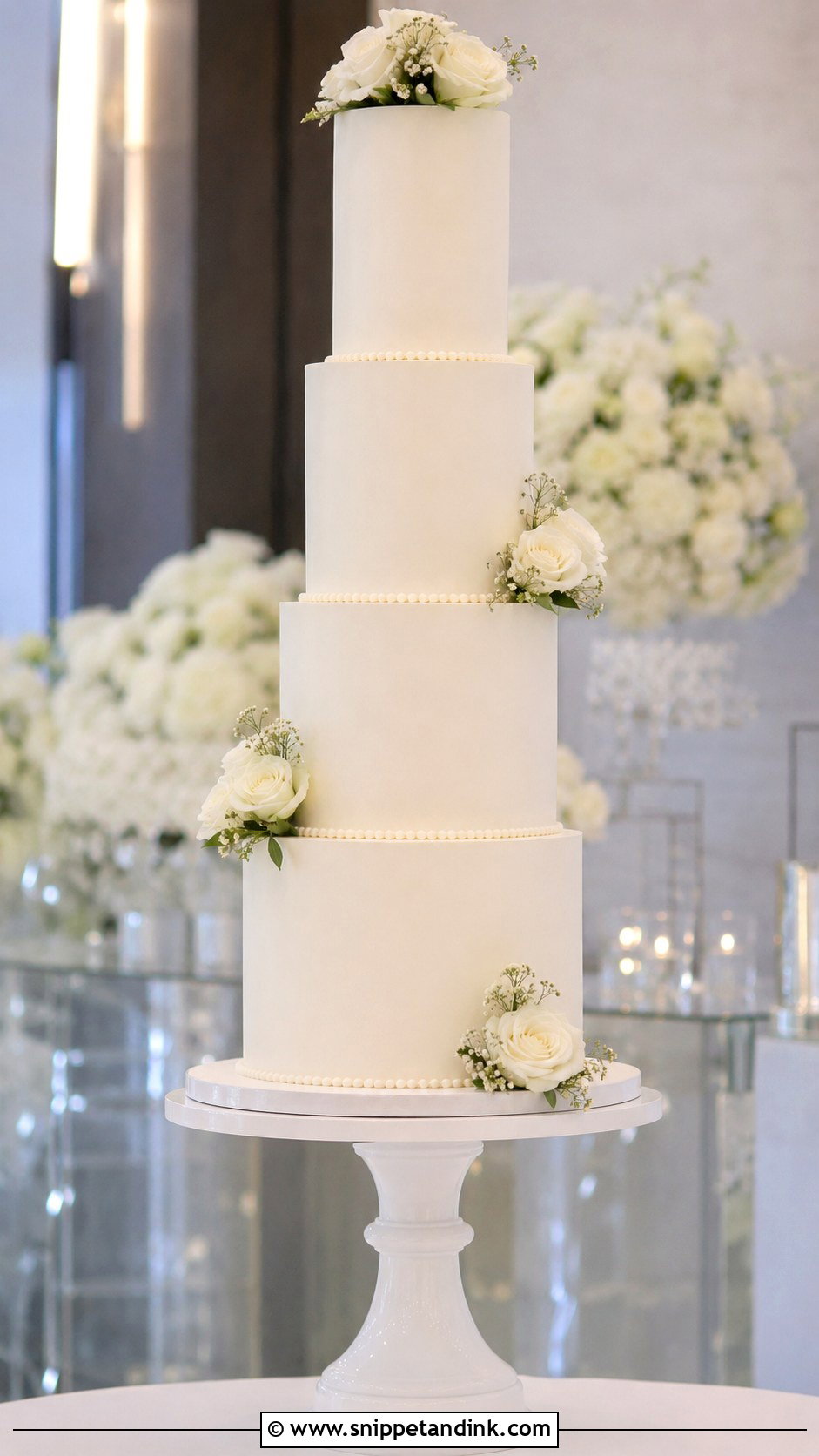
Taller tiers, around five or six inches instead of the standard four, make a four-tier cake look as grand as a five. The trap is the serving count. A tall tier only yields extra slices if it is built as two stacked cakes with a board between them and cut in two layers; otherwise you’ve paid for height, not servings. Tall tiers also need more internal support. Smooth buttercream, vertical texture or fondant panels suit the shape, and restrained decoration keeps the height as the feature. You’ll probably still need some kitchen cake.
8. Floral Wedding Cake
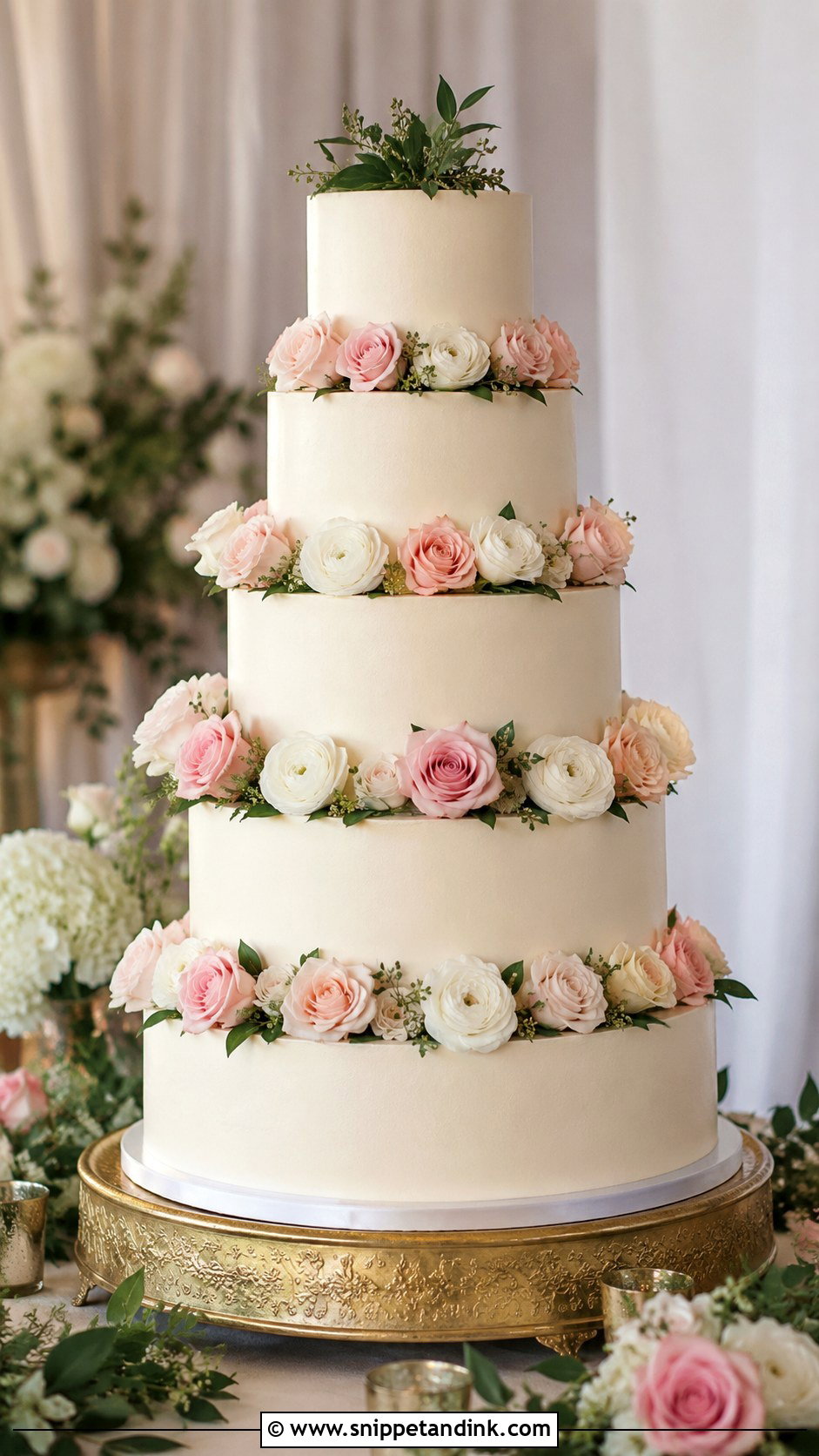
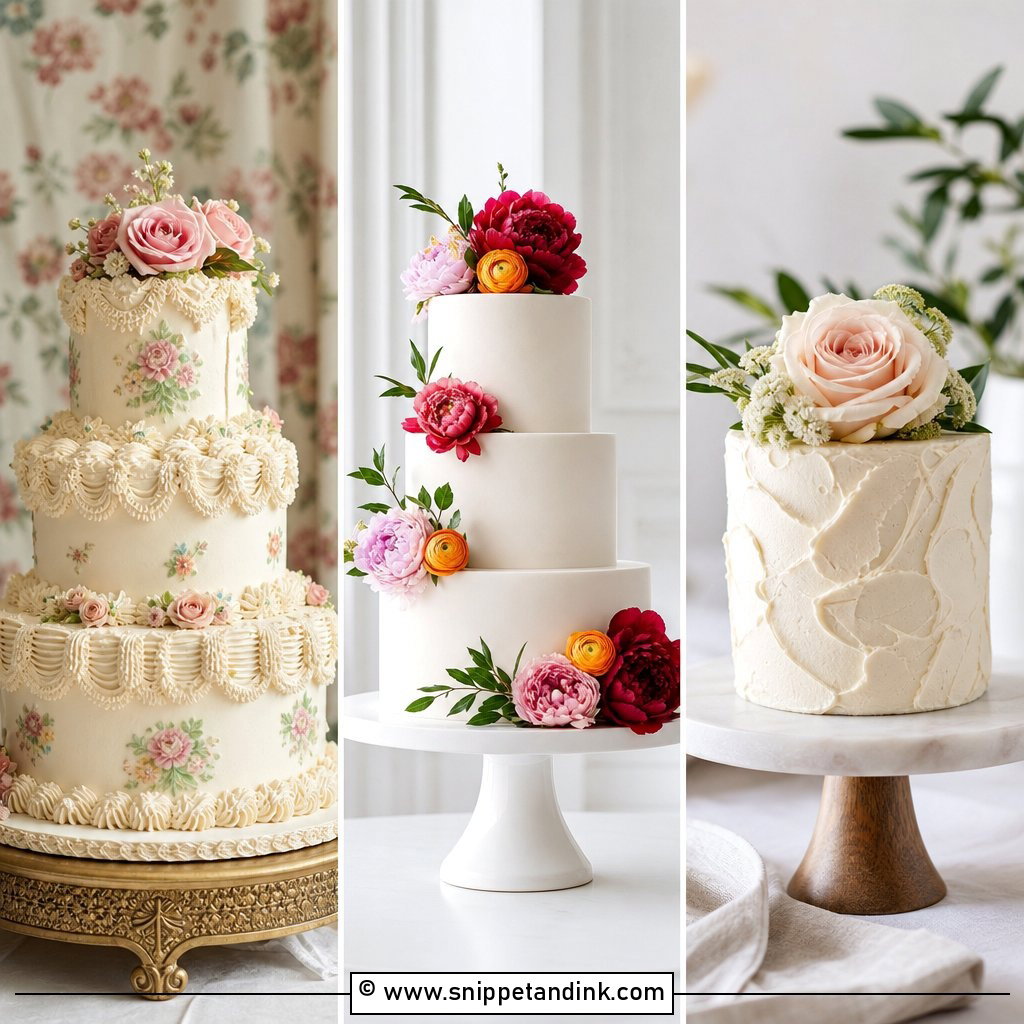
A floral wedding cake links the cake to the bouquet and reception flowers, and at this size scale is everything. Tiny flowers vanish on a five-tier cake, while huge blooms make it look top-heavy. Clusters on alternating tiers, a soft cascade or a ring around the stand keep it balanced. Fresh stems must be food-safe and prepared by the florist and baker together. Sugar flowers stay perfect all night and can be made in any color. Vanilla, lemon, almond and champagne flavors all pair well.
9. Greenery Wedding Cake
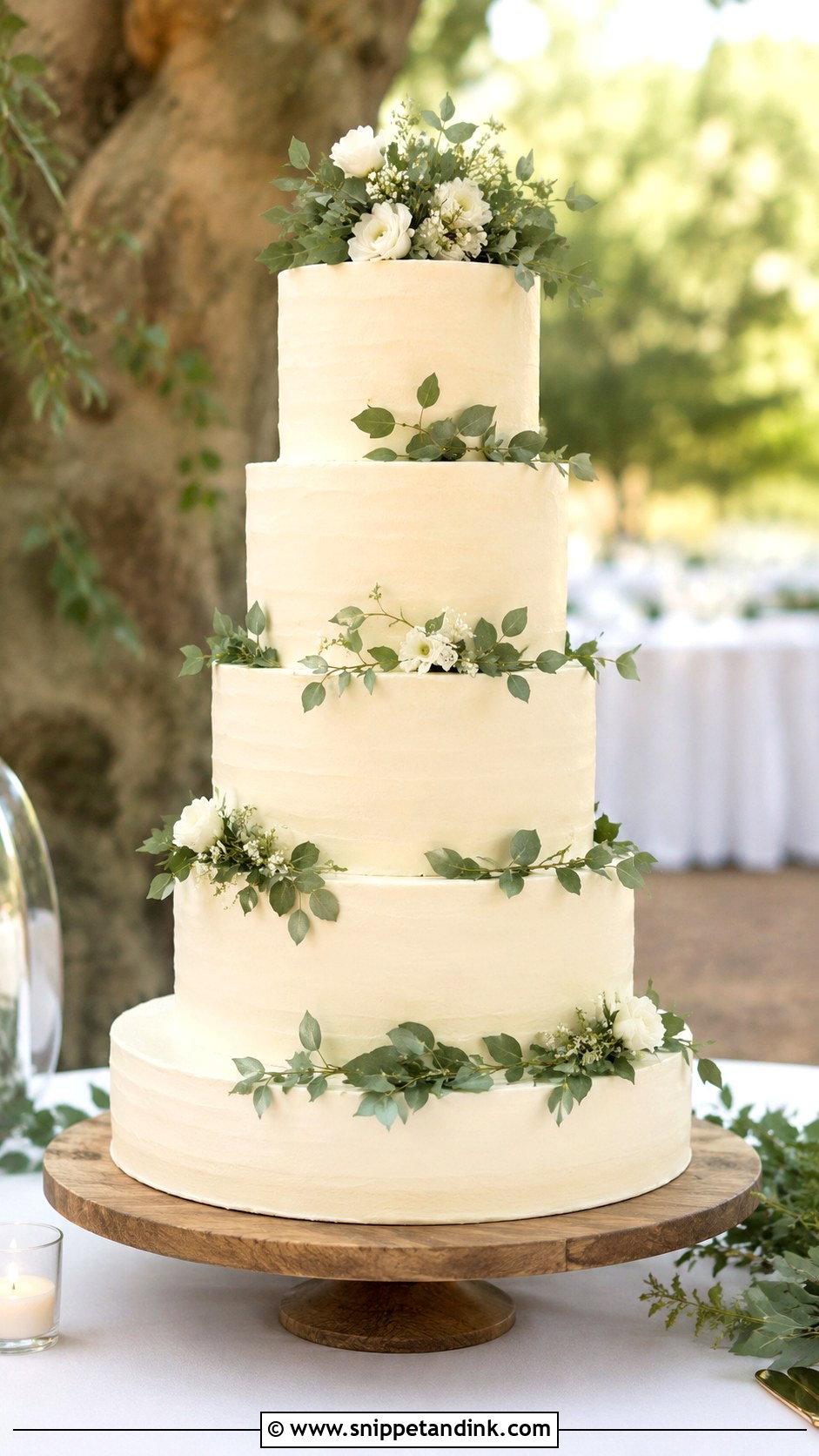
Greenery covers a lot of cake for less money and less weight than a full floral design, which matters on a big cake. Olive leaves, herbs and edible greenery can frame each tier. Eucalyptus is popular, but it isn’t food-safe, so it should sit on a barrier or be swapped for a sugar or piped version. Garden venues, barns and tented lawns suit this look, and ivory buttercream with a light texture and a few small white flowers keeps it bright. Confirm with your baker and florist exactly what touches the frosting.
10. Pearl Wedding Cake
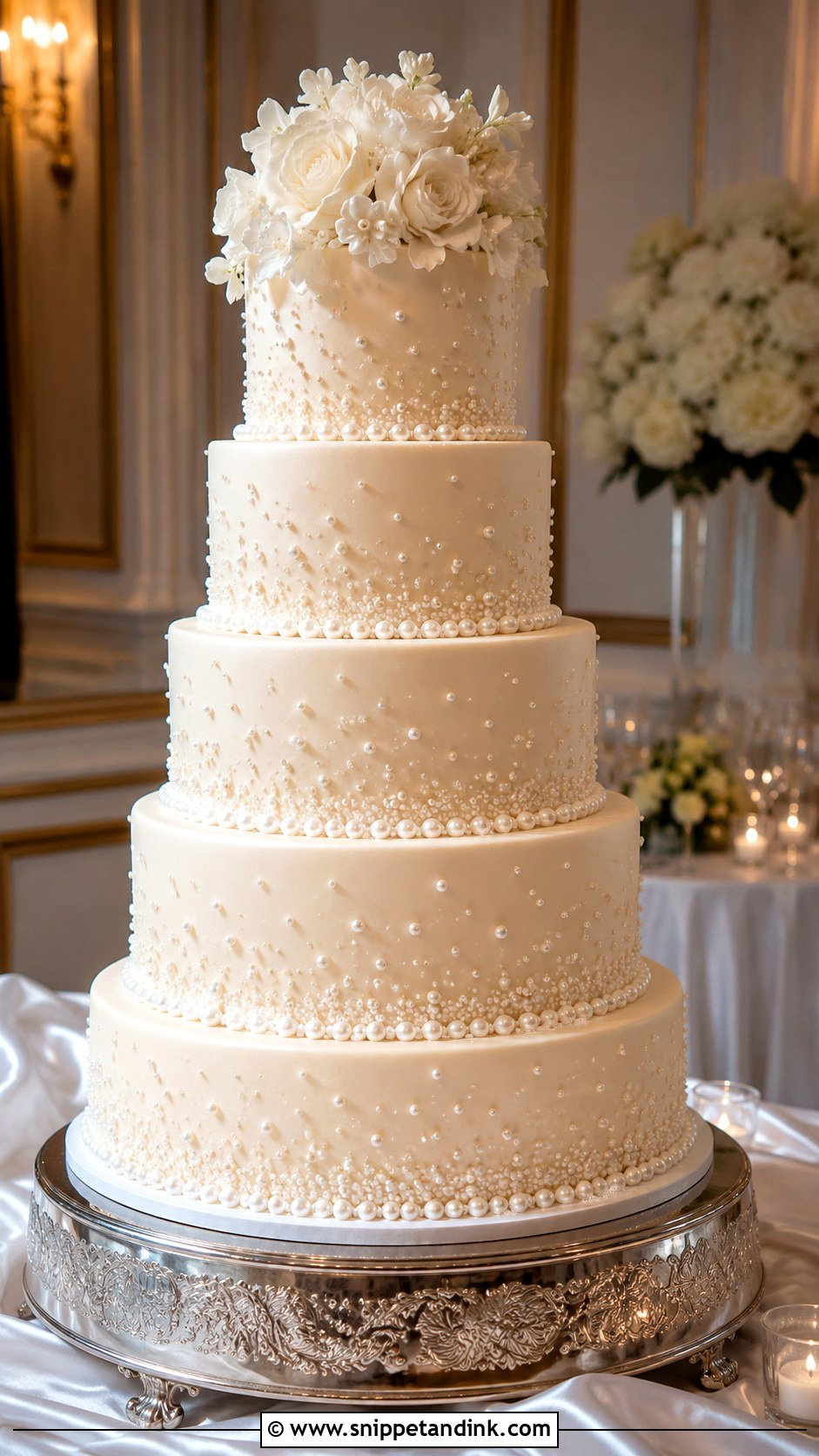
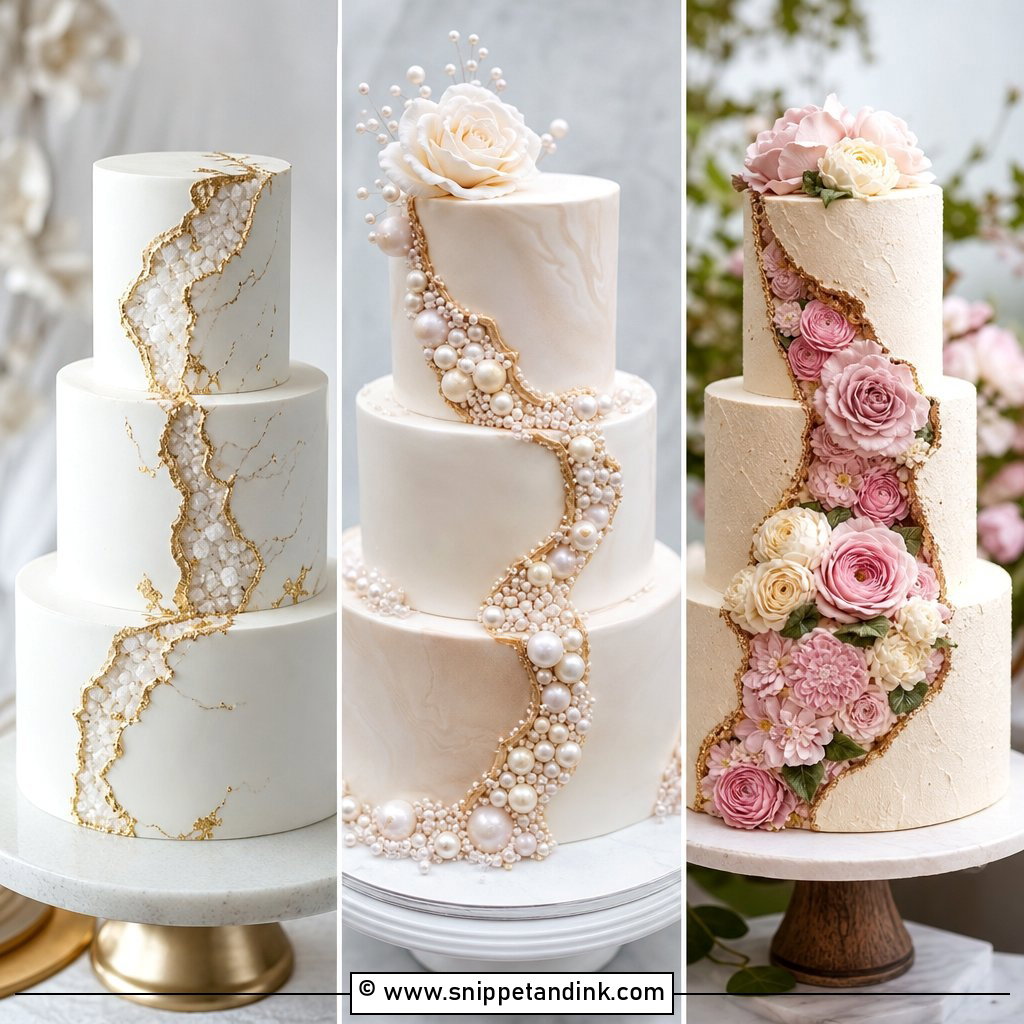
Pearls add detail to large white tiers without adding color. They can run as fine borders, scattered accents or a full beaded pattern. Hard sugar pearls are crunchy, so on the parts that get eaten I pipe soft buttercream pearls and save the hard ones for borders. Mixing two or three sizes makes the pattern look natural. Five tiers in smooth ivory fondant or buttercream with pearl detail suits classic venues and satin gowns, and flowers can be kept to a minimum.
11. Gold Wedding Cake
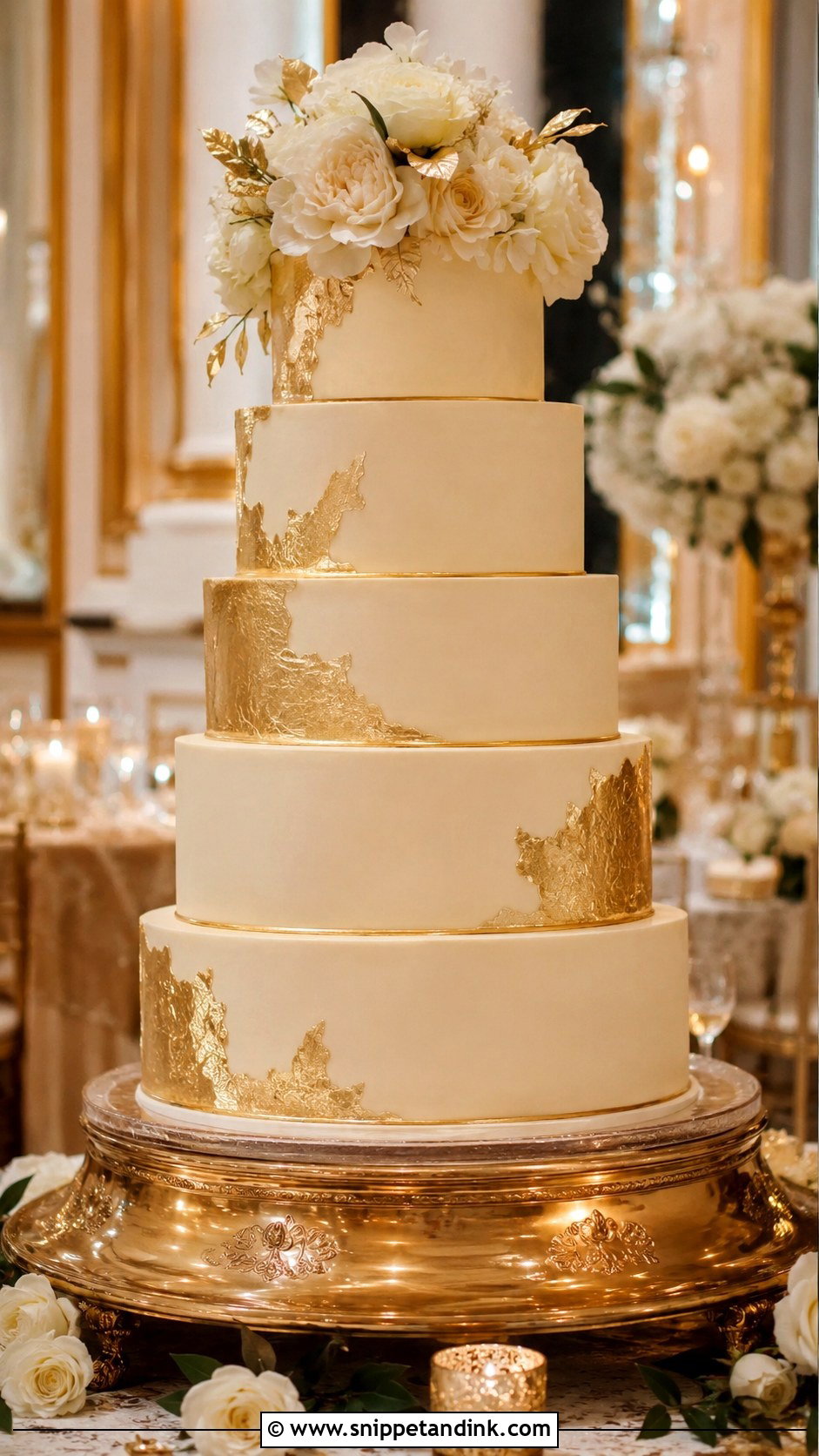
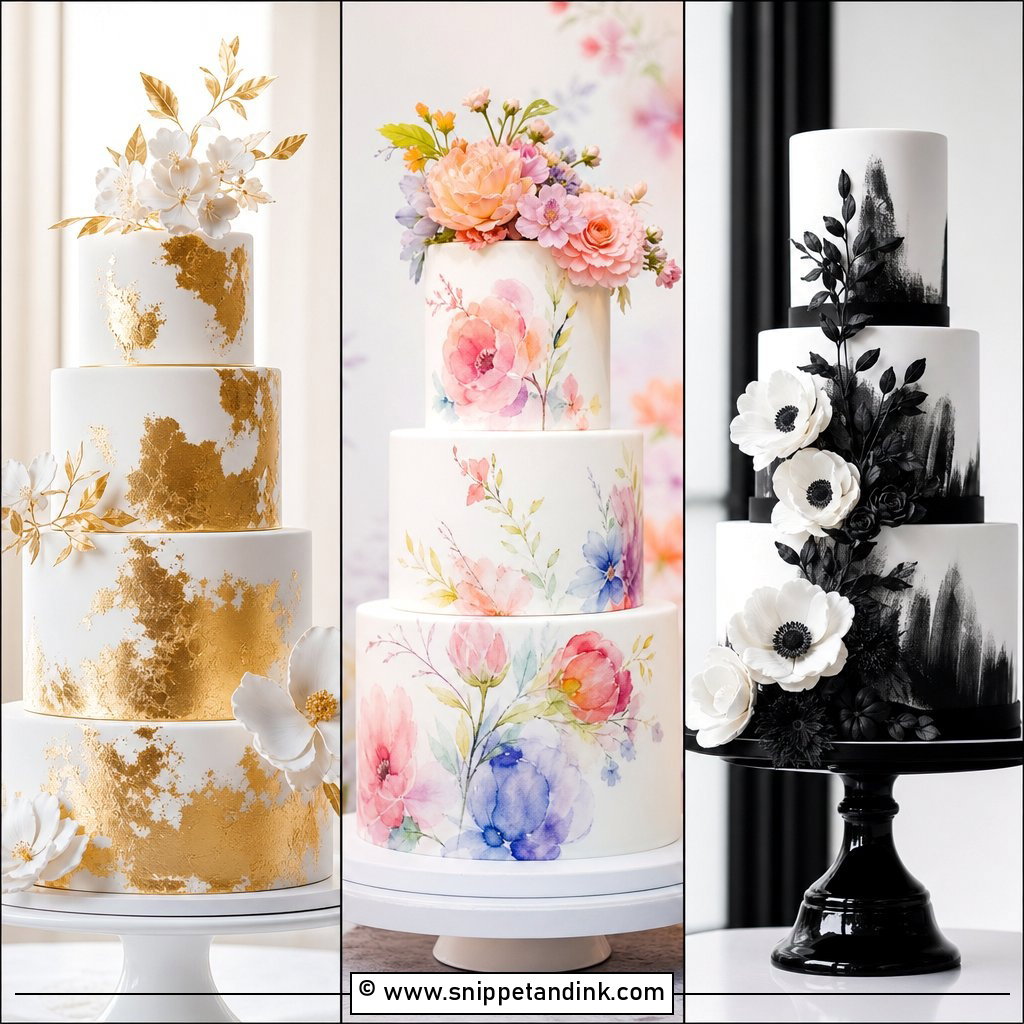
Gold works on a large cake when it’s used with discipline. Thin gold leaf, a painted edge, metallic stenciling or one brushed gold tier among smooth ivory ones gives warmth without looking flashy. Ivory, cream, blush and champagne all sit well beside it, especially under chandeliers and candles. Ask your baker whether their gold is truly edible or only marked non-toxic, since many metallic dusts are decorative only. Gold leaf is fragile in transport, so I often touch it up after the cake is set up.
12. Black And White Wedding Cake
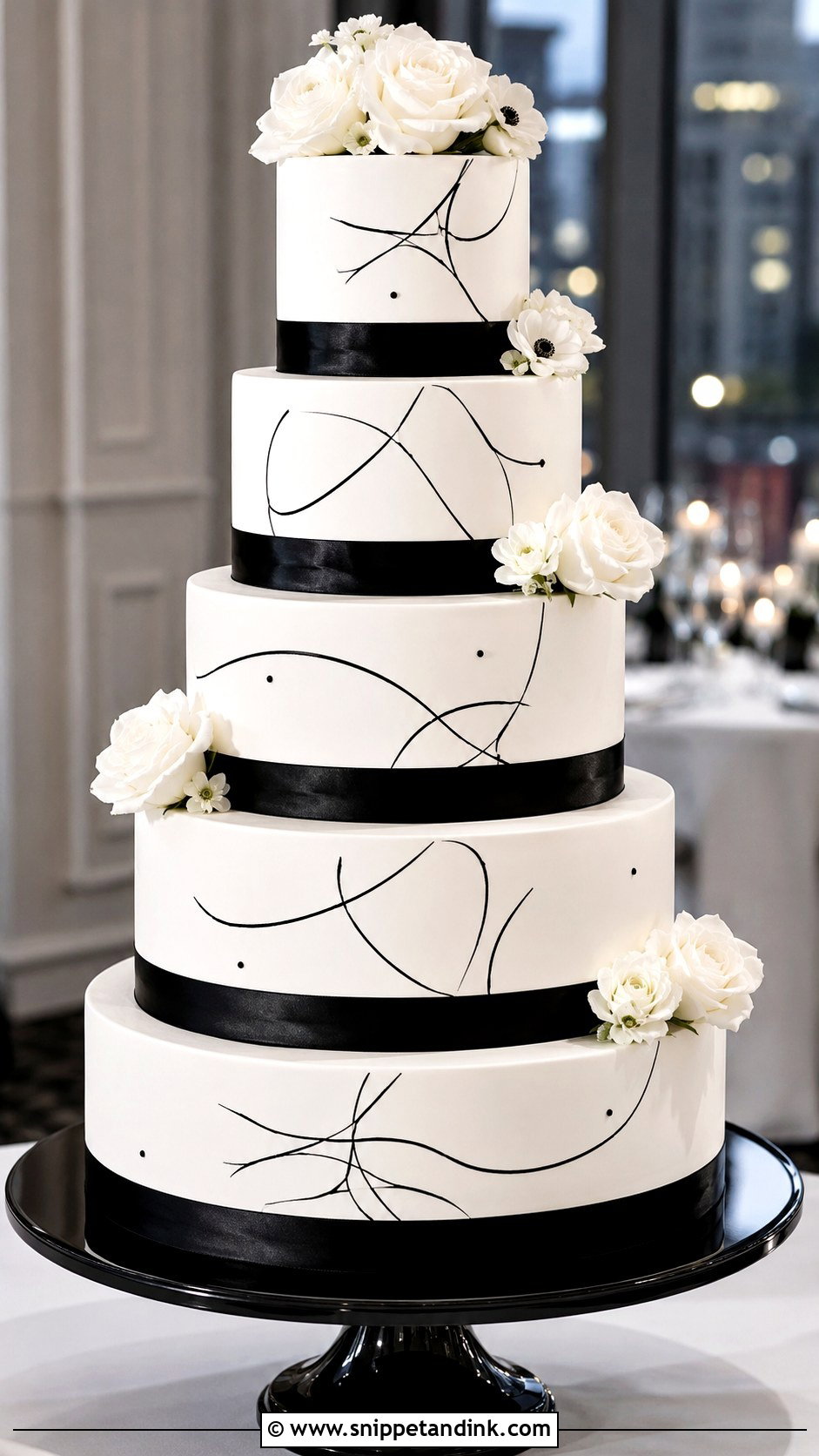
Black and white is one of the more modern looks for a large room, and the contrast reads clearly from across a ballroom. White tiers with black ribbon stay classic; black fondant tiers with white flowers go further. One heads-up: deeply colored black fondant can tint mouths and teeth, so I tend to keep black to ribbon, piping, painted line work or a single base tier that won’t be served first. Pick one strong pattern only. Chocolate, espresso, vanilla bean and salted caramel suit the drama.
13. Rustic Wedding Cake
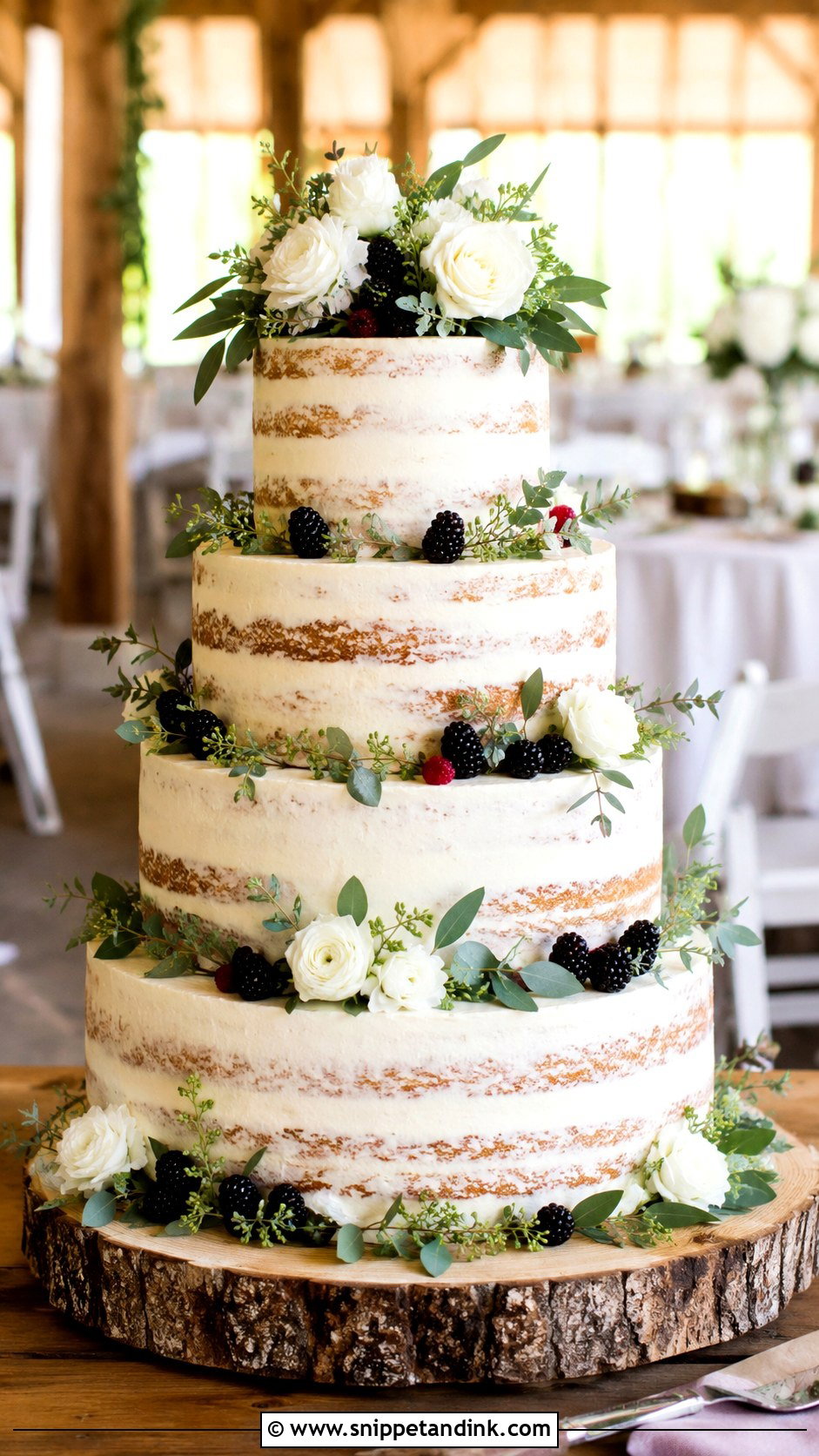
Rustic works at this scale as long as the finish still looks intentional. A semi-smooth buttercream, fresh flowers, greenery and a wood stand give warmth for barns, vineyards and gardens. Semi-naked tiers dry out faster at the exposed edges, so on a cake for two hundred I’d lean toward a semi-smooth coat that protects the sponge. Four or five tiers plus kitchen cakes keeps the display from getting too heavy. Vanilla bean, carrot, spice and berry flavors fit naturally.
14. Minimalist Wedding Cake
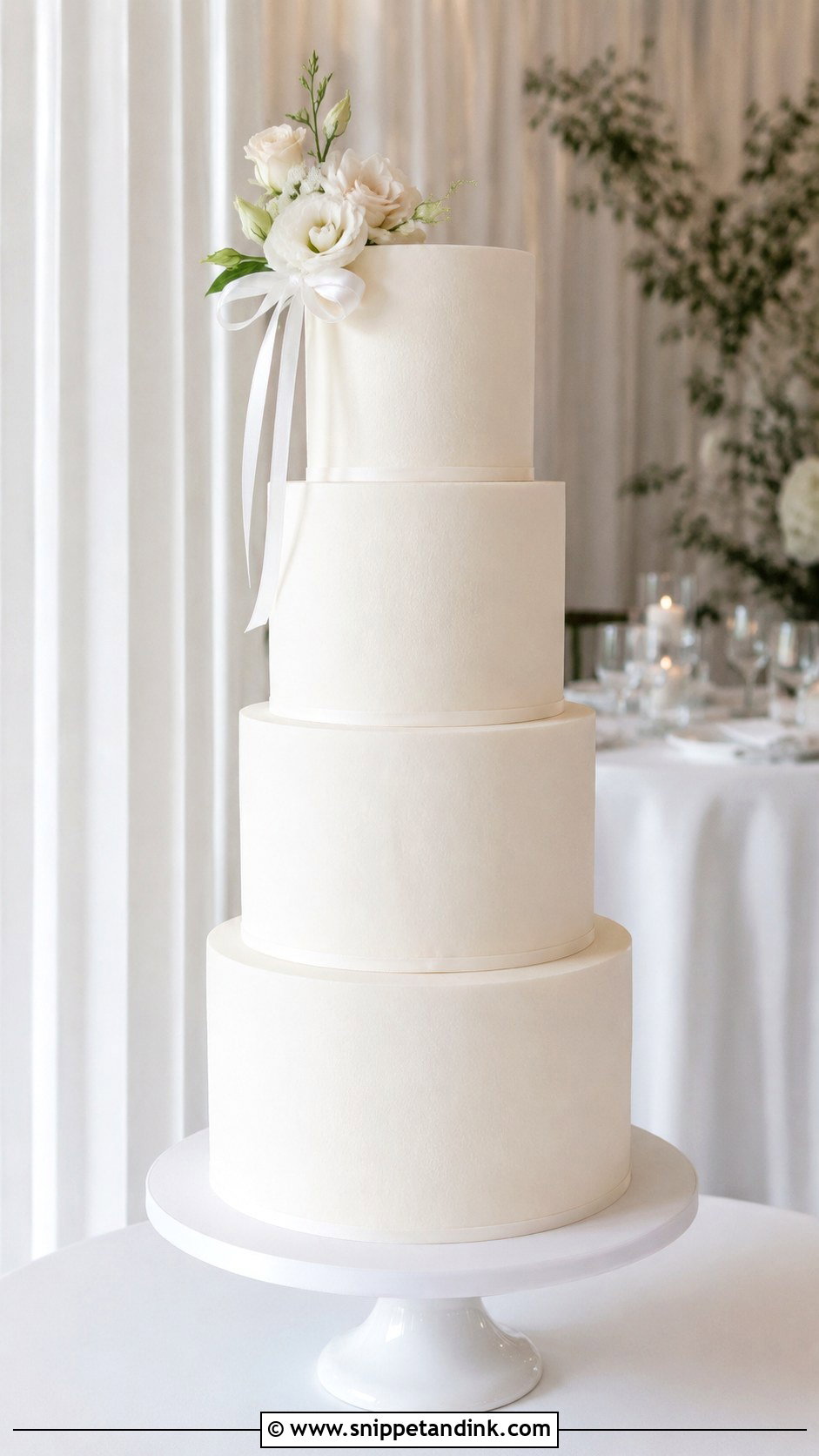
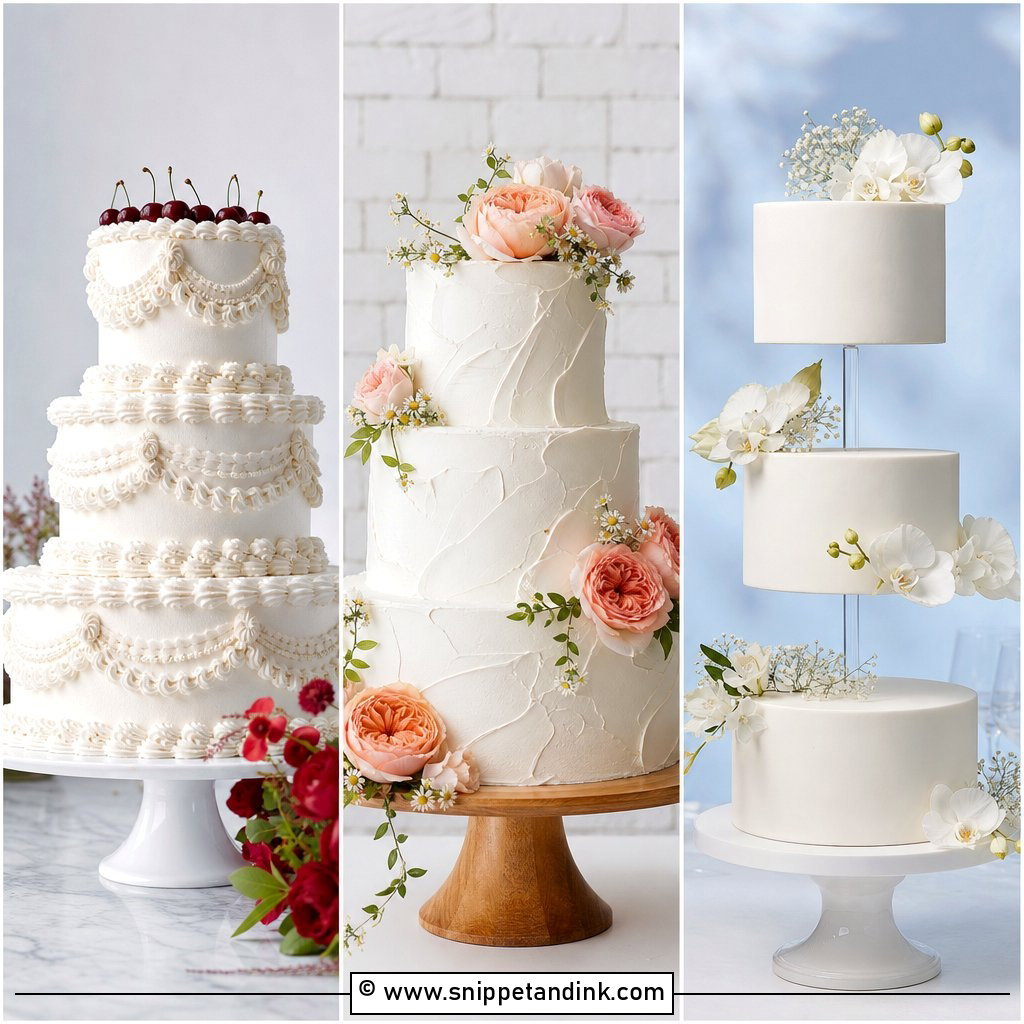
Minimalist cakes depend entirely on proportion. With no decoration to distract, the eye goes straight to the tier heights, the spacing and how level everything sits, so a wobble shows immediately. Tall tiers, a plain stand and some negative space do the work. One flower cluster, a pearl border or a fine ribbon is enough. This style also puts flavor first: almond with raspberry, lemon with vanilla cream or chocolate with salted caramel make a simple, memorable menu.



15. Textured Buttercream Wedding Cake
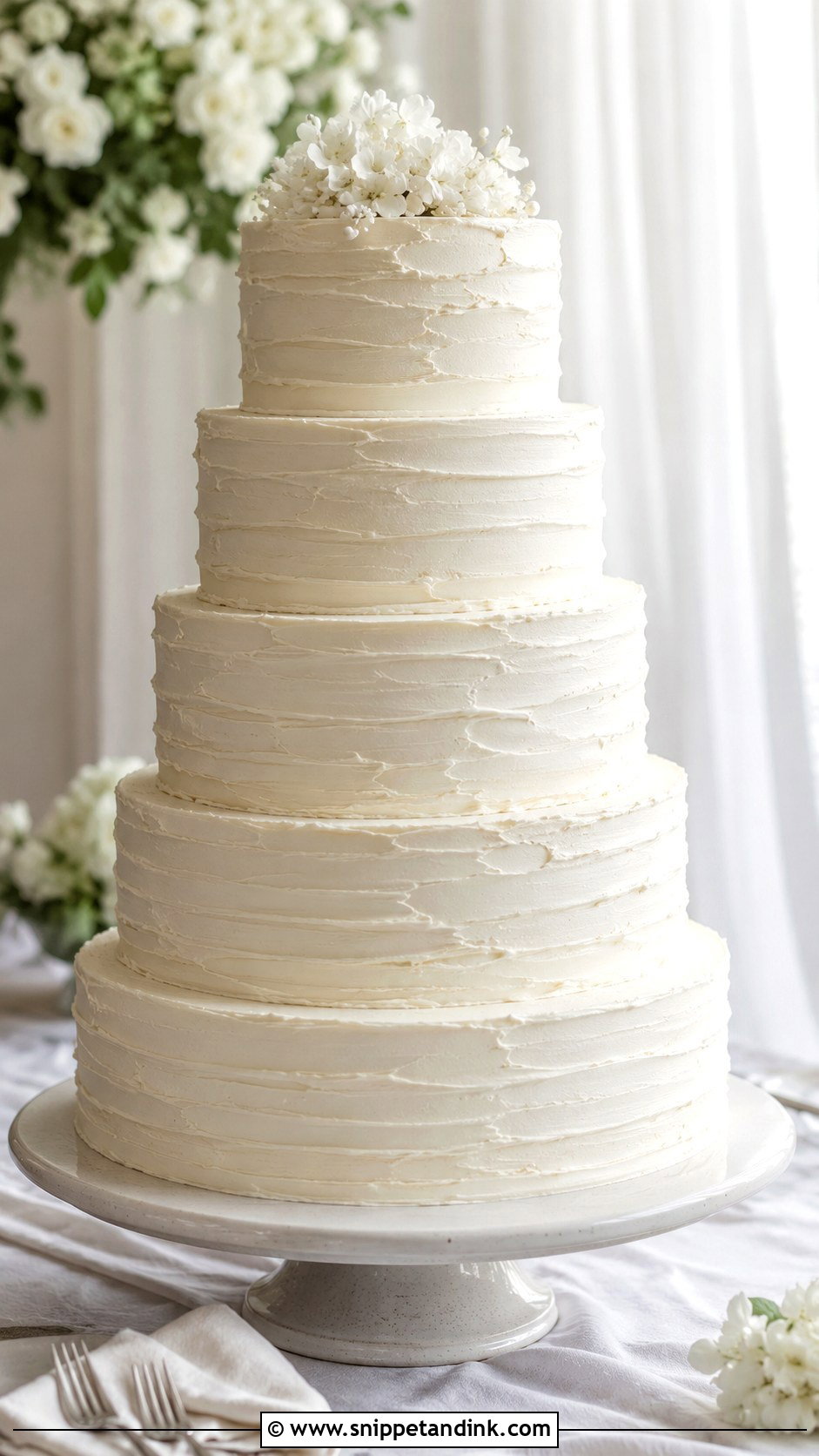
Texture makes a big cake look detailed without the cost of heavy sugar work. Horizontal ridges, soft spatula waves, vertical lines and a linen-style finish are the ones I’m asked for most, usually in ivory or warm white. Texture also hides small imperfections better than a dead-smooth finish, which helps on a cake moved and assembled on site. Add flowers sparingly or they’ll cover the texture you paid for. Ask any baker you’re considering for photos of their actual texture work, not inspiration pictures.
16. Wedding Cake With Fresh Flowers
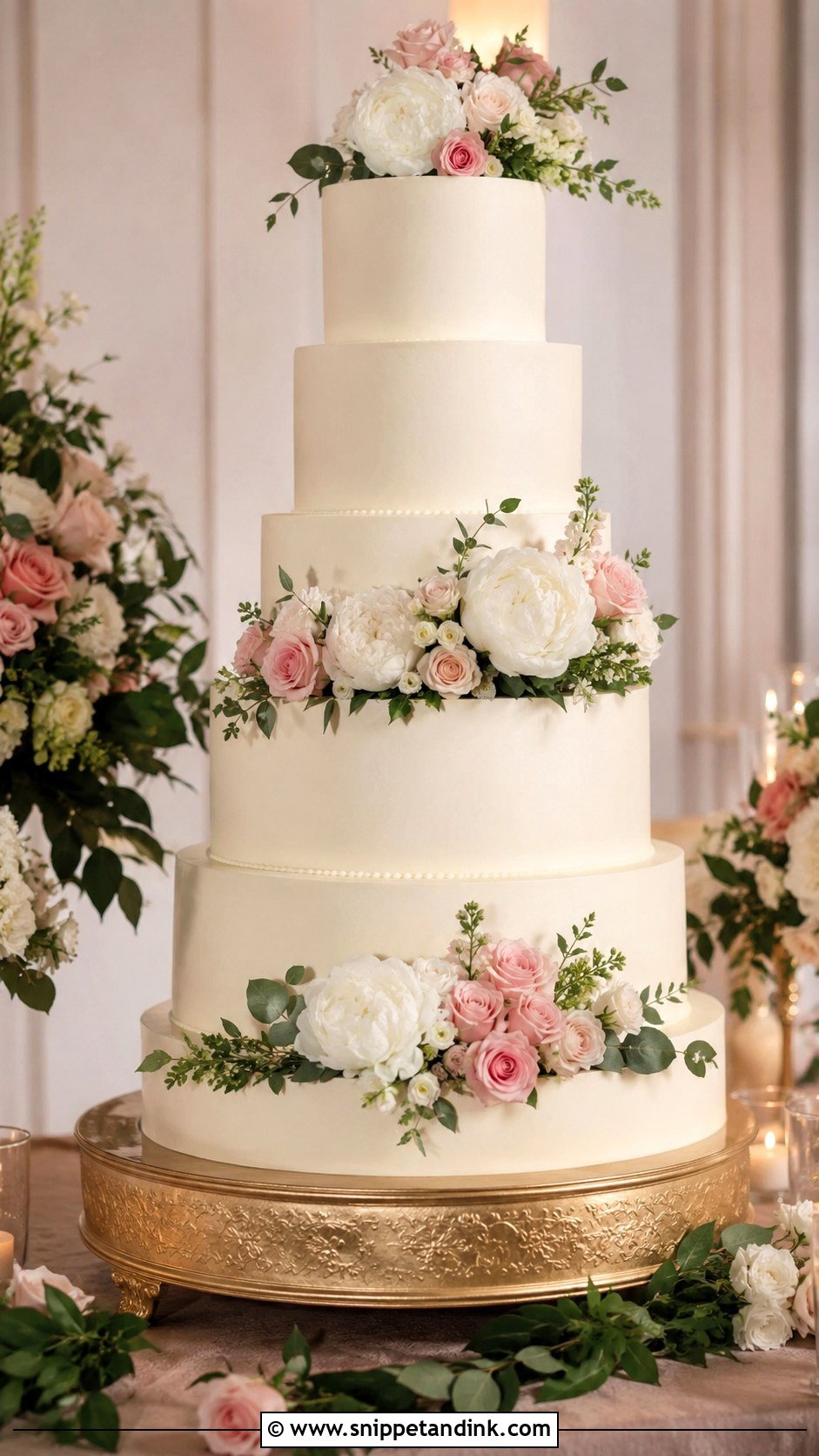
Fresh flowers are the quickest way to tie a big cake to the room, and you don’t need to cover every tier for drama. Use the wedding palette in clusters, a cascade or around the base. The baker and florist should agree on placement, which flowers are safe and when they go on, because plenty of popular wedding flowers are toxic or treated with chemicals. A white or ivory cake keeps the flowers looking clean. Almost any flavor works beneath them.
17. Wedding Cake With Sugar Flowers
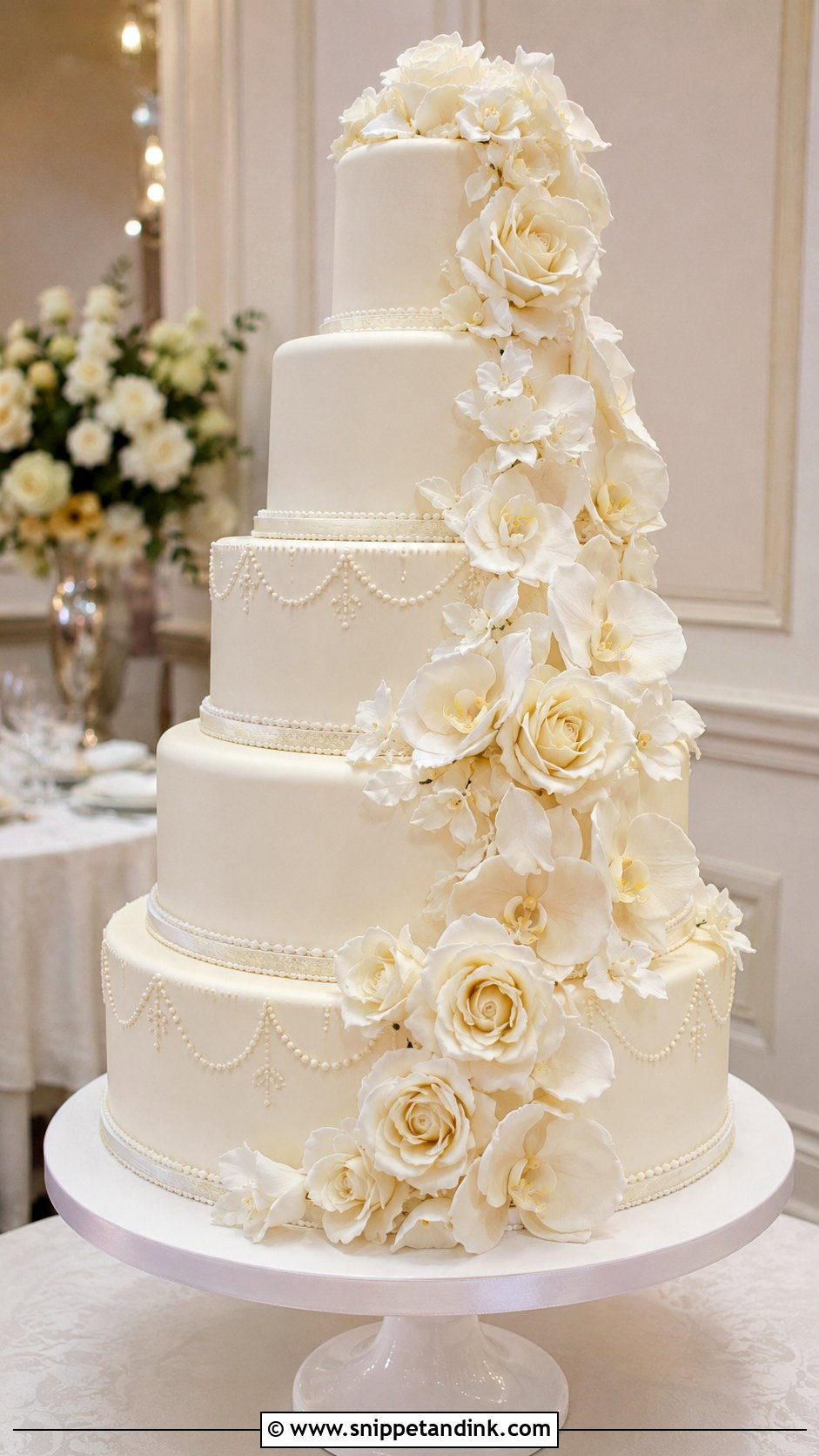
Sugar flowers are handmade petal by petal, so they match colors and sizes exactly and still look perfect at the end of a long reception. On a five-tier cake they read from across the room and hold up to close inspection. They’re the answer when fresh flowers are out of season or unsafe near food. A soft cascade, a corner arrangement or a few large blooms is enough. They cost more because of the hours involved, and in very humid weather they need careful storage until setup.
18. Wedding Cake With Different Flavors
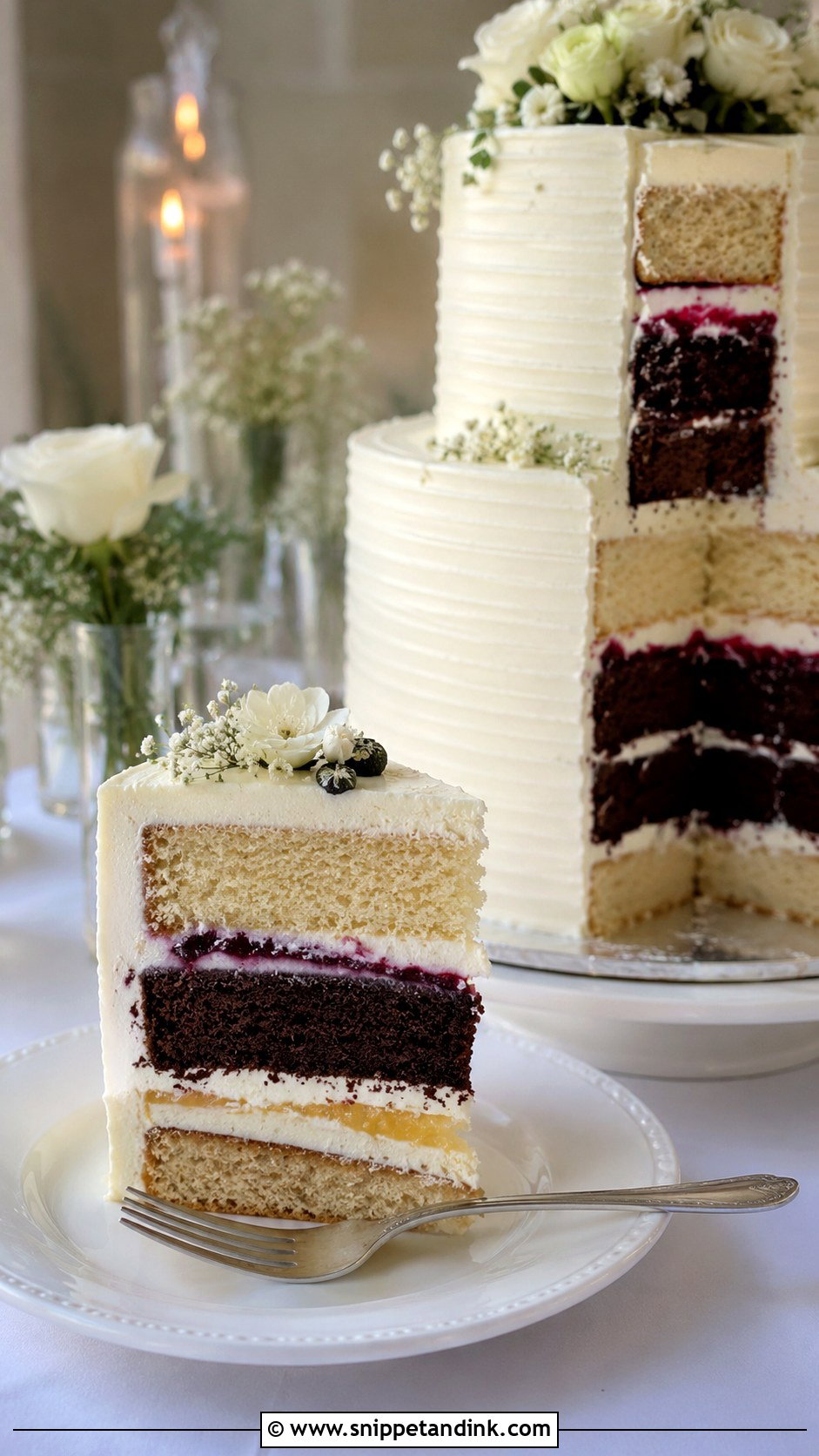
A wedding cake with different flavors gives two hundred guests a choice without adding a second dessert. I usually put the crowd-pleaser, often vanilla almond, in the largest tiers and something more personal, such as lemon raspberry or chocolate salted caramel, in the smaller ones. Kitchen cakes can carry an extra flavor too. Choose fillings that hold their shape when sliced; loose curds and fresh cream squash under a heavy tier. Give the caterer a tier-by-tier flavor map so plates go out correctly.
19. Wedding Cake With Dessert Table
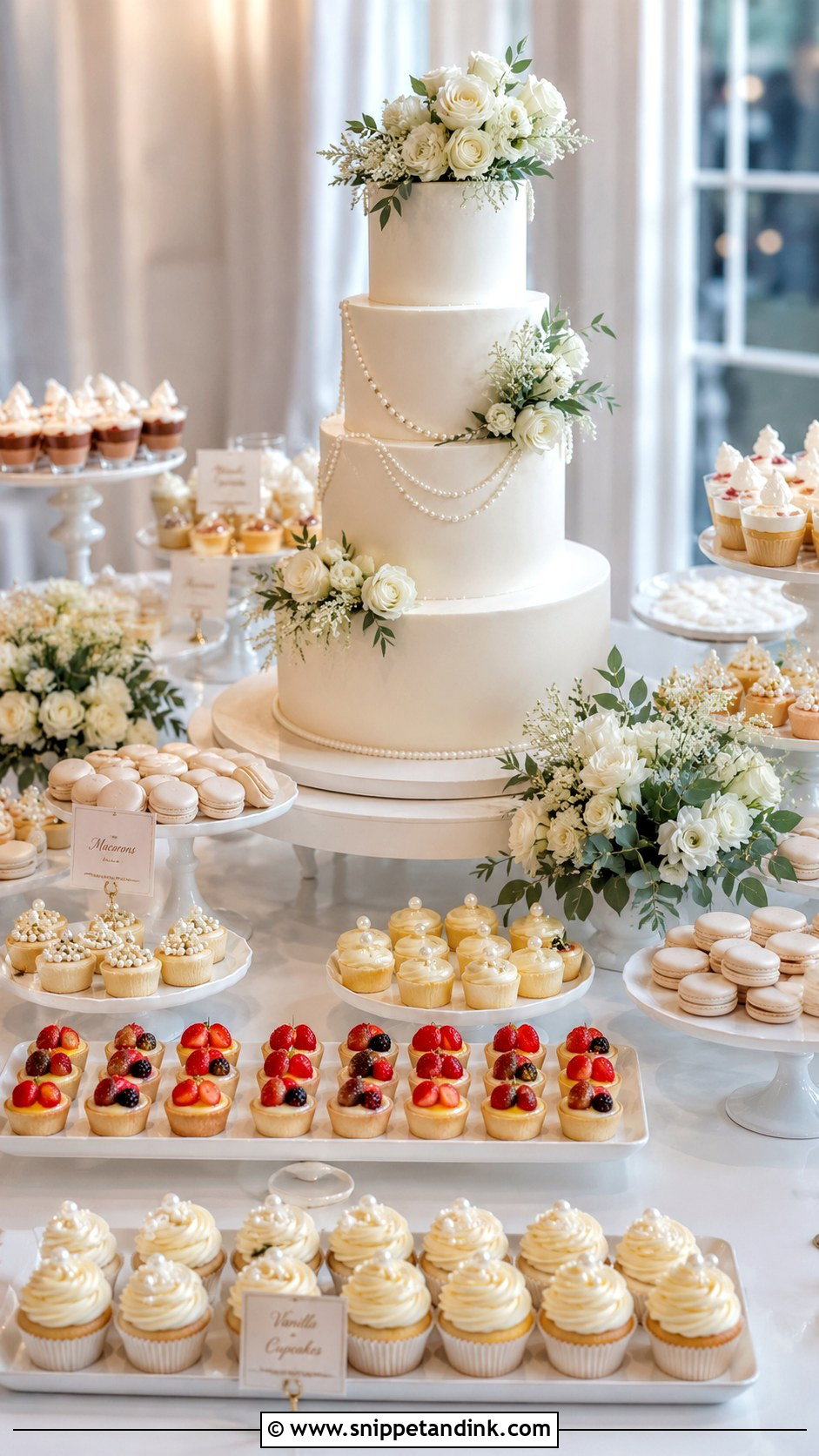
A wedding cake with dessert table takes pressure off the cake. With mini tarts, cookies, macarons or brownies alongside, a four-tier display cake is often enough, since not everyone wants cake after a large dinner. The cake still has to look big enough for the room, so keep its height. Tie the table together with matching stands, labels, flowers and linens. Plan quantities with your baker, because guests at a mixed table tend to try several things.




20. Wedding Cake With Kitchen Cakes
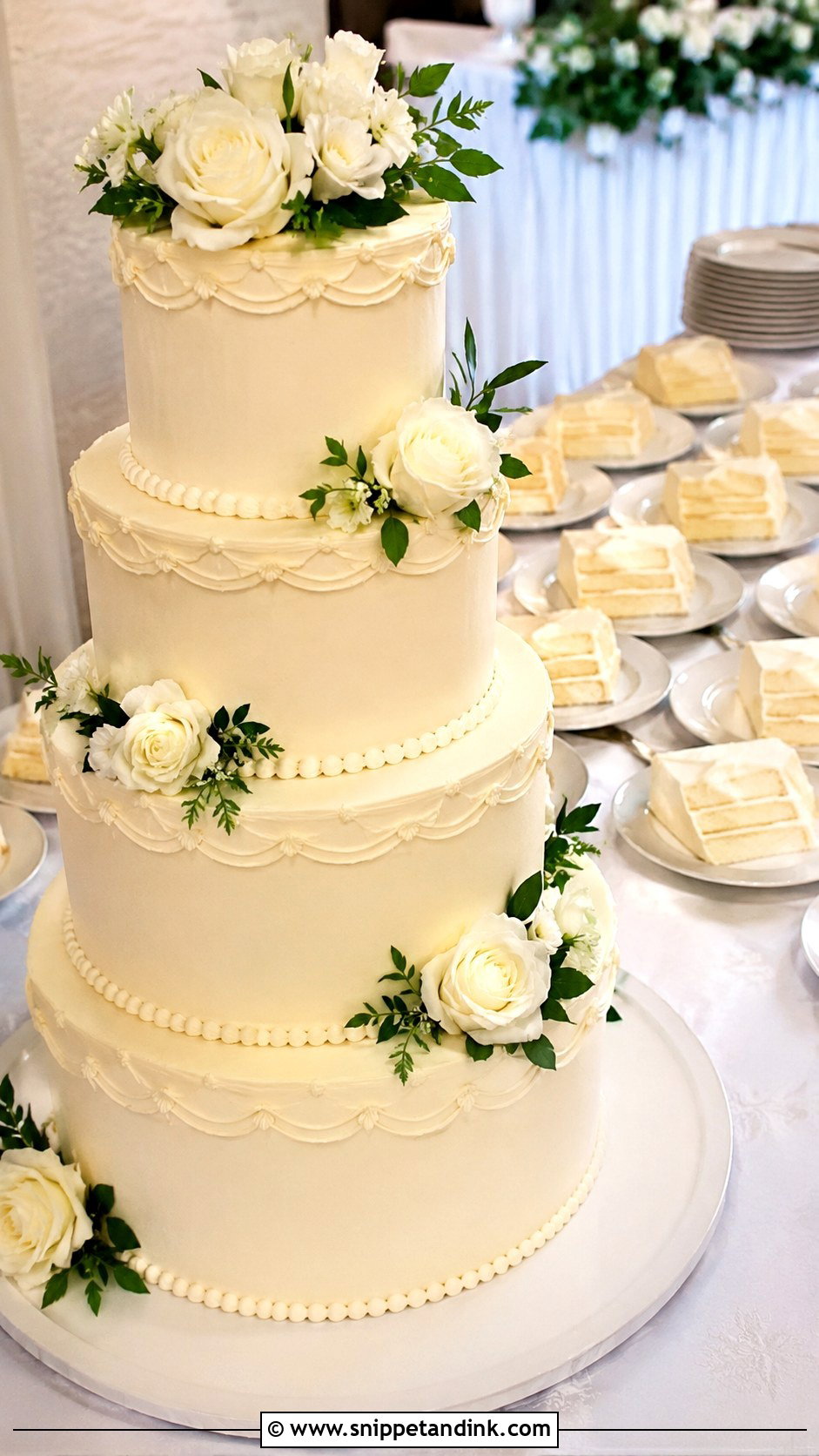
Kitchen cakes are plain cakes in matching flavors that stay in the back and get sliced out of sight. They let you have a three, four or five tier display without paying stacked-tier prices for every portion, and once plated, guests can’t tell the difference. Service usually speeds up too. For two hundred, confirm the total serving count with your baker, including any top tier you plan to keep. Keep the display cake as formal as the rest of the reception so it still looks right in photos.
Getting Two Hundred Plates Out Before the Dancing Starts
Cutting a cake this size is a team job. One person working alone on a five-tier cake can take well over half an hour, and plates sitting on a counter dry out. These are the things I set up with the venue before the day.
- Confirm who cuts and serves. Some venues and caterers charge a per-slice cutting fee when the cake comes from an outside baker, so ask about it while you still have time to budget.
- Start slicing kitchen cakes during the last course, so the first trays are ready the moment the cutting photo is done.
- Take tiers apart one at a time and pull every dowel and board before cutting. A hidden plastic dowel in a slice is the mistake I fear most.
- Cut in rows straight across a square tier, or in rings moving inward on a round one, rather than in wedges. It gives even pieces and far more of them.
- Box the top tier straight away if you’re keeping it, before anyone mistakes it for spare cake.
Hand your caterer a one-page sheet listing tiers, flavors, fillings and allergens. With two hundred plates going out, it is the only reliable way a guest with an allergy gets a slice from the right tier.
Turning a Headcount Into a Cake Order
A cake for two hundred is a design problem and a logistics problem at once: enough slices, a structure that stays upright, a look that suits the venue and flavors people finish. Five tiers is the classic build; four tiers with kitchen cakes can look just as grand and is often easier to serve. Picture the whole sequence, from the cake table to the cutting photo to the plate in front of each guest. Bring your guest count, venue details, likely weather, service style and favorite photos to the first meeting, and the cake can be planned around your actual day.
You'll Like These Ideas:








Leave a Reply