
Two tiers is the size I’m asked for most for smaller weddings, and it’s also the one people underestimate. With only two layers stacked, every decision shows: the gap between tier sizes, the height of each tier, the finish, where the flowers sit. Get those right and a two-tier cake looks deliberate and generous rather than like a scaled-down version of something bigger. It also gives you a neat chance to serve two flavours. The twenty designs below run from plain buttercream to marble and Lambeth piping, with notes on how each finish behaves and where it suits best.
Tier Sizes and Heights That Make Two Layers Look Grand
The first thing I sketch for a two-tier cake is the proportion, before any decoration. Tiers usually step down by 2 or 3 inches in diameter: a 6 inch on an 8 inch, or an 8 inch on a 10 inch. A small step looks solid and modern. A bigger jump, such as 6 inch on 10 inch, leaves a wide ledge that’s ideal for a ring of flowers but can look top-light without them.
Height matters just as much. A standard tier is around 4 inches tall, and two of those can look short on a long reception table. Extended tiers of 5 or 6 inches, or a double-height top tier, add real presence without adding many servings. A tall tier needs its own board and dowels partway up, so mention it at the start rather than at the final meeting.
Finally, think about the stand. A raised cake stand adds a few inches and lifts the cake into the photographer’s frame at the cutting. A stand a couple of inches wider than the bottom tier looks tidy; one that’s too large makes the cake look smaller than it is.
1. White Double Decker Wedding Cake With Flowers
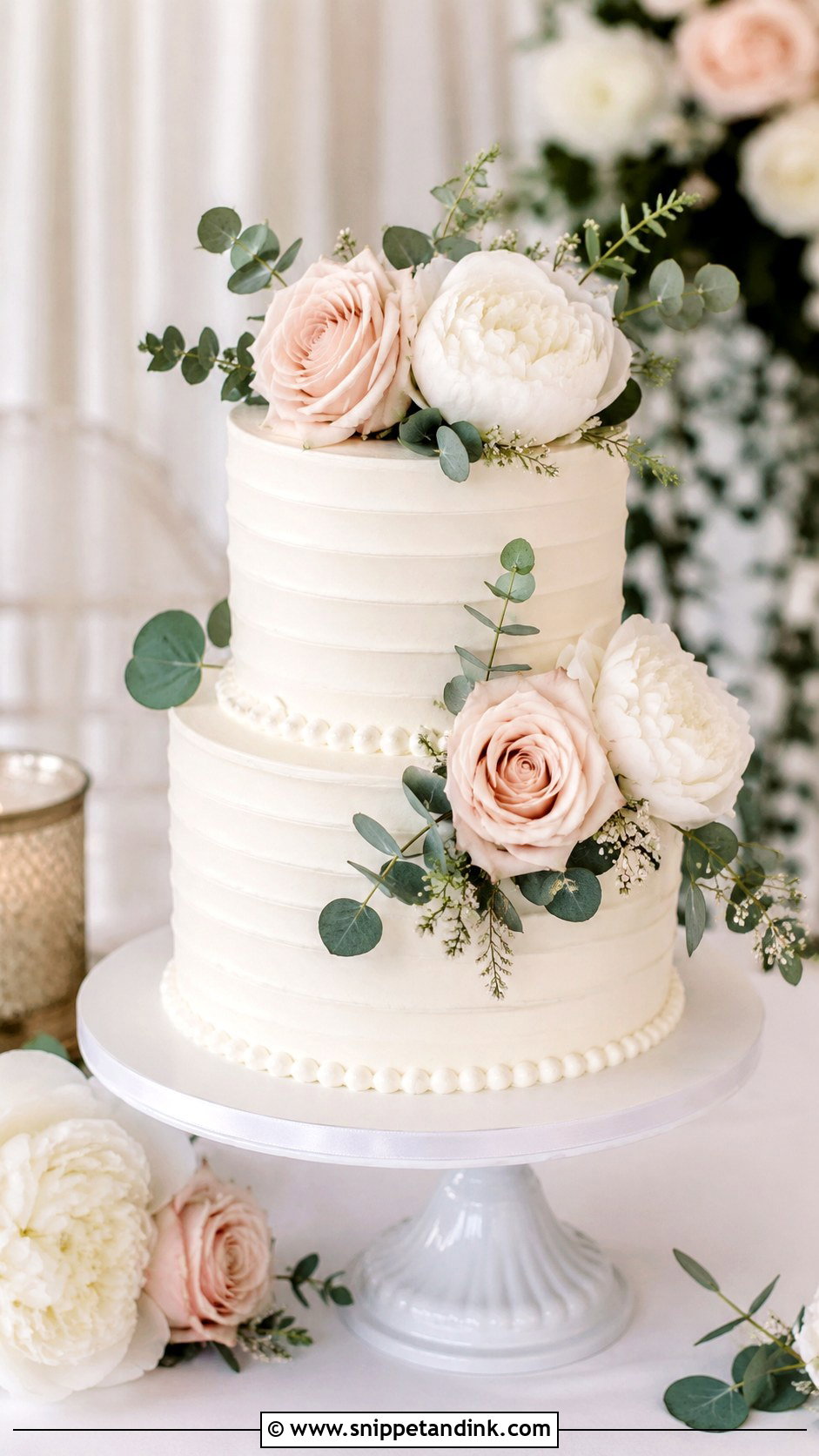
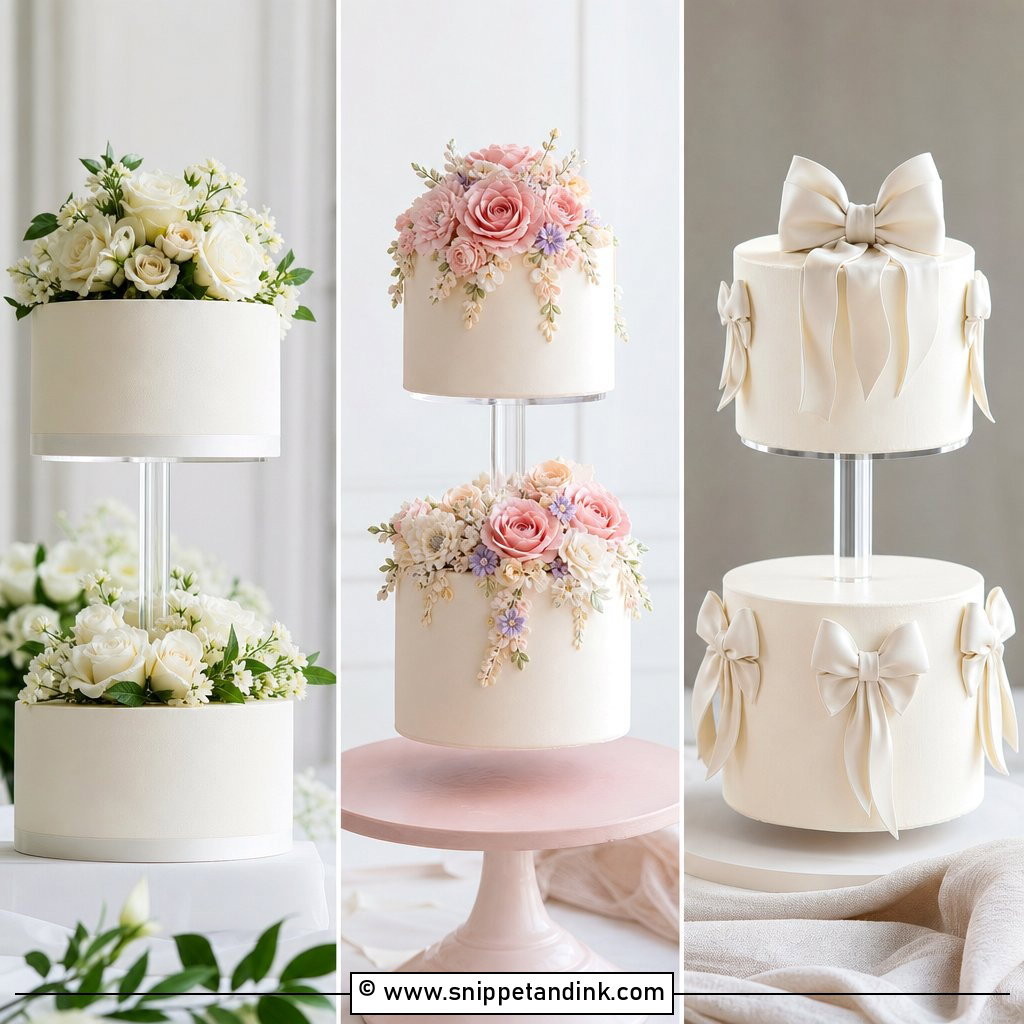
White icing with flowers is the classic for good reason: a pale background makes every bloom read clearly in photos. Roses, peonies, ranunculus and orchids all sit well on two tiers, with a few small fillers to soften the edges. For a formal room I’d keep the flowers ivory, blush and pale green; for a garden wedding, let them trail from the top tier down one side. If the flowers are fresh, they need to be unsprayed and food-safe, with stems wrapped or set in picks so they never sit straight in the sponge.
2. Simple Double Decker Wedding Cake
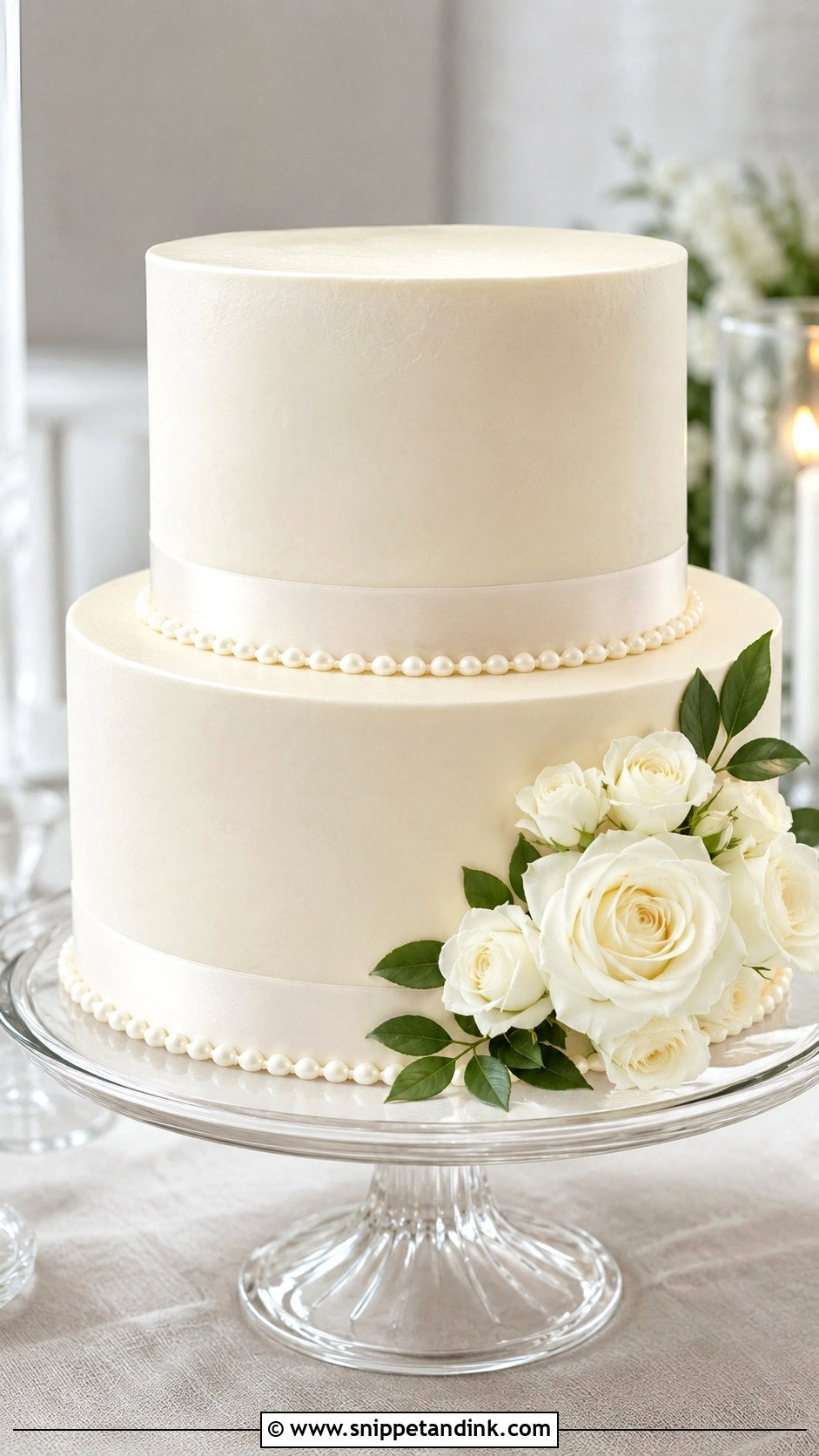
Simple cakes are the hardest to hide behind. With smooth buttercream, sharp edges and one accent, any lean or bulge is visible, so this is the style where a baker’s finishing skill shows most. Pick a single detail: a satin ribbon, a small cluster of flowers, a pearl border or one topper. Vanilla, almond, lemon or a champagne sponge keeps the flavour classic. A ribbon needs a thin strip of greaseproof paper behind it, or the butter seeps through and spots the satin by evening.
3. Rustic Double Decker Wedding Cake
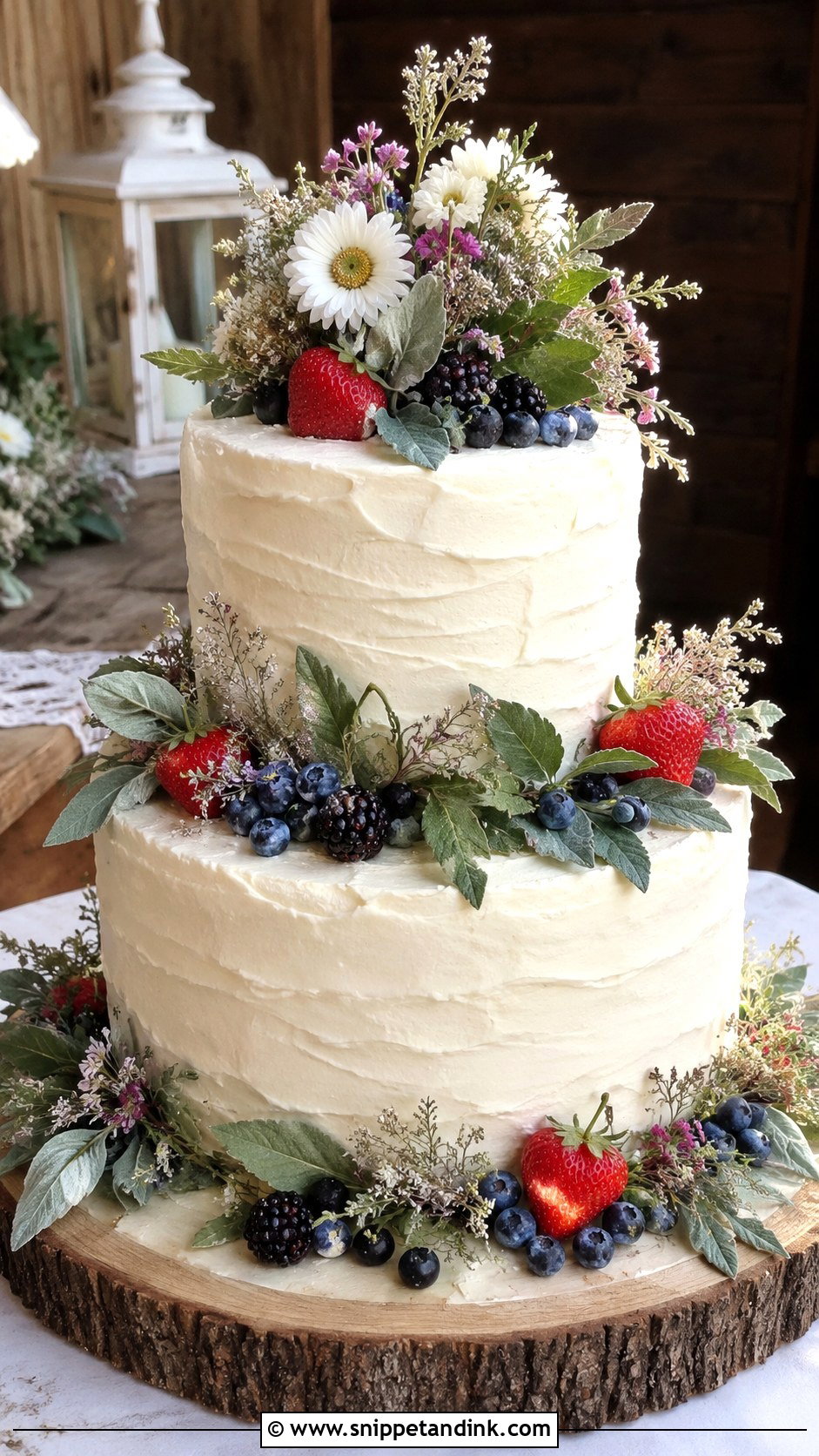
Textured buttercream with soft ridges or a half-scraped finish is what most people picture for barn weddings and countryside receptions. I dress it with greenery, wildflowers, figs or berries, a few dried blooms in autumn, and set it on a wood-slice stand. The ridged finish is forgiving, which helps on a long hot day; small marks just blend into the texture. Keep the palette quiet, ivory with sage and muted flowers, so the cake looks gathered rather than piled.
4. Double Decker Wedding Cake With Roses
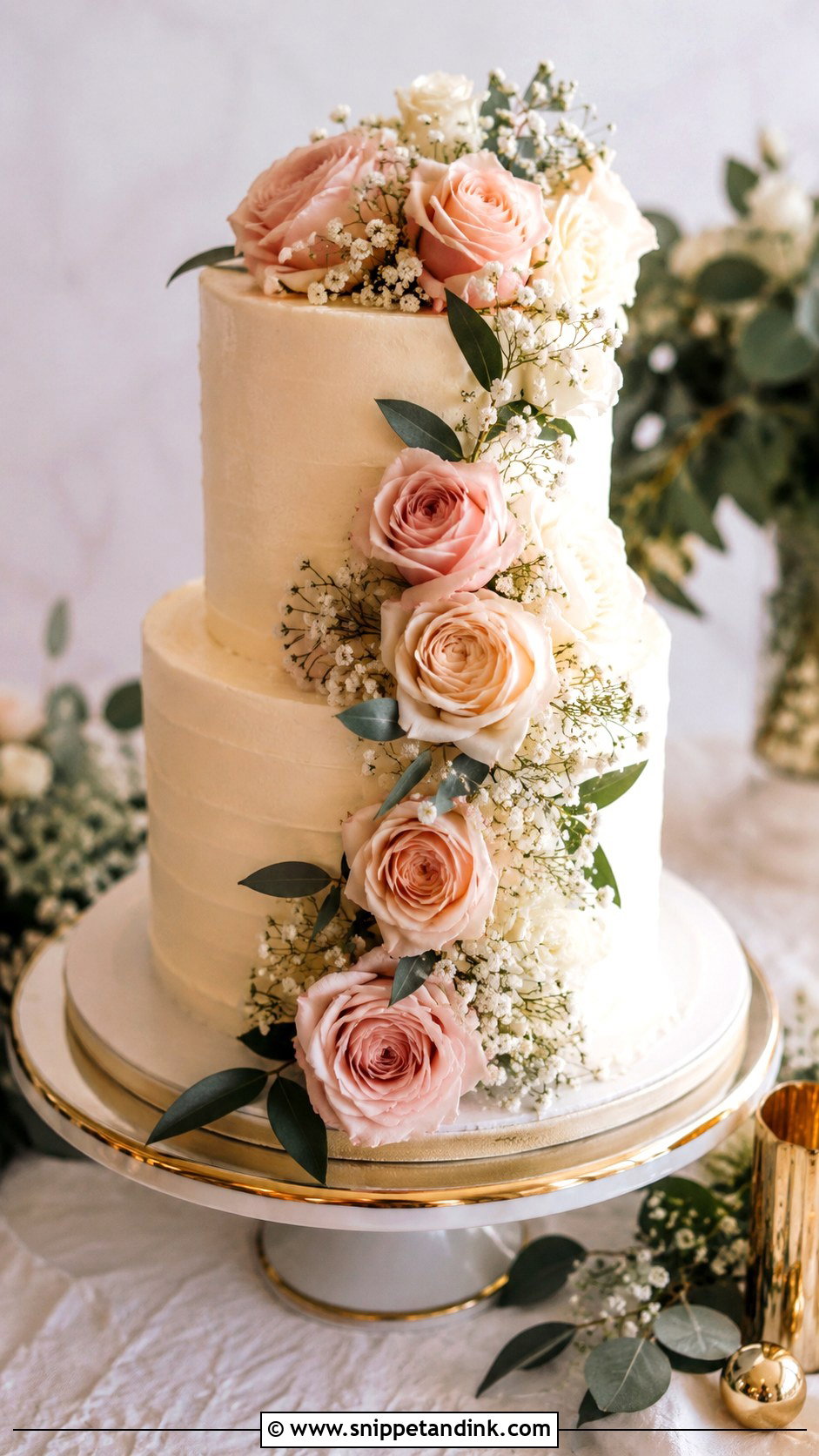
Roses change mood more than almost any other flower depending on colour. White roses on ivory buttercream look traditional, blush softens everything, and deep red or burgundy brings drama to an evening reception. Placement matters as much as colour. A crescent between the tiers frames the join neatly, a cluster on top gives height, and a cascade down one side adds movement. I always mix in a little greenery so the roses don’t look like a solid lump of colour.
5. Pearl Double Decker Wedding Cake
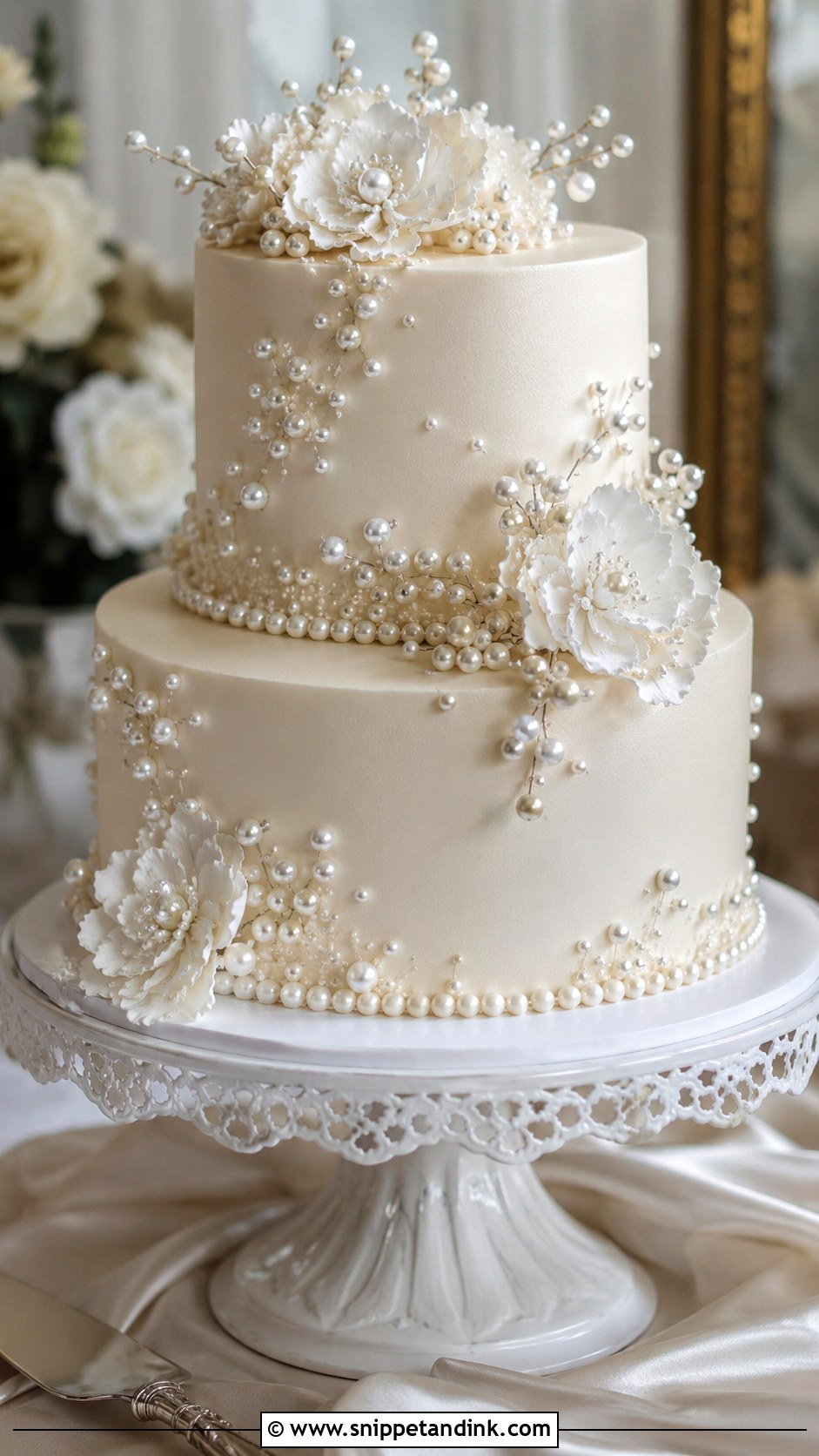
Edible pearls go on one by one, usually with a tiny dab of water or piping gel, and on a cake this size that’s patient but very doable work. Run them along the borders, around each tier, or scatter them across smooth fondant. Ivory, cream or champagne cake makes them look natural; on bright white they can look grey. This one ties in nicely if you’re wearing pearl earrings or a pearl-edged veil. A few white flowers are fine, but let the pearls do the talking.
6. Gold Double Decker Wedding Cake
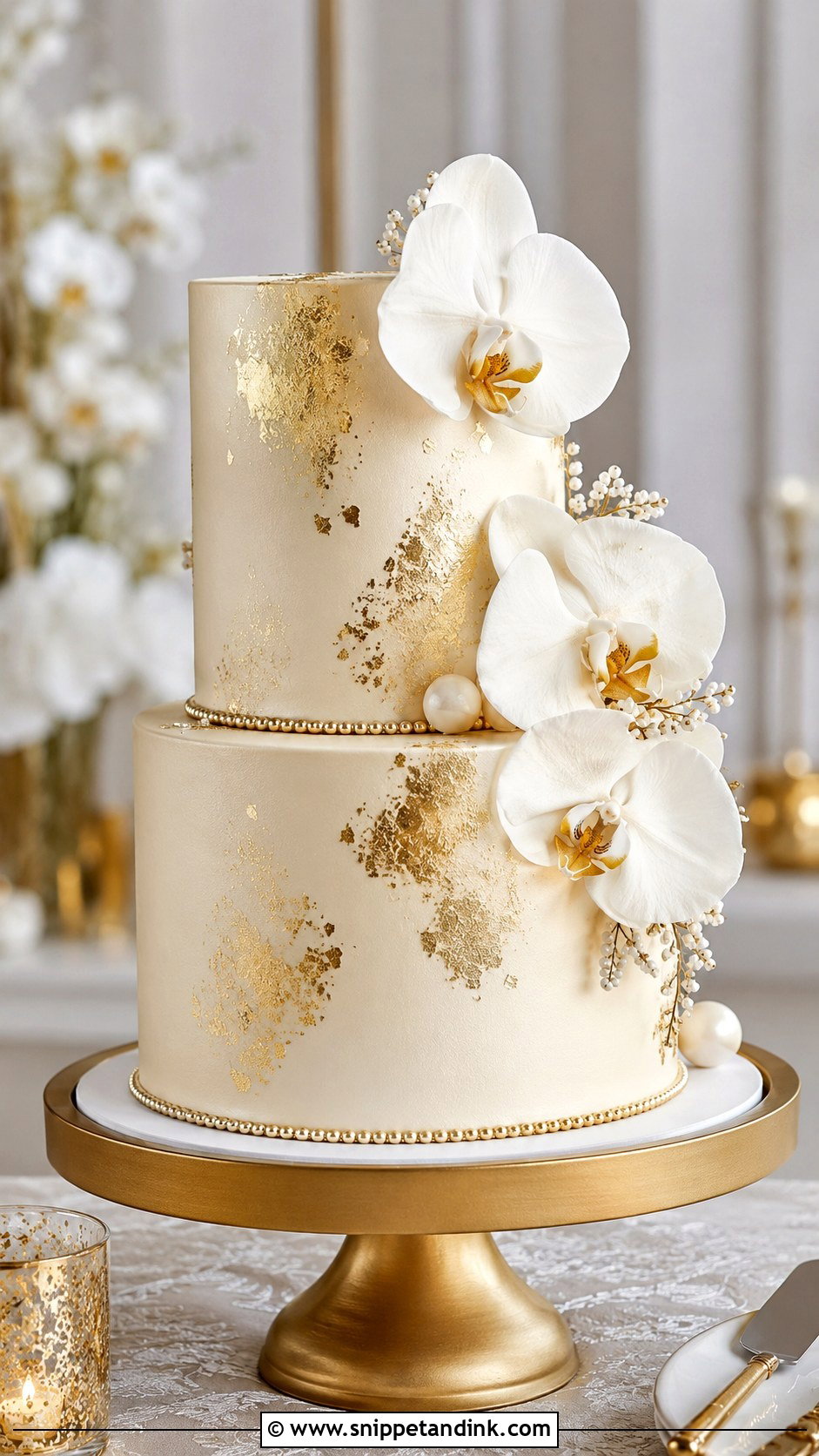
Gold can make a small cake look expensive or look gaudy, and the difference is quantity. A thin painted edge around each tier reads modern; torn gold leaf scattered on one tier looks artistic; a fully brushed gold tier is a strong statement best paired with a plain white tier above it. I’d balance it with ivory, champagne or soft beige icing and a few white orchids or roses. Make sure the gold your baker uses is sold as edible, since some shimmer products are only labelled non-toxic.
7. Floral Double Decker Wedding Cake
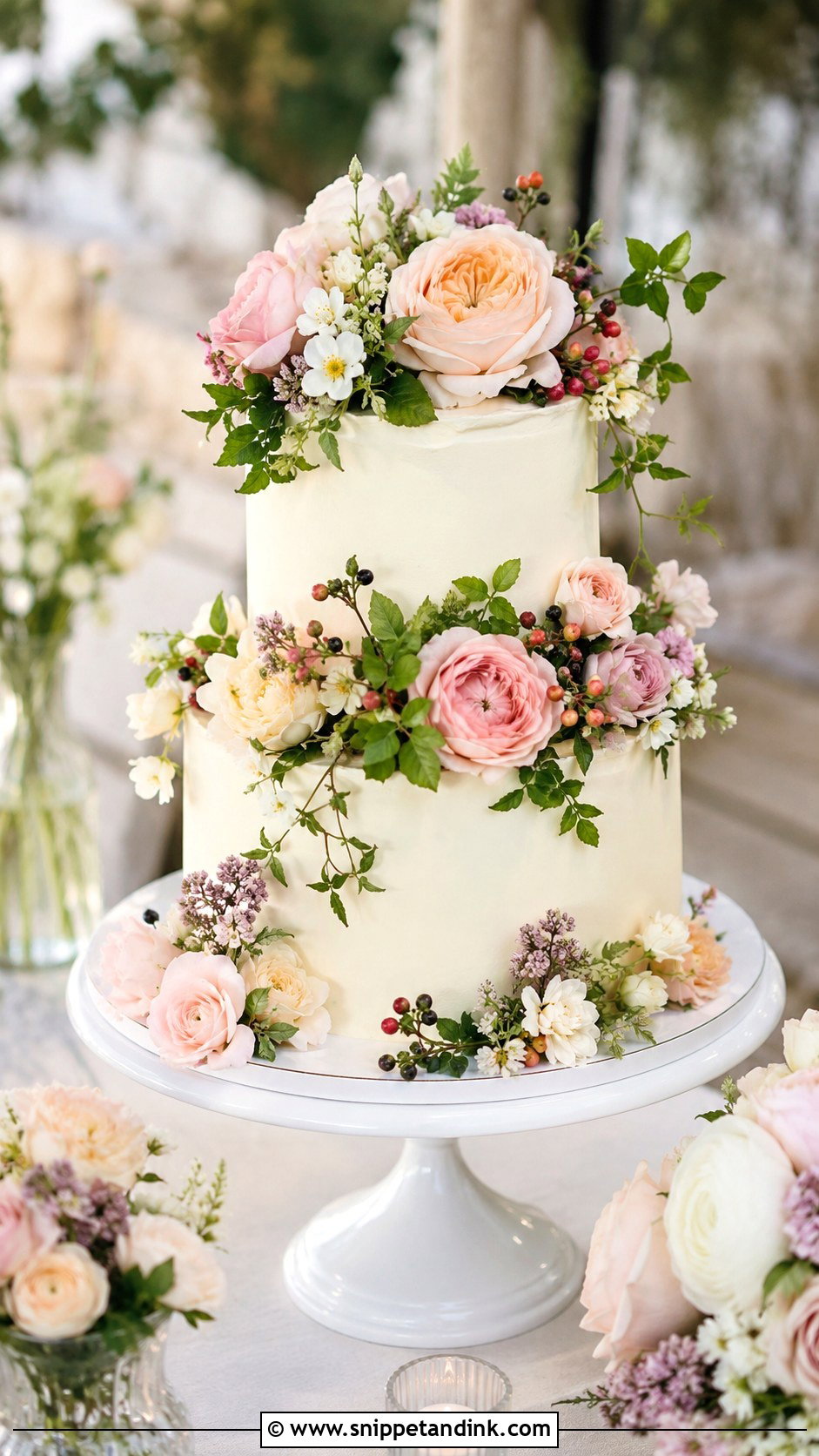
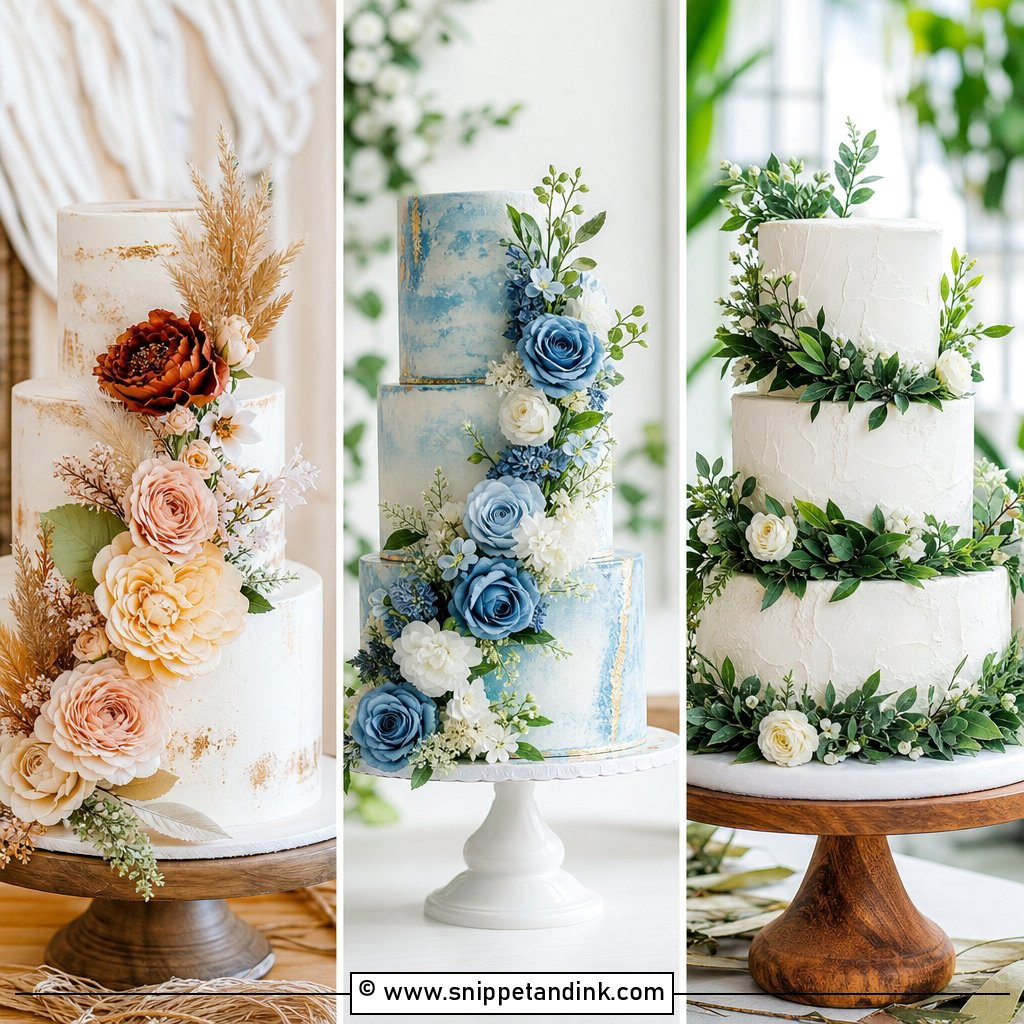
A two-tier cake carries flowers well because the arrangement can look full without needing a huge cake underneath. Fresh, pressed, sugar and hand-painted flowers all work, and the season should guide the choice: pastels and light greenery in spring, brighter garden flowers and berries in summer, terracotta, cream and burgundy in autumn. Ask for a diagonal flow across the tiers. It looks more natural than a ring of flowers, and it guides the eye down the cake in photos.
8. Modern Double Decker Wedding Cake
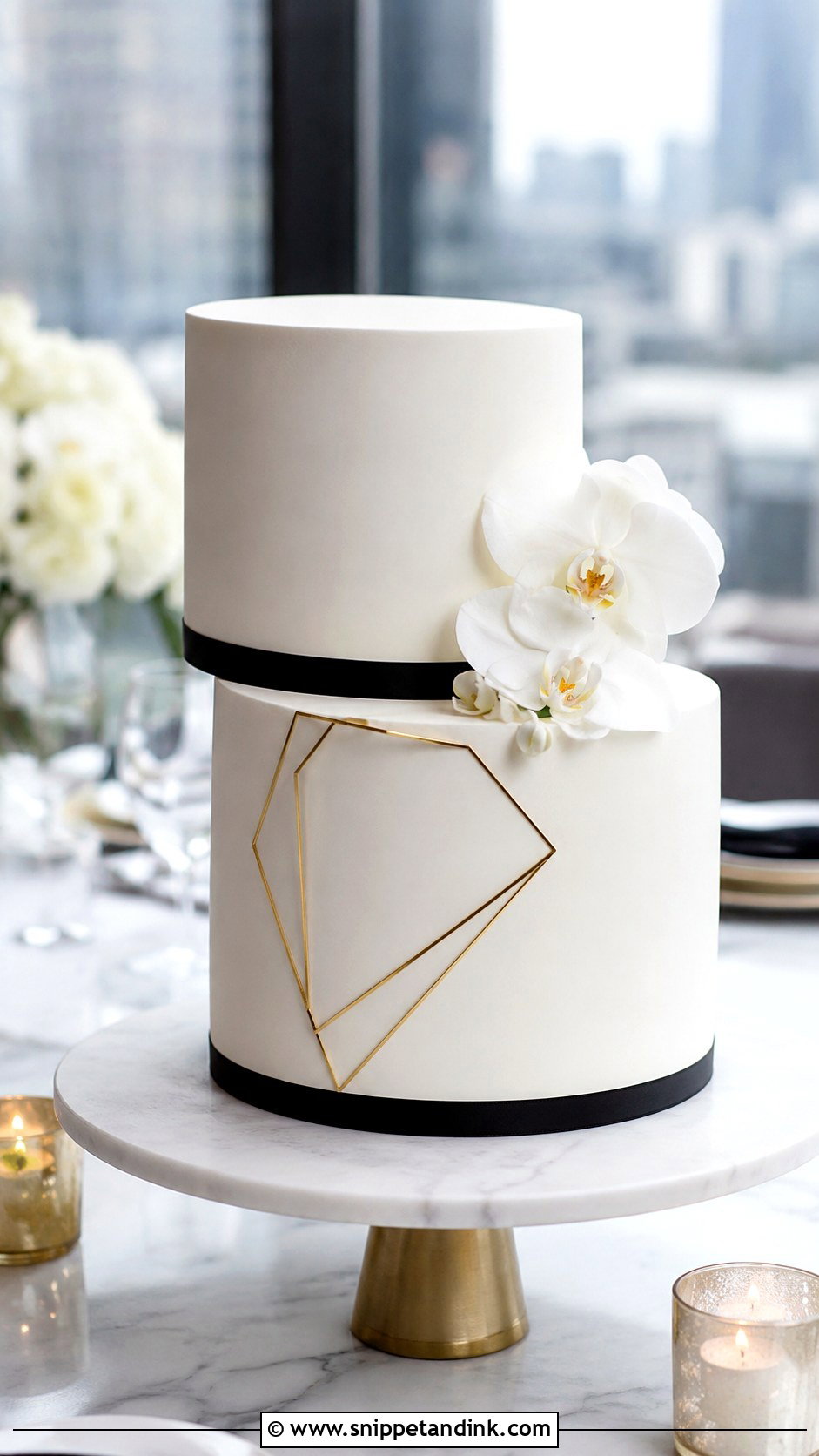
Modern two-tier cakes rely on shape rather than piping. An offset top tier, a square tier, a monochrome palette or smooth fondant with one sculptural sugar flower all qualify. White with black ribbon, ivory with geometric gold, or soft grey with orchids are combinations I return to. An offset top tier needs to be carefully supported with dowels placed under the shifted weight, not centred where they’d normally go, so it’s worth checking your baker has stacked one before.
9. Buttercream Double Decker Wedding Cake
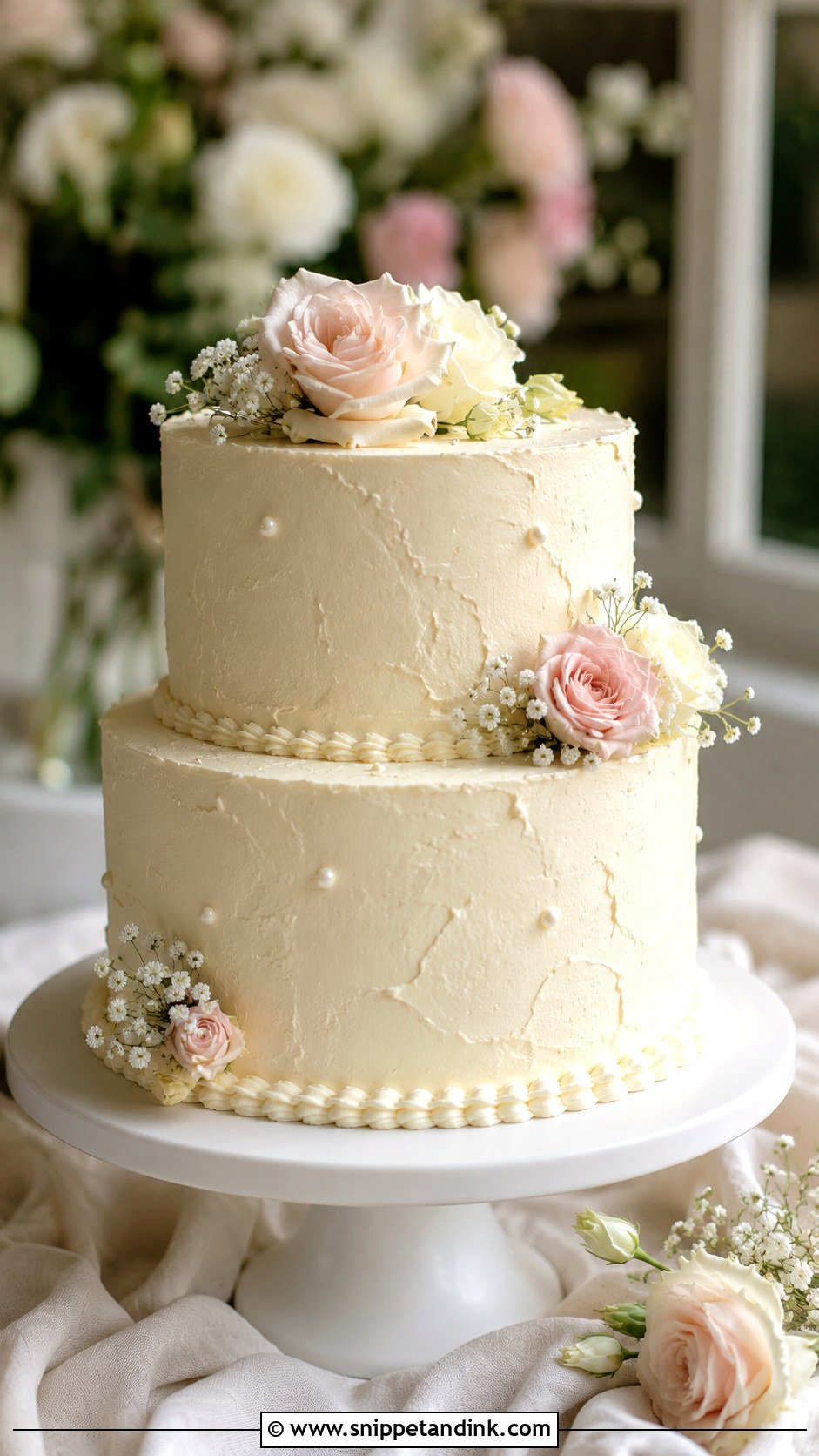
Buttercream looks like cake, which is its whole appeal. It can be smooth, ruffled, textured or lightly swirled. American buttercream is sweet and crusts a little, Swiss meringue buttercream is silkier and less sweet, and cream cheese frosting suits carrot or red velvet but is softer and needs more chilling. All of them soften in heat, so in summer I’d ask where the cake will stand before choosing. Small flowers or a pearl-dot border are enough decoration.
10. Fondant Double Decker Wedding Cake
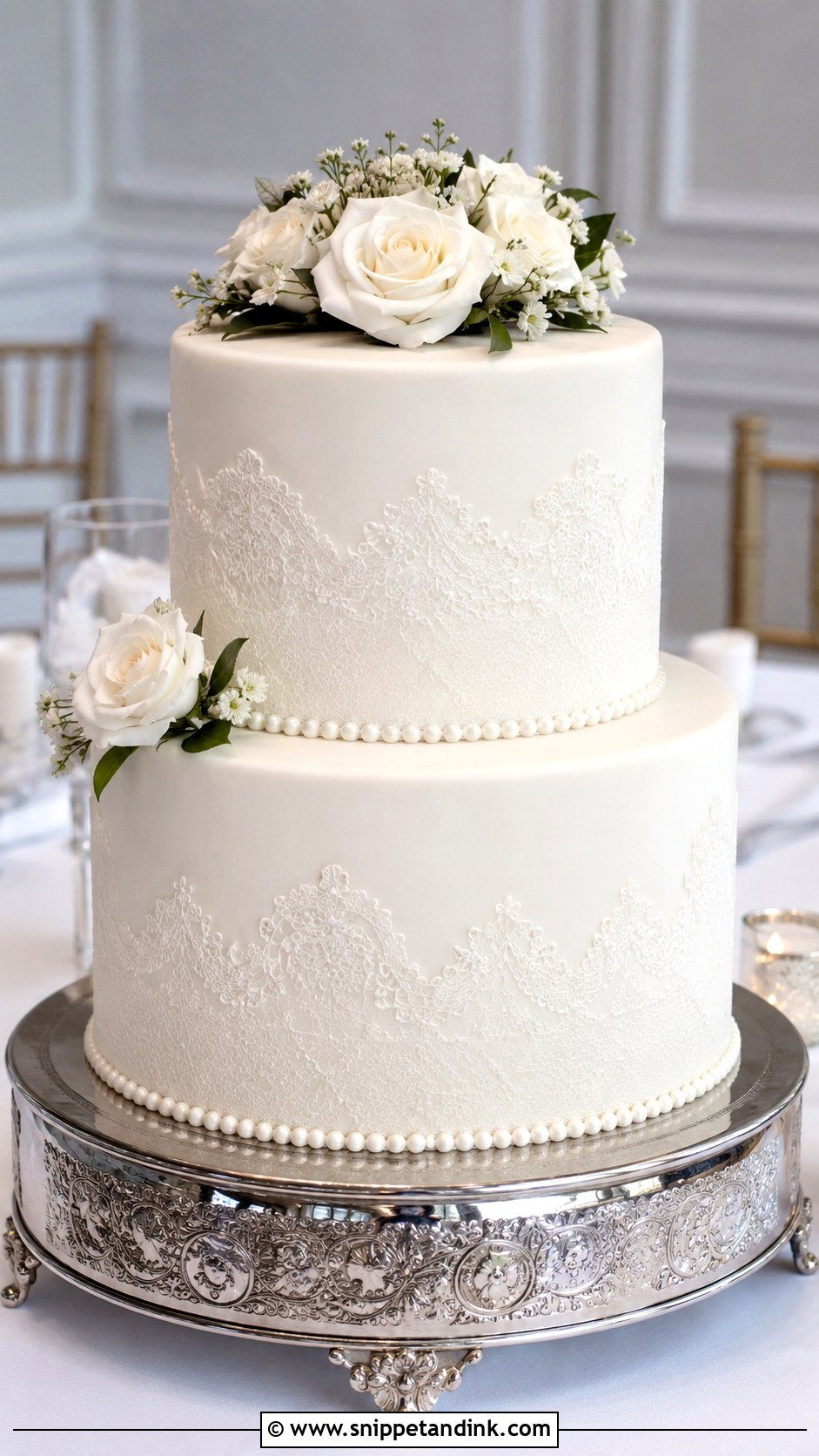
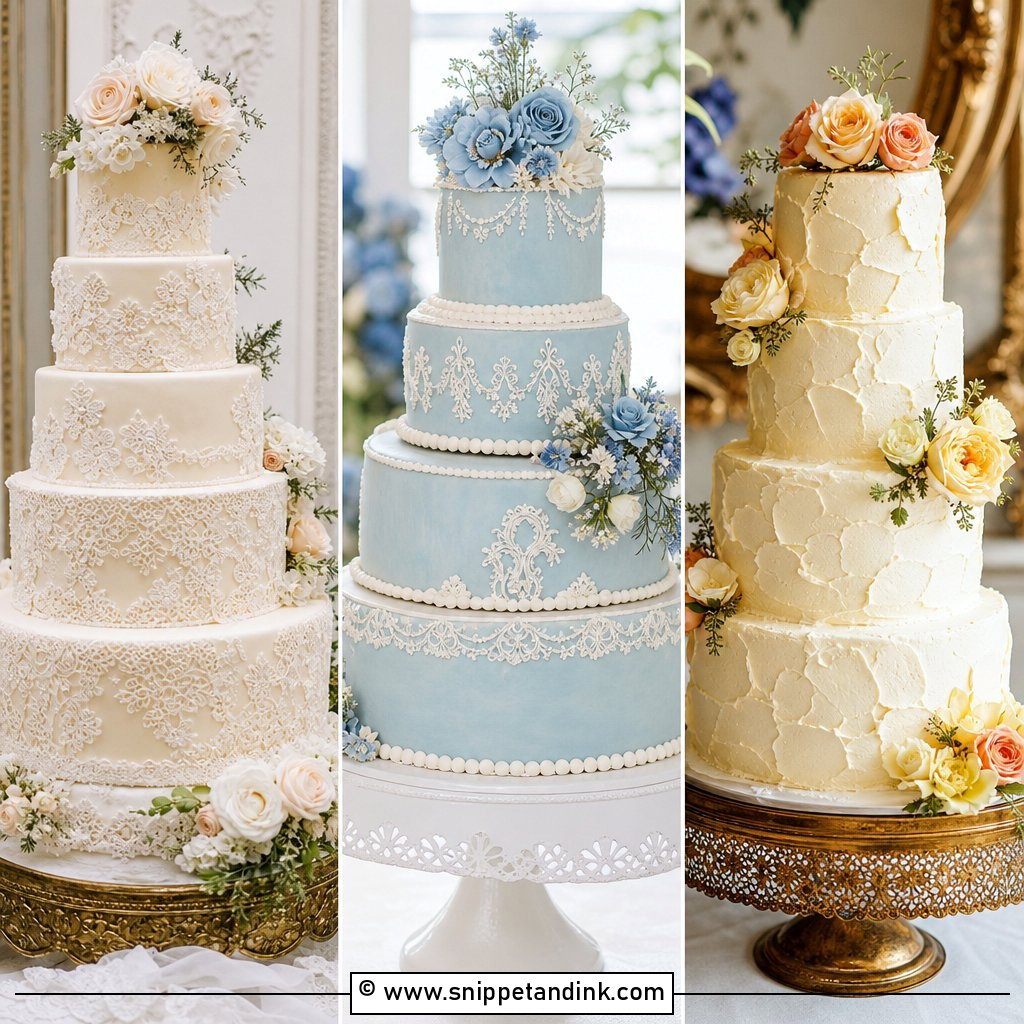
Fondant gives the crispest finish of all, which is why I reach for it when a design needs sharp edges, pleats, bows, embossing, lace or painting. It also seals the cake, so it holds up better than buttercream in a humid room. The trade-off is taste: plenty of guests peel it off, so I roll it thin over a good layer of buttercream. Ivory and white are the classics, and blush, pale blue or champagne fondant look refined for a formal venue.
11. Naked Double Decker Wedding Cake
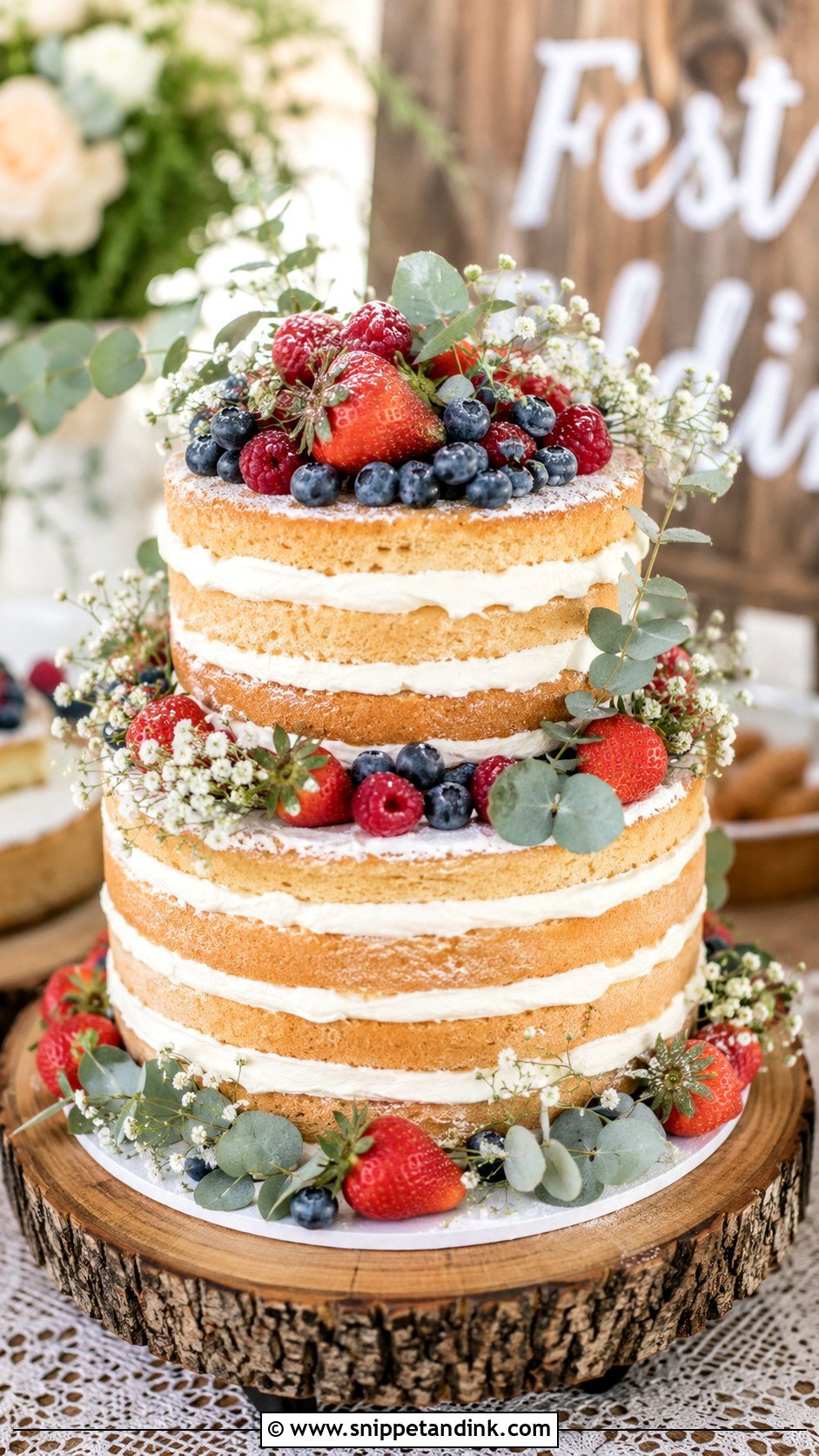
A naked cake shows its layers with only a scrape of filling on the outside. Vanilla, almond, carrot, lemon and berry sponges all look good because the crumb itself becomes the decoration. Fresh berries, greenery and a few flowers finish it. Here’s the honest catch: exposed sponge dries out faster than covered cake, so it should be assembled as close to the wedding as possible and kept out of sun and wind. For a long outdoor afternoon, I’d steer you to a semi-naked finish instead.
12. Semi Naked Double Decker Wedding Cake
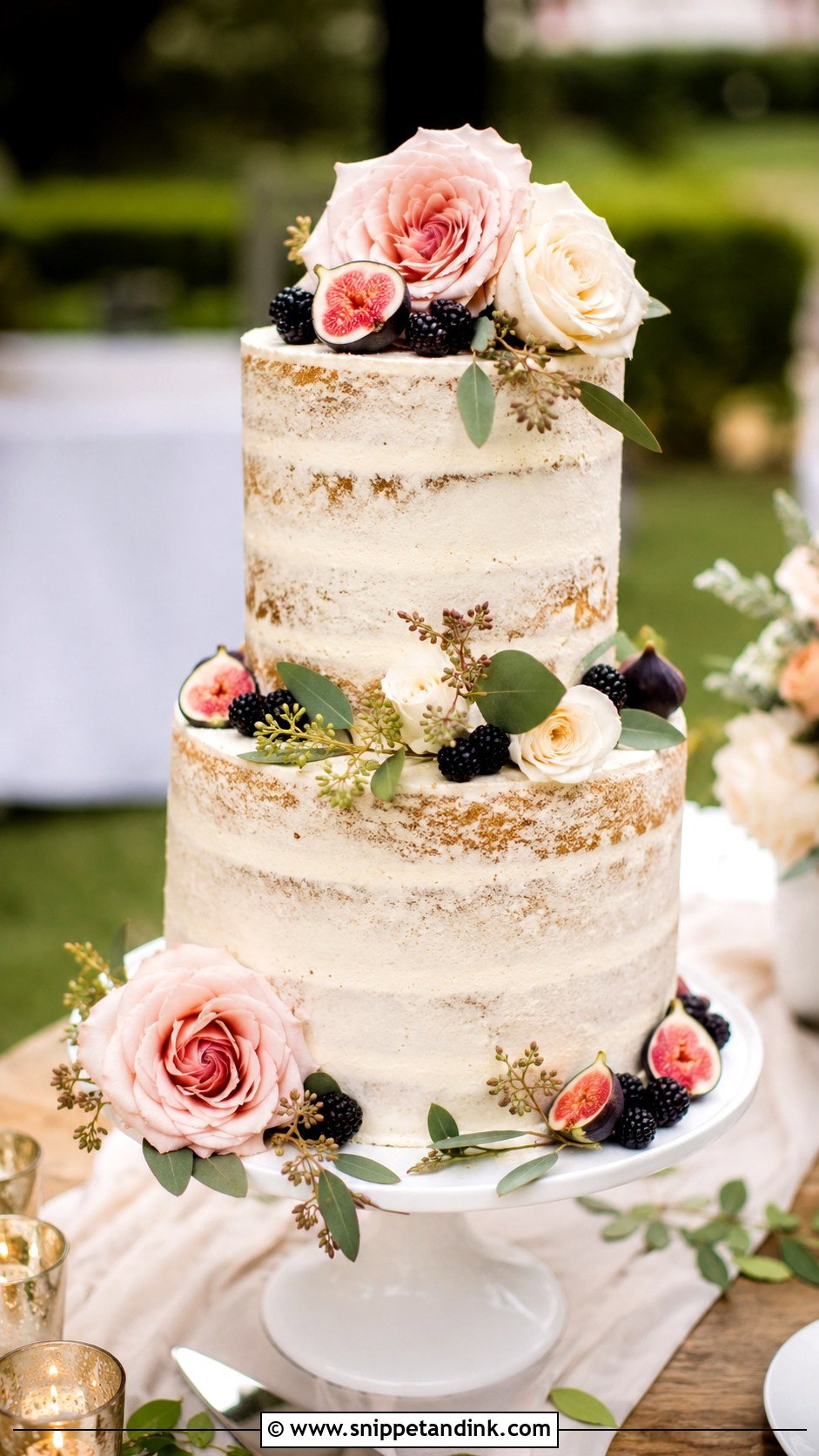
Semi-naked is the compromise I recommend most for outdoor weddings. A thin coat of frosting softens the layers while letting a little sponge show, and it protects the cake from drying better than a fully naked one. Fresh flowers, figs, berries or a simple topper suit it. Vanilla, lemon, almond and spiced sponges all look warm through the frosting. A semi naked finish photographs well in natural light because the uneven frosting catches highlights.
13. Black And White Double Decker Wedding Cake
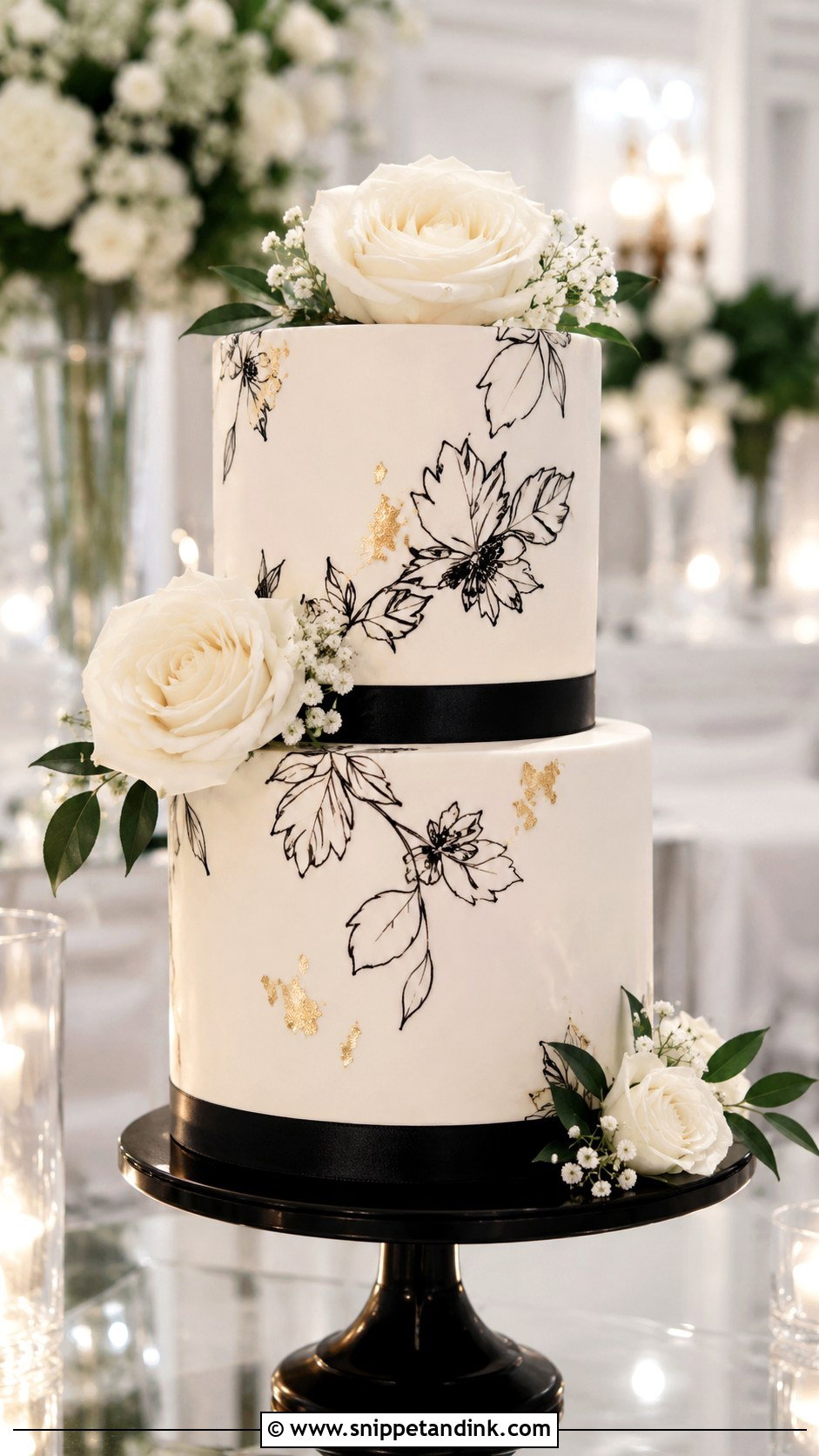
Black and white only looks smart when it’s clean. Start with a white or ivory base and add black ribbon, piped line work, fine painted detail or a full black bottom tier. A black tier takes a lot of colouring, so I prefer black fondant or a dark chocolate base; deep black buttercream can tint mouths. White roses or orchids soften the contrast, and a touch of gold warms it. It suits evening weddings, tuxedos and black bridesmaid dresses.
14. Blush Double Decker Wedding Cake
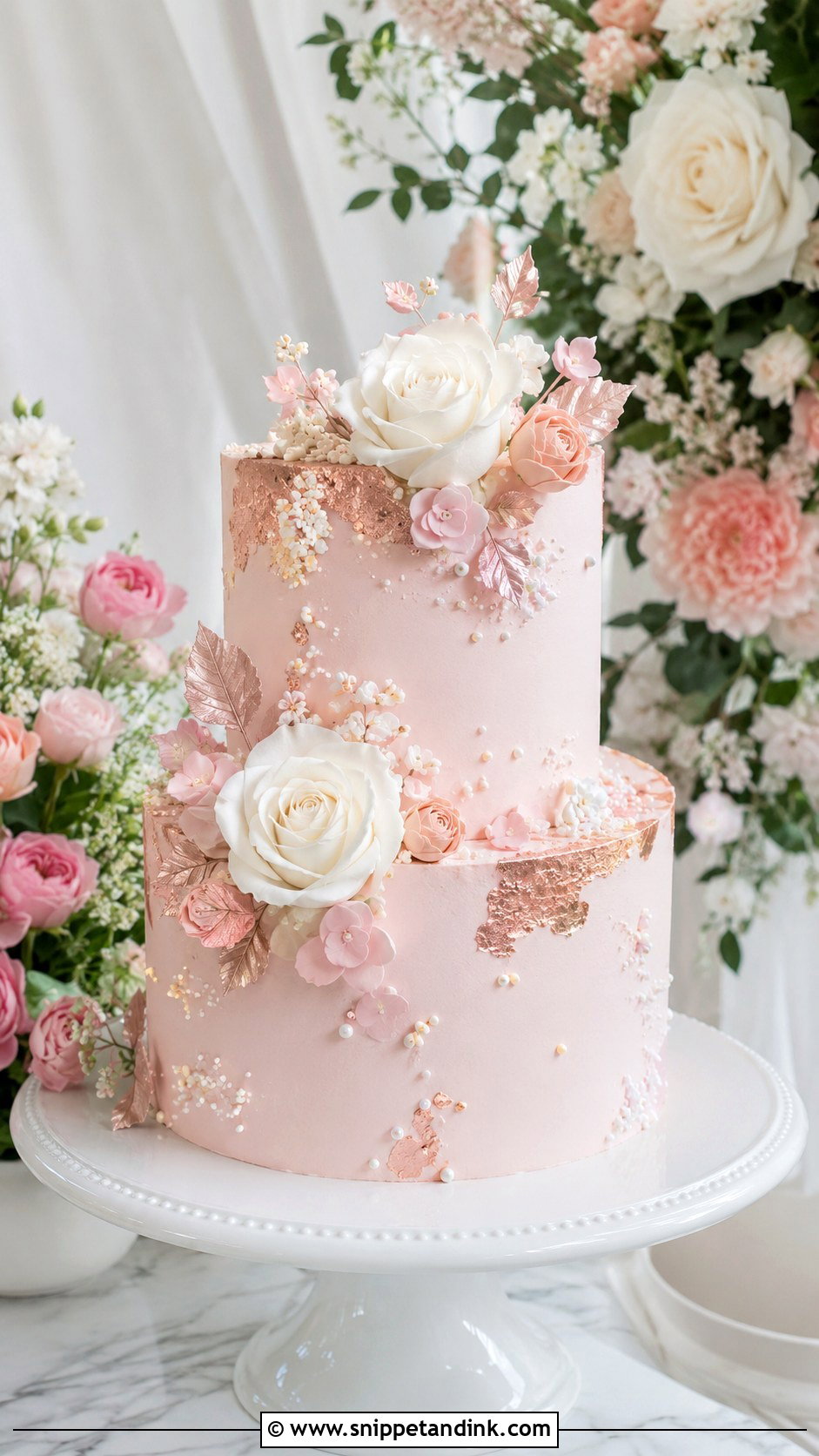
Blush can go on both tiers, as a watercolour wash, or on one tier only for contrast against ivory. It pairs easily with white flowers, rose gold and pale pink sugar blooms. The risk is sweetness: blush with ruffles, bows and pink flowers can look like a christening cake. Sharp edges and restrained decoration keep it grown-up. Pale pinks can also fade in strong sun, so display it in shade.
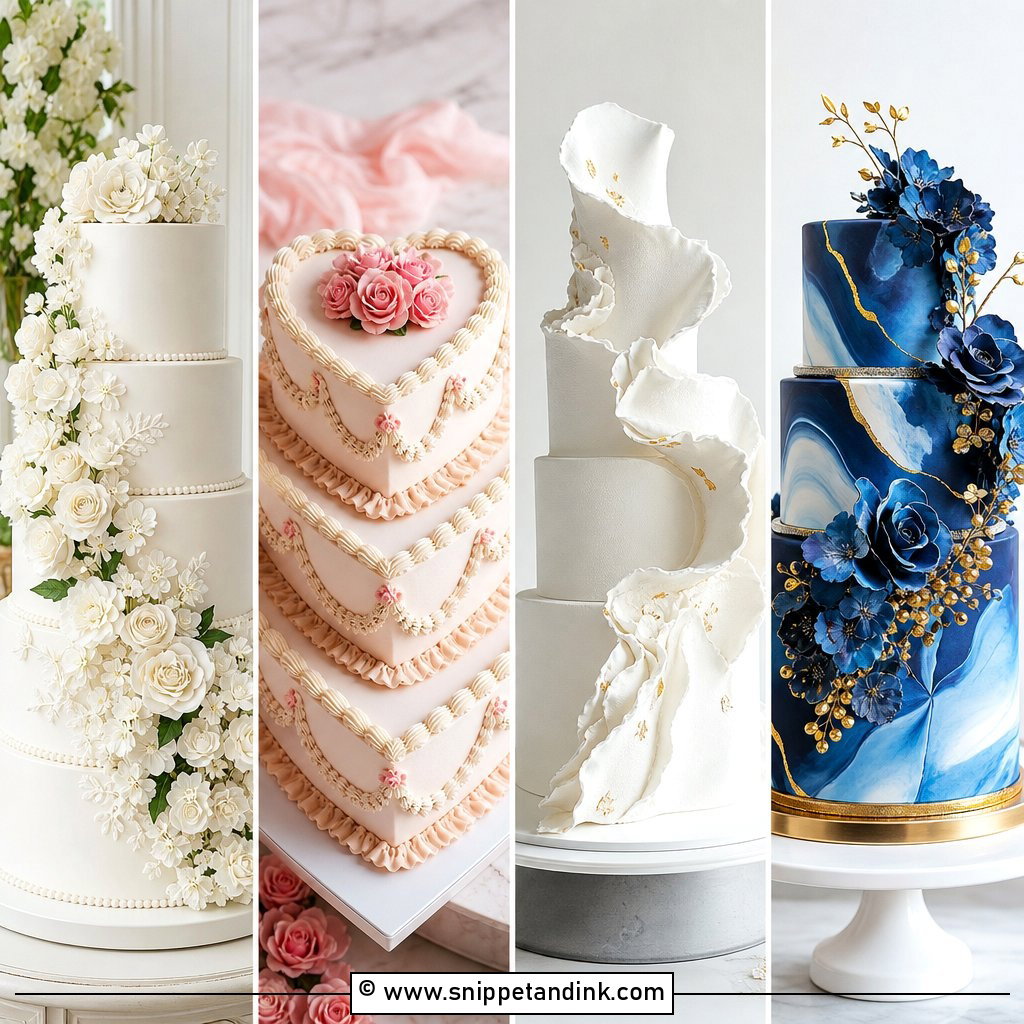

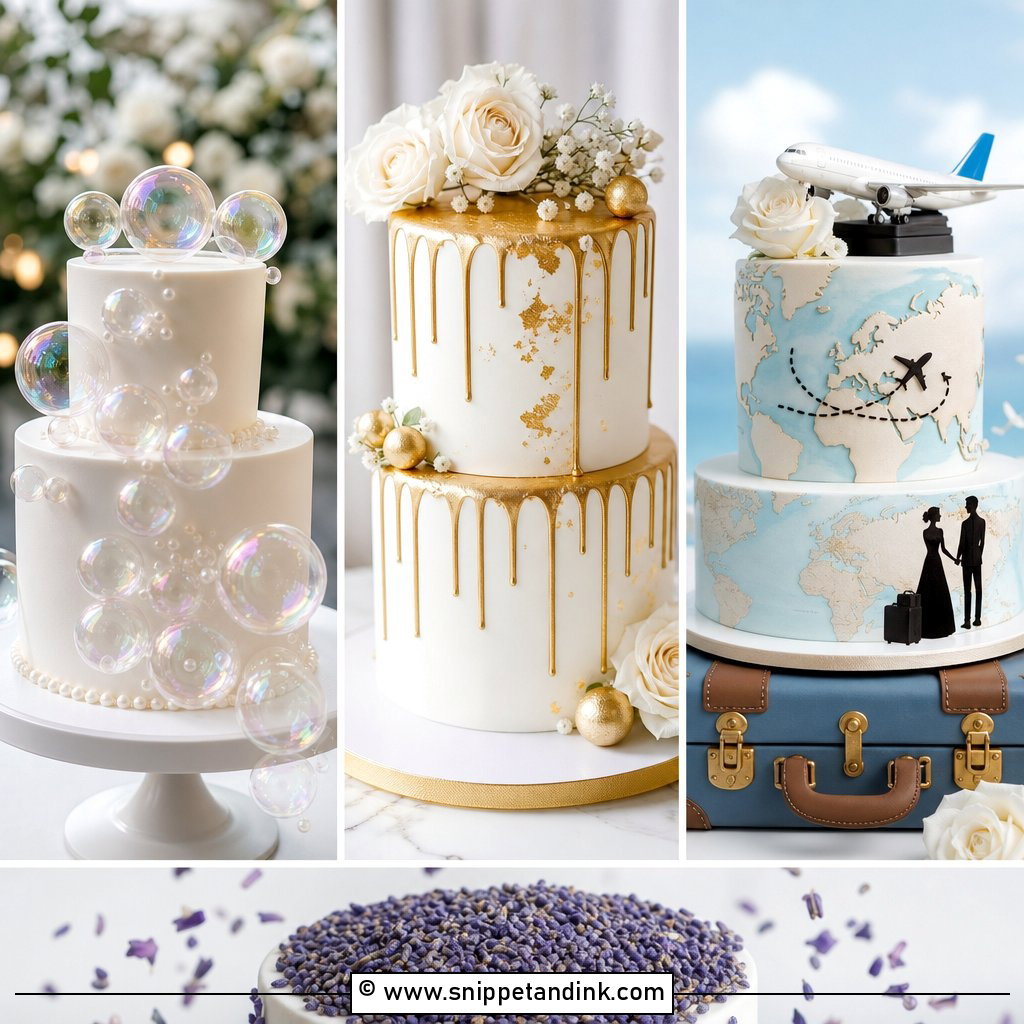
15. Blue Double Decker Wedding Cake
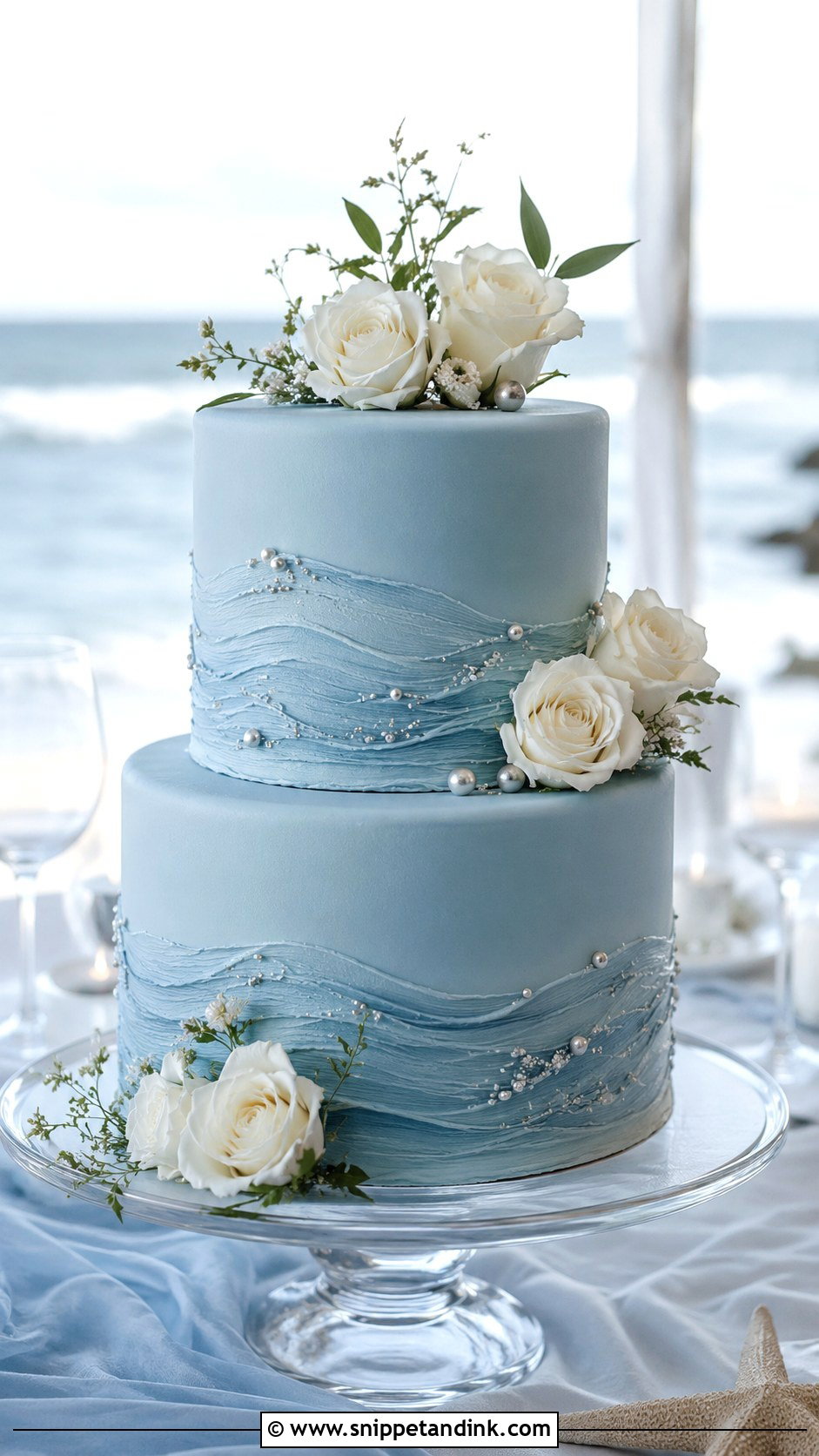
Dusty blue is soft, navy is formal, and pale blue reads fresh. Blue can be the fondant base, a watercolour wash, a ribbon or a hand-painted flower. White roses, silver and pearls go with nearly every shade. For a beach wedding, subtle shell texture or a wave-like buttercream finish works; for a formal evening, navy with gold trim. Blue colouring is one of the more fade-prone shades, so avoid a sunny window.
16. Greenery Double Decker Wedding Cake
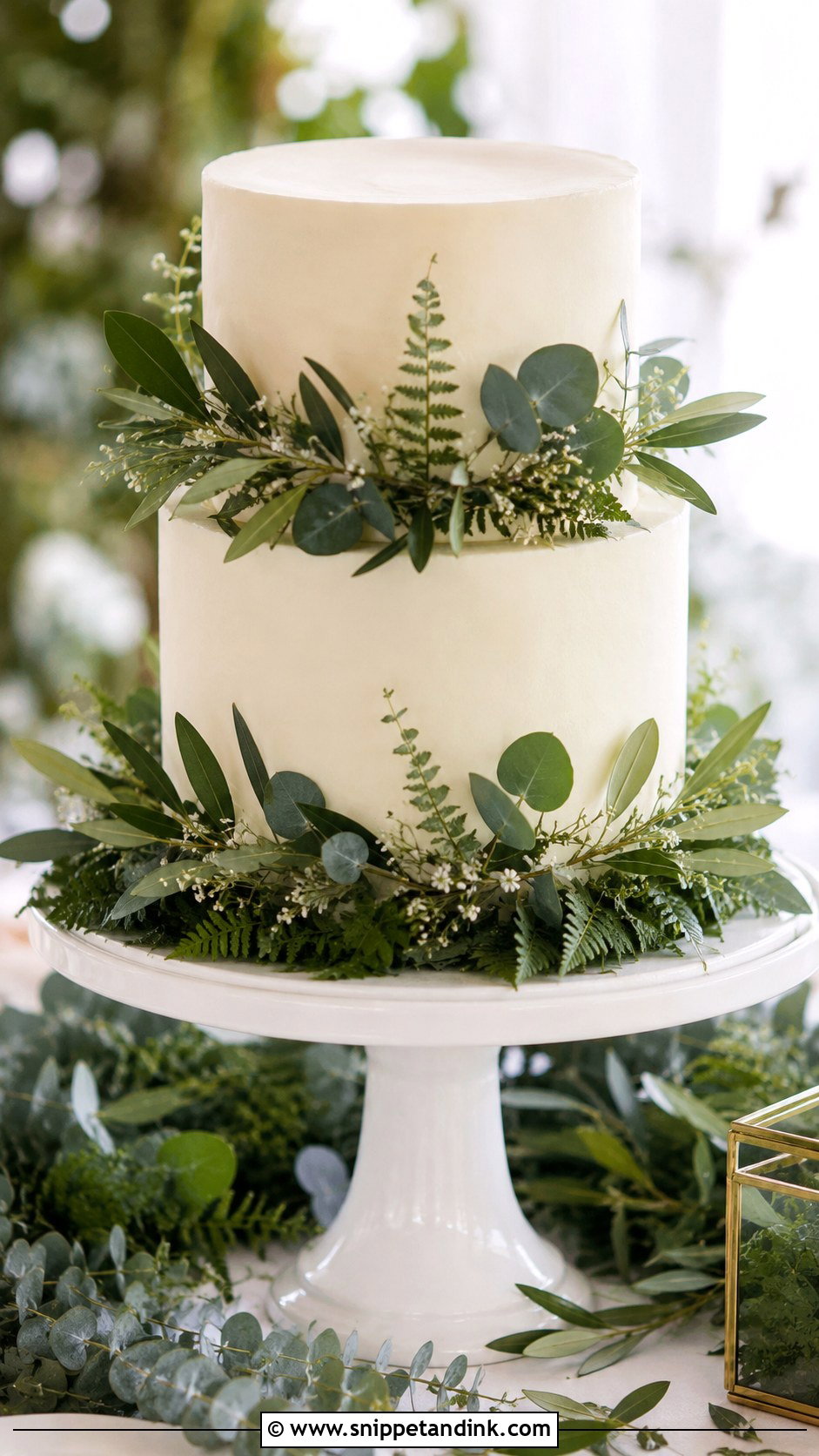
Foliage instead of flowers is a fresh choice for garden and greenhouse weddings. Eucalyptus, olive, ferns, rosemary and trailing vines can wrap the tiers or sit between them on a white, ivory or semi-naked base. I check every stem with the florist, because some popular greenery, eucalyptus included, isn’t meant to be eaten and must not sit directly on the cake. Wrapped stems and a barrier of food-safe tape solve it. A few small white flowers can soften the green if you like.
17. Lace Double Decker Wedding Cake
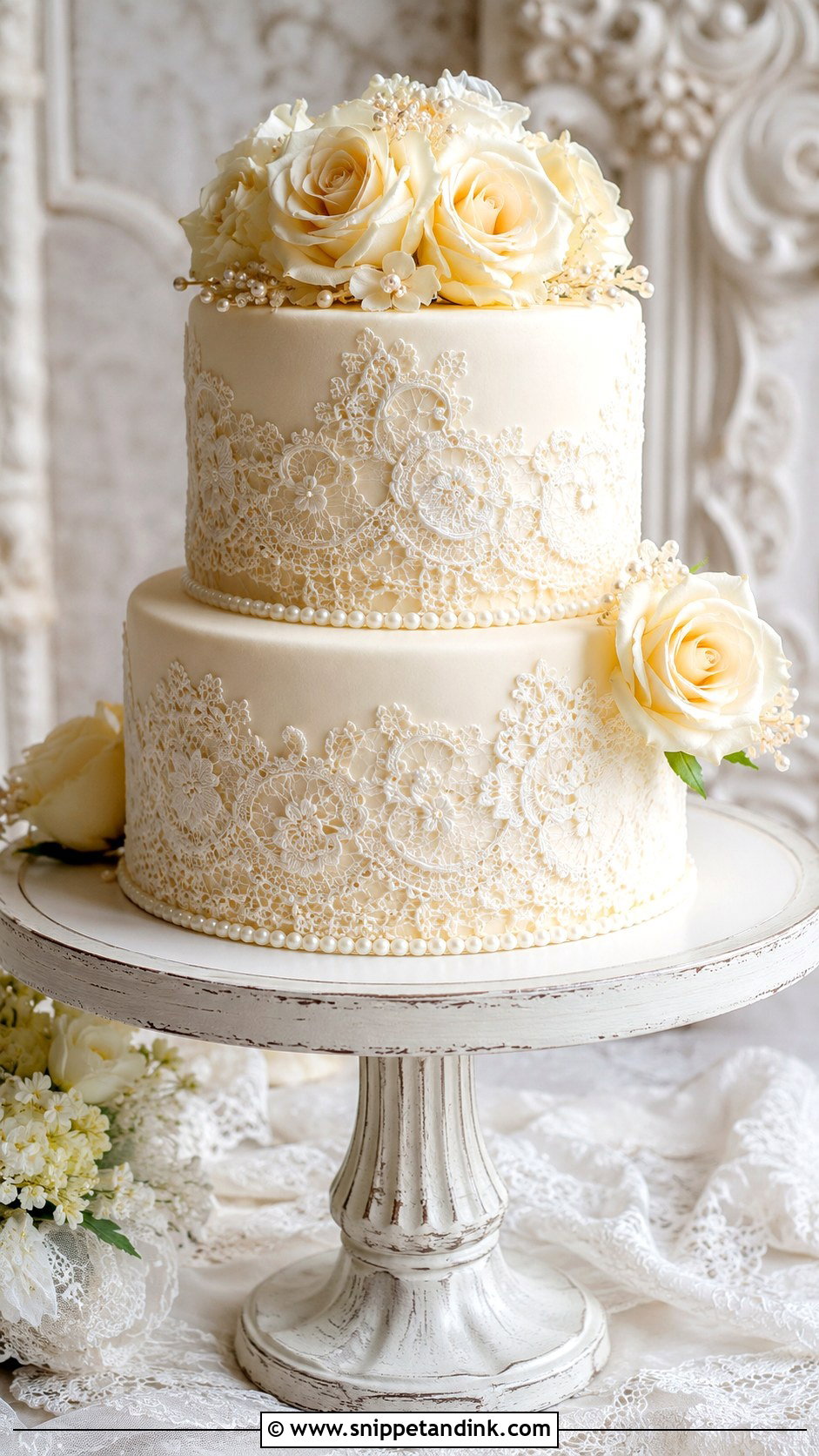
Lace can be piped in royal icing, pressed into fondant with a mould or made as an edible appliqué from a lace mat. The most meaningful version copies a motif from your gown, veil or invitation, so bring a clear close-up photo of the lace. I usually put lace on one tier and keep the other smooth, which lets the detail stand out. Pearls or a few small flowers can finish it without weighing it down.
18. Marble Double Decker Wedding Cake
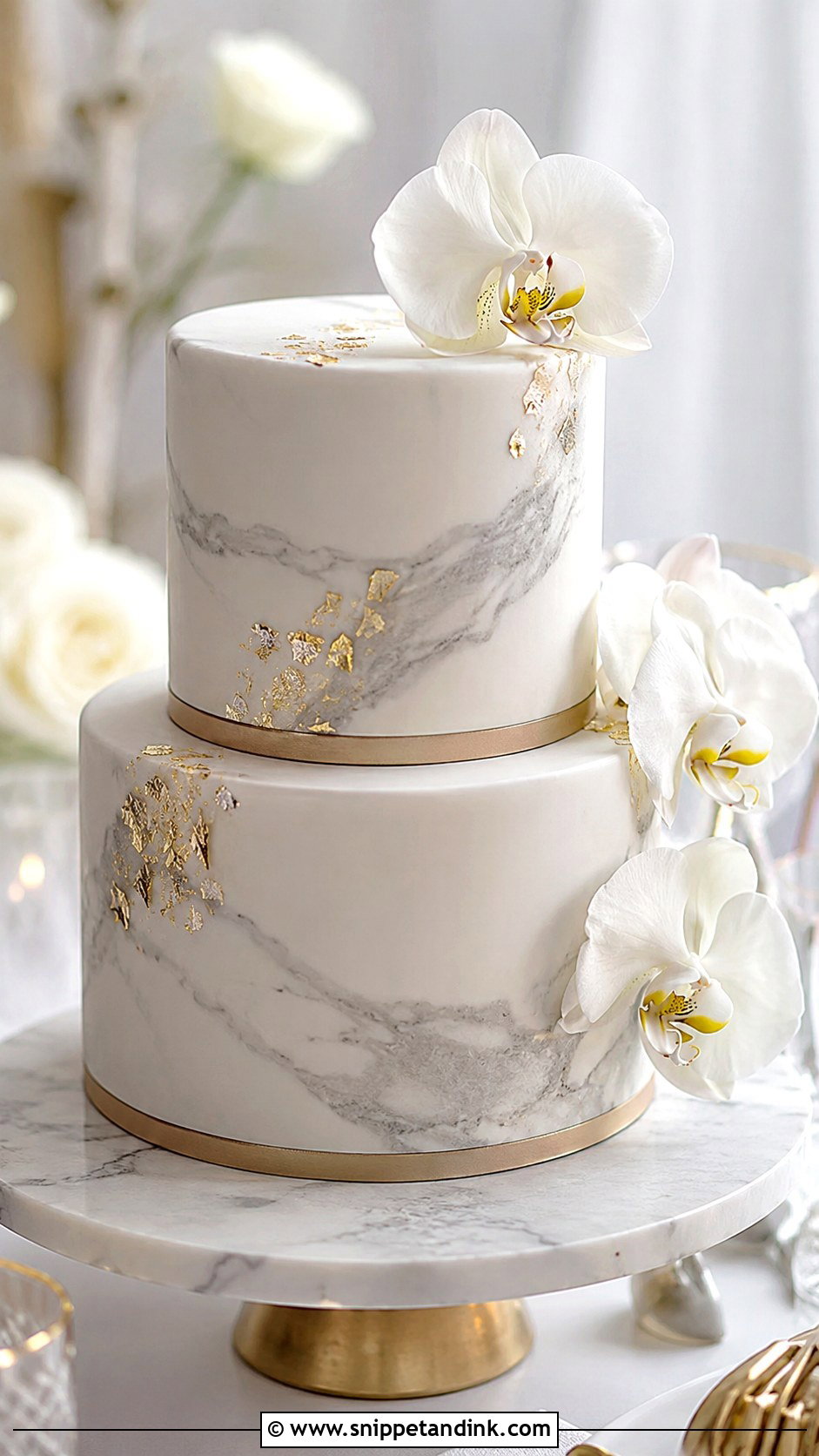
Marbled fondant is made by twisting two or more colours together and rolling them only partly, so no two cakes come out the same. Grey and white is the classic; blush and ivory, blue and white, or beige with gold veining all work. For a wedding, keep the veins soft. A marble bottom tier under a smooth white top tier is a balanced pairing. A slim gold border or a few orchids finishes it. It suits gallery venues and modern spaces.
19. Square Double Decker Wedding Cake
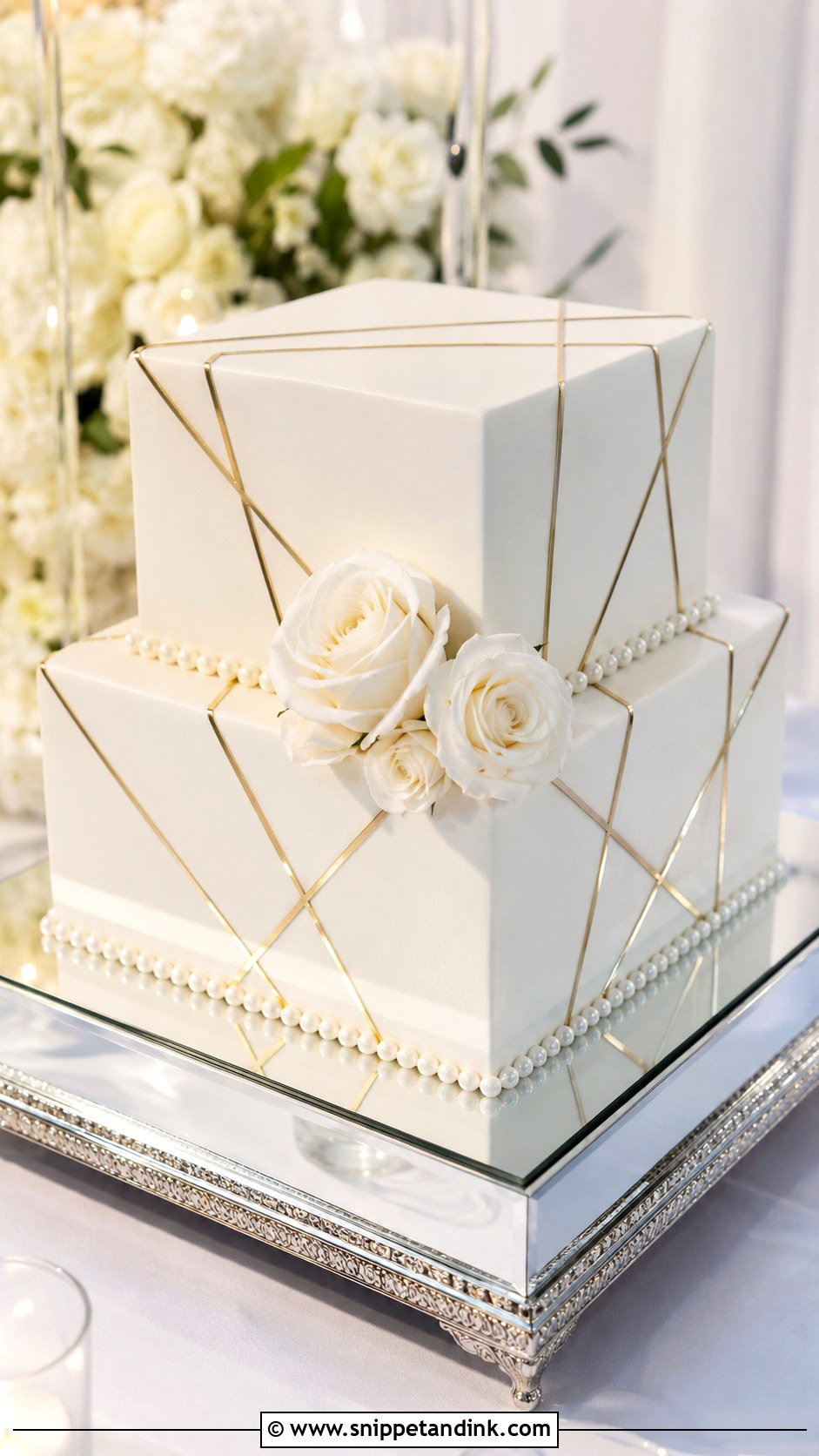
Square tiers look architectural, and they’re less forgiving to make than rounds; the corners need to be sharp and the sides perfectly straight, or the whole shape looks soft. Smooth fondant gives the cleanest result. Keep the decoration in line with the shape: ribbon, metallic lines, pearls or a geometric pattern rather than loose cascades. Square cakes give a strong silhouette on a dessert table. A square tier also gives a few more servings than a round of the same width.
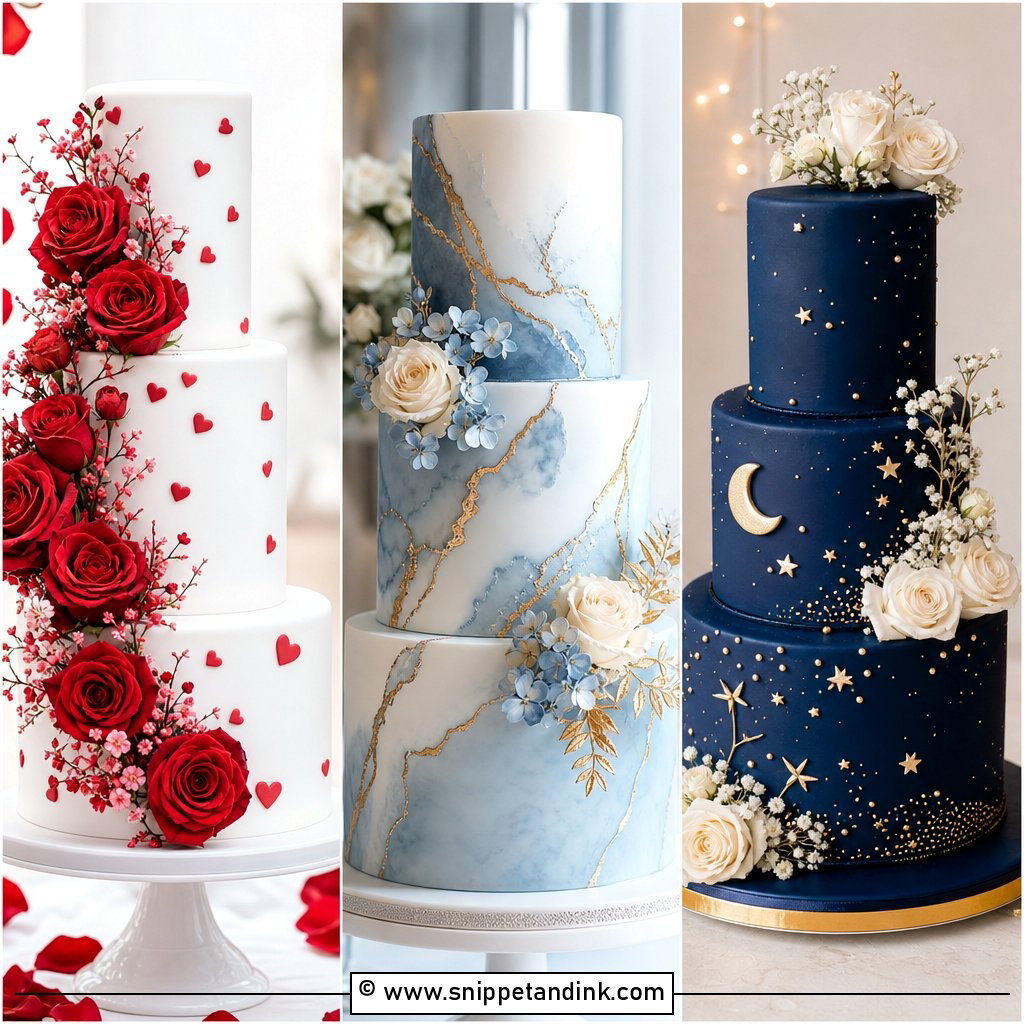
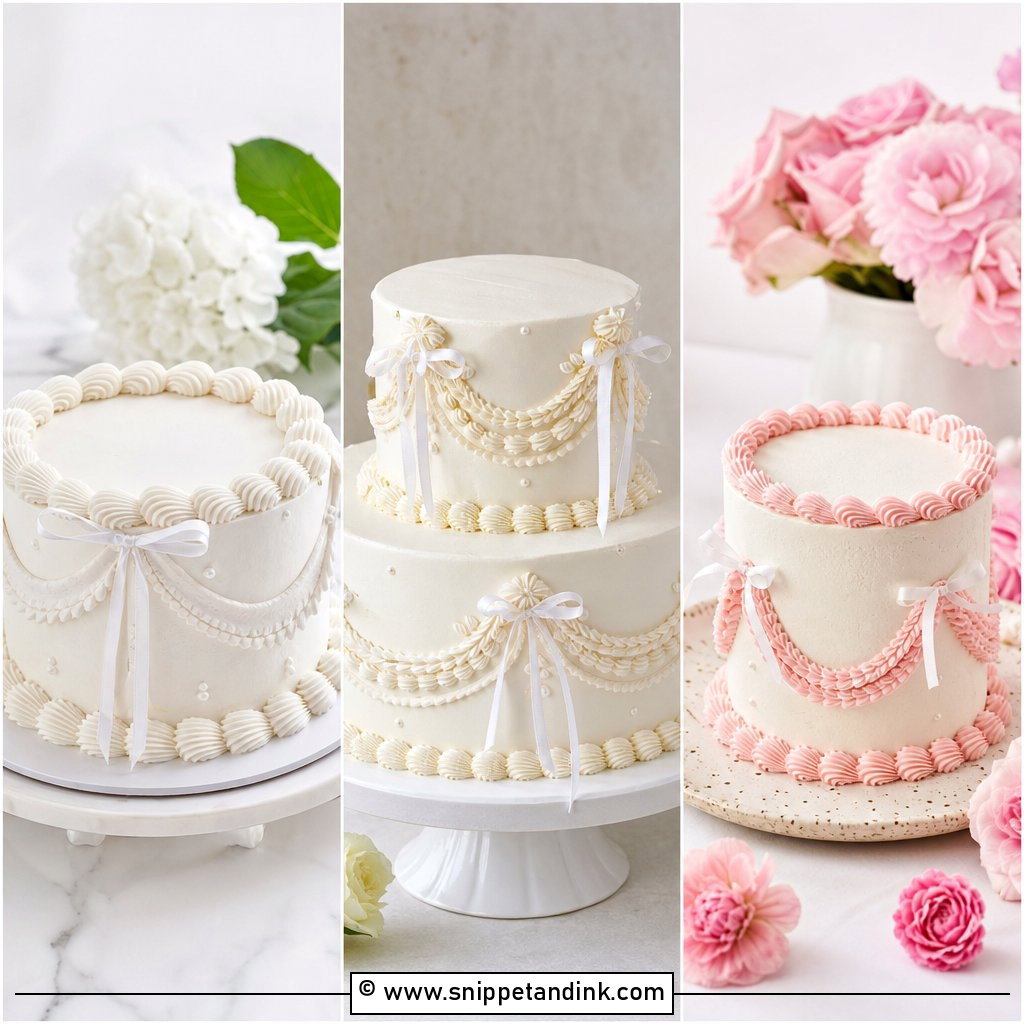
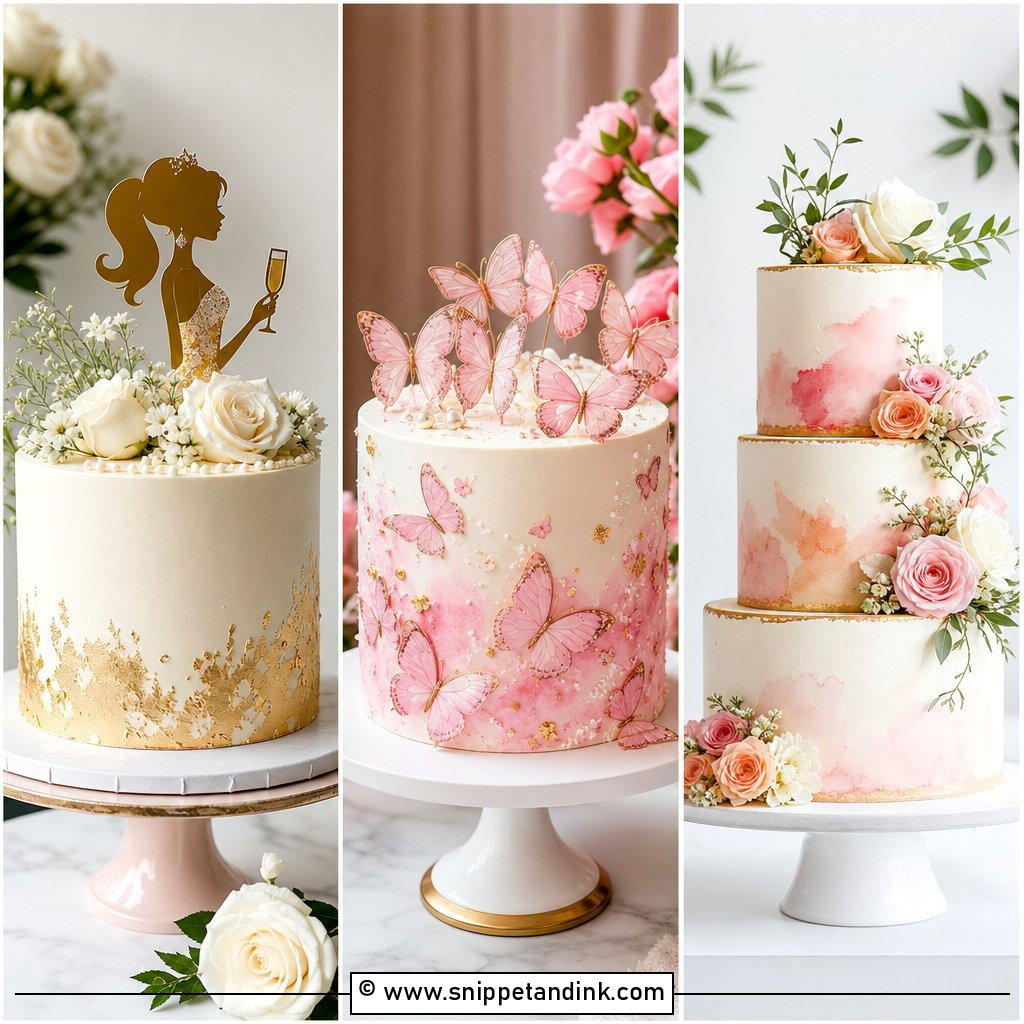
20. Vintage Double Decker Wedding Cake
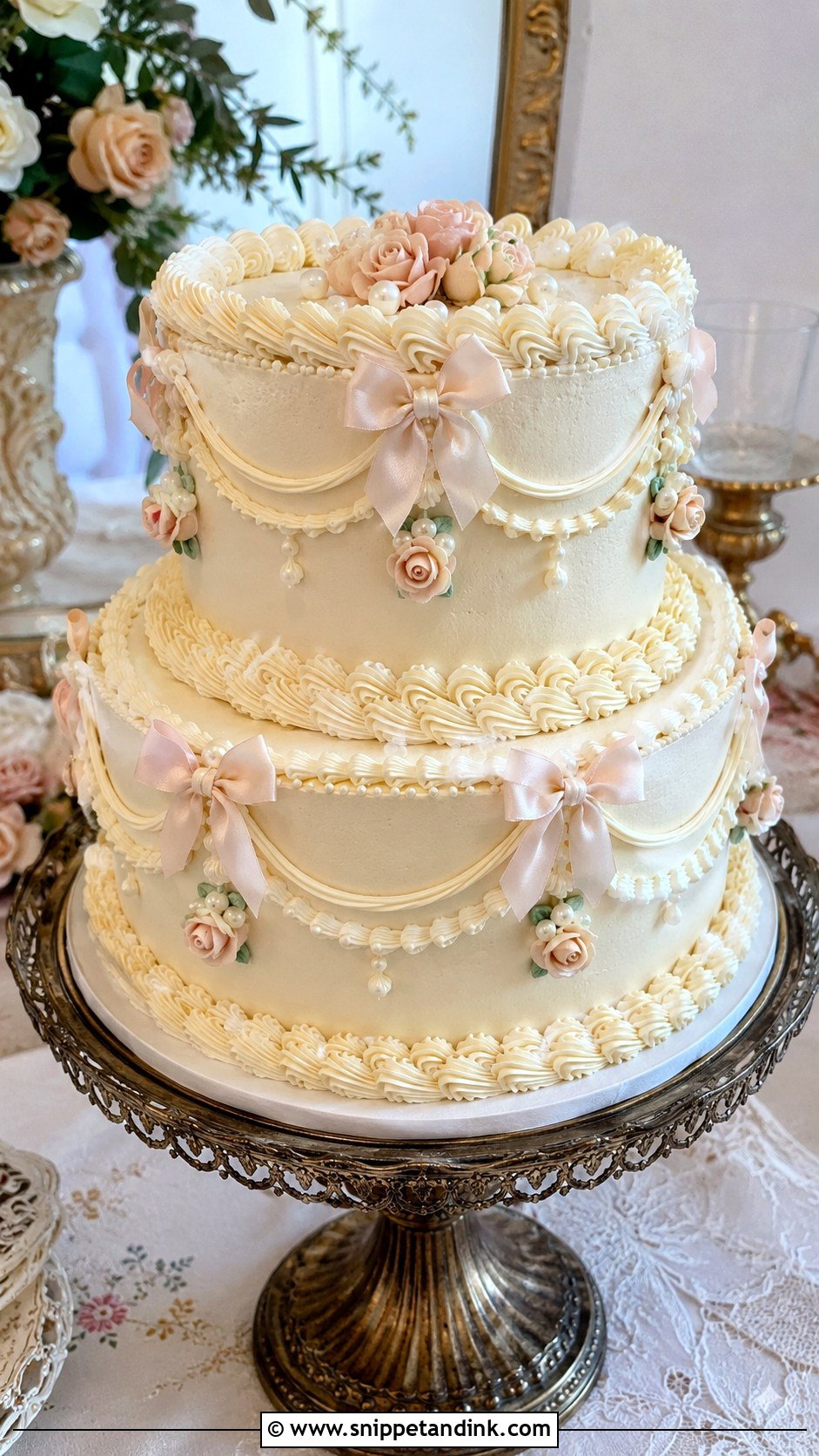
Vintage cakes bring back swags, shell borders, bows and Lambeth piping, the overpiped style where layer is built on layer to create deep, ornate borders. It takes time and a steady hand, so expect it to cost more than a plain finish. Ivory, cream, blush and pale blue suit it. It fits antique venues, heirloom jewellery and lace gowns. I keep the piping rich but leave a little plain space on each tier, or the detail starts to blur together.
How Many Guests Can a Two-Tier Cake Serve?
Bakers usually count in wedding portions, which are slim fingers of cake about 1 by 2 inches across and as tall as the tier. Party-sized slices are roughly double that, so the same cake feeds about half as many people if your caterer cuts generously. Ask your caterer which size they’ll cut before you settle on tiers.
Rough counts for round tiers
- 6 inch on 8 inch: around 35 wedding portions, a fit for an intimate dinner.
- 8 inch on 10 inch: around 60 wedding portions.
- 10 inch on 12 inch: around 90 wedding portions, though it is heavy and needs careful stacking.
Counts shift with tier height and the cutter’s hand, so treat these as a starting point. For a bigger guest list, many couples keep the display cake small and order a plain kitchen cake in the same flavour, cut out of sight. It costs less per slice than adding tiers and keeps the design you love.
Splitting flavours between the tiers
Put the sturdier sponge on the bottom, such as chocolate, carrot or a firm vanilla, because it carries the weight of the top tier. Lighter sponges and fillings that need chilling, such as fresh cream, lemon curd or mousse, are safer on top or in a fondant-covered tier that stays cool. If you’re saving the top tier for an anniversary, choose a flavour that freezes well.
Two Tiers, Done Properly, Still Fill a Room
Two tiers give you enough height for photos, enough surface for a real design, and room for two flavours. Whichever finish you prefer, the details that make it look right are the ones in this list: tier proportions, a finish suited to your venue’s temperature, and decoration that respects the shape. Bring your venue details, your flower plan and an honest guest count to the tasting, and a good baker will steer the rest.
You'll Like These Ideas:





Leave a Reply