
A wedding cake gets photographed more than almost anything else at the reception, so it pays to design it with intent rather than pick it off a menu. When a couple sits down with me for a custom design, I’m looking for the thread that ties the cake to the rest of the day: the lace on the dress, the bouquet, the season, the room it will stand in. Right now I’m piping a lot of vintage borders, building sculptural tiers and finishing more buttercream with texture, and smaller cakes built around one strong idea are everywhere. The twenty designs below are the ones I’d lay out at a consultation, with notes on how each one actually behaves once it’s built.
Turning a Saved Photo Into an Order I Can Actually Quote
Most couples arrive with a folder of screenshots, which is a good start, but a photo alone doesn’t tell me enough to price or build anything. The cake in the picture might serve forty people when you have a hundred and fifty, or it may have been styled for one shot in a cool studio. I treat the image as a mood board, then ask the questions that turn it into a real order.
- How many guests will actually eat cake. If there’s a dessert table or a late-night snack, I size the cake down.
- Where it will stand and at what time of day. A marquee in July and an air-conditioned ballroom call for different frostings.
- What exactly you love in the photo. It’s usually one detail, such as the piping, the colour or the shape, and everything else can change.
- Your dress, flowers and invitation. A fabric swatch or a photo of the lace lets me echo it on the tiers.
- Any dietary needs. Nut-free, gluten-free or vegan tiers change the recipe and sometimes the finish too.
Contact bakers early for anything hand-built. Sugar flowers need days to dry, sculptural work needs planning time, and busy designers fill their summer and autumn weekends well in advance, so many couples start enquiring six to nine months out.
What a Tasting Is Really For
A tasting is for flavour and texture, not decoration. Eat a proper forkful of each combination, frosting included, and notice how sweet it feels after the third bite. At the end of a three-course dinner, sweetness hits harder than it does at an afternoon appointment, so I often nudge couples toward the less sugary option they liked.
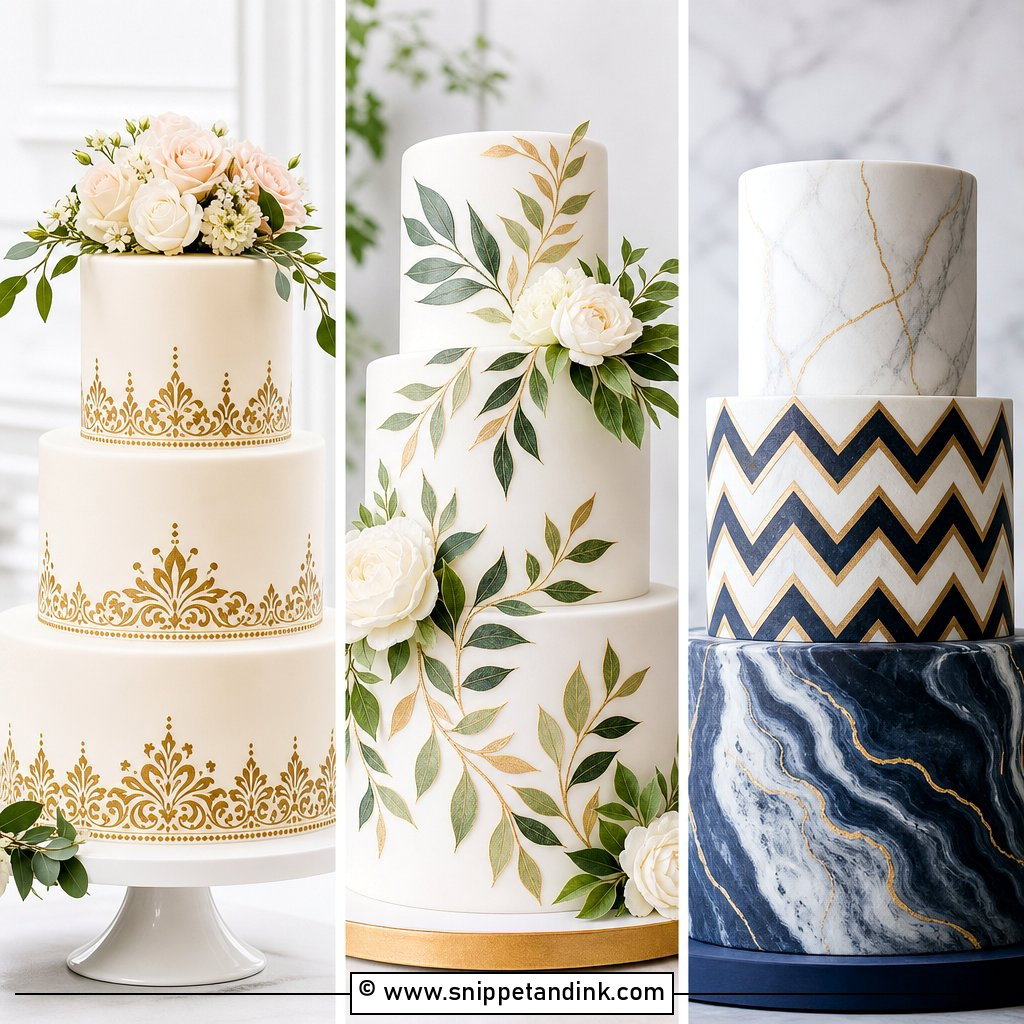
1. Classic White Wedding Cake
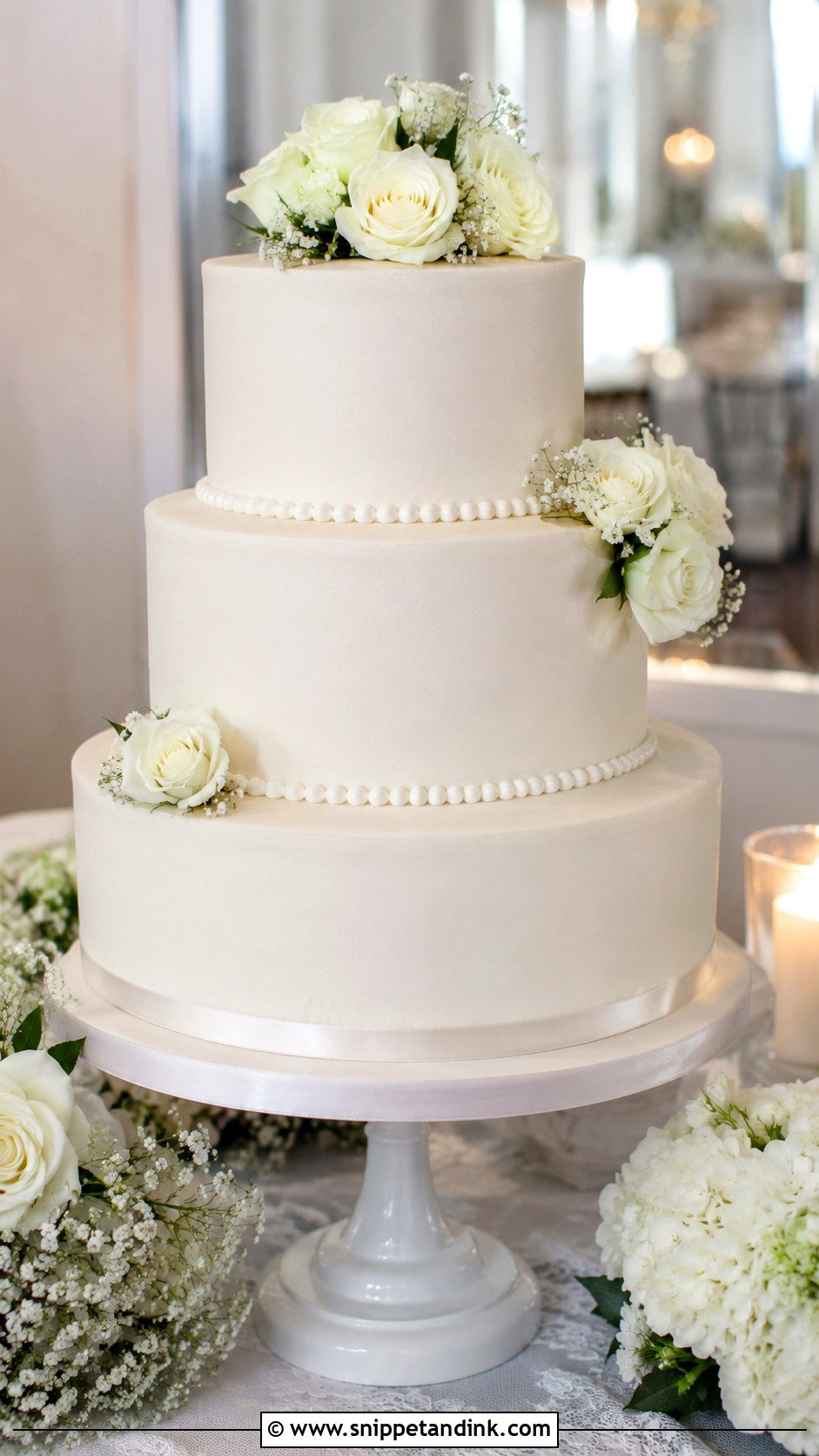
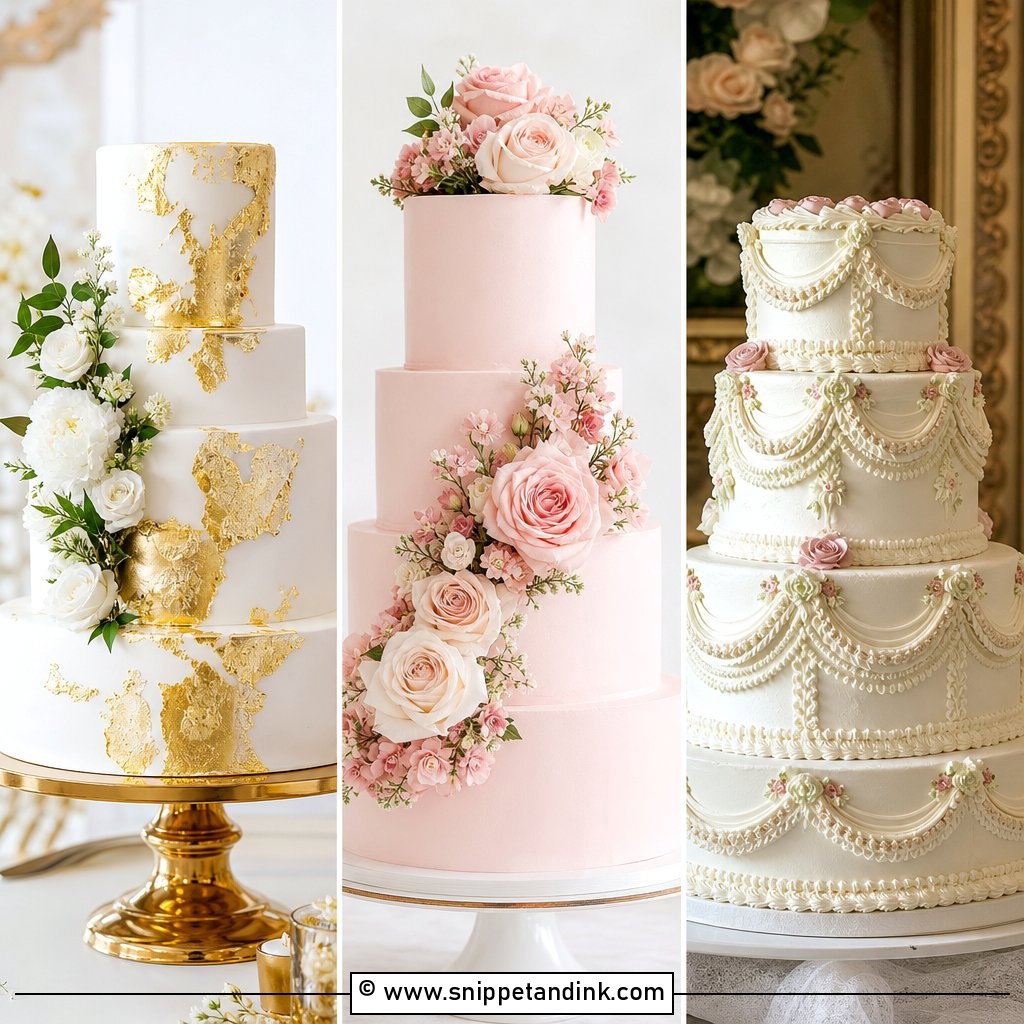
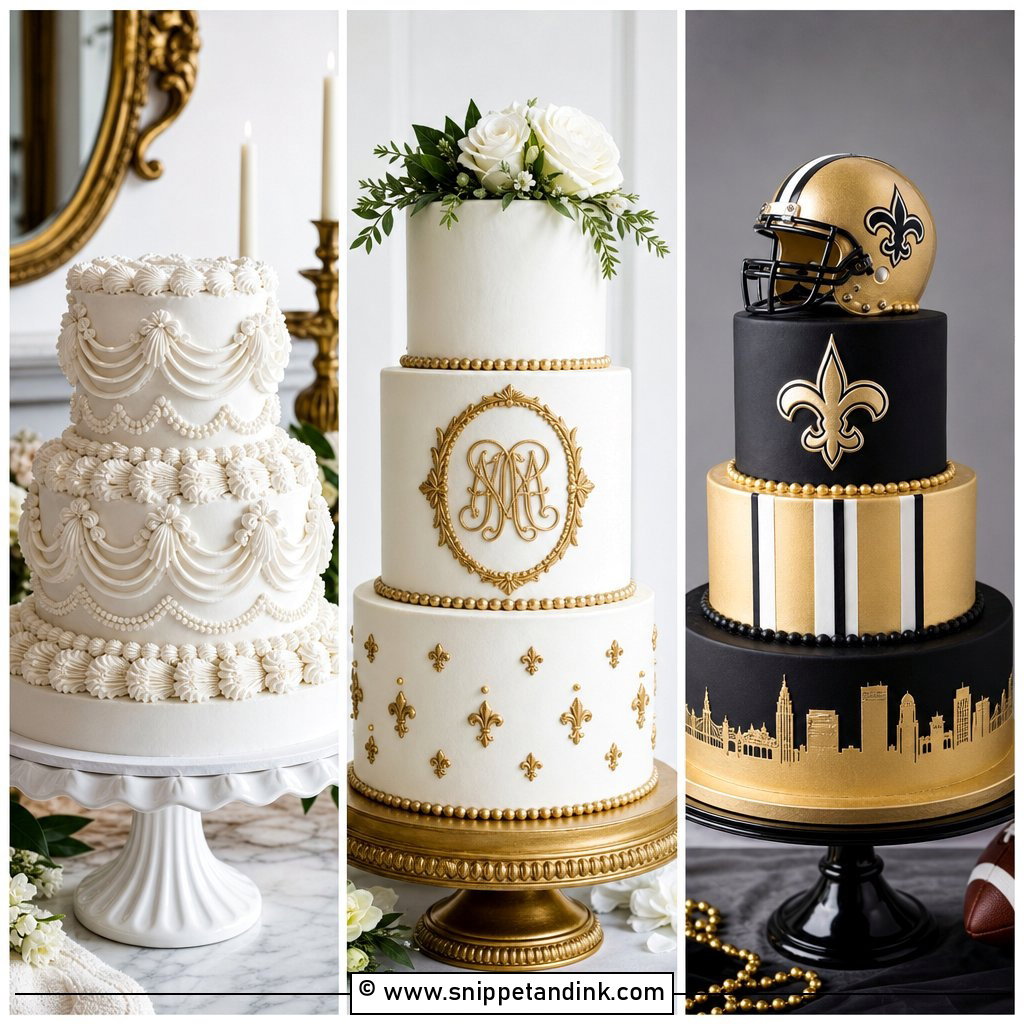
Ivory is the most forgiving colour I work with, which is why a plain white cake never leaves my order book. It sits happily in a ballroom or a garden and lets bold florals or a patterned tablescape take the lead. I finish it with a few fresh blooms, a line of pearl piping or a satin ribbon at each tier. One practical note: buttercream made with real butter leans cream-yellow, so if you want true white I’ll talk you through a whitened or meringue-based version. Vanilla bean, almond or lemon elderflower keep the inside light enough for a mixed crowd.
2. Vintage Wedding Cake
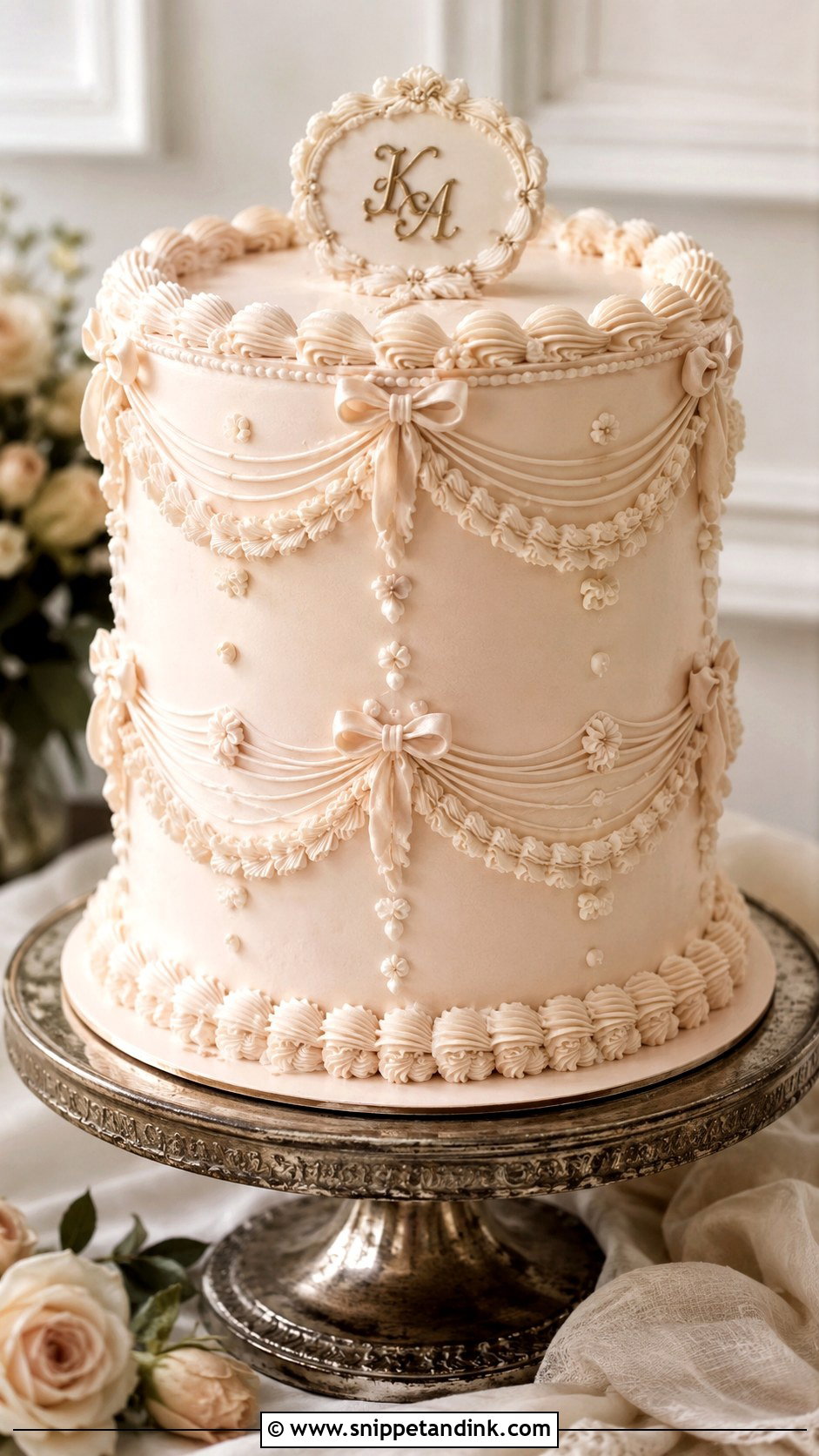
Shell borders, swags and Lambeth piping give a vintage cake its romance, and size barely matters here. One tall tier at an intimate dinner carries the look as well as two. The piping is the whole point, because every layered bead throws a little shadow that the camera picks up from any side. I pipe this style in a stiffer buttercream than I’d use for a smooth finish; softer icing lets the overpiped scrolls slump once the room warms. Piped bows, a scatter of sugar pearls and a monogram on top are all the extra it needs.
3. Floral Wedding Cake
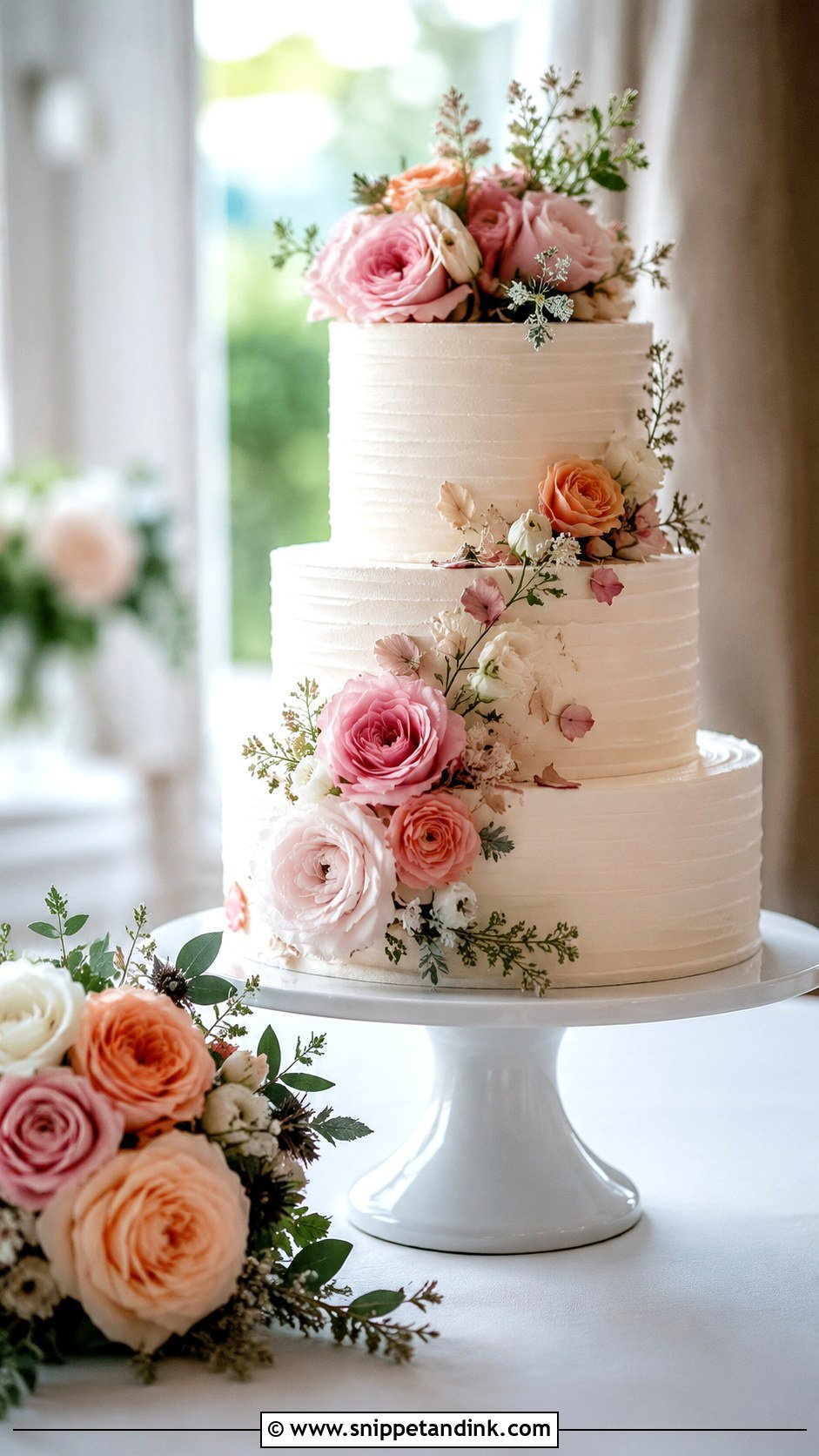
Flowers are the quickest way to tie the cake back to the bouquet, and they’re also where I ask the most questions. Not every bloom belongs near food. Some popular wedding flowers are toxic and many commercial stems carry pesticide residue, so I wrap or tape every stem, put a barrier underneath, and switch to edible or sugar flowers wherever petals would touch the frosting directly. With full roses or peonies I keep the base smooth. When the flowers are sparse, a little texture in the buttercream stops the tiers looking bare. Mauve and terracotta stems carry an autumn date; white and blush suit spring and summer.
4. Minimalist Wedding Cake
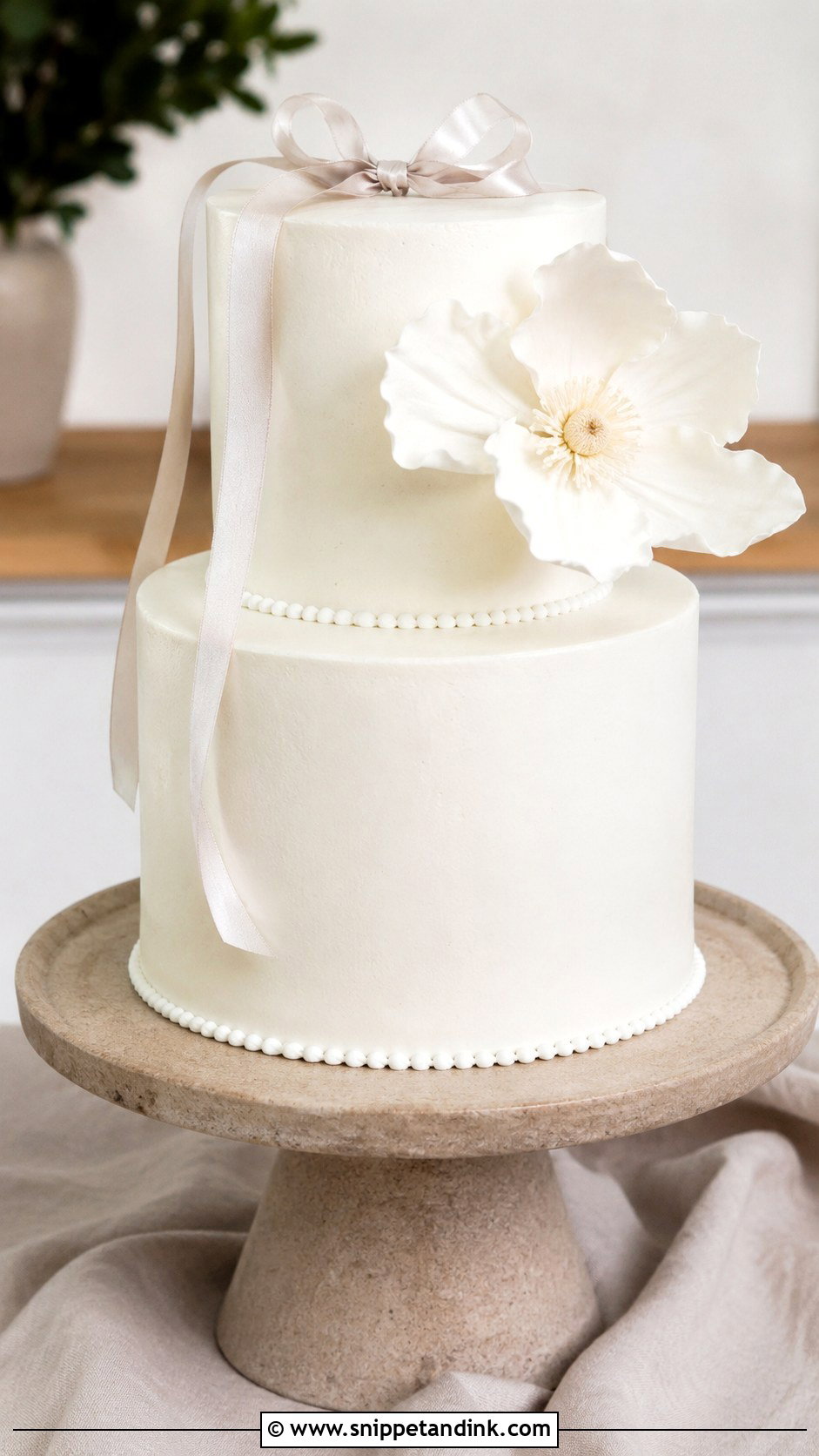
Minimal cakes look simple and are anything but, because there’s nowhere to hide a bulge or a wavy edge. Most of my time on one goes into getting the buttercream glass-smooth and the sides dead straight before I add a single sugar flower, a slim ribbon or a ring of tiny piped pearls. They sit well in modern rooms, on rooftops and at courthouse dinners. The quiet outside is a good excuse for a lively filling; lemon curd and pistachio cream are two I reach for.
5. Modern Tiered Wedding Cake
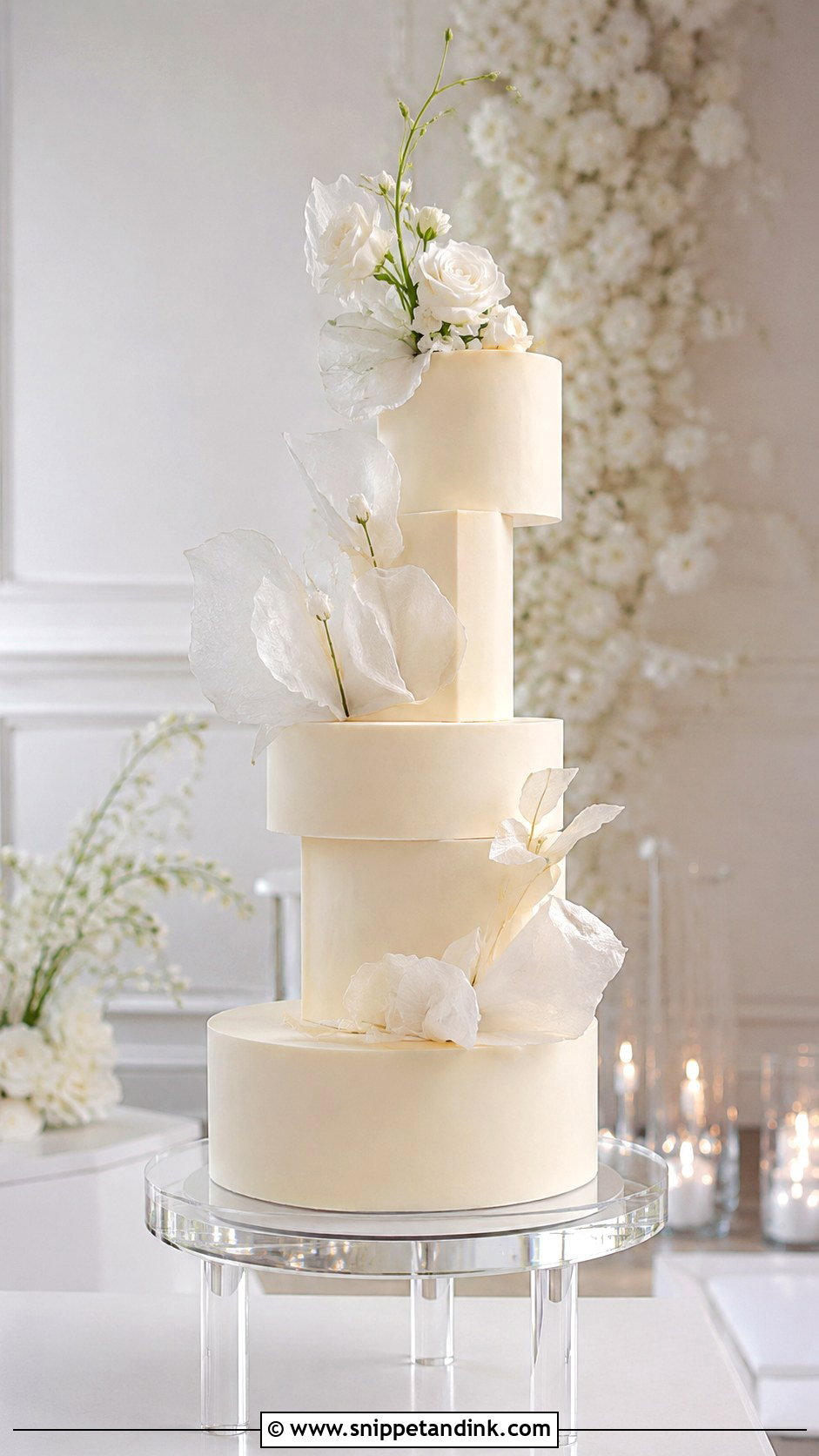
Mixing tier heights is the simplest way I know to make a cake read as modern. An extended tall tier under a short one, offset stacking or a square layer inside a round stack changes the silhouette without adding any decoration at all. Sharp edges and a tight palette keep it clean, and wafer paper petals or a sugar sail add movement. The catch is structure. Tall and offset tiers need extra dowels and often a central support rod, so tell your baker early if you’re picturing something that leans.
6. Textured Buttercream Wedding Cake
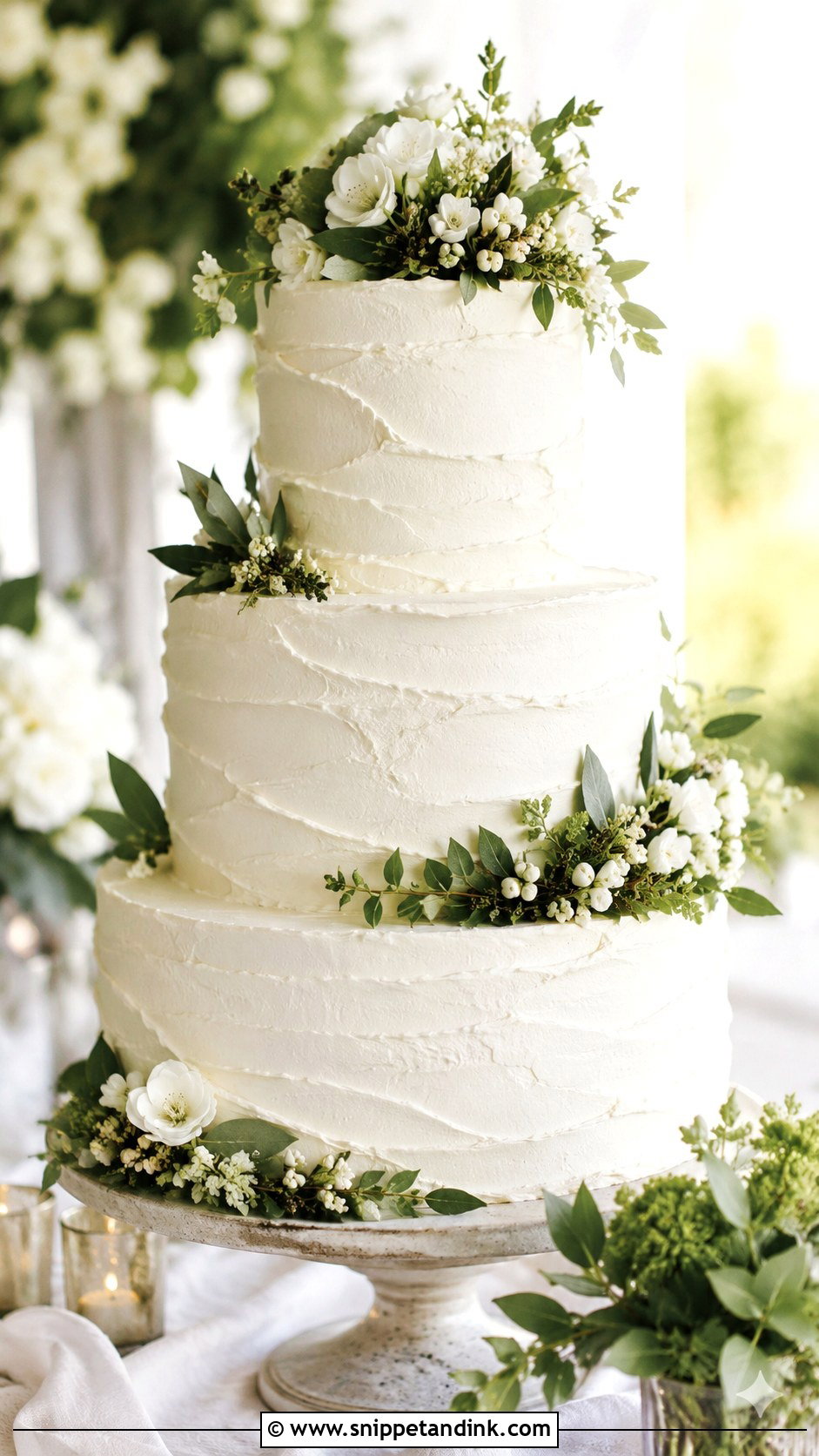
Couples who find fondant too formal usually end up here. Palette knife strokes, horizontal ridges, stucco or a gentle wave wrap around a tier well and look at home in a garden, a barn or by the coast. My favourite practical benefit: texture hides the tiny scuffs that happen in transport, which a smooth finish can’t. Sage, dusty blue and warm beige tint nicely beside ivory. Because it’s buttercream right through, keep it out of direct sun; in real heat I’d rather it waited indoors until the cutting.
7. Pearl Wedding Cake
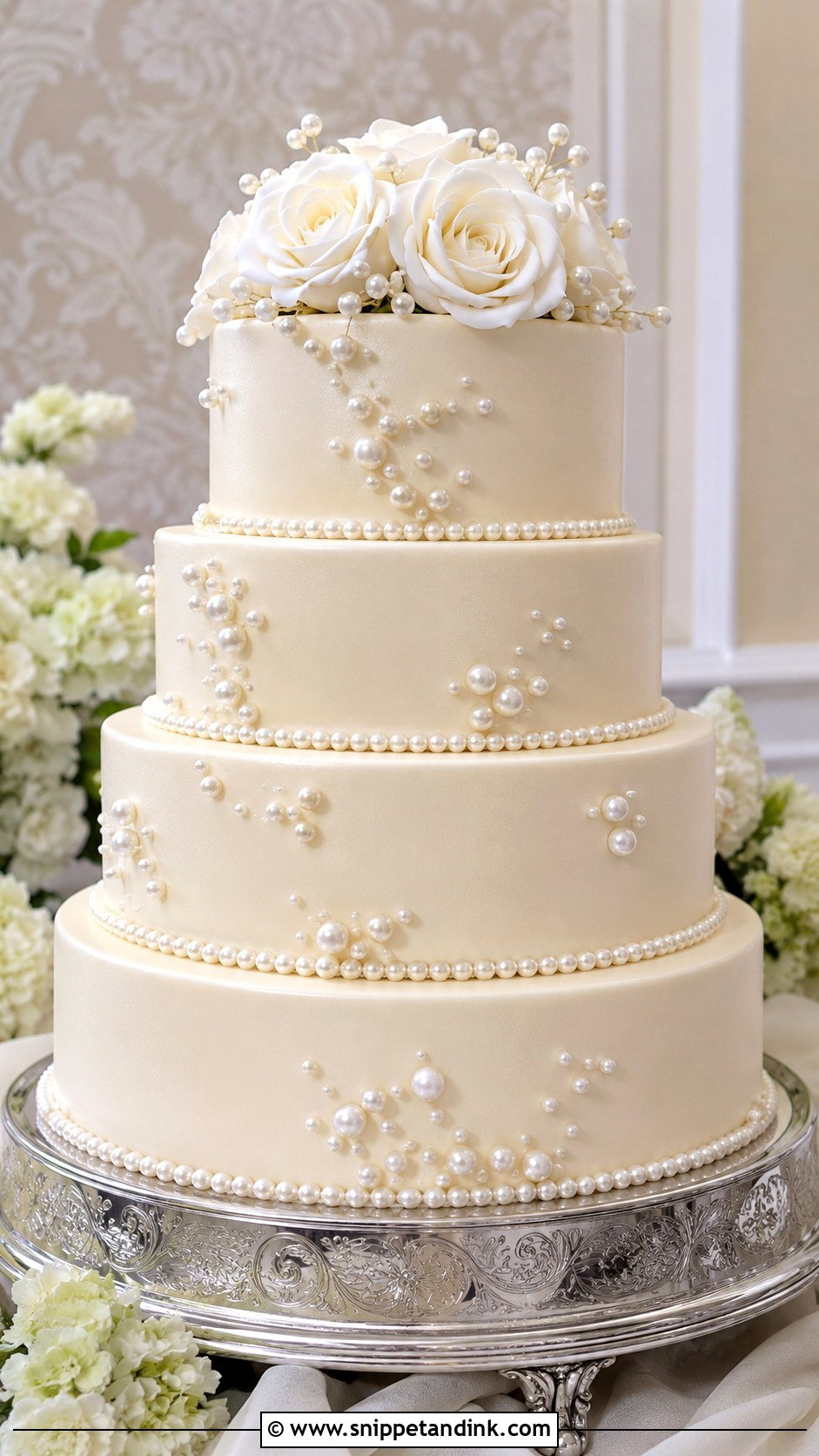
Edible pearls read like the beading on a gown, so I often suggest them to brides wearing a beaded or pearl-trimmed dress. I’ll scatter them, line them along each tier edge or cover one whole tier for a bolder effect. Be aware that a full pearl tier is slow work, placed one at a time with tweezers while the icing is still tacky, and that labour shows up in the quote. Ivory or champagne frosting with small white flowers keeps it soft, and almond or white chocolate raspberry suits the mood inside. Classic hotel and estate receptions are where it looks most at home.
8. Monogram Wedding Cake
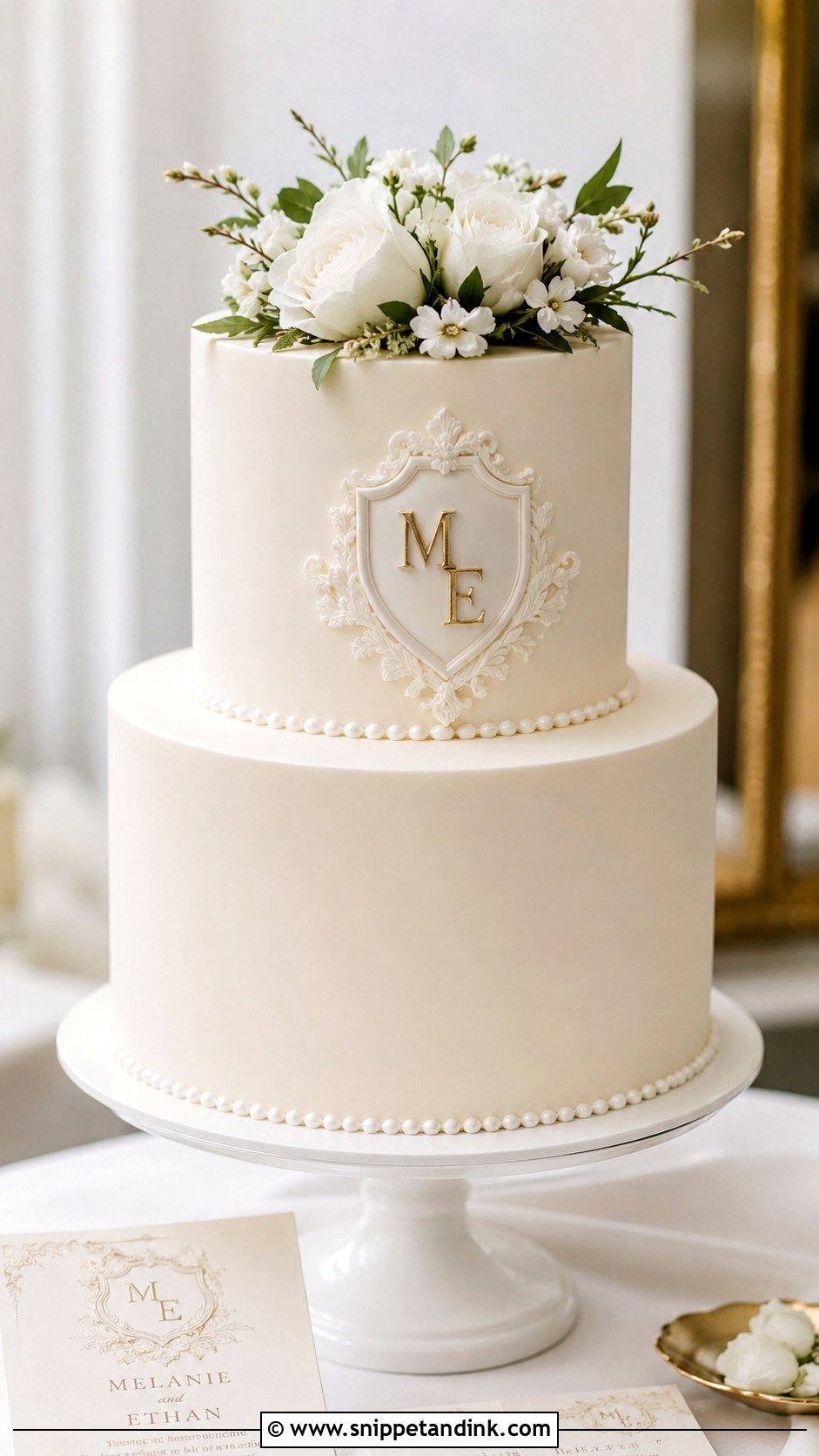
Initials make a cake yours the moment guests see it. I can raise them as a fondant crest, paint them in gold, pipe them in buttercream or have an acrylic topper cut. The first thing I ask for is a copy of your invitation, because matching the lettering to your stationery is what makes a monogram look deliberate rather than stuck on. Keep everything around it quiet: smooth ivory, slim borders and one floral accent. Clean modern typography takes the same idea somewhere less formal than a black-tie crest.
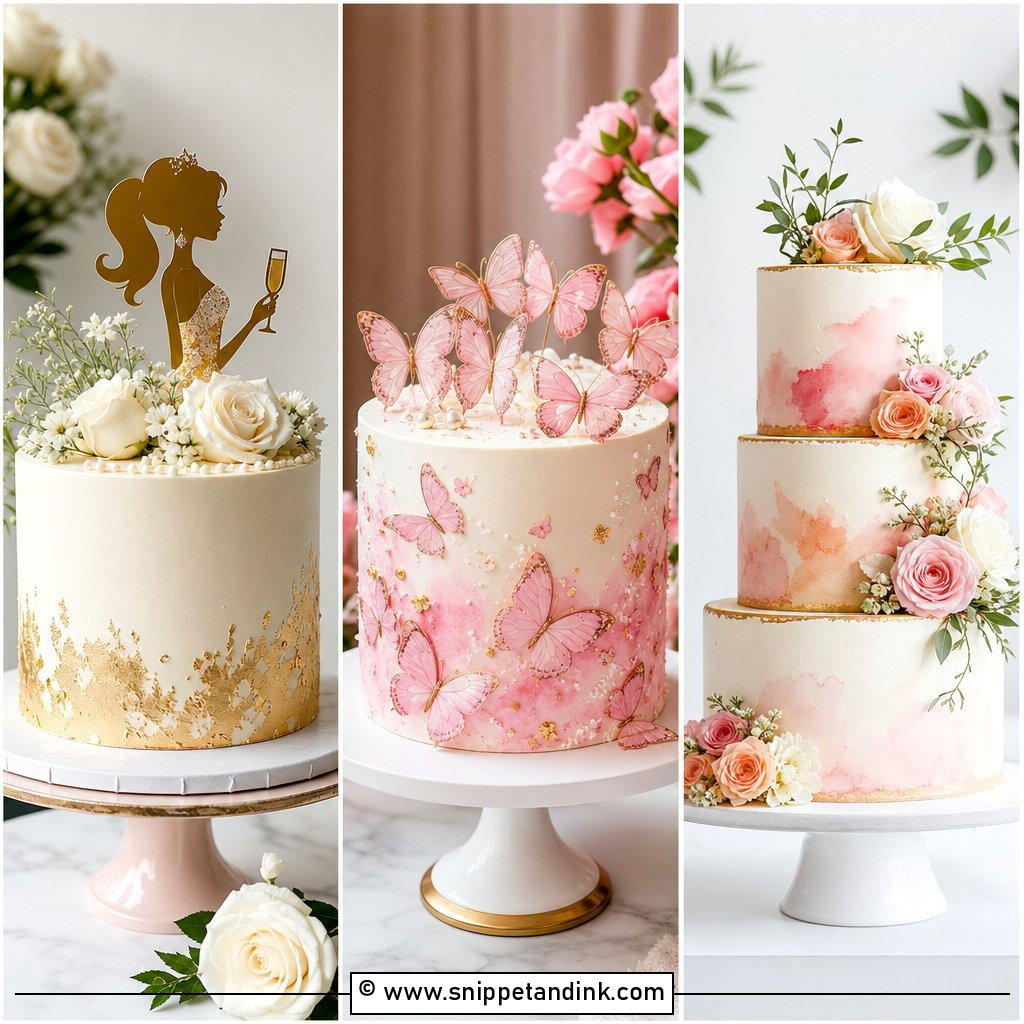
9. Watercolor Wedding Cake
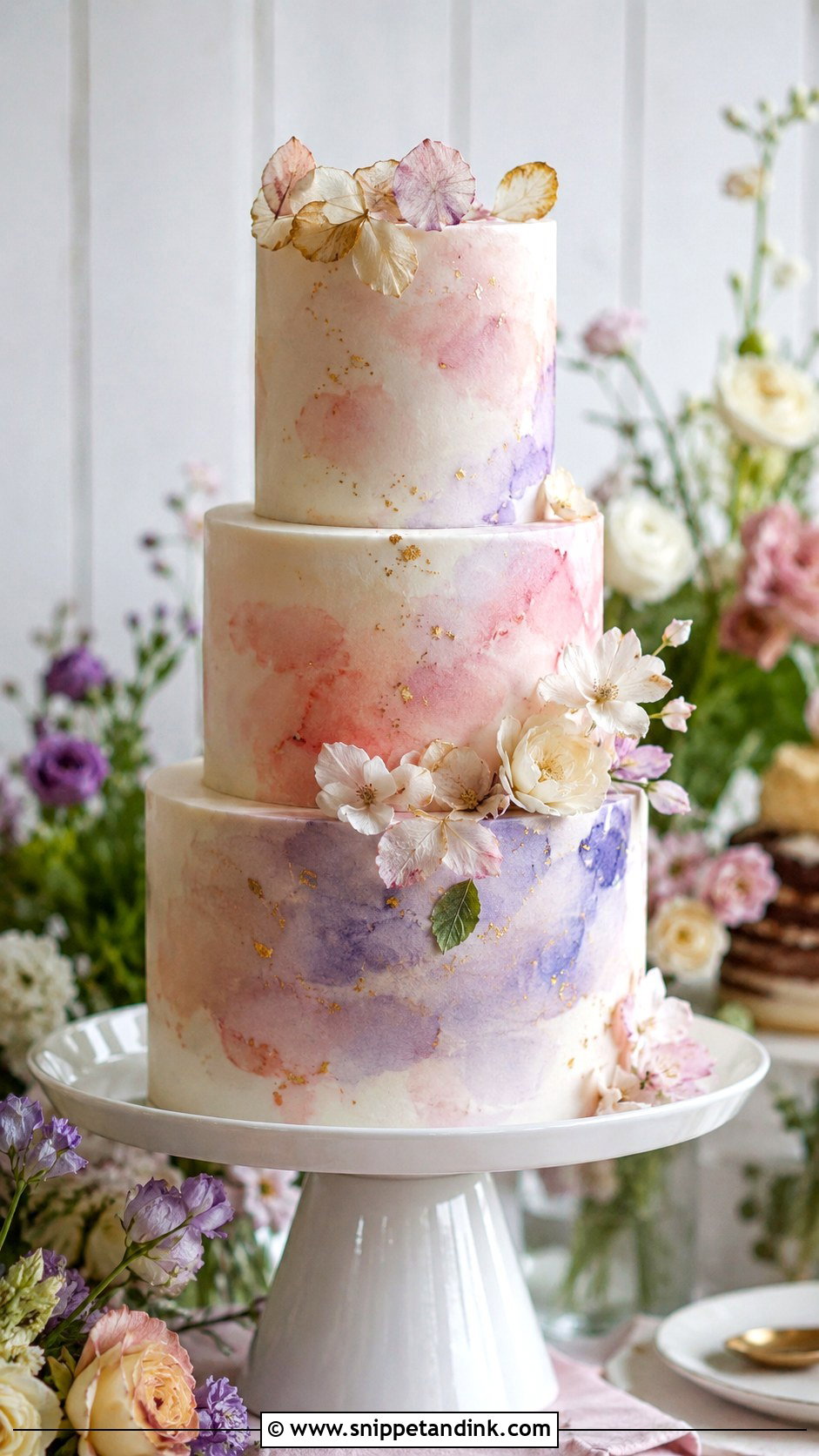
Watercolour gives you colour without heavy blocks of it. On buttercream I blend two or three tints on the scraper so they melt into each other; on fondant the colour is painted on with diluted gel, which leaves a sharper, more painterly edge. Blush, lavender, peach and pale green all suit spring gardens and beach venues. I keep the decoration sparse, perhaps a few sugar flowers or flecks of edible gold, because too much on top fights the wash underneath. Lemon, orange blossom or almond sit nicely inside it.
10. Black And White Wedding Cake
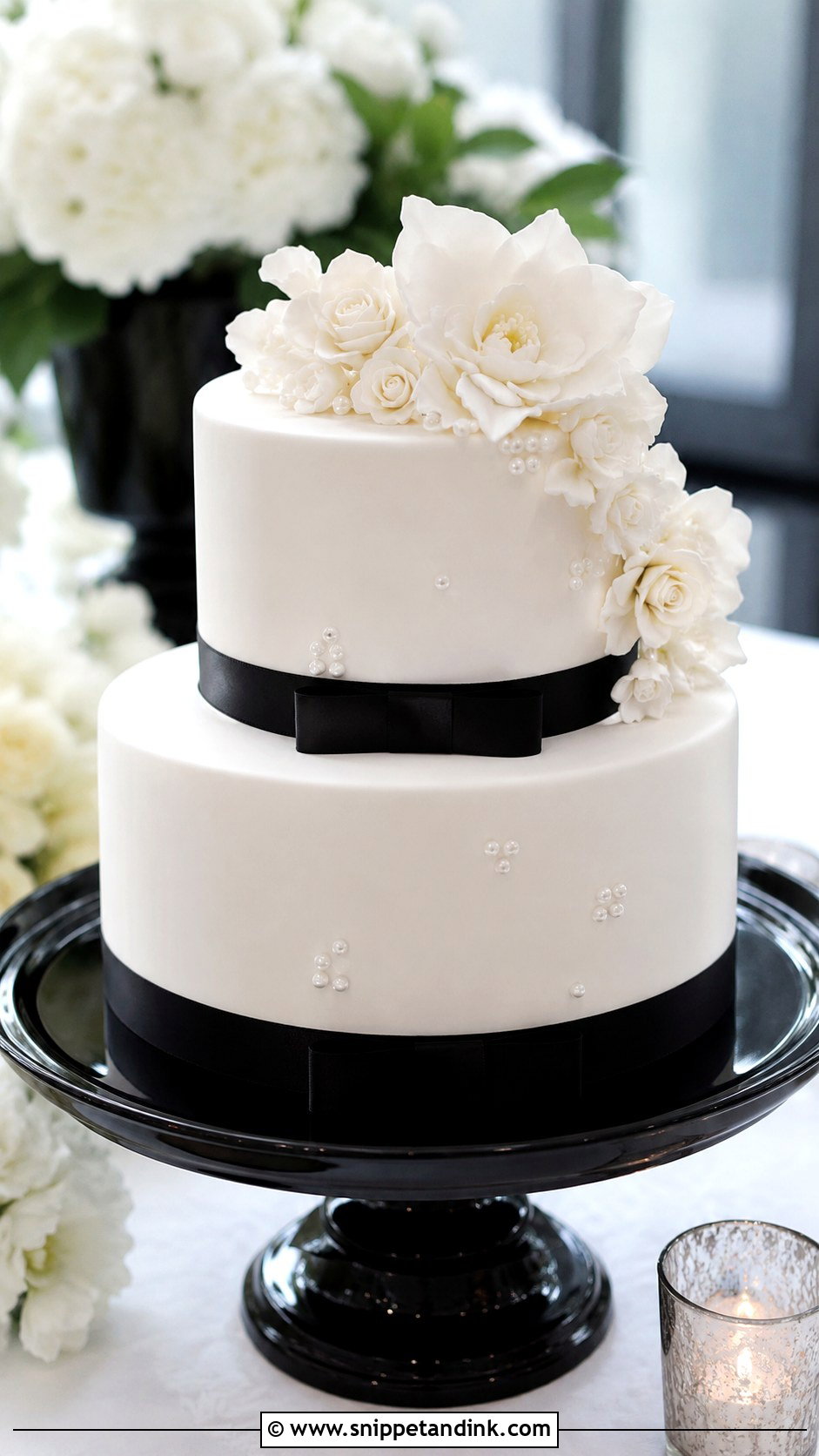
Contrast does all the work here, so the shapes need to stay simple. At one end, white tiers with a thin black ribbon; at the other, black fondant covered in white sugar flowers. Black is the colour I warn couples about. Getting icing truly black takes a lot of colouring, which can taste bitter and stain lips and teeth, so I keep black to fondant accents or a cocoa-based icing and leave the frosting people actually eat in white. Charcoal grey is the gentler route. Inside, dark chocolate or espresso suits an evening reception lit by candles.
11. Gold Wedding Cake
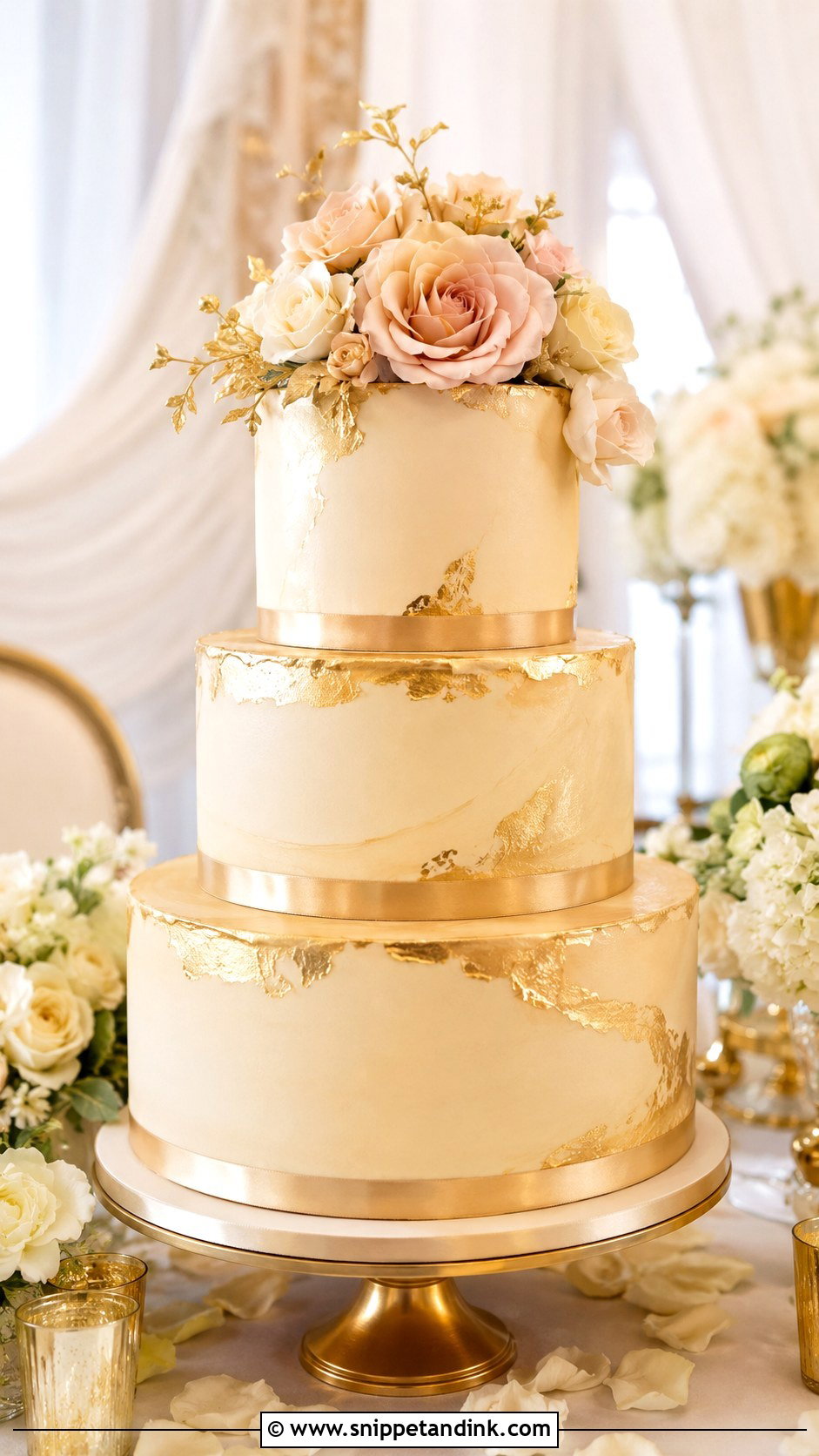
Gold needs restraint or it tips into flashy. A brushed gold tier, gilded edges, a thin metallic band or a small gold monogram is plenty. Ask your baker exactly what they’re using. I work with edible gold leaf or edible lustre, but some metallic paints and dusts sold for cake decorating are only labelled non-toxic, which means decorative, not food, and they belong on nothing anyone will eat. Ivory buttercream, blush flowers and champagne details sit well beside it, and a touch of gold helps a smaller cake hold its own in a large ballroom.
12. Garden Wedding Cake
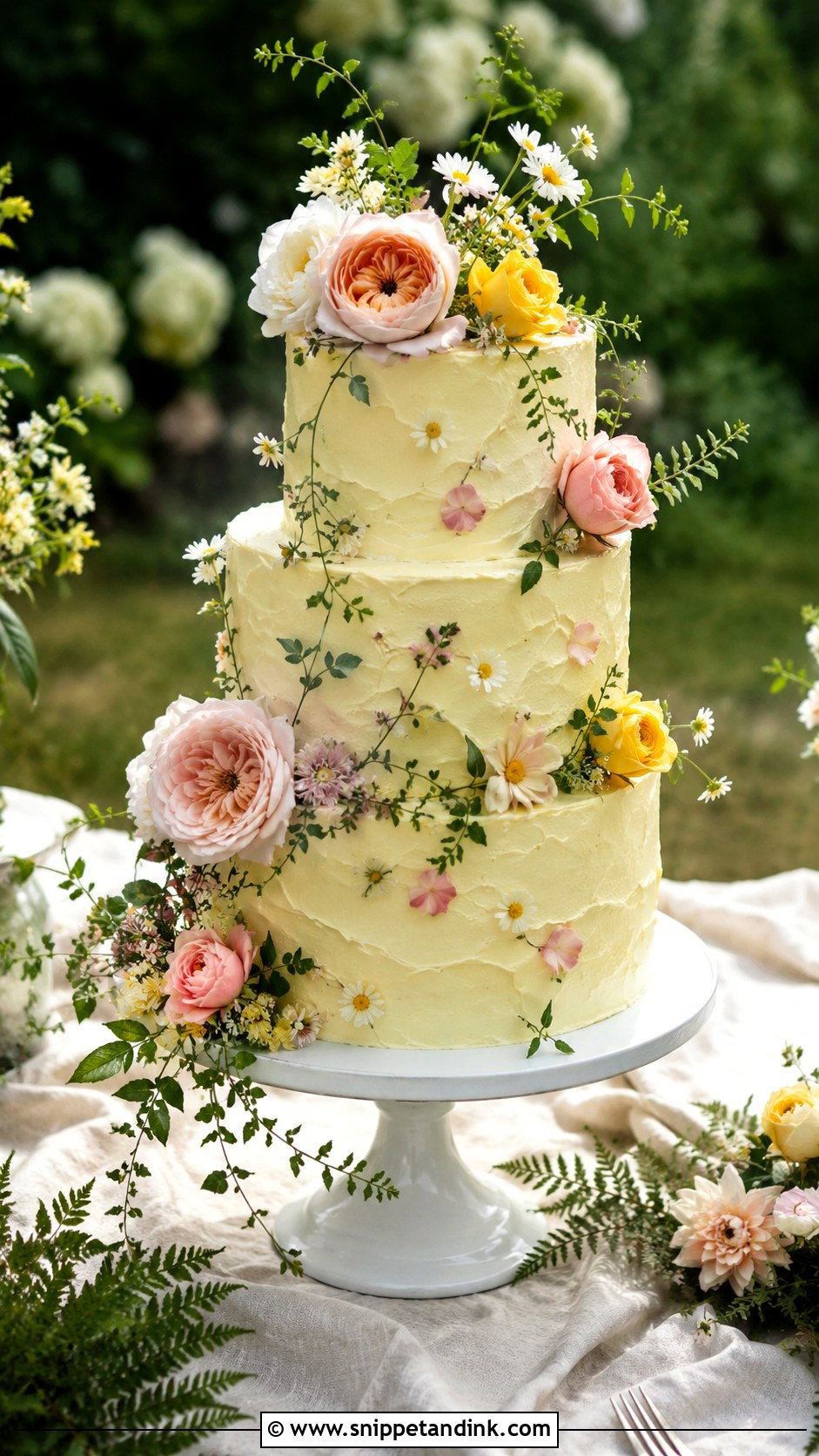
A garden wedding cake should look as if it grew where it stands. I build it on warm white or pale cream buttercream, then let flowers, vines and petals trail down one side instead of spacing them evenly, which is the habit that makes these cakes look stiff. Herbs, berries, pressed flowers or sugar blossoms change with the season. Outdoors, berries weep and soft fillings sweat quickly, so I add fruit as late as possible at the venue. Lemon, strawberry, lavender honey and pistachio all feel at home on the tasting menu.
13. Rustic Wedding Cake
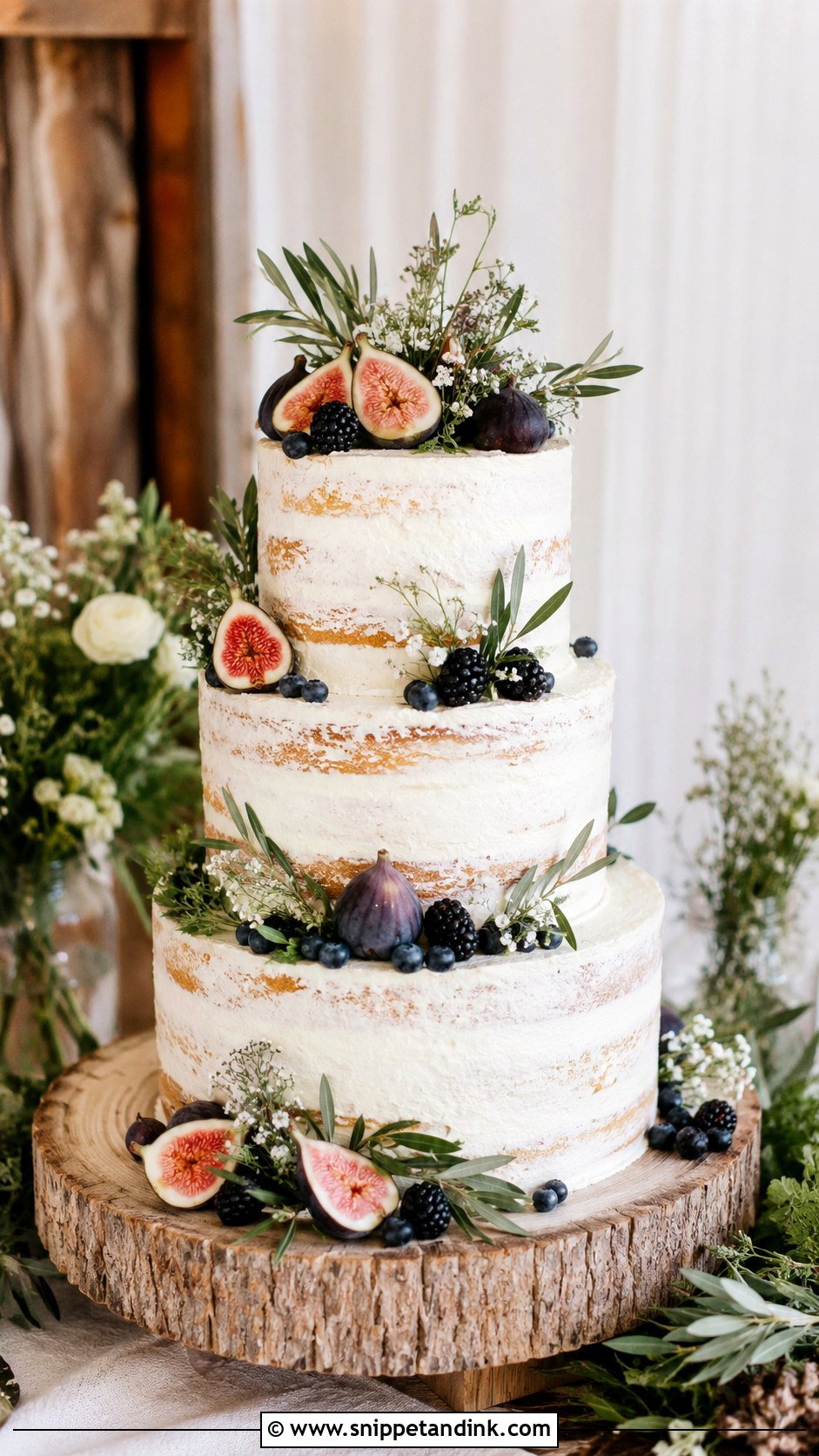
Barns, woodland ceremonies and backyards suit semi-naked frosting dressed with figs, berries, greenery and simple flowers. Rustic is still finished, though. A semi-naked cake shows every crumb and every uneven layer, so the bake and the stacking have to be neat. It also dries out faster, since there’s so little frosting sealing the sponge, which is why I assemble these as close to the day as I can and sometimes brush the layers with syrup. Carrot, spice and apple cinnamon are natural partners, and a wooden stand or linen cloth warms the whole display.
14. Beach Wedding Cake
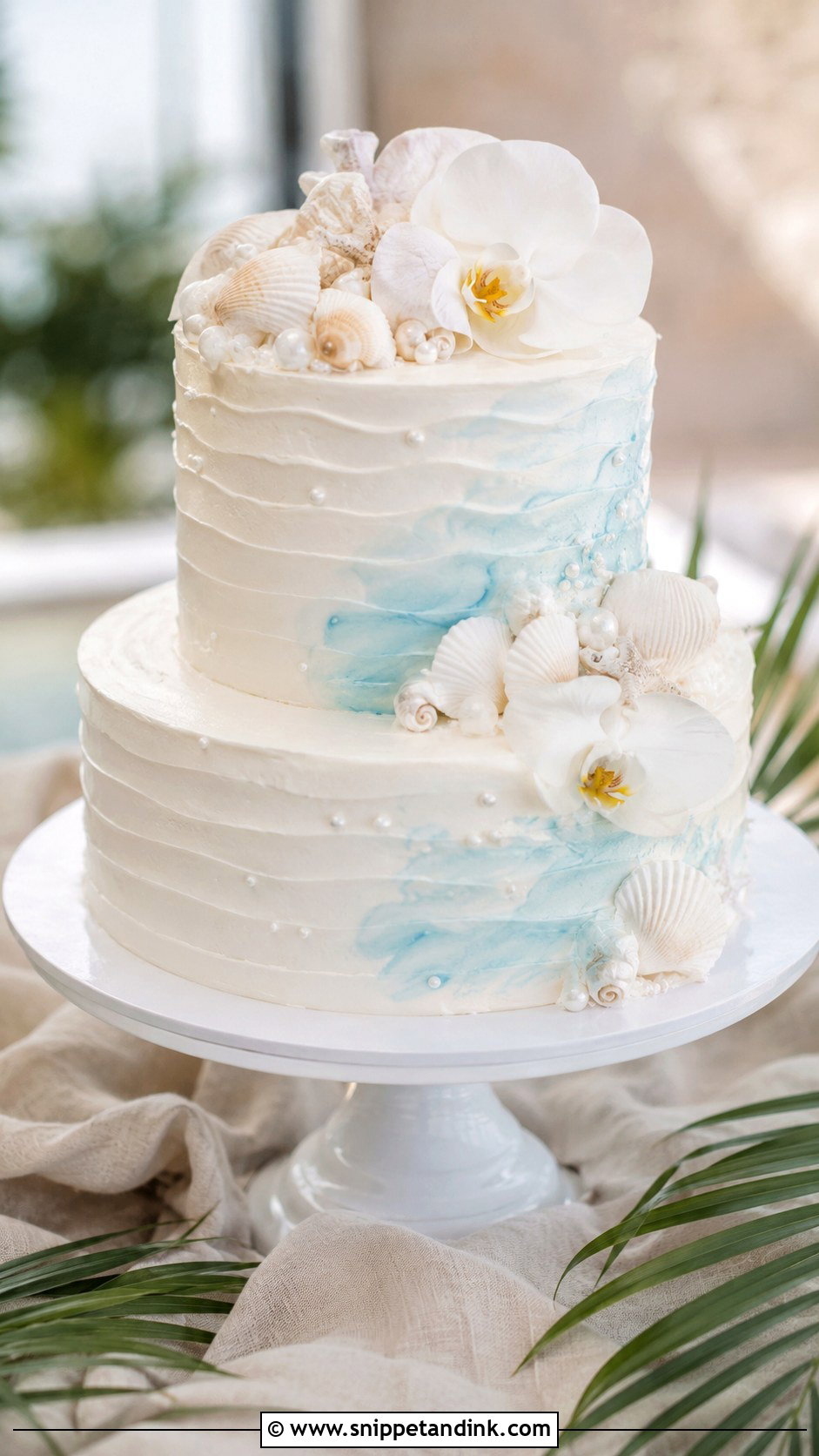
Pile on too many shells and a beach cake starts to look like a gift shop. I’d rather suggest the sea with sandy beige buttercream, a wave texture, a few pearls and a pale blue watercolour, then add fresh orchids, tropical leaves or one or two sugar shells. The bigger problem on a beach is the weather. Buttercream softens quickly in sun and fondant turns tacky in damp air, so the cake should wait somewhere shaded and cool until the cutting. Coconut, lime and passion fruit suit the setting.
15. Boho Wedding Cake
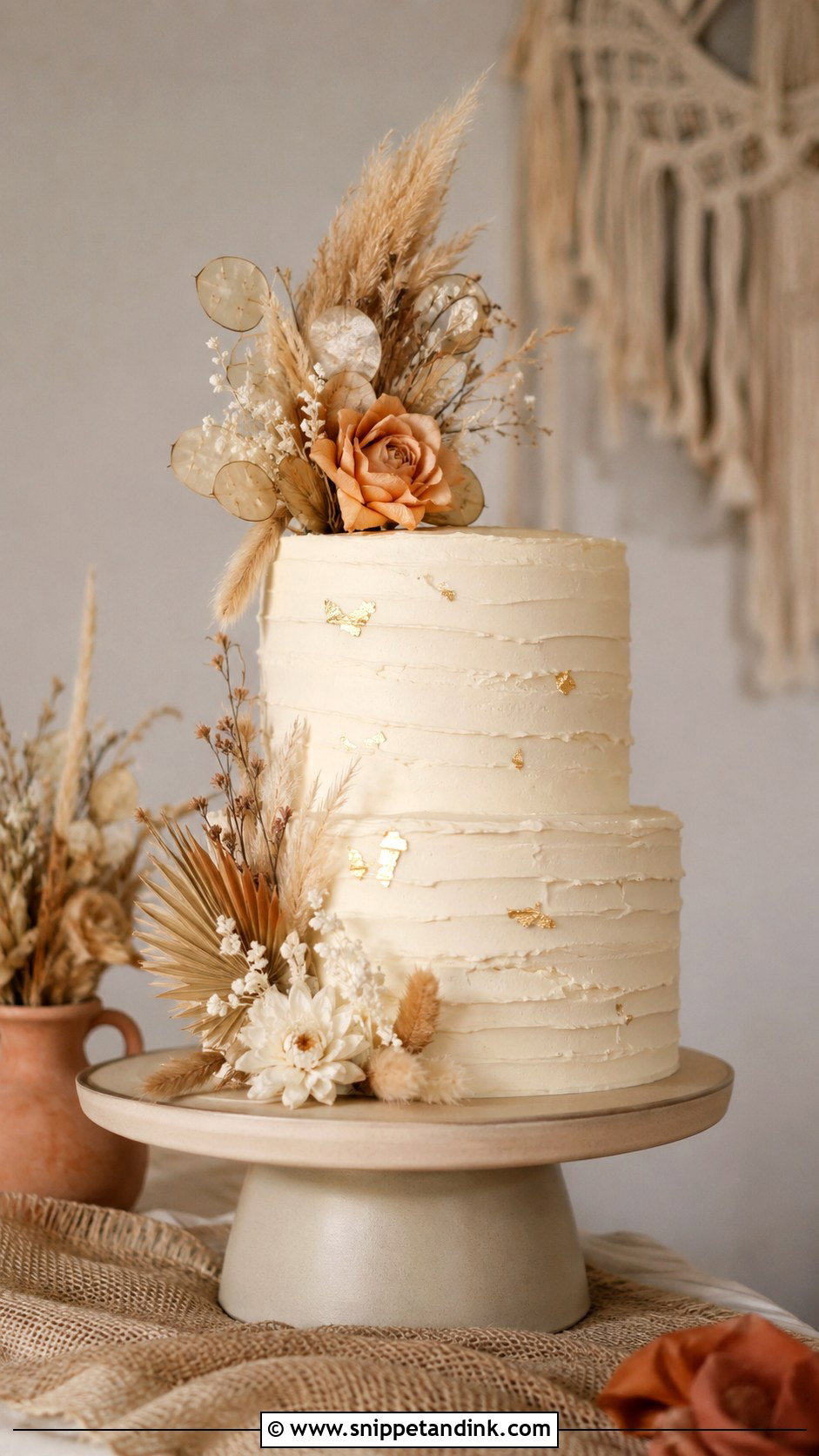
Boho is warm colour and loose texture: terracotta, cream, blush, dried flowers, pampas grass and soft buttercream strokes. It suits desert venues and small outdoor celebrations, whether as a single tier or a centre cake ringed with minis. Dried stems aren’t food-safe on their own and pampas sheds fine fluff, so I seal the ends and keep them well clear of anything that will be sliced. Honey vanilla, chai spice and chocolate caramel match the palette. Keep the decoration airy; it should look a little imperfect, never heavy.
16. Square Wedding Cake
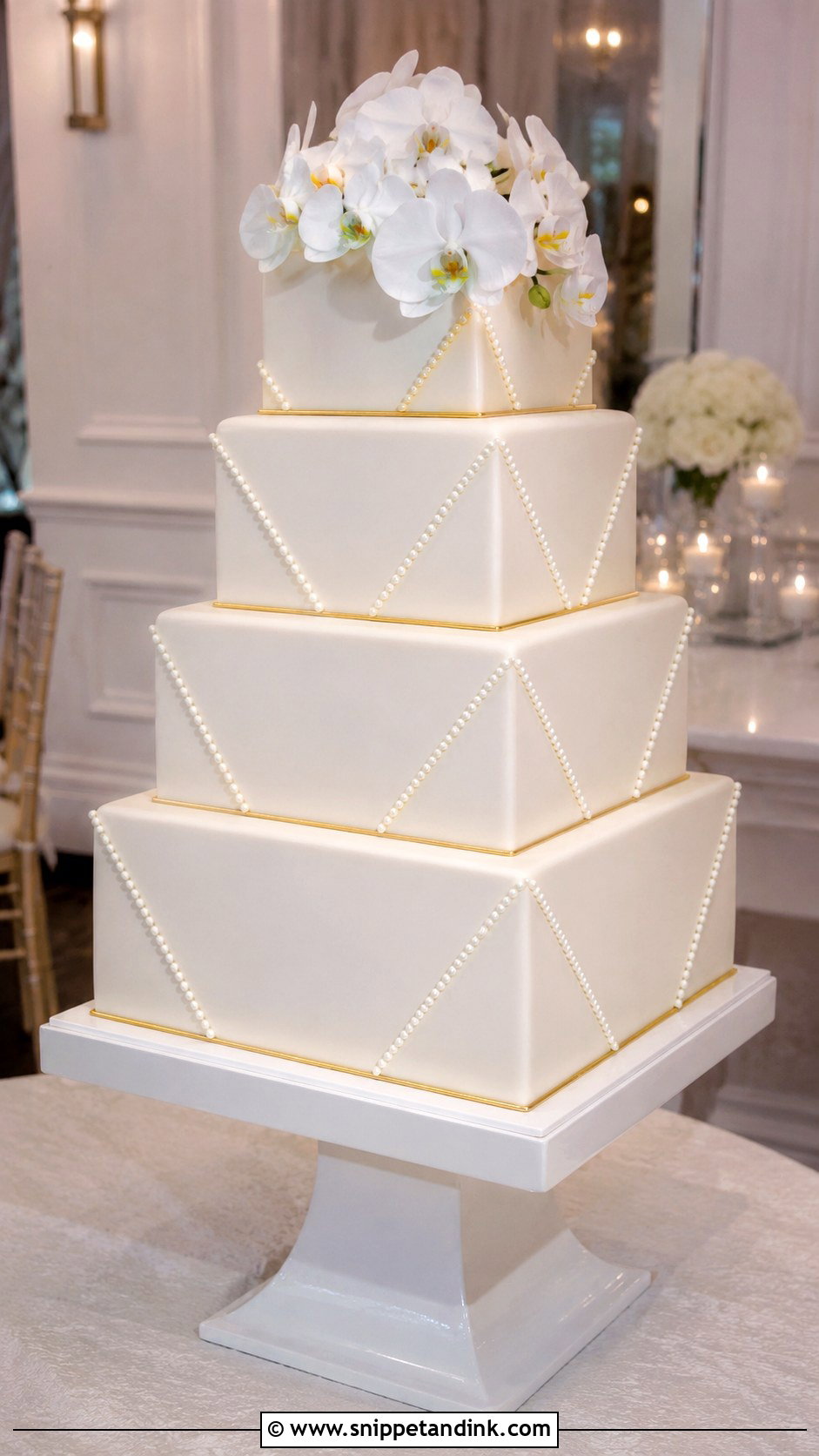
Square tiers feel structured and slightly unexpected beside the usual rounds. They’re also the hardest shape to finish, because each corner has to be sharp, every face straight, and any lean is obvious from across the room. I’d only take this style to a baker whose portfolio already shows square work. Fondant over ganache gives the crispest corners; buttercream can get there with patience. The flat faces catch light differently in photos, which suits geometric piping or a fine metallic line.
17. Single Tier Wedding Cake
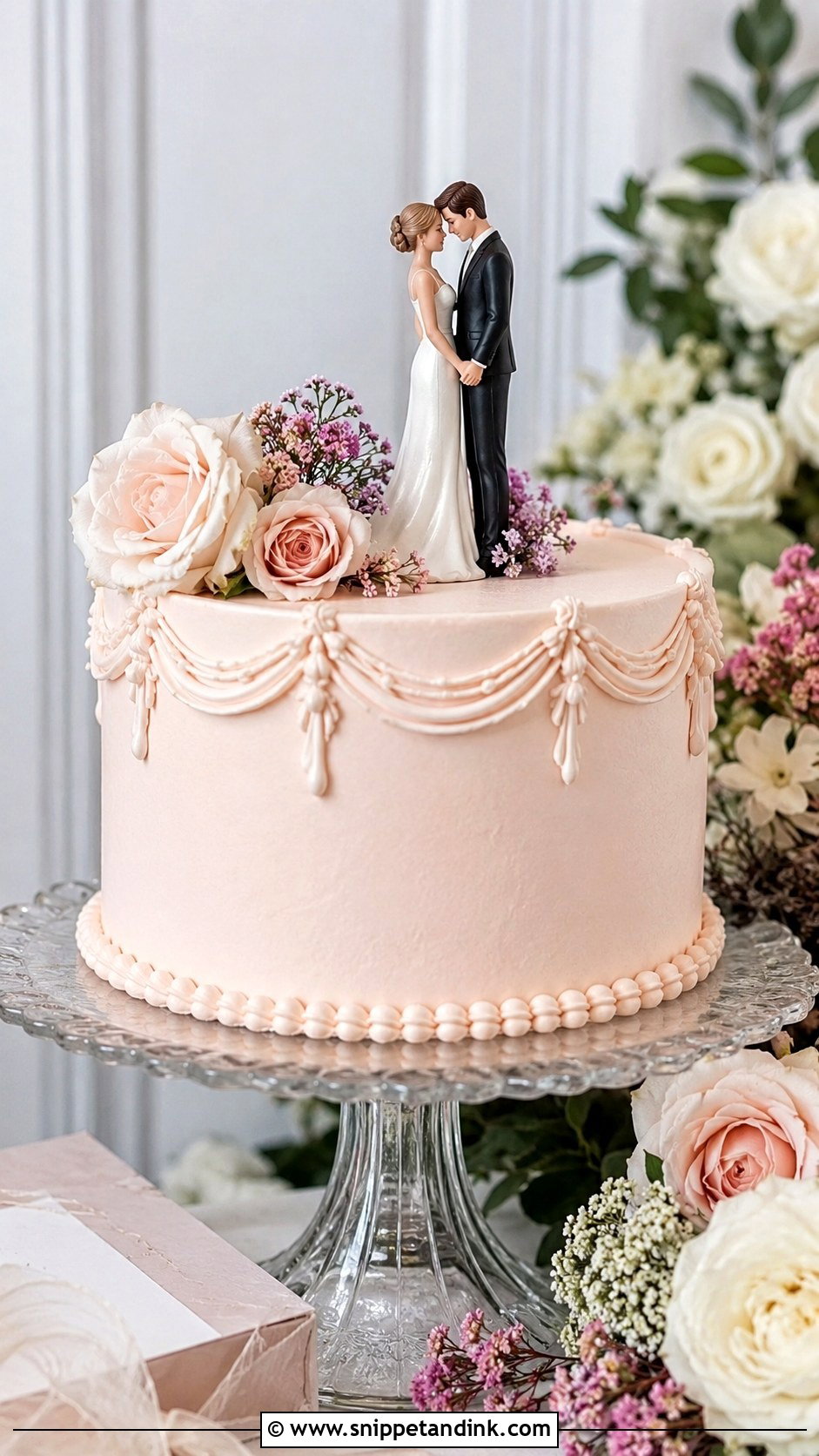
One tall tier is enough for a small wedding, an elopement or a courthouse dinner, and it frees up money to spend on detail like hand-piped borders, pearls or a custom topper. I build a single tier at double height so it reads as a wedding cake on the table instead of a birthday cake. Everyone will eat the same flavour, so this is the order where I’d take the tasting most seriously. Vanilla raspberry, chocolate caramel and red velvet rarely disappoint a crowd.
18. Sheet Wedding Cake
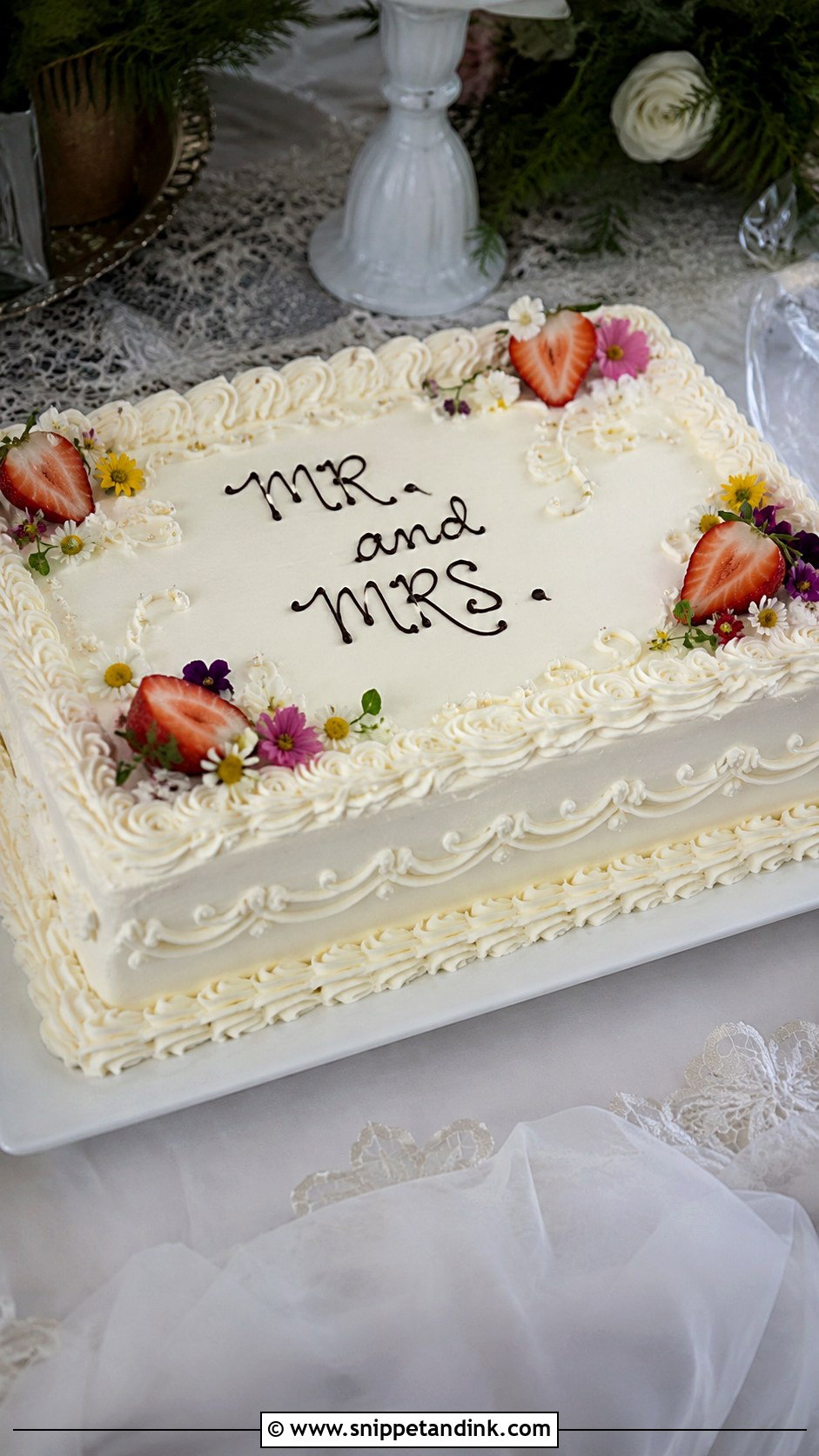
Sheet cakes have stopped hiding in the kitchen. Dressed with vintage piping, fruit or a piped message and set out on a dessert table, a sheet cuts faster and cleaner than tiers and feeds a big guest list for a gentler cost per slice. I often pair one with a small tiered cake for the cutting photo while the kitchen portions the sheet for everyone else. Pick a sturdy filling, since a sheet is cut into many small rectangles and a soft mousse squeezes out of every one.
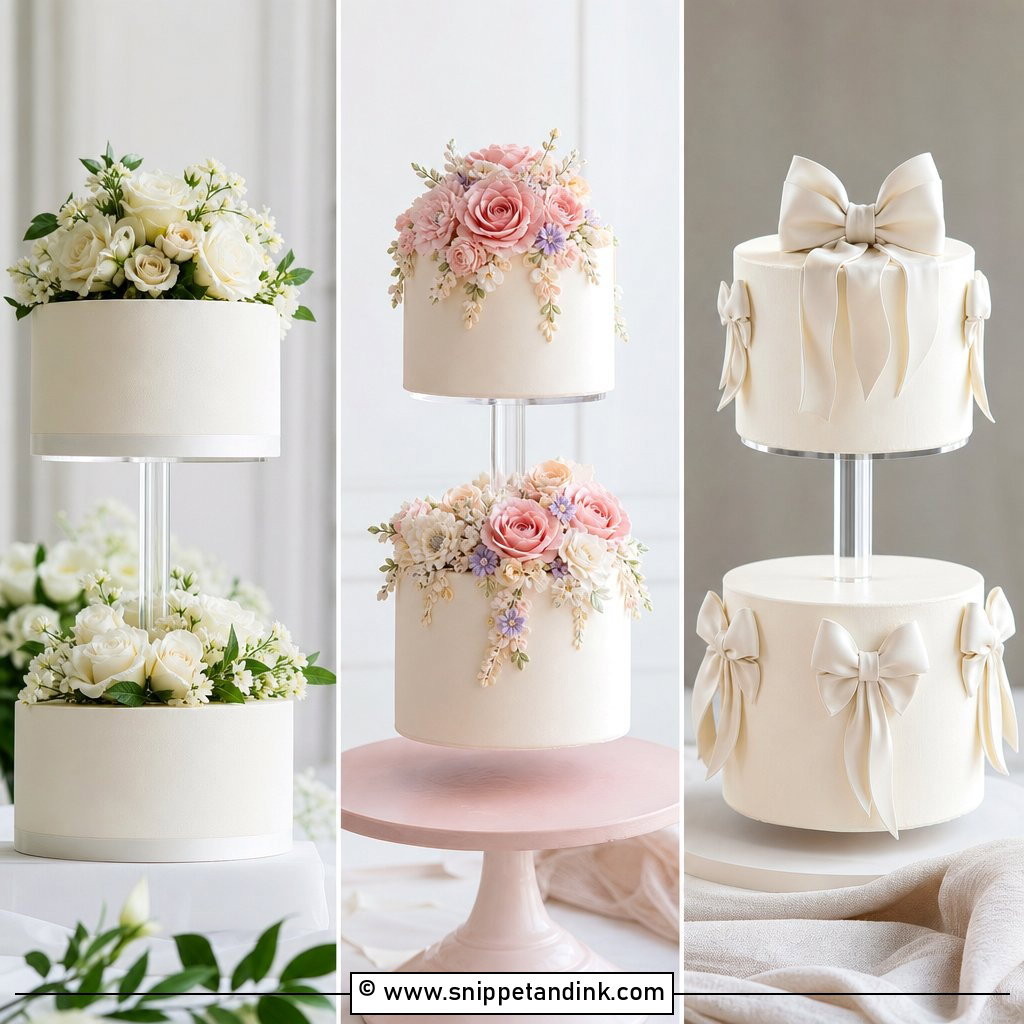
19. Mini Wedding Cakes
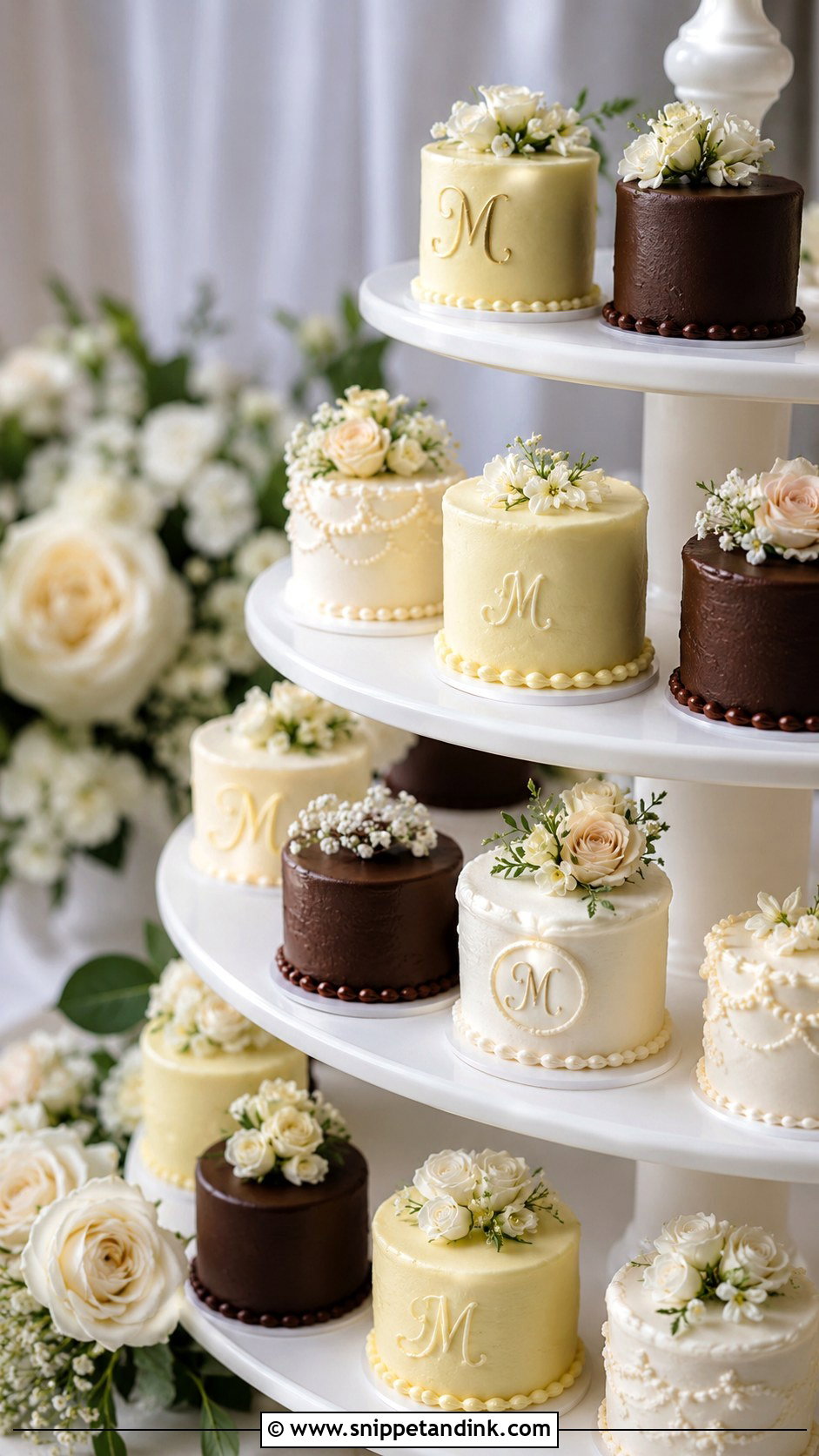
Mini cakes turn dessert into part of the place setting. They can sit at each seat or gather on one table, tied together by matching frosting, tiny flowers or a pearl border, and they let you offer multiple flavors, which guests enjoy. The honest drawback is labour. Each mini is filled, stacked, frosted and finished by hand, so a hundred of them usually costs more than one large cake feeding the same people. Keep the decoration simple; a consistent finish across the display matters more than detail on any one cake.
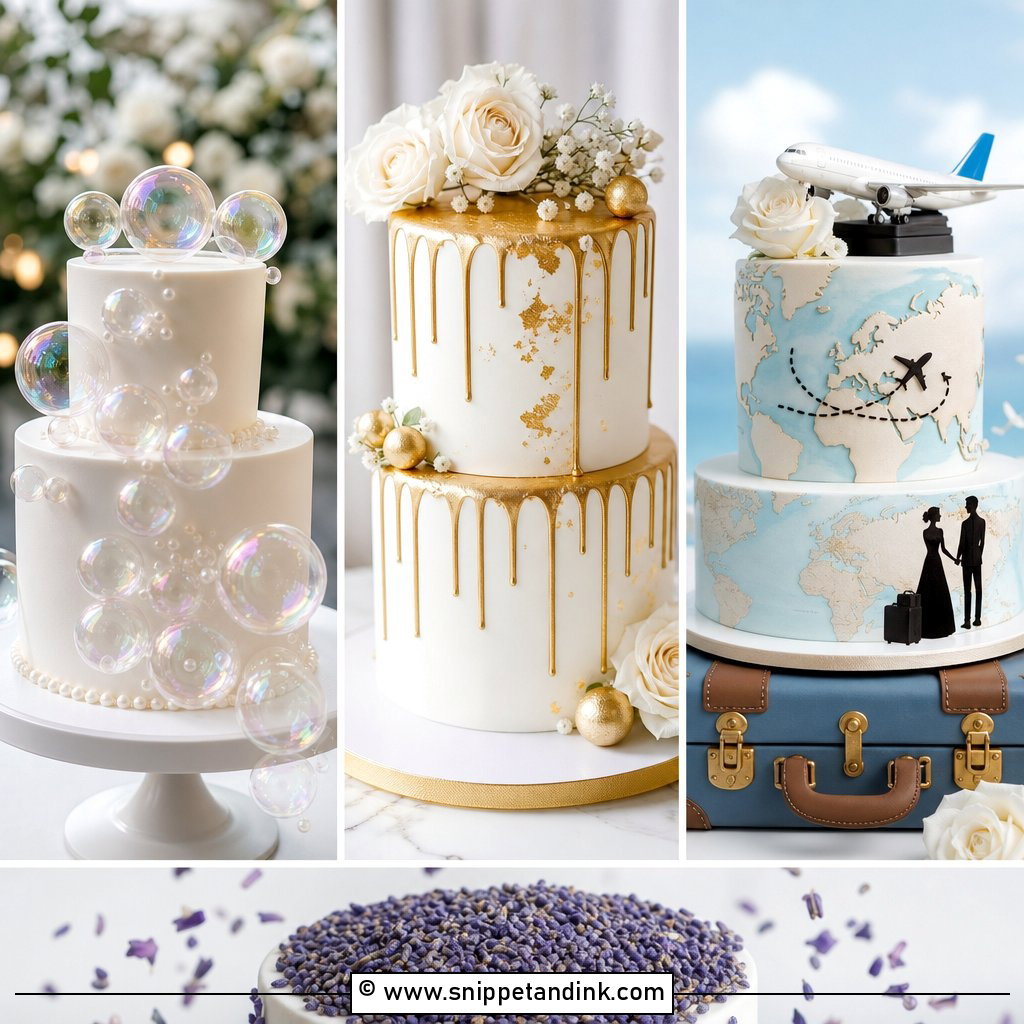
20. Sculptural Wedding Cake
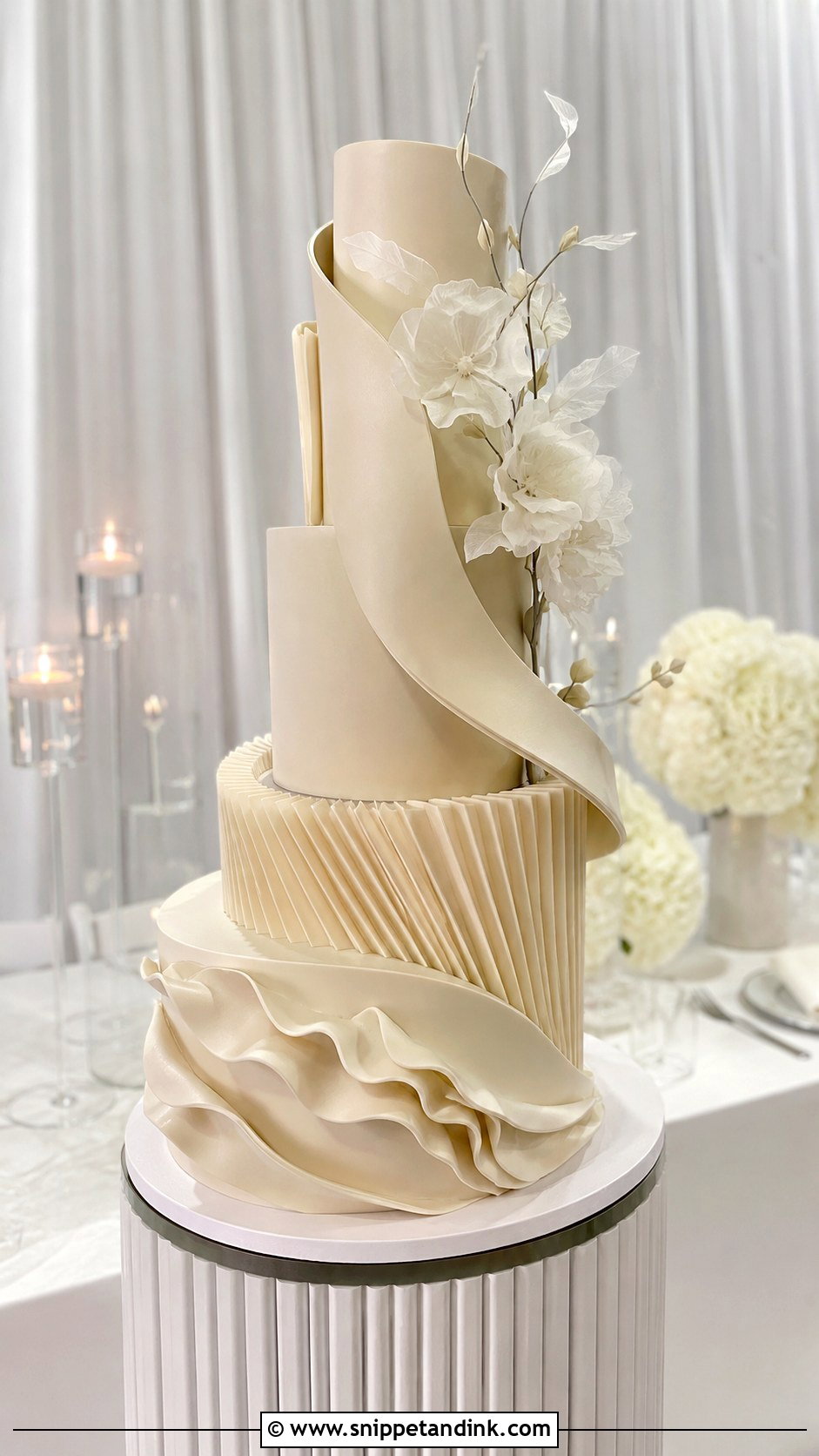
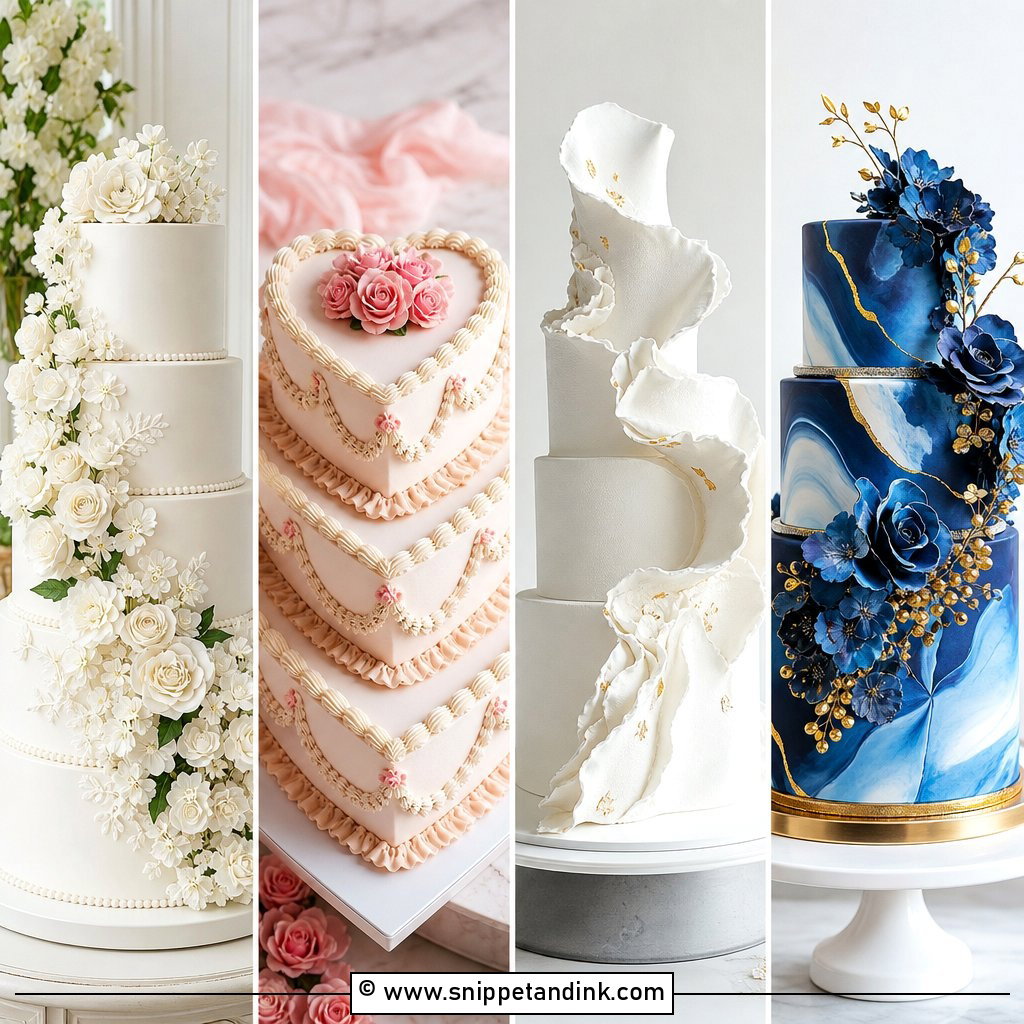
Curved tiers, ruffled wafer paper, pleated fondant, floating shapes: sculptural cakes are engineering as much as baking. Bring reference images and let your designer tell you what will survive delivery, the room temperature and the hours before cutting, because some forms need internal supports or a firmer ganache under the fondant. I keep the palette tight, usually white, ivory or soft grey with at most one strong accent, so the shape does the talking. Under all that structure, vanilla, chocolate or lemon are completely sensible flavours.
Heat, Delivery and the Last Hour at the Venue
A custom design is only finished once it’s standing at the reception. Most of the trouble I see happens in that final hour, not in my kitchen.
Where the Cake Table Goes
Keep the cake out of direct sunlight and away from windows, heaters and the speaker stack by the dance floor, on a table that doesn’t wobble. A busy walkway is a risk as well. One bumped hip can crack a tier.
Which Finish Copes With Which Room
Butter-based buttercream softens steadily as a room warms. Meringue buttercreams hold a little better, and ganache under fondant holds best. Fondant has its own weakness: carry a chilled cake into a warm, humid room and condensation beads all over it, so I let it come up to temperature in its box instead of unveiling it straight from the fridge.
Delivery and Set-Up
Tall or oddly shaped cakes travel either fully dowelled with a central rod or as separate tiers that I stack on site, which is the safer route for anything ambitious. Fresh flowers go on at the venue, never the night before. Ask your planner when the room opens to vendors and make sure someone there knows where the table will stand.
Saving the Top Tier
If you plan to keep the top tier for your first anniversary, tell the caterer in advance and leave a box ready. Wrap it tightly in cling film and then foil, and freeze it soon after the reception. It will be safe to eat a year later, though rarely as good as on the day, so some couples simply order a small fresh cake in the same flavour instead.
Four Things Your Cake Designer Needs From You
Height and price don’t make a good wedding cake. The one that suits your venue, still tastes good at the end of a long meal and belongs with the rest of the day will always win. Before your first consultation, save a handful of cake photos you genuinely love, settle your guest count, shortlist two flavours and be honest about your budget and the venue’s conditions. With those four things in hand, I can tell you very quickly which of these designs will work for you and which would struggle.
You'll Like These Ideas:








Leave a Reply