
Height is back on reception tables, and it’s the part of a cake design I spend the most time engineering. A tower of five tiers with pearl detail, slim extended tiers with fresh flowers, ornate vintage piping, fruit-heaped stacks and sculpted shapes all read from the back of a big room. A tall cake gives a ballroom its focal point and gives a minimalist dessert table some vertical interest. What makes it work is matching the height to your venue, guest count and serving plan, and knowing that some of those tiers can be decorated foam while real slices come from the kitchen. Here are the designs I’d build tall, with the practical catch for each.
Four Ways to Build Height Without Simply Adding Tiers
Couples often assume a tall cake means a lot of tiers, and a lot of cake. It doesn’t. When I plan height, I’m choosing between a few methods, often combining them.
- Extended tiers. A standard tier is about four inches deep. A double-height tier is roughly twice that, built as two stacked cakes with a board and supports between them. It adds height and servings without widening the cake.
- Display tiers. Covered foam tiers, decorated exactly like the real ones. They’re lighter, cheaper than real cake and never go to waste. You keep one real tier for the cutting and serve guests from a plain kitchen cake.
- Separators and pillars. Spacers between tiers, sometimes filled with flowers, add height with no extra cake at all. They also give your florist somewhere to work.
- The stand. A tall pedestal or a riser on the table lifts the whole cake into view. In a big room, this is the cheapest inch you’ll buy.
The method changes how the cake looks. Extended tiers read slim and modern; more tiers of standard depth look traditional. Bring pictures of the outline you like, not just the decoration.
1. Tall White Wedding Cake
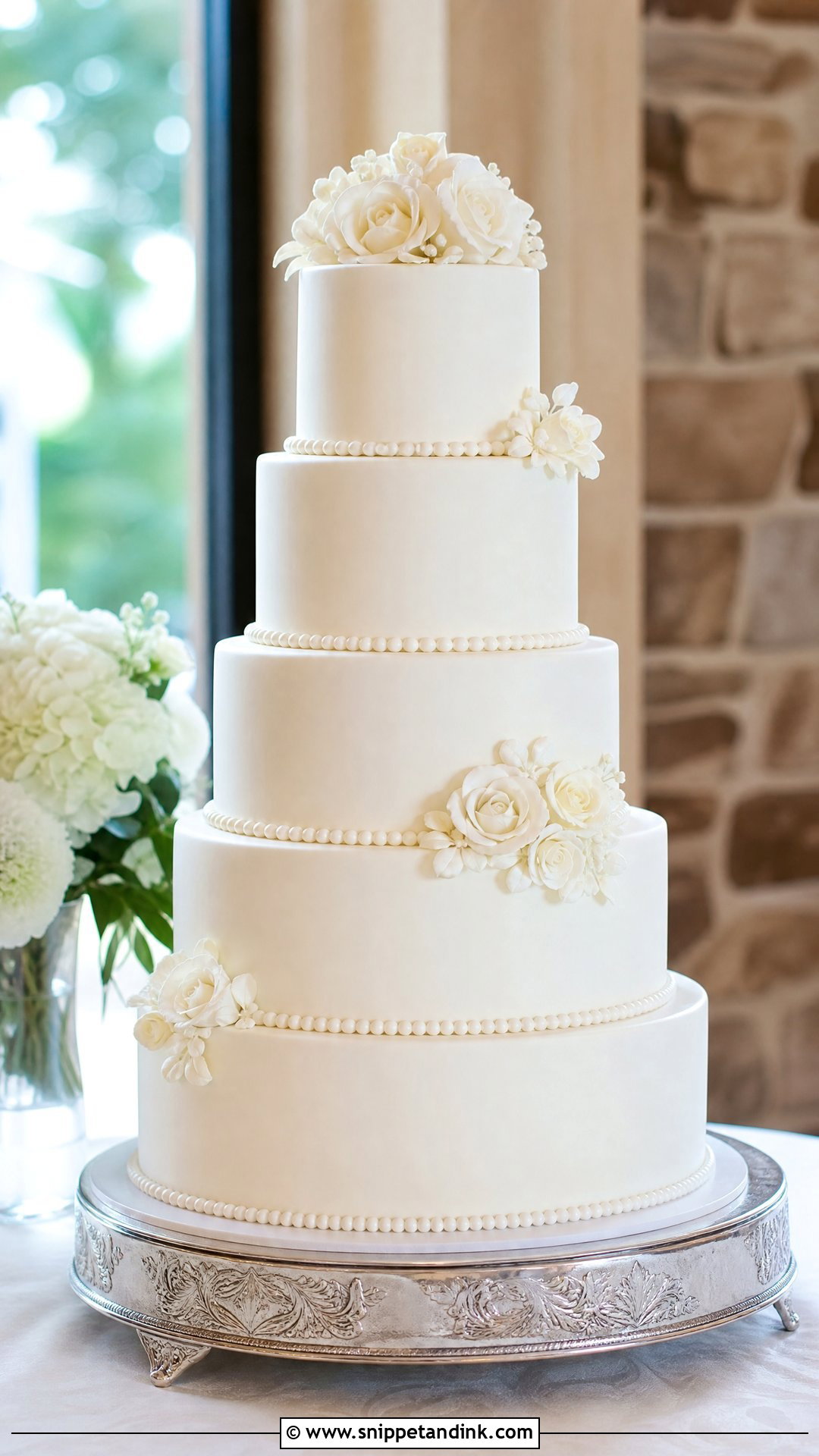
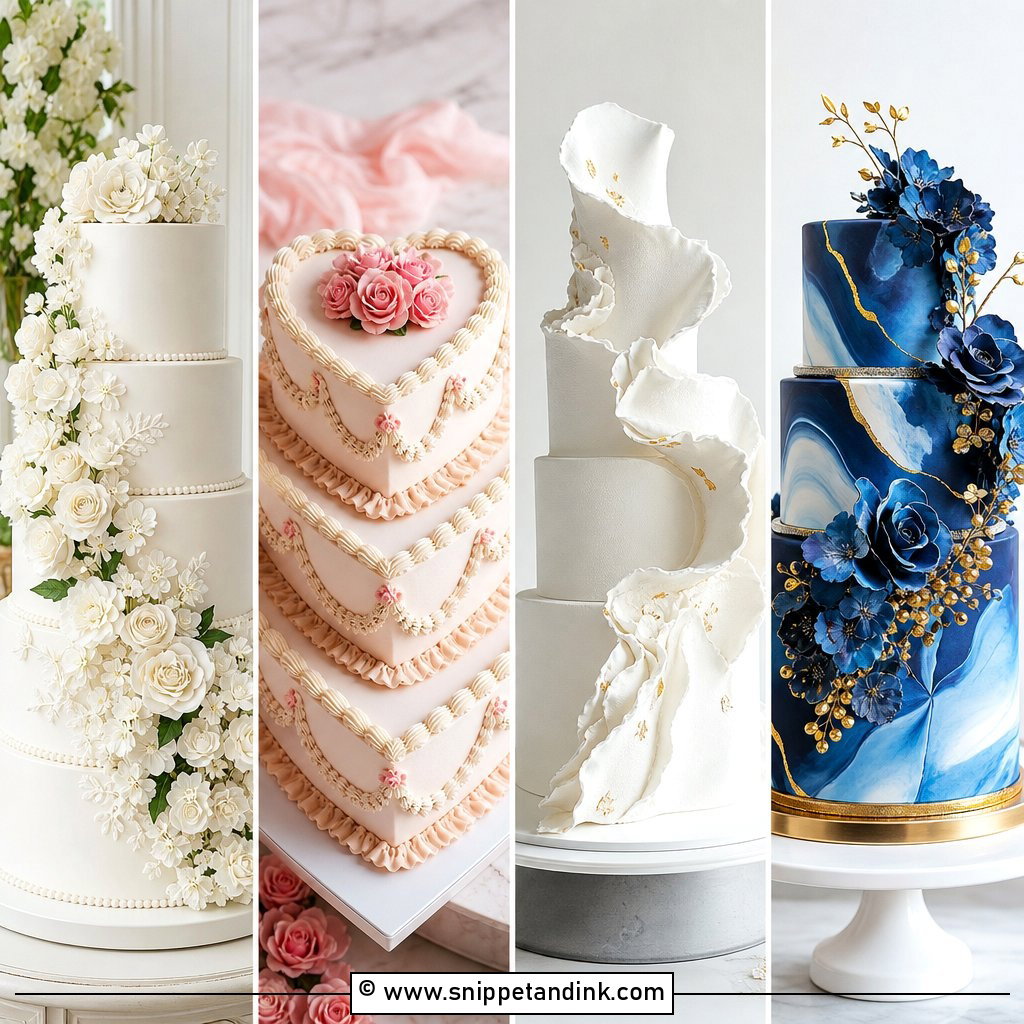
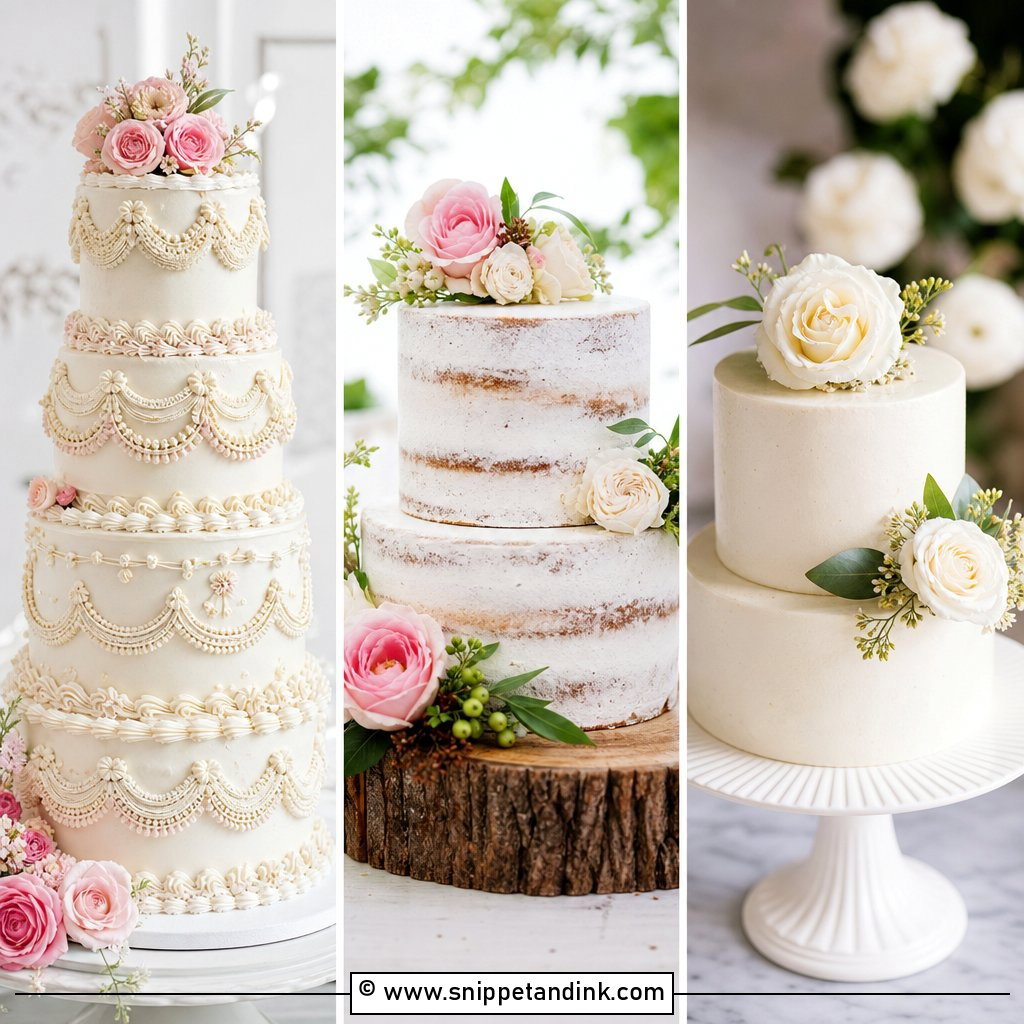
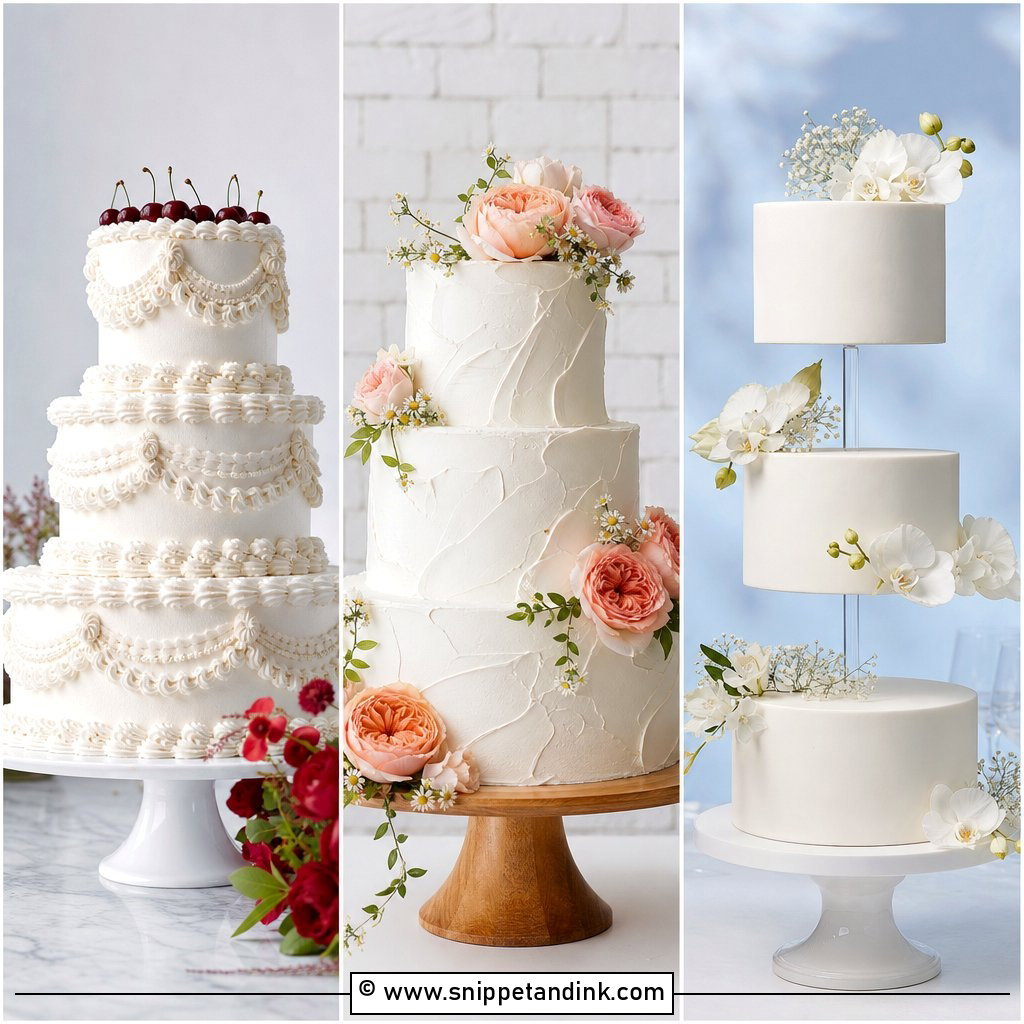
All white is the low-risk route to a tall cake, and it rarely looks wrong. The height does the work, so the finish can stay plain: smooth fondant if you want crisp edges, polished buttercream if you’d rather it eat softer. I’d vary the tier depths, alternating a standard tier with a deeper one, so the tower doesn’t look like a stack of identical drums. White sugar flowers, pearl piping or a little lace is plenty. It sits comfortably next to almost any bouquet or gown.
2. Tall Buttercream Wedding Cake
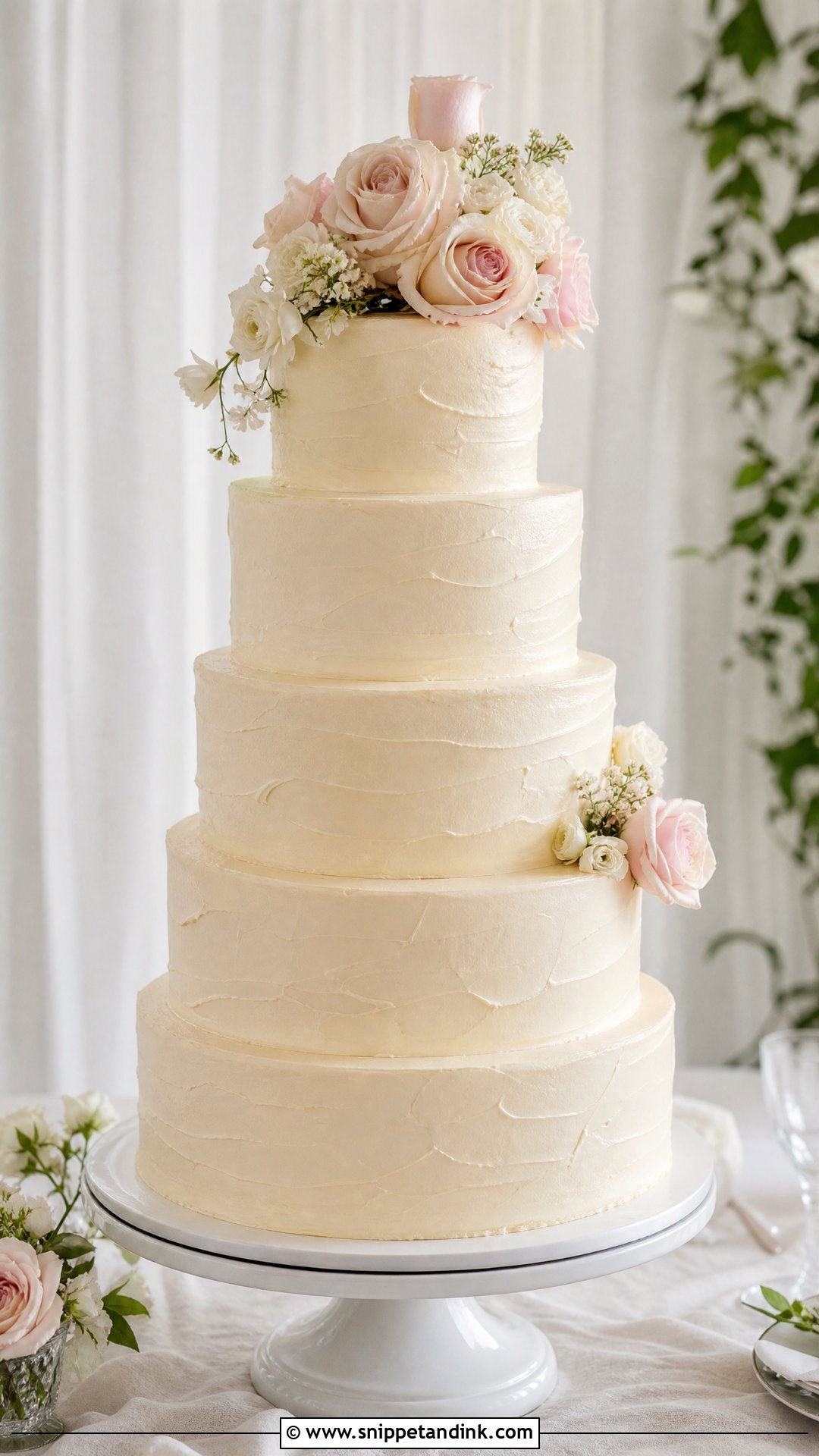
Buttercream gives a tall cake a softer, less formal face than fondant. Smooth sides, gentle ridges, spatula texture or tiny piped details all work, in ivory, cream, blush or champagne. Flowers between tiers or gathered down one side add movement. The catch is weight: buttercream on a five-tier cake is soft, and the lower tiers carry everything above them, so internal supports matter even more than usual. Vanilla bean, almond, lemon and raspberry are safe flavors. Outdoors, plan heat and setup timing with your baker before anything else.
3. Tall Fondant Wedding Cake
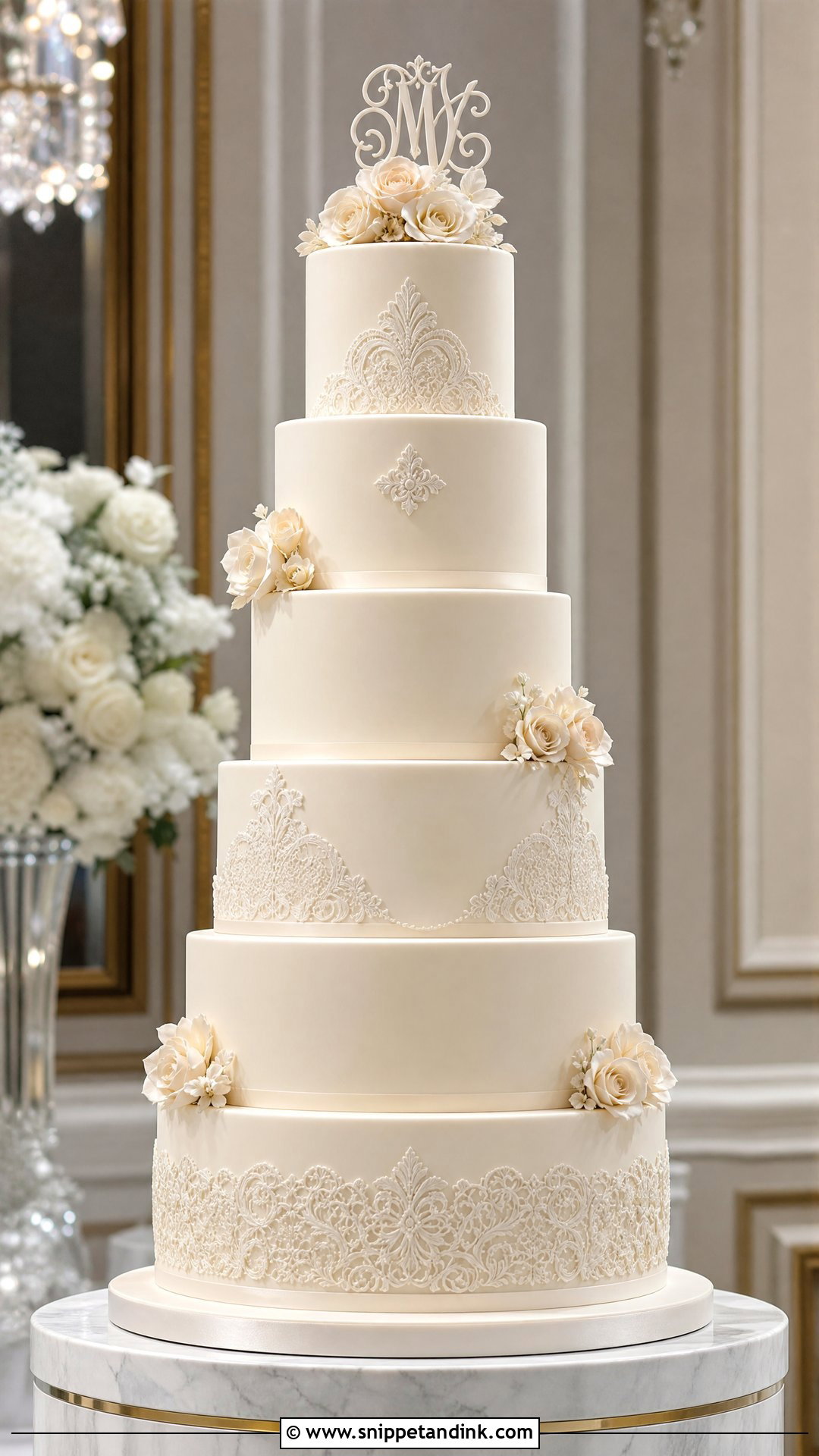
Fondant gives you the cleanest lines a tall cake can have, which is why I suggest it for formal rooms. It’s the best surface for monograms, sugar flowers, metallic paint, bows, quilting and embossing. Plain white tiers with one detail look modern; lace and pearls make it regal. It also shields the cake from air during a long display. Ask for a thin layer over good buttercream, since thick fondant is what gives it a bad reputation at the table.
4. Tall Floral Wedding Cake
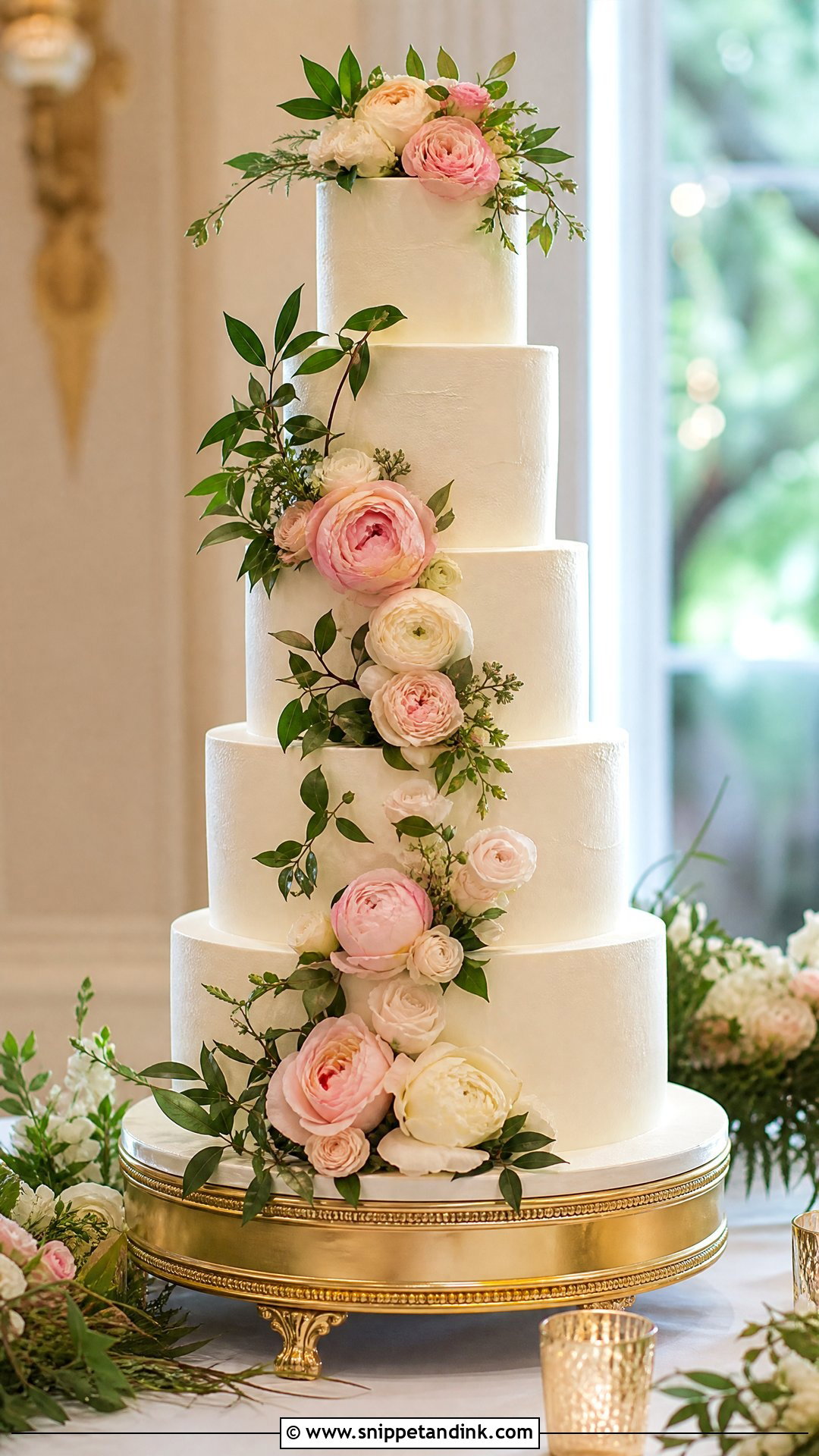
Repeating your bouquet flowers on the cake ties it to the rest of the room. Roses, peonies, orchids, ranunculus, hydrangeas and anemones each change the mood. A cascade from top to bottom suits a tall cake best because it follows the height; clusters between tiers feel tidier. Gardens call for loose greenery, ballrooms for structured placement. On tall cakes I place the heaviest blooms low, so nothing pulls the upper tiers off line. Every stem needs to be food-safe or wrapped and inserted into a pick.
5. Tall Vintage Wedding Cake
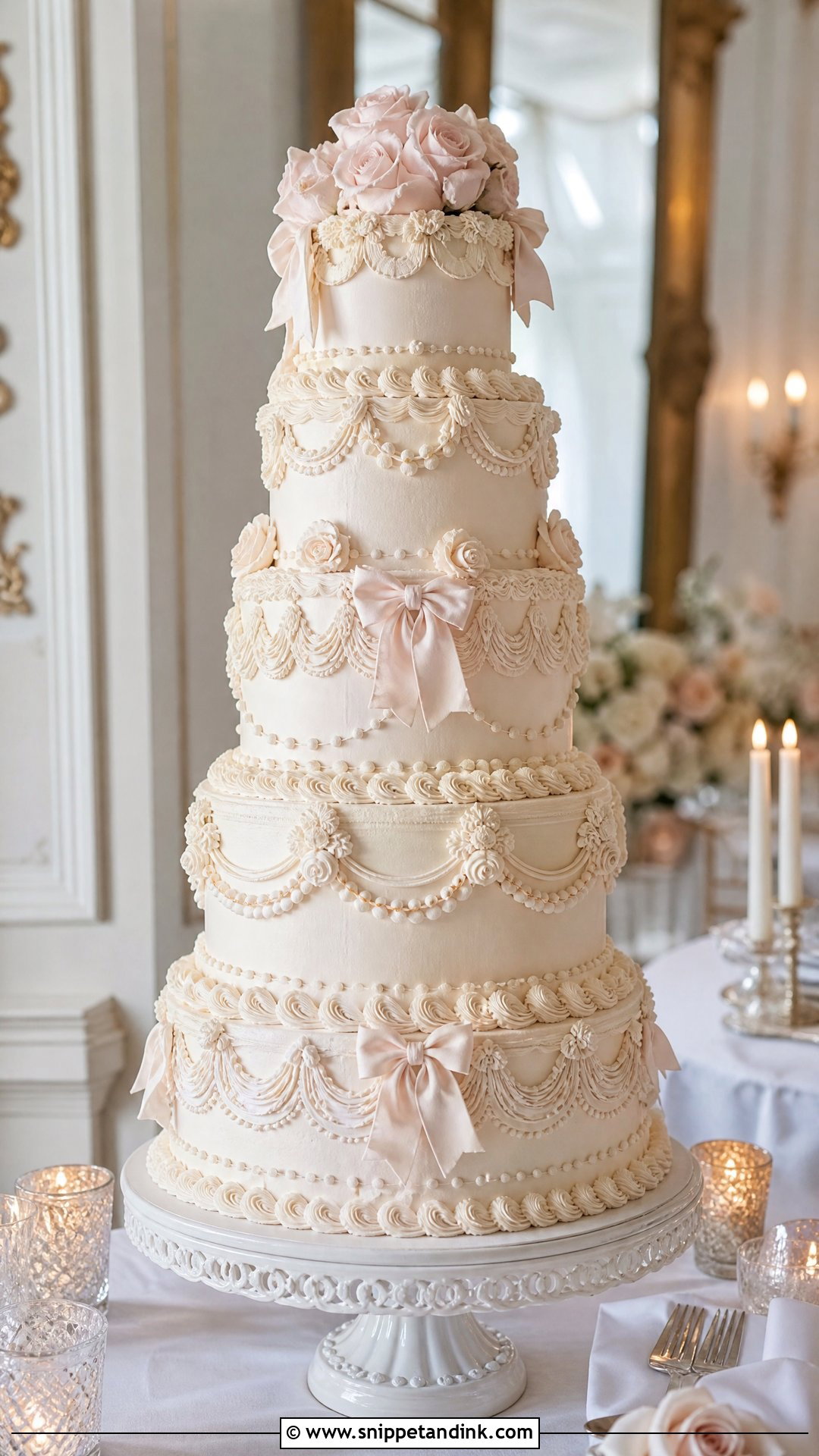
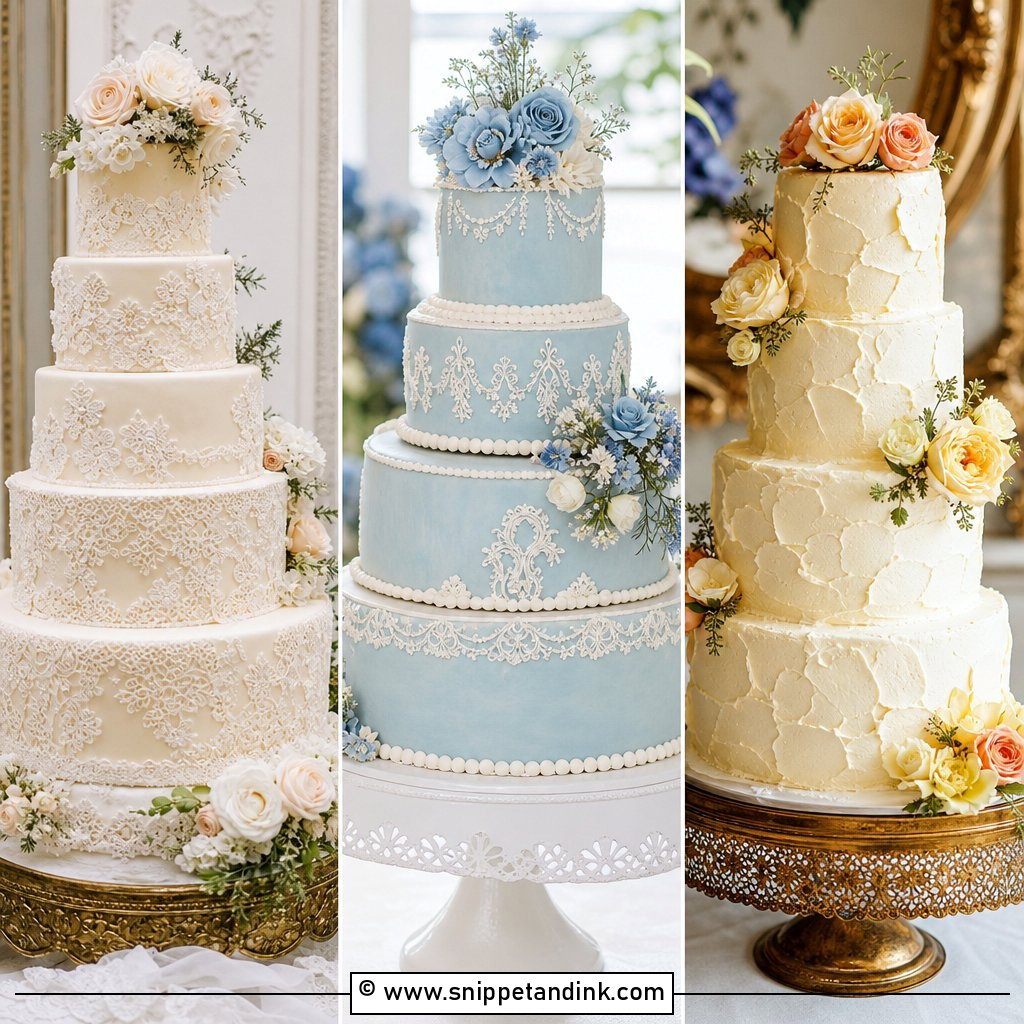
Vintage piping looks richest on a tall cake because each tier gives the swags and borders another row. Lambeth-style swags, shell borders, ruffles, bows and pearls on stacked tiers give an old-fashioned outline. All white feels traditional; soft pink, blue, butter yellow or ivory feels sweeter. Estate weddings and ballrooms carry it well. My rule is detailed piping, controlled color, or it turns into a carnival. A simple topper, sugar roses or cherries gives a playful retro finish.
6. Tall Pearl Wedding Cake
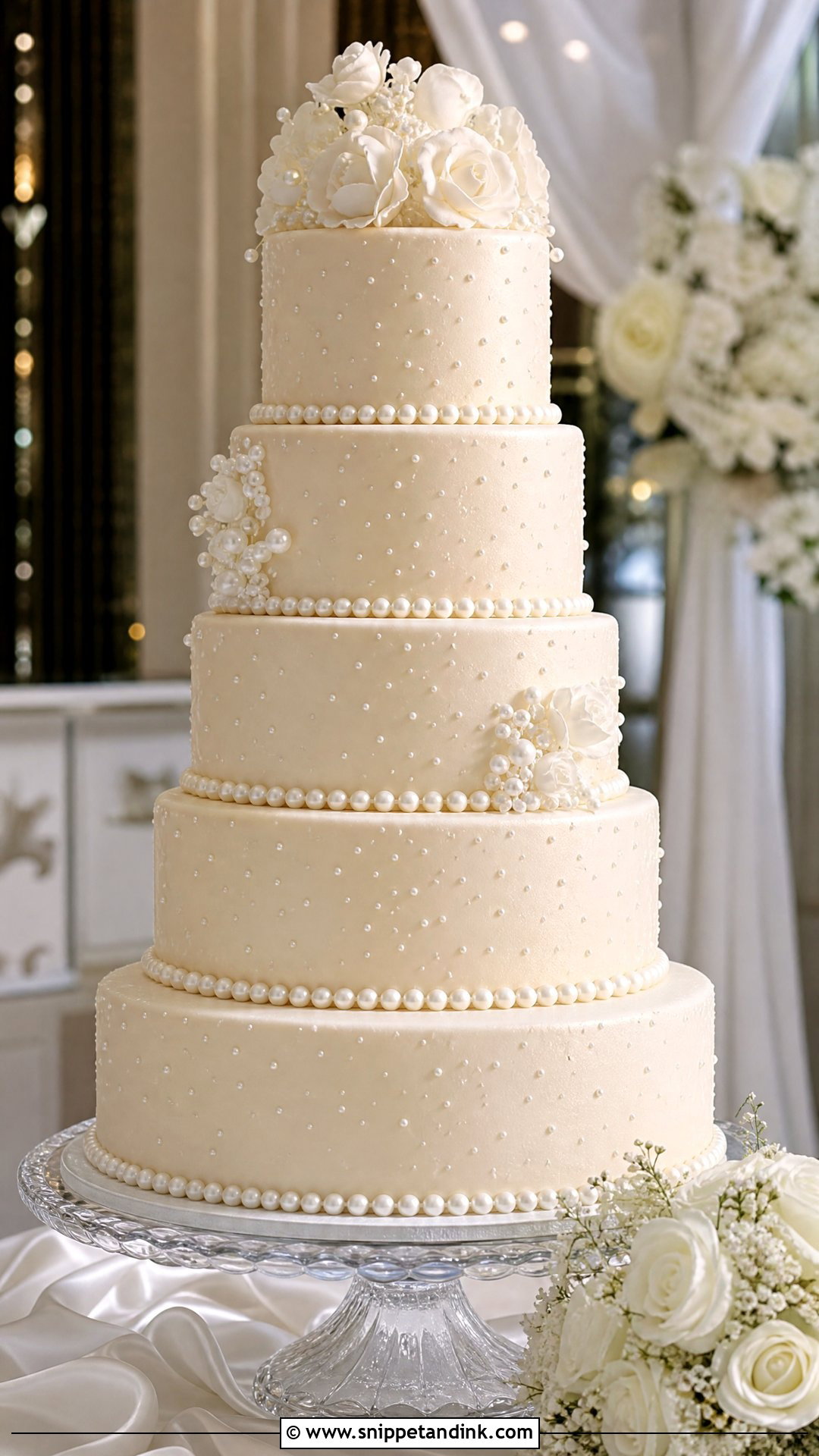
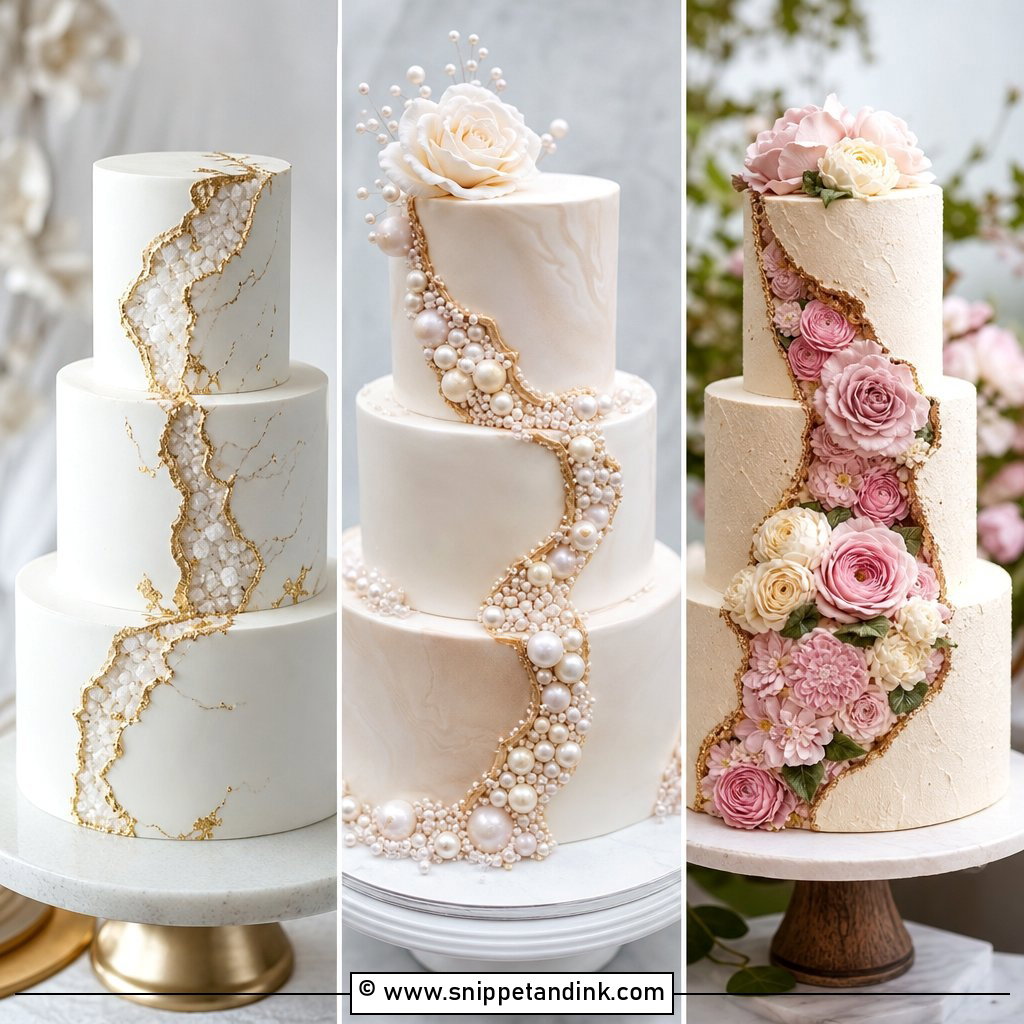
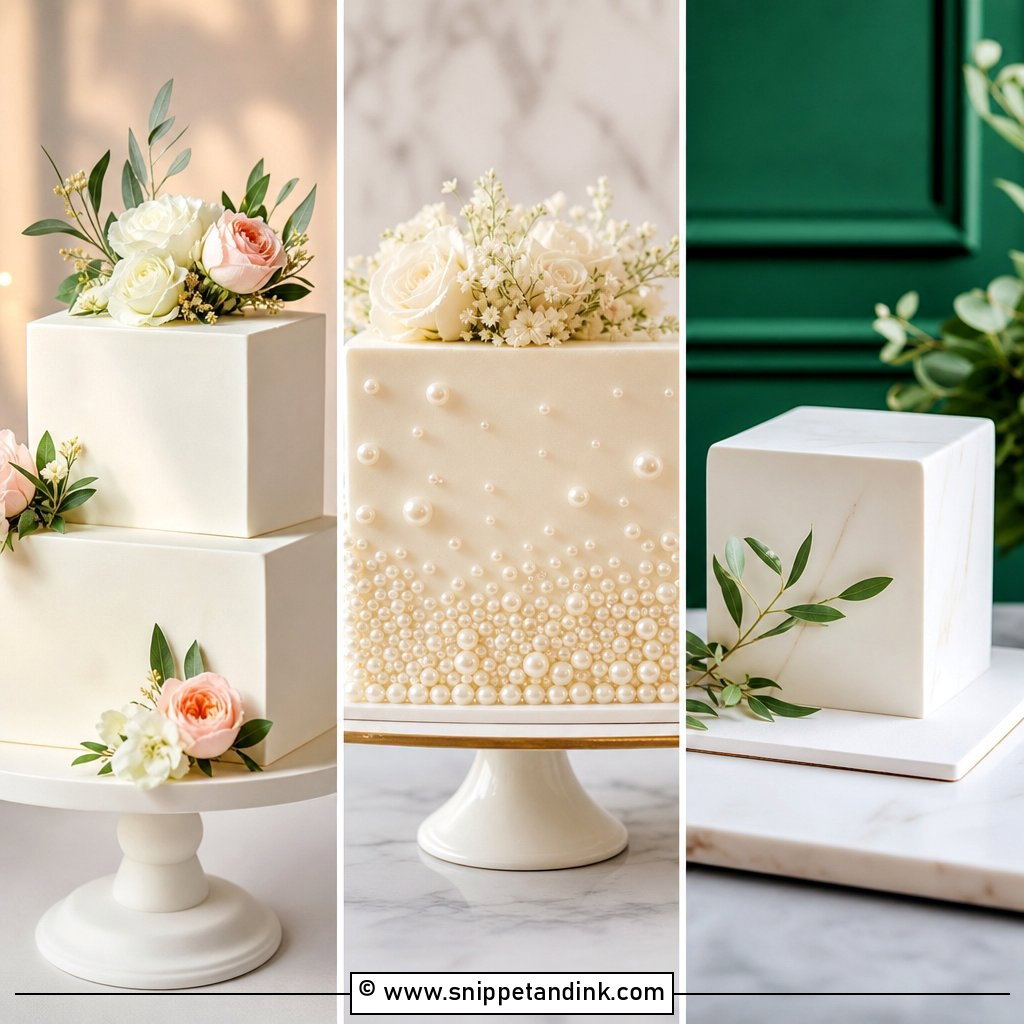
Pearls can be scattered across smooth tiers, piped into borders, set in neat rows or packed over one whole statement tier. They suit satin gowns, pearl earrings and candlelit tables. For a modern take, pair them with ivory buttercream on a single tall column of a cake; for a traditional one, add lace piping and sugar flowers. Edible pearls catch candlelight and uplighting well. They’re hard little sugar balls, though, so I keep them to borders or one tier rather than every surface guests will bite into.
7. Tall Gold Wedding Cake
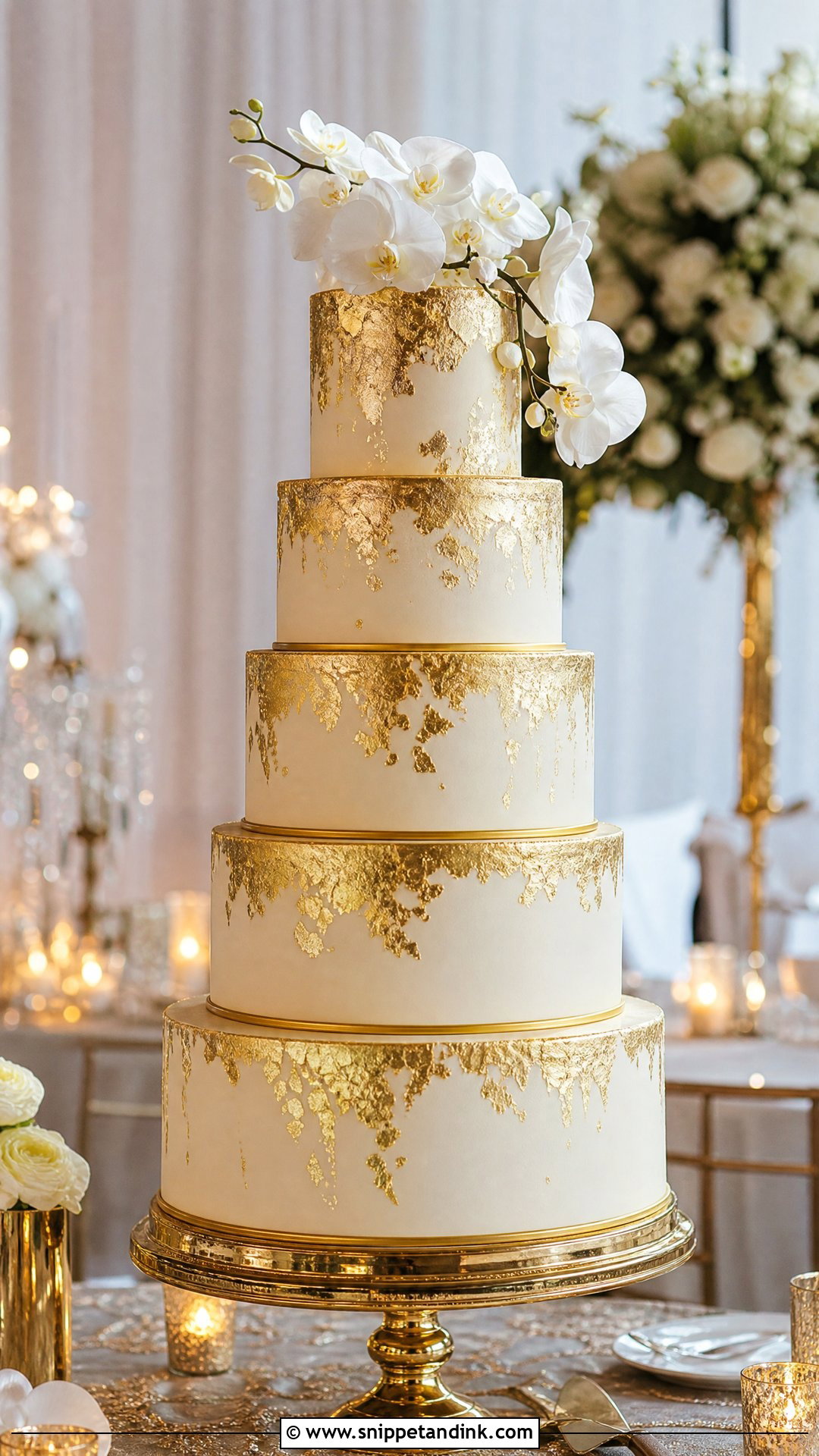
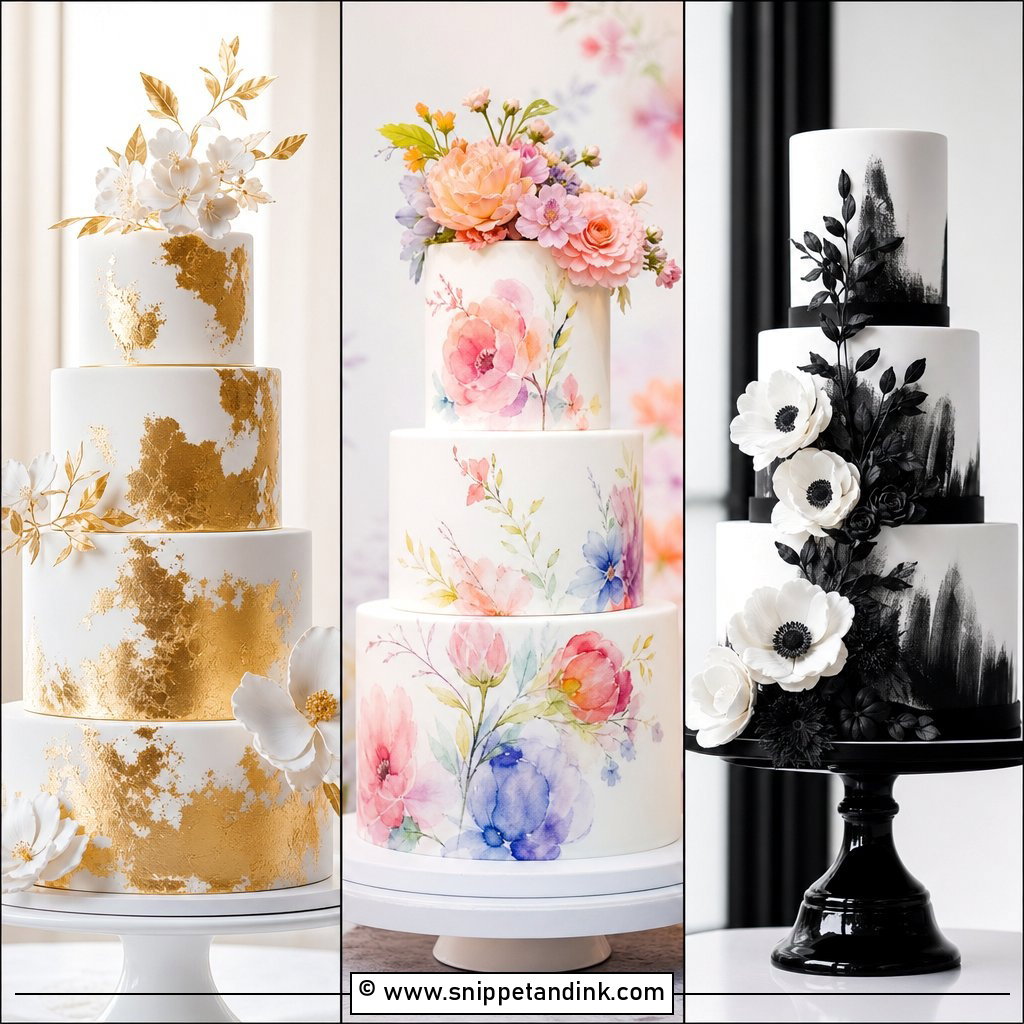
Gold works best in small doses. Brushed edges, gold leaf or a fine painted monogram on ivory looks refined; a single shimmering gold tier between white ones is the bolder route. I paint gold onto fondant or a firm chilled surface, because it streaks on soft buttercream. Black tie, ballroom, autumn and candlelit receptions all suit it, with white roses, orchids or champagne blooms. Full gold on every tier tends to look like a trophy rather than a cake.
8. Tall Black And White Wedding Cake
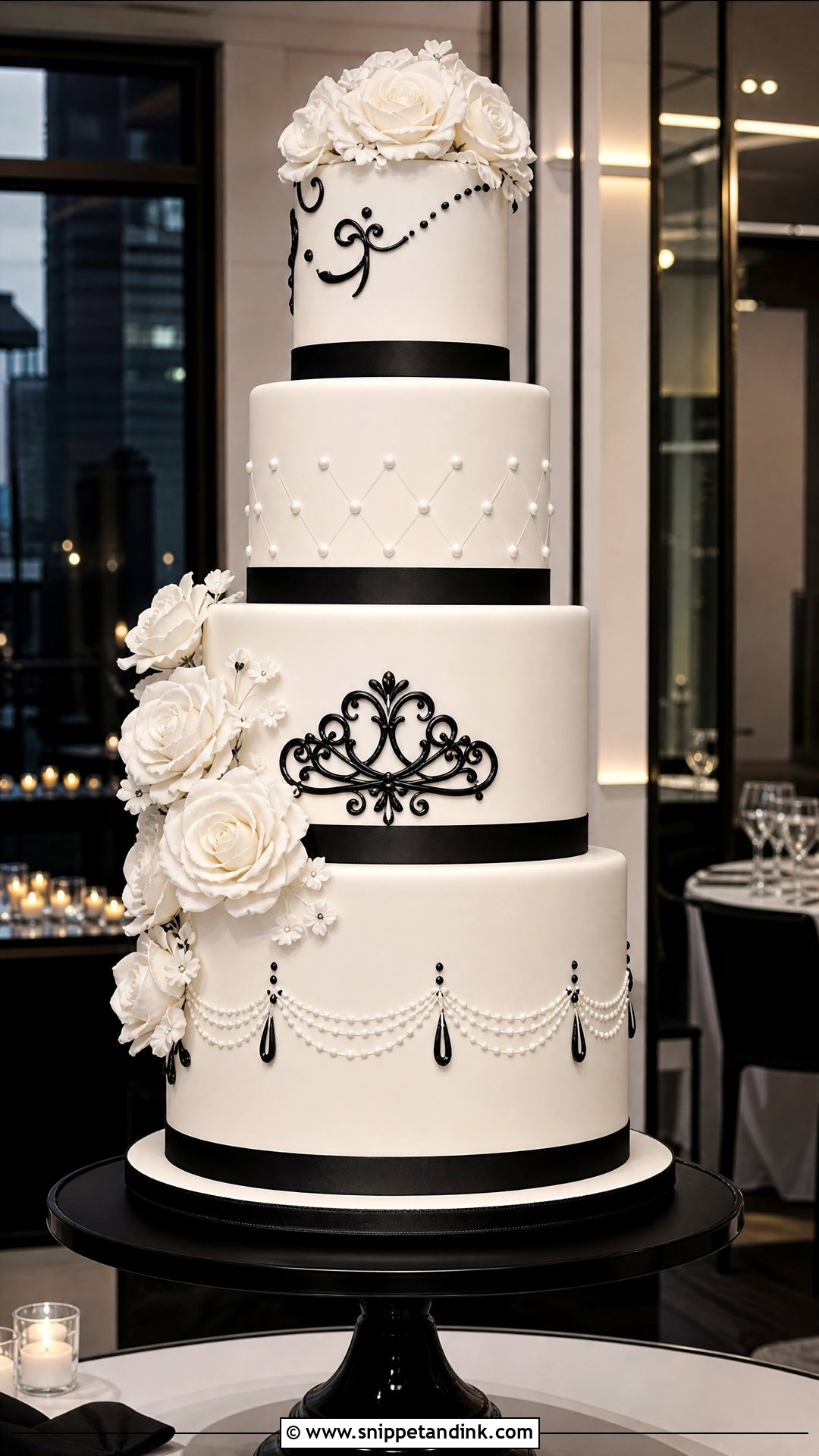
Contrast makes every tier read on camera. White tiers with black bands, black floral piping, a black base tier or a full graphic pattern all work for a modern formal wedding, especially with tuxedos, black bridesmaid dresses and marble floors. Black frosting needs a lot of color, which can stain teeth and taste bitter, so I keep black to fondant accents or a thin outer layer. White flowers, pearls or silver soften it. Sharp edges and geometry make it bolder.
9. Tall Greenery Wedding Cake
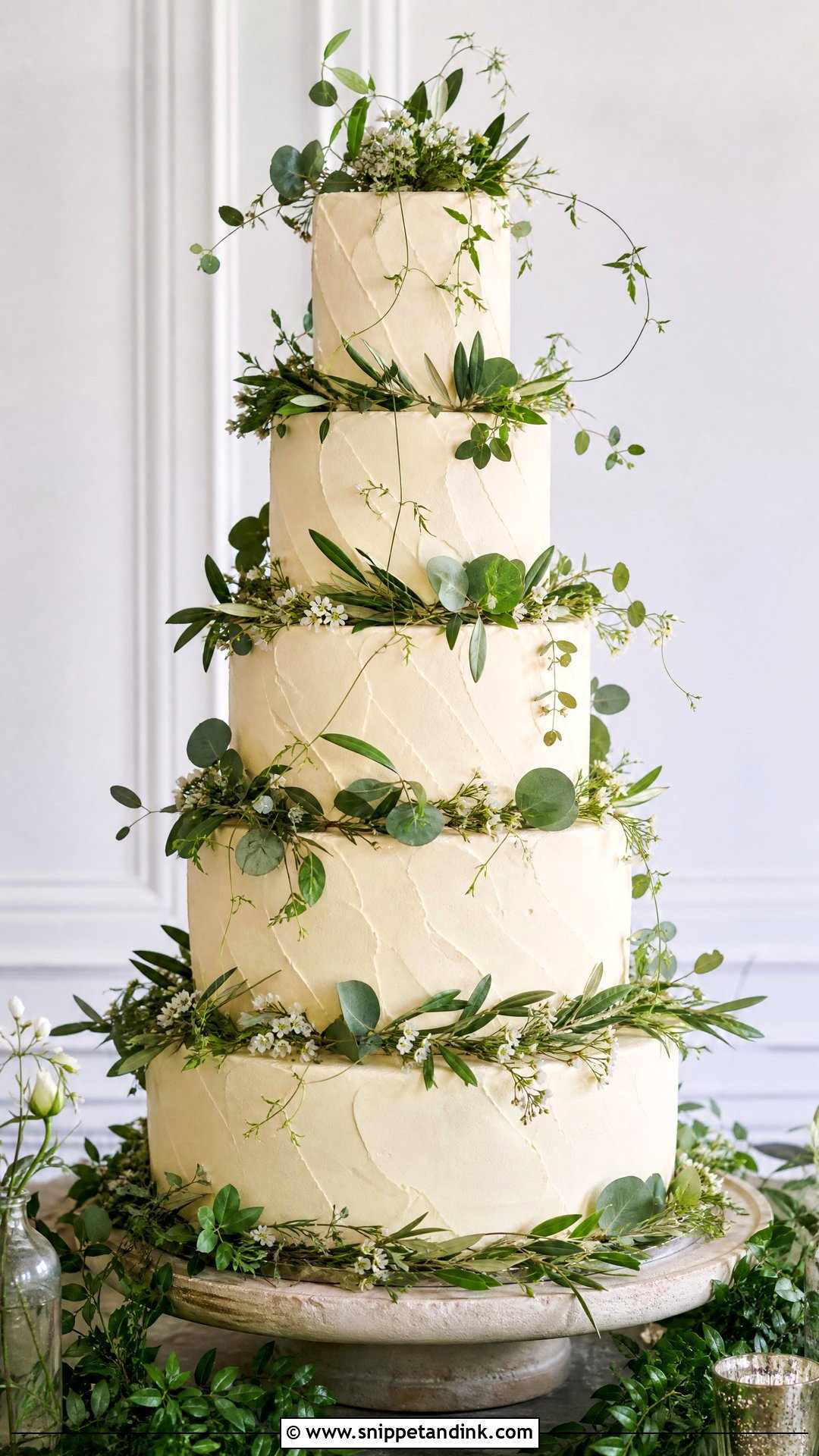
Greenery keeps a tall cake relaxed. Eucalyptus, olive, fern, rosemary and ruscus can wrap tiers or sit in small clusters on ivory buttercream, fondant or a semi-naked finish. Gardens, barns, tents and organic venues suit it. A few small white flowers add a bridal note. Eucalyptus in particular is one I never let touch the cake directly, so your florist and baker need to agree who washes, wraps and places the stems, and when.
10. Tall Rustic Wedding Cake
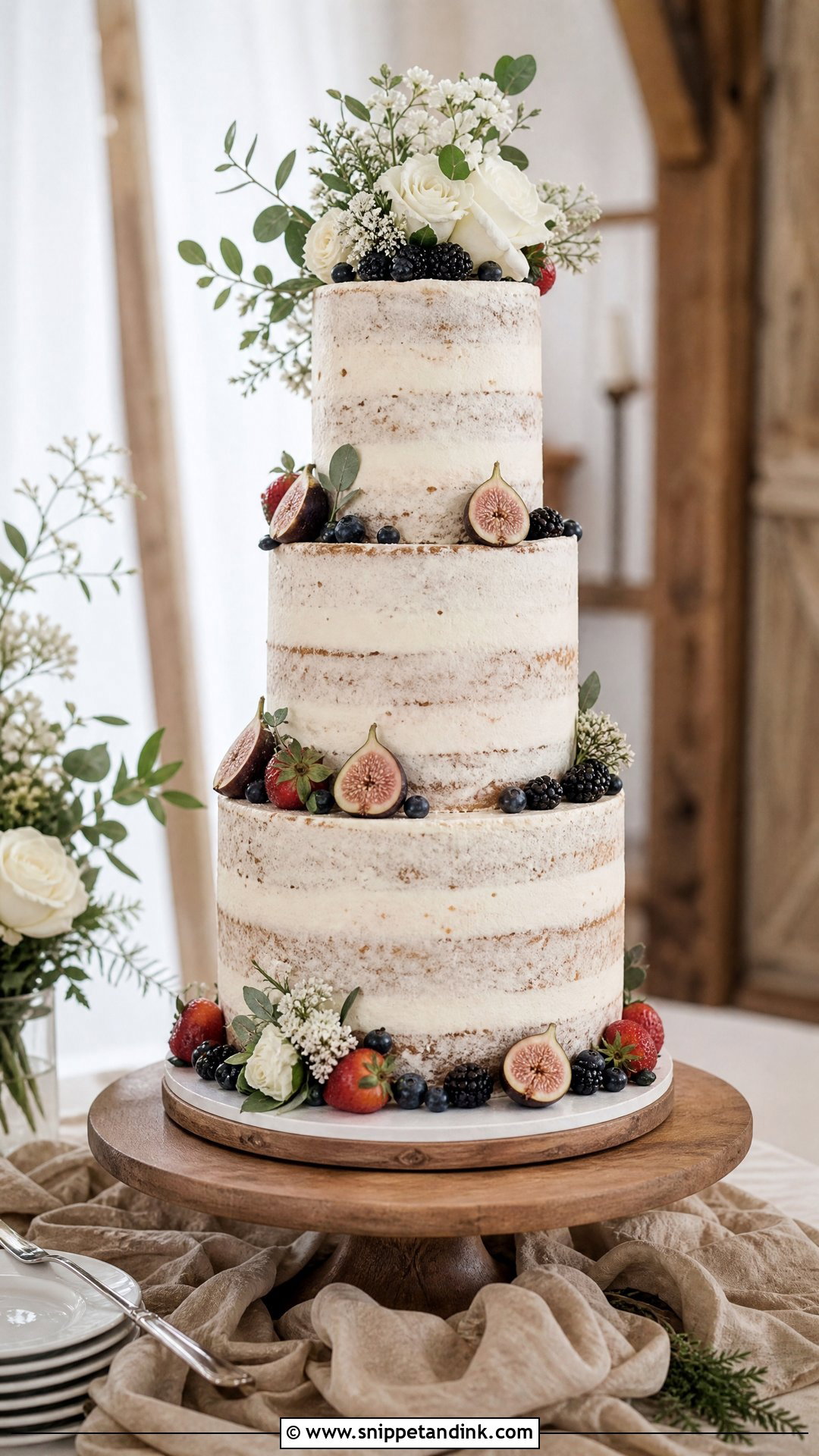
Rustic doesn’t mean messy, and on a tall cake messy shows fast. Textured buttercream, semi-naked sides, woody greenery, berries, figs and simple white flowers fit barns, vineyards and mountain venues. Semi-naked tiers dry out faster than fully frosted ones, so I’d keep this design’s display time short. A wooden stand, a linen runner and candlelight finish the table. Vanilla bean, spice, carrot, lemon and almond all suit it.
11. Tall Modern Wedding Cake
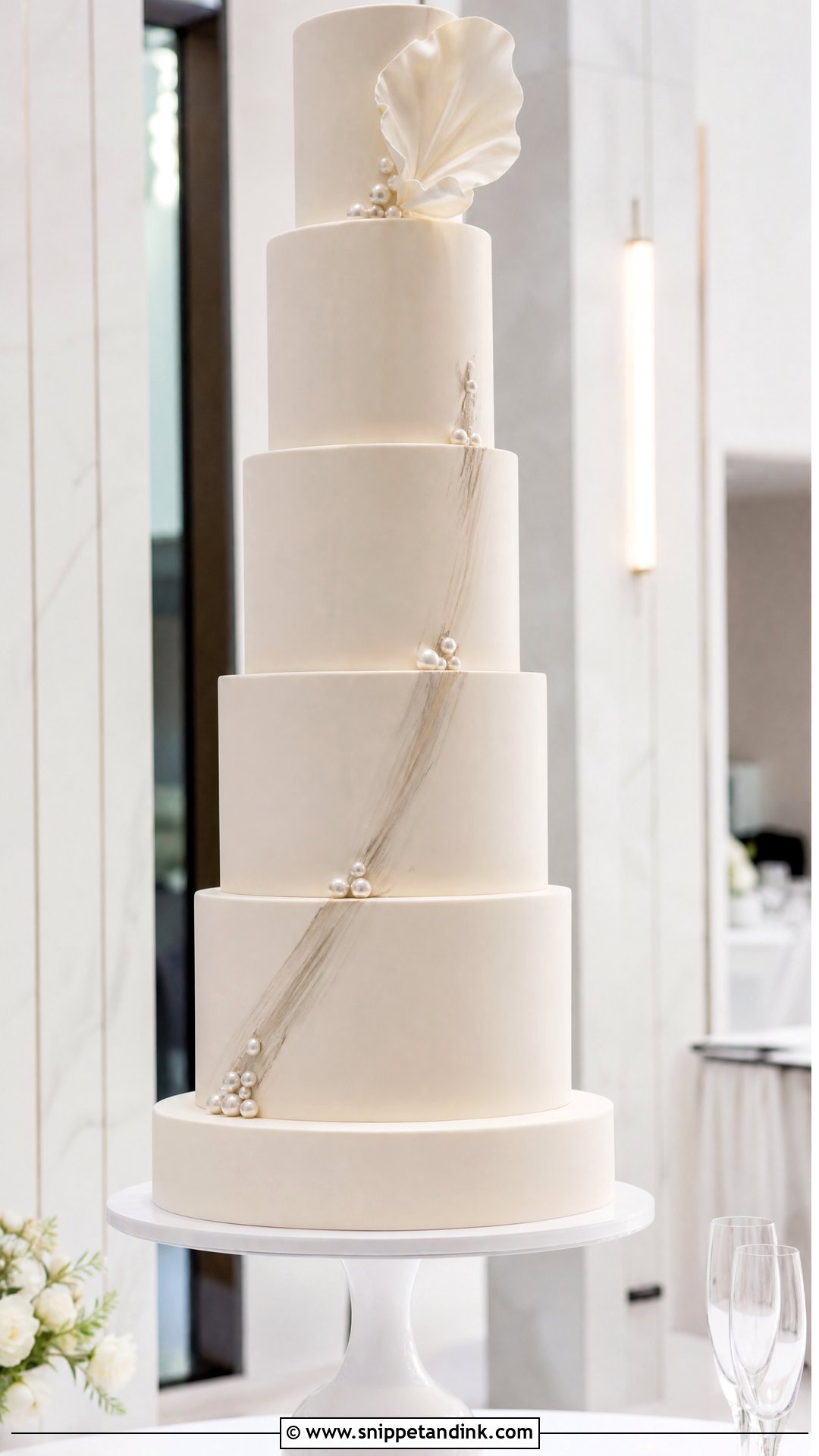
Modern tall cakes rely on proportion rather than decoration. Extra-tall narrow tiers, offset stacking, smooth fondant, a single color and one bold floral placement create the impact. White, ivory, taupe, soft gray and muted pastels keep it calm in a museum, rooftop or gallery space. If you want one statement, make it an arched tier, rice paper sails or a painted stripe. Offset stacks need careful support, because the weight no longer sits straight down the middle.
12. Tall Square Wedding Cake
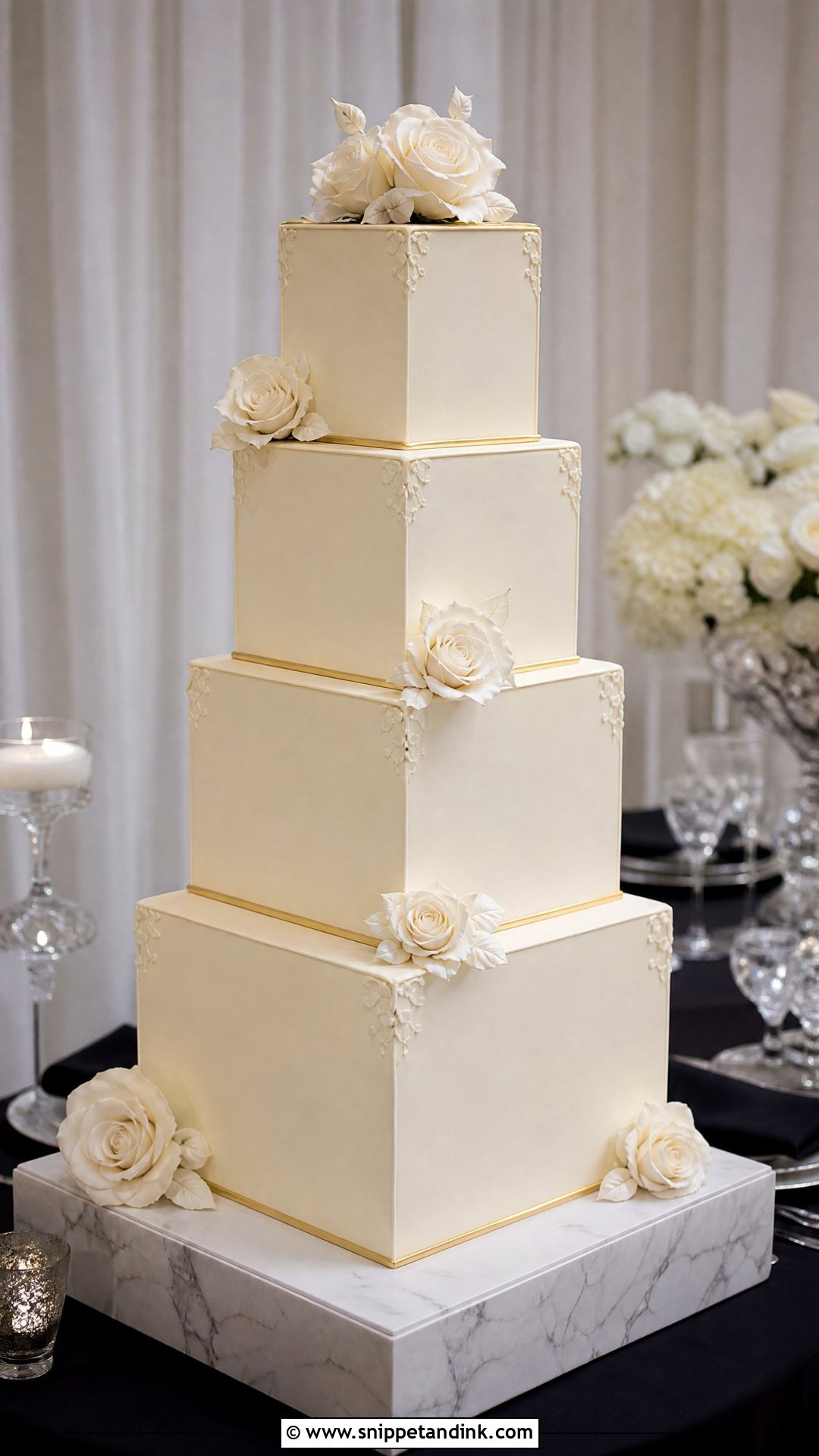
Square tiers give a tall cake corners, and corners look architectural. Formal, art deco and city weddings suit them best. Tiers can be stacked evenly for a clean tower or turned slightly for movement. Fondant gives the sharpest corner; buttercream softens it. Thin piping, metallic edging, sugar flowers or a monogram highlight the shape. Square tiers also give more servings than round ones of the same width, which helps for a large guest list.
13. Tall Round Wedding Cake
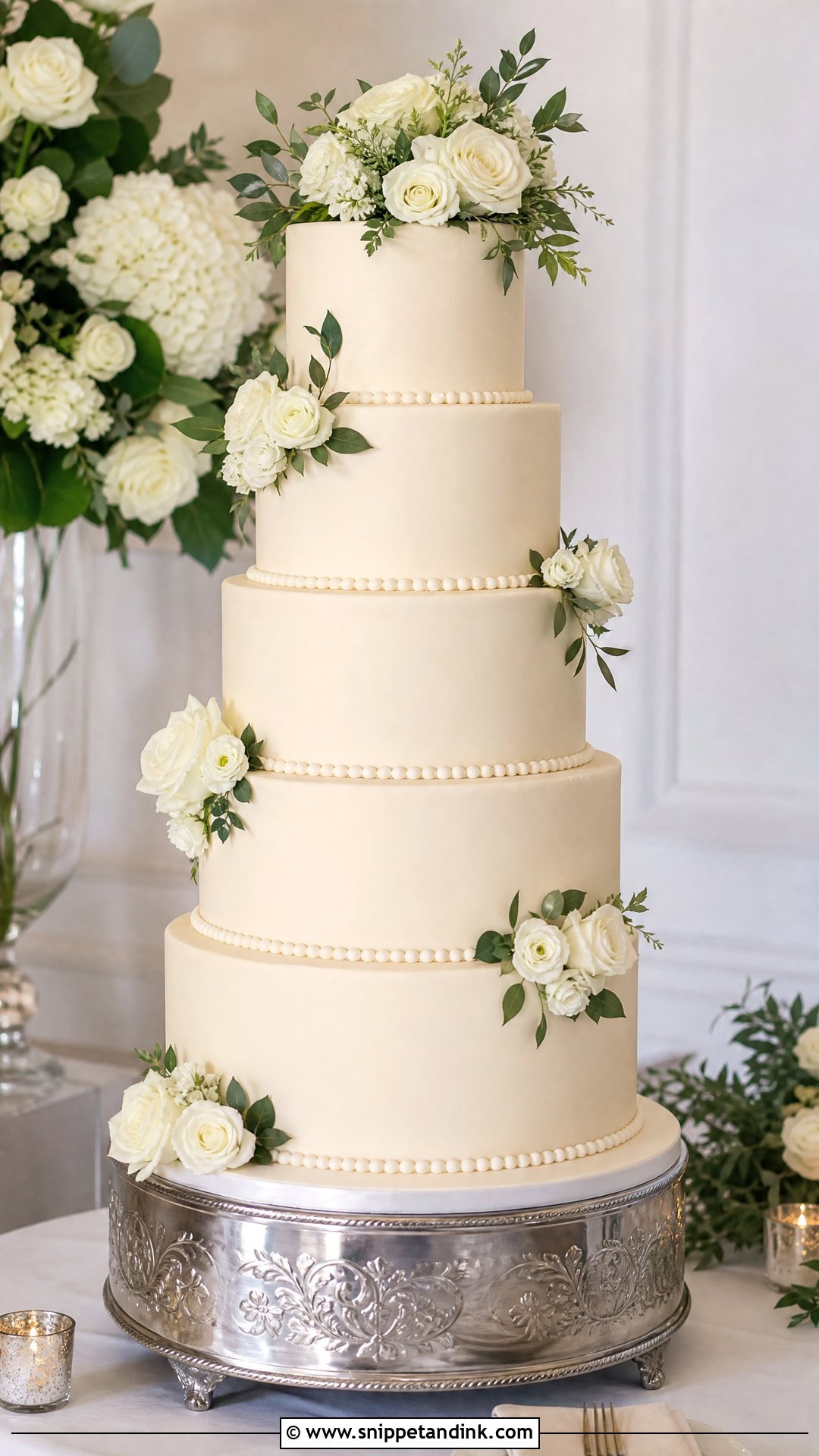
Round is the familiar shape, and height makes it feel more dramatic. It suits any style, from smooth ivory icing to flowers, lace, pearls or textured buttercream. Round tiers are also the easiest to scale, so your baker can adjust sizes up or down to match your guest count without changing the look. It works in hotels and backyards alike. If you want a cake that will look right in your photos decades from now, this is the safest shape to build tall.
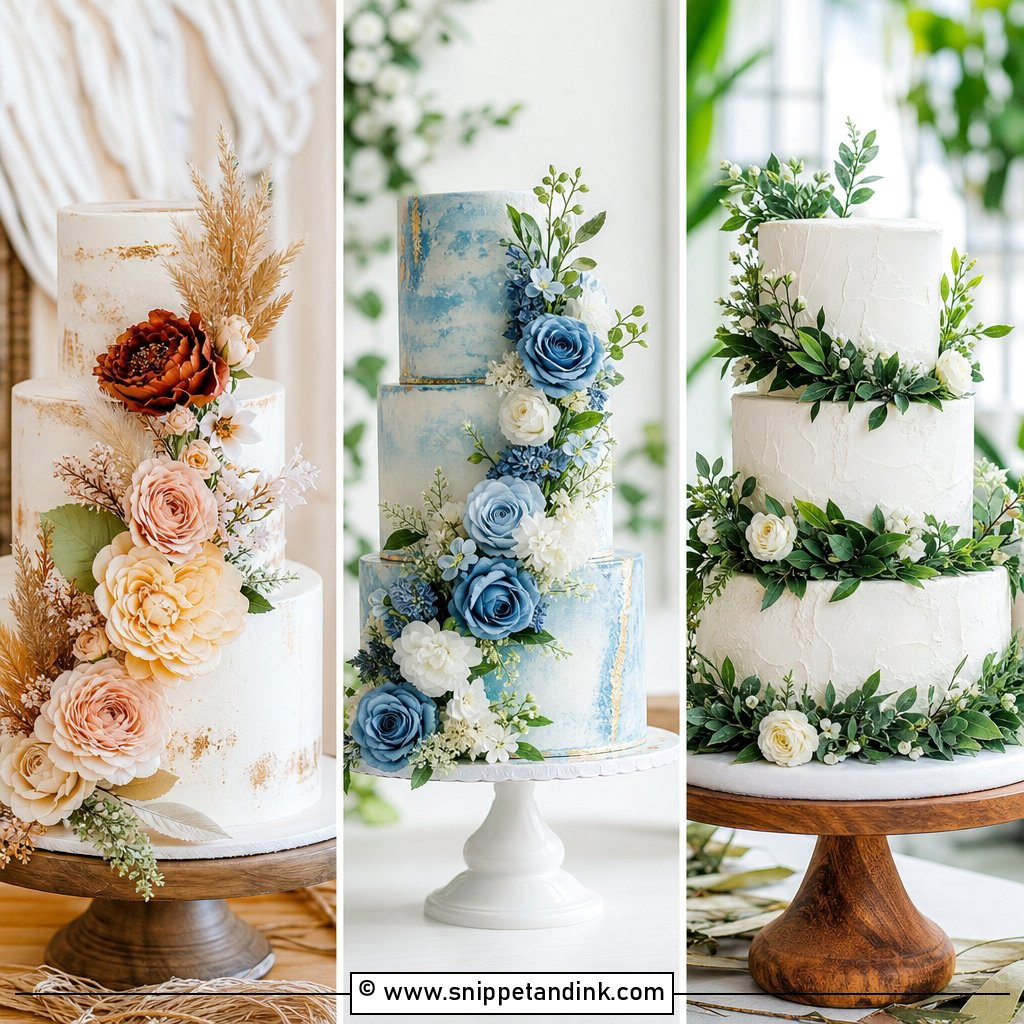
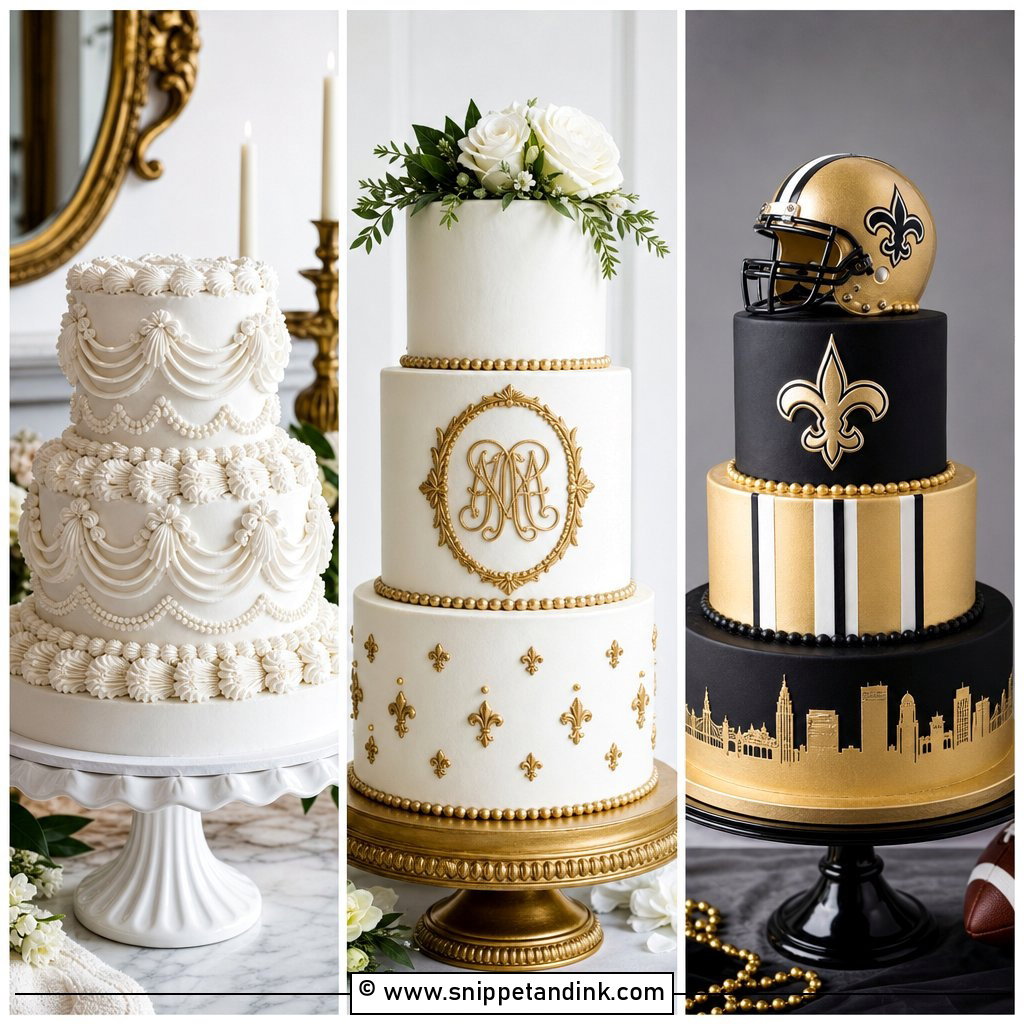
14. Tall Ruffle Wedding Cake
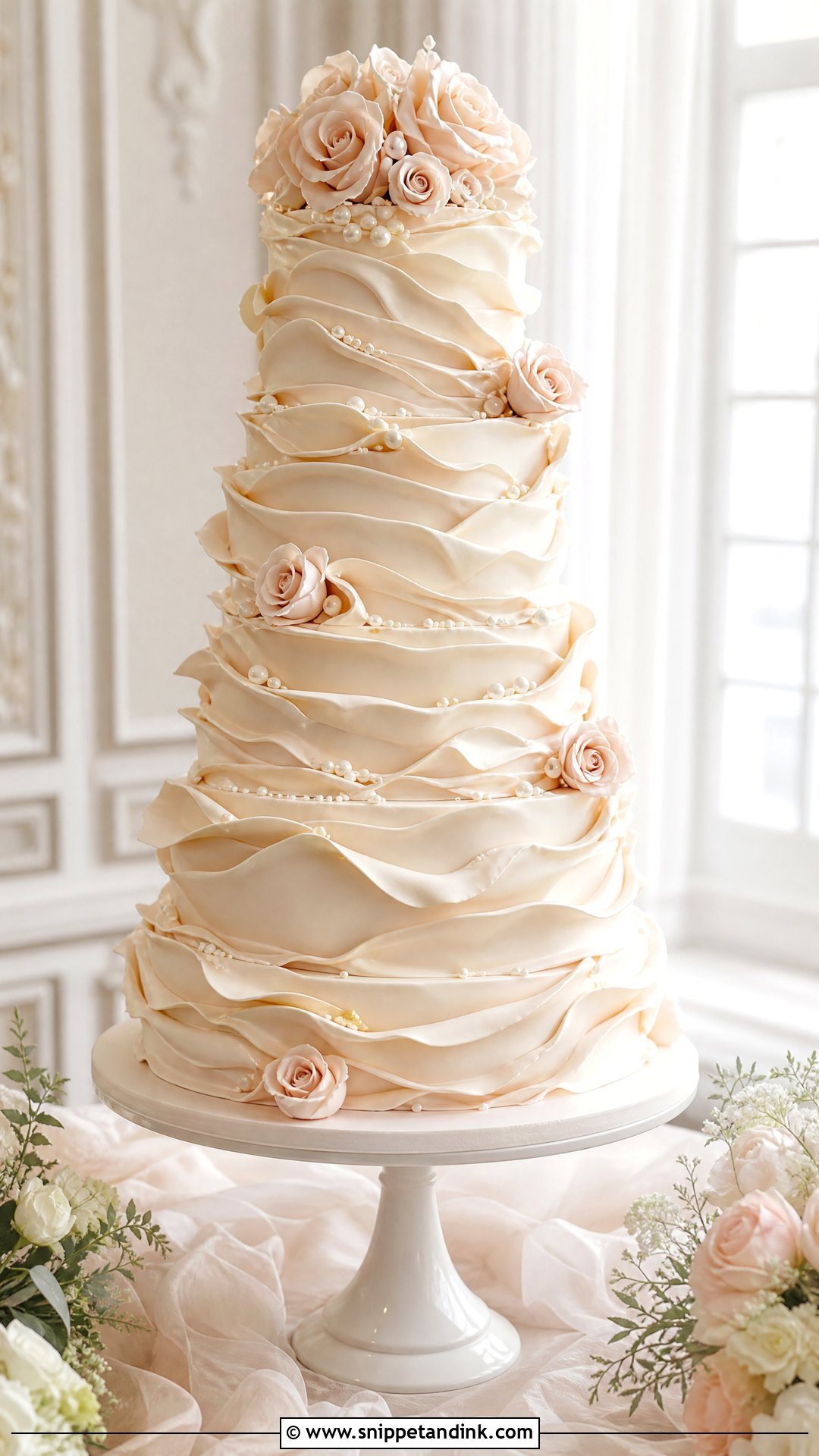
Ruffles put movement into a tall silhouette. Fine fondant ruffles look polished and almost couture; buttercream ruffles look soft. You can ruffle every tier or use one ruffled tier between smooth ones, which I prefer on very tall cakes so the eye has somewhere to rest. White, ivory, blush, champagne and pale blue all suit it. Flowing gowns, garden florals and candlelight are its natural companions. A few sugar flowers or pearls are enough.
15. Tall Lace Wedding Cake
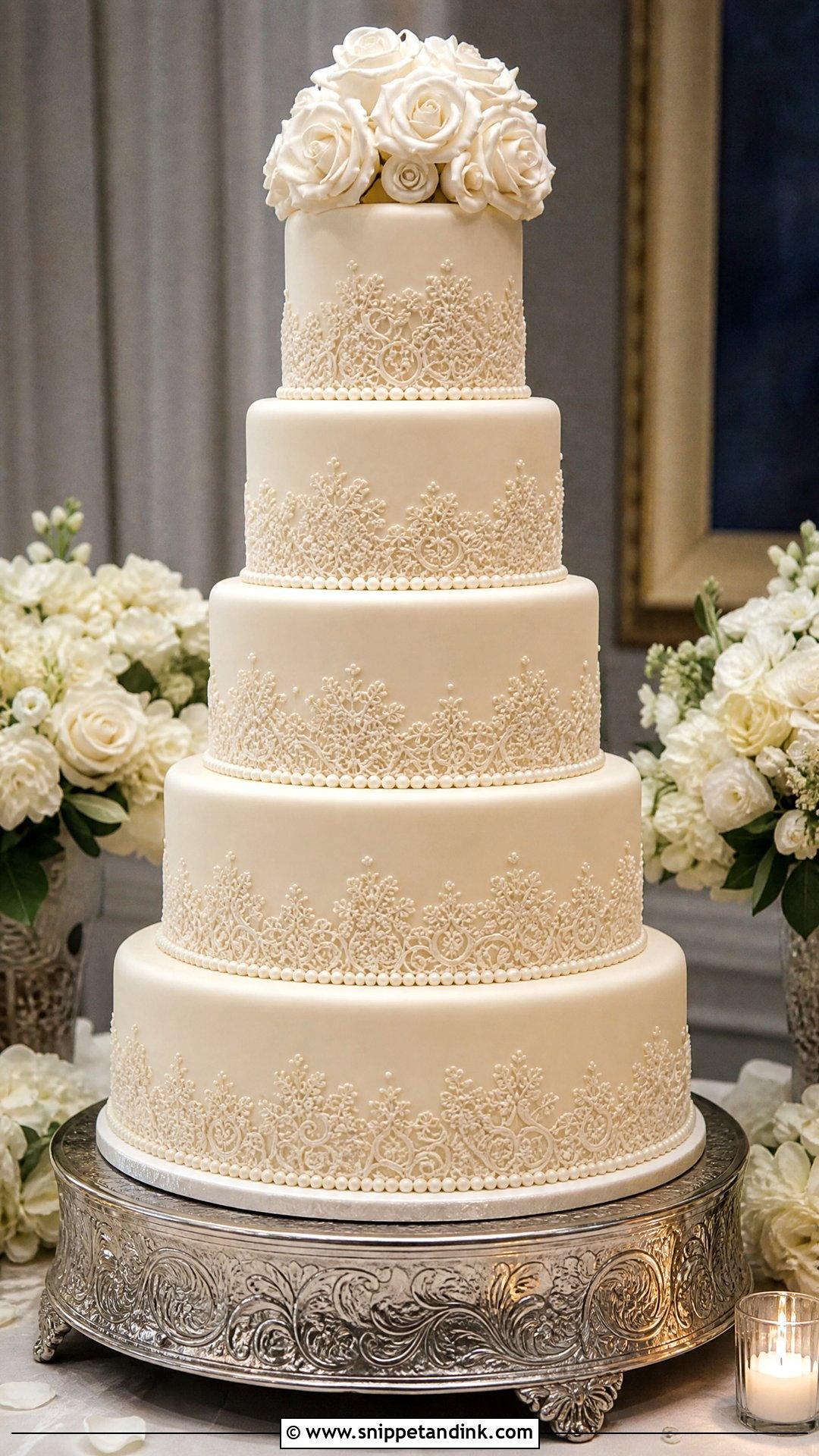
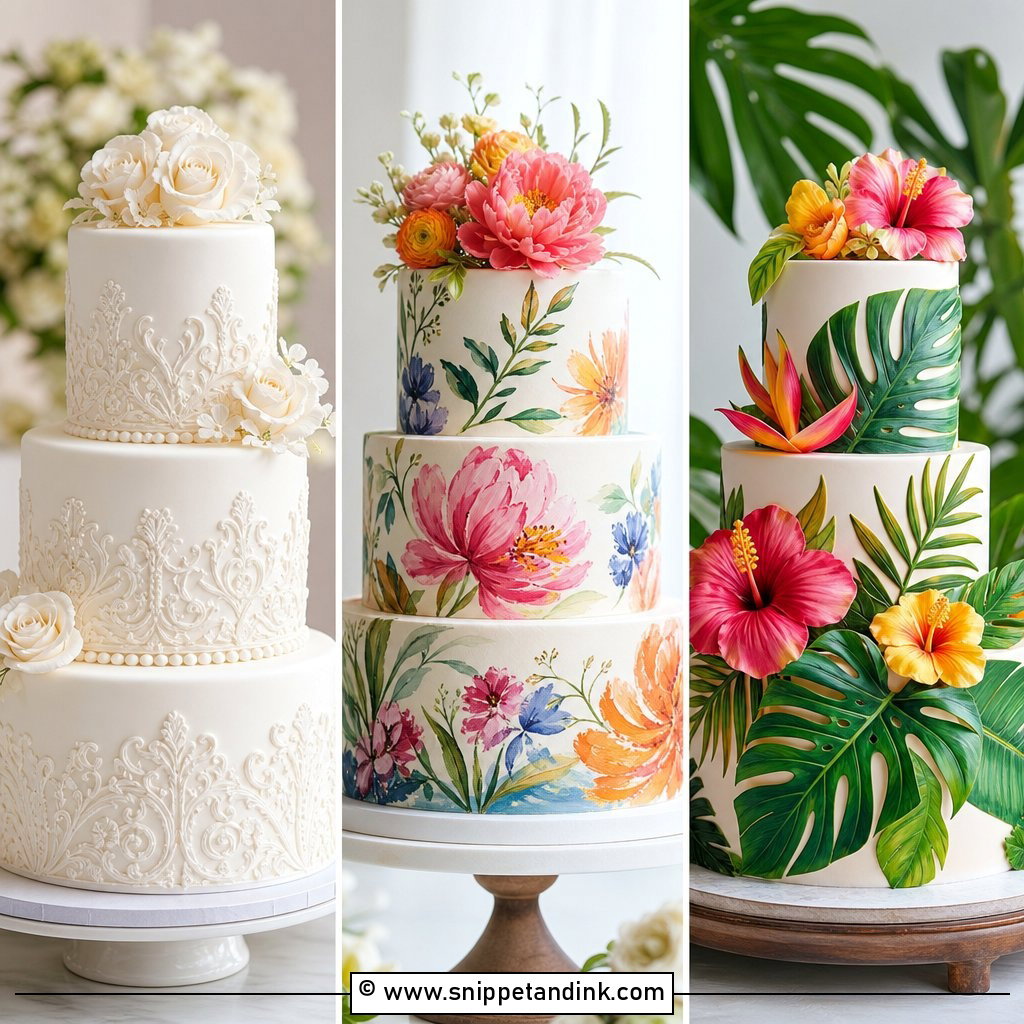
Lace is the one design that can mirror your gown directly. Bring a fabric sample or a close-up photo and a skilled decorator can echo the motif by hand piping, a silicone lace mold pressed into fondant or edible lace appliqué. It can cover every tier or run as bands. Ivory, white and champagne keep it delicate. Sugar roses, pearls or a monogram add a traditional finish for church, estate and garden receptions. The best versions look intricate up close and calm from across the room.
16. Tall Orchid Wedding Cake
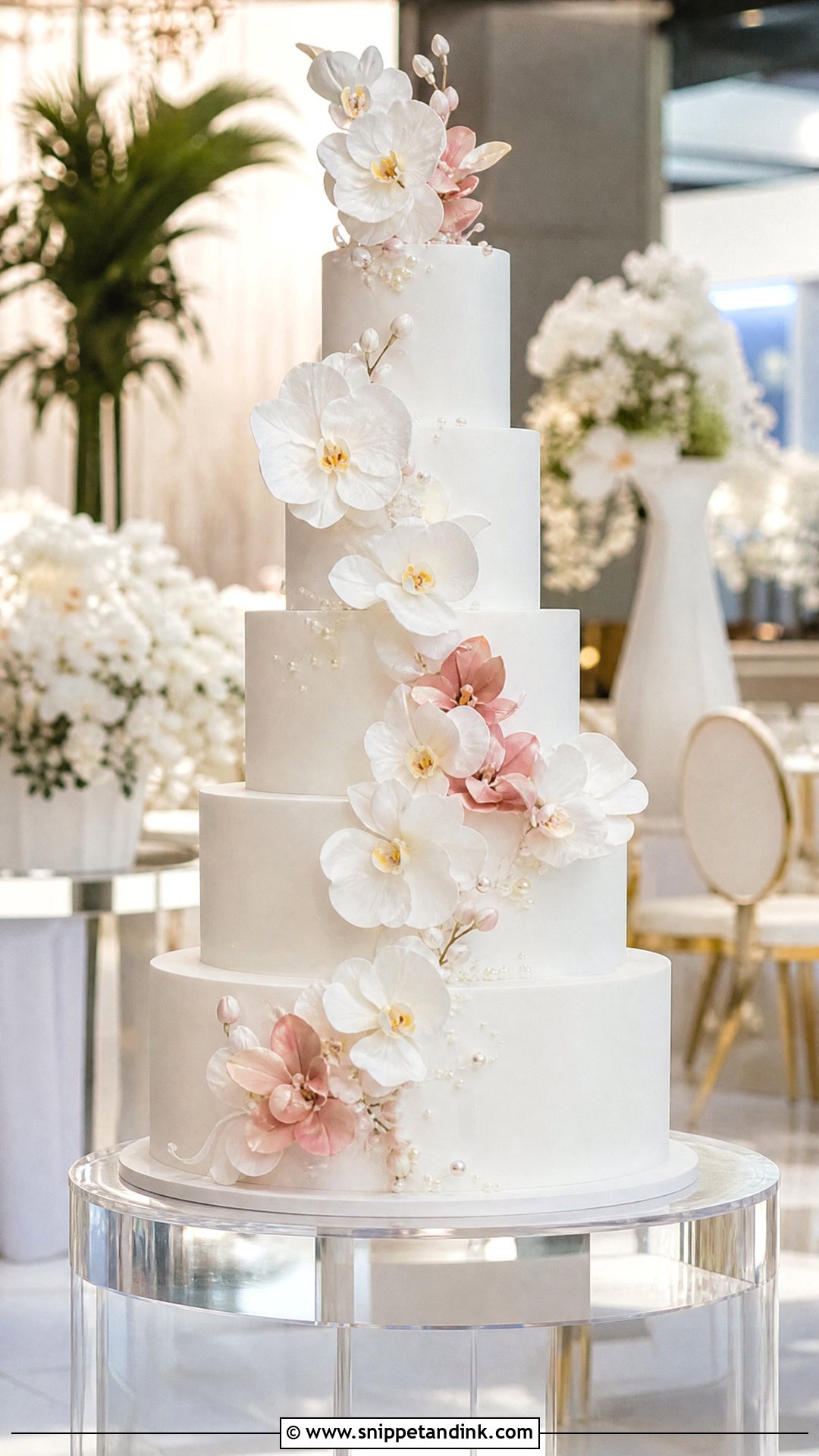
Orchids have a sculptural shape that suits sleek, tall cakes. White feels clean and luxurious; blush, lavender or deep purple adds personality. Hotels, beaches and evening receptions suit them. They can cascade, float between tiers or sit in tight clusters, against smooth fondant or polished buttercream so the flowers stay the focus. A clear acrylic or glossy pedestal suits the look. Sugar orchids are worth considering for heat, since fresh ones bruise and wilt faster than you’d expect on a warm table.
17. Tall Rose Wedding Cake
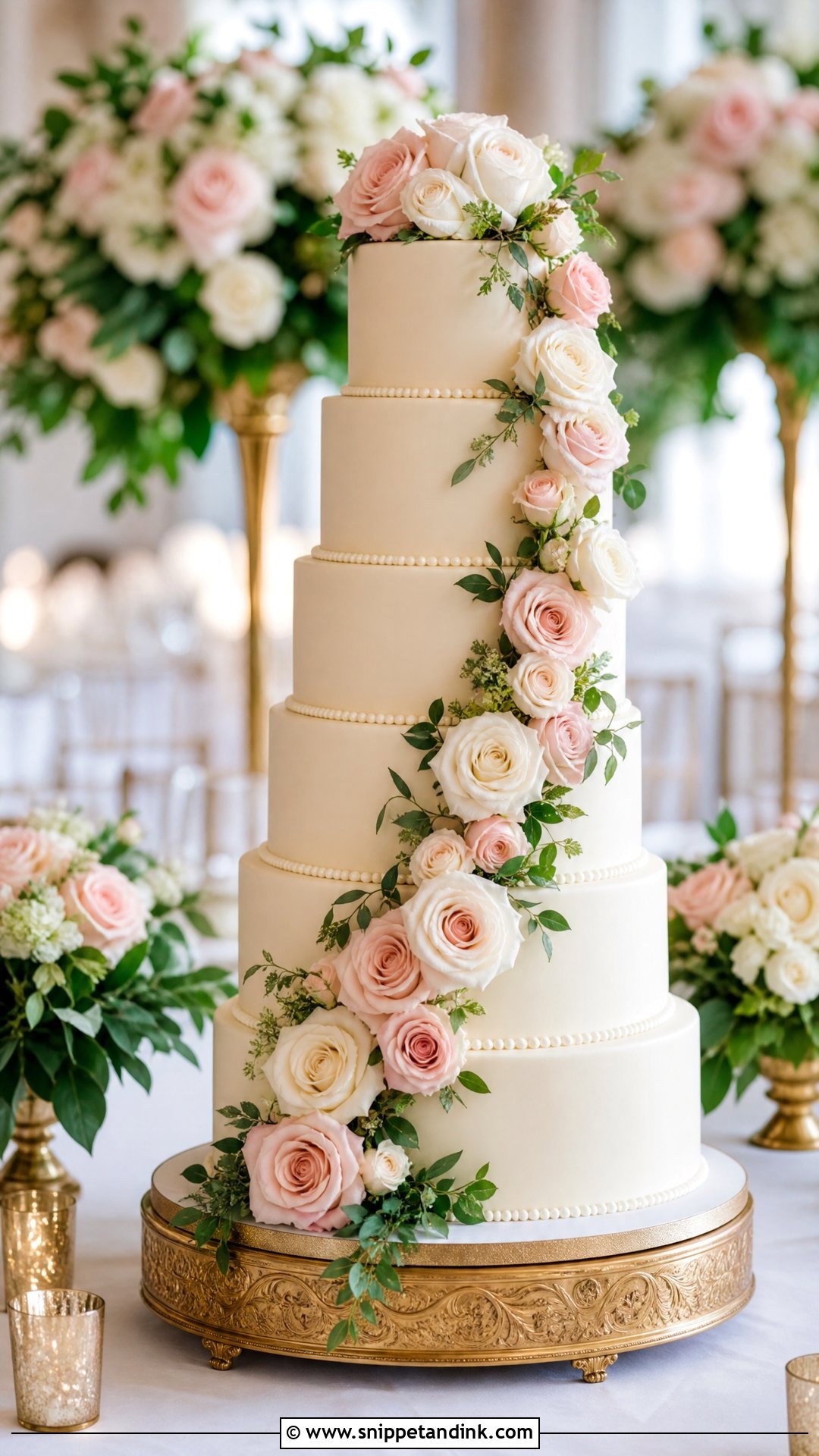
Roses can be fresh, sugar or piped, and the color sets the mood: white is classic, blush is soft, deep red or mauve is dramatic. A full cascade suits a grand cake; small clusters between tiers look more restrained. Roses are the most versatile flower I put on cakes, which is exactly why matching the shade to your bouquet and table flowers matters, or it looks like an afterthought. Ivory frosting, pearls or soft greenery finish it.
18. Tall Boho Wedding Cake
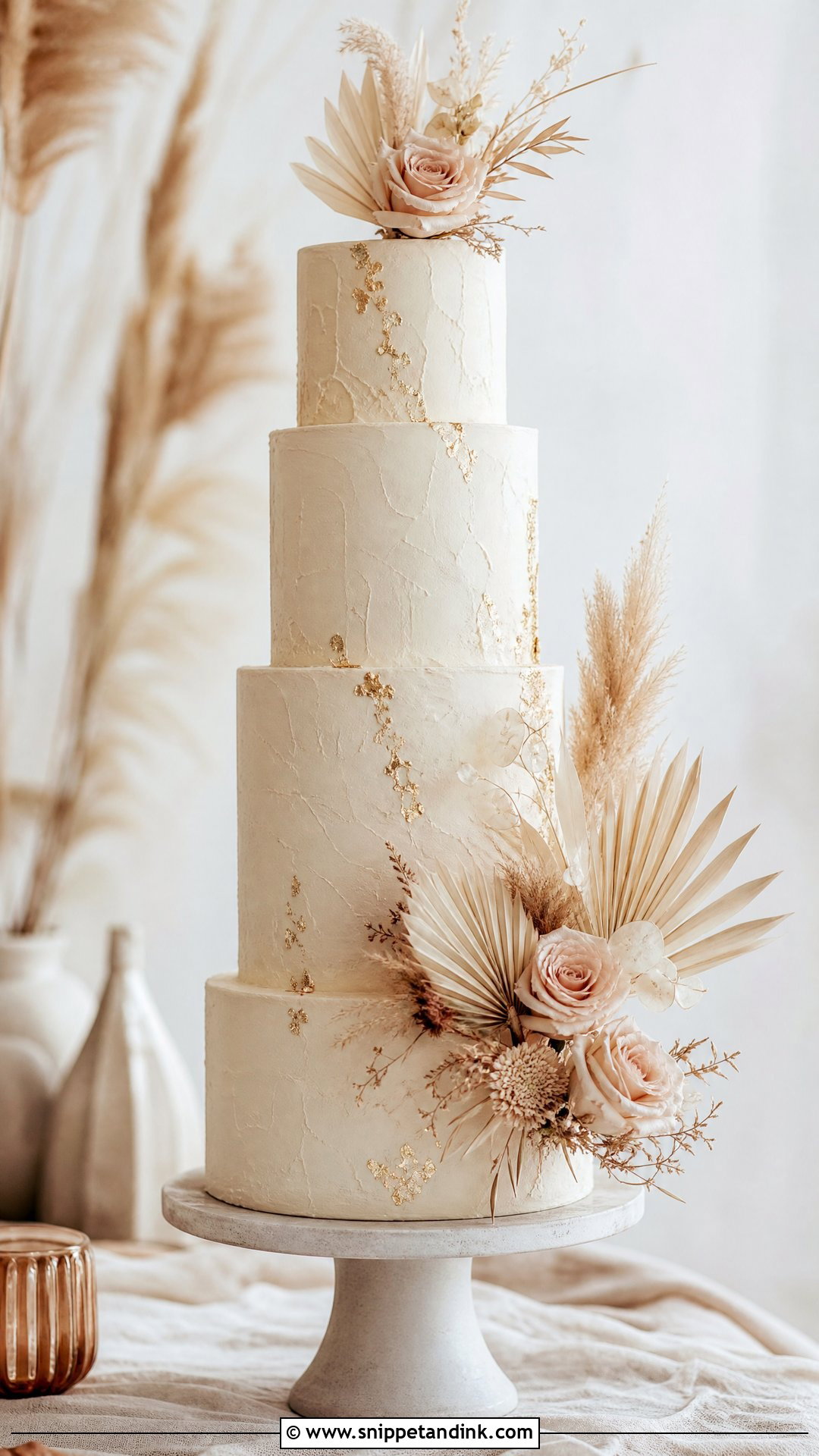
The boho version mixes textured buttercream, dried flowers, pampas, neutral tones and soft movement. Height gives it shape; the natural details stop it feeling formal. Desert, barn and outdoor garden receptions suit it, in ivory, beige, clay, blush or warm taupe. Fresh roses, dried palms, bunny tails and gold flecks add texture. Dried and dyed stems should sit on a barrier or a separate topper, not straight in the frosting. Keep the arrangement airy so the height still shows.
19. Tall Beach Wedding Cake
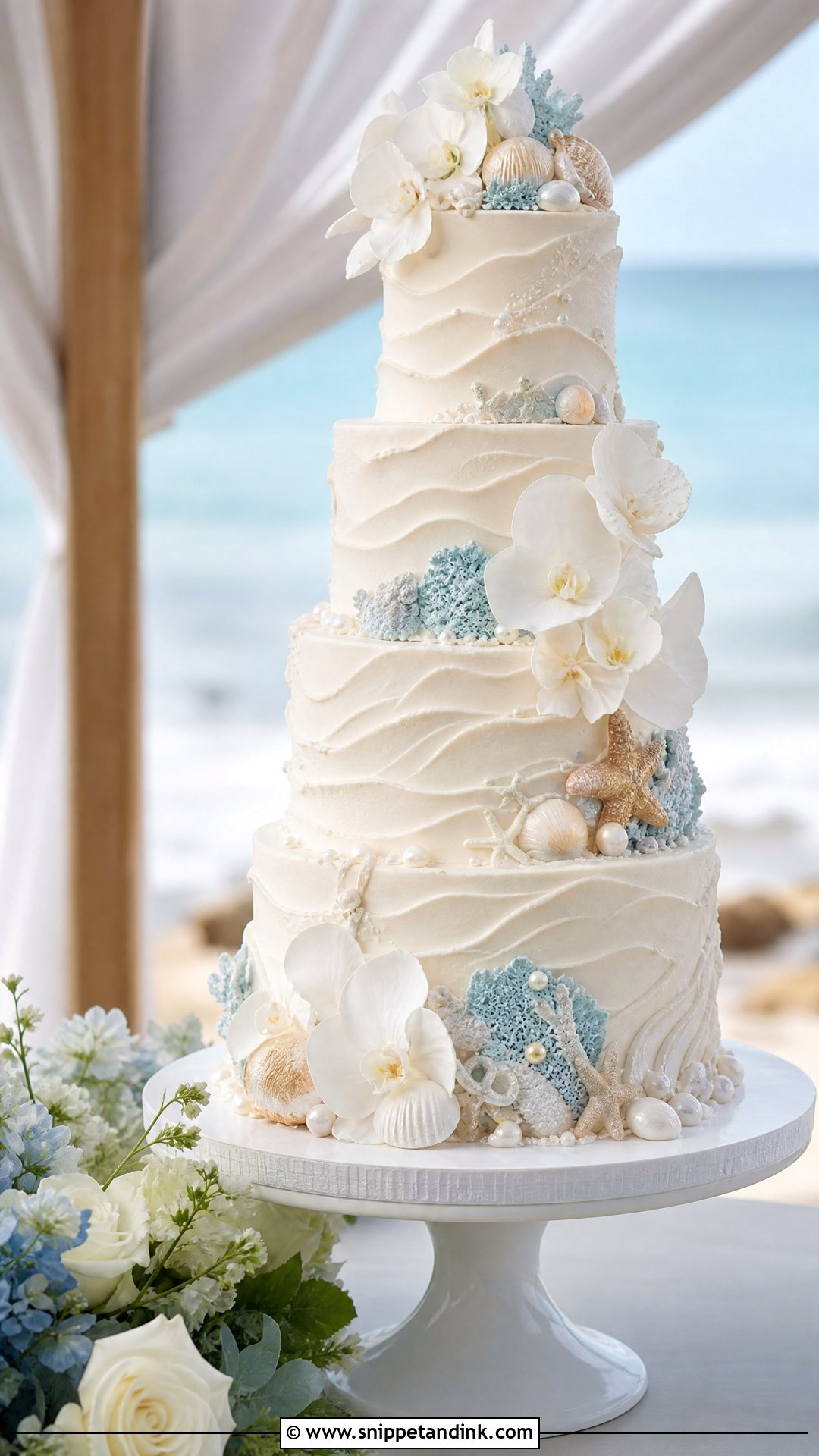
Beach venues are hard on tall cakes, and wind is the risk people forget. Soft ivory frosting, wave-like buttercream, sugar pearls, tropical flowers and sugar shells set the tone, with blue, sand, white or pale coral accents. A tall cake against an ocean view looks the part, but it needs a central support rod, a sturdy table and a sheltered spot, or a gust can tip a top tier. Ask about display timing in heat and humidity. Keep the styling polished rather than themed.
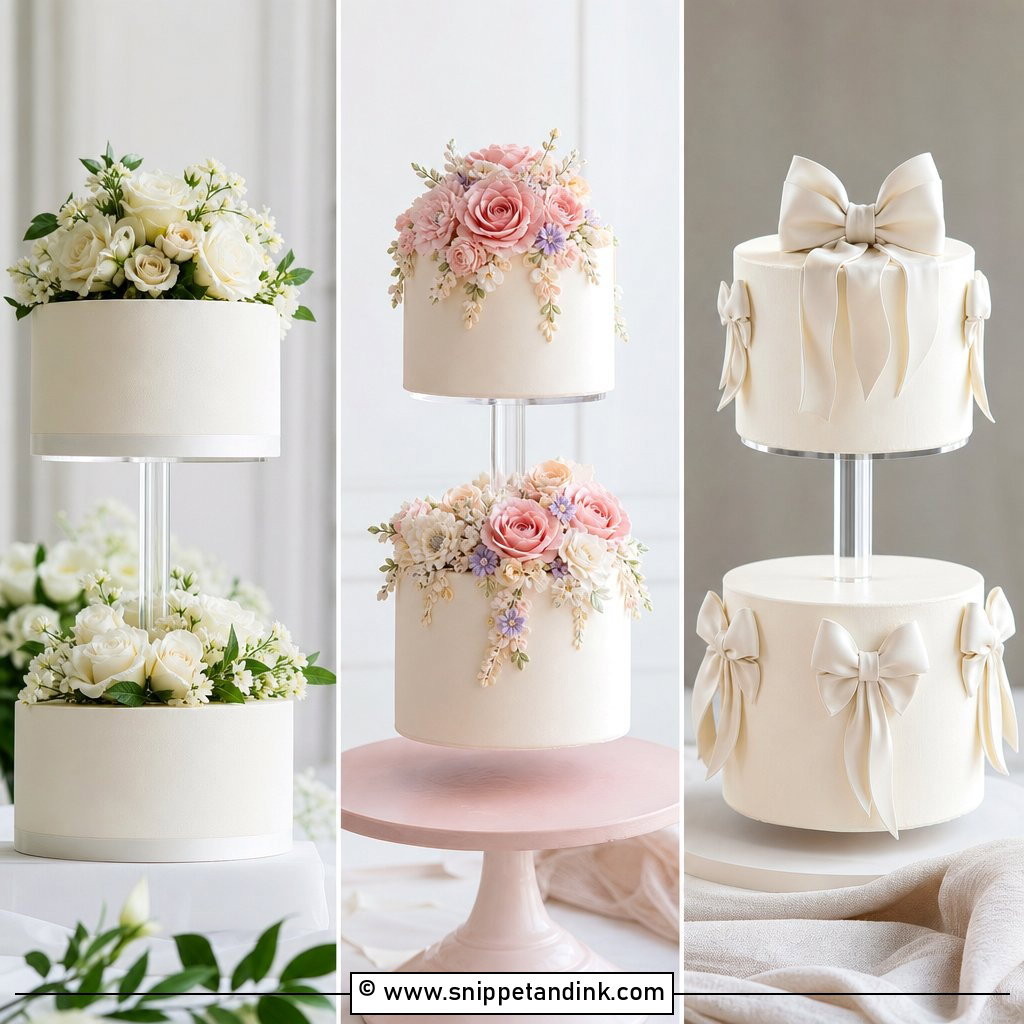

20. Tall Garden Wedding Cake
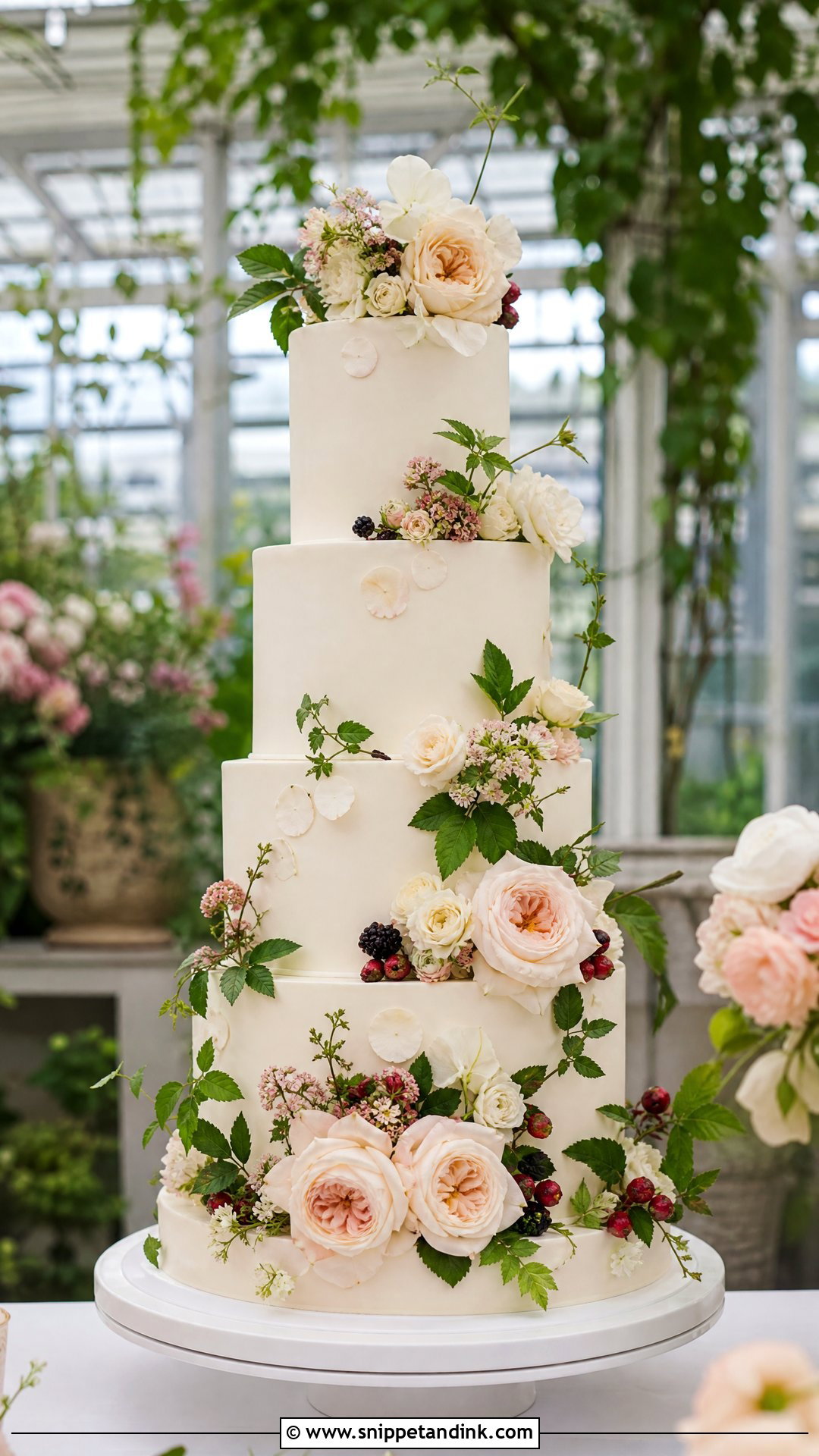
A garden cake should look like it grew there. Start with ivory buttercream or fondant, then add fresh blooms, greenery, berries or sugar petals, climbing like a vine or set in clusters between tiers. Spring and summer weddings, greenhouses and tents suit it. On a tall cake, gaps between arrangements matter: they let the height read instead of turning the tower into one green blob. Lemon, vanilla, almond and berry flavors fit.
21. Tall Minimalist Wedding Cake
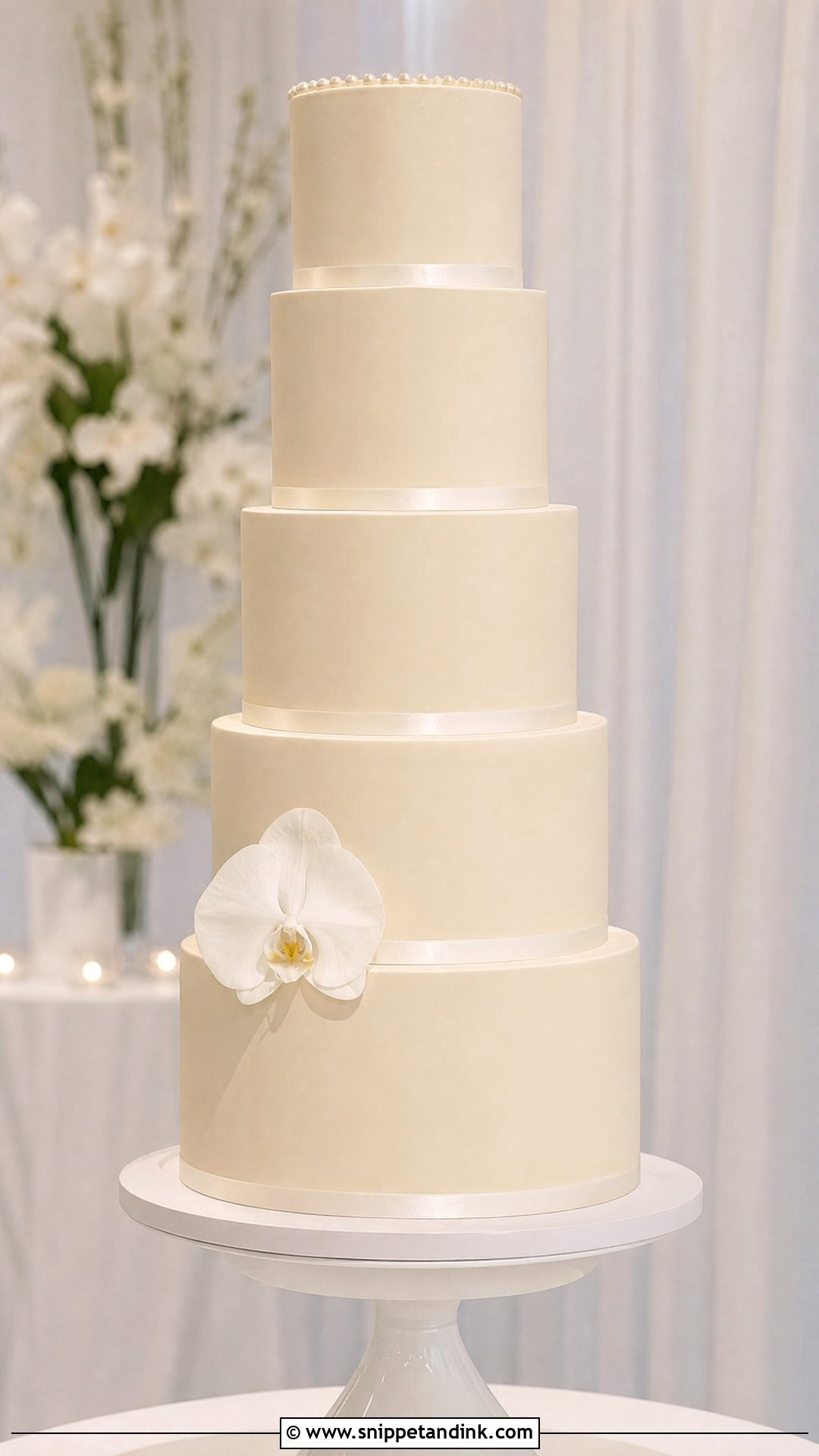
Simple can still be dramatic when the cake is tall. Smooth white or ivory, sharp edges and one refined accent, such as a sugar flower, thin ribbon, small monogram or pearl border, is usually enough. Modern venues, galleries and small weddings suit it. The shape is easy to read in photos. The risk is that it looks plain, so proportions, finishing and the stand have to be perfect; this is the design where I’d look hardest at a baker’s unedited work.
22. Tall Colorful Wedding Cake
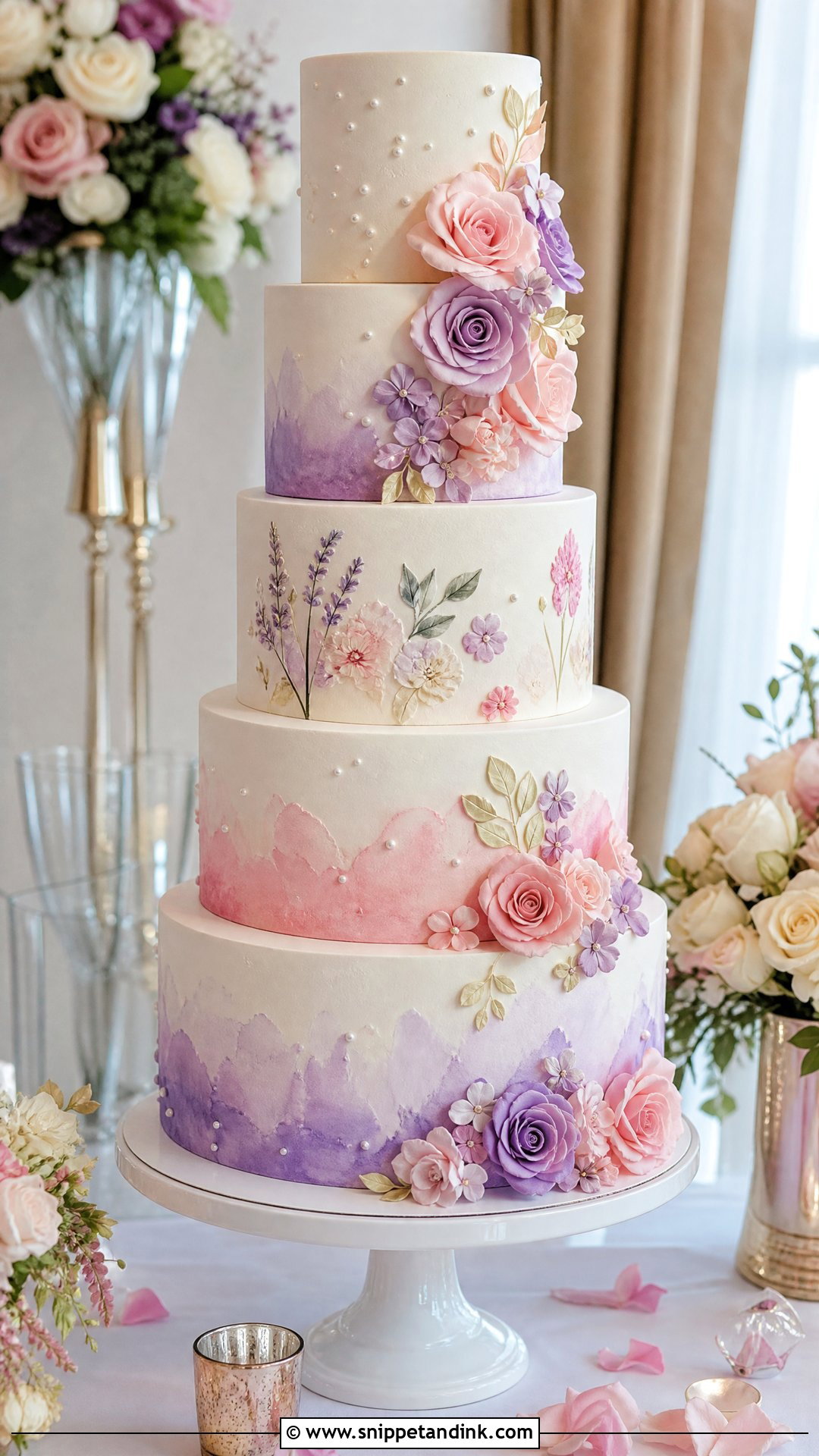
Color gives a tall cake joy and a clear visual moment. Soft blush, lavender, sage and powder blue feel romantic; coral, emerald, terracotta and berry feel bold. Pull shades from your flowers, stationery or decor. Ombre tiers, painted details, colorful sugar flowers or one statement color all work. I’d cap it at two or three colors, since more than that on five tiers starts to look like a birthday cake. Creative weddings and summer receptions suit it.
23. Tall Fruit Wedding Cake
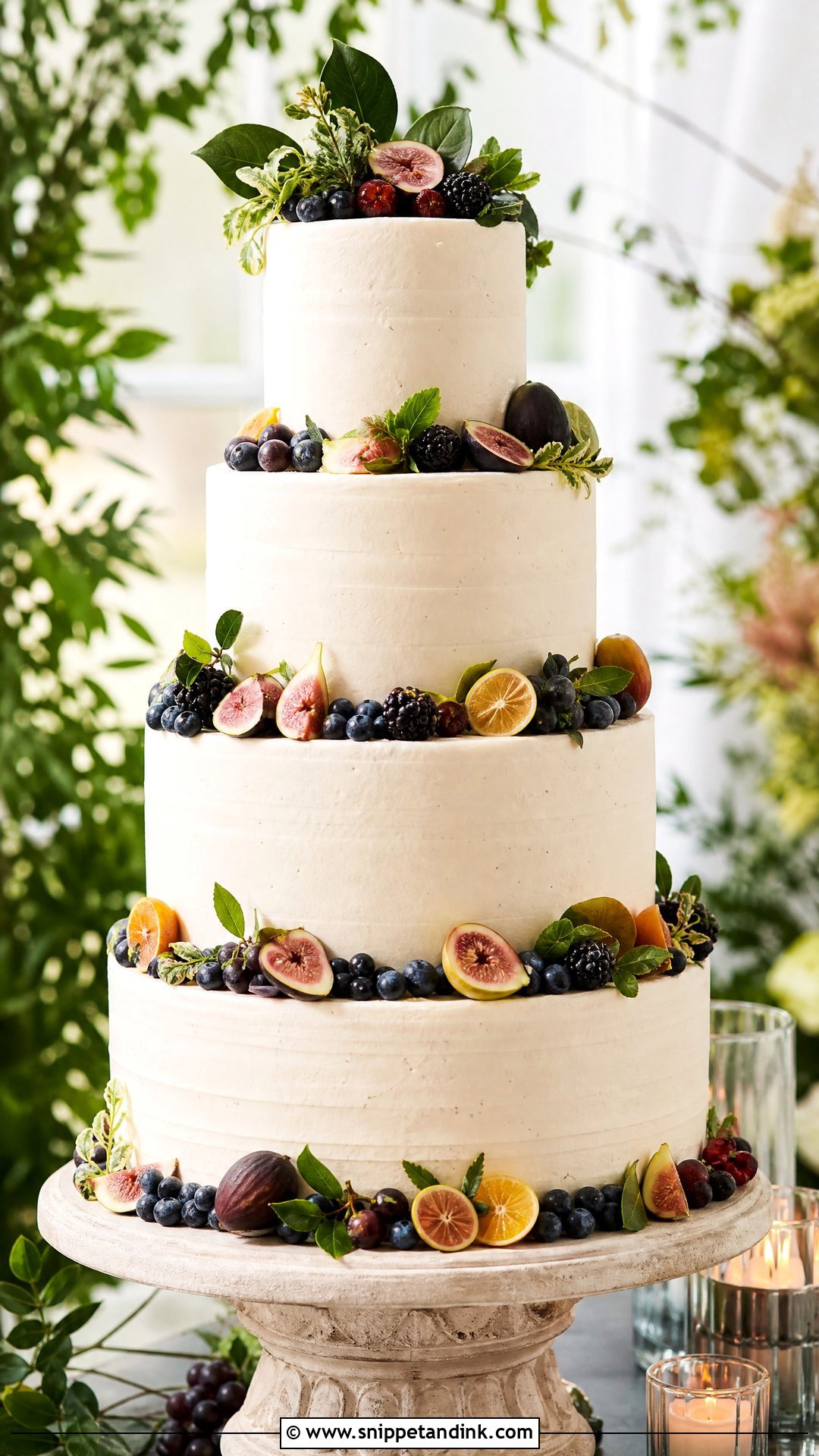
Fresh fruit makes a tall cake look lush and seasonal. Berries, figs, pears, citrus, grapes and cherries add color and texture over smooth buttercream, whipped frosting or a light texture. A dusting of powdered sugar or a thin glaze finishes it. I place cut fruit at the venue, because juice weeps into frosting and heavy figs or pears can slide off a tall tier during the drive. Garden, vineyard, summer and brunch weddings suit it. Pick fruit that’s actually in season.
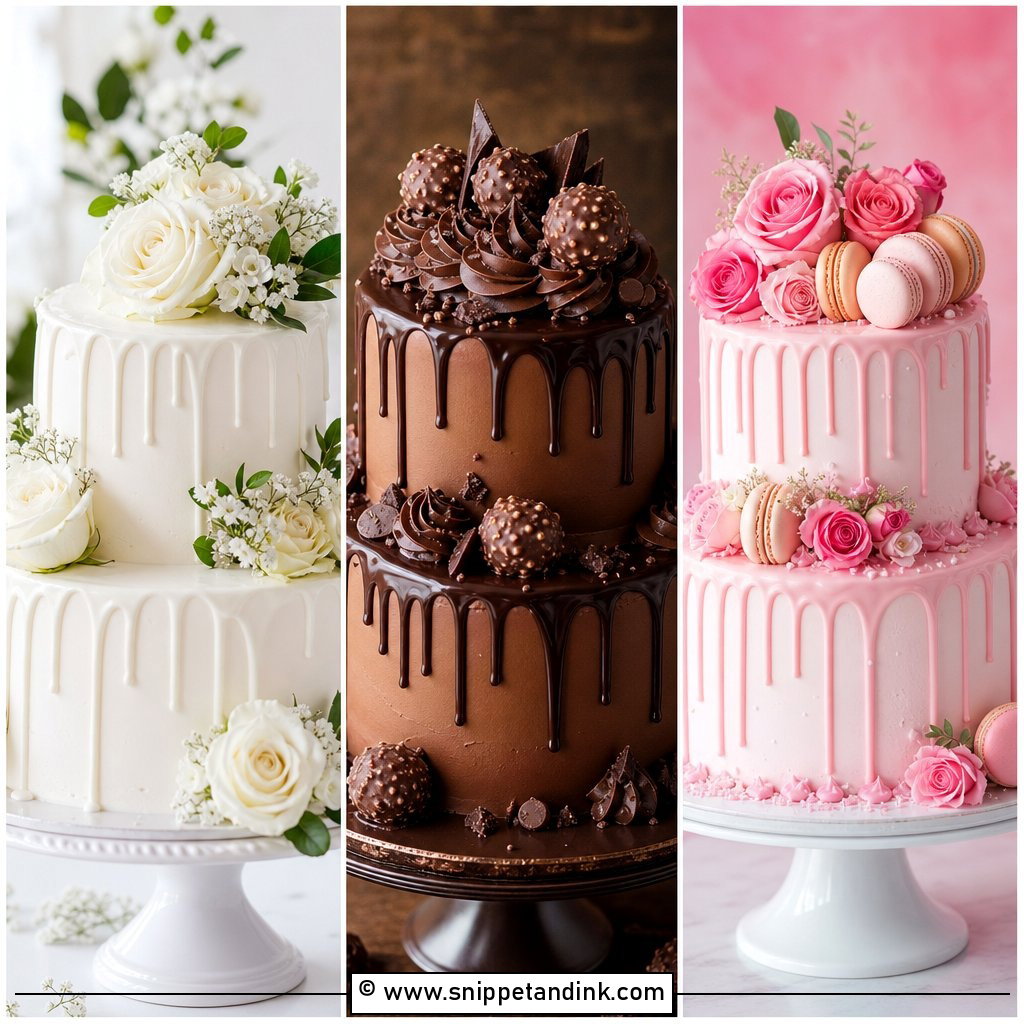
24. Tall Chocolate Wedding Cake
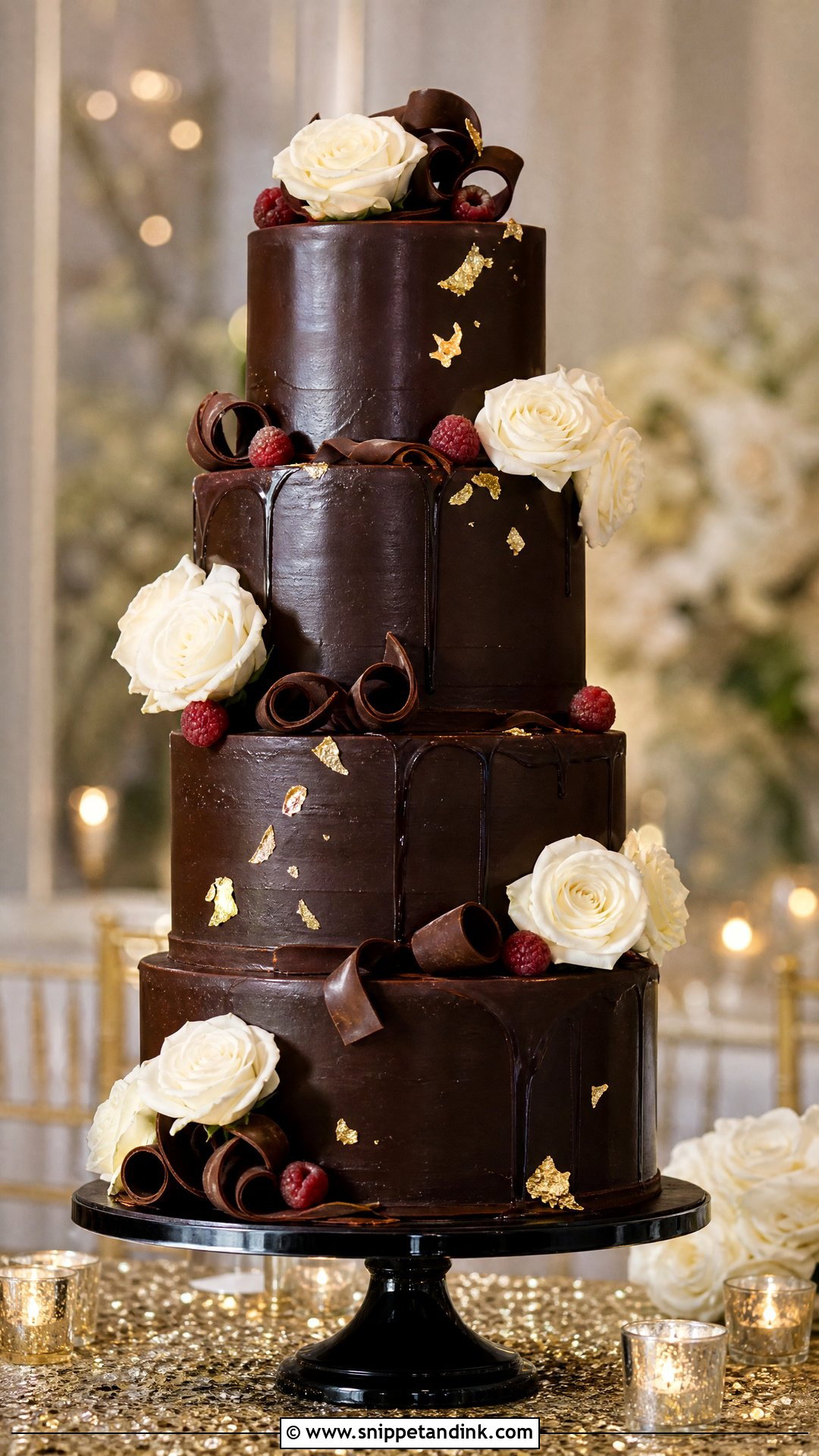
A tall chocolate wedding cake gives guests something richer than the usual white cake. The outside can be dark ganache, chocolate buttercream or cocoa-toned fondant. Ganache is my favorite base for tall chocolate cakes because it sets firm and holds sharp edges far better than buttercream. White flowers, gold accents, berries, curls or a glossy drip finish it. Raspberry, espresso, caramel, vanilla, hazelnut and cherry fillings all pair well. Evening, autumn and indoor receptions suit it best.

25. Tall Champagne Wedding Cake
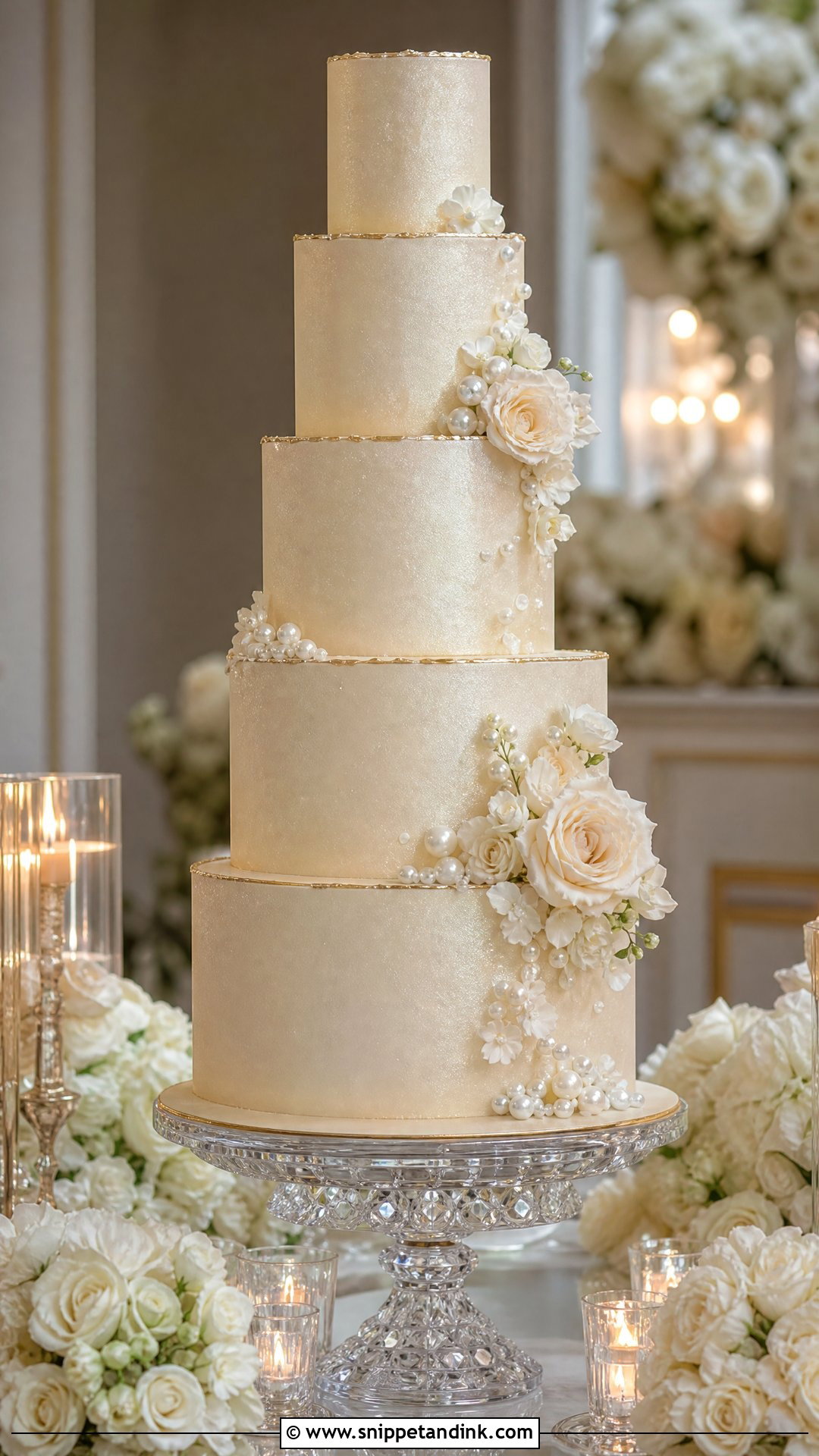
Champagne sponge is light and buttery with a faint sparkling note, and the decoration usually follows its color: champagne, ivory, pearl or pale blush. Satin-smooth buttercream, edible shimmer, sugar flowers, pearls or gold edging give a polished finish. Height makes it feel celebratory without loud decoration. Formal weddings, ballrooms and evening parties suit it. The wine flavor is subtle once baked, so I usually pair it with strawberry, raspberry, almond or vanilla fillings to give it some backbone.
What Holds a Five-Tier Cake Upright for Six Hours
A tall cake is a small building, and sponge isn’t a structural material. Every tier sits on its own cake board, and the tier below has dowels or straws pushed through it, cut to exactly its height, so the weight goes down the supports instead of crushing the sponge. On anything tall, I also run a central rod through all the tiers into the base board, which stops the tower shifting if the table gets knocked.
Most tall cakes travel in pieces and are stacked at the venue. That means your baker needs access, a little time before guests arrive and a cool spot to work. Tell them about stairs, long walks from the loading area and whether the room will be warm during setup.
Where the table goes
- On a sturdy, level table, not a folding one that bounces. Check it by leaning on the corner.
- Away from the dance floor, where bass and dancing guests shake the floor all evening.
- Out of foot traffic paths and away from doors that let in a draft.
- Clear of direct sun and heaters, especially with buttercream.
Matching the Height to the Room and the Guest List
Scale works both ways. A five-tier cake can look small in a ballroom with high ceilings and swallow a cozy restaurant room. I like to know the ceiling height, the backdrop behind the cake and whether guests will see it from a seated position across the room. A tall pedestal in a big room is often better than an extra tier.
Then do the honest maths with your baker on servings. Tall cakes often give more slices than you need, especially when other desserts are offered. If the height is mainly for the photos, swap the extra tiers for display tiers and put a sheet cake in the kitchen. The cake you cut still looks the same, and your caterer will thank you for faster serving.
How Tall Should Your Cake Be?
A tall cake shapes how your reception looks and gives you one of the most photographed moments of the night. Classic white tiers, vintage piping, fruit, dark chocolate, florals or modern sculpture can all go tall, as long as the height matches your venue and season. Ask your baker four things: how the cake is supported, how long it can be displayed, how many servings it really gives, and which tiers will be real. Mixing display tiers with kitchen cake is the easiest way to get the height without paying for cake nobody eats.
You'll Like These Ideas:








Leave a Reply