
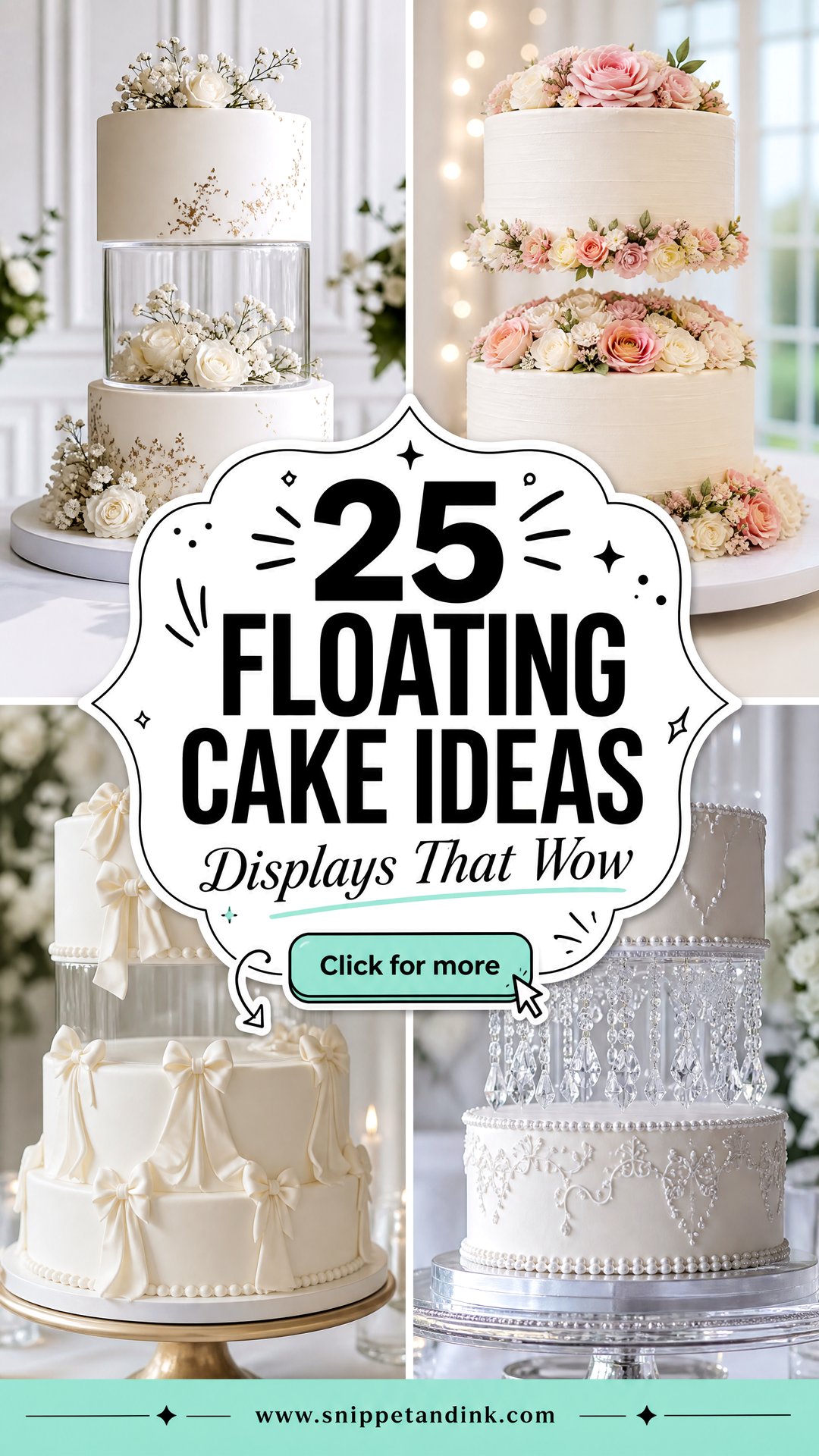
A floating cake is really a piece of engineering dressed up as a dessert. The tiers look as if they hover, but something solid is always carrying the weight: a clear acrylic spacer, a floral column, or a steel rod hidden inside the stand. Get that structure right and the cake gives a reception table real height without looking heavy. Get it wrong and the top tier leans by the speeches. The designs below range from soft garden flowers to sharp modern tiers, and for each one I’ve noted what holds it up and where it needs care.
What Is Really Holding the Top Tier Up
Cake is soft, and a tier of it is surprisingly heavy. Nothing in a floating design rests on sponge alone. Every raised tier sits on a cake board, and that board sits on dowels or a spacer that passes the weight straight down to the board beneath, and eventually to the stand.
- Acrylic spacers sit on a ring of dowels and are almost invisible. They suit two and three tiers.
- Floral columns are usually a hidden support wrapped in flowers, so the flowers themselves carry no weight.
- Tall designs need a central rod fixed into a heavy base, running up through each tier so nothing can slide.
- Truly gravity-defying cakes, with tiers tilted or off-centre, rely on custom steel frames and cost far more.
This is why most floating cakes are delivered in pieces and assembled at the venue. Ask your baker how theirs is supported and how long they need on site.
1. Floating Wedding Cake With Acrylic Separator
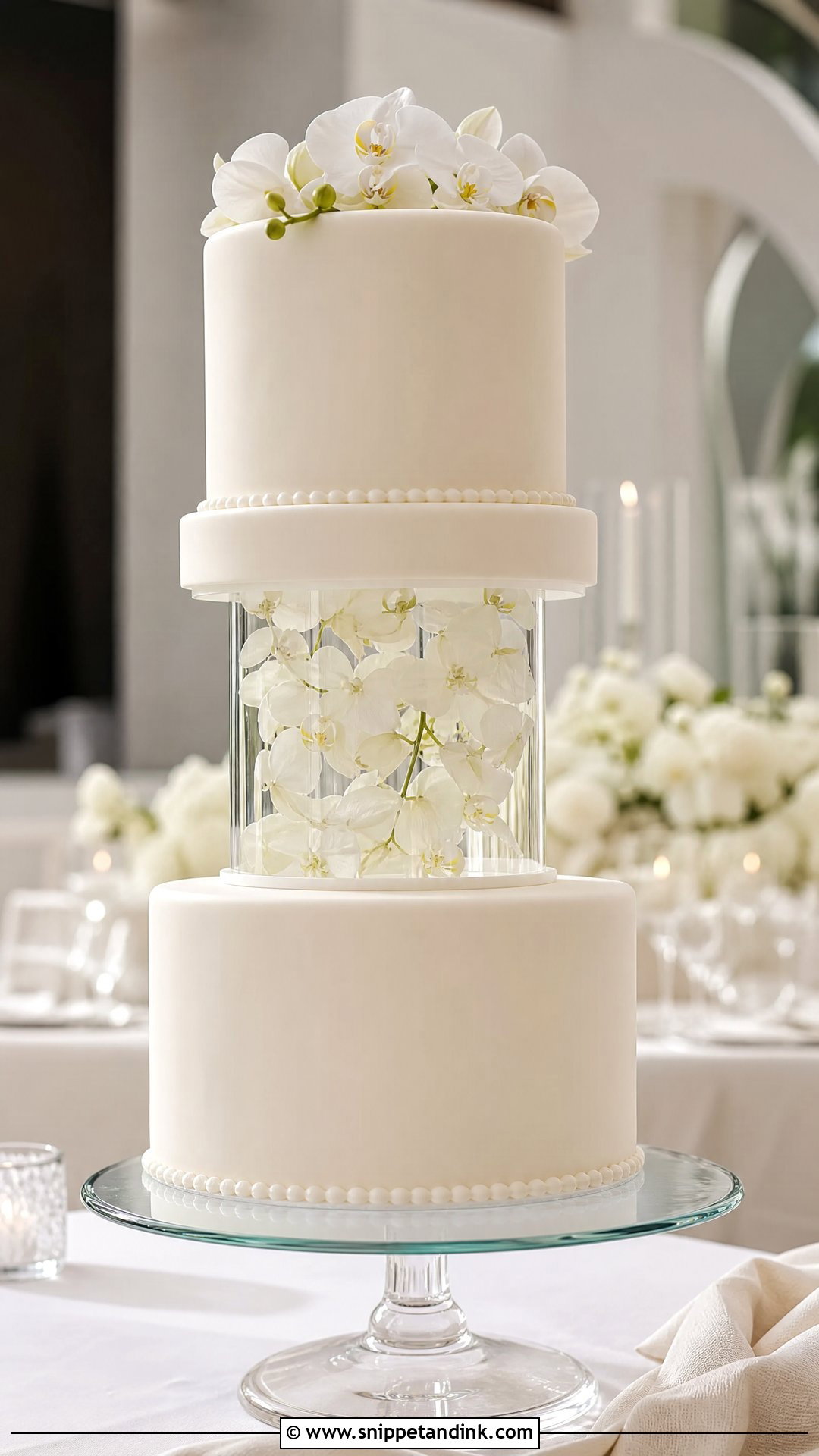
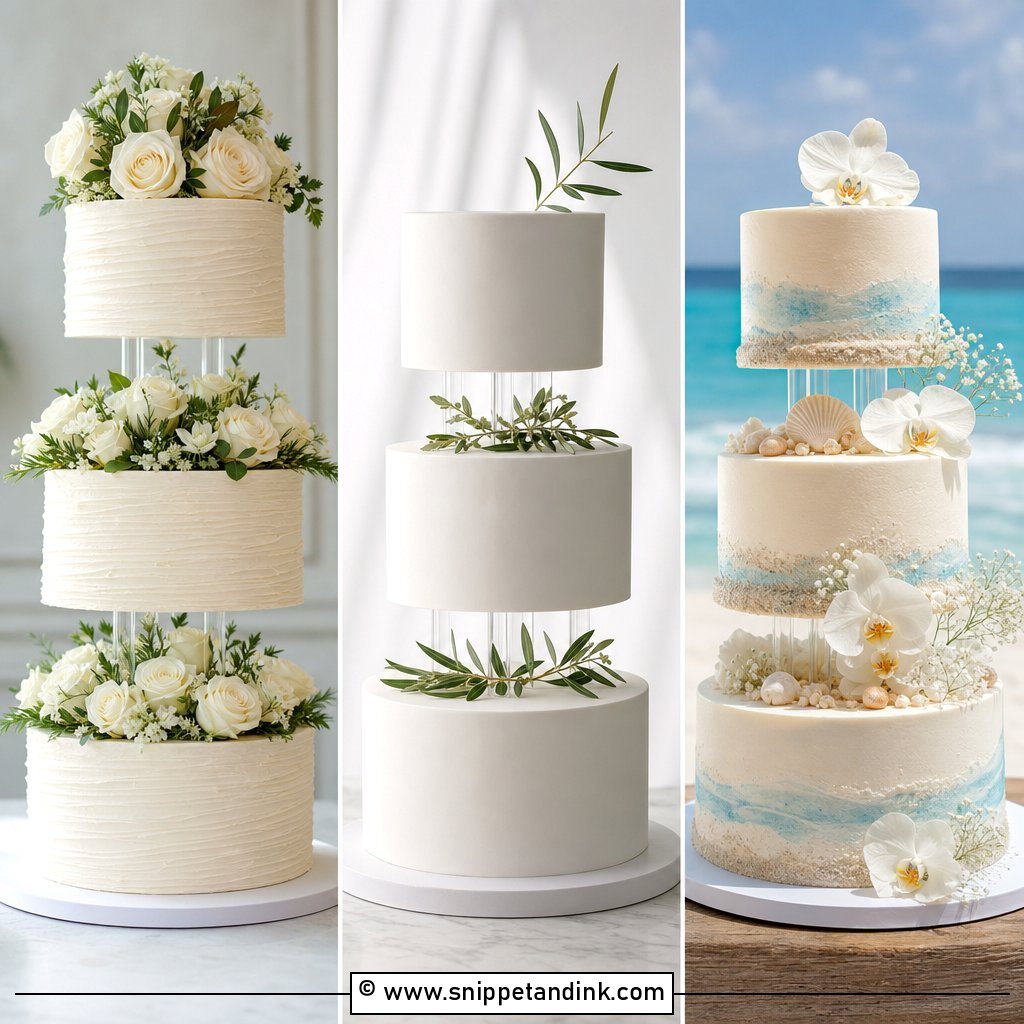
Clear spacers are the simplest route to a “tier in the air” look, and an acrylic separator almost vanishes in photos. The upper tier sits on its own board, which rests on the acrylic, which rests on dowels driven into the tier below. Fill the gap with orchids, roses or tiny lights if you like, or leave it open. Smooth fondant suits this best, since any frosting wobble shows right next to a perfectly clear edge. Square tiers with sharp edges make it look especially modern.
2. Floating Wedding Cake With Fresh Flowers
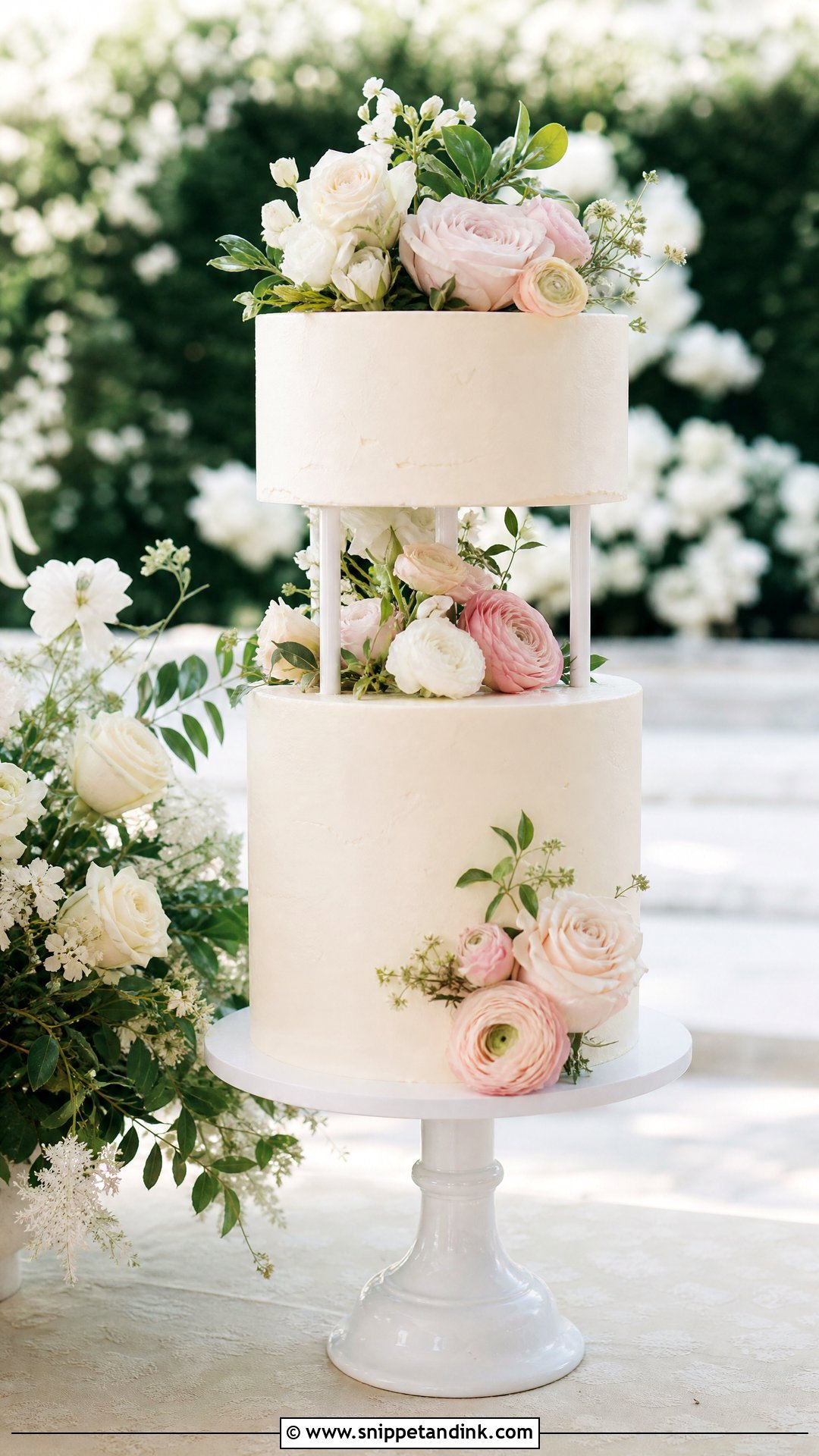
The open section between tiers gives your florist space to work, and blooms there look airy rather than packed against icing. I ask that any stem near the cake is wrapped and that varieties like hydrangea stay off the frosting altogether, since not every popular wedding flower is food safe. Roses, ranunculus and sweet peas sit well in the gap. Repeating the bouquet colours ties it to the day. A plain ivory cake keeps the floating effect easy to read.
3. Floating Wedding Cake With White Roses
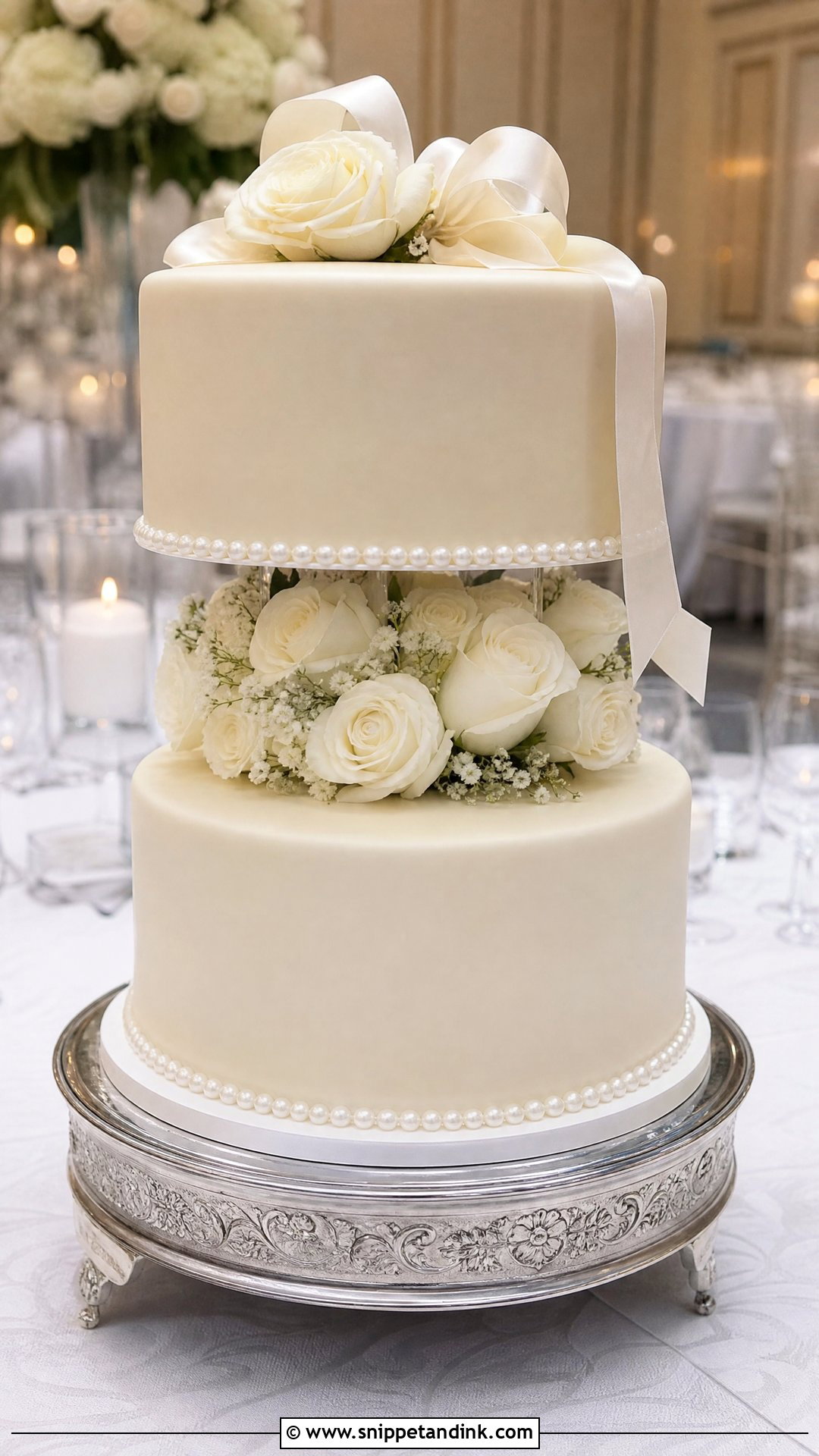
White roses keep a floating cake feeling bridal without fighting the structure. I tuck them into the gap so they hide the edge of the spacer, or run a small ring around the base of each tier. Fresh white roses bruise brown at the edges when handled, so the florist should place them on the day rather than the baker the night before. Round tiers in clean buttercream suit them. Satin ribbon and a silver stand finish a formal table.
4. Floating Wedding Cake With Gold Details
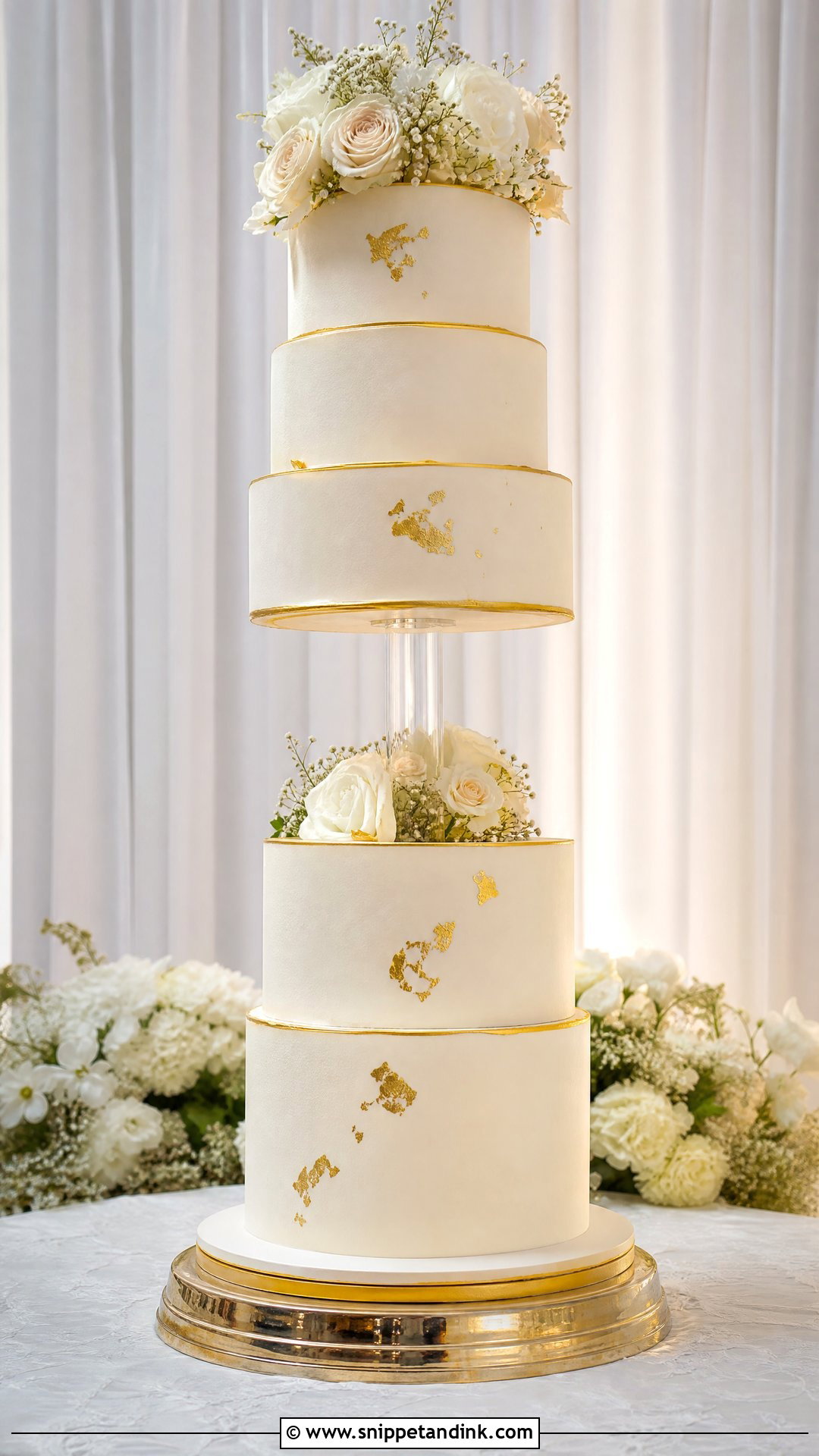
Gold works best as a thin line: painted rims, a little metallic leaf or a brushed monogram on the front tier. The gap already adds drama, so I keep the gold restrained; too much shine and the cake starts to look like a trophy. Ivory frosting with champagne flowers softens it, while white tiers with stronger metallic rims look bolder at an evening hotel reception. Ask your baker to confirm the gold is edible and not just a decorative lustre.
5. Floating Wedding Cake With Pearl Details
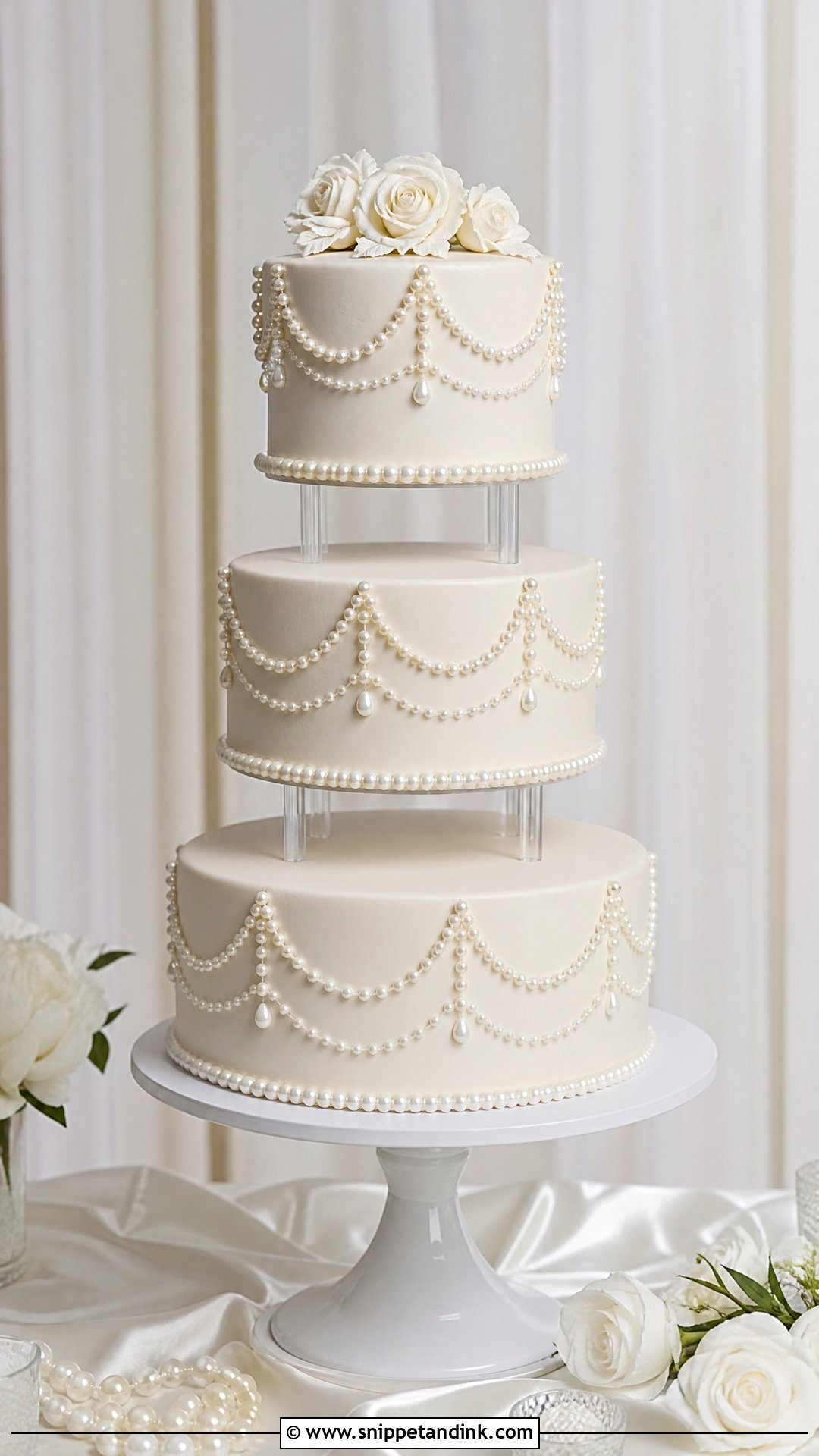
Edible pearls catch light in photos and give a smooth cake texture without colour. They can be scattered, set in borders or draped in swags. On a floating design, I keep pearls off the very edge of each tier, because that’s where the board and spacer meet and pressure can pop them loose during assembly. Ivory, blush and pale blue all suit pearls. Pair them with a satin bow or white roses for a vintage feel.
6. Floating Wedding Cake With Buttercream Flowers
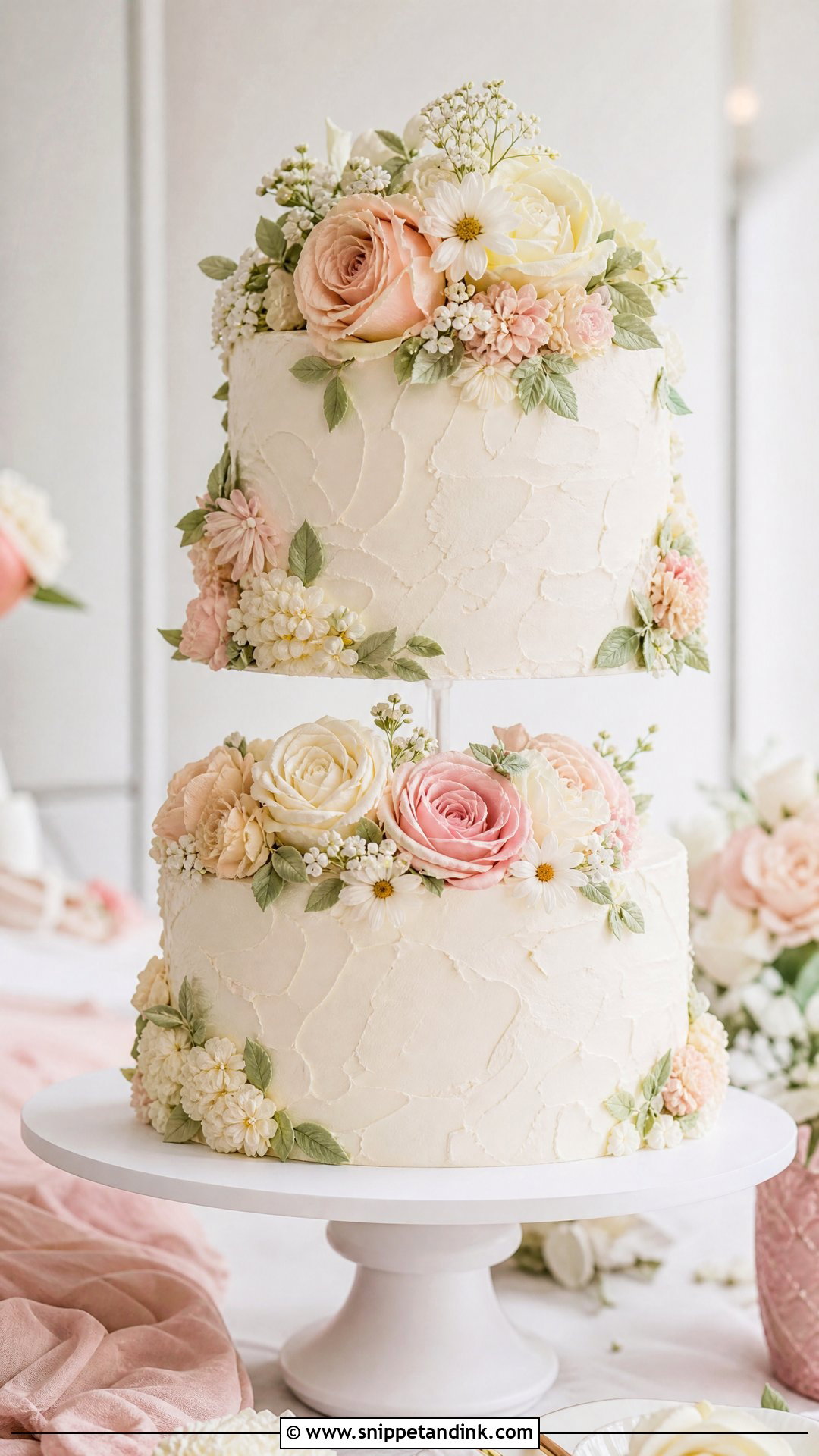
Piped buttercream flowers are entirely edible and match the cake’s flavour. Roses, peonies and small wildflowers can frame the floating tier. The catch is temperature: buttercream softens fast in a warm room, and a floating cake has more exposed edges than a stacked one. I deliver these chilled, assemble quickly, and ask the venue to keep the cake away from windows and heaters. Pastels suit spring; creamy white suits a classic reception.
7. Floating Wedding Cake With Cascading Flowers
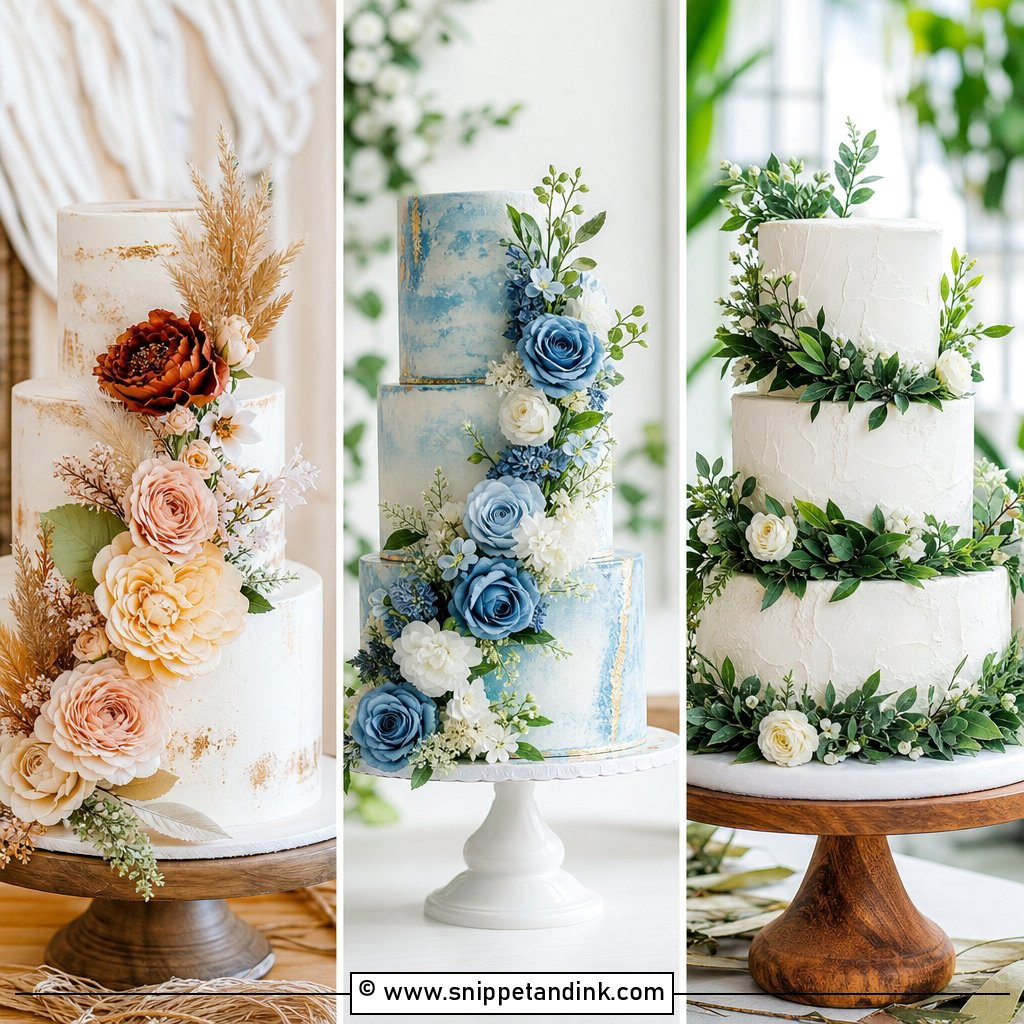
A cascade starts at the top, passes through the floating gap and trails down the bottom tier, which links the tiers visually so the cake doesn’t look disconnected. The flowers should follow one curve rather than cover the whole front, or guests can’t see the float at all. Roses and orchids feel formal; wildflowers suit a relaxed outdoor wedding. Wire and tape every stem in the cascade, since gravity pulls on it the whole evening.
8. Floating Wedding Cake With Greenery
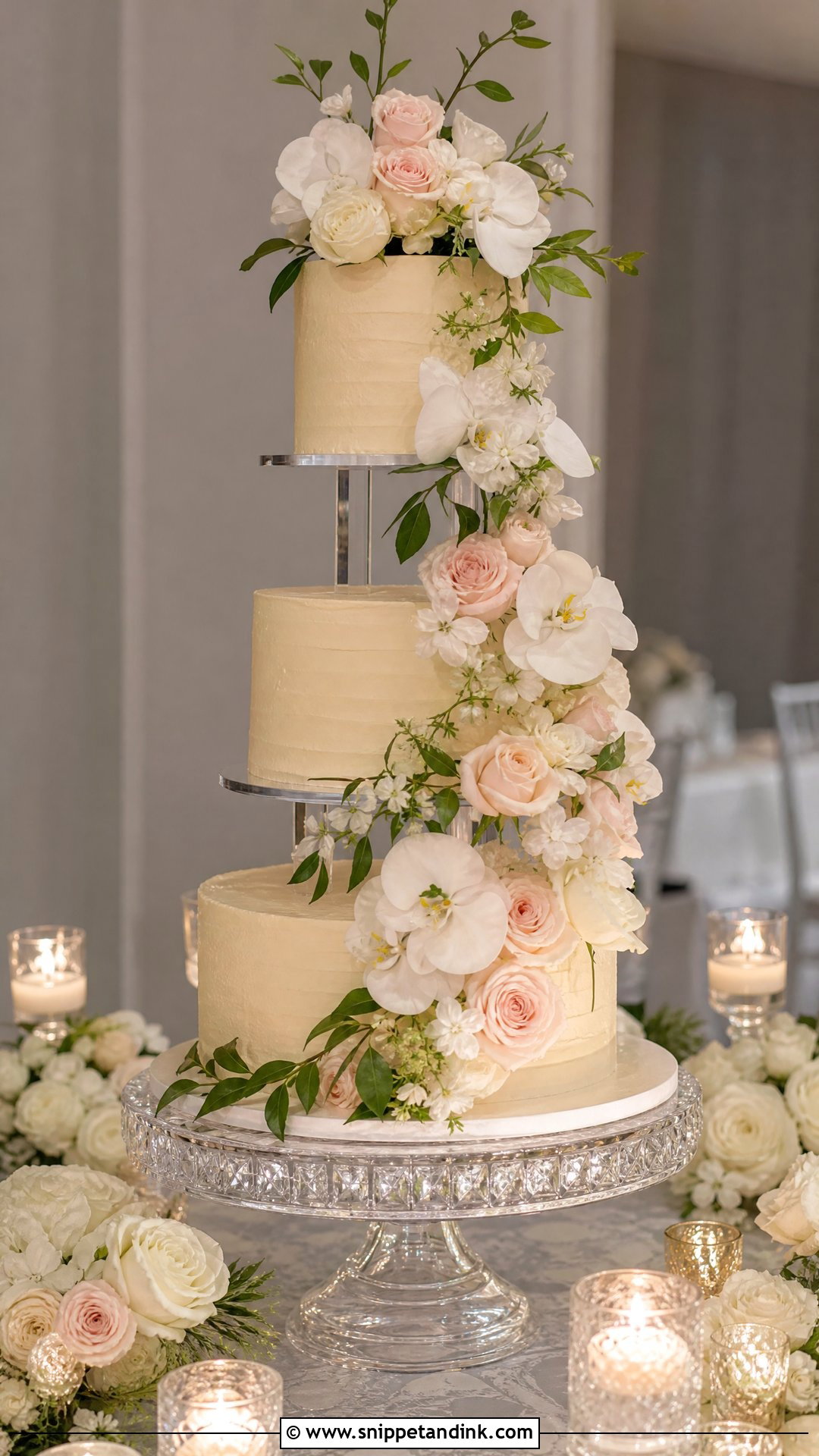
Greenery is my favourite way to hide an acrylic spacer when a couple wants the support invisible. Eucalyptus, olive branches and ruscus tuck around the gap and soften the clear edges. Eucalyptus does shed a strong scent and oils, so I keep it on the board, not pressed against frosting. Ivory buttercream with a subtle texture lets the leaves stand out. It sits naturally at a barn, vineyard or garden venue.
9. Floating Wedding Cake With Orchids
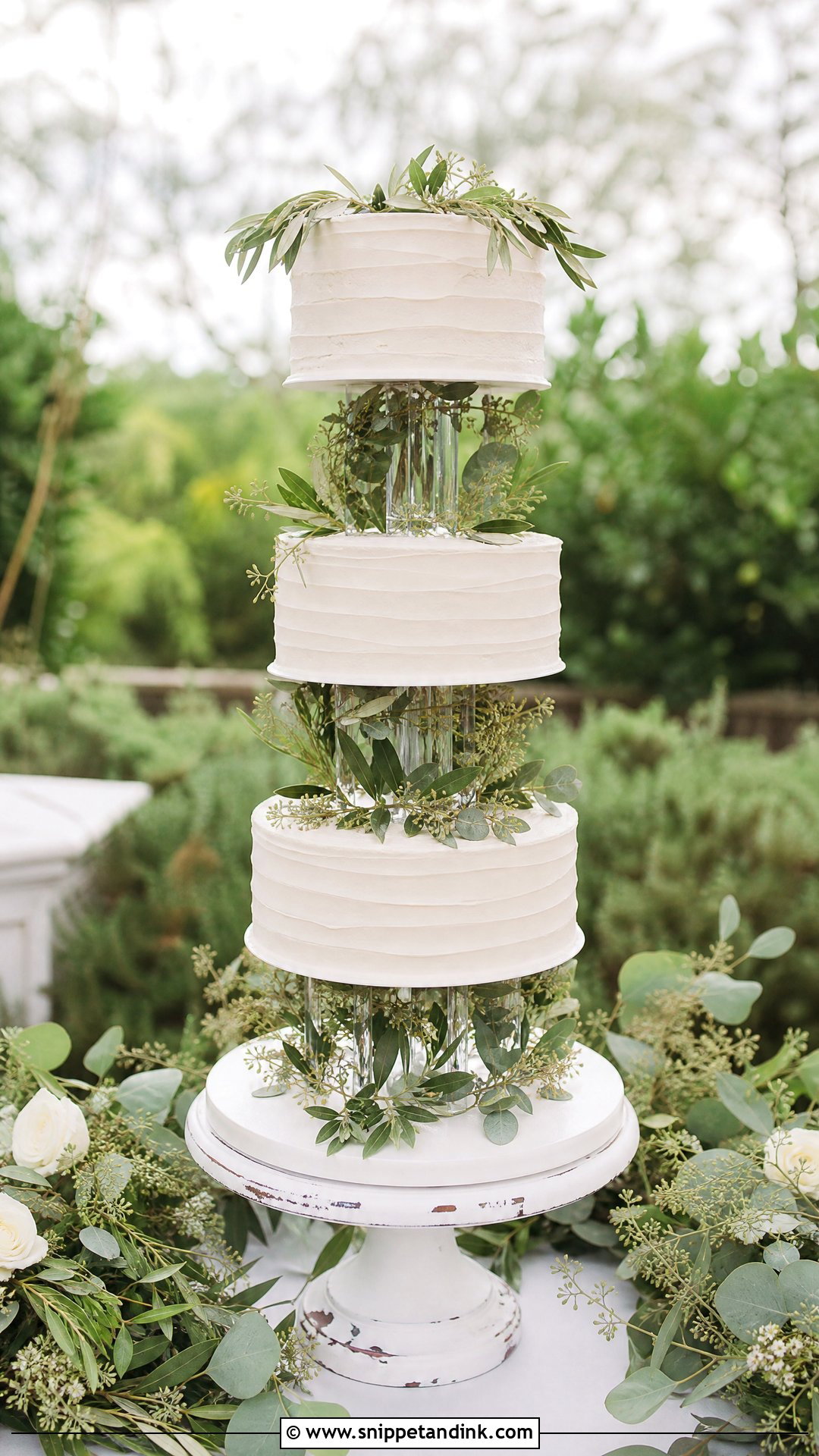
Orchids hang and curve naturally, so they look right around open space. White orchids give a clean luxury look, while blush or pale yellow add colour without noise. They’re sculptural, so you need very few. Sugar orchids are a good alternative because fresh phalaenopsis petals can bruise when pressed against a cake. Smooth fondant and tall tiers suit them best.
10. Floating Wedding Cake With Baby’s Breath
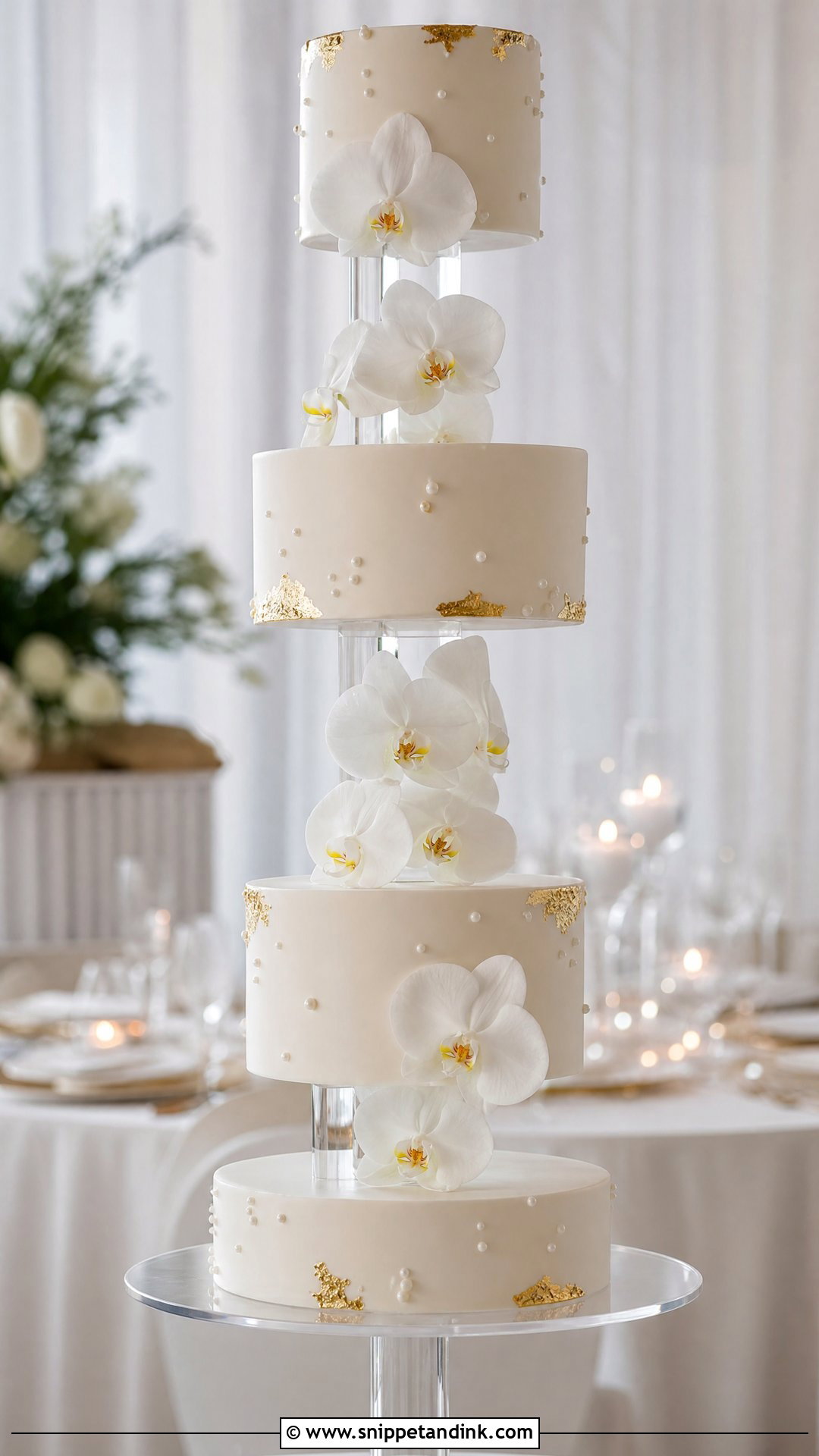
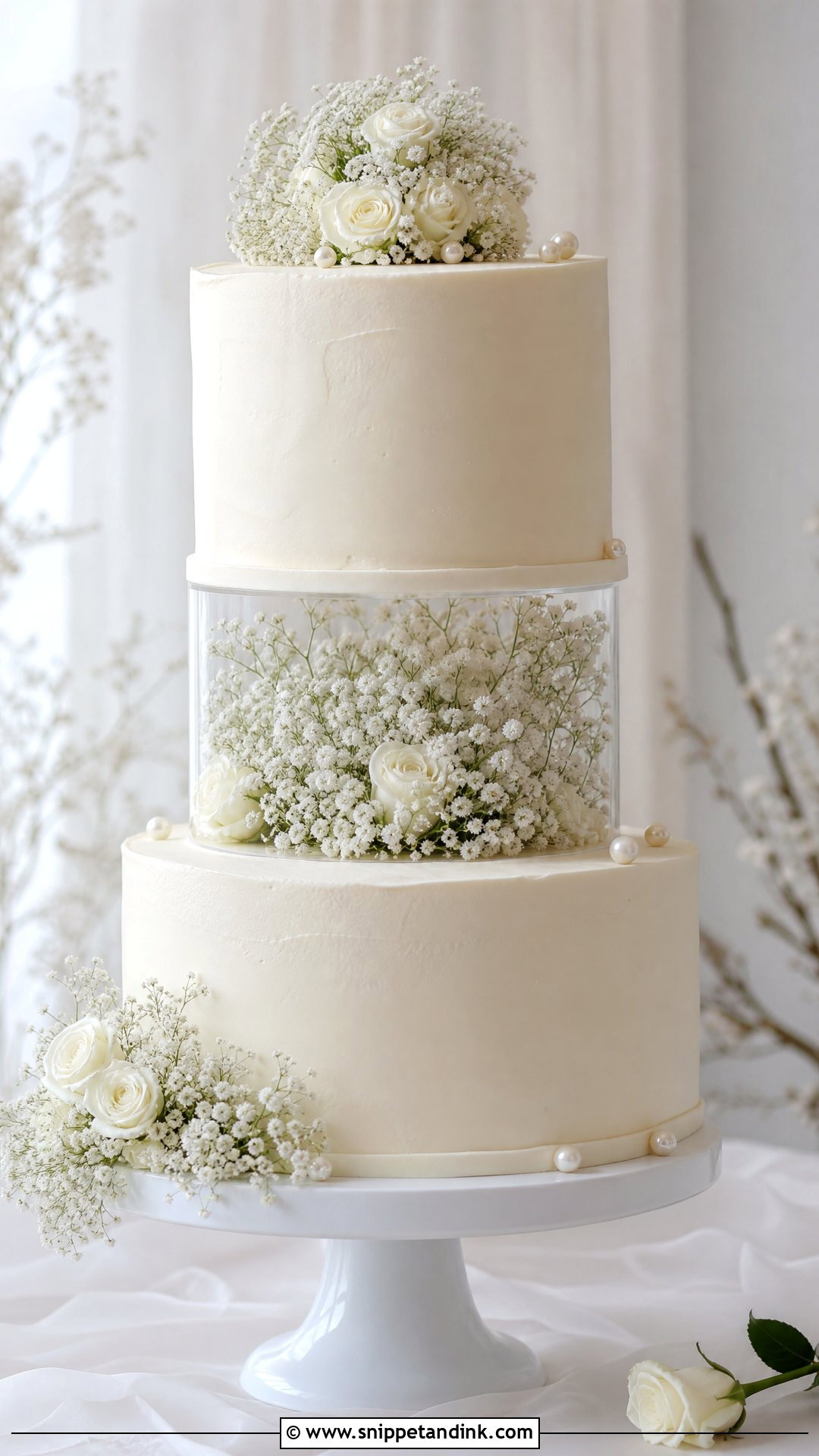
Baby’s breath fills a gap with almost no visual weight, which is why it’s popular inside acrylic separators. I’ll use it, but only inside the spacer or on the board, never touching the icing, because gypsophila isn’t considered food safe. Packed densely, it can make the top tier look like it’s resting on a cloud. White buttercream and a pearl border keep the rest simple. Ask your florist to trim the stems short and tidy so nothing pokes into the cake.
11. Floating Wedding Cake With Clear Pillars
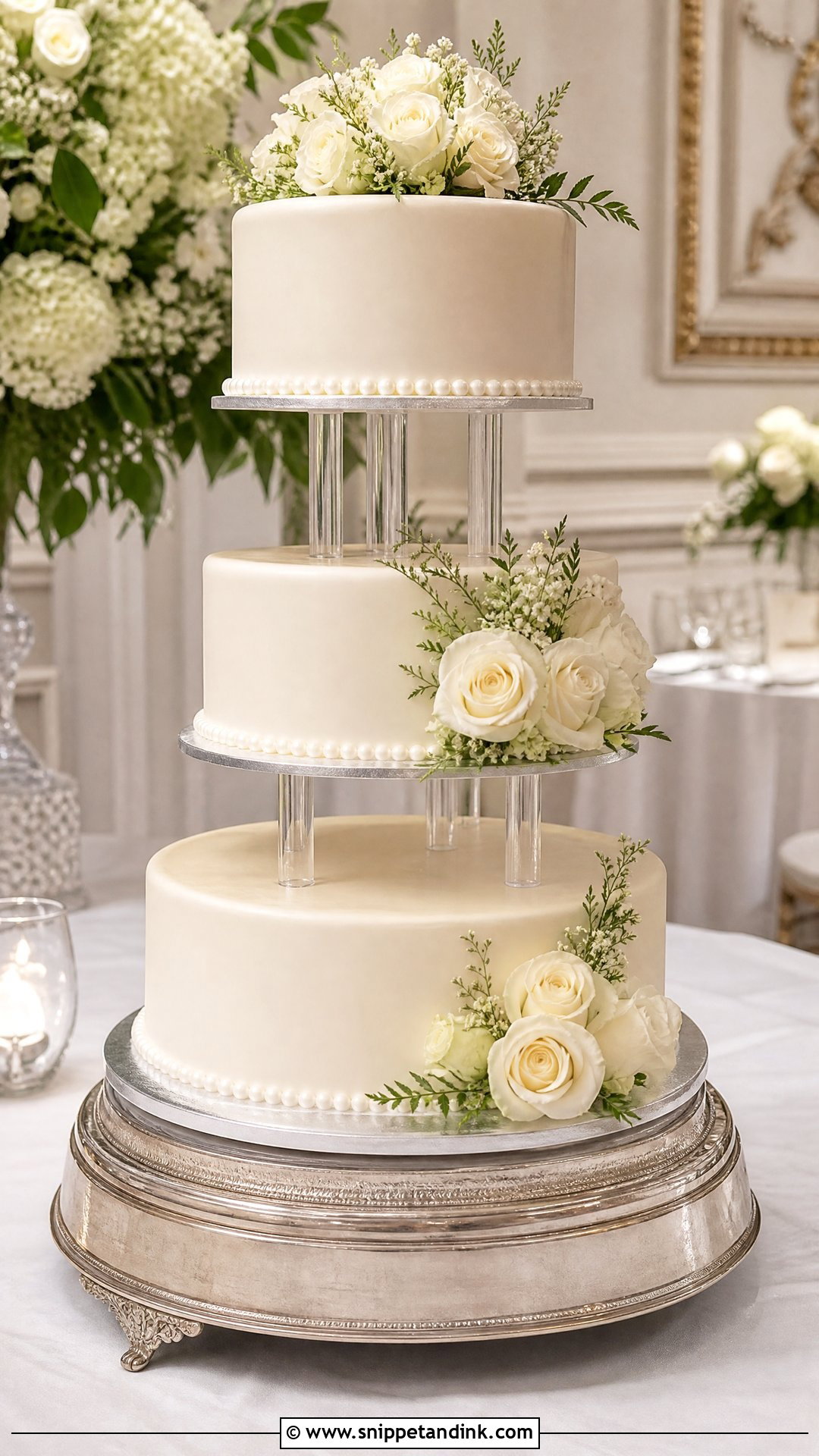
Clear pillars lift each tier while staying almost invisible from a distance, and they give height without the cost of extra cake. Each pillar must sit on a dowel inside the tier below; pillars resting on cake alone will sink. The open areas can stay clean or be filled with flowers or ribbon. Round tiers feel traditional, square ones contemporary. Use a heavy base stand, and let the baker assemble it on site.
12. Floating Wedding Cake With Floral Hoop
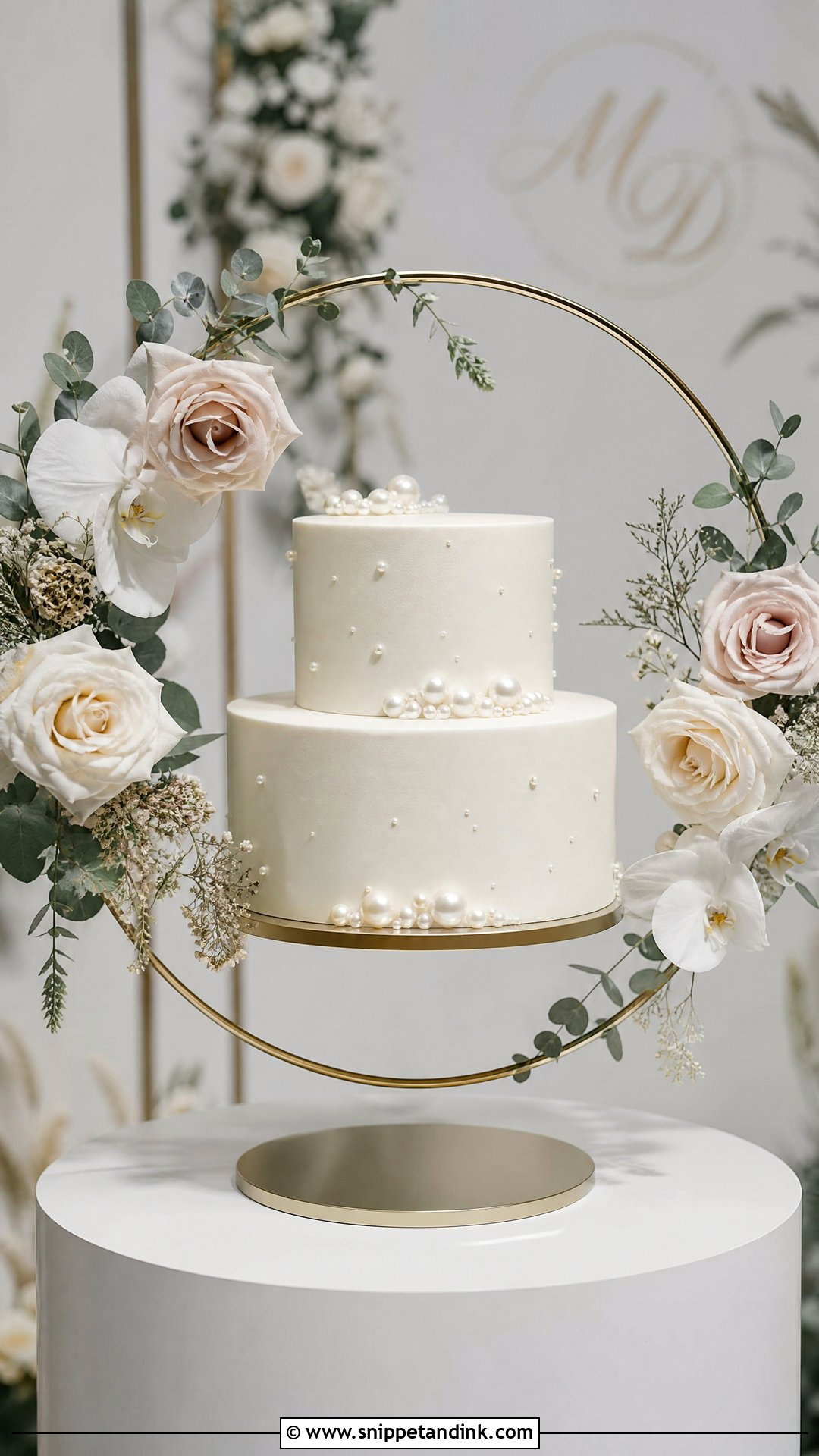
A hoop frames the cake, either standing behind the tiers or wrapping around the floating section. Gold, white or clear acrylic hoops all work, dressed with roses, greenery or small seasonal flowers. The hoop needs its own weighted base; it should never lean on the cake for support. With the hoop as the focus, a two-tier or three-tier cake is usually plenty, and the frosting can stay plain.
13. Floating Wedding Cake With Single Tier Lift
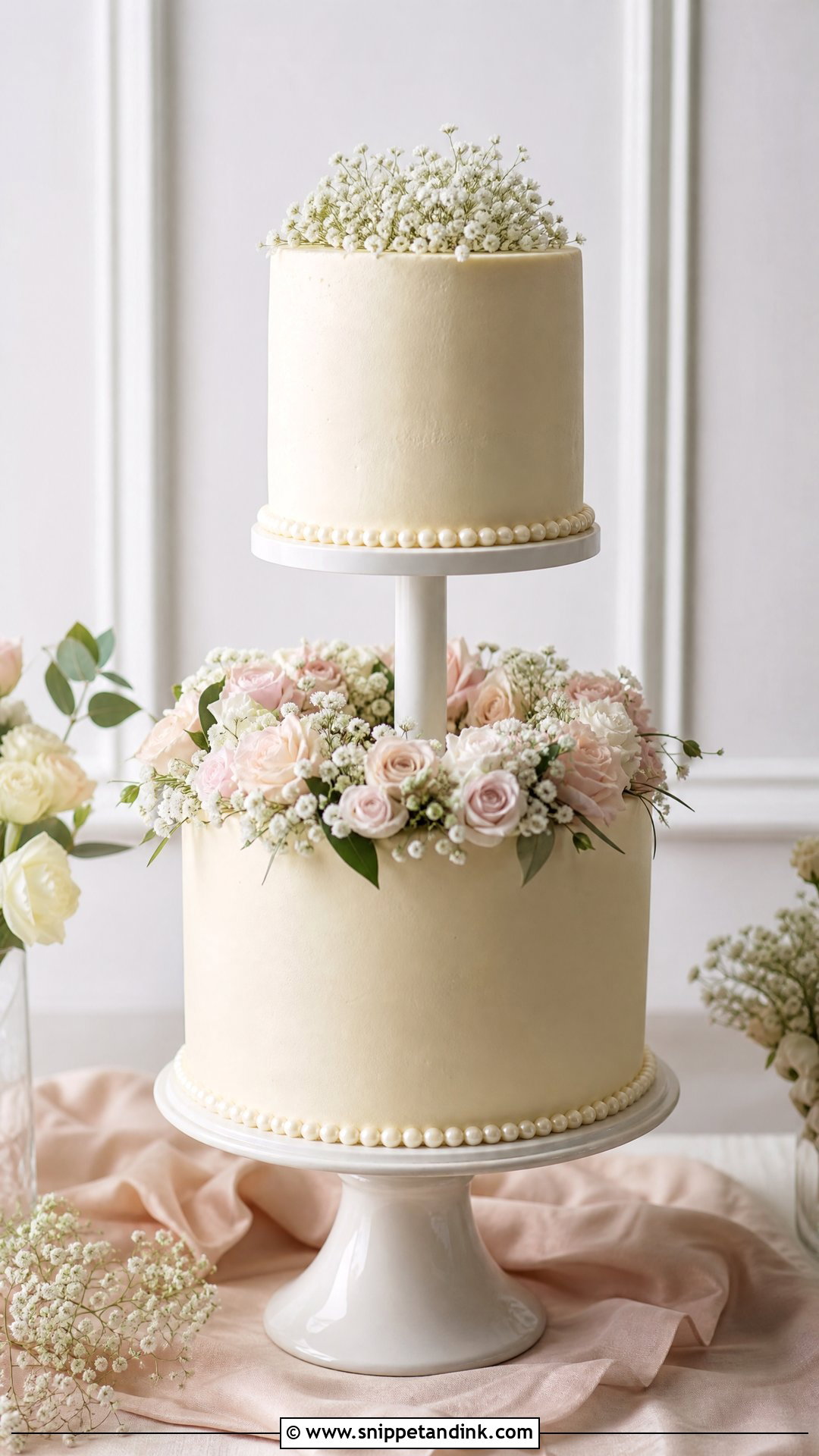
A single tier lift gives one strong floating moment without a very tall cake. The top tier rises above the bottom on a hidden or clear support. For a small or medium wedding this is the version I’d suggest, since it’s simpler to transport and assemble than multi-gap designs, and there’s less to go wrong. Decorate the gap with flowers, pearls or leave the acrylic clean.
14. Floating Wedding Cake With Three Tiers
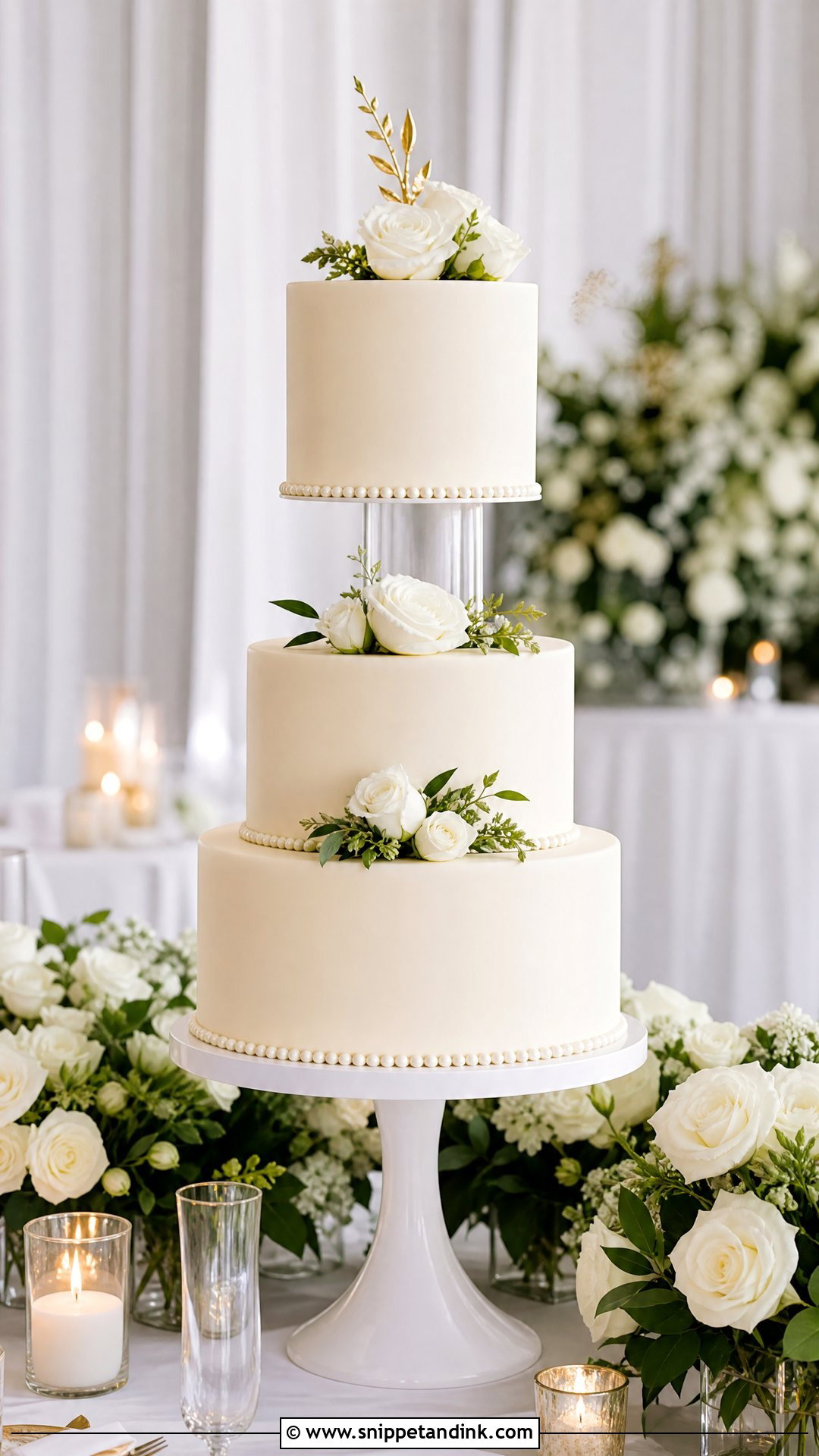
Three tiers give enough cake and presence for a full reception without swamping the table. The float can sit between the middle and top tier, or you can open two gaps for more drama. Two gaps means two sets of dowels and boards, and more assembly time at the venue, so plan for it. Sharp edges and simple gold trim feel modern; flower clusters between the tiers feel romantic.
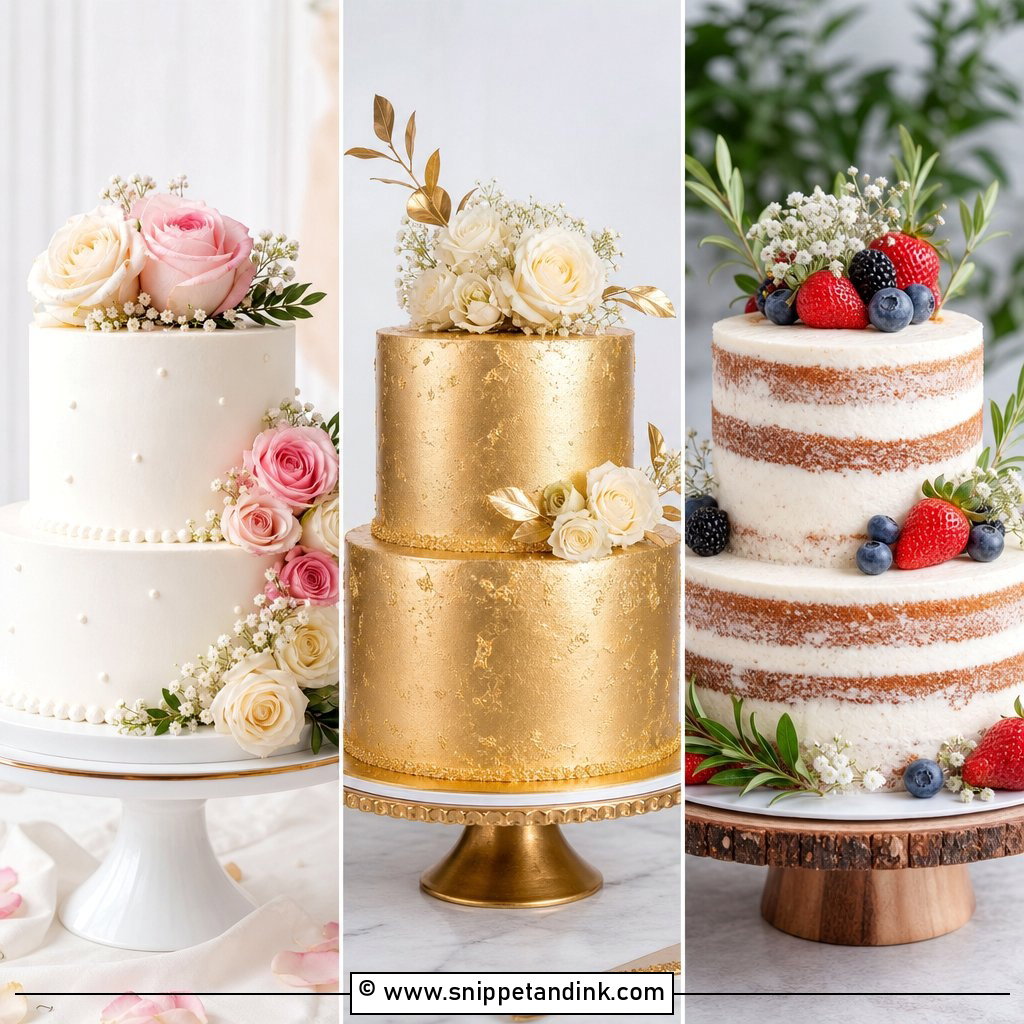
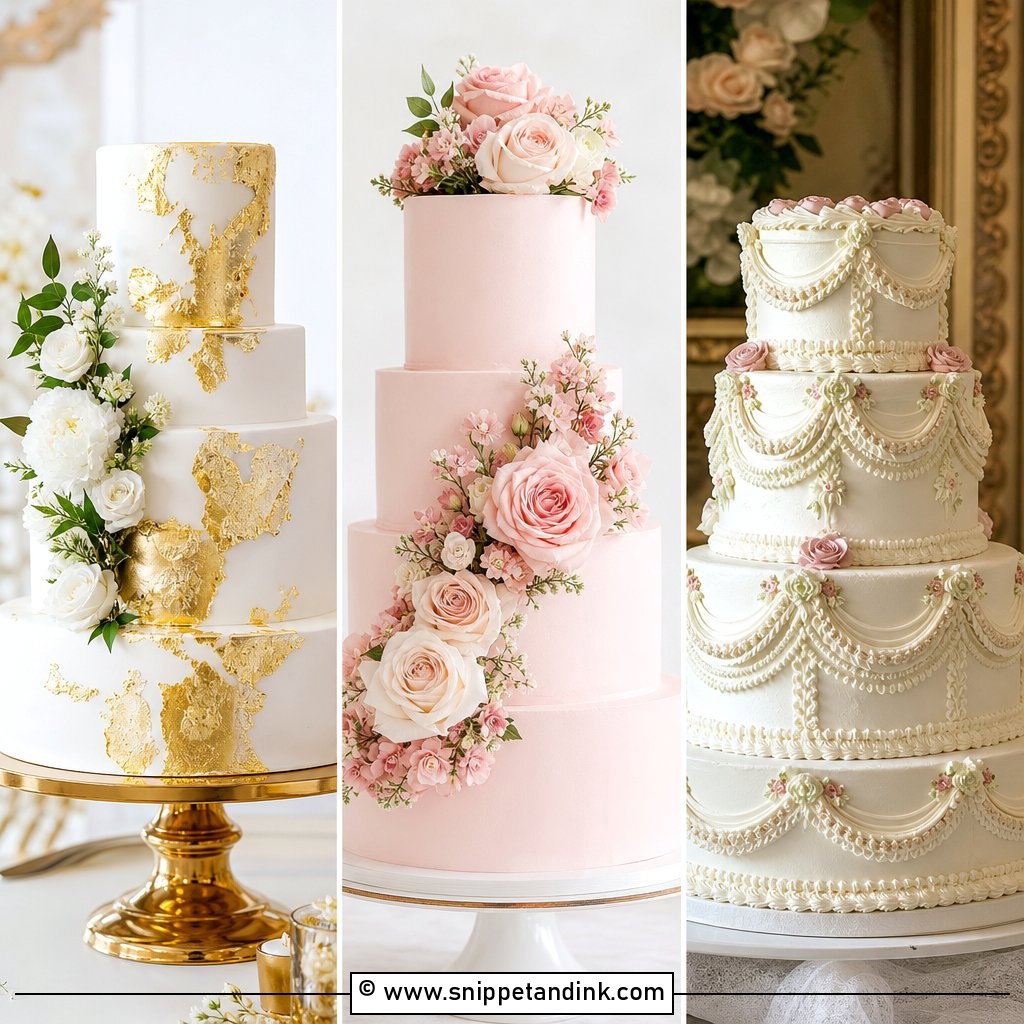
15. Floating Wedding Cake With Four Tiers
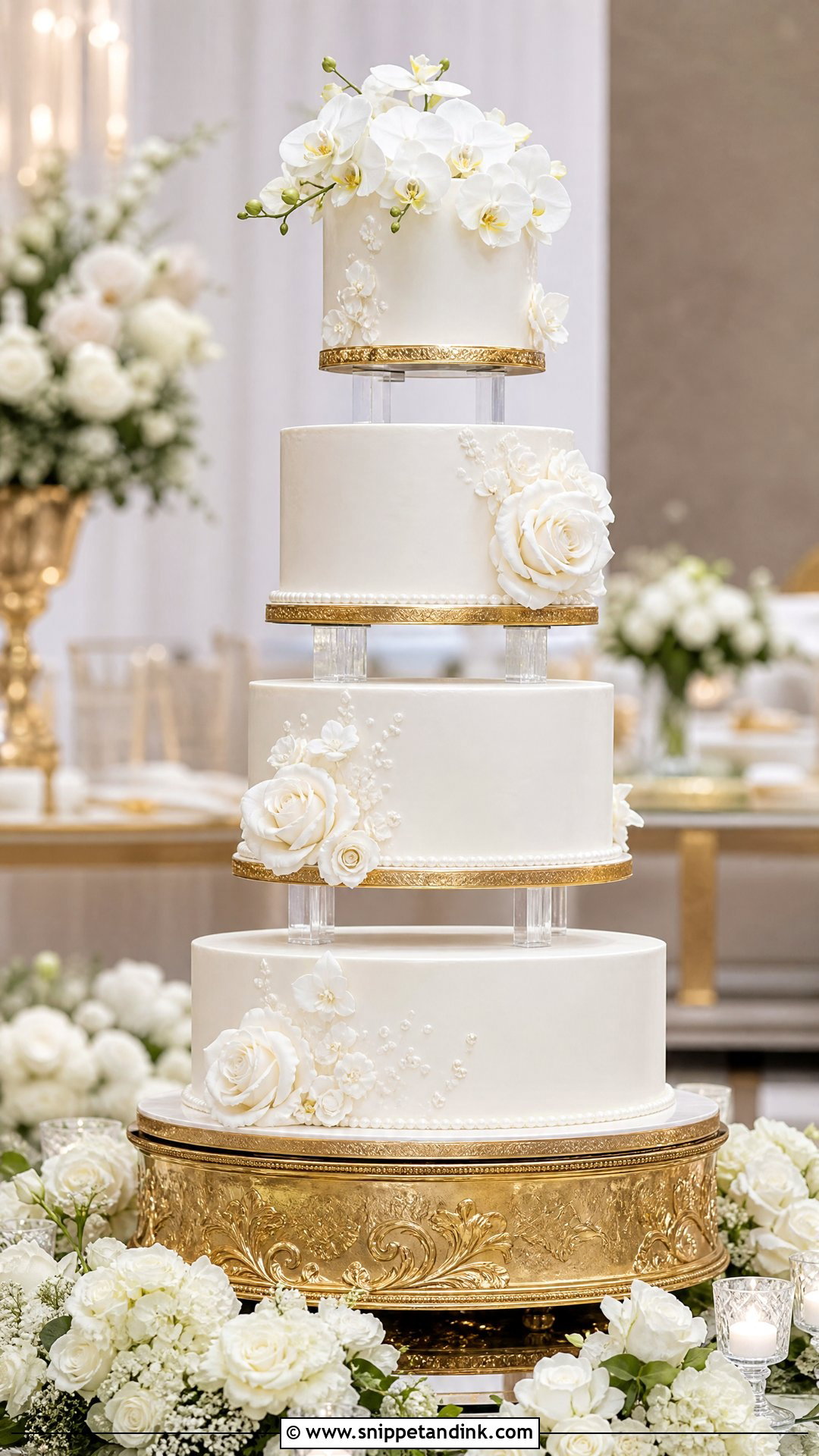
Four floating tiers belong in a big room with high ceilings, where the height reads as grand rather than cramped. One clear separator gives a subtle effect, while several separators turn it into a showpiece. At this size I use a central rod running from the base board up through every tier, because stacked dowels alone aren’t enough. Keep decoration controlled, since the height already does the work. Smooth white fondant and a few sugar flowers are enough.
16. Floating Wedding Cake With Square Tiers
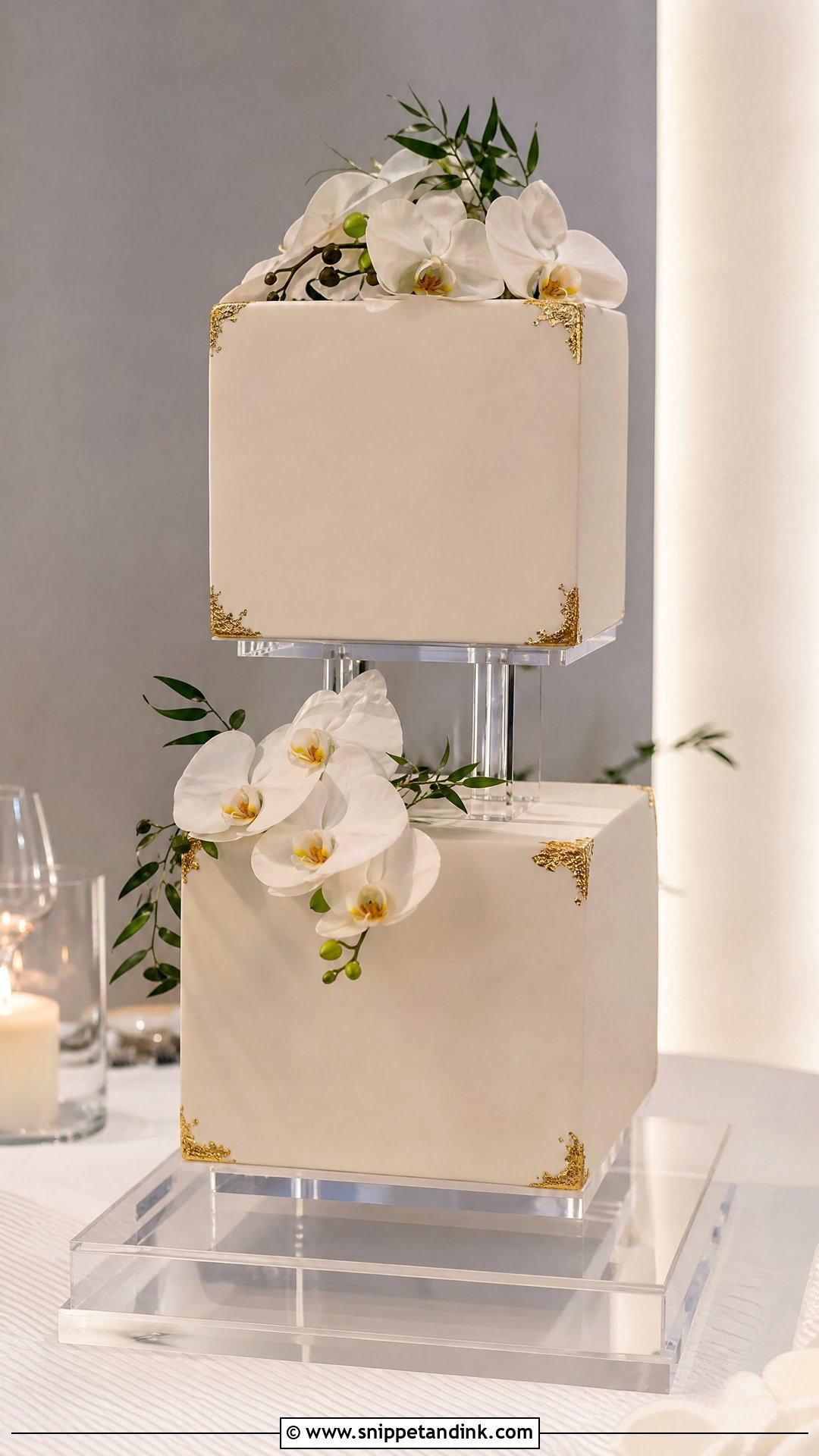
Square tiers look architectural, especially with smooth fondant and clear spacers. They’re harder to finish than rounds, since four sharp corners have to line up perfectly through every gap, so expect them to cost a little more. All white looks sleek in a gallery or city venue; gold edges add warmth. Place flowers so they soften a corner rather than hide the shape.
17. Floating Wedding Cake With Round Tiers
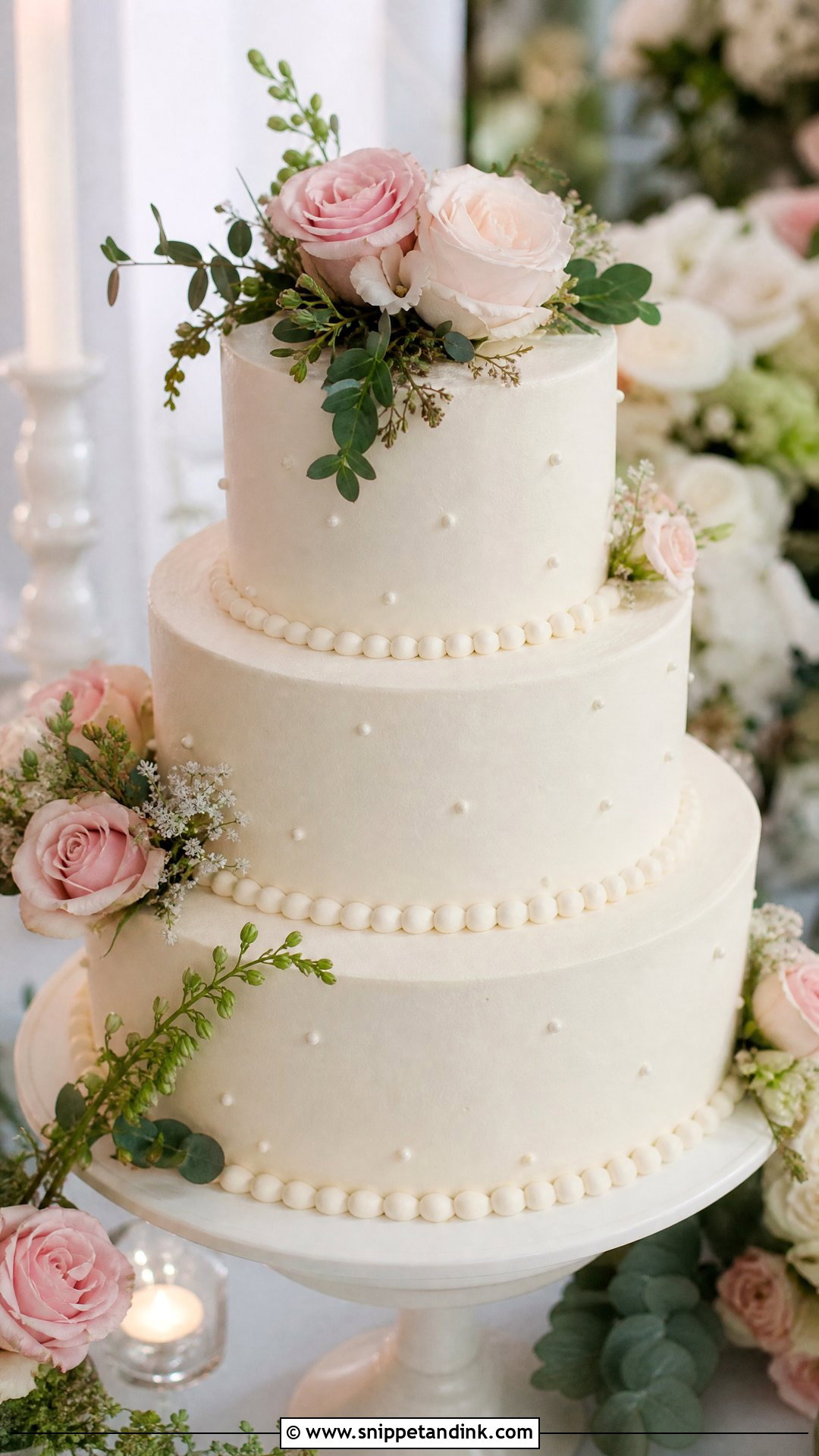
Round tiers are the familiar choice, and that familiarity makes the floating detail feel less risky for couples who aren’t sure about it. They suit nearly any theme. Smooth buttercream reads relaxed and fondant reads polished. Rounds are also the easiest to cut into neat portions. Flowers can sit in the gap, trail down one side or frame the base.
18. Floating Wedding Cake With Vintage Piping
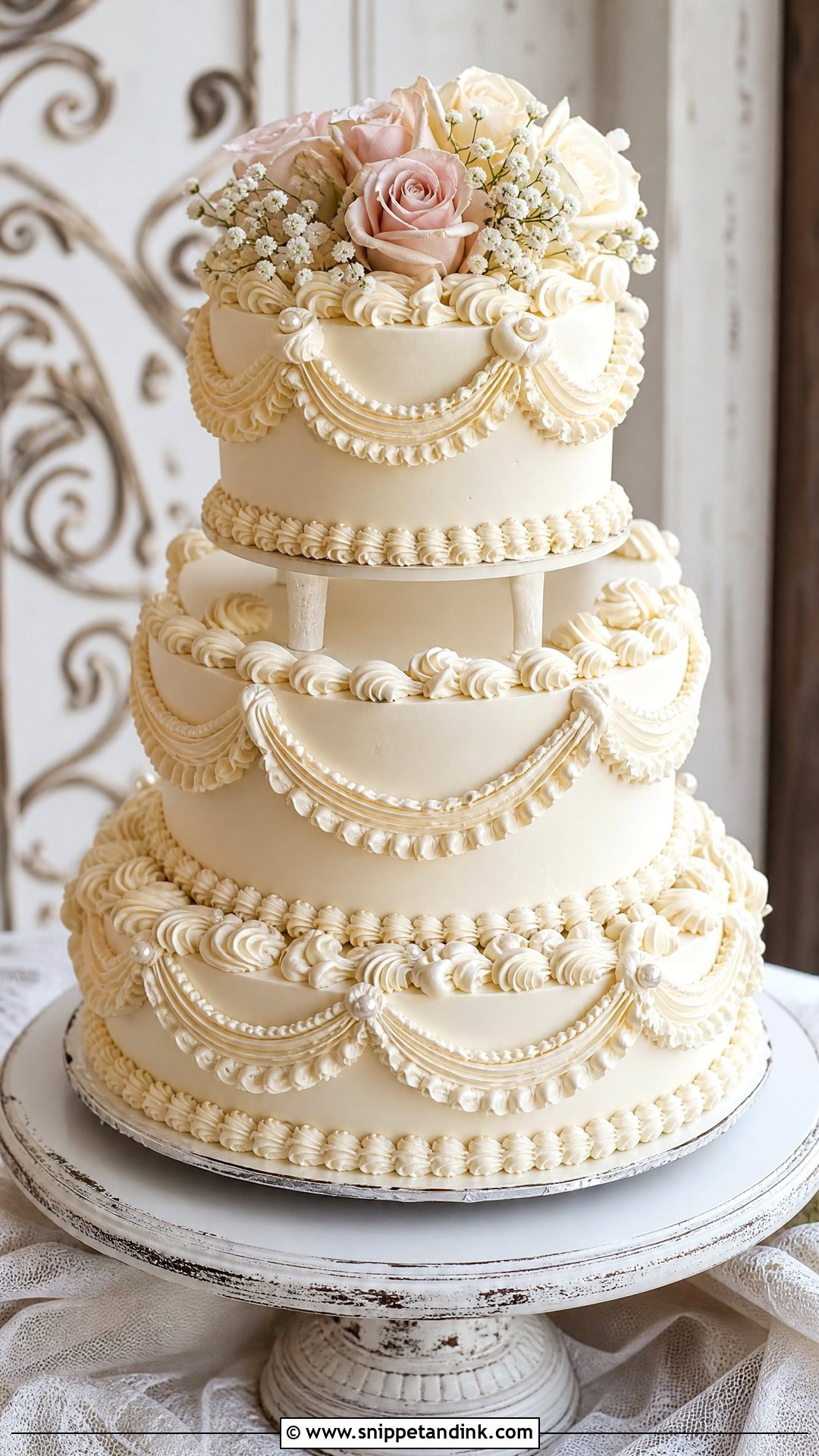
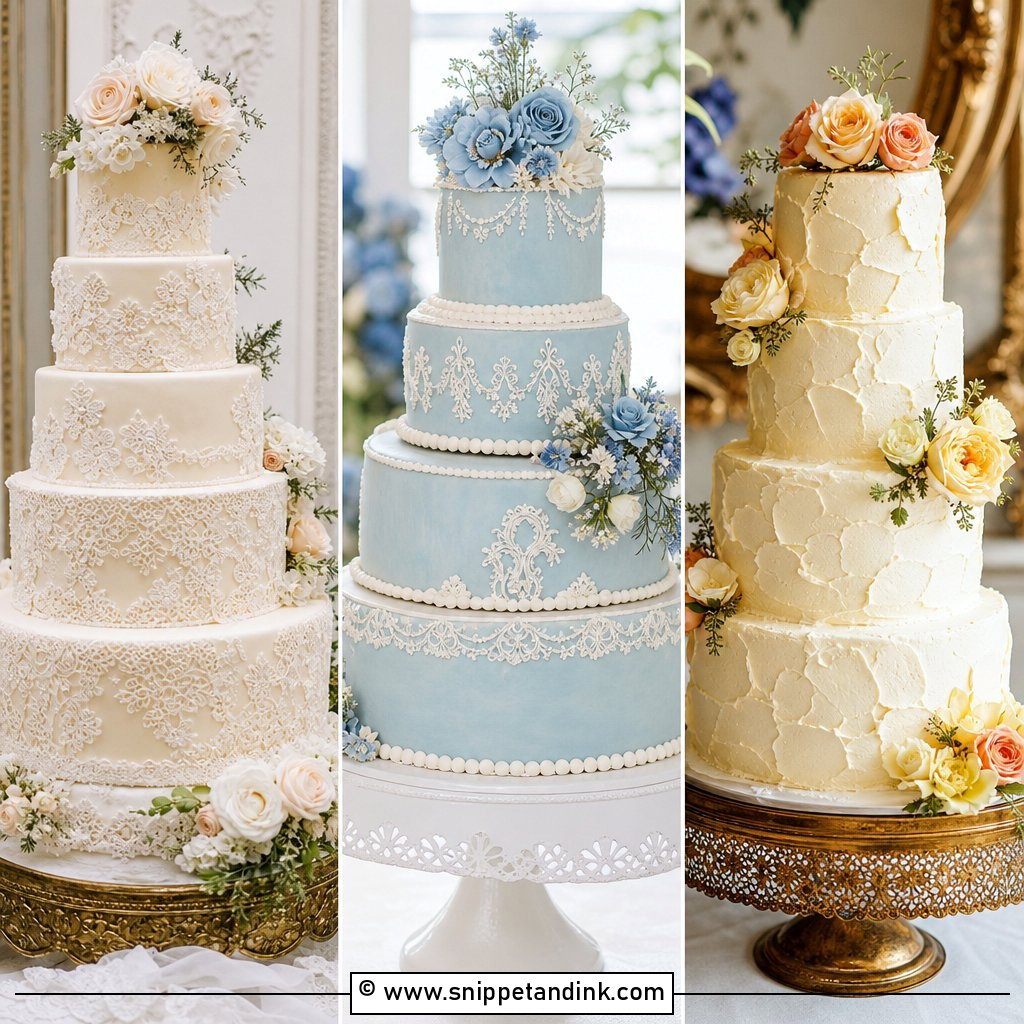
Shell borders, ruffles and tiny piped pearls feel nostalgic, and the floating structure keeps them from looking dated. I pipe these after the tiers are on their boards, so the borders aren’t crushed during assembly. Ivory, butter yellow and pale blue suit the style. Cherries are a fun accent if they match the palette; roses and pearls feel more bridal.
19. Floating Wedding Cake With Bow Details
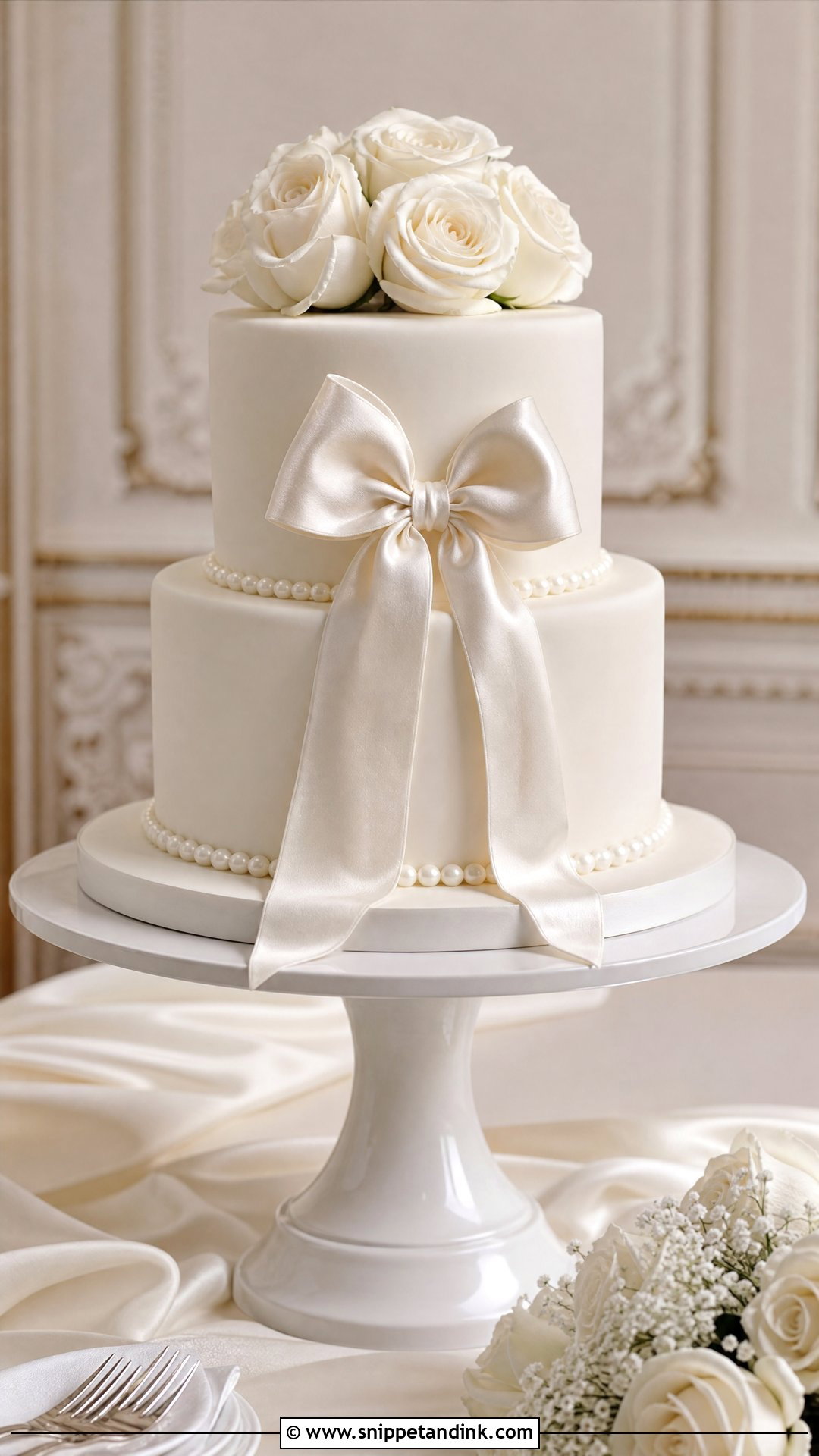
A bow can wrap one tier, sit at the front of the separator or trail down the cake. Satin ribbon must sit on fondant or a strip of acetate, because buttercream leaves grease stains on fabric within an hour. Fondant bows are the alternative if you want everything edible. Keep the rest minimal, or the bow gets lost. White ribbon on ivory is classic; blush or pale blue softer.

20. Floating Wedding Cake With Sugar Flowers
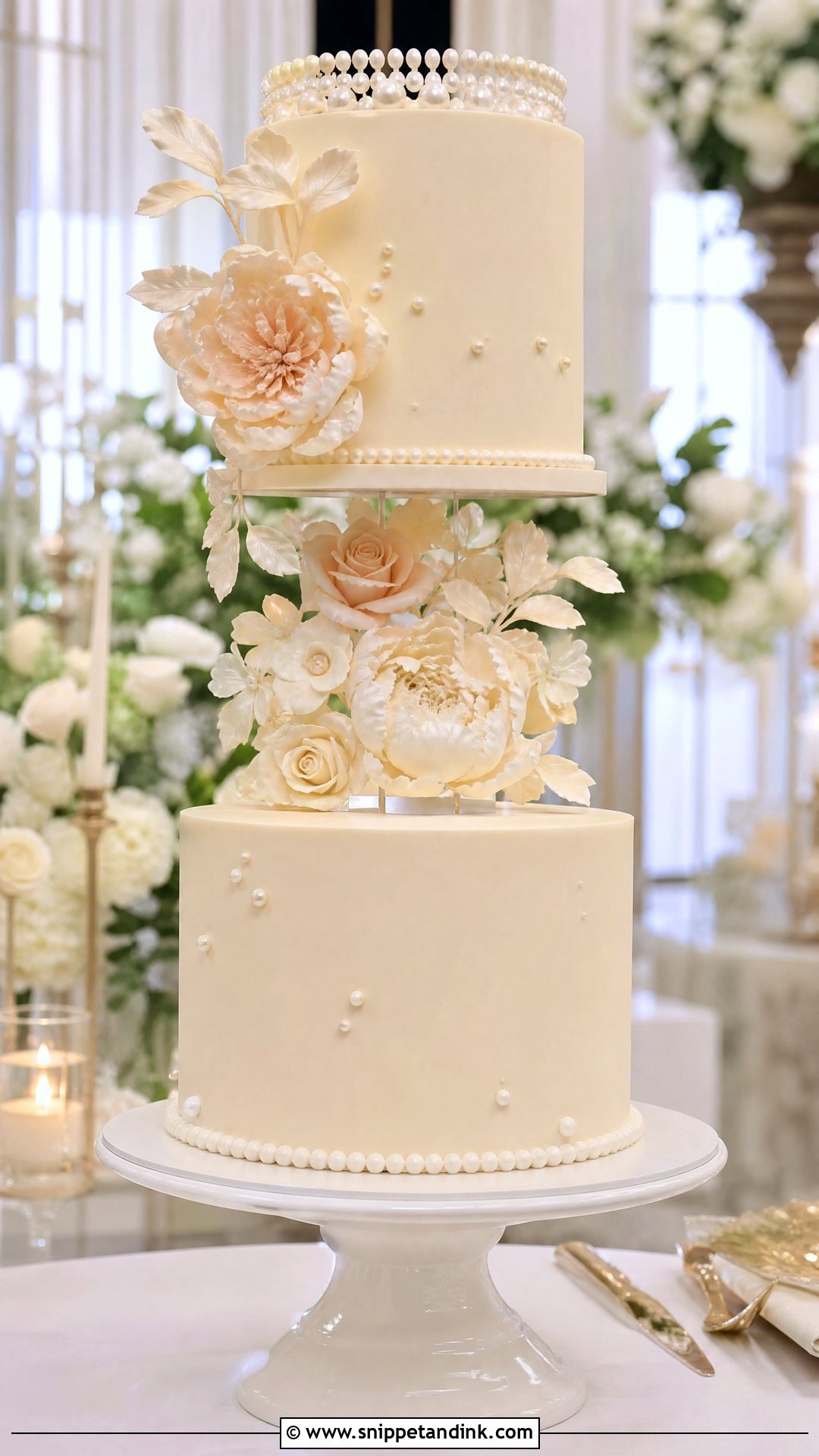
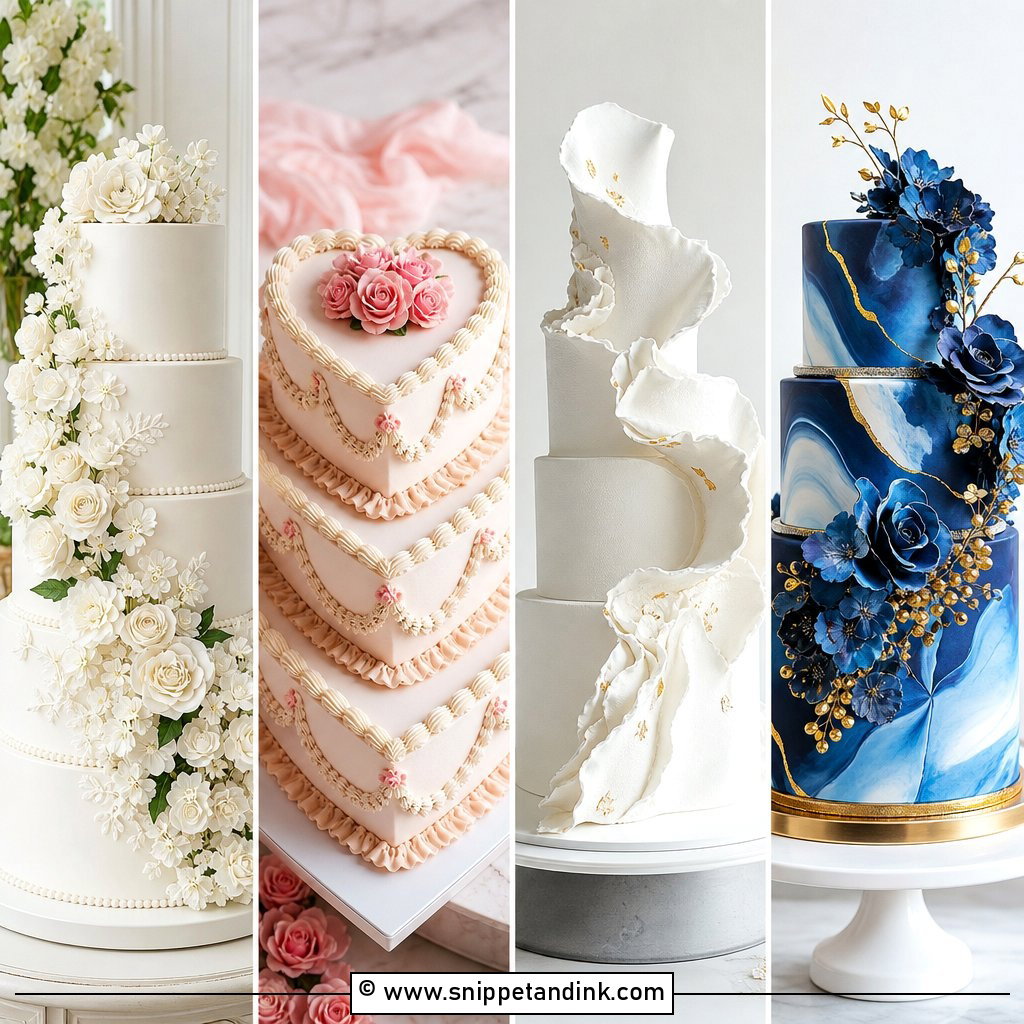
Sugar flowers hold their shape for the whole reception and can be made in exact colours and sizes. Placed in the floating section, they can make the tiers look as if flowers are holding them up. They do take time; each bloom is built petal by petal and dried, so they need ordering weeks ahead. They’re the answer if you want flowers without worrying about wilting or food safety. Keep them away from humidity, which softens sugar petals.
21. Floating Wedding Cake With Edible Lace
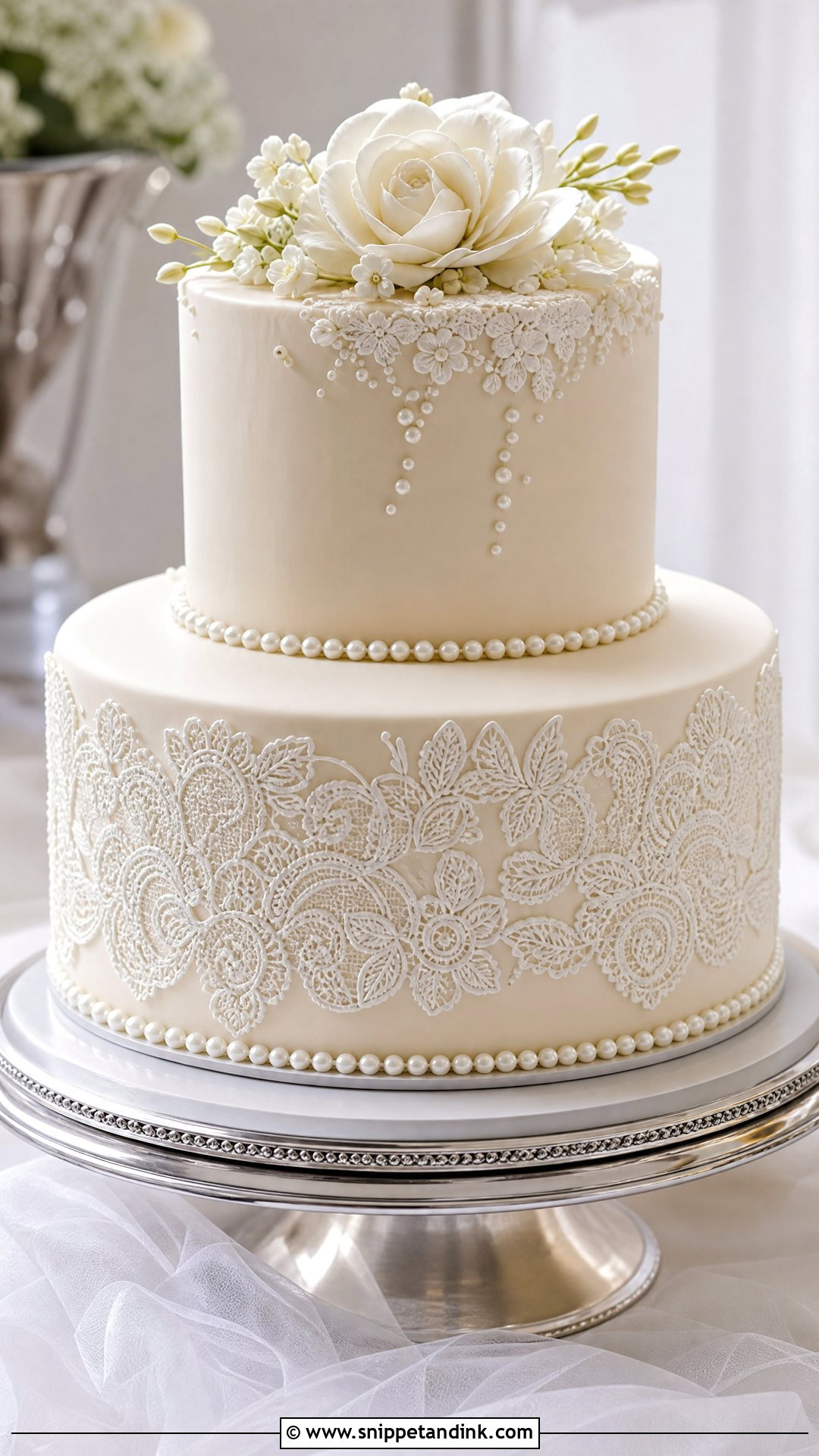
Edible lace can echo lace sleeves, a veil or even the invitation. It’s usually made from a flexible sugar paste set in a mat, then applied to fondant. White-on-white is subtle; ivory lace over a champagne-toned cake feels warm. Lace sheets can dry out and crack in heated rooms, so I apply them close to delivery. One tier of lace is often enough on a floating design.
22. Floating Wedding Cake With Marble Finish
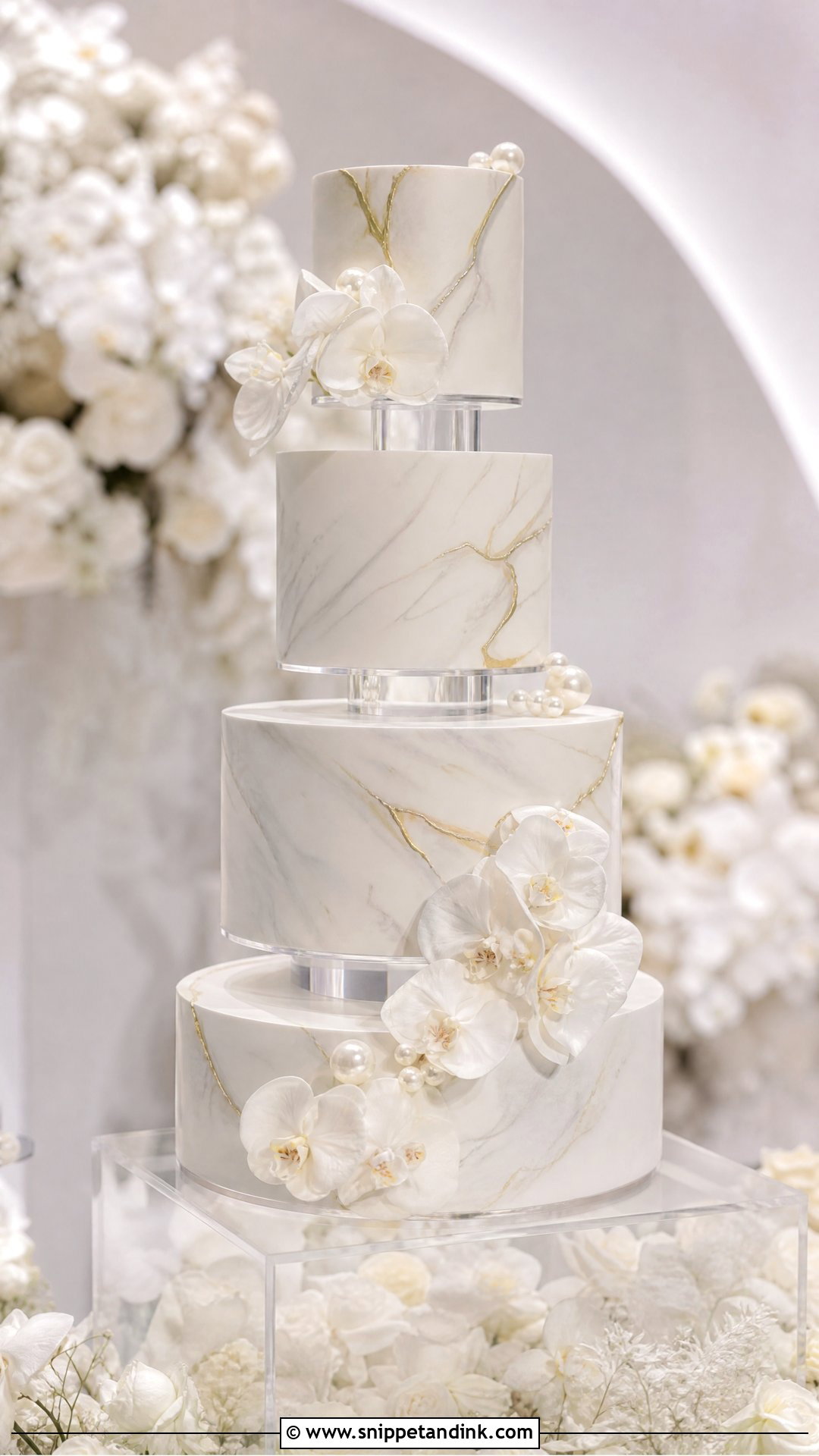
Marbled fondant has soft grey veining folded through white, and the floating tiers make it look even more sculptural. I keep the veining light so it still reads bridal. Thin gold lines or white orchids keep it refined at a rooftop or black-tie venue. A marble floating cake suits couples whose decor is already clean and modern; with rustic styling it can look out of place.
23. Floating Wedding Cake With Blush Flowers
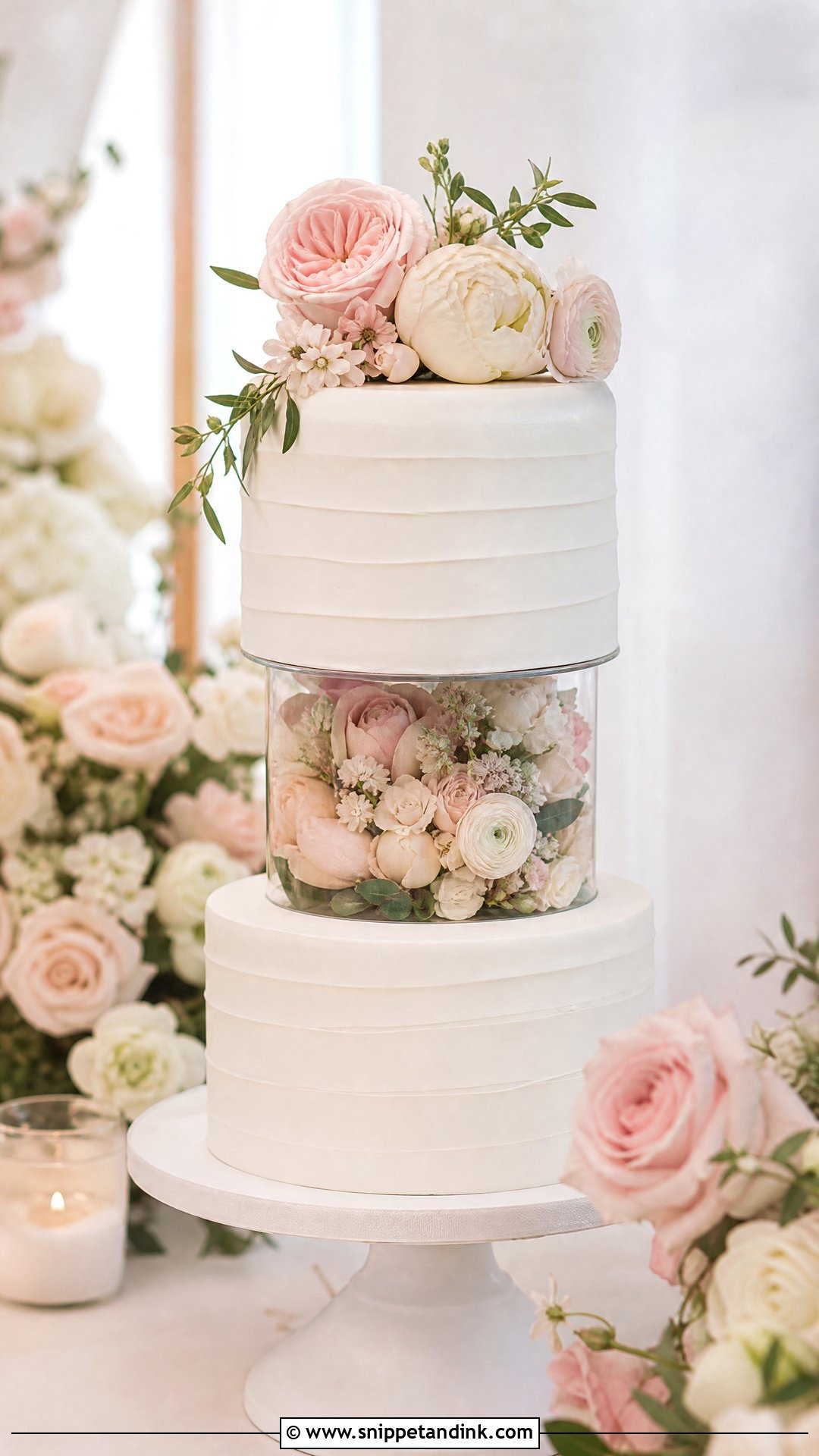
Blush flowers in the gap form a soft cushion between tiers, and repeating a few at the top and base pulls the design together. Roses, ranunculus and sweet peas all come in blush. Garden roses open quickly in warm rooms, so I ask the florist for slightly tighter blooms than they’d use in a centerpiece. Ivory buttercream keeps it fresh, gold trim adds a little luxury, and blush ties easily to bridesmaids and bouquets.
24. Floating Wedding Cake With Hanging Crystals
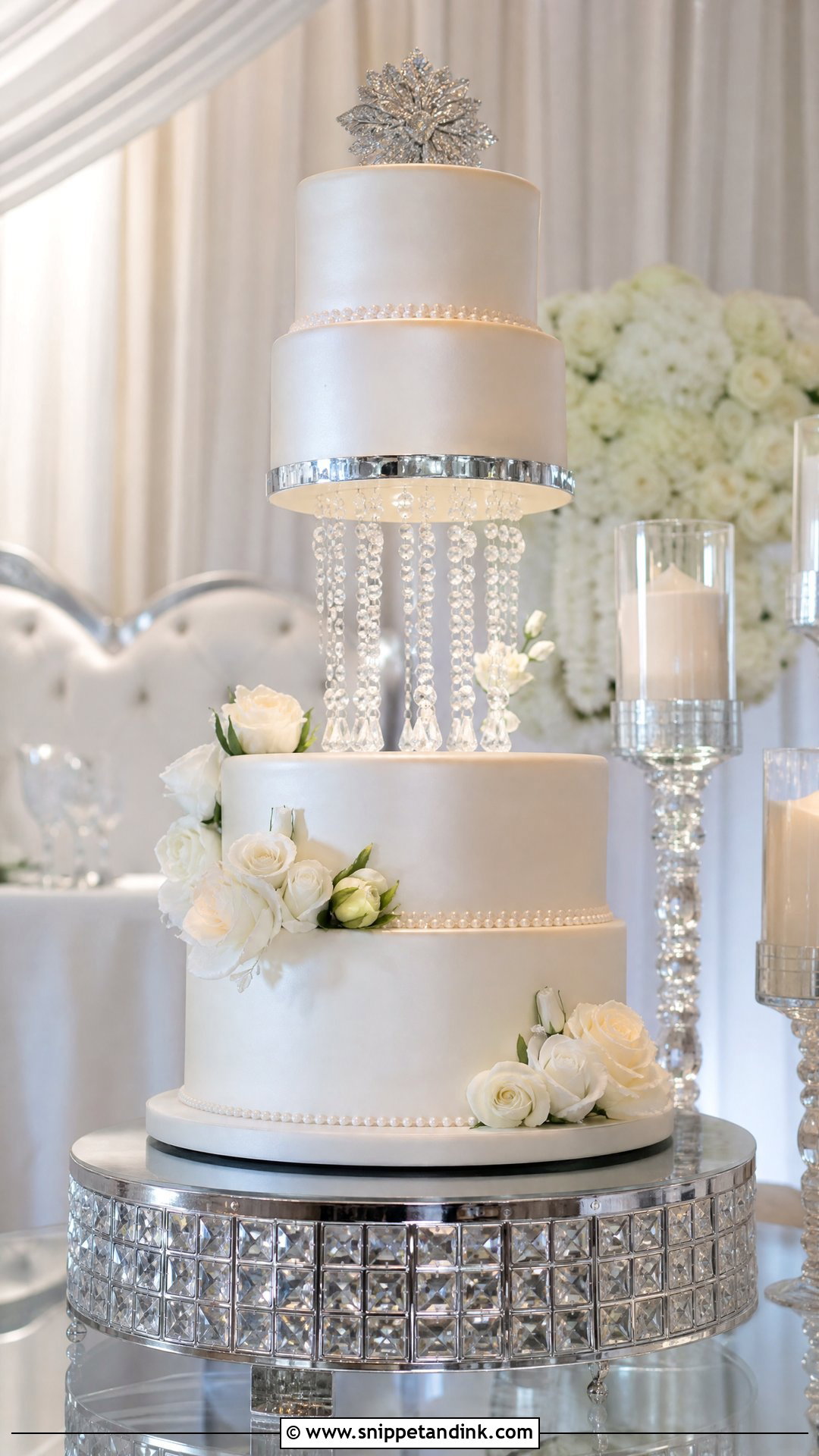
Hanging crystals sparkle under reception lights. They can hang from the separator, the stand or a hoop around the cake. Crystals are heavier than they look, so I hang them from the stand or hoop, never from anything that’s resting on cake. Keep the cake clean with white fondant and pearl borders, and keep the palette simple. It suits an evening or ballroom reception where the lighting can catch them.




25. Floating Wedding Cake With LED Lights
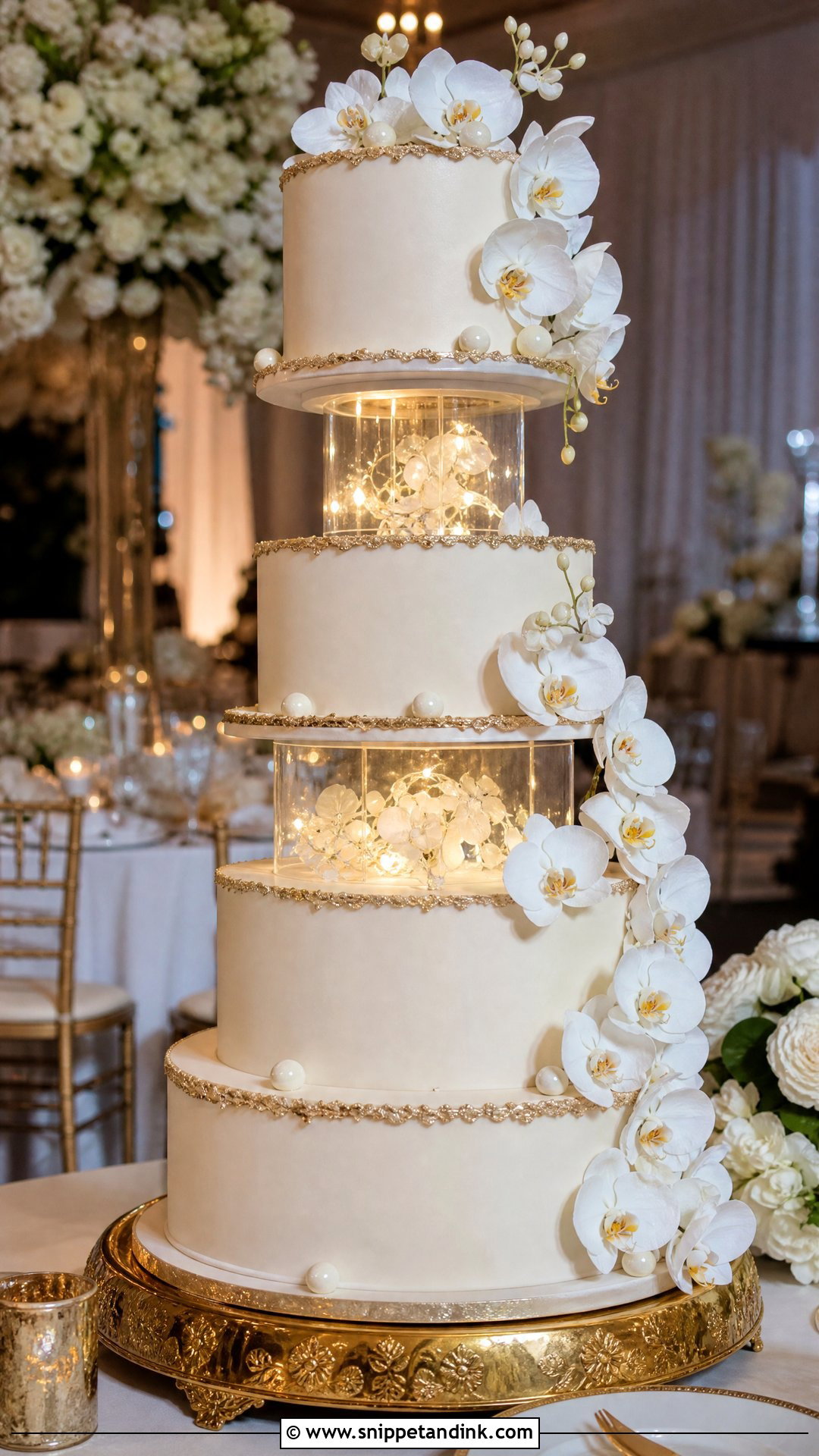
Tiny LED lights inside a clear separator, under a raised tier or around the base give a soft glow in a dim room. Warm white is far more flattering in photos than cool white or colours. I use battery LEDs that stay cool and sit in a sealed acrylic section, never loose against the cake. Ivory frosting and white flowers keep the glow soft. Test the batteries on the day before; a dead string halfway through the evening is noticeable.
Serving Counts When Part of the Height Is Air
Guests tend to assume a tall cake feeds a crowd. On a floating design, a good part of that height is acrylic, flowers or lights, so a cake that looks huge may serve fewer people than a plainer stacked one. Work out portions from the tier sizes, not from the photo.
If you love a tall look but have a smaller guest list, a dummy tier (styrofoam iced to match) can add height cheaply. If you need more servings than the display gives, a kitchen cake in the same flavour can be cut behind the scenes.
Can Your Venue Handle a Cake That Shouldn’t Move?
Once a floating cake is assembled, nobody should move it. Check these with your venue coordinator before the day:
- A sturdy, level table placed where it will stay all evening, away from the dance floor and doorways.
- Access for the baker an hour or more before guests arrive, with a cool room to work in.
- No direct sun, heaters or speakers next to the cake; vibration and heat both loosen tiers.
- A plan for cutting: staff need to lift the top tier off its spacer before slicing.
Air Between the Tiers, Solid Support Behind It
A floating cake turns a dessert into a centerpiece, and the open space makes even plain frosting look special. The look depends entirely on what you can’t see: dowels, boards, rods and a level table. Before you commit to a design, talk with your baker about support, the room’s temperature, delivery and setup time. Once those practical details are settled, the decorative choices are the easy part. Let the flowers and venue guide the rest.
You'll Like These Ideas:






Leave a Reply