
Once the room lights drop for the evening, the cake table is usually the first spot I light, because guests drift toward it and nearly every phone comes out there before the cutting. Fairy lights do that job well in a tent, a barn or a ballroom, as long as they look placed rather than draped on at the last minute. I work almost entirely with battery-powered micro LEDs, which stay cool, and I build the glow into the stand, the separators or the table dressing instead of the cake itself. Below are twenty cake displays I’d light, each with a note on where the lights belong.
Battery Packs, Timers and Where the Wire Actually Goes
Most of the cake lights I set up are micro LED strings on thin copper or silver wire, powered by a small battery box. They stay cool, they bend into any shape, and the wire nearly disappears. What catches people out is everything around the bulbs.
- The timer. Many strings have a six-hour timer that starts the moment you switch them on. Turn the lights on at a 2pm setup and they may cut out before the cake is cut. I switch to steady mode or set the timer at the last possible moment.
- Fresh batteries. Strings dim noticeably as batteries drain. I fit new ones on the day and leave a spare set taped under the table skirt.
- Hiding the box. The battery pack goes behind the stand, under the cake board’s overhang or beneath the runner, never inside a separator you can’t reach.
- Nothing touches icing. Wire and bulbs aren’t food safe. If a string has to sit near the cake, a clear acrylic sleeve or a sheet of glass keeps it apart.
- No plug-in heat. Older mains-powered fairy lights with incandescent bulbs get warm, and warm is the enemy of buttercream. LEDs only.
I agree with the baker in advance who places the lights. Usually the cake goes on first and I dress around it, so nobody is reaching over finished tiers with a tangle of wire.
1. Tiered Wedding Cake With Fairy Lights
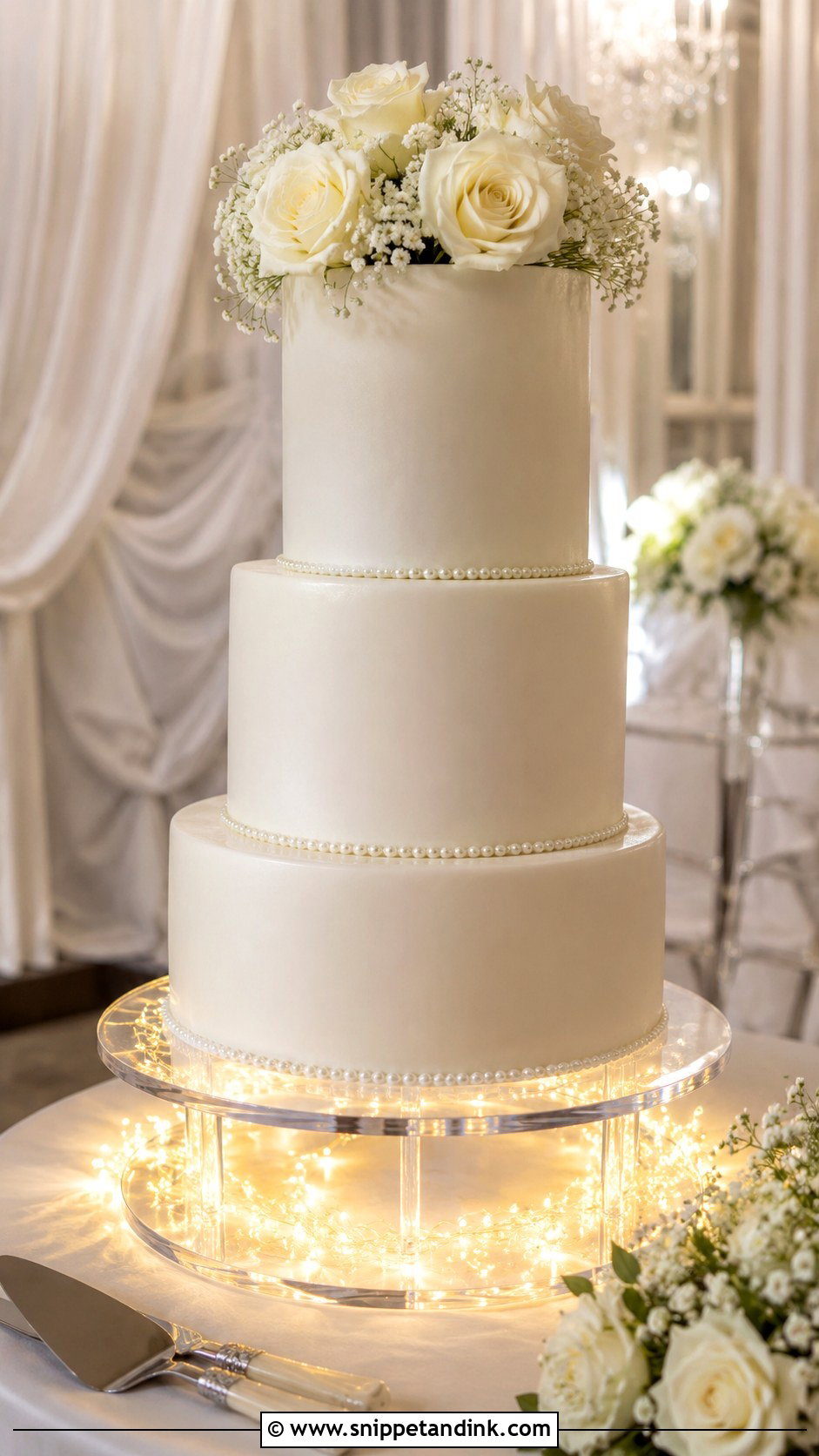
Height gives light somewhere to travel. I run the string around the base, up through any clear separator and around the stand, and keep every strand off the icing. Smooth ivory buttercream or fondant bounces warm light back evenly, which is why it reads so well after dark. White roses or a few pearls are plenty. The tiers already make the statement, so the lights only need to outline them.
2. Rustic Wedding Cake With Fairy Lights
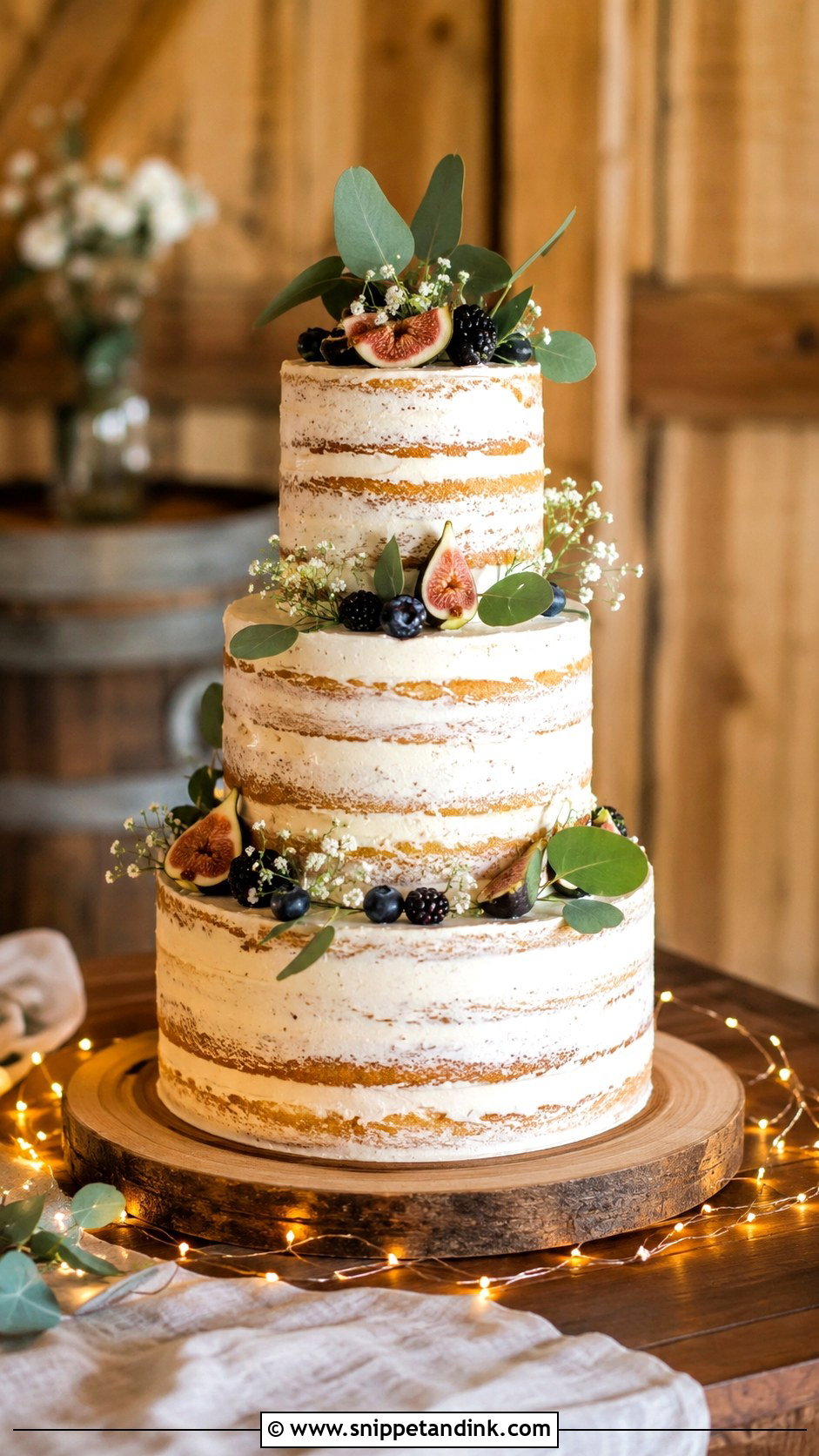
A semi-naked cake on a wooden cake stand with a ring of warm lights round the base is about as cosy as a reception gets. Figs, berries or dried citrus make it seasonal. I tuck the string between the wood and the table runner so the bulbs glow up through the greenery and the wire disappears. In a barn, check where your nearest beam or post is; those venues are often darker than couples expect, and the cake table can vanish without a light source of its own.
3. Forest Wedding Cake With Fairy Lights
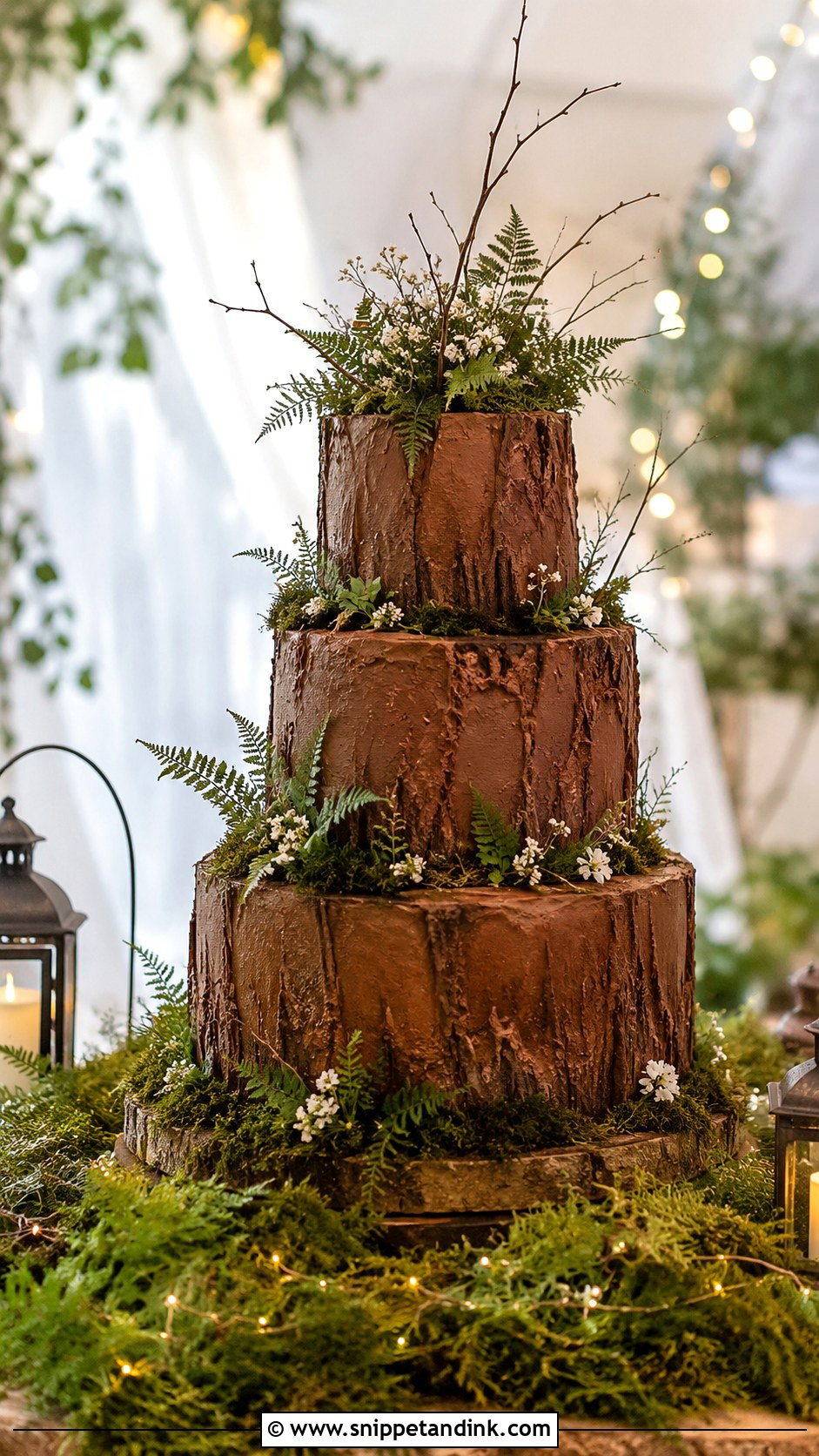
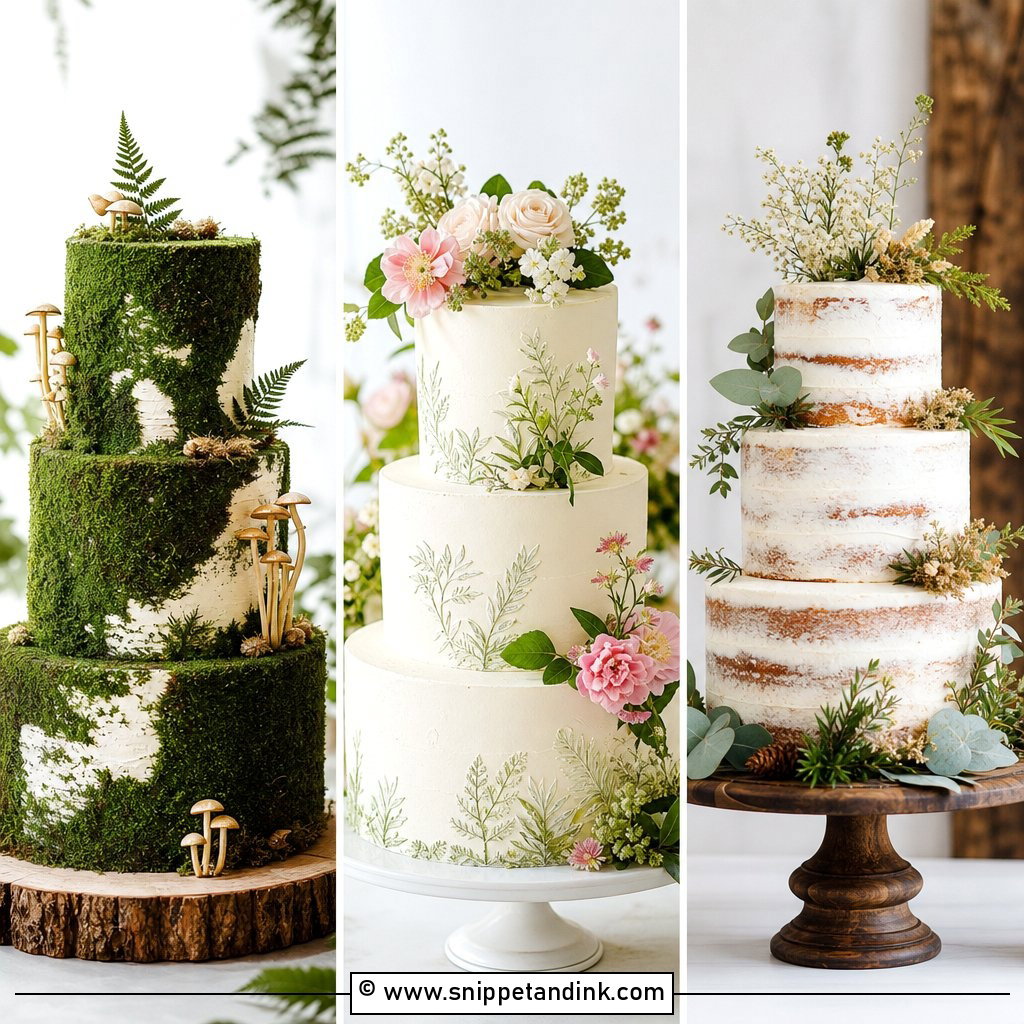
For couples drawn to woodland romance, I build the light into the setting: branches in a weighted vase behind the cake, a few lanterns, moss on clear risers. Strung through bare branches, warm micro LEDs read like fireflies at dusk. The cake stays earthy, with fern and bark textures and a palette of green, ivory and brown. I’d keep gold to a touch; too much metallic pulls it toward a Christmas window.
4. Floral Wedding Cake With Fairy Lights
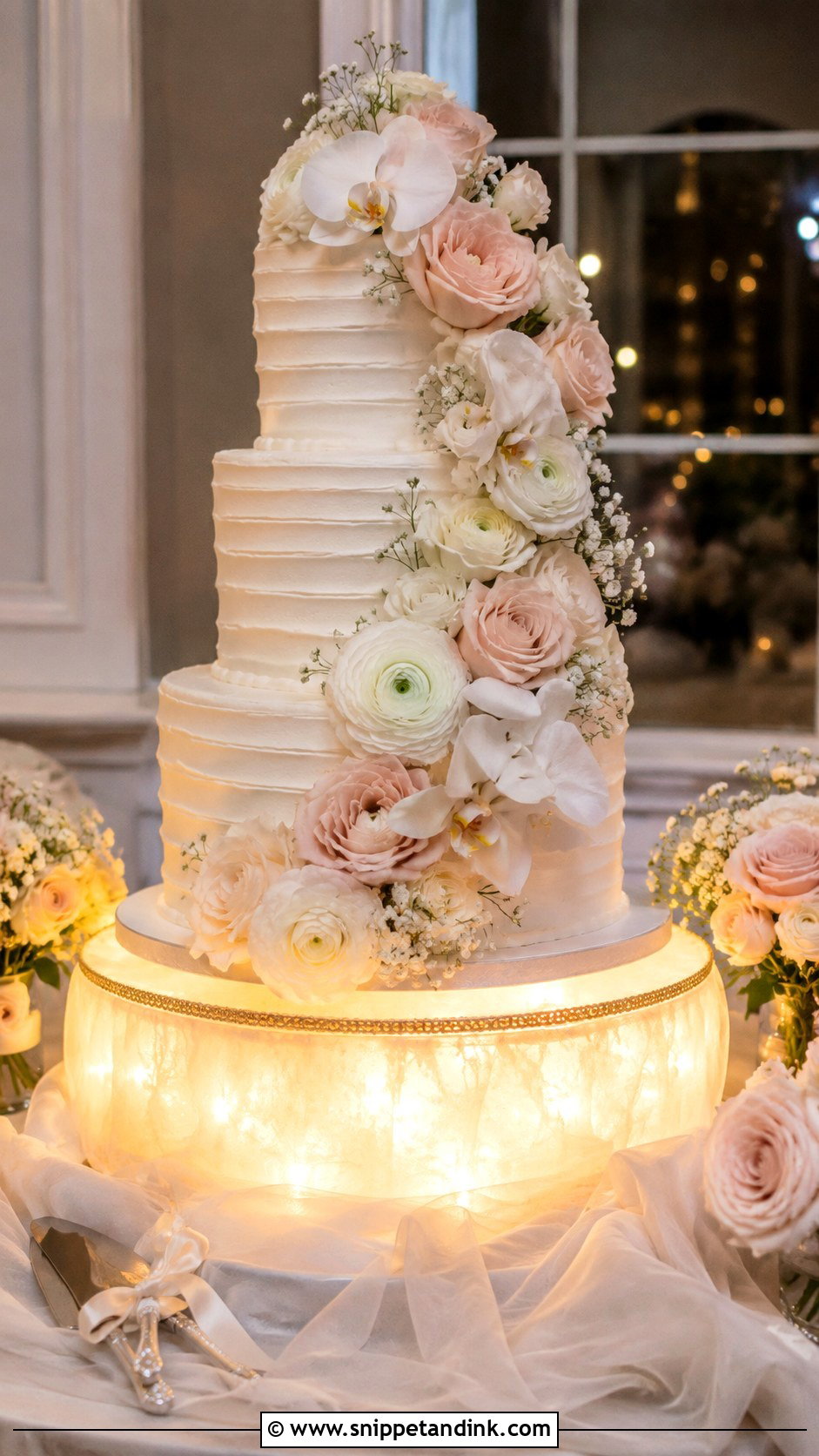
Flowers and lights fight for attention unless one of them clearly leads. I let the flowers lead and wrap the lights around the stand or set them behind a layer of sheer fabric on the table, which diffuses each bulb into a haze. Match bulb colour to the blooms. Warm white flatters blush and cream; cool white can make those same roses look slightly blue, so I save it for all-white modern arrangements.
5. White Wedding Cake With Fairy Lights
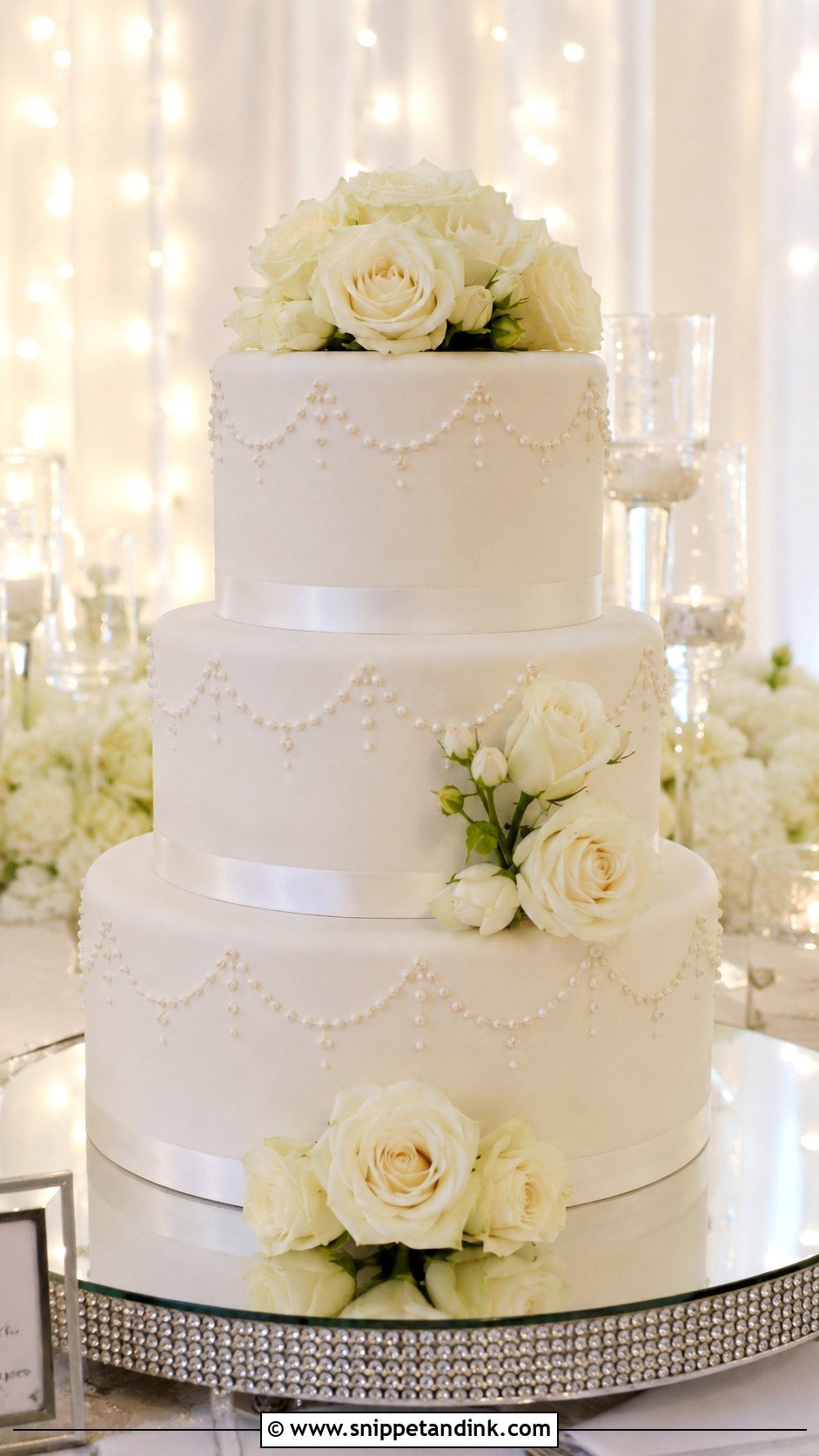
White icing shows bulb colour more than anything else on the table. Against white fondant, Swiss meringue buttercream or a pale ganache, very warm lights tint the cake cream, which is fine if that’s the plan and disappointing if it isn’t. I test a string against the actual icing colour at the tasting or with a swatch. Pearls and satin ribbon keep it formal; white roses soften it.
6. Boho Wedding Cake With Fairy Lights
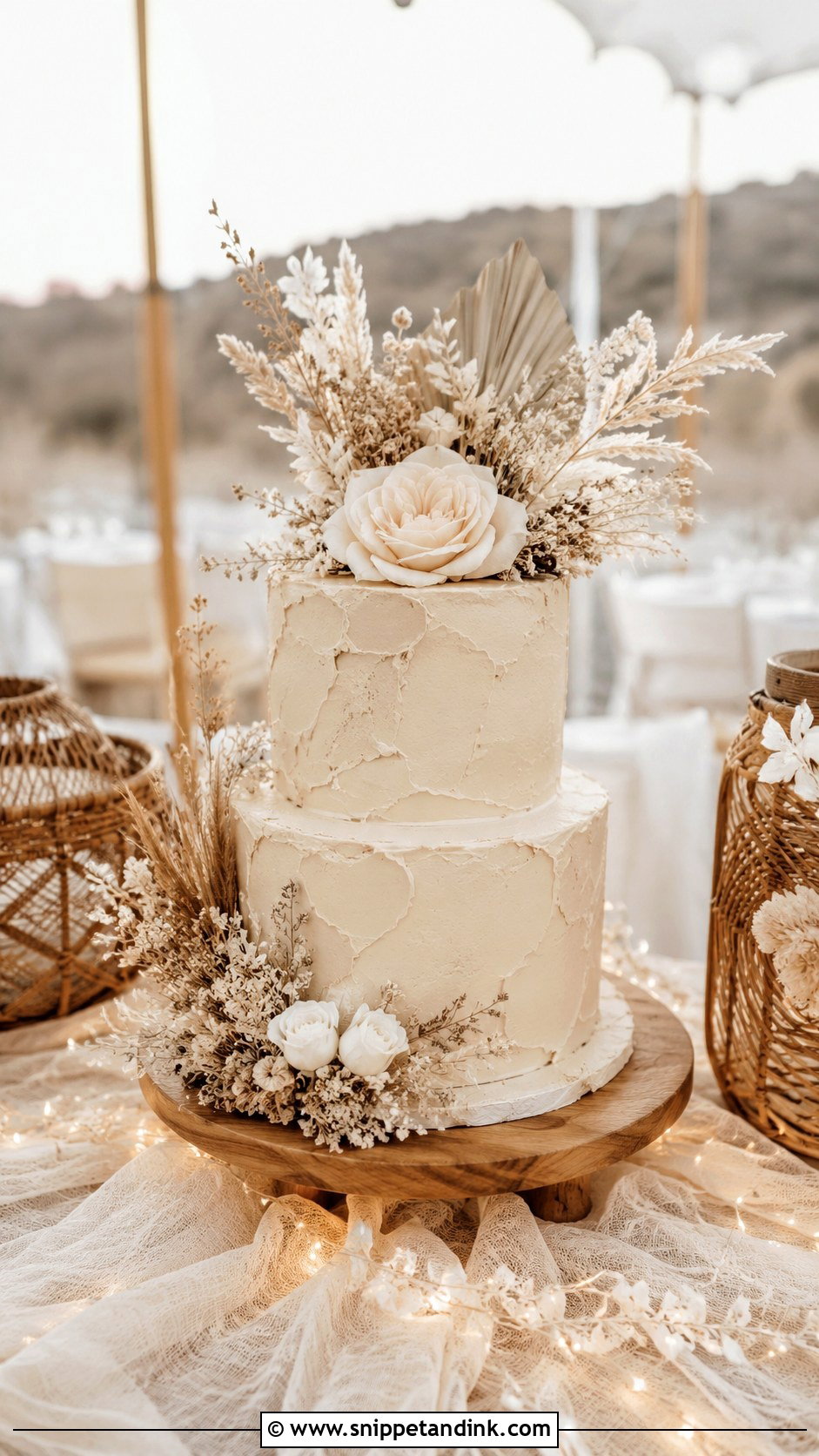
Boho displays forgive a bit of looseness. Textured neutral buttercream, pampas, dried flowers and a low wooden stand, with lights hidden under a gauze runner or dropped into small glass jars round the base. Dried flowers and pampas are dry and light, so I keep any battery pack well clear and never use anything that warms up. Honey or brown sugar flavours suit the palette.
7. Garden Wedding Cake With Fairy Lights
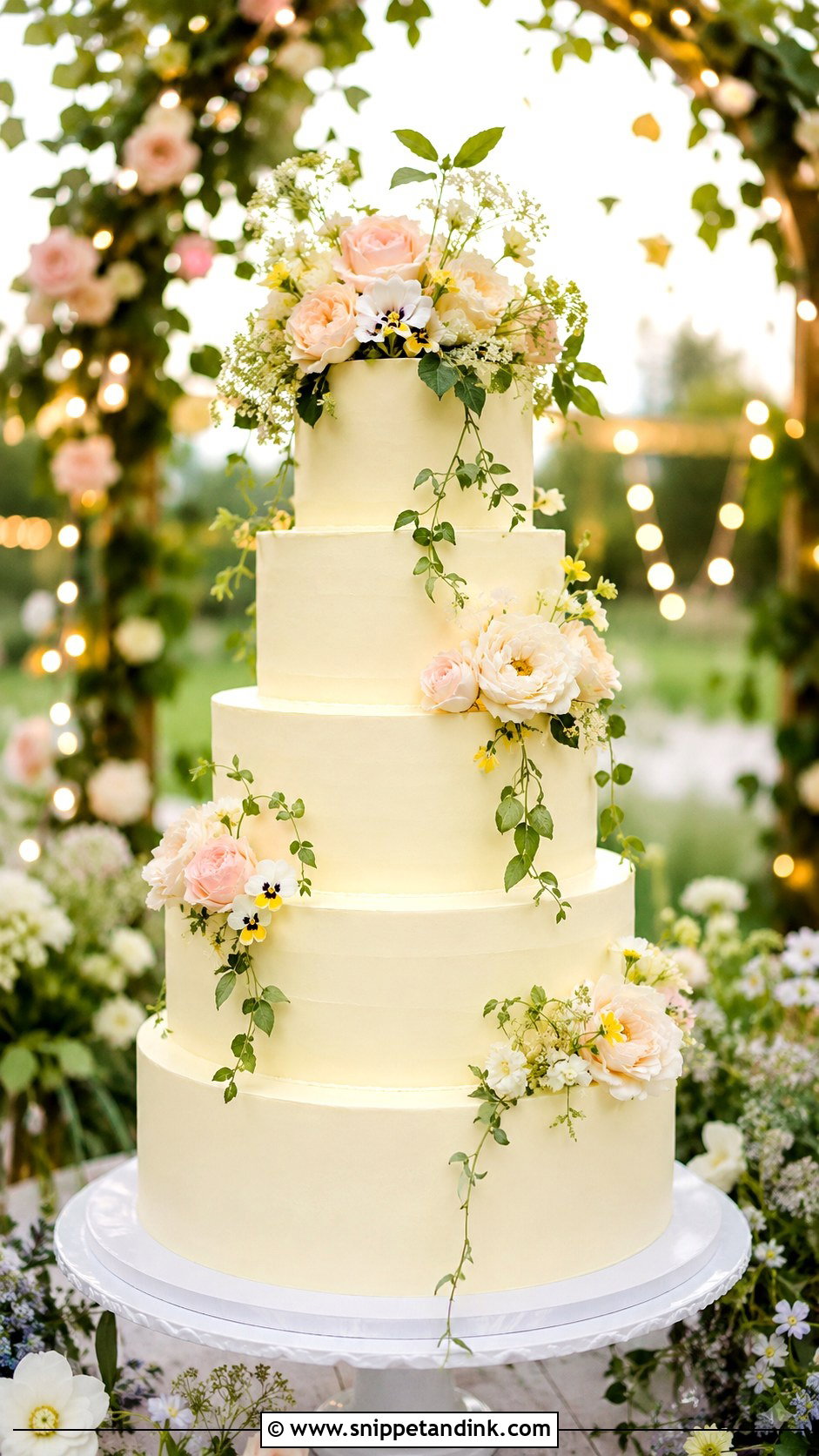
Garden cakes look their best when the light comes from behind and slightly above, the way the sun sits at a summer evening party. I’ll weave a string through a floral arch behind the table or set lights inside glass cloches beside the stand. If the cake carries fresh edible flowers or herbs, they need shade until display time, because petals soften quickly in warm air. Lemon or elderflower suits the mood.
8. Vintage Wedding Cake With Fairy Lights
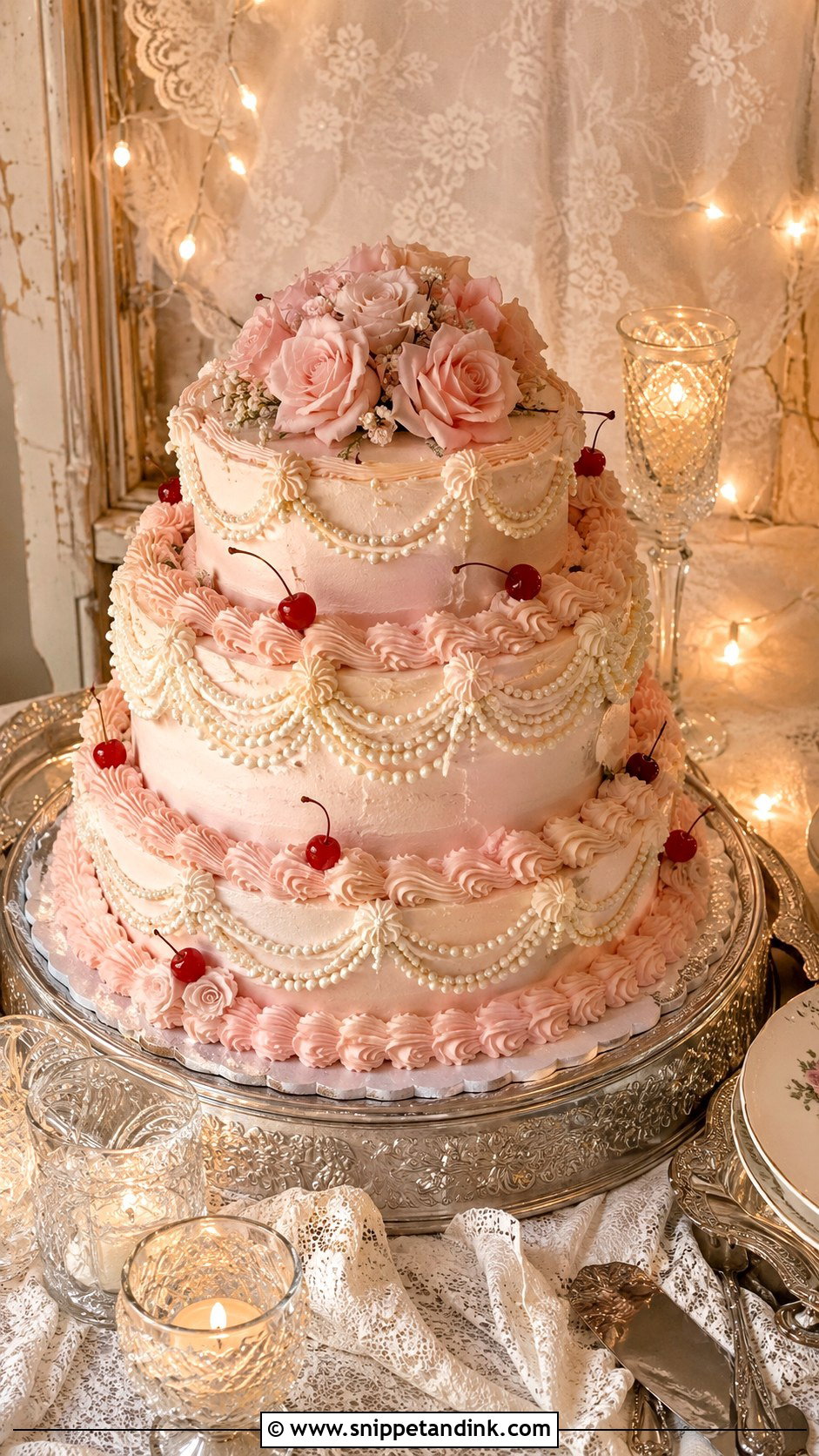
Lambeth piping is already busy, with layered shells, scallops and drapes, and every ridge throws its own little shadow under point lights. That’s the charm, but it means the lights must stay in the background: a lace-covered table, a mirrored tray or two small lanterns nearby. Pastel buttercream in soft pink or pale blue suits the style. I’d avoid strings wound round the stand here, as they clutter an already detailed outline.
9. Modern Wedding Cake With Fairy Lights
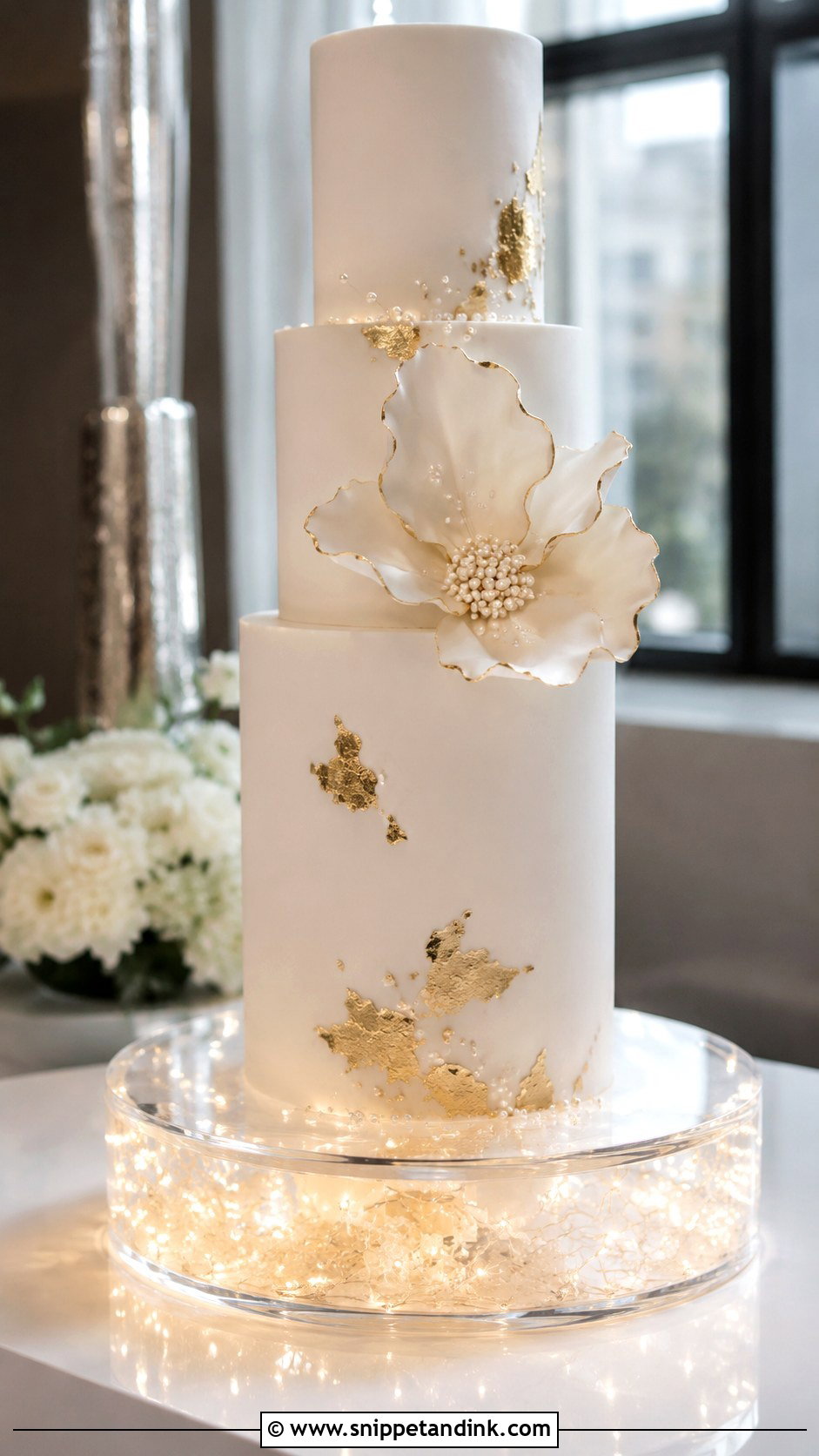
Modern cakes use light as a material. I hide the string under a clear acrylic base or inside a transparent separator so the cake seems lit from within, with no visible wire anywhere. Sharp fondant edges and one strong detail, a single sugar flower or a patch of gold leaf, are enough. A gallery or rooftop space with neutral walls lets this read cleanly, and the restraint is the point.
10. Gold Wedding Cake With Fairy Lights
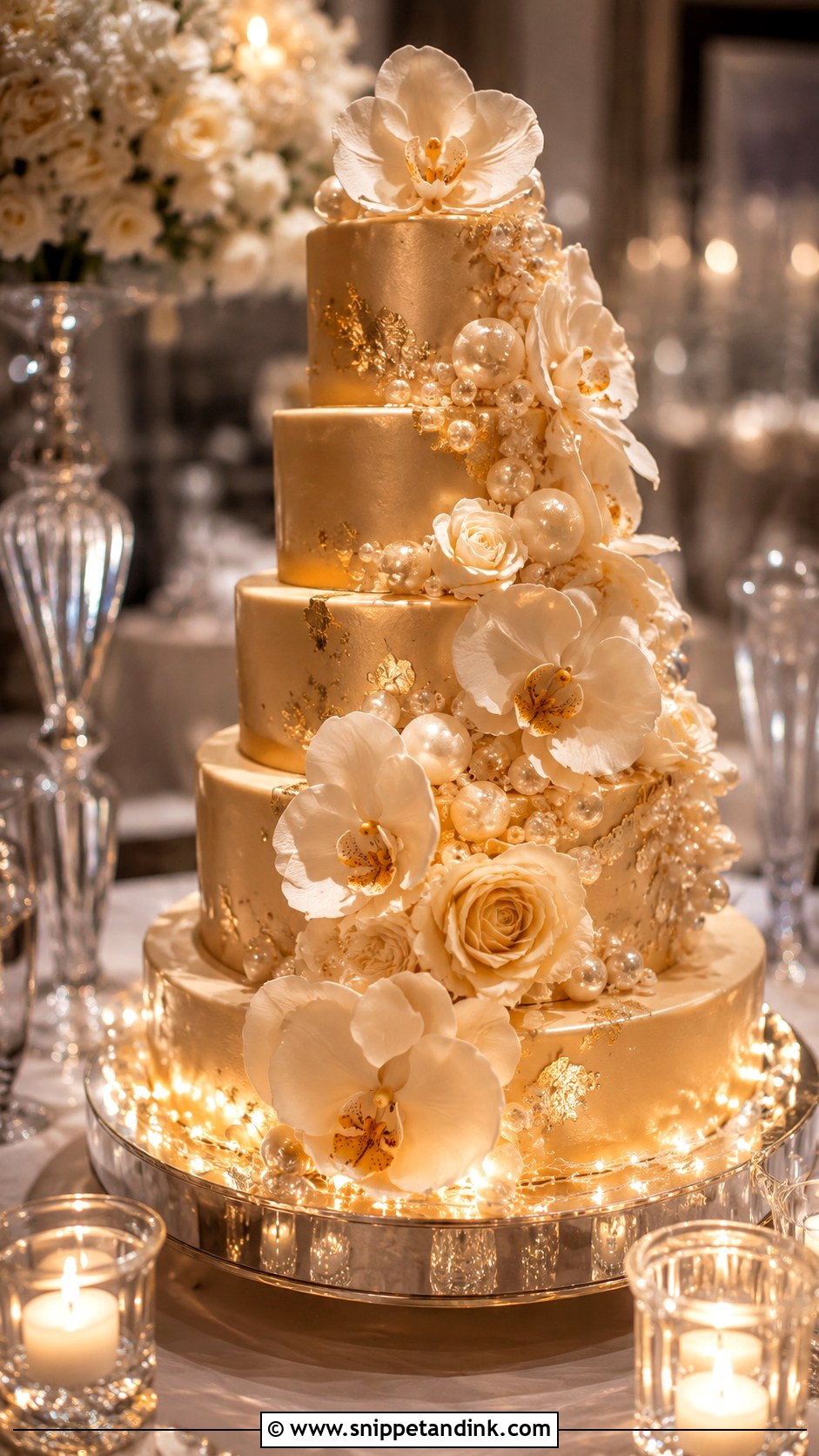
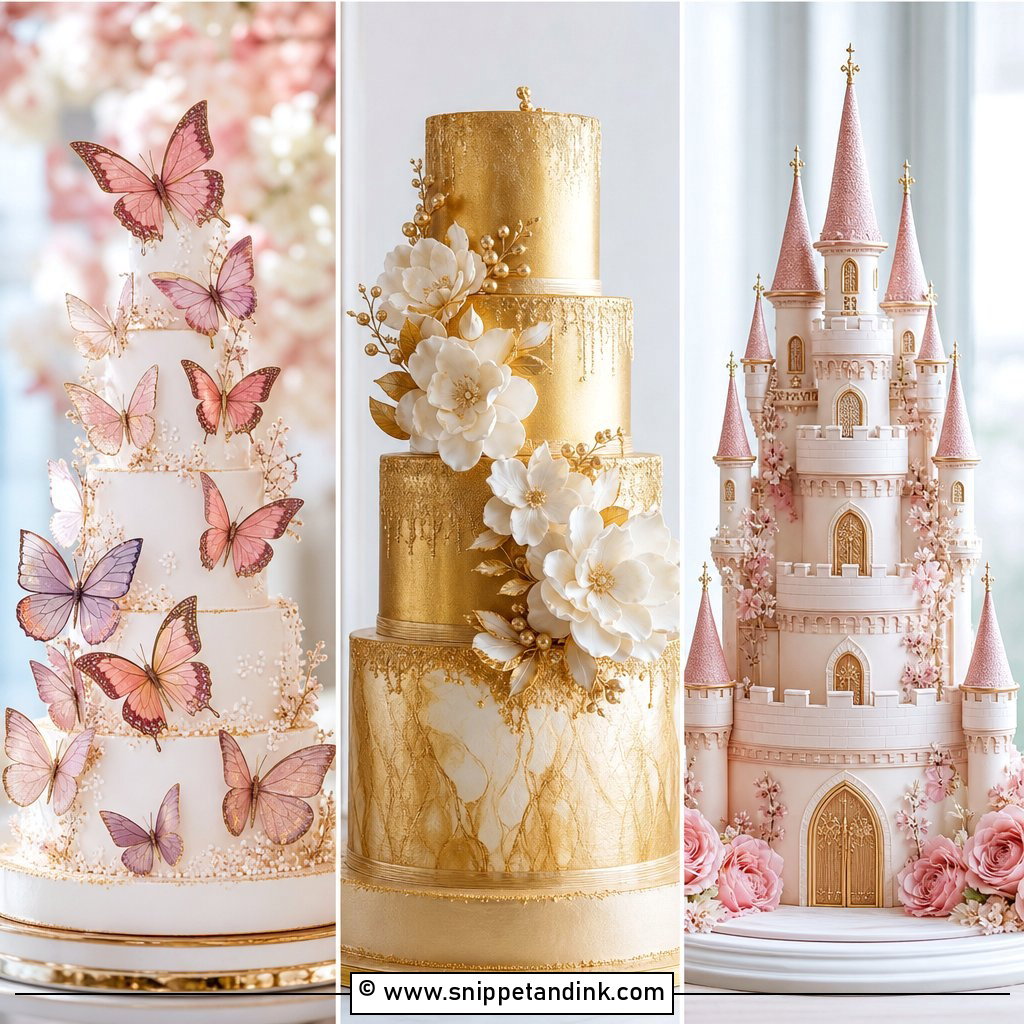
Gold leaf, brushed metallic paint and champagne fondant pick up warm light in a way matte icing never will. One string is often enough, because every metallic patch acts as its own reflector. A mirrored or clear acrylic stand doubles the glow. Keep the flowers simple, ivory roses or white orchids, and watch for glare: lights placed level with a gold band can flare in photos, so I keep them a little below it.
11. Blush Wedding Cake With Fairy Lights
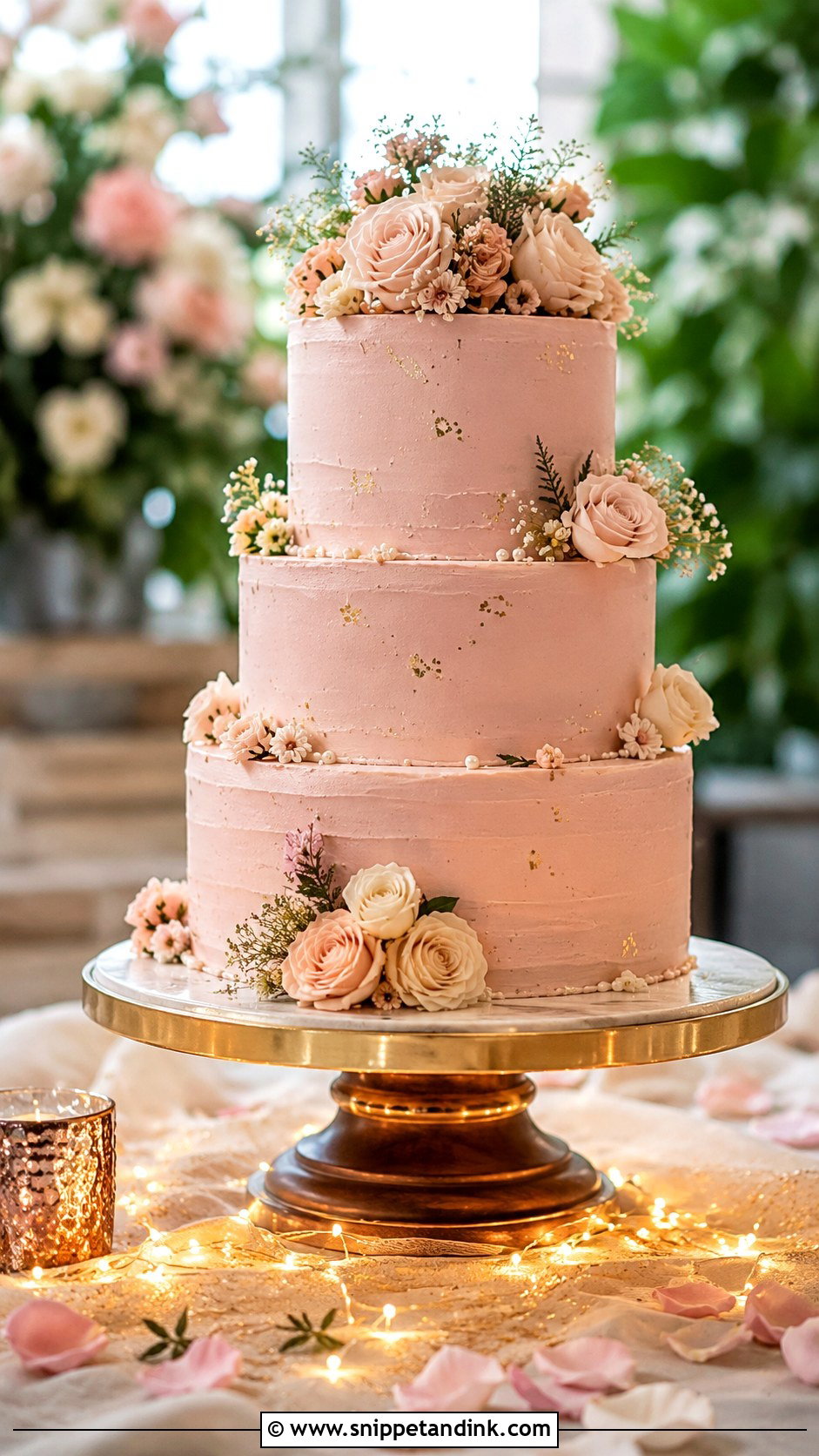
Blush buttercream and warm lights sit very close in tone, so they flatter each other without any effort. I scatter a few rose petals with the lights around the stand or set glass votives with LED tea lights near the table. Gold accents warm it further; pearls cool it down. Strawberry or rose flavours carry the colour inside the cake too.
12. Acrylic Tier Wedding Cake With Fairy Lights
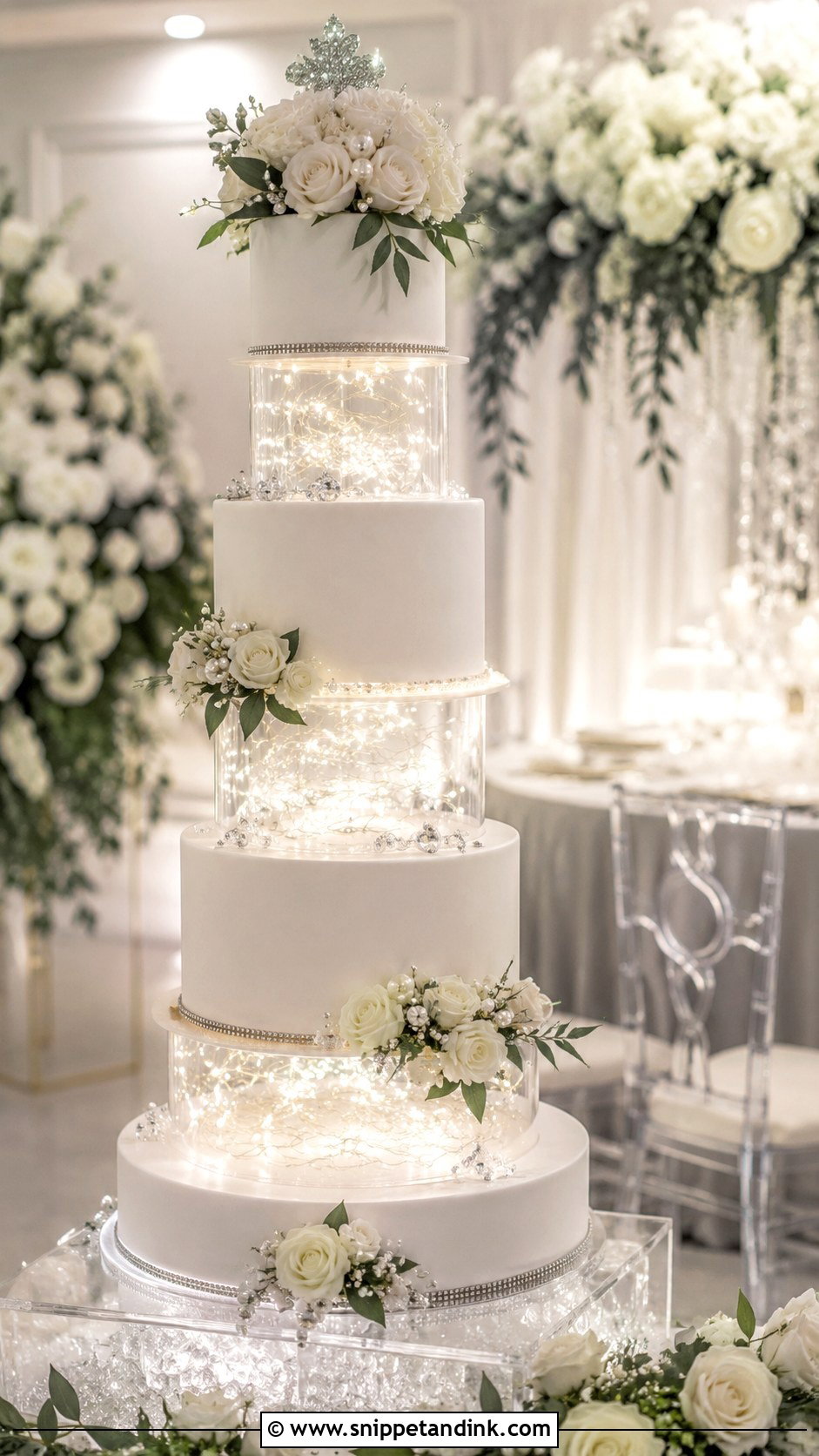
An acrylic tier wedding cake gives the lights an obvious home: the clear separator, filled with micro LEDs, crystals or greenery, so the middle of the cake glows. Ask how the separator is built and how the battery pack is reached, because some are sealed and you’ll need the lights switched on before the upper tiers go on. The battery box usually hides behind the separator’s back edge or under the tier board.
13. Chandelier Wedding Cake With Fairy Lights
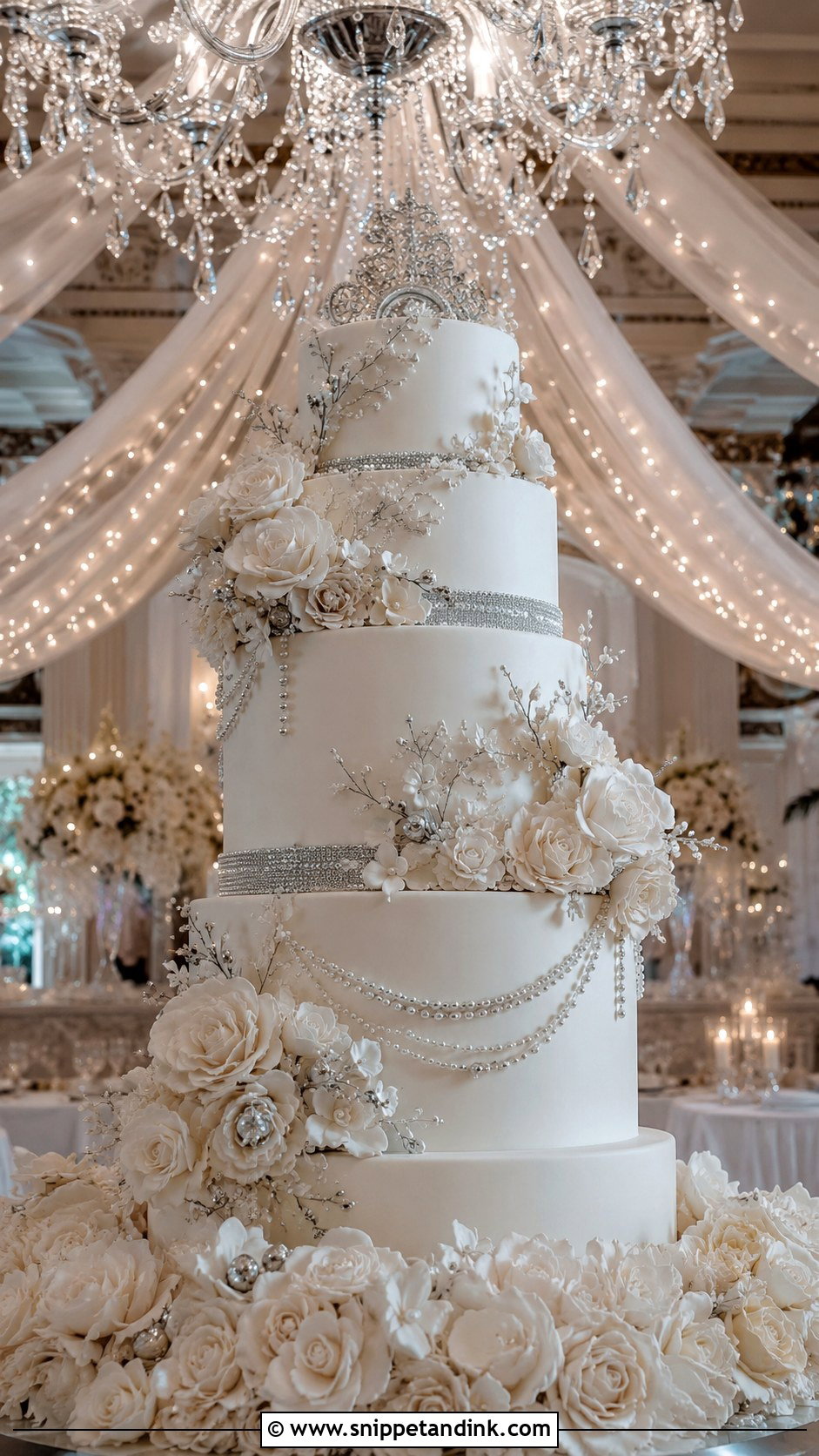
Displaying a cake under a real chandelier, or on a suspended stand, needs more planning than any other idea here. Suspended stands must hang from a rated rigging point, which the venue has to confirm, and the cake must be level and still. Fairy lights then play a supporting role, behind draped fabric or around clear risers. Smooth white fondant with metallic touches holds its own beside crystal. I wouldn’t attempt the suspended version without the venue’s events team involved from the start.
14. Naked Wedding Cake With Fairy Lights
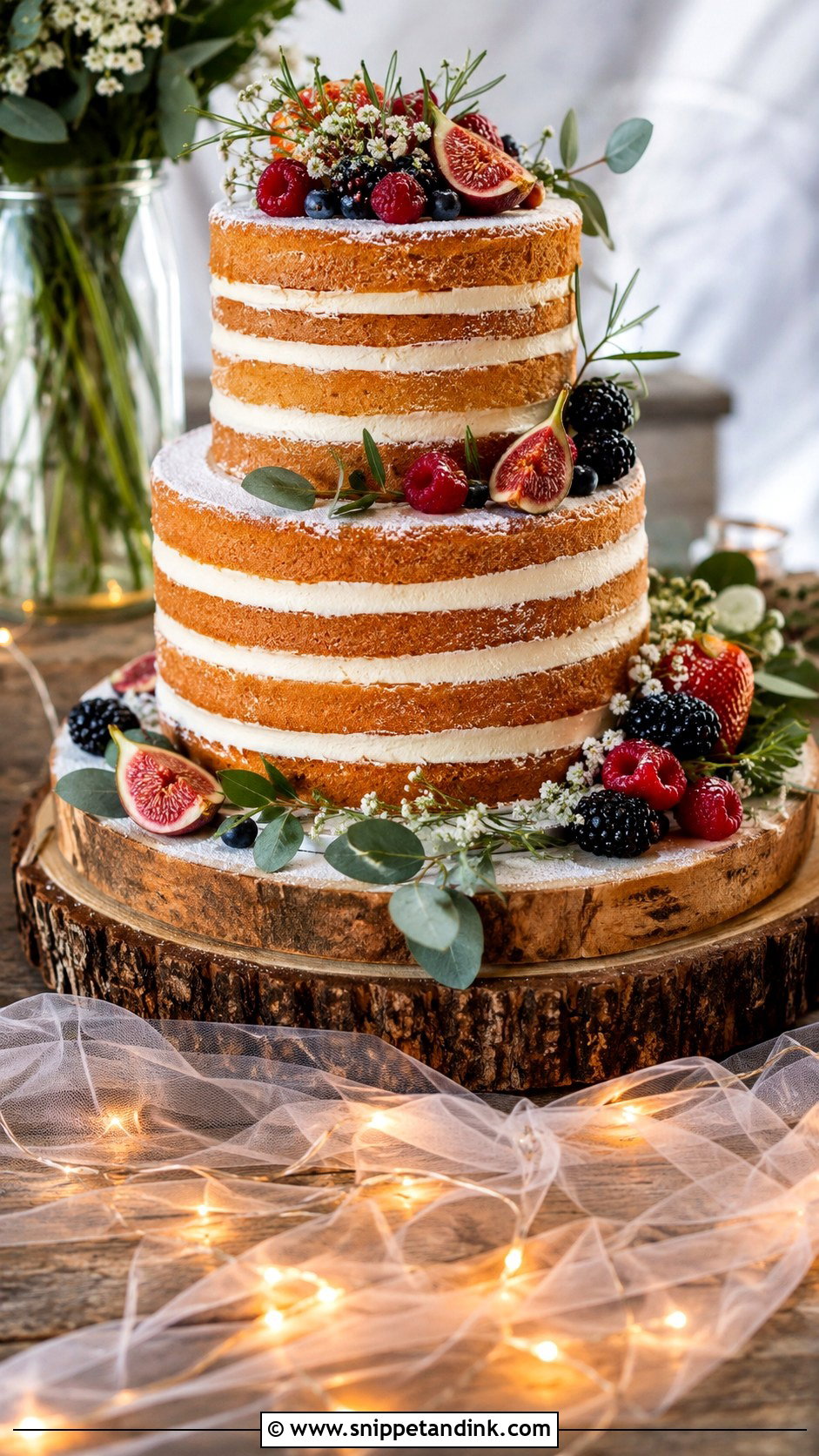
A naked cake shows every crumb, so it needs to stay covered until shortly before guests see it; exposed sponge dries quickly under warm room air. Lights go around the stand or under a sheer runner, never against the layers. Berries, figs and herbs soften the edges. It suits brunch receptions and outdoor dinners where a formal tiered cake would feel out of place.


15. Buttercream Wedding Cake With Fairy Lights
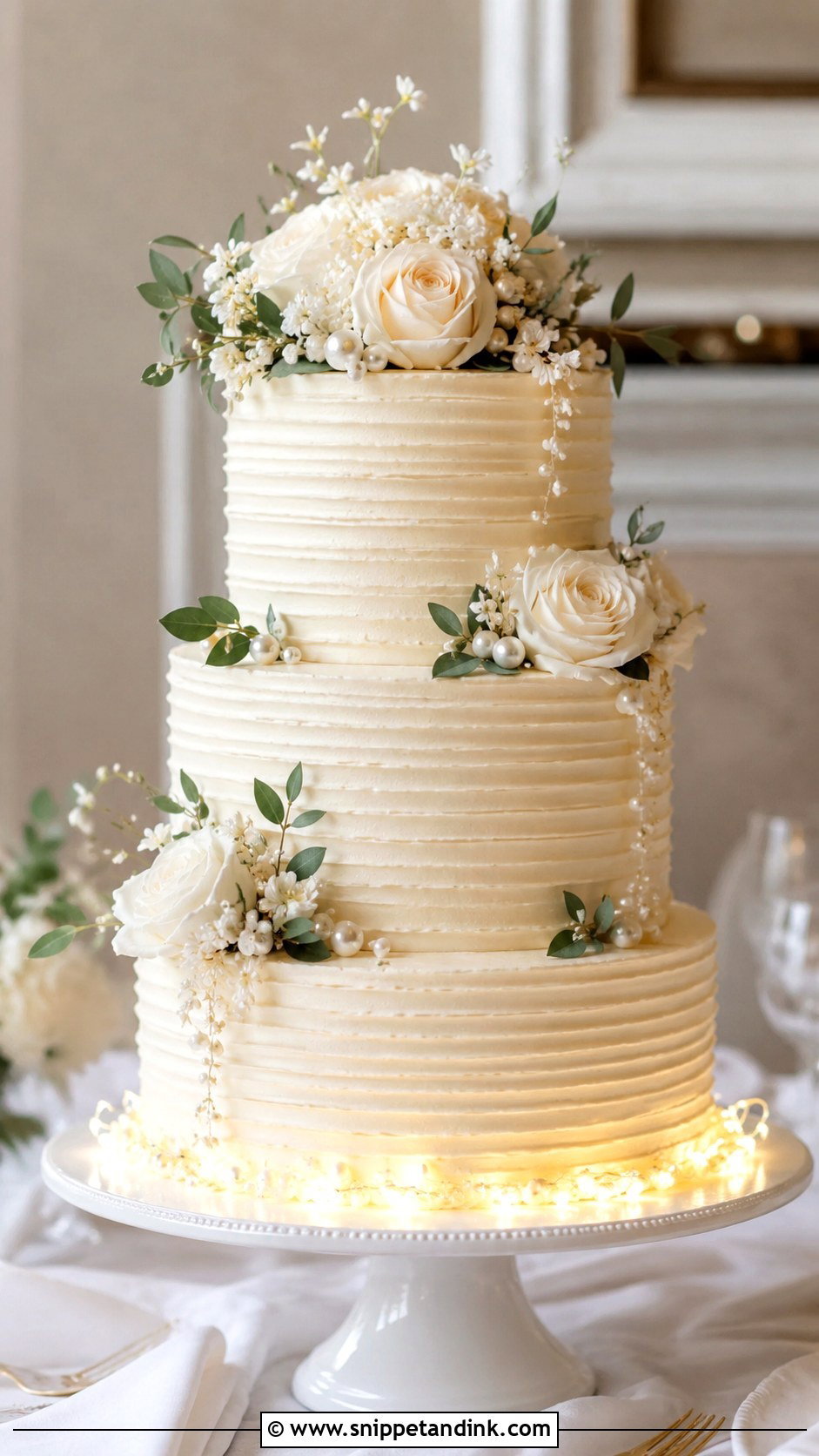
Buttercream softens as a room warms up, and a dance floor full of guests warms a room fast. LEDs themselves barely raise the temperature, but they’re often placed beside candles, and that combination is where I’ve seen edges sag. I keep lights to the base, the backdrop or the display, and any real flame well away from the tiers. Ruffled or palette-knife finishes catch the glow best.
16. Greenery Wedding Cake With Fairy Lights
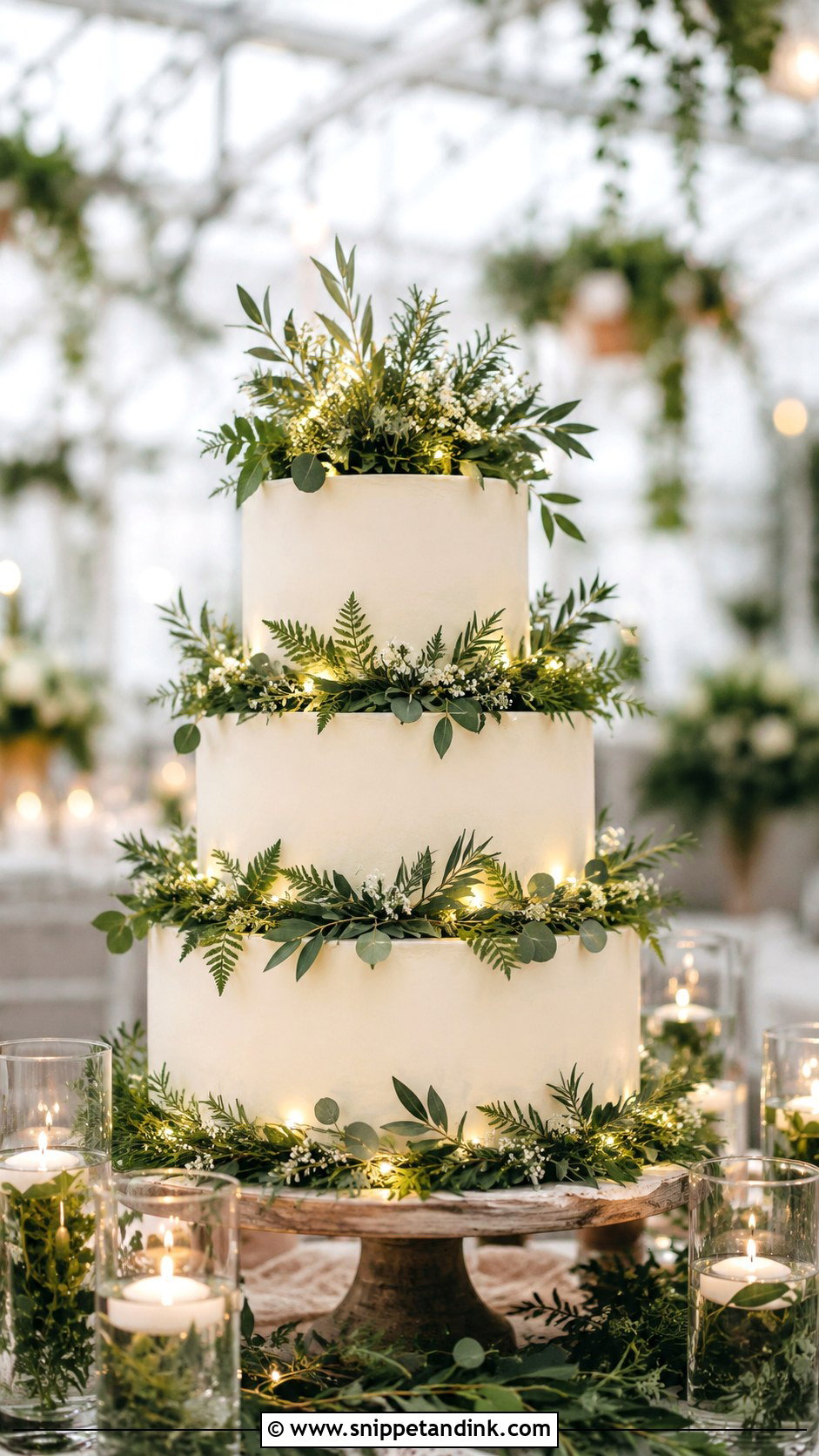
Eucalyptus, olive, ivy or rosemary can wrap the tiers or sit in small clusters, on an ivory or pale sage cake that lets the green stand out. I weave lights through the table greenery rather than the cake’s own garland, or stand them inside clear glass cylinders around it. Warm white keeps the leaves looking alive; cool white tends to make greenery read grey after dark.
17. Crystal Wedding Cake With Fairy Lights
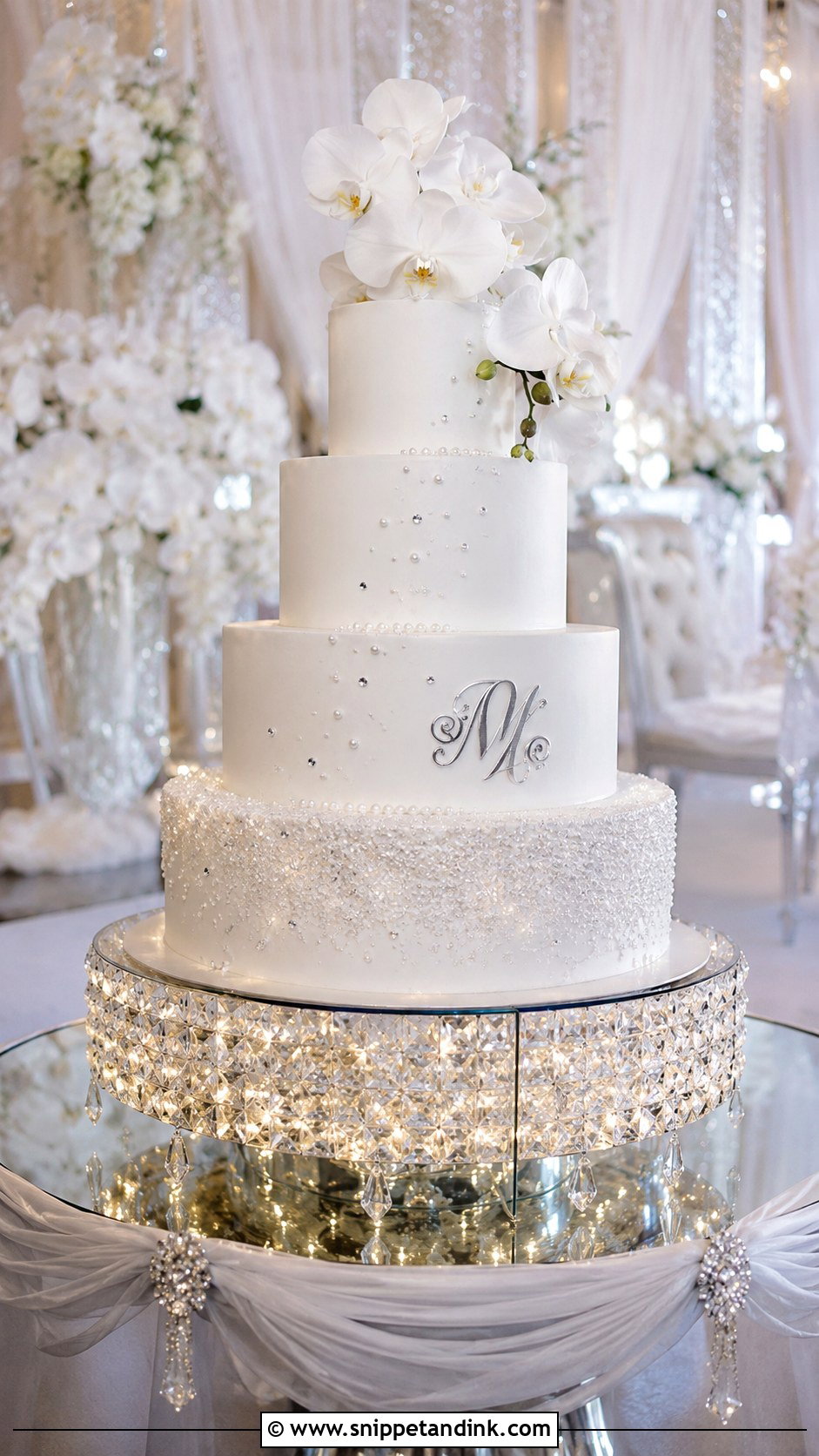
Sugar crystals, edible pearls and silver details need light behind or beneath them to sparkle at all. A crystal or clear stand with a string underneath, mirrored trays or sheer draping lit from behind will do it without harsh overhead light. Stick to white, ivory, silver and champagne. A few white orchids keep it from tipping into a frozen-winter theme, which crystal on silver easily does.
18. Beach Wedding Cake With Fairy Lights
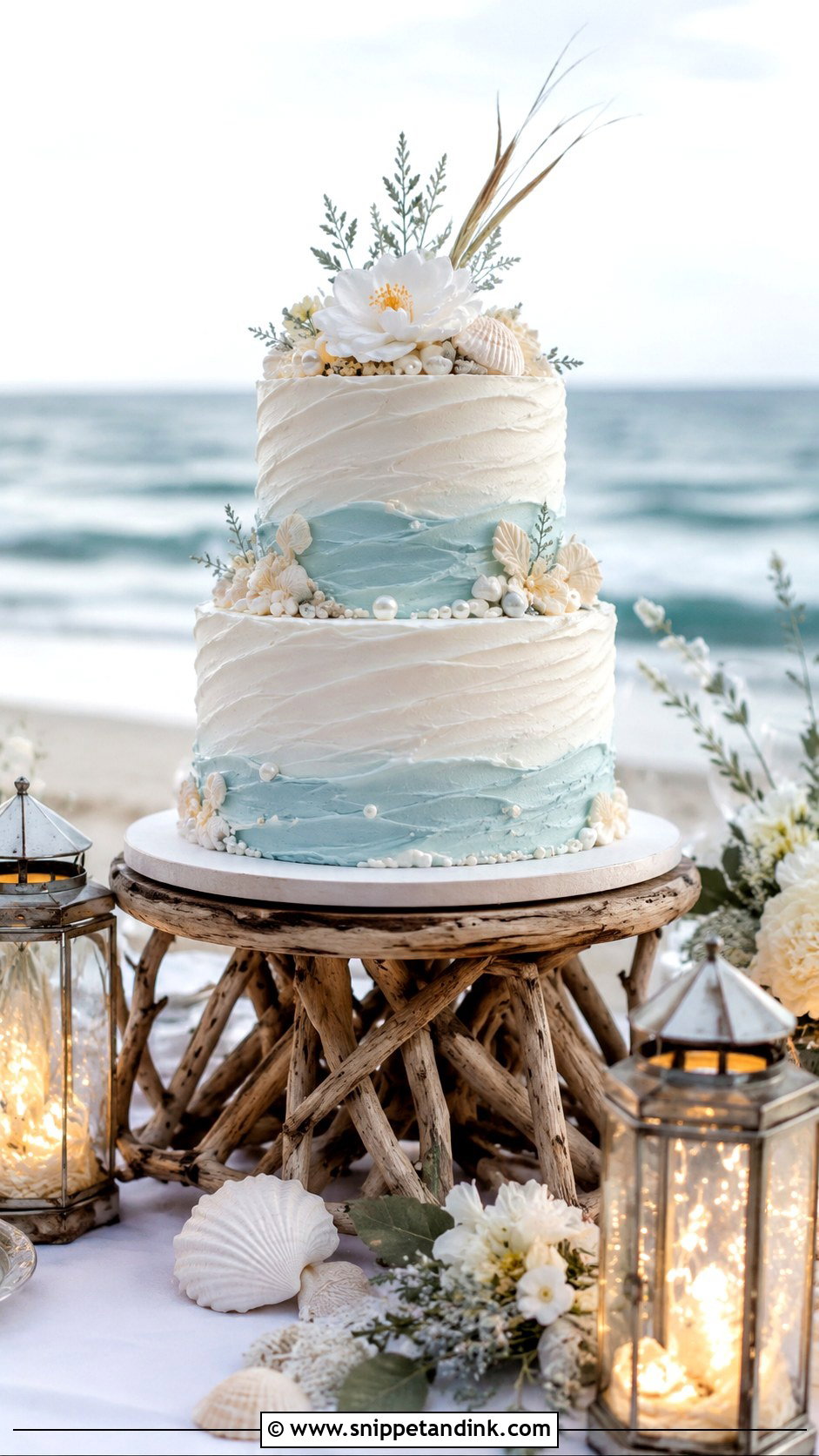
Sea air and battery contacts don’t get along, and wind will flip a loose string off the table. For a beach reception I put the lights inside glass lanterns or under sheer fabric weighted at the corners, around a driftwood-style stand. White or pale blue buttercream with soft wave textures and a few sugar shells is enough theme. Sunset receptions need the lights on before the light goes, not after.
19. Small Wedding Cake With Fairy Lights
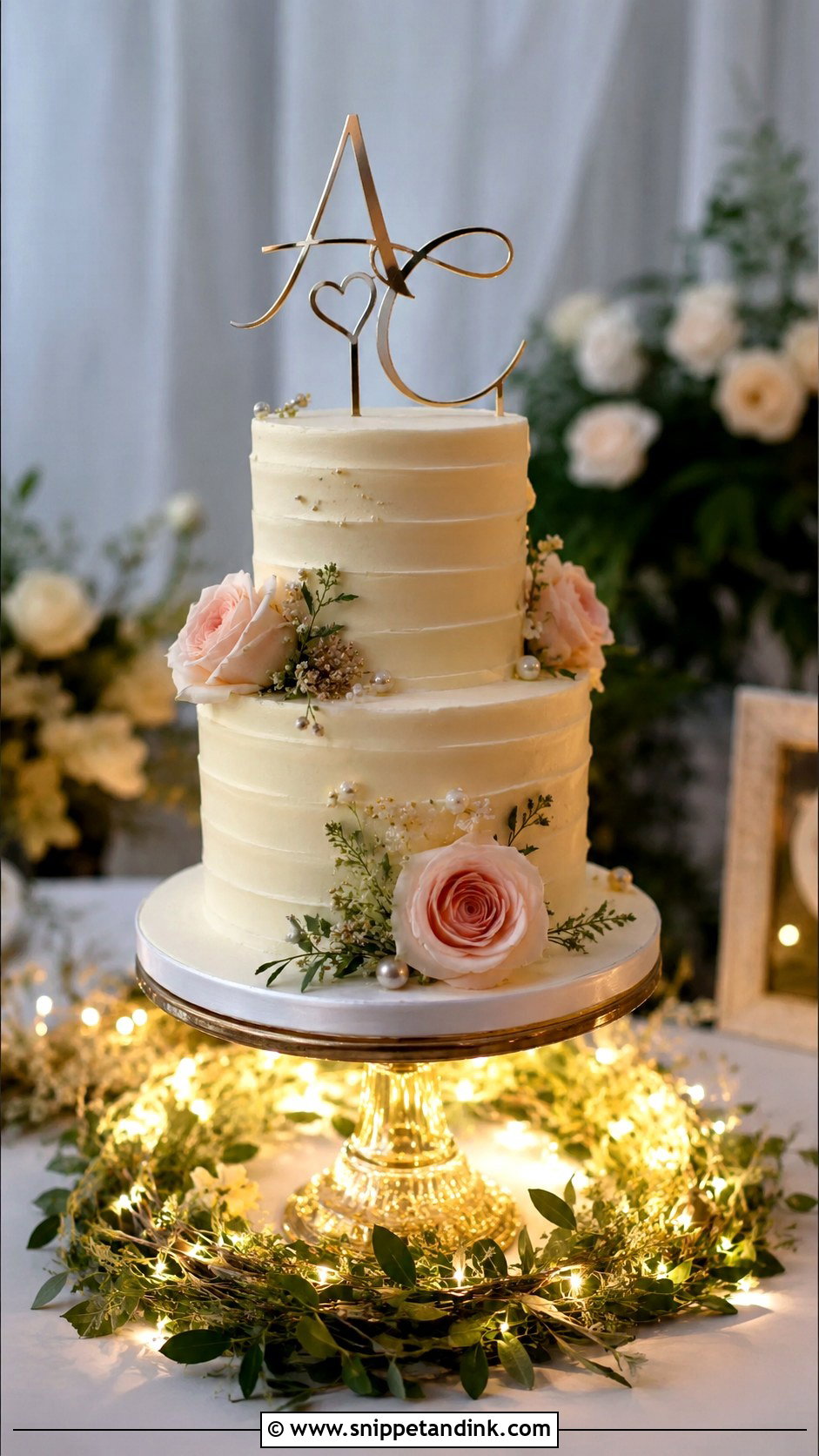
A one- or two-tier cake can hold its own on a dessert table if the display gives it height. I raise it on a footed stand with a small floral wreath at the base and warm lights wound through the wreath. That setup costs far less than an extra tier and does a similar job in photos. Pick the flavour you love; the lighting does the rest.

20. Cupcake Wedding Cake With Fairy Lights
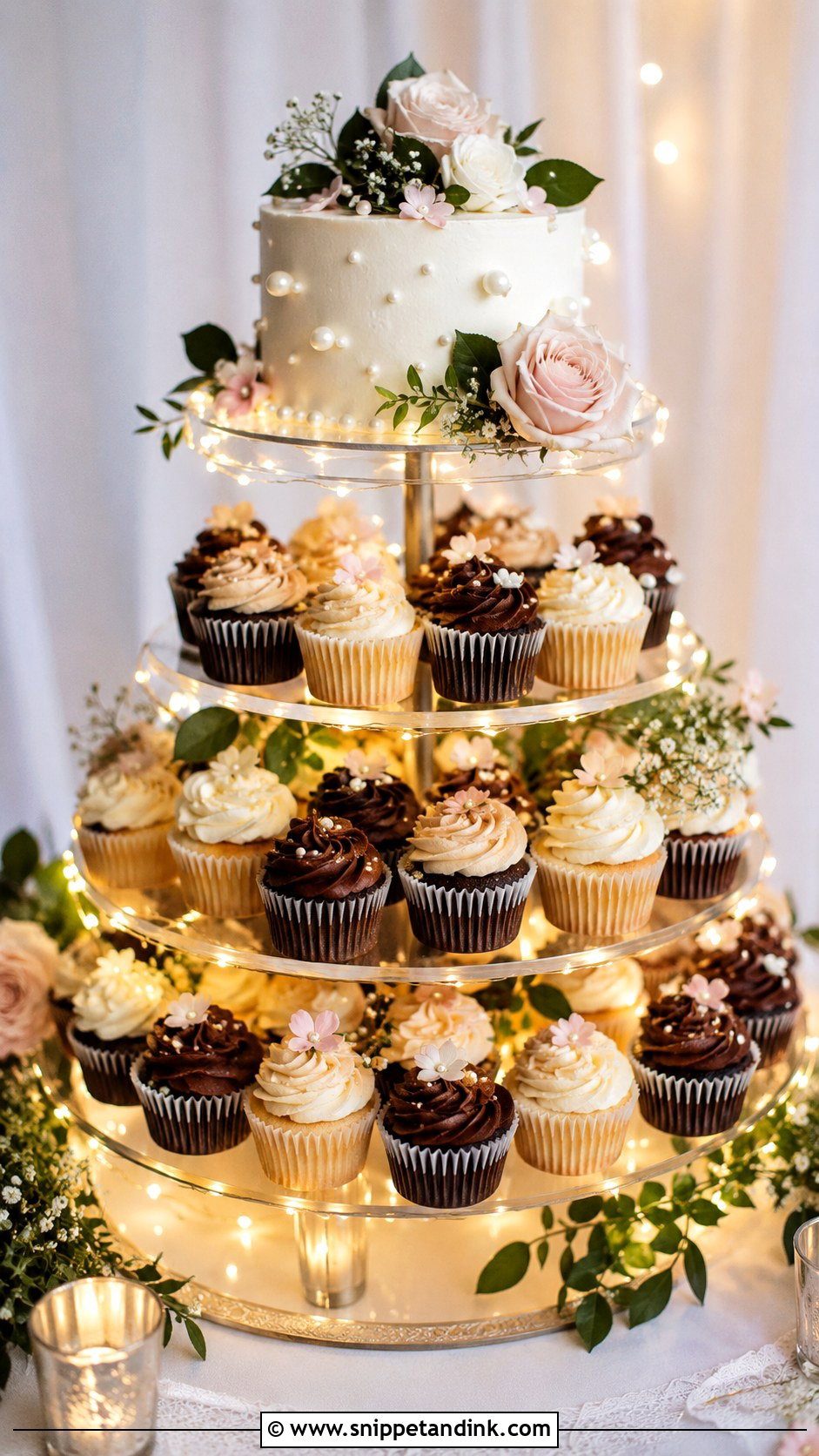
A cupcake wedding cake stand has an open frame that lights wrap neatly, with a small cutting cake on top. Liners and frosting colour matter more than flavour for the look, so I keep them consistent even if the flavours change from tier to tier. Guests lift cupcakes off the stand, so lights must be fixed to the frame and kept away from the cupcake edges, where fingers reach in.
Will the Glow Survive the Photos?
Fairy lights look magical to the eye and can vanish in pictures. Direct flash flattens them into tiny white dots, and a brightly lit room drowns them out completely. I talk to the photographer before the reception about when the cake will be cut and whether the venue can dim the house lights for those few minutes.
If you want those glowing detail shots, ask for a few frames of the cake table taken without flash during the blue hour, just after sunset, when there’s still some ambient light outside. That’s often the best balance between a visible cake and visible bulbs. Once it’s fully dark, the lights carry the picture but the icing loses detail.
A quick check before guests walk in
Stand where the guests will stand and look for any visible battery box, a bright spot where bulbs bunch together, or a wire crossing the front of the stand. Then crouch to phone height. Lights that look even from above often bunch at the bottom of the frame, and a thirty-second rearrange fixes it.
Light the Table, Not the Icing
Light the space around the cake and the cake will glow; light the cake itself and you’ll mostly light the wires. Stands, separators, fabric and table decor do the work. Warm white suits rustic, blush, gold and garden displays, while cooler white belongs with crystal or very modern tables. Plan where every battery pack sits before the day, and the cake table will be the brightest corner of the room when it counts.
You'll Like These Ideas:









Leave a Reply