
Winter is a kind season for cakes. Buttercream stays firm, sugar flowers hold their shape, and nobody is fanning a melting tier in a marquee. The challenges are different: cakes travel from cold vans into hot rooms, real greenery needs care, and dark colours take a lot of dye. The designs below range from white snowflakes and birch bark to navy, black and dark chocolate, with the flavours I’d pair with each and the practical notes I’d give a couple at a tasting.
Cold Van, Hot Ballroom: What Winter Temperature Swings Do to a Cake
Most of my winter cake problems come from moving between temperatures, not from the cold itself. A chilled cake carried into a warm, crowded room collects condensation on the surface, just like a cold glass. Fondant goes shiny and tacky, and dark colours can streak if anyone wipes it.
The fix is mostly patience. Condensation dries by itself if the cake is left alone, so I set up early and ask staff not to touch it or cover it. Here’s what I’d check with the venue before the day:
- Where the cake table sits. Keep it away from fireplaces, radiators, heaters and big candle clusters, which can soften buttercream in an hour.
- When the room heating comes on. A room heated from cold just before guests arrive creates the most condensation.
- Whether there’s a cool room for storage if the cake arrives hours before the reception.
- When the cake will be cut. Buttercream tastes best at room temperature, so a cake straight from the fridge needs time to soften before serving.
Icy roads matter too. In winter I allow extra travel time and drive tiers separately when the cake is tall, then stack and finish it at the venue.
1. White Snowflake Wedding Cake
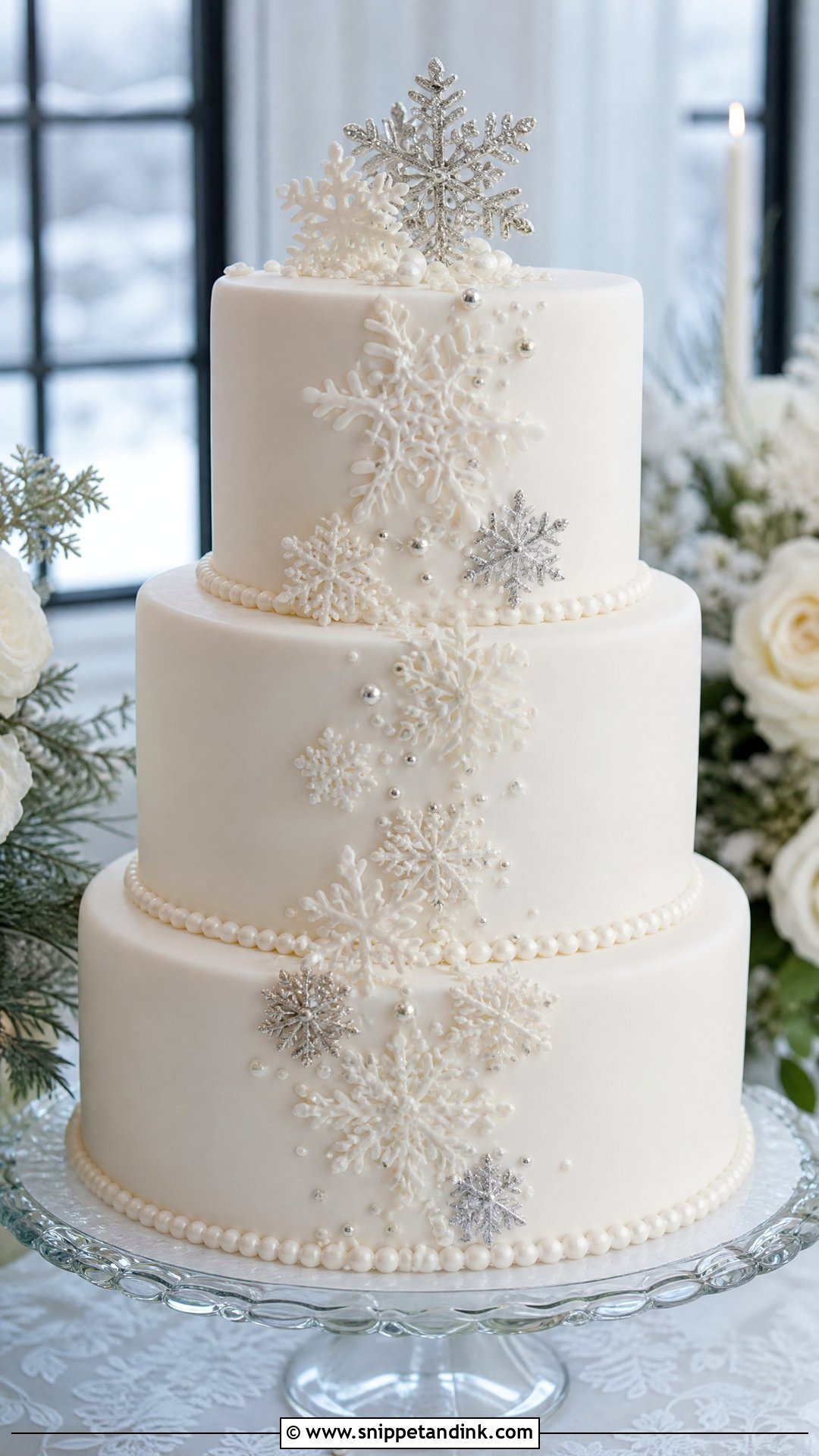
Snowflakes need varied sizes to look like falling snow rather than wallpaper. I cover the tiers in smooth white fondant or crisp buttercream, then cut snowflakes in three or four sizes and let them drift across the cake, with more at the top. Pearl dust on the edges makes them catch the light. Vanilla bean, almond, coconut and white chocolate suit the quiet colour. Keep the topper small, or skip it, so the pattern does the work. It looks at home in a ballroom, a lodge or a chapel.
2. Icy Blue Ombre Wedding Cake
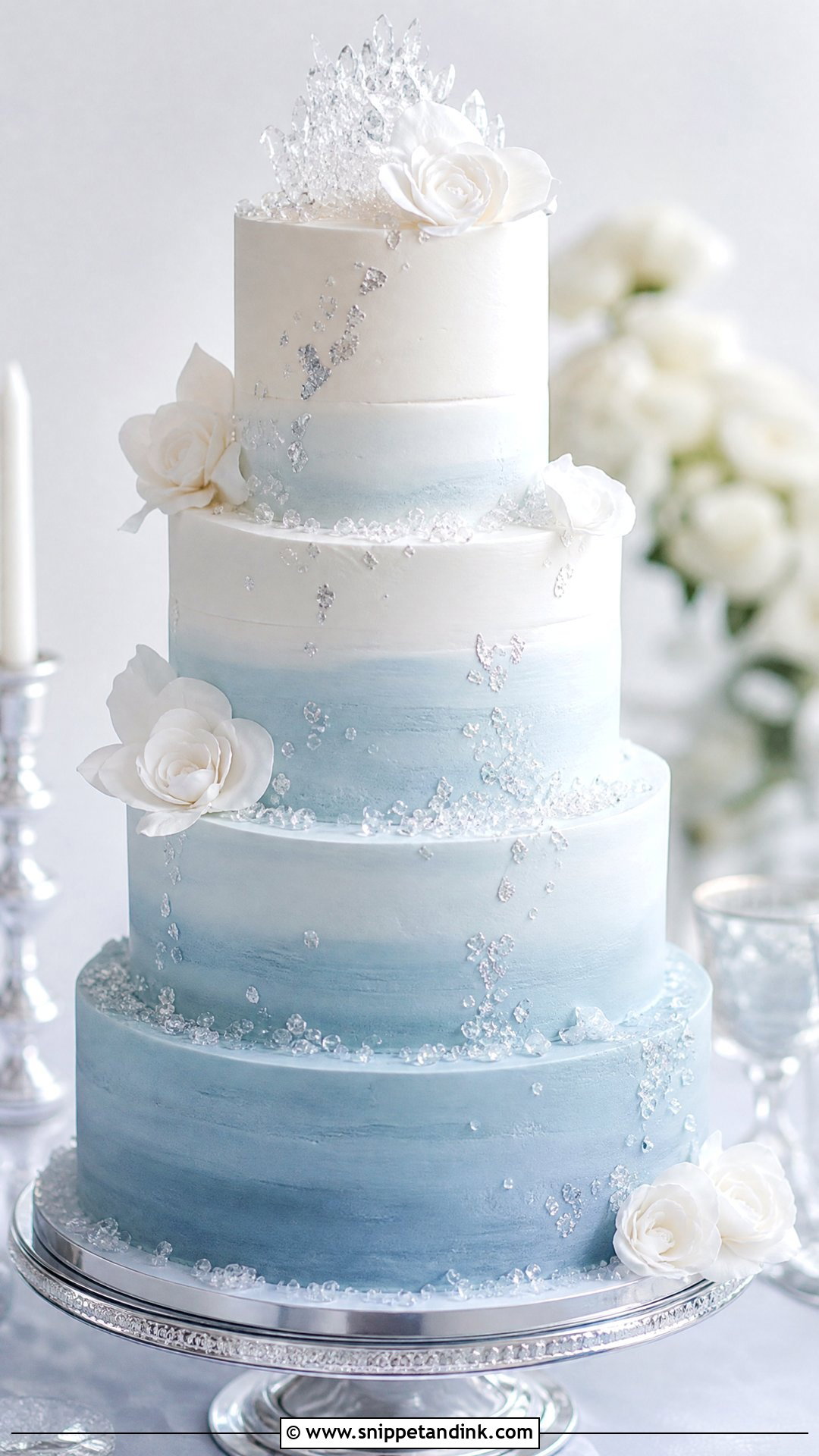
Ombre is easier to get right in buttercream than fondant, because I can blend the colour with a scraper while it’s soft. The cake fades from pale blue at the base to white or ivory at the top. Blue buttercream can turn slightly green when made with a very yellow butter, so I whiten the base first. Silver leaf, sugar crystals, white flowers or small piped snowflakes add detail. Vanilla or almond are classic inside, and lemon or white chocolate also work.
3. Winter Birch Bark Wedding Cake
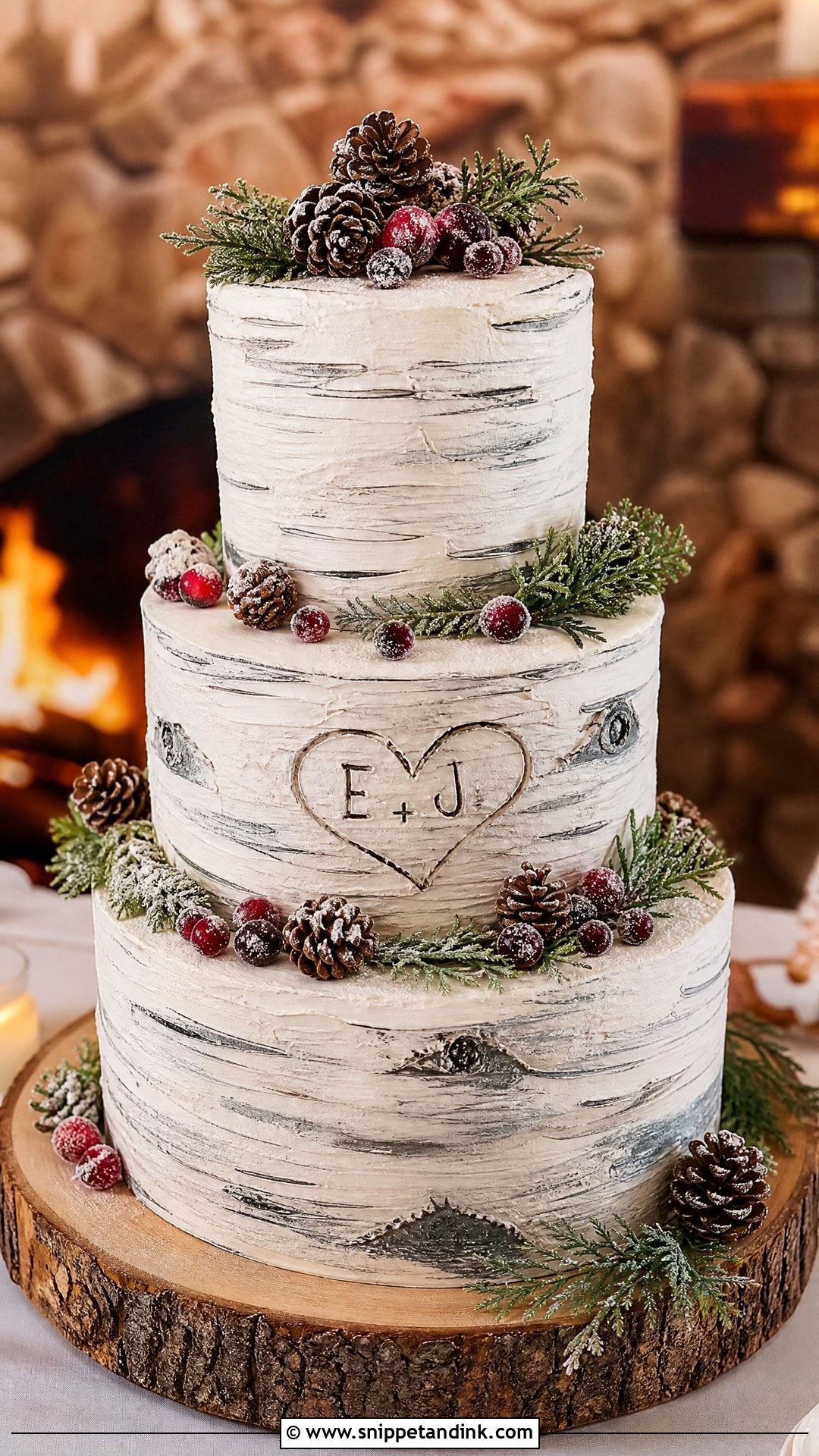
Birch bark is a buttercream technique: white icing with grey streaks and dark knots dragged in with a palette knife and spatula. It suits rustic venues, mountain weddings, barns and lodges. I’d style it with pinecones, evergreen, sugared berries and a wood slice cake stand. Cluster the decorations in small groups so the bark texture still shows. Maple pecan, spice, carrot or brown butter vanilla suit the woodland look well.
4. Pinecone Wedding Cake
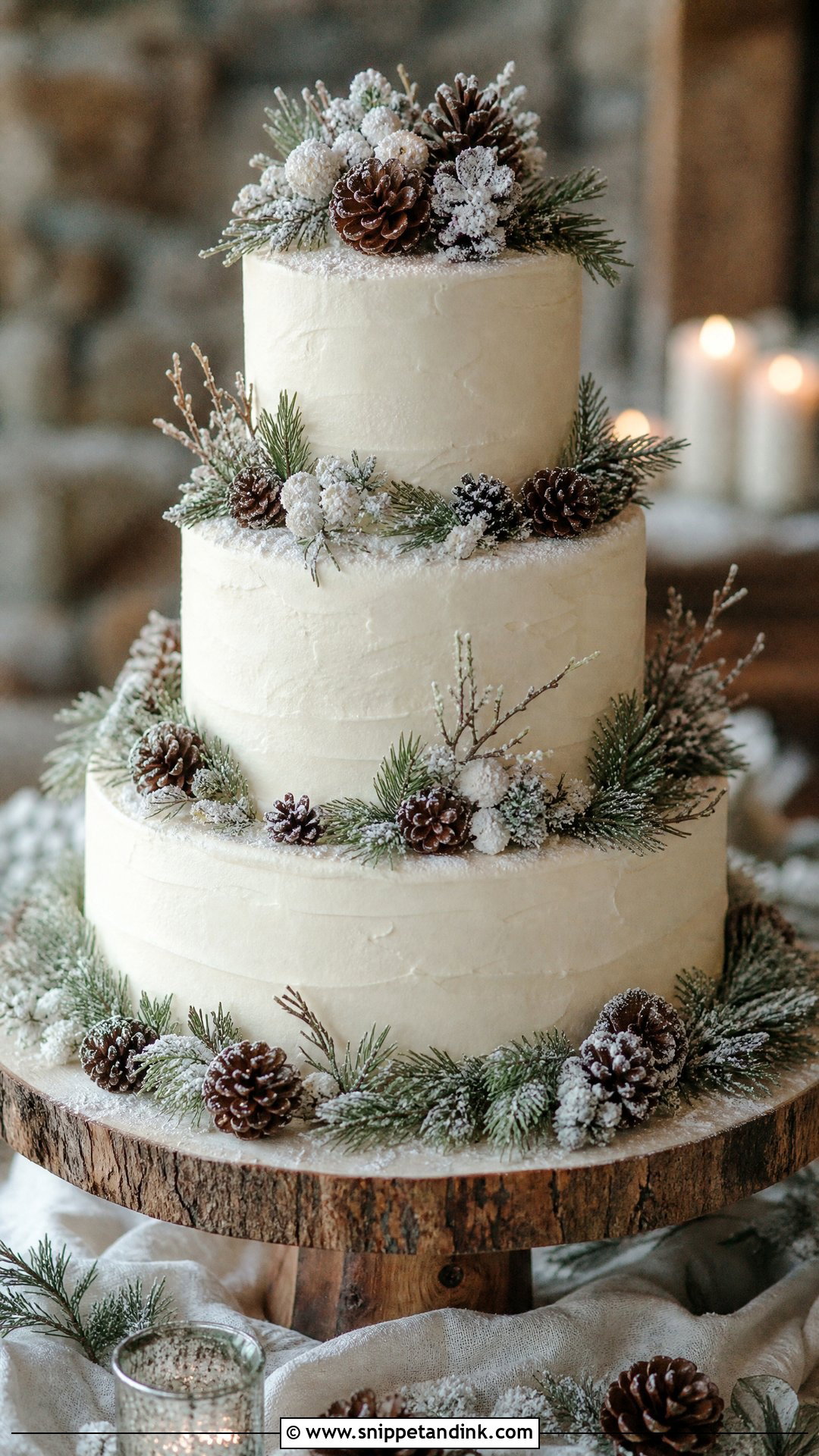
Pinecones give the reception a natural, woodland-inspired feeling straight away, but I’d make them edible rather than using real ones, which can carry dust, sap and insects. Chocolate or sugar pinecones look convincing and taste good. The cake can be smooth, semi-naked or textured. Place pinecones along one side, at the base or between tiers rather than covering every surface. Chocolate, spice, vanilla, maple and hazelnut all fit.
5. Silver Wedding Cake
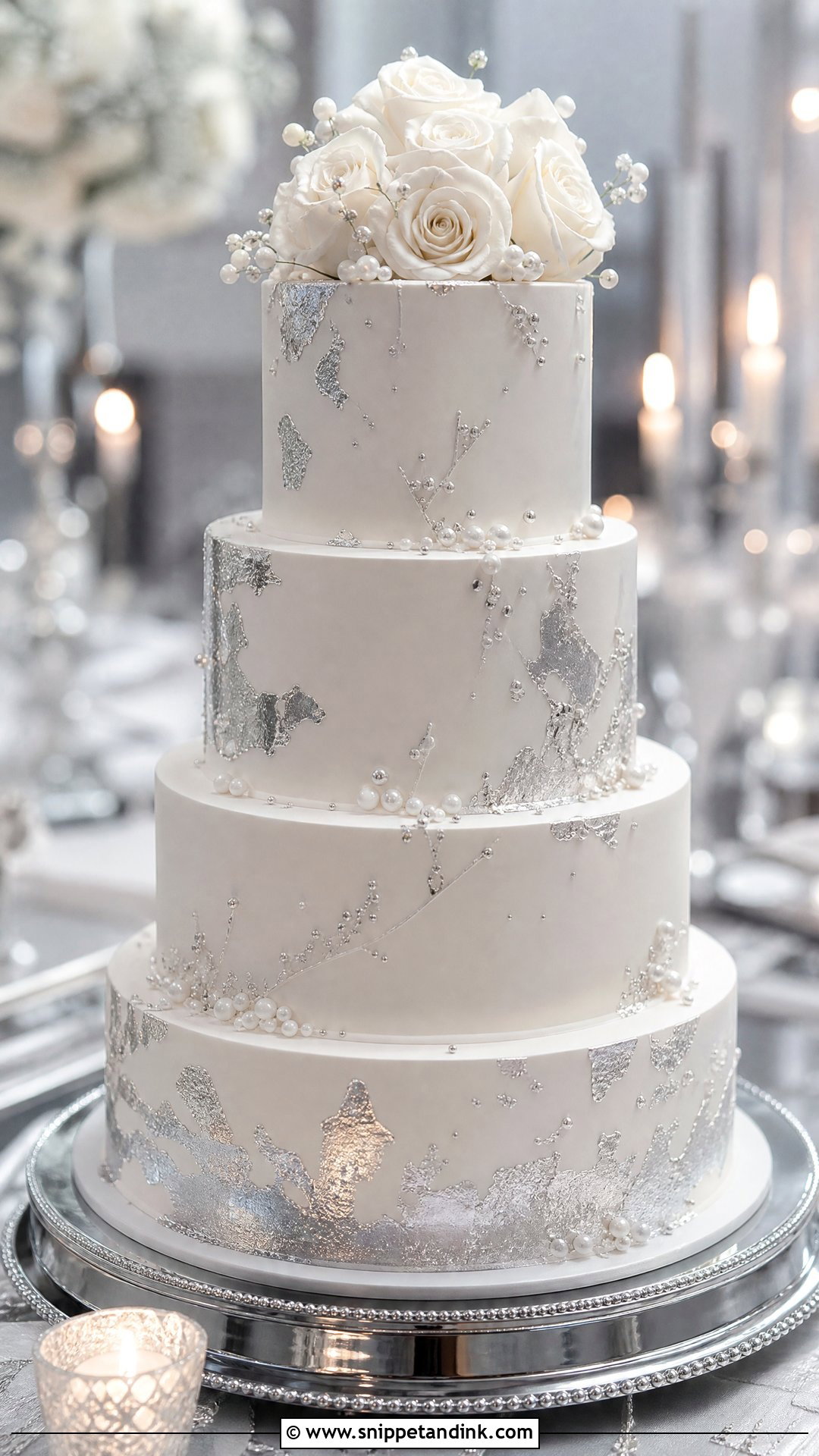
Silver needs a light hand, as too much makes a cake look like a trophy. A few details are enough: edible leaf, metallic piping, painted fondant panels, ribbon-style bands or a fine shimmer over white buttercream. I always check that leaf and lustre dusts are labelled edible, not just non-toxic, since the second kind is for decorations that get removed. Pair silver with white, ivory, pale blue, charcoal or soft grey. Vanilla almond, champagne-style sponge, white chocolate and coconut suit it.
6. Gold Winter Wedding Cake
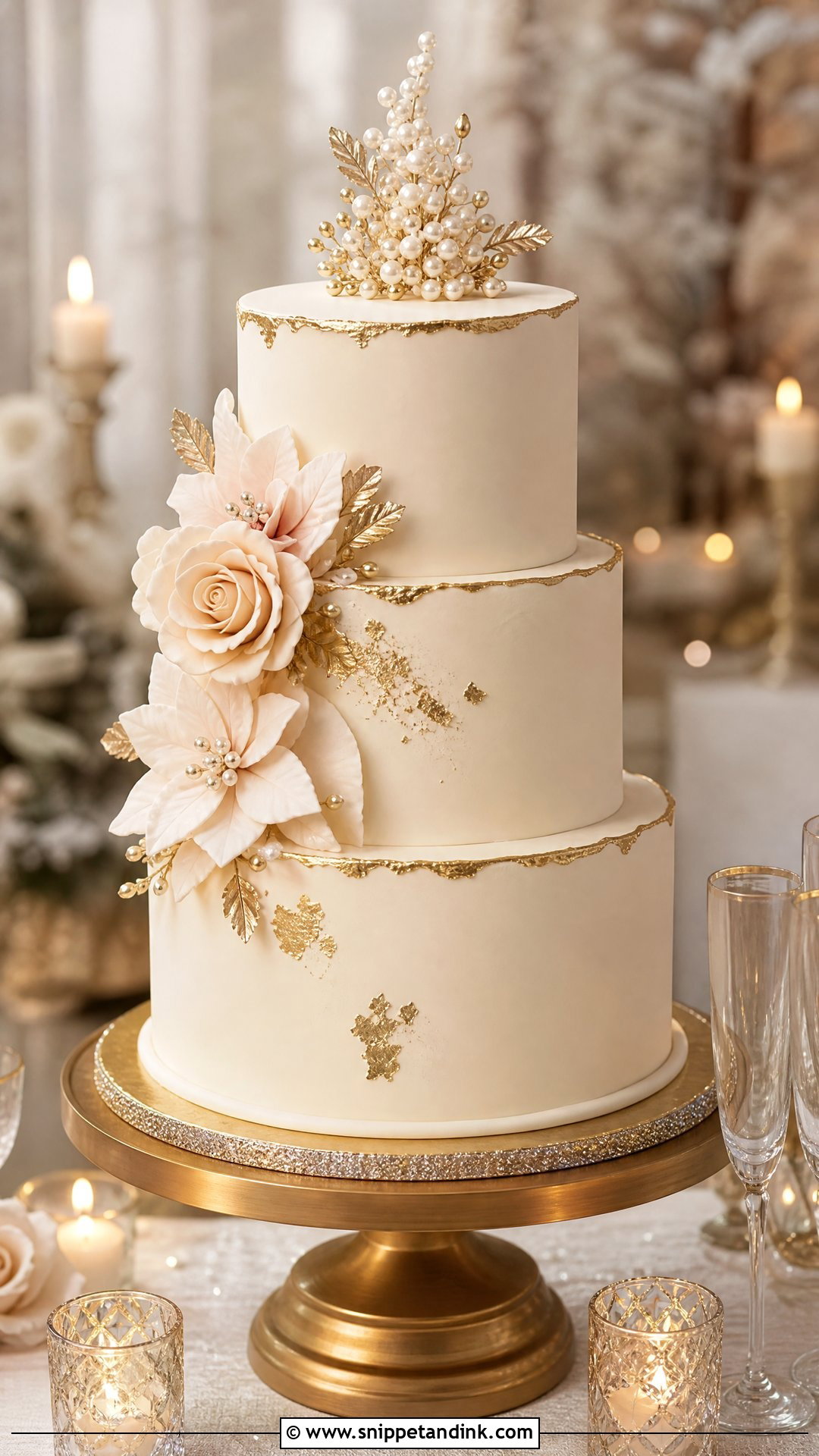
Gold warms a winter cake and glows under candlelight. Applied as torn leaf along the edges, it looks artistic. Piped or banded, it looks traditional. Ivory buttercream, soft beige fondant, blush flowers and white sugar blooms keep it bridal. Salted caramel, vanilla bean, brown butter, hazelnut and spice are the flavours I’d suggest. My rule with gold is one main detail, with the rest of the cake left simple.
7. Navy Blue Wedding Cake
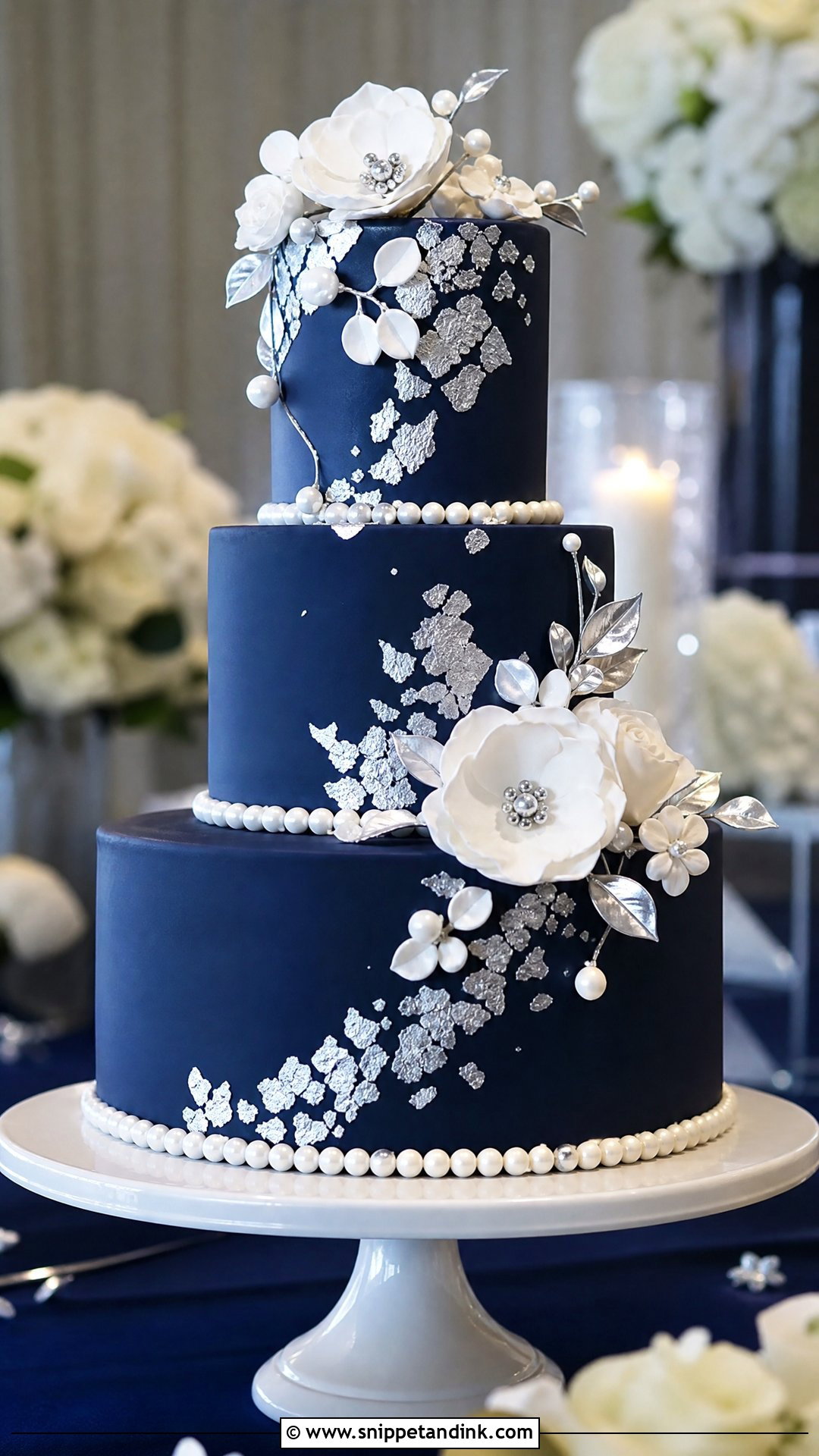
Navy is dramatic, but it takes a lot of colouring to reach, which can stain mouths and leave a slight bitterness. I build dark icing on a chocolate base so less dye is needed, and often use one dark statement tier with lighter tiers above. White flowers, silver leaf, pearls or sugar snowflakes give contrast. Dark chocolate, espresso, salted caramel and red velvet suit it. It fits a palette that already includes blue, silver, white or gold.
8. Velvet Texture Wedding Cake
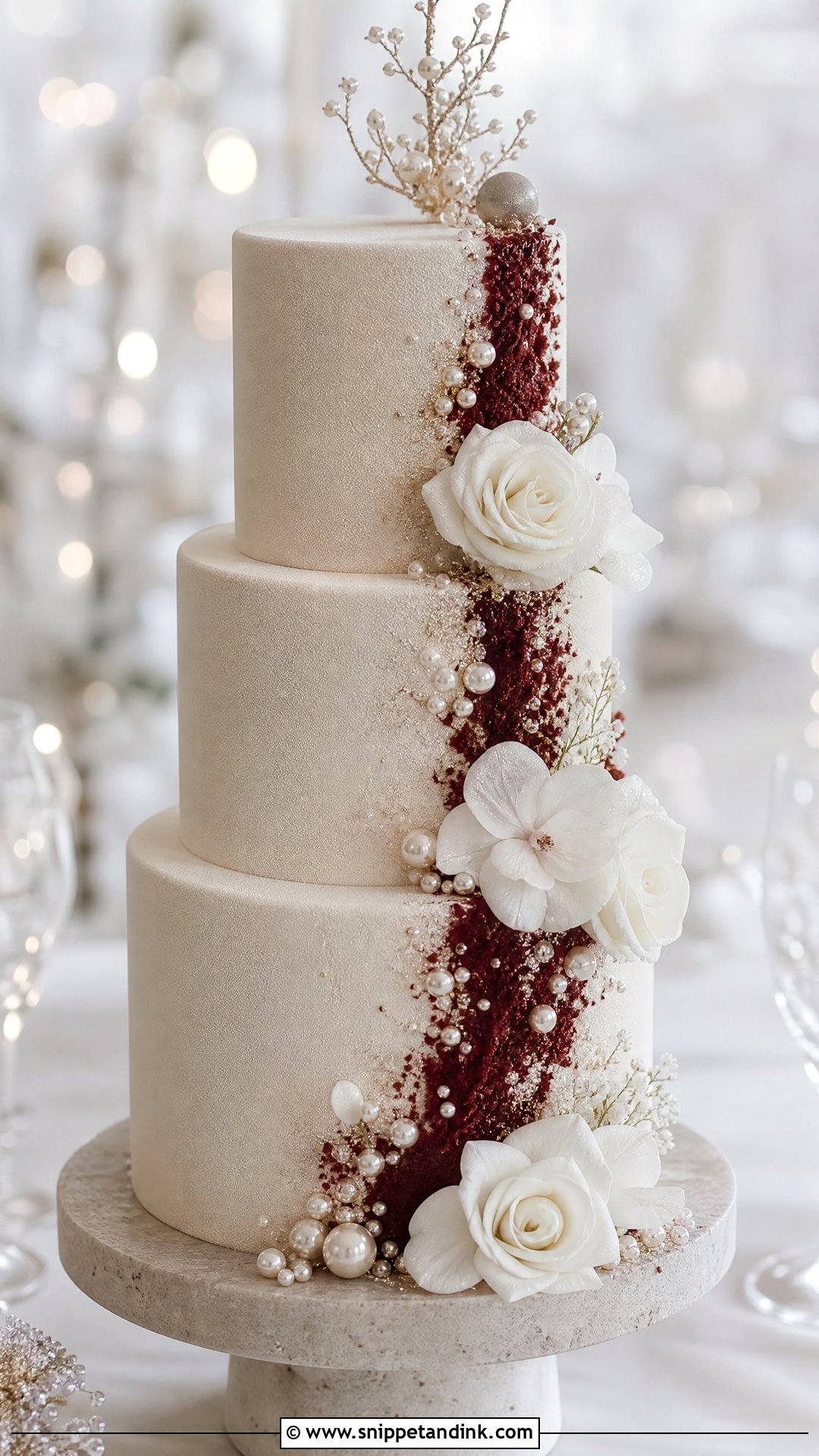
A velvet finish is usually sprayed: a cocoa butter and colour mix sprayed onto a chilled cake sets into a fine, fabric-like texture. It needs a cold cake to work, which makes winter an ideal season for it. Ivory, dusty blue, mauve, emerald and burgundy all work, but white velvet looks especially soft. Minimal flowers, pearls or a metallic edge let the texture lead. Red velvet, vanilla bean, chocolate or spiced almond fit naturally.
9. Sugared Cranberry Wedding Cake
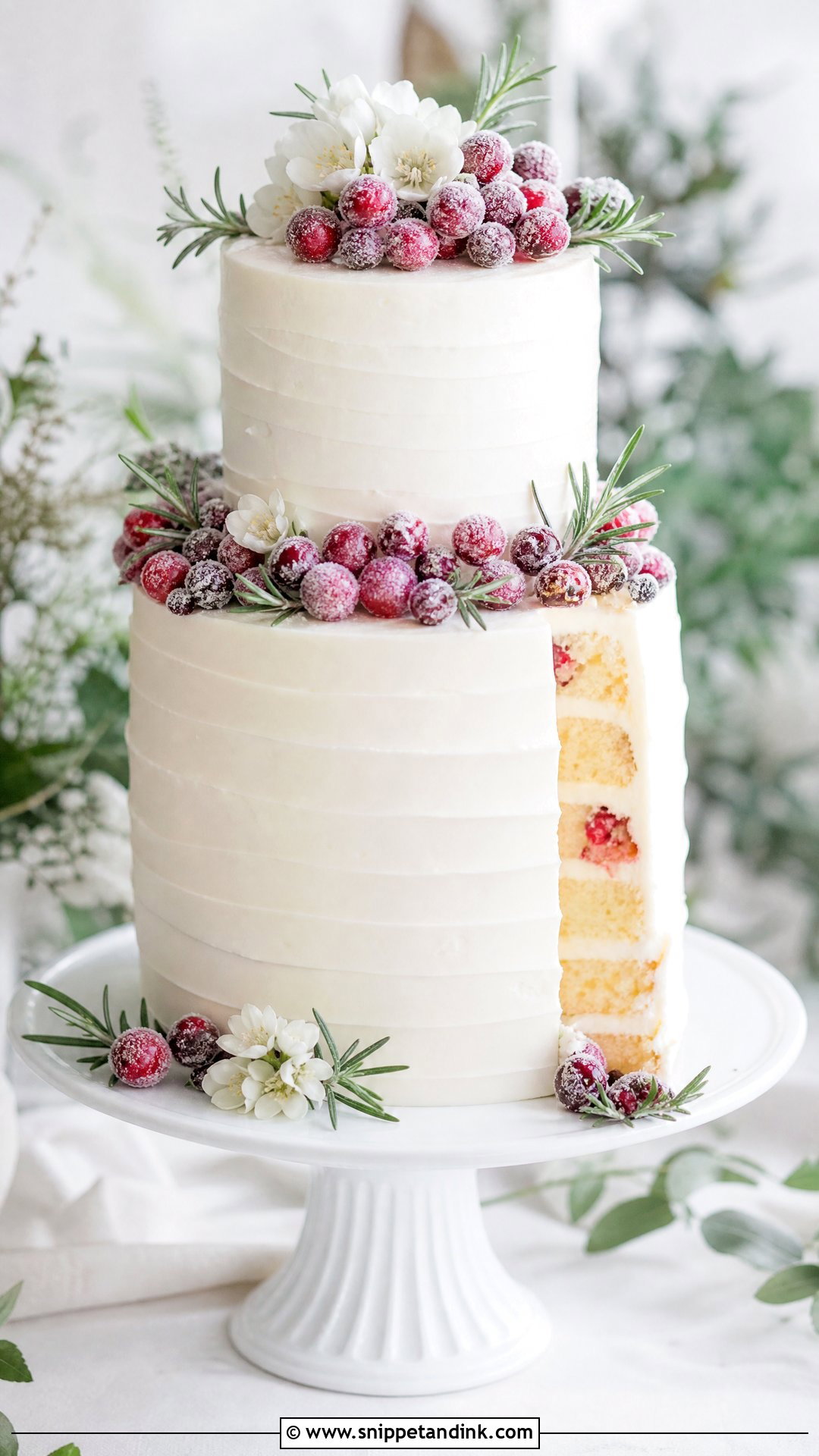
Sugared cranberries bring bright colour and a frosted sparkle, but they’re the one decoration I prepare as close to the day as possible. Sugar on fruit draws out moisture and starts to weep after a while, especially in the fridge. They look best on white buttercream, semi-naked frosting or plain ivory tiers, with rosemary, evergreen or white flowers. Cranberry pairs well with orange, vanilla, almond, white chocolate and spice. Group the berries in neat clusters rather than scattering them.
10. Dark Chocolate Winter Wedding Cake
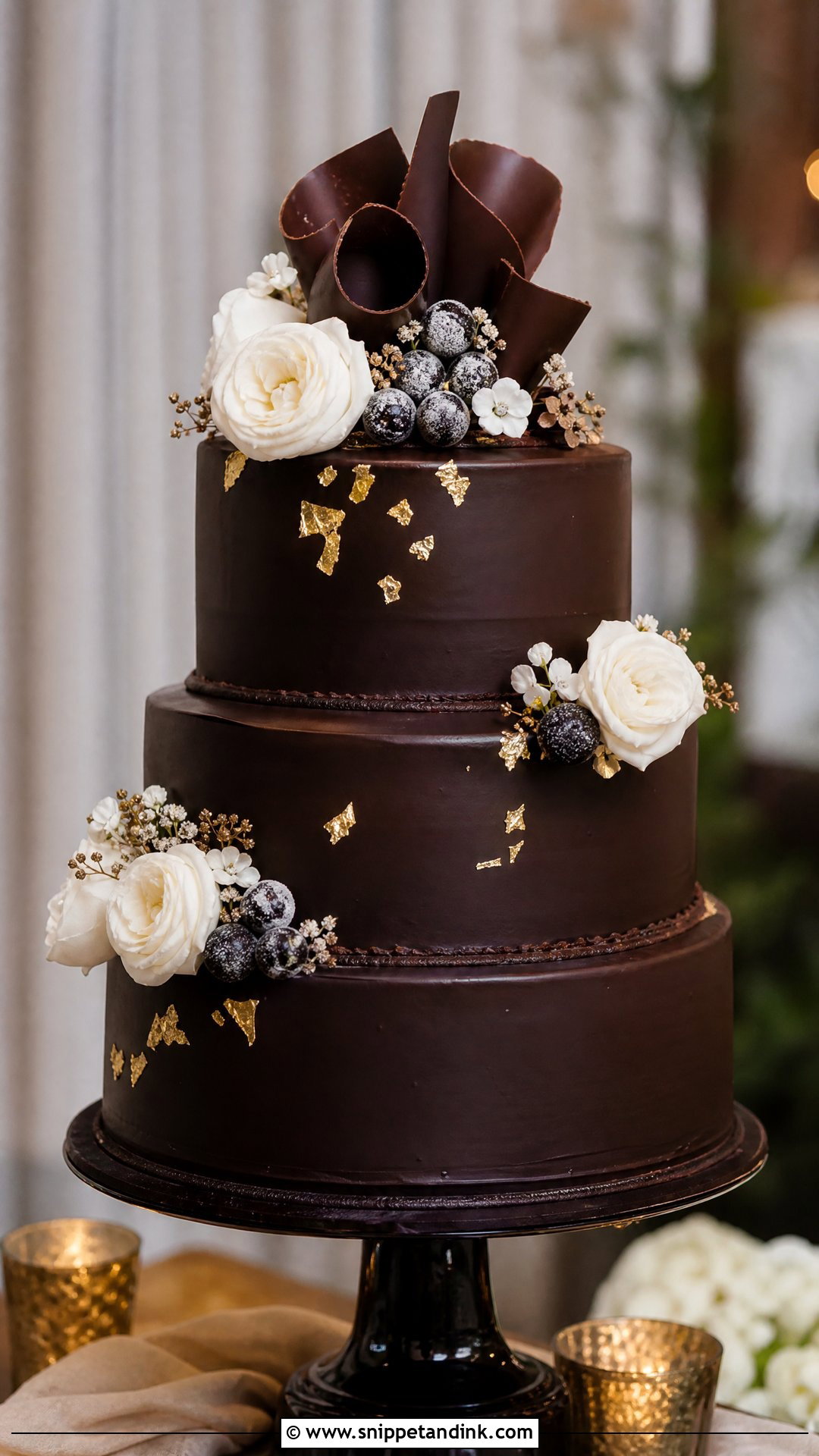
A dark chocolate winter wedding cake is my suggestion for couples who don’t want a white cake. Glossy ganache, smooth chocolate buttercream or a dark drip all work, and ganache is the sturdiest of the three for a warm room. For winter styling, I’d add white flowers, sugared berries, gold leaf, chocolate curls or frosted greenery, since pale decoration against dark chocolate makes the cake look sharp. Chocolate fudge, mocha, hazelnut, salted caramel or raspberry filling suit it. It looks richest on a candlelit evening table.
11. White Floral Winter Wedding Cake
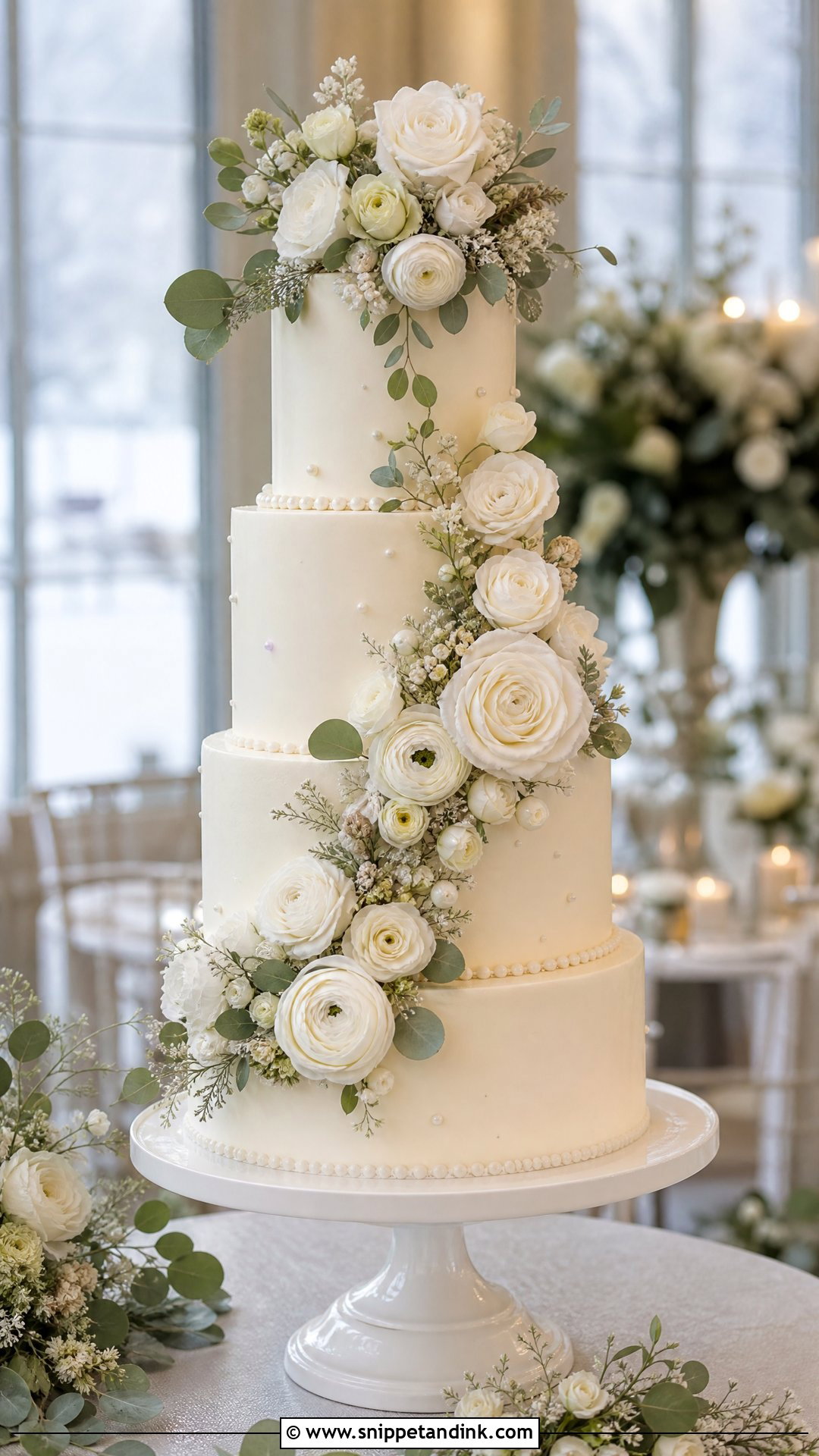
White flowers suit nearly every venue, and the finish decides the mood. Smooth buttercream with roses, ranunculus, orchids or sugar flowers looks clean. I use flowers in several sizes and arrange them as a cascade or in corner clusters, which stops an all-white cake from looking plain. A little greenery, pearls or silver dust adds a wintry note. Sugar flowers can be made weeks ahead and kept, while fresh ones go on at the venue. Vanilla, almond, lemon, coconut and white chocolate pair well.
12. Winter Greenery Wedding Cake
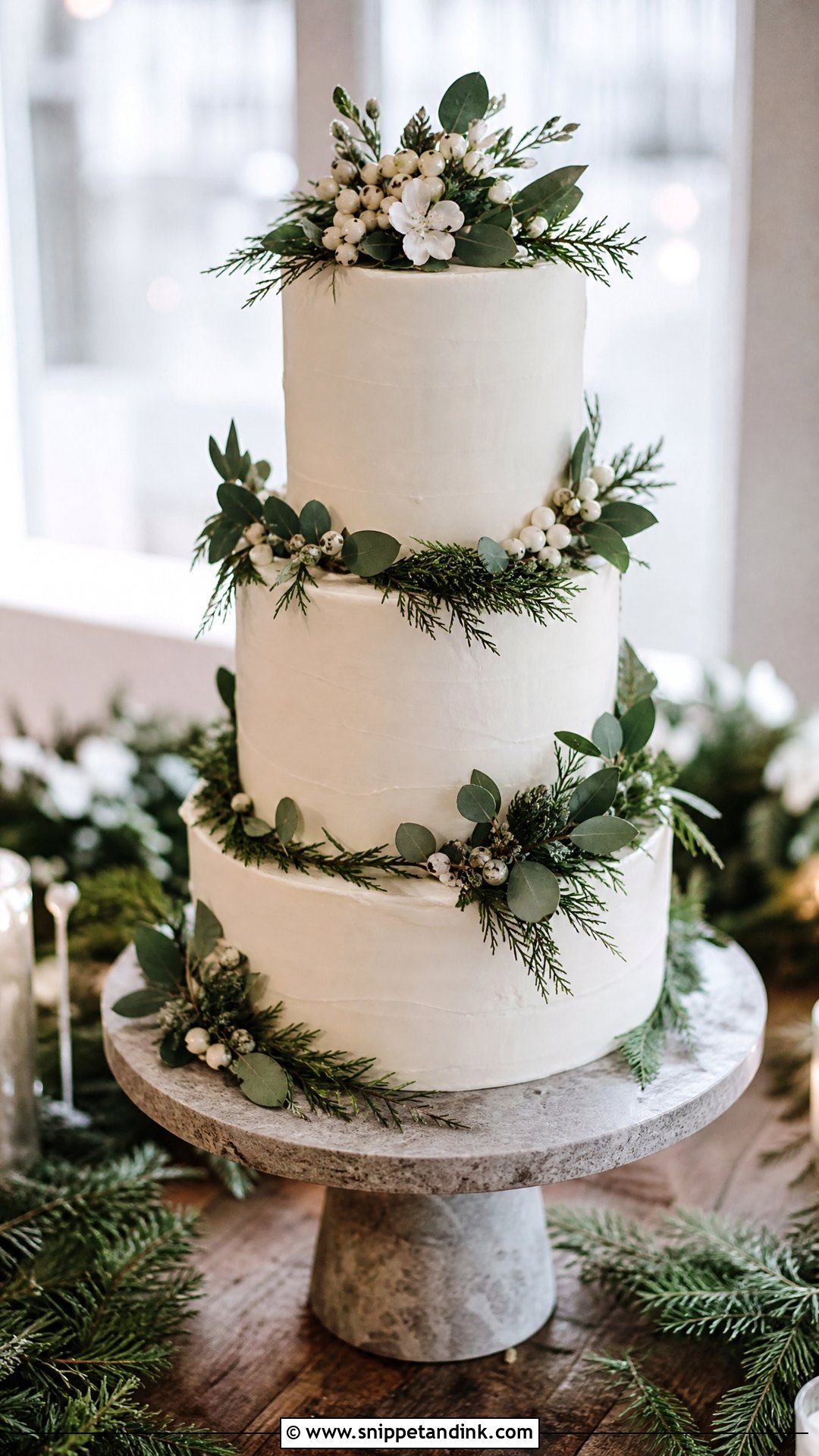
Greenery makes a calm, organic cake, framing each tier or forming a simple wreath around the base. The cake can be smooth white buttercream, ivory fondant or semi-naked. My caution here is the plants themselves. Some popular winter greenery is not safe in contact with food, so stems should be wrapped and kept off the icing, or swapped for food-safe herbs like rosemary and bay. Pinecones, white berries or small sugar flowers add texture. Vanilla, almond, citrus, spice or pistachio suit it.
13. Pearl Wedding Cake
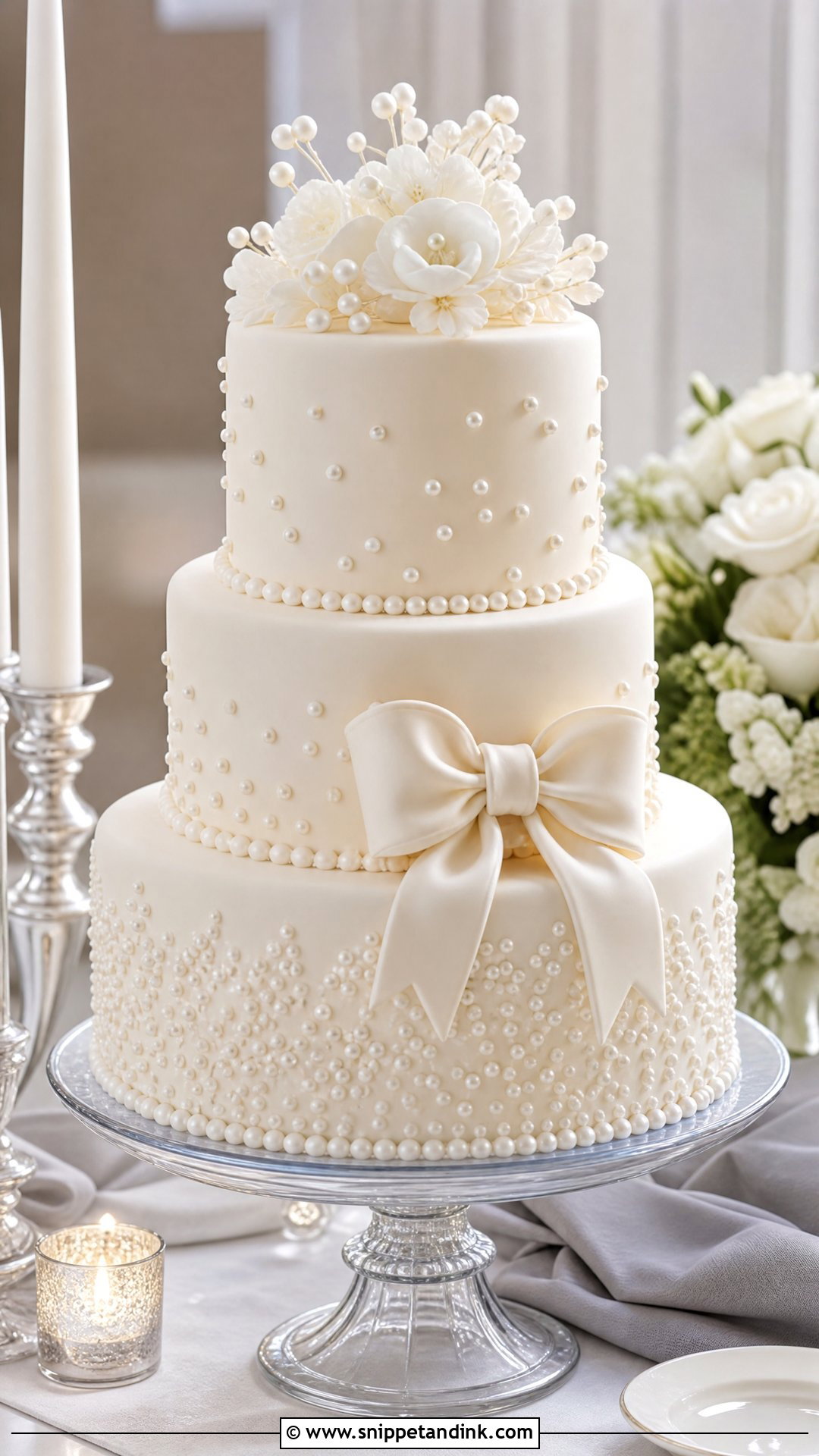
Pearls look graceful against a smooth finish, whether scattered, set in borders or piped in curving lines. White, ivory and pale grey are easiest, and pearls also sit nicely on light blue or champagne icing. Hard sugar pearls can be tough on teeth, so I warn couples or use softer fondant pearls on the parts that get served. Almond, vanilla bean, coconut and white chocolate pair well. A small floral cluster or fondant bow adds a romantic touch.
14. Winter Drip Wedding Cake
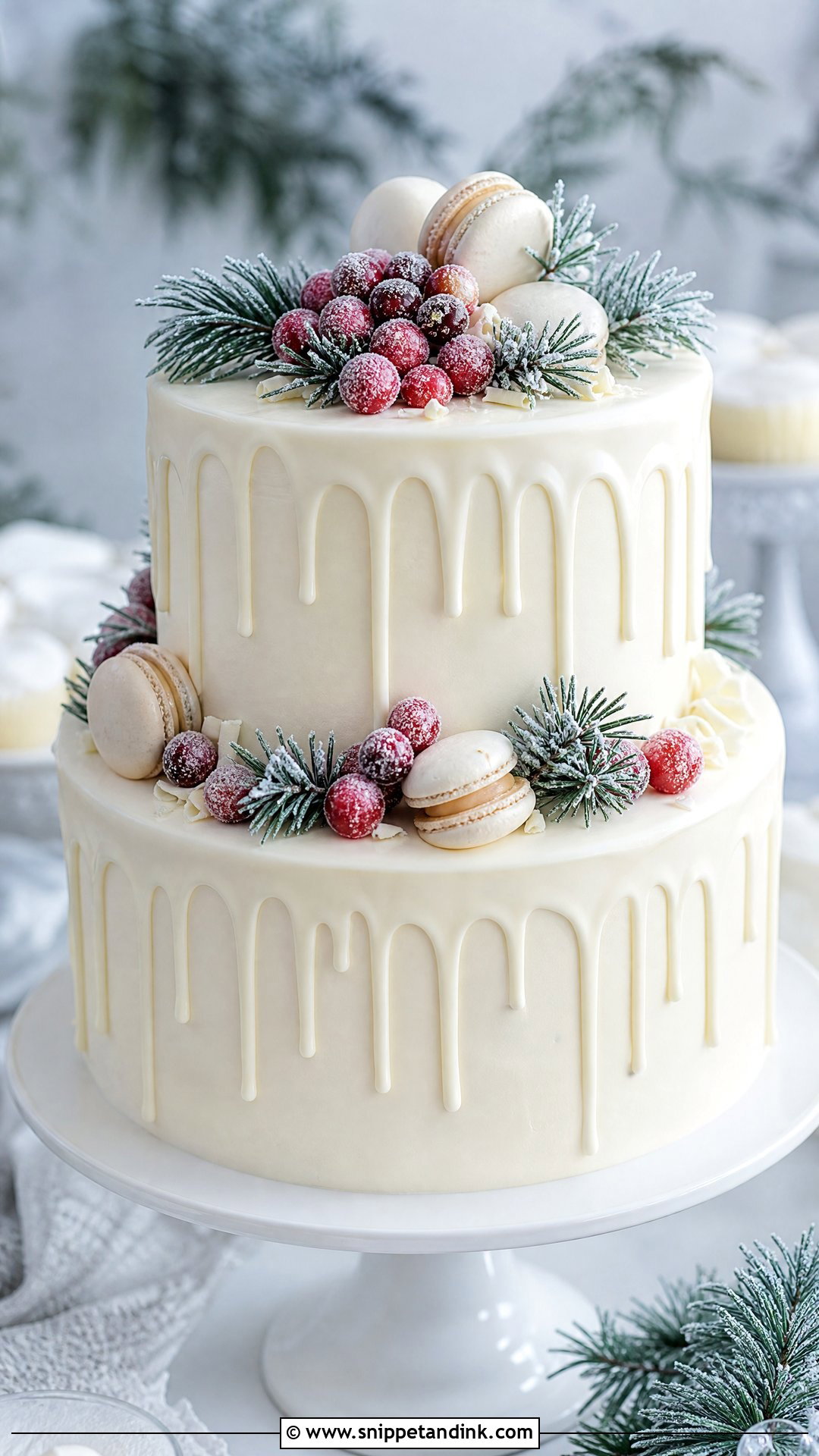
Drips are best kept neat and controlled, and the ganache temperature is everything. Too warm and it runs to the board, too cool and it stops in stubby blobs. I test a drip on the back of the cake first. White chocolate, silver-tinted ganache, caramel or dark chocolate suit different palettes. Sugared berries, snowflakes, white flowers, macarons or frosted greenery give it a wintry finish. Vanilla caramel, chocolate raspberry, white chocolate, spice or mocha are popular flavours.


15. Semi Naked Winter Wedding Cake
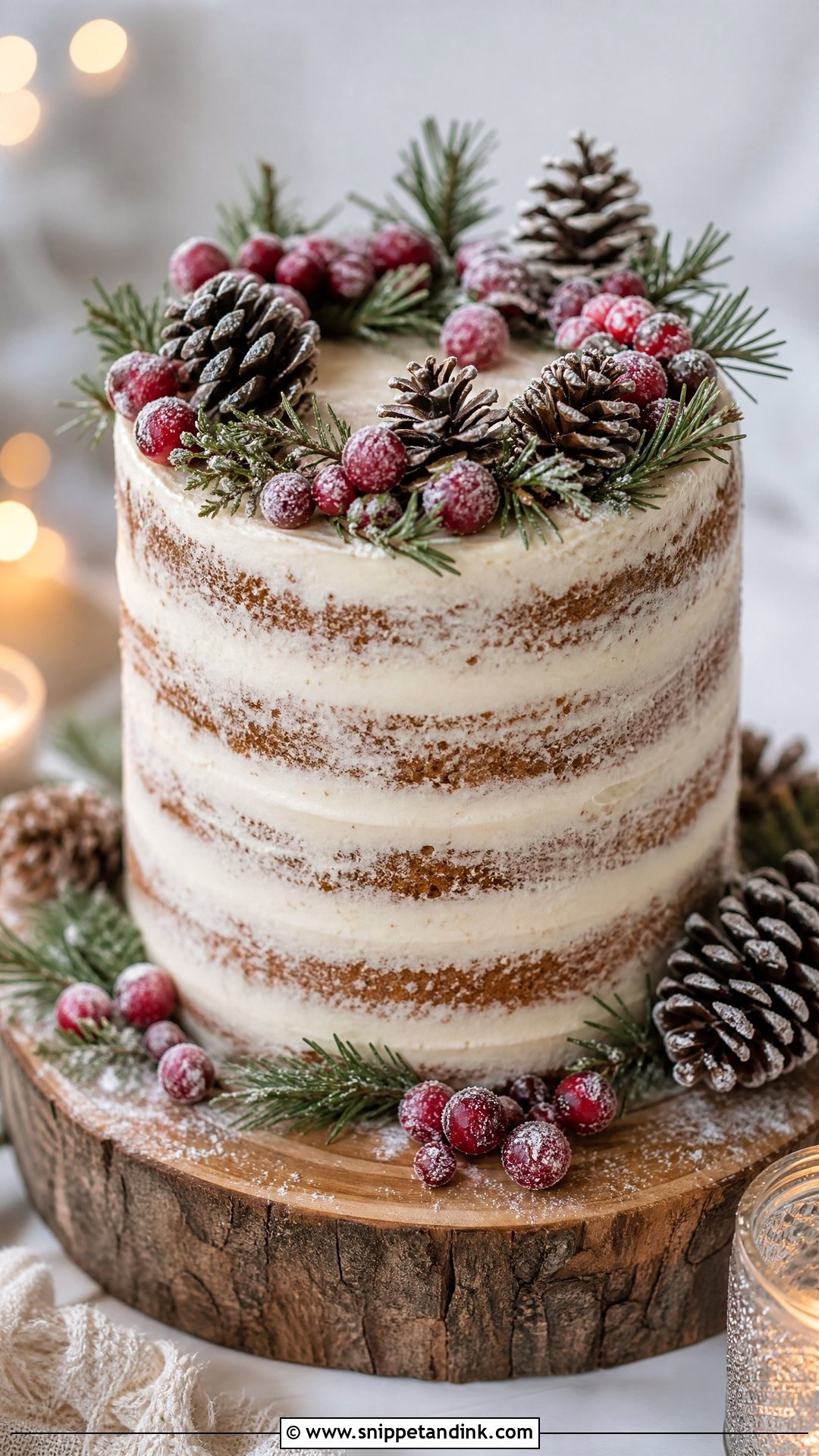
Semi-naked cakes have thin buttercream that lets the sponge show, and that exposed sponge dries out faster than a fully coated cake. I’d frost it on the day before at the earliest. For winter, decorate with sugared berries, evergreen, pinecones, white flowers or a dusting of icing sugar. It suits a wood stand, stone pedestal or plain white plate. Spice, vanilla bean, chocolate, carrot or maple pecan fit the relaxed style.
16. Winter Berry Wedding Cake
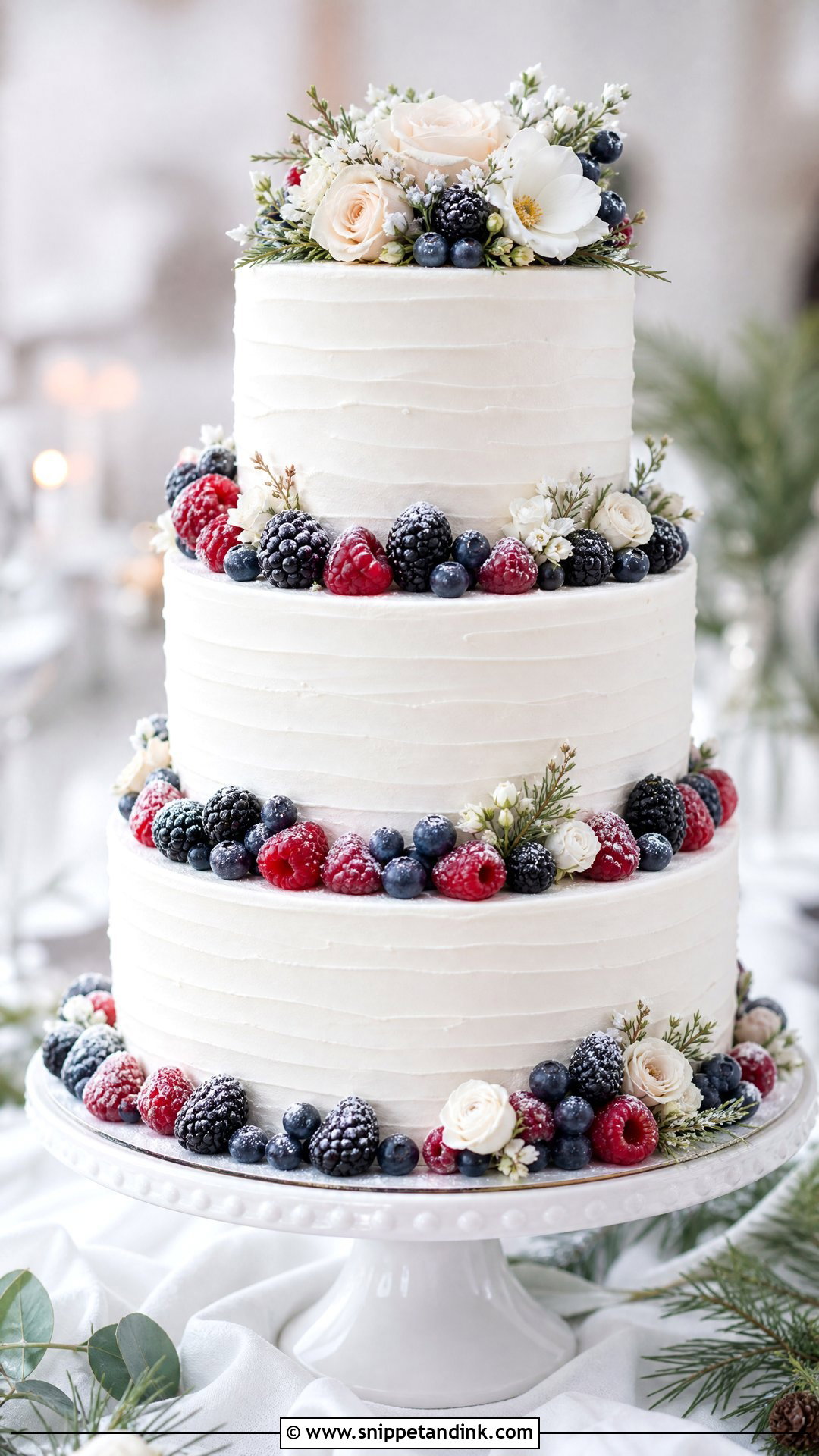
Dark berries look striking against white buttercream or ivory fondant. Blackberries, blueberries and raspberries add colour and freshness. Raspberries are the most fragile and start to leak juice after a few hours on icing, so I put them on at the venue. Soften the look with icing sugar, pale flowers and greenery, or make it dramatic with a dark cake. Vanilla berry, lemon raspberry, chocolate blackberry or almond with berry filling all work. Whole berries in neat groups are easier to photograph.
17. Marble Winter Wedding Cake
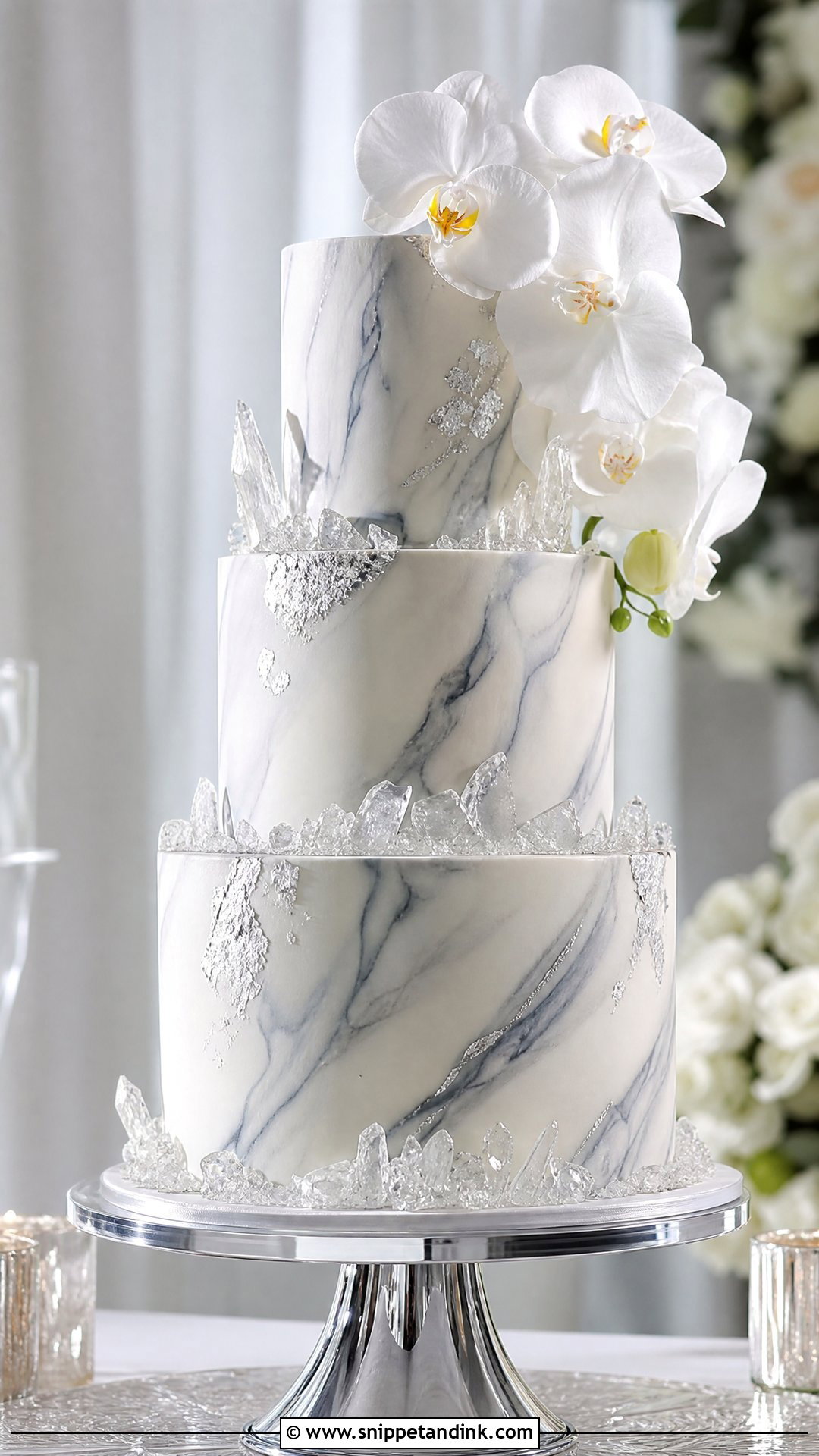
Marble mimics stone or ice by blending white, grey and soft blue. It needs a very smooth surface, so fondant is the most reliable choice, though clean buttercream works too. Silver leaf, clear sugar crystals, white flowers or simple geometric accents keep it refined. It suits modern venues, galleries, hotels and minimalist receptions. Vanilla bean, almond, white chocolate, coconut or chocolate with vanilla buttercream are good flavours. Keep decoration light so the marbling stays the focus.
18. Small Winter Wedding Cake
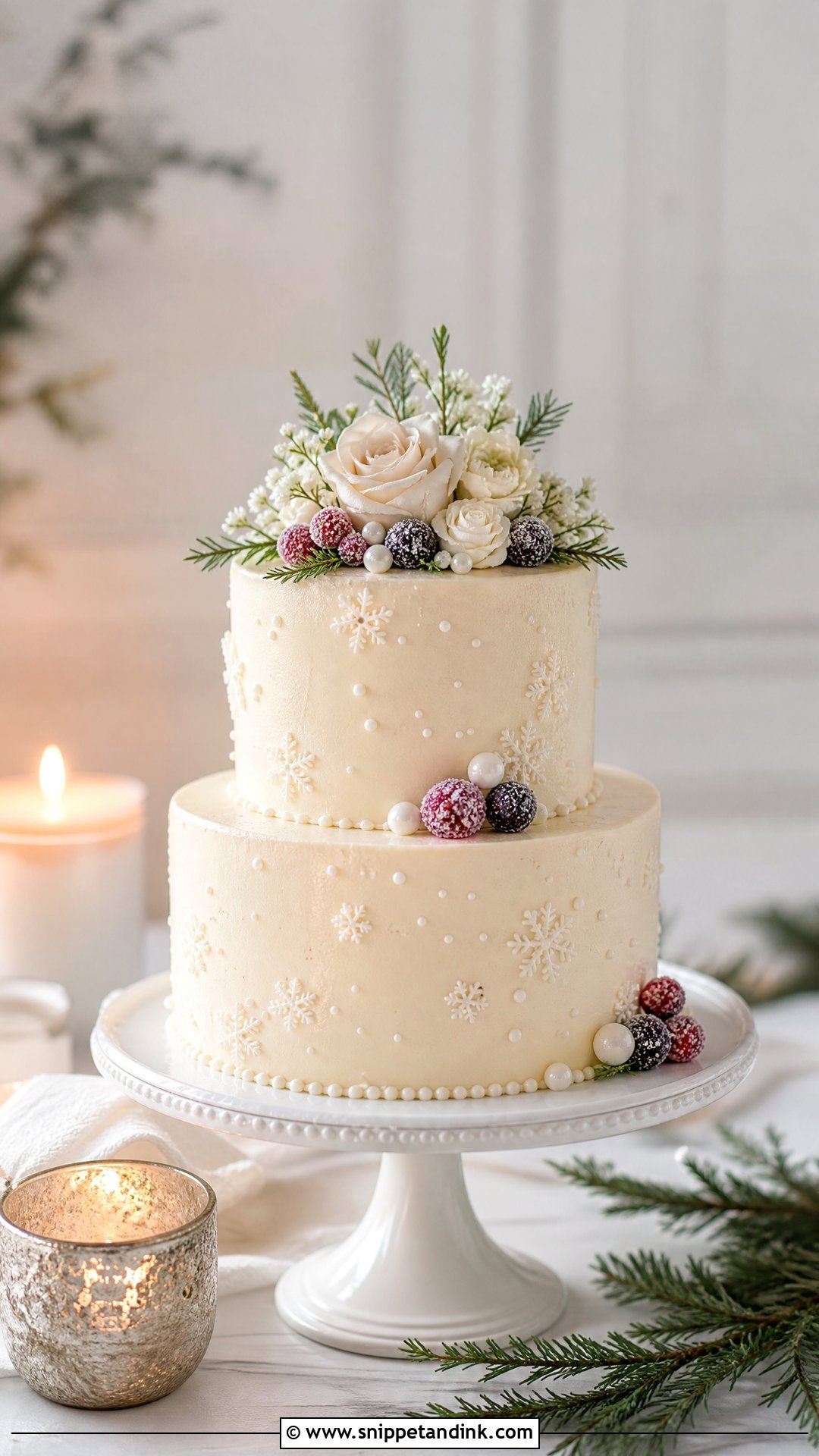
A one- or two-tier cake suits intimate weddings and couples planning a full dessert table. I always tell couples that a small cake lets them be bolder with flavour, since fewer guests need to like it: chocolate hazelnut, brown butter caramel, almond or citrus vanilla. Smooth buttercream, pearls, sugared berries, tiny snowflakes or a small floral topper keep it special. Set it on a raised stand so it doesn’t disappear on the table. If you need more servings, a plain kitchen cake cut behind the scenes is a common solution.
19. Black And White Winter Wedding Cake
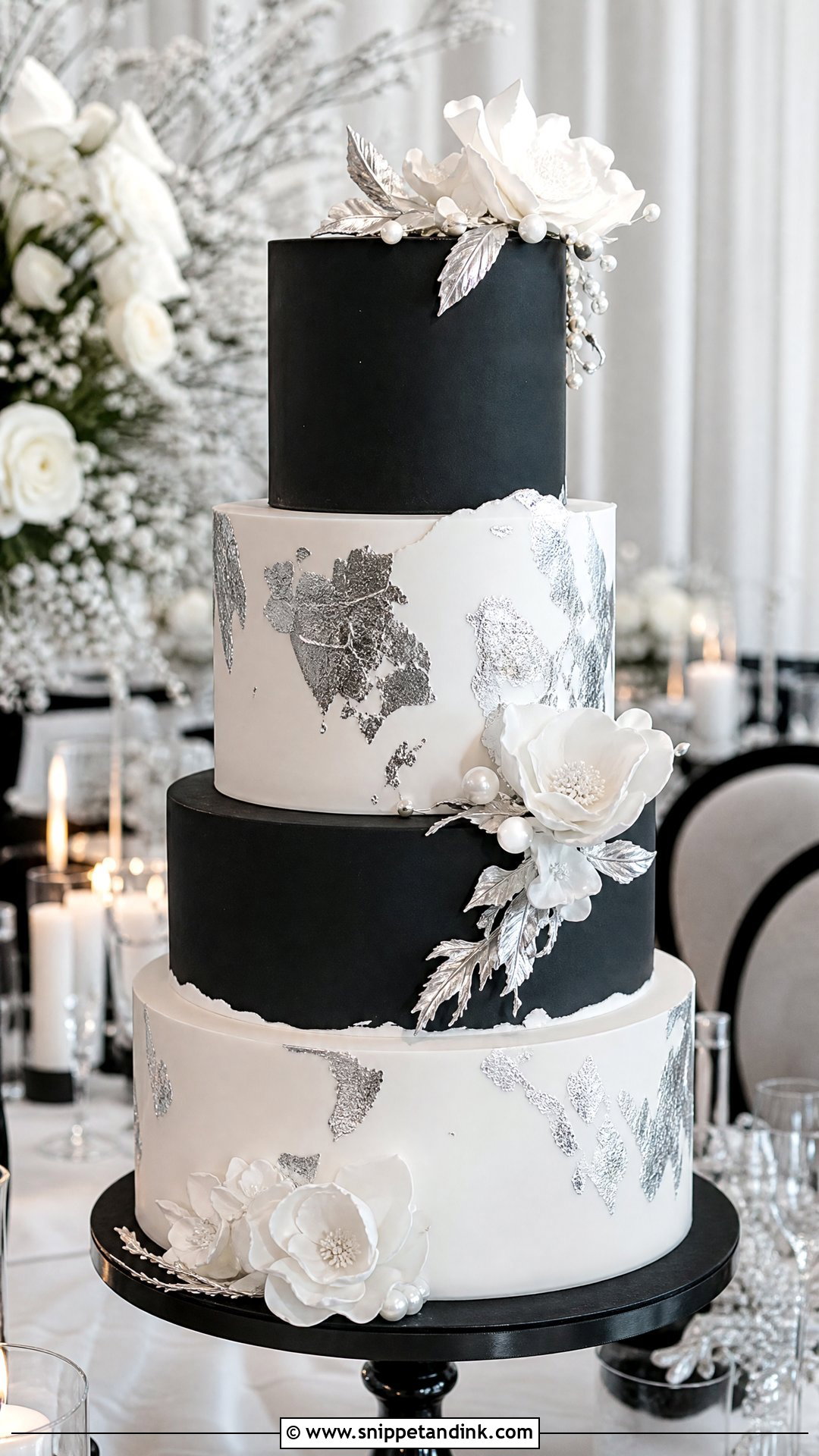
Black and white gives the strongest contrast here, and clean lines suit it best. Black fondant tiers with white sugar flowers, white buttercream with black bands, or a mix of both all work. Like navy, black icing needs heavy colouring, so I keep black to the outside layer of a chocolate cake or use it as a band. Silver leaf, pearls or delicate piping soften it. Dark chocolate, vanilla bean, cookies and cream, mocha and almond suit the look.

20. Spice Cake Winter Wedding Cake
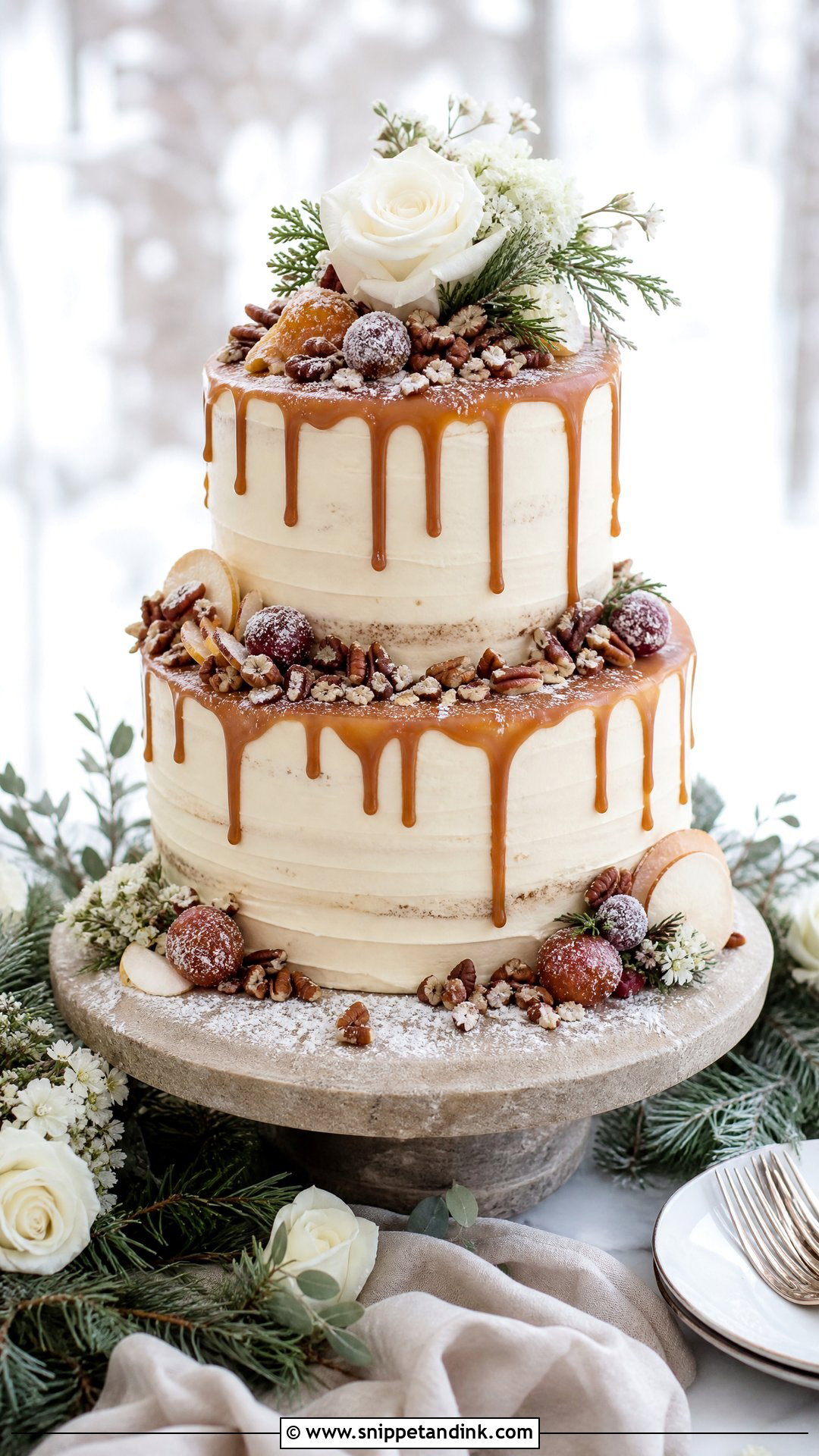
Spice cake is chosen for flavour first. The sponge can carry cinnamon, nutmeg, ginger, cardamom, apple, pear or brown sugar, with cream cheese frosting, vanilla buttercream or caramel buttercream outside. Cream cheese frosting is softer than buttercream and needs to stay cool until shortly before serving, so I’d pick it for a smaller cake or a cool room. Decorate with sugared fruit, nuts, white flowers, cinnamon sticks for styling or a soft caramel drip. It suits rustic venues and intimate receptions especially well.
Is That Greenery Safe to Touch Your Cake?
Evergreens, berries and winter foliage look perfect on a cake, but not everything a florist uses is safe near food. Holly berries, mistletoe and yew are all poisonous, and many decorative foliages are treated or sprayed. Even safe stems can bleed sap into icing.
When a couple wants real greenery, I ask the florist for unsprayed stems, wrap every cut end in floral tape and put it into a food-safe pick before it goes into the cake. Leaves should sit on the cake, not be pushed deep into it. Better still for anything near the cut tiers:
- Rosemary, bay and thyme, which are food and look wintry.
- Sugar or wafer-paper leaves and berries, which can be eaten.
- Real fruit such as cranberries and figs, washed and dried first.
Tell your caterer which parts of the cake are decoration only, so nobody slices a pine sprig onto a guest’s plate.
Start With the Flavour, Then Dress It for Winter
A winter cake can be simple, dramatic, rustic or modern. The designs that work best connect to the season through colour, texture or flavour, whether that’s white snowflakes, navy and black tiers, metallic accents, or greenery and pinecones. Flavour matters as much as the outside, so try spice, chocolate, almond, cranberry, citrus, caramel or hazelnut at your tasting. Then let your baker adjust the colours, tiers and details to suit your venue and how many guests you’re feeding.
You'll Like These Ideas:










Leave a Reply