
Slate blue is a color I enjoy mixing because it gives a cake real presence while staying quiet. It sits somewhere between dusty blue, gray, and soft navy, which is why it settles so easily next to ivory flowers, silver leaf, pearls and sage greenery, and why it holds its depth under warm candlelight. The same shade can go clean and modern on sharp tiers, romantic under sugar flowers or rustic in textured buttercream. Below are twenty ways I’d build a slate blue cake, with the practical notes I’d give you at a tasting.
Why Slate Blue Icing Can Drift Gray, Green or Purple
Slate blue is one of the trickier colors I mix. Buttercream made with butter starts out pale yellow, and blue added to yellow leans green. To get a true slate I whiten the base first, then build the blue gradually with a touch of black or gray to dull it. Too much violet to fix the green and it slides toward lavender.
Gel colors also keep developing after mixing. A batch that looks right at noon is often a shade darker the next morning, so I mix a day ahead and judge the color once it has rested. That’s also why I tint fondant and buttercream separately when a cake uses both; the two surfaces never take color identically.
Light changes it too
- Blue and purple tints fade in strong light. A cake left near a sunny window or under hot spotlights can lose depth within hours, so ask for a shaded display spot.
- Warm reception bulbs push slate toward gray-green; cool daylight makes it look bluer. If you can, look at a sample chip under lighting close to your venue’s.
- Matte finishes read darker and softer than shiny ones in photos, so ask to see both before deciding.
1. Slate Blue Wedding Cake With White Flowers
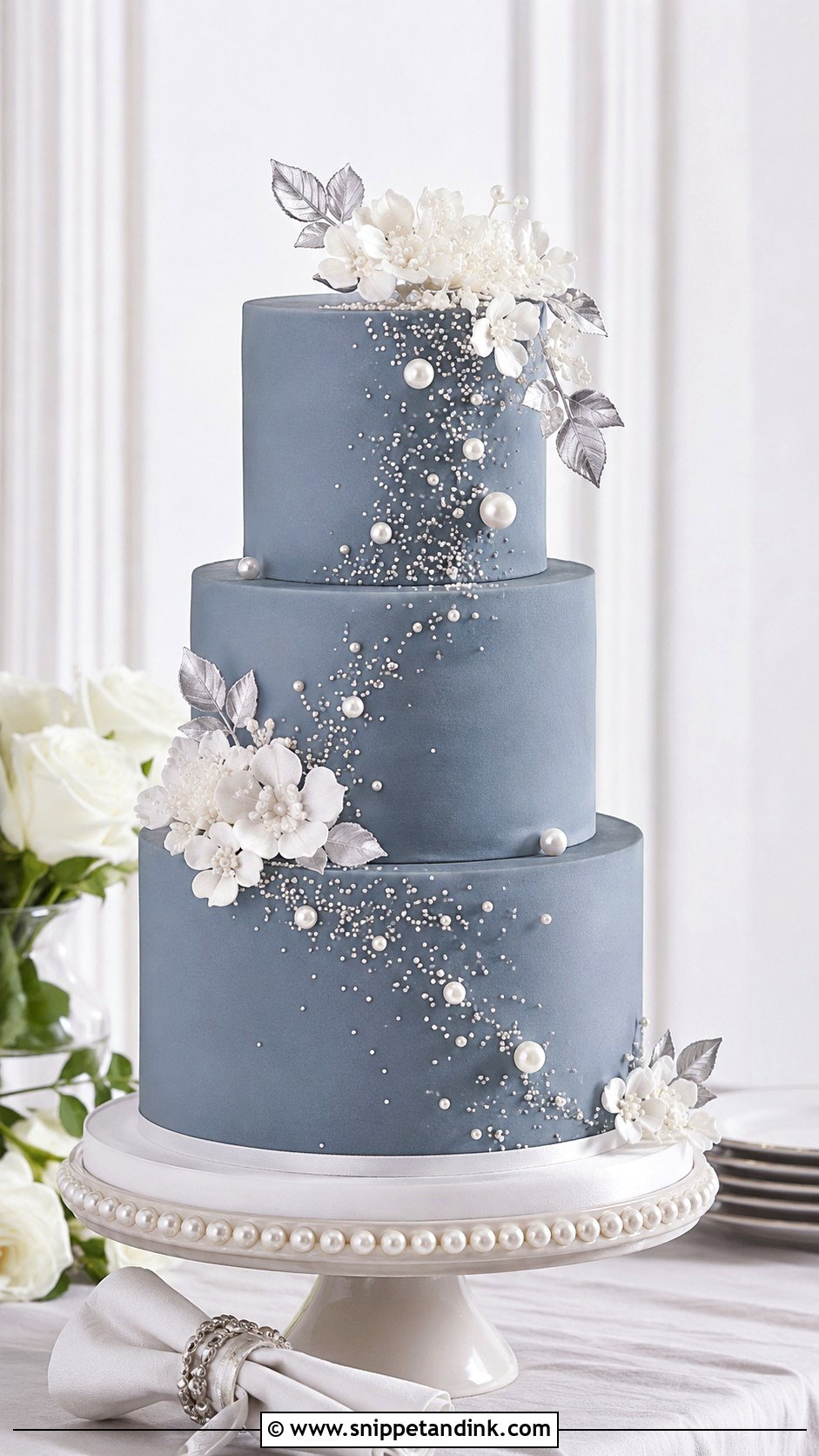
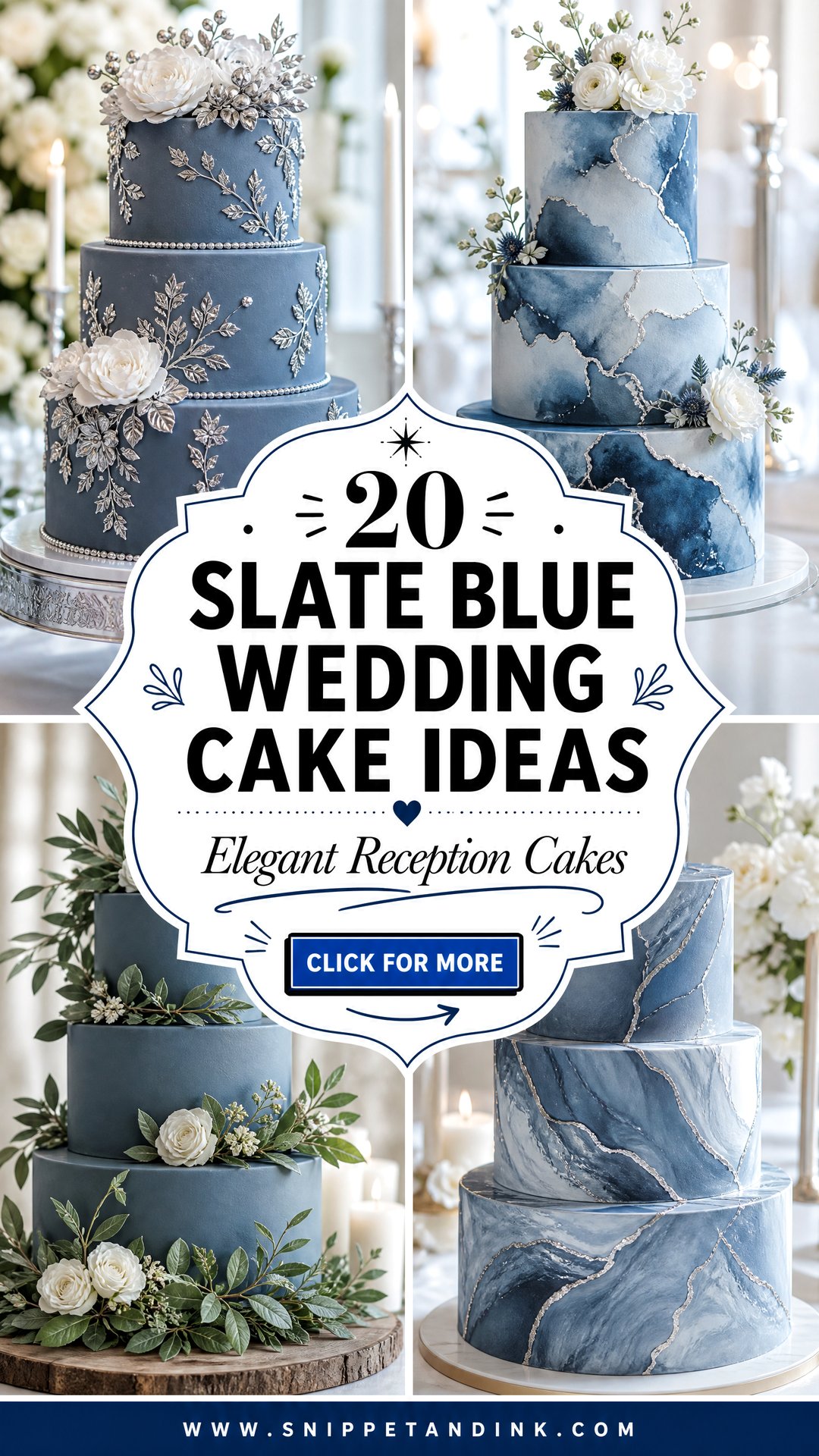
White flowers are the quickest way to make slate blue read as bridal. Against the blue-gray base, white roses, peonies, ranunculus or orchids look brighter than they would on an ivory cake, so you need fewer of them. I usually cluster the blooms on one side and let them trail slightly, which gives a modern shape and keeps stems away from the cut line. Smooth buttercream or fondant suits it; a little silver leaf or pearl beading pushes it toward formal.
2. Slate Blue Wedding Cake With Gold Leaf
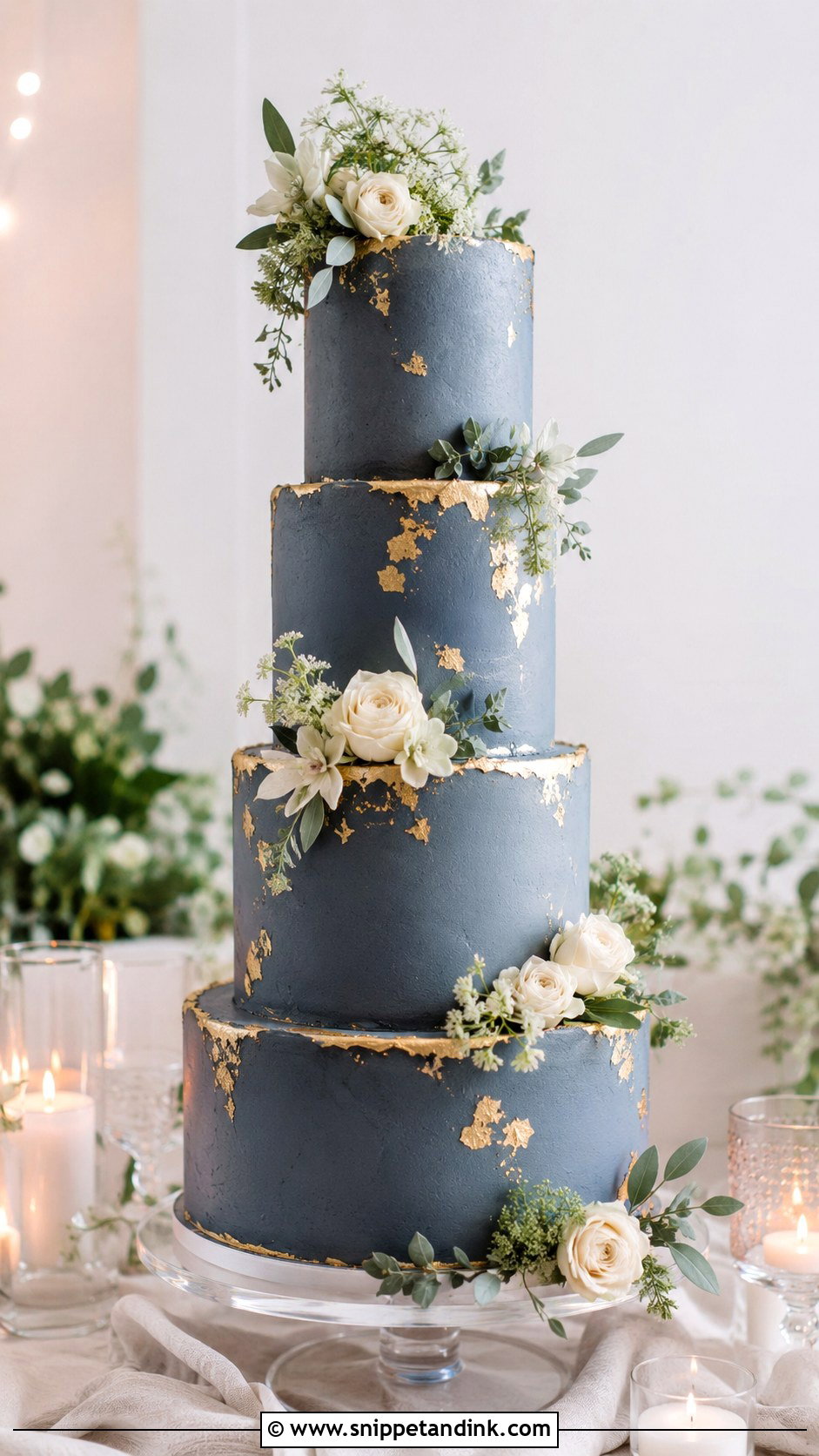
Gold warms slate blue up, and the trick is using less of it than you think. I apply leaf in thin, broken patches rather than wrapping whole tiers, because solid gold on a cool base can look like a costume. A three-tier cake with gold leaf catching the top edges reads luxurious on a plain white or clear acrylic stand. One practical note: edible leaf creases if it’s applied to soft buttercream, so I chill the tiers firm first. A few ivory blooms or tiny sugar blossoms soften the metallic finish.
3. Slate Blue Wedding Cake With Silver Details
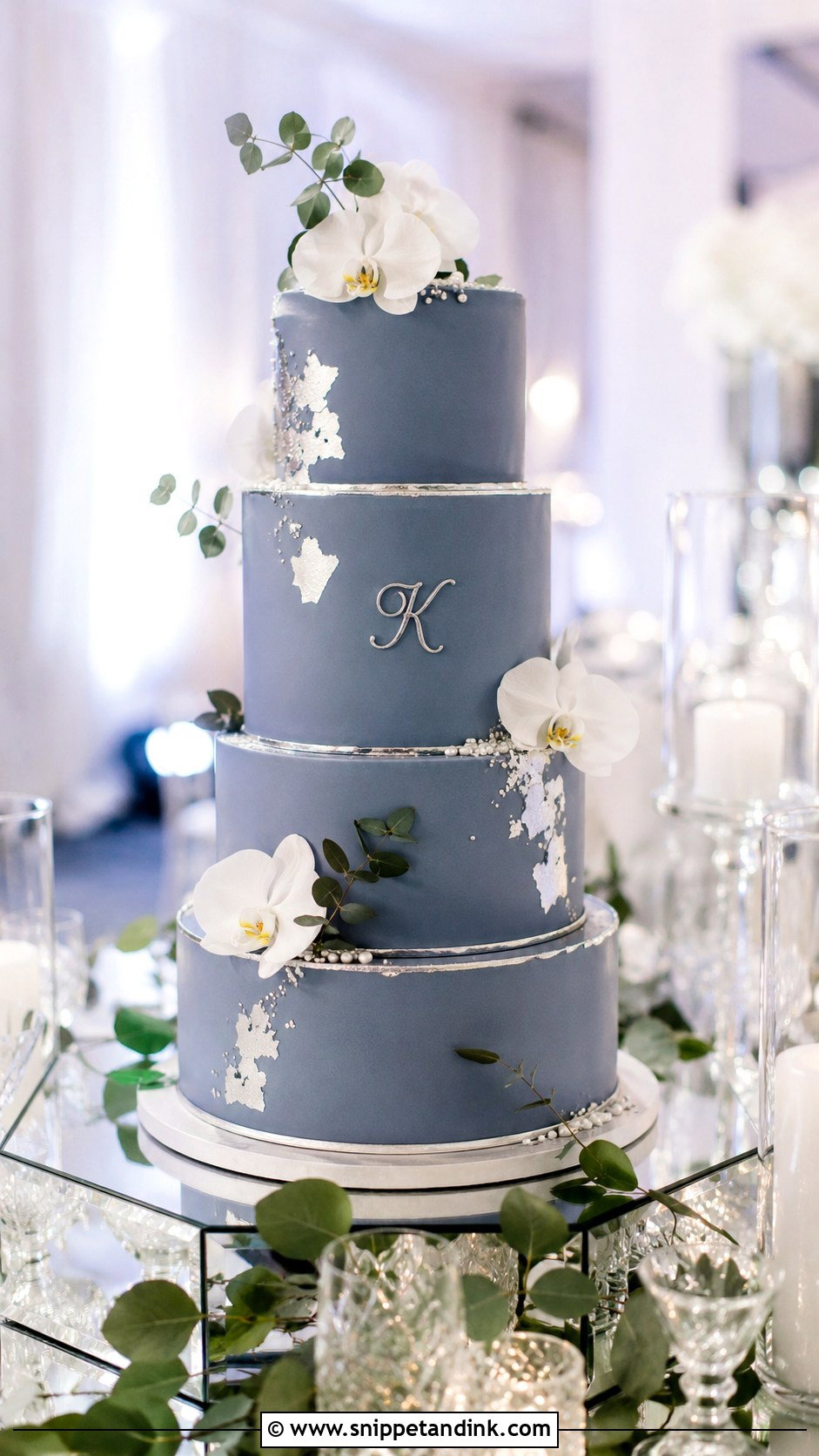
Silver belongs with slate blue more naturally than gold does, because the gray in the color is already halfway there. Silver leaf, thin metallic piping, a pearlized border or a small monogram is plenty. I’d steer this toward winter dates, evening receptions and rooms with crystal lighting, where the metal picks up sparkle. If you want hydrangea-style blooms on it, have them made in sugar; real hydrangea isn’t something I’d put near icing. The rule I hold to with silver is restraint: three or four highlights and stop.
4. Slate Blue Wedding Cake With Buttercream Texture
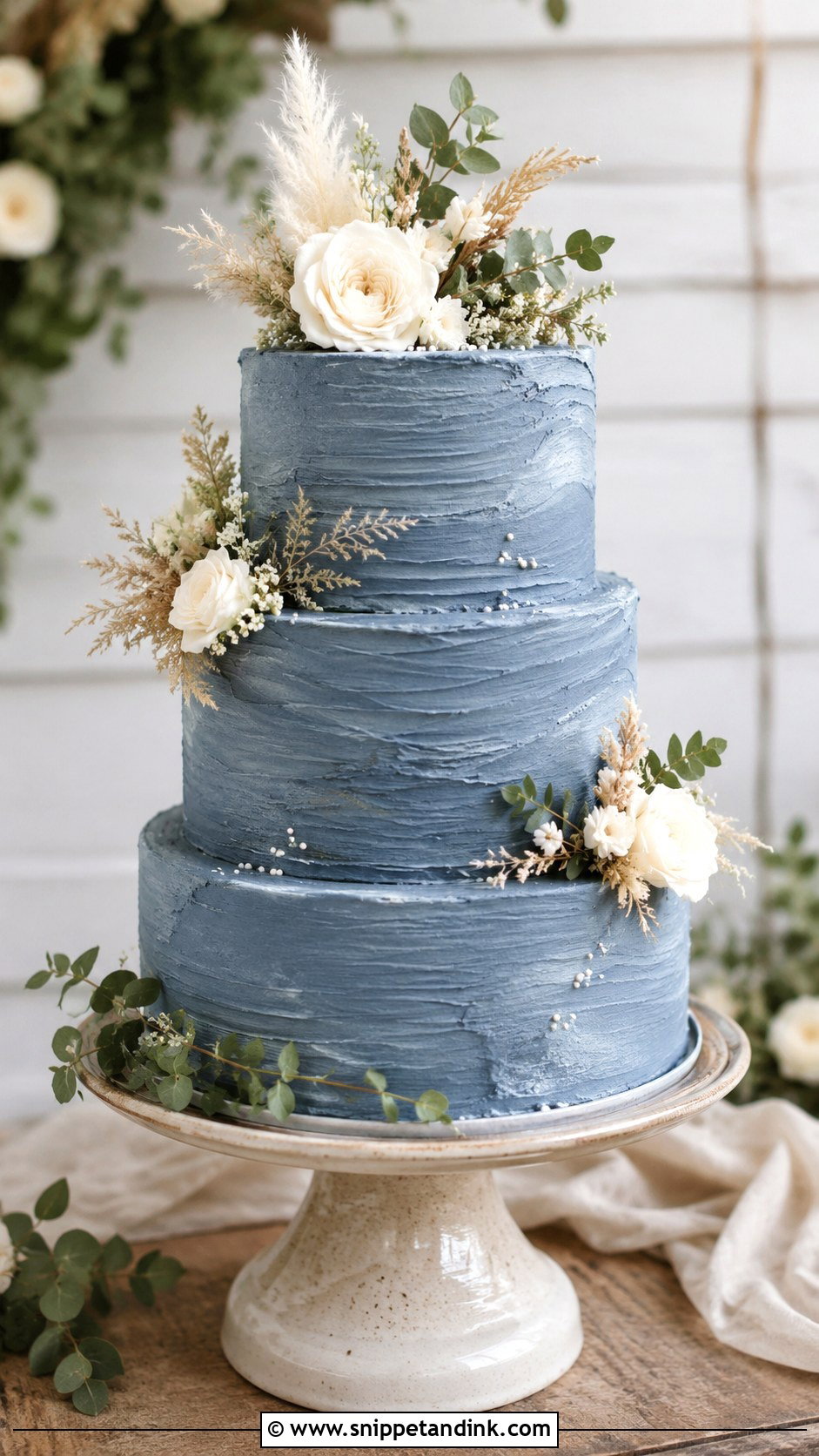
Texture is where slate blue really shows off. When buttercream is combed, swiped with a palette knife or brushed, the ridges catch light and the dips fall into shadow, so one color reads as several. Buttercream is also softer than fondant, though, and in a warm barn or a summer garden those ridges start to slump if the cake sits out for hours. I ask where and how long it will be displayed before I commit to a deep texture. White flowers, silver-green foliage or a scatter of pearl dots finish it without adding formality.
5. Slate Blue Wedding Cake With White Lace
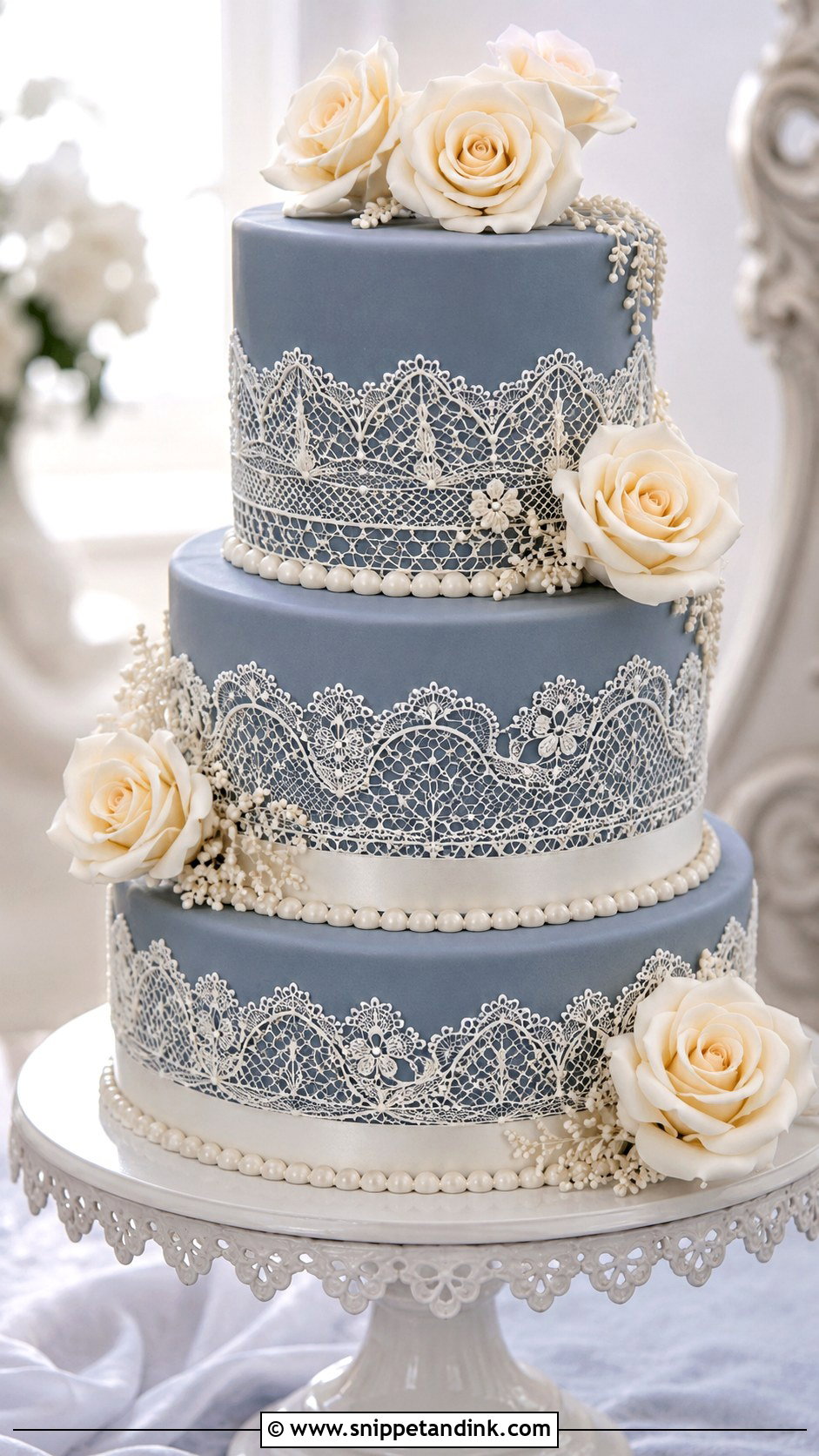
Lace detail often comes straight from the dress. I can pipe it in royal icing, press it from a silicone mat in sugar lace, or print a fine pattern onto fondant, and white on slate blue gives the contrast a lace pattern needs to be seen across a room. Bring a photo of your gown’s lace if you’d like the motif echoed. Keep the tier shapes plain so the pattern does the work, and add only a few ivory roses, pearls or a satin ribbon.
6. Slate Blue Wedding Cake With Pearl Accents
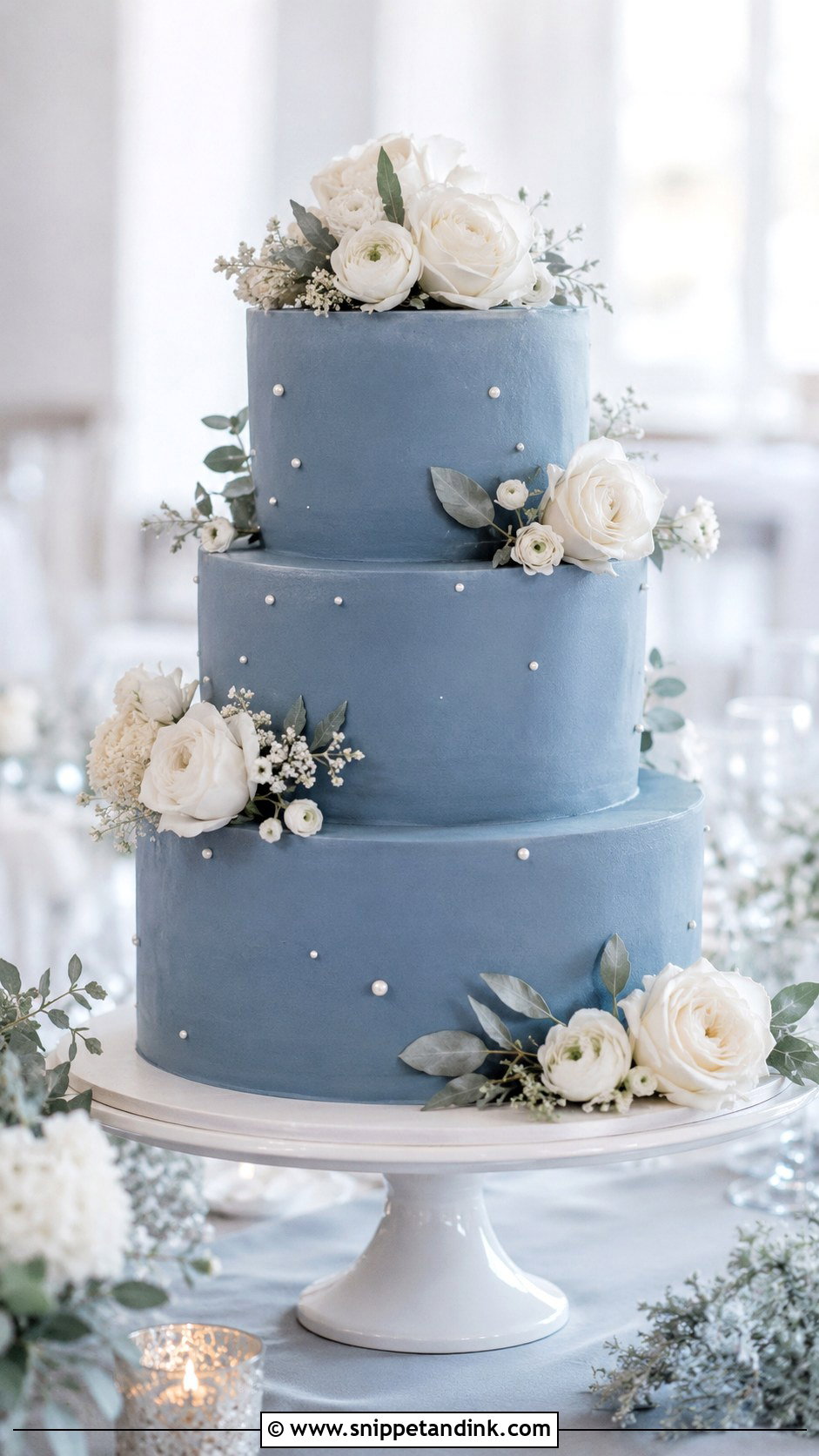
Pearls look almost lit from within on a blue-gray base, especially under warm reception bulbs. I use tiny edible pearls around each tier, scattered clusters or a border at the base. Placed unevenly on smooth slate fondant, they feel modern; piped in neat rows with ivory blooms, they turn classic. Ask whether your baker is using true edible pearls or decorative dragées, since some metallic dragées are meant for display only and get picked off before cutting. It ties in well with a satin gown or a pearl-trimmed veil.
7. Slate Blue Wedding Cake With Watercolor
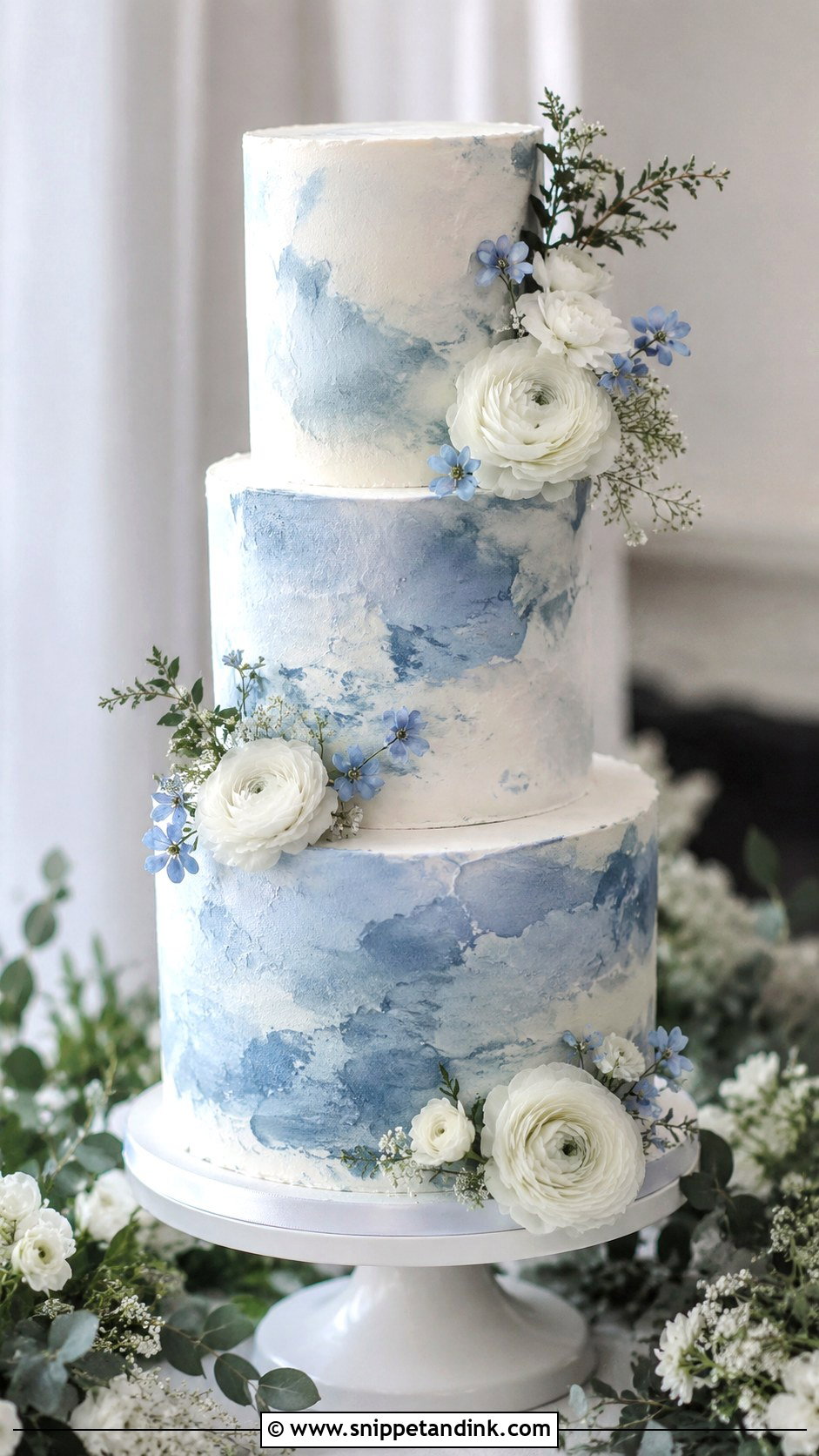
Watercolor lets you use slate blue without committing to a dark cake. I brush thinned color over white or ivory buttercream in loose washes, building from pale blue through gray-blue and leaving plenty of ivory showing. Each tier comes out a little different, which is part of the charm, so if you need two cakes to match exactly, this isn’t the technique for you. Loose florals and a touch of gold or silver suit it, and it lands most naturally at spring, summer and coastal weddings.
8. Slate Blue Wedding Cake With Ombre Tiers
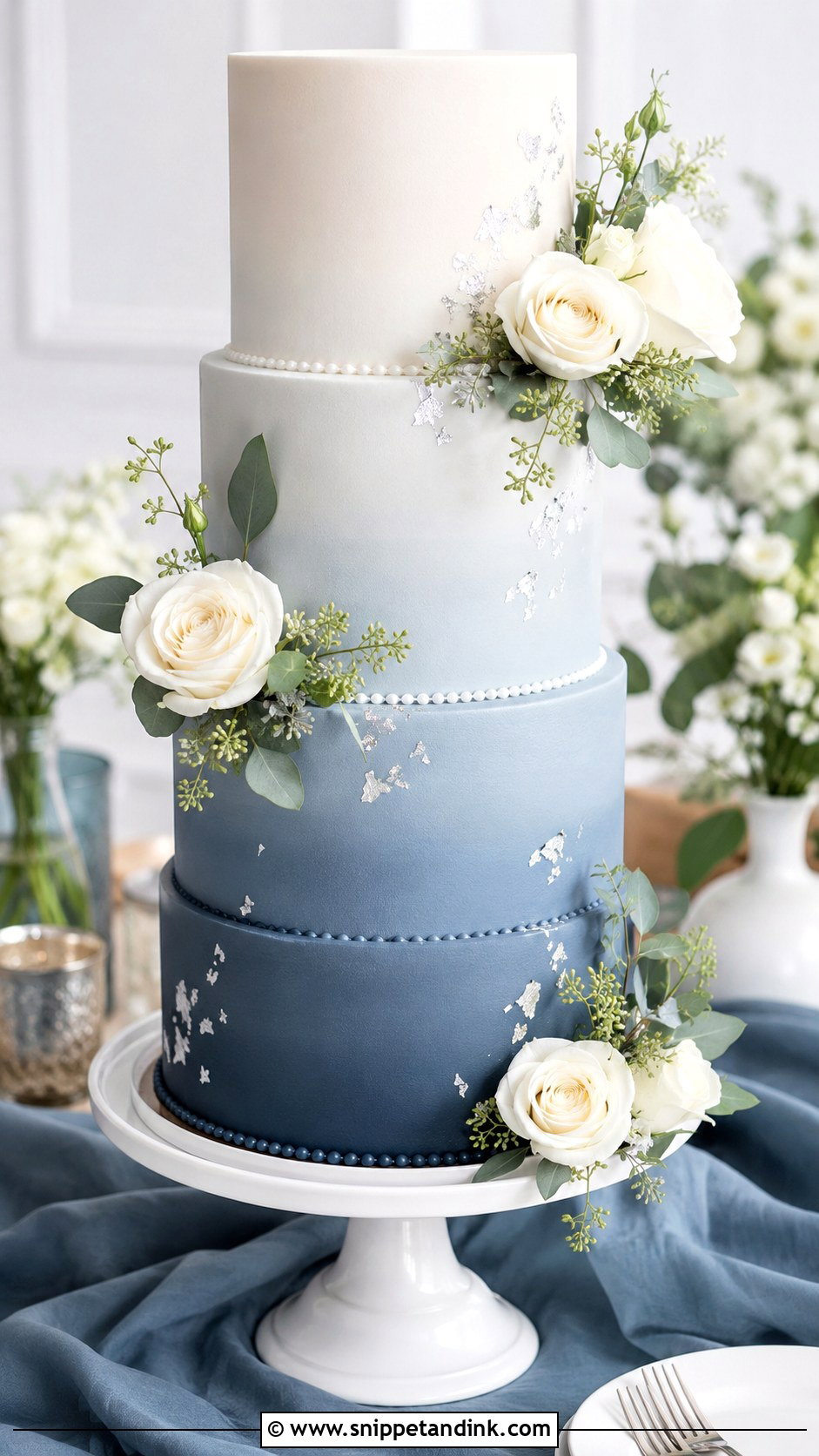
Ombre shows off the whole family of blues in one cake. I grade the tiers from ivory at the top through pale and dusty blue to full slate at the base, which also visually anchors a tall stack. The hard part is the spacing between shades: I mix each tier’s color from the same base batch so the steps look even rather than jumping. Smooth finishes look clean; light texture looks more organic. White flowers or a thin pearl border keep it bridal.
9. Slate Blue Wedding Cake With Fresh Greenery
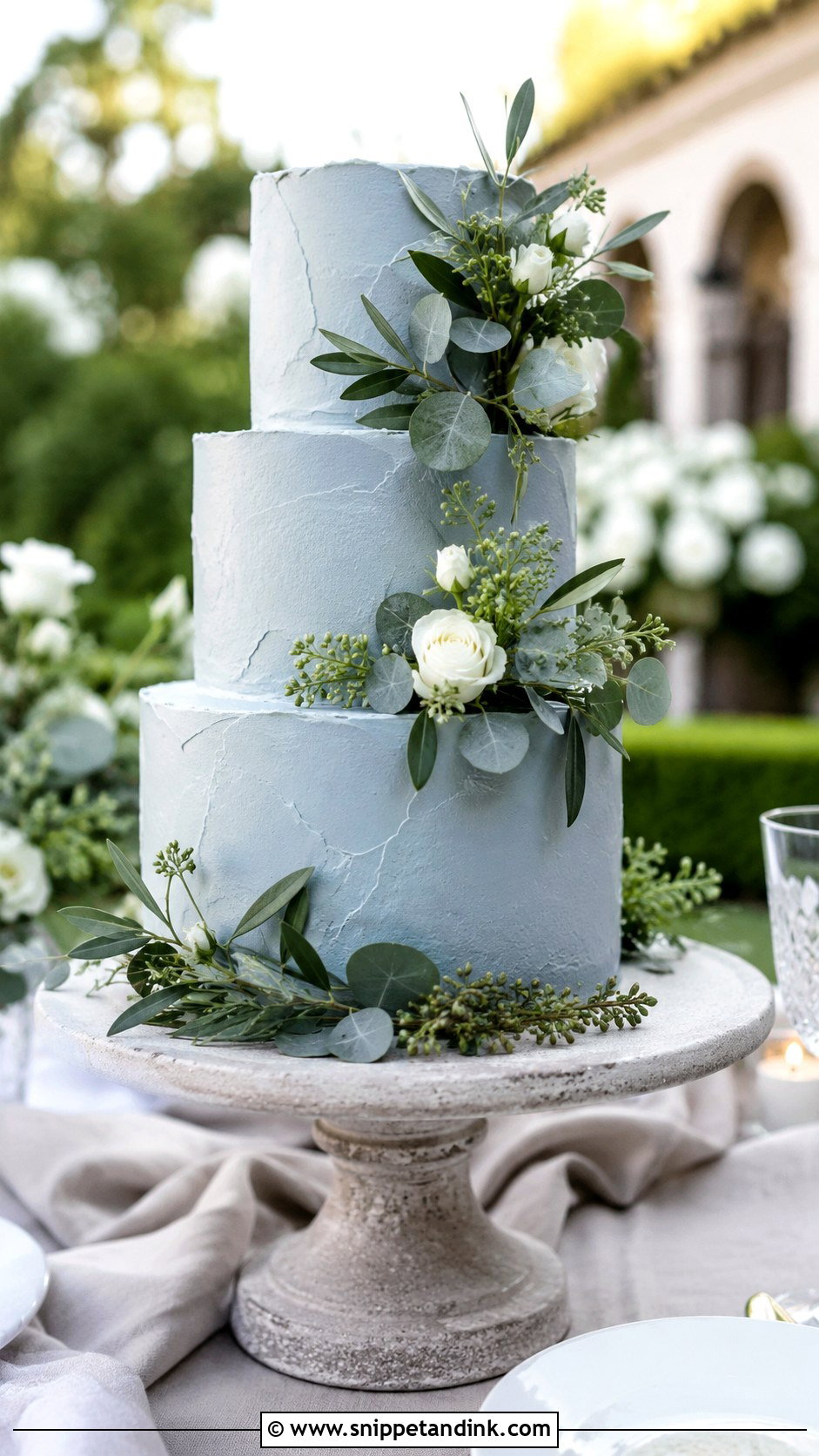
Muted greenery sits right beside slate blue on the color wheel, which is why olive, ruscus and rosemary feel at home on this cake. Eucalyptus looks the part too, but it isn’t food-safe, so I only use it wrapped, resting on a barrier, never pushed into the tiers. Add ivory flowers and keep the arrangement loose for a clean look, or tuck in dried grasses for a rustic reception. Using the same greenery as your bouquets and centerpieces ties the cake to the room without adding another color.
10. Slate Blue Wedding Cake With Blush Flowers
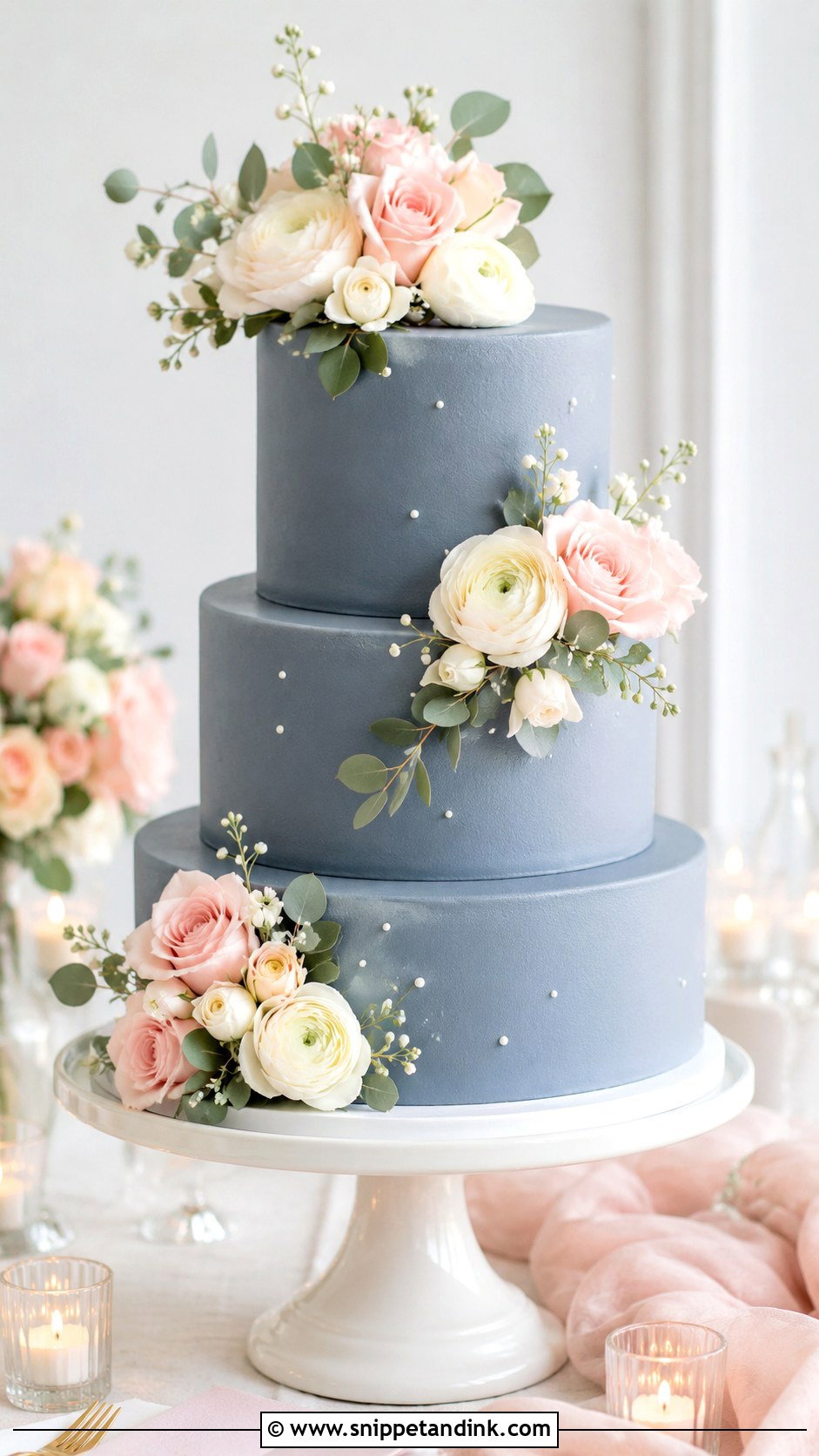
Blush warms slate blue the way a cheek tint warms a cool complexion. The blue keeps things grounded while blush roses, ranunculus or peonies add softness. Choose muted, dusty blush rather than bright pink; candy tones next to blue-gray start looking like a baby shower. Ivory filler blooms and silver-green leaves blend the two colors. I’d suggest it for spring dates and garden venues with candlelight, on smooth or very lightly textured buttercream.
11. Slate Blue Wedding Cake With Navy Accents
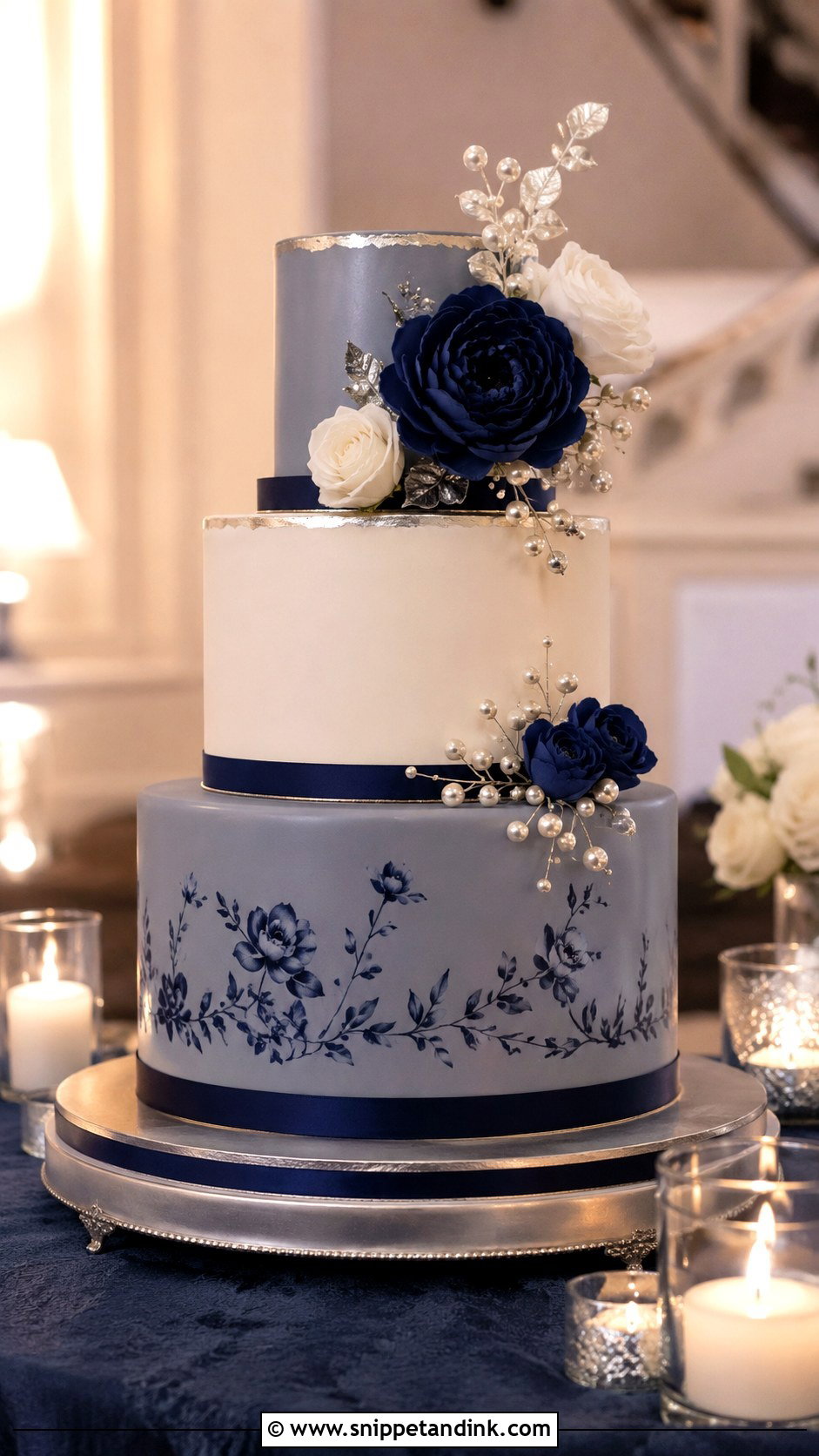
Adding navy accents deepens the palette and makes the cake feel formal. Navy can come in through ribbon, sugar flowers, painted edges, geometric lines or a darker bottom tier. A warning from the kitchen: buttercream tinted that dark needs a lot of color and can taste slightly bitter and stain mouths. I’d put navy on fondant details or a single tier rather than the whole cake. Ivory flowers, white piping or silver keep it from going heavy, and it pairs naturally with navy suits or dark linens.
12. Slate Blue Wedding Cake With Sage Green
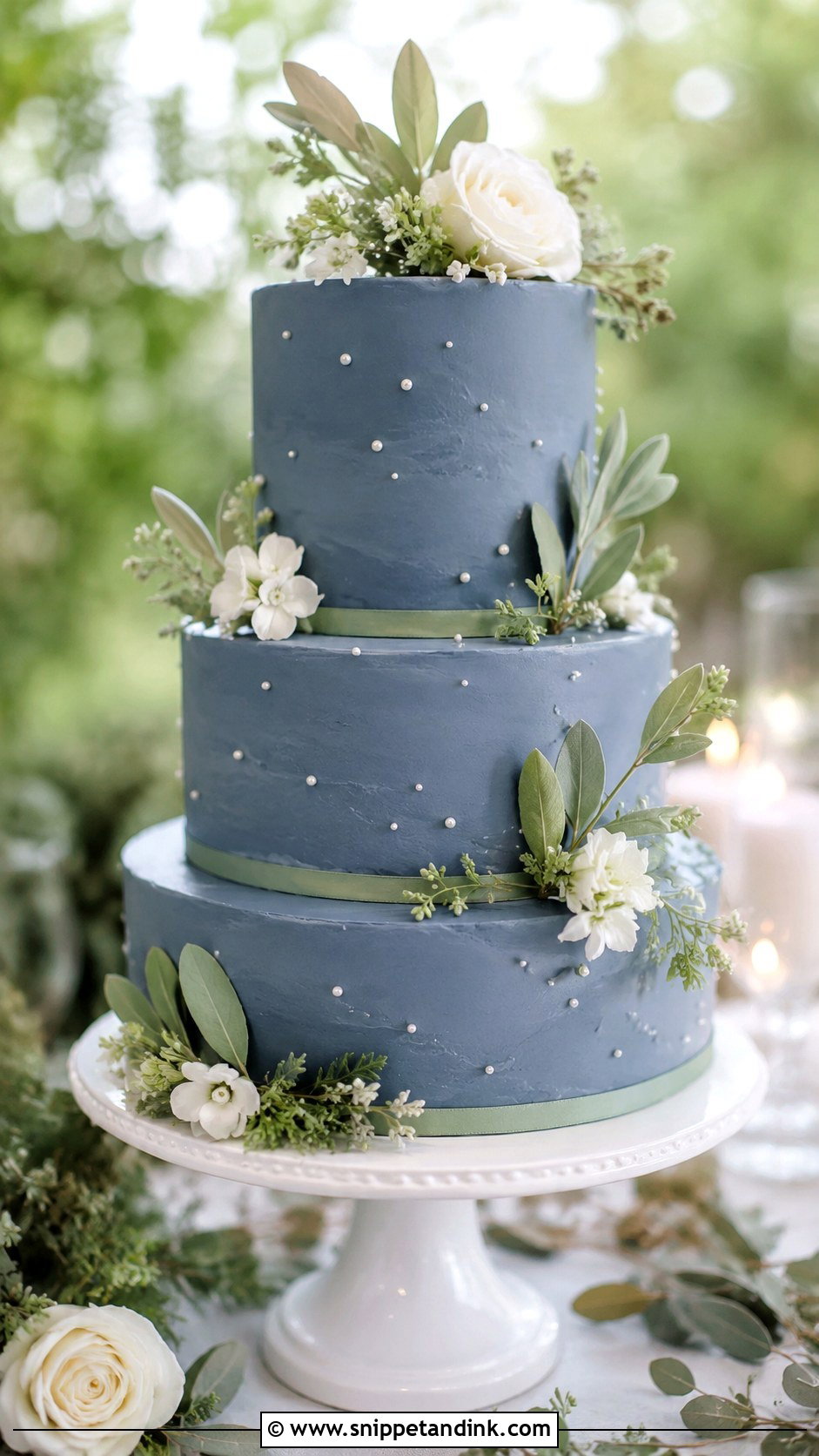
Slate and sage are both grayed-down colors, which is why they sit so quietly together. Sage can show up in sugar leaves, fresh greenery, painted detail or a ribbon at the base of each tier. I like this pairing in matte buttercream, since a shiny fondant surface makes muted colors look slightly plasticky. Ivory flowers lift it, and a little white piping adds the bridal note. Outdoor and garden weddings suit it best.
13. Slate Blue Wedding Cake With Burgundy Flowers
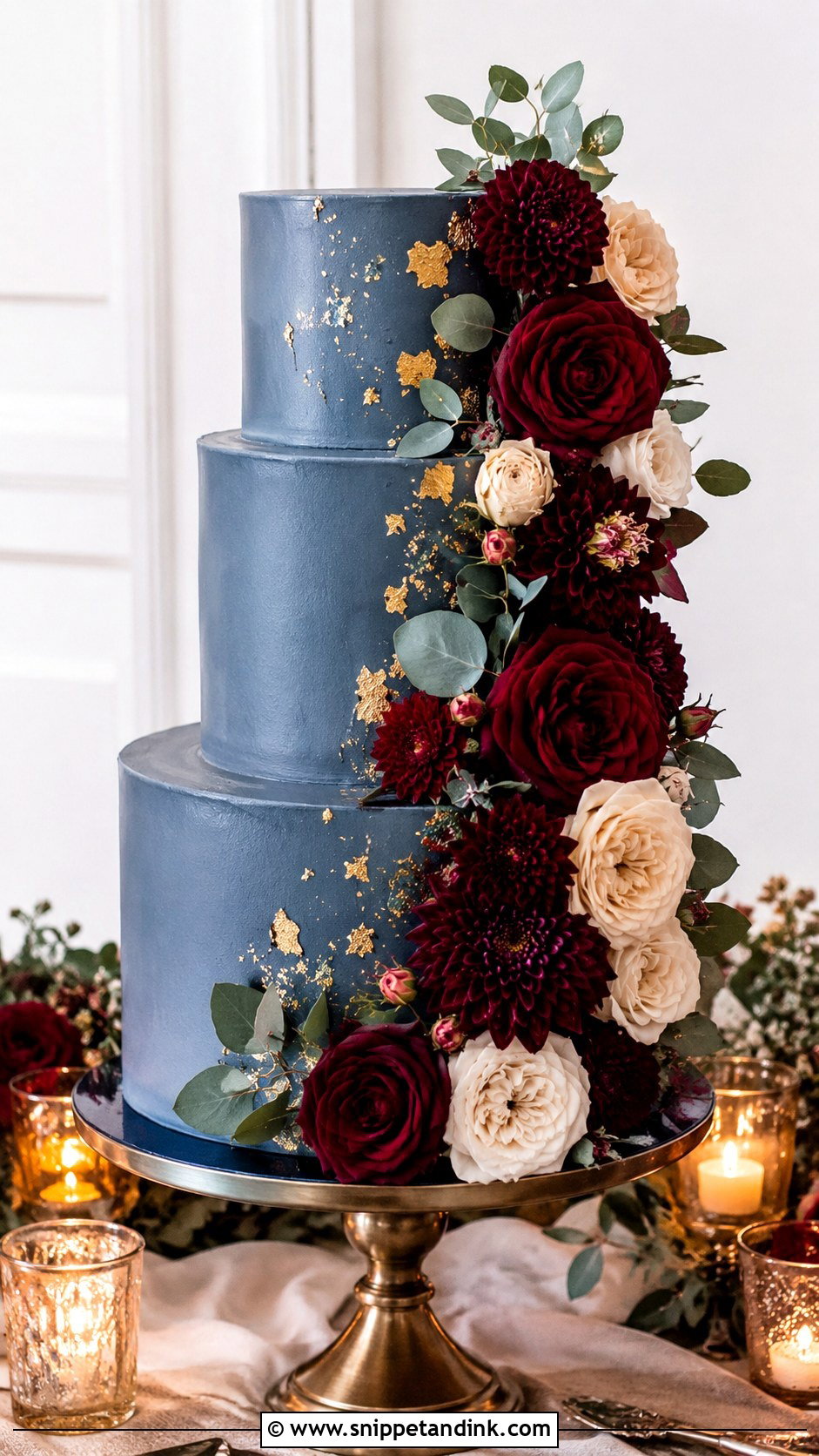
Burgundy against slate blue is the moodiest pairing on this list, and it works because the gray in the blue absorbs some of the red’s weight. Burgundy dahlias, roses, ranunculus or sugar flowers suit fall dates, indoor receptions and candlelit rooms. Dark flowers disappear in dim photos, so I balance them with a few ivory blooms and some greenery. A light touch of gold leaf fits here too. The result feels rich without losing the softness a wedding dessert should have.
14. Slate Blue Wedding Cake With White Drip
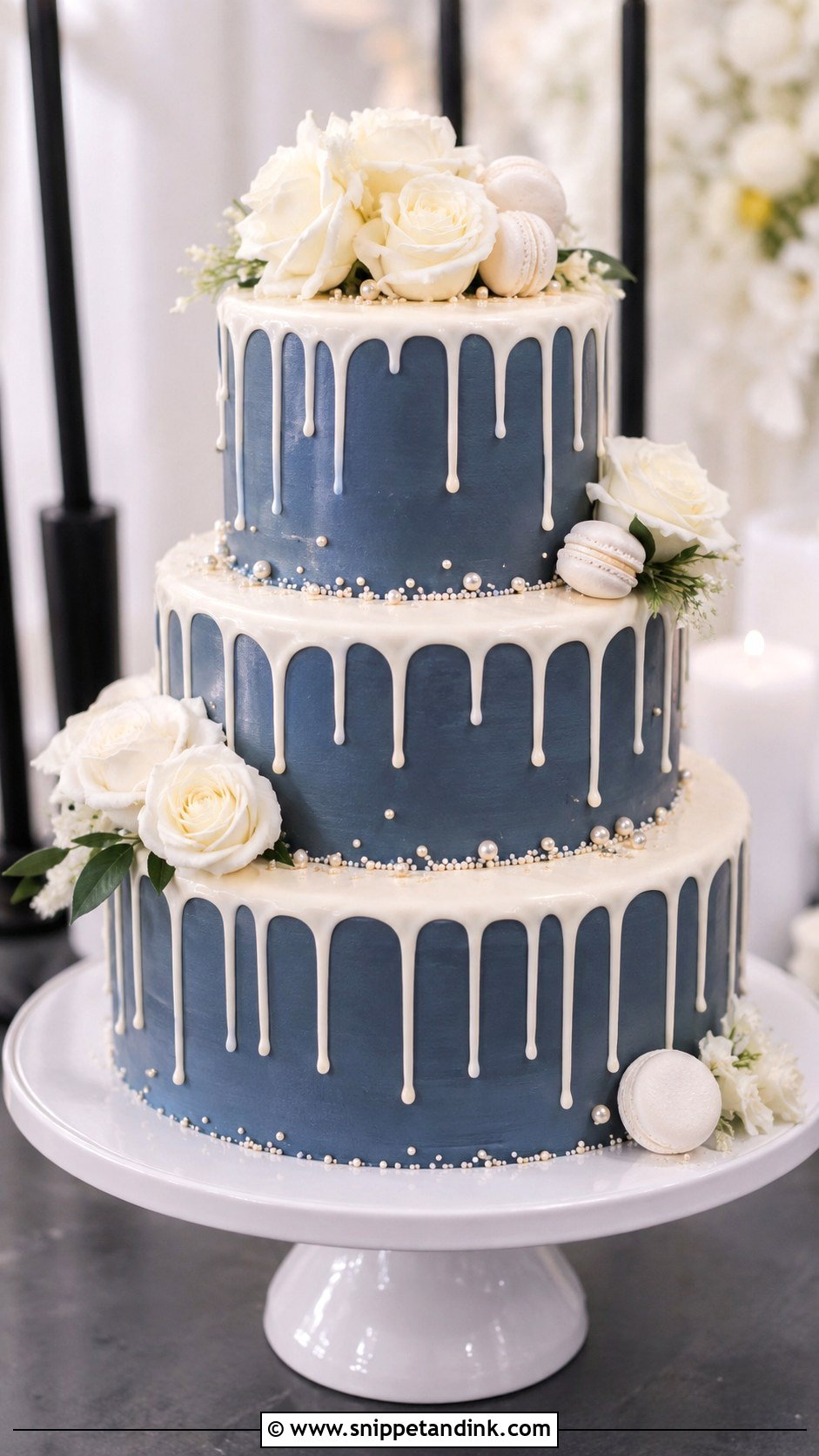
A white drip finish brings movement and a bit of playfulness to slate blue. For a wedding I keep the drips controlled and evenly spaced, which comes down to temperature: the cake must be cold and the ganache just warm enough to flow, or the drips race to the board. White chocolate ganache gives clean edges; a buttercream base keeps the look soft. Top it with white roses, macarons or small sugar flowers.
15. Slate Blue Wedding Cake With Marble
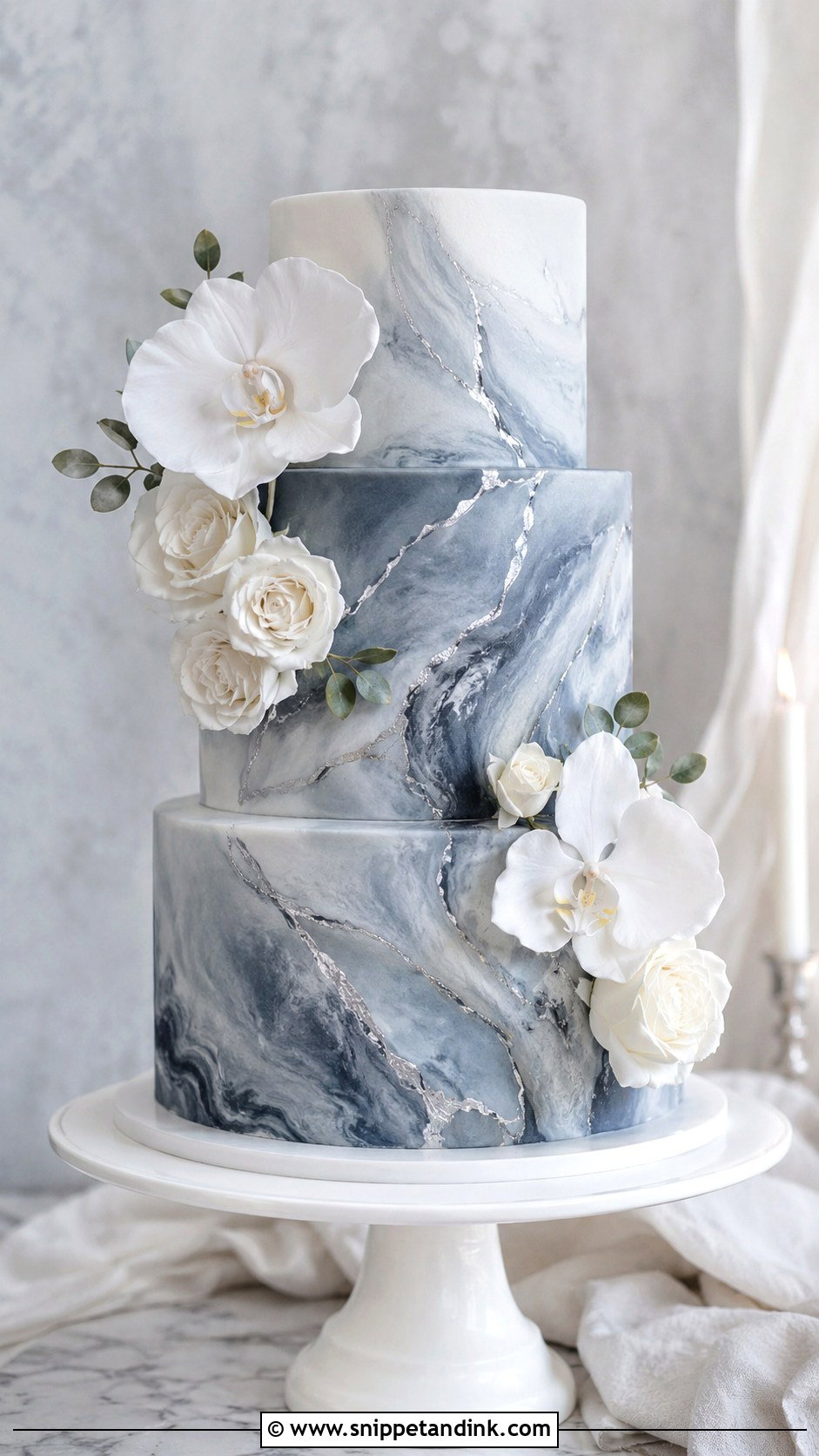
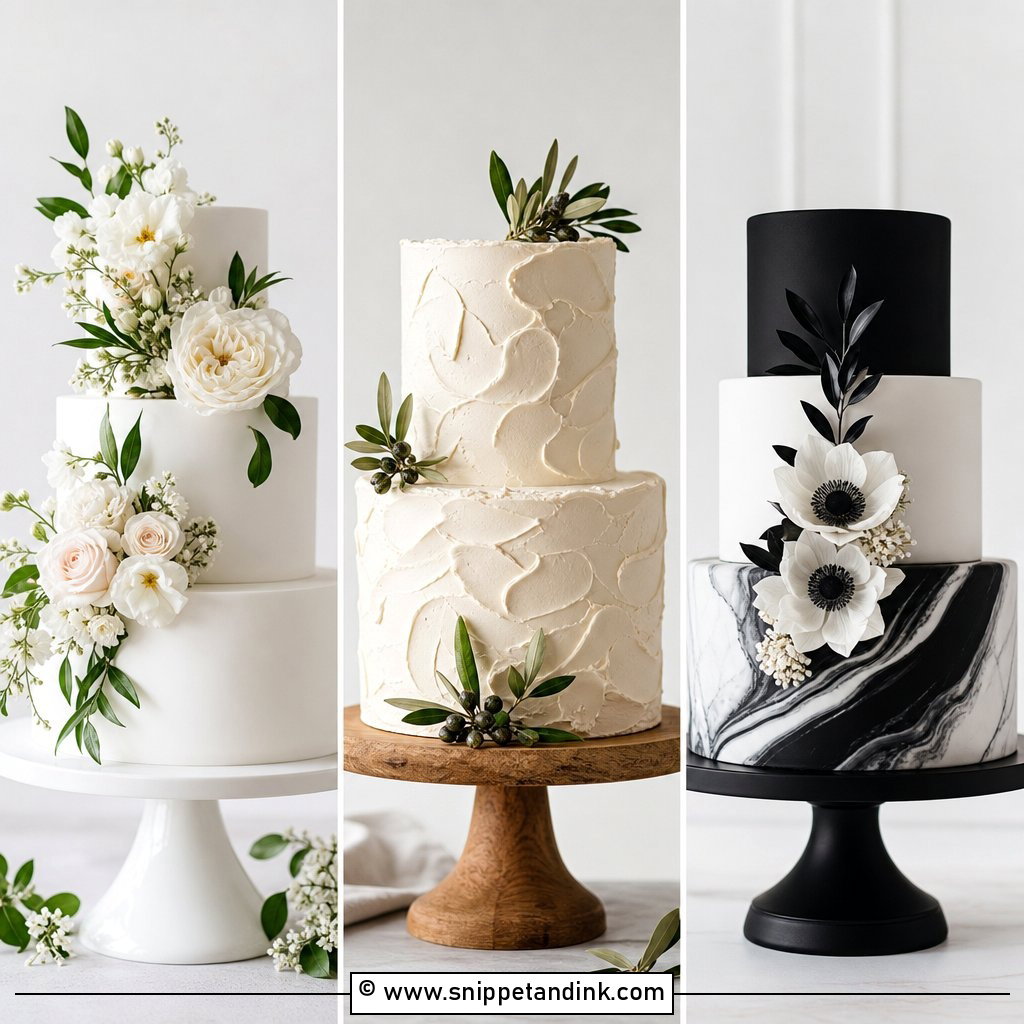
Marbling blends slate, soft gray, ivory and white into movement across each tier, and thin veins of silver or gold make it feel more formal. It needs smooth fondant, because the pattern is created by twisting colored fondant together before rolling; buttercream can only imitate it. No two marbled tiers come out identical, so expect variation. Keep decoration minimal, perhaps a few white orchids or sugar roses, so the pattern stays the focus.
16. Slate Blue Wedding Cake With Ruffles
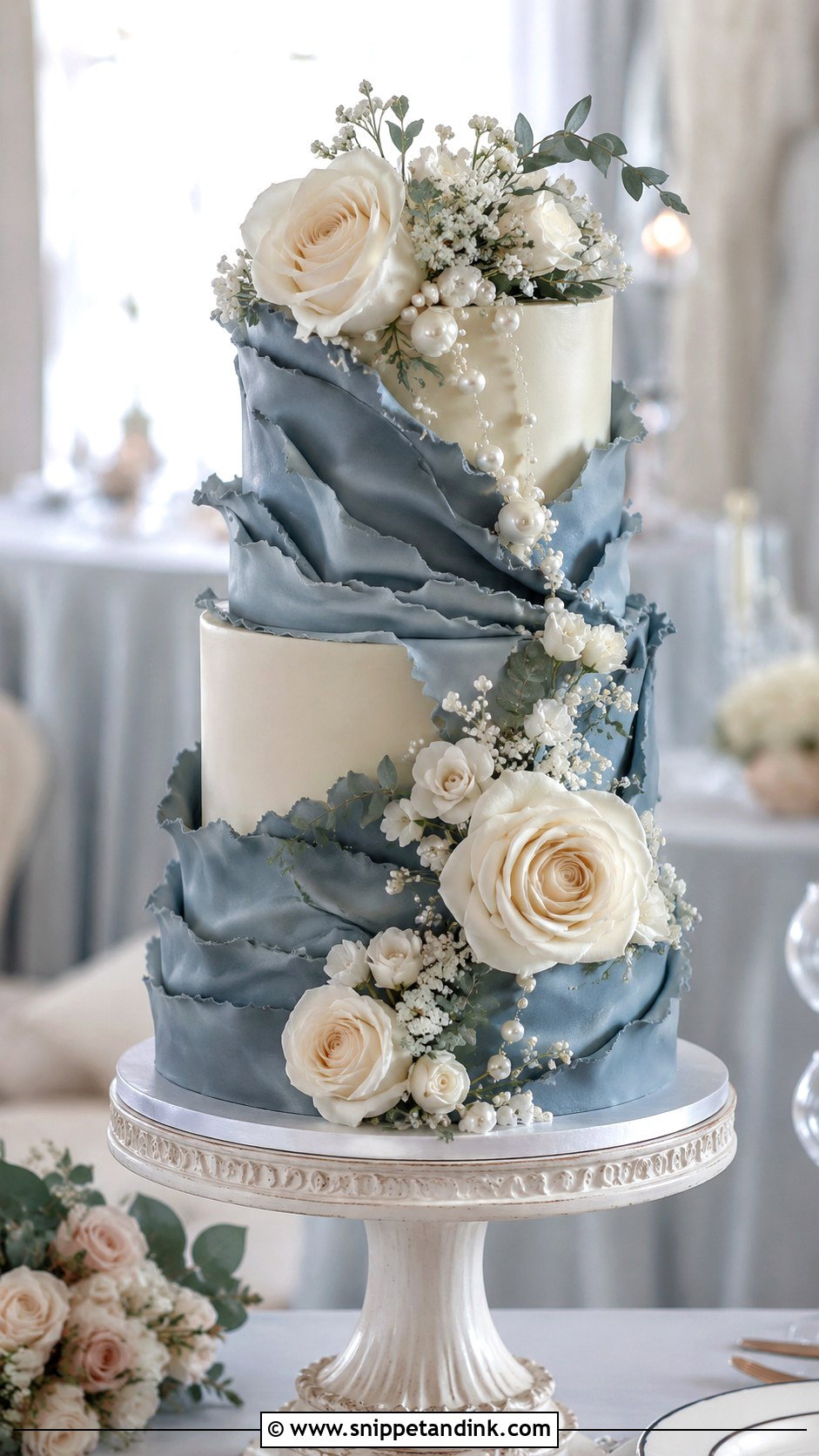
Ruffles behave like fabric on a cake, so this is the one I suggest to couples who want the cake to echo a gown with movement. They can cover a single tier, wrap the base or cascade down one side. Slate blue stops ruffles looking too sugary. Buttercream ruffles look soft but are fragile in heat and in transit; fondant ruffles hold crisper folds and travel better. Keep flowers to a few so the texture stays the feature.
17. Slate Blue Wedding Cake With Geometric Lines
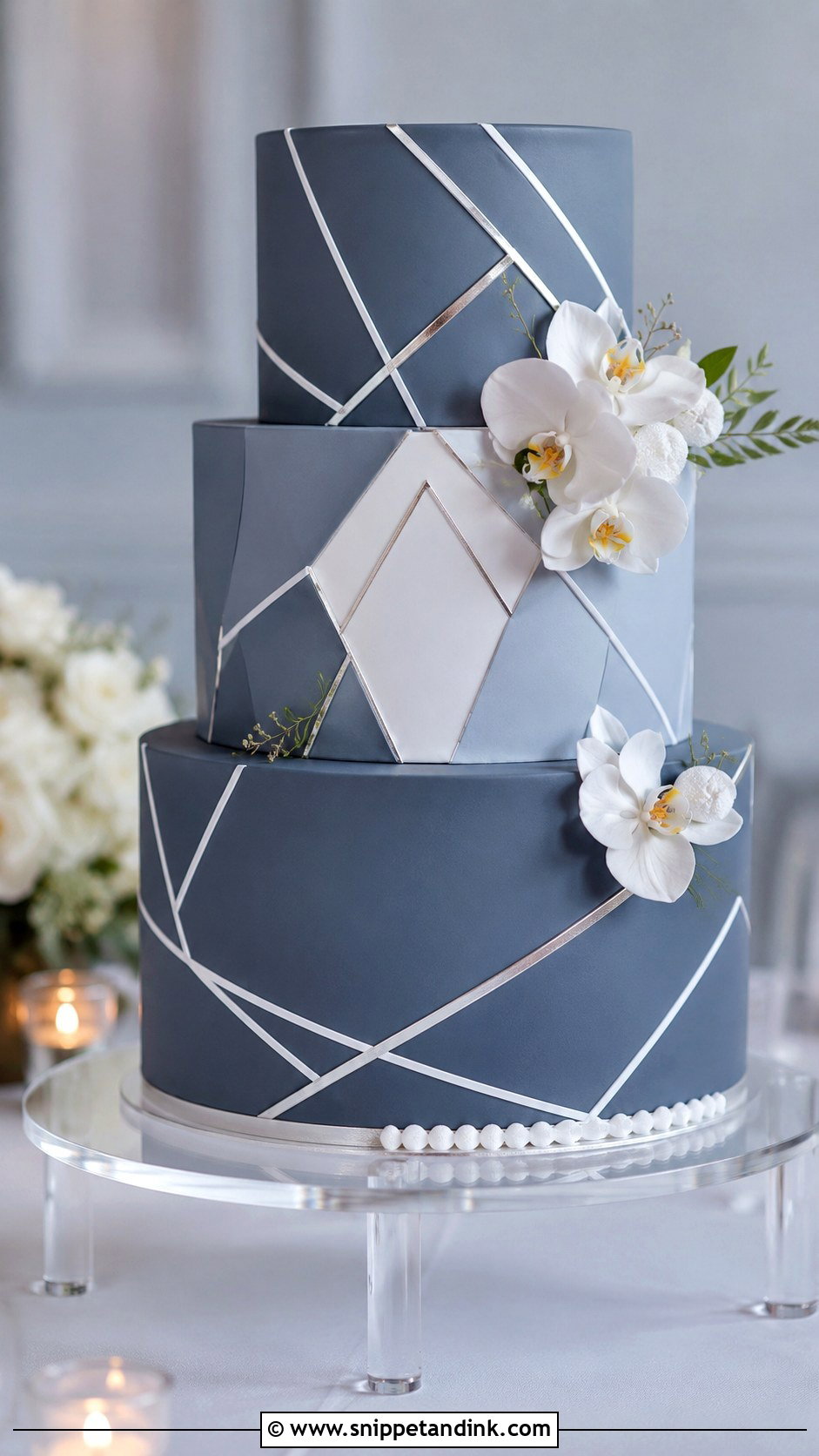
Geometric work needs a flawless surface, because any bulge under a straight line shows instantly. I build these on fondant or very sharp buttercream and add white, silver or gold lines as diamonds, arches, hexagons or vertical panels. Against the muted blue, the structure looks sharp without shouting. It suits modern venues, lofts, galleries and minimalist ballrooms. One white flower or a single large bloom softens it if pure graphic feels too cold.
18. Slate Blue Wedding Cake With Dried Flowers
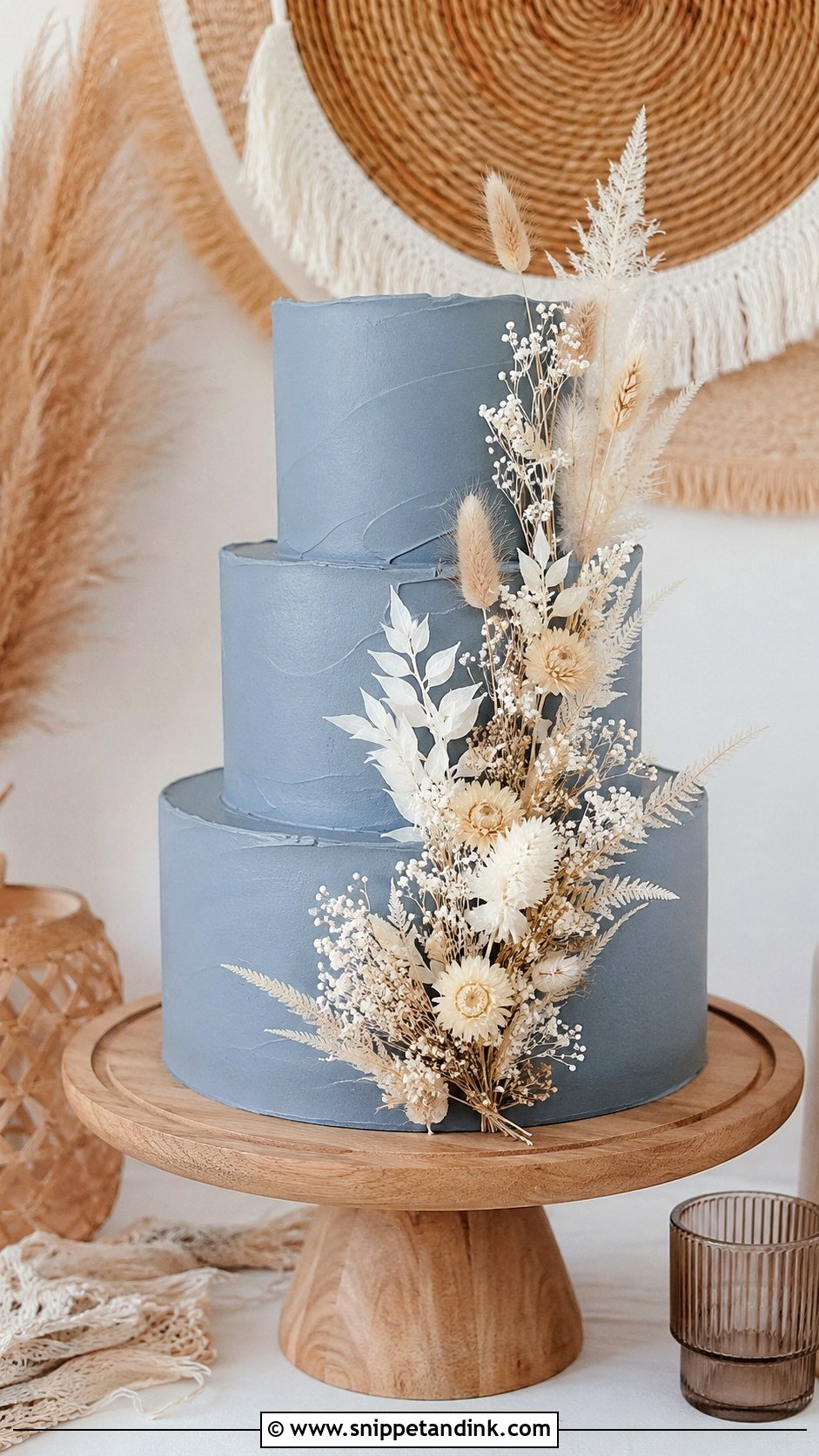
Dried flowers bring warmth to a cool color. Pampas, bunny tails, dried baby’s breath, preserved ferns and ivory dried blooms look natural against slate blue, especially on matte buttercream. Dried and preserved stems are often dyed or treated, so I keep them on a barrier and away from the cut slices, and I place them on the day rather than ahead. Arrange them with intent, as one cascade or a small crown on top. Dried stems look messy fast if they’re scattered everywhere.
19. Slate Blue Wedding Cake With Sugar Flowers
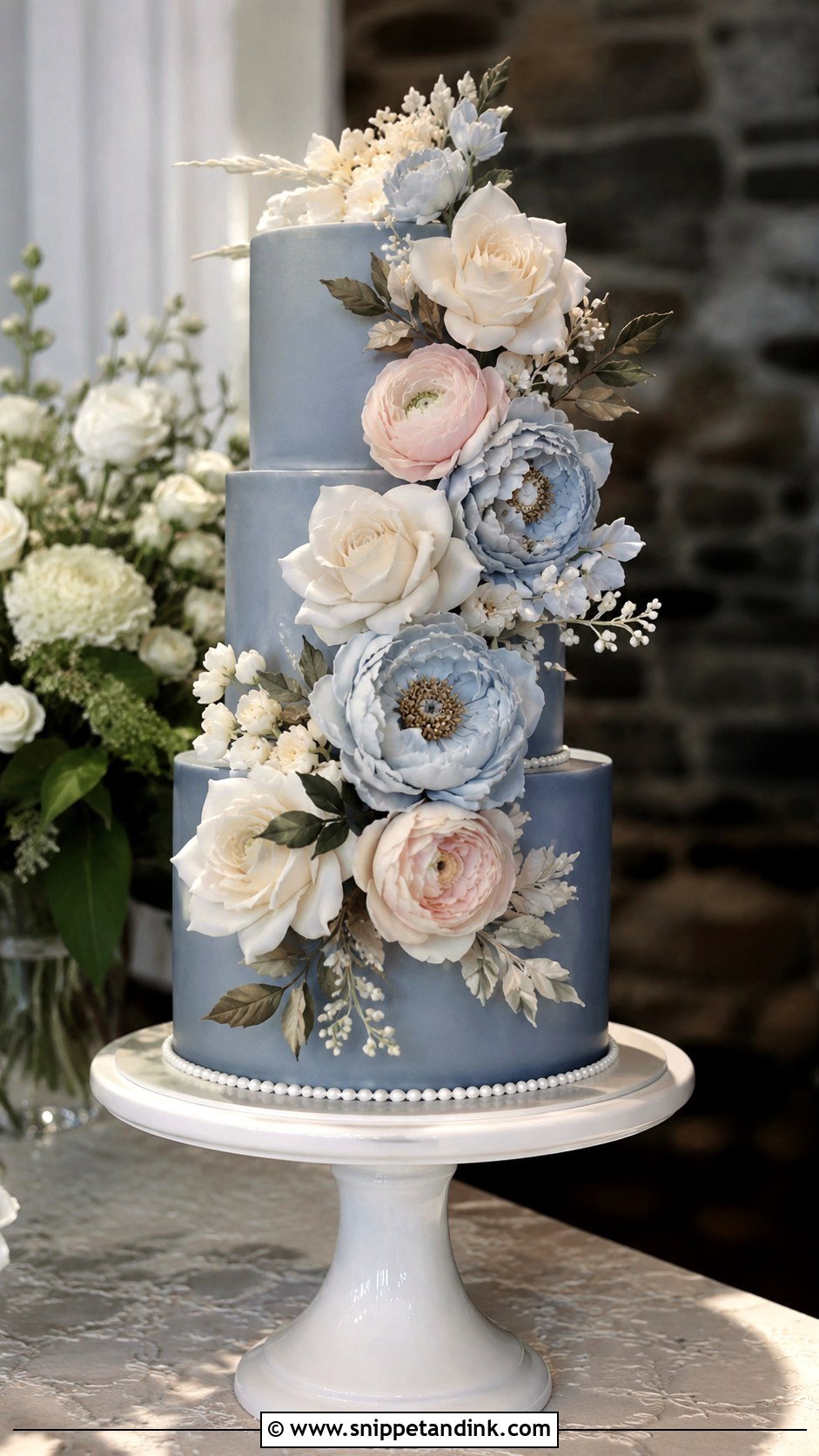
Sugar flowers give you full control over color, shape and placement. I can tint petals to soft ivory, pale blue, blush or a deeper slate so they match your palette exactly, and they won’t wilt under lights or need food-safety workarounds. They take time, though: a large sugar peony can be hours of work, so this is where lead time and budget matter most. A few large roses or peonies make a focal point on smooth fondant, with smaller blossoms trailing down. Many couples keep the top flowers afterwards in a box as a keepsake.
20. Slate Blue Wedding Cake With Square Tiers
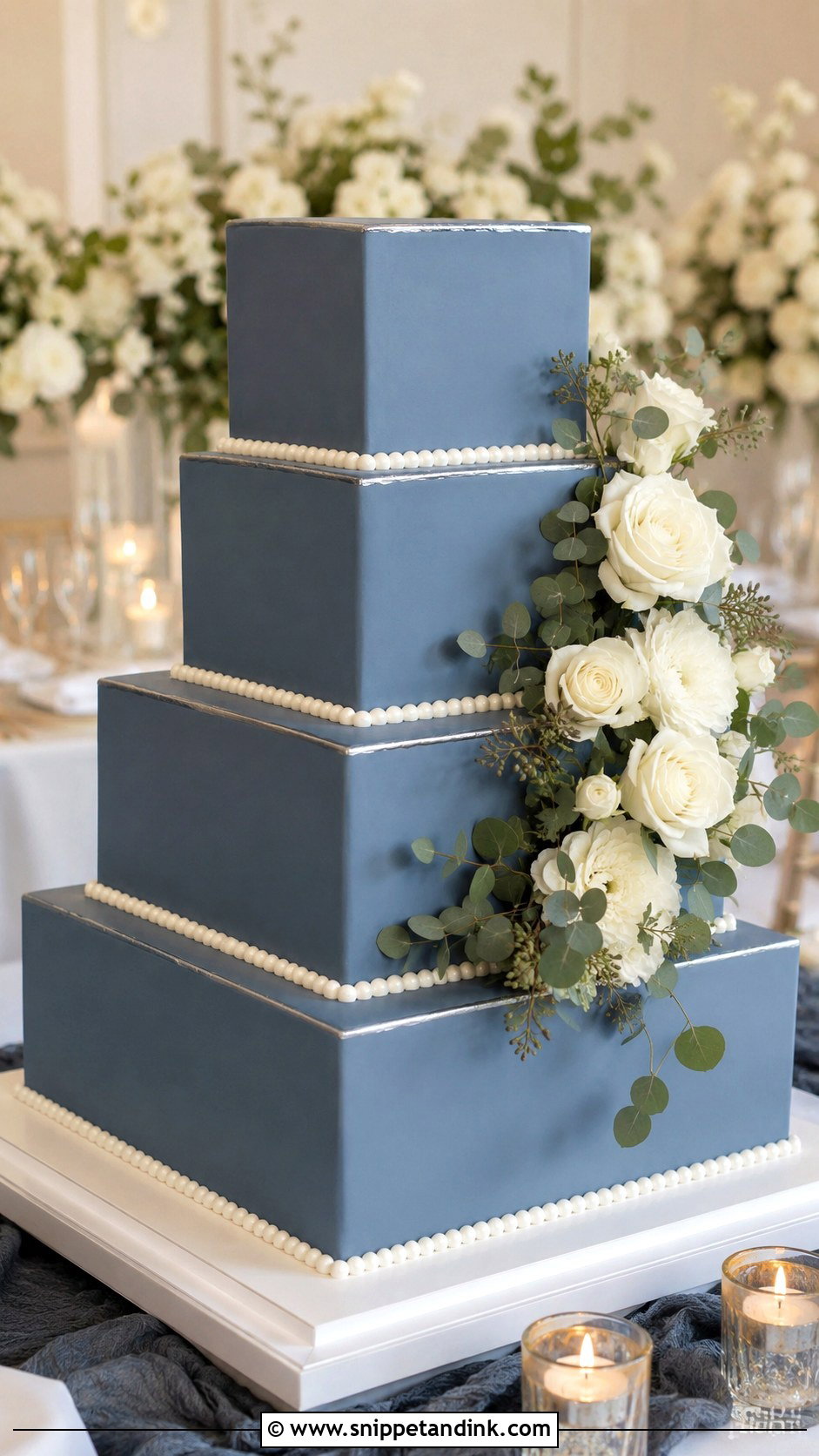
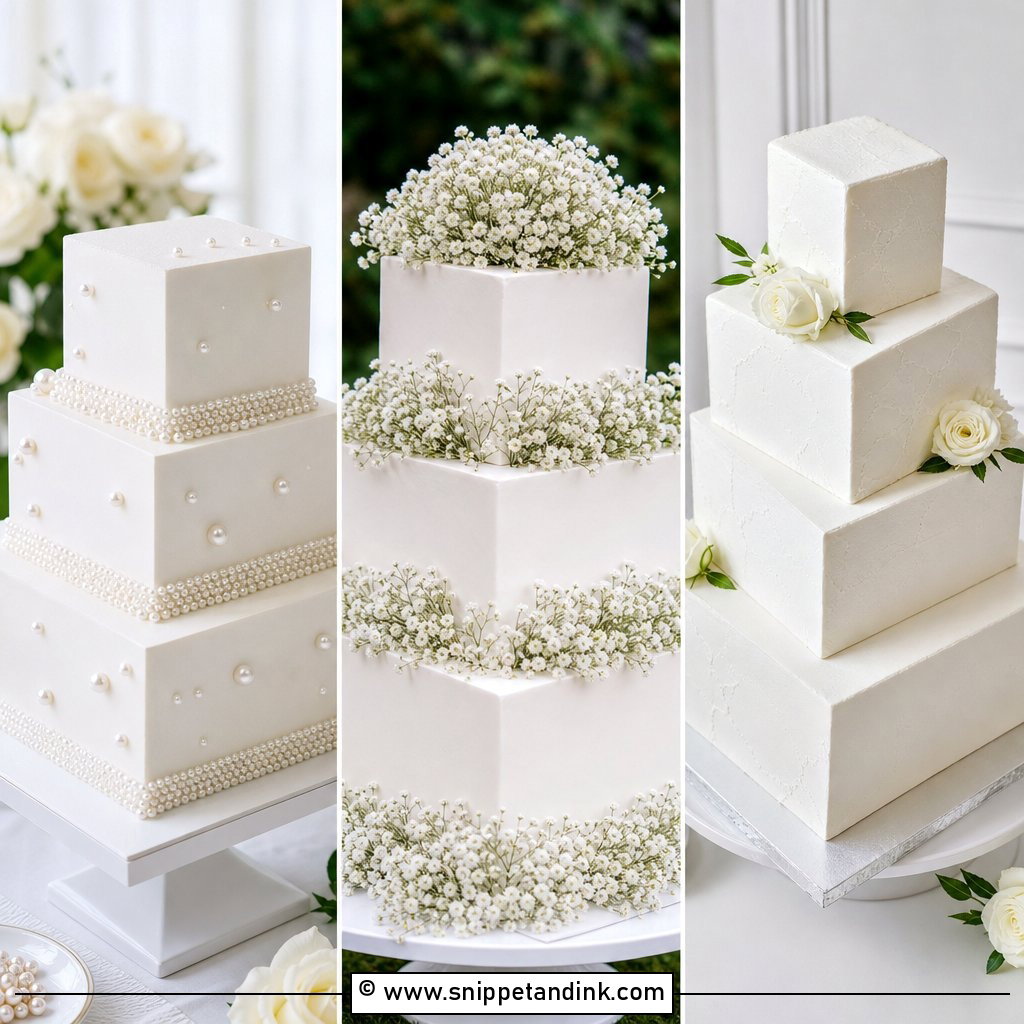
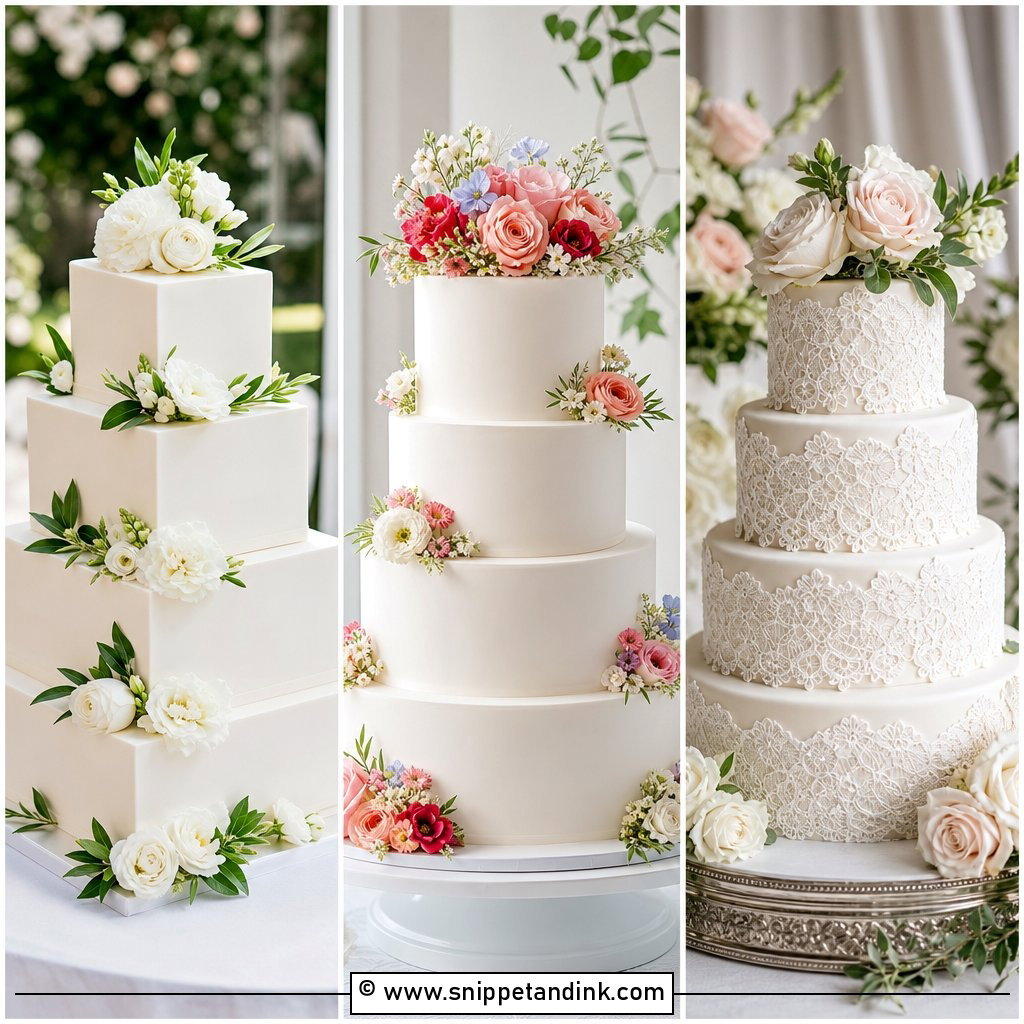
Square tiers give slate blue a structured, architectural look that stands apart from round cakes. Those sharp corners are hard to achieve in buttercream and need firm chilling, so fondant is the safer finish if you want them truly crisp. Keep it simple with one floral cluster, or add metallic edges, pearl borders or white piping. Stack them evenly or offset each tier for a contemporary shape. Square cakes also cut into neat, uniform portions, which caterers appreciate.
Real Flowers on a Blue Cake Need a Barrier
Many of these designs rely on fresh or dried flowers, and that’s where I see the most avoidable problems. Florist stems are grown for looks, not for eating, and plenty of popular wedding flowers and foliage are not food-safe. I treat every stem as something that must never touch the icing directly.
- Ask your florist for blooms grown without pesticides, and tell them early that they’re going on the cake.
- Every stem gets wrapped in floral tape and pushed into a drinking straw or a flower pick, so sap never meets the sponge.
- Larger arrangements sit on small discs of parchment or acetate rather than straight on the frosting.
- Flowers go on as late as possible, ideally at the venue, so they don’t wilt or drop pollen on a pale blue surface.
- Every flower comes off before cutting, and those top slices are checked before serving.
Agree on who places the flowers. Some bakers do it themselves; some leave it to the florist. If neither of them knows it’s their job, the cake can end up at the reception bare, or dressed by someone who doesn’t know about straws and barriers.
Bringing a Fabric Swatch to Your Cake Tasting
Slate blue shifts character with every detail you add: classic with lace, modern with marble, rustic with texture, dramatic with deep florals. It sits comfortably next to white flowers, greenery, blush, burgundy accents, metallic leaf and pearls, and it works from spring gardens to winter ballrooms. The most useful thing you can bring to a tasting is a physical swatch, ideally from bridesmaid dresses or linens. Screens show blue differently on every device, and holding the fabric next to a mixed sample is the only reliable way to match.
You'll Like These Ideas:












Leave a Reply