
Shine on a wedding cake can look expensive or it can look like a craft project, and the difference is almost always restraint. I work with edible shimmer, pearl finishes, metallic leaf, sugar crystals, sequins and glossy glazes, and each catches light in its own way: leaf glints, lustre glows, crystals refract. The thirty cakes below range from a whisper of pearl dust on white tiers to full geodes and black-and-gold drama, for classic, garden, modern, coastal and full-glam receptions. Alongside each one I’ve noted how it is made and what to ask your baker, because sparkle is the area where edible and decorative products most often get mixed up.
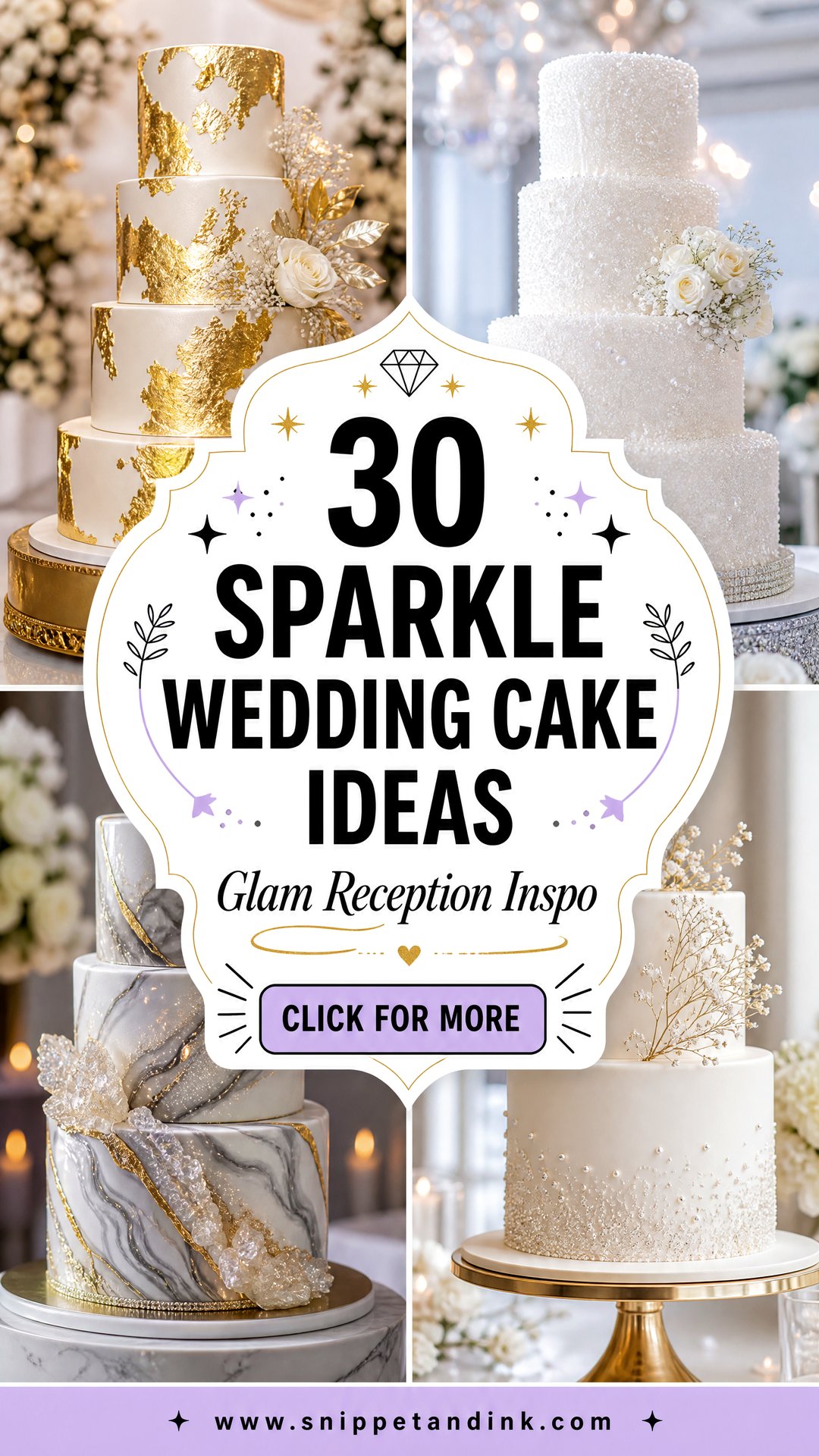
Is That Glitter Edible, or Only Non-Toxic?
The most important question about a sparkly cake is not the colour. It is whether the shine is actually meant to be eaten. Products that look identical in the pot can be labelled very differently, and I check every one before it goes on a cake.
- Edible: listed ingredients, all food-approved. Edible glitter is usually made from sugar, gum arabic or similar, and edible gold and silver leaf are real metal beaten very thin.
- Non-toxic or “for decoration only”: this does not mean edible. It means it shouldn’t harm you if a little is touched, not that it belongs in your mouth. Craft glitter is plastic and never goes on any part of a cake people eat.
- Rules differ between countries. Some pearl and shimmer dusts that are sold as edible in one country contain colourings restricted in another, so a reputable baker buys from food suppliers and keeps the labels.
If a product is decorative only, I use it on things that will be removed before serving, such as a separate topper, a dummy tier or a sugar ornament set on a disc. Ask your baker plainly which finishes on your design are edible. A good one will answer without hesitating.
1. Gold Sparkle Wedding Cake
Gold reads warm and rich without being loud when it sits on ivory buttercream or smooth fondant as leaf, dust or a softly painted tier. I keep the top simple with white roses, sugar orchids or small pearls so the gold stays the feature. Ask for a brushed finish rather than a flat solid coat: solid gold paint shows every streak and fingerprint, while brushed metal looks deliberate and handmade. It suits candlelit receptions, black-tie venues and neutral palettes.
2. Silver Sparkle Wedding Cake
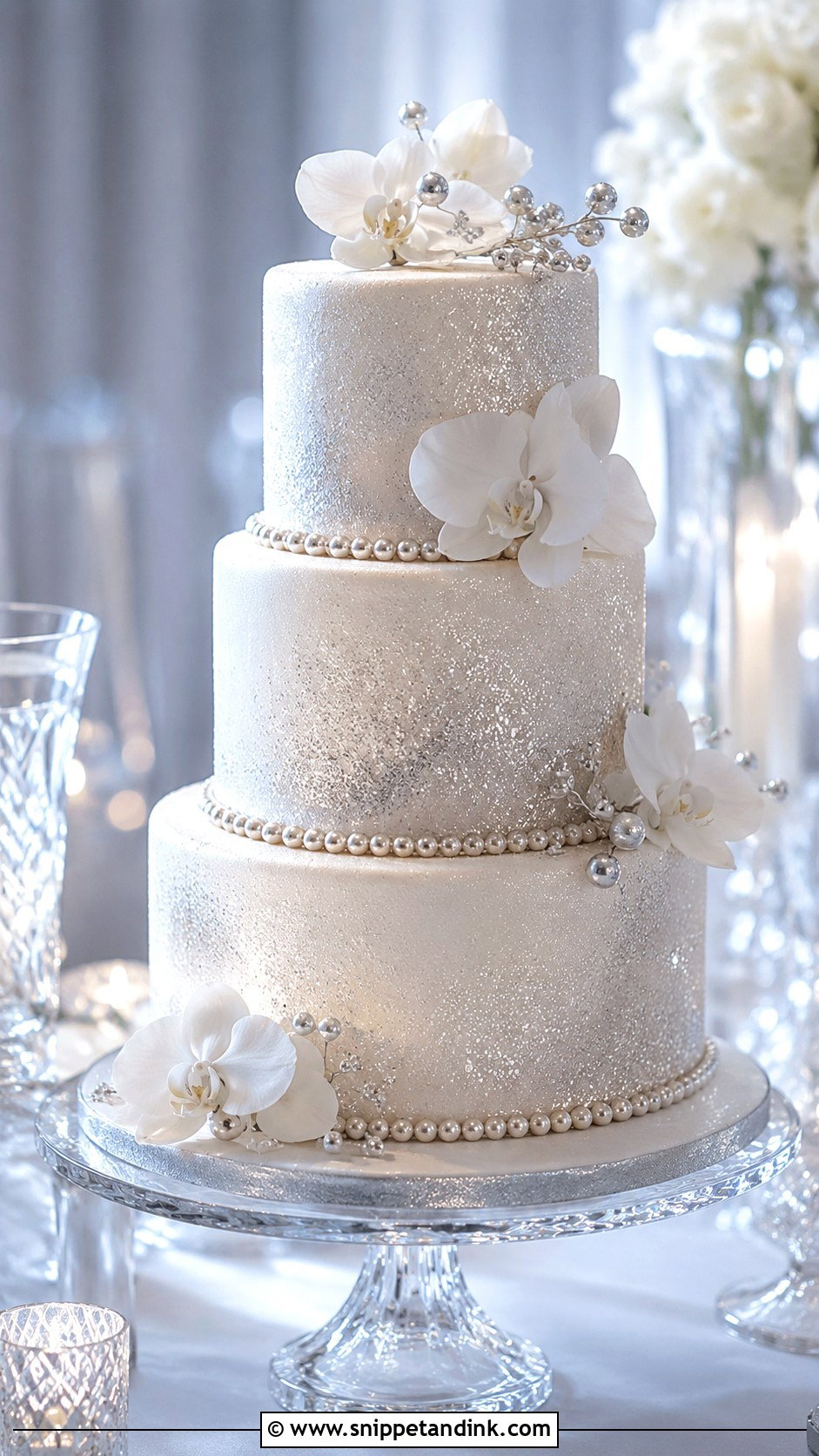
Silver is cool and clean, and it needs warmth around it or the whole cake can look like an ice sculpture. I balance it with white, ivory, pale blue or soft grey, and add texture through ruffled buttercream, pearl piping or sugar flowers. A fully silver tier is dramatic; a light dusting of shimmer is softer and more bridal. True edible silver leaf is harder to find than gold, so many silver finishes are lustre paint, which I check against the rules for edible colours before I promise it. Crystal stands and glass decor suit it.
3. Pearl Sparkle Wedding Cake
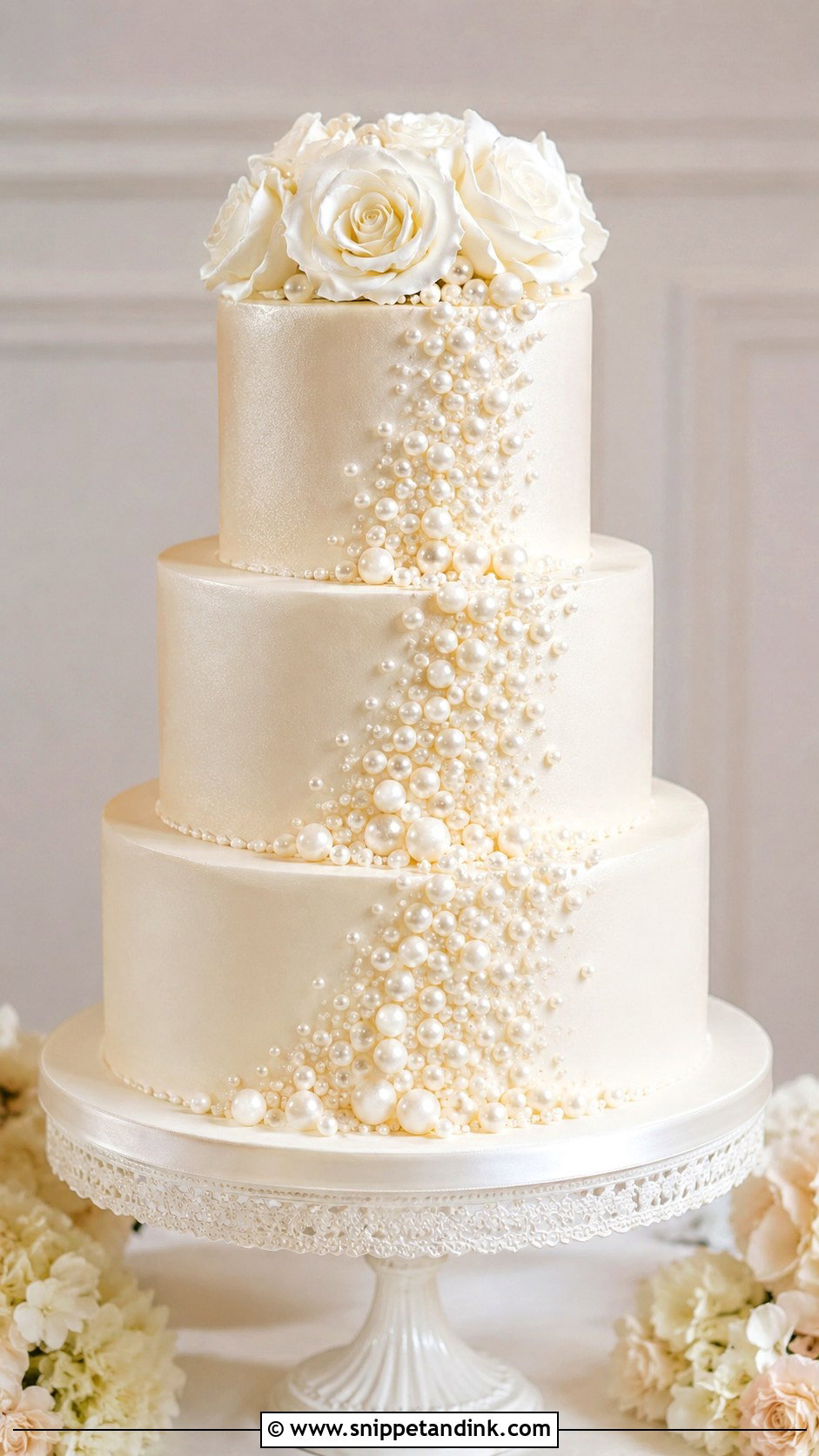
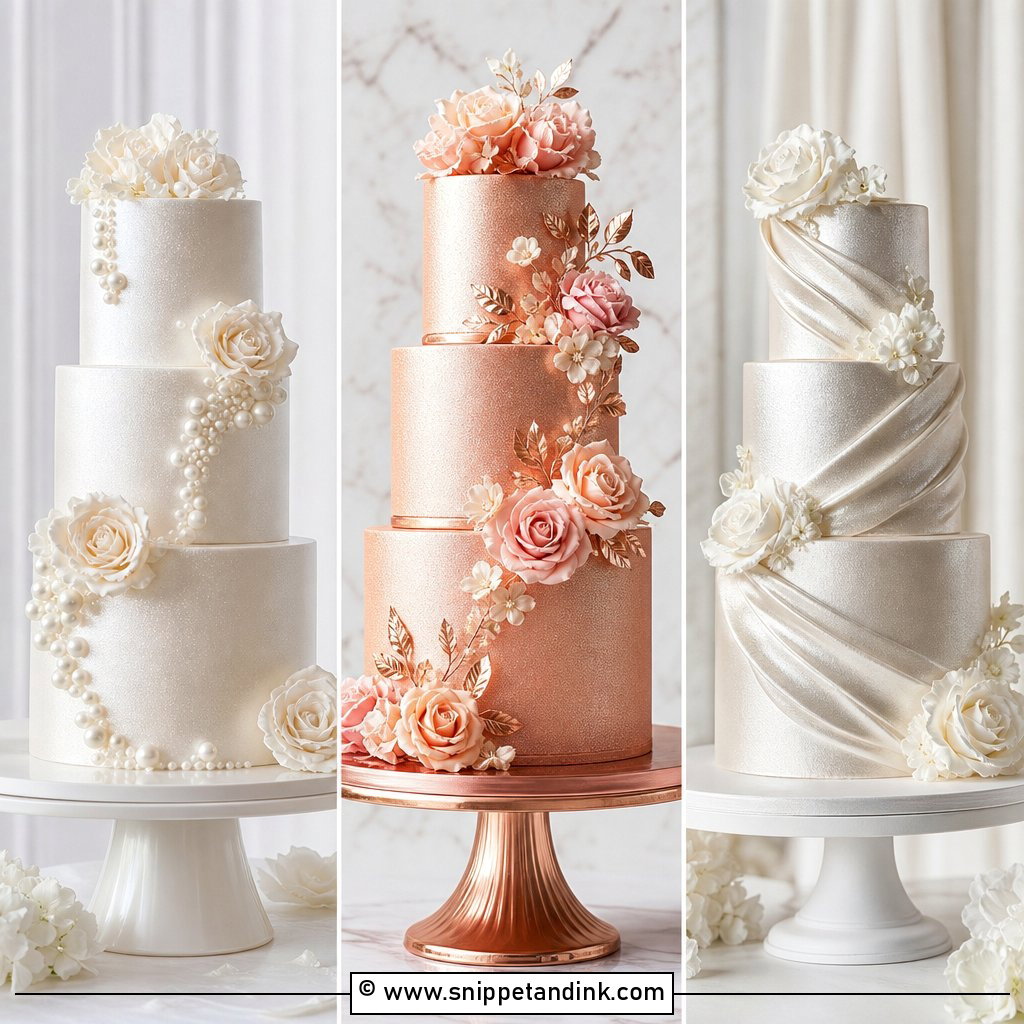
Pearls are the gentlest way to add shine. Edible sugar pearls can be scattered over smooth buttercream, set in neat borders or arranged in a waterfall down the tiers, and a pearlised finish on the icing gives a soft glow in natural light. Mixing pearl sizes looks modern on clean white tiers; piped borders and lace-style details make it vintage. Hard sugar pearls can be tough on teeth, so on cakes for older guests or children I use the softer type or keep them to the decorative tiers.
4. Rose Gold Sparkle Wedding Cake
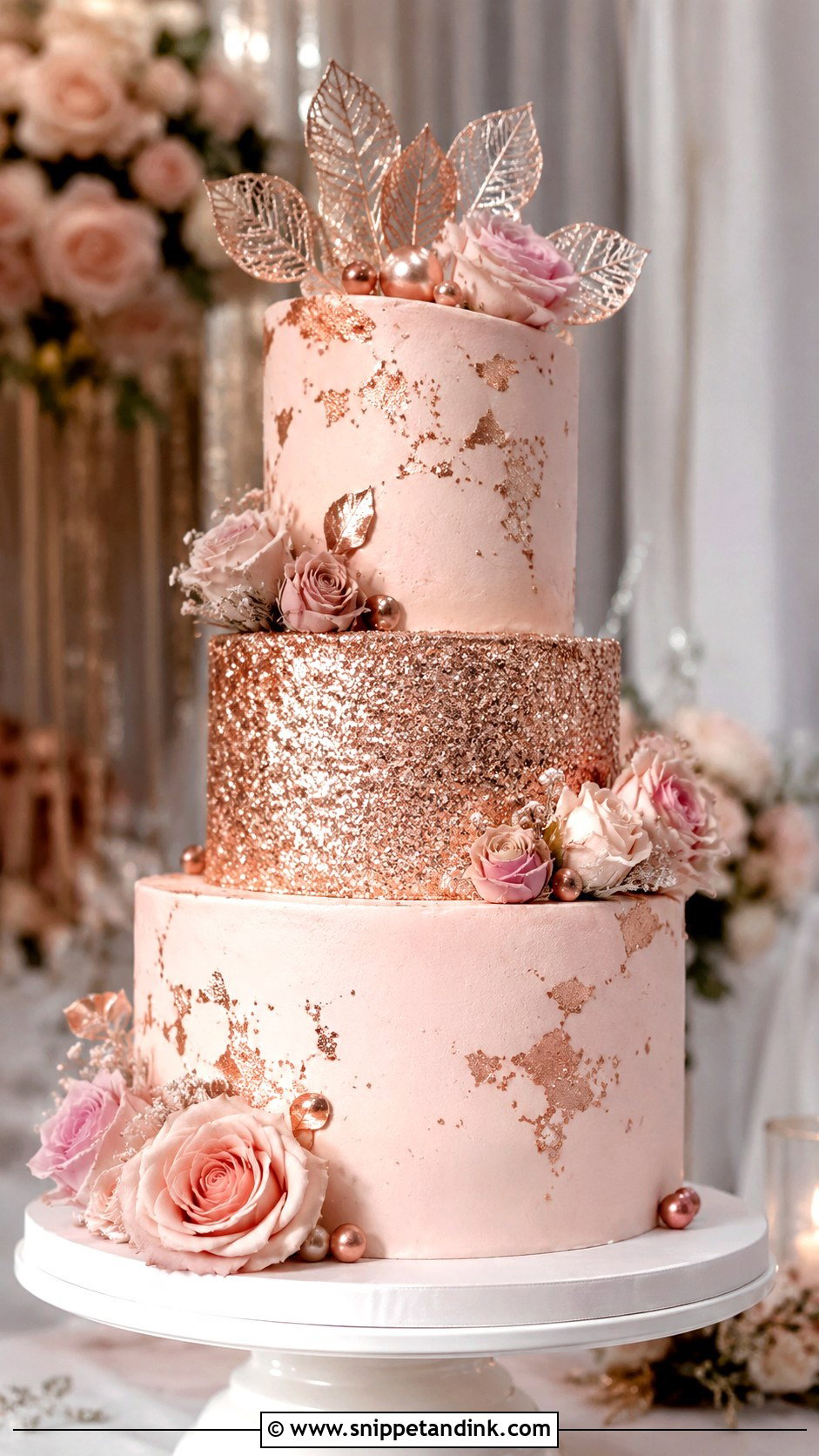
Rose gold is gentler than yellow gold, with a pink warmth that sits naturally beside blush roses, ivory buttercream, peach flowers and champagne shimmer. One rose gold tier between white tiers is usually enough. Flakes around the base fading upward give a softer sparkle. The tone varies a lot between brands and between daylight and candlelight, so I mix a sample and photograph it in warm light before committing. It pairs well with pink flowers, clear acrylic signs and candles.
5. Glitter Drip Wedding Cake
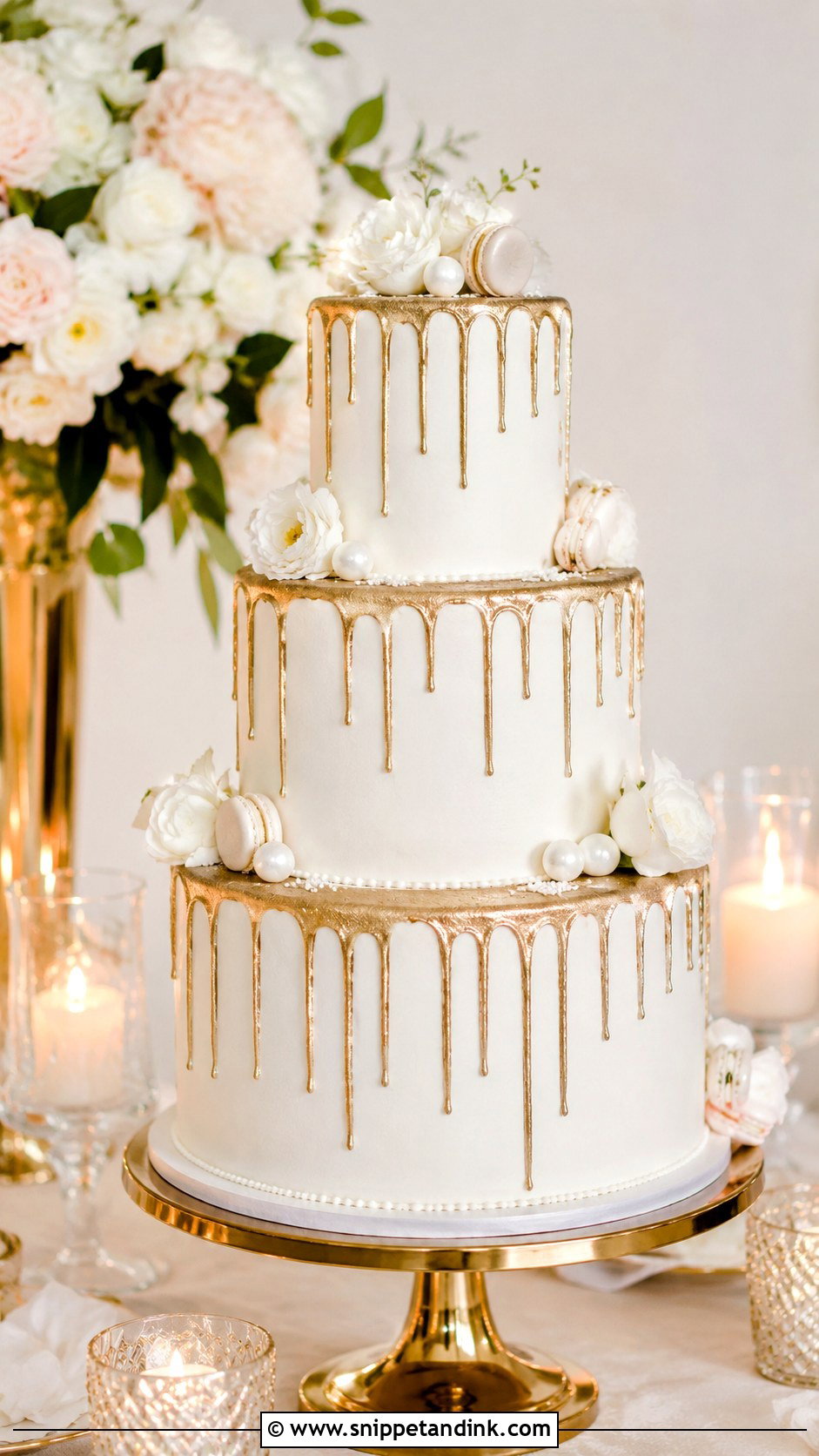
A glitter drip wedding cake swaps a chocolate or caramel drip for a shimmering edible glaze running down the sides in glossy lines. Gold, silver or pearl over white buttercream is classic; blush or lavender is more playful. The drip only looks neat if the cake is properly chilled and the glaze is the right temperature, too warm and it runs to the board, too cool and it stops in blobs. Fresh flowers, macarons, sugar pearls or a simple topper finish it.
6. Sequin Wedding Cake
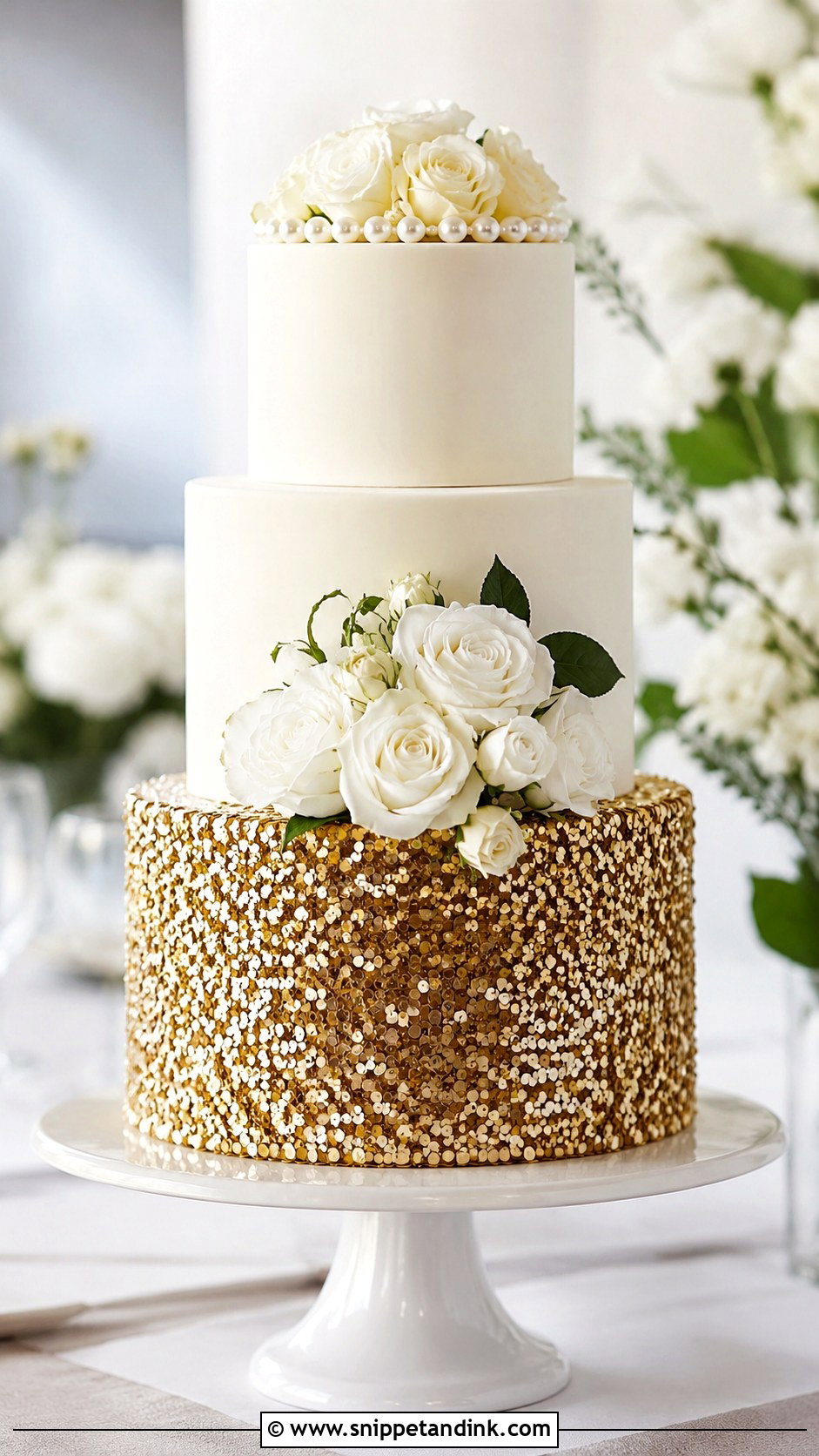
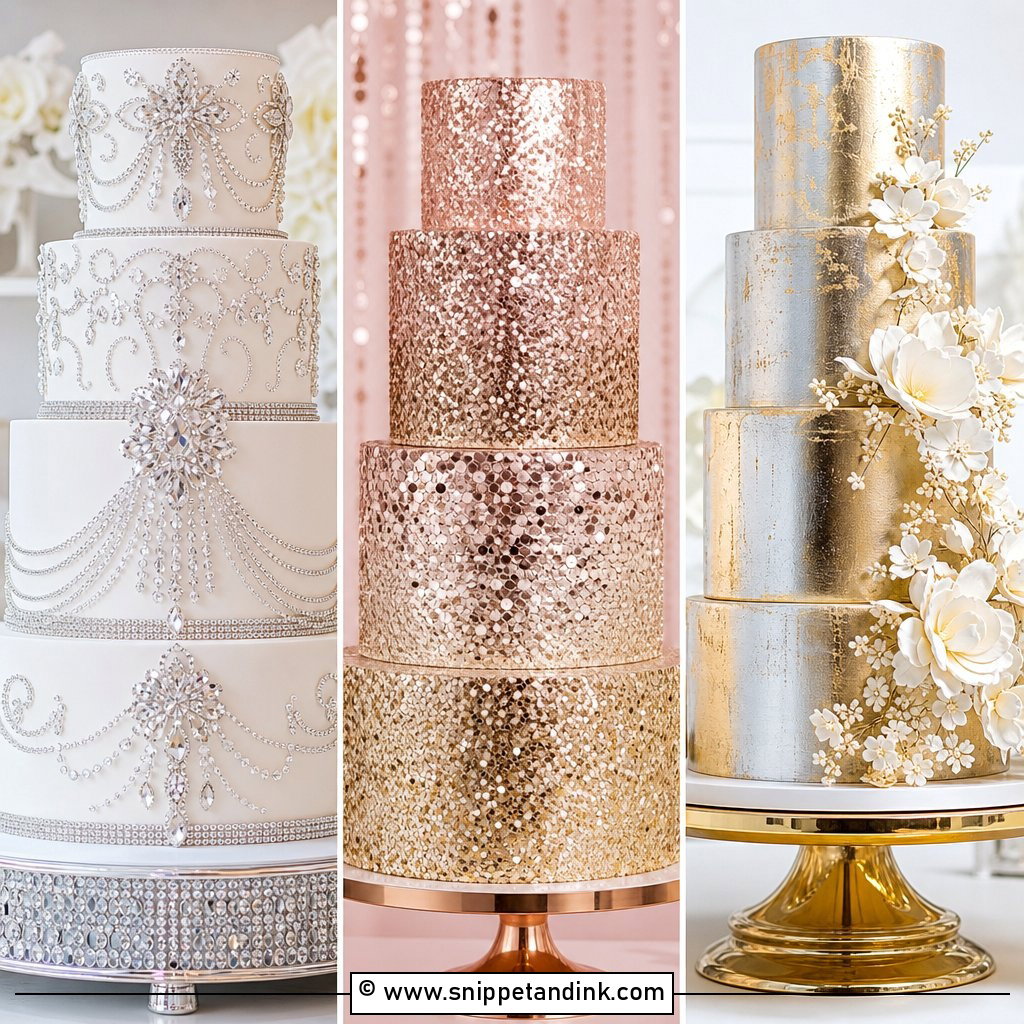
A sequin tier looks like a beaded dress in cake form. I make the effect with edible sequins, tiny sugar discs, metallic sprinkles, or piped dots brushed with lustre. Applying sequins one by one takes hours, so most of the cost is labour. One fully covered tier against smooth plain tiers looks stylish; more than that looks crowded. White and gold reads classic, silver modern, blush soft. Under reception lighting every disc catches light, which is the point.
7. Glitter Ombre Wedding Cake
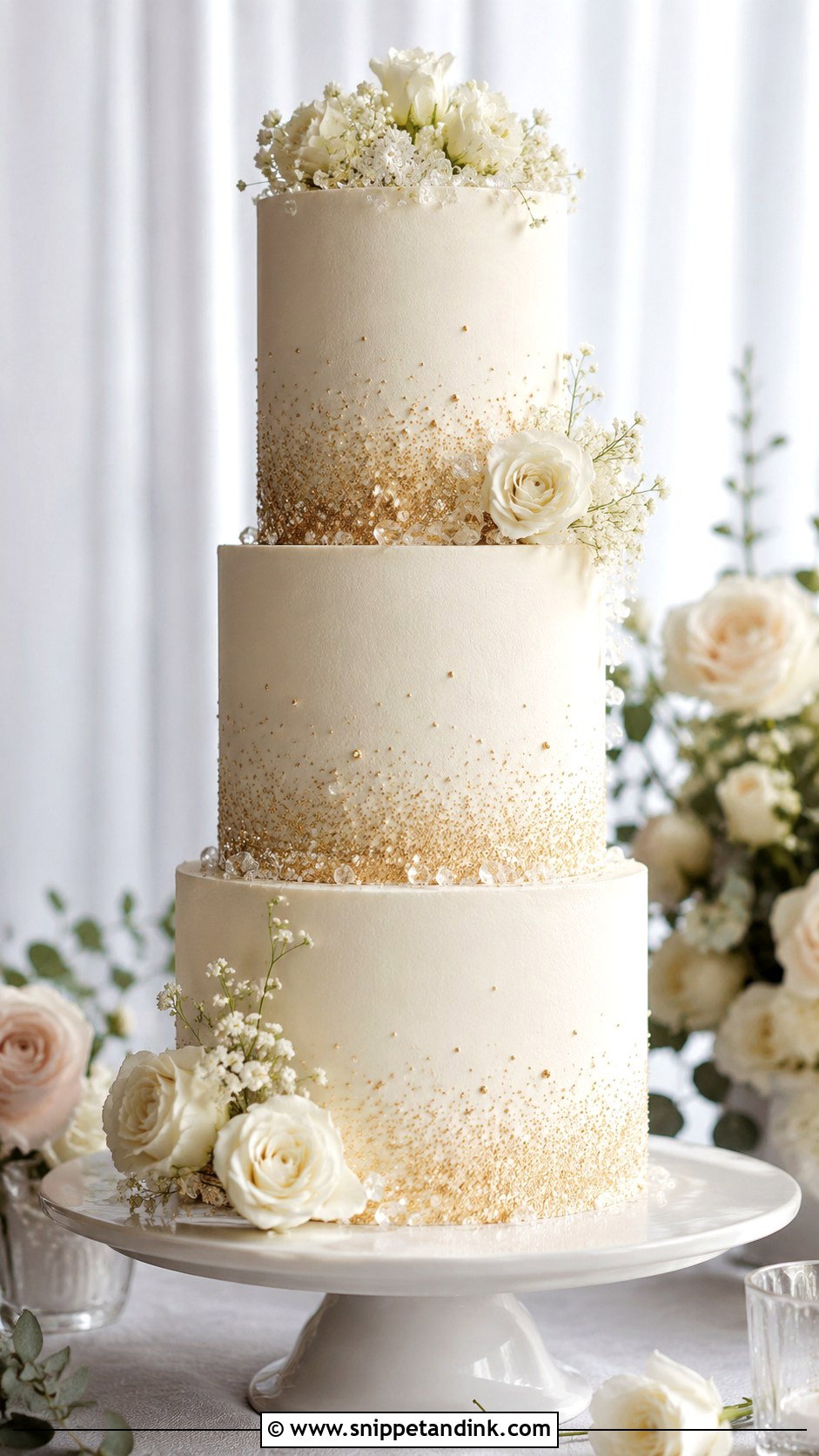
Glitter ombre fades shimmer from heavy at the base to light at the top, or shifts from one metal to another: gold to ivory, silver to white, blush to rose gold. It needs height for the gradient to read, so it suits tall tiered cakes. I build the fade by dusting dry lustre in layers rather than painting it, since paint leaves visible bands. Keep flowers minimal and ask for fine dust rather than chunky flakes for a clean finish.
8. Metallic Brushstroke Wedding Cake
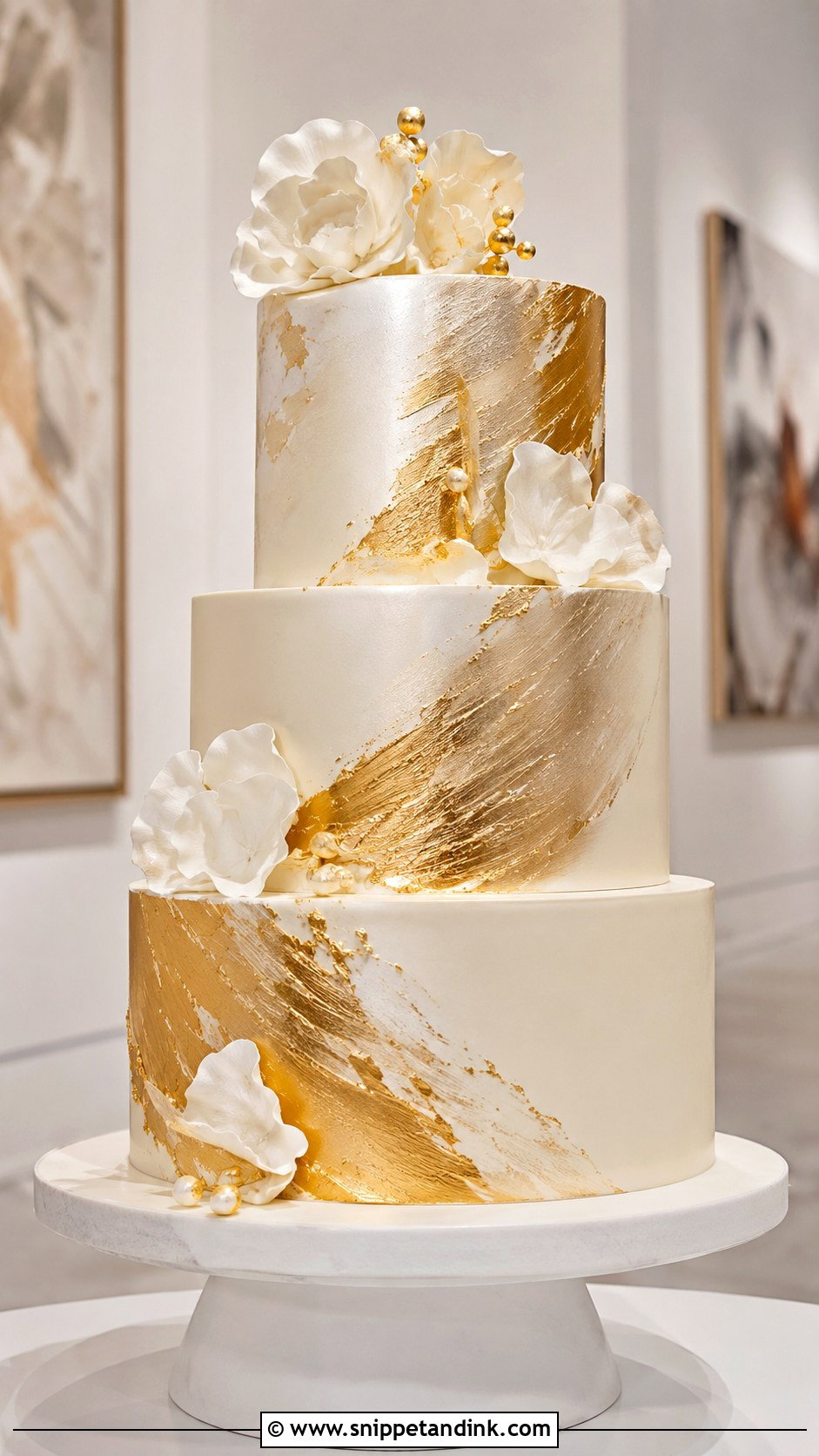
Brushstrokes put shine on in gestures rather than coats: hand-painted swipes of gold, bronze, silver or pearl across smooth tiers, bold or scattered. Every cake comes out slightly different, so yours won’t be a copy. I paint on a well-chilled cake so the brush skims over the surface rather than dragging the icing. Sharp edges and a few sculptural flowers balance the movement. It suits gallery weddings, rooftops and minimalist venues.
9. Gold Leaf Wedding Cake
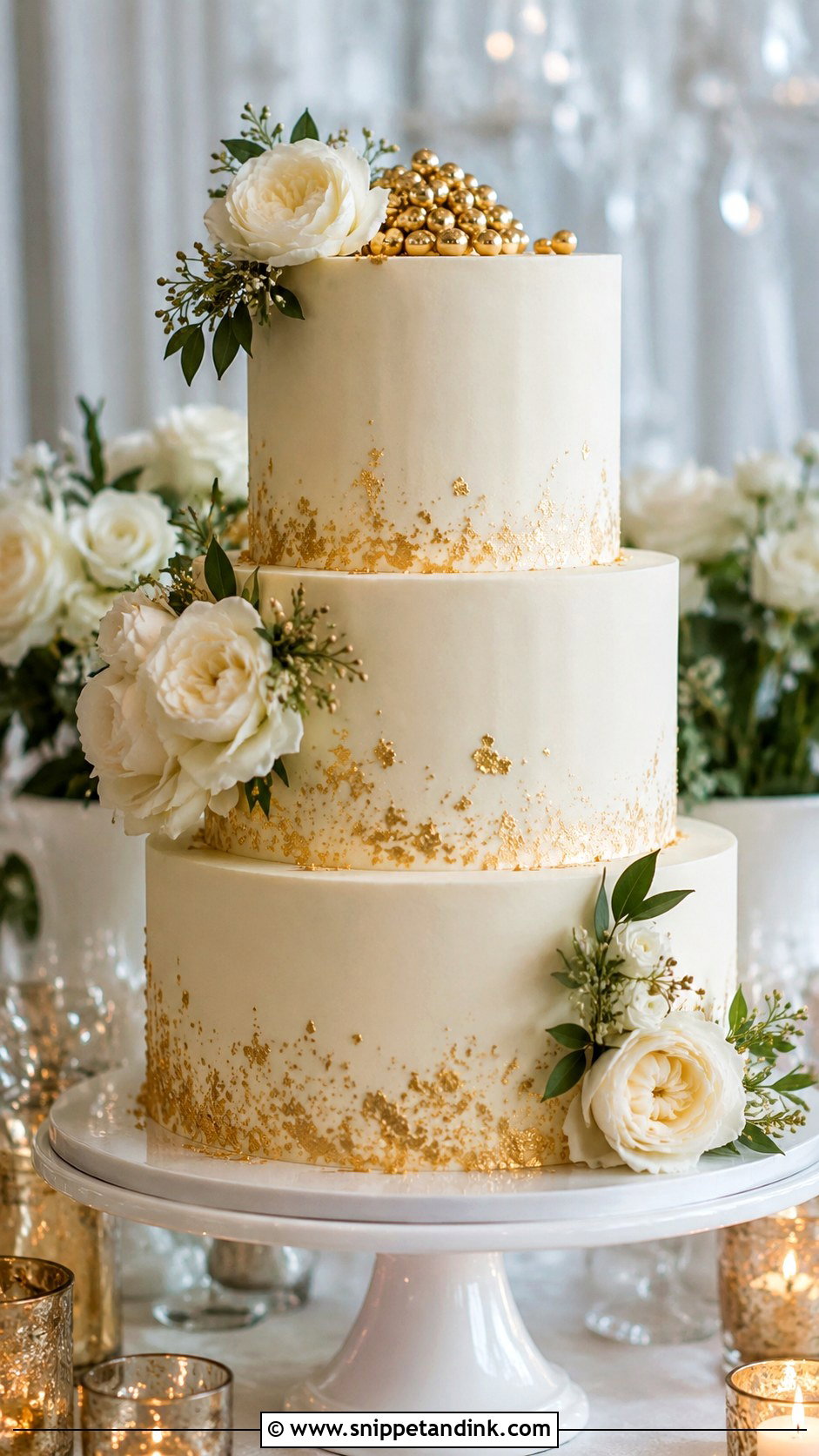
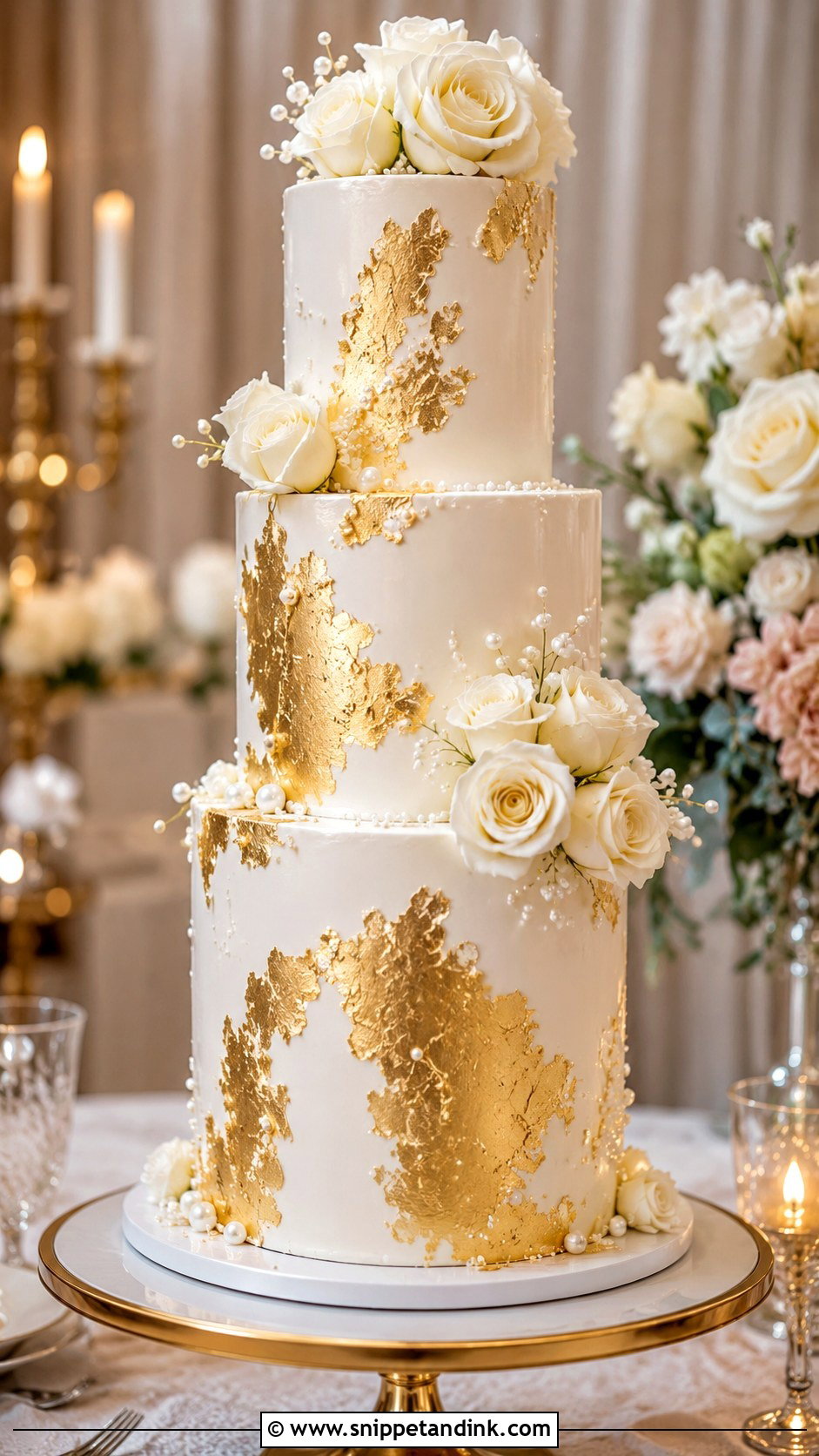
Edible gold leaf has a soft, broken texture that reads handmade. It can go around a bottom edge, scatter across each tier, or cover one fully gilded section. Leaf is so thin it lifts in a draught and sticks to anything dry, so I apply it with tweezers or a soft brush onto a slightly tacky surface. It suits ivory buttercream, white fondant, roses, dried flowers or greenery, and sits well next to marble effects and textured icing. For refined sparkle without any glitter, leaf is my first suggestion.
10. Crystal Wedding Cake
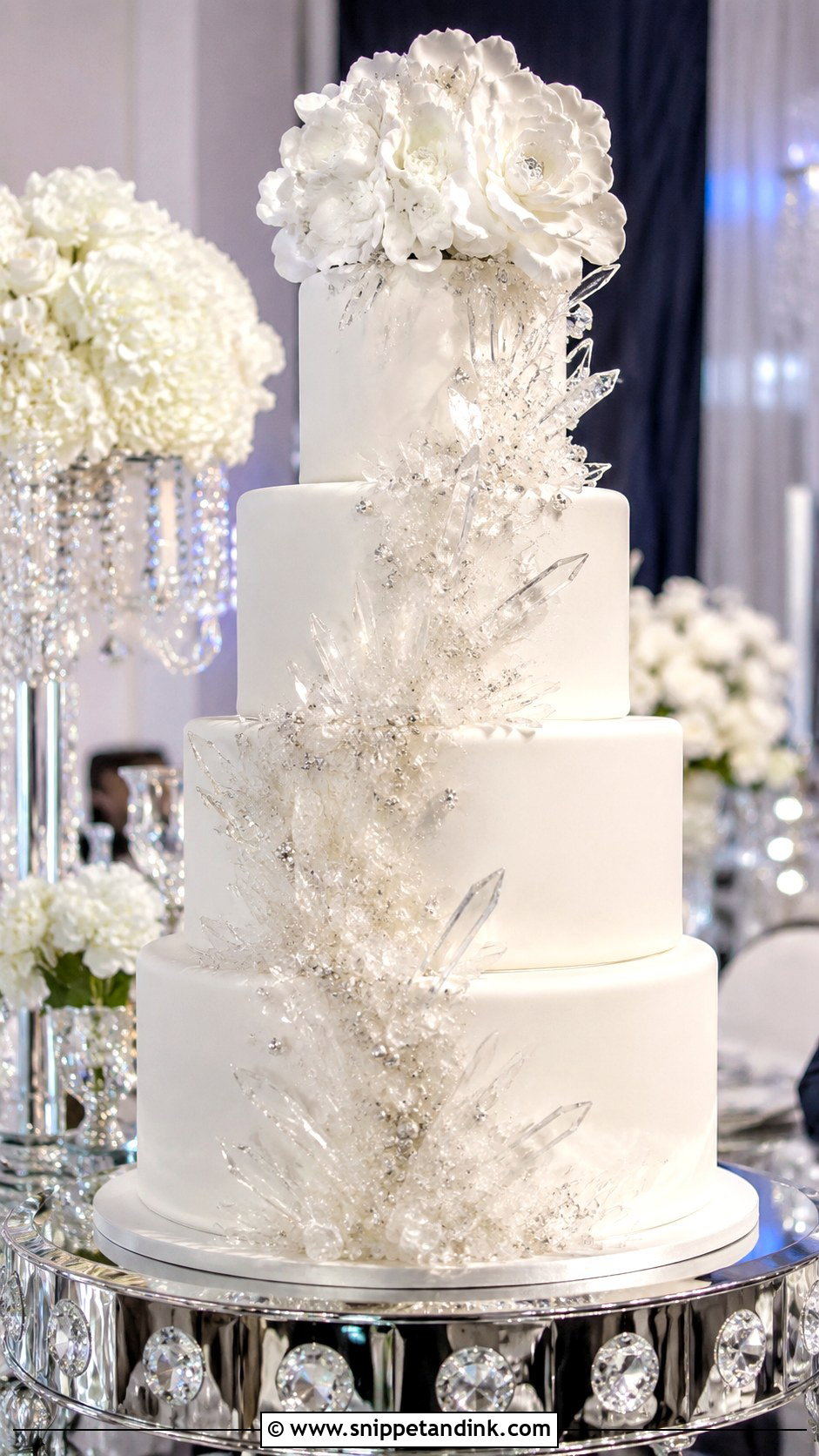
Crystal cakes rely on clear shine: rock candy, sugar crystals, isomalt shards, clear beads or geode-style clusters. Shapes decide whether it looks glamorous, modern or organic. White, ivory, pale grey or soft blush lets the crystals stand out, and a mirrored stand doubles the effect. Isomalt draws moisture from the air and turns sticky and cloudy in humidity, so for a summer wedding I make it as late as possible and keep the cake indoors. Large pieces have to be anchored before display.
11. Geode Sparkle Wedding Cake
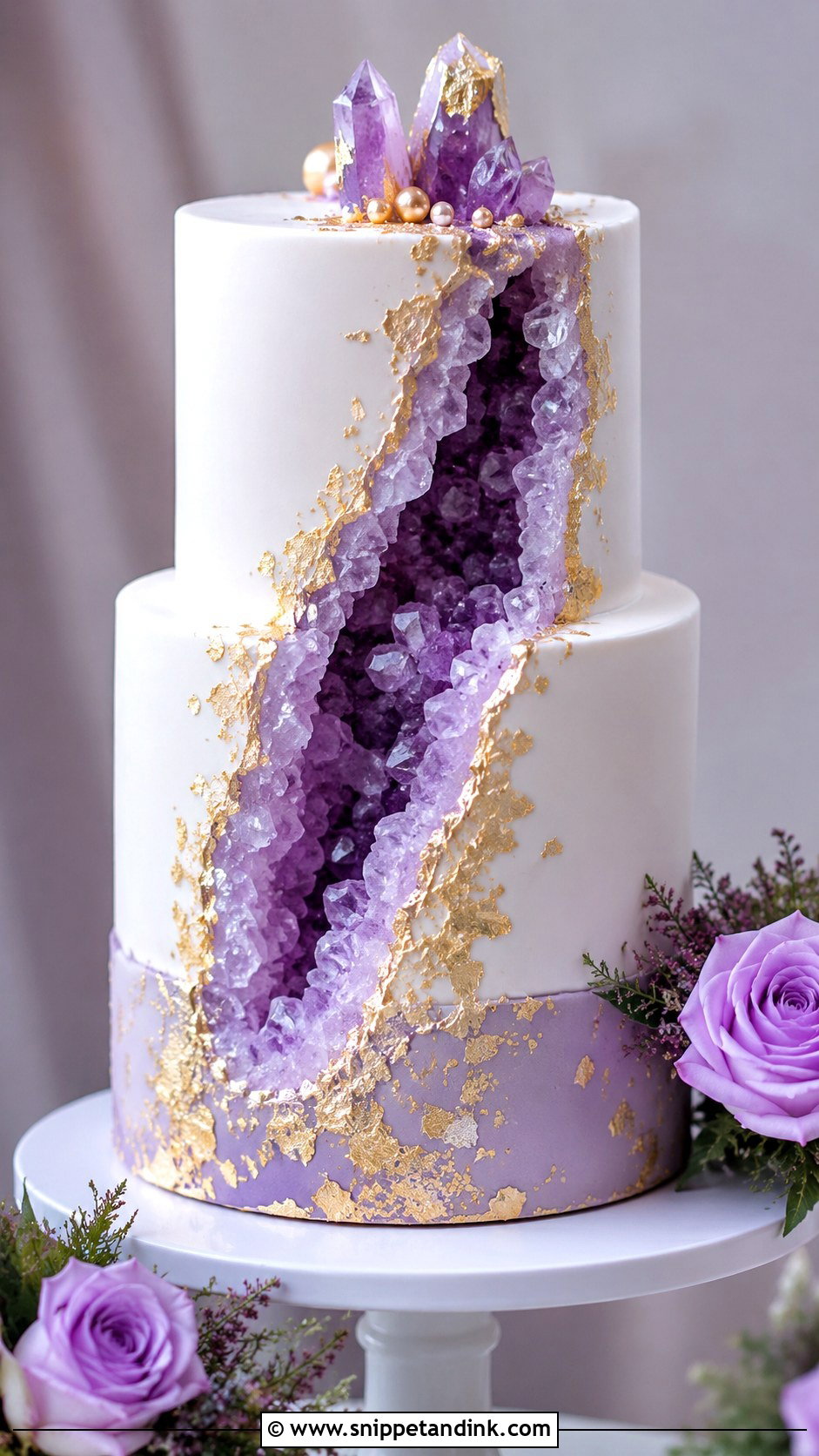
A geode sparkle wedding cake has a section that looks carved open, filled with sugar crystals or rock candy and edged in metallic paint. Amethyst, rose quartz, emerald and clear are the usual colours. I carve the opening into the sponge and line it with icing before packing it with crystals, which are heavy; the tier below needs extra support. Keep the rest of the cake smooth so the geode looks intentional. Guests always go up close to inspect it.
12. Champagne Gold Wedding Cake
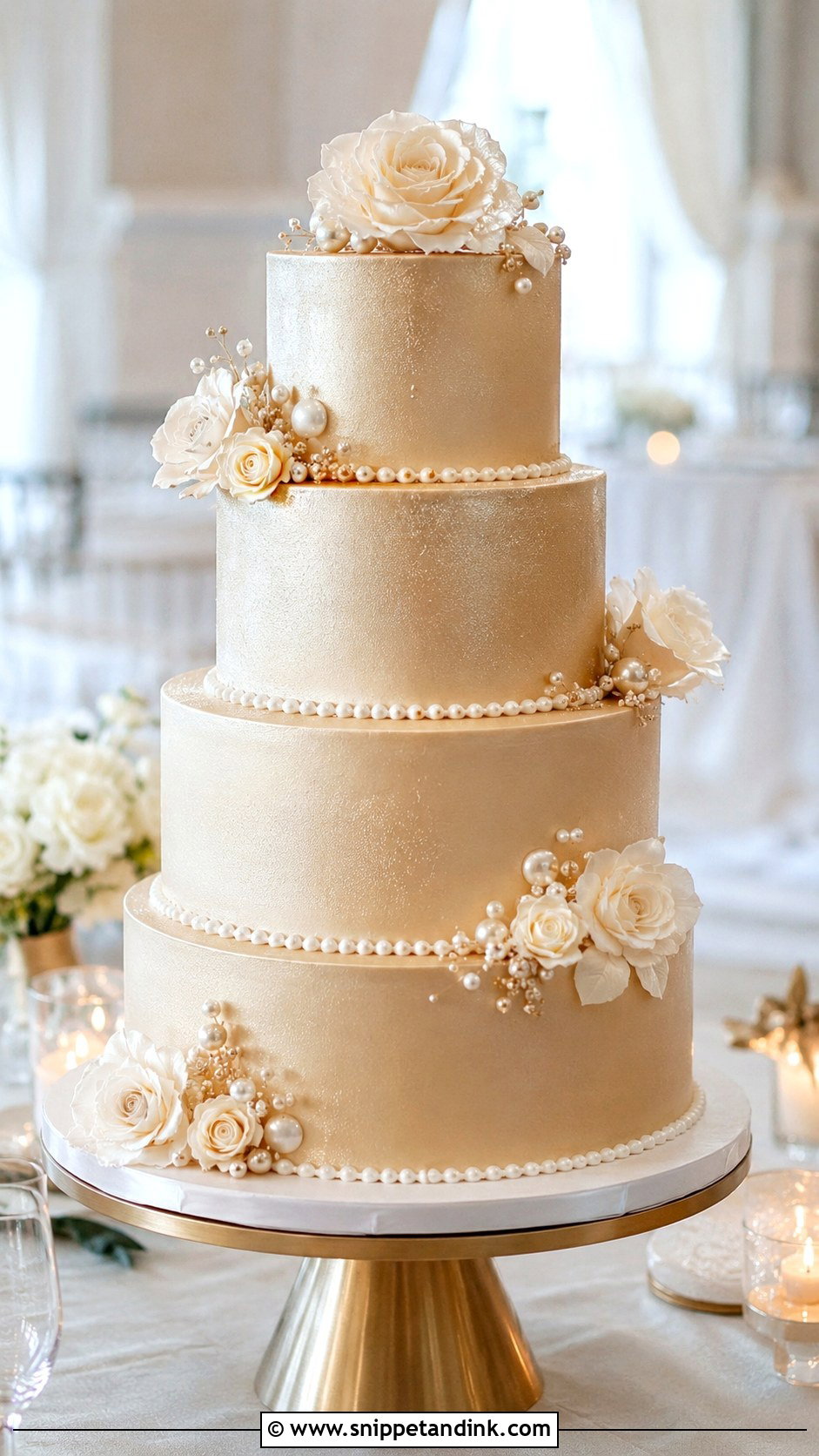
Champagne gold is softer and beiger than bright yellow gold, so it suits almost any palette. Ivory icing, satin-like shimmer, gold pearls and cream flowers are the natural partners. It can cover one tier or dust the whole cake lightly. Because the tone is subtle, it can disappear in very warm candlelight, so I sometimes add a fine gold line at each tier edge to give the eye somewhere to land. It is right for neutral weddings in taupe, sand and ivory.
13. White Sparkle Wedding Cake
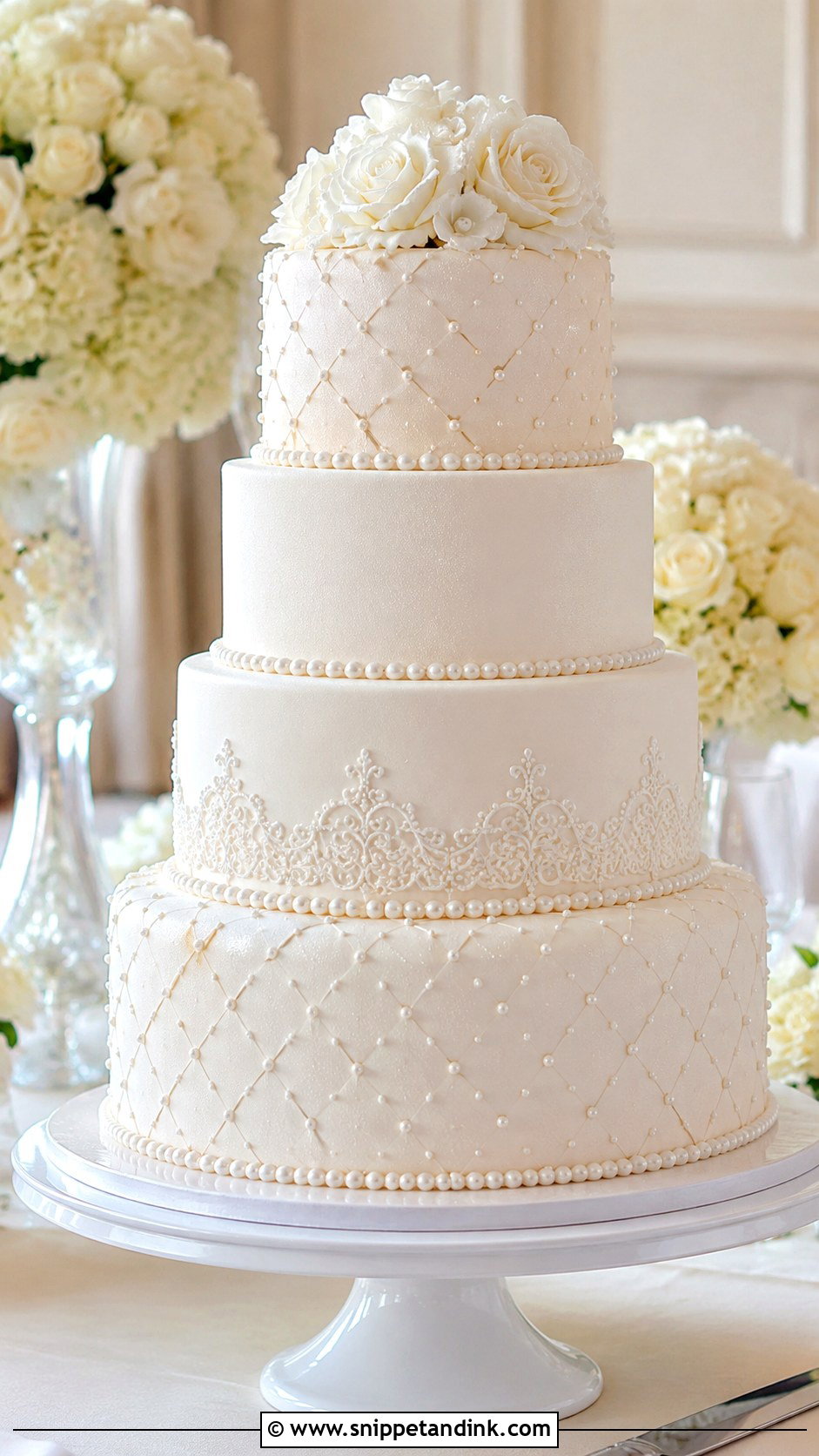
White-on-white shimmer looks clean and luxurious: pearl dust over smooth buttercream, tiny white sugar crystals, lace piping and white pearls. The risk is flatness, especially in photos, so I vary texture from tier to tier, one smooth, one quilted, one piped. The shine should look like light on satin, not glitter. It suits classic weddings, and pure white icing usually needs a touch of whitener or a white chocolate base, since butter makes buttercream ivory.
14. Blush Sparkle Wedding Cake
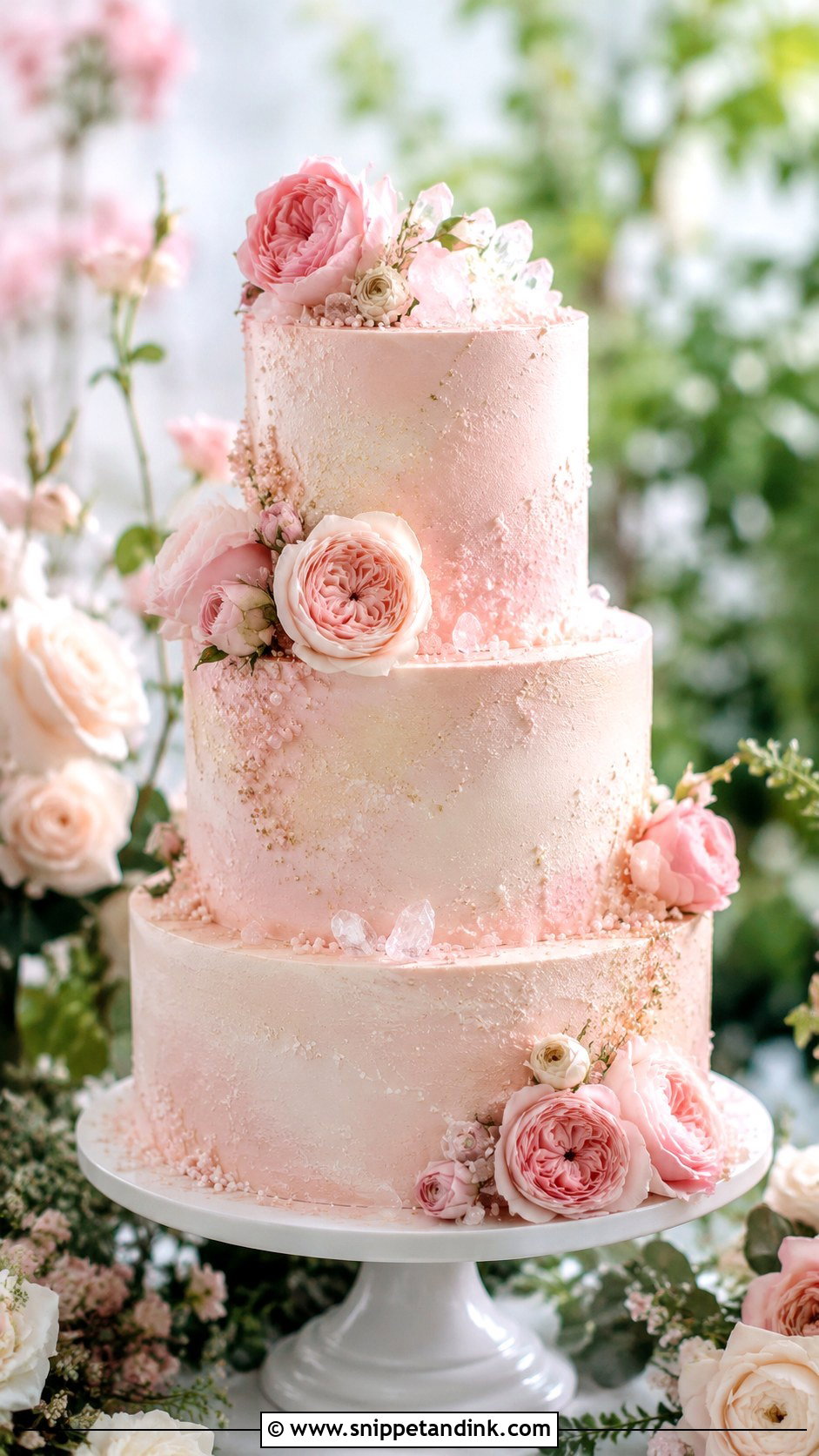
Pale pink buttercream or fondant makes a soft base, with rose gold dust, pearl shimmer or sugar crystals for sparkle. Garden roses, peonies, ranunculus and greenery sit naturally on it. Tall and smooth looks modern; ruffles or textured buttercream look romantic. I tint blush very lightly and test it under the venue’s lighting, because a pink that looks delicate in daylight can turn salmon under warm bulbs. It is a natural fit for spring and summer garden weddings.

15. Black And Gold Wedding Cake
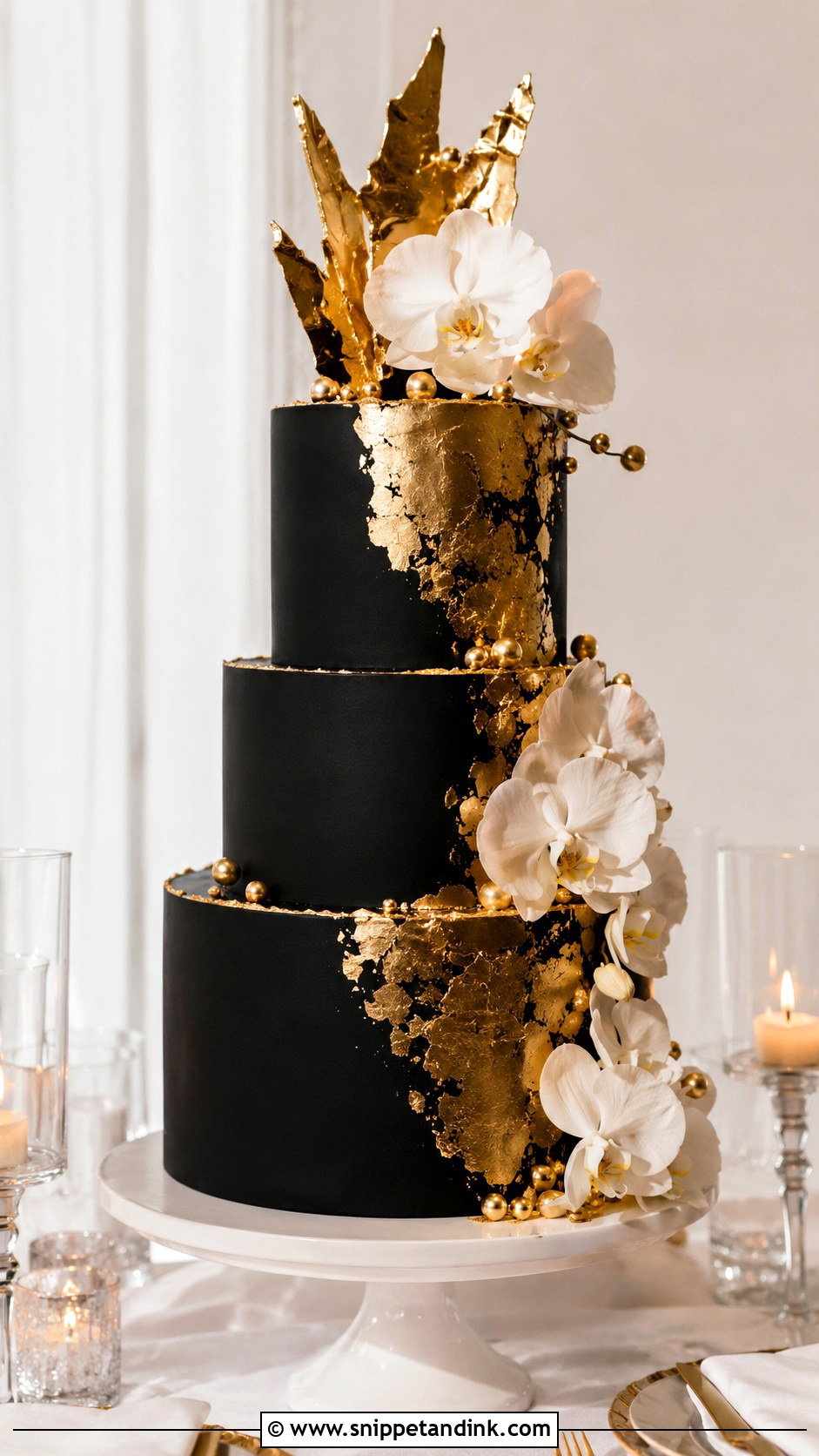
Black and gold is the most dramatic pairing here, made for formal evening receptions. The black base gives strong contrast for gold leaf, a gold drip or metallic brushstrokes. Choose one gold feature; with several, it starts to look heavy. Black icing needs a great deal of colouring, so I start from a dark cocoa base where I can, which cuts the amount of dye and the bitter taste. White flowers, sugar orchids or deep red blooms soften it, and a plain white or clear stand under warm light shows it at its best.
16. Marble Sparkle Wedding Cake
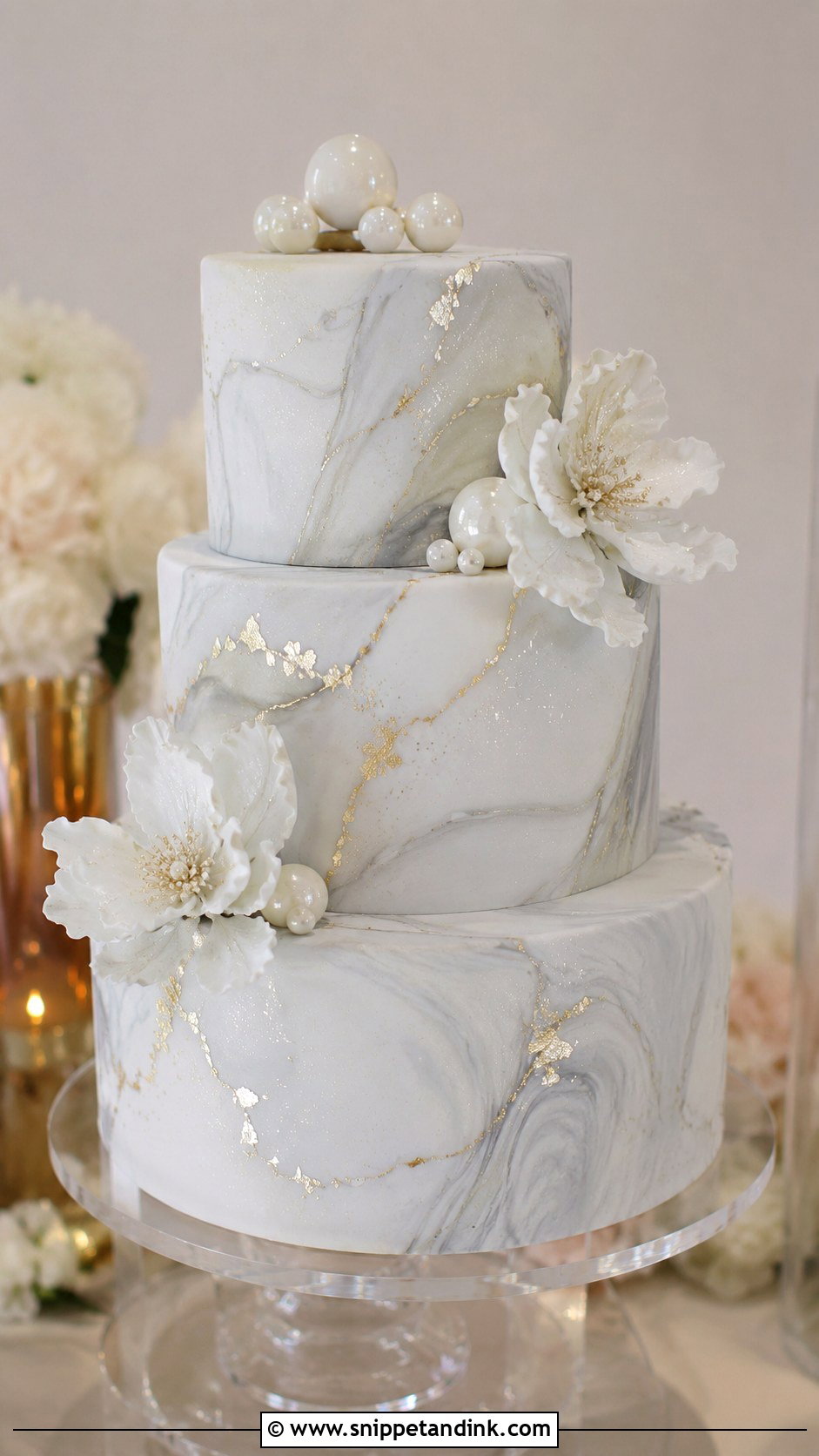
Marble with metallic veining looks like polished stone: white and grey marble with gold or silver veins, or pearl dust and small leaf pieces along the lines. I marble fondant by folding colours together loosely and then roll once, because overworking turns it a flat grey. The metal goes on afterwards, painted along a few veins only. Blush marble with rose gold is softer; charcoal with bright gold is bolder. Minimal flowers and clear acrylic decor suit it.
17. Floral Sparkle Wedding Cake
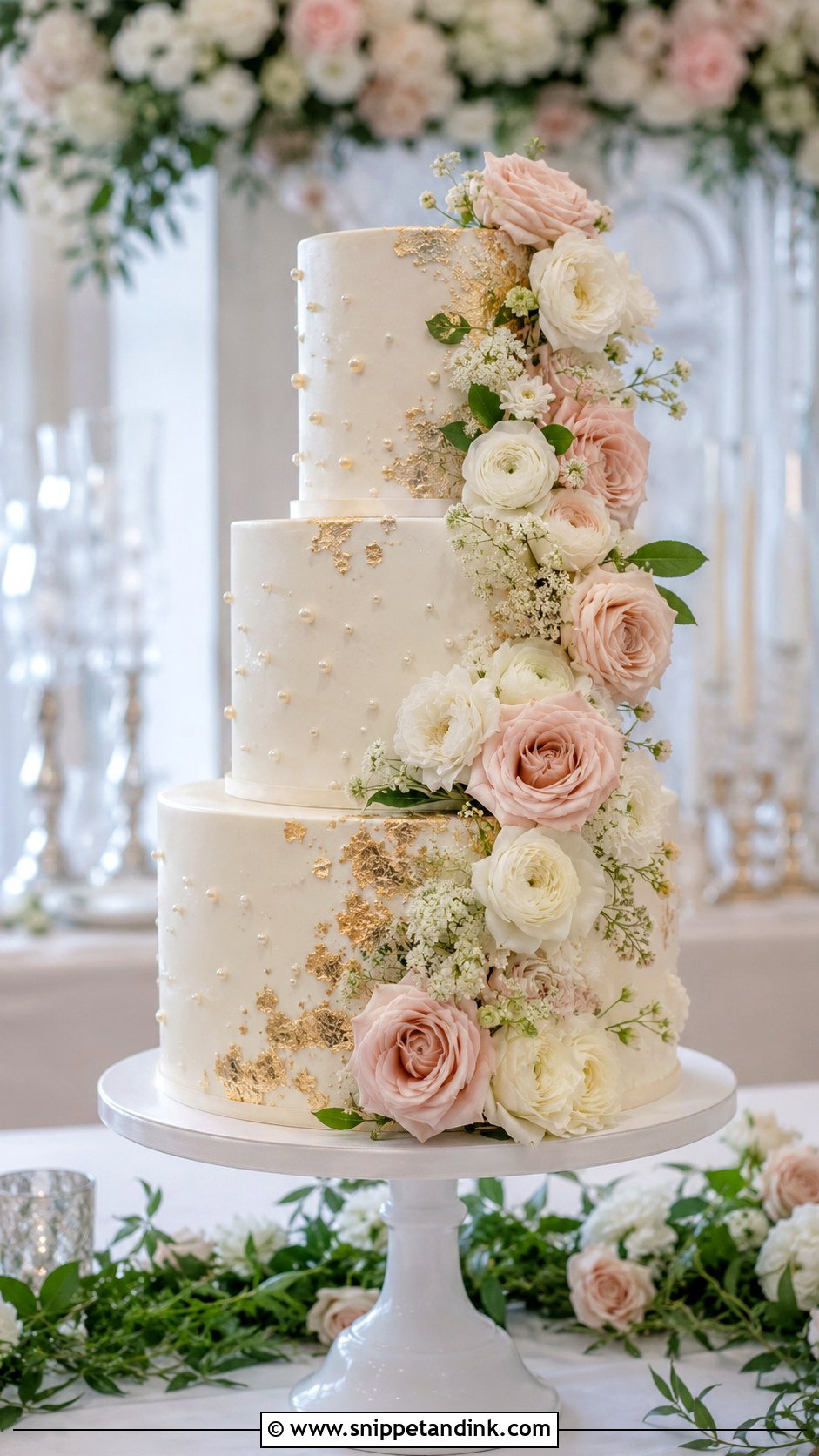
Flowers and shine together need balance: smooth ivory tiers, a pearl finish and a cluster of fresh or sugar flowers down one side, with sparkle in gold leaves, pearl centres, metallic-edged petals or a dusting of edible glitter. Roses, orchids, ranunculus and sweet peas all suit it. Glitter goes on sugar flowers, never fresh ones that touch the cake, as fresh flowers can’t be sprayed with food products and stay safe. Keep the icing clean so the arrangement has room.
18. Vintage Sparkle Wedding Cake
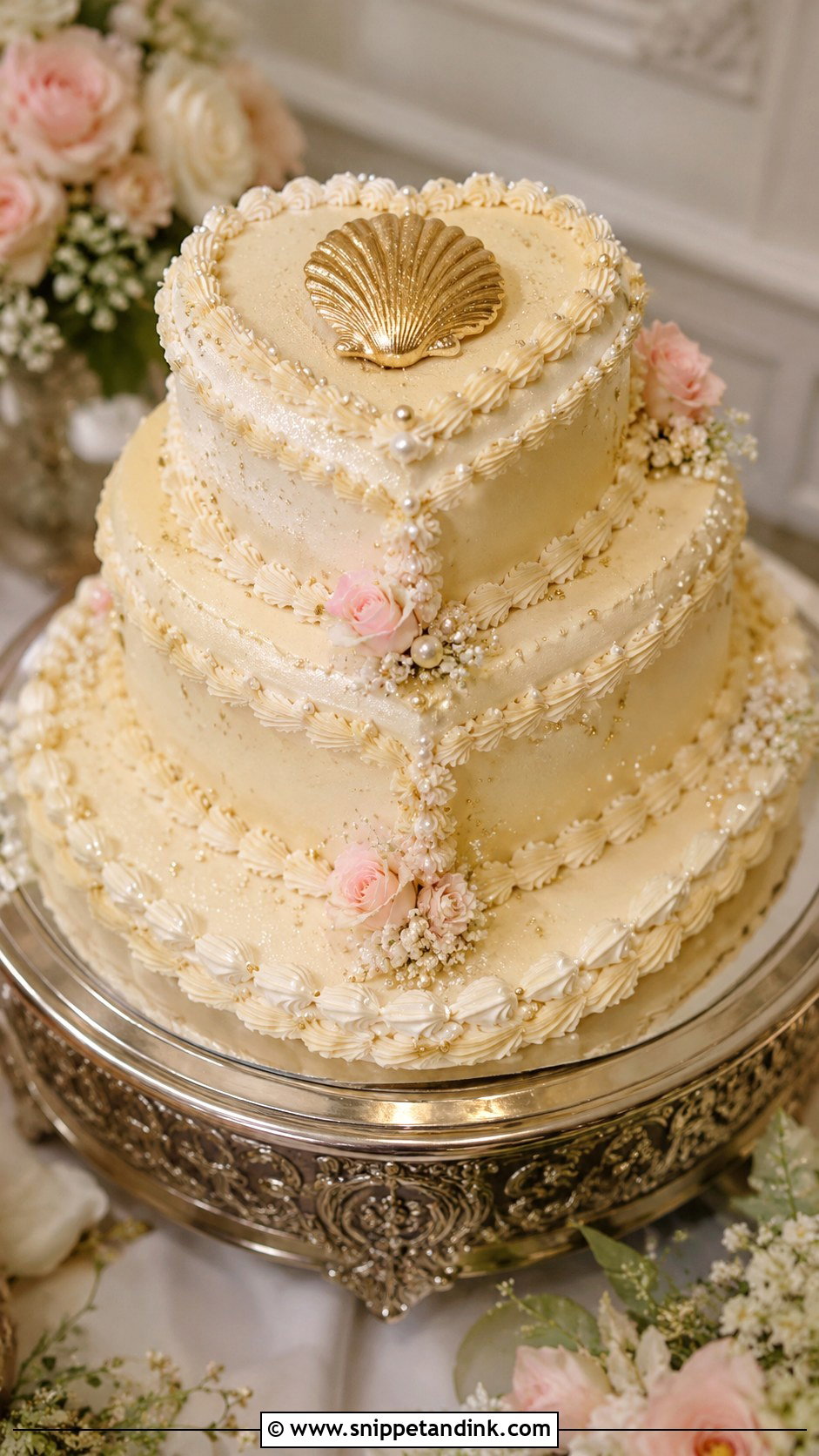
Vintage sparkle borrows piped borders, shells, ruffles and old-fashioned charm, then adds pearl dust, edible pearls, gold-painted piping or small silver details. Heart shapes, Lambeth work and pastels are popular here. To keep it bridal rather than birthday, I stick to ivory, blush, pale blue or white as the main colour. An ornate stand with flowers around the base completes it.
19. Lambeth Sparkle Wedding Cake
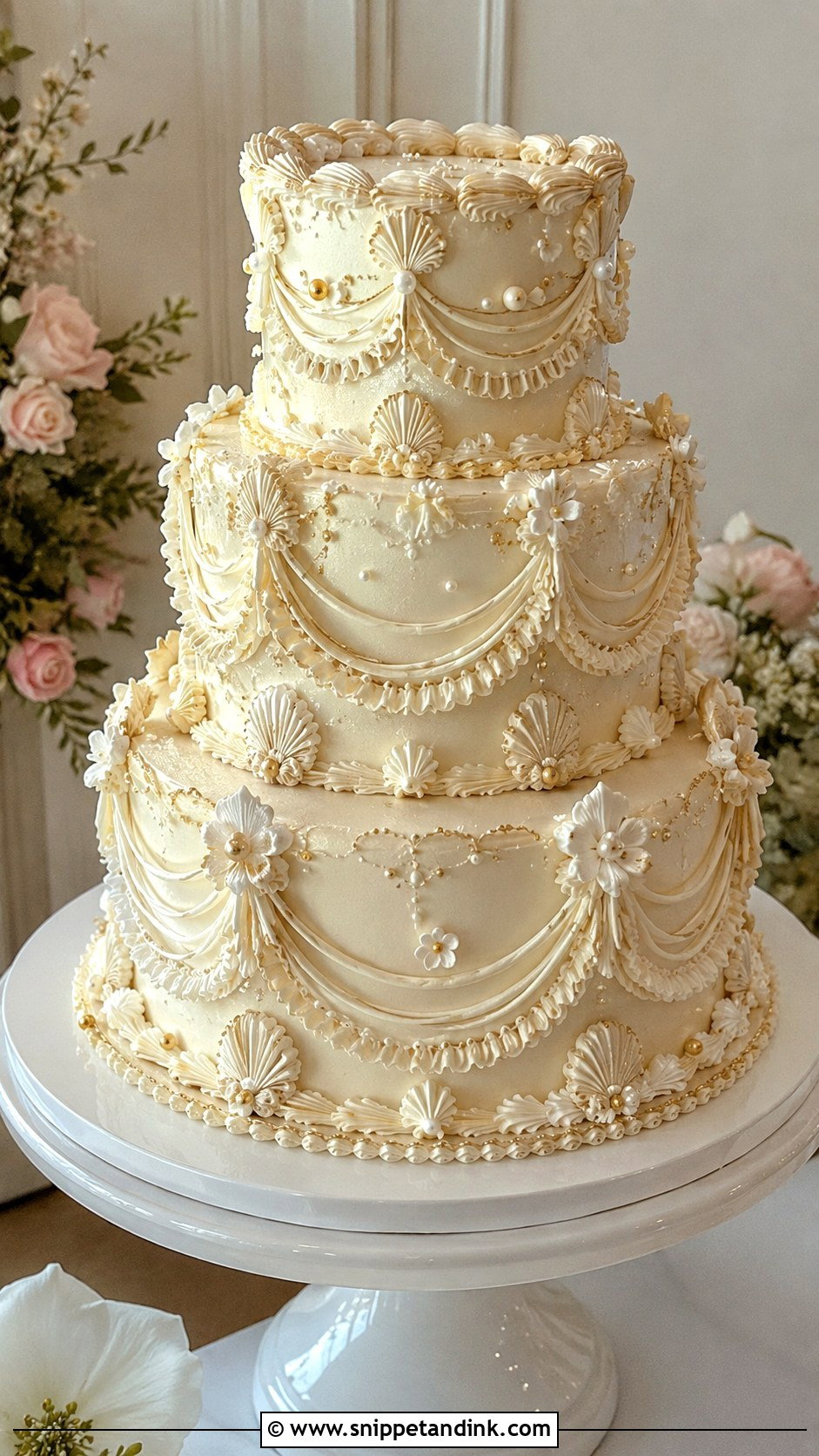
Lambeth piping is layered and dense: shells, swags, scrolls and over-piped borders built up in rows. It takes hours and a steady hand, and buttercream for it has to be stiffer than for smooth icing so the ridges hold. Sparkle goes onto the piping with pearl dust or soft metallic paint once the piping has crusted. White and ivory are classic; pale blue, blush or butter yellow are playful. Edible pearls suit it, and the topper should stay simple: a few cherries, sugar flowers or small bows.

20. Tall Tiered Sparkle Wedding Cake
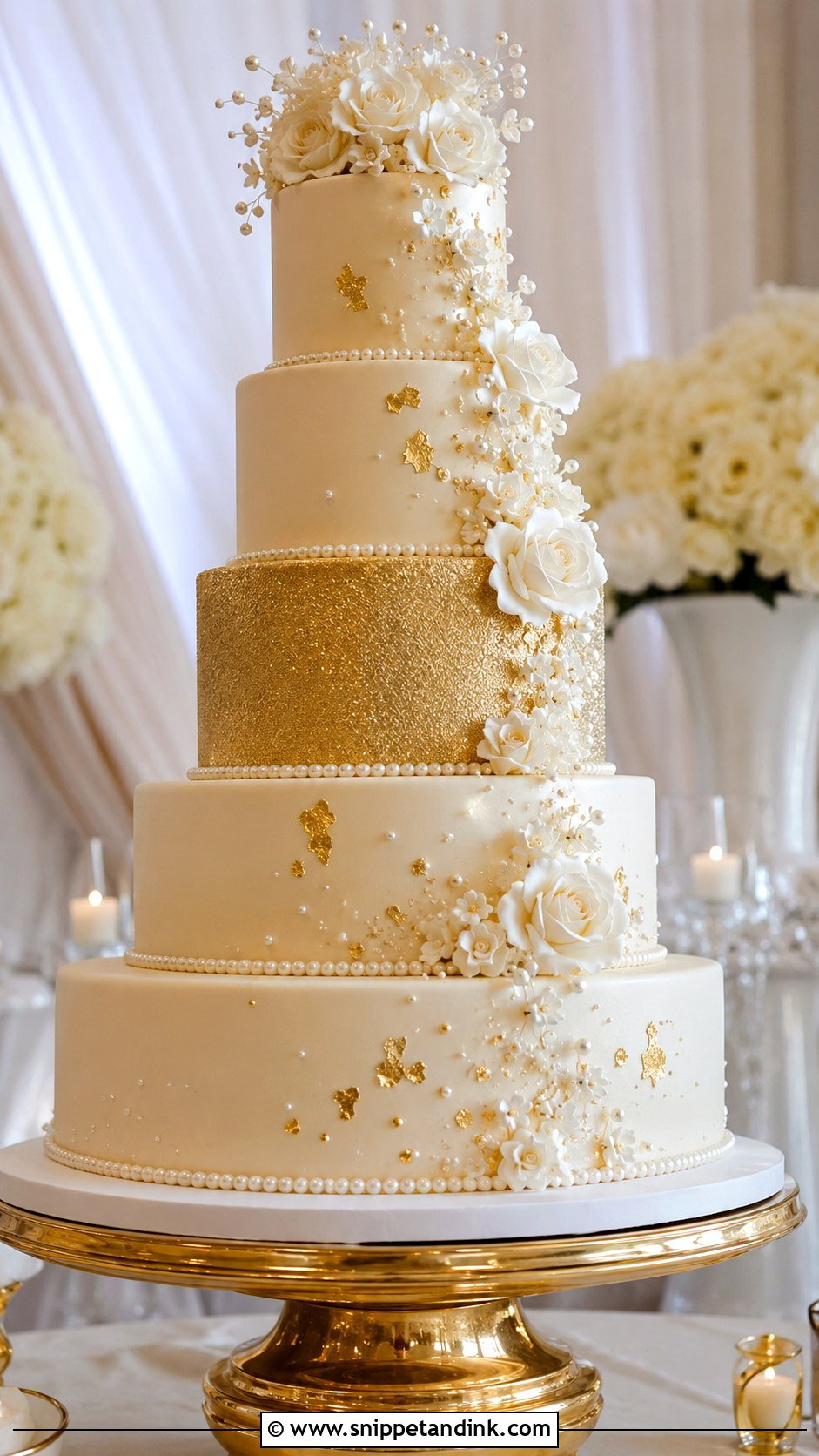
Height gives sparkle more impact because each tier catches light from a different angle. A tall cake can mix smooth white tiers, one metallic tier, pearl borders and a flower cascade, and suits ballrooms and grand venues where a short cake would vanish. I spread the shine deliberately: a glitter base, a smooth middle, a pearl-dusted top. Tall cakes need internal supports and are often stacked on site, so ask your baker about delivery.
21. Two Tier Sparkle Wedding Cake
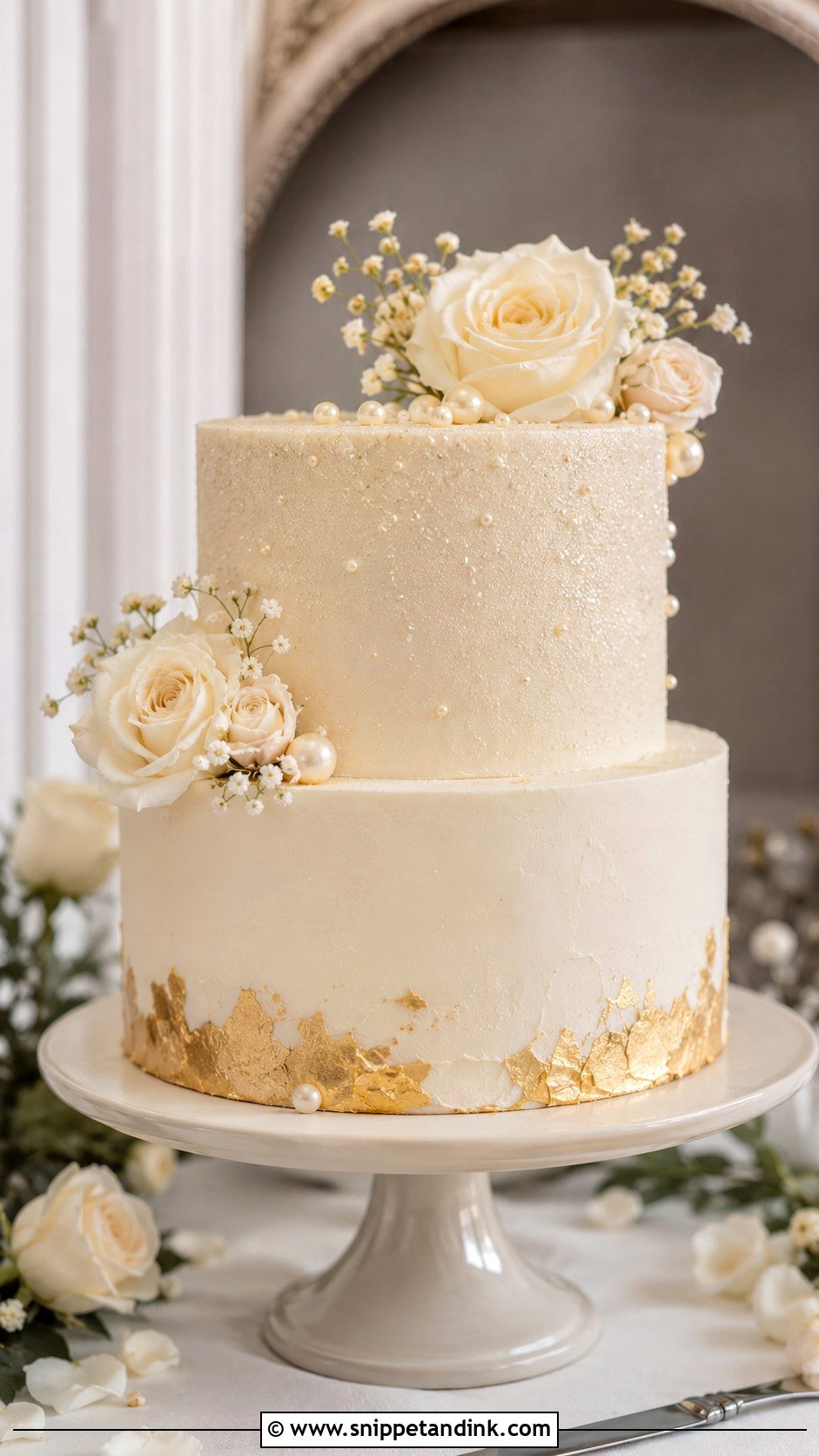
Two tiers suit small weddings, courthouse ceremonies and intimate receptions. Every detail is visible at this size, so I pick one sparkle element and do it well: gold leaf around the edge of a smooth white bottom tier and a pearl-shimmer top tier, or a glitter drip, or a small floral cluster for height. Two tiers rarely feeds everyone, so I often pair it with a plain cake of the same flavour cut in the kitchen. At this size the cutting photo is clean and close.
22. Square Sparkle Wedding Cake
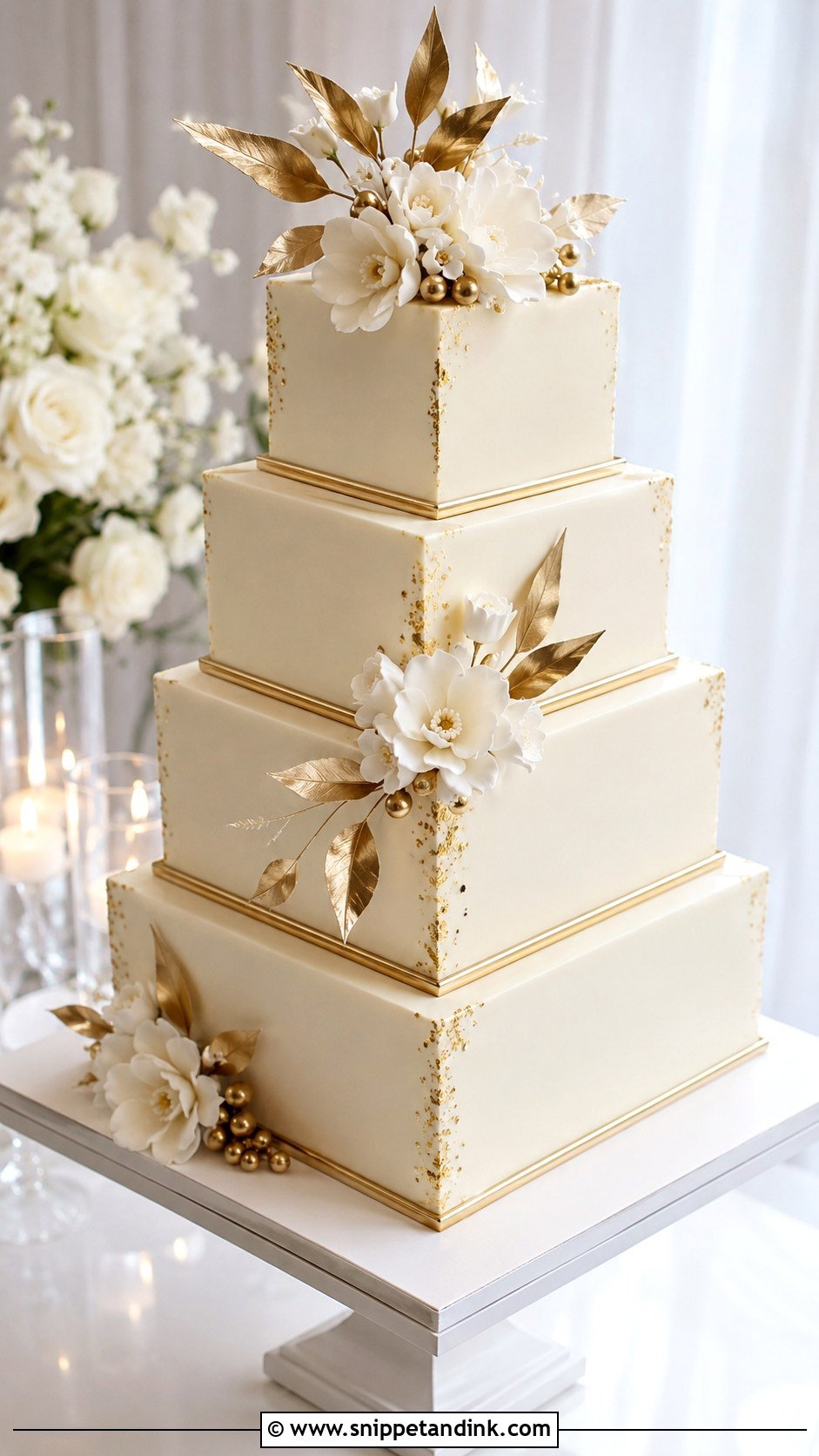
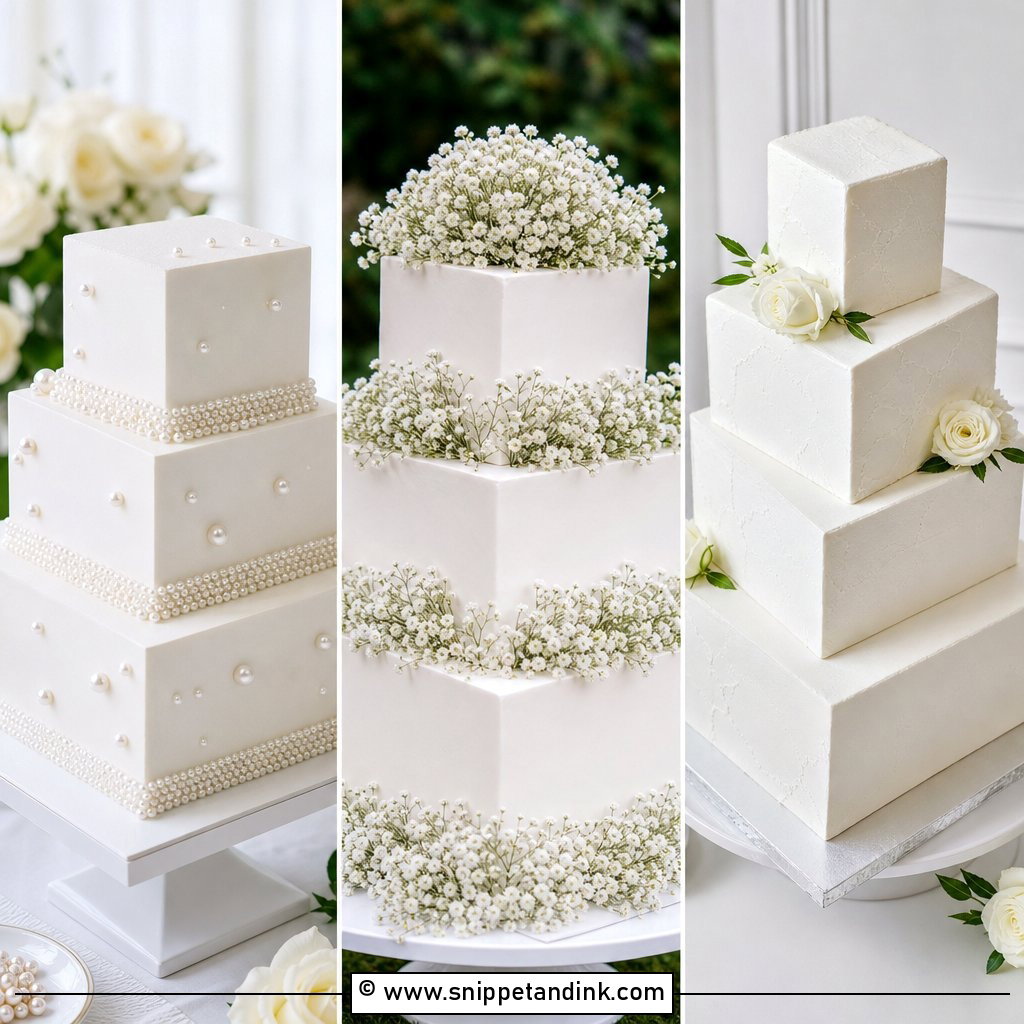
Square tiers make metallic detail look crisp, because every edge is a sharp line for light to catch. Gold leaf along the corners, silver brushstrokes on one side or pearl dust over smooth fondant all suit it. Square cakes are harder to ice than round ones; getting four sharp corners on buttercream takes more time and a lot of chilling. Flowers stay sparing, one corner spray or a few sugar blooms. It works for city venues and couples who want something less traditional.
23. Heart Sparkle Wedding Cake
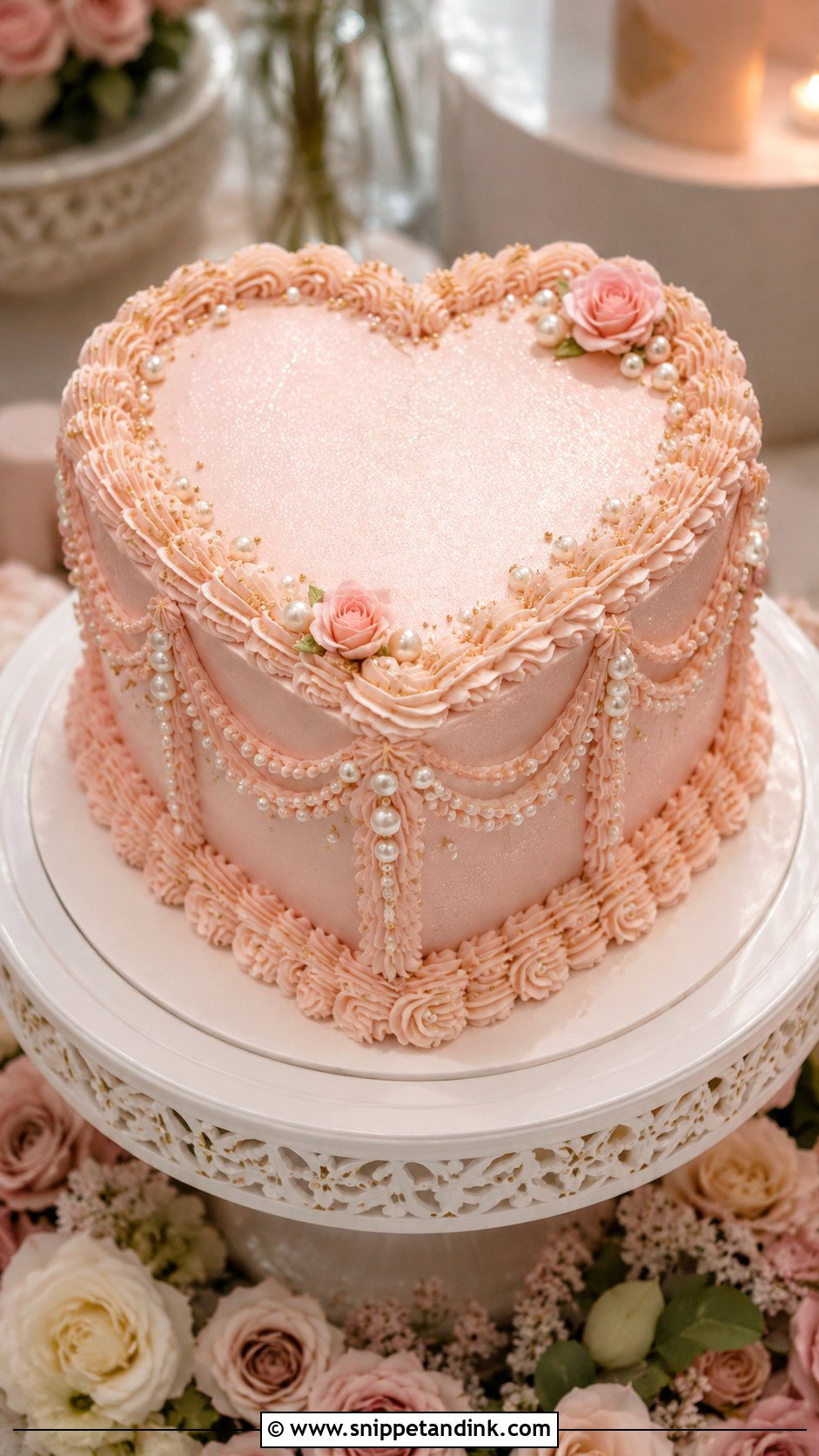
A heart shape feels nostalgic and playful, and edible pearls, glitter piping and metallic accents make it wedding-ready. White, blush, ivory and pale pink are the easiest colours. Ruffled borders, swags, small sugar flowers or pearl beads follow the curves. Hearts don’t stack well into tall cakes, so this works best as a single tier for a small reception or as a second cake on the dessert table. Soft shimmer suits it better than heavy glitter.
24. Ruffle Sparkle Wedding Cake
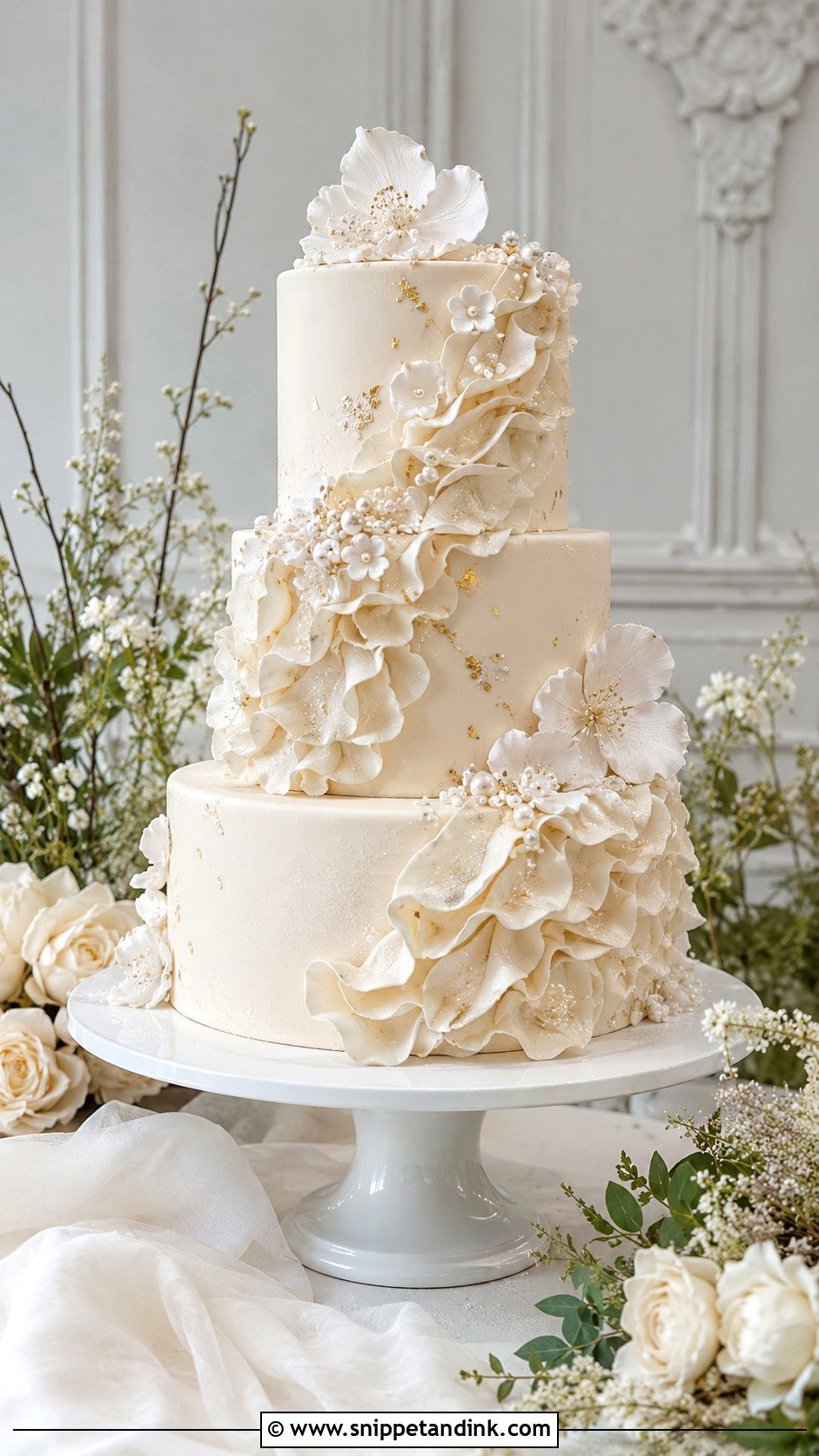
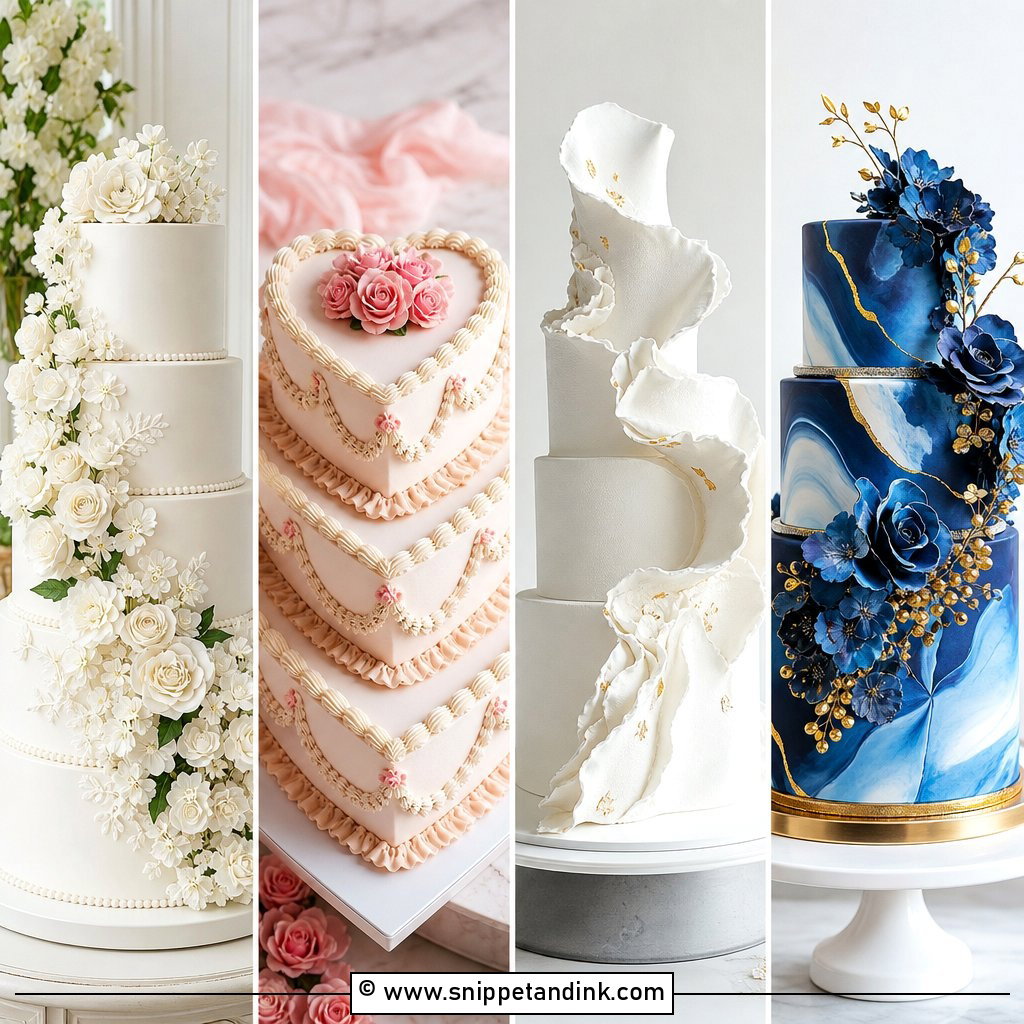
Ruffles can be buttercream, fondant or wafer paper, each with a different softness: buttercream is the most natural, fondant the most structured, wafer paper the lightest and most fabric-like. I dust shimmer only on the ruffle edges so the texture catches light naturally. Ivory, blush, pale grey or soft blue all suit it. Wafer paper reacts badly to humidity and can wilt, which I mention for summer dates. Pair one ruffle tier with smoother ones.

25. Bow Sparkle Wedding Cake
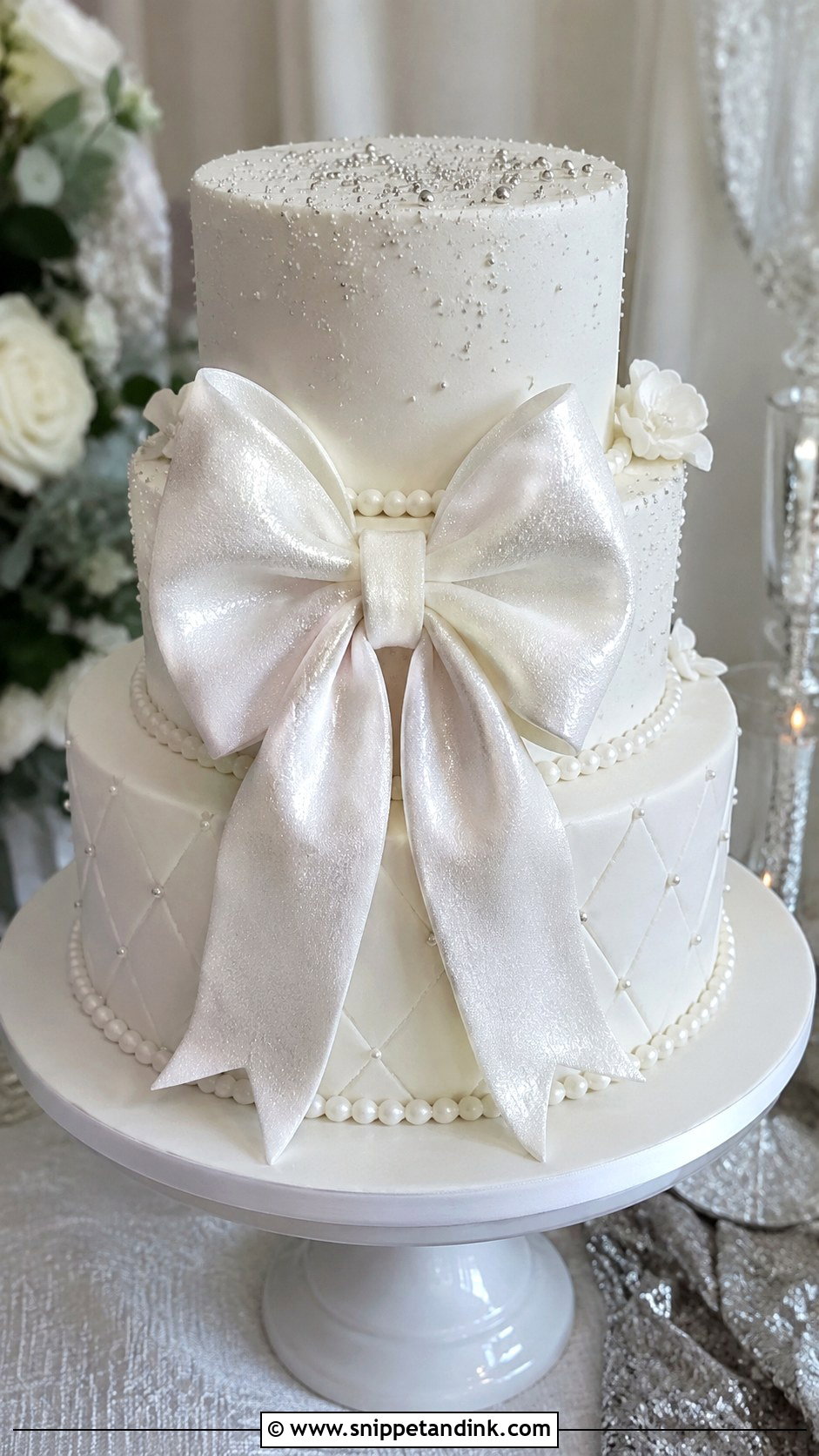
A bow sparkle wedding cake can carry a bow made from fondant, wafer paper, sugar paste or satin ribbon. If ribbon touches the icing, I back it with a strip of food-safe film so the fat in the buttercream doesn’t stain through. Sparkle can go on the bow, the surface or the border. White with a pearl bow is classic; blush with rose gold softer; one oversized bow on clean tiers is the modern version. Simple flowers suit it.
26. Sugar Flower Sparkle Wedding Cake
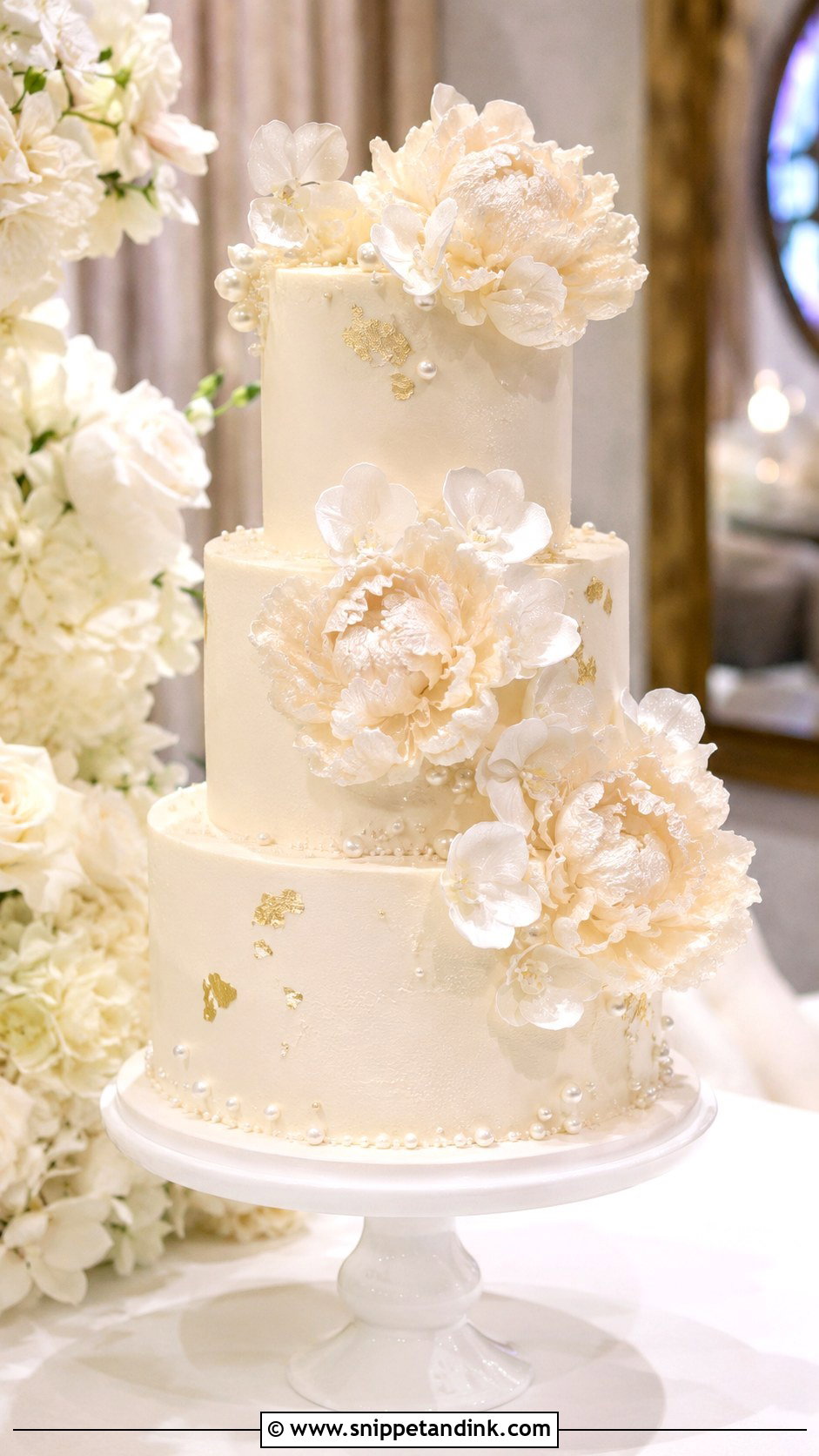
Sugar flowers stay perfect all night and don’t wilt, which makes them my default for warm weather. Roses, orchids, peonies, lilies and small blossoms can all be made, then dusted with pearl shimmer or a touch of metallic colour. Keep the cake base smooth so the flowers are the artwork, with edible pearls or gold leaf near them for extra shine. Sugar flowers take days to dry, so they are made well in advance, and many couples keep the topper afterwards. They do soften in humid rooms, so I store them in a dry box until delivery.
27. Candied Fruit Sparkle Wedding Cake
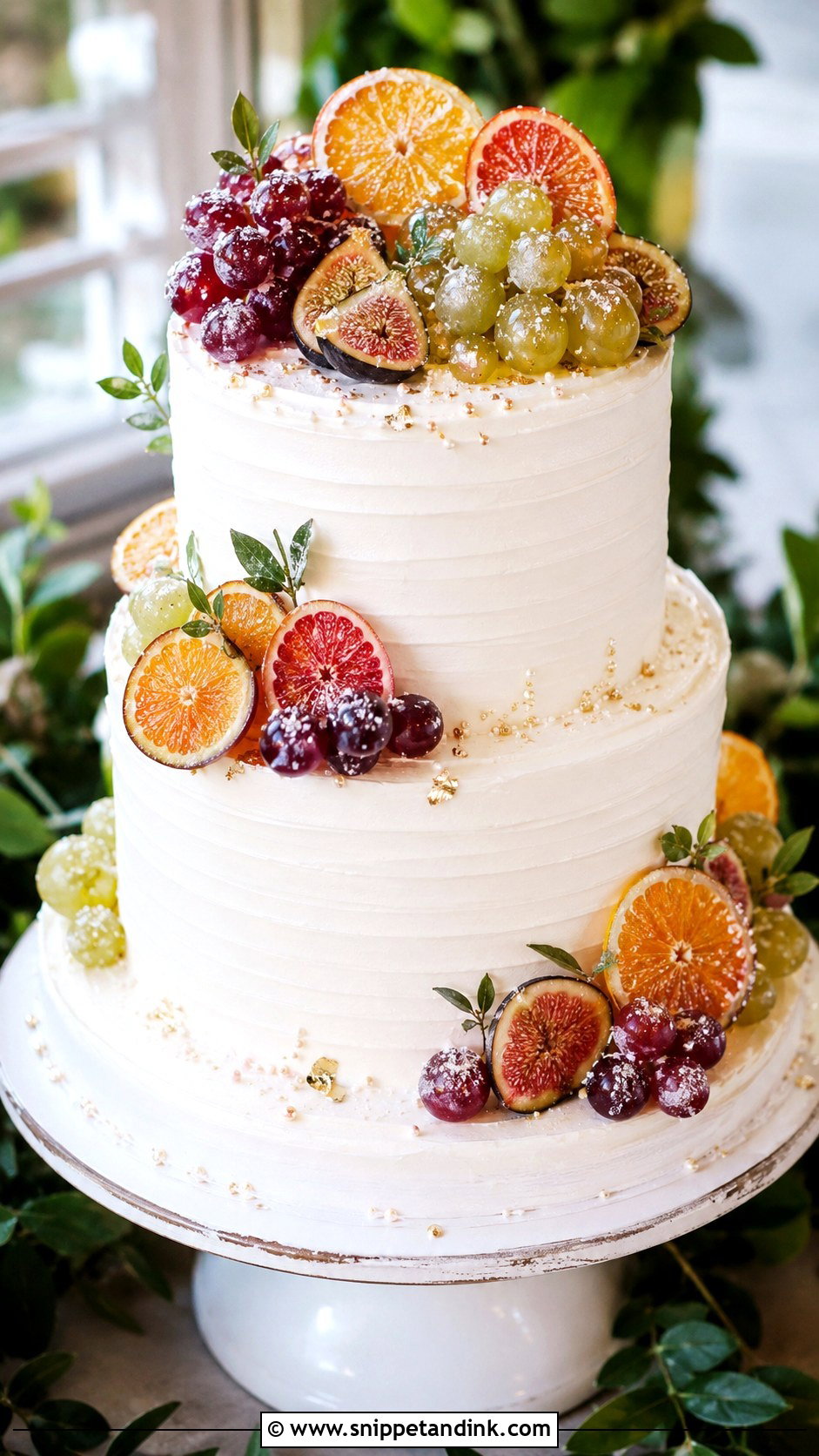
Sugared fruit looks like jewels on white or ivory icing: grapes, citrus slices, figs, berries or pears, frosted with sugar and touched with pearl dust or metal. I coat fruit in a thin syrup or egg-white wash and sugar, then let it dry fully before it goes near the cake, since wet fruit bleeds juice into buttercream. Pale green grapes look elegant, citrus bright, berries romantic. It suits garden and outdoor receptions, and the fruit should match your palette.
28. Minimal Sparkle Wedding Cake
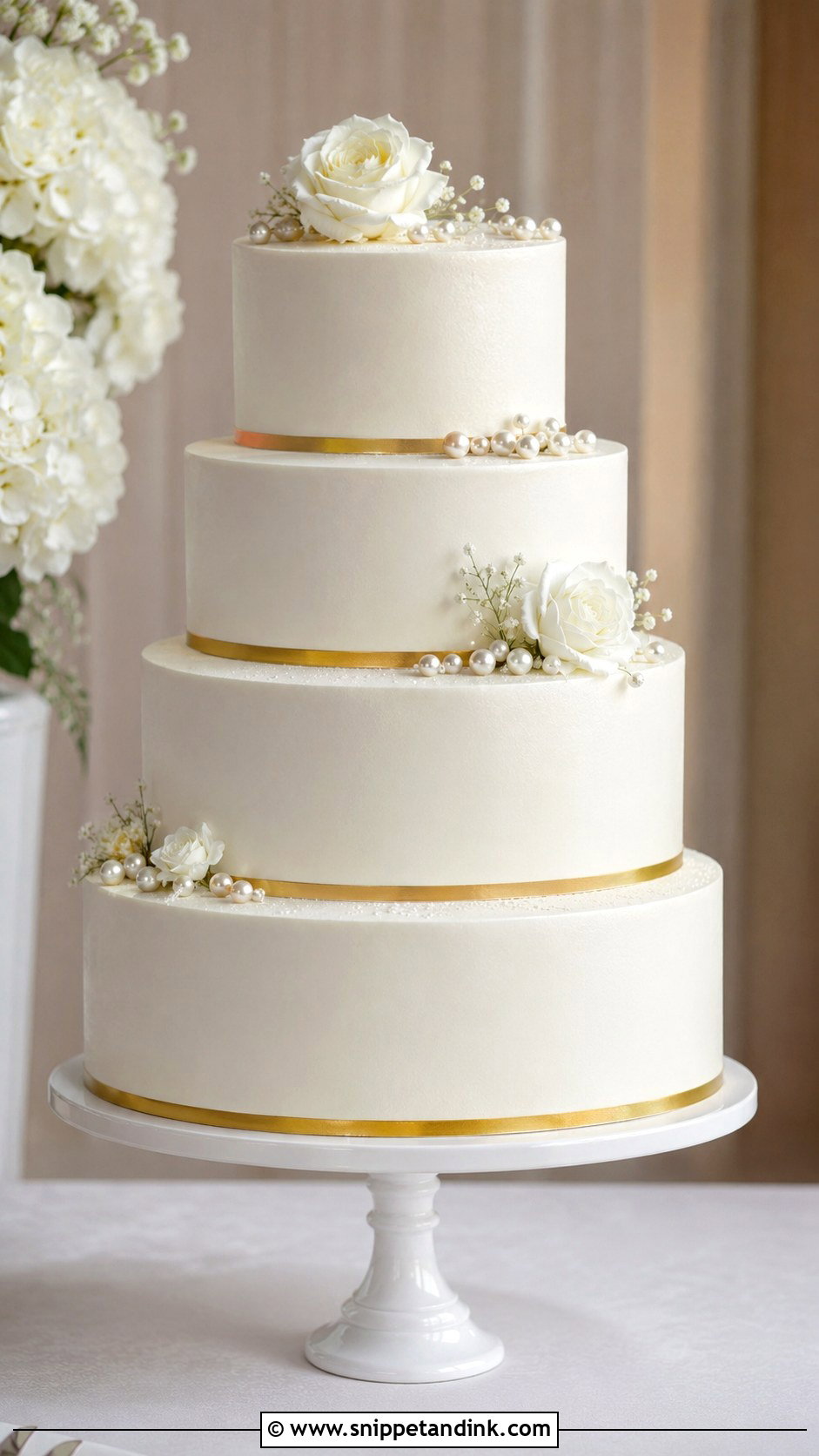
Minimal sparkle is a smooth white cake with a pearlised finish, a thin gold line around each tier, or a small cluster of edible pearls near the base. The key is precision: smooth icing, sharp edges and careful placement make a minimal cake look expensive, and any flaw shows. I spend more time on the icing for these than on the decoration. It suits modern venues, simple flowers and neutral colours, and sits easily on a fuller dessert table.
29. Blue Sparkle Wedding Cake
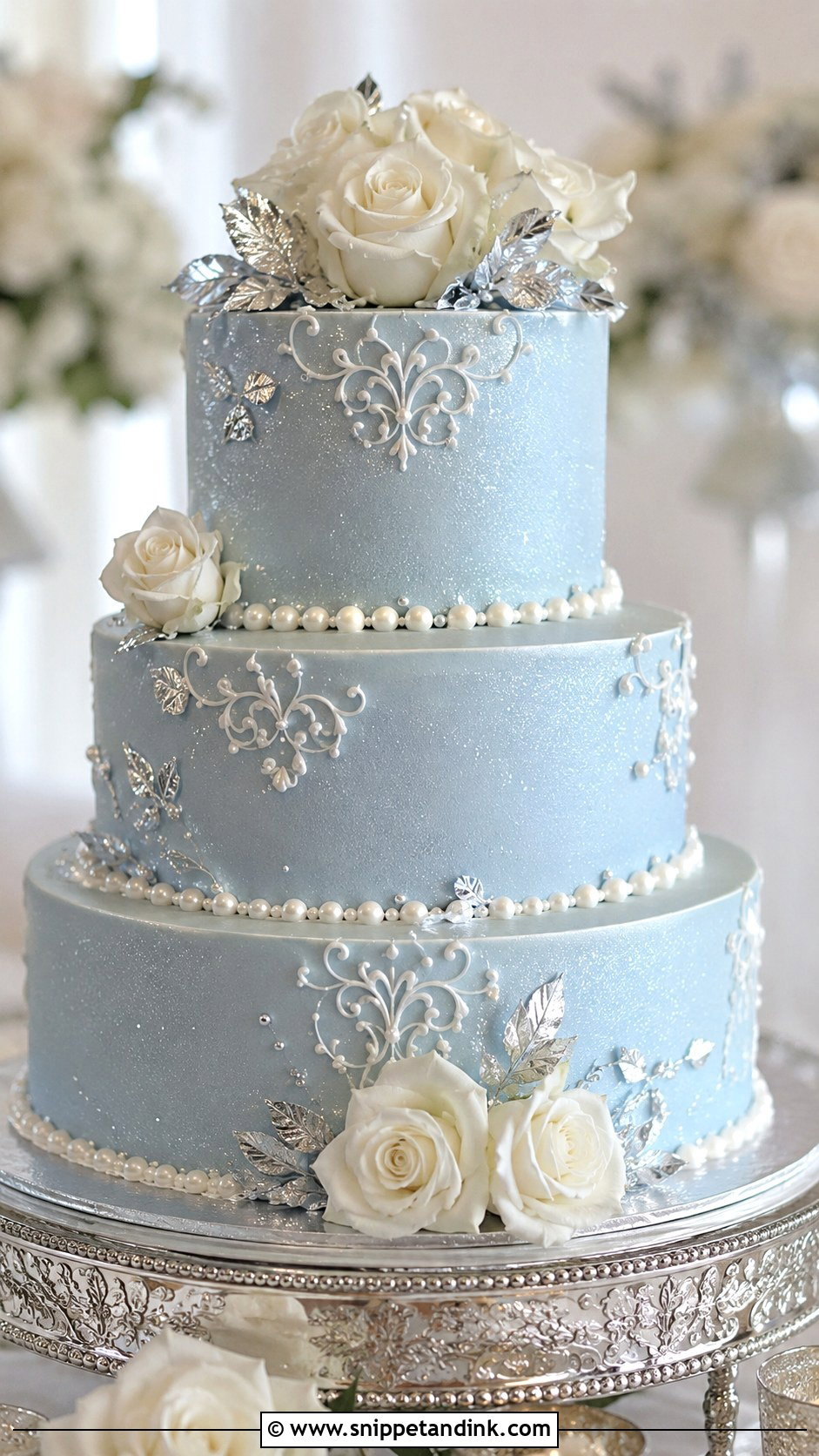
Pale blue with pearl shimmer, white piping, silver leaf or small edible pearls is fresh and romantic; deeper blue with gold is dramatic. It suits coastal weddings and ballrooms, and makes a natural “something blue”. Strong blue icing is hard to get without a lot of colour, and under warm lights it can drift toward grey or green, so I check the shade in the venue lighting. Soft flowers, clean icing and refined sparkle keep it bridal.
30. Purple Sparkle Wedding Cake
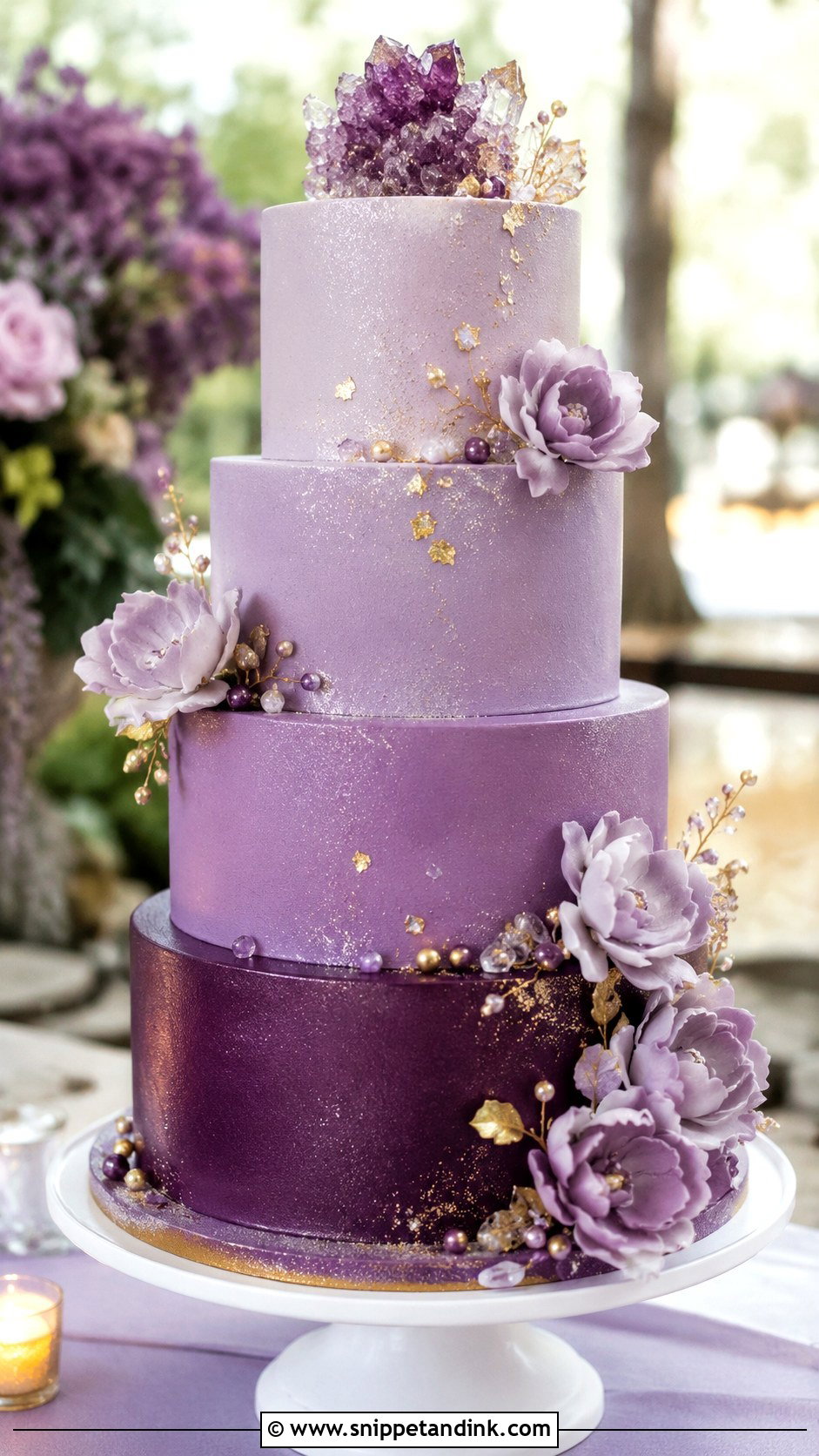
A purple sparkle wedding cake changes character with the shade. Lavender with pearl dust is soft and garden-like; deep plum with gold leaf is rich and dramatic. Purple also suits sugar flowers, geodes, crystals and metallic brushstrokes. Keep the flavour colour and decor connected: lavender buttercream with white flowers and silver shimmer, plum fondant with gold accents. Purple fades in strong sunlight, so I keep a deeply coloured cake out of direct light until it is cut.
Where Sparkle Shows Up in the Room and Where It Goes Flat
Shine is light reflecting, so the same cake looks very different depending on where it stands. A cake tucked in a dark corner reads as plain cream, while the same cake under a soft spotlight glitters. When I deliver a metallic or crystal cake, I look for a spot with light falling on it from the side, which picks out texture, rather than straight above, which flattens it.
Candlelight is kind to gold, champagne and rose gold and makes them glow. Cooler finishes like silver and pale blue can turn greyish in very warm light. Daylight is the most honest, showing the true colour of every finish.
Camera flash is the harshest test. Heavy lustre and glitter can bounce flash back as white glare, and the cake’s detail disappears in the picture. If your photographer uses flash at the reception, ask them to shoot the cake from a slight angle; I also keep the heaviest shimmer to one tier so the whole cake never turns into one bright patch.
Heat and humidity are the other enemy. Isomalt and sugar crystals turn sticky, leaf can wrinkle on a sweating surface, and drips soften. For a summer reception I build sparkle that tolerates warmth, such as leaf on fondant or pearl dust on firm buttercream, rather than delicate sugar work.
How Much Shine Is Enough?
Shine on a cake ranges from subtle to dramatic, and the right amount matches the rest of the wedding rather than the cake alone. Pearl dust is soft, gold leaf warm, silver clean, and crystals, sequins and glitter drips the most dramatic. When you share inspiration with your baker, bring photos that show exactly how much sparkle you like, and ask which finishes are fully edible and which are only decorative. With that settled, the cake will glow both in person and in the photos.
You'll Like These Ideas:










Leave a Reply