
Most couples who sit down with me for a tasting expect to be talked into something bigger. I usually do the opposite. A simple cake looks polished when it commits to one idea and lets texture, color, flowers, fruit, pearls or piping carry it. Many of the most saved wedding cakes right now are exactly that: soft buttercream, small tiers, vintage piping, fresh florals, pearls, smooth fondant and a little greenery. They suit an intimate dinner, a garden reception or a ballroom. Below are twenty I’d recommend, with what each needs to look right on the day.
Buttercream or Fondant on a Warm Reception Day?
Before we talk about decoration, I ask where the cake will stand and how warm the room will be. That decides the finish more than any photo does.
Buttercream tastes better to most people, but it is mostly fat, and it softens as the room warms. In a marquee or a sunny conservatory, edges slump and piping loses its shape. Fondant over a ganache layer holds its form in heat and keeps sharp corners. Its weak point is condensation: a cake moved from a cold fridge into a humid room sweats, and the beads of water can mark the surface.
- Air-conditioned indoor venue: any buttercream finish will be fine.
- Warm room or summer marquee: ganache under buttercream or fondant, and the cake set up as late as possible.
- Outdoor reception: keep the cake inside until it is cut, or choose a small display cake plus kitchen cake.
1. Simple Buttercream Wedding Cake
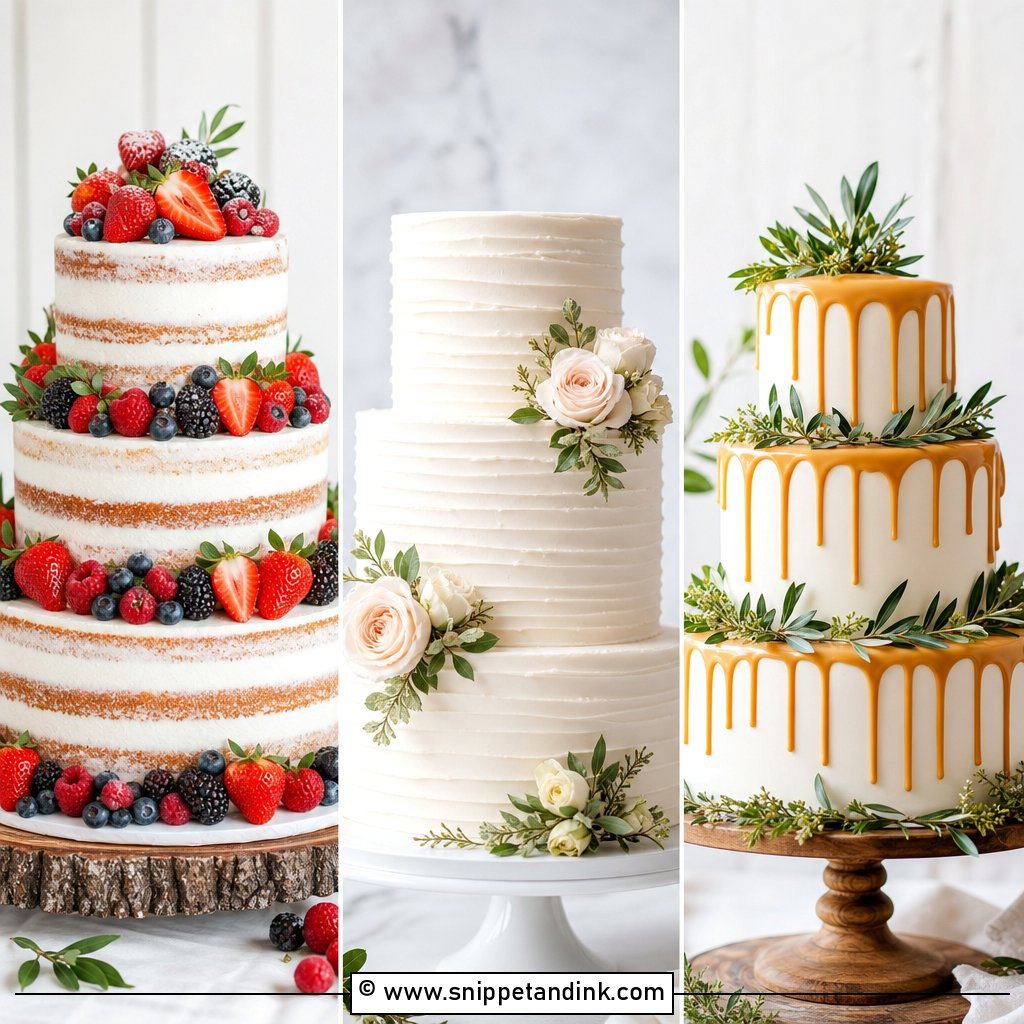
Smooth ivory buttercream on one, two or three tiers is the base most of my designs start from. Keep it perfectly smooth for a modern finish, or leave gentle spatula marks for a handmade one. A few white roses, small blossoms or a silk ribbon at the base finishes it. My advice is to ask your baker which buttercream they use: meringue-based buttercreams are silkier and less sweet, while a classic American buttercream crusts slightly and holds up a little better on a warm day.
2. Two Tier Wedding Cake With Flowers
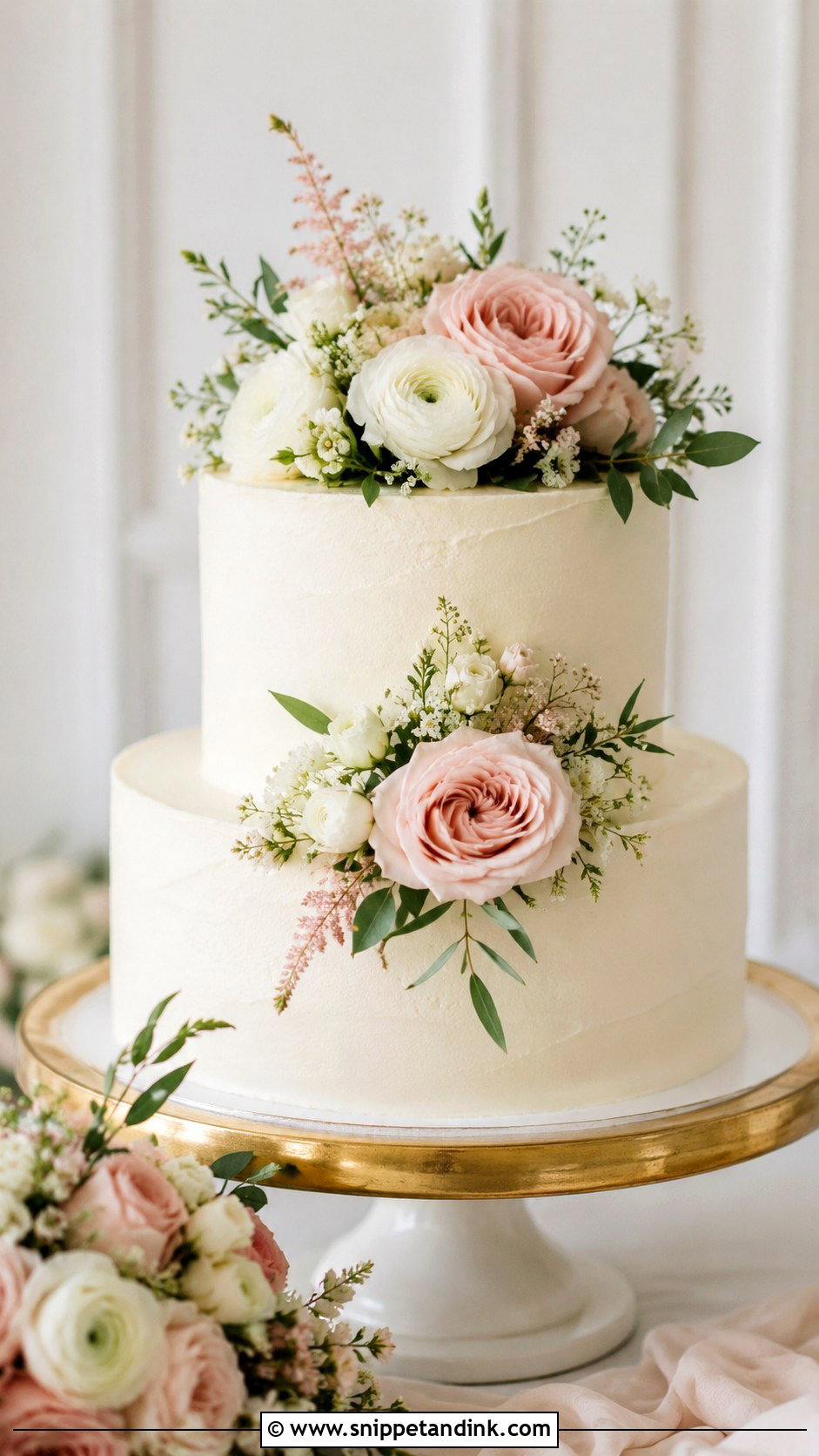
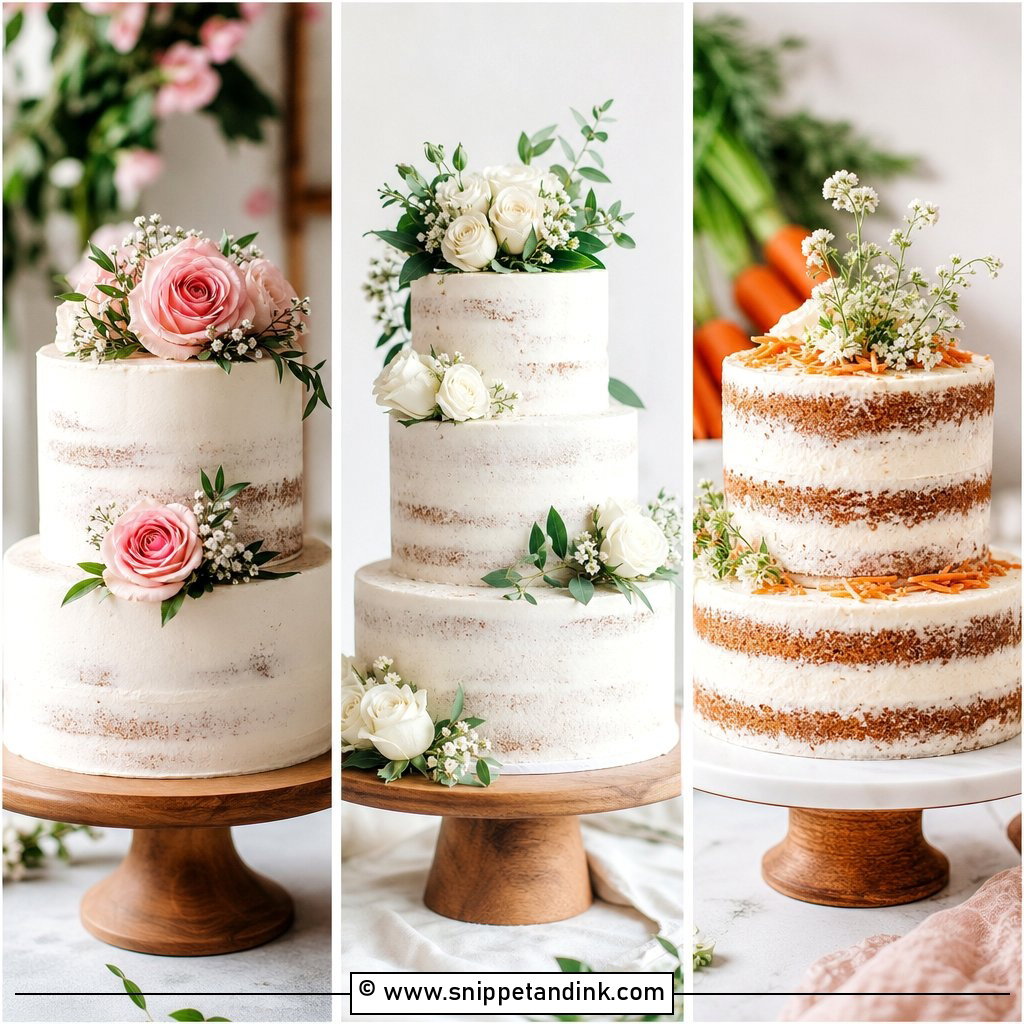
Two tiers give height without scale, which is why it’s my default for smaller weddings and backyard receptions. Smooth white or ivory frosting takes a cluster of flowers on the top tier and a second near the base. Tie the blooms to the bouquet so it looks planned. Blush roses, white ranunculus, baby’s breath and a little greenery all sit well. The two clusters should feel related, so I set them on a loose diagonal rather than stacked directly above each other.
3. Minimalist Wedding Cake
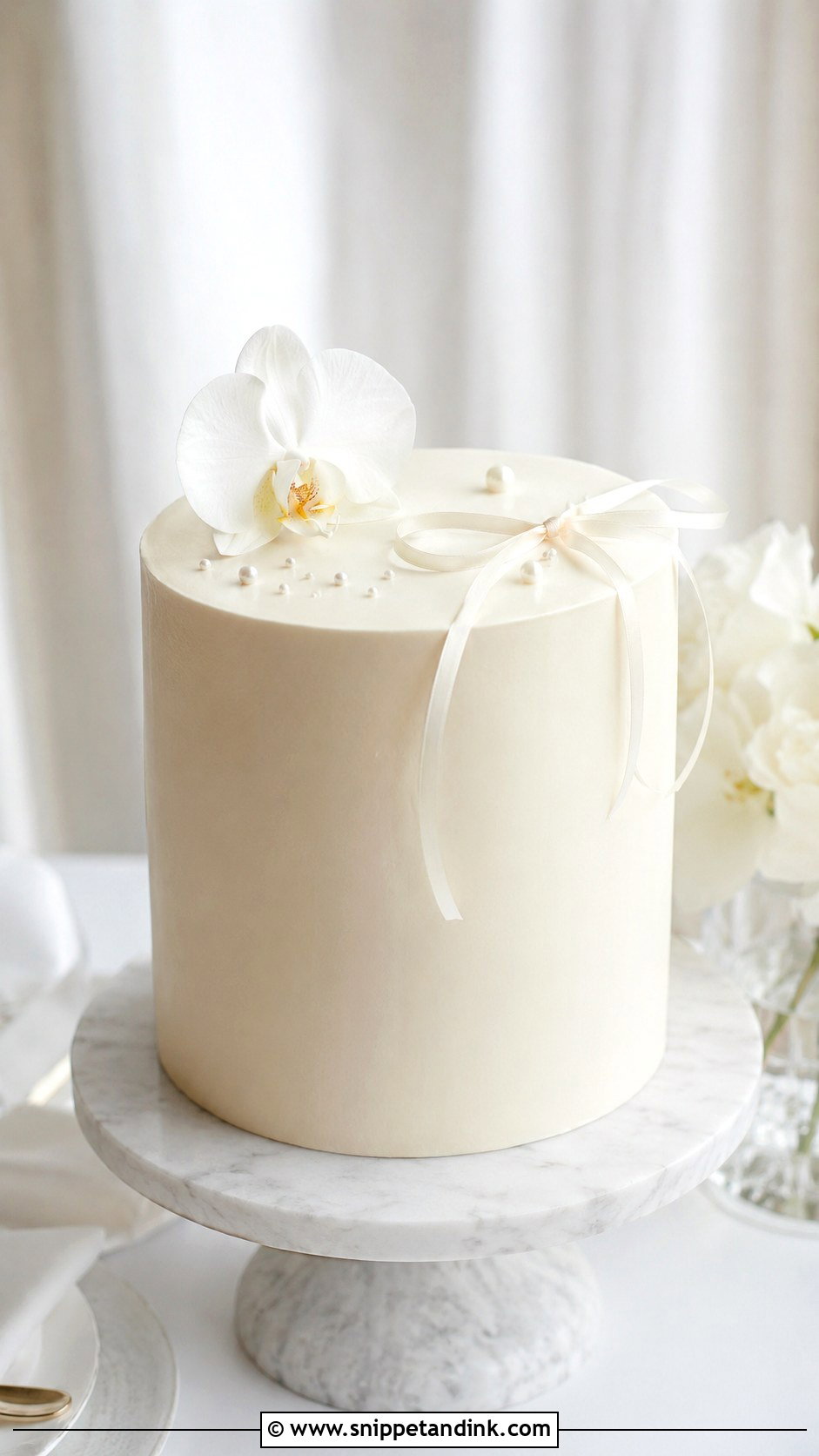
Minimalist cakes leave nowhere to hide. Smooth white buttercream with sharp edges and one accent, such as a single flower, a thin ribbon, sugar pearls or a small gold topper, is the whole design. They sit well on a white, marble or acrylic stand. I recommend this one when the rest of the room is busy with florals, bold tables or colored linens, because a quiet cake balances it. Expect your baker to spend more time on the finish than on decoration.
4. Semi Naked Wedding Cake
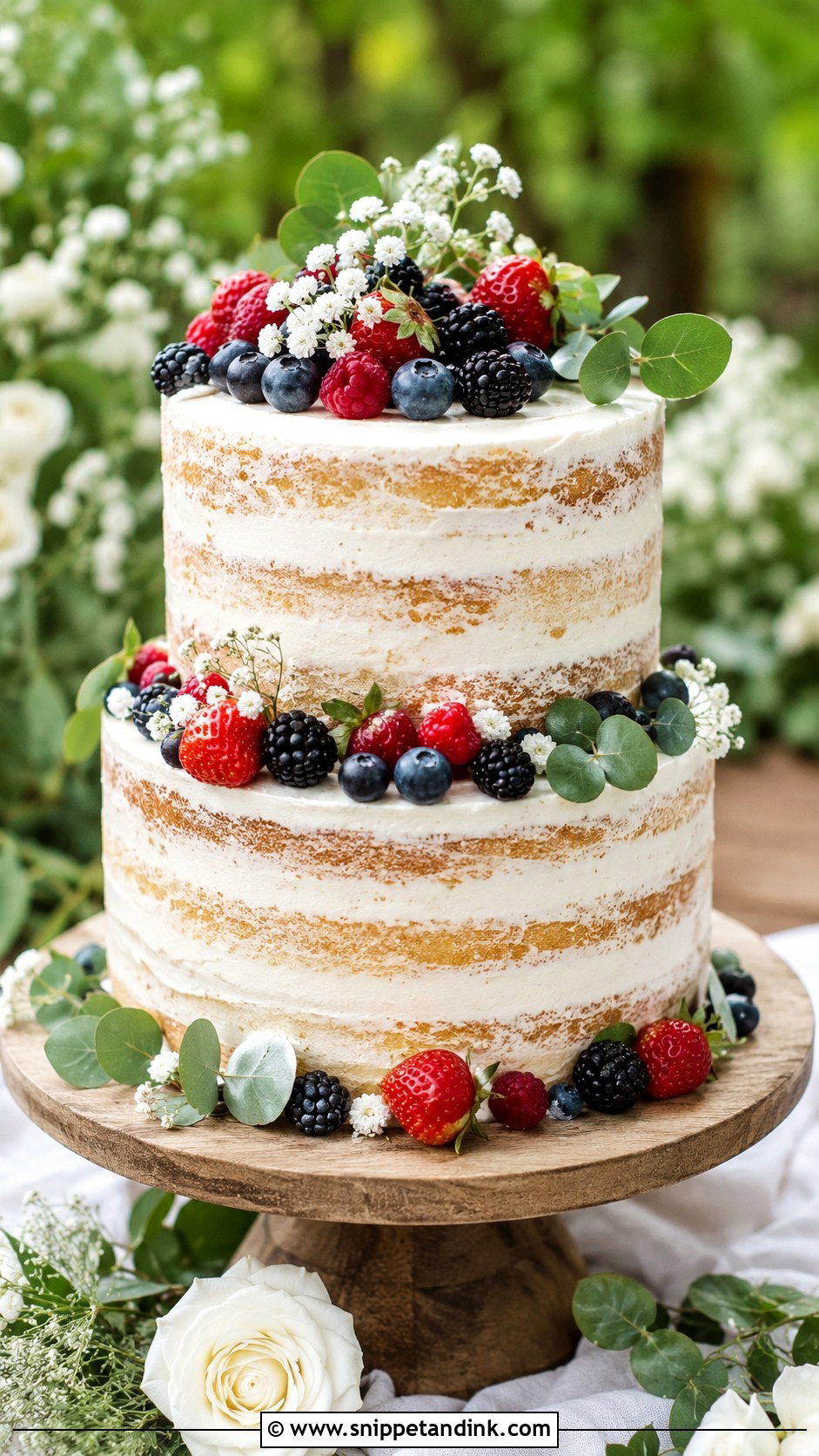
A semi naked cake shows the layers through a thin coat of frosting. Vanilla, almond, lemon, spice and berry-filled sponges suit it because the exposed edge becomes part of the look. Fresh berries, small flowers, herbs or greenery go around the tiers. Neat filling lines are what make it look intentional rather than unfinished. One caution from experience: with so little frosting, the sponge dries faster, so this style shouldn’t sit out uncovered for hours before cutting. Barns, gardens and outdoor receptions suit it.
5. Pearl Wedding Cake
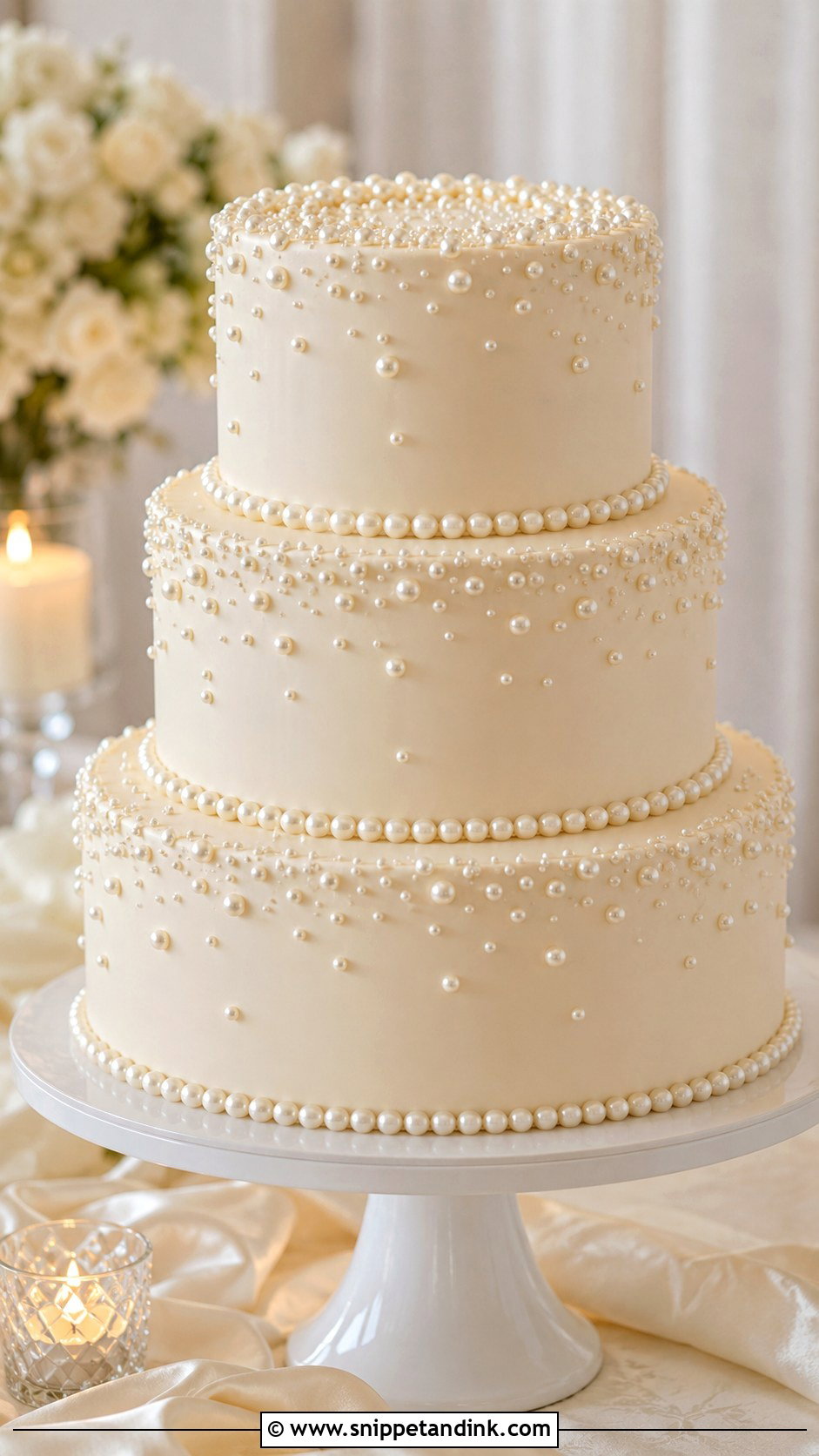
Edible pearls bring a quiet luxury to a smooth ivory cake. I set them around the base of each tier, scatter them over the sides or line them up in a clean border. Sparse, uneven placement looks modern; tidy rows look classic. Pearls stick to buttercream, fondant or a whipped finish, as long as they go on before the surface sets. Satin dresses, pearl earrings and candlelit tables pair naturally with them.
6. Vintage Wedding Cake
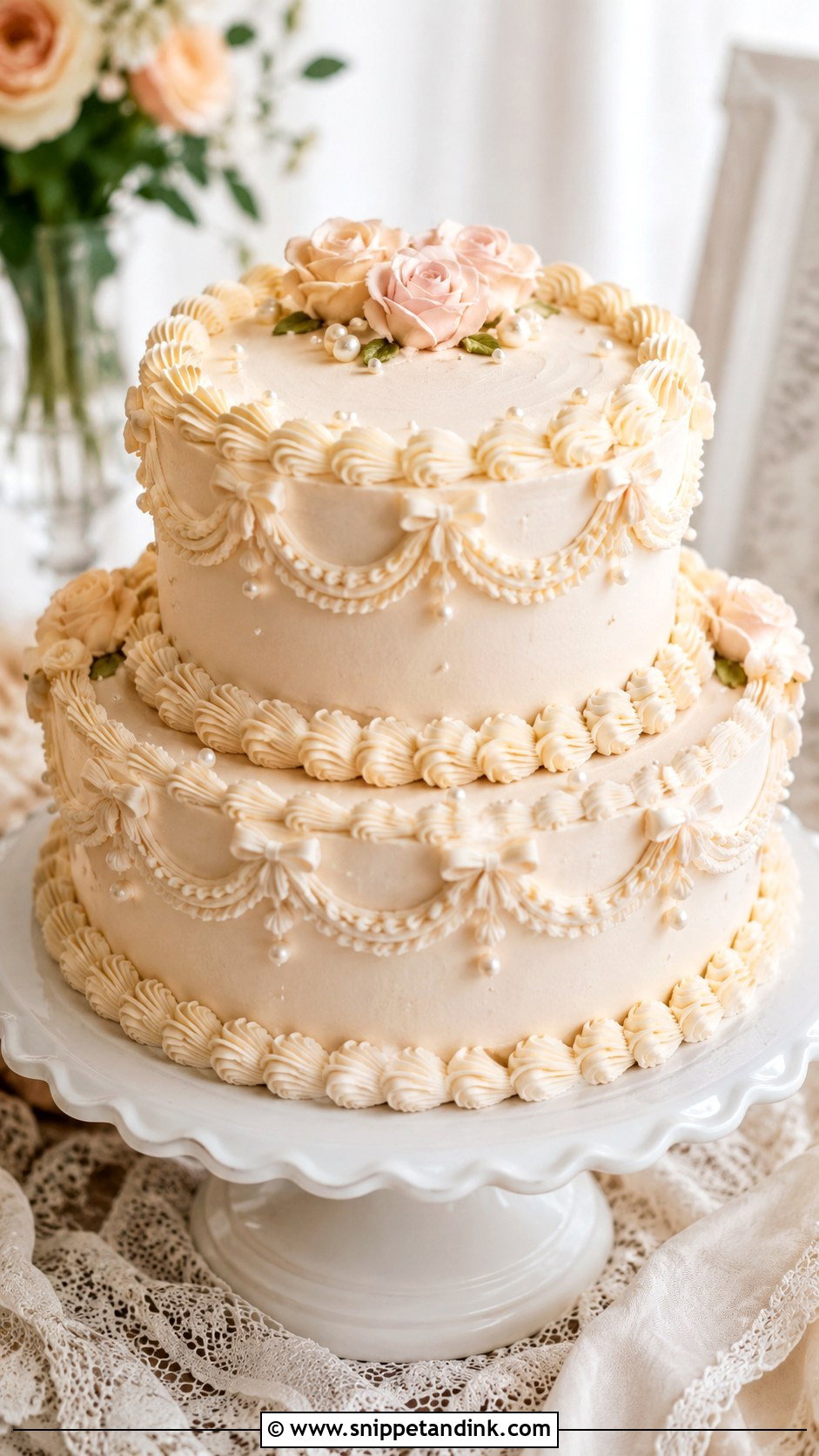
Vintage piping stays simple when it’s focused: shell borders, small swags, dots and buttercream bows rather than every technique at once. A single vintage tier suits a micro wedding; two tiers feel more formal. White, ivory, blush, pale blue and butter yellow are the usual palette. Cherries, pearls or small piped roses give it a sweeter retro touch. Piped detail softens in heat, so I’d avoid it for an outdoor summer reception unless the cake stays inside until it’s cut.
7. White Wedding Cake With Greenery
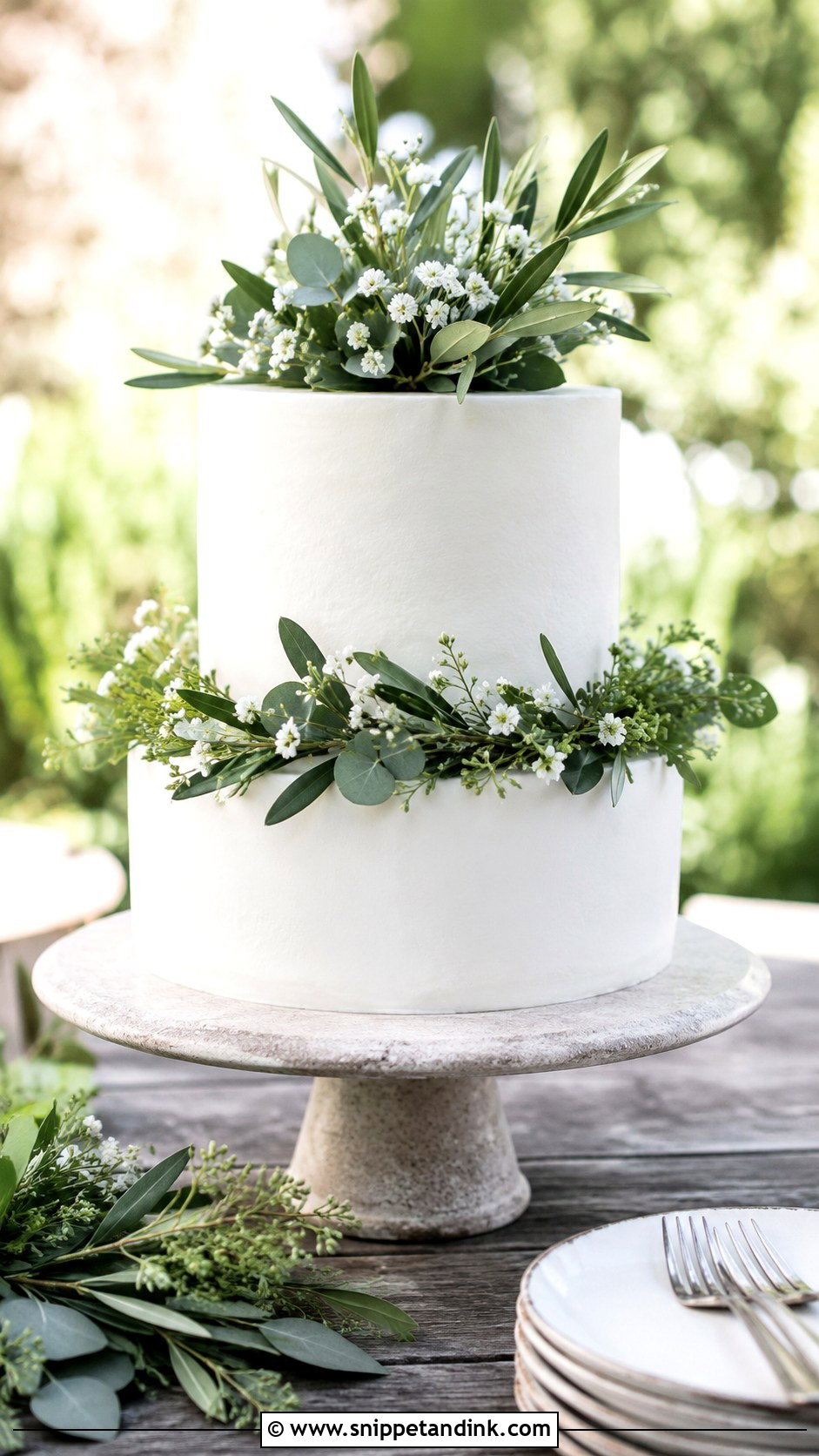
White frosting with a few greens is one of the easiest looks to fit to a venue. Olive branches, eucalyptus-style leaves, rosemary sprigs or other food-safe greenery wrap lightly around the tiers or sit in small clusters. Less is better; too much foliage looks heavy. Not every pretty leaf is safe near food, and some common decorative greens are toxic, so any greenery touching the cake should be food-safe or kept on a barrier. Vineyards, gardens and farmhouse venues suit it.
8. Small Wedding Cake
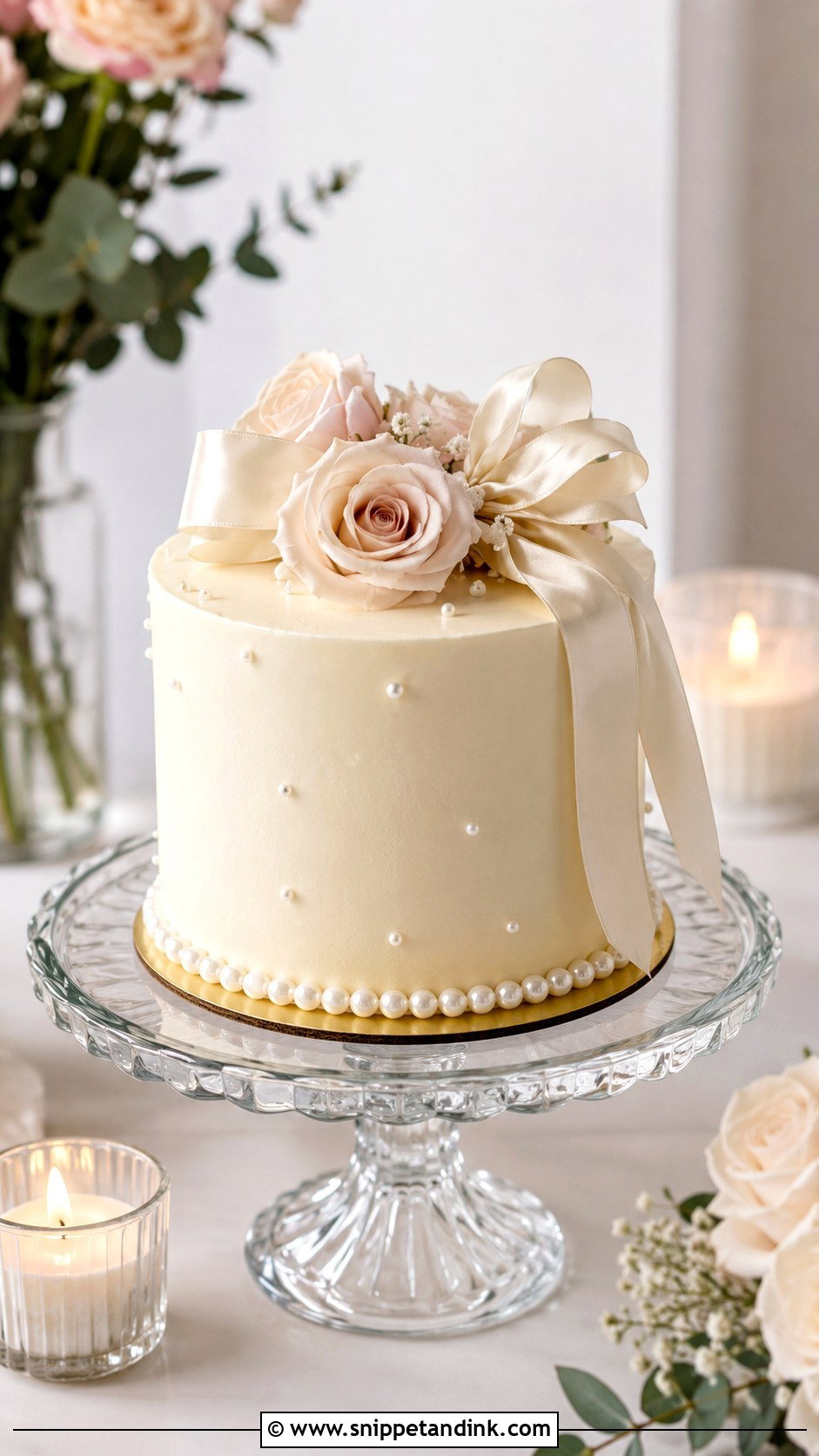
Small cakes can feel just as considered as a big tiered one. A single tall tier or a petite two-tier works for elopements, courthouse weddings and small dinners, or for couples serving extra sheet cake in the kitchen. Pick one detail: smooth buttercream, fresh flowers, a pearl border or a small bow. A raised stand gives it presence, and candles, linen or flowers around it make the moment. Kitchen cakes are a useful trick for budgets, since they’re cheaper to produce than decorated tiers.
9. Wedding Cake With Fresh Flowers
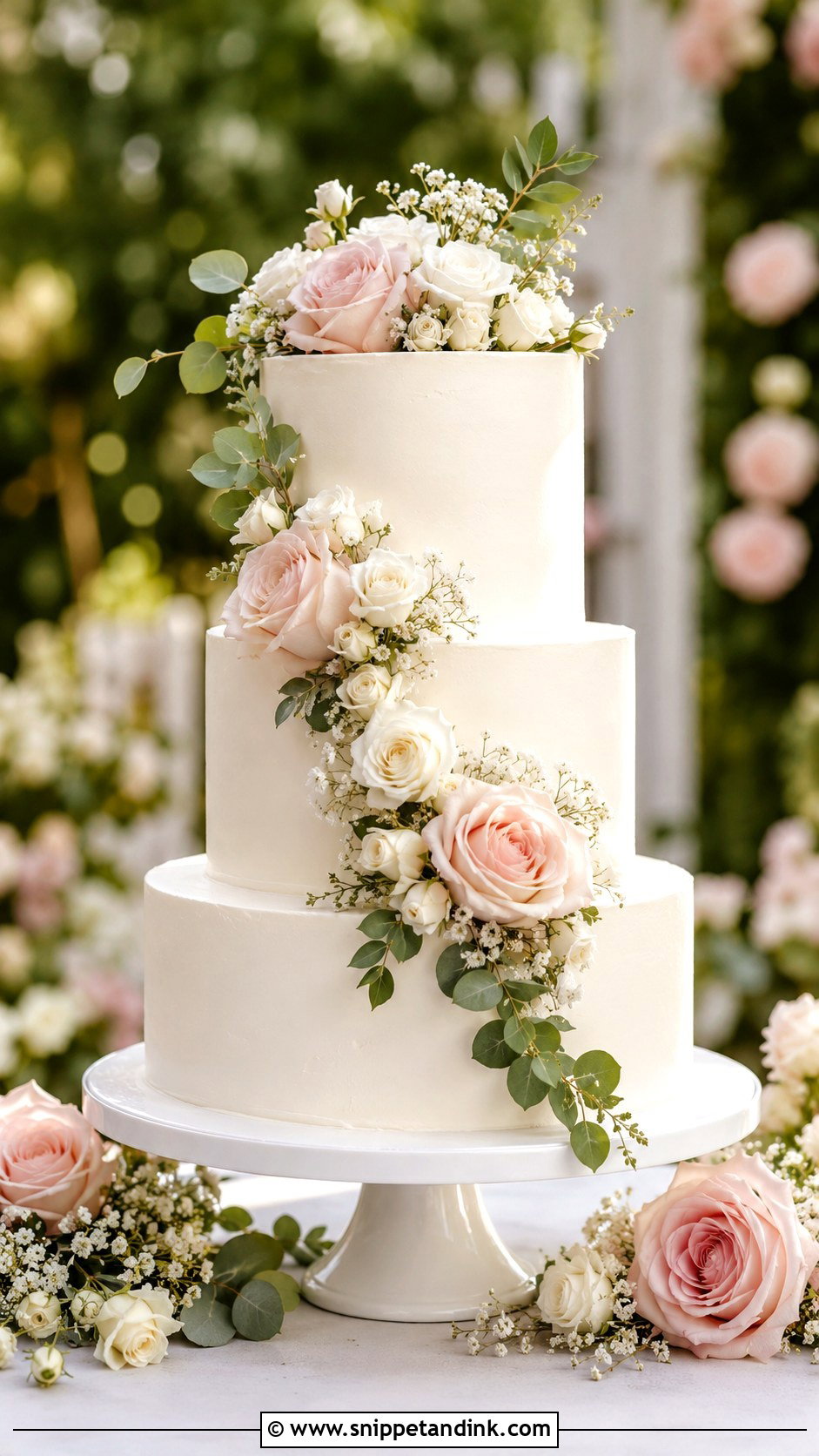
Fresh flowers do most of the decorating here. A smooth or lightly textured base takes a top cluster, a diagonal trail or blooms tucked between tiers. Matching the bouquet ties it together. Spray roses, ranunculus, chamomile and small fillers are dependable. Decide early who places the flowers, the baker or the florist, and make sure stems are wrapped or inserted into food-safe picks so nothing untreated touches the cake.
10. Wedding Cake With Sugar Flowers
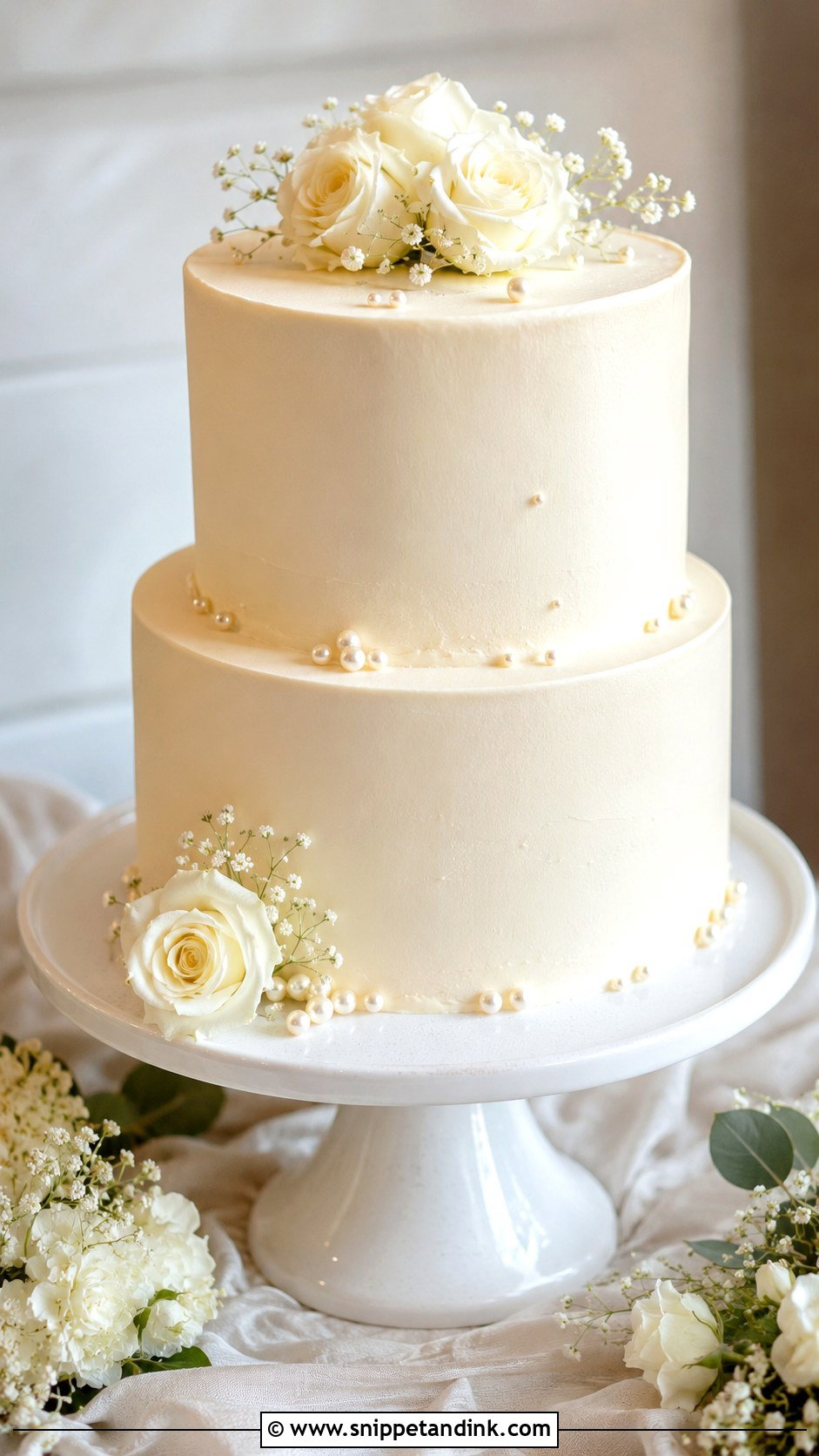
Sugar flowers can be made weeks ahead and kept as a memento. They solve the problem of out-of-season blooms or a very specific flower. One large sugar flower with a few leaves, or a small group on the top tier, is enough. White, blush, ivory and peach suit smooth buttercream or fondant. Sugar flowers are slow, hand-built work, so they cost more than fresh, and they soften in humidity; store them dry and away from the fridge before the day.
11. Wedding Cake With Ribbon
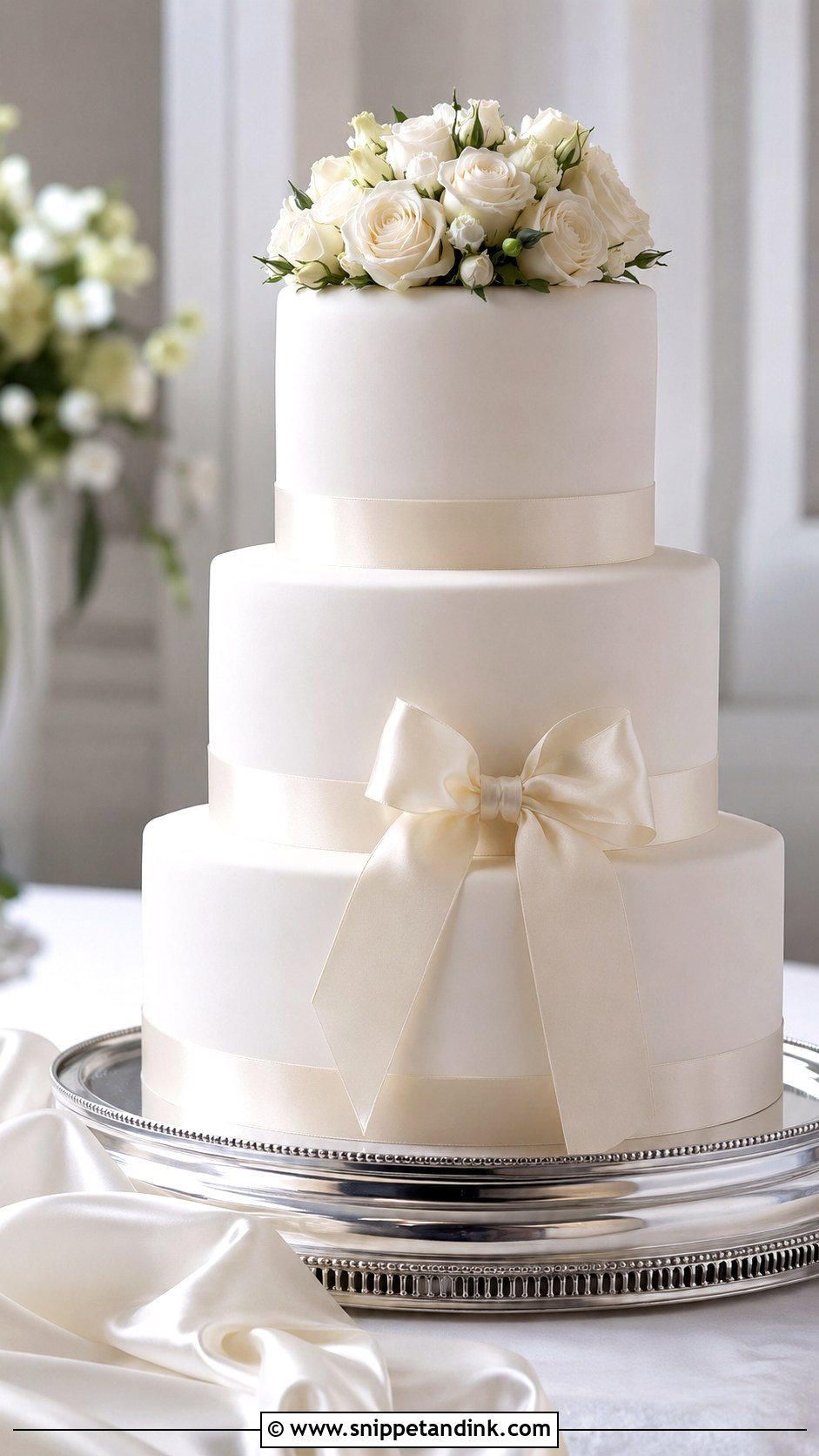
A satin ribbon around each tier can make a plain cake look finished in seconds. Ivory reads classic, blush romantic, black modern, and dusty blue suits a garden. It needs a smooth surface to sit flush. Here’s what most couples don’t know: butter seeps into satin and leaves greasy marks, so I back ribbons with a thin strip of tape or fondant before wrapping. Add a small floral cluster, or leave it plain for a formal look.
12. Textured Buttercream Wedding Cake
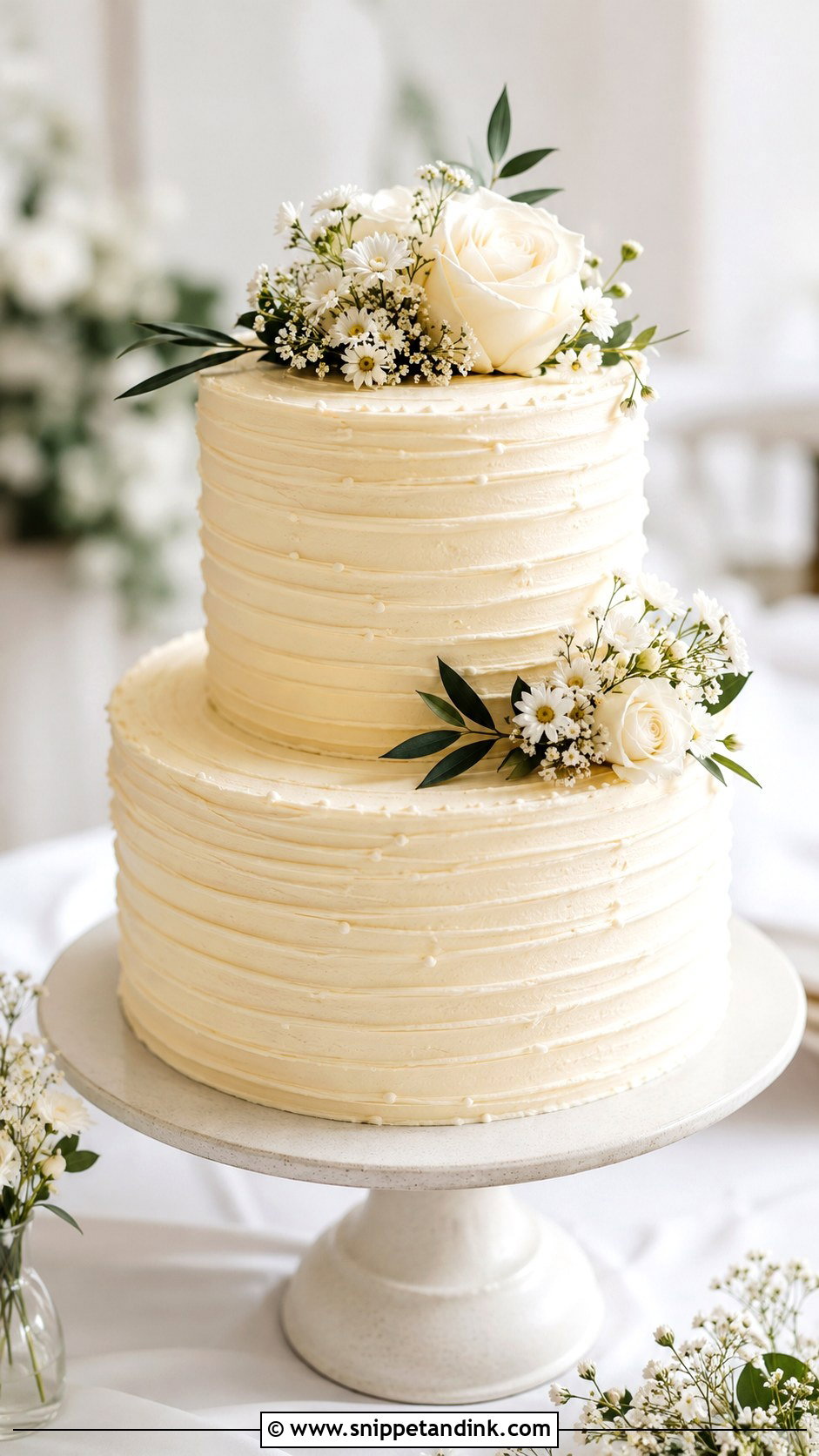
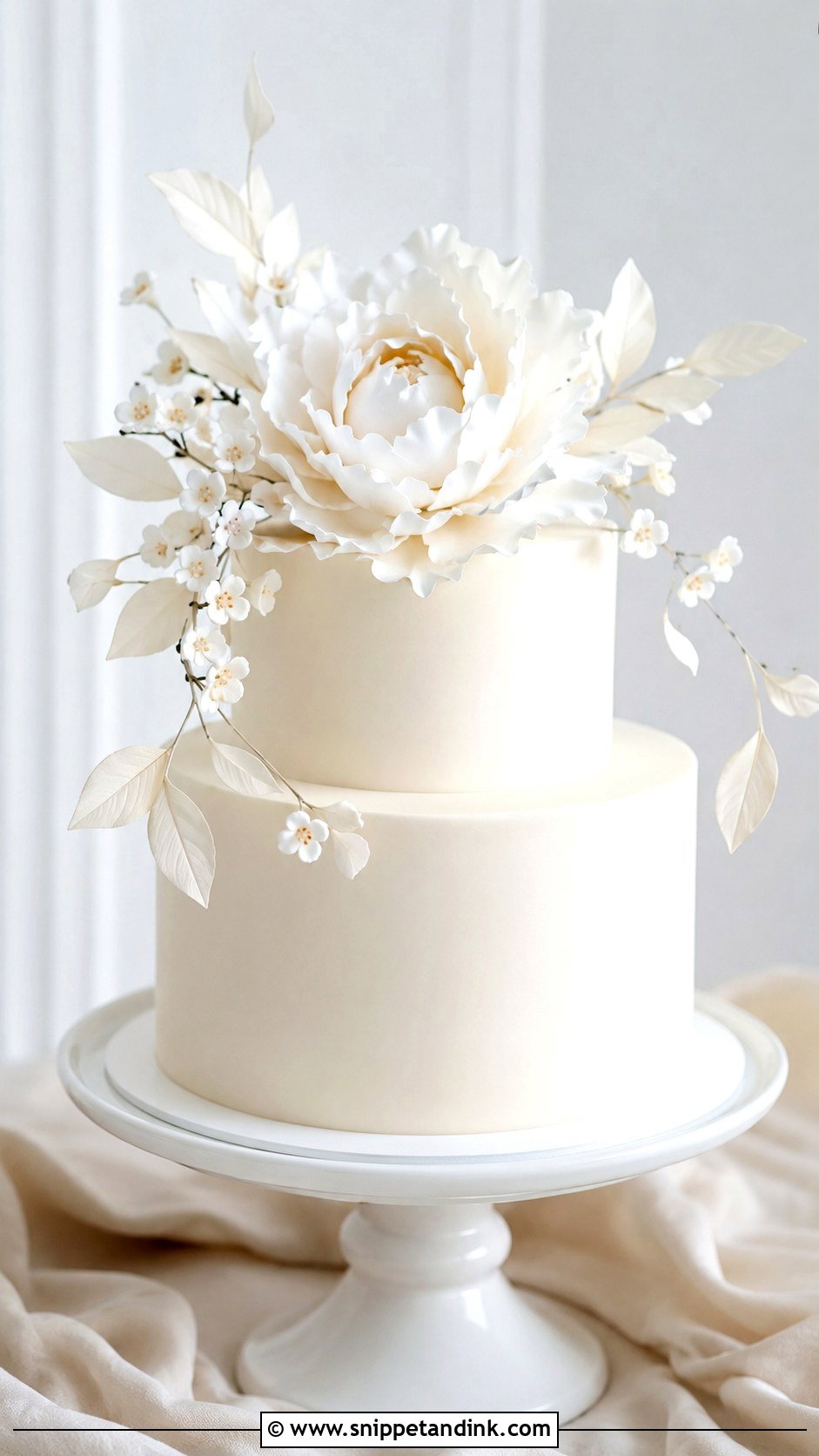
Texture is my go-to when a couple wants handmade but tidy. A textured buttercream wedding cake can have horizontal lines, vertical ridges, soft swoops or rustic palette knife marks. Ridged finishes are made with a comb scraper on a turntable, and they’re forgiving because small imperfections get lost in the pattern. The texture catches light in photos. Keep it white or ivory, or try a soft pastel; a few flowers, greens or pearls are optional.
13. Single Tier Wedding Cake
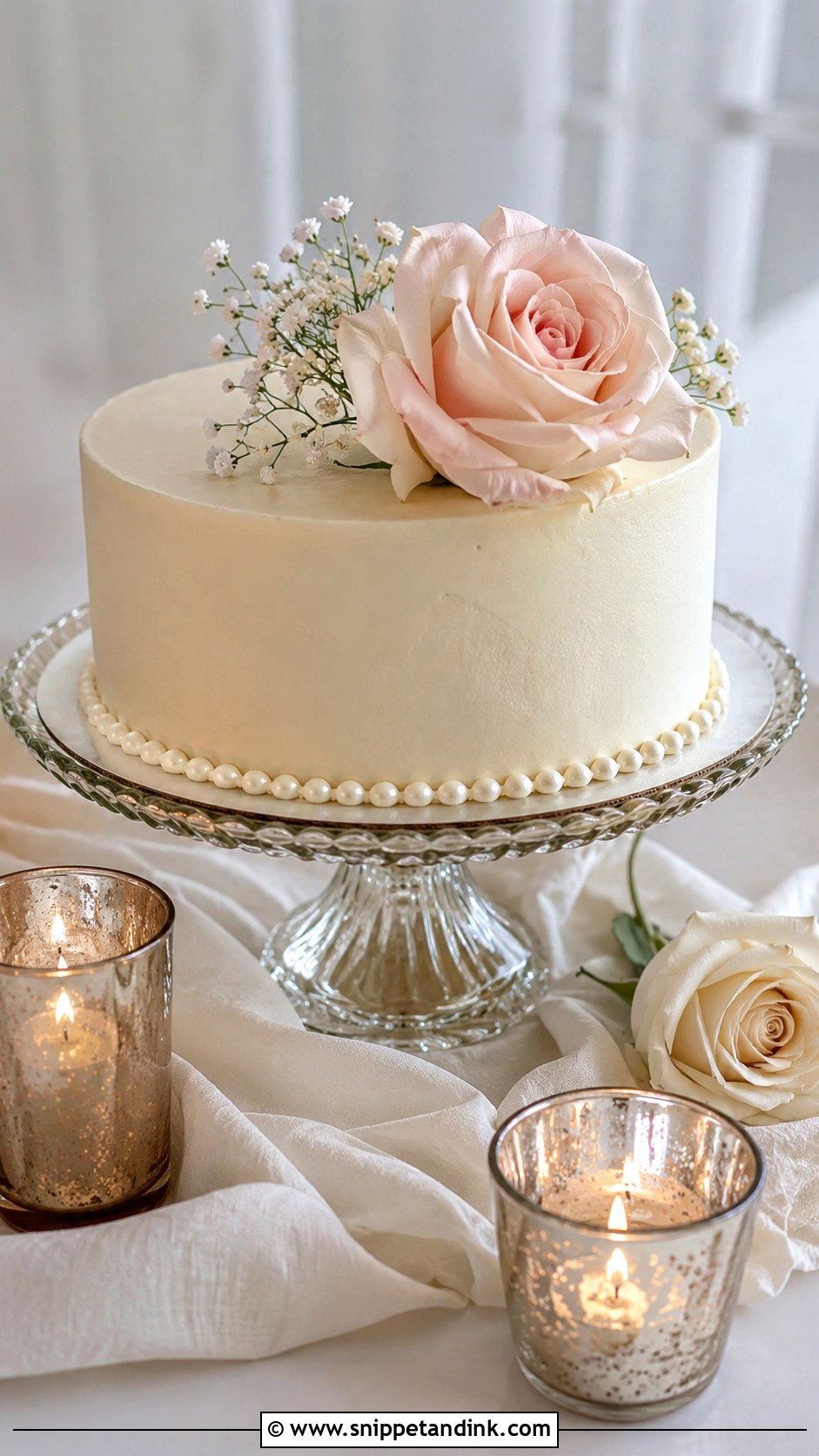
A single tier works best when it’s taller than a standard cake, so it doesn’t look lost on the table. I’ll stack an extra layer or two with internal support. Smooth buttercream with fresh flowers reads romantic; vintage piping reads playful; a pearl border or ribbon makes it formal. Put it on a stand and build out the table with flowers, candles or small desserts. It’s a natural fit for elopements, brunch weddings and civil ceremonies.
14. Wedding Cake With Gold Leaf
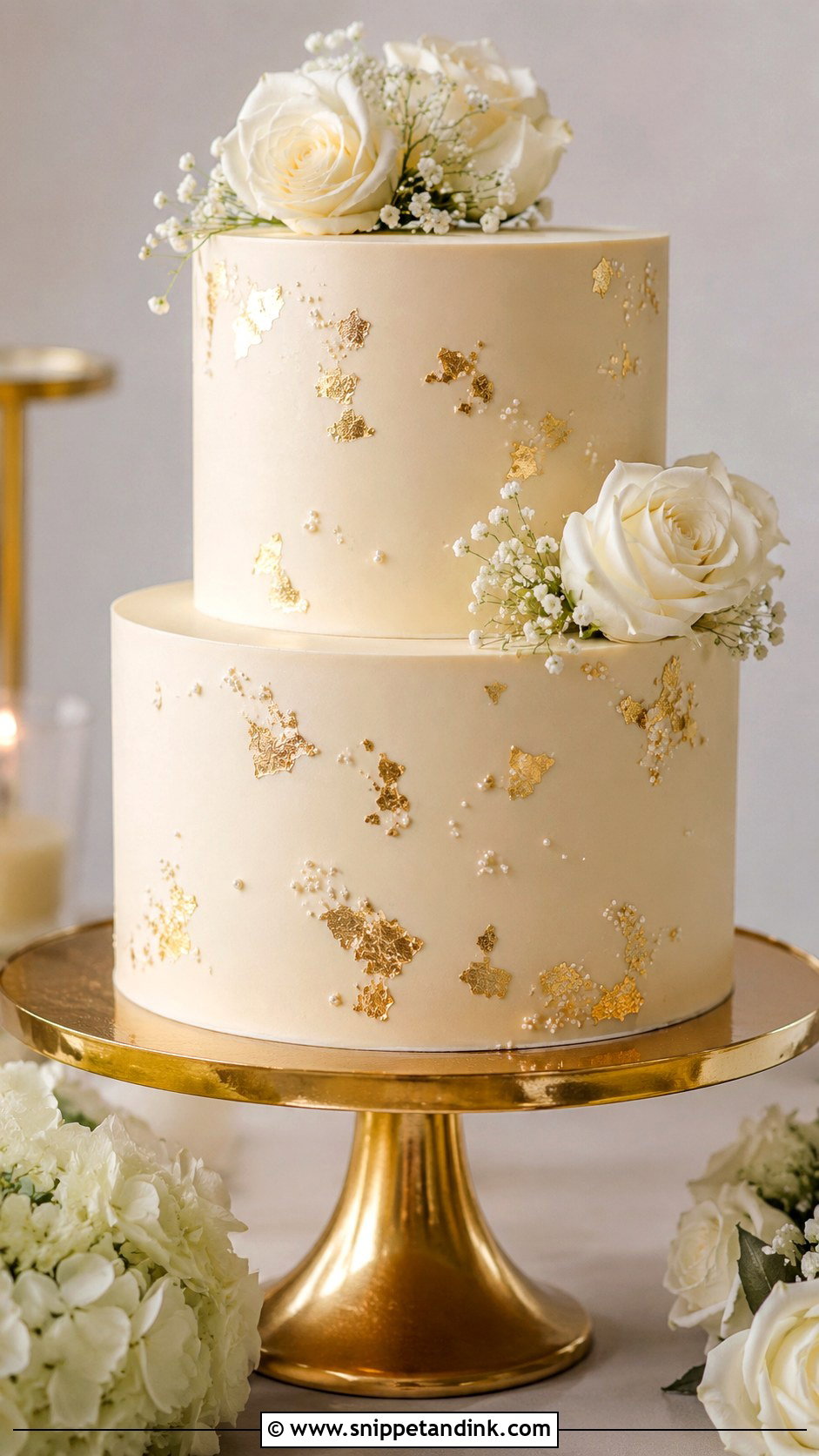
Gold leaf adds shine with very little effort. A few small pieces on smooth buttercream or fondant are enough, placed on one side, along tier edges or beside a flower cluster. I apply it with a soft dry brush, because it clings to warm fingers and tears. Pair it with white, ivory, blush or champagne tones. It comes alive under candlelight, which makes it a good fit for evening receptions and ballrooms.

15. Wedding Cake With Fruit
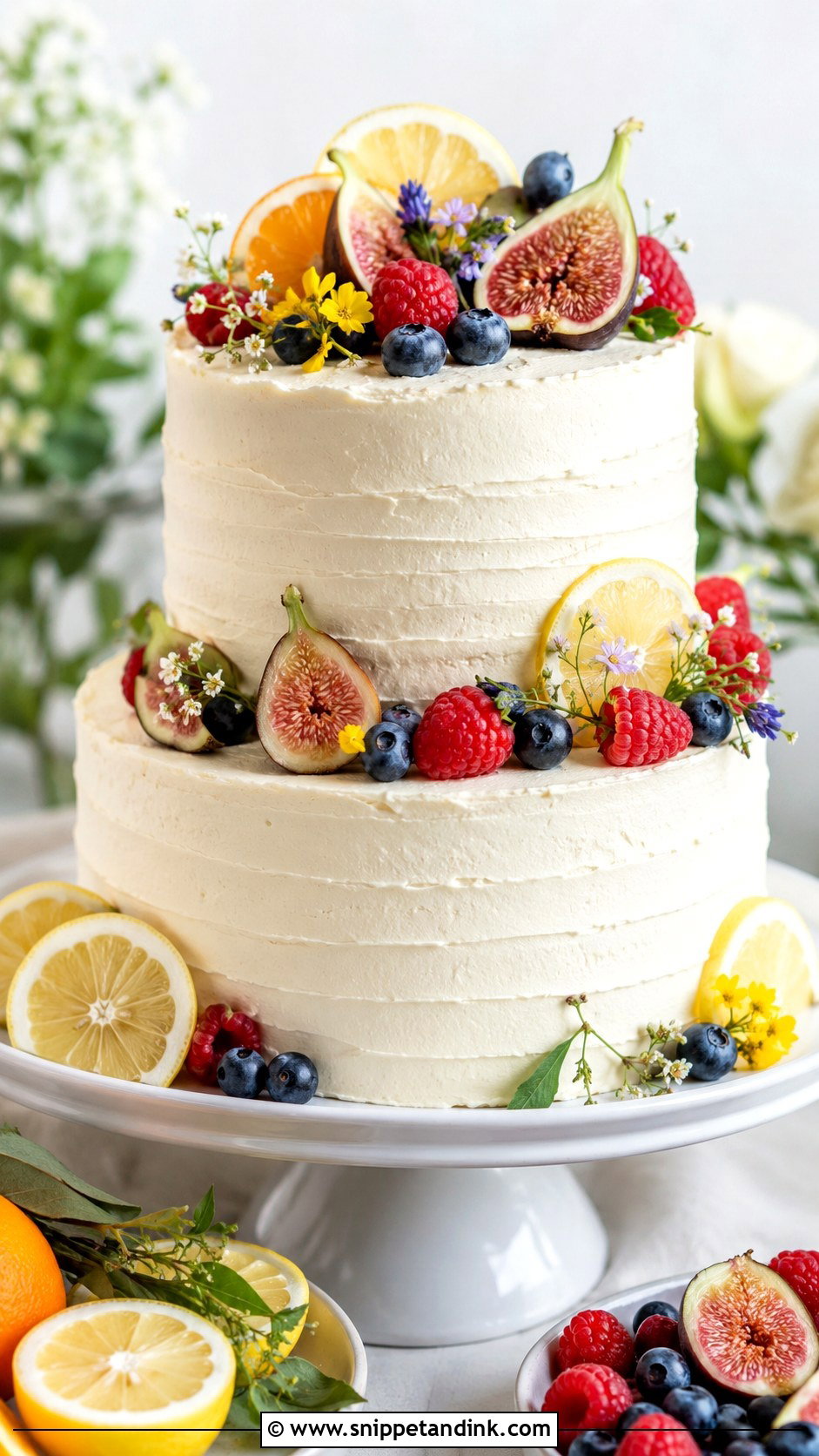
Fruit decorates without leaning on flowers, and it’s edible all the way through. Figs, berries, citrus slices, grapes, cherries and pears can sit on top or around the tiers. Pick what’s in season and suits the flavor: citrus and berries with lemon cake, figs and grapes with vanilla or almond. Cut fruit leaks juice into frosting within an hour or two, so I use whole or halved fruit where I can and glaze the cut faces. Keep the frosting simple so the fruit leads.
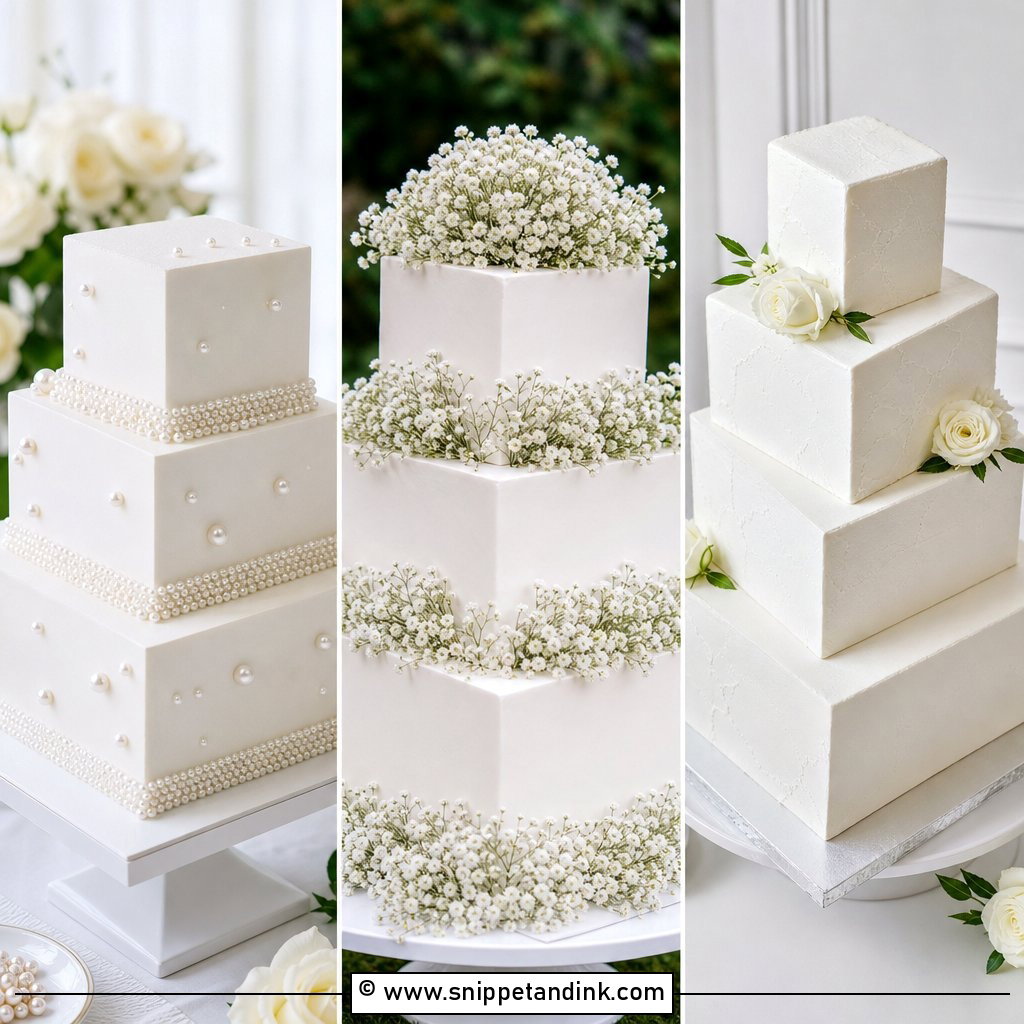
16. Square Wedding Cake
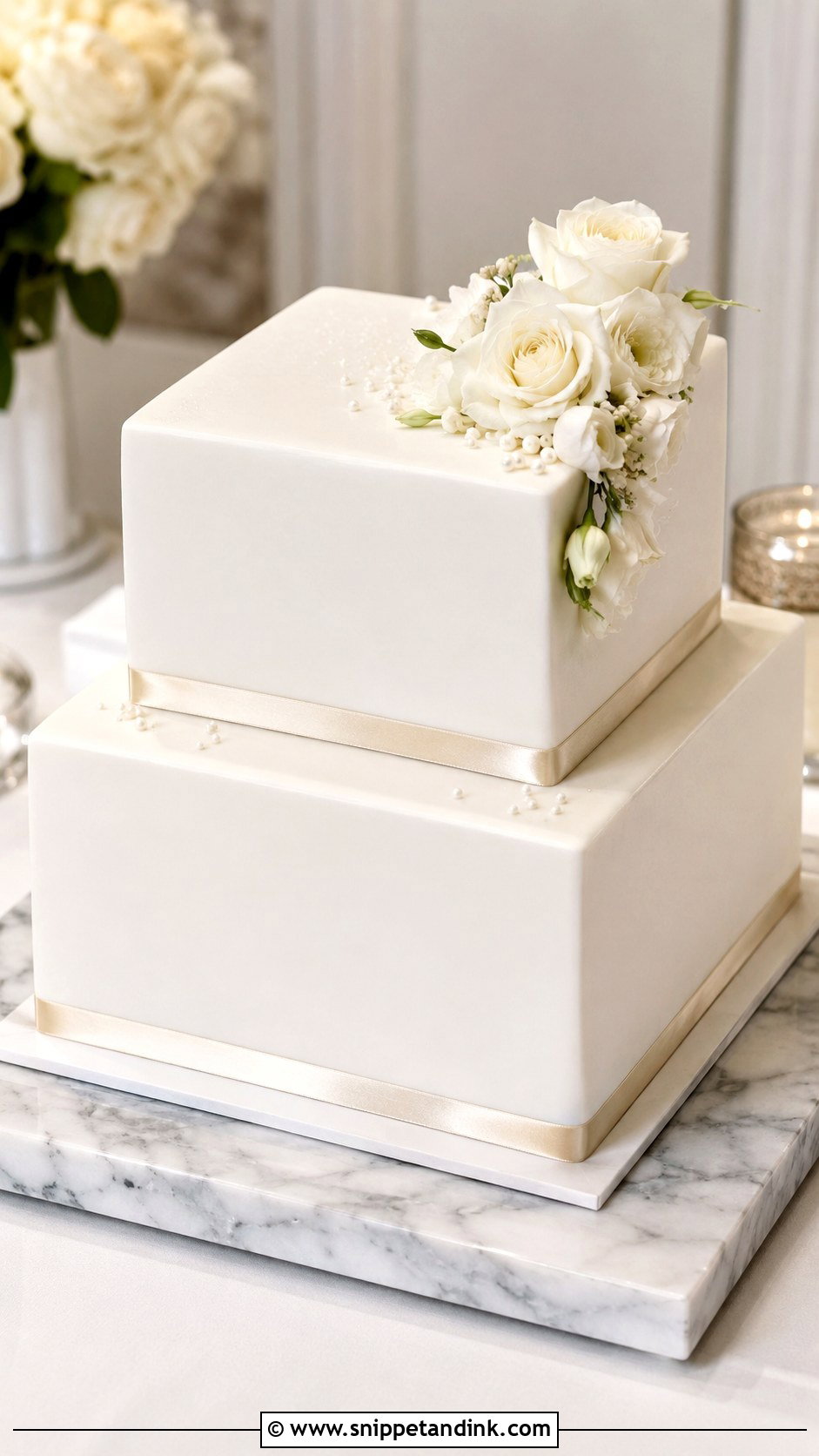
Square tiers give a structured, graphic shape that’s less expected than rounds. Smooth fondant or buttercream shows the lines best. Flowers on one corner, a thin ribbon or a few pearls soften it. Sharp corners are harder to achieve than they look, so if you want them crisp, choose a baker whose portfolio already shows square cakes. Galleries, rooftops and hotel venues suit it. Square tiers also cut into more even portions than rounds.
17. Wedding Cake With Piped Borders
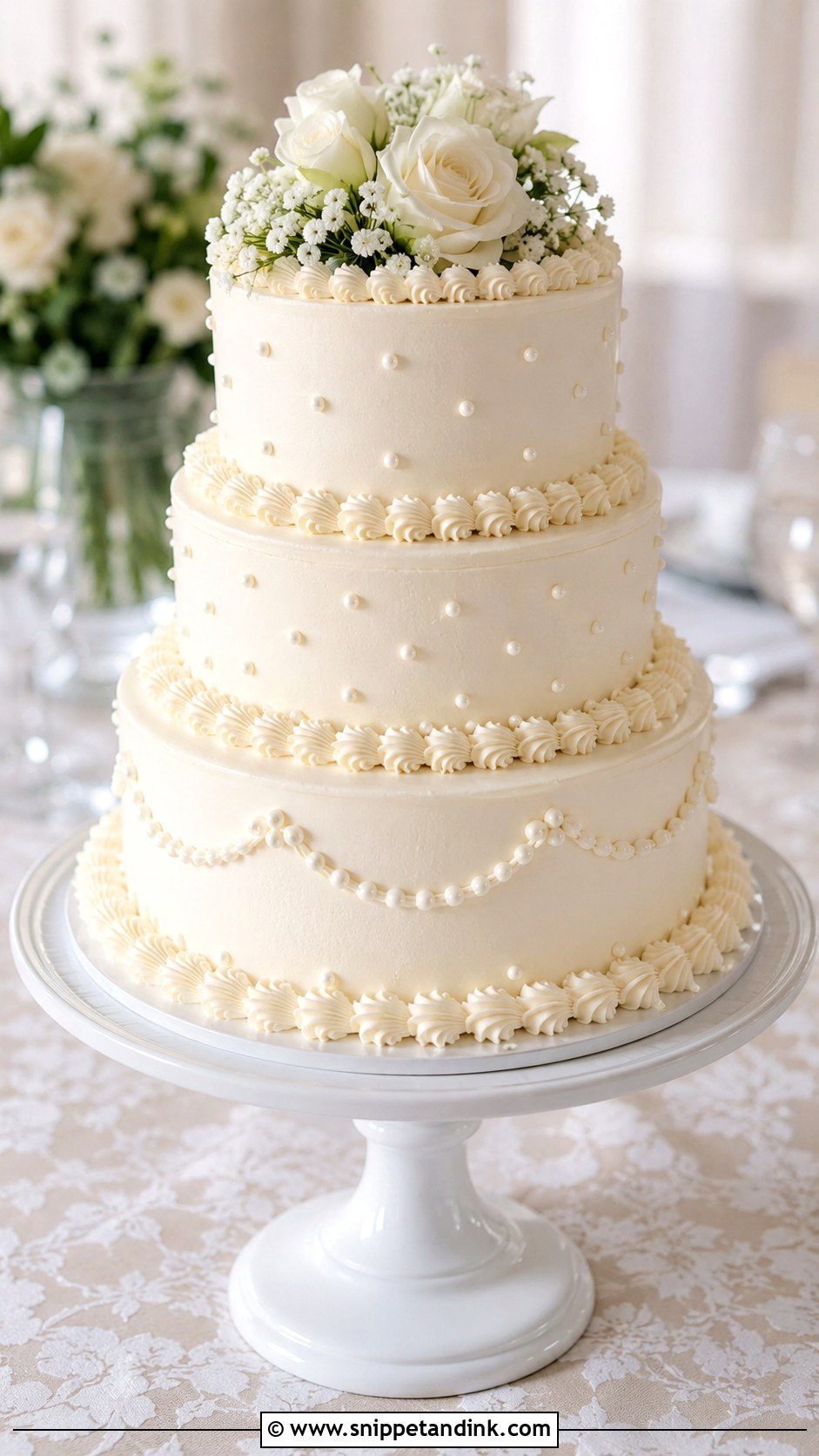
A wedding cake with piped borders sits between plain and heavily decorated. Shells, dots, beads or a small rope border frame each tier. Same-color piping is subtle; a pale contrast reads vintage. Tiny pearls or one flower cluster add detail. Borders also hide the seam where each tier meets the one below, which is a practical reason bakers have used them for generations. Chapel ceremonies and family receptions suit this traditional look.
18. Wedding Cake With Pressed Flowers
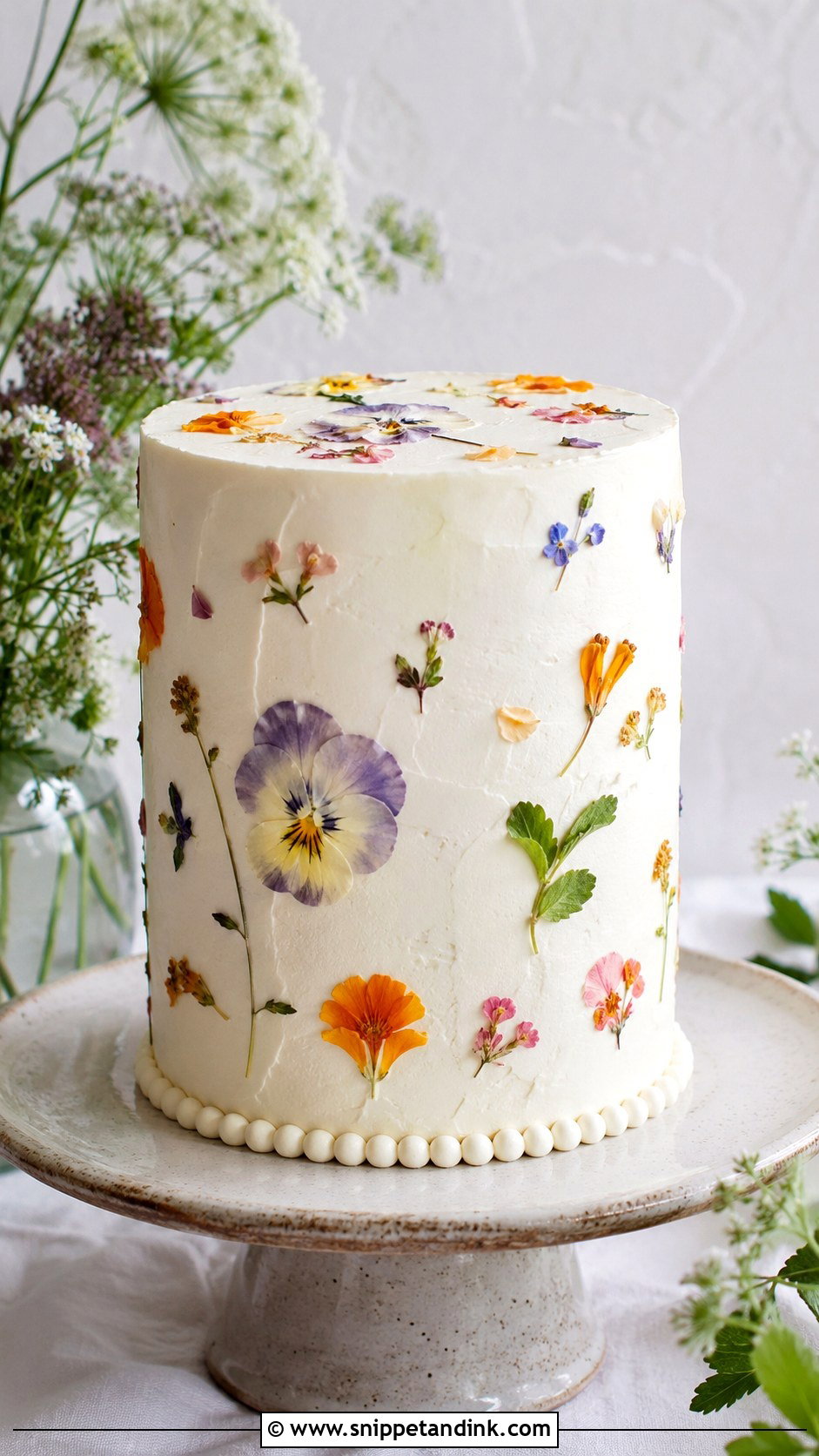
Pressed flowers create a garden pattern flat against smooth buttercream. Pansies, violas, calendula petals and other edible blooms add soft color. They must be grown for eating, not taken from a florist bunch, and they’re pressed dry beforehand so they lie flat. Space them out to keep things simple. A white or pale ivory base lets the colors show. Cottage-style and spring weddings are its natural home.
19. Wedding Cake With Bow
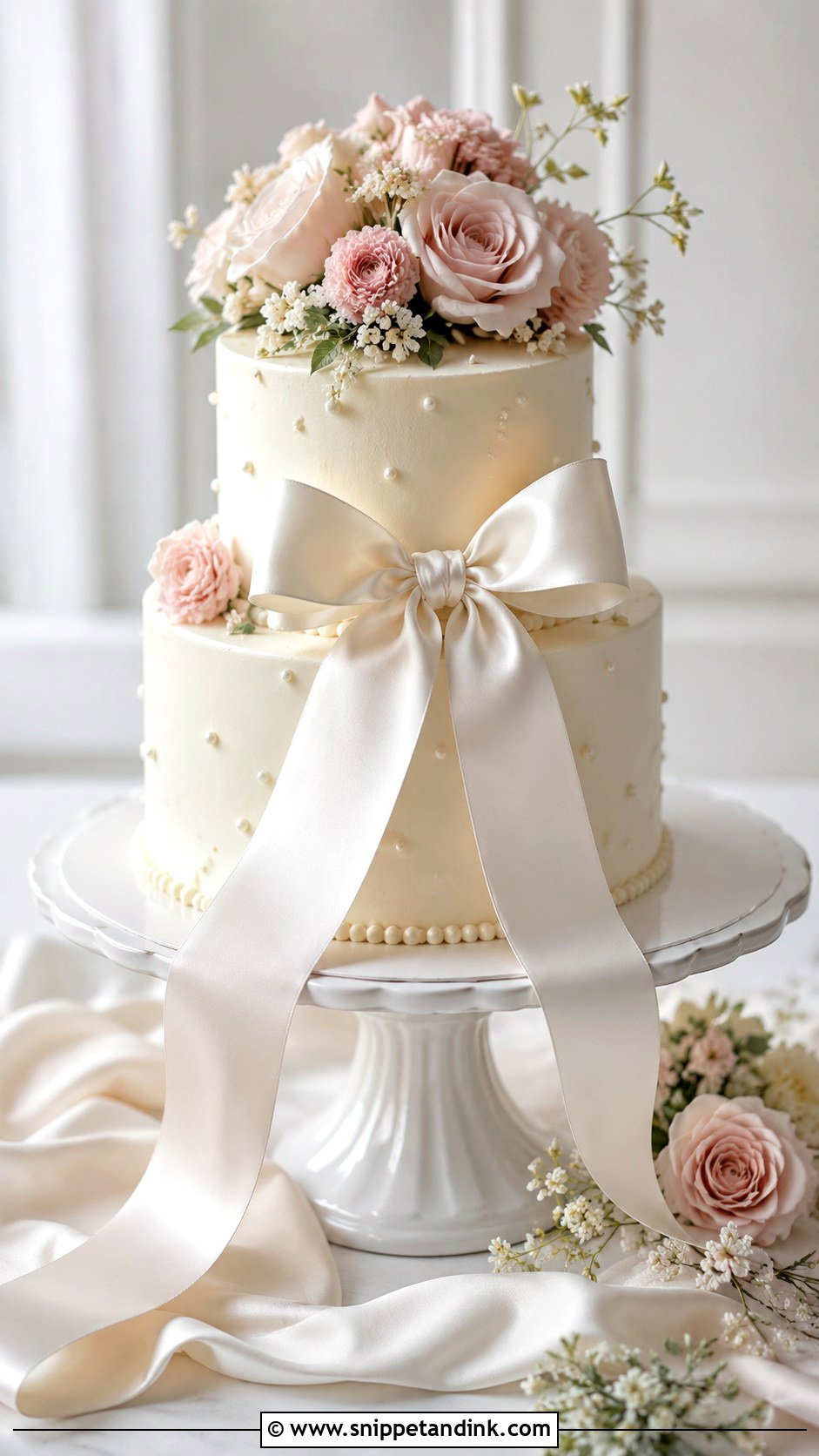
A wedding cake with bow detail can use satin ribbon, fondant, wafer paper or piped buttercream. One bow on the front of a single tier, or a ribbon tied at the base of each tier, looks cleanest. White on white is classic; blush, black or champagne adds personality. Fondant bows need to dry for a day or two to hold their loops, so they’re made ahead. Keep the rest minimal so the bow stands out.
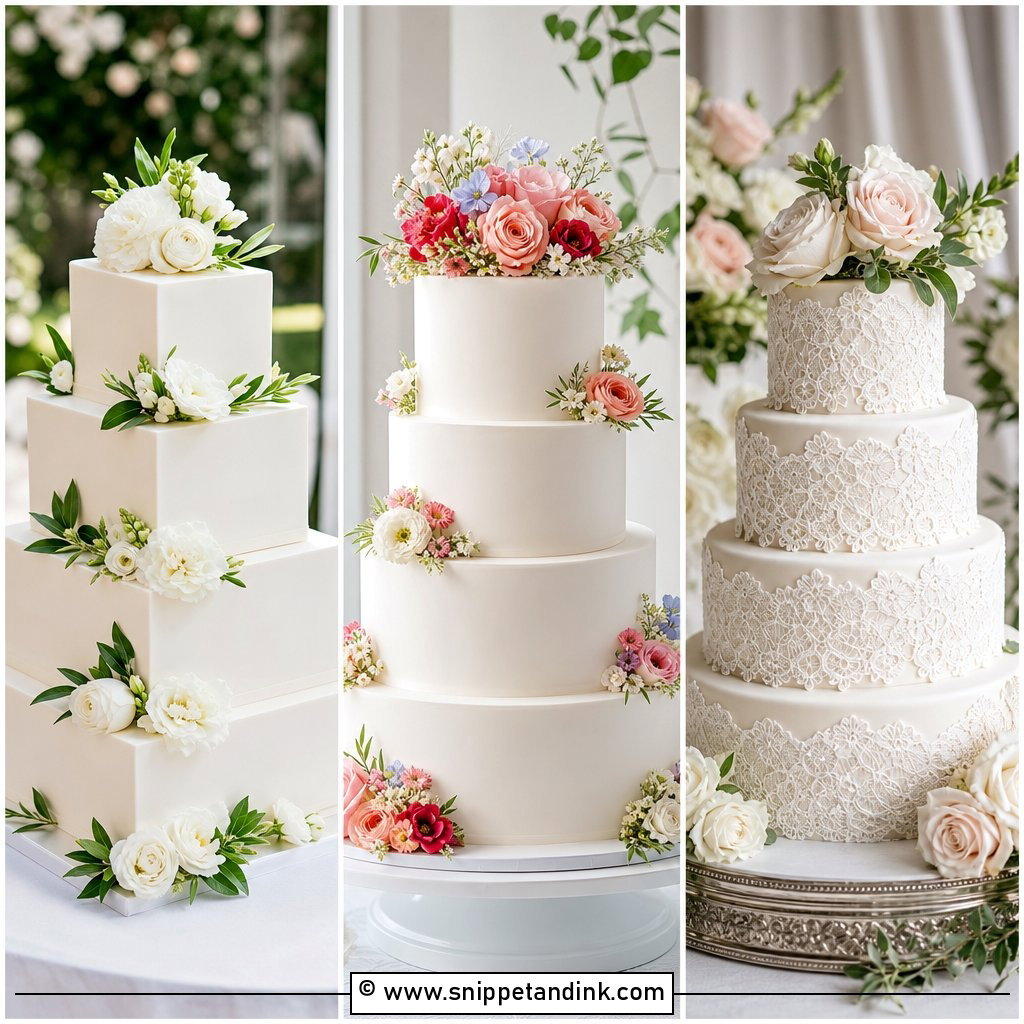
20. Tall Wedding Cake
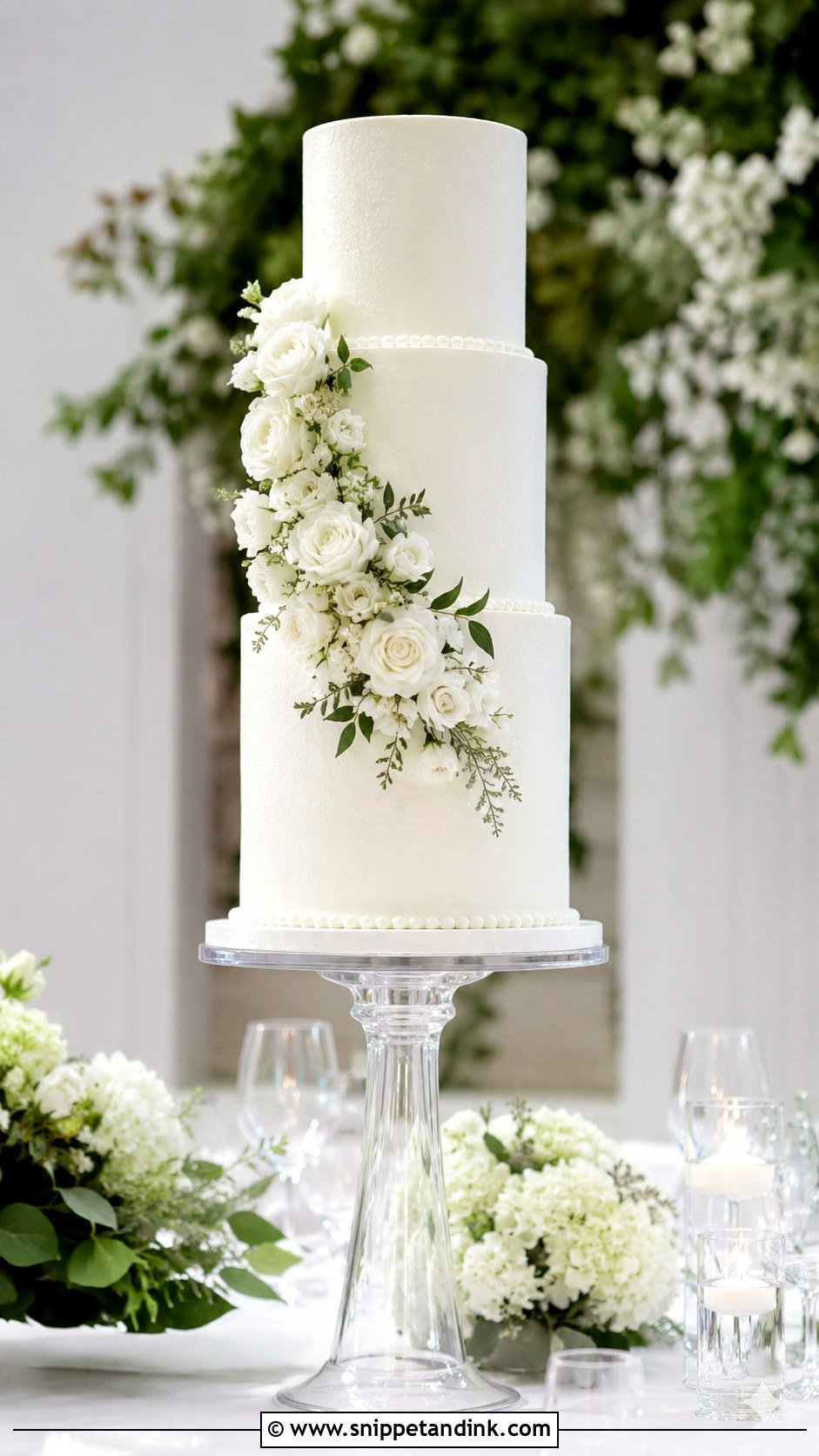
Height can stand in for decoration. A single tall tier, a two-tier with extra-deep layers or a slim three-tier with a clean finish all look elegant in plain buttercream. One floral cluster, a little greenery, a ribbon or a small pearl border keeps it refined. Tall tiers need more internal dowels and a level table, so tell your baker the exact table it’ll stand on. A slim pedestal with flowers around the base finishes it.
Ribbon Stains, Wilting Blooms and Weeping Fruit
Simple decorations are the ones most likely to change between delivery and cutting, because they’re natural materials sitting on a fatty surface. I plan for each one.
Ribbon
Unlined satin darkens where it touches buttercream. Ask your baker to back it, or choose a fondant finish under the ribbon.
Fresh flowers
Blooms out of water start to droop within hours in a warm room. Sturdy flowers like spray roses last longer than soft-petaled ones, and placing them at setup rather than in the kitchen buys you time.
Fruit
Berries and figs go on last, dry and whole where possible. Grapes and citrus are tougher, which is why I suggest them for longer receptions.
Where the Cake Stands Changes What It Needs
Put the cake on a sturdy, level table away from windows, heaters and the dance floor, where people bump tables. Good light matters too: a cake in a dark corner disappears in photos, while one near a soft window light or a few candles shows off texture and pearls. If you’re planning a pretty backdrop, tell your baker its color so the decoration doesn’t blend into it.
The Frosting Comes First, the Flowers Second
Simple decoration works when every detail has a reason to be there. Smooth buttercream, soft flowers, greenery, pearls, ribbon, fruit, gold leaf, vintage piping or a clean shape can all carry a wedding cake. The cakes guests remember aren’t always the tallest or the most expensive; they’re the ones that fit the couple, the venue and the season. Settle the shape and frosting first, then add one or two decorations that truly belong. That’s the order I follow at every consultation.
You'll Like These Ideas:












Leave a Reply