
Three tiers is the cake I’m asked for most, and it’s a forgiving size: tall enough to read from across a dining room, small enough that one baker can deliver and stack it without a crew. What changes from wedding to wedding is the surface. Textured buttercream, pressed flowers, pearls, Lambeth piping, clean fondant, fruit, greenery and sculptural shapes all sit on the same basic structure. Here’s how I think about twenty of them, including the ones I’d talk a couple out of for certain venues.
Giving Each Tier a Different Flavor
Three tiers make it easy to offer more than one flavor, and I encourage it, but with some logic behind which goes where.
- The bottom tier is the largest, often around half the cake, so it gets the flavor most guests will want. Vanilla or chocolate usually earns that spot.
- The top tier is small. That’s the place for the adventurous choice, like lavender honey or passion fruit, that you love and your uncle might not.
- Keep sponge densities in the same family. A light chiffon carrying a heavy carrot cake above it needs extra support and can settle unevenly.
- Fresh cream, custard and cream cheese fillings need refrigeration, which limits how long the cake can stand out. Jams, curds and ganache are far more forgiving.
Tell the caterer which tier is which before the cut. I label the boxes, but guests do ask, and if one tier contains nuts that information has to reach whoever is plating.
1. Three Tier Buttercream Wedding Cake
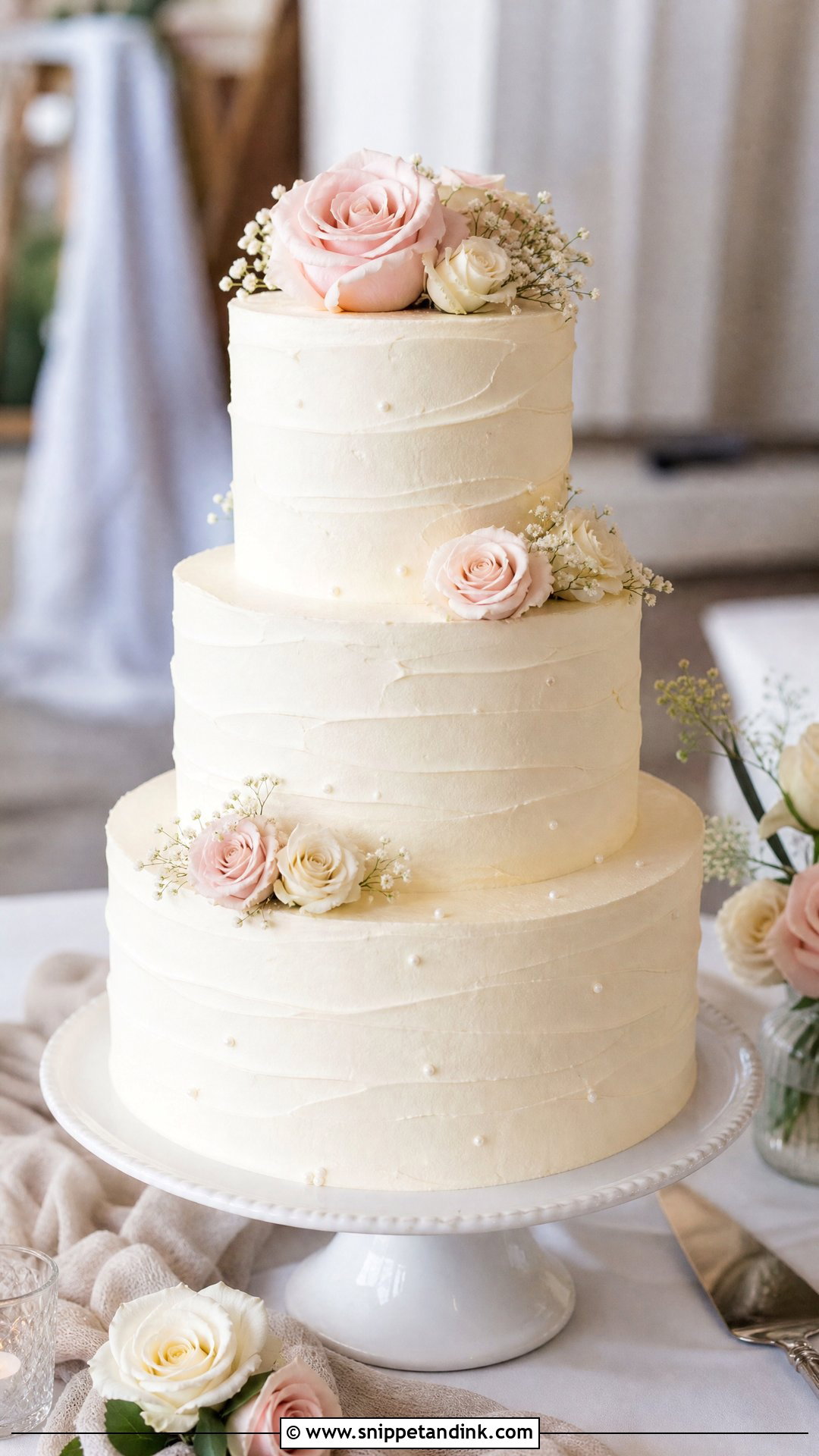
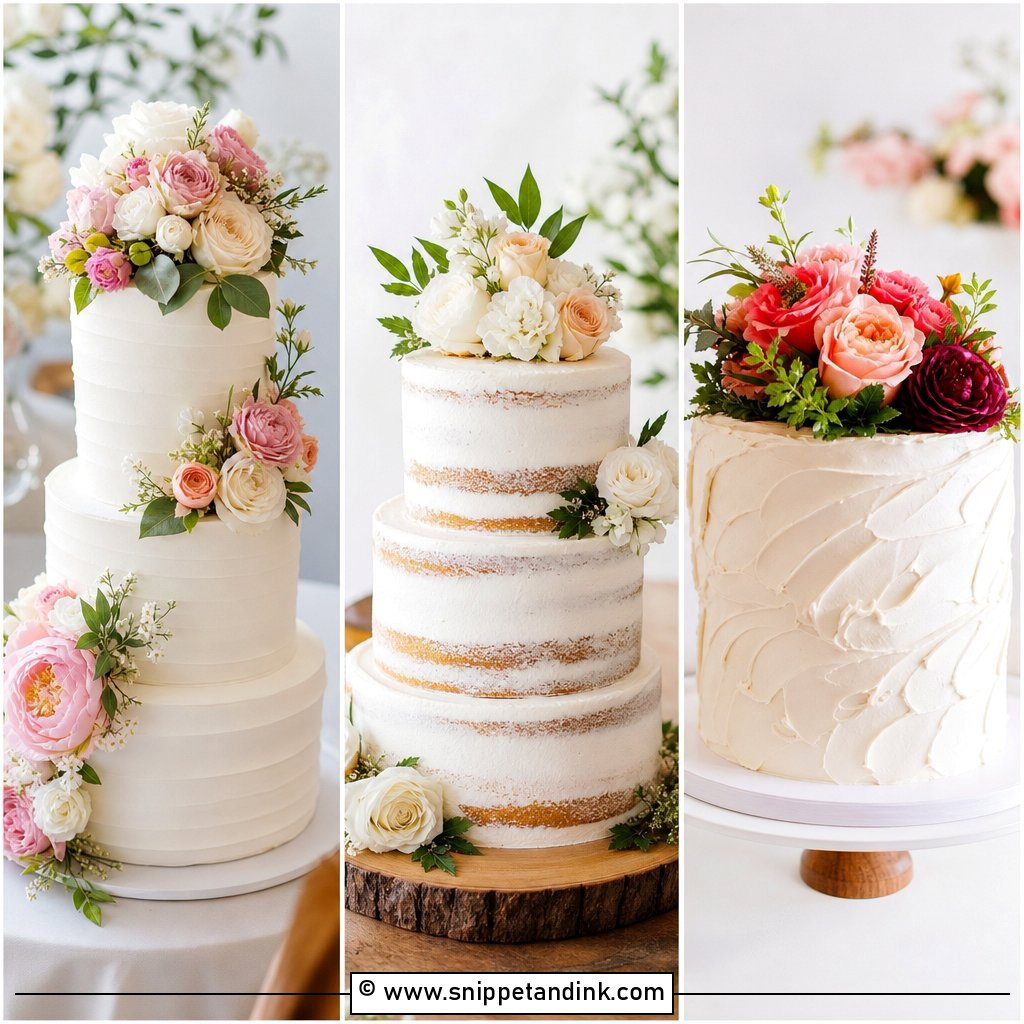
Most of my three tier orders are buttercream, mainly because guests actually eat it. A smooth finish takes a chilled cake, a warm bench scraper and patience, while gentle texture is quicker and more forgiving of a summer room. Ivory on its own reads classic, and soft blush, sage, champagne or pale blue piping brings in the palette without coloring the whole cake. The one thing I always warn about is direct sun, which softens buttercream fast and lets the upper tiers settle. Vanilla bean, almond, lemon and raspberry filling are the flavors couples pick most often with it.
2. Three Tier Fondant Wedding Cake
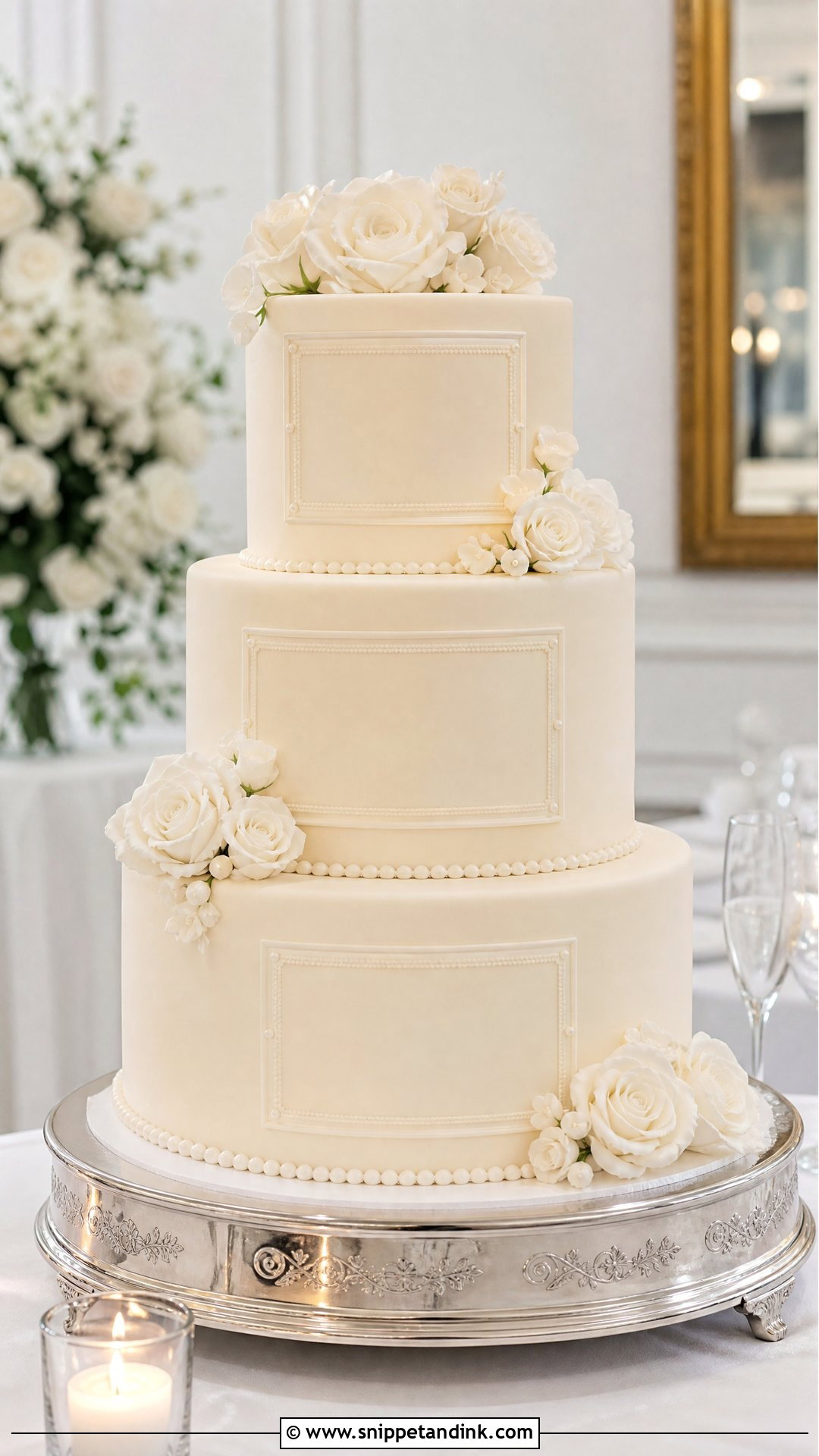
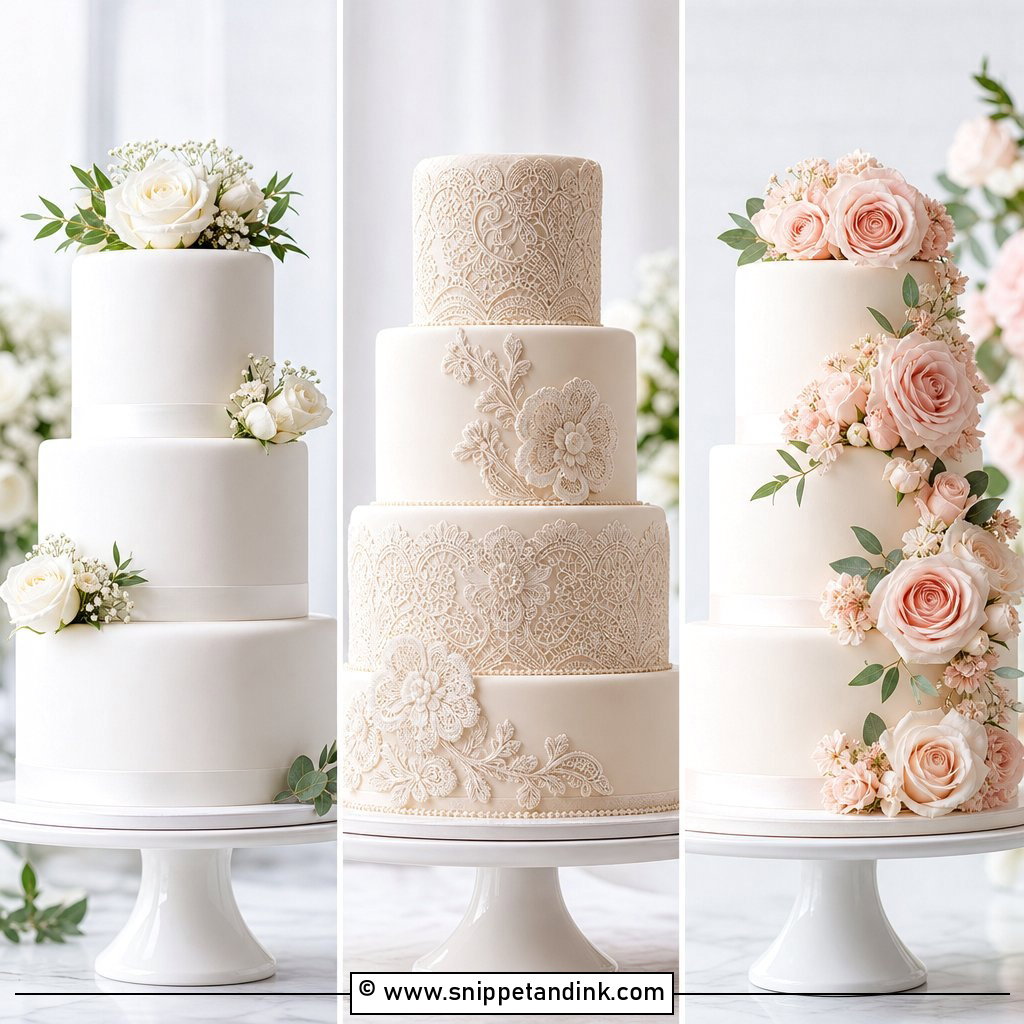
Fondant is a covering, not a flavor, and that distinction helps couples who think they dislike it. Underneath sits buttercream or ganache. I prefer ganache under fondant because it sets firm and gives those knife-sharp edges formal weddings lean toward. The surface takes painted flowers, metallic leaf, pleats and bows well, and ivory or muted shades photograph more naturally than stark white. Plenty of guests peel the fondant off, and that’s fine. Sugar flowers or fine piping keep it from looking stiff.
3. Three Tier Floral Wedding Cake
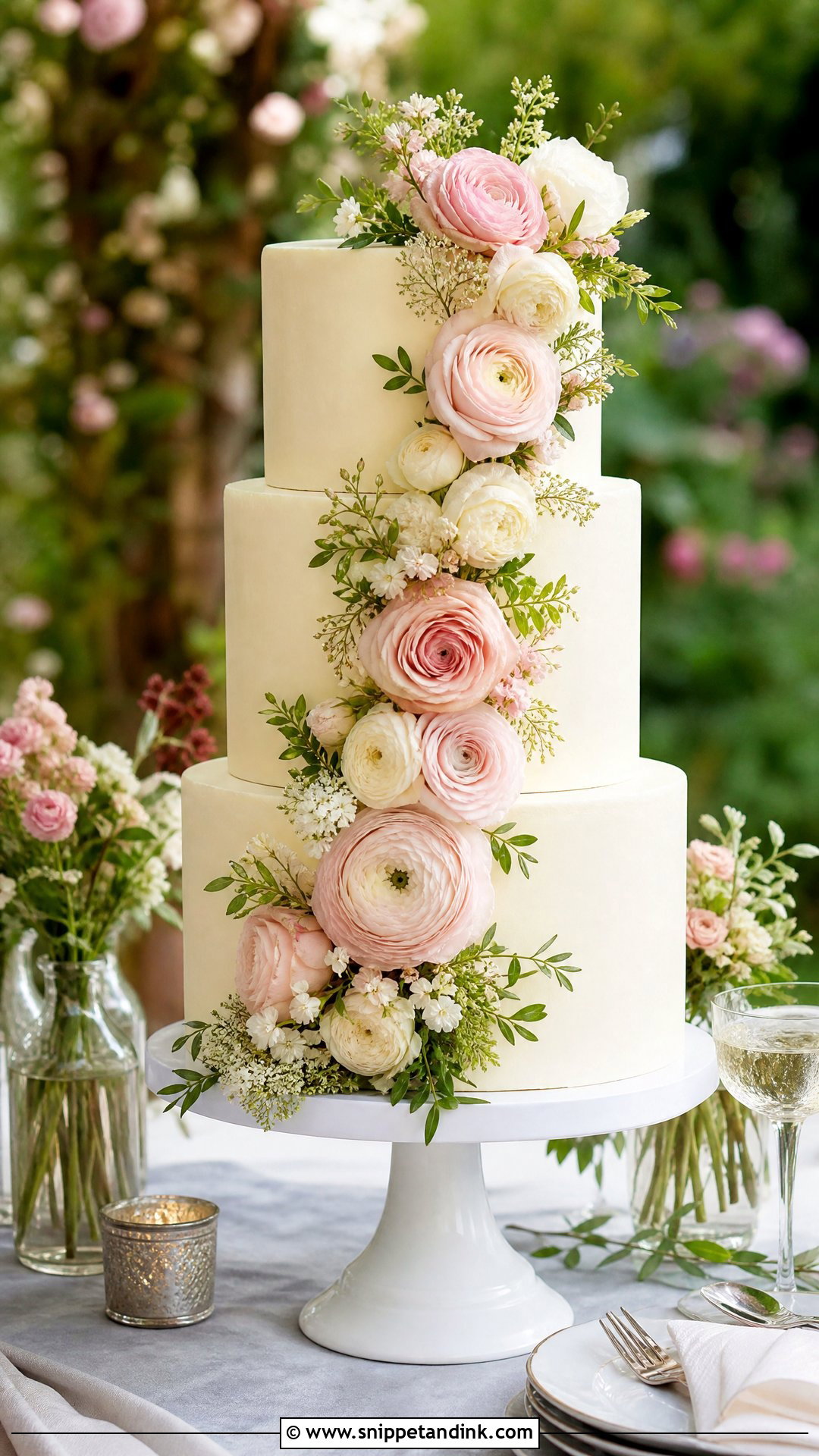
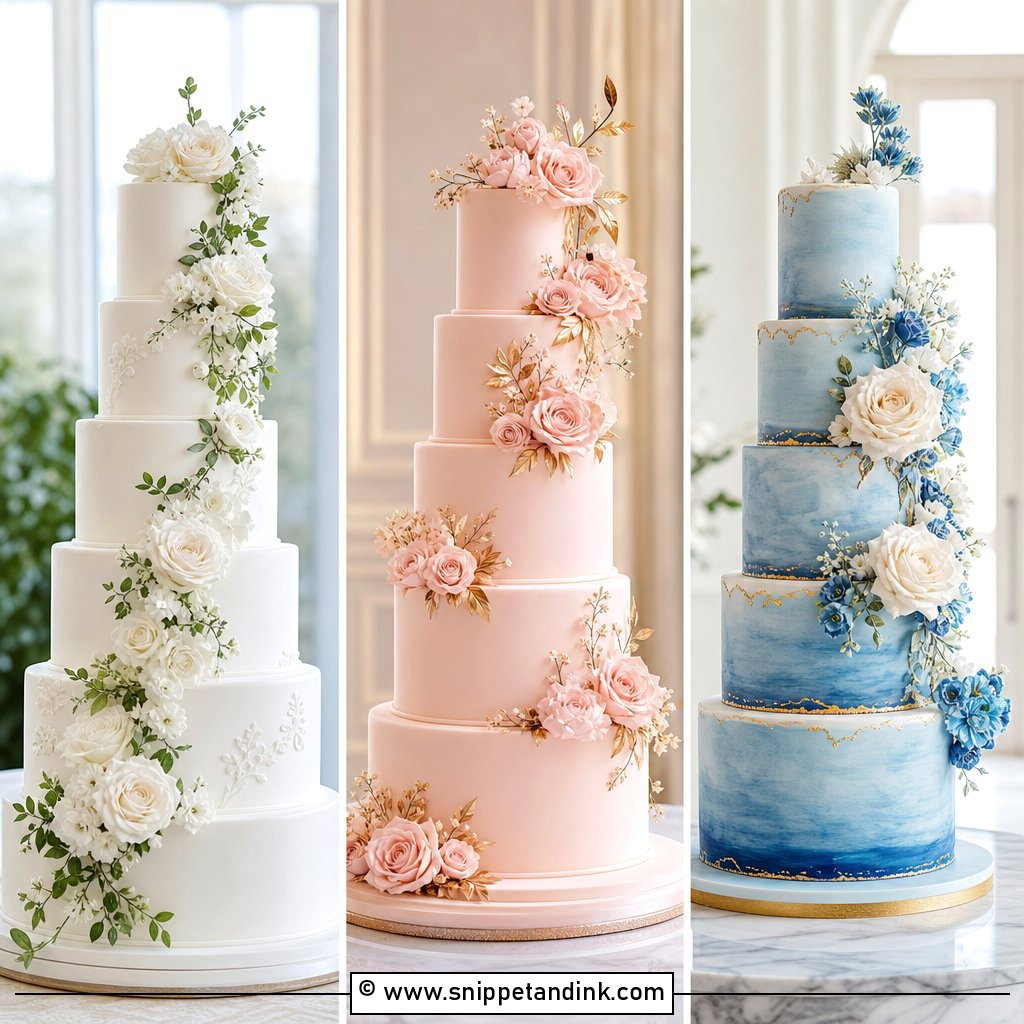
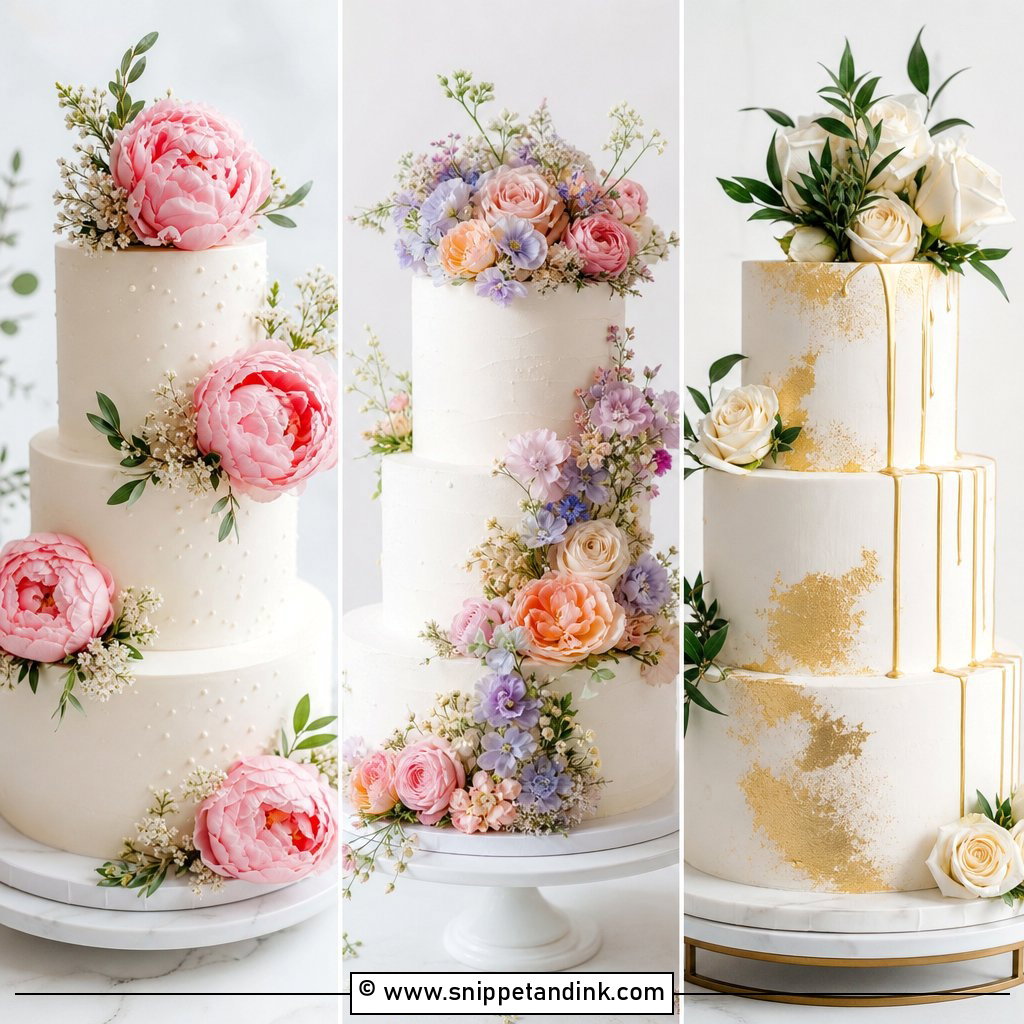
When the cake flowers repeat the bouquet, centerpieces or ceremony arch, the whole reception looks planned. Roses, peonies, ranunculus, orchids, gardenias and small fillers each set a different mood; clusters tucked between tiers read soft, and a cascade down one side reads bold. I keep the base plain white so the flowers have a quiet background. What I insist on is coordination: the florist supplies unsprayed blooms, I wrap or pick the stems, and anything toxic sits on a barrier rather than in the sponge. Gardenias bruise brown wherever they’re touched, so they get handled as little as possible.
4. Three Tier White Wedding Cake
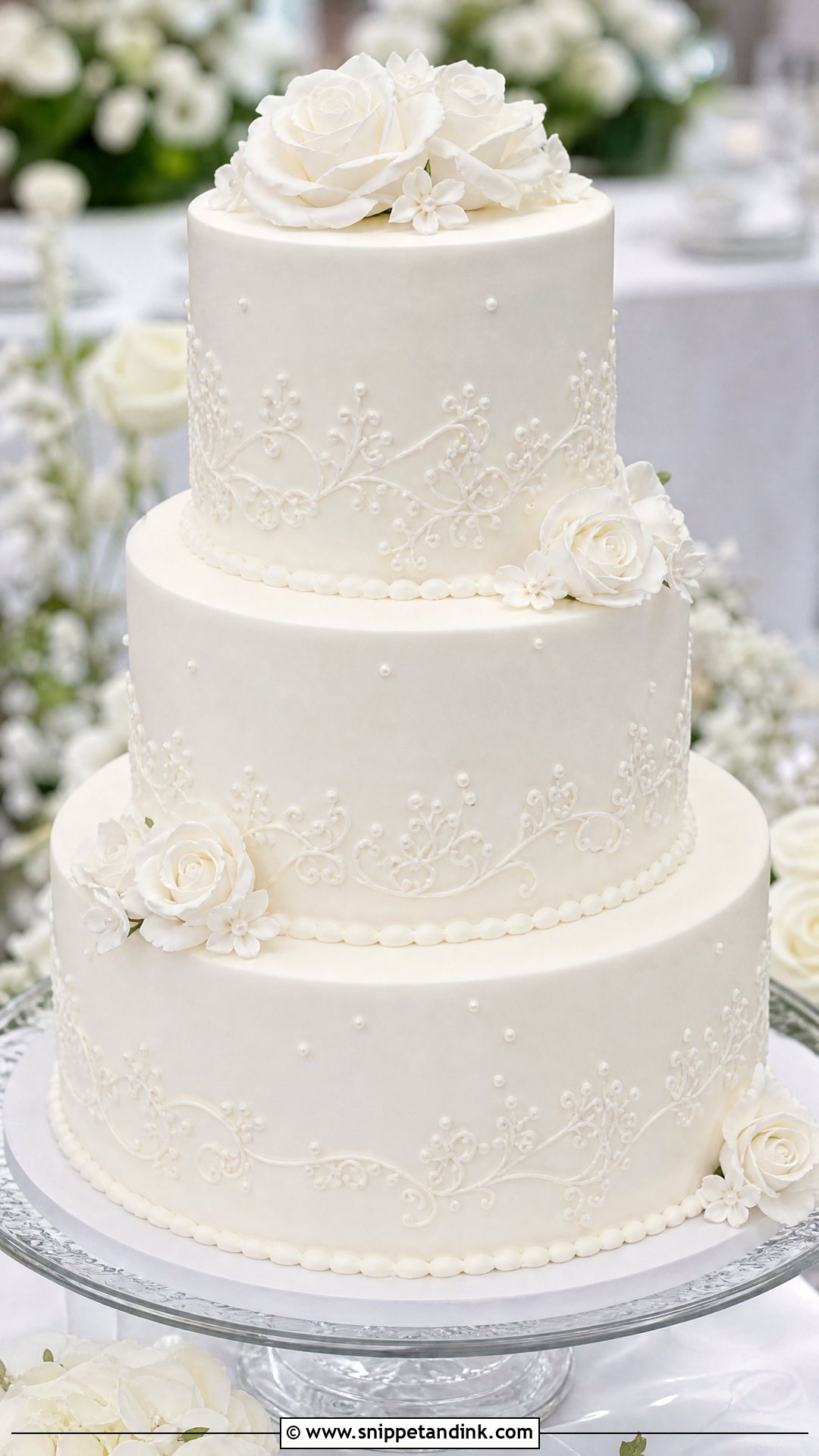
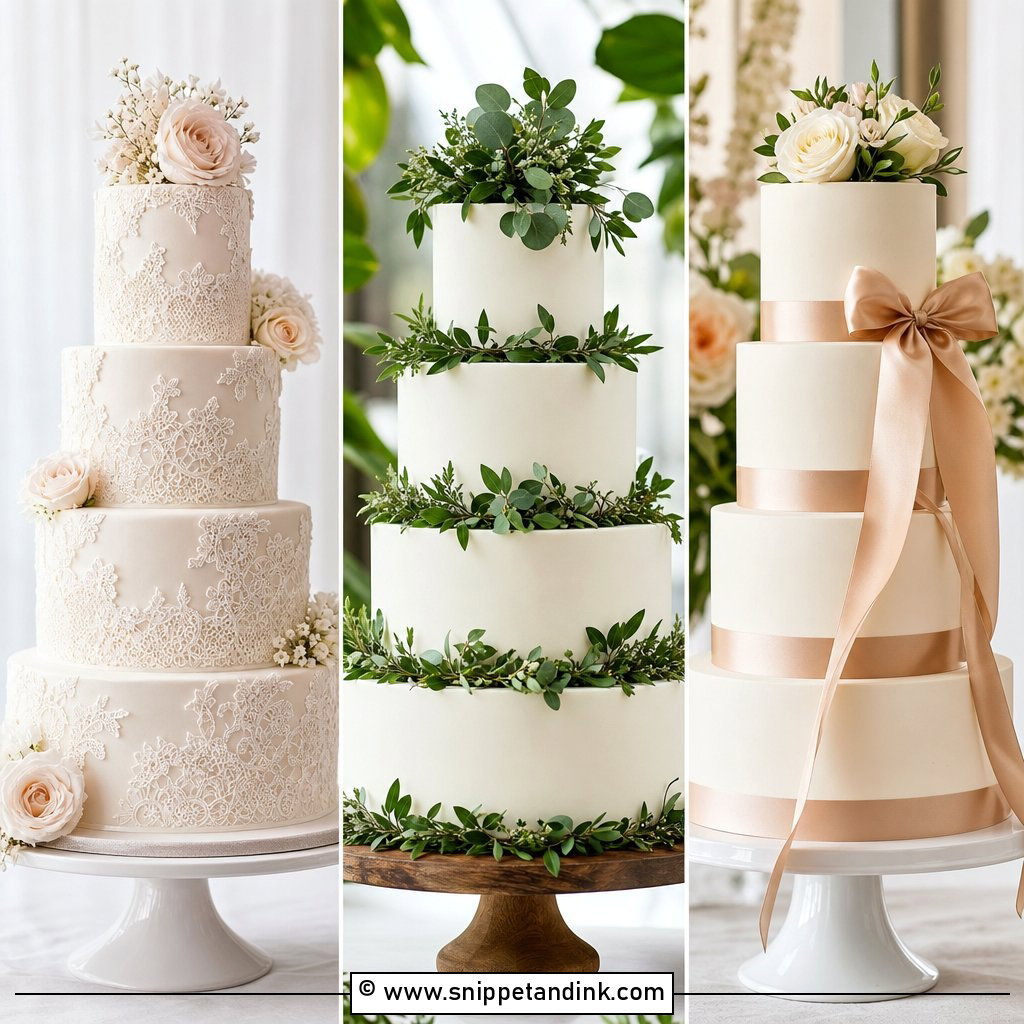
A plain white cake hides nothing, which makes it the hardest one to do well. Every air bubble and uneven edge shows, so texture becomes the decoration: piped lace, pearl dots, a fine comb pattern. White roses, sugar flowers or tiny fresh blooms add depth without breaking the white. I’ll often match the frosting shade to the dress, because a bright white cake beside an ivory gown can make the gown look yellow in photos. Vanilla bean, coconut, almond, lemon and white chocolate keep the inside pale too.
5. Three Tier Rustic Wedding Cake
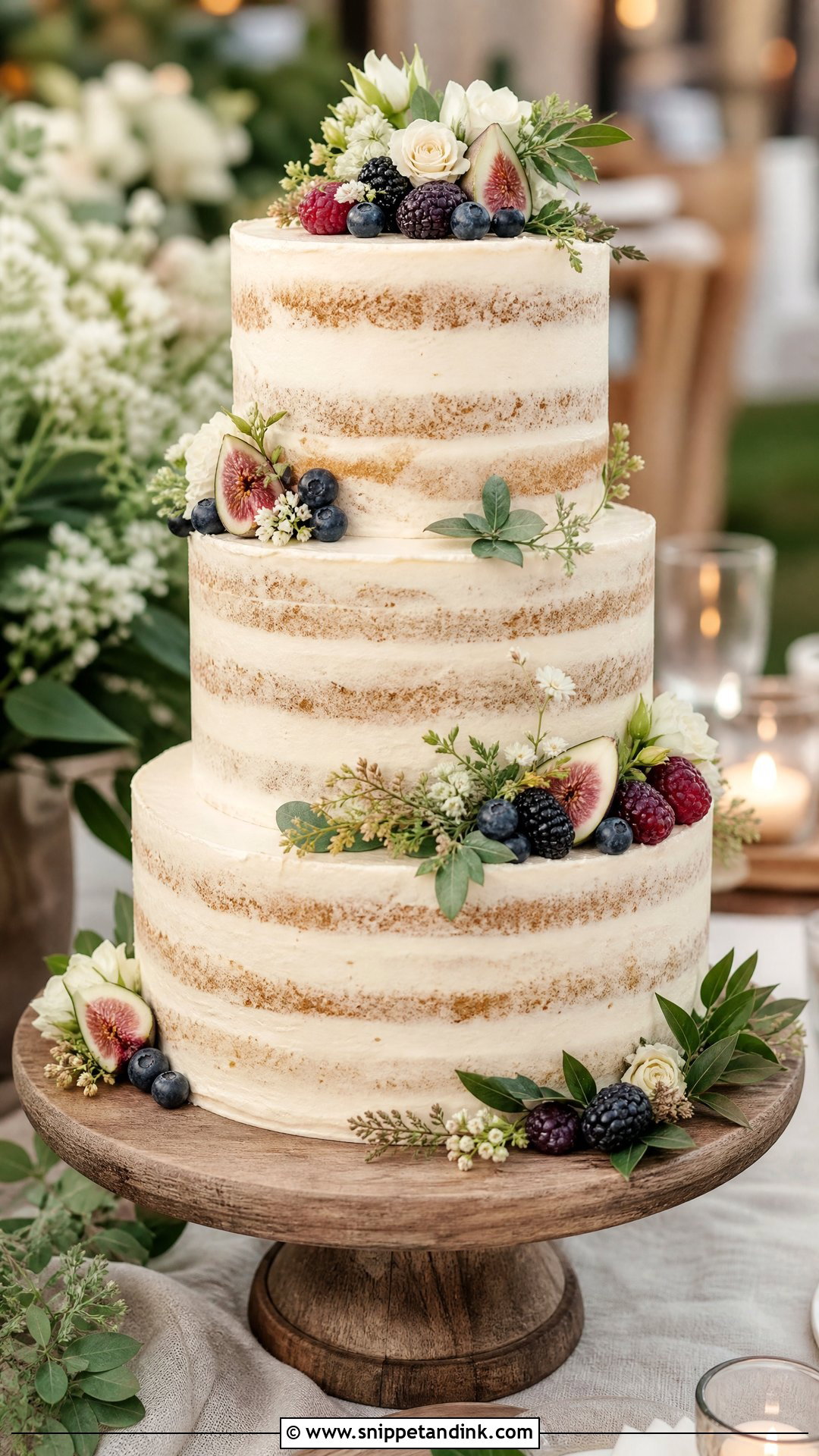
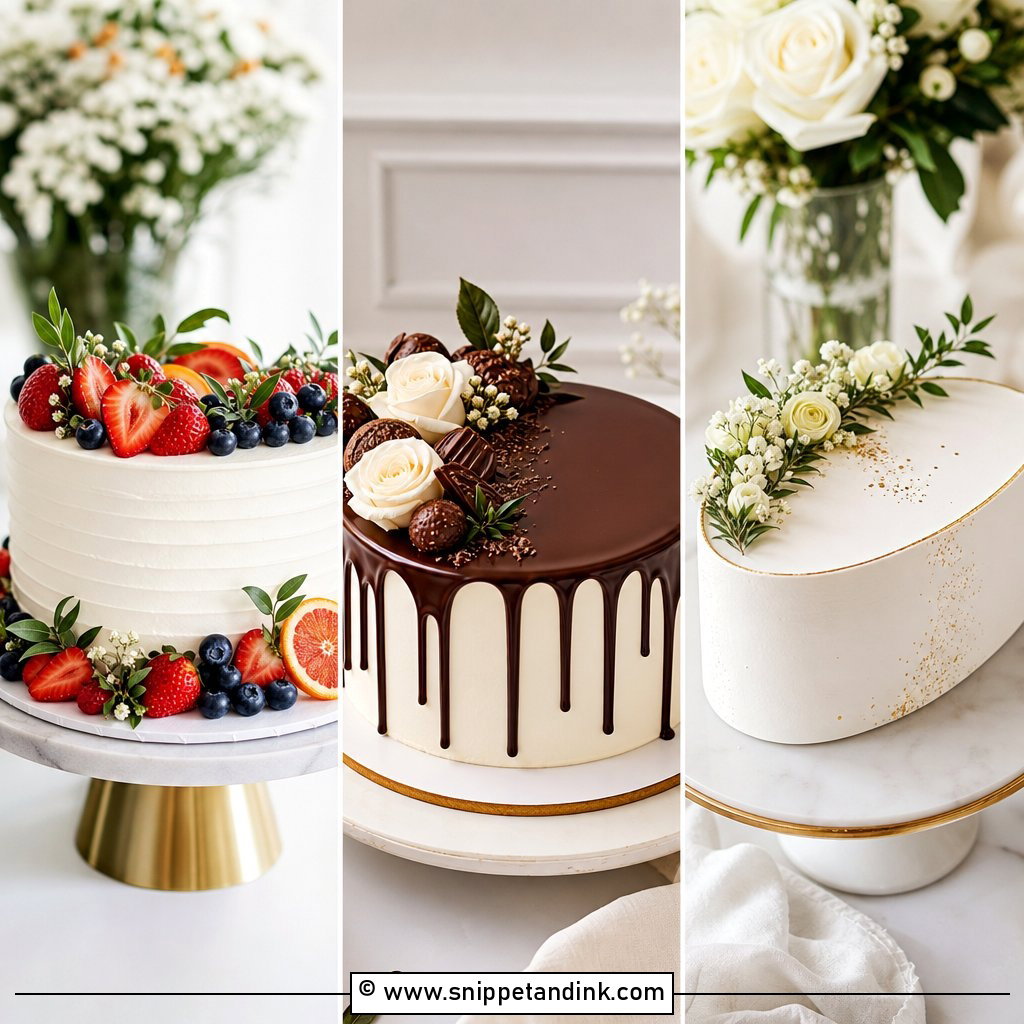
Rustic suits barns, orchards and country receptions, and the finish is usually semi-naked, lightly textured or roughly frosted buttercream. Decoration comes from the season: greenery, herbs, figs, berries, dried citrus and loose flowers. A wooden slab stand grounds the whole display, though I always put a cake board between the sponge and raw wood. Imperfect is the goal, but deliberately loose and carelessly messy are different things, and I still level every layer. Vanilla, carrot, spice, lemon or chocolate with a fruit filling make it a cozy dessert.
6. Three Tier Vintage Wedding Cake
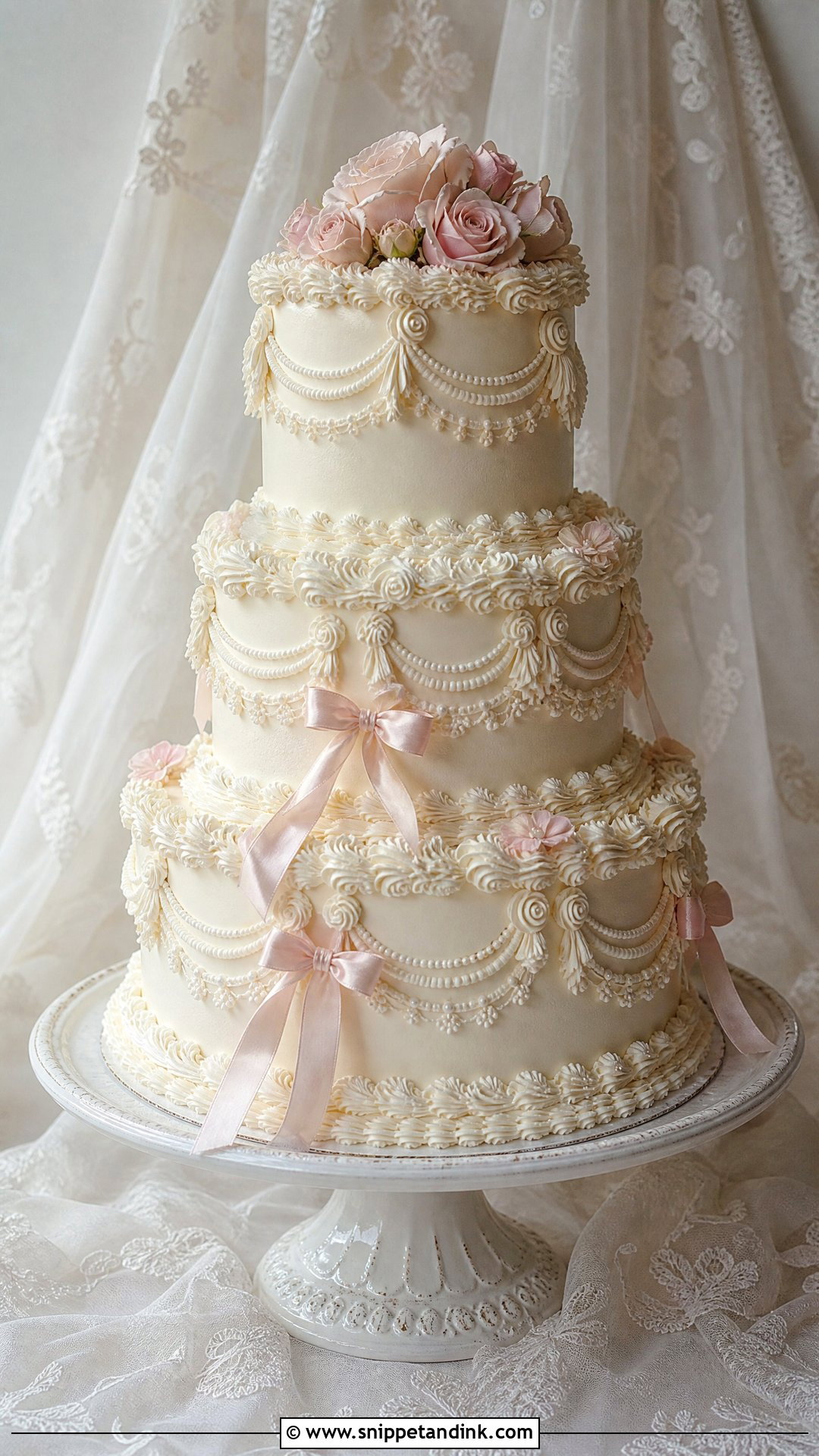
The piped revival is real and I enjoy doing it, but it rewards restraint. Lambeth overpiping, shell borders, bows, swags and rosettes can all go on one cake, yet if every surface is covered the eye has nowhere to rest, so I usually let one tier carry the heaviest work. Soft color helps: ivory, blush, butter yellow or pale blue. This style needs a stiff, crusting buttercream. In a hot venue I’ll steer you toward a cooler room for the display, or toward royal icing details that don’t soften. Vanilla, almond, chocolate or raspberry cream suit a historic venue.
7. Three Tier Pearl Wedding Cake
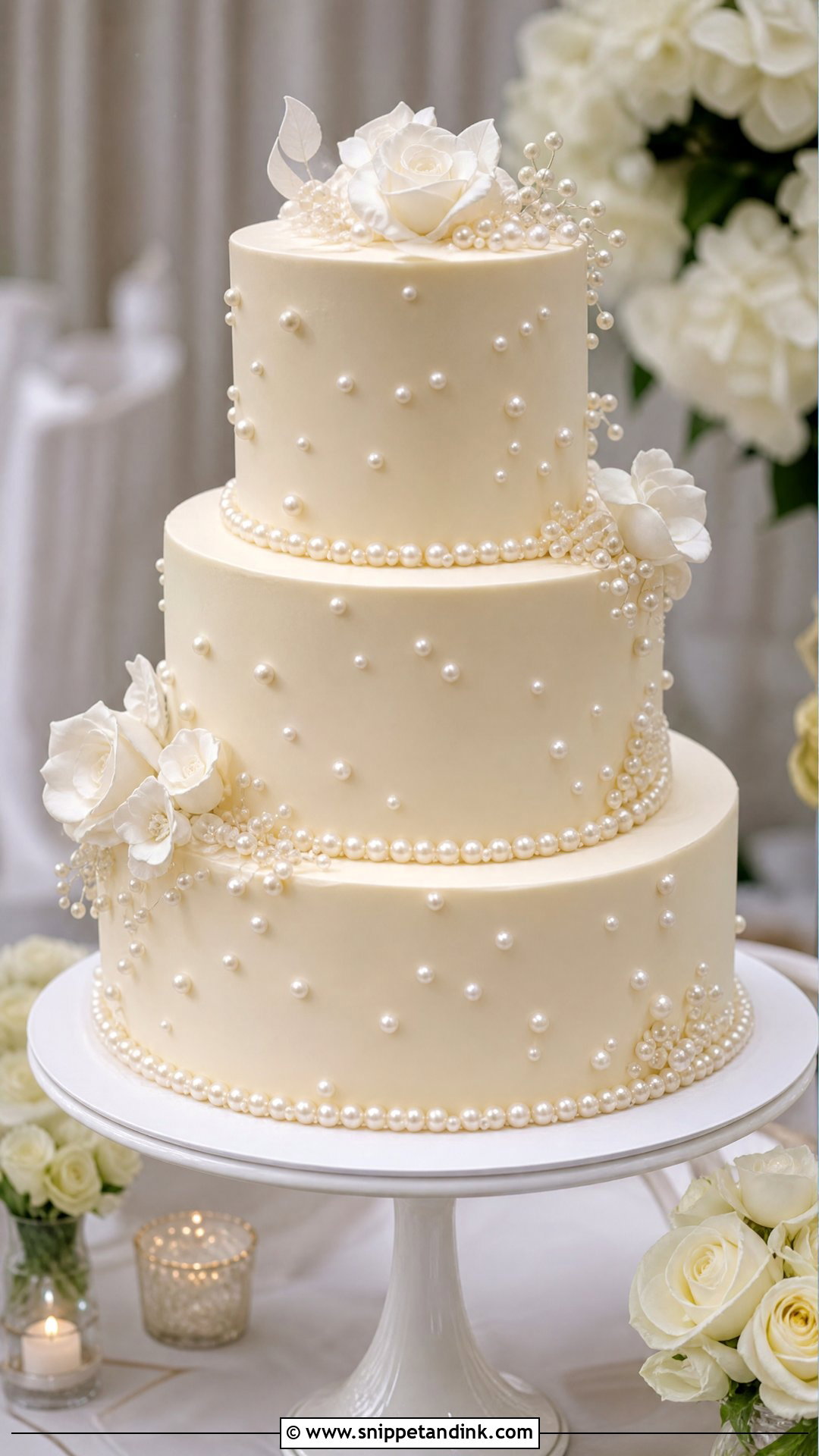
Pearls can go on as tiny borders, scattered accents, full bands or clusters around flowers. Hard sugar dragées can crack a tooth, so on anything guests will bite into I use softer sugar-paste pearls fixed with a dot of icing. Smooth fondant shows them best; on buttercream they can sink slightly in a warm room. Don’t cover every inch. A single band at the base of each tier frames the shape and does more than a full coating. Ivory cake, white chocolate buttercream, vanilla sponge and champagne tones tie in neatly with a pearl veil or earrings.
8. Three Tier Gold Wedding Cake
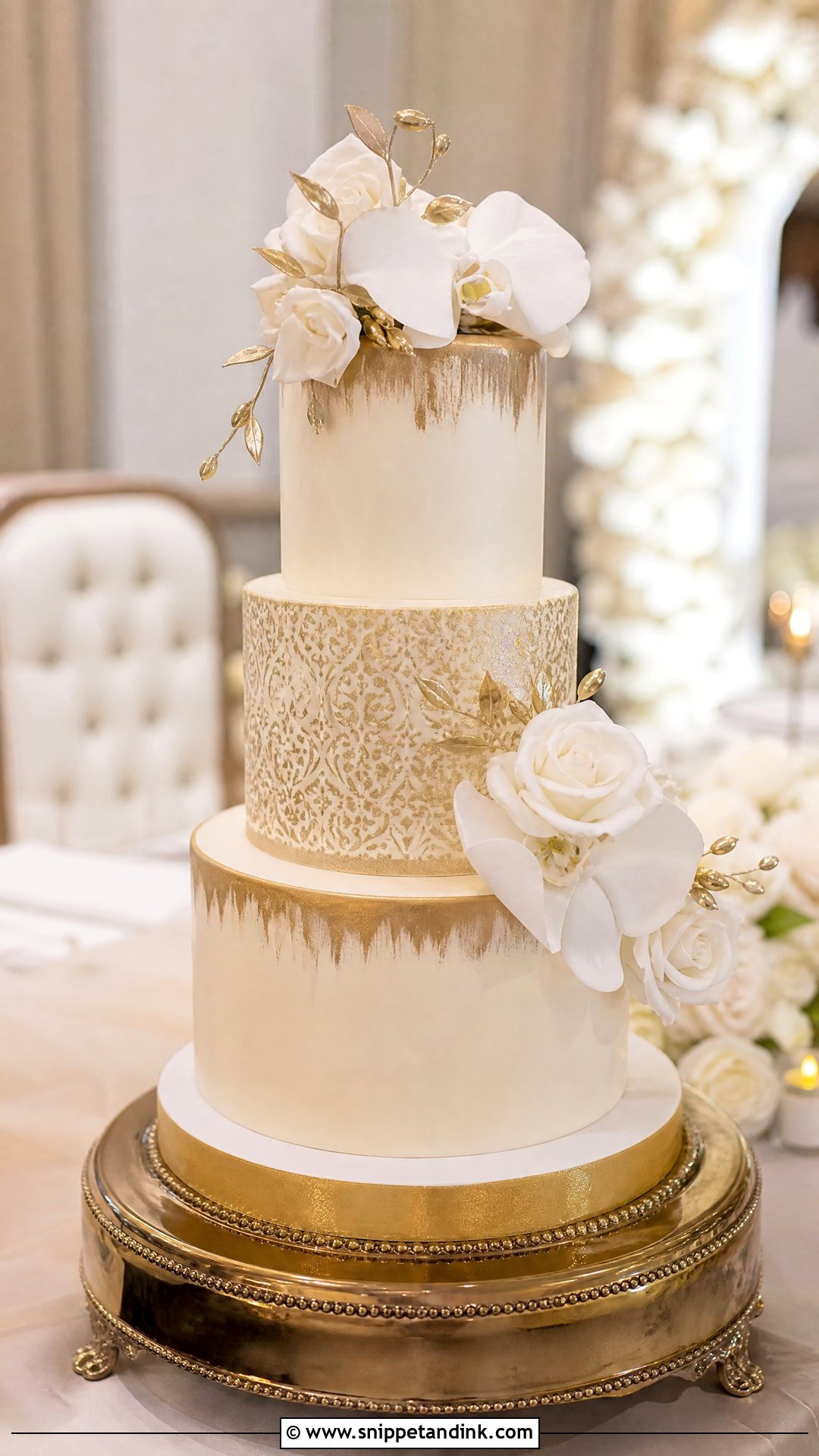
Gold works best as a highlight: a painted edge, foil accents, a stencil, a thin band or one brushed tier. I paint with edible lustre mixed with alcohol over a firm, chilled surface, since on soft buttercream it streaks. It sits easily beside ivory, white, blush, black, emerald and dusty blue. Under candlelight gold glows, but direct flash can turn it into a white glare, so for evening receptions I keep the metallic areas smaller. Vanilla, chocolate, caramel and almond all suit it, and a few flowers soften the shine.
9. Three Tier Modern Wedding Cake
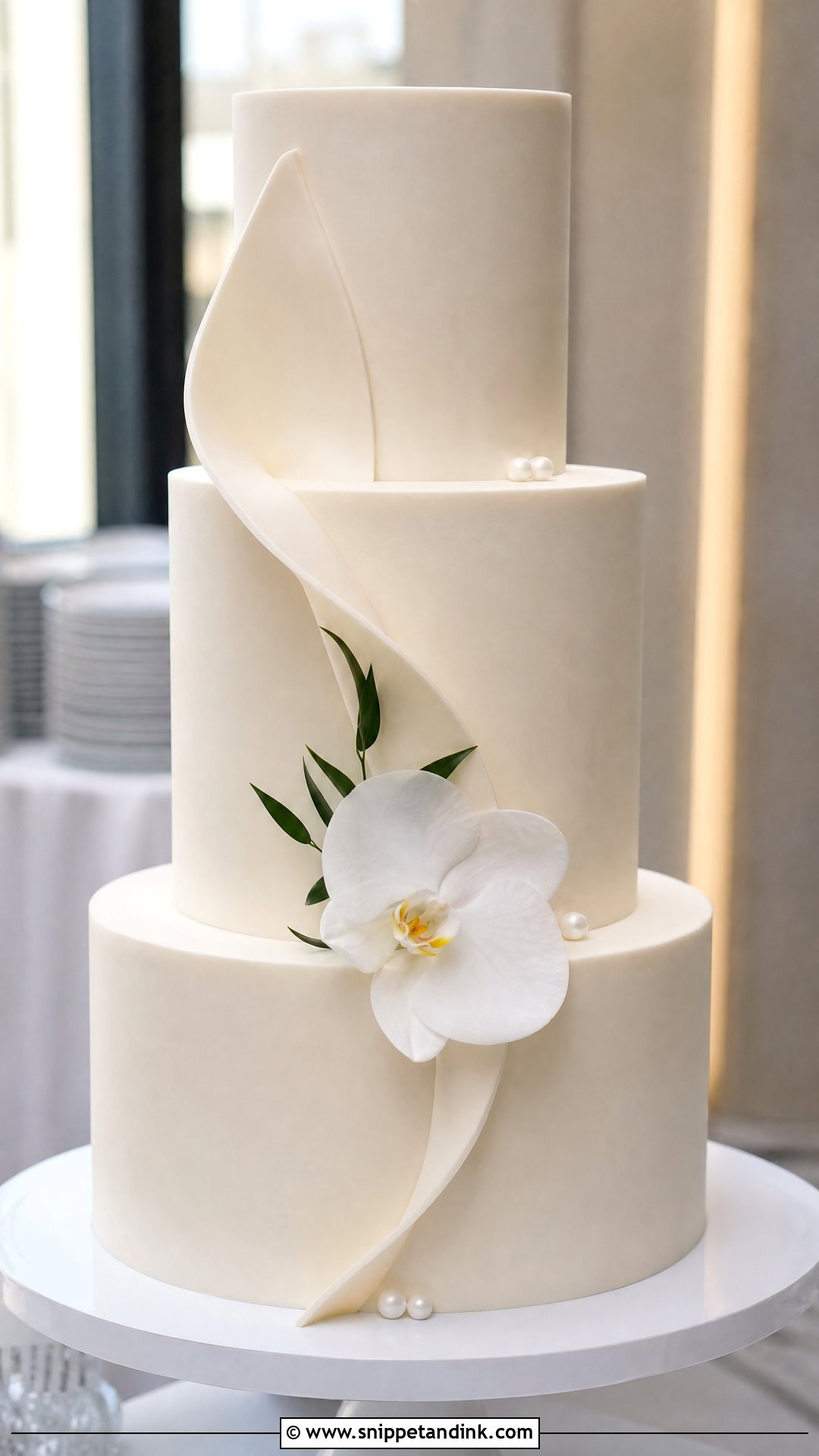
Modern cakes are where the engineering shows. Offset tiers, sharp edges, uneven tier heights and a single sculptural accent all need supports placed precisely, because the weight no longer sits straight down the middle. I’d skip an offset design if the venue has stairs or a long walk from the loading door. White, ivory, taupe, stone gray and black accents are the usual palette, and soft pastels can work with restraint. Keep the cake table clear. One statement flower or a curved fondant ribbon is plenty.
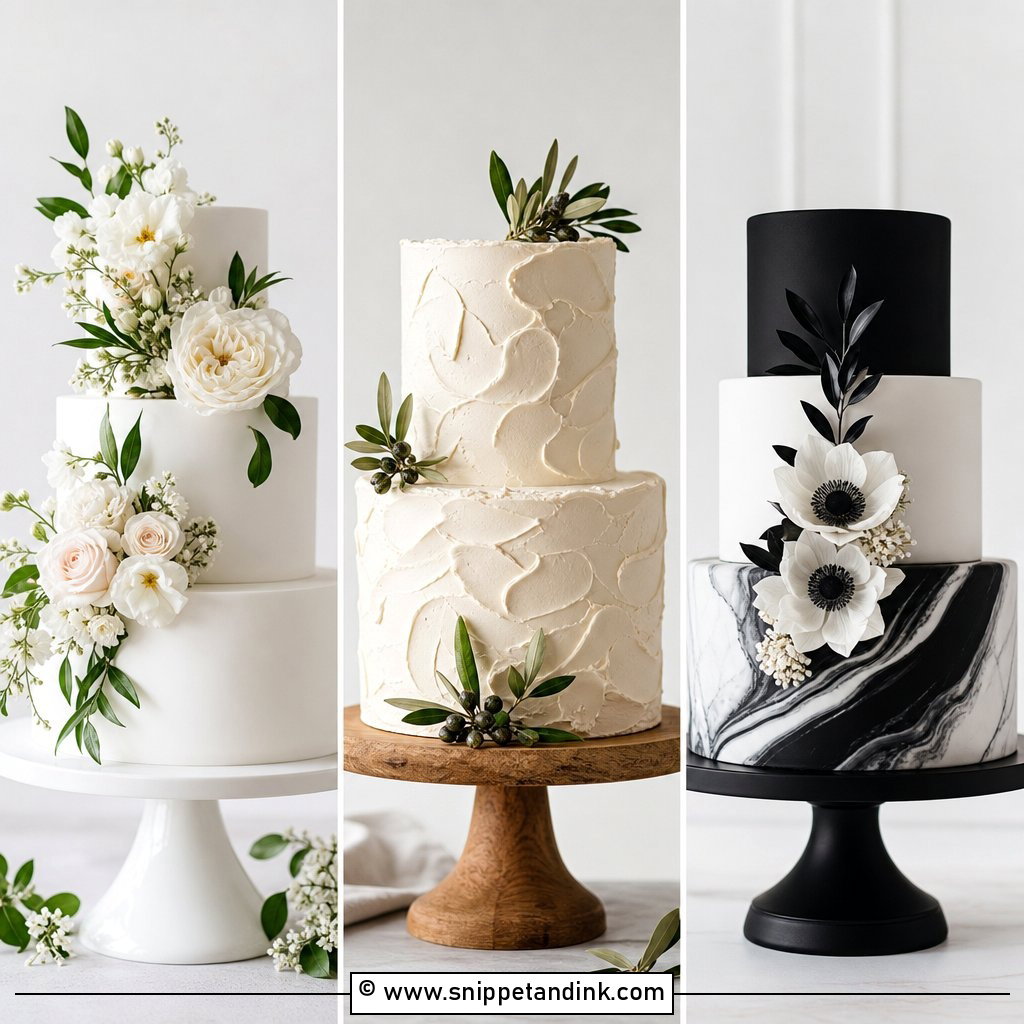
10. Three Tier Greenery Wedding Cake
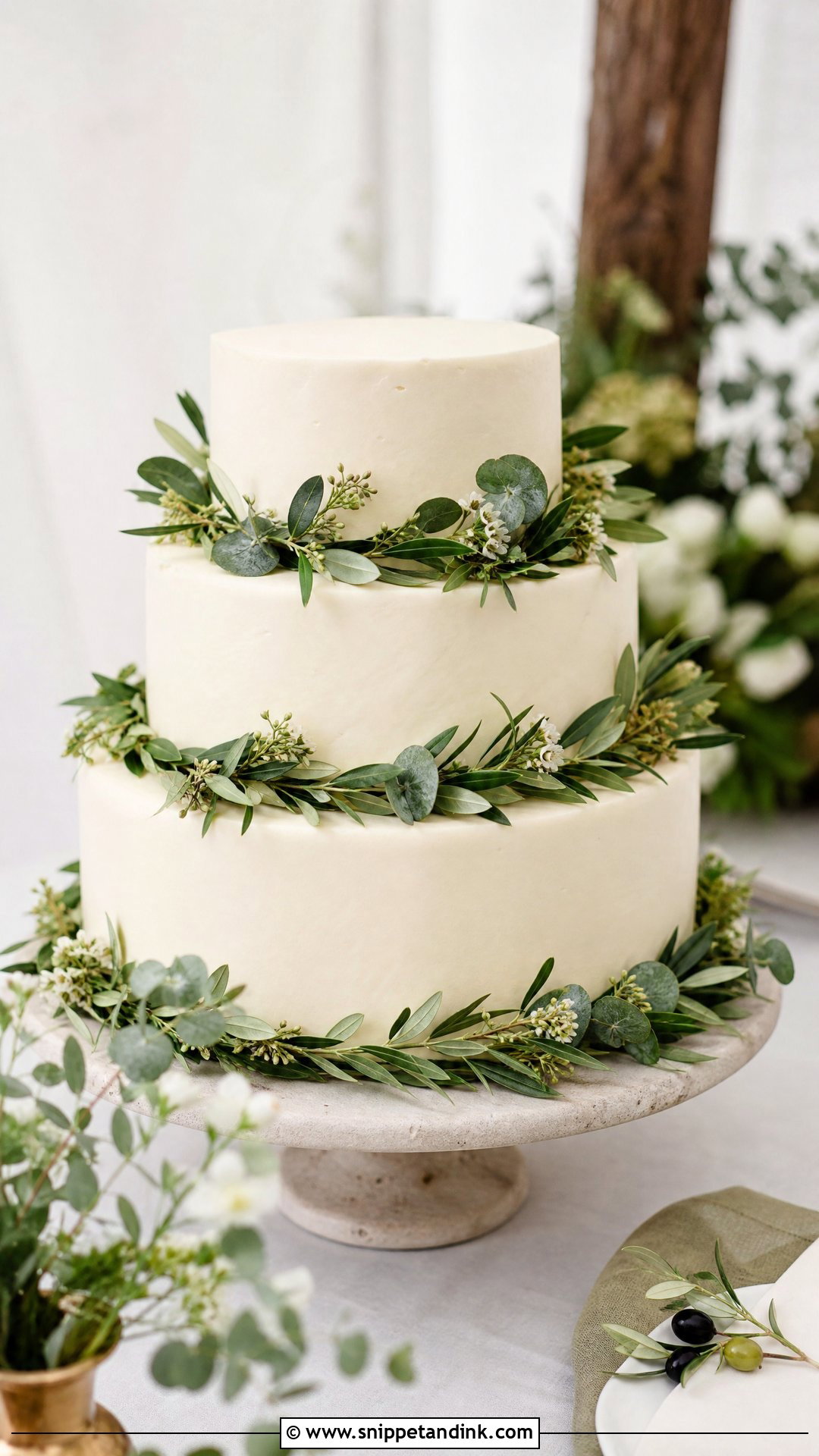
Greenery shifts with its surroundings: rustic on wood, coastal beside linen, classic on silver. Eucalyptus, olive, fern, rosemary and small vines are what florists usually hand me, and only the rosemary is food in its own right, so the rest go on with taped stems or a barrier. Rosemary has another advantage in that it stays perky for hours without water. White buttercream makes leaves look crisp, while a semi-naked finish or wooden stand warms them. Lemon, vanilla, almond and berry flavors match the fresh look.
11. Three Tier Naked Wedding Cake
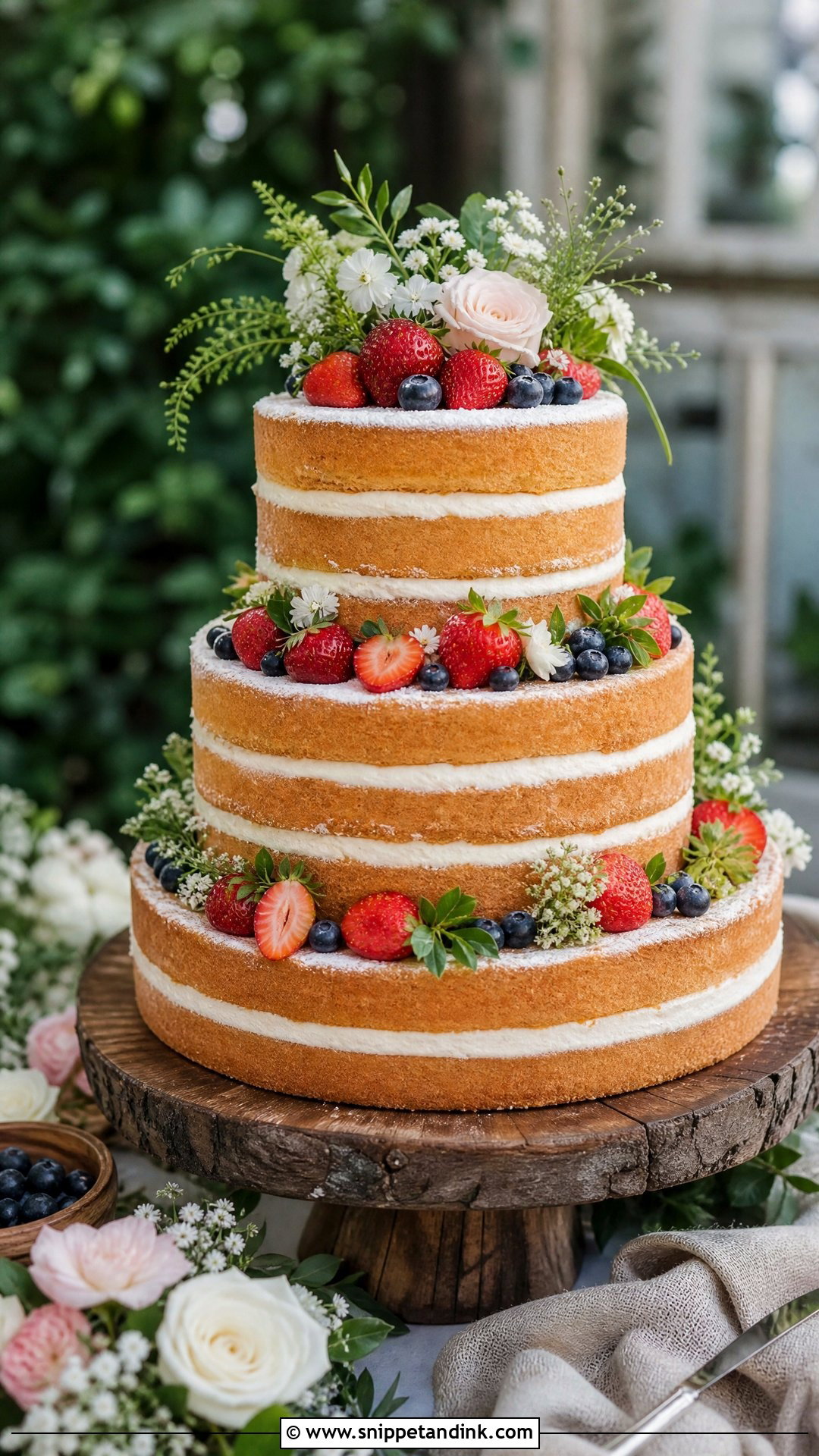
A true naked cake has only a scraping of frosting, so the layers become the decoration. That’s lovely at a brunch or garden reception, but it’s also the finish that dries out fastest. Exposed sponge loses moisture within hours, so I brush each layer with syrup and assemble as close to the event as I can. Choose the sponge with the palette in mind, because vanilla, chocolate, carrot, lemon and red velvet each look different from the side, and berry jam, cream cheese or whipped buttercream fillings show as stripes. Fruit, flowers or greenery finish it.
12. Three Tier Semi Naked Wedding Cake
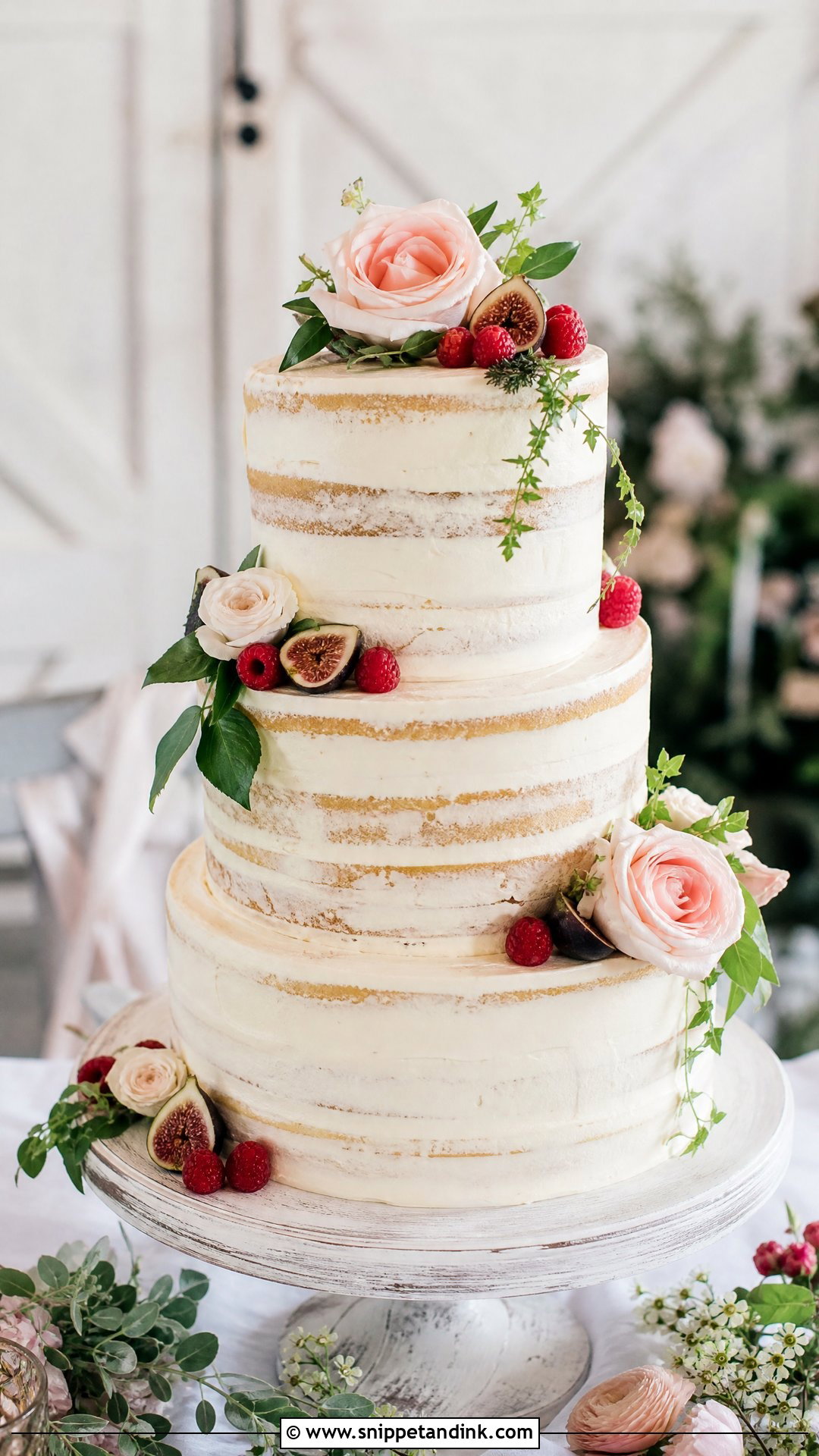
Semi-naked splits the difference. I crumb-coat thinly and scrape back, which allows some sponge to show through while the edges stay clean. It protects the cake better than a fully naked finish, so it’s the one I recommend if the cake will stand out for a few hours. Fresh flowers, berries, figs, greenery or a simple topper suit it. Almond, vanilla, carrot or lemon with fruit filling taste the way it looks. Side light from a window shows the texture best.
13. Three Tier Ruffle Wedding Cake
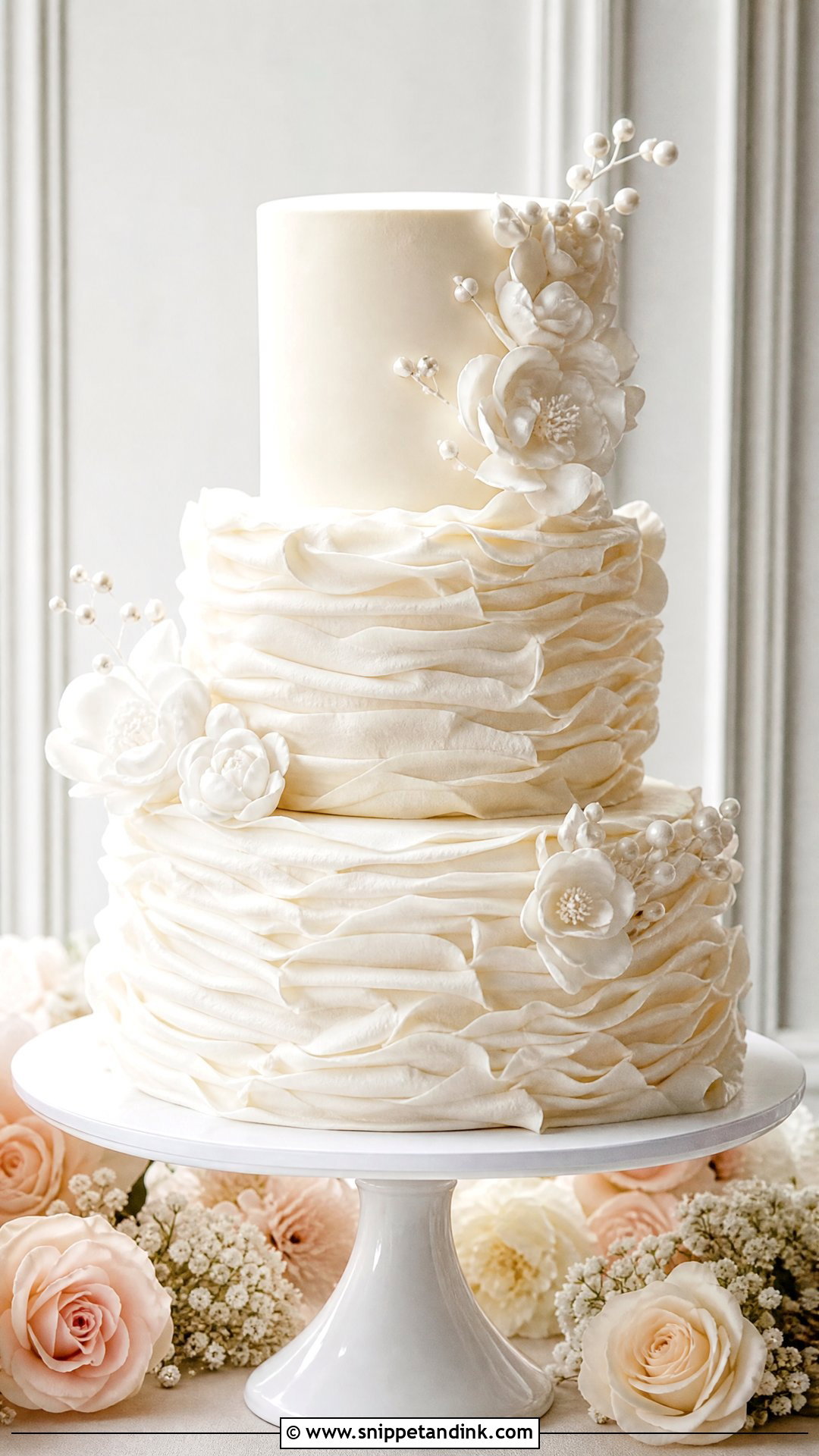
Ruffles can be piped in buttercream or cut from fondant strips and folded on, and the two look quite different. Buttercream ruffles are softer and petal-like; fondant ruffles hold crisp, fabric-like folds and cope with warmth better. Ruffling all three tiers is dramatic and slow work, and one ruffled tier between smooth ones is often enough. White and ivory are classic, while blush, champagne and pale peach add warmth. Keep the extras to a few sugar flowers or a plain stand, because texture this busy doesn’t need competition.
14. Three Tier Drip Wedding Cake
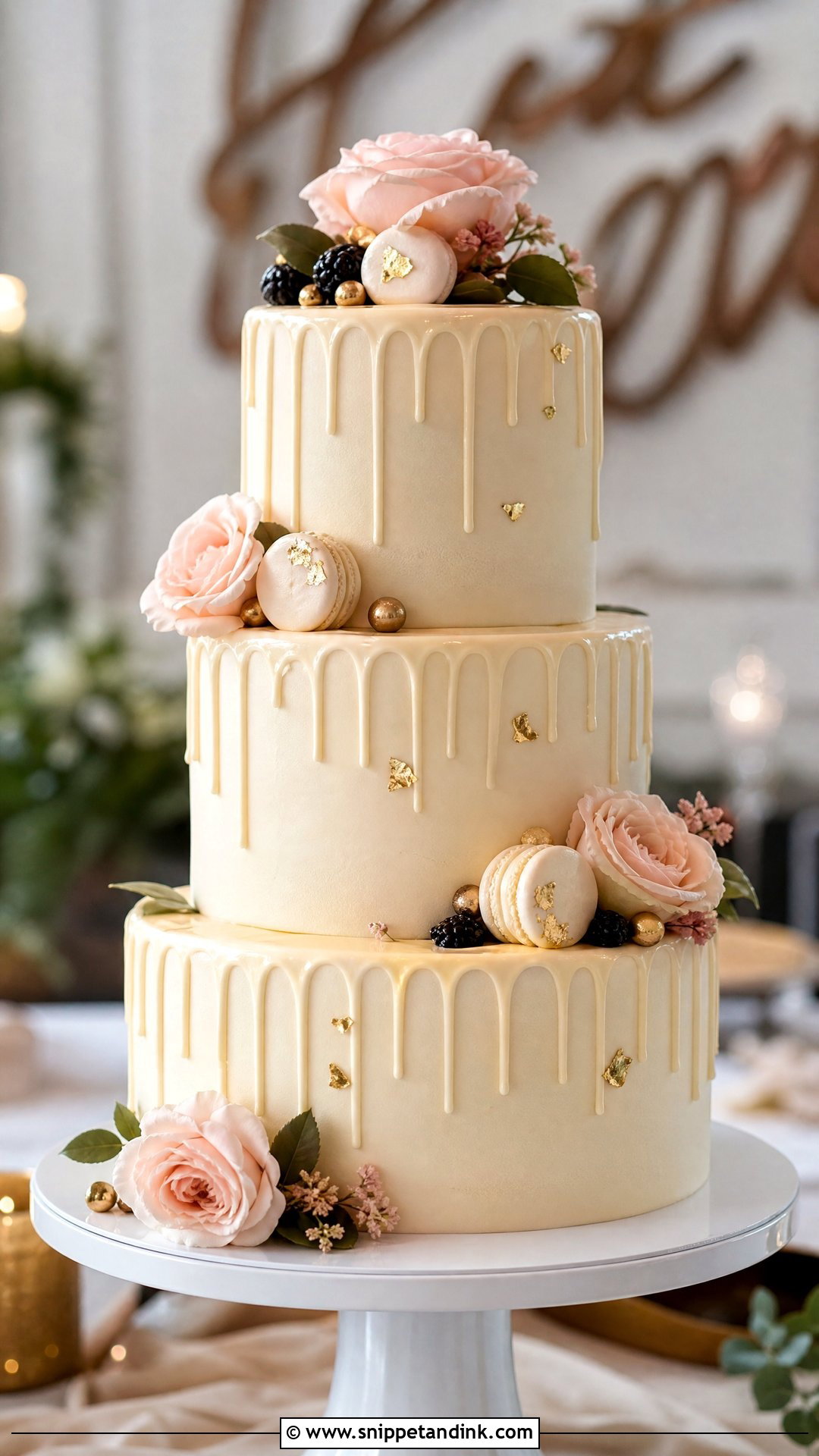
Drips look casual, but a neat one comes down to temperature. Ganache poured too warm runs to the board; too cool, it stops in blobs. I always test one drip on the chilled cake before doing the rest. White chocolate, caramel, dark chocolate or tinted ganache all work over smooth buttercream, finished with flowers, macarons, berries or gold. It suits a less formal reception and pairs naturally with a different flavor on each tier. Tinted white chocolate is the fussiest to color and set, so give your baker some leeway on the exact shade.



15. Three Tier Black And White Wedding Cake
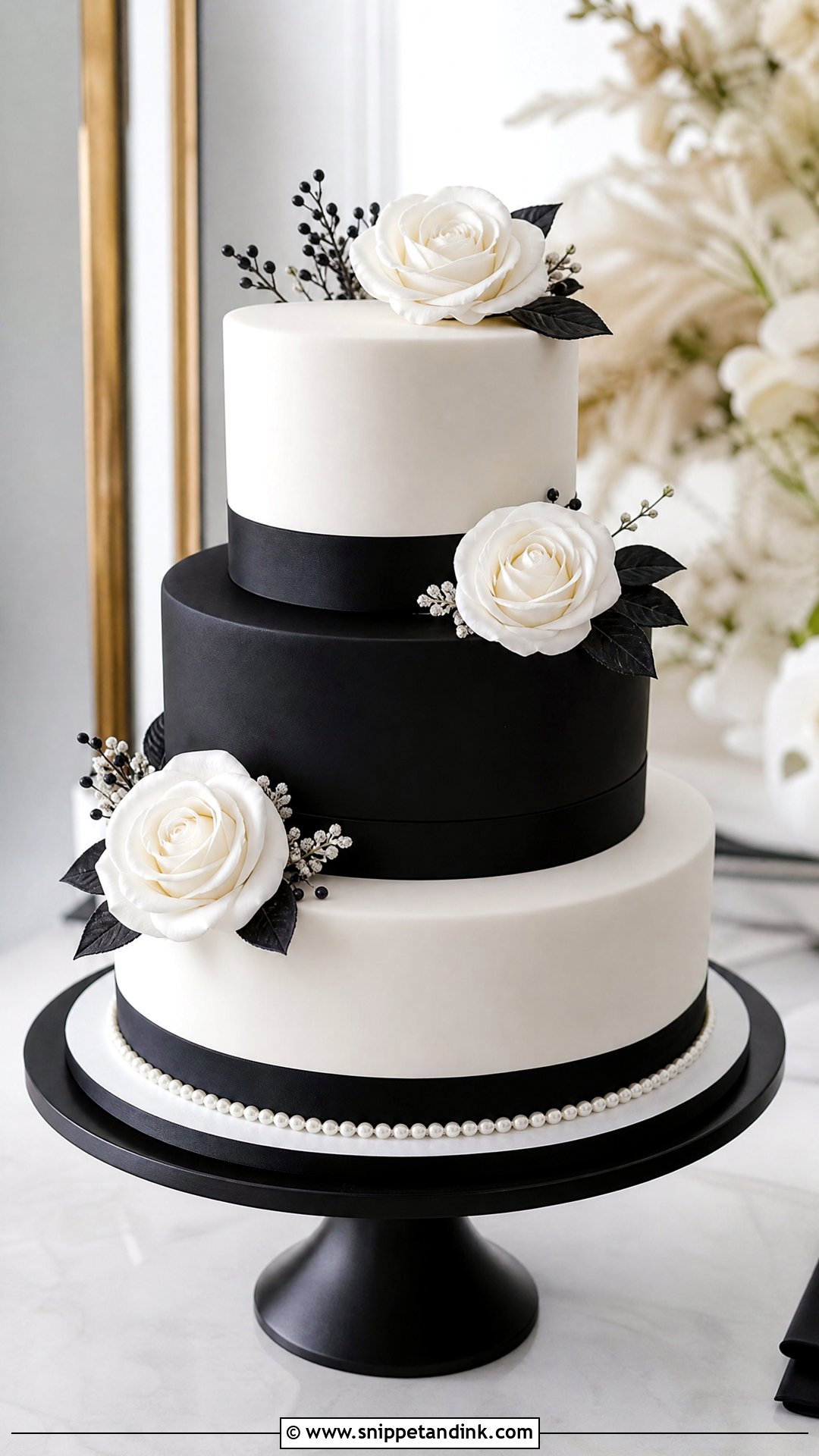
High contrast rewards precision. On black fondant every fingerprint, crack and speck of cornstarch shows, and black icing stains lips and teeth, so I often use black only as ribbon, piping or a single tier and keep the parts people eat white. White tiers with black ribbon read art deco; black tiers with white flowers read dramatic. Pearls or fine texture keep it bridal. Black cocoa, chocolate, vanilla and almond suit the look. Ask the venue to light the cake table, because dark designs flatten in a dim corner.
16. Three Tier Blue Wedding Cake
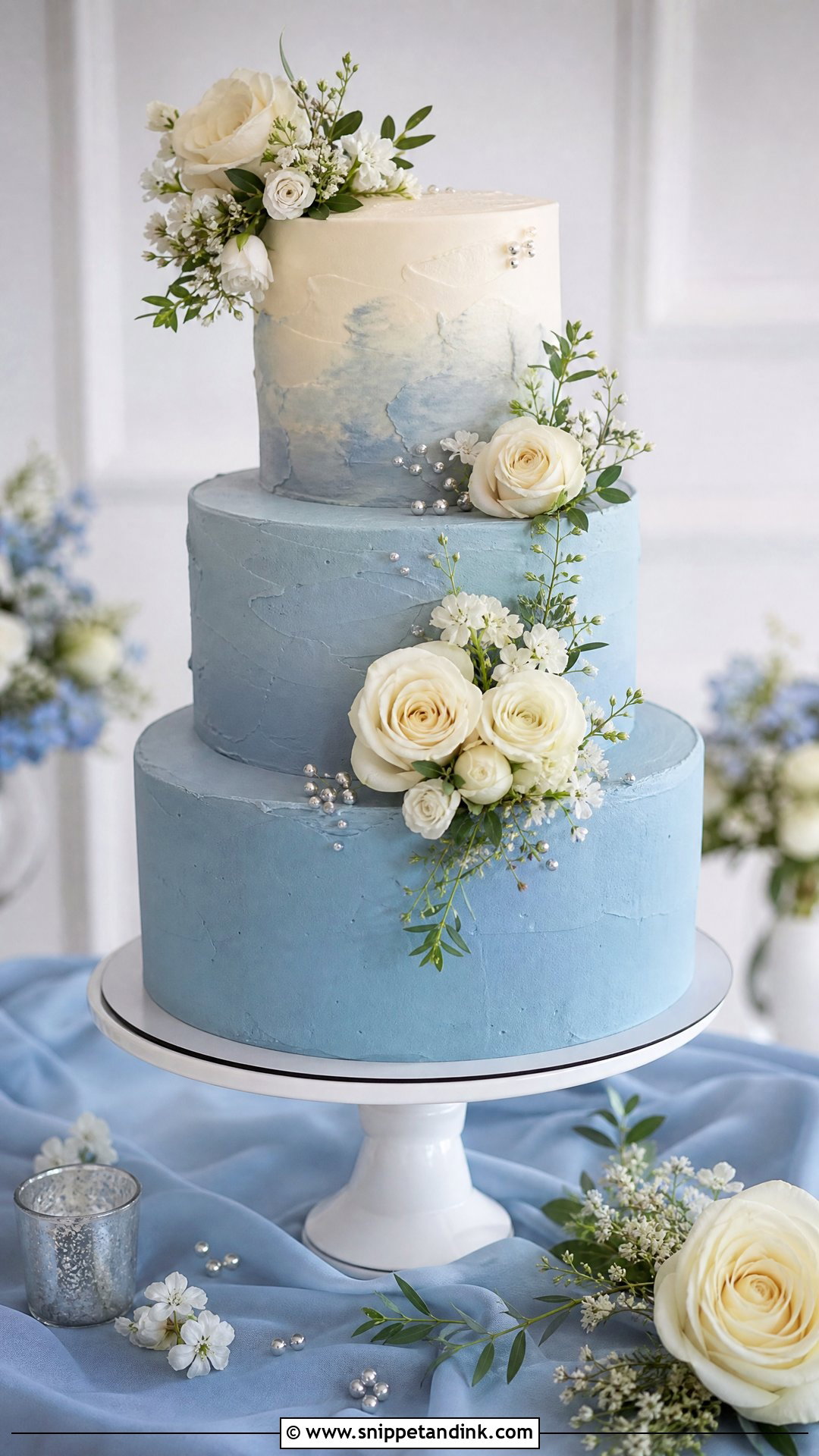
Blue is easiest in its muted shades: dusty, powder, slate and blue-gray. It can cover every tier or show up as a watercolor wash, painted flowers, ribbon or fondant panels. Butter-based frosting is naturally a little yellow, which pushes blue toward teal, so I whiten it first and mix one large batch for all three tiers to keep the shade consistent. Blue pairs with white flowers, silver, pearls or greenery. Vanilla, lemon, almond, blueberry and white chocolate fit, and a smooth finish keeps the color even.
17. Three Tier Blush Wedding Cake
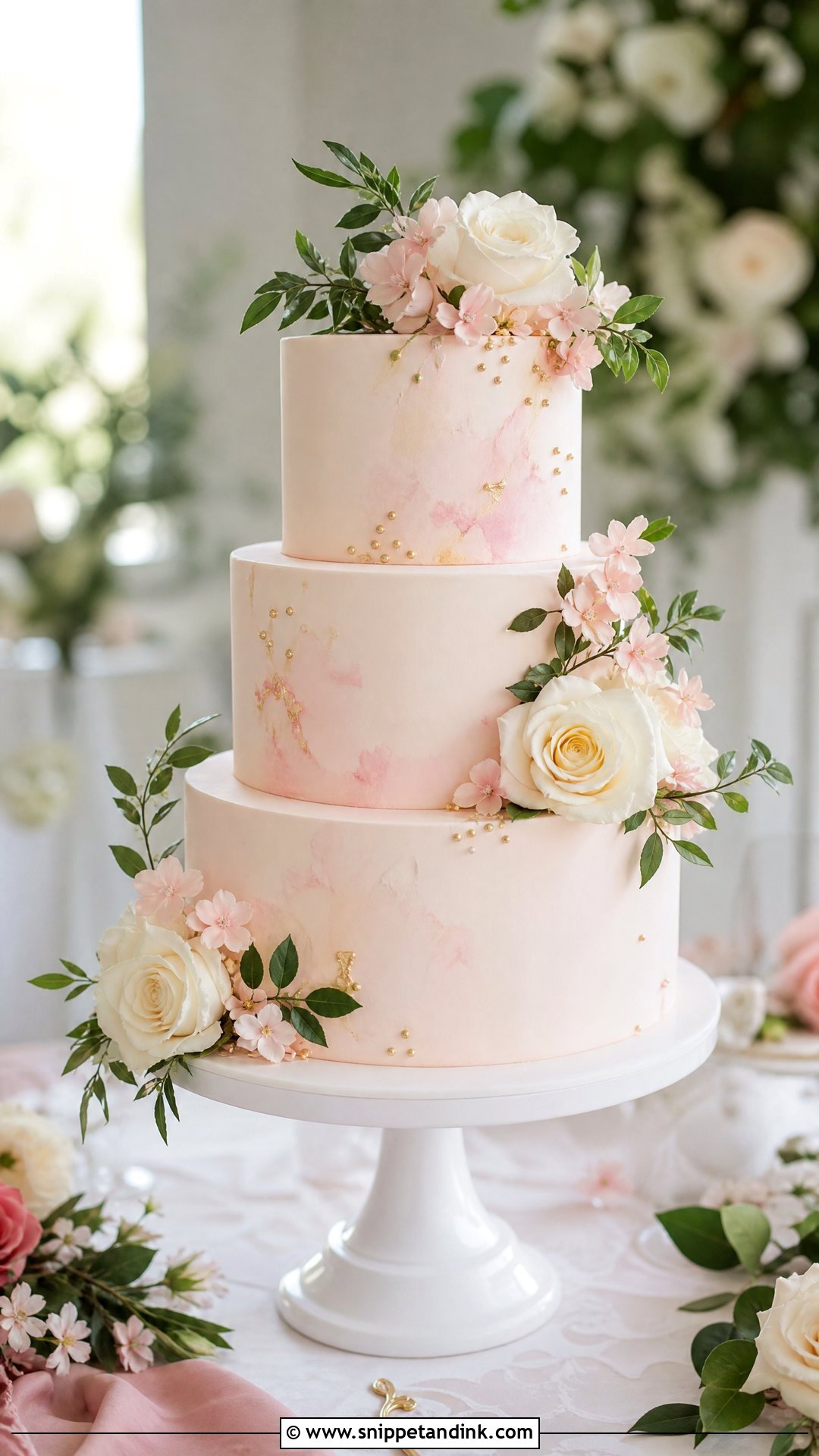
If you’ve already saved a dozen photos of a three tier blush wedding cake, you’re in good company, because blush suits most floral palettes. It can be the full frosting color, a watercolor wash, sugar flowers, ribbon or tiny piping, and with ivory, champagne, rose gold, greenery and white blooms it stays soft. The danger is sweetness, so I keep the shape clean and choose one main accent. Some pinks fade under strong light, which means a colored cake shouldn’t sit in a sunny window all afternoon. Vanilla, strawberry, almond, raspberry and lemon flavors suit it.
18. Three Tier Beach Wedding Cake
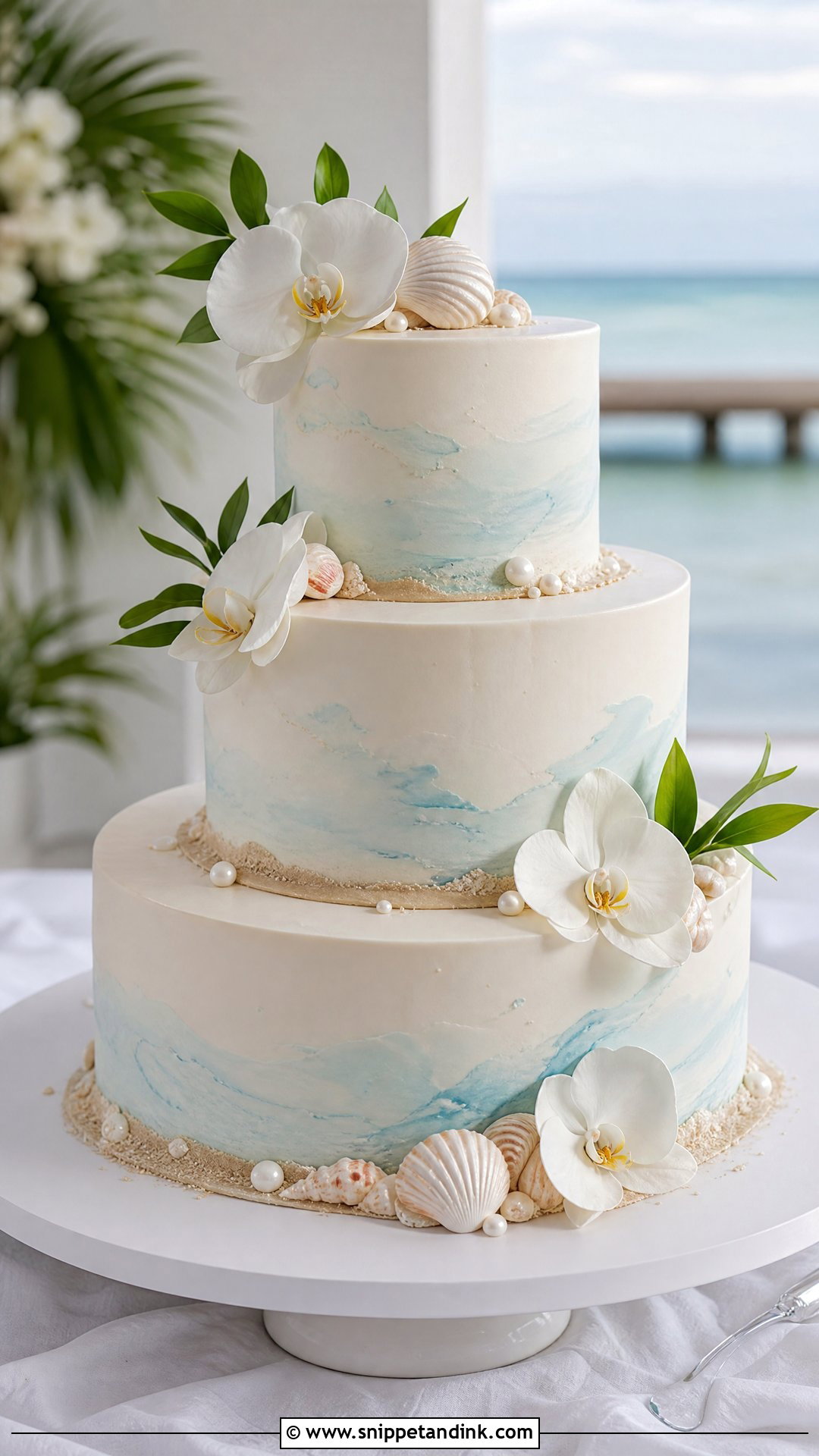
Beach cakes go wrong when the theme takes over, with starfish, sand, sea glass and anchors all at once. Soft white buttercream, pale blue accents, a sandy textured band and a few delicate edible shells say coastal clearly enough, and orchids or small tropical flowers add color. The real challenge is heat and sea air. Outdoors by the water I’d choose fondant over ganache, or keep the cake inside until just before cutting, because buttercream slumps in sun and humidity. Coconut, lemon, vanilla, lime and passion fruit fillings fit, though cream-based fillings need refrigeration and shouldn’t sit out long.
19. Three Tier Garden Wedding Cake
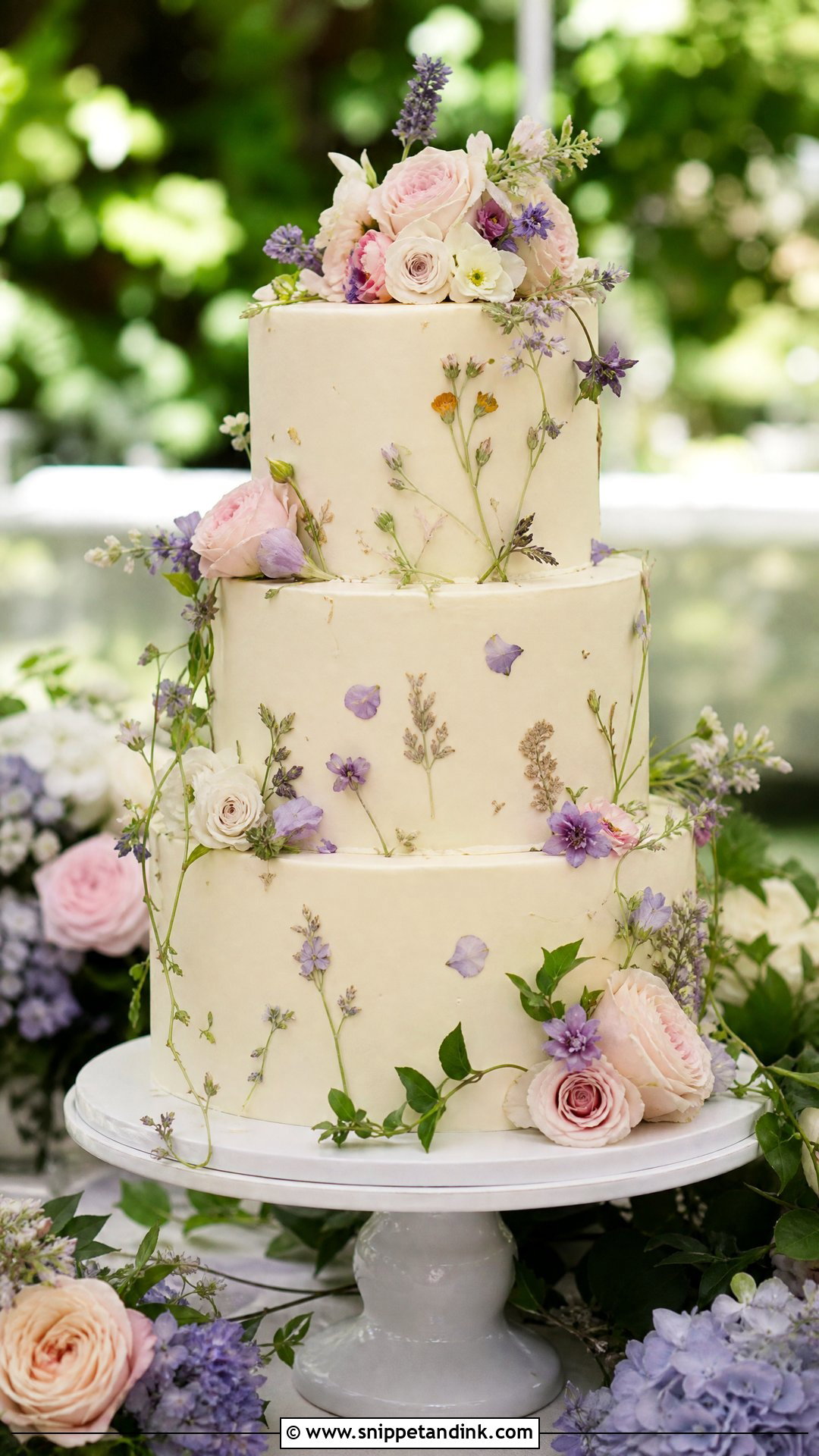
The test of a garden cake is whether it looks like it came from the same garden as the ceremony flowers. So I talk to your florist about varieties and colors before I design anything. Flowers, leaves, vines or pressed edible blooms sit on soft buttercream, ivory fondant or a pale pastel base. You can go with fresh flowers, sugar flowers, or painted botanical details, and mixing a few sugar blooms among the fresh ones is cheap insurance against wilting. Lemon elderflower, vanilla raspberry, almond, strawberry and lavender honey suit tented spring and summer receptions.
20. Three Tier Square Wedding Cake
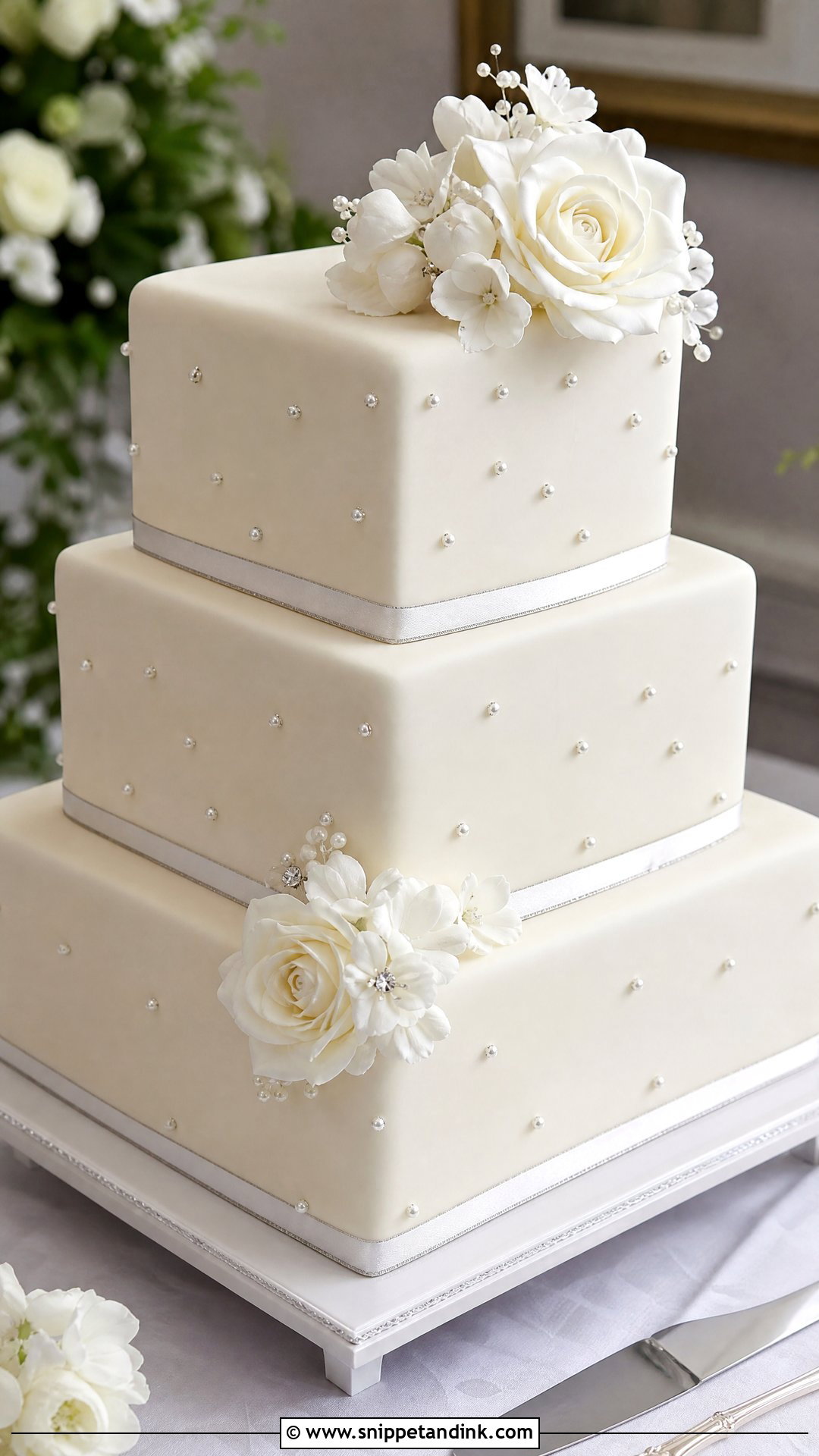
Square tiers look architectural and less common than rounds, but they’re more demanding. Corners are where buttercream thins and fondant tears, so expect the quote to reflect the extra time. On the plus side, a square tier serves more portions than a round one of the same width, which helps with a larger guest list. Fondant, smooth buttercream, ribbon bands, floral corners and crisp piped borders all suit the shape. White and ivory stay classic, while black, gold or color accents add drama. Vanilla bean, chocolate, almond or lemon keep it crowd-friendly.
What I Need From You at the First Consultation
The more I know early, the fewer surprises on the day. Bring these, even roughly:
- Guest count and the time the cake will be cut
- The venue and whether the cake table is indoors, in a marquee or outside
- How far the loading door is from the cake table, and whether there are stairs
- Your florist’s details and their flower list
- Allergies or dietary needs among your guests
- Three photos you like and one you don’t
Popular bakers fill peak-season weekends months ahead, so it pays to get in touch as soon as your venue is confirmed. Some hold tastings before you book and some only after a deposit, so ask how theirs works.
The Top Tier After the Party
Plenty of couples still keep the top tier for their first anniversary. If that’s your plan, tell your baker early, because fillings freeze differently. Ganache, buttercream and jam come back well; fresh fruit, whipped cream and custard turn watery once thawed.
Remove the flowers and decorations, chill the tier until the frosting is firm, then wrap it tightly in several layers of plastic wrap and foil and seal it in an airtight box. Thaw it slowly in the fridge, still wrapped, so condensation forms on the wrapping instead of the cake. Even well wrapped, a year in the freezer dulls the flavor. That’s why I often suggest the other route: order a small fresh cake in your wedding flavor when the anniversary comes round.
A Cake That Belongs to Your Reception
The cakes I’m proudest of looked like they belonged to that one wedding. Smooth white buttercream, a floral cascade, black and white contrast or a clean modern shape can all get there, as long as the finish suits the room, the flowers echo the bouquet and the flavors are ones you genuinely enjoy eating. Save a handful of photos, include one or two you dislike, and talk structure with your baker early. A good baker will tell you honestly which of your favorites will survive your venue.
You'll Like These Ideas:









Leave a Reply