
A classic cake rarely looks wrong in a room, because nothing about it is fighting the venue, the dress or the flowers. What makes one look expensive rather than ordinary is mostly invisible: level tiers, straight sides, a finish chosen for the temperature it will sit in, and decoration in proportion to the tier it sits on. The flavours that suit these designs are the ones people come back for, such as vanilla bean, almond, lemon, chocolate and raspberry. Below are the classic styles I’m asked for most, with what each one asks of the kitchen and of you.
How Many Tiers Does Your Guest Count Really Need?
The size of a wedding cake is worked out in wedding portions, which are much smaller than a party slice: a finger of cake about an inch wide and two inches long, full tier depth. Most bakers plan with something close to these round-tier figures, though every kitchen’s chart differs a little:
- 6 inch tier: around 12 portions
- 8 inch tier: around 24 portions
- 10 inch tier: around 38 portions
- 12 inch tier: around 56 portions
So a 6, 8 and 10 inch three tier feeds roughly 70 to 75 guests, and adding a 12 inch base takes you past 125. If you want a tall cake for a smaller guest list, I’d suggest one or two dummy tiers of decorated foam. If you want a small cake for a big guest list, a plain kitchen cake cut behind the scenes is far cheaper than extra decorated tiers, and no guest can tell the difference on the plate.
1. Classic White Wedding Cake
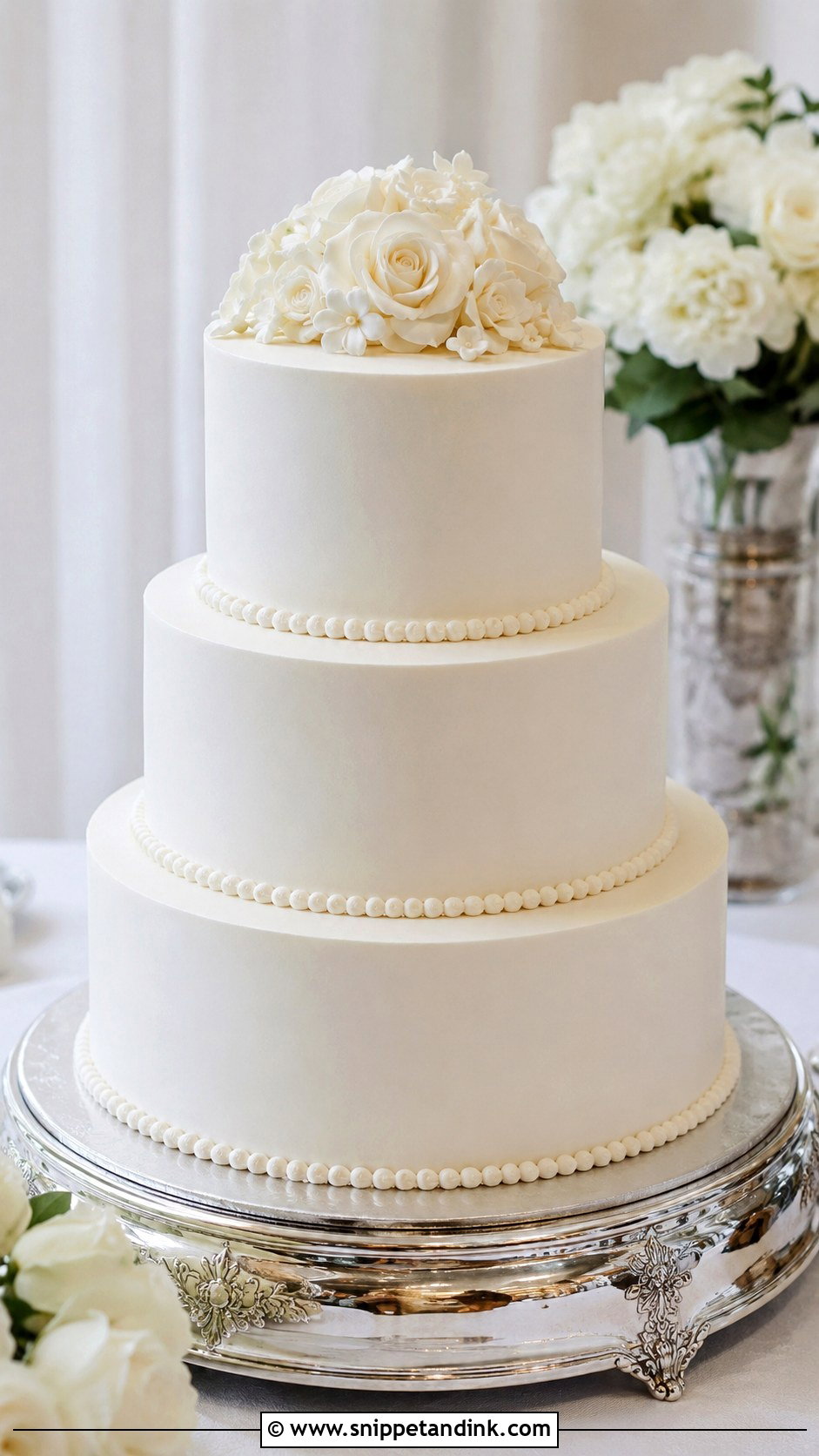
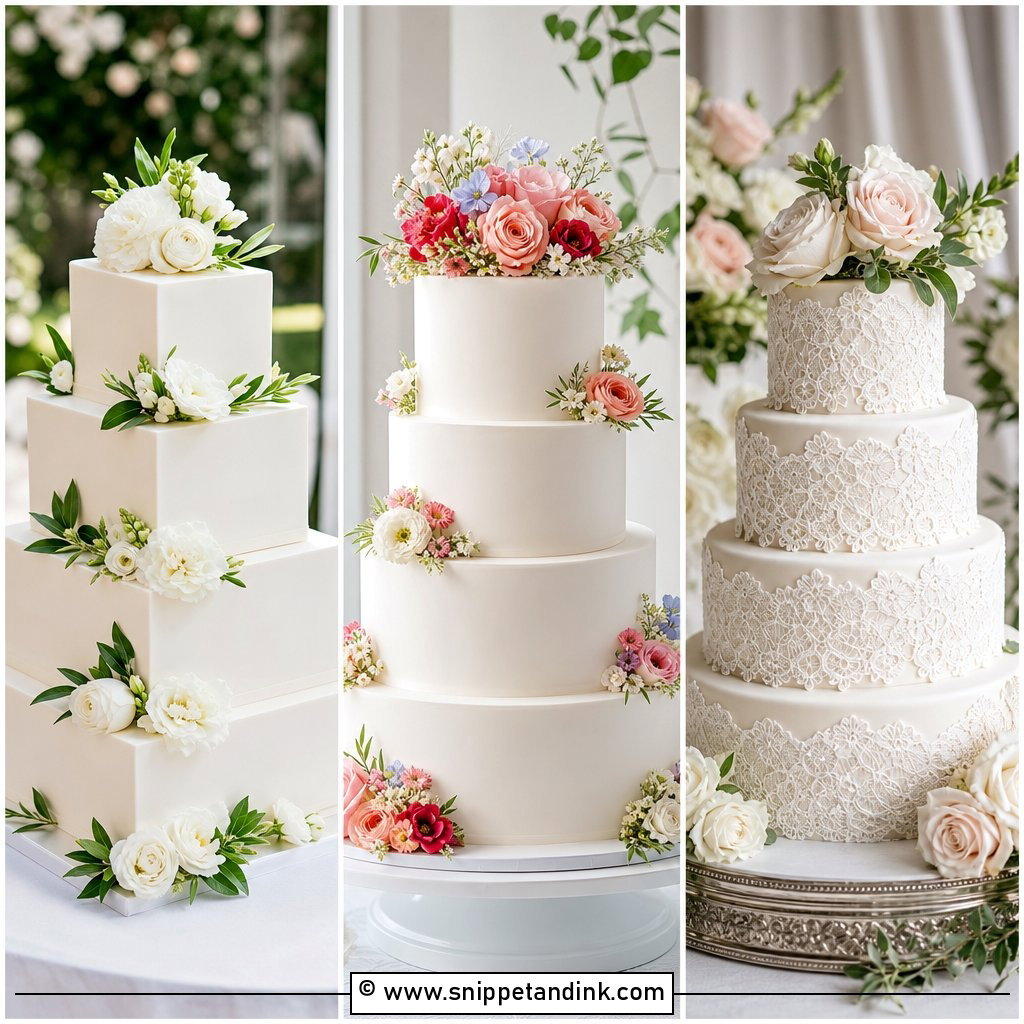
White is the hardest colour to get right, oddly enough. Butter makes buttercream ivory, so a truly white finish needs either a butter-free frosting or fondant, and most couples end up happier with a warm ivory that matches their dress anyway. My usual pairing is vanilla bean sponge with Swiss meringue buttercream, which is light enough that people finish their slice. Two to five tiers, a pearl border or a few white sugar blooms, and you have a cake that suits a ballroom, a church hall or a garden.
2. Three Tier Wedding Cake
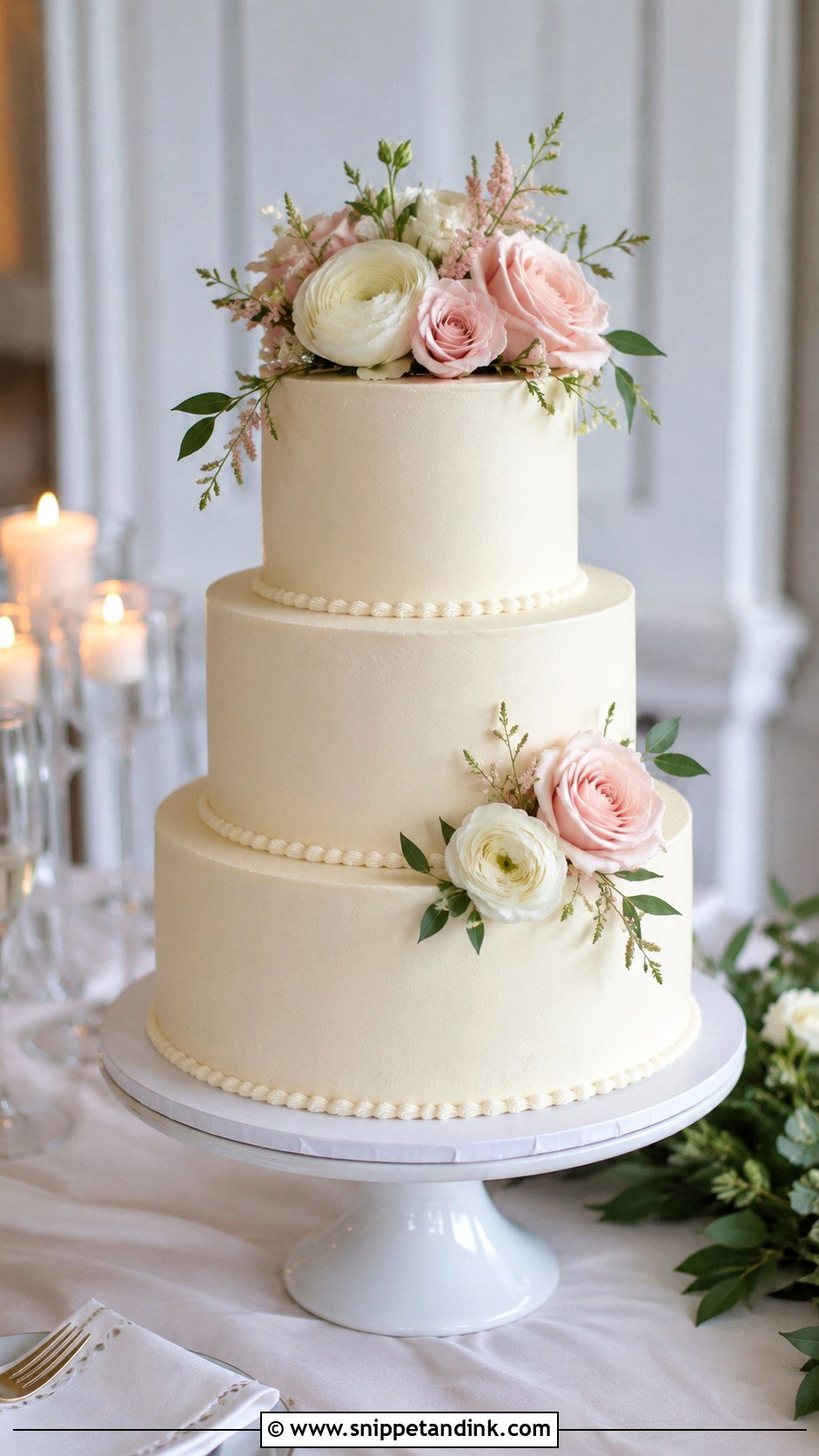
Three tiers is where a cake starts to look like a wedding cake rather than a party cake, and it’s still manageable to deliver fully stacked. It’s also the easiest way to give guests a choice, with a different flavour in each tier, say vanilla, lemon raspberry and chocolate ganache. I’d keep the heaviest, densest flavour at the bottom, since that tier carries the weight of the other two on its dowels. A cascade of flowers down one side breaks up the stacked-boxes look.
3. Buttercream Wedding Cake
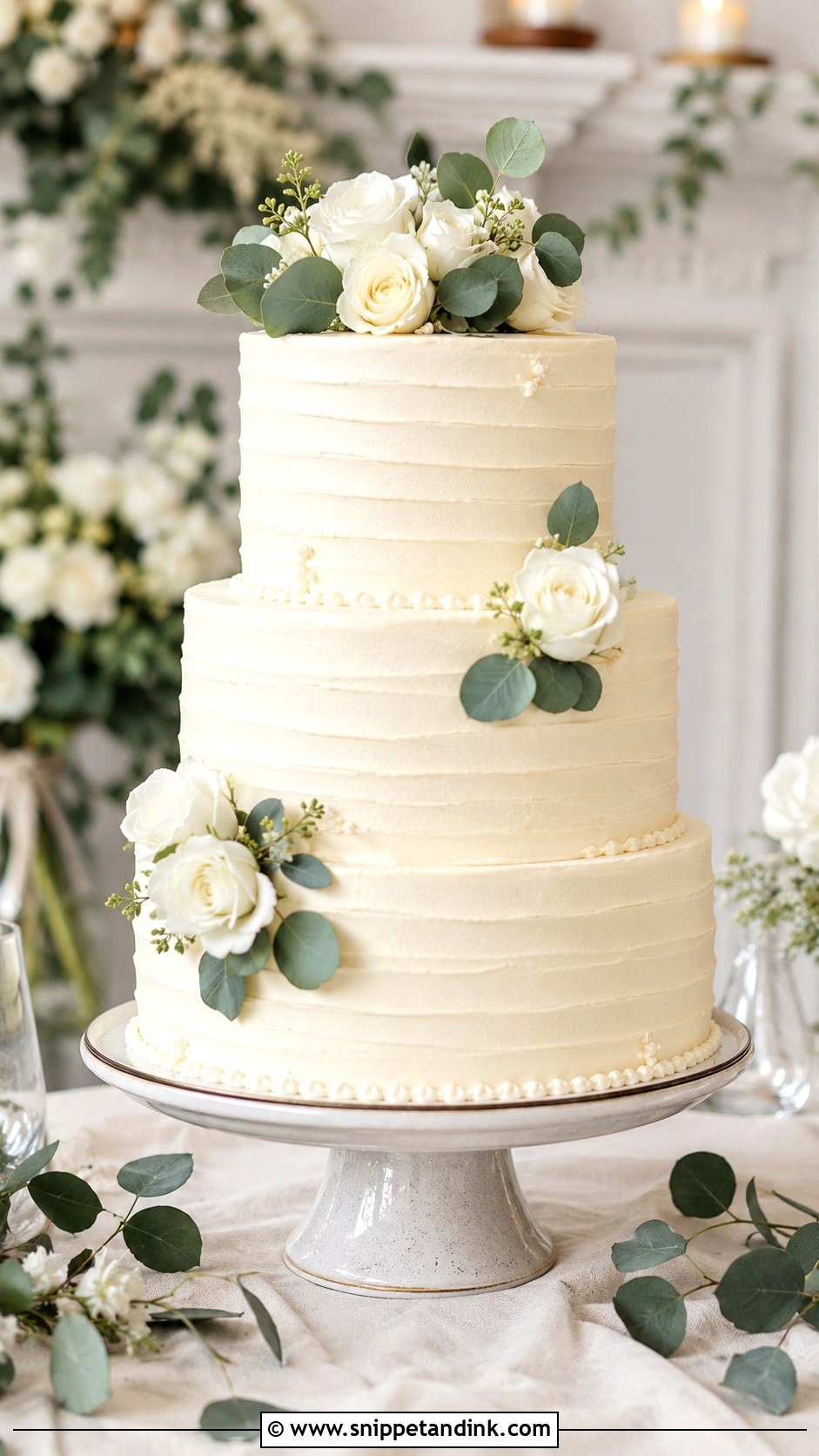
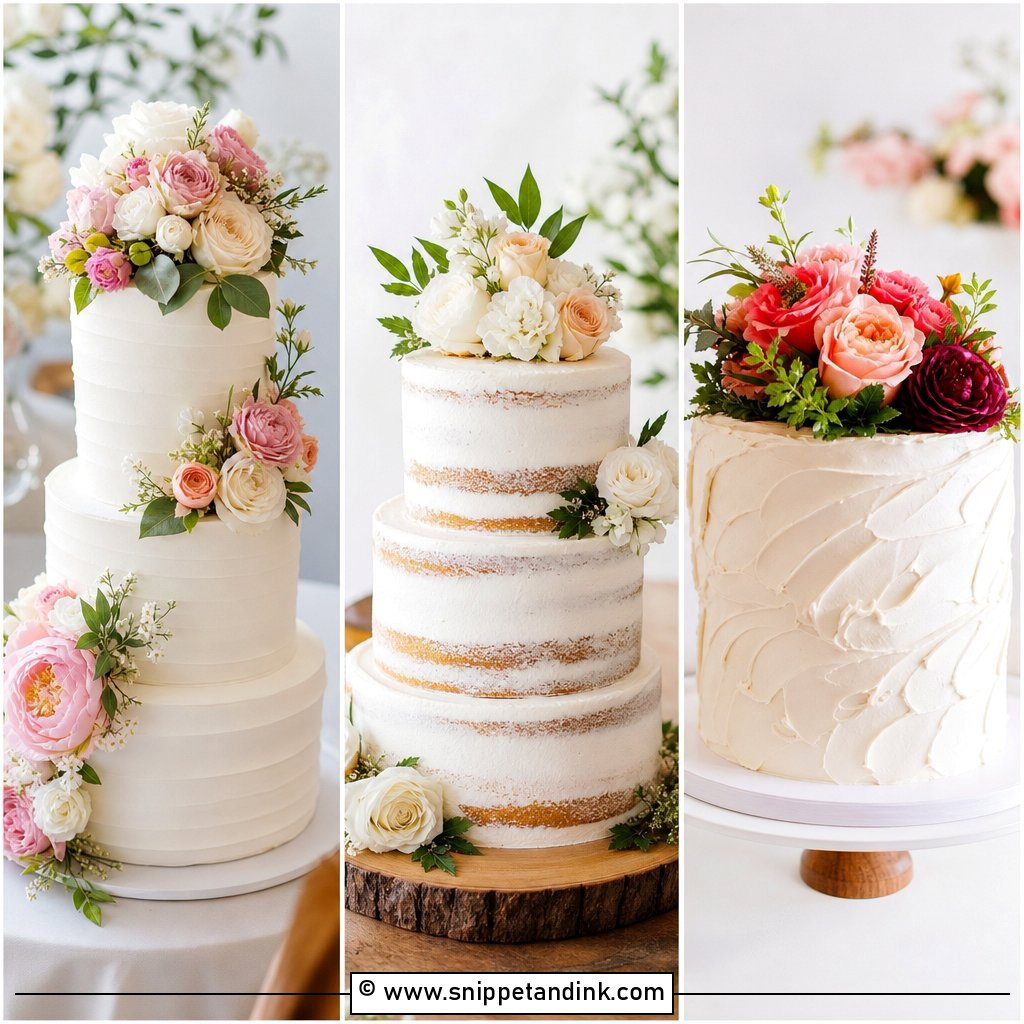
Buttercream tastes better than fondant to most people, and it’s the finish I’d choose for nearly any indoor reception. The trade-off is heat. Swiss meringue buttercream starts to soften once a room gets properly warm, and a tent in July can make the tiers bulge and the borders slide. A smooth, sharp-edged finish reads formal; a gentle horizontal comb texture reads relaxed and hides small marks from transport. Fresh greenery or piped shell borders are all it needs.
4. Fondant Wedding Cake
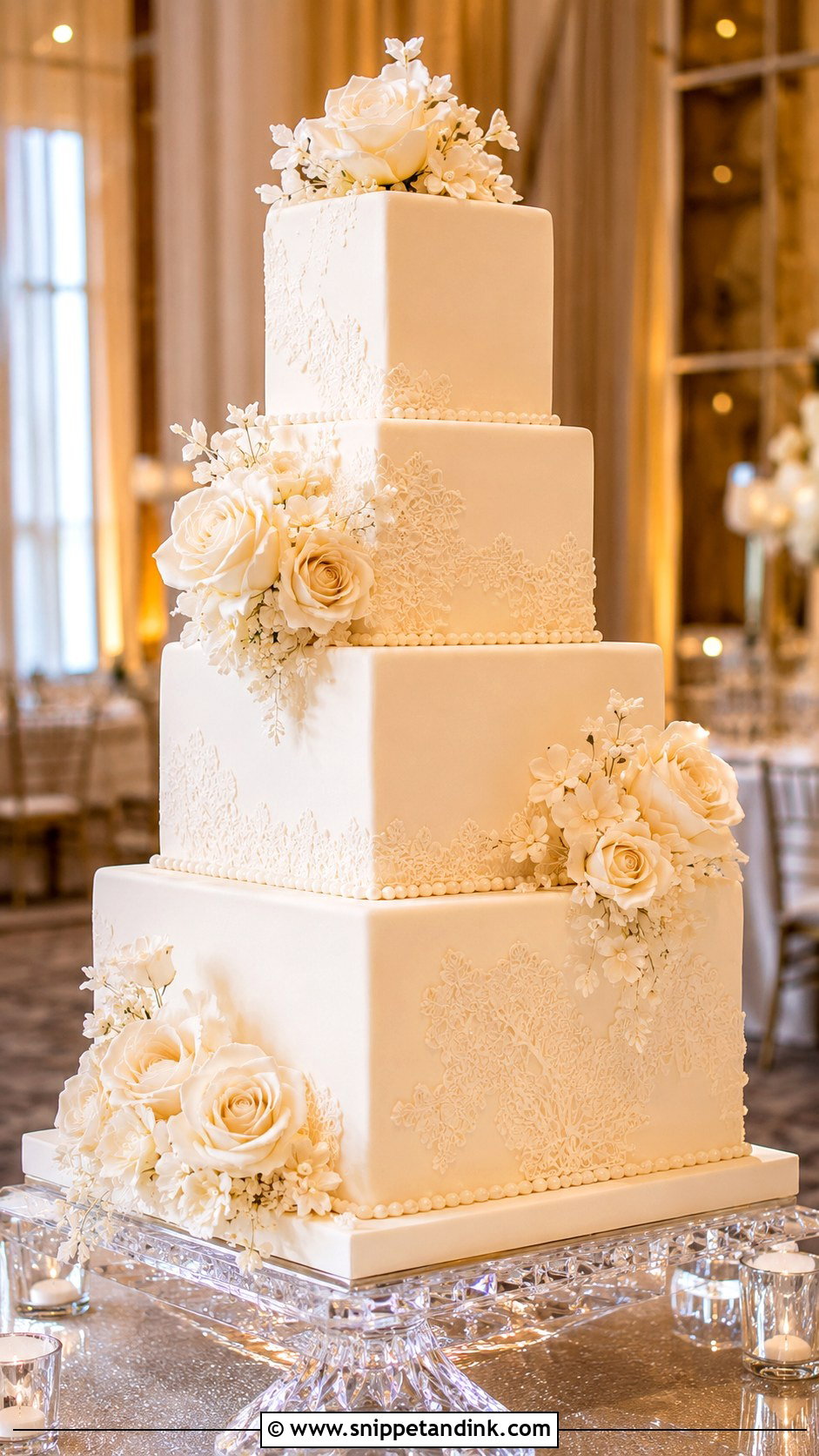
Fondant gives you the sharpest edges and a porcelain-like surface that takes embossing, monograms and fine piping better than anything else. Underneath, the cake is still layered and filled with buttercream or ganache, so it eats like any other cake once guests peel the fondant away, which many do. It holds its shape in warm rooms far better than bare buttercream. The one thing it hates is moving from a fridge into a humid room, where condensation beads on the surface, so I let a fondant cake come to room temperature slowly.
5. Wedding Cake With Roses
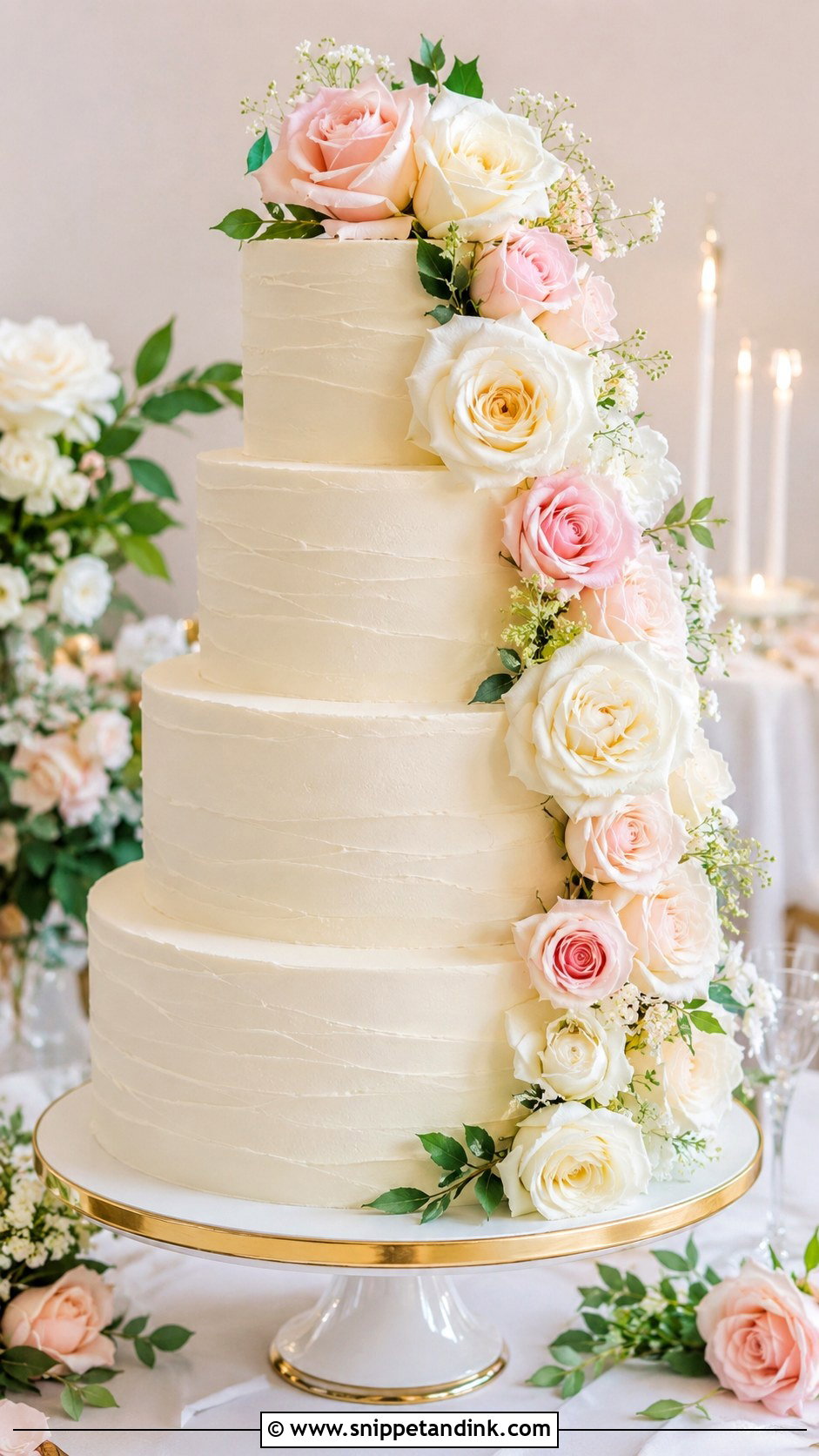
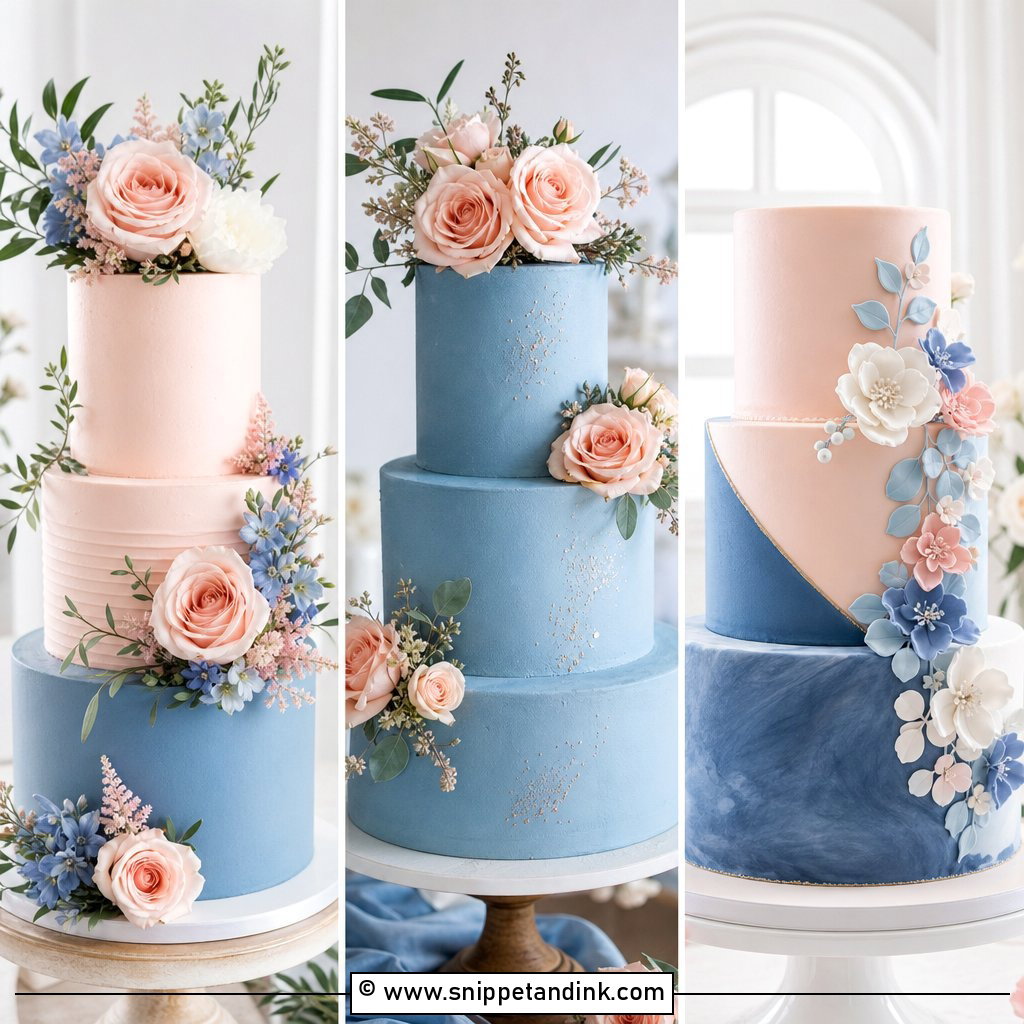
Roses read as bridal at a glance, and the colour does most of the work: white looks traditional, blush softens the whole cake, and full garden roses look more vintage. A single cascade down one side gives movement without clutter. If they’re fresh, they have to be grown without pesticides and kept off the frosting itself, which I cover further down. Vanilla almond or lemon sponge suits the look.
6. Wedding Cake With Lace
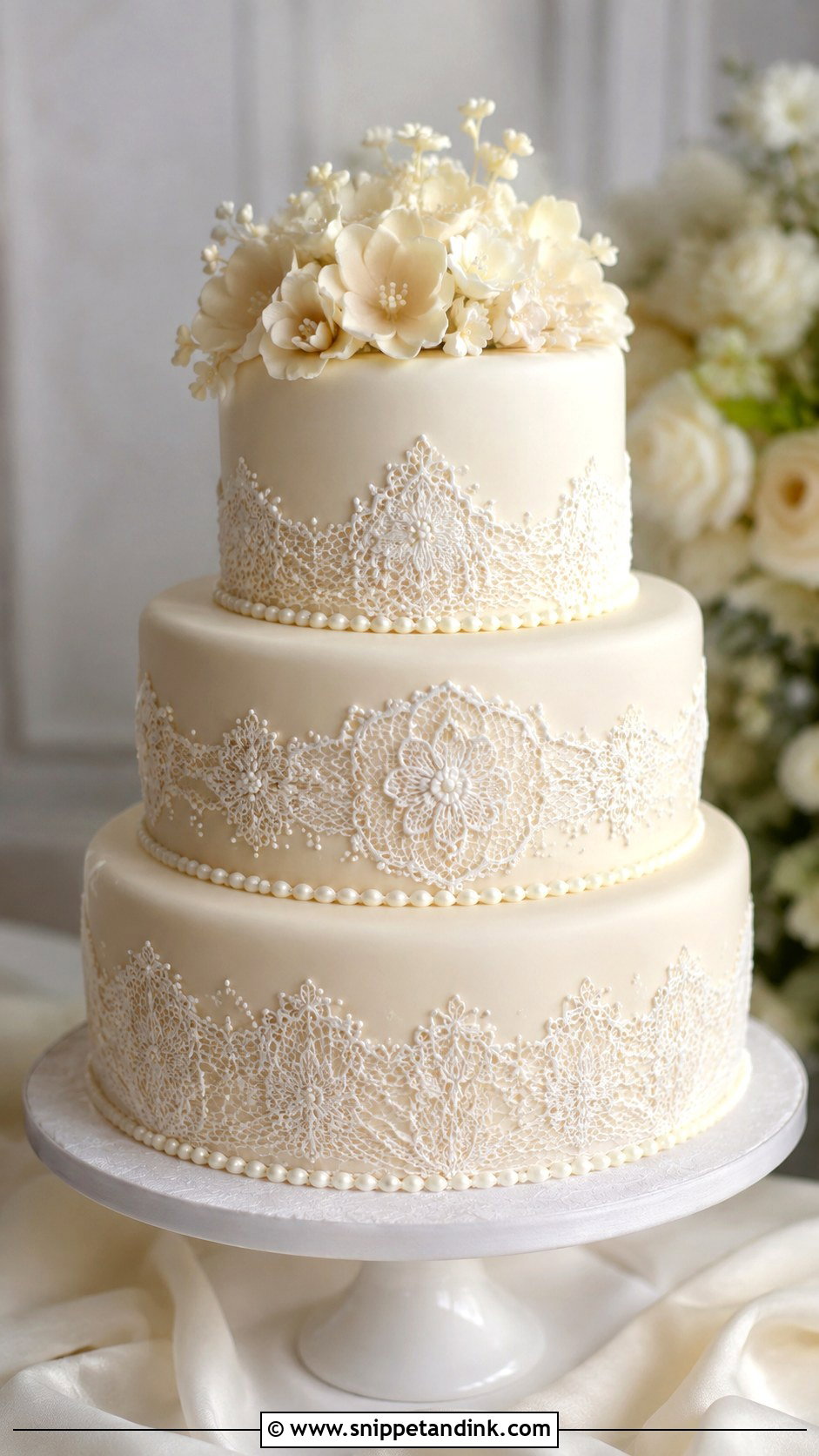
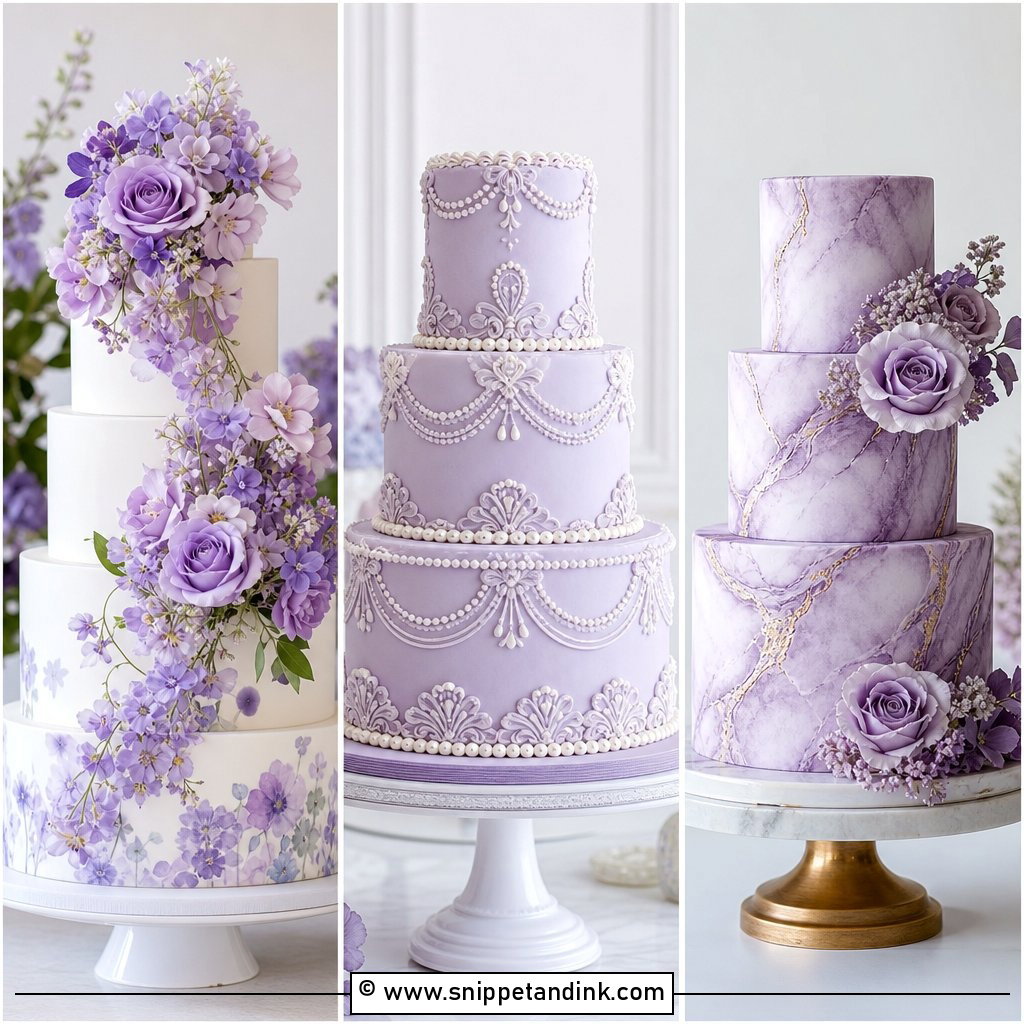
Lace on a cake can be piped royal icing, an embossing mat pressed into fondant, or an edible lace sheet, and they look quite different up close. Piped lace has depth and catches light; edible lace lies flat and looks printed if the light is harsh. If you want the cake to echo your dress, bring a photo of the fabric, because matching a motif loosely looks better than copying it stitch for stitch. Keep the palette quiet so the texture carries it.
7. Pearl Wedding Cake
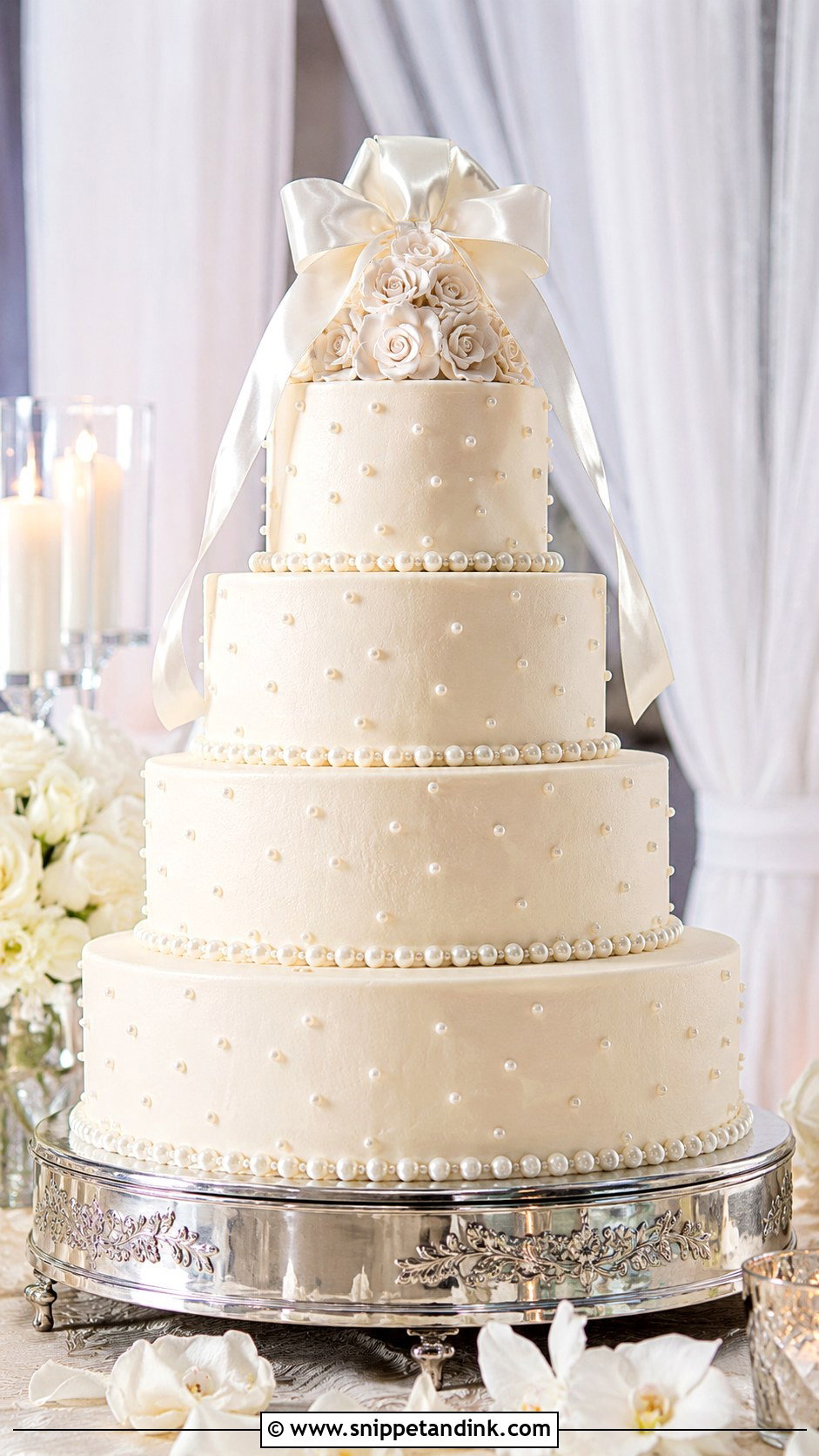
Pearls on a cake are usually sugar dragées or piped dots, and I’d tell you honestly that dragées are hard. Guests do bite into them, so on any tier that will be served I lean toward piped buttercream or royal icing pearls, which give the same effect and are kind to teeth. Neat borders at the base of each tier look the most formal; a scatter looks lighter. A smooth ivory or champagne finish shows them off, and a satin ribbon or small monogram is all the extra decoration it needs.
8. Vintage Wedding Cake
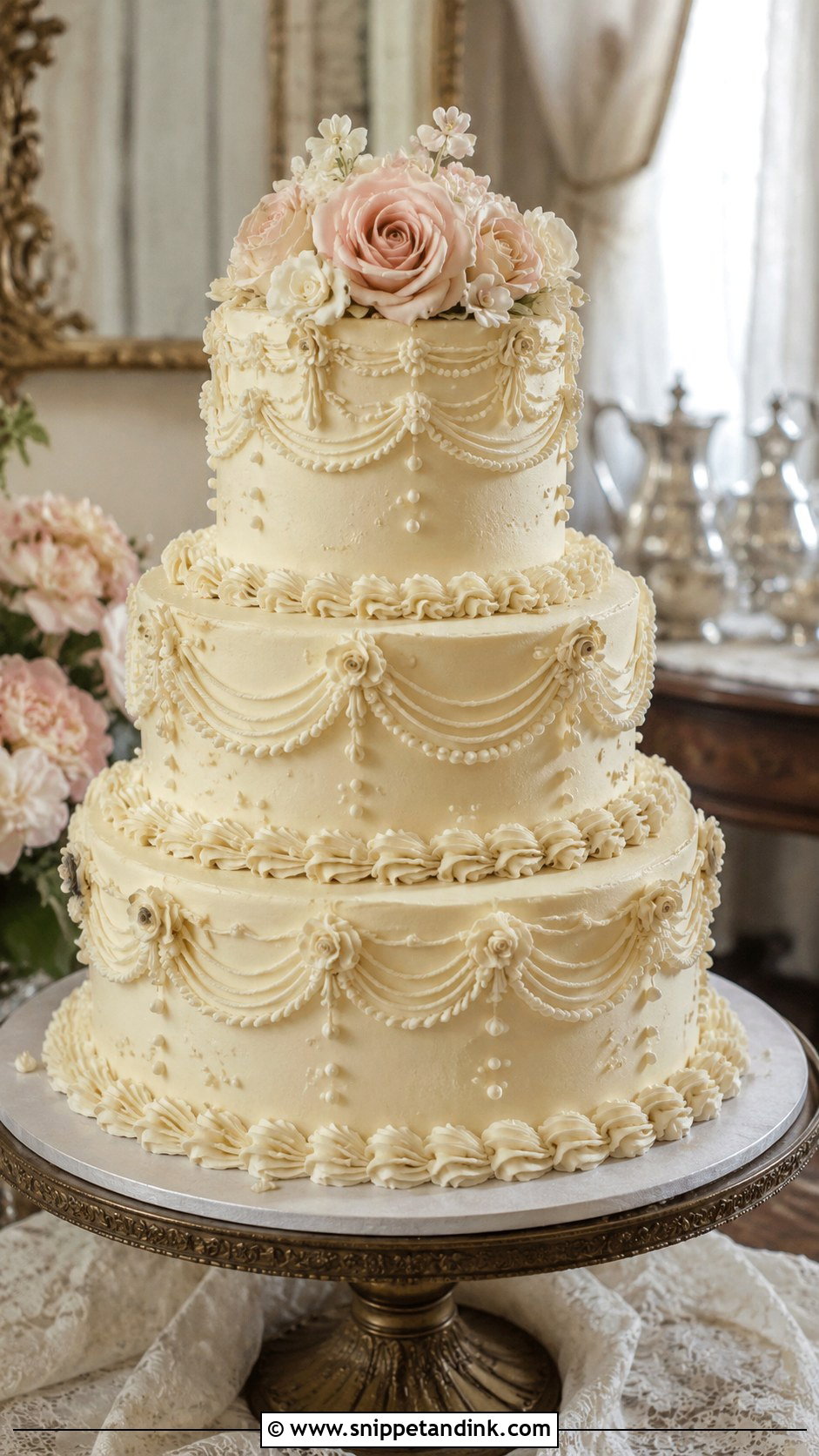
Vintage cakes are all about the piping: swags, shells, rosettes and over-piped borders built up in layers. Lambeth-style piping is the most dramatic version, and it takes real time, so allow for it in both your budget and the timeline. I’d pipe it in a sturdy buttercream or royal icing; a very soft frosting won’t hold the ridges. Pale blue, blush or champagne makes it feel personal, and a familiar flavour like vanilla or chocolate fits the nostalgic mood.
9. Simple Wedding Cake
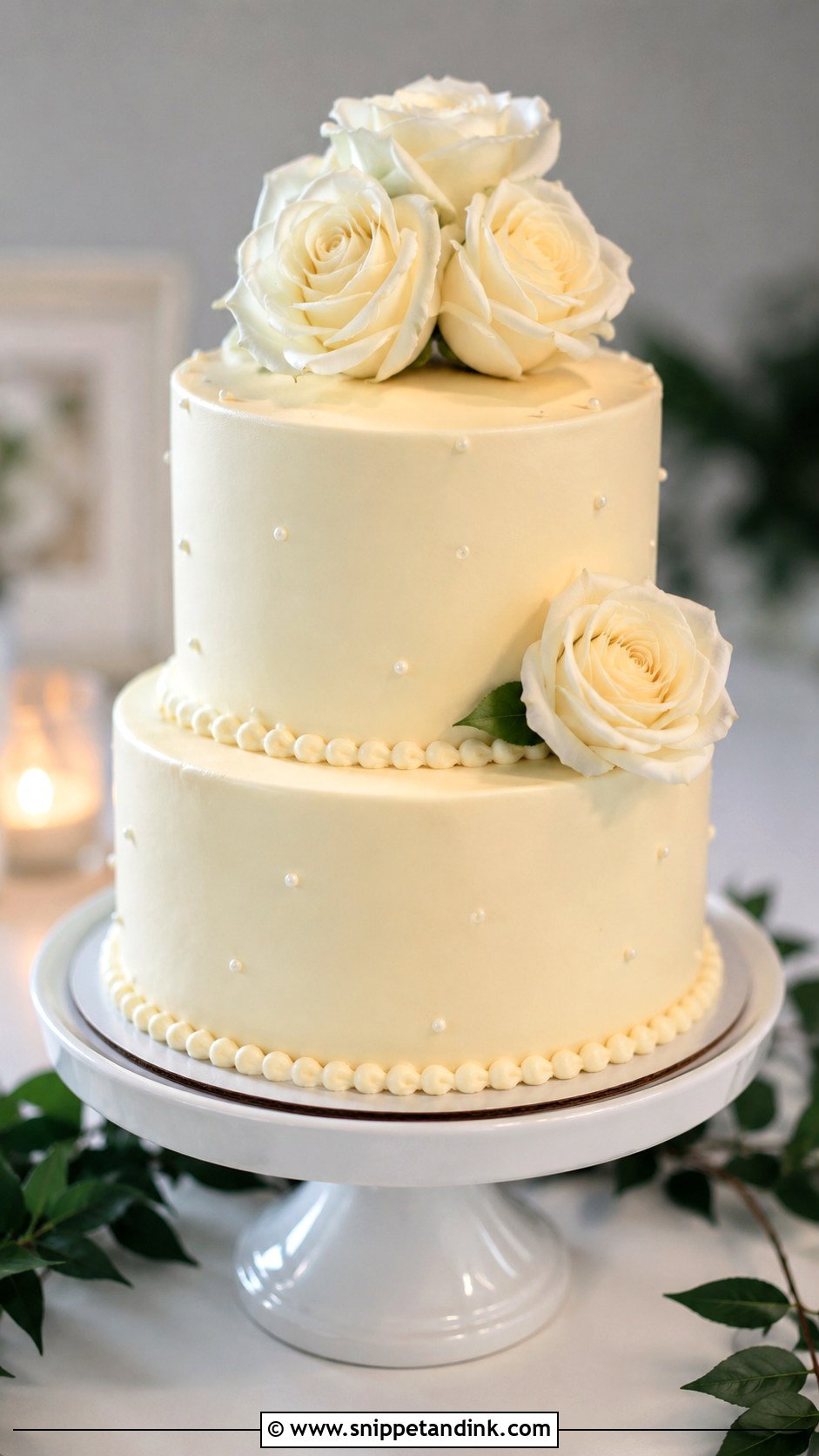
The simpler the design, the less there is to hide behind. A two or three tier cake with plain buttercream has to have perfectly level tiers and clean, straight sides, because every wobble shows. Pick one feature, a few roses, a satin ribbon or a light texture, and stop there. It suits intimate weddings and backyard receptions, and it frees budget for better ingredients, such as raspberry filling or a sharp lemon curd.
10. Elegant Wedding Cake
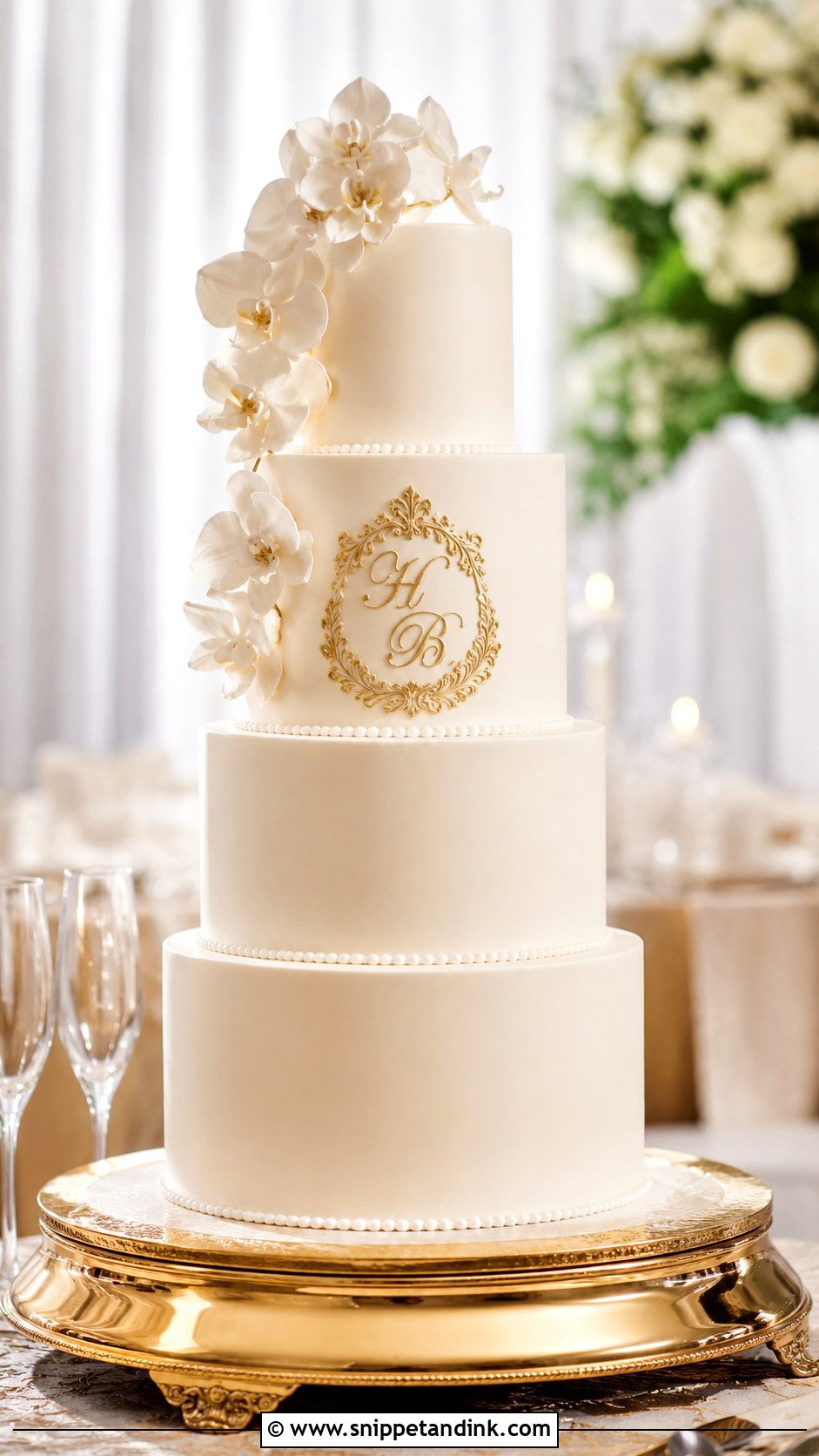
Elegant, in cake terms, mostly means restraint and proportion. Tall tiers, a smooth ivory finish, decoration placed with gaps around it so each detail can be seen from across the room. A touch of shimmer or a thin gold edge adds polish; three different metallic effects make it look busy. Black tie receptions, hotels and grand estates suit it. I’d test this one by stepping back three metres from the sketch: if you can’t tell what the focal point is, take something off.
11. Square Wedding Cake
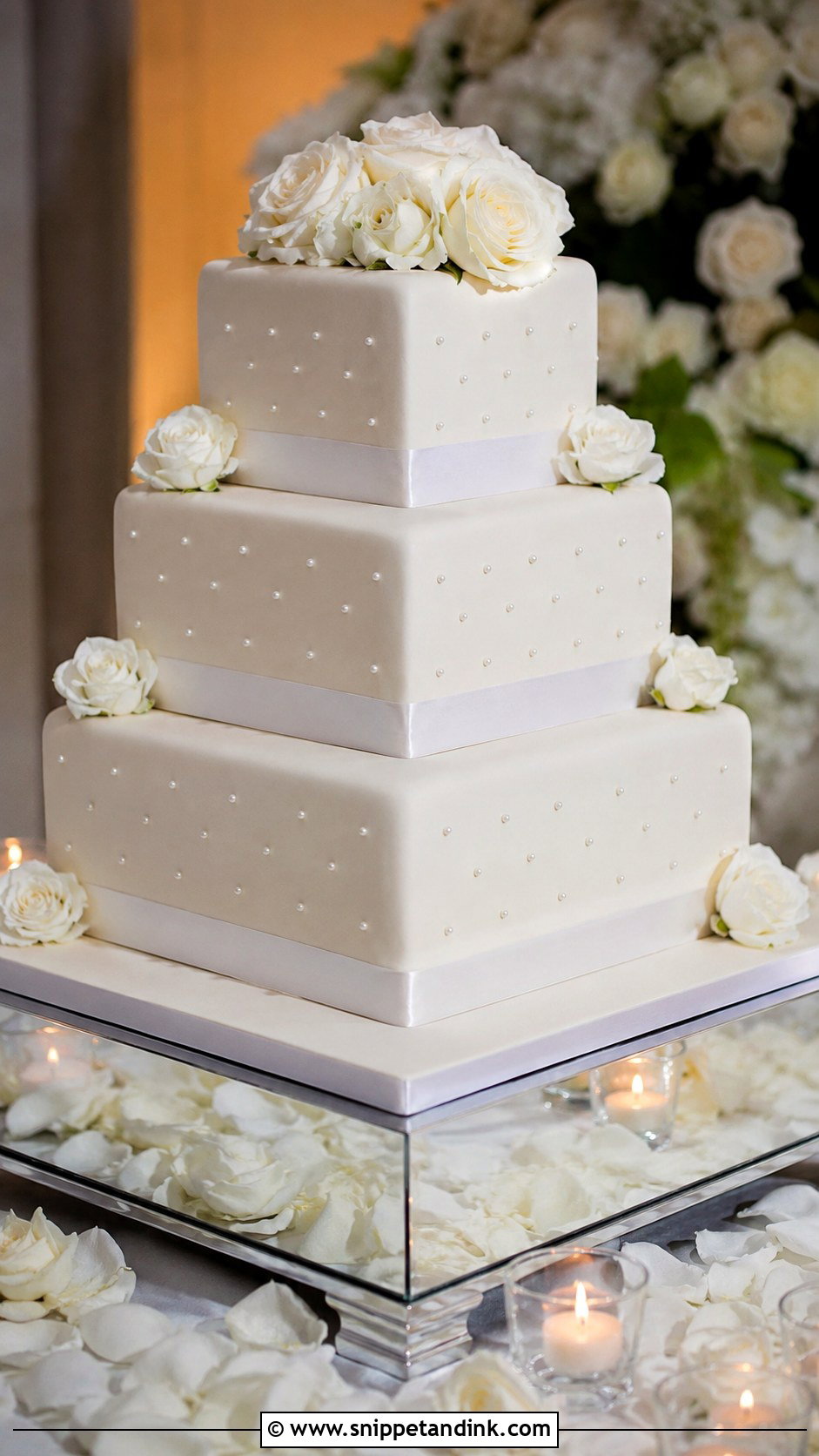
Square tiers look crisp and architectural, and they’re harder to make than round ones. Getting four sharp corners requires fondant, or a very skilled buttercream finish and a cool room. One advantage people don’t expect: a square tier serves noticeably more slices than a round tier of the same width, because of the corners. Rotating one tier slightly off the others adds a modern twist, and orchids or a ribbon border suit the clean lines.
12. Round Wedding Cake
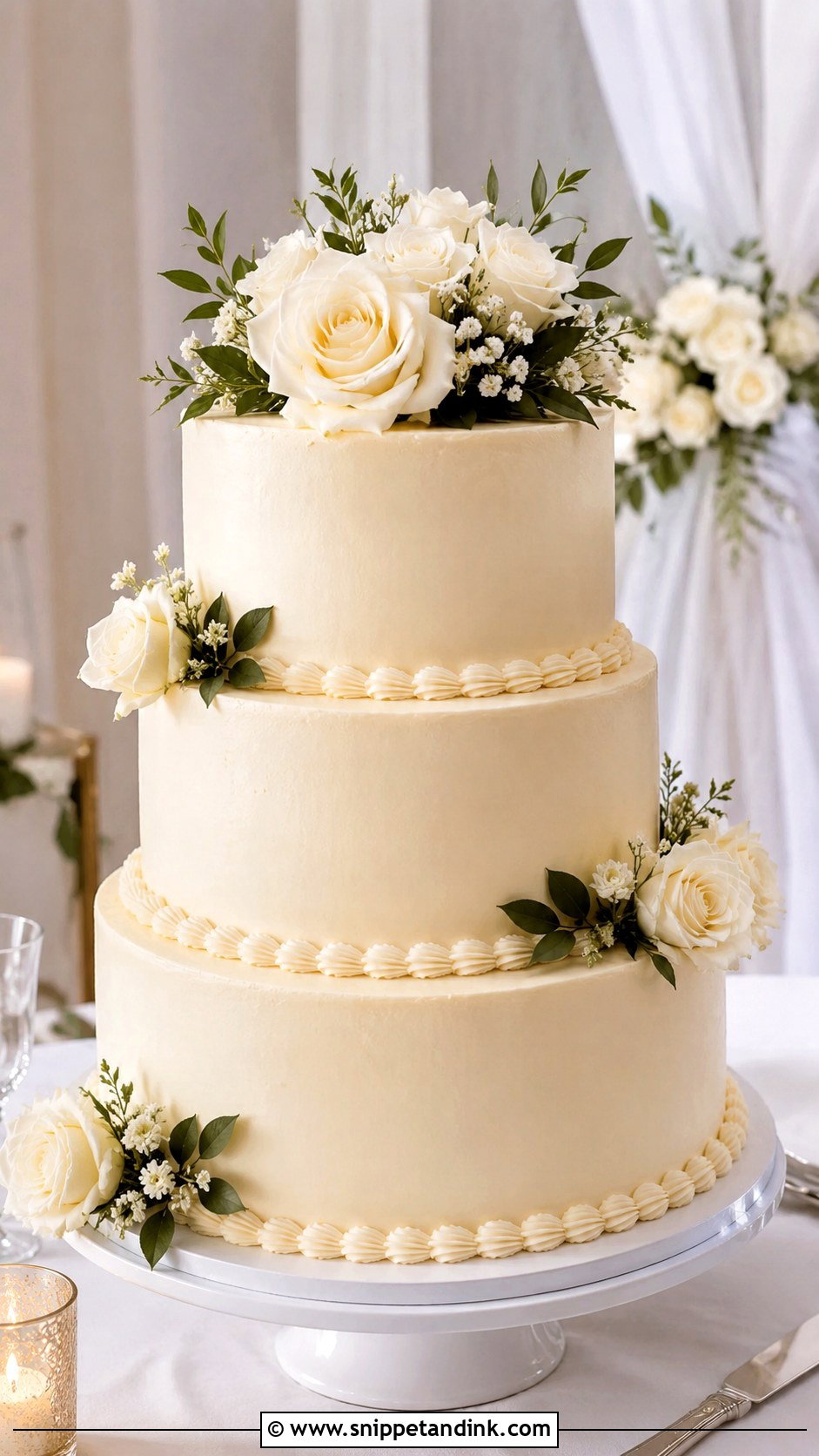
Round is the traditional shape for a reason. It’s the easiest to finish smoothly, it looks balanced from every angle, and it suits almost any decoration from lace piping to a floral cascade. That all-round look also helps when the photographer moves around you during the cutting. Ivory with white flowers keeps it classic; blush and greenery tilt it toward a garden. Red velvet is a good flavour surprise inside an otherwise traditional cake.
13. Tall Wedding Cake
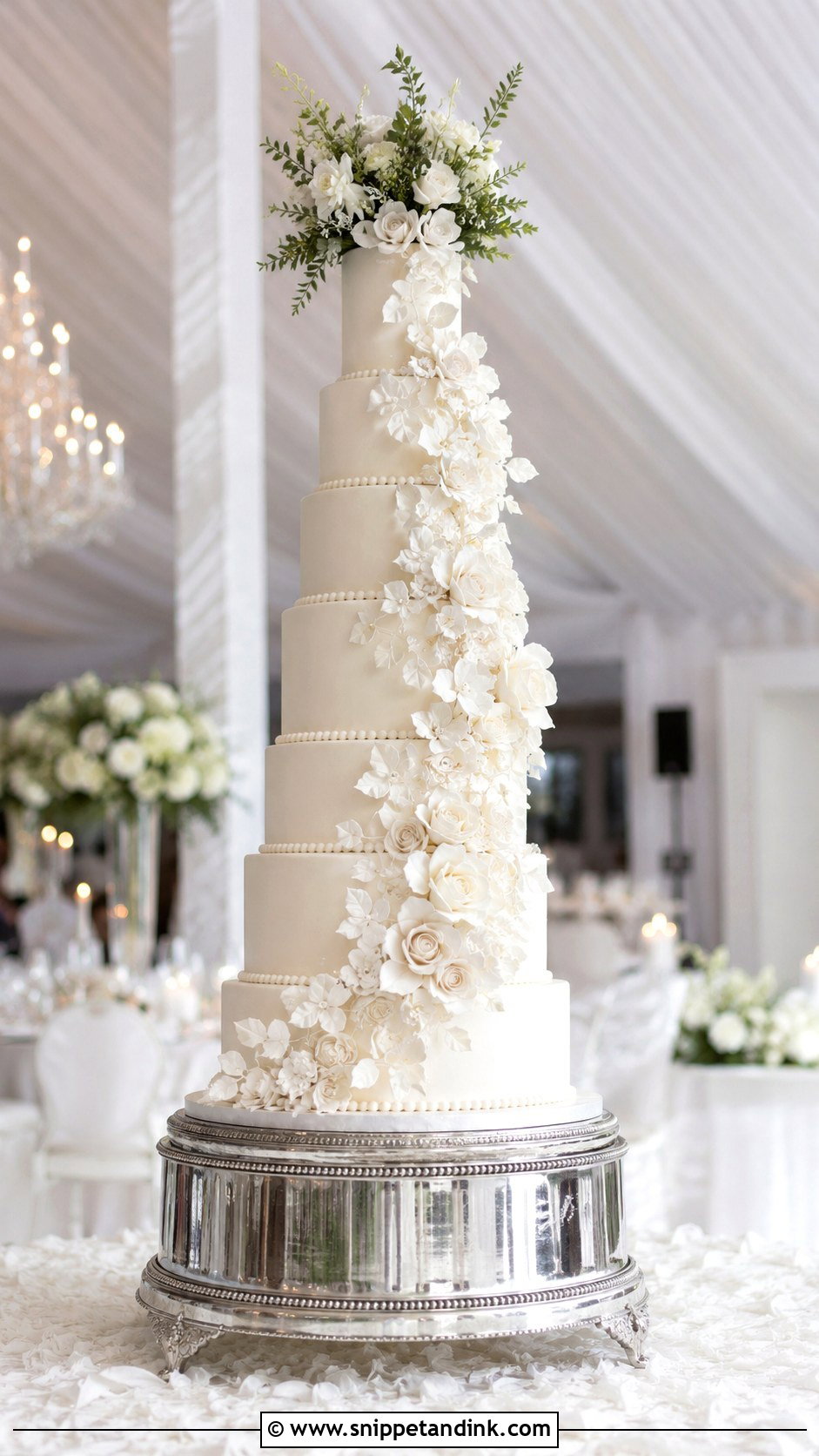
Height looks impressive and needs engineering. Slim, deep tiers give you a lot of cake on a small footprint, which helps on a cramped reception table, but anything tall needs a central dowel through all the tiers, and I’d usually stack it on site. A white or ivory tall cake looks striking with smooth buttercream, fine piping and a restrained floral cascade. You can add presence without extra cake by using separator tiers or extended tiers. Stick to stable fillings like buttercream, ganache or fruit preserves; soft mousses and fresh cream slide under that much weight.
14. Small Wedding Cake
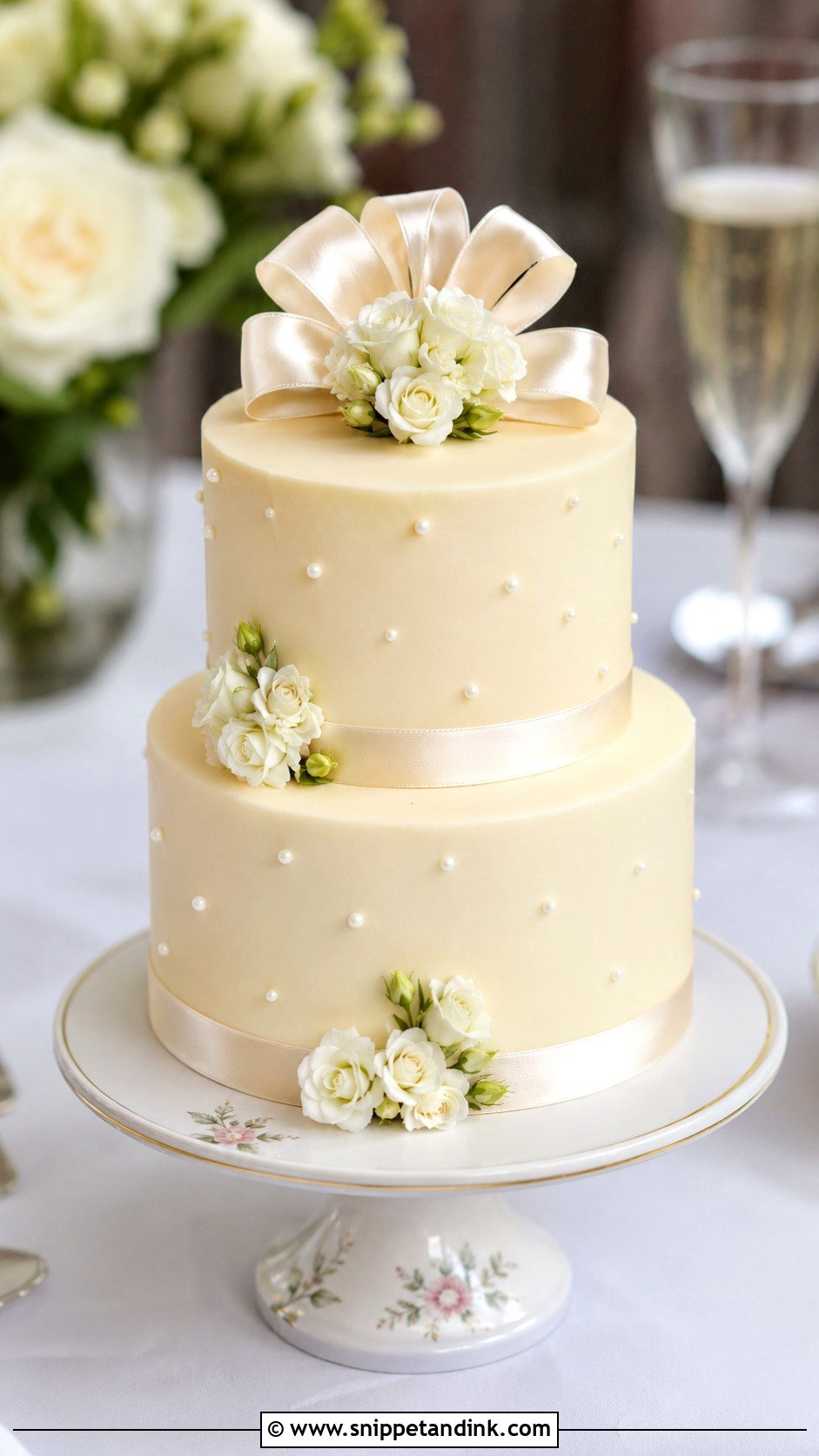
A two tier cake looks bridal when it’s on the right stand. Without height under it, a small cake disappears on a long table. Small is ideal for elopements, intimate dinners or a dessert table, and it lets you spend more on flavour, such as lemon elderflower or vanilla bean with raspberry. Scale the decoration down with it: tiny roses, piped pearls, a narrow ribbon. Oversized blooms on a little cake make it look top-heavy.


15. Wedding Cake With Fresh Flowers
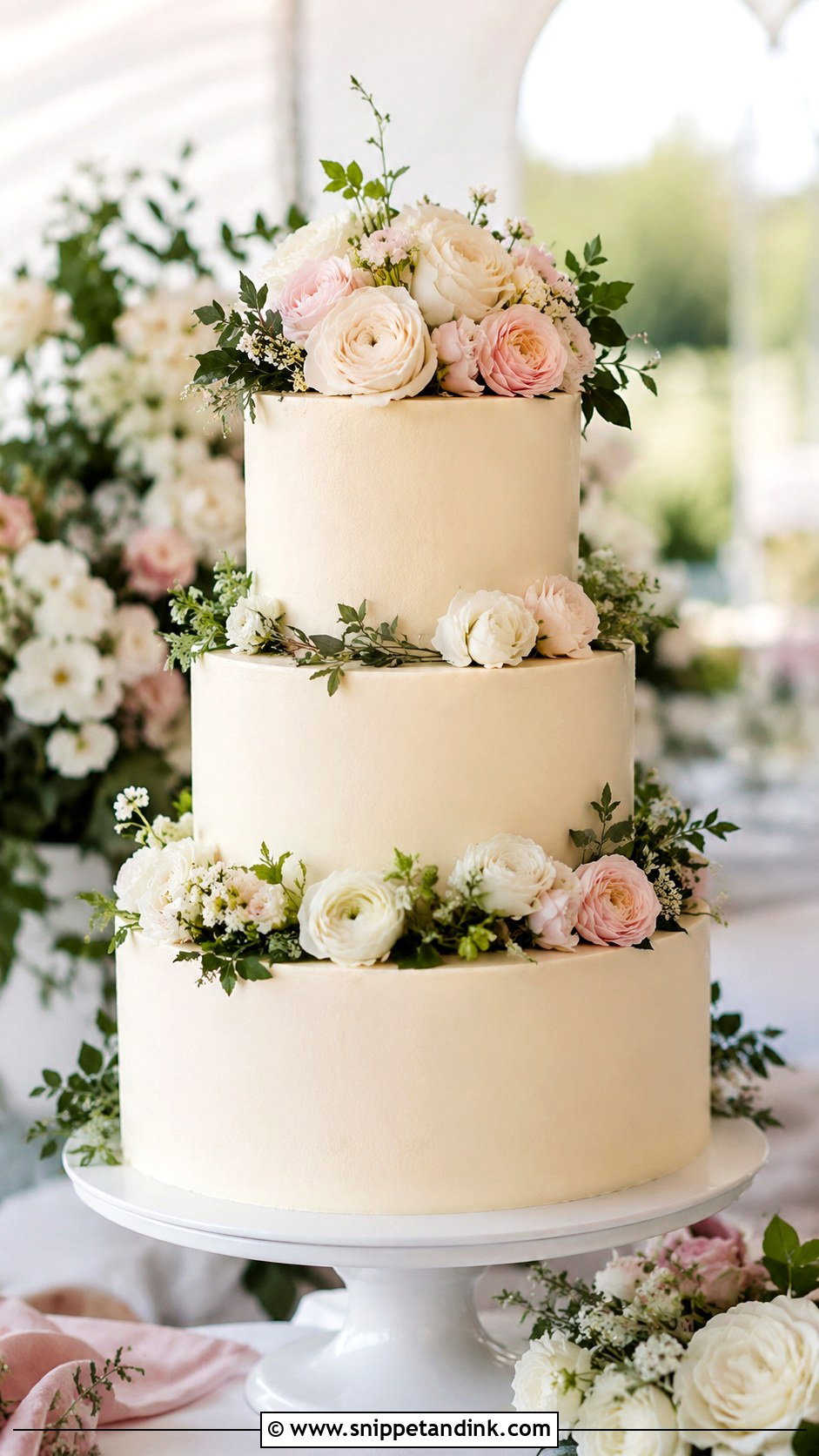
Fresh flowers tie the cake to the rest of the room, and they’re the decoration that needs the most coordination. Not every flower is safe near food, and stems and florist wire should never touch the cake directly, so I ask the florist for pesticide-free blooms and wrap or seal every stem. Roses, ranunculus and small greenery are reliable choices; peonies drop petals as the room warms. Agree with your baker and florist on who places them, and when, so nobody arrives assuming the other has it covered.
16. Wedding Cake With Sugar Flowers
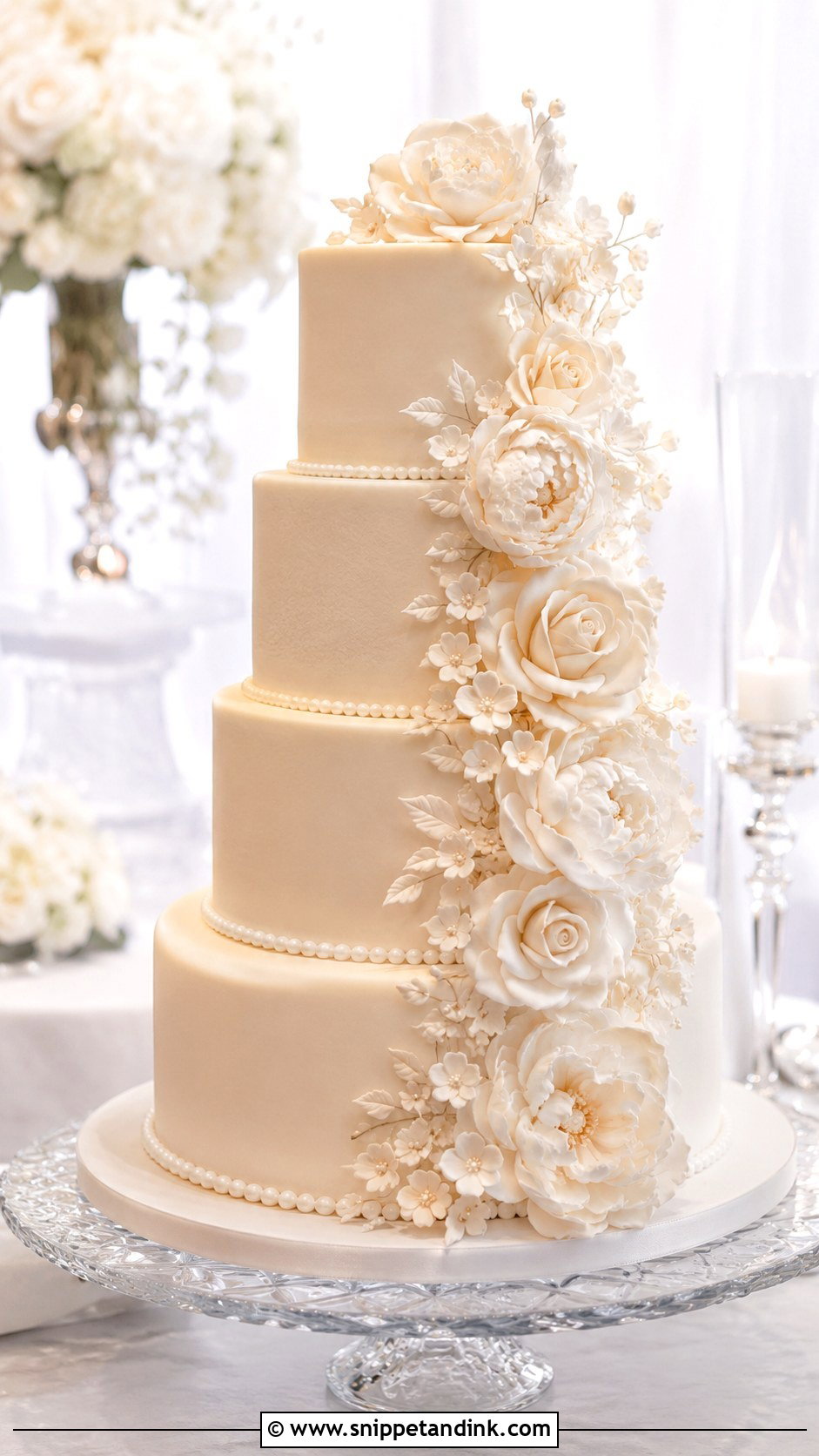
Sugar flowers are the slowest thing I make. Each petal is rolled thin, wired, shaped and dried, and a full peony can take hours, so they need to be planned well ahead. The reward is complete control: any colour, any season, and nothing that wilts or drops pollen on the frosting. They’re also keepsakes, since they last for years in a dry box. Humidity is their weakness, so they shouldn’t sit in a damp fridge before setup. Keep the tiers plain so the flowers carry it.
17. Wedding Cake With Piping
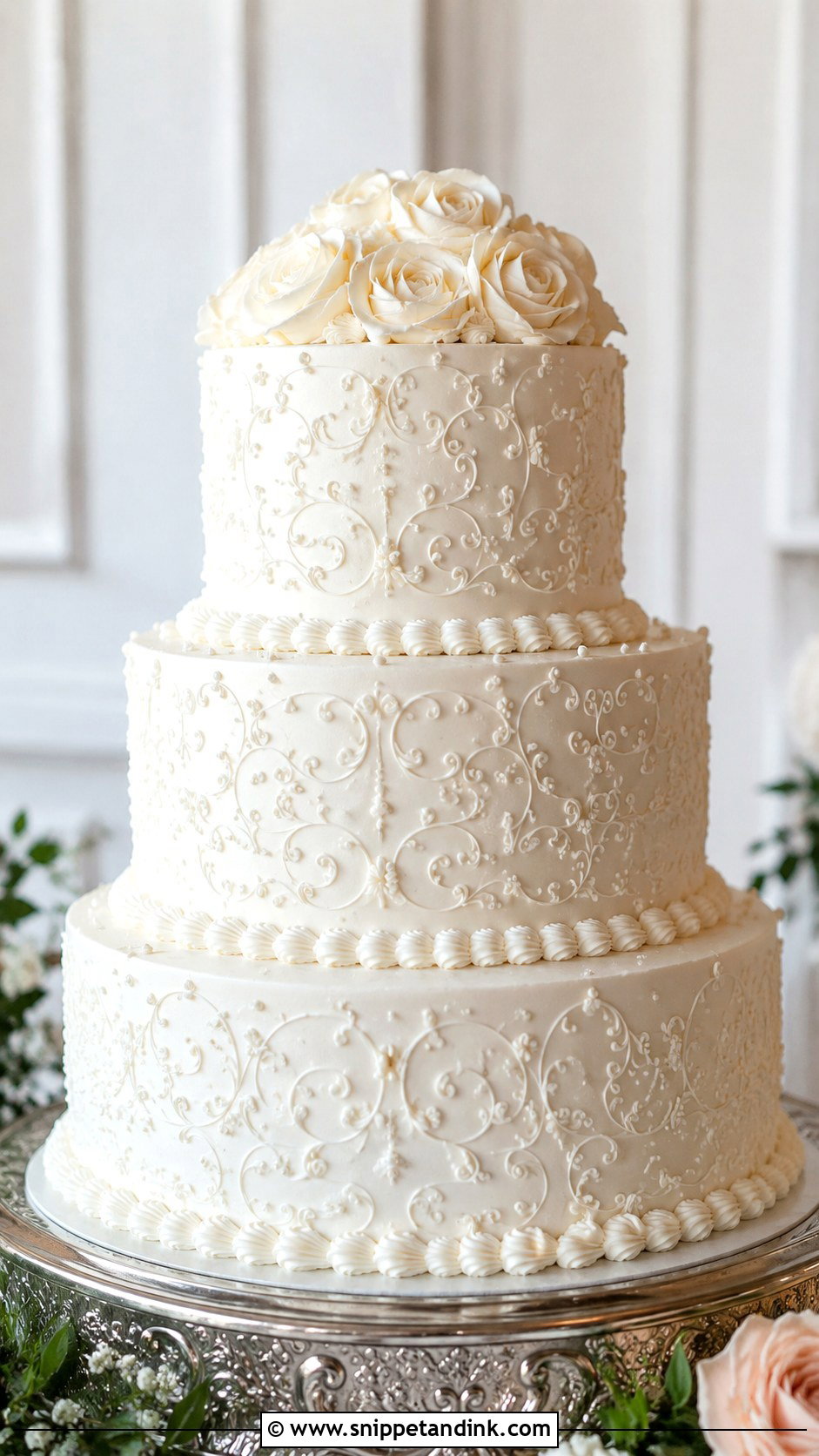
Piping is where you can see the hand of whoever made the cake. Simple dots and shell borders are quick and tidy; scrollwork, swags and lace patterns take steady hands and many hours. White-on-white piping adds texture without introducing a new colour. Buttercream gives soft, rounded lines; royal icing sets hard with sharper detail but can crack if the cake is knocked in transport. The pattern has to repeat evenly around each tier, which is a lot harder than it looks.
18. Wedding Cake With Ribbon
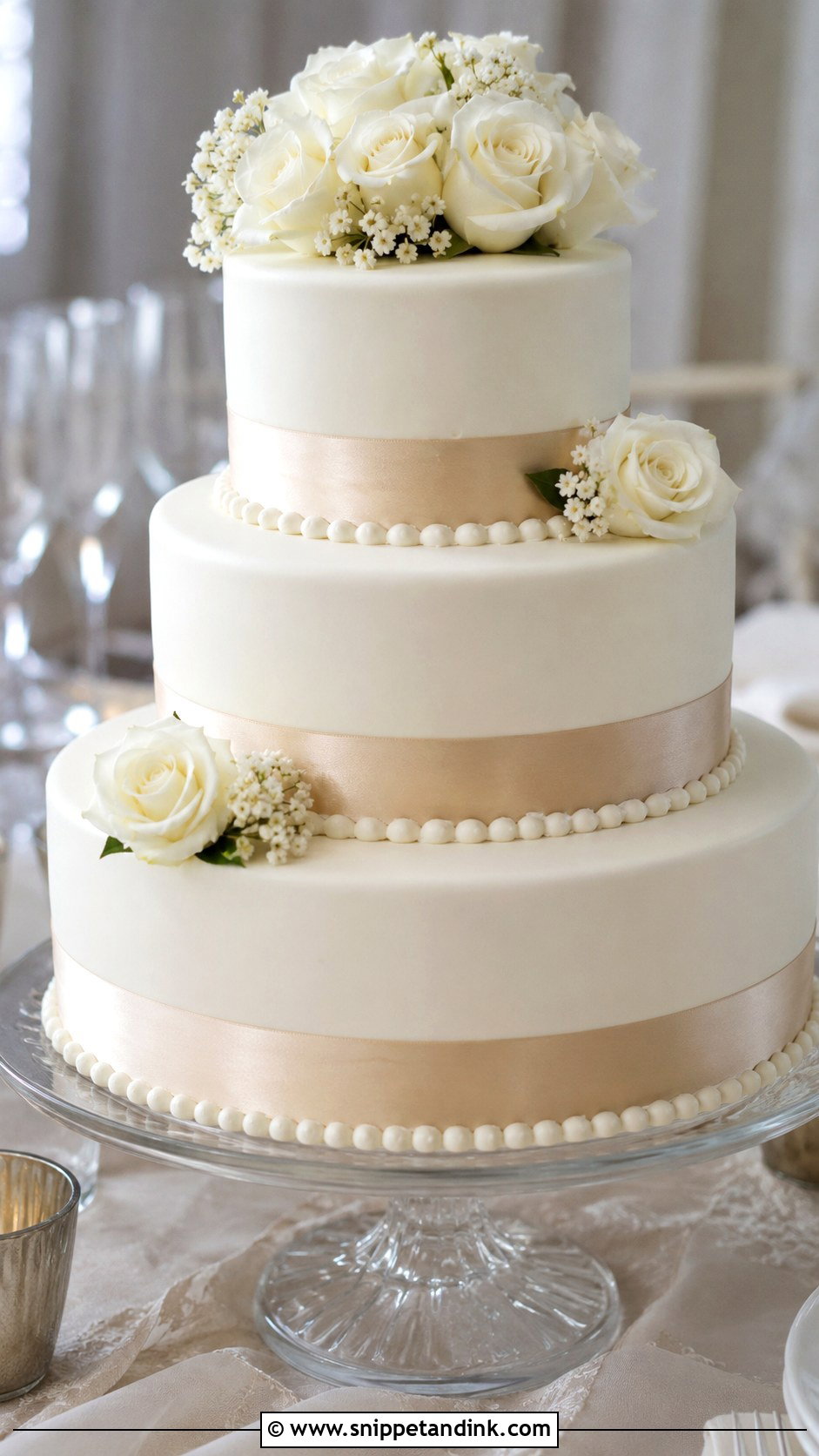
Ribbon is the cheapest way to make a plain cake look finished and to tie it to your colours. There’s one catch I always warn couples about: satin laid straight onto buttercream soaks up butter and shows greasy spots within an hour. I back the ribbon with a thin strip of fondant or a food-safe tape so it stays clean. Ivory, champagne, blush and soft gold are the classic choices, and they match bridesmaid dresses or linens easily.
19. Wedding Cake With Gold Accents
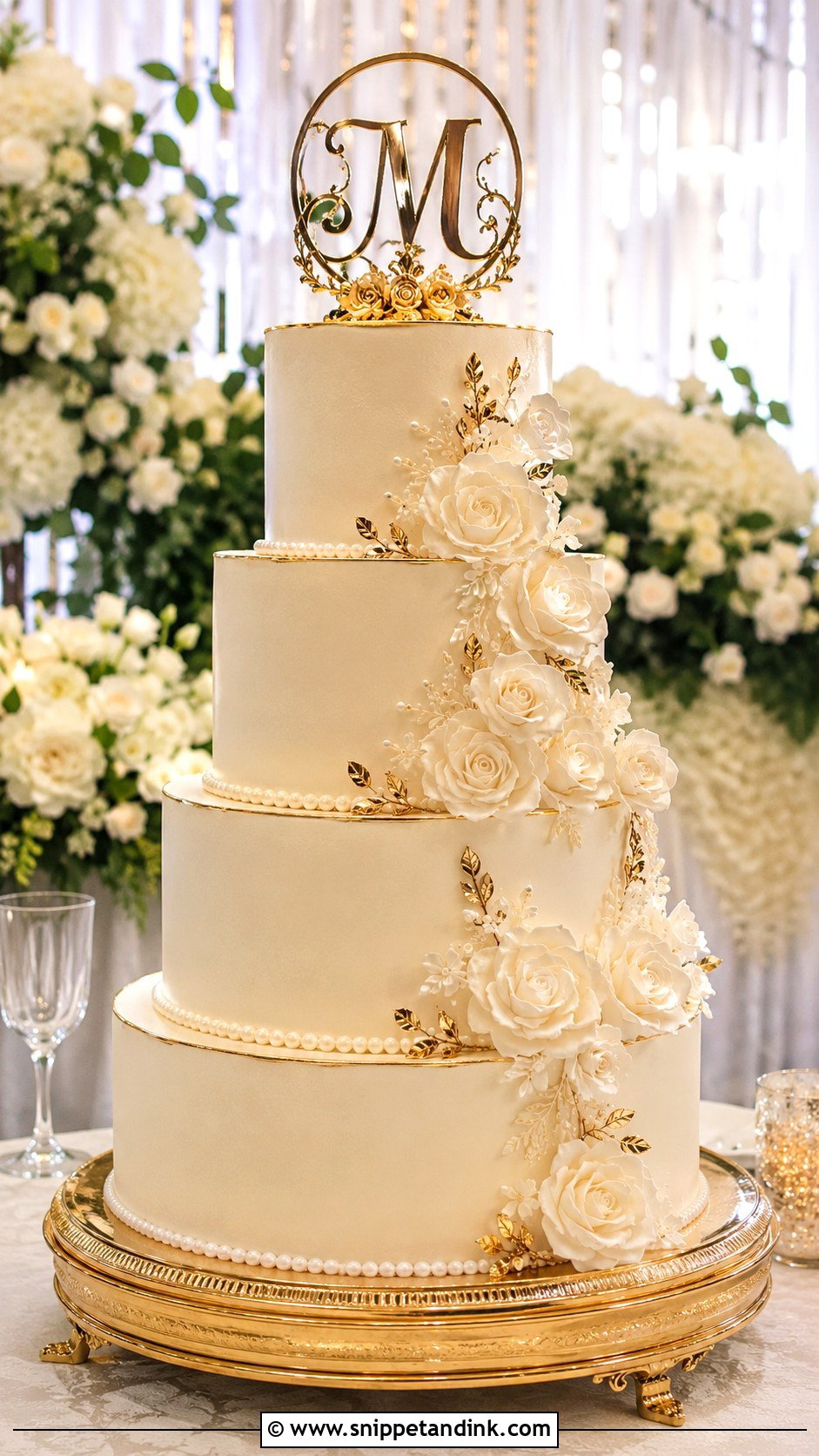
Gold works best as an accent: a thin painted edge on each tier, a monogram, or a few gilded sugar pearls. Real edible gold leaf and edible gold paint exist, but plenty of glittering gold dusts are labelled non-toxic rather than edible, which means decorative only, so ask what’s being used on any part that will be served. Keep the base white or ivory and soften the shine with a few white flowers. It suits evening receptions and winter weddings especially well.

20. Wedding Cake With Monogram
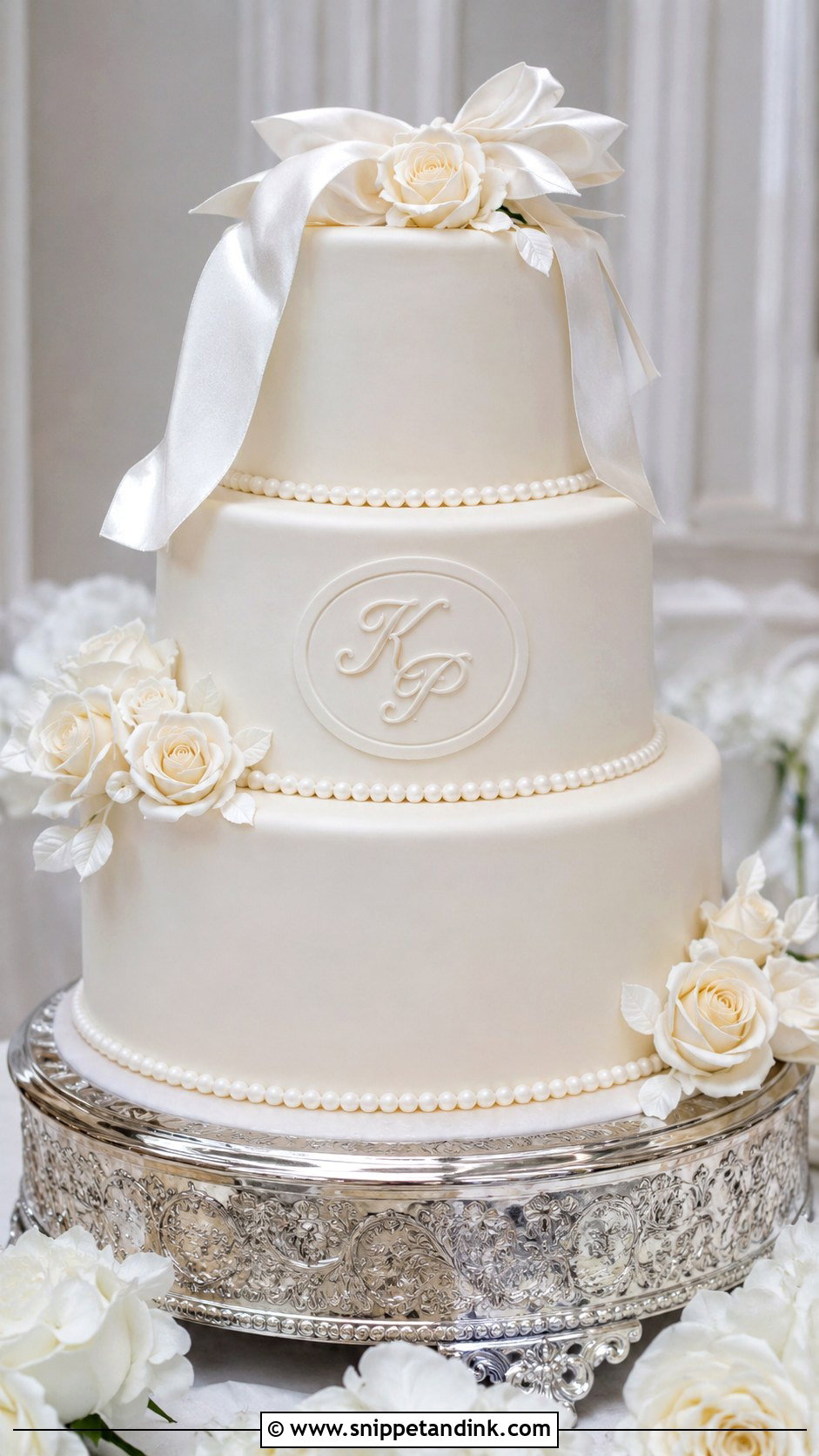
A monogram makes a classic cake feel like yours without changing its style. The couple’s initials can be piped, painted, embossed into fondant or set on as a small topper. Send your baker the actual typeface from your invitation; hand-piping a script from a printed template keeps it consistent with your stationery. Leave the rest of the cake plain, because a monogram competing with a cascade of flowers loses.
From the Van to the Knife: The Last Six Hours
Most cake disasters happen after the cake leaves the kitchen, so these are the questions I’d want answered before the wedding week.
Where it will stand
Out of direct sun, away from the dance floor speakers and not under a heater. A cake that sits by a south-facing window from three in the afternoon will soften on that side, whatever it’s covered in.
Who stacks it
Taller cakes travel in separate tiers and get stacked on site. Give your baker the venue’s access times and the name of whoever will open the door.
Who cuts it
After your ceremonial cut, the caterer usually portions the cake in the kitchen, and some charge a cutting fee. Ask for the dowels and any wired flowers to be removed before slicing, and decide whether the top tier goes in a box for you to freeze.
Take Three Favourites to Your Tasting
Classic cakes earn their place because nothing about them dates quickly. Fondant or buttercream, roses or lace, the right one is the cake that suits your venue’s temperature, feeds your guest count and tastes like something people will finish. Take the two or three designs you like most to your tasting and ask your baker how each would change for your room, your season and your numbers. A good baker will tell you honestly which one they’d make.
You'll Like These Ideas:











Leave a Reply