
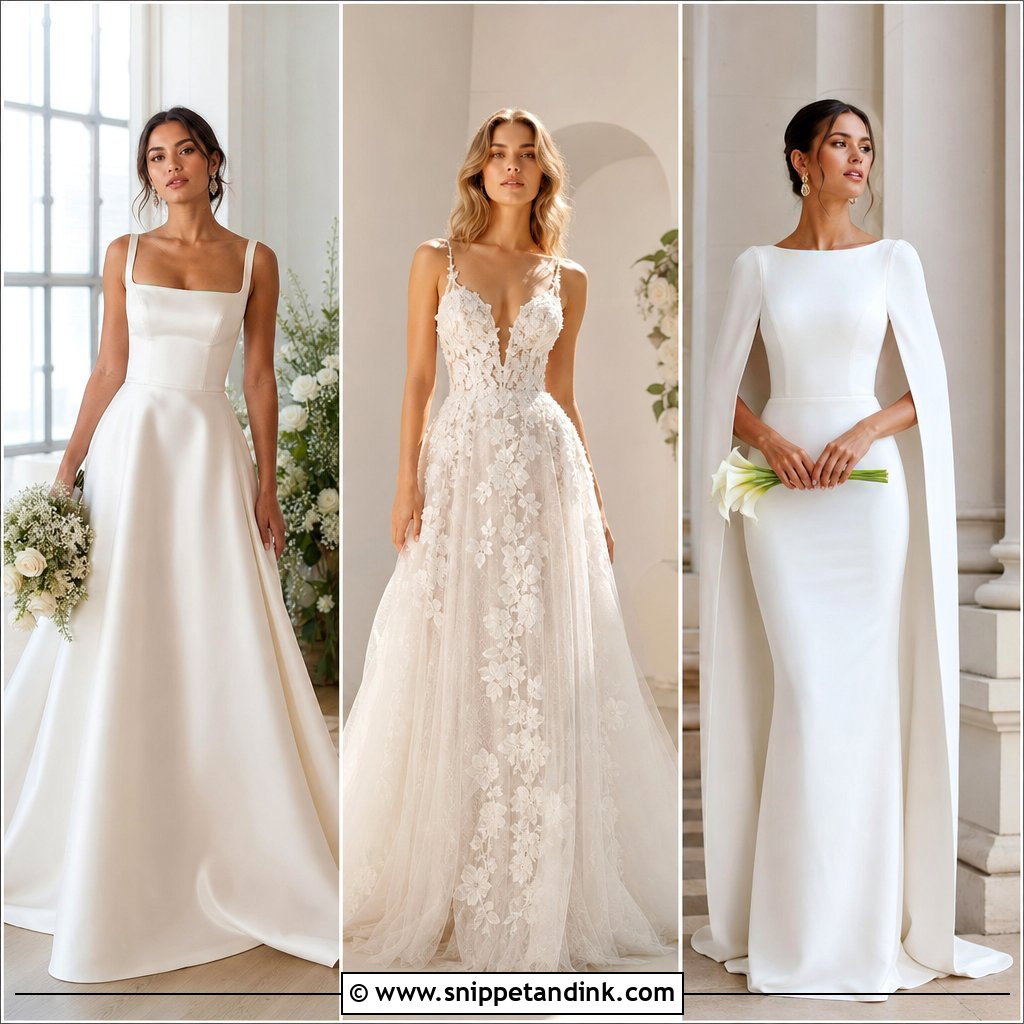
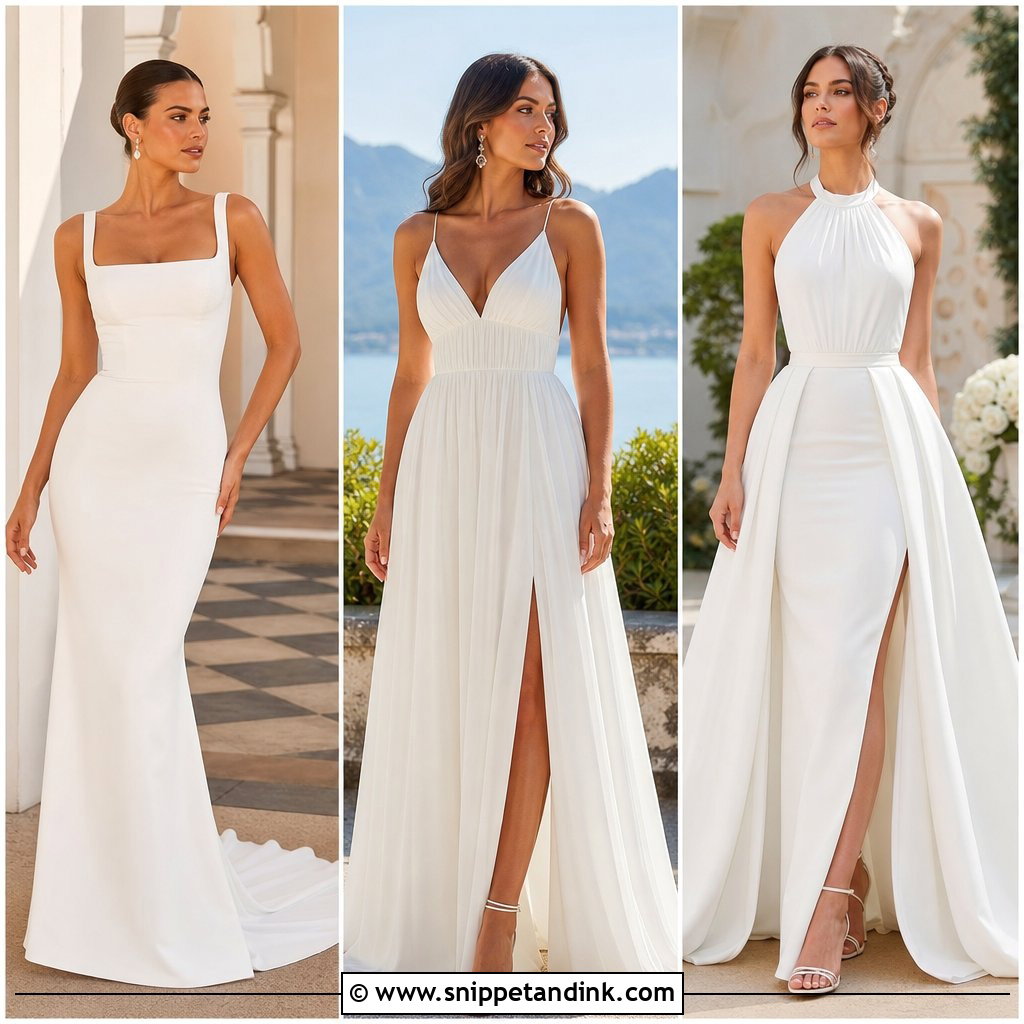
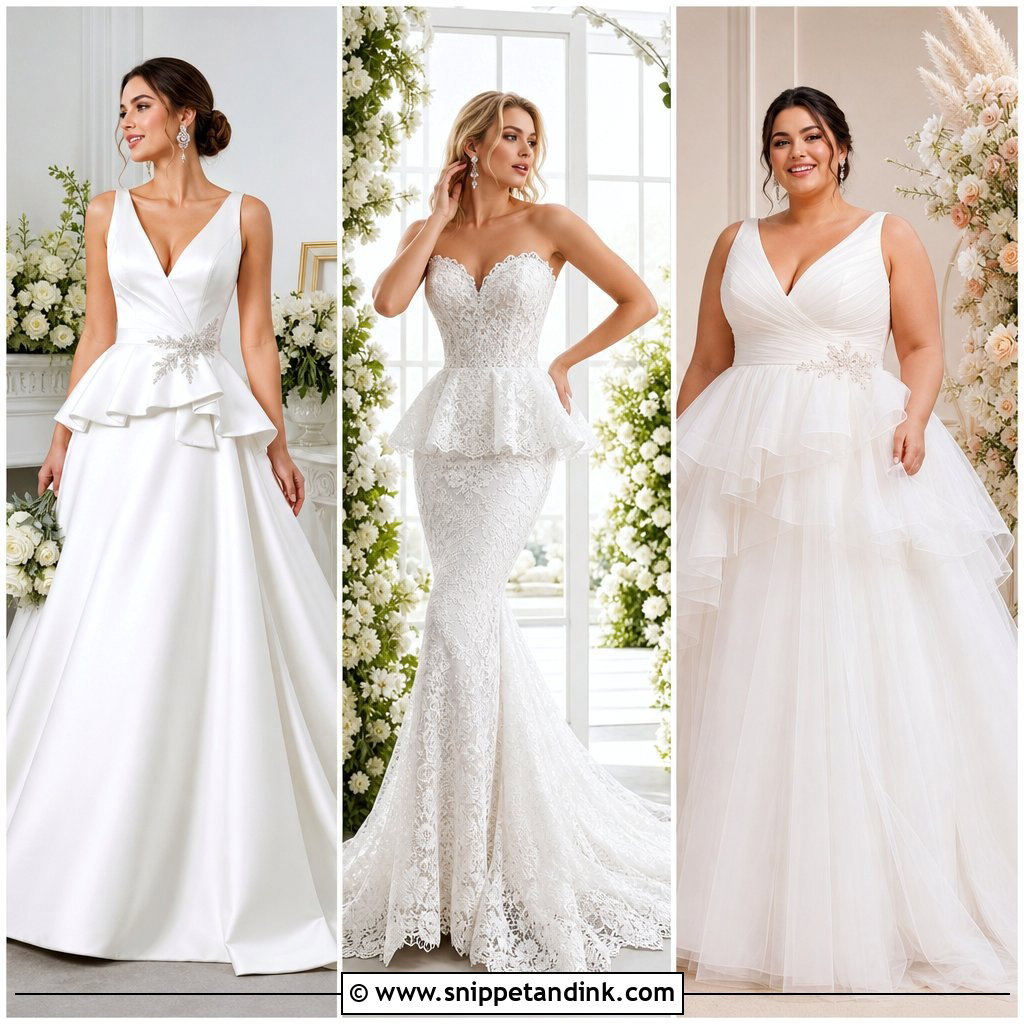
A fitted gown is the most honest silhouette in bridal. It shows the shape of your body and the quality of the tailoring in equal measure, which is why I treat the fit itself as the design. Below are twenty fitted looks, from plain crepe and romantic lace to visible corsetry, dramatic mermaid skirts and short reception dresses, each with suggestions for the veil, jewelry and shoes so you can picture the whole outfit. While you browse, pay attention to four things more than the decoration: where the skirt starts to open, how much support is built in, how heavy the fabric is and how long the train runs. A fitted dress should follow your proportions without stopping you from walking, sitting or hugging anyone.
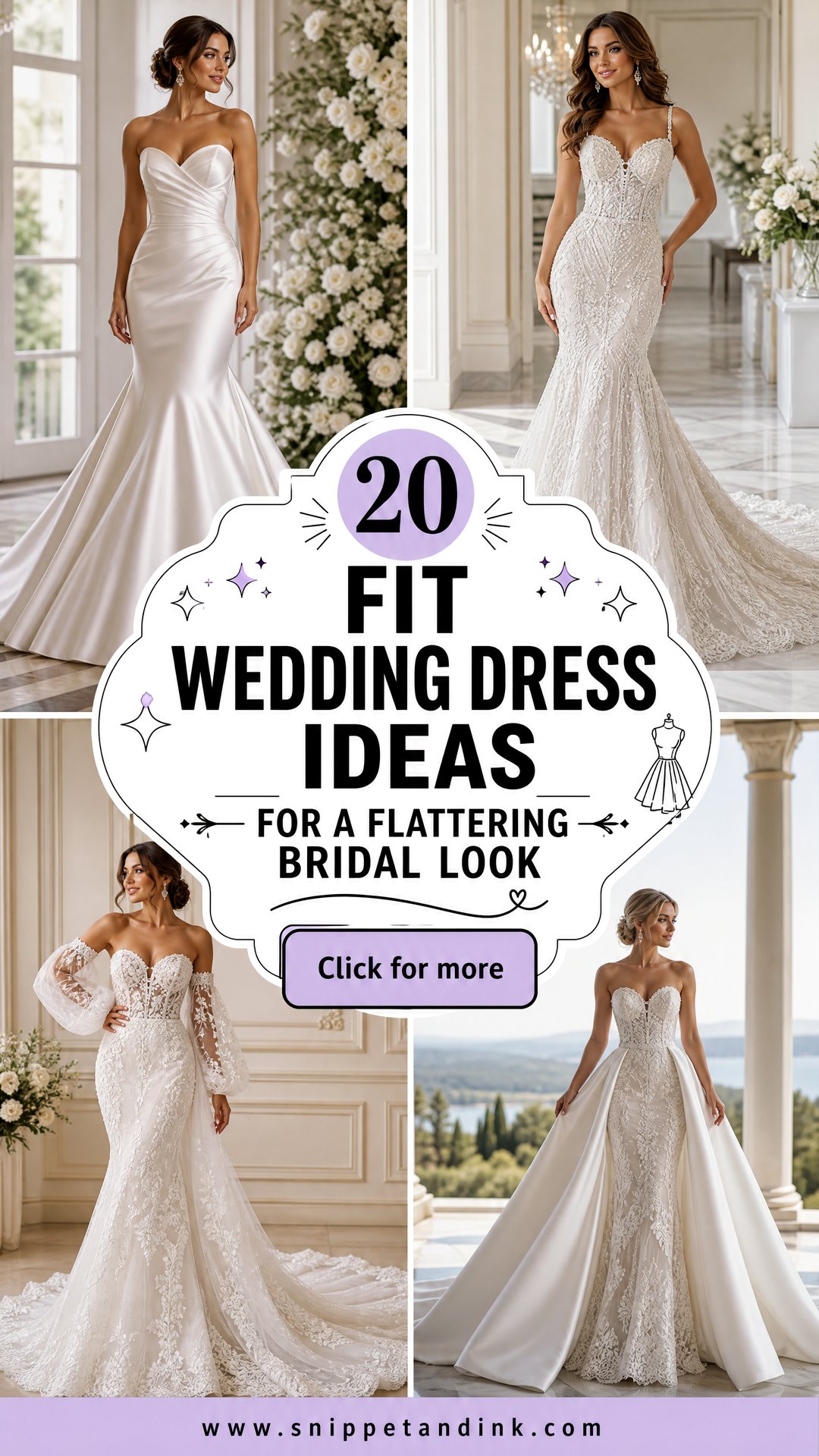
Bridal Sizes Don’t Match Your Jeans Size
The first surprise at most bridal appointments is the size label. Bridal sizing usually runs one or two sizes smaller than everyday clothing, so a bride who wears a 10 in a high-street dress may be ordered a 12 or 14. That number means nothing about your body. It’s simply how the industry cuts.
Here’s how I approach ordering a fitted gown:
- Take bust, natural waist and fullest hip measurements, ideally with the shop’s own tape and in the underwear you’ll wear.
- Order to your largest measurement on the size chart. Taking a fitted gown in is routine; letting it out depends on spare seam allowance, which many gowns don’t have.
- Ask whether the style is made to order. Many gowns take several months to arrive, so I suggest ordering roughly eight to ten months before the date and asking the shop for a delivery window in writing.
A fitted style will rarely fit off the rack, even in your correct size. Plan on alterations from the start rather than treating them as a sign you ordered wrong.
1. Strapless Satin Fit And Flare Wedding Dress
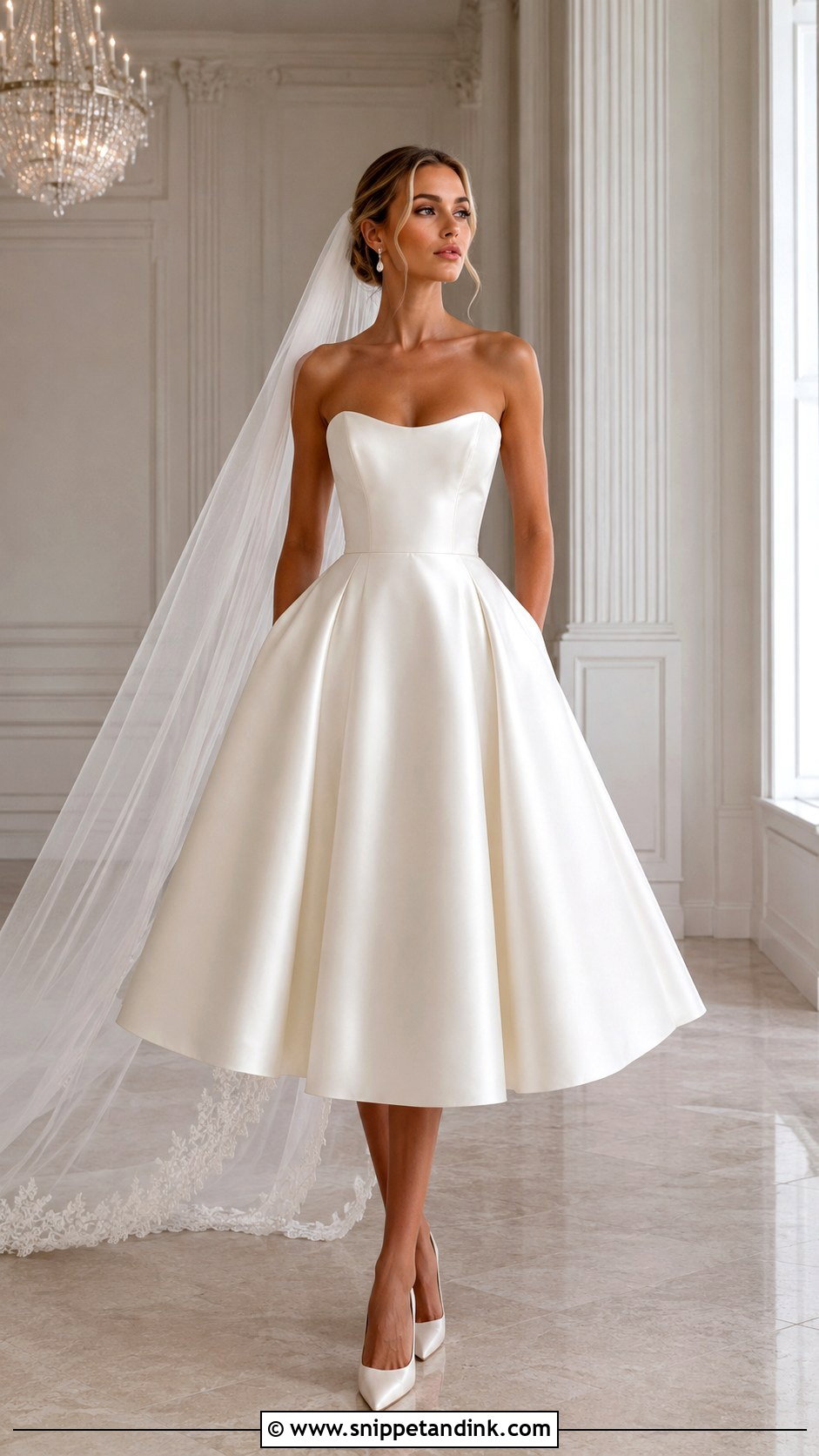
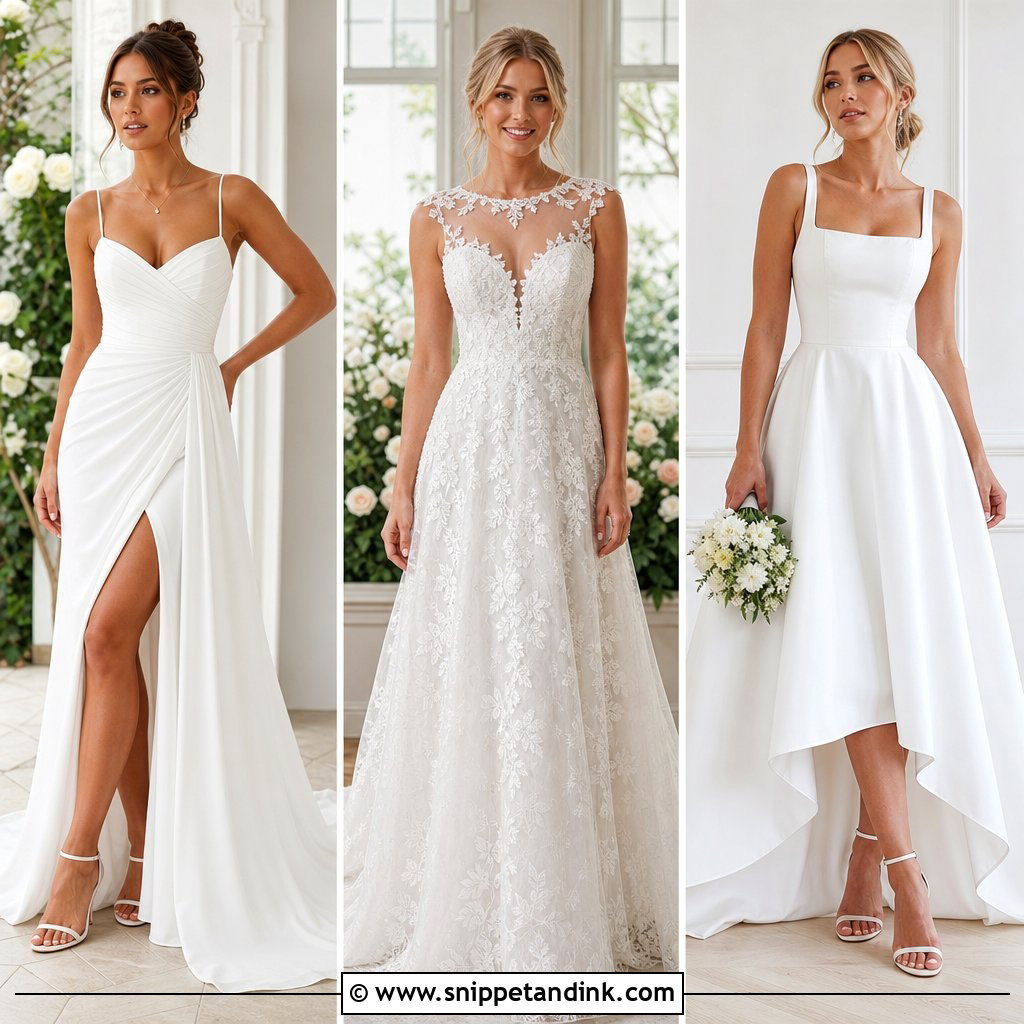
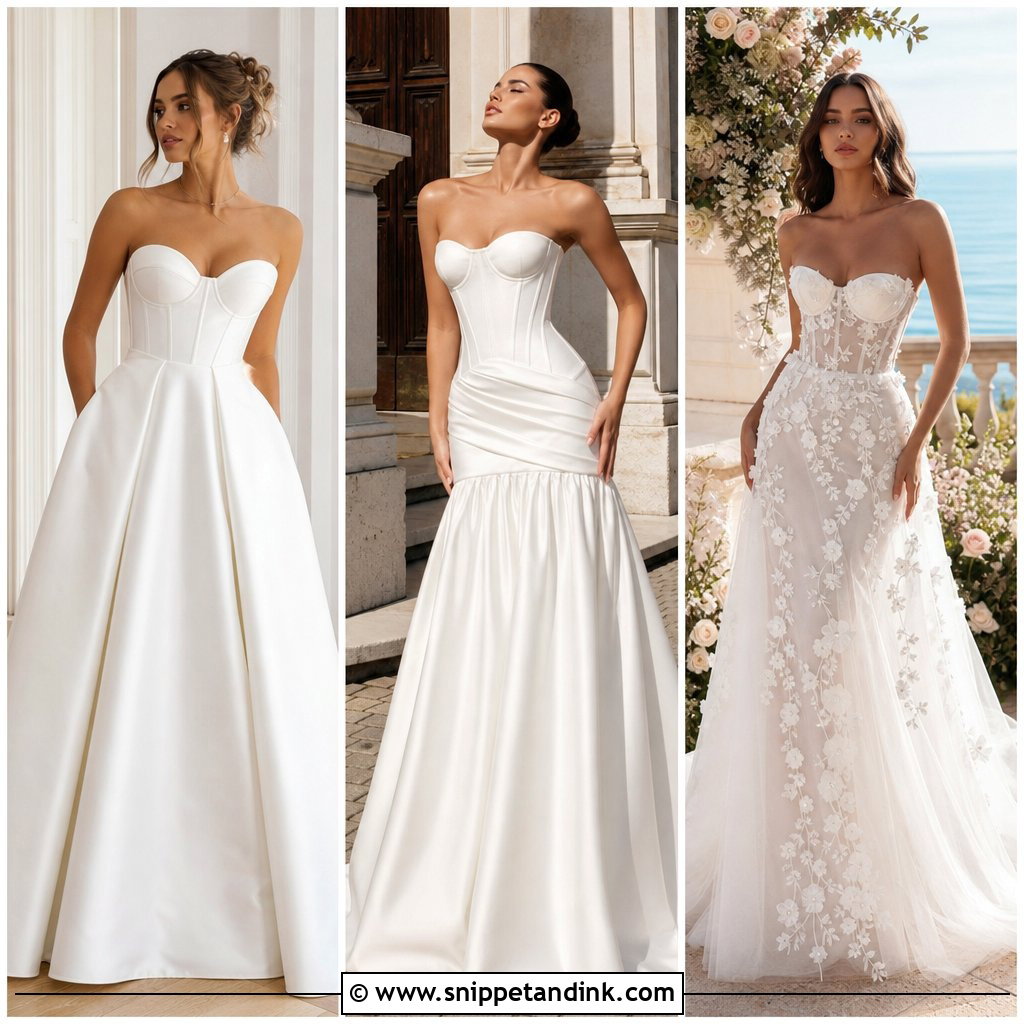
Satin on a strapless fit-and-flare is clean and classic, but it’s the fabric that most clearly shows what’s underneath. Choose a structured bodice, a softly curved neckline and a little draping across the waist; the drape hides small changes in the body over a long day. A skirt that opens around mid-thigh gives definition without the stride limits of a true mermaid. Pearl drops, pointed ivory pumps, a simple cathedral veil and a sleek low bun keep it refined. With very smooth satin, I’d ask for built-in cups and wear smooth-edged underwear to every fitting. Ballrooms, hotels and formal indoor venues let its sheen show best.
2. Long Sleeve Lace Fit And Flare Wedding Dress
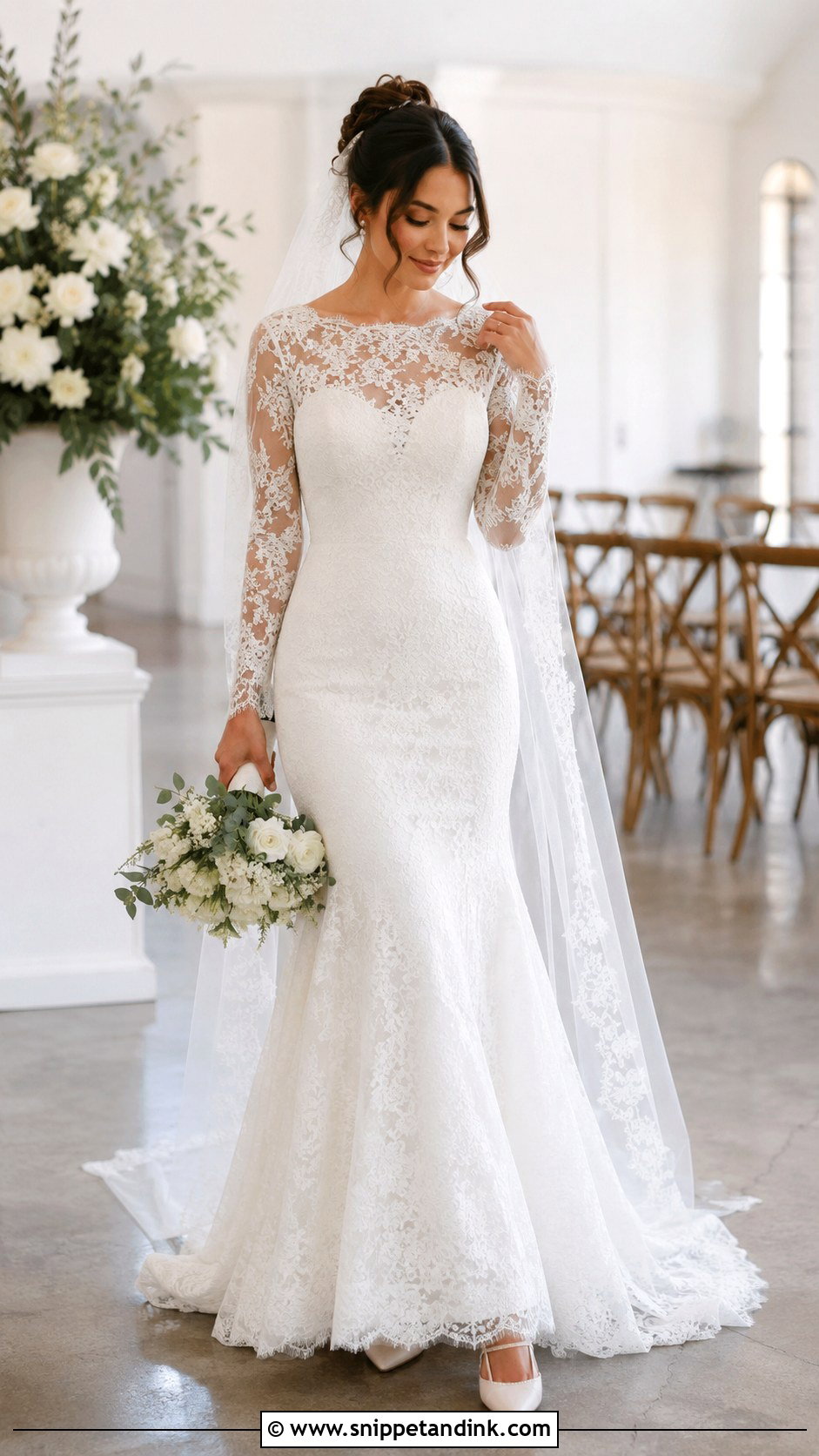
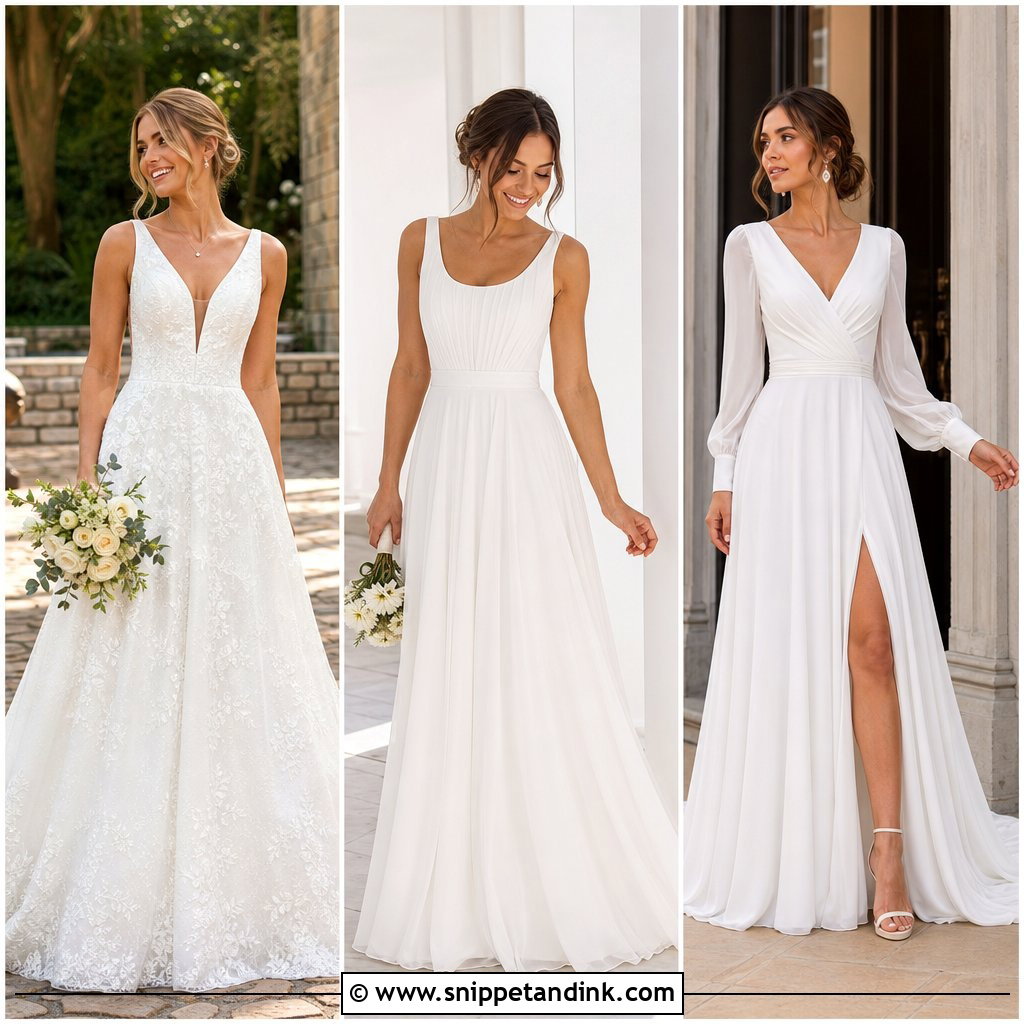
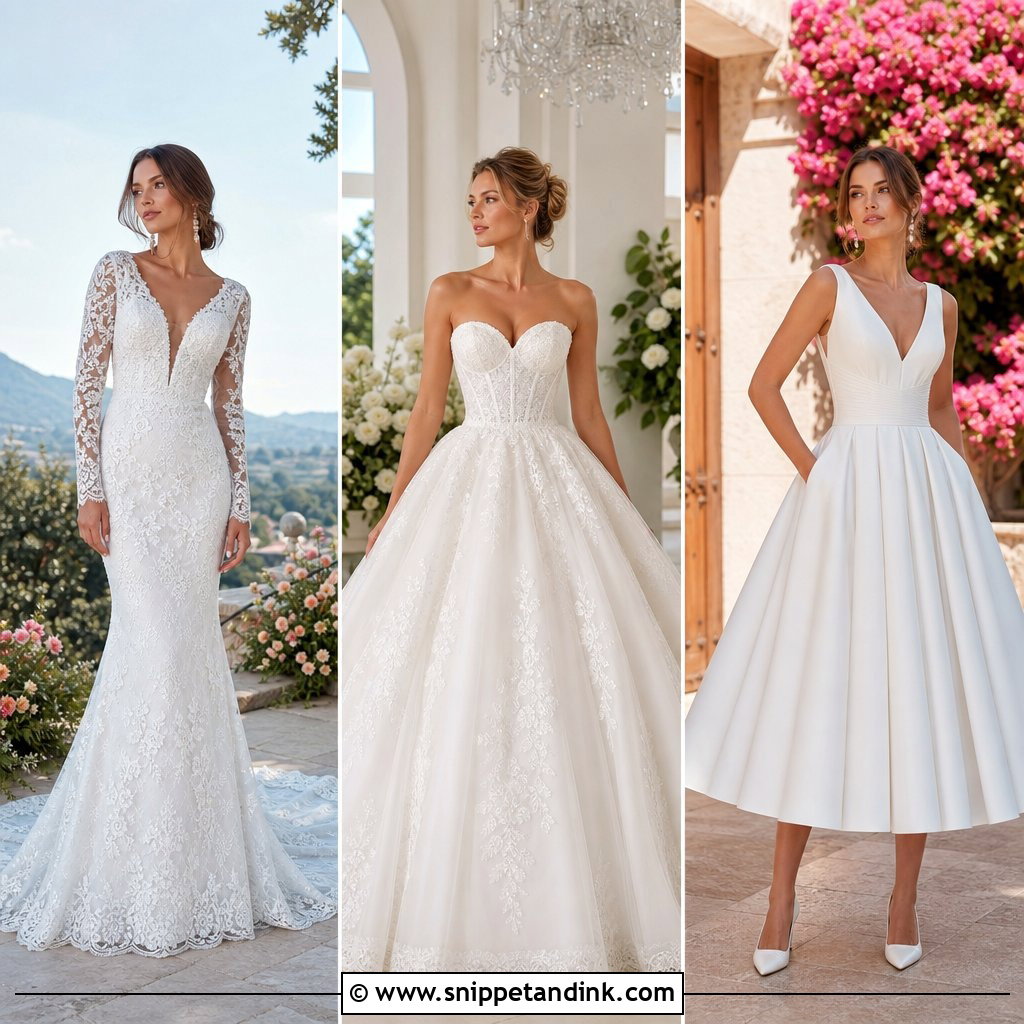
Long lace sleeves with a fitted skirt give coverage without bulk, as long as the bodice underneath is lined and supportive. I look for sheer sleeves, a defined waist and a skirt that opens gradually below the hips, with appliqués carrying onto the skirt so the lace doesn’t simply stop at a seam. Pearl studs, ivory slingbacks and a fingertip veil edged with matching lace finish it, and a softly twisted updo shows the back. Keep a light ivory wrap nearby for cold gaps between photos. It suits fall, winter and early spring dates, and lace sleeves age well in pictures because they don’t date as quickly as heavy trends.
3. Off Shoulder Fit And Flare Wedding Dress
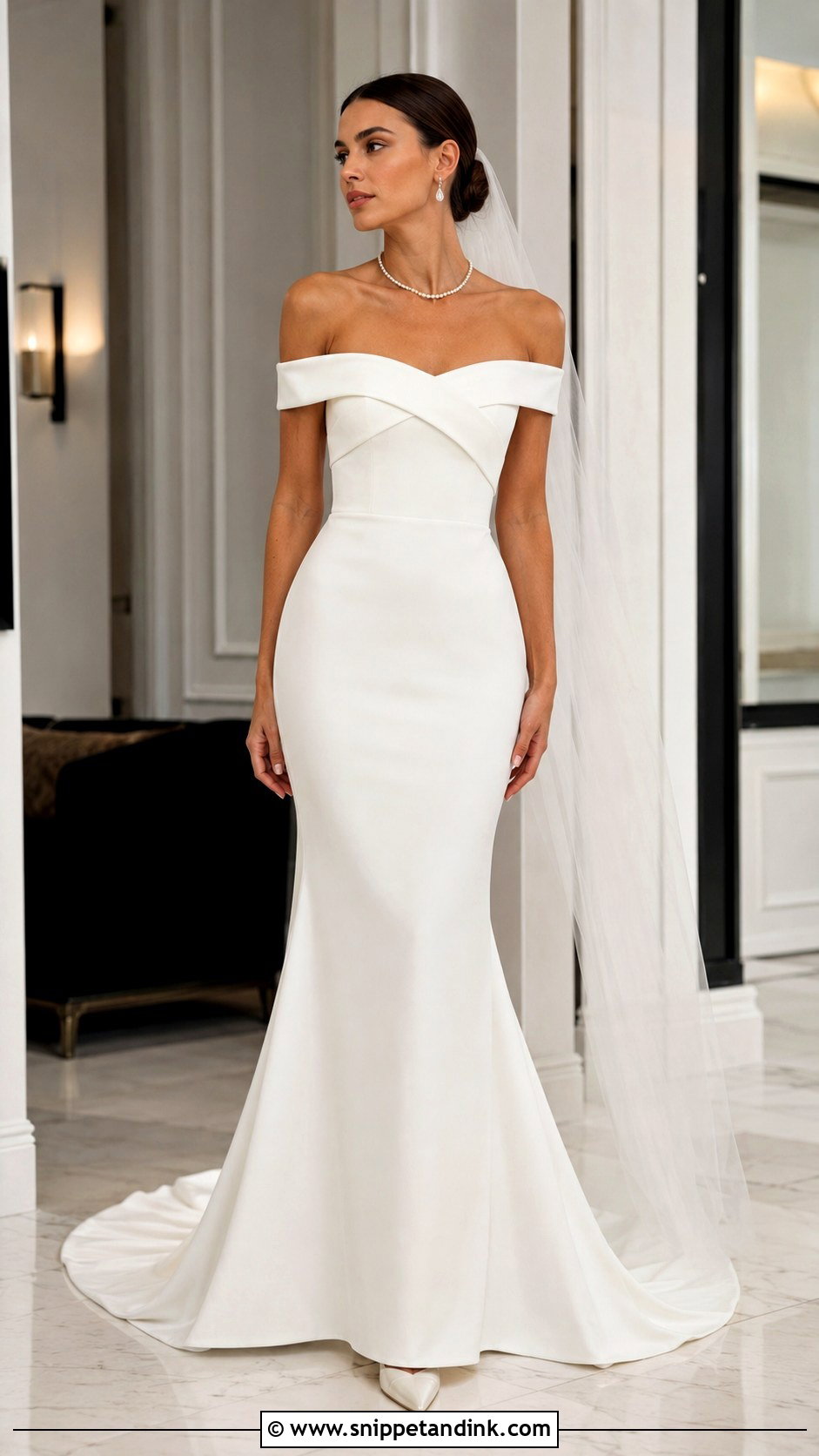
An off-the-shoulder neckline brings softness to a close-fitting silhouette, but only when internal boning holds the fold in place. Without it, the band slides every time you move your arms. Crepe, satin or stretch mikado give a smooth line through the waist and hips before opening into a train you can manage. A short pearl necklace, crystal studs and pointed heels suit it, with a low chignon or polished ponytail so the shoulders stay bare and a plain tulle veil set beneath the hair. At every fitting I ask brides to raise their arms, sit and turn. Those three movements show quickly whether the neckline will survive portraits and dancing.
4. Sweetheart Lace Fit And Flare Wedding Dress
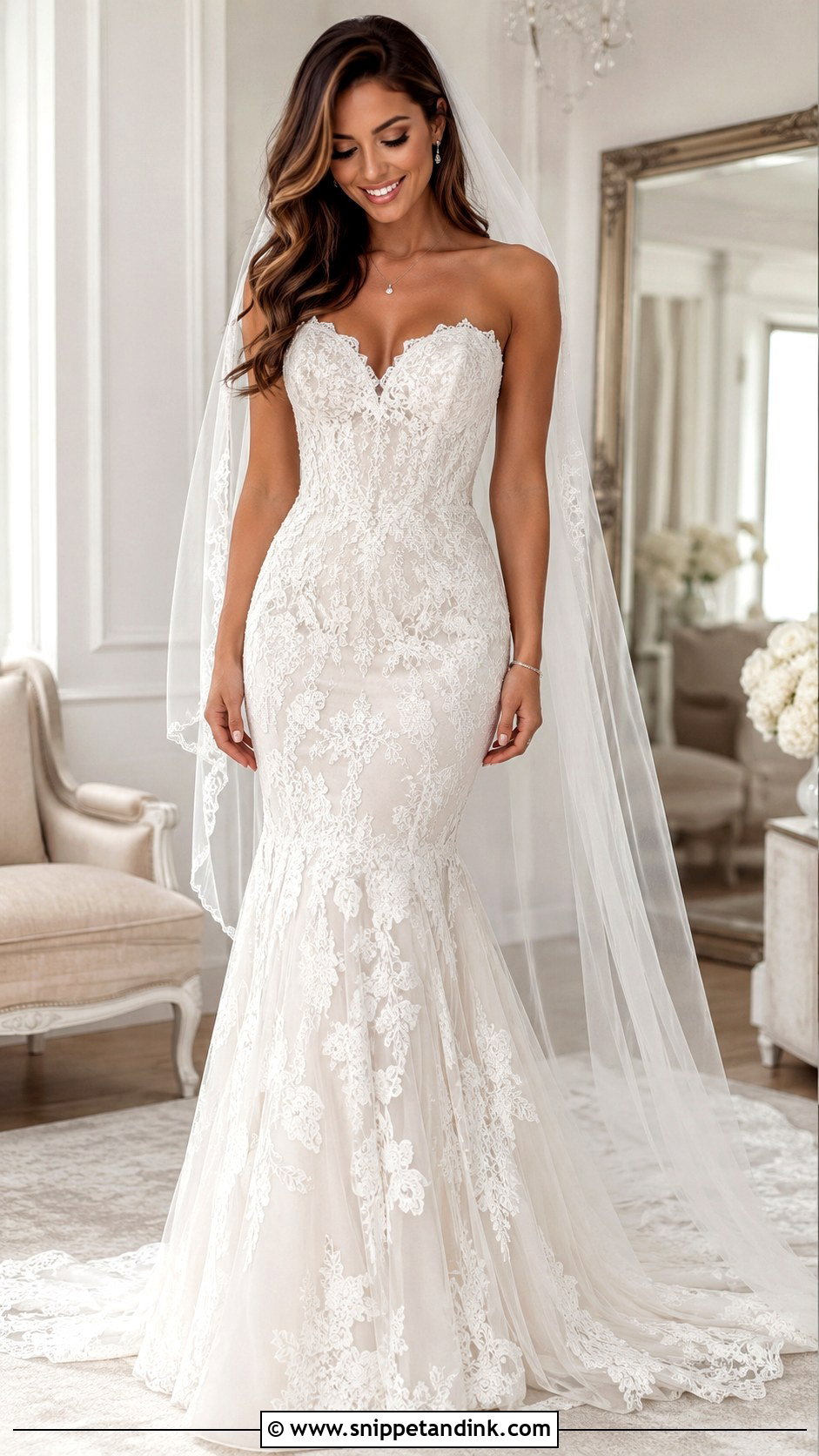
The appliqué placement on a sweetheart lace gown tells you a lot about its quality. Motifs that are spread thoughtfully across the bodice and hip look intentional; heavy clusters in one area often hide a construction shortcut. The sweetheart curve frames the upper body while the fitted bodice defines the waist before the skirt flares near the thigh. A fine pendant, small crystal earrings, comfortable ivory block heels and a chapel veil keep it balanced, and loose waves over one shoulder soften the structure. A lace-trimmed comb is a neat finish. If you’re unsure about strapless, ask now whether removable straps can be added; it’s much easier before alterations start.
5. Square Neck Fit And Flare Wedding Dress
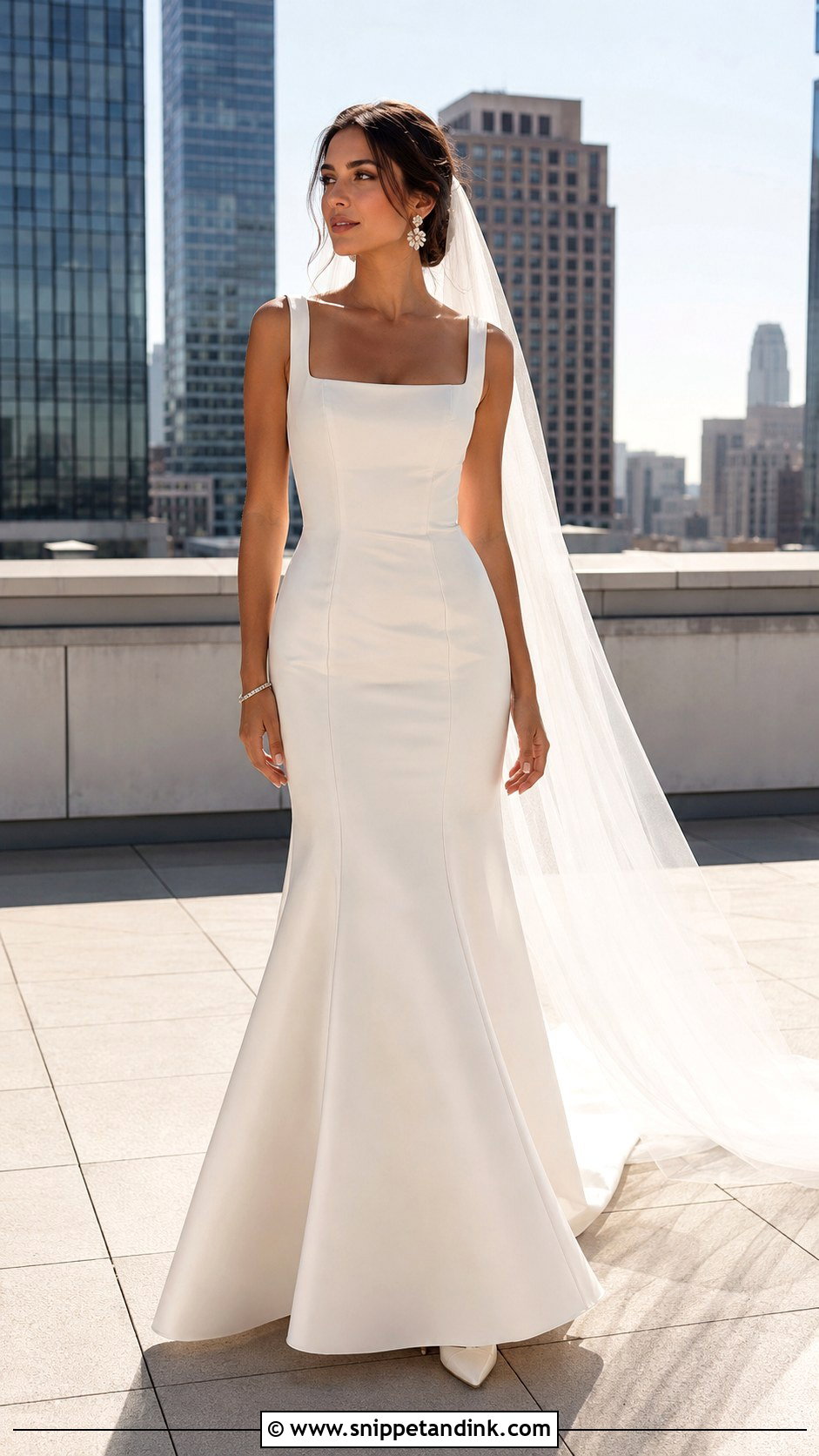
Square necklines are crisp and architectural, and they need the bodice to sit flat against the chest. That’s the first thing I check, along with whether there’s enough coverage at the sides near the underarm. Wide straps, clean seams and a smooth crepe or satin skirt suit the shape. A sleek bun, sculptural earrings and a simple bracelet pair naturally with the angles, and pointed pumps with a long plain veil continue the clean lines. A structured top-handle bag is handy before the ceremony for lipstick and tissues, though it stays behind when you walk the aisle. Modern venues, rooftops and minimal indoor spaces all suit this gown.
6. V Neck Fit And Flare Wedding Dress
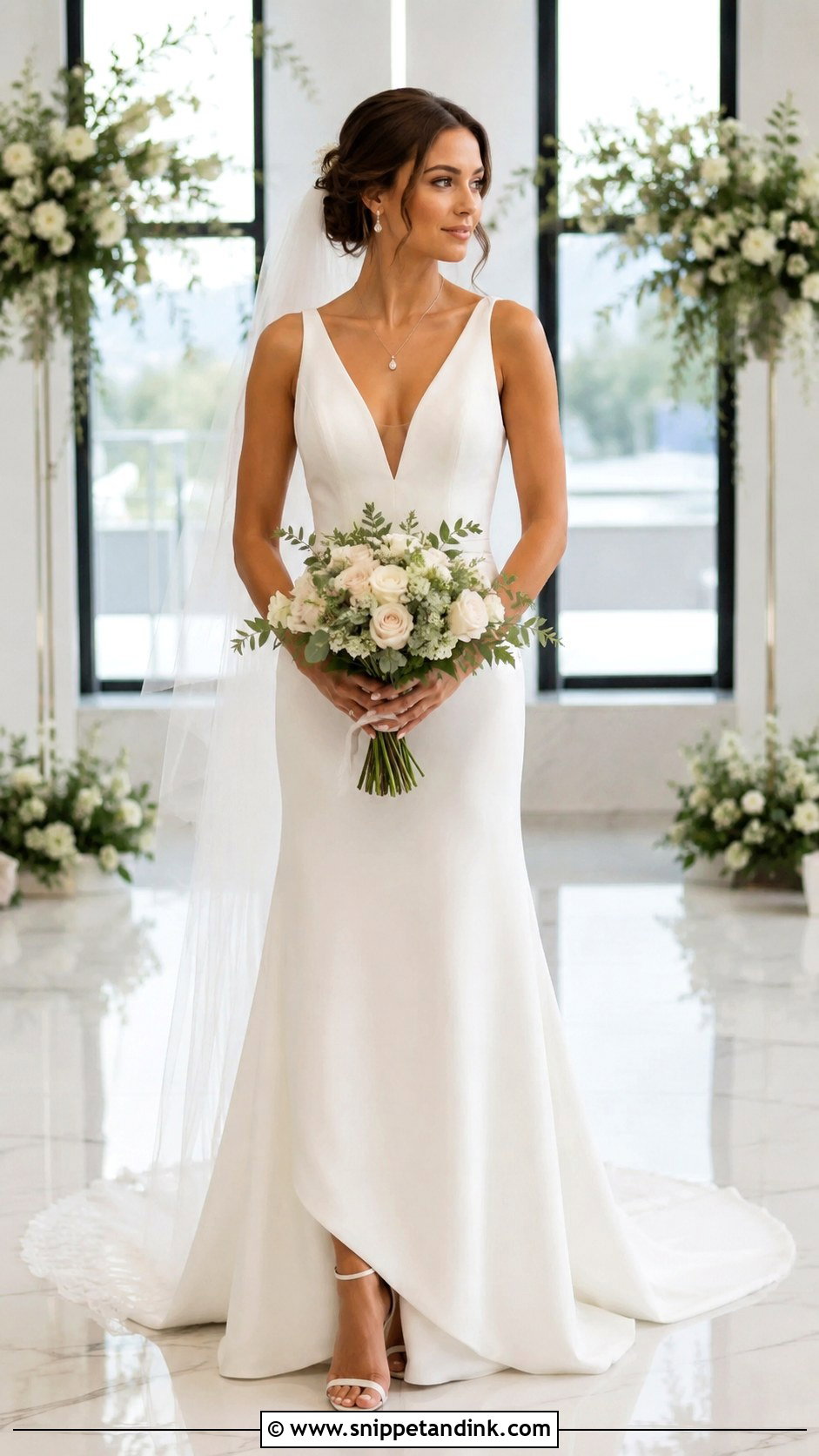
A V-neck opens the upper body and lengthens the torso, and its depth is the decision that matters. Modest Vs need little help; deeper ones work best with illusion tulle and properly fitted straps. Look for a defined waist and a soft flare that doesn’t shorten your stride. I like a delicate pendant that ends above the point of the V, never in it, plus slim drop earrings and ivory sandals with secure ankle straps. A softly gathered veil and low textured bun finish the look. If the front is low, ask your seamstress about mesh, cups or a few extra appliqués. Lean forward in the mirror at your fitting, since that’s when a deep V shows whether it’s secure.
7. High Neck Fit And Flare Wedding Dress
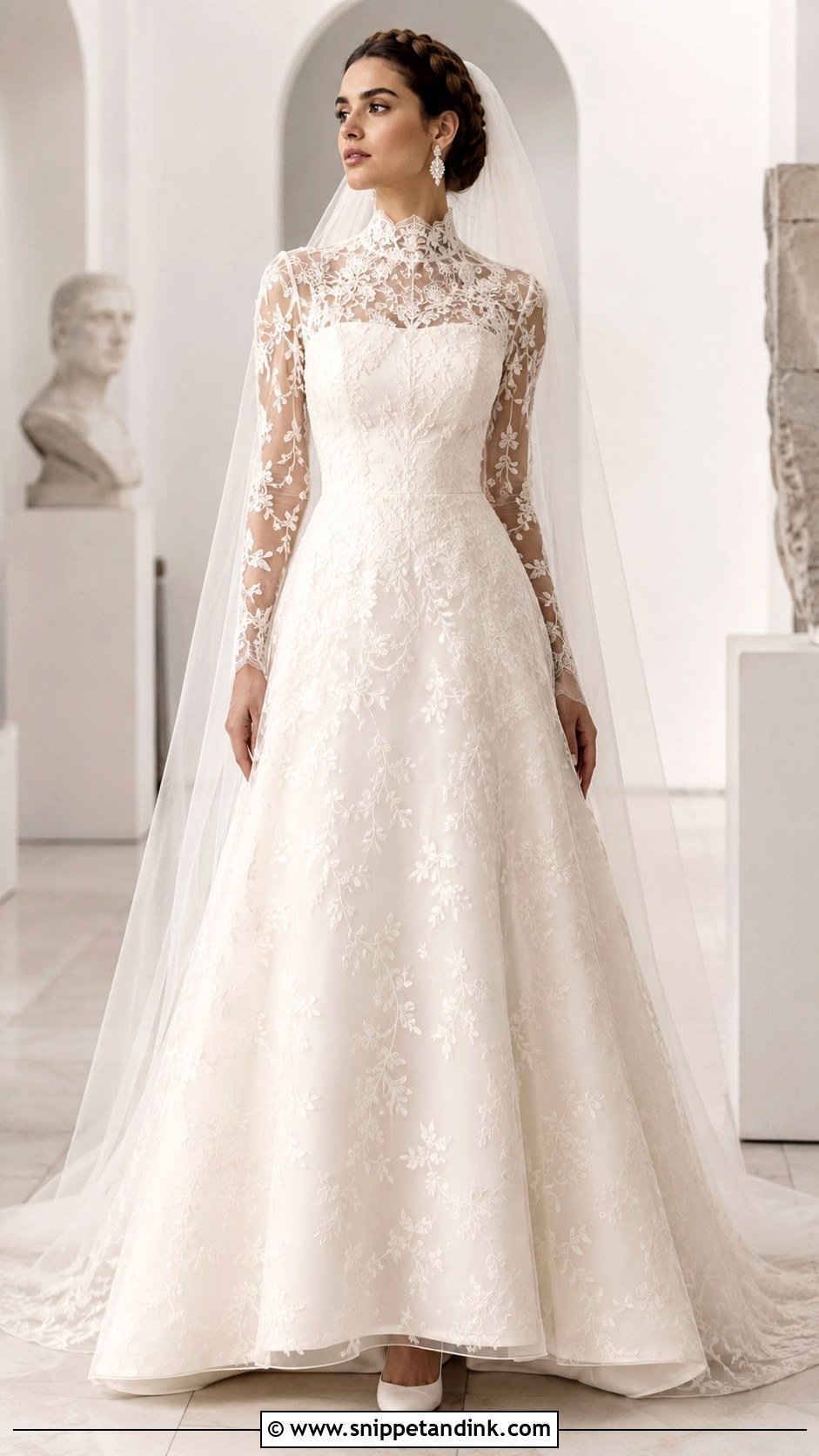
High necklines read polished and modern, and the trick is keeping them from looking heavy. Sheer lace, embroidered tulle or smooth crepe all help. I look for a bodice that follows the torso without gripping and a skirt that flares above the knee so you can still walk freely. Skip the necklace for small statement earrings, and wear a polished bun or braided updo to show both the neckline and the back. Pointed ivory heels and a plain chapel veil complete it. If the gown has buttons down the back, slide the veil comb under your hairstyle so they stay on view. Formal celebrations and cooler months are its natural home.
8. Corset Fit And Flare Wedding Dress
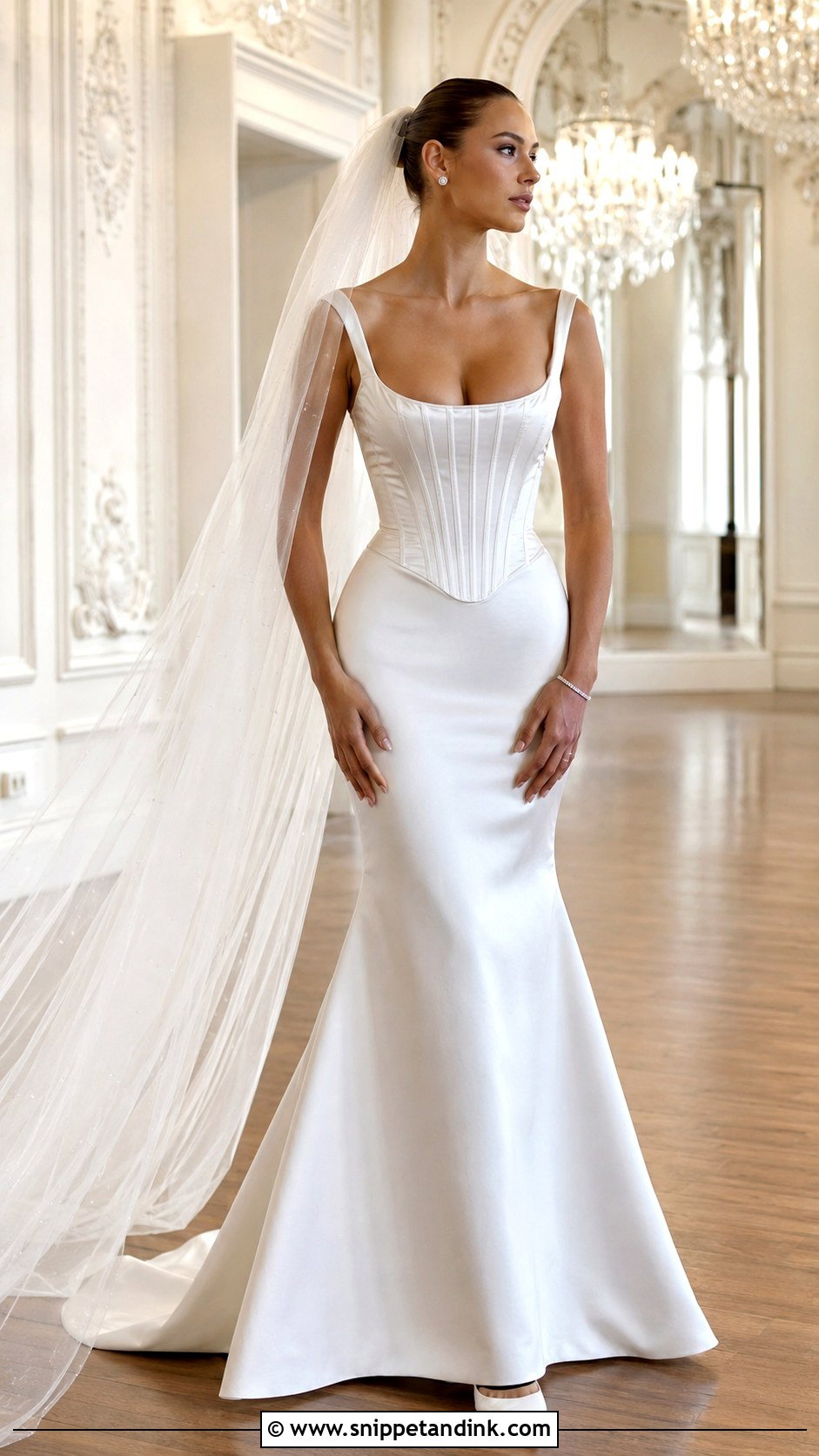
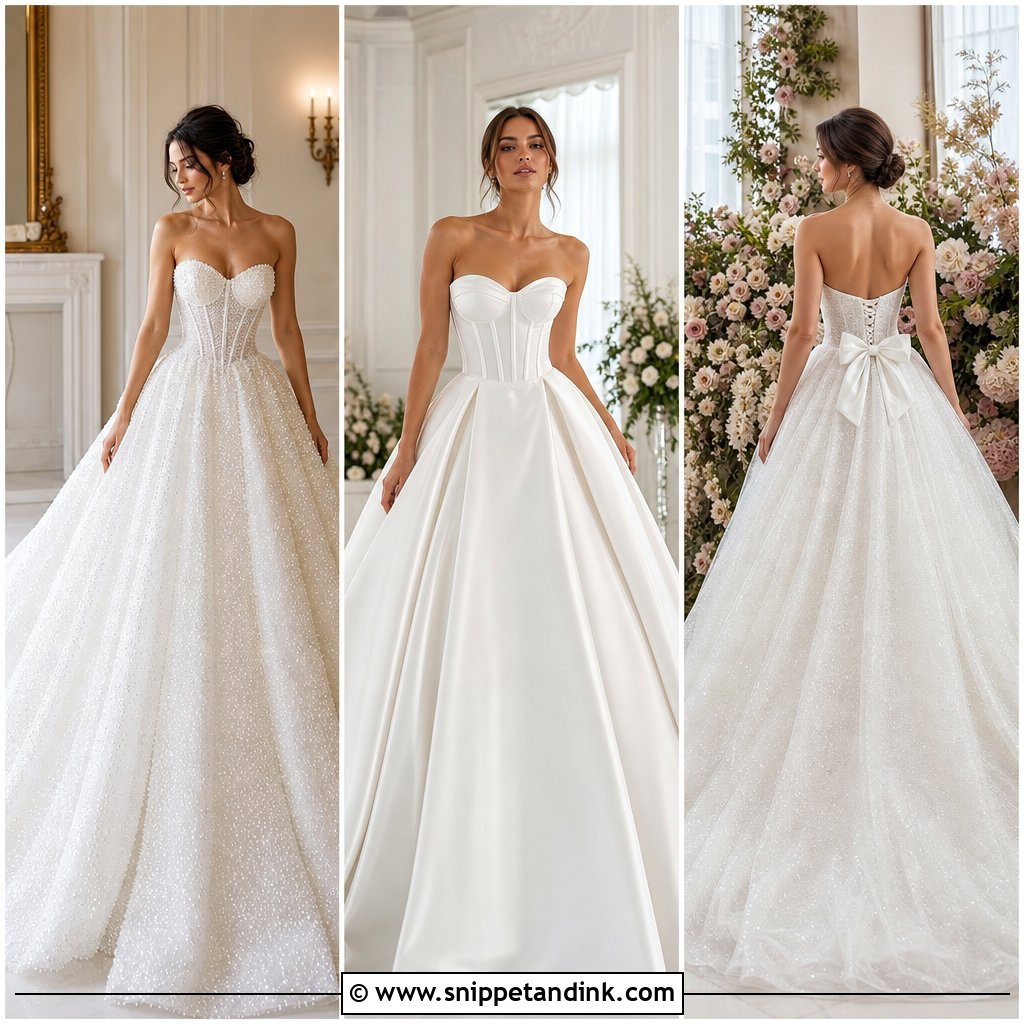
Corset seaming gives a fitted gown real structure, and good boning does most of that work. Properly fitted cups and a straight or softly scooped neckline keep the top secure. A basque or slightly dropped waist eases the move from bodice to skirt and suits long torsos especially well. Sparkling studs, a fine tennis bracelet, closed-toe satin pumps, a simple veil and a neat low bun keep it polished. During alterations, I always check where the bones end when the bride sits. If they stop on the hip bone, they’ll press there all evening, and a seamstress can usually shorten them by a small amount.
9. Crepe Fit And Flare Wedding Dress
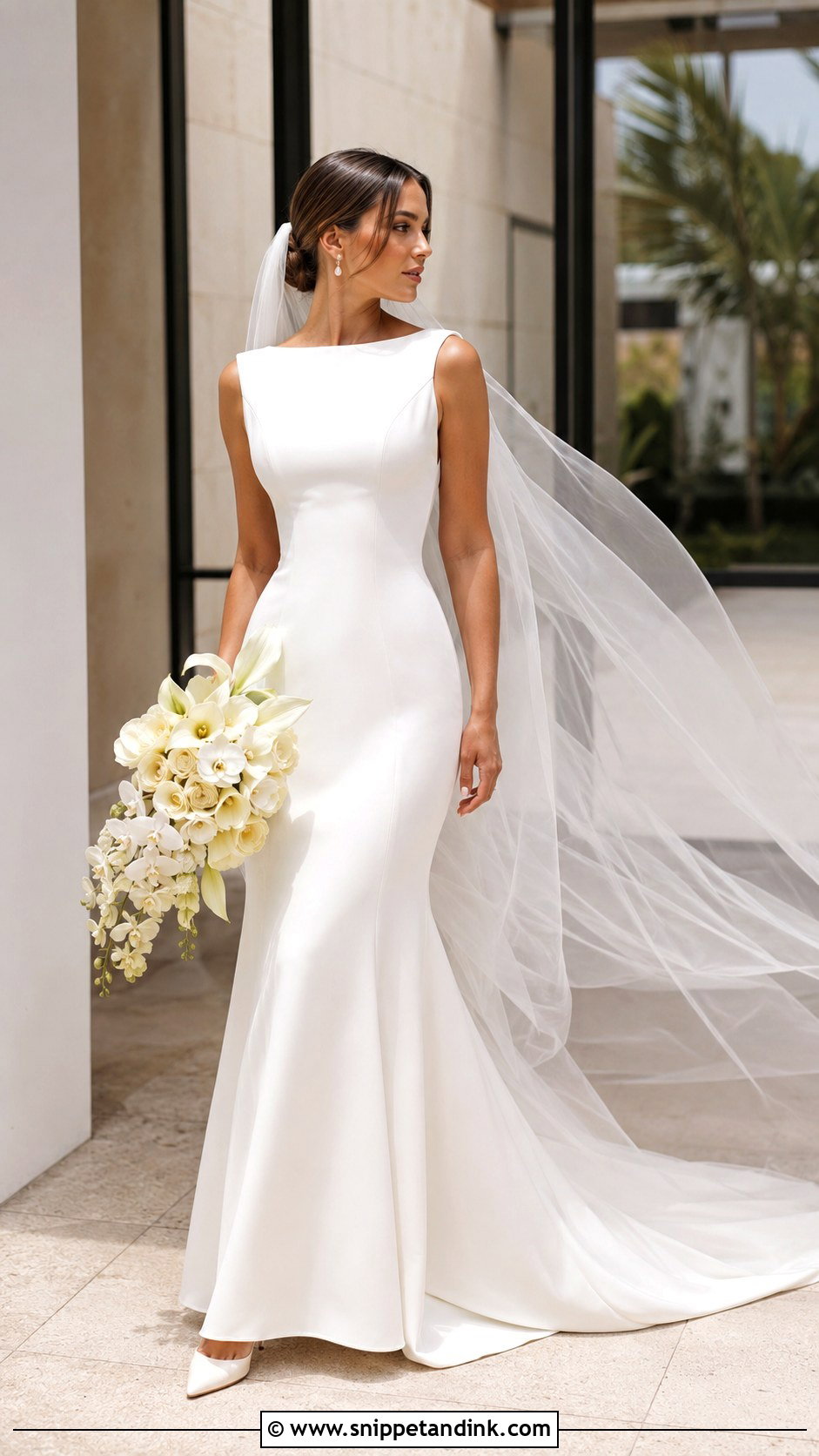
Plain crepe puts all the attention on shape and tailoring. I’d only choose a substantial stretch crepe that falls smoothly and recovers after sitting; thin crepe creases across the lap and stays creased. Princess seams, a defined waist and a soft flare give structure without decoration. Pearl earrings, a sleek bun, pointed pumps and a long raw-edge veil complete the outfit, and a dramatic bouquet or sculptural comb can add personality. Because nothing hides a seam on crepe, invest in expert alterations and good underwear. Look at the dress in daylight and from behind before you approve the fit.
10. Mikado Fit And Flare Wedding Dress
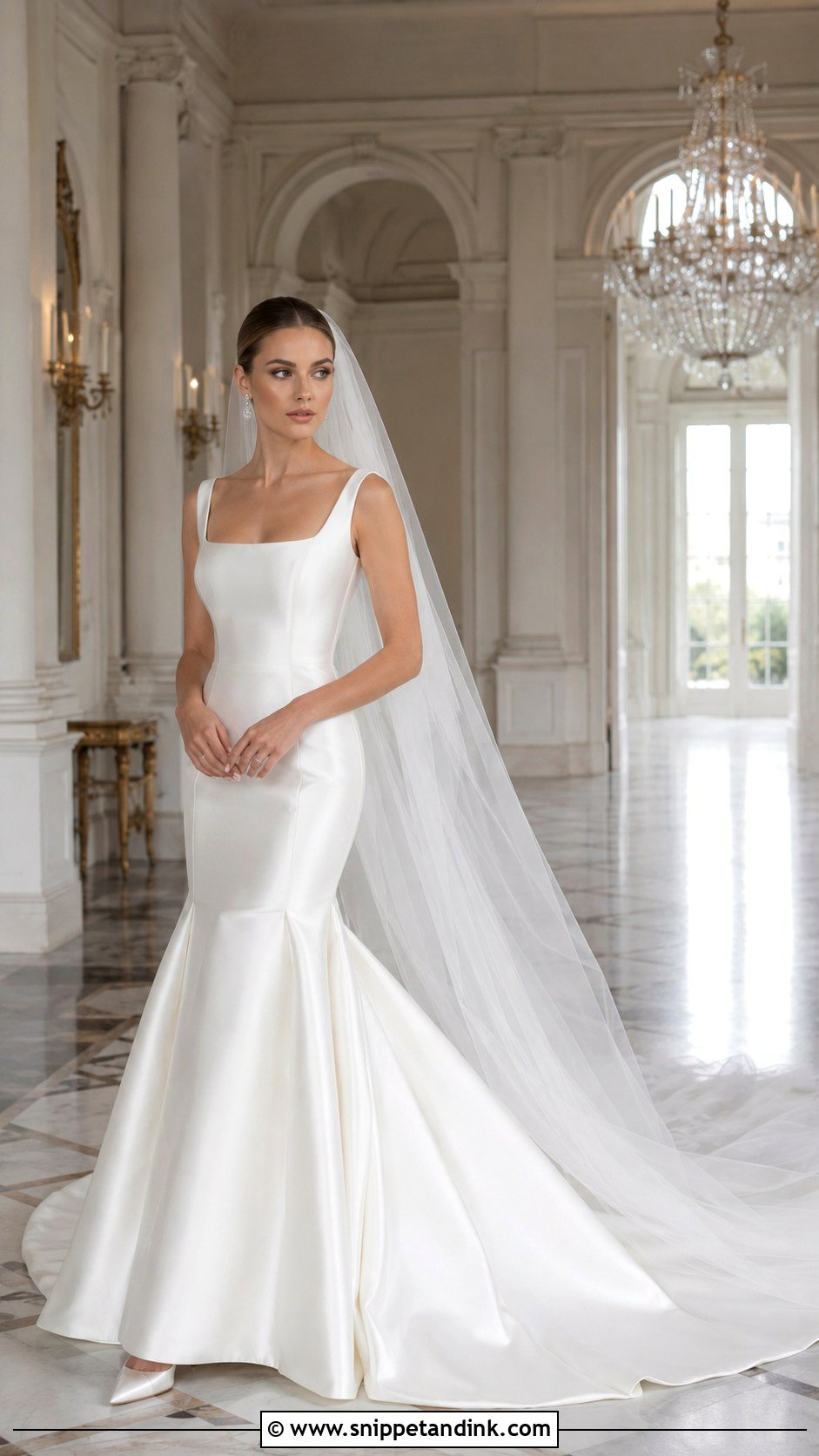
Mikado has body. It holds a sculpted line and a crisp seam far better than crepe, and it suits brides who want a defined shape instead of soft drape. Strapless or square-neck bodices with a firm waist and a skirt that opens into a structured train show it well. Crystal earrings, satin pointed heels, a smooth cathedral veil and a polished updo with one decorative comb keep it formal. That same stiffness makes stairs and car seats harder, so I ask brides to walk up a step and sit in a chair at the fitting. A well-placed bustle lifts the train for the reception without spoiling the shape.
11. Beaded Fit And Flare Wedding Dress
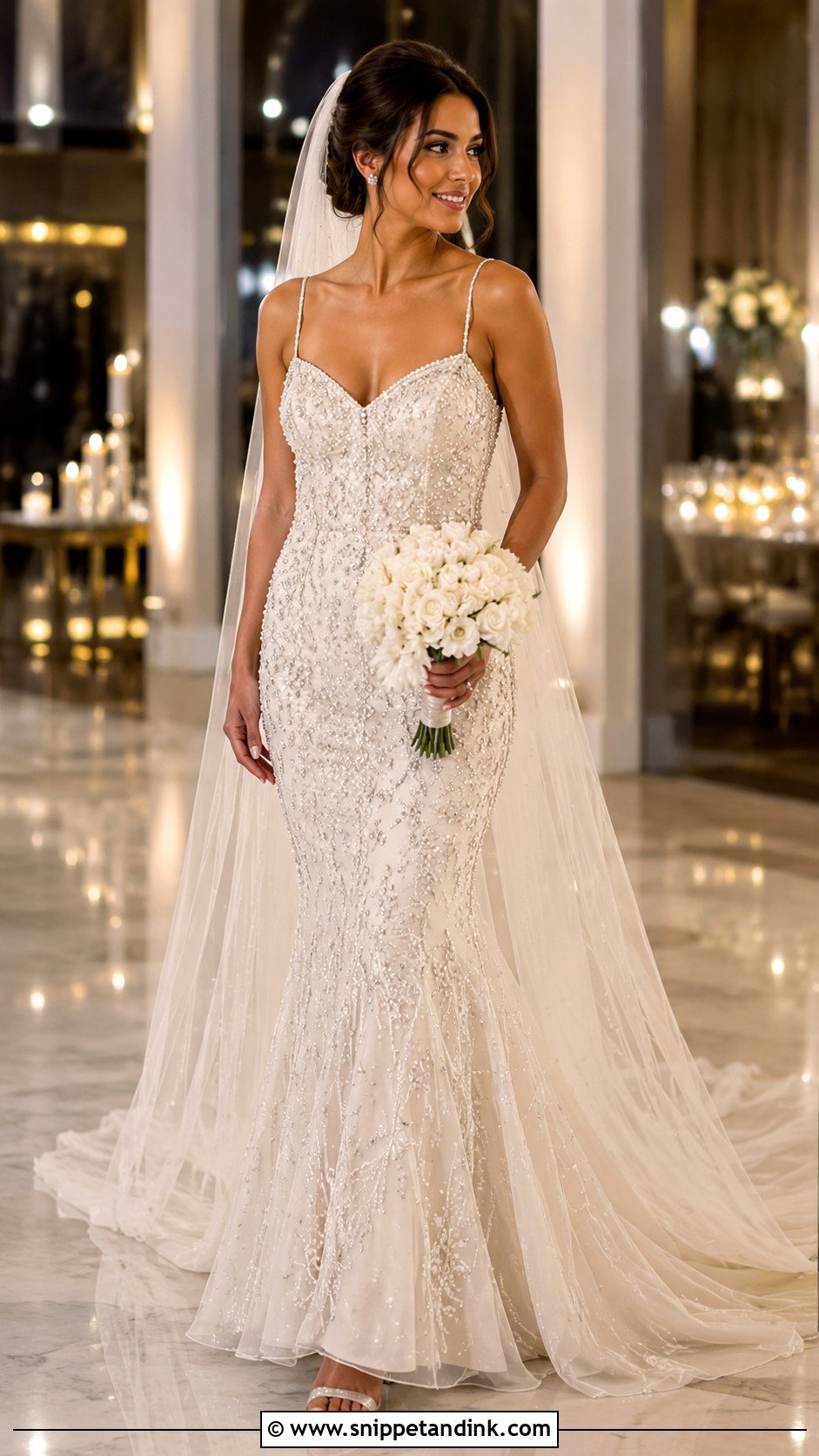
Beadwork reads best when it sticks to one theme, such as pearls, crystals or fine sequins, rather than mixing all three. A lined bodice with beading placed strategically can give coverage while defining the waist and hips. Pair it with understated studs, metallic ivory sandals, a plain tulle veil and smooth waves or a low bun so the gown stays the focus. My two checks are practical ones. Feel under the arms for beads that will scratch, and drape the veil over the back to see whether it catches. It’s also worth asking the shop how repairs are handled if a strand comes loose before the wedding.
12. Floral Appliqué Fit And Flare Wedding Dress
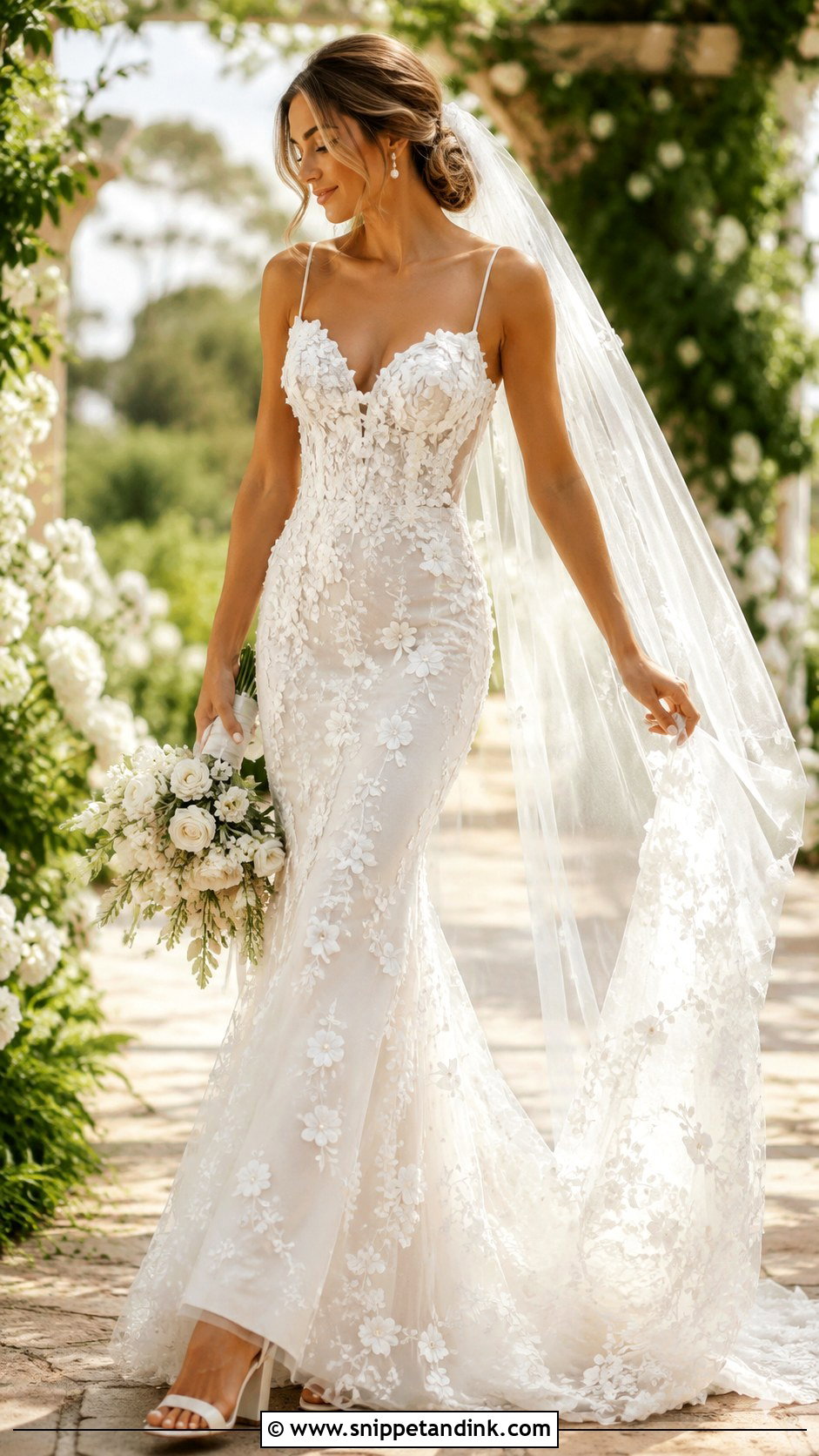
Dimensional flowers bring movement, and placement decides whether the gown looks balanced or cluttered. The best ones frame the bodice, define the waist and lighten toward the skirt. Pearl drops, ivory block heels and a sheer veil with just a few matching flowers suit it, along with a loose low bun and face-framing pieces. Keep the bouquet slim so it doesn’t hide the front. In alterations, appliqués often need to be lifted and moved when side seams are taken in, so I ask early whether the seamstress can do that without marking the base fabric. Gardens, conservatories and airy outdoor venues suit it.
13. Detachable Sleeve Fit And Flare Wedding Dress
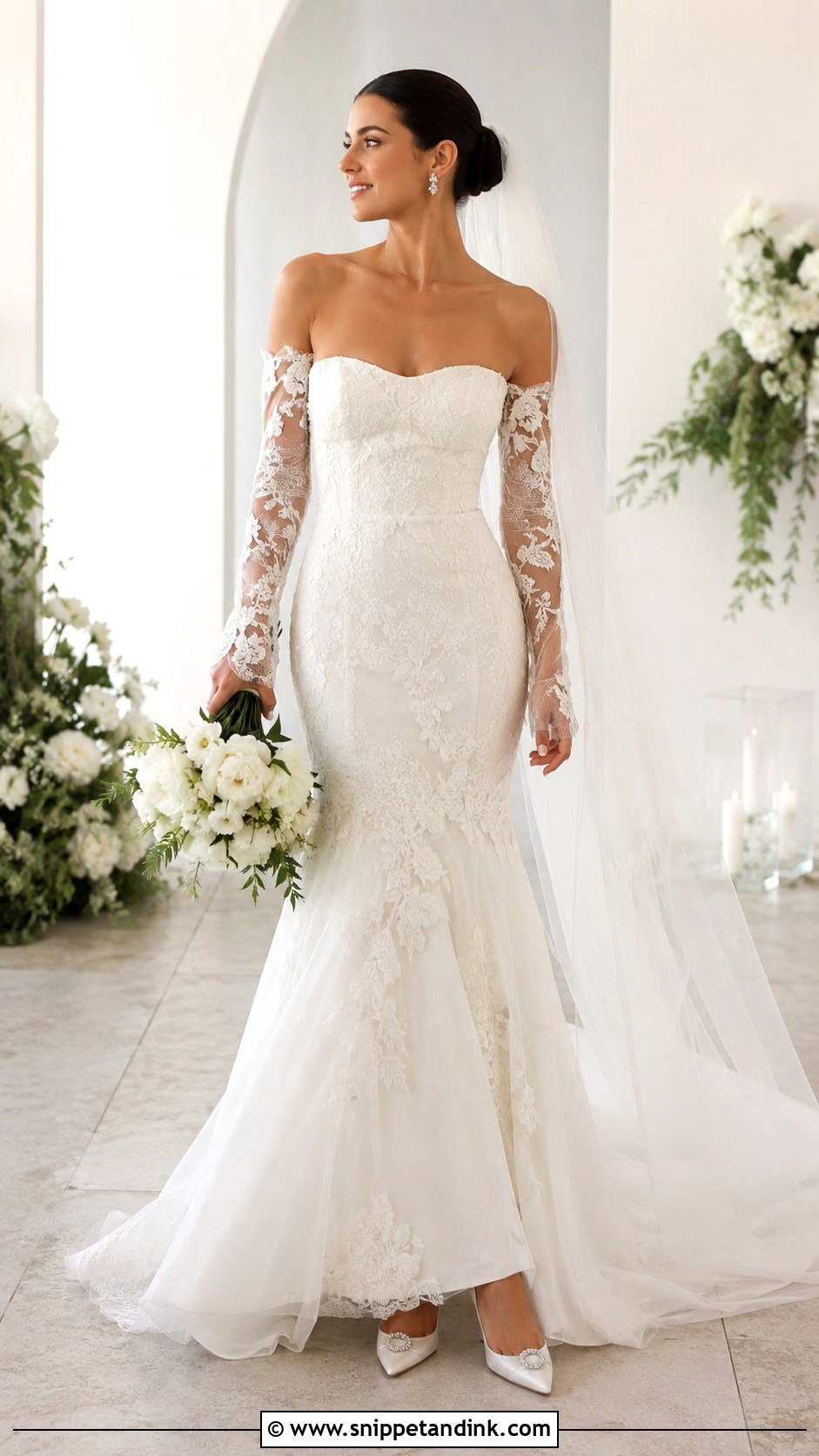
Detachable sleeves turn one fitted gown into two looks. Start with a strapless or sleeveless bodice and add fitted lace, draped off-the-shoulder straps or airy tulle sleeves for the ceremony, then take them off for the reception. Crystal earrings, a polished bun and comfortable pointed heels suit both versions, with a chapel veil for the ceremony and a jeweled comb once the veil is off. Hidden snaps are better than ties, which can loosen as you move. I’d practice taking the sleeves off with your helper before the day so the change takes a minute, not ten.
14. Detachable Overskirt Fit And Flare Wedding Dress
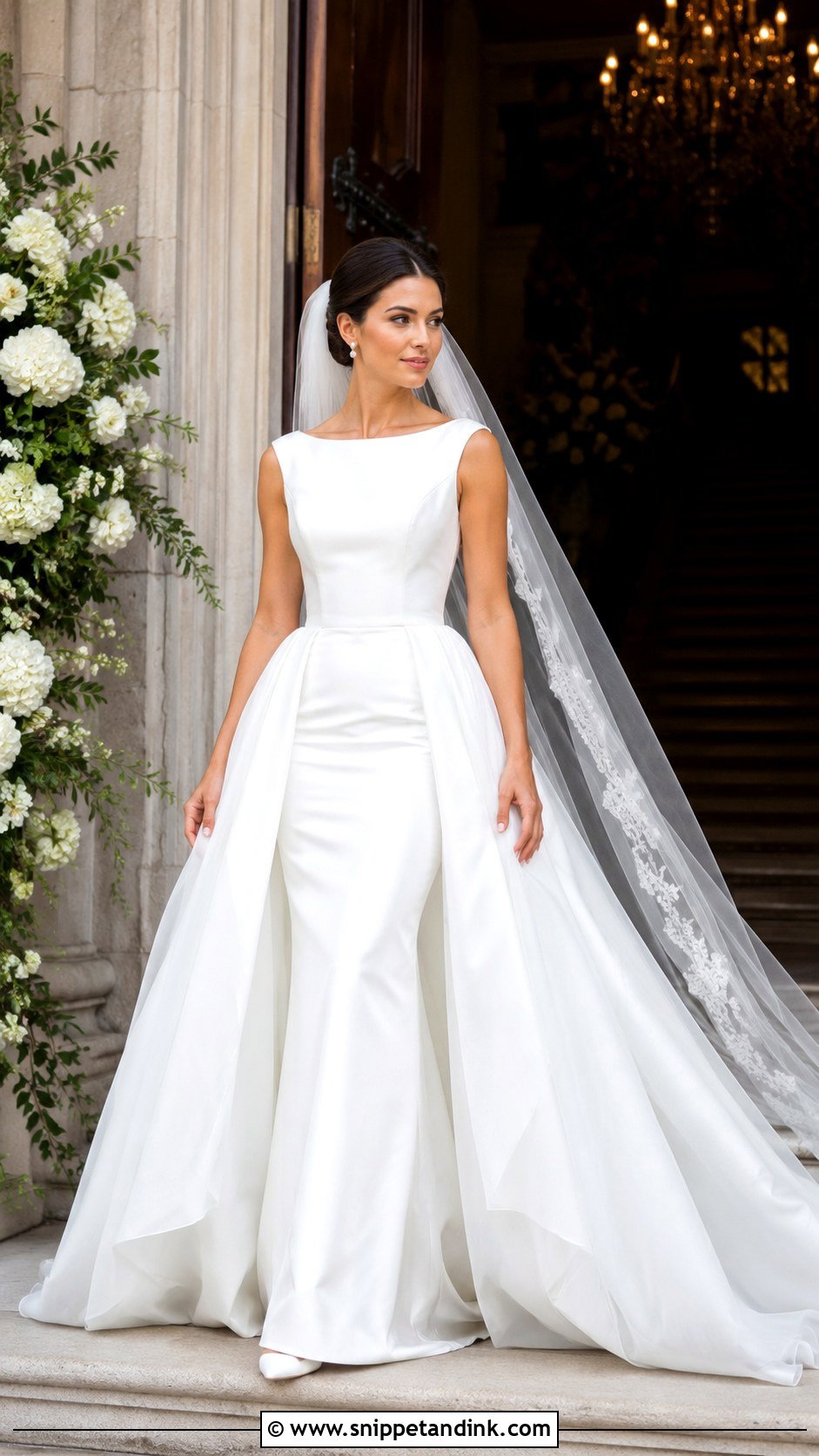
A removable overskirt gives a fitted gown full ceremony volume in a few seconds. Tulle, organza or satin all work if the waistband attaches cleanly at the natural waist. The overskirt should complement the dress rather than hide its lace or beading. Wear the full version with a cathedral veil, pearl earrings and closed-toe pumps, then remove both overskirt and veil to reveal the fit-and-flare underneath. A sparkling hair clip or statement earrings carry the reception look. When I check these, I look at the waist after removal; hooks and loops should vanish, not leave a ridge across the hip.


15. Low Back Fit And Flare Wedding Dress
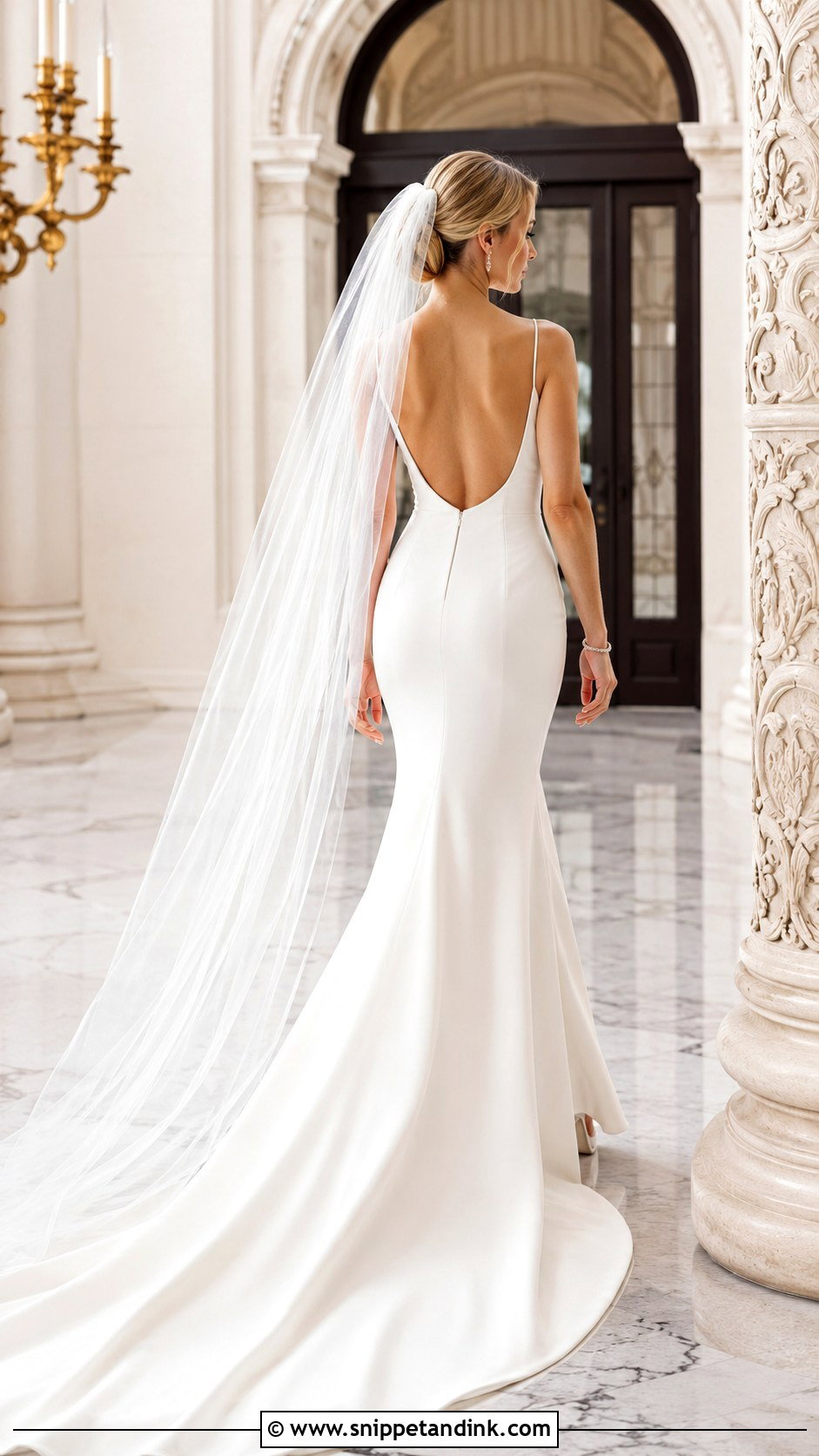
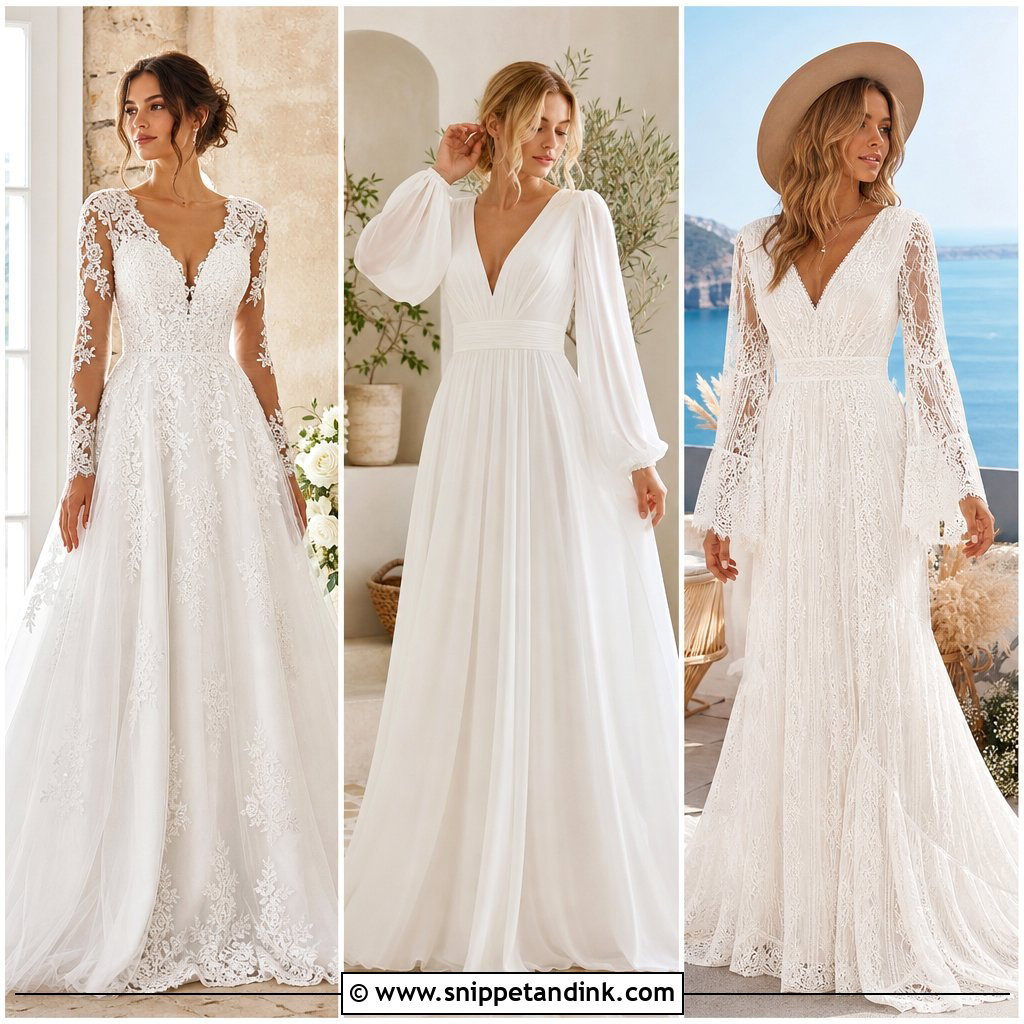
Low backs are the detail guests see during the vows, so they have to stay flat when you move. That depends on internal support and secure side panels, not on the back opening itself. Crepe or satin keeps it modern; lace edging feels softer. Set the veil beneath a low bun so the back stays visible, and keep jewelry to delicate drop earrings, a slim bracelet and ivory pumps. Skip necklaces and long loose hair that would cover the opening. If you need more support, ask about built-in cups or a professionally fitted low-back foundation. Portraits that show the train and back are where this gown earns its place.
16. Button Back Fit And Flare Wedding Dress
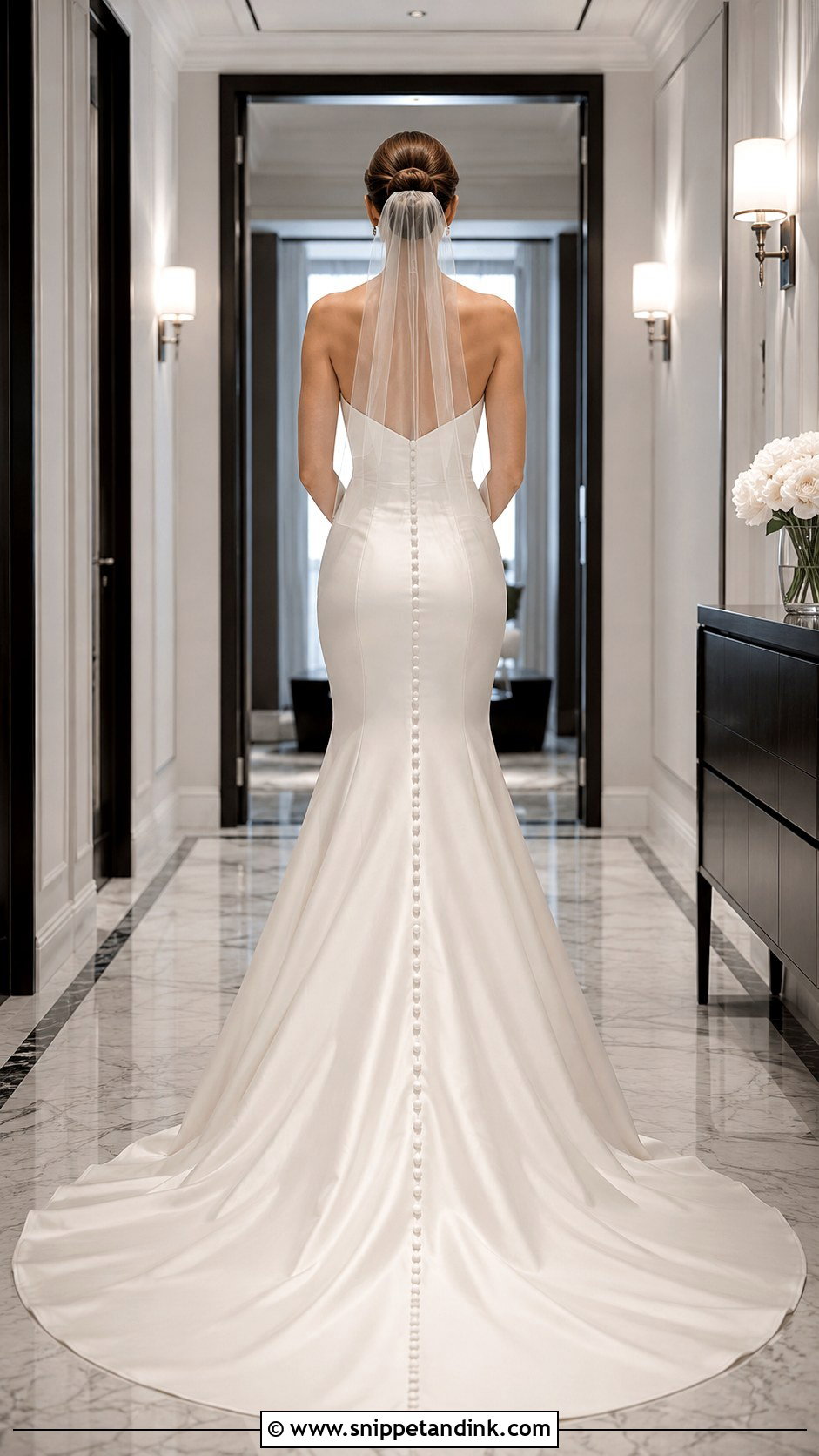
Covered buttons are the quietest detail in bridal and one of my favorites. They can run down the bodice, through the skirt or all the way to the end of the train, ideally wrapped in the same crepe, satin or lace as the dress. Pearl studs, classic pointed pumps and a light veil under a neat chignon let them show. Ask early whether the buttons are functional or decorative. Real buttons over a zip are common, and a long row of functional ones takes a helper and a button hook several minutes. If the buttons carry into the train, the bustle needs to be sturdy enough not to pull at them.
17. Halter Fit And Flare Wedding Dress
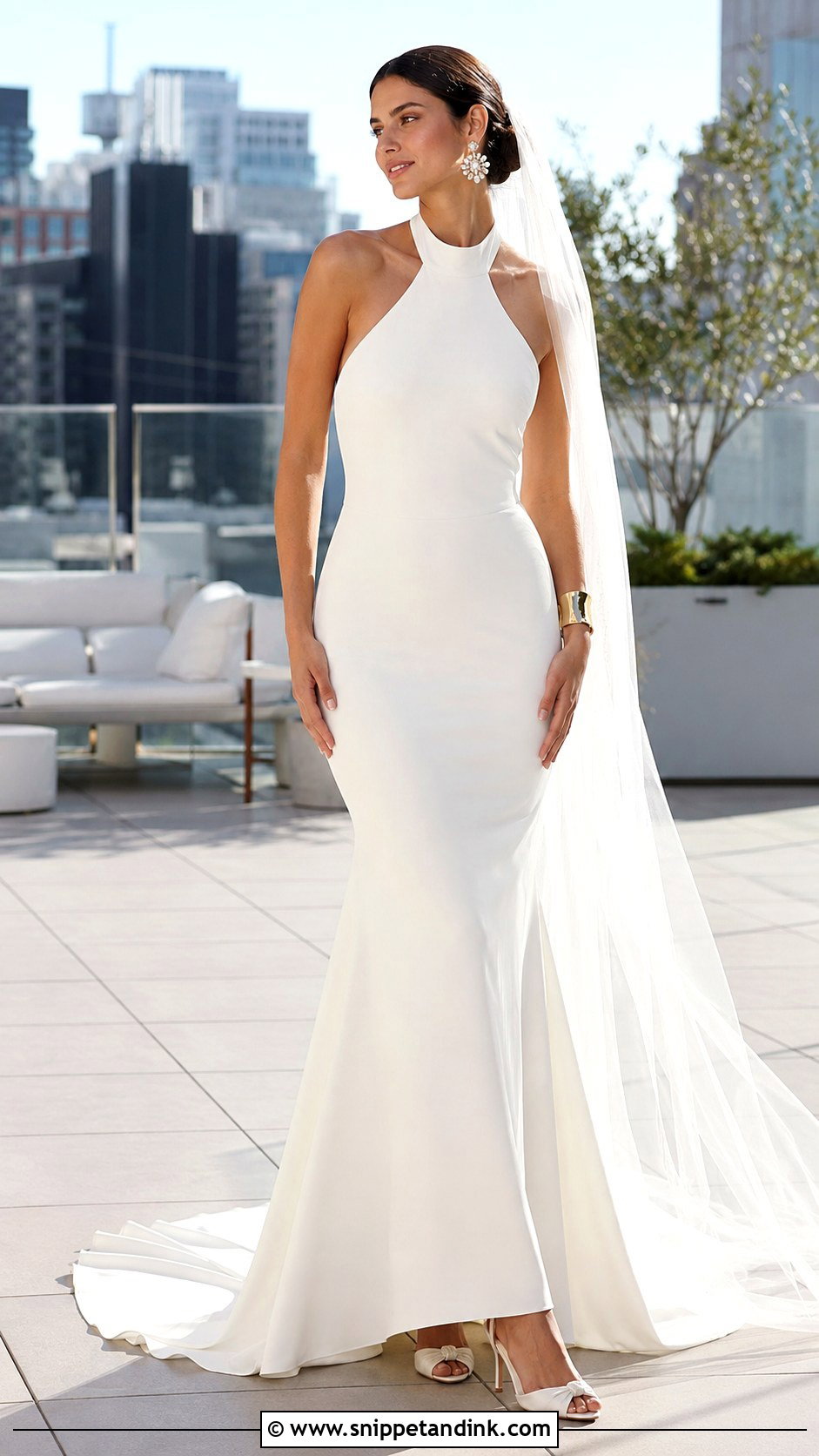
Halters show off the shoulders and give a sleek, confident shape, but the closure at the neck carries weight. I check it twice: once standing still and again with the bride turning her head and raising her arms, because a tight halter strap rubs the back of the neck within an hour. Smooth arm openings and good bodice support matter too. Crepe, satin or lightly beaded fabric suit the shape. An updo, bold studs, a cuff bracelet and pointed slingbacks finish it, without a necklace. Place a narrow fingertip veil or a simple cathedral veil beneath the hair. Rooftops, coastal venues and contemporary rooms are a natural fit.
18. Plus Size Fit And Flare Wedding Dress
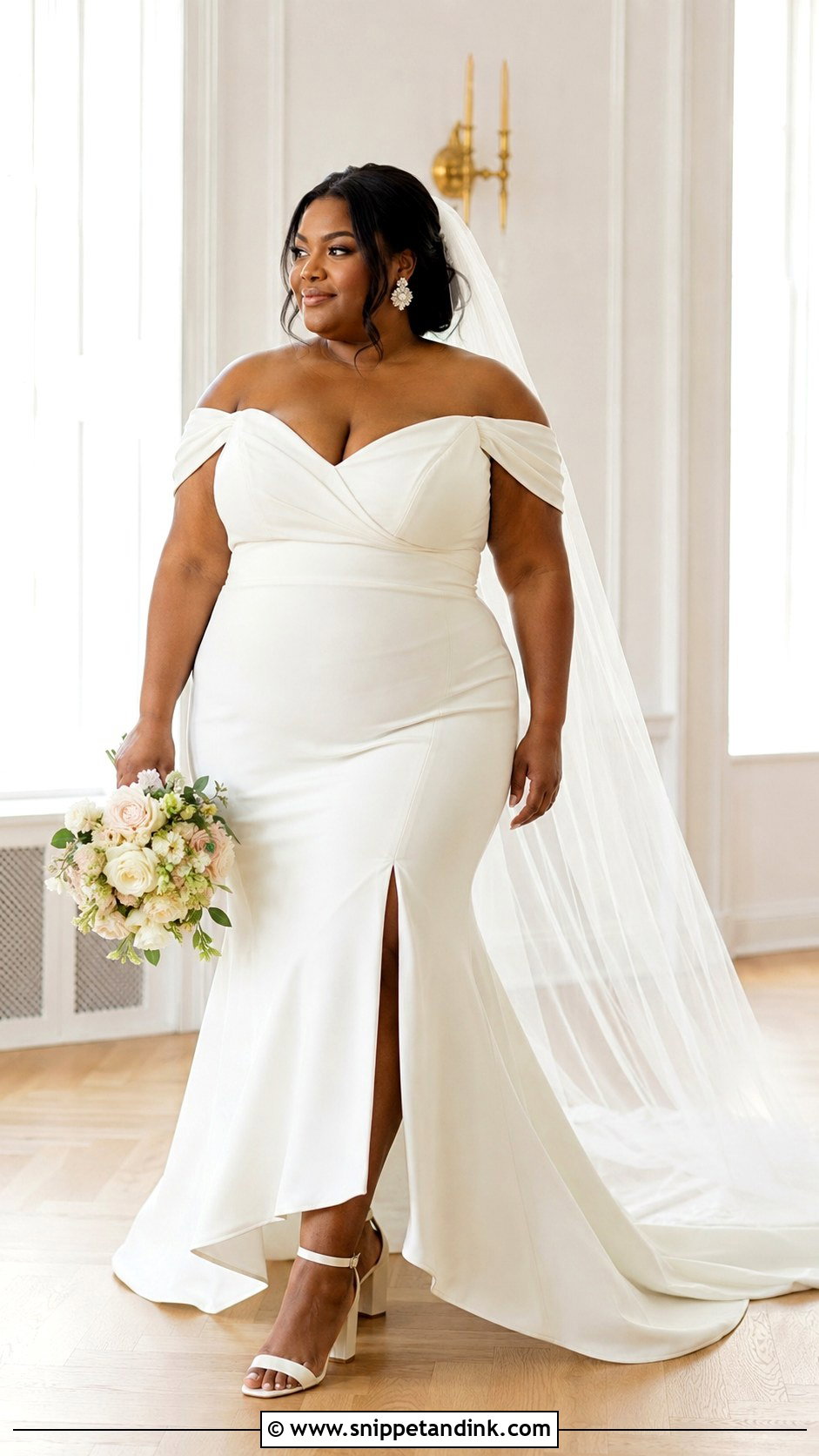
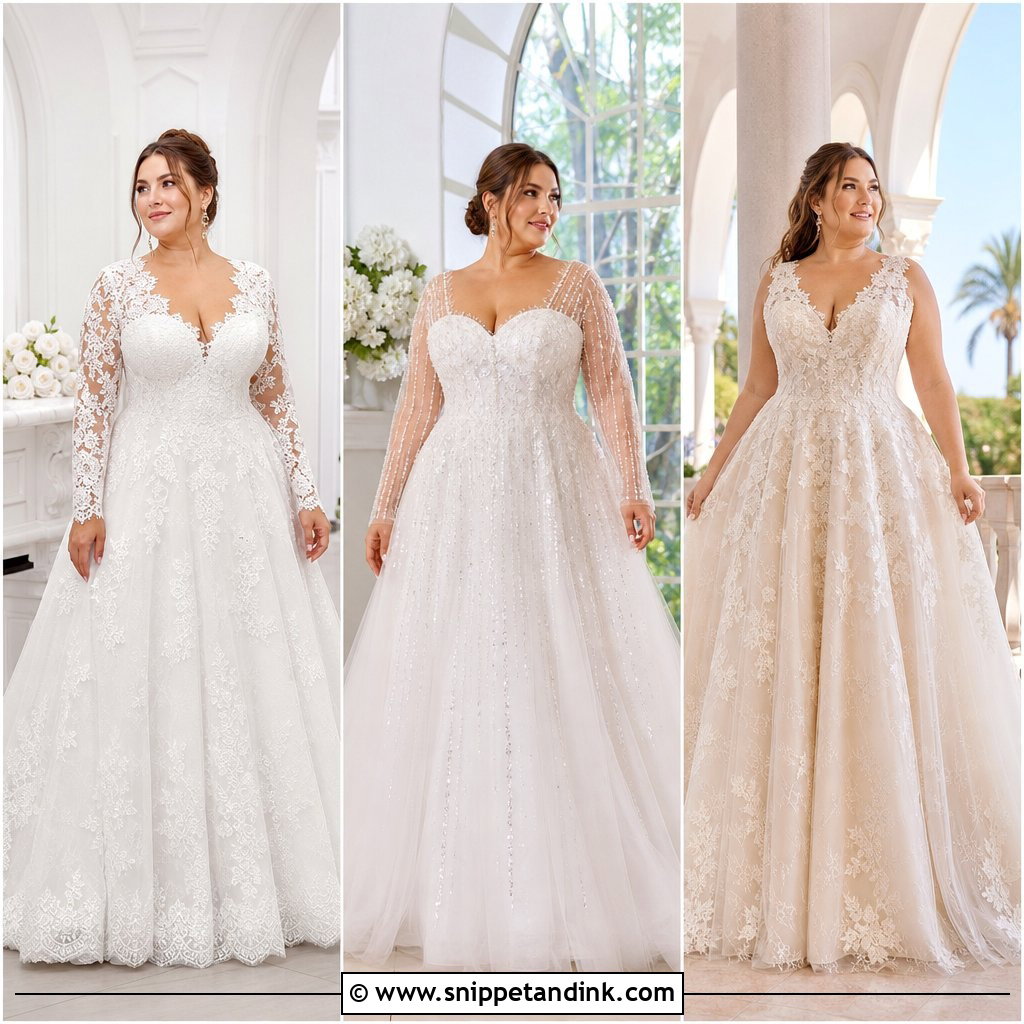
Fit-and-flare is one of the most adaptable shapes across sizes, provided the construction is supportive. I look for firm boning, adjustable support, stretch lining and a flare that starts high enough to walk and dance comfortably. A sweetheart, V-neck or off-the-shoulder bodice frames the upper body while staying secure. Stable block heels, statement earrings, a comfortable veil and smooth supportive underwear complete it. Please don’t size down hoping the dress will stretch or that you’ll shrink into it; bridal tailoring is meant to shape the gown to you. Sit, walk, dance and lift your arms at fittings. A good fit follows your curves without digging or pulling anywhere.
19. Petite Fit And Flare Wedding Dress
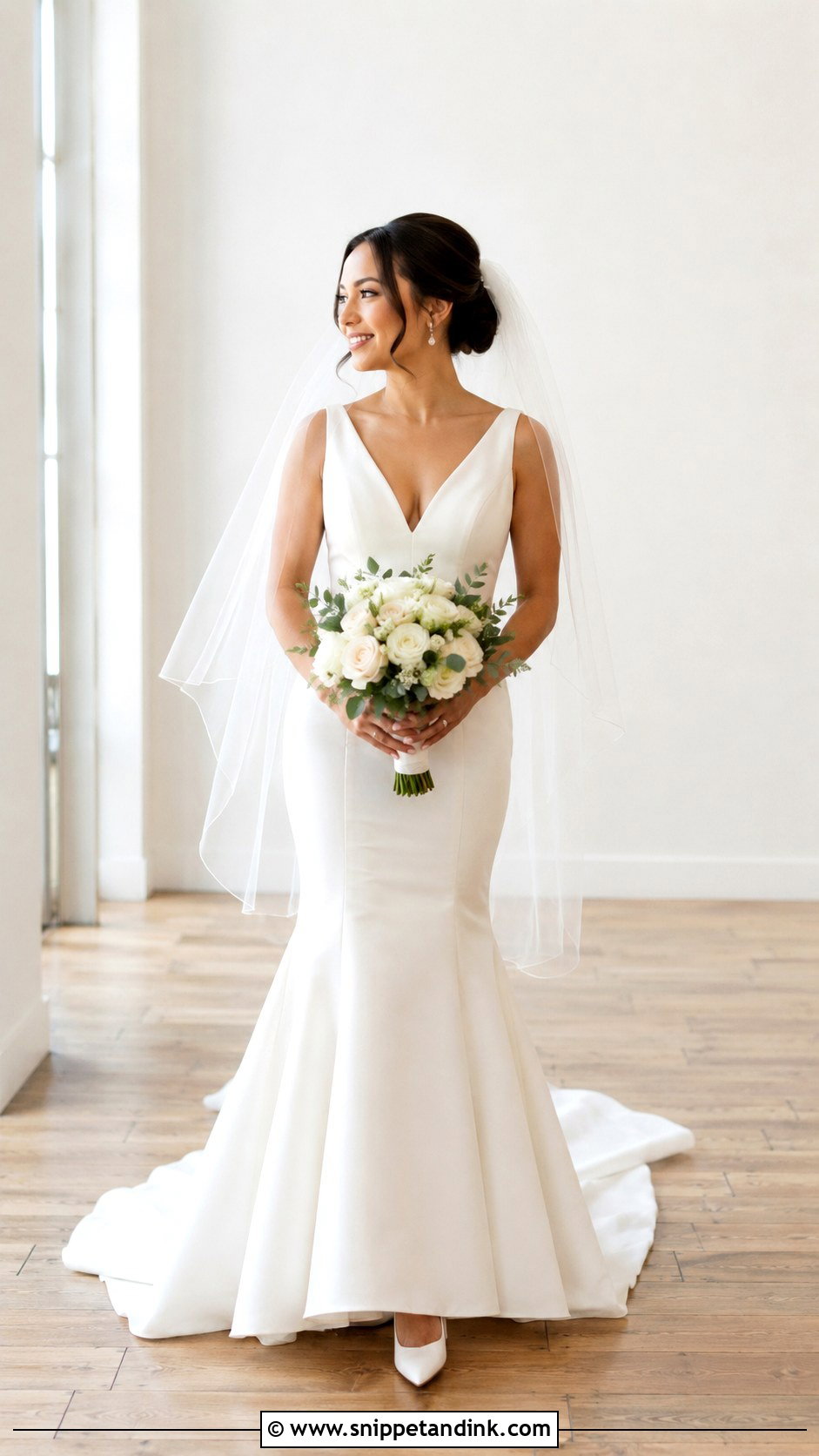
For a petite frame, proportion matters more than any single detail. A higher flare point, vertical seams, a defined waist and a train scaled to your height keep the gown from swallowing you. Narrow straps, a clean V-neck or a compact sweetheart help the balance. Pair it with comfortable pointed heels, delicate earrings and a light veil without extra volume, and consider wearing your hair up for a longer line. My main warning: check where the lace motifs sit relative to the hem. If several inches need to come off, important lace can disappear. Bring your wedding shoes to every fitting so the hem is measured correctly.
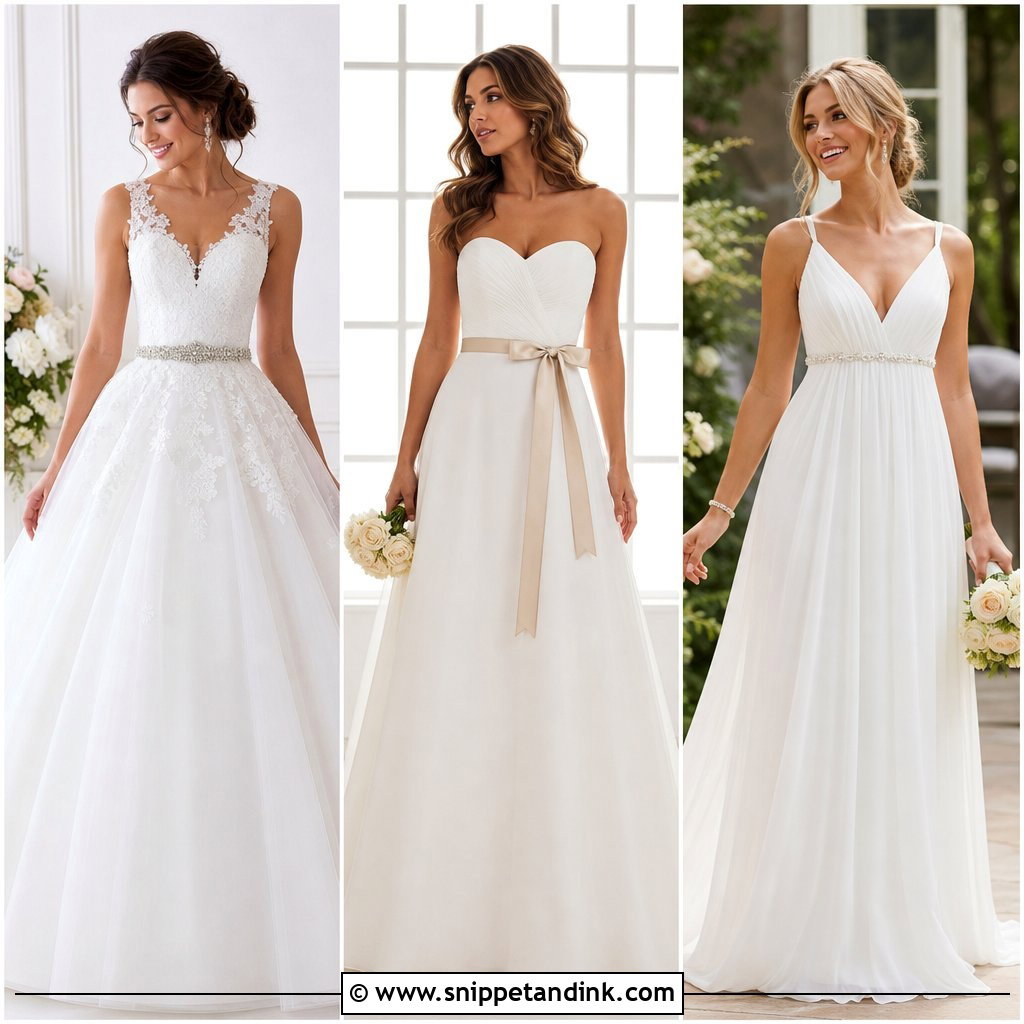
20. Short Fit And Flare Reception Wedding Dress
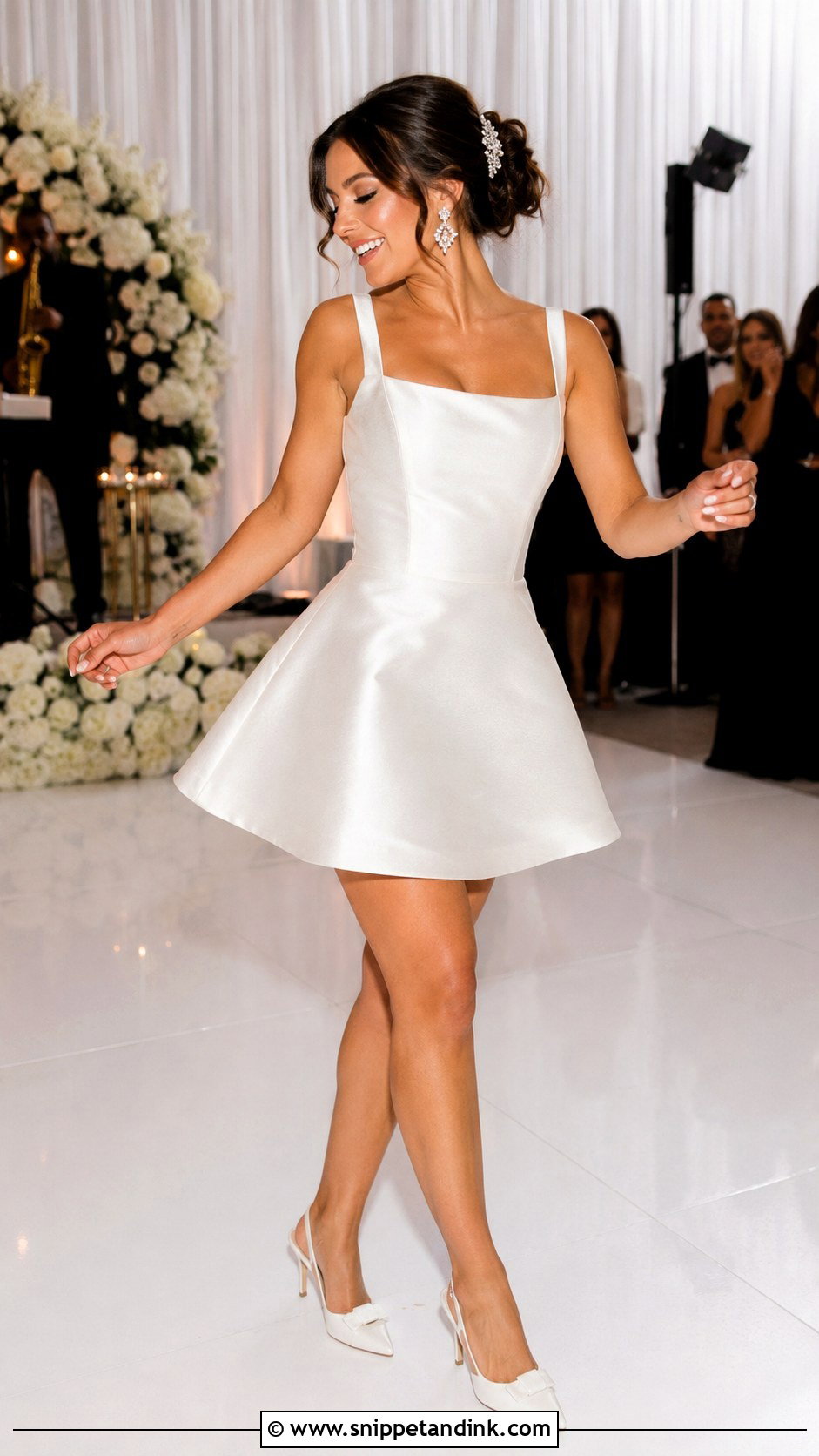
A short fitted dress makes a playful second look for dancing. A mini or tea-length design with a structured bodice and a gently flared hem echoes the ceremony gown, and satin, crepe, pearls or floral appliqués keep it bridal. Comfortable slingbacks, statement earrings and a small bow or jeweled clip suit it. A short veil can work for the entrance, then come off. With a very short skirt, I’d ask for a smooth lining or fitted shorts underneath. Many brides also choose this kind of dress for the whole day at a courthouse ceremony, welcome dinner or relaxed celebration where a long gown would feel too formal.
Three Fittings, Three Different Jobs
Most fitted gowns need two or three alteration appointments, starting around two to three months before the wedding. Each one has a different purpose, and knowing that keeps you from expecting a finished dress at the first visit.
- First fitting: the seamstress pins the side seams, bodice and hem. Wear your actual shoes and underwear, because both change the fit.
- Second fitting: you try on the altered gown, check the changes and agree on bustle points. Sit down and walk the length of the room here.
- Final fitting, usually a week or two before: confirm the fit, learn the bustle with your helper and take the gown home.
Keep your weight goals honest with your seamstress. A big change between fittings means re-pinning, and a fitted bodice shows even small differences.
Shapewear, Cups and the Lines That Show Through Crepe
Underwear can make or break a close fit. Many fitted gowns have cups sewn in, which removes the need for a bra; if yours doesn’t, ask your seamstress to add them rather than relying on a strapless bra that slides. With shapewear, I watch where the edges fall. A leg band that ends on the thigh where the dress is tight will show as a ridge, so choose a piece that finishes below the flare point, where the skirt is loose. Pick underwear that matches your skin tone rather than white, since white shows through ivory and lace far more than you’d expect.
Tailoring Is What Makes a Fitted Gown Yours
A fitted bridal gown works when design, support and movement all line up. Necklines, fabrics, sleeves, flare positions, trains and removable pieces change the outfit dramatically, as the looks above show. Try on several silhouettes, including some you’d skip in photographs, because a fitted shape often looks different on the body than on a hanger. Bring your shoes and underwear to every fitting, then sit, walk, turn and raise your arms. Choose accessories that suit the gown rather than compete with it. Above all, pick the dress you feel secure and recognizable in, then let careful tailoring finish the job.
You'll Like These Ideas:




Leave a Reply