
Old body-shape rules told small-chested brides to hide, pad or avoid half the necklines in the shop. I’d throw most of them out. If you browse small chest wedding dress ideas with an open mind, you’ll notice how many of the strongest styles actually depend on a slim upper body: plunges, sleek halters, fine straps, high necks, open backs and sculpted corsets. Draped bodices, scoop necks, exposed boning, detachable overskirts and raised flowers are all widely available now as well. What matters is a whole look that suits your personality and feels secure once the alterations are done. Every idea below is styled from head to toe.
What I’d Wear Under Your Clothes to the First Appointment
It sounds minor, but what you wear to a bridal appointment changes how every sample looks on you, and small-chested brides are affected more than most.
Samples are usually a standard size and get clipped at the back to fit. Many have structured cups sewn in. A thick padded or push-up bra underneath fights those cups, so the bodice looks overfilled or lumpy, and you come away thinking a neckline doesn’t suit you when it actually does.
- Wear smooth, skin-tone underwear with no lace or seams that print through fabric.
- Bring a strapless bra with only light shaping, and expect to take it off for halters, plunges and backless samples.
- Pack a pair of shoes close to the heel height you plan to wear, so hems and proportions look realistic.
- Put your hair up loosely. Necklines are hard to judge with hair over your shoulders.
Ask the consultant to try at least one sample with nothing underneath but a nipple cover. For a lot of brides with a small bust, that is the moment the plunges and slips suddenly make sense.
1. Plunging V-Neck A-Line Wedding Dress
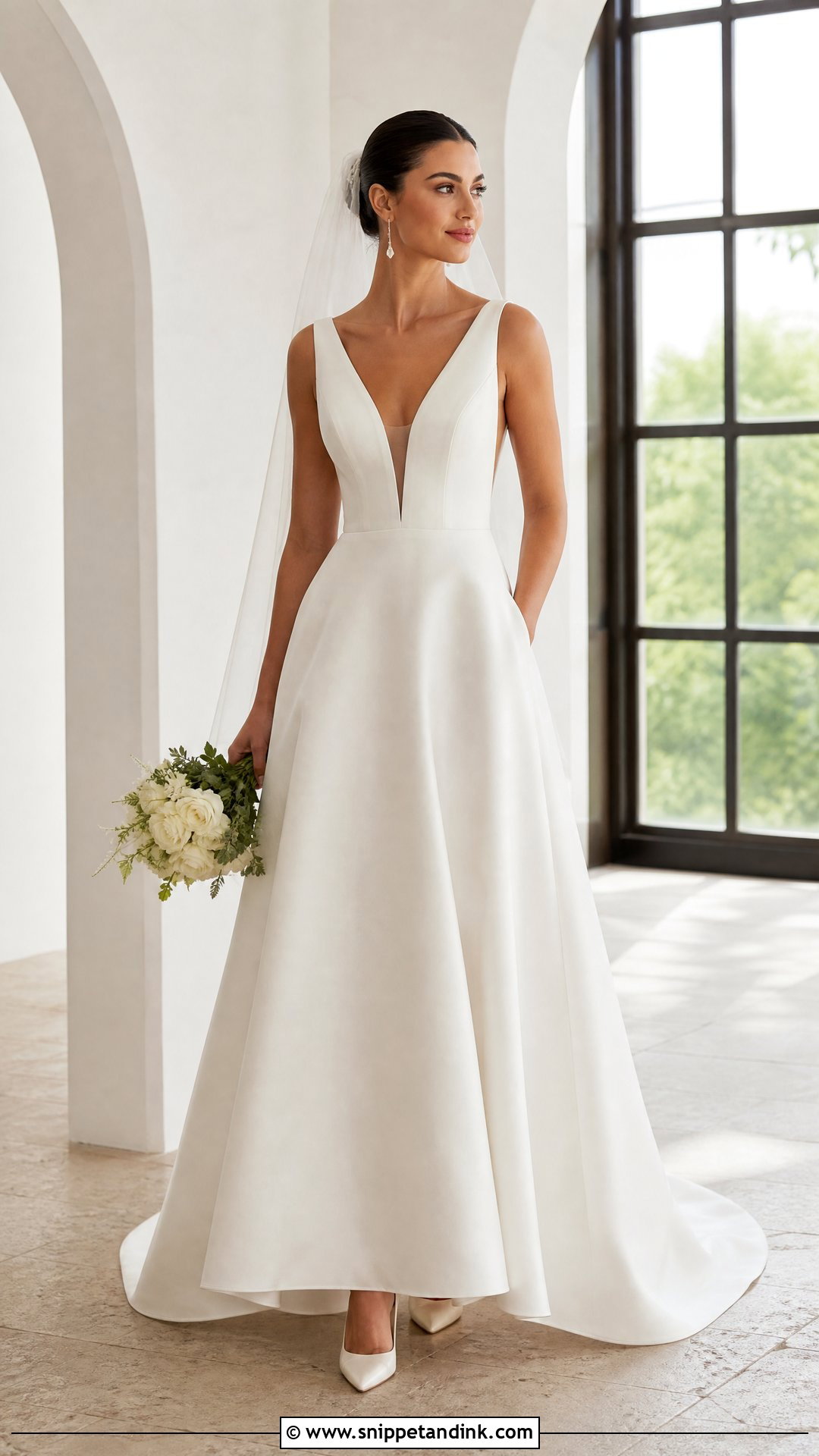
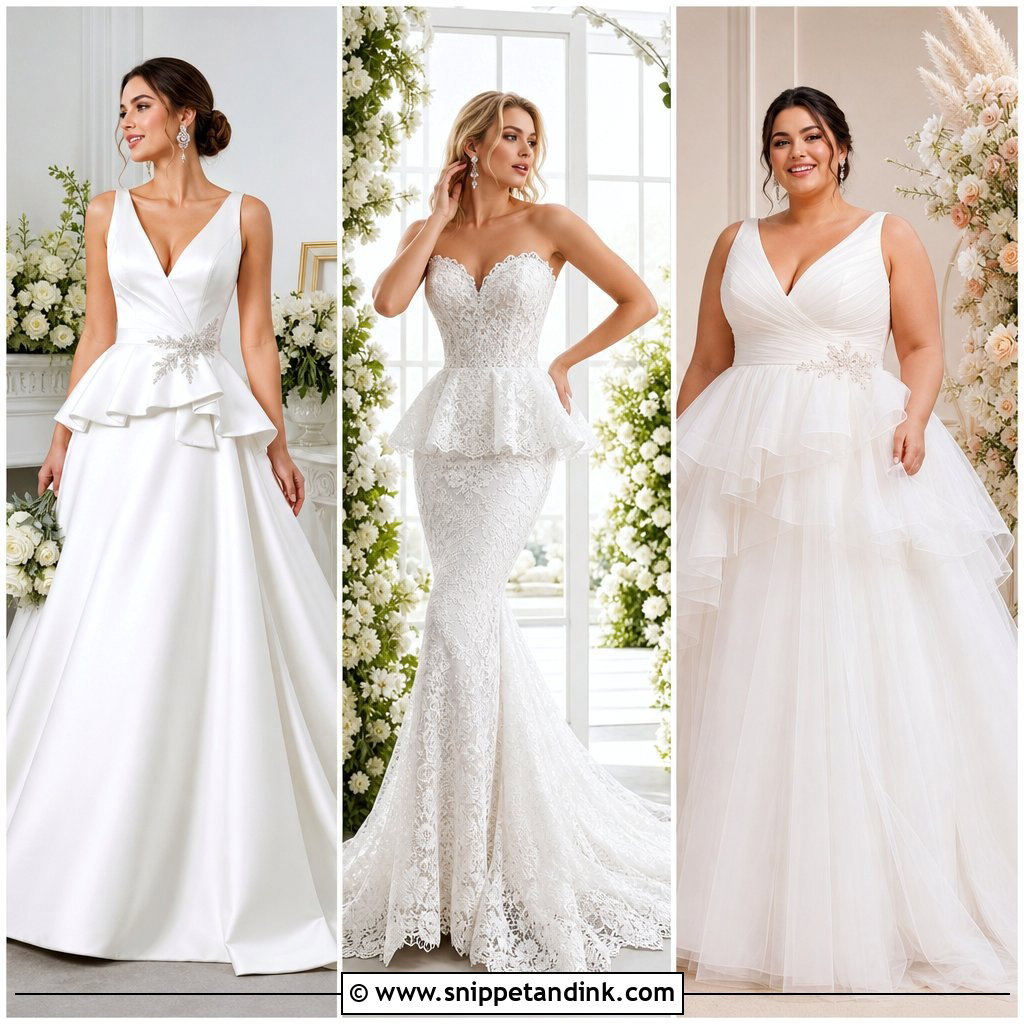
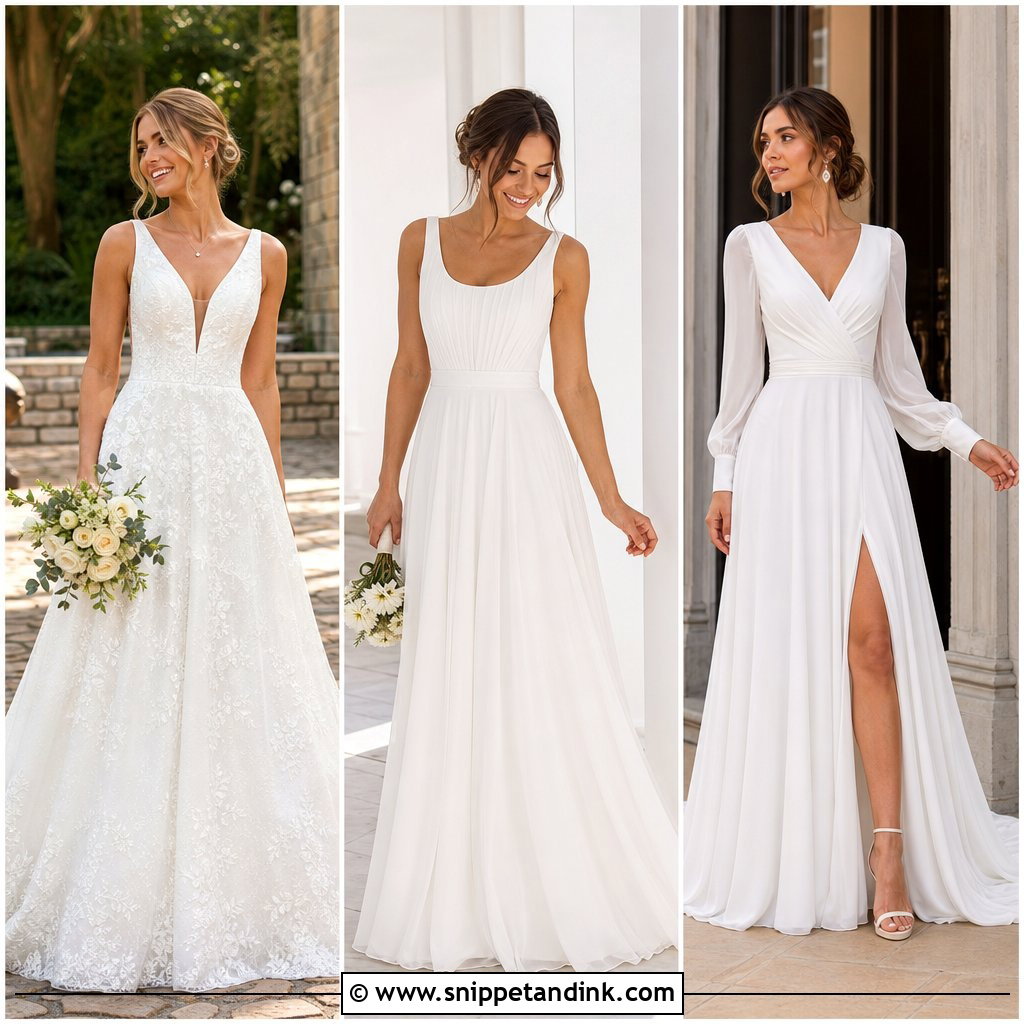
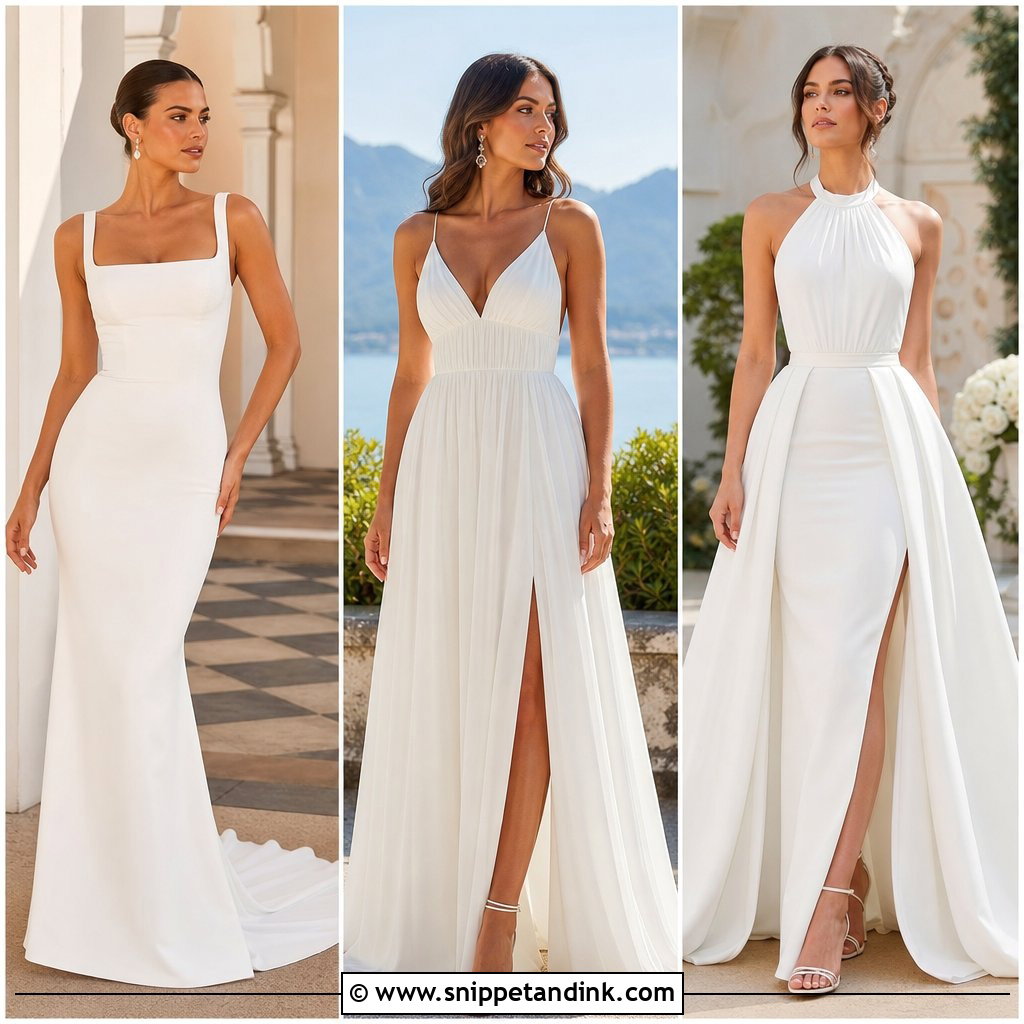
The plunging A-line is a gown a fuller bust has to work hard to wear; on a small chest it simply sits flat. I’d still want hidden mesh through the neckline of a structured bodice so you’re not thinking about it during the vows. The fitted waist and gently widening skirt keep the proportions light. Ivory crepe reads modern; chiffon or tulle moves more outdoors. Satin pointed pumps, slim drop earrings, a fingertip veil with a clean edge and a low bun complete it. The adjustment that matters is at the shoulder seams: raising them slightly pulls the cups in closer to your body.
2. Cowl Neck Satin Wedding Dress
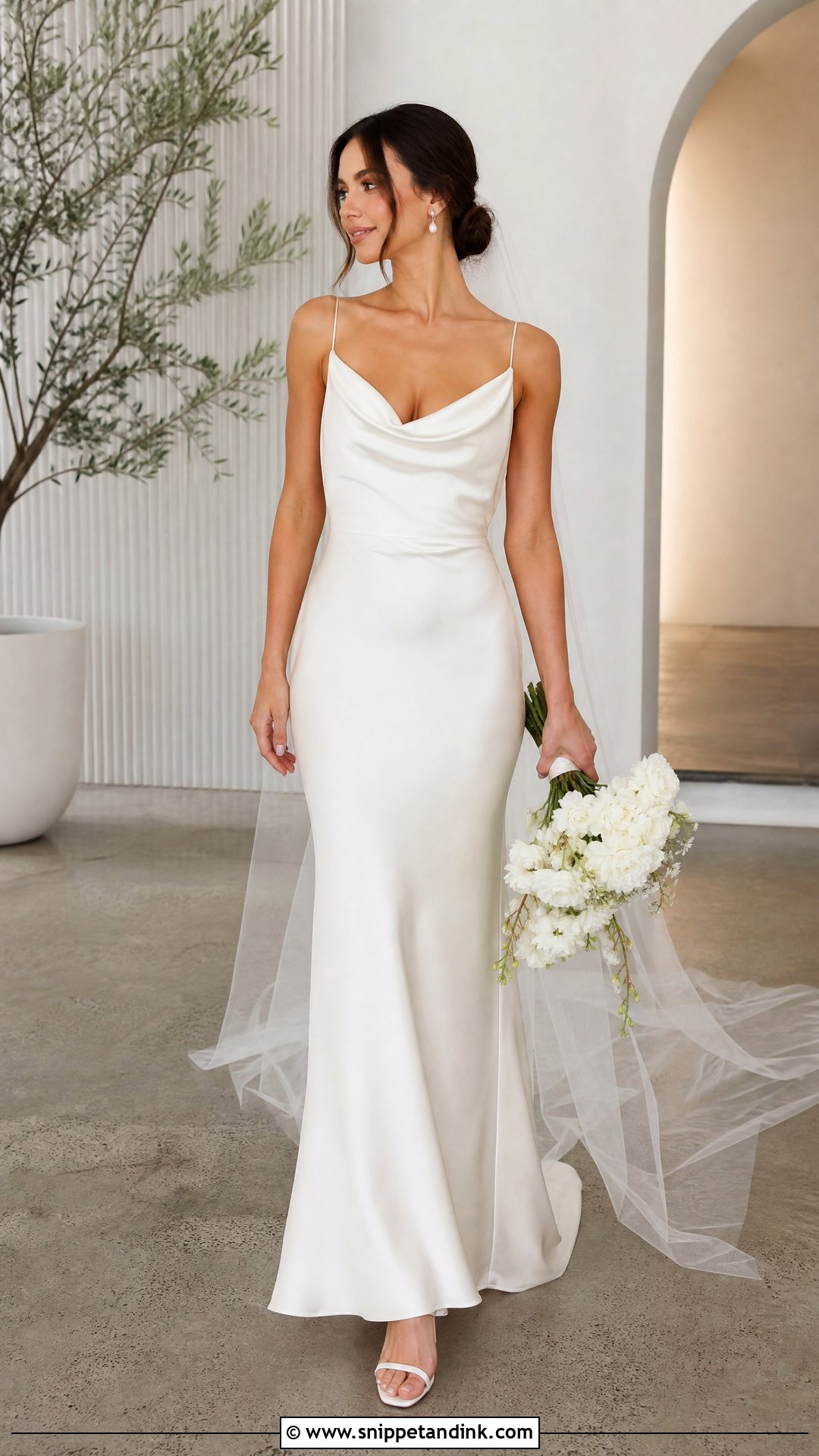
Satin falling in folds gives a cowl neck its depth, and on a small chest those folds read as soft volume without any structure at all. A bias-cut column or slip carries the same fluid line from shoulder to hem. Choose weighty silk satin or lined charmeuse; thin satin clings and shows everything underneath. Ankle-strap heels, pearl drops, a narrow bracelet and a sheer cathedral veil, with loose waves or a smooth low knot. Look at the cowl from above as well as the front. When you glance down, or someone taller hugs you, a deep cowl shows more than you might expect.
3. Sweetheart Ball Gown Wedding Dress
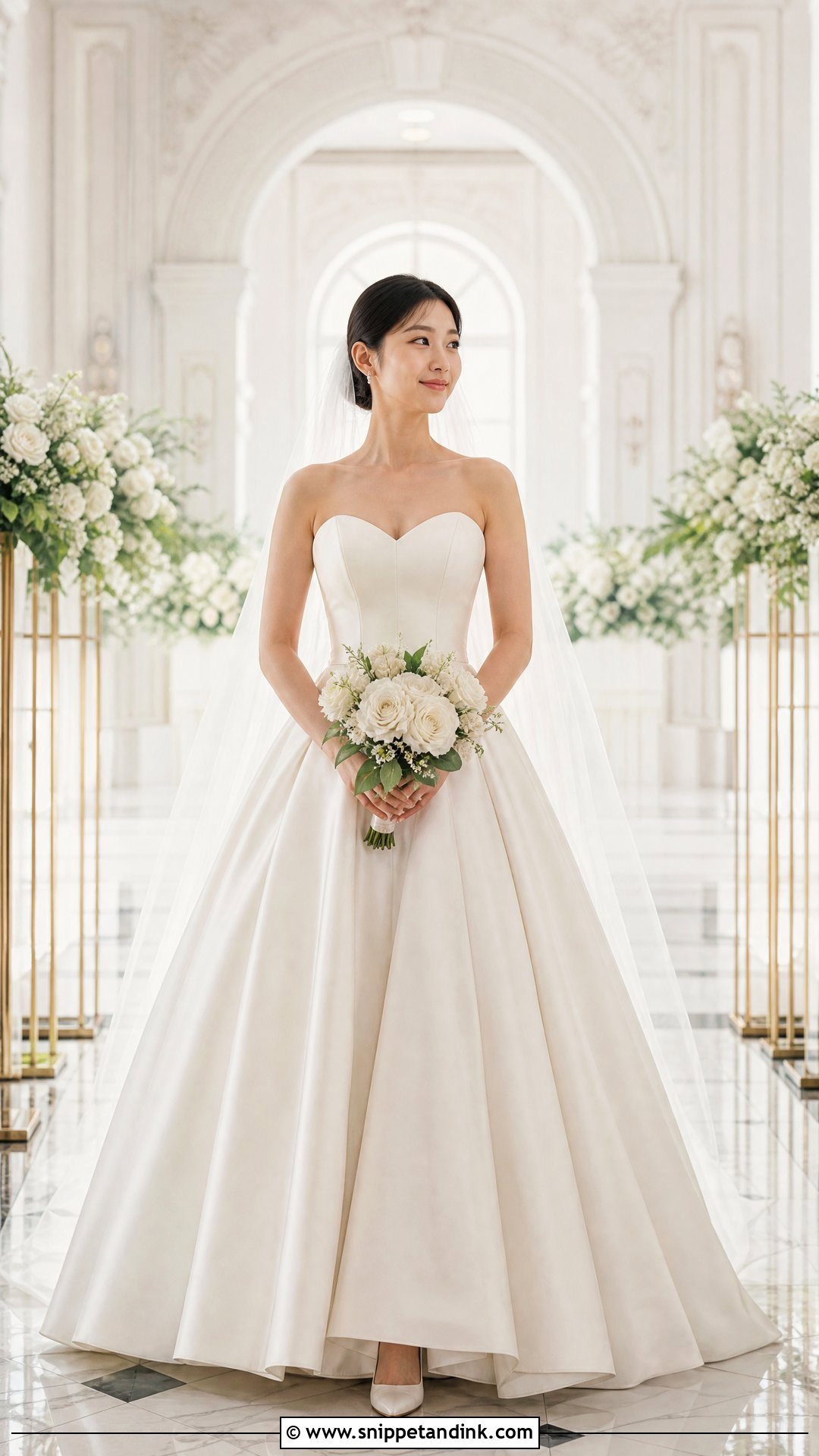
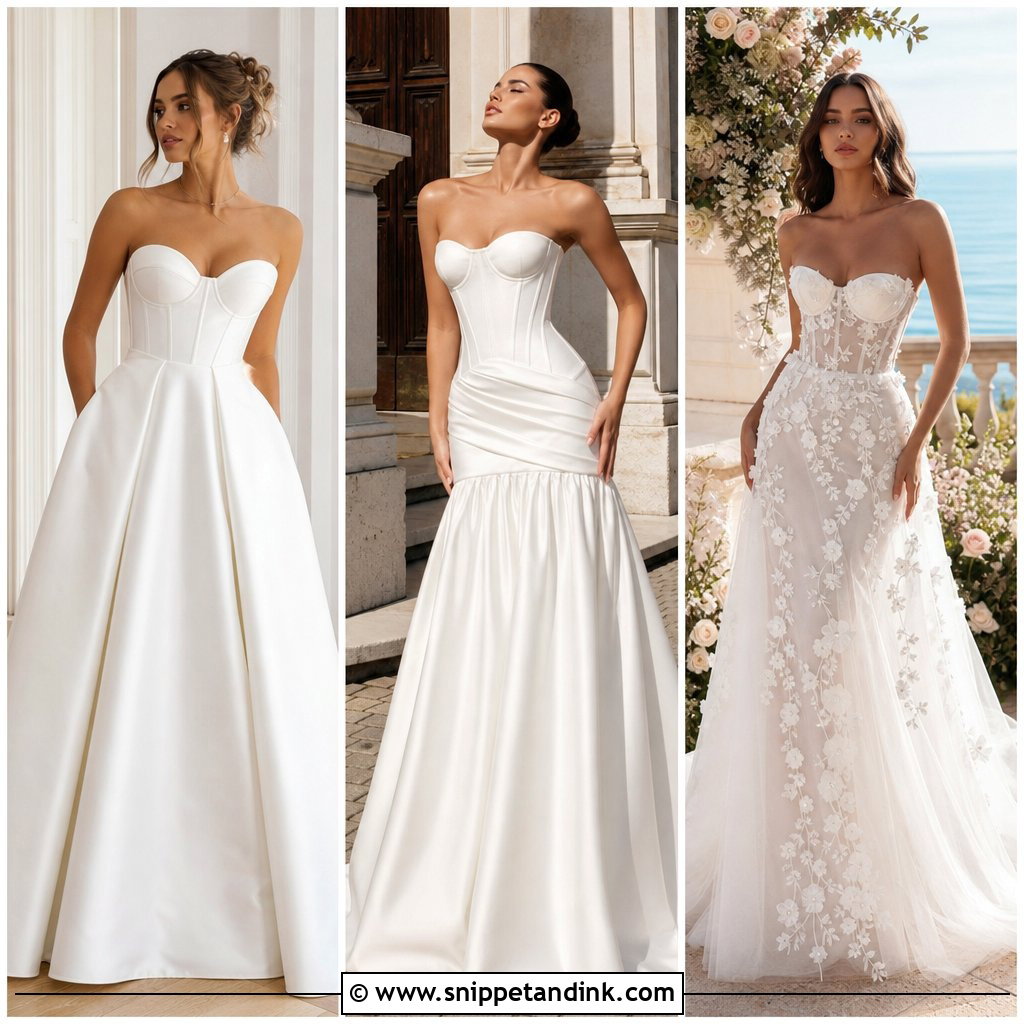
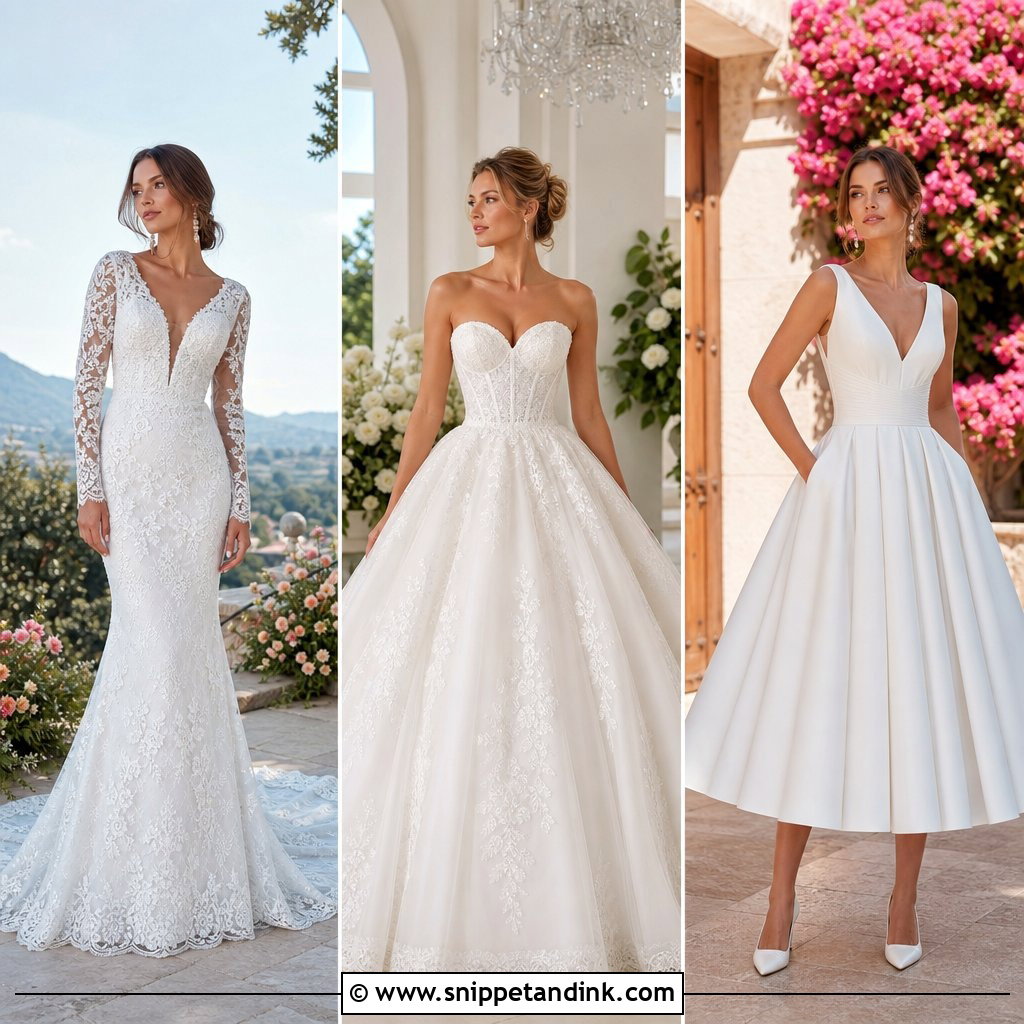
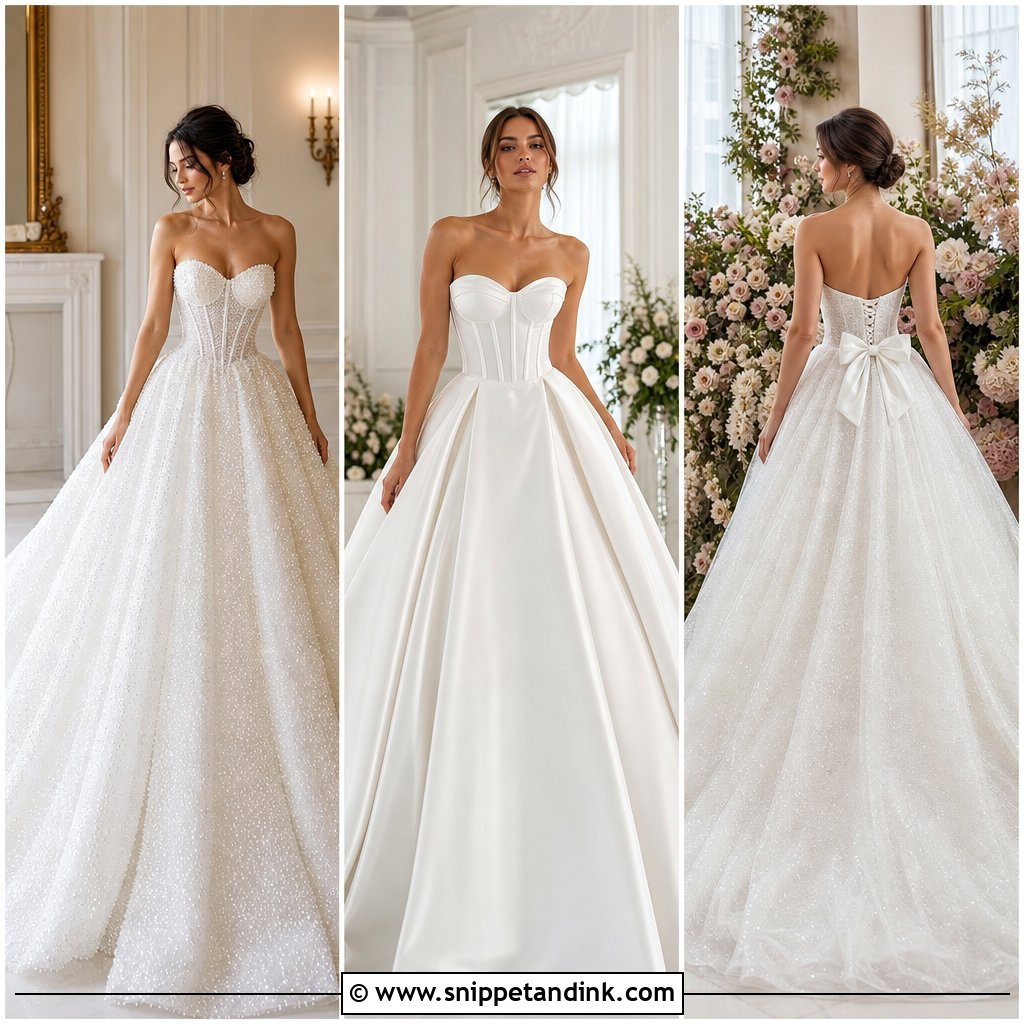
The sweetheart ball gown is the classic romantic shape, with definition at the neckline and waist and a full skirt for balance. Its bodice should rely on supportive seaming, light boning and well-placed cups rather than thick padding. Matte satin feels formal; layered tulle moves more softly. Crystal studs, a simple pendant, closed-toe heels you can stand in all day and a waist-length veil keep the focus on the bodice. A heavy skirt drags a strapless top down, so precise tailoring at the upper edge matters, and detachable straps for the reception are a sensible backup.
4. Square Neck Satin Wedding Dress
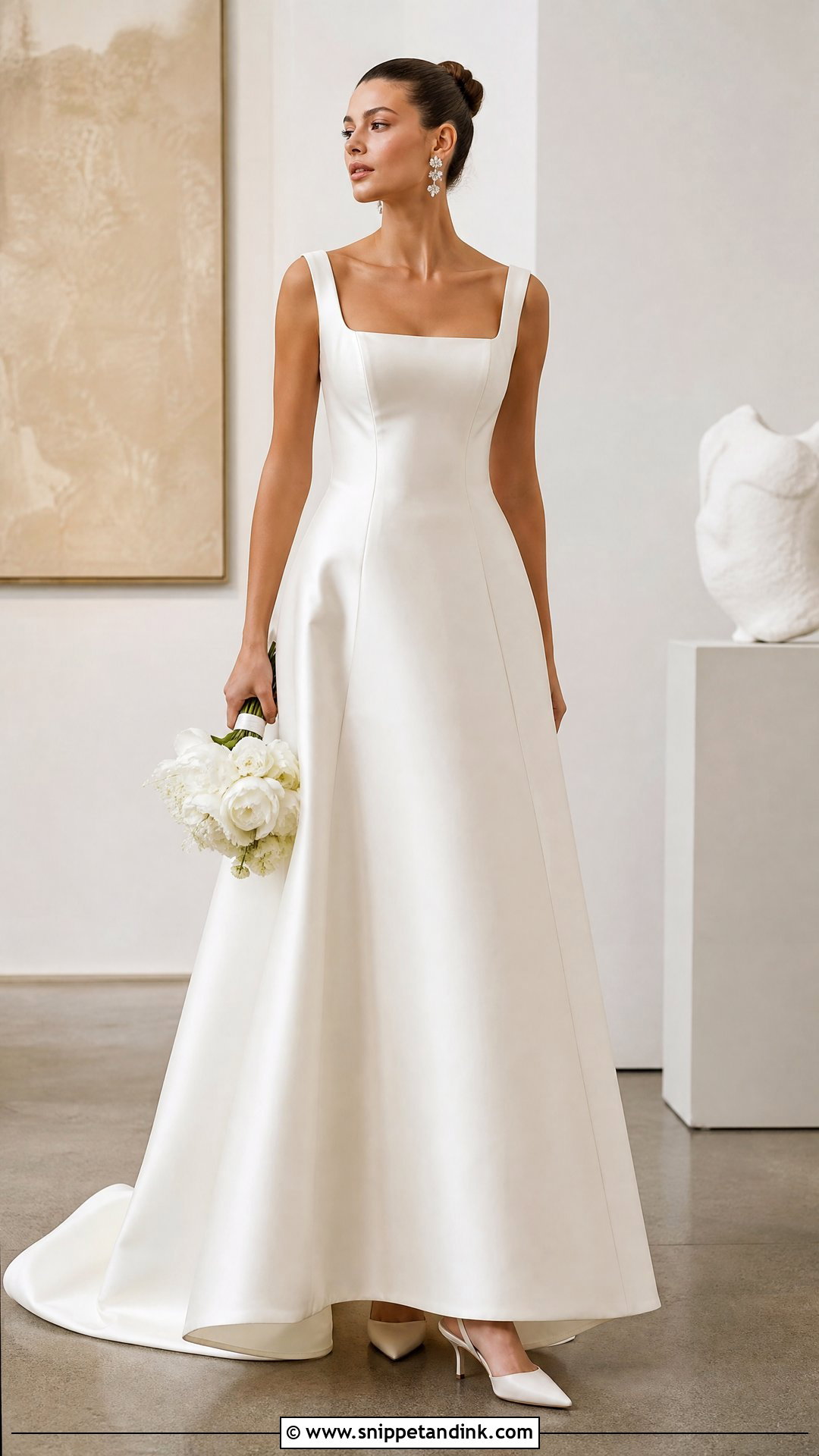
Square necks show off the collarbones and give the upper body a crisp frame. Wide-set straps and a seamed bodice add structure without burying a small chest in fabric. On a satin A-line it feels classic; over a fitted column it feels sharper. Sculptural earrings, pointed kitten heels and a compact bouquet suit it, with a sleek bun or waves tucked back. Usually no necklace. When you try it on, swing your arms forward and lean over a table. The corners are where gaps appear first on a slimmer frame.
5. Halter Neck Crepe Wedding Dress
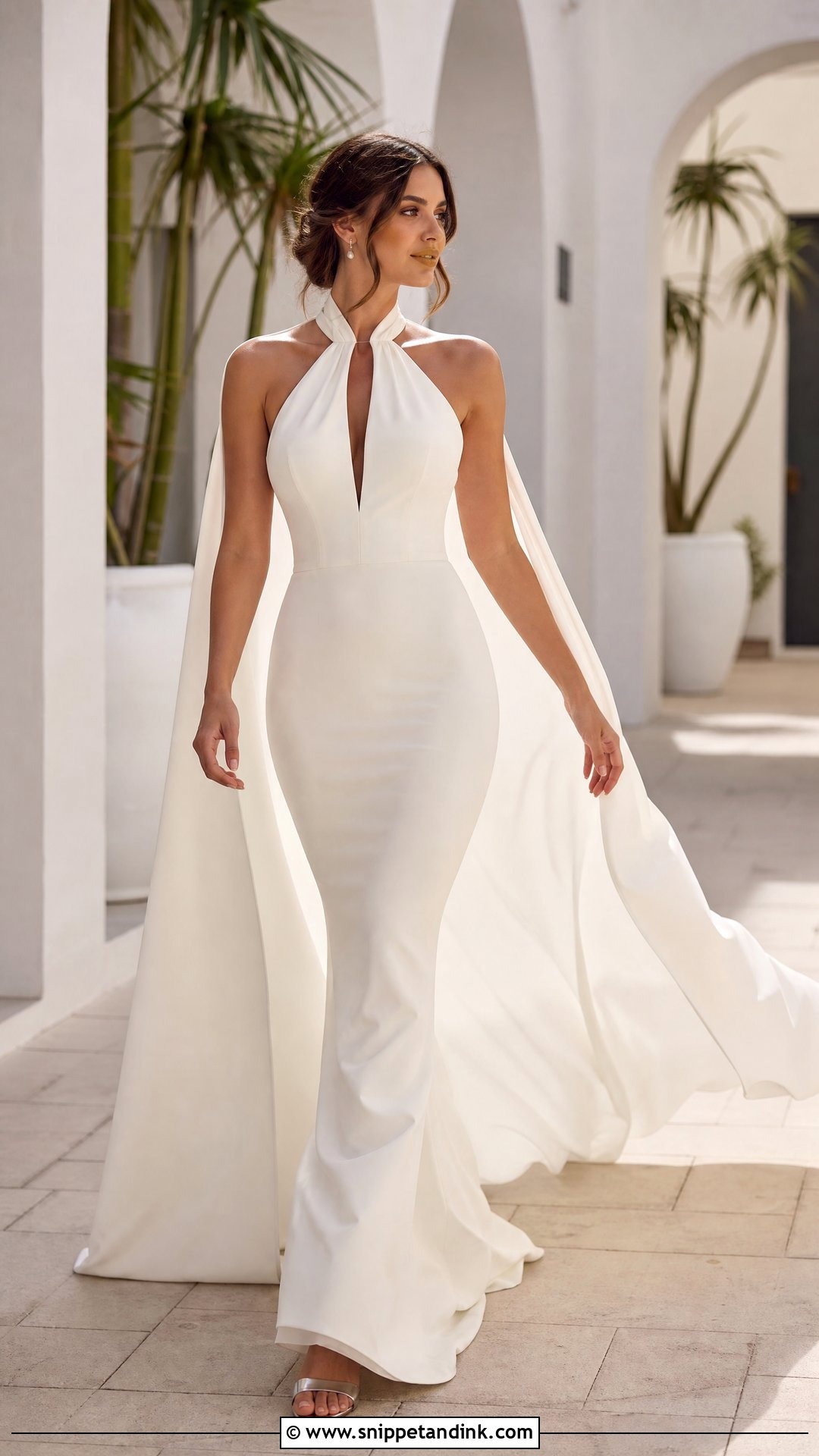
Would you prefer the attention on your shoulders and face? A halter in crepe draws one long line through the upper body and looks especially sharp on a smaller chest. Go for a softly curved or narrow plunging centre depending on how much coverage you want, with a slim fit-and-flare skirt. Metallic sandals, small statement earrings and a low ponytail or high bun. No heavy necklace. A light chapel veil or a flowing cape works for the ceremony. The neck fastening should feel secure without pressing; if you’re conscious of it after five minutes in the fitting room, it will ache by evening.
6. Illusion Lace Wedding Dress
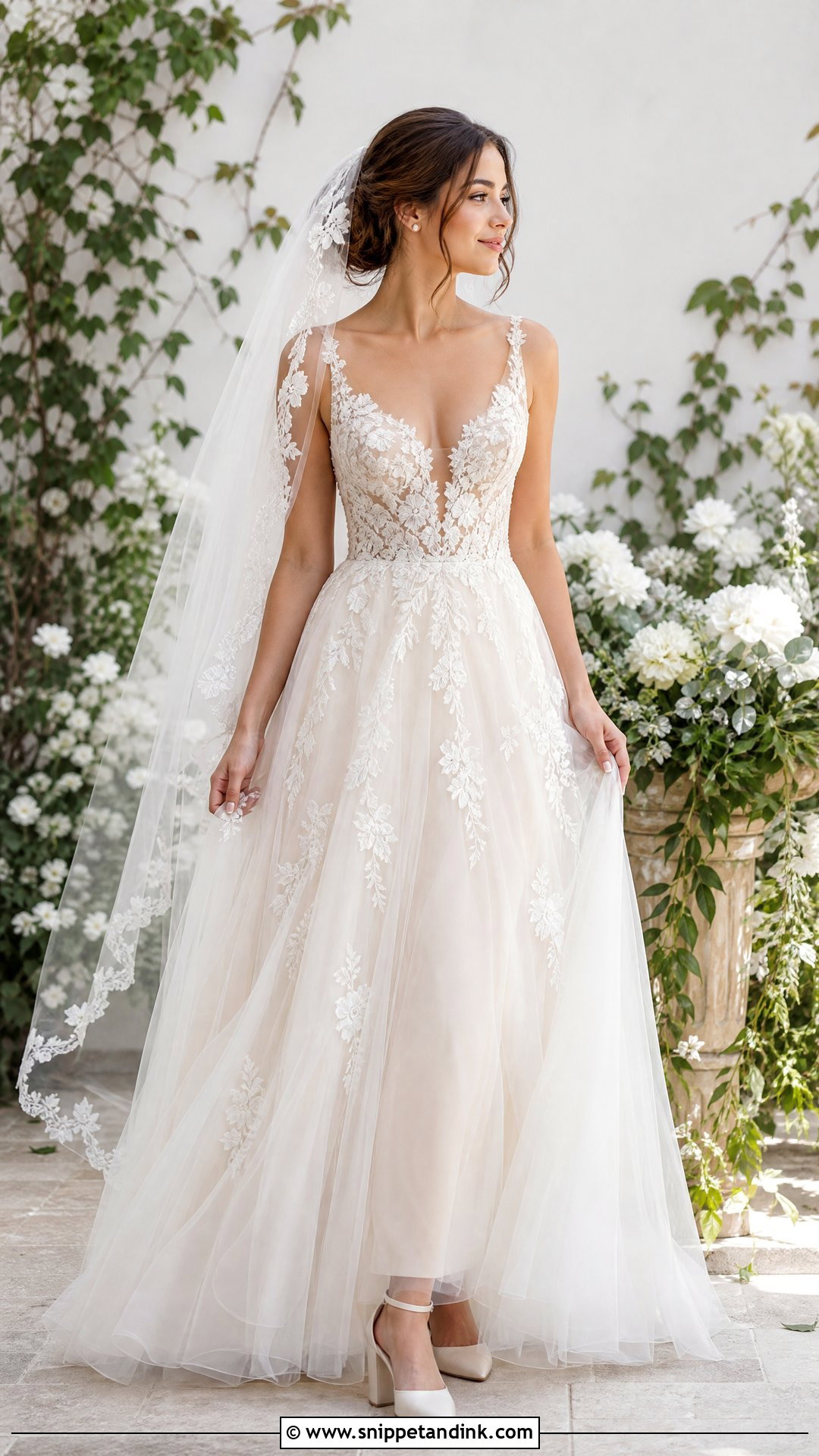
Illusion lace looks daring while actually covering you with sheer mesh. Appliqués placed across the bodice add texture and depth without padding. A fitted lace top over a tulle A-line is soft and romantic; lace carried down a narrow sheath is sleeker. Pearl studs, ivory block heels, a veil edged in the same lace and a loose chignon finish it. Match the mesh to your skin tone as closely as you can, so the panel disappears. Look at the bodice by a window and under indoor lights; mesh, cups and appliqué edges can all change from one to the other.
7. Corset Basque Waist Wedding Dress
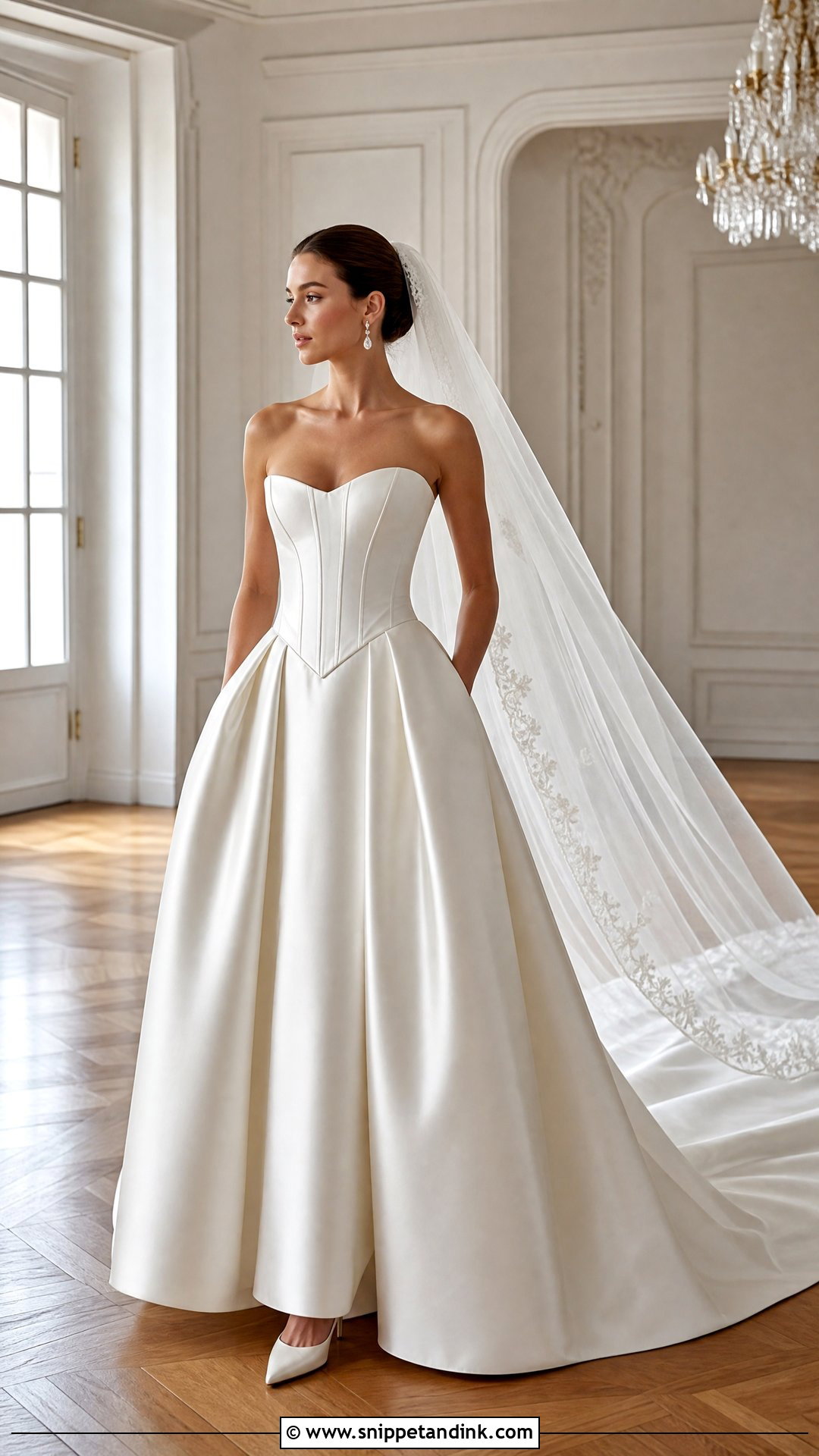
A corset with a Basque waist shapes the chest, waist and hips through its seams, giving a small bust a sculpted line without push-up padding. Look for a longline bodice that lies smooth against the torso and ends in a V below the waist. A full satin skirt feels regal; gathered tulle feels lighter. Elegant pumps, a cathedral veil, refined drop earrings and hair up to show the construction. Exposed boning looks fashion-led; covered boning is more traditional. Breathe deeply and sit at every fitting. Support is the goal, not compression.
8. Draped Bodice Wedding Dress
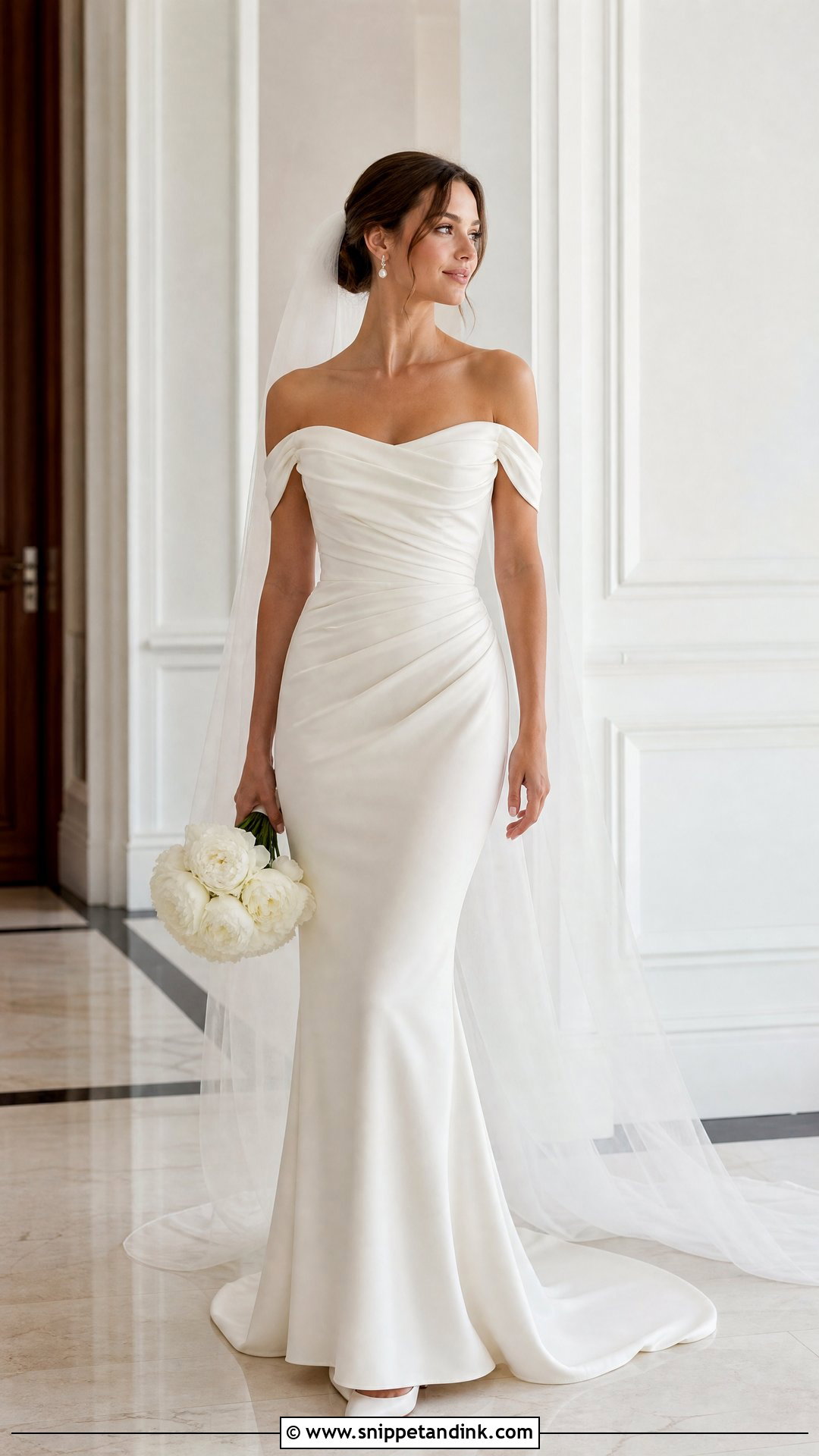
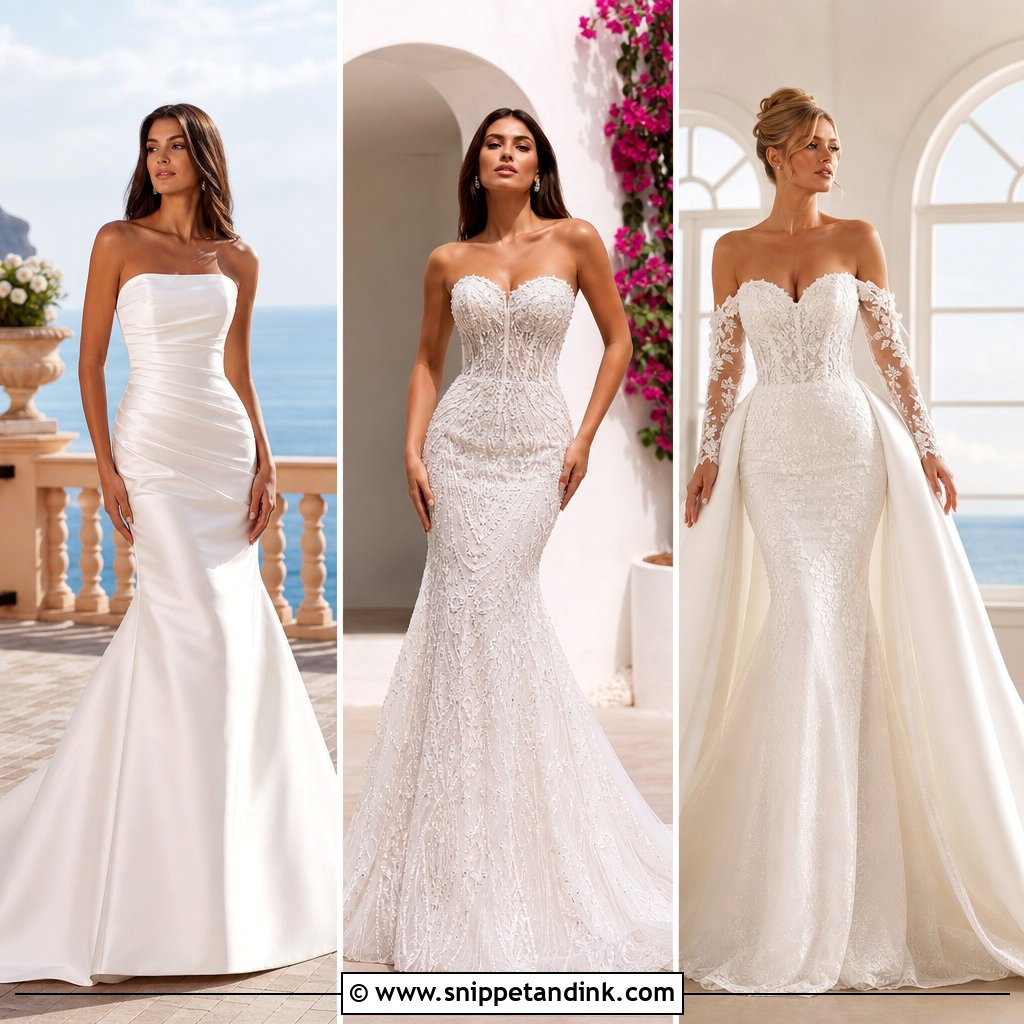
Ruching across the bodice adds shape to a simple dress and gives a small chest softness without bulk. I like diagonal draping that crosses the chest and gathers at the waist. Strapless reads formal and sculptural; off-the-shoulder adds framing. Below, a fitted crepe skirt or a flowing satin A-line both work. Pearl earrings, pointed pumps, a plain chapel veil and a side-parted low bun to echo the asymmetry. The folds need a well-fitted foundation underneath. Without one, the drape shifts every time you move and looks accidental in photos.
9. Off-The-Shoulder Wedding Dress
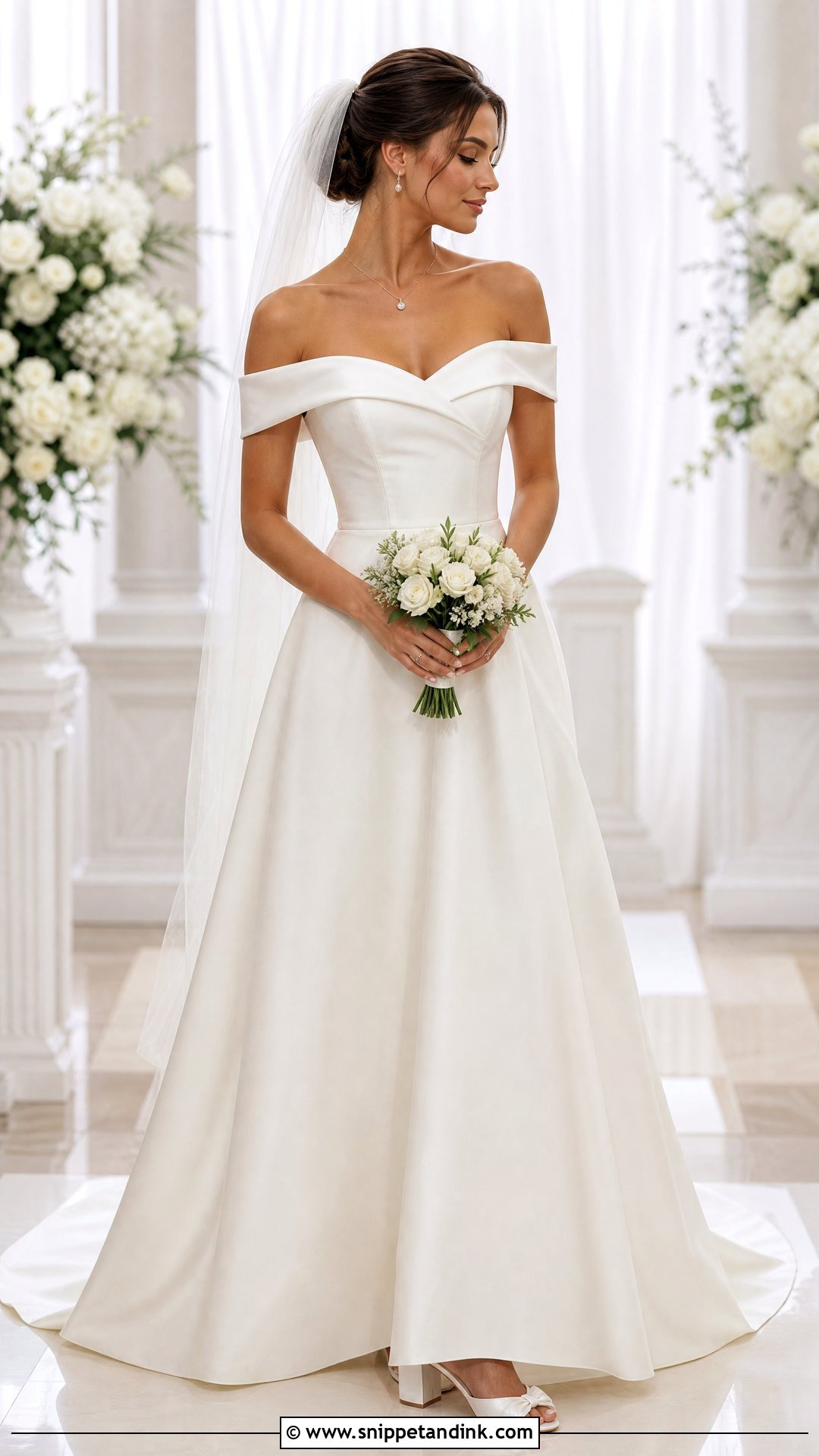
Off-the-shoulder lines carry the eye across the collarbones and shoulders, a graceful horizontal above a smaller chest. A folded satin band feels polished; lace sleeves feel romantic. Whichever you choose, a fitted bodice underneath should do the supporting, not the shoulder detail. A structured A-line or fit-and-flare completes the balance, with a simple pendant, pearl earrings and low block heels. Sweep the hair back and fix the veil below the bun. At alterations, raise and lower your arms several times; the band shouldn’t drag the bodice down with it.
10. One-Shoulder Wedding Dress
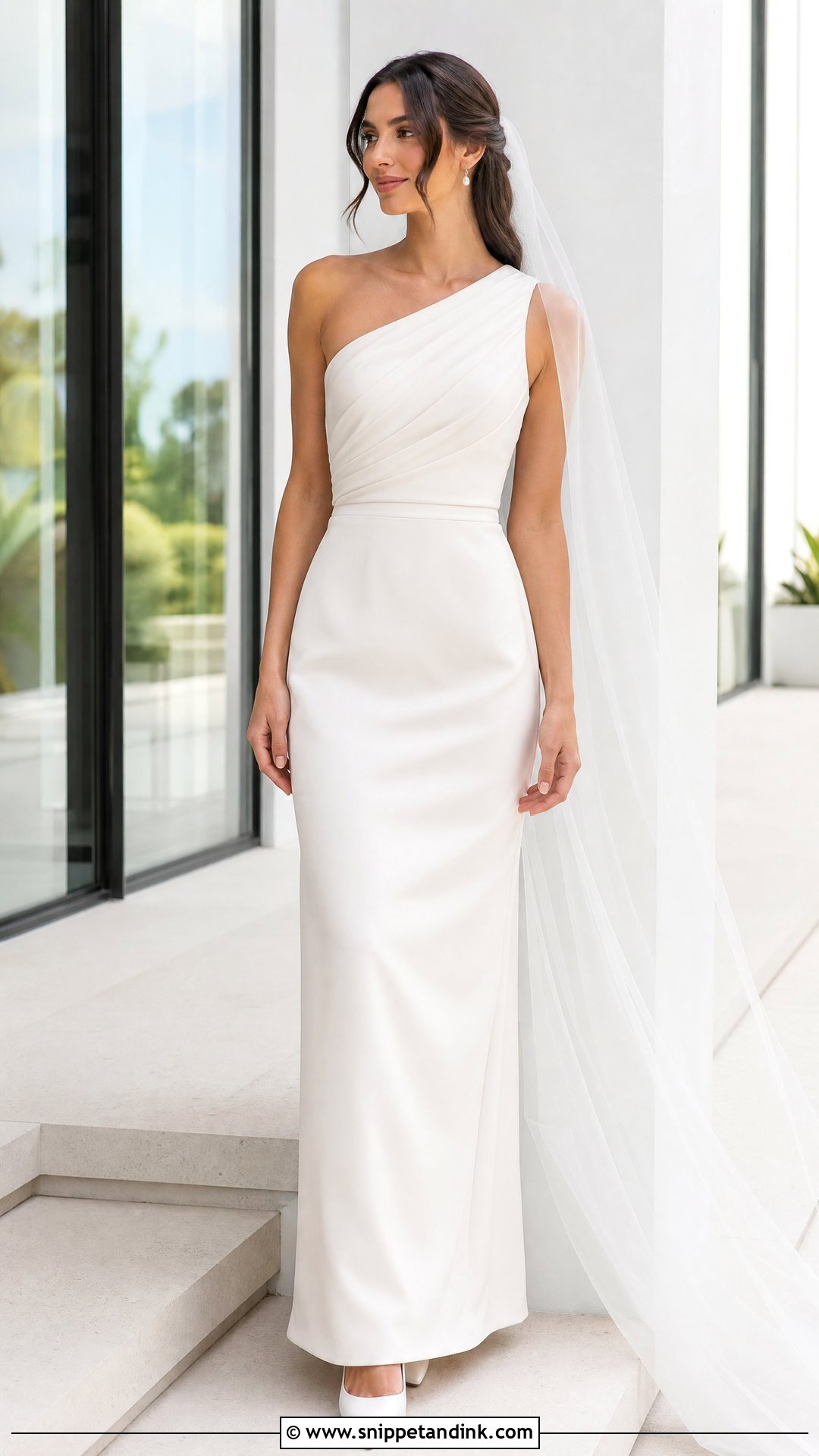
Asymmetry adds interest to the upper body. A one-shoulder gown looks most refined in smooth crepe, satin or softly gathered chiffon, with internal support and draping that runs toward the waist. A column skirt is sleek; an A-line more traditional. One statement earring on the bare side, or matching small ones for a quieter effect, plus pointed heels and an unembellished veil. Sweep hair toward the covered shoulder. One-shoulder dresses pull unevenly across the torso, so ask the seamstress to check that the bare side stays snug and doesn’t gape when you raise that arm.
11. High Neck Lace Wedding Dress
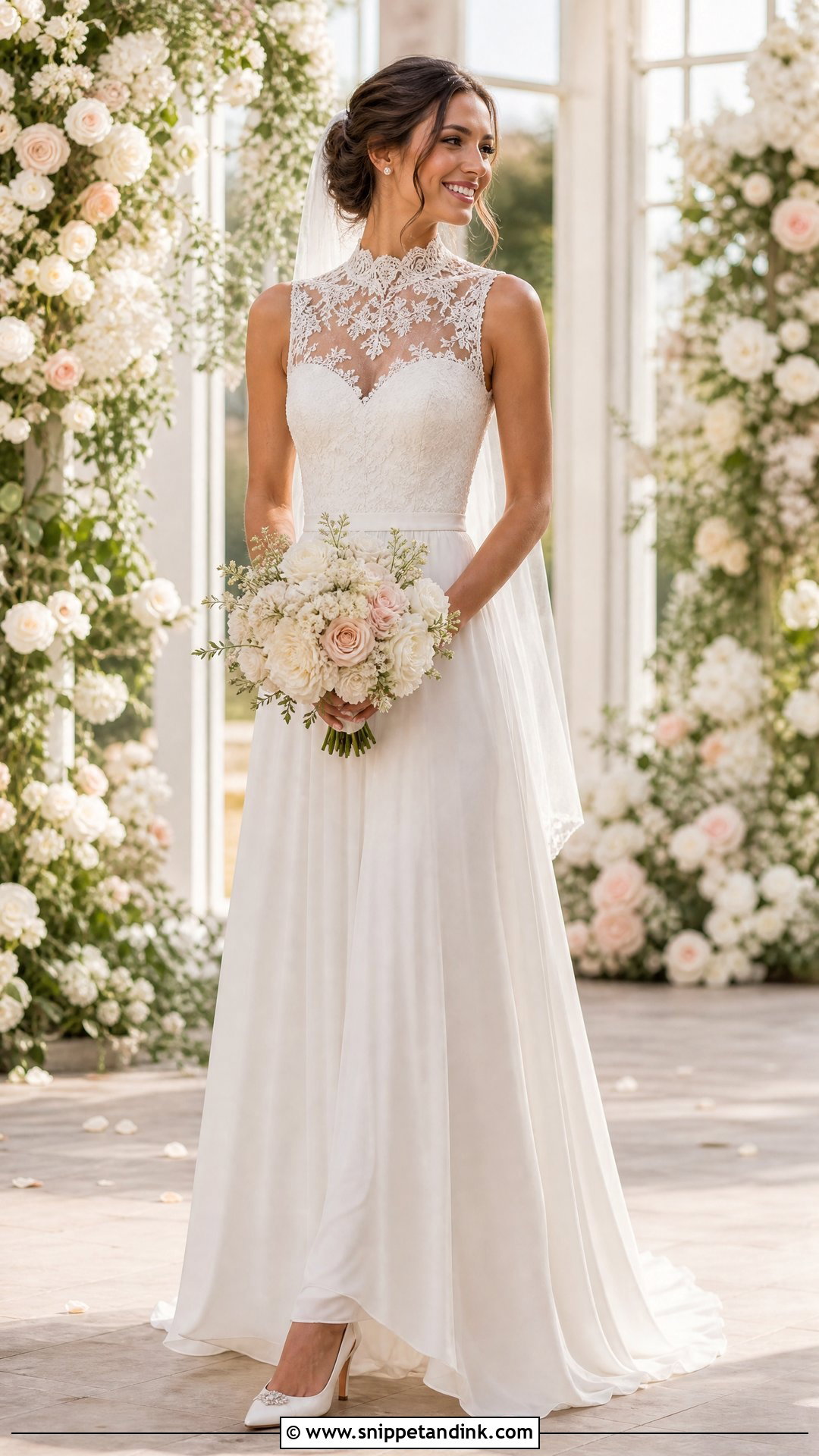
High lace necklines frame the face and let the lace itself become the main feature. On a smaller chest, a detailed high neck doesn’t look heavy the way it can on a fuller bust. Sheer lace across the collarbones with lining through the main bodice gives a light, layered effect. A fitted waist with a chiffon skirt keeps it soft; a crepe sheath makes it modern. Pearl studs, comfortable slingbacks and a veil fixed under an updo. The lace works as jewellery, so skip the necklace. Turn your head both ways at the fitting; the collar should flex, not fold.
12. Bateau Neck Wedding Dress
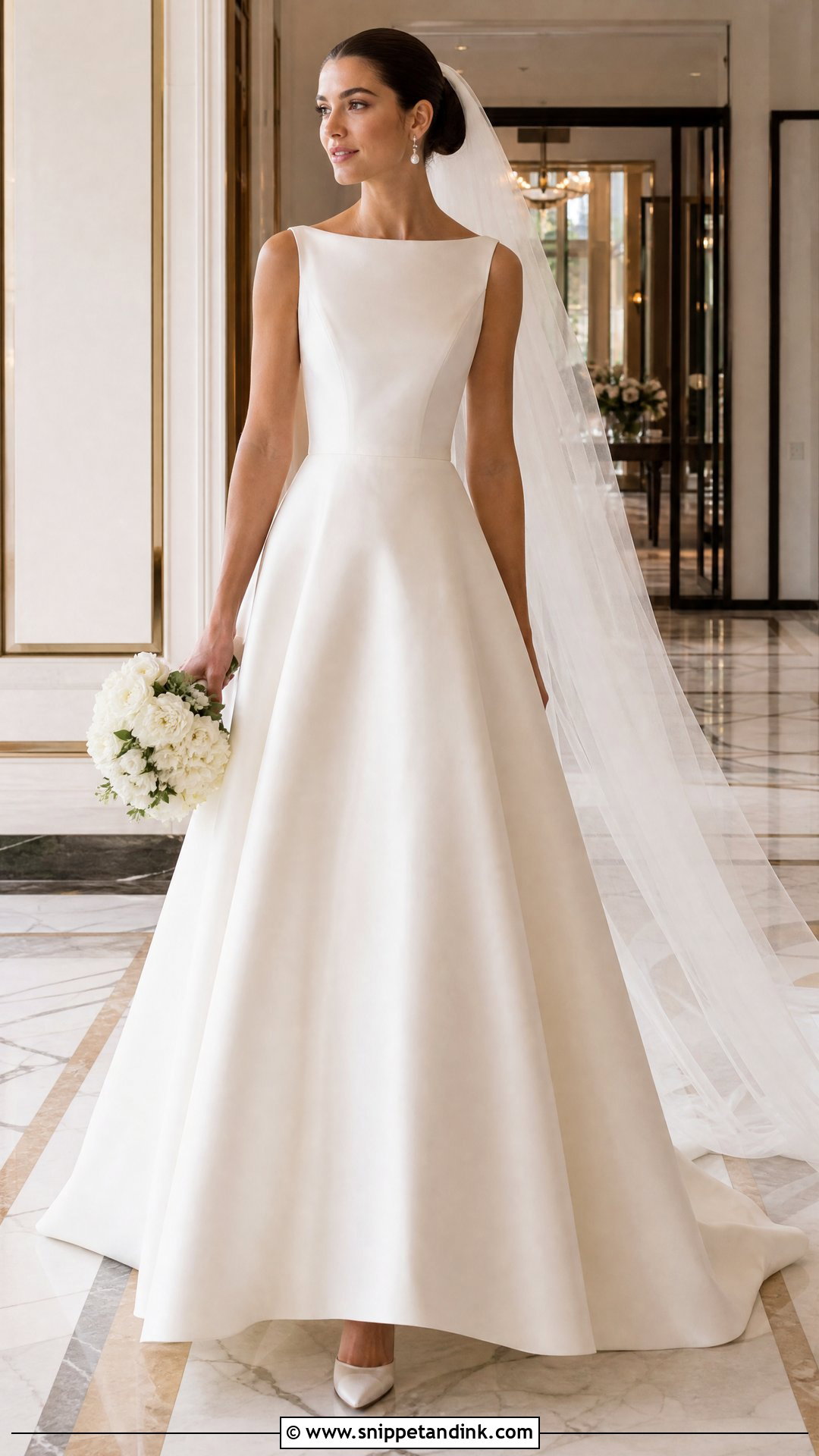
A bateau runs along the collarbones from shoulder to shoulder, adding width across the upper body with very little skin. Clean mikado in an A-line suits a formal day; light crepe in a column suits a simpler one. Three-quarter sleeves lend a vintage note, and sleeveless keeps it fresh. Pearl drops, low satin pumps and a dramatic veil under a smooth bun. Leave off the large necklace. If the gown has a low back, the shoulders need a very secure fit, or the wide neckline creeps outward and wrinkles as you move.
13. Scoop Neck Wedding Dress
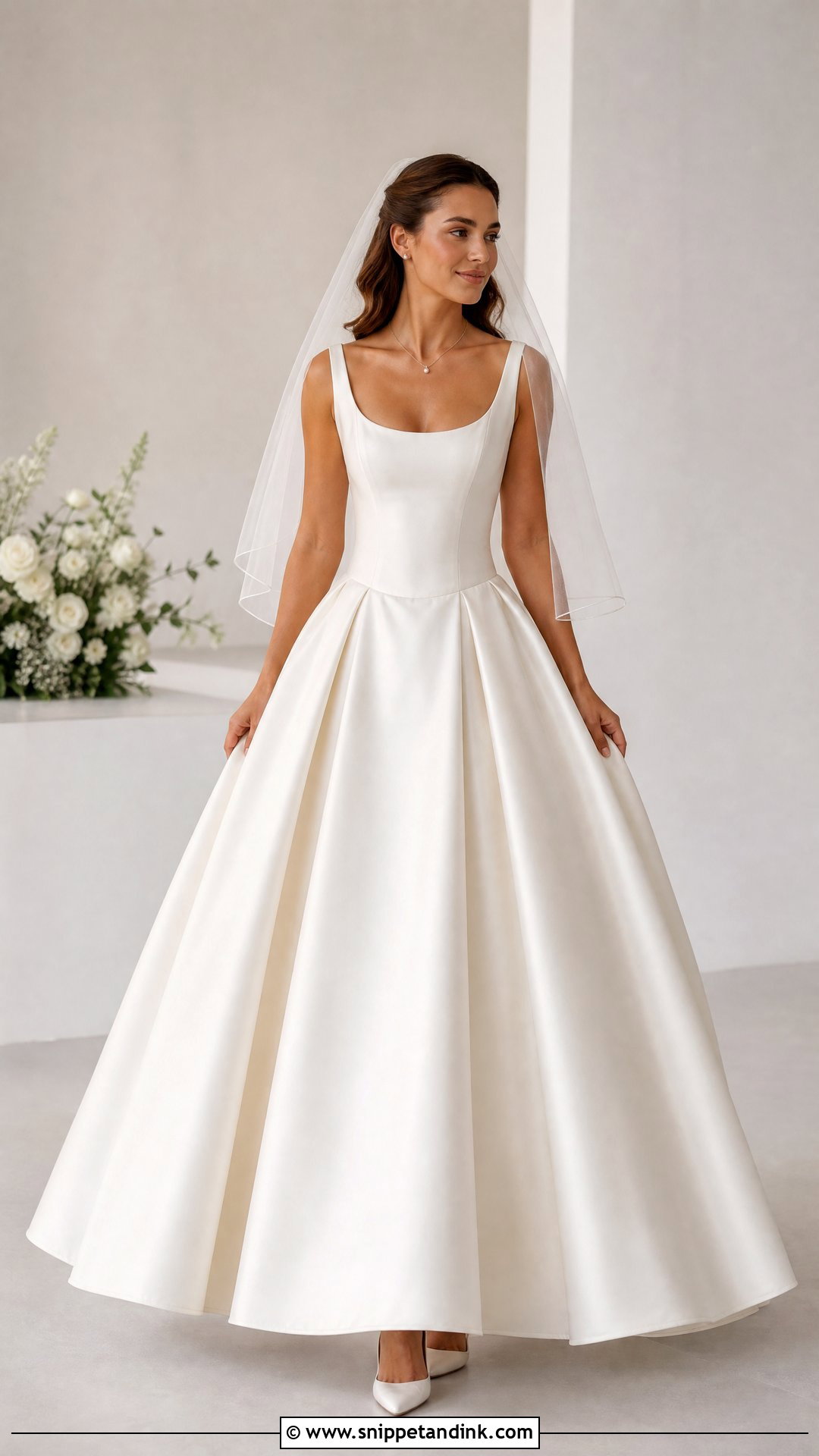
Softer than a square and gentler than a plunge, the scoop opens the chest in a rounded line that frames a small bust naturally. Wide straps give dependable support; thin ones look delicate. A drop waist or classic A-line below changes the mood more than the neckline does. Wear a short pendant, small hoops, satin heels and a fingertip veil, with soft waves for a relaxed day or a neat bun for a formal one. Check that the scoop sits evenly on both sides. Light cups in the right size give it smooth definition without looking padded.
14. Strapless Bustier Tea-Length Wedding Dress
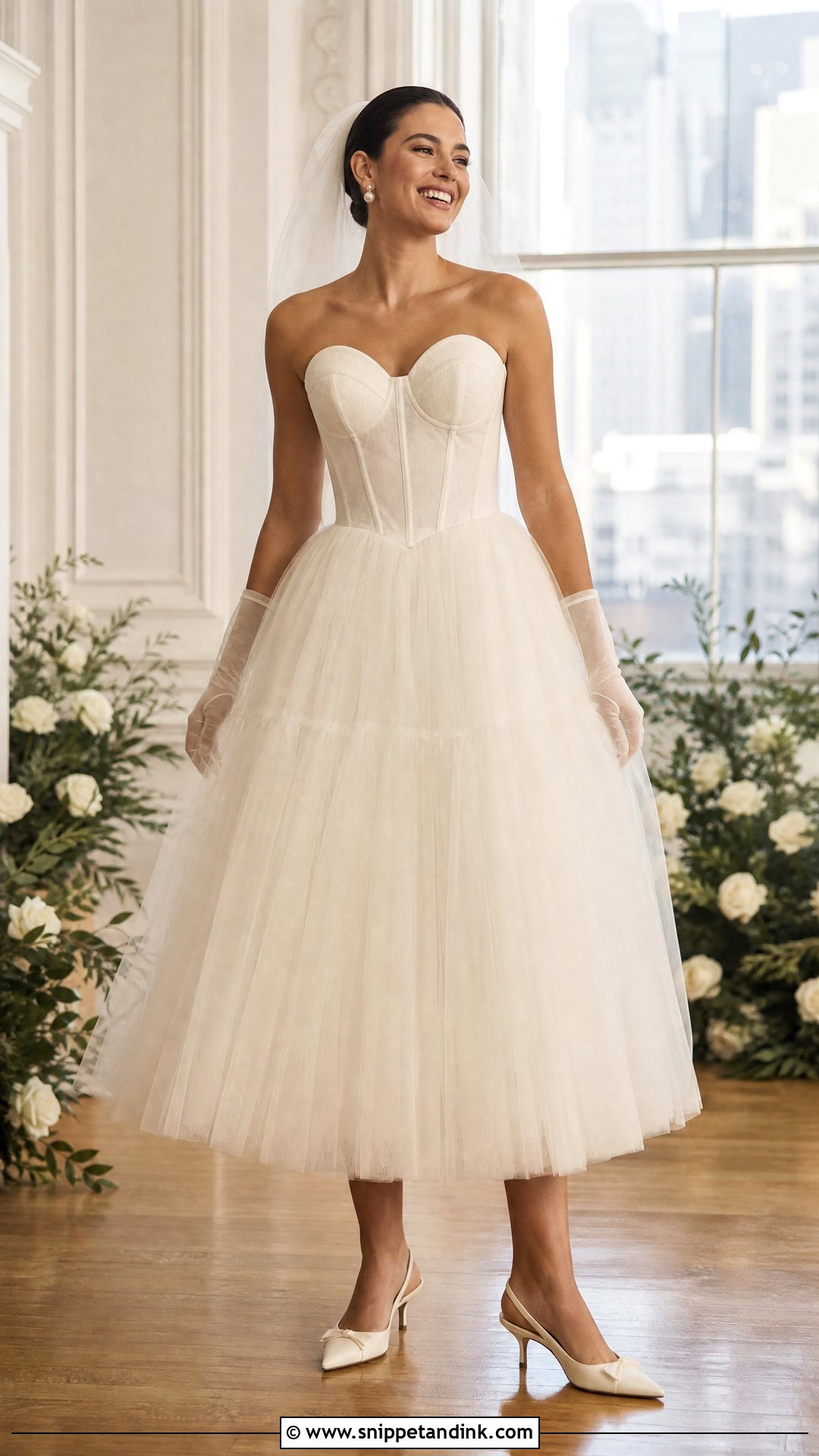
A strapless bustier dress with a tea-length skirt feels playful but still polished. Defined cups and vertical seams shape a small chest, and the shorter hem shows off the shoes and frees your stride. Crisp satin looks structured; layered tulle looks lighter. Pointed slingbacks, pearl earrings, a short veil or hair bow, and wrist-length gloves for a vintage note. The bodice should grip the ribcage; cups alone can’t hold a strapless dress up. A waist stay, a petersham band stitched inside at the waist, helps a lot. Dance in it at your fitting.

15. Floral Appliqué Wedding Dress
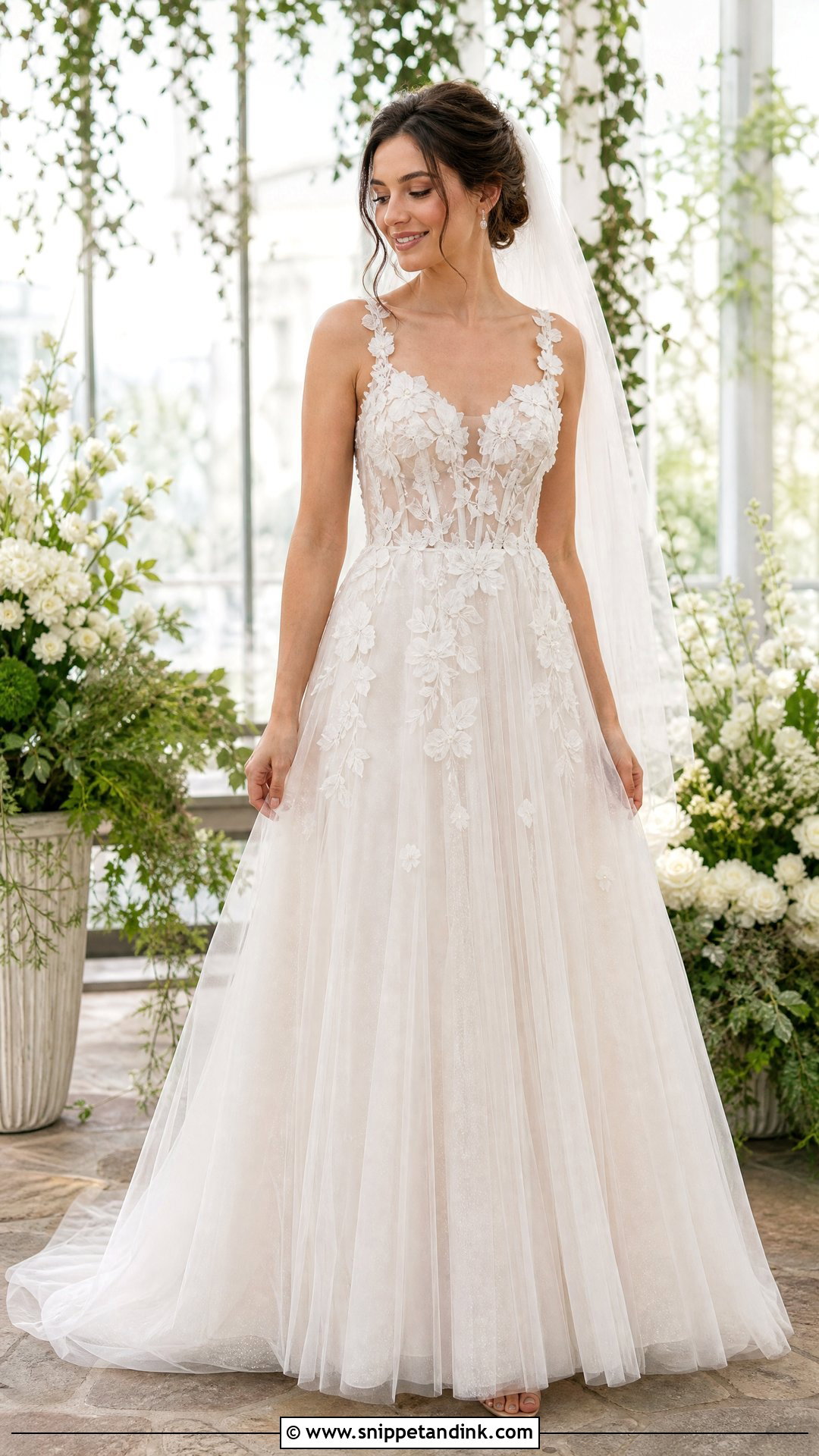
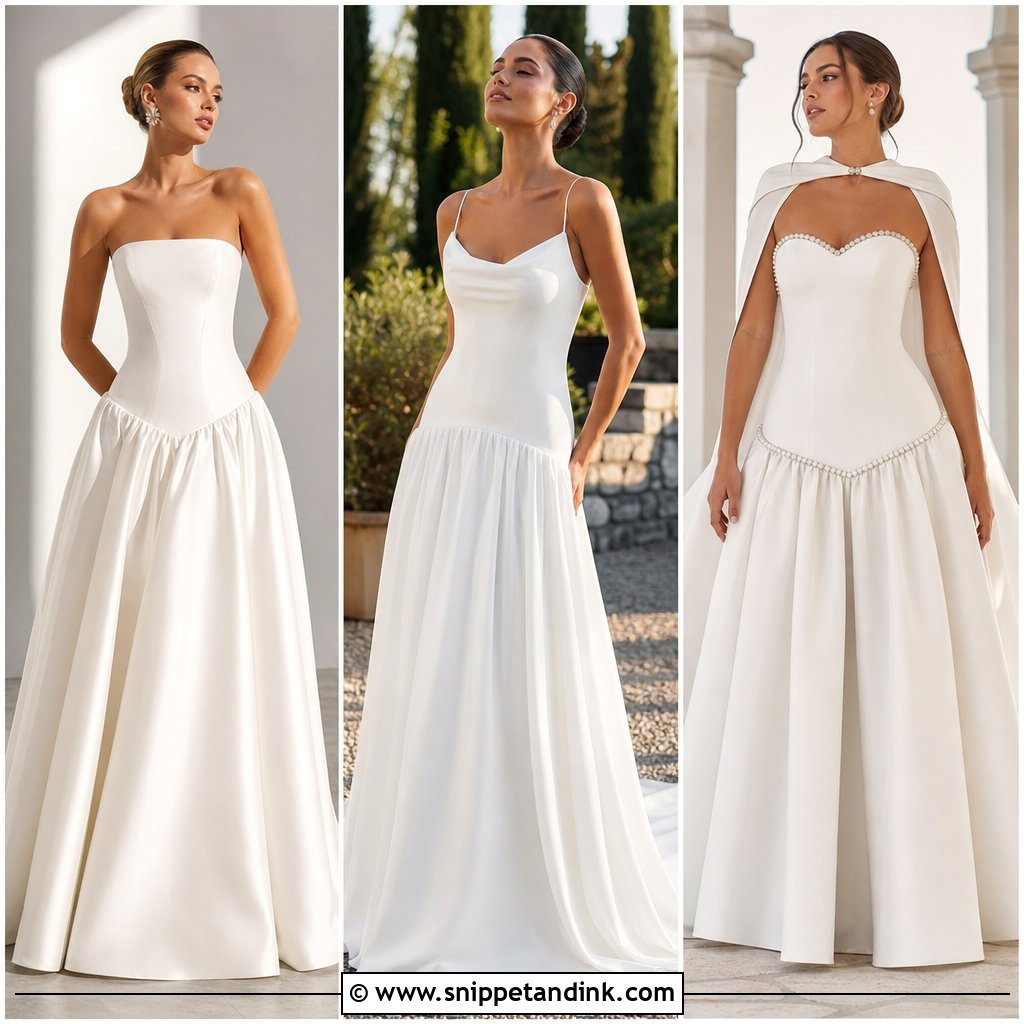
Raised flowers bring depth and texture to the bodice, which is exactly what many small-chested brides want. I prefer them scattered from the neckline down toward the waist rather than packed into one spot. A sheer corset base with a tulle A-line feels airy; tonal flowers over lined ivory fabric are cleaner. Understated earrings, neutral sandals, a plain veil and a loose updo suit the natural detail. Check the flowers near the armholes, where they can rub. Well-placed appliqués also add coverage where a sheer bodice would otherwise show too much.
16. Ruched Empire Waist Wedding Dress
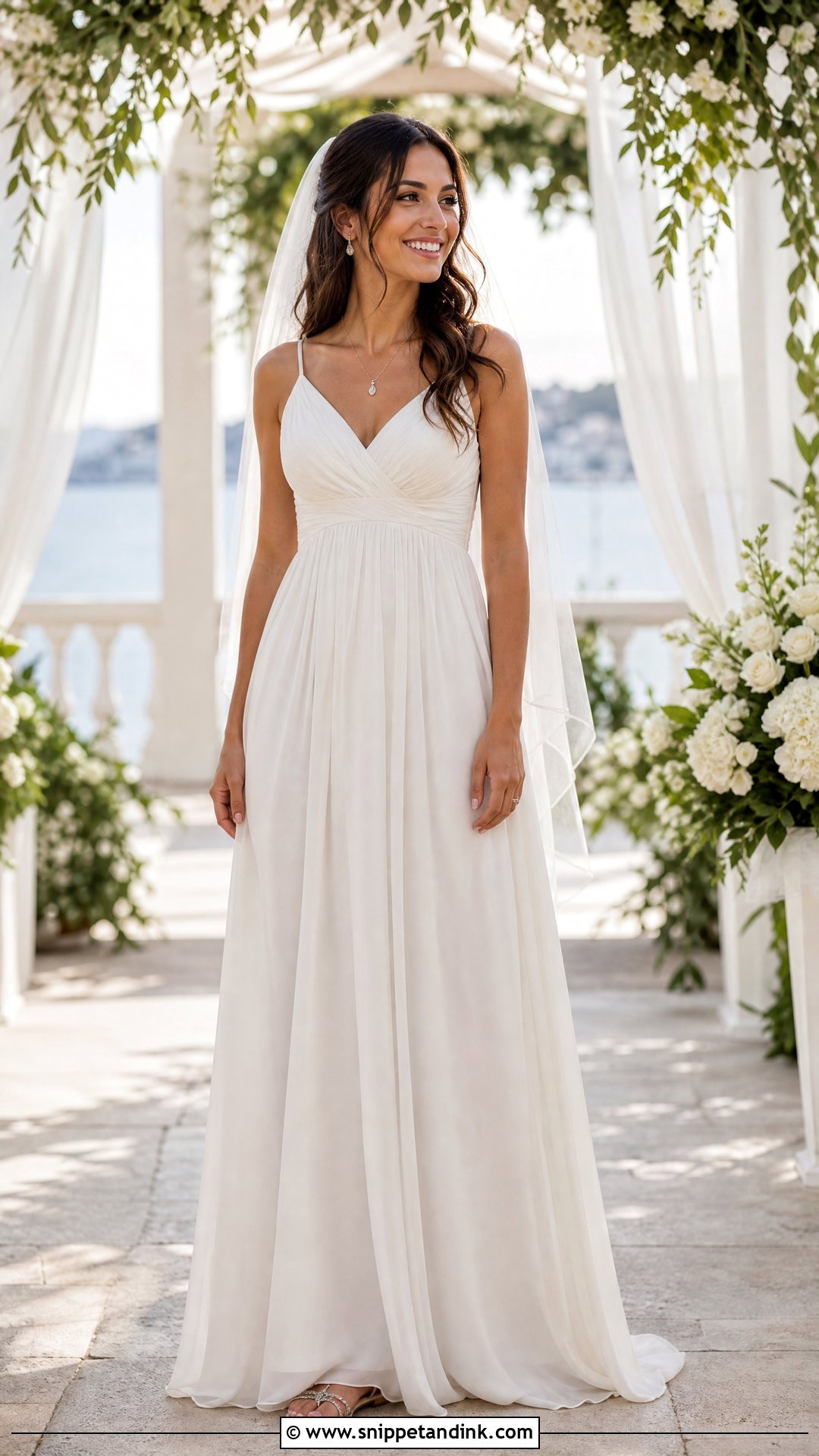
An empire waist puts the main seam right under the chest and lets the skirt fall loose below. Soft ruching around the bust adds dimension, so it suits brides who want a flowing shape with a bit more up top. Chiffon is airy outdoors; silk satin is more formal. Fine straps and a modest V keep the top open. Metallic flat sandals, a fine pendant, a light chapel veil and loose curls or a braided updo complete it. The seam has to sit right under the bust. Too high and the bodice looks short; too low and the shape loses its point.
17. Cape Sleeve Column Wedding Dress
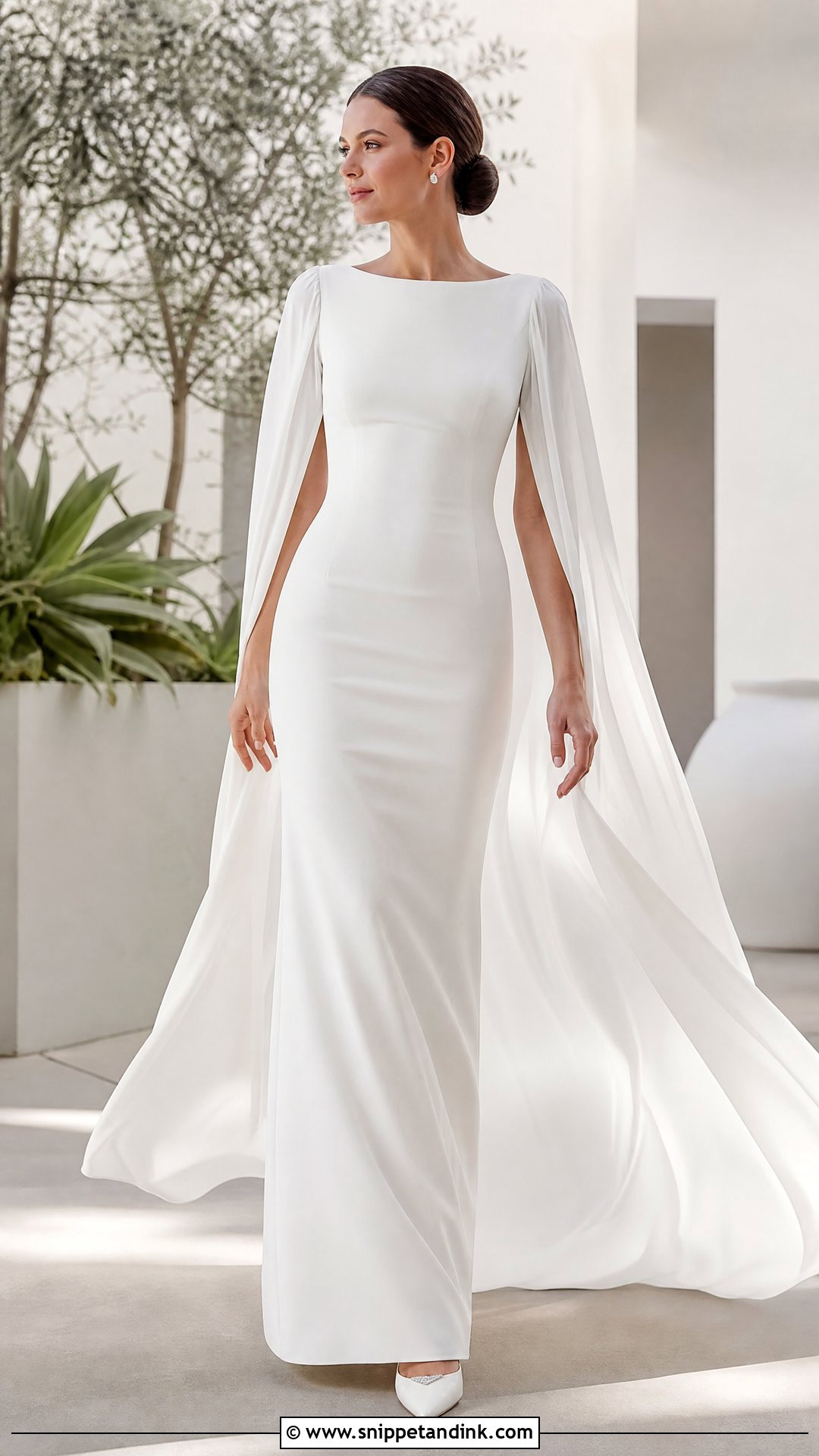
Cape sleeves create drama through movement, not through volume at the chest. A clean fitted column is the base, with chiffon or crepe panels falling from the shoulders. A V-neck or softly rounded neckline sets the amount of skin. Keep everything else streamlined: pointed pumps, crystal studs, a compact clutch and a sleek low bun. If the cape runs into a long train, you can skip the veil altogether. Walk and turn in your wedding shoes at the fitting. Long capes catch under heels and wrap around the arms more often than brides expect.
18. Detachable Overskirt Wedding Dress
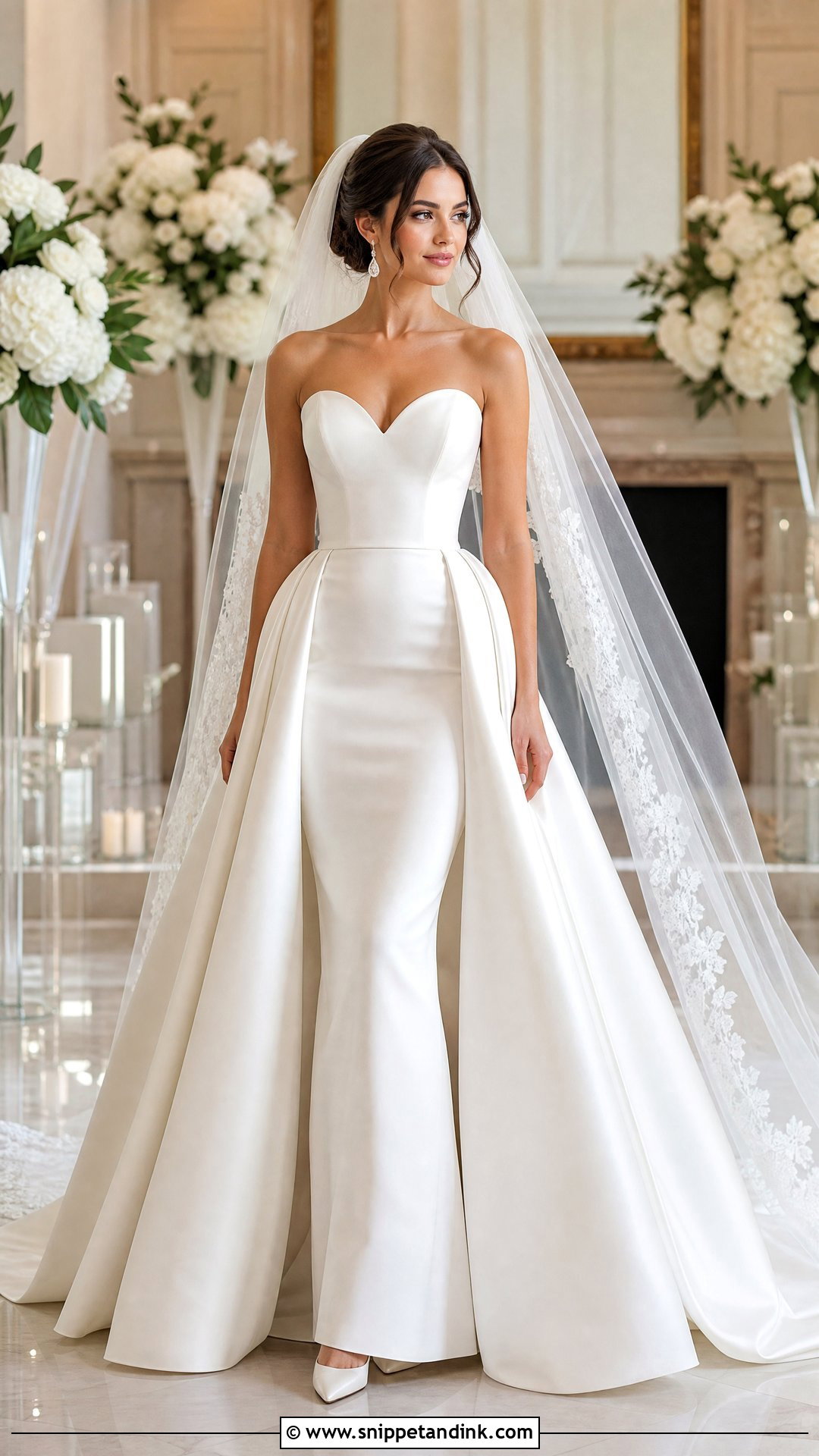
A detachable overskirt turns one dress into two. Start with a structured sweetheart, square or plunging bodice fitted closely to your chest, over a slim crepe or lace underdress for the reception. A full satin or tulle overskirt adds volume for the ceremony. Elegant pumps, drop earrings and a cathedral veil for the entrance; afterwards, swap the veil for a sparkly hair piece. The overskirt waistband should lie flat, not add bulk. Strong hooks or hidden snaps are essential, and do one full practice removal with whoever will help you on the day.
19. Backless Slip Wedding Dress
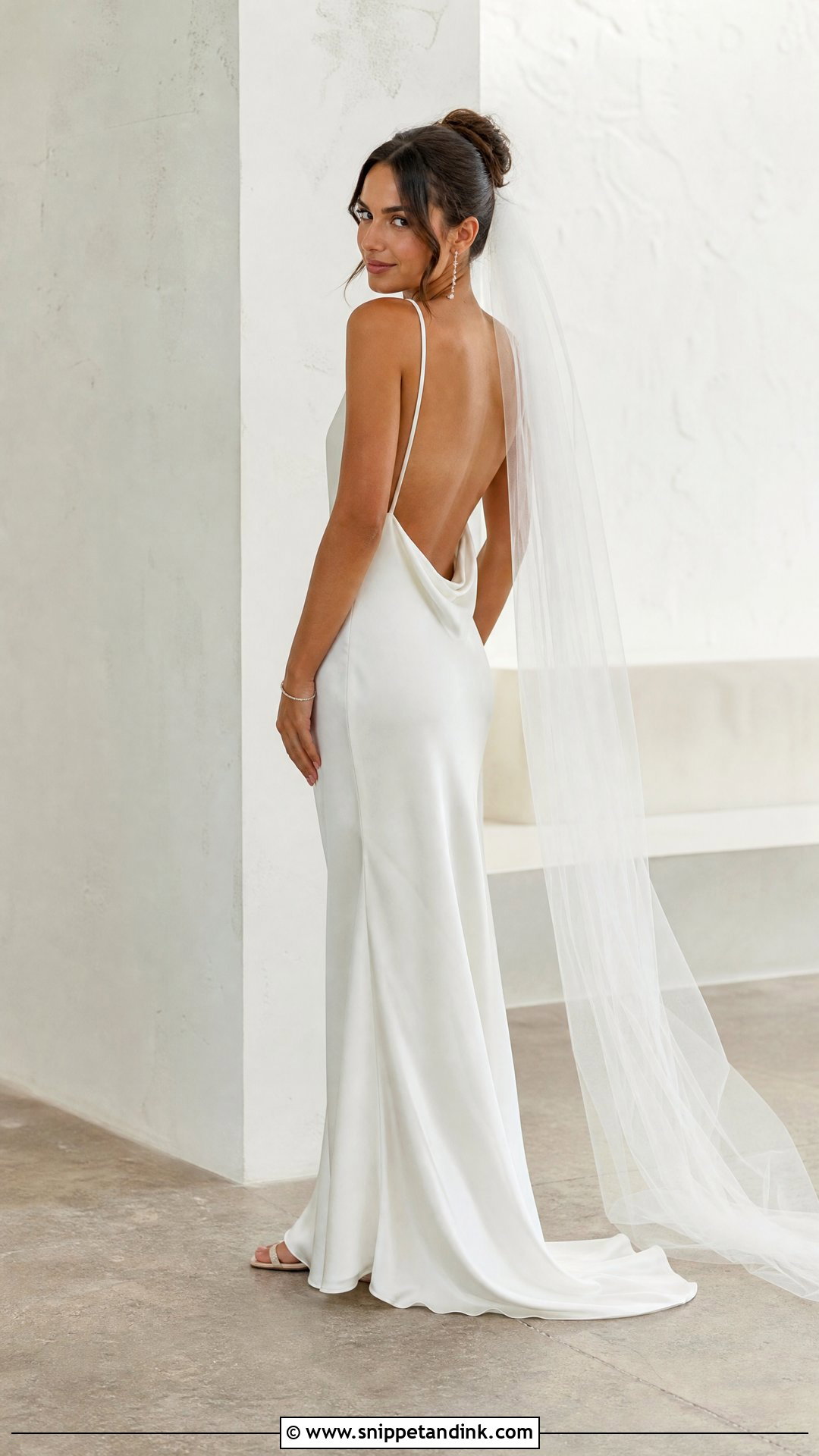
Backless slips celebrate a smaller chest through clean lines, light fabric and almost no visible support. Bias-cut satin with a softly draped neckline, narrow straps and a low back is the version I’d choose. The front still needs some lining or discreet cups for a smooth surface. Delicate sandals, long earrings, a sheer veil under a relaxed bun and a slim bracelet. Fabric quality and tailoring carry everything here. Straps and neckline must be adjusted together, since shortening the straps raises the neckline. Fashion tape is a backup, never the plan.

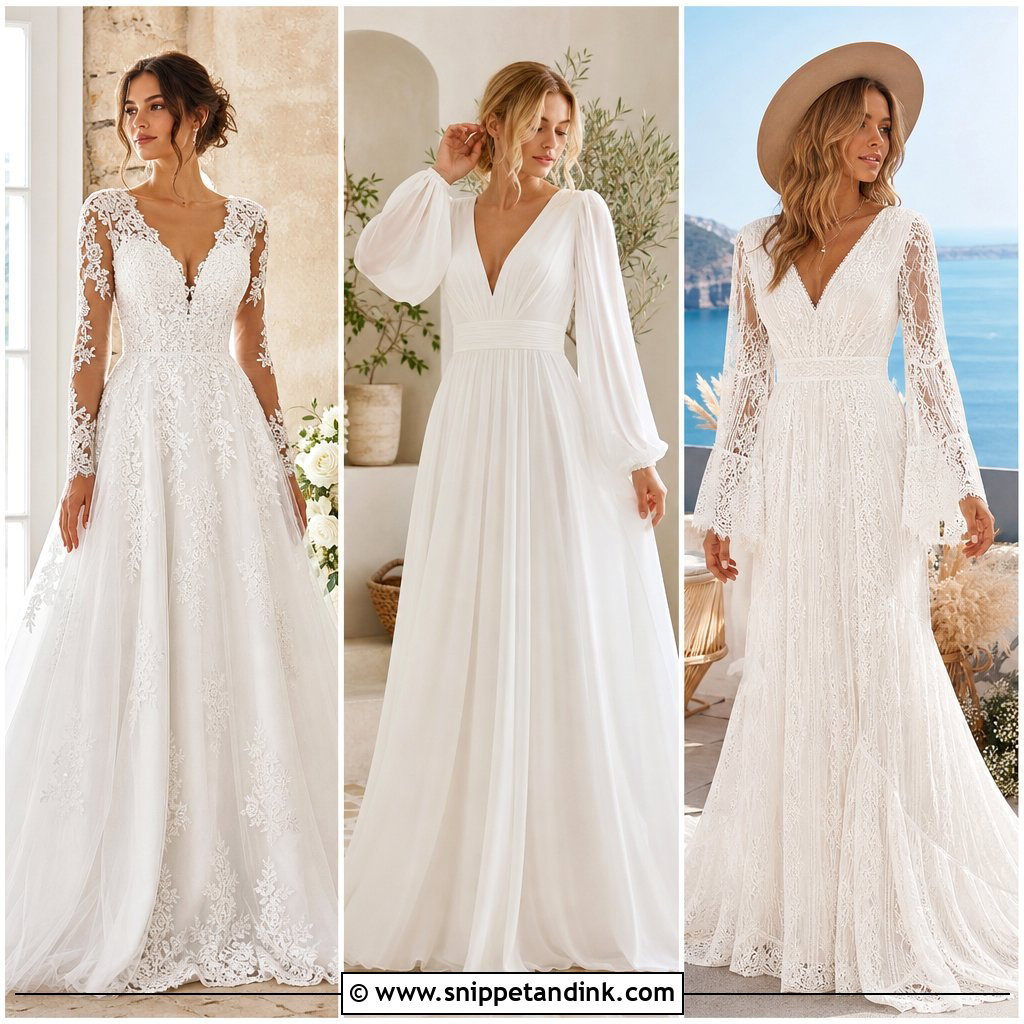
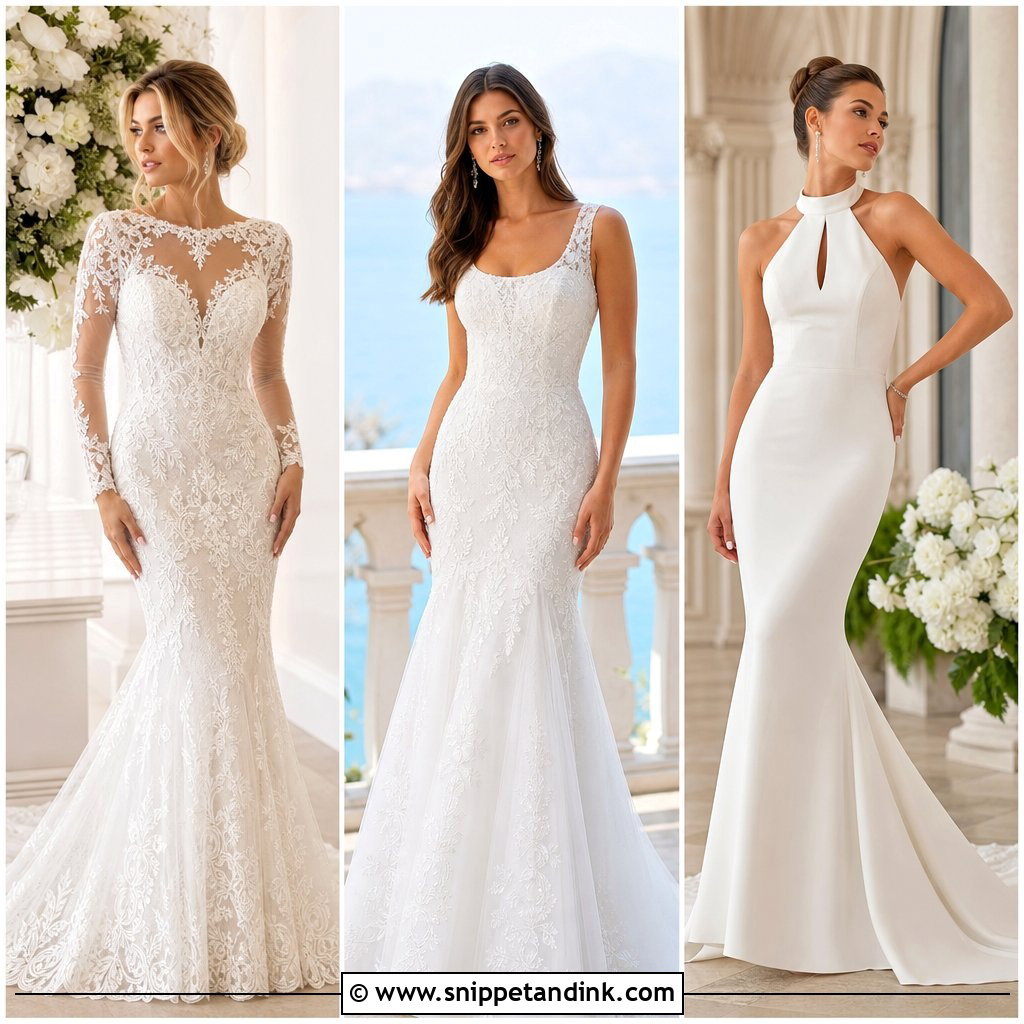
20. Asymmetrical Draped Wedding Dress
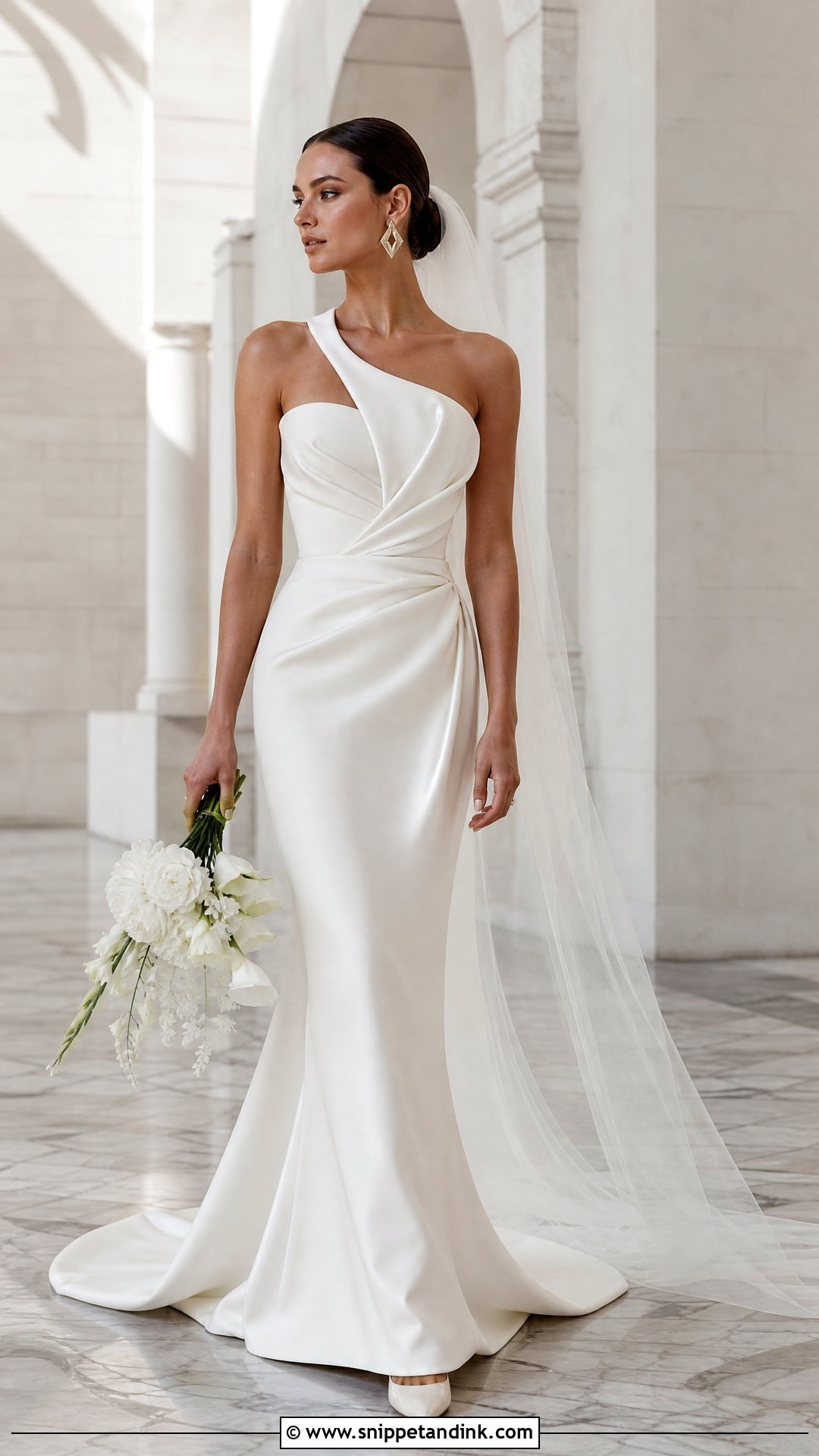
For a fashion-led look, an asymmetrical draped gown gives the chest dimension through folds instead of padding. A single curved strap, a folded bodice or an off-centre neckline all work. Choose substantial crepe or matte satin so the folds hold their shape. A fitted column with a modest train keeps it contemporary, with geometric earrings, pointed heels, a plain sheer veil and a smooth bun. Study it from the front, side and back. Asymmetry still has to look balanced overall, and internal boning with well-placed cups stops the drape from sliding through the day.
From First Try-On to Final Fitting, Month by Month
Bodice work on a small bust is the most detailed part of most alterations, so it’s worth leaving it room. Timings vary between designers and seamstresses, but this is the general rhythm I plan around for a made-to-order gown.
- Around nine to twelve months out: start trying on. Many designer gowns take several months to be made and shipped after ordering.
- Order with time to spare, and confirm which measurement the size was based on and whether a bust adjustment can be made at the factory.
- About two to three months before the wedding: first fitting. Bring your final underwear and shoes. Cup depth, side seams and straps are tackled here.
- Second fitting a few weeks later: check the bodice standing, sitting and bending, then the hem and bustle.
- One to two weeks before: final fitting and pick-up. Bring the person who will bustle your train and fasten any detachable pieces.
If your date is close, an off-the-rail sample or a ready-to-wear gown removes the wait for manufacturing. You will still need the fittings, so book a seamstress as soon as the dress is bought rather than once it’s home.
A Small Chest Is an Advantage in More Necklines Than You’d Think
The most flattering gown is the one that suits your style and fits securely once it’s been altered. A smaller bust wears plunging V-necks, high lace collars, square necklines, corsetry, satin slips and sculptural drapes with ease. Decide whether you want to show off your chest, add a little volume or send attention to your shoulders, waist or back. Then plan the whole outfit, shoes, jewellery, hair and veil included, and bring as much of it as you can to fittings. Treat body-shape advice as a starting point, not a rule. Try on shapes you didn’t expect to like, and move in every one.
You'll Like These Ideas:



Leave a Reply