
Plenty of brides fall for a dress in the shop and then picture themselves dragging three feet of skirt across a gravel path, through a restaurant or onto a ferry. A trainless gown removes that problem. You can walk, dance, travel and stand on a cliff for photos without anyone holding your hem, and the clean edge suits courthouse ceremonies, destination weddings and modern venues. Trainless dresses now come in nearly every cut, from slick satin sheaths to lace A-lines and tea-length skirts. In the twenty looks below, I’ve paired each shape with the veil, shoes and jewelry I’d use to give it presence, because without a train those details carry more of the ceremony.
How Long Is Floor Length, Really?
Without a train, the hem is the whole story at the bottom of the dress, and a quarter of an inch changes how it looks and how safely you walk. These are the lengths I work with at fittings.
- Kissing the floor: the front just touches the ground in your shoes. Graceful indoors, but it picks up dirt on grass and stone.
- Just off the floor: about half an inch clear at the front, so you can walk forward without kicking the skirt. My usual choice for a trainless gown.
- Ankle length: shows the shoe and the ankle bone. Practical for beaches, gardens and anyone dancing in heels.
- Tea and midi: anywhere from mid-calf to just below the knee. The shoes become part of the outfit.
A good seamstress levels the hem up from the floor rather than down from the waist, because hips and posture tilt every skirt slightly. Bring the exact shoes to every fitting, and stand naturally while it is pinned rather than up on your toes. If you plan to switch to flats for the reception, choose a length that still clears the floor in them, or the dress will drag the moment you change.
1. Satin Sheath Wedding Dress No Train
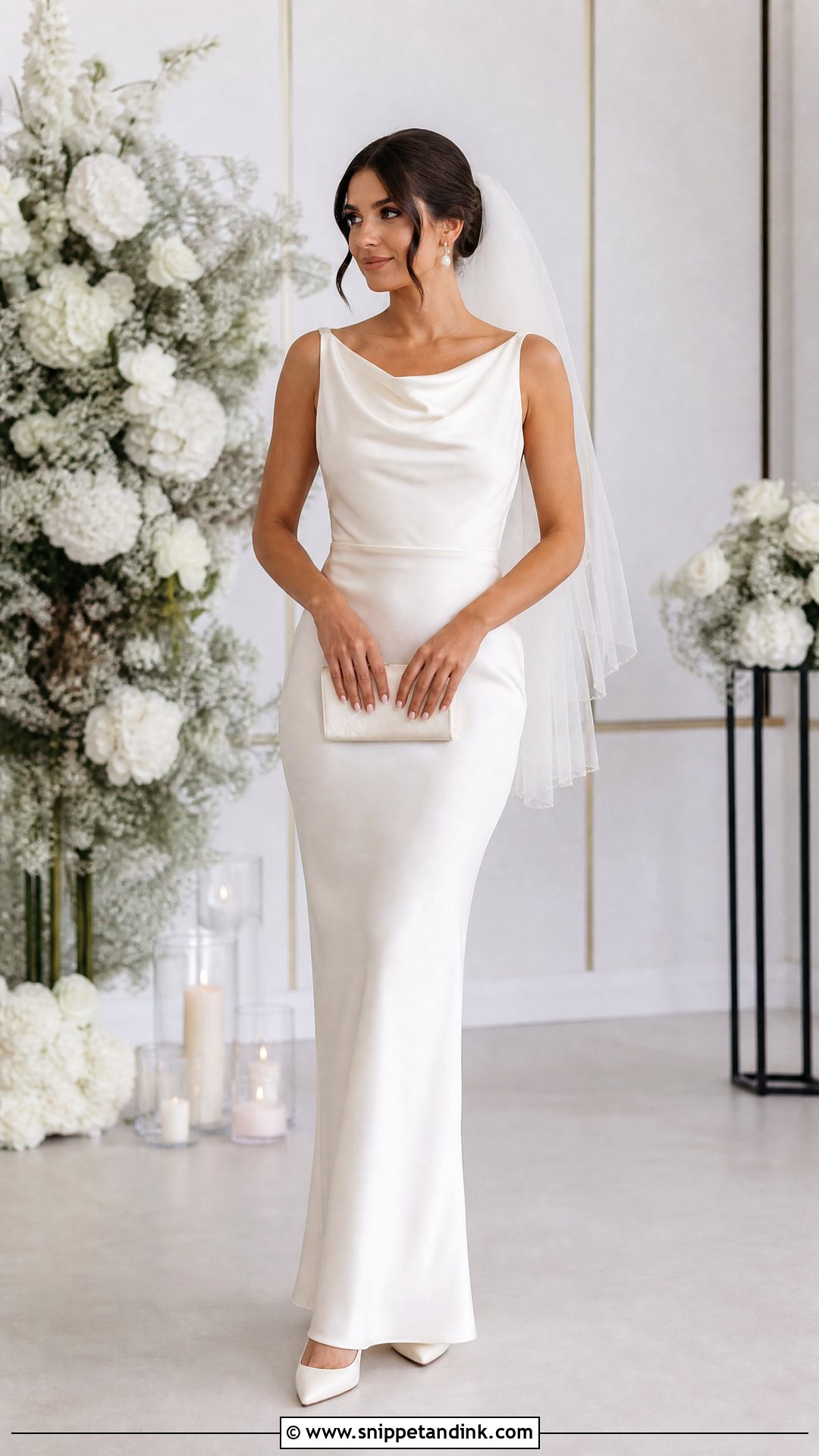
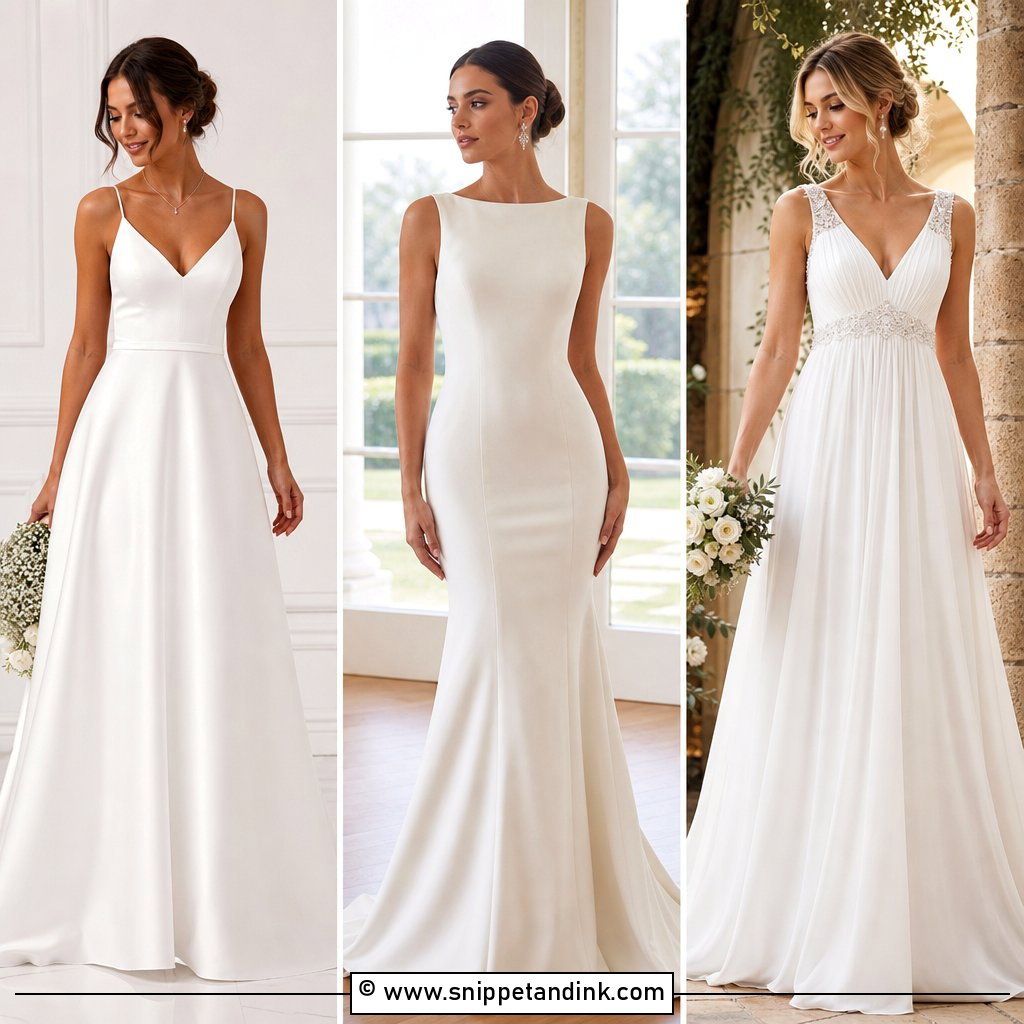
A satin sheath gown with a straight hem is about as clean as bridal gets. The skirt should just graze the tops of your shoes at the front and stop there at the back, with nothing extending behind. A soft drape or simple scoop at the neck balances the narrow line. I style it with pearl drops, a low bun, a fingertip veil and pointed ivory pumps. Satin shows every pull, so the fit across the hips has to skim; if it drags into horizontal creases when you stand still, it is too tight. Set the hem with the exact shoes on.
2. Crepe A-Line Wedding Dress No Train
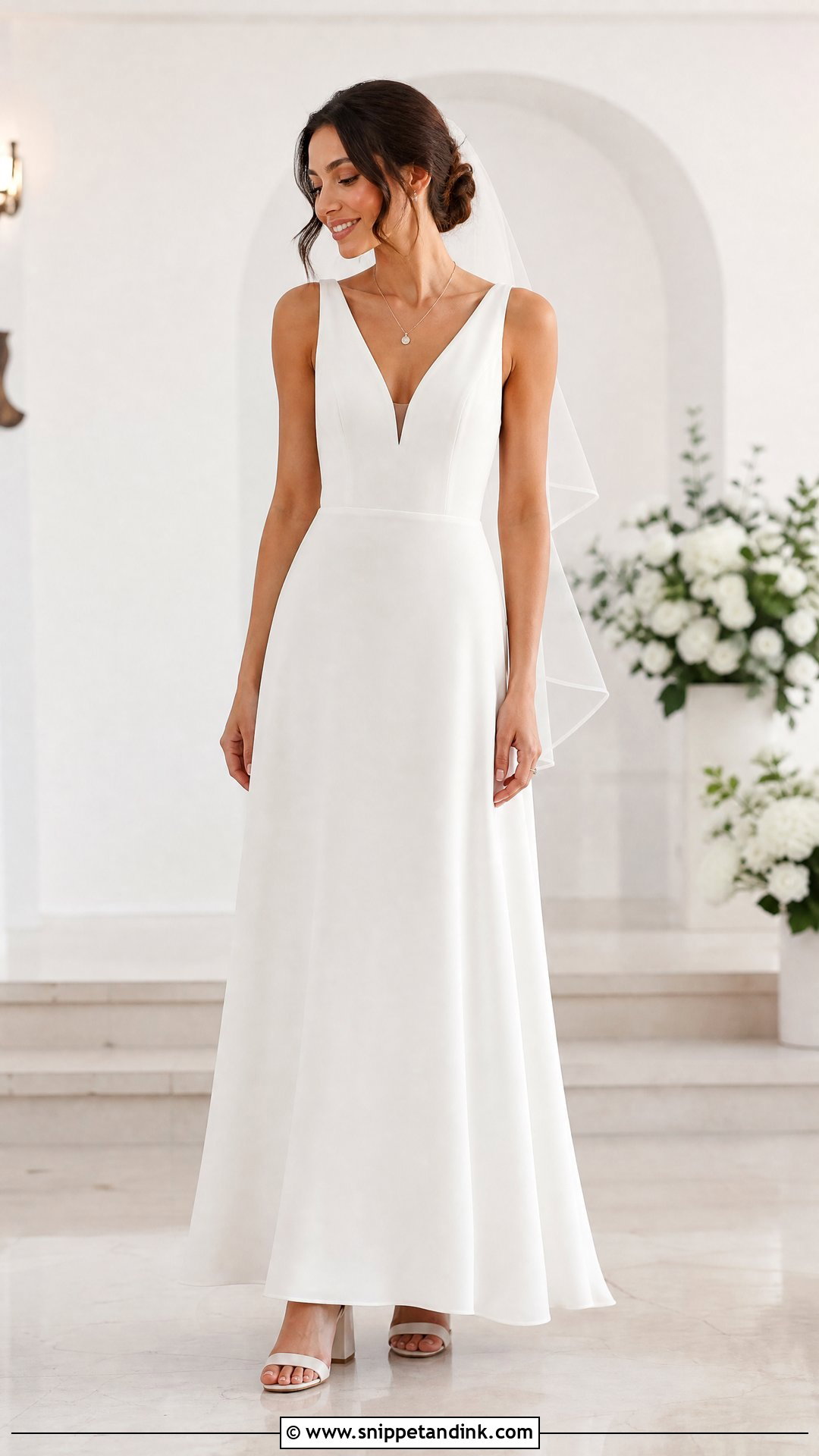
Crepe gives an A-line movement without any shine, and the widening skirt leaves room to stride and dance. A fitted bodice, defined waist and even floor-length hem are the frame; a V-neck lengthens the torso, and wider straps help if you need support. A shoulder-length sheer veil, a fine pendant and block-heel sandals keep it modern, with a loose chignon. Crepe is honest about what is underneath, so plan smooth, edge-free underwear from the first fitting. Steam it on the morning. Crepe drops beautifully, but only once creases from the garment bag are gone.
3. Lace Column Wedding Dress No Train
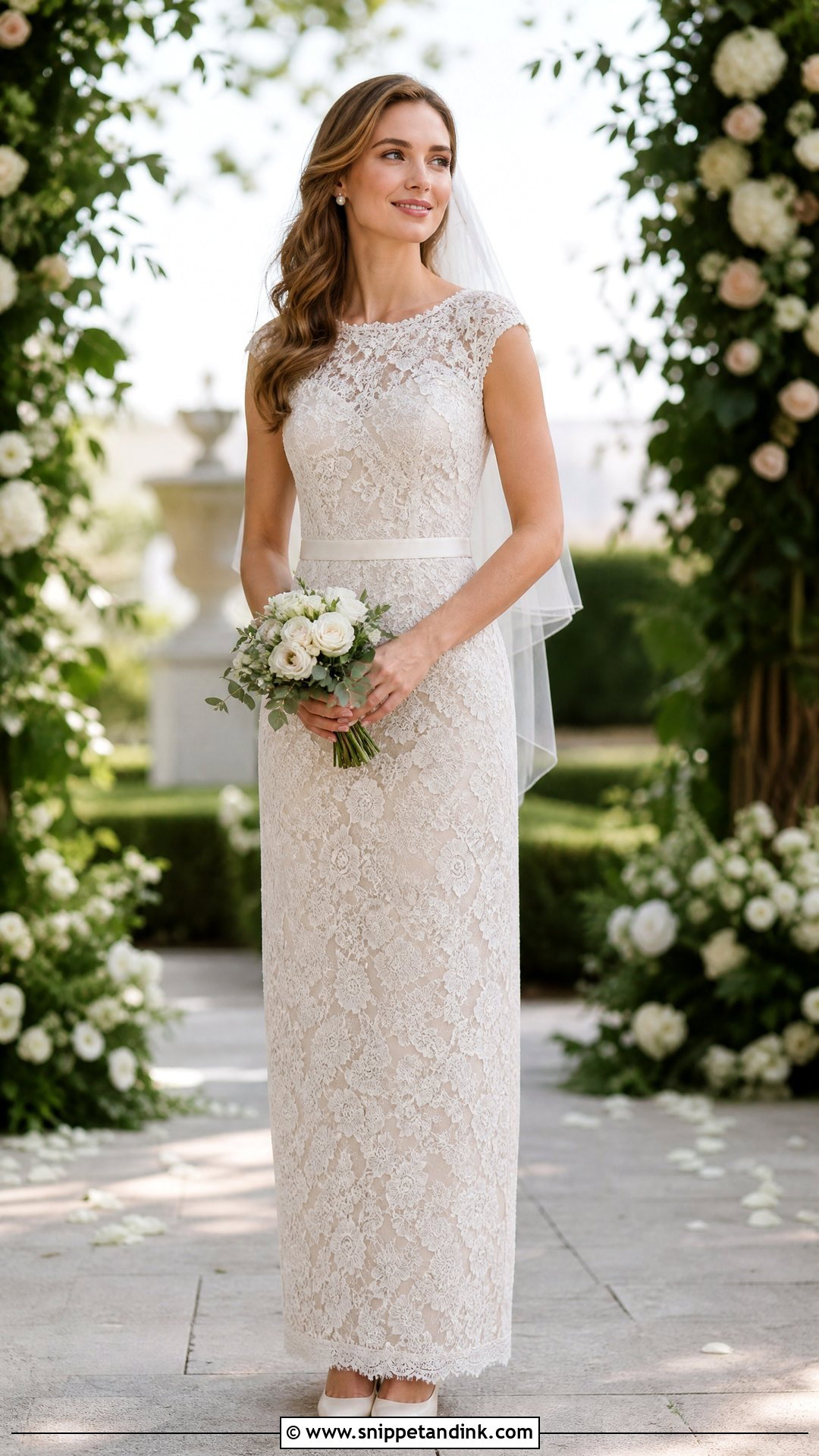
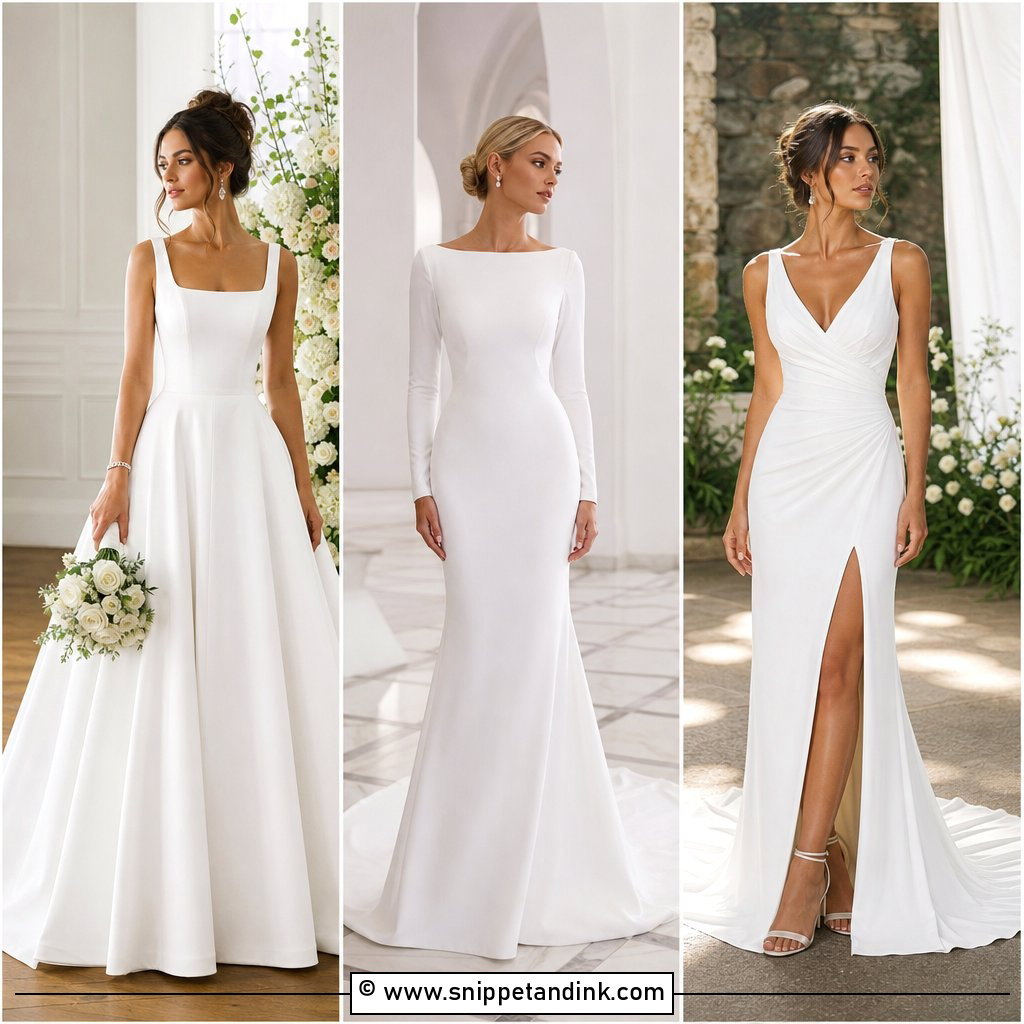
Lace gives a column dress all the detail it needs, which is why the missing train never feels like a loss here. Choose a fitted lining with the overlay finishing level at the floor. Floral lace looks romantic, geometric lace sharper. A nude or soft ivory lining makes the pattern stand out without the stark contrast of white on skin. Pearl studs, a slim satin belt, closed-toe pumps and a plain tulle veil keep things quiet, with waves pinned behind one ear. Look hard at the hem: with no train to hide it, a scalloped or properly finished lace edge is on view from every angle.
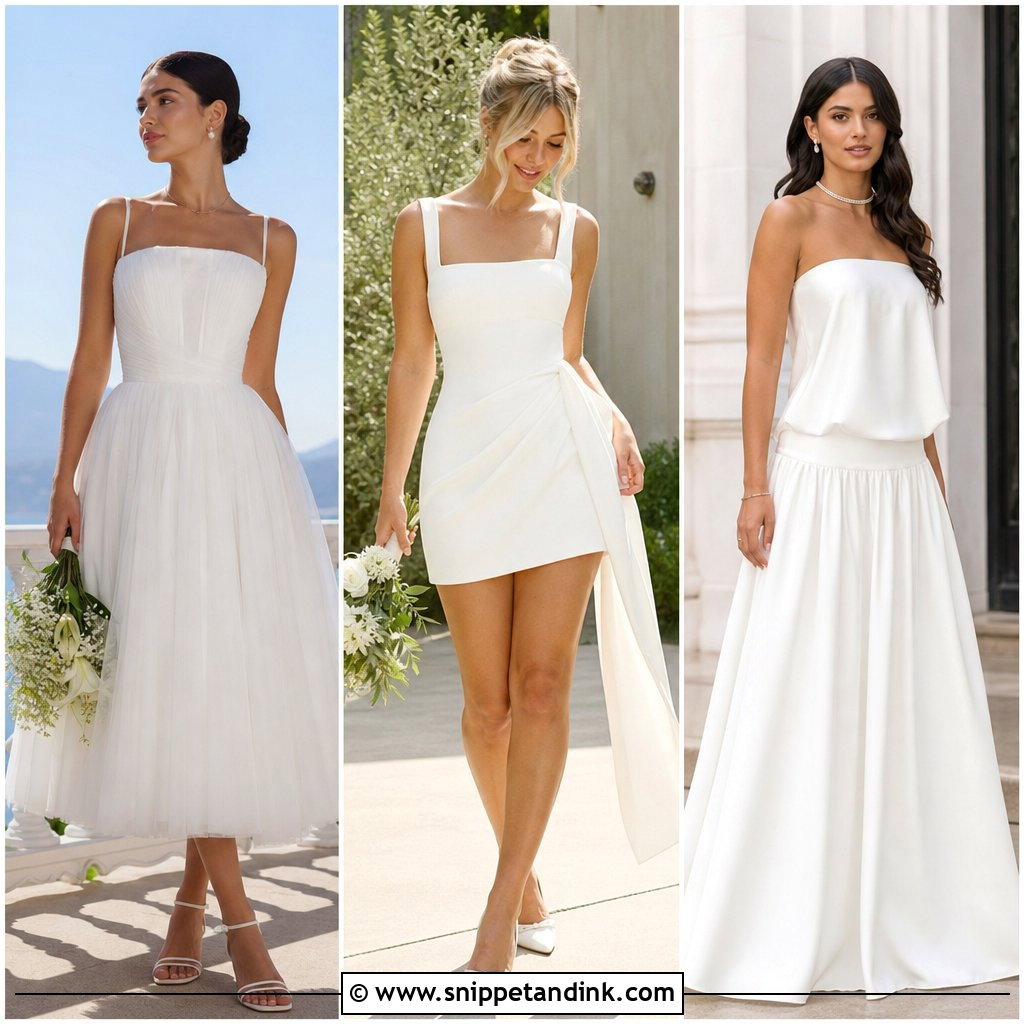
4. Tea-Length Wedding Dress No Train
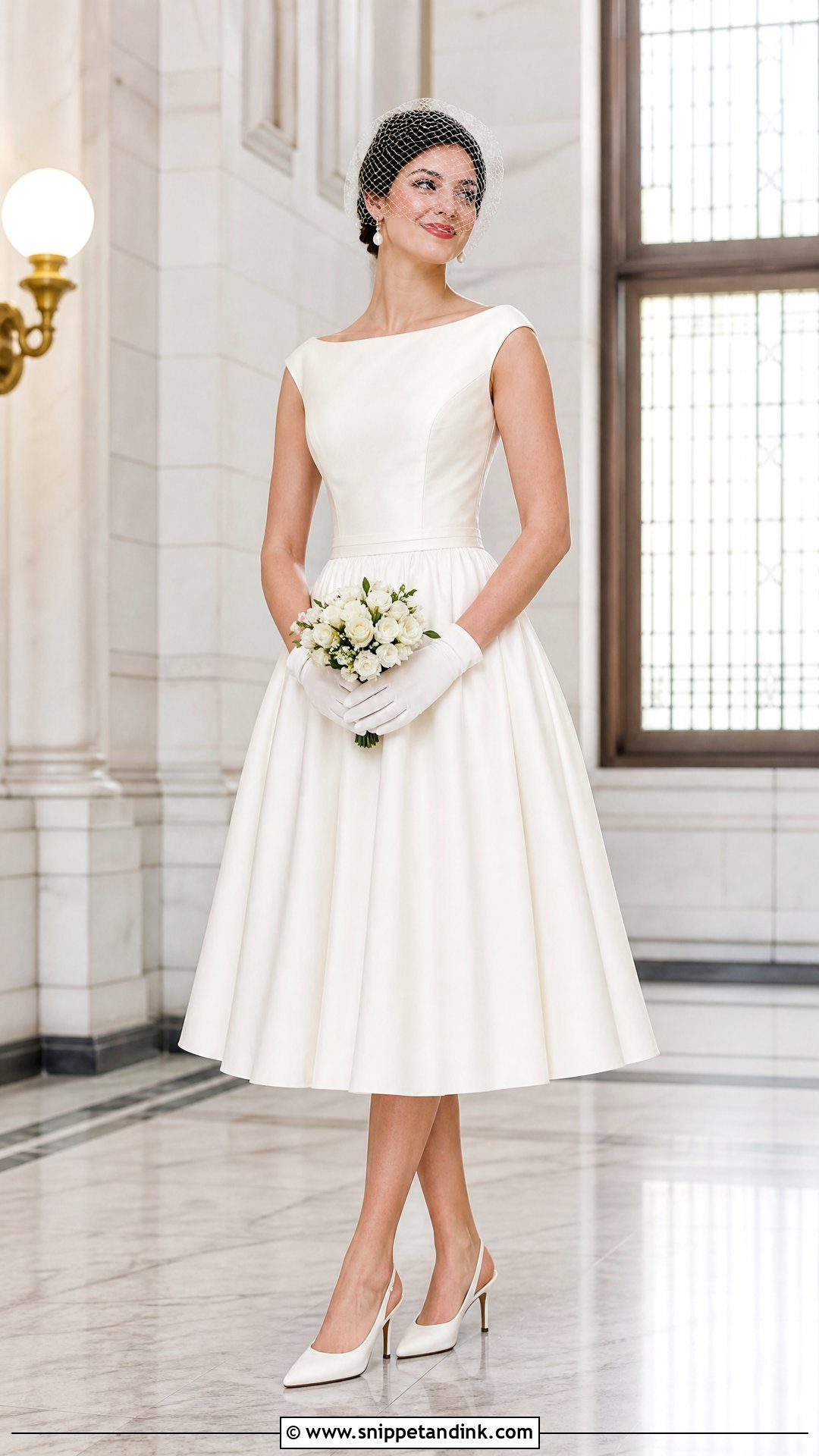
Tea length falls between the knee and the ankle, so a train is never part of the question, and your shoes become a feature. A fitted bodice and a flared skirt give the classic proportion. I’d choose pointed slingbacks, embellished flats or low block heels, since they’ll be seen in every photo. Short gloves, pearl earrings and a birdcage veil lean vintage; drop the gloves and add a small structured bag for a modern version. The hem placement matters more than the dress. Aim for the narrowest part of the calf, because a hem that stops at the widest part shortens the leg.
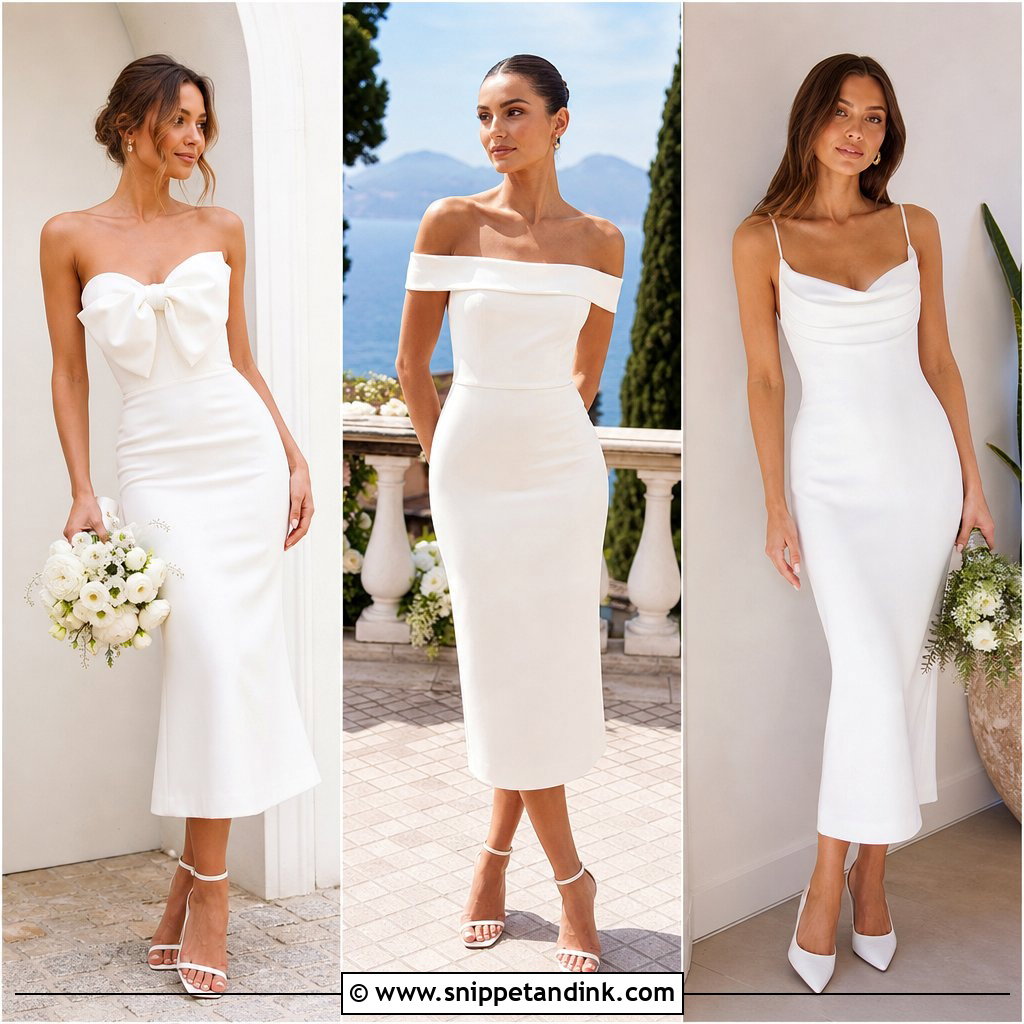
5. Midi Wedding Dress No Train
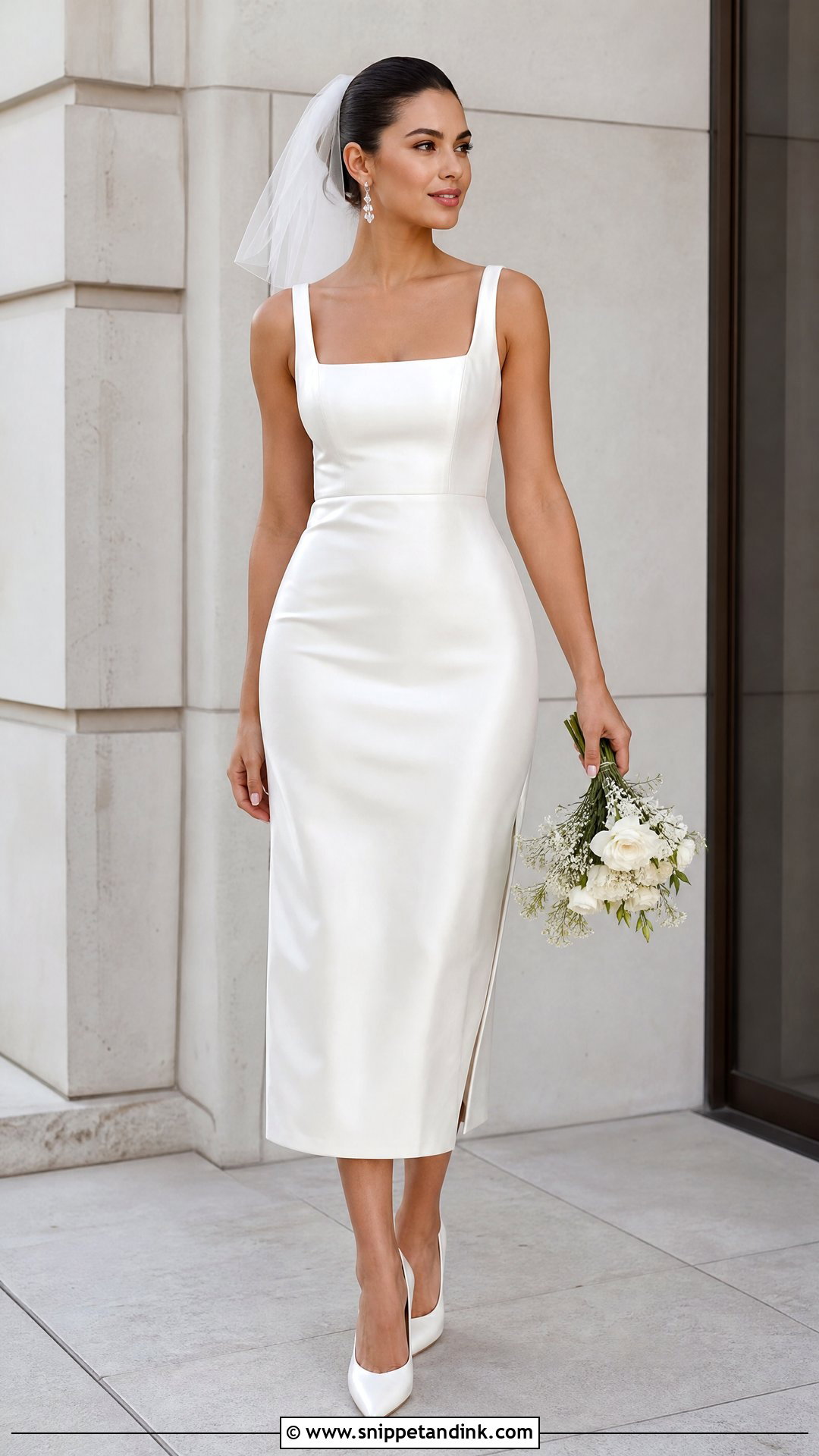
Midi length can look like a party dress if the fabric is thin, so I look for weight: satin, crepe or a textured weave that holds its own shape. The hem should land several inches below the knee, above a structured bodice or softly fitted waist. A square neck with wide straps is very clean. Pointed pumps, crystal earrings and a short veil or sculptural hair piece finish it, with a compact bouquet so the proportions stay right. A narrow midi needs a back slit or kick pleat, otherwise you’ll take tiny steps all day. It earns its place when you’re moving between two ceremony locations.
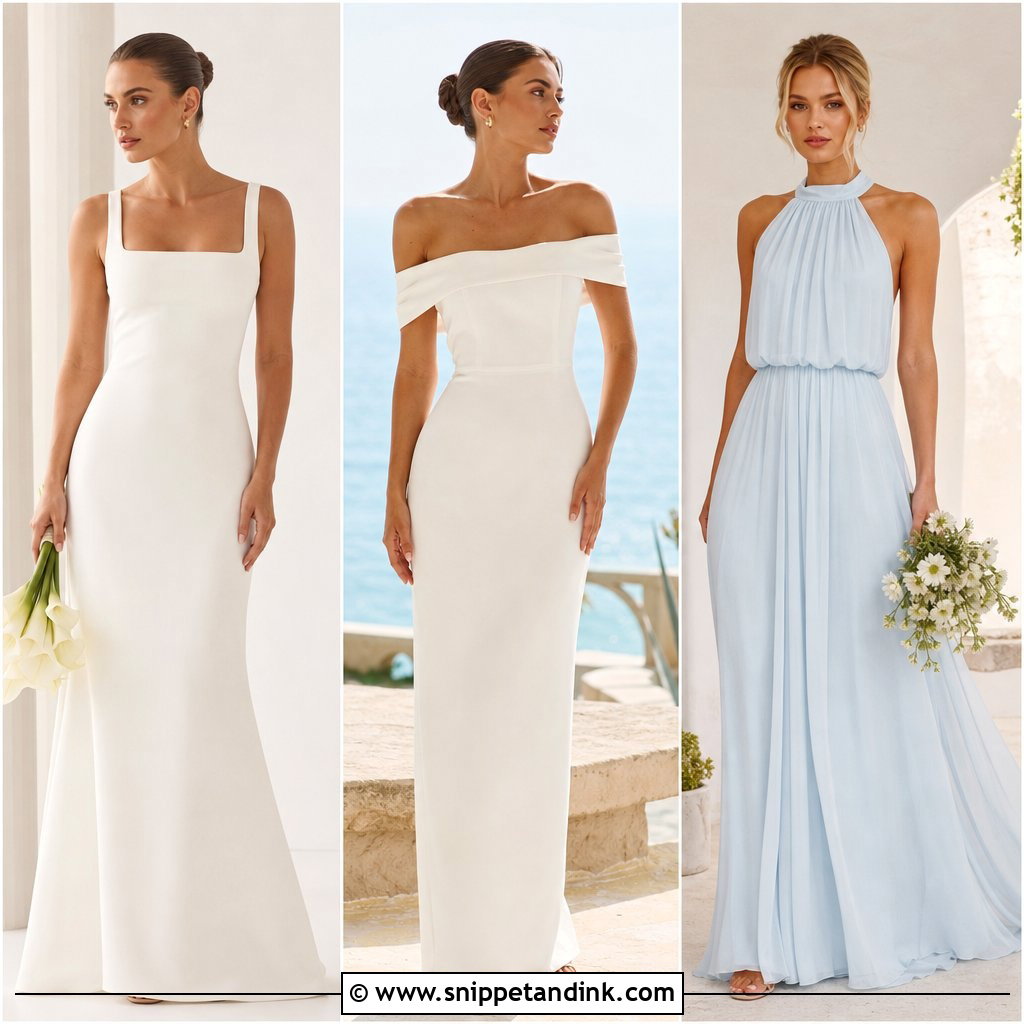
6. Square-Neck Wedding Dress No Train
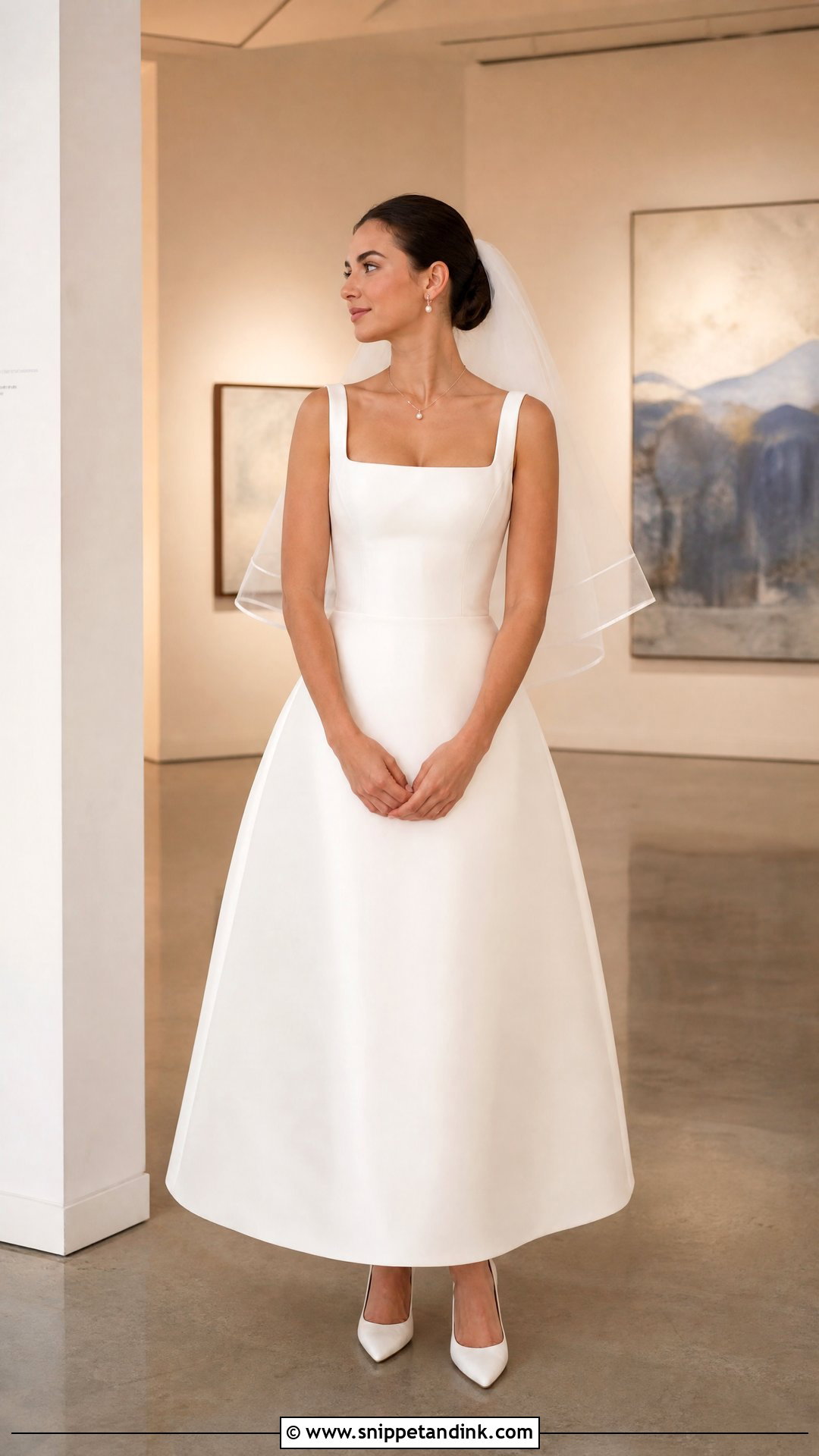
The straight line of a square neck frames the collarbone, and wide straps spread support across the shoulders, so this bodice gives a plain, trainless skirt real structure. A fitted waist and full-length A-line that stops evenly at the floor is the classic build. Satin reads formal; matte crepe reads restrained. Soften the angles with a fine necklace, pearl earrings and an elbow-length veil, and pick low pointed heels that won’t vanish under the hem. At alterations, sit and raise your arms. Square necklines often gape at the corners when you lean forward, and that is an easy fix if caught early.
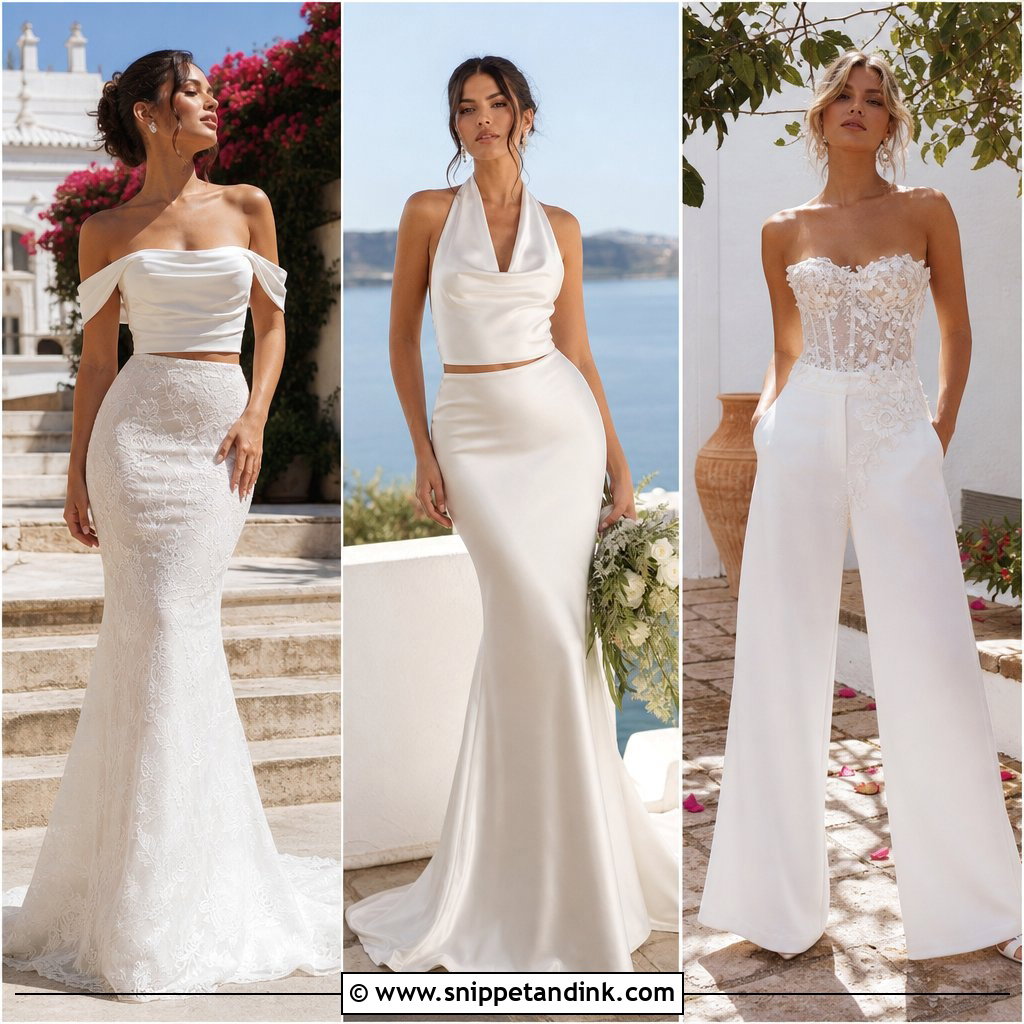
7. Off-the-Shoulder Wedding Dress No Train
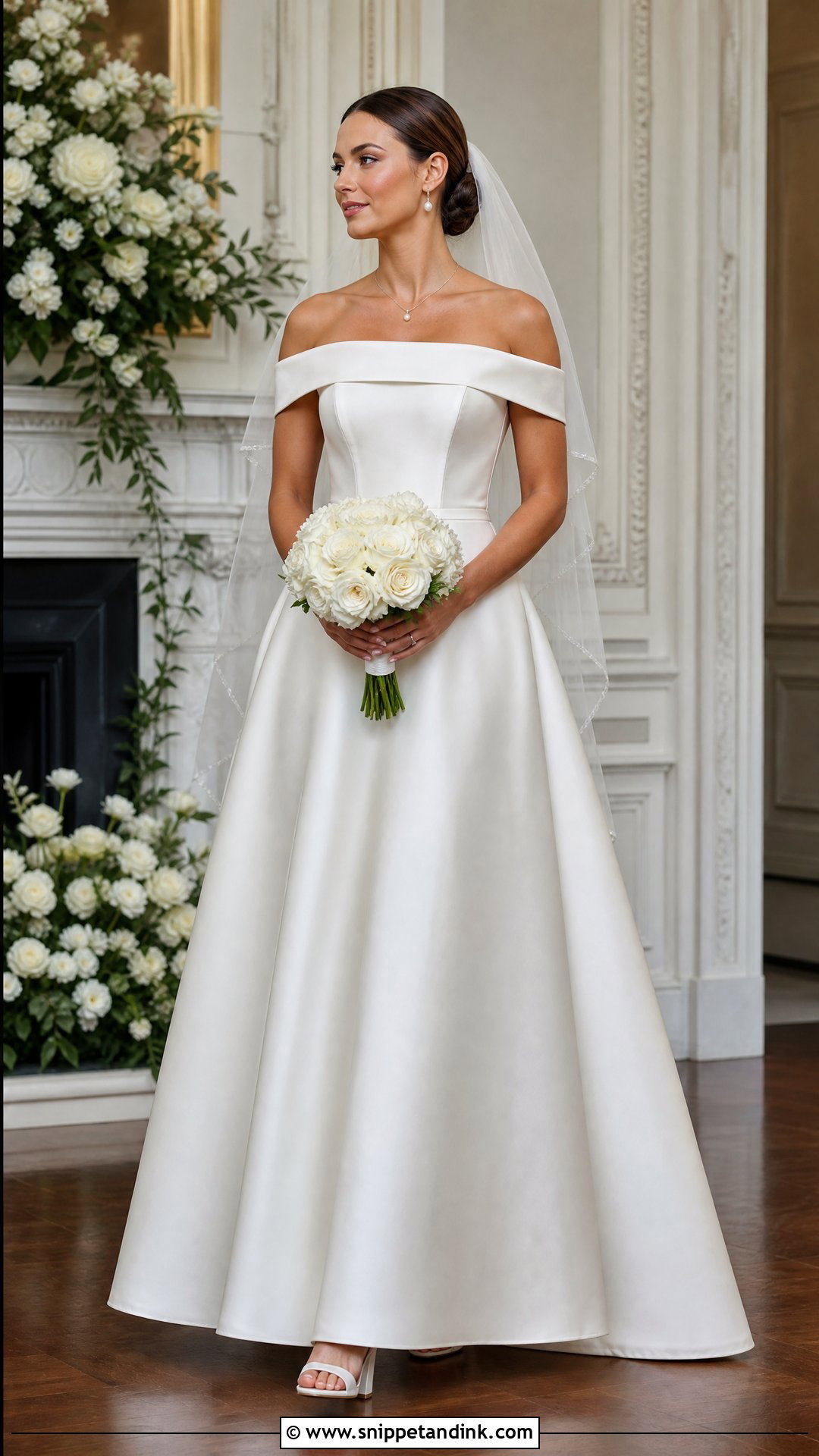
Off-the-shoulder styles stay romantic and formal even when the skirt stops at the floor. A fold-over satin neckline or soft draped sleeves should sit firmly around the upper arm, above a fitted bodice and clean A-line skirt. A collarbone-length necklace, pearl or crystal earrings and a low bun suit the open shoulders. Think about your veil: a chapel or cathedral length recreates a train behind you, so choose fingertip length if freedom is the whole point. The common complaint with this neckline is having to hitch it up all night. A seamstress can add hidden elastic or silicone grip so you can hug and dance without adjusting it.
8. Long-Sleeve Crepe Wedding Dress No Train
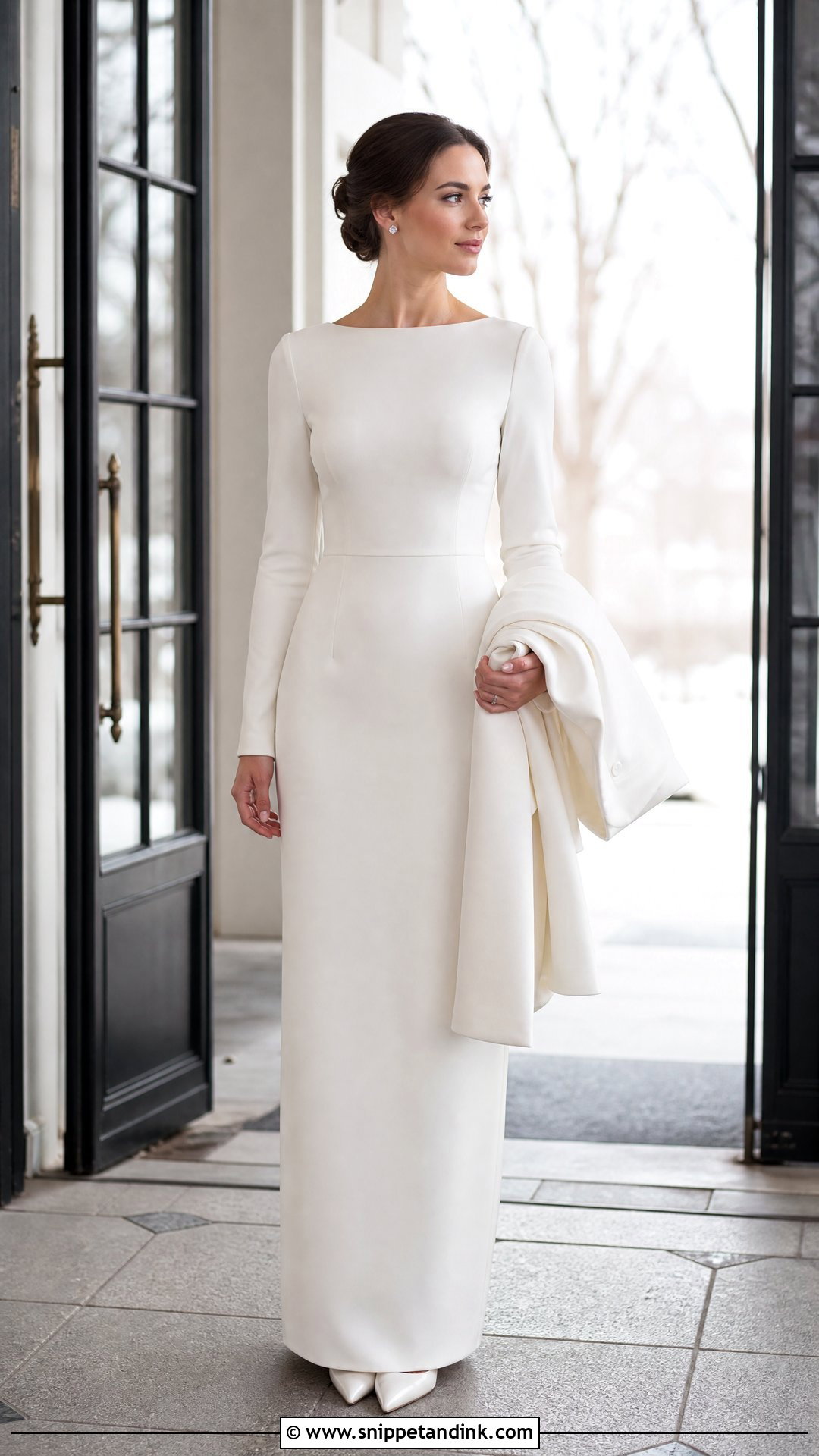
For a cold-season wedding, stretch crepe with long sleeves is warm without being heavy, and it moves with you. Fitted sleeves, a defined waist and a straight or softly flared skirt with nothing beyond the back hem keep it sleek. A bateau or modest V balances covered arms. Crystal studs, a neat chignon and pointed satin pumps are enough, plus a short light veil. Sleeves are where fit goes wrong. If they are cut too tight at the elbow or set too low at the shoulder, you won’t be able to lift your arms for a hug, so test that before the final fitting. Keep a tailored ivory coat for outdoor portraits.
9. Halter Wedding Dress No Train
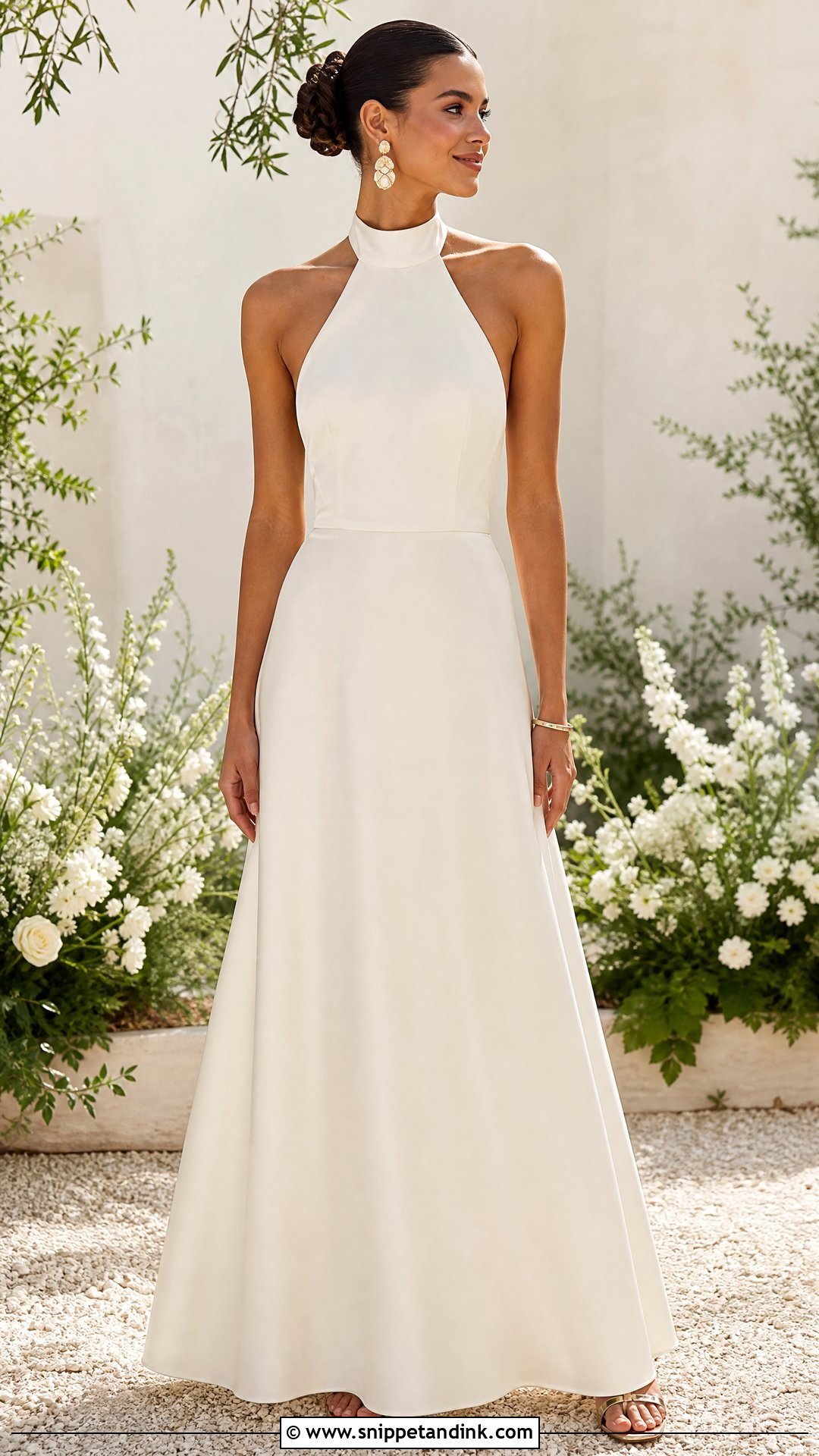
A halter wedding dress puts the shoulders on show and looks equally finished from the front and the back, which matters when there is no train to draw the eye behind you. A high halter covers more; a gentle plunge looks more current. I balance bare shoulders with statement earrings and skip the necklace, which would fight the neck strap. A sleek ponytail or polished updo keeps the line clear, with metallic sandals and a narrow bracelet. Open backs need built-in cups or a dedicated low-back bra. A halter tie also tugs on the neck over a long day, so check that the strap is wide enough to spread the weight.
10. Cowl-Neck Wedding Dress No Train
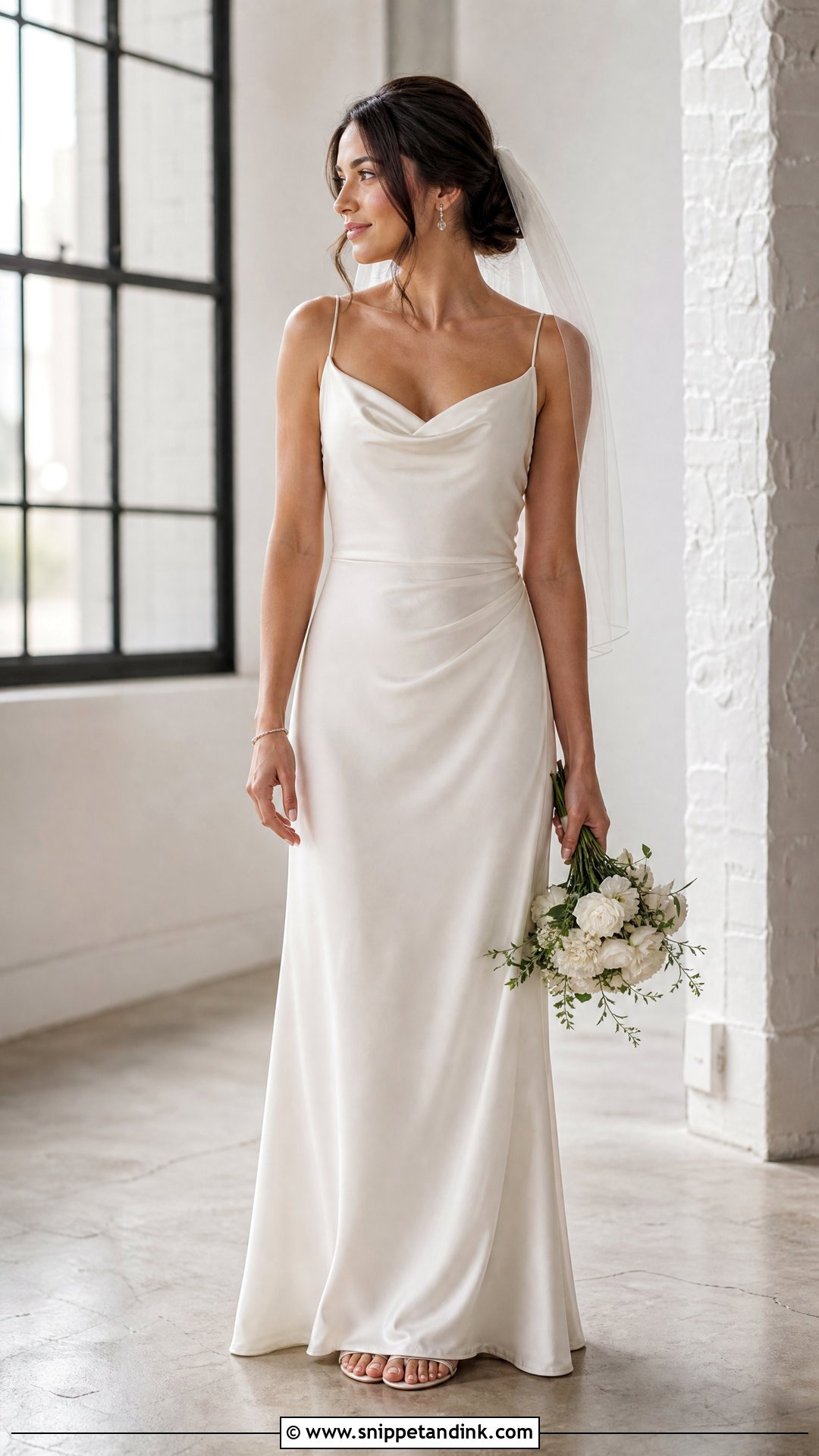
Minimal cuts need one interesting detail, and on a cowl-neck wedding dress it is the drape at the neckline. Satin or silk-like fabric lets the cowl fall naturally into a fluid floor-length skirt; a straight or gently flared cut gives room to walk. Fine straps call for a fine bracelet, small drops, a simple fingertip veil and strappy ivory sandals, with soft waves or a low knot. Slippery fabric shifts. A cowl can slide sideways or fall open when you bend, so ask for a discreet weight sewn into the drape, plus fashion tape at the edges.
11. Corset Wedding Dress No Train
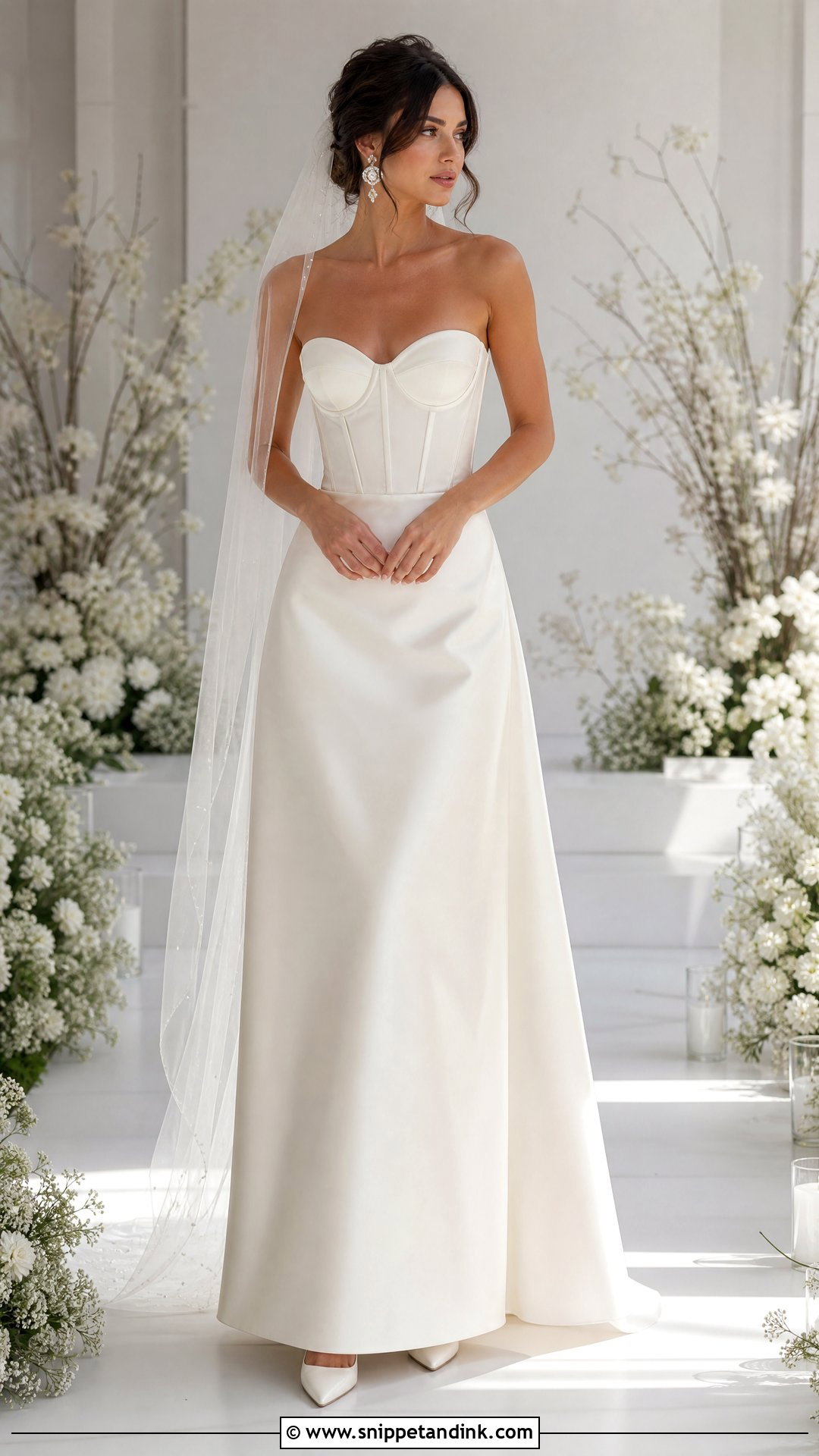
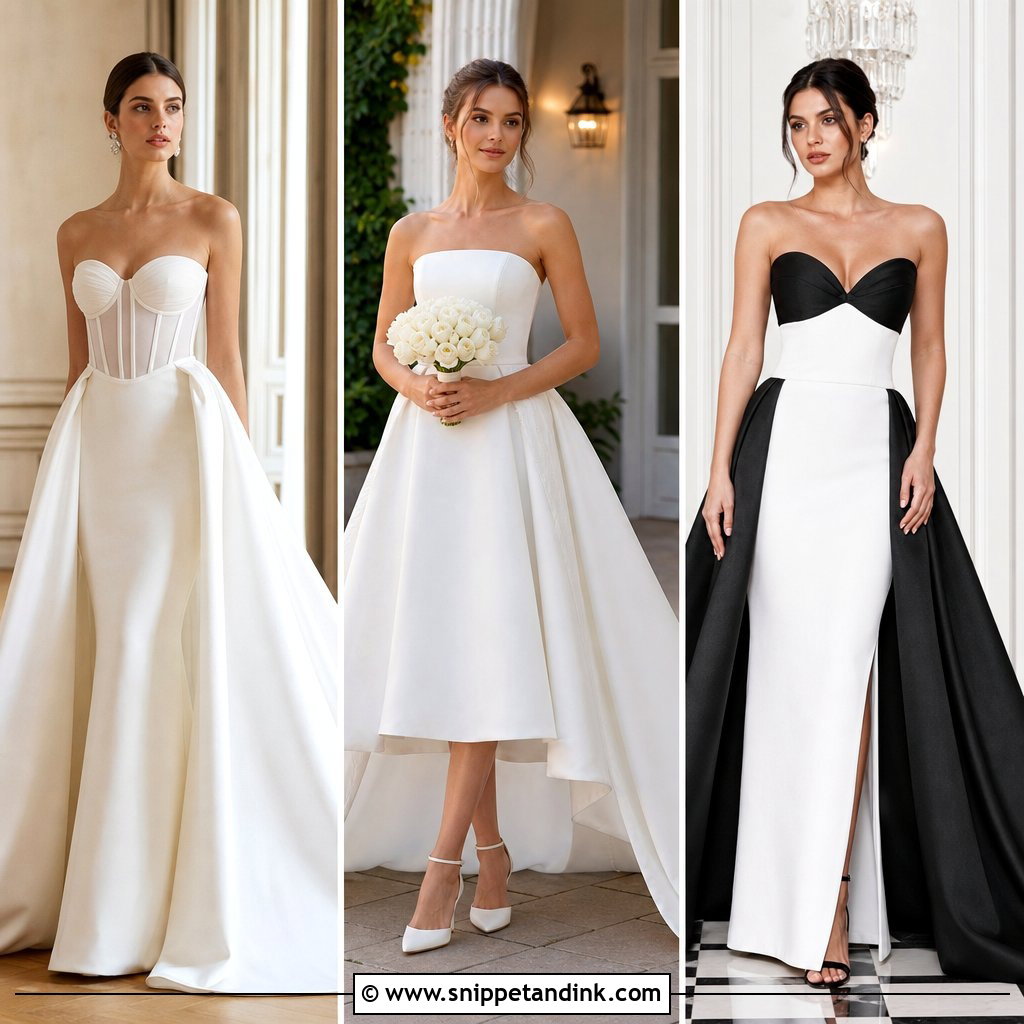
Structure is what a corset brings, and it does the job a train would otherwise do by making the dress look formal. Look for proper boning, supportive cups and a waist that flows into a floor-length A-line or column. Satin looks architectural; a lace corset softer. Keep the back hem level with the front. A sheer fingertip veil, crystal earrings, pointed pumps and a soft updo leave the neckline open. A corset should feel secure, not tight. If you can’t take a full breath or sit to eat, it has been laced too hard or cut too small, and you’ll feel it long before the speeches.
12. Empire-Waist Chiffon Wedding Dress No Train
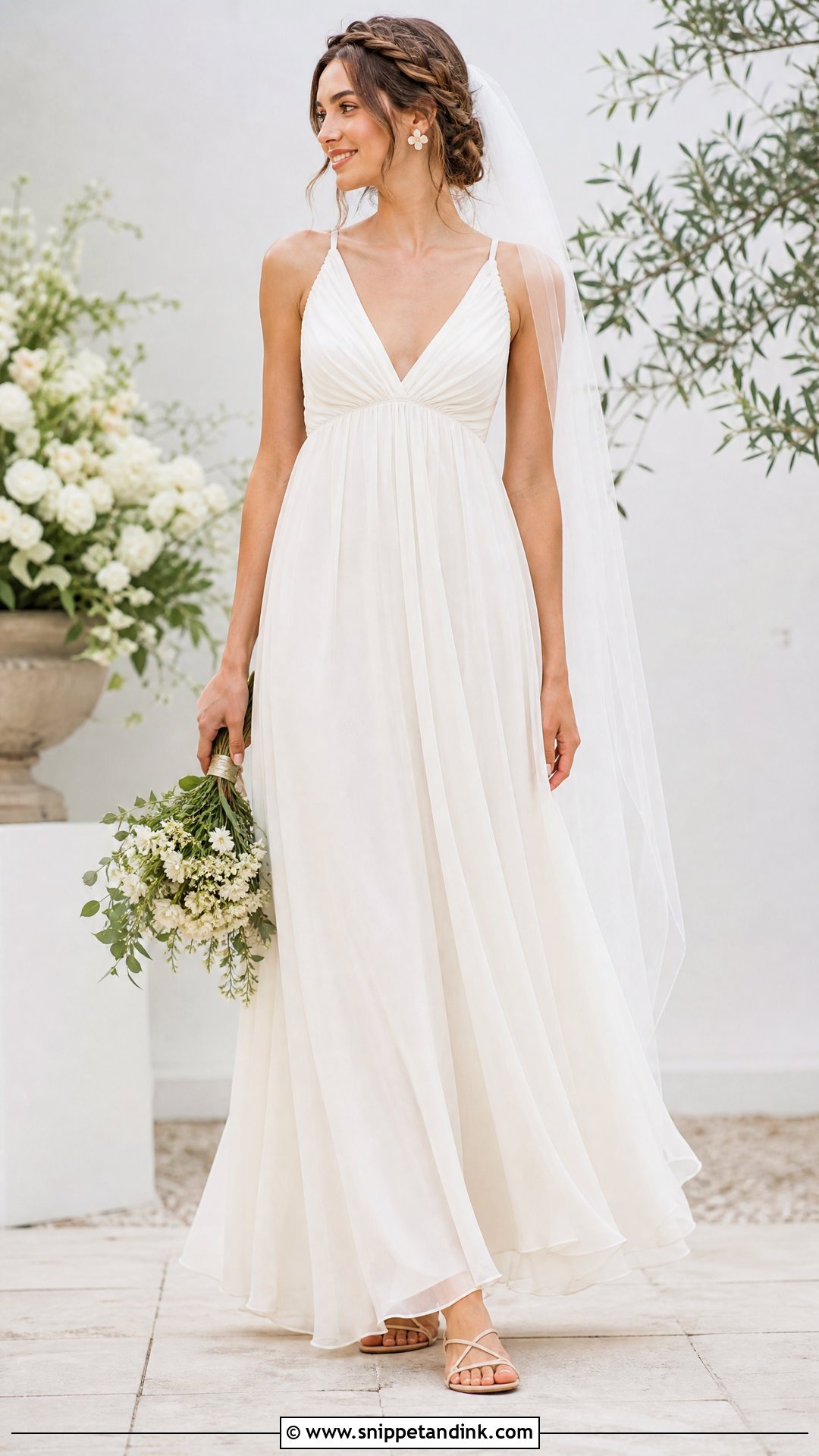
Chiffon and an empire waist are an easy pair for heat. The seam sits just under the bust and the skirt falls loose over the midsection, so nothing presses on you during a long outdoor afternoon. Keep the hem at the floor with no back extension. A softly gathered V or crossover bodice suits it, along with delicate sandals, small floral earrings, a light tulle veil and a loose braided updo. Chiffon is sheer, so make sure the lining reaches the hem. Outside, a breeze will lift the top layer, so ask your seamstress about a slightly weighted hem or an extra layer.
13. Satin Slip Wedding Dress No Train
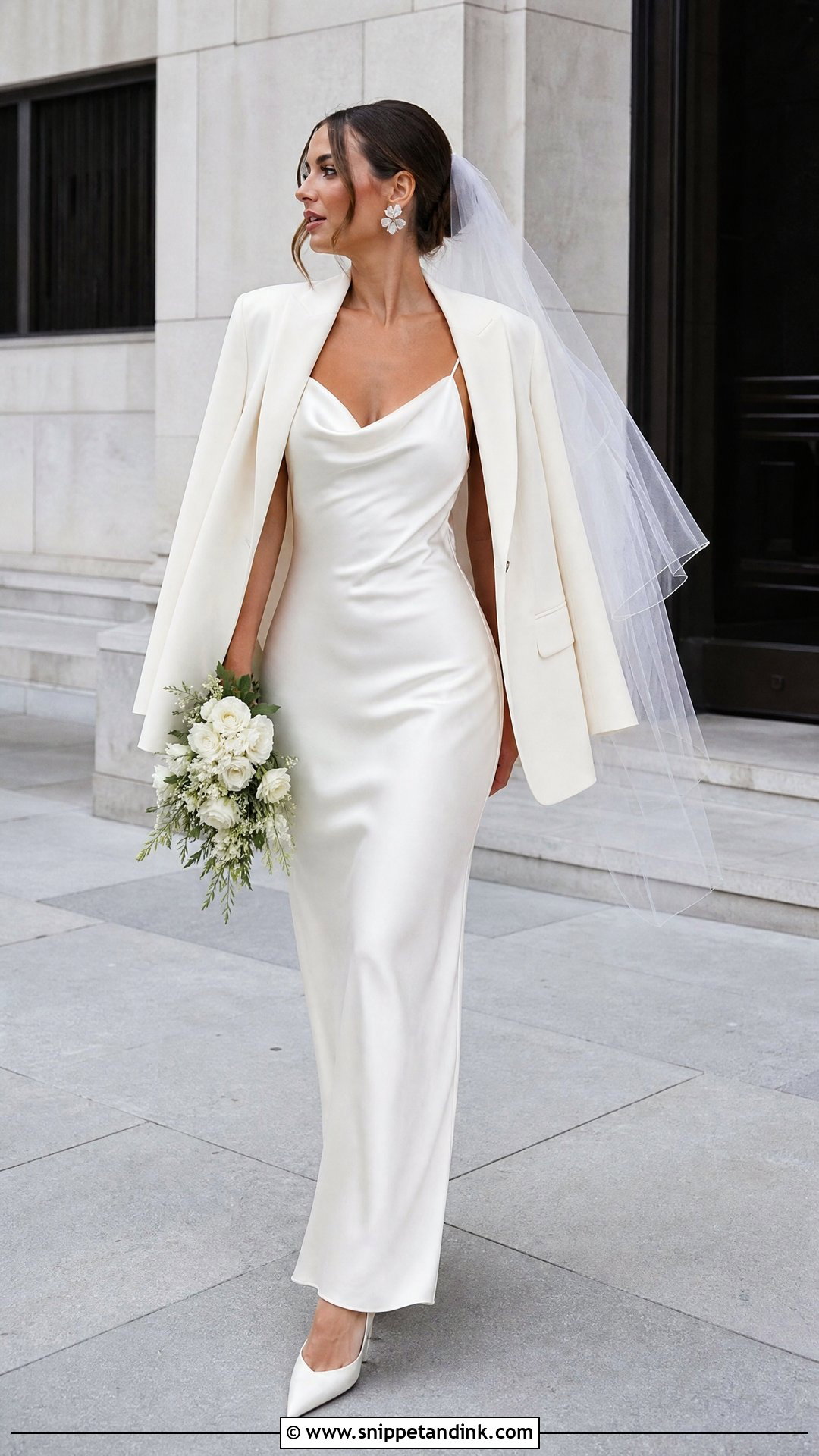
A bias-cut satin slip is pared down to fabric and fit. Cut on the diagonal grain, satin follows the body and moves as you walk, so it should skim rather than squeeze. The hem must reach the floor evenly with no pooling at the back. Thin straps, a soft neckline, a sheer veil, sculptural earrings and sleek pointed shoes are all it takes. A tailored blazer covers your shoulders on a cool evening and doubles as a second look. Glossy satin shows every line, so plan smooth foundations. Walk on carpet, stone and stairs at the fitting; bias-cut hems can drop slightly as the fabric relaxes.
14. High-Neck Lace Wedding Dress No Train
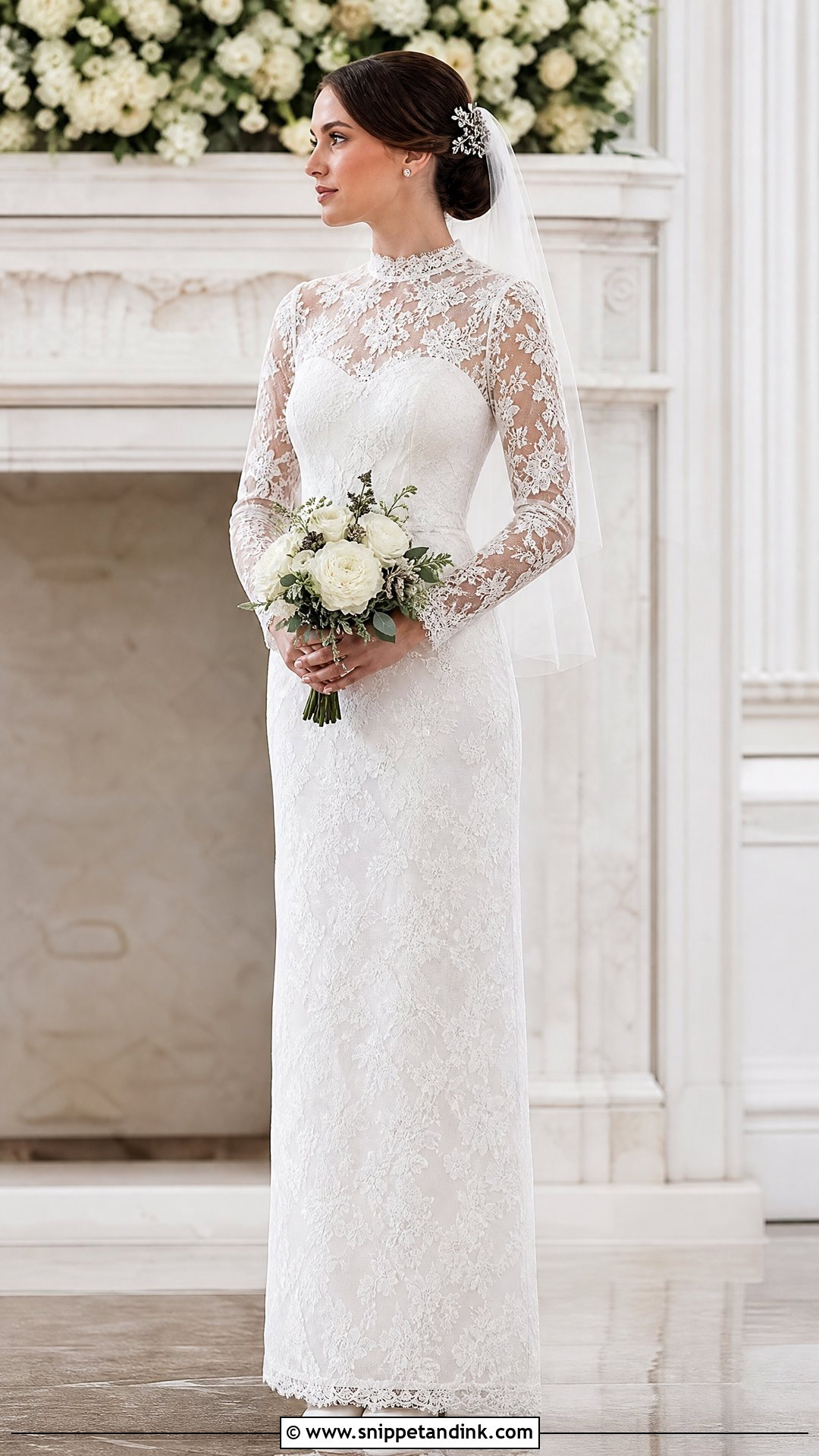
High-neck lace gives coverage and texture, and it carries the traditional feel without the weight of a train. A fitted lace bodice with a softly lined collar and an even floor-length skirt is the base. Illusion sleeves add romance; sleeveless feels lighter. The collar already supplies detail, so skip the necklace and wear studs, with a low bun and perhaps a small comb. A short, plain veil and closed-toe pumps finish it. Run a finger around the inside of the collar and cuffs. Scratchy lace edges right against the throat become miserable by evening, and a soft binding solves it.

15. One-Shoulder Wedding Dress No Train
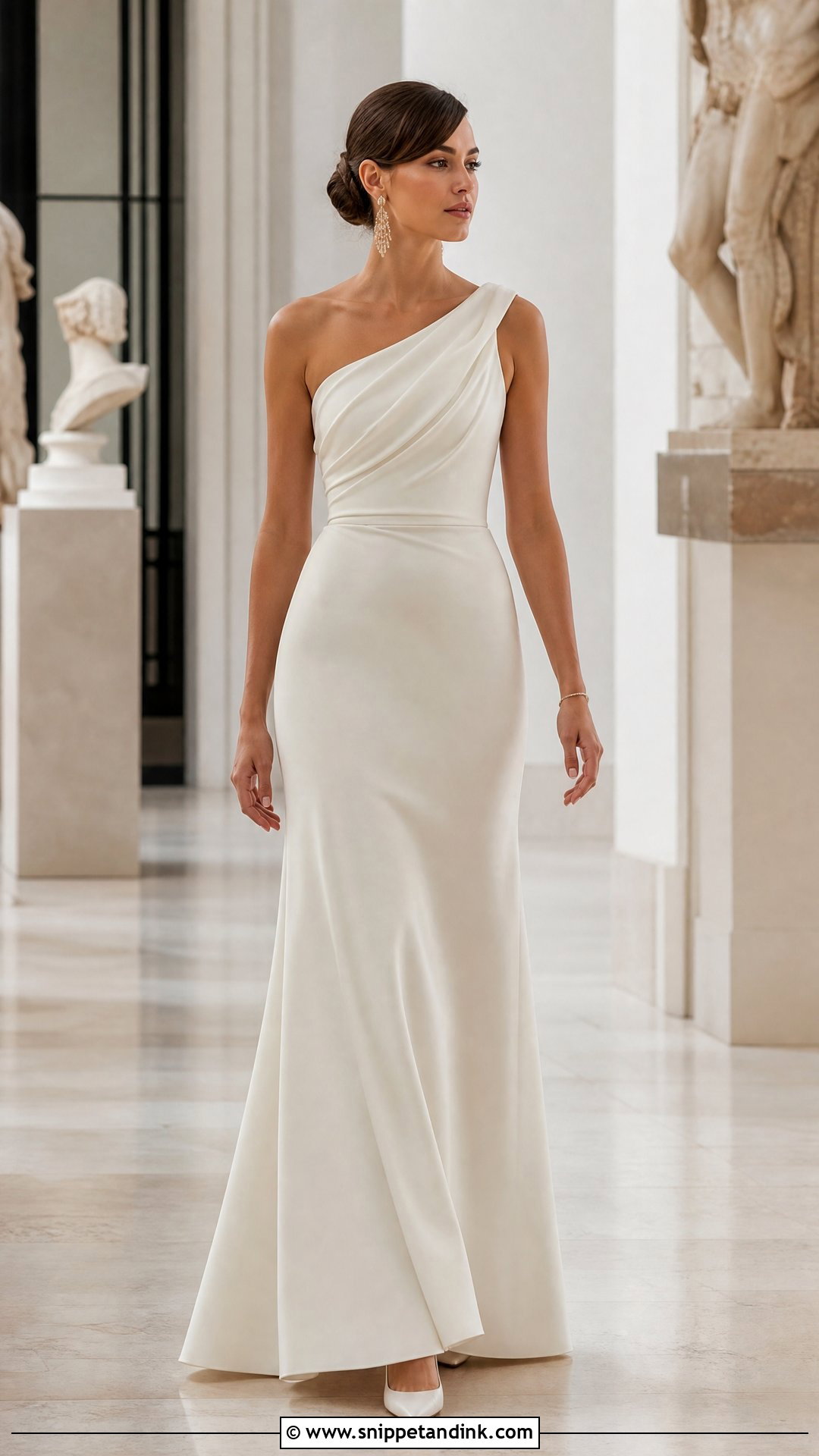
One shoulder makes a dress asymmetric, and that tilt gives a plain, trainless skirt a sense of drama. Structured crepe or satin should fit firmly across the bust before falling into a straight or gently flared skirt. A draped shoulder adds motion at the top instead of fabric at the feet. Sweep the hair to the opposite side in a bun or low ponytail, and add statement earrings, a narrow bracelet and pointed heels. A traditional veil can crowd the shoulder detail; a comb or short veil is often better. Ordinary bras won’t work with this cut, so built-in support is a must. Check that the neckline stays level when you raise the bare arm.
16. Plus-Size A-Line Wedding Dress No Train
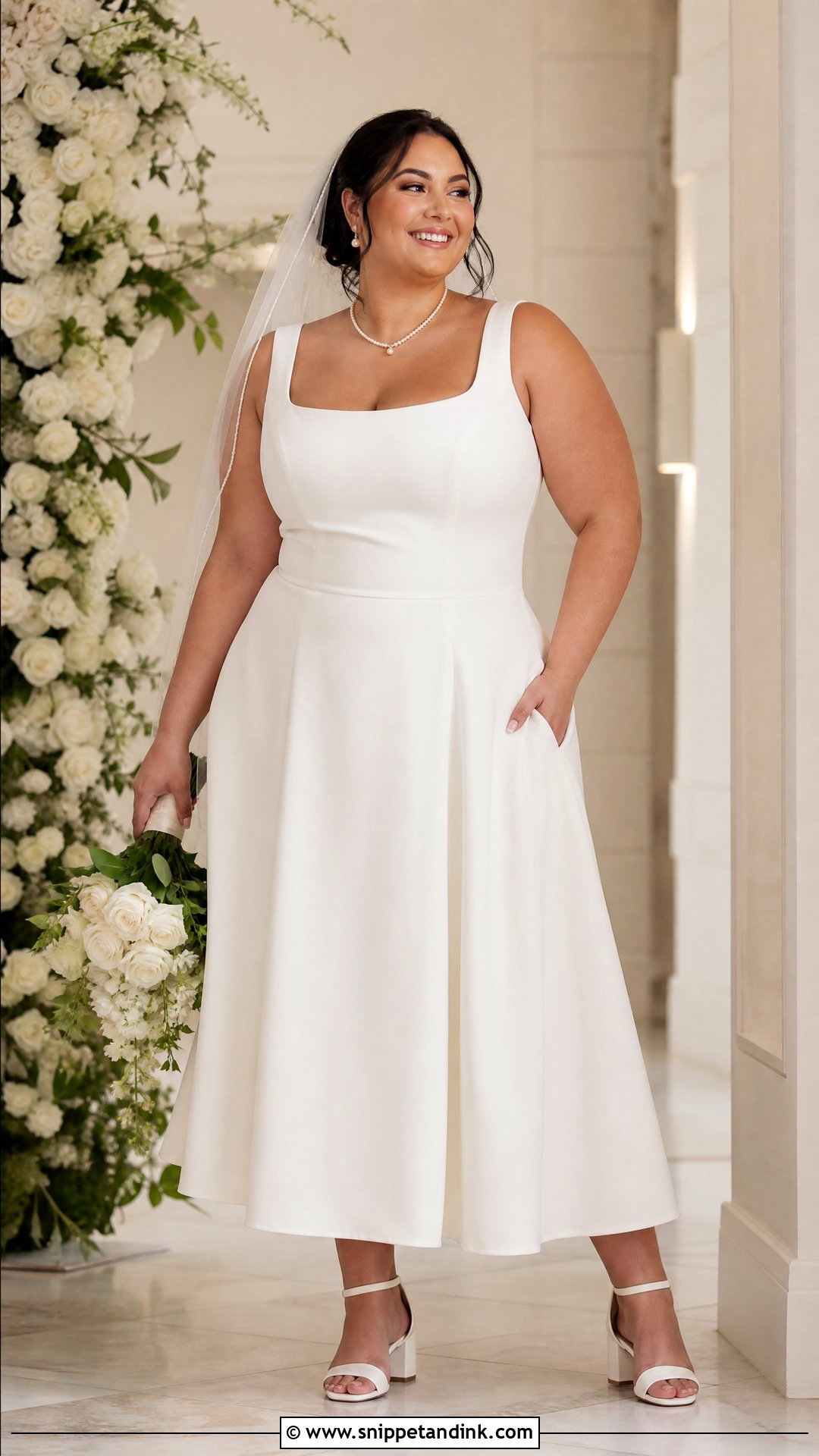
An A-line suits many plus-size brides because it fits closely where you want support and releases from the natural waist without adding bulk at the hip. A structured bodice and proper straps do most of the work. Matte crepe, satin and soft lace give a polished trainless finish. A V-neck or square neck frames the face and leaves room for a delicate necklace, with block heels, pearl earrings and a light fingertip veil. Shapewear should support you, not squeeze you into a different body. Ask for fittings with enough time to adjust bust, waist, straps and hem one by one, since each affects the others.
17. Petite Column Wedding Dress No Train
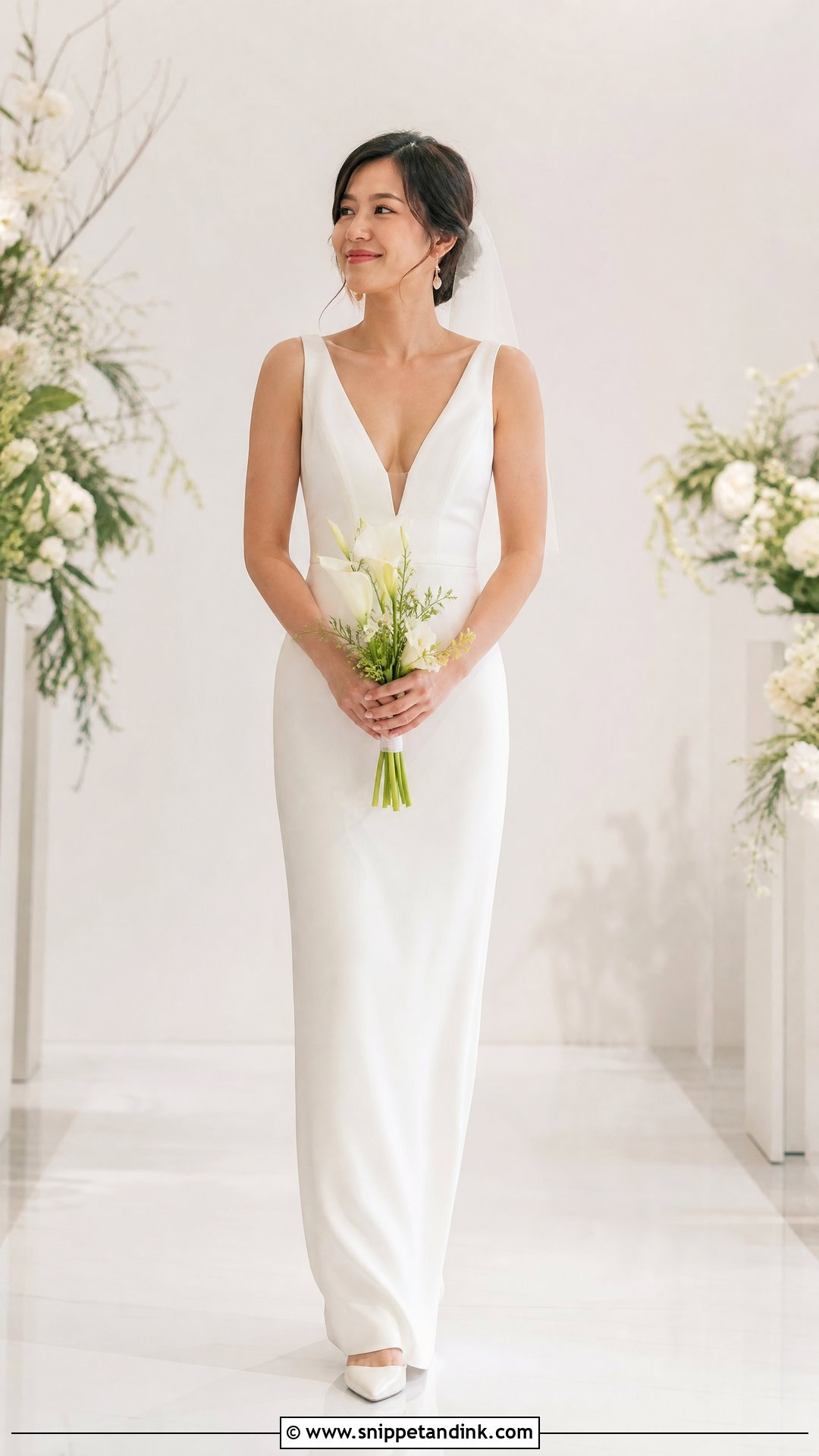
On a petite frame, every horizontal seam shortens the line, so a column with as few cross seams as possible is a smart start. A deep V, narrow straps or princess seams pull the eye up and down. Lightweight crepe and satin flatter more than layers of tulle. Pointed pumps, fine drop earrings, a narrow bouquet and a short veil or small bow keep the scale right. Keep the waist at your natural waist unless an empire line genuinely suits you better. Have the hem cut precisely to the shoe. On a petite bride, even an inch of pooling at the floor looks like borrowed length and turns into a trip hazard.
18. Beach Wedding Dress No Train
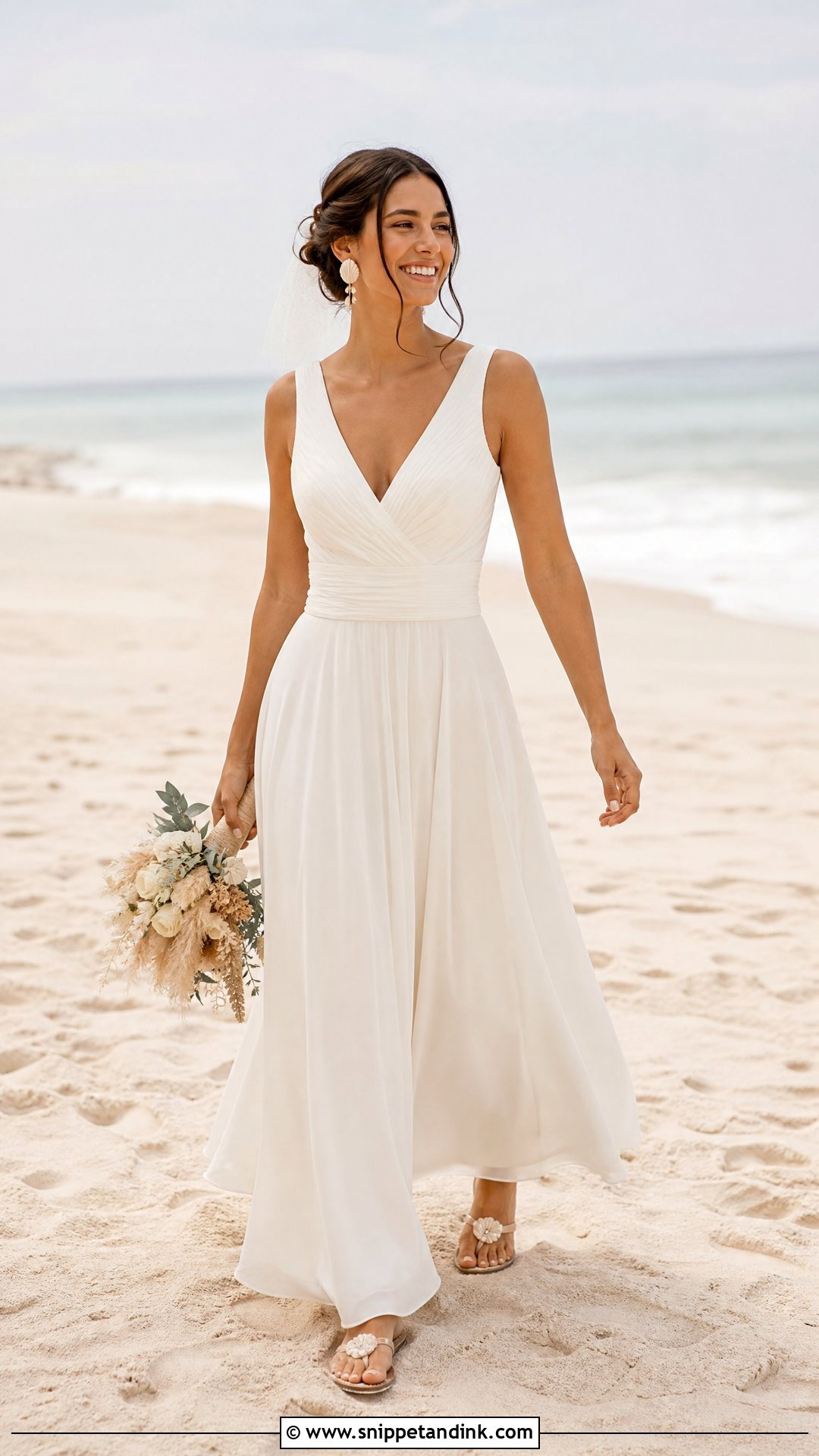
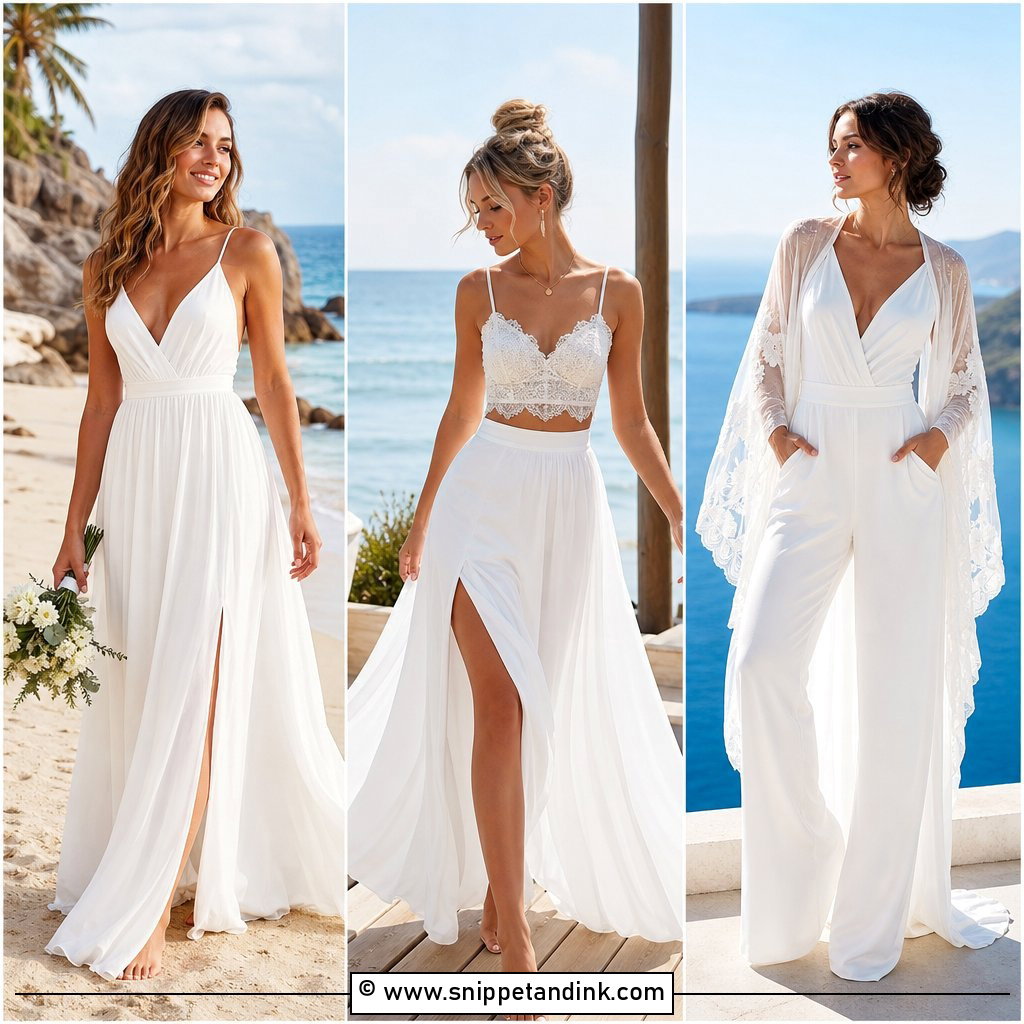
Sand, wind and salt air are hard on fabric, which is why a beach wedding dress with no train makes so much sense. Chiffon, soft crepe or lightweight lace in a relaxed A-line lets air move and handles uneven ground. Let it end at the floor or just above, since wet sand stains a dragging hem. Embellished flat sandals or bare feet for the ceremony, shell-inspired earrings, a loose updo and a short veil pinned firmly will cope with the breeze. Skip heavy beading; humidity and weight pull light fabric out of shape. Hem it to the footwear you’ll actually wear on the sand, not your reception shoes.
19. Mini Wedding Dress No Train
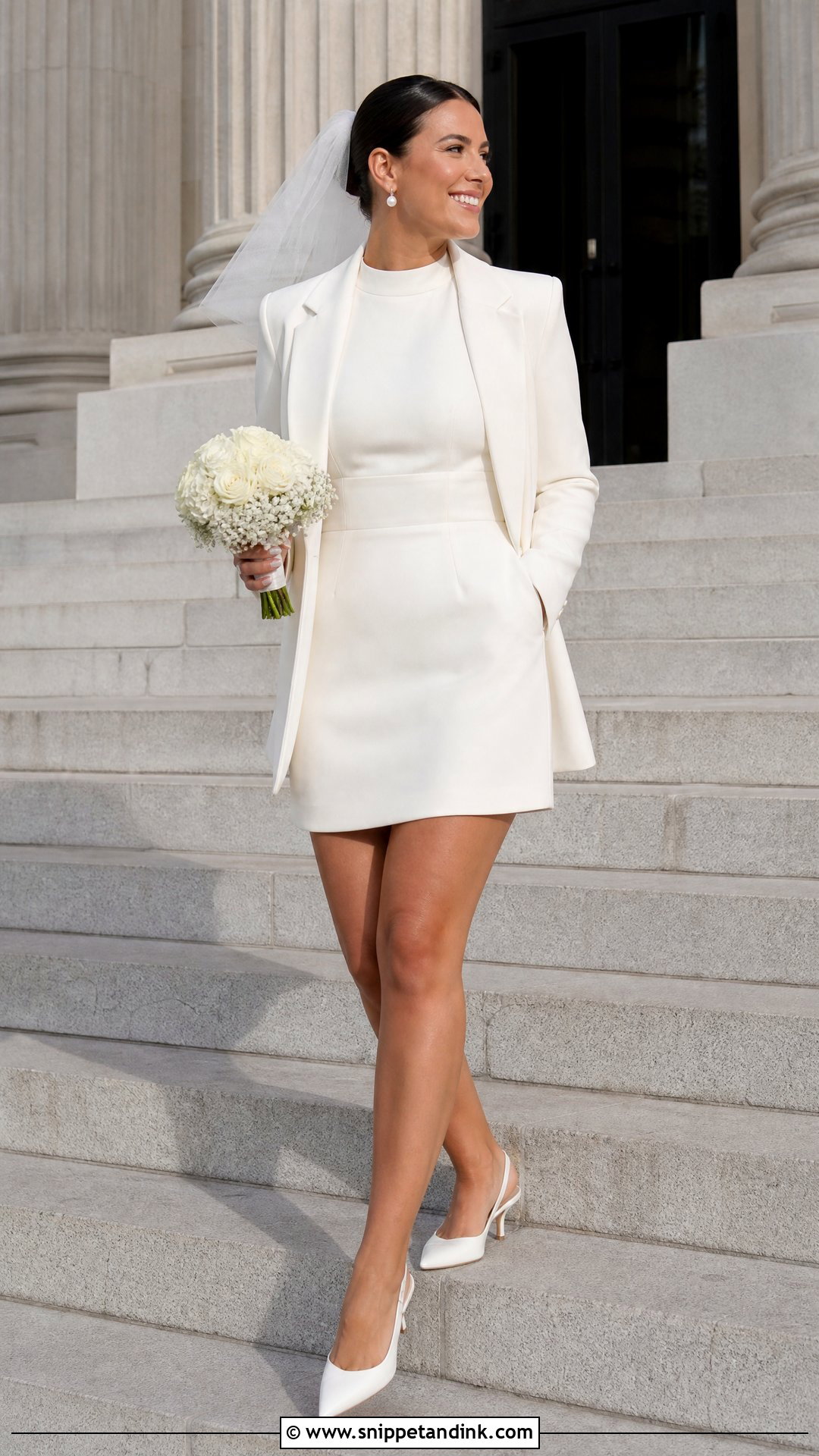
A mini says party and gives you complete freedom on the dance floor. It needs structure to look bridal: a defined waist, a secure neckline and a hem you can sit in without worrying. Long-sleeve crepe looks polished; a satin fit-and-flare is more playful. Pointed pumps, slingbacks or embellished flats depending on the venue, plus a short veil, pearl earrings and a small bouquet. Sheer tights or a tailored ivory blazer add coverage. Balance is the rule: a short hem looks better with a higher neckline or firmer bodice. Sit on a low sofa at the fitting and see where the hem ends up.


20. Beaded Wedding Dress No Train
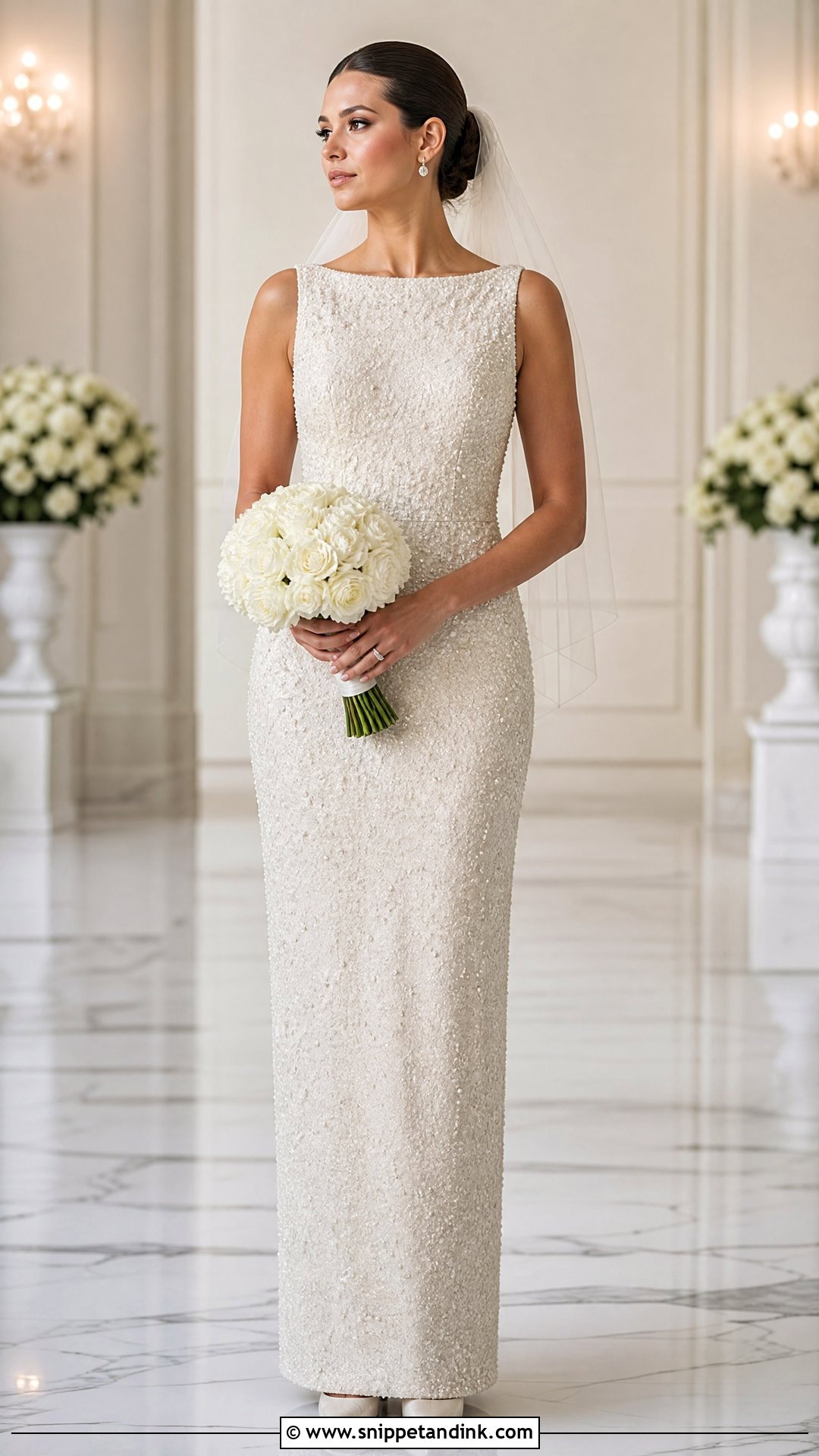
Beading gives a trainless dress all the formal impact it needs. Pearls, crystals, sequins or tonal embroidery on a floor-length sheath or soft A-line stay visible all round when the hem is level. Simple satin pumps, small earrings and a plain fingertip veil let the beadwork lead, with a sleek bun or polished waves depending on the neckline. Lift the gown before you buy; heavily beaded dresses can weigh a lot, and that weight hangs from your shoulders all day. Reinforced straps and a smooth lining help. Ask too how the beads are attached, since chain-stitched beading can unravel in a line if one thread breaks.
Adding Ceremony Drama You Can Take Off Later
Some brides want the aisle moment of a long train but not the weight at the reception. You don’t have to choose.
Let the veil be the train
A chapel or cathedral veil trails behind you for the processional and the vows, then comes off in seconds. Ask for a comb sewn onto a strong elastic loop or pinned into a solid section of the updo, because a long veil pulls backward on the hair.
Detachable overskirts and capes
A tulle or organza overskirt fastens at the waist with hooks or snaps and adds both volume and a train over a simple sheath. A long cape attaches at the shoulders or a high neckline. Either can be made by a seamstress to match a dress you already own. Practice unfastening it before the day, ideally with the bridesmaid who will do it.
Already bought a gown with a train?
Many trains can be shortened into a level hem, and on plain satin or crepe it is a fairly routine alteration. Lace trains and trains with a scalloped or horsehair edge take longer, because the border has to be removed and reapplied at the new length. Ask for a quote early; it is more work than a standard hem and needs time between fittings.
Level Hem, Free Feet, Full Dance Floor
A trainless dress should fit the day you have planned and let you move through it without a second thought. Sheaths and crepe columns look clean and modern; lace A-lines, chiffon and tea length are softer. Short veils, strong earrings, good shoes and secure hairstyles make any of them bridal. Before you decide, sit, walk, climb stairs and dance in the dress, and have the hem set with your actual shoes on. From a beach to a ballroom, a level hem means nobody spends the evening bustling, holding or stepping on your skirt.
You'll Like These Ideas:







Leave a Reply