
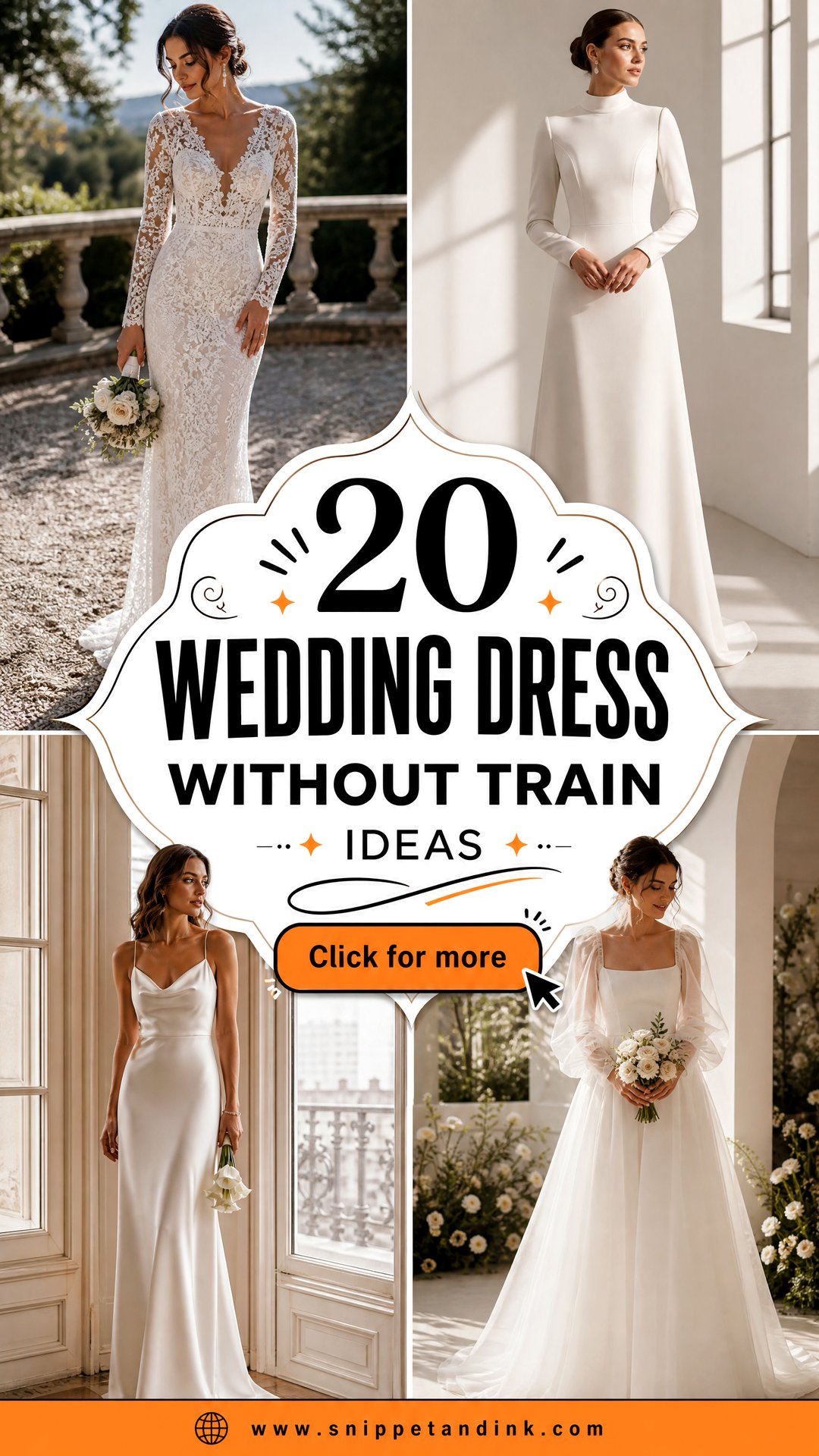
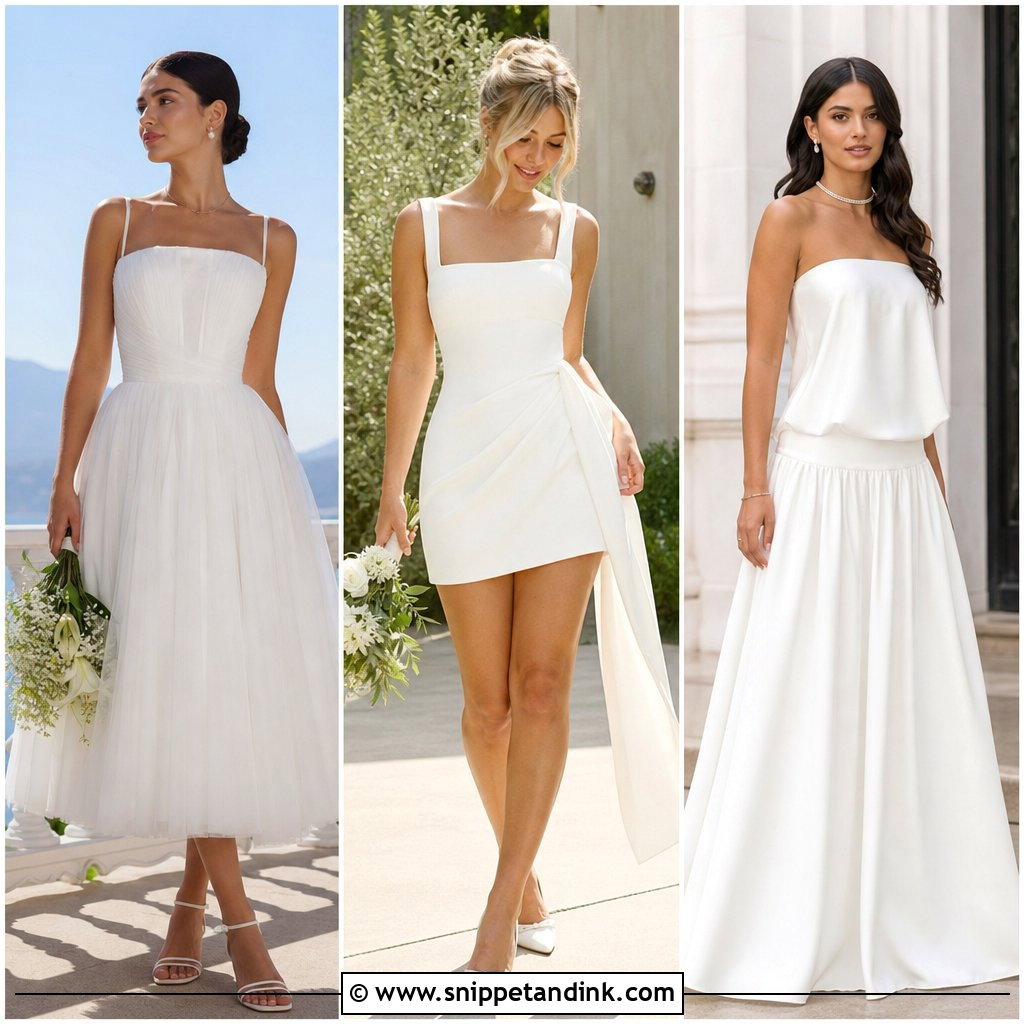
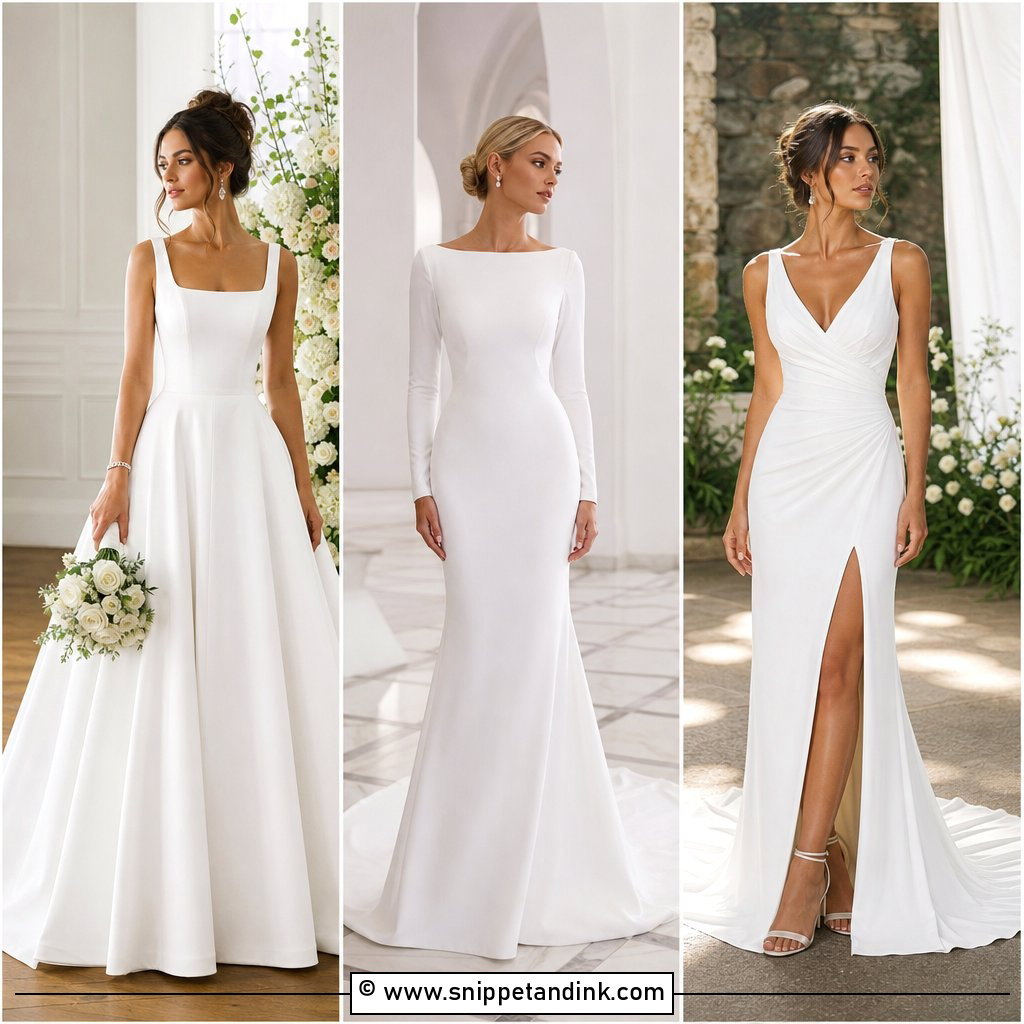
A train looks wonderful for about four minutes of the aisle walk. For the other ten hours it needs bustling, lifting, guarding from wine and keeping off wet grass. That’s why more of the brides I dress are asking for gowns that stop at the floor, or above it. Minimal columns, shorter hemlines and full skirts with an even hem now sit in most bridal collections, so going trainless no longer means settling for less dress. Below are twenty I’d recommend, from satin columns and lace midis to ball gowns cut level all the way round, with notes on fit, fabric and where each one makes sense.
Where a Train Costs You More Than It Gives
Some venues make the decision for you. On sand, gravel or grass, a train picks up debris and moisture, and the hem of a light dress can be grey by the first dance. Spiral staircases, narrow restaurant aisles and old chapel steps are awkward to climb with fabric behind you.
Ceremonies with a lot of movement are another reason. Walking circles around a fire, being lifted on a chair, kneeling and standing repeatedly: all of these are easier when nothing is underfoot. I also suggest trainless gowns to brides who plan to dance most of the night and don’t want a second dress. A bustle helps, but even a well-bustled train adds weight and can come loose.
When does a train still earn its place? In a long aisle in a formal church or ballroom, where the processional is the main photograph. If that’s your setting and you love the look, a detachable train or a long veil gives you the same shot without living with it all day.
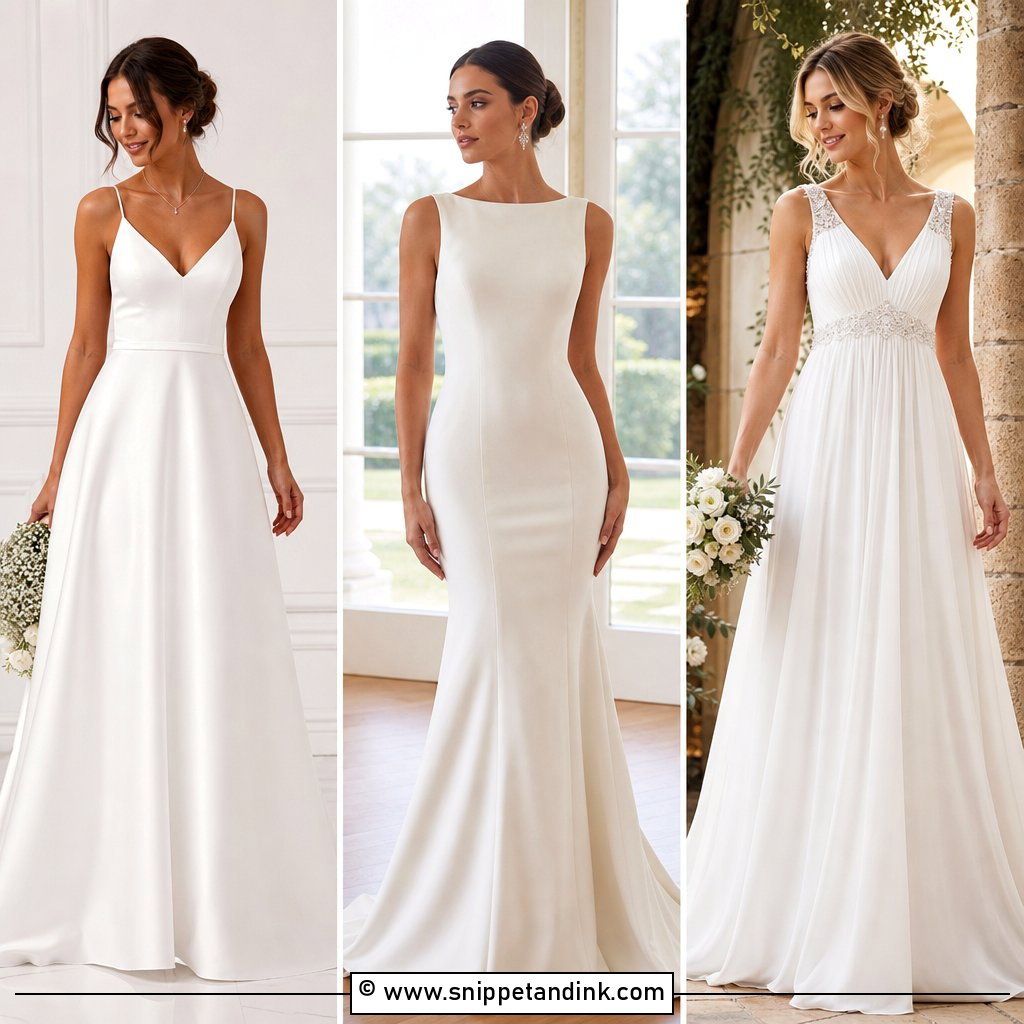
1. Minimalist Satin A-Line Wedding Dress
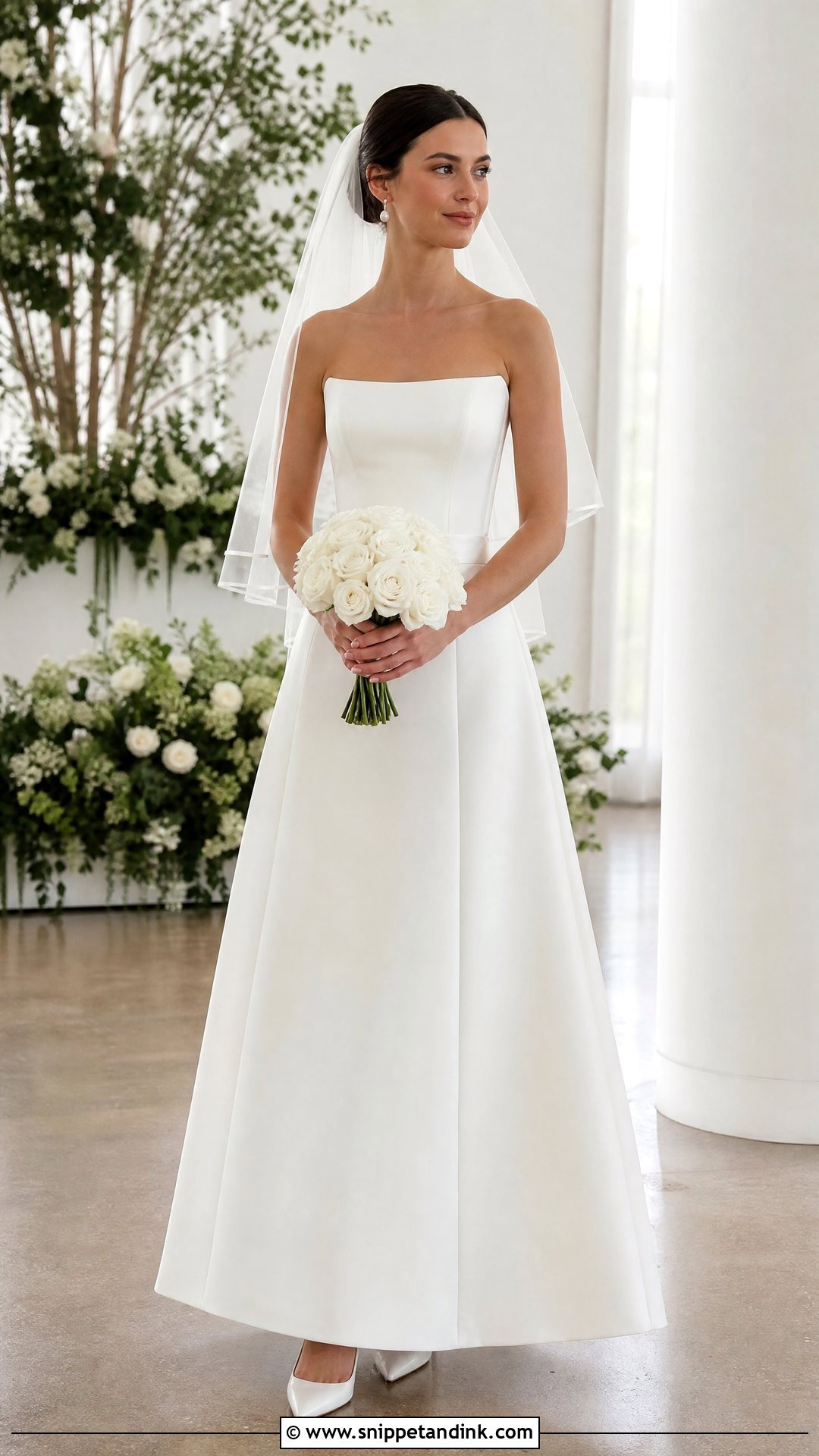
Satin and an A-line skirt is my safest starting point for a trainless gown. Wide straps and a structured bodice support it, and the skirt can be cut to clear the shoe by a hair so it never catches. Without lace or beading, the fabric quality shows, so feel the weight: thin polyester satin wrinkles at the lap after one car ride. Pearl drops, an elbow-length veil and pointed ivory pumps keep it clean, and a tight bouquet of white roses suits the plain surface. It belongs in a hotel or a bright garden room.
2. Crepe Sheath Wedding Dress
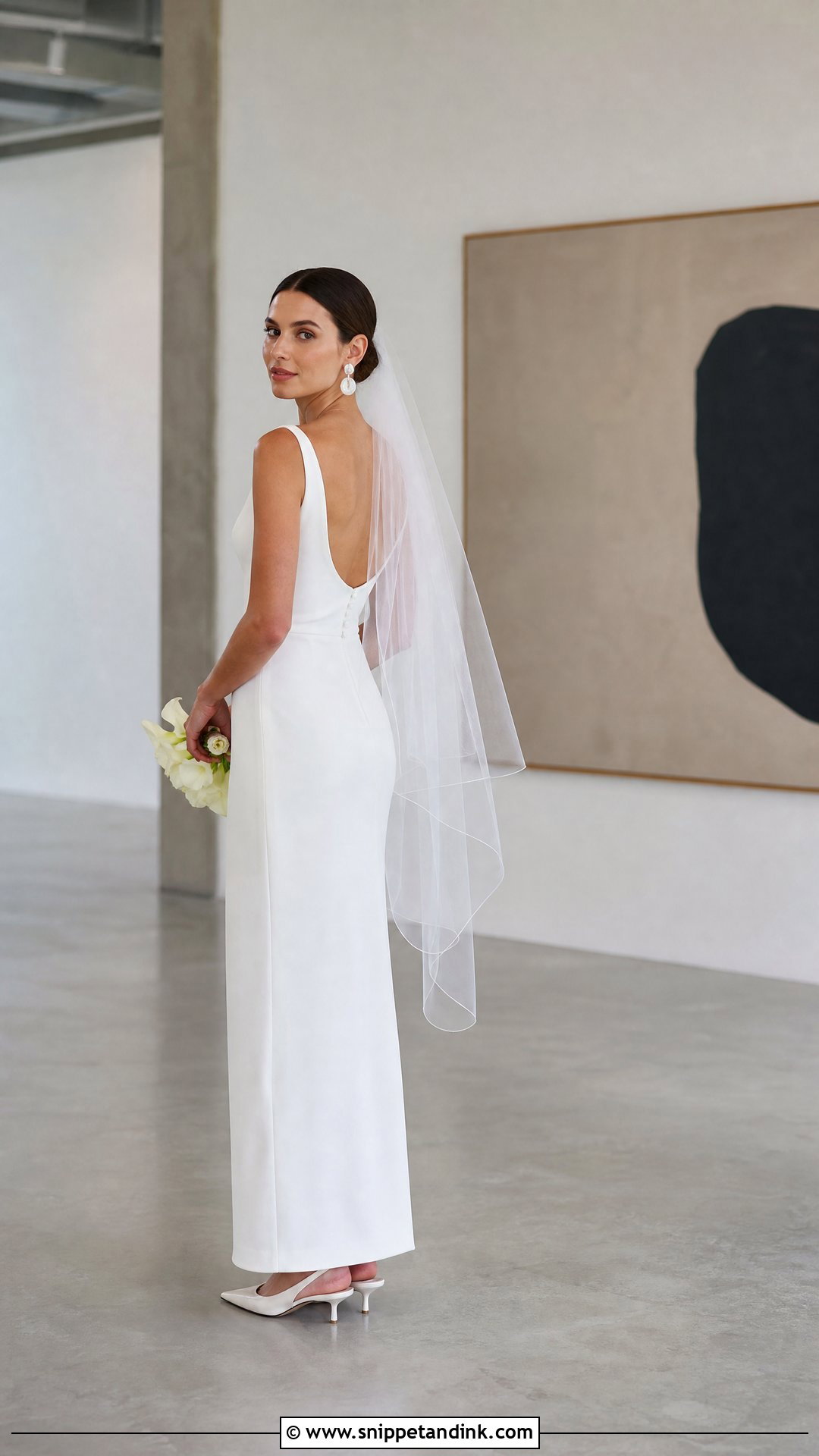
Crepe is the fabric I suggest when a bride wants a narrow line from neck to floor. A crepe sheath wedding dress without a train should skim the hips rather than grip them; if you can see the outline of your underwear in the fitting-room mirror, it’s too tight or the crepe is too thin. A bateau or soft V keeps the front quiet and a low back adds the interest. Sculptural earrings and slingbacks suit a gallery or rooftop. Crepe also takes a tailored blazer or cape well if the evening turns cool.
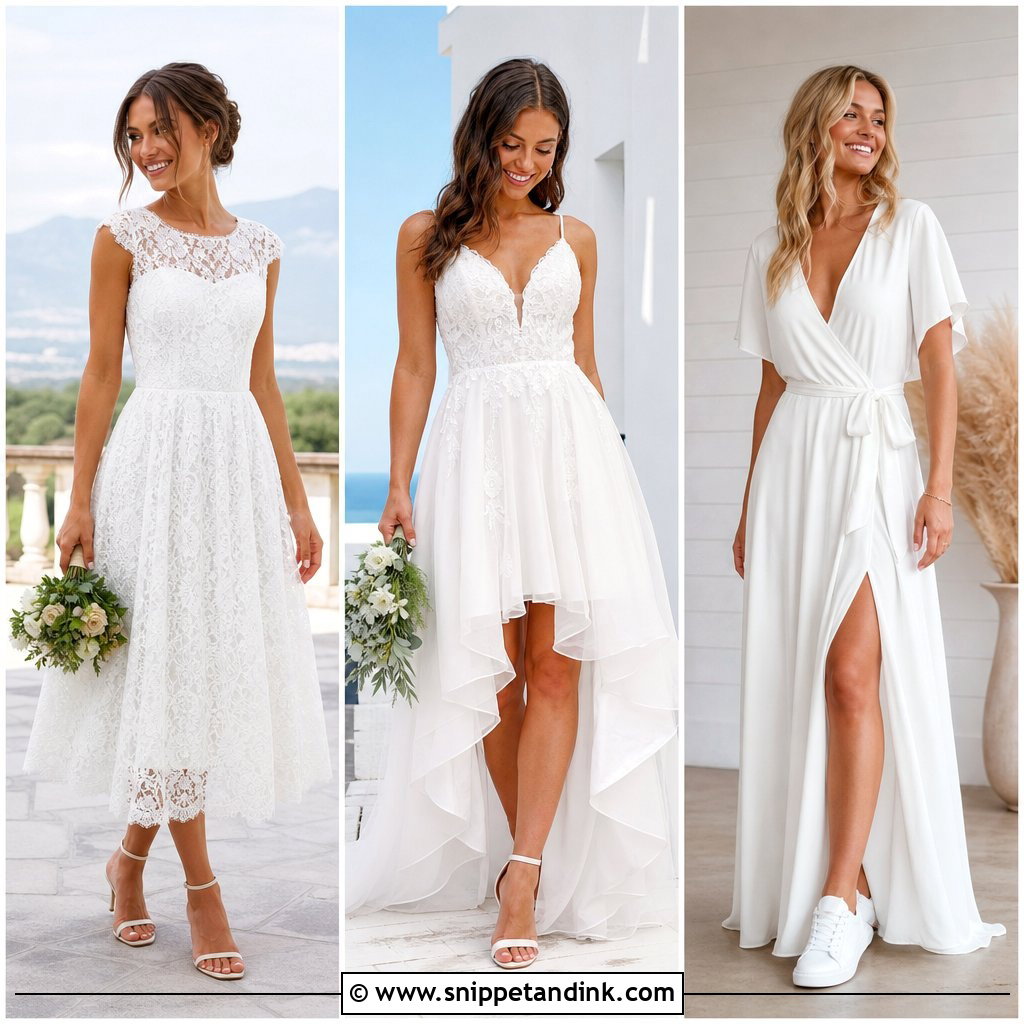
3. Tea-Length Lace Wedding Dress
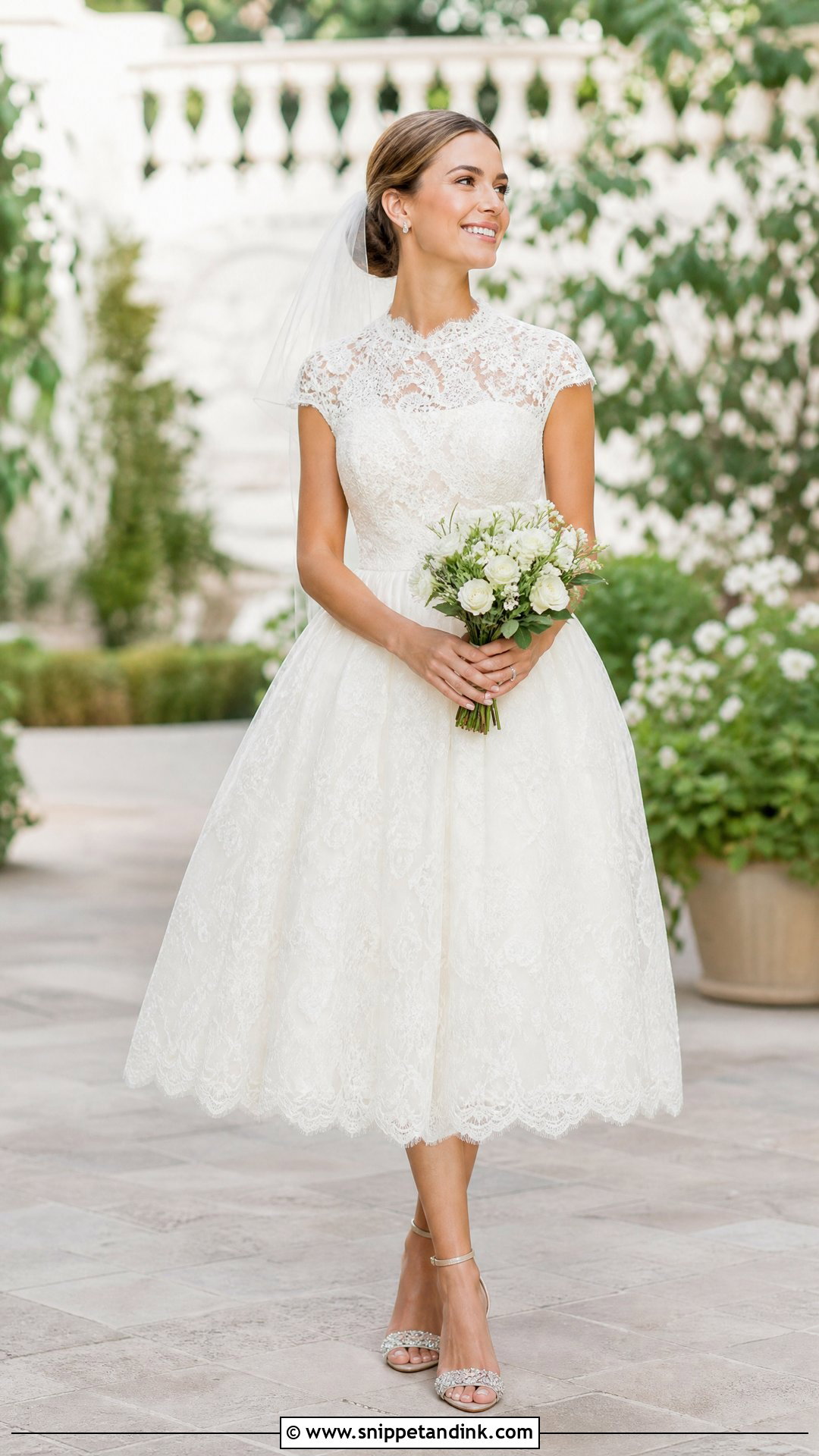
Lace at tea length has a vintage charm that floor-length lace doesn’t. The skirt ends between knee and ankle, so the shoes become a feature: elegant pumps, embellished flats or ankle-strap heels. I’d keep the rest restrained, with pearl studs, a short veil and a small posy, so the outfit doesn’t slip into fancy dress. Ask to see the lace over a slightly warmer lining than the lace itself; the pattern reads much more clearly in photos. For a cooler day a cropped cardigan or sheer gloves work, and it suits a courthouse or restaurant lunch.
4. Off-the-Shoulder Ball Gown Wedding Dress
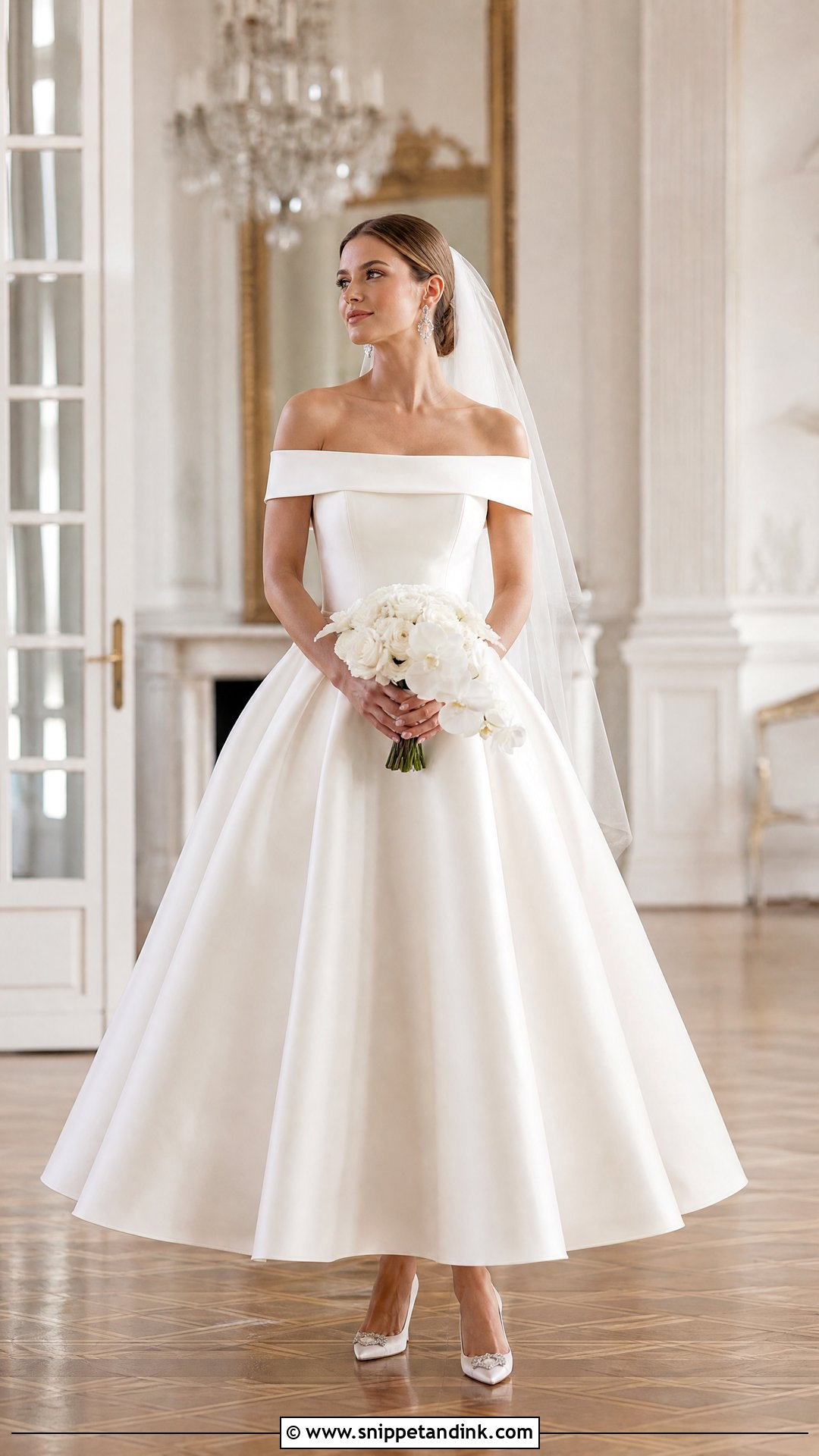
Can a ball gown hold its drama without a train? Yes, if the fabric does the work. Satin, mikado and jacquard all stand away from the body, so an off-the-shoulder bodice over a full skirt cut level all round still fills a grand room. The off-shoulder neckline needs a firm band with grip tape, otherwise it creeps up toward the neck as you move your arms. Skip the necklace or wear a small pendant, add pointed pumps and a medium veil, and balance the skirt volume with a structured bouquet. Make sure you can walk forward without kicking the hem.
5. Square-Neck Column Wedding Dress
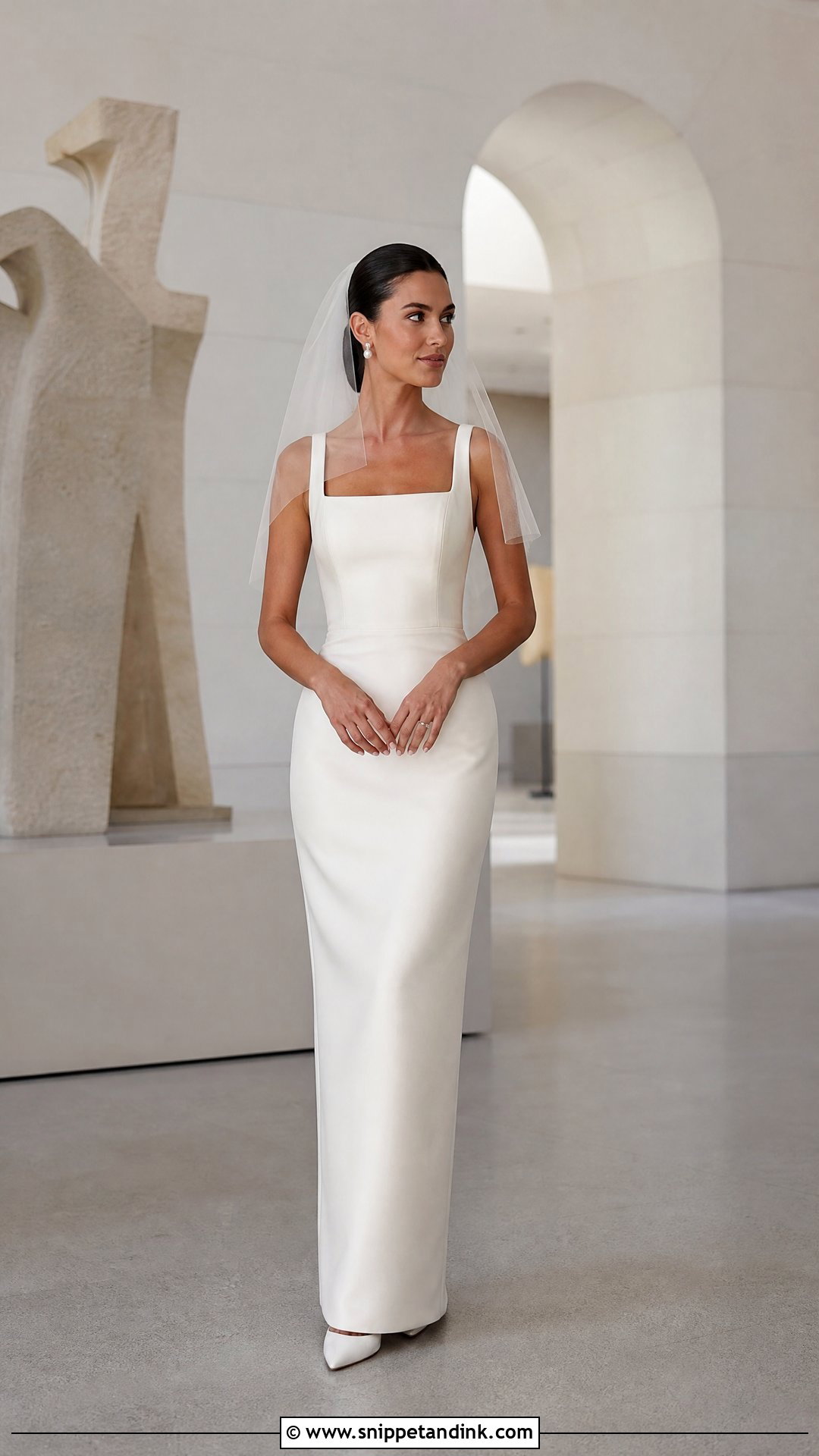
Square neck, straight skirt, no train: it’s an architectural shape, and it depends on weight. Heavier crepe or satin hangs plumb at the back, while a lightweight fabric swings and flares. Supportive straps and light internal structure keep the neckline square instead of bowing. If you want a sweeping ceremony photo, wear a cathedral veil and take it off for the reception; you get the drama for twenty minutes and a trainless dress for the rest. Otherwise go with a shoulder-length veil, a low bun and closed-toe heels for a museum or city venue.
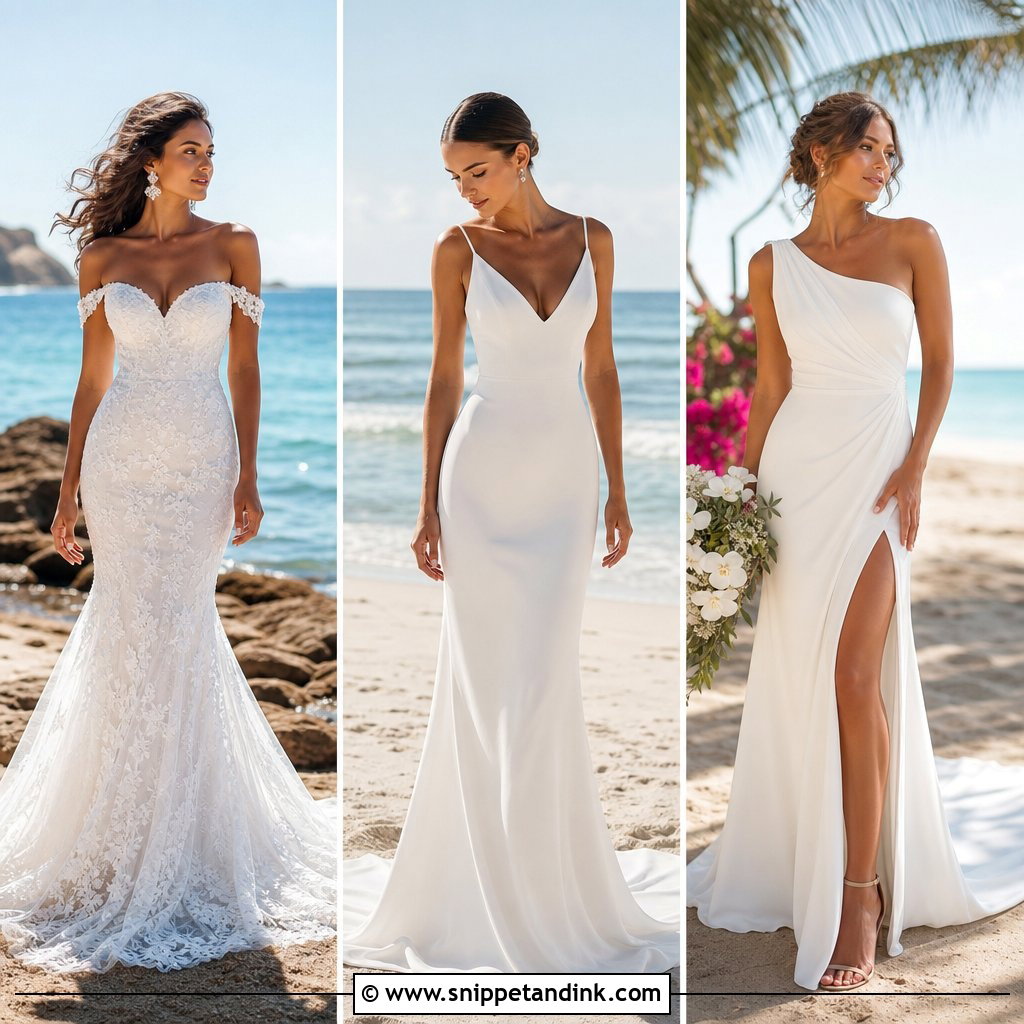
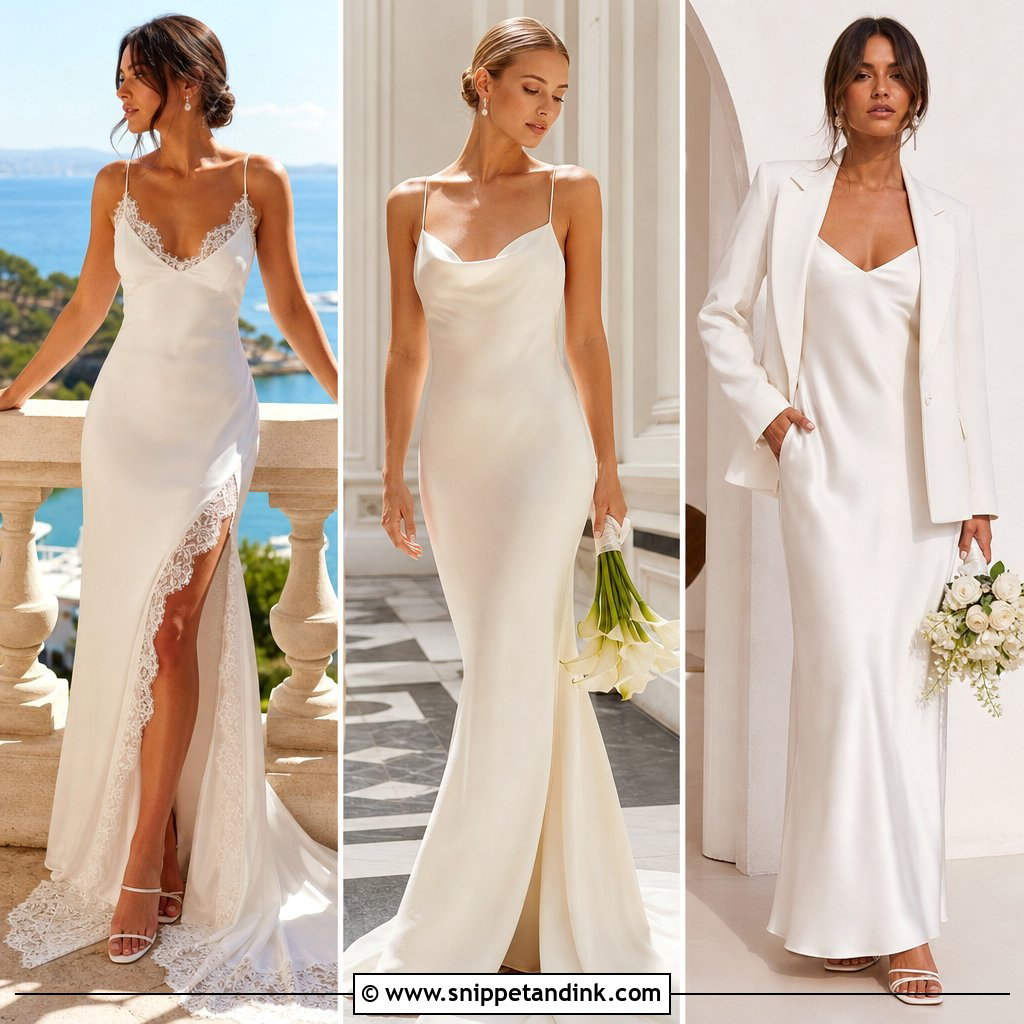
6. Chiffon Beach Wedding Dress
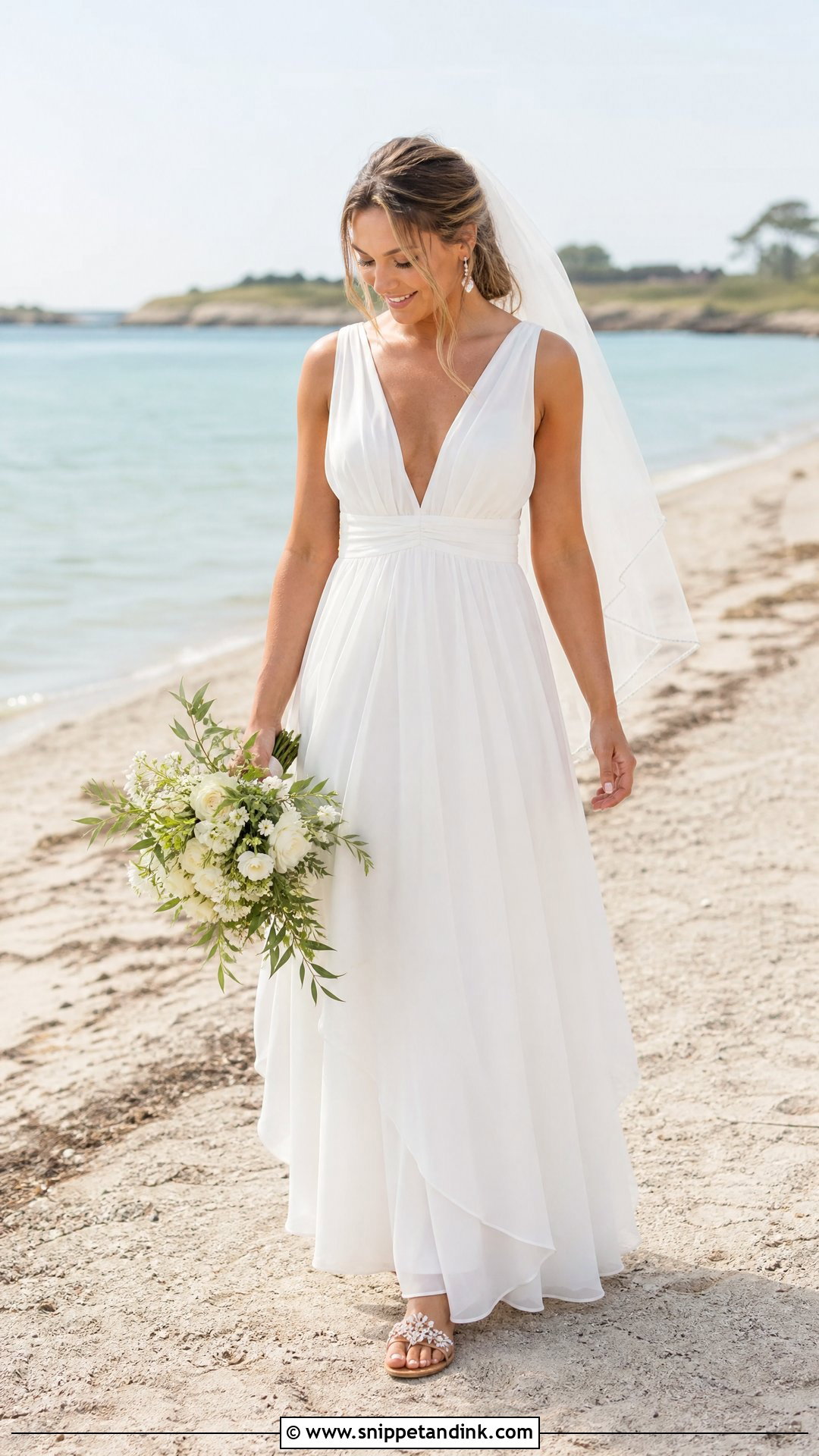
On sand, a train is a broom. Chiffon with a level hem is the answer I give every beach bride, because it lifts in the wind instead of dragging. Look for a V-neck or halter bodice with a defined waist; the back hem should match the front or sit barely lower. Insist on a full lining. Unlined chiffon goes sheer in direct sun, and you won’t notice until you see the photos. Flat embellished sandals, small pearl hoops, a fingertip veil and a greenery bouquet finish it.
7. Long-Sleeve Lace Wedding Dress
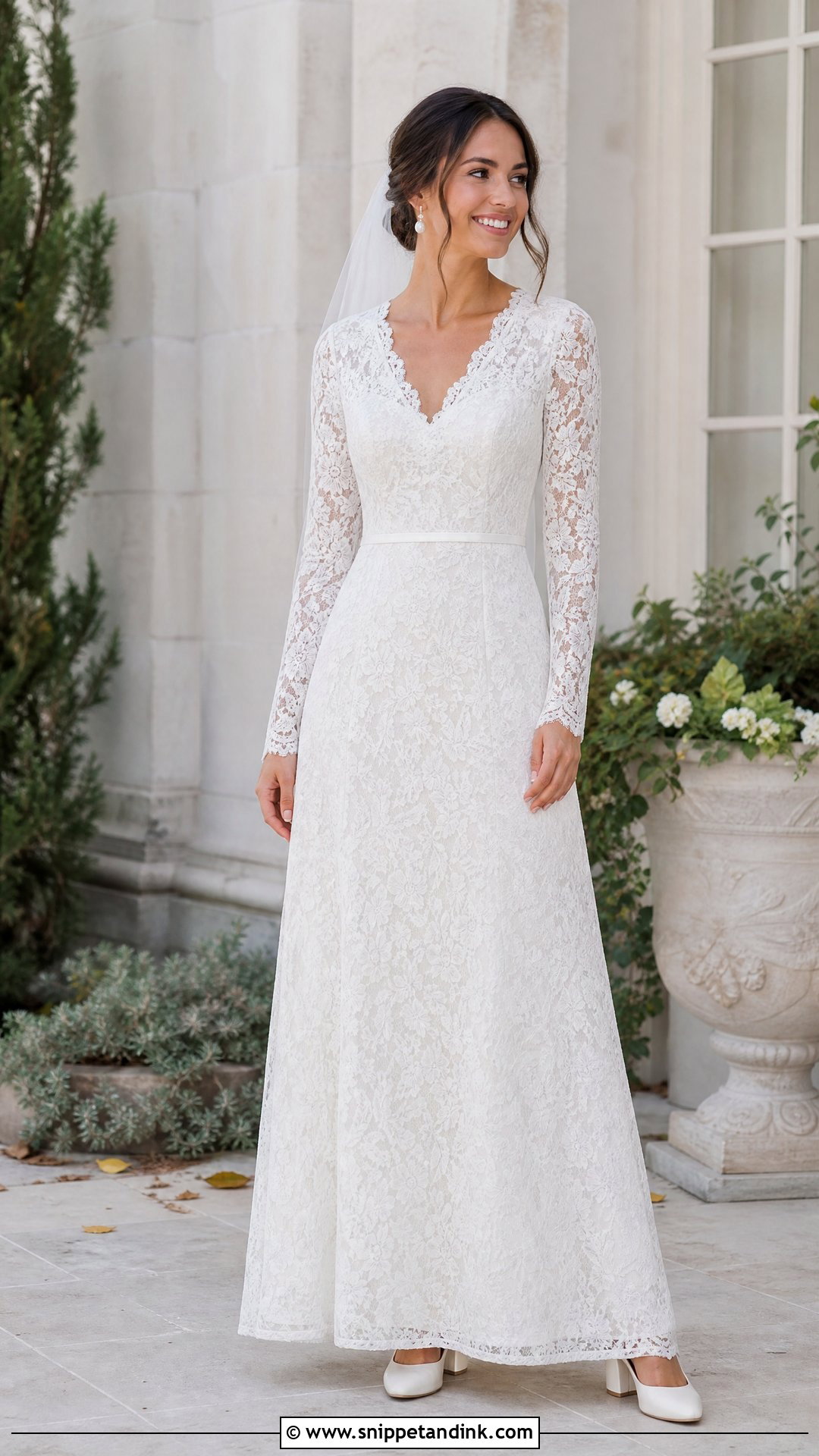
Long lace sleeves with a trainless A-line give coverage without the weight of a cathedral skirt behind you. The sleeve fit is what I check most carefully. Lace sleeves cut too slim restrict your arms when you hug or throw a bouquet, so bend your elbows and reach forward at every fitting. A modest V, illusion or bateau neckline all suit this pairing. Pearl earrings, a low chignon, satin block heels and a plain veil keep the lace from looking crowded. For autumn, a wool wrap or bridal coat that ends above the widest part of the skirt keeps the shape visible.
8. High-Neck Modern Wedding Dress
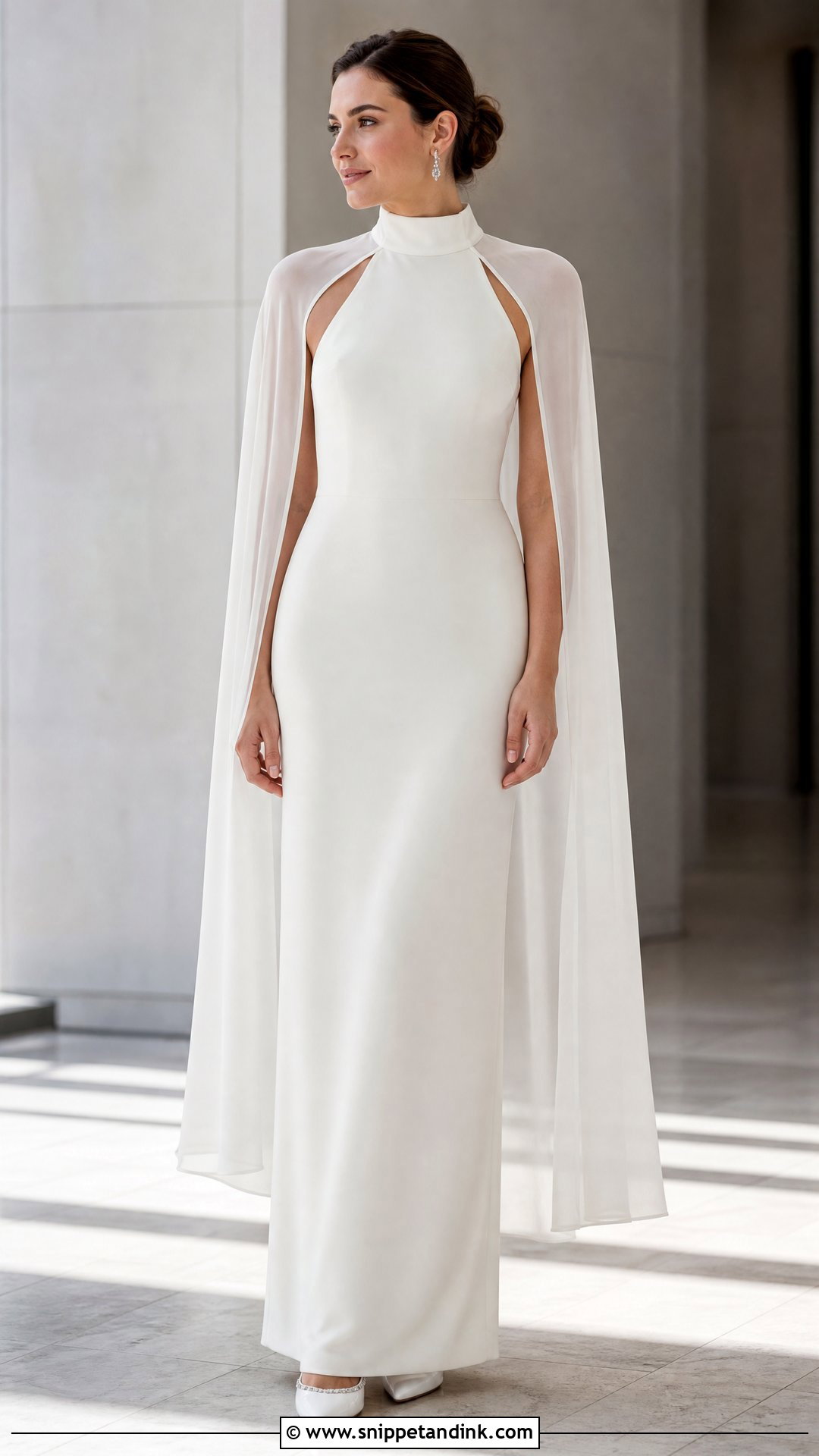
A high neck on a sleeveless column is sharp and modern, and it is all about fit. With no train or embellishment to distract, any pull across the shoulders or puckering at the neckline is the first thing people see. I’d ask for matte silk or crepe and a final fitting in the exact bra or tape you’ll wear. Leave off the necklace, choose polished earrings and a sleek bun, and if you want more ceremony impact, use a removable shoulder veil or a light cape instead of adding fabric to the dress.
9. Strapless Midi Wedding Dress
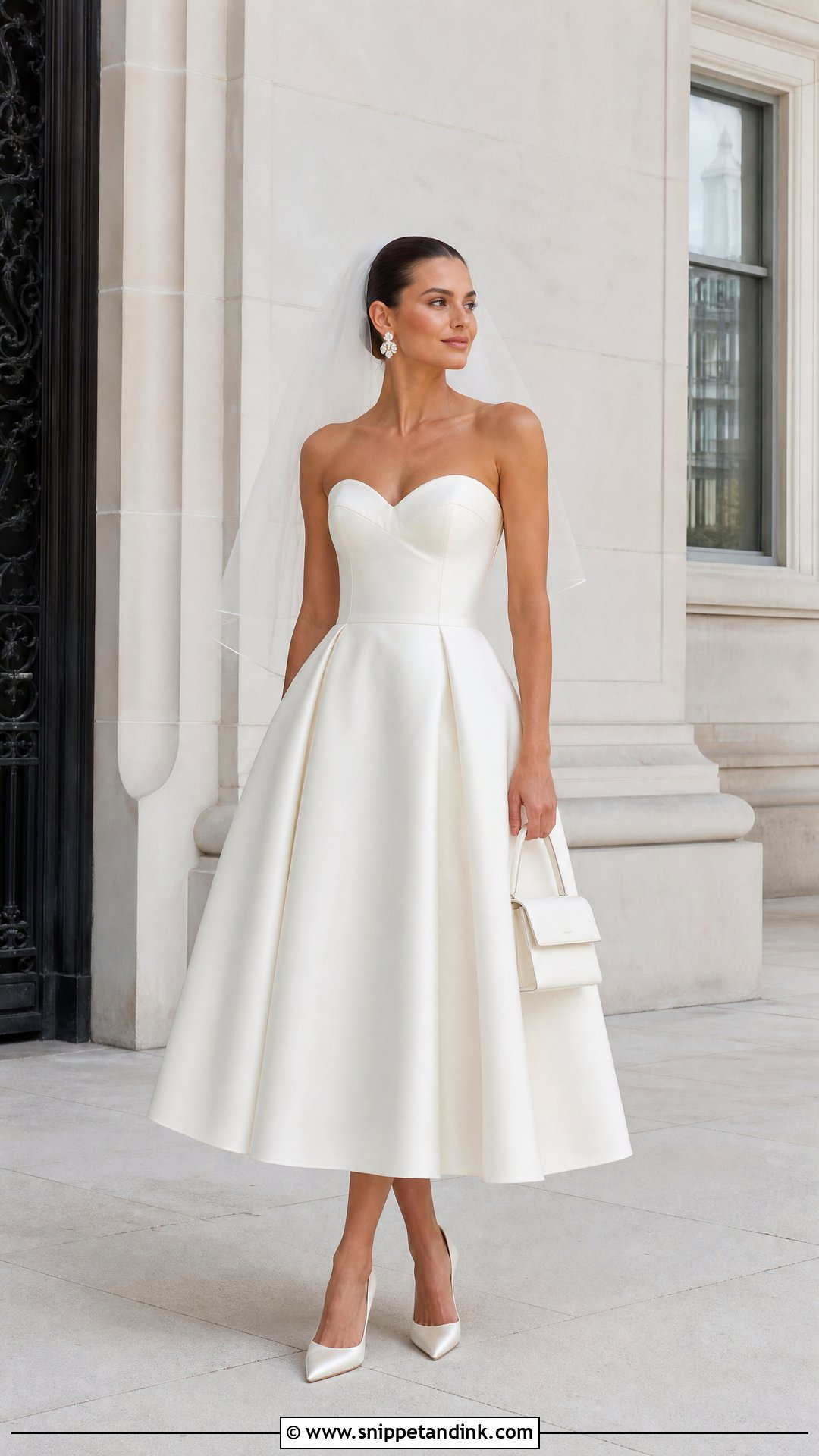
Strapless and midi length suits a courthouse ceremony or a small daytime wedding. A fitted skirt looks sharper; a fuller one feels more playful. Either way, the bodice must hold without straps, so check for boning and a waist stay. Your shoes are now half the outfit, so buy them early and wear them around the house. Pointed pumps, a short veil and a small top-handle bag keep it bridal. If the venue needs more coverage, a cropped blazer or detachable sleeves solve it without changing the dress.
10. Corset Tulle Wedding Dress
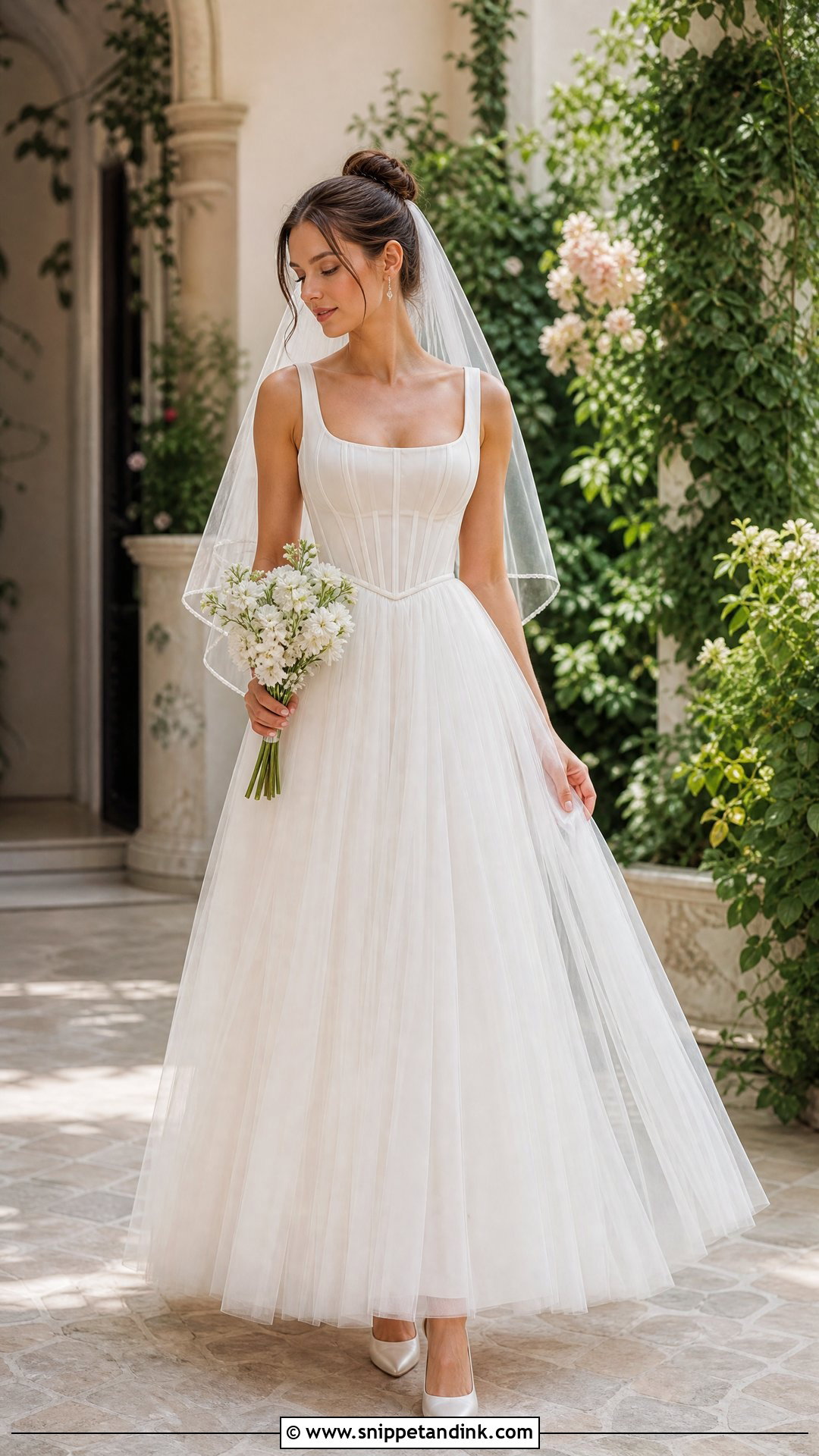
A corset bodice over tulle gives you fairy-tale volume without anything trailing behind. Layered tulle is light, but many layers together still pull on the waist, so the boning and waist seam need to sit firmly or the skirt drags the bodice down. Cut every layer to the same floor length; uneven tulle layers peeking out look unfinished. Drop earrings, satin pumps and a fingertip veil suit it. Test sitting and dancing at alterations, since a corset fitted only for standing can bite when you sit.
11. Satin Slip Wedding Dress
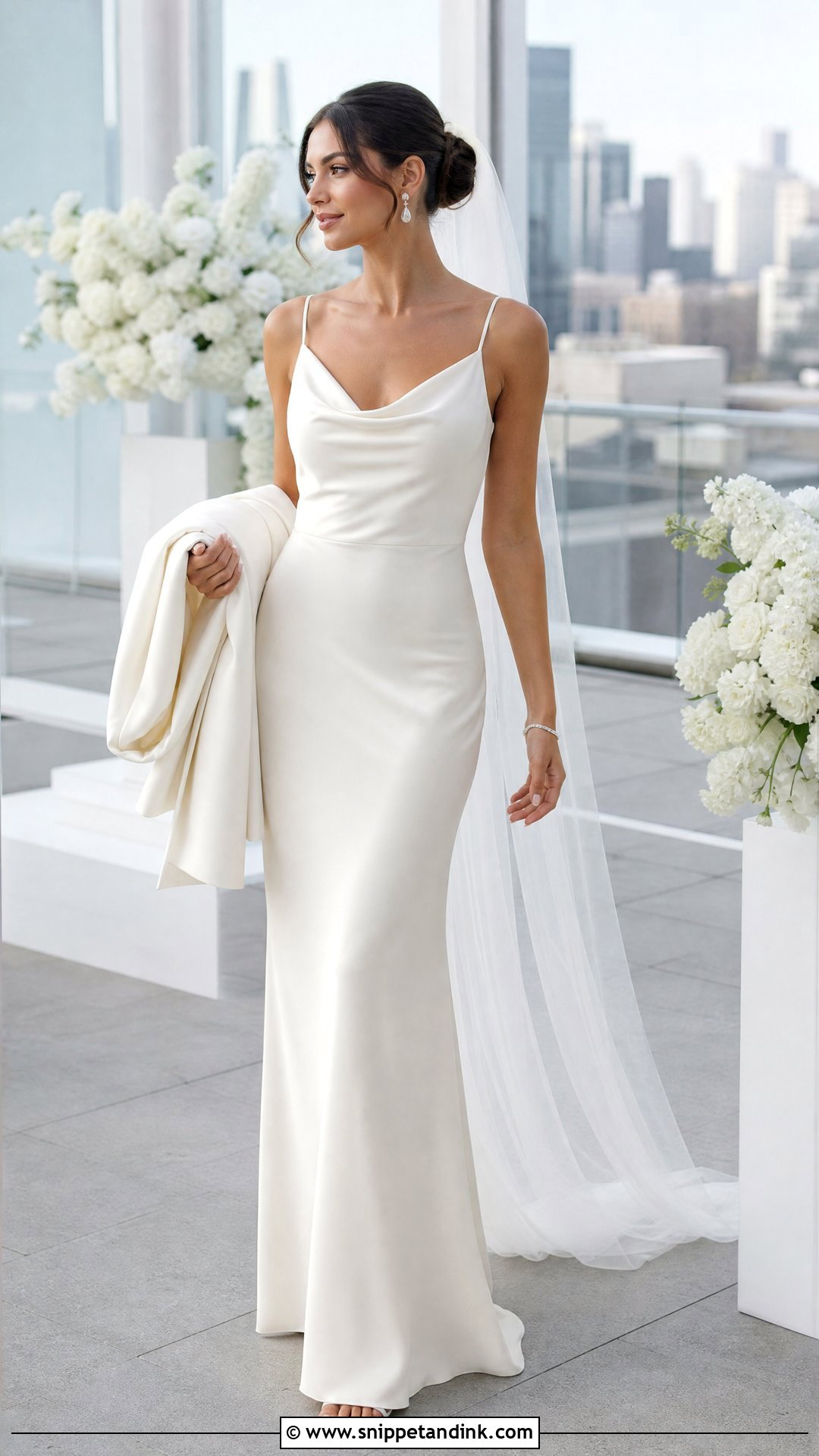
Bias-cut satin moves like liquid, and it’s honest about everything under it. A bias-cut gown with a cowl, scoop or V neckline needs smooth, line-free underwear and a full steam before you put it on. Adjustable straps help, because bias-cut fabric can stretch slightly through the day and the neckline drops. Strappy heels, a fine bracelet and a sheer veil are enough. For a city ceremony, a tailored blazer over the slip makes a sharp contrast, and a loose bouquet matches the fluid line.
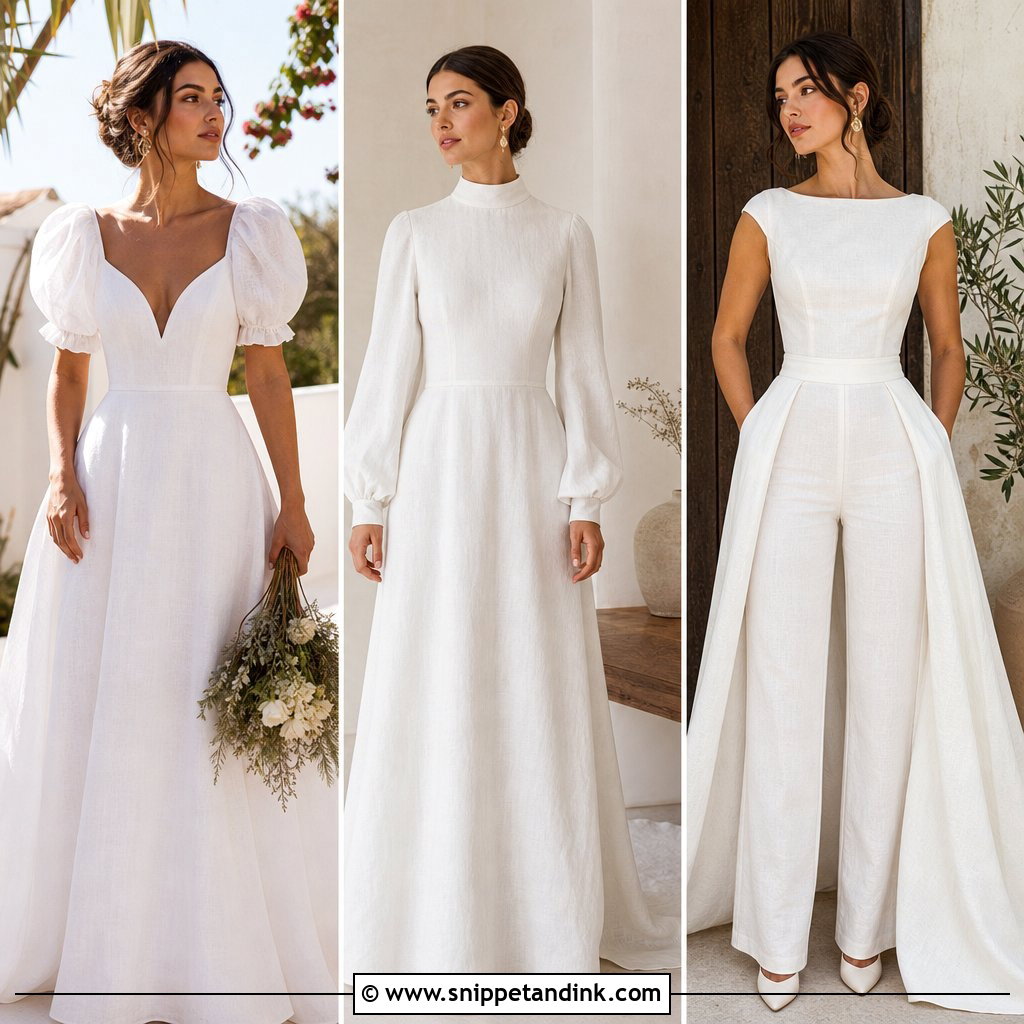
12. Puff-Sleeve Organza Wedding Dress
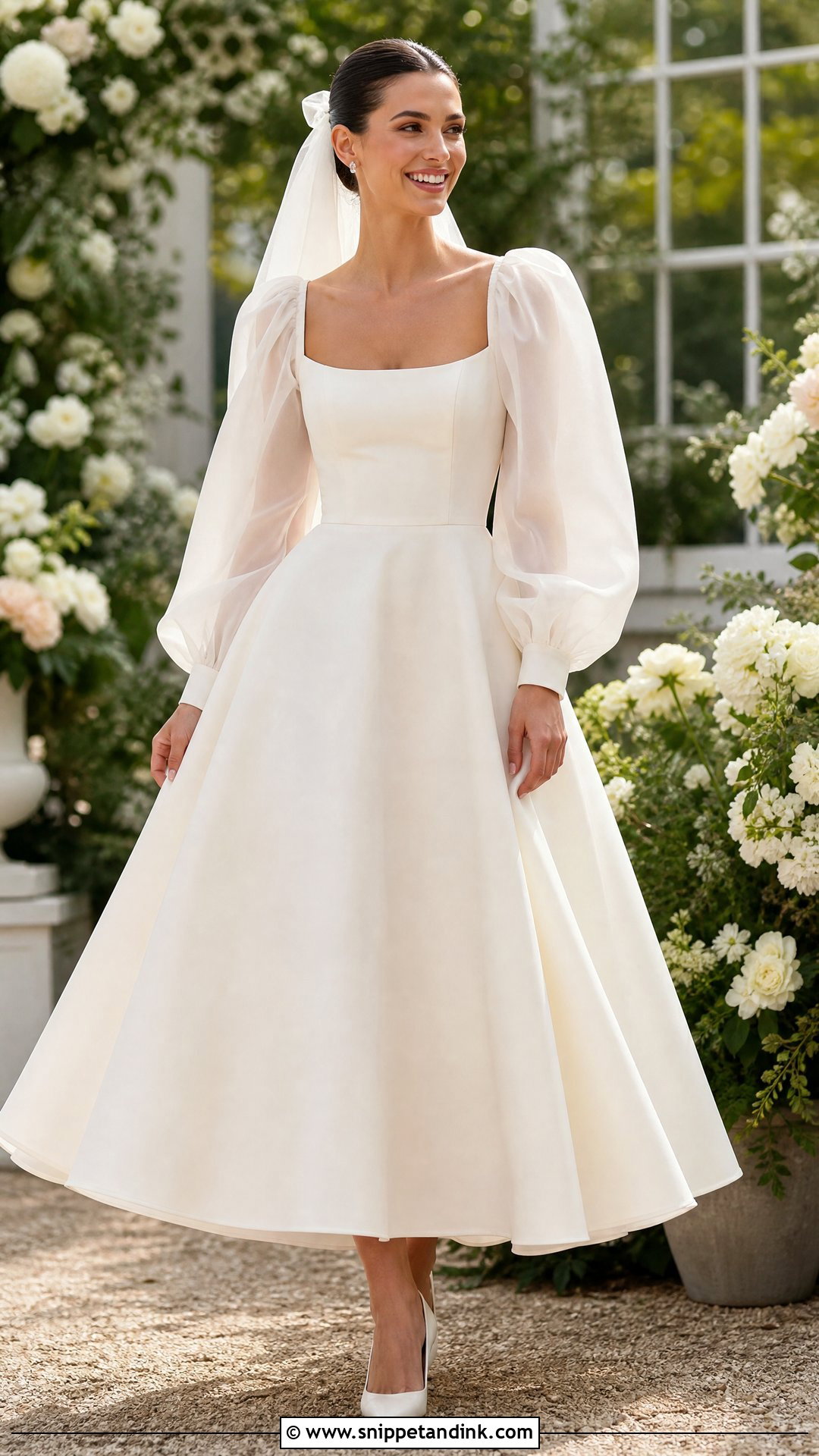
Organza is crisp and slightly sheer, so it holds a puff sleeve upright where chiffon would collapse. Balance the sleeves with a softly full A-line skirt and keep the hair smooth so it doesn’t compete with them. If the sleeves are detachable, you have two outfits: covered for the ceremony, clean and sleeveless for dancing. Organza does crease, and it shows creases sharply, so ask how to steam it and keep the skirt from being crushed in the car. Stud earrings, pointed satin shoes and a bow veil finish it.
13. Beaded Column Wedding Dress
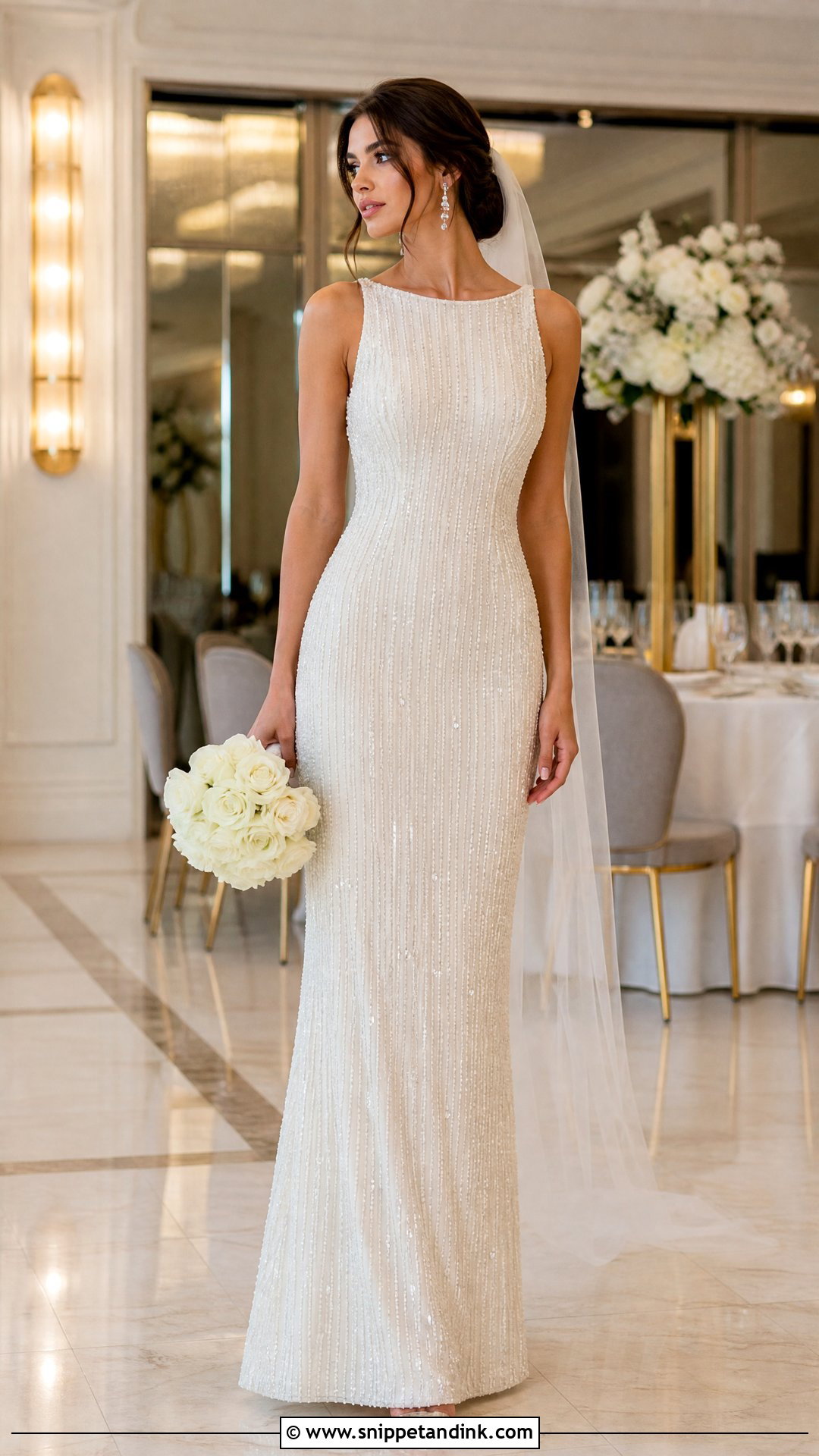
Beading carries the glamour here, not a train. Vertical lines, scattered crystals or Art Deco-inspired patterns all lengthen a narrow column. Heavily beaded columns can weigh more than you’d expect, and the hem drops slightly once the beads settle, so I prefer the final hem done close to the wedding. Check under the arms and at the hips for beads that scratch when you move. Metallic heels, crystal studs, a plain tulle veil and polished waves suit an evening hotel reception.
14. Modest Satin Wedding Dress
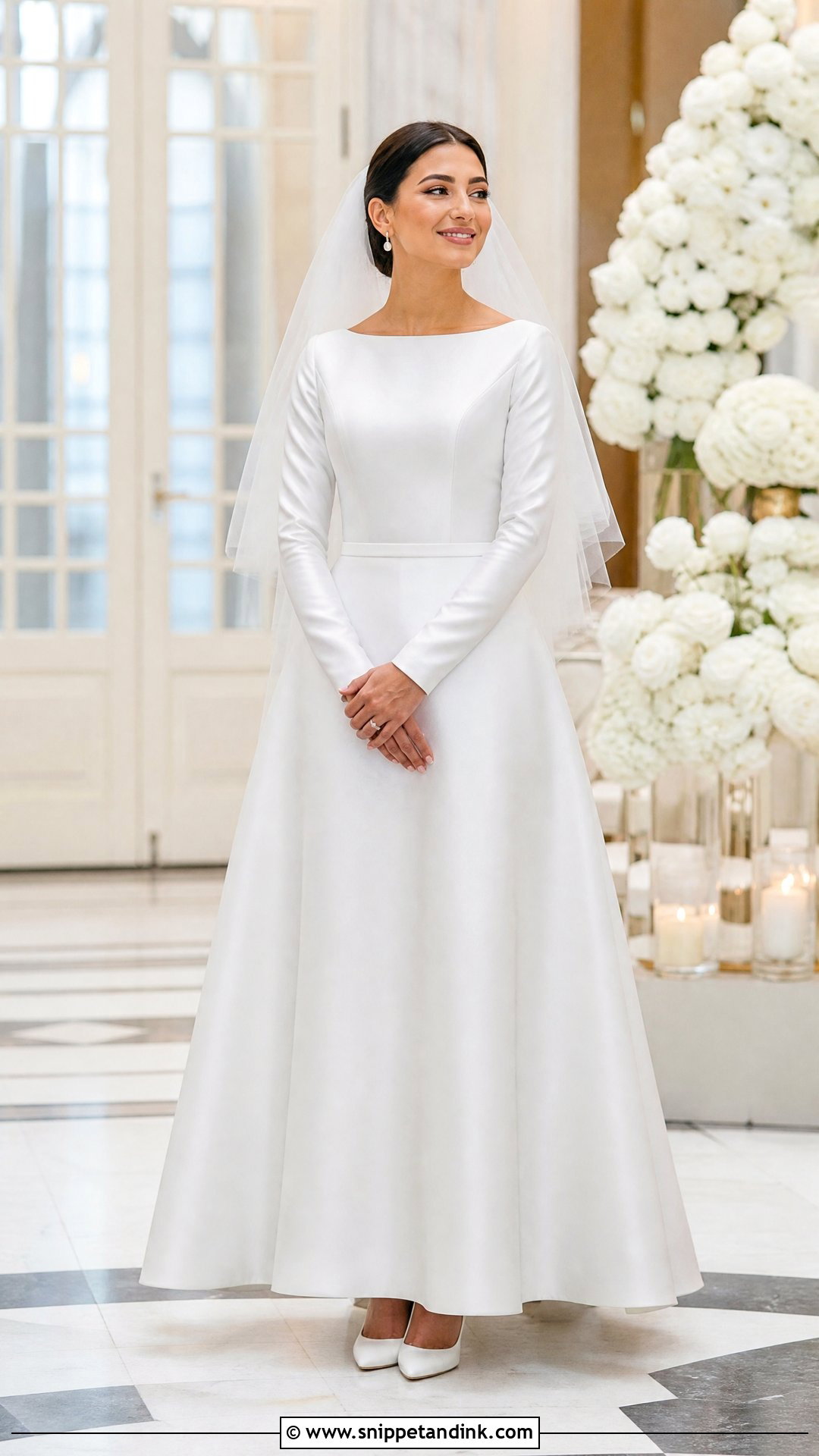
Modest satin works in almost any season and venue. A high bateau or jewel neckline, elbow or full sleeves and a defined waist over an A-line skirt cover fully without looking heavy. Ask for extra room through the upper back and elbows, because sleeved satin pulls when you reach out to greet guests. Covered buttons or a shaped cuff add interest quietly. Pearl earrings and a shoulder-length veil suit it, or swap the veil for a satin headband. A full lining keeps the fabric from clinging in warm rooms.

15. Empire-Waist Chiffon Wedding Dress
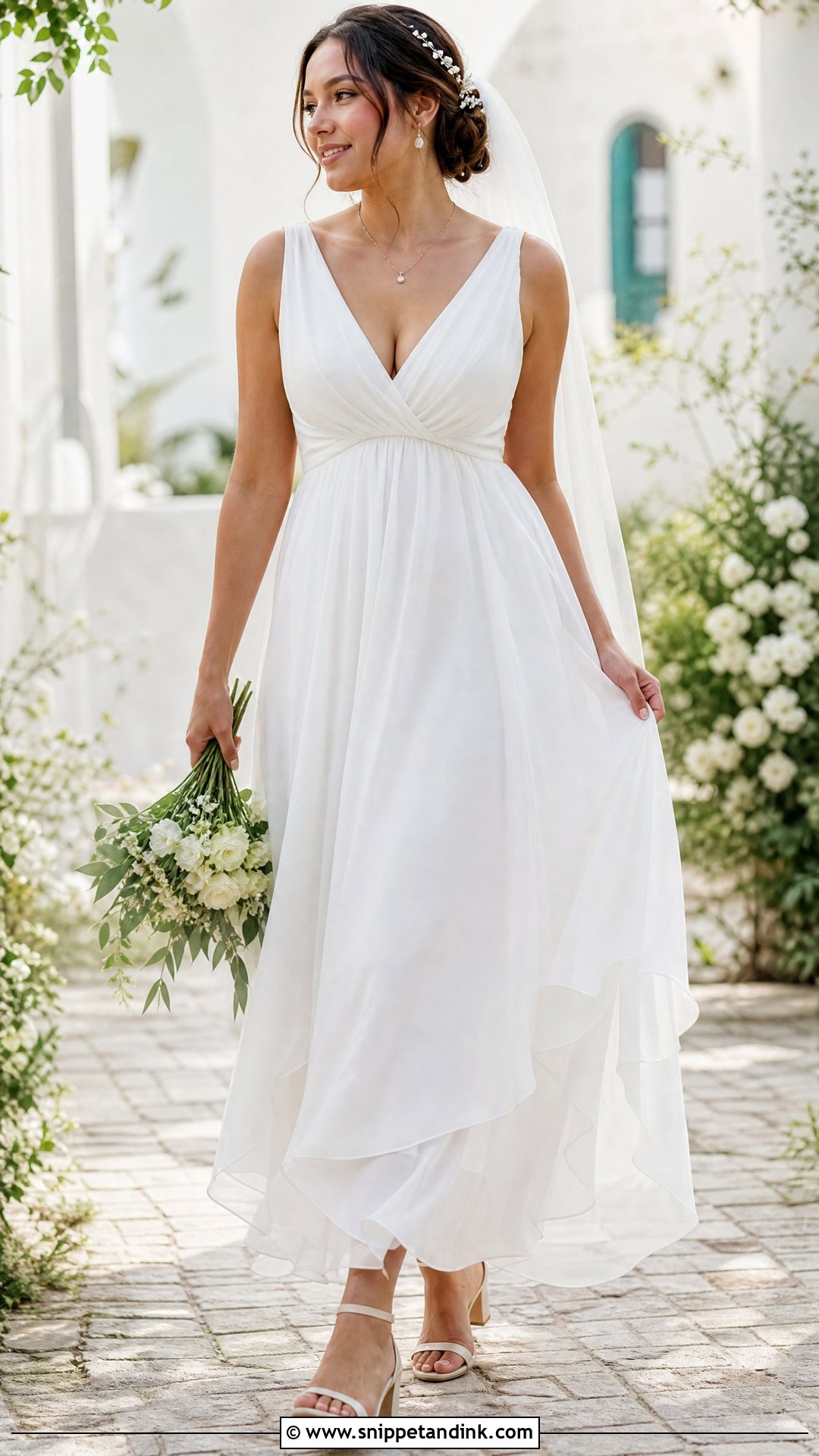
Empire-waist chiffon is the easiest dress here to wear for a long day. The seam sits under the bust and the skirt falls straight with nothing pressing on the waist. The detail people miss is the lining: if it’s cut even slightly longer than the chiffon, you’ll step on it on the stairs. Check both layers in your real shoes. Wide straps or flutter sleeves, low block heels, a delicate pendant and pearl hairpins suit an outdoor summer wedding. Keep the bouquet loose and modest in size.
16. Basque-Waist Satin Wedding Dress
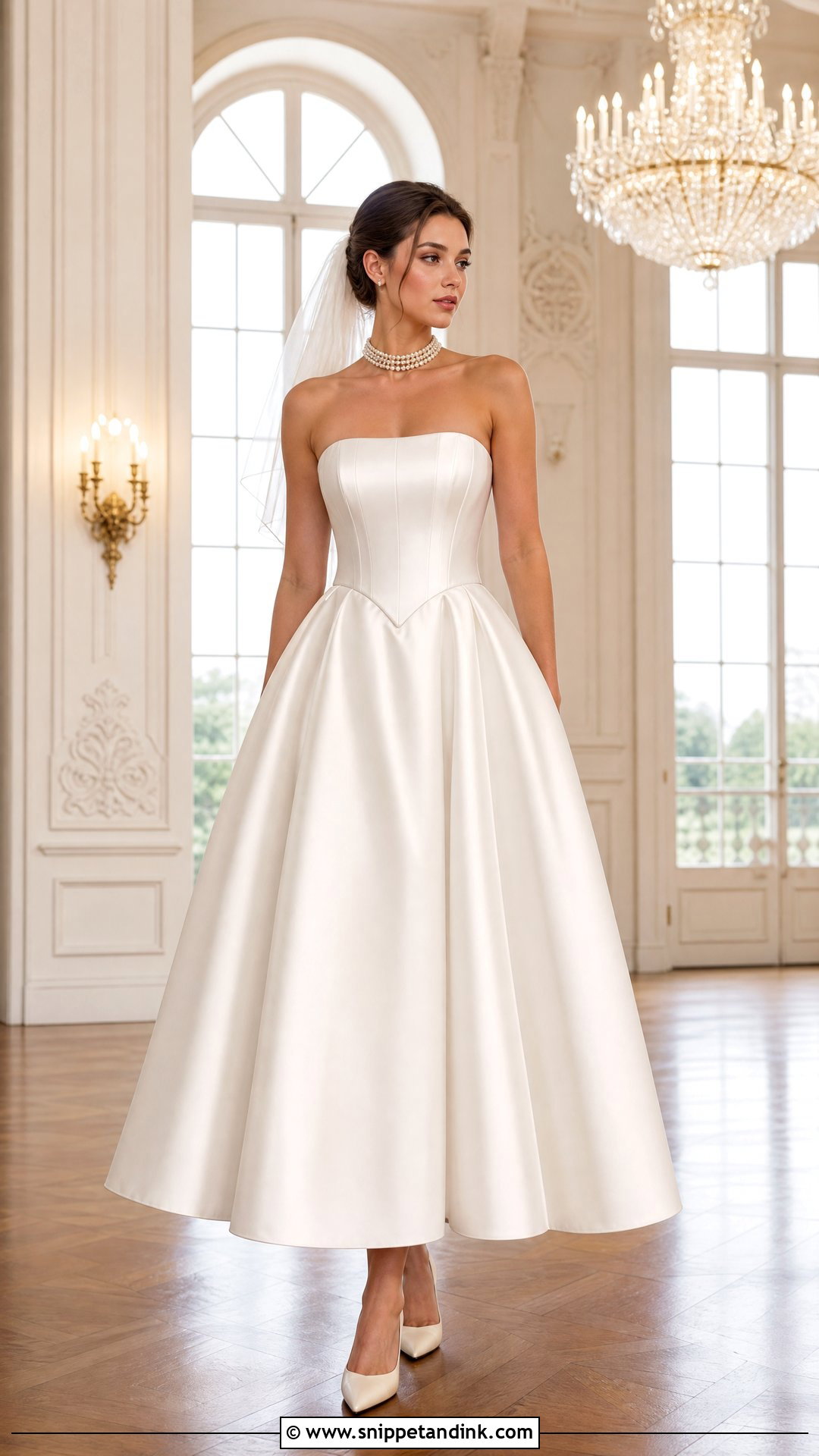
A basque waist dips to a point at centre front, which gives a trainless skirt shape and drama on its own. Torso length decides whether it works. If the point lands too high, it looks like a standard waist; too low and it digs in when you sit. I’d book the alterations with a tailor experienced in corsetry. Strapless reads more formal, and wide straps give extra support. Because the waistline is already the detail, leave the skirt plain and wear a pearl choker, small earrings and pointed pumps.
17. One-Shoulder Crepe Wedding Dress
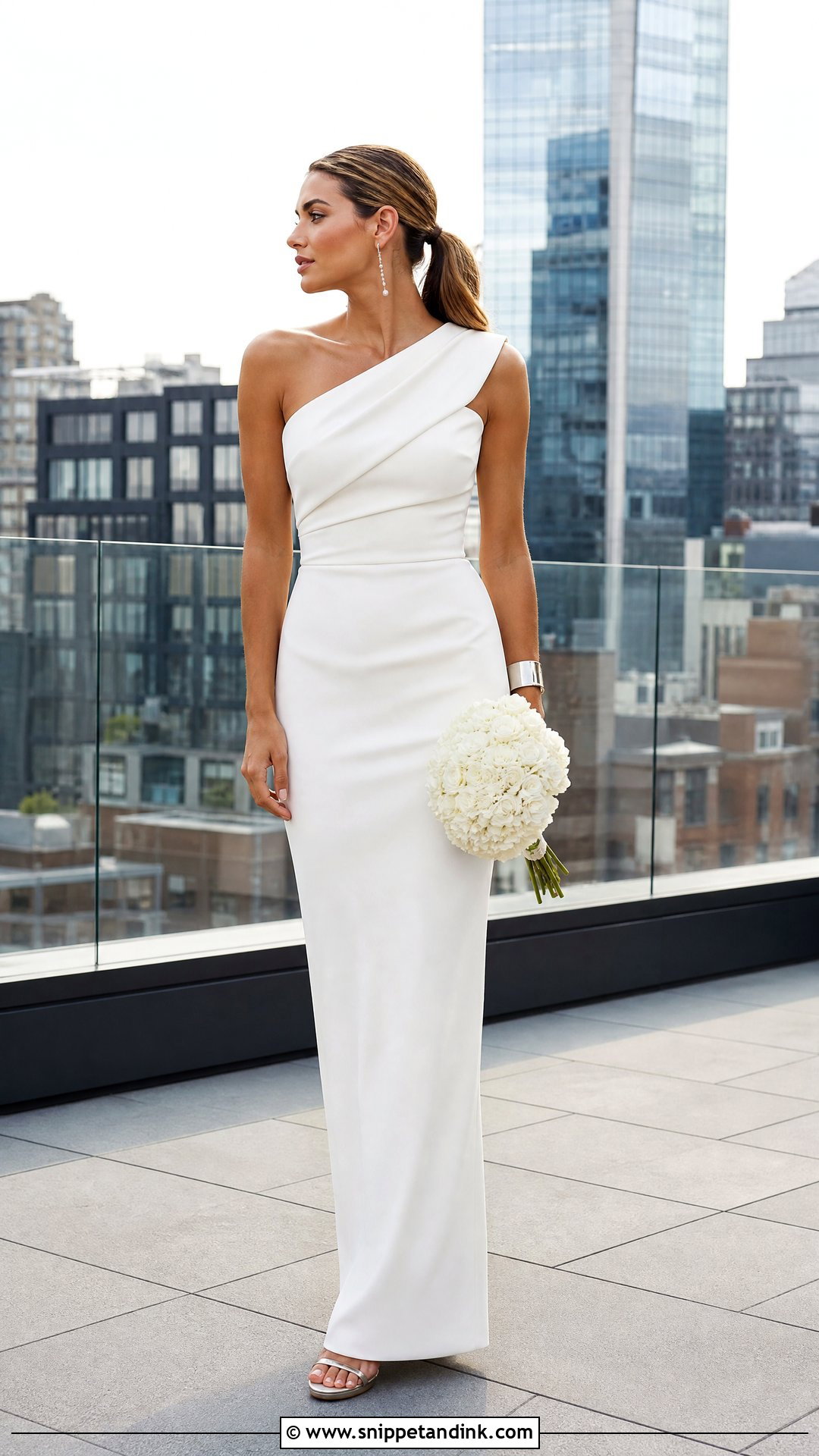
One-shoulder crepe gives a single diagonal line that draws the eye without needing anything behind you. The strap must be anchored or it shifts toward the neck when you lift your arm. Put a statement earring on the bare side, or wear slim matched drops if one earring feels off-balance. A cuff, metallic heels and a sleek ponytail suit it. Honestly, I’d skip the veil and wear a simple comb; most veils fight the asymmetry. Rooftops and modern receptions are its natural setting.
18. Halter-Neck Wedding Dress
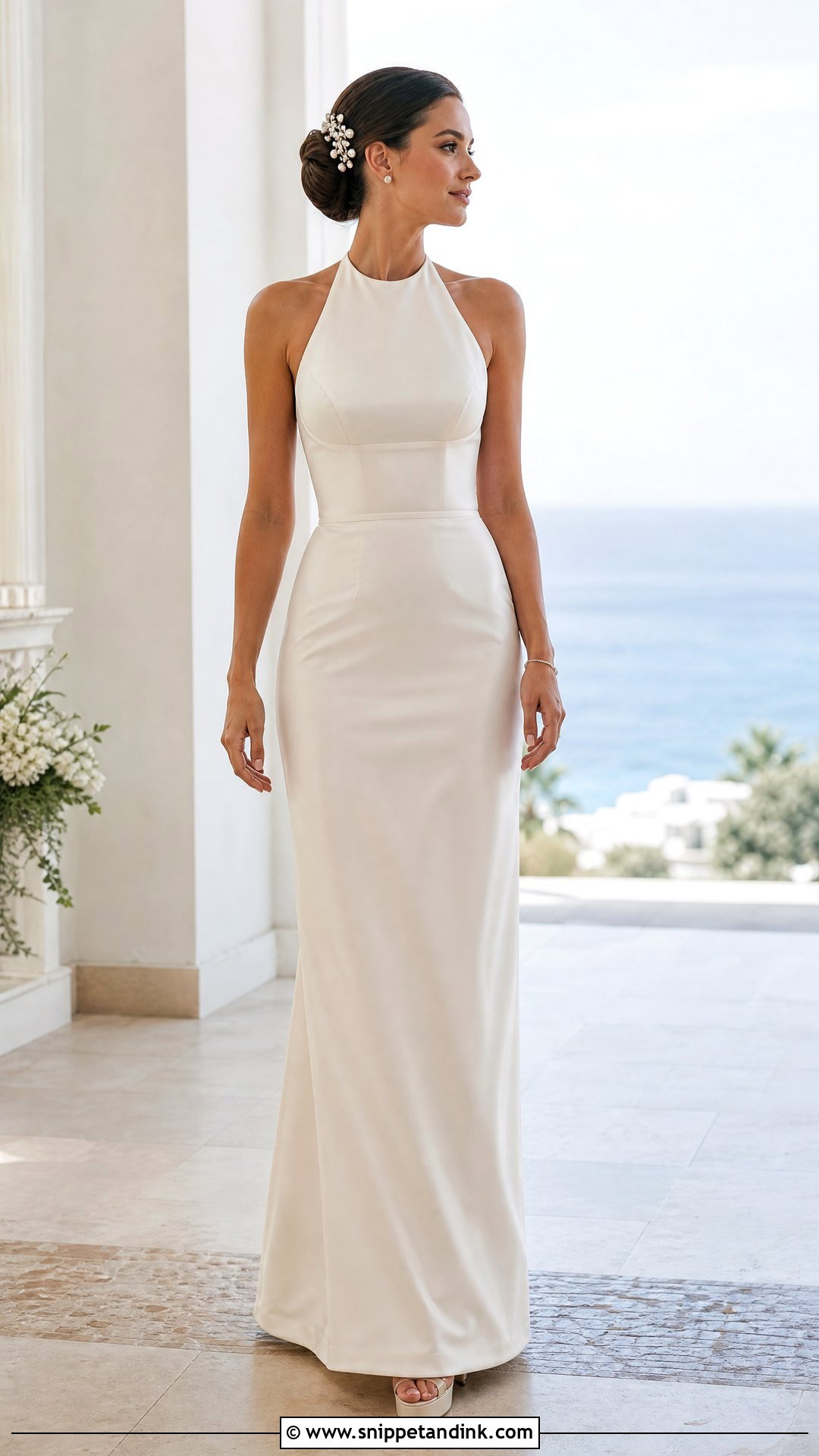
Halters frame the face and shoulders and suit warmer climates. Draped halters look relaxed, and a high structured one looks sharper and more formal. Satin, crepe and chiffon all work with an even hem. Wear the hair up or tucked behind the shoulders so the neck shape is visible, and skip the necklace. Platform or block heels are kinder than stilettos on terraces and lawns. A short veil, small bow or comb adds the bridal note, and a coastal venue is where it makes most sense.
19. High-Low Wedding Dress
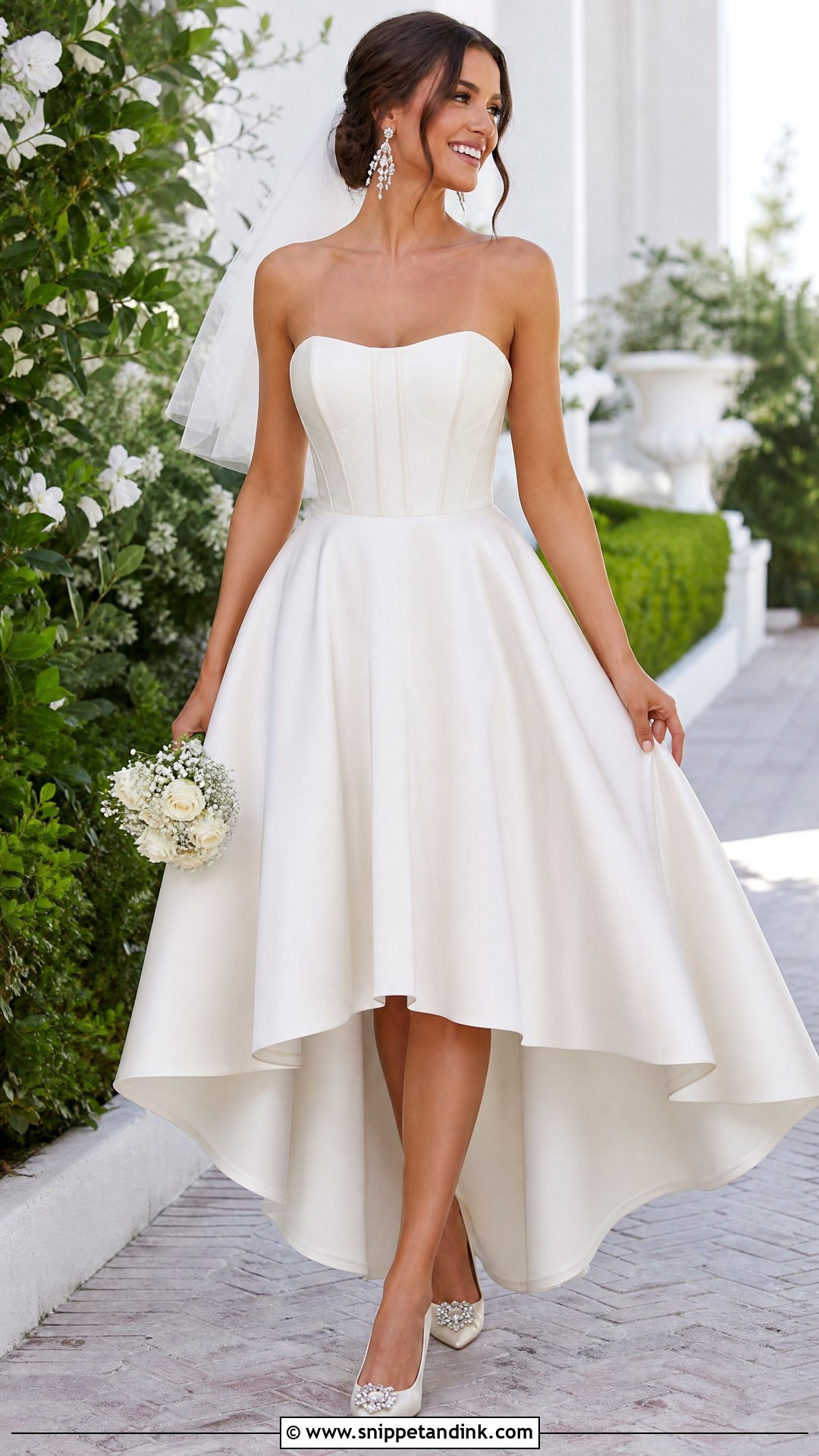
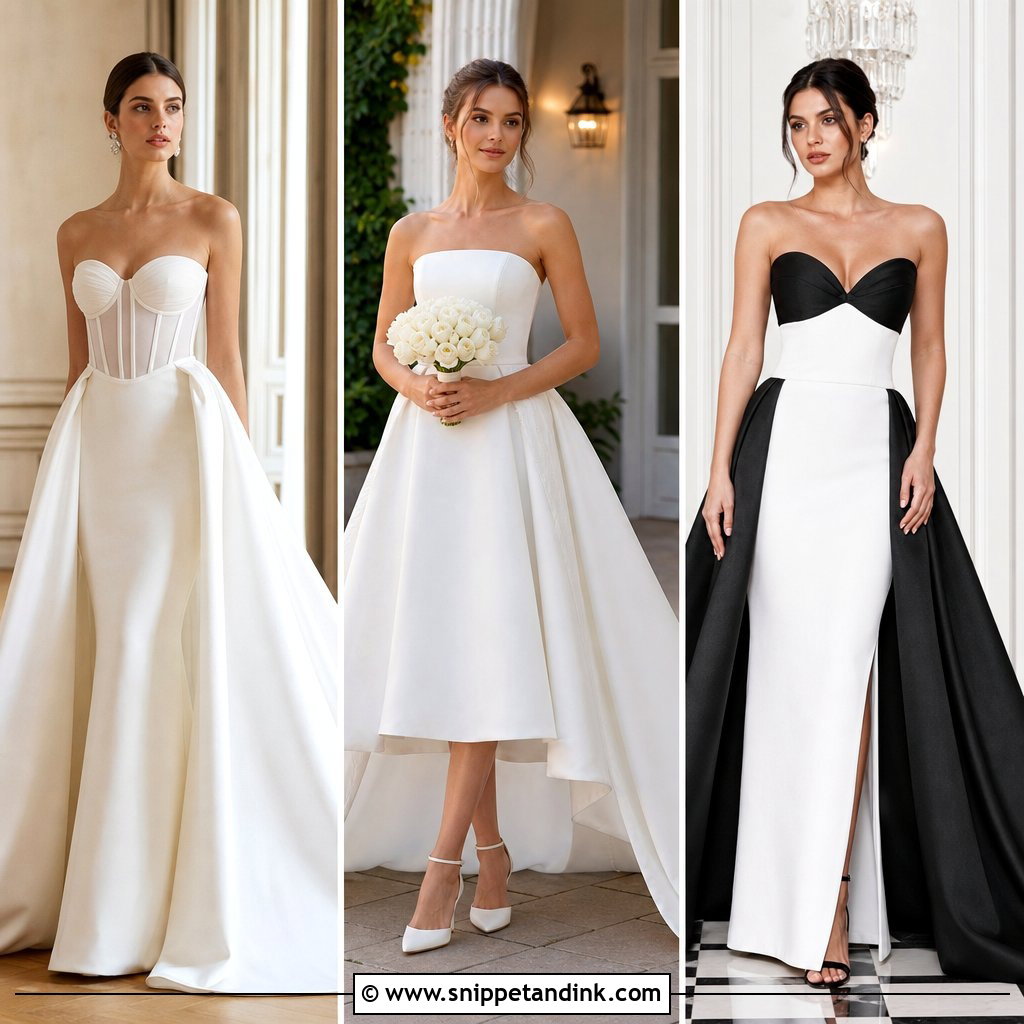
A high-low skirt keeps the presence of a full gown with the freedom of a shorter front. It finishes around the knee or mid-calf in front and falls to the ankle behind, without touching the floor. The ratio is what separates refined from costume. A gentle drop of a hand’s length looks graceful; a front at the thigh and back at the ankle looks theatrical. A fitted bodice anchors the uneven hem. Embellished pumps or satin ankle-strap heels, statement earrings and a short veil suit an outdoor or destination wedding.


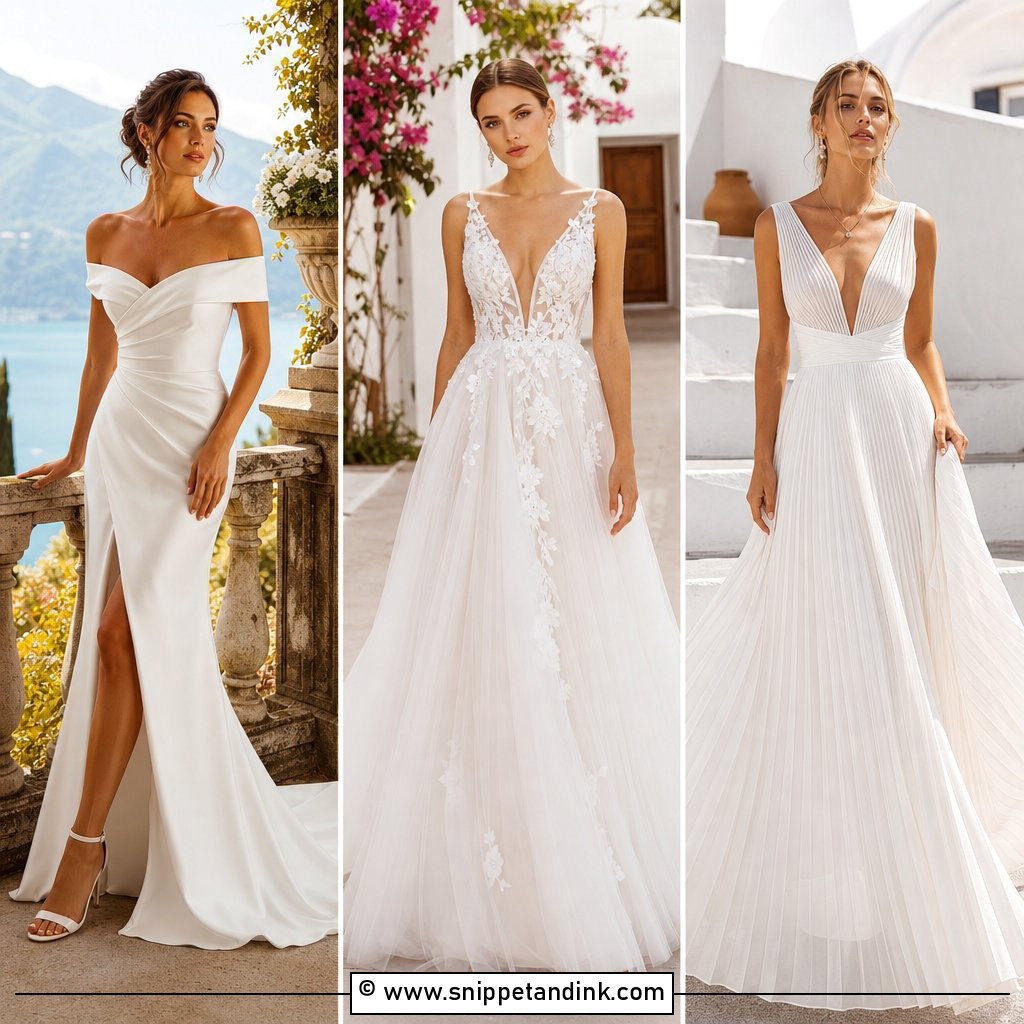
20. Floral Appliqué A-Line Wedding Dress
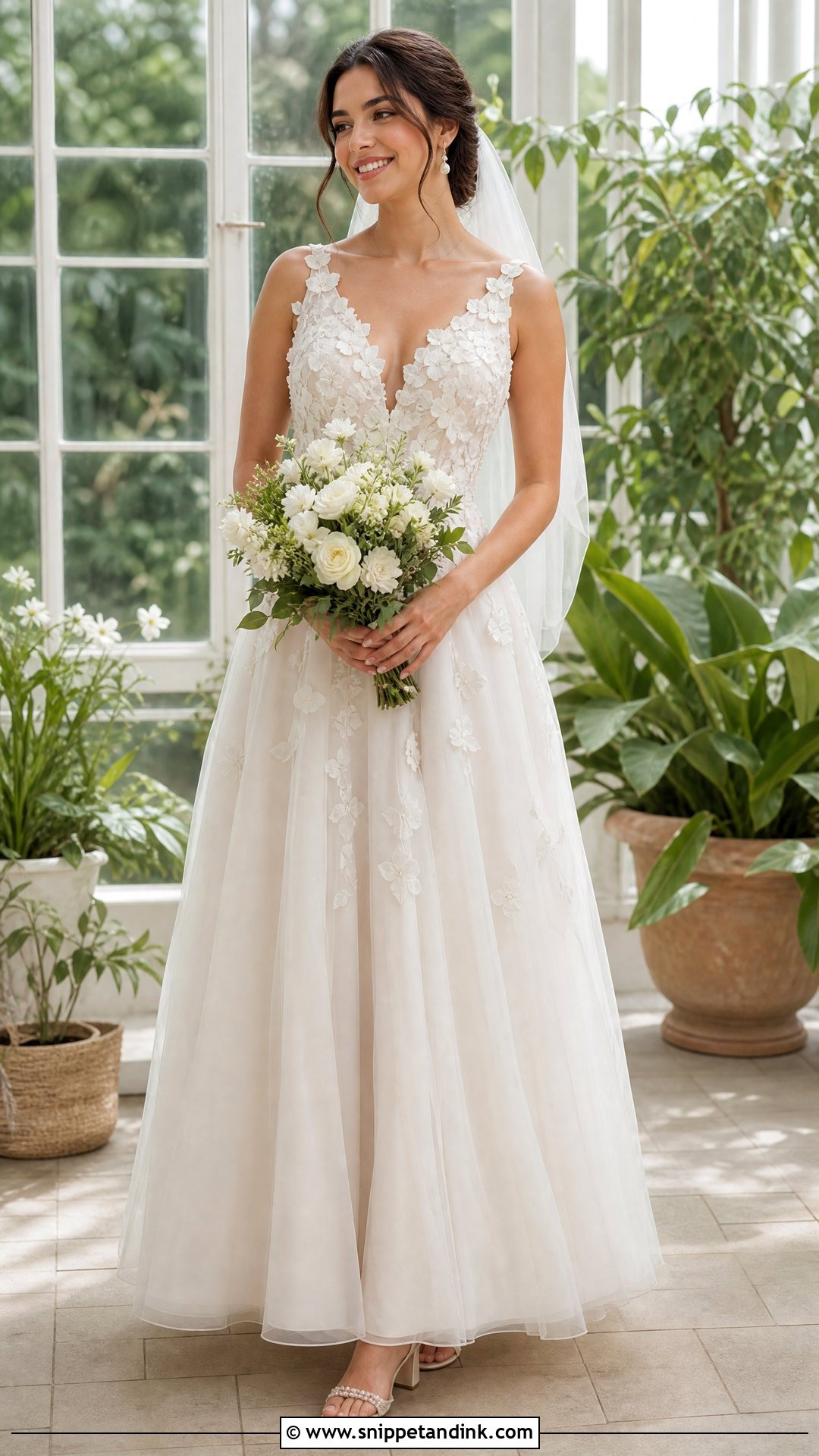
Appliqué flowers clustered at the bodice and thinning down the skirt keep an A-line airy below the waist. That placement matters, as heavy appliqué at the hem pulls the skirt flat. A blush, champagne or ivory lining behind white flowers lifts the texture out of the background. Pointed pumps, pearl drops and a sheer veil suit the romance, and a bouquet with similar flower shapes connects it all. Avoid heavy necklaces if appliqué runs onto the neckline. Gardens and conservatories suit it best.
Setting a Floor-Length Hem That Never Catches
A trainless dress lives or dies on its hem. At the first alteration appointment I mark it with the bride in her wedding shoes, standing naturally rather than on tiptoe. For a floor-length gown, the front usually clears the floor slightly so you can walk forward without kicking it, while the back just kisses the ground. If you change heel height later, the hem has to be redone.
- Commit to your shoes before the first fitting. Swapping a 9cm heel for flats leaves several centimetres of fabric to trip on.
- Have the lining finished slightly shorter than the outer layer so it never peeks out or catches.
- Walk up a step during the fitting. A hem that’s fine on a flat floor can catch on stairs.
- For outdoor weddings, a slightly shorter hem saves the fabric from dew and dirt without looking cropped.
Can a train be removed from a gown you already own?
Often, yes. A plain satin or crepe train can usually be cut back to floor length by an experienced bridal seamstress. Lace with a scalloped edge is harder, because the scallop has to be cut off and re-applied around the new hem, which takes more time and costs more. Heavily beaded or layered tulle trains vary. Bring the dress in early and ask for an honest view of what the finished edge will look like before anyone picks up scissors.
Walk the Hallway in Your Real Shoes
A dress doesn’t need a trailing hem to feel formal or romantic. Satin, lace, chiffon, crepe and appliqué all carry a ceremony on their own. Start with the silhouette that suits your venue and how you want to move, then add veil, jewellery and any removable layer for the extra moment. The single most useful thing you can do is wear your actual wedding shoes to every fitting and walk, sit and dance in them. A trainless gown fitted that way stays tidy from the first photo to the last song.
You'll Like These Ideas:





Leave a Reply