
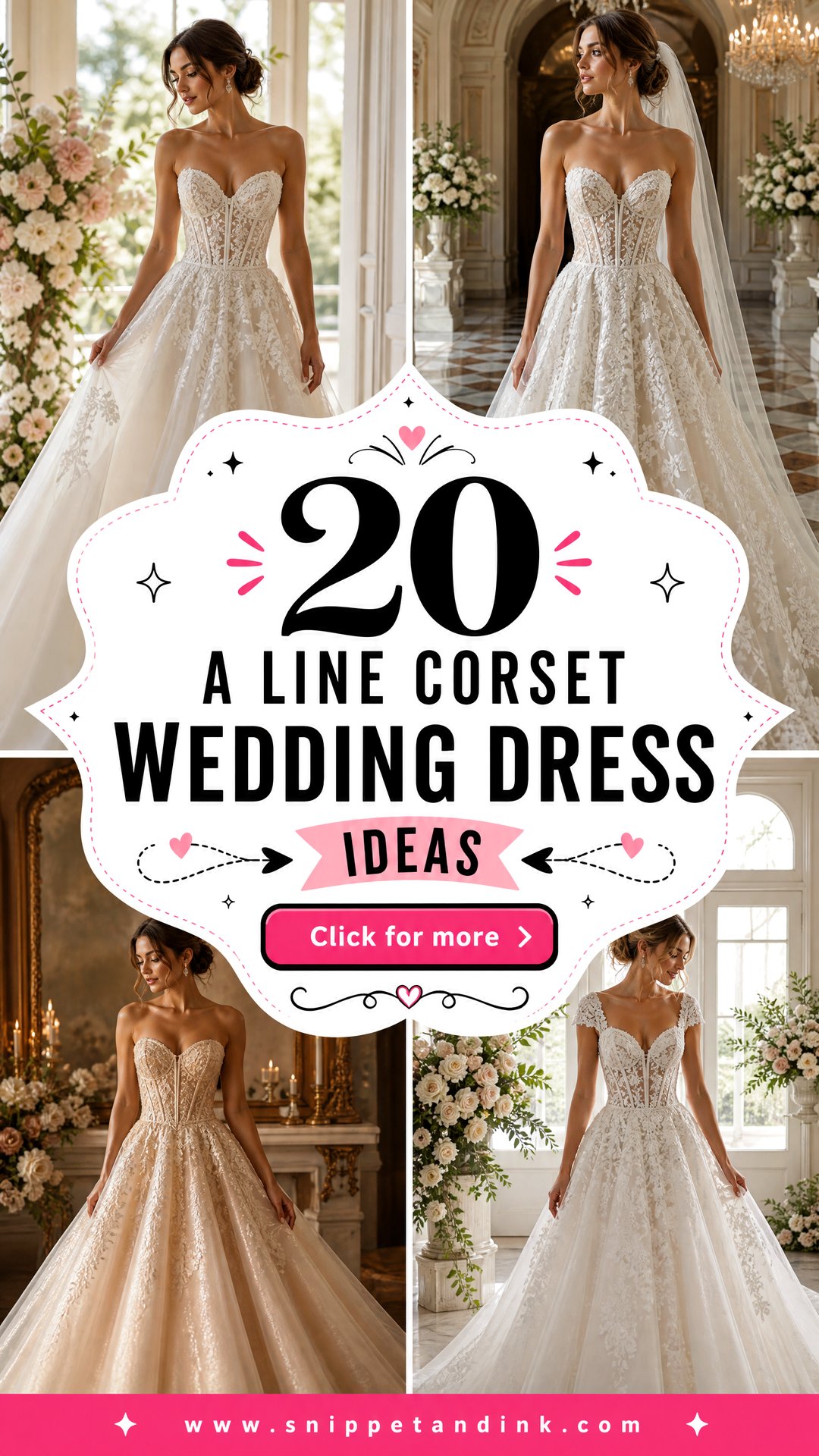
A corset bodice over an A-line skirt is one of the most comfortable structured gowns a bride can wear, as long as the boning is doing the holding and not the lacing. The bodice gives you support and a defined waist; the skirt opens away from the hips so you can still walk, sit and dance. Designers are pairing corset construction with exposed boning, floral appliqués, detachable sleeves, Basque waists and pale colours, in lace, satin, tulle, organza and jacquard. I’ve put together twenty full looks, gown through to shoes and veil, with the fitting checks I’d make on each one.
What Is Inside a Bridal Corset, and Why I Always Ask
Two corset bodices can look identical on the outside and feel completely different by the speeches. The difference is the boning and the waist tape, and it’s worth asking the boutique what’s in the dress you love.
- Spiral steel boning bends with your body in two directions, so it moves when you sit and bend. It is the most comfortable for a long day and the most common in better-made gowns.
- Flat steel is rigid and usually sits at the centre back or beside the closure, where it stops the fabric wrinkling.
- Plastic boning is light and cheap. It works in a lightly structured bodice, but body heat can soften it, and over a long day it can bend permanently and leave ridges.
- A waist tape, a firm band sewn inside at the waist, takes the strain off the zip or lacing. If a gown doesn’t have one, a seamstress can usually add it.
When I put a bride into a corset gown, I fasten the waist tape first and then close the bodice. If the dress only feels secure once it’s laced hard, the structure is wrong for her, and no amount of pulling will fix that.
Underwear matters too. Most corset gowns have cups built in, so you won’t need a bra, but a smooth, no-line thong and possibly a thin slip help the skirt hang smoothly. Bring whatever you’ll wear on the day to every fitting.
1. Sweetheart A-Line Corset Wedding Dress
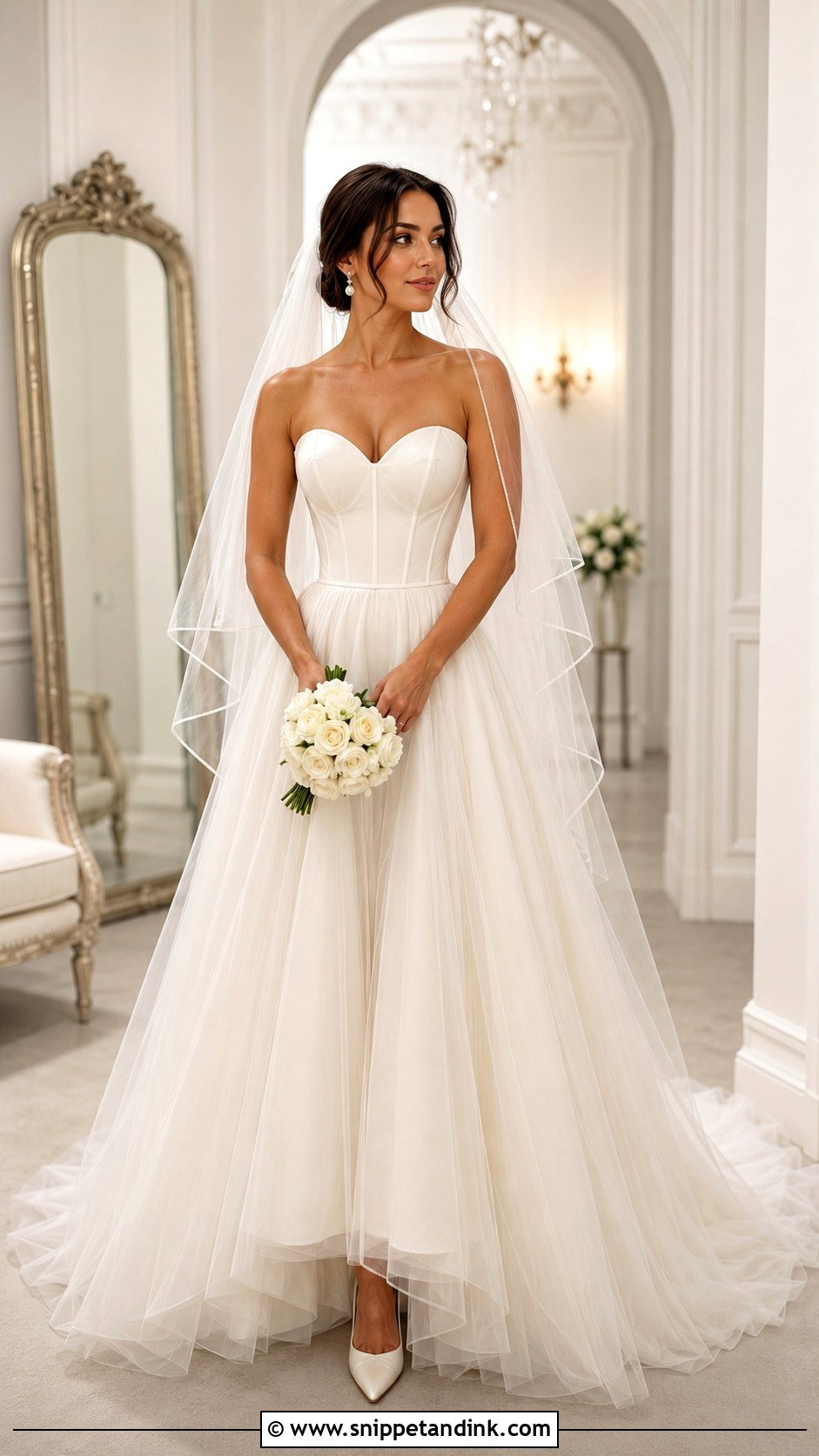
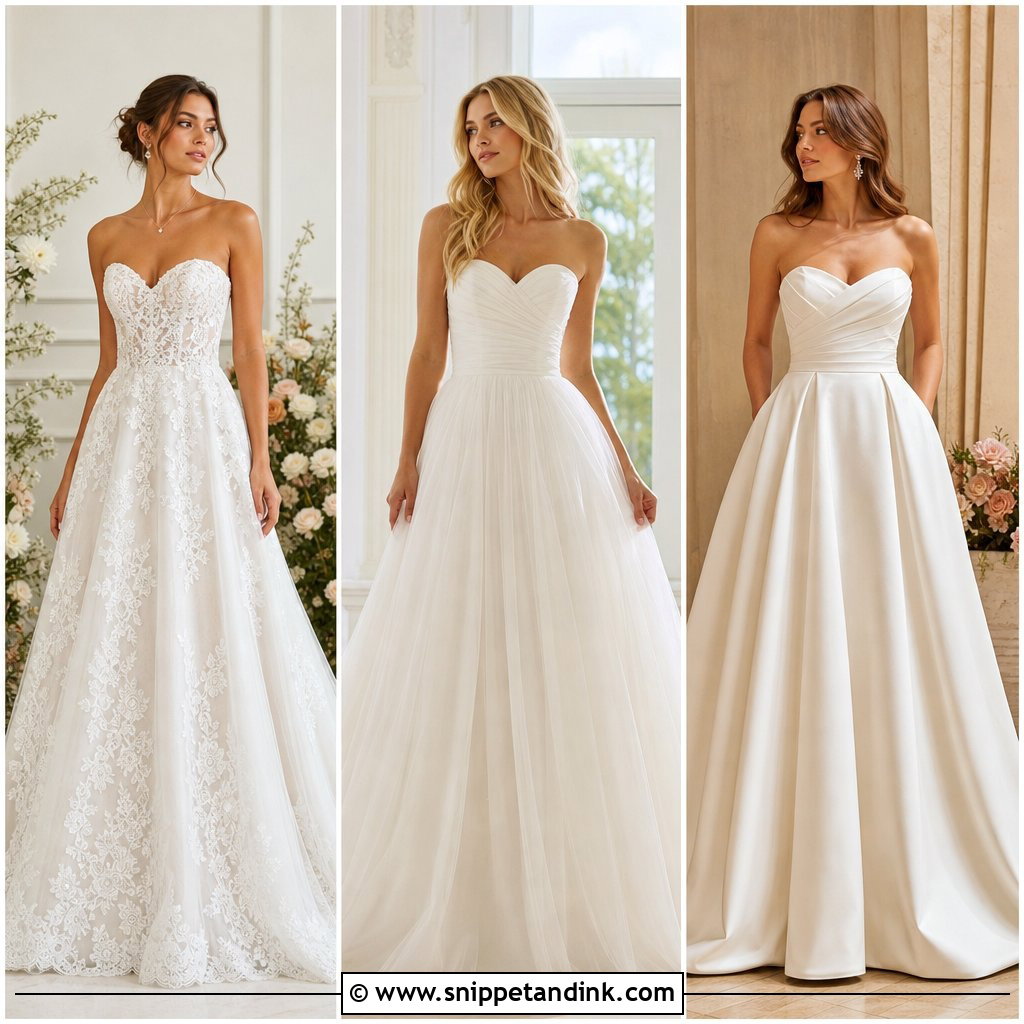
Start here if you’re unsure. A sweetheart neckline curves over the bust and softens all that structure, and with layered tulle below, the gown stays light. The cups are what I check first: they should sit flush with no gap when you lean forward. A fingertip veil with a narrow satin edge, pearl drops and pointed-toe pumps finish it, with a small bouquet of white roses and greenery. Keep hair low or swept to one side so the curve of the neckline shows. If you need to pull the lacing hard to stop the cups moving, the bodice is the wrong size.
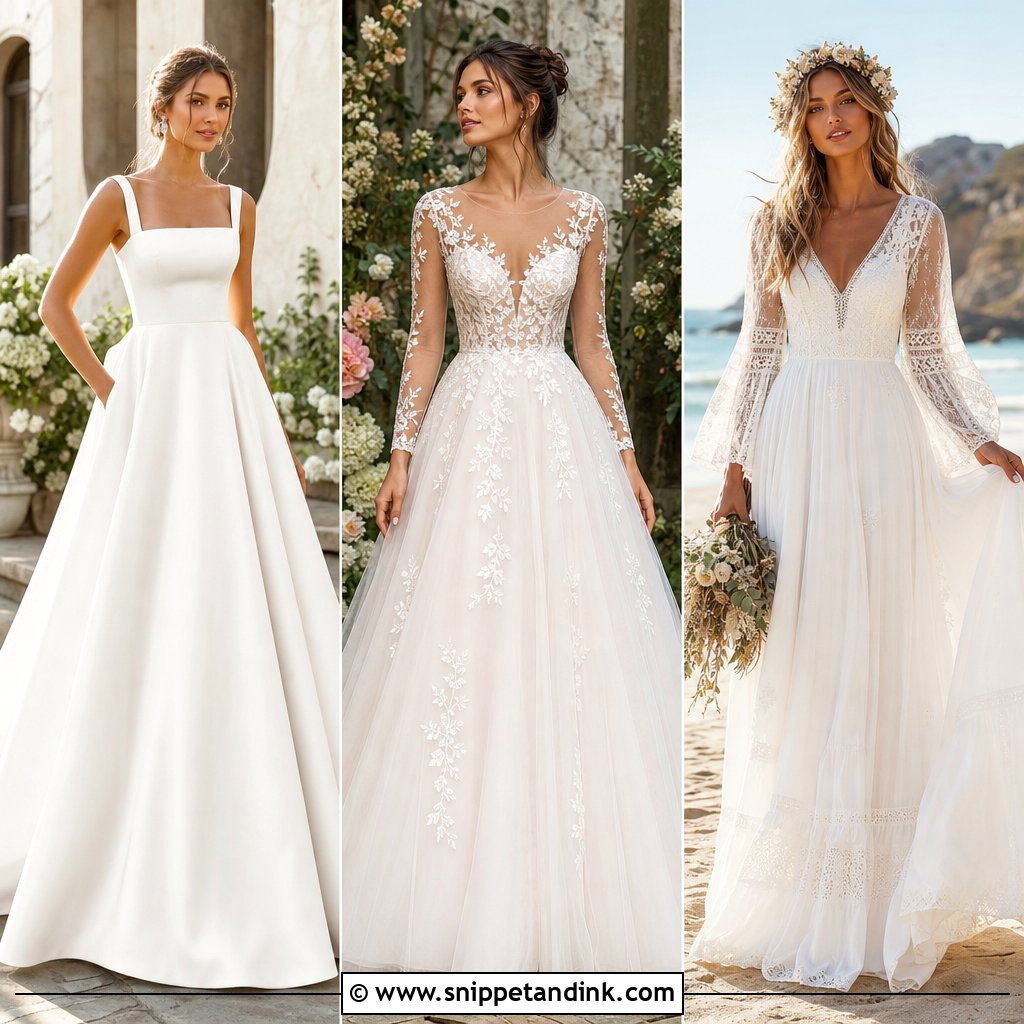
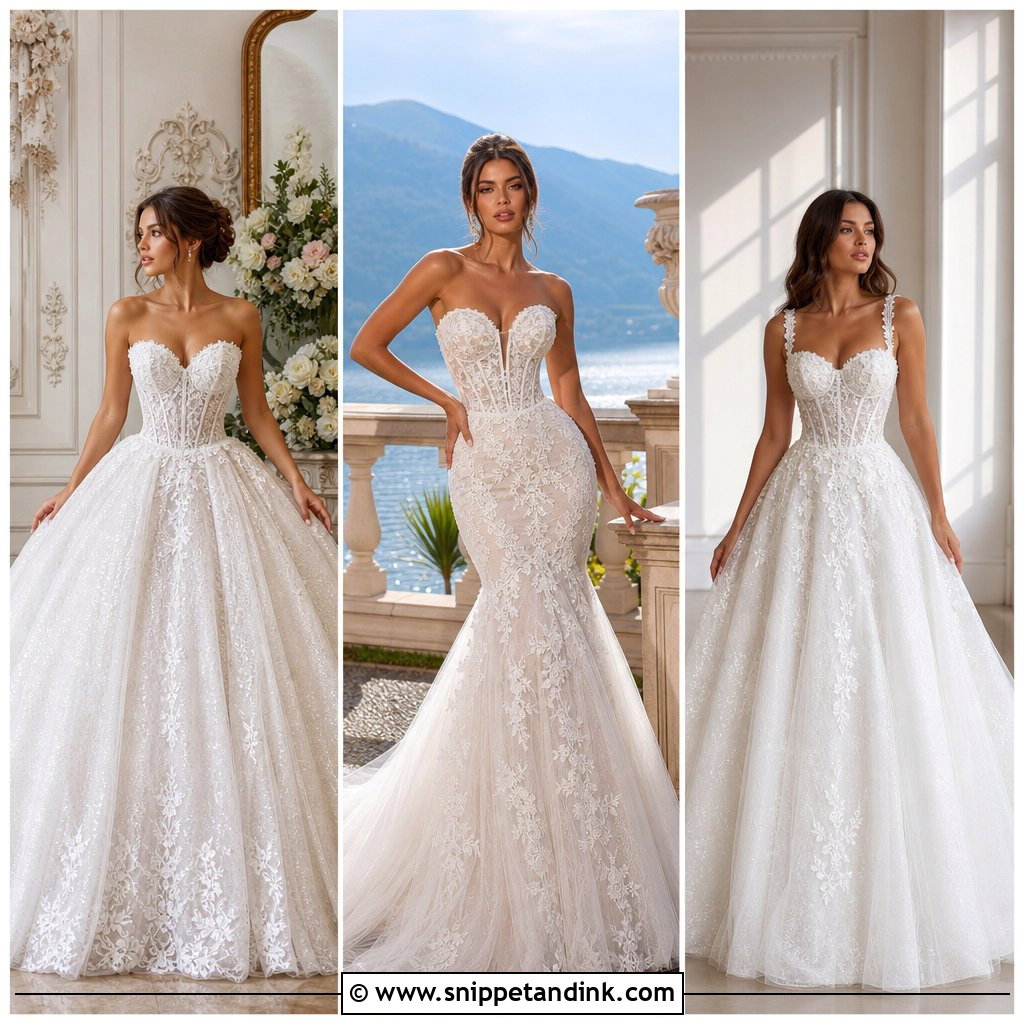
2. Lace A-Line Corset Wedding Dress
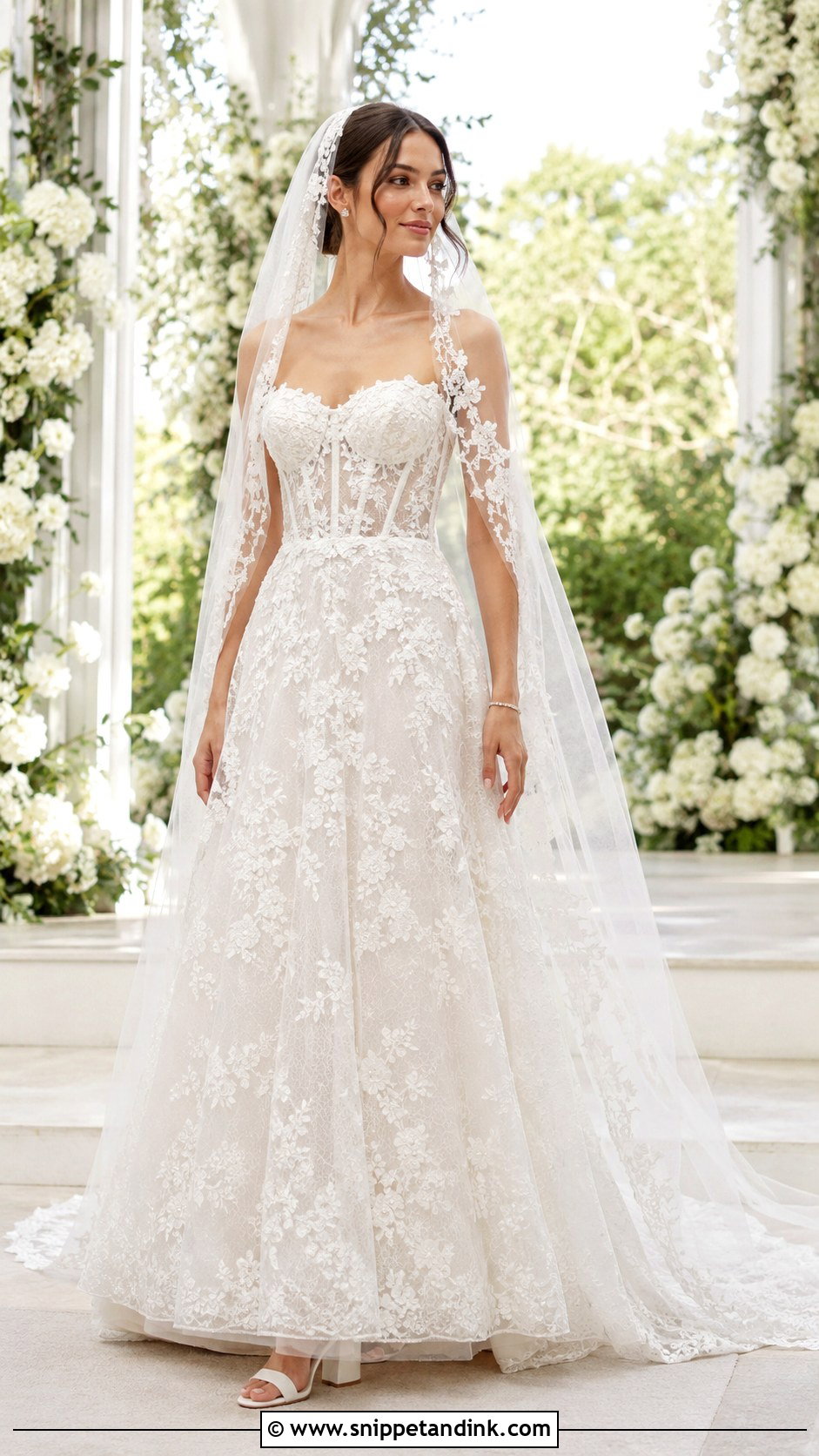
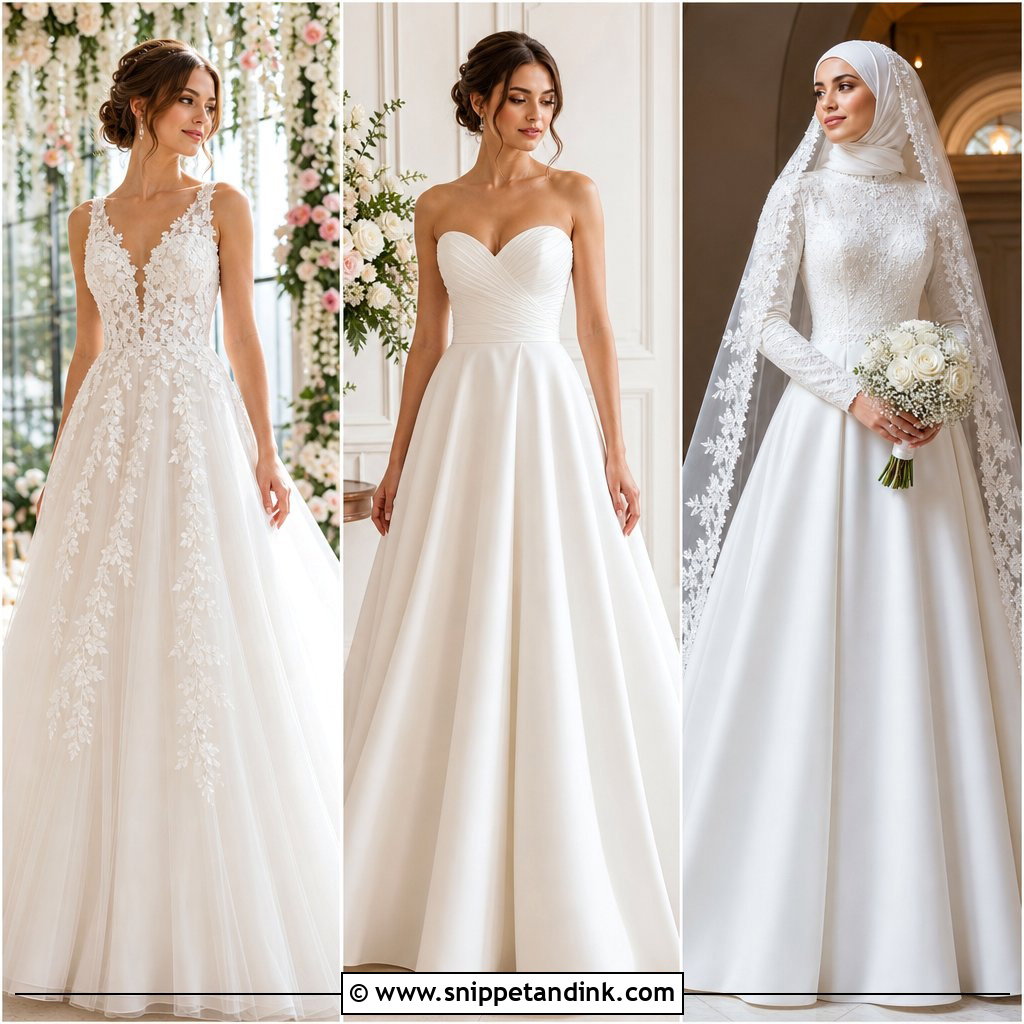
Lace is the gentlest way to wear a corset, because it blurs the boning lines while the shape underneath stays exactly the same. The part I fuss over is where the lace stops. A motif that ends abruptly at a side seam, or cuts across a boning channel, looks cheap even on an expensive dress, so ask your seamstress to move or trim appliqués to finish cleanly at the waist. A light lining gives coverage without hiding the pattern. Pair it with a chapel-length lace veil, small crystal studs and ivory block heels. A neat chignon suits a formal room; polished waves suit a garden.
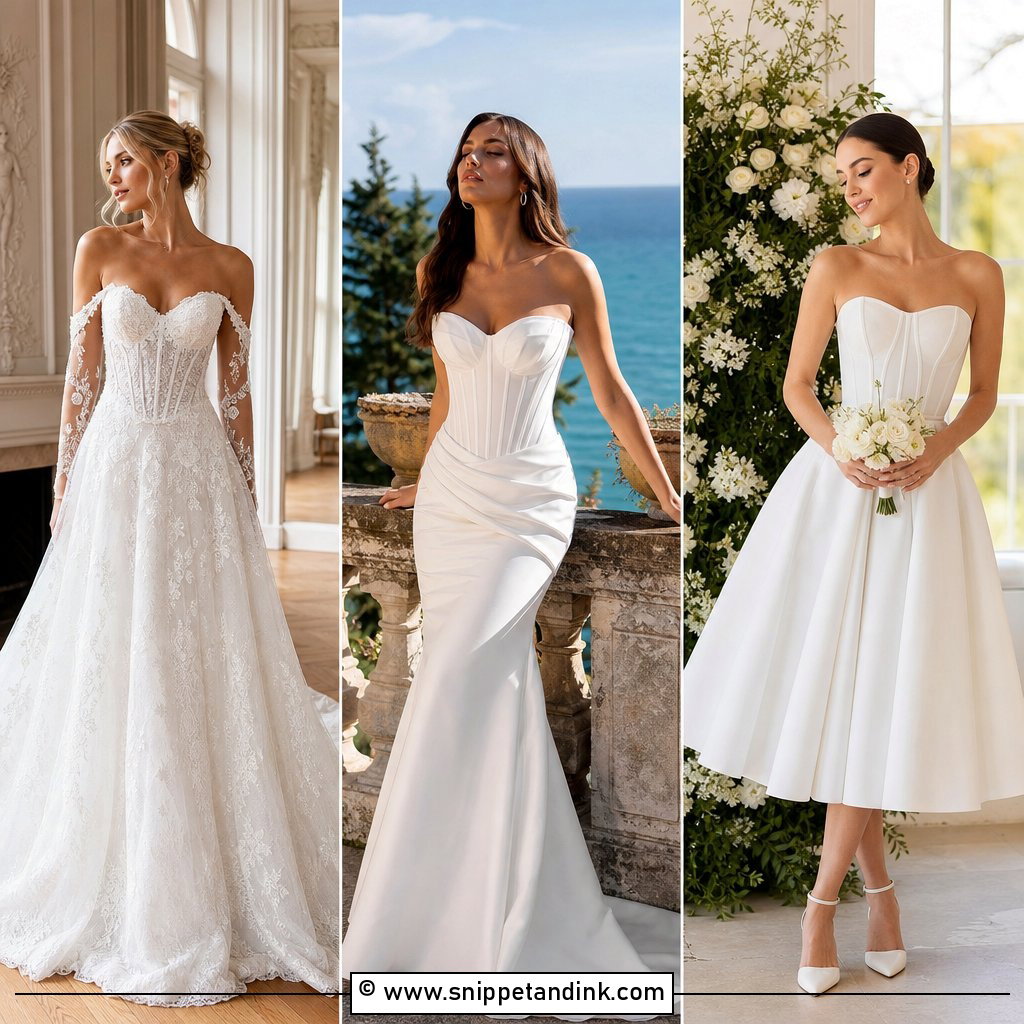
3. Strapless Satin A-Line Corset Wedding Dress
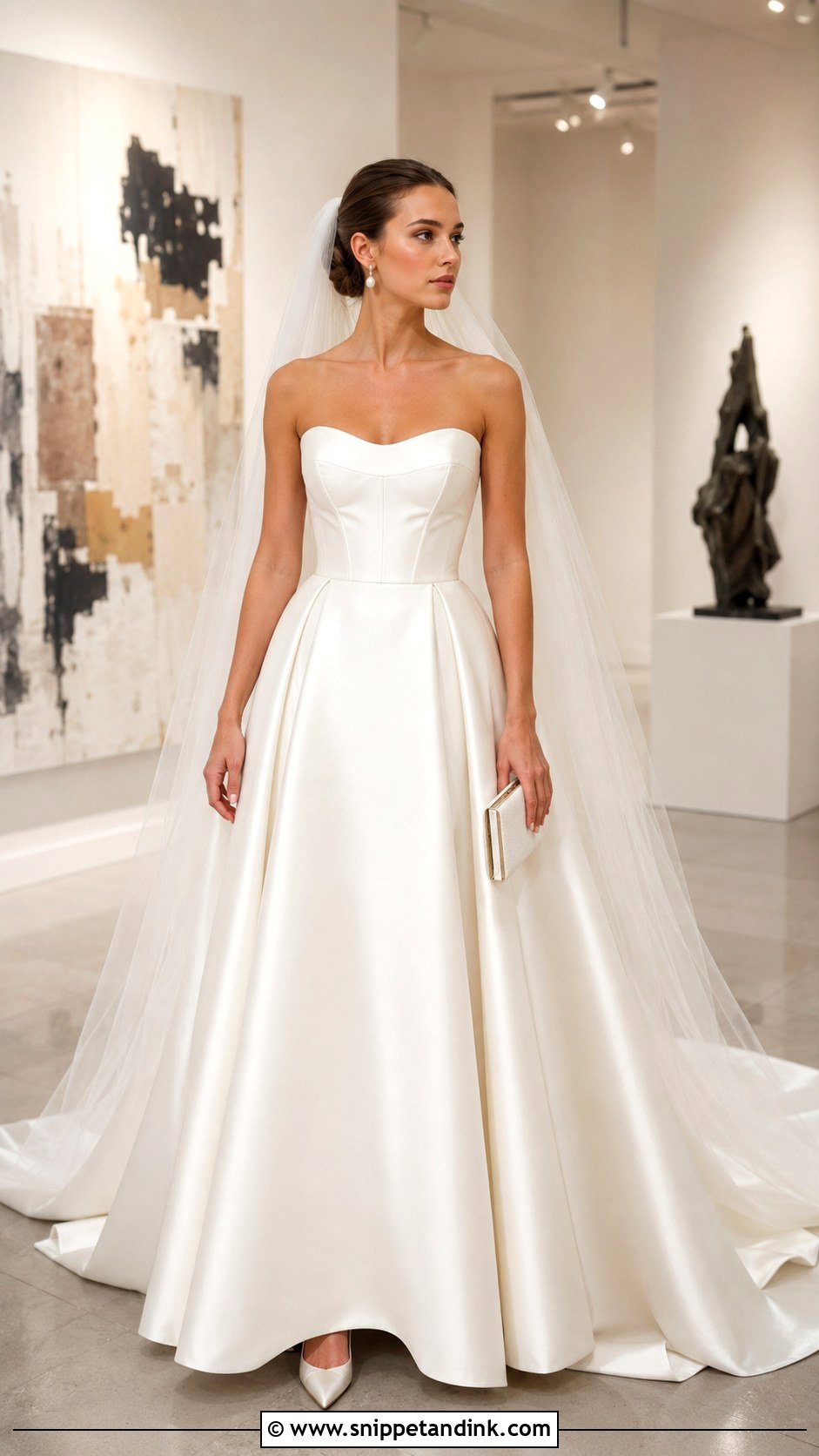
Strapless satin is the cleanest version of this silhouette and the least forgiving. Satin shows every ripple, so any seam that isn’t perfectly pressed or any bust that isn’t perfectly fitted becomes visible in flash photography. A straight or softly curved neckline needs firm internal boning to stay put without straps. Box pleats or soft gathers give the skirt some movement. I’d keep the rest simple: a cathedral veil, pearl button earrings, satin pumps and a structured clutch. Long gloves add drama for the ceremony and come off for dinner.
4. Off-The-Shoulder A-Line Corset Wedding Dress
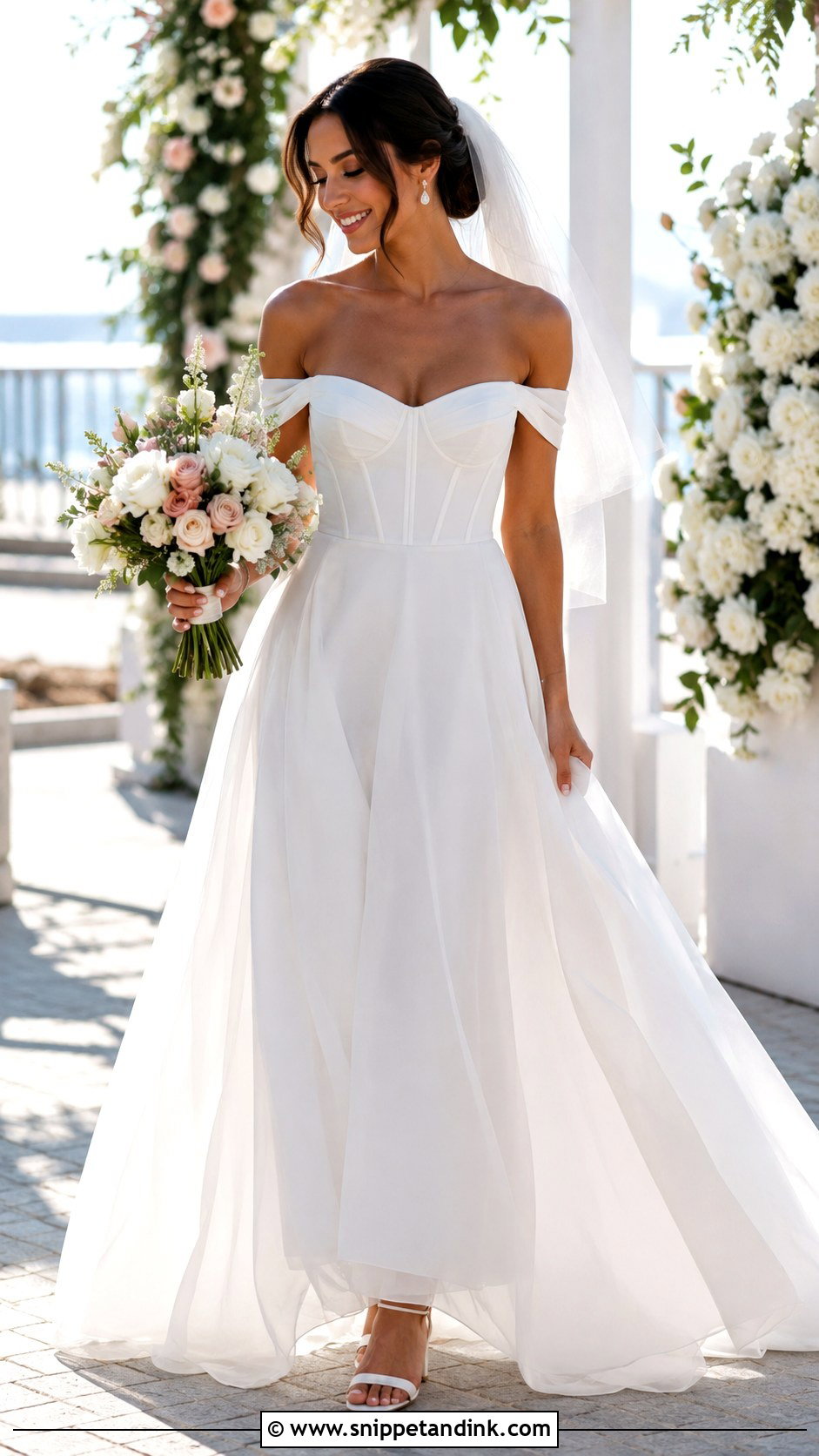
Off-the-shoulder straps soften a boned bodice, but they carry no weight. That’s the point people miss. The corset has to hold the dress up on its own, so the straps are decoration that frames the collarbones. Detachable draped straps let you change the look between ceremony and reception. A flowing tulle or organza skirt keeps it romantic without extra weight. Add a mid-length veil, teardrop earrings and low block-heel sandals, with a loose updo and a few face-framing pieces. When you hug someone at the fitting, the straps shouldn’t drag the neckline down.
5. Long Sleeve A-Line Corset Wedding Dress
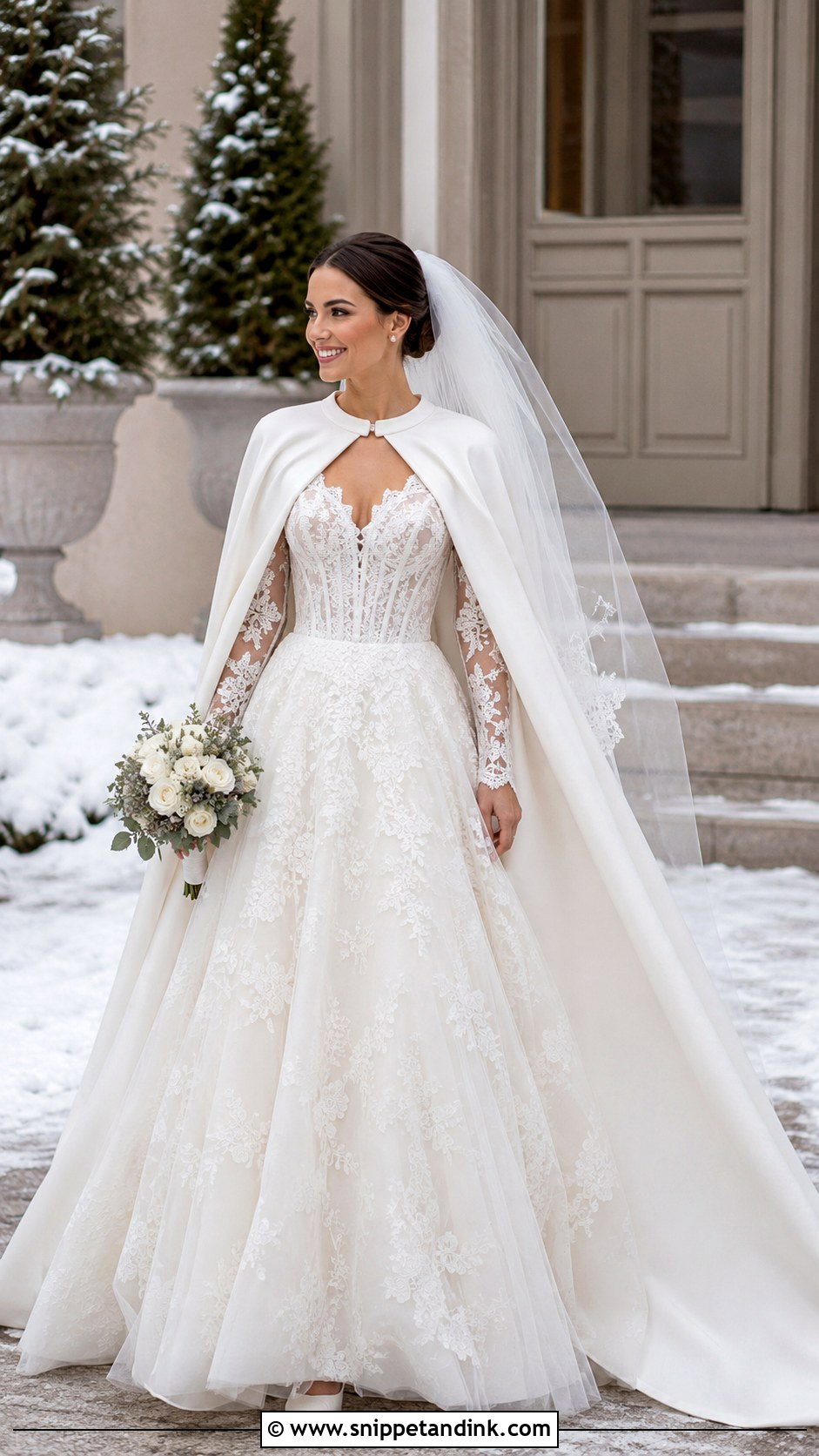
Long lace sleeves on a corset gown solve the cold-weather problem without losing the waist. I like a partially lined bodice with sheer sleeves and fitted cuffs, over a skirt in crepe, satin or layered tulle that has some substance for winter. Bend your elbows and lift your arms during the fitting, because tight armholes are what stop you hugging guests comfortably. Closed-toe pumps, pearl studs and a chapel veil tucked under a low bun complete it. A faux-fur wrap or bridal cape handles outdoor photos, and a structured bouquet of white flowers with muted greenery suits the season.
6. Square Neck A-Line Corset Wedding Dress
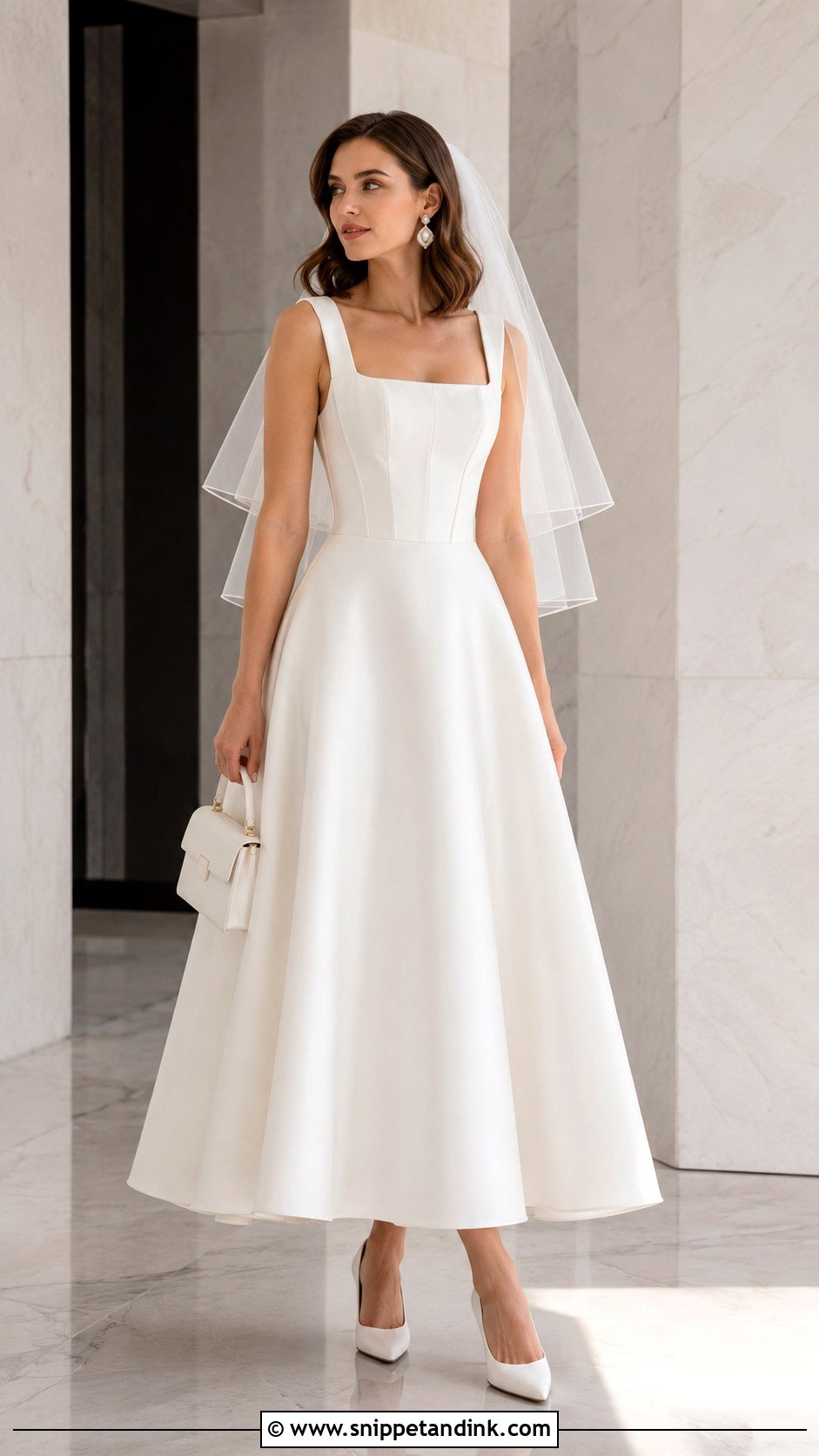
Square necklines suit corsets because the straight top edge echoes the boning. Wider straps add support and balance the shoulders. Matte satin or Mikado sculpts the bodice best and gives the skirt gentle volume without petticoats. My one test: the neckline must lie flat across the chest when you move, because a square neck that lifts at the corners looks like it’s been stuffed. Pair it with a shoulder-length veil, geometric pearl earrings, white leather pumps and a centre-parted low bun. Garden roses with trailing greenery soften the geometry if it feels too stark.
7. Basque Waist A-Line Corset Wedding Dress
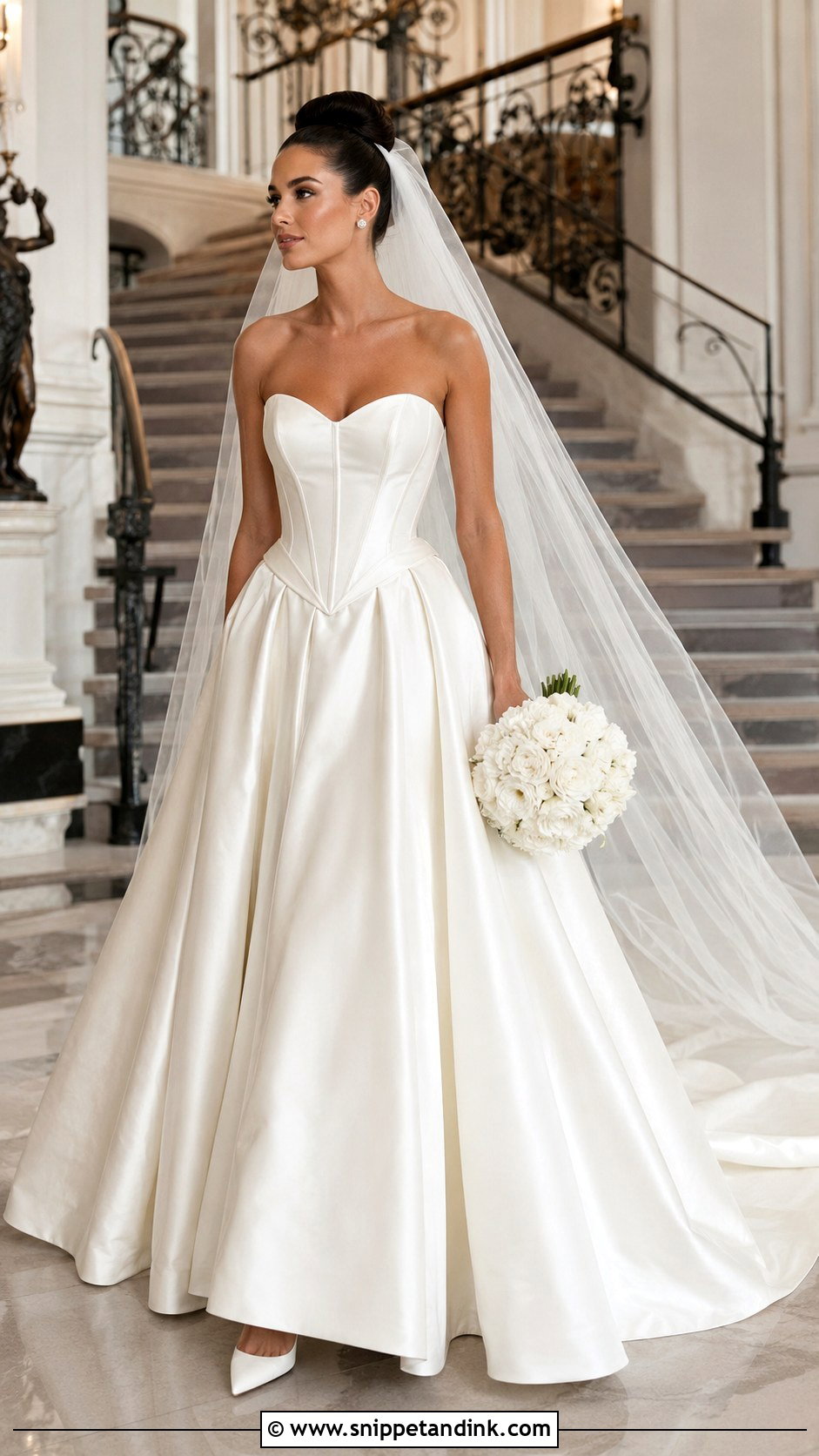
The Basque waist pushes the bodice into a V below the natural waist, so the skirt seems to spring from a point. It makes a fuller A-line look more dramatic and lengthens the torso. Satin and jacquard show the point sharply; tulle softens it. The fitting issue is depth: a point that drops too low digs into the tops of your thighs when you sit, so I always check it seated. Cathedral veil, classic studs, pointed pumps and a high bun keep attention on the waistline. Skip a big necklace, which fights with the seams.
8. Sheer Boned A-Line Corset Wedding Dress
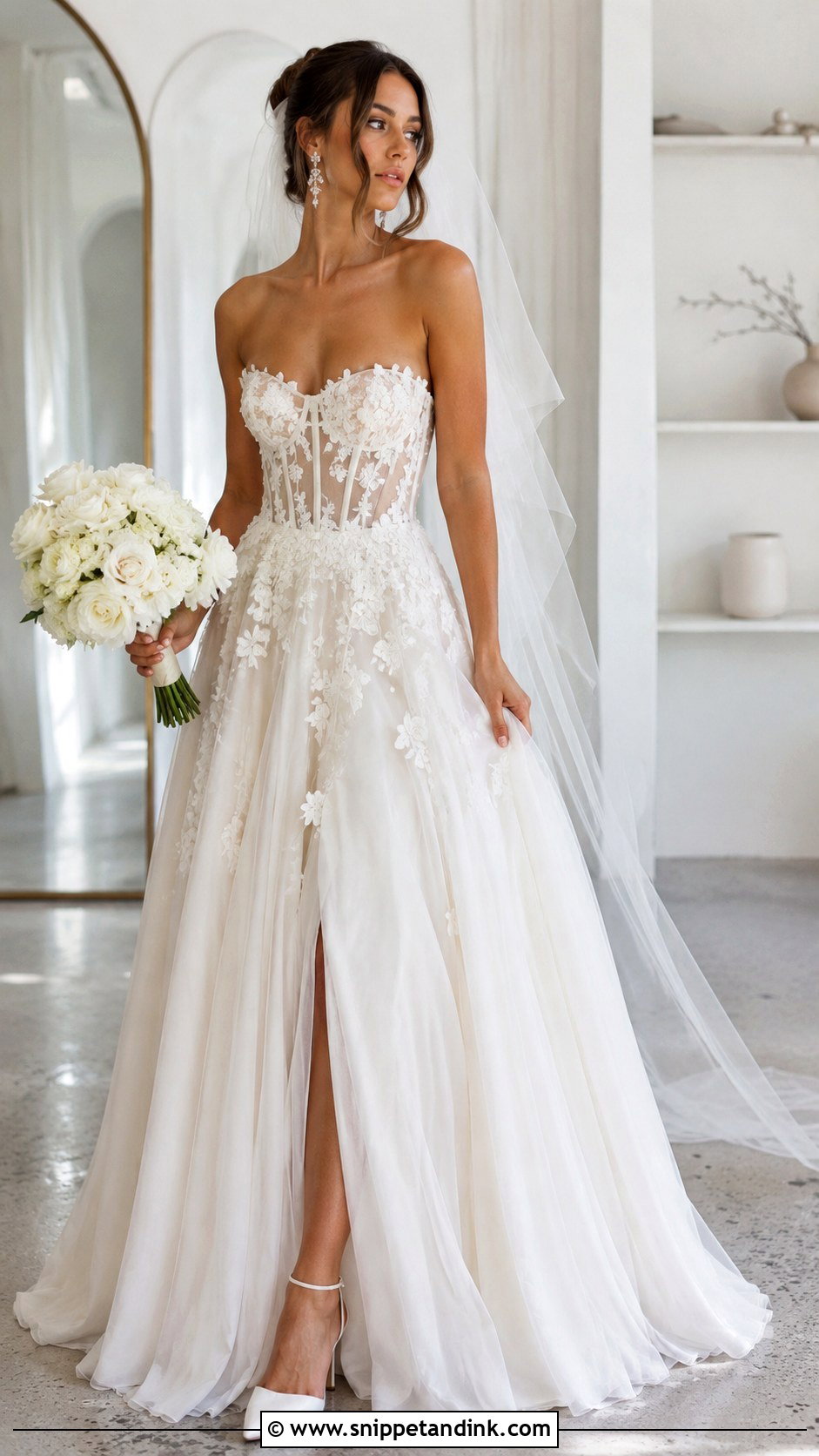
Exposed boning under sheer mesh is the fashion-forward option, and it’s the one where fit errors are most obvious. Choose illusion mesh as close to your skin tone as possible, with lace or embroidery placed where you want coverage. Any pulling shows up as wrinkles radiating from the bones, and those are hard to unsee. A lined skirt balances the bodice. An unembellished veil, crystal earrings, ivory heels and a clean white bouquet suit it, with a sleek ponytail or bun. If you want more modesty for a religious ceremony, ask about a detachable lined panel.
9. 3D Floral A-Line Corset Wedding Dress
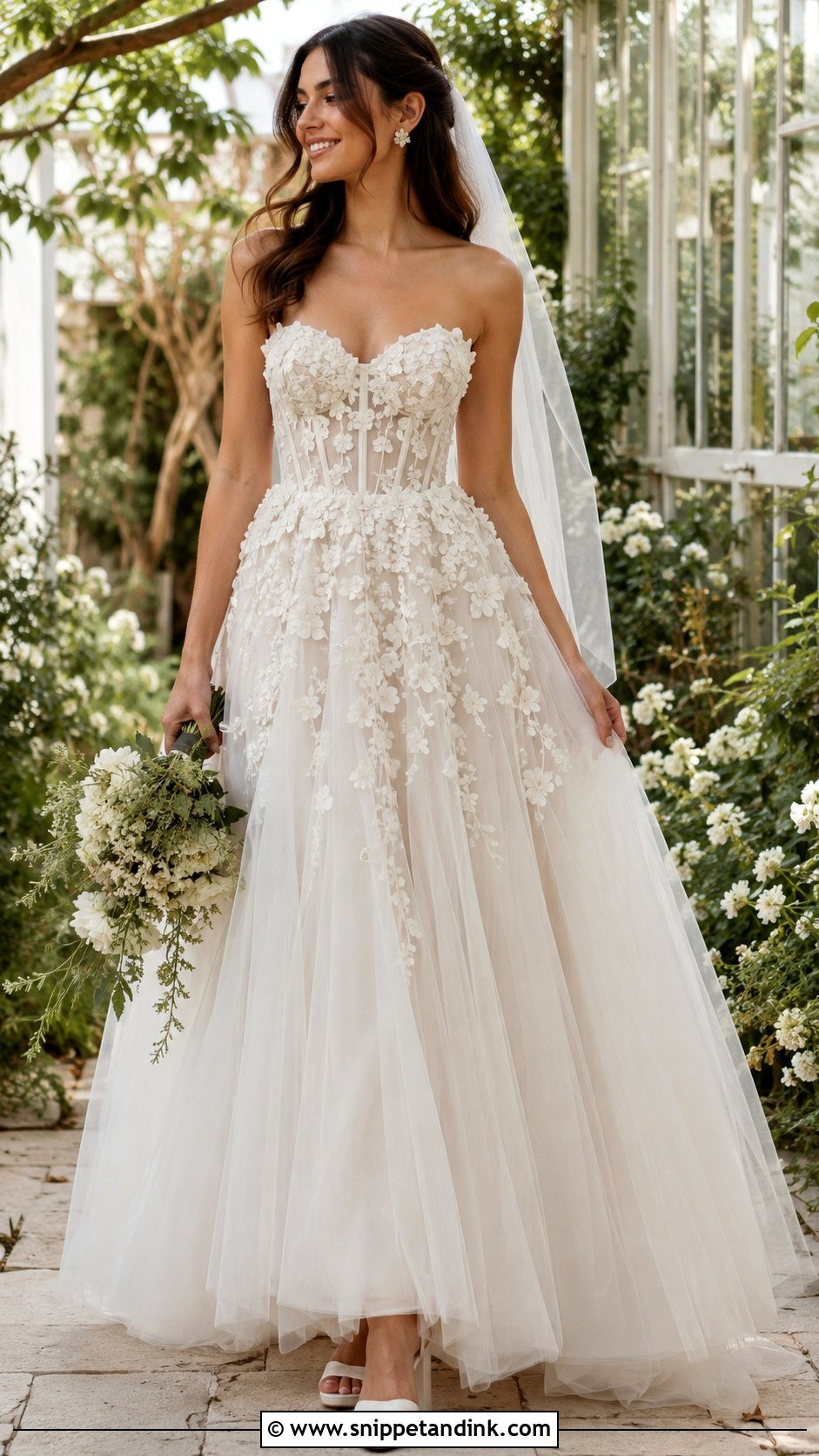
Three-dimensional flowers suit a garden wedding, and the best placement is concentrated at the bodice with a light scatter onto the upper skirt, which keeps the waist readable. My caution is practical. Raised petals near the underarm can rub, and petals with stiff edges catch on a tulle veil every time you turn your head. Feel the inside of the arm area before you commit. A plain veil, small floral studs, ivory block heels and a loose bouquet suit it, with soft waves or a low textured bun. Keep jewellery minimal.
10. Pearl A-Line Corset Wedding Dress
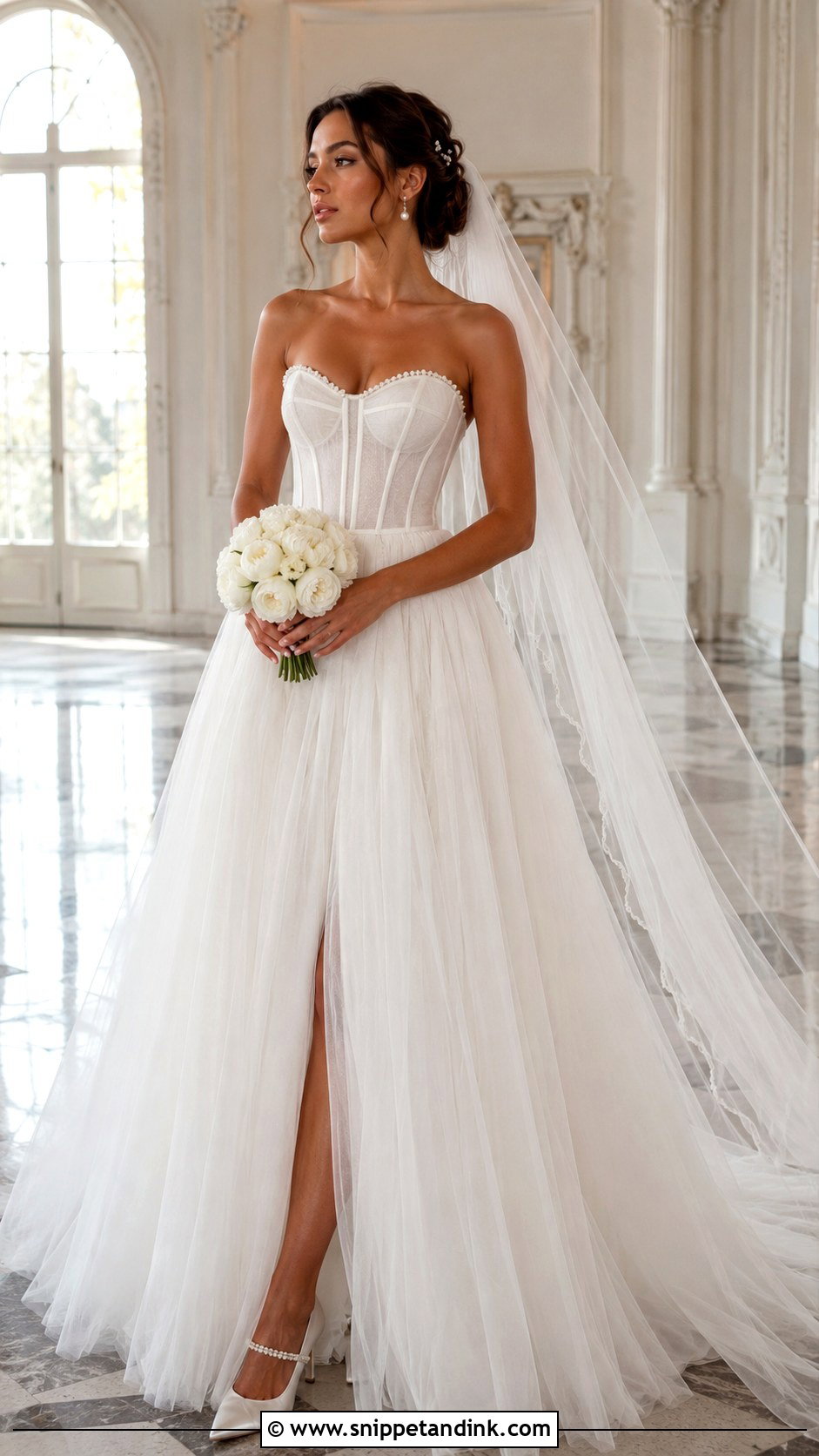
Pearls glow rather than sparkle, which makes them easier to wear in daylight than crystals or sequins. On a corset, they look best traced along the neckline, the boning lines and the waist, then scattered lightly over a tulle skirt. Pearls are usually hand-sewn, and the ones at the underarm and the back closure take the most friction, so inspect them at each fitting and ask for any loose ones to be re-stitched. Style it with a raw-edge veil, pearl drop earrings, satin heels and a few pearl pins in a polished bun. If the bodice is busy, leave your neck bare.
11. Champagne A-Line Corset Wedding Dress
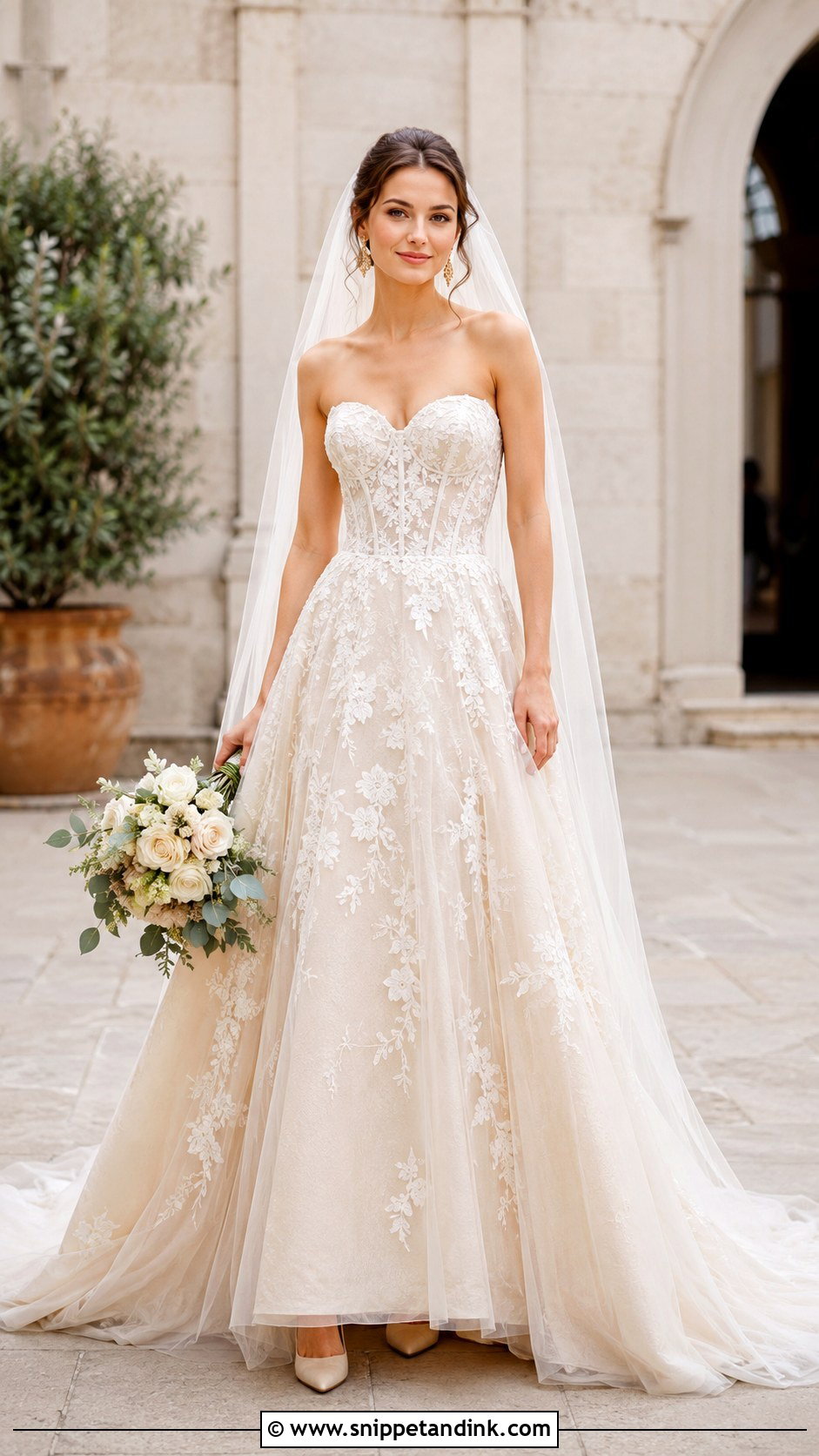
Champagne under ivory lace is a trick I use often, because the warm lining makes the lace pattern and the corset seams visible from across a room. On its own, champagne is a softer alternative to bright white and kinder to many skin tones. A sweetheart or scoop neckline and a layered skirt suit it, with an ivory veil, gold earrings, neutral pumps and cream flowers. The problem is matching. Ivory veils and shoes vary wildly between brands, so hold every piece against the gown in daylight before buying, not under shop spotlights.
12. Blush A-Line Corset Wedding Dress
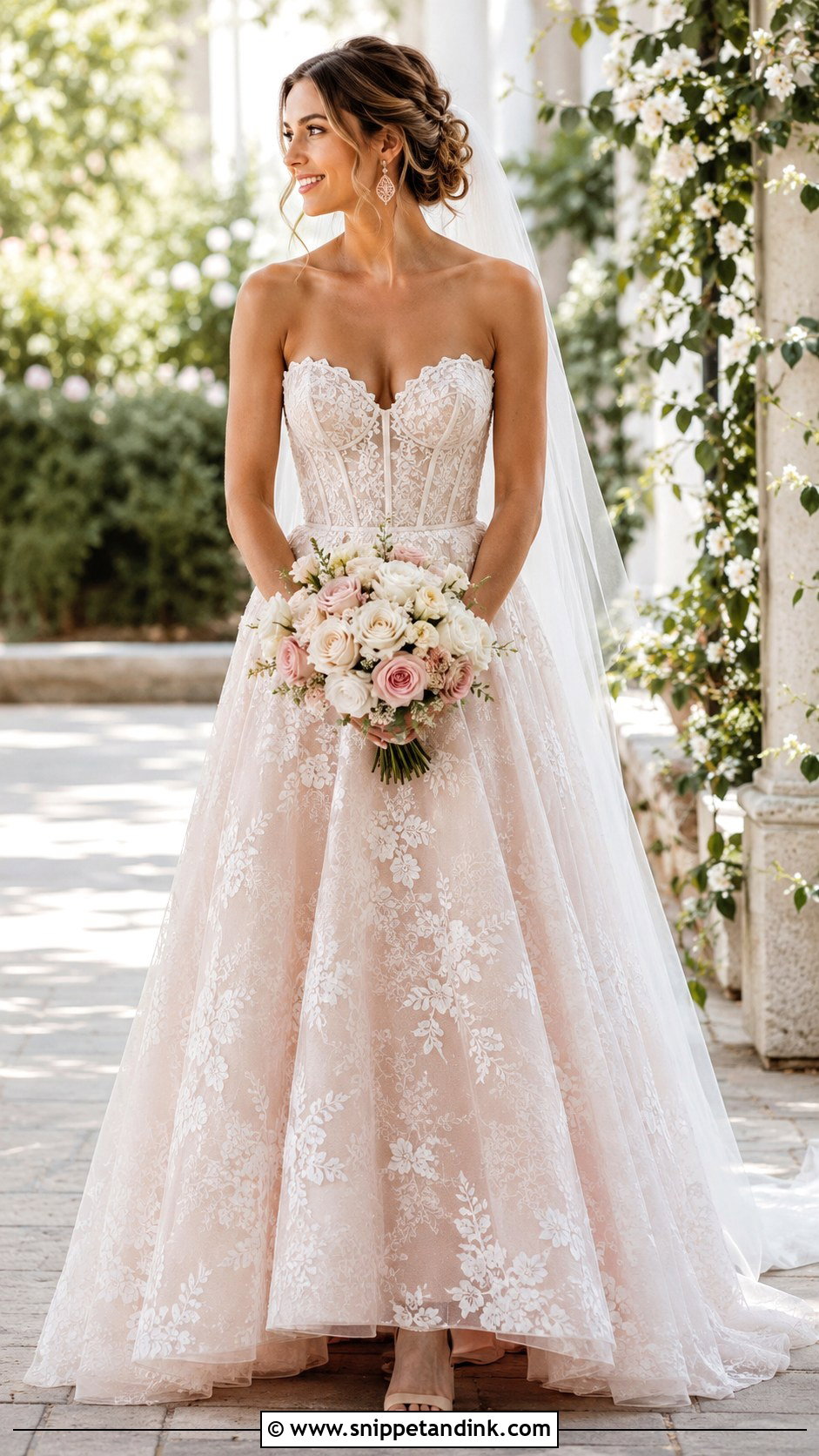
Blush works best when it’s barely there. A muted, pale shade under ivory lace gives the corset depth and still reads bridal, while a saturated pink can look like a bridesmaid dress in photos. Take a photo of the fabric indoors and outdoors before you commit, because some blushes turn peach in warm evening light and beige in shade. Pair it with a plain ivory veil, rose-gold earrings, neutral block heels and a bouquet of cream, pale pink and soft green. A loose braided bun keeps it from feeling themed.
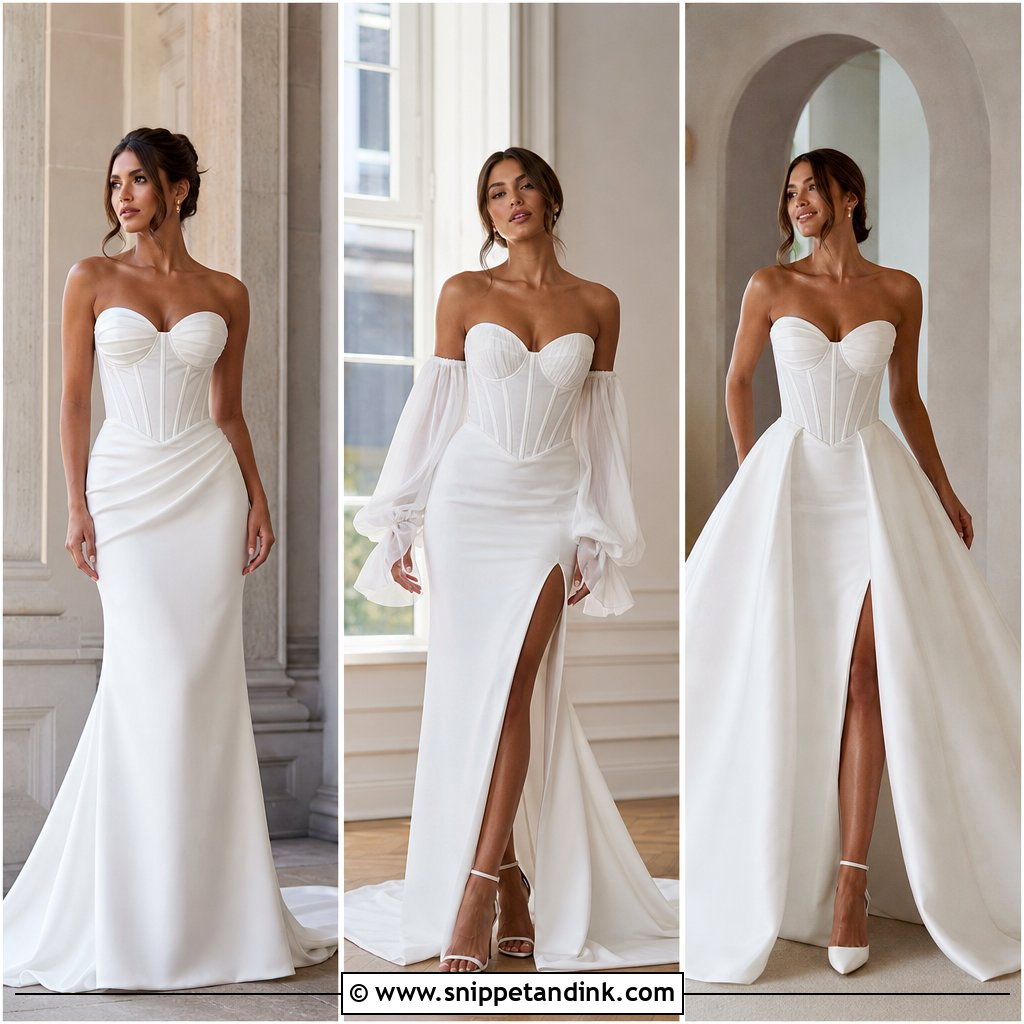
13. High Slit A-Line Corset Wedding Dress
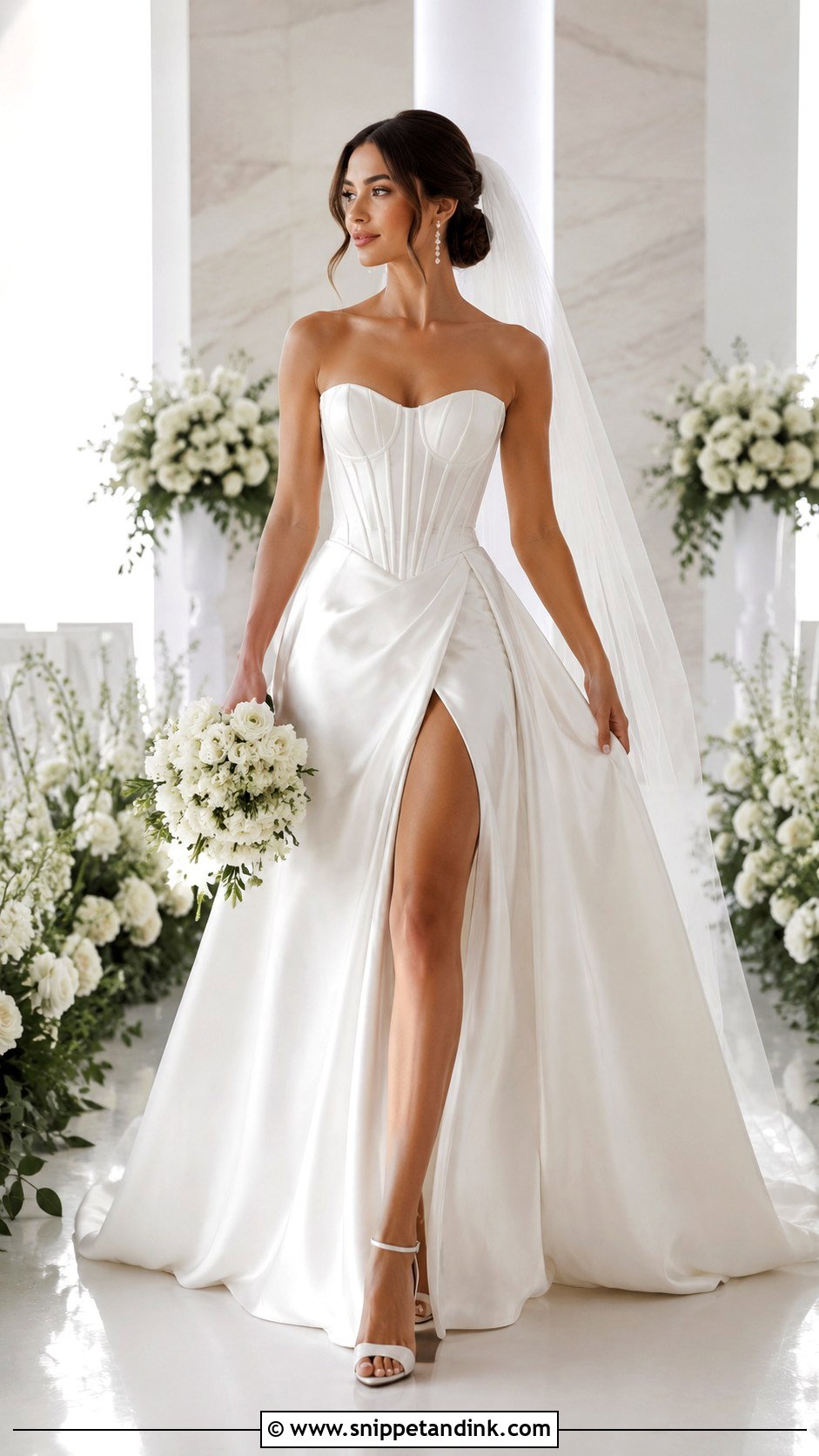
A slit splits the A-line skirt so it moves differently with each step. I prefer it set slightly off centre rather than straight down the front, because a centred slit tends to gape open on stairs. The corset has to be secure, since the skirt is doing something dramatic. Your shoes will be seen, so choose ankle-strap heels you can genuinely walk in. A plain chapel veil, drop earrings, a streamlined bouquet and a smooth updo keep it polished. Before the final fitting, climb some steps and sit down in it, and decide how much leg you’re comfortable showing.
14. Detachable Sleeve A-Line Corset Wedding Dress
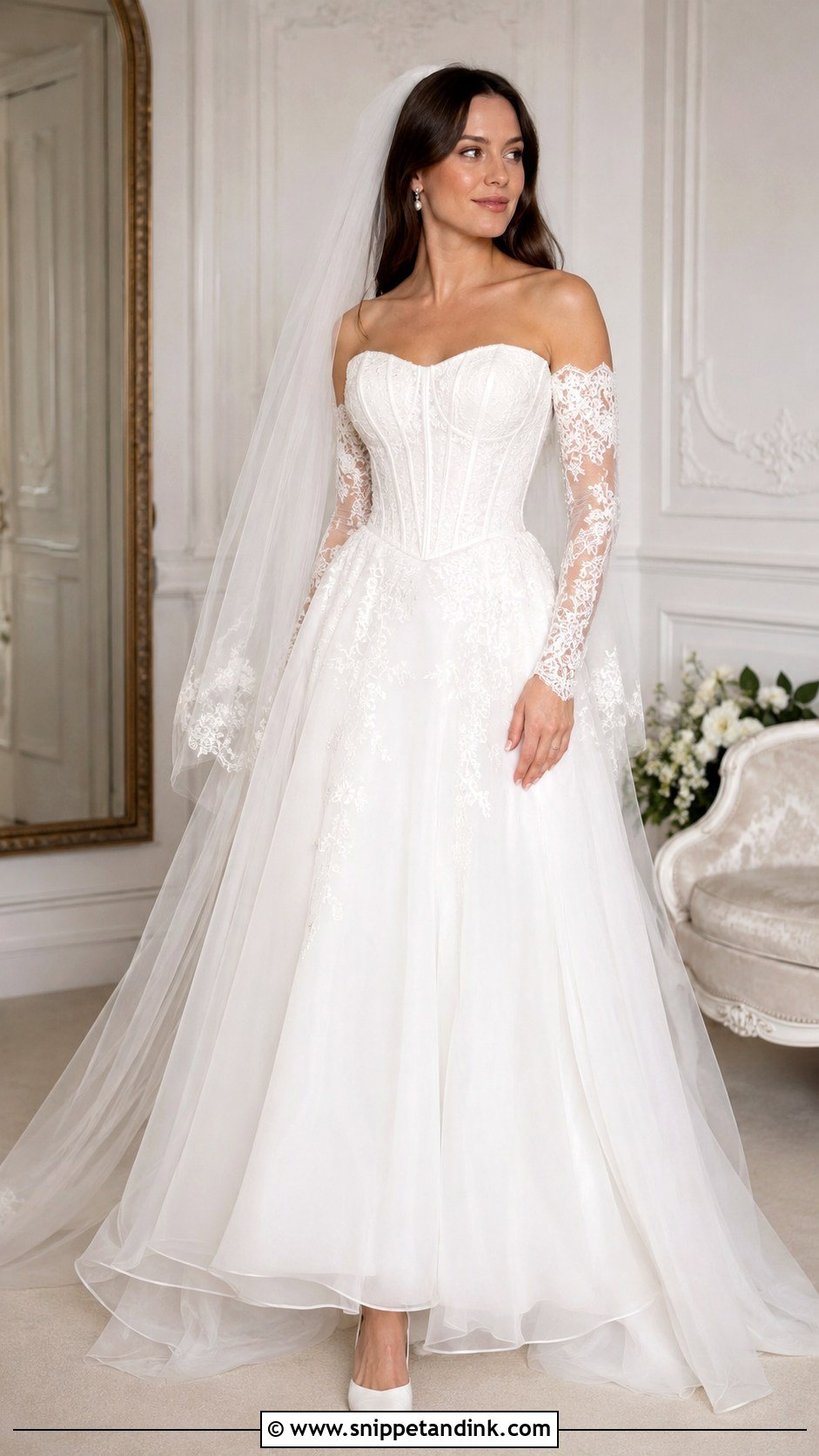
Detachable sleeves give you two outfits from one gown: sheer lace for the ceremony, then a strapless or sleeveless bodice for dancing. A light tulle or organza skirt suits both versions. The attachment is the detail to check before you buy. Snaps, buttons and hidden loops all work, but loops are the most discreet and the fiddliest to undo. Practise taking them off with the person who’ll help you, ideally in under two minutes and without touching your hair. Wear a chapel veil, pearl earrings and closed-toe pumps for the ceremony, then swap to statement earrings or a sparkly comb afterwards.

15. Corset Back A-Line Wedding Dress
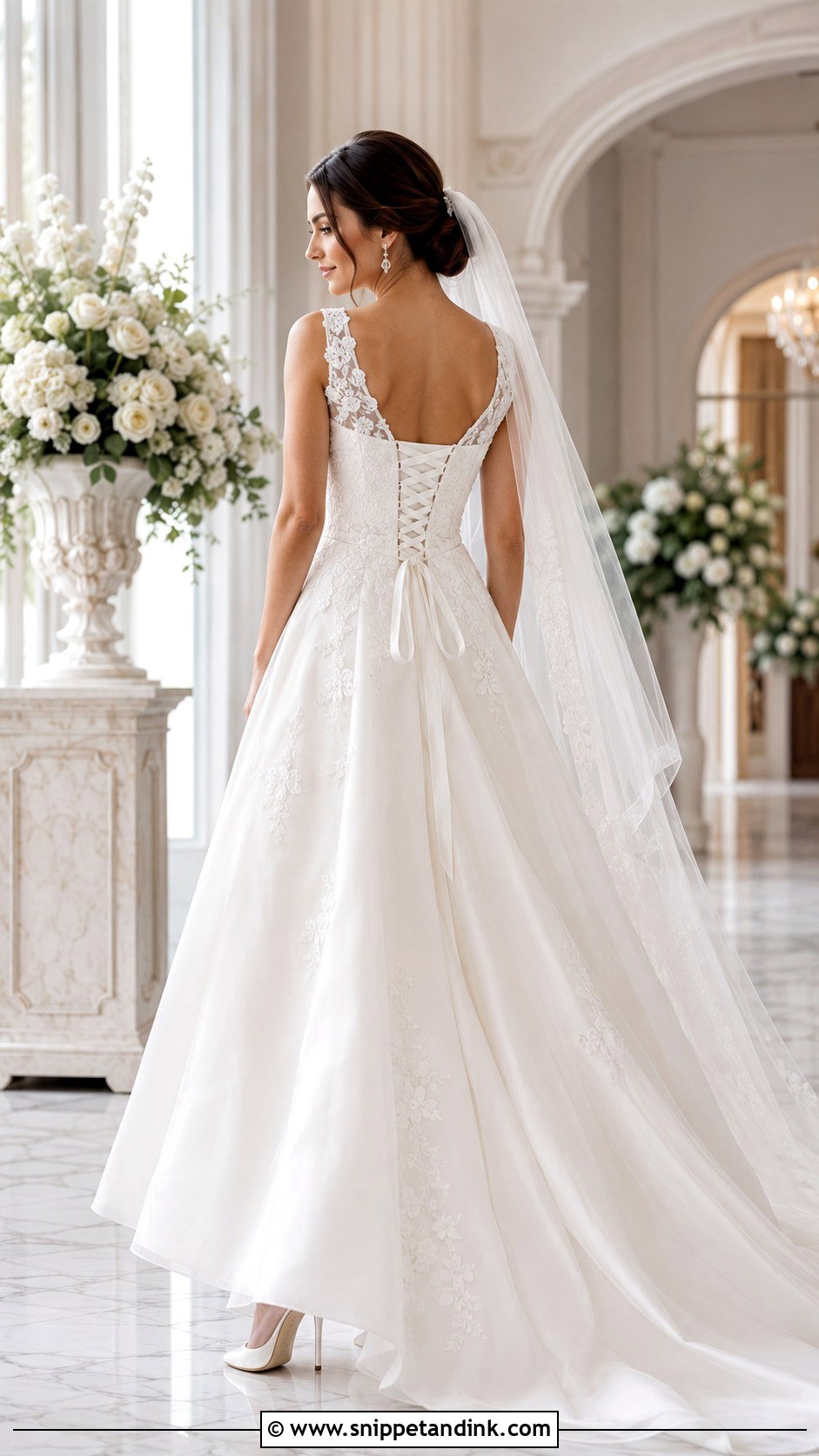
A lace-up back gives you some adjustment, which helps if your weight shifts a little before the wedding. Look for strong inner construction, evenly spaced loops and ribbon that matches the fabric. The real secret is in the lacing technique. I tighten from the middle outwards in stages, never all at once from the top, and the person lacing you on the day should practise it at least twice. Ask for a modesty panel underneath so no skin shows between the edges. A low bun, a veil set beneath it, delicate earrings and pointed pumps let the back be the feature.
16. Scoop Neck A-Line Corset Wedding Dress
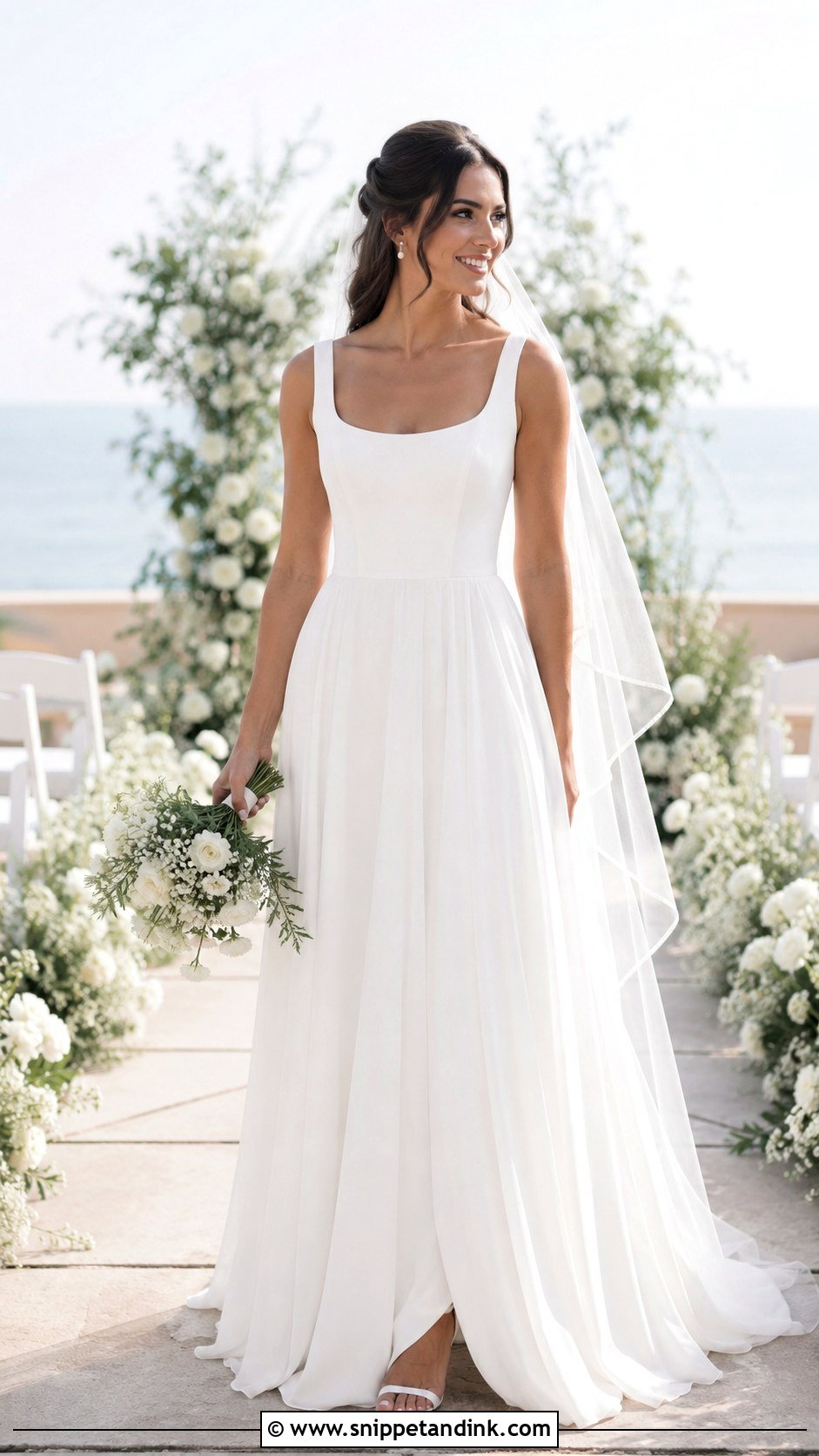
A scoop neck relaxes the corset, giving it a softer line than a sweetheart or square. Wide straps and concealed boning keep it supported. Pair it with a light chiffon, organza or tulle skirt that moves as you walk. Symmetry is the thing I check: if the curve dips lower on one side where it meets the strap, it will show in every straight-on photo. A fingertip veil, small pearl hoops, low slingbacks and a loose bouquet of white flowers suit it. A fine pendant works only on a completely plain neckline. Polished waves or a half-up style finish it.
17. Cap Sleeve A-Line Corset Wedding Dress
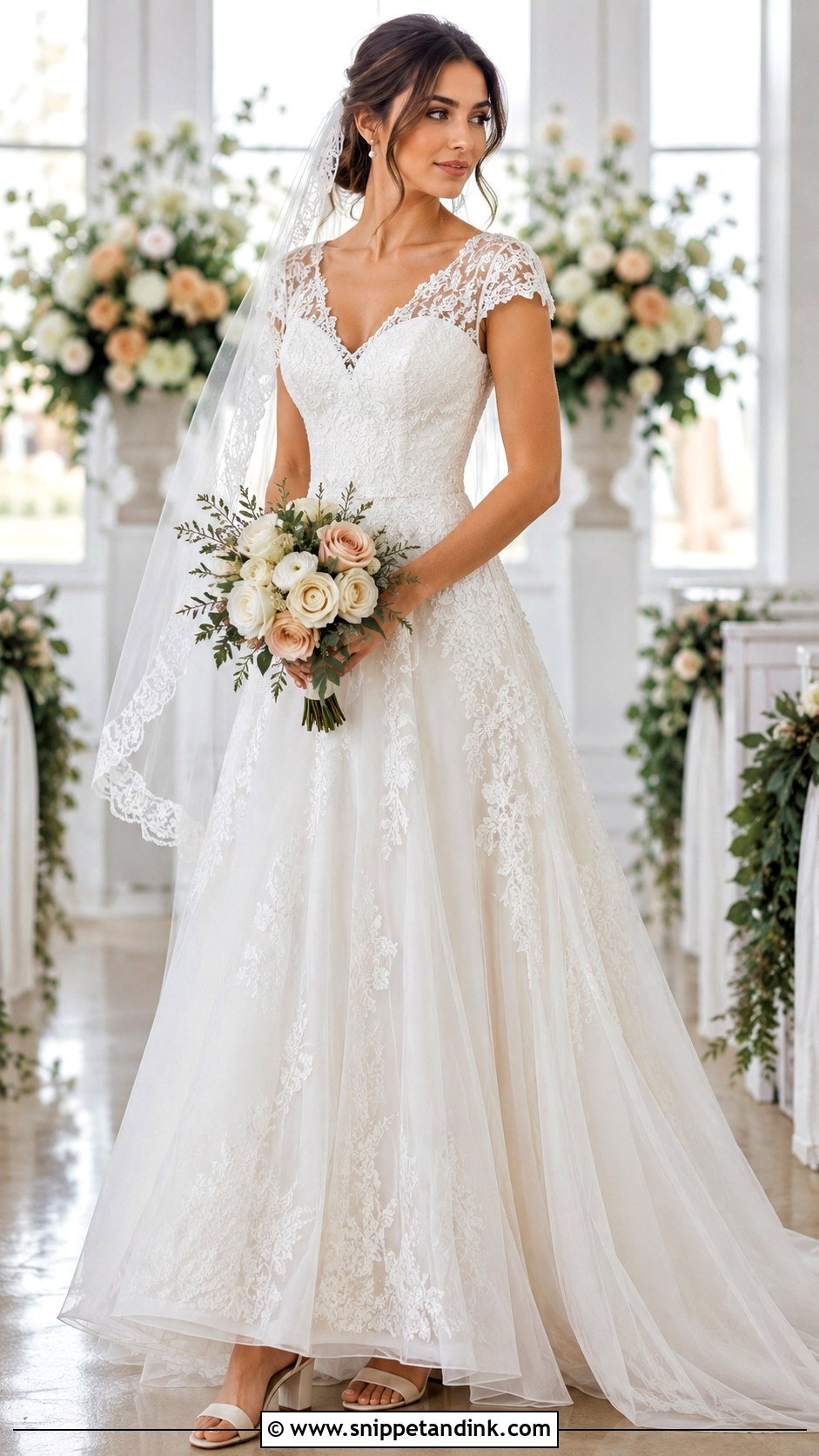
Delicate cap sleeves cover the top of the shoulder and keep the gown feeling open. Lace or illusion sleeves look best joined to a sweetheart or modest V neckline, over a layered skirt. They’re small but they cause a lot of trouble: a cap sleeve cut even slightly tight stops you lifting your arms and can hitch the whole bodice up when you reach. Raise your arms, reach forward and hug someone at the fitting. Then add a narrow lace-trimmed veil, pearl studs, ivory block heels and a low twisted bun so the sleeves stay visible.
18. Minimalist A-Line Corset Wedding Dress
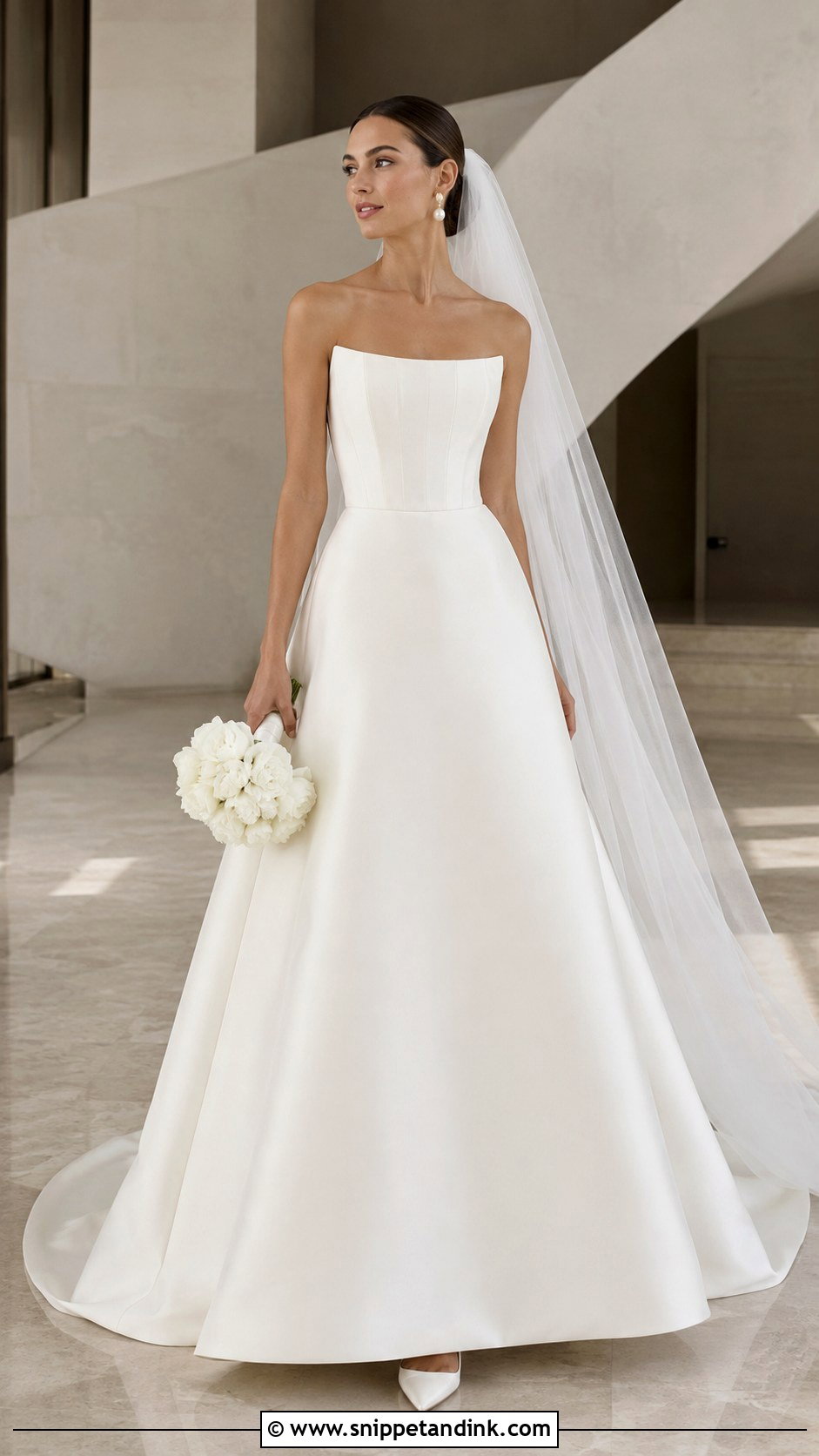
Minimalist corset gowns rely on construction because there’s nothing to distract the eye. Choose matte crepe, satin, or mikado with concealed boning, a clear waist and a skirt with no seams interrupting it. Inside the dress, look at whether the bone casings are neatly finished and whether the zip lies flat; on a plain gown, a wavy zip is the first thing a camera picks up. A plain cathedral veil, sculptural pearl earrings, pointed pumps and a single-variety bouquet suit it. If you want one dramatic note, add a detachable bow or long gloves, not both.
19. Floral Jacquard A-Line Corset Wedding Dress
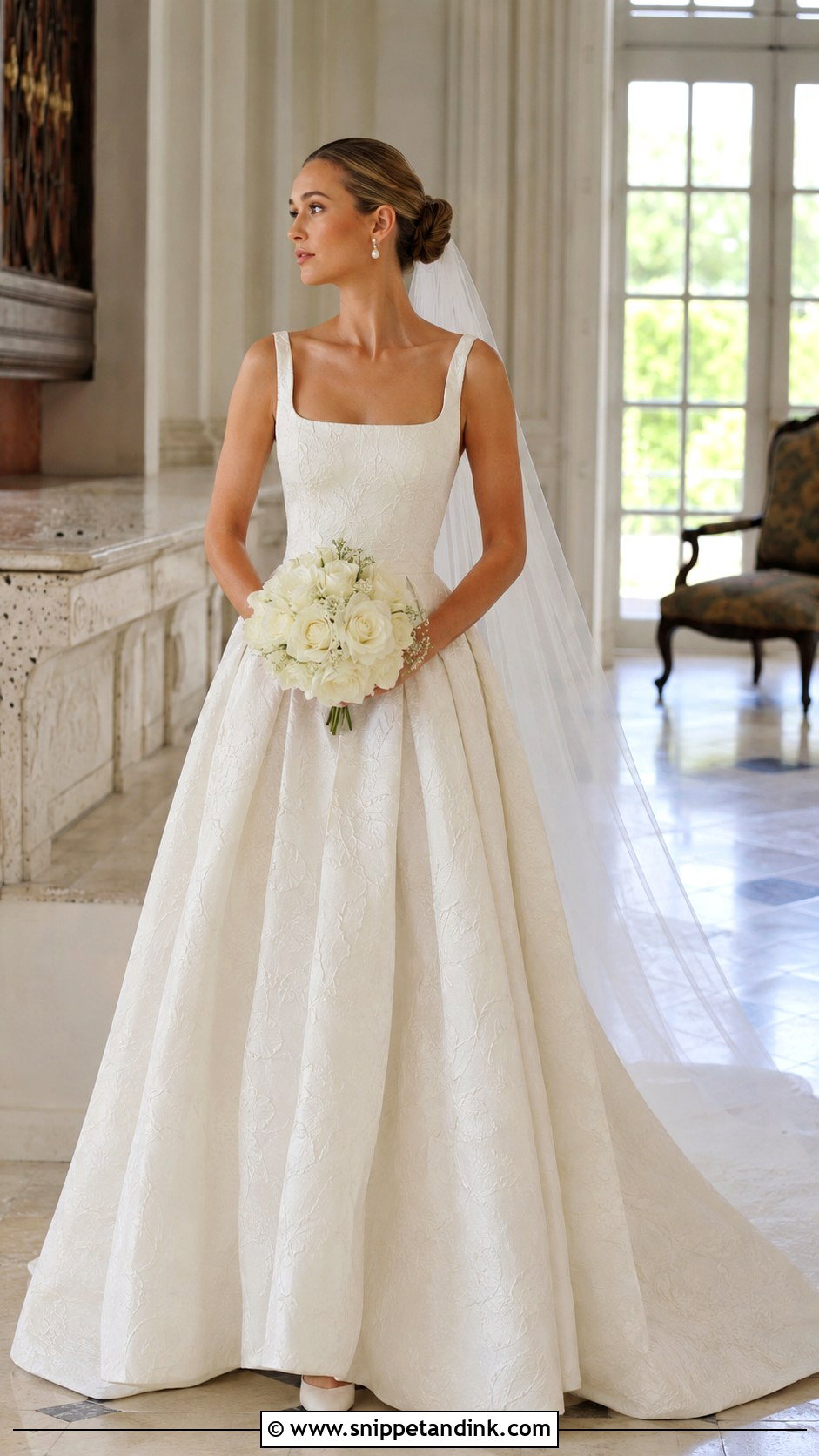
Floral jacquard puts the pattern into the weave, so the dress has texture without lace or beading. A medium-weight jacquard holds an A-line skirt well and suits a strapless or square-neck corset. It does look fuller than tulle, so I keep accessories lean. Pattern matching is where quality shows: on a well-made gown, the flowers line up across the bodice seams and flow cleanly into the skirt panels. Pair it with a plain tulle veil, gold or pearl earrings, satin pumps, a neat ivory bouquet and a classic chignon.
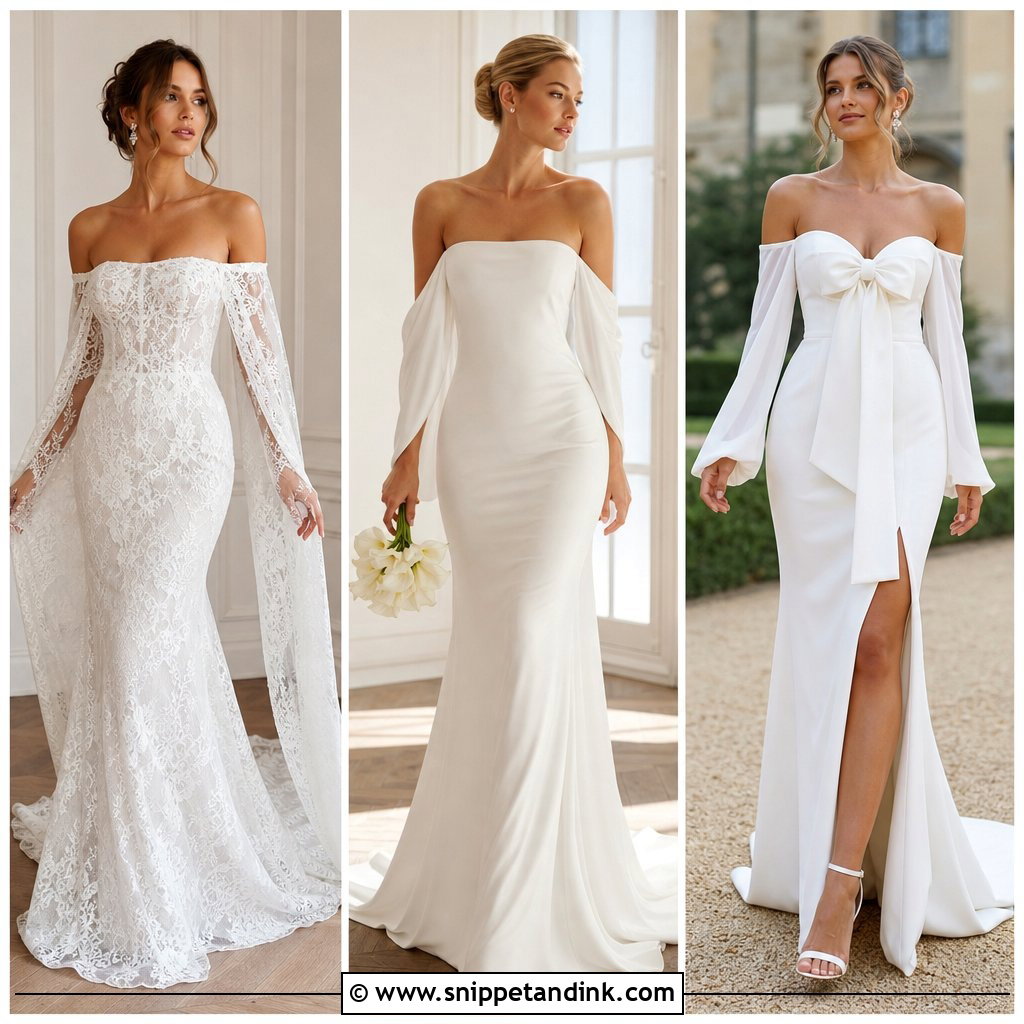
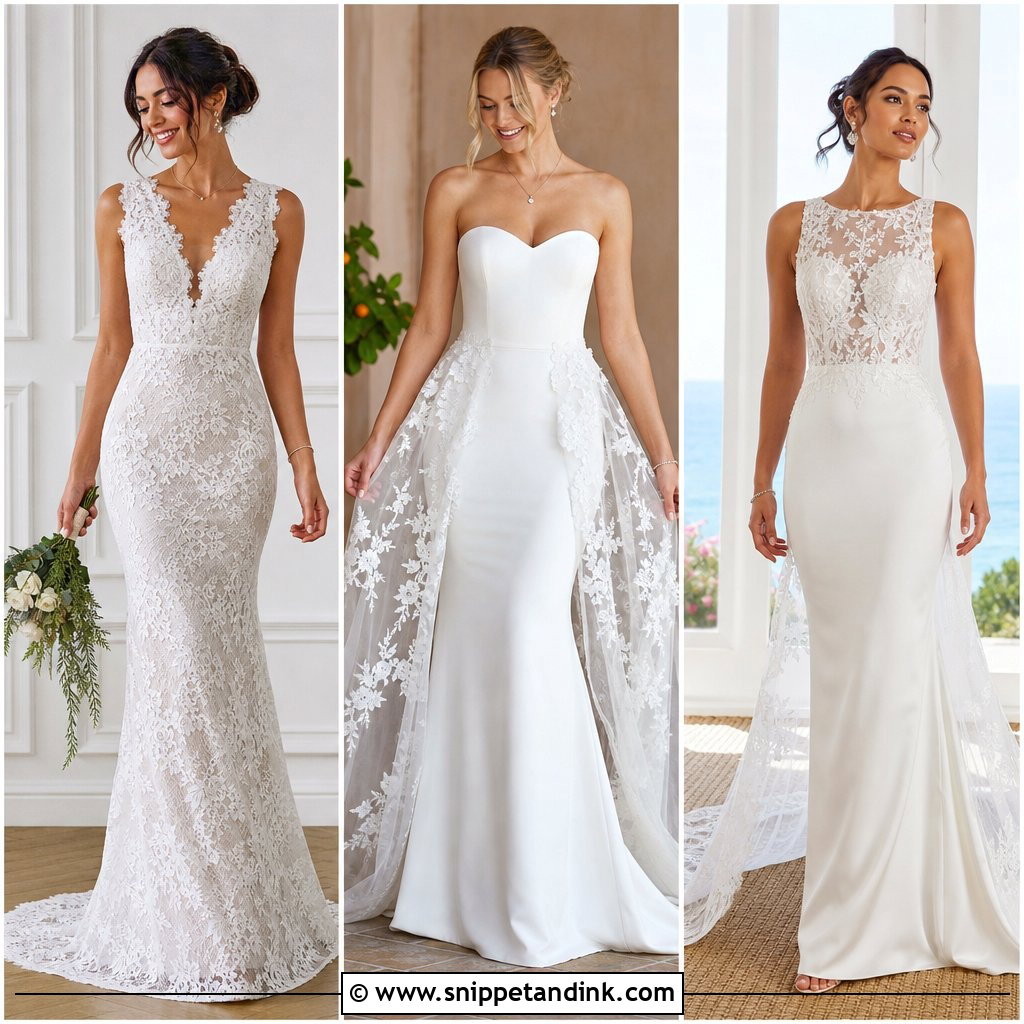
20. Plus Size A-Line Corset Wedding Dress
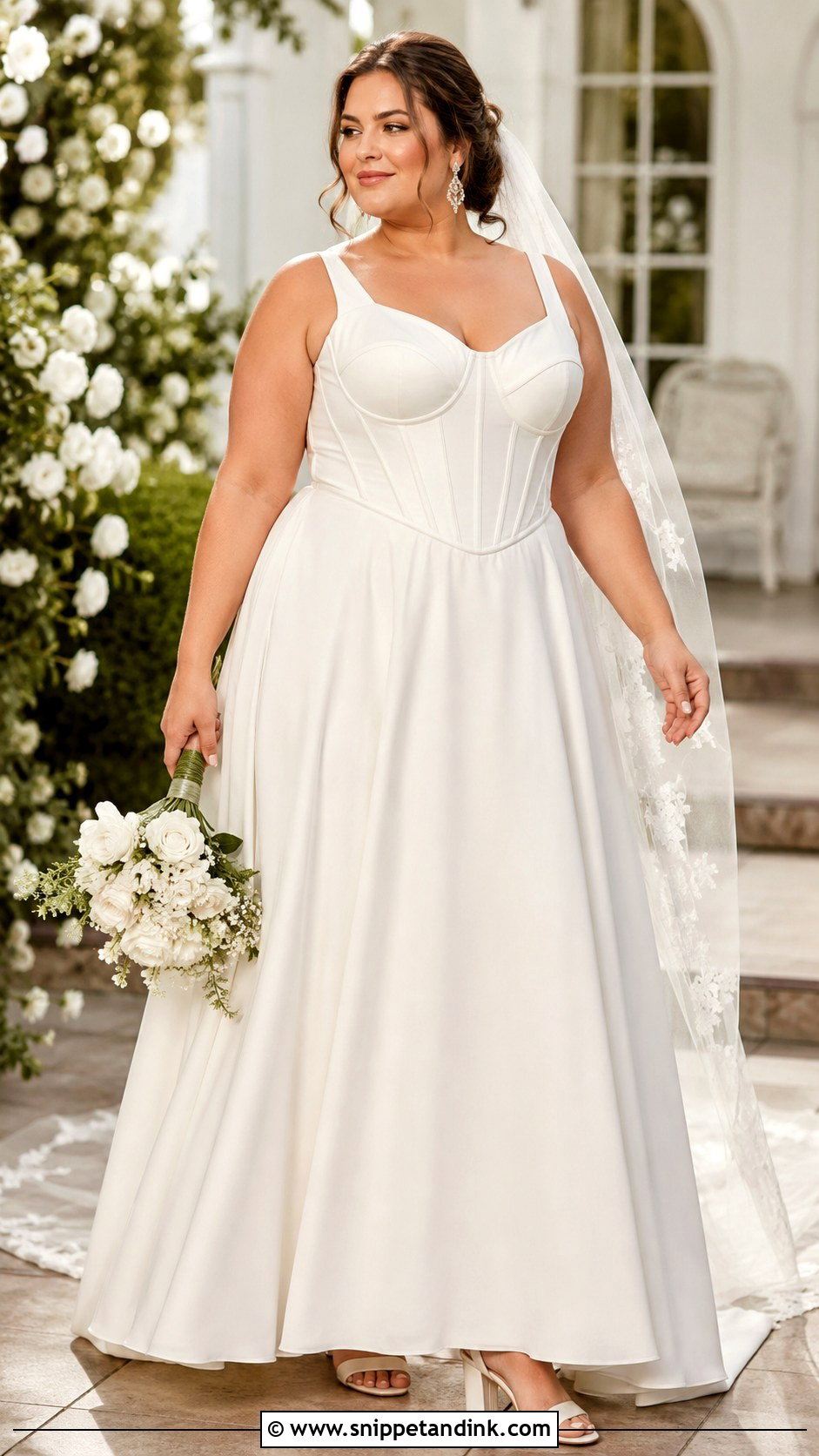
For plus-size brides, a corset can be the most supportive bodice there is, and its job is to fit your body, not to change it. Look for boning in the right places, cups that suit your bust, substantial lining and the straps or sleeves you actually want. The skirt should fall from the waist without bulk at the hip. Please don’t order a smaller size as motivation. Alterations work from your real measurements, and taking a gown in is always easier than letting one out. Choose a seamstress who listens and checks the fit while you sit, then finish with a proportioned veil, supportive block heels, statement earrings and a bouquet that’s comfortable to hold.
Can You Eat, Dance and Use the Bathroom in a Boned Bodice?
Yes, if it’s fitted properly, and these are the questions brides ask me most, usually quietly at the last fitting.
Eating
Have a proper breakfast before you get dressed, then small amounts through the day. A large, heavy dinner is the moment a corset feels tight, so I tell brides to have a bit of everything and save seconds for later. Fizzy drinks make bloating worse.
Dancing
Before the dancing starts, have a bridesmaid loosen the lacing very slightly, just enough that you can take a full breath. A corset back can be adjusted in the moment, which is one of its real advantages. A zip back can’t, so make sure that fit is right from the start.
Bathroom trips
Take a friend. Facing the cistern lets you gather the skirt in front of you, which is far easier with a full A-line than trying to hold it from behind. Bustle the train first if it’s loose, and use the trip to check the back closure in the mirror.
One last thing for the emergency kit: a few spare lacing ribbons the same colour as yours and a small crochet hook, which pulls a ribbon back through a loop far more neatly than fingers do.
Lace It Up, Then Live in It for an Hour
A corset gown should feel as good at midnight as it does in the mirror. Twenty options span plain satin to floral lace, Basque waists, detachable sleeves, pearls and coloured linings, so start with the neckline, fabric and skirt volume that suit your venue. Then let the veil, shoes, jewellery, bouquet and hair follow the same direction. Leave proper time for alterations, and wear the gown for a while at your final fitting instead of only standing for photos. If the bodice still feels secure and you can breathe after an hour, you’ve got the right one.
You'll Like These Ideas:





Leave a Reply