
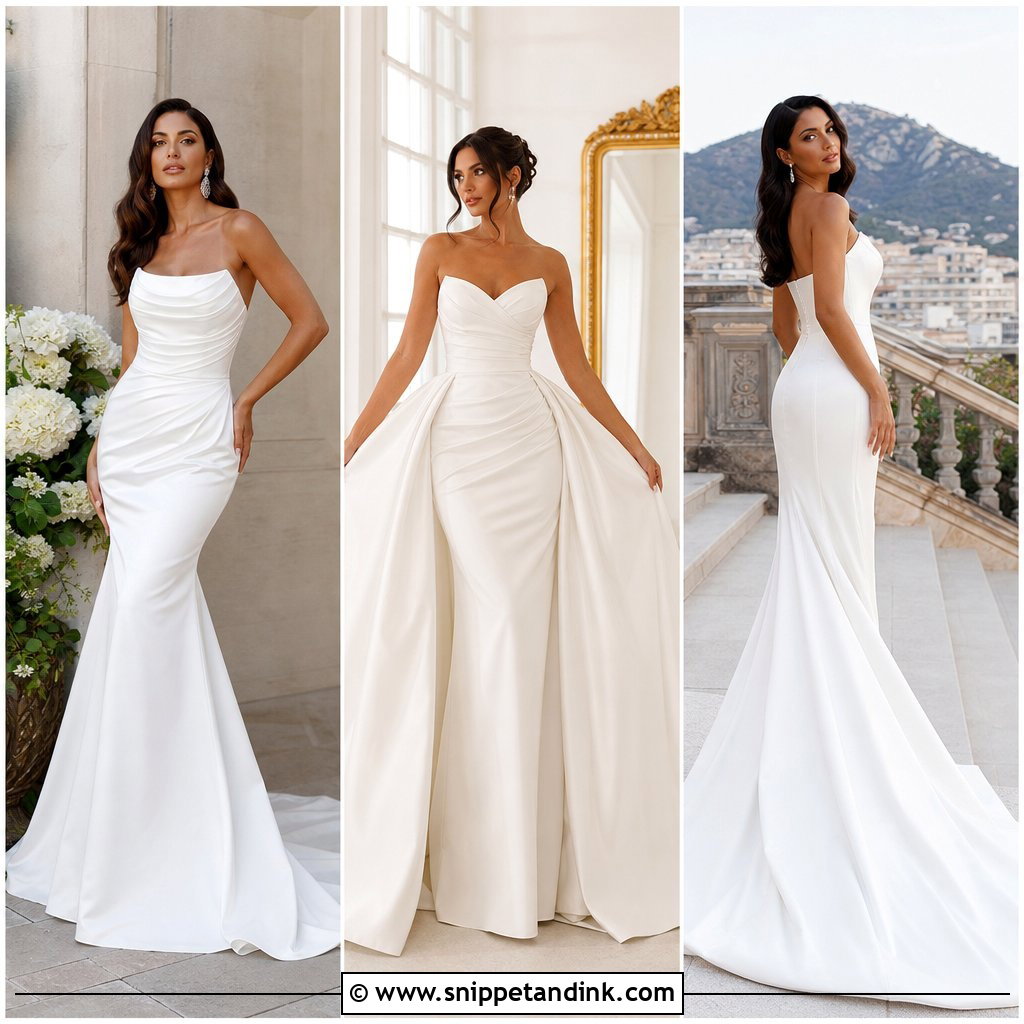
Satin is the least forgiving bridal fabric I work with, and that is exactly why it pairs so well with a corset bodice. A heavy satin shows every ripple, so the boning underneath has to do the shaping, and when the two are cut well you get one smooth line from bust to hip with nothing fussy on top. The neckline, the skirt and how you style it decide whether the dress reads minimal, vintage or full fashion. Below are 25 versions I’d consider, from full ball gowns to a reception mini, with notes on how each one actually wears.
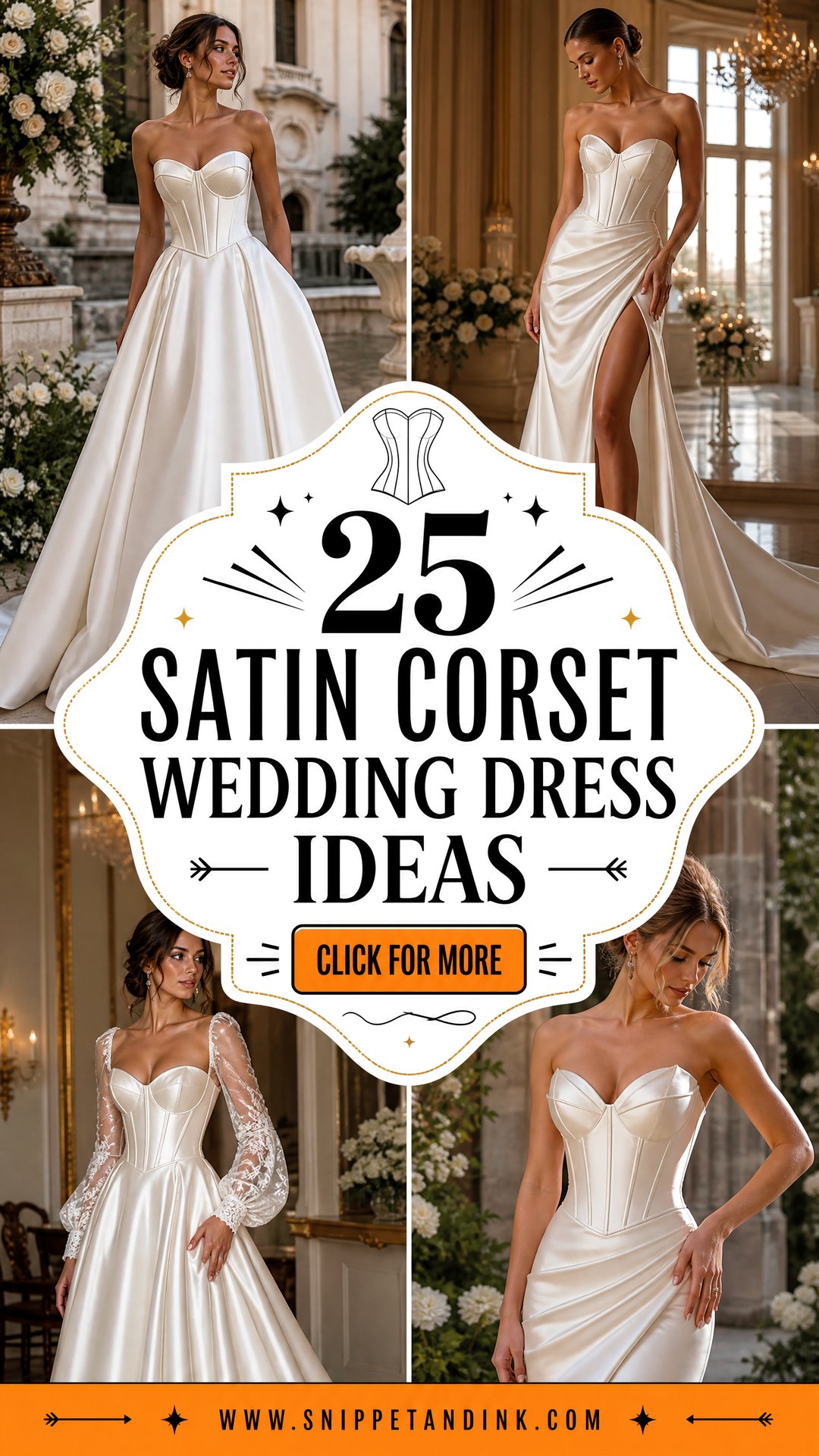
What a Well-Built Satin Corset Feels Like at a Fitting
Before you fall for a neckline, check the bodice underneath it. Most bridal corsets use spiral steel or synthetic boning stitched into channels, and the difference shows after a few hours. Steel bends with you and springs back, while thin plastic can kink and leave a visible ridge through the satin.
Four tests I run before anyone signs off
- Sit for five minutes. Boning that digs into the ribs or hips while seated will hurt by the time dinner is served.
- Raise both arms and hug someone. The top edge should stay where it is without you hoisting it up.
- Take a full breath and talk. Tight lacing for photos is fine, but you need to eat and speak comfortably for eight hours or more.
- Look at the back closure. A lace-up back lets your seamstress or a bridesmaid adjust the fit on the day; a zip gives no room at all.
The weight of the satin matters as much as the cut. Heavy duchess satin holds a structured shape and hides boning lines, while lighter or crepe-backed satin drapes more softly but shows every ridge and seam beneath it. Ask which one your dress is made from. Most shops start alterations two to three months before the wedding and schedule a final fitting a couple of weeks out, which catches any change in your body before the corset is finished.
1. Strapless Satin Corset Wedding Dress
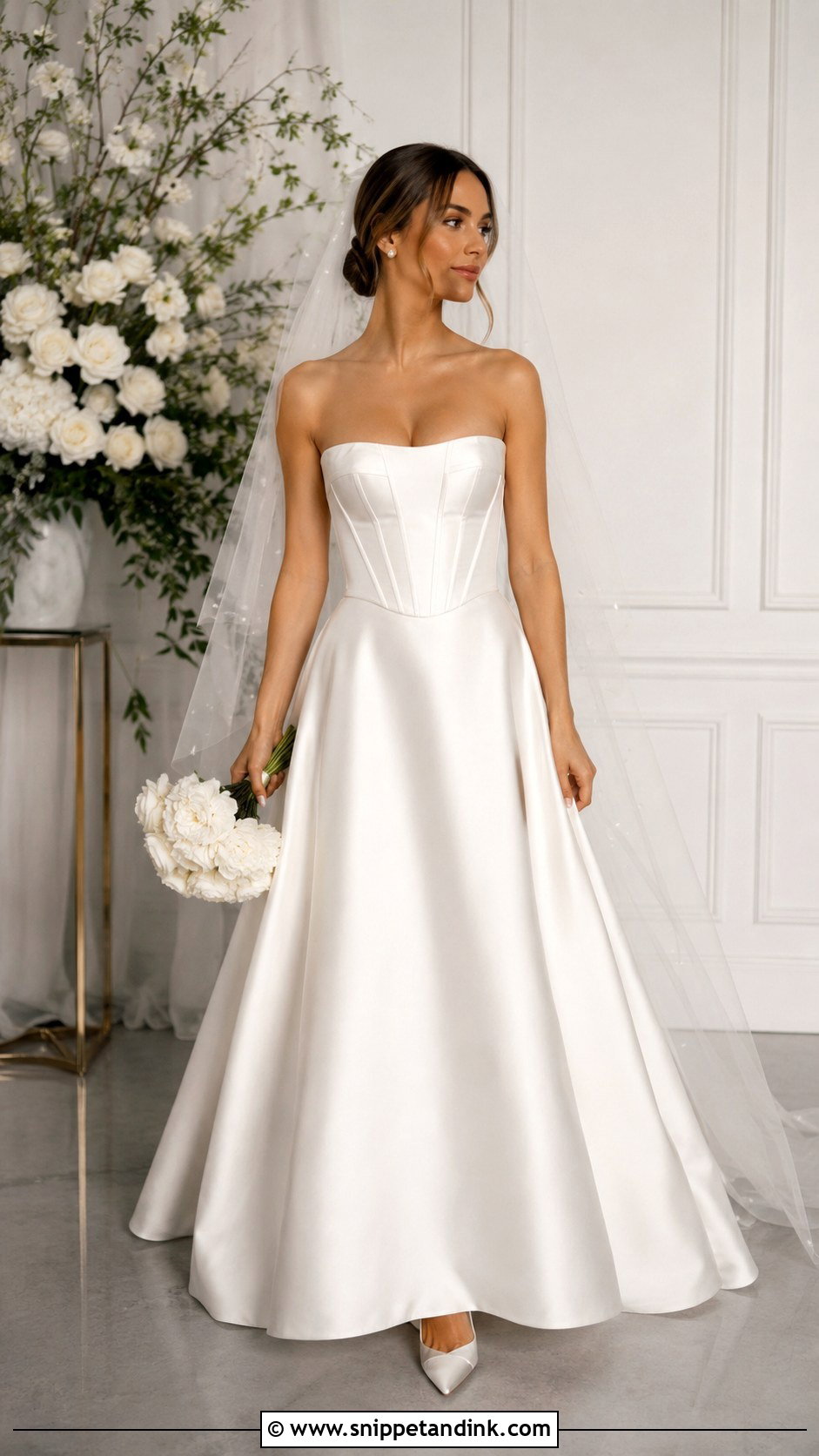
A strapless bodice lives or dies on its internal structure. With no straps, the boning and a grip strip along the top edge hold everything up, so at fittings I have the bride raise both arms and hug someone before I sign off on it. Over a full A-line it reads classic; over a slim column skirt it feels more city. Pearl studs, a plain veil and pointed satin heels are enough. If the bodice has visible seam lines, let them be the detail and skip a necklace.
2. Sweetheart Satin Corset Wedding Dress
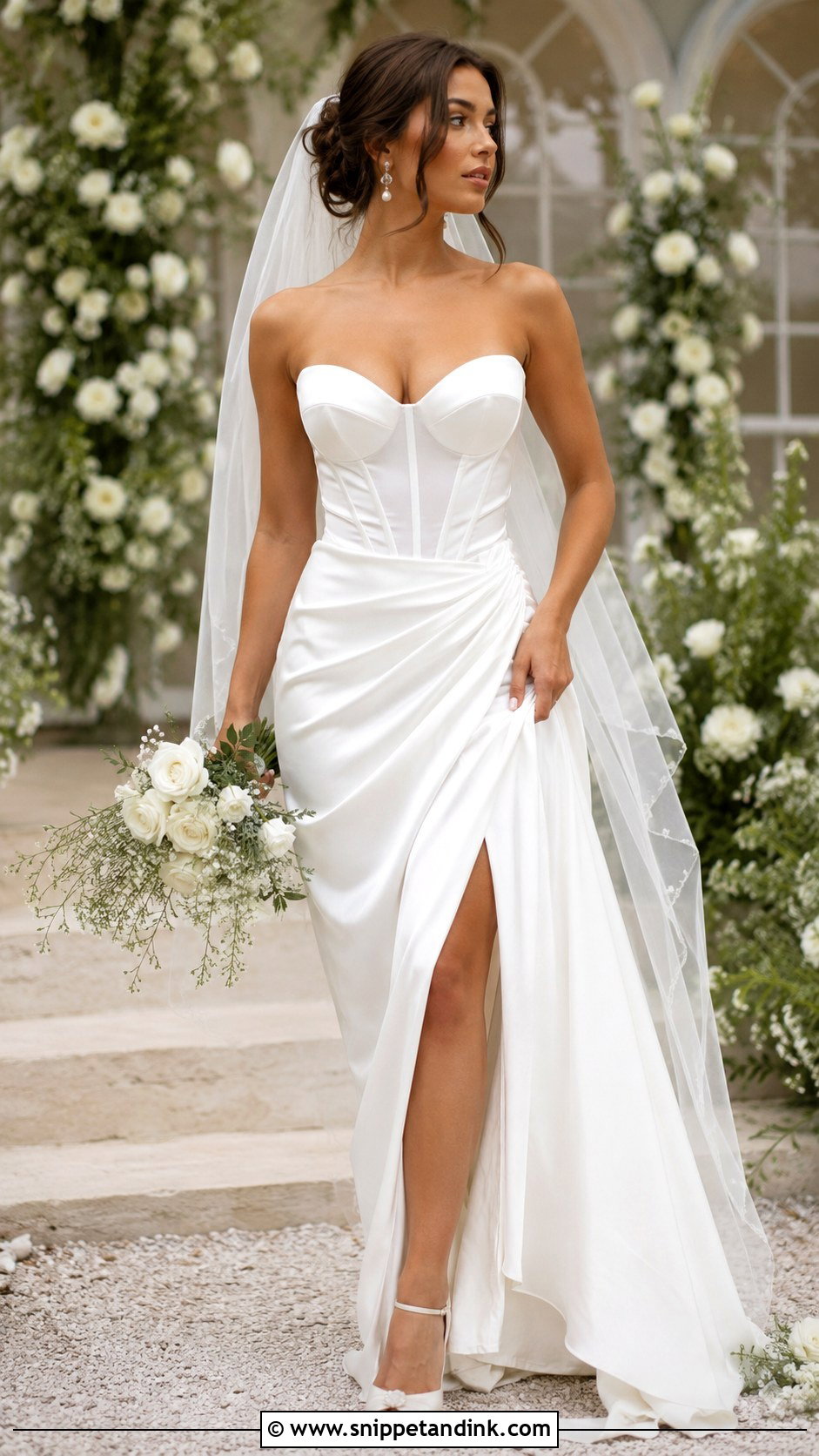
The sweetheart satin corset wedding dress gives a corset a softer top edge, and the dip at the centre opens up the collarbone. The tricky part is gaping: on a smaller bust the sweetheart points can stand away from the body, which a seamstress fixes by taking in the cups rather than the side seams. A gathered skirt makes it romantic, a smooth fit-and-flare sharper. I’d keep jewelry to drop earrings unless the neckline sits low enough to leave space for a fine chain.
3. Off Shoulder Satin Corset Wedding Dress
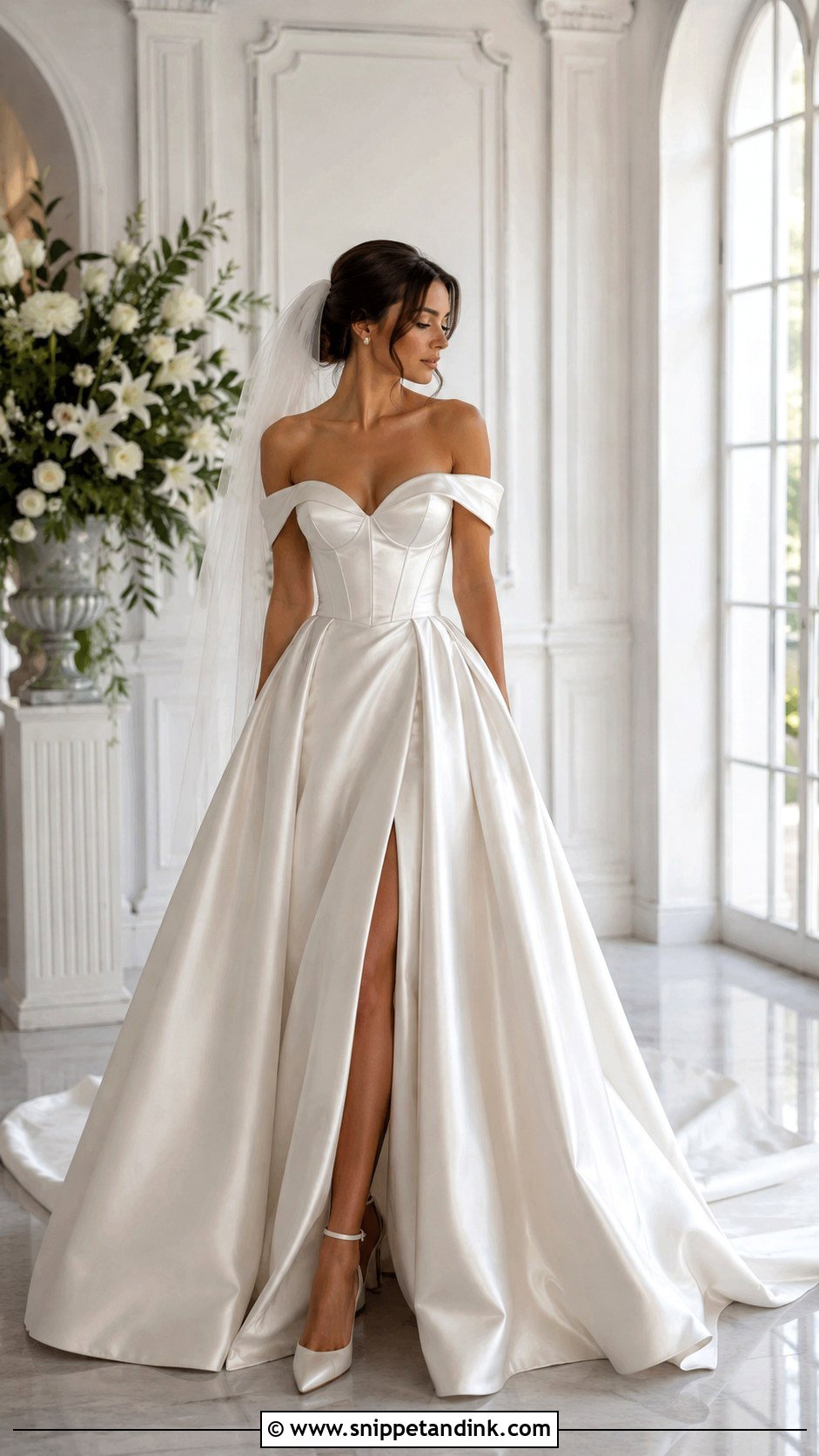
Off-the-shoulder bands soften a corset more than any other neckline, but they limit how high you can lift your arms. Try a hug and a bouquet-toss motion in the fitting room. The band should rest just below the shoulder point; lower and it slips, higher and it cuts into the upper arm in photos. A soft updo keeps the shoulders clear. With a cathedral veil the look turns formal, while a shorter veil keeps it relaxed.
4. Basque Waist Satin Corset Wedding Dress
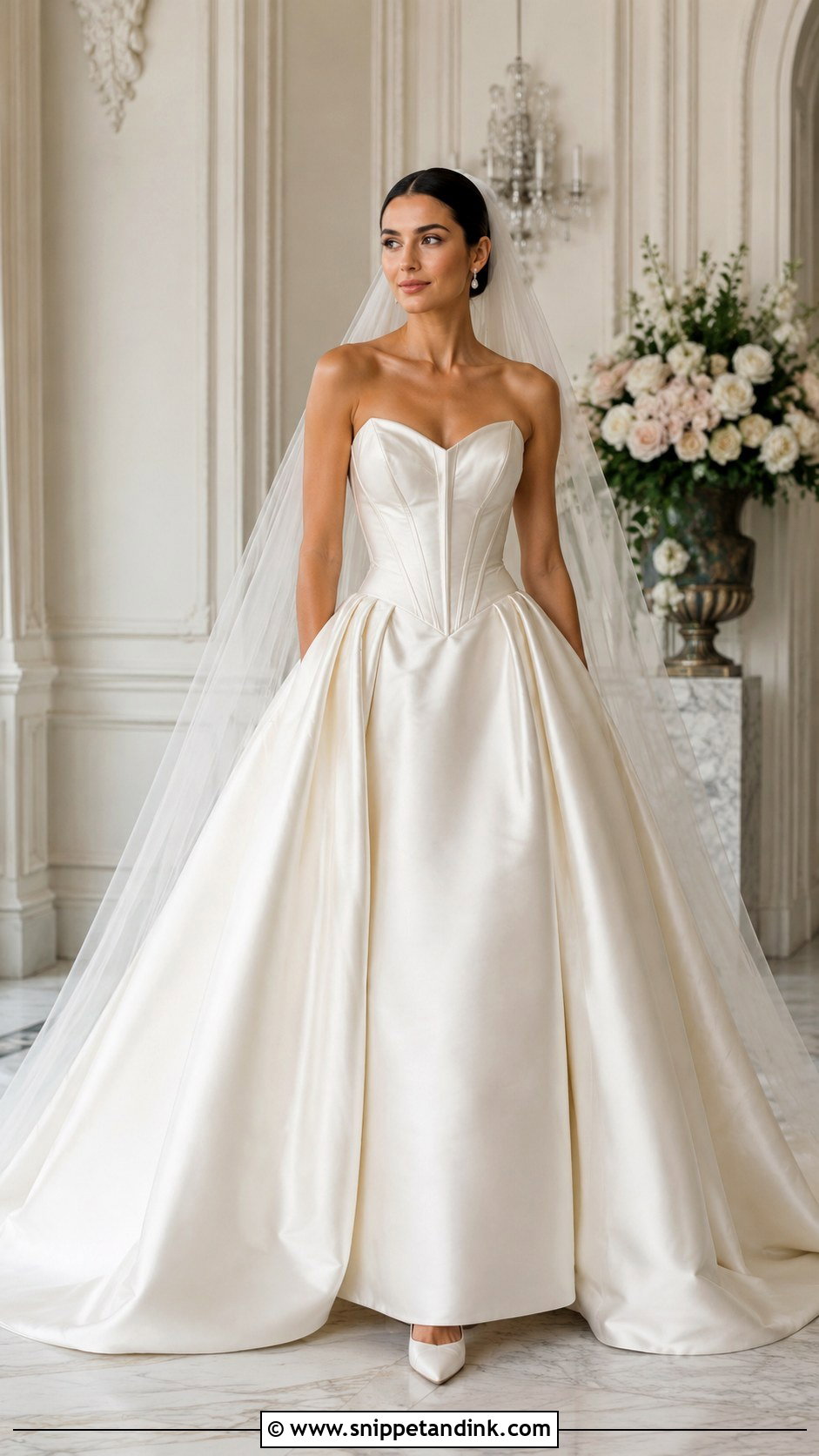
A basque waist satin corset wedding dress has a V-shaped waistline that points down into the skirt, which visually lengthens the torso. It flatters shorter torsos especially. Because the point sits below the natural waist, sitting pushes it into your lap, so I always ask brides to sit in it for a minute at the fitting. A full ball gown skirt shows the point best. Leave belts and sashes off; they fight the seam.
5. Drop Waist Satin Corset Wedding Dress
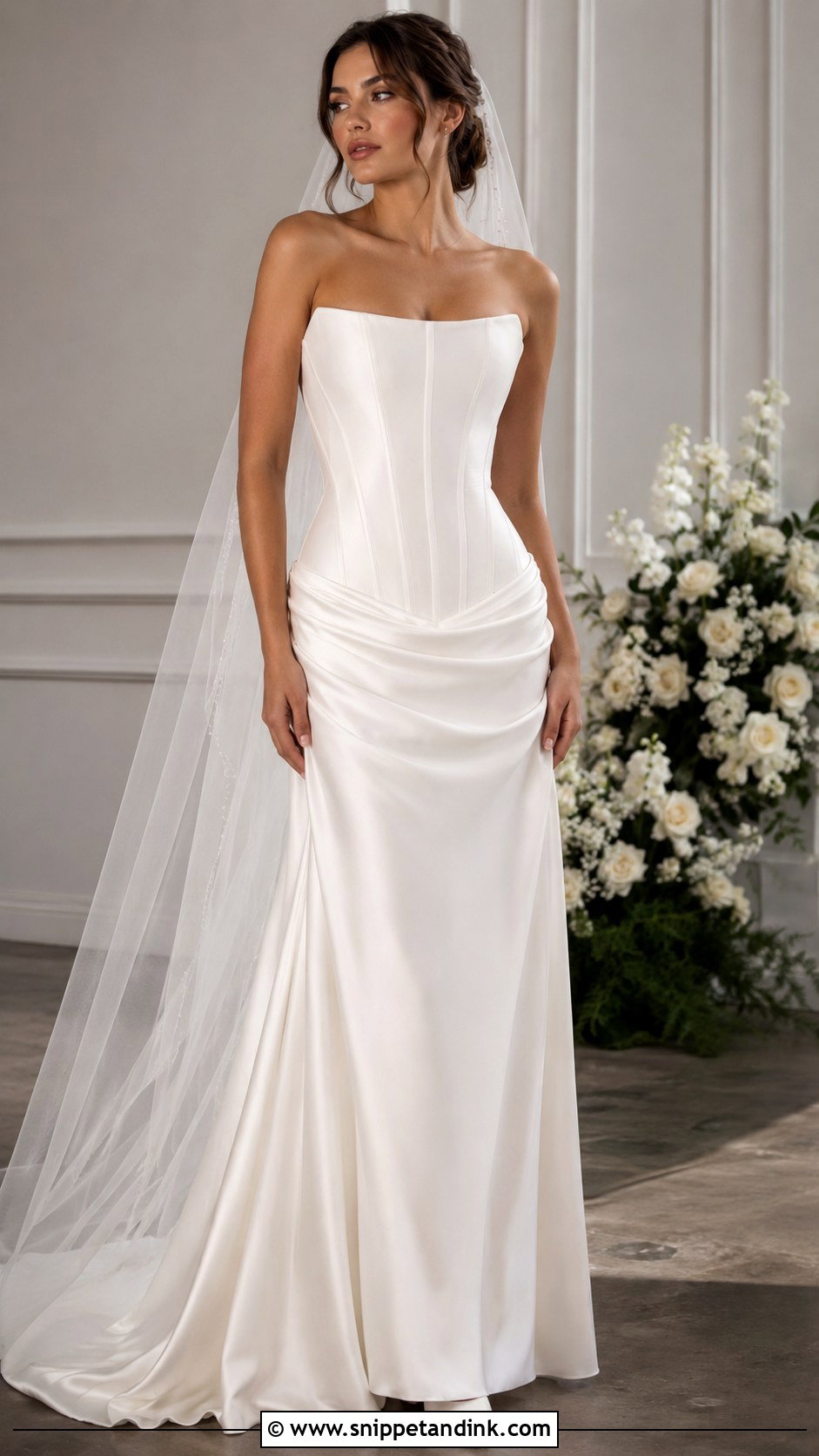
The drop waist carries the bodice down over the hips before the skirt opens, so the corset does its shaping much lower than usual. I’d steer petite brides with a short leg line away from it, since it can shorten the legs in full-length photos. Long-torsoed brides wear it best. Plain satin suits it because that low seam is the whole design, and minimal earrings, satin pumps and a clean veil leave it alone.
6. Satin Corset Ball Gown Wedding Dress
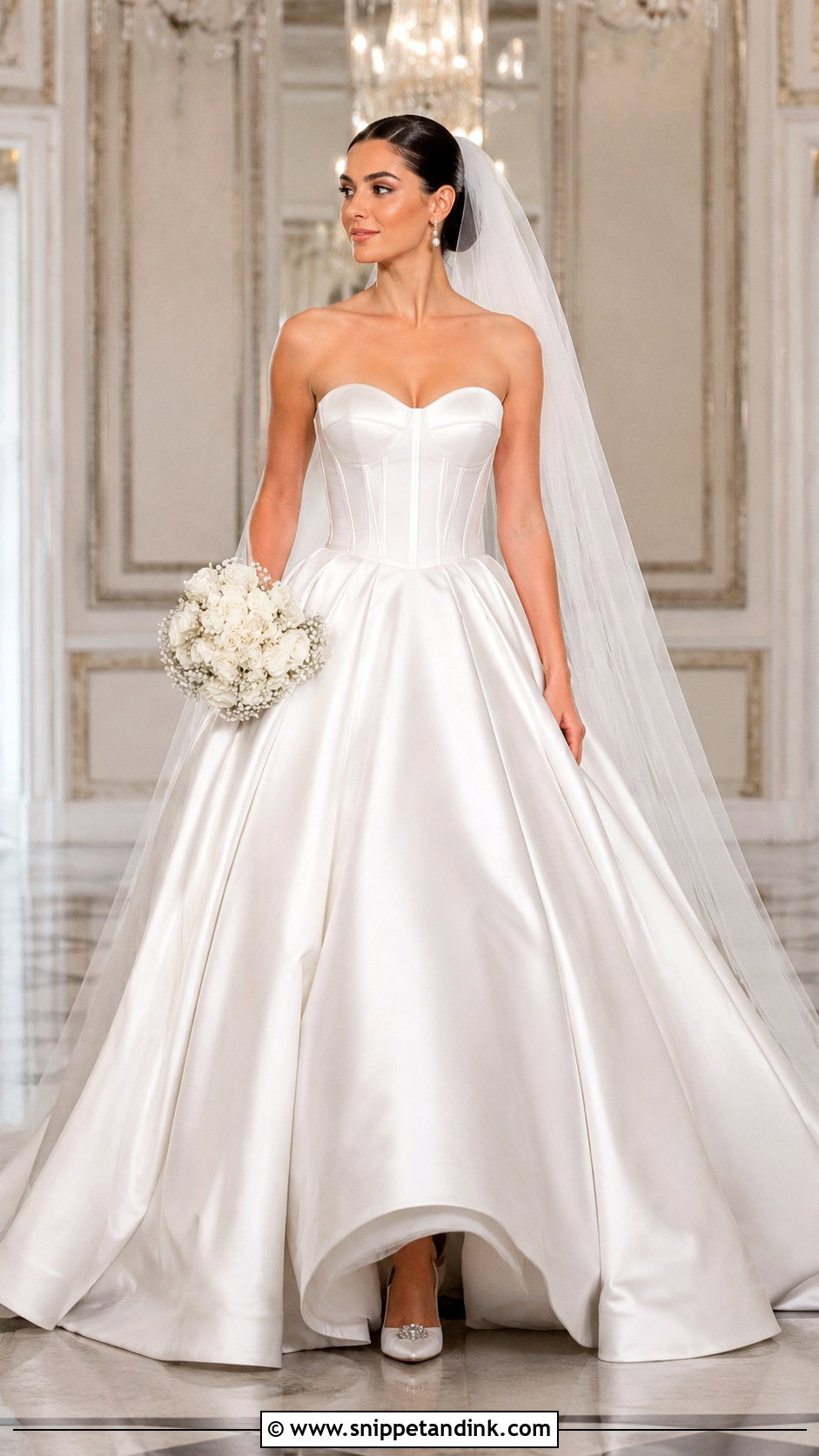
A ball gown skirt needs a fitted bodice to carry its weight, and in satin that weight is real. A full skirt plus petticoat can drag a poorly anchored bodice down over a long day, so ask whether the skirt hangs from an inner waist stay. Once the structure is right, the dress needs very little: a long veil, crystal or pearl earrings and ivory heels. A scoop or sweetheart neckline softens it. Grand halls and formal indoor venues give the skirt the room it needs.
7. Satin Corset A Line Wedding Dress
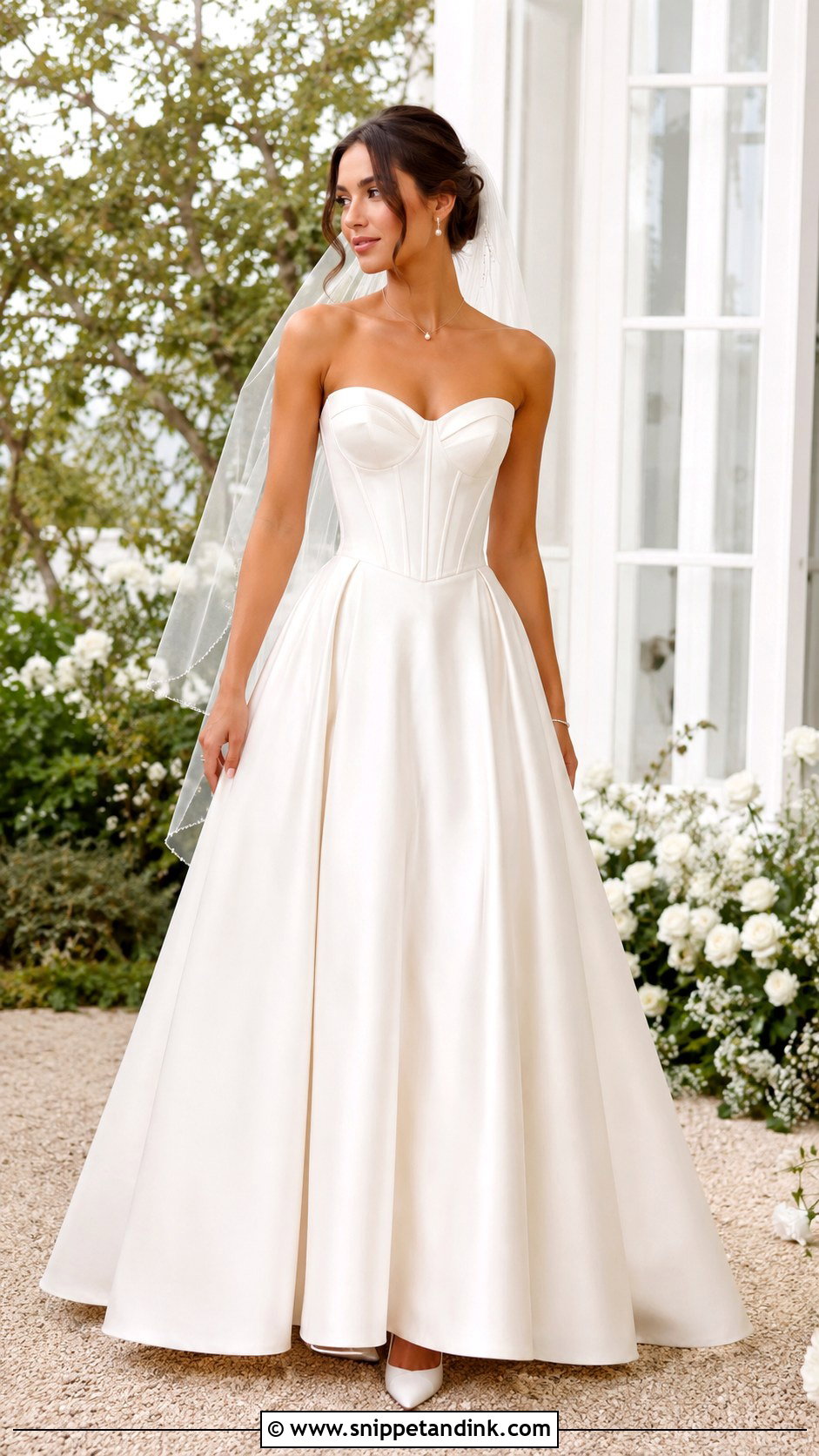
This is the shape I suggest when a bride wants a corset but is nervous about a long day in one. The skirt falls away from the waist, so there is no tension across the hips when you sit or dance. A straight or square neckline modernises it; a sweetheart with light ruching makes it softer. It adapts to almost any venue, from a garden to a hotel ballroom, and a sheer veil with pointed heels finishes it.
8. Satin Corset Mermaid Wedding Dress
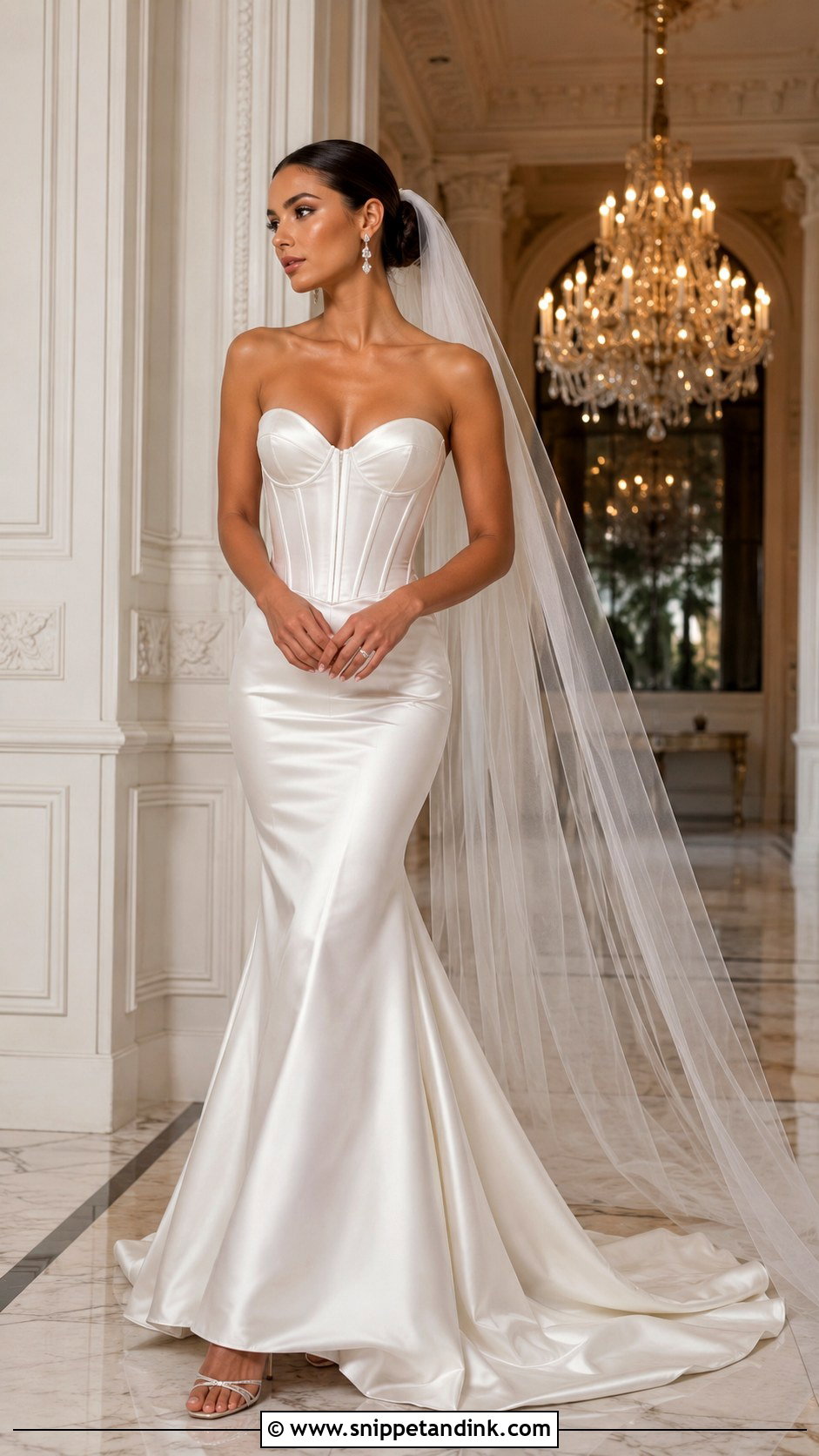
Mermaid satin is unforgiving through the hips and thighs, because the fabric is stretched smooth and every line underneath shows. I always fit these over the exact underwear and shoes the bride will wear on the day. The flare point matters too. Knee level looks most dramatic but makes stairs and sitting harder, and many brides end up happier with the flare moved up toward mid-thigh, which is really a trumpet cut. High heels and a sleek veil lengthen the line, and a small train gives the walk some movement.
9. Satin Corset Fit And Flare Wedding Dress
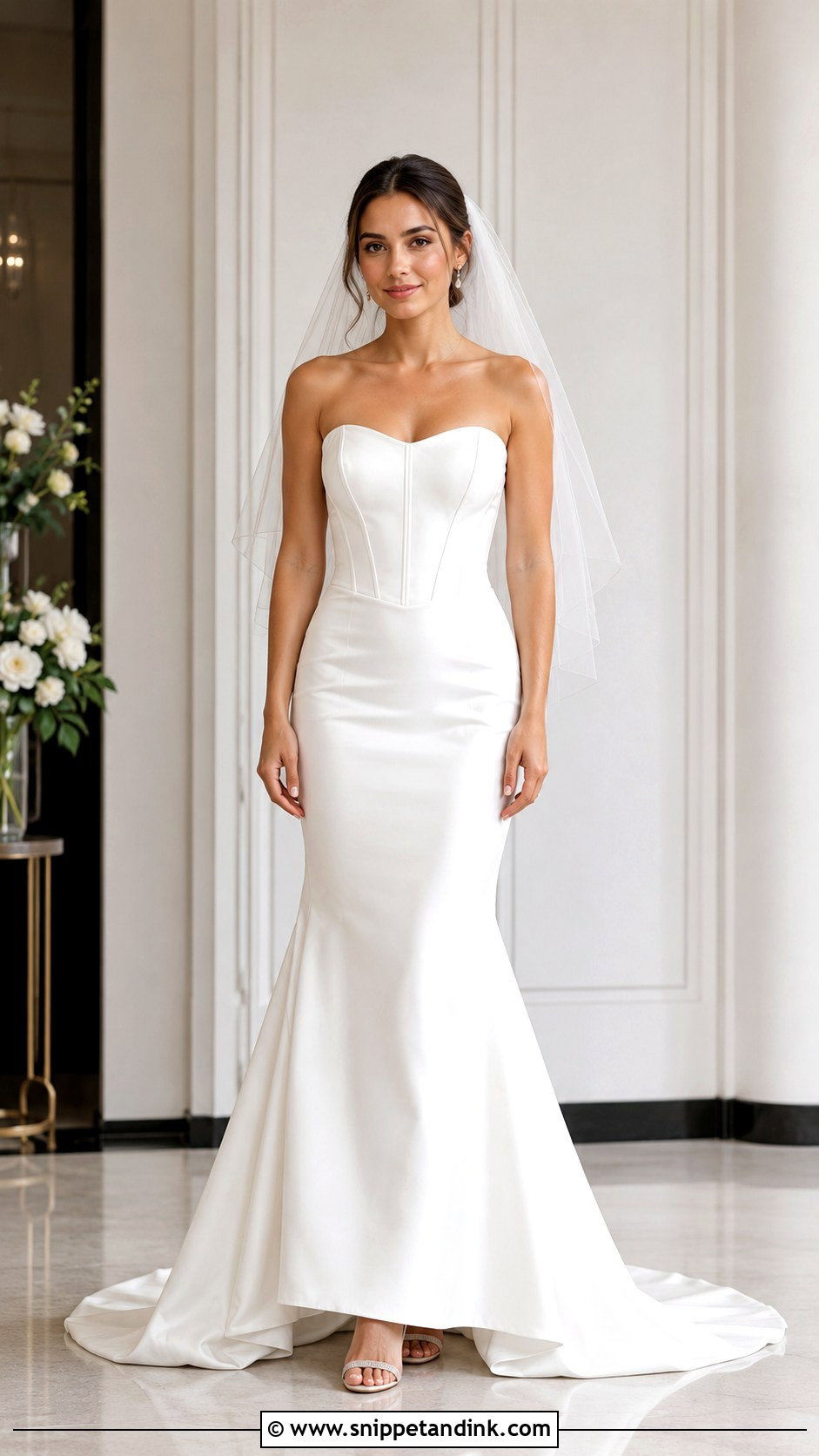
Think of fit and flare as the kinder cousin of the mermaid. It hugs the bodice and upper hips, then releases higher, so walking and sitting feel close to normal. Satin keeps the seam crisp where the skirt opens. A sweetheart or cat-eye neckline gives it some edge, and delicate heels with a mid-length veil keep the proportions even. For a reception full of standing, greeting and dancing, I’d pick this over a mermaid every time.
10. Draped Satin Corset Wedding Dress
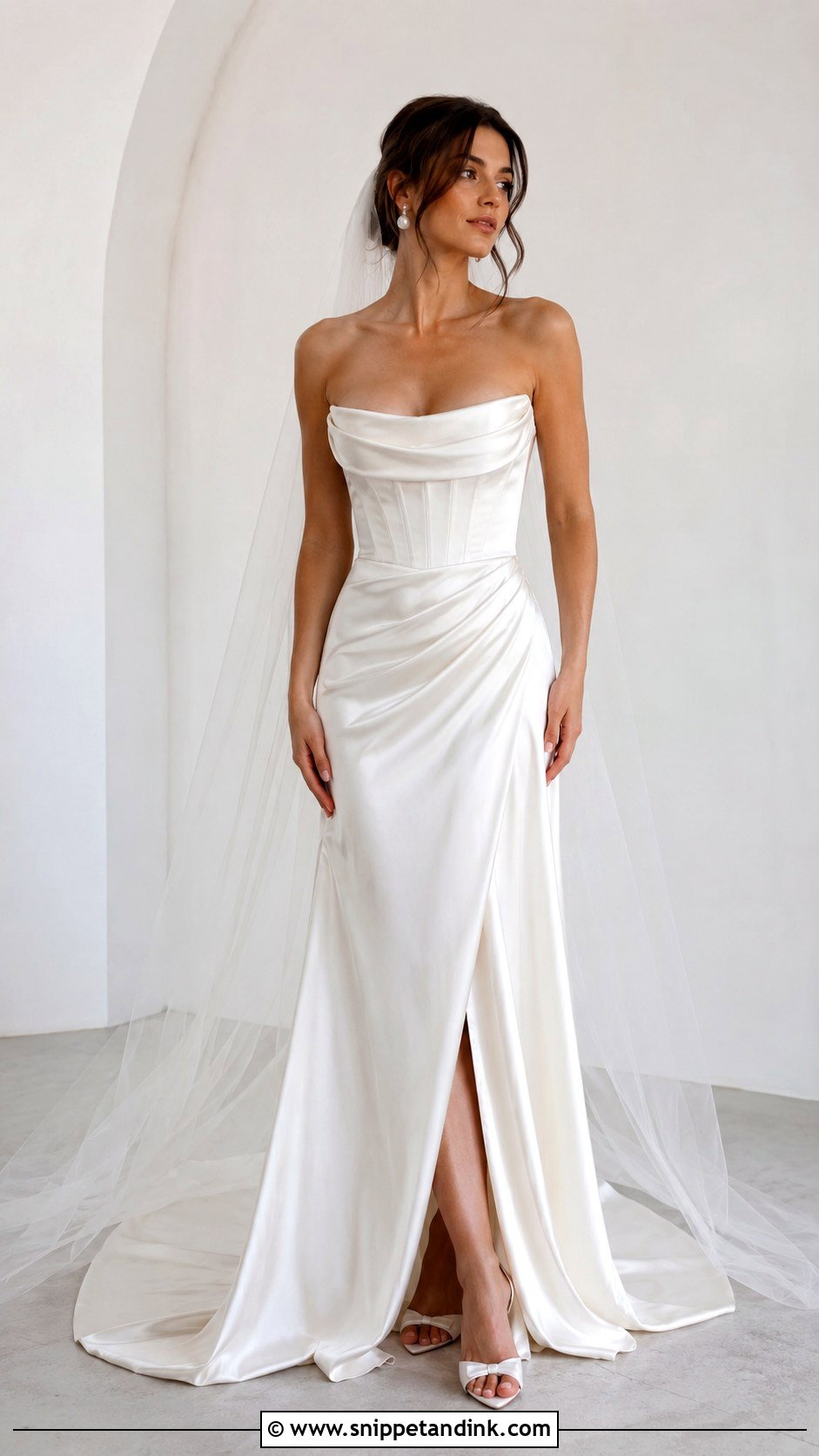
Draping lays folds over the corset that catch light differently on each side of the body. The catch with draped satin is crushing. Folds pressed flat by a seatbelt or a long car ride stay creased, so I tell brides to travel with the drape loosely supported rather than sat on. A low chignon echoes the folds well. Keep jewelry small, since the draping already does that job.
11. Ruched Satin Corset Wedding Dress
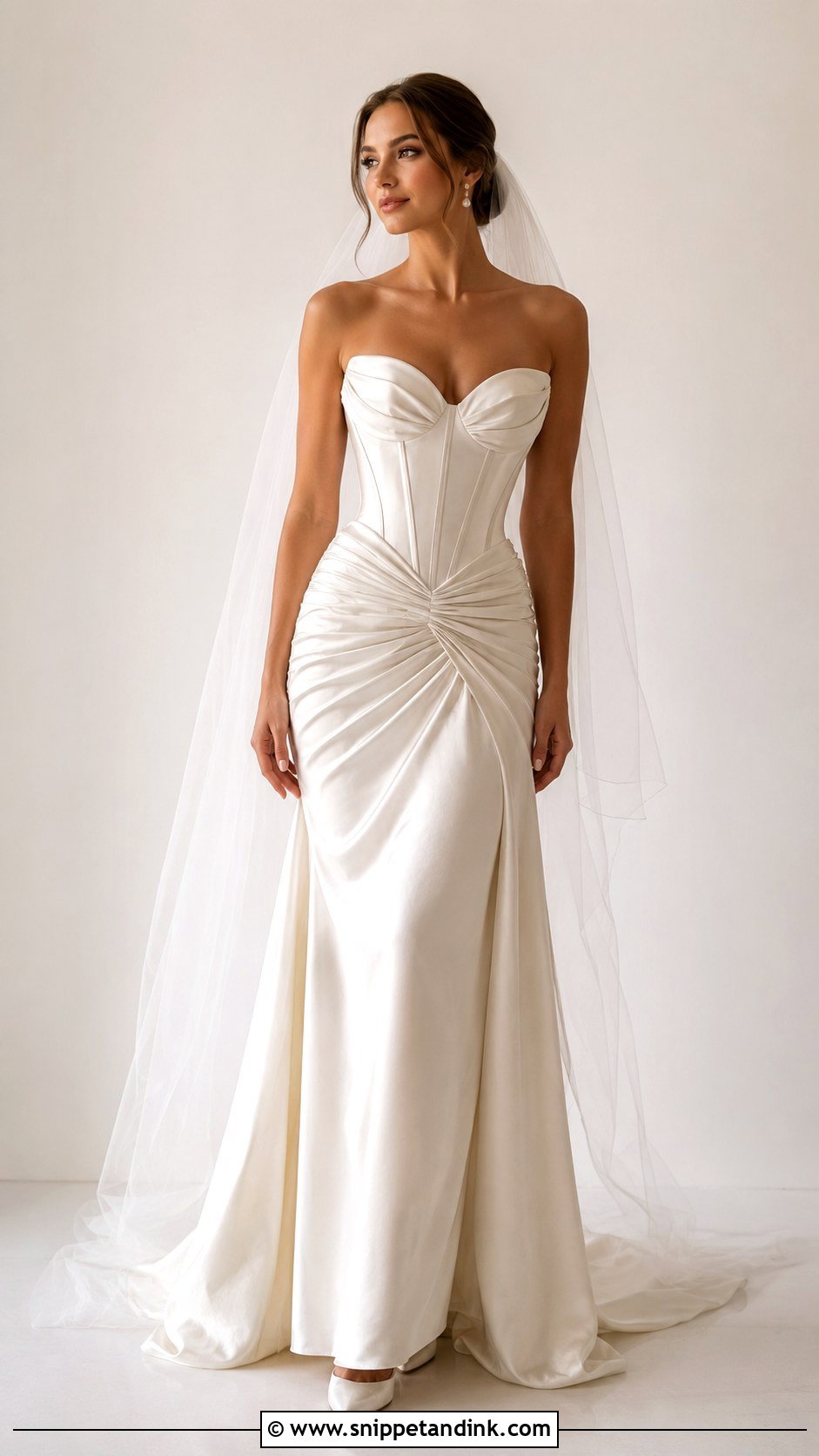
A ruched satin corset wedding dress gathers the fabric across the bodice or waist, which is forgiving if you worry that plain satin will show every line. Ruching also hides small size changes between fittings far better than smooth satin does. The corset underneath stops the gathers from slumping by evening. Classic pumps, a sheer veil and small earrings are plenty.
12. Satin Corset Wedding Dress With Slit
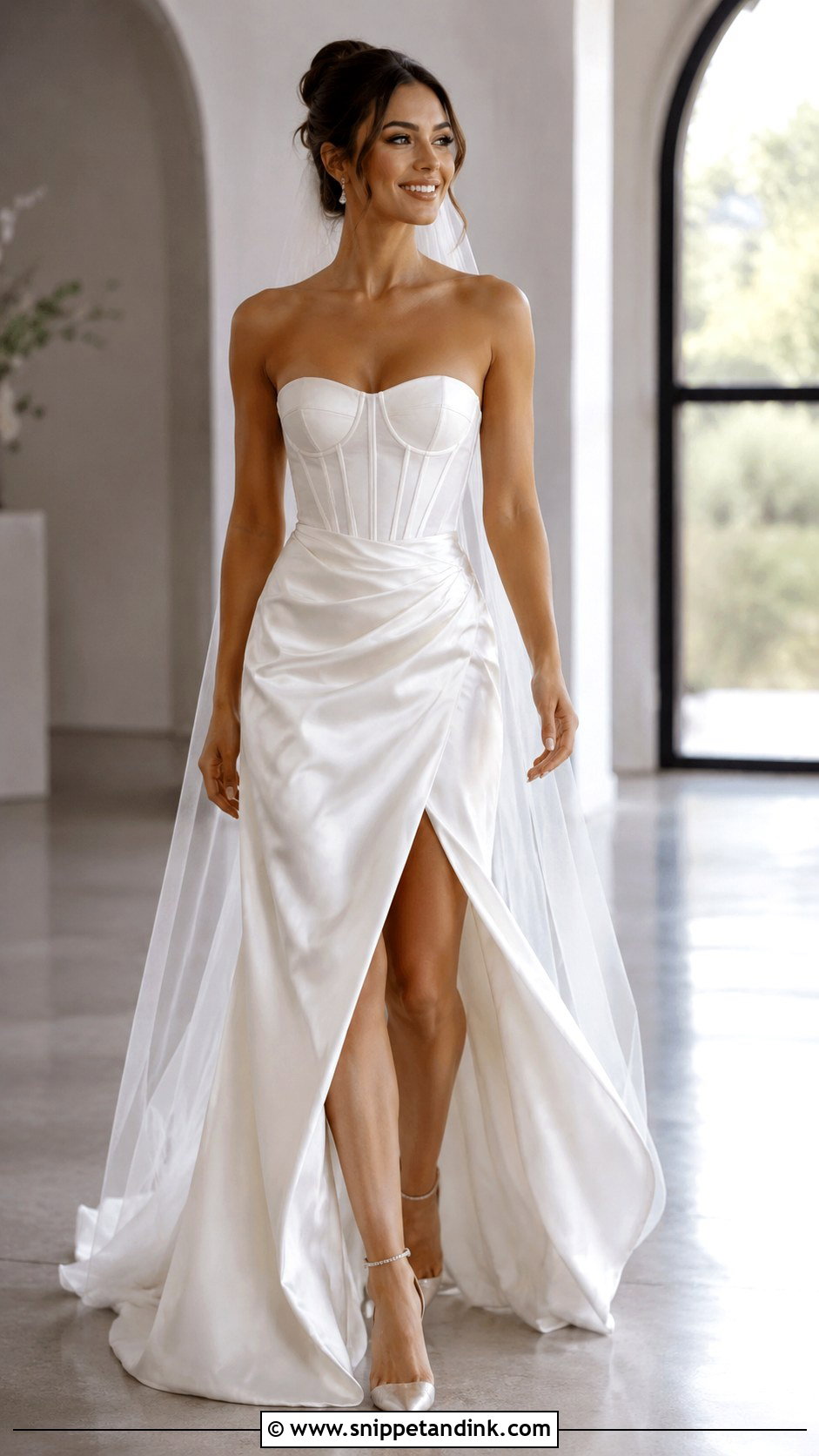
Placement is everything with a slit. I check it with the bride standing, walking, sitting and climbing a step, because a slit that looks modest in the mirror can open well past mid-thigh on stairs. A column or softly draped skirt shows it best. Pick heels you can actually stride in, since the slit puts your shoes on display with every step, and keep the veil clean so the movement stays the point.
13. Satin Corset Wedding Dress With Sleeves
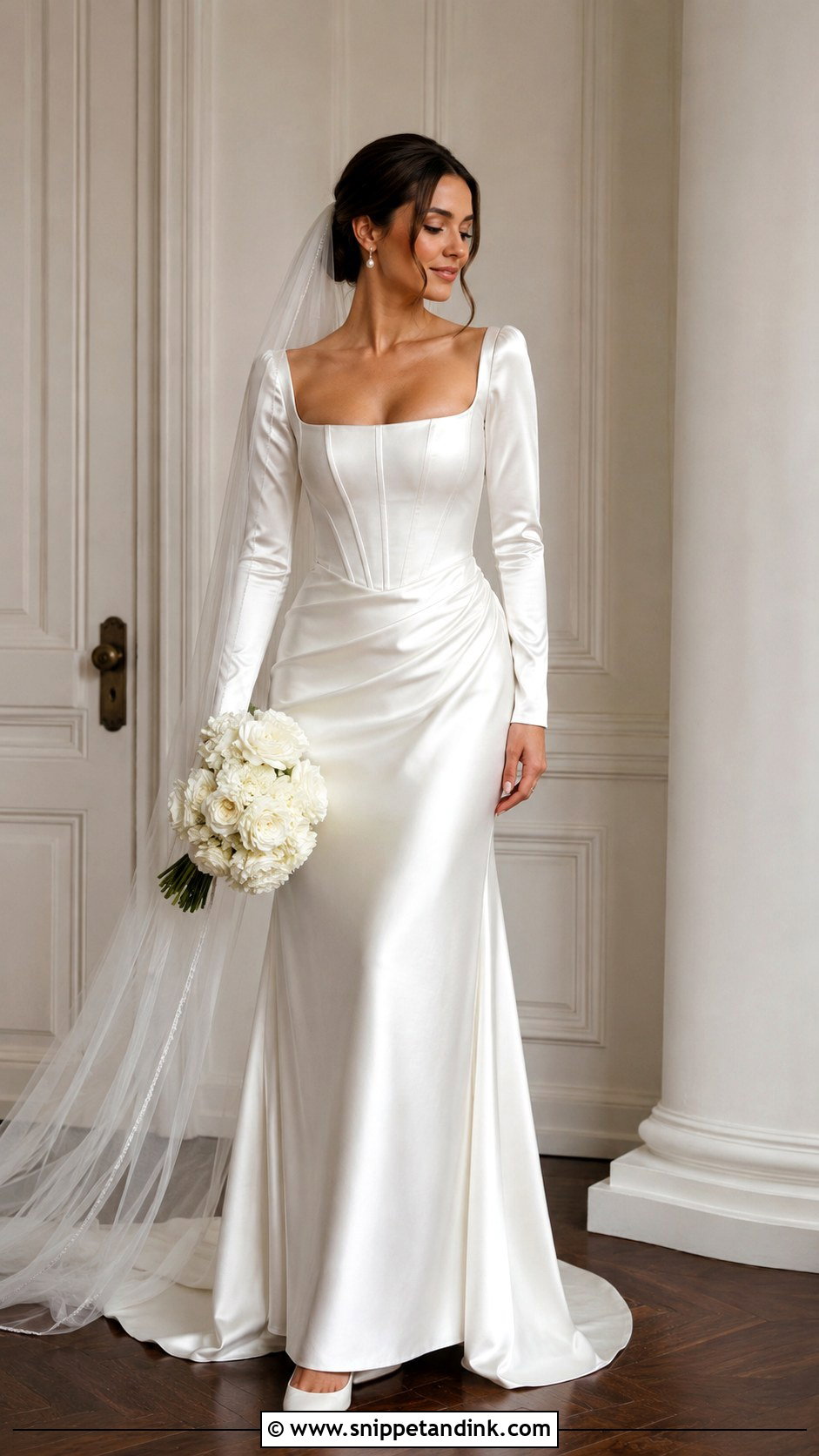
Sleeves change how a corset feels to wear. Long satin sleeves look formal but restrict the arms, so they need enough ease, or a small gusset under the arm, to let you lift a glass and hug your guests. Sheer sleeves are lighter and soften the structure. This version suits cooler months and modest dress codes. With fitted sleeves I keep the hair sleek; with puffed ones, nothing beyond earrings, or the shoulders get crowded.
14. Satin Corset Wedding Dress With Detachable Sleeves
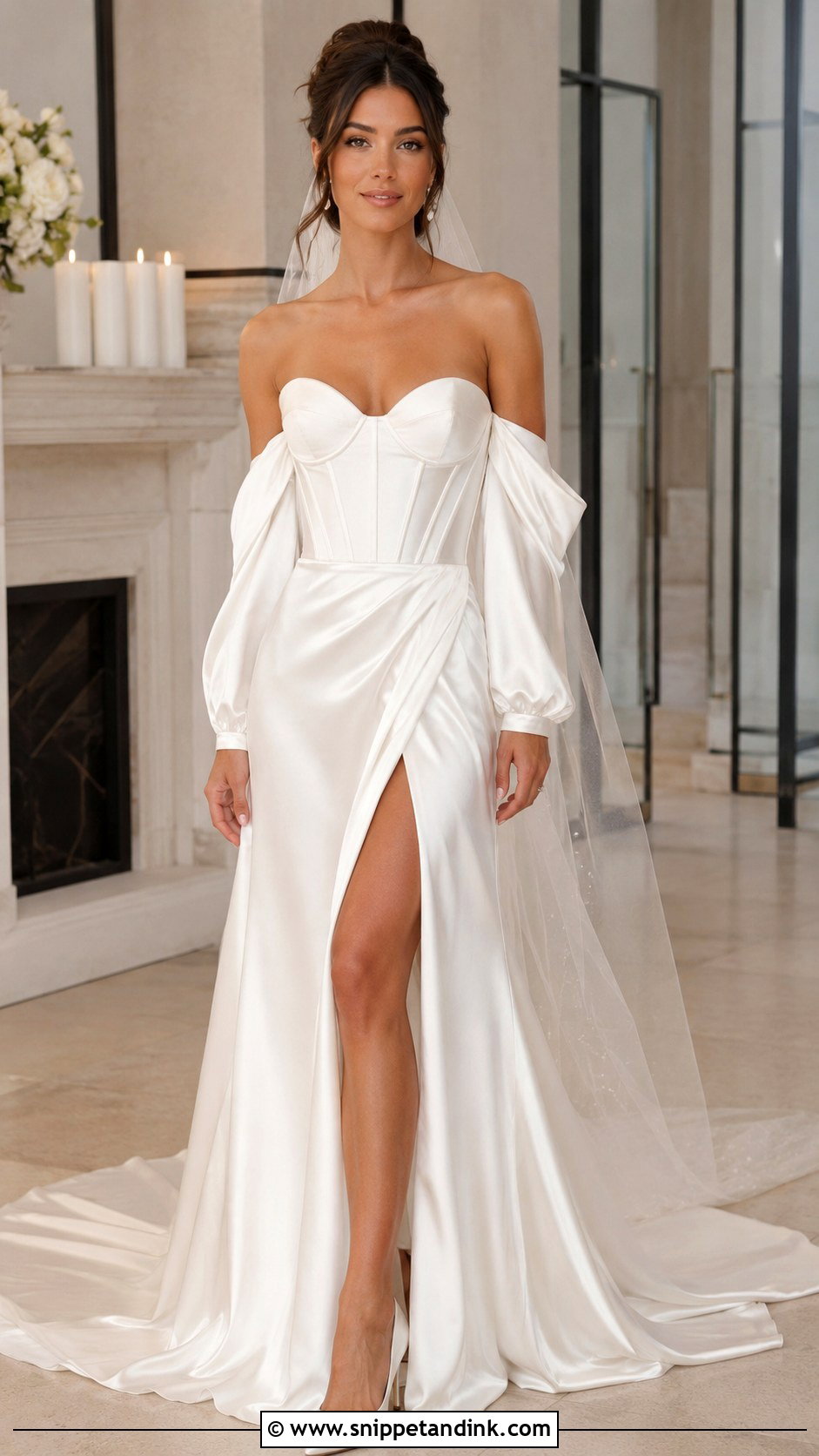
Detachable sleeves give you two dresses from one: the covered version for the ceremony, then a cleaner strapless or spaghetti-strap gown for the reception. Check how they attach. Snaps or tiny hooks hidden inside the bodice edge are the neatest, while ties pulled tight can leave marks in satin. Decide who will take them off for you, because it is a two-handed job. Switching to statement earrings at the change makes the second look feel deliberate rather than undressed.

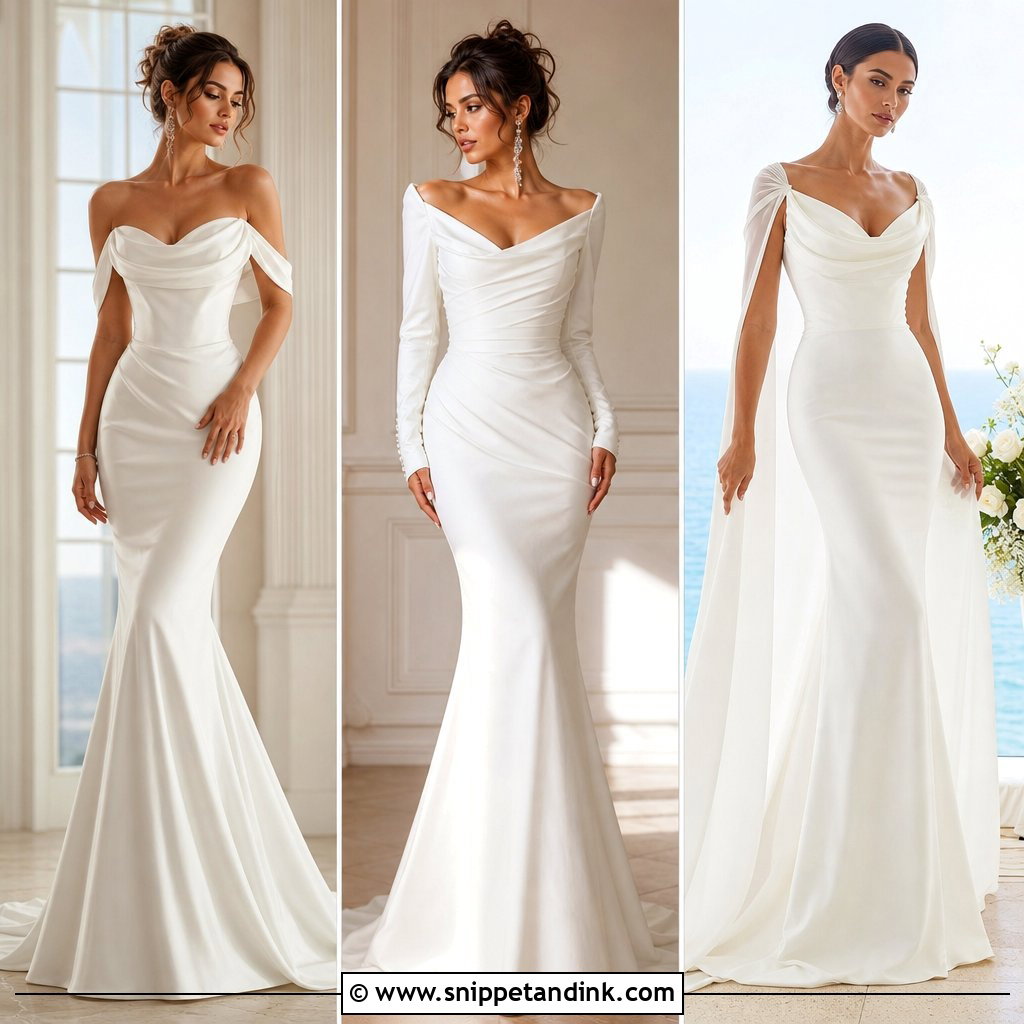

15. Satin Corset Wedding Dress With Overskirt
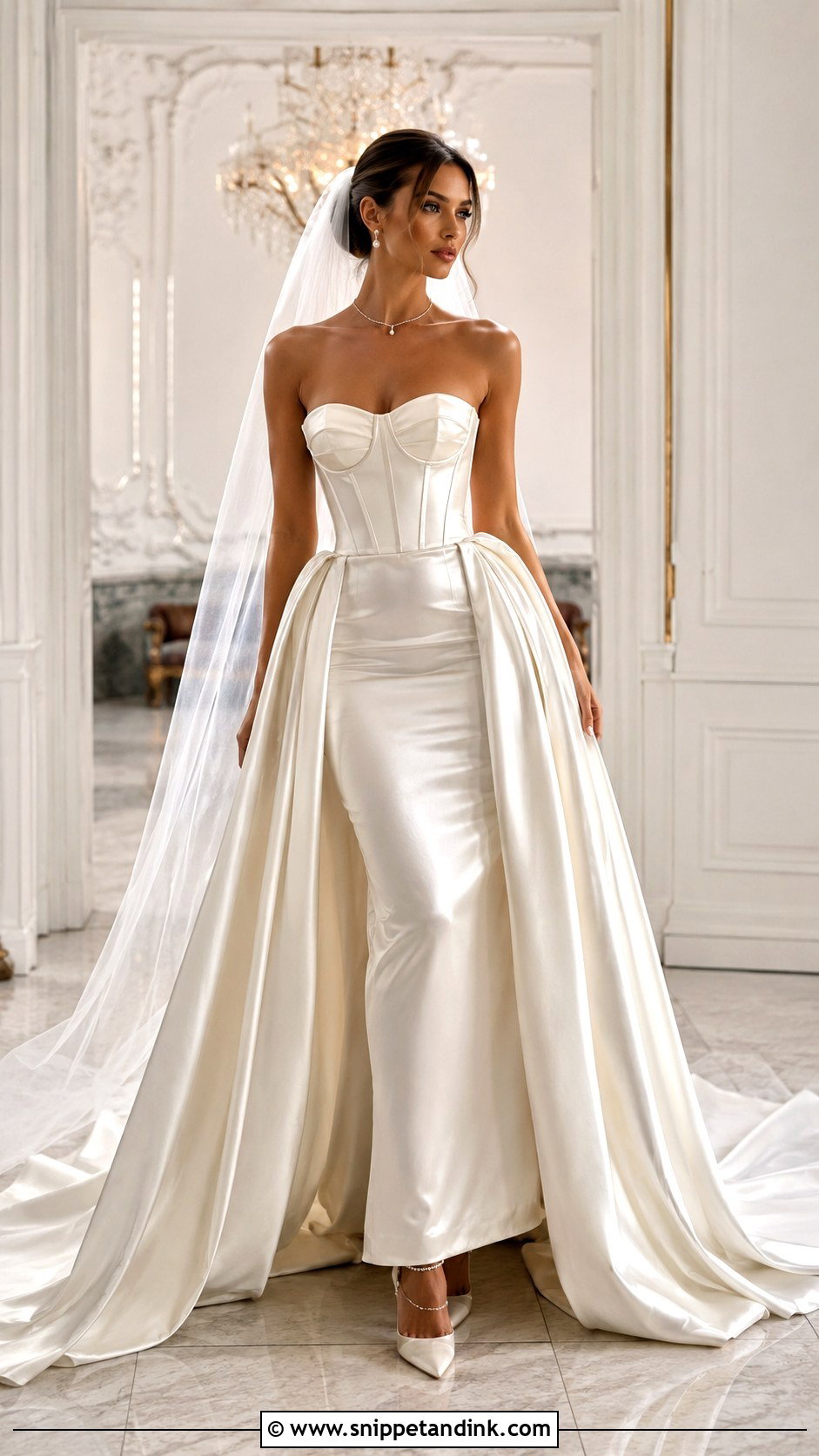
A satin corset wedding dress with an overskirt works like a costume change without leaving the room. The overskirt usually fastens at the waist with hooks or a hidden button band, and under it you can wear a column, a fit-and-flare or even a mini. Satin overskirts are heavy, so practise the removal with whoever will help you; it should come away in about a minute. For the ceremony, a long veil and simple jewelry let the volume speak.
16. Satin Corset Wedding Dress With Bow
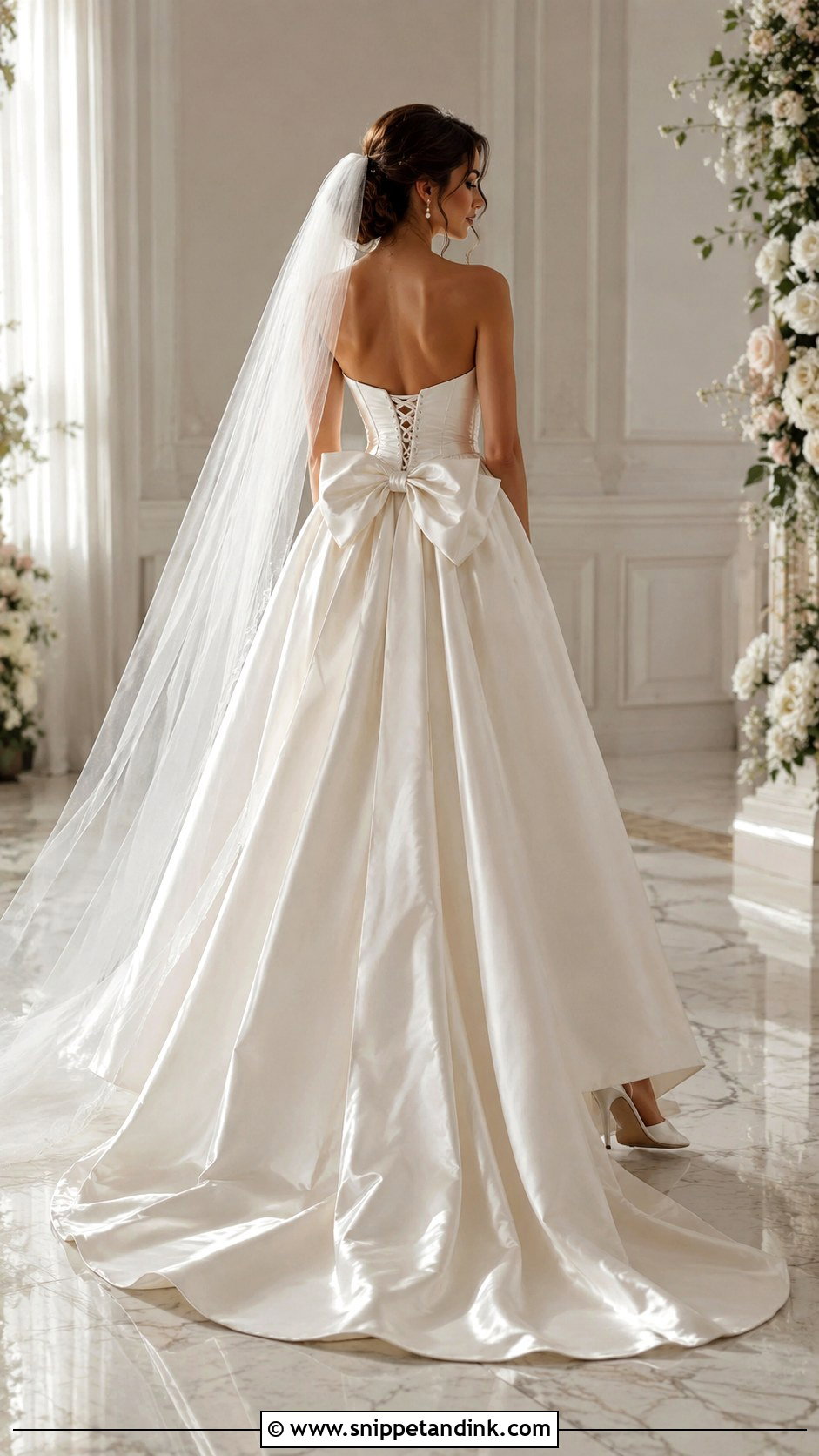
A bow on satin only works when it is properly constructed. Set at the back waist it draws the eye to the corset as you walk away, but a large bow goes limp if it isn’t interfaced, and it crushes every time you lean back in a chair. Ask your shop how it is stiffened. With an oversized bow, I keep the hair simple and leave necklaces off entirely.
17. Pearl Satin Corset Wedding Dress
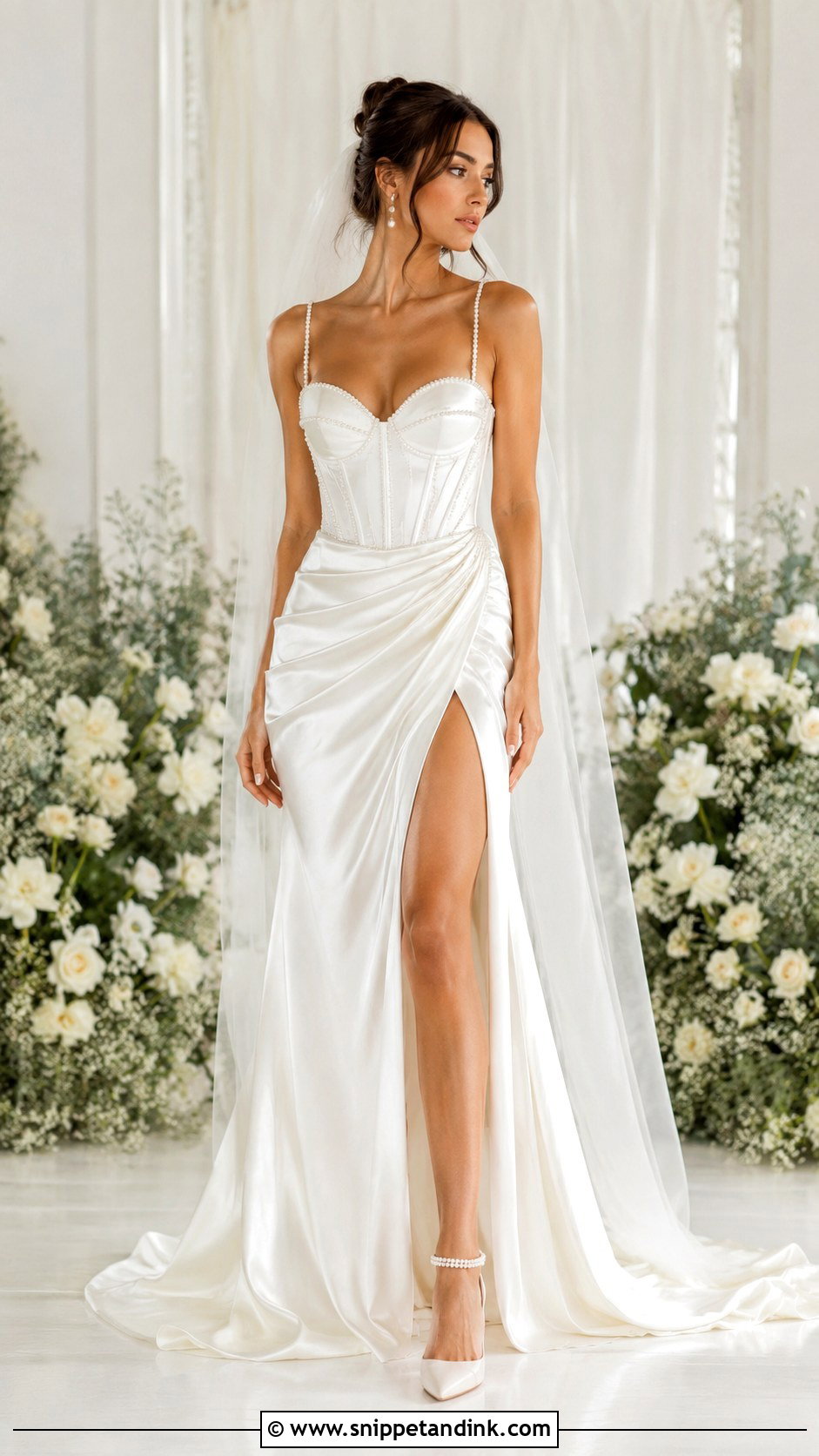
Pearls give off a softer light than crystals, which suits satin’s own sheen. They can be stitched along the bodice, straps or neckline, or carried by the veil and gloves instead. Hand-sewn pearls add weight, so on a heavily beaded bodice the boning needs to be firmer to stop the top edge folding over. If the dress itself is plain, a pearl-edged veil or a few hair pins is often enough. Close-up portraits show pearls far better than wide shots.
18. Lace Applique Satin Corset Wedding Dress
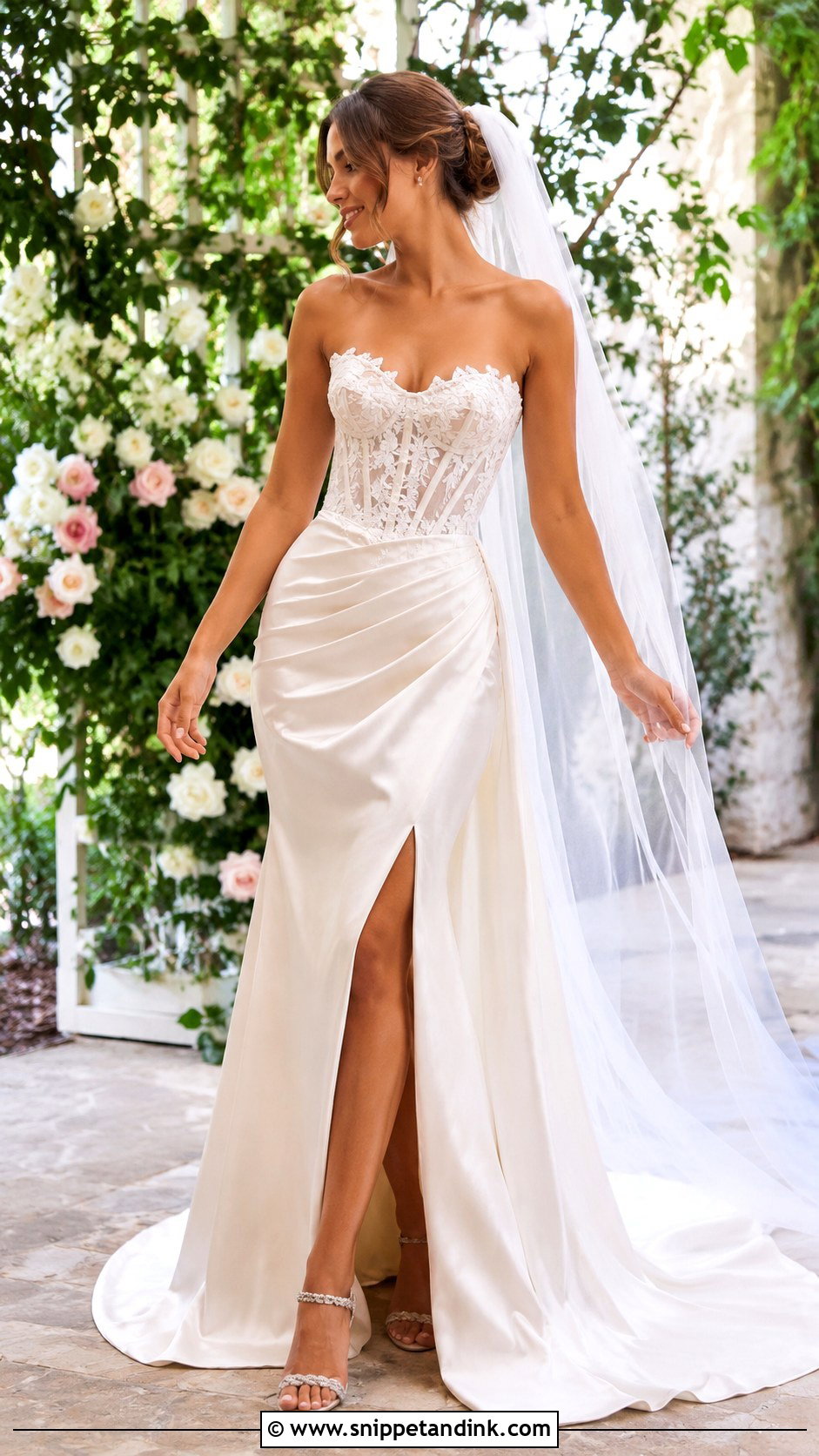
Lace appliques on satin give you texture without committing to a full lace gown. Look closely at how they are attached. Hand-stitched appliques sit flat and move with the dress, while glued ones can lift at the edges after a long day of wear. Lace kept to the corset reads more modern; appliques trailing onto the train feel traditional. A plain veil keeps the lace the focus.
19. Minimal Satin Corset Wedding Dress
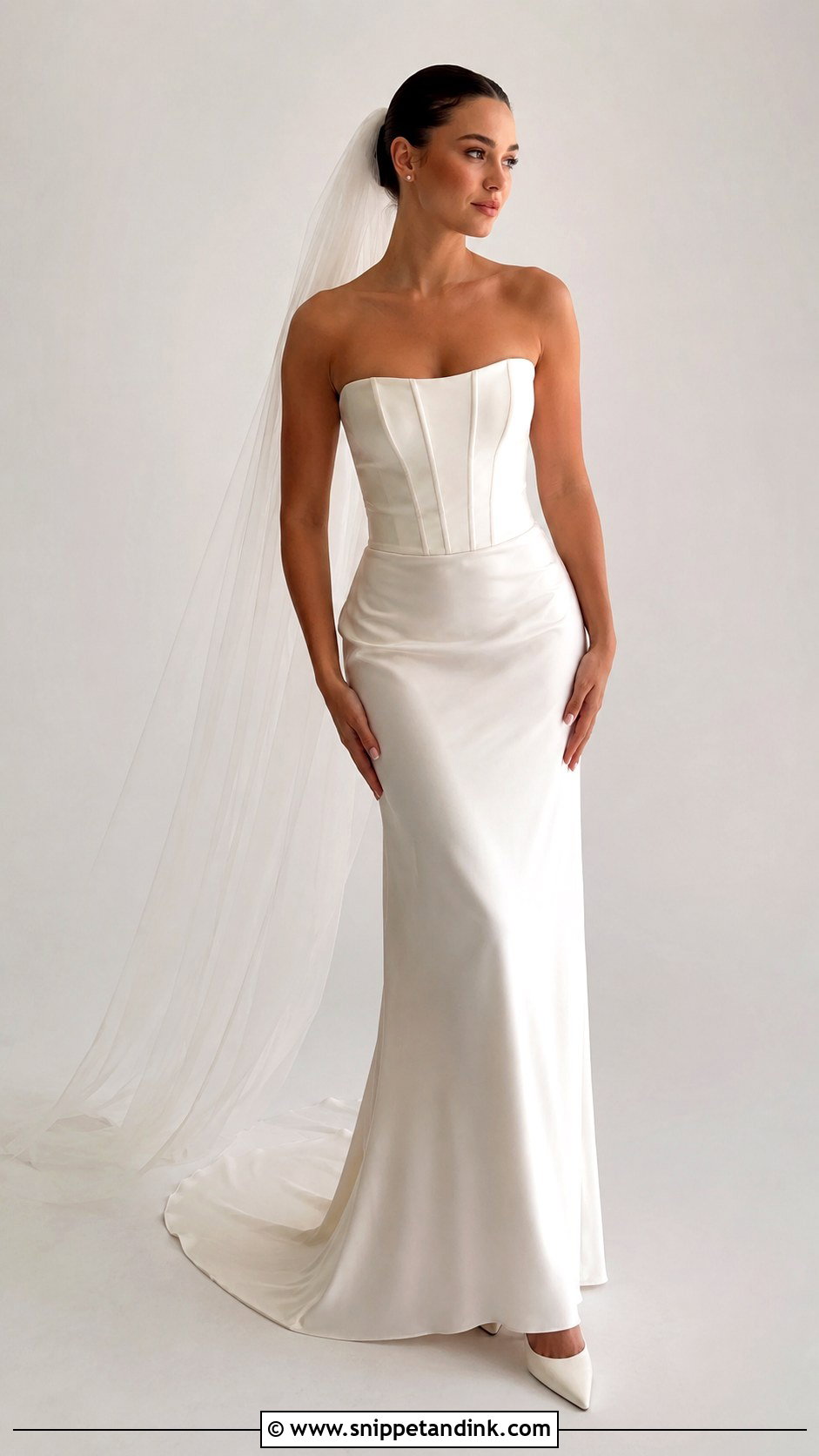
A minimal dress has nowhere to hide. Every pull line across the bodice shows in clean satin, which is why I’d plan more fittings for this one, not fewer. Small diamond or pearl studs, sleek pumps and a plain veil keep the mood intact, and a smooth bun or polished waves finishes it. Of all the dresses here, this is the one most likely to still look current when you pull the album out years from now.




20. Modern Square Neck Satin Corset Wedding Dress
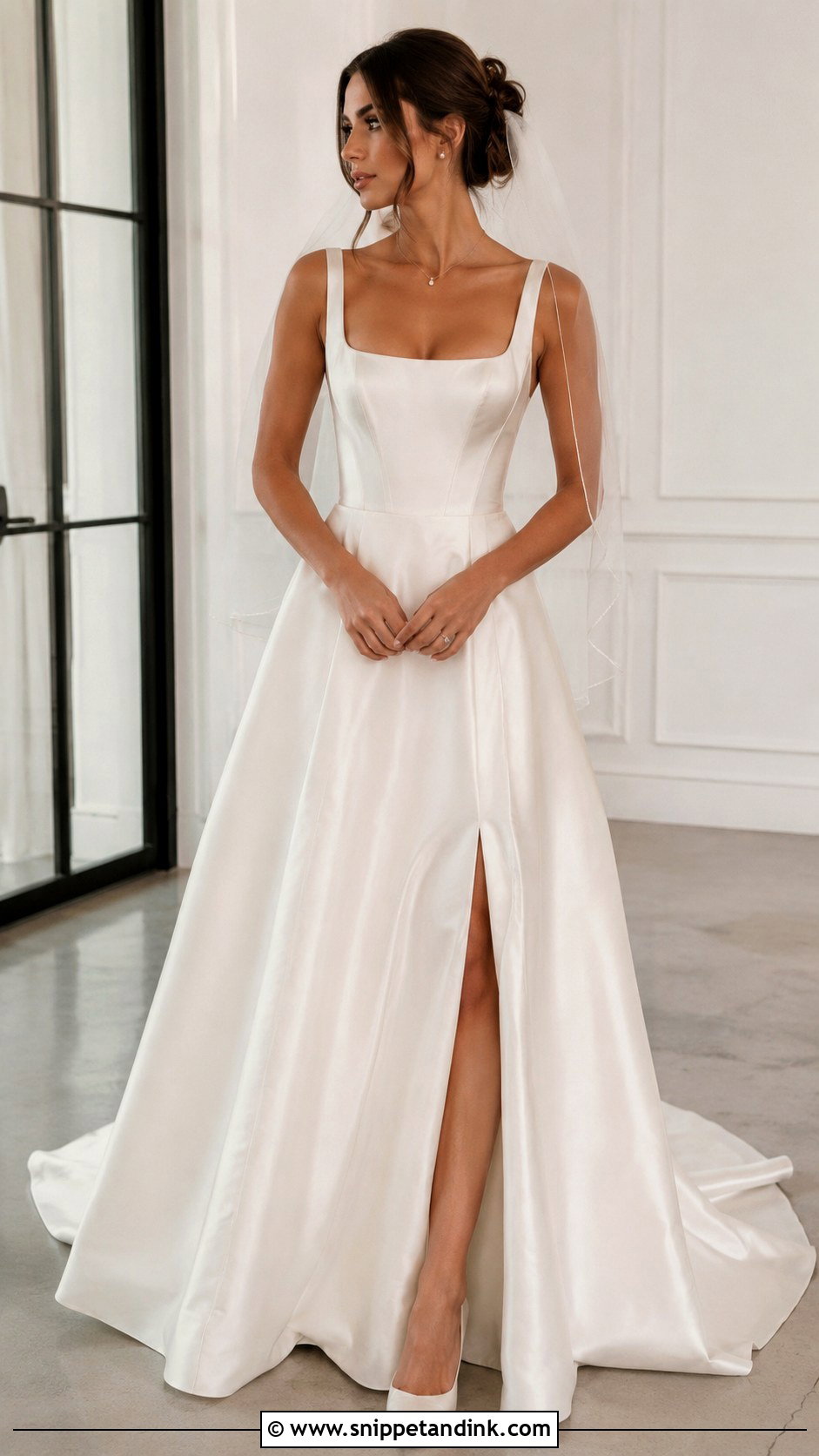
A square neckline sets a straight edge against the curve of a corset waist, and that contrast is the appeal. Wide straps give more support and suit a fuller bust; thin straps or a strapless square cut look lighter. Watch the corners. They should lie flat against the chest, and if they gape when you lean forward, the strap length needs adjusting. The straight top edge leaves room for a small pendant. A smooth A-line softens it, a fitted skirt sharpens it.
21. Cat Eye Satin Corset Wedding Dress
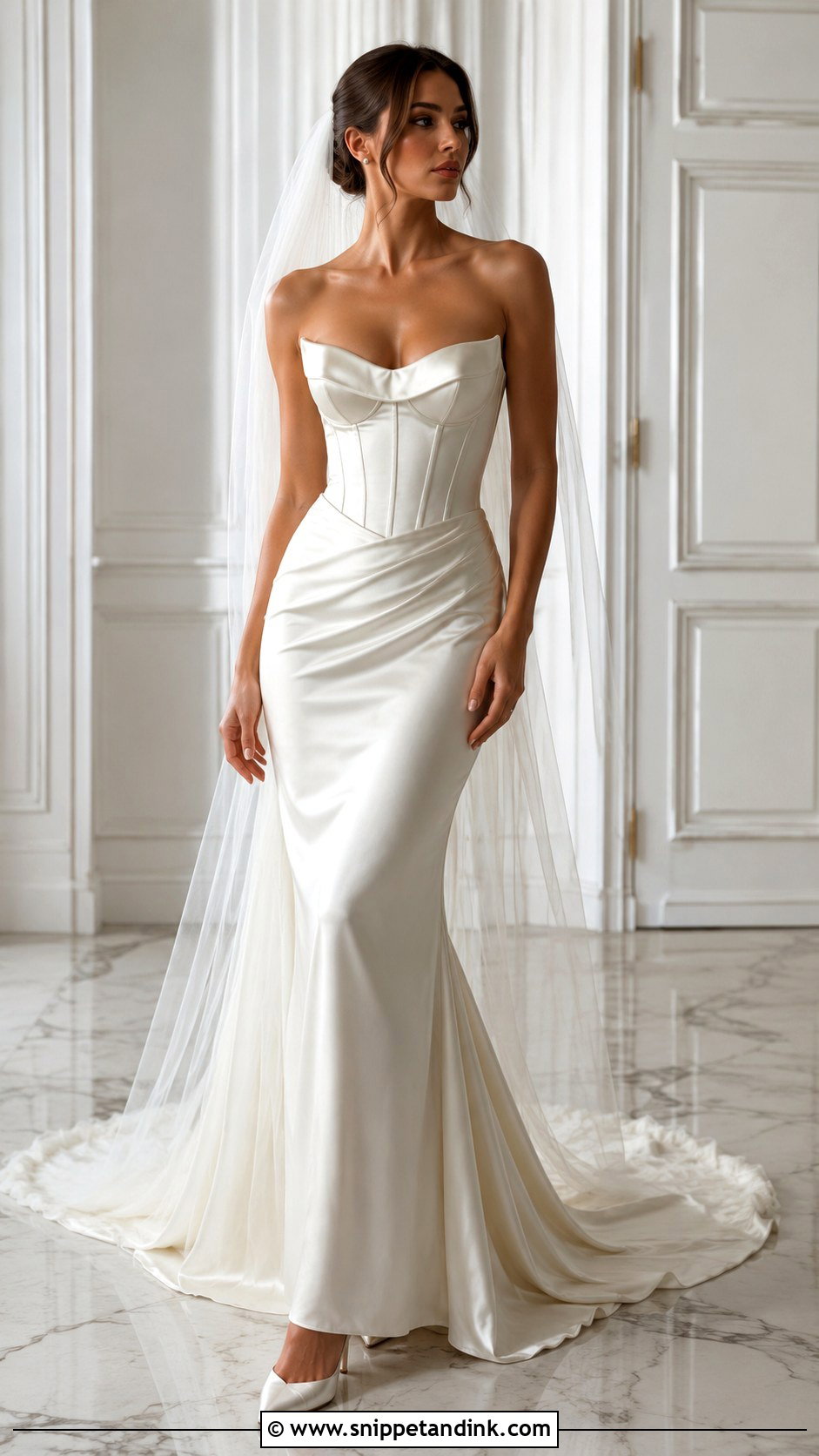
A cat eye satin corset wedding dress has a neckline that dips at the centre and lifts toward the outer edges, much like a winged liner shape. Those raised points need precise boning or they fold inward by the evening. With a neckline this strong, the rest should stay plain: satin heels, a simple veil, very little jewelry. It’s the strapless option I suggest to brides who find a sweetheart too familiar.
22. Halter Satin Corset Wedding Dress
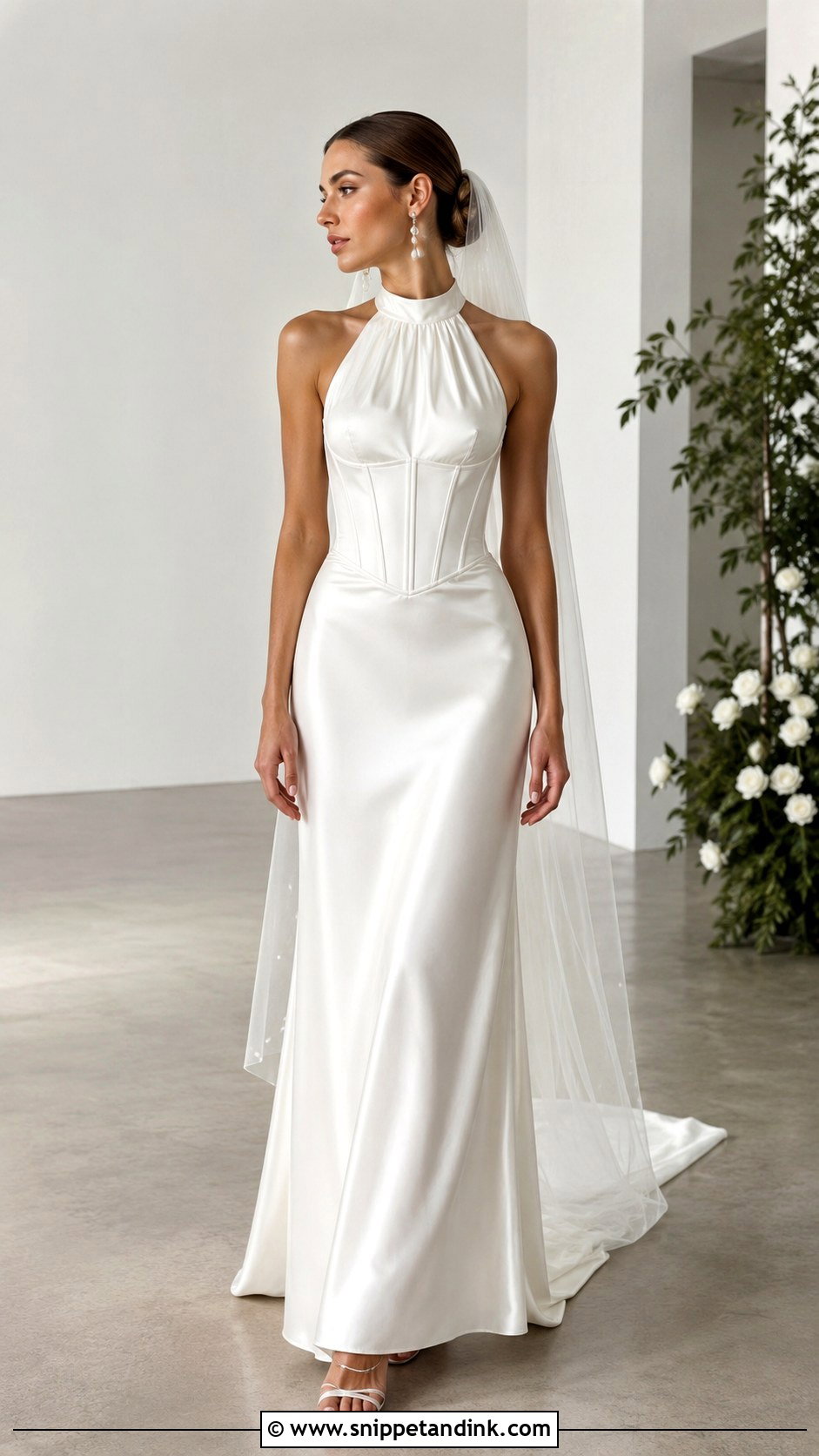
A halter takes its support from the neck, which helps brides who don’t trust a strapless bodice. The trade-off is pressure on the back of the neck over many hours, so ask for a wider or padded strap if you’ll wear it from morning to midnight. Drop earrings and a low bun show off the neckline, and a necklace only competes with it. If you wear a veil, attach it below the bun so it doesn’t hide the halter line.
23. Satin Corset Mini Wedding Dress
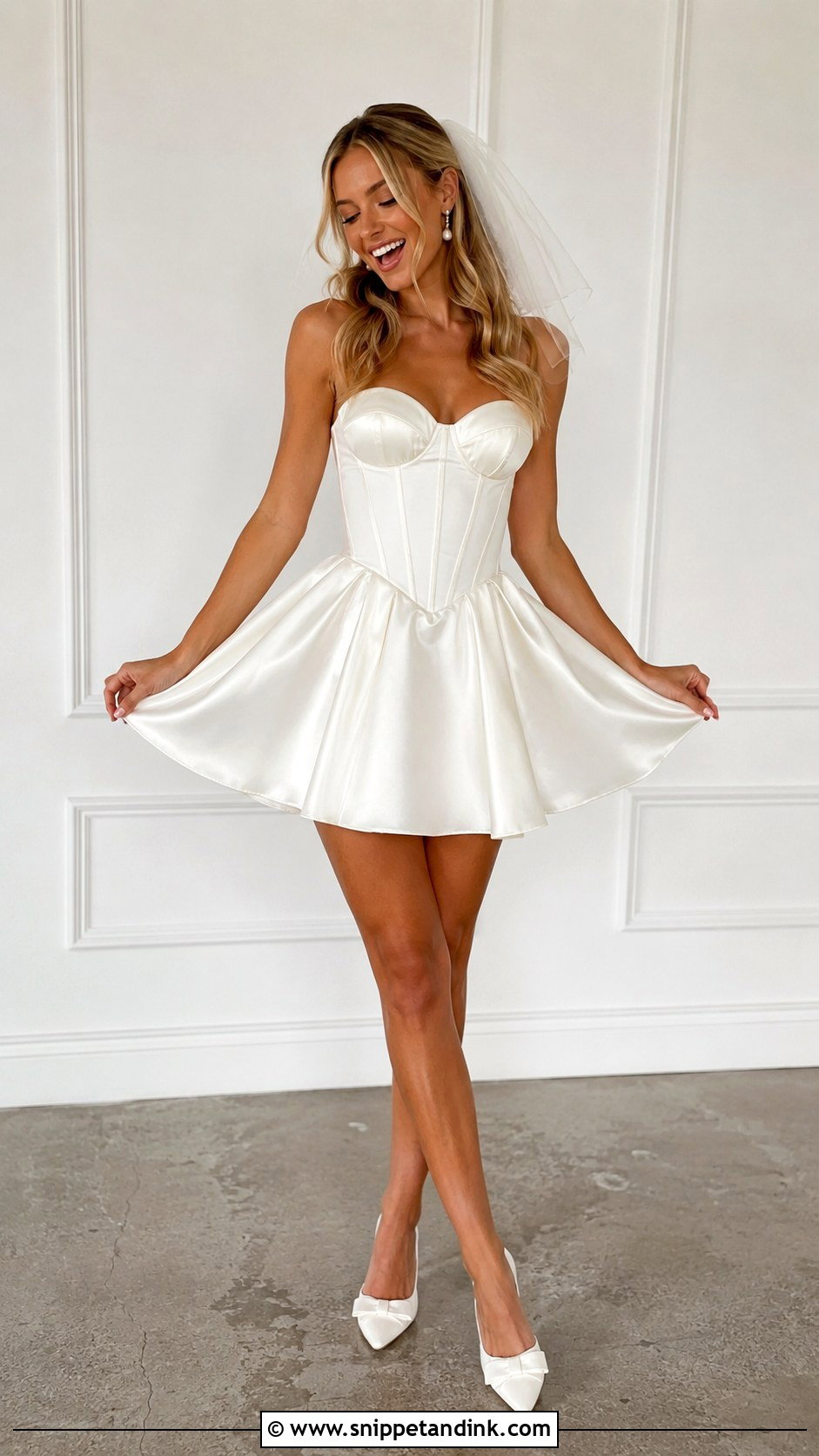
Going short changes the occasion: a mini suits a courthouse ceremony or a second look for the reception. The corset bodice keeps it bridal rather than party wear, and satin gives it enough weight that it doesn’t look casual. A flared mini reads younger, a fitted one sharper. Hemlines ride up when you sit, so test the length in a chair, not just standing at the mirror. Pointed heels and a short veil or hair bow complete it.
24. Satin Corset Midi Wedding Dress
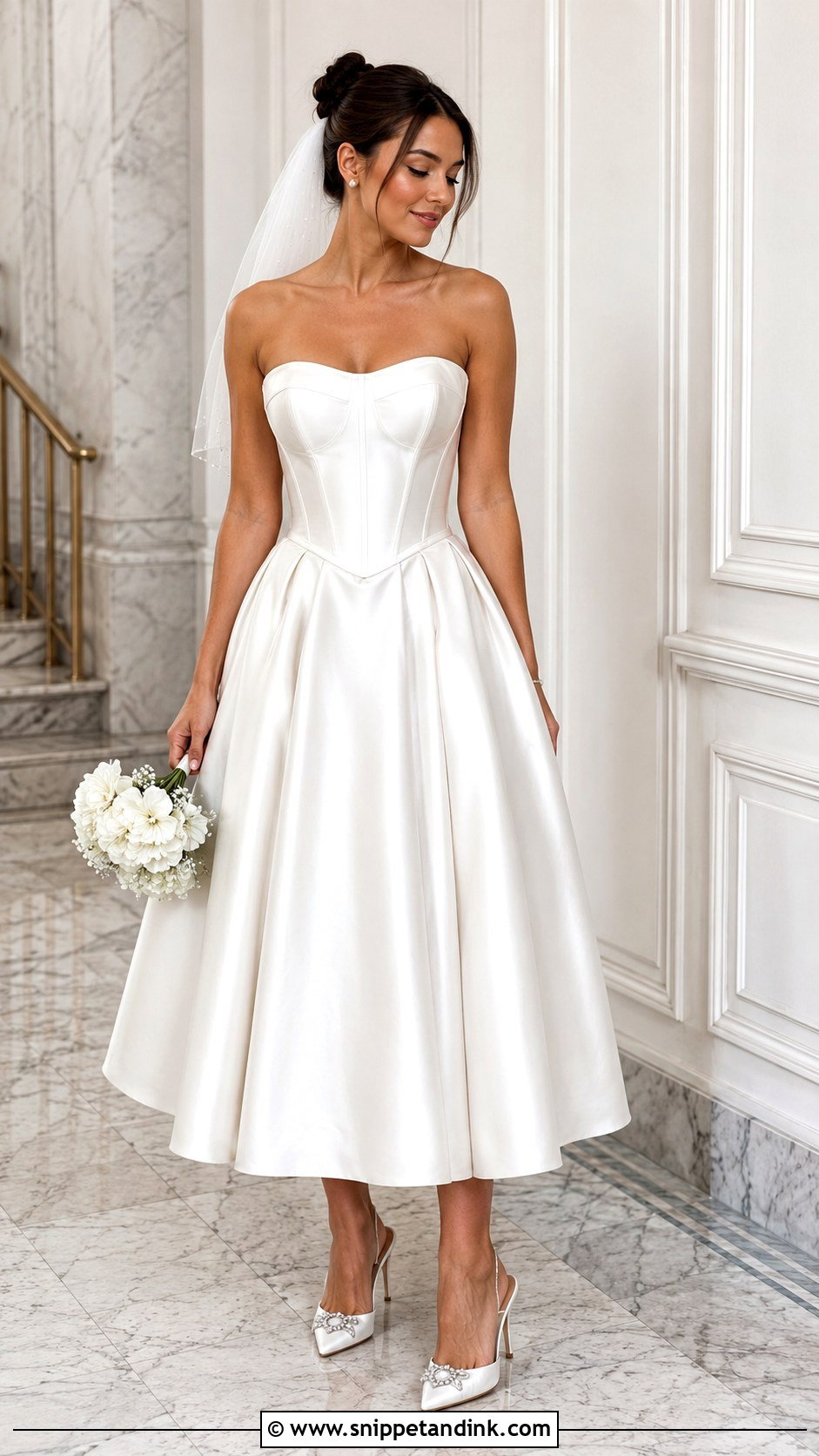
The midi length puts your shoes on show, so I treat them as part of the dress rather than an afterthought. Ivory pumps or slingbacks suit a plain skirt, while an embellished heel can carry a very simple one. It fits smaller weddings and civil ceremonies, with no train to manage. A full midi skirt has a vintage feel and a slim one looks modern. Keep the veil short, a birdcage or shoulder length, so the proportions stay right.
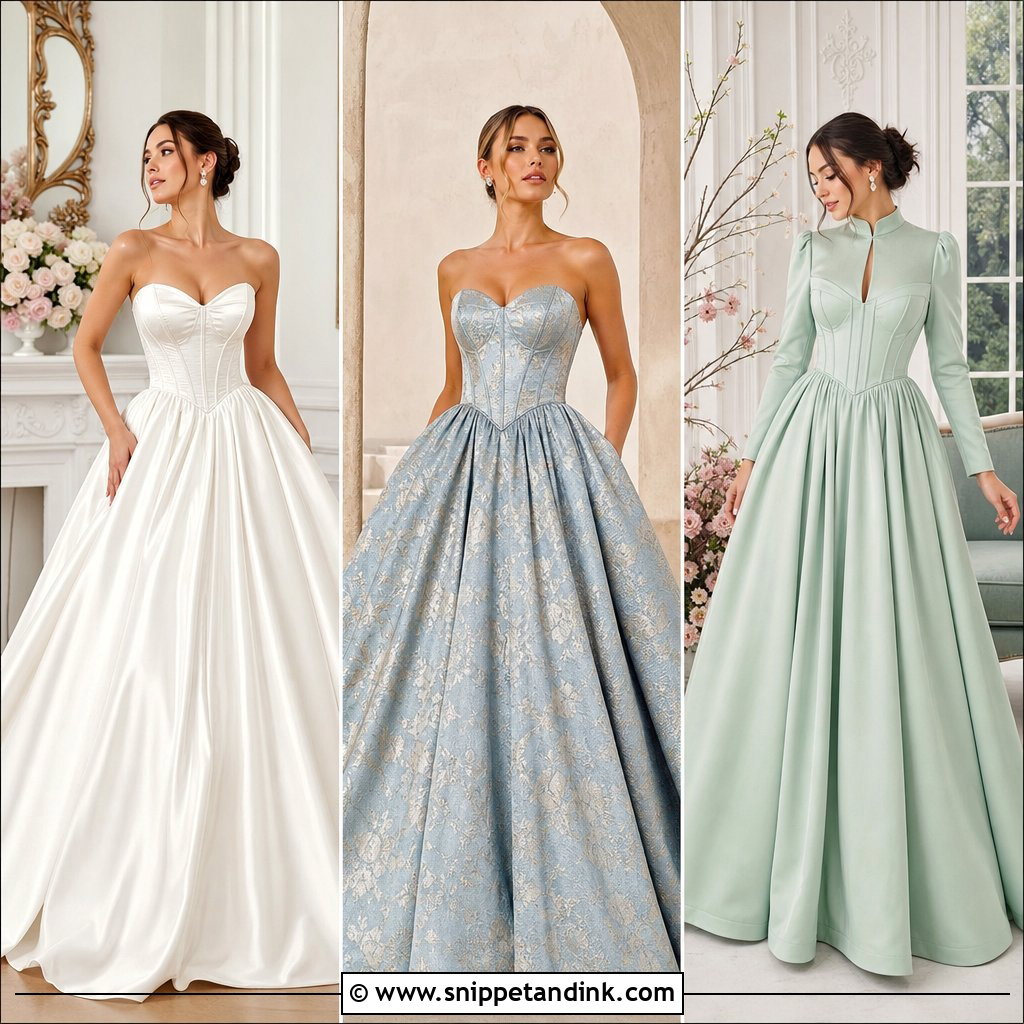




25. Two Piece Satin Corset Wedding Dress
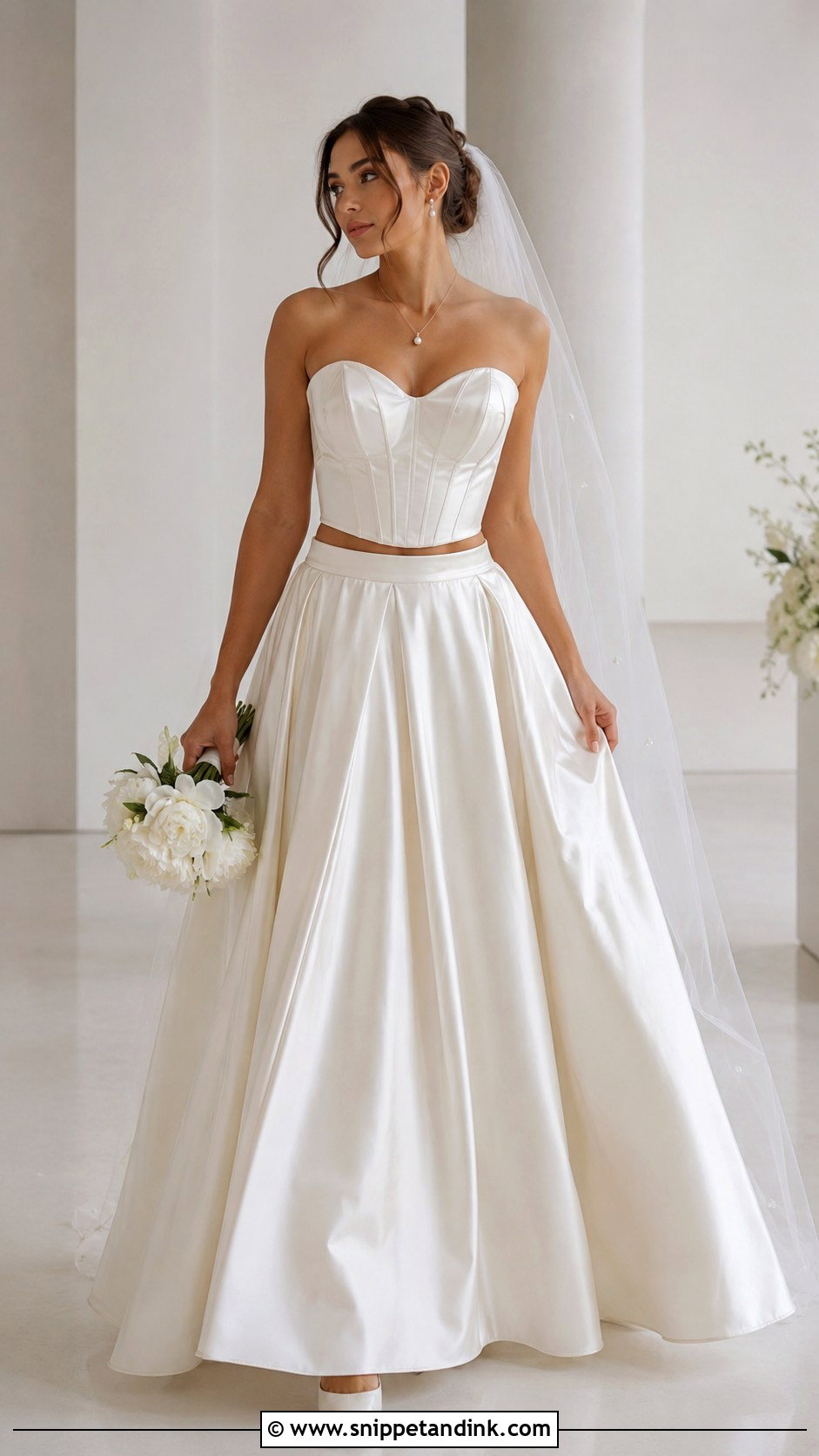
Separating the corset top from the skirt solves a real fitting problem: brides who are a different size on top and bottom can have each piece fit properly. You can also swap to a lighter skirt for dancing. The join needs attention, though. The corset should overlap the skirt waistband by a few centimetres so no gap opens when you raise your arms. Afterward, the corset can be worn again with trousers or a different skirt.
Creases, Water Spots and Other Satin Trouble
Satin creases wherever it is folded or sat on, and it can mark when wet. Neither is a disaster if you plan for it.
Steam it, never iron it
Have the dress steamed by your shop or a professional the day before, then hang it from its inner loops rather than the shoulders so the skirt’s weight doesn’t pull on the bodice. If a crease appears on the morning, a handheld steamer held a hand’s width away will relax it. Direct iron heat can leave a permanent shine on satin.
Makeup, deodorant and drinks
Put deodorant on well before dressing and let it dry. Step into the dress instead of pulling it over your head, and drape a thin scarf over your face if anything has to go over it, so foundation stays off the neckline. Water can leave a ring on some satins as it dries, so blot a spill gently and never rub.
The weeks after
Take the dress to a cleaner who handles bridal gowns within a few weeks. Champagne and sugary drinks dry clear at first and turn yellow over time. Store it in acid-free tissue inside a breathable cotton bag, away from plastic and daylight.
The Bodice Decides How the Whole Day Feels
A satin corset dress comes down to two decisions: how the bodice is built, and what shape of skirt hangs from it. Get the structure and fit right first, then choose a neckline for your shoulders and a skirt for your venue and how much you plan to move. From a plain square neck to a full ball gown or a reception mini, the right one is the dress you can sit, hug and dance in without thinking about it.
You'll Like These Ideas:






Leave a Reply