
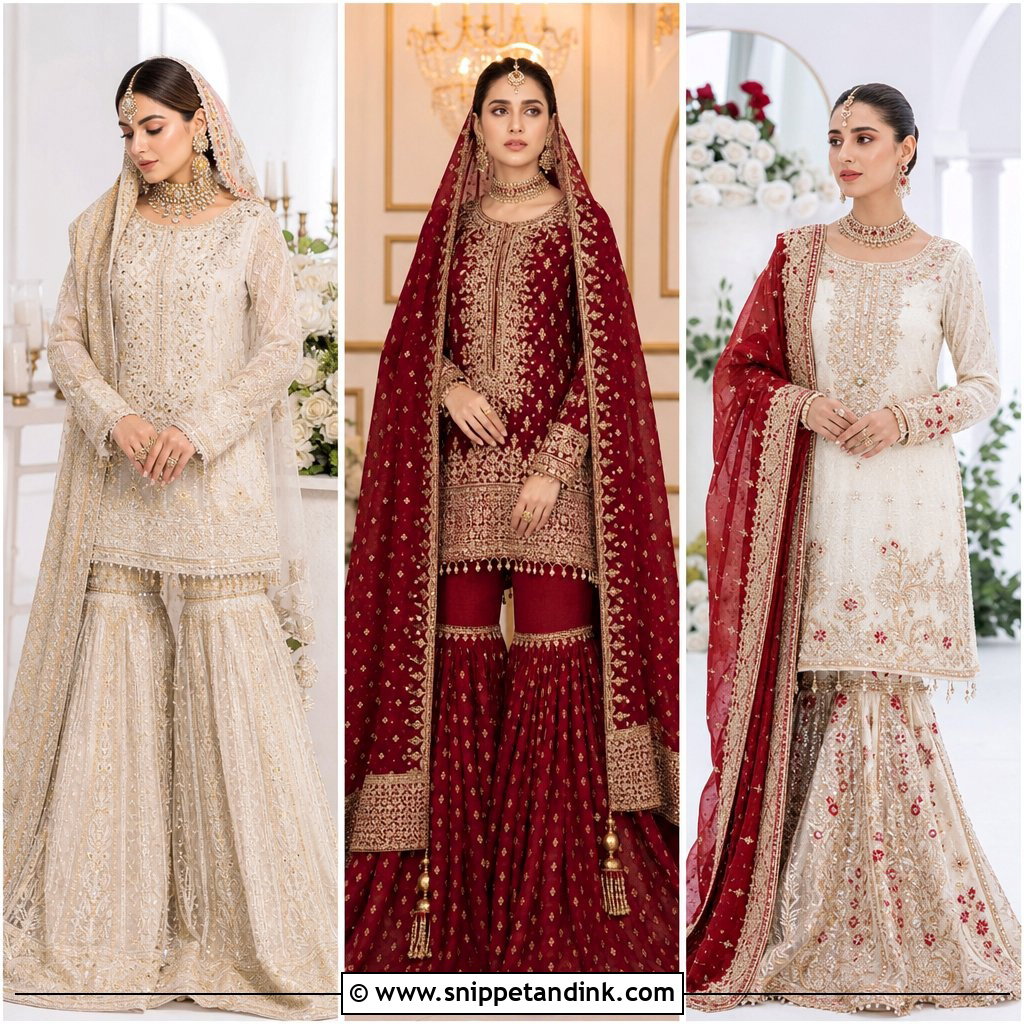
White with a red dupatta is one of the oldest Nikkah pairings, and it keeps working because each colour does a job. The white base reads modest and calm, and the red over the head brings the bridal weight and frames the face in every close-up. Most of my styling time for a Nikkah goes on the dupatta, not the dress: how it sits, how it’s pinned, and whether it stays put while you sign and greet family. Nikkah fashion today covers ghararas, shararas, lehengas, pishwas, long shirts and simple floor-length gowns. Gold, silver, pearl or tonal embroidery lifts the white, while red or maroon gives contrast and covers the head during the ceremony.
Here are twenty ways to put the two together, from the most traditional to the plainest.
Will the Red Bleed Onto the White?
It can, and it’s the risk I check before anything else with this pairing. Deep reds and maroons, especially in chiffon, net and hand-dyed fabrics, sometimes aren’t fully colourfast. Add warmth, sweat, a humid venue or a few tears during the ceremony, and the dye can transfer onto a white collar, sleeve or bodice.
The test is simple. Dampen a white cotton cloth, press it firmly onto the dupatta for a minute, then rub gently. Any pink on the cloth means the dye will move. Try it on the border and the body of the fabric, since embroidery threads and the base cloth are often dyed separately. If it fails, ask the shop or a dry cleaner whether it can be set, or choose another dupatta. I also avoid steaming a red dupatta right next to a white dress, as hot moisture is exactly what lifts loose dye.
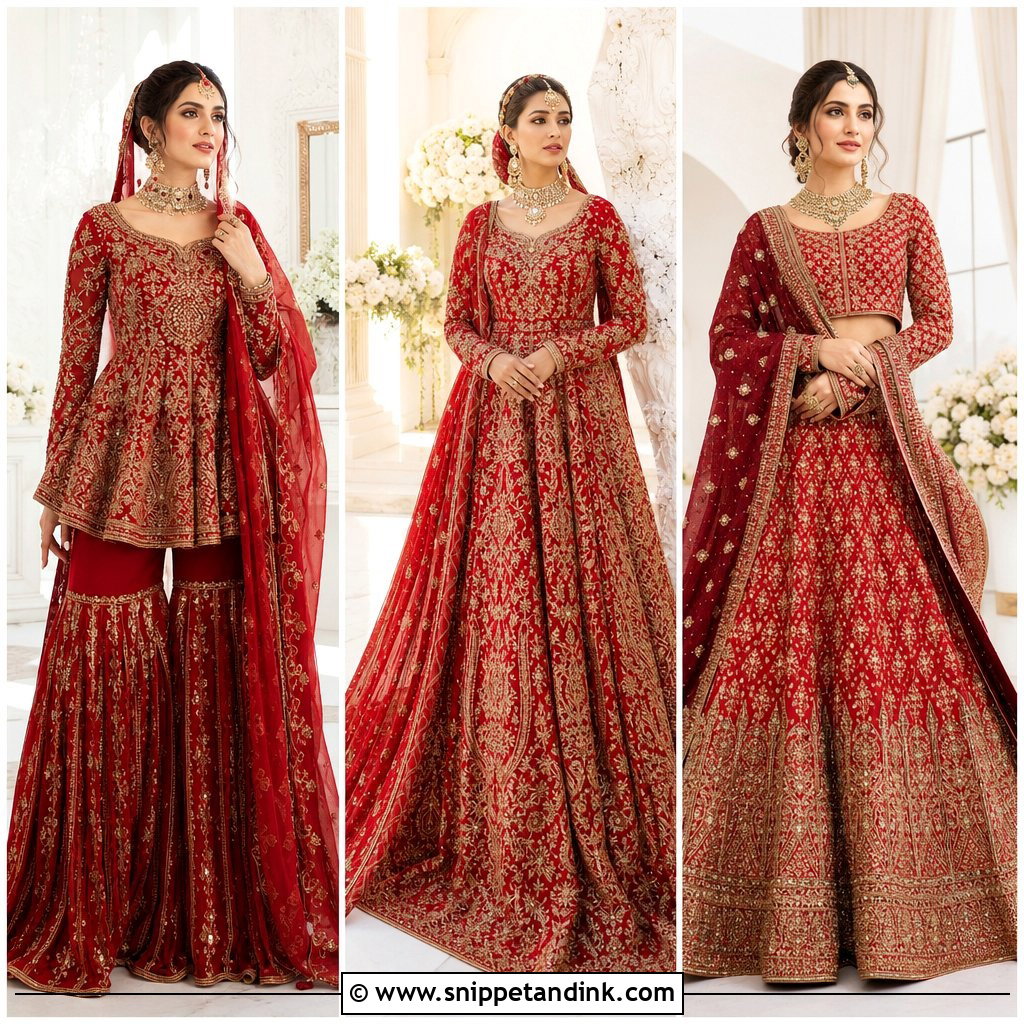
1. White Gharara Nikkah Dress With Red Dupatta
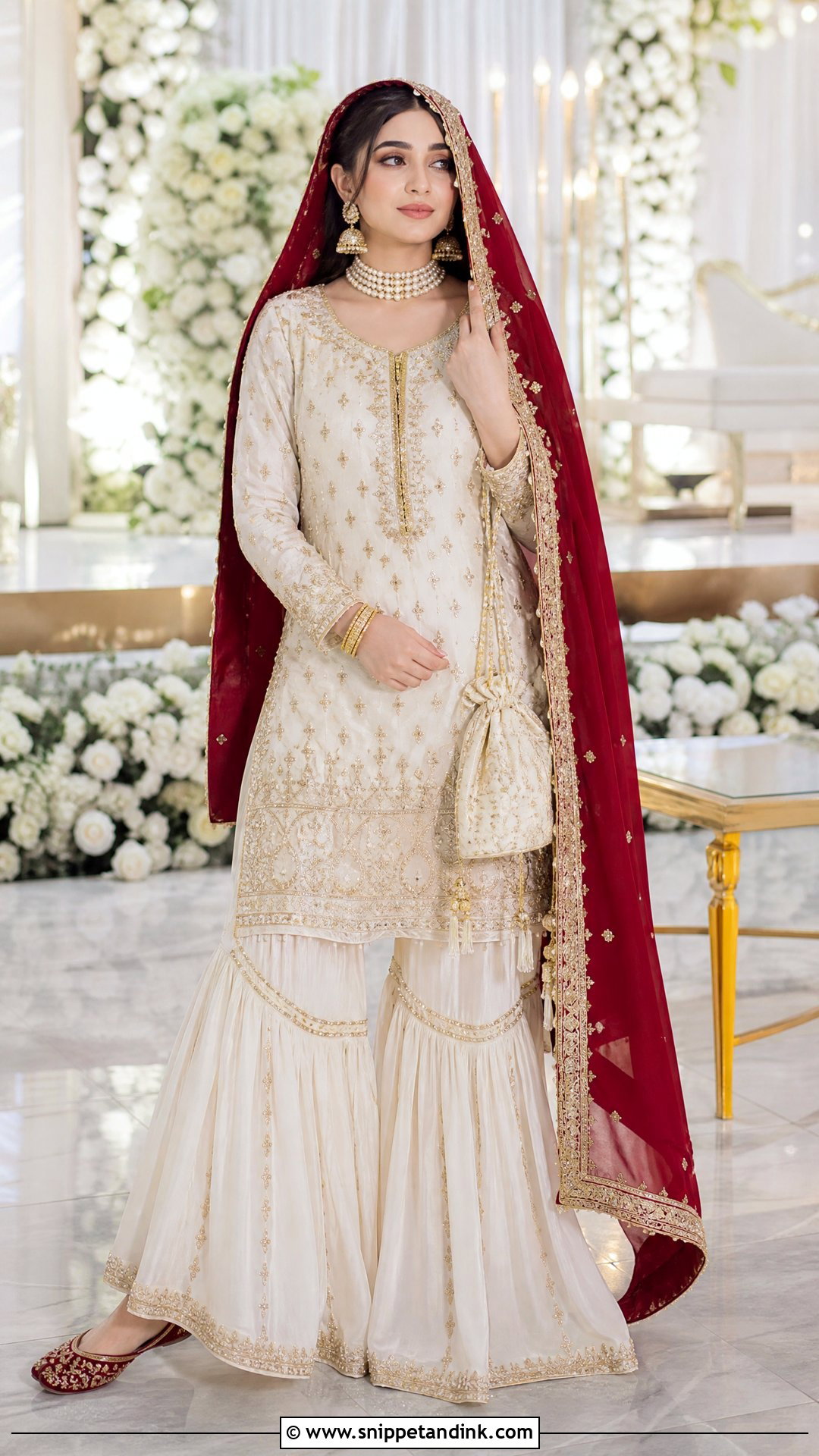
A gharara photographs well from every side because the knee seam creates that flare even when you’re standing still. Pair it with a short or mid-thigh kameez embroidered in gold at the neck, sleeves and hem. Gota borders, pearls or fine mukesh on the gharara add movement without weight. Drape a deep red chiffon dupatta over the head with one side over the shoulder; a scalloped gold border ties it to the dress. I match the border metal to the embroidery exactly, because gold and antique gold side by side look accidental. Red-and-gold khussas, a pearl choker, jhumkas and a small potli, with soft makeup and a defined red lip.
2. White Sharara Nikkah Dress With Red Dupatta
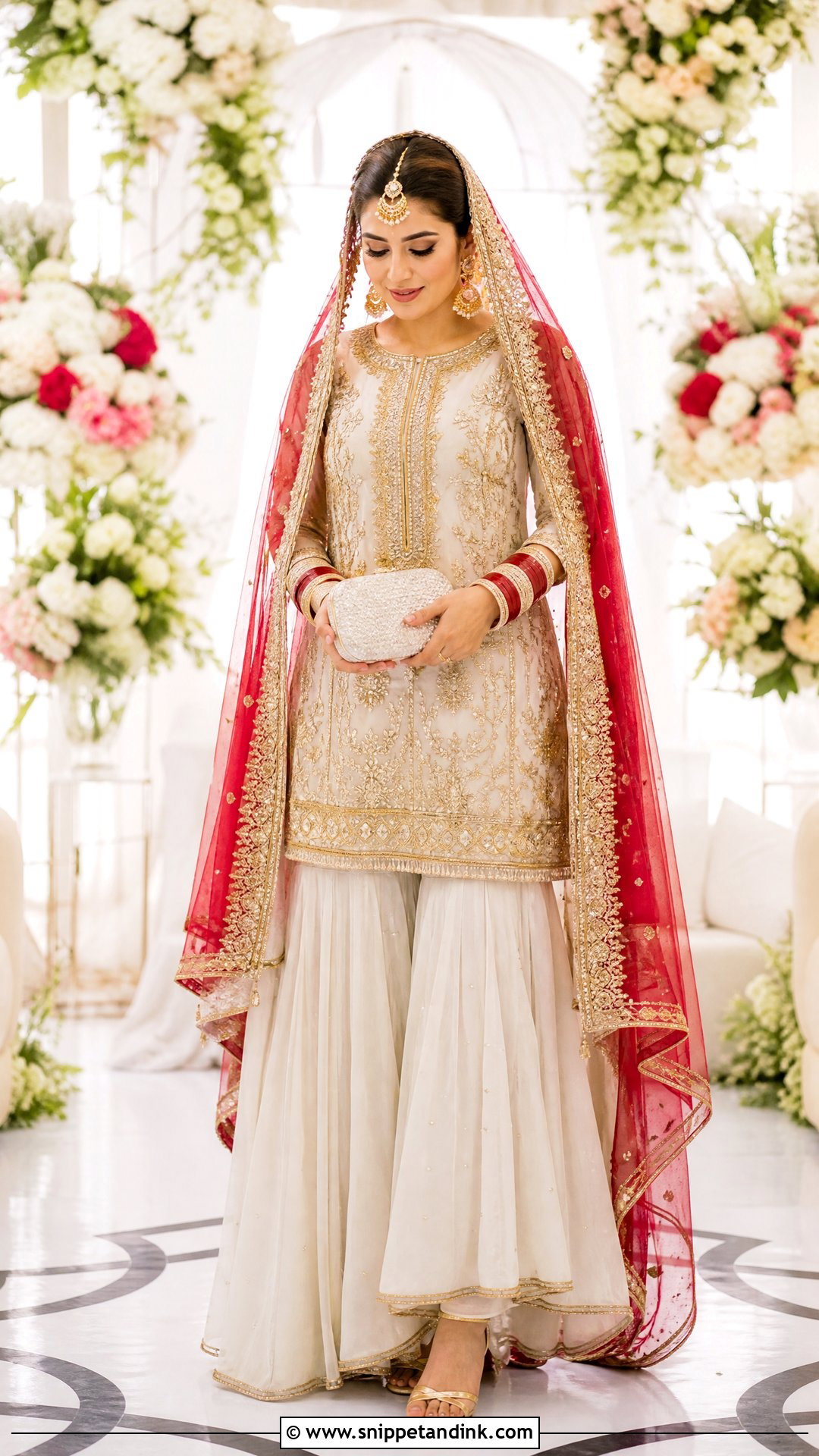
Shararas give volume with the comfort of trousers, which is why I suggest a white sharara to brides who’ll be up and down from the floor. A straight shirt with gold floral embroidery at the neck and borders, in chiffon, georgette or silk. The dupatta here is red net with scattered sequins, a zari border and corner tassels. Net is light, but it slides on silky hair, so it needs pinning to a base layer rather than straight into the hair. One end over the head, the other gathered at the wrist. Gold heels or khussas, a tikka, drop earrings, red bangles and a pearl-trimmed clutch.
3. White Lehenga Nikkah Dress With Red Dupatta
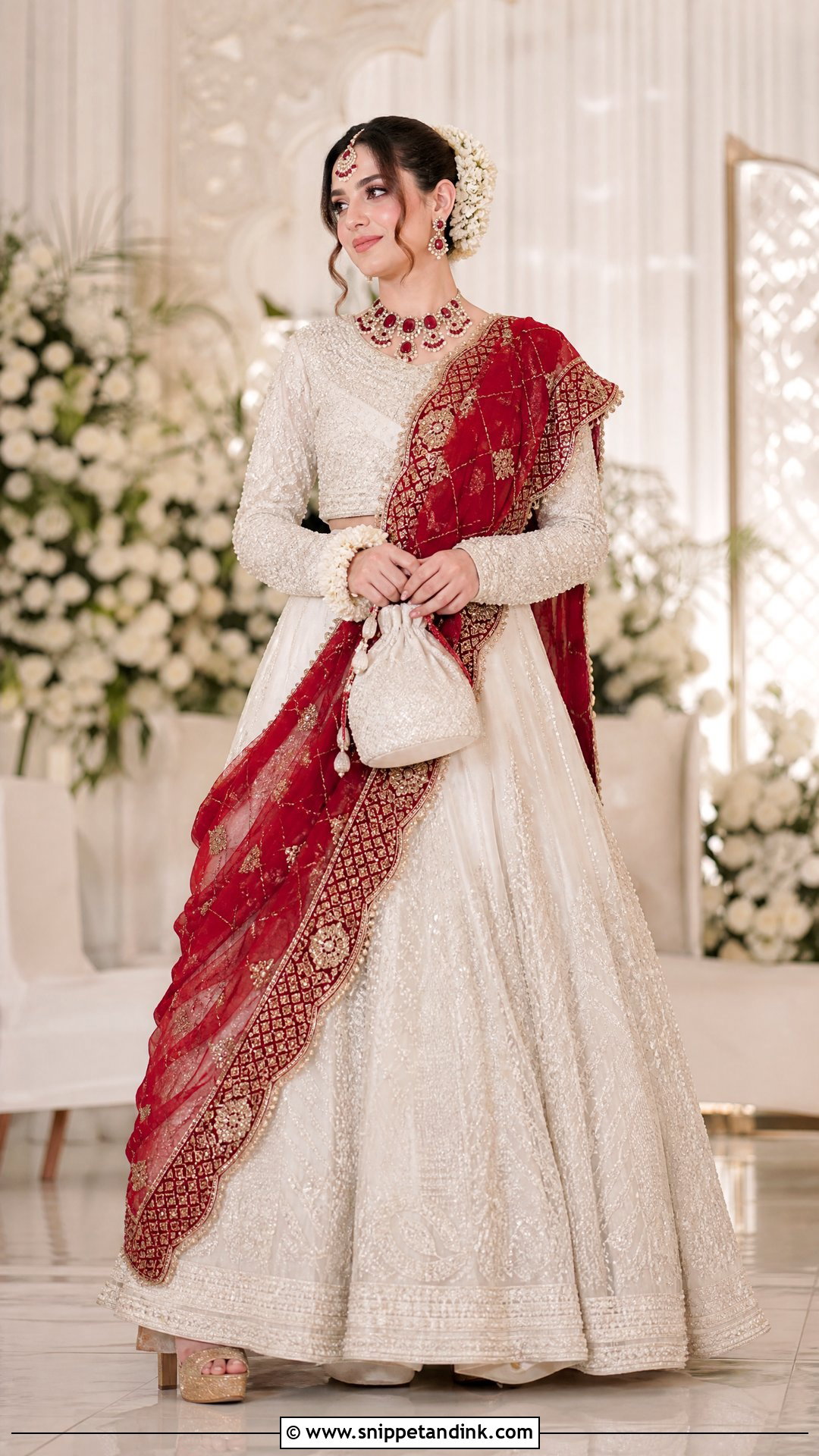
With a white lehenga, the red dupatta becomes the main statement. A full panelled skirt pairs with a modest long-sleeve blouse to the waist or hip. Tonal embroidery, pearls and pale gold thread keep the white refined. Make sure the hem is decorated; at a Nikkah you’re seated for much of the ceremony, and the hem is what shows in those photos. Crimson over the head and across the front diagonally, with a light white dupatta pinned at one shoulder for extra coverage if you want it. Kundan with ruby-coloured stones and white gajras. Gold platforms for height, stable enough to stand in through the greetings.
4. White Anarkali Nikkah Dress With Red Dupatta
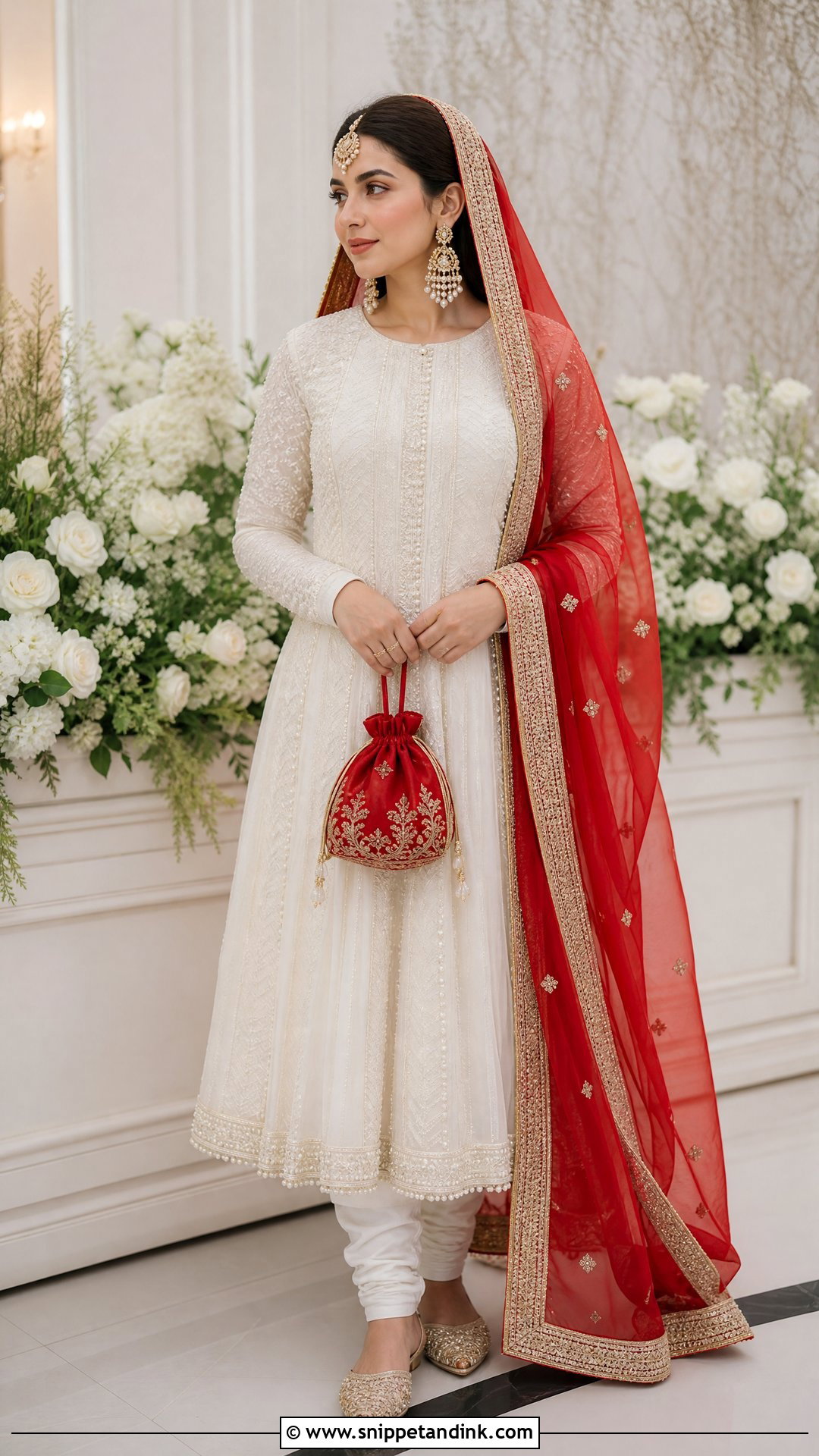
A white Anarkali is my easiest recommendation for a daytime Nikkah: one piece, modest, no waistband to fight. Ankle or floor length, fitted sleeves, a soft flare, and pearl embroidery across the bodice. A red organza dupatta with a wide gold border makes it ceremonial. Organza is stiff, so it frames the face nicely but won’t sit close to the head; I pin it at the crown and again just behind each ear. Churidar, pointed gold khussas, pearl-and-kundan jewellery and a red potli. A low bun with white flowers sits under the dupatta and gives it something to rest on.
5. White Pishwas Nikkah Dress With Red Dupatta
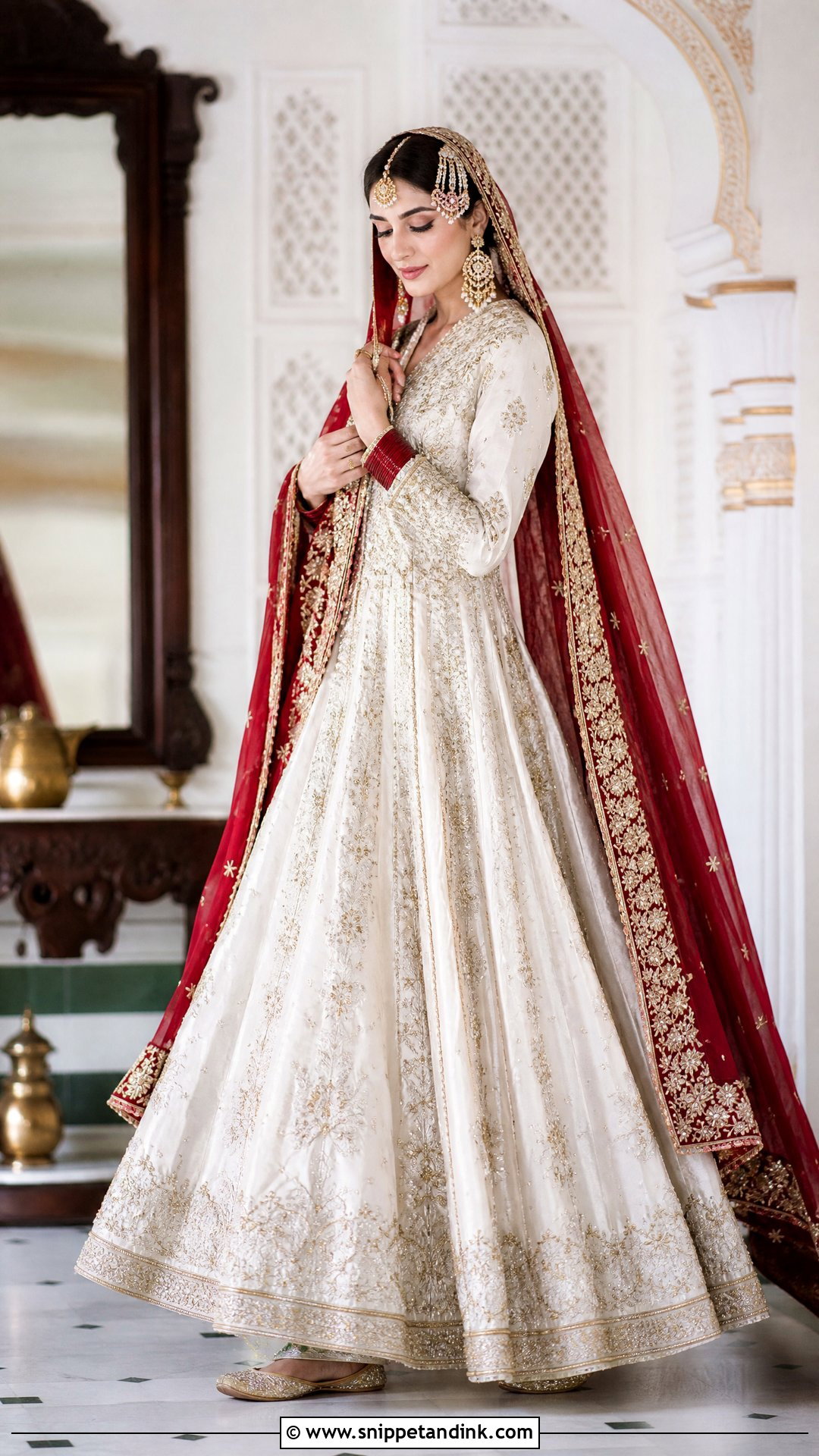
The pishwas has more fabric in its skirt than almost anything else here, and that sweep is the point. Kalis, a high neck and full sleeves give traditional coverage. Keep gold embroidery to the bodice and cuffs, and only a light hem, or the skirt gets too heavy to lift on stairs. A maroon velvet or organza dupatta with antique tilla work suits the deeper mood; velvet is warm and heavy, so I’d only choose it for a cool evening. Antique gold jewellery, a small passa, maroon bangles, gold khussas and a velvet clutch.
6. White Floor-Length Gown With Red Dupatta
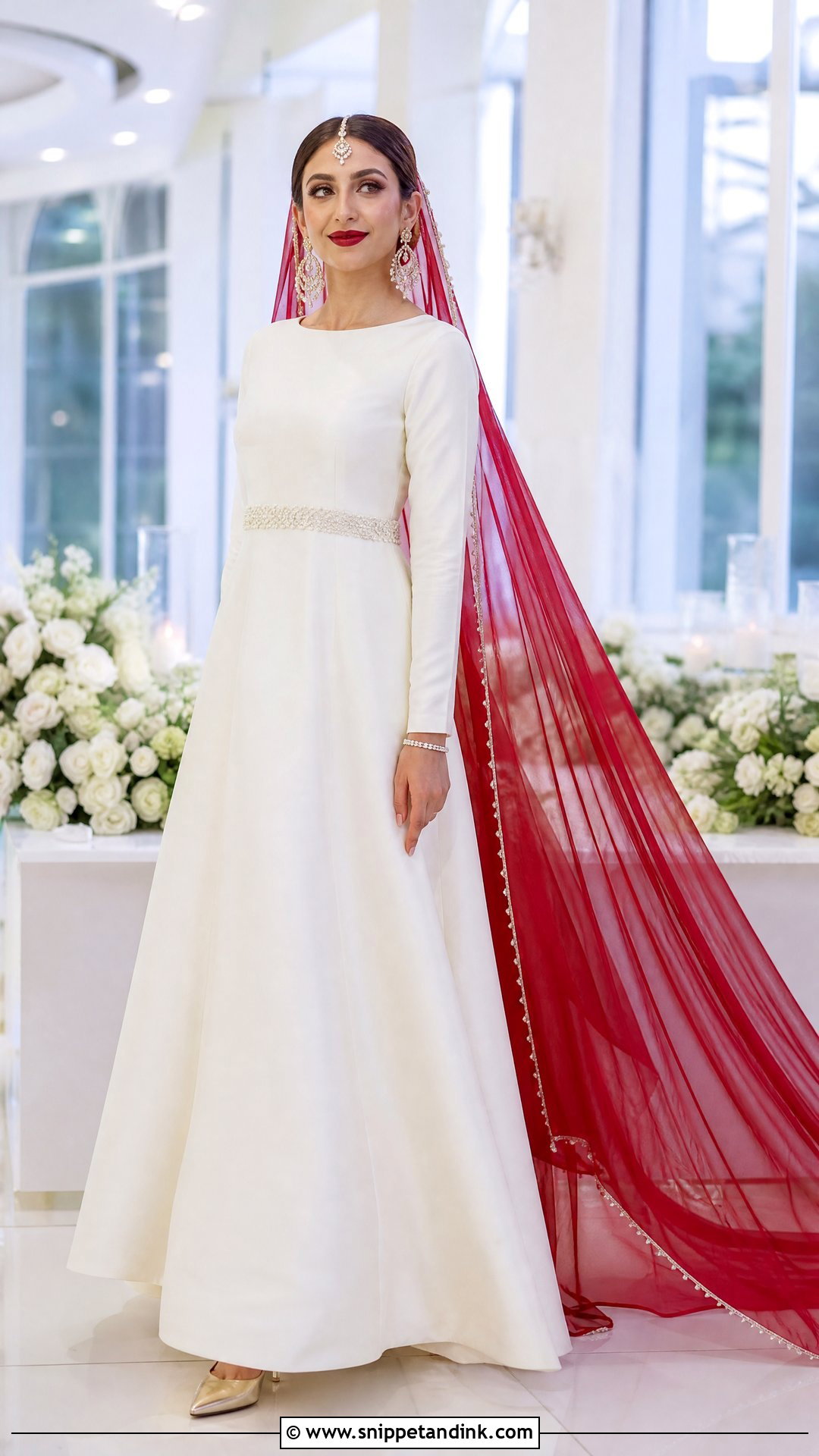
Plain gowns can look every bit as bridal as embroidered ones once the dupatta is right. Choose an A-line with long sleeves, a high neck and a little pearl or crystal work at the waist. Satin looks contemporary; chiffon moves more softly. Wear a long red net dupatta with scattered gold motifs as a veil so it falls behind you like a train. That length needs a second person to arrange it each time you sit. Crystal earrings, a delicate tikka, a slim bracelet and metallic pointed heels; simple hair, luminous skin and a berry-red lip.
7. White Farshi Gharara With Red Dupatta
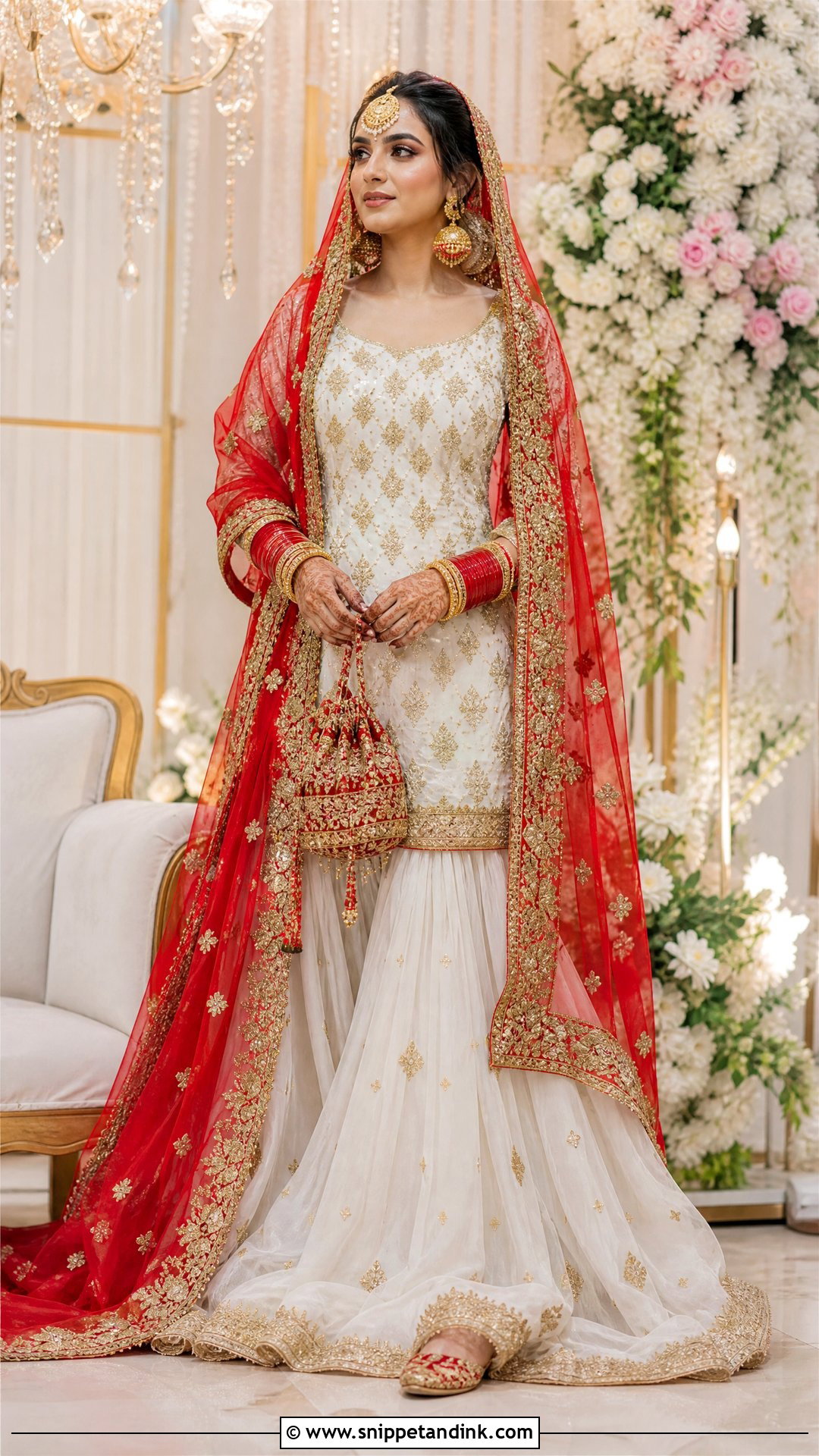
The farshi gharara is the most traditional and the most demanding. Its hem extends and spreads behind you, so walking means lifting it slightly at each step, and sitting means arranging it. A fitted knee-length kameez in dabka, zari or pearl work sits over ivory raw silk with gold borders on each panel. A bright red tissue or organza dupatta over the head, with one end across the arms, repeating the border used on the shirt. Antique jhumkas, a statement tikka, red glass bangles and embroidered khussas, plus a red-and-gold potli. Practise walking in it at home before the day; it takes a few tries.
8. White Peplum Lehenga With Red Dupatta
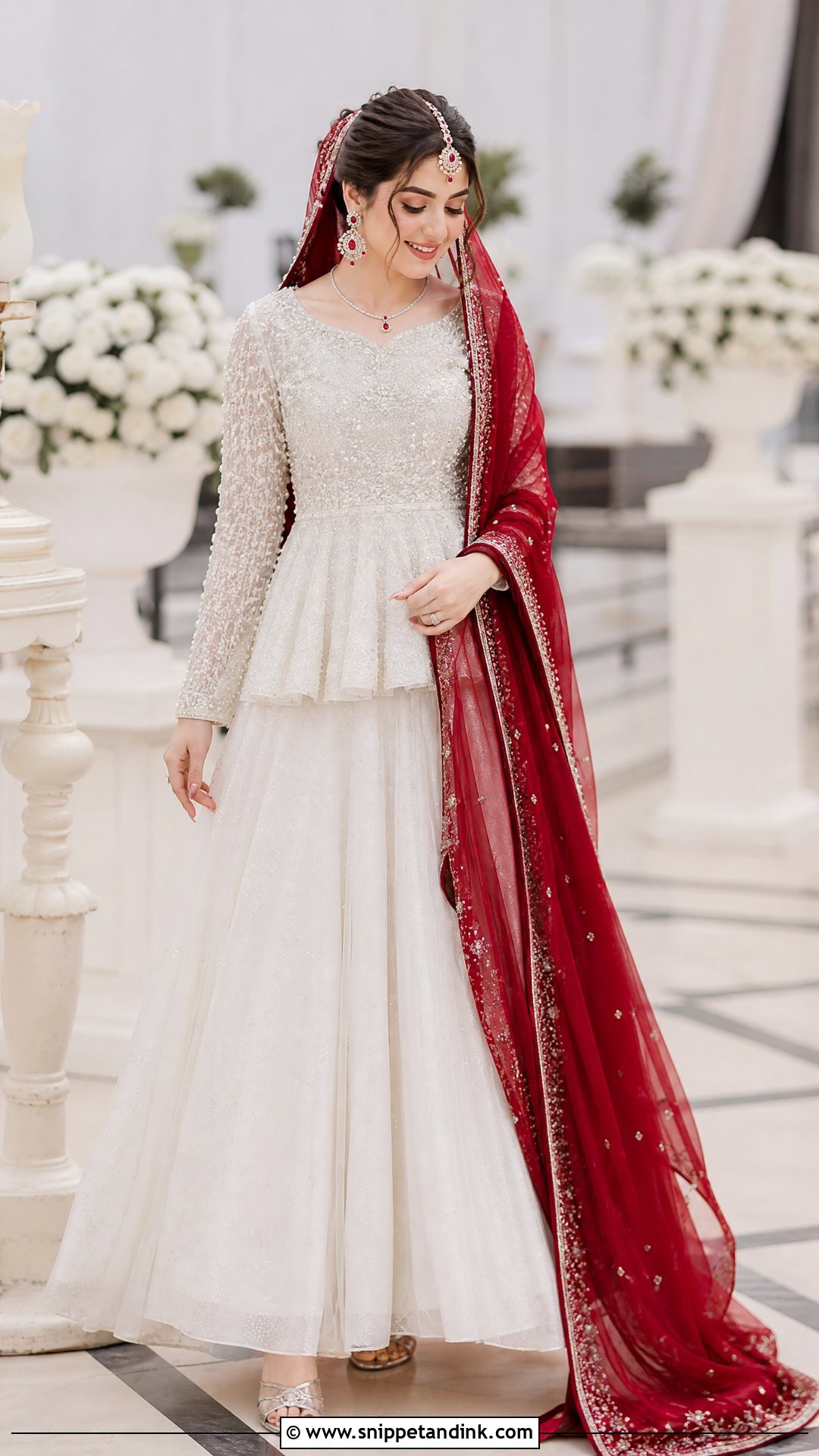
A peplum over a lehenga defines the waist and covers the hips, which flatters many figures. A long-sleeve peplum in pearl clusters, silver thread or fine gold is the focus, so keep the skirt embroidery lighter. Add a red chiffon dupatta with small sequins and a narrow metallic border, pinned over the head and wrapped round one arm. Ruby-accented kundan earrings, a matching tikka, a slim necklace and silver-gold heels. A smooth low bun and balanced rosy makeup.
9. White Long Shirt And Churidar With Red Dupatta
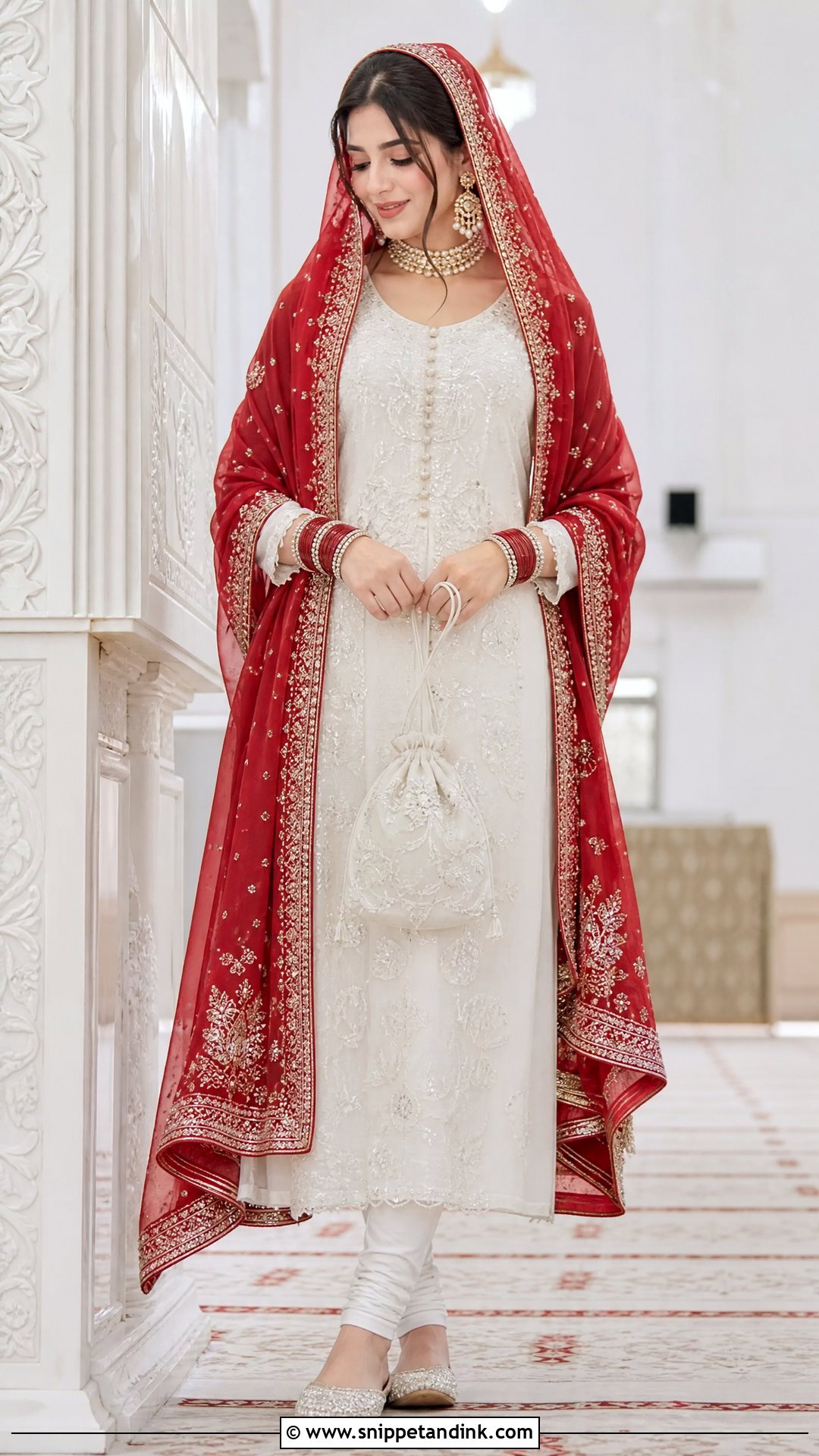
For an intimate or mosque Nikkah, a long shirt and churidar keep everything simple and modest. An ankle-length shirt with side slits, full sleeves and embroidery at the neck, cuffs and hem, with chiffon or organza layers over silk lining. White churidar and embellished flat khussas, since mosque ceremonies often mean removing shoes and walking on carpet. A large red dupatta with gold edging gives head coverage and turns the simple outfit bridal. I set it loosely around the face and pin one end at the shoulder. A pearl choker, small gold earrings, red bangles and a white potli, with defined eyes and muted red lipstick.
10. White Angarkha Nikkah Dress With Red Dupatta
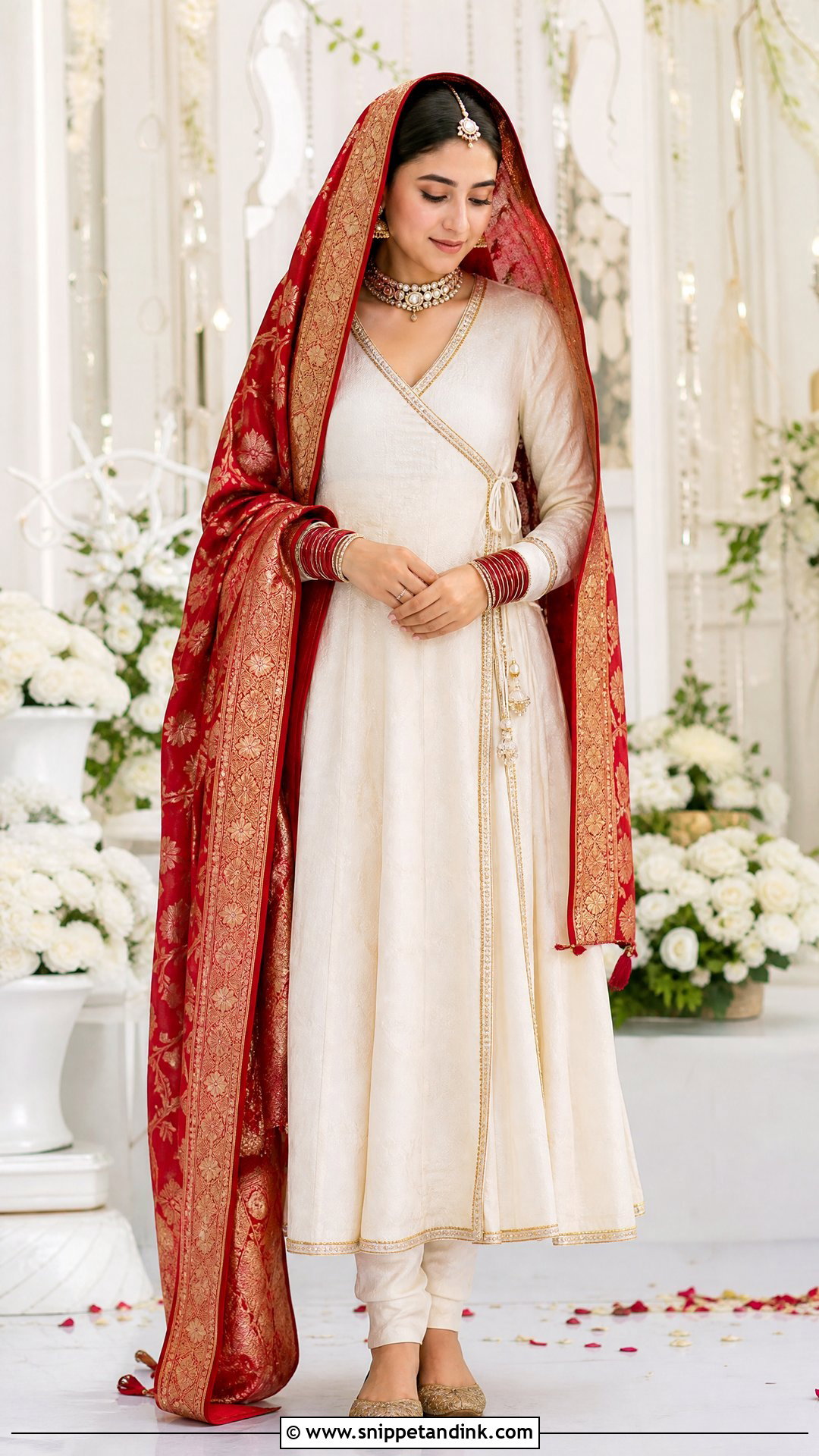
The angarkha’s wrap front gives shape without heavy work. Choose calf or floor length with a modest neckline, fitted sleeves and a flared lower half; gold piping outlines the wrap and pearl tassels hang at the tie. Churidar or a lightly flared skirt underneath. A red Banarasi dupatta with woven gold motifs is heavier than chiffon, so it holds its drape well over the head but needs firm pinning at the crown. Second end across one forearm. Antique gold khussas, a pearl-and-kundan choker, small jhumkas, red bangles, and a sleek bun so the wrap line stays visible.
11. White Jacket Lehenga With Red Dupatta
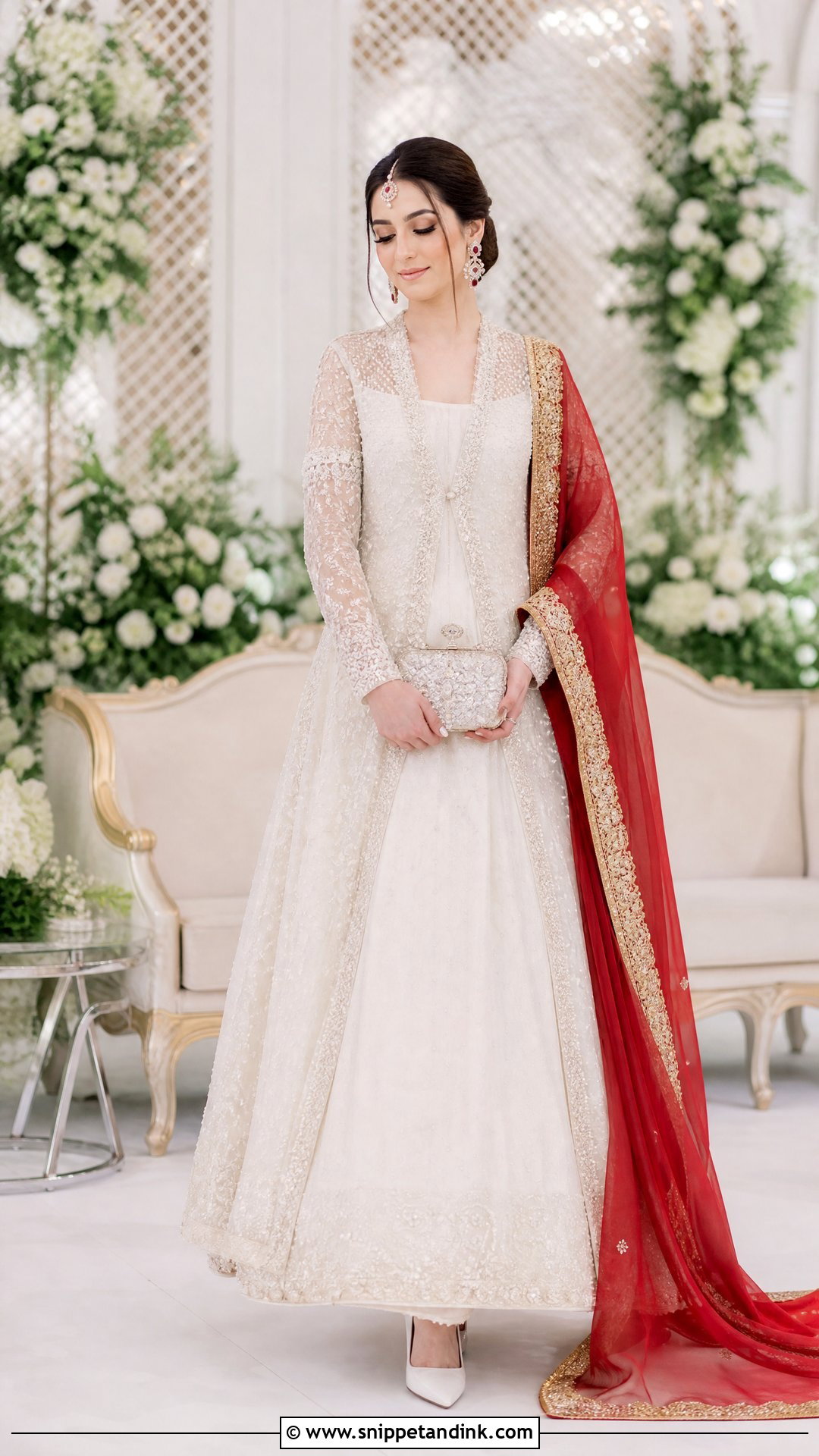
A long sheer jacket turns a simple white lehenga into a structured outfit with coverage built in. Start with a high-waisted skirt and a modest inner blouse, then layer a floor-length jacket in pearls, sequins or fine gold vines. The vertical lines lengthen the body. A plain red chiffon dupatta with a heavily embellished border goes over the head without hiding too much of the jacket. White or gold heels, a jewelled clutch, ruby-accented earrings and a delicate tikka. Low bun, fresh makeup, soft red lip.
12. White Saree Nikkah Dress With Red Dupatta
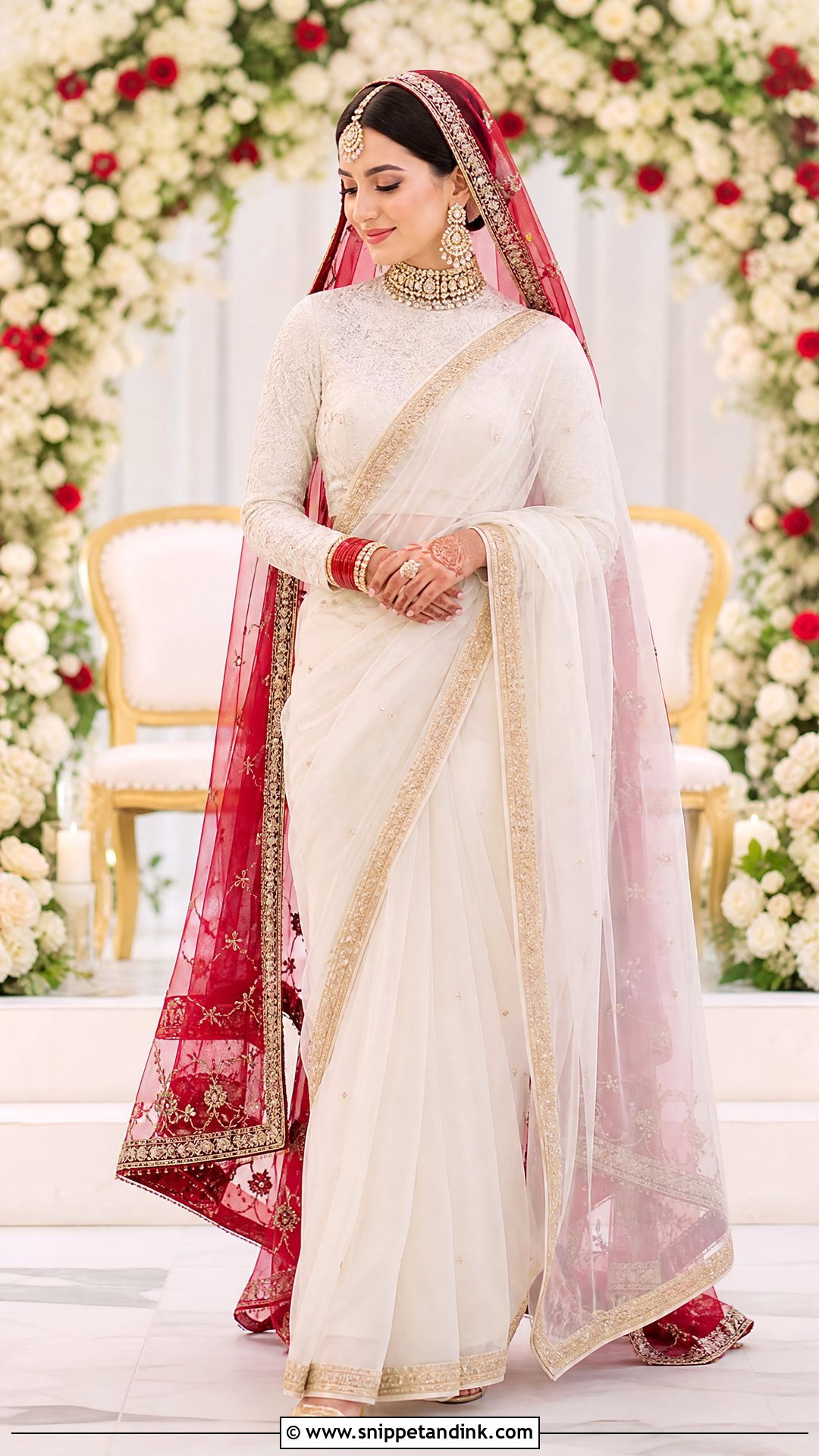
A white saree works for a Nikkah when it’s built for modesty. Silk, chiffon or organza with gold on the border, and a full-sleeve, high-neck blouse. Pleat the pallu neatly across the torso and pin every fold out of sight. Rather than taking the pallu over the head, I add a separate light red net dupatta with gold edging as the veil. It keeps the colour contrast clean and avoids a bulky pile of fabric at the shoulder. Gold heels, a kundan choker, earrings, red bangles, a smooth bun, an understated tikka and a classic red lip.
13. White Abaya Nikkah Dress With Red Dupatta
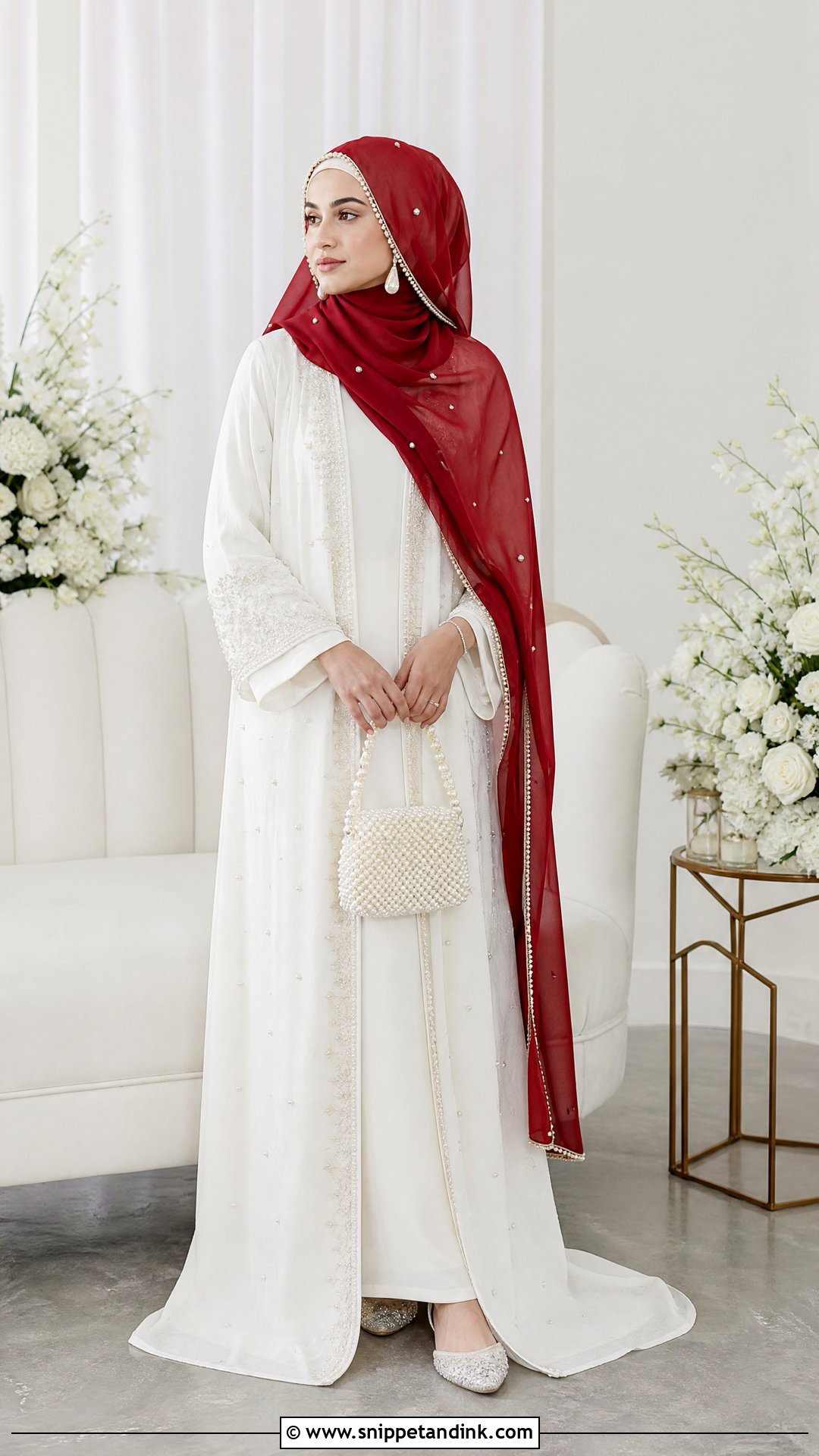
A white bridal abaya gives full coverage with very little to manage. Flowing crepe, satin or layered chiffon, with pearl embroidery along the sleeves, shoulders and front opening. A white underdress underneath keeps it opaque and smooth. Style a rich red chiffon dupatta as the head covering with discreet pins. The detail people miss is the hijab cap: choose it in white or red, or you’ll see a stripe of a third colour at the hairline and neck in every photo. Closed-toe embellished flats, a pearl bag, delicate drops and a slim bracelet.
14. White Kurta And Palazzo With Red Dupatta
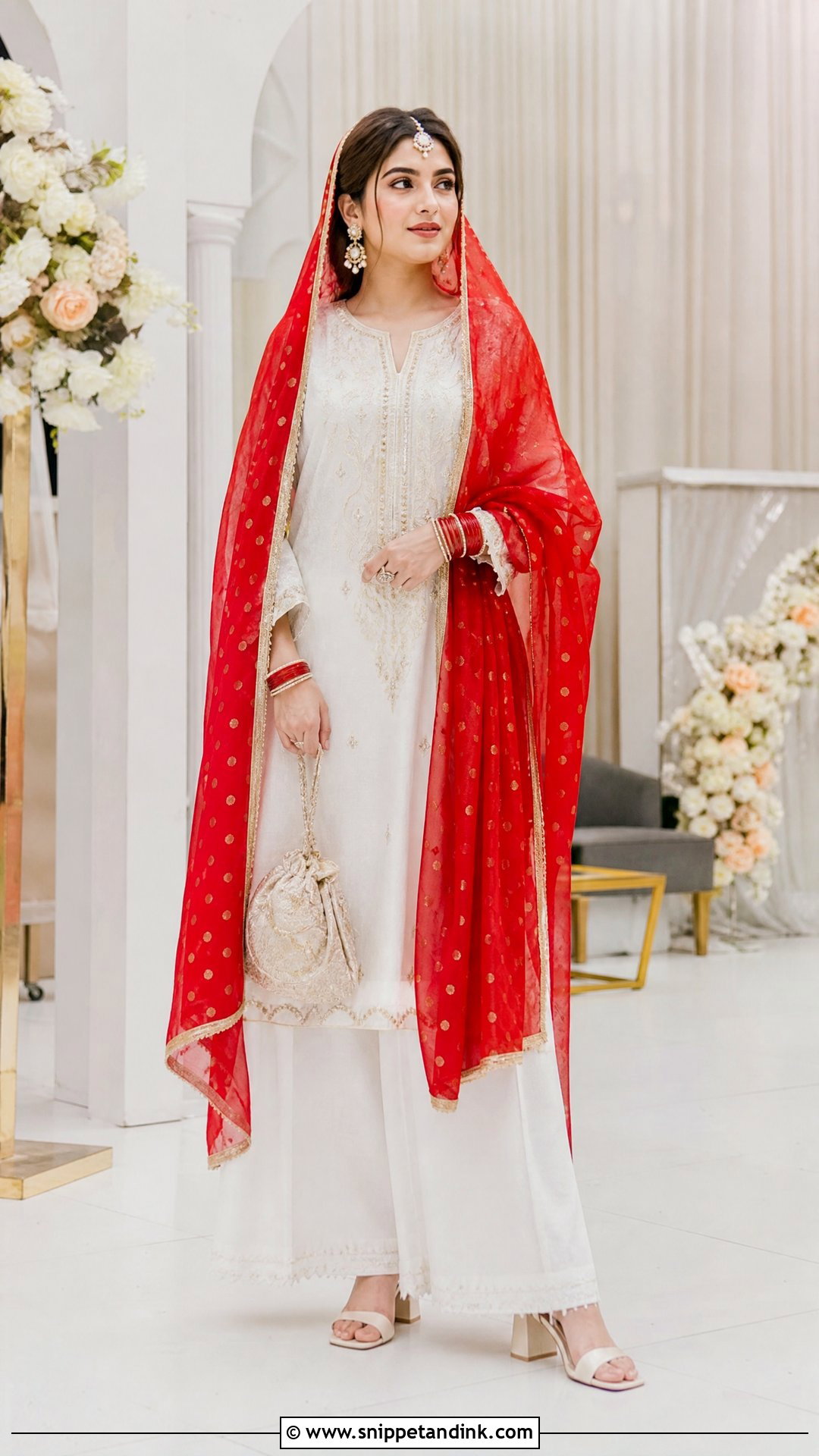
A kurta and palazzo set suits brides who want something relaxed and current. A knee or mid-calf kurta with straight lines, side slits, full sleeves and fine gold at the neck and cuffs. Wide palazzos move well and spare you a heavy skirt; hem them to clear the floor in your actual heels. A red organza dupatta with gold dots and a scalloped border goes over the head with one long end down the back. Gold block heels, a potli, pearl earrings, a delicate tikka and red bangles, with a loose low bun and soft makeup.
15. White Kalidar Nikkah Dress With Red Dupatta
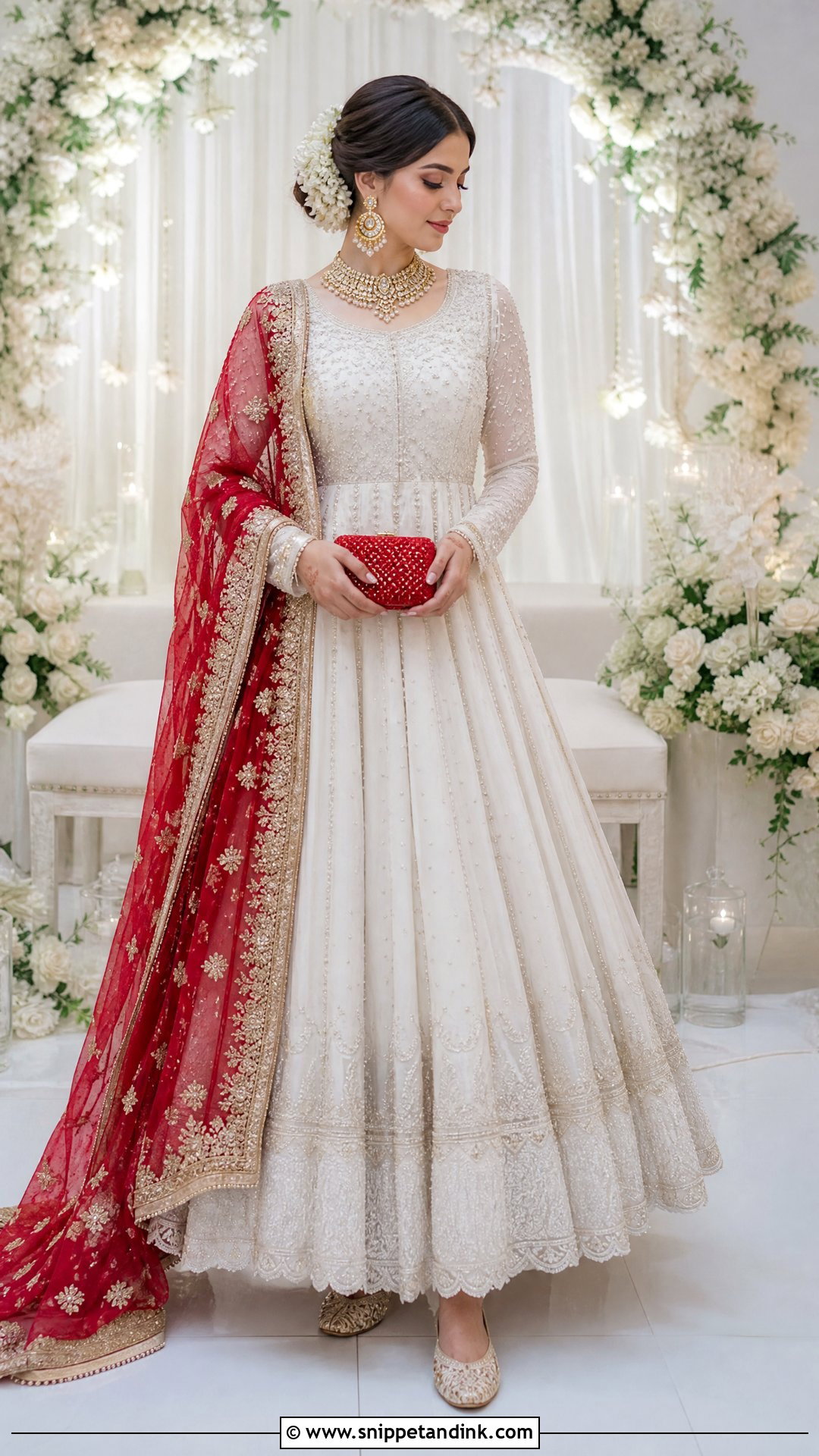
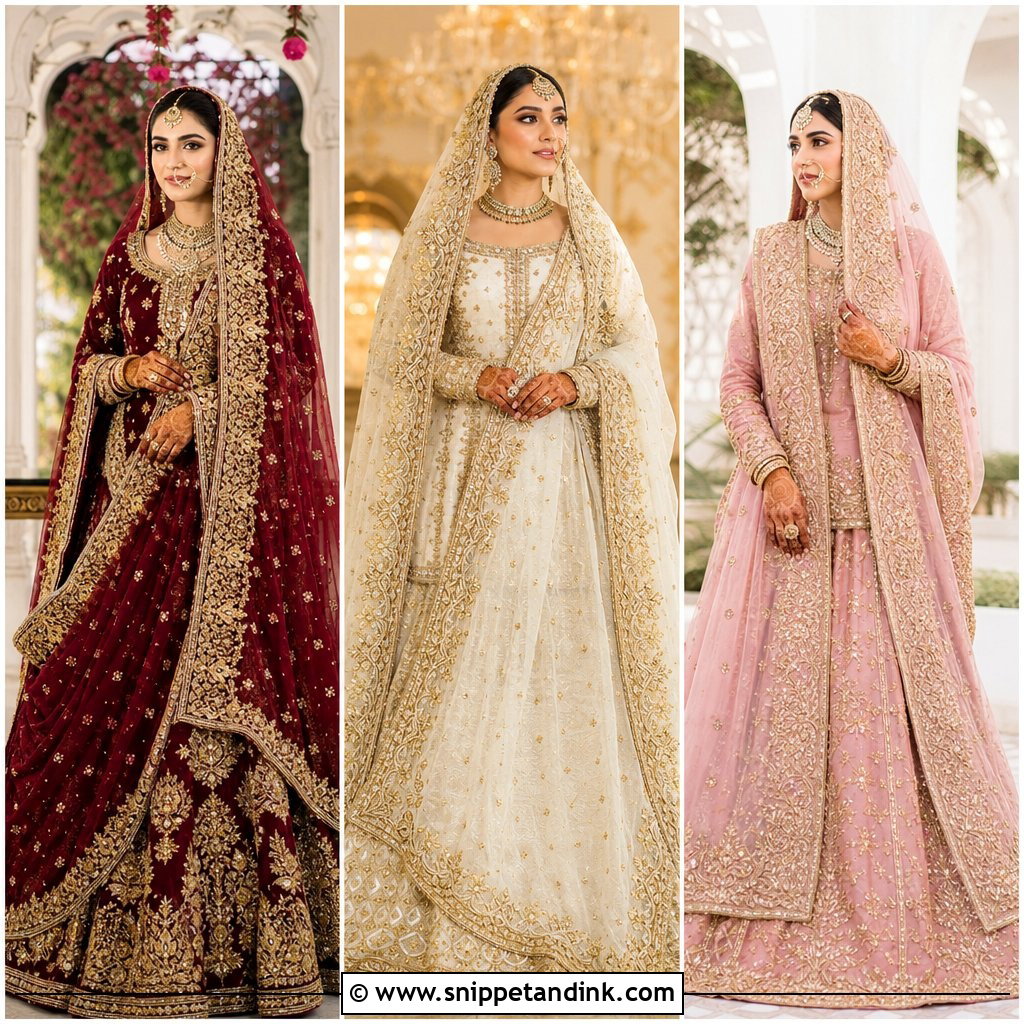
Kalidar panels give a dress movement without lehenga bulk. A fitted bodice gathers gently at the waist into many panels that reach the floor, each outlined in tonal thread, pearls or small sequins. Long fitted sleeves and a covered neckline suit a formal ceremony. A red dupatta with gold floral embroidery, worn as a loose veil. Embroidered khussas, a kundan necklace, matching earrings and a small red clutch. White flowers round a low bun show just below the red, which I like. Luminous makeup with a deep rose lip.
16. White Velvet Nikkah Dress With Red Dupatta
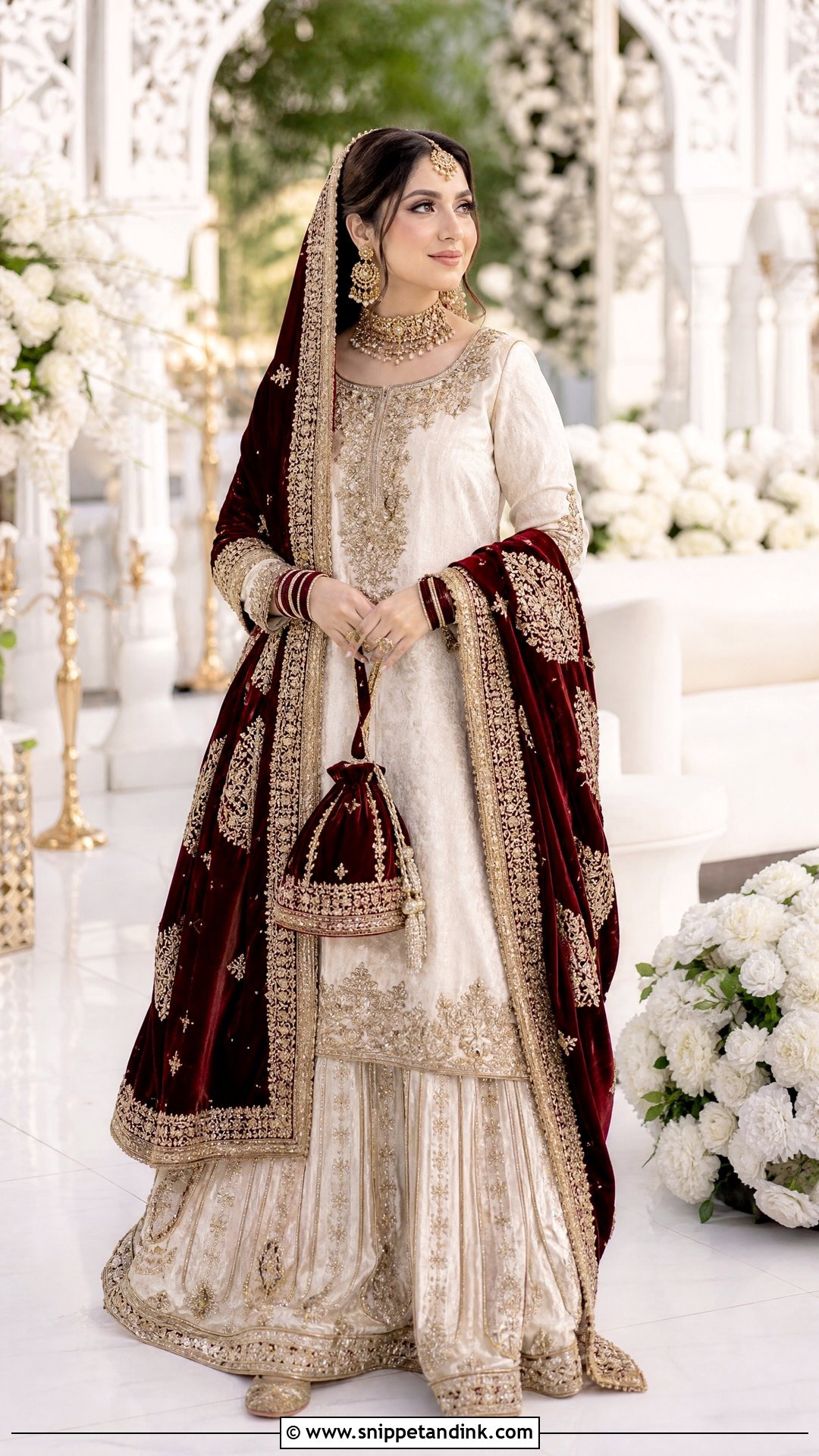
Velvet is a winter choice and only a winter choice. White velvet with antique gold at the neck, hem and sleeves looks rich and keeps you warm, as a long shirt with trousers, a lehenga or a panelled skirt. A deep red velvet dupatta is luxurious but heavy over the head for a long ceremony; I’d test-wear it for an hour first, or choose red organza for a lighter covering. Gold khussas, an antique choker, jhumkas, maroon bangles and a velvet potli. Sleek hair under the dupatta, matte red lips, softly smoked eyes.
17. White Organza Nikkah Dress With Red Dupatta
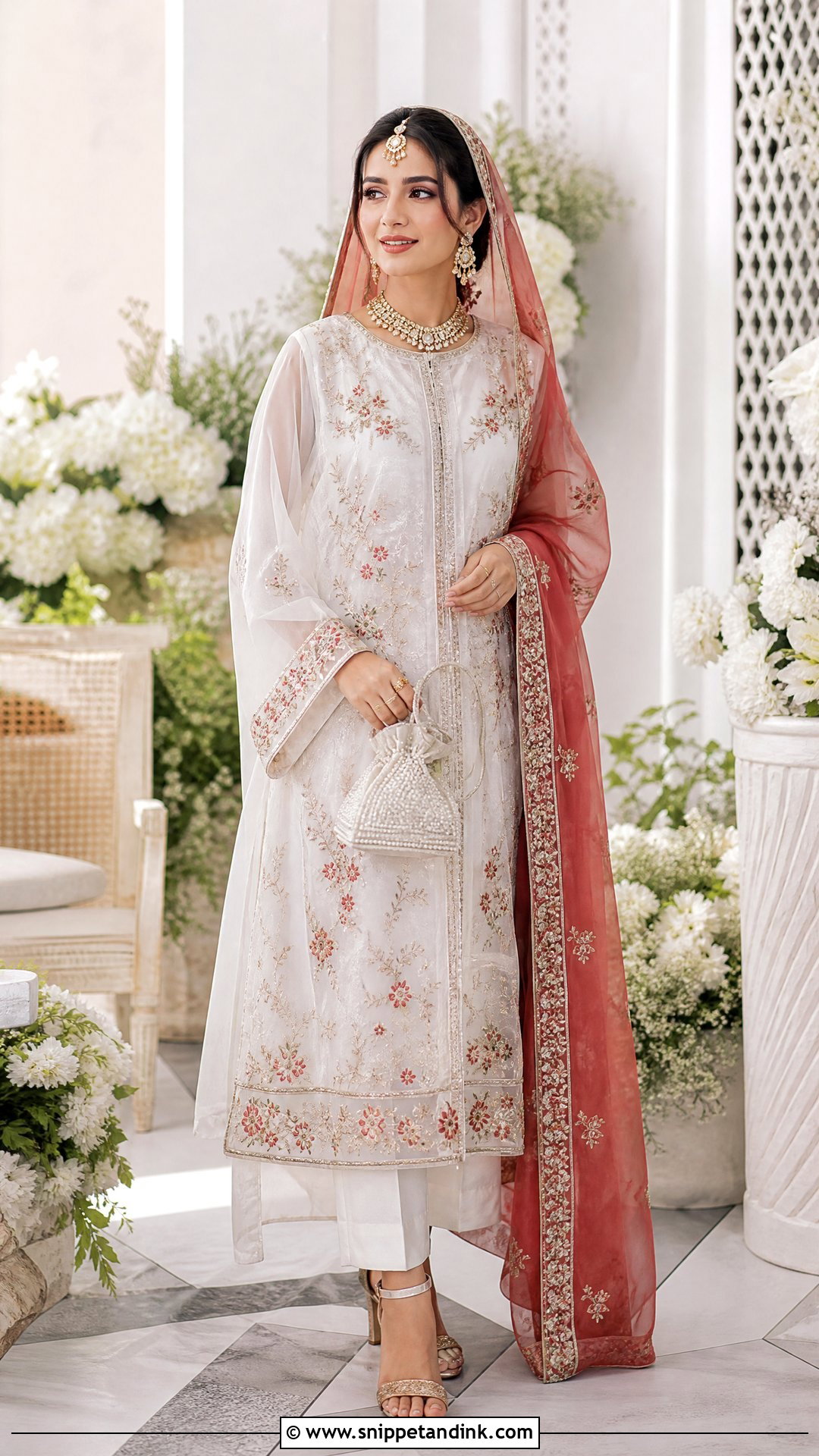
Organza is airy, which suits spring and summer. A long A-line shirt with an organza overlay, silk lining and florals at neck and hem, over straight pants or a soft lehenga. Organza holds its shape, so avoid adding layers at the shoulders. Here I’d choose a red chiffon dupatta rather than another organza; the softer drape contrasts with the structured shirt and sits closer to the head. Delicate gold border, small motifs. Pearl earrings, a light kundan necklace, a dainty tikka, white-and-gold heels, a pearl potli and a low bun with fresh flowers.
18. White Satin Nikkah Dress With Red Dupatta
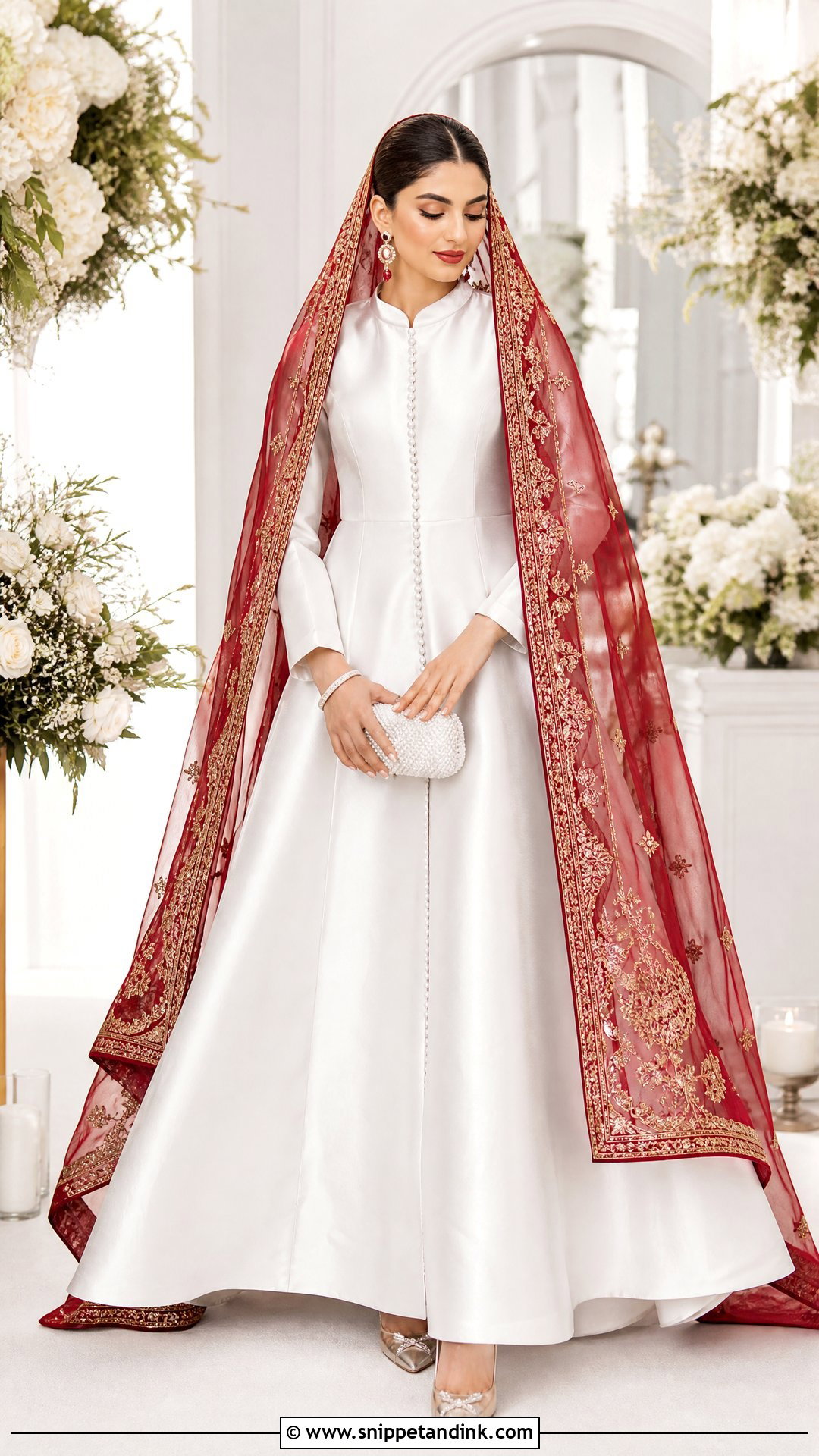
White satin makes a clean base for a minimalist bride. A floor-length A-line with a structured waist, full sleeves and a high round neck; pearl buttons or a narrow embroidered belt add definition. The richly decorated red net dupatta brings the tradition and texture, and gold at its border frames the face and warms the satin. Pointed metallic heels, pearl-and-ruby earrings, a slim bracelet and a white clutch. Satin is slippery, so pin the dupatta to the hair or an under-cap, never to the gown’s shoulders. A centre-parted low bun, luminous skin and a classic red lip.
19. White Lace Nikkah Dress With Red Dupatta
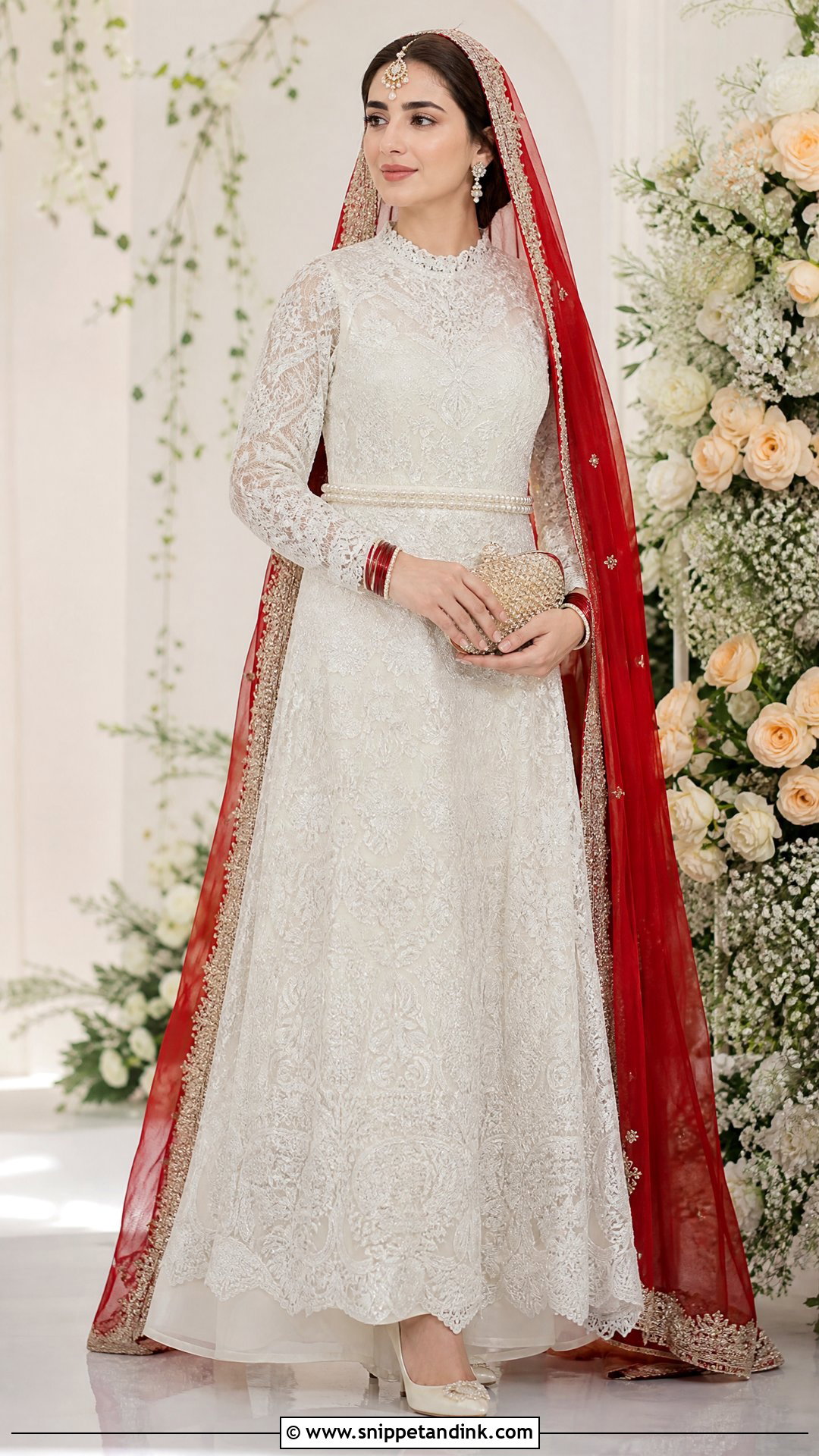
Lace brings texture to a modest silhouette. Choose a lined floor-length dress with full lace sleeves, a high neck and an A-line skirt. The lining should match the lace closely; a mismatched lining makes the pattern look patchy in photos. Small pearls at the cuffs and waist are enough. A plain red chiffon dupatta with a lace-trimmed gold border keeps attention on the dress. Pearl drops, a small tikka, red bangles, white embellished pumps and a gold clutch, with a low floral bun and soft berry makeup.
20. Simple White Nikkah Dress With Red Dupatta
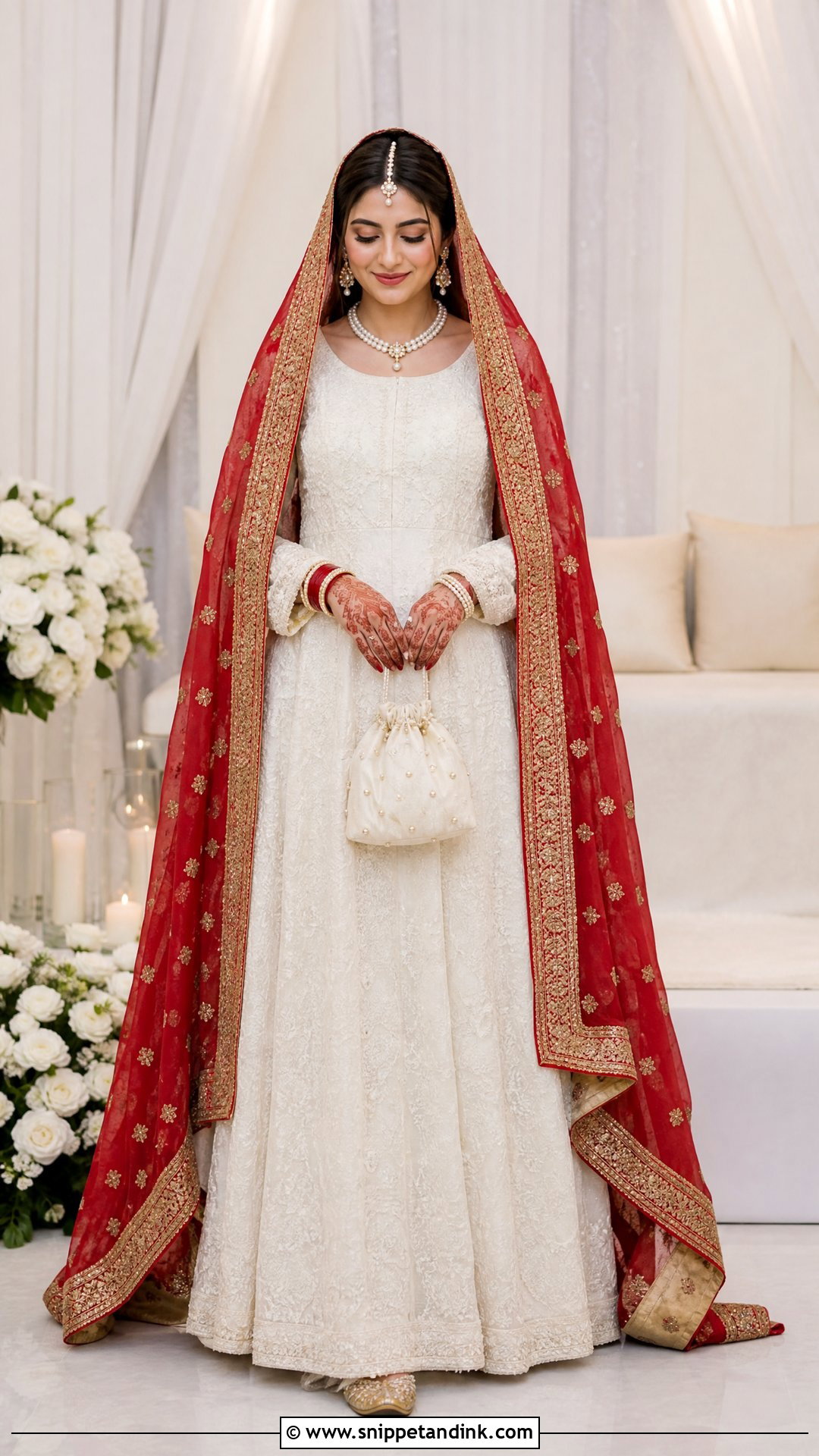
Sometimes the strongest bridal look is a simple white dress and one red dupatta worth remembering. A well-tailored gown, long shirt with trousers, or a plain Anarkali all work. Put the budget into fit, an opaque lining, comfortable sleeves and a neckline that stays put when seated. Keep the dress almost plain: pearl buttons, tonal embroidery or a narrow gold trim. Then choose a heavier red dupatta with zari, sequins or personalised embroidery, and pin it at both shoulders so it moves with you. Gold khussas, pearl jewellery, a delicate tikka and red bangles, with neat hair and a polished red lip.
Pinning a Head Dupatta That Lasts the Whole Nikah
Most dupatta problems at a Nikkah come from pinning straight into loose hair. Hair moves, the fabric slides, and the bride spends the ceremony holding it in place. This is the order I set it in:
- Build a base first: a low bun or a flat under-cap gives pins something solid to grip.
- Fold a few centimetres of the front edge under, so the border sits neatly along the hairline and doesn’t flip up.
- Pin at the crown, then just behind each ear, using bobby pins crossed in an X; the cross holds far better than a single pin.
- Set the fall: one side over the shoulder, the other across the forearm or down the back, then pin the shoulder side to the shirt’s inner seam, not the fabric surface.
- Have the bride sit, turn her head and lean forward as if signing. Anything that shifts gets one more pin.
Heavy dupattas, velvet, Banarasi or densely beaded net, pull backwards over time. For those I add a couple of extra pins at the crown and ask a sister or friend to carry spares and check the drape between photographs.
One Red Dupatta, Twenty White Silhouettes
The pairing holds up across every shape here. A gharara or farshi outfit feels the most traditional, while a satin gown, abaya or palazzo set looks cleaner and more modern. Whatever you choose, the outfit should give you comfortable coverage, a dupatta that stays where it was pinned, and room to sit, walk and pose. Match the metal of the embroidery to your jewellery, and repeat the red in one or two small accessories, no more. Tailor the length, sleeves and neckline carefully, and the white and red will look like they were made for each other.
You'll Like These Ideas:


Leave a Reply