
Modest bridal styling is mostly about what you can’t see in a photo: an opaque lining, a dupatta pinned so it never slips, sleeves that stay at the wrist when you raise your hands in dua. White makes all of that more visible, which is why I take it slowly with Nikkah brides. The twenty outfits below range from abayas and Anarkalis to pishwas, ghararas, gowns and two-piece sets, each with the hijab or dupatta, shoes and jewelry I’d pair with it. Pearls, tonal embroidery, lace borders and a little metallic thread are enough to make white feel bridal. Wherever you marry, at home, in a mosque or a hall, choose fabrics you can sit and greet guests in for hours.
Shoes Off at the Mosque Door, and Other Fit Checks for the Ceremony
A Nikkah asks specific things of an outfit, and I go through them with every bride before she commits to a dress.
- Seating. Many ceremonies are seated, sometimes on a stage, sometimes on floor cushions. Sit cross-legged and on a low sofa at your fitting. Fitted skirts and stiff organza don’t like the floor.
- Shoes. If the Nikkah is in a mosque, you’ll remove your shoes at the entrance. Choose slip-on styles you can take off without bending, and plan clean white socks or a neat footed layer under a long hem.
- Raised hands. When you raise your hands for dua, sleeves should stay at the wrist. Lift your arms at the fitting and watch.
- Opacity. Stand in front of a sunny window and have someone take a photo with flash. White chiffon and lace that look solid indoors often aren’t.
In some families the bride gives her consent in a separate room before joining the gathering, so she may be seen up close, then at a distance, then on stage. Choose details that look good from all three: fine embroidery for close up, a clean silhouette for the rest.
1. Simple White Nikkah Abaya
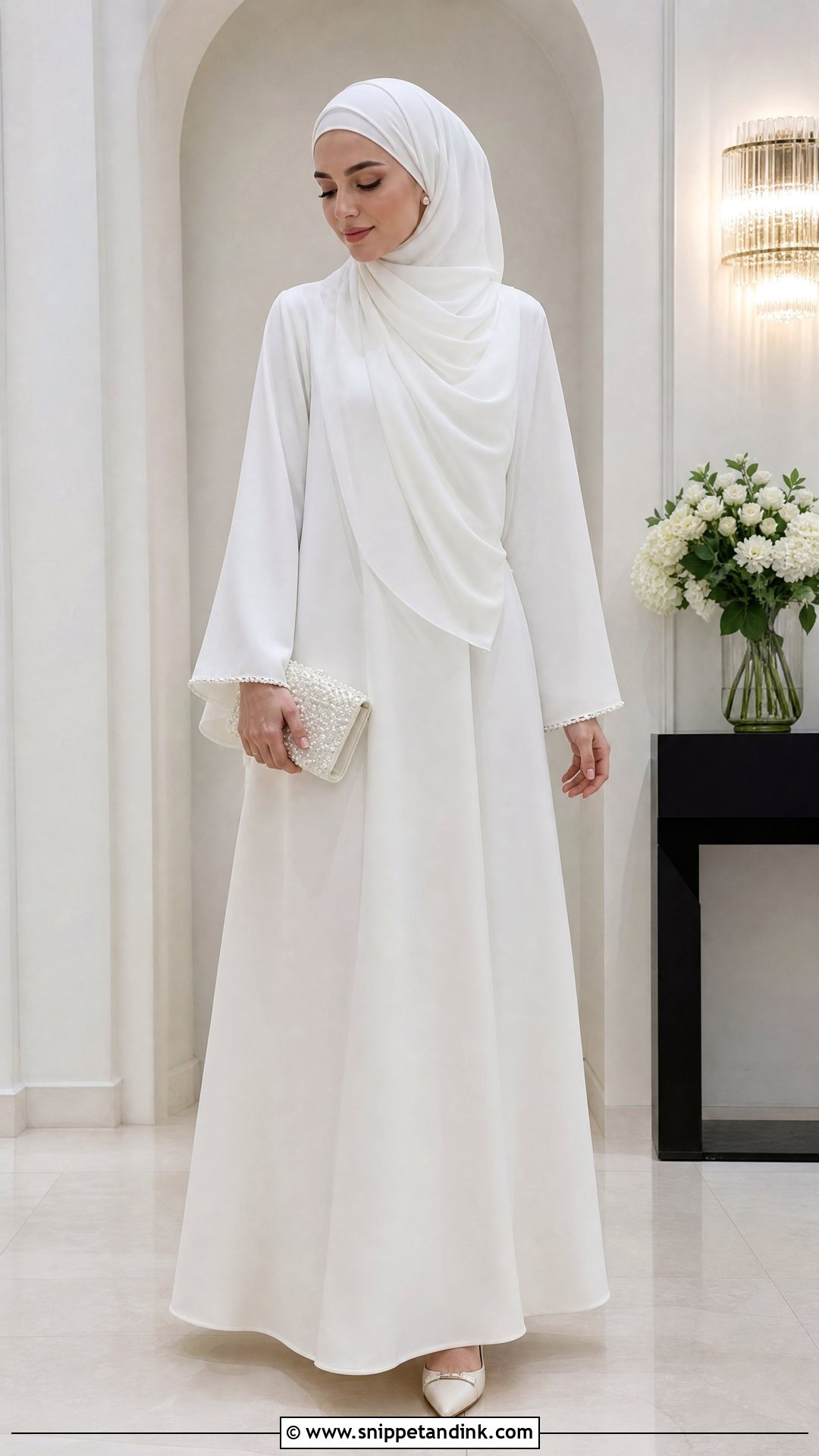
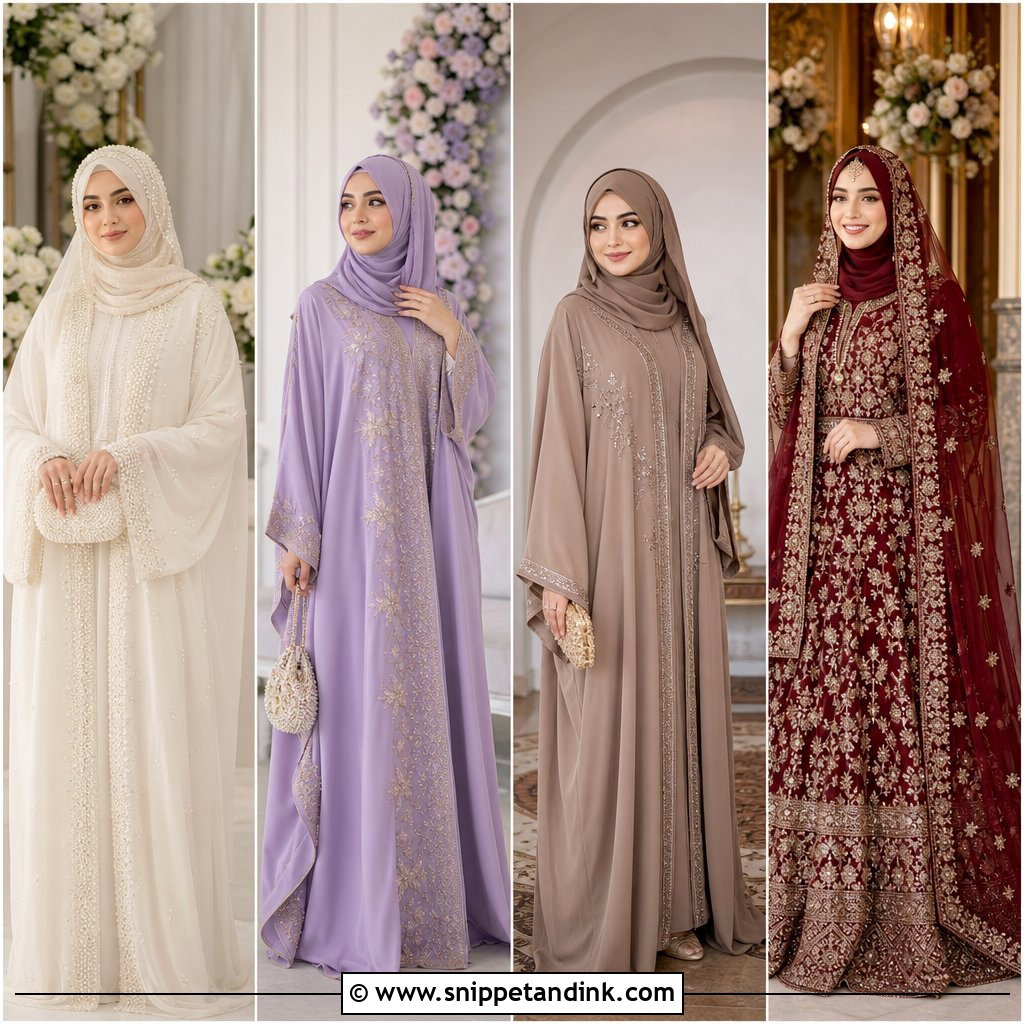
A plain white abaya relies on fabric, because there’s no decoration to distract. Nida drapes softly and stays opaque; a lightly structured crepe holds a cleaner line. Either way, ask for a lining and check it in daylight. A closed front looks most polished, and gently gathered sleeves add movement. A matching chiffon hijab, pearl studs and ivory flats or low block heels complete it, with a pearl-trimmed clutch. A narrow removable belt gives shape if you want it. This complete white Nikkah outfit suits a small home ceremony or a quiet mosque Nikkah.
2. White Embroidered Nikkah Abaya
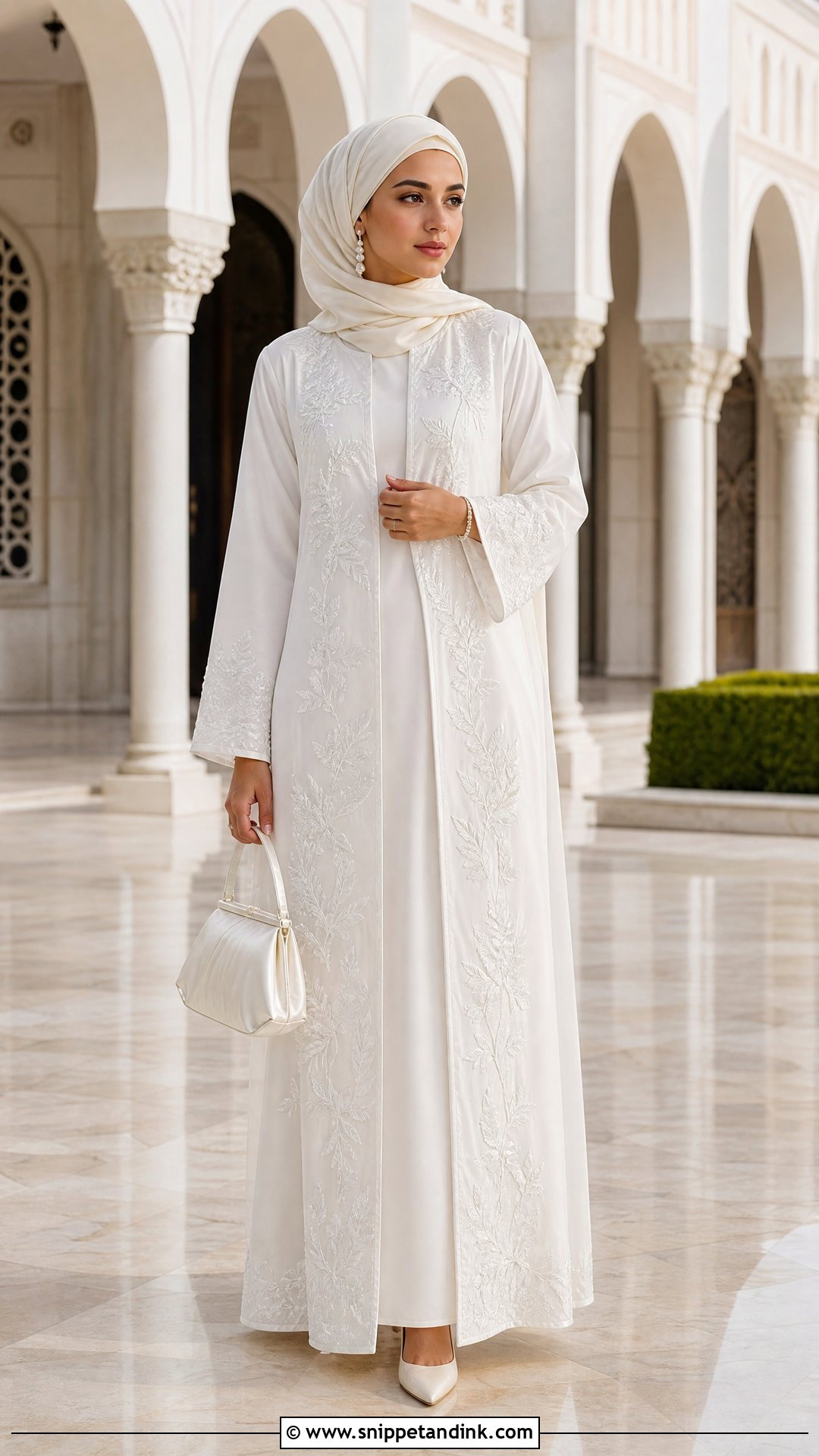
Embroidery around the neckline, cuffs and front opening turns an abaya bridal without changing its shape. I’d keep it tonal, white or ivory thread on white, in vines, small leaves or a geometric border. Wear an opaque white slip dress underneath, which also stops the embroidery from scratching. Tonal threadwork can look invisible on camera in flat light, so ask your photographer to catch it with side light. An ivory hijab or a coordinating khimar for more coverage, pearl drops and a slim bracelet suit it, with closed-toe kitten heels and a small satin bag.
3. White Satin Nikkah Maxi Dress
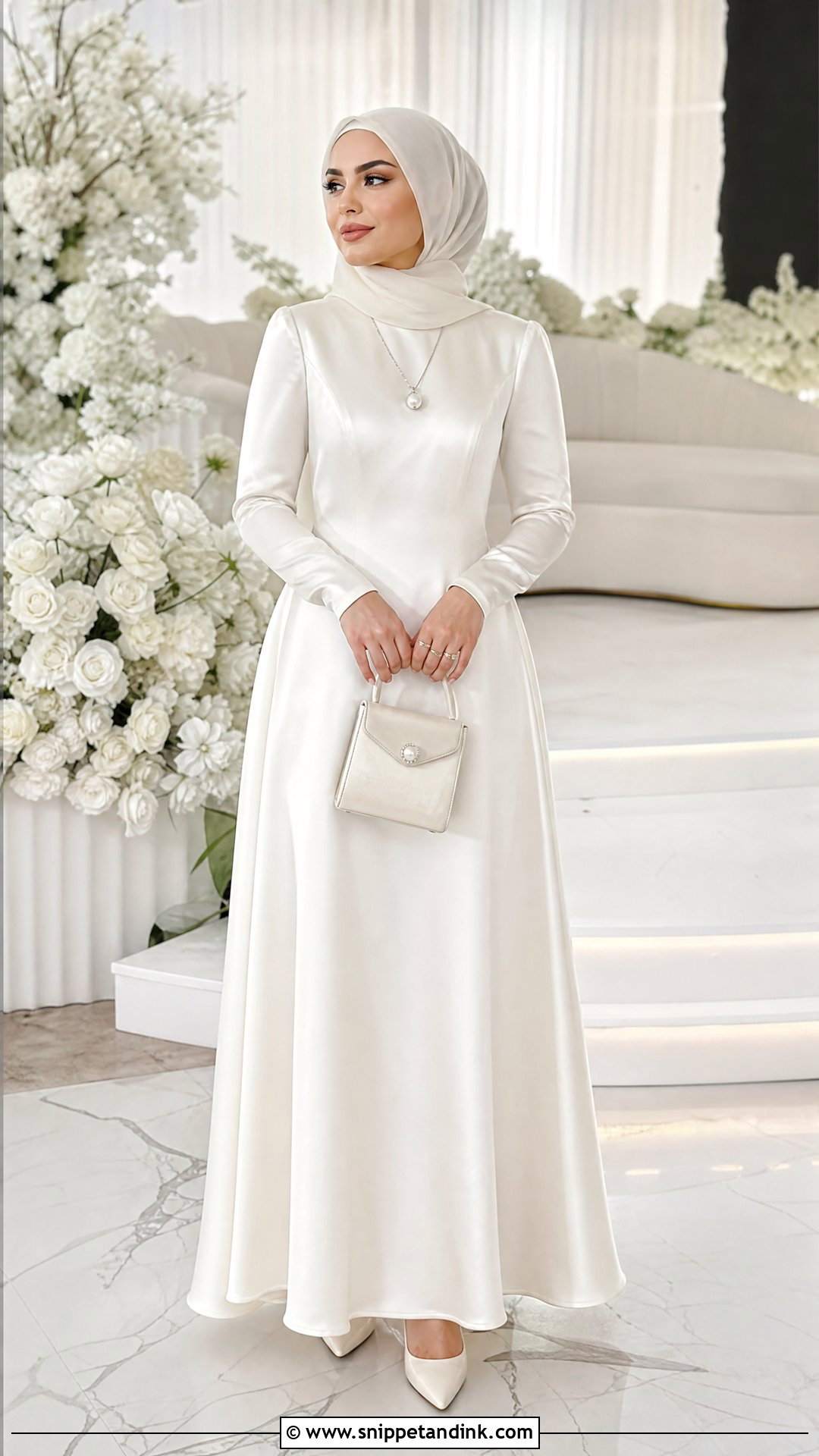
Satin reflects light, and how much it shines changes everything. High-shine satin can look cheap under hall lighting, while a matte or softly lustrous one reads expensive. A long-sleeved satin maxi with a high neck, a shaped waist and a gently flared skirt is the shape to look for. A chiffon hijab in ivory gives a soft contrast of textures. Pearl earrings, a delicate pendant and a structured mini bag, with pointed pumps or slingbacks. Satin creases where you sit, so stand for photos before the ceremony rather than after. Keep the skirt short enough to walk without lifting it.
4. White Lace Nikkah Gown
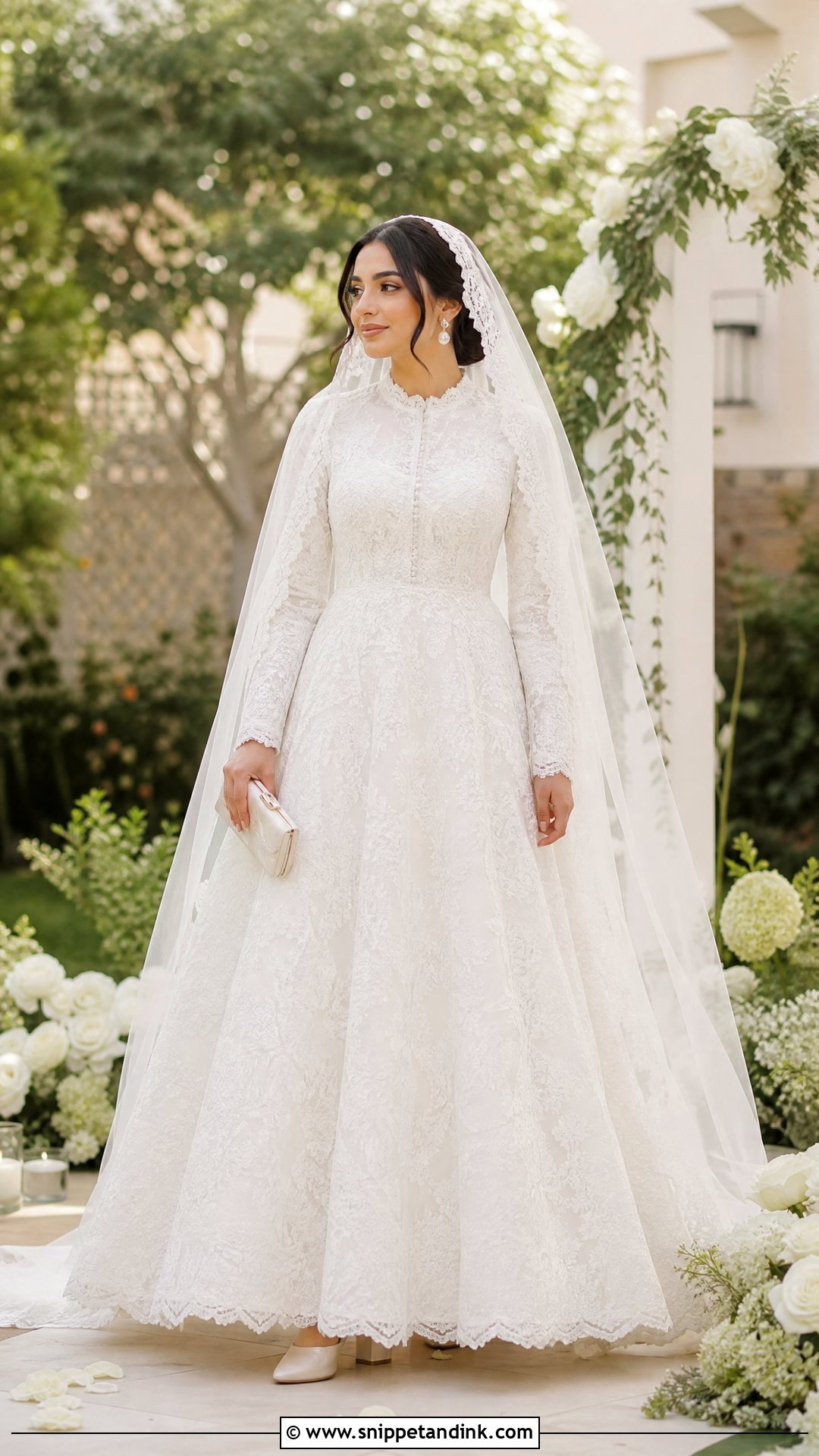
Lace is the easiest way to add romance while keeping full coverage, provided the gown is properly lined. A white gown with long lace sleeves, a high neck and an A-line skirt is the classic version. Medium-scale motifs show up in photos; very fine lace blurs into texture, and large motifs can overwhelm a petite bride. An opaque ivory hijab or a simple lace-edged veil works. Pearl studs, a slim watch and a satin clutch are enough. Wear comfortable block heels underneath, since nobody sees your shoes and you’ll be standing for photos.
5. White Chiffon Nikkah Anarkali
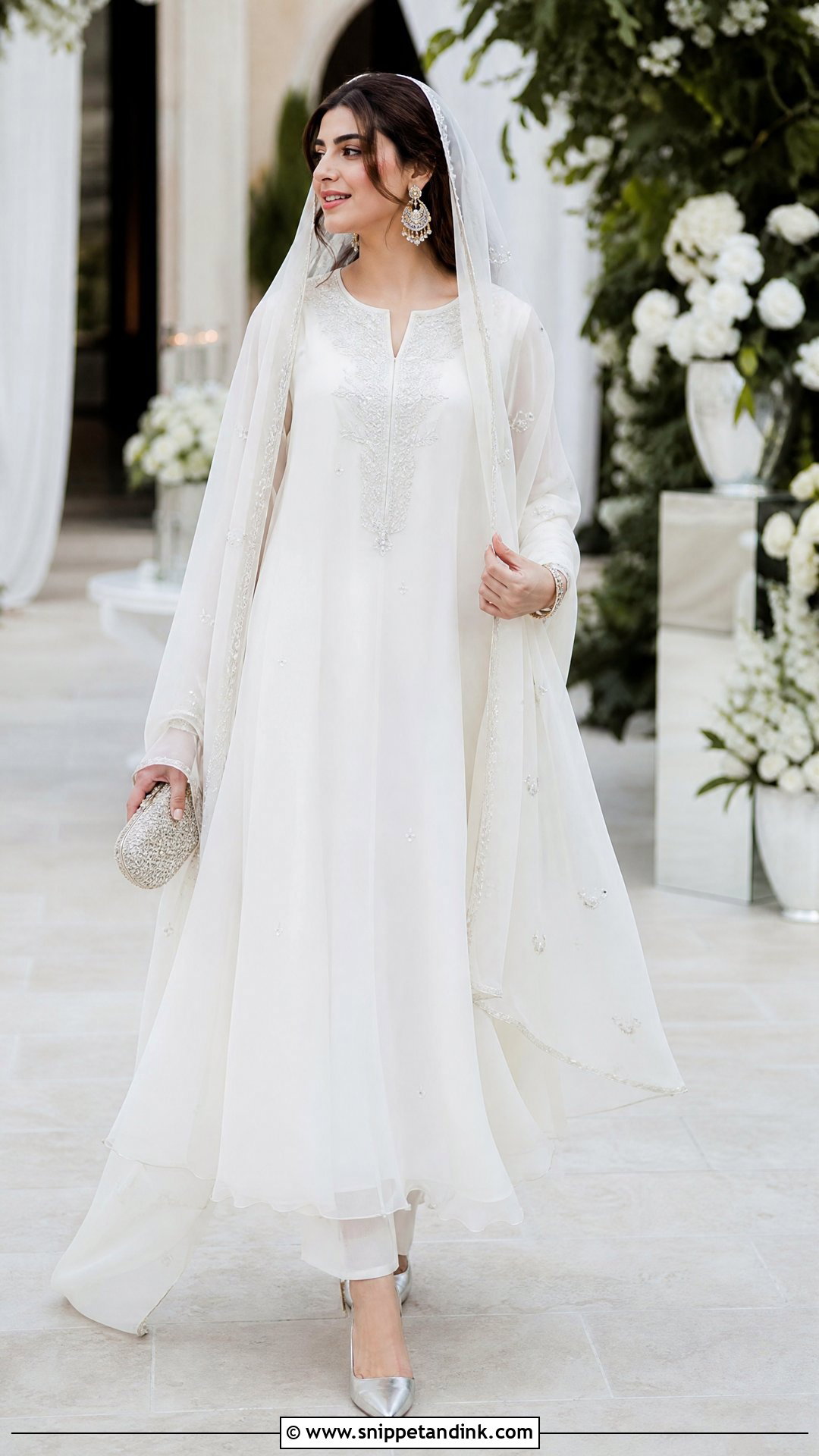
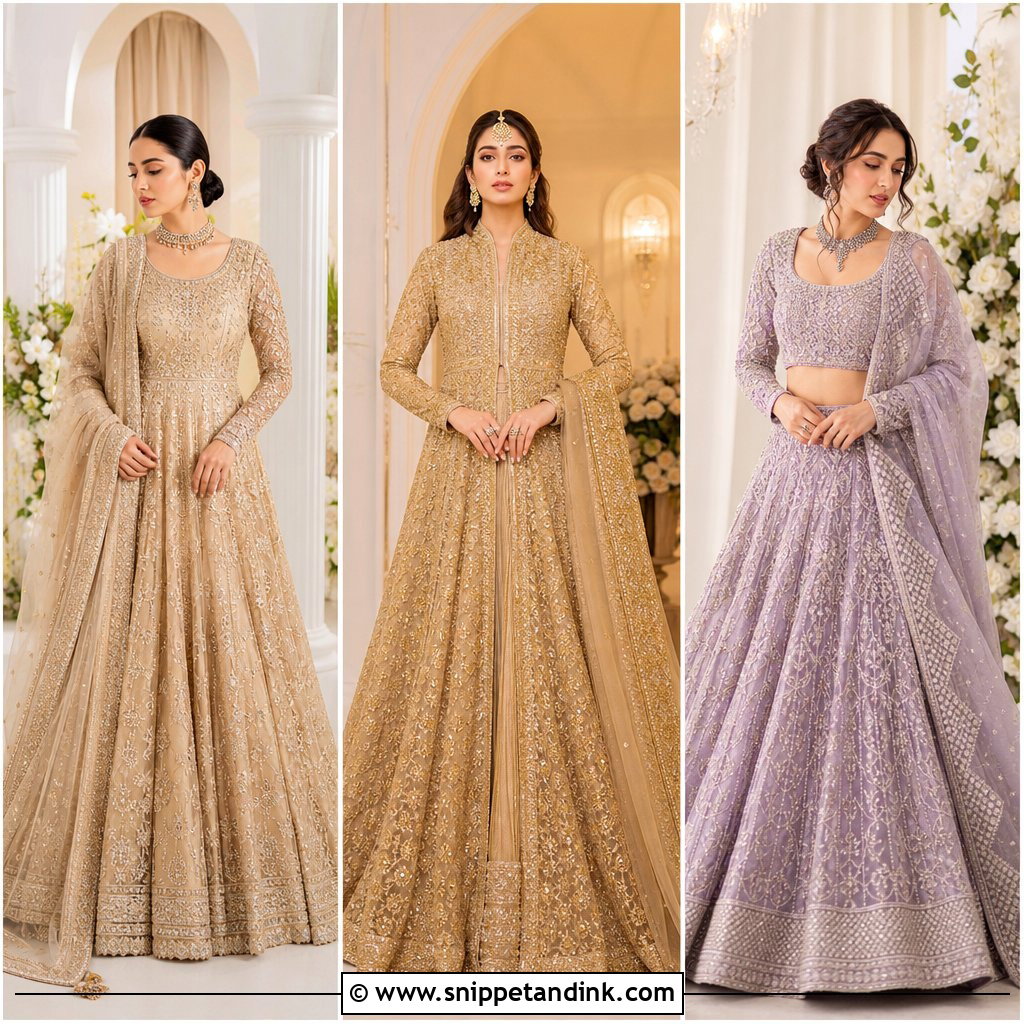
Chiffon in layers is what gives an Anarkali its swing. A floor-length white one with full sleeves, a fitted bodice and a flare starting at the waist is a classic South Asian bridal shape. Tonal embroidery at the neckline and cuffs is plenty. Under it, wear straight white trousers and make sure the lining is opaque, because layered chiffon looks solid until you stand in front of a window. Drape the dupatta over the head or across both shoulders. Silver earrings, a small clutch and low metallic heels finish it, with a low bun or smooth hijab wrap.
6. White Nikkah Pishwas
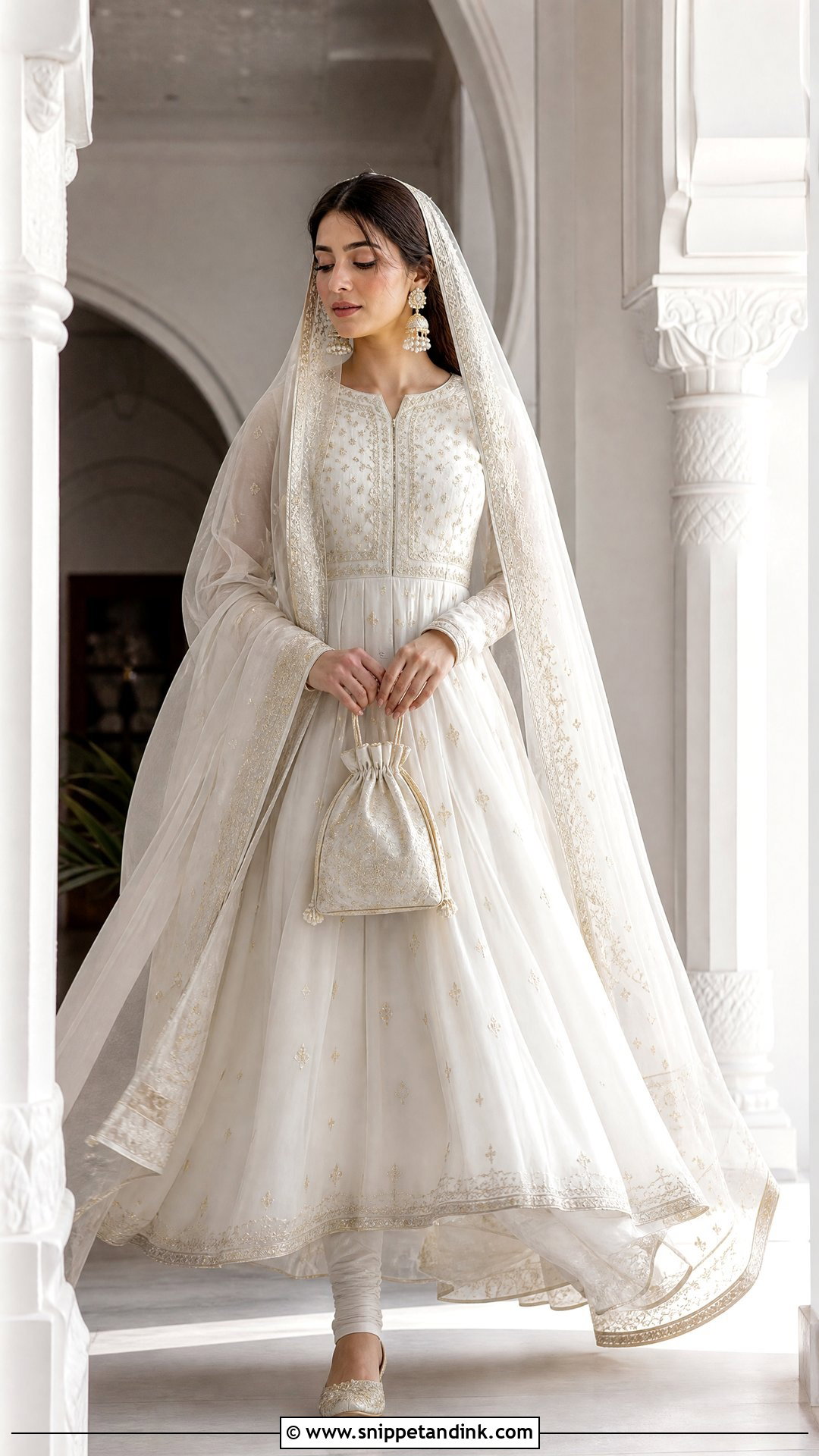
A pishwas has more skirt than an Anarkali, sometimes many meters of flare, so the fabric weight decides whether it’s comfortable. Cotton silk, chiffon or light organza keep it manageable; heavy georgette gets tiring by evening. Restrained embroidery at the neckline and hem, full sleeves and an opaque lining keep it modest. A narrow white churidar sits mostly hidden underneath. Place a sheer dupatta over the head so its embroidered border frames your face. Pearl jhumkas, ivory khussas and a small potli complete it; a slim embroidered belt is optional.
7. White Nikkah Gharara Suit
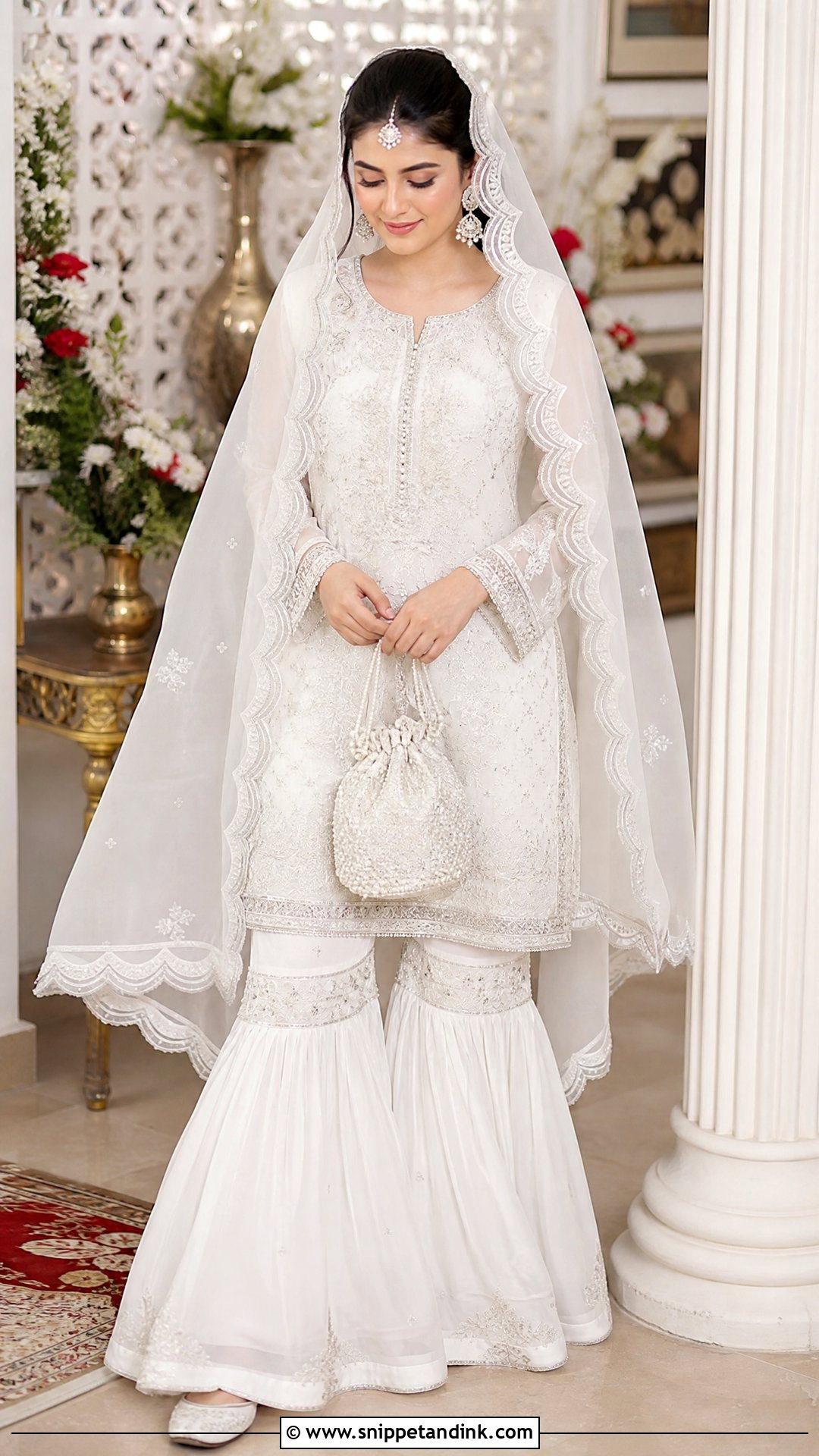
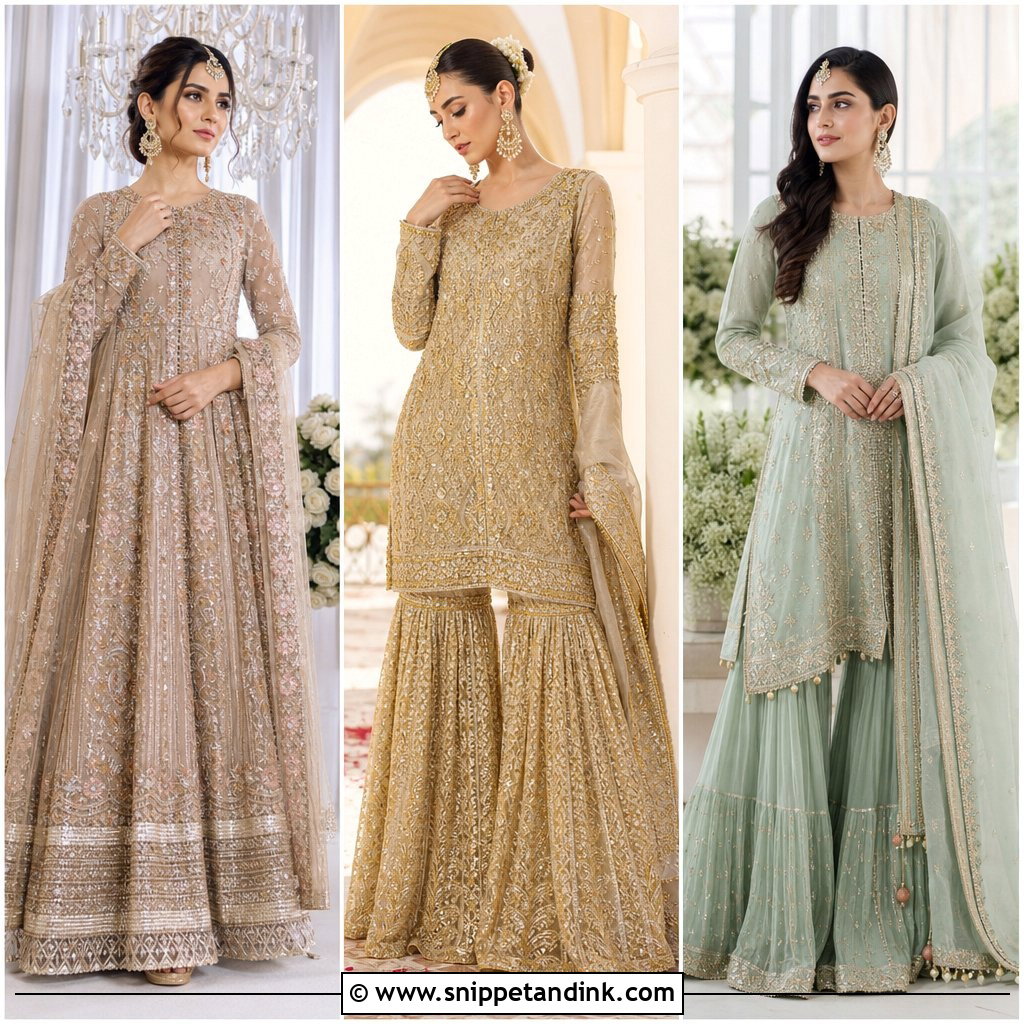
Proportion makes or breaks a gharara. Pair white flared gharara pants with a straight knee-length shirt, and make sure the shirt ends above the knee seam where the flare begins; if it covers the seam, the shape disappears. Light pearlwork or tonal embroidery on the shirt is enough. An organza dupatta with a scalloped edge goes over the head or one shoulder. White embroidered khussas, pearl earrings and a delicate tikka add the bridal touch, with a small beaded potli. Ghararas are surprisingly easy to sit cross-legged in, which matters at a floor-seated ceremony.
8. White Nikkah Sharara Suit
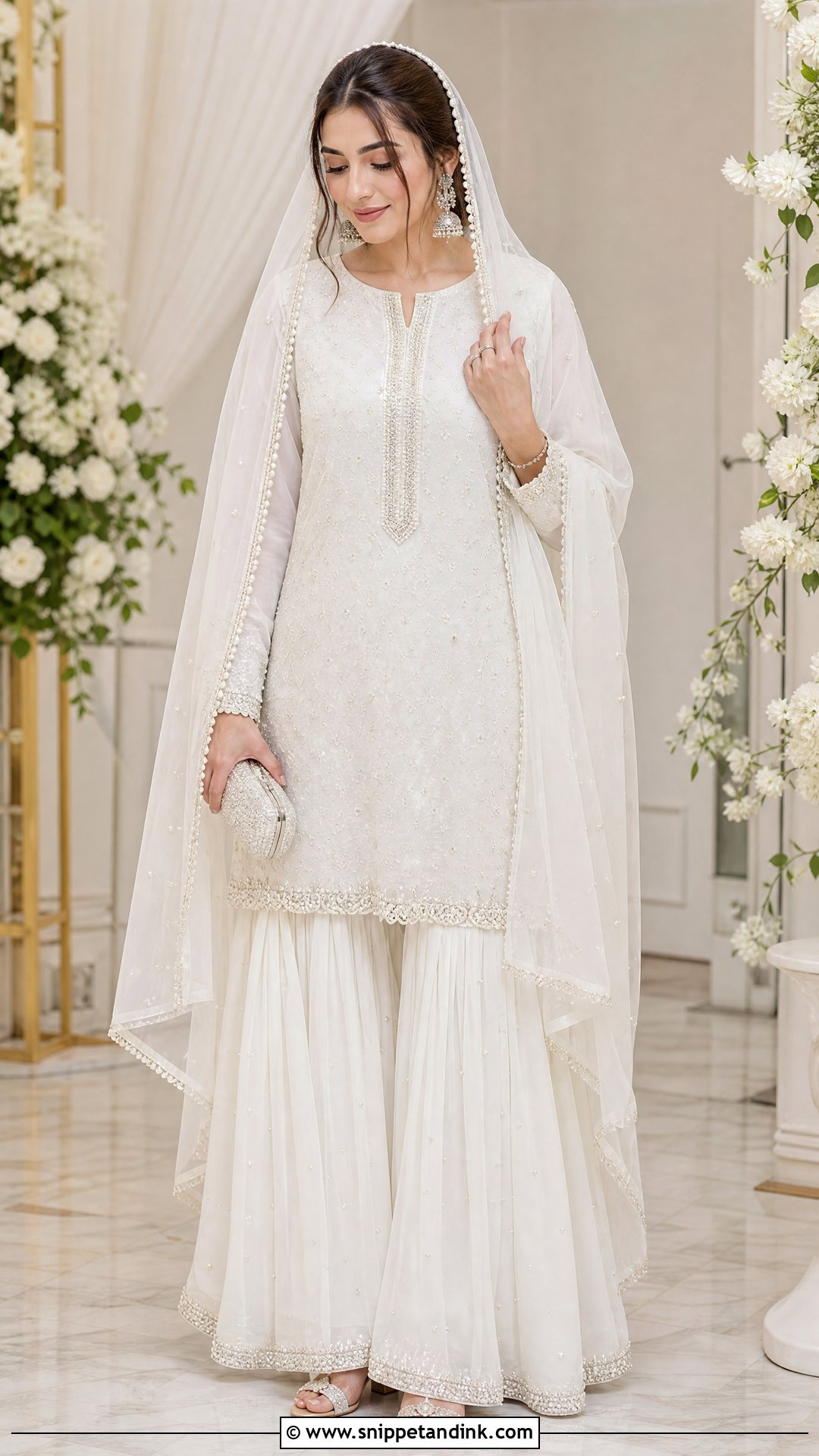
Shararas give lots of movement with very little weight. Choose wide white sharara pants with soft pleats and a hip-length kurta with tonal threadwork, small pearls or a narrow silver border. A chiffon dupatta over the head and falling down one side creates a long vertical line that helps shorter brides. Silver jhumkas, a coordinating ring and low block heels hidden under the flare complete it, with a compact silver clutch. Taller brides can carry more volume; petite brides do better with a slightly longer kurta and less flare.
9. Simple White Nikkah Lehenga
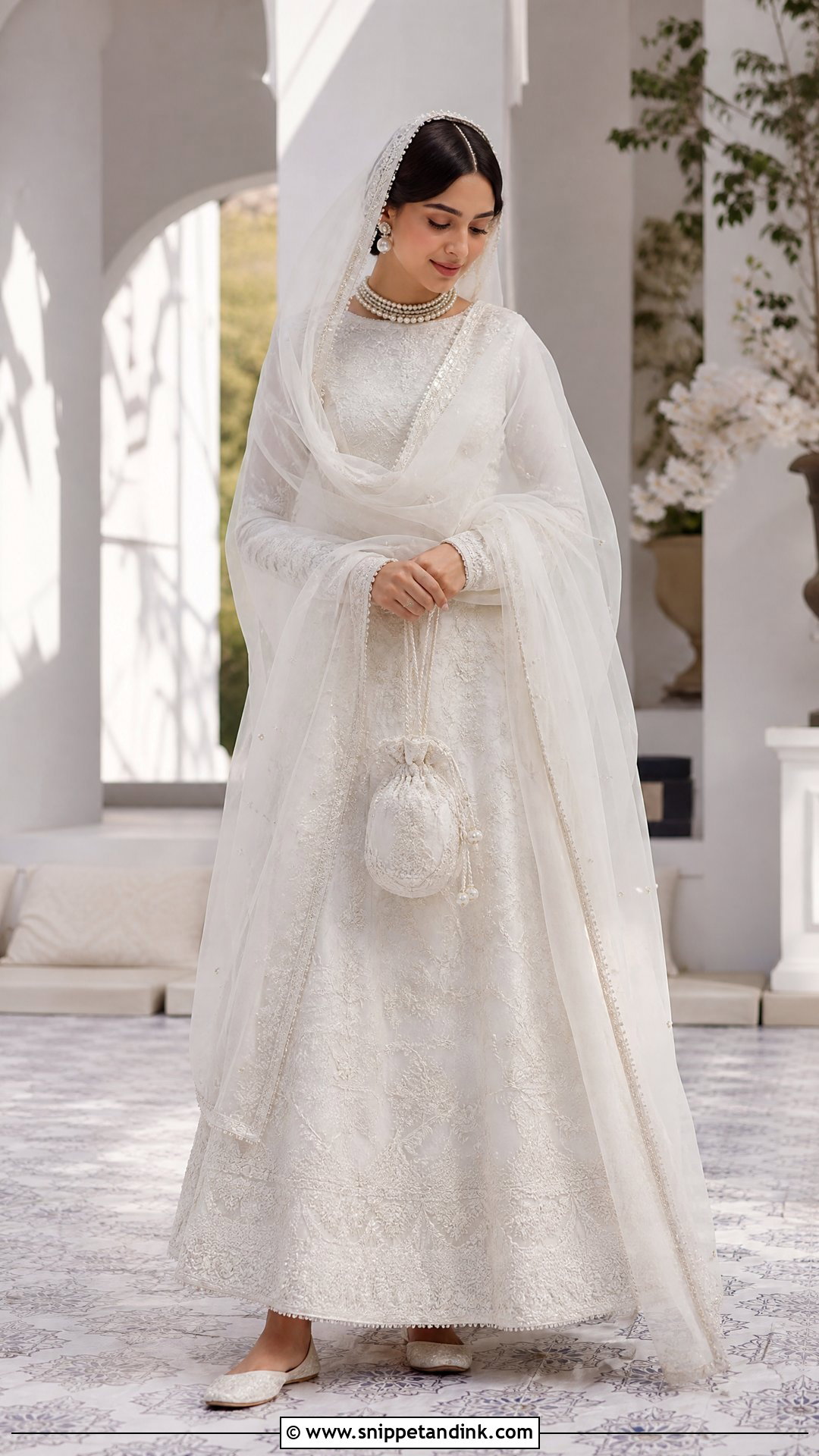
A lehenga brings traditional presence, but for a Nikkah I’d keep it light. Choose a white A-line lehenga with minimal tonal embroidery and a waist-length blouse with full sleeves and a high or softly rounded neck. If the blouse and skirt don’t meet, ask your tailor to add an inner layer at the midriff. Drape a sheer dupatta over the head and bring one end diagonally across the bodice, pinned at the waist. Pearl jewelry, white khussas and an embroidered potli finish it. In a small room, a big skirt crowds everyone, so keep the volume modest.
10. White Nikkah Peplum And Trousers
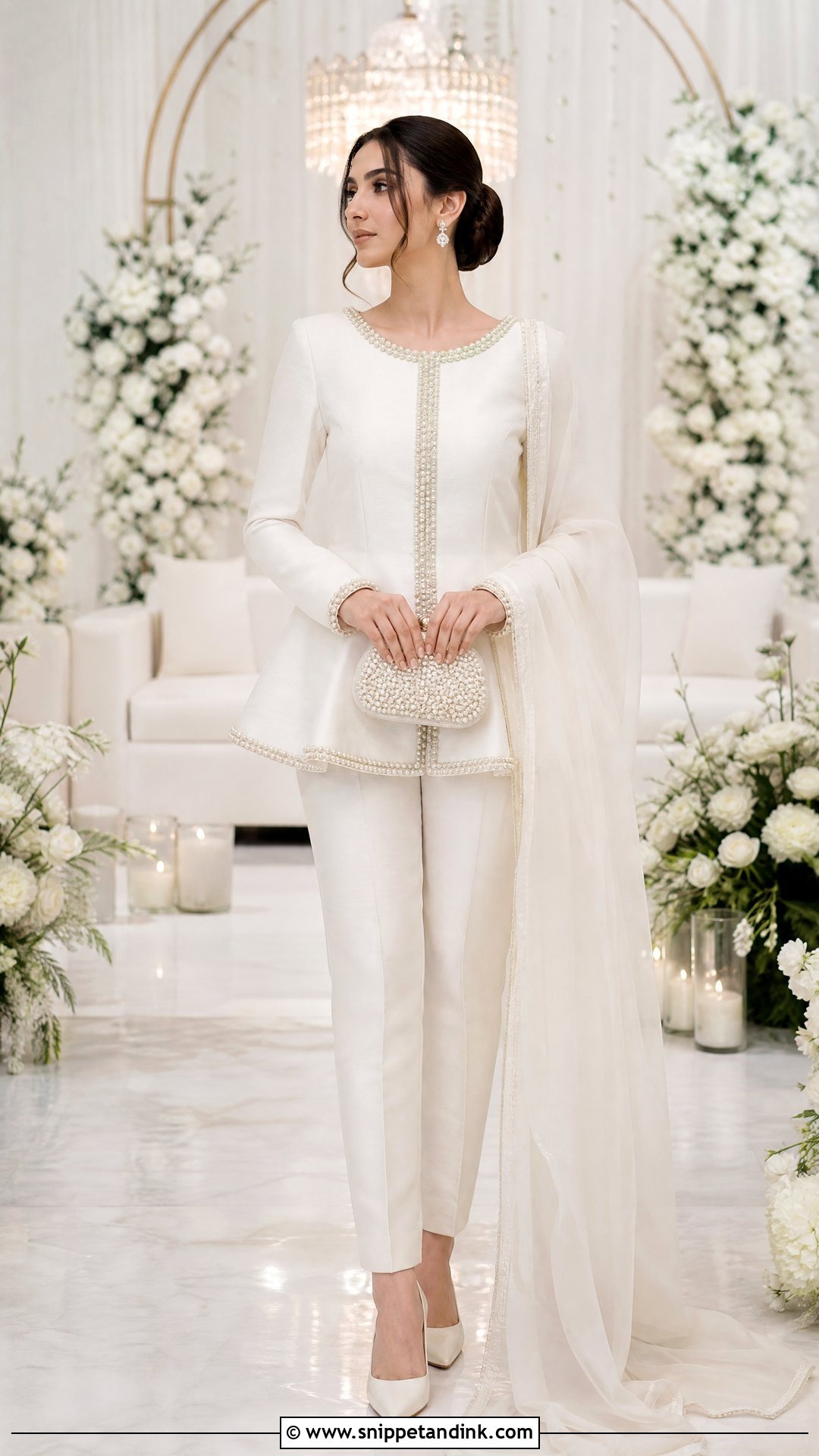
A peplum with tailored trousers feels modern and is easy to move in. Choose a long-sleeved peplum that ends below the hips with a soft flare, so it covers well when you sit. Straight or cigarette trousers balance the volume on top. An organza dupatta with a fine pearl or embroidered border goes over the head or around the shoulders. Pointed ivory heels lengthen the outfit, and a structured pearl clutch suits the mood. Small drop earrings and a delicate bracelet finish it. Separates are also the easiest pieces to wear again.
11. White Nikkah Long Shirt And Pants
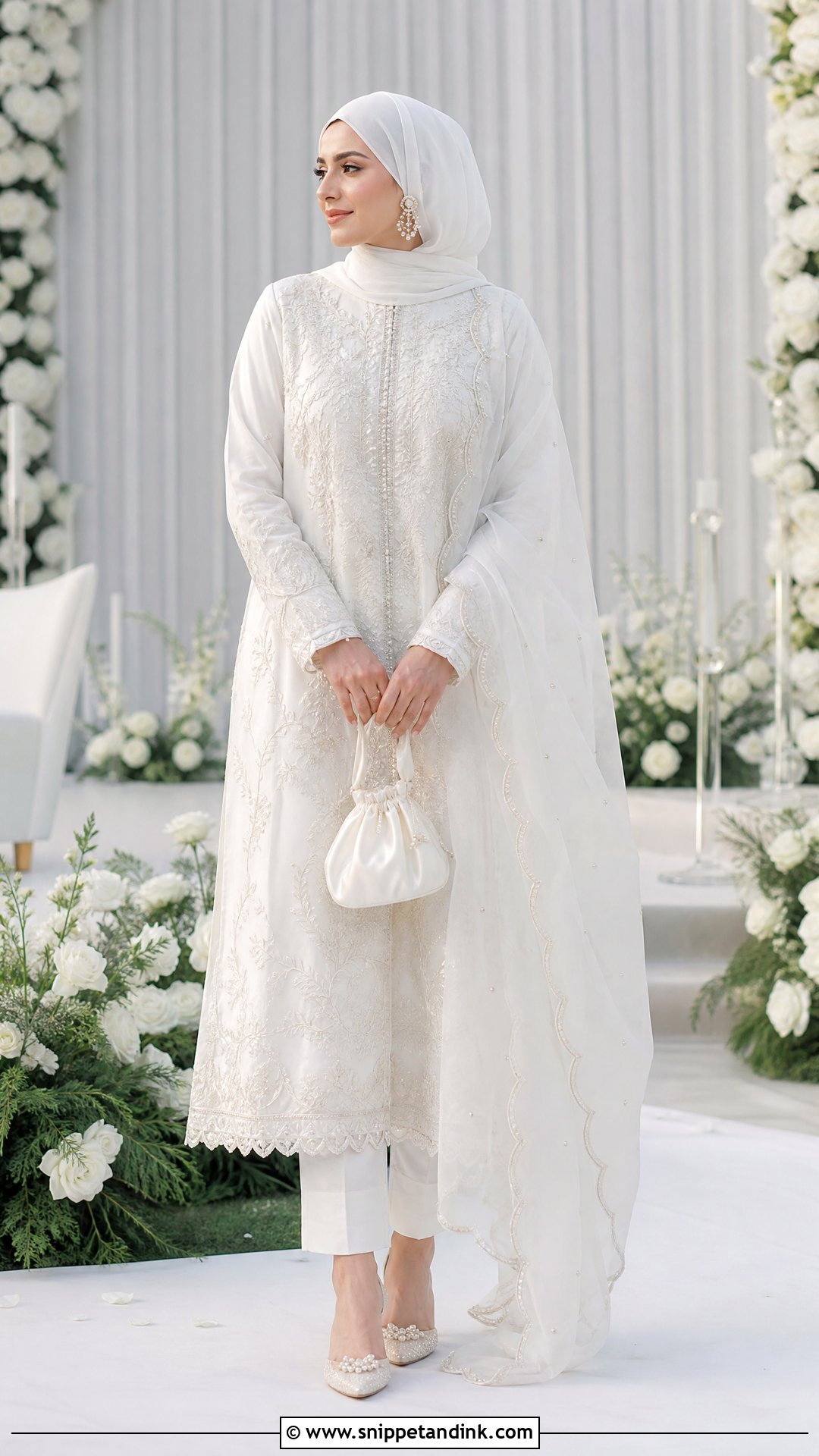
Tailored separates can look just as bridal as layers of fabric when the finishing is clean. A calf-length white shirt with side slits, full sleeves and tonal embroidery at the neck and cuffs, over straight pants that skim the ankle, is my go-to for a daytime Nikkah followed by lunch. A sheer organza dupatta with a scalloped edge softens it. Pearl pumps, a satin bag and refined earrings complete it. If you wear a hijab, choose matte chiffon in a matching white so it doesn’t compete with the dupatta. Shiny scarves slip more.
12. Simple White Nikkah Kaftan
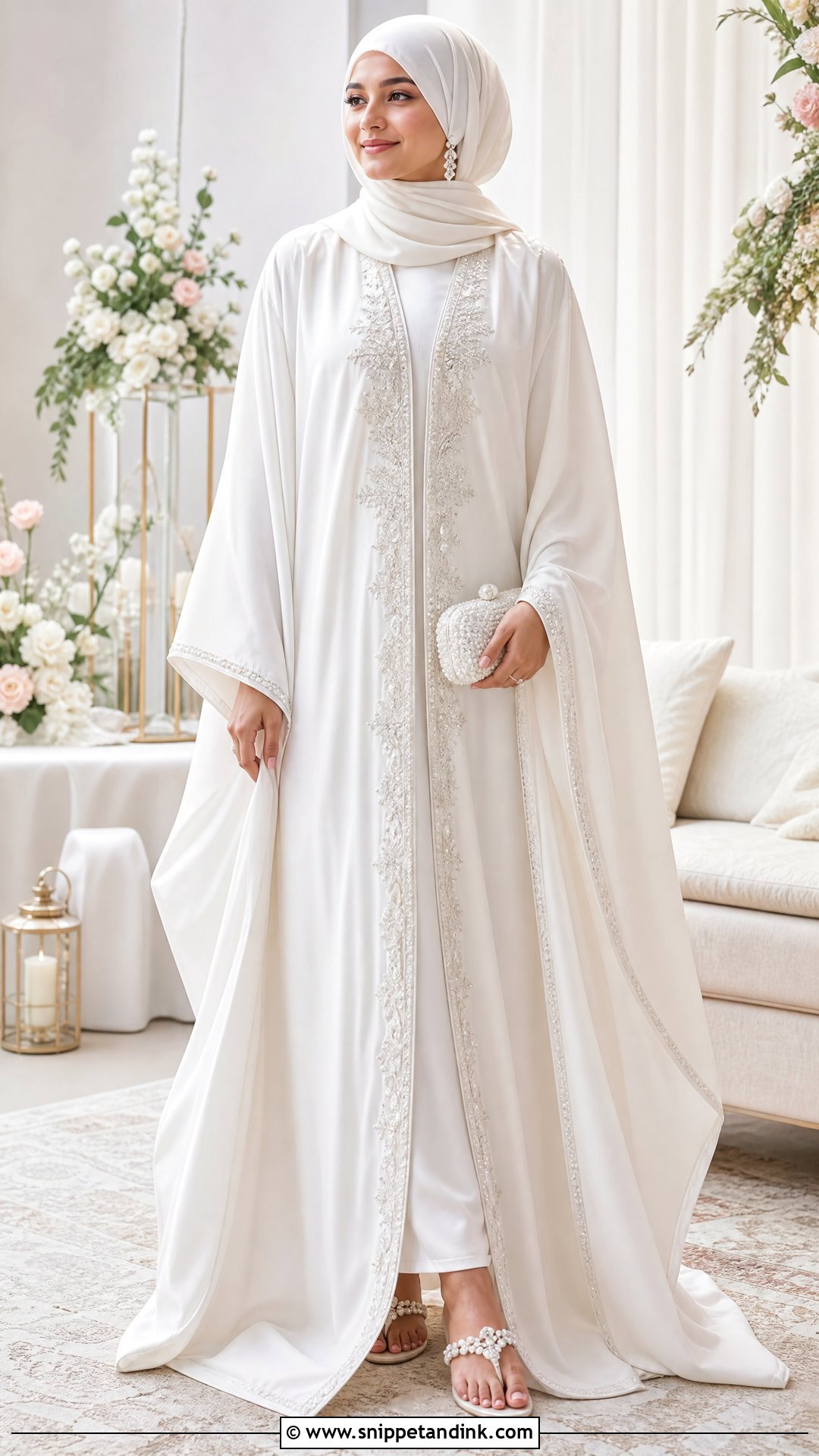
A kaftan is the most comfortable dress here, and it can look sloppy if the shoulders aren’t shaped. I look for defined shoulder seams and light embroidery down the center, in crepe, chiffon or a silk blend with an opaque inner dress. A narrow internal belt gives definition without changing the drape. A smooth ivory hijab, drop earrings and one statement ring suit it, with embellished flats or low heels and a small pearl-accented clutch. It’s cool in warm weather and suits home ceremonies and brides who dislike fitted clothes.
13. White Nikkah Saree
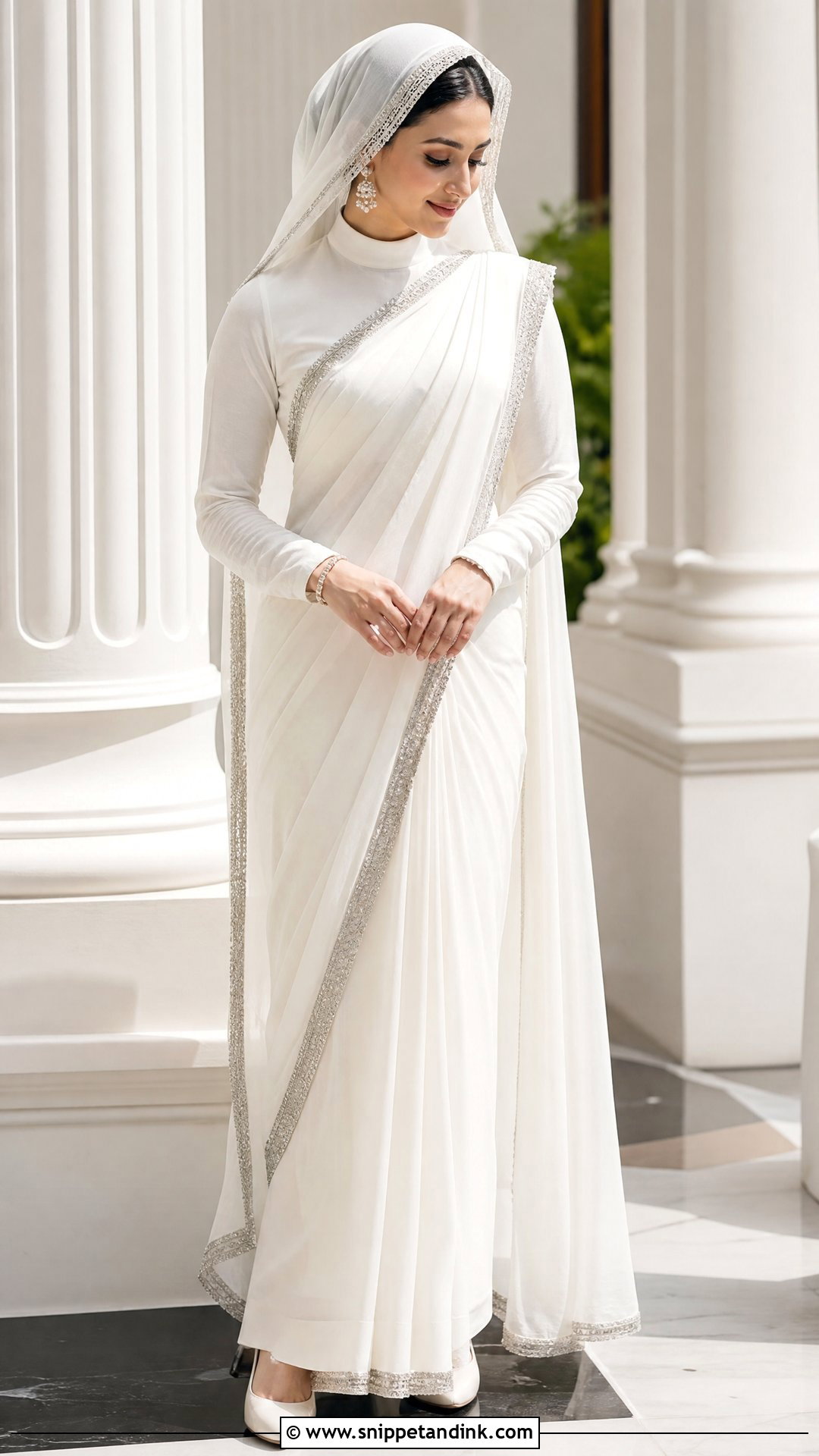
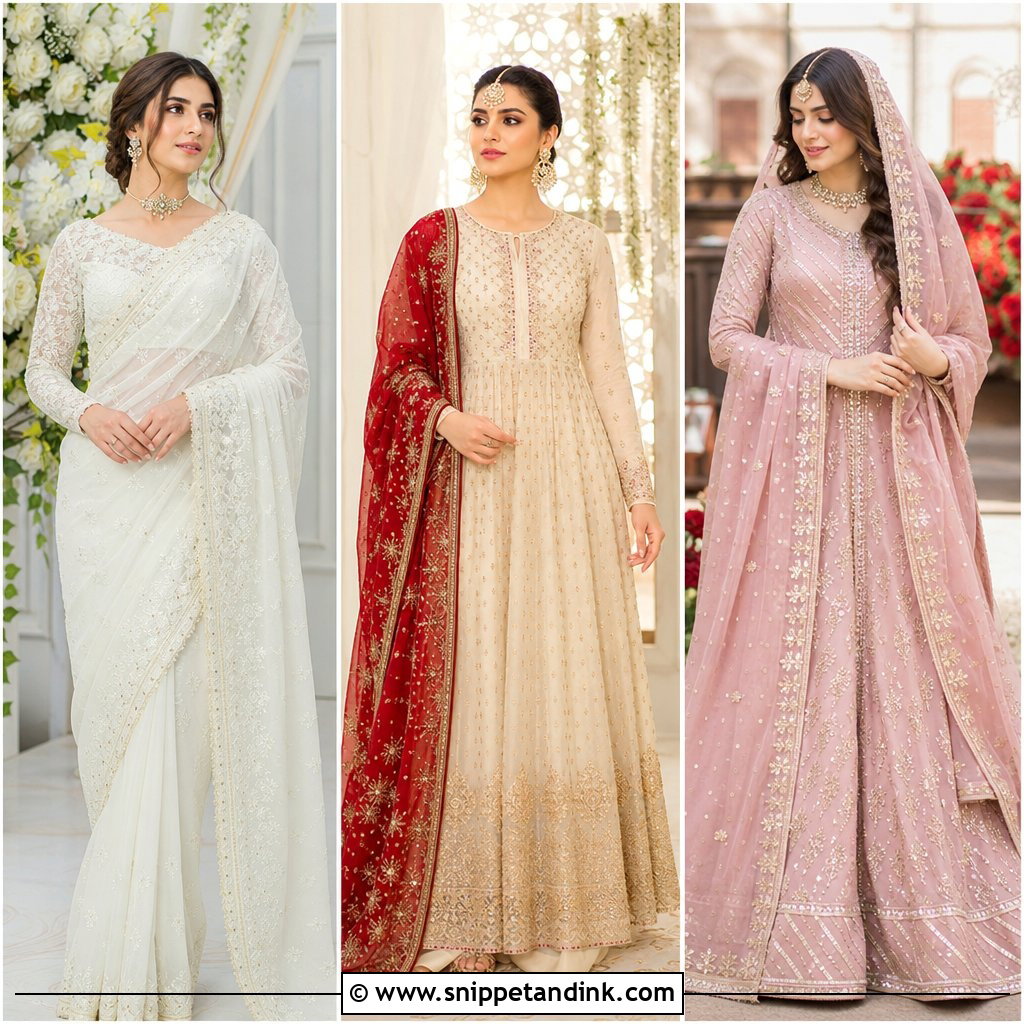
A saree can be as modest as you want if the blouse and drape are planned for it. Chiffon, georgette or light silk with a slim pearl, silver or white embroidered border drapes softly. Ask for a long-sleeved blouse with a high neck and enough length; an inner panel at the waist adds security. The pallu can go over the head or be pinned at the shoulder. Pin the pleats firmly at the waist so you can sit and walk without them fanning open. Pearl jhumkas, a delicate bracelet and closed-toe ivory heels complete it.
14. White Nikkah Salwar Kameez
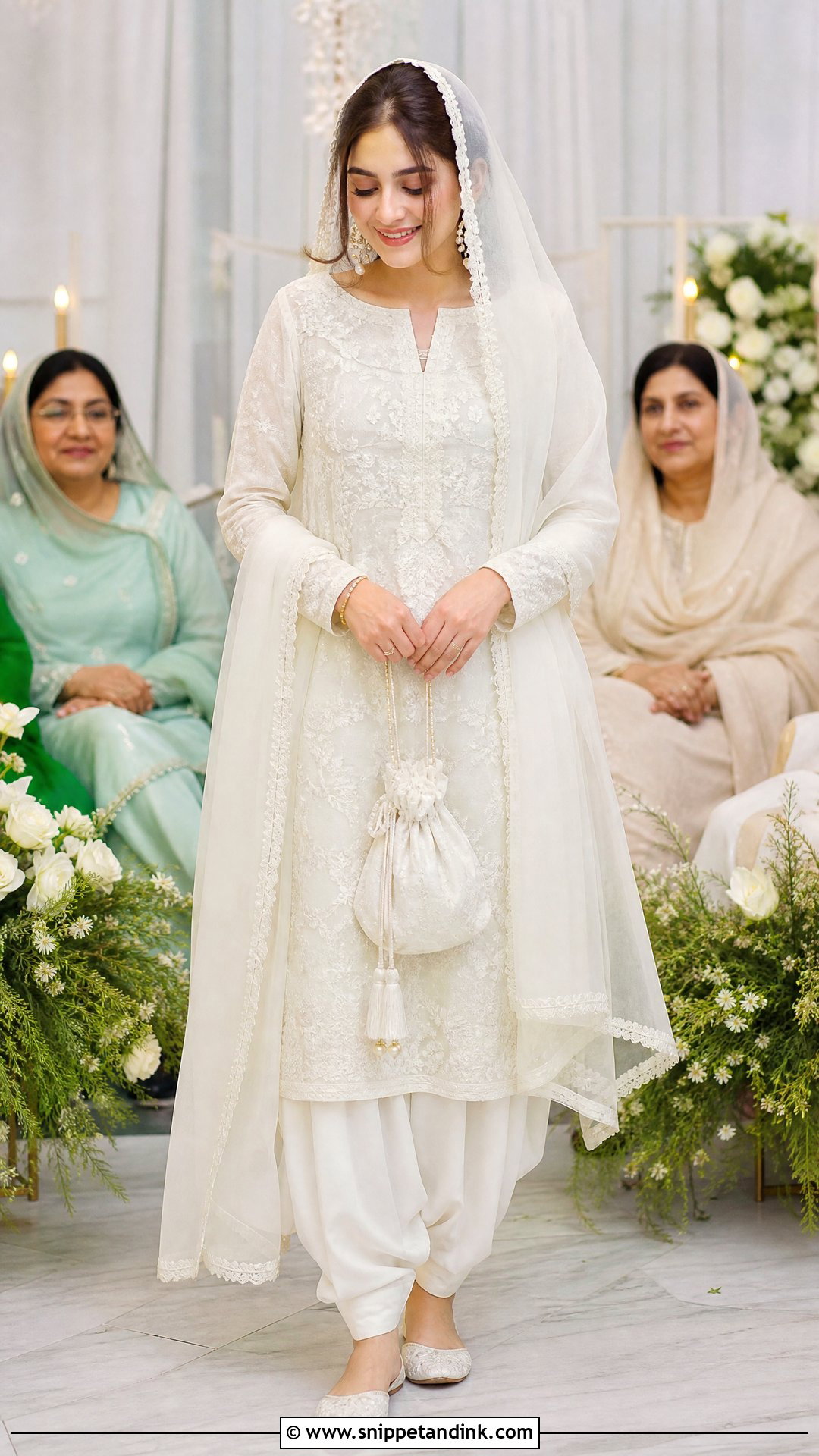
The salwar kameez is the outfit I trust for a long day of family gatherings. Choose a straight or gently shaped kameez with full sleeves and delicate embroidery at the neck, hem and cuffs, with a softly gathered salwar in light, opaque fabric. A white chiffon dupatta with a lace border covers the head. Pearl studs, a slim bangle, embroidered khussas and a small potli finish it. Because it’s so simple, the tailoring shows: the shoulder seam should sit exactly on your shoulder, and sleeves should end at the wrist bone.
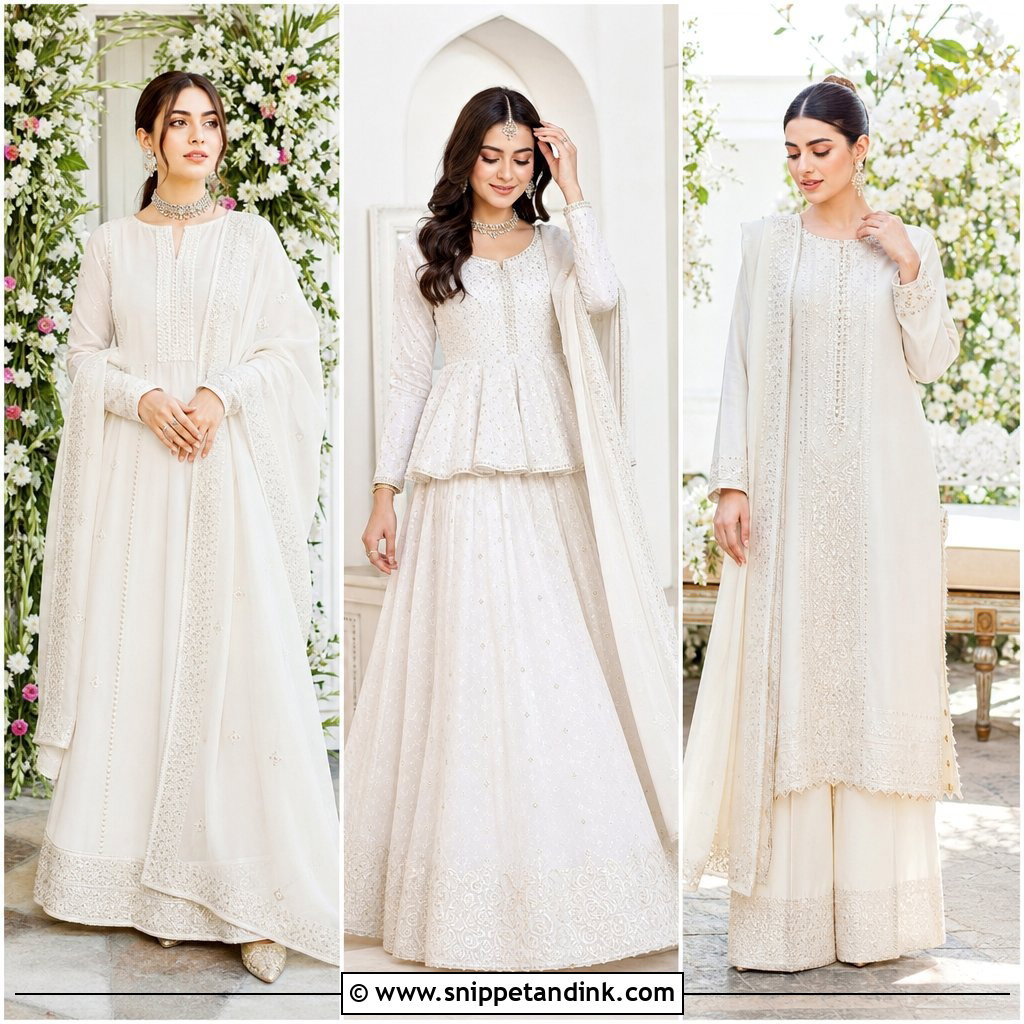
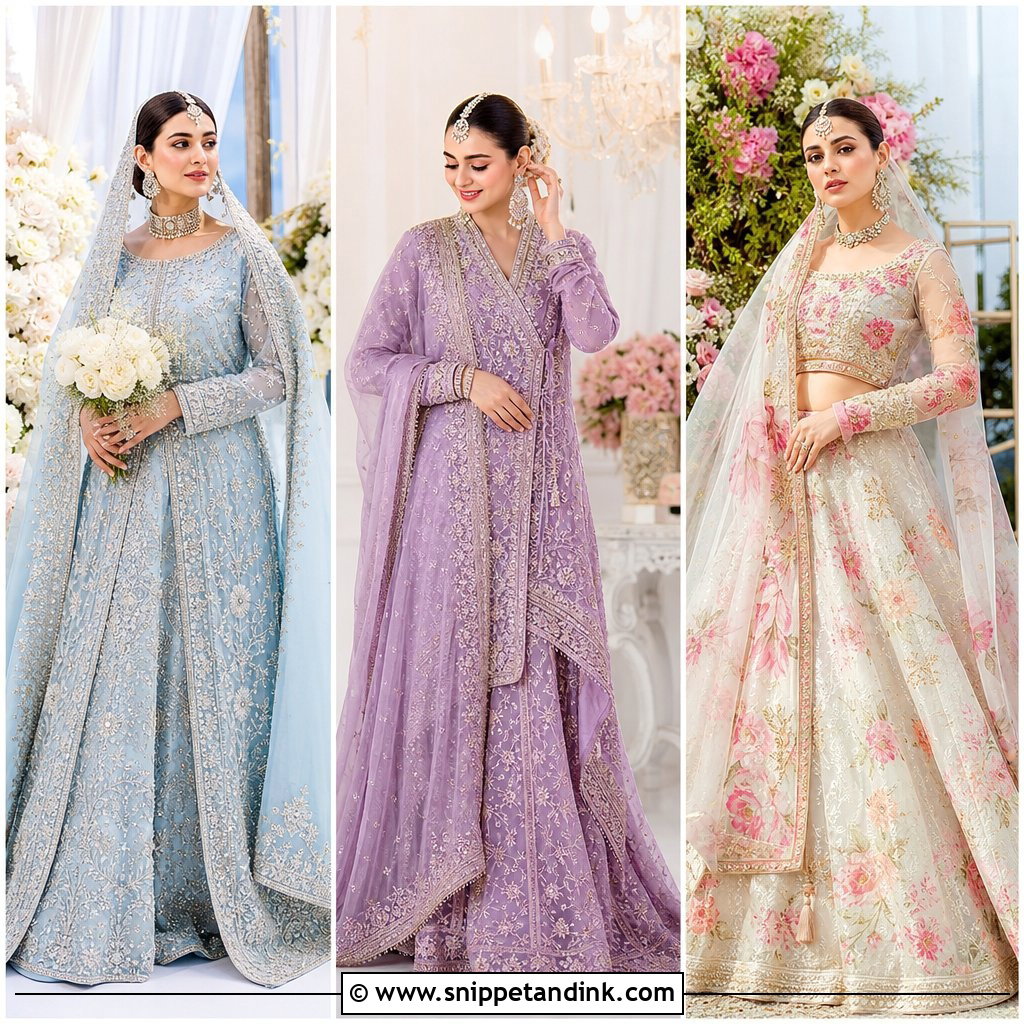
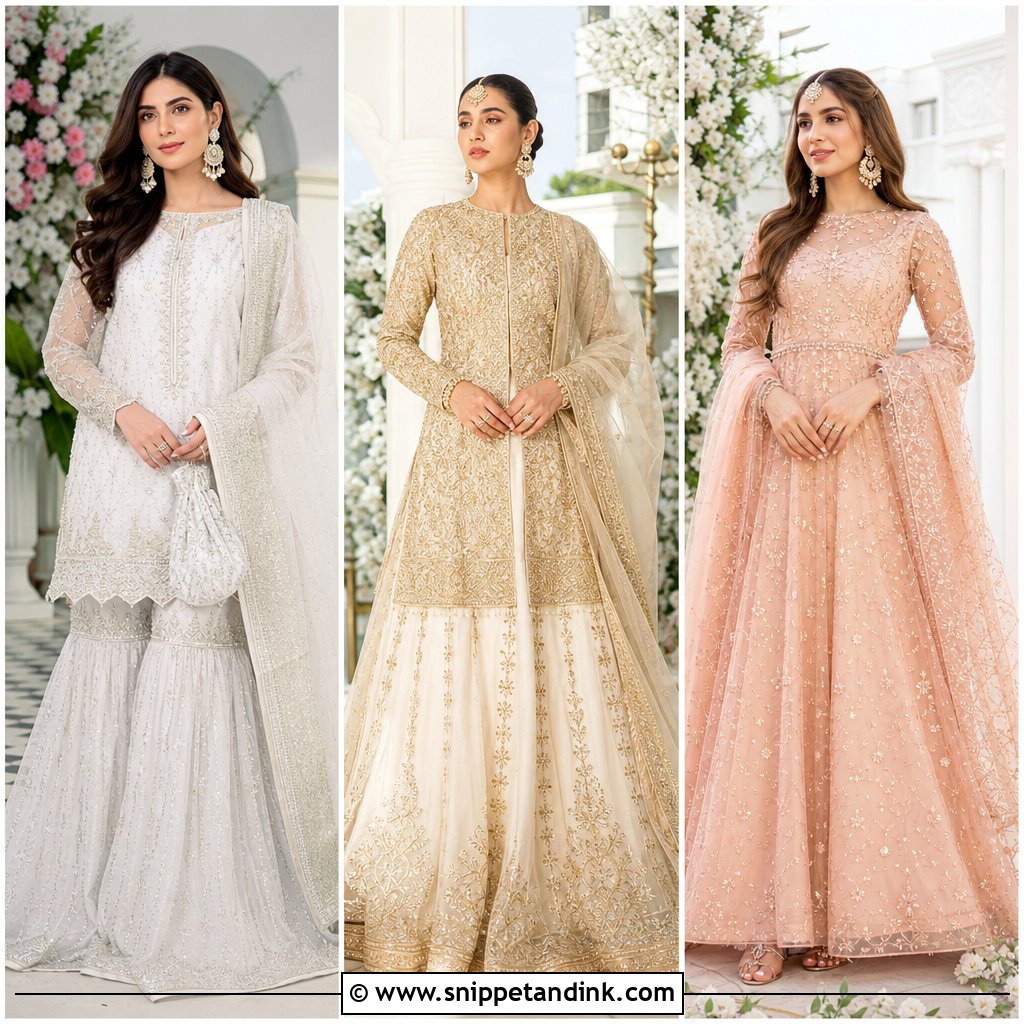
15. White Nikkah Angarkha Dress
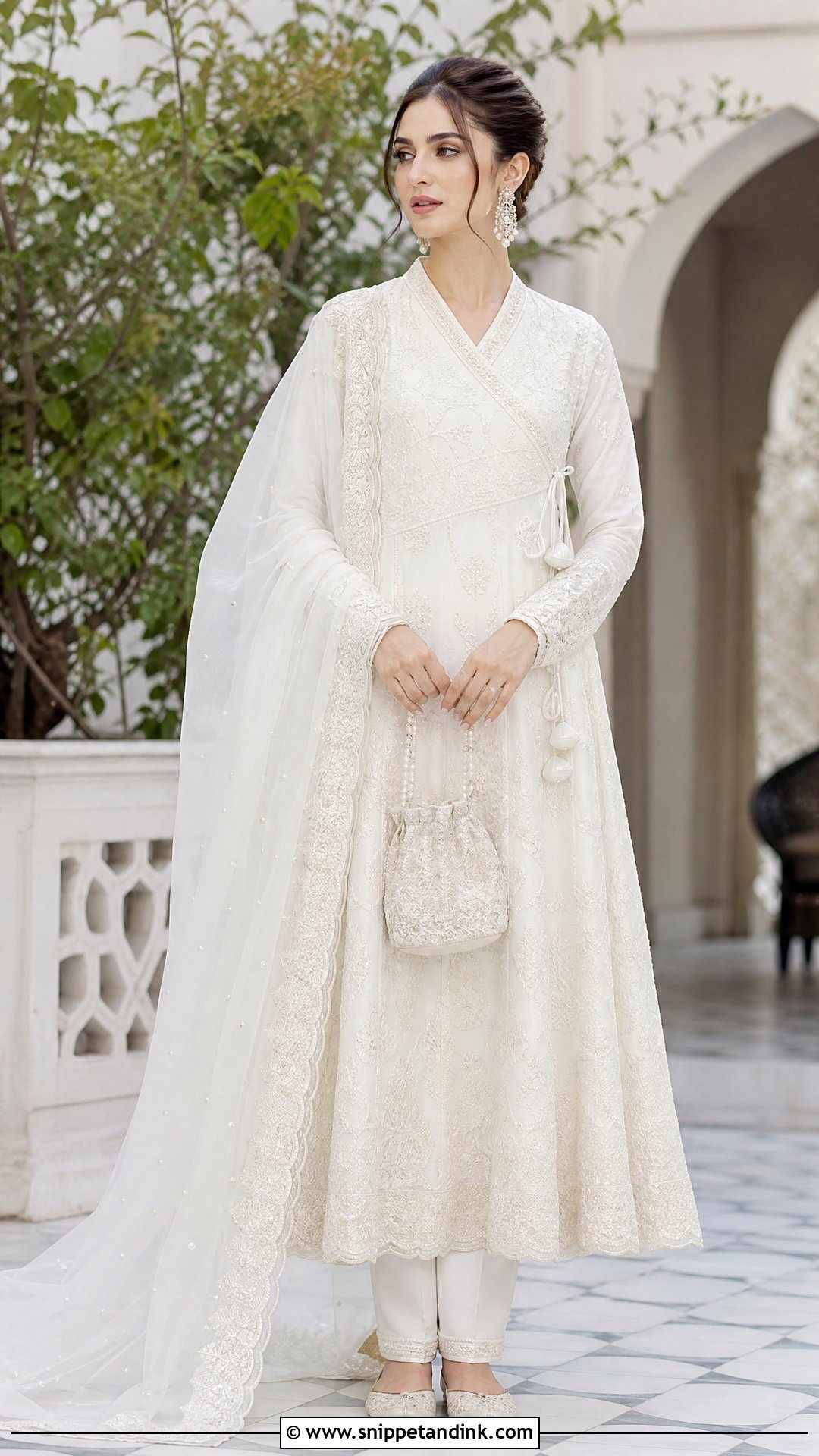
The overlapping front of an angarkha creates a diagonal line and gentle waist shape without a tight bodice. An ankle or floor-length white design with full sleeves, fabric-covered ties and a lightly flared skirt is the version I’d choose. Tonal embroidery along the crossover edge shows the construction. The overlap must be deep enough to stay closed when you lean forward to sign, so test it. Narrow white trousers, a chiffon dupatta with small pearls, ivory juttis, pearl drops and an embroidered bag complete it. Keep the tassels small.
16. White Nikkah Jacket Dress
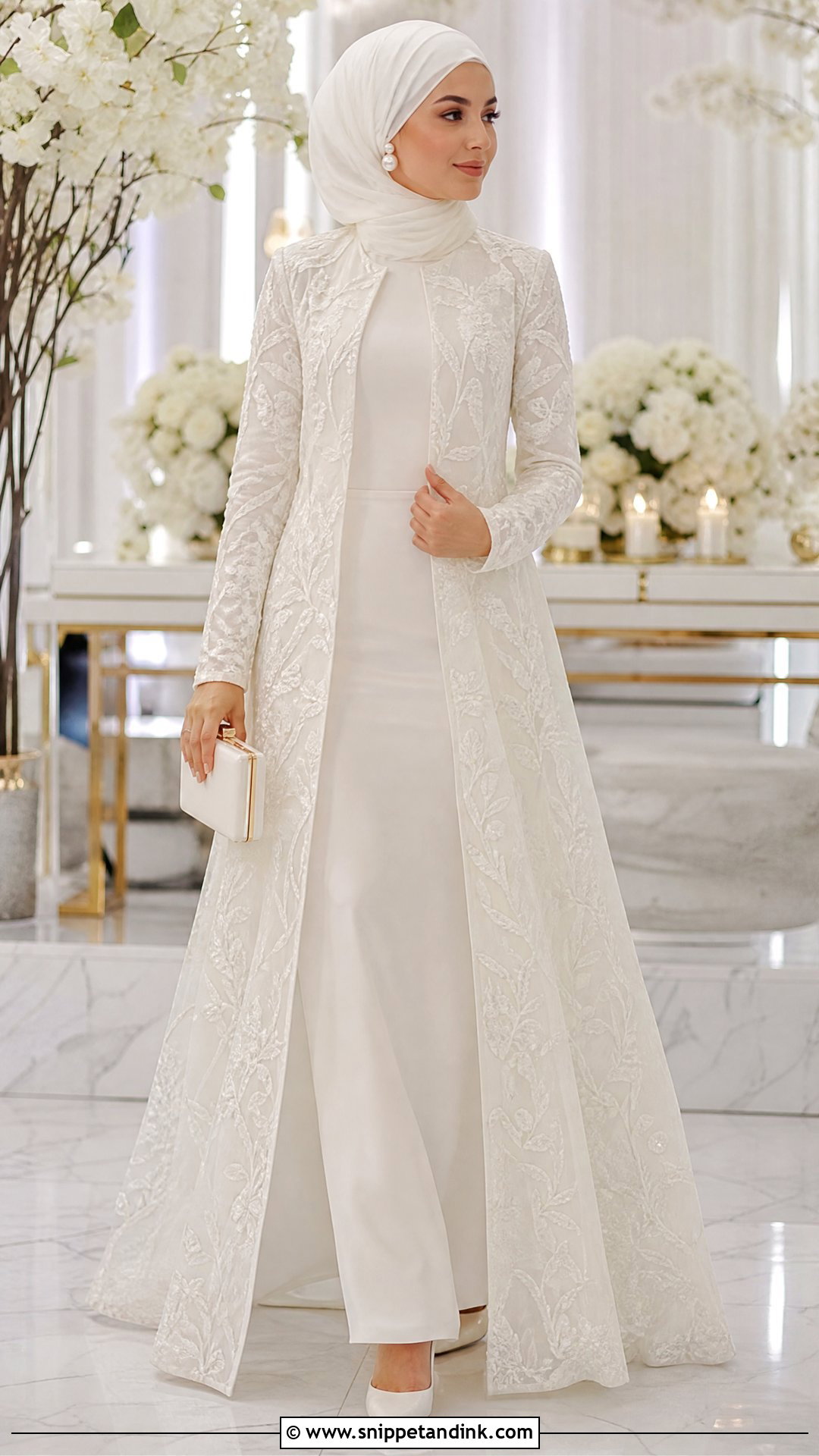
A long embroidered jacket over a plain inner dress gives you two looks: the full layered outfit for the ceremony and a cleaner one for the meal. Start with an opaque column dress, sleeveless or long-sleeved, and add a floor-length open jacket in organza, net or light jacquard with embroidery around the edges. If the inner dress is sleeveless, the jacket has to stay on for modesty, so choose one you can sit and eat in. A plain chiffon hijab, pearl earrings, pointed white pumps and a mini clutch finish it. Skip a heavy-bordered veil.
17. White Nikkah Cape Gown
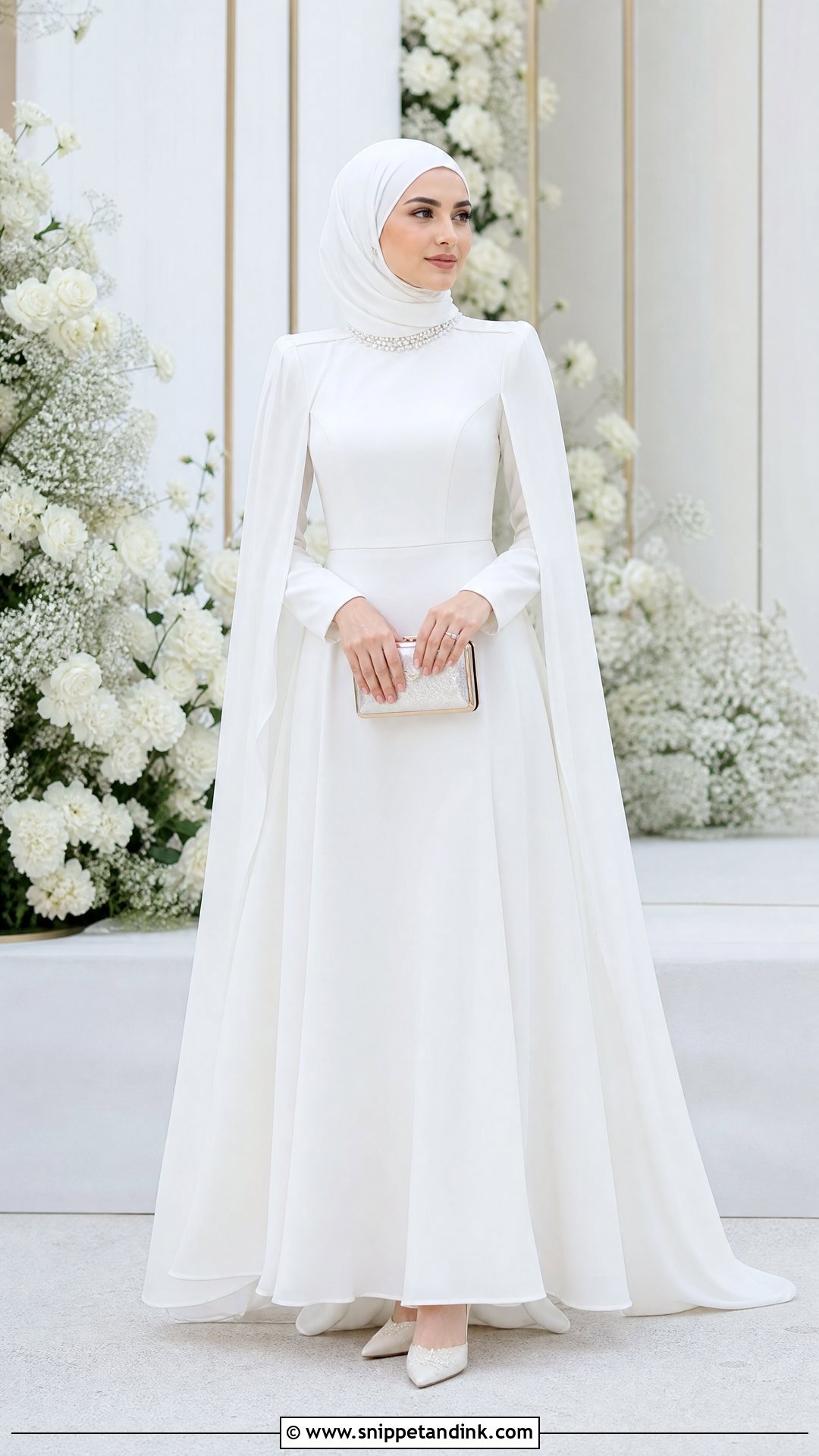
A cape gives drama without adding skin. Look for a white column or A-line gown with a light chiffon or soft organza cape attached at the shoulders, so it falls over the arms without stiffness. Small pearls at the neckline frame the face. A neatly wrapped white hijab, pearl studs and a slim metallic clutch suit it, with pointed kitten heels. The cape should end clear of the floor, or someone will step on it as you leave. Ask for discreet hand loops if it’s long, so you can hold it while greeting guests.
18. White Organza Nikkah Maxi
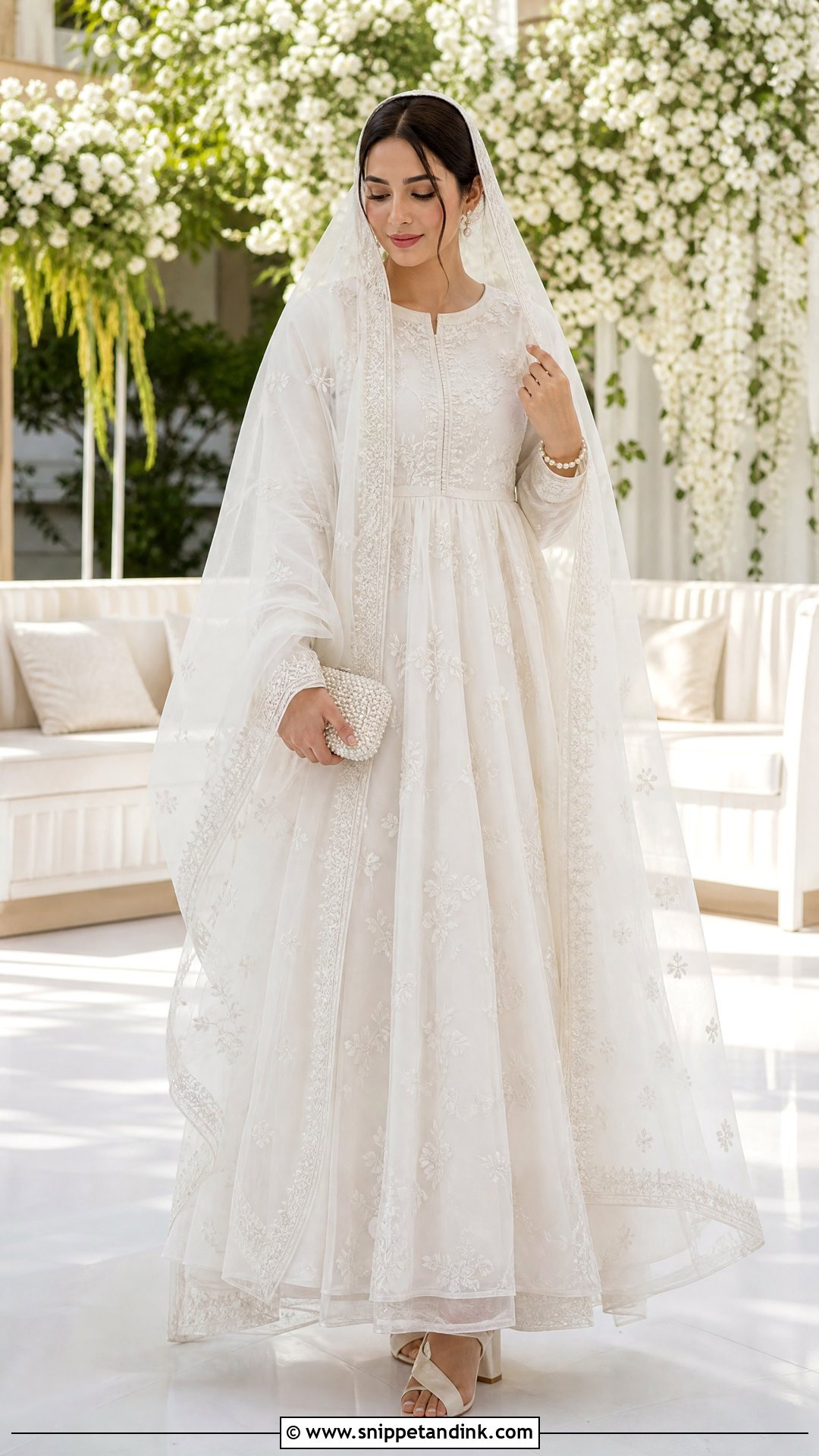
Organza is crisp and holds a fuller skirt without a petticoat, but it can feel stiff at the underarms and neckline. Before buying, raise your arms and turn your head both ways. A fully lined maxi with a fitted long-sleeved bodice and a gathered A-line skirt is the shape, with tonal flowers or scattered pearls on the outer layer. A matching organza dupatta goes over the head for the ceremony. Pearl earrings, a fine bracelet and an ivory clutch coordinate it. Block heels give stability under the volume. It looks fresh in bright rooms.
19. White Pearl Nikkah Gown
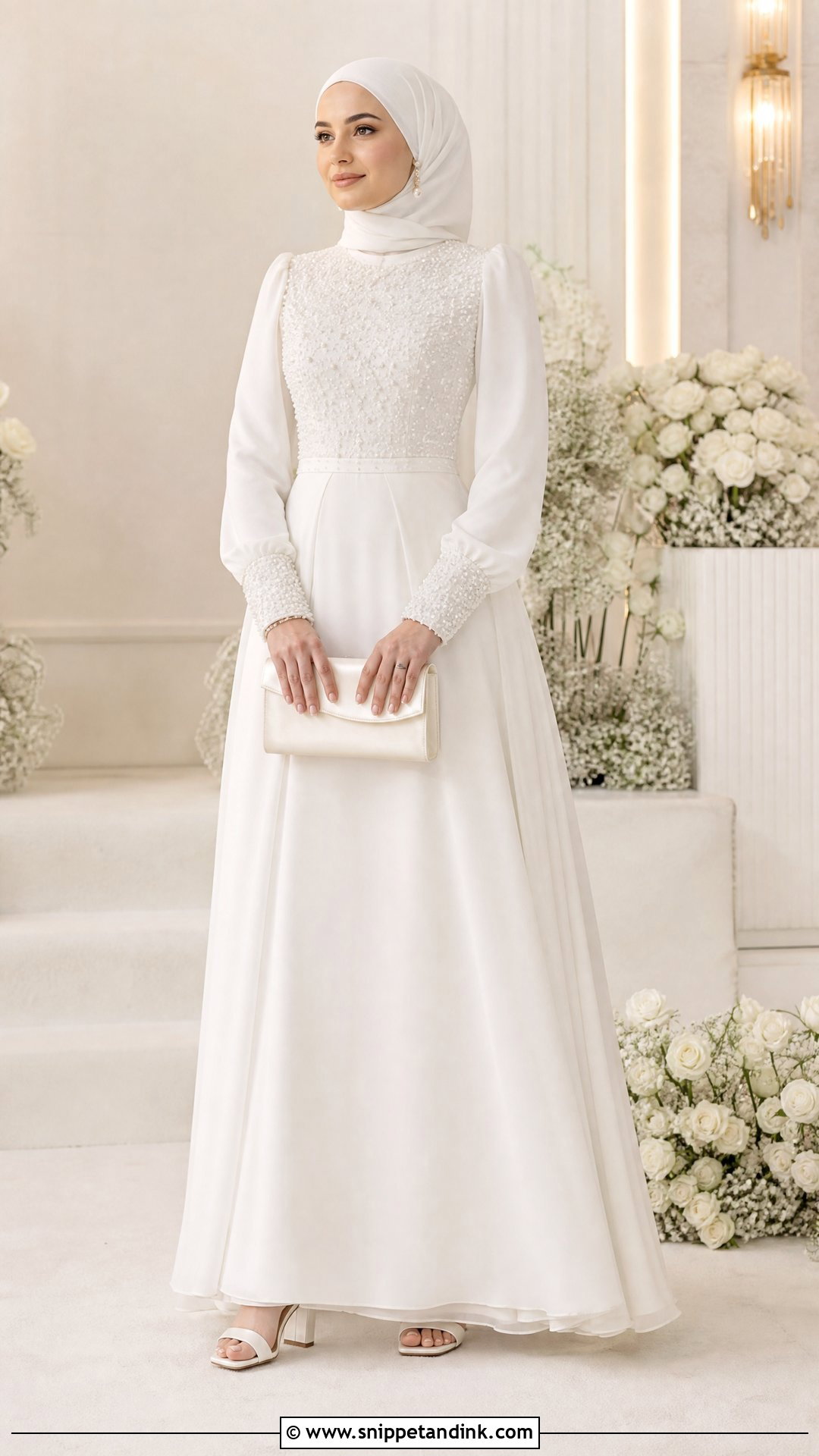
Pearls on a gown give a soft glow rather than sparkle, and they’re heavier than they look. Keep them concentrated at the bodice, cuffs or upper skirt rather than all over. An A-line or empire-waist gown works best. A plain chiffon hijab or unembellished veil avoids clashing textures. Pearl drops, a satin clutch and ivory block heels carry the theme; leave other jewelry off. Run your hand over the inside of the bodice: beads sewn without a lining scratch, and loose ones fall off during hugs. Ask the shop to secure any that move.

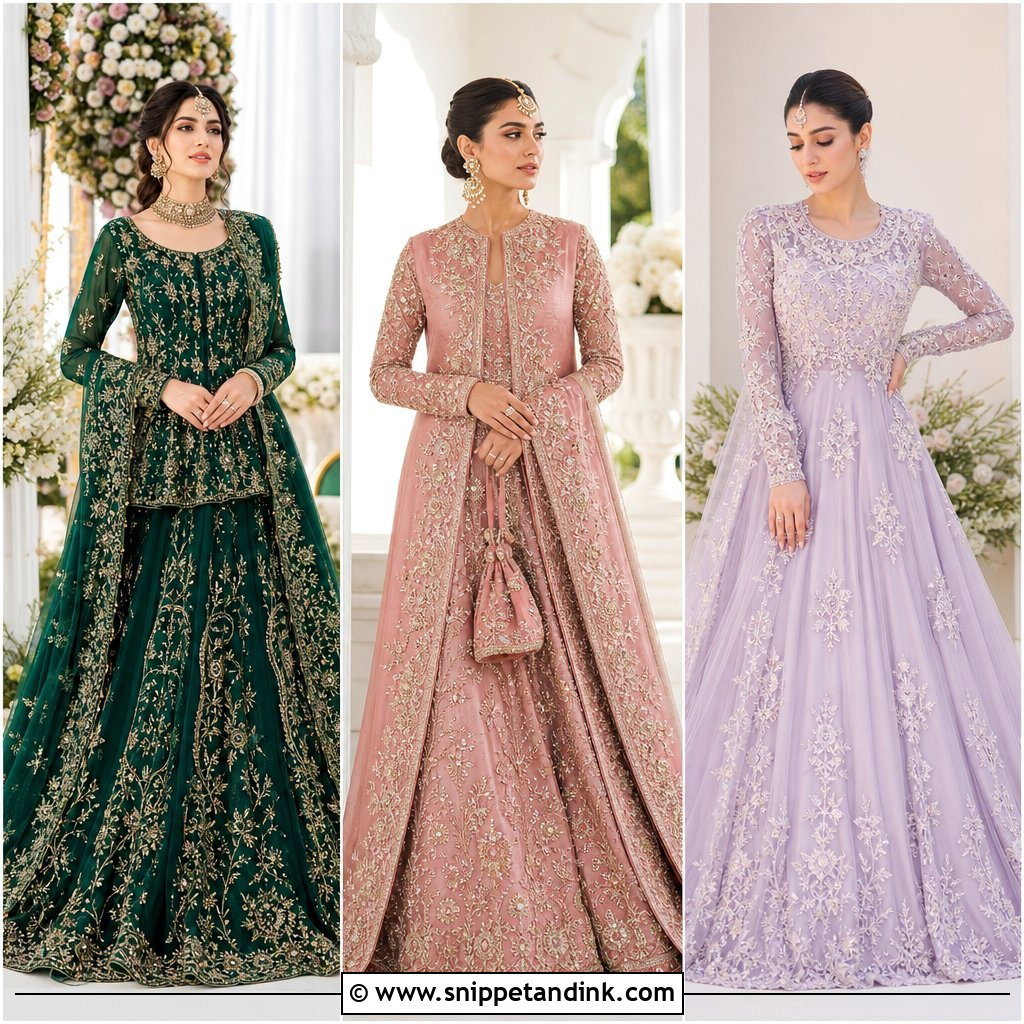
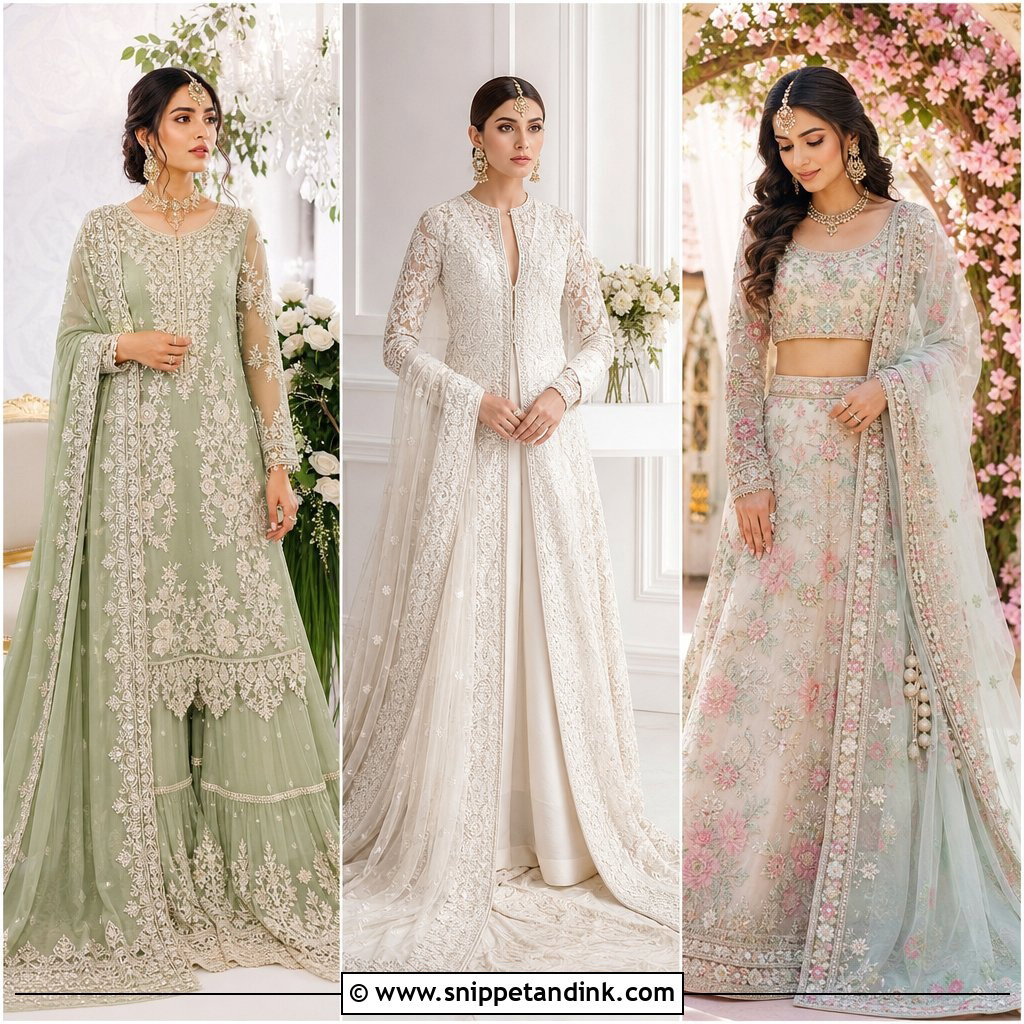
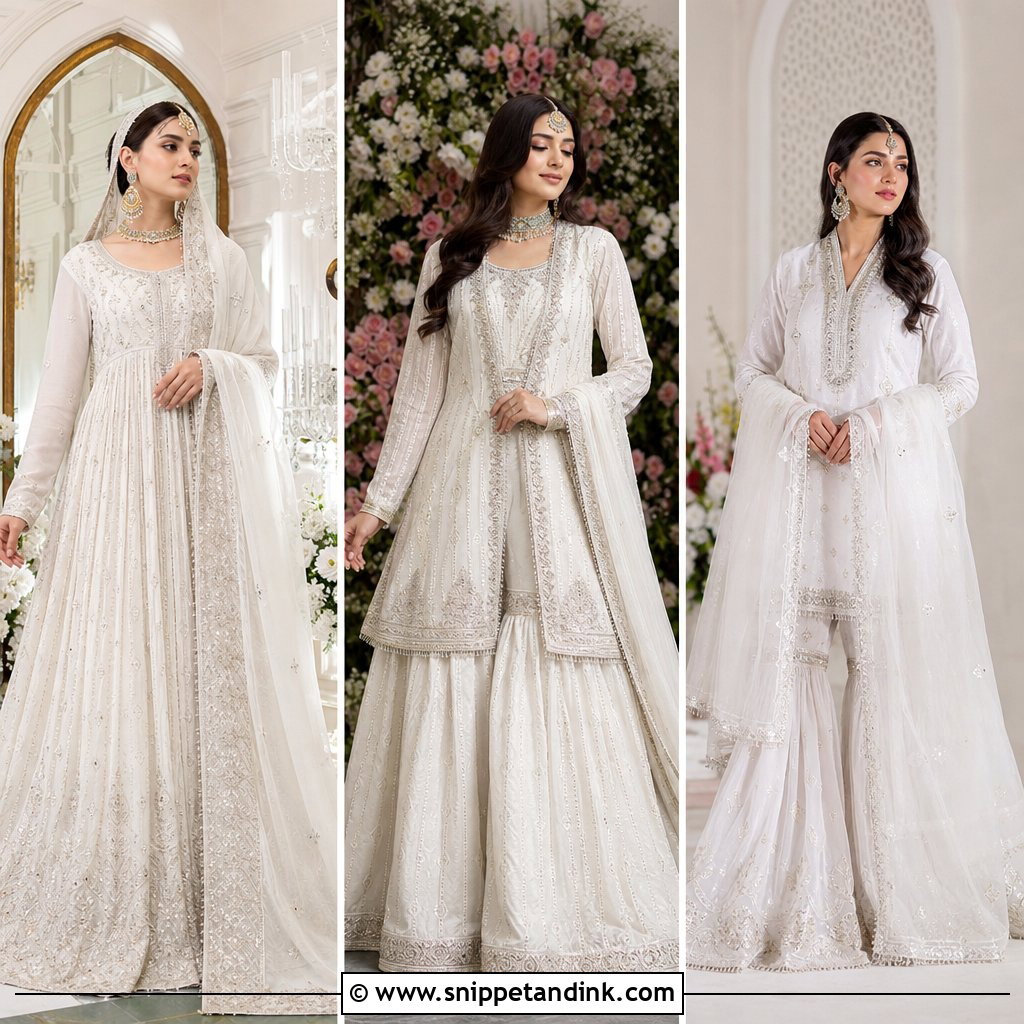
20. White Nikkah Dress With Red Dupatta
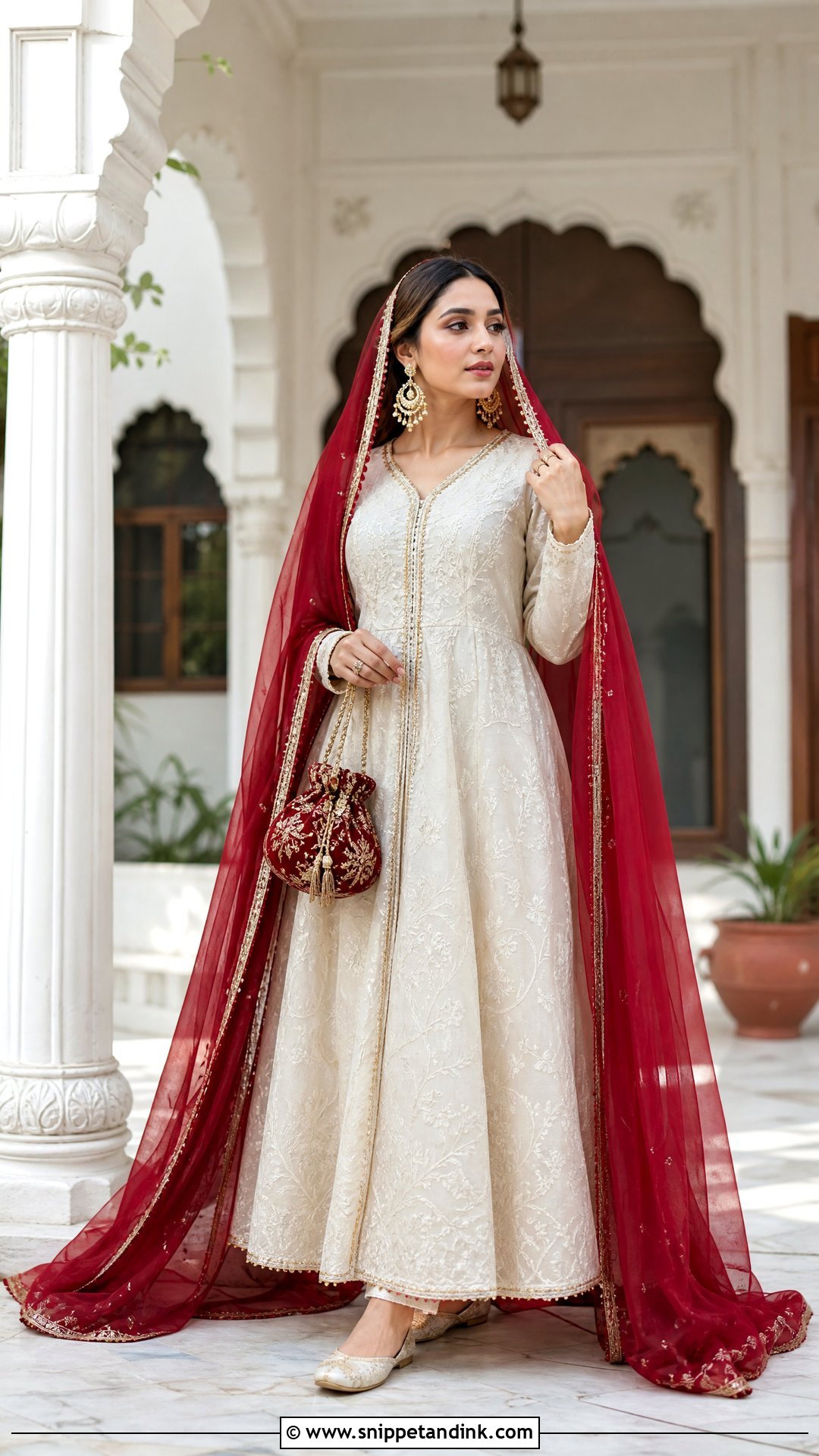
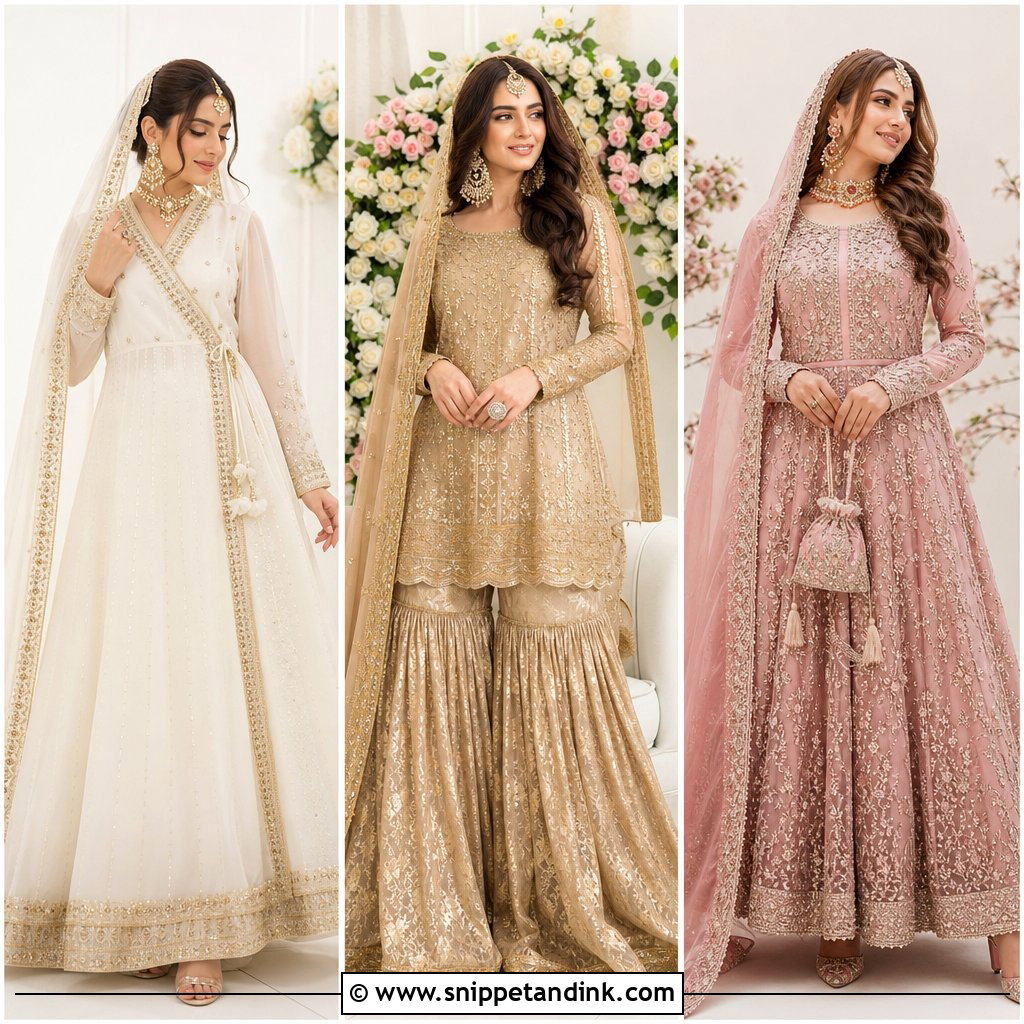
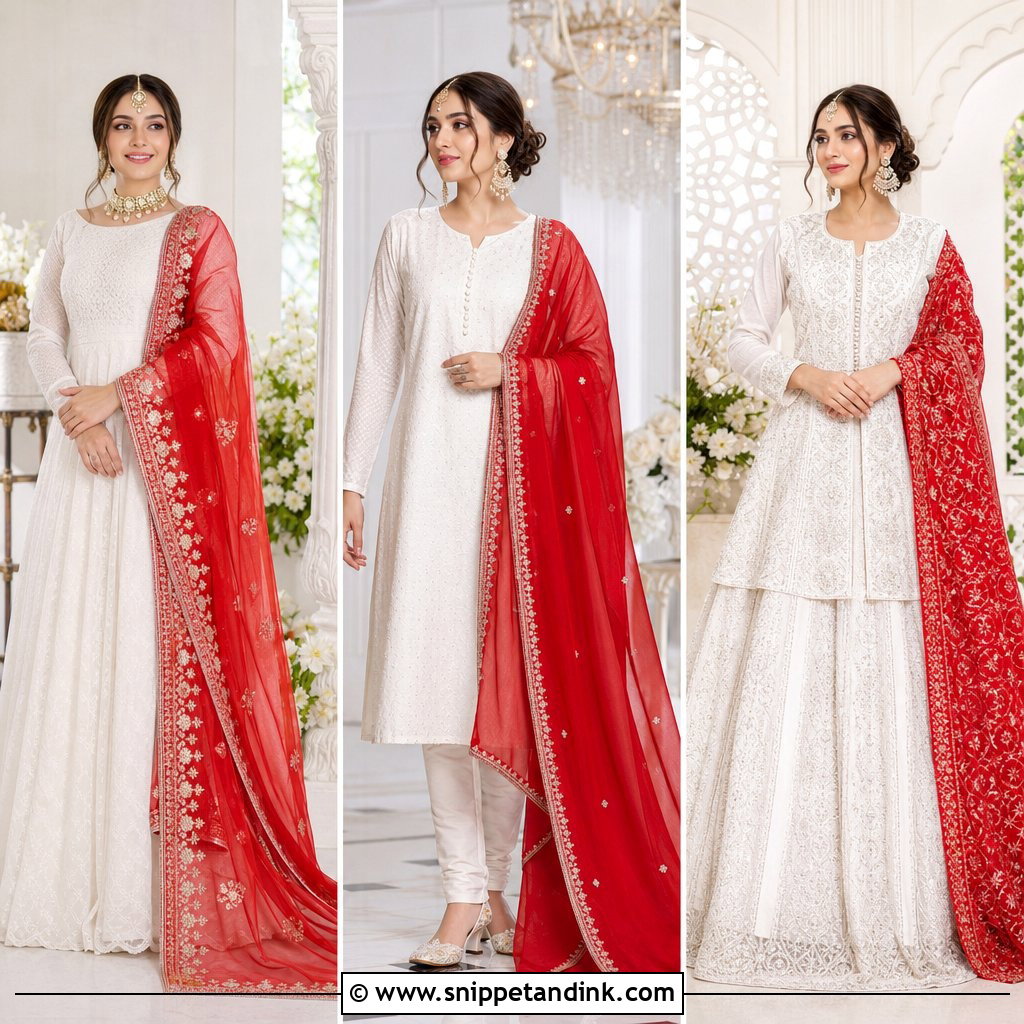
A deep red dupatta over white brings in the traditional bridal red without making the whole outfit red. Start with a long white Anarkali, pishwas or straight embroidered dress with minimal tonal detail. Add a light red chiffon or organza dupatta with a narrow gold border, over the head with one side falling across the shoulder. Antique gold earrings, a small red or gold potli and ivory khussas complete it. Keep other colors out. Red dye can bleed in humidity, so test a corner of the dupatta with a damp white cloth before the day.
Pinning a Hijab and Dupatta That Stay Put Through Every Greeting
Hours of hugs and photos test any drape. Start with a snug underscarf in a matching shade; it gives pins something to grip and stops a slippery chiffon hijab from sliding back. Use fine, sharp pins rather than thick ones, which leave holes in chiffon and organza.
For a dupatta worn over the hijab, pin it at the crown into the underscarf, then once at each shoulder on the inside, through the garment’s lining. Magnetic pins are useful at the shoulder because they don’t pierce delicate fabric, though they can loosen with heavy embroidery. Practice the full drape once with your stylist and take photos of each step, so whoever helps you on the day can repeat it.
A small kit for the bride’s bag
- Spare straight pins and two safety pins.
- A white handkerchief for henna or makeup smudges on the dupatta edge.
- Fabric-safe stain wipes, tested on a hidden seam.
- A small mirror, since hijab adjustments are easier without hunting for a bathroom.
Does It Still Feel Right After the Last Guest Hugs You?
A Nikkah outfit has to feel right for hours, through the ceremony, the signing, the photos and the greetings. Ghararas, lehengas and pishwas bring tradition; abayas, satin gowns and tailored separates feel more modern. Think about the venue, the weather, the coverage you want and how much you’ll move. Then wear the whole outfit together, hijab or dupatta, jewelry, shoes and bag, and sit, stand and walk in it at home. Good lining and careful tailoring make a simple white outfit look polished on the day.
You'll Like These Ideas:


Leave a Reply