
Nikkah dressing asks you to balance four things at once: looking like a bride, staying covered to the standard you and your family keep, honouring tradition, and still feeling like yourself. The range is wide now, from ivory ghararas and pearl-strewn lehengas to pastel pishwas and full traditional red. Soft neutrals, florals and tailored shararas are everywhere. Before any of that, though, I look at the room: a carpeted mosque, a living room or a wedding hall each want something different. Fabric weight, dupatta placement and shoes come next. Below are twenty complete outfits, simple to lavish, with the practical notes I’d give you at a fitting.
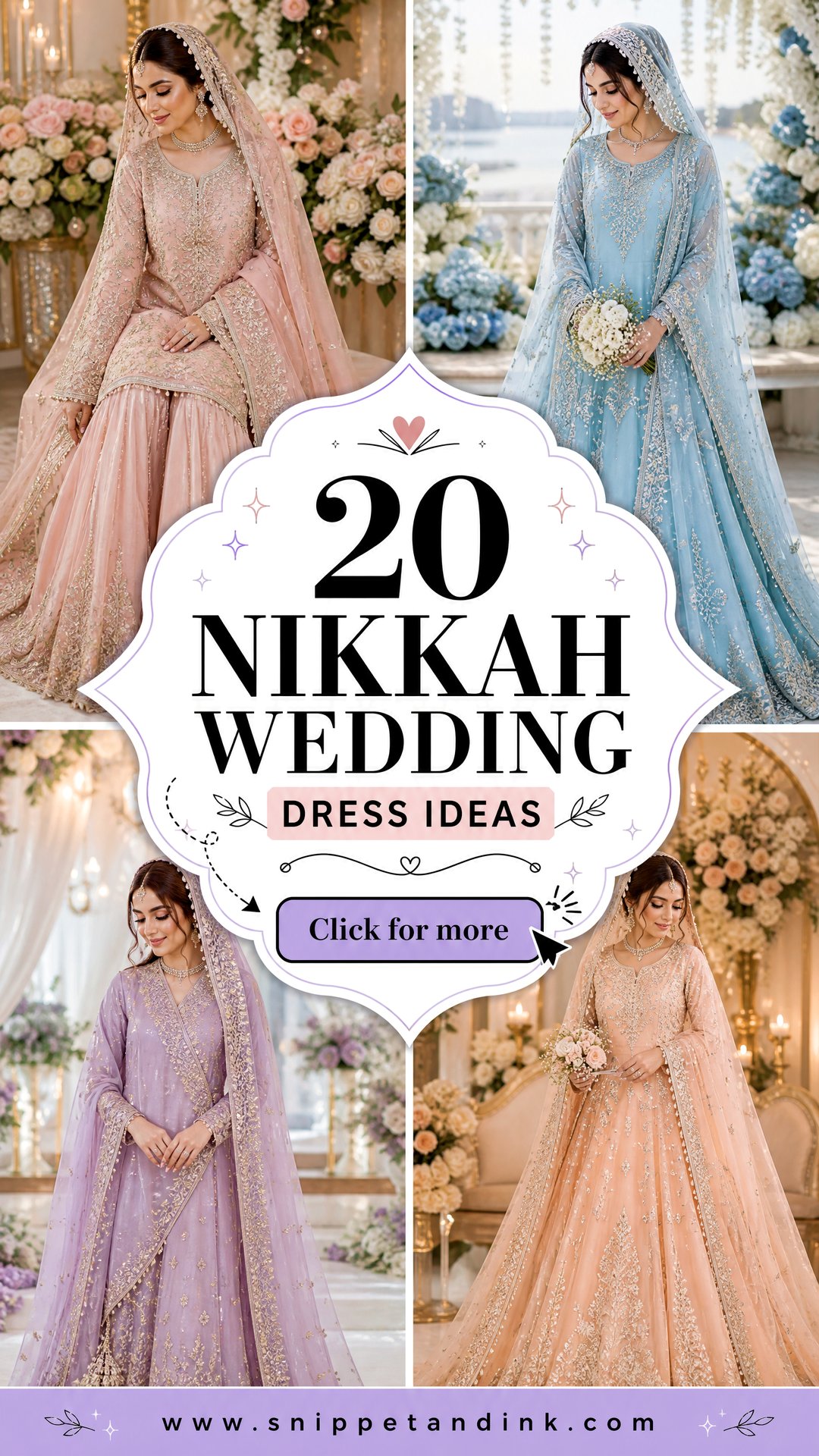
Mosque, Living Room or Wedding Hall
The venue narrows your choices before colour does. When a bride tells me where the ceremony is, I can usually rule out half the silhouettes straight away.
In a mosque
You’ll take your shoes off, so khussas or slip-on flats beat strappy heels. Expect full coverage of arms and hair, and check whether the mosque has its own guidance. Sit-down areas are often carpeted floor, which favours ghararas, shararas and soft lehengas over stiff skirts or long trains. Keep crystal and heavy beadwork off the back of the outfit; you’ll be sitting against it.
At home
Rooms are smaller and hallways tighter. A farshi hem or wide pishwas can get stepped on in a crowded living room. Shalwar kameez, sharara or a narrower Anarkali move through a house more easily, and they still photograph well against home decor.
In a hall or hotel
You have room for volume and drama, and you’ll likely sit on a stage. Lighting is usually warm, which shifts pastels and greys, so check your colour under similar light before buying. This is where a jacket lehenga, gown or tissue lehenga makes most sense.
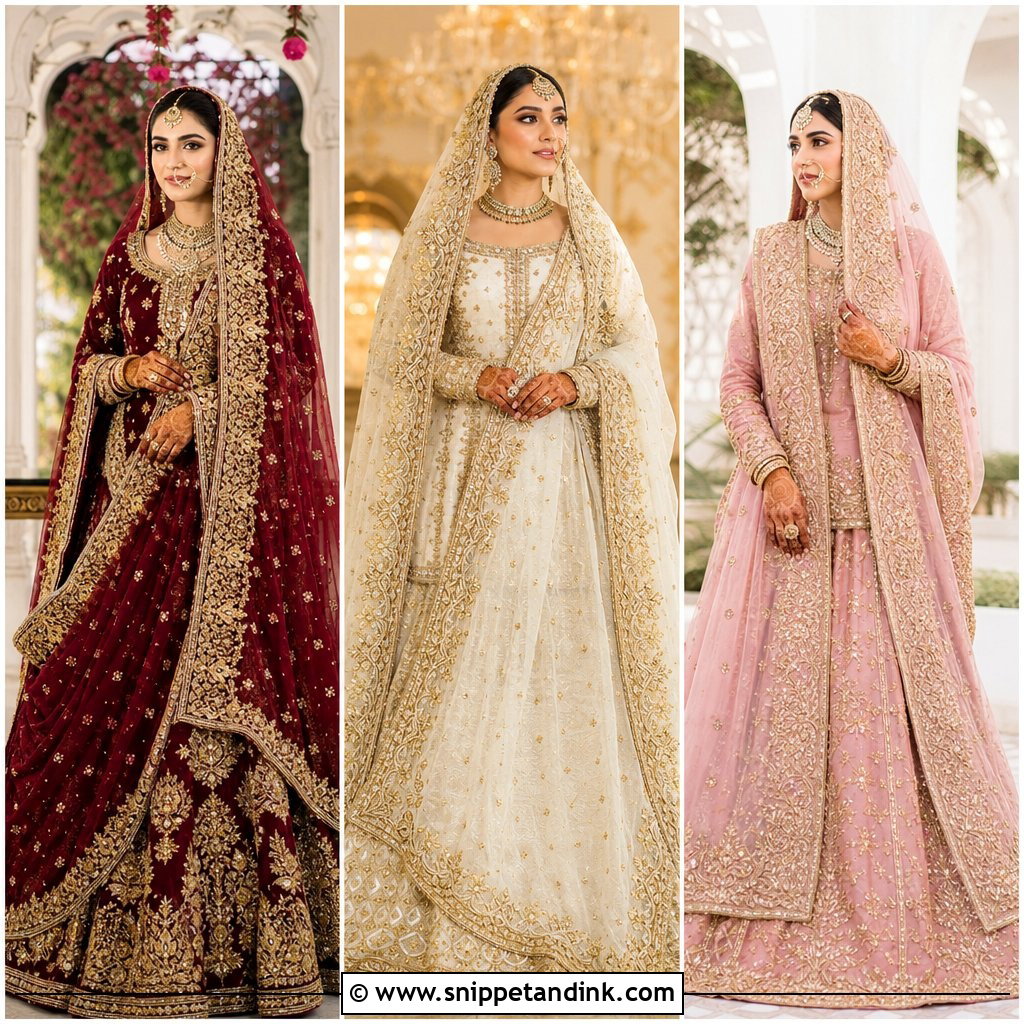
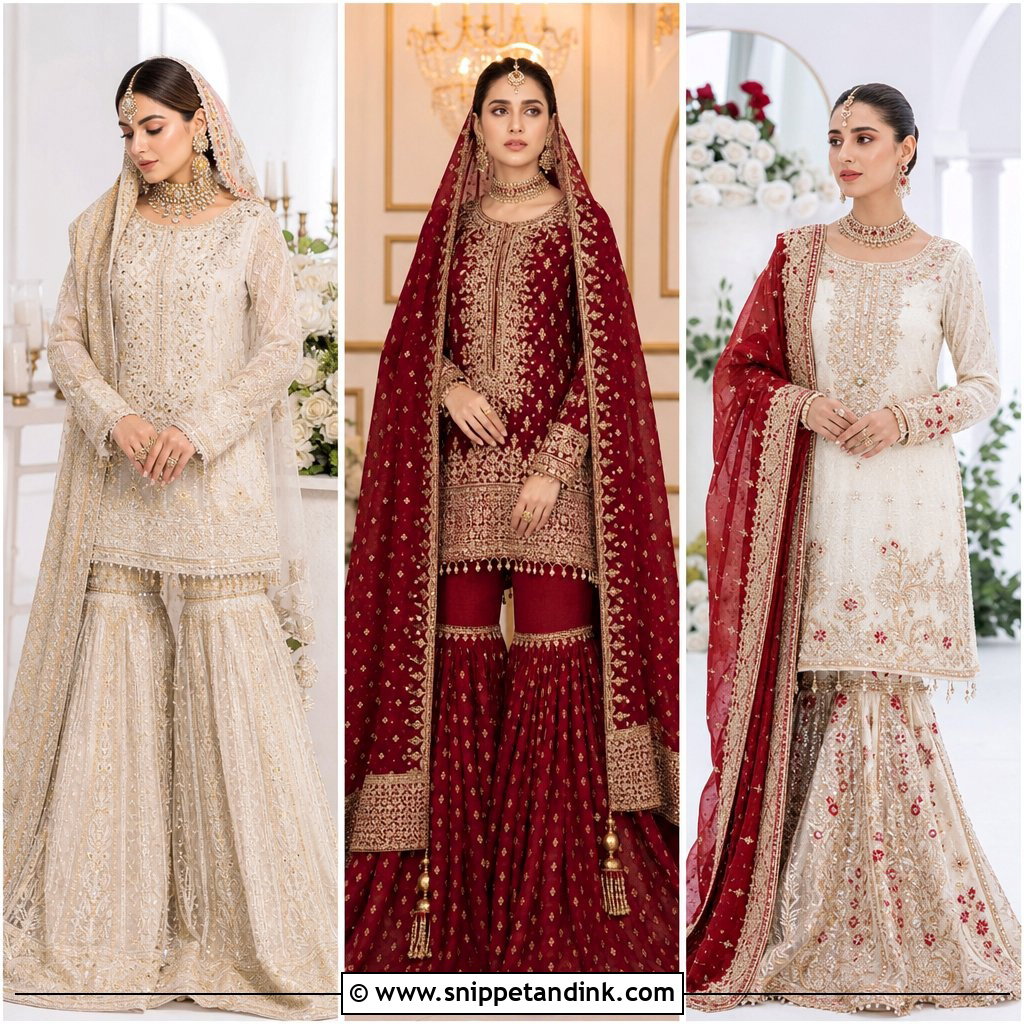
1. Ivory Gharara Nikkah Dress
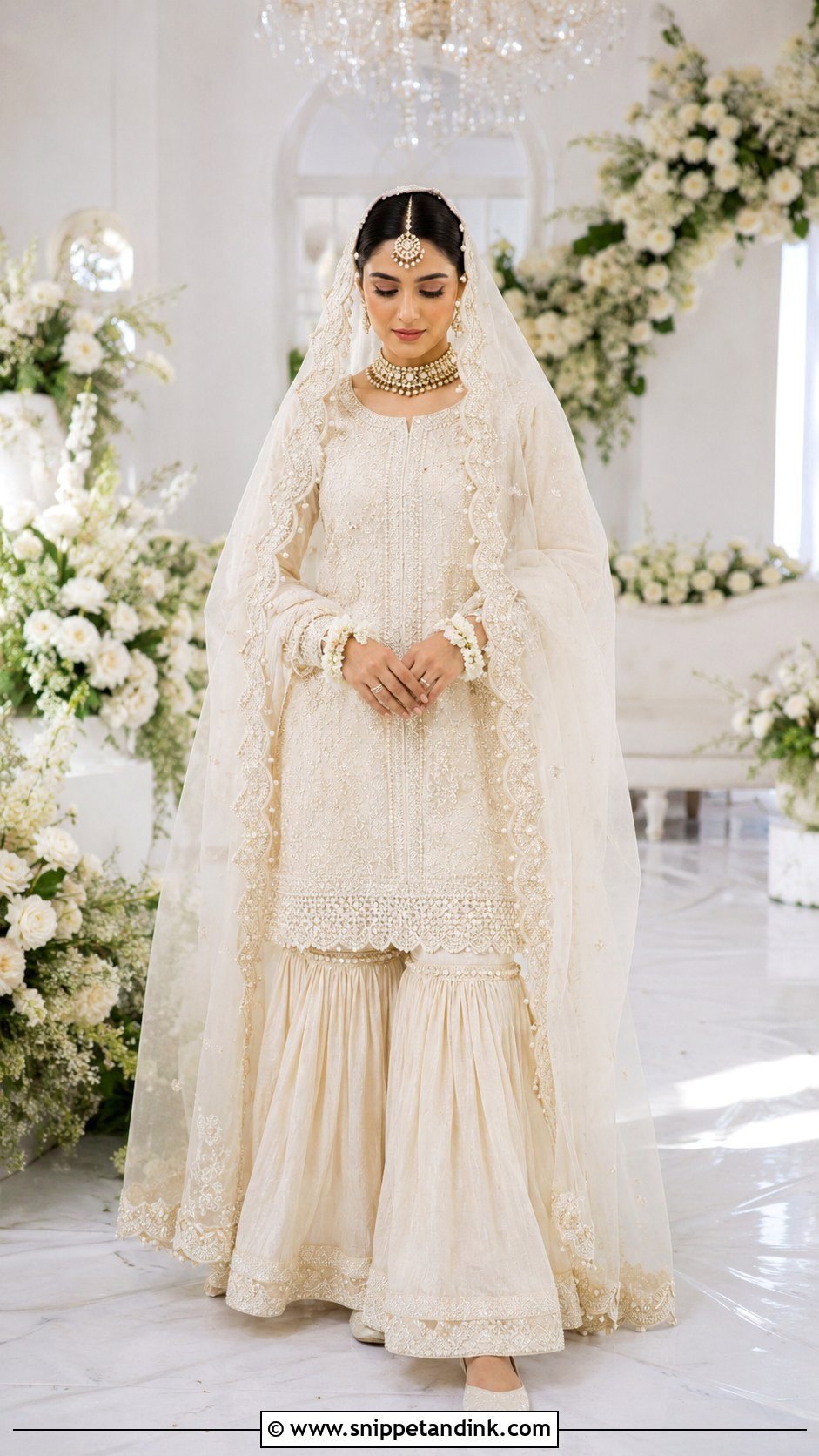
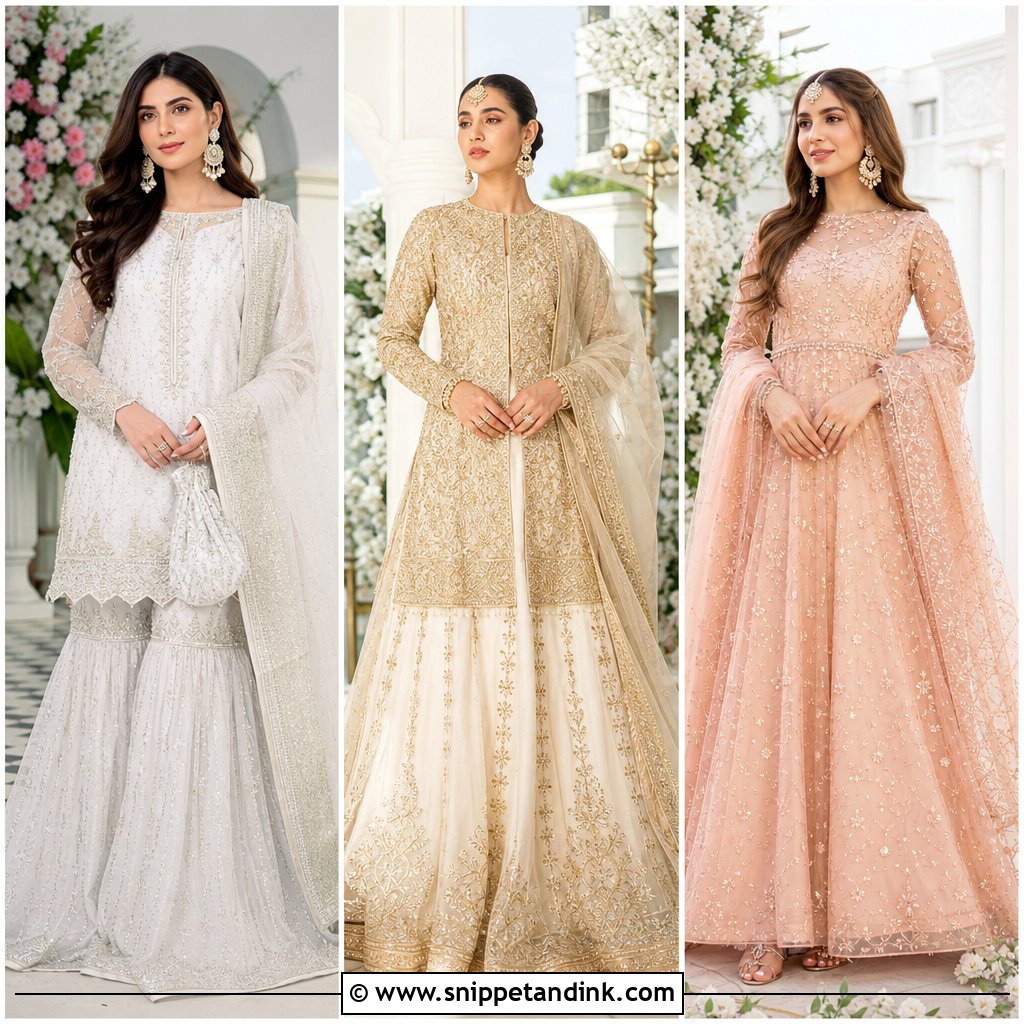
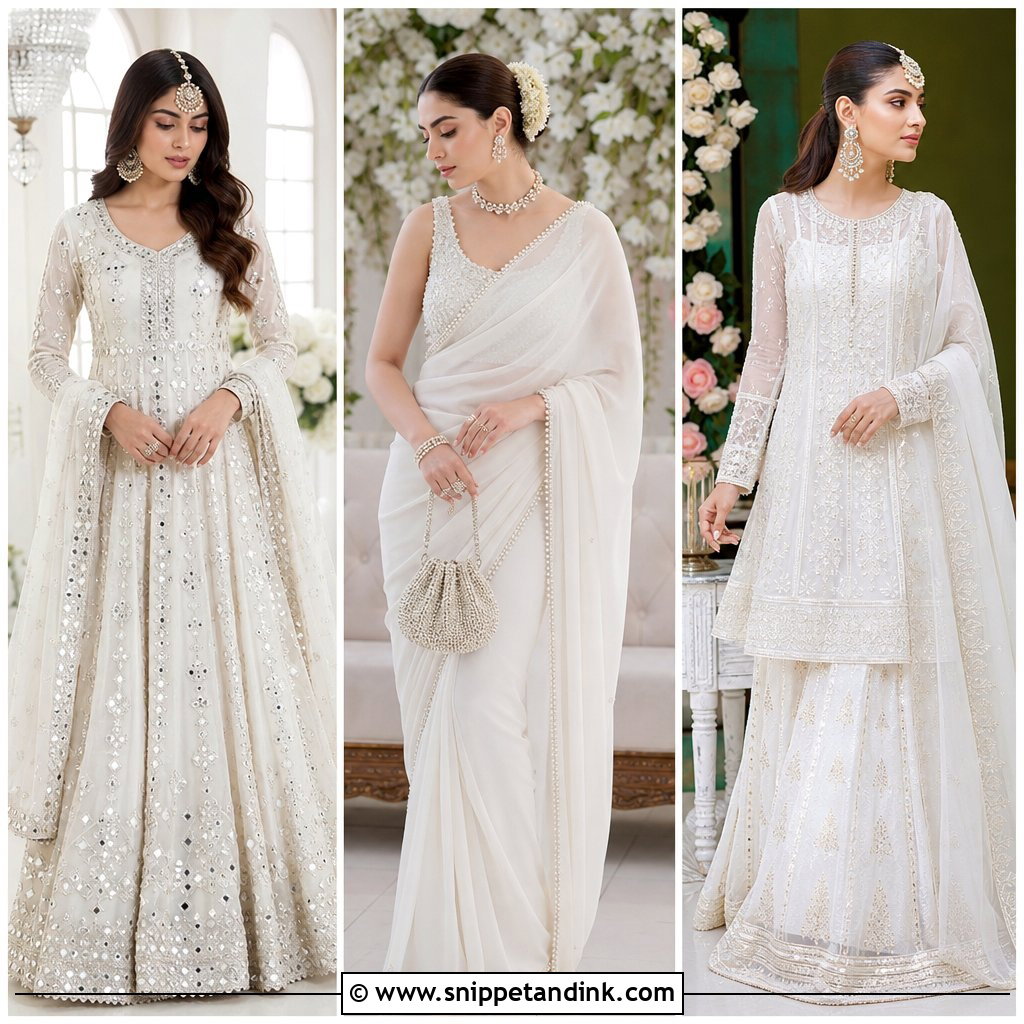
Gharara gathers sit at the knee, so the kurti should end right at or just below them; any shorter and the joint looks unfinished. Pearl, thread or light gold work on a slightly fitted kurti keeps it bridal but not formal. An organza dupatta with a scalloped border, pearl drops, a delicate choker and a small tikka are plenty against ivory. Khussas are the practical shoe here, especially in a mosque where you’ll slip them on and off. For more coverage, lengthen the kurti and pin the dupatta neatly over the head.
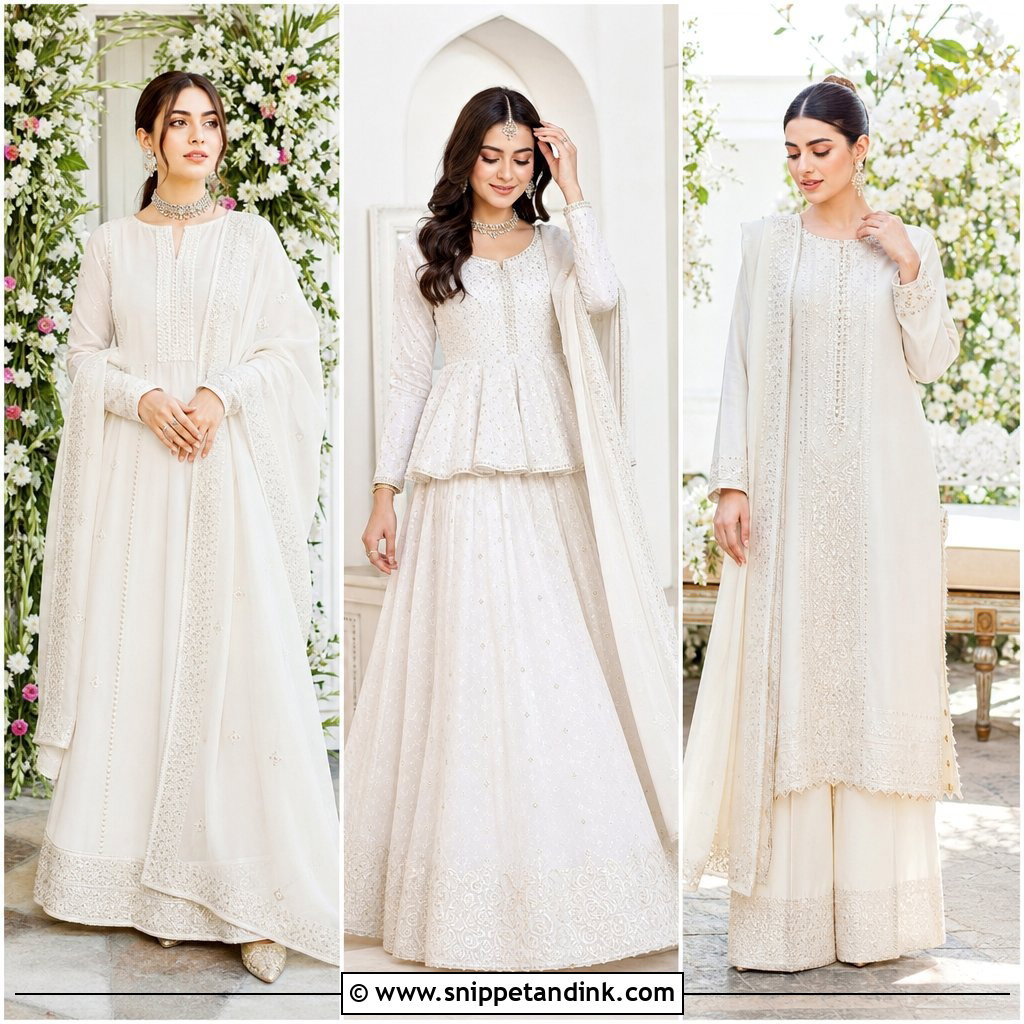
2. White Pearl Lehenga Nikkah Dress
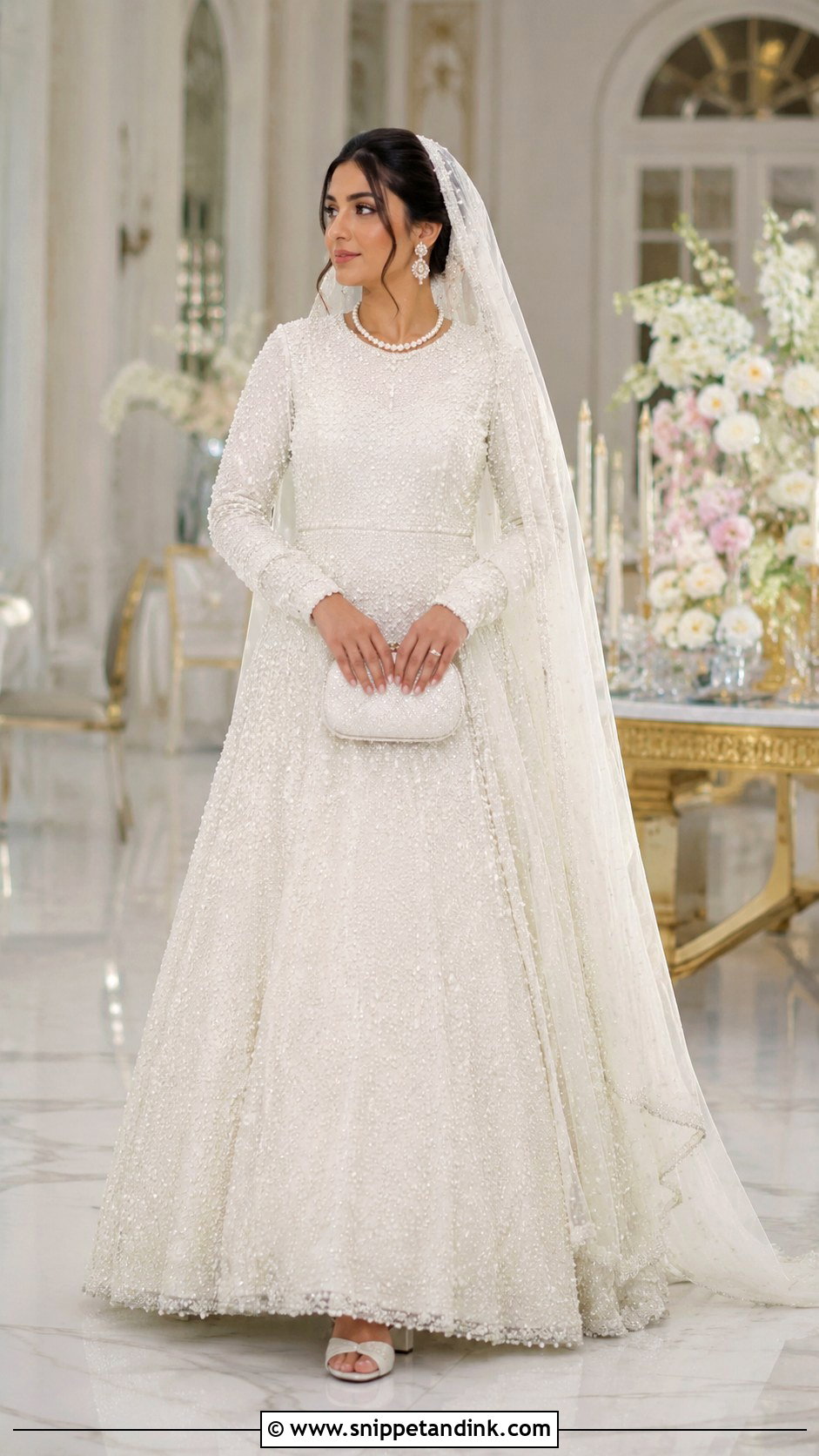
Scattered pearls, not dense ones. That’s my main advice for a white lehenga, partly for looks and partly because pearlwork adds real weight to a skirt you’ll wear for hours. An A-line cut moves easily. The blouse should be fully lined with elbow or full sleeves. Net dupatta with a pearl border over the head, a second light one on the shoulder if you like layers. Mix pearl, cream and soft ivory in the pieces; a single flat white tends to lose its detail in photographs, while tonal whites keep their depth.
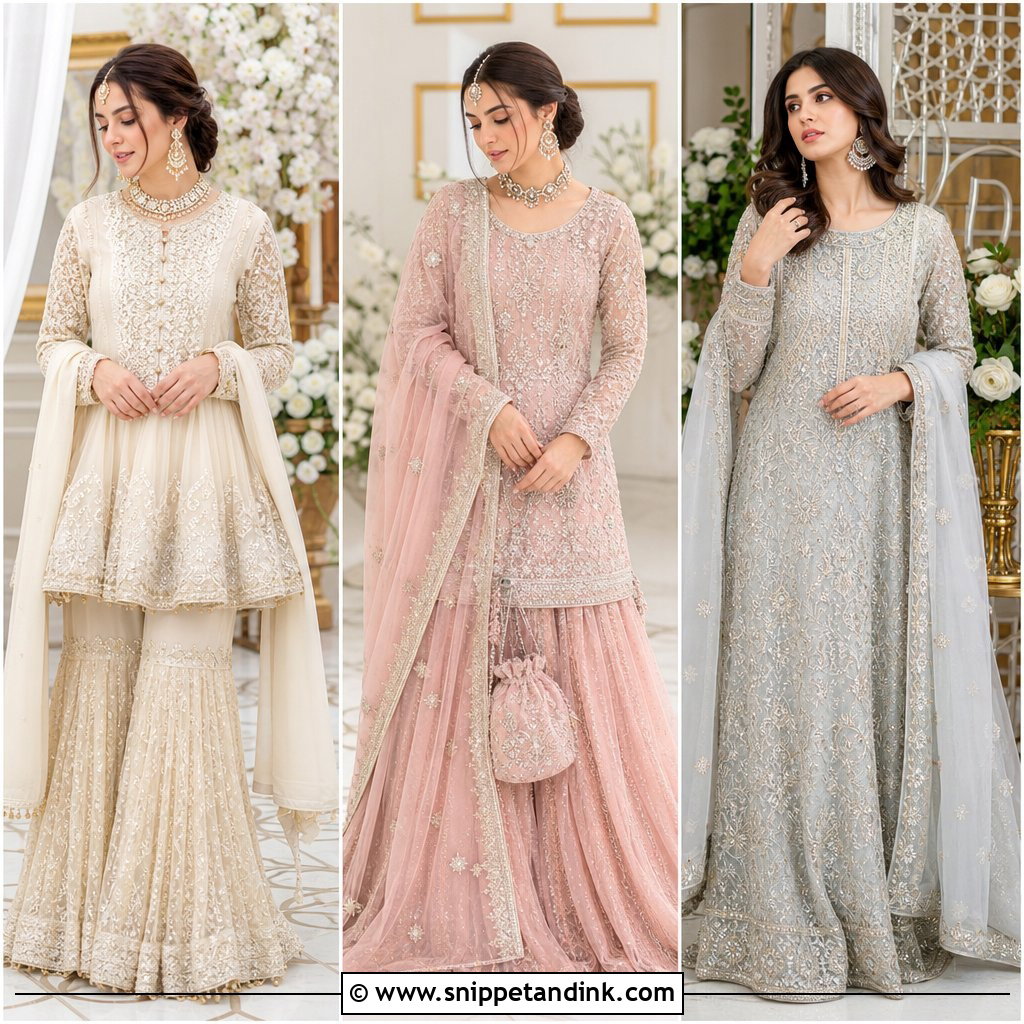
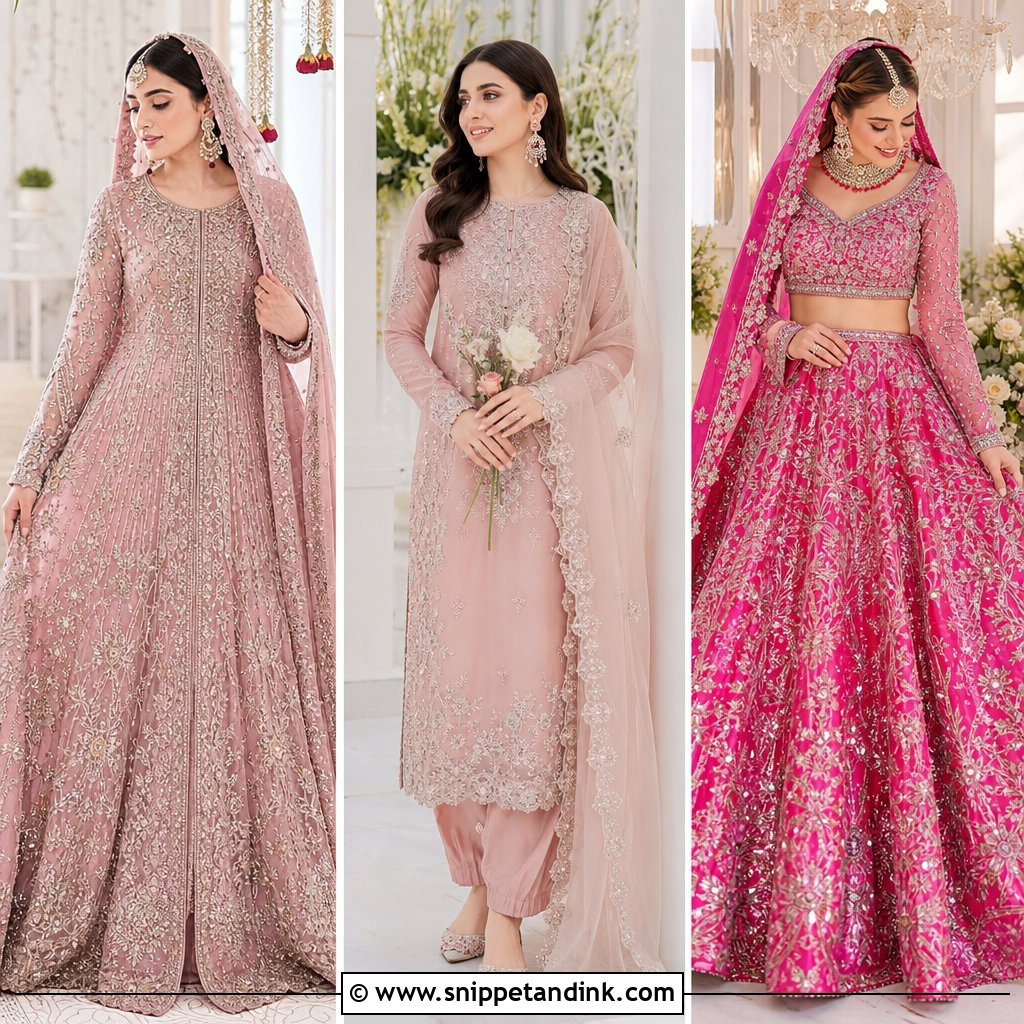
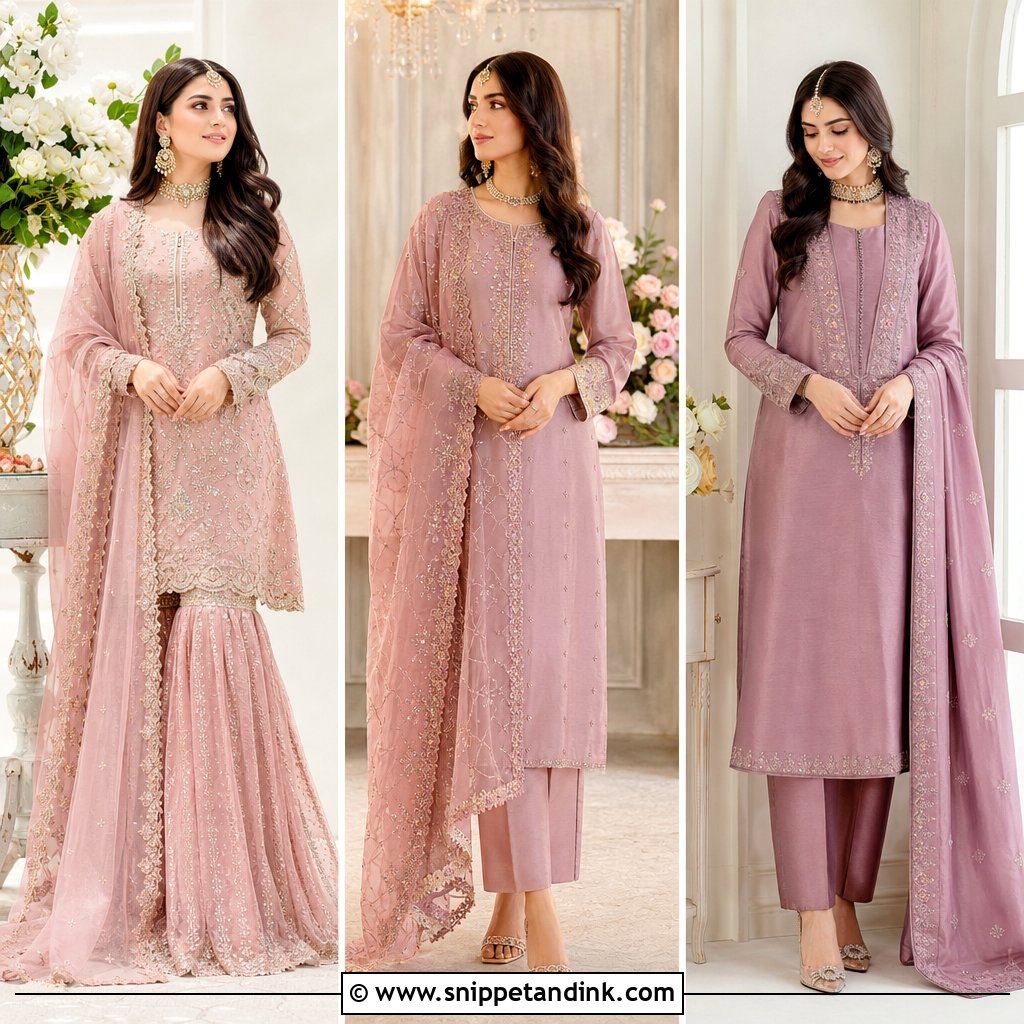
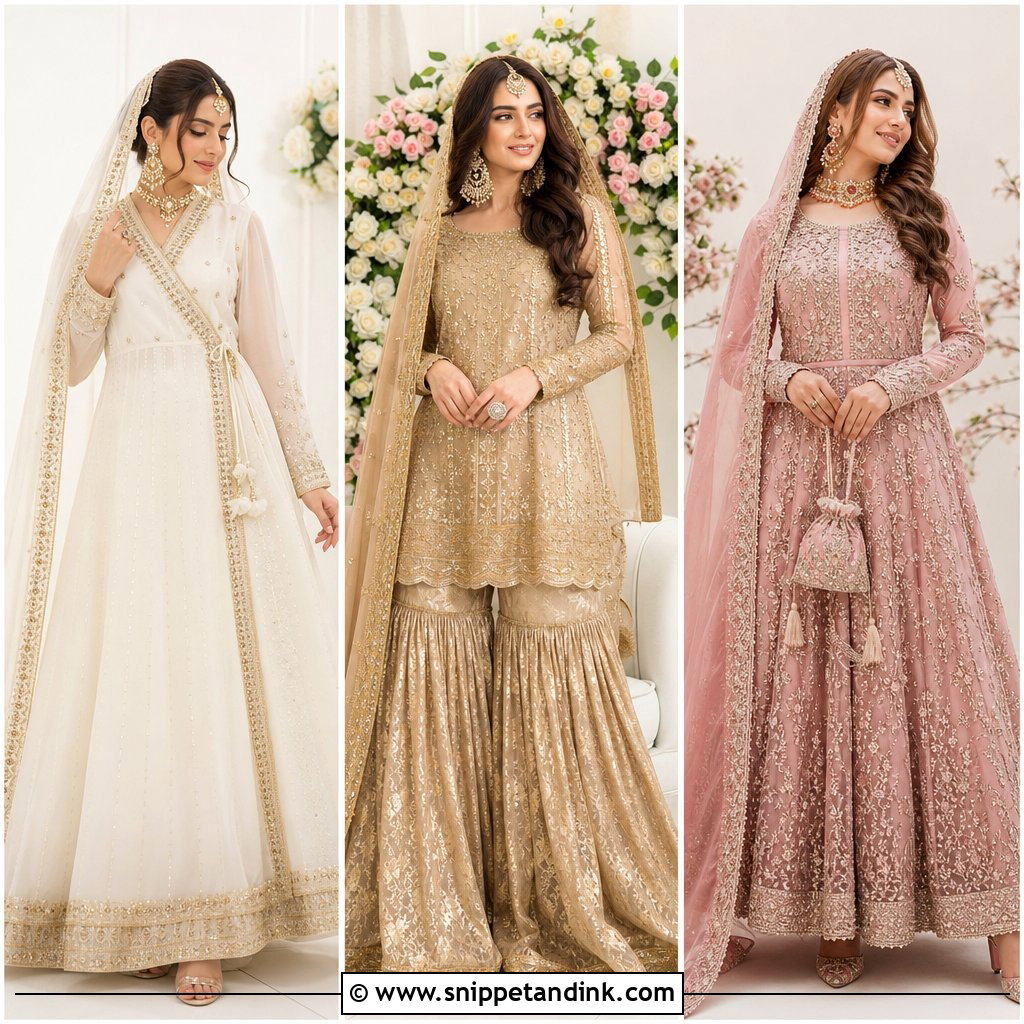
3. Blush Pink Sharara Nikkah Dress
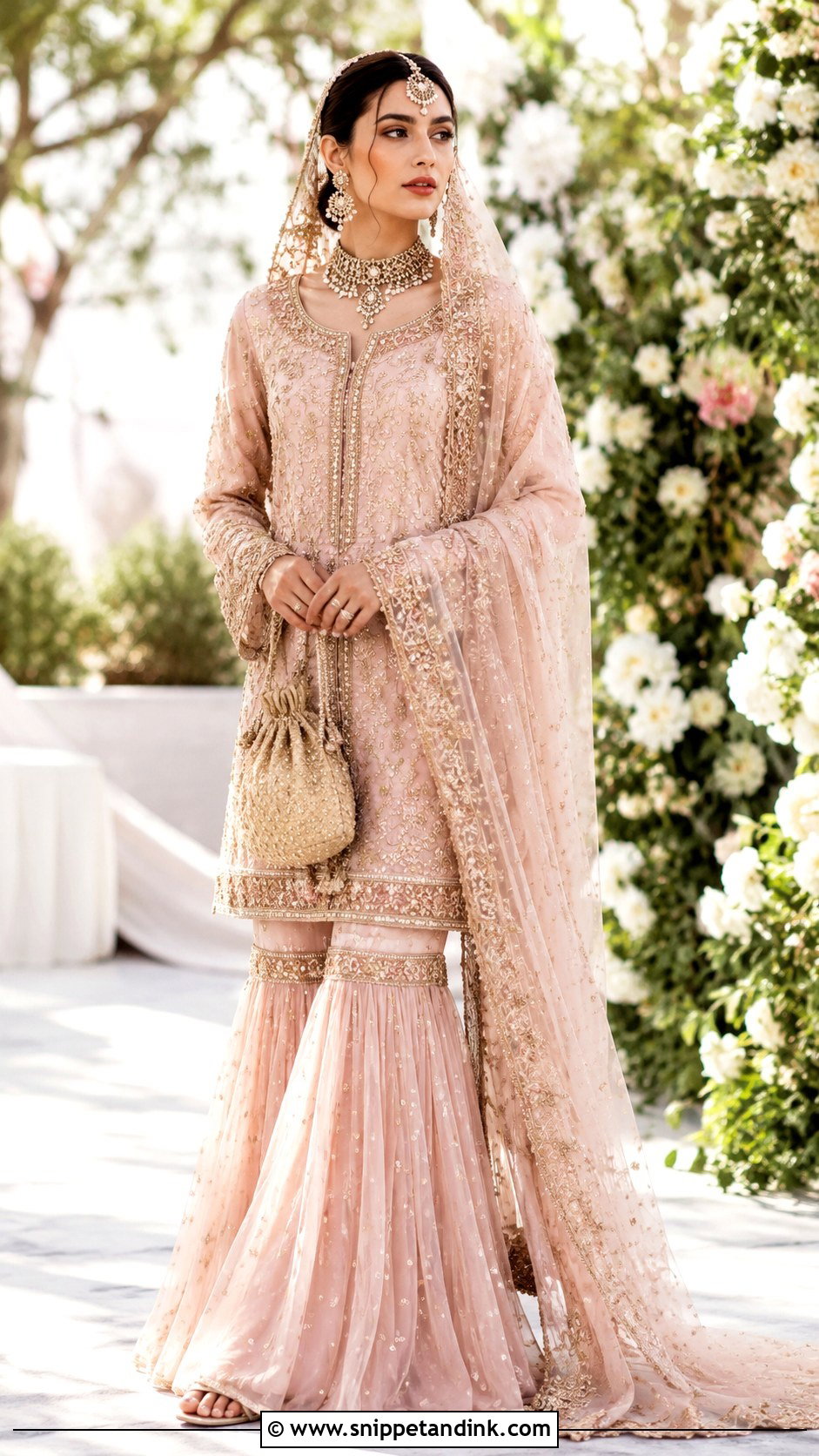
A knee-length straight shirt over a blush sharara is calmer than a short kurti, and it’s the length I recommend when you’ll be bending to greet elders. Fine gold embroidery keeps the pink soft. An illusion sweetheart neckline gives shape without lowering coverage, as long as the mesh is skin-matched and fully opaque underneath. Add a sheer blush dupatta with narrow metallic edging, champagne heels and rose-gold jewellery. A delicate jhoomar makes it more traditional. Spring light and garden venues suit it best.
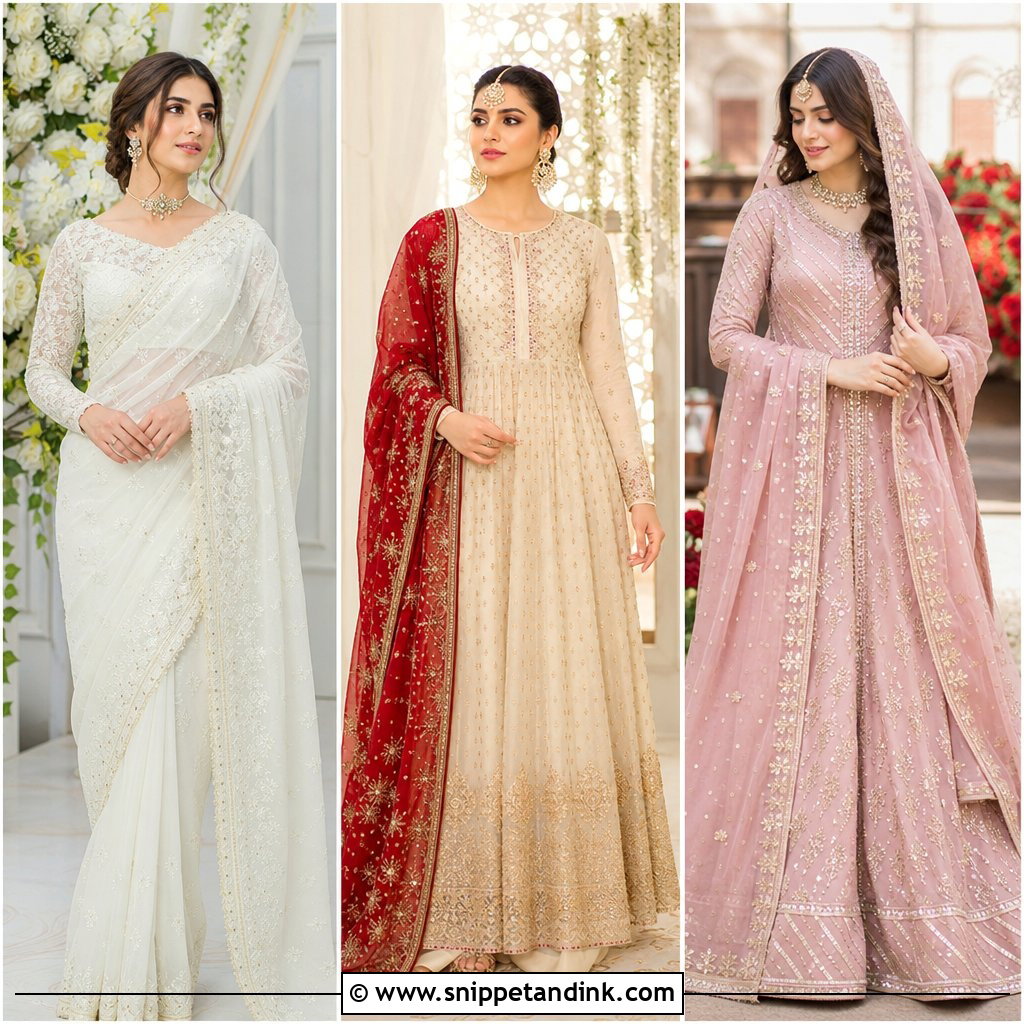
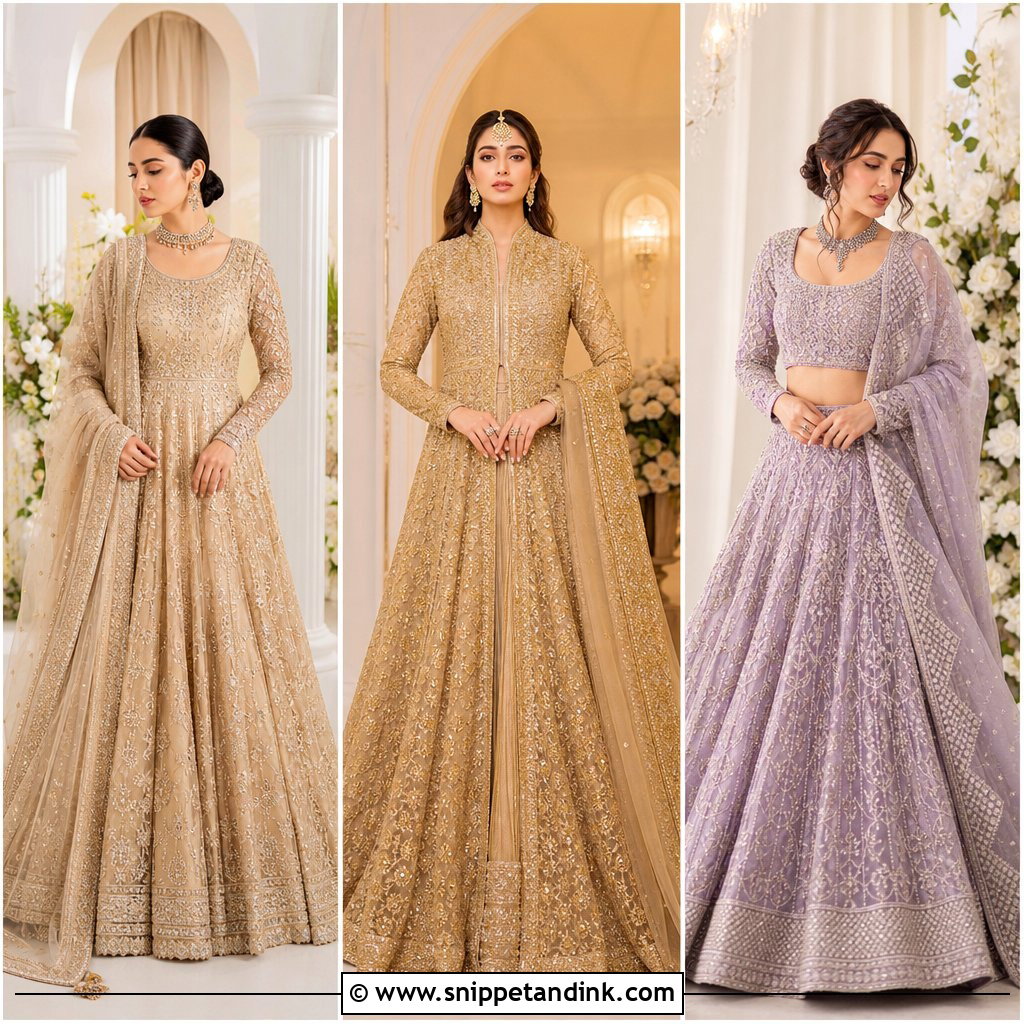
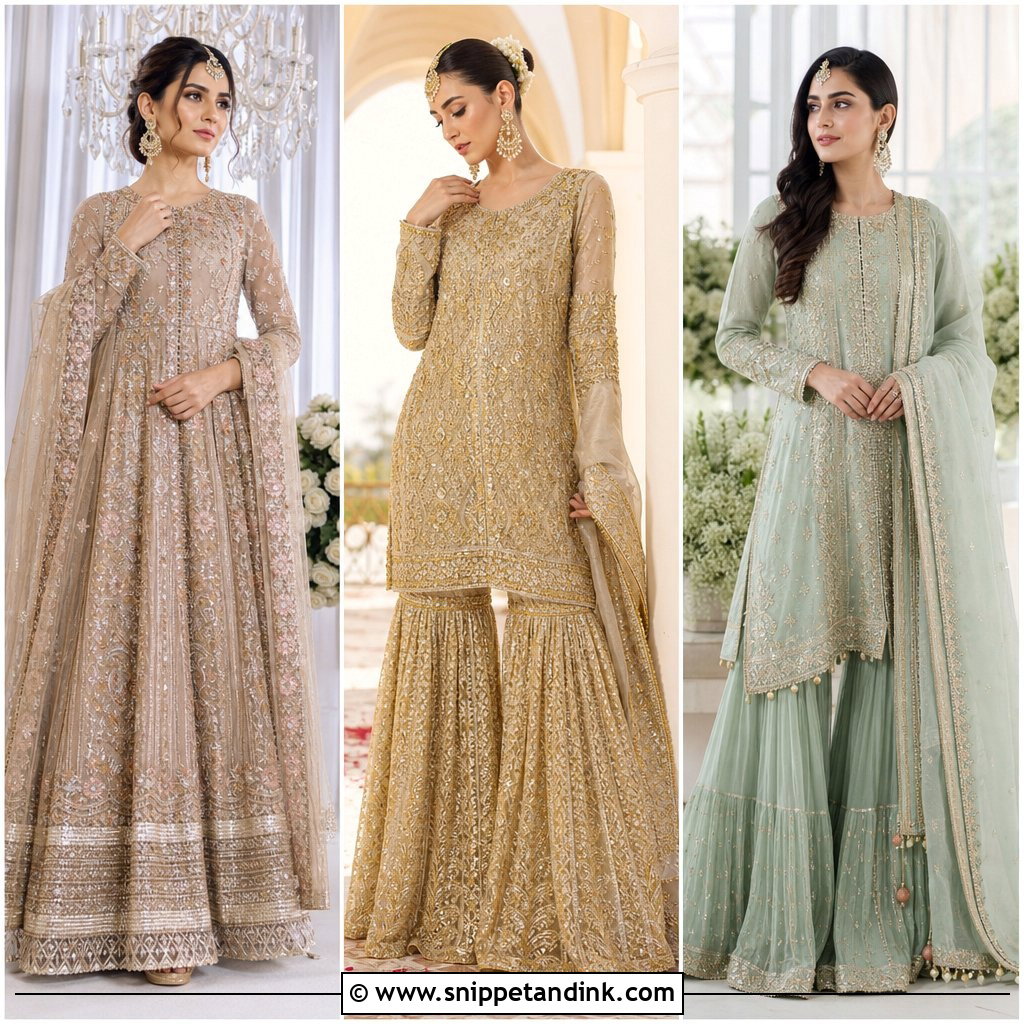
4. Champagne Anarkali Nikkah Dress
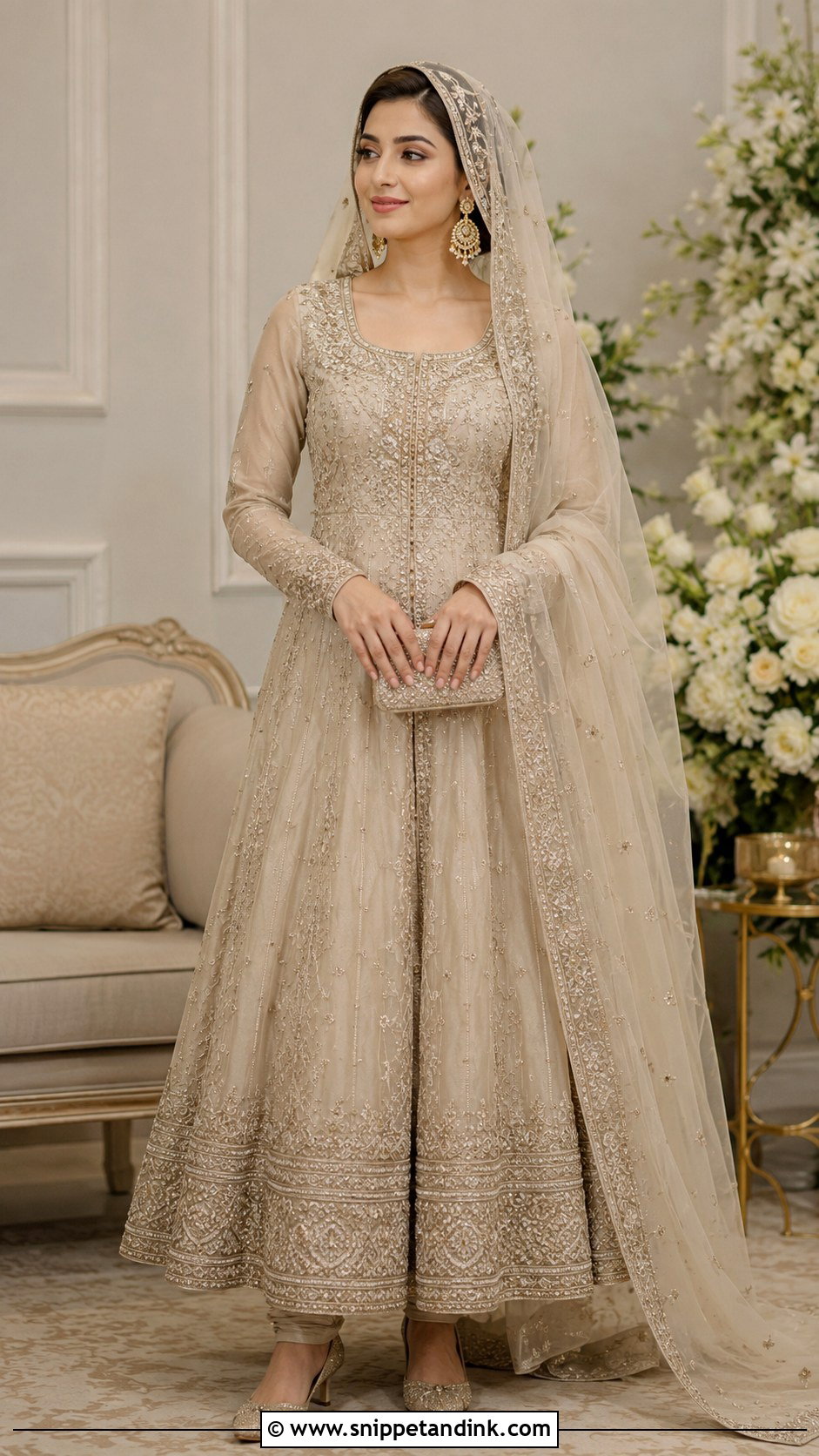
Champagne is the colour I insist on seeing in daylight before ordering. Under warm lamps it can look gold; outside it can look almost beige, and the shade that flatters you is somewhere in between. The Anarkali itself is forgiving: fitted on top, flared from the waist, so it skims rather than clings at the hips. Keep the work at the neckline, cuffs and hem. Fitted churidar and closed-toe heels below, an organza or net dupatta pinned over the head and falling behind the shoulders. Antique gold earrings suit warm and neutral undertones.
5. Sage Green Pishwas Nikkah Dress
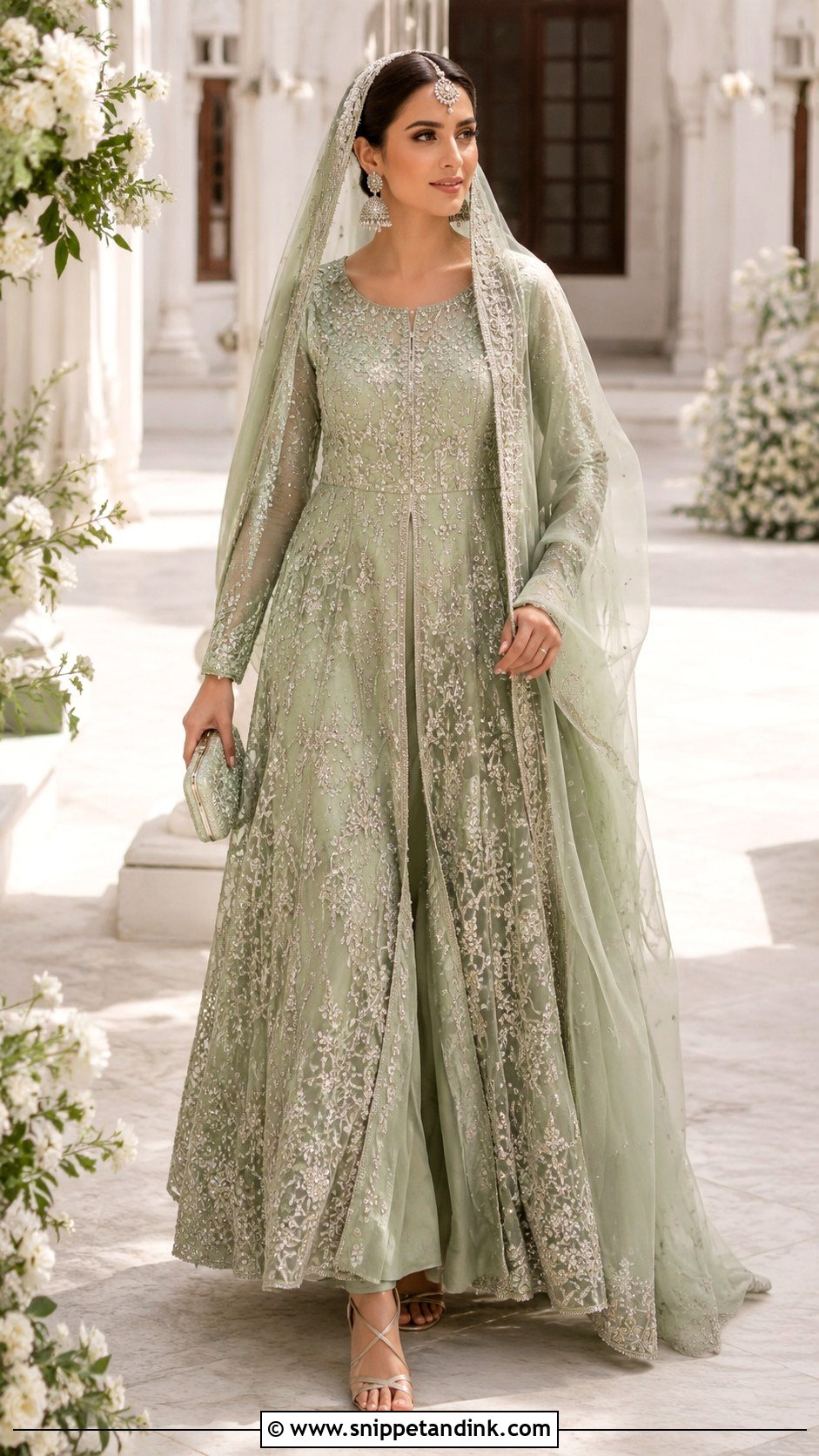
A sage green pishwas is for the bride who wants colour but not red or bright green. Its long panels need a fabric that drops: chiffon, organza or lightweight raw silk. Heavy silk panels stand stiff and lose the swing. Silver or champagne embroidery keeps the muted character. Straight pants underneath, a matching dupatta with a detailed border, silver jhumkas and neutral sandals. Stay within cool metallics for shoes, bag and jewellery; one warm gold piece in that palette looks like a mistake.
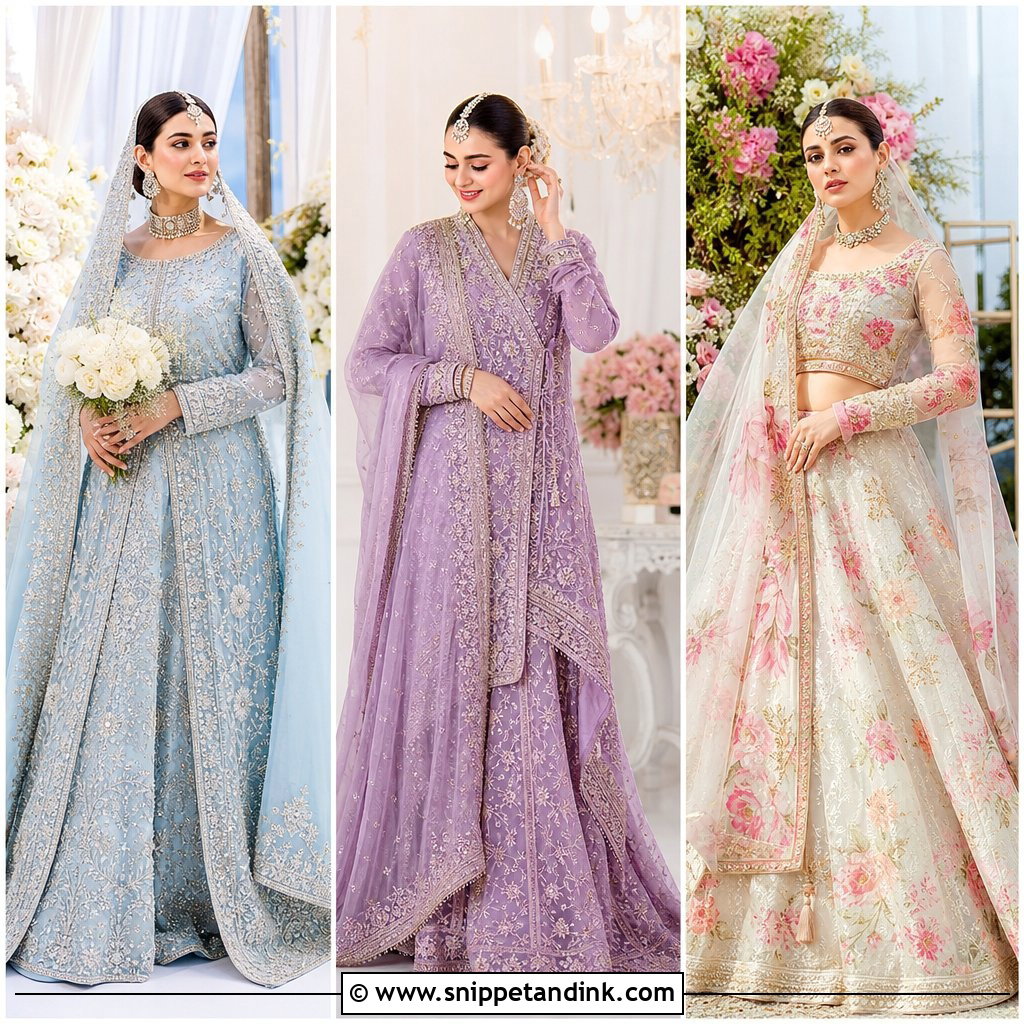
6. Powder Blue Maxi Nikkah Dress
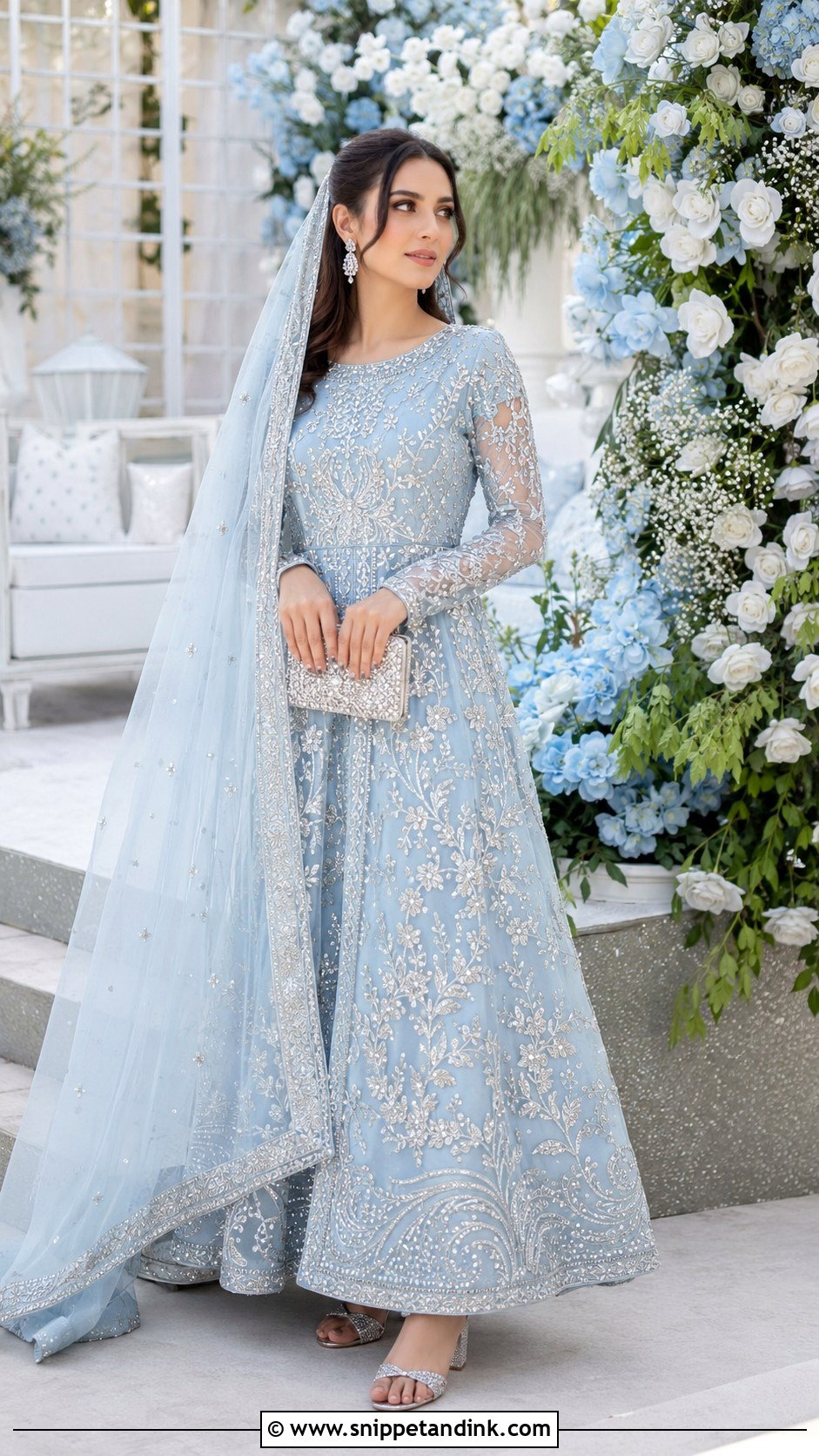
Powder blue is serene, but sheer sleeves on a pale colour show every seam and strap beneath, so I always ask for an opaque lining under the embroidered sleeve. A full-length maxi with a defined waist and covered back keeps the shape modest. Tonal beads or silver thread on the neckline and skirt panels add interest. The matching dupatta should be long enough to drape over the head comfortably. Crystal earrings and low block heels. If you want more presence, a short train or a second dupatta with a wider border does it.
7. Ivory Saree Nikkah Dress
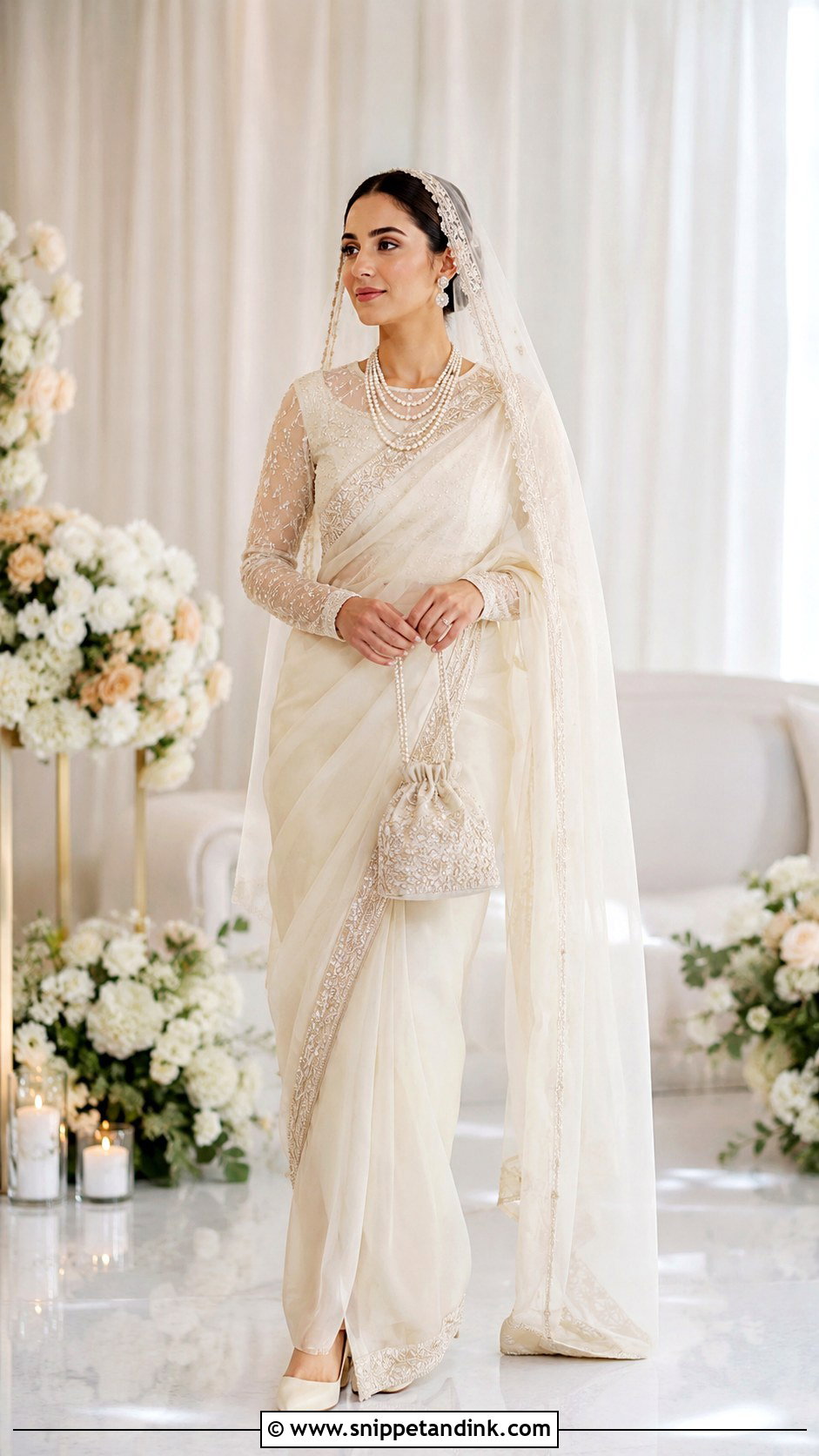
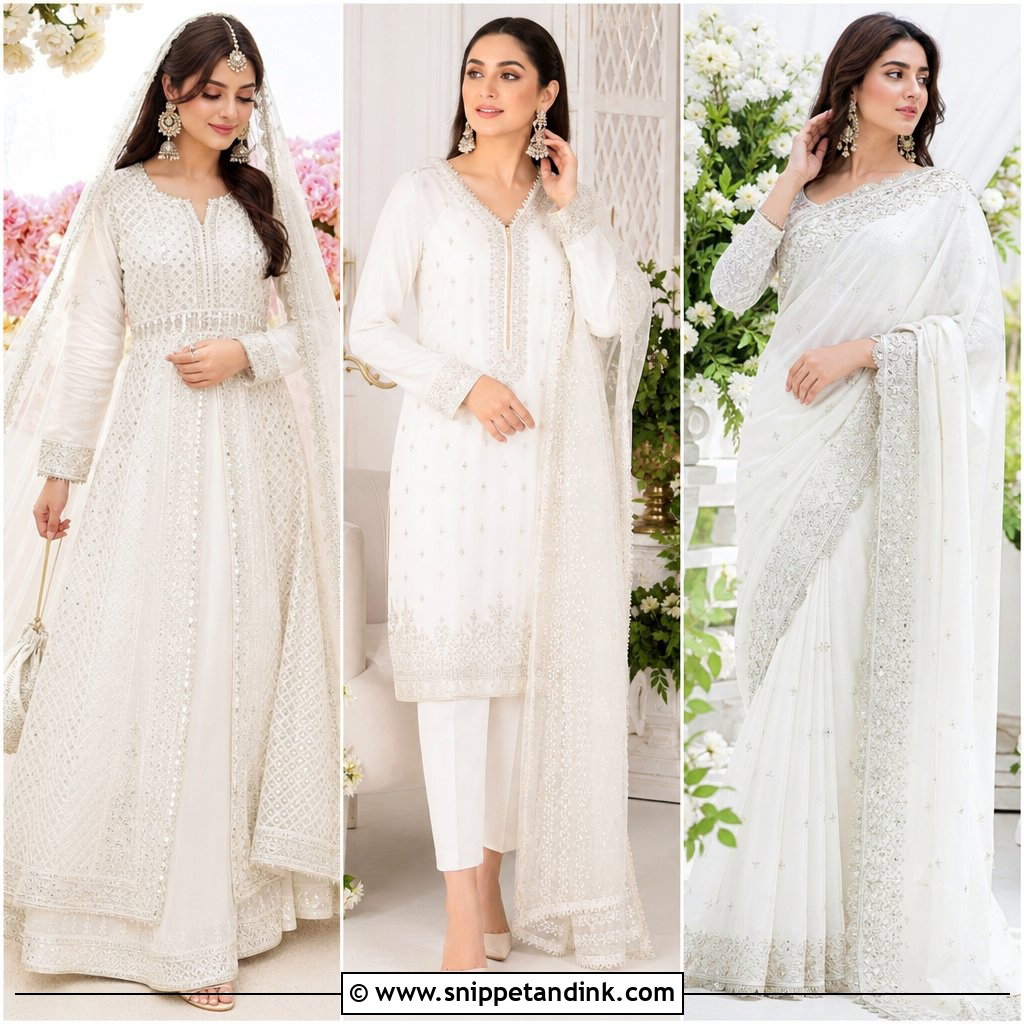
An ivory saree looks composed and clean, but it does ask for some confidence in the pleats. Silk holds folds best; chiffon and organza need more pins. Pick a border that shows clearly in photos without making the fabric stiff. The blouse should be fully lined with long sleeves. Arrange the pallu to the coverage you want, then add a separate light veil over the head. Practise sitting and walking in it. If the ceremony involves stairs and long greetings, a pre-stitched saree removes most of the risk.
8. Red And Ivory Gharara Nikkah Dress
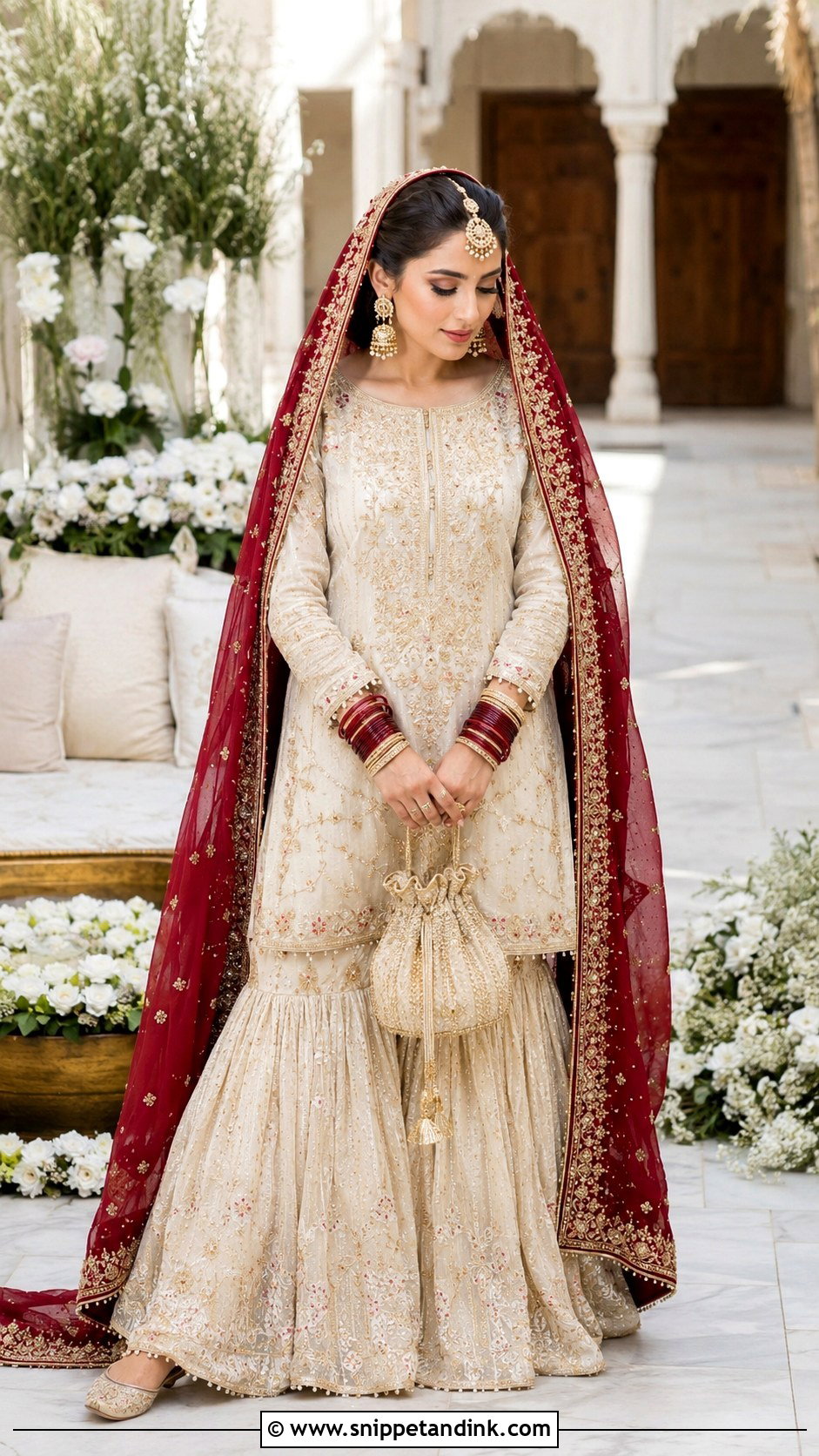
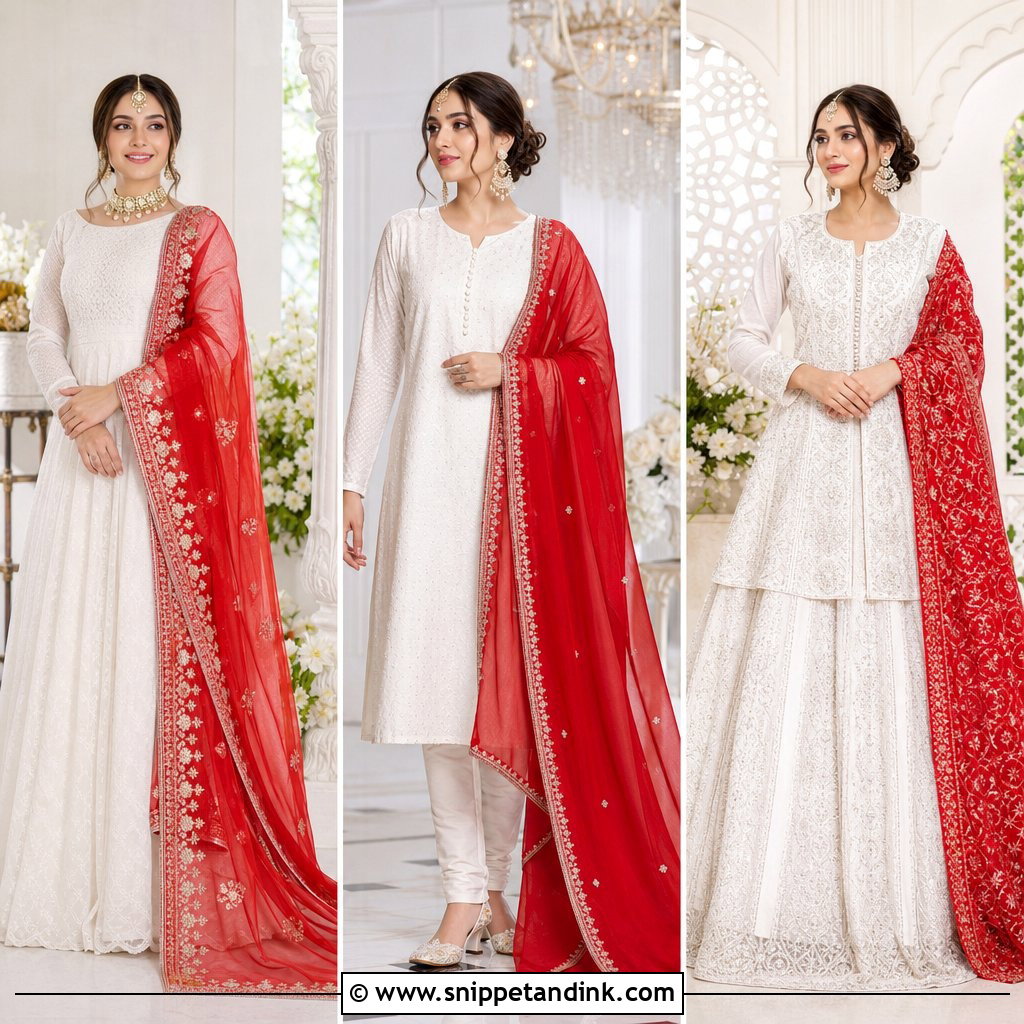
Red is the bridal colour in many families, and this outfit keeps it without making the whole look heavy. An ivory kurti with restrained red and gold embroidery, a matching gharara with a decorative border, and a red dupatta over the head. Pick one red, ruby or crimson, and match it everywhere; two reds side by side look off. Gold jhumkas, a small tikka, red bangles and ivory khussas complete it. It moves easily from a daytime Nikkah into an evening family dinner.
9. Gold Tissue Lehenga Nikkah Dress
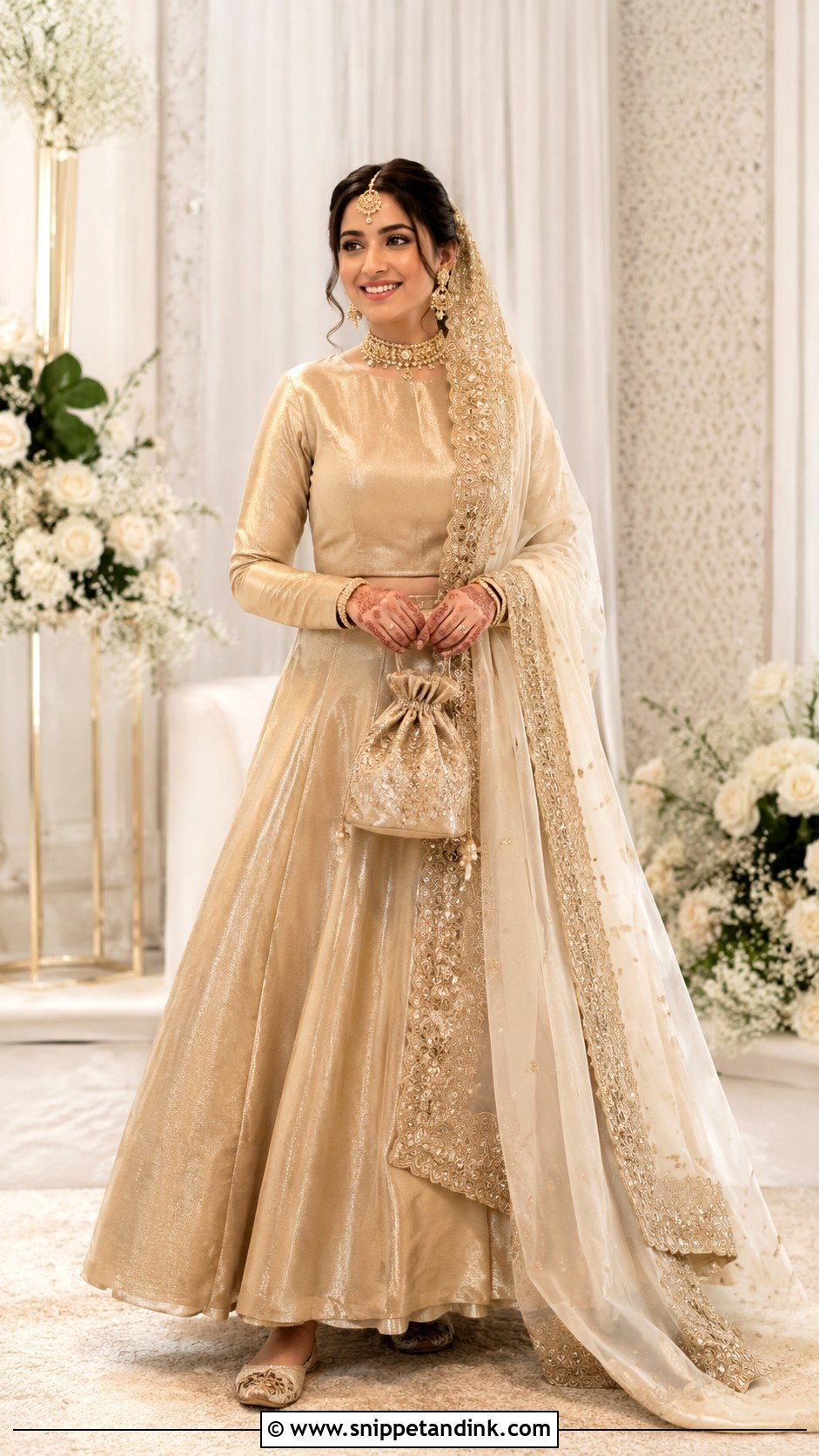
A gold tissue lehenga gives ceremonial richness without a strong colour. Tissue is woven with metallic yarn and reflects a lot of light by itself, so heavy stones or sequins on top make it look costume-like. Antique embroidery at the hem and small scattered motifs are enough. Balance the shine with a matte raw-silk blouse or long choli, and soften it with an ivory dupatta edged in gold. Tissue creases sharply, so steam it hanging, never fold it in a bag.
10. Floral Organza Lehenga Nikkah Dress
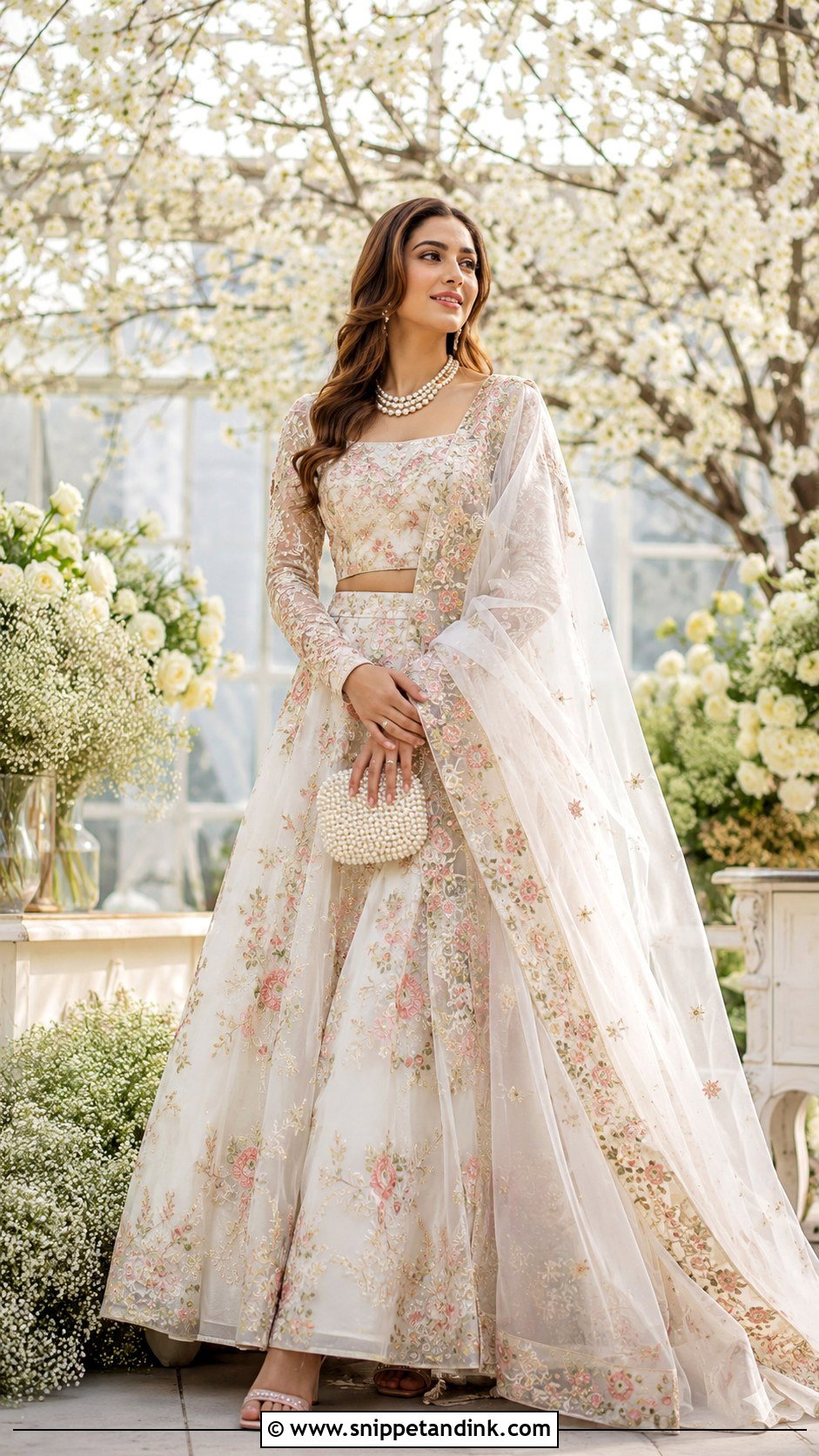
Floral organza is youthful, and the whole effect depends on spacing. Flowers scattered with room between them look delicate; dense multicolour work looks busy from three metres away. Pale ivory, peach or blush bases suit it. Repeat the flowers on a full-sleeved blouse and keep the dupatta plain with an embroidered edge. Let one or two of the flower colours guide your makeup and shoes. If you’d like more coverage, swap the short blouse for a waist-length peplum and keep the lehenga as it is.
11. White Peplum Sharara Nikkah Dress
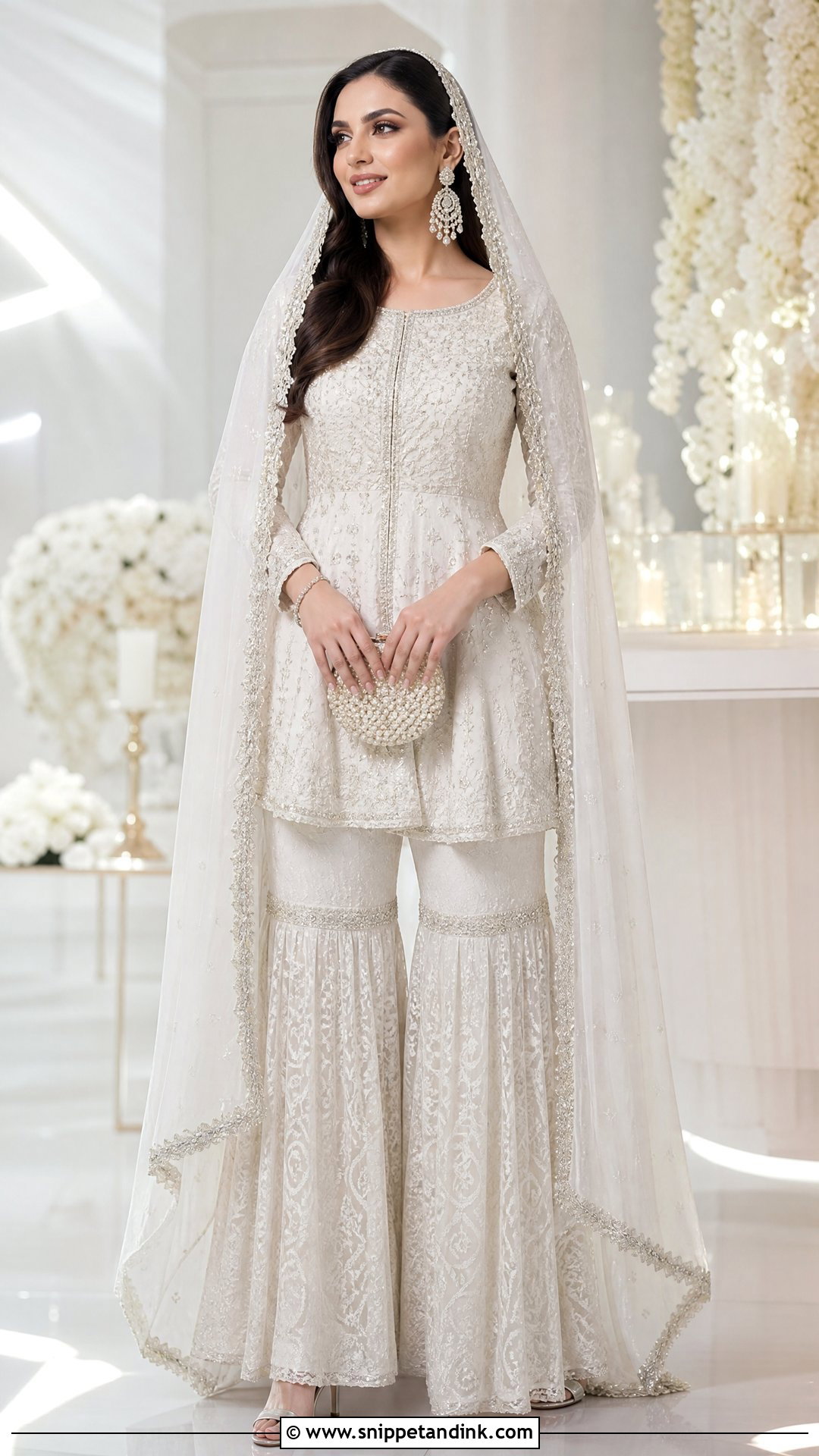
Peplum and sharara give a structured top and loose bottom, which suits pear and hourglass shapes because it marks the waist and lets the lower half flow. The peplum should flare gently over the hips, not jut out. Full sleeves, a modest neckline and tonal embroidery keep it ceremonial. Chiffon, silk or textured organza for the sharara. A white dupatta with silver edging, crystal drops and silver block heels. White shows tailoring flaws more than any colour, so give the fittings proper time.
12. Lilac Angrakha Nikkah Dress
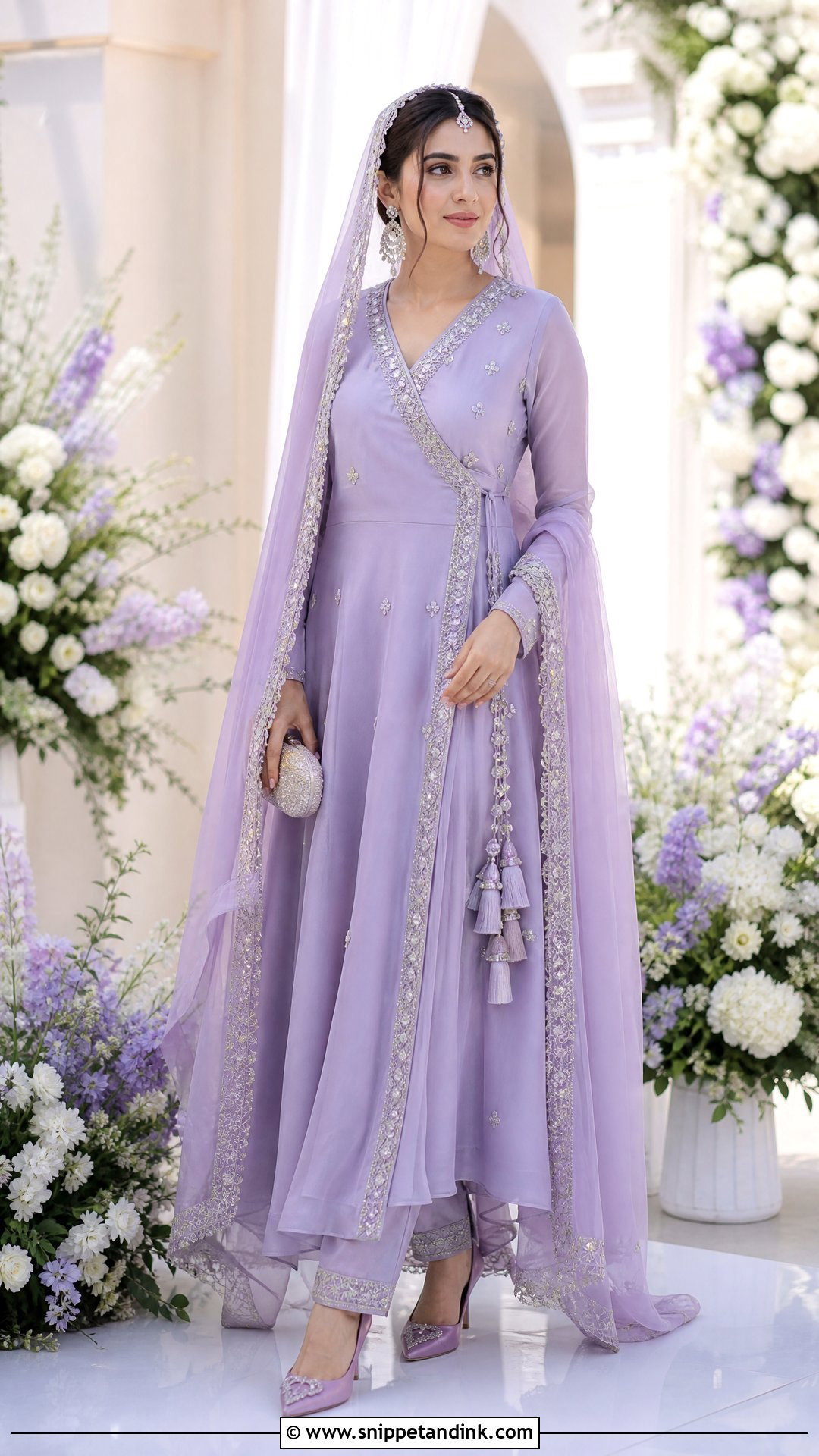
A lilac angrakha pairs a wrapped bodice with a flowing skirt. Embroidered borders following the diagonal closure emphasise the wrap; that’s where the eye should go. The wrap needs a hidden inner tie or it gapes when you lean to sign. Chiffon or organza keeps it light. Keep tassels small. Fitted pants, a dupatta with silver or pearl details, crystal earrings and a delicate headpiece. Stay cool-toned throughout so silver, pearl and lavender look intentional.
13. Emerald Green Long Shirt Nikkah Dress
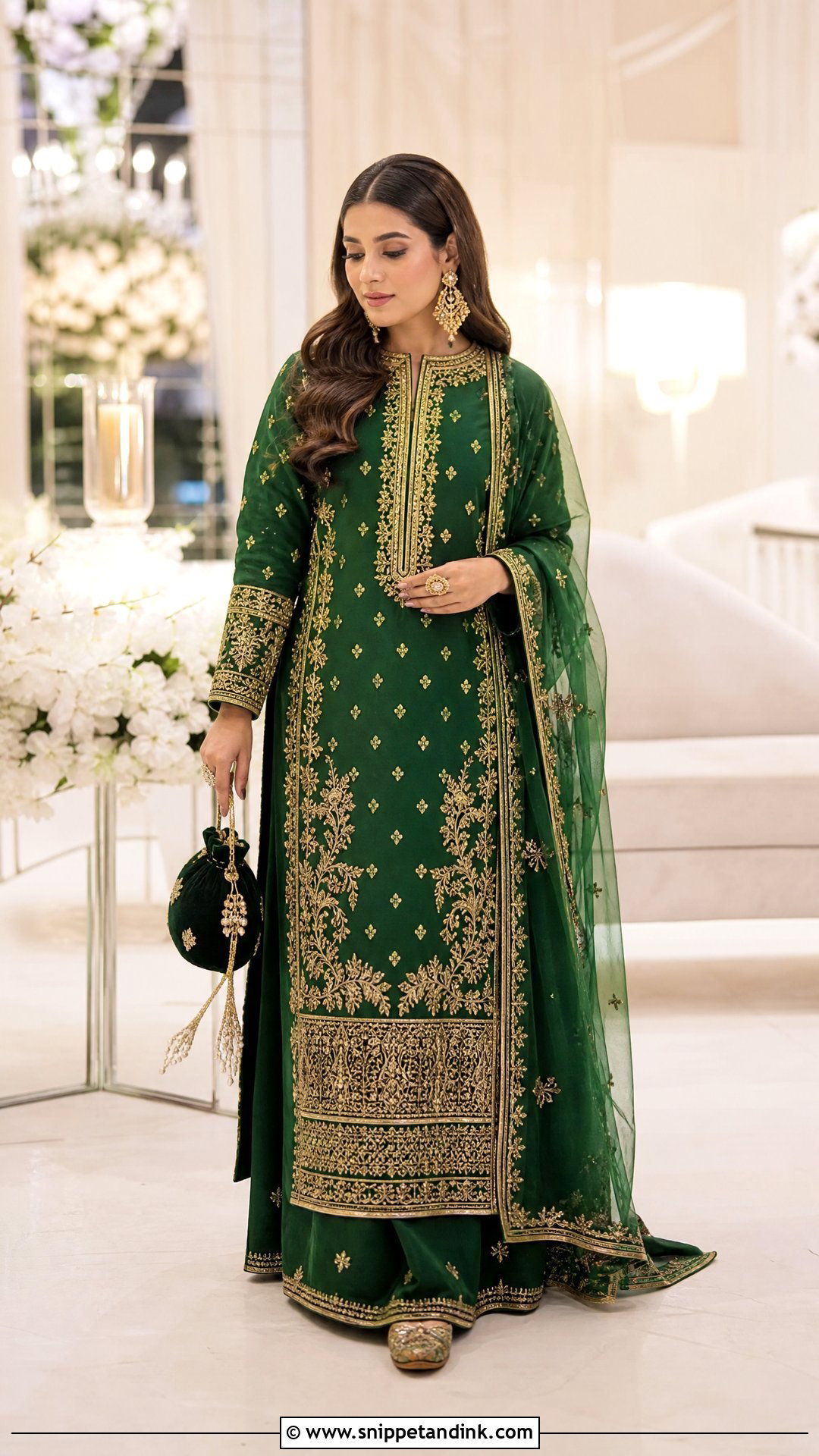
Rich colour without a lehenga: an emerald green long shirt with coordinated trousers. Raw silk for most seasons, velvet in cold weather, jamawar if you want woven pattern. Gold embroidery stands out sharply against deep green, so it doesn’t need to be dense. A farshi shalwar adds volume at the hem; straight trousers keep it sleek. A sheer emerald dupatta with antique gold edging and embroidered khussas finish it. It suits evening, autumn and winter ceremonies.
14. Silver Gray Gown Nikkah Dress
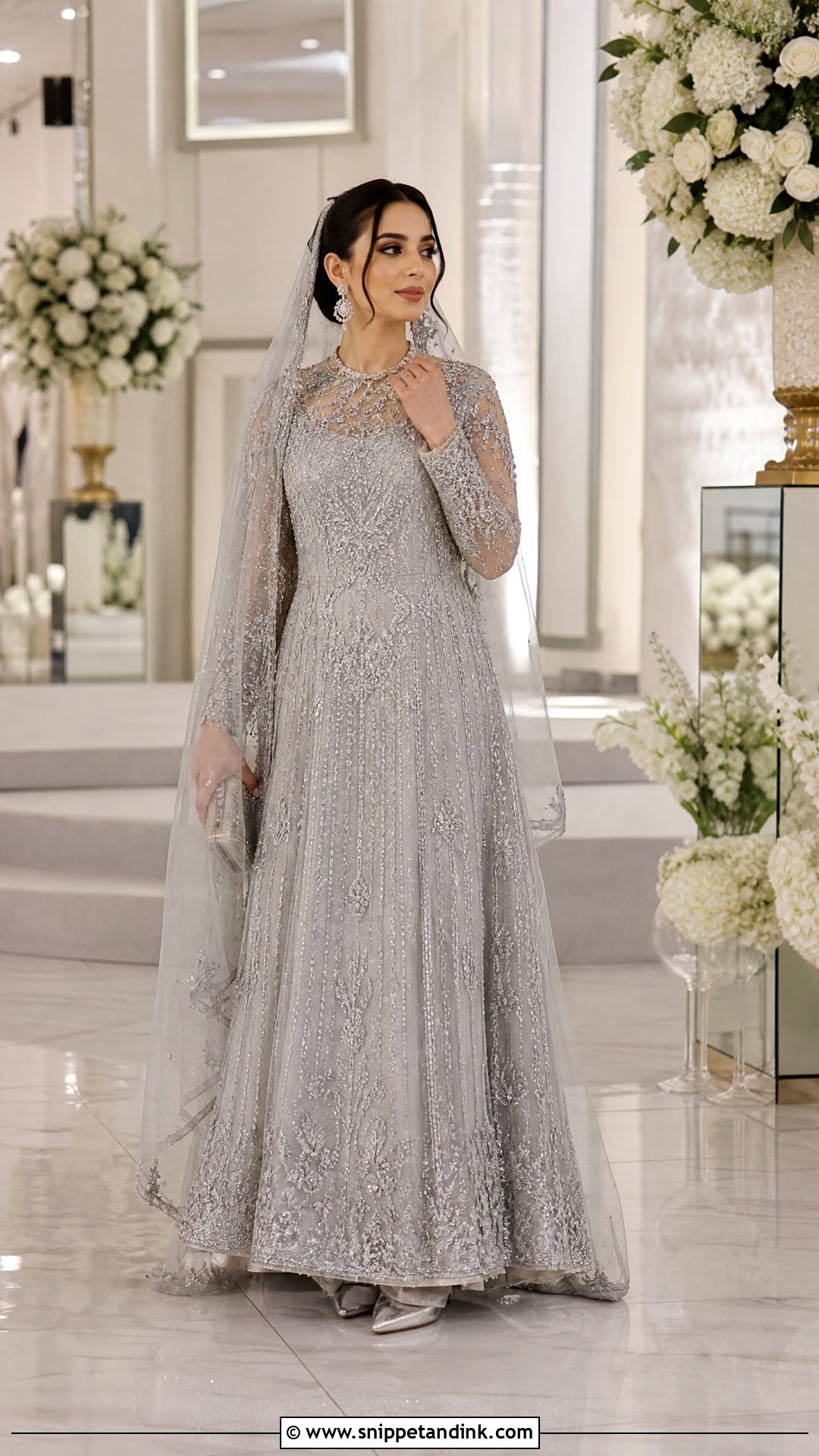
Silver grey is a quiet, modern choice, and the fabric finish decides whether it works. Shiny grey satin looks metallic and flat in photos; a matte base lets silver beadwork and pearls show their texture. An A-line or gently fitted gown with full sleeves, opaque lining and embroidered vertical panels lengthens the body. A soft grey veil or long dupatta over the head, crystal earrings and pointed silver heels. Hotel and ballroom settings suit it. A higher neck or fuller skirt adapts it easily.
15. Peach Kalidar Nikkah Dress
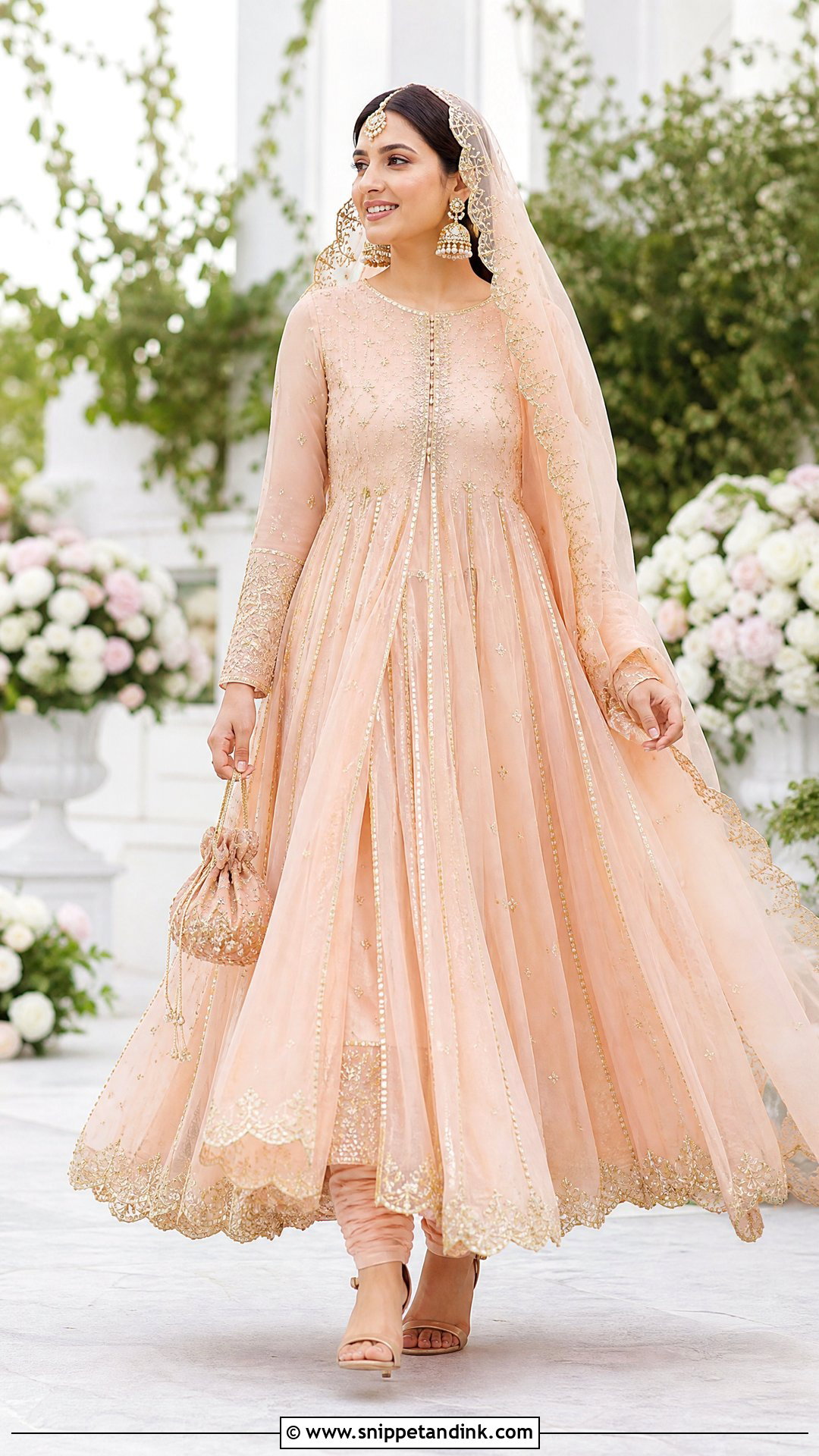
Kalidar means cut from many flared panels, and the more panels, the more the hem swings when you turn. In peach it reads bright and daytime. Gold thread, pearls or small florals around the bodice and hem, churidar pants and a scalloped organza dupatta. Peach ranges from pale apricot to dusty coral; hold fabric swatches against your face in daylight, because the wrong peach makes skin look sallow. Sleeves fitted enough to keep the shape, roomy enough to raise your arms.
16. Ivory Jacket Lehenga Nikkah Dress
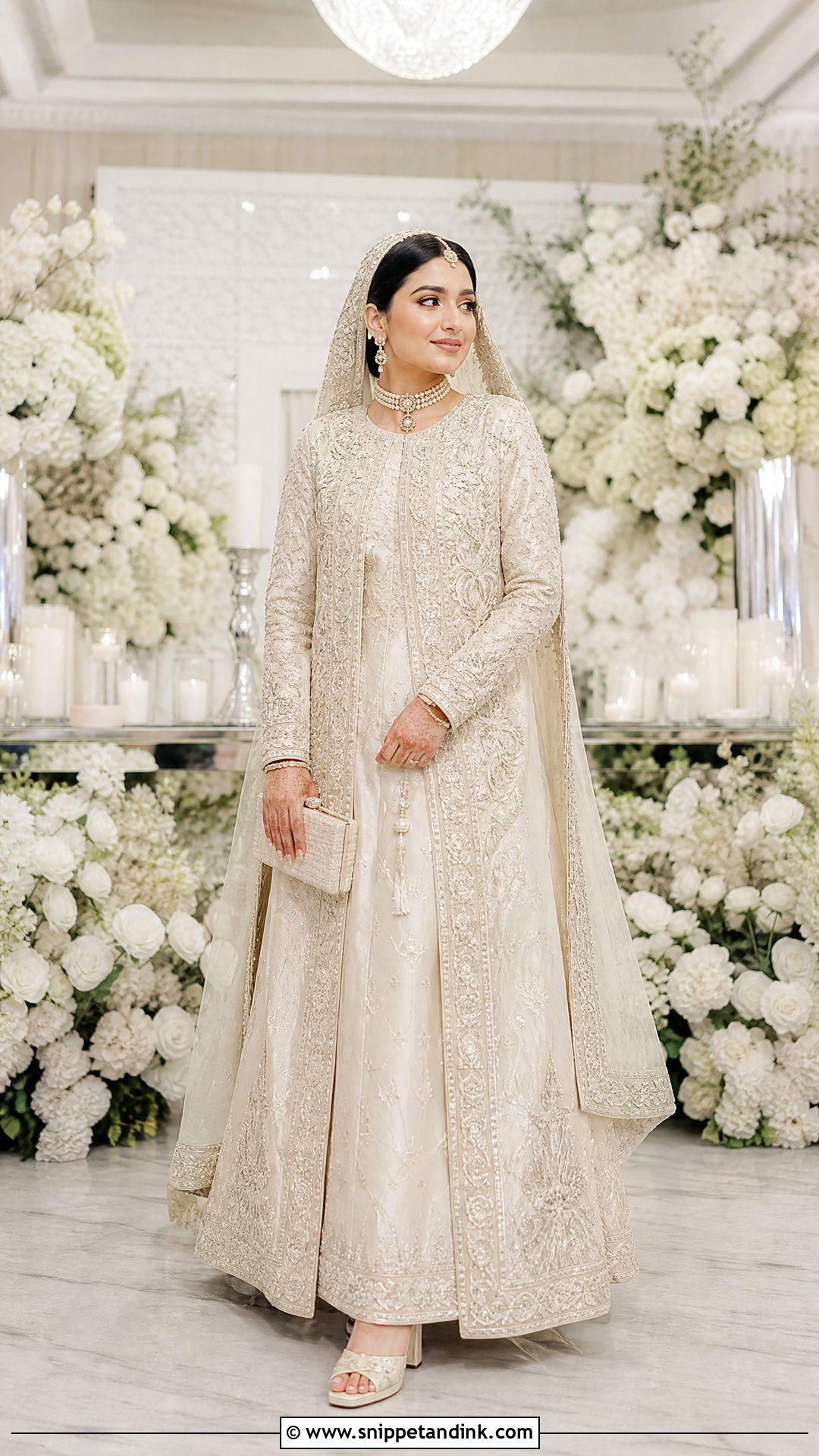
A jacket lehenga is the cool-weather answer, and it gives extra coverage without bulk. Keep the lehenga and blouse simple and lightly worked, then let a long embroidered jacket, open at the front, carry the detail. Below the knee is the most balanced length; floor-length is more dramatic but heavier. Ask for the jacket to be lined in something slippery so it slides over the blouse instead of dragging. Ivory dupatta, pearl earrings and block heels. It suits brides who like structured tailoring.
17. White Shalwar Kameez Nikkah Dress
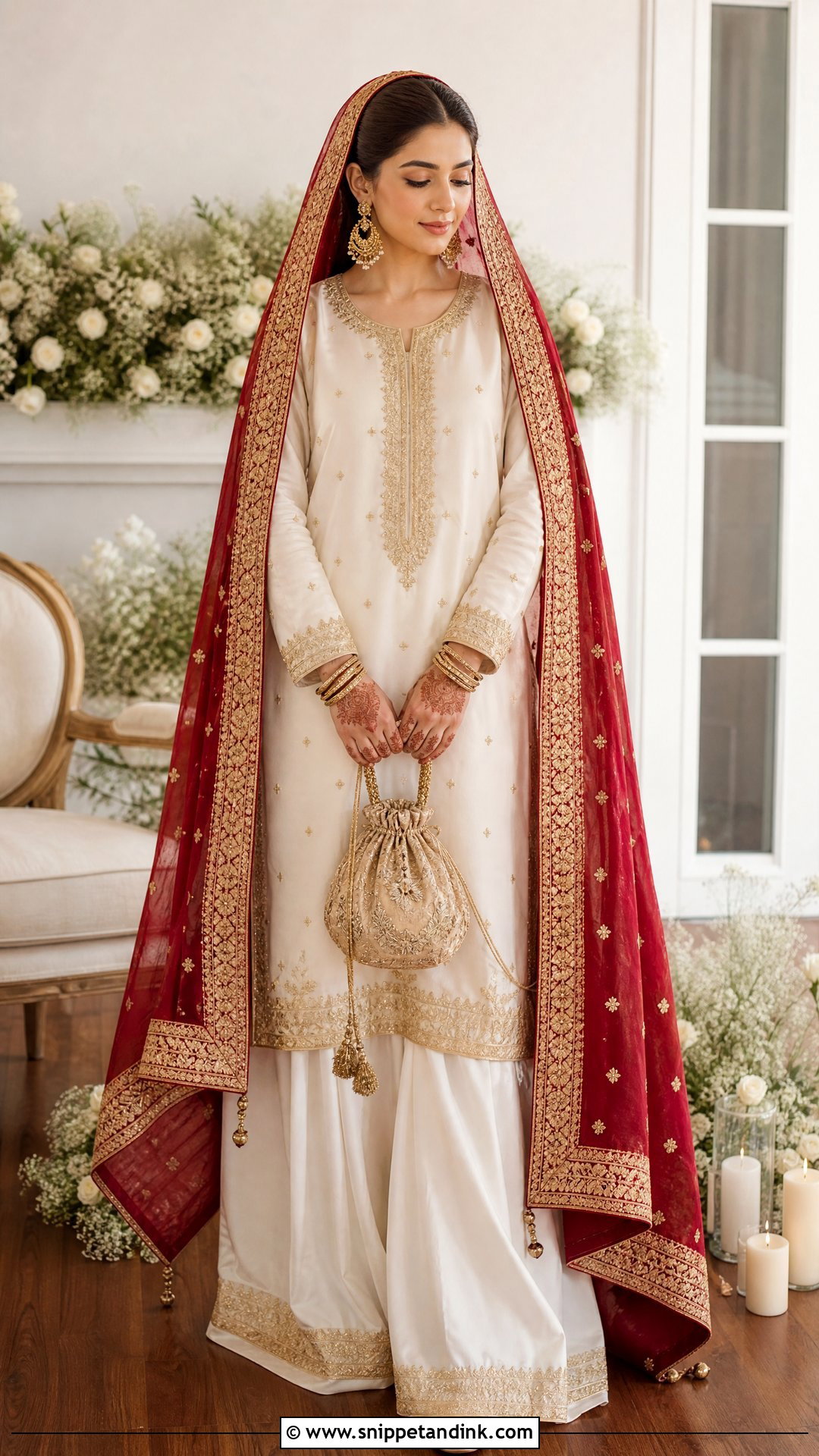
A well-cut white shalwar kameez can feel every bit as bridal as a lehenga, and it’s the most comfortable choice here for a home or mosque Nikkah. A long kameez in silk, chiffon or organza with fine gold work at the neckline and cuffs. Traditional or farshi shalwar below. Bring colour in with a deep red, maroon or green dupatta. With a simple shape, fabric quality and tailoring show more, so spend there. This is also where a family dupatta or a mother’s jewellery looks most at home.
18. Mint Green Gharara Nikkah Dress
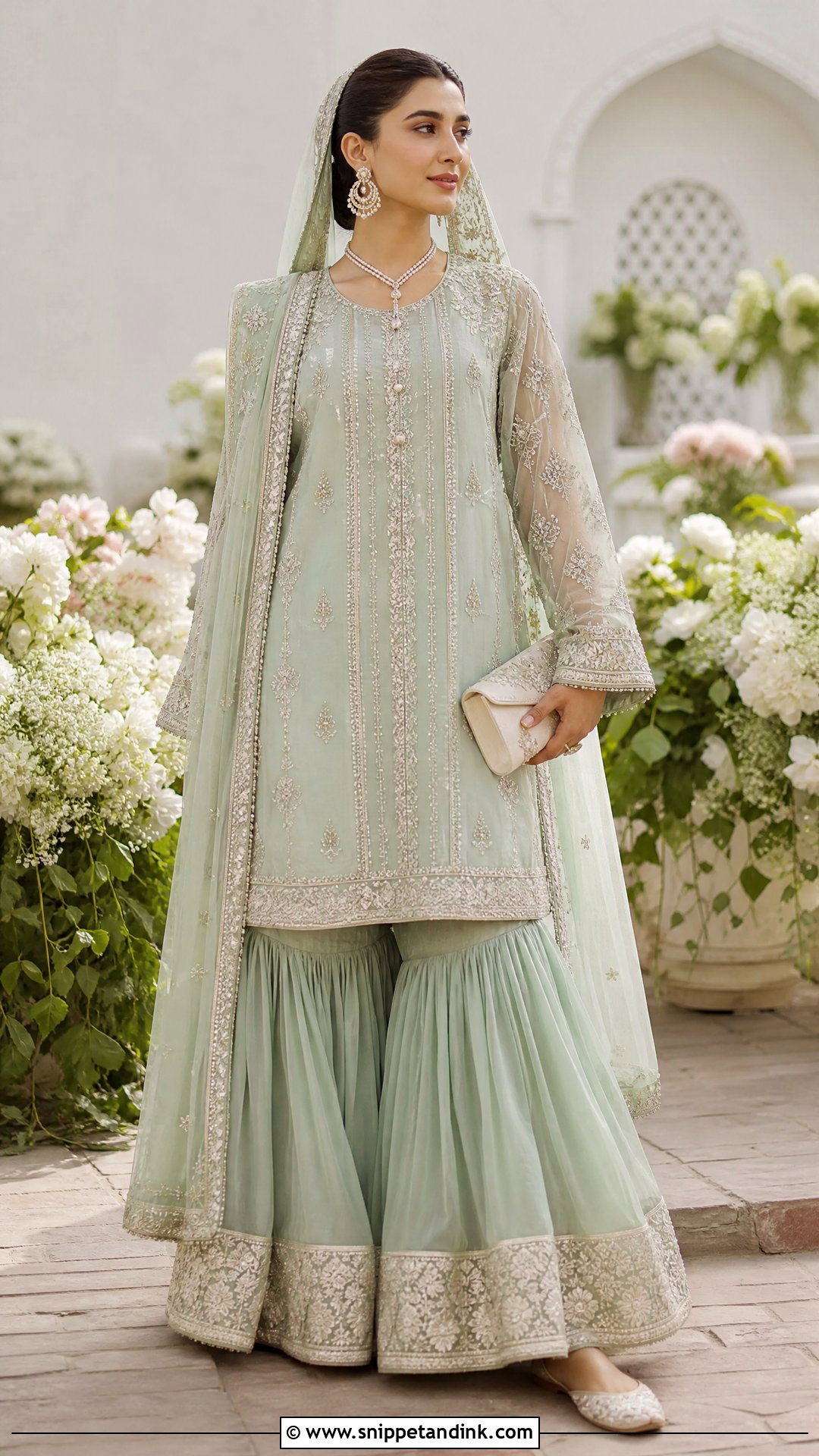
Mint brings freshness to a classic Nikkah gharara. A short or mid-length embroidered shirt with knee gathers and a wide border below. Ivory, pearl or pale gold embellishment keeps the colour soft. If you want depth, use two close mint shades rather than a contrast colour. Line everything fully; pale fabrics turn see-through under strong photography lights. Pearl chandbalis, an ivory clutch and flat embroidered shoes. It works at home or in a formal hall.
19. Satin Maxi Nikkah Dress
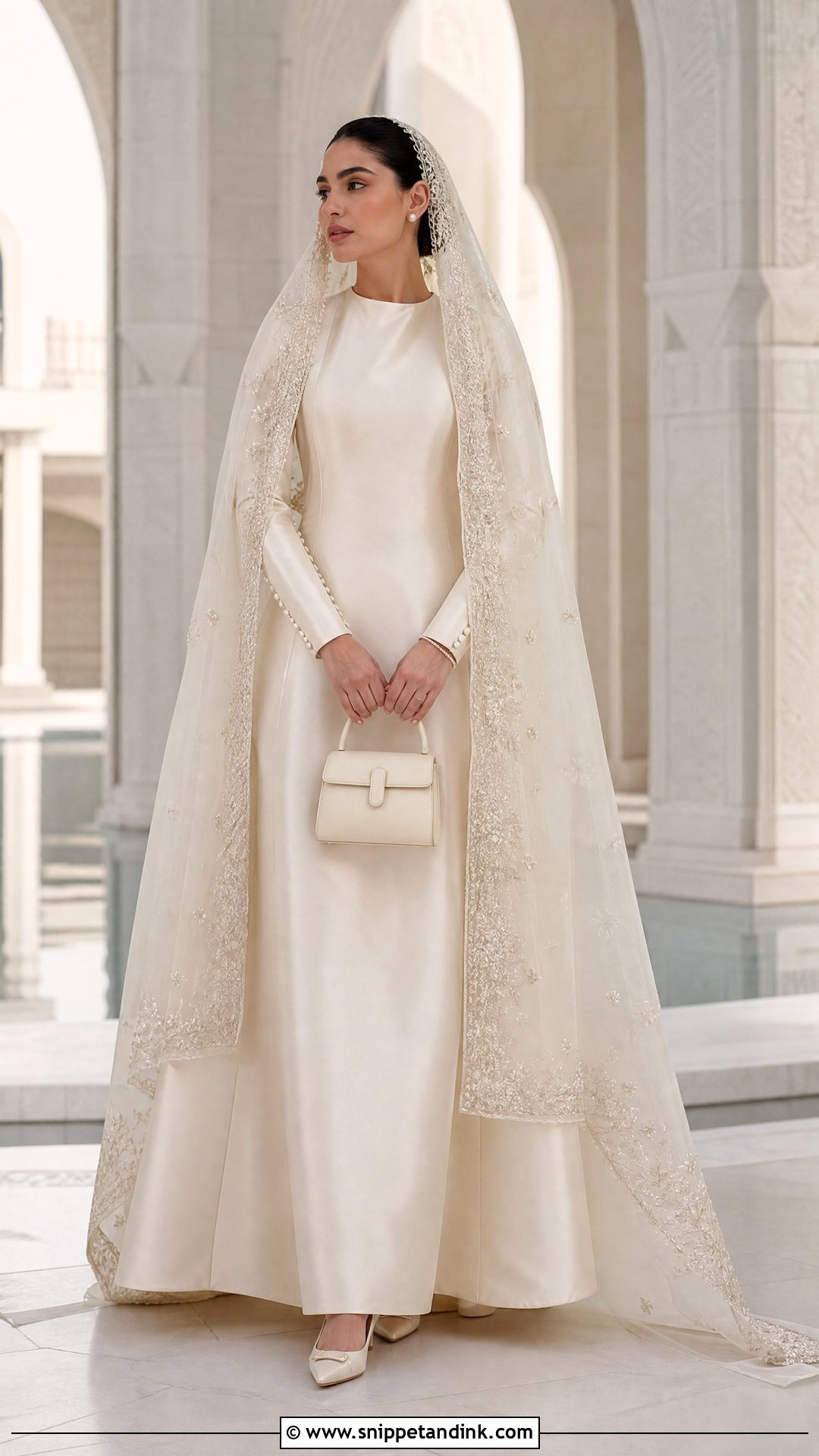
Clean lines and very little embroidery: the satin maxi is for minimalists. Ivory, pearl or champagne, high neck, long sleeves, softly defined waist, A-line skirt. Covered buttons or gentle pleats add quiet detail. The Nikkah identity comes from an ornate embroidered dupatta. Satin shows every crease and fit problem, so alterations need to be precise and steaming careful. Pick a matte or soft-lustre satin; very shiny satin catches flash in hot spots. Suits a civil ceremony, intimate dinner or modern mosque.
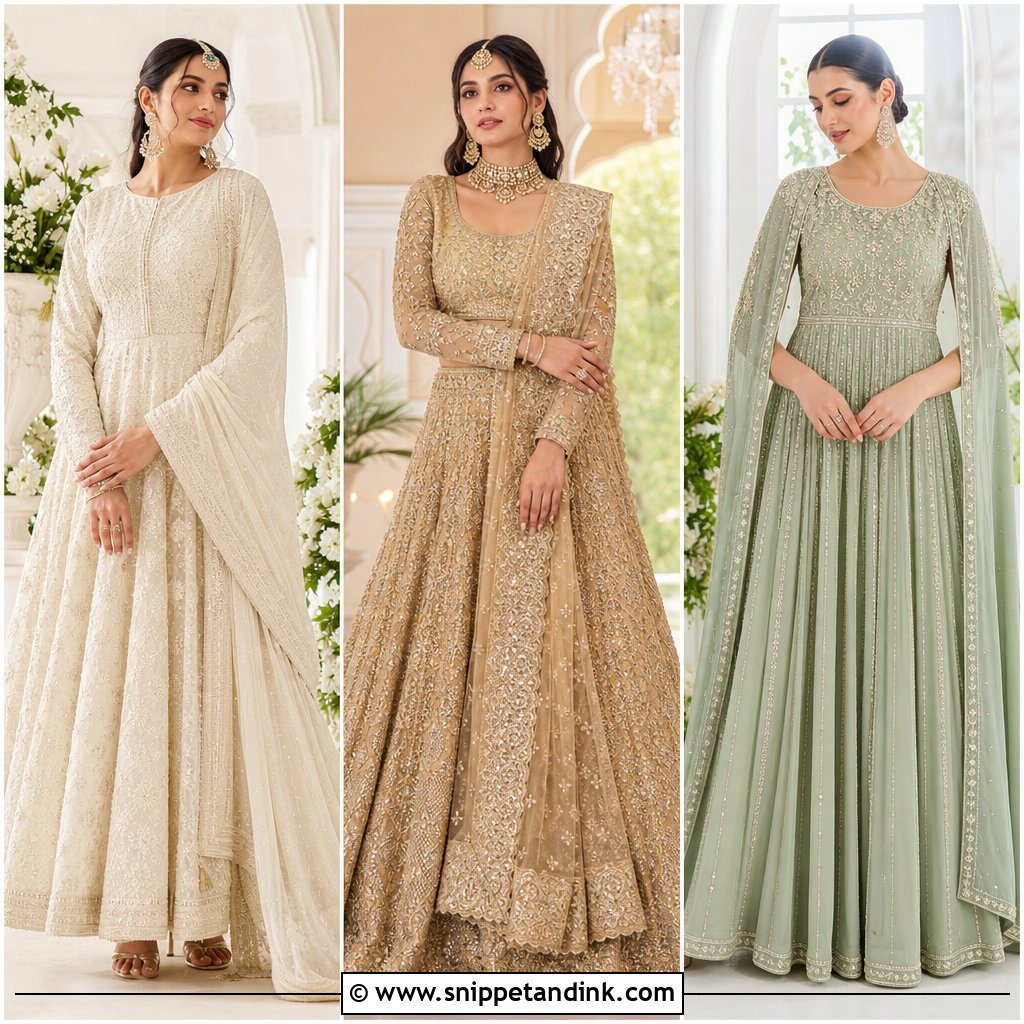

20. Mauve Cape Lehenga Nikkah Dress
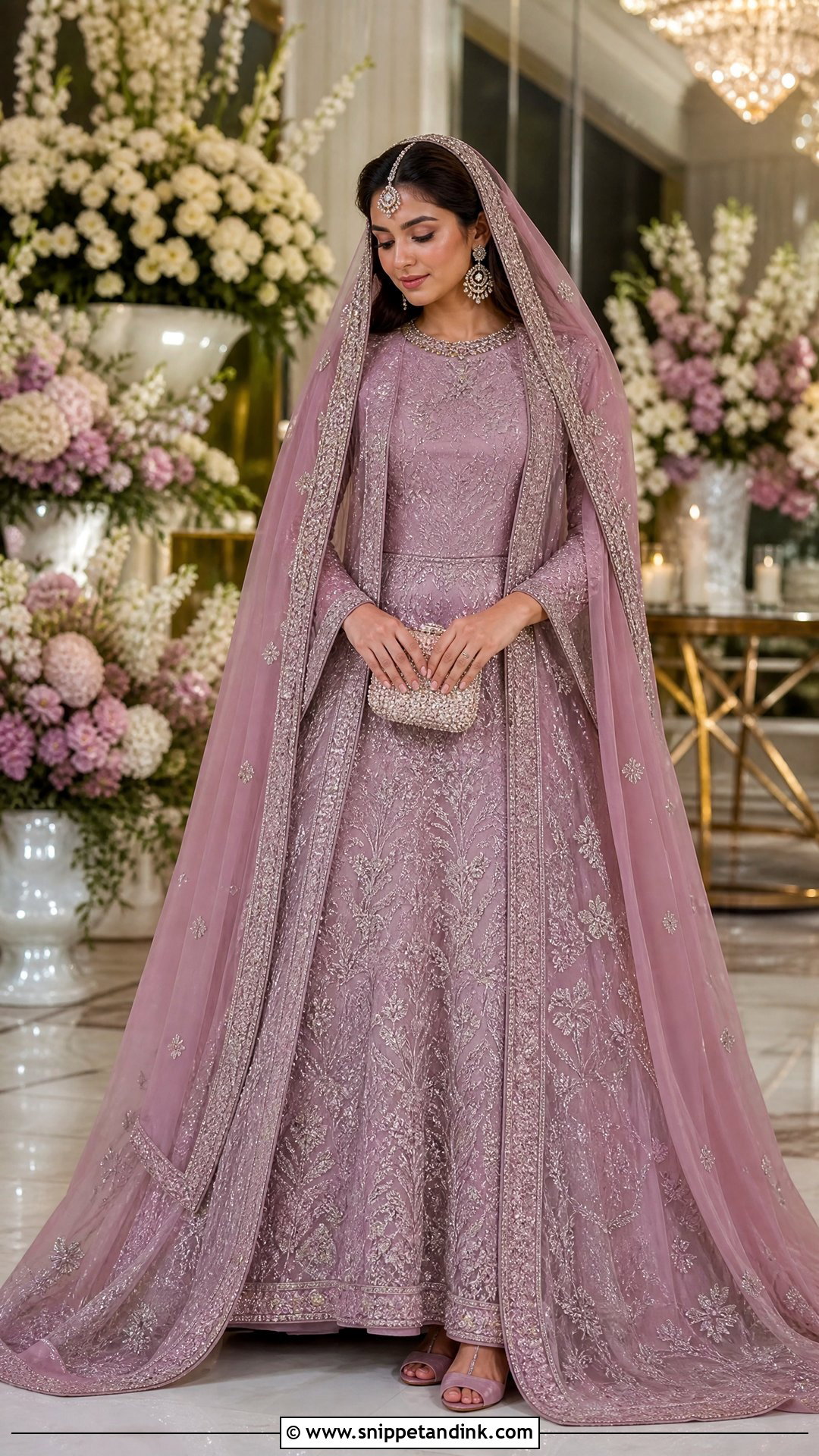
Mauve looks richest in evening light and pairs naturally with silver, pearl and crystal. Choose a flowing A-line lehenga with tonal embroidery and a fitted, fully lined blouse. The cape is attached at the shoulders or neckline; it gives coverage without draping. Cut matters: it should fall behind the arms so you can still see the outfit and move your hands freely. For a head covering, add a separate light dupatta with a narrow border. Silver earrings, mauve block heels and a beaded clutch complete it.
Wearing Your Mother’s Dupatta or Grandmother’s Jewellery
Plenty of brides want one inherited piece in their Nikkah outfit, and it’s a lovely instinct. Old pieces just need some care before they’re asked to work for a full day.
- Have old pearl strands restrung. Silk thread weakens over decades, and a strand that snaps mid-ceremony scatters everywhere.
- Get clasps, hooks and earring posts checked by a jeweller. Older jhumkas can be heavy, so ask about adding a support chain that tucks into the hair.
- An aged dupatta may be too fragile to pin. A tailor can mount it onto new net or organza, or transfer its border onto a fresh dupatta, so the original fabric takes no strain.
- Bring the heirloom to your outfit fitting. The new embroidery colour should be chosen to sit beside it, not the other way round.
Antique gold and modern bright gold rarely match, so if the inherited piece is antique, ask for antique gold work on the new outfit too. Store everything separately in soft cloth afterwards, so the pieces don’t scratch each other.
Your Nikkah Outfit, Start to Finish
Ivory and pastels give a gentle ceremony look. Red, emerald and gold carry more traditional weight. Ghararas, lehengas, pishwas, sarees and gowns can all be right when they’re properly coordinated. Before the day, check tailoring, lining, dupatta placement, shoes and fabric weight. Let jewellery support the embroidery. Use the outfits above as a starting point, then make yours personal with pieces that mean something, proportions you can move in and colours you truly love.
You'll Like These Ideas:


Leave a Reply