
A Nikkah asks more of an outfit than most ceremonies. It has to cover well, sit comfortably through the vows and look right in a mosque, a family home or a hall. Pink handles all three. The looks below run from traditional ghararas and pishwas to lehengas, Anarkalis and palazzo suits, with notes for brides, bridesmaids and guests. I’ve added the fabric and fit details I check in fittings, because organza, raw silk and velvet each behave very differently once you’ve been sitting for an hour.
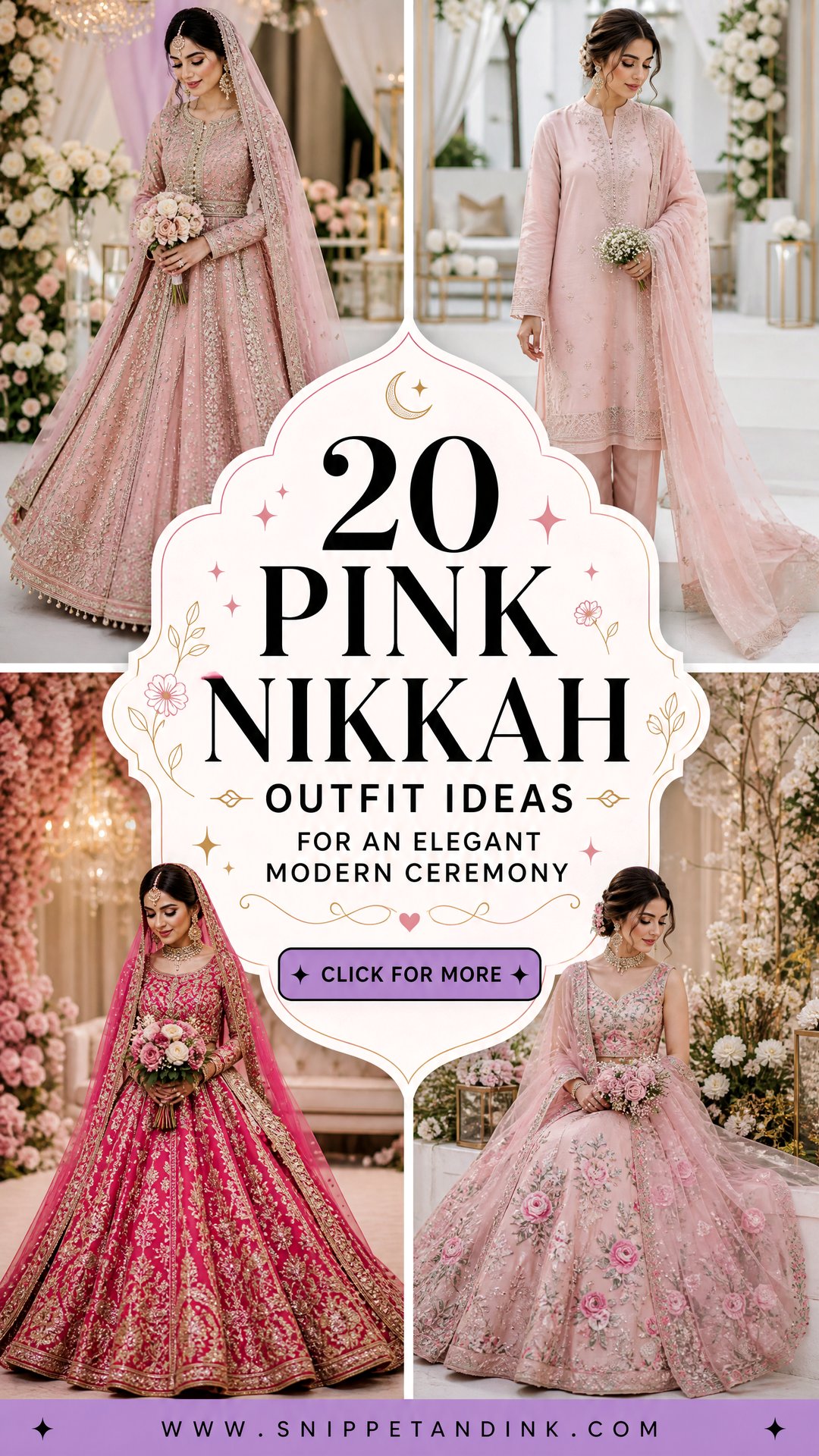
Will Your Dupatta Stay On Through the Vows?
The head dupatta is the piece I spend longest on at a Nikkah fitting. Sheer organza and net are slippery, and a heavy embroidered border pulls the whole thing backwards the moment you look down to sign. I anchor it before the bride is dressed, not after.
- Put on a thin inner cap or under-scarf in a skin or hair-matching shade first. Pins grip fabric far better than they grip hair.
- Place the dupatta so the border sits just behind the hairline, then pin at the crown and once behind each ear with flat-headed or U-pins.
- Fold any heavy border under at the back of the head so its weight rests on the pins, not on the forehead.
- Have her nod, turn and look down at a table. If it moves, add one more pin at the nape.
If the bride is wearing a second dupatta across the body, I pin that one at the shoulder separately. Two dupattas pinned together drag each other off.
1. Blush Pink Gharara Nikkah Outfit
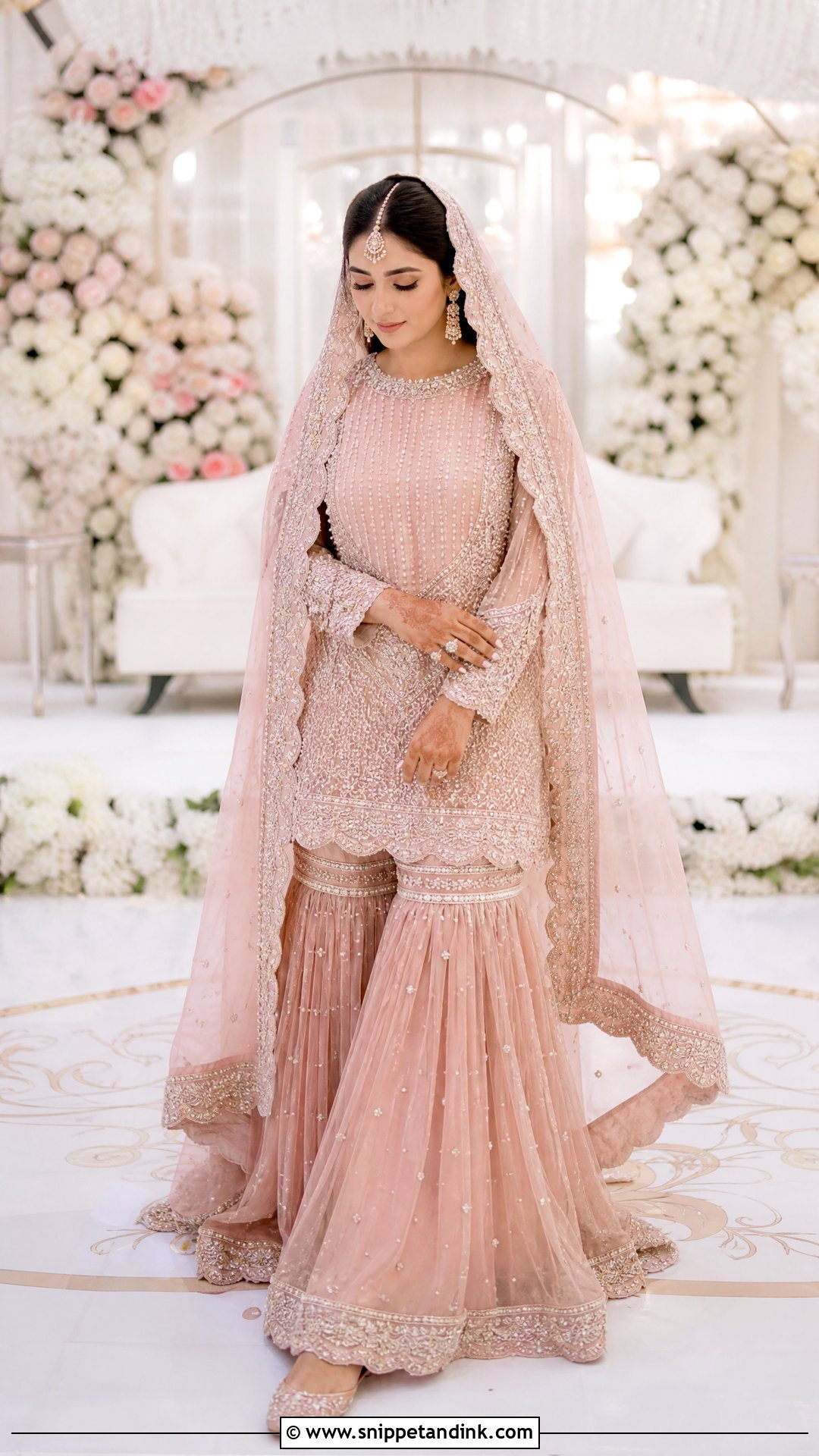
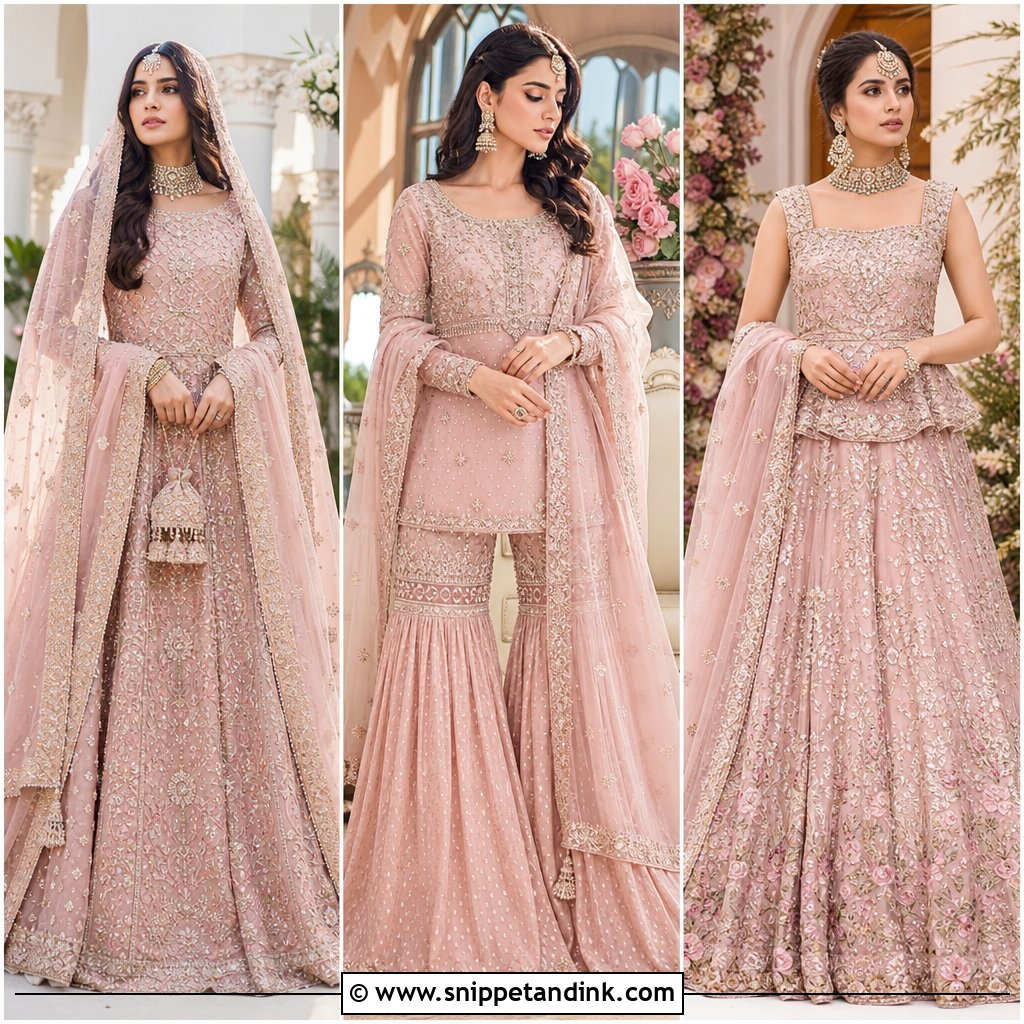
Blush gharara with a short straight kameez is the softest way to start. I look for pearl or fine thread embroidery and a modest neckline, then let the knee panels of the blush pink gharara carry the movement. A sheer organza dupatta with narrow champagne trim finishes it. Blush shows makeup transfer badly at the neckline, so I ask brides to put the kameez on before the foundation, never after.
2. Dusty Pink Sharara Nikkah Outfit
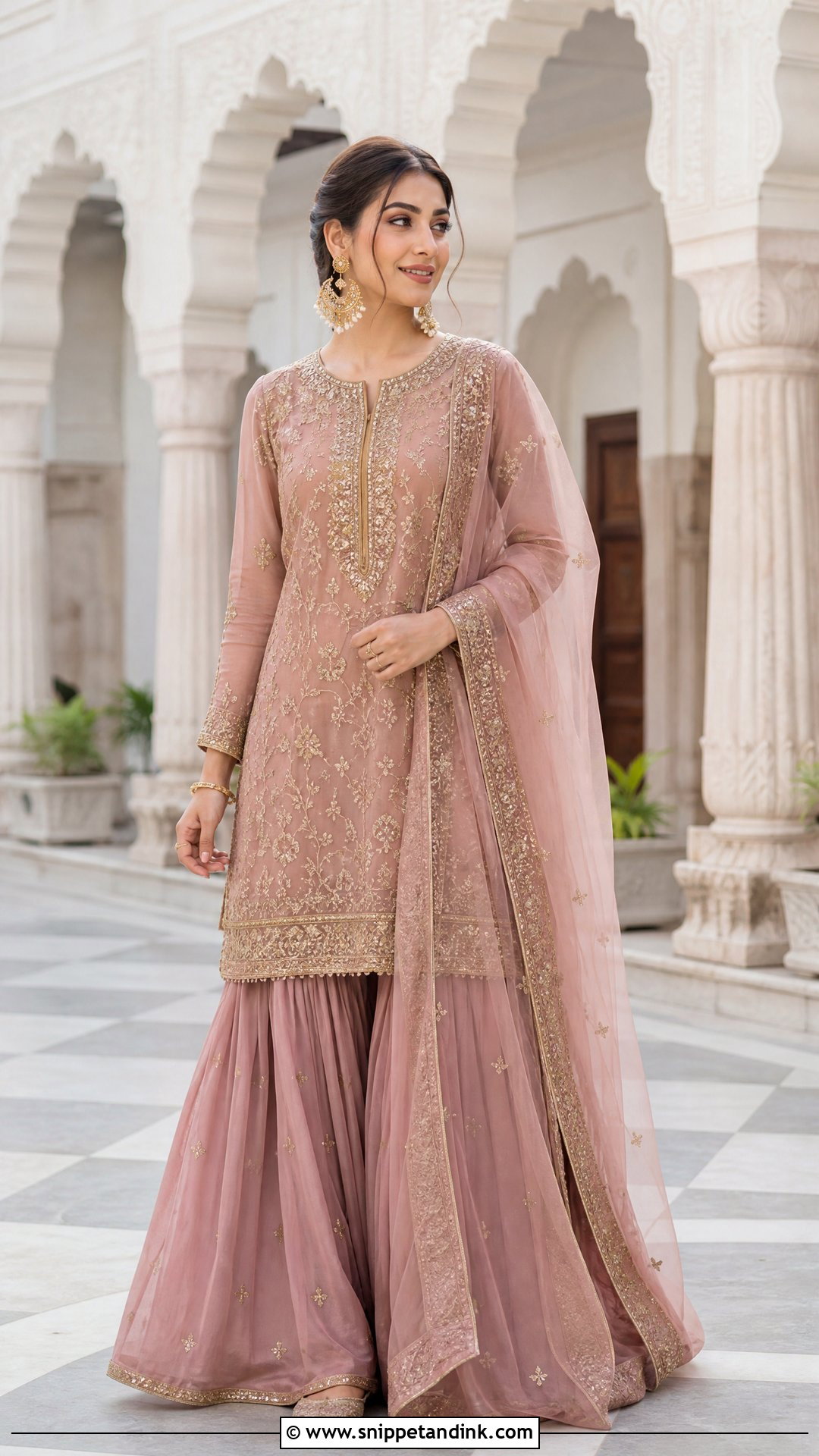
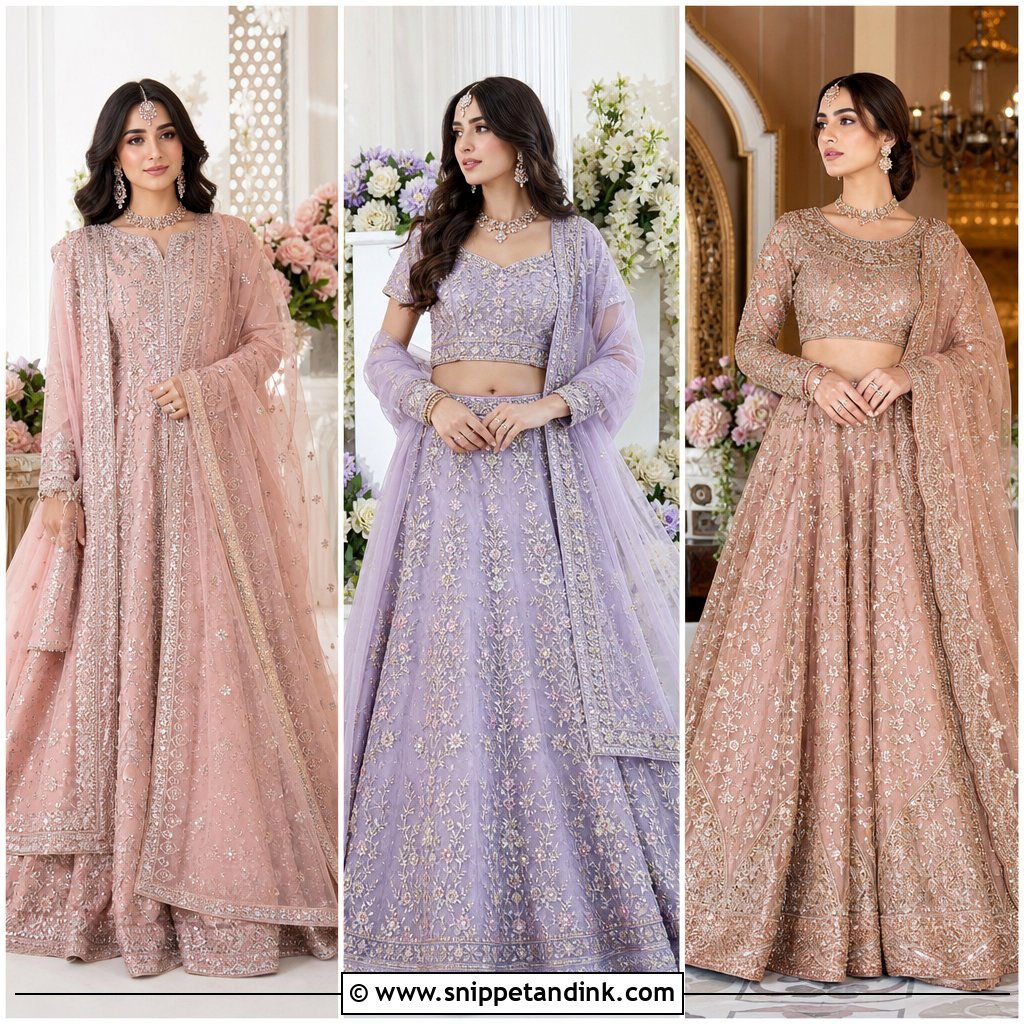
Dusty pink has more depth than blush and doesn’t wash out under indoor lights. I pair a long embroidered kurta with a georgette sharara that flares from mid-thigh, which makes sitting easy. Antique-gold zardozi and tonal threadwork suit the muted shade better than bright sequins. Leave the dupatta long enough to come up over the head when needed. Sisters and close family wear this one well.
3. Baby Pink Lehenga Nikkah Outfit
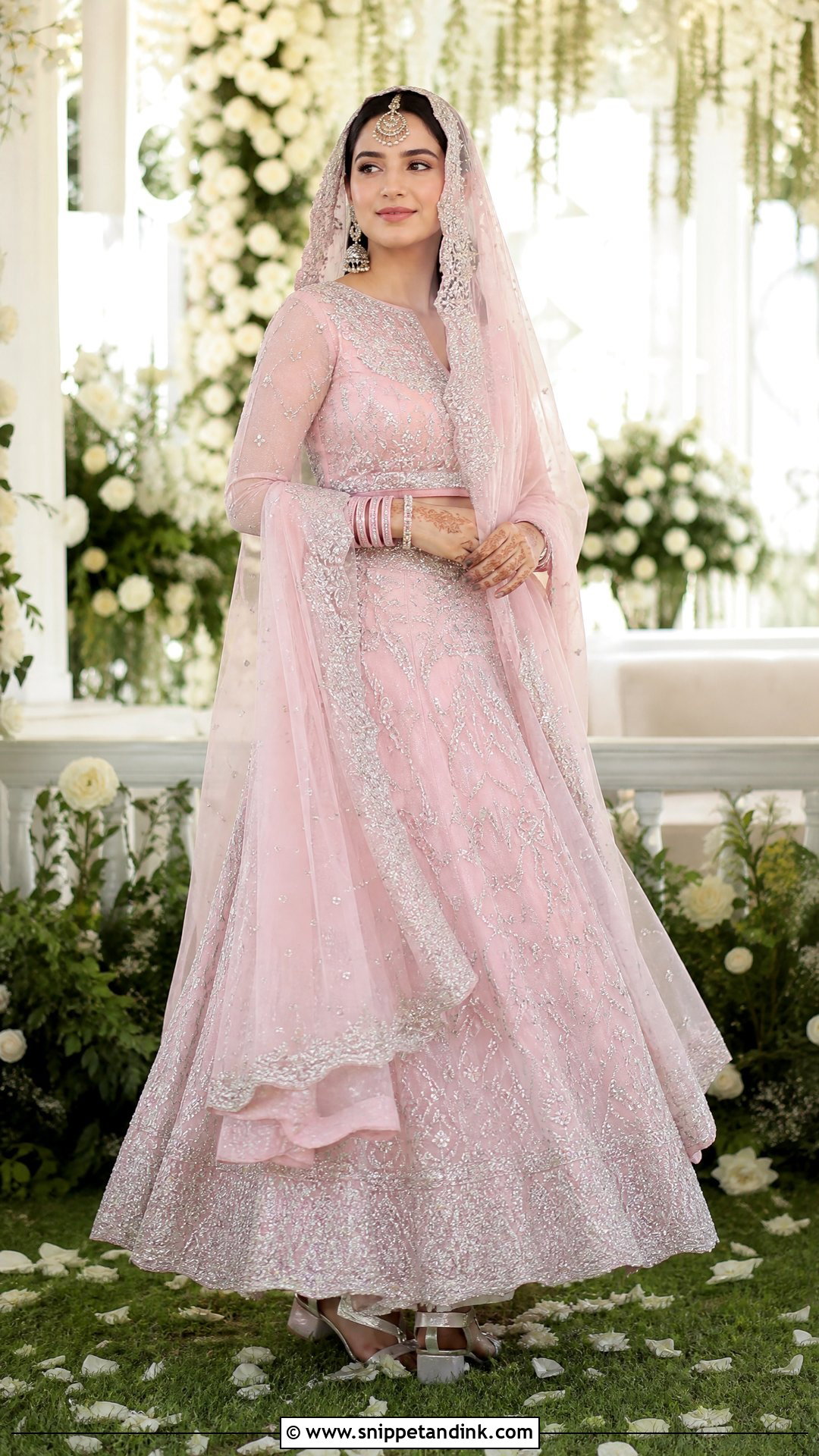
A baby pink lehenga reads young and fresh at a daytime ceremony. Fine silver embroidery or scattered pearls keep it light. For a Nikkah I cut the blouse with full sleeves, a higher neck and a longer hem, then check midriff coverage with the bride’s arms raised, since that is when the gap appears. A second dupatta over the head adds formality for the bride; guests can skip it and keep jewellery small.
4. Pastel Pink Anarkali Nikkah Outfit
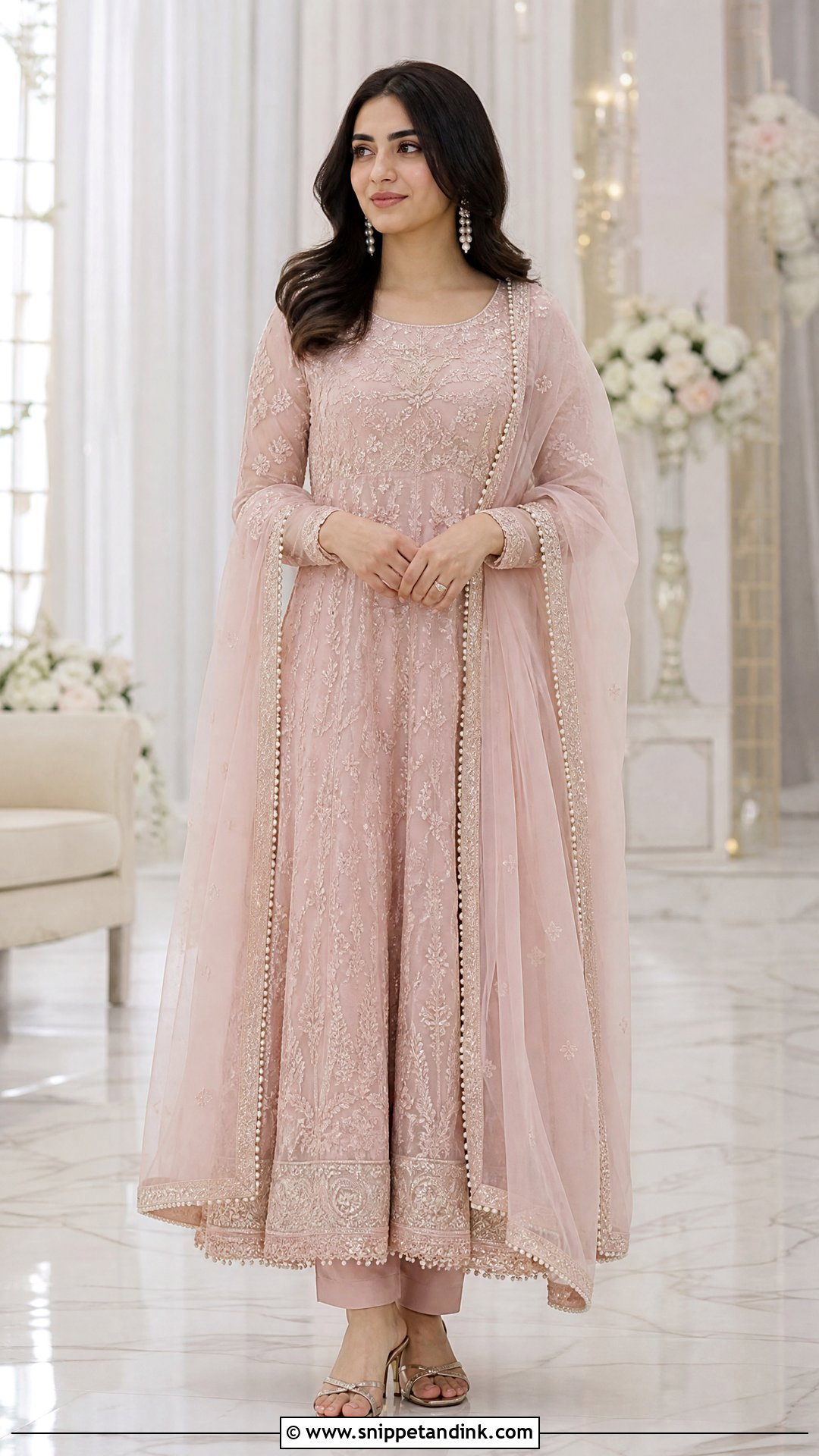
Pastel Anarkalis are what I suggest to brides who tell me comfort comes first. The fitted bodice and floor-length flare move well, and straight pants underneath mean nothing shifts when you sit. Chiffon or georgette with embroidery at the neckline, cuffs and hem is plenty. My caution: a long train looks lovely standing, but at a floor-seated Nikkah it bunches under you, so I’d keep it to a light sweep.
5. Pink Pishwas Nikkah Outfit
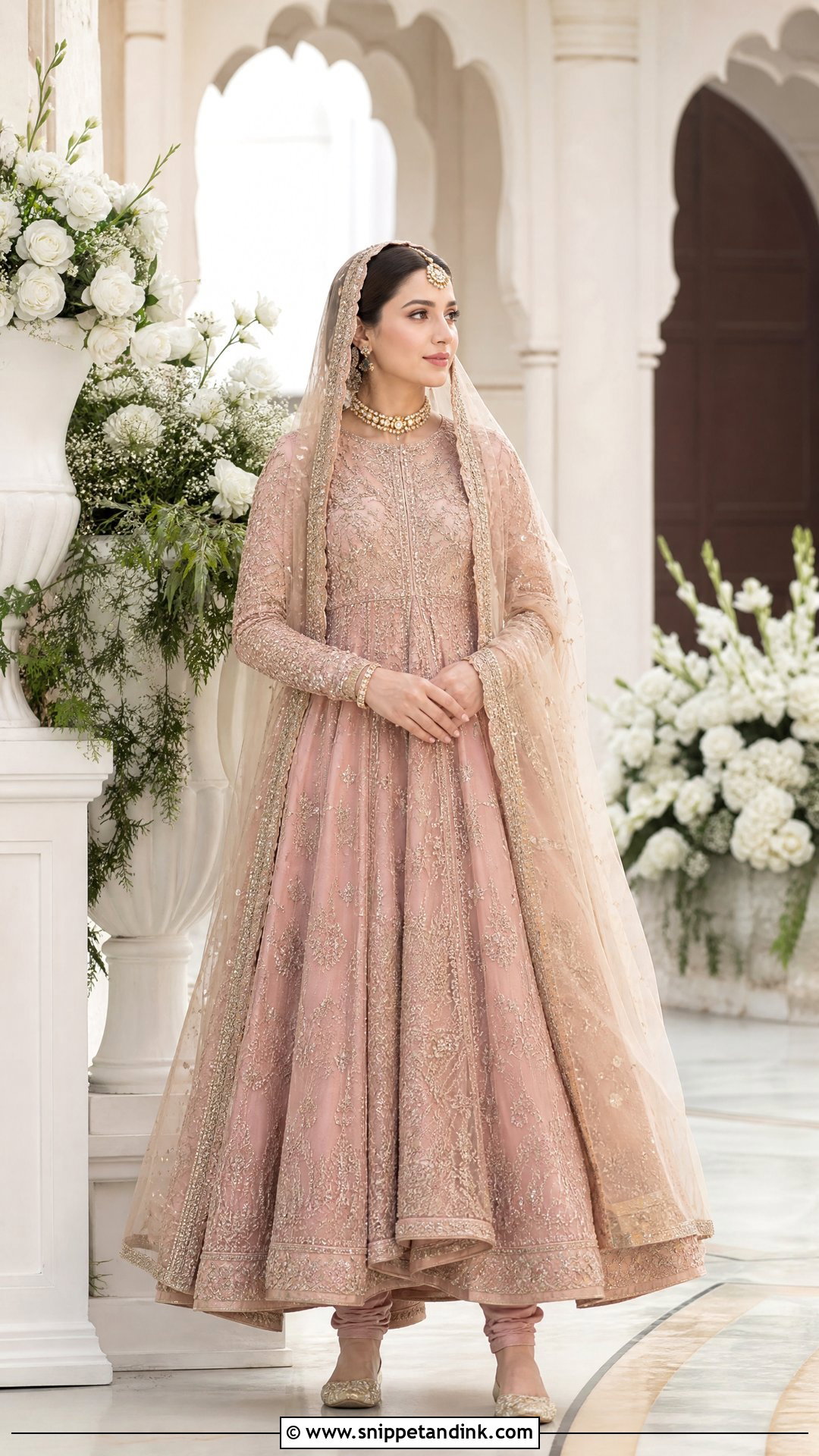
A pink pishwas gives regal volume without the separate blouse and skirt of a lehenga. The bodice has to fit closely before the panels open into a full circle; if it’s loose, the whole dress looks like a gown that’s slipped. Rose, shell pink and muted mauve take gold embroidery well. Full sleeves, a covered back, churidar underneath and a dupatta over the head and one shoulder make it ceremony-ready. Gold juttis are kinder than heels under that much hem.
6. Powder Pink Shalwar Kameez Nikkah Outfit
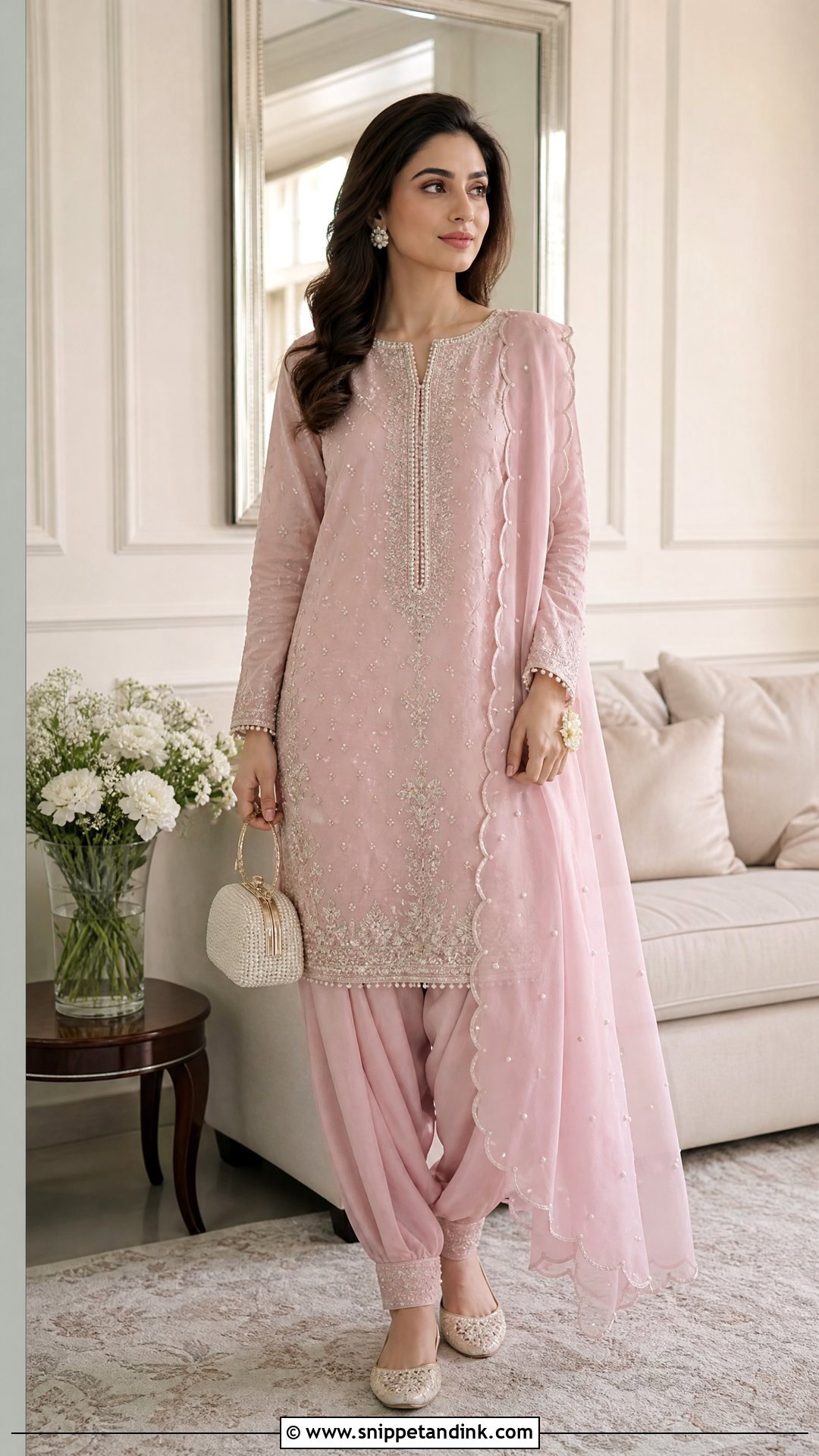
Powder pink shalwar kameez is the most adaptable look here. Raw silk gives a crisp knee-length kameez, cotton silk is cooler, and light organza adds shape. White embroidery, pearls or silver keep the pale colour fresh. I like a traditional gathered shalwar for long ceremonies because it doesn’t cut in at the knee when you sit. A scalloped dupatta, pearl studs and ivory juttis are enough.
7. Hot Pink Bridal Lehenga Nikkah Outfit
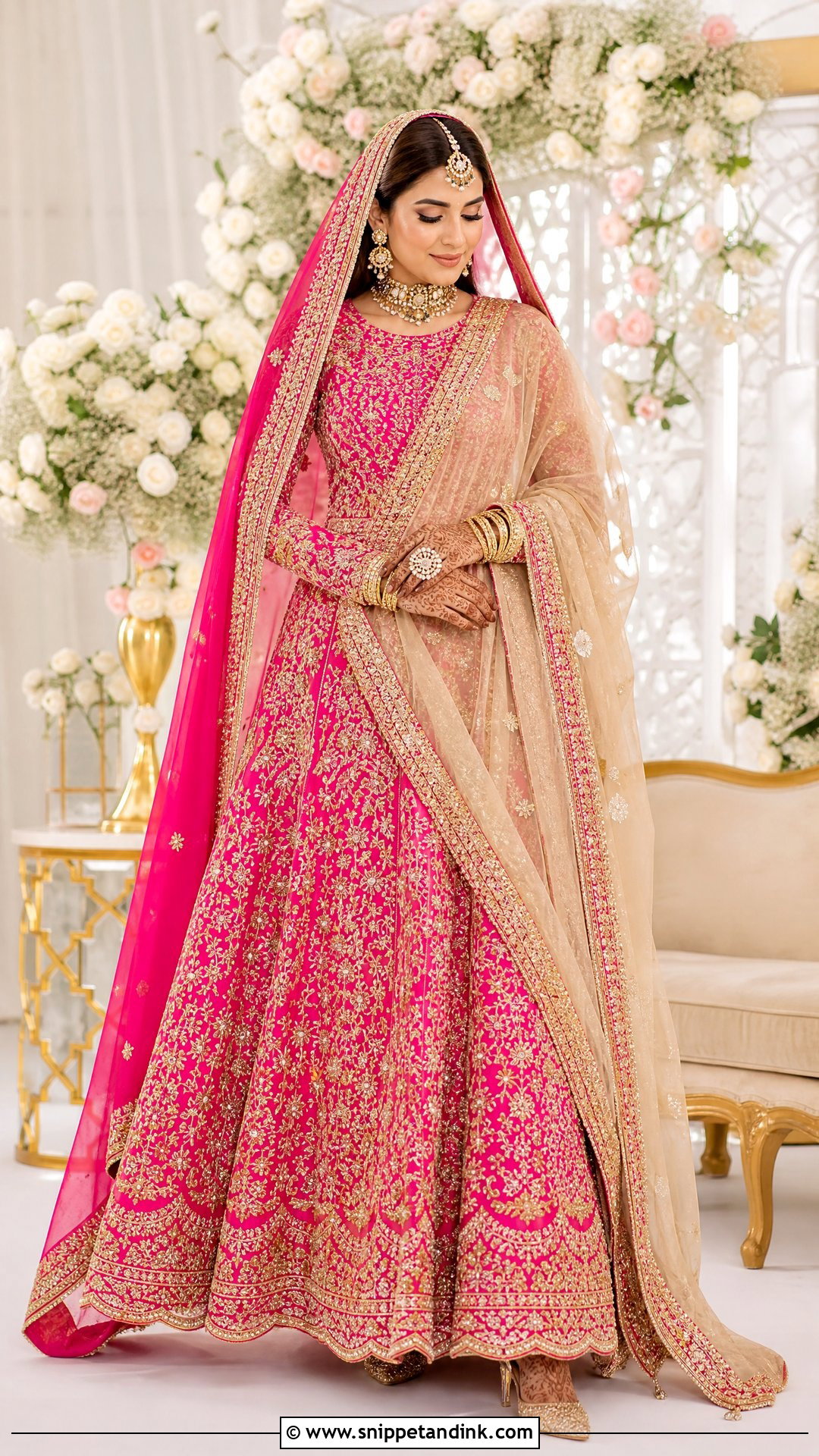
Hot pink suits a bride who wants her Nikkah to feel unmistakably celebratory. The trick is restraint elsewhere: a classic lehenga shape, gold floral embroidery, a long-sleeve blouse and a modest neck. I like a sheer hot pink dupatta over the head with a pale pink or champagne one across the body for depth. Kundan and gold bangles finish it. Keep the lip a softer rose, because a matching hot pink lip and outfit flattens the face in close-up shots.
8. Rani Pink Gharara Nikkah Outfit
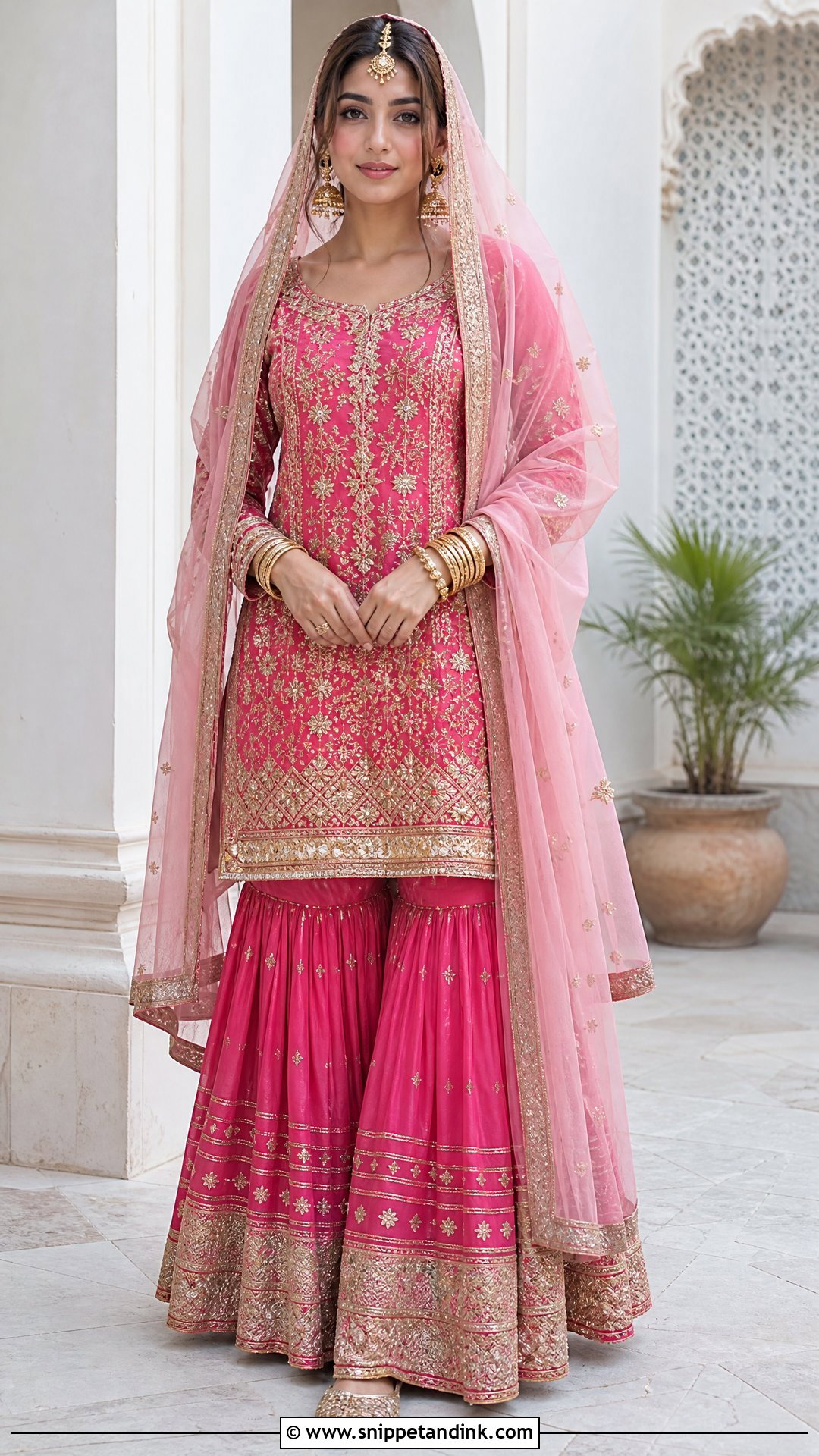
Rani pink makes a gharara feel festive straight away. I pick a straight short kameez with covered shoulders and gold work at the neckline, then gota or zari along the knee seam and flare. A pale pink dupatta over the head softens the bright base for a daytime ceremony. Gota is heavier than it looks, so I check that the knee seam is reinforced; a cheap one sags after an hour of sitting.
9. Pink And Ivory Sharara Nikkah Outfit
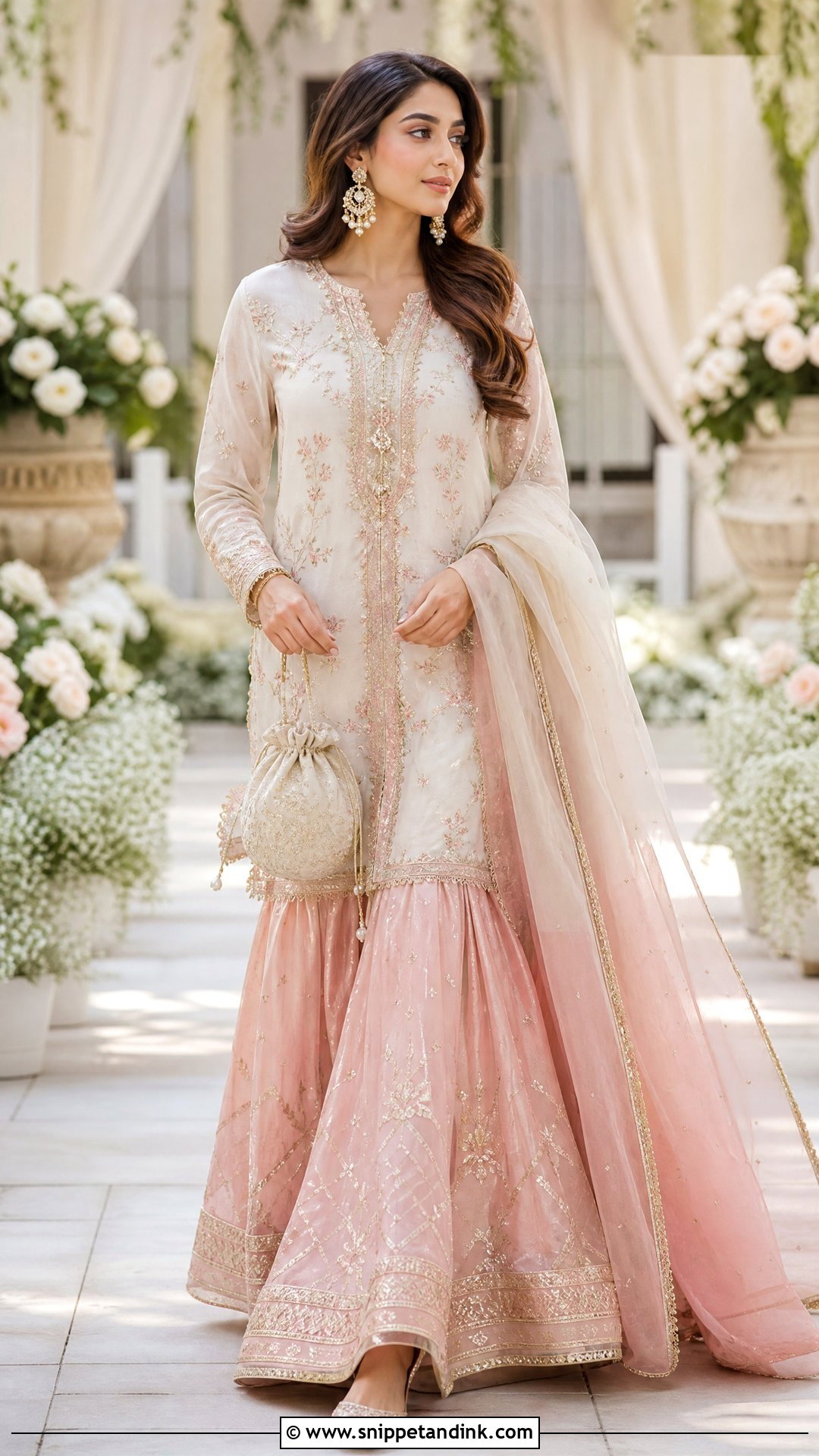
Ivory near the face with pink below is a calm, formal pairing. An ivory kurta with blush embroidery over a pink sharara keeps the top light; reverse it if you want the colour higher up. An organza dupatta mixing both colours ties it together. If you’re a guest, check with the family before wearing ivory, because some brides choose it for their own look and you don’t want to match her.
10. Pink Organza Saree Nikkah Outfit
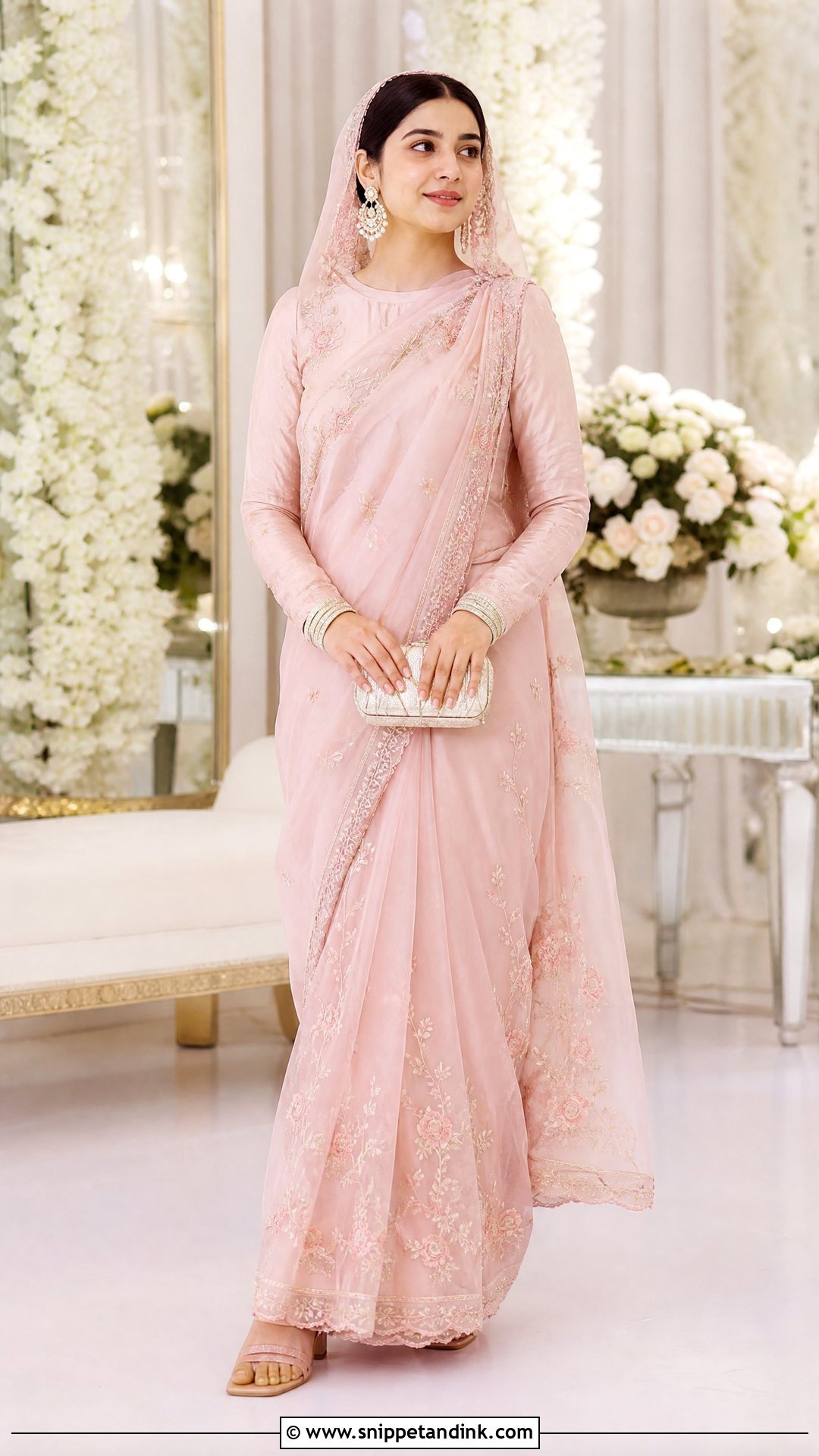
Saree at a Nikkah? It works, as long as the coverage is planned. A pastel or rose organza with small embroidered flowers or a slim metallic border, worn with a full-length blouse that has a higher neck and longer hem, covers well. I pin the pleats and pallu securely and, when head coverage is needed, add a separate light dupatta rather than pulling the pallu up. Pulling the pallu over the head unpins the pleats within minutes.
11. Pink Peplum Gharara Nikkah Outfit
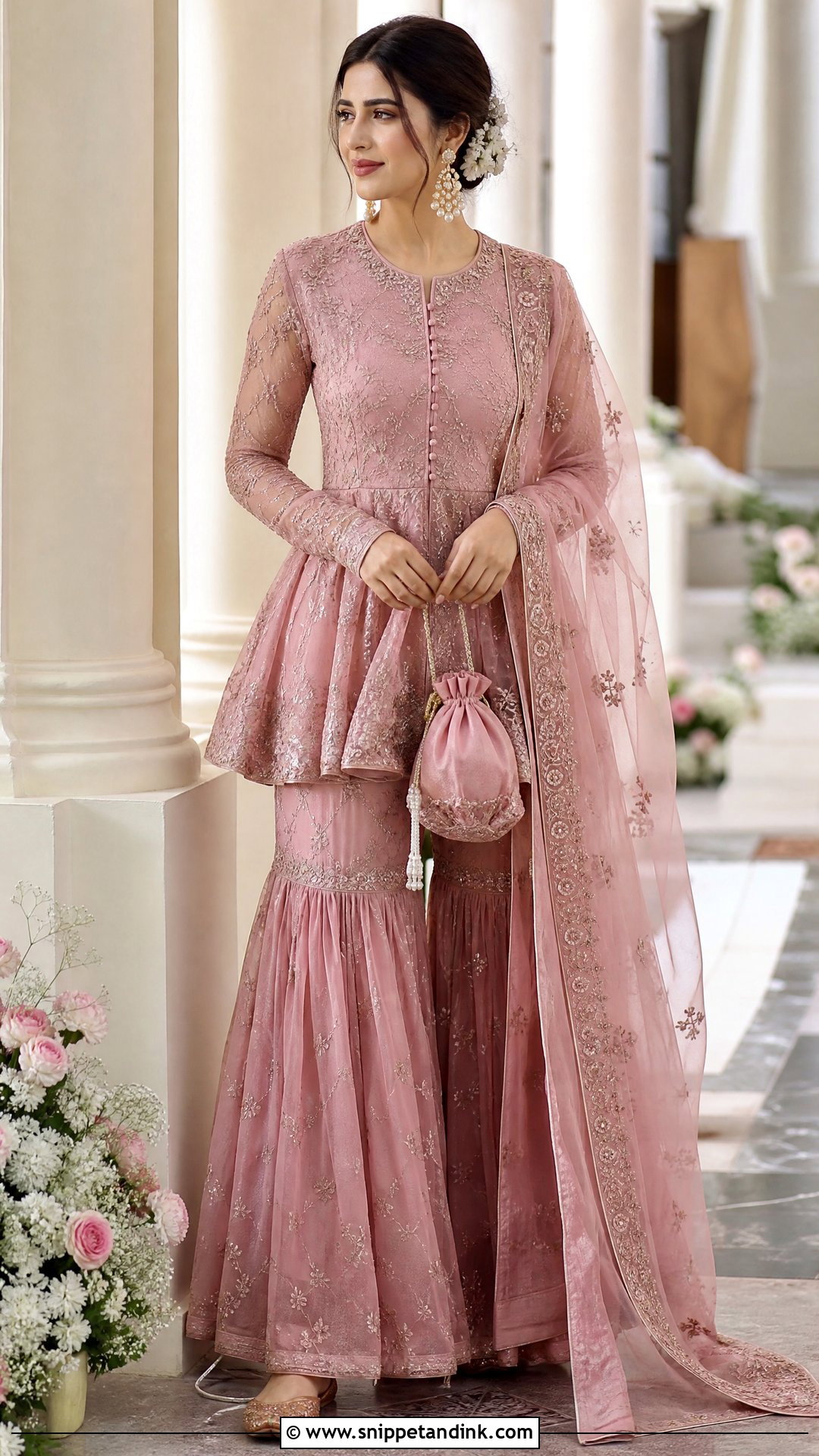
A pink peplum top with a gharara is a modern shape that still respects traditional dressing. Hip length, full sleeves and a structured waist are the details that matter. I make the top in rose or dusty pink raw silk and the gharara in organza, so the top holds its shape against the lighter bottom. Bridesmaids suit this look; a bride can add heavier handwork, a second dupatta and a fuller jewellery set.
12. Pink Velvet Lehenga Nikkah Outfit
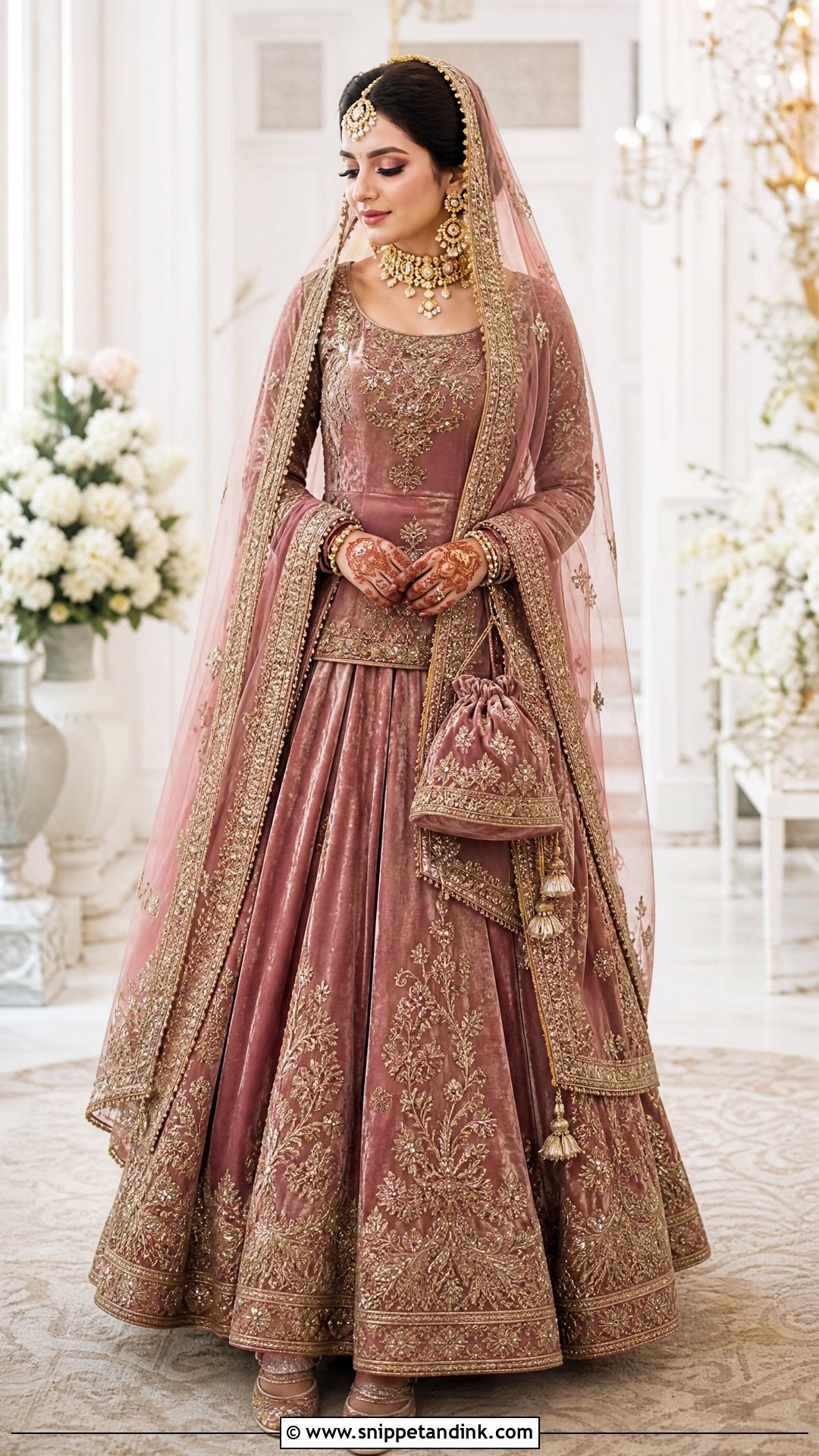
Velvet is my answer for a winter Nikkah in a cold hall. Choose dusty rose, raspberry or muted magenta, because very pale velvet loses its definition and can look grey. A long-sleeve velvet blouse with antique-gold work covers well, and an organza or net dupatta keeps the total weight down. Velvet crushes where you sit, so I steam it on the day and avoid pressing it flat with an iron, which leaves shiny marks.
13. Pink Chikankari Anarkali Nikkah Outfit
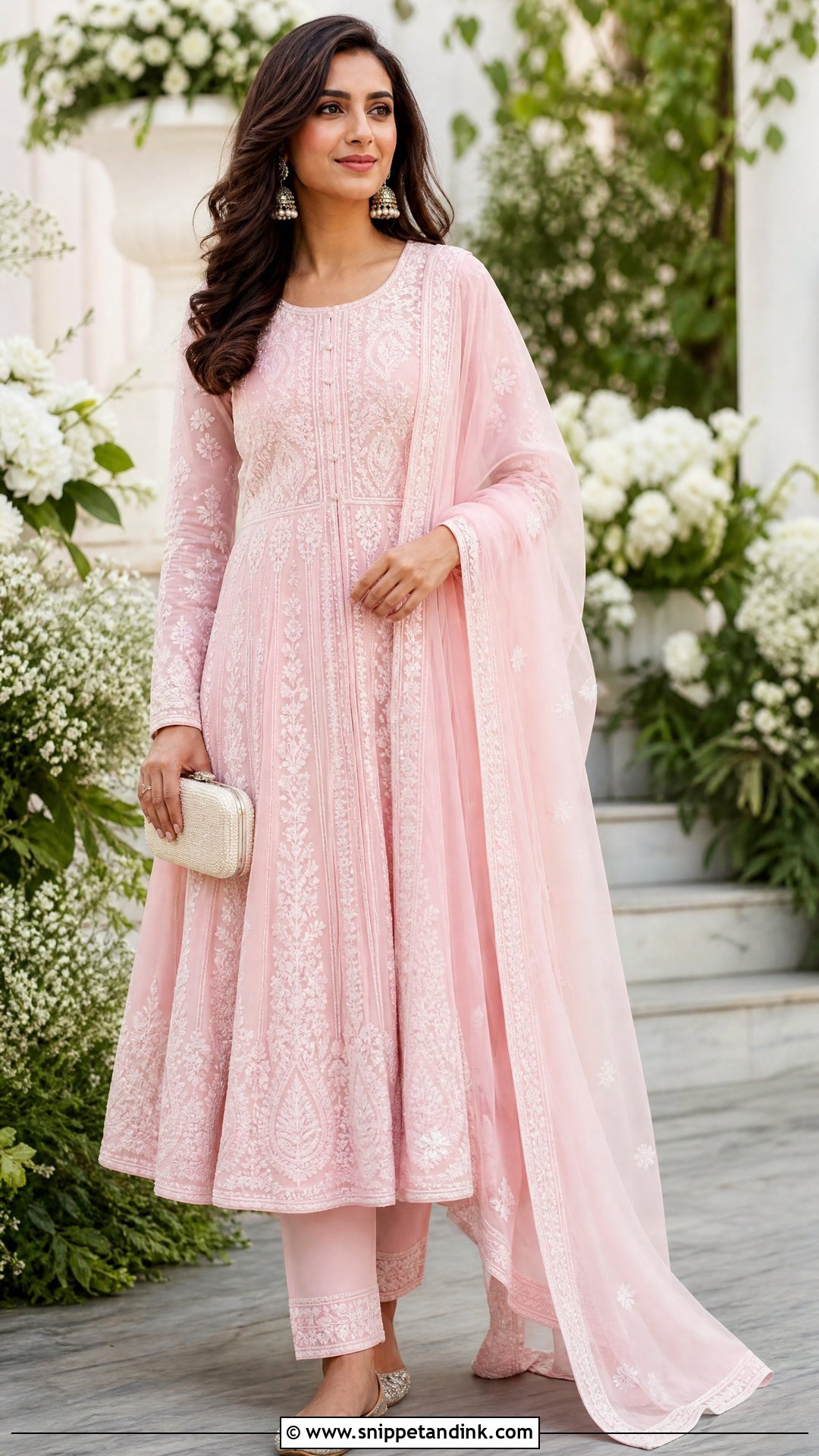
Chikankari gives a pink Anarkali detail without heaviness. Blush, powder or tea-pink with white tonal threadwork, a lined bodice, full sleeves and a gentle flare is my starting point. Lining is non-negotiable here; unlined chikankari is close to sheer. For the bride, add subtle sequins, a pearl headpiece and a wider-bordered second dupatta. Guests can keep it to the dress, pearl jhumkas and silver juttis.
14. Pink Gota Patti Sharara Nikkah Outfit
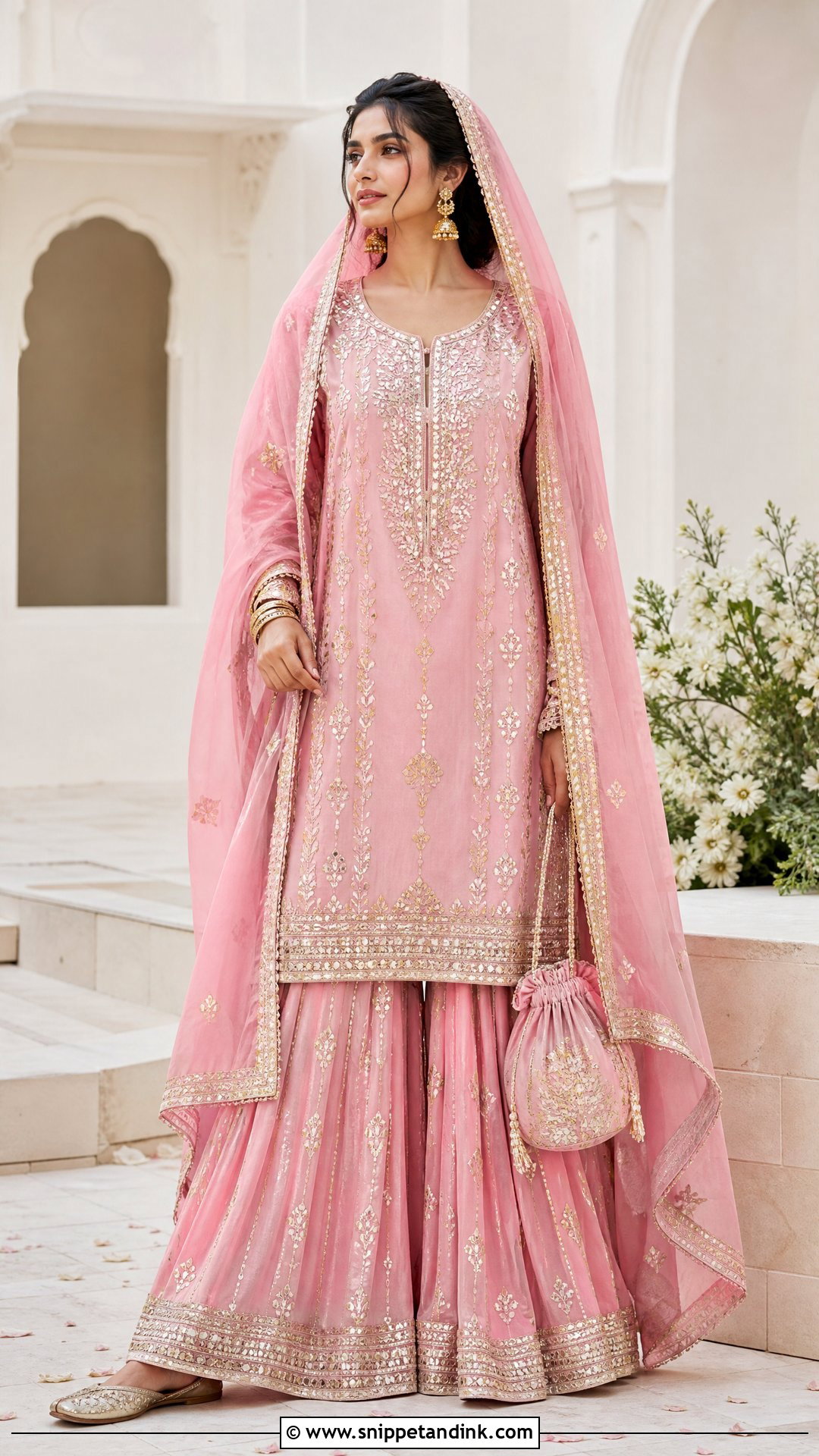
Gota patti has a traditional shine that reads well in daylight. A straight knee-length kurta in carnation pink, rose or light fuchsia goes over a wide sharara with spaced motifs rather than solid embellishment. Dense gota adds a surprising amount of weight to the hem, which is why I keep it spaced. A dupatta with a gota border frames the face well over the head. Skip glitter makeup so the metallic trim stays the main shine.

15. Pink Floral Lehenga Nikkah Outfit
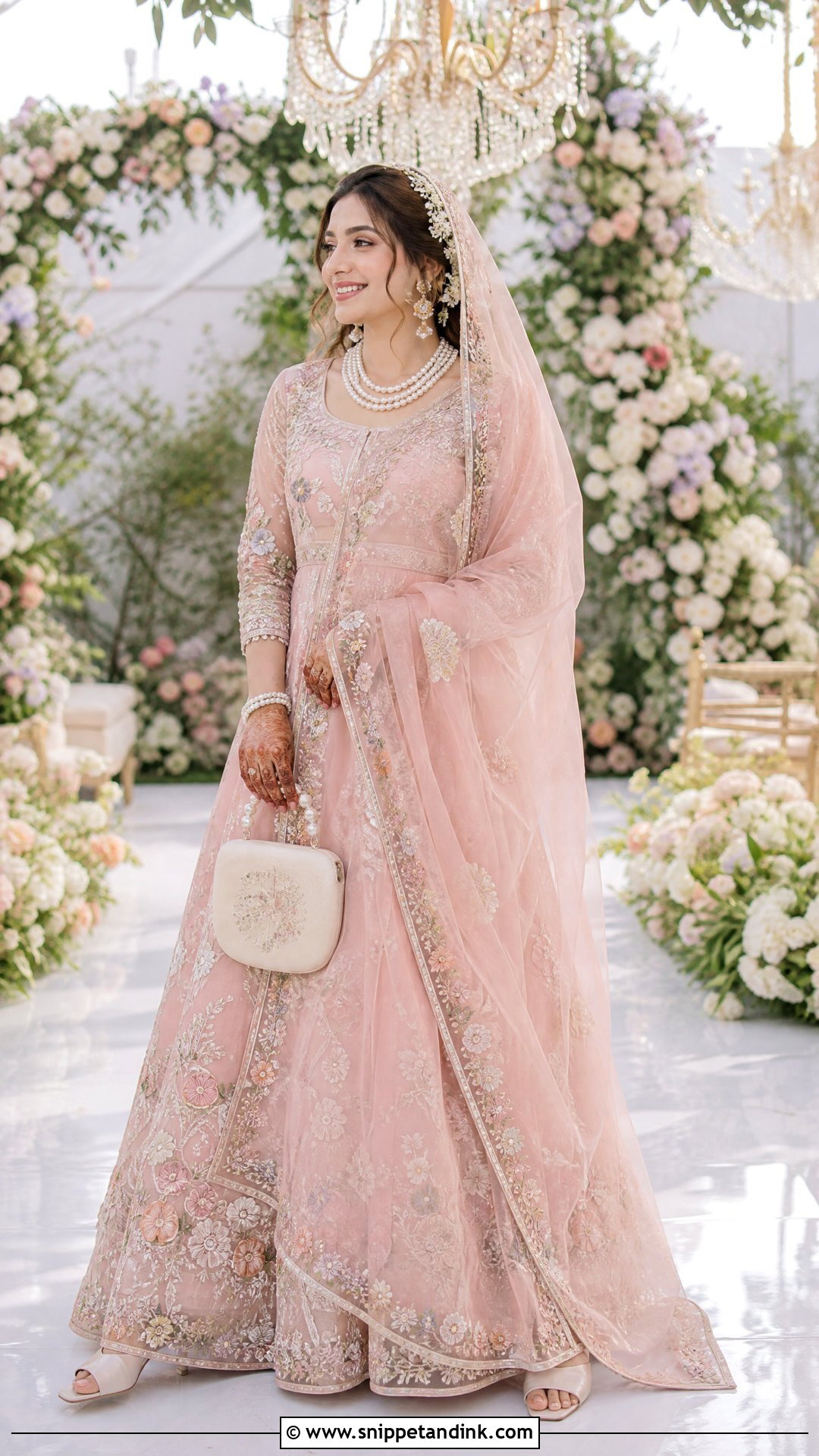
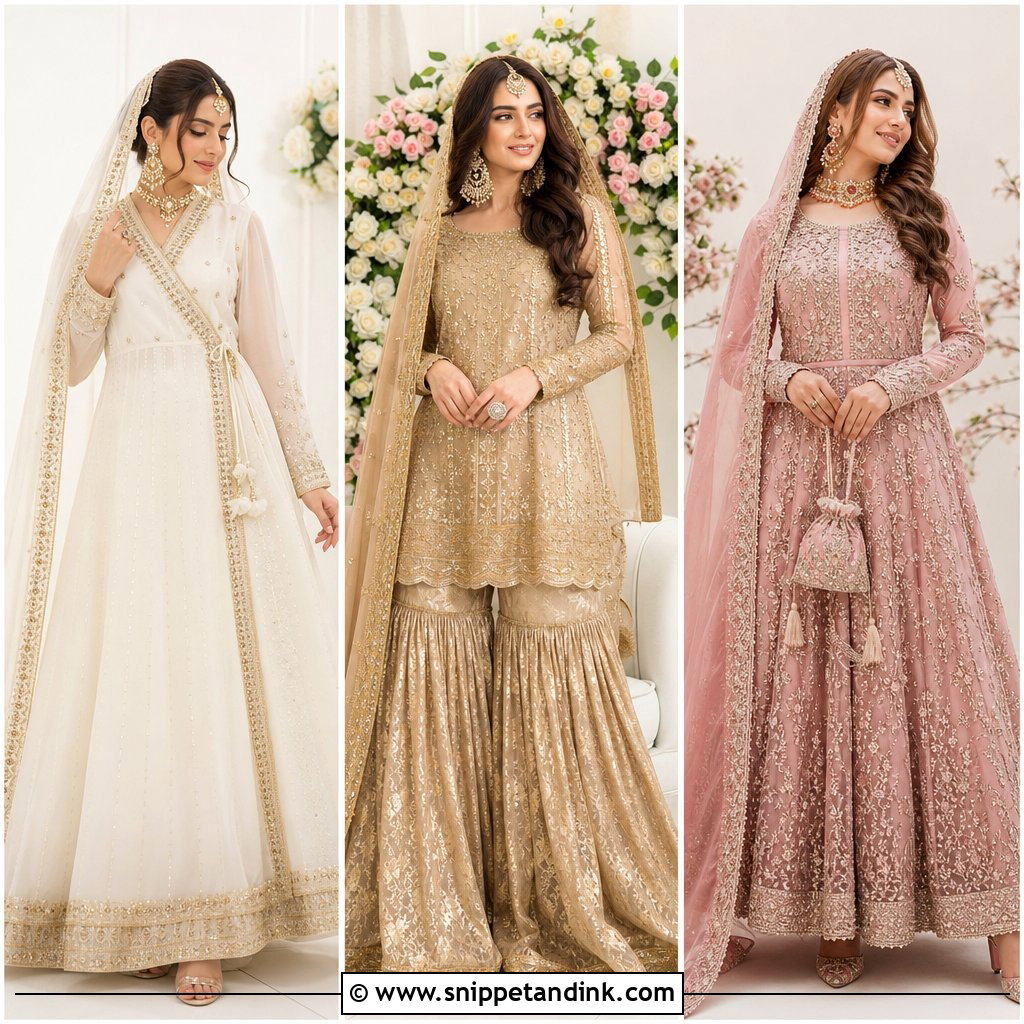
Spring and summer ceremonies suit a pink floral lehenga with flowers in ivory, peach, sage or lavender. I keep the blouse in the same floral work and the dupatta plain with a floral border, so the outfit doesn’t look crowded. Brides can choose raised 3D embroidery and a second veil; guests should go for printed flowers or light threadwork. Raised floral appliqué crushes under a heavy dupatta, so I use a light net over it.
16. Pink Jacket Lehenga Nikkah Outfit
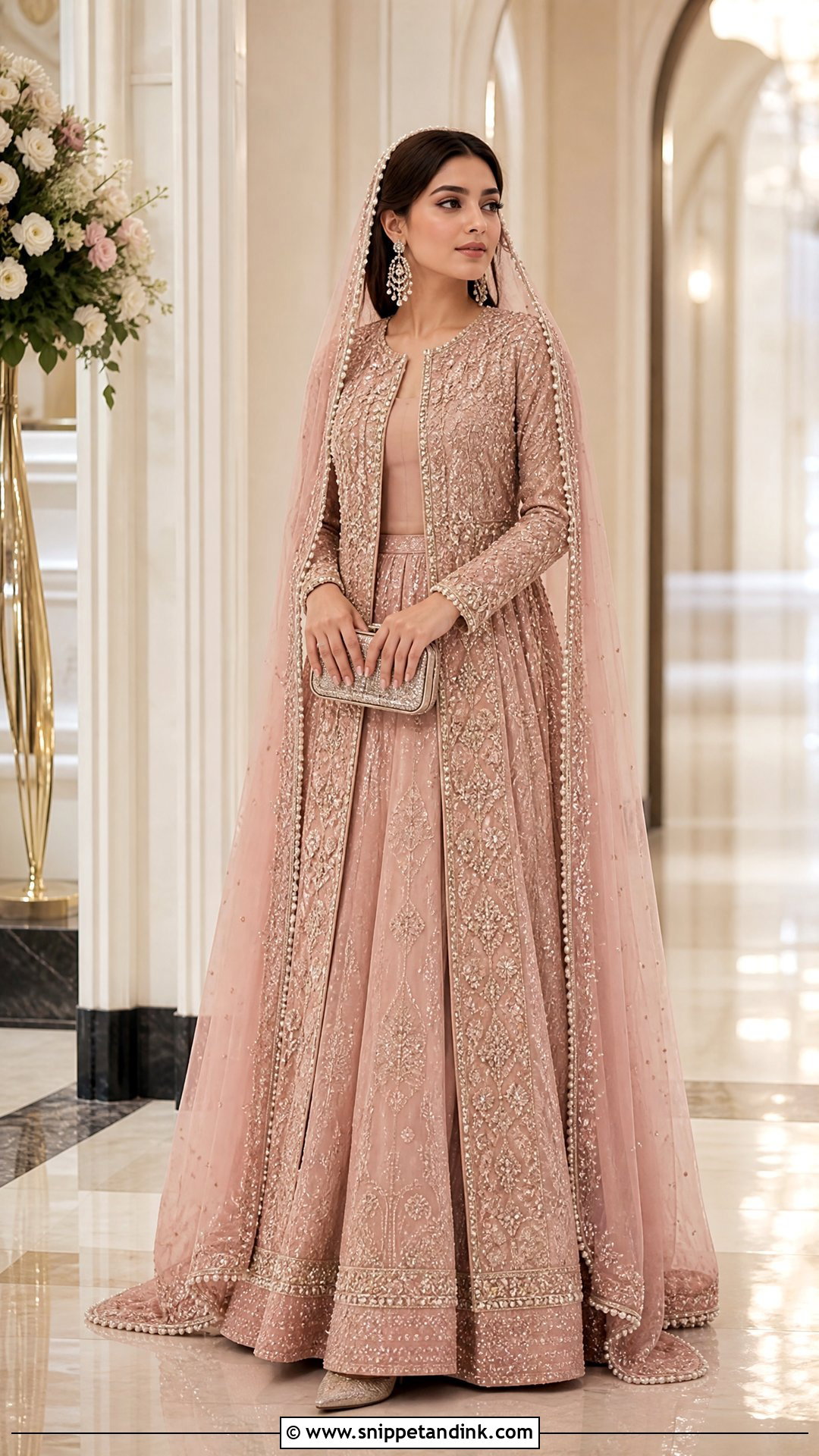
Layering a long pink jacket over a lehenga gives excellent coverage with very little effort. A tonal skirt, a fitted inner blouse and an embroidered floor-length jacket, open or closed at the waist, is the formula. Blush suits daytime and deep rose suits evening. If you need a head dupatta, keep it slim and separate from the jacket’s embroidery so the two don’t snag. The long vertical line flatters most body shapes.
17. Pink Cape Anarkali Nikkah Outfit
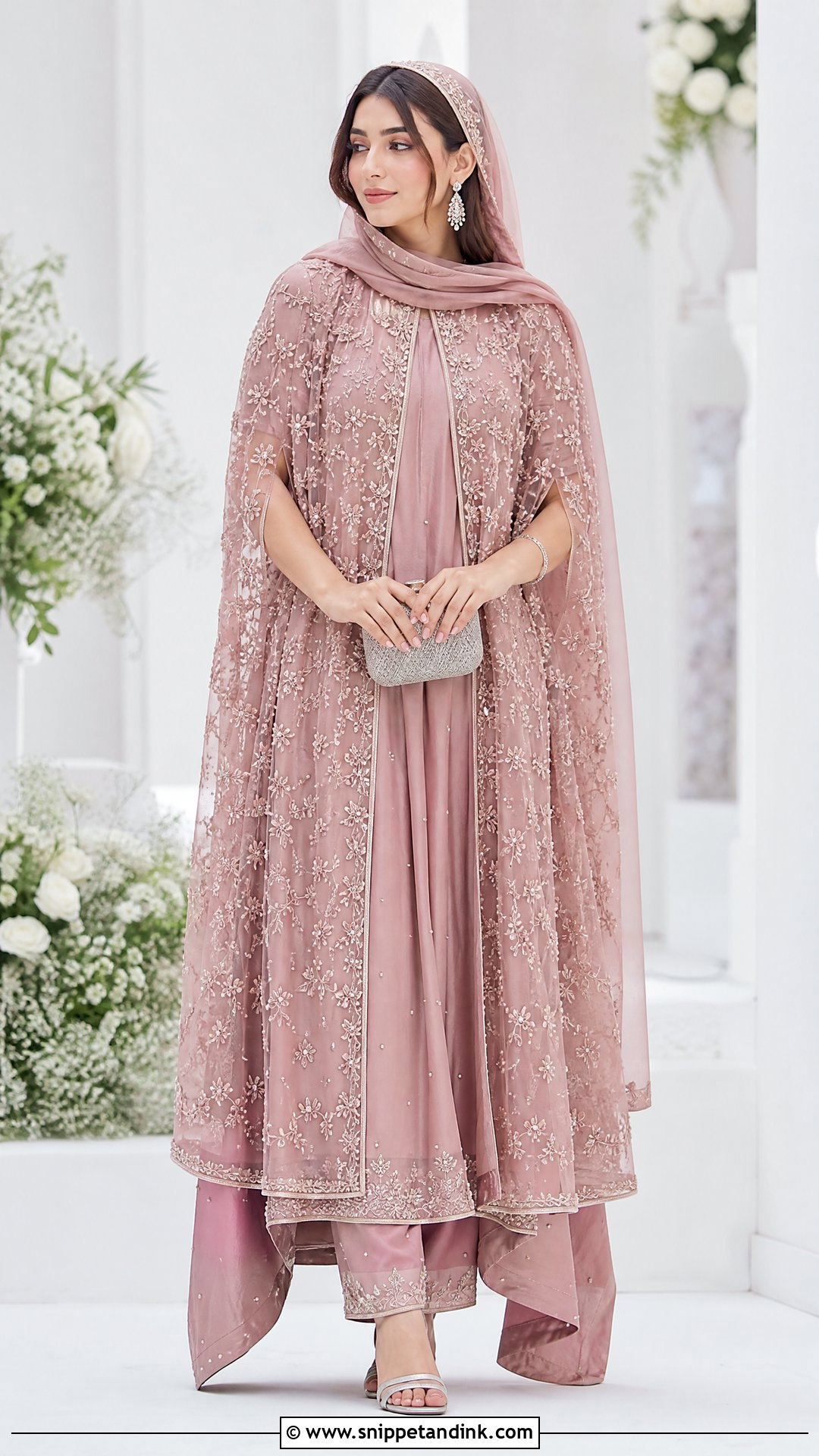
Cape Anarkalis feel modern while staying modest, because a detachable cape covers the shoulders and upper arms. I put a pearl or floral organza cape over a plain dusty or pastel pink dress so the detail sits on one layer only. Straight pants, drop earrings and silver block heels keep it clean. Bridesmaids can stand out in this without looking bridal. Check the cape attachment points at the fitting; hooks at the shoulder seam pull the neckline sideways if they’re placed too far out.
18. Pink Palazzo Suit Nikkah Outfit
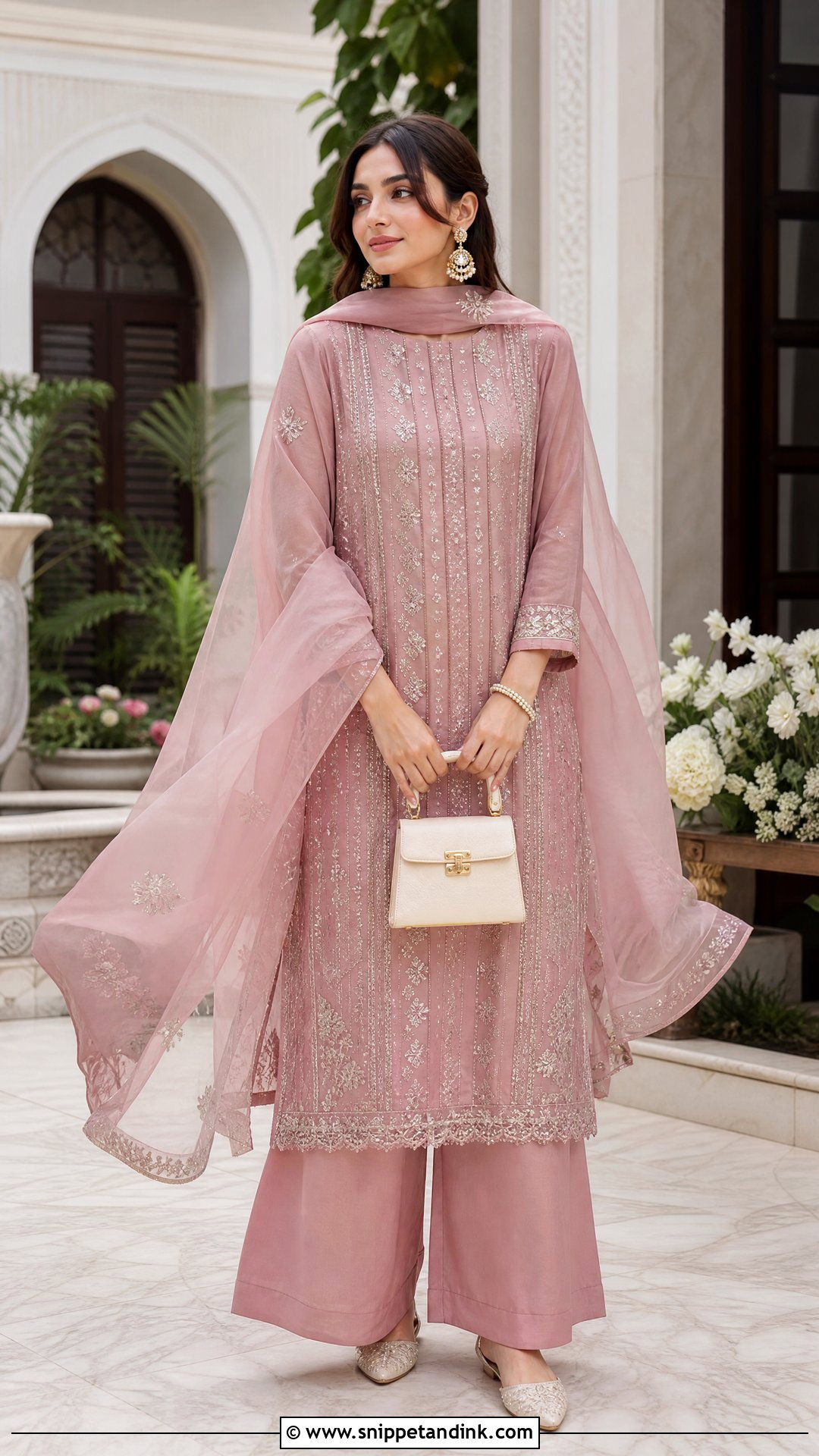
For mothers, aunts and guests who want less volume than a lehenga, a palazzo suit is the comfortable choice from the vows through the family photos. Wide-leg palazzos with a long straight kurta in rose, blush or mauve make a long, clean line. I prefer embroidery that runs vertically down the placket and neckline because it lengthens the body. A chiffon or organza dupatta over both shoulders and pointed embroidered flats finish it.
19. Pink Maxi Dress Nikkah Outfit
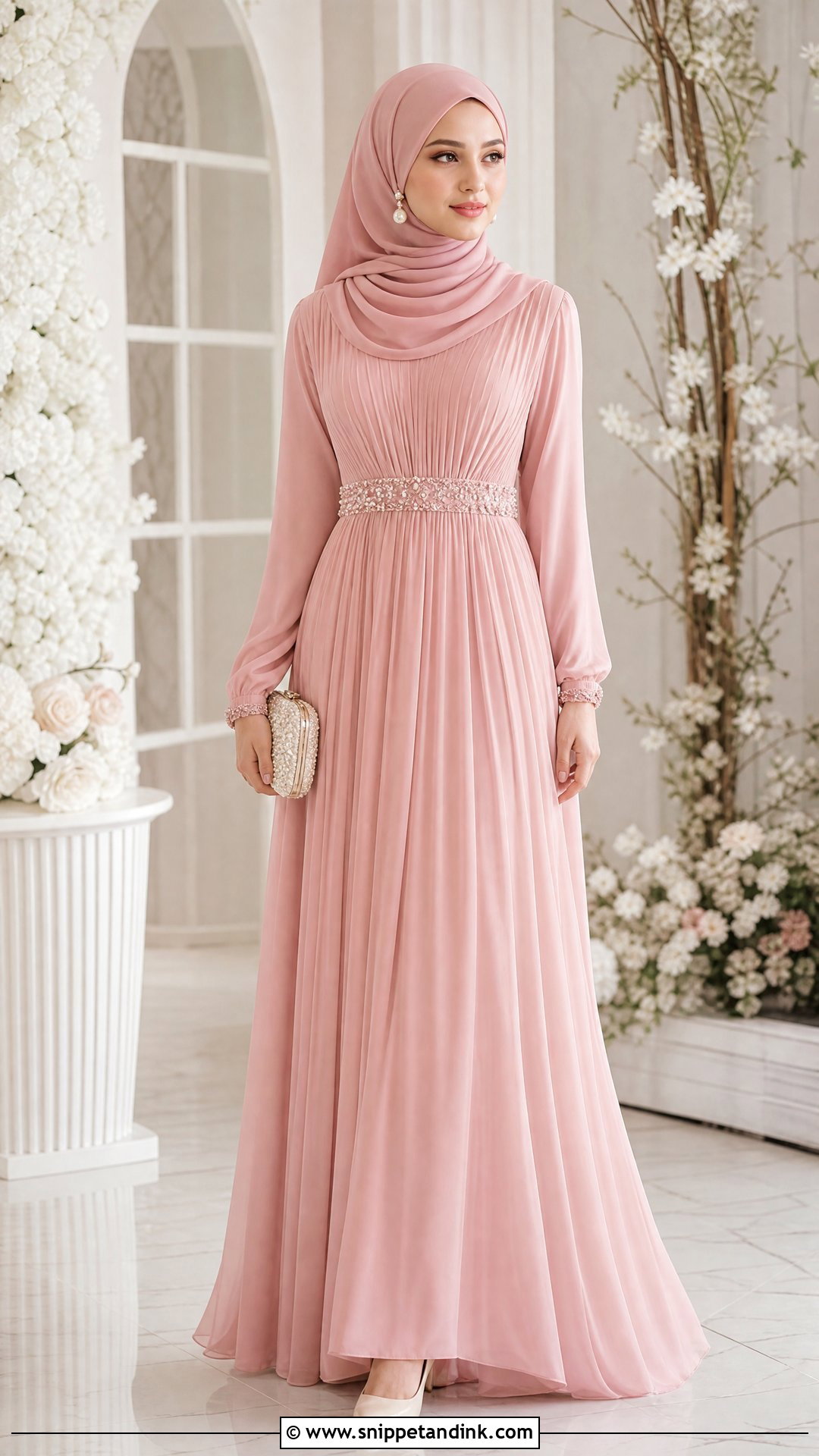
A pink maxi dress suits women who like a single simple piece. Full sleeves, a fitted waist and a proper opaque lining are the three things I check, because pleated chiffon looks sheer in sunlight without lining. A coordinating dupatta, or a matching chiffon hijab, connects it to traditional Nikkah dressing. Brides can add a train or pearl veil; guests keep surface detail light.
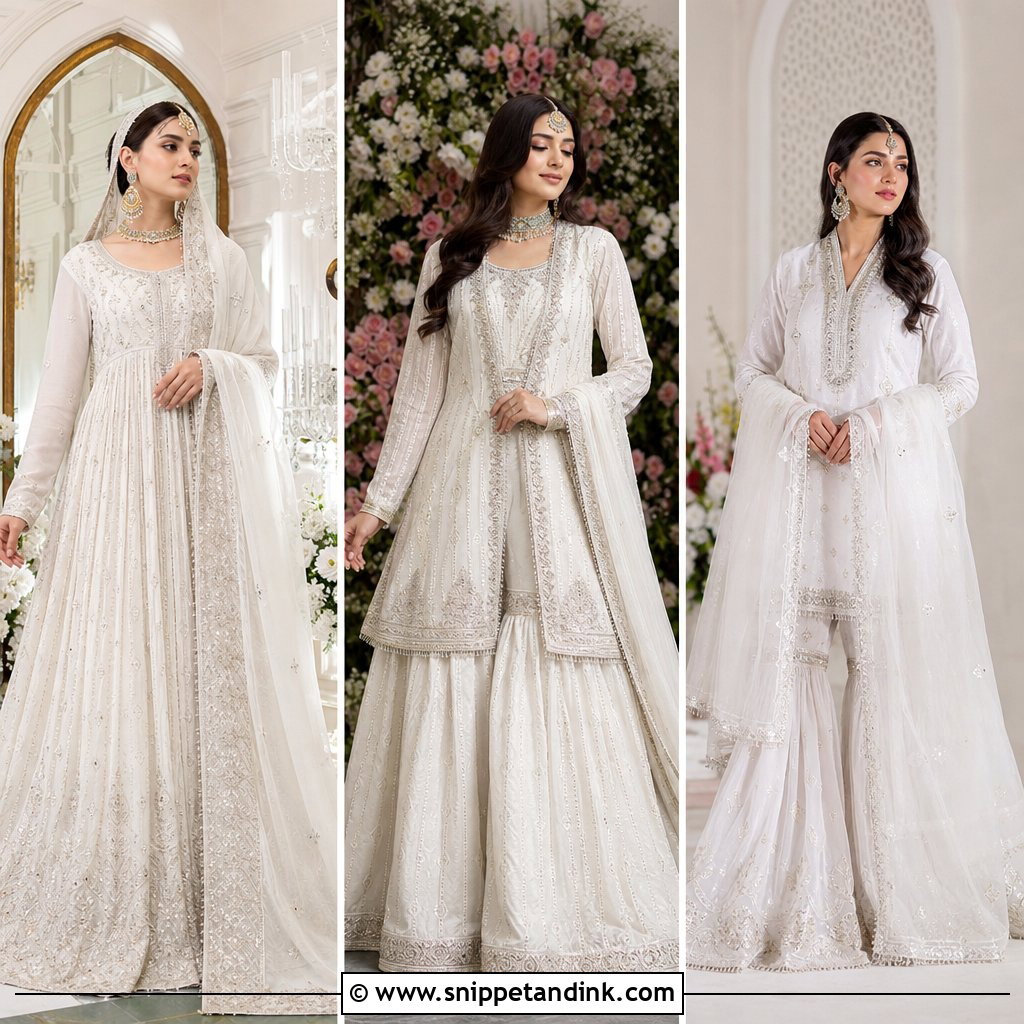
20. Pink Ombre Lehenga Nikkah Outfit
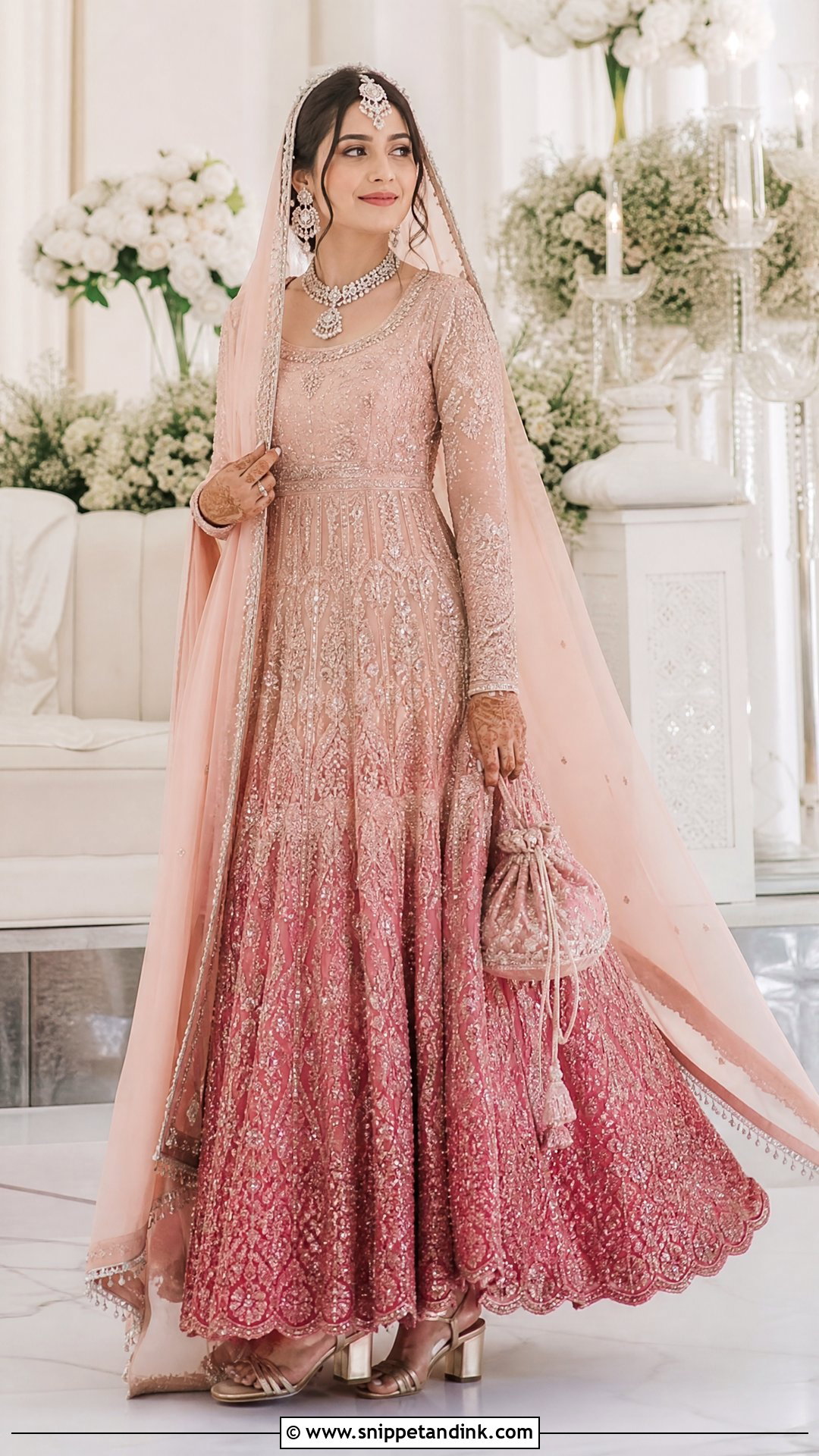
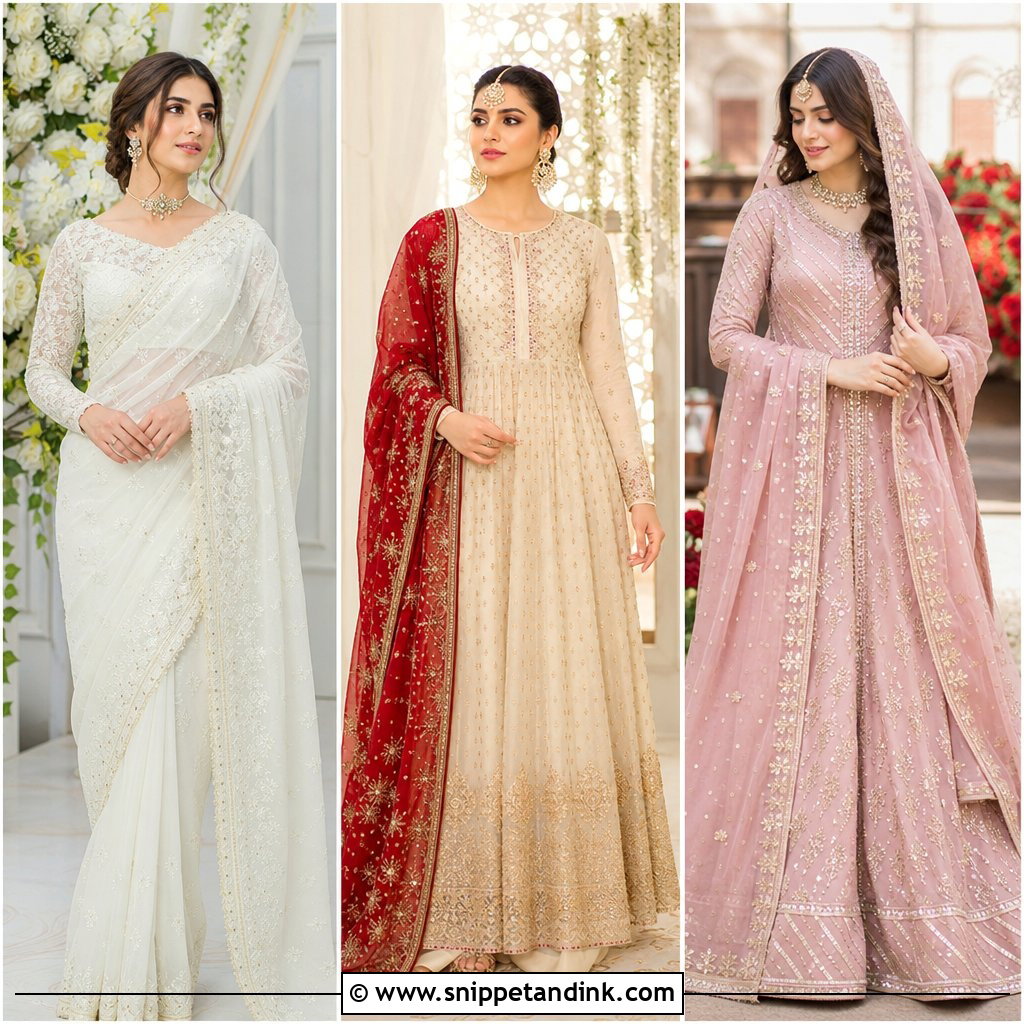
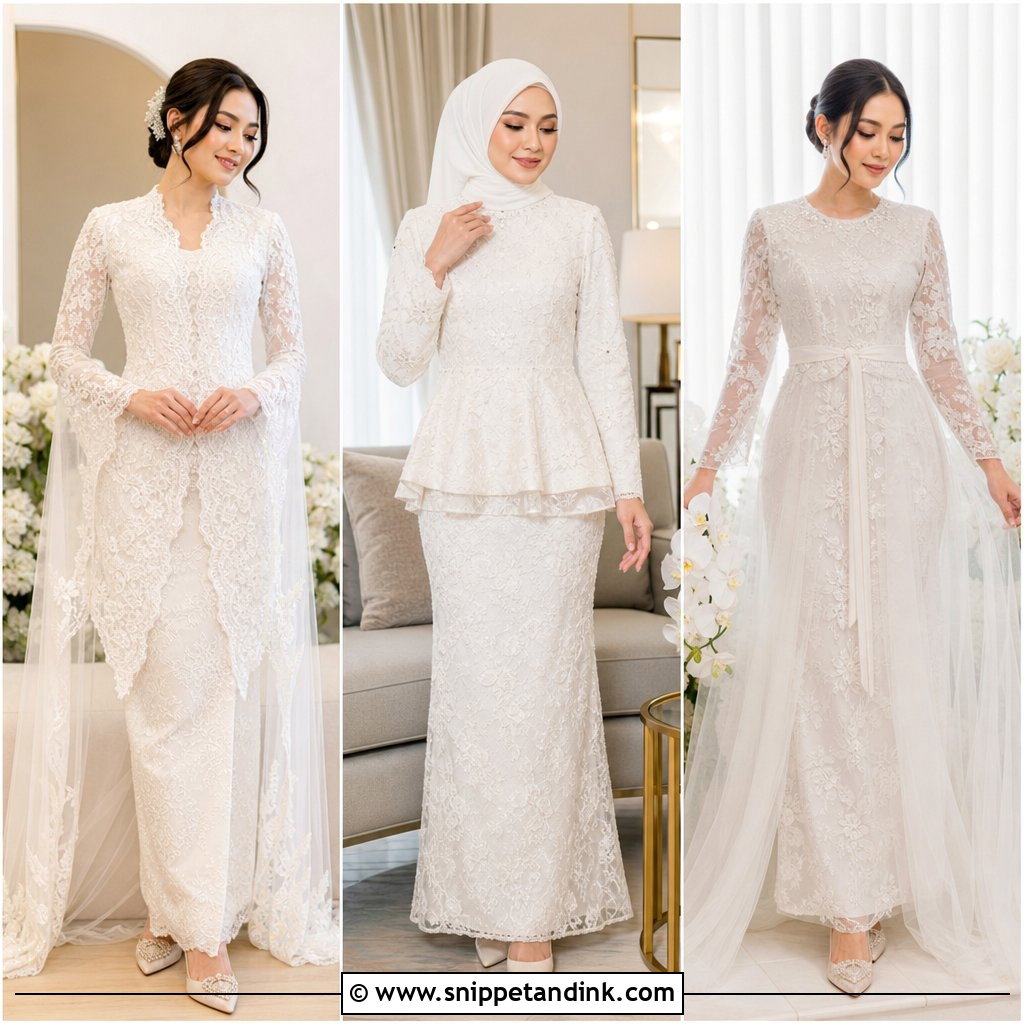
Ombre lehengas get their impact from colour rather than heavy work. A skirt that deepens from pale blush at the waist to rose or raspberry at the hem draws the eye downward, so I keep the blouse solid and pale. A matching ombre dupatta unifies the outfit, but a plain blush one is easier to wear over the head because the gradient lands unevenly on the face. Pick silver, pearl or pale gold to match the embroidery thread. I often point brides here when they want impact but don’t want red.
A Mosque Nikkah Asks Different Things From a Hall or Home
At a mosque, women are usually expected to cover the head, arms and legs, and everyone removes their shoes at the entrance. That changes my styling. I choose juttis or flats you can slip off and back on without bending down in a heavy outfit, and I skip ankle-strap heels entirely. Lehenga hems should be checked barefoot, since the length you fitted in heels will drag once you take them off.
Seating matters too. Many ceremonies have the bride and the women seated on the floor or on low cushions, so I check every outfit sitting cross-legged in the trial. Fitted kameez side slits, stiff gota borders and narrow churidars all show their problems in that position.
Home and hall Nikkahs are more relaxed about shoes, but they’re often warmer and more crowded. That is where lighter organza and chiffon pay off, and where I’d leave velvet for an evening reception instead.
Guests who aren’t sure of the family’s expectations should simply ask. A short message about head covering, sleeve length and whether men and women sit separately saves you from guessing, and in my experience families are glad to be asked.
Pink for the Vows, Comfort for the Long Afternoon After
Your role, the venue, the season and the formality will narrow the list quickly. Blush, powder and baby pink suit soft daytime looks, while rani, hot pink and raspberry carry more bridal weight. Ghararas, shararas, pishwas and lehengas feel ceremonial; Anarkalis, palazzo suits and maxi dresses are the easier alternatives. I’d plan the embroidery, dupatta, jewellery, shoes and makeup as one look rather than piece by piece. Above all, pick something that covers comfortably and lets you sit, stand and greet people without a second thought.
You'll Like These Ideas:


Leave a Reply