
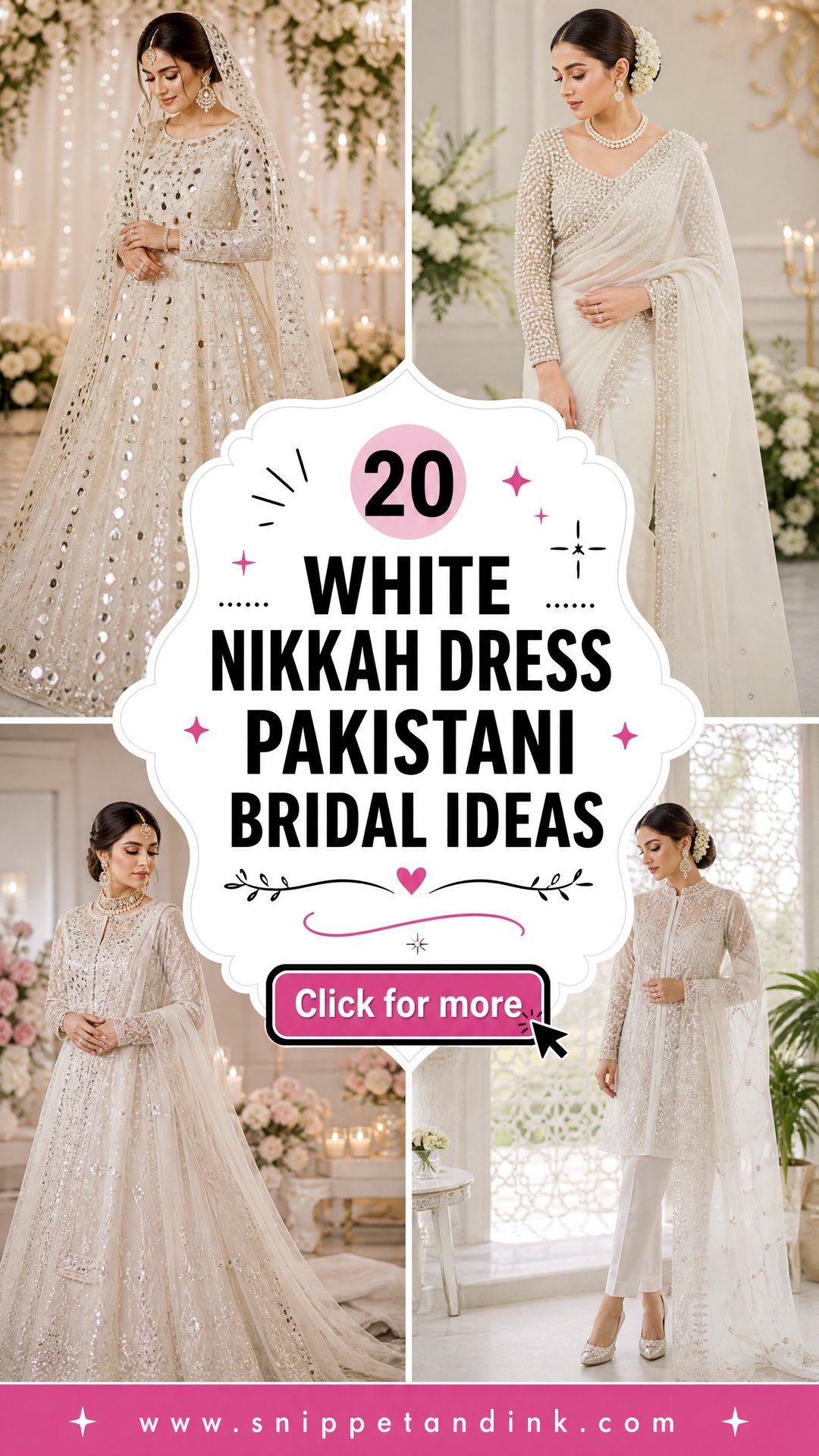
The Nikkah is usually the quietest part of a Pakistani wedding, and white suits that mood. It also has practical demands most bridal outfits don’t: you may be seated for a long time with your head covered, you may be in a mosque or a relative’s living room, and you’ll be signing papers with every sleeve and bangle in the way. These twenty looks run from ghararas and lehengas to gowns, sarees and trouser sets. For each one I’ve noted the fabric, embroidery, dupatta placement, jewellery, shoes and beauty, and where it’s a good or poor fit for the setting you have in mind.
Dressing for a Nikkah Held in a Mosque
A mosque Nikkah changes the brief more than any other setting. Many mosques ask women to keep arms, legs and hair covered and to avoid sheer fabric without lining, and some have separate seating. Ask the mosque or your officiant what they expect before choosing anything; rules differ from one mosque to the next.
What to check on the outfit
- Fully lined sleeves and bodice, since sheer organza over skin may not be acceptable.
- A dupatta large enough to cover your hair completely, not just sit on the back of a bun.
- Shoes you can slip off and on without help, because footwear usually comes off at the entrance to the prayer area.
- A hem that clears the floor, as you may be walking barefoot on carpet.
Keep heavy perfume and loud jangling jewellery for the reception. A quiet room with the bride seated close to the elders shows off a soft, light outfit far better than a heavily embellished one.
1. White Nikkah Lehenga With Gold Embroidery
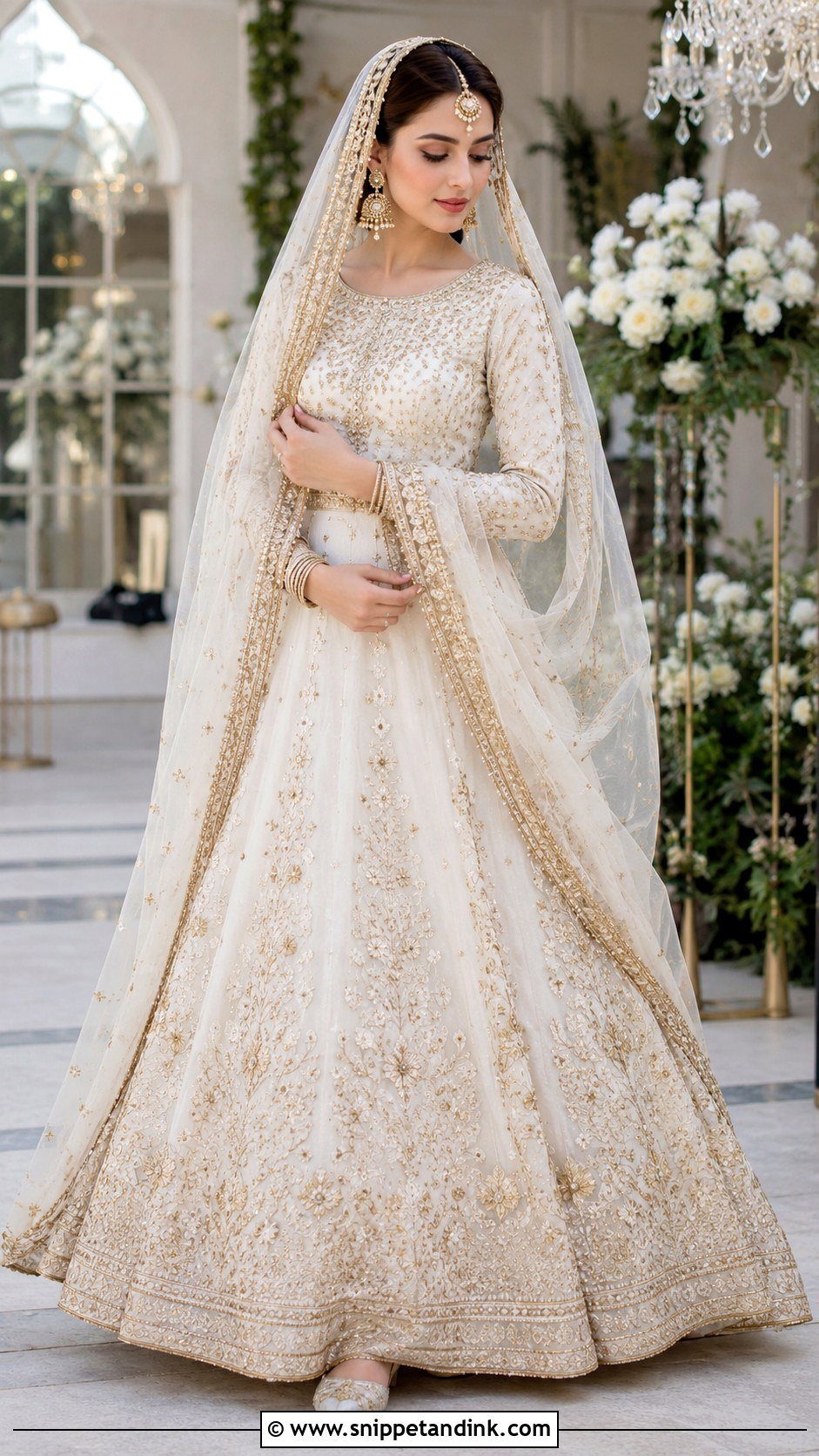
Gold on a white lehenga stays classic if you leave some white showing. I ask for zardozi, dabka and sequins on the neckline, waist and border, with open fabric in between, because an all-over gold lehenga looks beige from a distance. A fitted blouse with elbow sleeves and a moderately flared skirt in raw silk or organza. A sheer dupatta with a narrow gold trim, over the head and one shoulder. Gold jhumkas, a small tikka, ivory khussas, stacked bangles, soft brown eyes and a rose lip.
2. White Nikkah Gharara With Pearl Work
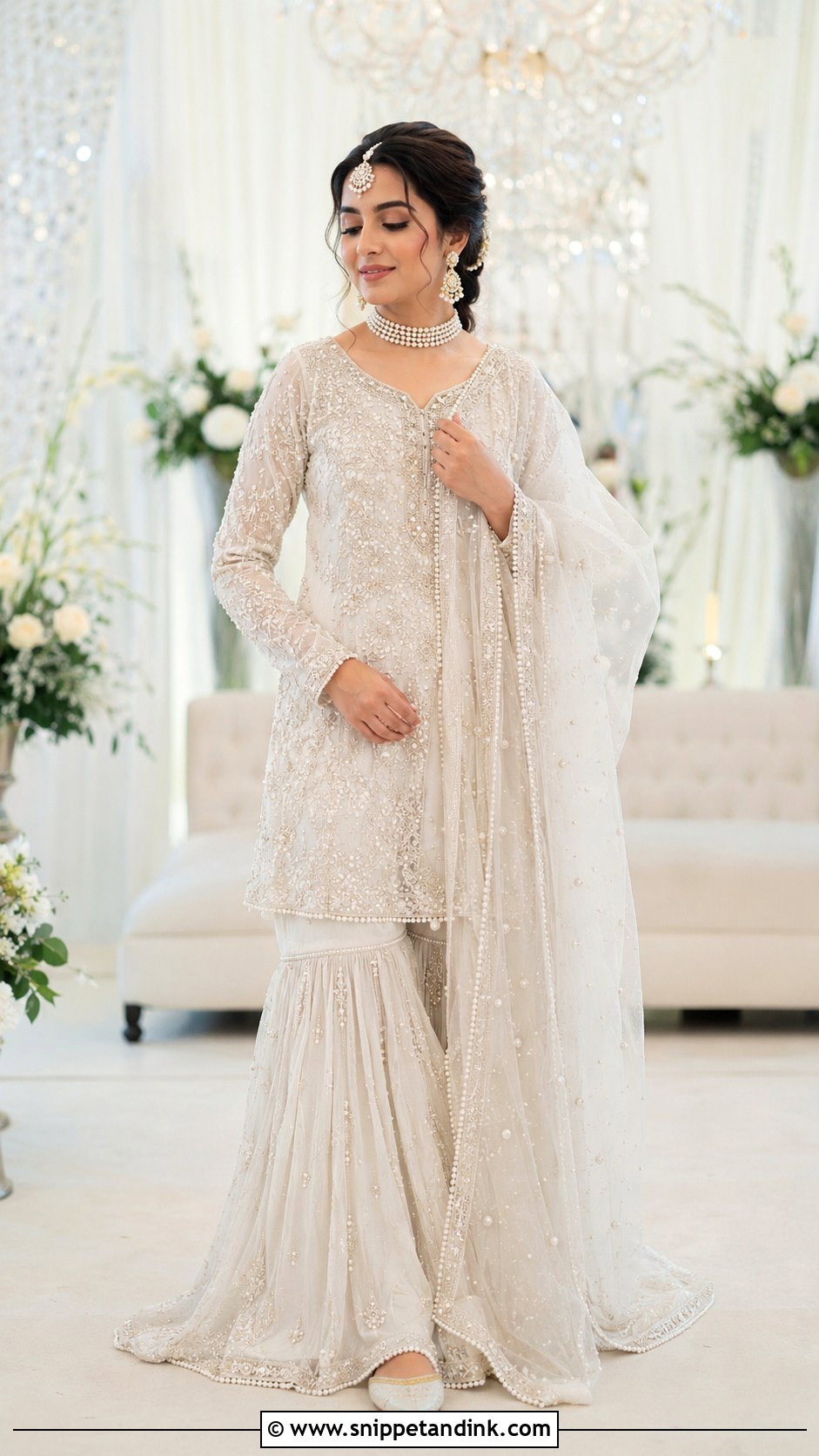
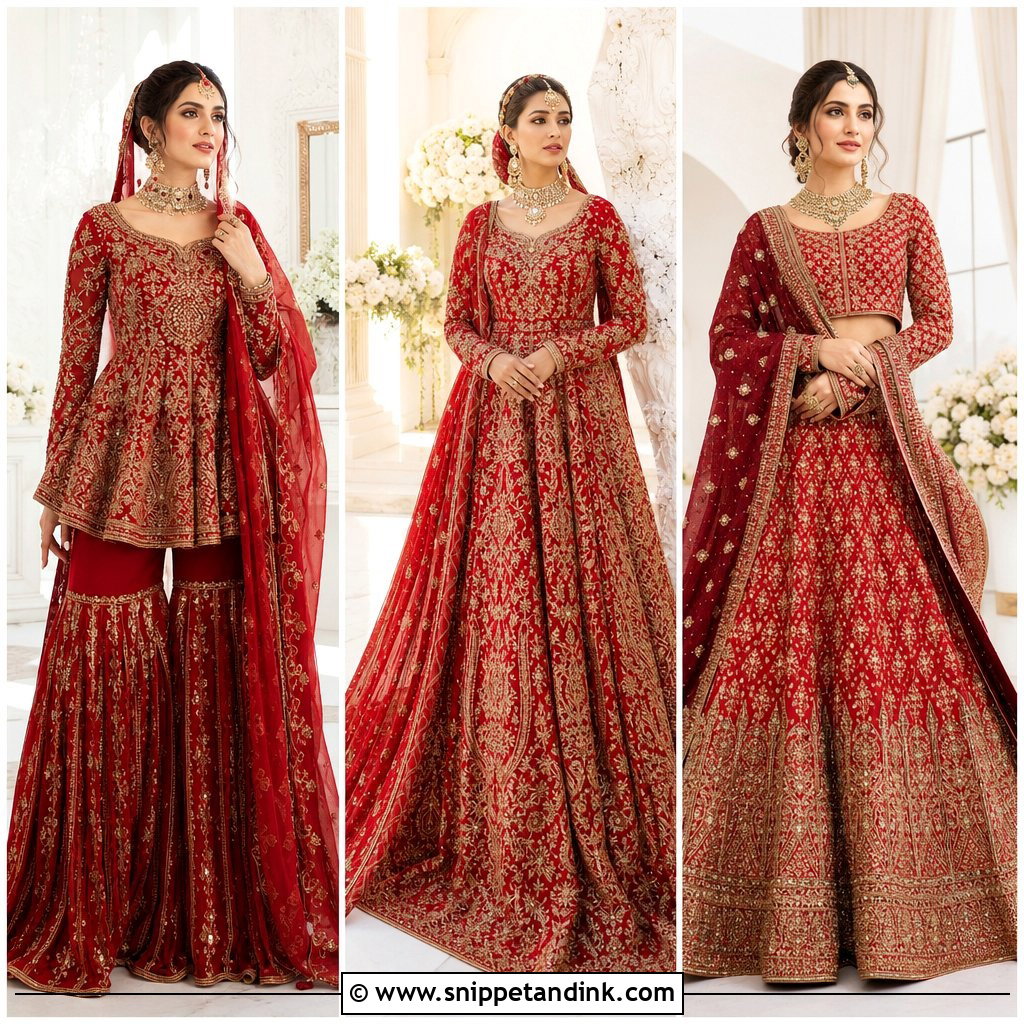
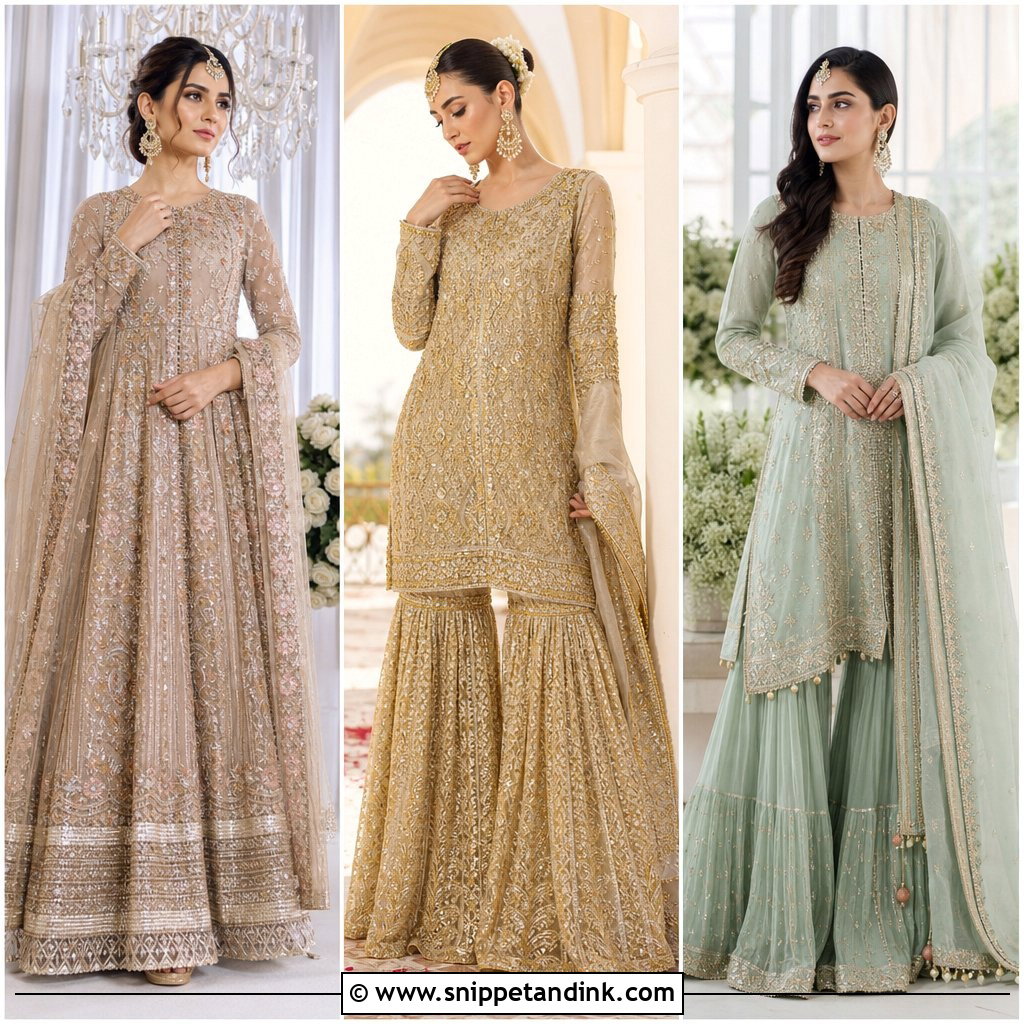
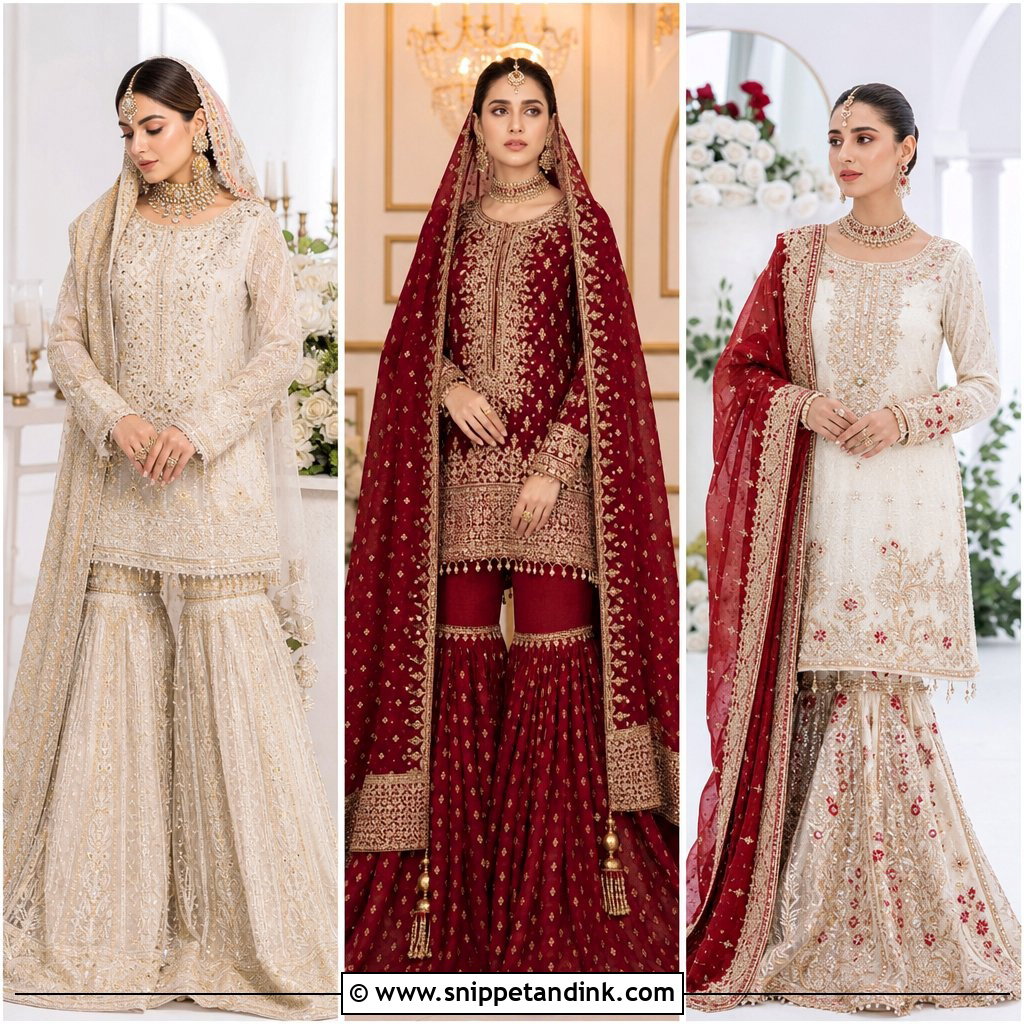
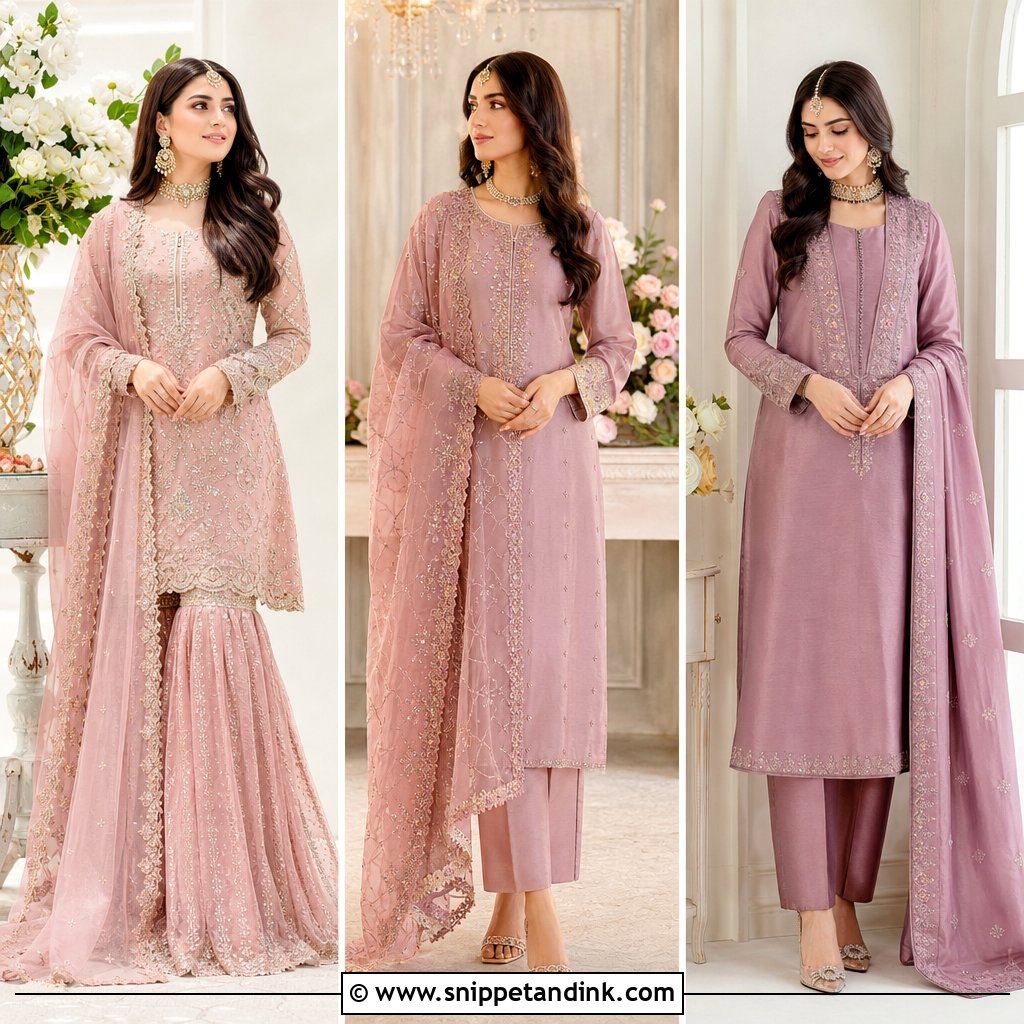
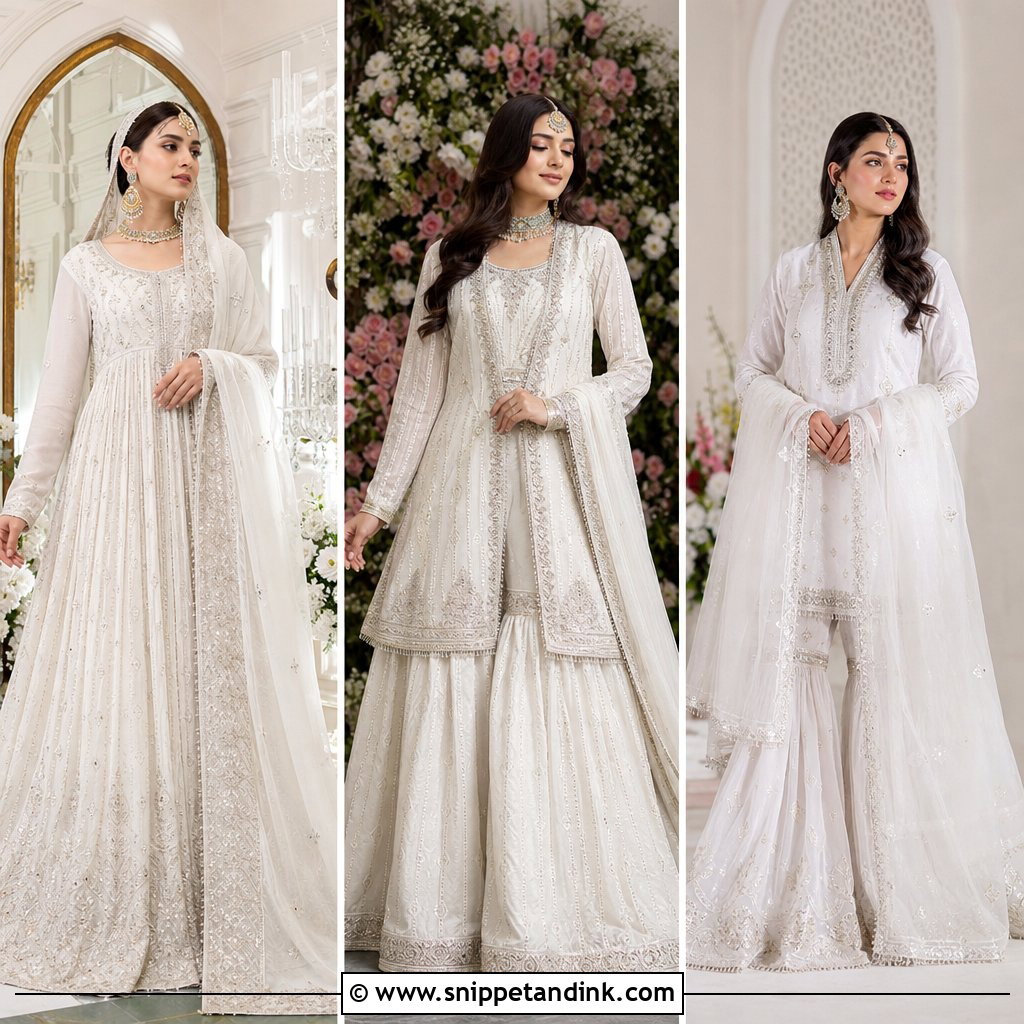
Gharara movement is lovely in a procession, but at the Nikkah you’ll mostly be sitting, so I’d choose chiffon, tissue or light organza over heavy raw silk; the volume stays without the weight pressing on your knees. A knee-length kameez over a high-waisted gharara with pearls along the joints and hem. Petite brides look better with smaller motifs and a shorter shirt. A pearl-edged dupatta over the head, a pearl choker, earrings, a delicate passa and pointed khussas. Soft pink makeup and a low bun with white flowers.
3. White Nikkah Sharara With Silver Details
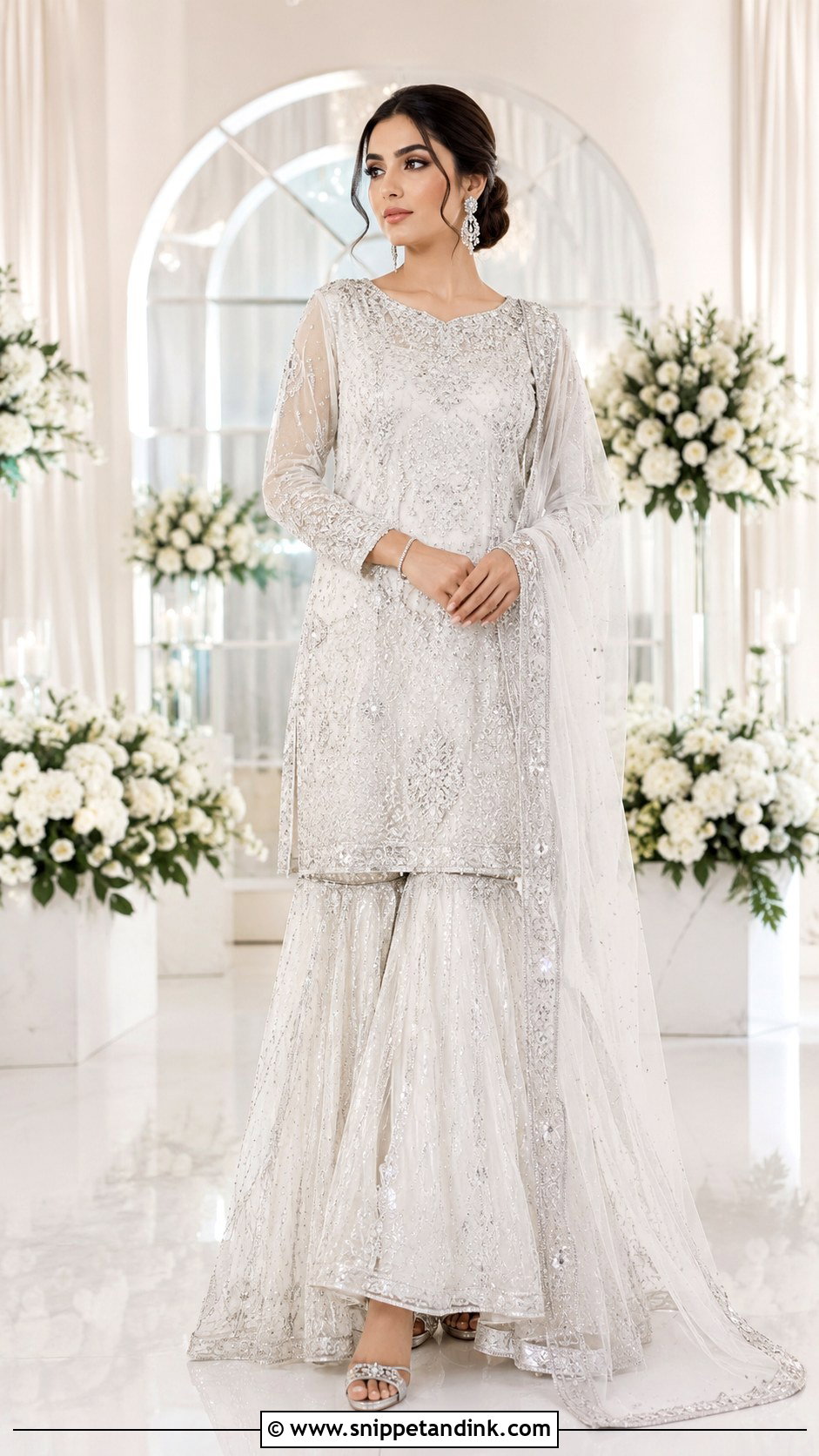
Silver keeps a white sharara outfit cool and crisp, and it handles the hard white light of a hotel ballroom better than yellow gold, which can turn brassy under those bulbs. A sharara with controlled volume and a straight or slightly flared short shirt. Crystal, silver thread, sequins and small pearls at the neckline, cuffs and border. A light net dupatta with scattered embellishment. Crystal earrings, a slim bracelet and silver heels. A sleek middle-parted bun and cool-toned makeup.
4. White Nikkah Pishwas With Chiffon Dupatta
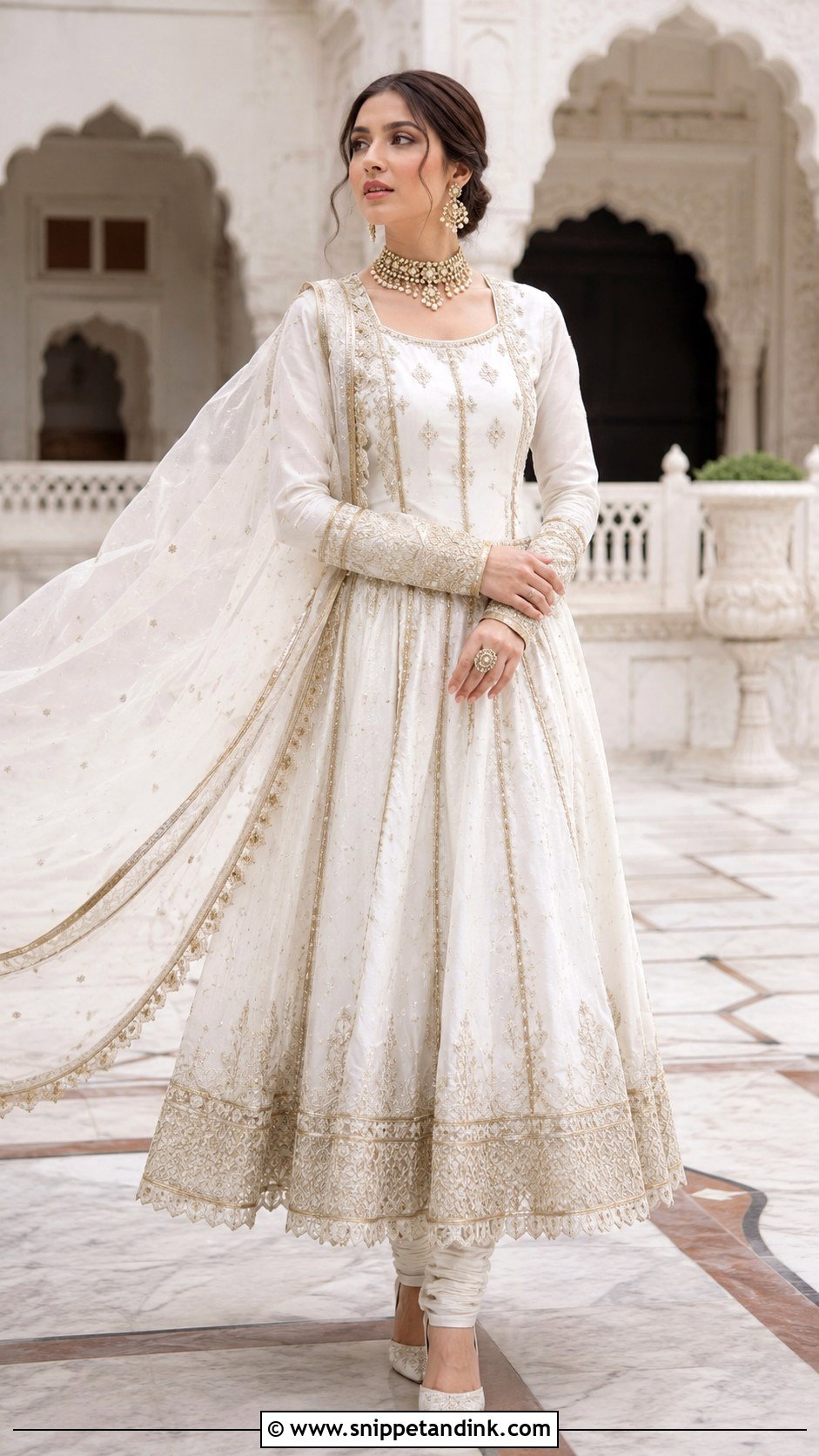
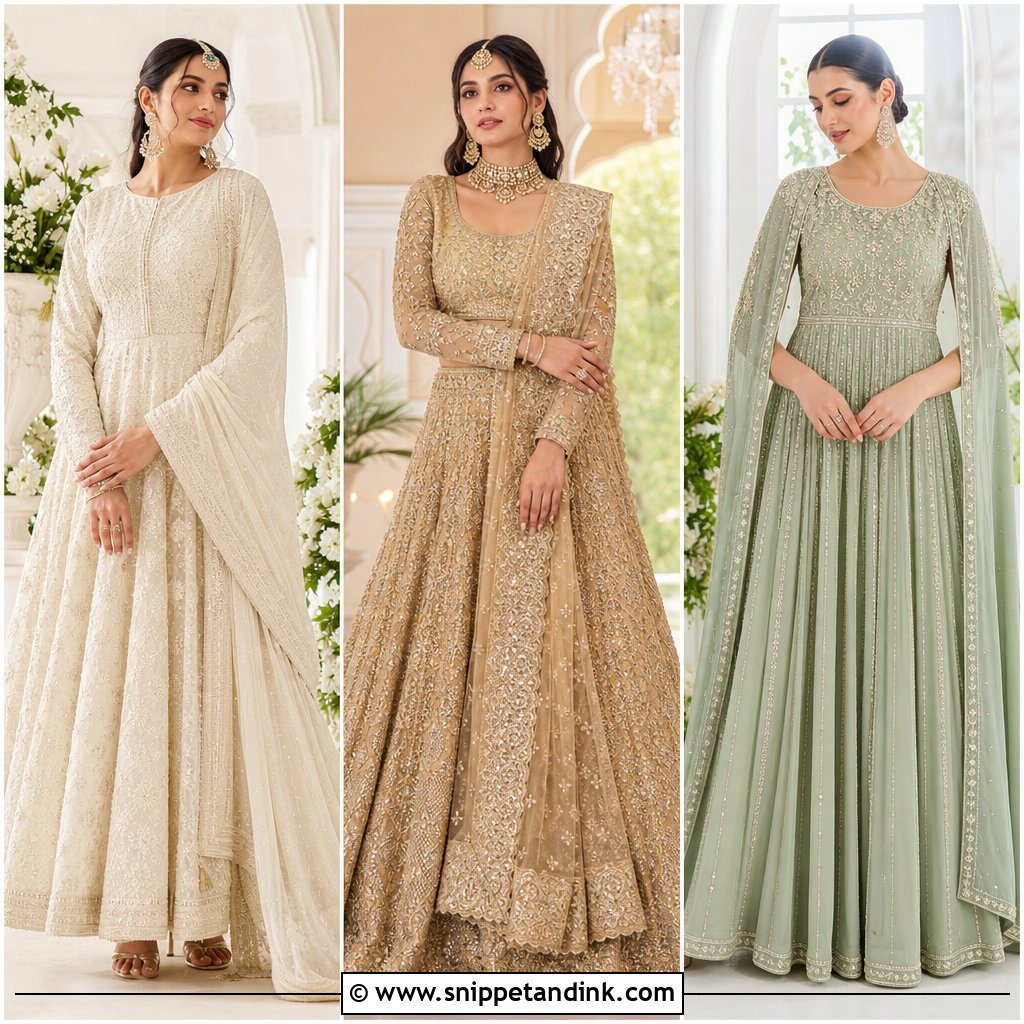
A pishwas is a long, panelled frock that flares from a fitted bodice, and it’s one of the most modest silhouettes on this list. It’s also one of the most graceful to walk in. Chiffon, georgette or silk with fitted sleeves and a shaped bodice; antique gold at the neck and hem. A matching churidar underneath. Get the churidar length right: those gathers at the ankle need extra length, or it rides up when you sit. A long chiffon dupatta over the head and down the back, a kundan choker, small earrings and one statement ring.
5. White Nikkah Farshi Gharara With Zardozi
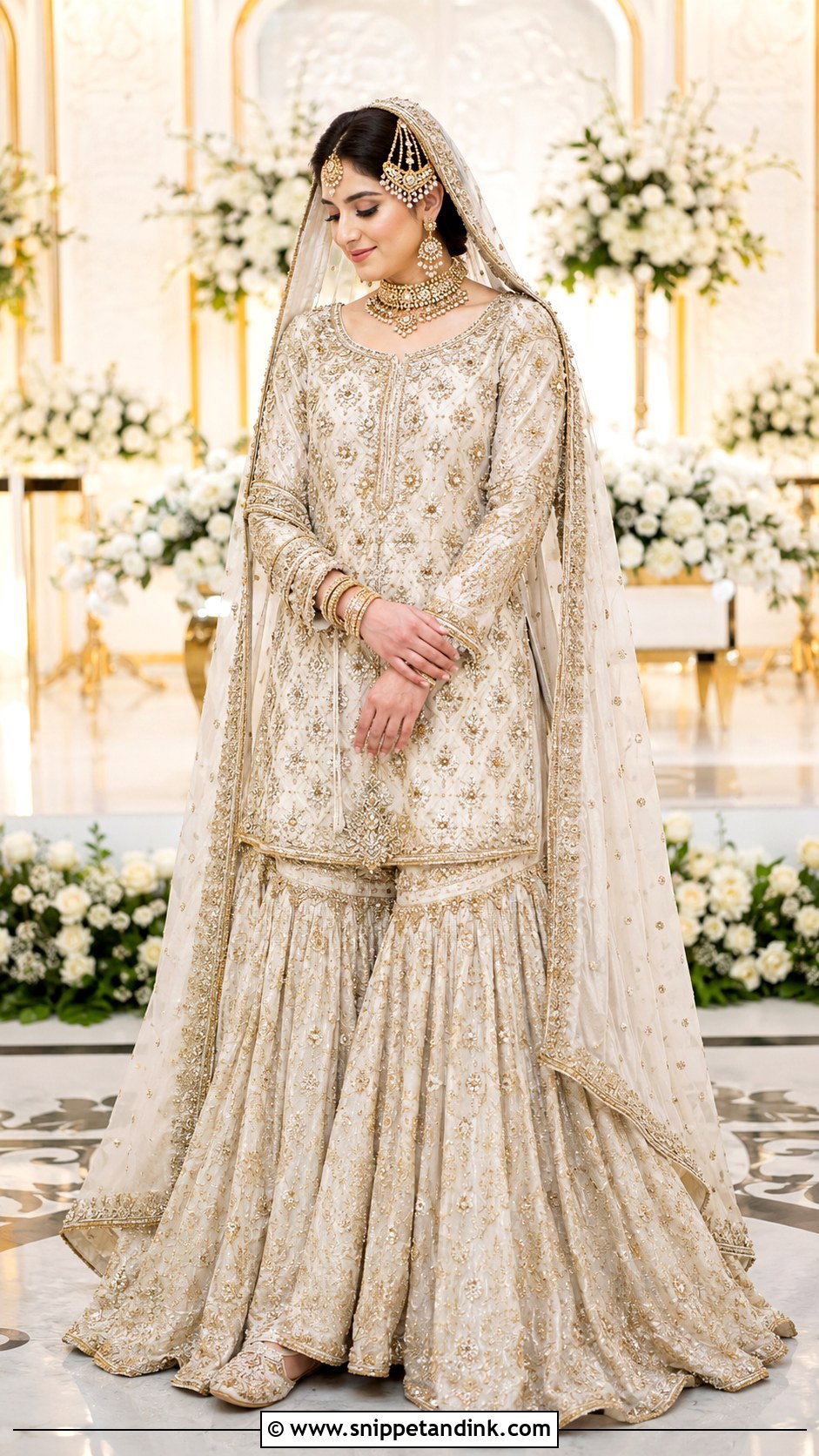
Farshi gharara is for a big venue. The hem sweeps the floor, and in a small room or a crowded home you’ll spend the Nikkah tucking fabric away from people’s feet. Balance the volume with a structured short kameez in zardozi, dabka and gold thread. Raw silk gives shape; an organza overlay softens it. Use a light net dupatta over the head, and a second gold-bordered one over the arm only if you have someone to manage it. A traditional choker, passa, jhumkas, bangles and embroidered khussas.
6. White Nikkah Anarkali With Mirror Work
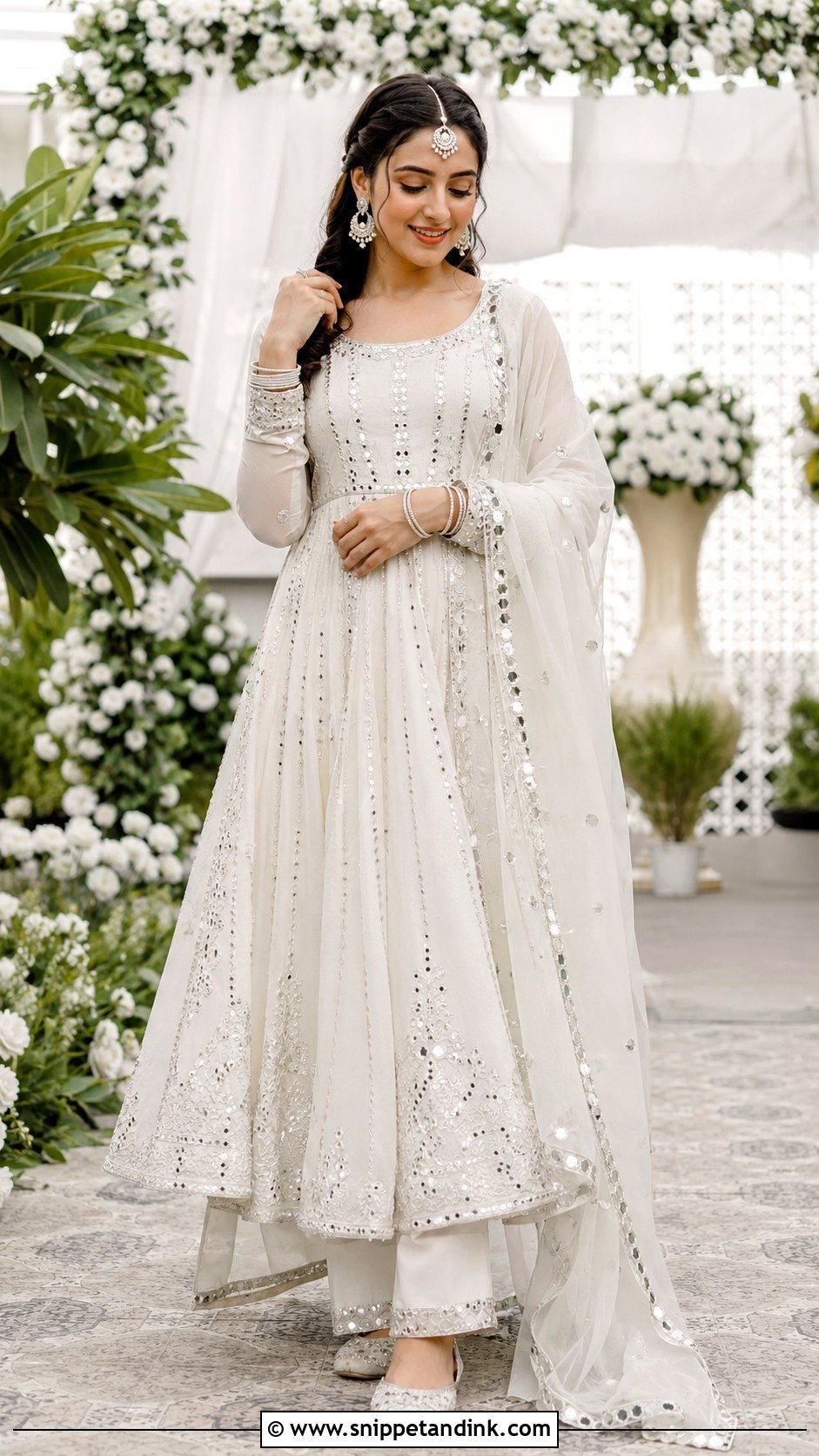
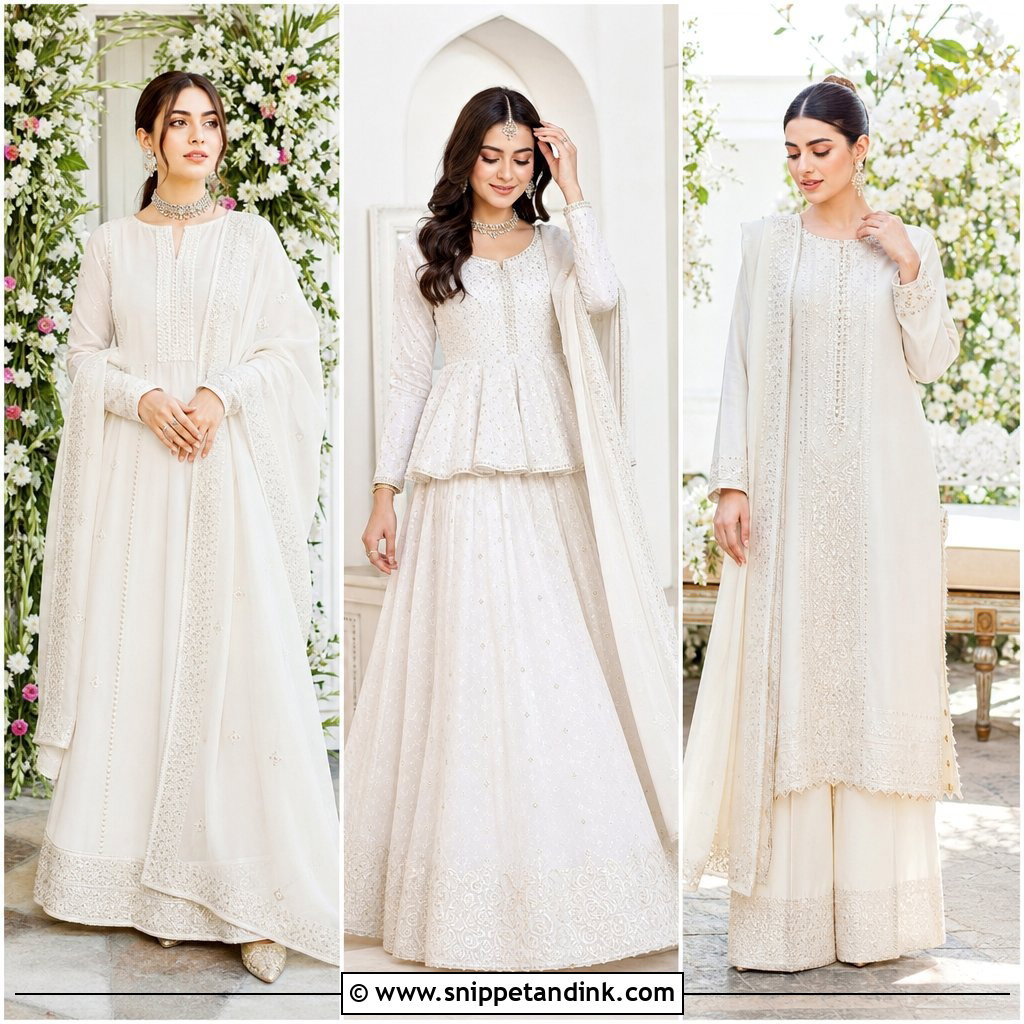
Could a bridal look feel festive without dense metallic work? A white Anarkali with restrained mirror work does it, and it’s much lighter to wear than zari. Use tiny mirrors at the neckline, cuffs and hem only. A floor-length cut with a fitted top, full sleeves and a soft flare. Straight trousers or churidar underneath, and a sheer dupatta with a thin mirror border. Silver jhumkas, a small tikka, white bangles and low heels. This one I’d happily send to a daytime courtyard or family Nikkah.
7. White Nikkah Angrakha With Churidar
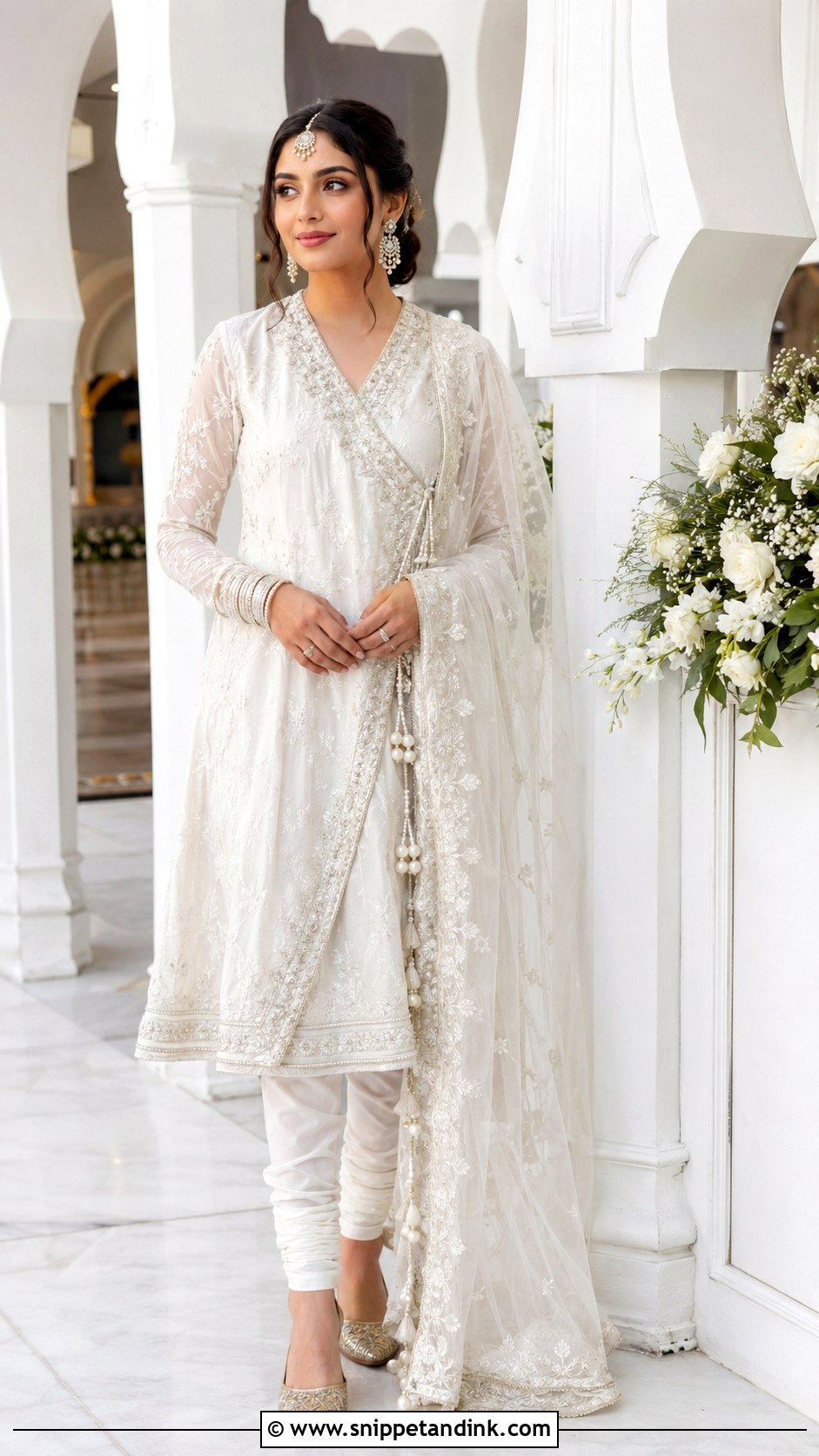
The angrakha’s wrap front and diagonal neckline define the waist without a tight fit, which makes it comfortable for long sitting. Look for an ankle-length cut with fabric ties finished in pearls or tassels, and subtle gold tracing the neckline and panel seams. Check where the wrap overlaps: on a sheer fabric, the overlap needs a lining or it shows more than you expect when you lean forward to sign. A fitted white churidar, a sheer dupatta, pointed gold khussas, pearl drops, a tikka and a centre-parted low bun.
8. White Nikkah Saree With Pearl Blouse
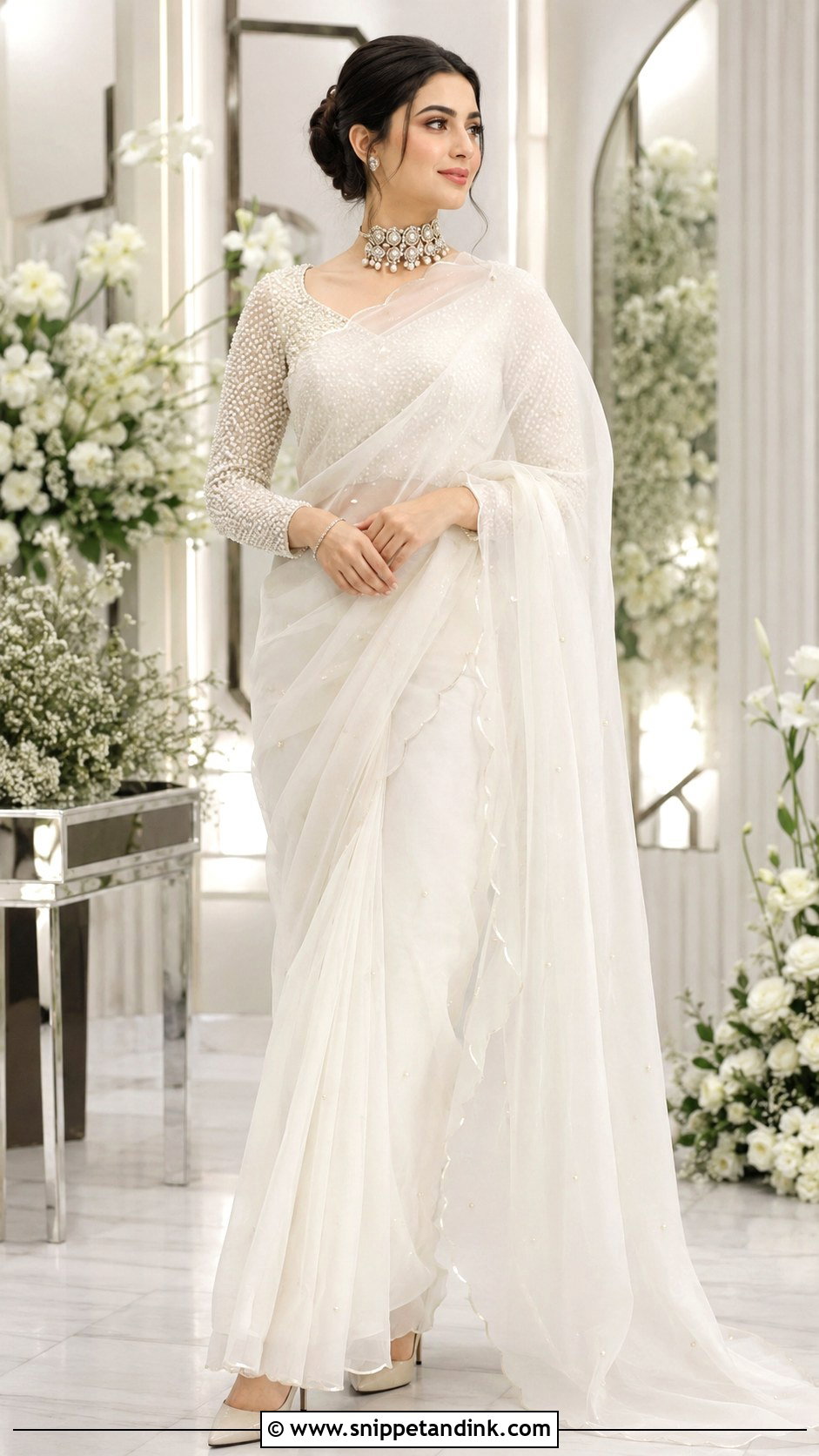
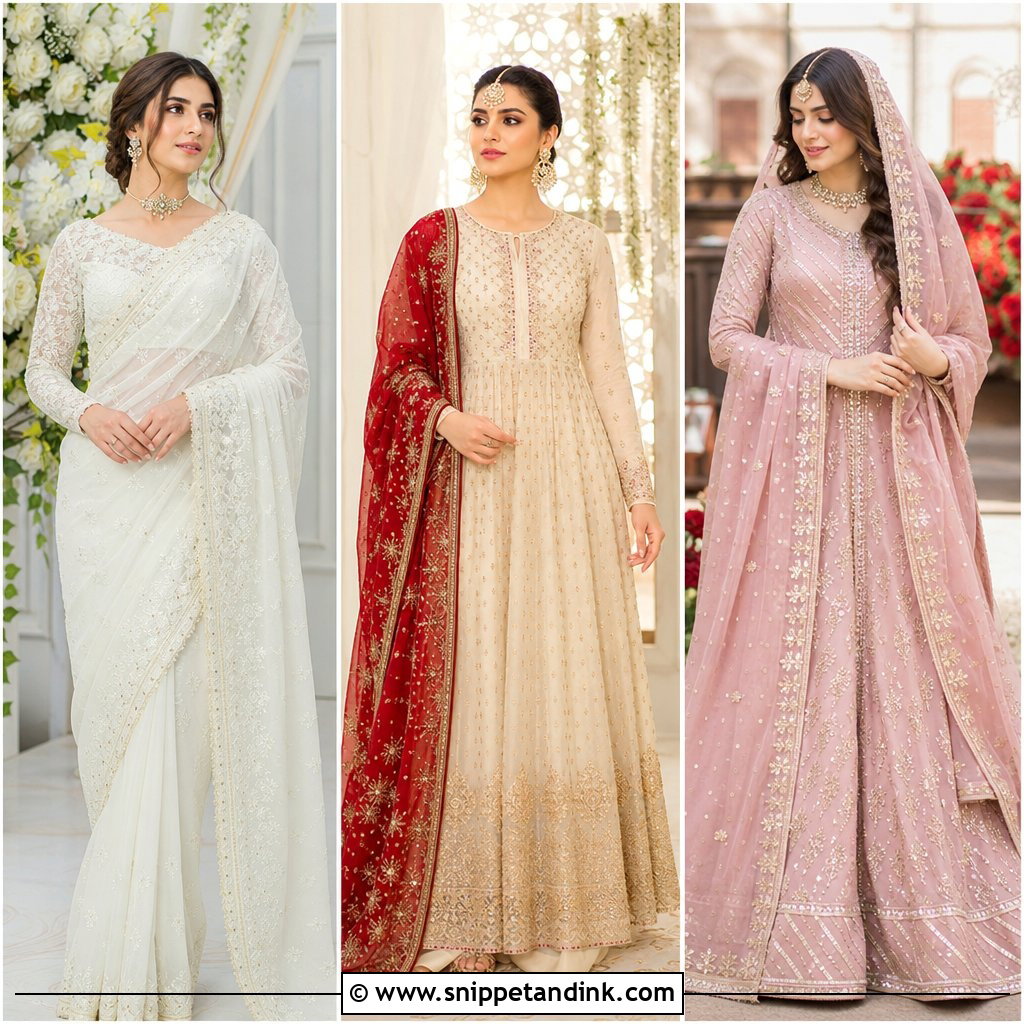
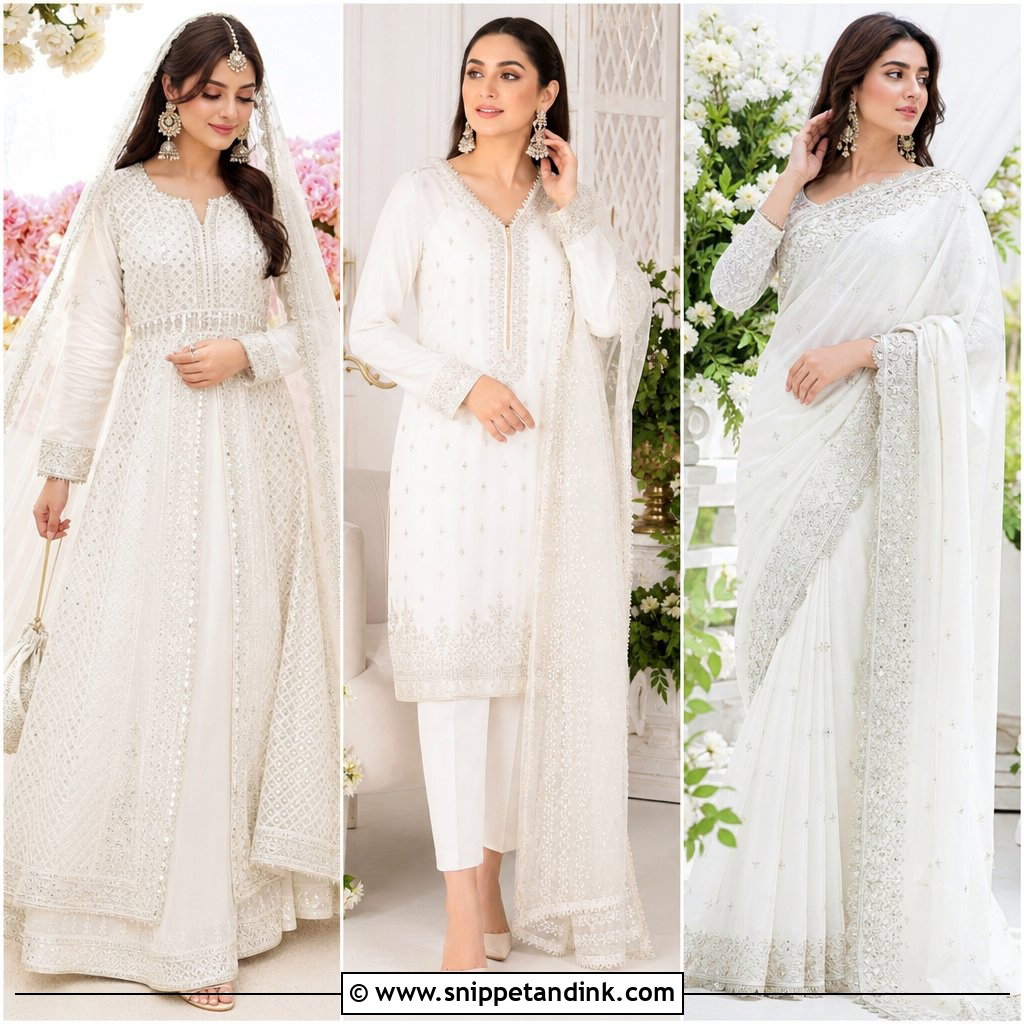
A white saree can work for a Pakistani Nikkah if the blouse brings the modesty: a lined blouse with full or elbow sleeves, a higher neck and pearl work matching the border. Organza, chiffon or tissue with a pearl edge and scattered embroidery. The pallu can go over the head, but a saree pallu slips more than a pinned dupatta, so many brides add a light separate veil for the ceremony. A pearl and kundan choker, studs, a bracelet, ivory heels and a smooth bun.
9. White Nikkah Gown With Embroidered Veil
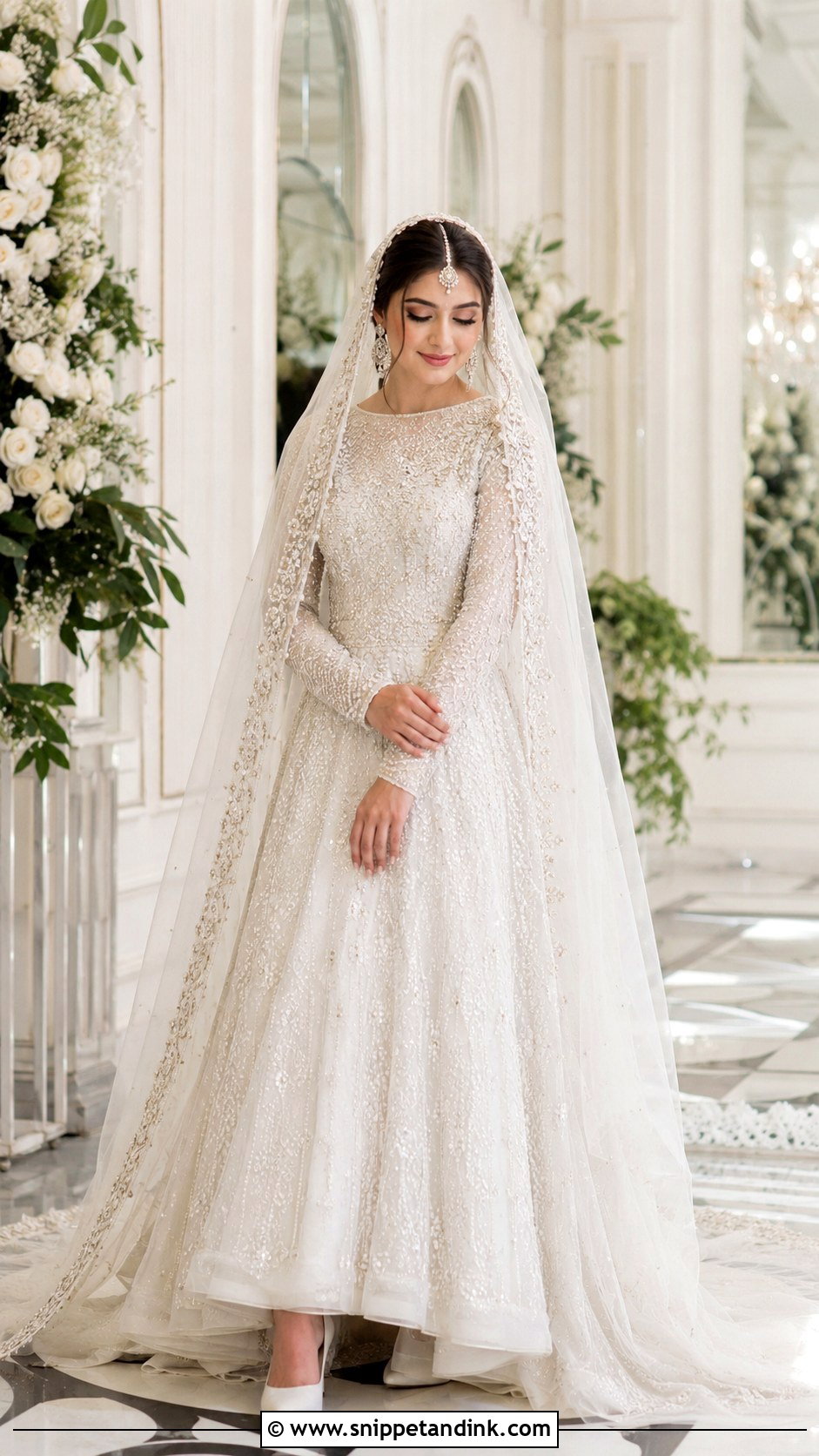
Some brides want a gown, and an embroidered Pakistani veil is what makes it a Nikkah outfit rather than a reception dress. An A-line or lightly structured gown with long sleeves, a defined waist and a modest neckline; pearls or fine silver on the bodice, thinning toward the skirt. The veil carries the dupatta-style border. Because the veil is the focus, the jewellery stays minimal: crystal earrings, a subtle tikka. Closed-toe ivory pumps and a small clutch. Waistline, sleeve structure and skirt volume can all be adjusted to your shape.
10. White Nikkah Peplum With Lehenga
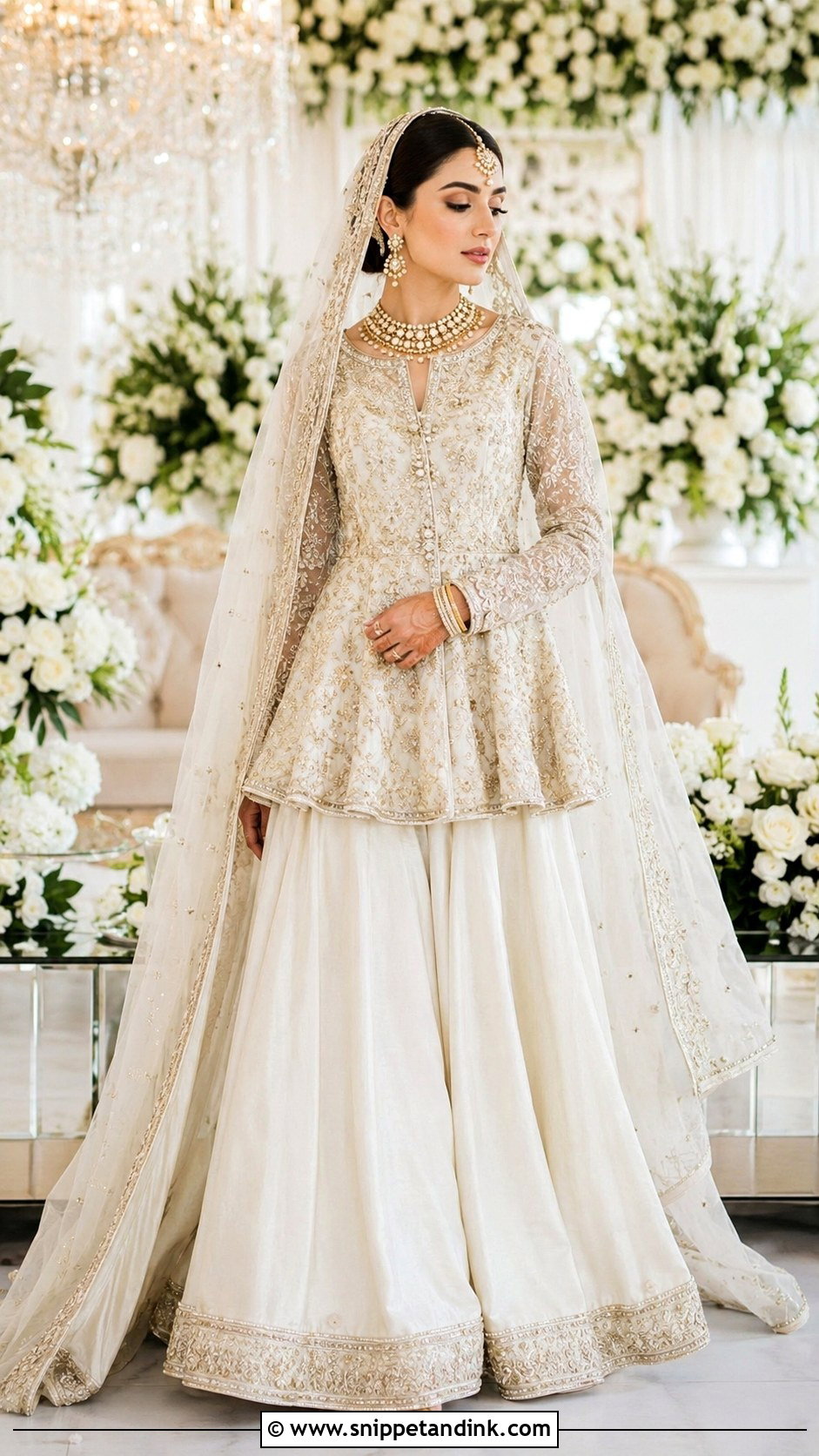
A peplum ending just below the waist gives you shape; a slightly longer one gives you shape and more coverage. I usually try both lengths on at a fitting. Fitted sleeves, a modest neckline and gold or pearl embroidery, with a raw silk, jamawar or organza lehenga carrying lighter motifs so the top stands out. A net dupatta over the head, one side falling over the arm. A kundan necklace, earrings, ivory bangles, low gold heels, a polished low bun and warm neutral makeup.
11. White Nikkah Long Shirt With Lehenga
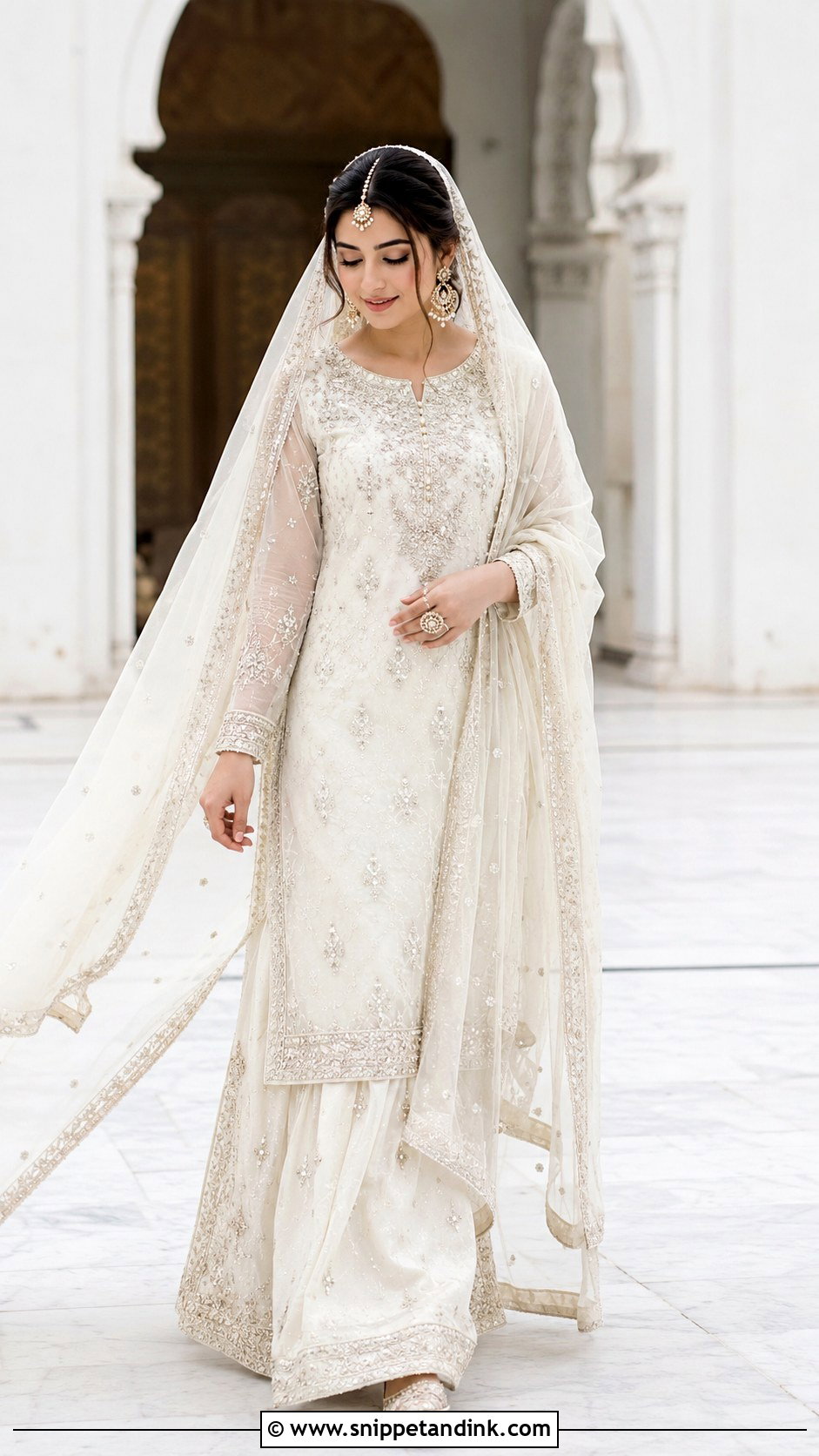
Long shirts draw the eye downward in one clean line, which tall brides carry especially well. A straight, front-open or slightly flared shirt below the knee, embroidered at the neckline, side slits and hem, over a lightly flared lehenga whose border shows as you walk. The side slits need to start high enough to let you sit without the shirt pulling across your thighs. A pinned sheer dupatta, long earrings, a small tikka, a statement ring and embroidered ivory shoes. Soft curls or a low bun.
12. White Nikkah Short Kurti With Gharara
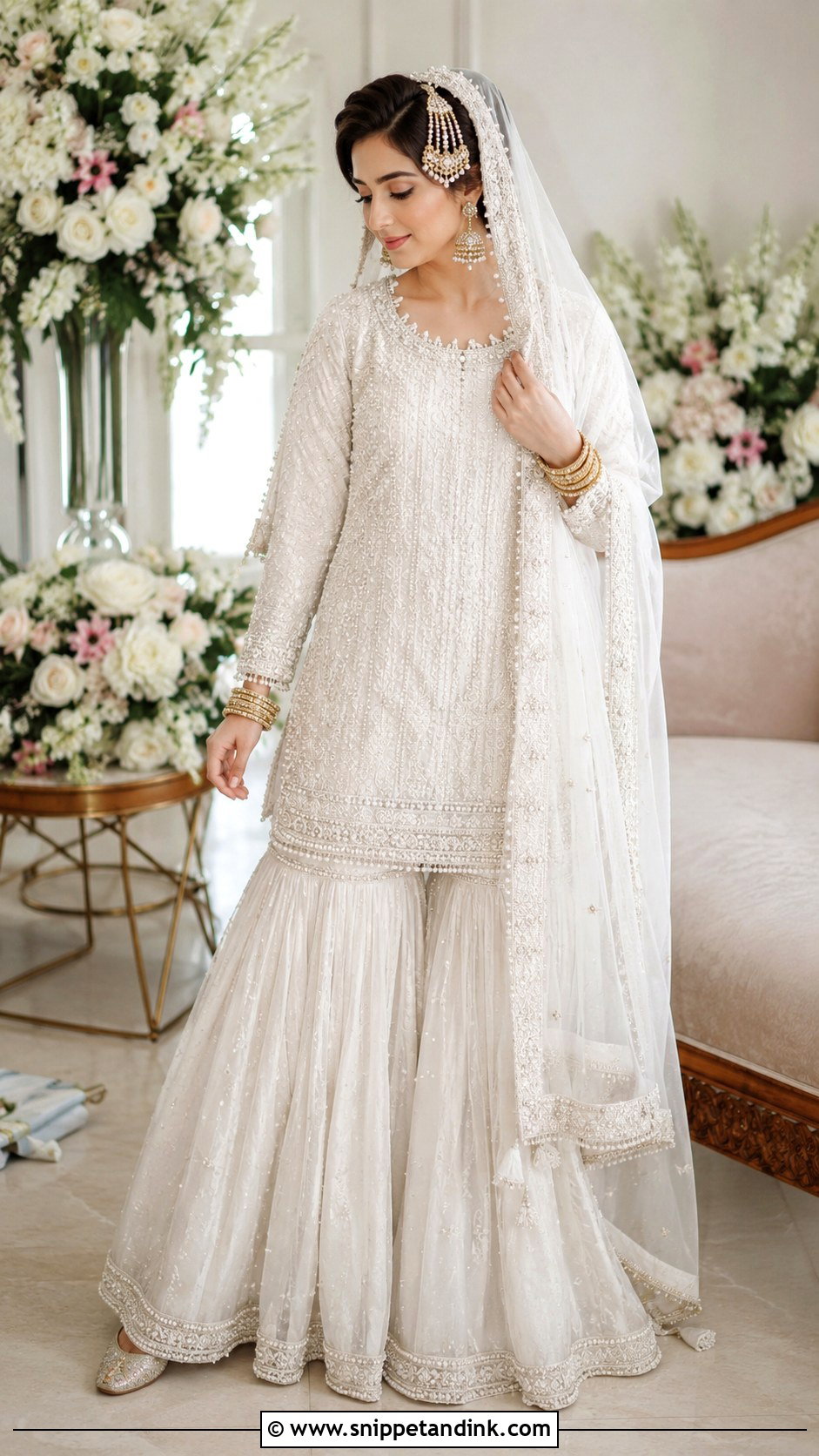
A short kurti ending at the upper thigh, with a rounded neck, fitted sleeves and heavy edging, over a structured gharara with gota, pearls or zardozi at the knee and hem. It’s youthful and still very traditional. Petite? Ask for narrower gharara panels and smaller motifs so the outfit doesn’t swallow you. A net dupatta with a strong border, a side passa, medium jhumkas, bangles and gold khussas. A braided bun and a berry-pink lip for daytime.
13. White Nikkah Kalidar With Kundan Jewelry
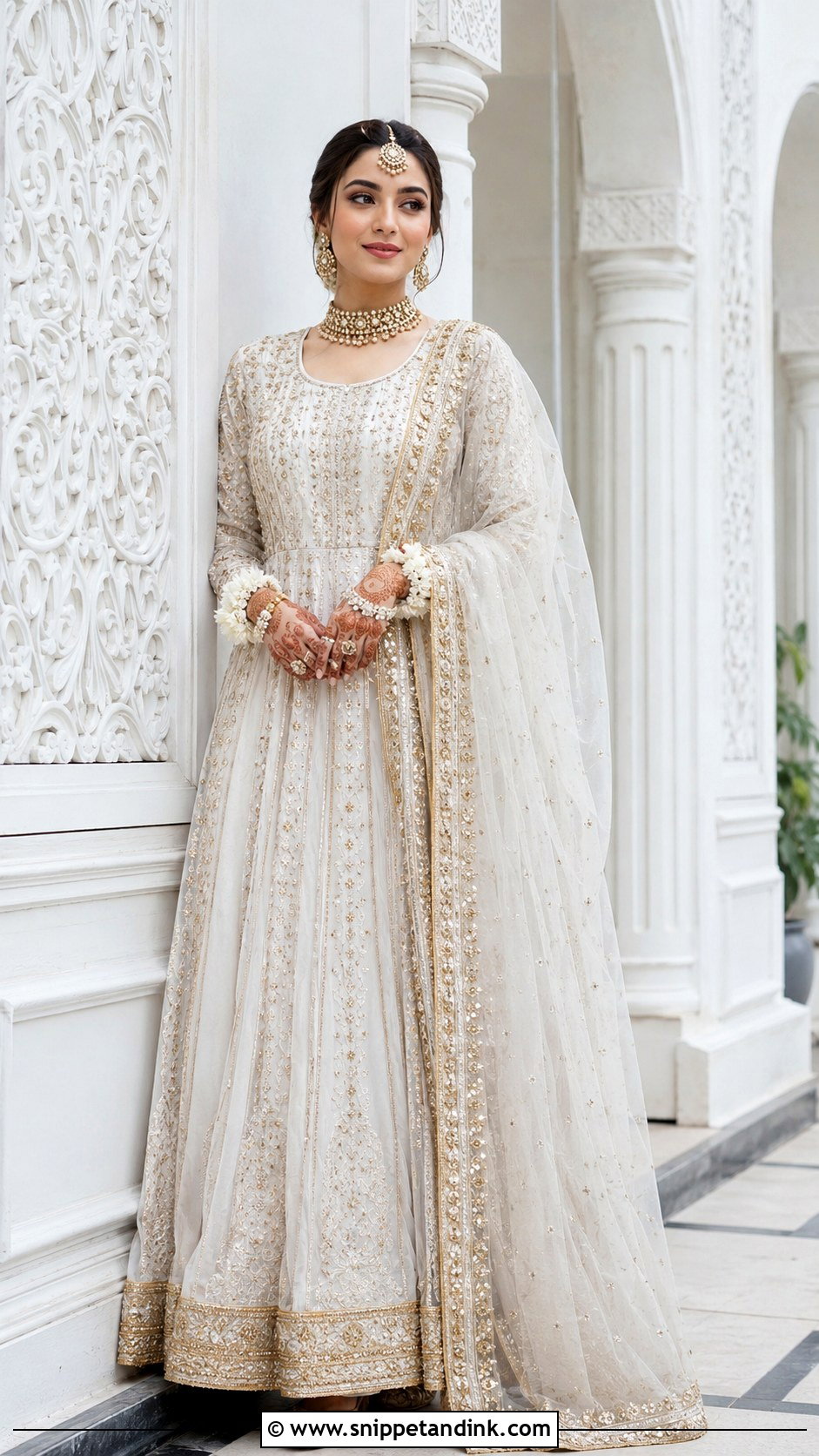
Kalidar means many panels, called kalis, sewn together so the skirt flares in folds rather than gathers. That construction gives movement without bulk at the waist, which is why I like it for brides who dislike a heavy lehenga. A floor-length design with fitted full sleeves, fine gold along each panel seam and a heavier border at the hem. Fitted trousers underneath, a net dupatta with sequins, a kundan choker, earrings and a centred tikka. The skirt hides your shoes, so wear comfortable block heels or khussas.
14. White Nikkah Jamawar Lehenga With Velvet Shawl
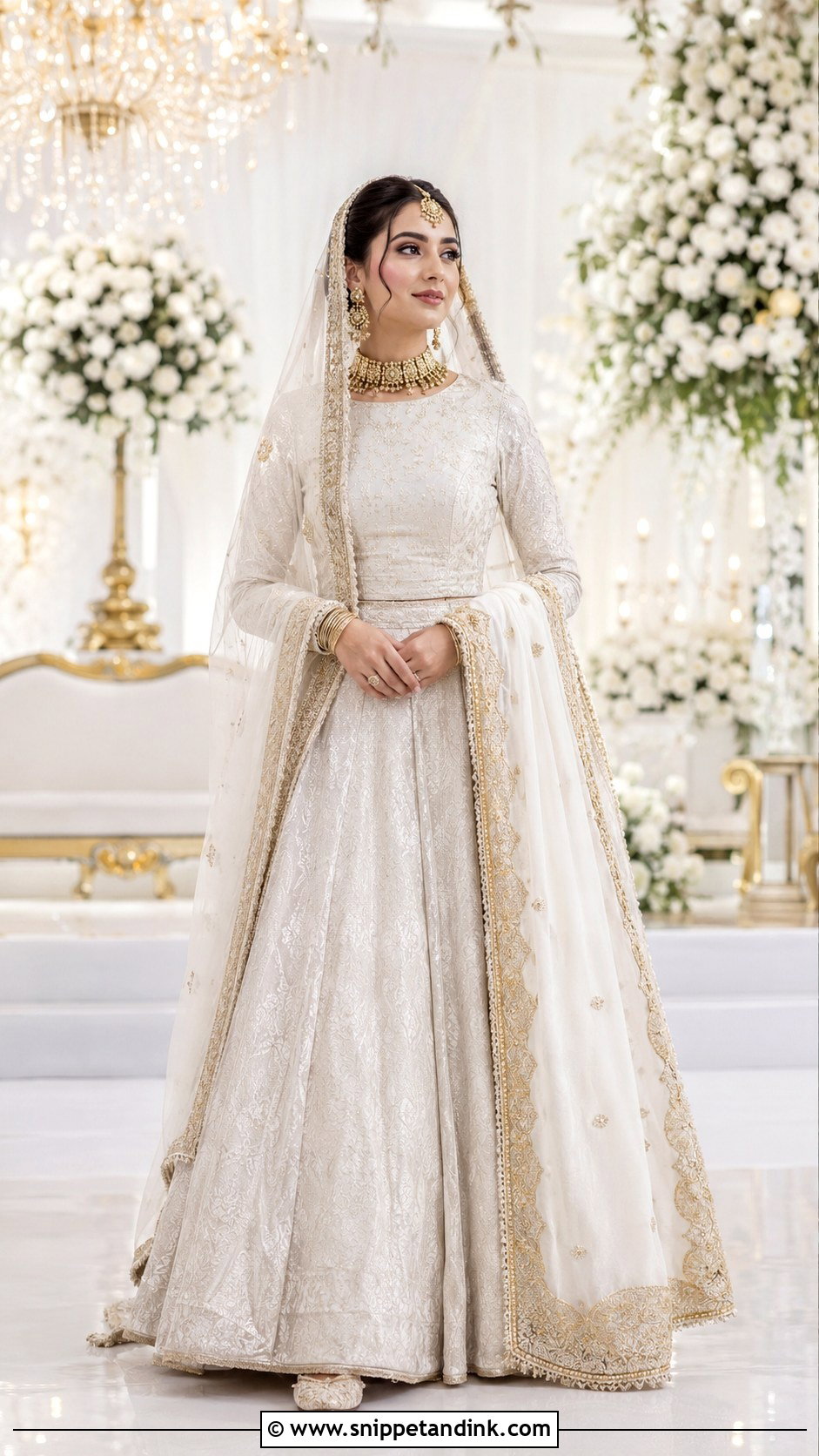
Winter Nikkahs are where white gets interesting, because you can layer textures. A white or ivory jamawar lehenga with subtle metallic pattern, a long-sleeved raw silk blouse, and a white velvet shawl edged in antique gold around the shoulders. A light net dupatta can still cover the head. Velvet marks easily where it’s pressed, so carry the shawl on a hanger, not folded in a bag. Antique gold earrings, a choker, bangles, closed-toe embroidered shoes, defined eyes and a deep rose lip.
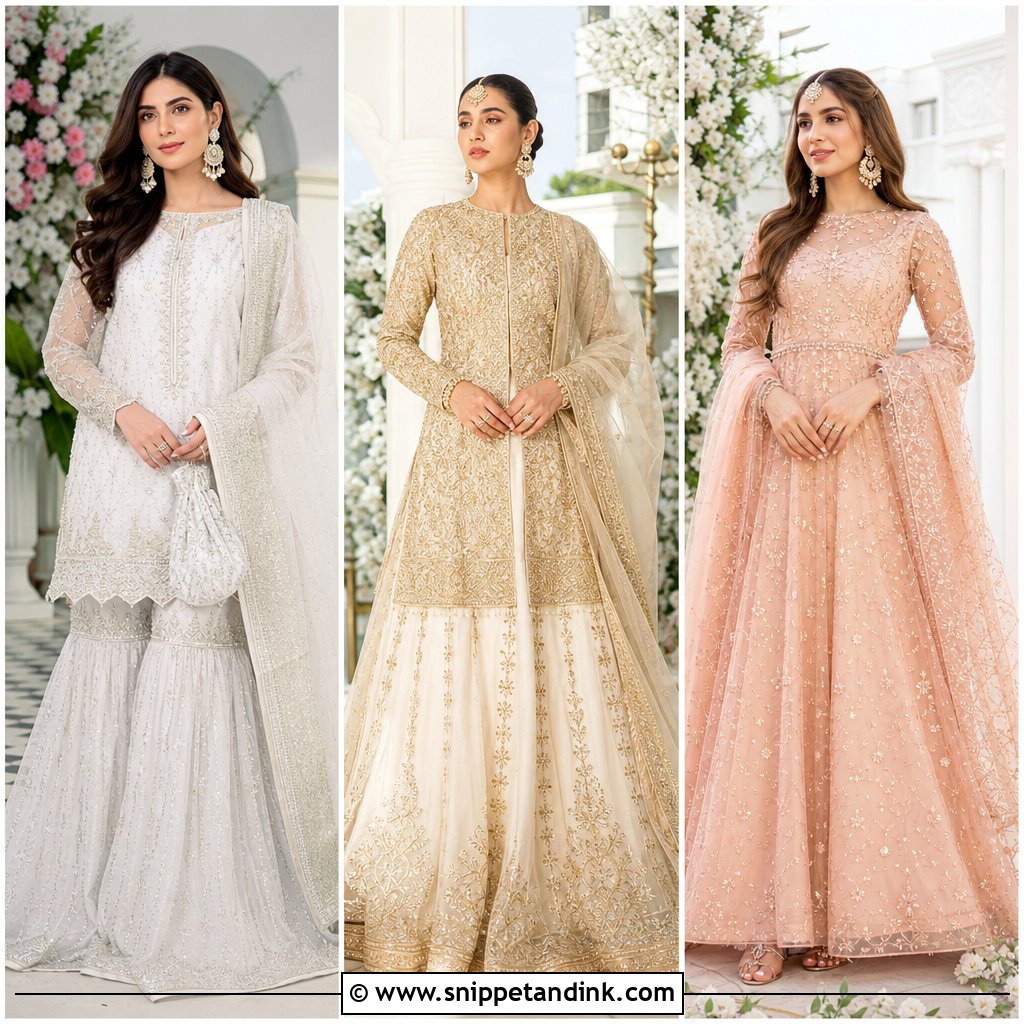
15. White Nikkah Organza Shirt With Straight Trousers
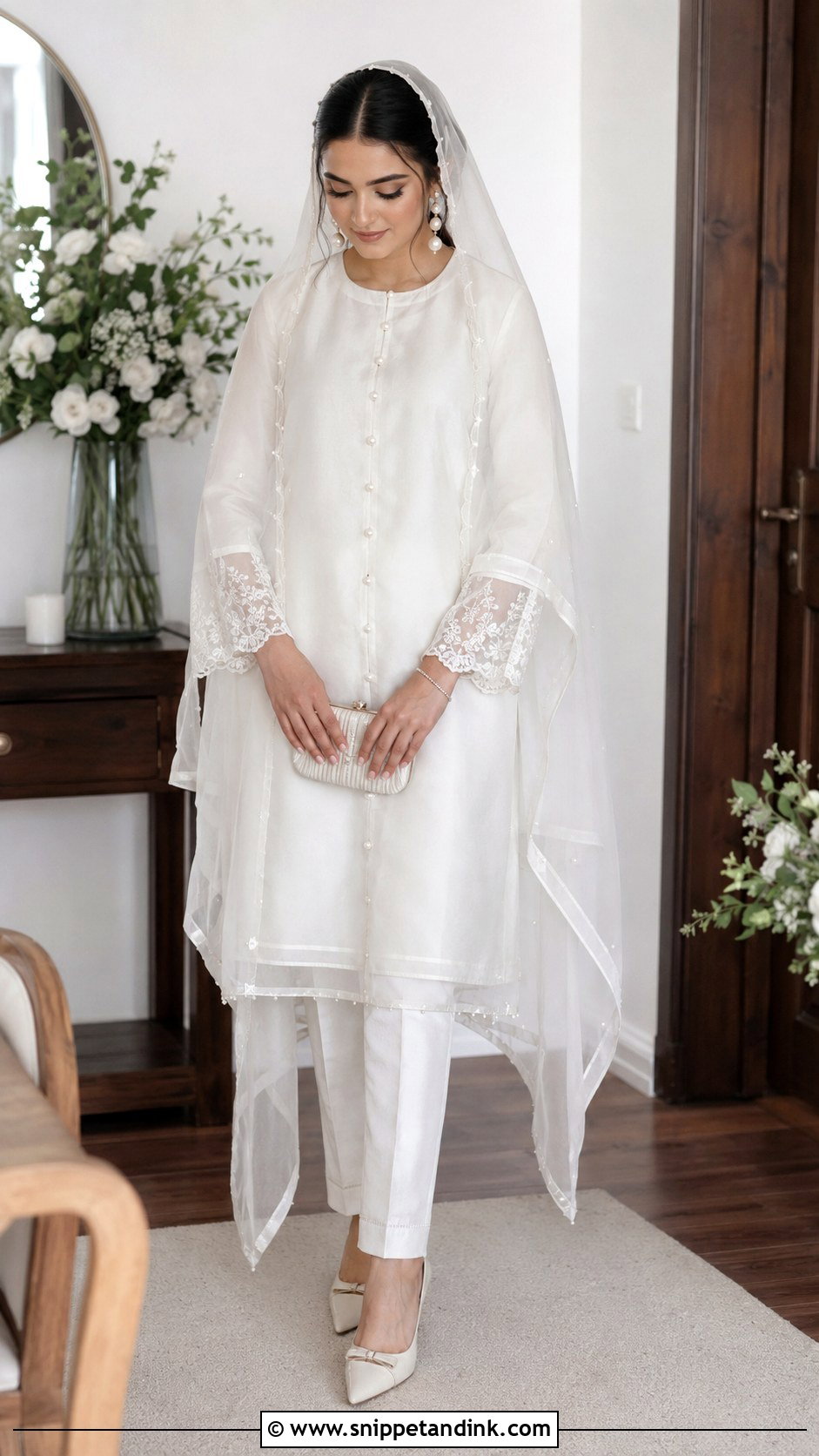
For a small Nikkah at home, I’d often pick this over anything heavier. A long lined organza shirt with pearl buttons, embroidered cuffs and a clean hem, over straight raw silk trousers. Small florals or delicate silver thread give detail while staying airy. Organza is see-through, so the lining is not optional. A matching dupatta pinned over the head, pearl drops, a slim bracelet, low ivory heels and a small clutch. A half-up style or neat bun and fresh, natural makeup.
16. White Nikkah Cape With Sharara
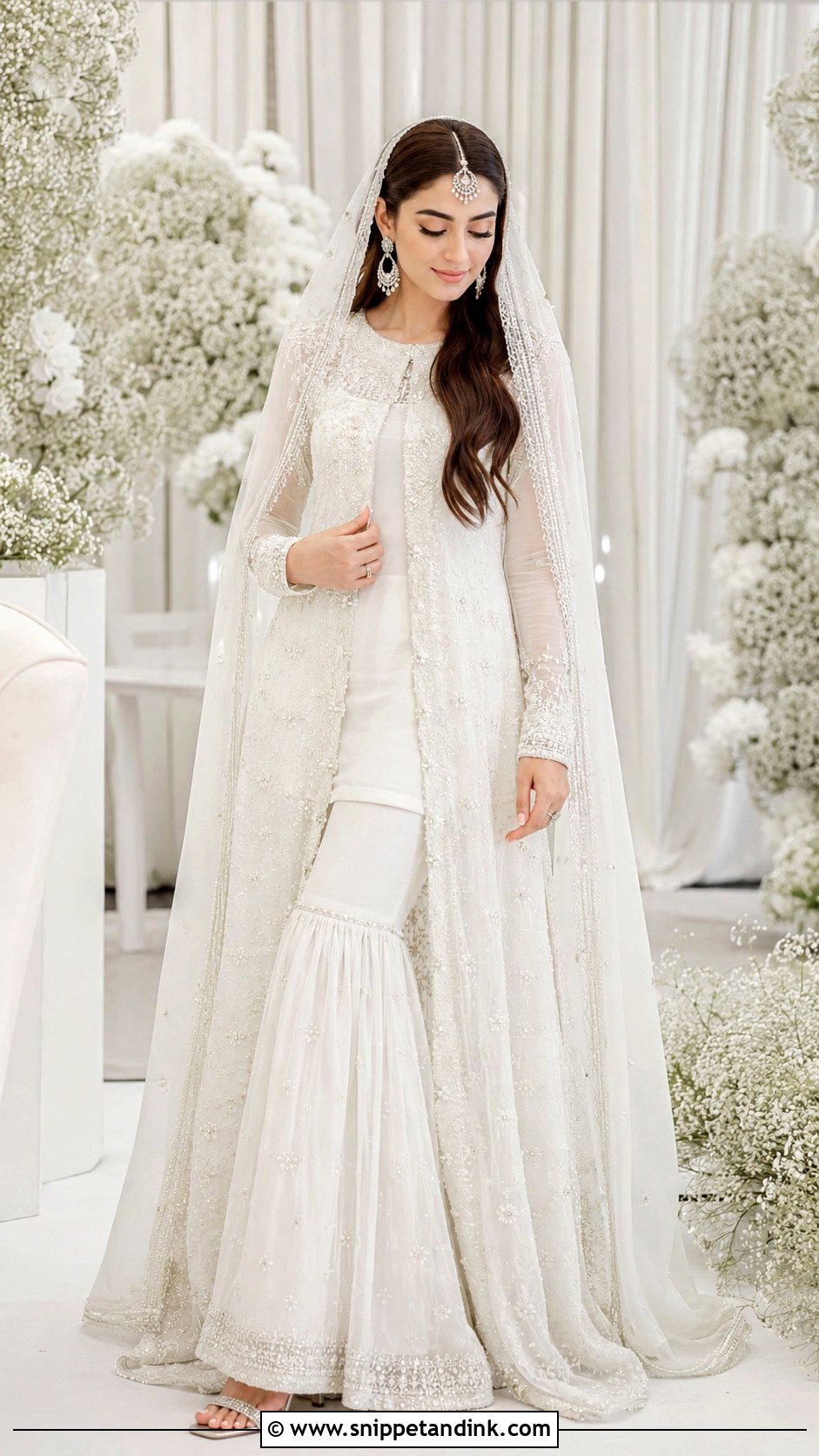
A sheer cape gives you drama without a heavy dupatta, but a cape and a head covering can fight each other. If you want your head covered, choose a separate light veil and have it pinned so it sits over the cape rather than trapped under it. A fitted inner shirt with a flowing sharara, then a floor-length organza cape with pearl clusters, crystals or silver at the shoulders and edges. Crystal earrings, a delicate headpiece, a slim ring, silver block heels and a sleek low bun.
17. White Nikkah Jacket With Lehenga
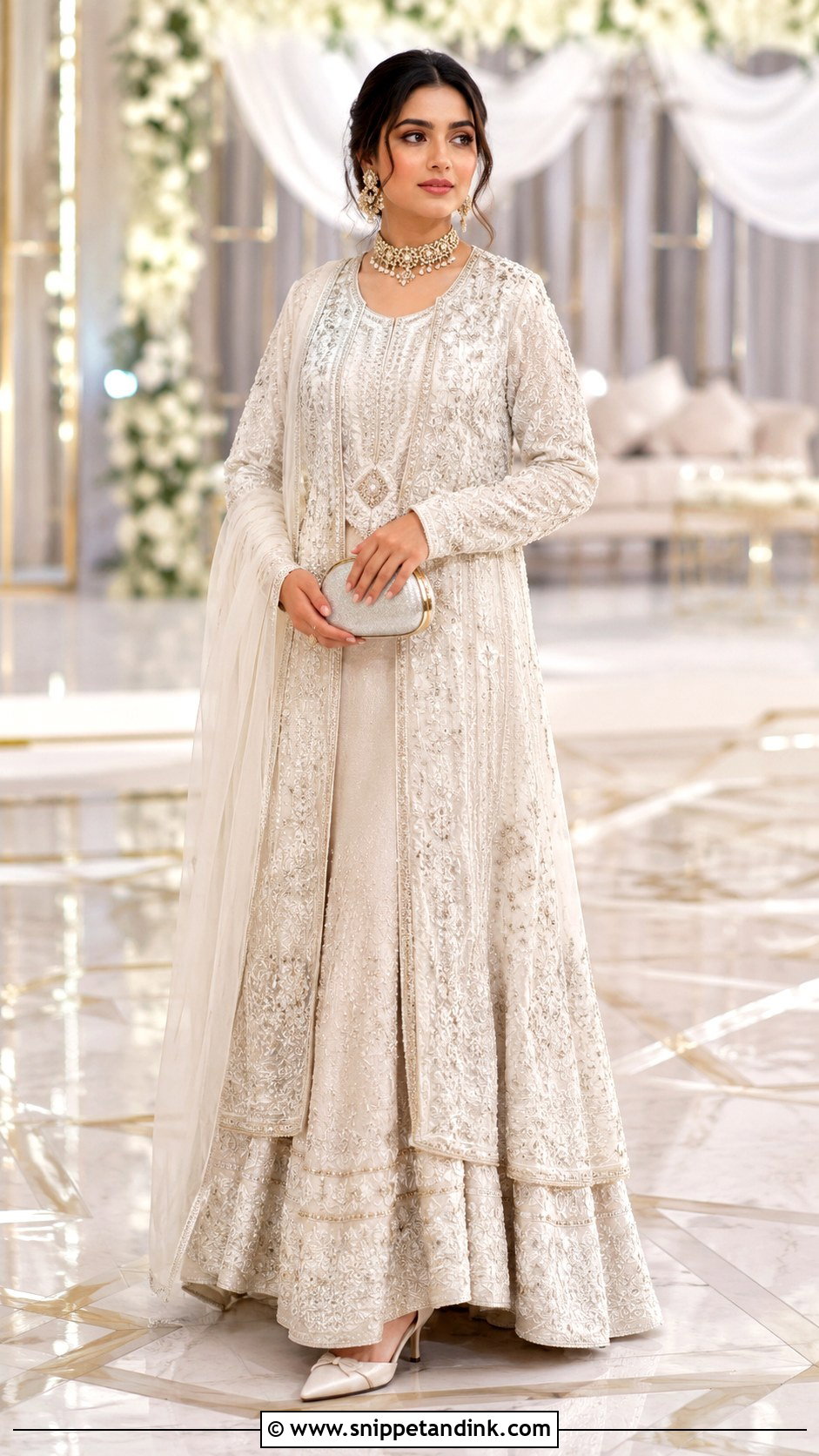
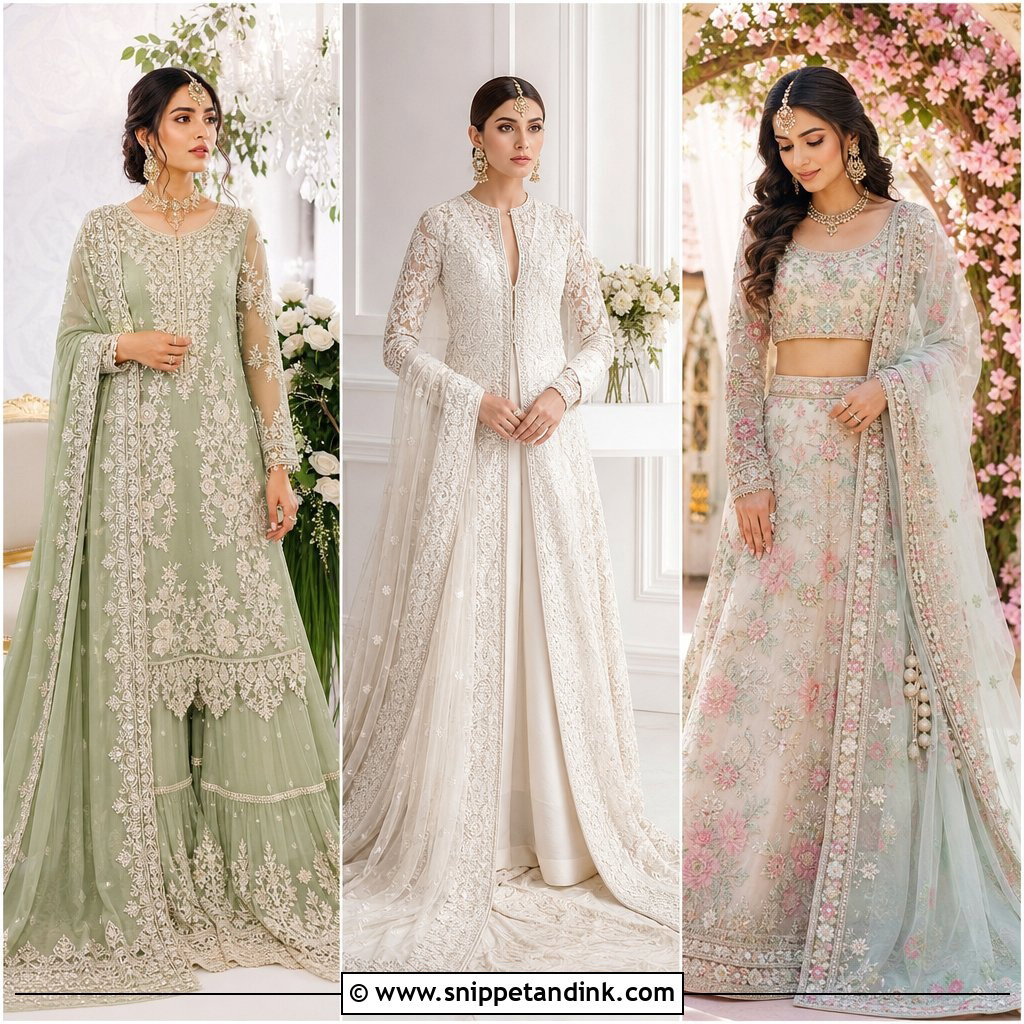
A long embroidered jacket turns a simple white lehenga into a structured outfit. Open-front, knee or ankle length, worn over a modest blouse, with dense work at the shoulders, front edges and cuffs and lighter work on the skirt. Keep the dupatta border narrow so it doesn’t pile up against the jacket’s edging. Brides who want more definition can fasten it at the waist with a hook or a matching belt. A choker, small earrings, pointed ivory heels and a metallic clutch; a centre-parted bun.
18. White Nikkah Maxi With Floral Embroidery
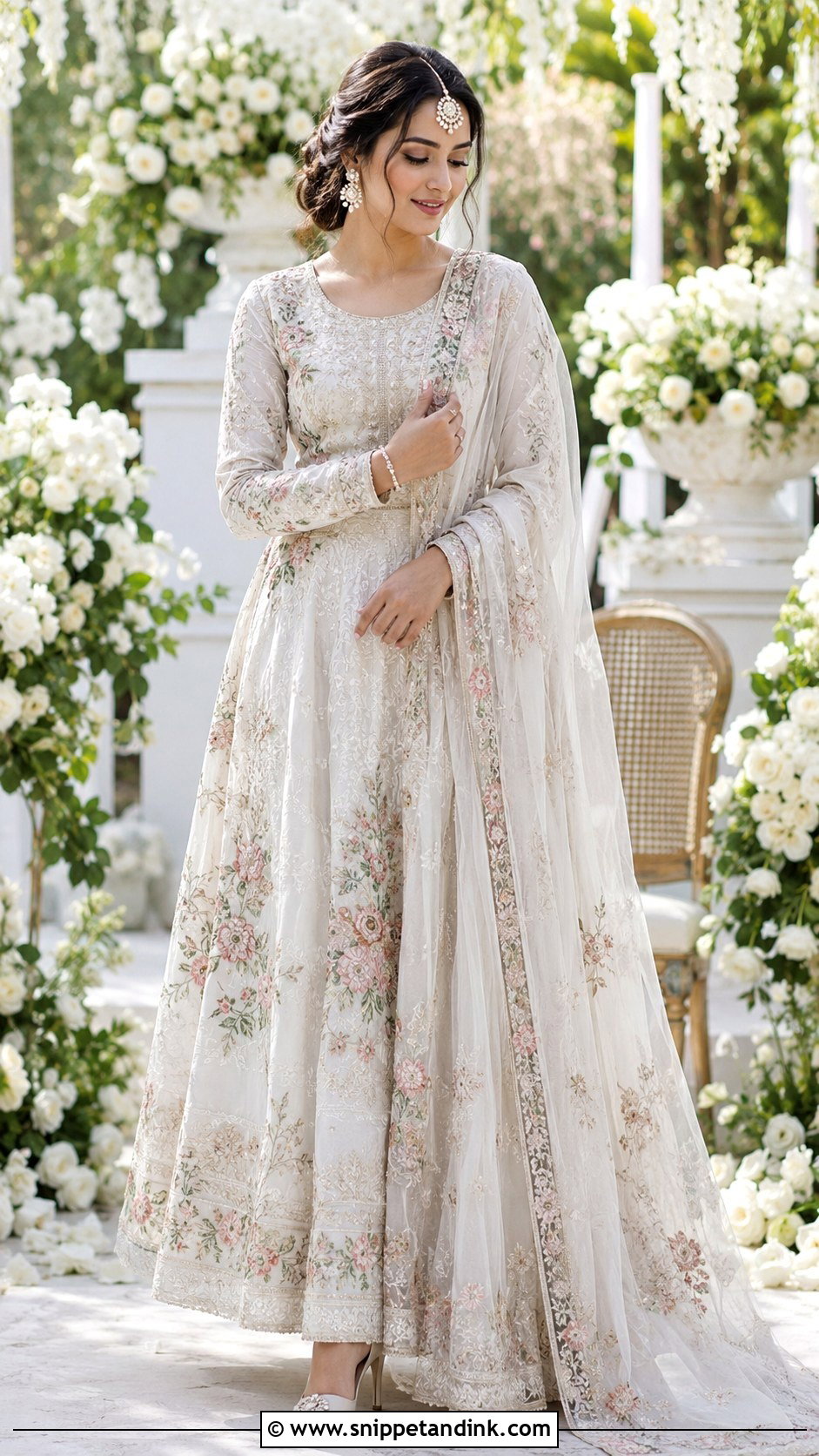
White-on-white flowers with tiny touches of blush, sage or pale gold give this maxi colour you only notice up close. A flowing A-line with long sleeves and a modest neck, the embroidery kept to bodice, cuffs and lower skirt. A sheer dupatta with matching corner motifs. In a garden or courtyard in daylight, the soft botanical details read well; in a dim hall they can vanish, so this is a daytime choice. Pearl earrings, a floral tikka, ivory heels, a bracelet and loose waves or a textured low bun.
19. White Nikkah Double Dupatta Lehenga
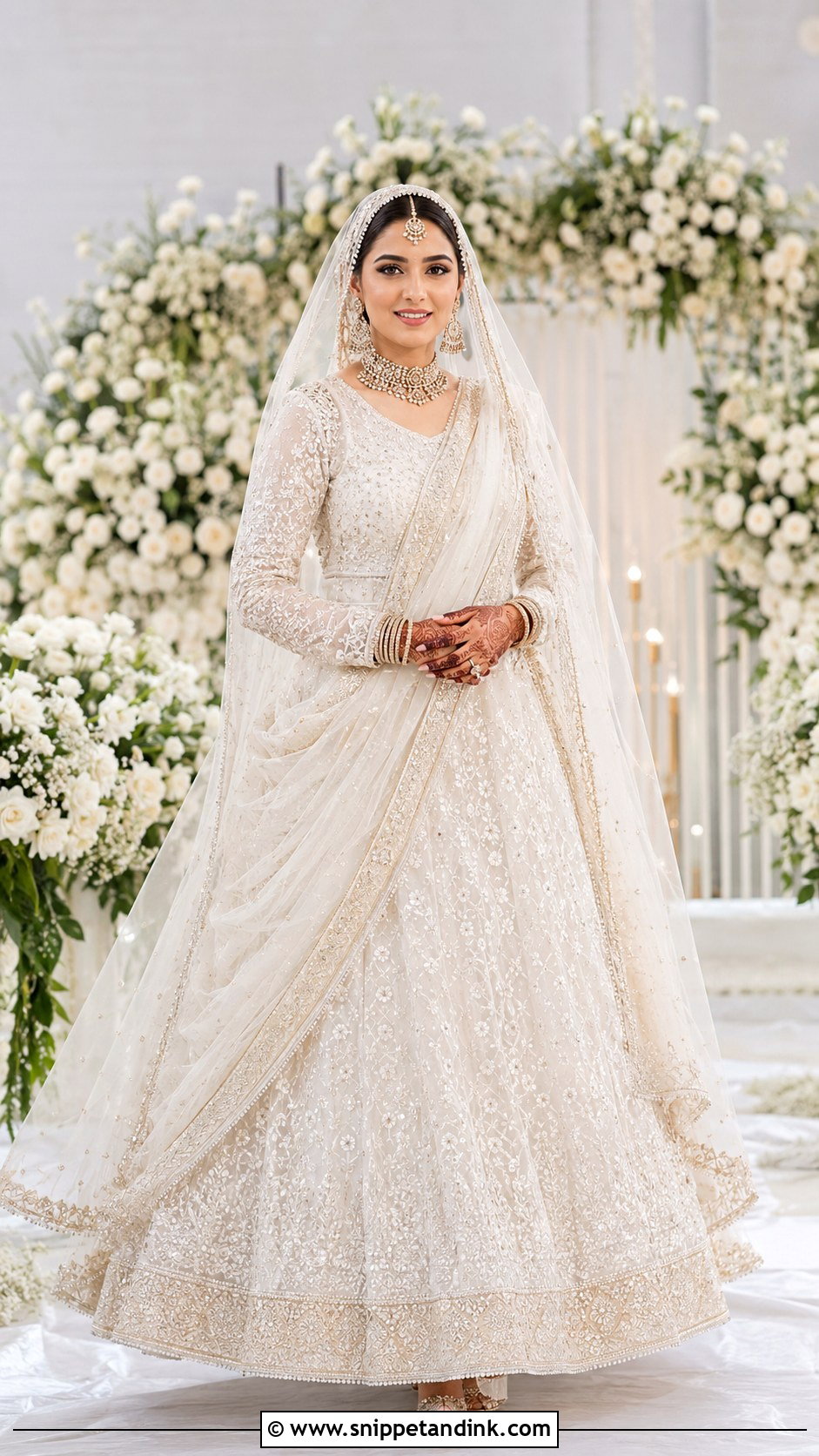
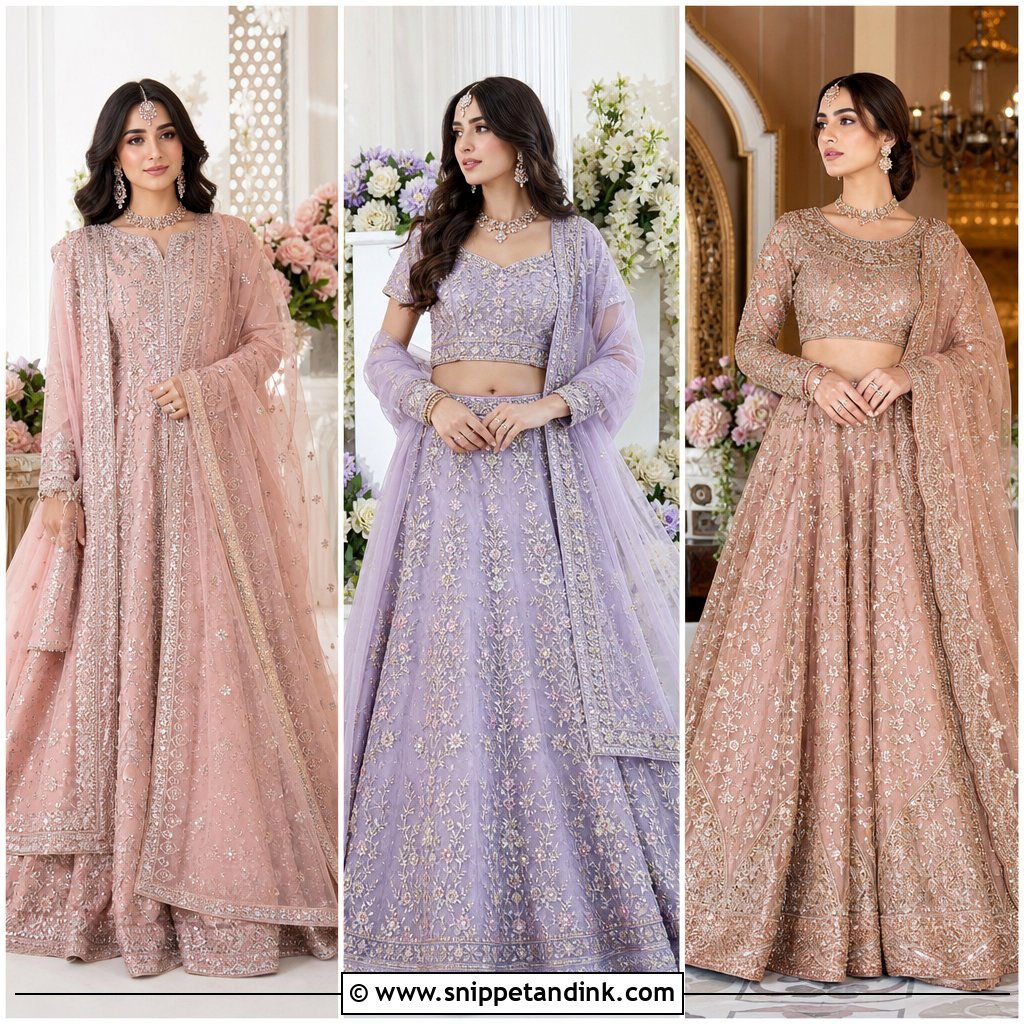
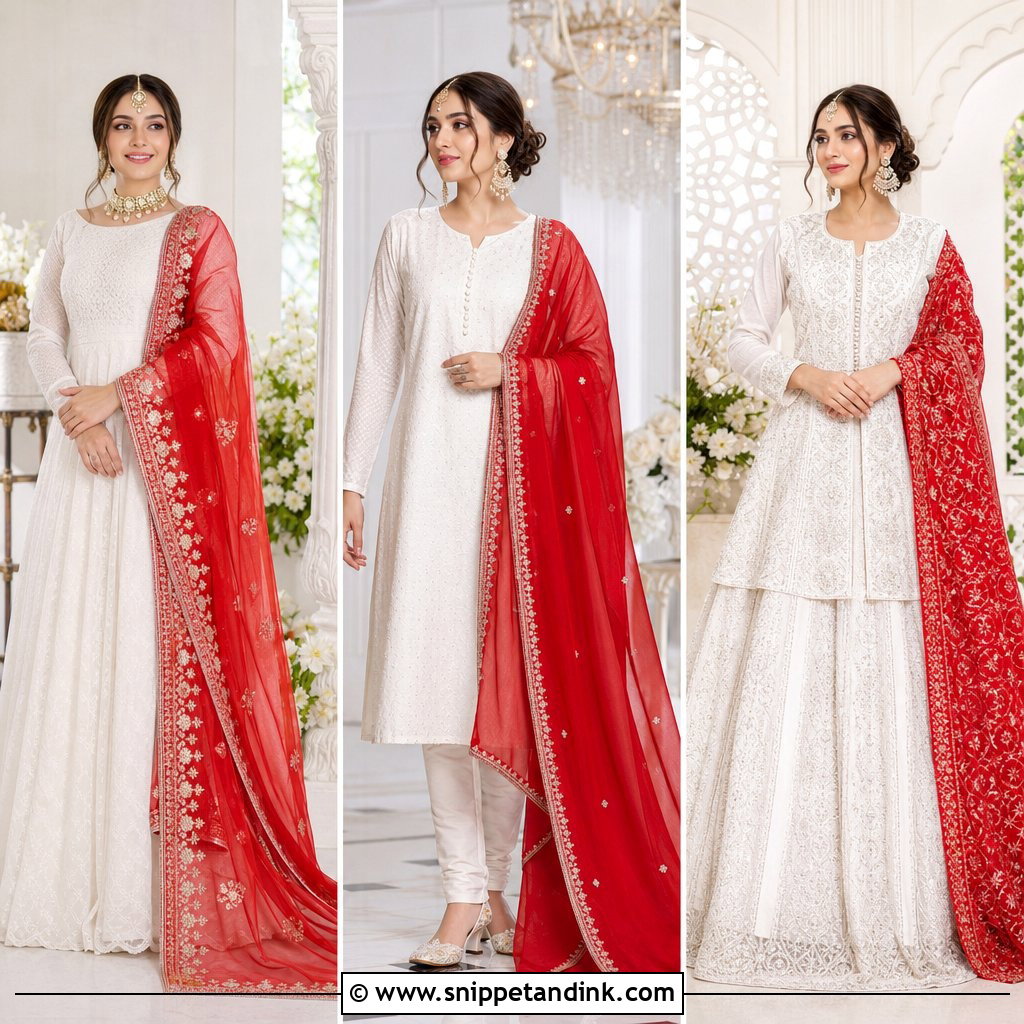
Two dupattas make a lehenga look formal immediately. A light net one over the head, with a defined border to frame the face, and a slightly heavier organza or tissue one across the body or over an arm. Both need pinning well before the ceremony, or you’ll be adjusting them through every greeting and photograph. A fitted blouse and full skirt in gold, silver or white-on-white work. A kundan choker, earrings, tikka, bangles and embroidered heels. A neat bun and long-wearing neutral makeup.
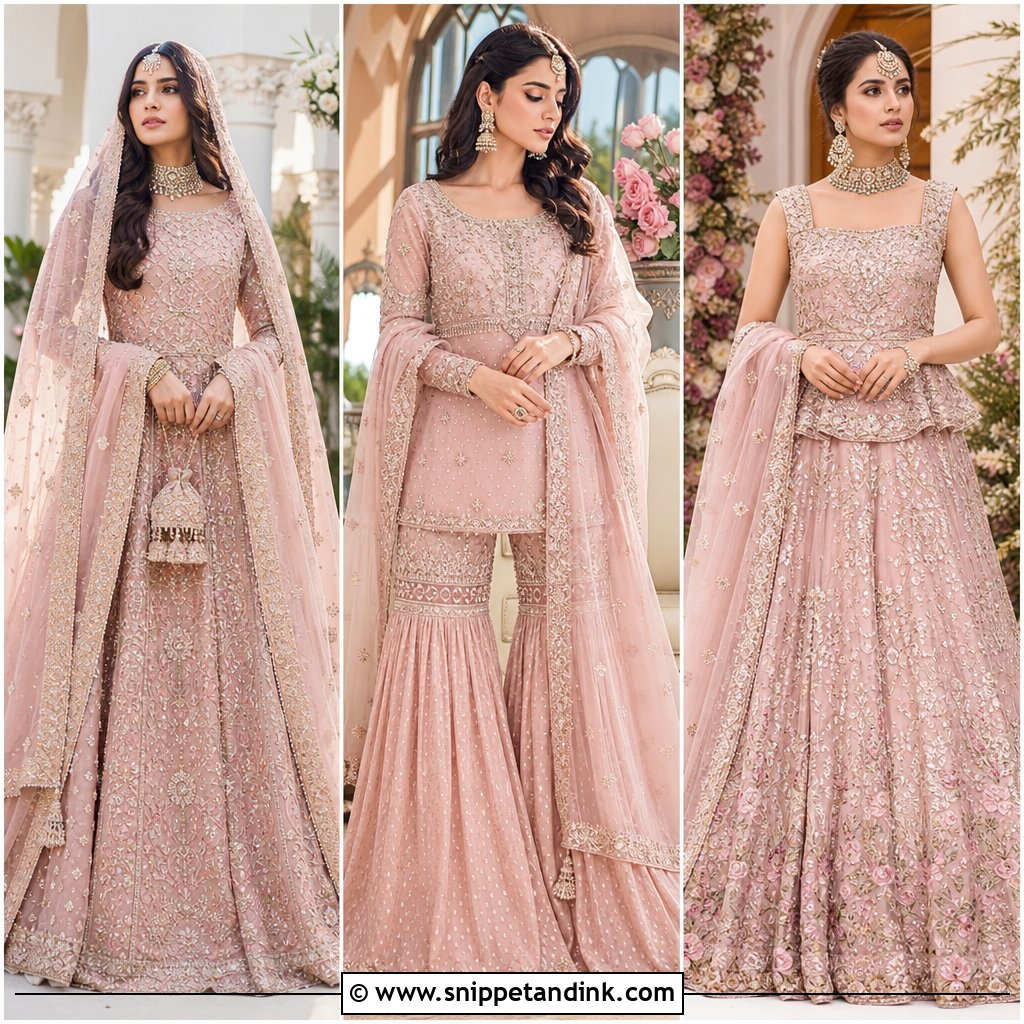
20. White Nikkah Shalwar Kameez With Gold Dupatta
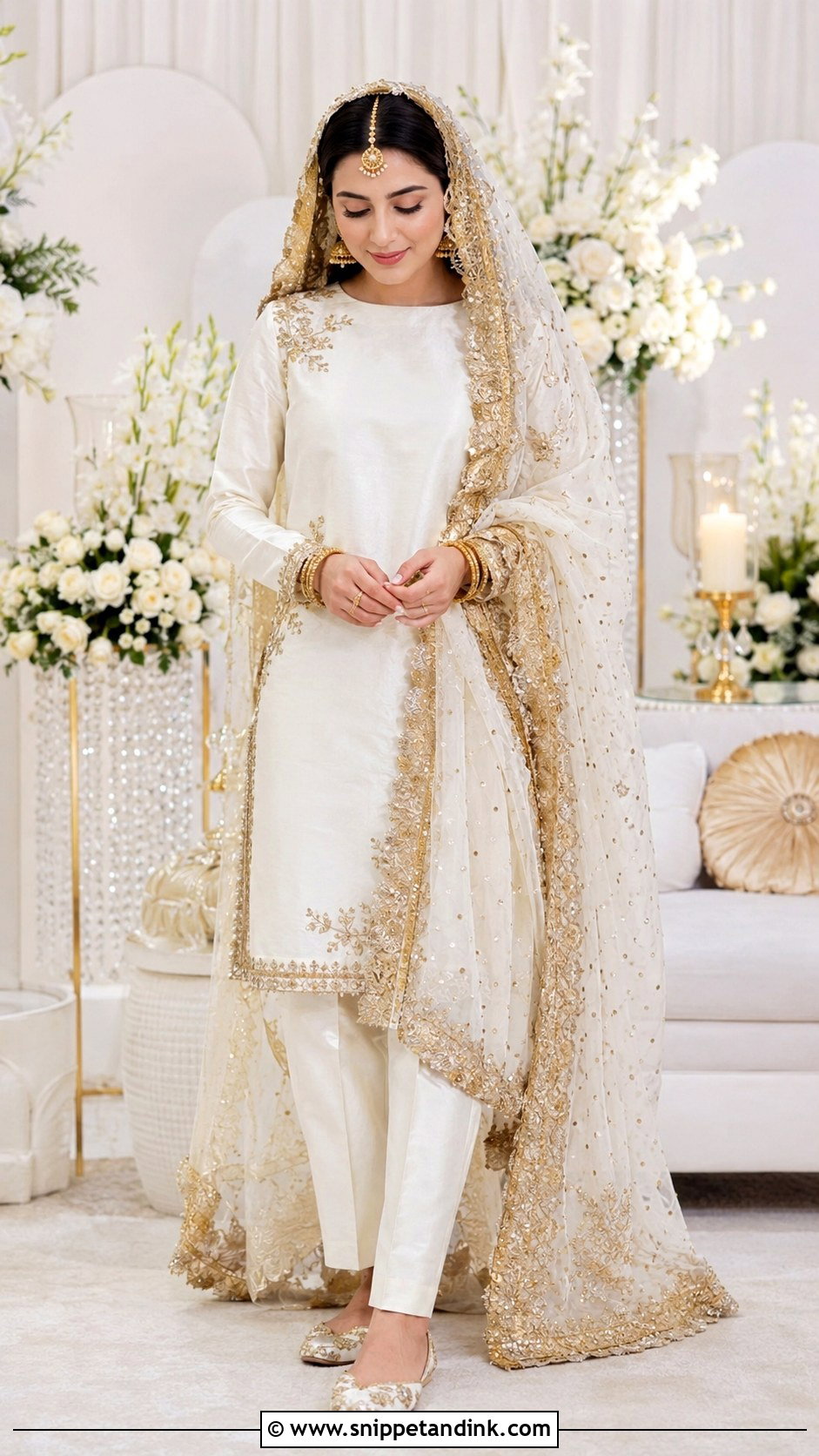
A plain shalwar kameez can be the most bridal outfit in the room if the detail is precise. A white silk or raw-silk kameez, straight cut, long sleeves, fine embroidery at the neckline, cuffs and hem, over a tailored shalwar with gentle volume. The contrast comes from a sheer white dupatta with an ornate gold border, over the head and one shoulder. Gold jhumkas, a small tikka, bangles, embroidered khussas, a low bun and a rose-nude lip. It is the easiest outfit here to sit, greet and sign in.
Making a Head Dupatta Stay Put Through the Signing
A dupatta over the head looks simple and is the thing brides struggle with most on the day. Slippery net and organza slide backward off smooth hair, especially when you look down to read and sign the nikah nama.
- Ask your hairstylist for a low bun or a firm base at the back of the head. The dupatta pins anchor into it.
- A thin under-scarf or cap in a matching shade gives the dupatta something to grip, and keeps every strand covered.
- Pin at the crown, then at both sides just behind the ears, using pins that disappear into the hair. Pins only at the front pull the fabric forward onto your face.
- Decide early whether the tikka sits over or under the dupatta, because it changes where the pins go.
- Have one person in the room whose job is to fix the dupatta before photos.
Practise once at your hair trial with the real dupatta. A heavily bordered piece weighs much more than a sample scarf, and you’ll only know how it behaves when you wear it for an hour.
Wear the Full Outfit Once Before Your Nikkah
Lehengas, ghararas, gowns, sarees, kalidars and simple shalwar kameez can all be Nikkah outfits; what matters is the setting and how long you’ll be sitting in it. Before you finalise, put the whole look on together: dupatta pinned, jewellery, shoes, hair. That’s when you find out the dupatta is too heavy, the hem catches your heel or the bangles clatter on the table while you sign. Fix those with your tailor, and the embroidery, whether pearl, zardozi, silver or white-on-white, is the easy part.
You'll Like These Ideas:



Leave a Reply