
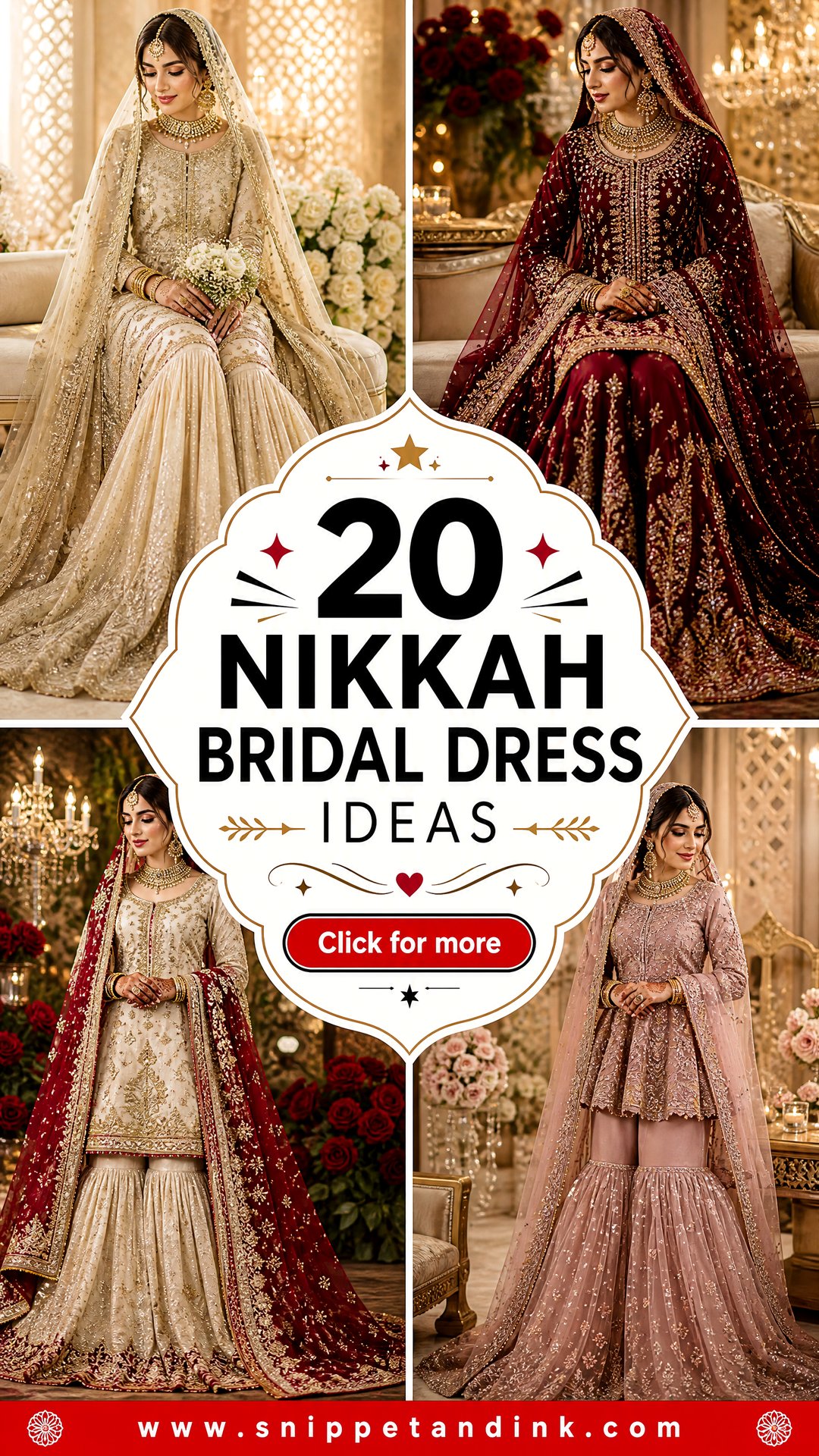
Ivory and white are still where most Nikkah brides start, but at fittings I’m now pinning just as many blush, champagne, sage and powder blue outfits, with red and deep jewel tones for evening ceremonies. Color is only half of it. The silhouette decides how you’ll sit, walk and greet people: a gharara carries heritage, a lehenga brings formality, a pishwas moves, and a straight suit or sari keeps things clean. What pulls any of them together is the dupatta, plus jewelry, shoes and embroidery kept in proportion. Below are twenty complete looks, and if you want more after these, there’s a separate set of Nikkah Bridal Dress Ideas worth browsing too.
Floor Seating, Chairs or a Mosque Hall: Match the Shape to the Room
Before color, I ask where the bride will physically be during the Nikkah. It changes which silhouettes are realistic.
Sitting on the floor or a low takht
Ghararas, shararas and pishwas all fold neatly when you sit cross-legged. Lehengas with a heavy can-can and fitted maxis are harder; the first puffs up around you and the second pulls across the thighs. A sari works only if the pleats are pinned well.
Chairs or a stage sofa
Almost anything works seated on a chair, including capes and jacket lehengas. Watch the back of the outfit, though: a long farshi or train needs someone to arrange it every time you stand.
A mosque ceremony
Many mosques expect arms, neck and hair covered and prefer subdued embellishment. I’d lean toward the straight suit, an Anarkali or a light gharara with full sleeves, and keep a matte under-scarf ready. Check the mosque’s own guidance in advance, since expectations vary.
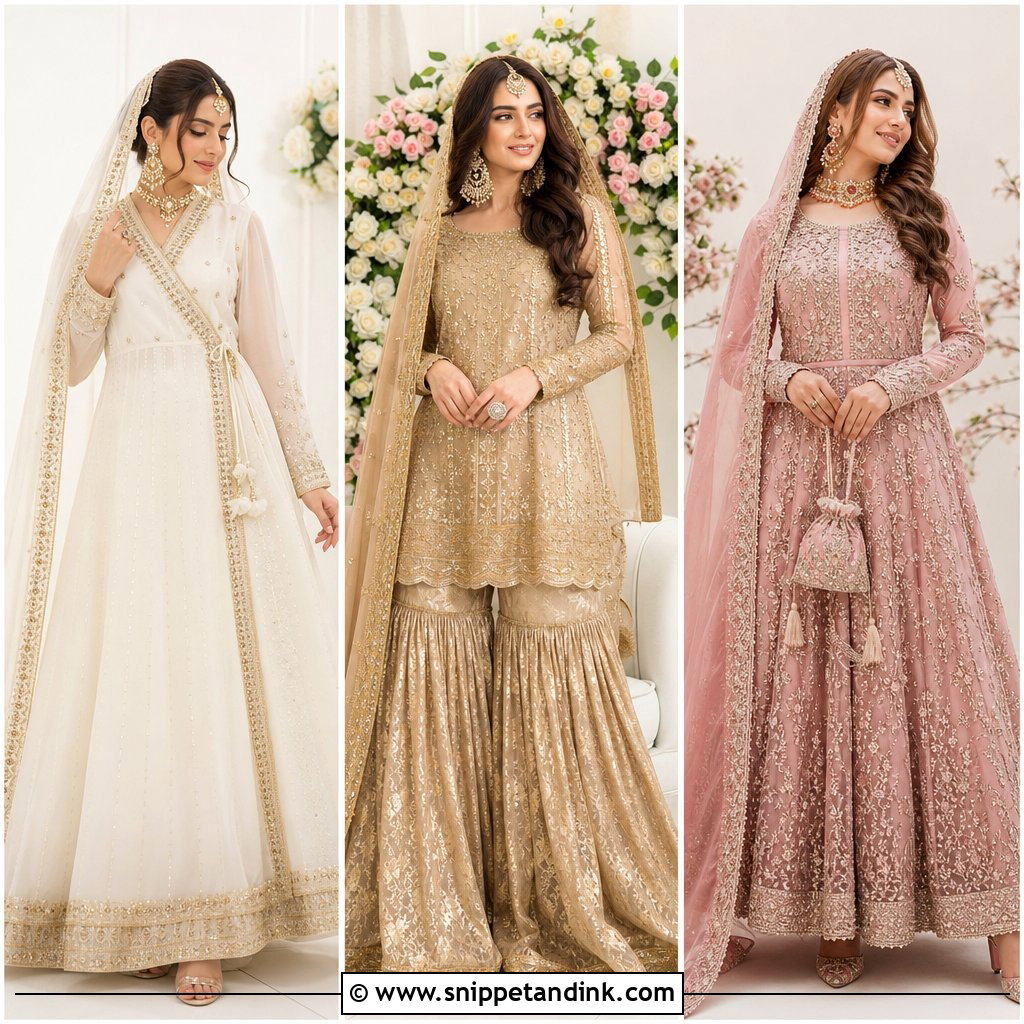
1. Ivory Gharara Nikkah Bridal Dress
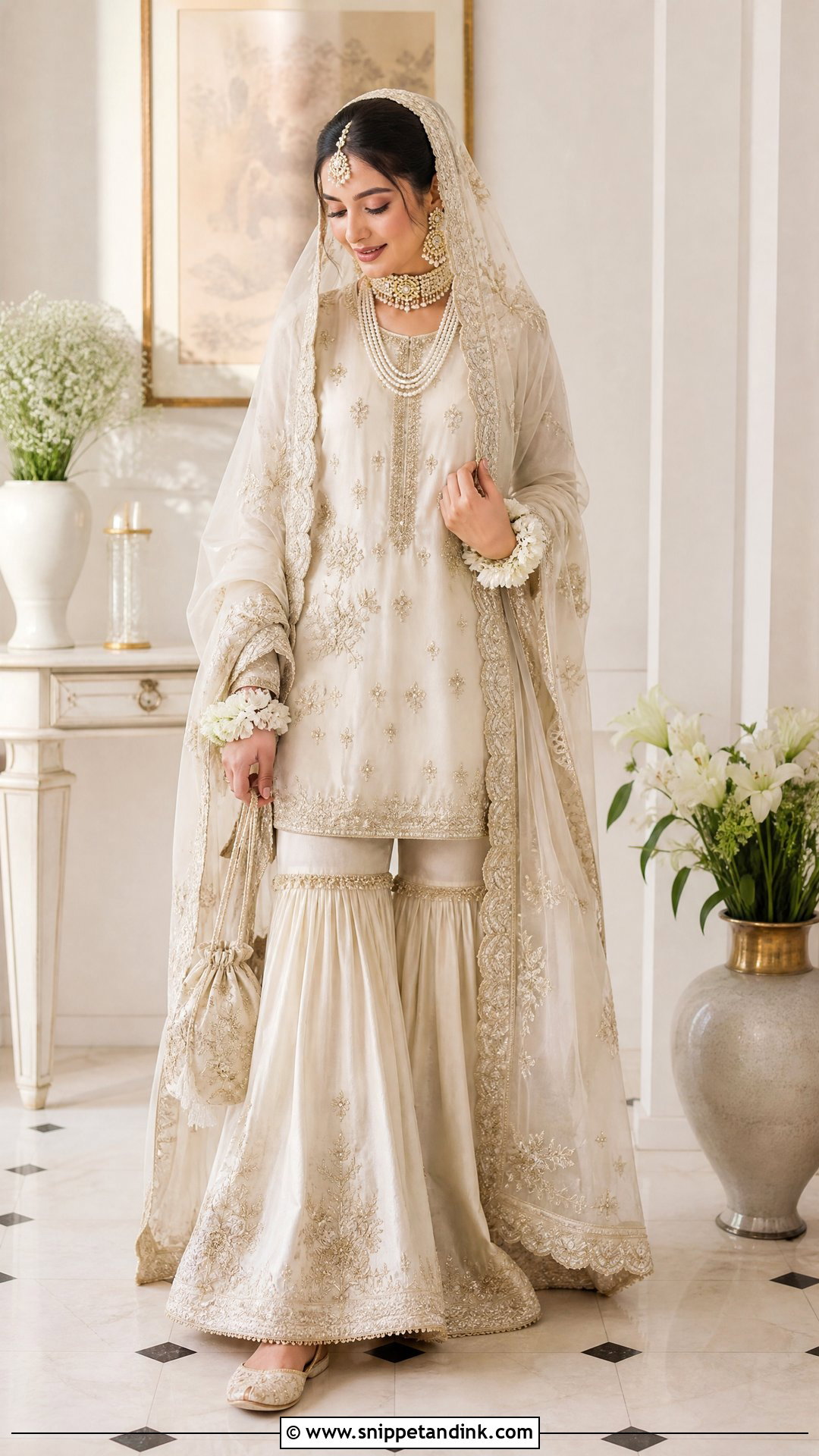
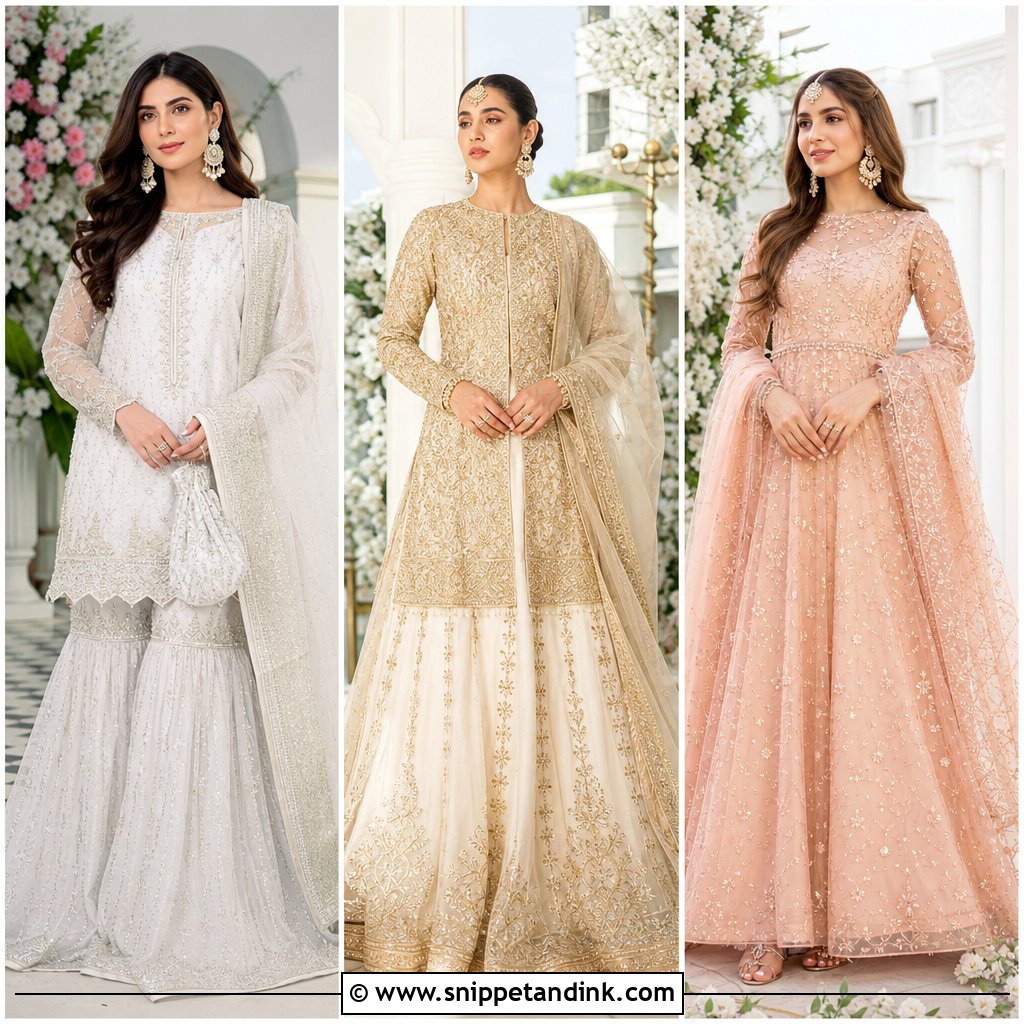
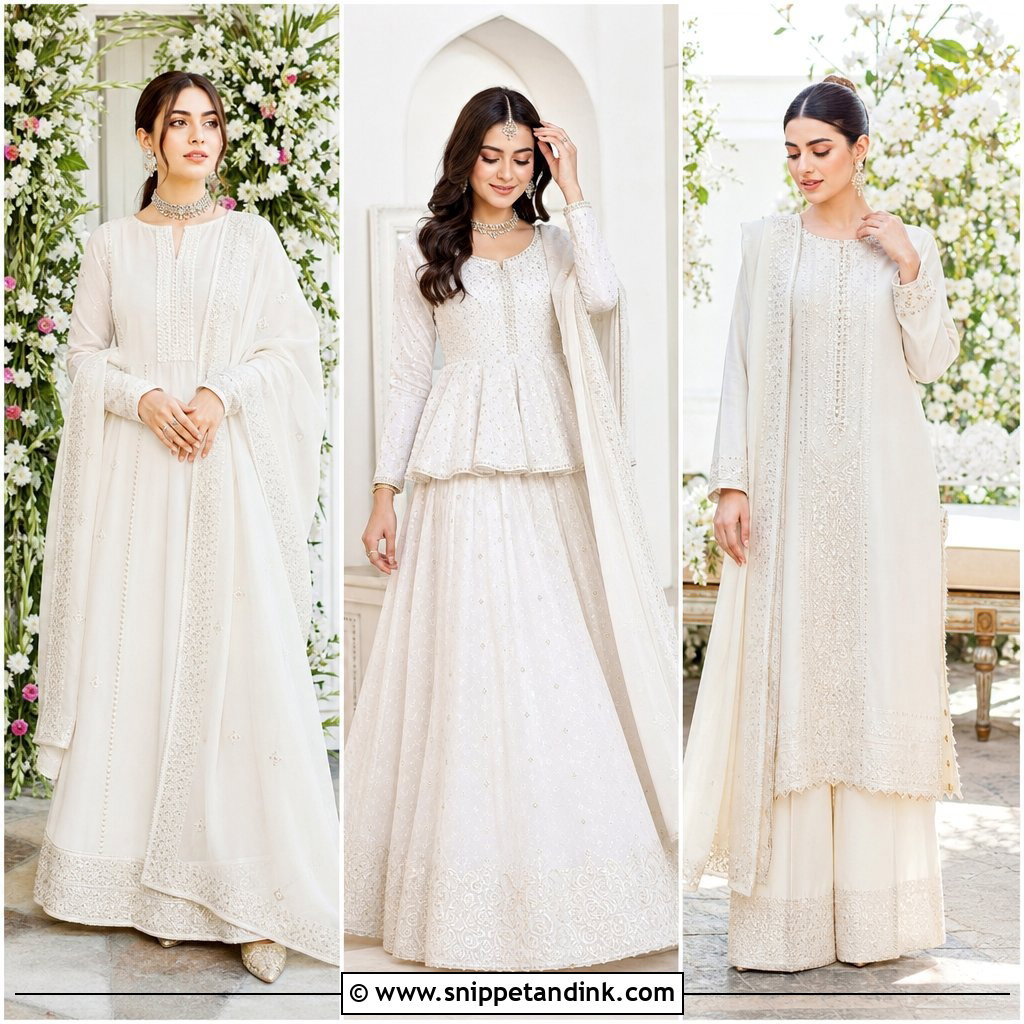
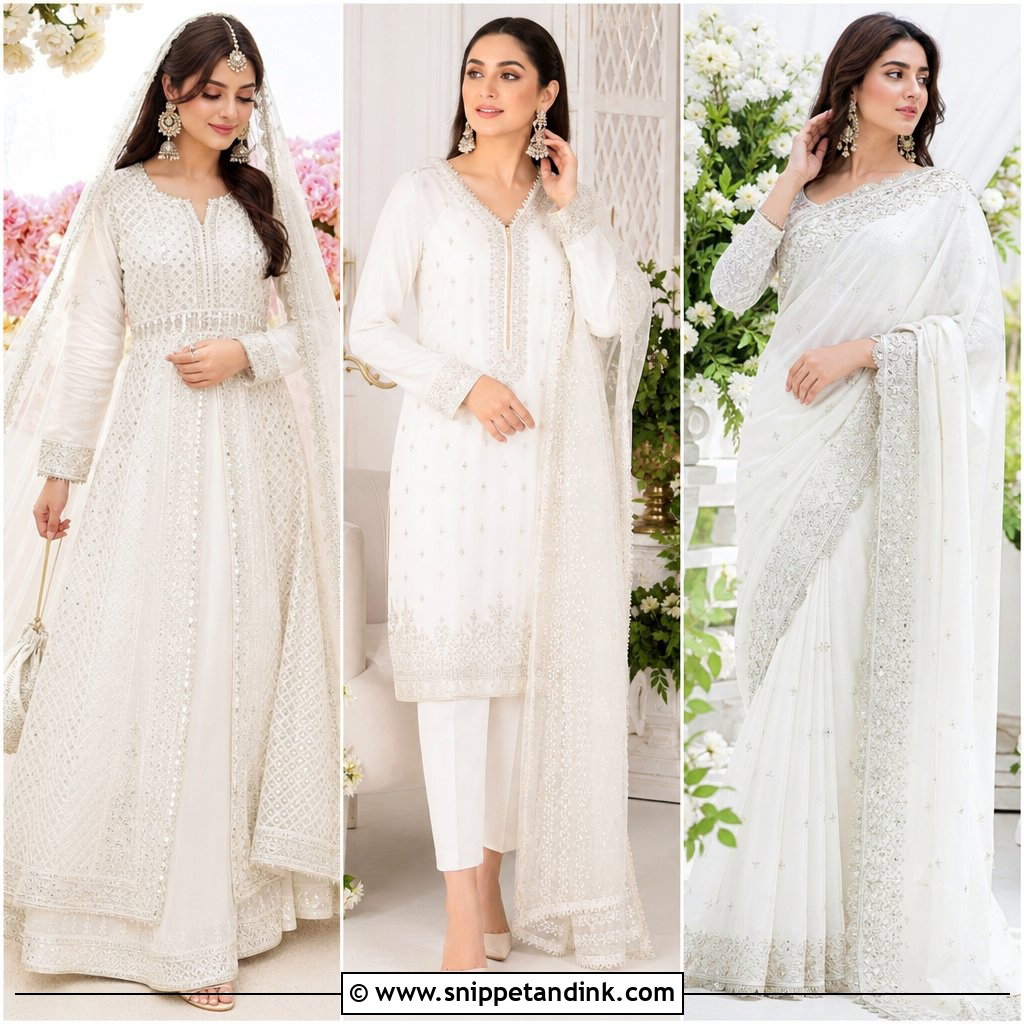
An ivory gharara is traditional without the weight of a full bridal set. Go for a short raw silk shirt with delicate zardozi, pearls or tonal thread, over a gharara with a structured embroidered knee panel. The organza dupatta with a scalloped border goes over the head, one side falling across the shoulder. Pearl-and-kundan earrings, a small tikka and ivory khussas are enough. Want more coverage? I ask the tailor for full sleeves and two extra inches on the shirt; the gharara still keeps its shape. Ivory raw silk does mark easily, though, so I keep a white chalk pen in my kit for scuffs on the knee panel.
2. White Lehenga Nikkah Bridal Dress
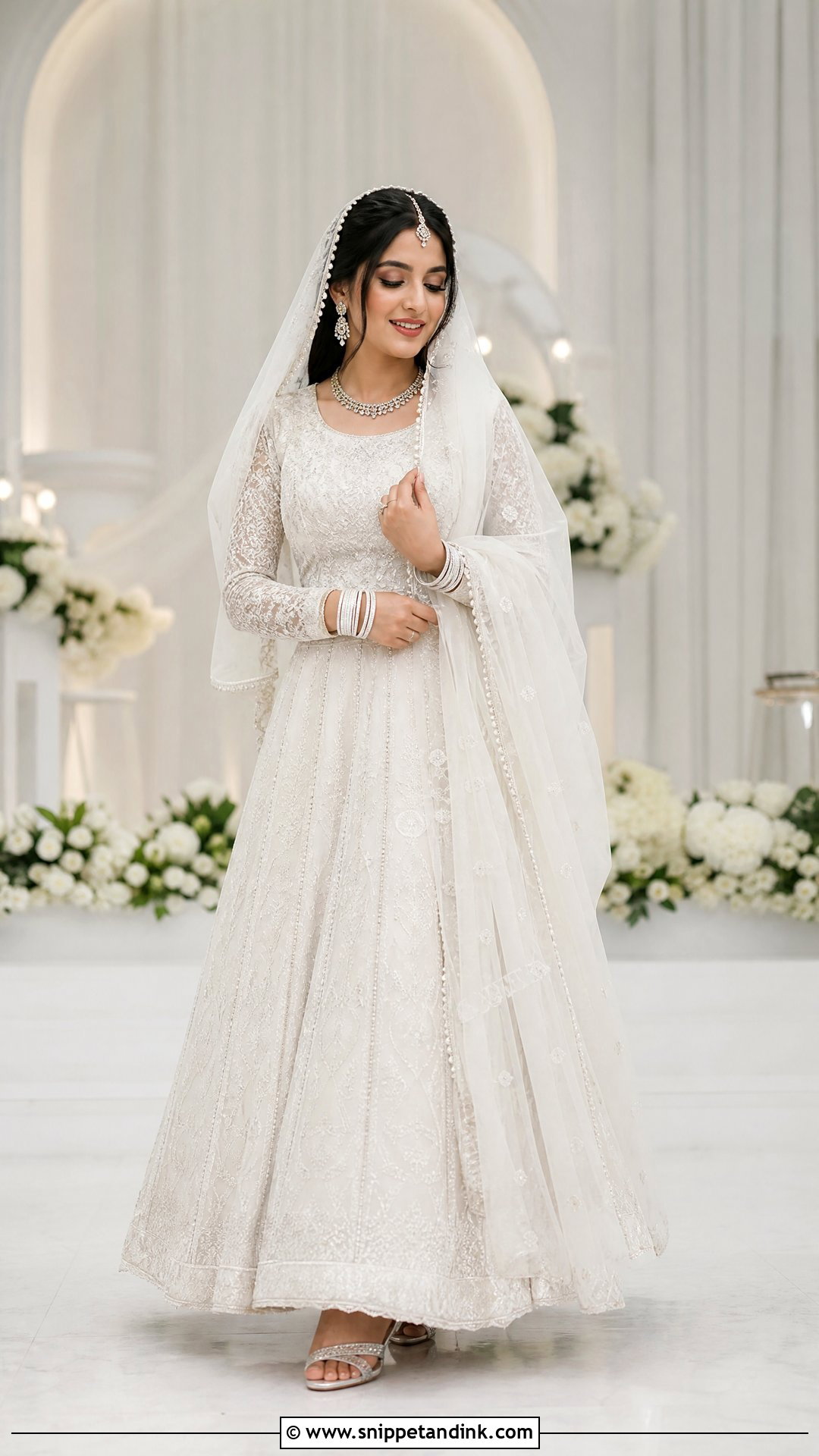
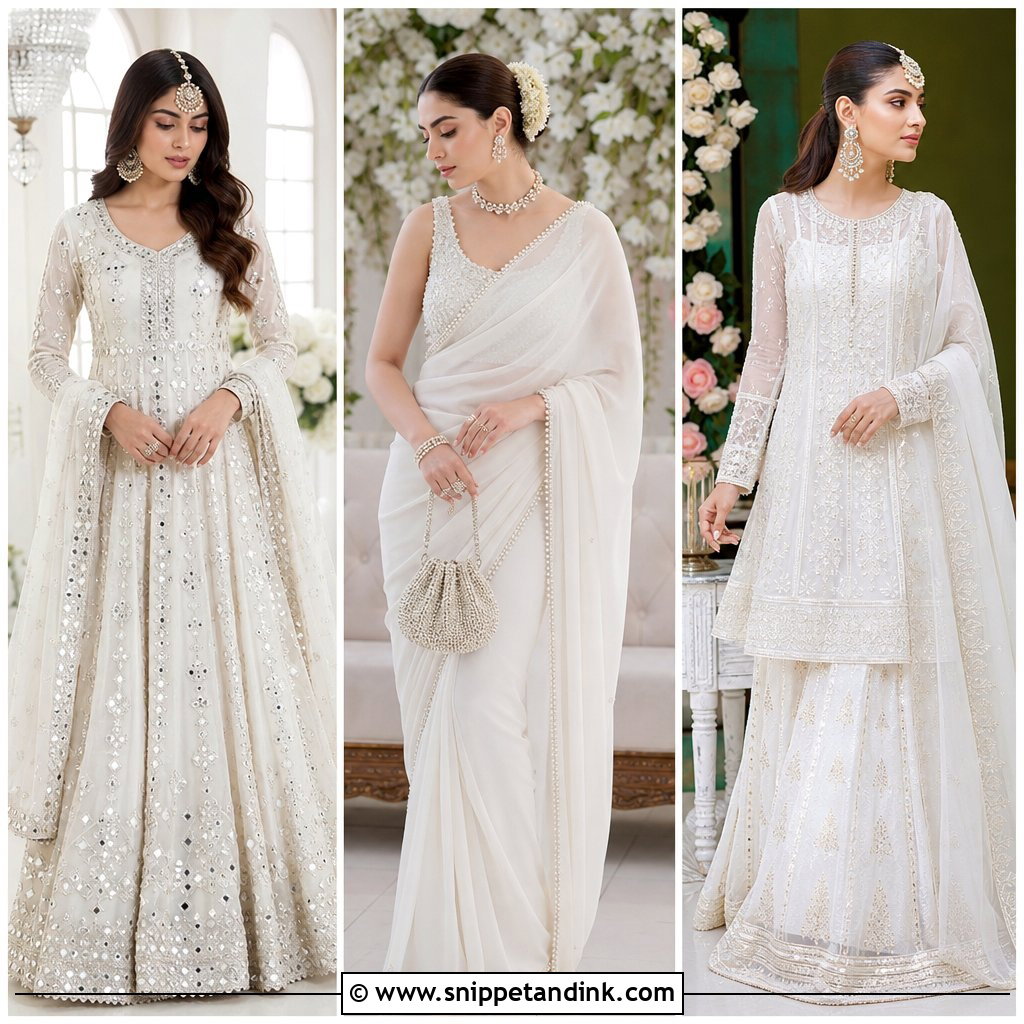
White is unforgiving, which is why I treat this lehenga as a texture exercise. Tonal embroidery, fine sequins and pearl or silver accents give the eye something to read in photos, where a flat white skirt would simply blow out. Pair it with a fitted full-sleeve blouse or a waist-length kurti, a light tulle or organza dupatta over the head and a second across the front if you want formality. A diamond-style choker, pearl studs, white bangles and embroidered heels finish it. Hold the fabric under your chin in daylight first. If pure white turns you sallow, oyster or milky ivory gives the same calm look with warmth.
3. Champagne Pishwas Nikkah Bridal Dress
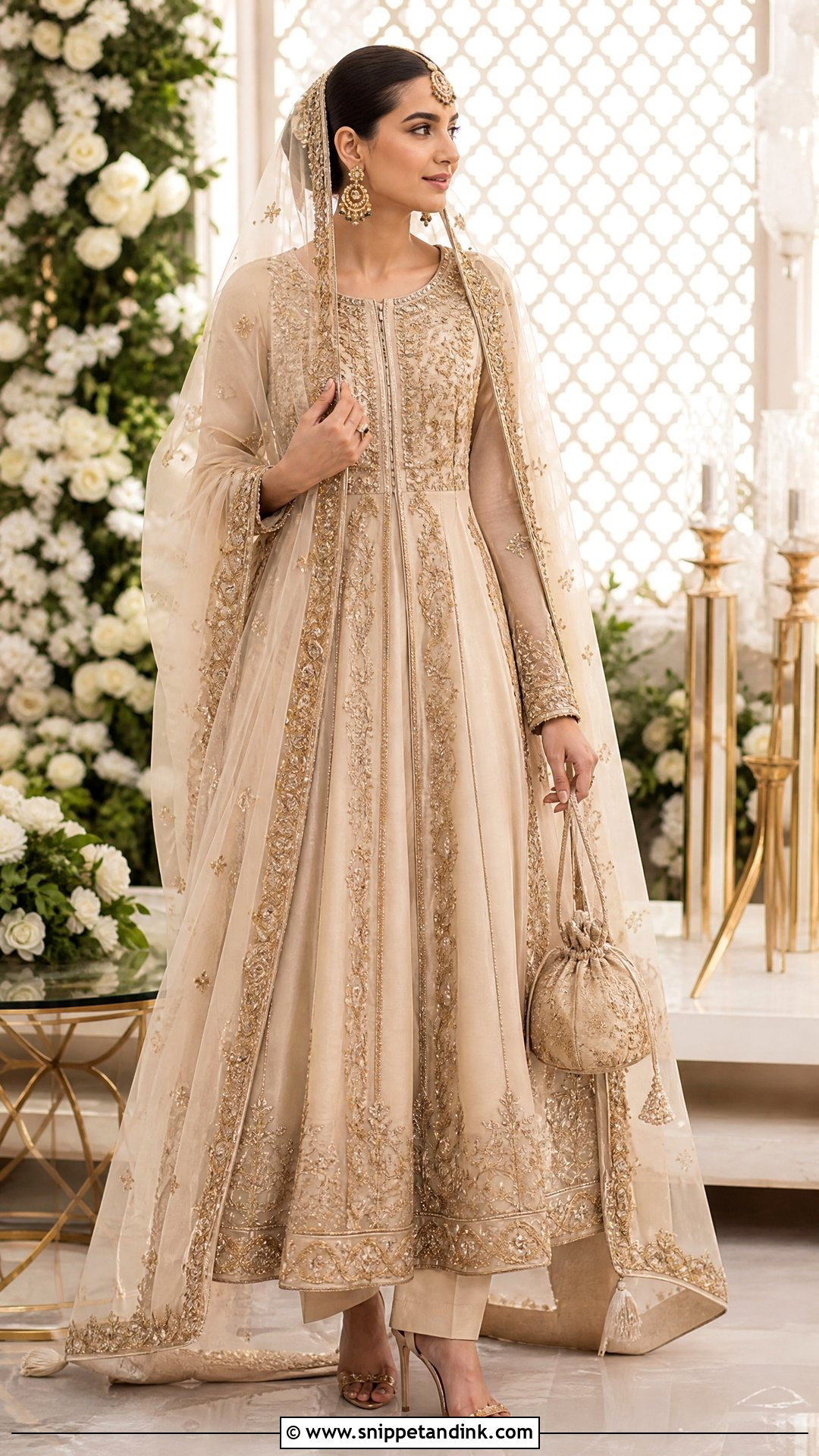
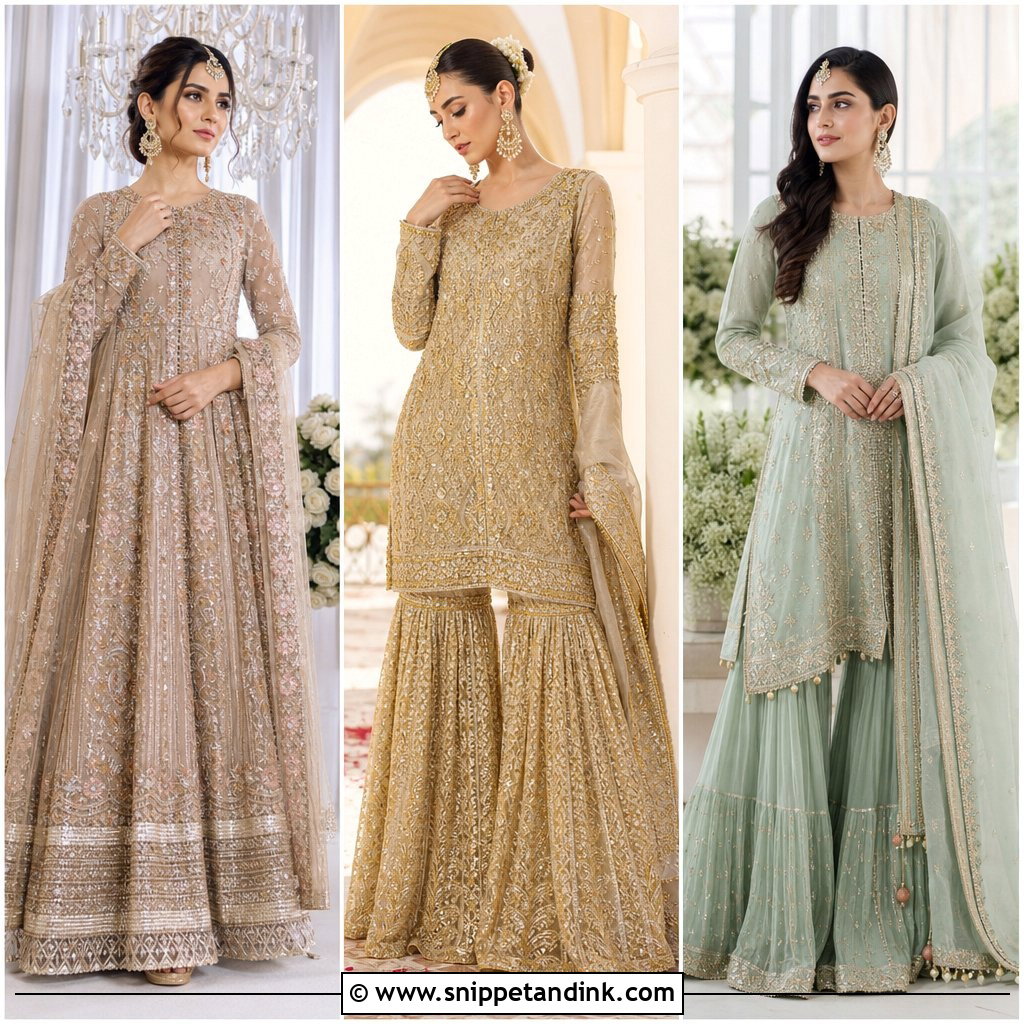
Champagne pishwas is my pick for indoor venues with good lighting, because the fabric picks up every lamp in the room. The shape is a floor-length dress with a fitted bodice, full sleeves and a wide flare, with antique gold work at the neck, cuffs and hem. Straight silk trousers go underneath, and the sheer dupatta can be edged with kiran or embroidered scallops. Champagne heels, a small potli and antique gold jewelry keep it in one family of tones. One thing I check: a pishwas needs plenty of kalis or a full circle cut to swing properly. Skimp on panels and it hangs like a long kurta.
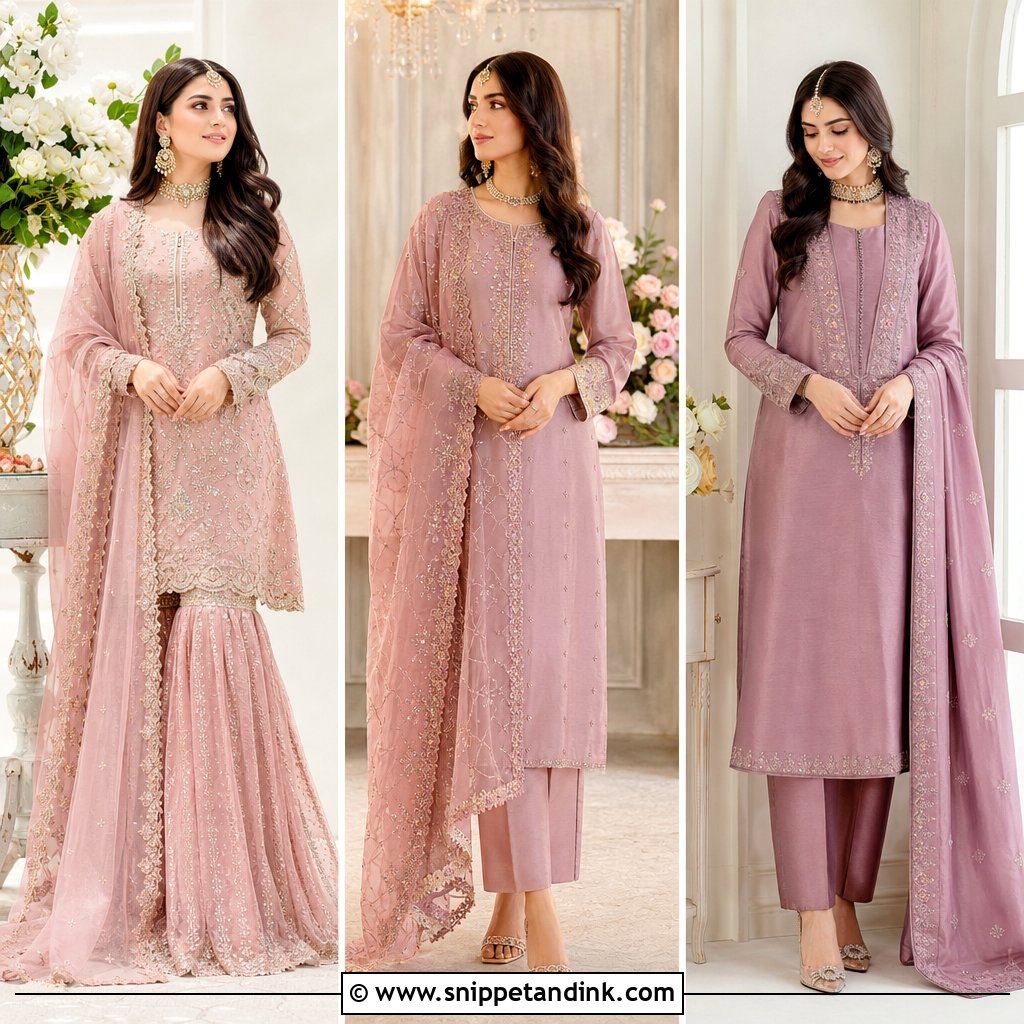
4. Blush Pink Sharara Nikkah Bridal Dress
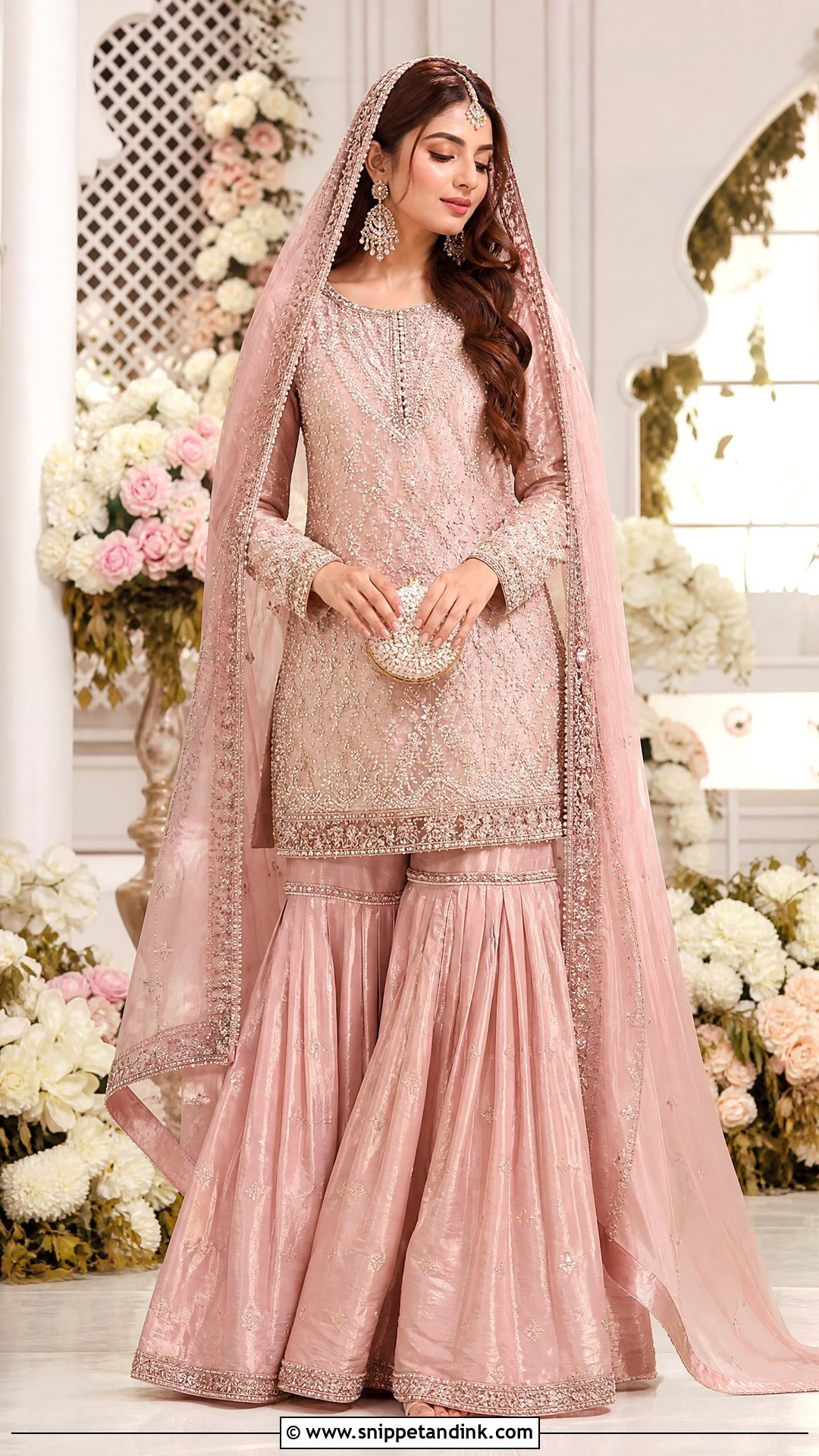
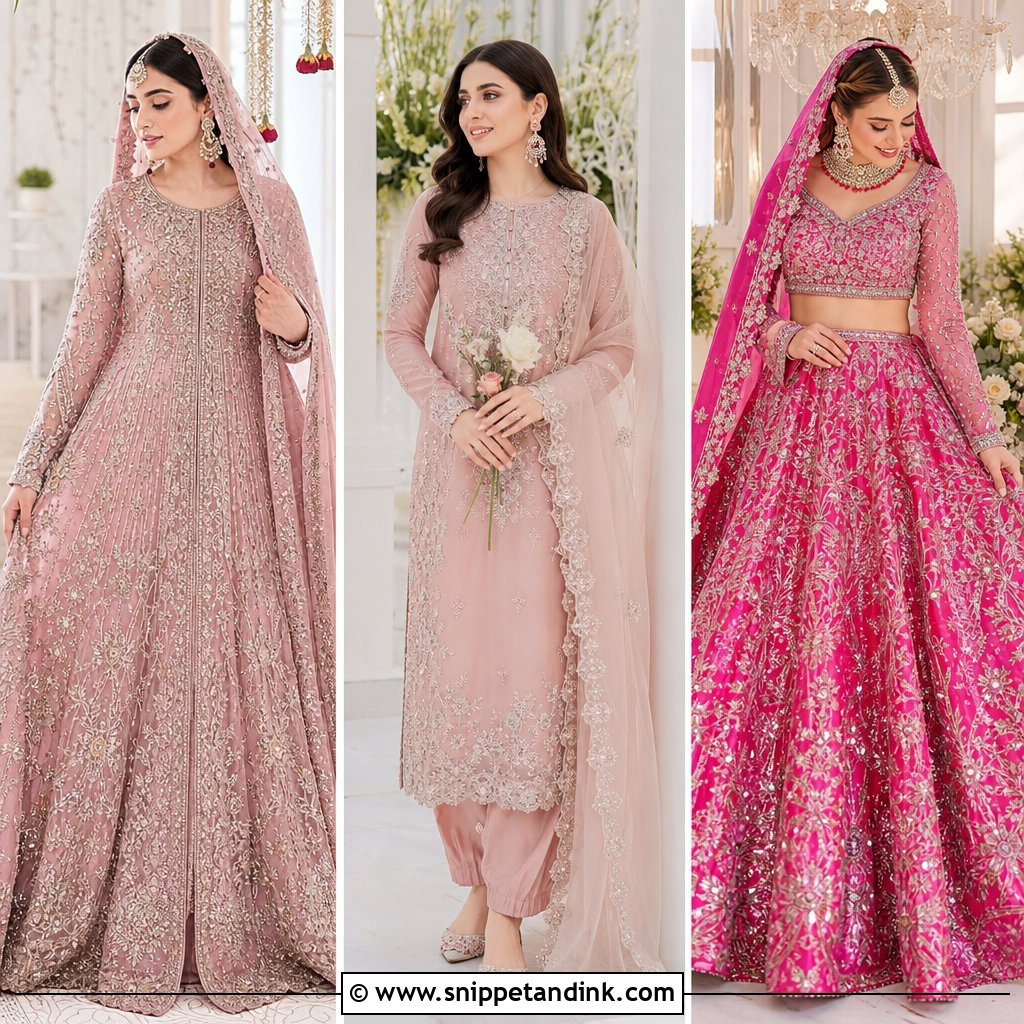
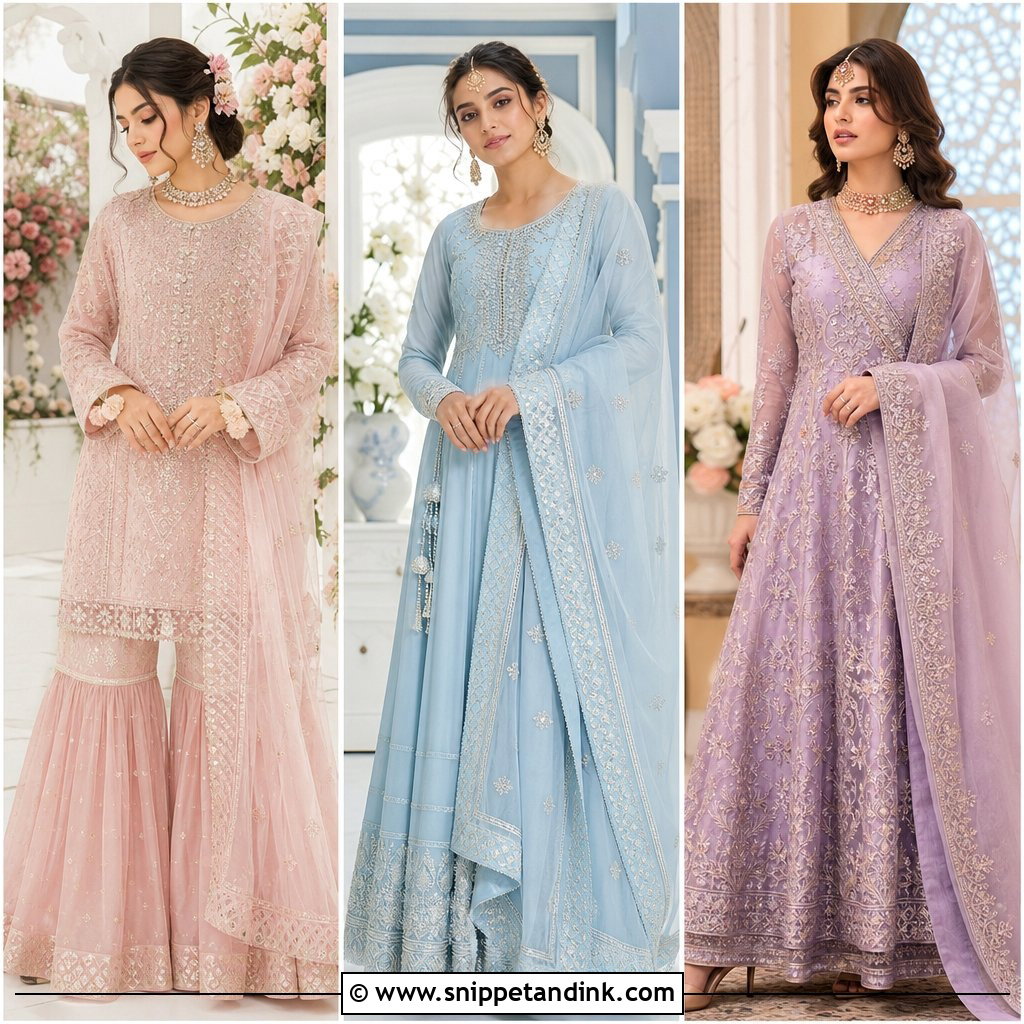
Blush with a sharara gives you volume without the weight of a lehenga, which matters if you’ll be standing for long greetings. A short embroidered kurti over a wide sharara in silk, chiffon or light jamawar is the base, with rose gold handwork, pearls and small crystals on the pink. The organza dupatta needs a defined border so it reads as bridal on the head. Rose gold sandals, a pearl clutch, chandelier earrings and a slim tikka finish it. I always compare the embroidery on the kurti and the sharara side by side before stitching, since when they’re worked by different hands the motif sizes drift and the outfit looks like two pieces.
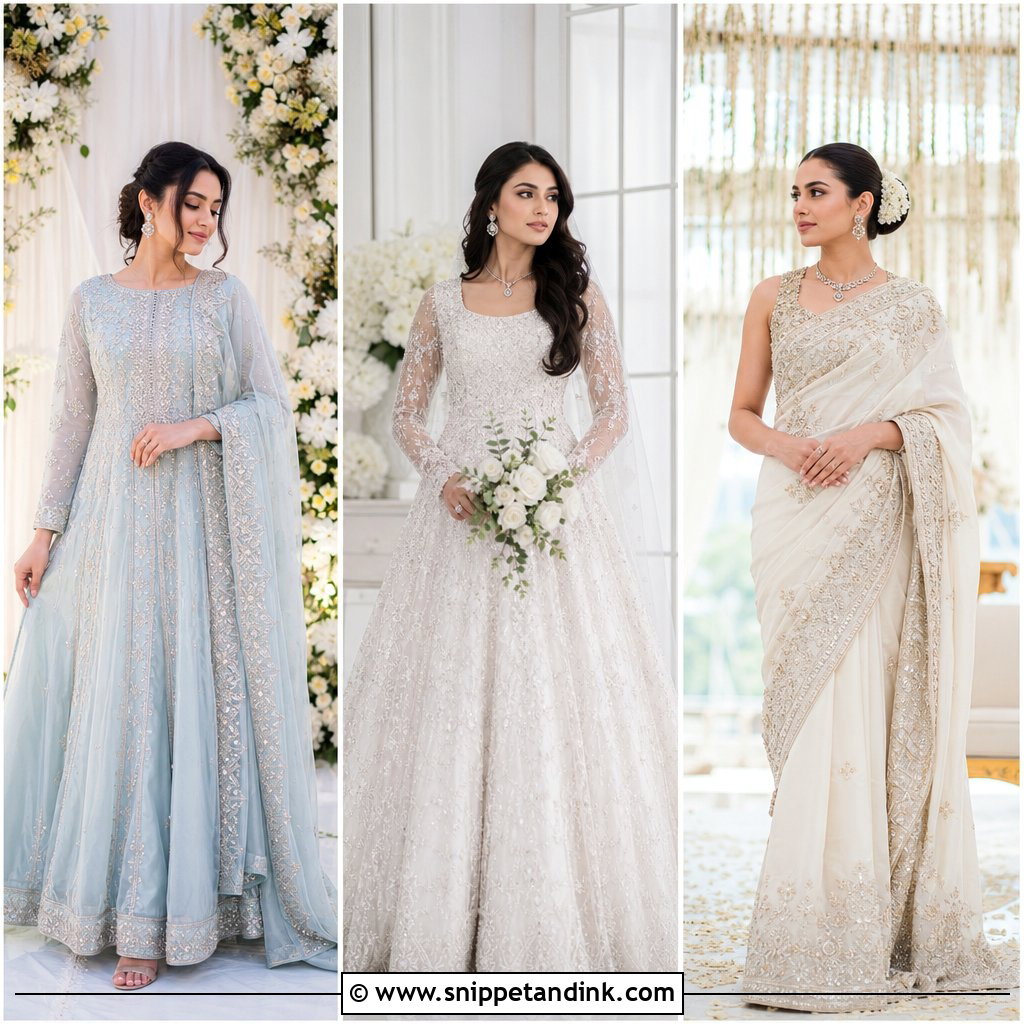
5. Sage Green Anarkali Nikkah Bridal Dress
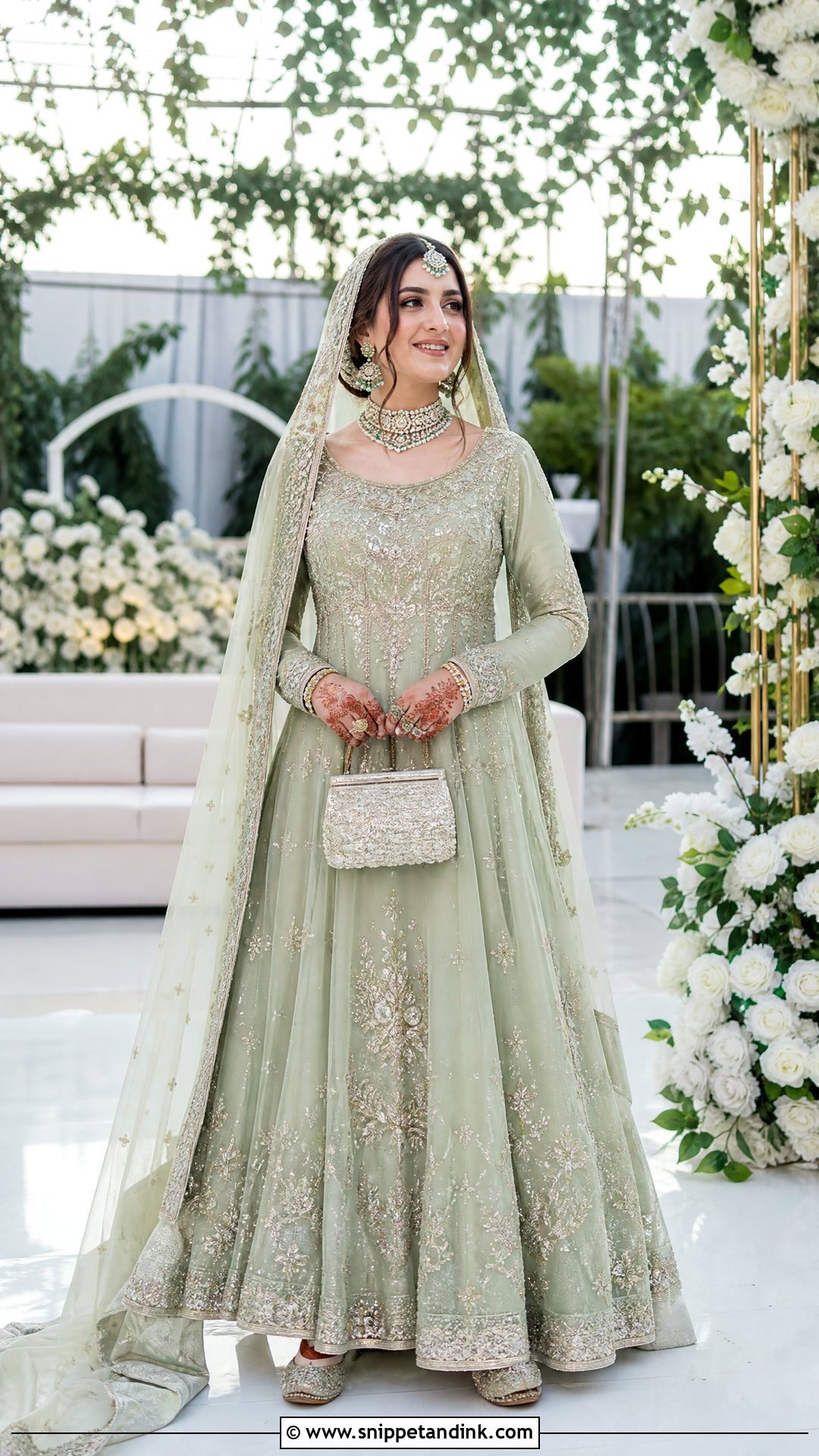
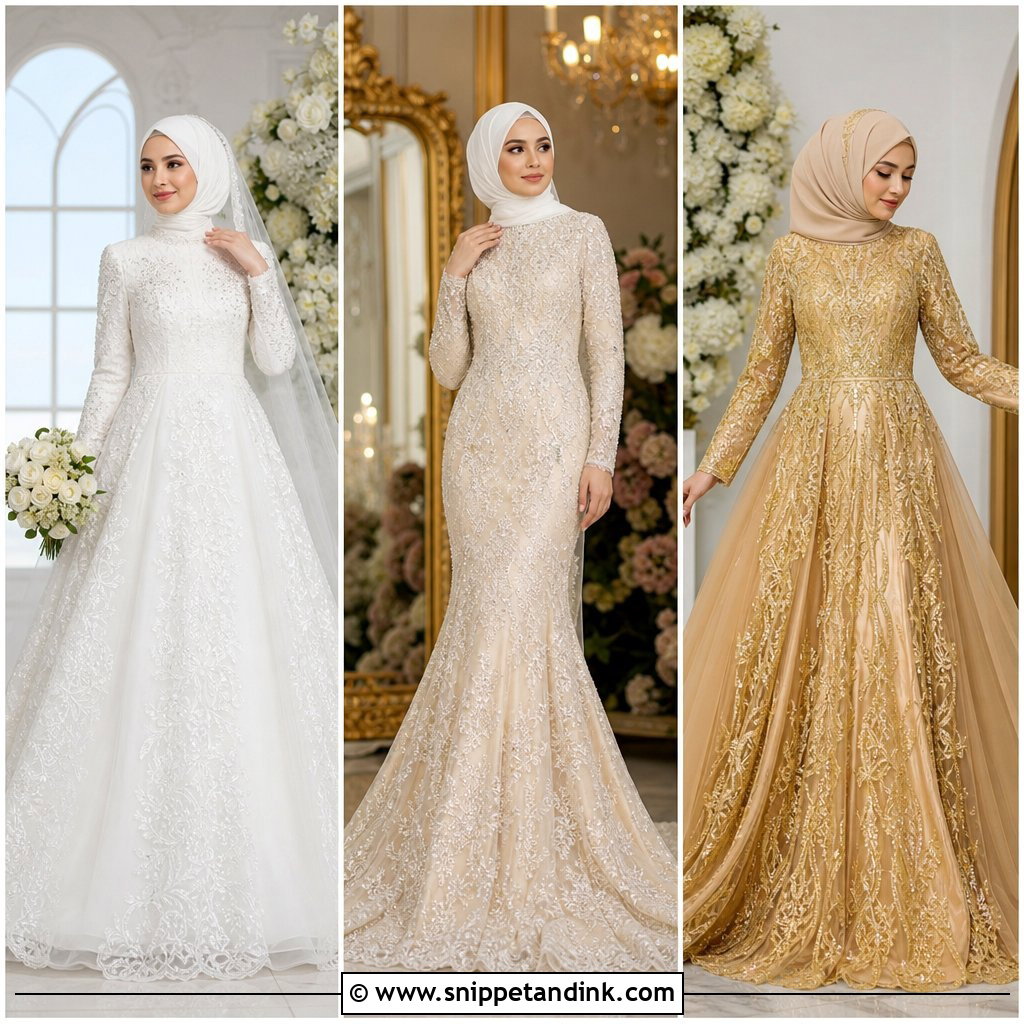
A garden or daytime Nikkah is where sage really works. Cut as a floor-length Anarkali with a defined waist and a soft flare, it gives a clean line on most figures. Keep the embroidery tonal: champagne, ivory or muted gold. Full sleeves, a higher neckline and an opaque lining give coverage, while sheer organza panels keep it light. Style it with a sage dupatta, gold-edged khussas, a small structured bag and polki with pale green stones. For a hijab-wearing bride, I’d put a matte chiffon scarf in matching sage underneath and lay the embellished dupatta on top, since shiny on shiny slides. Leave the bright colors out; ivory flowers and gold are all sage needs.
6. Powder Blue Maxi Nikkah Bridal Dress
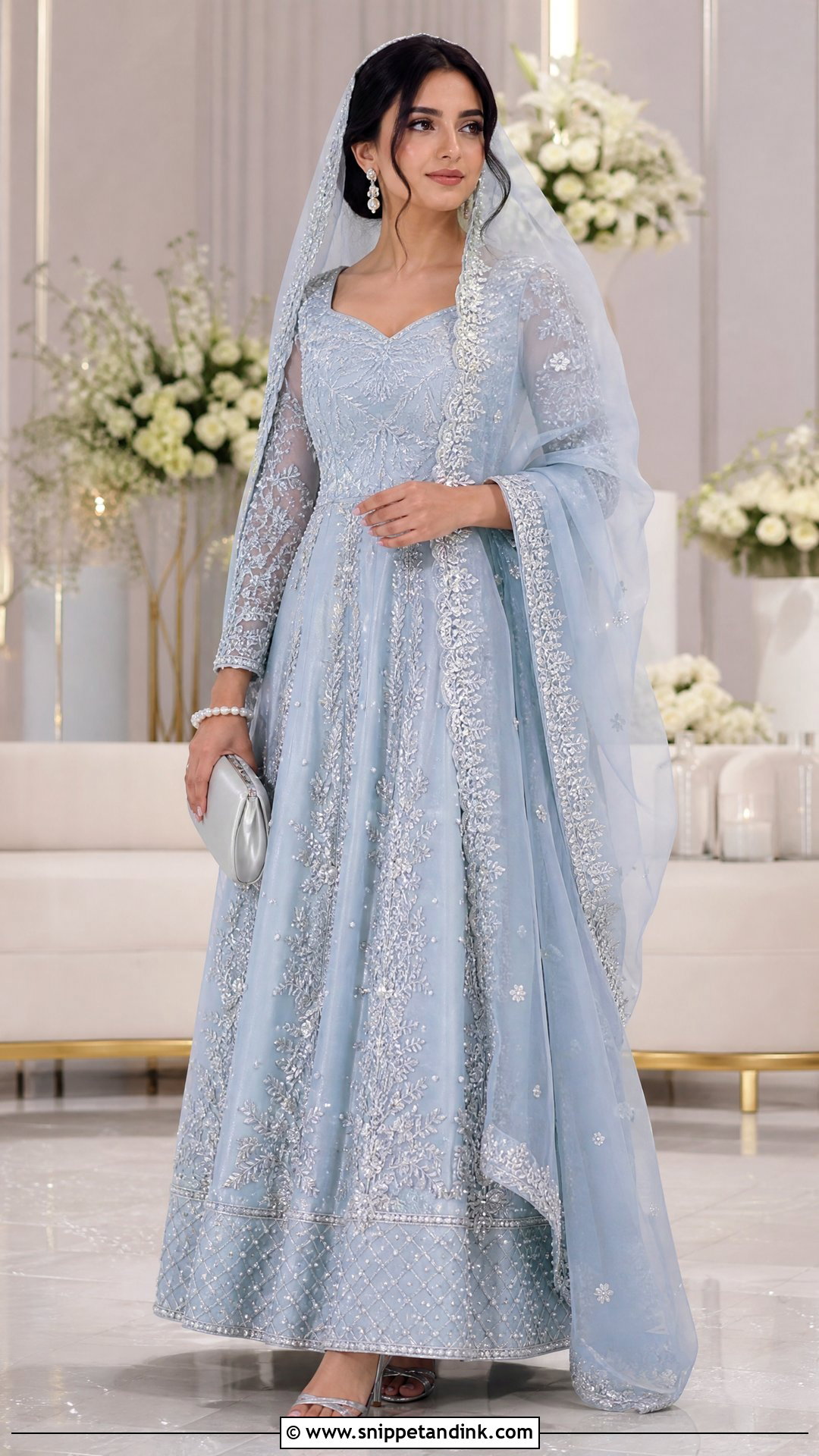
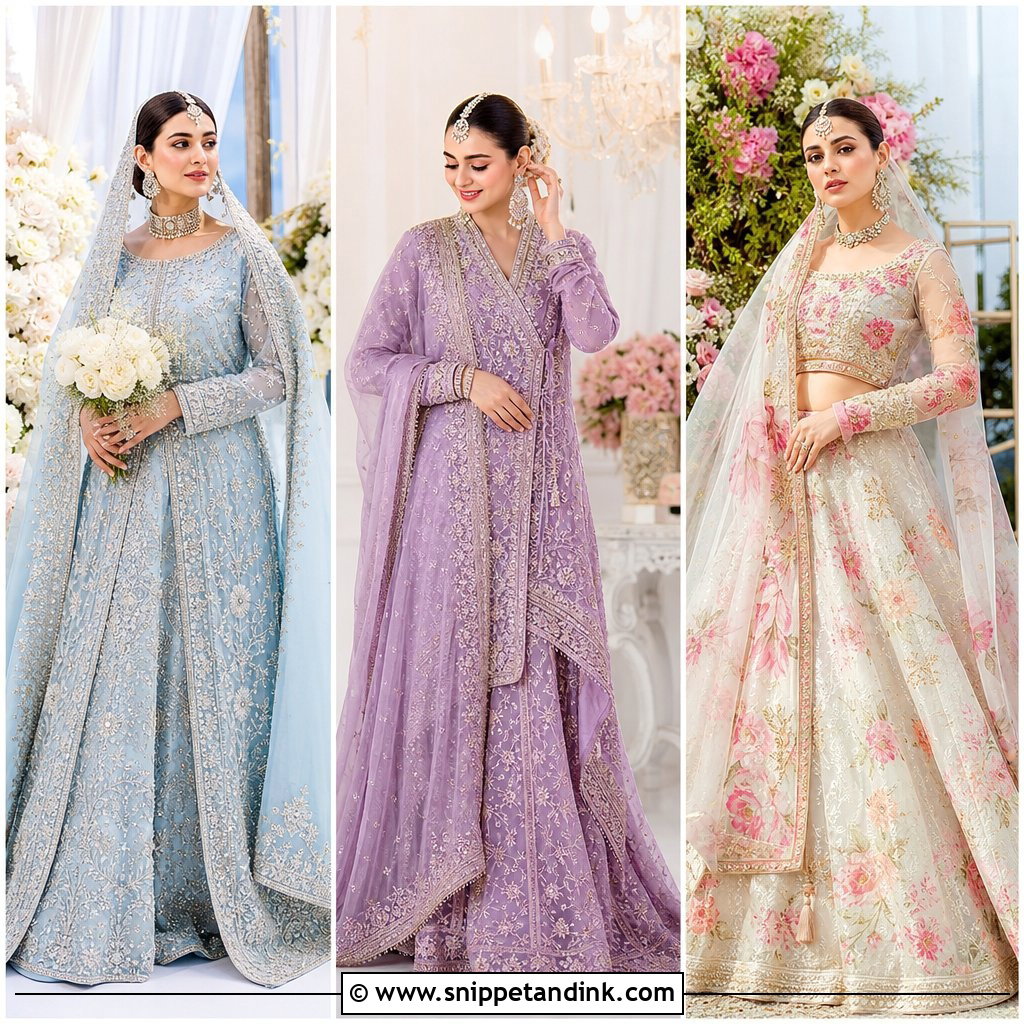
Powder blue belongs in spring and summer light. Choose a structured bodice over a flowing maxi skirt, with vertical embroidery to lengthen the figure, in silver thread, pearls, crystals and small white florals. Skip the very heavy head covering here; an organza dupatta with a narrow border keeps the airy feel. Silver heels, a pearl bracelet, drop earrings and a satin clutch finish it, or kundan with pale blue stones if you prefer traditional jewelry. I nearly always add side-seam pockets to a maxi like this. A tissue, a lipstick and a phone for the photographer’s call have to live somewhere, and potlis get handed off and lost.
7. Pearl Gray Farshi Shalwar Nikkah Bridal Dress
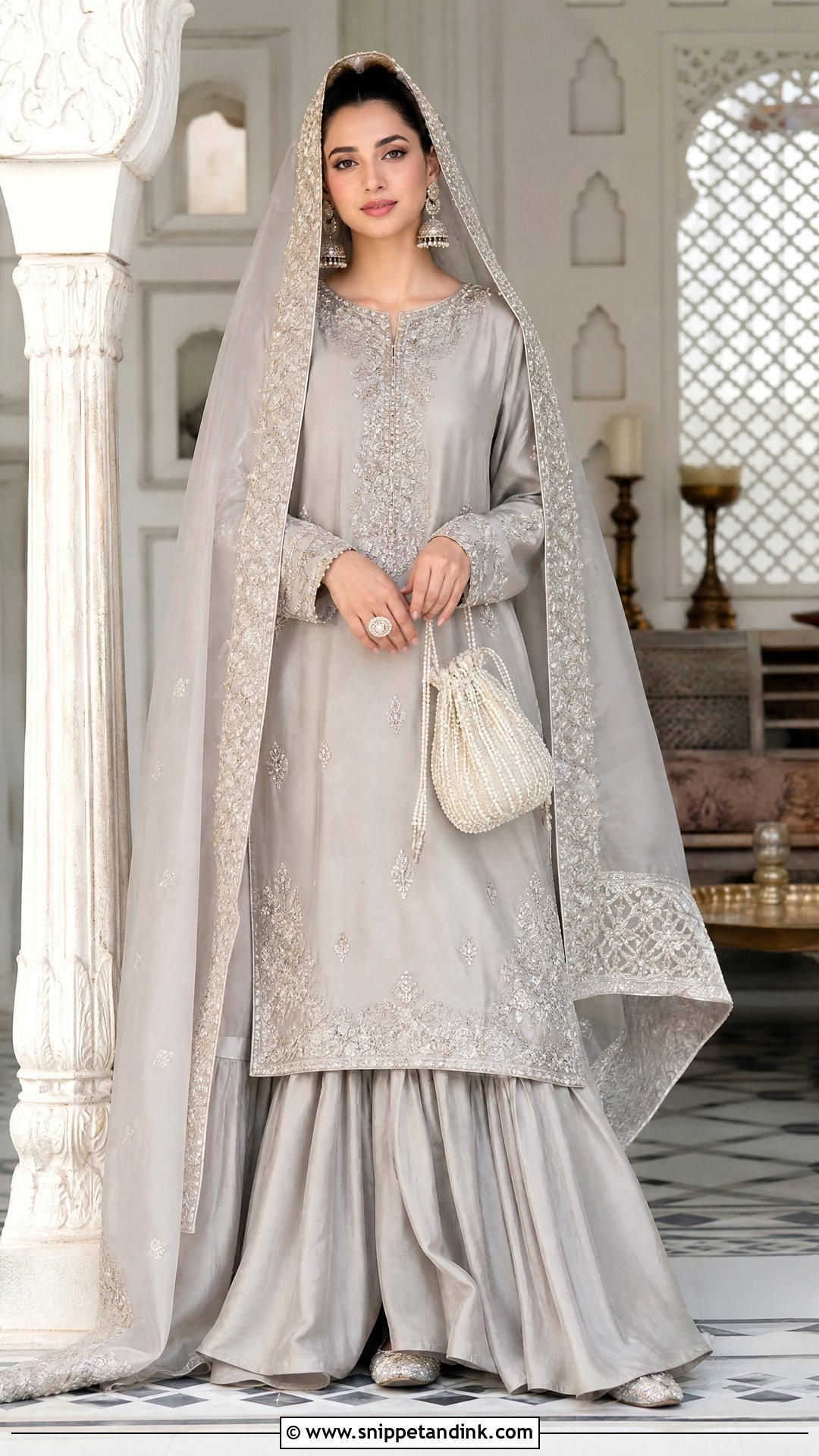
The farshi shalwar comes from old court dress, and it still looks the part. The floor-skimming shalwar pairs with a knee-length shirt in raw silk for warm months or velvet for winter, with silver dabka, pearl clusters and cool-toned thread at the neck, sleeves and borders. A light grey organza dupatta with a wide embroidered edge goes over the head and is pinned at both shoulders. Silver khussas, a small potli and jhumkas complete it. Walking is the real challenge. I teach brides to lift the front fabric slightly with both hands and take shorter steps than feel natural, then practice on stairs. A soft structured shirt balances the volume below.
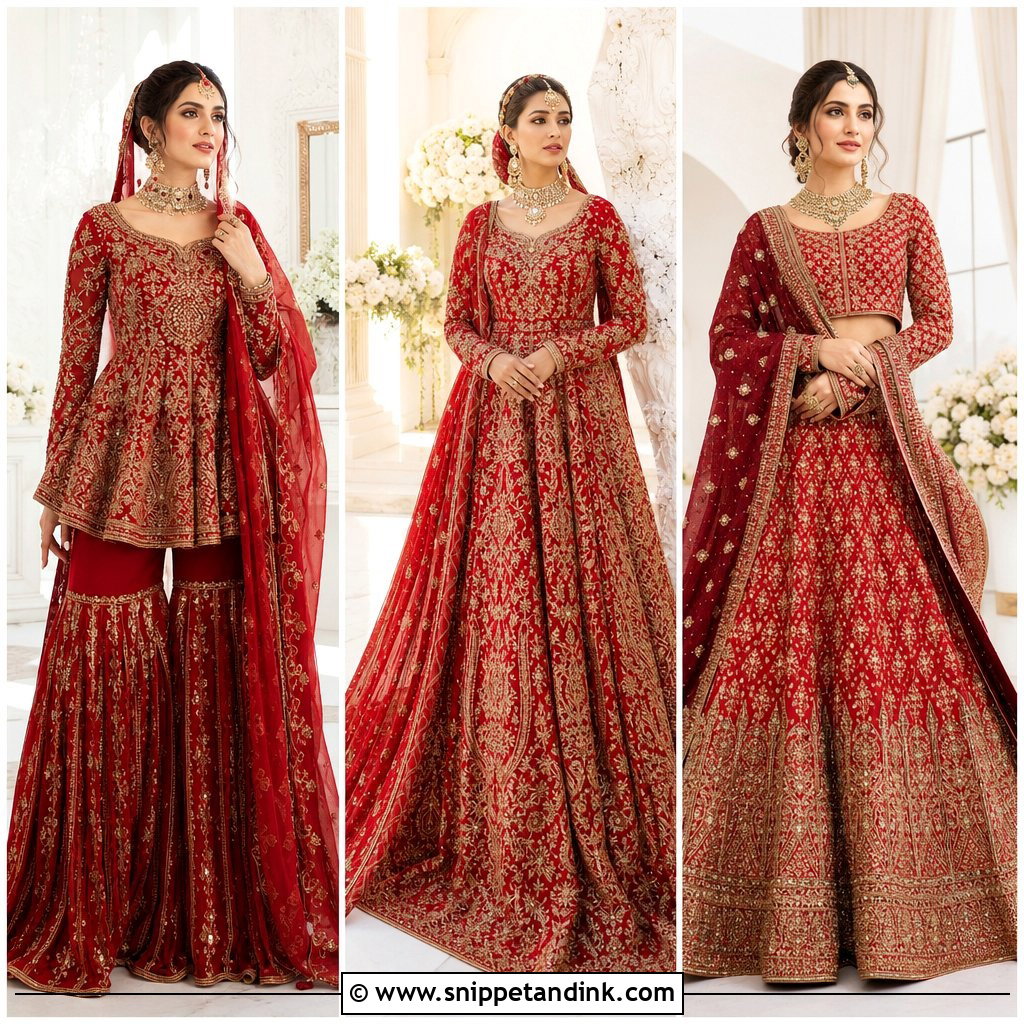
8. Red Lehenga Nikkah Bridal Dress
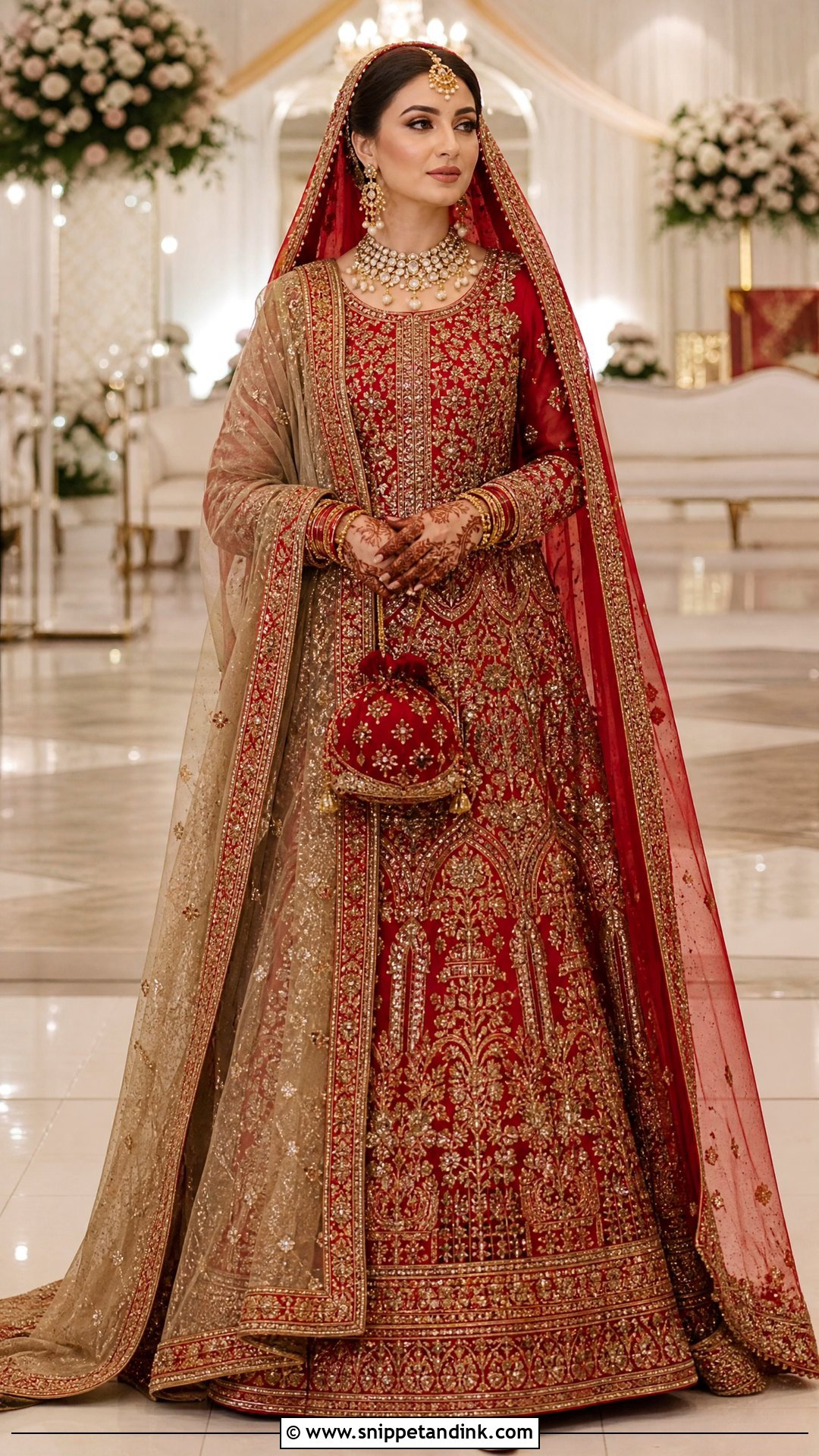
Nothing says ceremony to an older generation like red. A deep red lehenga with antique gold embroidery, a modest blouse with full or three-quarter sleeves and a red dupatta over the head give a continuous line, with an optional muted gold dupatta across the torso. Gold khussas, red-and-gold bangles, a structured potli and kundan finish it. On red, I’d rather see concentrated borders and spaced motifs than dense work everywhere, since dense embroidery on red tends to read as a dark blur in photos. I’d steer brides who are combining the Nikkah with a bigger celebration, or holding it in the evening, toward this one.
9. Maroon Gharara Nikkah Bridal Dress
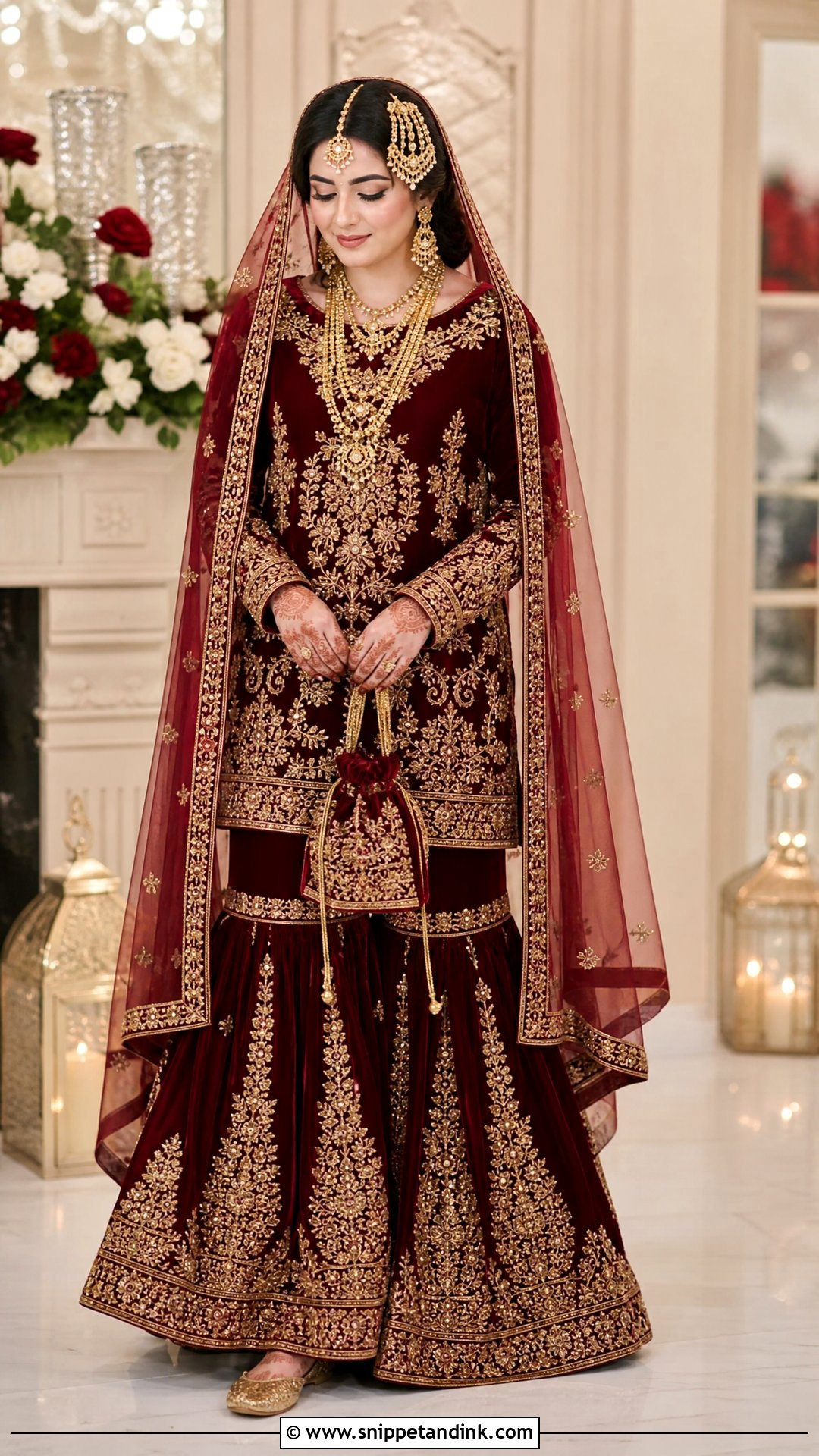
Rich maroon belongs to autumn, winter and evening ceremonies. Pair a short velvet or raw silk shirt with a gharara worked in gold gota, dabka or resham around the knee, and a maroon organza dupatta with antique gold borders. Gold khussas, a potli, layered necklaces and a passa complete it. Dark colors get heavy fast, so leave some plain fabric between motifs and ask for a lighter lining in the dupatta to lift it near the face. A dusty rose dupatta is a good swap for contrast. Precise tailoring matters here; when the shirt is even slightly loose, the dramatic gharara overpowers it.
10. Ivory And Red Nikkah Bridal Dress
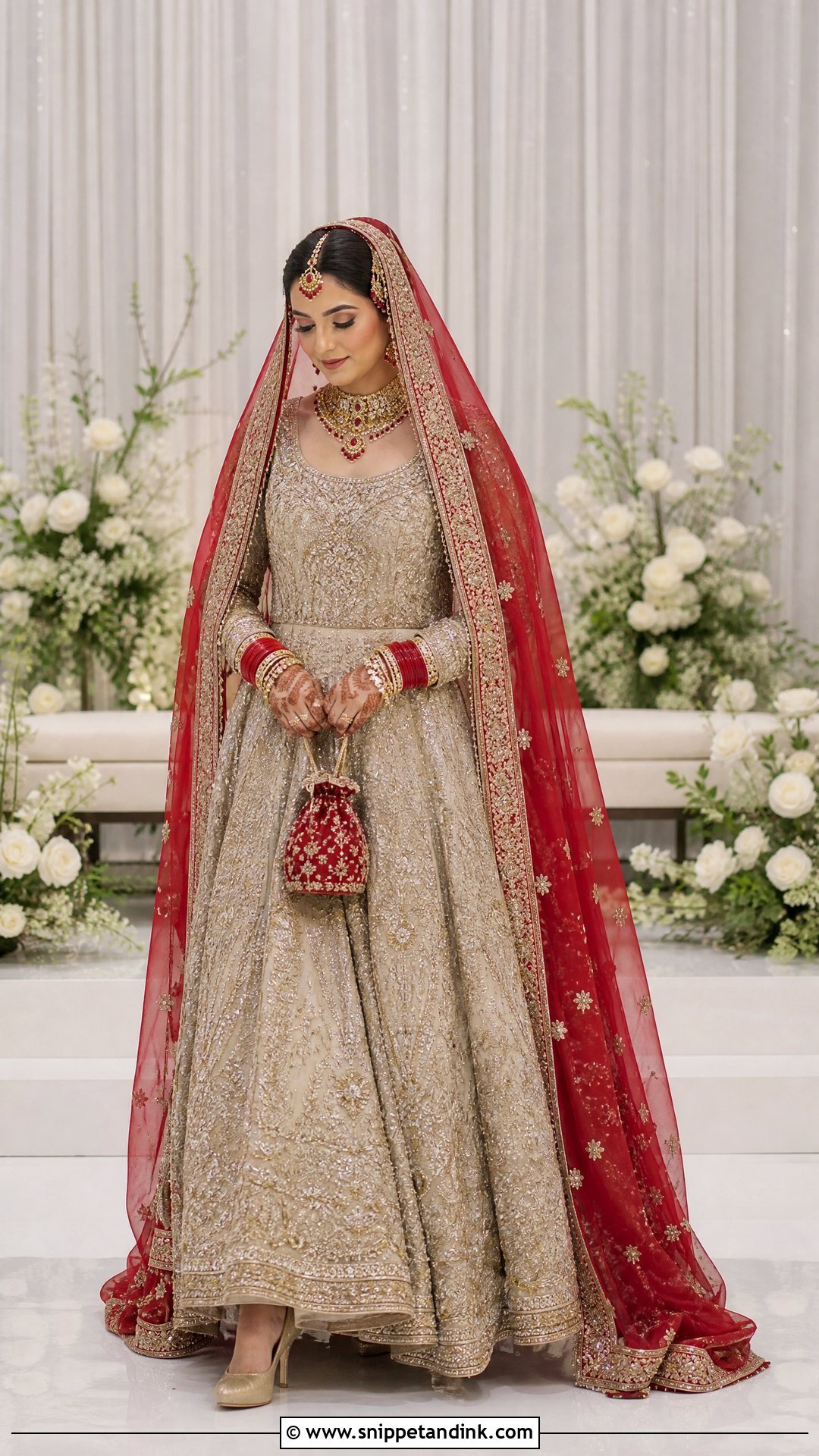
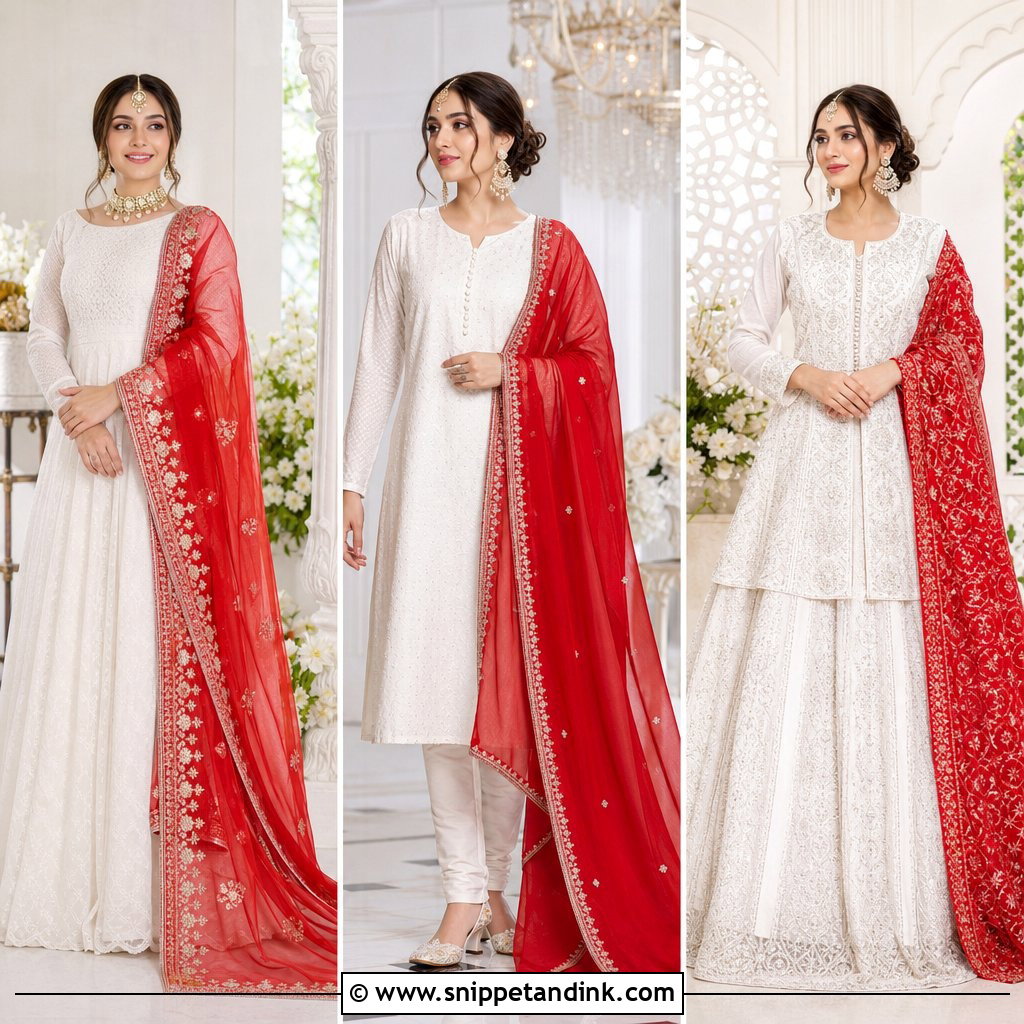
Combining ivory with red is how many brides keep a family’s red tradition while wearing something lighter. The base can be an ivory lehenga, gharara or long pishwas in muted gold work; the red comes in through a heavily bordered dupatta on the head, red bangles or ruby-colored stones. Keep shoes ivory so the lower half reads as one line, and carry a small red potli to repeat the accent. A gold choker with red detail ties both shades together. Two colors only. The moment a third shade appears, the contrast loses its point.
11. Gold Tissue Lehenga Nikkah Bridal Dress
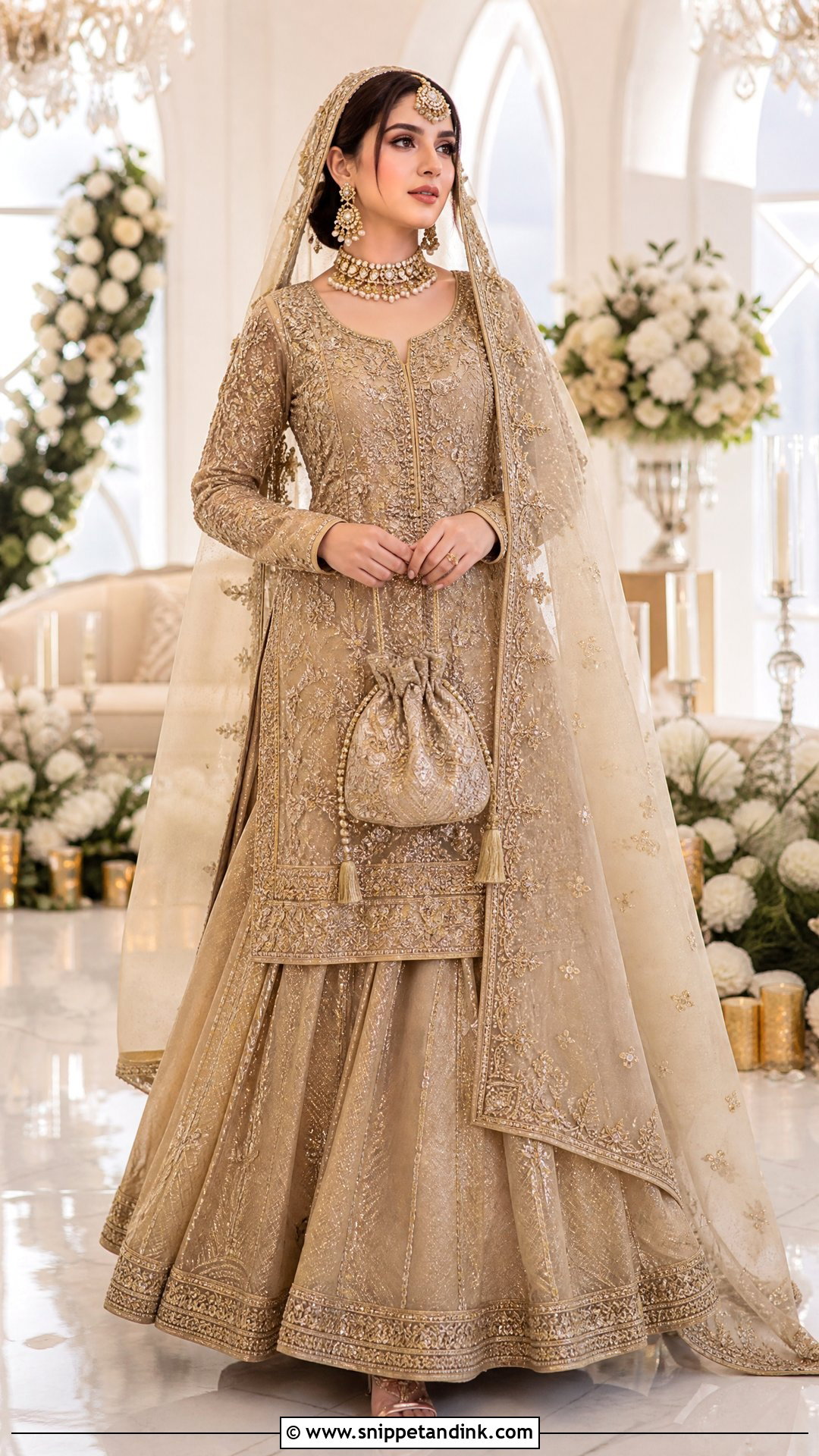
Tissue has metallic yarn in the weave, so a gold tissue lehenga glows under bright ceremony lights. Choose antique gold over yellow gold; yellow can turn brassy on camera. Pair it with a long blouse or fitted kurti in tonal zari, dabka and pearl work, and a sheer champagne dupatta, pinned discreetly, to soften the metallic surface. Antique gold heels, a small embroidered bag, kundan earrings and a choker with tikka finish it. Tissue is stiff and can scratch, so I check the lining is soft cotton or silk wherever it touches skin. If the lehenga is densely worked, cut back on the jewelry.
12. Dusty Rose Peplum Sharara Nikkah Bridal Dress
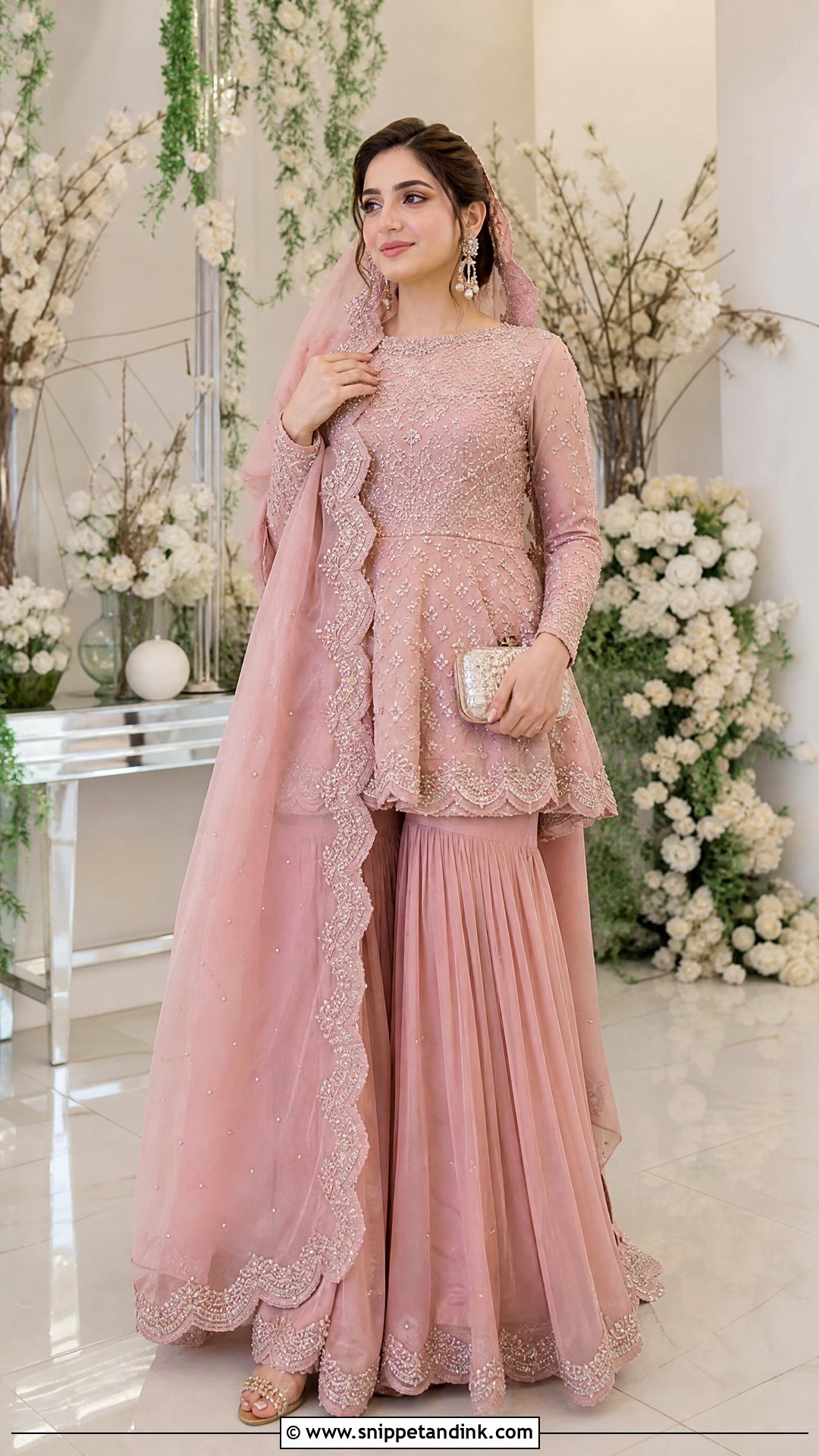
Peplum over sharara gives a defined waist and easy movement below. The peplum should end around the upper hip, with full sleeves, a structured neckline and most of the embroidery on the bodice, over a flowing sharara in chiffon, silk or light organza. Rose gold thread and pearls blend into dusty rose. Add a matching dupatta with a scalloped edge, nude embellished heels, pearl earrings and a small metallic clutch. The peplum length is what I adjust for each figure: shorter on a petite bride, longer on a tall one. And if the peplum flares dramatically, I narrow the sharara so the two volumes don’t compete.
13. Ivory Straight Suit Nikkah Bridal Dress
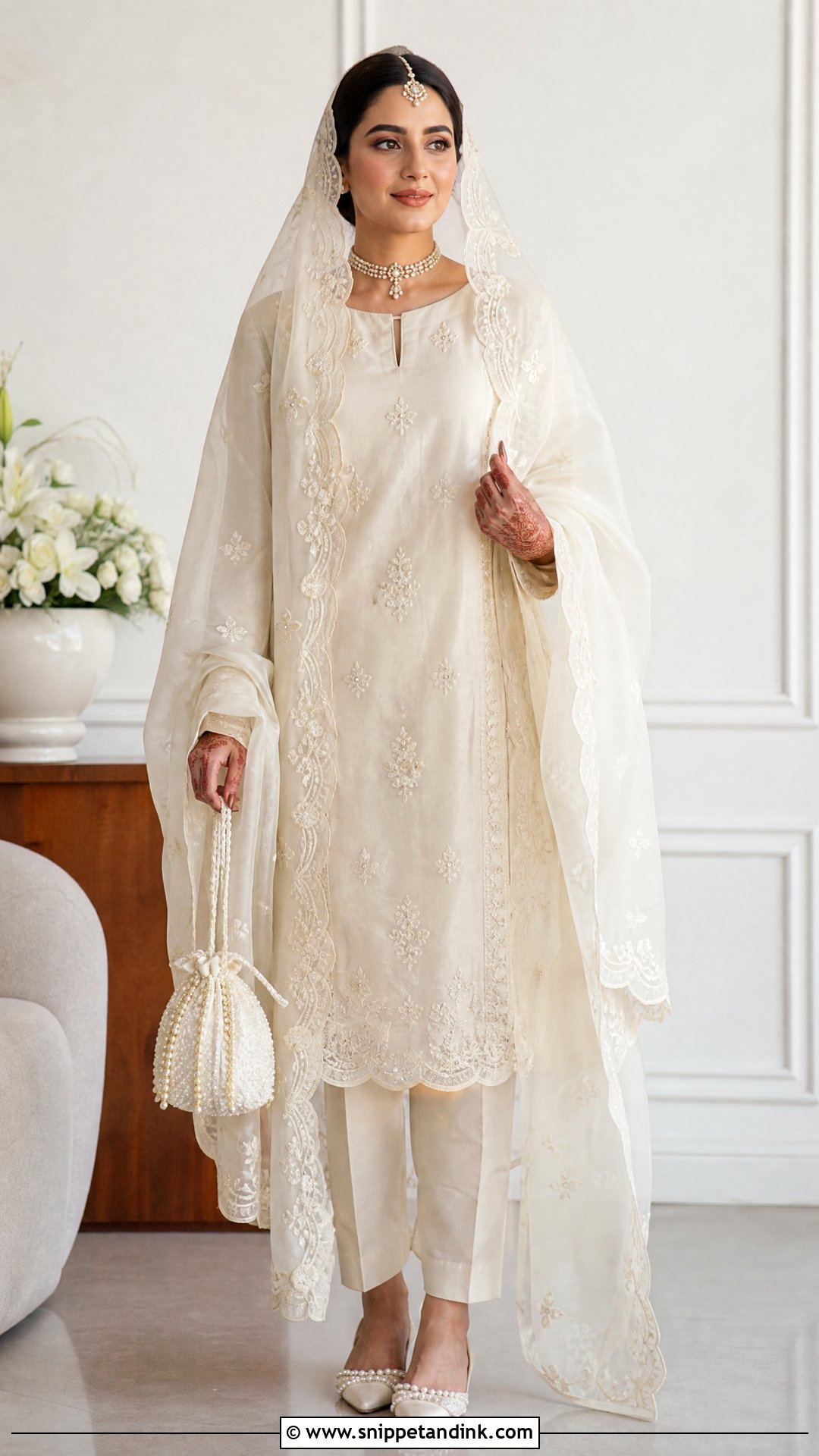
Small ceremony, small room? An ivory straight suit makes sense. The bridal feel comes from handwork, not volume: a long tailored raw silk shirt embroidered at the neckline, sleeves, side panels and hem, over slim cigarette trousers with an ankle border. The organza dupatta does the ceremonial work here, over the head or around the shoulders. Pointed ivory flats, a pearl potli, a fine choker and a small tikka finish it. It’s the easiest outfit on this list for sitting cross-legged and signing papers, and the pieces can be worn again separately. The catch: cheap fabric or loose tailoring makes it look like ordinary party wear, so this is where to spend on cut.
14. White Sari Nikkah Bridal Dress
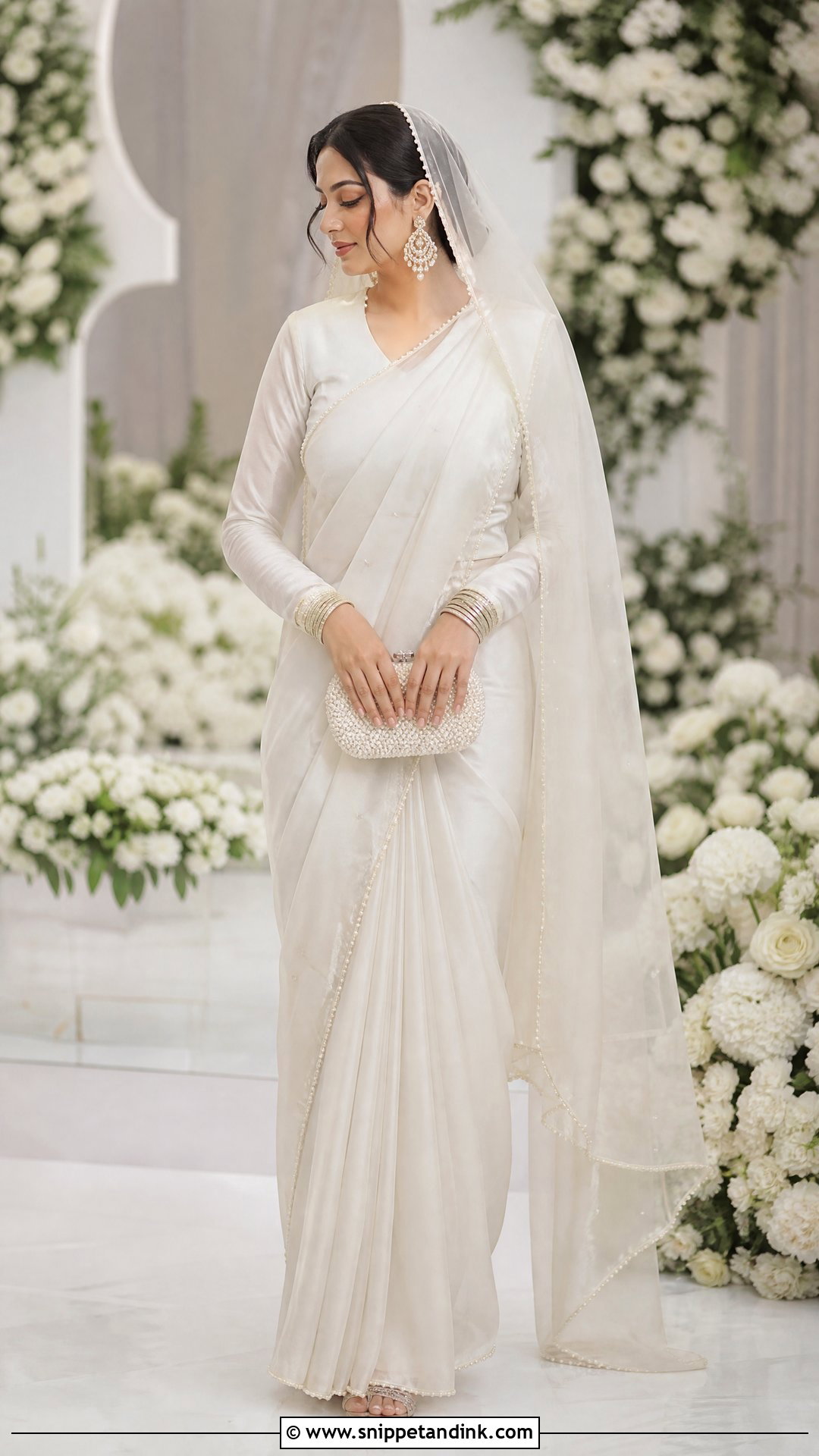
A white or ivory sari in silk, chiffon or organza, with pearl edging, silver work or a light border, gives a clean draped line. The blouse should be modest with full sleeves, and a separate sheer veil can be pinned over the head for a traditional finish. Metallic sandals, a pearl clutch, statement earrings, stacked bangles and either a sleek bun or wrapped hijab complete it. Chiffon drapes easily but slips; silk holds pleats better. If you’ve never worn a sari for hours, book a draper for the morning or practice twice beforehand, because pleats that loosen mid-ceremony are almost impossible to fix discreetly.
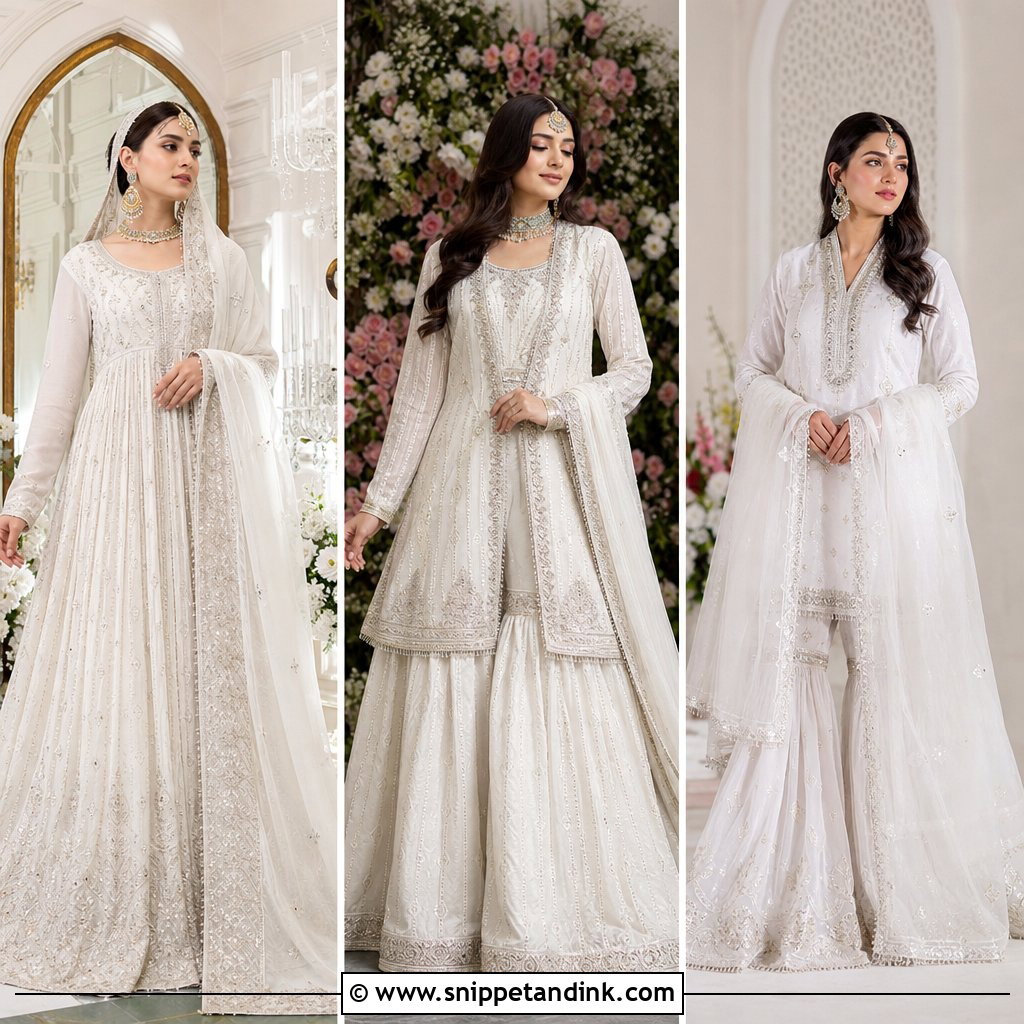

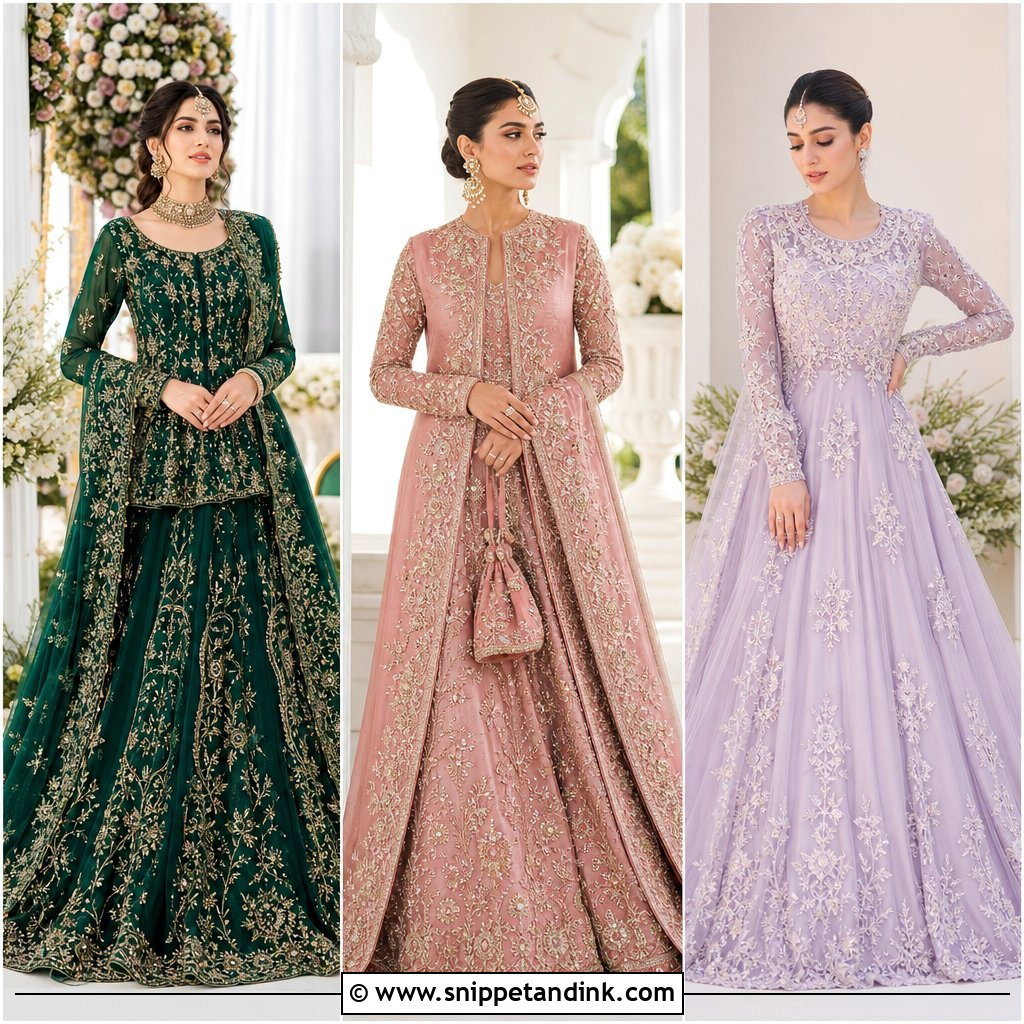
15. Lilac Pishwas Nikkah Bridal Dress
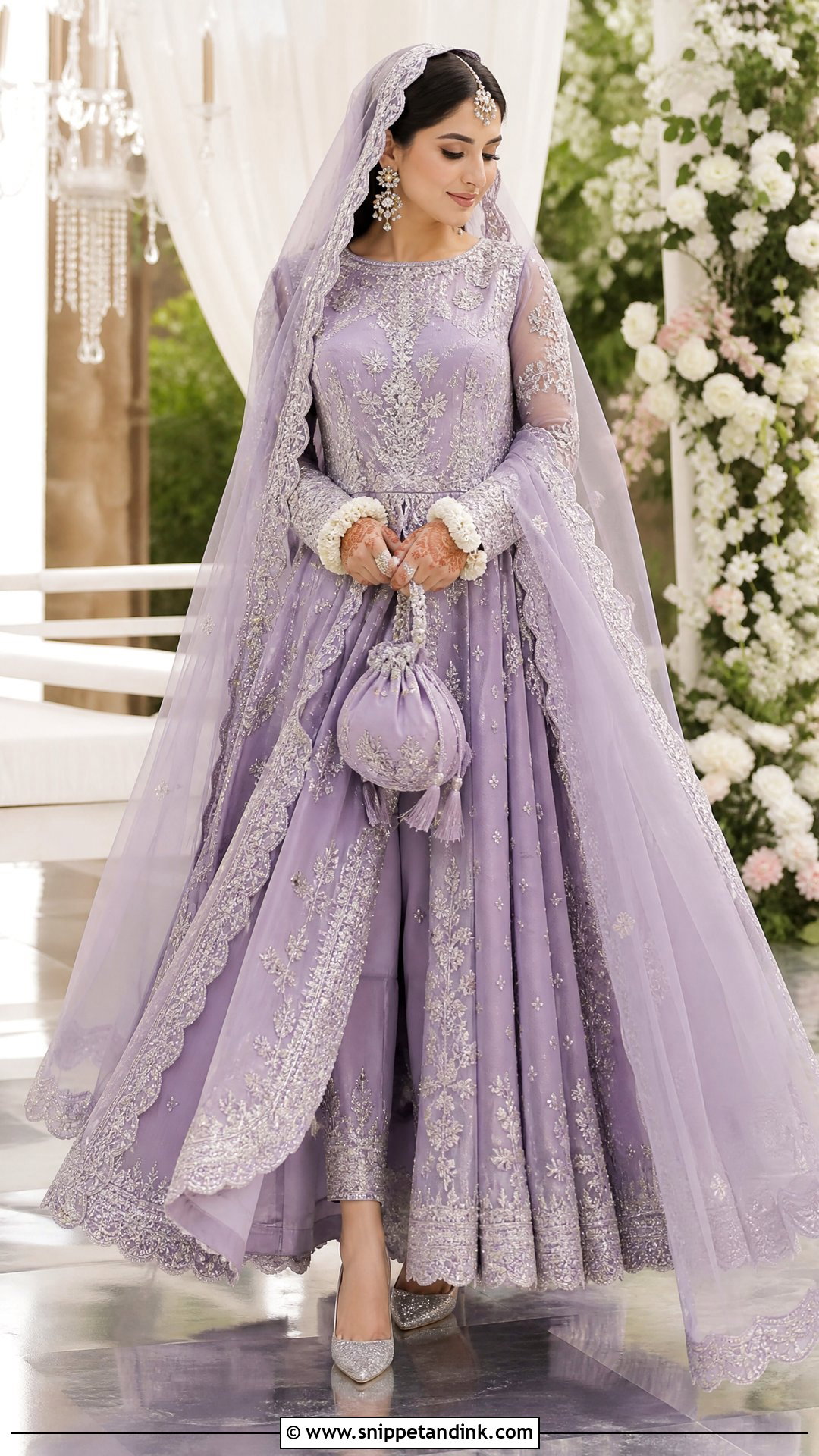
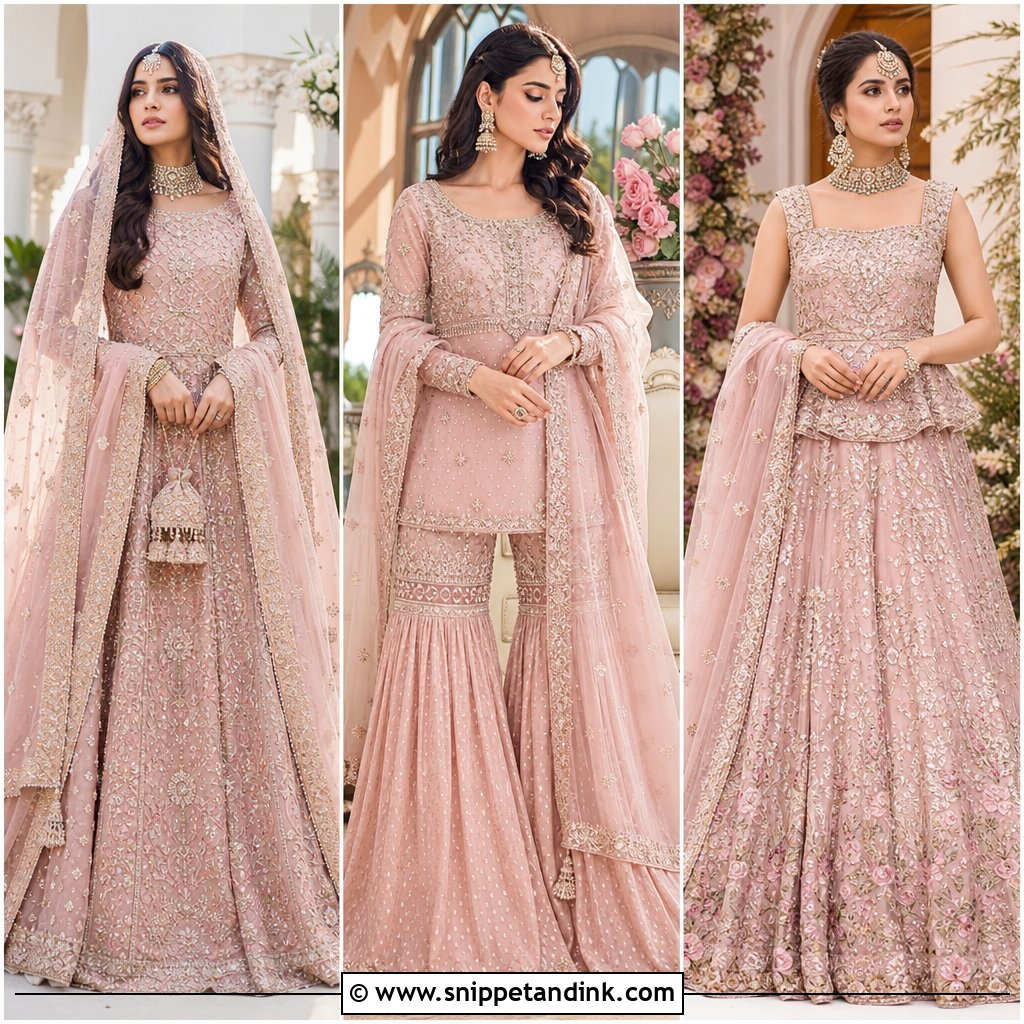
Lilac sits well in daylight and stays soft. I’d choose a long, generously flared pishwas with a fitted top and vertical kalis, embroidered in silver-gold, pearls and pale lavender thread. Narrow trousers and a matching organza dupatta with a scalloped edge go with it, along with silver heels, a lavender potli, floral earrings and a delicate tikka. Wanting a little contrast? A touch of deep plum in the jewelry or border is plenty. Lilac shifts color under different bulbs, sometimes greyish, sometimes pinker, so check the fabric under your venue’s light type if you can.
16. Mint Green Gharara Nikkah Bridal Dress
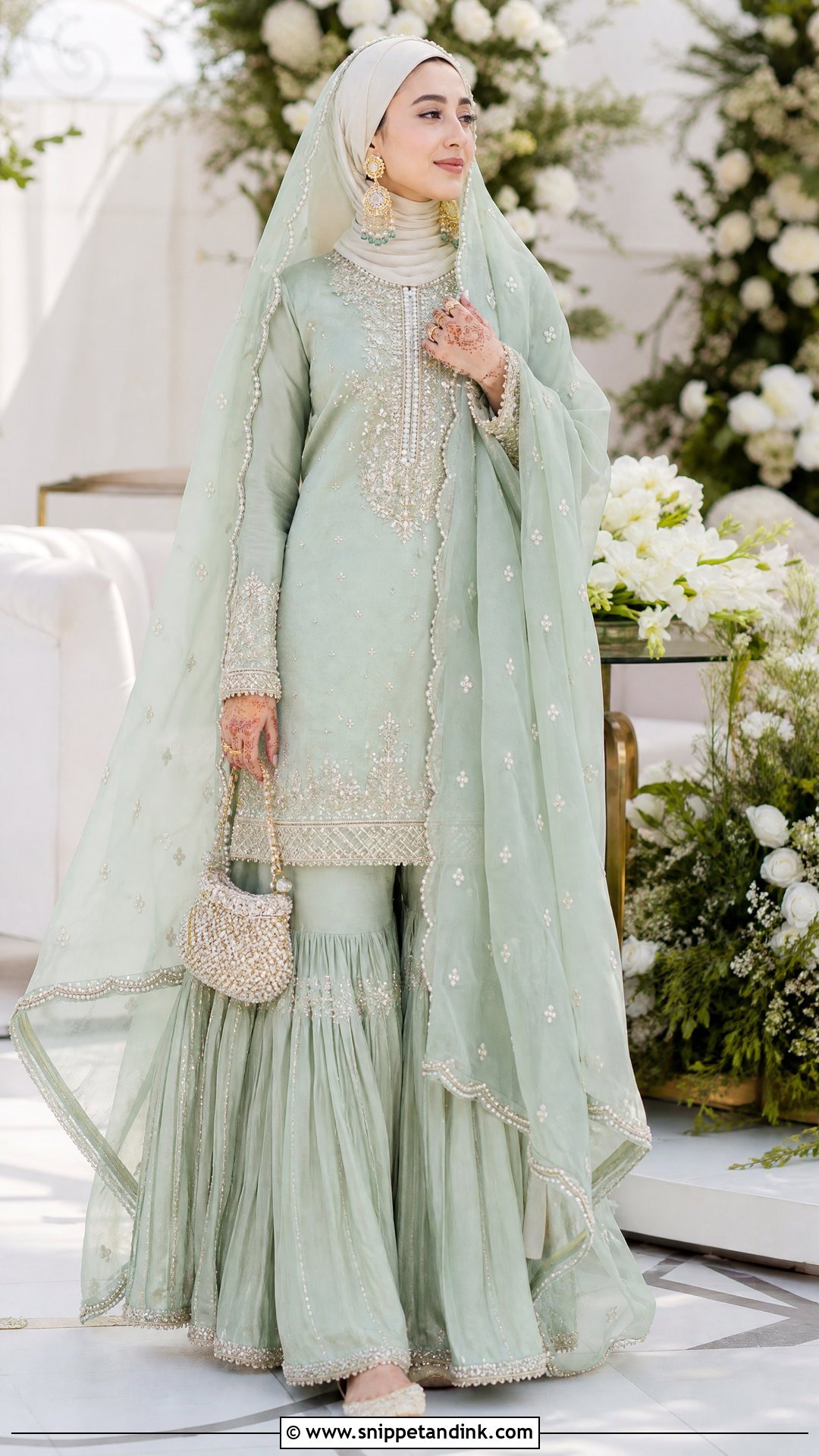
Mint is a daylight color; in warm evening lighting it can go yellowish. A short silk shirt with ivory pearls, silver sequins and a little gold thread, over a matching gharara with a structured top and a flare below the knee, is the base. A sheer mint dupatta with an ivory border frames it without weight. Ivory khussas, a pearl bag, kundan earrings and a slim forehead ornament finish it. Where the embroidery mixes gold and silver, I choose mixed-metal jewelry so nothing looks mismatched. Hijab brides can wear an ivory under-scarf with the mint dupatta layered over.
17. Champagne Jacket Lehenga Nikkah Bridal Dress
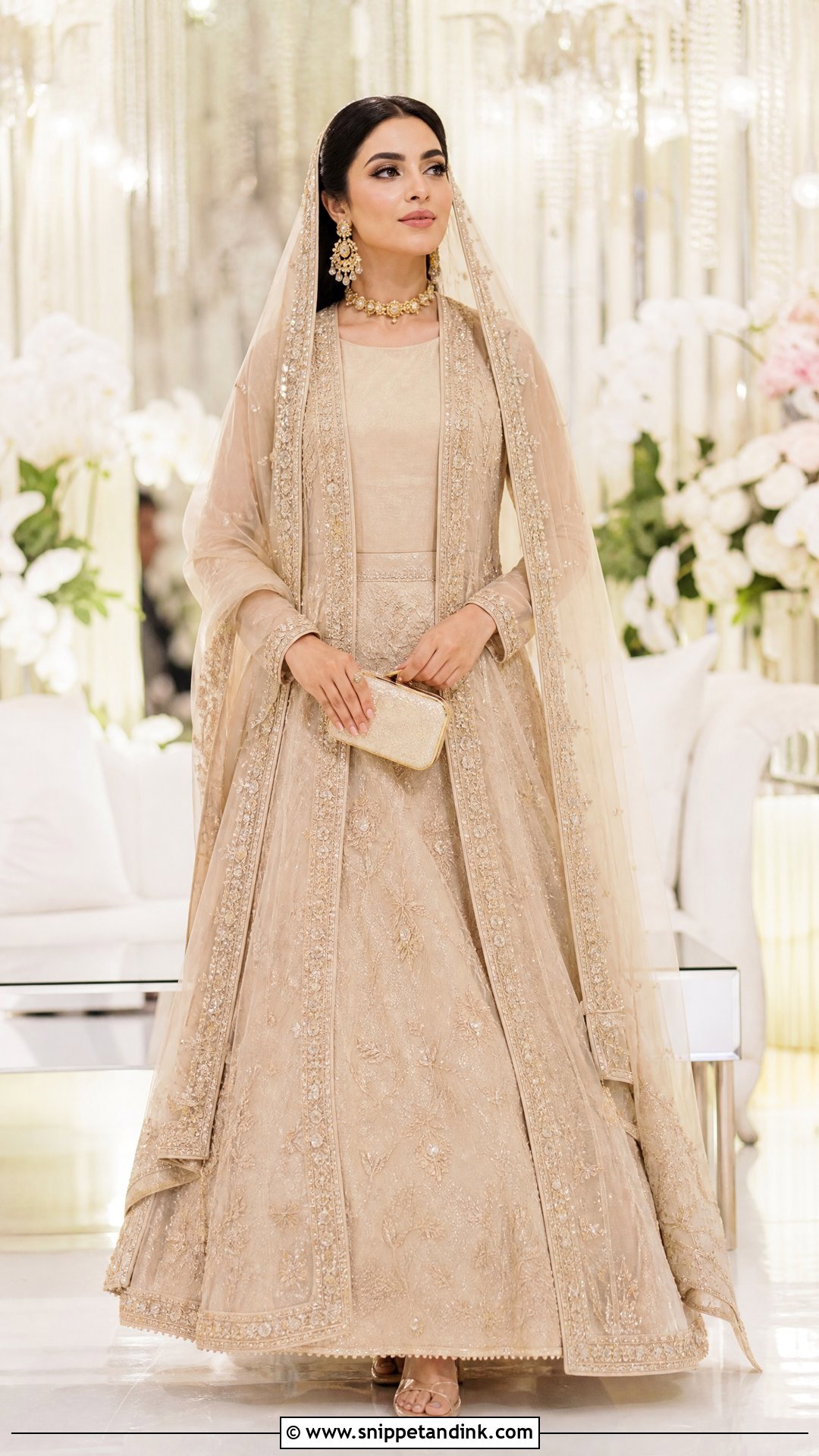
A long open-front jacket over a lehenga gives contemporary shape and plenty of coverage. Keep the lehenga lightly embellished with a fitted inner blouse, and put the embroidery along the jacket opening, cuffs and hem to create a long vertical line. Fabric depends on season: organza for structure that breathes, velvet for winter, raw silk for a clean formal look. A light matching dupatta over the head won’t compete with the jacket. Champagne heels, a structured clutch, statement earrings and a simple choker complete it. I keep heavy work off the shoulders of the jacket. It adds weight exactly where you’ll feel it after three hours.
18. Pastel Floral Lehenga Nikkah Bridal Dress
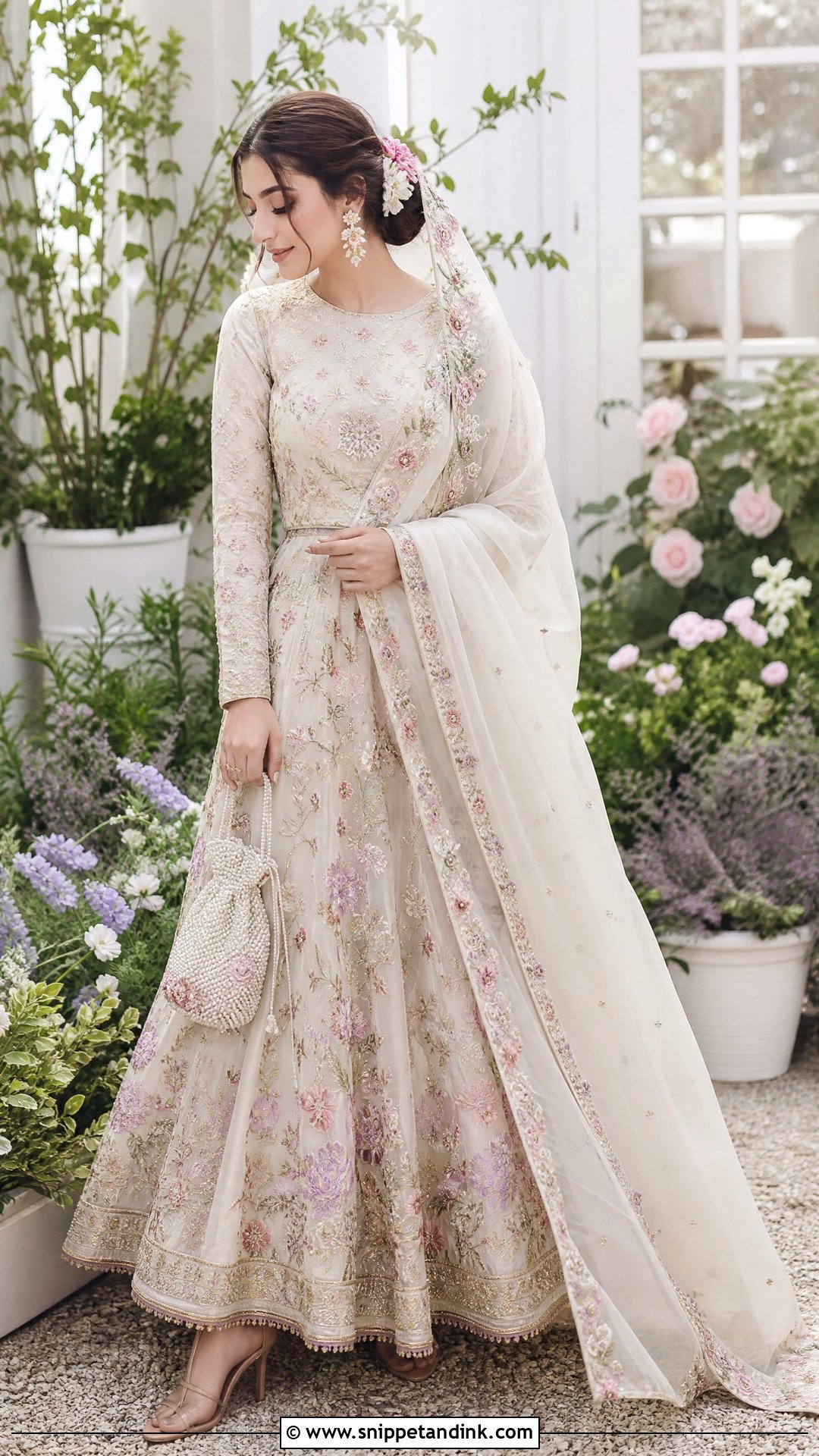
Floral embroidery on a pastel base suits a daytime Nikkah in a garden or a bright room. The base can be ivory, blush or pale peach, with flowers in muted pink, sage, lavender and champagne, fuller at the hem and lighter at the waist. A full-sleeve blouse or long kurti and a sheer dupatta with a narrow floral border go with it, plus nude heels, a pearl potli and floral earrings. If you add fresh flowers to a low bun, take the colors from the embroidery rather than introducing new ones. Embroidered florals, not printed ones, are what keep this from looking like a mehndi outfit.
19. Emerald Green Velvet Nikkah Bridal Dress
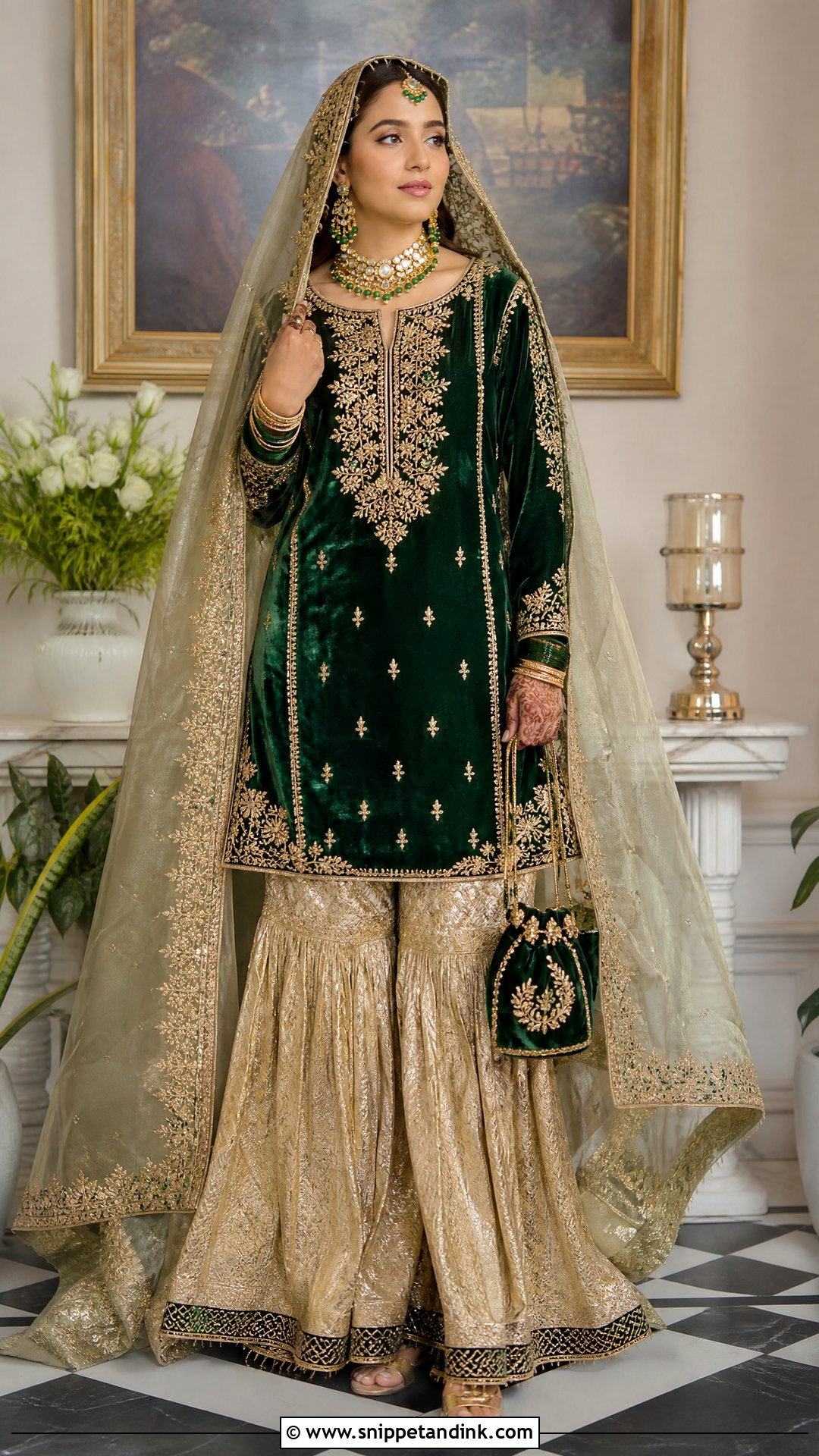
Emerald velvet is for winter evenings and formal rooms. A long velvet shirt with side slits works over a gold brocade gharara, a flowing sharara or straight raw silk trousers, with antique gold at the neck, cuffs and hem only. Keep the dupatta sheer, in emerald or muted gold, so the head drape stays light. Gold heels, a velvet potli, polki and green bangles finish it. Velvet already looks rich, so I keep the silhouette streamlined. Velvet also crushes where you sit, so steam the back of the shirt before photos if there’s a gap between ceremony and portraits.
20. Ivory Cape Lehenga Nikkah Bridal Dress
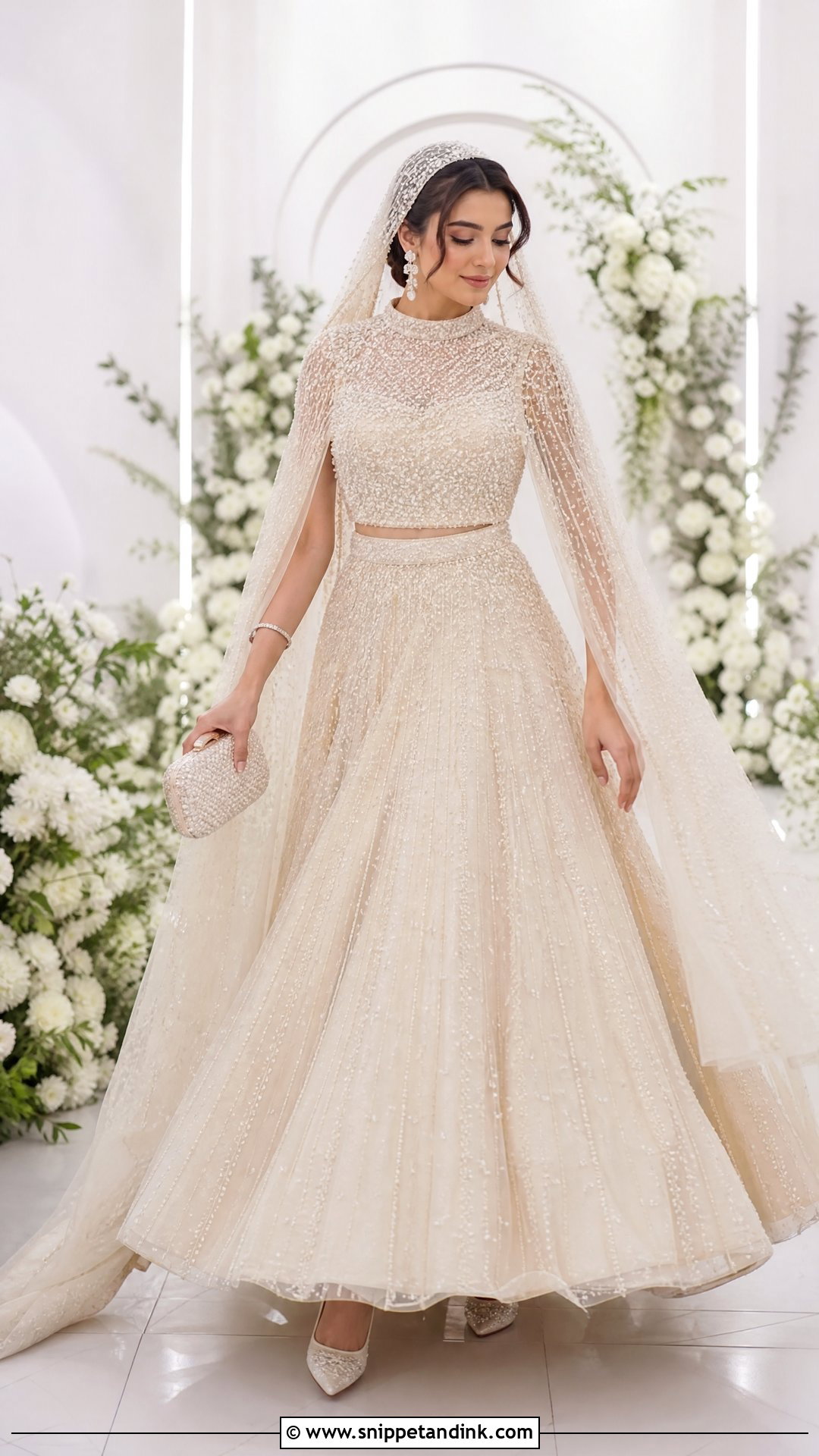
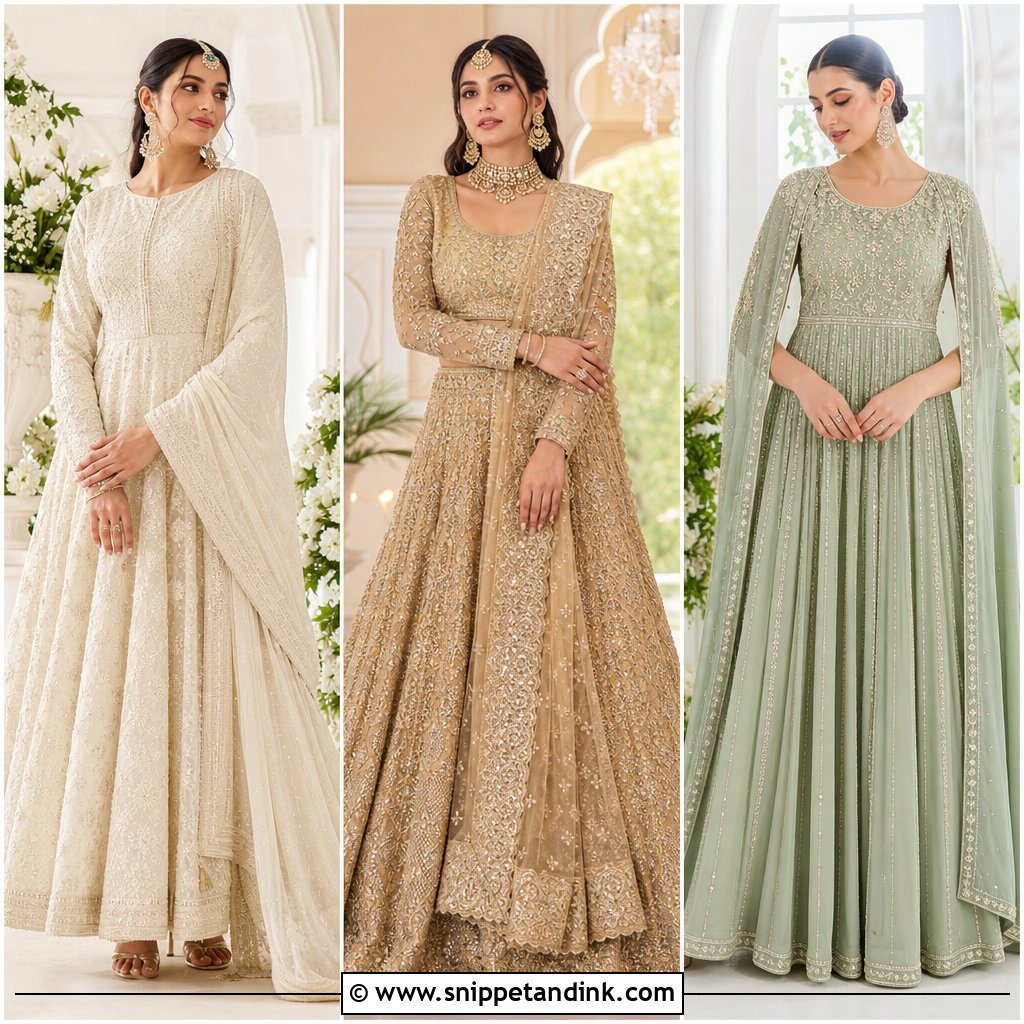
A sheer cape over a lehenga adds movement from behind, which is where many Nikkah photos are taken as you walk in. Pair a flowing embroidered lehenga with a fitted modest blouse, and a cape that falls from shoulders to wrist or to floor, worked in pearl lines, tonal sequins and silver thread. If the cape doesn’t cover the head, add a separate light veil with minimal edging. Ivory heels, a crystal clutch, pearl drops and a slim bracelet finish it; skip the big necklace if the cape neckline is busy. I test the shoulder fastening by having the bride hug someone. Capes attached with a single hook slide off at the first embrace.
Wearing an Embellished Dupatta Over a Hijab
Hijab brides often get handed advice written for brides with open hair. The dupatta sits differently, so the setup does too.
- Use a cotton or jersey underscarf cap first; it grips and stops the hijab sliding.
- Wrap the hijab in a matte fabric such as chiffon crepe or jersey. Satin hijabs make an organza dupatta slide straight off.
- Lay the dupatta on top with the border sitting a finger-width back from the hijab edge, so both frames show around the face.
- Pin the dupatta through the hijab into the underscarf at the crown and both sides, using hijab pins with ball heads rather than straight pins.
- Choose a lighter dupatta border than you would otherwise. Two layers plus heavy embroidery gets hot and heavy within the hour.
If the Outfit Arrives Wrong Two Weeks Out
It happens more often than brides expect, especially with online or overseas orders. Some problems are fixable and some aren’t, so it helps to know which is which before you panic.
Hems, sleeve lengths and taking in a loose shirt are all routine for a local tailor in a few days. Letting out a tight blouse depends entirely on seam allowance, so check inside the seams before anything else. A wrong color or embroidery that doesn’t match the sample can’t be altered; that has to go back to the designer, and that is why I push for a delivery date at least four weeks before the Nikkah. If time is short, the dupatta is the easiest piece to replace, and a new one can change how a whole outfit reads.
Will Your Nikkah Outfit Hold Up After the Entrance?
Any of these can work, from an ivory gharara to a red lehenga, a sari or a cape. Start from the shape you’ll be comfortable in for several hours, then build embroidery, jewelry, shoes and the dupatta around it. Think about the venue, season, the size of the guest list and how long you’ll be wearing it before you change. If I had to choose where the budget goes, it would be tailoring over extra embellishment every time, because a well-cut simple outfit looks more bridal than a heavily worked one that pulls. Use the looks above as a starting point and adjust them until the outfit feels like yours.
You'll Like These Ideas:


Leave a Reply