
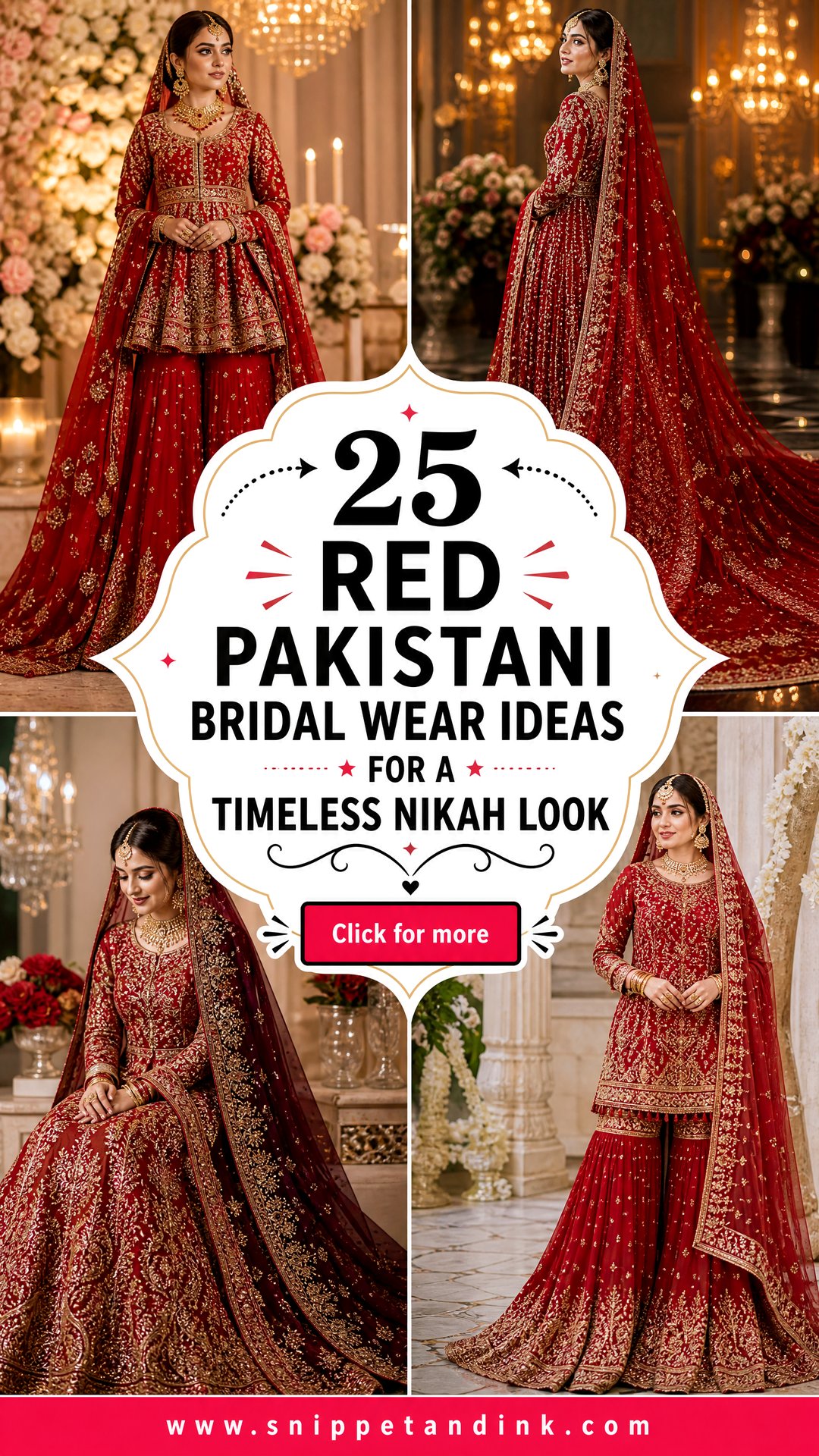
Red is still the color most Pakistani brides picture for their barat, and for many it carries into the nikah and family ceremonies too. The shape has more range than people expect: a full lehenga, a long shirt over a gharara, a pishwas, a farshi gharara that pools on the floor, even a saree. When I dress a bride, the decision usually comes down to three questions: how much weight can she carry for an evening, how traditional does the family want the barat to look, and will she be sitting on a stage, a chair or the floor? The 25 outfits below are complete looks, from shirt and bottoms to dupatta, jewelry and shoes, with the practical notes I’d add at a fitting.
Where Red Fits Across Mehndi, Barat, Nikah and Walima
Most Pakistani weddings run over several events, and red tends to belong to one of them. In many families the barat is the red day, when the bride leaves for her new home. Mehndi outfits usually go yellow, green or multicolor, and the walima is often lighter: pastels, silver, gold or soft jewel tones. The nikah varies the most. Some brides hold it on the barat day in the same red, others hold it separately in white, ivory or a muted red.
So before I start pulling outfits, I ask the bride for her event list and who expects what. If the nikah is in a mosque or a home, the outfit needs full coverage and a dupatta that stays on the head while she sits. If the barat is in a hall with a stage, she’ll be photographed full-length for hours, so the bottom half matters as much as the shirt.
- Keep the heaviest red for the event with the most photographs and the least walking.
- If two events fall on one day, choose a red that can change character with a different dupatta and jewelry.
- Ask family elders early whether they expect a particular color for the nikah, so you’re not surprised after the order is placed.
1. Red Pakistani Bridal Lehenga With Gold Dupatta
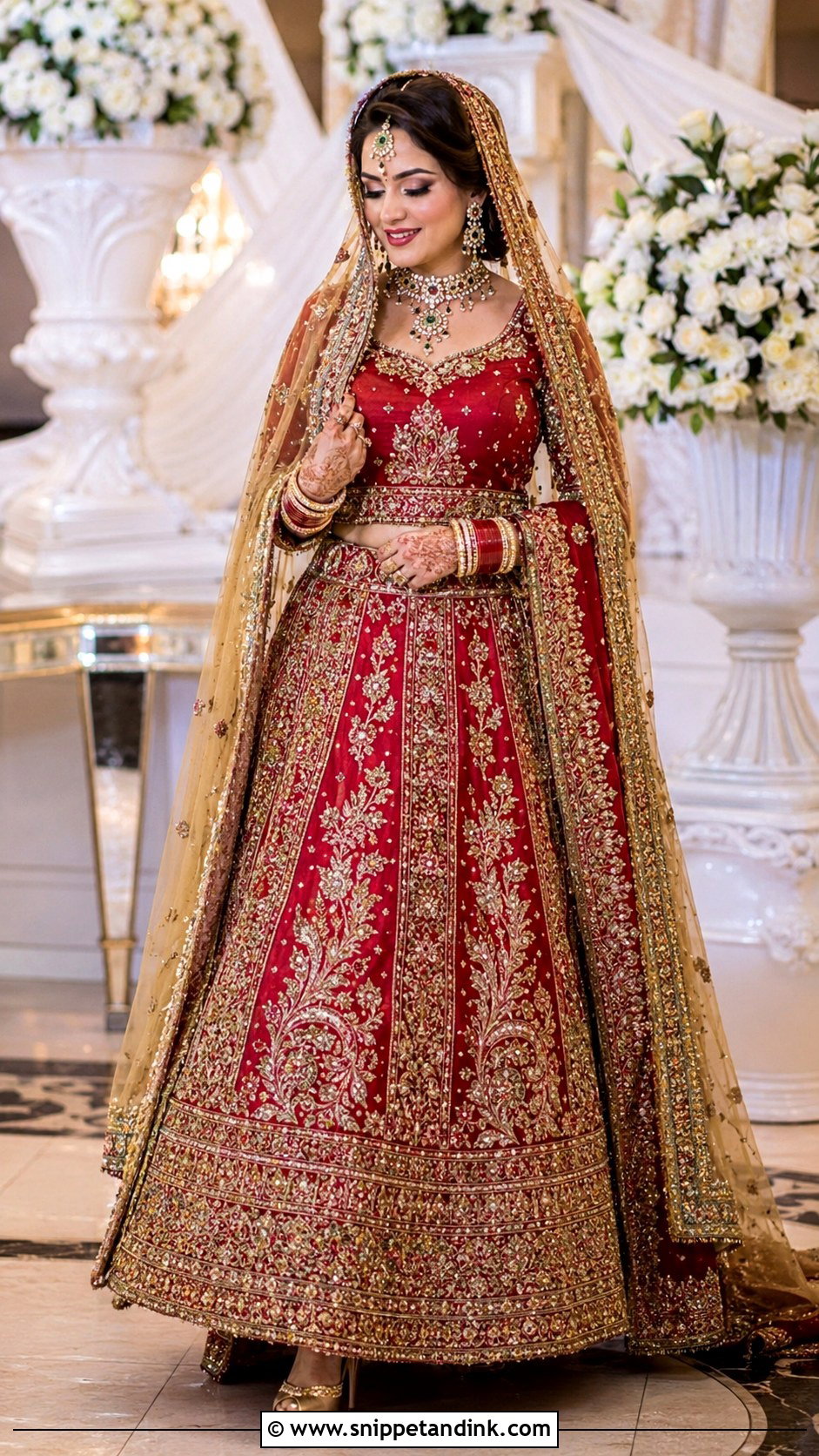
The red lehenga with a gold-bordered dupatta is the image most families hold of a Pakistani bride, and it’s hard to improve on. The lehenga can carry zari, dabka, kora, sequins and hand embroidery across the hem and panels, paired with a short or medium blouse and a heavily bordered dupatta. A matha patti, jhumkas, a choker and a layered necklace in antique gold complete it, with gold khussas or embellished heels under the skirt. My first check with this look is that the dupatta’s gold border matches the lehenga’s gold, since a yellow border against antique embroidery looks mismatched in close-up photos.
2. Red Pakistani Bridal Gharara With Long Shirt
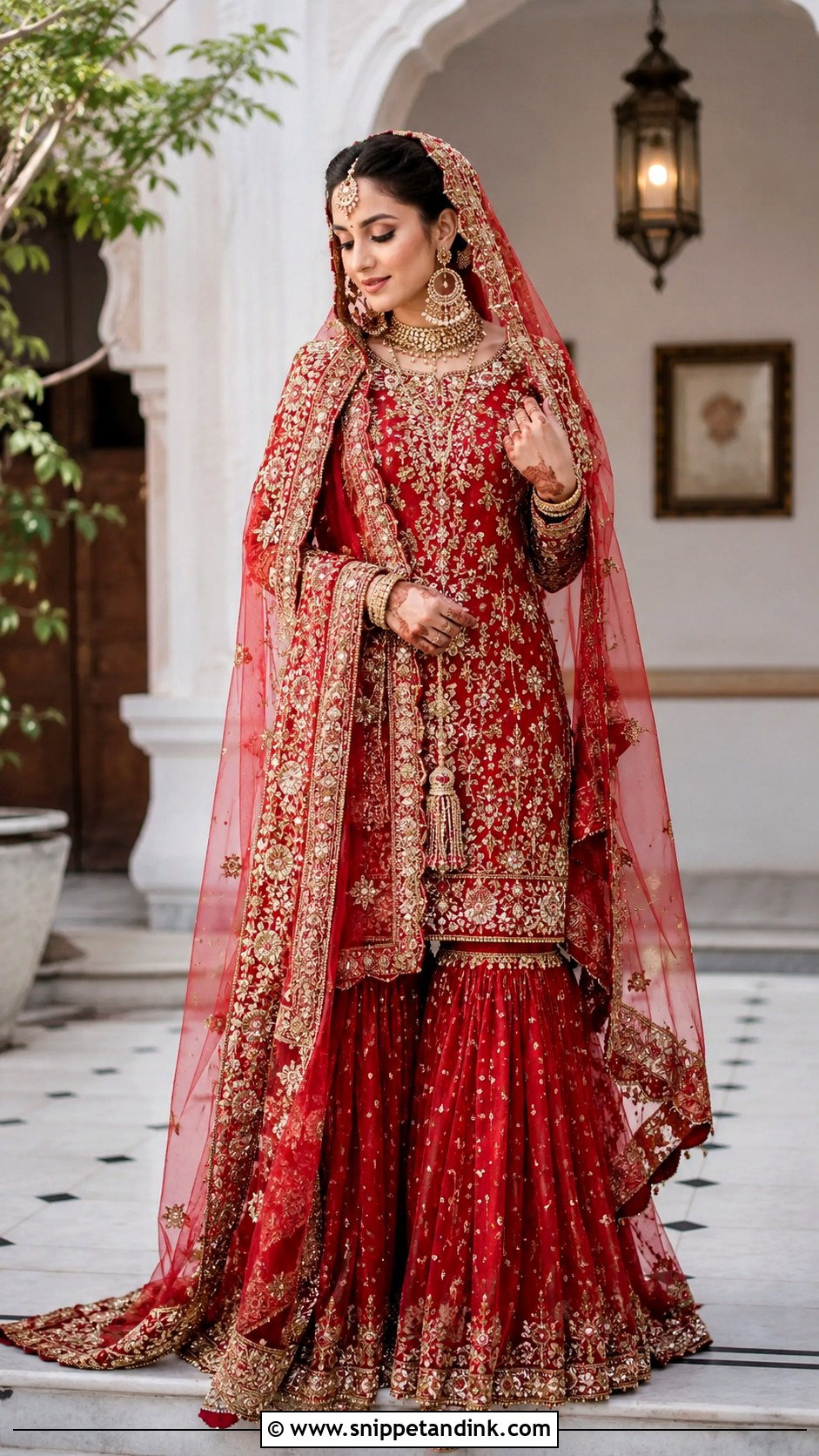
A long shirt over a gharara is old-world Pakistani bridal dressing at its most graceful. The shirt keeps it modest; the gharara supplies the movement. I like heavy work at the neckline, sleeves and daman of the shirt, and the gharara detailed at the knee joint and hem, where the flare begins. Pair it with a net or organza dupatta with scattered motifs, a passa, chandbalis, stacked bangles and a low bun. Get the shirt length right before anything else: it should end just above the knee joint, or it hides the very detail that makes a gharara a gharara.
3. Red Pakistani Bridal Sharara With Peplum
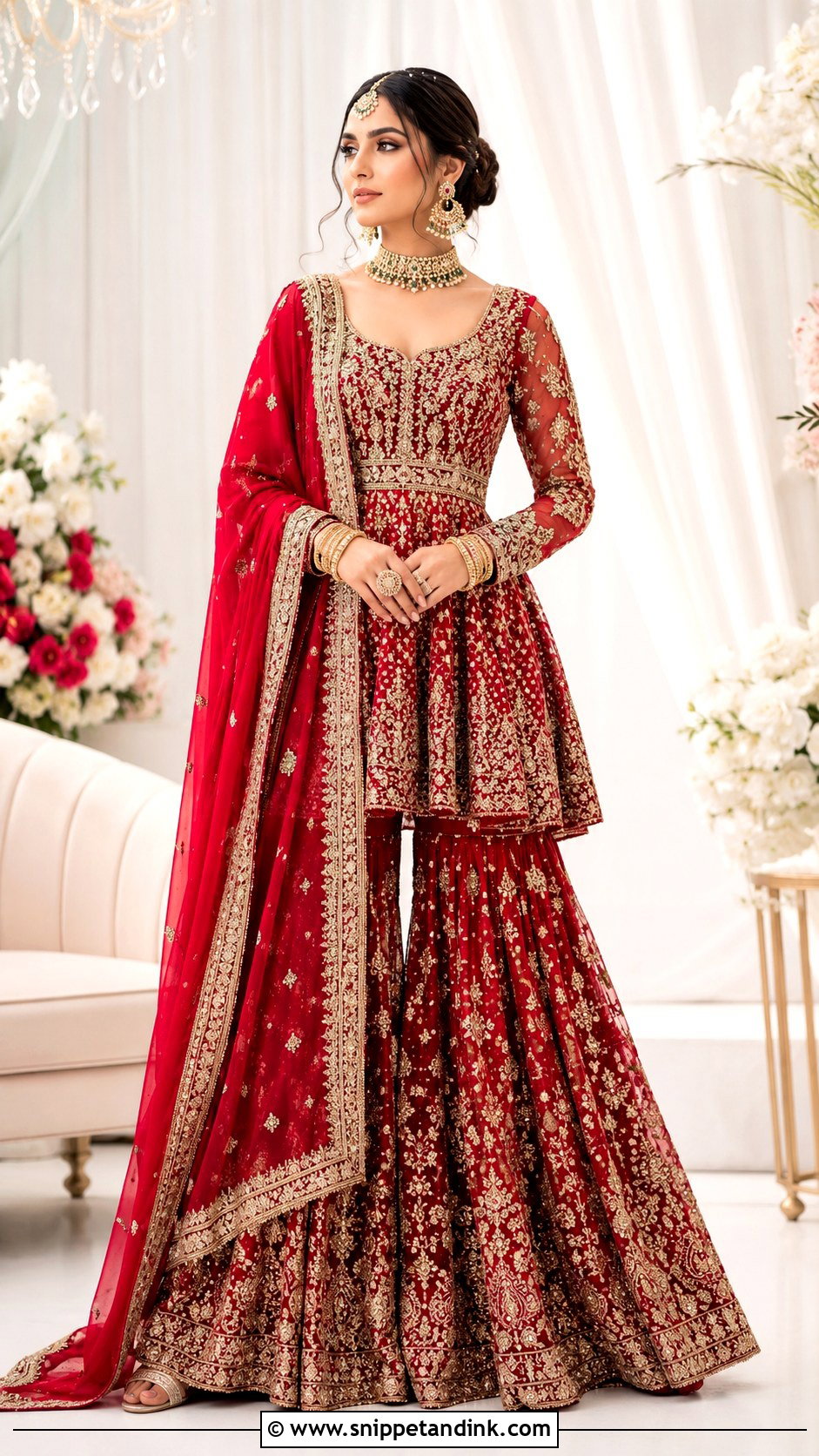
Peplum over sharara is tradition with a sharper waist. The peplum defines your shape, and the sharara lets you walk, sit and greet guests without wrestling a full skirt. Look for a peplum with heavy neckline embroidery, worked sleeves and a flared hem that sits cleanly over the sharara, plus a red dupatta with gold or antique borders. A statement choker, earrings, bangles and soft makeup finish it. Watch the peplum’s flare. Too much and it fights the volume of the sharara below, so I ask for a gentle flare that just clears the hips.
4. Red Velvet Pakistani Bridal Lehenga
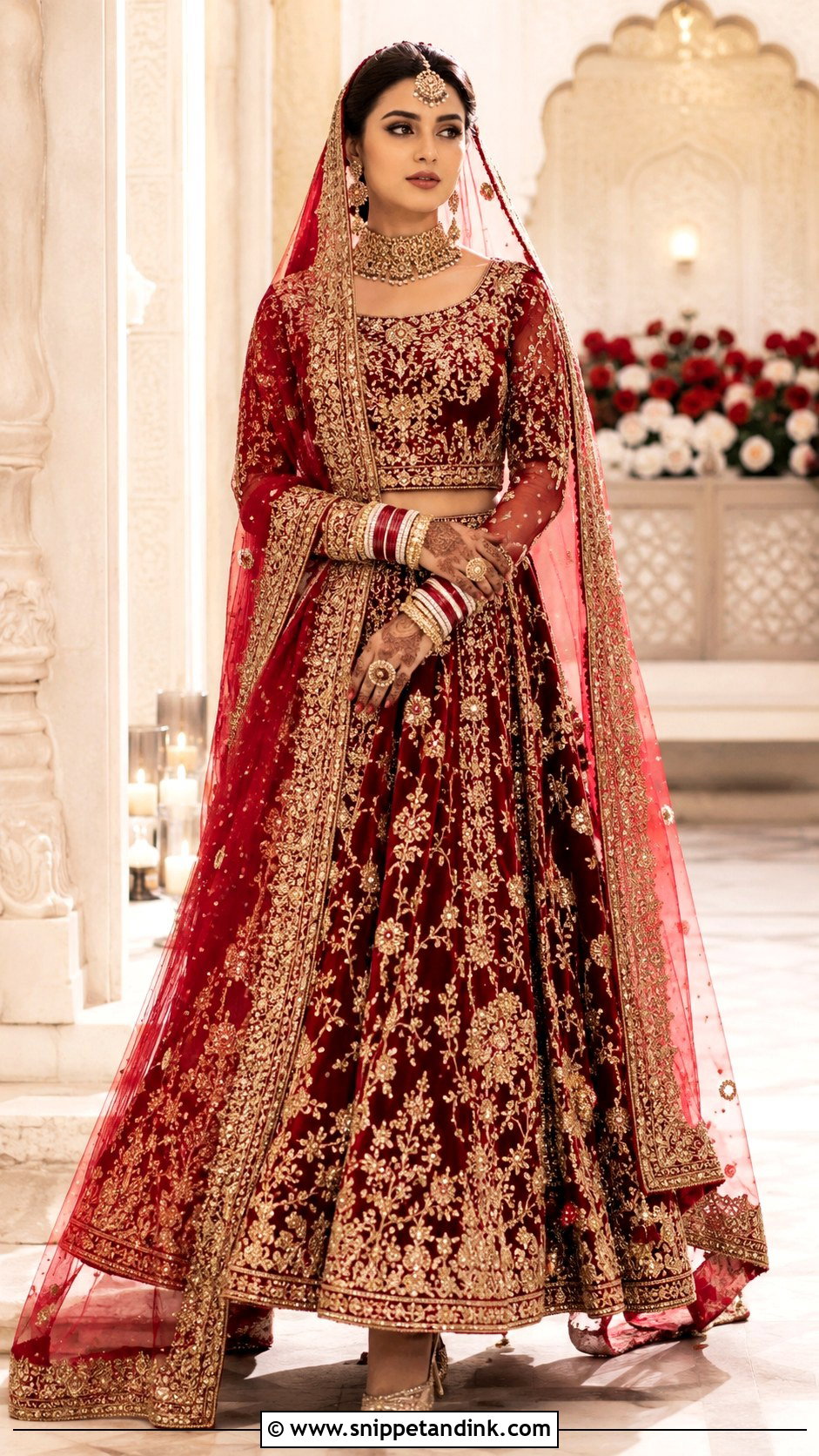
Velvet holds embroidery better than almost any fabric, so gold, copper and antique threadwork stand out sharply on a red velvet lehenga. It suits winter weddings and evening barats. Choose a full lehenga with a structured blouse and a net dupatta, which keeps the top half from feeling heavy. Kundan, pearl accents and a classic bun sit well with deep red velvet. I’d skip this one for a summer barat in a marquee; velvet holds heat, and you’ll feel it within an hour. Keep the styling polished rather than crowded, since the fabric already looks rich.
5. Red Pakistani Bridal Maxi With Trail
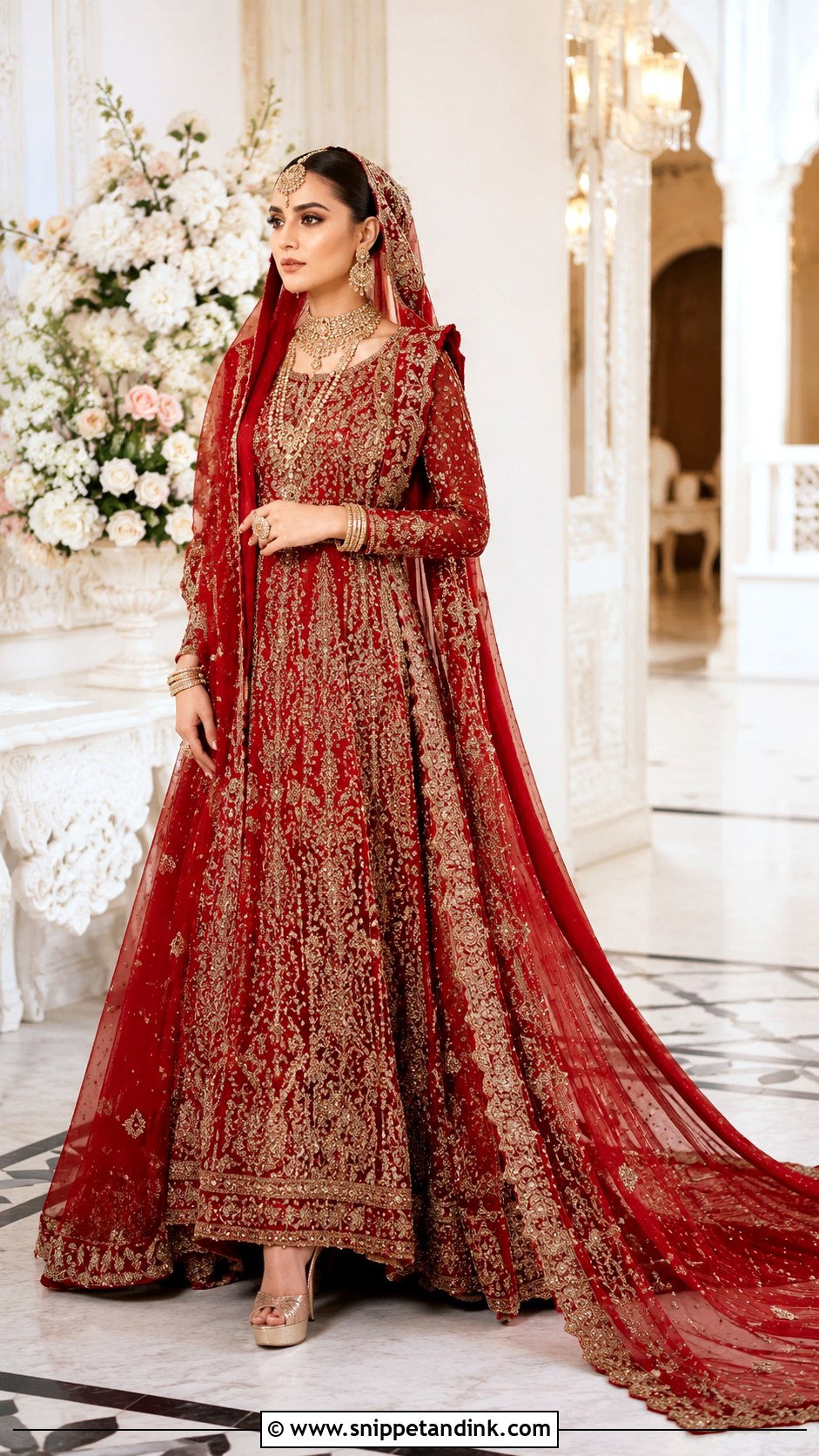
A maxi with a trail gives a gown-like line while keeping Pakistani embroidery and the dupatta. Think fitted bodice, long sleeves, a full flare and a soft trail that moves in photographs, with handwork on the bodice, cuffs, hem and dupatta border. Pair it with a sheer dupatta over the head, tall heels and layered jewelry. A trail needs a plan: who carries it on stairs, and does it have a hidden loop so you can lift it onto your wrist for the stage walk? I always add one. Receptions and grand halls suit it best.
6. Red Pakistani Bridal Angrakha With Lehenga
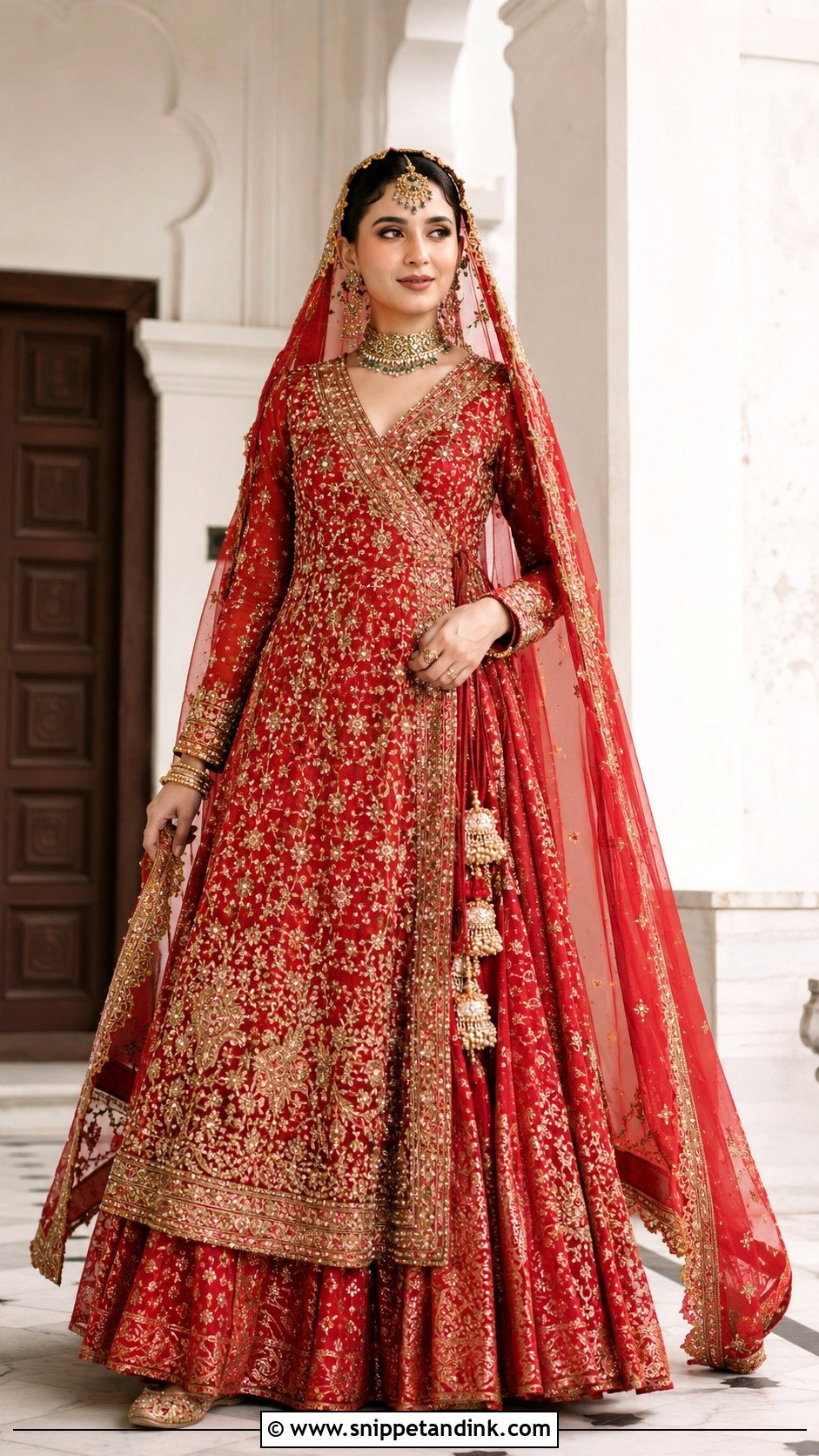
The angrakha’s overlapping, tied bodice gives a heritage feel that’s quite different from a straight blouse. Paired with a lehenga, it combines shape at the top with bridal volume below. Look for tie details, tassels, gota, zardozi or antique embroidery, and keep the lehenga the same red or one shade deeper. A light dupatta over one shoulder and a sheer one on the head gives a fuller bridal effect. Complete it with a passa, jhumar, a kundan choker and embroidered khussas. The overlap needs a discreet hook or snap underneath the tie, because the tie alone loosens once you start moving.
7. Red Pakistani Bridal Anarkali With Dupatta
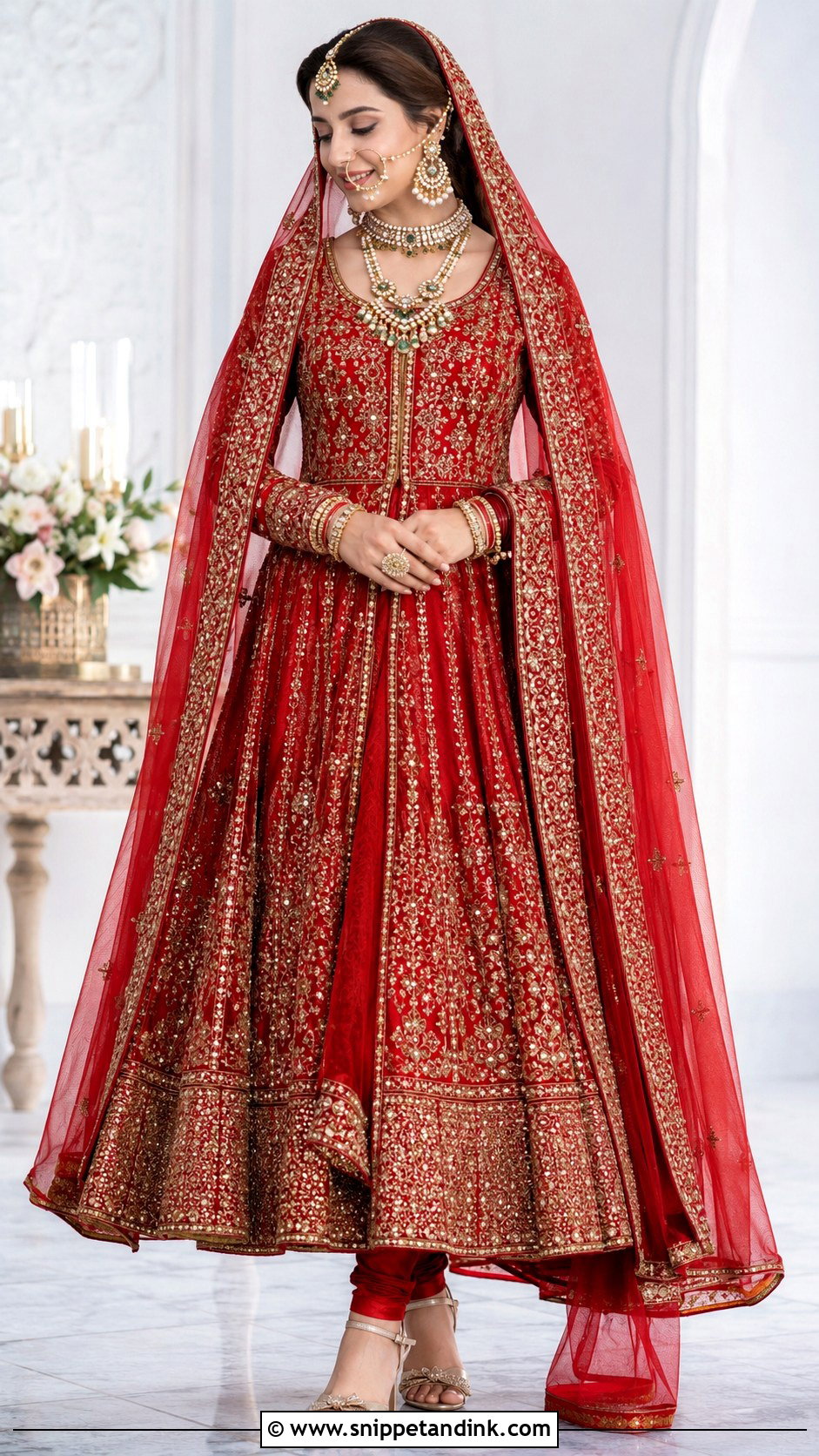
An Anarkali gives you the flare without a separate heavy skirt, which makes it one of the easiest red bridal outfits to wear through a long event. Choose one with detailed embroidery on the bodice, sleeves and hem and a wide-border dupatta for bridal presence, with churidar or straight pants underneath. A nath, choker, layered necklace and bangles complete it. I’d suggest it to brides who know they’ll be on their feet greeting for hours. Check that the flare is cut in enough panels; a skimpy flare collapses when you sit and looks crumpled in photos.
8. Red Pakistani Bridal Farshi Gharara
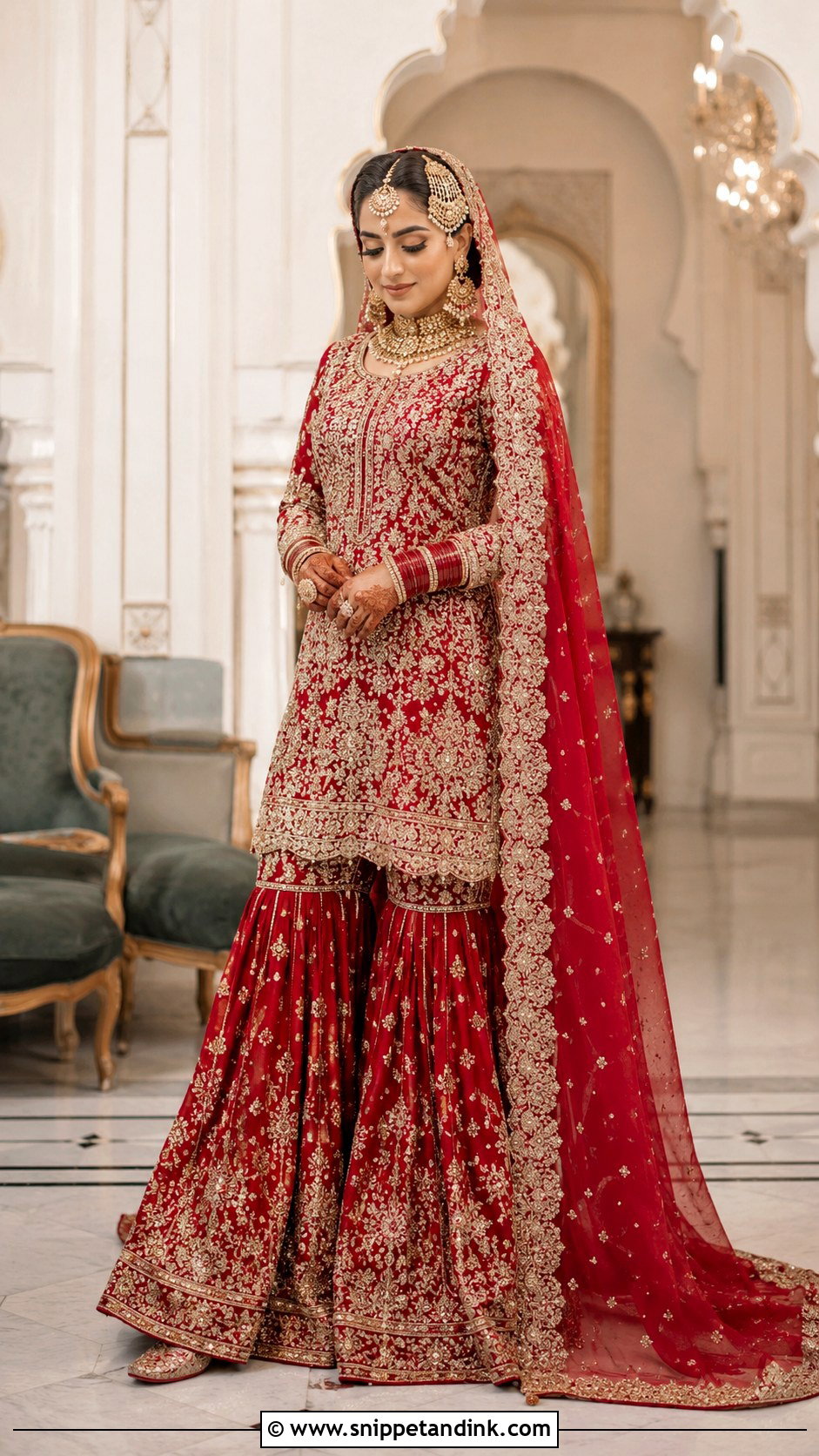
Farshi means floor, and a red Pakistani bridal farshi gharara is cut so long that the legs pool and trail behind you. It is the most regal silhouette on this list and also the hardest to walk in. Brides traditionally hold the front of the fabric while walking, and I always rehearse that with them so it looks natural rather than panicked. Pair it with a structured long or medium shirt with heavy hand embroidery, which balances the dramatic bottom, and a dupatta with a rich border. A matha patti, passa, jhumkas and traditional bangles finish it. Formal indoor ceremonies with smooth floors are where it belongs.
9. Red Pakistani Bridal Lehenga With Long Shirt
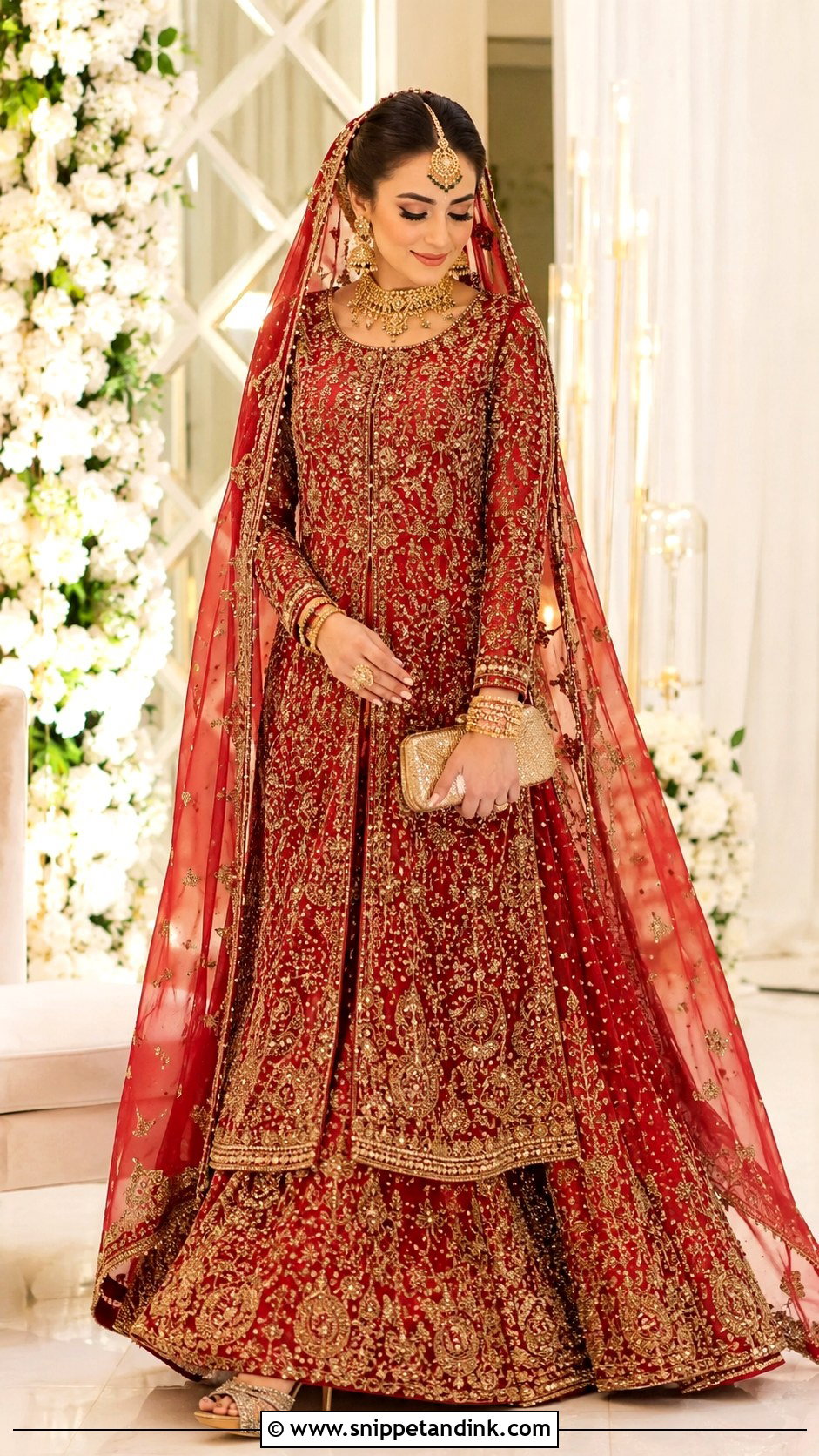
A long shirt over a lehenga gives modest coverage with full bridal impact, and it’s one of the most distinctly Pakistani silhouettes. The shirt draws a sleek vertical line; the lehenga adds flare beneath. I like the embroidery to build from lighter at the neckline and sleeves to heaviest at the daman and lehenga border, which draws the eye down and makes the bride look taller. A sheer dupatta with a wide embroidered edge softens the face, with gold jewelry, embellished heels and a structured clutch for portraits. It suits the barat, the nikah or a traditional reception.
10. Red Pakistani Bridal Lehenga Choli
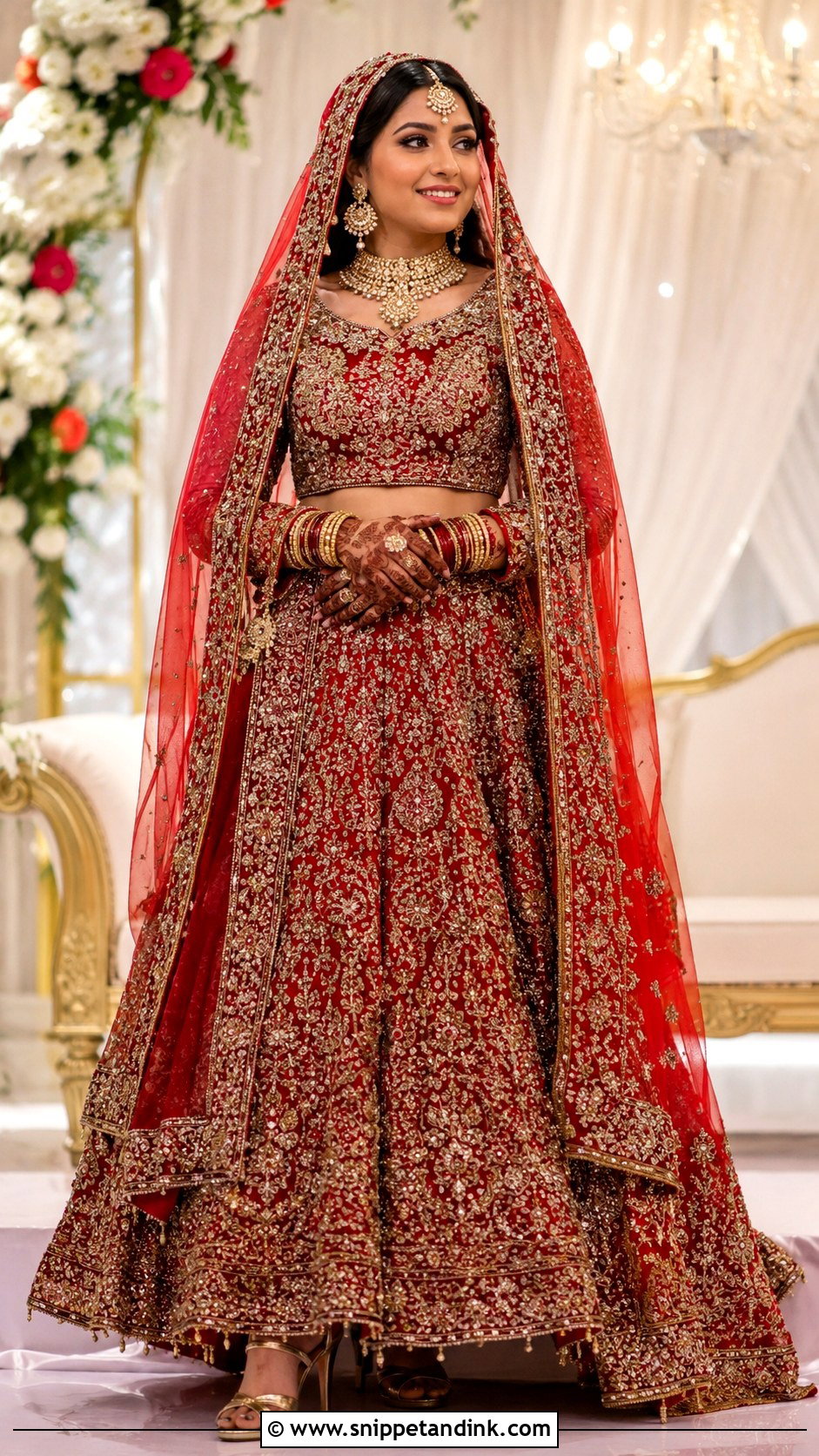
A shorter, fitted choli with a full skirt is bolder and more festive than the long-shirt styles. The choli can be heavy with gold thread, mirror accents, sequins or handwork, with matching motifs carried across the lehenga panels, and a dupatta over the head balances the shorter blouse. Choose jewelry by neckline: a choker for a deep neck, layered pieces for a round one. Many families expect more coverage at a Pakistani barat, so I’d talk this one through at home before the order is placed. Palace-style venues and grand stages suit it.
11. Red Pakistani Bridal Pishwas With Churidar
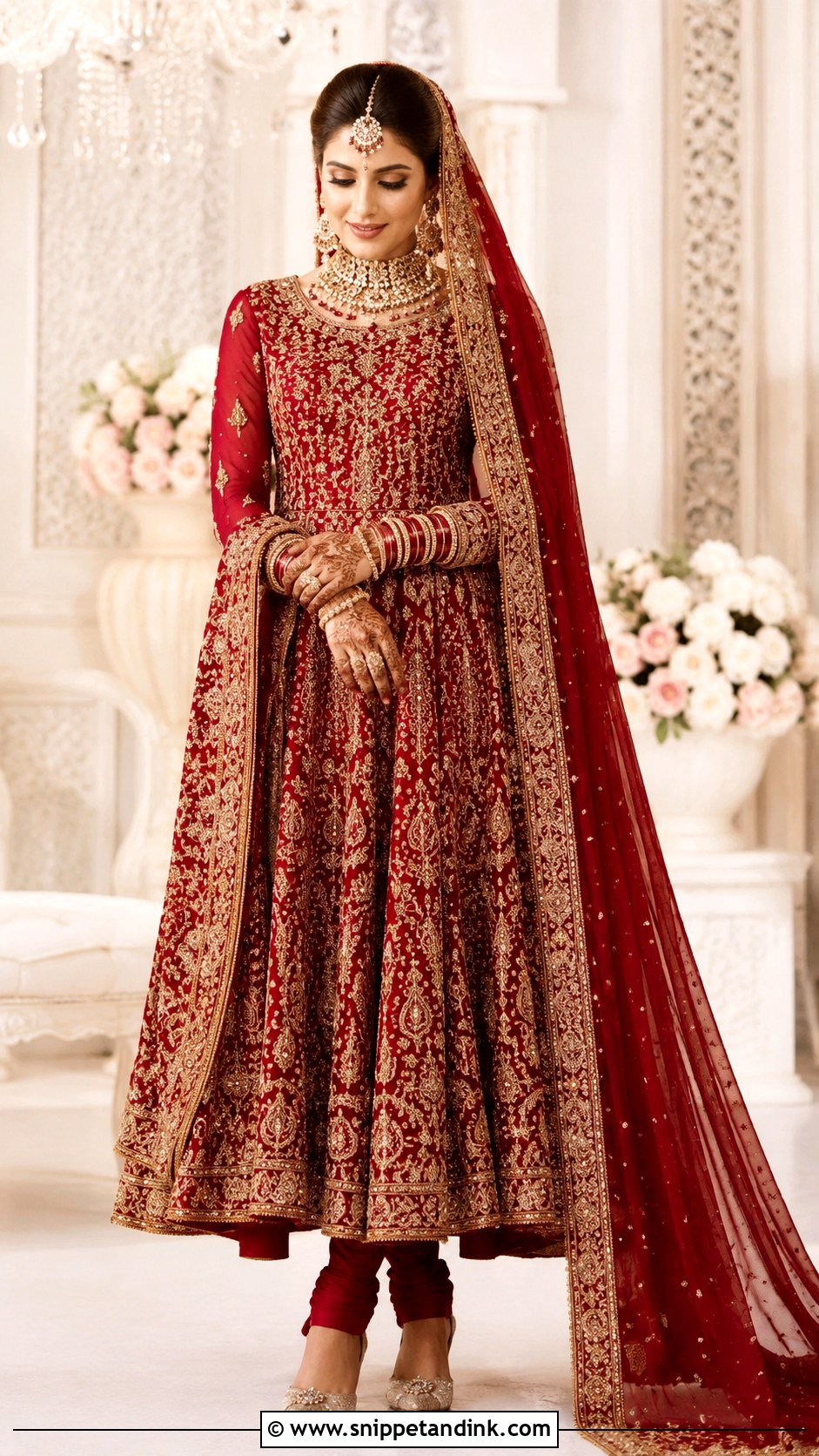
The pishwas is a long, fitted-bodice frock that flares from the waist, worn over churidar, and a red Pakistani bridal pishwas looks graceful from every angle. Look for heavy embroidery on the yoke, sleeves and hem with scattered motifs across the flare. A net dupatta with an embroidered border works over the head or across the shoulders. Add kundan jewelry, a sleek bun and embellished heels. The churidar should be cut long enough to gather in soft rings at the ankle; a too-short churidar pulls tight when you sit and shows your shoe straps.
12. Red Pakistani Bridal Saree With Heavy Blouse
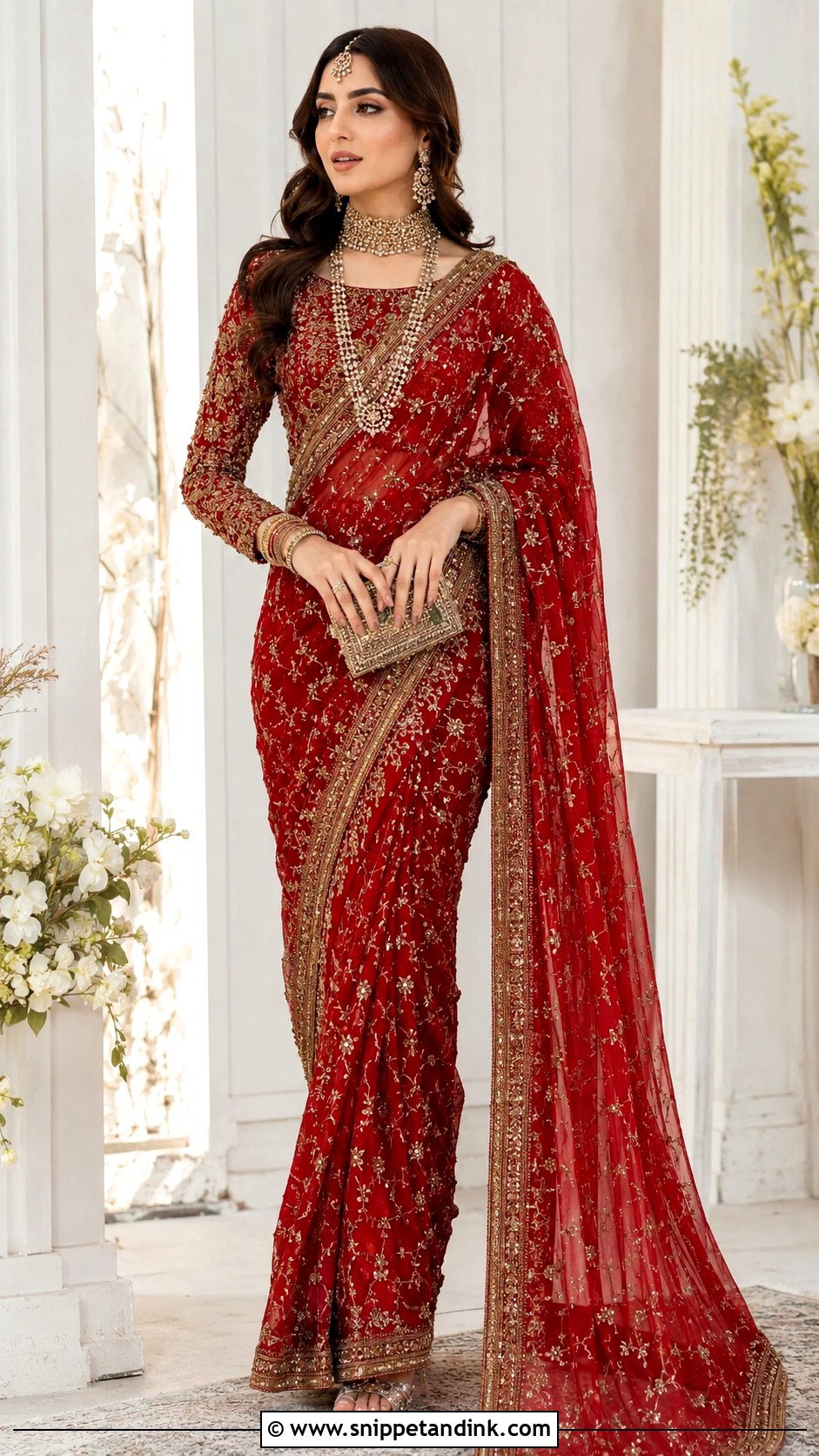
A saree is a quieter alternative to a lehenga or gharara, and some brides prefer its single sweep of fabric. Choose rich silk, chiffon or organza with an embroidered border, and let the blouse carry the heavy work: long sleeves, high-neck detail or a classic round neck. A pallu draped over the head makes it unmistakably bridal. Pair it with a choker, layered necklace, bangles and a small clutch. A heavy blouse with a light chiffon saree can pull the pallu off the shoulder, so I pin it to the blouse at two points. It’s well suited to the nikah or reception.
13. Red Pakistani Bridal Lehenga With Maroon Dupatta
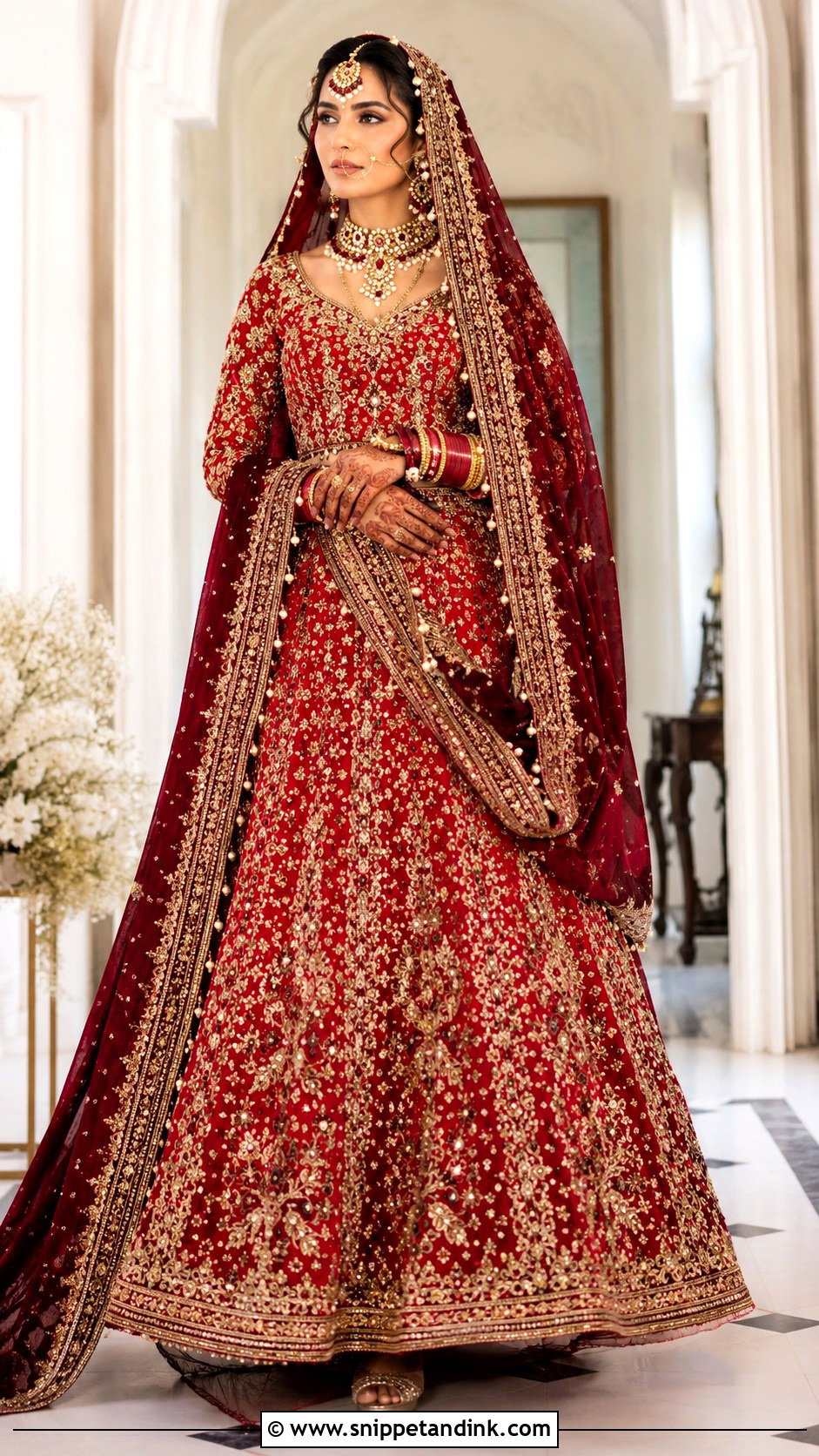
Maroon against red adds depth without leaving the bridal palette. A red lehenga with traditional motifs and a maroon dupatta with a bold border, all in antique gold embroidery, feels rich and mature. Kundan, polki-style pieces and pearl accents suit it, with defined eyes and a soft red lip, and embellished heels or khussas underneath. The dupatta is the darkest thing near your face here, so I check it against the bride’s skin in daylight. On deeper skin tones it’s flattering; on very fair, cool skin it can look heavy unless the border is bright gold.
14. Red Pakistani Bridal Sharara With Short Shirt
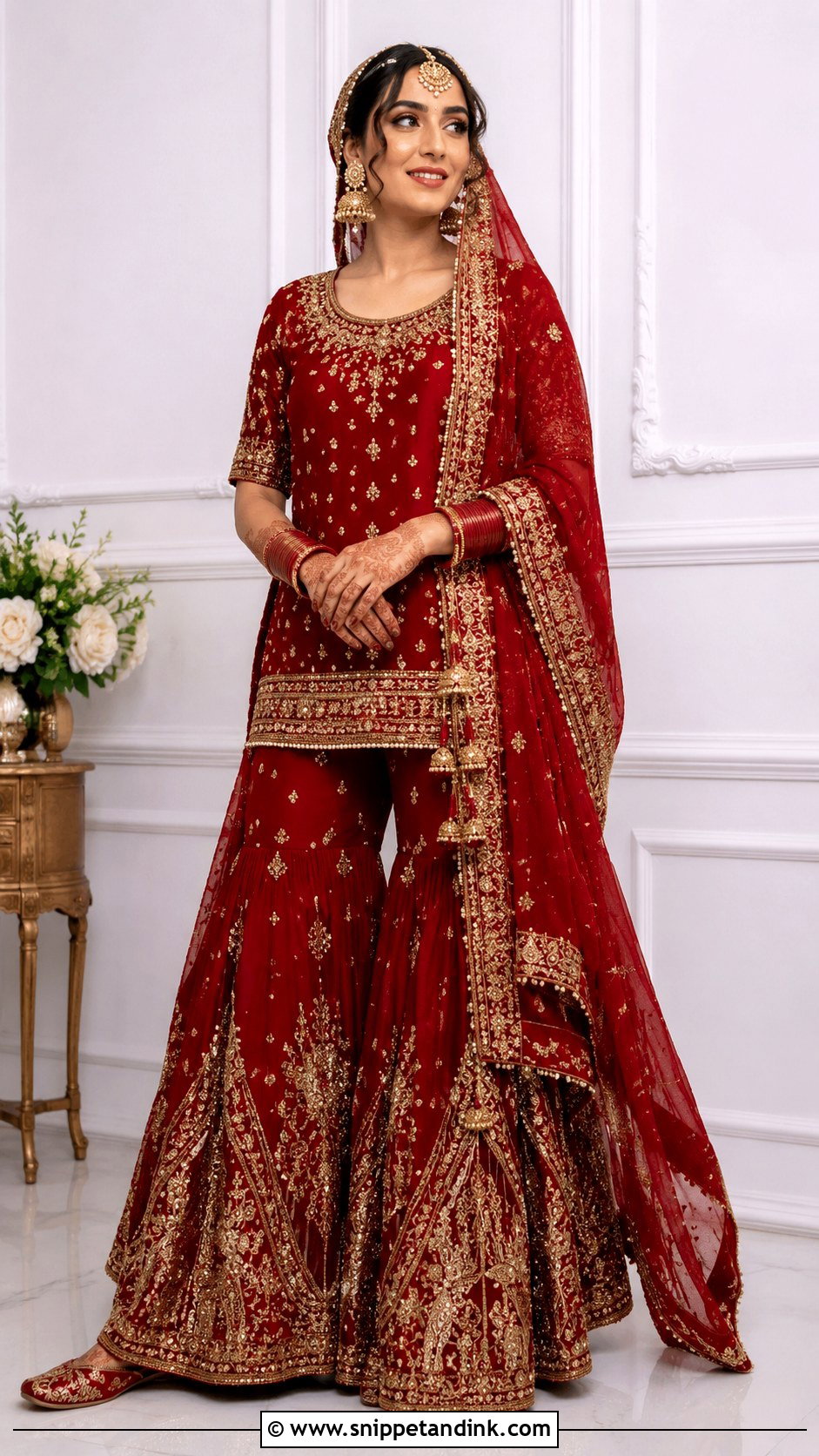
A short shirt lets a sharara’s embroidered hem take the spotlight. This combination feels youthful and traditional, and it’s far lighter to wear than a full lehenga. Choose a shirt with worked sleeves, neckline and a finished daman, plus a matching dupatta with scattered motifs. A passa, jhumkas, bangles and soft curls or a bun complete it. Short shirts ride up when you raise your arms, so I check the length with the bride’s arms lifted as if receiving a garland. It suits a bride who wants to dance at her own barat.
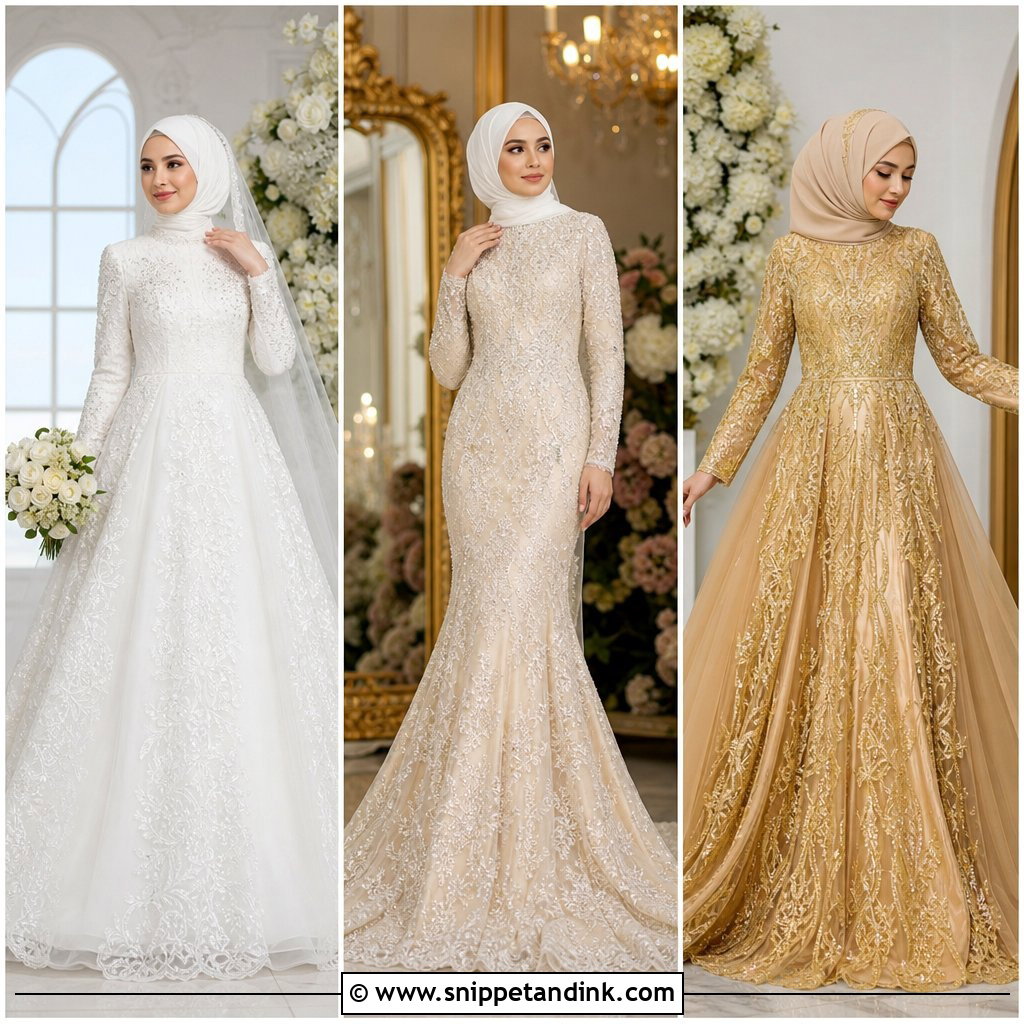
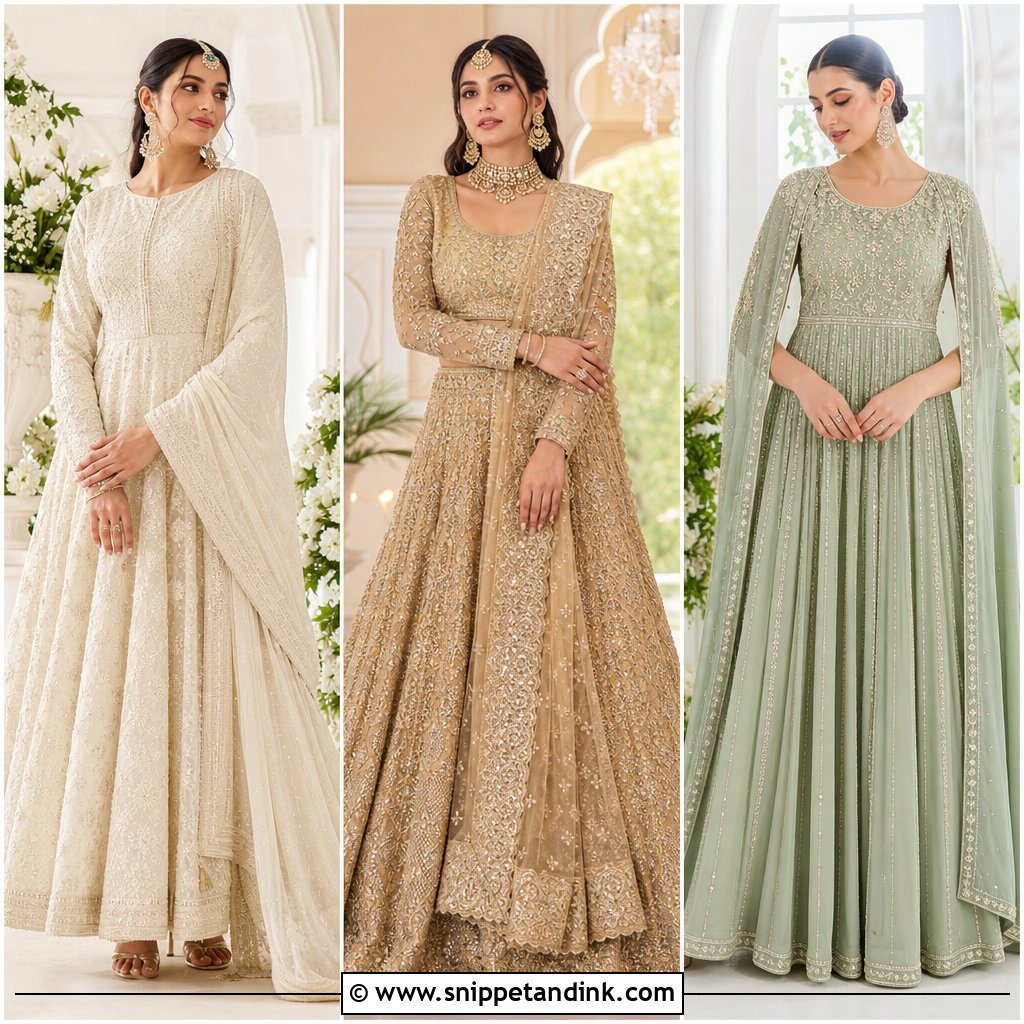
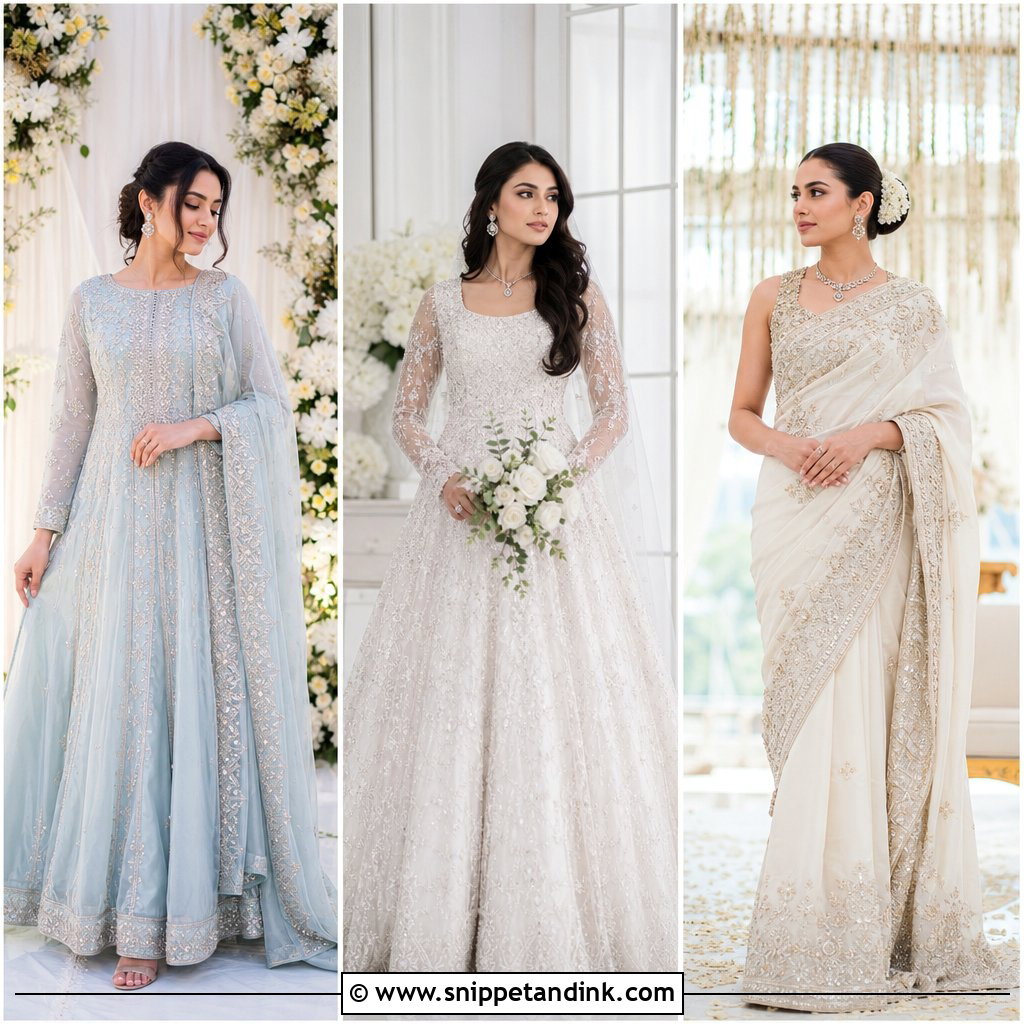
15. Red Pakistani Bridal Gown With Embroidered Dupatta
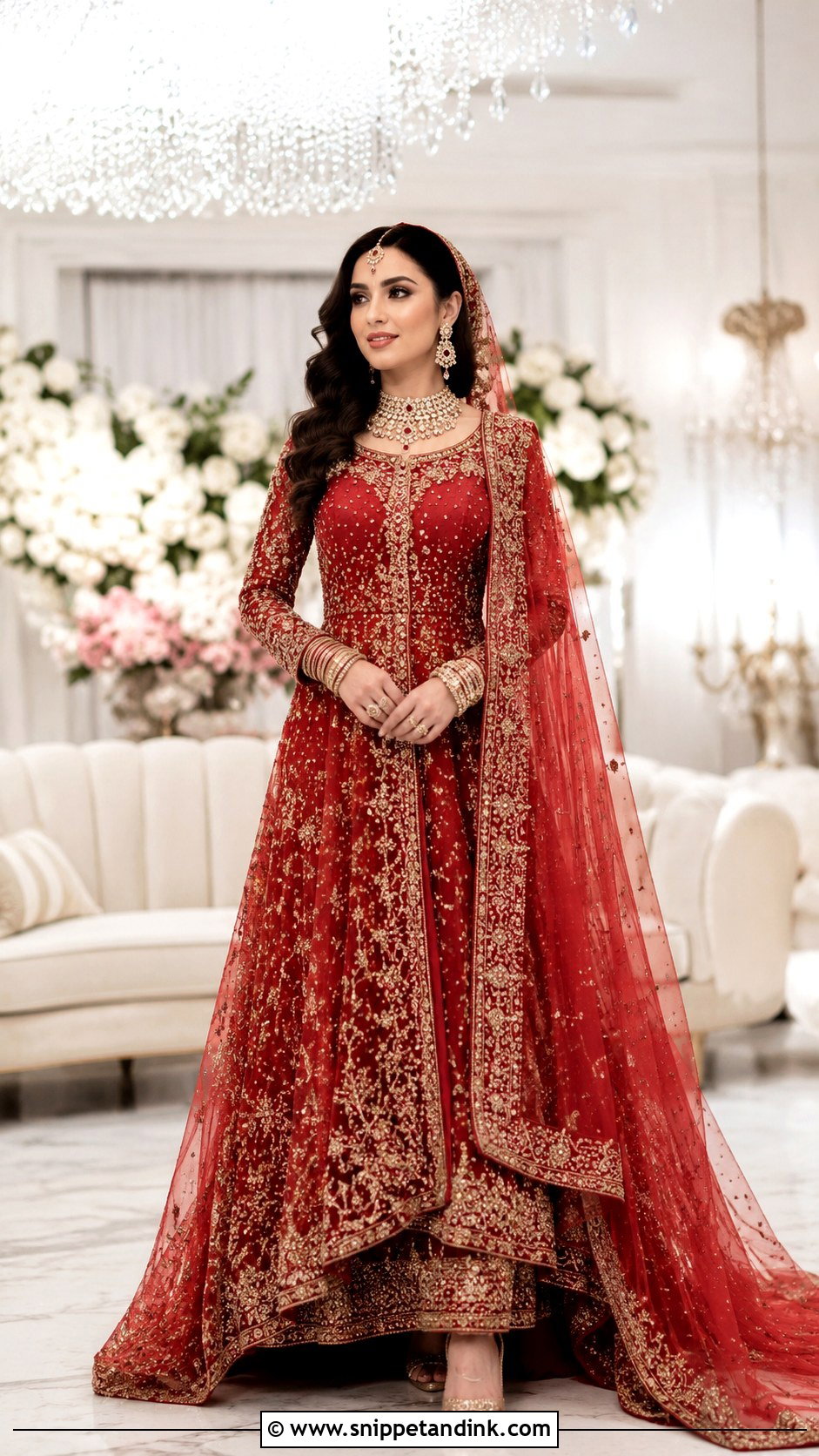
An embroidered gown keeps the formality of a Western silhouette, and a heavily bordered dupatta brings it back to Pakistani bridal dressing. Look for a fitted bodice, long sleeves and a wide flare, with embroidery on the bodice, cuffs, waistline and hem. Heels, a statement necklace, earrings and sleek hair complete it. Gowns can’t be adjusted as easily as a separate shirt and lehenga, so I schedule the final fitting closer to the wedding for these. Receptions and indoor ceremonies suit it best.
16. Red Pakistani Bridal Lehenga With Double Dupatta
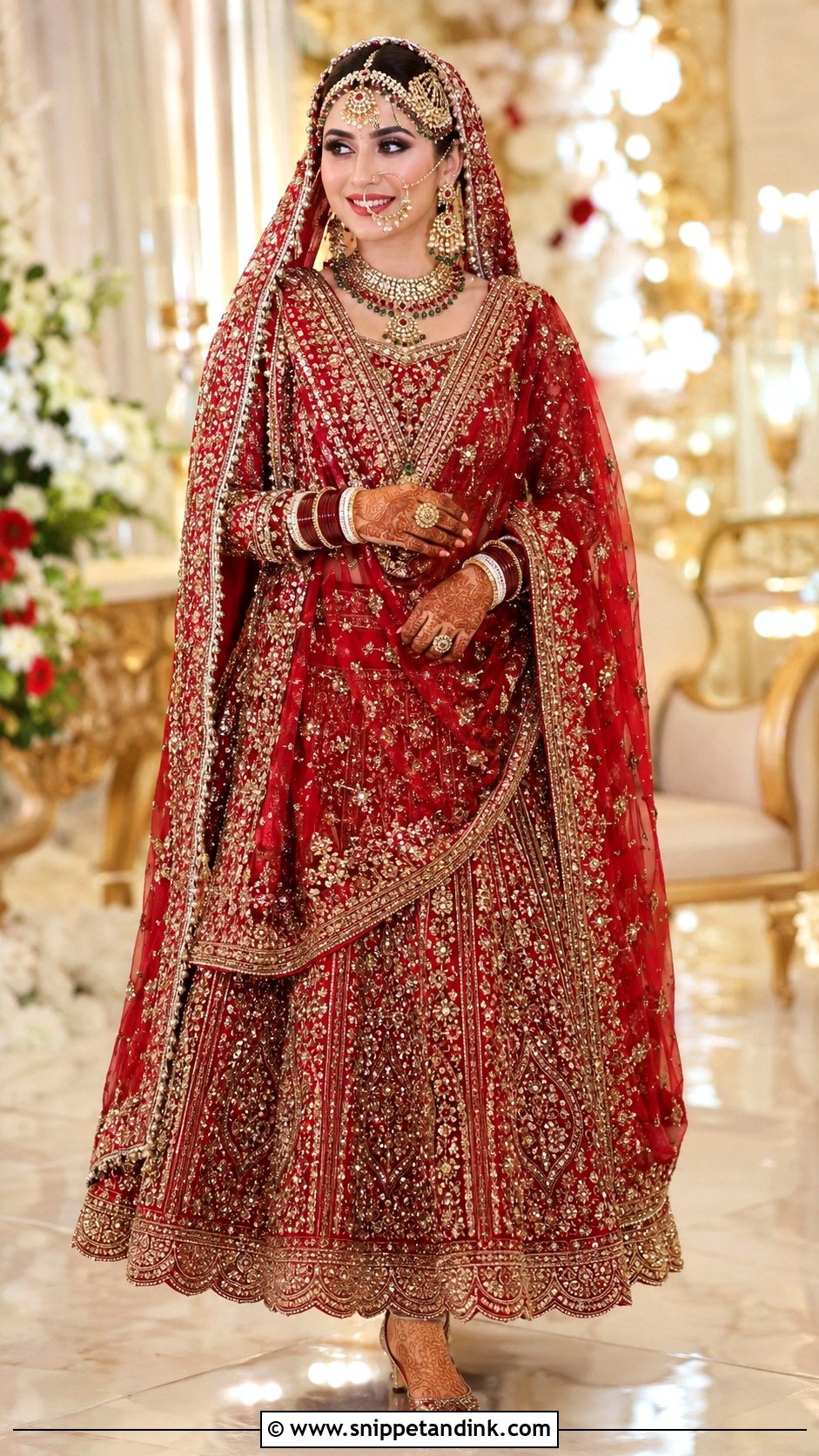
A red Pakistani bridal lehenga with double dupatta styling gives the fullest traditional presentation: one dupatta pinned over the head, the second draped across the shoulder or arms. It frames the bride in portraits and adds volume. Make one dupatta heavy with a wide border and the other light with scattered embroidery, because two heavy dupattas will give you a sore neck by the rukhsati. The lehenga and blouse need enough detail to hold their own against all that fabric. A matha patti, nath, layered necklace, bangles and heels finish it.
17. Red Pakistani Bridal Organza Lehenga
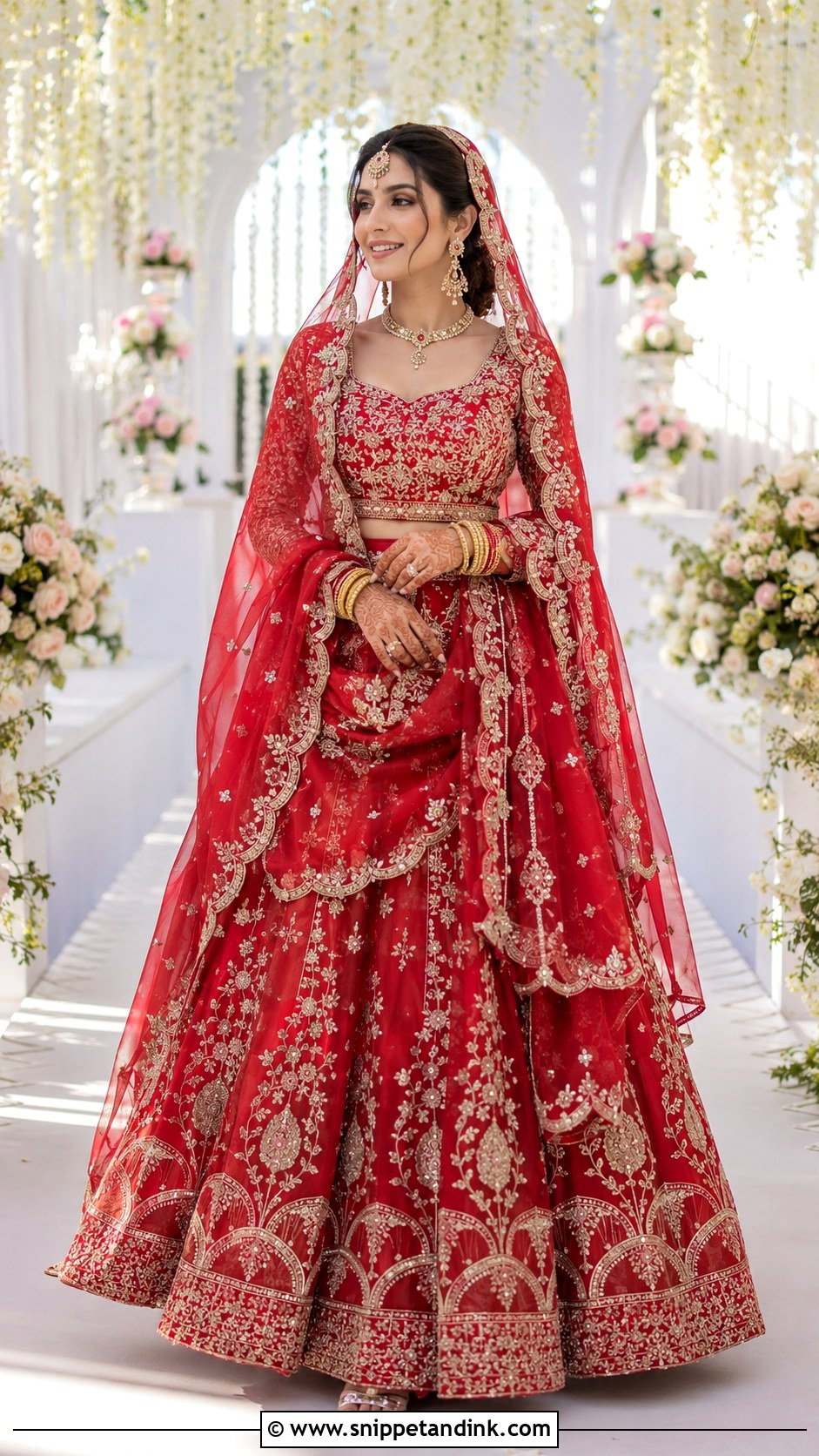
Organza has body without weight, so a red organza lehenga holds its volume and still feels light. Gold, dull silver or antique threadwork add richness while keeping it wearable, and a matching organza dupatta with a scalloped or embroidered border keeps the finish delicate. Pair it with a fitted blouse, refined jewelry and comfortable heels. It suits daytime weddings and summer ceremonies. Organza creases sharply if it’s crushed, so it travels on a hanger, and I steam it at the venue rather than at home.
18. Red Pakistani Bridal Net Lehenga
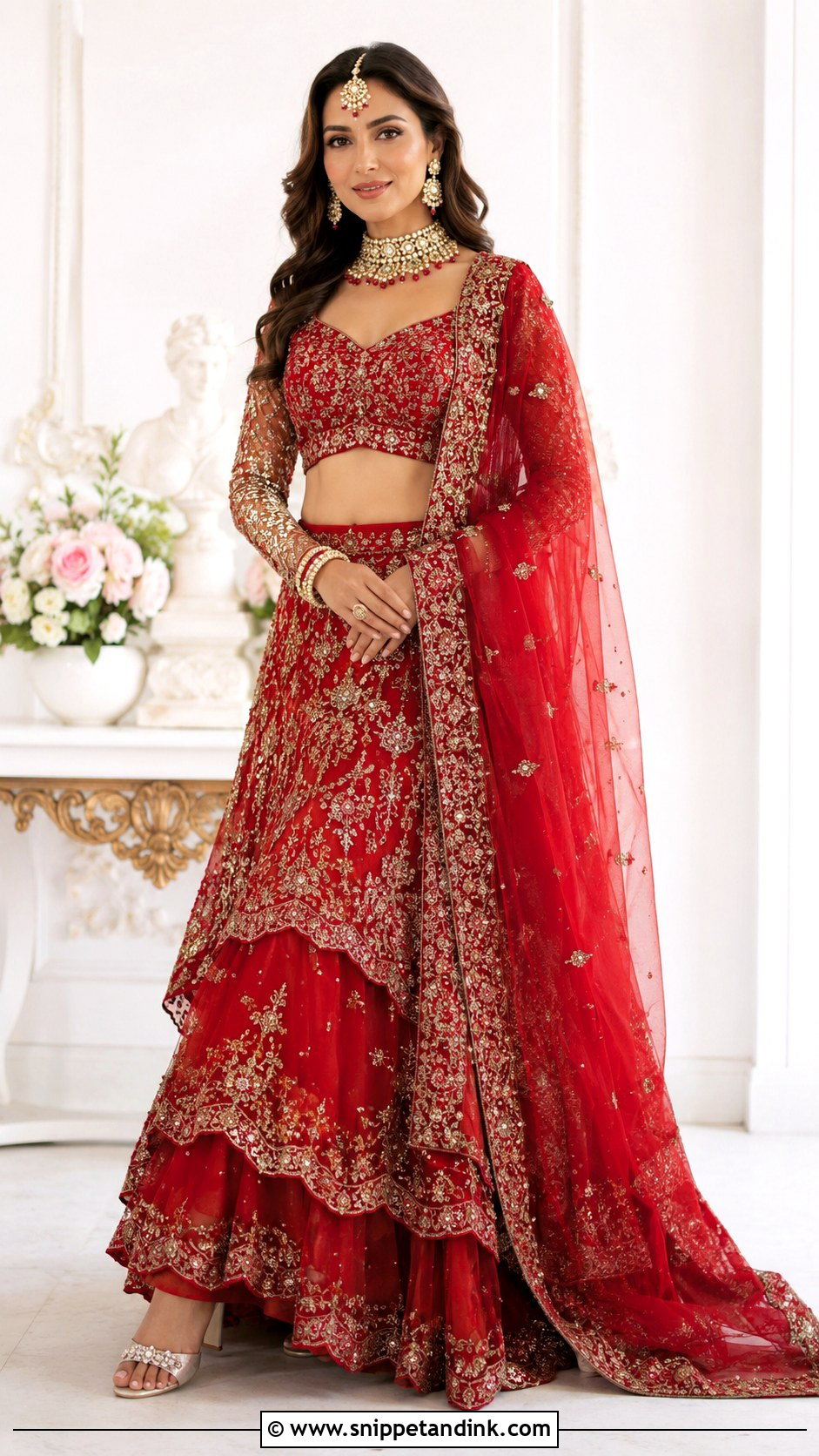
Net is the classic choice for a soft, layered lehenga, and it carries sequins, threadwork, pearls and zari well, especially across many panels. Pair it with a matching blouse and a sheer dupatta that frames the face without weight. A can-can adds volume, but keep it modest so you can move. Kundan, bangles and embellished heels complete it. Net snags easily on rings, bangles and the hooks of a blouse; I tuck the bangles under the dupatta edge when the bride is seated and keep a few spare pins for small pulls.
19. Red Pakistani Bridal Silk Lehenga
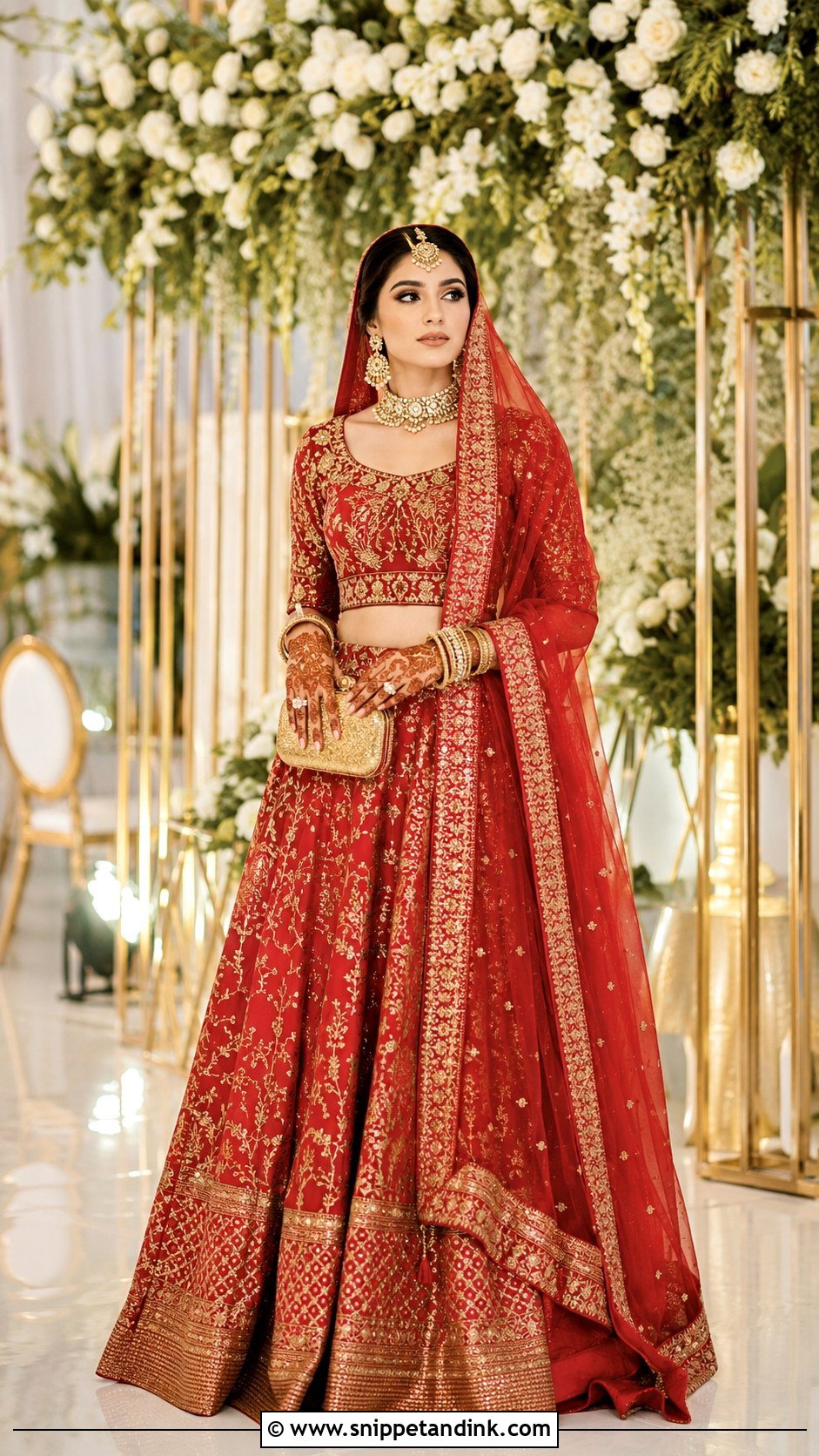
Silk has its own sheen, which keeps even dense embroidery looking refined rather than loud. A red silk lehenga with woven motifs, zardozi borders or hand embroidery across the panels is clean and rich. Balance the fabric’s weight with a silk blouse and an organza or net dupatta. Gold jewelry looks especially good on red silk, from a choker to layered necklaces and jhumkas, with khussas or heels. Silk shows water marks, so I keep a dry tissue in the bride’s clutch and warn her away from the drinks table until after the photos.
20. Red Pakistani Bridal Velvet Gharara
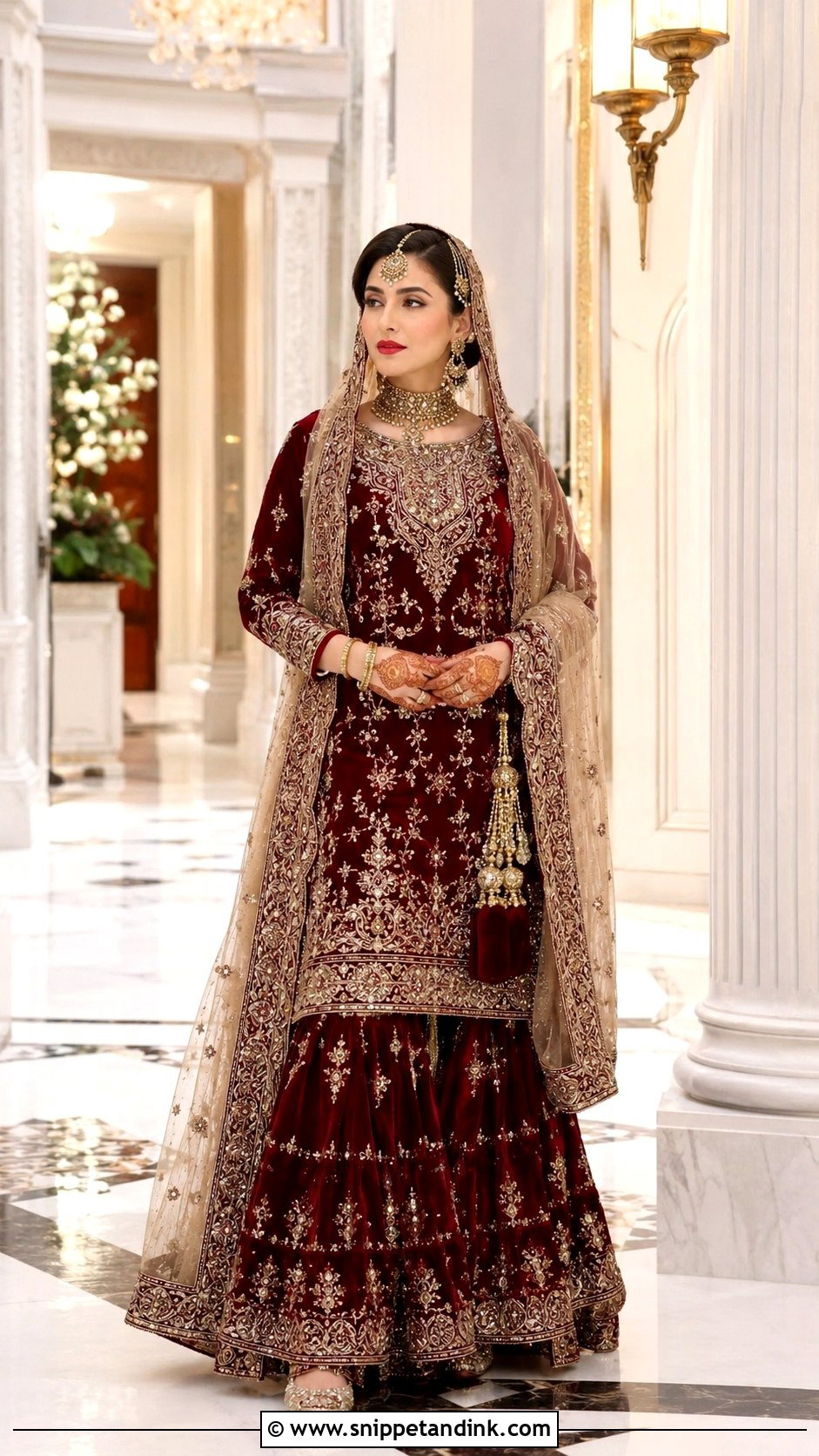
Velvet makes a gharara fall heavier, so the flare looks grand and formal. Pair a red velvet gharara with a long embroidered shirt and a lighter dupatta so the whole outfit doesn’t become too weighty. Antique gold work, pearls and fine sequins sit well on deep red velvet. A passa, choker, jhumkas and stacked bangles complete it. Winter weddings, evening barats and indoor venues with bright lighting suit it best. Velvet ghararas are heavy at the knee joint, so I ask the tailor to reinforce that seam and line the flare to help it swing.
21. Red Pakistani Bridal Jacket Lehenga
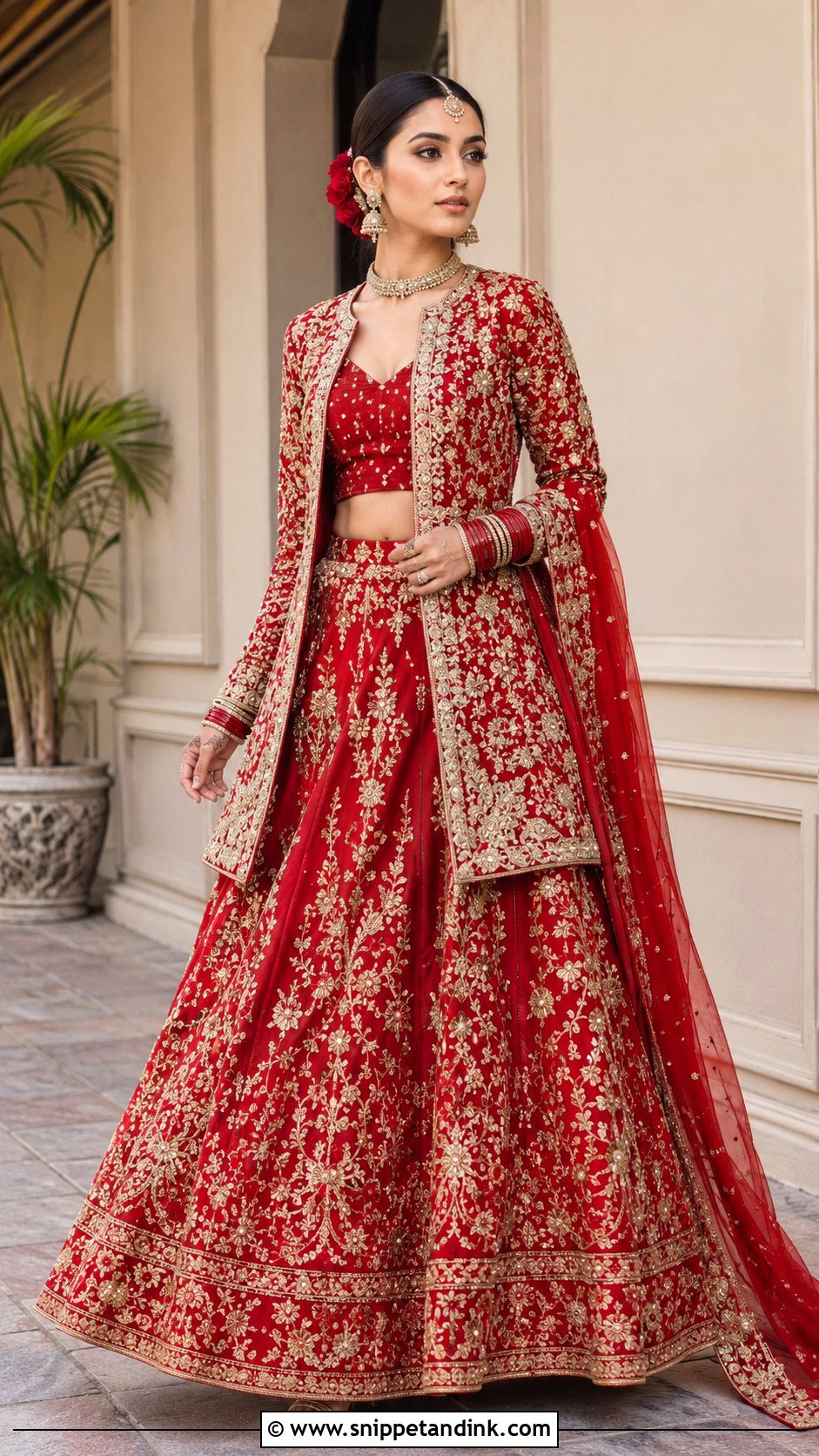
A jacket over a lehenga is modern but still modest, adding structure and coverage. The lehenga provides the flare; a long or short jacket with front-open embroidery, scalloped edges or worked sleeves sits over a simpler blouse. Drape a matching dupatta lightly over the head or one shoulder, and pair it with sleek jewelry, a center-parted bun and embellished heels. Jackets with heavy sleeves can restrict your arms, so I have brides raise both hands to their face at the fitting, the gesture you’ll make dozens of times for photos.
22. Red Pakistani Bridal Lehenga With Green Jewelry
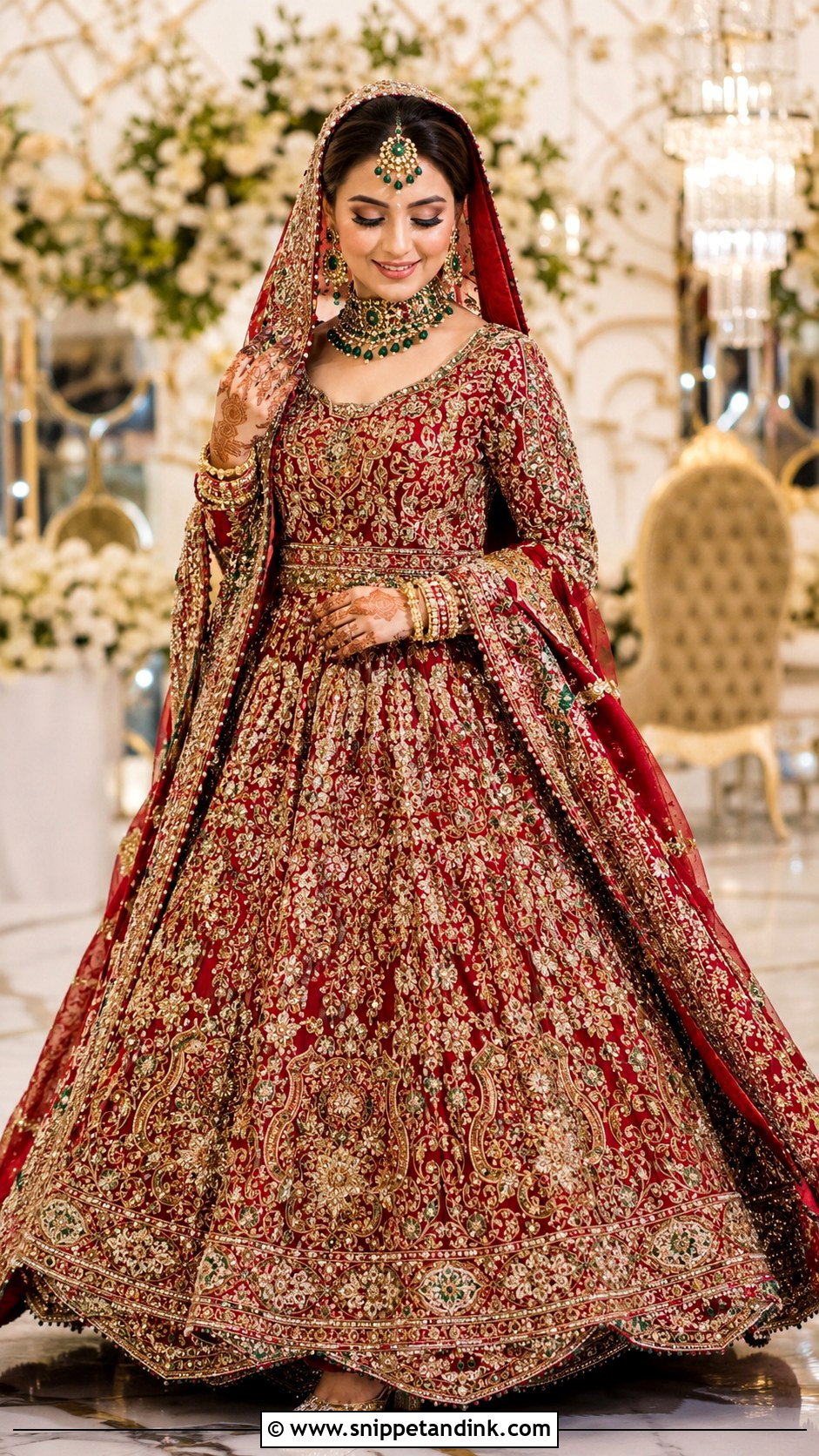
Emerald with red is a pairing Pakistani bridal jewelry has used for a long time. Keep the lehenga fully red with gold embroidery, and let green stones in the choker, earrings, passa or layered necklace bring color near the face. The dupatta can stay red or take a subtle green edge. Gold heels, bangles and a classic clutch complete it. I keep the green to one tone throughout, since emerald, mint and bottle green together look accidental rather than planned.
23. Red Pakistani Bridal Lehenga With Heavy Shawl
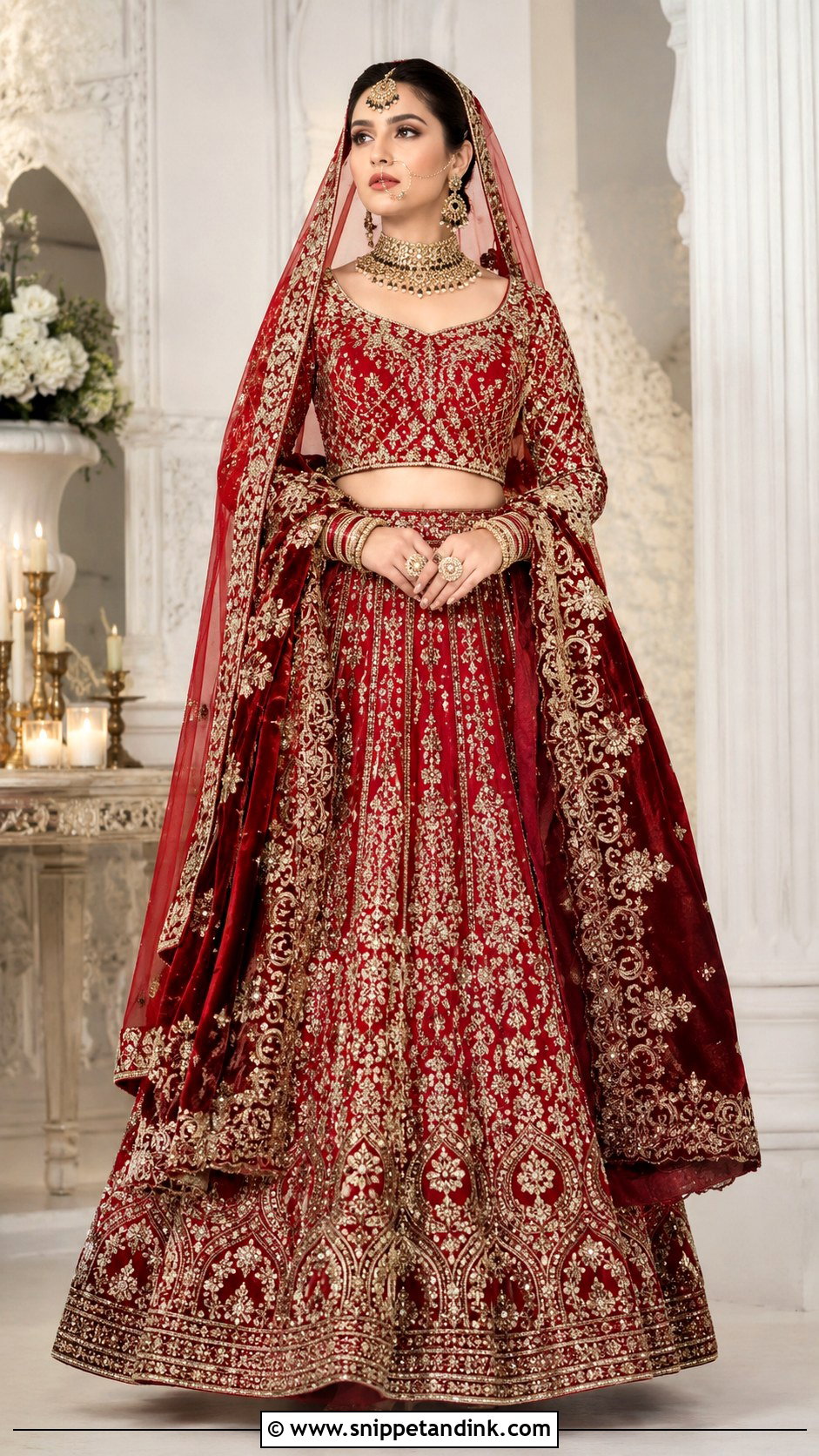
A heavy shawl is practical and dramatic for cold-weather and evening ceremonies. Velvet, jamawar or richly embroidered fabric adds warmth, draped over one shoulder or across both arms for portraits, with a lighter dupatta over the head to keep it bridal. Antique jewelry, a neat bun and elegant heels finish it. A shawl on top of a lehenga and dupatta is a lot of fabric, so I’d plan for it to come off once you’re indoors and seated, and give someone the job of holding it.
24. Red Pakistani Bridal Banarsi Lehenga
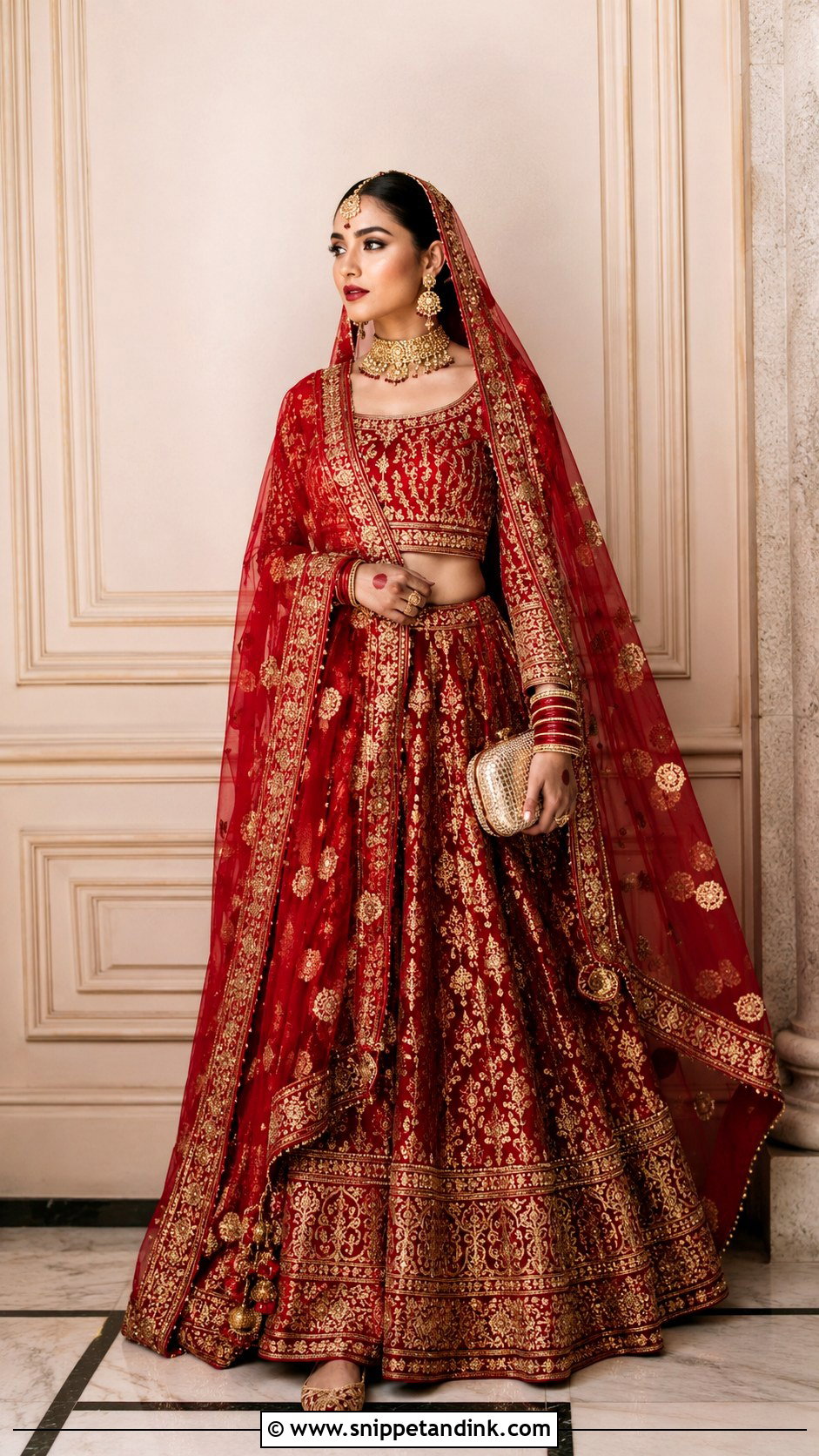
Banarsi fabric already carries a woven pattern, so a red Pakistani bridal Banarsi lehenga doesn’t need embroidery covering every inch. I keep the handwork to the blouse, border and dupatta, which also keeps the weight down. Pair it with a fitted blouse, a sheer dupatta and gold jewelry for a traditional finish, plus khussas, bangles and a small clutch. Woven silk is stiff, so the lehenga needs enough panels to fall properly; ask to see it on a form, not just folded on a counter.
25. Red Pakistani Bridal Lehenga With Pastel Dupatta
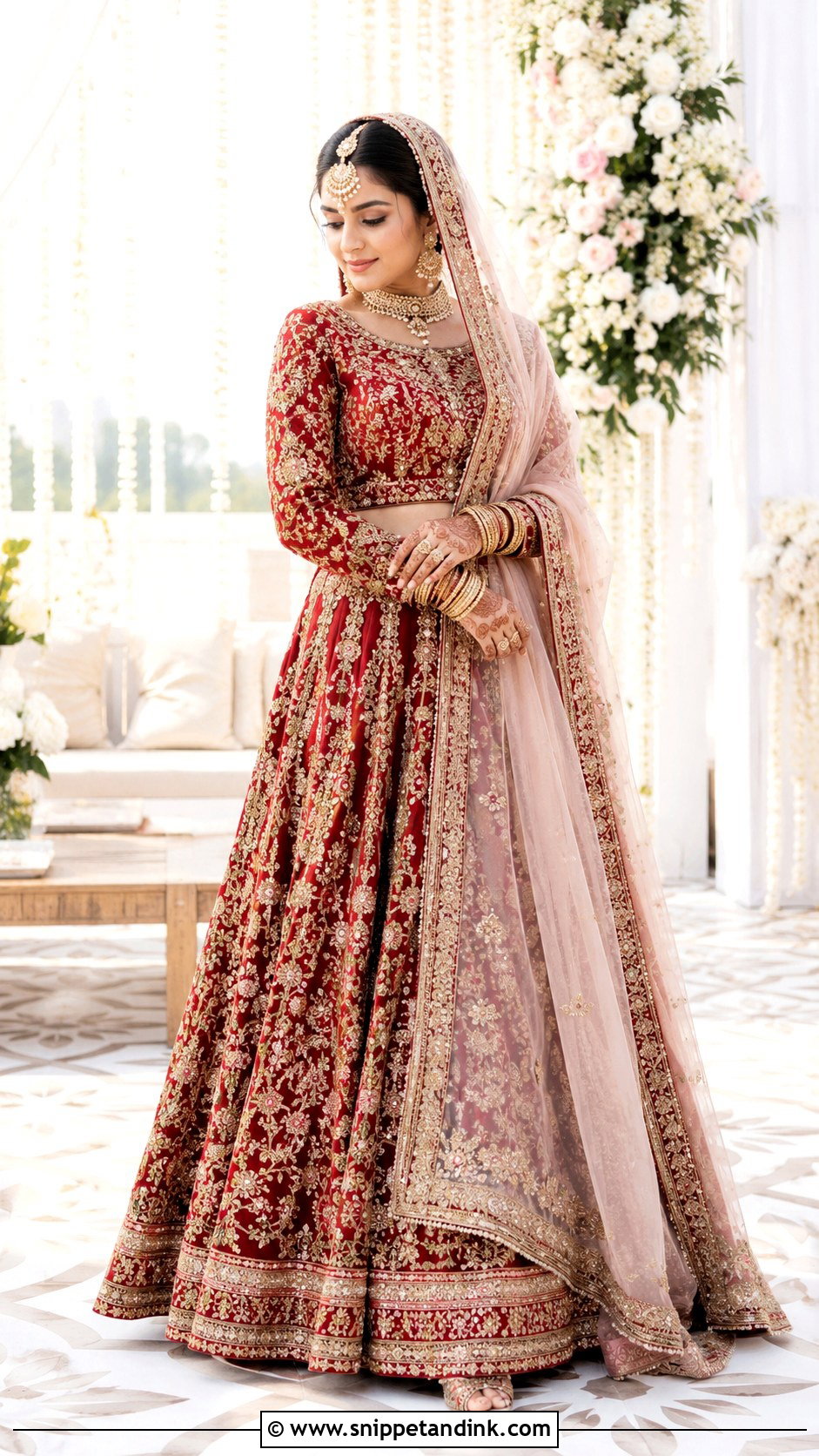
A pastel dupatta takes the intensity out of an all-red outfit. The lehenga stays traditional while blush, peach, champagne or soft pink sits around the face. Embroidery in gold, champagne or pearl should run through both pieces so they look like one outfit. Delicate jewelry, soft makeup and embellished heels suit it. I test the pastel shade against the bride’s skin before ordering, because some peaches and champagnes wash out fair complexions in daylight photos. It works especially well at daytime ceremonies.
Dabka, Kora and Tilla, Explained at the Fitting Table
Pakistani bridal wear is priced largely by its handwork, and the names on the quote can be confusing. These are the ones I explain most often.
- Dabka: fine metal wire coiled like a spring, cut into short pieces and stitched down. It gives a raised, textured shine.
- Kora: a thicker coiled wire used with dabka for bolder outlines and motifs.
- Tilla: metallic thread laid on the surface and couched down with a finer thread, used for outlines and flat filled shapes.
- Nakshi: crinkled metal thread that catches light at every angle; it adds sparkle but also weight.
- Resham: silk or silk-like thread for colored motifs, softer and lighter than metal work.
Metal-heavy work like dabka and nakshi is what makes a red bridal outfit glow under stage lights, and it’s also what makes it heavy and scratchy inside. I ask for the inside of worked areas to be lined smoothly, especially around the underarms and neckline. Metal thread can also darken over the years if it’s stored damp, so keep the outfit in breathable cotton with the worked side folded inward and away from perfume.
A Red That Carries You From the Barat to the Rukhsati
The right red outfit depends on comfort, tradition, the venue and how the day will actually run for you. Some brides look most themselves in a classic lehenga; others in a gharara, sharara, pishwas, saree or embroidered gown. The same red reads bold, soft, regal or modern depending on the fabric, embroidery, dupatta and jewelry. Plan the whole look together, from shoes to hair to the way the dupatta is pinned, and wear it for a while at your final fitting. If you can sit, stand and walk across a room in it without help, you’ve found it.
You'll Like These Ideas:



Leave a Reply