
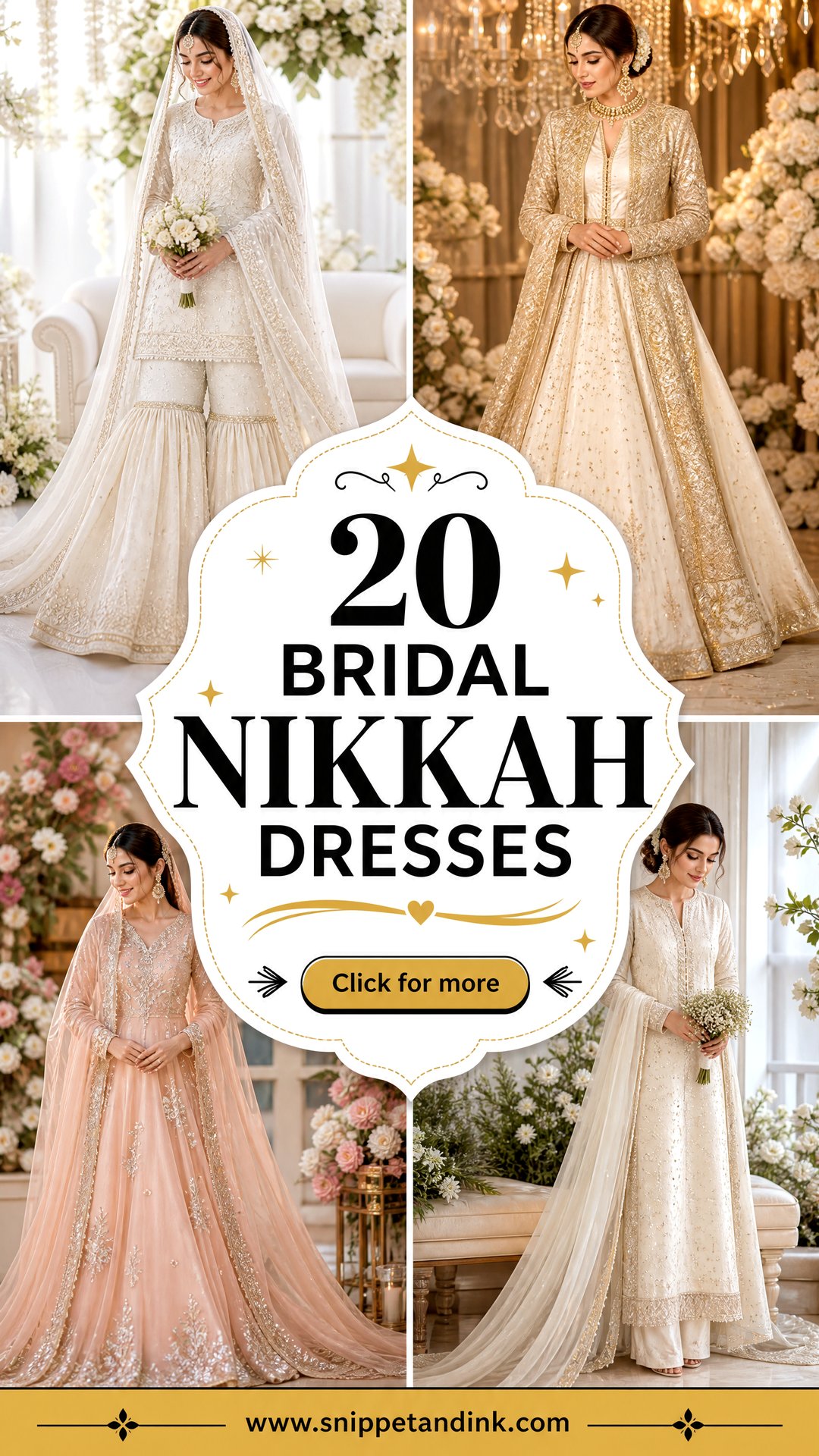
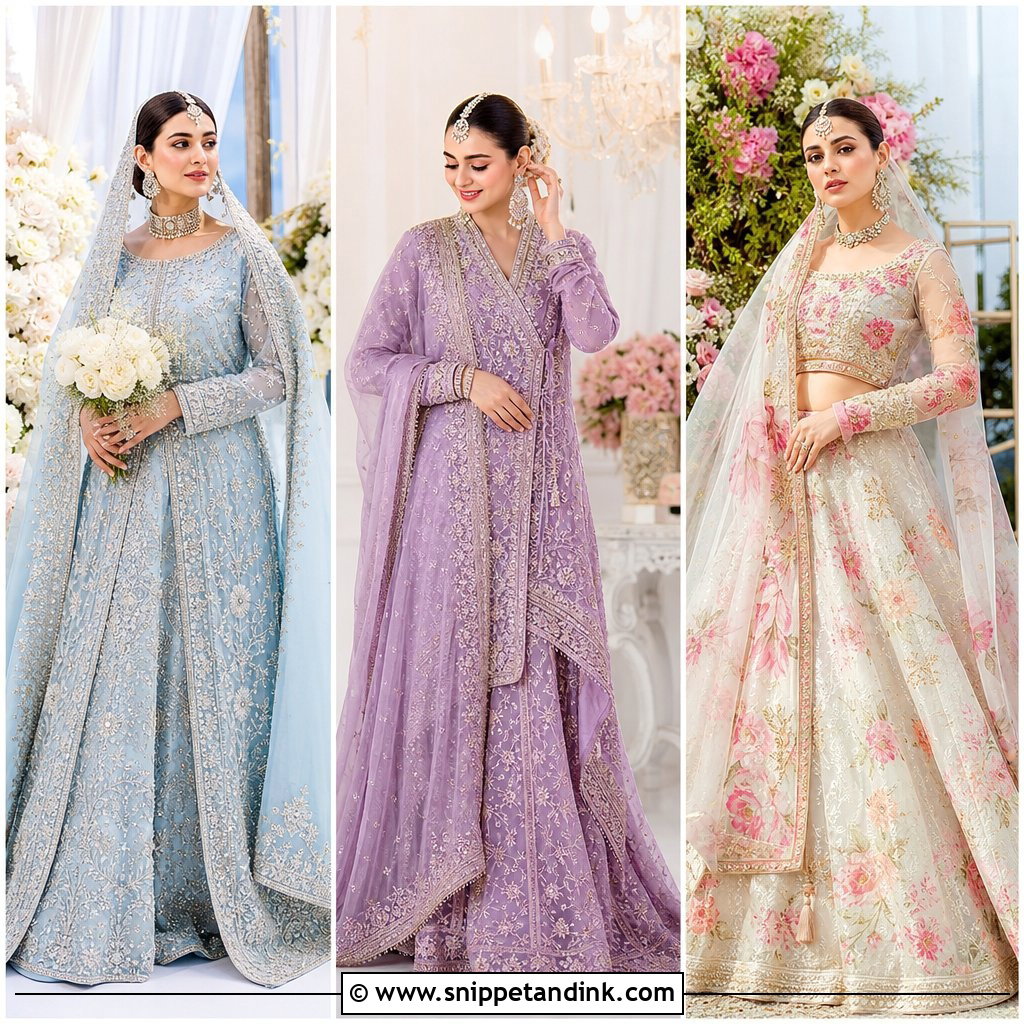
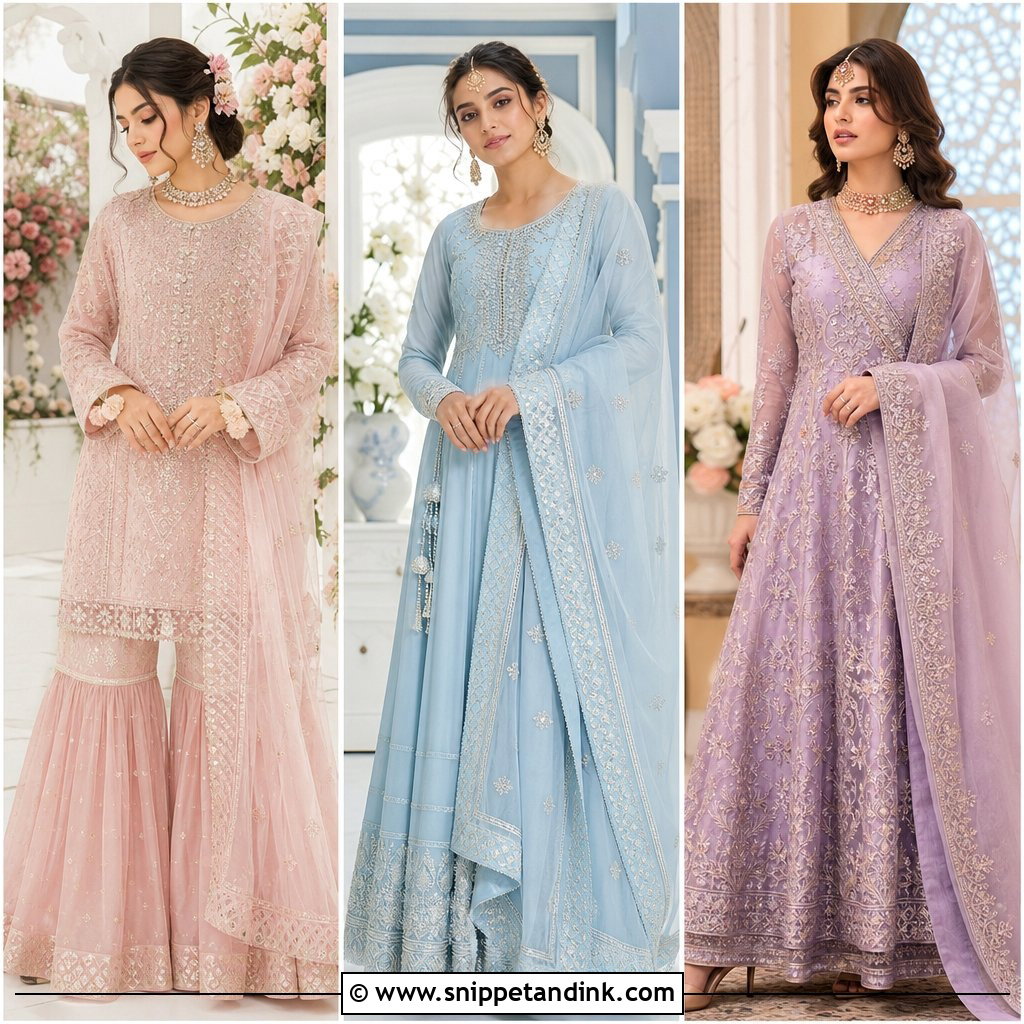
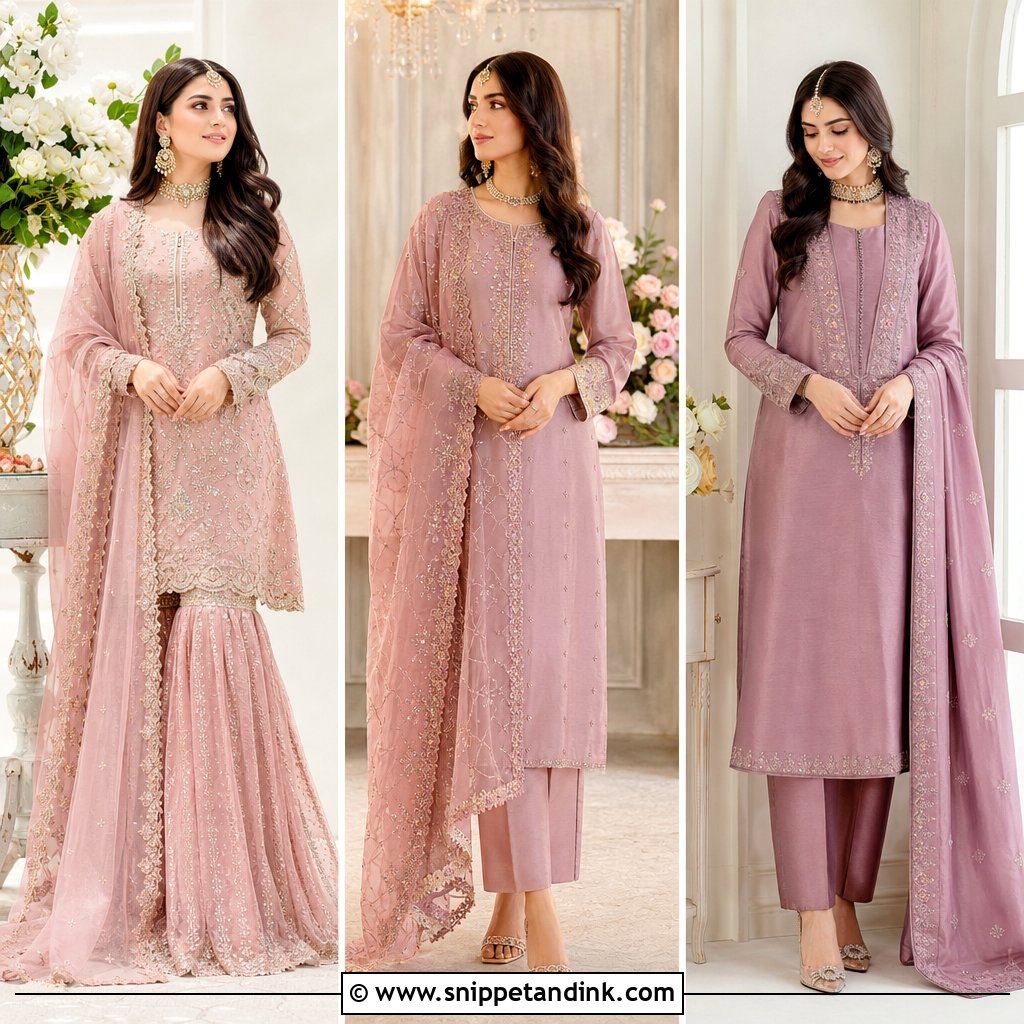
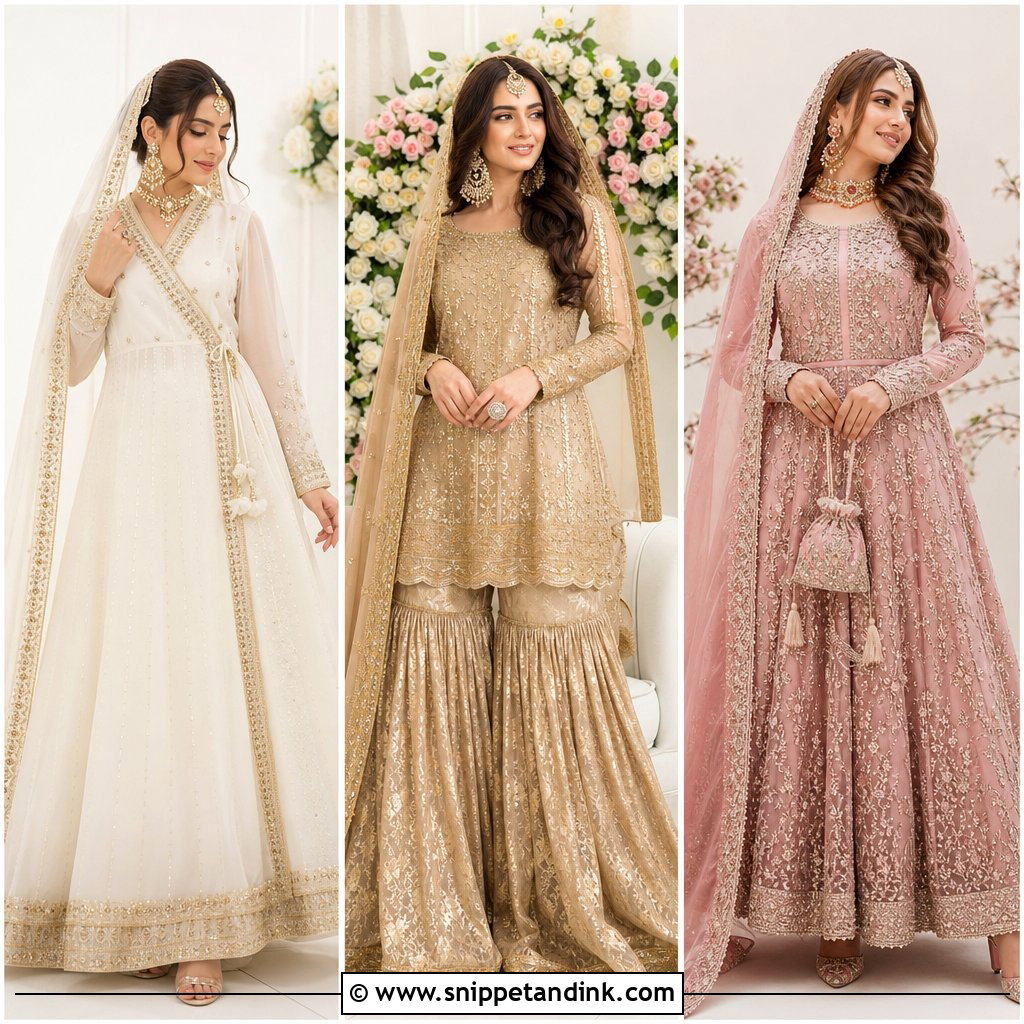
A nikkah outfit is usually lighter and quieter than the one a bride wears for the main wedding event, and I think that’s its charm. White and ivory are still the favorites, but blush, champagne, mint, powder blue and soft metallics are now just as common. Traditional ghararas, lehengas, pishwas dresses and anarkalis carry the cultural weight, while sarees, long shirts and flowing gowns feel more contemporary. Before you choose, think about where you’ll sit, how warm the room will be, how heavy the fabric is, and where the dupatta will rest on your head. Jewelry, shoes and makeup should follow the outfit rather than fight it.
Ordering a Hand-Embroidered Nikkah Outfit From a Designer
Most nikkah outfits with real handwork are made to order, and the embroidery is the slow part. Timelines vary widely by designer and season, so ask before you fall for a piece, and if the outfit is being made in one country and worn in another, add time for shipping and customs. Wedding season is the busiest time for every workshop.
What I ask brides to confirm in writing before the order goes in:
- The exact base color, checked on a fabric swatch in daylight, not on a screen.
- Your measurements, taken by someone experienced, plus how much extra seam allowance is left for later alterations.
- Sleeve length and neckline height, written down as numbers rather than described as modest.
- The weight and size of the dupatta, and whether its border is hand or machine embroidered.
- A photo of the work in progress, so color or motif problems are caught early.
Leave a few weeks after delivery for a final fitting. Hand-embroidered pieces sometimes come out a little tighter than measured, because dense work pulls the fabric in.
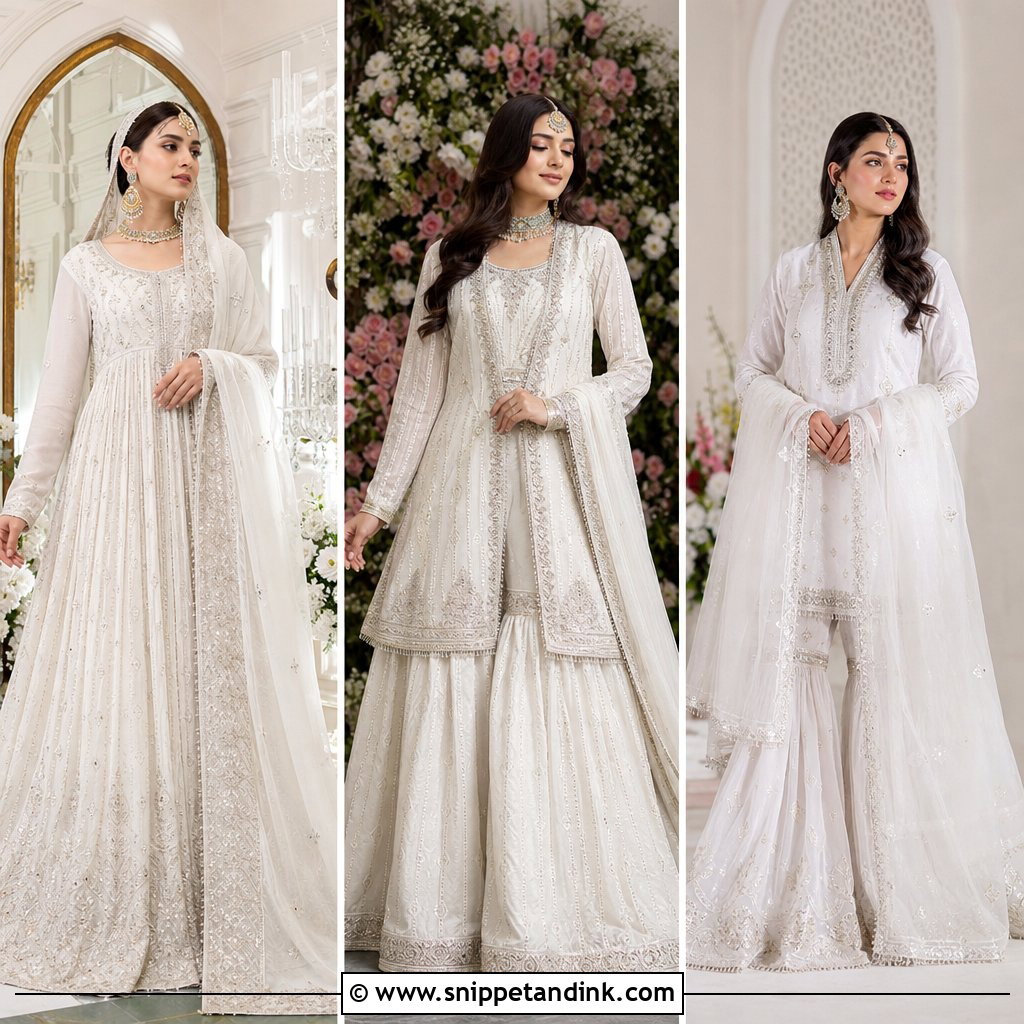
1. White Gharara Bridal Nikkah Dress
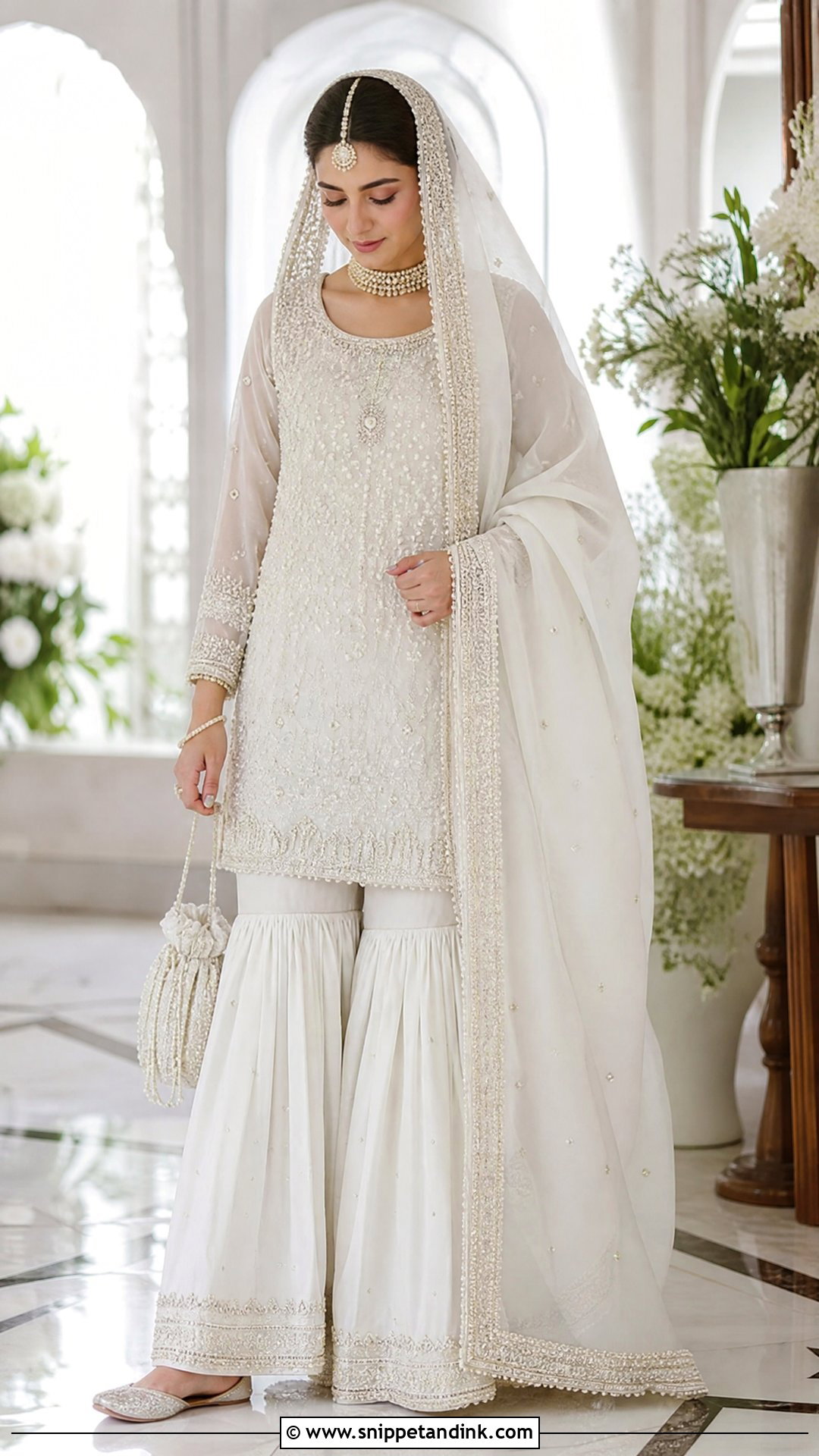
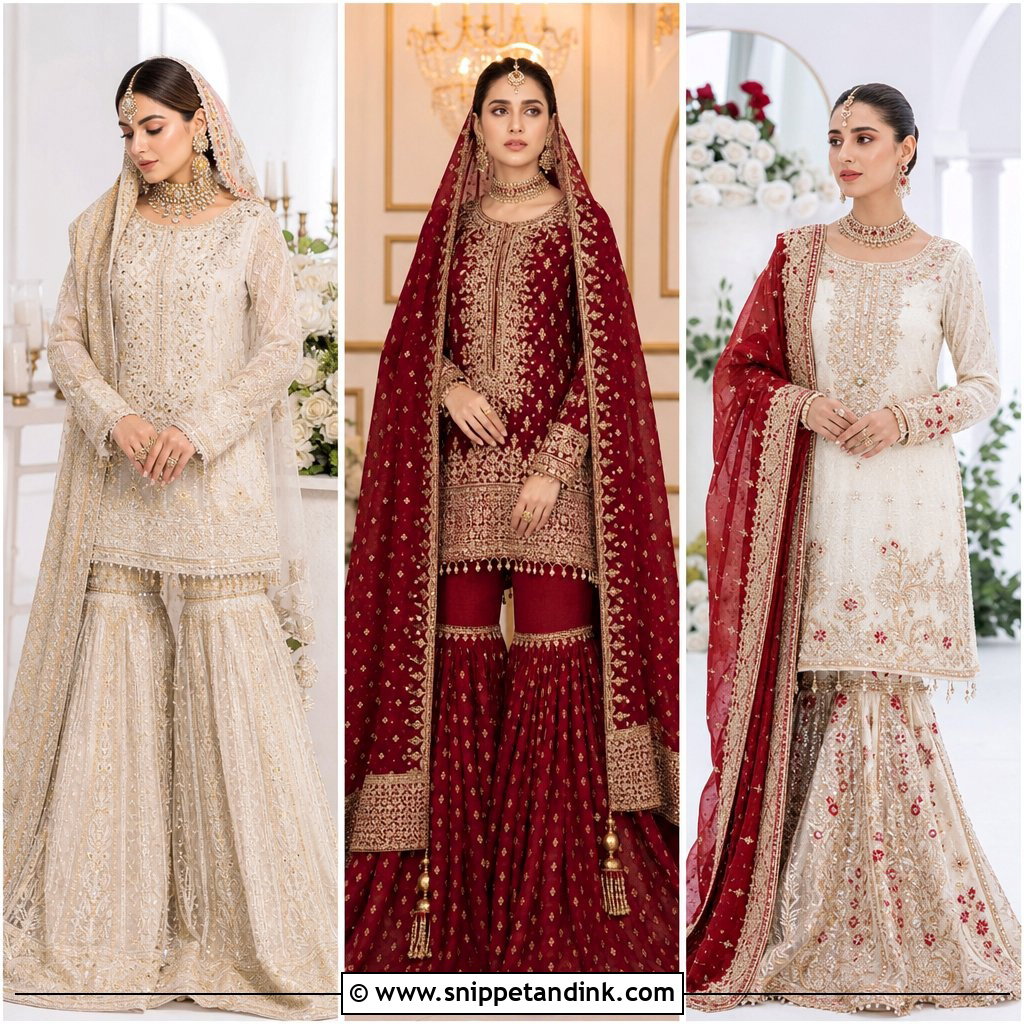
A white gharara is traditional without feeling heavy, provided the shirt stays light. I like a knee-length organza or raw silk shirt with silver threadwork and small pearls, over a wide gharara that flares out from just below the knee. The gharara’s gota or embroidered band at the knee is where the weight sits, so walk in it at your fitting and make sure the band doesn’t pull the waist down. A sheer white dupatta with an embroidered border goes over the head, and silver khussas keep you steady. Daylight indoors suits it best.
2. Ivory Lehenga Bridal Nikkah Dress
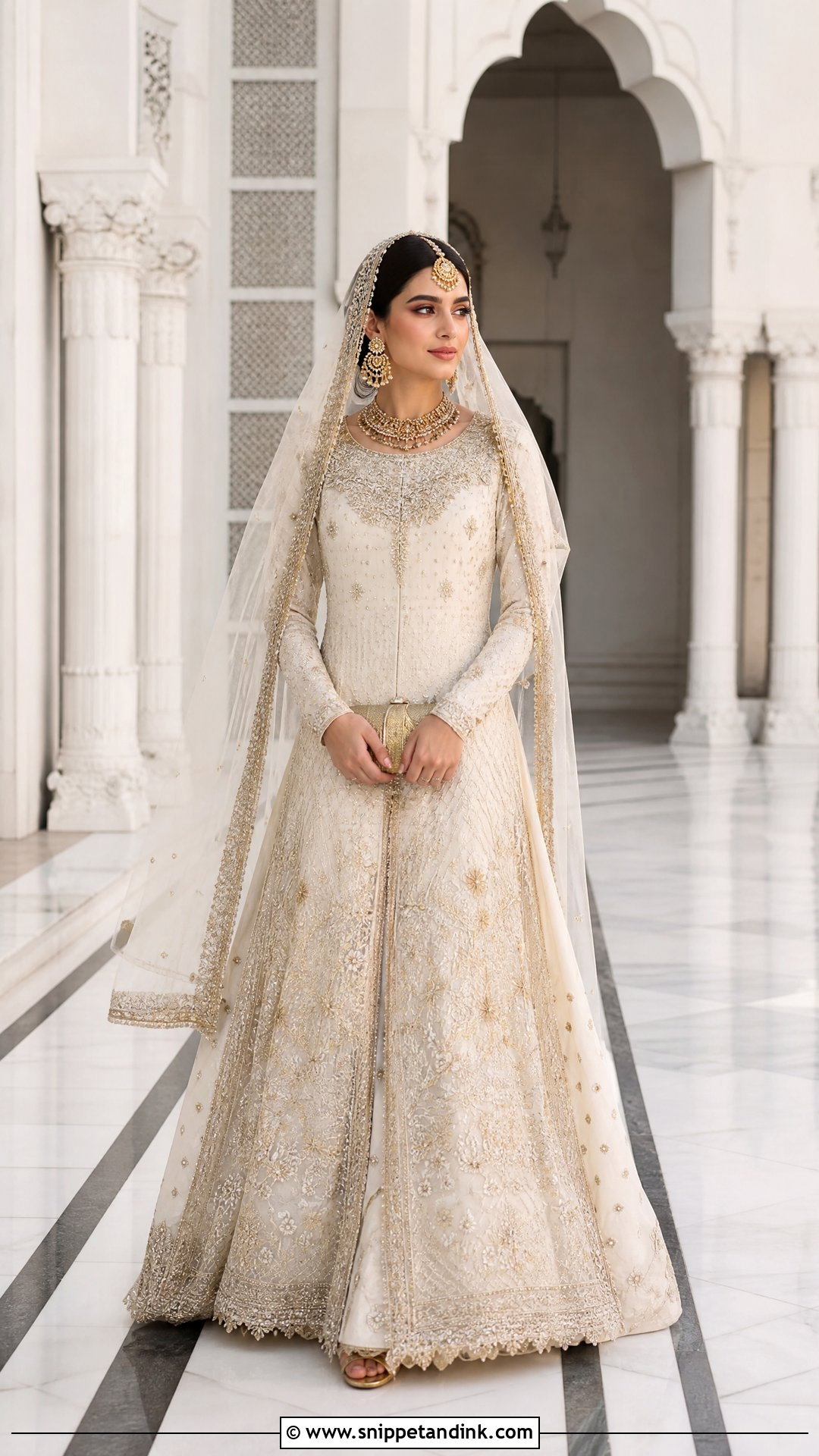
An ivory lehenga gives the formality of a full bridal outfit with a softer color. Choose a paneled skirt with light gold embroidery and a longer choli for coverage. Panel count changes how the lehenga moves: more panels mean more flare and more weight around the hips, so I ask brides to lift the skirt before ordering. Antique gold and kundan warm ivory nicely. Wear the shoes you’ll actually wear when the hem is set, whether gold heels or cushioned khussas, because a lehenga hem cut for heels drags in flats.
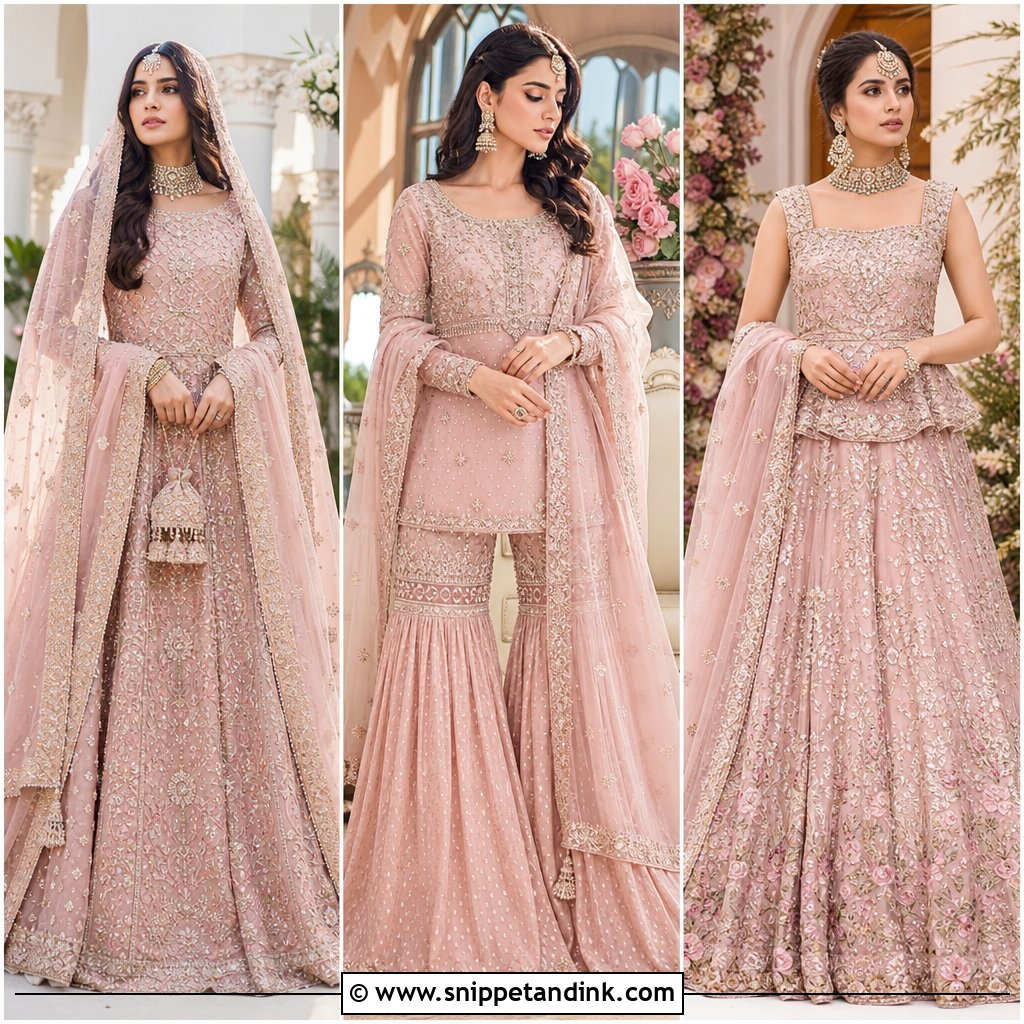
3. Blush Pink Pishwas Bridal Nikkah Dress
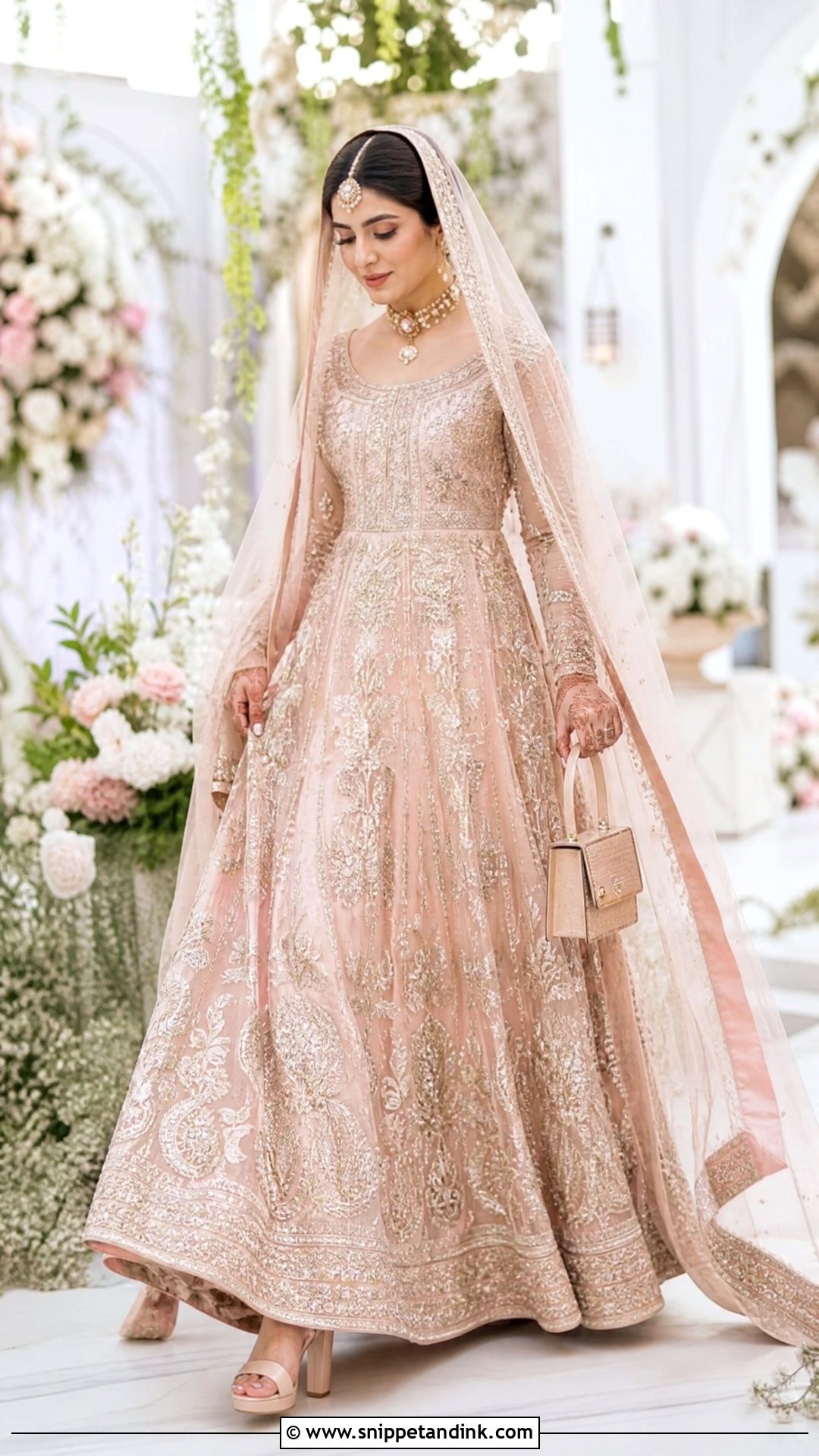
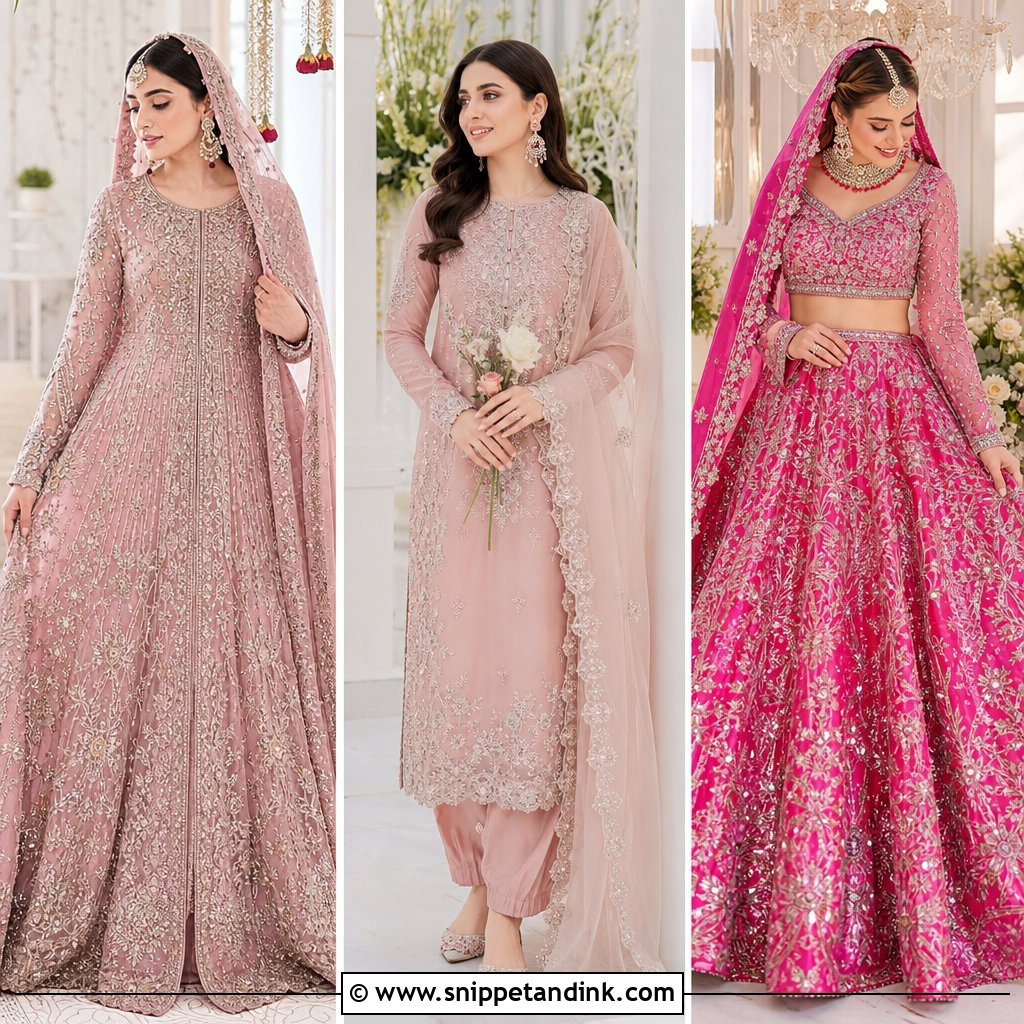
A blush pishwas is all about the flare, a fitted bodice falling into a wide floor-length skirt that swings as you walk. I keep embroidery on the bodice and border and let the middle of the skirt stay plain, which keeps the swing light. Champagne threadwork and pearls suit blush. Pin the organza dupatta over the head and catch it at one shoulder so it doesn’t slide when you turn. Rose-gold earrings and a slim choker are enough. Block heels help on garden grass.
4. Champagne Maxi Bridal Nikkah Dress
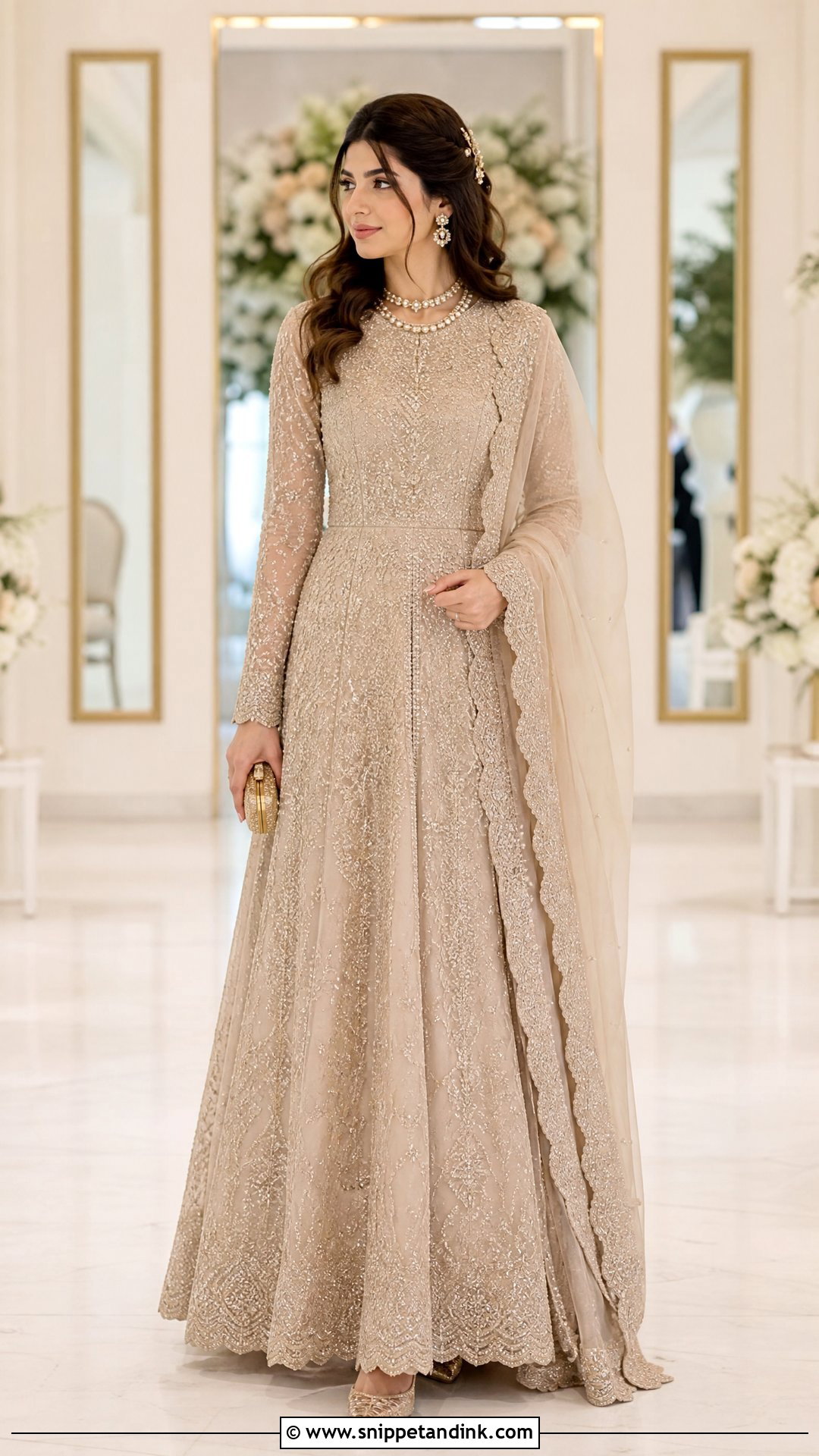
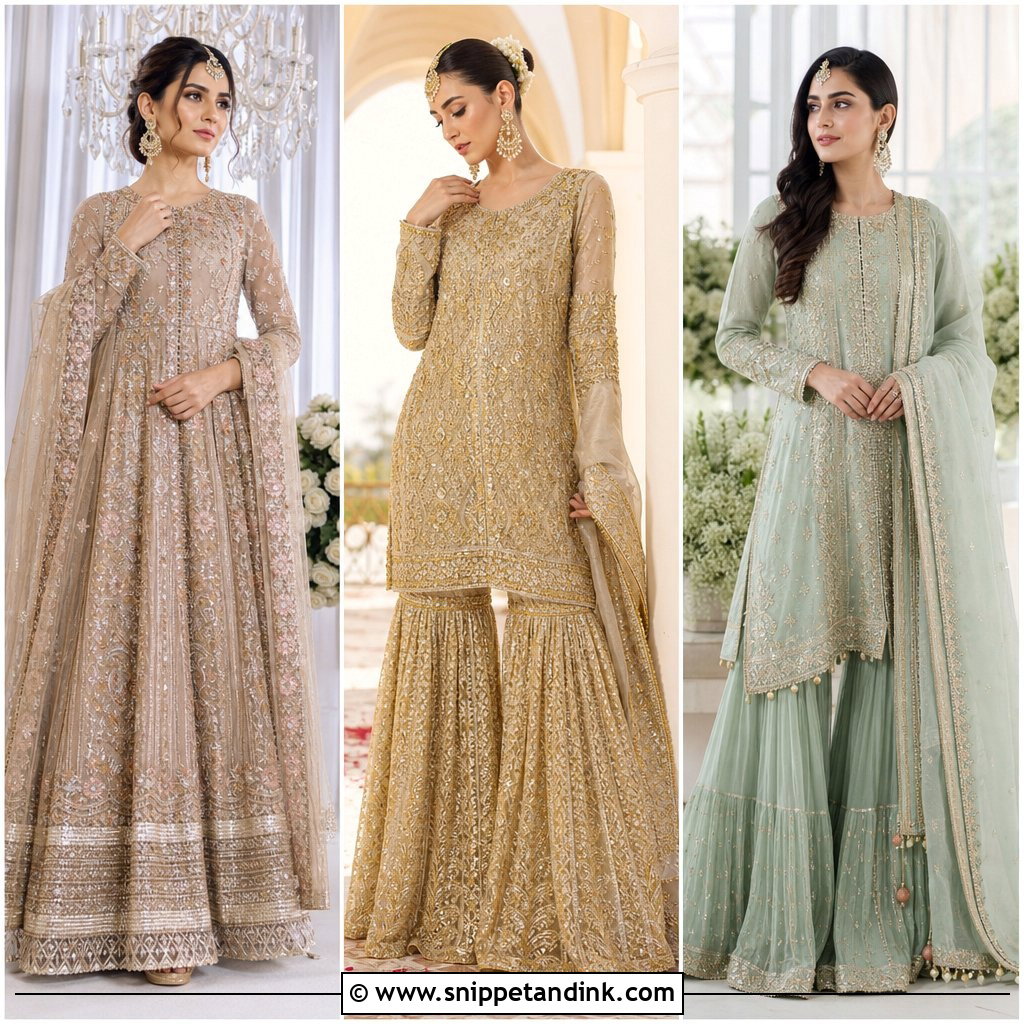
A champagne maxi is the simplest silhouette here: one long dress with a defined waist, long sleeves and a soft flare. Tonal embroidery and pale gold beadwork give richness without breaking up the neutral color. I drape the scalloped dupatta over the head and down one side, which draws the eye down and makes the figure look longer. Champagne can look gray under cool white bulbs, so check the shade in the venue’s lighting if you can. Pointed metallic flats keep you comfortable through the ceremony.
5. Powder Blue Sharara Bridal Nikkah Dress
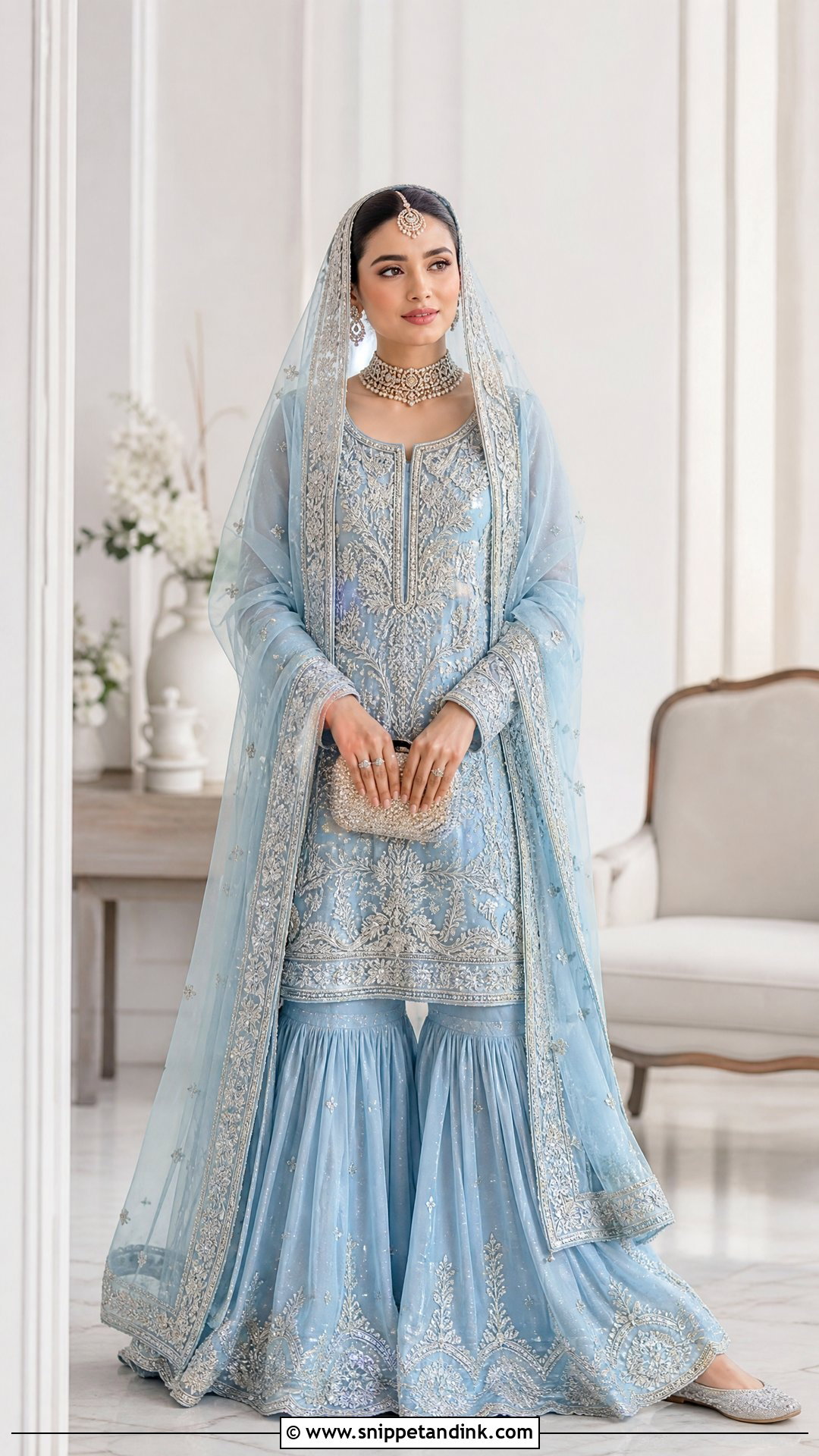
Powder blue is a fresh break from white for a spring or summer daytime nikkah. A long embroidered shirt with a high neckline and full sleeves sits over a sharara with controlled volume. Too much flare at the knee looks bulky when you sit cross-legged or on a low sofa, so I’d ask the designer to keep it moderate. A sheer blue dupatta with a silver border covers the head, and a slim necklace with a small silver tikka keeps the jewelry cool-toned to match. Embellished blue or silver khussas finish it.
6. Sage Green Angarkha Bridal Nikkah Dress
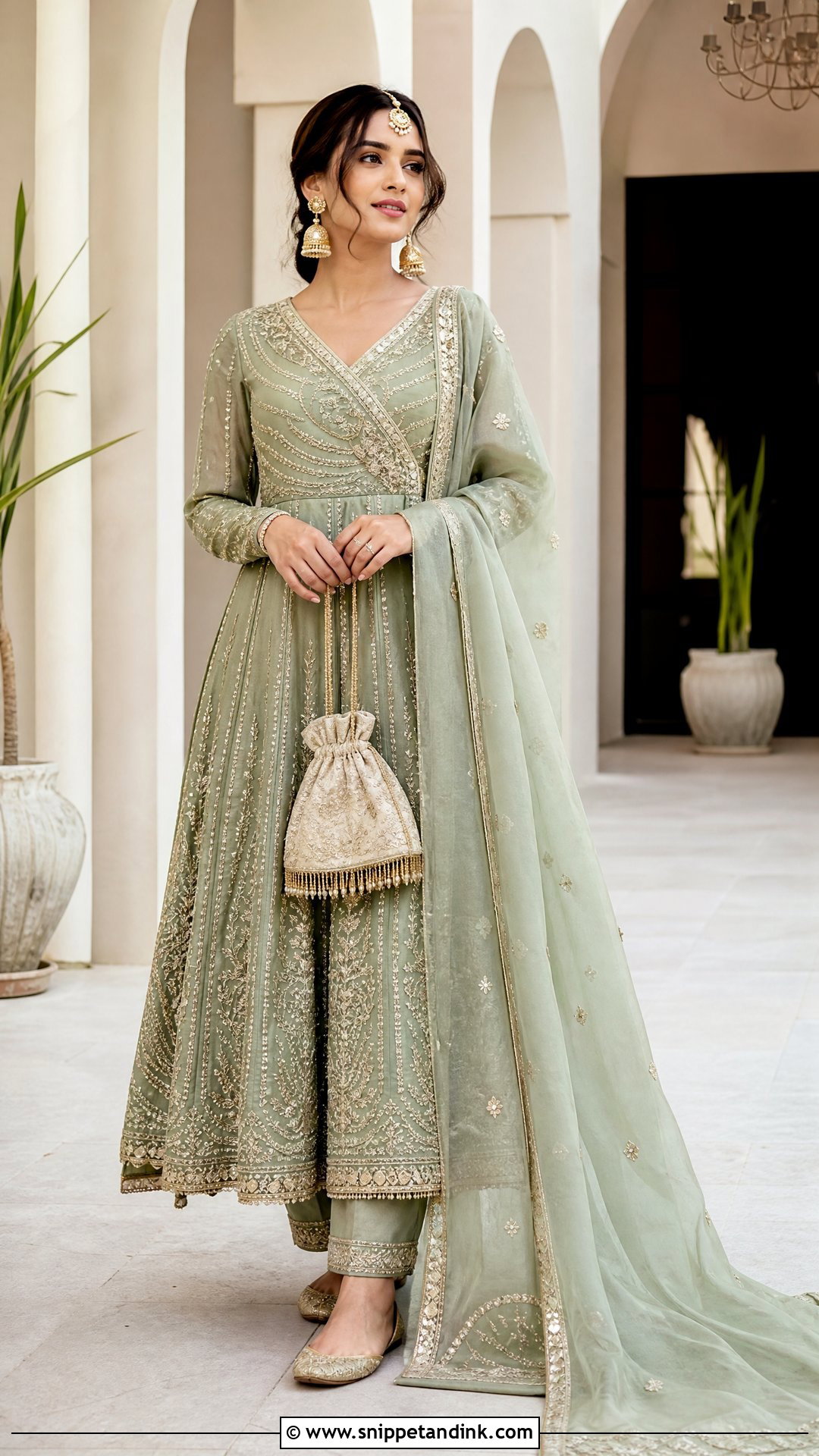
An angarkha is cut with an overlapping front panel tied at the side, which gives a flattering diagonal line across the body. In sage green with ivory threadwork and antique gold details, it looks distinctive without being loud. The tie is a weak point; I ask for a hidden hook under it so the overlap doesn’t open when you sit. Straight trousers sit underneath the long skirt. A sheer sage dupatta frames the face, with antique gold jhumkas and a matching tikka. A cream potli gives a light contrast.
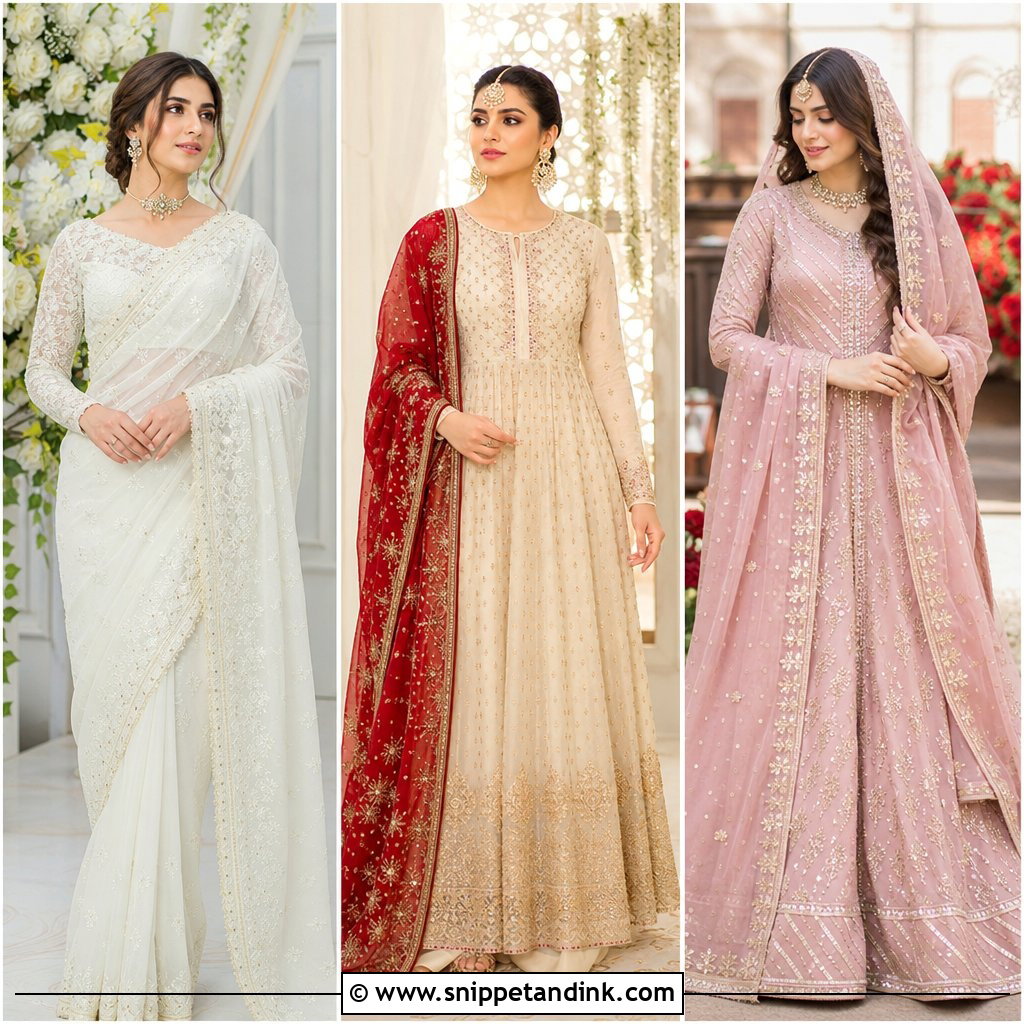
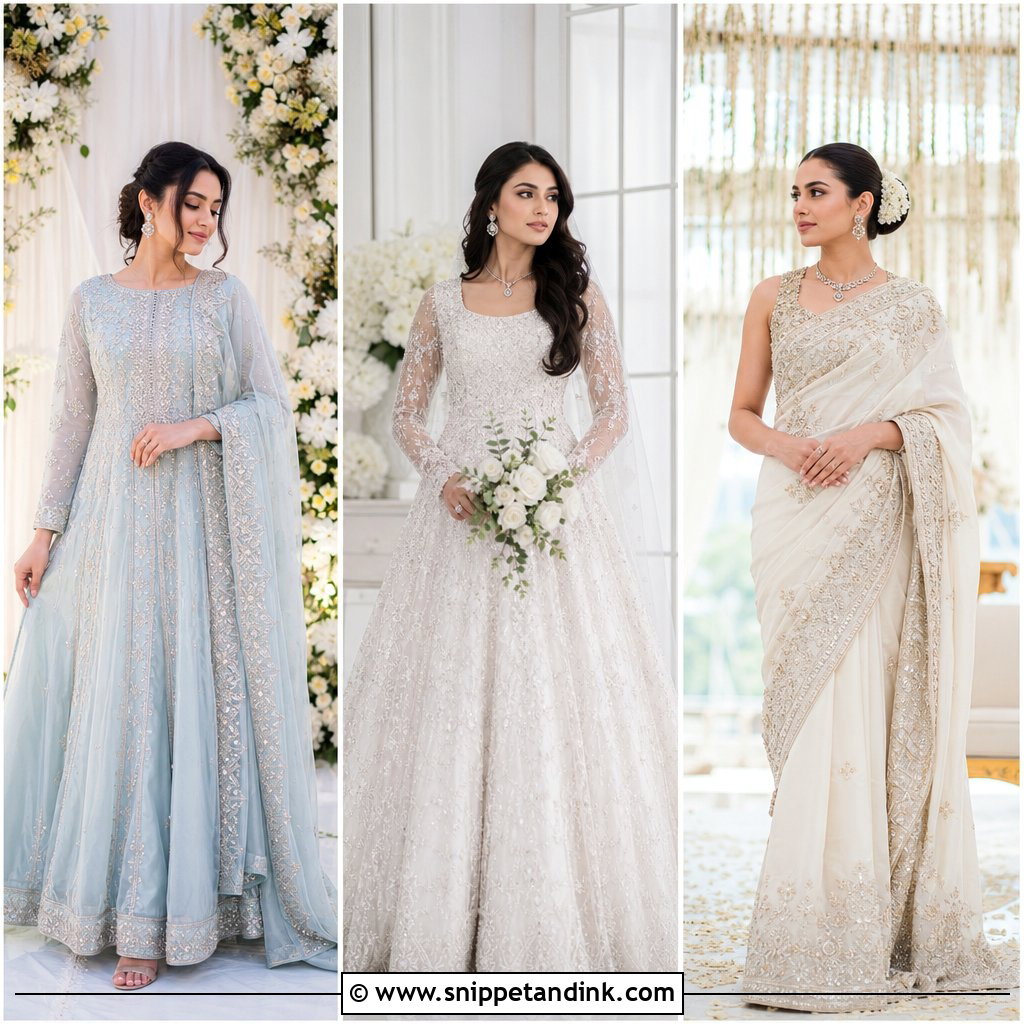
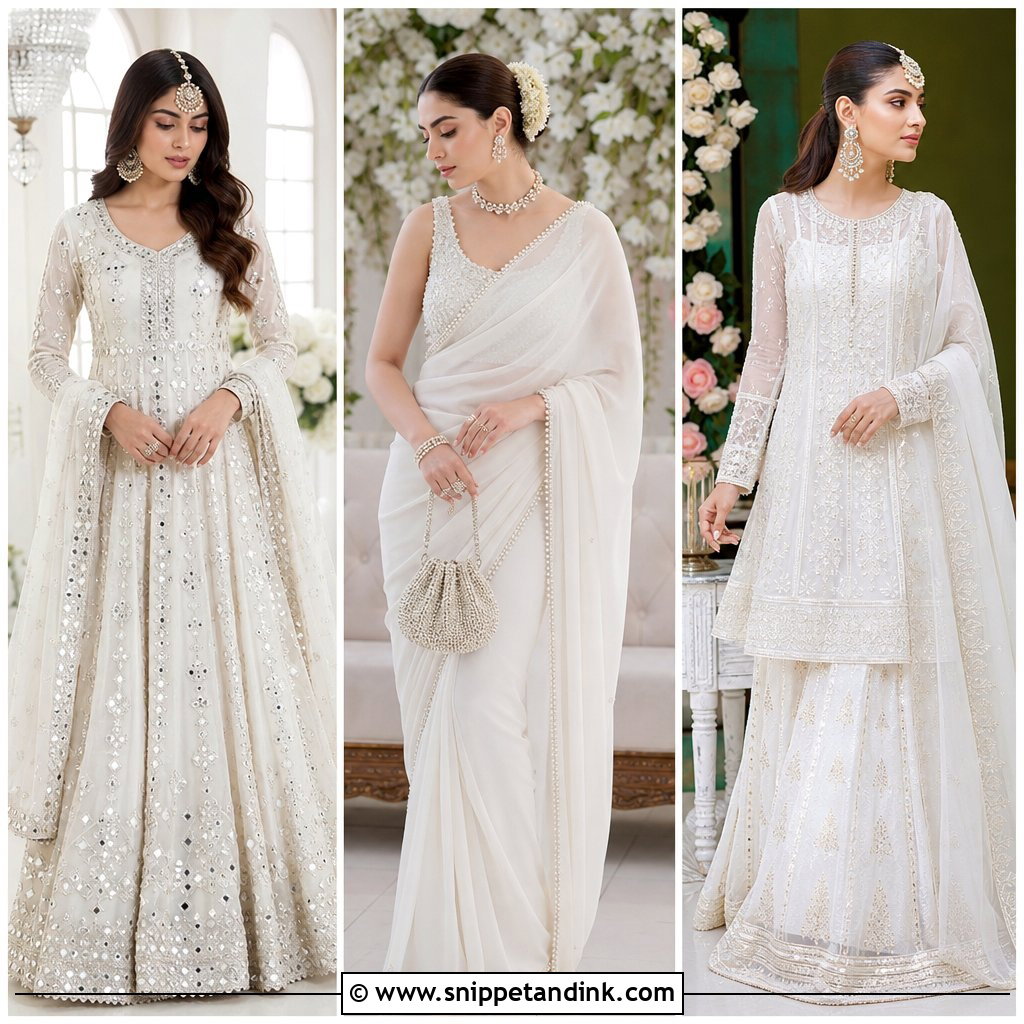
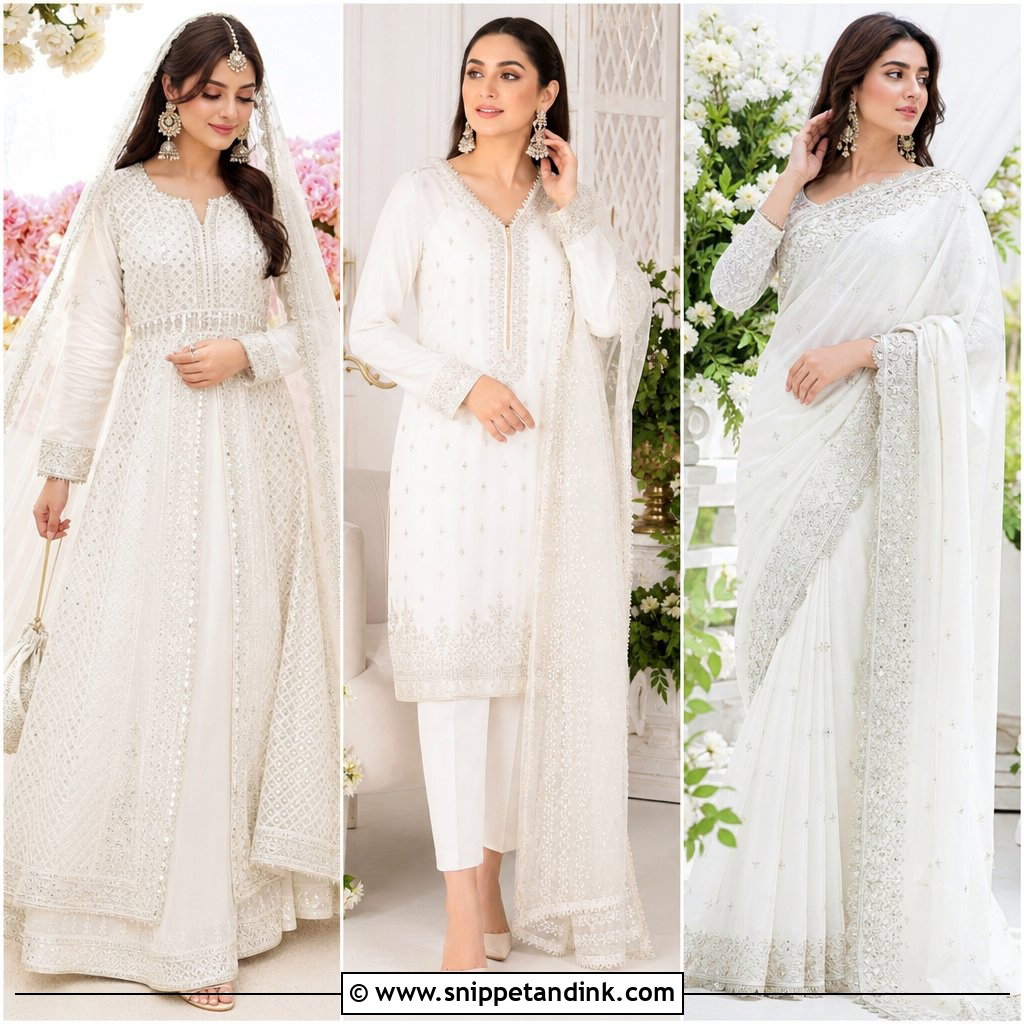
7. White Saree Bridal Nikkah Dress
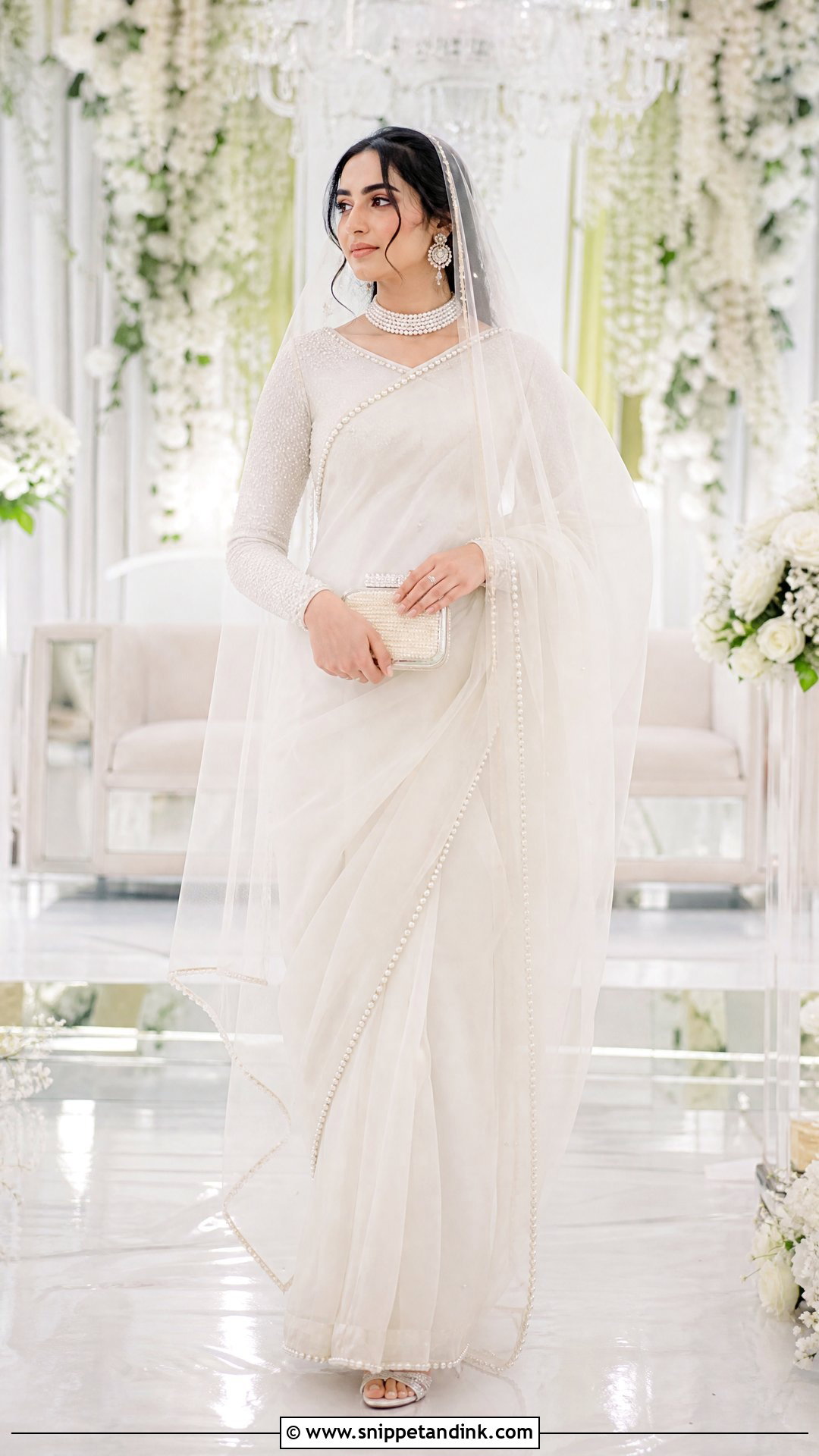
A white saree suits brides who prefer clean draping to layers of fabric. Silk, chiffon or organza with pearl embroidery or a fine silver border all work, paired with a long-sleeve blouse with a higher neck. Chiffon pleats slip, so I’d have them pinned and set by someone experienced, or use a pre-stitched saree if you’re nervous. A separate light veil over the head gives the ceremonial touch. Pearl earrings, a choker and fresh white flowers in the bun complete it. Pin every drape firmly before you sit for the nikkah.
8. Ivory Anarkali Bridal Nikkah Dress
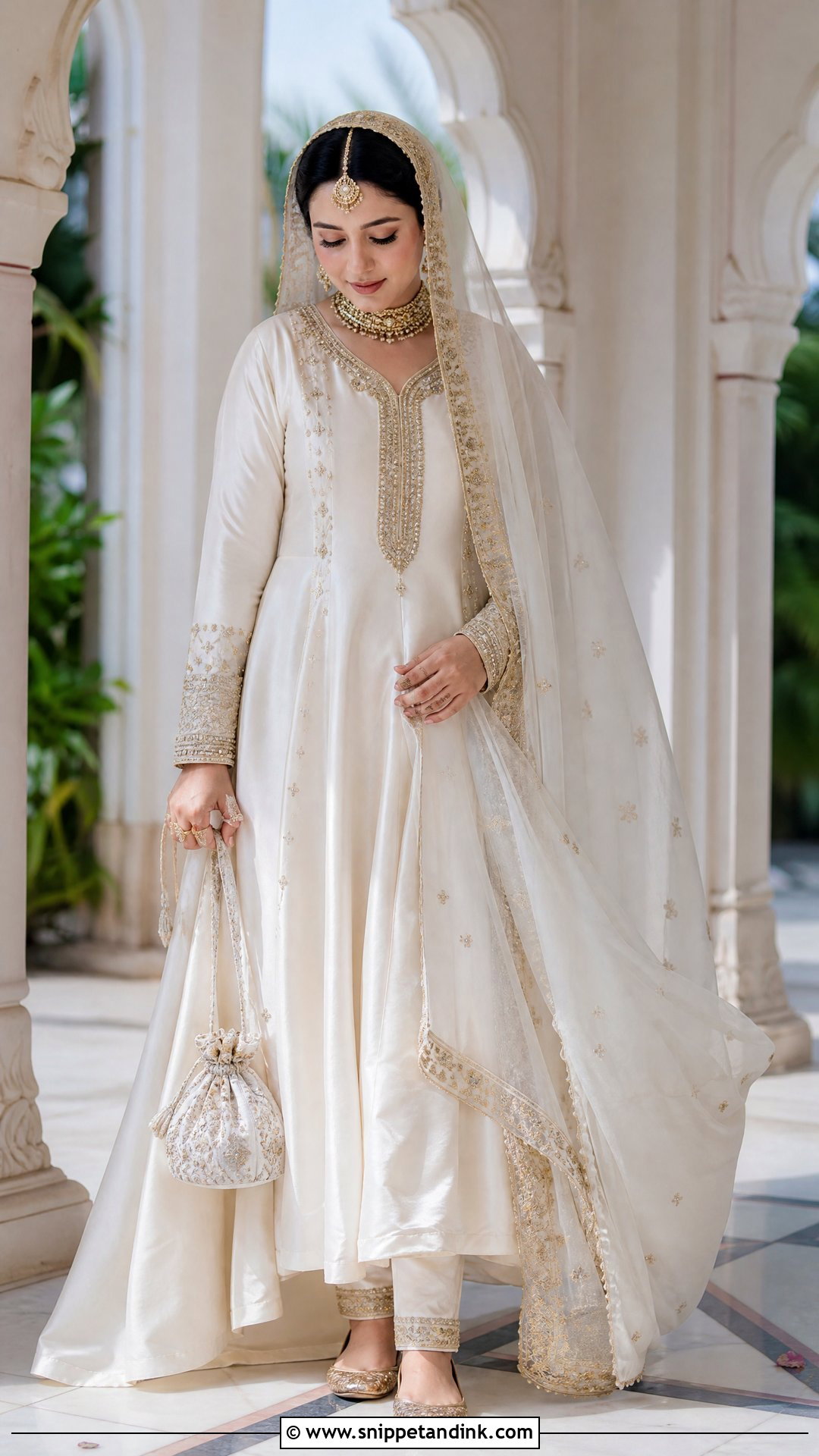
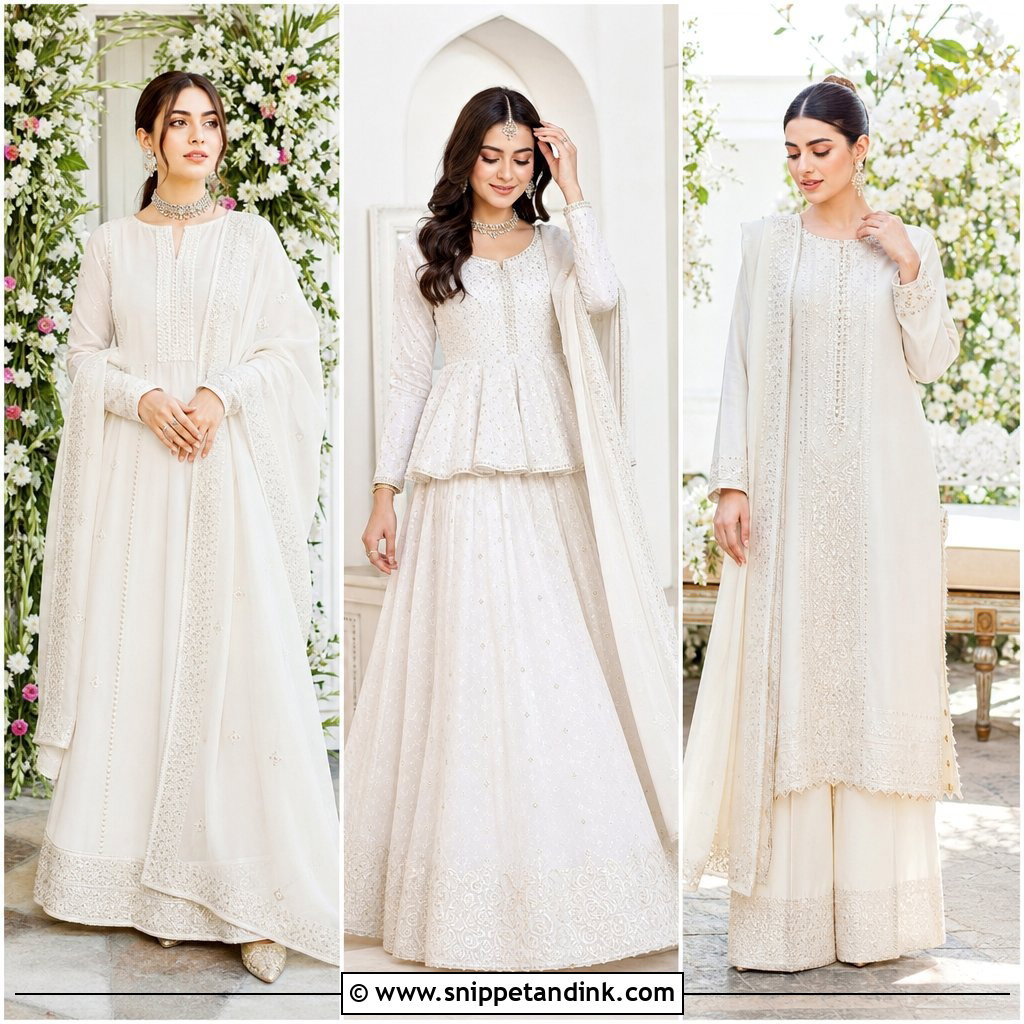
An ivory anarkali is a classic shape that’s easy to move in. Silk, chiffon or organza with fitted sleeves and a structured bodice keeps it bridal. I place zardozi-style embroidery at the neckline, cuffs and hem and leave some plain fabric between, which keeps the dress from getting heavy and lets the embroidery stand out. Slim ivory trousers and gold juttis go underneath. Pin the bordered dupatta over the head and gather one end at the wrist, then add kundan earrings and a petite tikka.
9. Pearl White Peplum Gharara Bridal Nikkah Dress
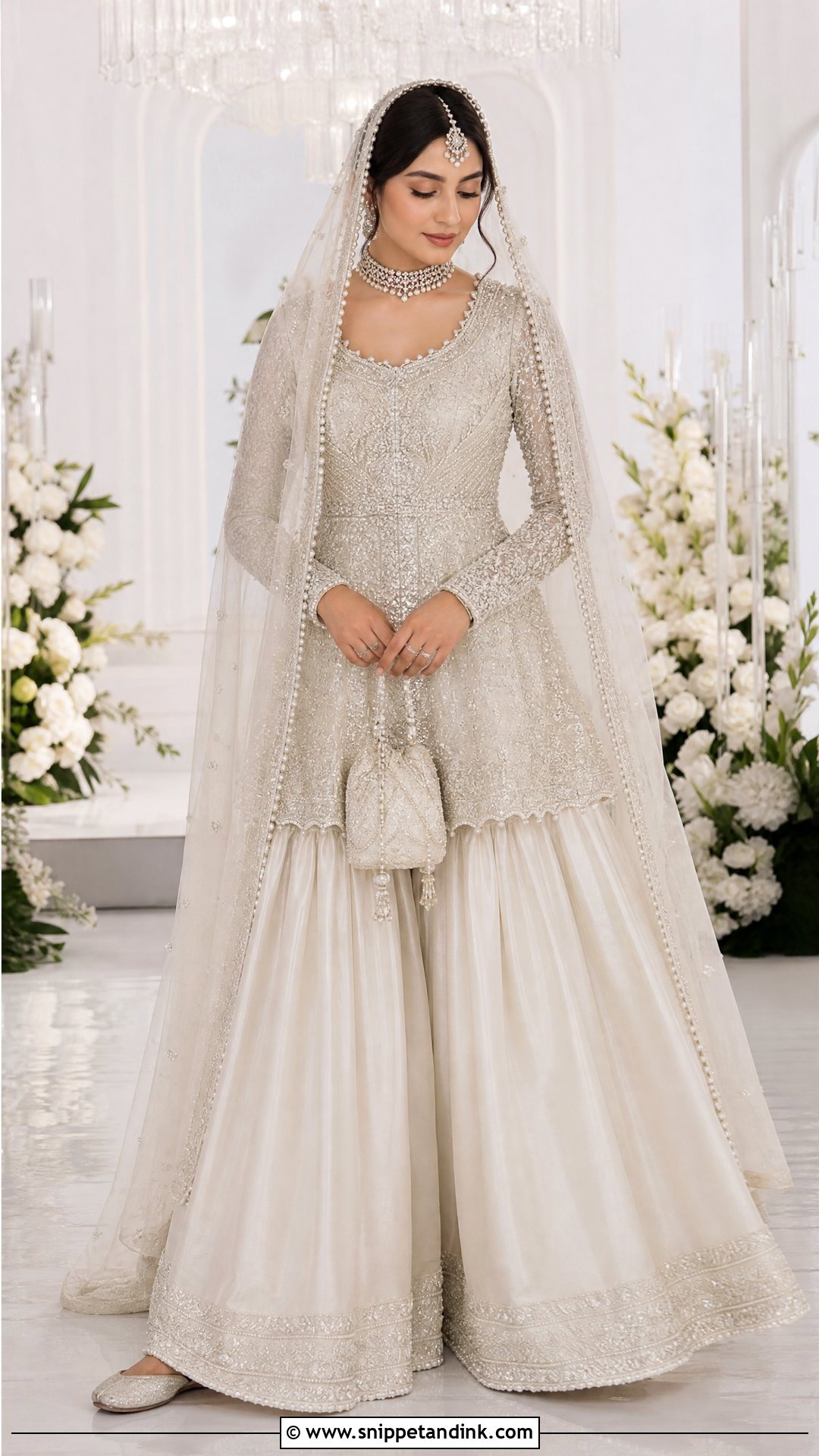
A peplum top over a gharara gives structure on top and movement below. The peplum should flare below the hip; a peplum that flares at the waist adds width exactly where most brides don’t want it. Pearl embroidery and full sleeves suit pearl white, and raw silk or tissue gives the gharara a controlled shape. A soft net dupatta with pearl edging sits over the head with one end behind the shoulder. A pearl choker and centered tikka continue the palette. White or silver khussas complete it.
10. Silver Tissue Lehenga Bridal Nikkah Dress
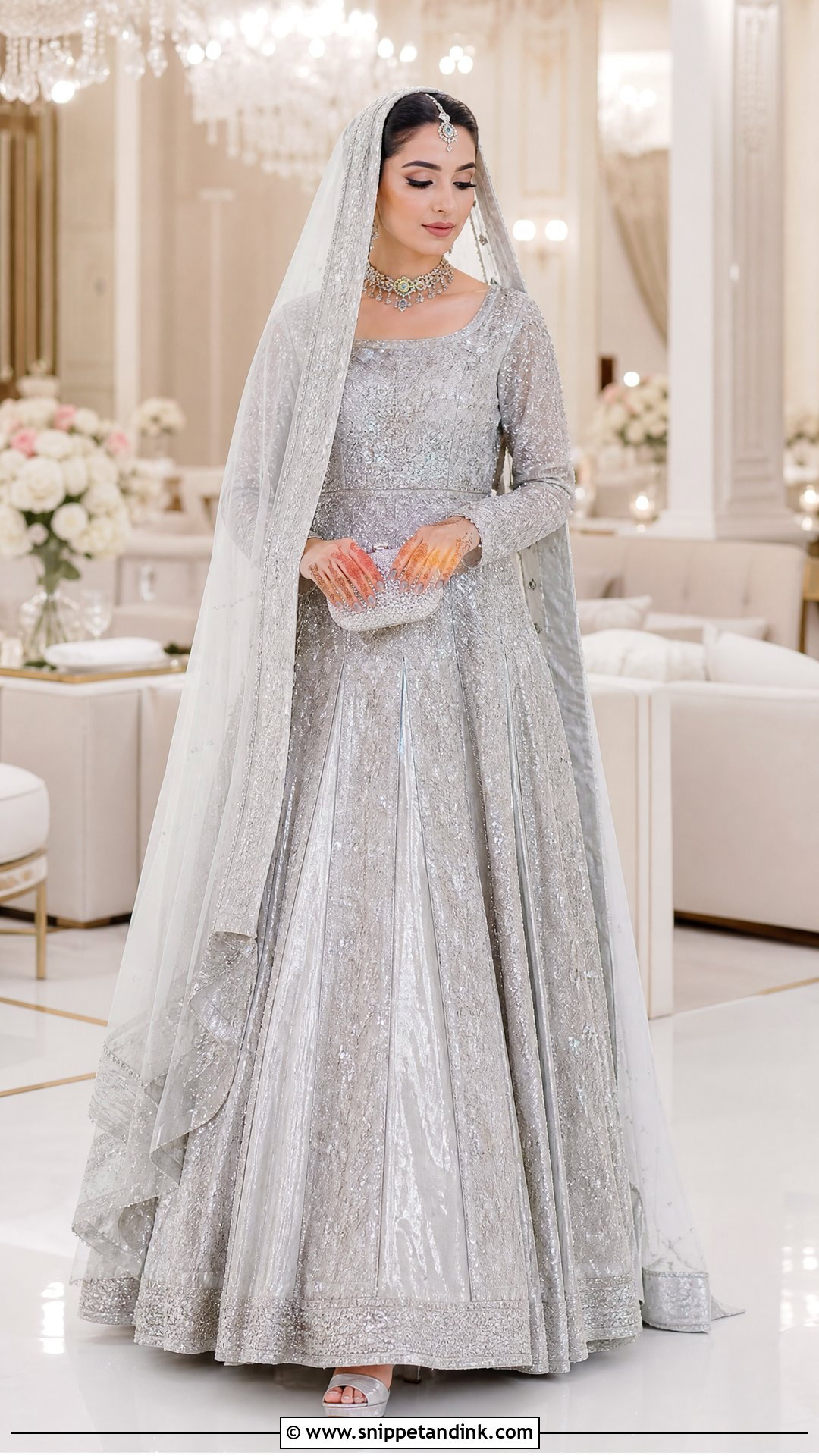
Silver tissue catches light on its own, so it needs very little embellishment. Choose a neatly paneled lehenga with one wide embroidered border and a long-sleeve blouse. Tissue is crisp and can feel scratchy on the inner arm, so ask for the blouse sleeves to be lined in soft cotton. An ivory or pale silver dupatta calms the metallic shine. Diamond-look earrings and a slim tikka suit the cool tones, and cushioned silver heels help over a long ceremony. Fresh, glowing skin works better than heavy shimmer with so much shine in the fabric.
11. Dusty Rose Gown Bridal Nikkah Dress
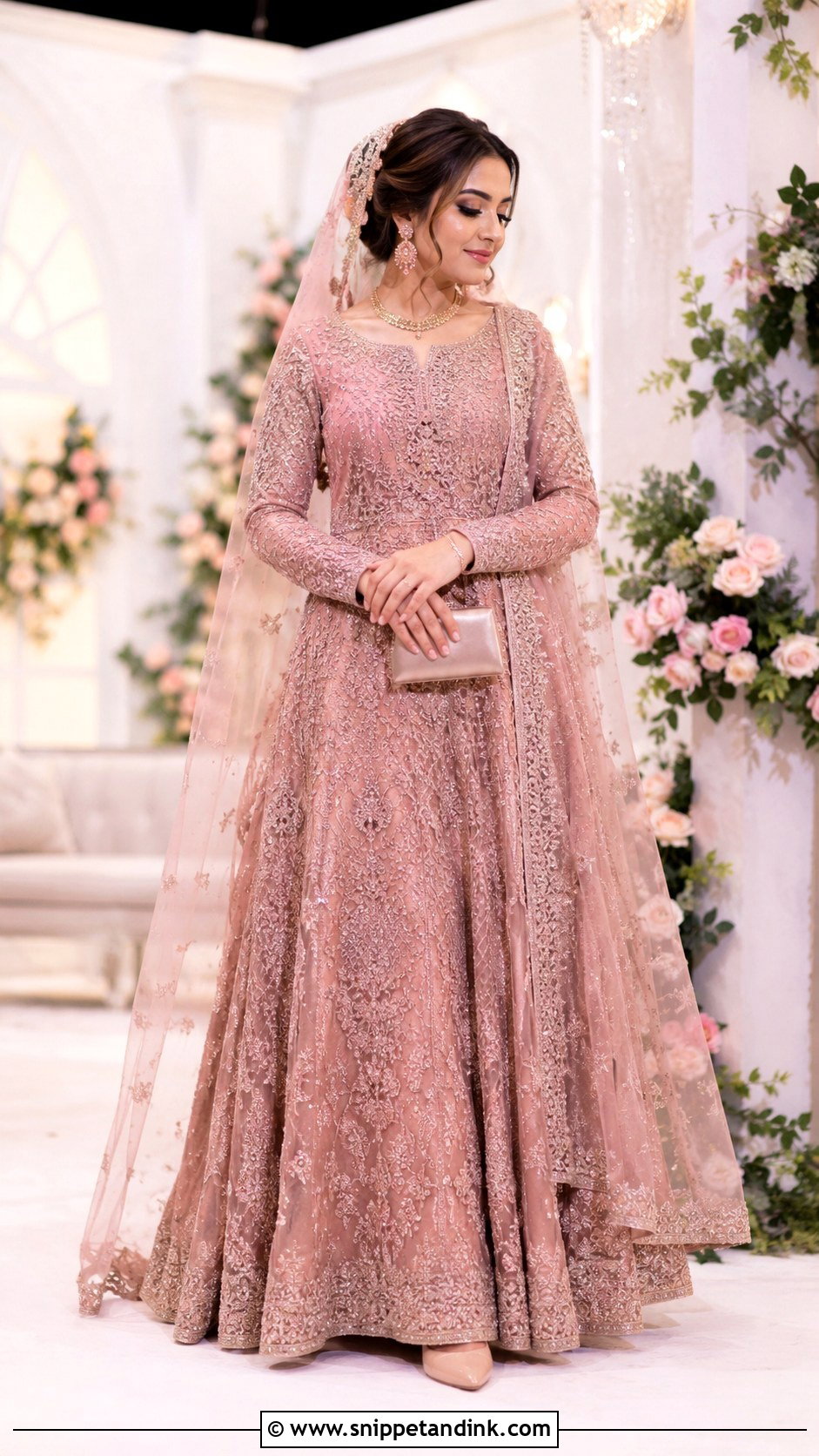
A dusty rose gown suits brides who’d rather wear one flowing silhouette than separates. Floor length, long sleeves, a fitted top and a skirt that widens gently are the basics. A front-open layer or short trailing hem adds drama but stays manageable. I’d keep the train short for a nikkah, since you may sit on a low stage or floor cushions and a long train bunches underneath you. Tonal floral embroidery with champagne beads suits the muted pink. A sheer veil with a neat border sits over the head.
12. Cream Farshi Shalwar Bridal Nikkah Dress
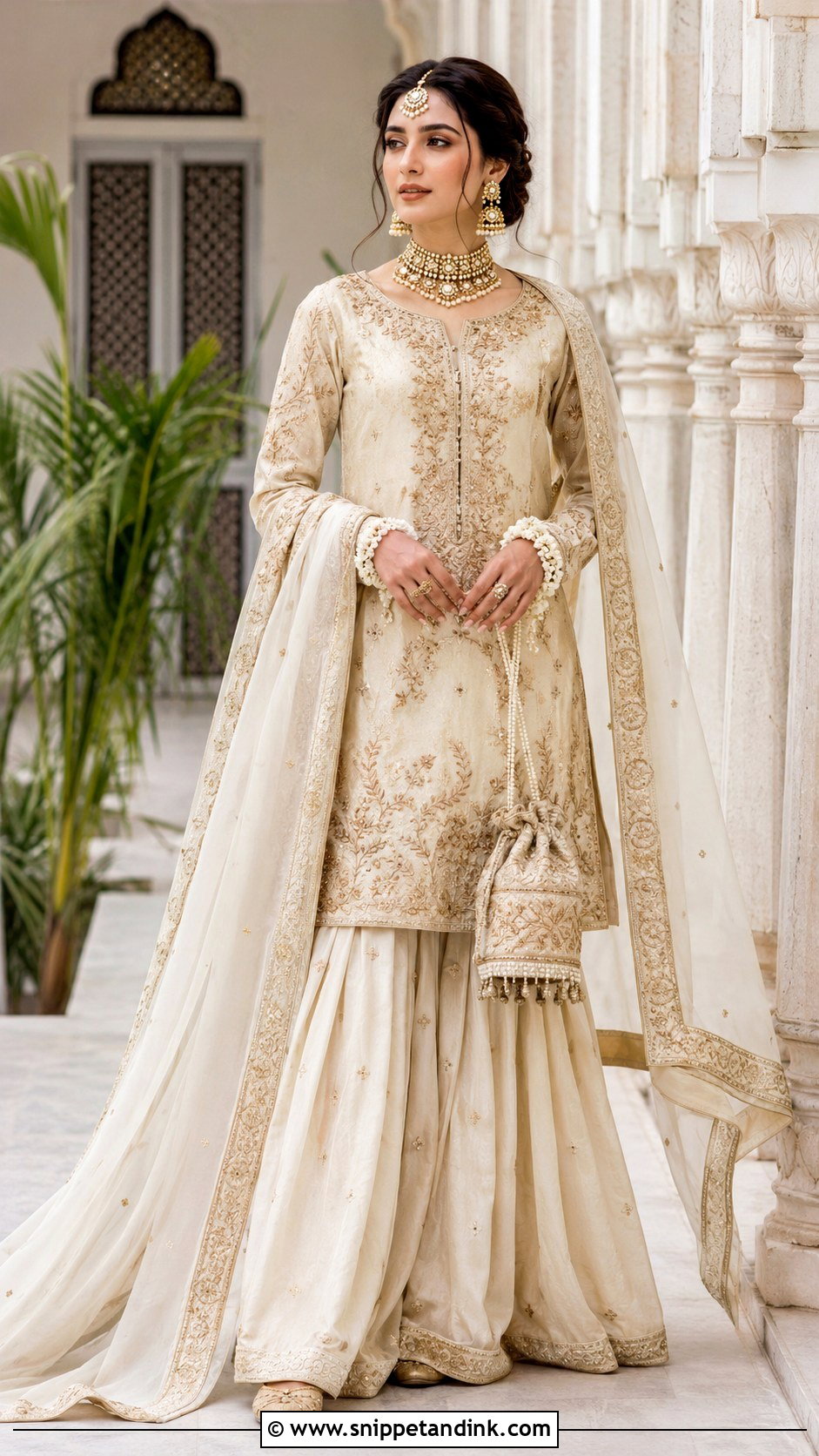
A cream farshi shalwar pools around the feet in a long sweep of fabric, and it’s one of the most graceful traditional silhouettes. It is also the hardest to walk in. I ask for it to be cut so it just brushes the floor in front and trails behind, and I make brides practice stairs while holding the front gathered in one hand. A straight knee-length raw silk shirt with gold or resham embroidery balances the volume. Gold khussas are the only sensible footwear underneath.
13. Mint Green Kurta Sharara Bridal Nikkah Dress
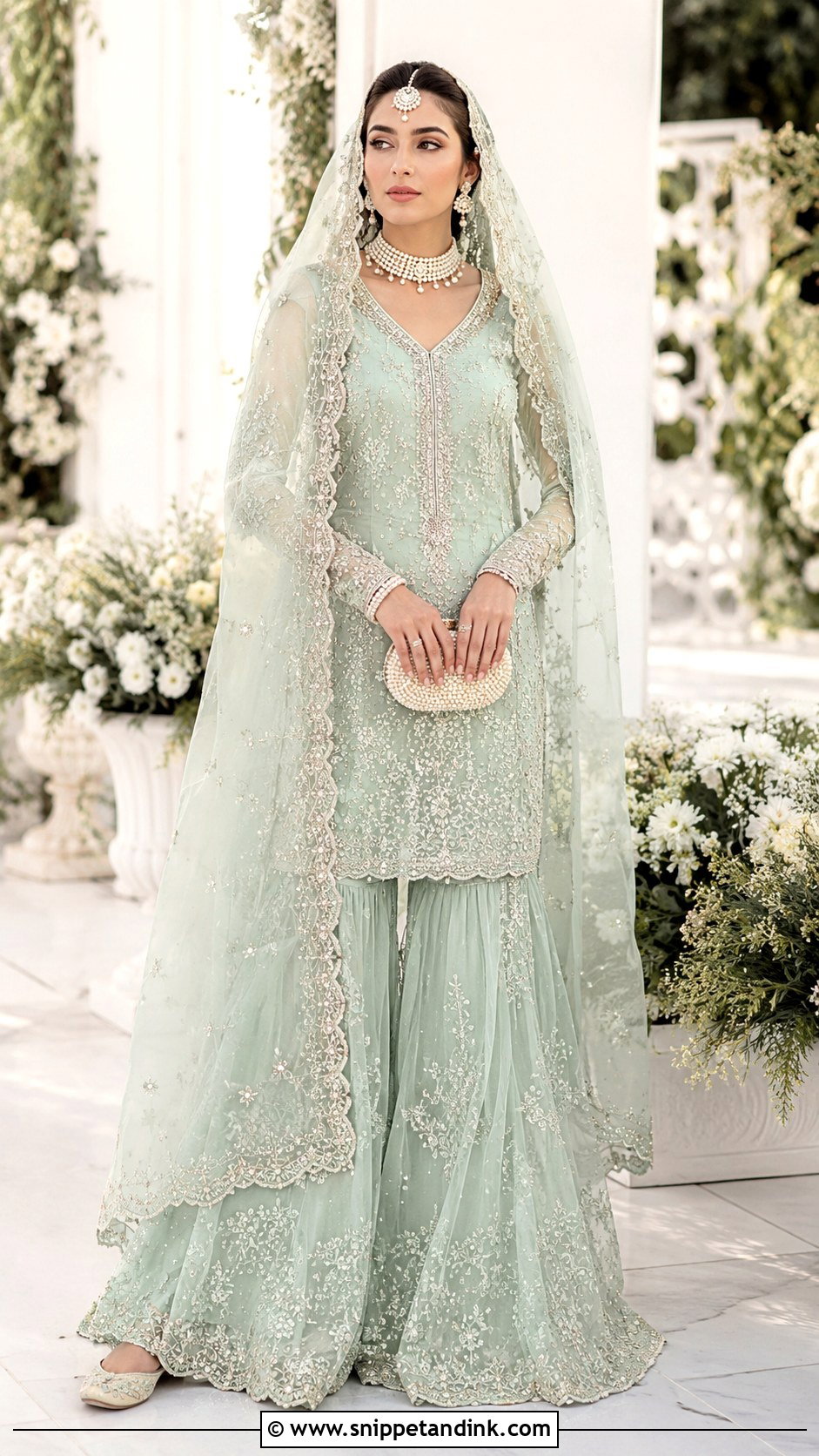
Mint green is bright and cool for a warm-weather ceremony. A long organza kurta with full sleeves and ivory or silver embroidery goes over a wide sharara. Organza holds its shape but can rustle and crease, so steam it the morning of the nikkah. Keep the jewelry fine, a pearl earring and slim choker, because big pieces overwhelm such a light color. A mint dupatta with a scalloped border covers the head and falls over one shoulder. White flowers in a low bun suit it.
14. Gold And Ivory Jacket Lehenga Bridal Nikkah Dress
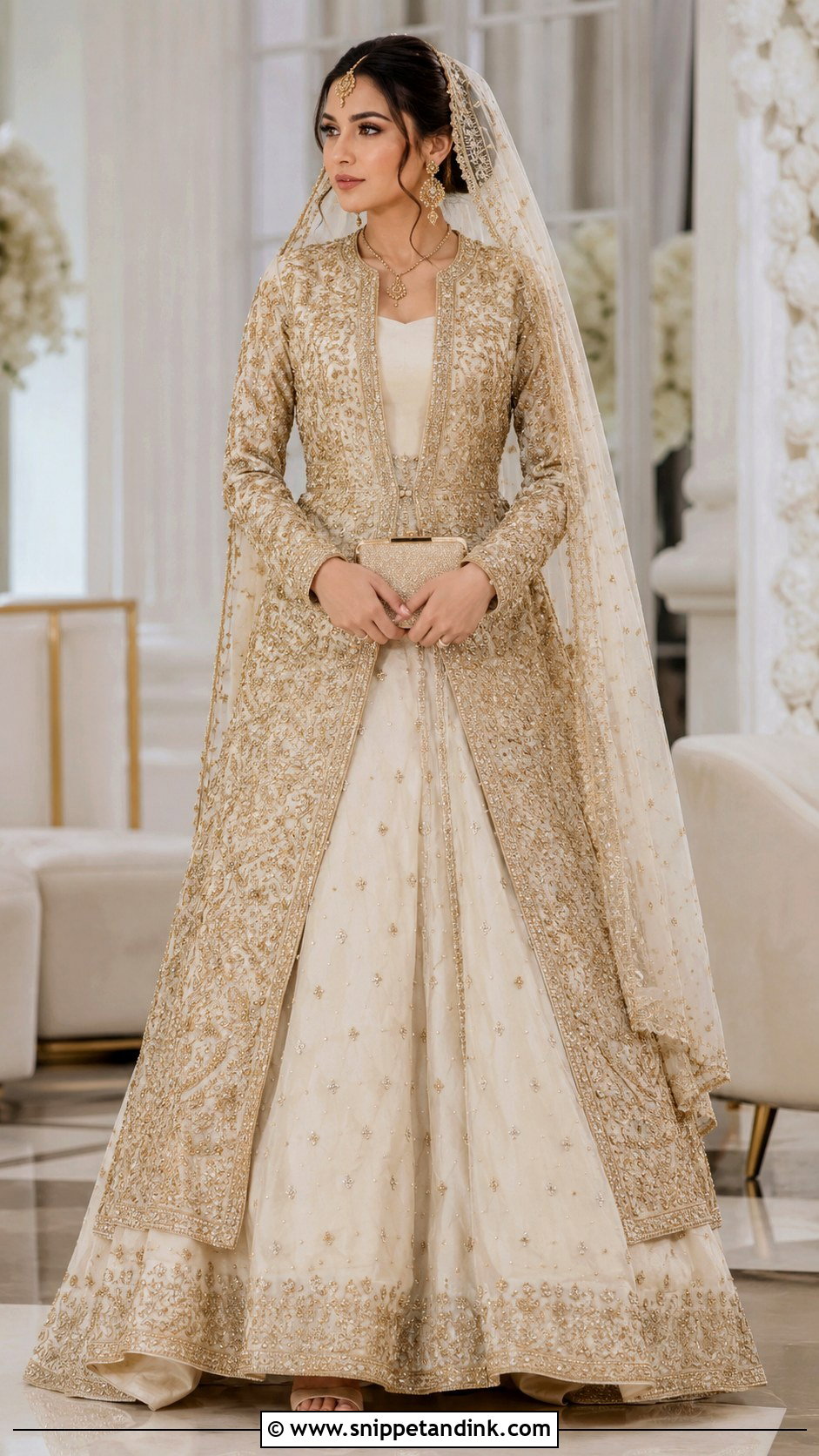
An ivory lehenga under a long embroidered gold jacket is a modern alternative to the standard blouse and skirt. The jacket should fall between the knee and ankle, so it draws a long vertical line. With heavy embroidery on the jacket, the dupatta needs to be lighter, which is why I’d pair it with an ivory veil and narrow gold border instead of another heavily worked layer. A fitted inner top with a higher neckline sits under the open front. Metallic block heels and antique gold earrings complete it.
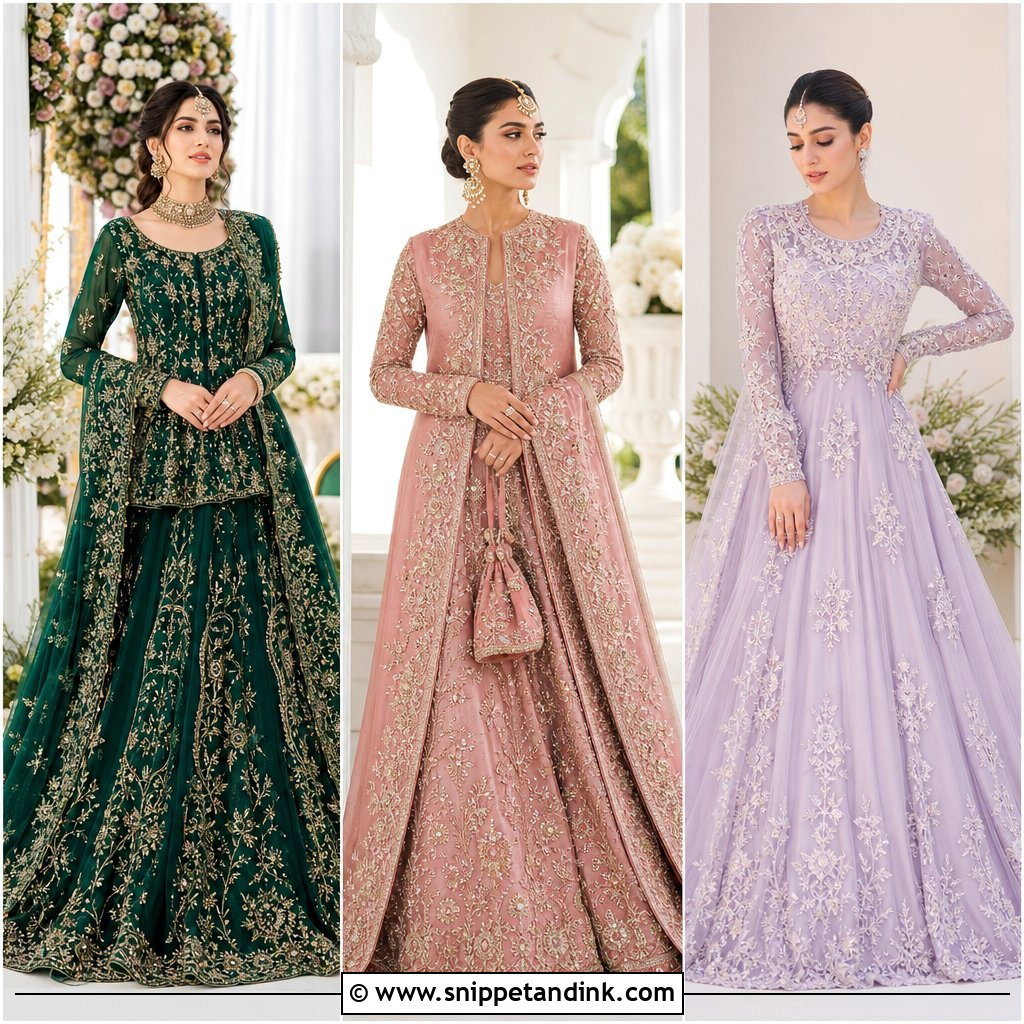
15. Lavender Pishwas Bridal Nikkah Dress
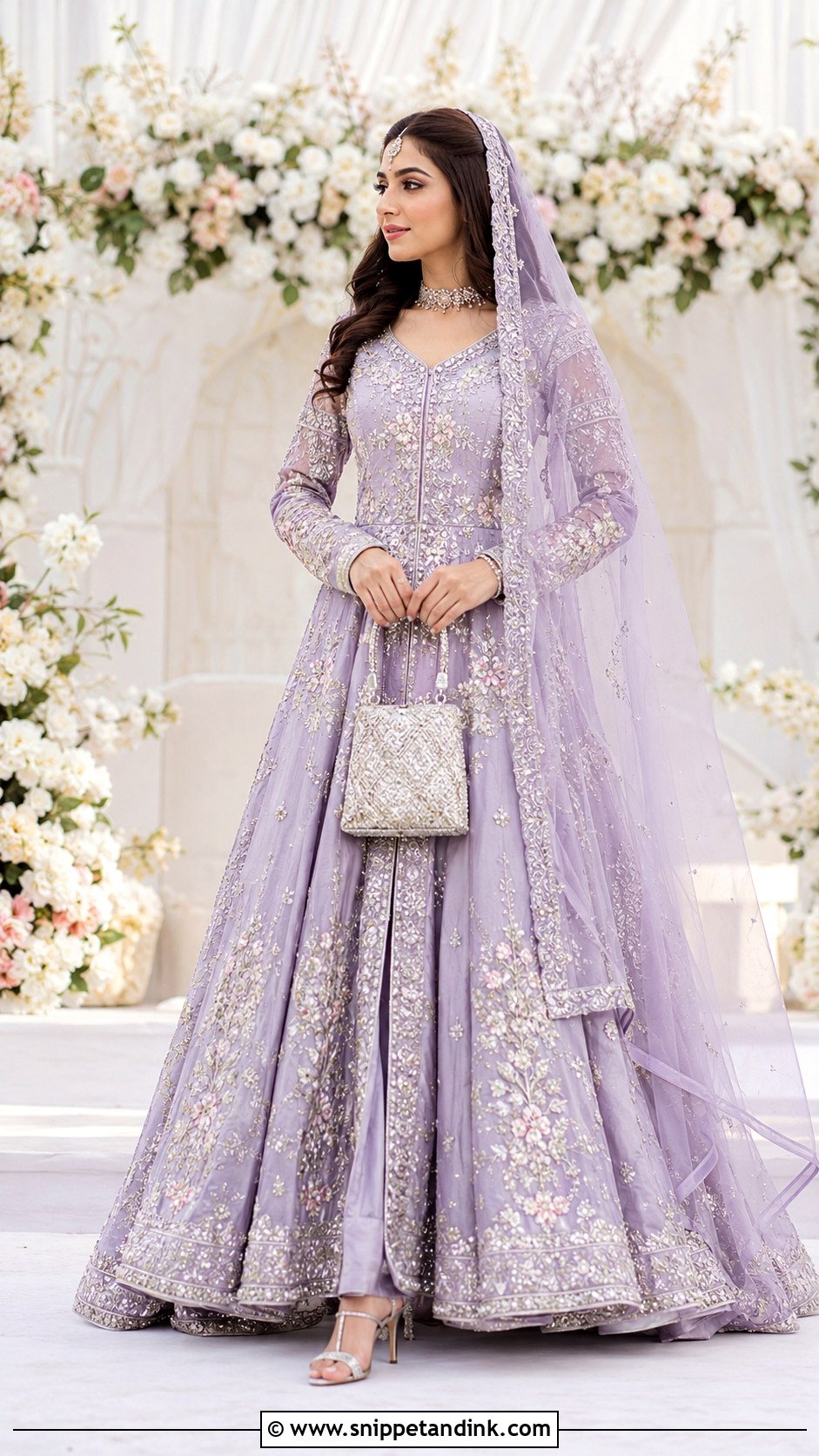
Lavender is a pastel with personality. A floor-length pishwas with a fitted bodice and wide circular skirt carries silver embroidery, small pearls and pale pink florals. Circular skirts take a lot of fabric and get warm, so I’d pick a lightweight base for a summer ceremony. Drape a sheer lavender dupatta edged in silver over the head with one side down the arm. Crystal earrings and a minimal tikka give enough sparkle. A braided low bun keeps the hair secure under the dupatta.
16. White Kaftan Bridal Nikkah Dress
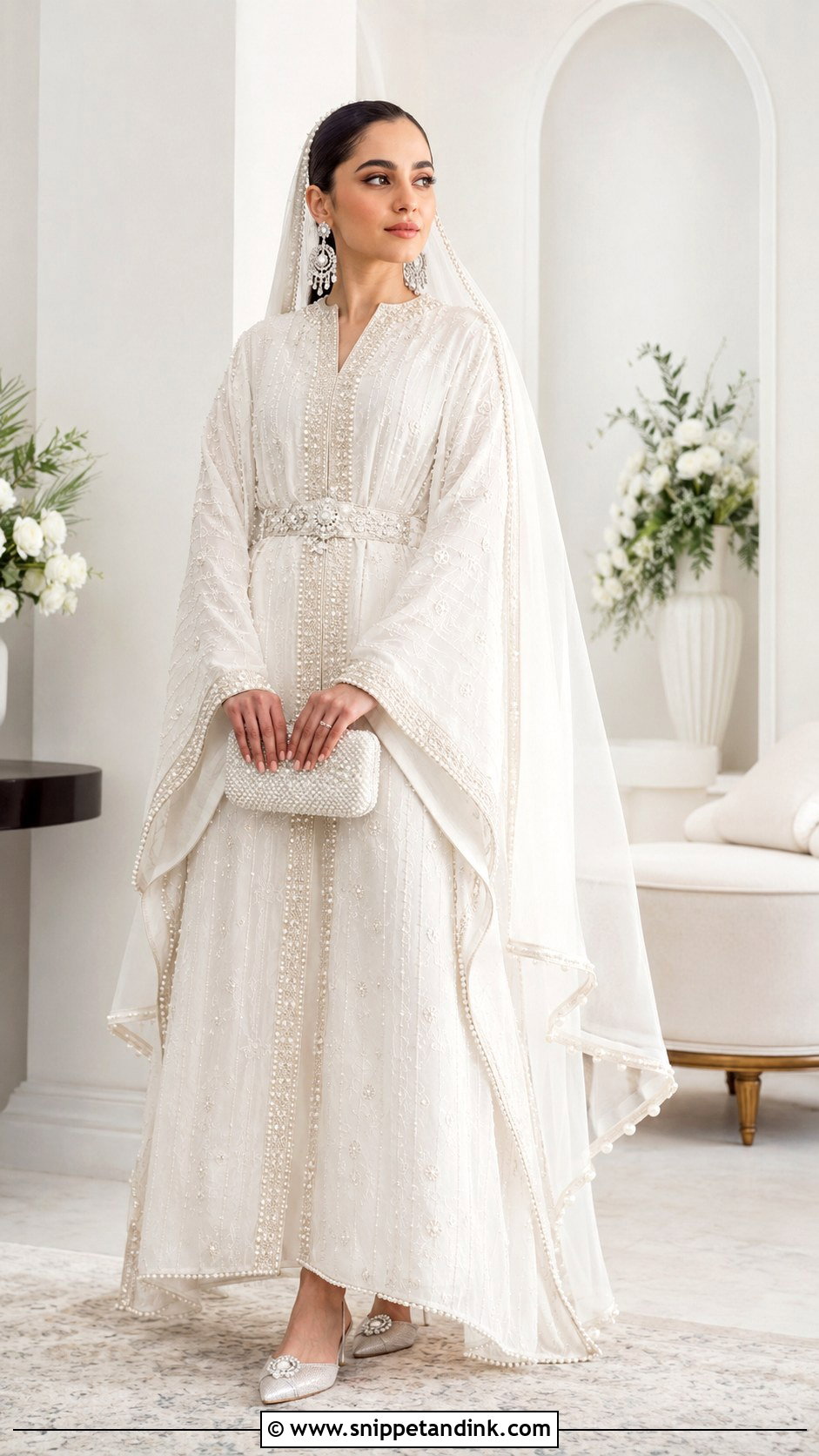
A white kaftan gives coverage in an easy, modern shape. Choose floor length with wide sleeves, a gently belted waist and some structure at the shoulders, otherwise a kaftan can look like loungewear. Pearl embroidery or a detailed central panel makes it bridal. Wide sleeves fall back when you lift your arm to sign the nikahnama, so make sure the lining is presentable. A light white veil, statement earrings and a simple headpiece are enough. It suits a small nikkah at home.
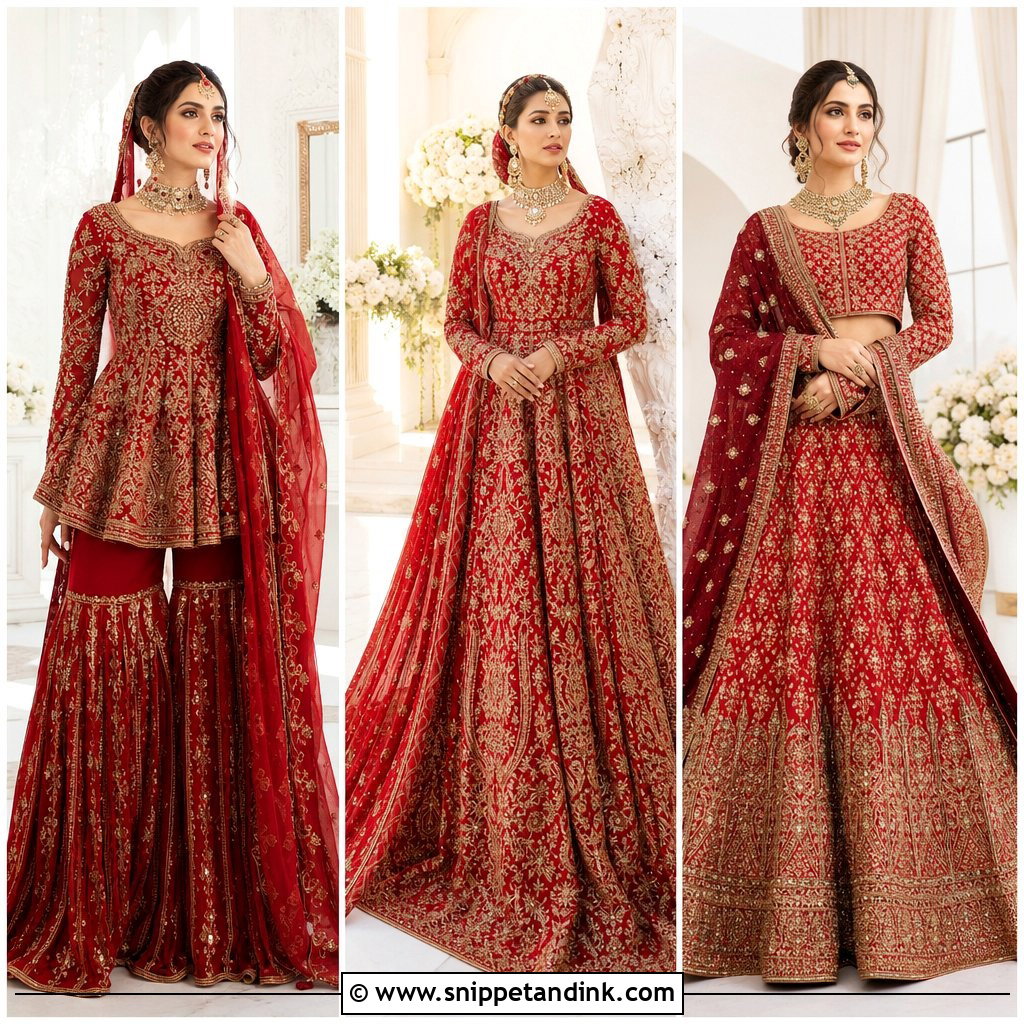
17. Deep Red Lehenga Bridal Nikkah Dress
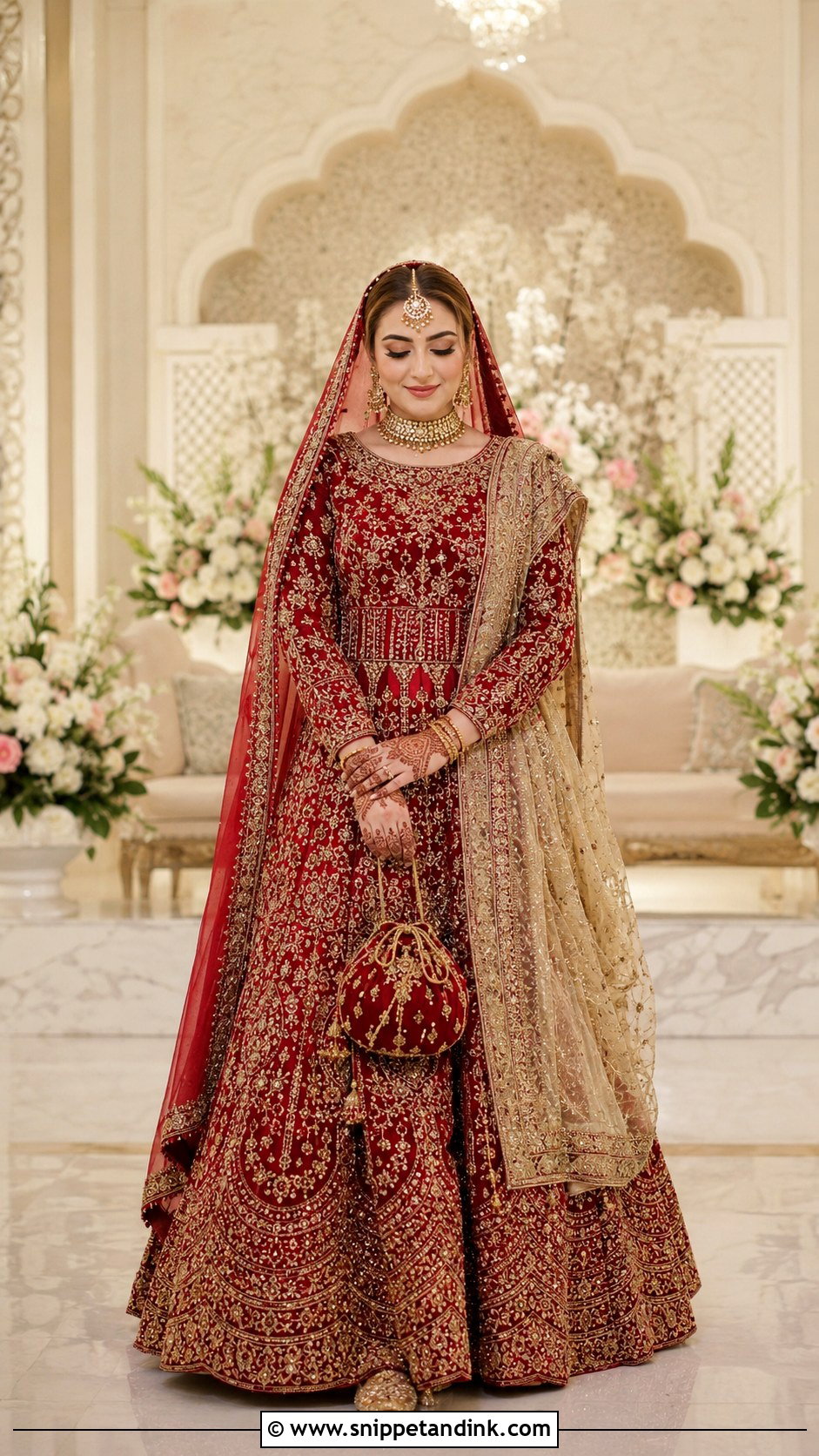
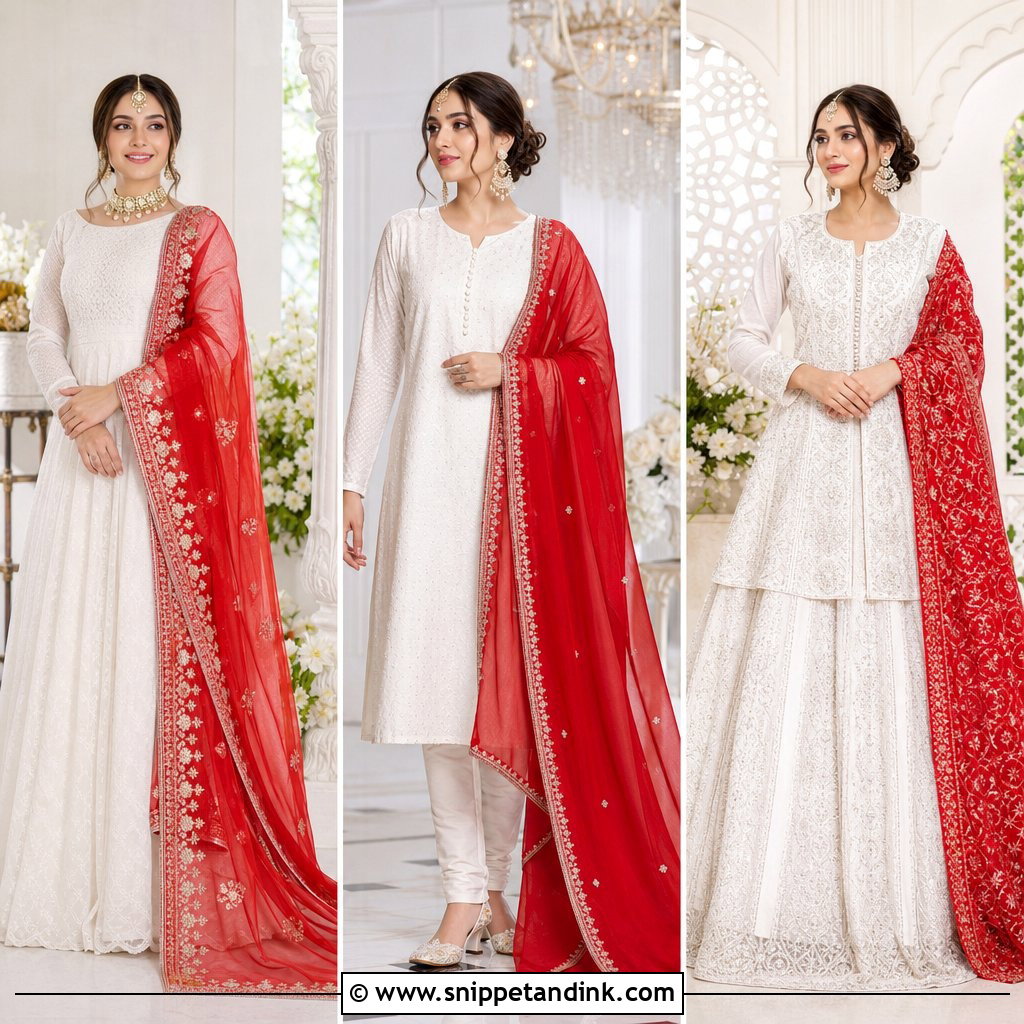
A deep red lehenga brings the traditional color into the nikkah. Maroon, ruby or muted crimson looks richer than very bright red, especially in indoor light. Pair a paneled embroidered skirt with a long-sleeve blouse with a modest neckline and gold detailing. Two dupattas are common here, one red over the head and a lighter gold one across the shoulder, but two dupattas are heavy. I pin both into the bun and the blouse so the weight isn’t pulling on your neck. Kundan jewelry and gold khussas complete it.
18. Peach Organza Maxi Bridal Nikkah Dress
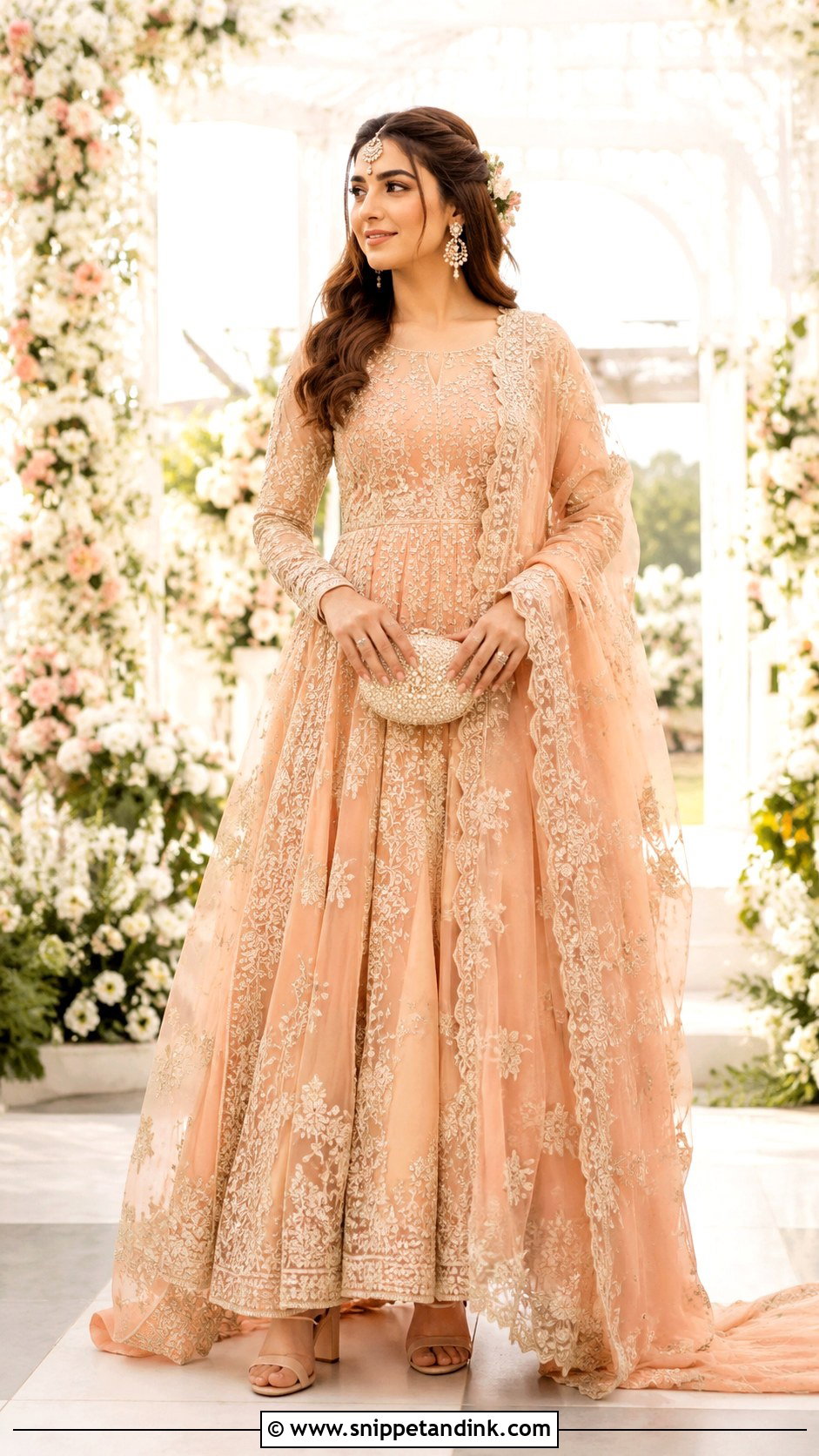
Peach organza has enough body to hold its shape through a long ceremony. A floor-length maxi with full sleeves, a fitted waist and several skirt panels carries ivory florals, champagne sequins and pearls. Pin the matching dupatta near the shoulders so it covers the head but doesn’t hide the bodice. Sequins on organza can scratch, so check the inside of the sleeves and lining. Pearl drops and a small tikka keep it light, and nude block heels help on uneven garden ground.
19. Ivory Long Shirt Bridal Nikkah Dress
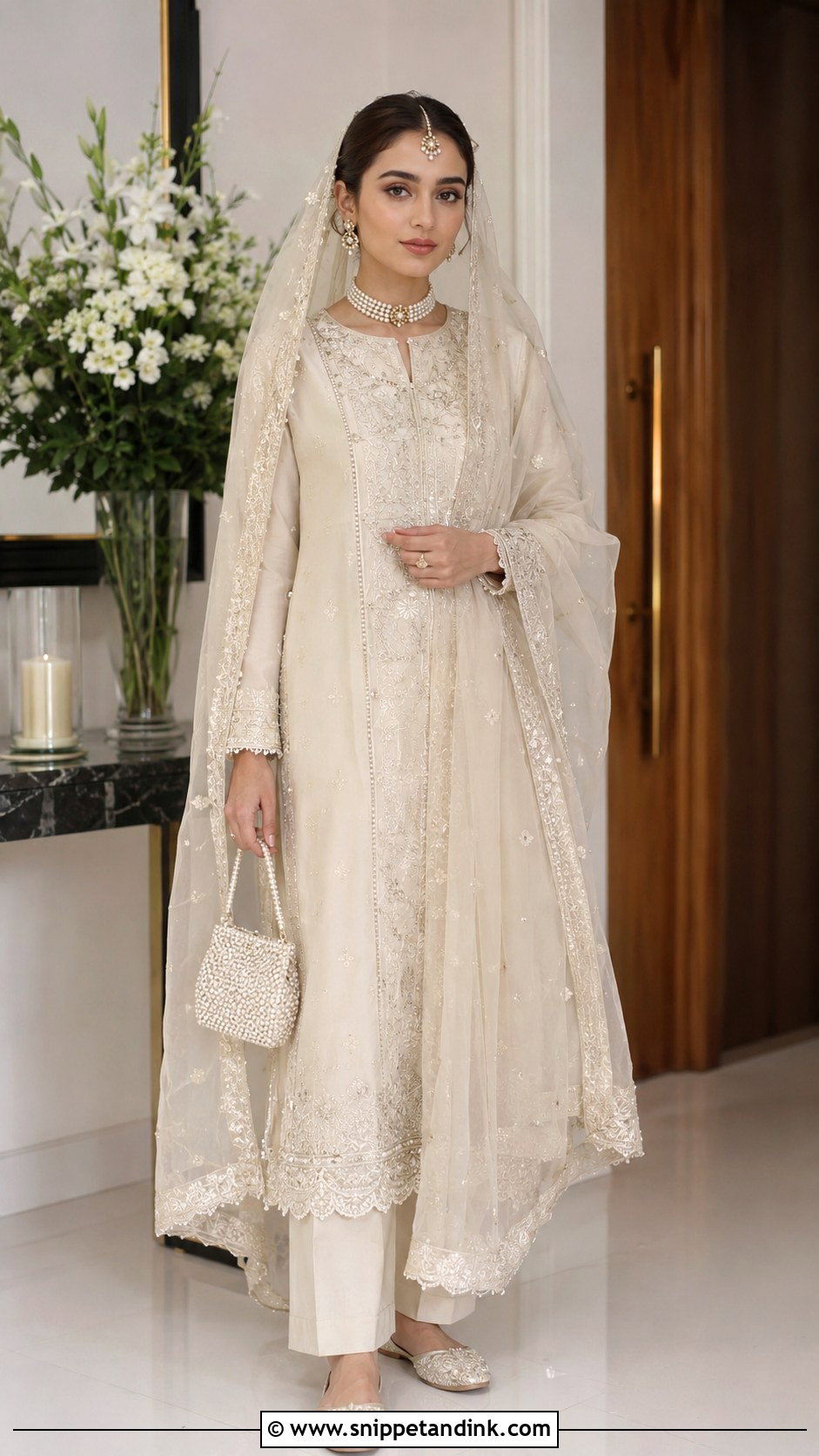
An ivory long shirt with straight trousers is the sleekest outfit here, a good fit for a simple or civil nikkah. An ankle-length shirt with side slits and long sleeves, embroidered in gold or silver, over straight raw silk trousers looks tailored. Side slits should stop at the right height so the shirt doesn’t open when you sit. Drape a sheer ivory dupatta over the head with both ends falling evenly. Wear either a choker or a long necklace, never both, if the neckline is already embroidered.
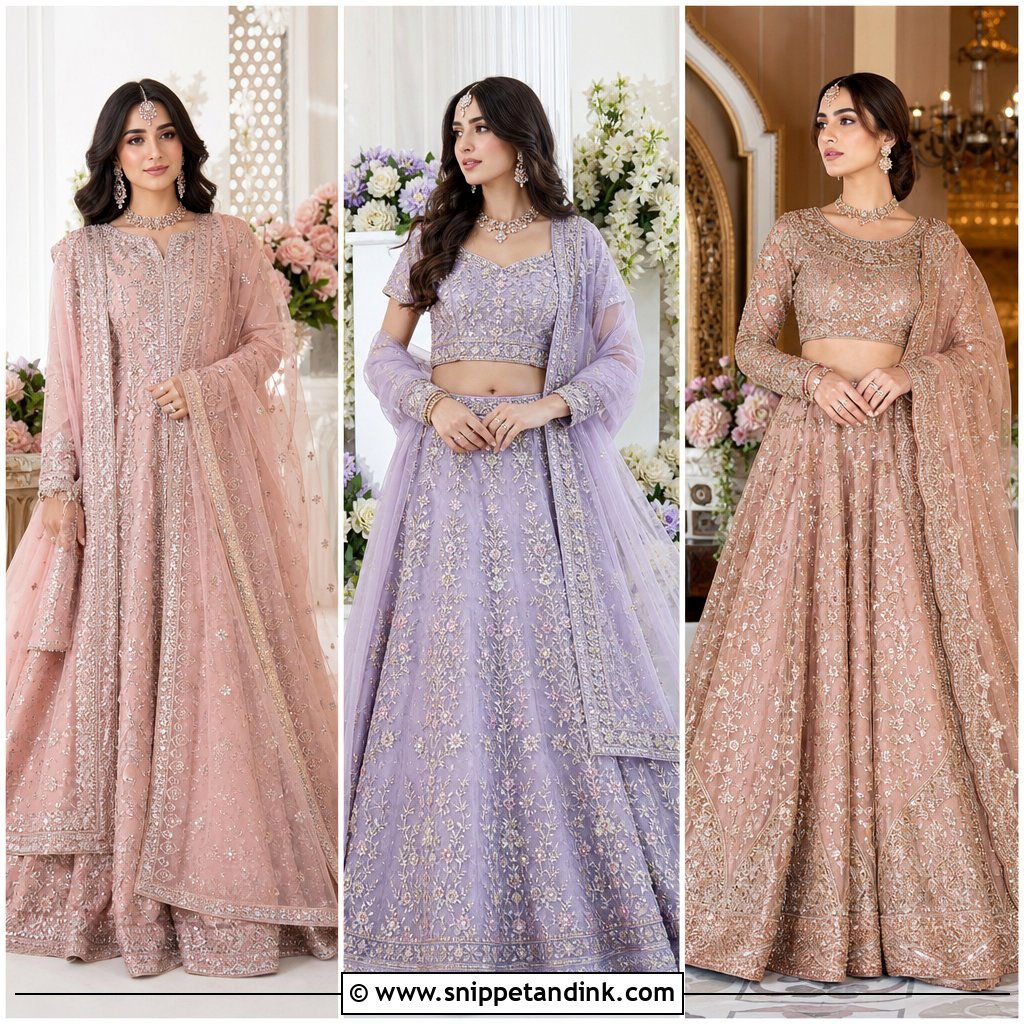

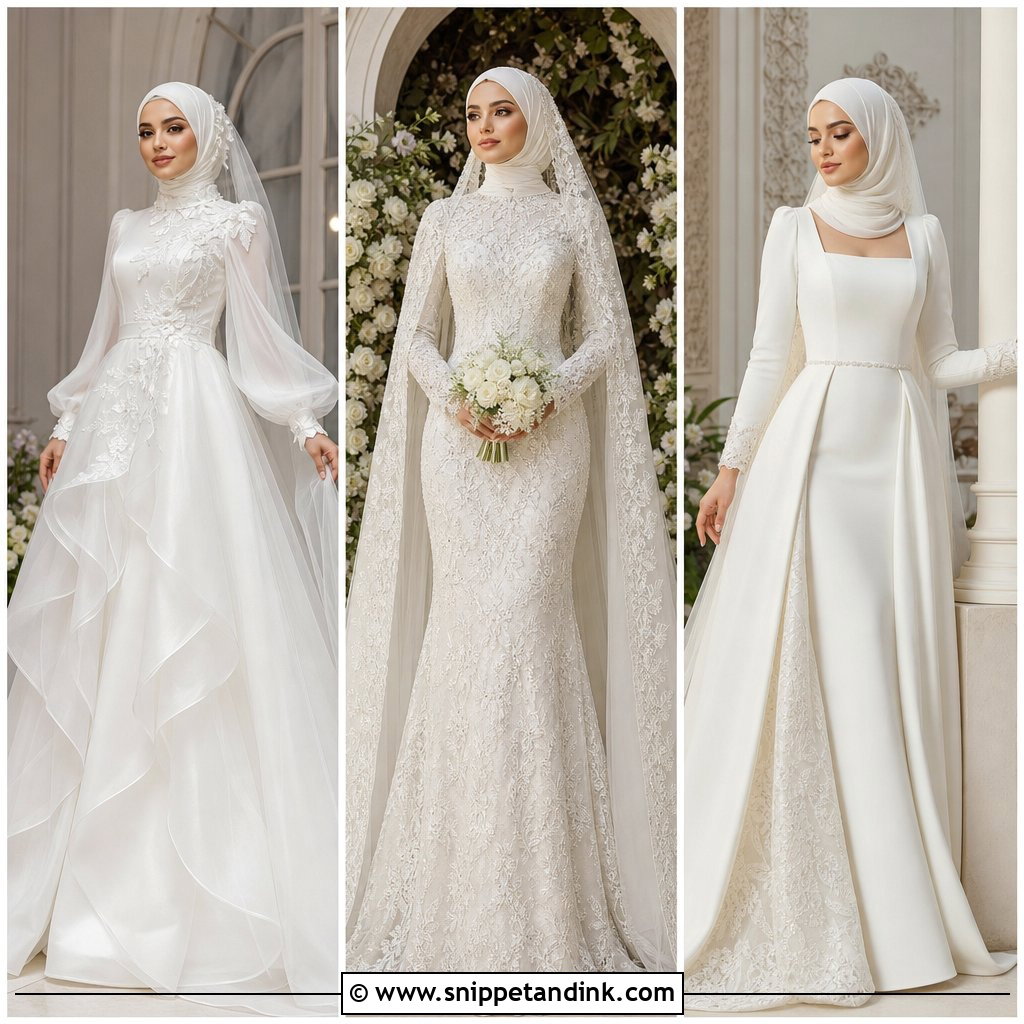
20. White Bridal Gown With Dupatta
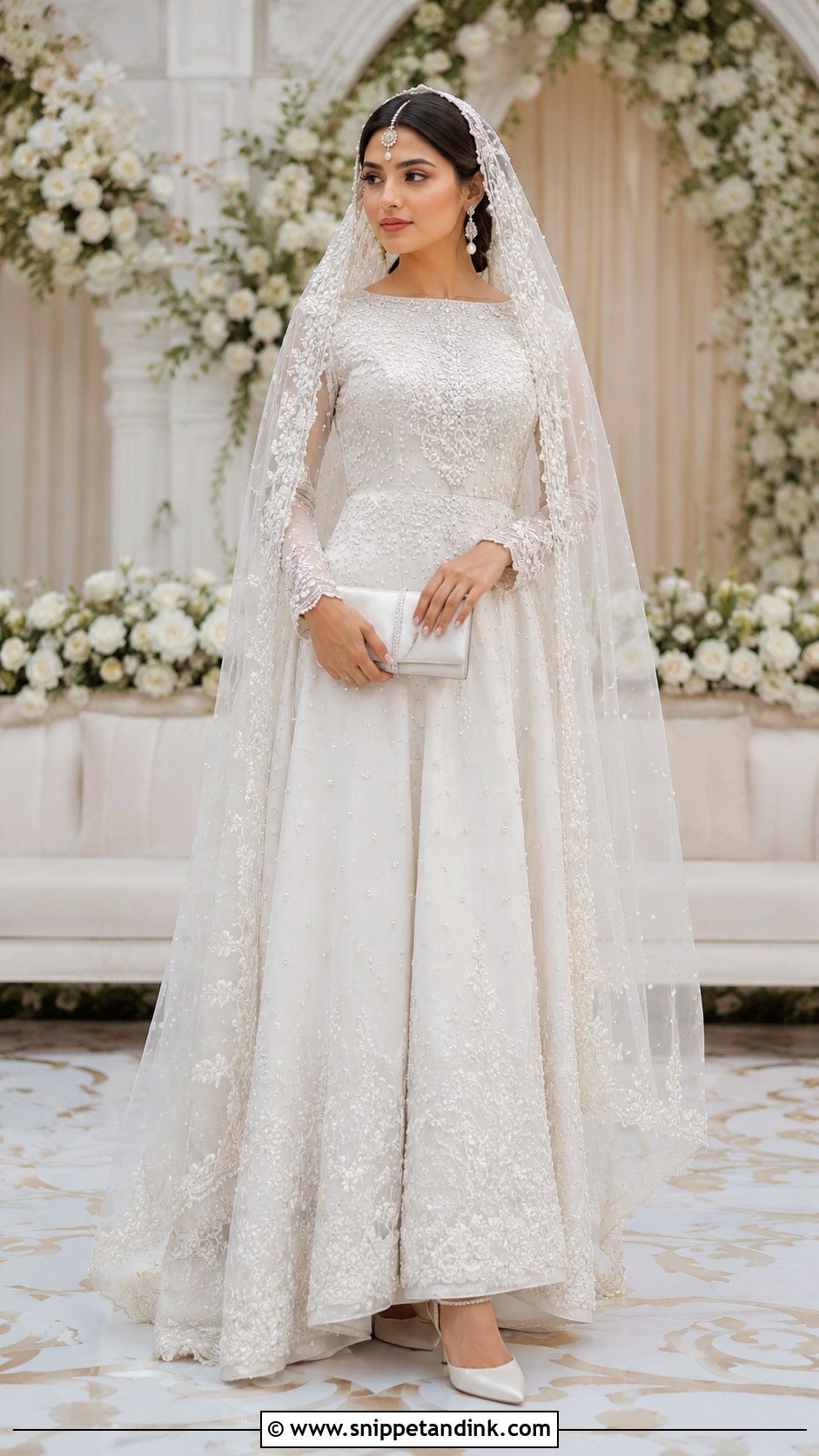
A white gown with a traditional dupatta brings together Western tailoring and South Asian styling. Choose a modest floor-length gown with long sleeves and a soft flare, with lace, pearl appliqué or tonal embroidery. Instead of a standard veil, wear an embroidered organza dupatta over the head and drape one side across the arm. The dupatta border should complement the gown’s lace rather than compete with it, so I match the embroidery style of the two. Pearl earrings, a tikka or tiara-style headpiece and white pointed heels finish it.
Setting the Dupatta So It Stays Through the Ceremony
In my experience the dupatta causes more trouble during a nikkah than the dress. You’ll be seated with your head covered, you’ll bend to sign, and relatives will lean in to hug you. A dupatta resting loosely on the hair slips back within minutes.
I build it on the hairstyle itself. A low bun gives a solid base, and the dupatta is pinned into that bun at the back and at both sides above the ears with U-pins or small safety pins hidden in the fold. The tikka chain usually goes over the dupatta and gets pinned at the parting. If you’re wearing two dupattas, the heavier one goes on the shoulders, pinned to the blouse, never stacked on the head.
Sitting on a low stage or floor cushions
Many nikkahs seat the bride low, on a sofa or cushions. Wide ghararas and shararas need to be spread around you, not sat on, or they crease into lines that show in every photo. Ask a sister or friend to arrange the skirt each time you sit, and practice getting up without stepping on the hem.
Sit in It, Sign in It, Then Decide
Any outfit on this list, from a gharara or pishwas to a saree, long shirt or detailed lehenga, should feel right from the ceremony to the last photograph. Use your venue, the season and the level of formality to narrow things down. Before ordering, see fabric samples, confirm measurements and talk to the designer about dupatta weight, sleeve coverage and alteration time. Then try the whole look with shoes and jewelry, sitting the way you’ll sit at the nikkah, before the day.
You'll Like These Ideas:


Leave a Reply