
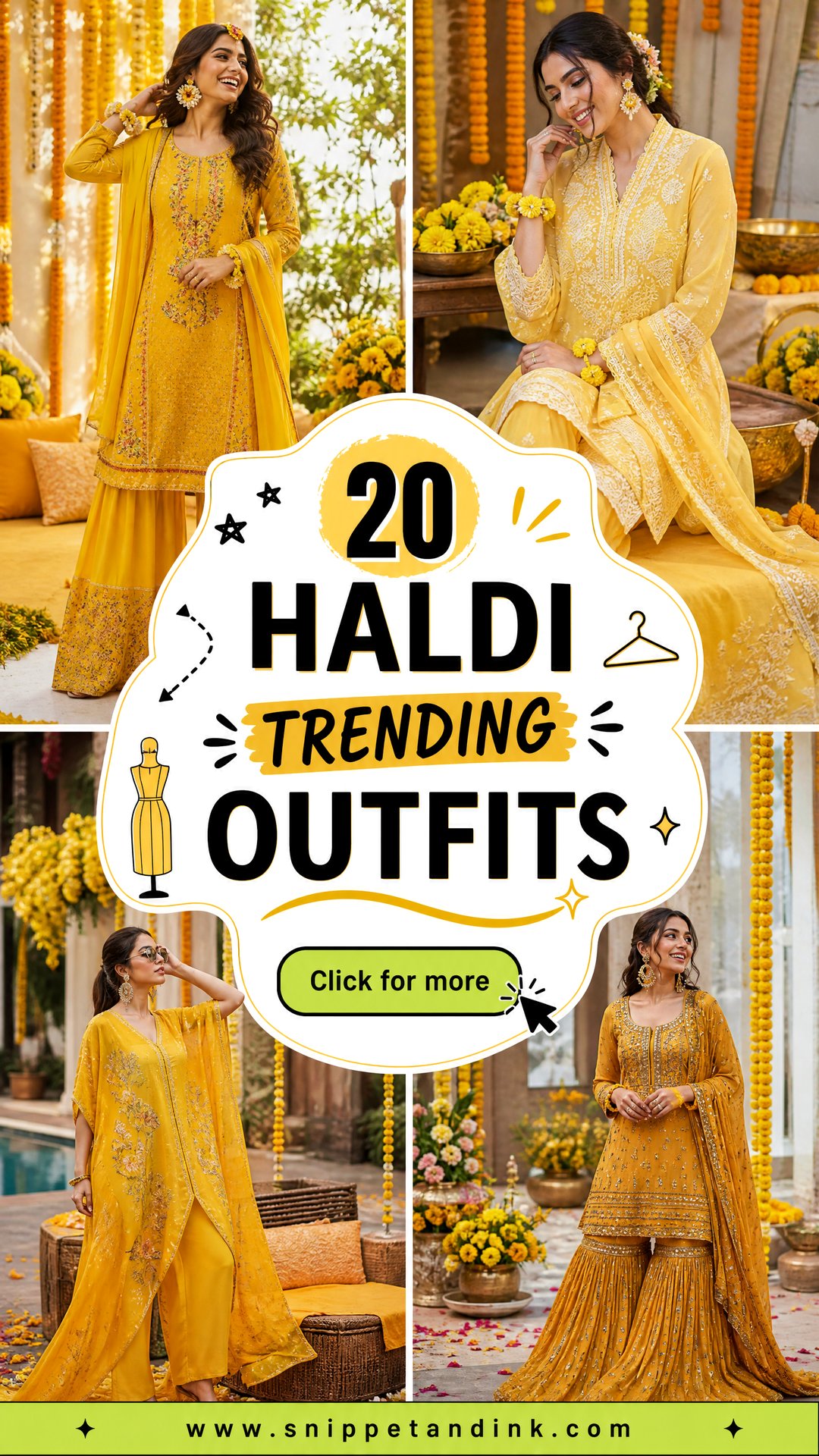
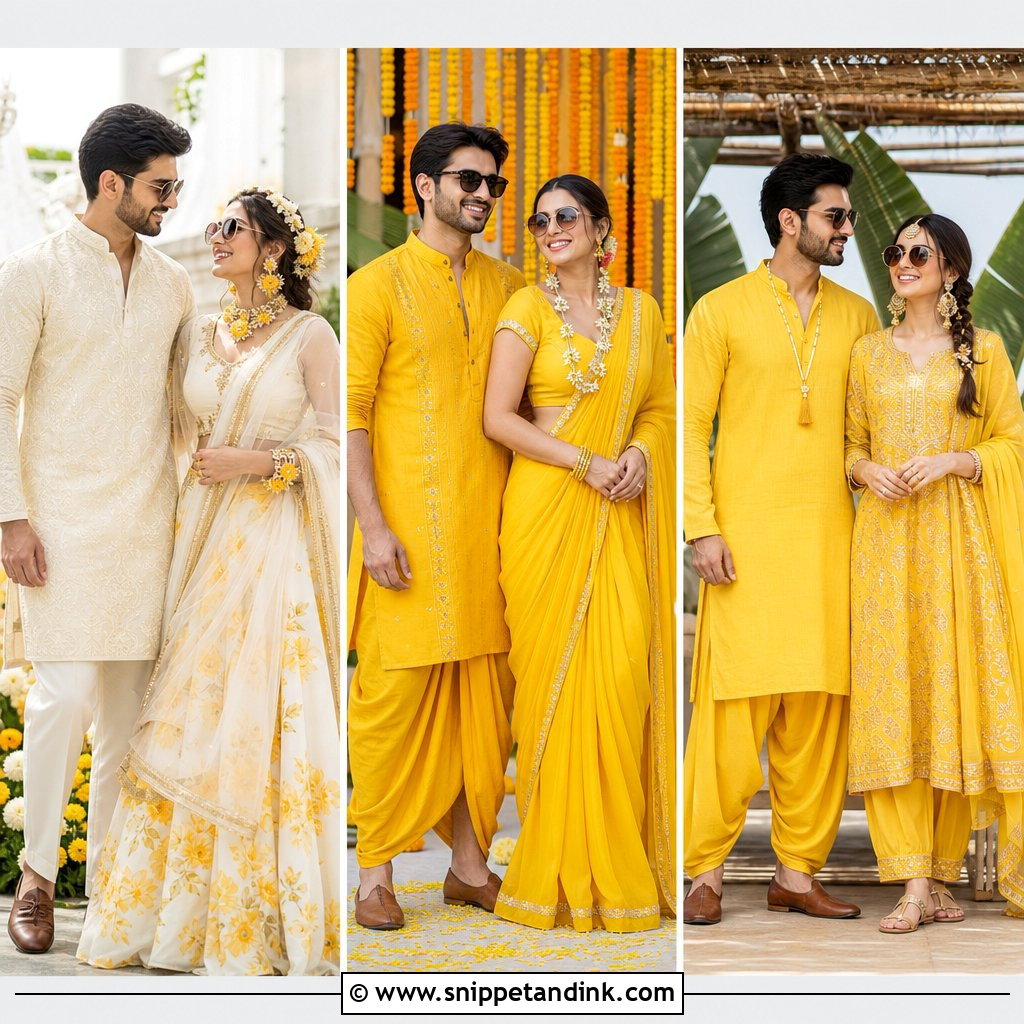
Haldi is the one wedding function where your outfit will get wet, sticky and stained, and I dress brides for it accordingly. The pieces I reach for now are lightweight lehengas, shararas, pre-draped sarees, kurta sets and playful Indo-Western silhouettes, mostly in yellow but also in mango, marigold, ivory and lime. What separates a good Haldi outfit from a pretty hanger photo is how it behaves once the paste lands: whether the dye runs, whether the fabric turns see-through, whether you can sit low on a stool for the whole ritual. Below are twenty complete looks, traditional through fusion, with notes on who each one suits and where it tends to go wrong.
Fabrics That Survive Wet Turmeric Paste
Haldi paste is mixed with water, oil, milk or rosewater depending on the family, and by the end of the ritual most brides are damp from shoulder to ankle. Before I sign off on an outfit for this function, it goes through a few checks at the fitting.
- Wet a hidden seam allowance and press it against white tissue. If color transfers, the dye will bleed onto your skin and onto every cousin you hug.
- Hold the fabric up to daylight. Anything you can see your hand through when dry will be close to transparent wet, so ask for a lining or a slip.
- Sit on a low stool in it. Most rituals happen with the bride seated low, and a tight hip seam or stiff skirt shows its problems straight away.
- Look closely at the trims. Gota, zari and metallic thread can dull or tarnish once paste and water work into them, so I save heavy metallic work for the evening outfits.
Cotton, cotton silk, mulmul and good georgette behave well. Pure silk and organza stain easily and water-mark, so I only suggest them when the family applies paste gently. Shoes matter more than people expect, too. Many families do the ritual barefoot, so pick flats you can slip off and on without bending over in a heavy skirt.
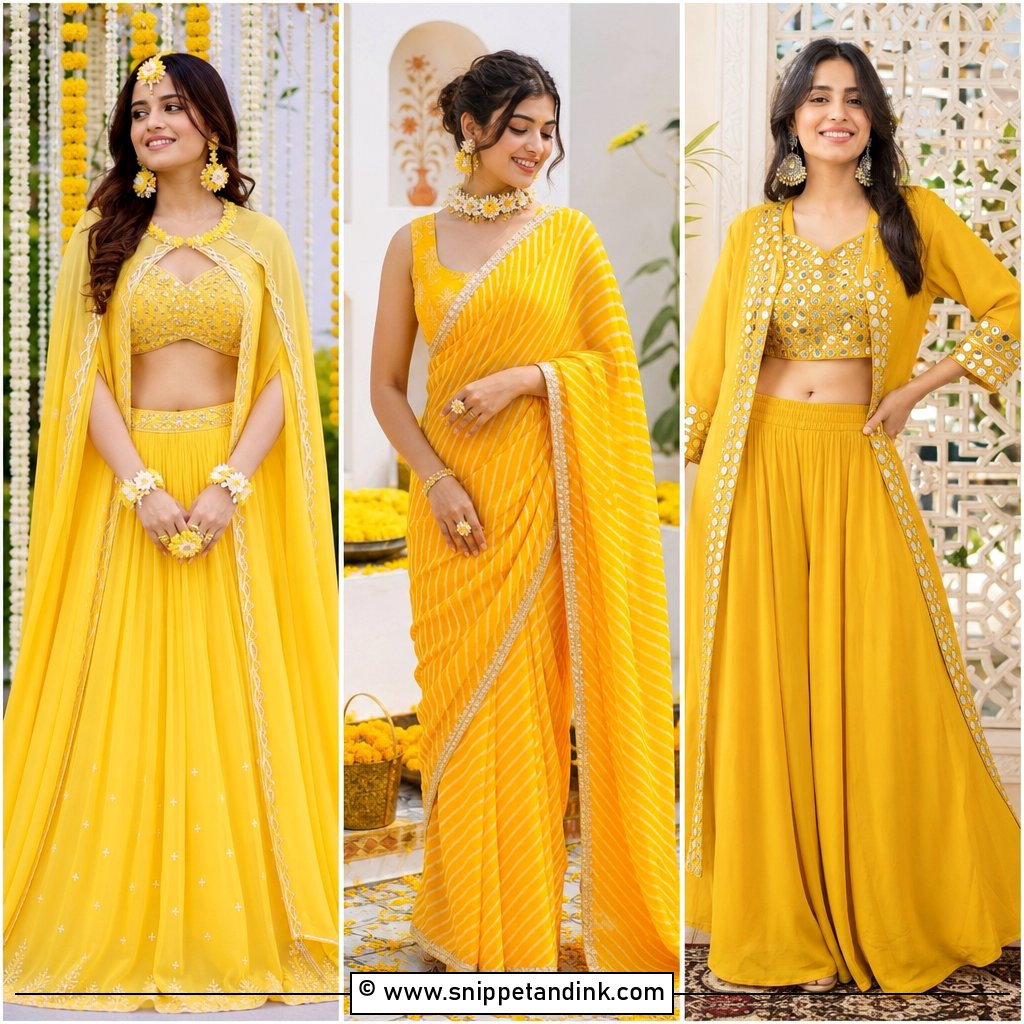
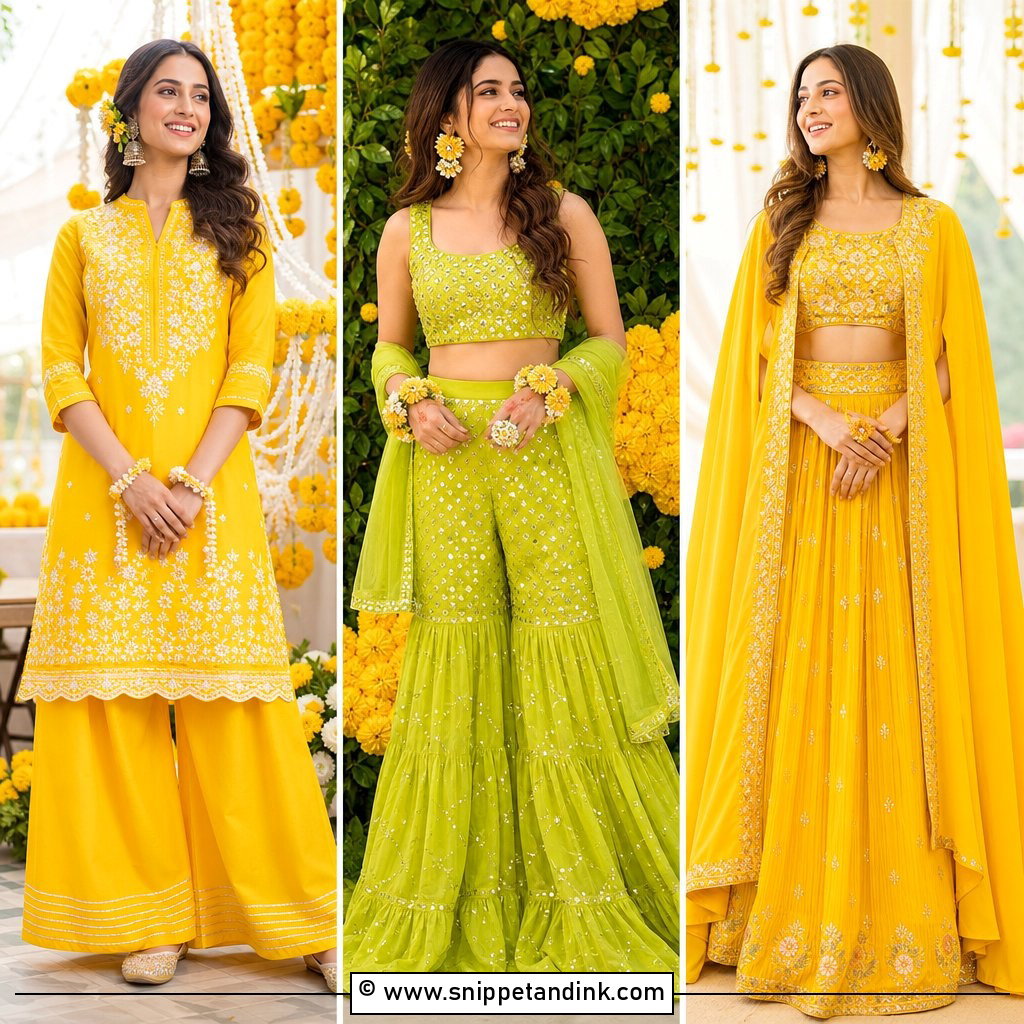
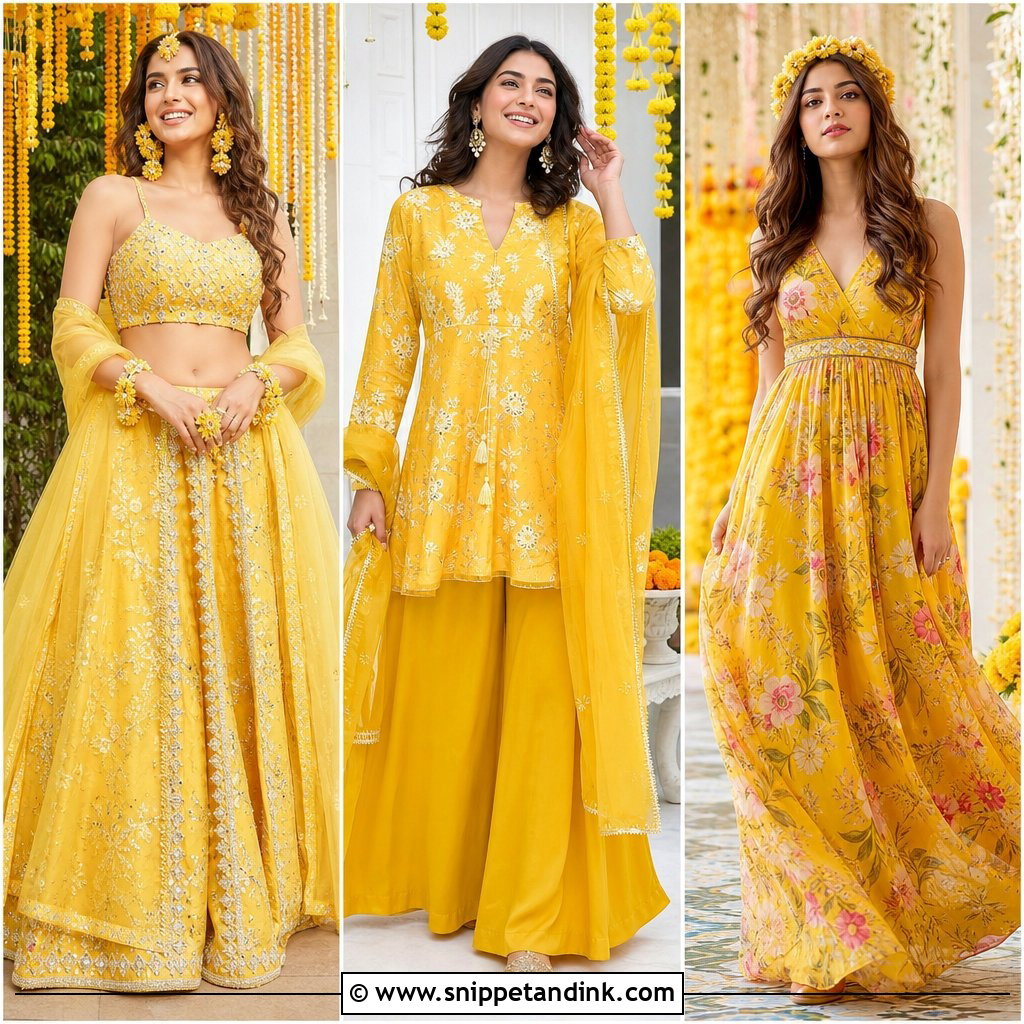
1. Yellow Mirror Work Haldi Lehenga
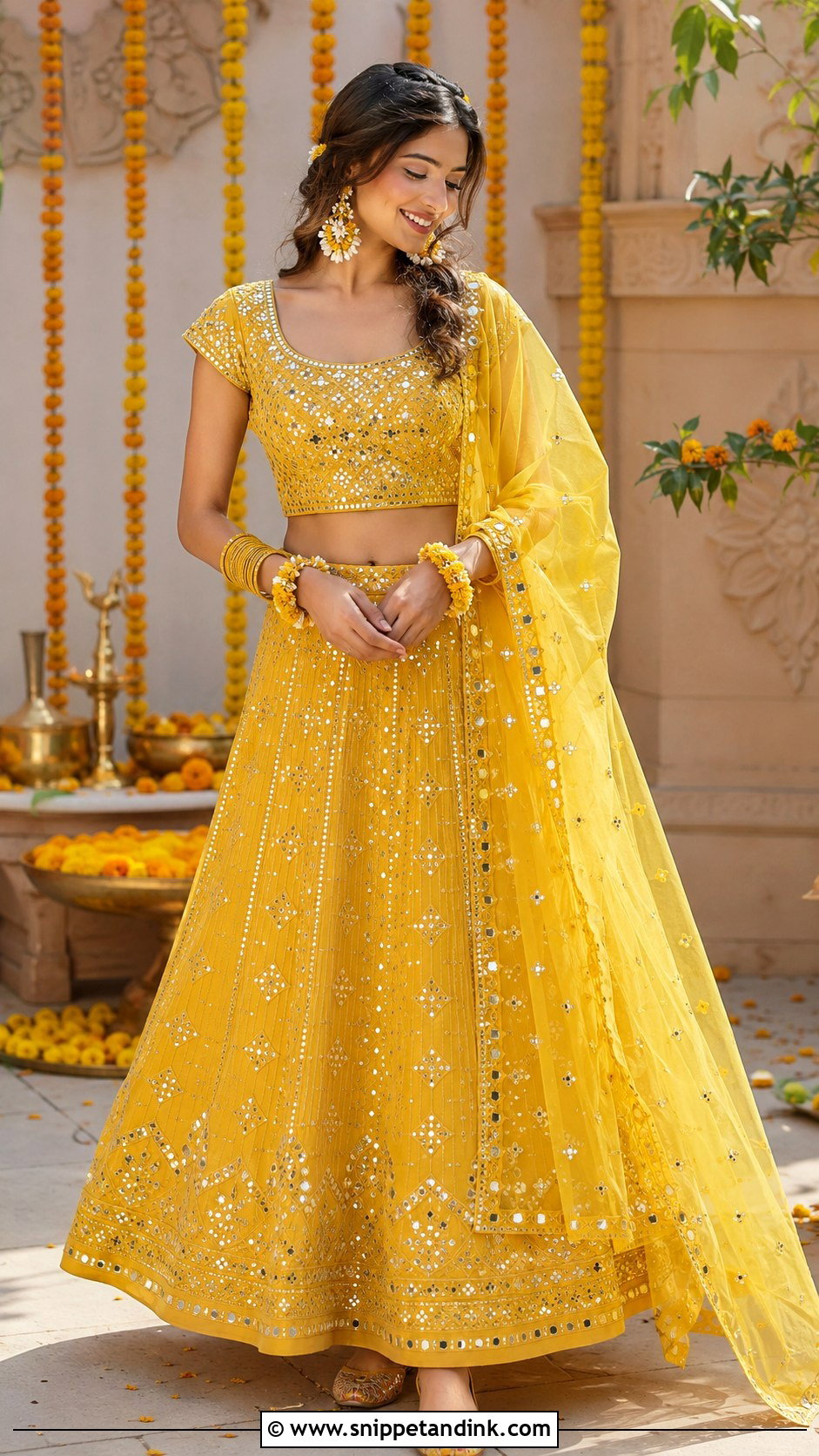
Mirror work gives you sparkle in daylight without the weight of zardozi, which matters when you’re sitting low for the ritual. I’d pick georgette or cotton-silk for the skirt and keep the blouse sleeves fairly plain, because paste goes on the arms first and gets ground into the thread around each little mirror. A dupatta with a narrow mirror border, floral earrings, stacked yellow bangles and embroidered juttis finish it. Brides can add a floral necklace or matha patti; guests should scale the jewelry down so nobody mistakes them for the bride. A braided ponytail keeps hair out of the paste, and at the fitting, choose the neckline and skirt rise that feel supported rather than the ones that look best standing still.
2. Yellow Sharara Set For Haldi
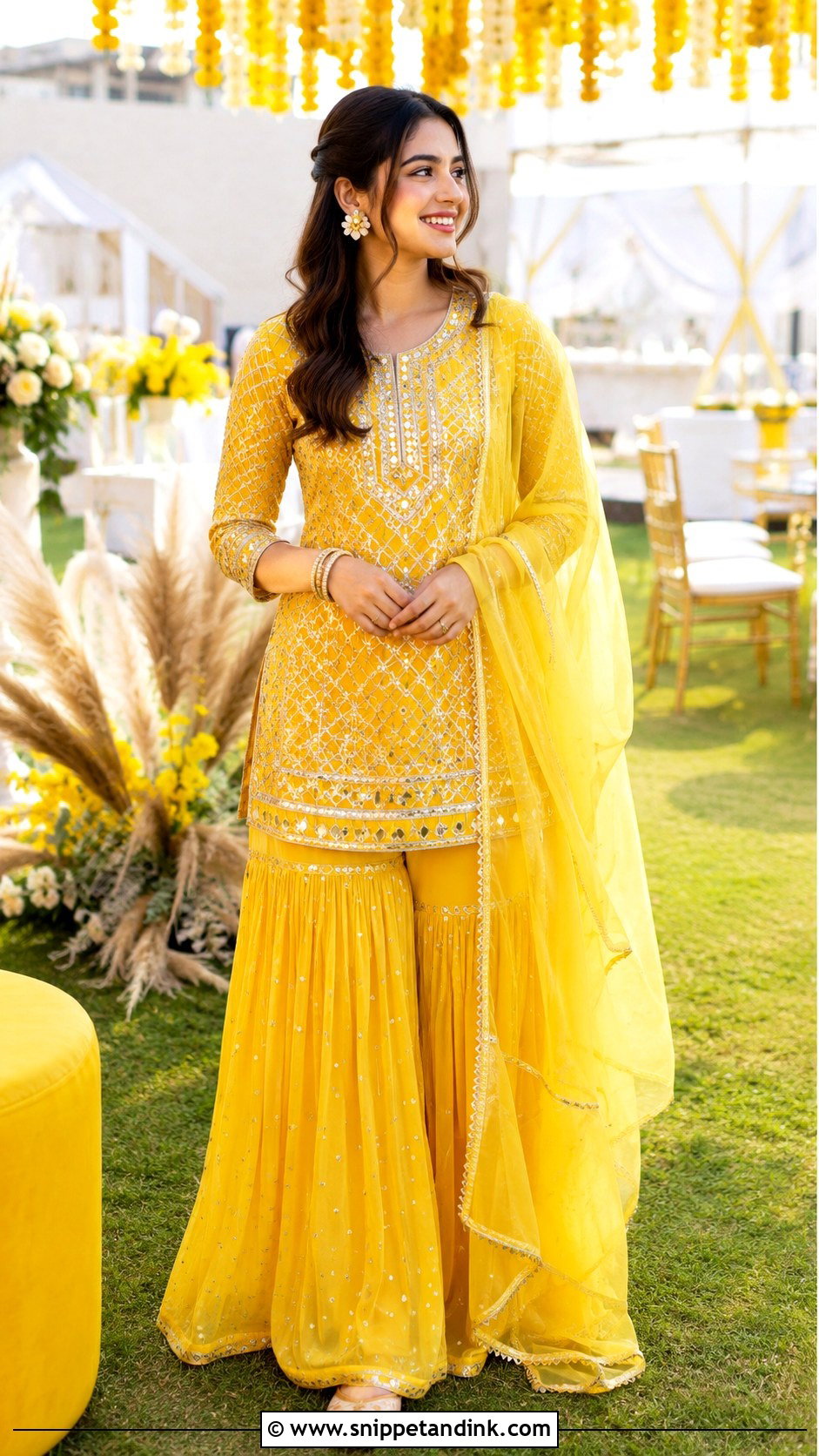
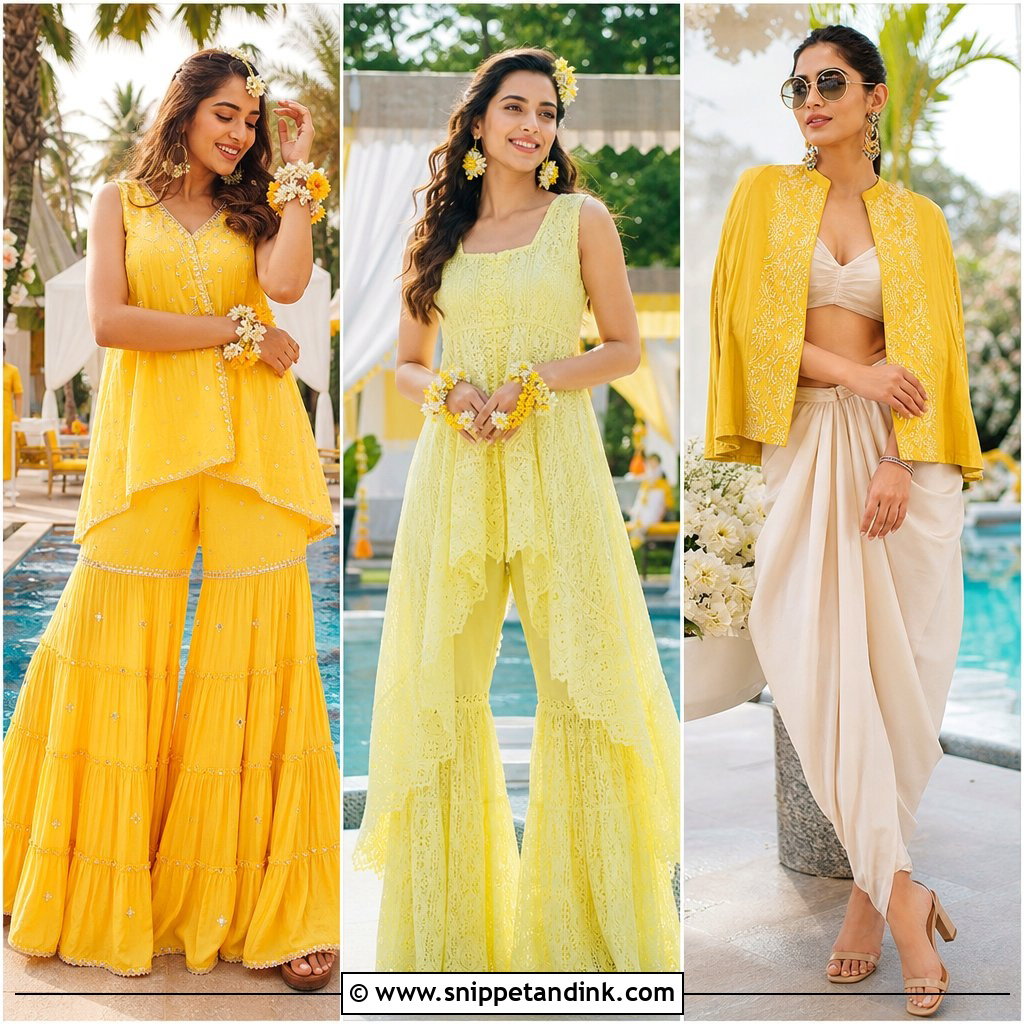
Shararas are what I put on sisters who will be up and down all morning, carrying thalis and dancing once the ritual turns into a party. Pair them with a short yellow kurti worked in gota patti or small mirrors, plus an organza dupatta in the same color family. The detail people skip is hem length. Floors get wet at Haldi, so I have the sharara finished a finger’s width above the floor in the shoes you’ll actually wear, not heels you’ll kick off by noon. A V-neck kurti lengthens the upper body, a longer kurti gives more coverage, and champagne-gold juttis with floral studs and a few slim bangles are plenty.
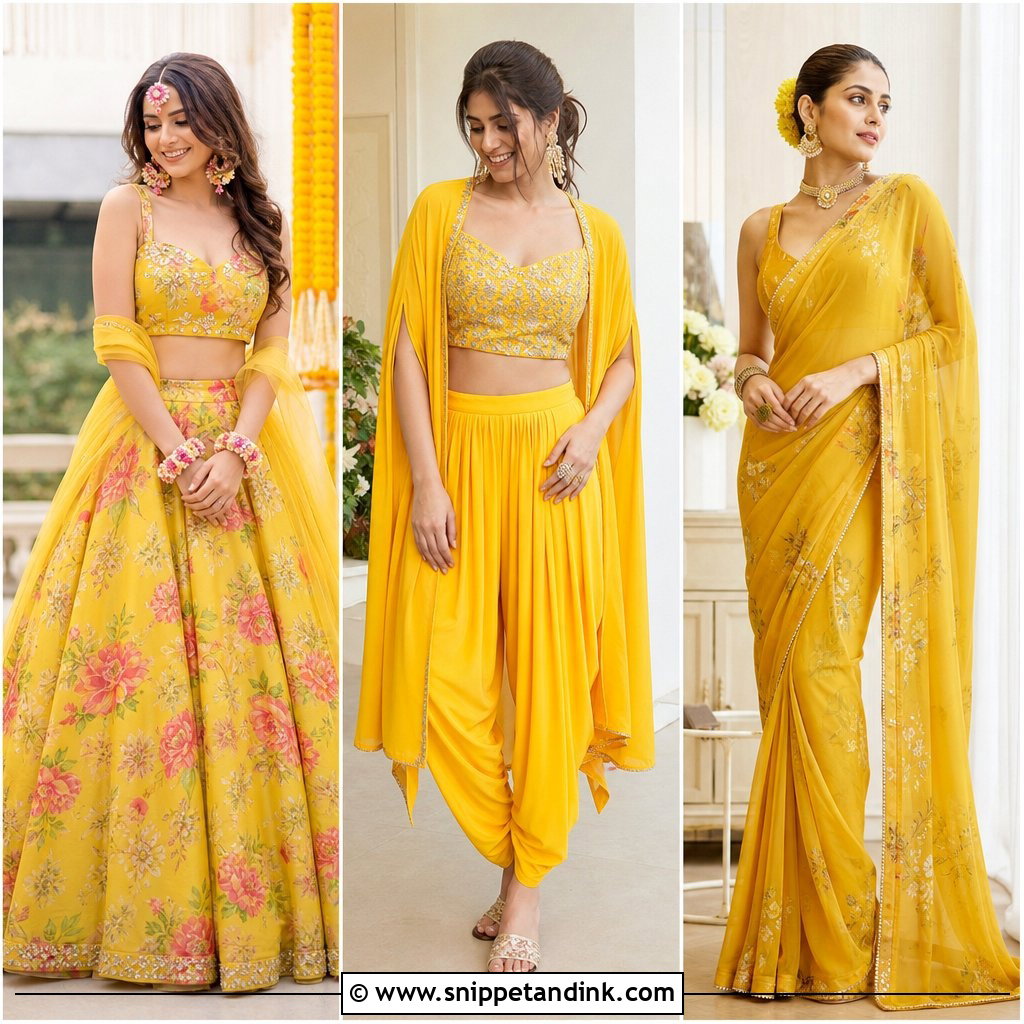
3. Floral Lehenga Outfit For Haldi
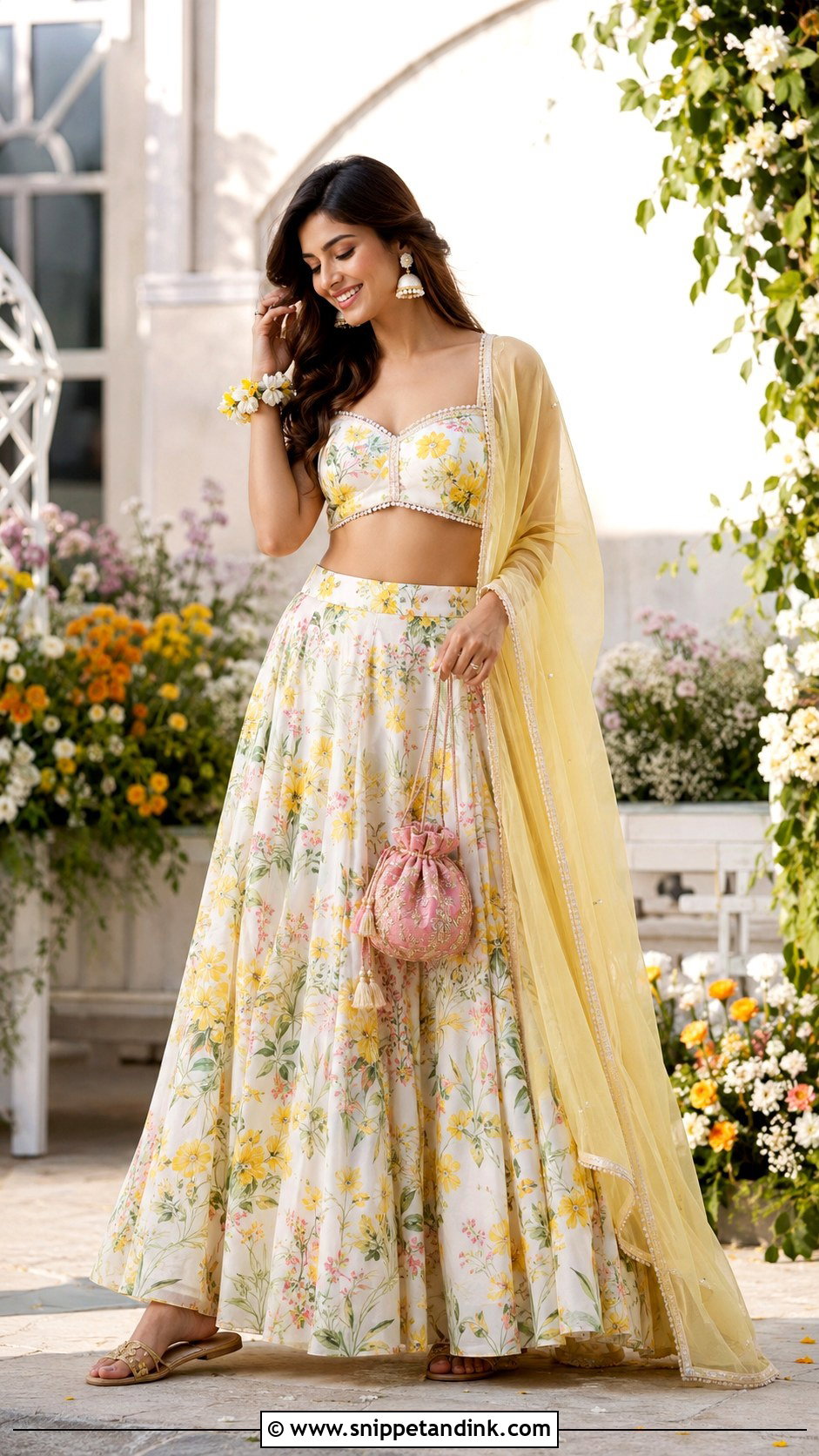
Small botanical prints hide turmeric splashes far better than solid pastels, which is the practical reason I like a floral lehenga for this function. Go for a yellow, ivory or pale peach ground with motifs no bigger than a palm; oversized florals swallow a petite frame in photos. A matching cropped blouse, a sheer yellow dupatta edged in fine lace, pearl jhumkas and flat gold sandals complete it. Brides can swap in fresh flower jewelry, and guests can carry a small potli in one of the print’s accent colors. Keep the makeup to peach blush and a lip tint. A medium flare moves well without needing a helper to manage the skirt, and it sits as happily in a garden as in a hall.
4. Yellow Organza Saree For Haldi
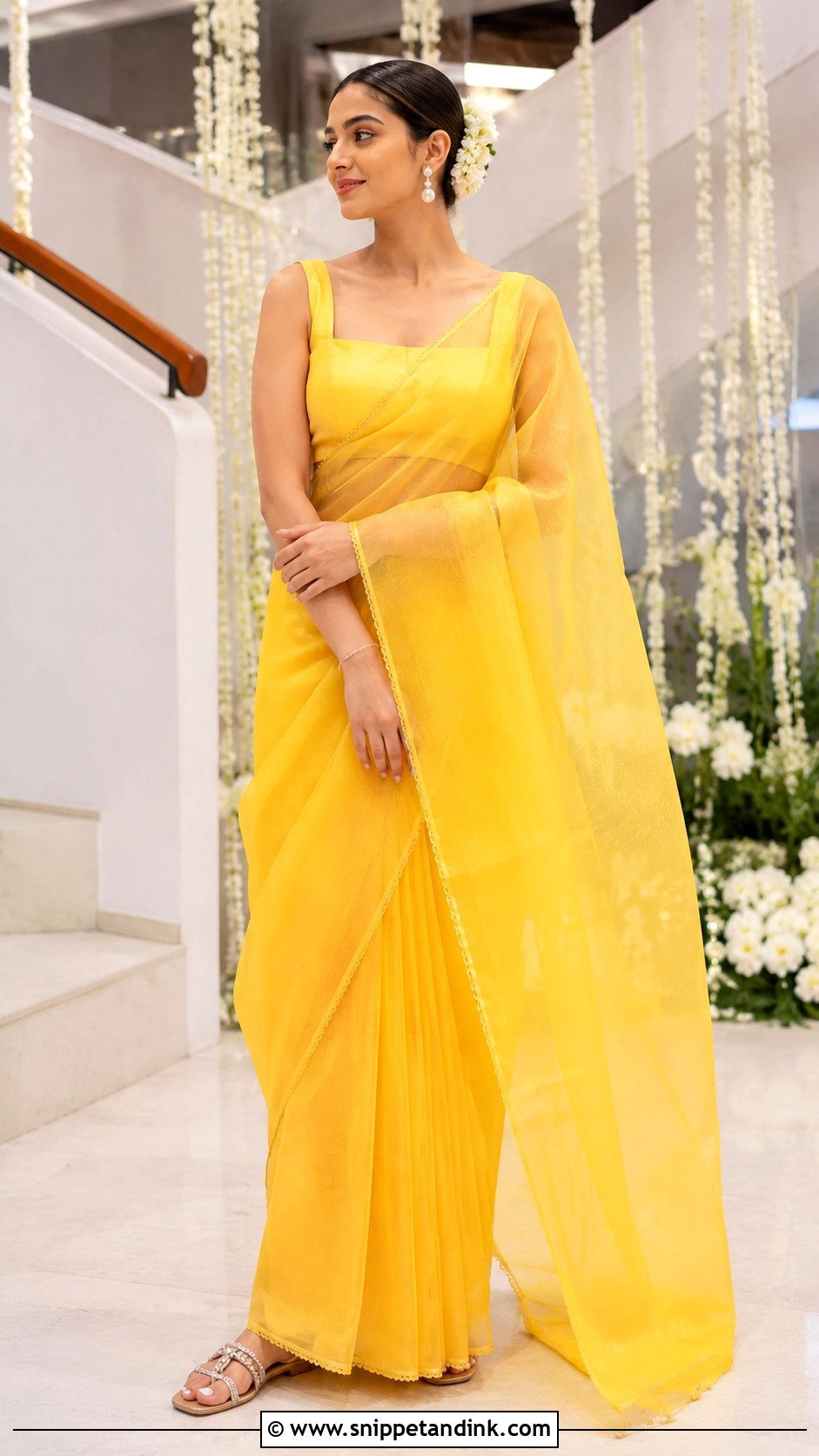
Organza looks crisp and weighs almost nothing, but it doesn’t forgive. It water-spots, and it holds every crease from being crushed on a low seat. So I pin the pleats at the waist and the pallu at the shoulder before the ritual starts, and I keep an organza saree for brides at small, calm ceremonies rather than the ones where cousins arrive with buckets. Choose lemon or butter yellow with a fine embroidered border or scattered sequins. The blouse can be sleeveless, square-necked or short-sleeved depending on the coverage you want. Pearl earrings, a slim bracelet, low embellished sandals and a sleek bun with small white flowers keep the clean shape intact.
5. Yellow Anarkali Suit For Haldi
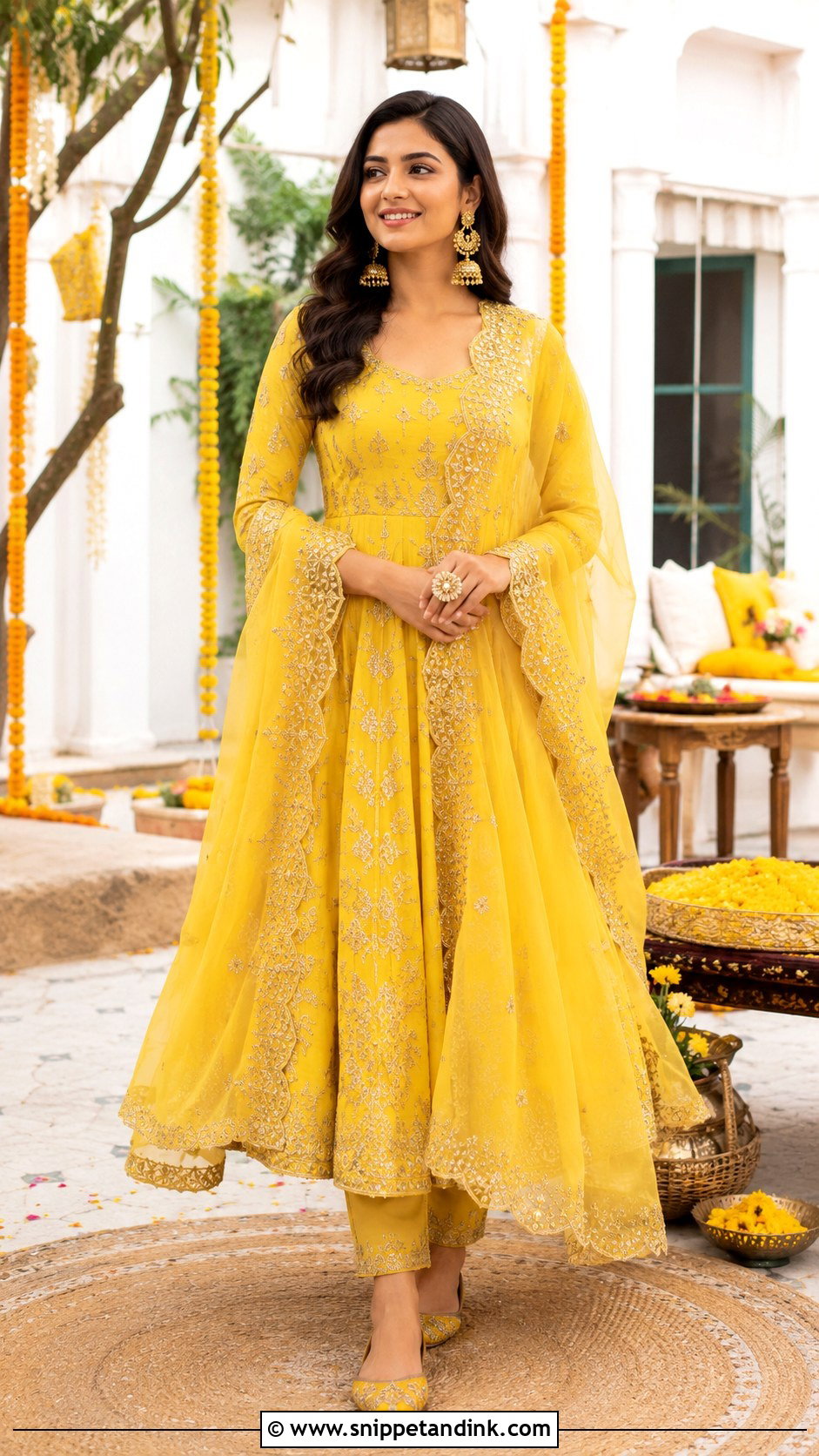
An Anarkali is the easiest dress-shaped outfit to sit in, because the panels spread out instead of pulling across the thighs. I’d choose cotton silk or Chanderi in calf or ankle length, finished with gota borders or light floral embroidery. Chanderi is fine and slightly sheer, so ask for a full lining if you’re going to get wet. Wear it with narrow pants and an organza dupatta pinned to one shoulder; a free-hanging dupatta ends up dragging through the paste bowl. Gold jhumkas, a floral ring and flat juttis are enough. An empire waist stays comfortable over a long morning, brides can go for a fuller flare and bigger earrings, and guests look right with lighter embroidery and a smaller dupatta.
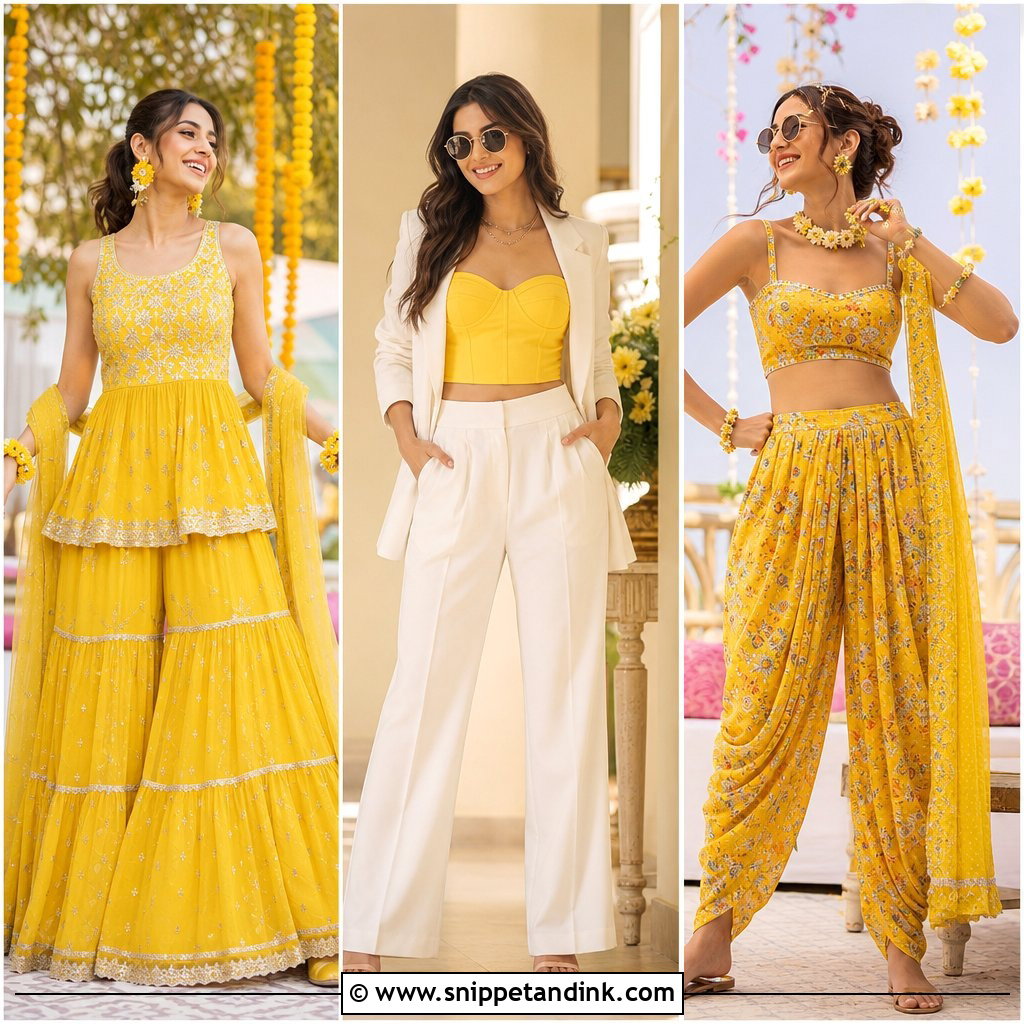
6. Peplum Top And Sharara Haldi Outfit
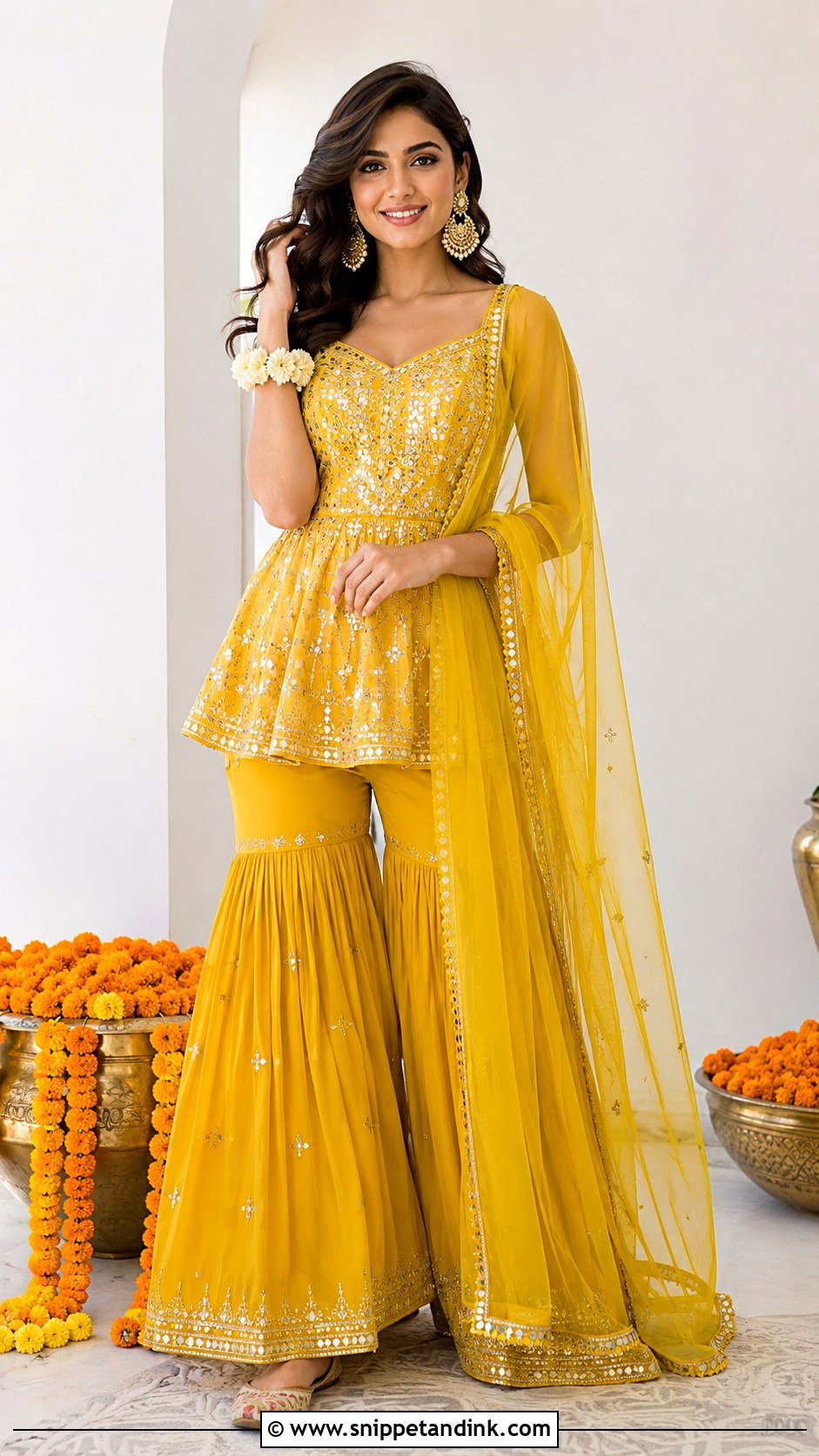
Peplums depend on the shoulder fit. If the seam sits past your shoulder bone, the flare starts too low and the top looks borrowed. Get that right and a structured yellow peplum over sharara pants, matched or a shade deeper in mustard, looks sharp. Keep the mirror work or gota piping at the neckline so it draws the eye up. I usually leave the dupatta off unless the event is formal, because the clean two-piece line is the whole point. Statement earrings, a slim floral bracelet and juttis finish it. Bridesmaids tend to love this one; it’s less suited to anyone who dislikes waist definition.
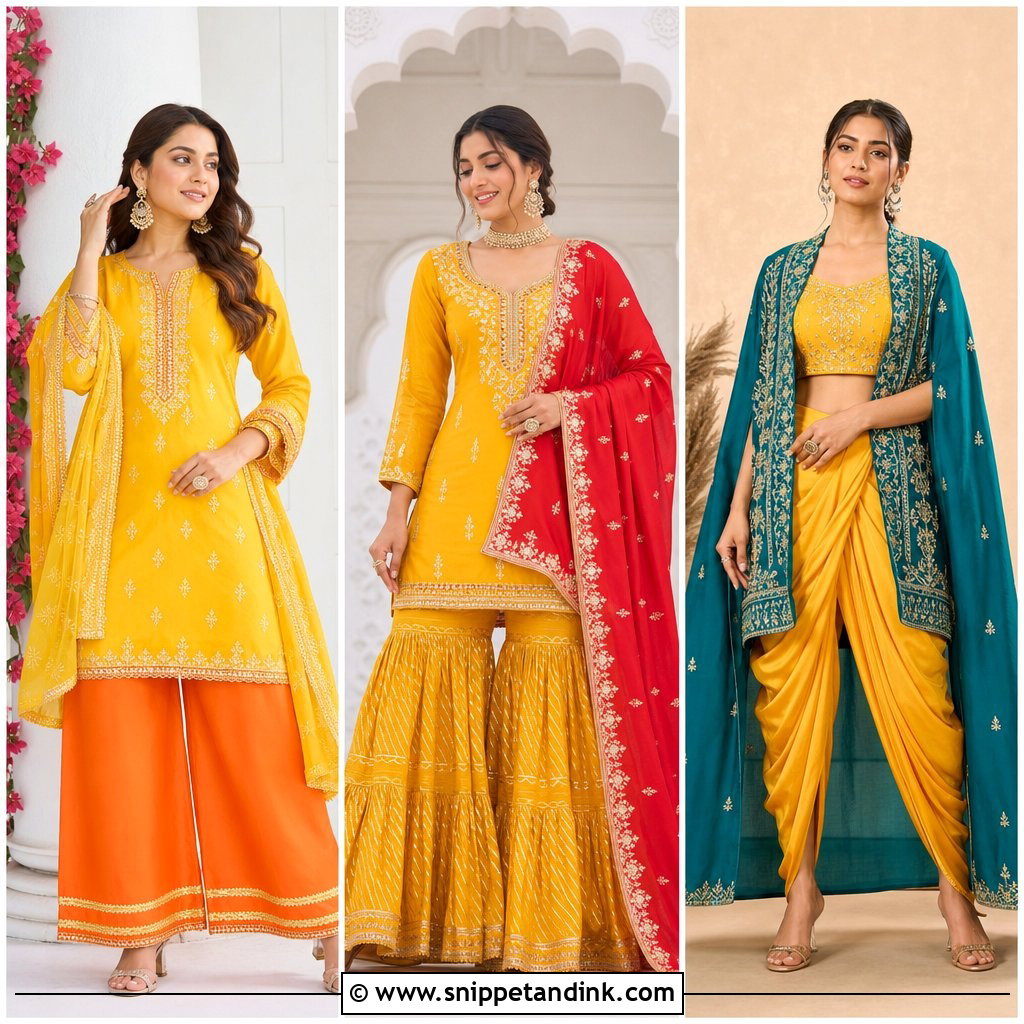
7. Yellow Kurta And Palazzo Haldi Outfit
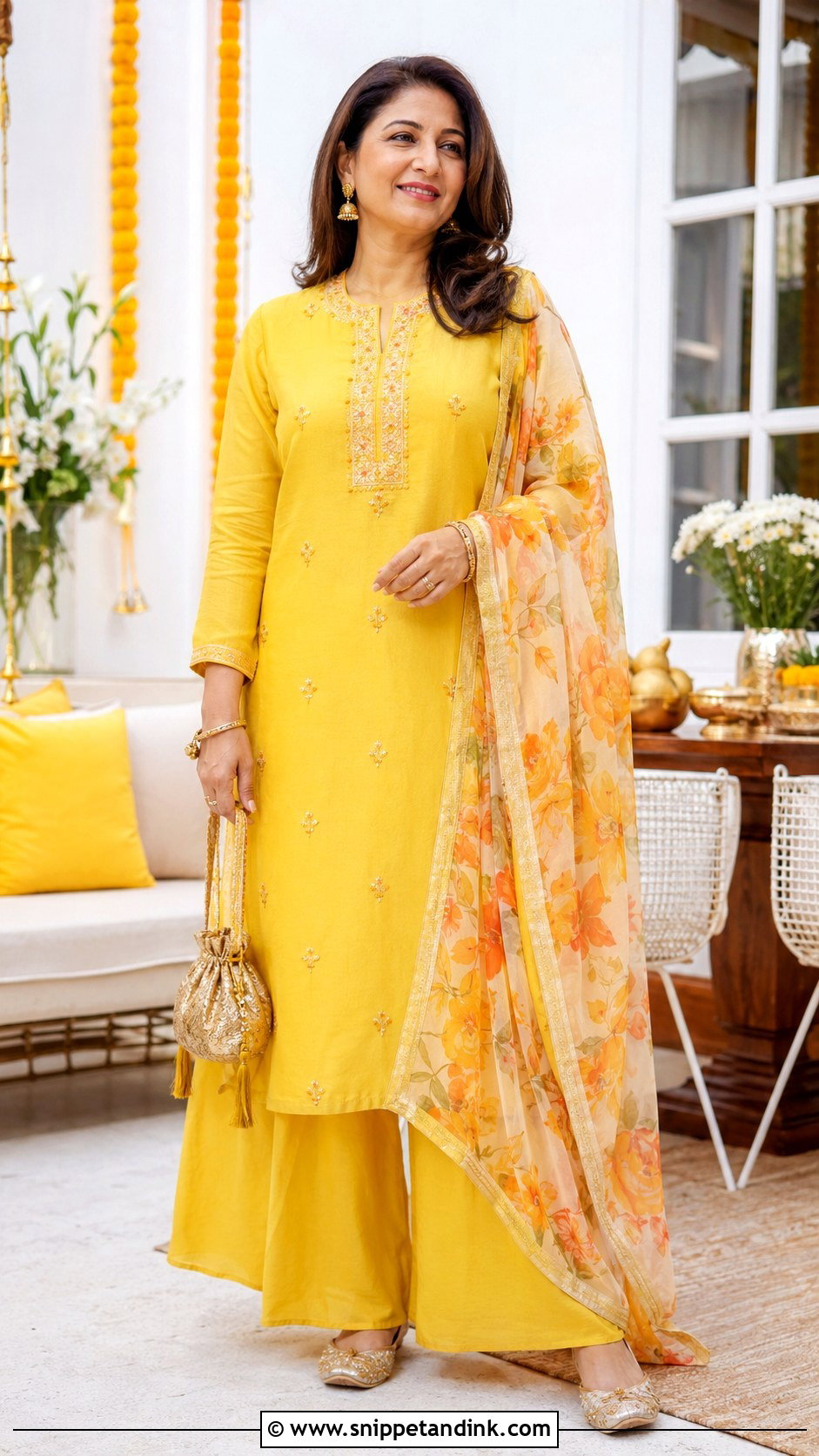
At a home Haldi in a crowded courtyard, a kurta and palazzo set is the outfit I’d trust most. Pick a straight or slightly flared kurta with side slits and three-quarter sleeves, and palazzos that skim the body and stop clear of the floor. Cotton, linen blends and light rayon breathe in heat, though rayon shrinks if it’s washed hot afterwards, so rinse it cold. A printed chiffon dupatta can bring in pink, green or orange, and small jhumkas, metallic flats and a simple potli are all the styling it needs. On petite frames I take the kurta up a little; taller women carry the longer length easily. It reads festive without feeling formal, and it gets worn again.
8. Dhoti Pants And Crop Top Haldi Outfit
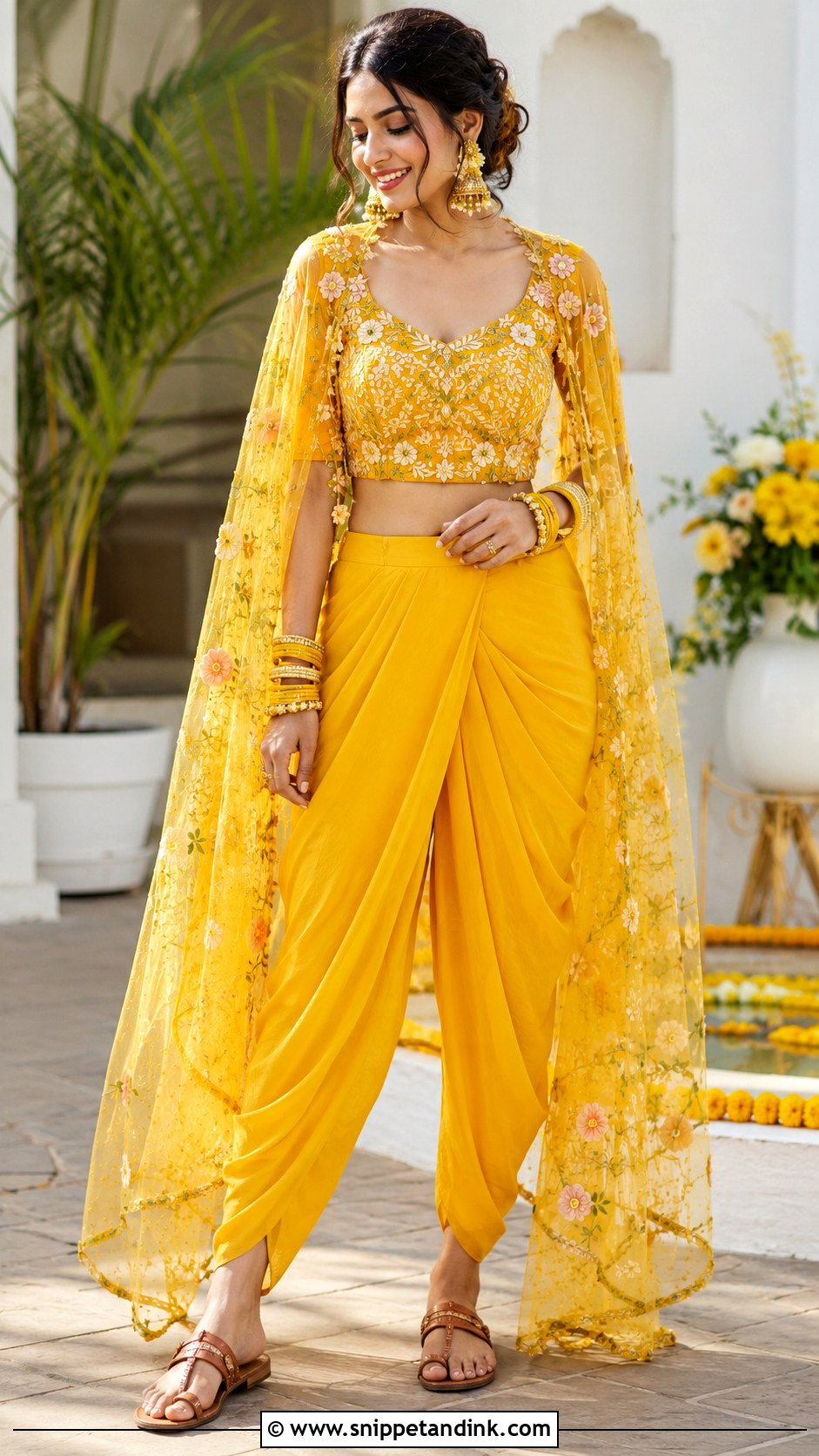
Dhoti pants live or die on the pleating. Structured yellow dhoti pants should be stitched so the folds don’t open when you crouch, with real room through the hips and thighs, so do a full sit-down test before you take them home. Pair them with a fitted crop top or short embroidered blouse and add a light cape, cropped jacket or one-shoulder dupatta. Bold jhumkas, stacked bangles, kolhapuri flats and a sleek ponytail keep the top layer visible. Brides can go for mirror work or floral appliqué, guests for a plain top under a printed cape. It’s my pick for outdoor and poolside functions where the dancing starts early.
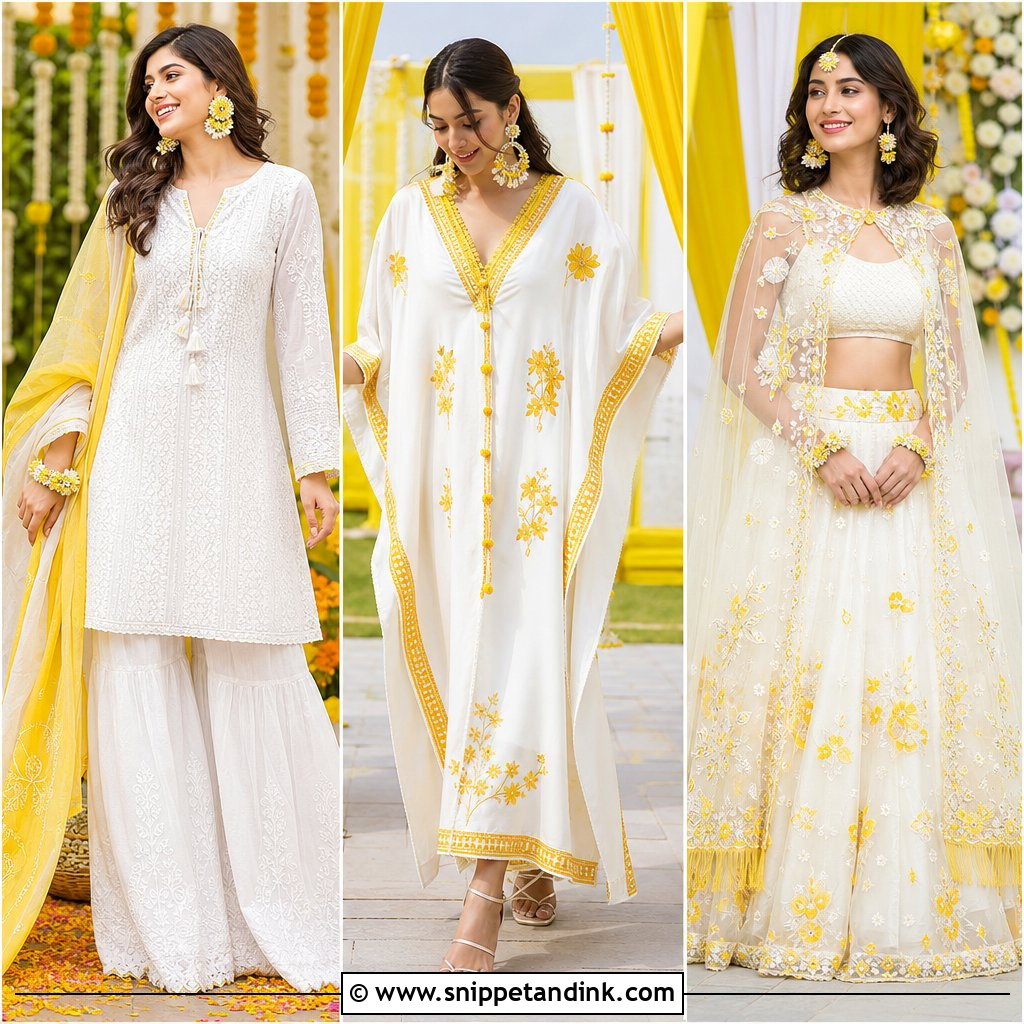
9. Yellow Chikankari Kurta Set For Haldi
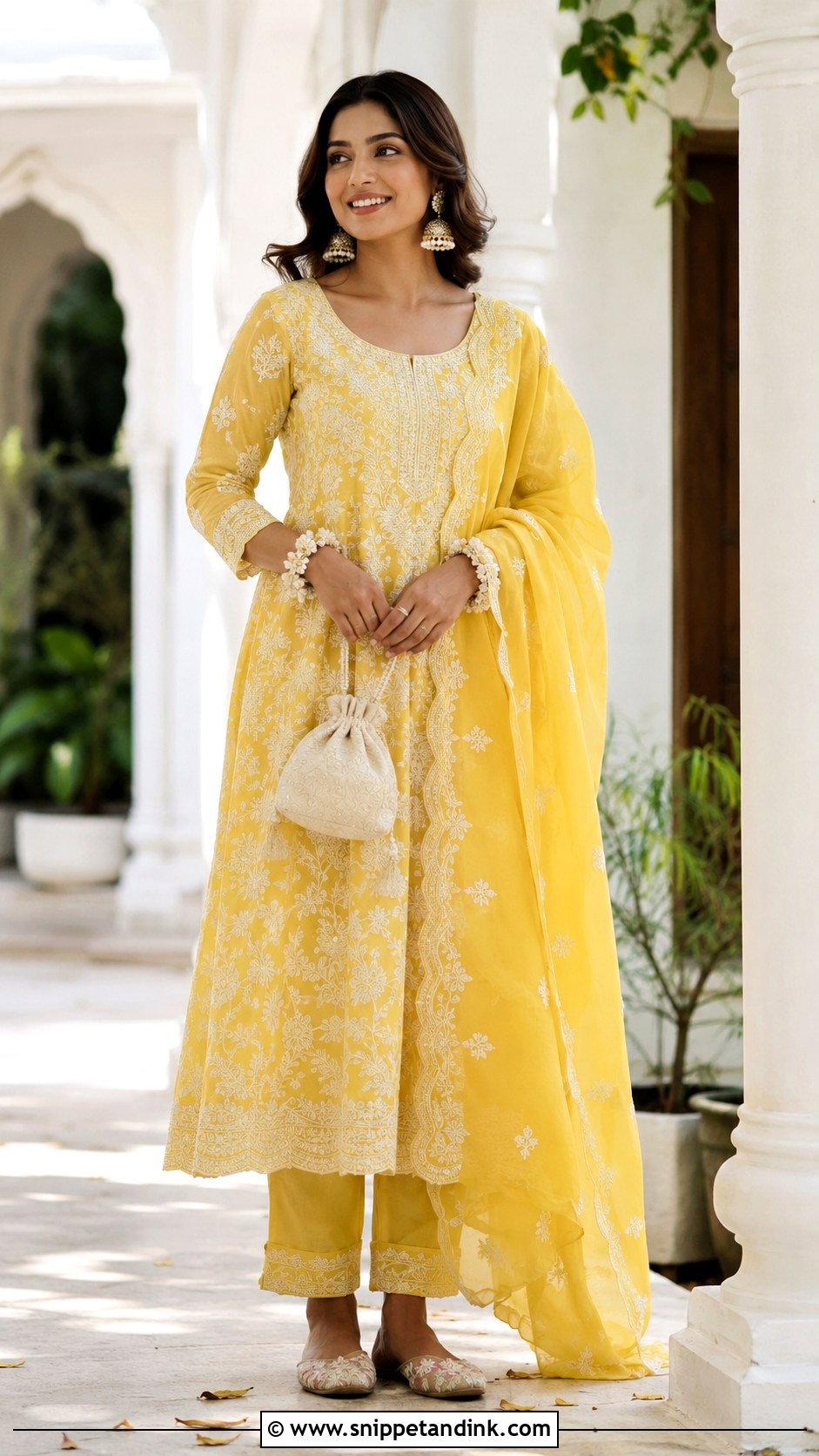
Chikankari is fine hand embroidery, usually on thin cotton or georgette, and that thinness is its weak point at Haldi: wet, unlined chikan goes transparent. Always buy a lined set, which also helps it photograph smoothly in harsh daylight. White threadwork on lemon yellow reads fresh, while tonal thread looks quieter and more grown-up. Style the straight or A-line kurta and ankle-length pants with a scalloped dupatta, pearl jhumkas, white floral bangles, embroidered flats, a low bun and a small ivory potli. I give this one to mothers, older guests and sisters who prefer understatement, and the separates go straight back into everyday wear afterwards.
10. Bandhani Saree Outfit For Haldi
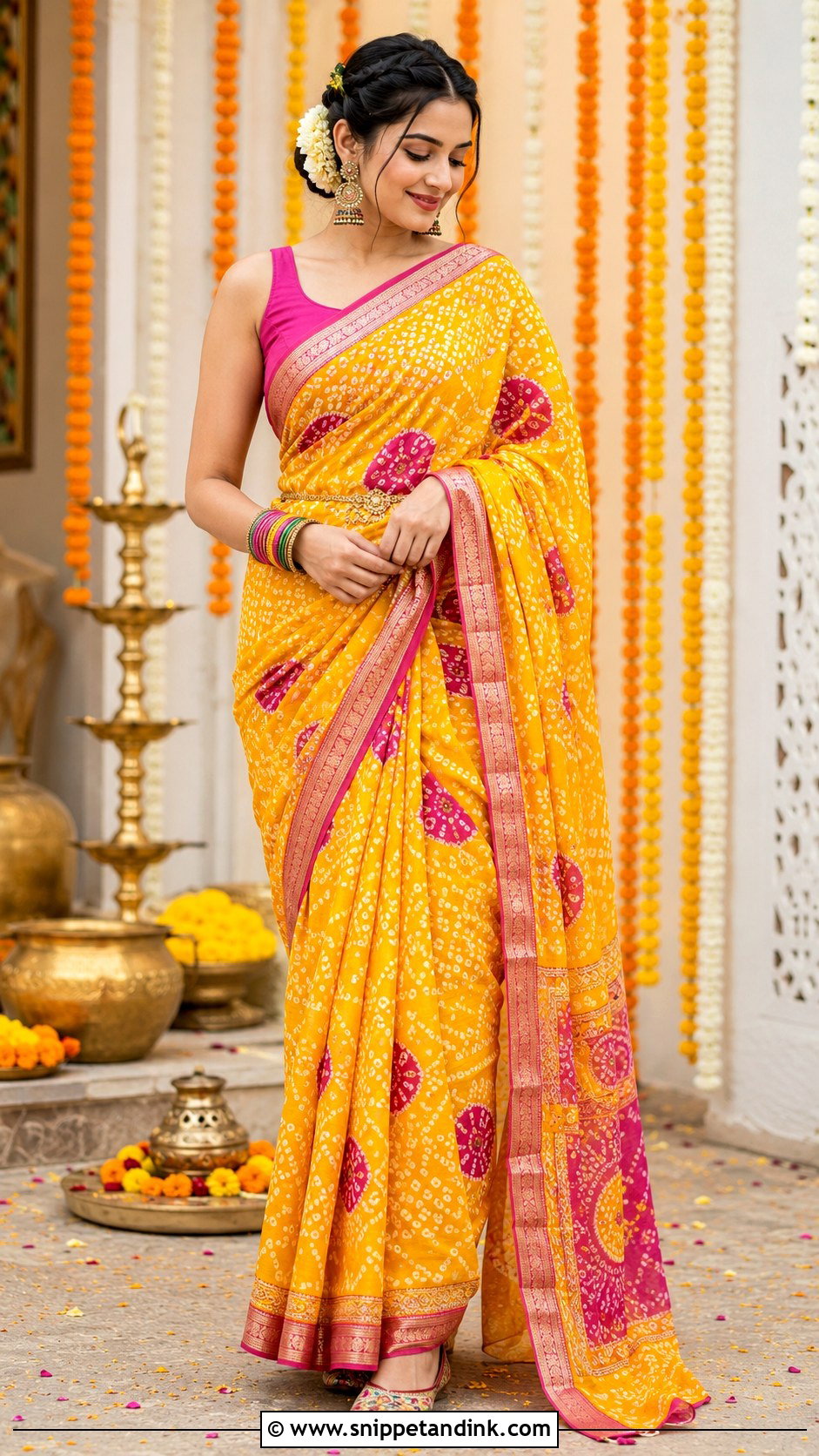
Bandhani is tie-dyed, and cheaper pieces are known for bleeding when soaked, so test a hidden seam with water before the day. A good georgette or silk-blend bandhani with red, pink or green dots gives you real pattern next to everyone else’s plain yellow. Pair it with a solid blouse that repeats one of the accent colors. If you’ll be sitting in the ritual, ask for a shorter, controlled pallu that won’t trail into the paste. Oxidized-gold jhumkas, glass bangles and low juttis suit the handcrafted feel, and a braided bun calms the busy print. Brides can add floral hair pieces and a decorative waist belt, while guests keep it plainer.
11. Yellow Co-Ord Set For Haldi
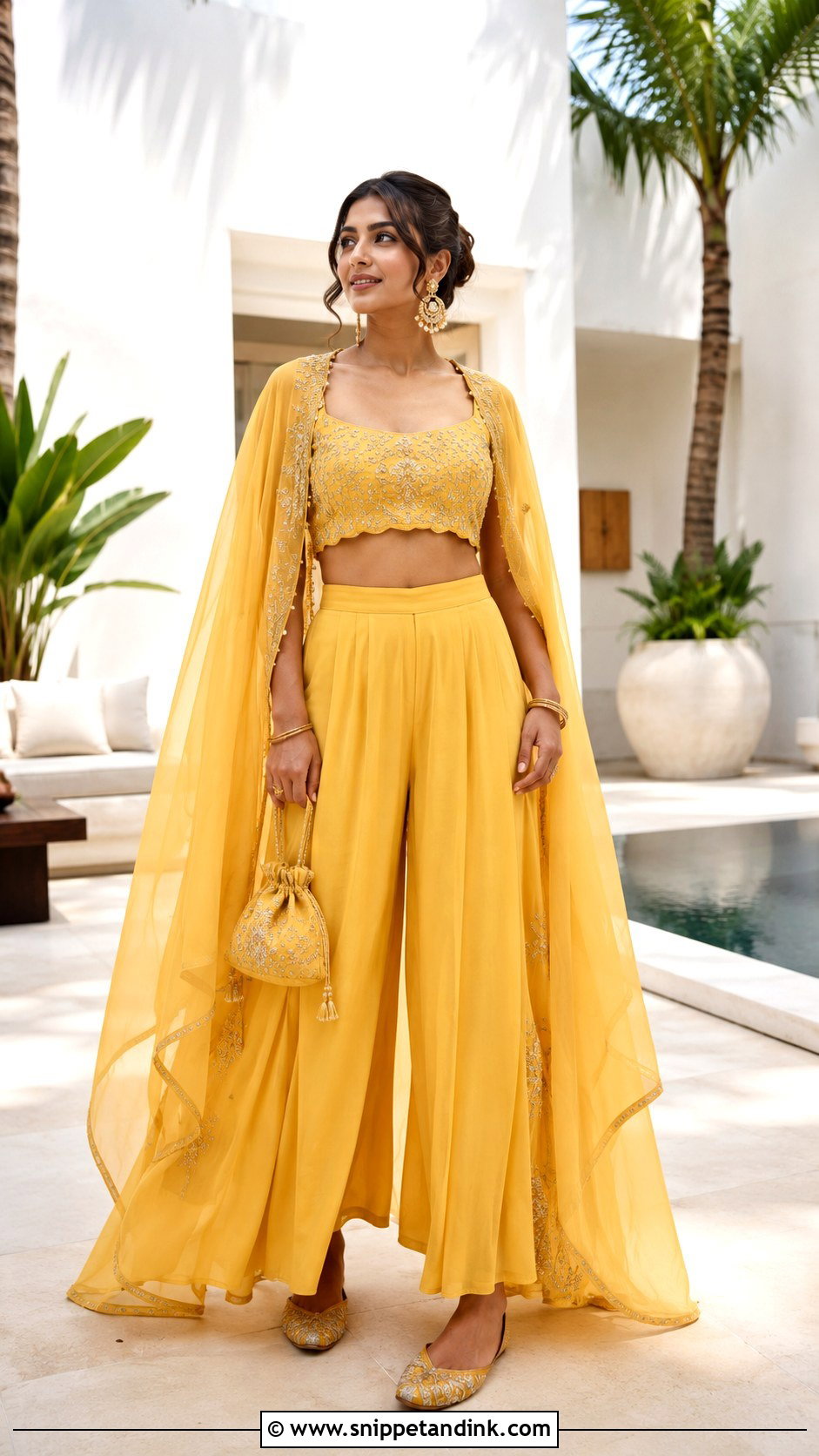
Co-ords are for anyone who doesn’t want to manage a drape at all. A cropped kurta or longline top with high-waisted wide-leg pants and a matching cape gives a clean modern line, and a patterned border or a little mirror work keeps it festive. I hem the pants so they just show embellished flats; any longer and they wick up water from the floor. The cape gives movement in photographs and some arm coverage with nothing to hold. Add sculptural earrings, stacked bangles and a small wristlet. Younger guests and bridesmaids reach for this first, and the pieces carry on as separates long after the wedding.
12. White And Yellow Haldi Lehenga
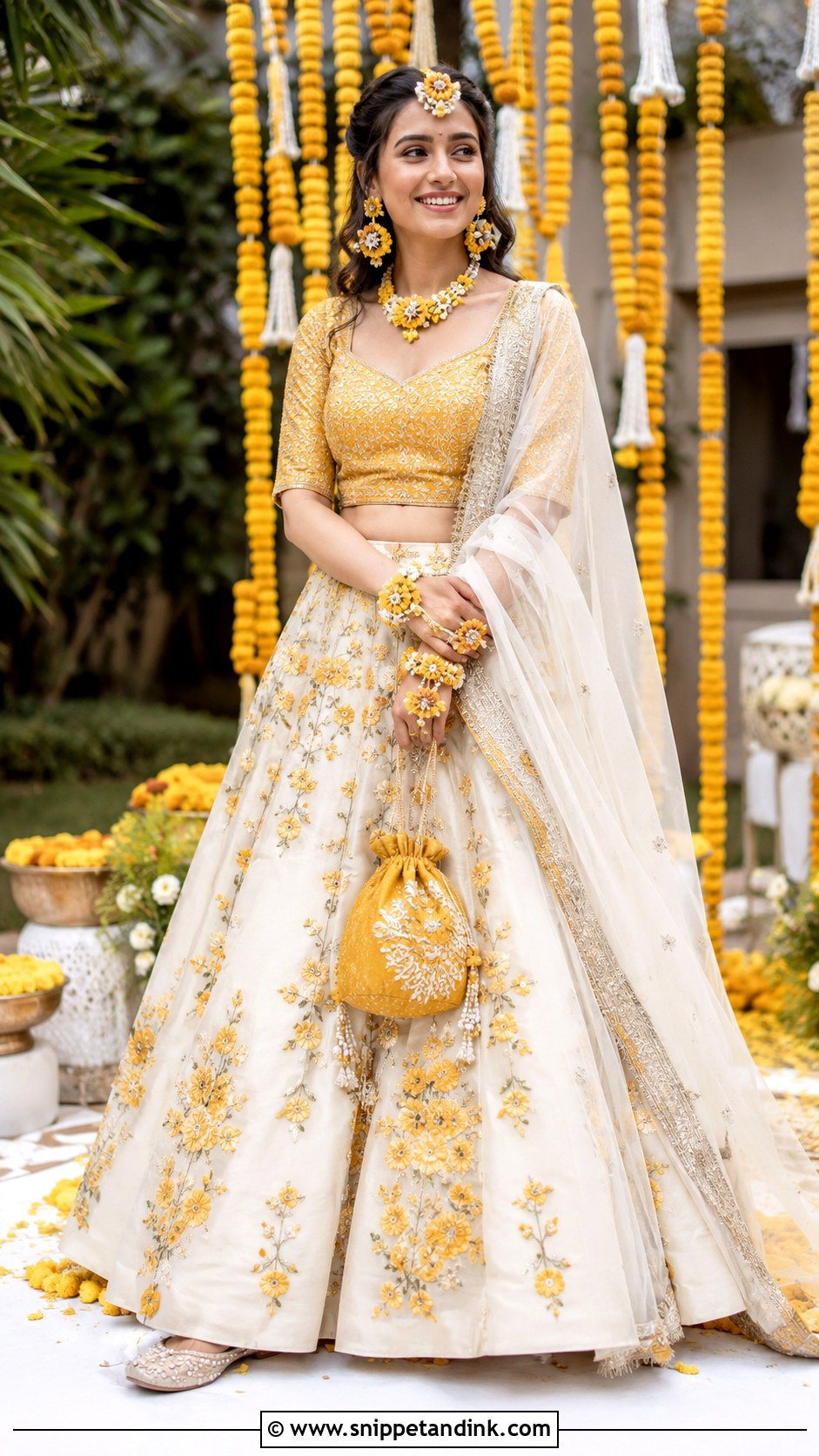
I’ll be honest about this one: ivory and turmeric don’t mix, and a stain on pale fabric is the hardest Haldi stain to shift. Choose it when the family is gentle with application or when you won’t be sitting at the center of the ritual. An ivory lehenga with yellow floral embroidery or marigold-inspired appliqué, a yellow blouse and a light ivory dupatta stands out against a room full of yellow, or you can reverse the colors for a brighter top half. Floral jewelry, pearl-accented juttis and a compact yellow potli finish it. Brides can go bigger on the florals and add a decorated braid; guests should keep the skirt simple.
13. Yellow Ruffle Saree For Haldi
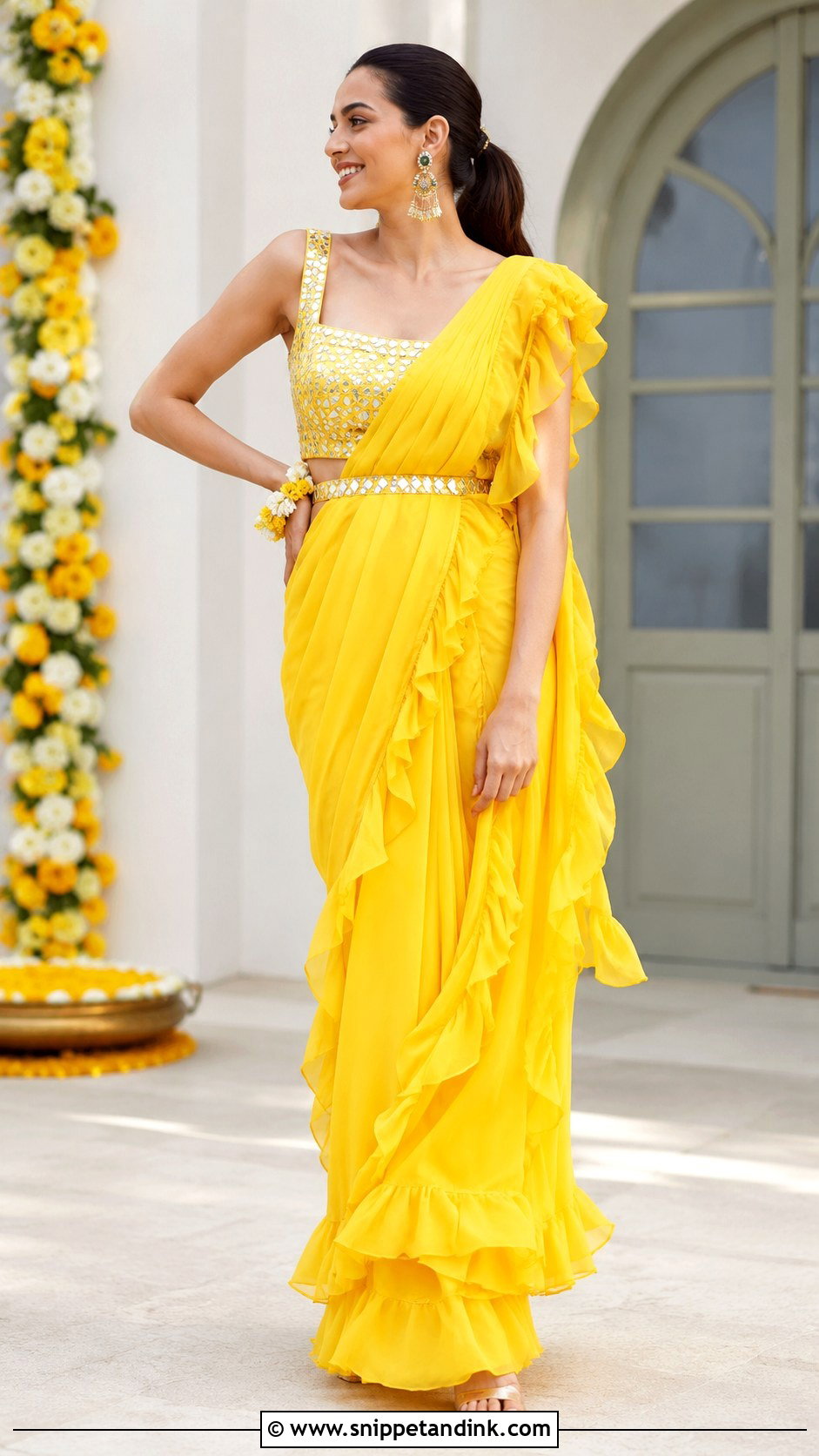
A pre-draped ruffle saree gives you the look of a full drape with a hook or zip instead of pleats, which is a relief when your hands are covered in paste. Chiffon or georgette with soft ruffles along the hem and pallu moves well. Pair it with a fitted blouse, perhaps a square neckline, light mirror work or short puff sleeves. The ruffles already add volume, so I stop at statement earrings, a delicate waist belt and low block heels, with a sleek bun or ponytail. One caution: chiffon ruffles go limp once they’re soaked, so this suits brides and sisters who expect to stay mostly dry.
14. Floral Maxi Dress For Haldi
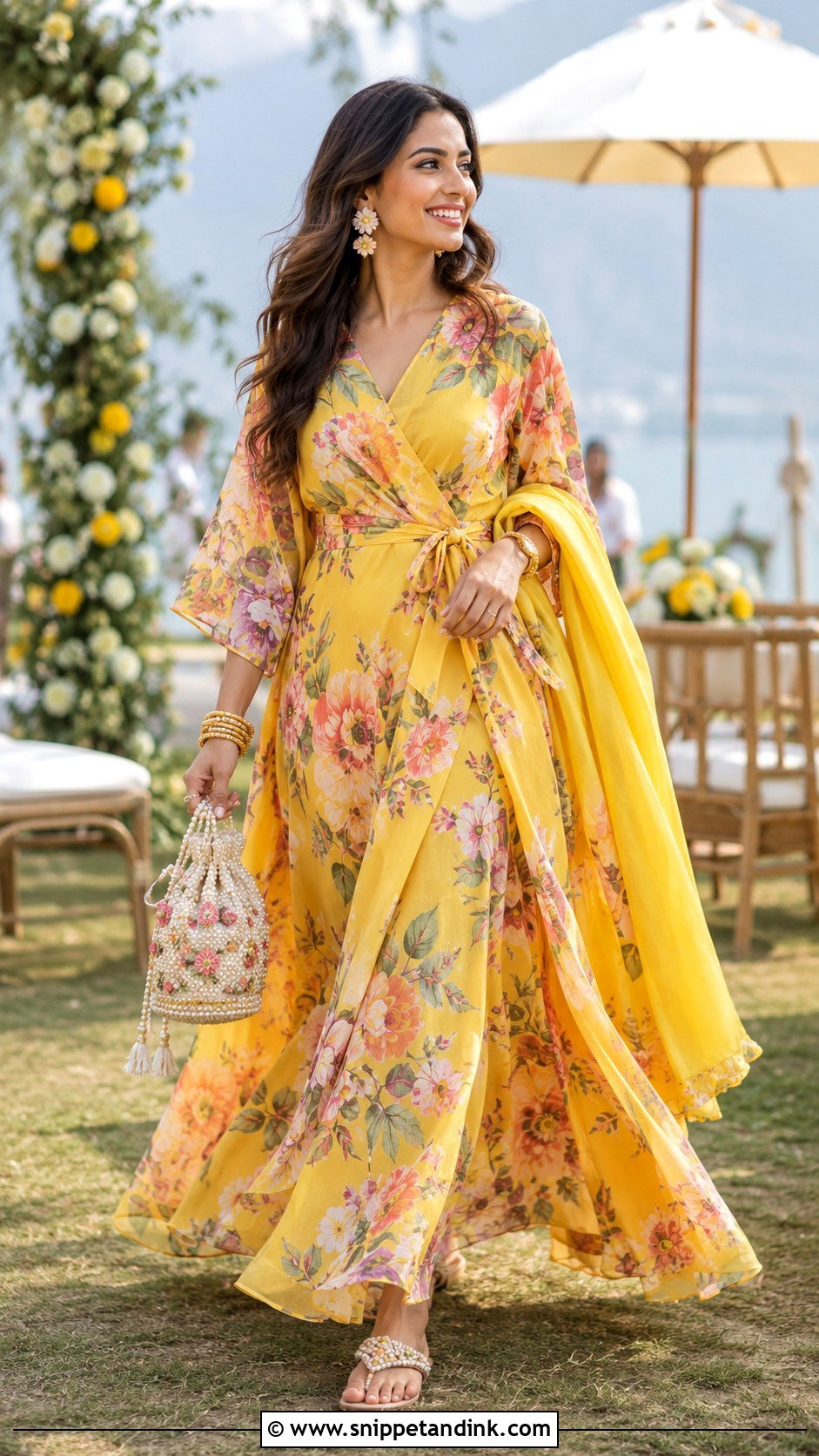
A floral maxi dress is my answer for guests who don’t usually wear sarees or lehengas and don’t want to spend the morning adjusting one. Pick a yellow-based print with a shaped bodice and an ankle-length skirt; flutter sleeves, a wrap neckline or an empire waist give shape without stiffness. Indian accessories do the festive work here: floral earrings, gold bangles, a beaded potli and embellished flat sandals. Add a light yellow dupatta if the family leans traditional, and keep the hem clear of the ground outdoors. It suits destination weddings and garden Haldis where group photos and dancing follow straight on.
15. Yellow Kaftan And Pants Haldi Outfit
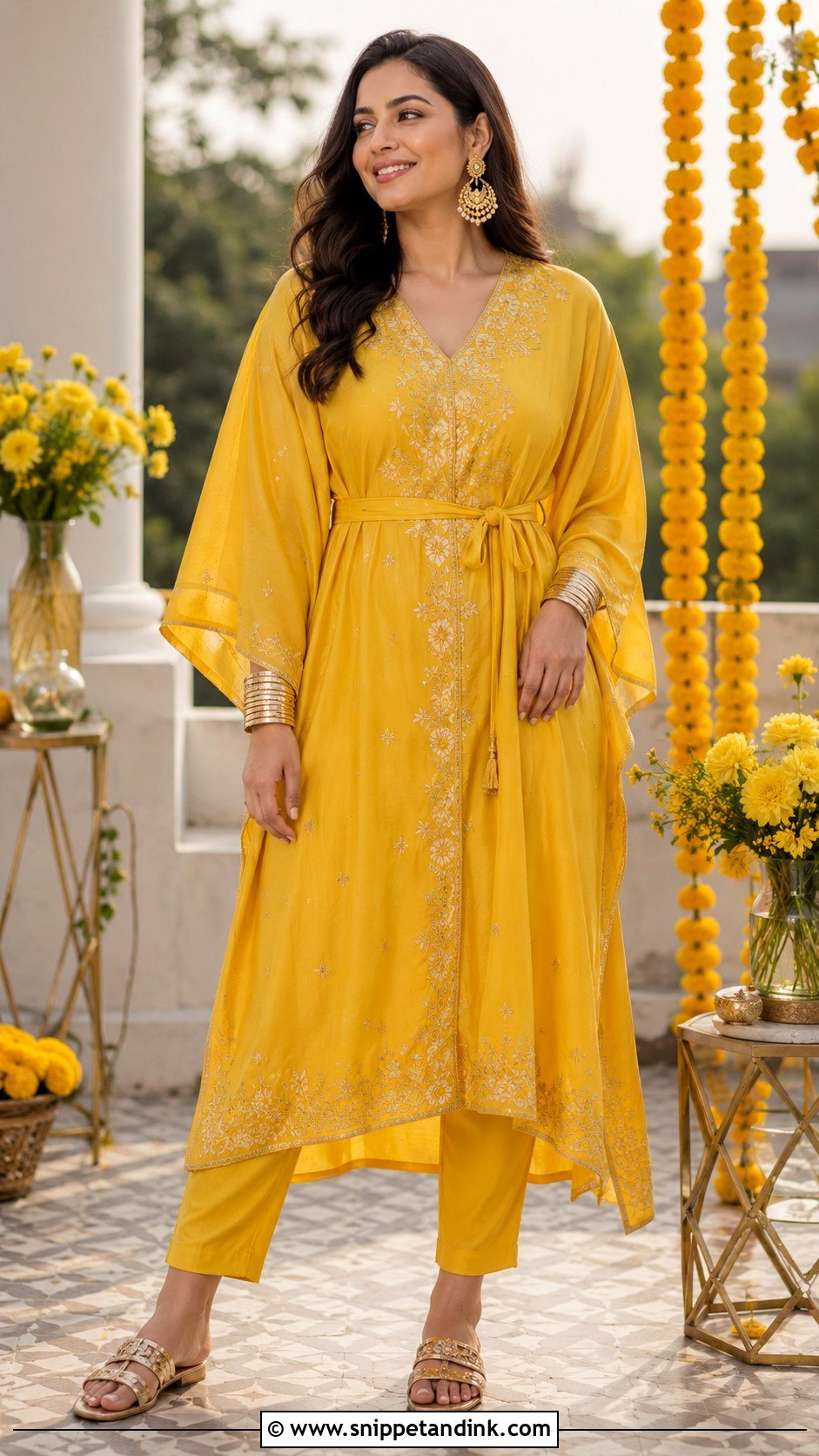
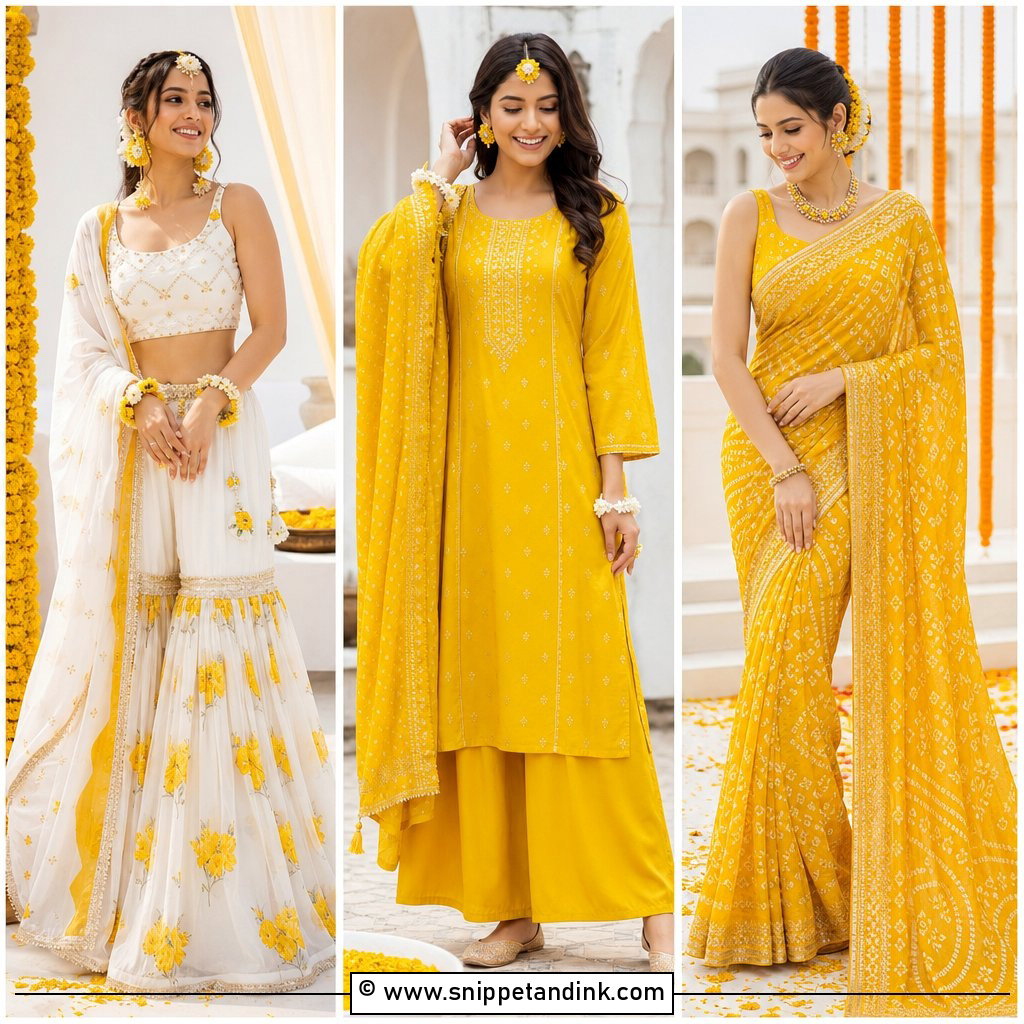
A yellow kaftan over narrow pants is about the most forgiving thing you can wear to a hot Haldi. A knee or calf-length kaftan with side slits and embroidery around the shoulders or center front keeps attention near the face, and slim cigarette pants balance the volume on top. Without that narrow bottom half, the outfit can tip into loungewear. A slim fabric belt adds waist definition if you want it, though it isn’t essential. Big earrings, stacked cuffs and metallic flats finish it. Brides can pick mirror work or a scalloped cape effect; guests do well in printed cotton or light crepe. It’s comfortable on a wide range of body shapes, especially at home, on a terrace or beside a pool.
16. Yellow Jacket And Lehenga Haldi Outfit
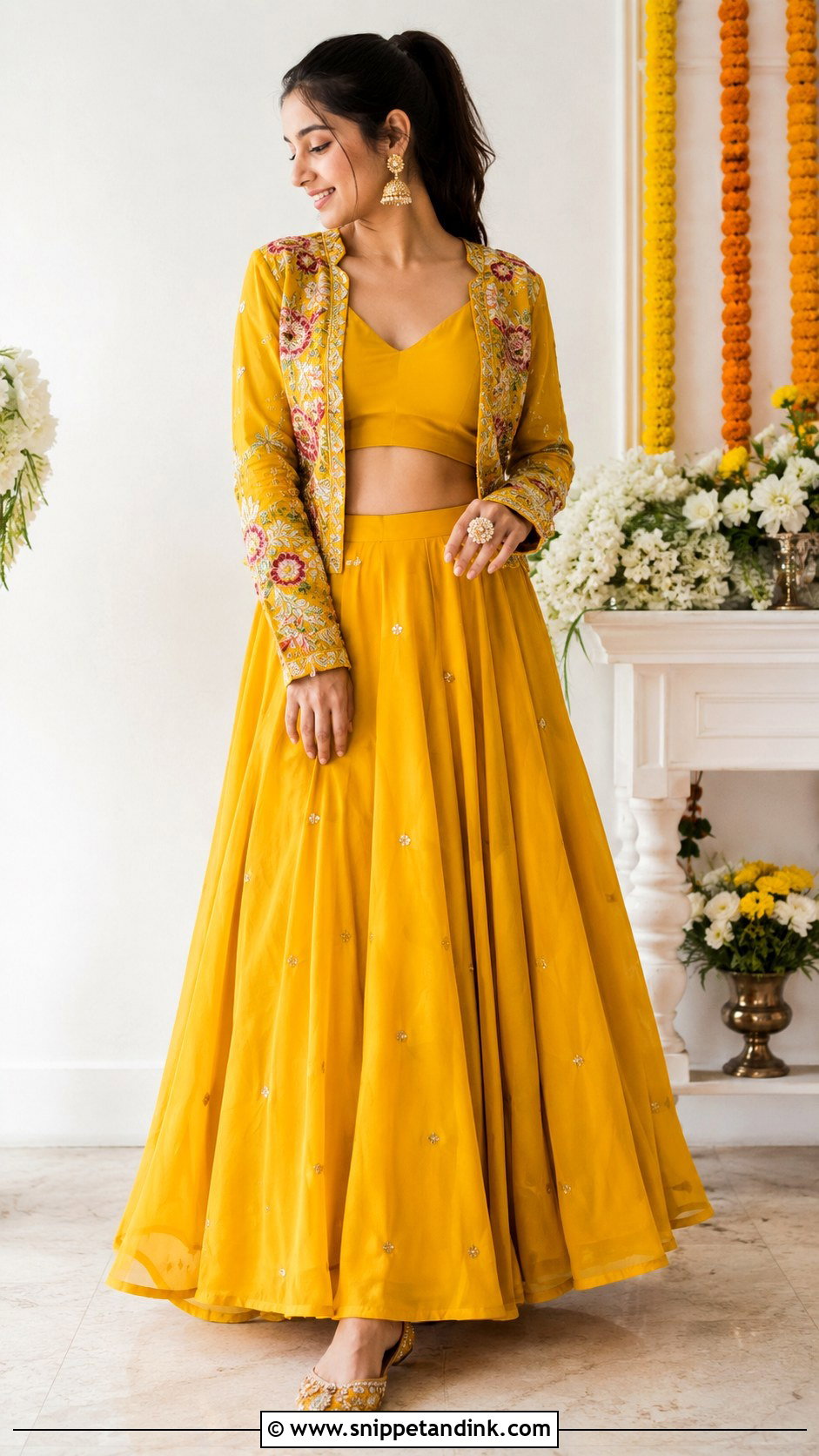
A cropped jacket can stand in for the dupatta, and that’s its real advantage here: nothing slides off your shoulder while relatives apply paste. Start with a simple yellow skirt and fitted blouse, then add a jacket that ends at the waist or upper hip, embroidered with threadwork, small mirrors or gota rather than dense embellishment. Keep the blouse plain so the layers don’t fight. Medium jhumkas, a floral ring, pointed juttis and a high ponytail or side braid show off the jacket’s neckline. I suggest it for cooler mornings or air-conditioned halls; in midday heat a jacket gets uncomfortable fast. Every piece can be worn again on its own.
17. Mustard Gharara Set For Haldi
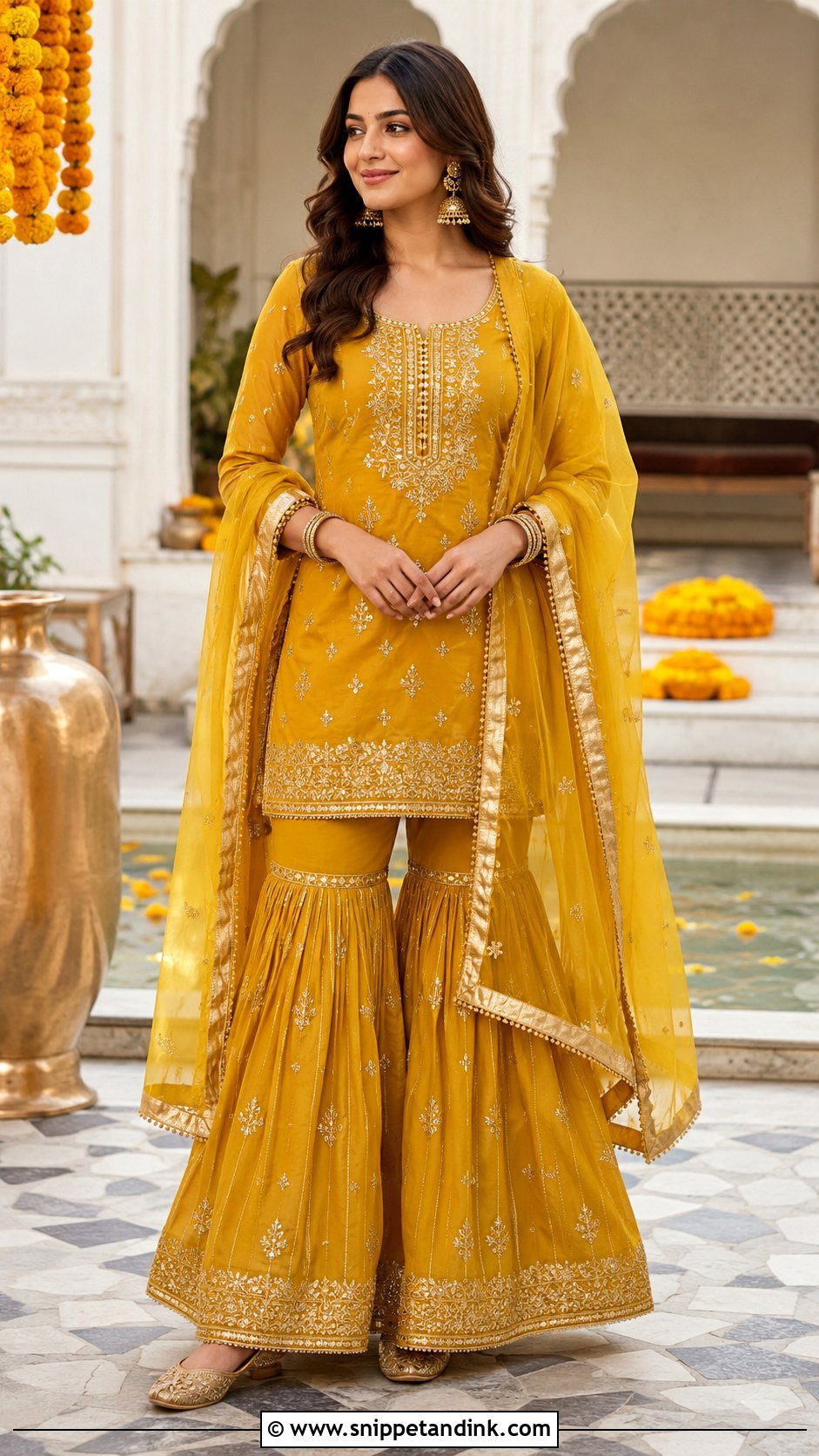
Deep mustard sits next to antique gold far better than bright lemon does, and it hides turmeric marks because the two colors are so close. A gharara flares from the knee, so check where that joining seam lands on your leg before alterations; it should sit at or just below the knee, or the proportions look off and the hem drags. Pair it with a slightly fitted short kurti and a light dupatta with a narrow gota border. Antique-gold jhumkas, coordinated bangles, embroidered juttis and a center-parted bun or soft braid keep it classic. Brides can choose heavier embroidery, and relatives can wear a simpler woven or printed version of the same idea.
18. Yellow Corset Lehenga For Haldi
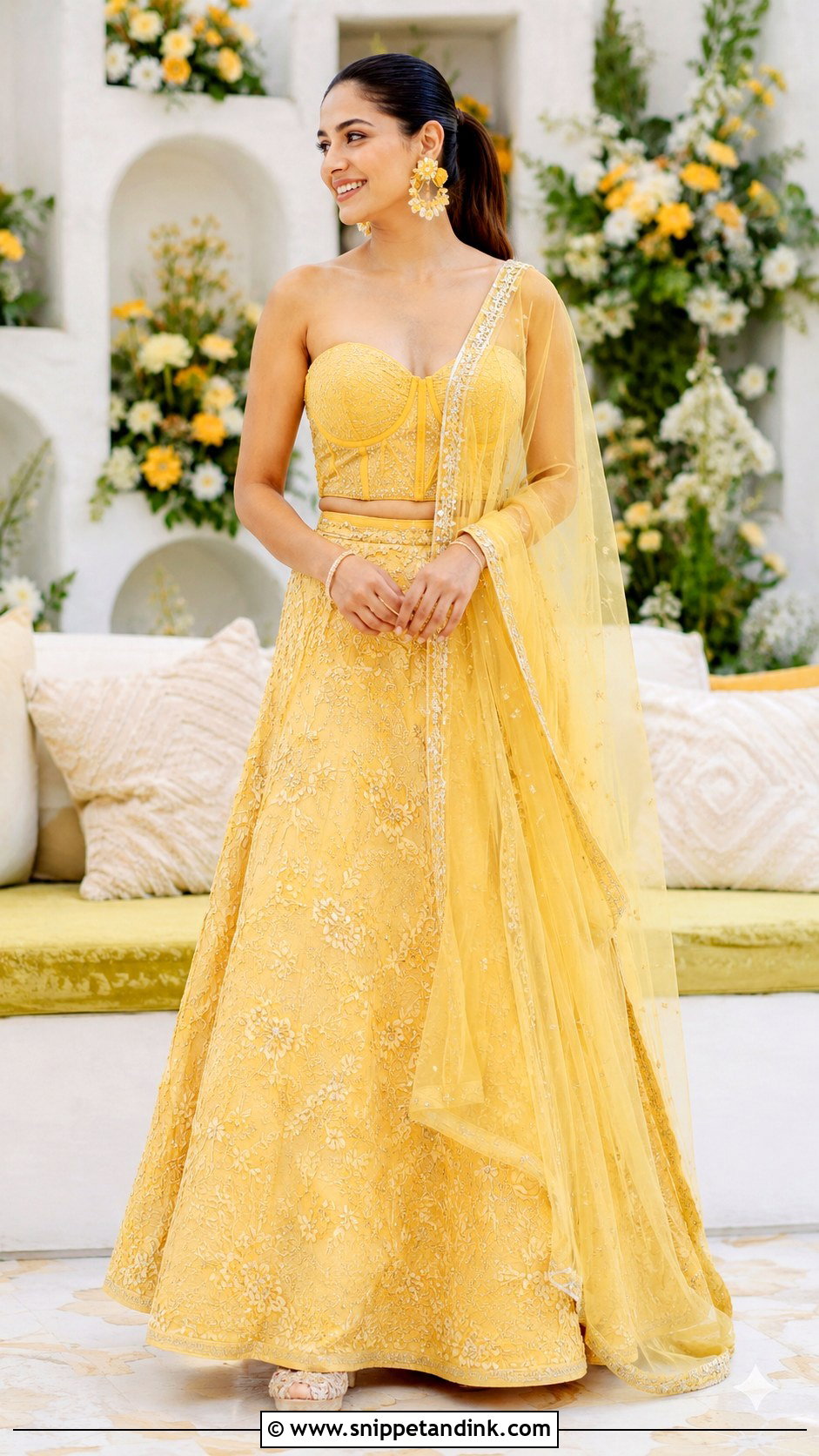
Corset blouses need a proper fitting, not a size chart. The boning should support you without digging in when you’re seated, the straps need to hold, and you must be able to breathe and lean forward for the ritual. Pair the blouse with a light, high-waisted skirt in tonal embroidery or small mirrors, and drape a sheer dupatta over one shoulder only if it’s pinned well. Floral drop earrings, slim bangles, platform juttis and soft waves or a sleek ponytail suit the shape. Fusion-minded brides are drawn to it, but I steer anyone away from a corset cut tight for a long ceremony. A squeezed ribcage two hours in isn’t worth one photo.
19. Yellow Patiala Suit For Haldi
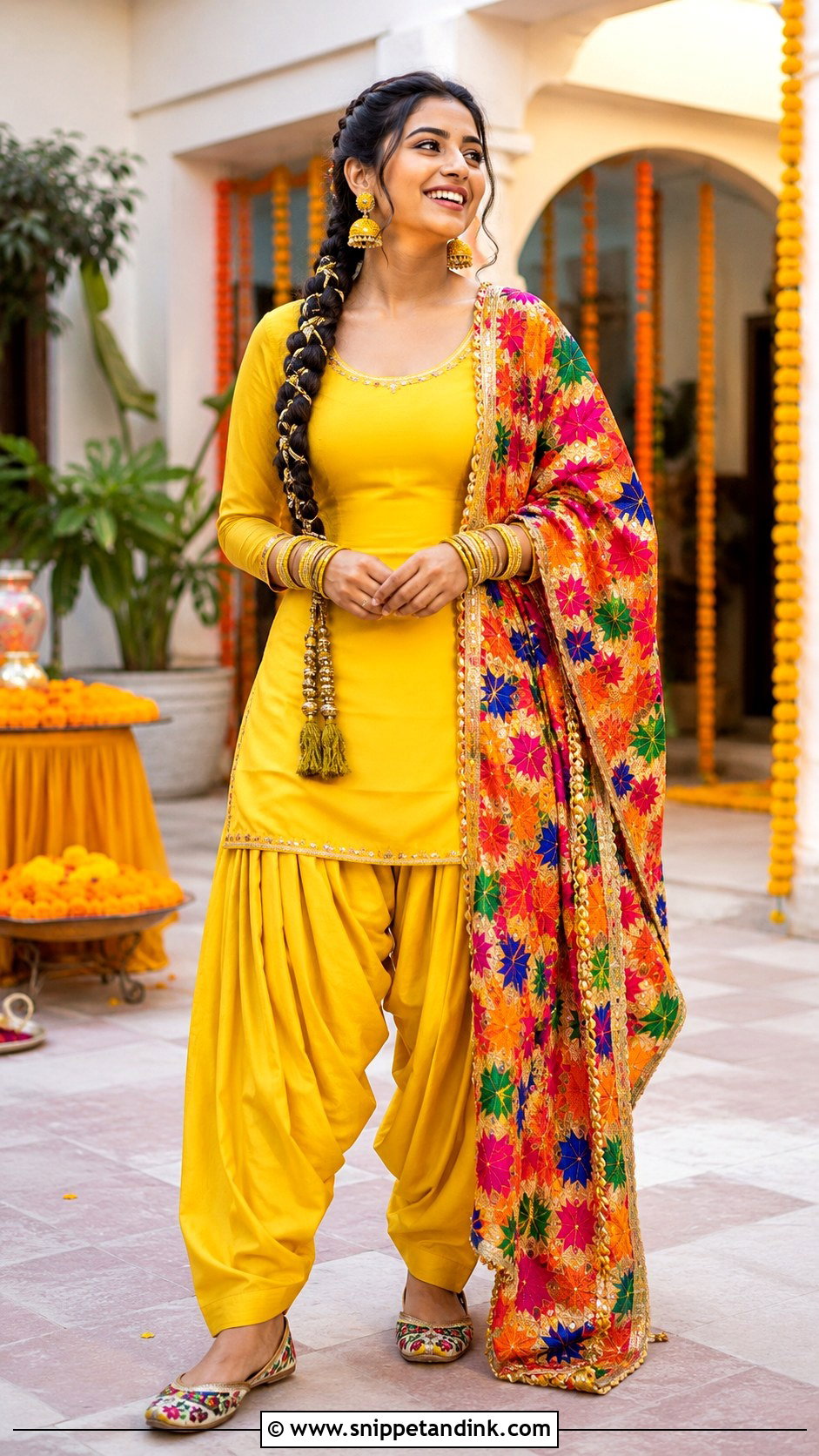
A yellow Patiala suit gives you Punjabi energy and more freedom of movement than almost anything else here. The deep pleats need fabric with some body to hold them, so I go for cotton silk or crepe over limp viscose. Pair a fitted mid-thigh kurti with the Patiala and a phulkari or printed dupatta. Colorful jhumkas, bright bangles, a paranda braid and Punjabi juttis complete it. A longer kurti gives coverage; a shorter cut shows off the pleats. Bridesmaids can coordinate dupatta shades over a shared yellow base, and the suit adapts across ages through neckline, sleeve length and embroidery.
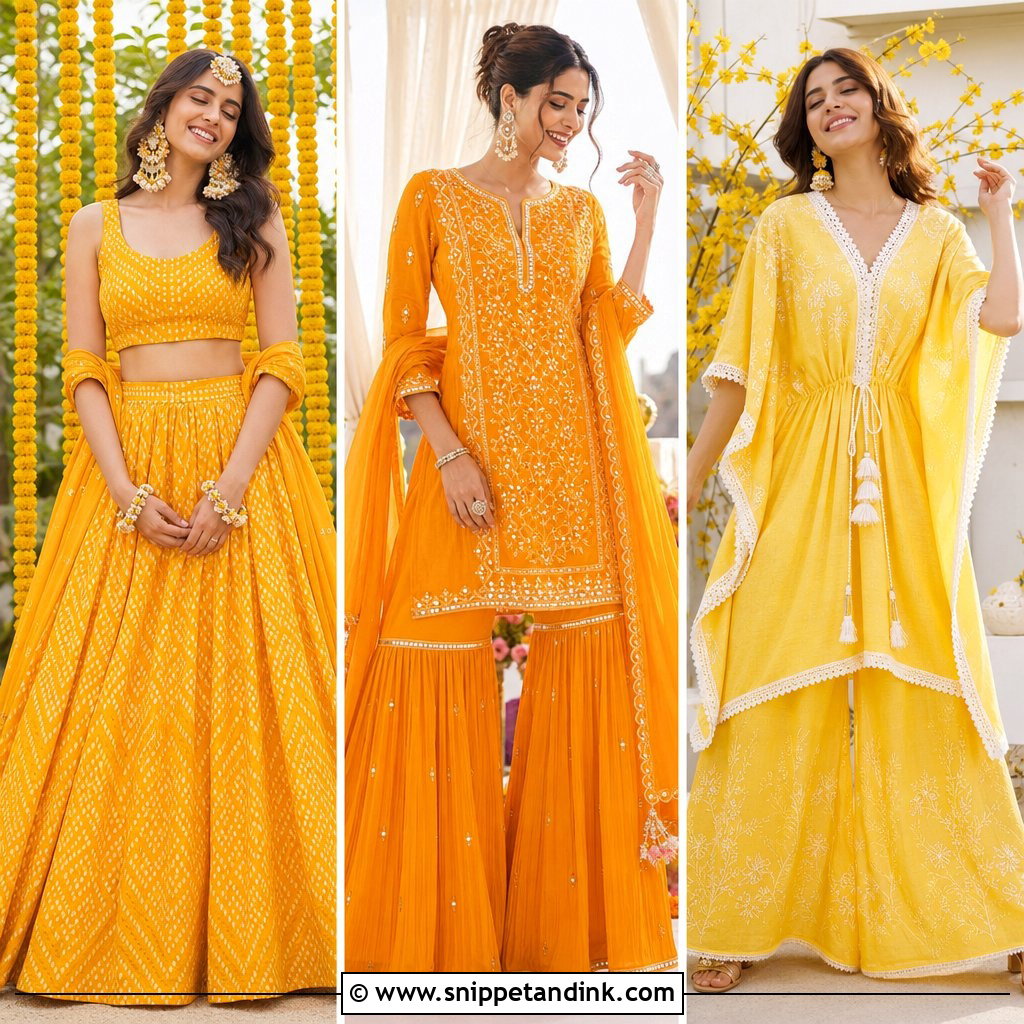
20. Yellow Skirt And Cape Haldi Outfit
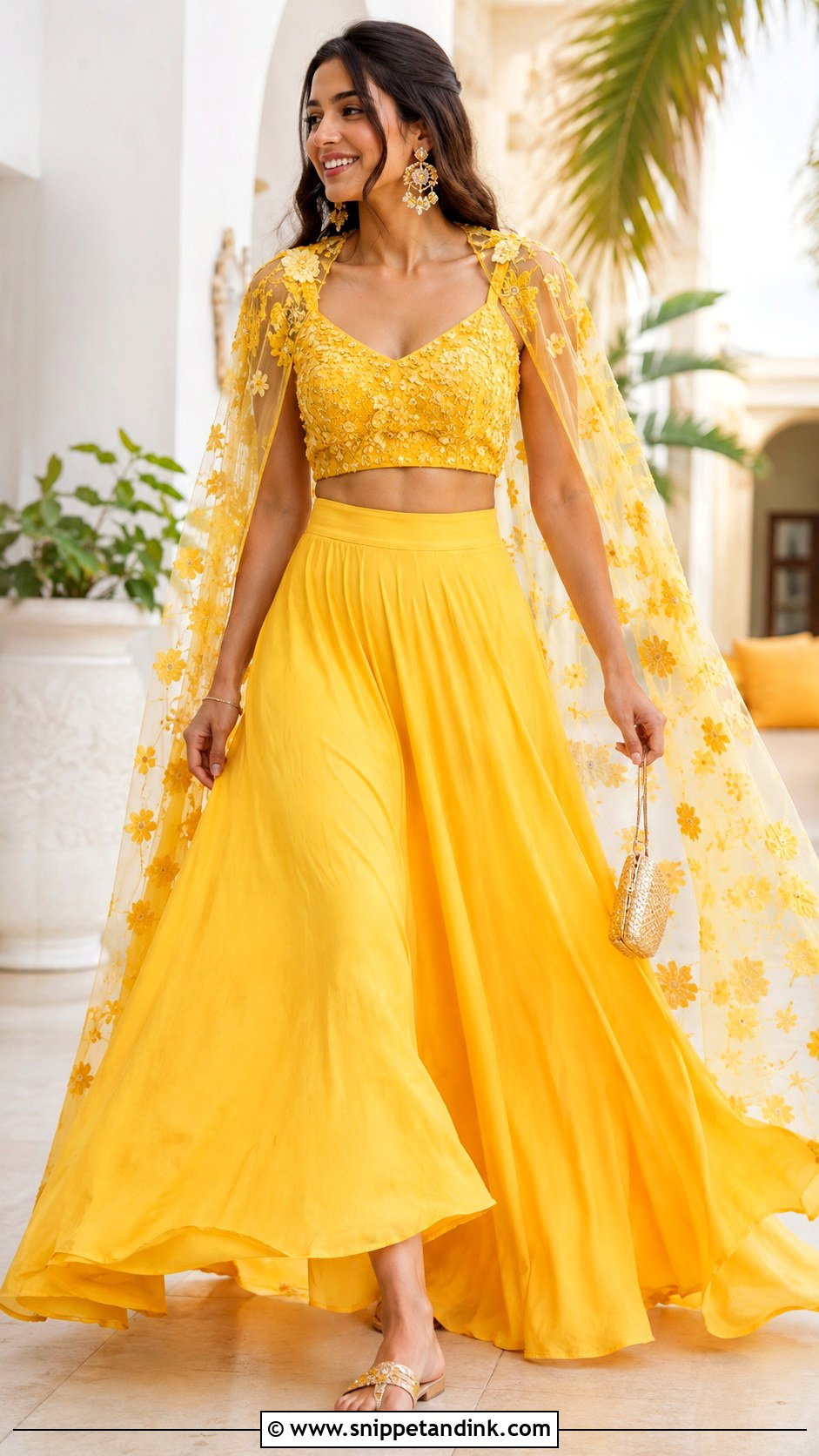
A high-waisted yellow skirt, a fitted sleeveless blouse and a sheer cape give you fusion polish with nothing to drape. Capes come hip-length or floor-skimming, and at Haldi I prefer the shorter one, since a long cape trails through paste and spilled water. Floral appliqué, scattered mirrors or an embroidered border carries the festive detail. Long earrings, a slim bracelet and metallic flat sandals are enough, with a wristlet or potli instead of a bag. A smooth ponytail or softly pinned waves keep the cape in focus. Brides, sisters and guests can all wear it by adjusting the amount of decoration, and the cape moves nicely in photos without any drape to manage.
Turmeric Stains Afterwards, and When to Hand Them Over
The first hour
Scrape off dried paste with a blunt knife before anything touches water. Then run cold water through the back of the stain so the pigment is pushed out of the weave rather than deeper into it. Hot water sets turmeric, and so does rubbing.
Cotton and washable blends
Work a little liquid dish soap into the mark and rinse cold. Don’t panic if the yellow turns reddish brown when the soap hits it; turmeric changes color in alkaline conditions and usually shifts back as you rinse. Then dry the piece in direct sun. Sunlight fades turmeric better than most stain products, and a faint mark on cotton will often be gone after a day on the line.
Silk, embroidery and anything with mirrors
Don’t scrub, don’t bleach and don’t machine wash. Blot, lay it flat to dry, and get it to a dry cleaner within a couple of days, telling them it’s turmeric and which oil was in the paste. Old stains are far harder to lift, and some on pale silk never fully clear, which is one more reason I put ivory outfits on the people standing at the edge of the ritual.
Dress for the Paste First, the Photos Second
Yellow is only half the brief at Haldi. The other half is getting through the morning: paste on your arms, water on the floor, sitting low for the ritual and dancing straight after. Lehengas, shararas, sarees, Anarkalis, fusion separates and floral dresses can all work if you think about the venue, the weather and your role in the ceremony before you decide how much embroidery and volume to take on. Brides can carry floral jewelry and heavier work; guests do better with lighter pieces they’ll wear again. Wear the silhouette that supports your body, then make it yours through color, tailoring and accessories.
You'll Like These Ideas:




Leave a Reply