
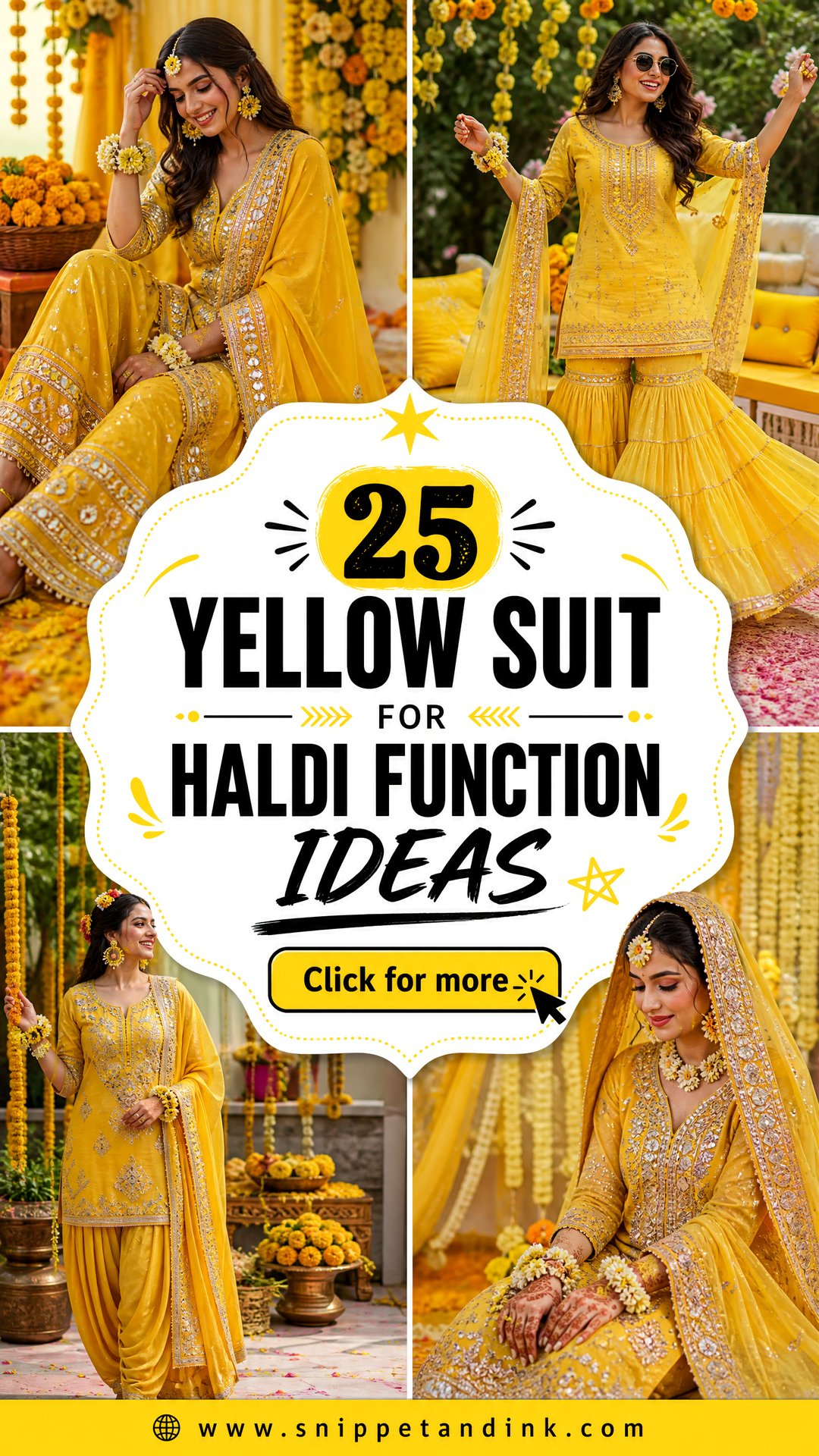
A yellow suit is the most practical way to wear the haldi color: a kurta, a bottom and a dupatta, with nothing that needs someone else to drape you at dawn. Most of my haldi fittings come down to three questions. How does the kurta behave when you sit, how do the bottoms move when you dance, and where will the dupatta go once the paste comes out? The 25 suits below run from simple cotton kurta sets to mirror-work shararas, Anarkalis, palazzo suits and jacket sets, for brides, bridesmaids, sisters, cousins and guests, with what I’d check on each one before you buy.
Unstitched or Ready-Made? Getting the Suit Stitched in Time
A lot of yellow suits are sold unstitched, as a kurta length, a bottom length and a dupatta, which means a tailor becomes part of your timeline. Tailors fill up fast in wedding season, so I tell clients to hand over fabric at least a month before the haldi, earlier in peak months, and to plan for one trial fitting.
What I ask the tailor for
- Side slits that start at the hip and a little ease through the seat, because you’ll be sitting on the floor.
- Armholes cut slightly deeper and room at the elbow, since your arms will be up for hugs, dancing and paste.
- A light cotton lining under pale yellow, which stops it turning see-through in sun. Polyester lining feels hot.
- Bottoms hemmed in the exact shoes you’ll wear, not barefoot.
Ready-made suits skip the wait but rarely fit at the bust and shoulder straight off the rack. Buy with at least a week to spare for alterations, and sit down in it before you cut the tags.
1. Yellow Anarkali Suit For Haldi Function
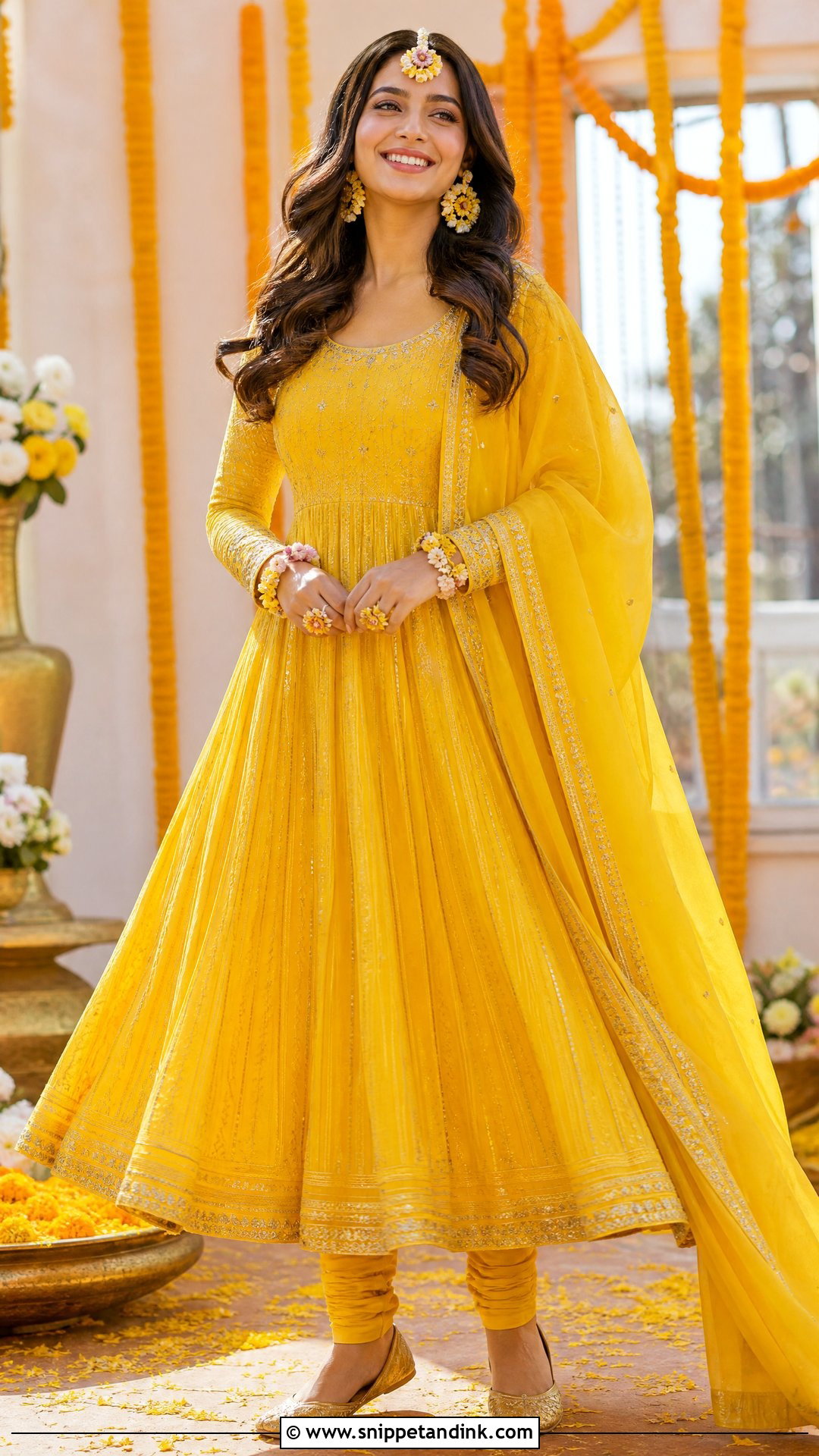
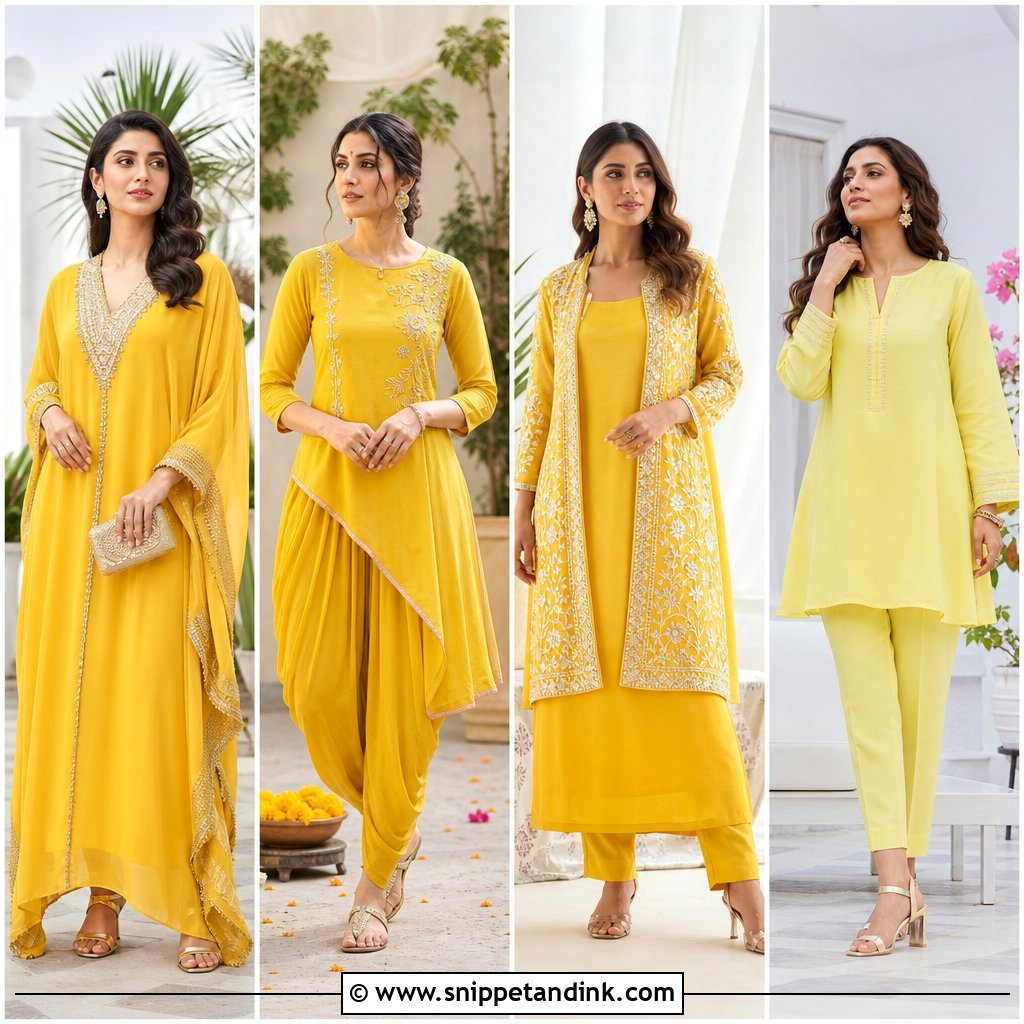
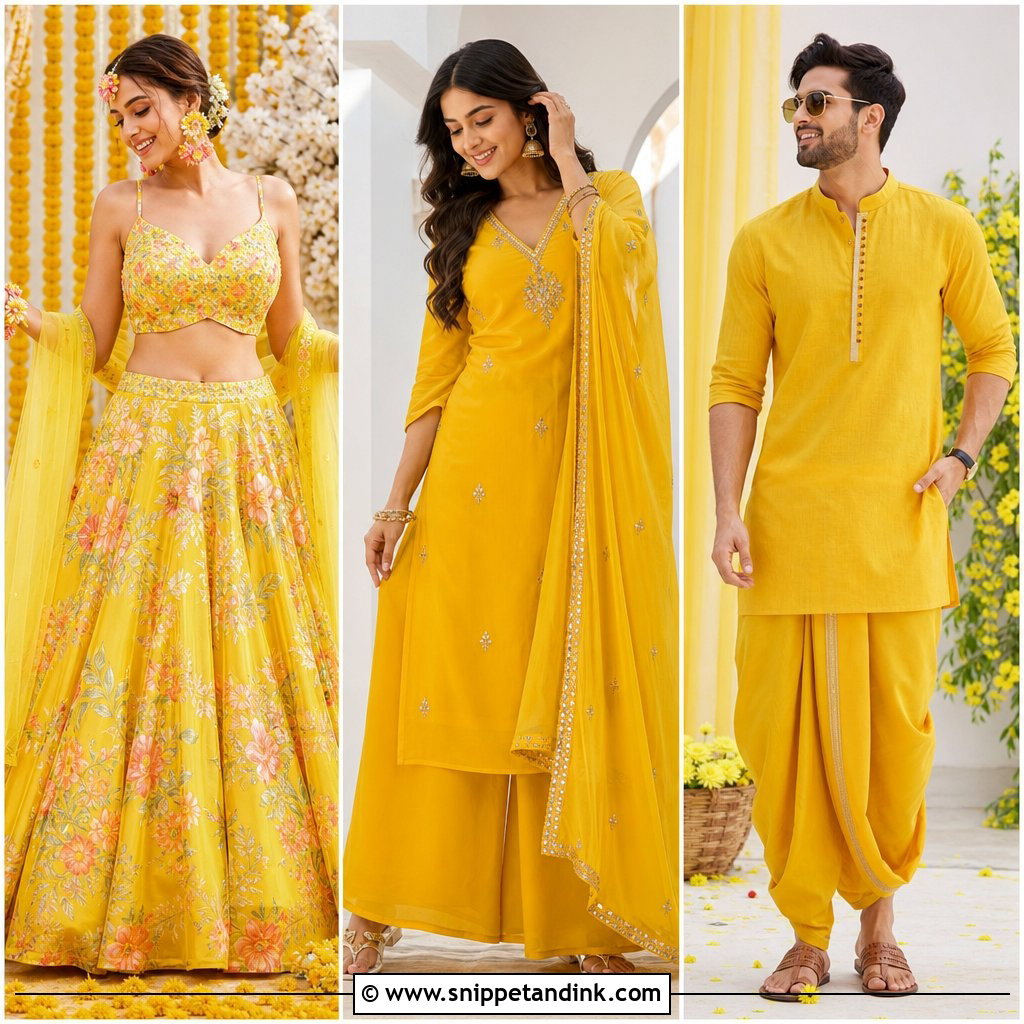
Most of the movement in a yellow Anarkali suit comes from the number of panels, and for a haldi I’d go for a moderate flare in cotton silk or georgette rather than a full circle. Organza Anarkalis stand out stiffly and crush when you sit on the floor. Keep the embroidery to the neckline and sleeves, where the camera looks, and choose slim churidar or narrow trousers so the kurta stays the focus. A dupatta with a thin gota border, floral jewelry, gold juttis and soft waves or a low bun finish it. It suits a bride who wants a traditional look, and close family who want to look polished.
2. Yellow Sharara Suit For Haldi Function
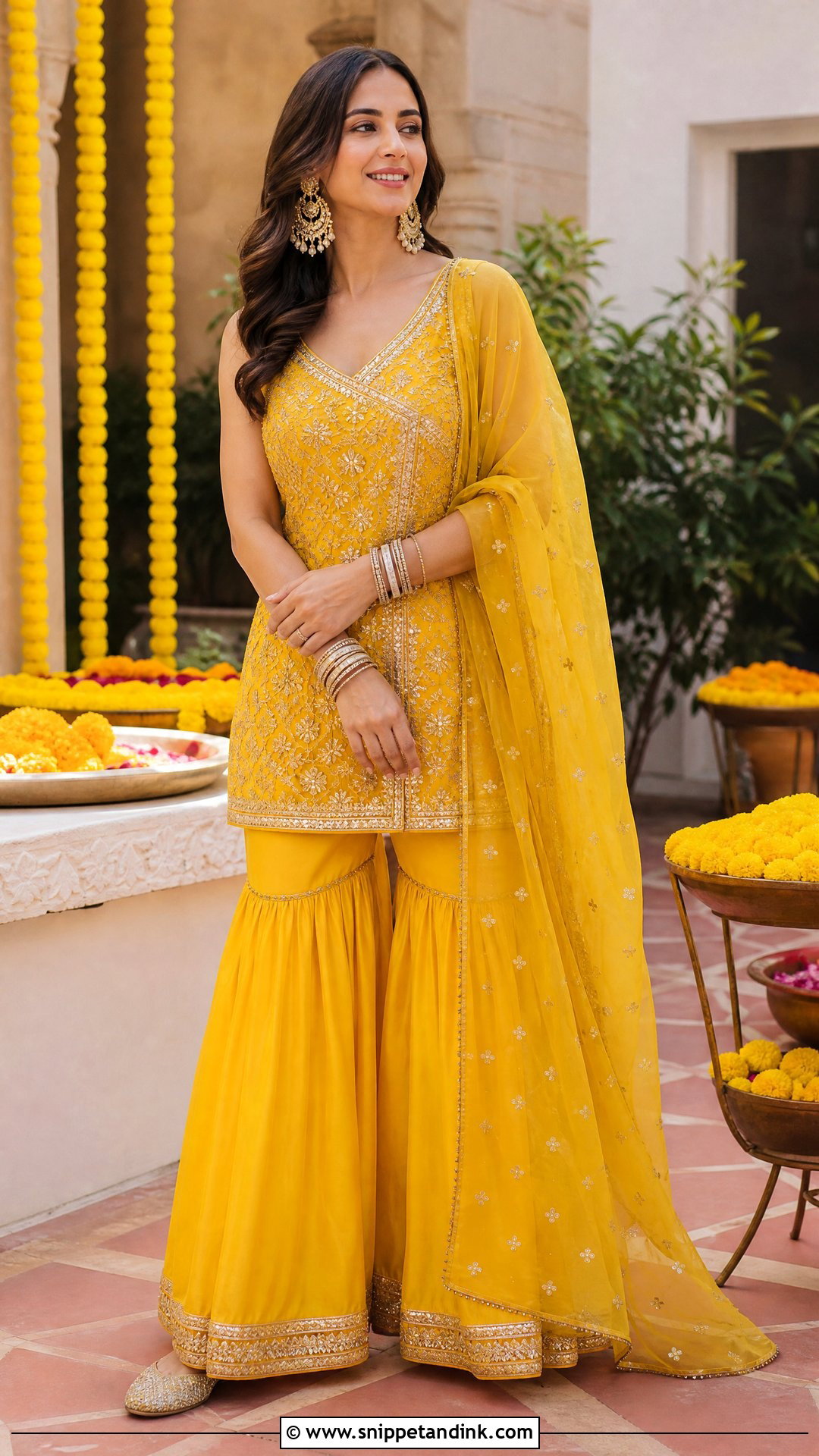
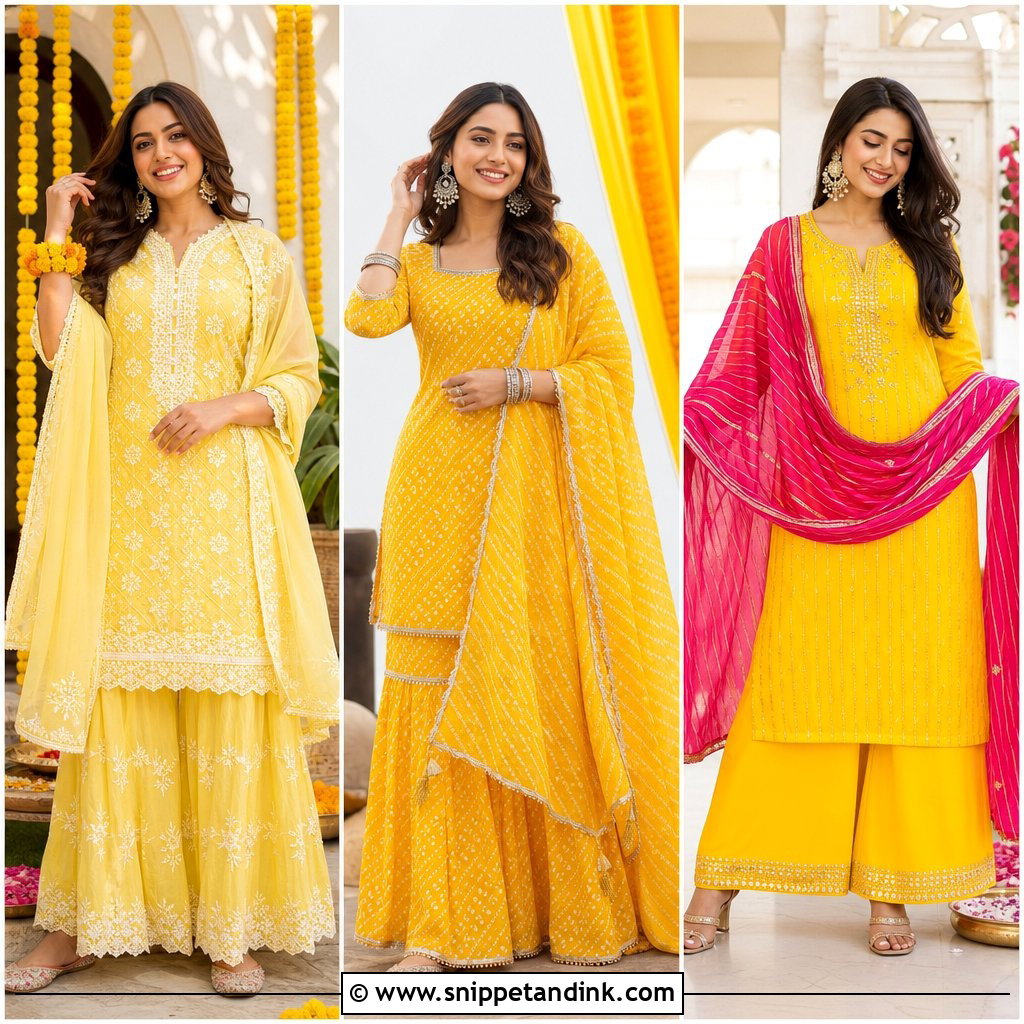
Go light on the embellishment here. Small mirrors, thread work or tiny florals shine in daylight without tipping the outfit into bridal territory, which matters if you’re a sister or cousin rather than the bride. The wide bottoms carry the drama while the short kurti keeps you moving. I’d drape a chiffon dupatta over one shoulder rather than net, which scratches bare arms, so your hands stay free for the ceremony. Chandbalis, bangles and embellished flats complete it.
3. Yellow Palazzo Suit For Haldi Function
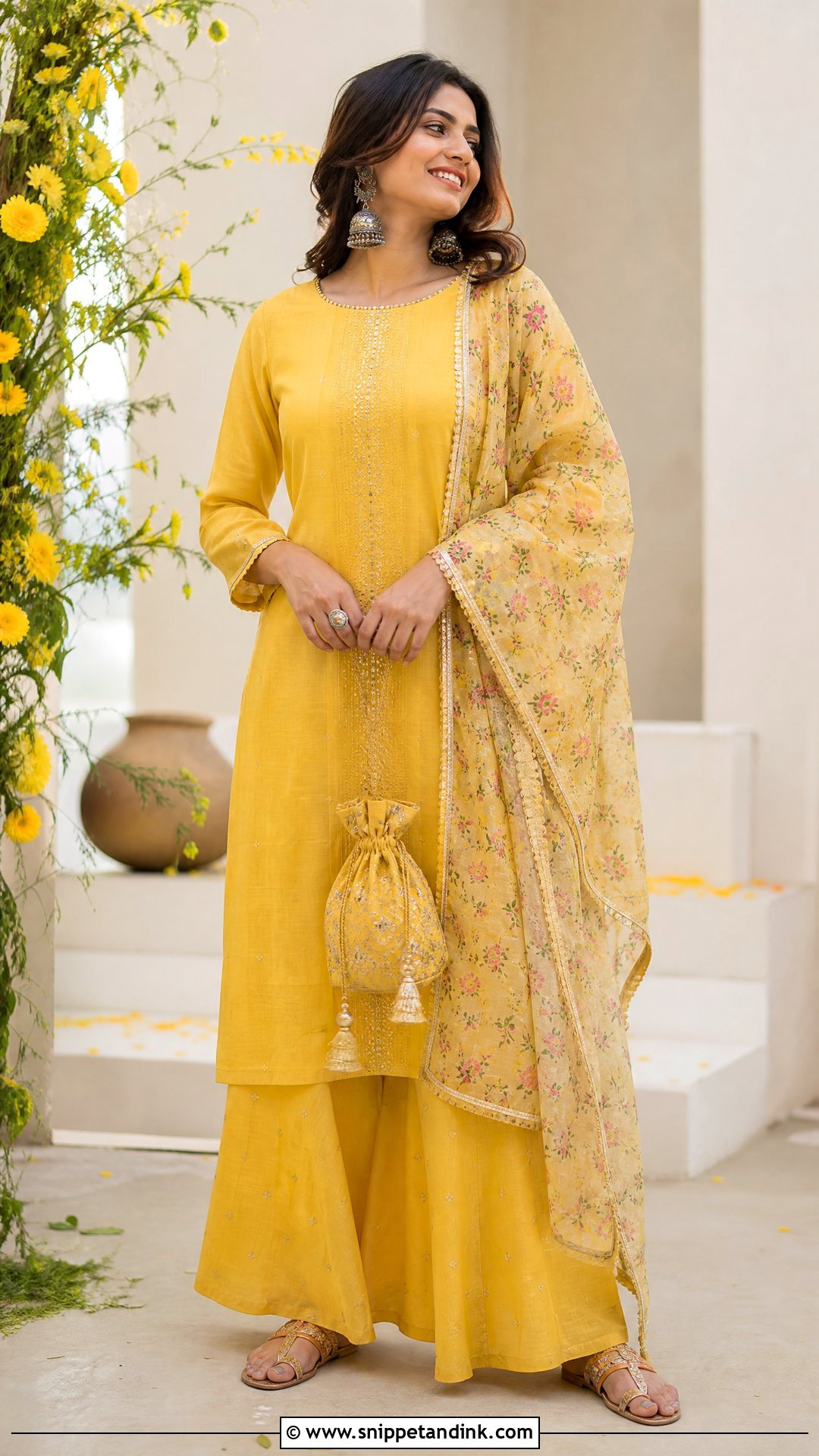
When a bride’s sister tells me she’ll be on her feet from early morning until lunch, I hand her a palazzo suit. The relaxed pants mean you never adjust anything when you sit or bend to greet elders. Pick a straight or slightly flared kurta with printed, embroidered or gota detail, and a light dupatta in the same yellow or a soft ivory. Watch the palazzo length: it should just graze the top of the foot in flat kolhapuris, or it will trail through paste. Oxidized earrings and a sleek ponytail or loose curls suit the relaxed feel.
4. Yellow Straight Kurta Suit For Haldi Function
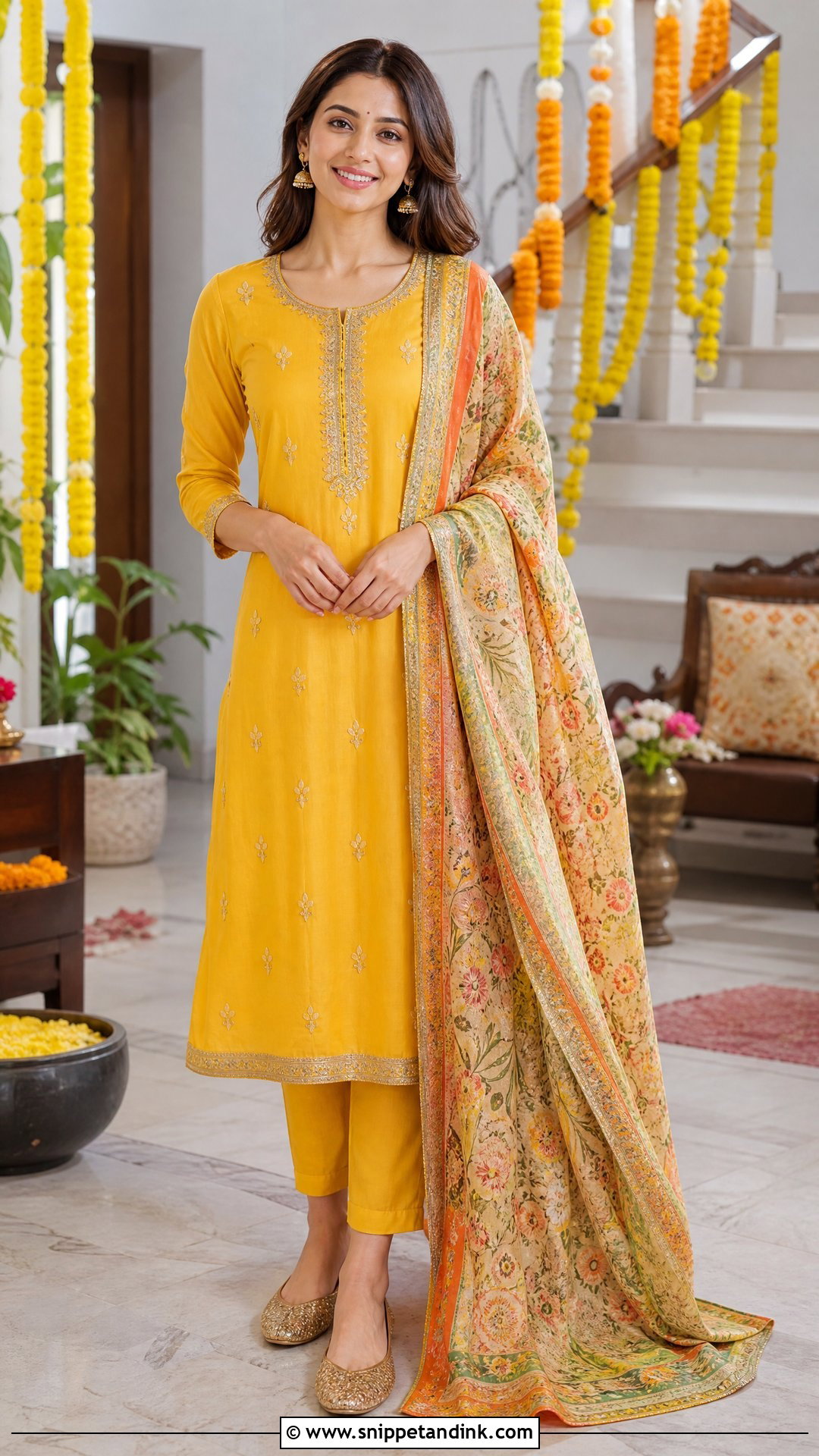
Clean tailoring is what makes a plain straight kurta look expensive. At the fitting I look at three spots. The armhole should let you raise your arms without the hem lifting, the side slits should start around the hip so you can sit without straining the seams, and the shoulder seam should sit on the shoulder bone. Knee or calf length both work. Lace trims, tiny mirrors, block prints or tone-on-tone embroidery add the festive touch, and a printed dupatta with hints of orange or green brings in color. Add juttis, a potli and minimal gold, and you’ll wear it long after the wedding.
5. Yellow Chikankari Suit For Haldi Function
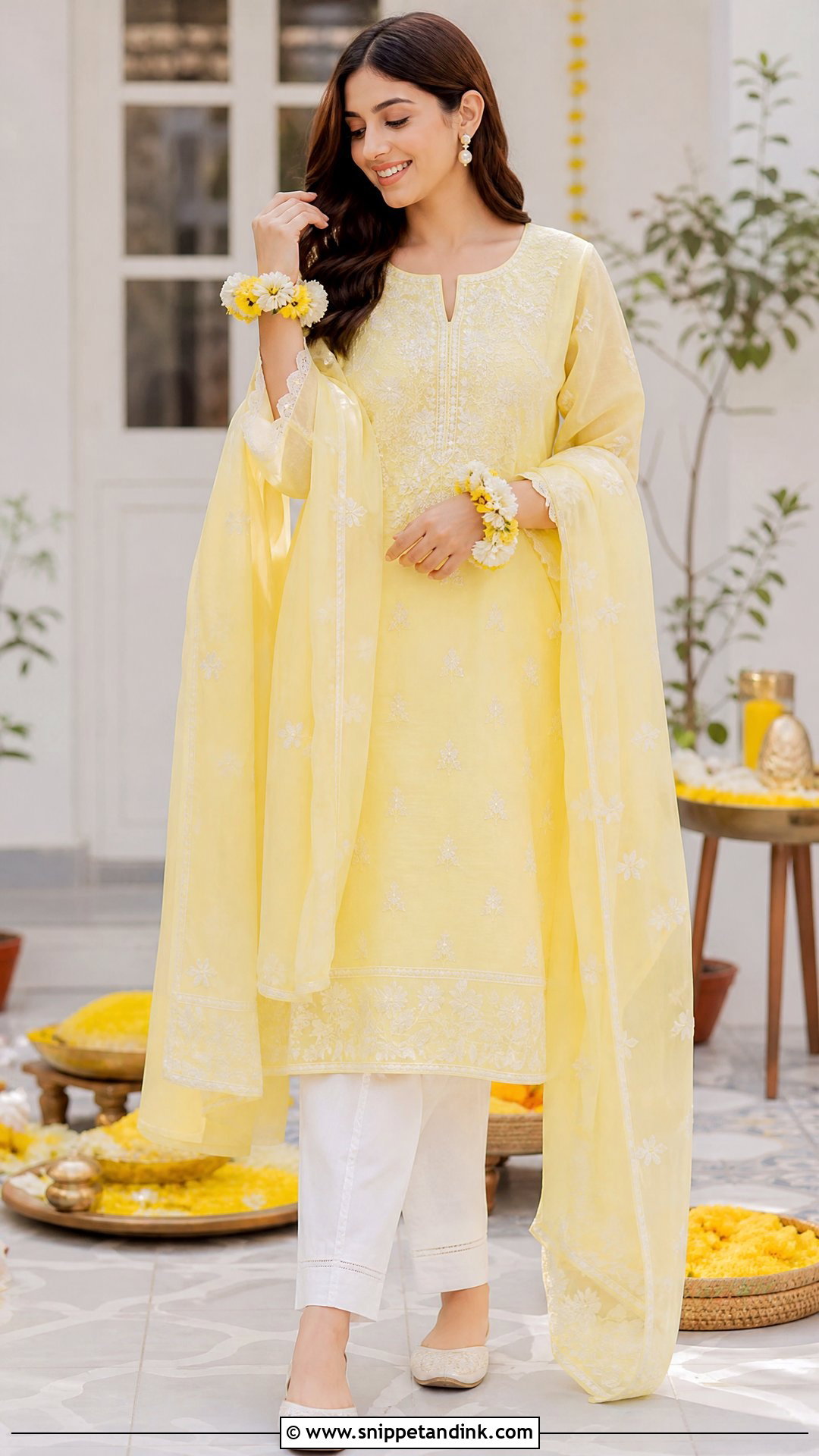
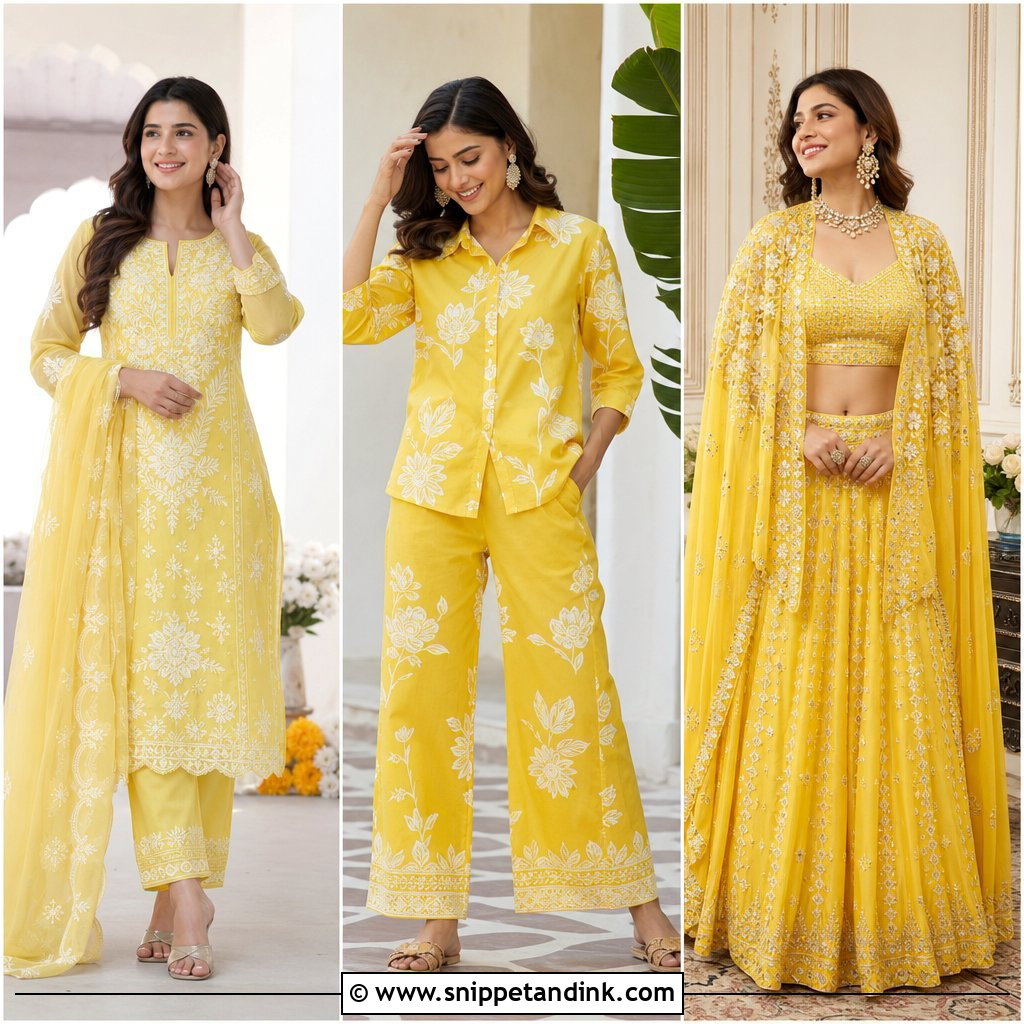
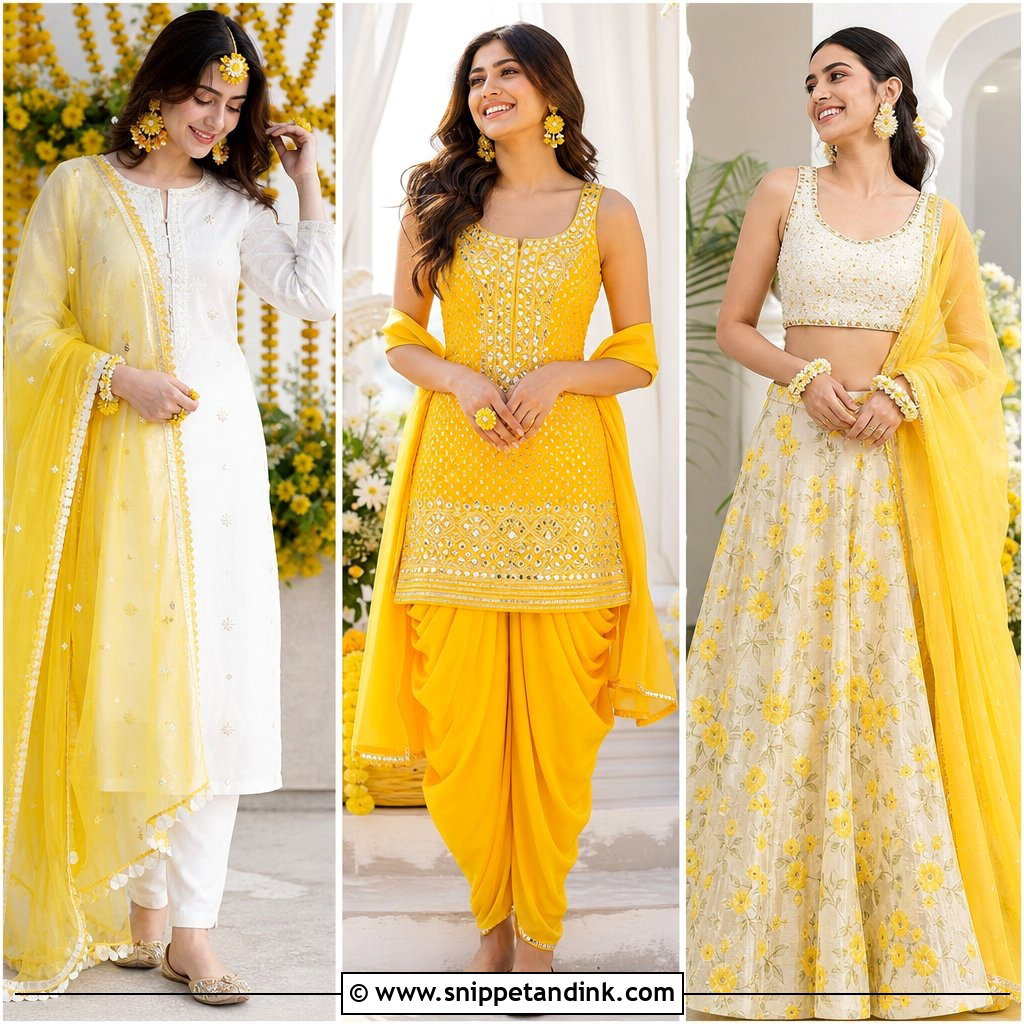
Chikankari reads best in daylight, when the shadow of the stitching shows through the fabric. White thread on lemon yellow looks crisp; tonal yellow is quieter. Cotton and muslin versions are the coolest to wear, but they’re also semi-sheer, so I always hold them up to a window to decide on a slip or lining. Pair with straight pants or palazzos, a sheer dupatta, pearl earrings and ivory juttis, and add fresh flower bangles for a traditional touch. Expect pure cotton chikankari to shrink slightly in its first wash.
6. Yellow Mirror Work Suit For Haldi Function
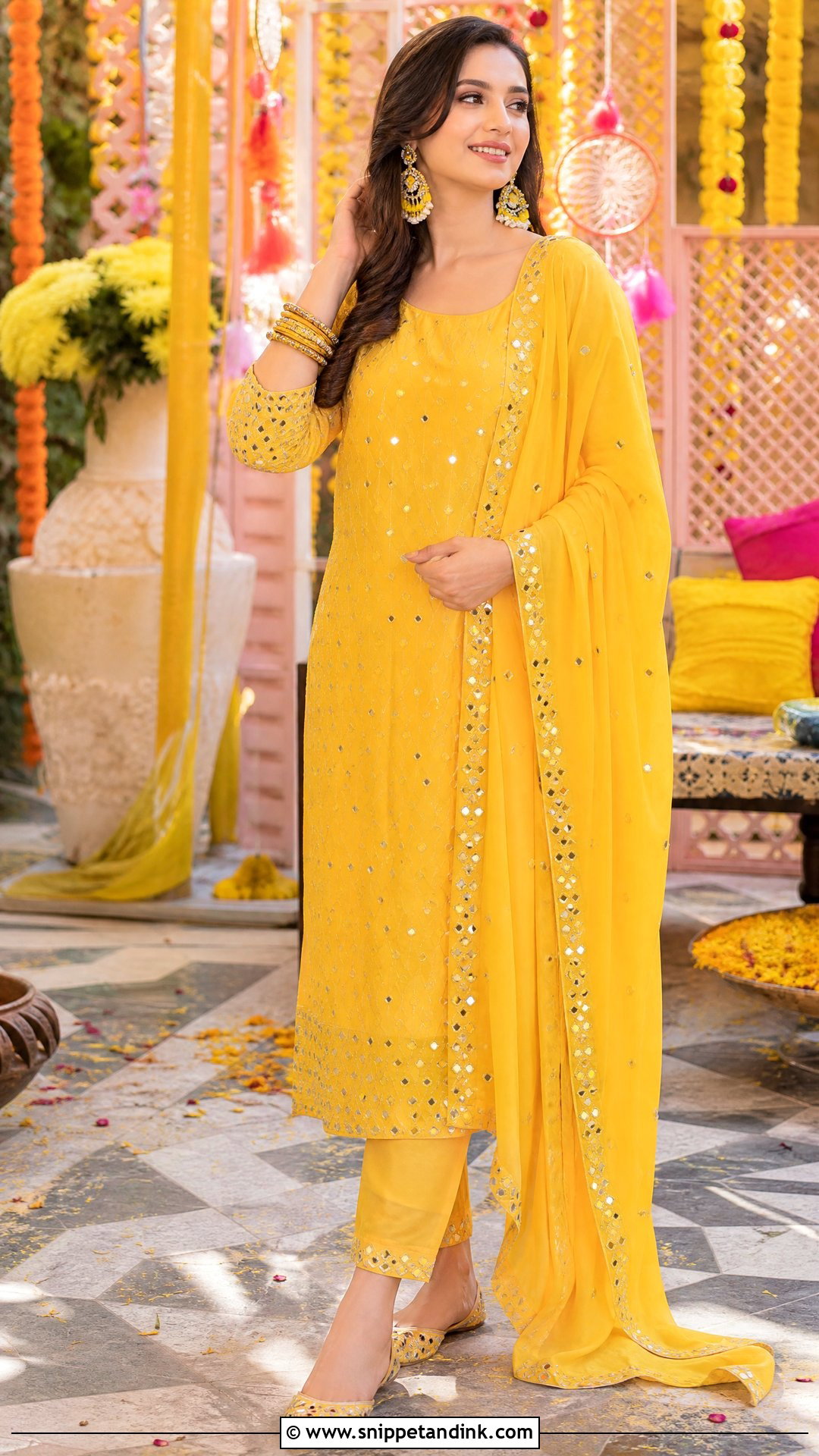
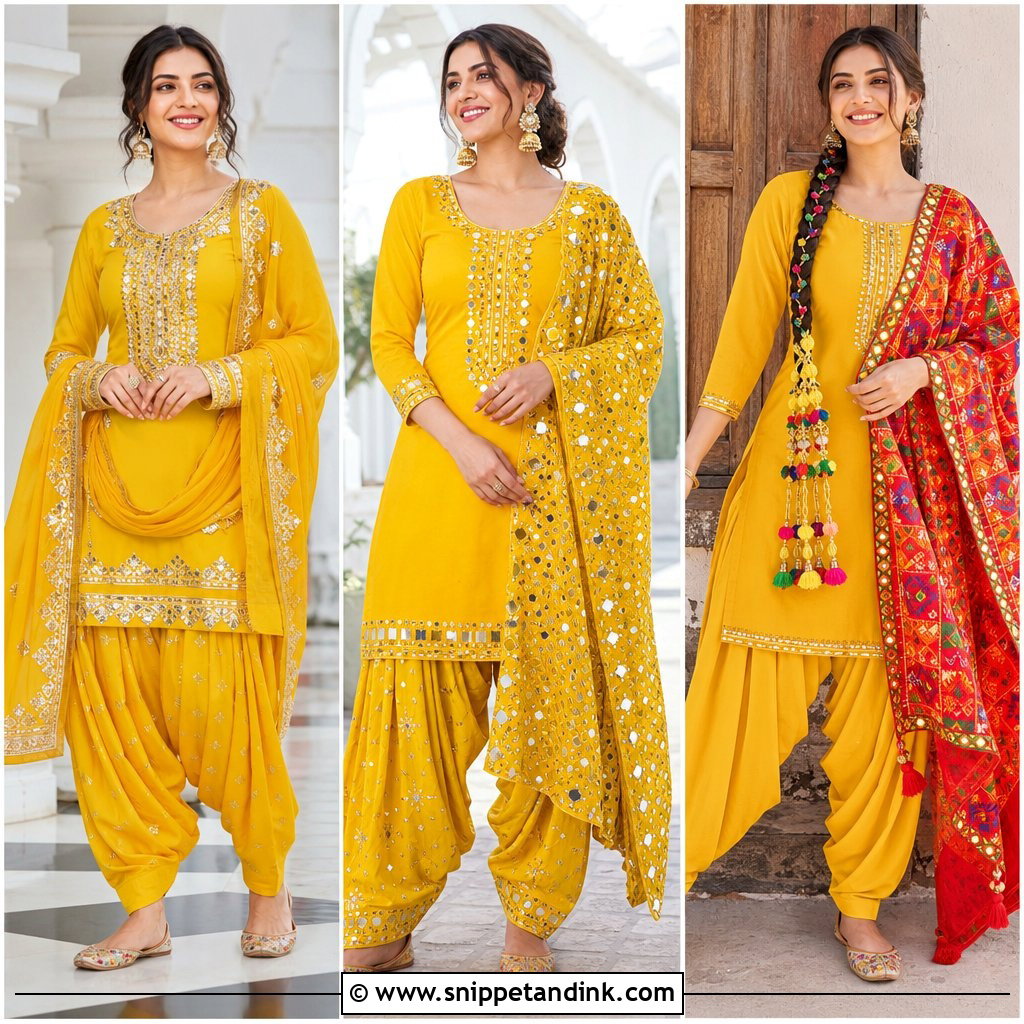
Bold mirror work needs a simple cut. I’d rather see mirrors placed at the neckline, cuffs, hem or dupatta border than spread across the whole kurta, because all-over mirrors add real weight and their edges can rub the inner arm raw by afternoon. A straight kurta with pants or a short kurti over sharara bottoms suits it. Since the mirrors bring the shine, keep the makeup fresh and the jewelry down to simple earrings and a few bangles. Comfortable flats will see you through the dancing.
7. Yellow Gota Patti Suit For Haldi Function
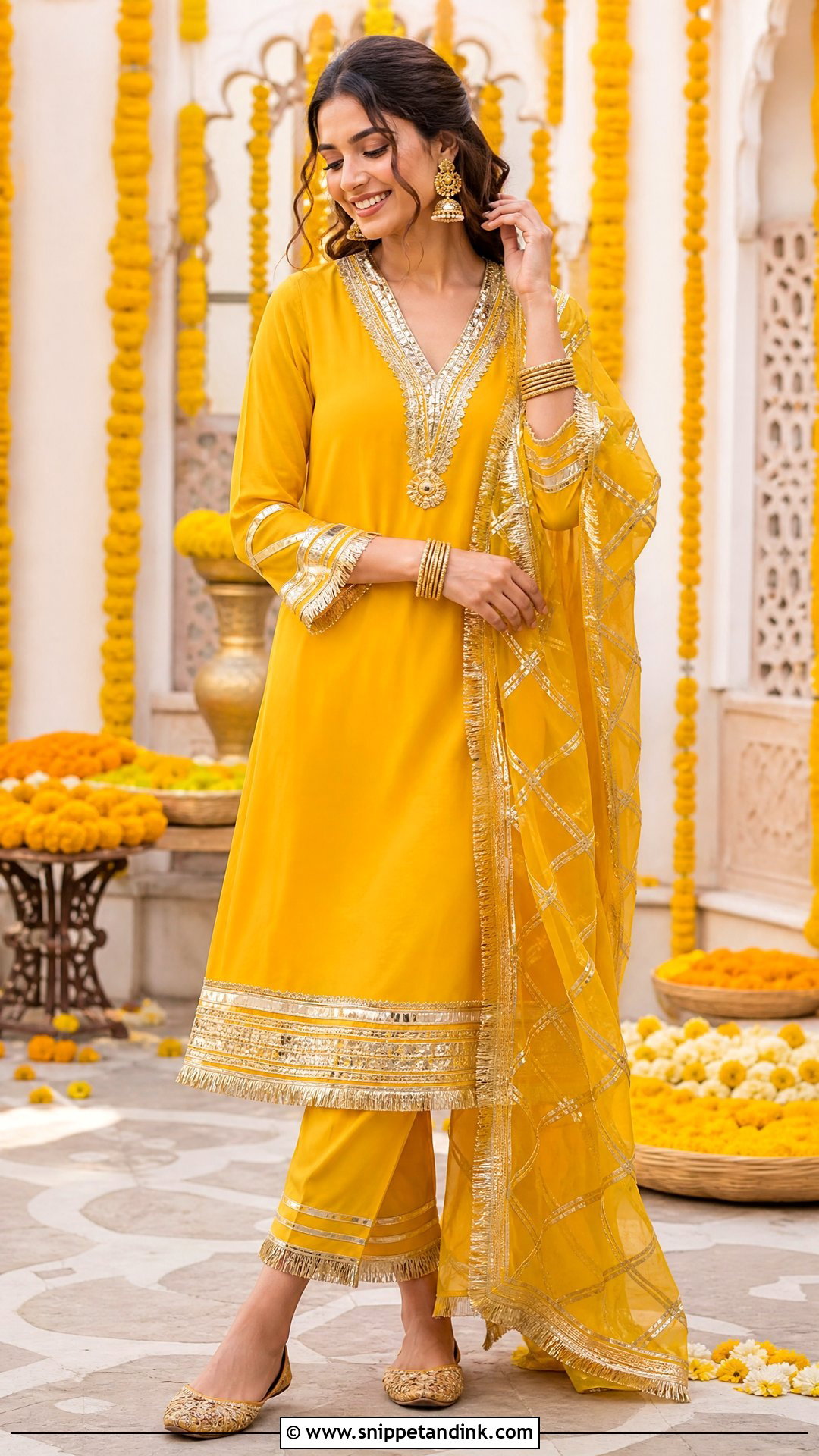
Gota is woven metallic ribbon, and on a yellow gota patti suit it gives the golden sparkle that sits so naturally against marigold decor. Most gota sold today is light and polyester-based, while the older metal kind feels heavier and tarnishes over time, so ask the seller which you’re getting. Detailing on the neckline, sleeves and hem is enough, with matching trousers or a flared sharara and a gota-bordered dupatta. Gold earrings, bangles and embroidered juttis keep it classic. Kept simple it suits a guest; with more jewelry it works for the bride.
8. Yellow Bandhani Suit For Haldi Function
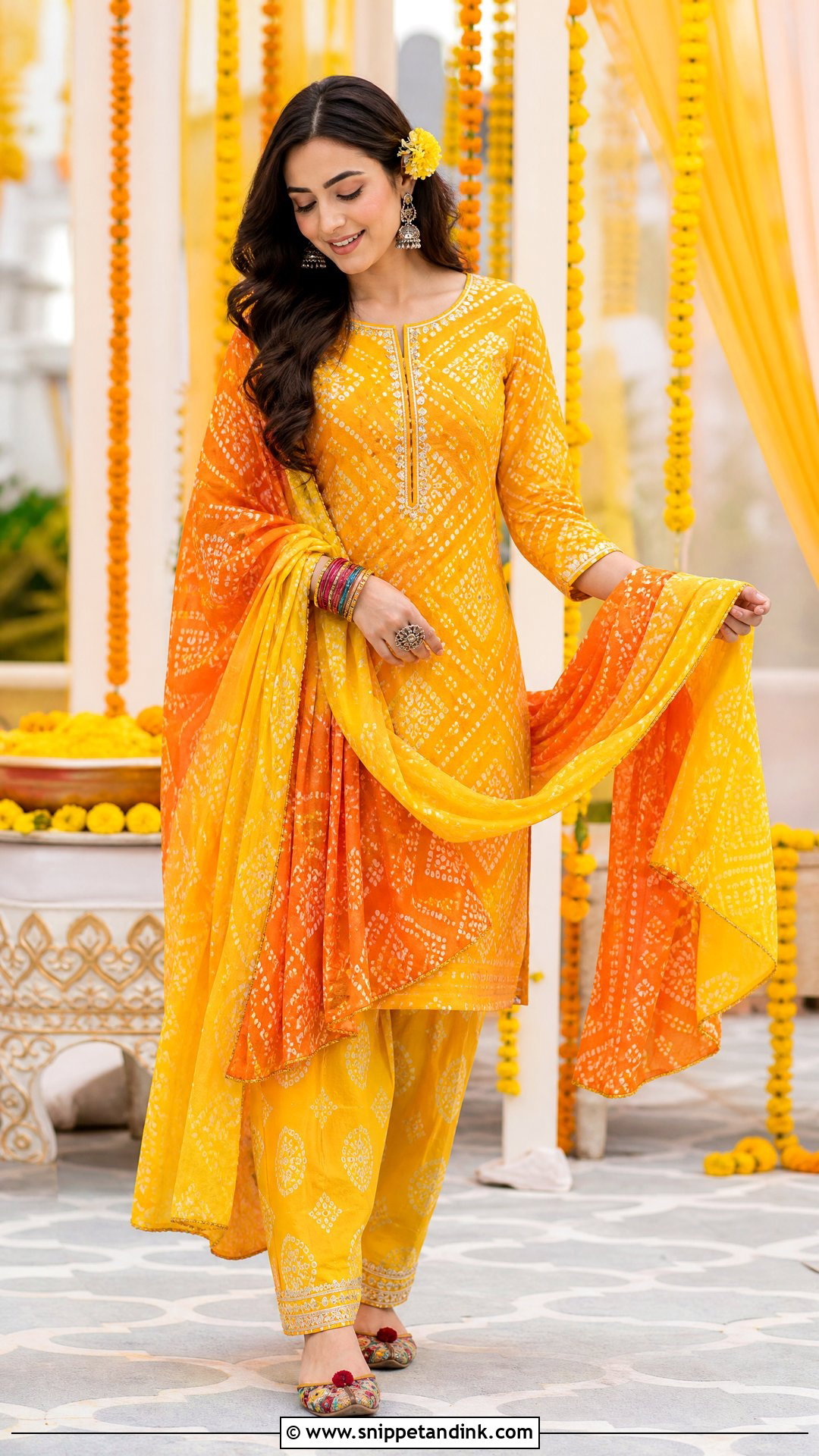
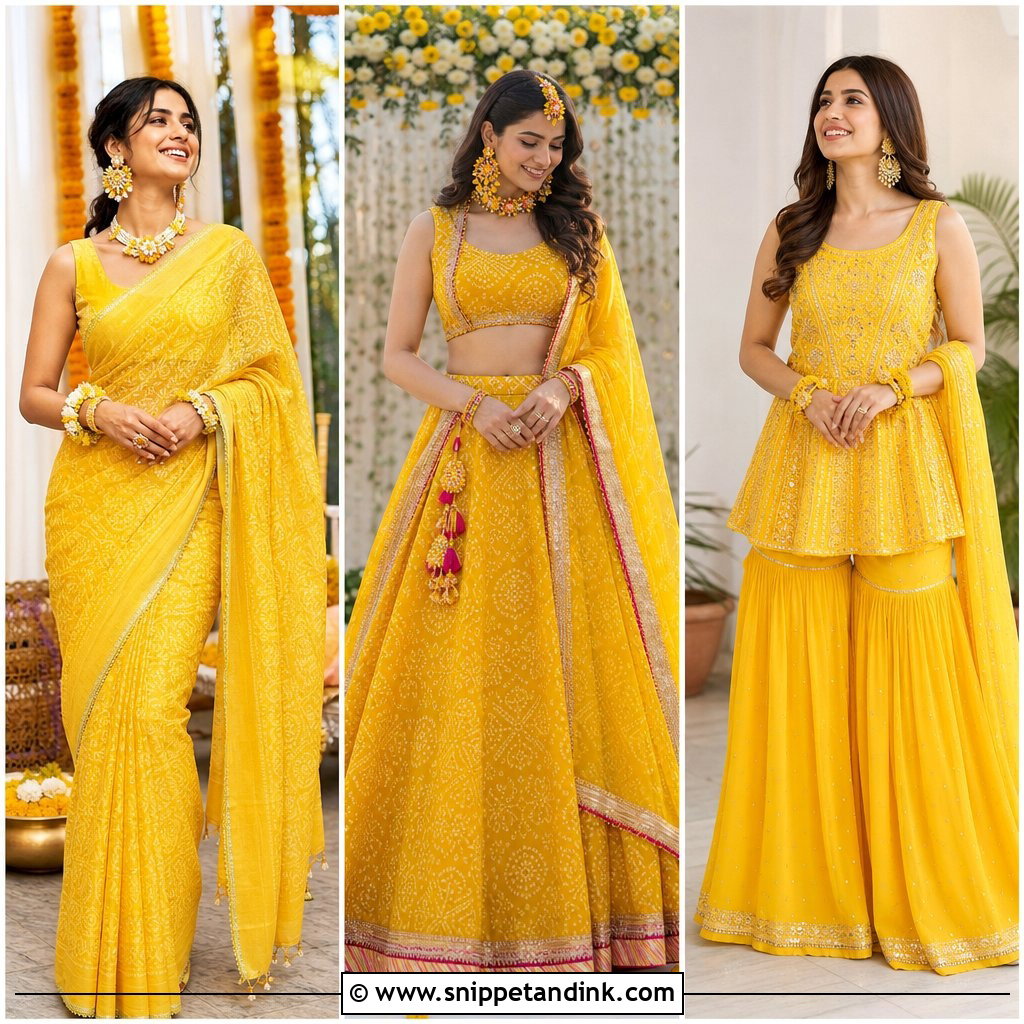
Bandhani is tie-dyed by hand, and the tiny raised dots give pattern without any embellishment at all. Yellow with orange feels warm and festive, yellow with white is softer, and a bandhani dupatta can bring a plain yellow suit to life on its own. One warning I give every client: bandhani dyes often bleed in the first few washes. Wash it alone in cold water and never leave damp, turmeric-marked bandhani lying against something white. Oxidized silver or antique gold, mojaris, glass bangles and a potli finish it.
9. Yellow Printed Cotton Suit For Haldi Function
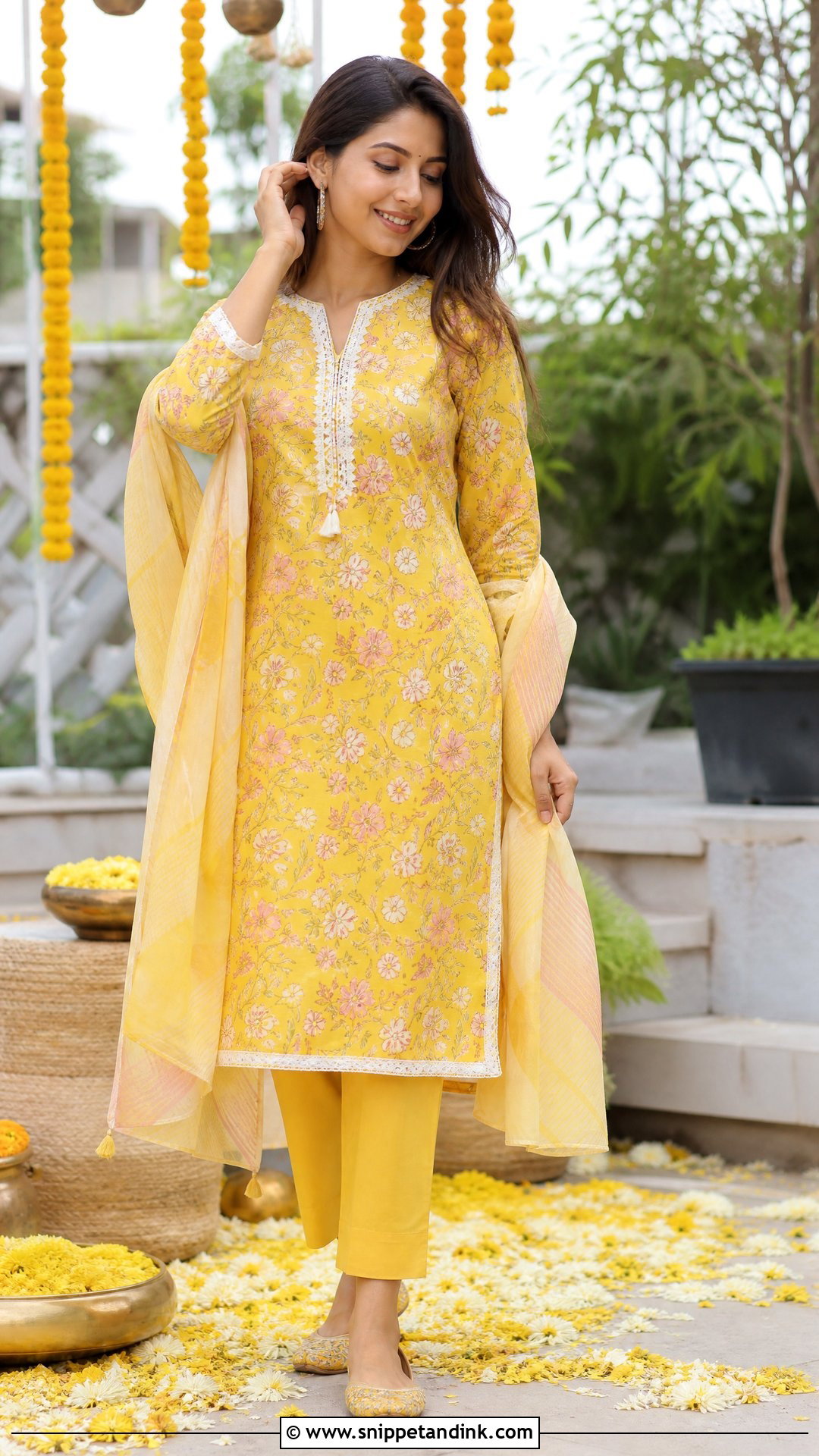
Printed cotton is what I’d wear myself to an outdoor haldi in the heat. It breathes, it washes, and a print camouflages the inevitable yellow handprints. Florals, block prints, paisley or small traditional motifs all work. Pair the kurta with straight pants or palazzos and a light dupatta that stays out of the way, then add simple juttis, hoops and a small bindi.
10. Yellow Organza Suit For Haldi Function
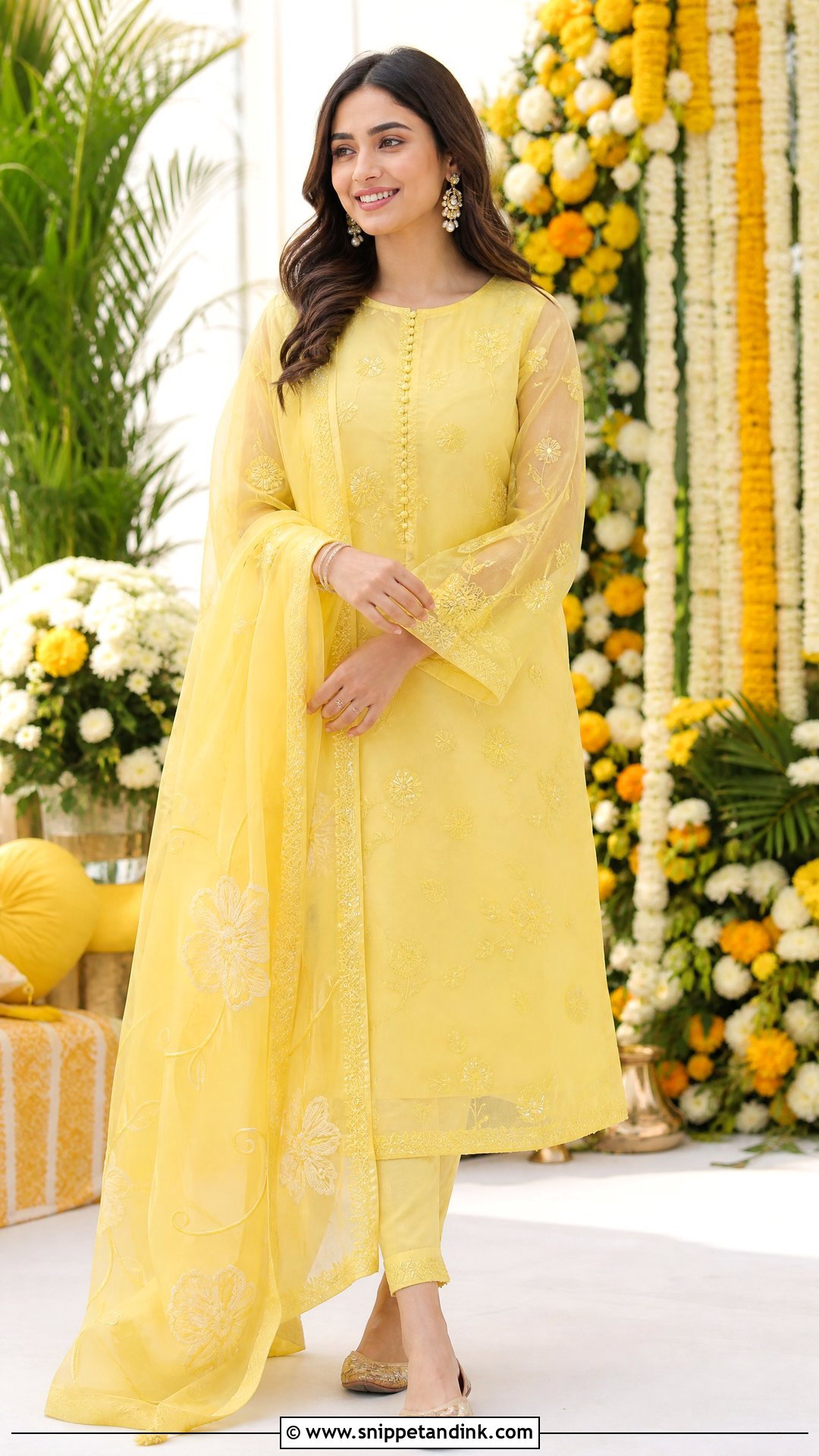
Organza has a crisp sheen that lifts a simple suit, but it can feel scratchy on skin, so I usually put it where it touches you least: the dupatta. An embroidered organza dupatta over a silk or cotton silk kurta set gives you the shine with none of the itch. If you do choose an organza kurta, insist on a soft cotton lining and check that the inner seams are finished, or you’ll feel them at the underarm all morning. Pearl earrings, delicate bangles and neutral or gold flats keep it polished.
11. Yellow Silk Suit For Haldi Function
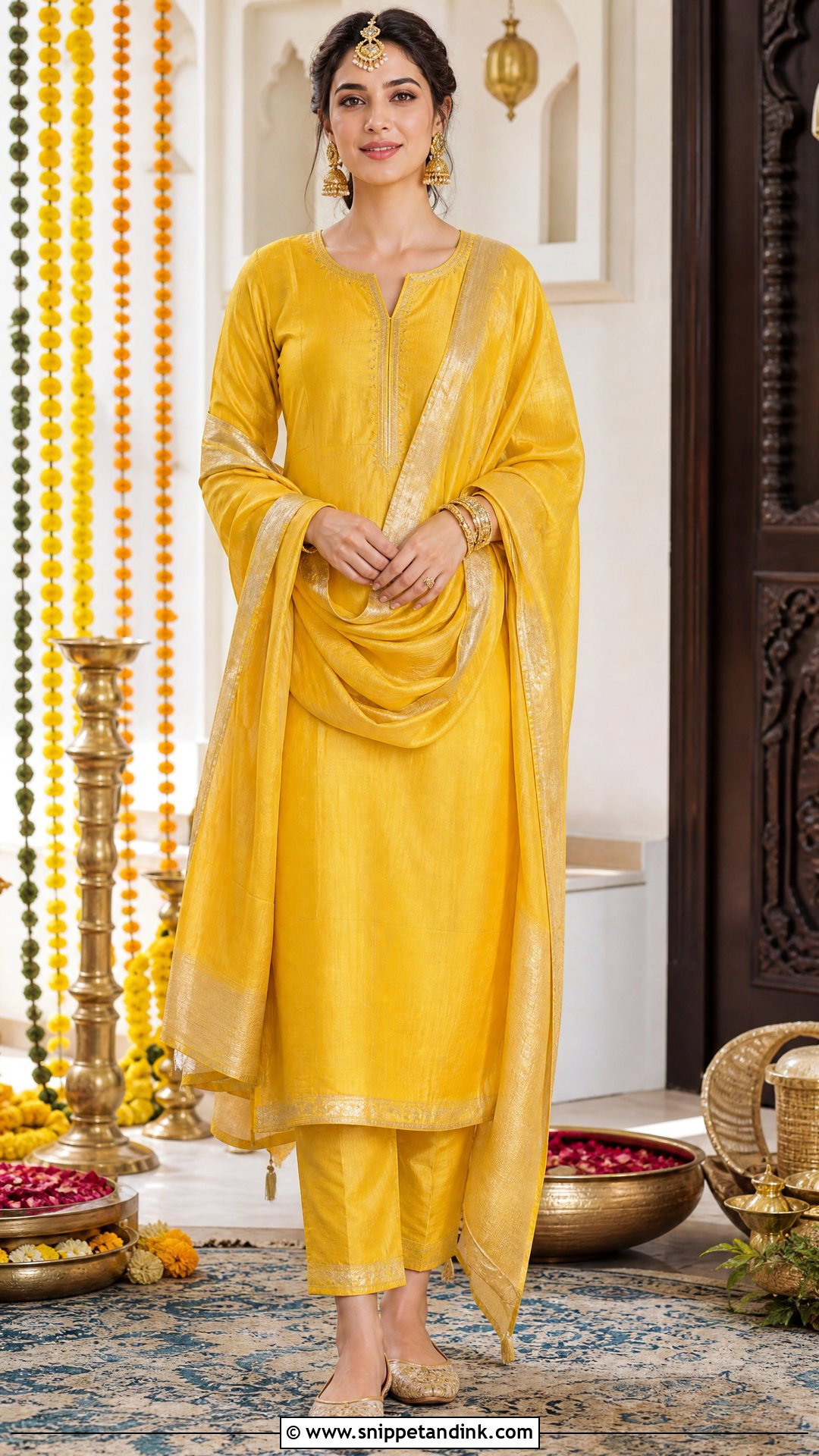
Silk belongs at a formal haldi, and it’s usually brides and mothers who reach for it. Choose a lightweight silk or a blend, because heavier silk shows sweat marks at the underarm and back on a warm day, and those patches photograph clearly on yellow. A straight kurta with cigarette pants looks tailored, while a silk Anarkali feels more bridal. Zari borders, subtle embroidery or brocade accents add detail, with temple jewelry, gold bangles and embroidered juttis alongside. Drape the dupatta neatly so the sheen of the fabric does the work.
12. Yellow Short Kurti Sharara Suit For Haldi Function
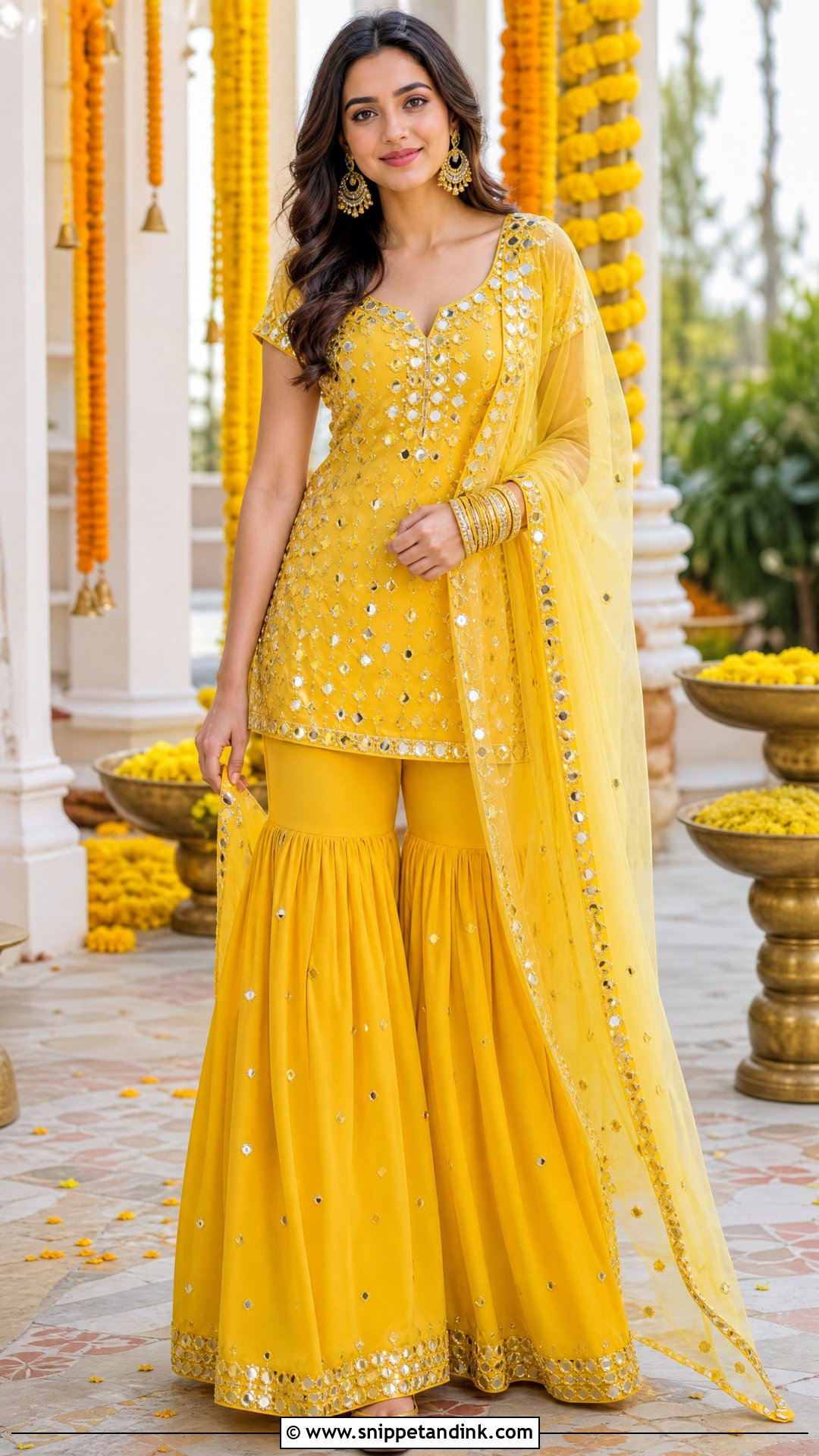
Proportion is the whole trick with a short kurti with sharara pants. The kurti should end around the upper hip so the sharara has room to flare below it; any longer and the outfit looks squat. Put the mirror work, gota or floral embroidery on the kurti and keep the sharara light enough to swing when you dance. Wear the dupatta over one shoulder or pin it flat. Statement earrings, stacked bangles and soft curls give the youthful finish bridesmaids and cousins usually ask for.
13. Yellow Peplum Suit For Haldi Function
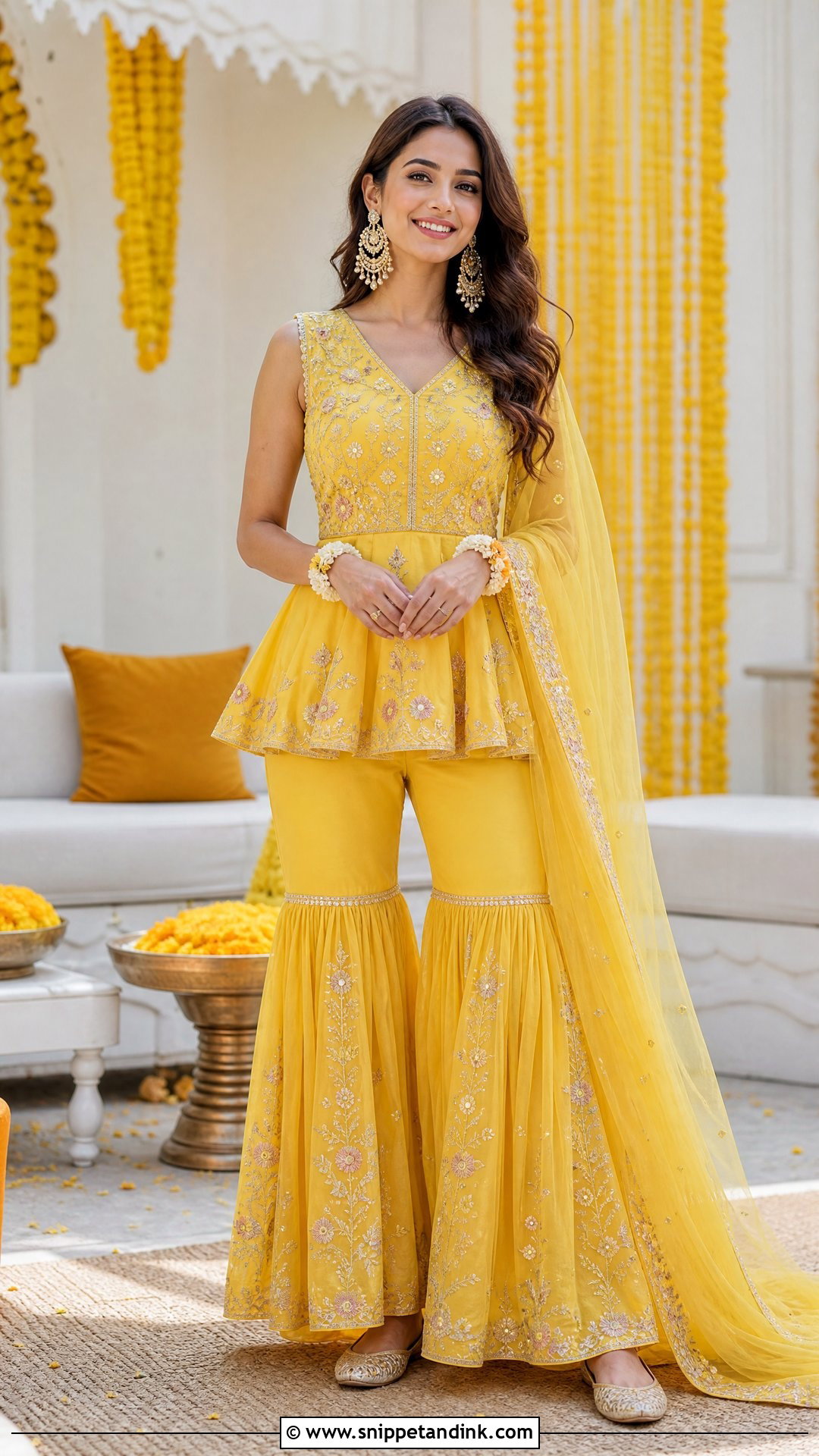
A yellow peplum suit works because the fitted waist and flared hem create shape over almost any bottom: sharara, gharara or slim trousers. Light embroidery, mirror details or gota accents keep it right for a haldi, and the dupatta is optional. My one rule is about the neckline. If it carries heavy work, I pull the hair back so the two don’t compete and skip a necklace entirely. Statement earrings, a slim bracelet and embellished flats. It’s the easiest way to stand apart from a row of straight kurtas.
14. Yellow Gharara Suit For Haldi Function
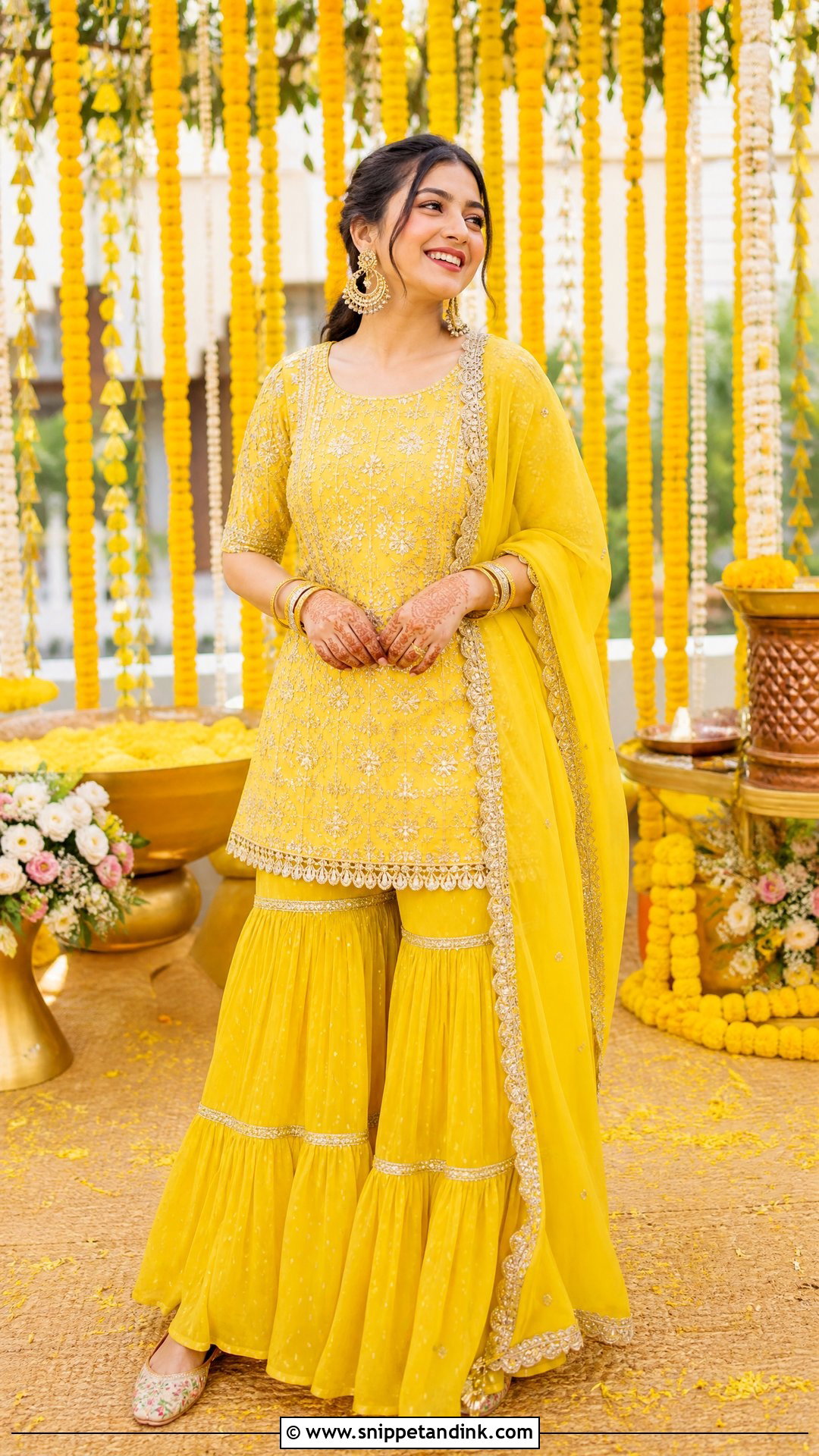
Ghararas get their drama from the joint at the knee, where the fitted leg meets the flare. Have it measured while you wear the shoes you’ll actually use on the day, because if that joint lands too low the whole outfit makes you look shorter. Soft yellow fabric with gold lace, mirror work or thread embroidery suits it, and a lightweight bordered dupatta adds movement. The bottoms bring plenty of volume, so I keep accessories to chandbalis, bangles and comfortable juttis. It’s at its best in family portraits and dance moments.

15. Yellow Dhoti Suit For Haldi Function
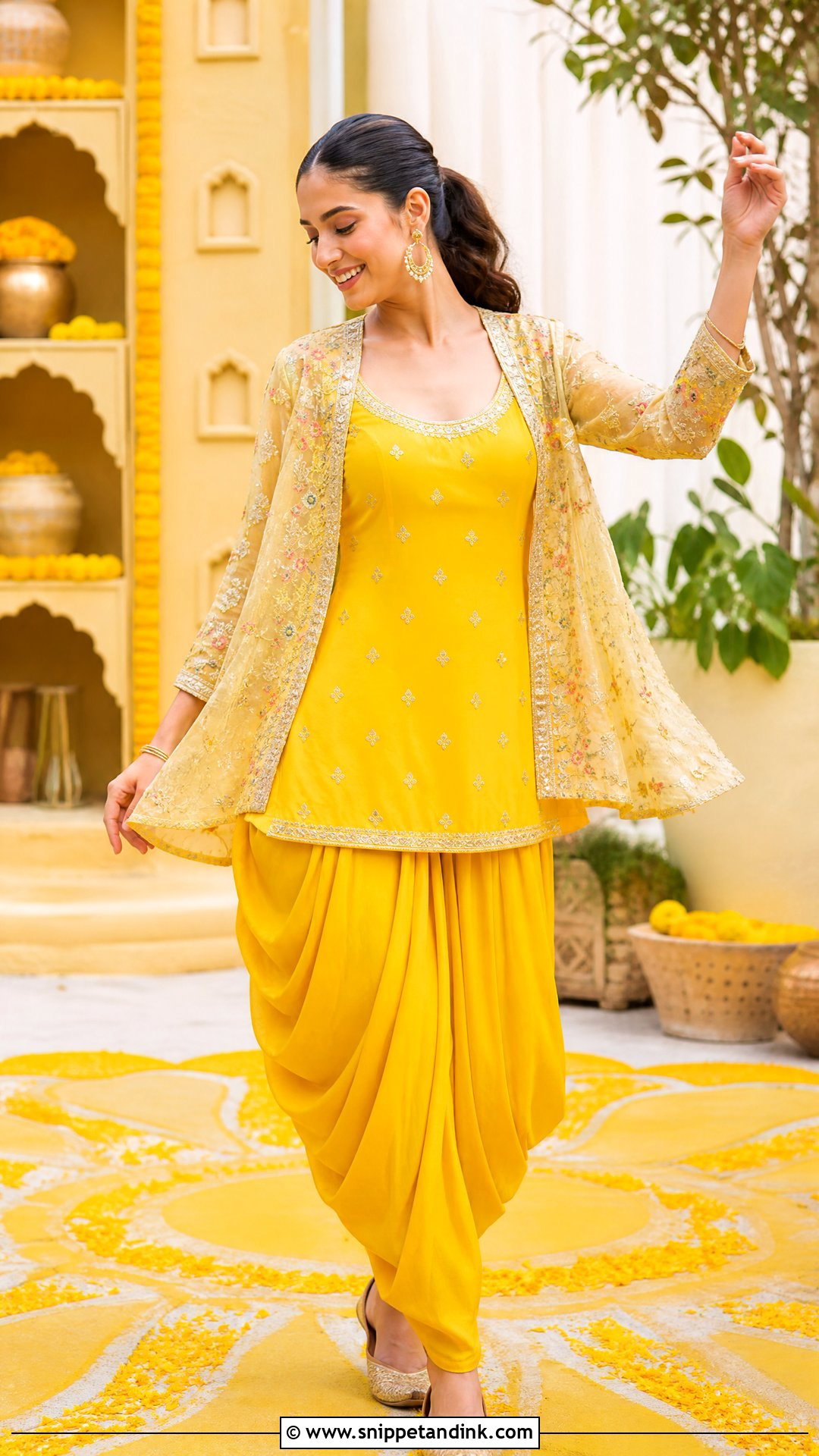
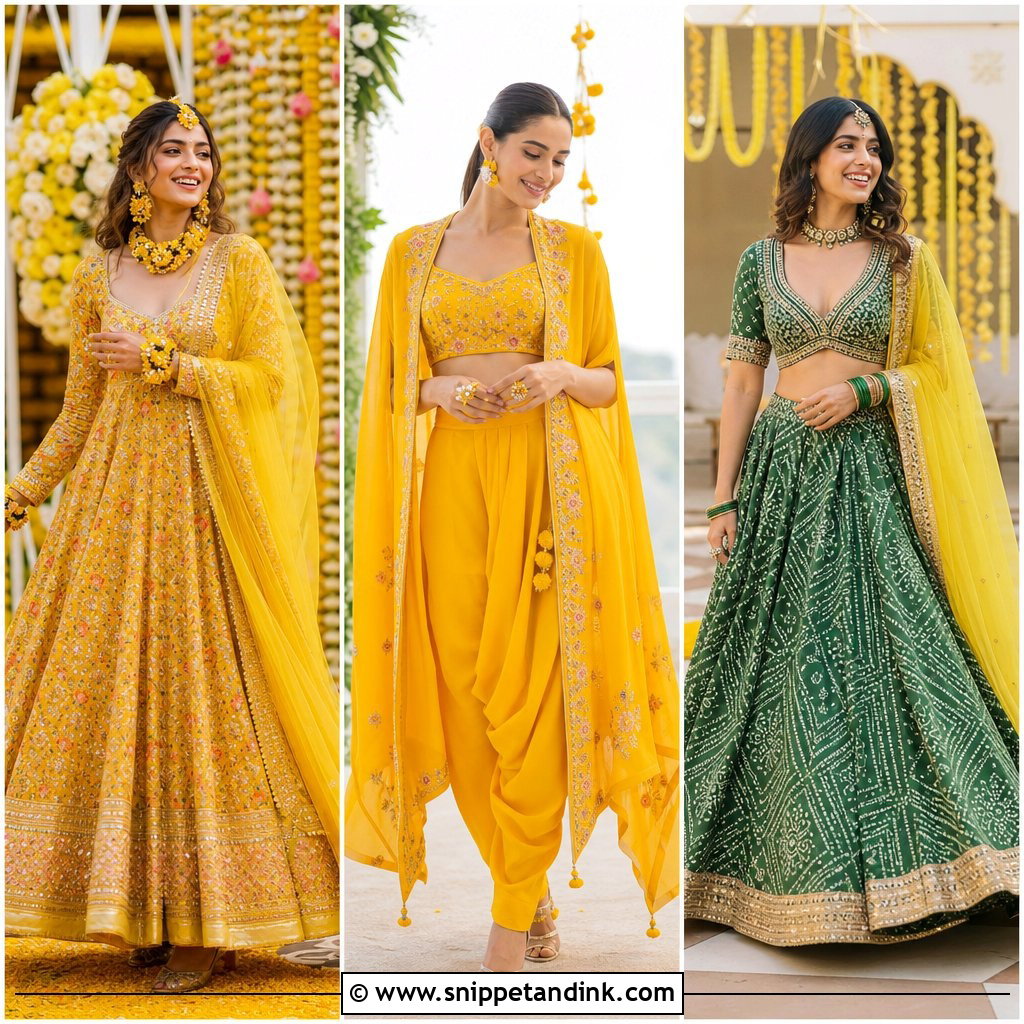
The pleats on a dhoti bottom need fabric with some body to hold them. Very thin rayon collapses into a limp drape within an hour, while cotton-silk or crepe keeps the folds crisp all morning. A short kurti, cape or jacket gives structure above, and light embroidery or mirror work at the neckline adds festivity without weight. Juttis, hoops and a sleek bun or ponytail suit it. It feels secure for dancing, and bridesmaids and fashion-forward guests carry it well.
16. Yellow Cape Suit For Haldi Function
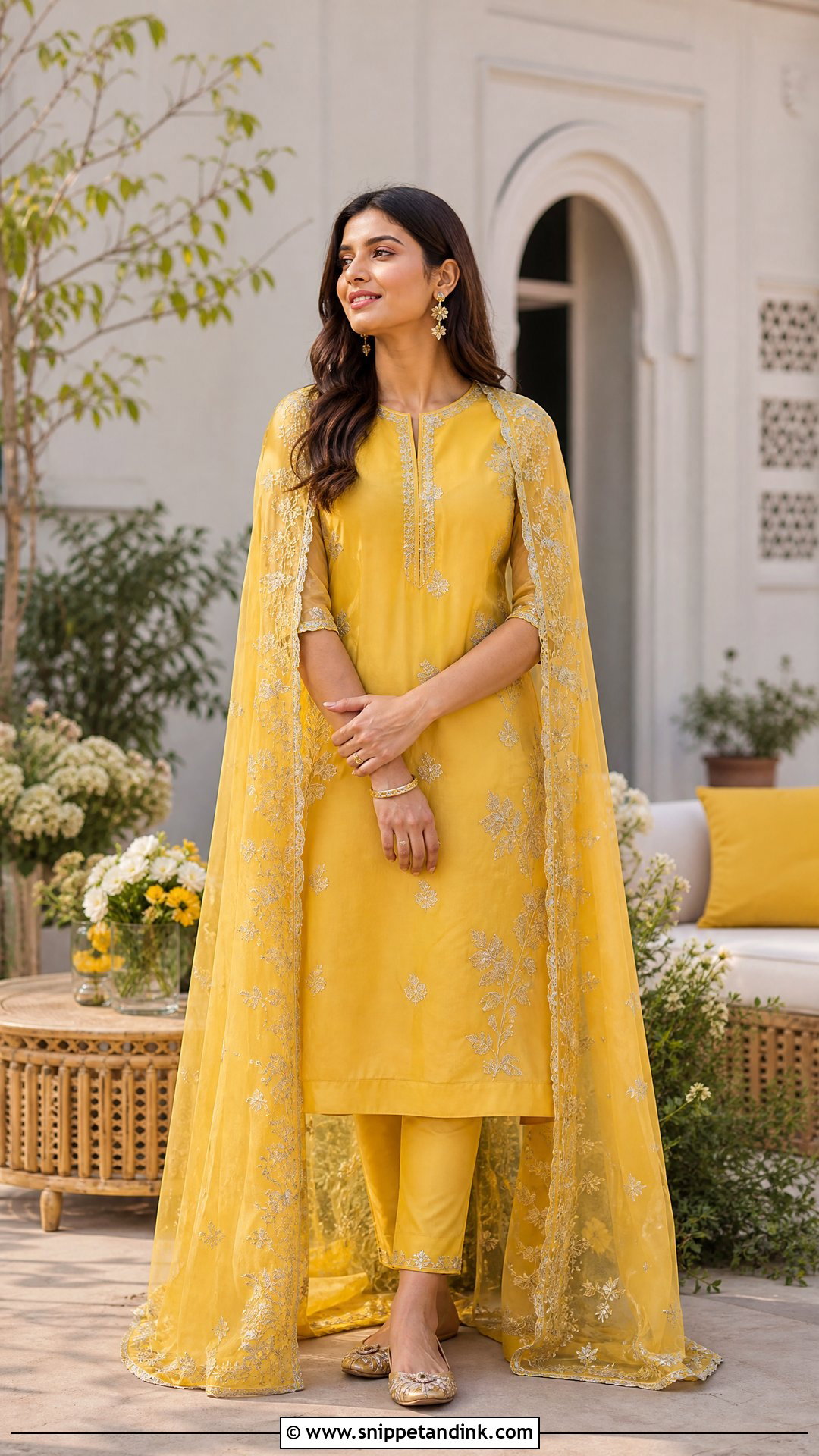
A cape solves the dupatta problem without losing the flow. Wear it over a sleeveless or short-sleeve kurta, with slim pants or sharara bottoms. Before you buy, look at how the cape fastens. One stitched into the shoulder seams stays put; one that simply hangs from a tie slides backward every time you lean forward for a ritual. A sheer cape with embroidery, pearls or gota edging is decoration enough, so I keep the jewelry to earrings and a bracelet.
17. Yellow Jacket Suit For Haldi Function
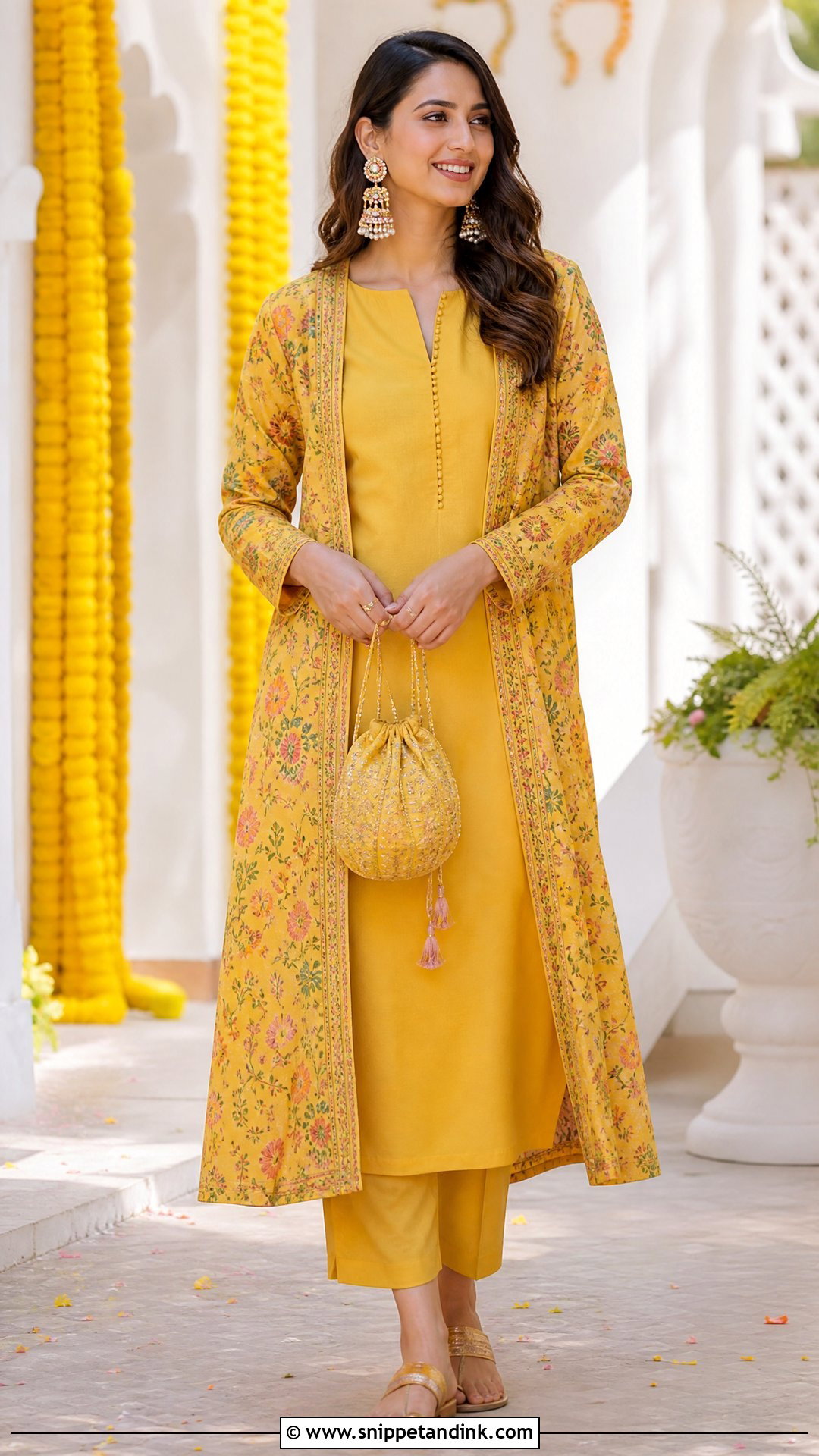
Layering a jacket over a plain kurta and pants changes the whole outfit, and you can slip it off once the sun gets strong. Short jackets feel playful; calf-length and long jackets look more formal. If the jacket is busy, skip the dupatta, since three layers of pattern fight each other in photos. Statement earrings and flat sandals finish it. The pieces also separate well afterwards: the jacket goes over jeans and the kurta goes to work.
18. Yellow Floral Suit For Haldi Function
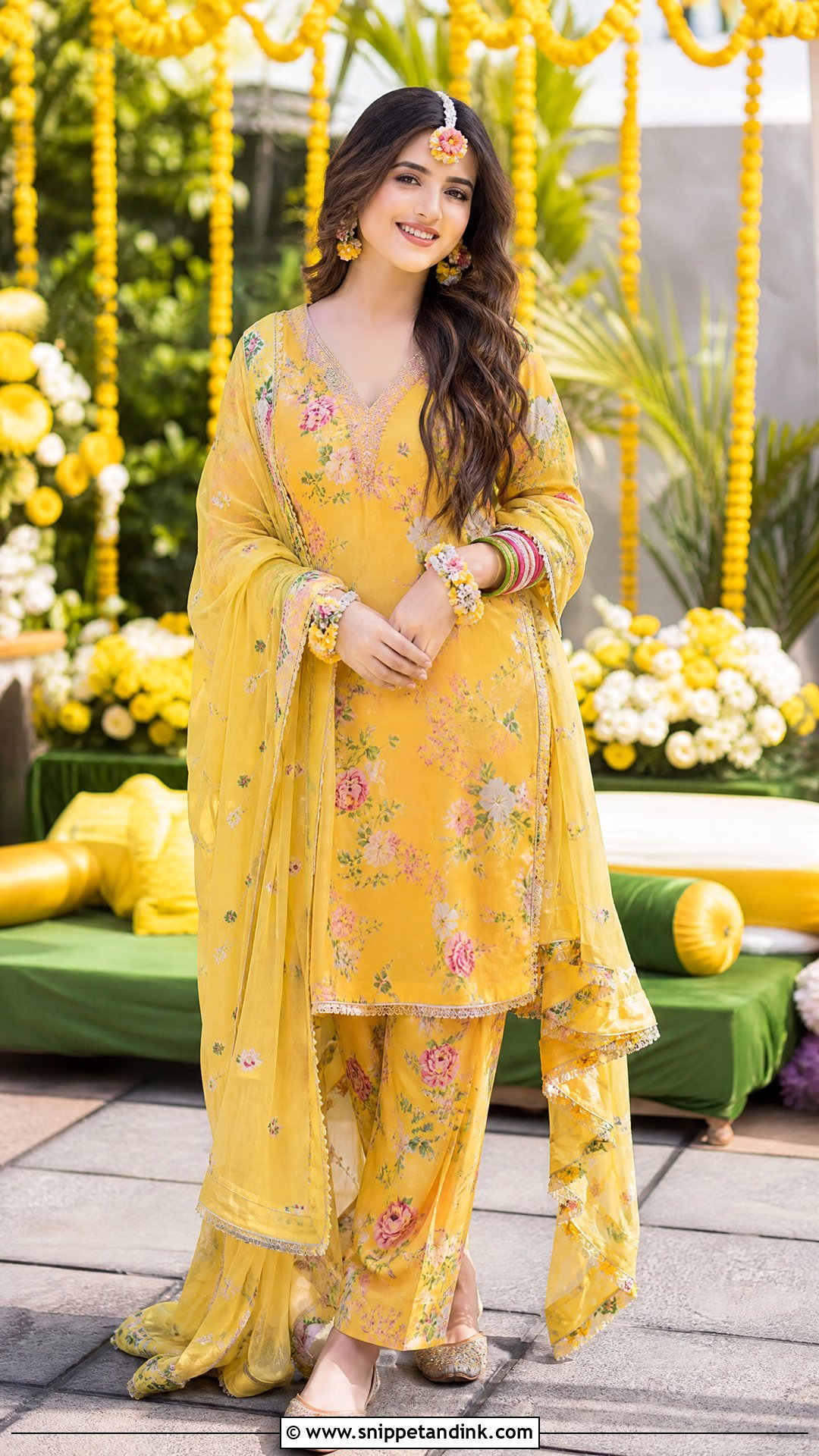
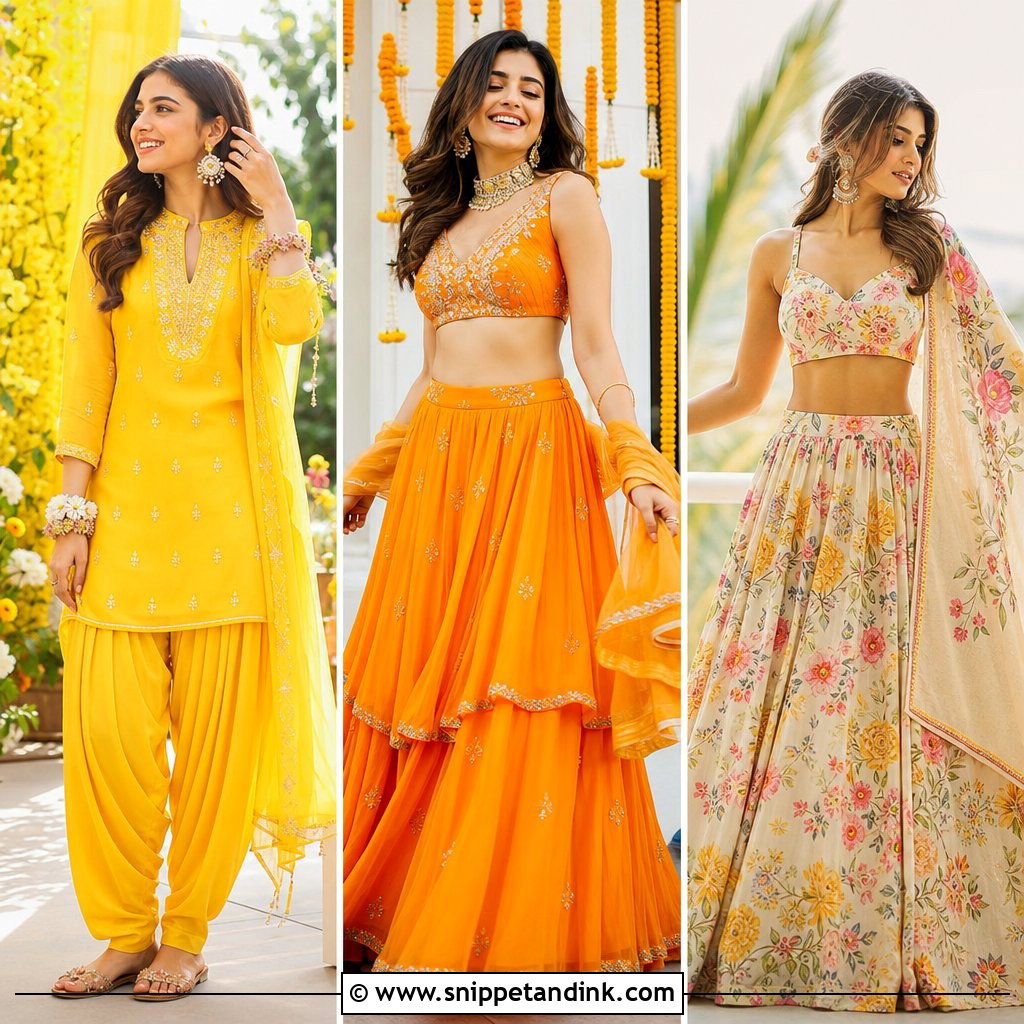
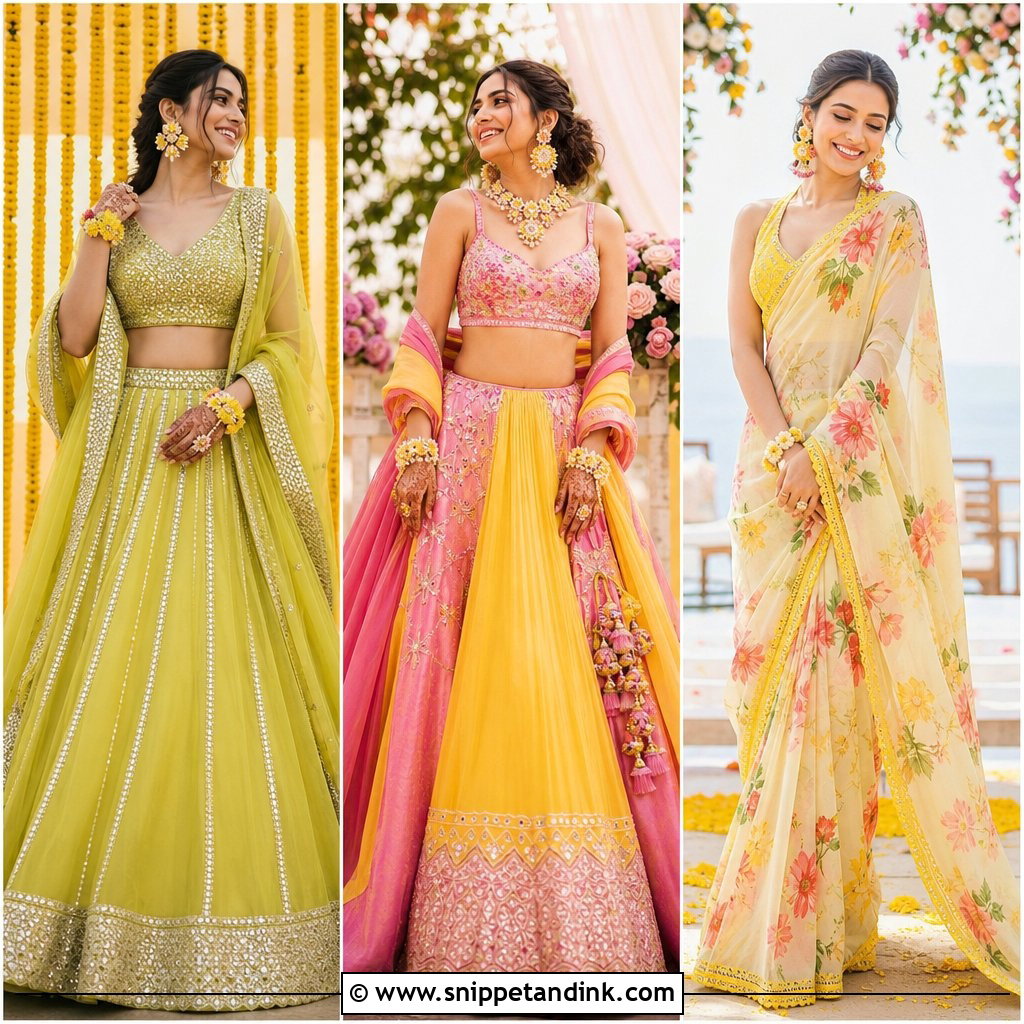
Florals echo marigold decor, which is why they feel so at home at garden haldis. Pink, orange, green or white flowers on a yellow ground all work. My working rule is simple: a bold print gets minimal accessories, while a soft print can take flower jewelry or colorful bangles. Add matching pants, a light dupatta and comfortable juttis or sandals. Guests, bridesmaids and younger family members wear it best.
19. Yellow White Suit For Haldi Function
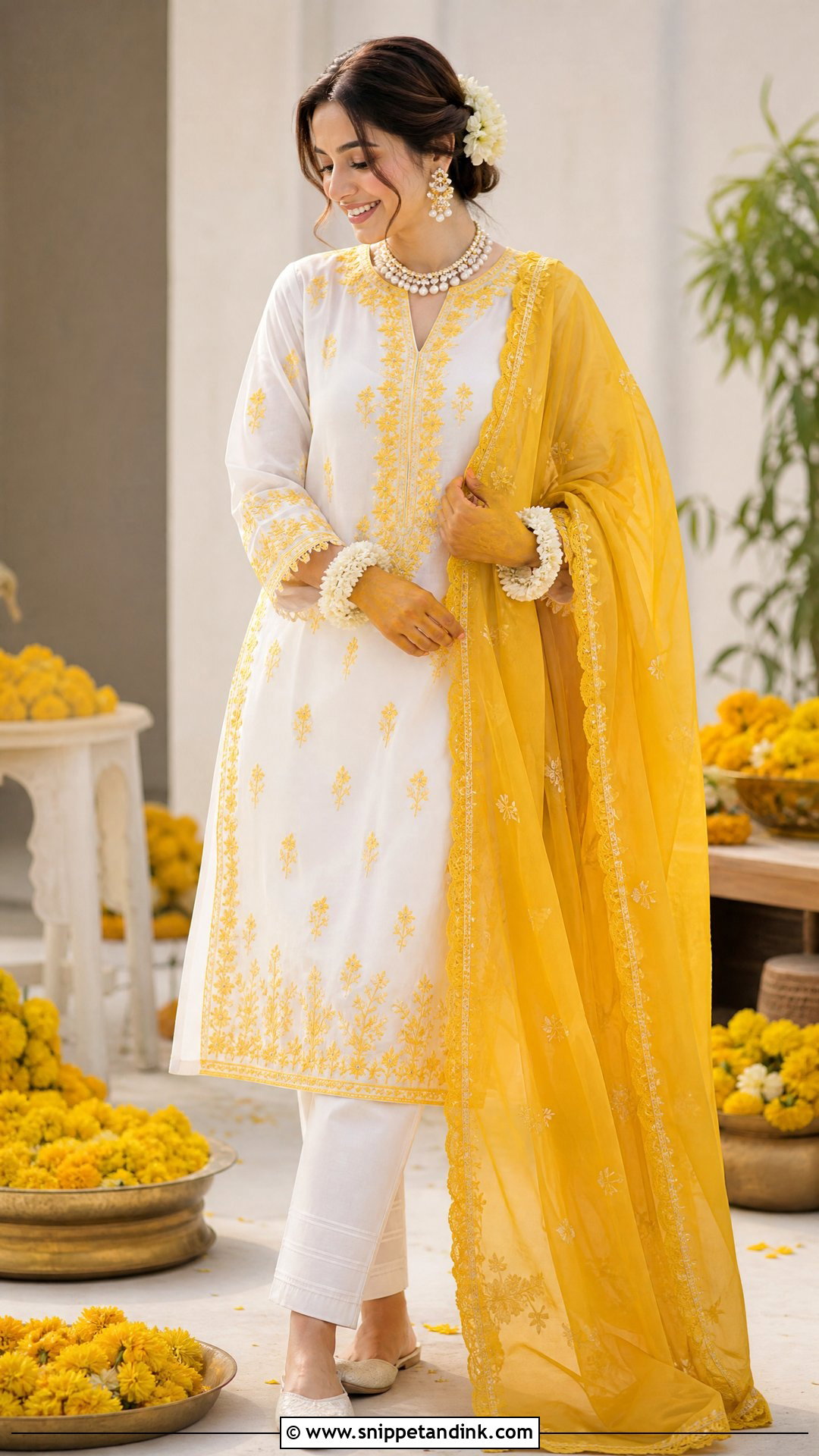
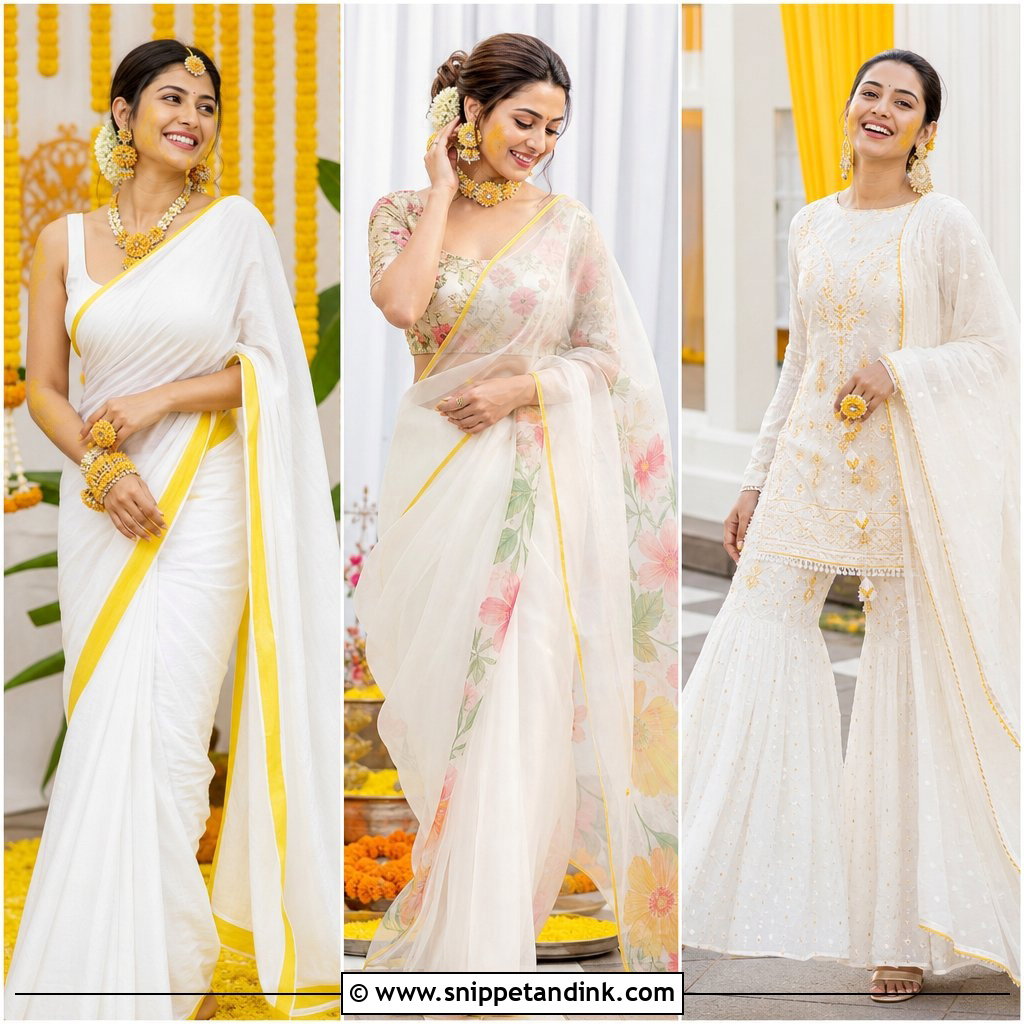
White softens yellow, but it is also the color most likely to come home stained. If you’ll be close to the paste, I’d keep the white on the pants or the kurta body, keep yellow on the sleeves near your hands, and choose washable cotton over silk. A white kurta with yellow embroidery, a yellow kurta with white pants, or a yellow dupatta over a white suit are the usual splits. Pearl jewelry, white juttis and fresh flowers in the hair suit it, especially at intimate ceremonies.


20. Mustard Yellow Suit For Haldi Function
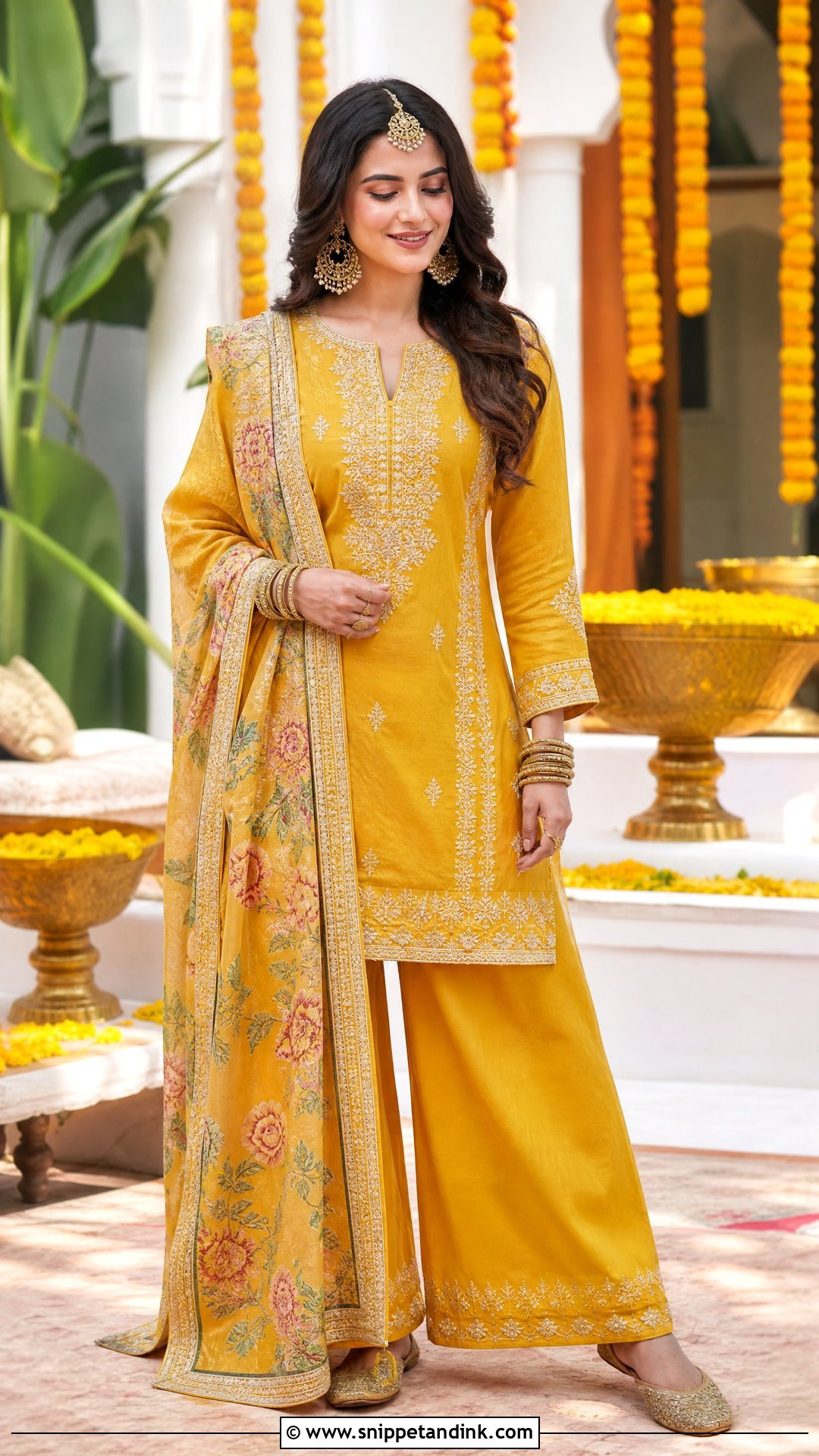
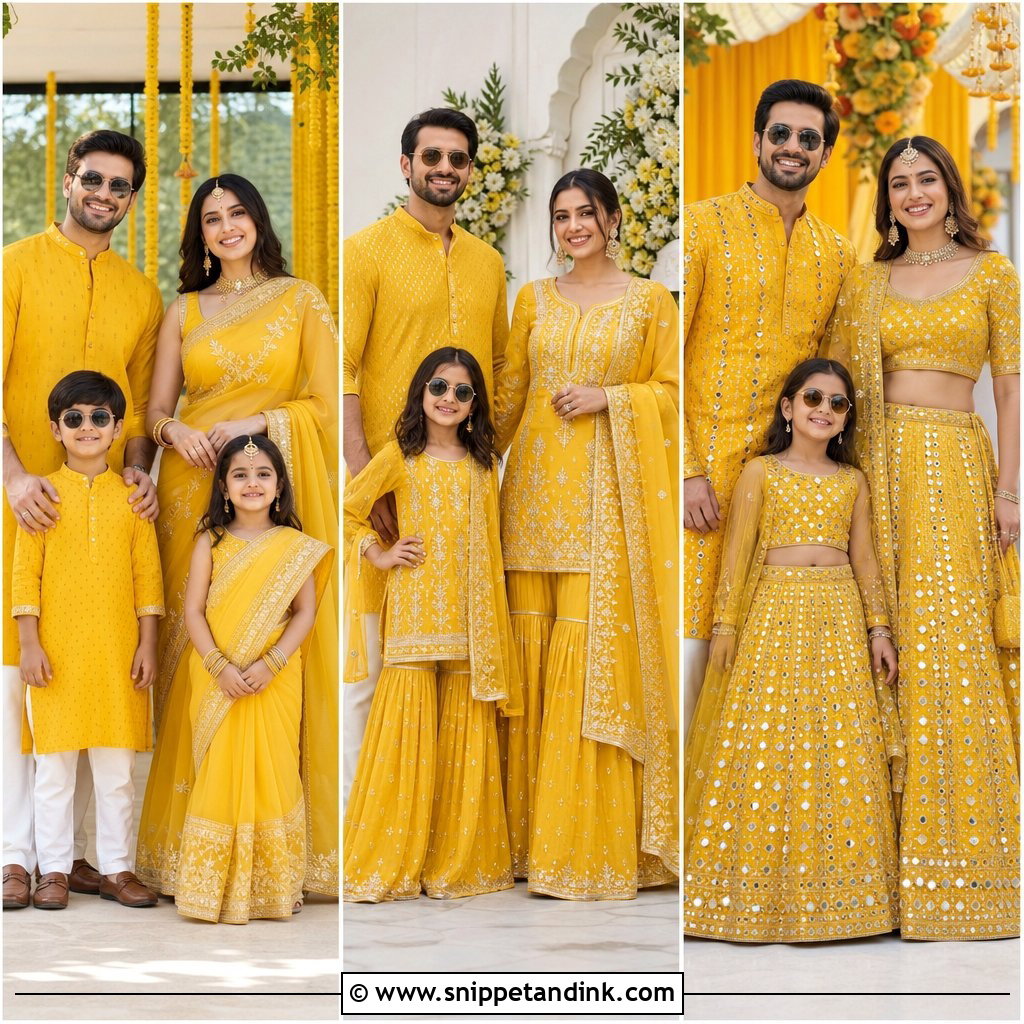
Mustard is the shade I suggest to anyone worried about turmeric marks, because the paste nearly disappears against it. It’s deeper and warmer than lemon, and it sits well with gold jewelry, antique pieces and earthy makeup. A straight suit, Anarkali or palazzo set all work in it. Embroidery in gold, rust or ivory adds festivity, and a matching or printed dupatta adds depth. Juttis, stacked bangles and a small potli.
21. Lemon Yellow Suit For Haldi Function
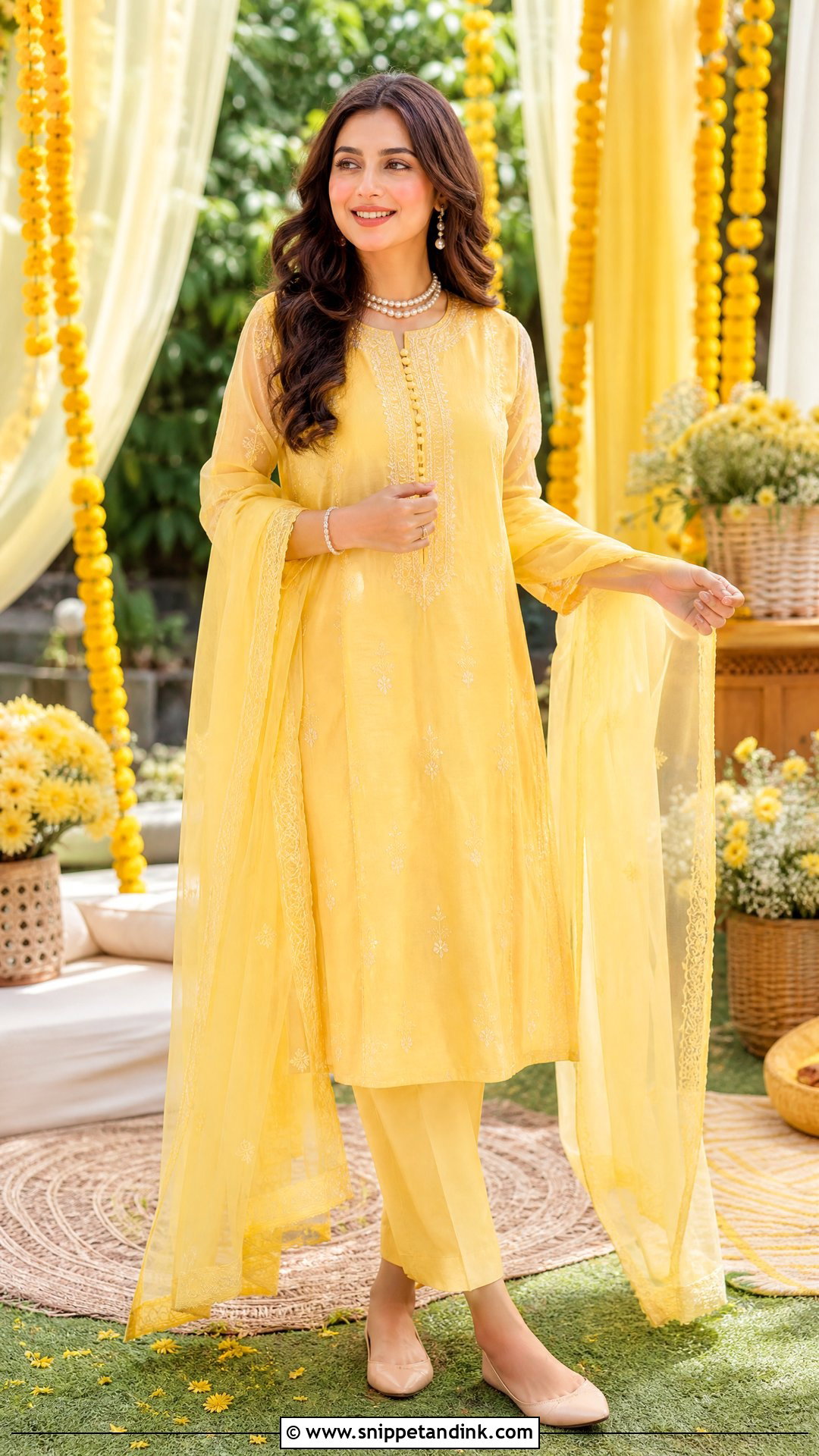
Lemon yellow is cheerful in spring and summer light, though very pale lemon can wash out very fair skin in photos, so I test it near the face before committing. Cotton, georgette, chiffon or organza keep it airy. White embroidery, pearls or small mirrors look especially pretty on it. Light shades like this can show undergarments in direct sun, so check for a lining. Nude or gold flats, delicate jewelry, soft curls, dewy makeup and a small bindi complete it.
22. Yellow Embroidered Suit For Haldi Function
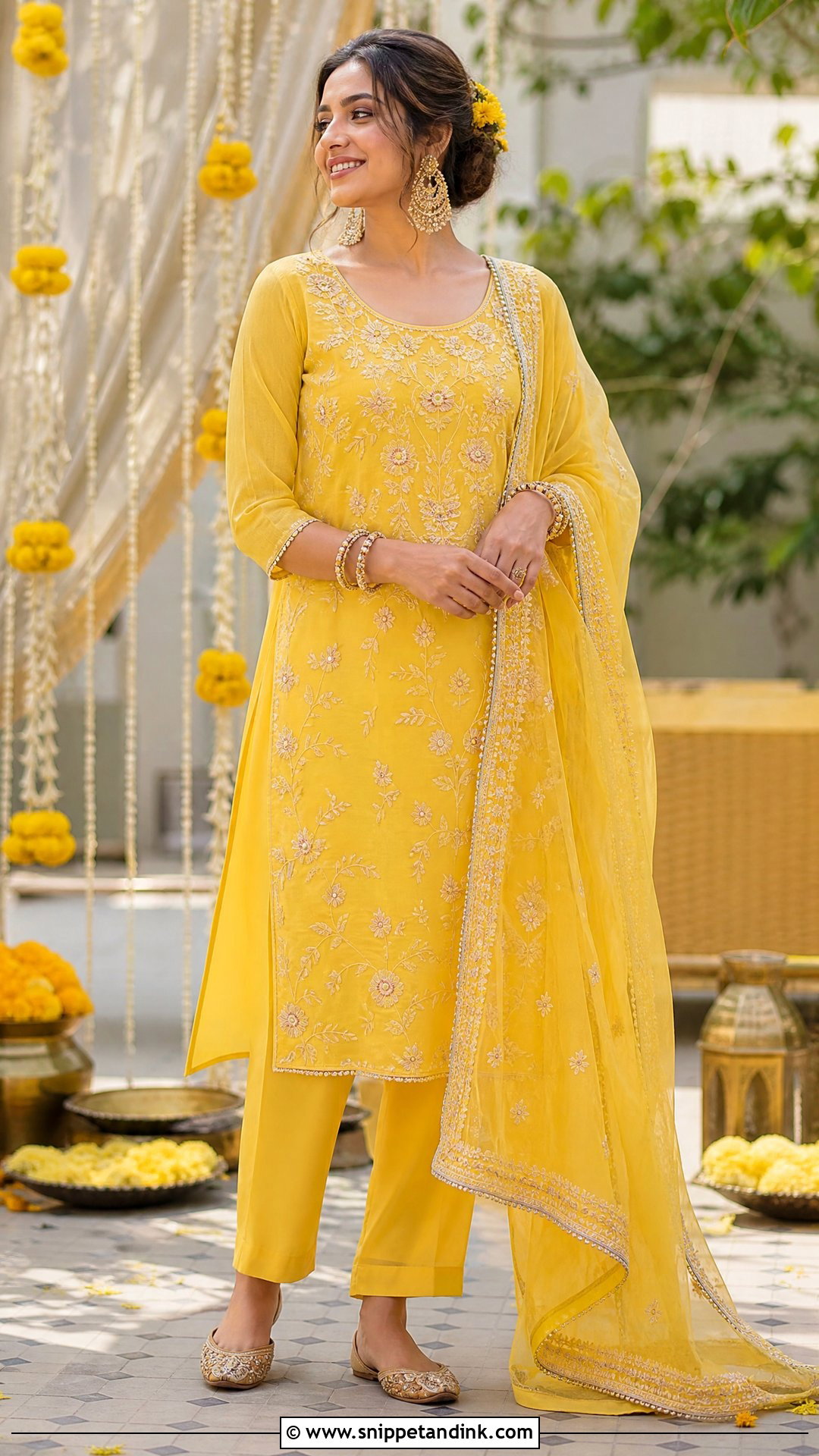
Embroidery is only as comfortable as the fabric underneath. Dense zari or sequins on thin georgette pull the fabric and scratch, so I turn the kurta inside out and check the reverse of the work before anything else; a soft backing or lining makes a real difference. Thread work, florals, zari or sequins around the neckline, sleeves and hem look polished. Choose straight pants, palazzos or a sharara depending on the formality, then add a lightly bordered dupatta, earrings, bangles and embellished flats. It dresses up for the bride and down for a guest.
23. Yellow Dupatta Suit For Haldi Function
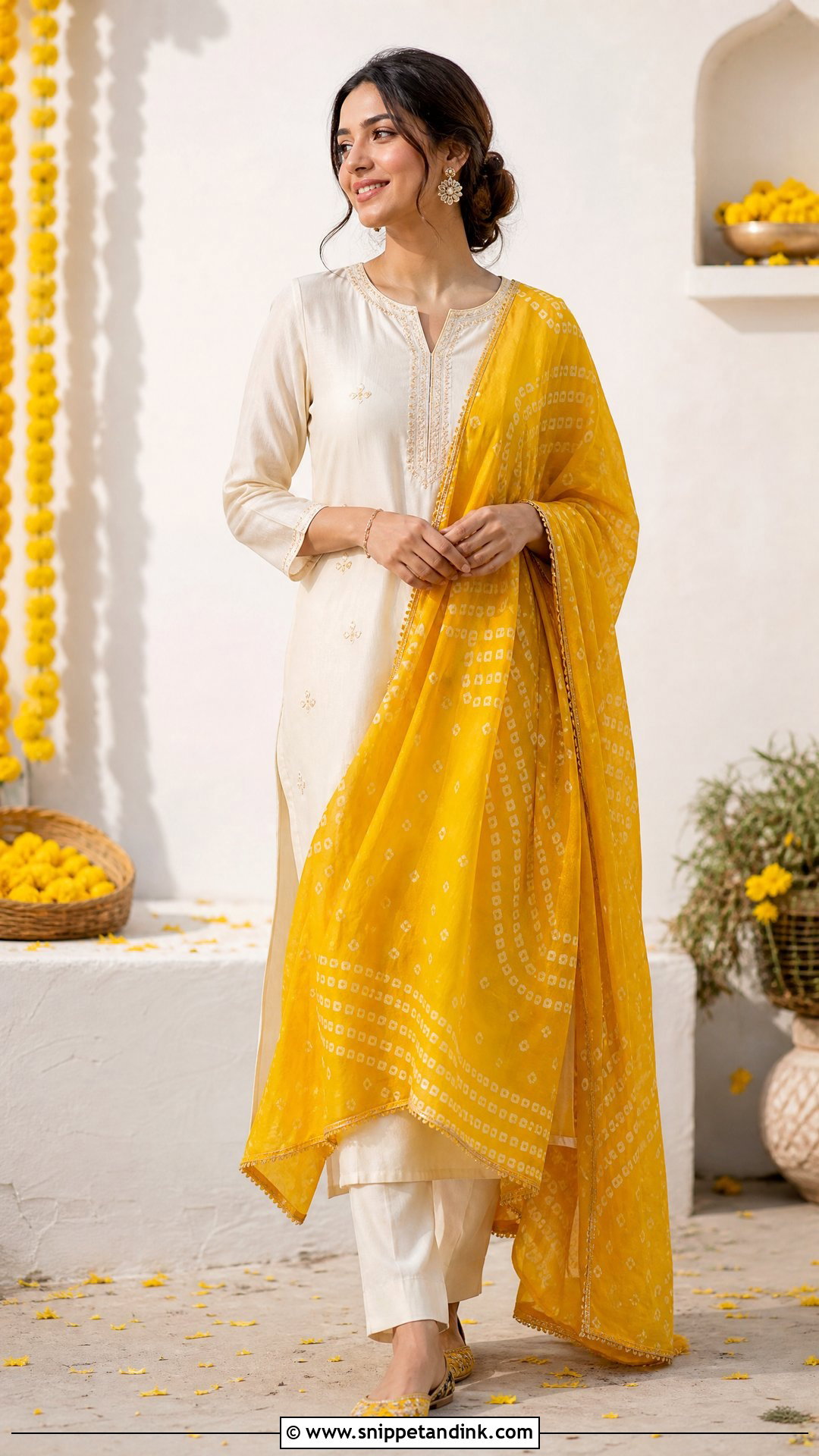
You don’t have to wear yellow head to toe. Start with an ivory, peach or light green kurta set and let a bright yellow dupatta carry the theme. It’s the trick I suggest to guests watching their budget, because it turns something already in the wardrobe into a haldi outfit. Bandhani, gota, mirror work or a floral print give the dupatta more impact. Matching juttis, simple earrings and a neat hairstyle finish it.
24. Yellow Salwar Kameez For Haldi Function
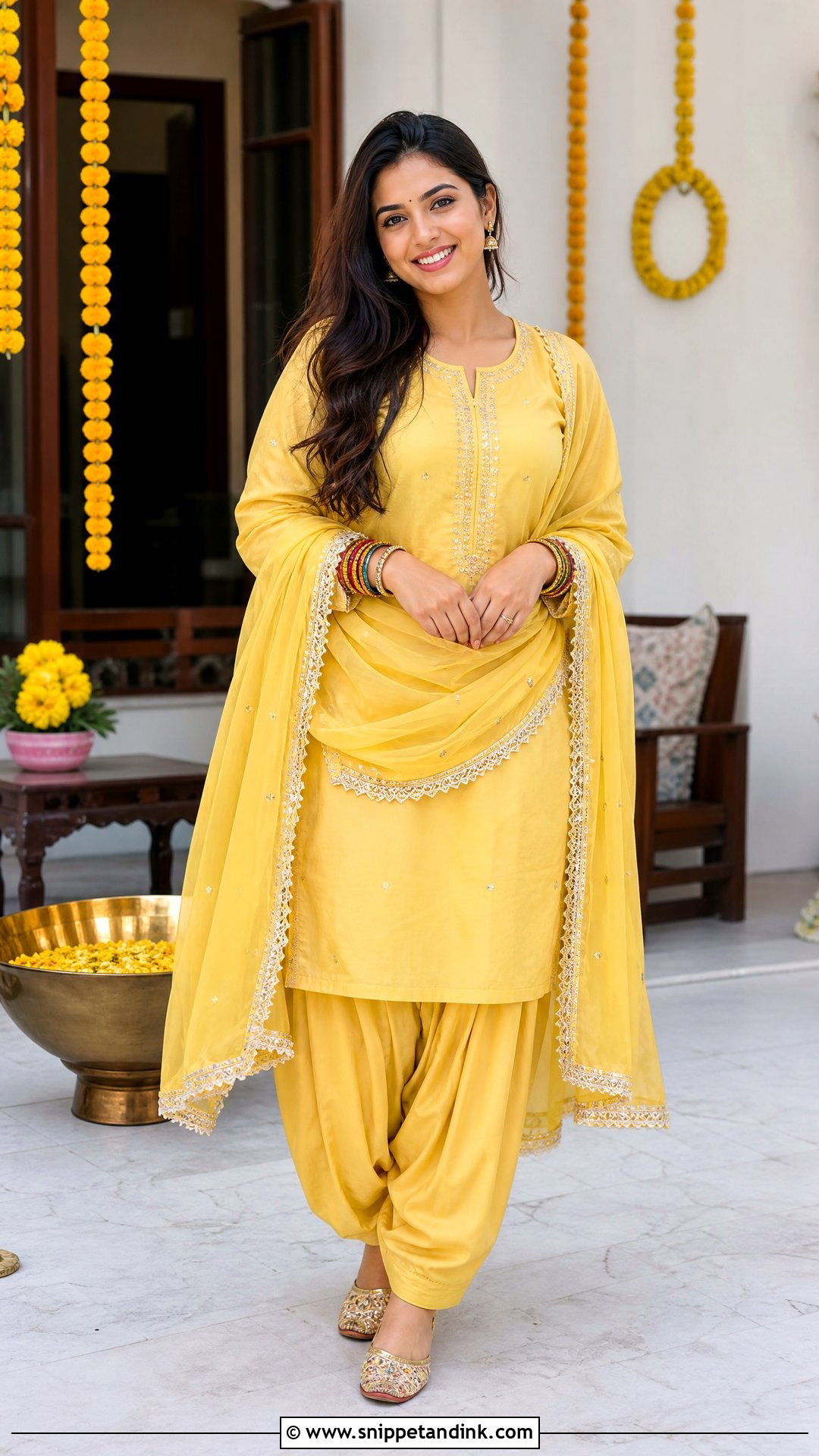
A yellow salwar kameez has never looked out of place at a family haldi. Soft cotton suits a home function, while a silk blend or georgette suits a dressier one. Patiala salwars gather extra fabric into pleats, which makes cross-legged sitting easy but adds bulk at the hip, so petite women often prefer a regular salwar. A dupatta with lace, gota or printed details makes it festive, and juttis, small earrings and colorful bangles finish it.
25. Yellow Bridal Suit For Haldi Function
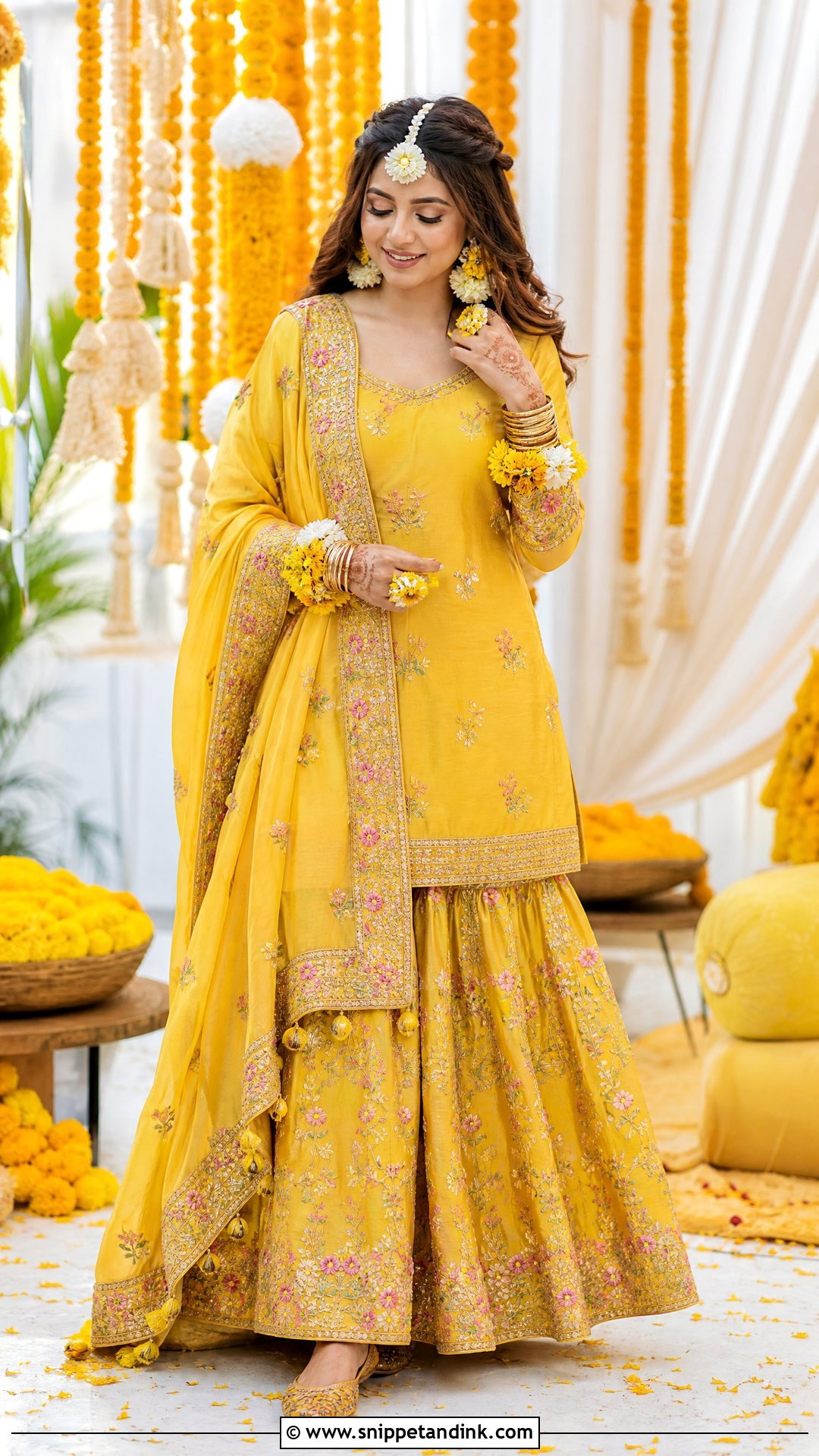
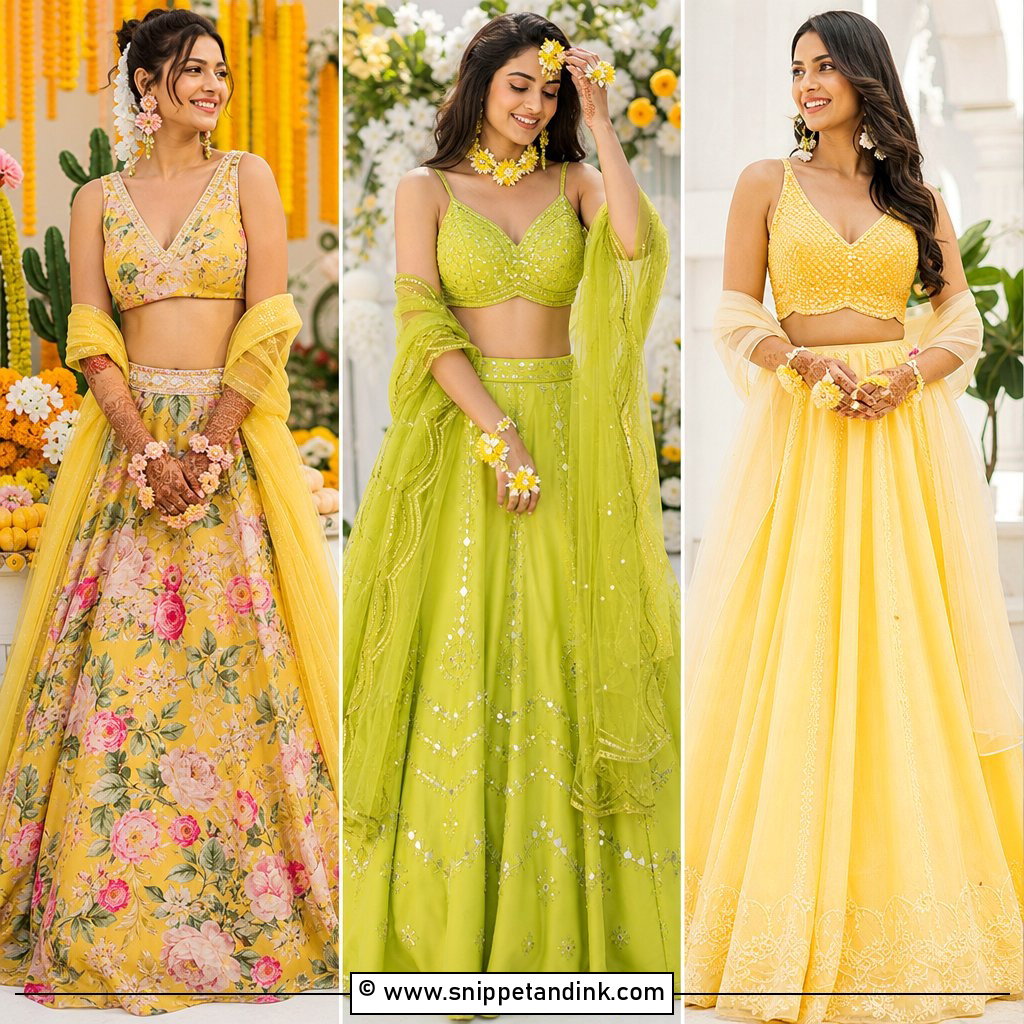
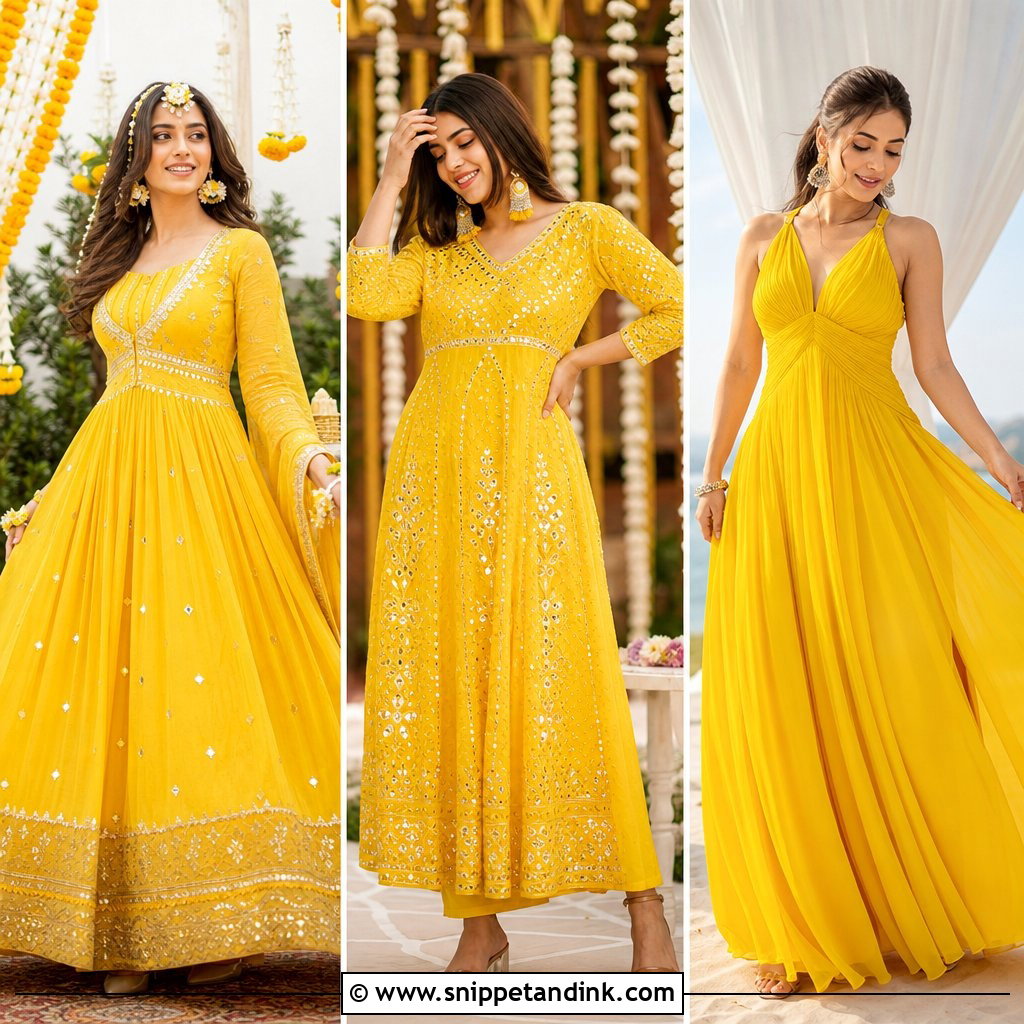
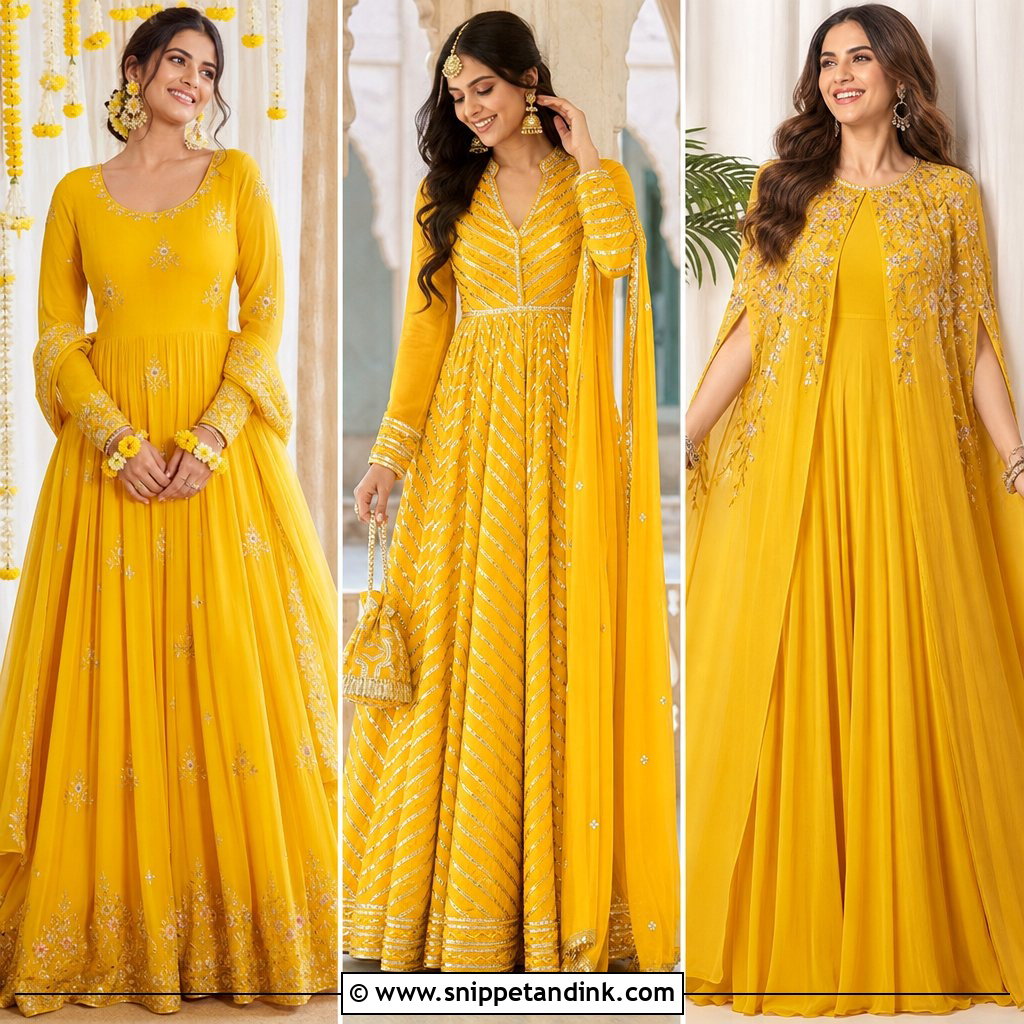
A yellow bridal suit for Haldi has to look special in photos and survive the ritual itself. An Anarkali, sharara, gharara or embroidered palazzo suit in bright or mustard yellow all work. Put the detail where it’s seen but won’t get smeared, such as gota on the dupatta border and mirror work at the neckline, rather than dense embroidery on the sleeves where hands land. Floral jewelry, fresh flowers, gold bangles and glowing makeup complete it. I steer brides away from heavy fabric if the ceremony means sitting on the floor while the paste goes on.
Four Dupatta Placements That Stay Out of the Turmeric
The dupatta is the piece that gets ruined first, because it hangs exactly where the paste bowl sits. Before the ritual begins, I settle each person into one of these.
- One shoulder, pinned flat. Fold the dupatta lengthwise, pin it at the shoulder seam and again at the opposite side of the waist so the tail can’t swing forward.
- Cross-body sash. Run it from one shoulder to the opposite hip and pin it there. It looks neat in photos and leaves both arms free.
- Around the neck with both ends behind you. Classic and quick, but only with a light dupatta, since heavy borders drag on the neck.
- Off entirely for the ritual. Hand it to someone you trust and put it back on for photos once the paste is done.
Use safety pins on the reverse side and push them through a seam rather than plain fabric, so they hold without leaving holes in fine weaves. Heavy mirror or gota borders need two pins, not one, or the weight pulls the whole drape sideways by mid-morning.
A Suit You Can Sit Cross-Legged In
The suit that works is the one you stop thinking about once it’s on. Get the fit right at the armhole, the slits and the length, decide where the dupatta goes before the ritual starts, and pick fabric by how hot and how messy the morning will be. Washable cotton and deeper mustard tones are the practical picks if you’ll be close to the paste. Silk, organza and heavy embroidery are better for those watching from a step back.
You'll Like These Ideas:



Leave a Reply