
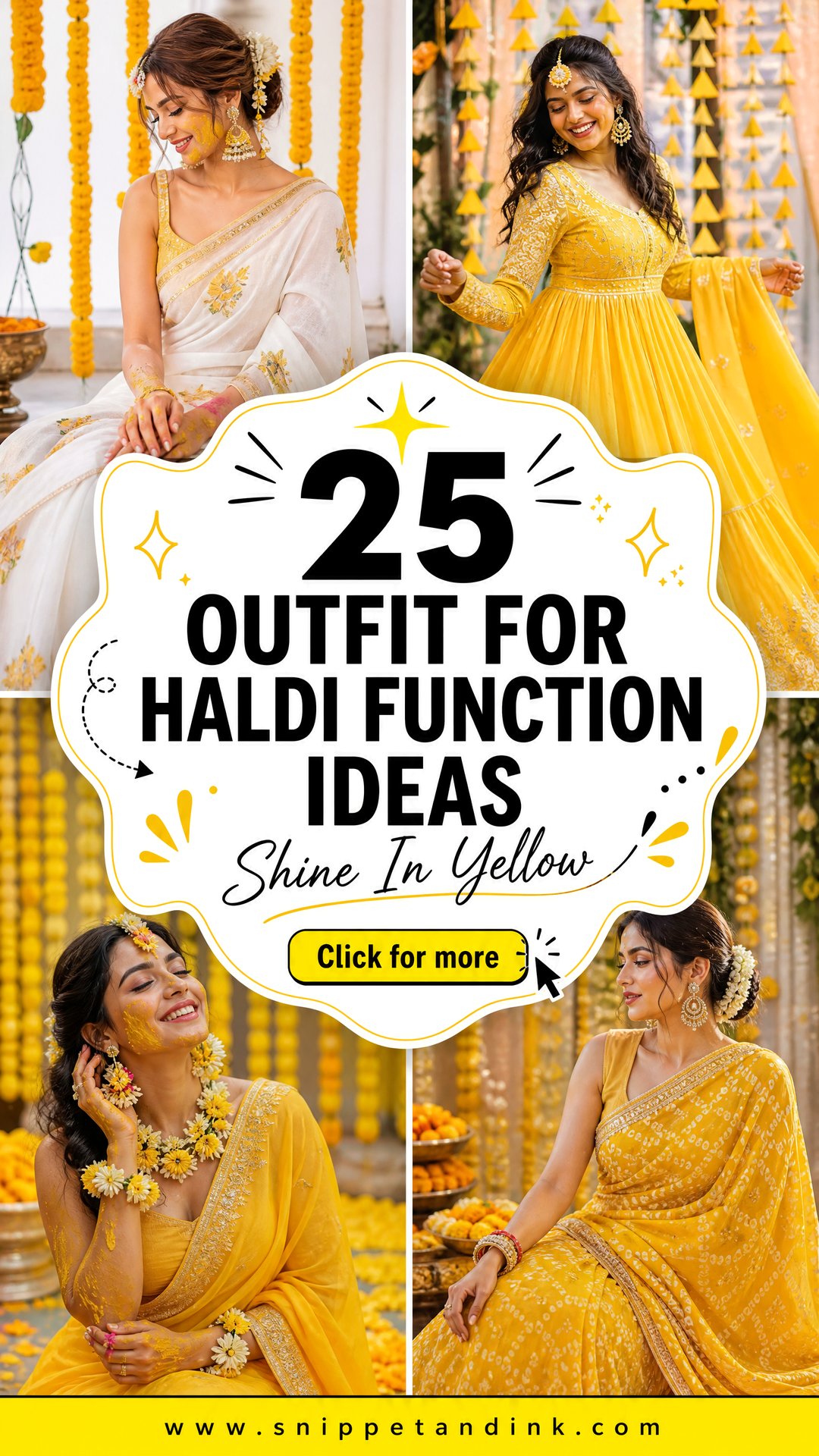
Haldi is the messiest event of the wedding week, and that should shape the outfit more than any trend. Someone will press turmeric paste onto your arms and cheeks, you’ll sit low on a patla or a floor cushion, and there may be water or petals thrown at the end. So when I style a haldi look I start with fabric that breathes and forgives a stain: cotton silk, organza, georgette, chiffon, linen blends and light silk. Yellow is the obvious color, but ivory, lime, peach, mint, mustard and floral prints all sit comfortably in a daytime ceremony. Below are 25 outfits for the bride, her sisters, bridesmaids and guests, each styled from head to toe.
Turmeric Paste Will Find Your Outfit, So Plan For It
Haldi paste is turmeric mixed with gram flour or sandalwood, plus oil, milk or rosewater, and it stains almost every natural fiber it touches. The bride gets it on her face, arms and feet, and usually on her clothes. Close family get it on their hands and sleeves while applying it. Guests can get caught too once the playful smearing starts. So the first question I ask isn’t about color. It’s how much of this outfit you’re willing to lose.
What I’d let a bride wear on the seat
- Cotton, cotton silk, mul or georgette that you’ve accepted may keep a faint yellow tint.
- A blouse and dupatta you’d happily replace, since those take most of the paste.
- Short sleeves or none, so the paste lands on skin instead of embroidery.
- Nothing heirloom, borrowed or woven with real zari. Metallic thread can tarnish under oily paste and is hard to clean.
Where a cheaper fabric actually wins
Polyester georgette and chiffon don’t soak up turmeric the way cotton does, so they tend to rinse cleaner. It’s one of the few places where an inexpensive fabric outperforms a precious one. If you love a pure silk, save it for the mehndi.
Plan the hour after, too. The bride traditionally bathes straight after the haldi before changing for the next event, so keep an old kurta or robe ready and a towel over the car seat.
1. Yellow Lehenga Haldi Outfit
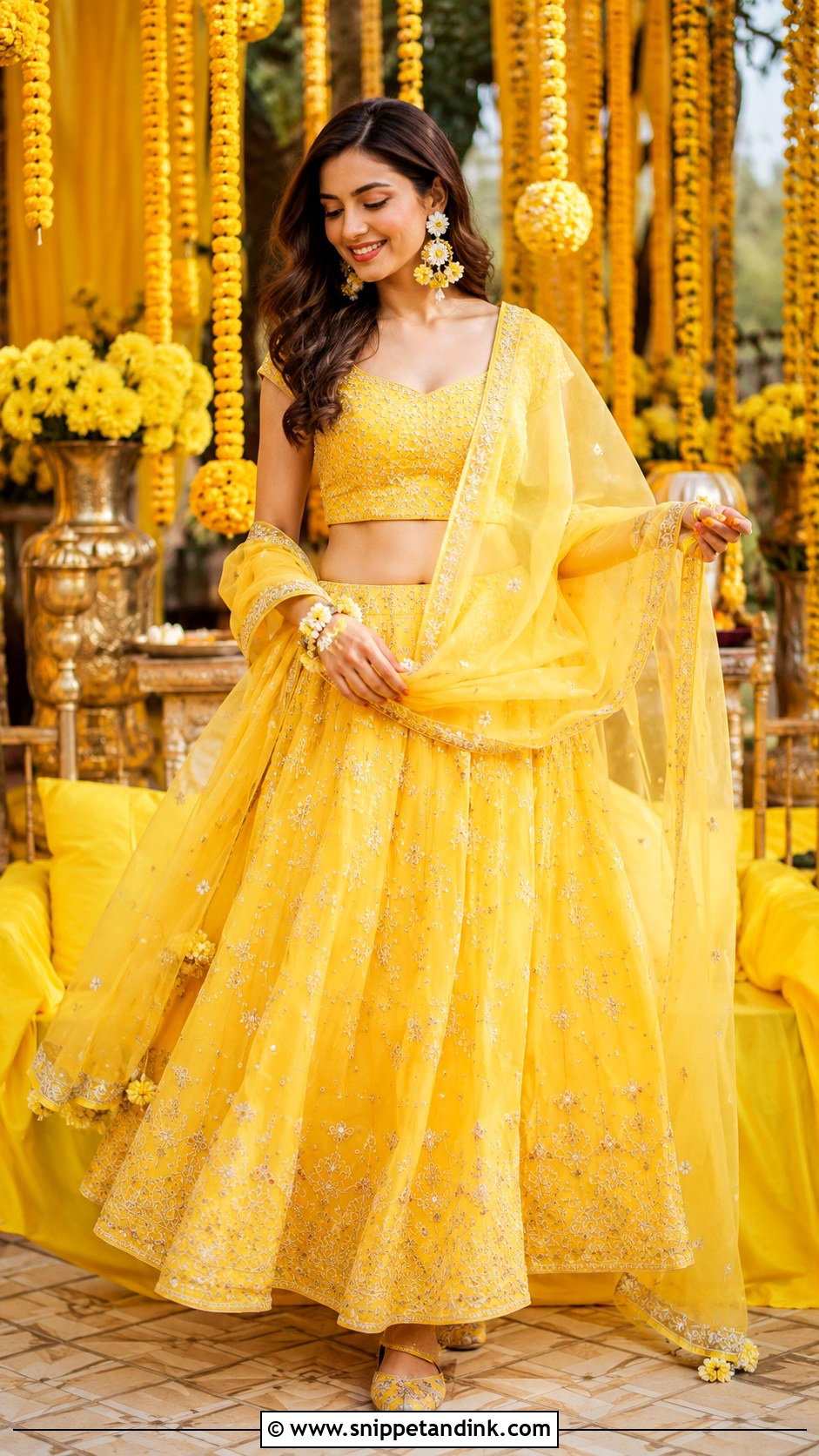
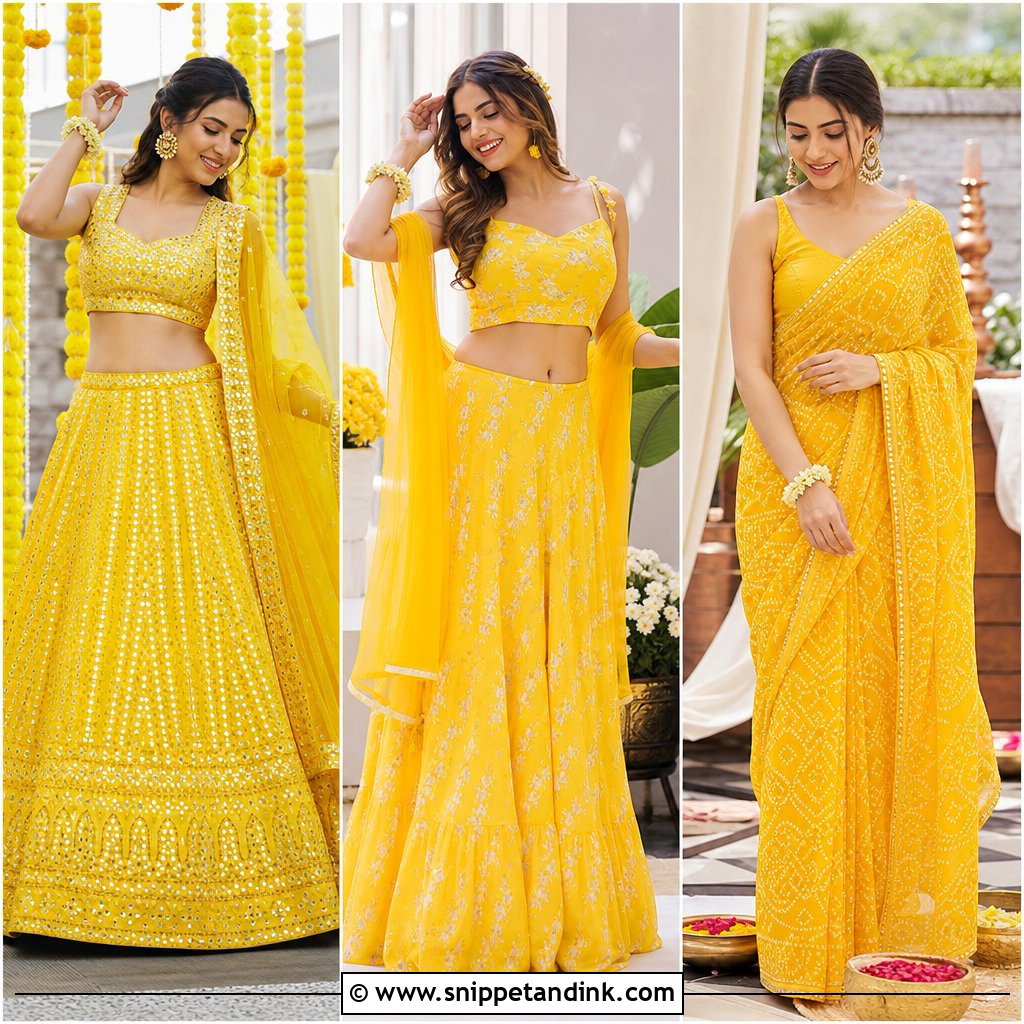
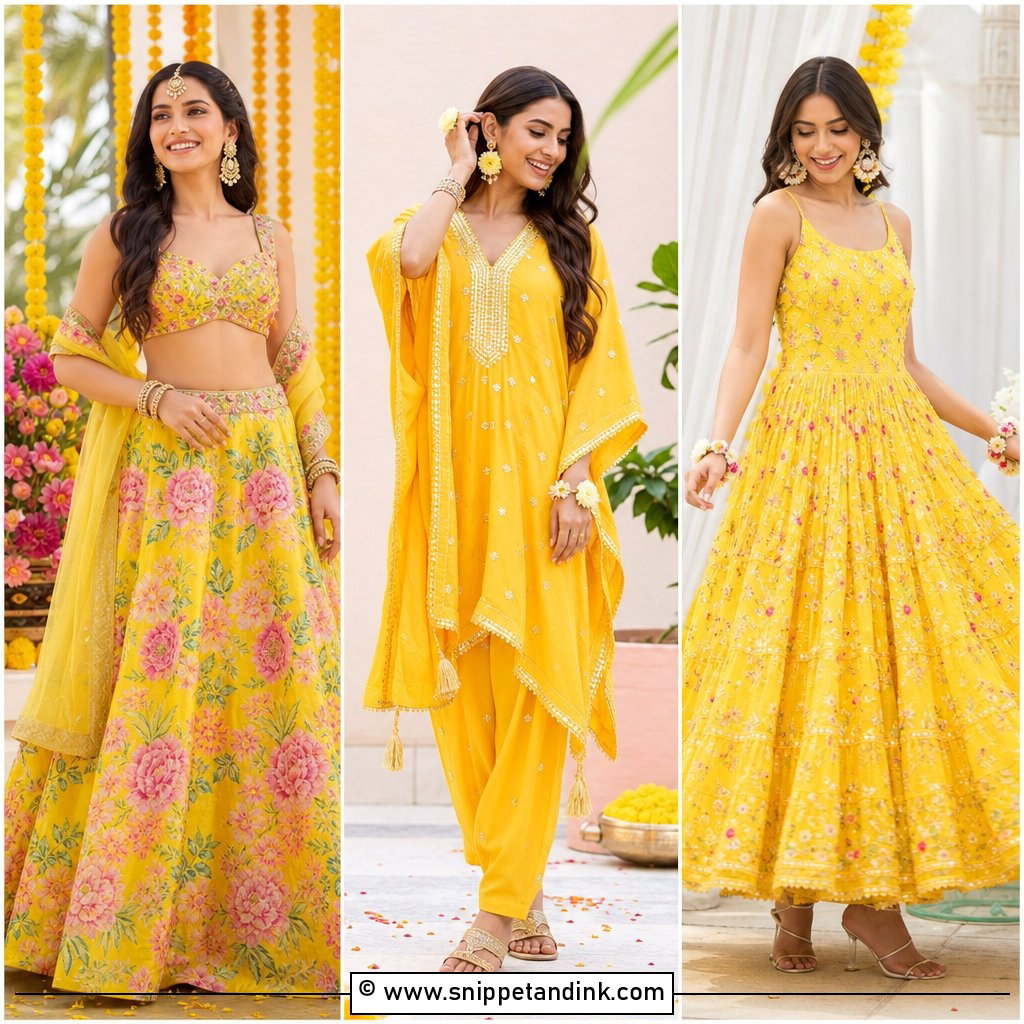
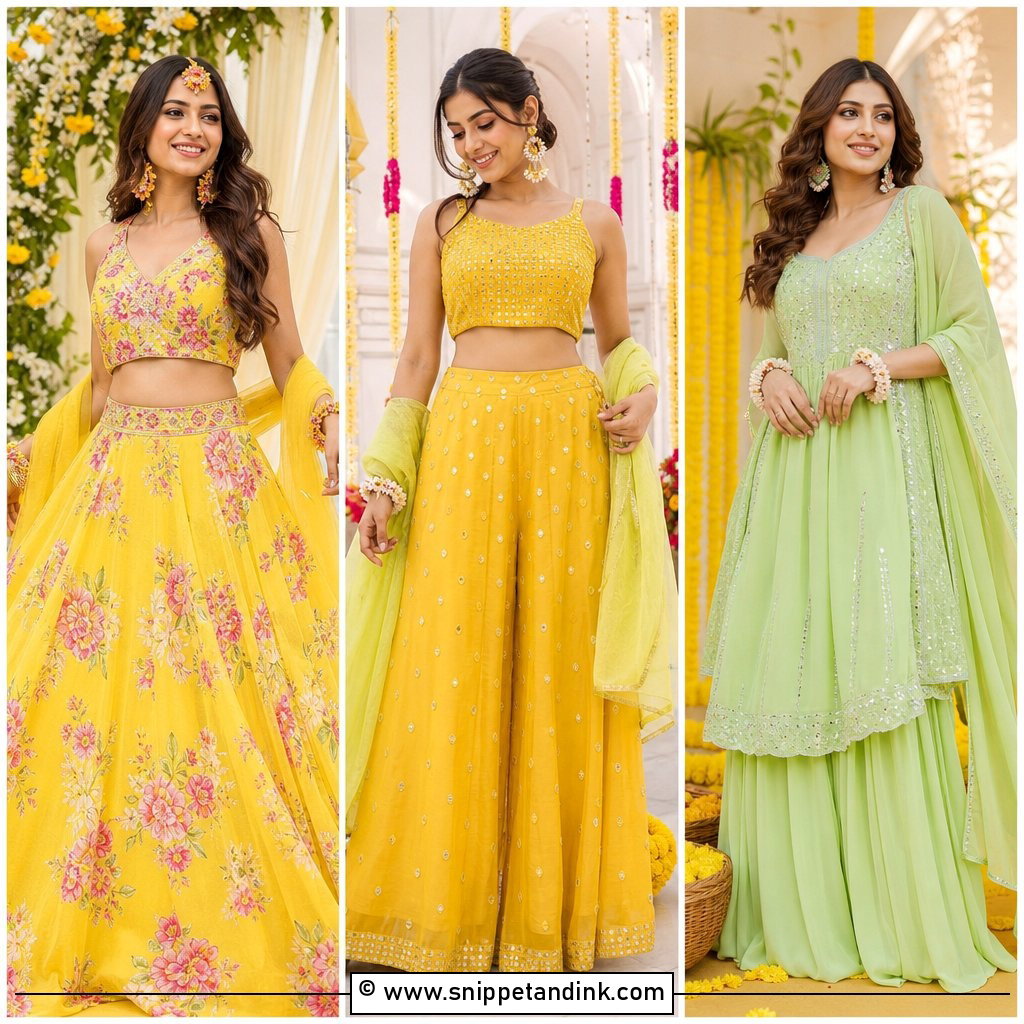
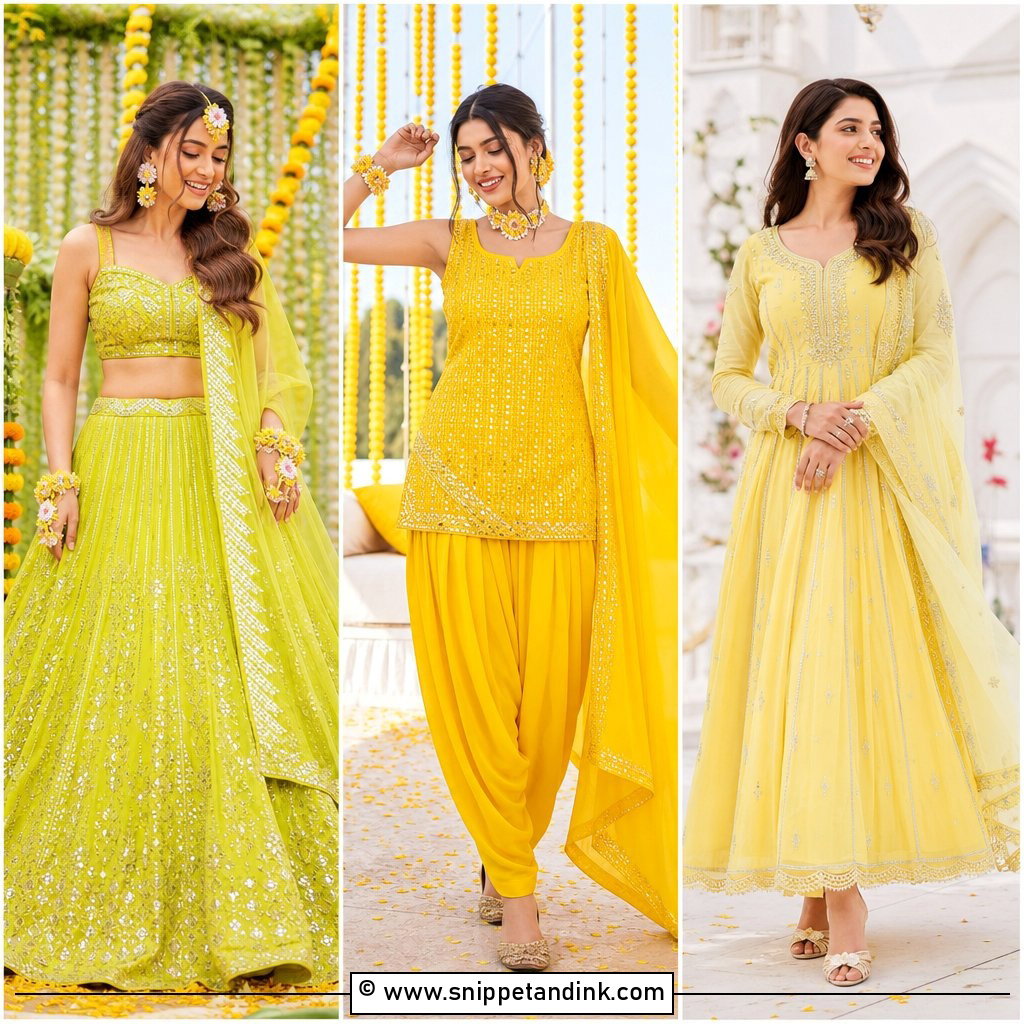
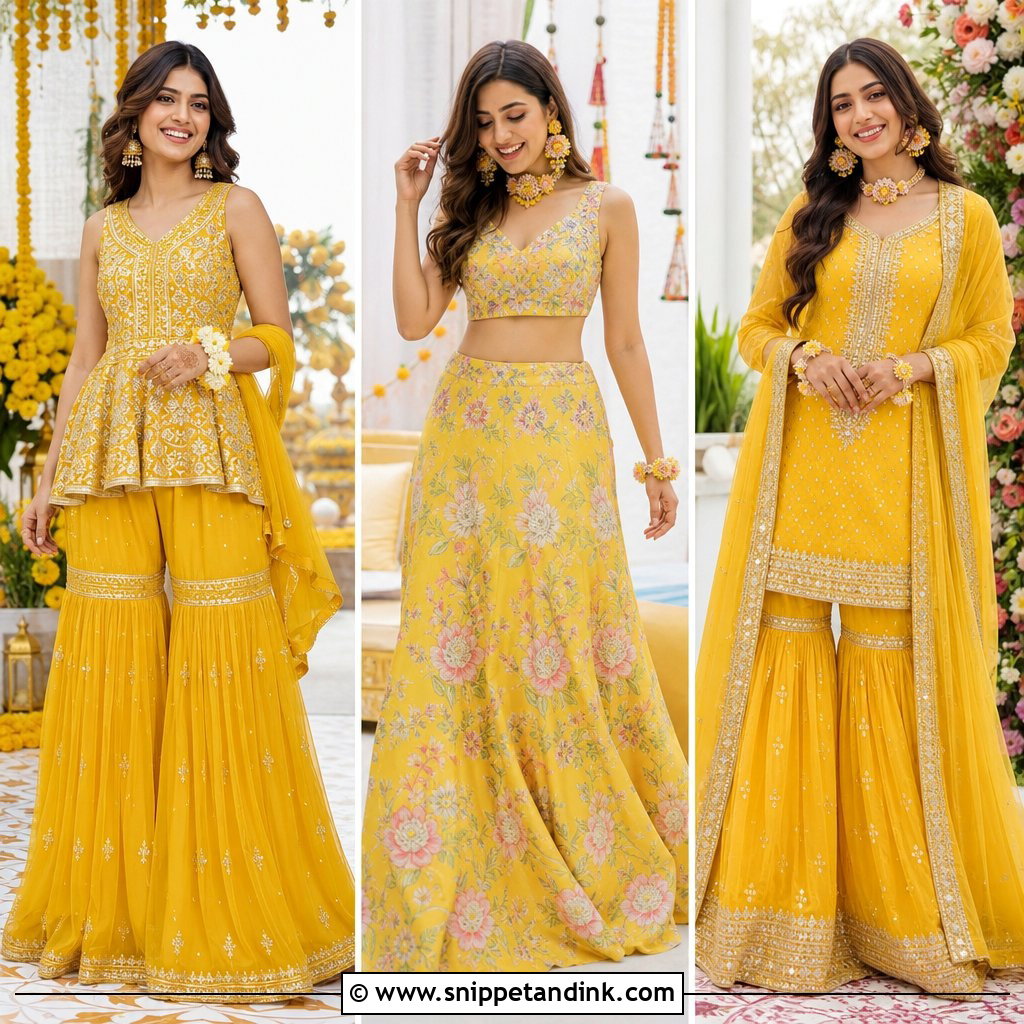
The yellow lehenga is the classic for a reason: it reads as haldi instantly, even in a crowded group photo. I keep it light, in cotton silk, georgette or organza, because a can-can-lined bridal skirt is miserable when you’re sitting cross-legged on the floor. Ask your tailor for a soft lining or none at all. Pair a sleeveless or short-sleeve blouse with a matching or contrast dupatta, floral earrings, bangles and a simple maang tikka instead of the heavy bridal set. Mojaris or low block heels beat stilettos outdoors, where heels sink into the lawn. A small potli bag, soft waves and dewy makeup finish it.
2. White And Yellow Saree Haldi Outfit
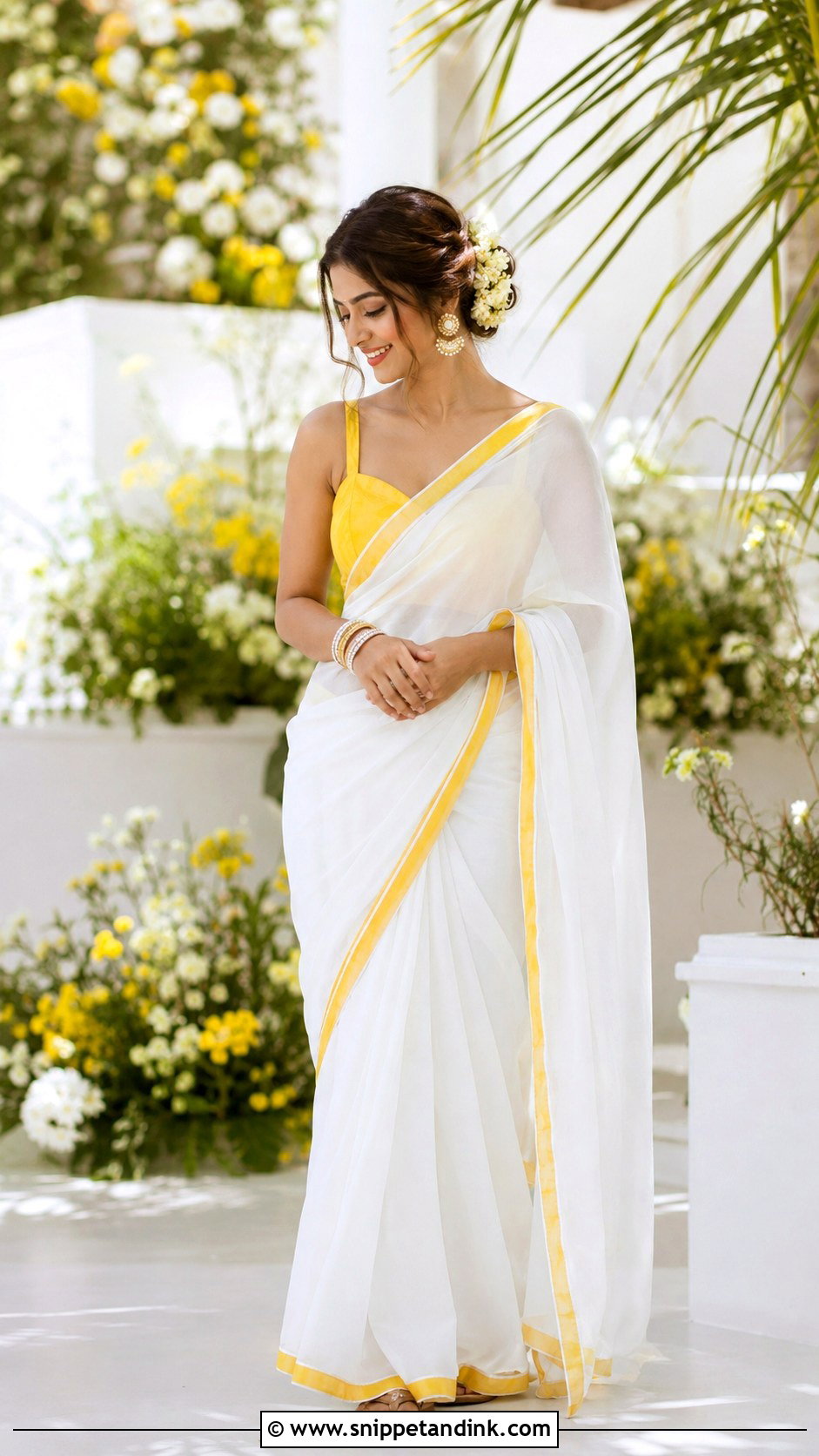
White and yellow is the combination I hesitate over, and only because of the paste. Turmeric shows on a white base faster than on anything else, so this saree suits a sister or guest standing a step back more than the bride on the seat. When it does work, it looks very clean: a white chiffon, organza, cotton or linen drape with yellow borders, prints or threadwork, a yellow blouse, pearl earrings and fresh flowers in the hair. Wear flat sandals or embroidered juttis and keep makeup to peach blush and a glossy lip.
3. Floral Sharara Haldi Outfit
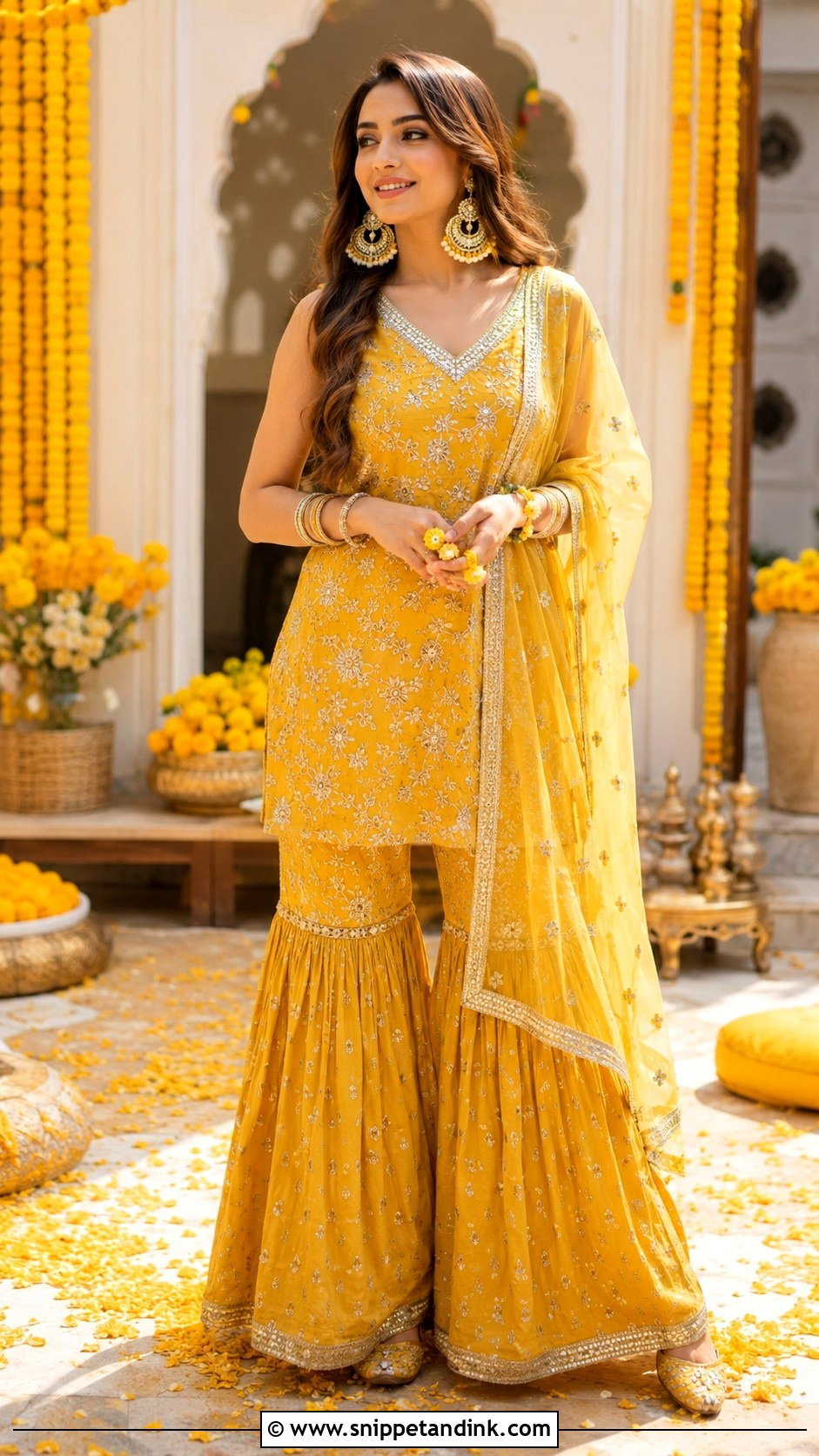
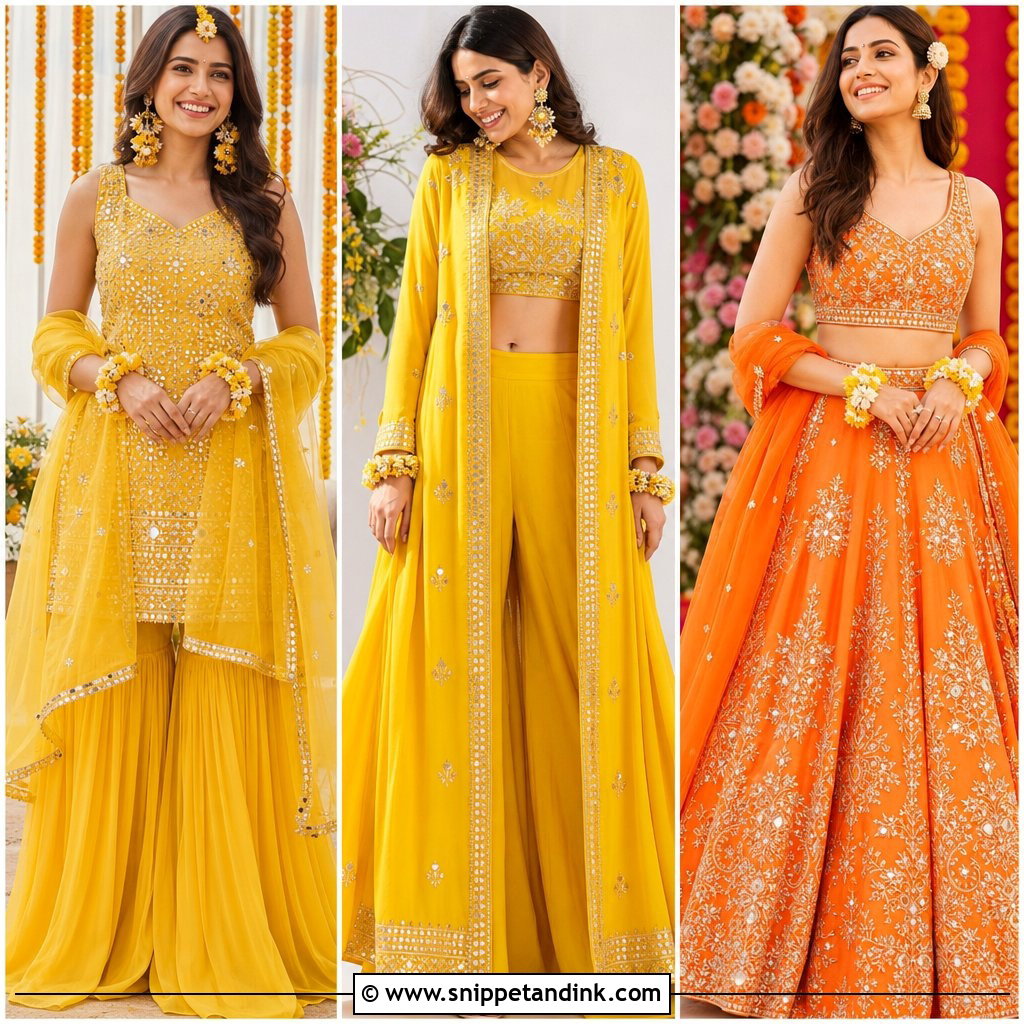
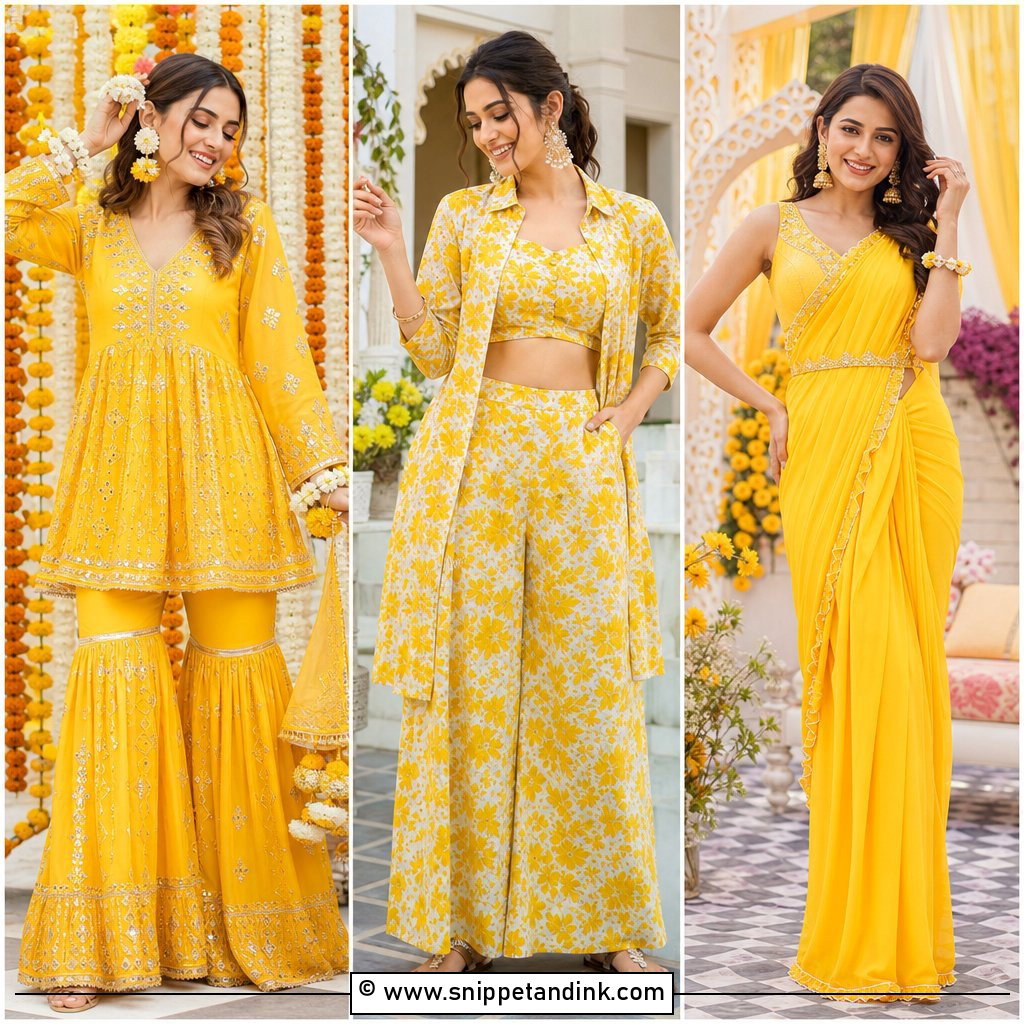
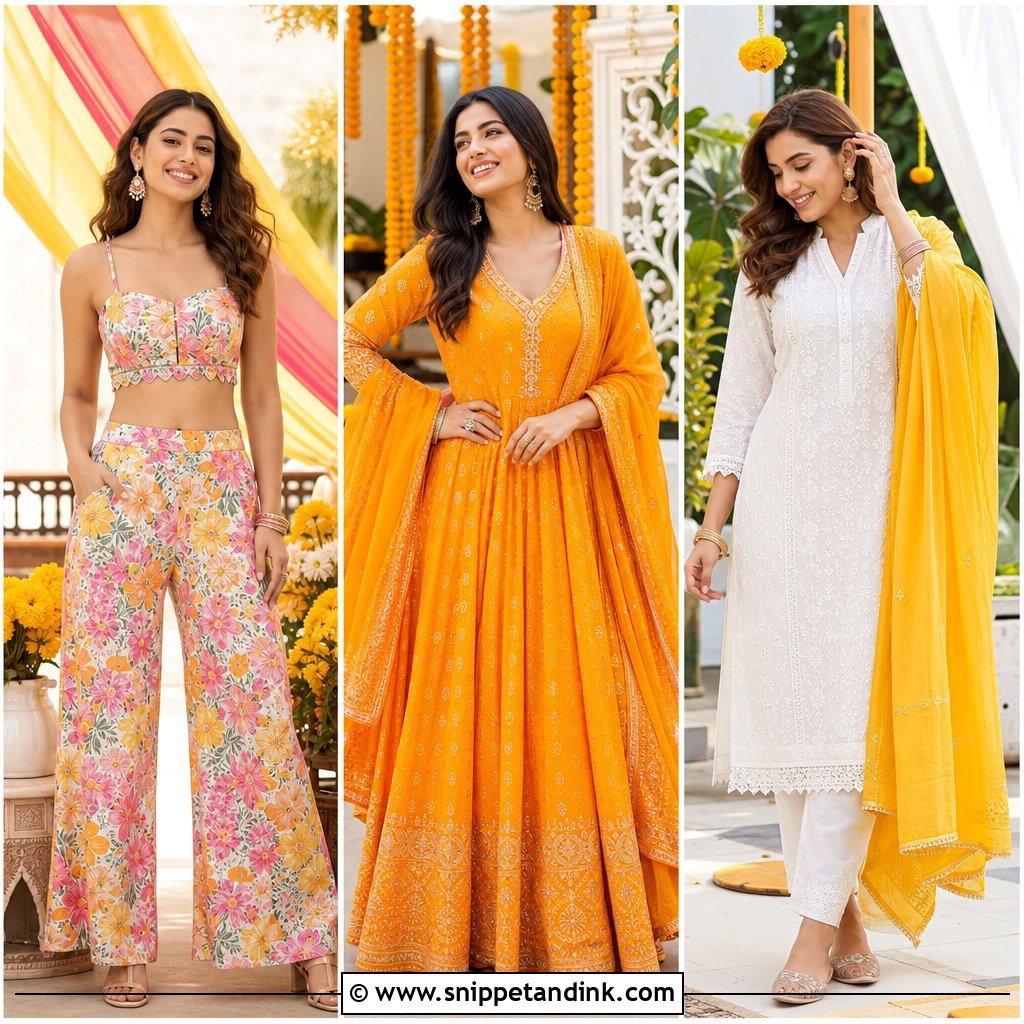
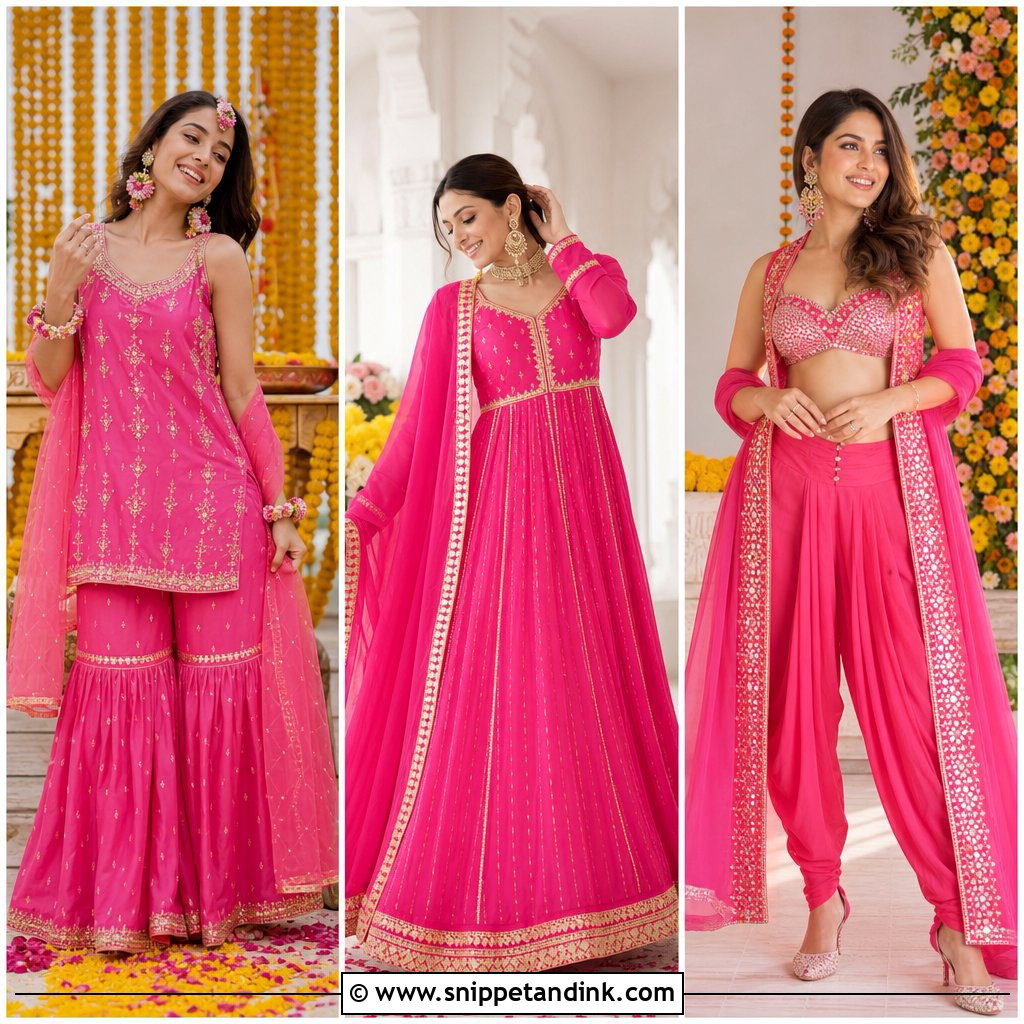
Shararas are my go-to for anyone who’ll be up and down all morning, carrying thaals or pulling relatives into a dance. The flare starts at the knee, so you can sit on the floor without fabric pulling tight across the hips. A short kurti keeps the proportion right; a long one swallows a petite frame. Choose a yellow, peach, ivory or lime floral, pin a light dupatta on one shoulder so it stays put, and add oxidized earrings or pearl bangles with comfortable juttis.
4. Yellow Anarkali Haldi Outfit
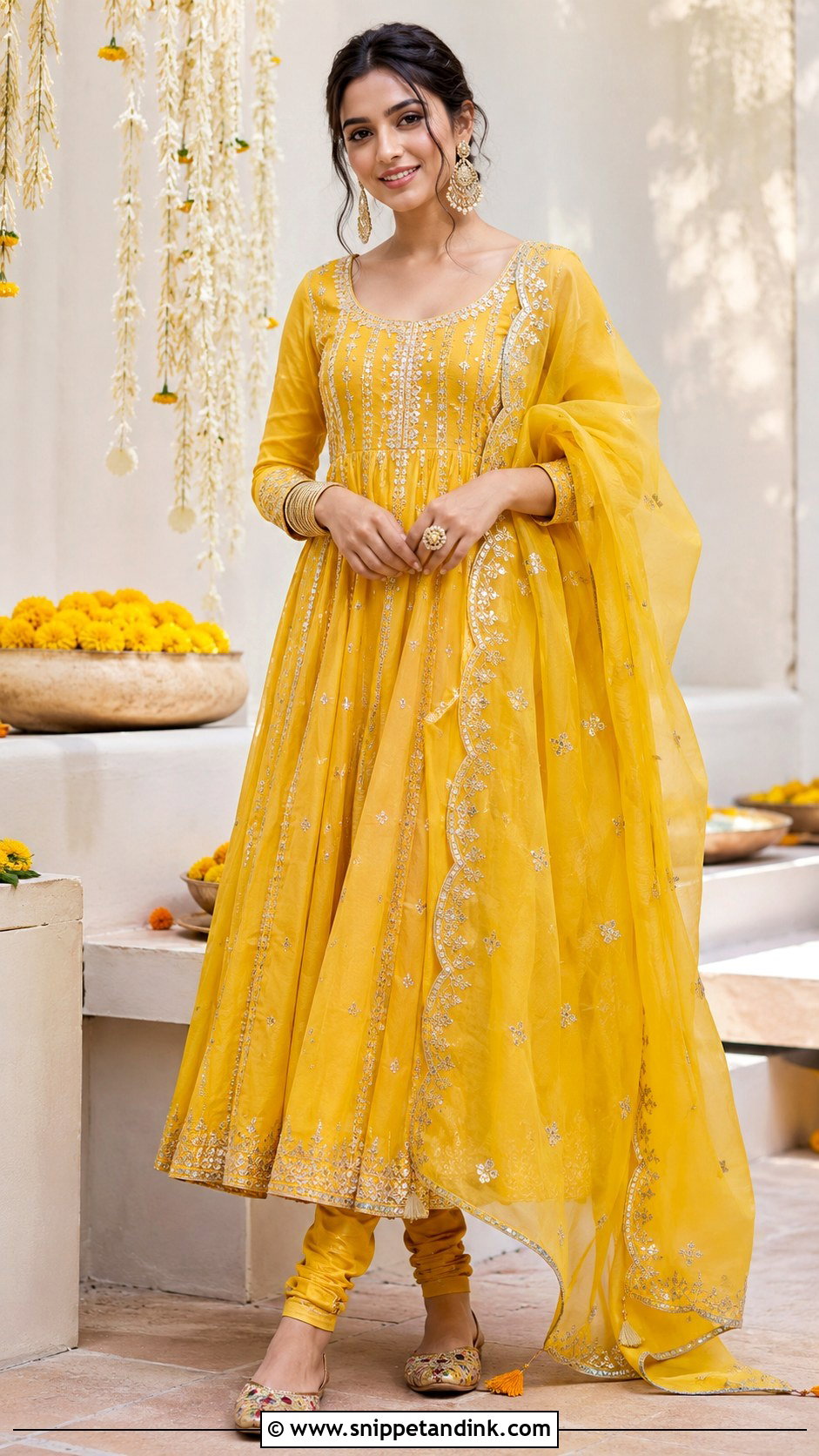
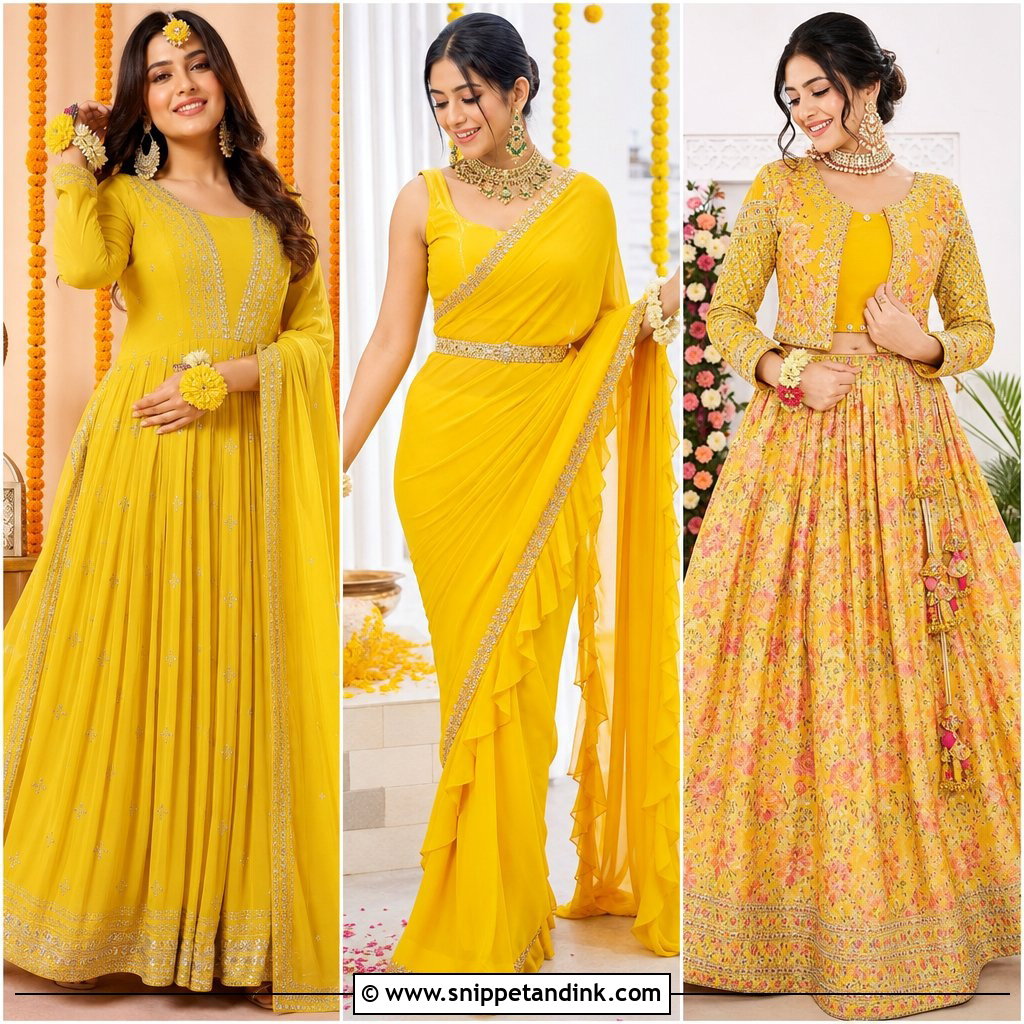
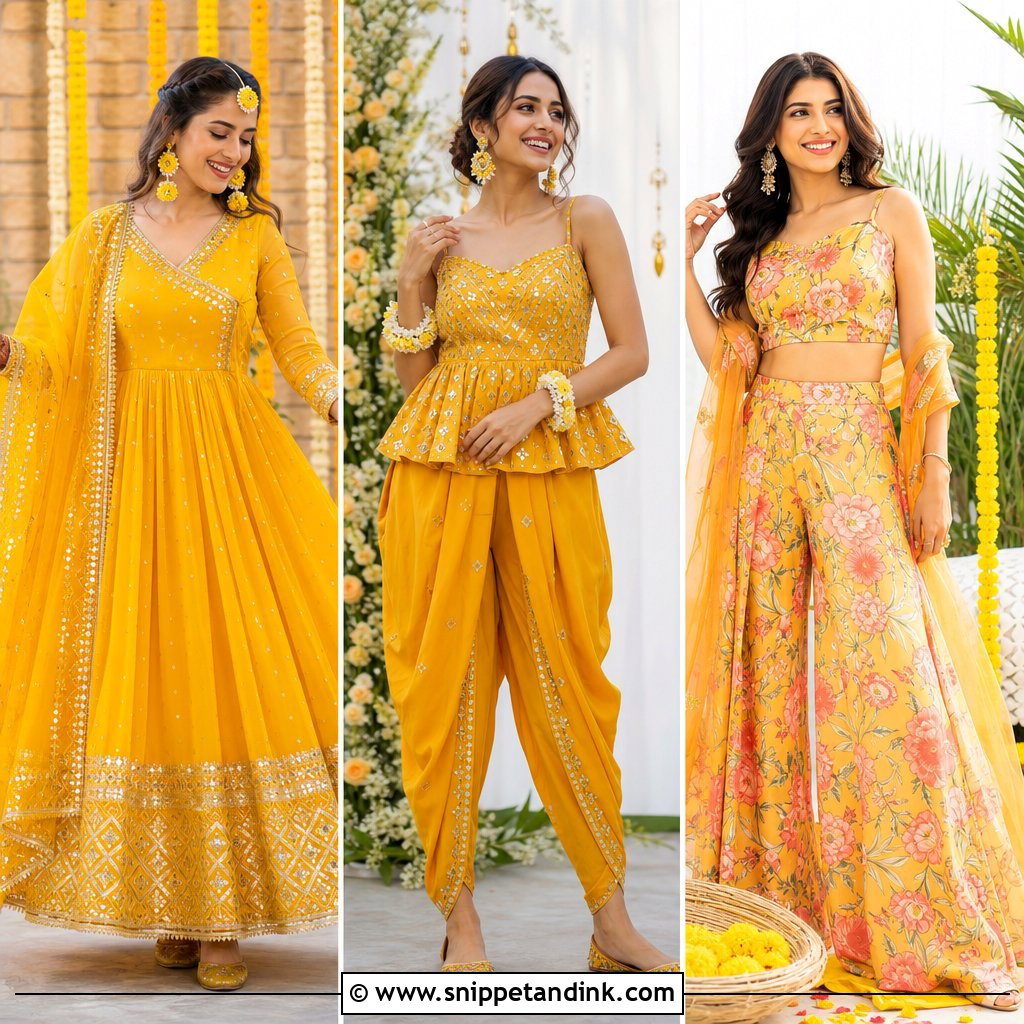
An Anarkali flatters most figures because the volume starts high and falls away from the waist and hips. The catch is the flare. A full-circle Anarkali in heavy fabric pools awkwardly when you sit on the floor, so for haldi I’d go lighter, in georgette or cotton with gota, mirror work, small prints or subtle embroidery. Churidar or straight pants and a matching dupatta go underneath. Statement earrings and a stack of bangles are all the jewelry it needs, and embroidered flats or wedges keep you steady.
5. Mustard Kurta And Palazzo Haldi Outfit
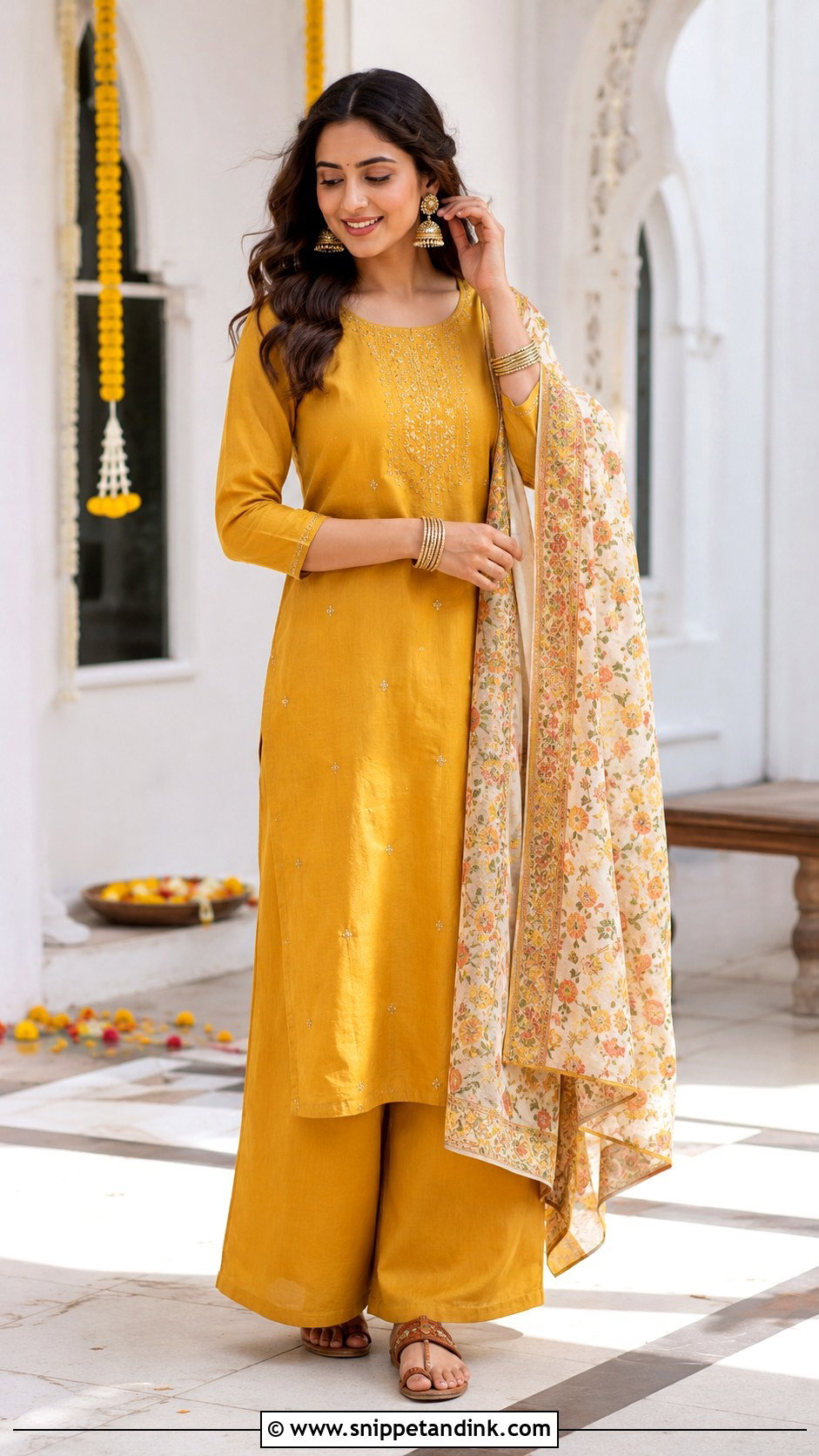
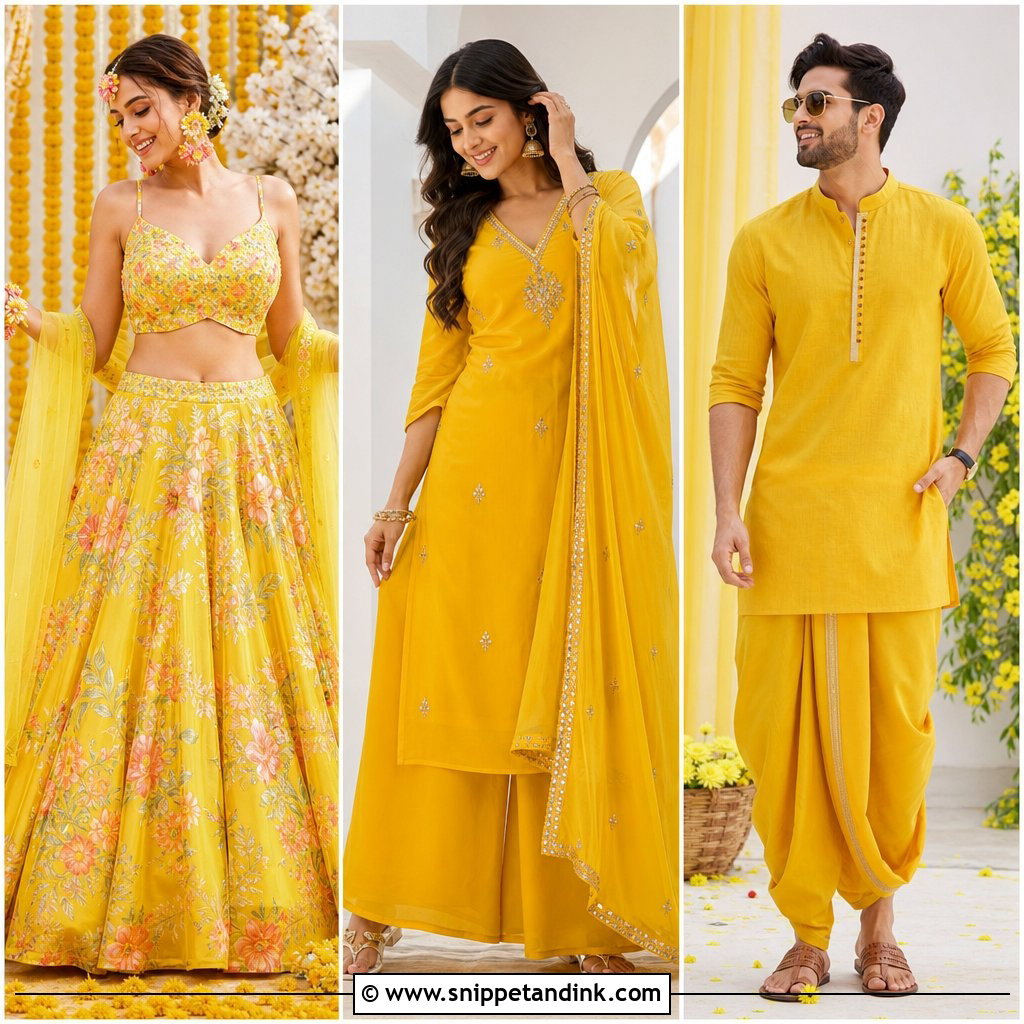
Mustard is kinder than lemon yellow to many warm and deeper skin tones, and a kurta with palazzo pants is about as comfortable as festive dressing gets. Go straight, A-line or a short embroidered kurti depending on how dressed up the family is going. A printed dupatta in pink, green or ivory breaks up the mustard so you don’t vanish against yellow decor. Jhumkas, bangles and kolhapuris or juttis complete it, and the wide leg stays cool through an outdoor afternoon.
6. Lemon Yellow Co Ord Set Haldi Outfit
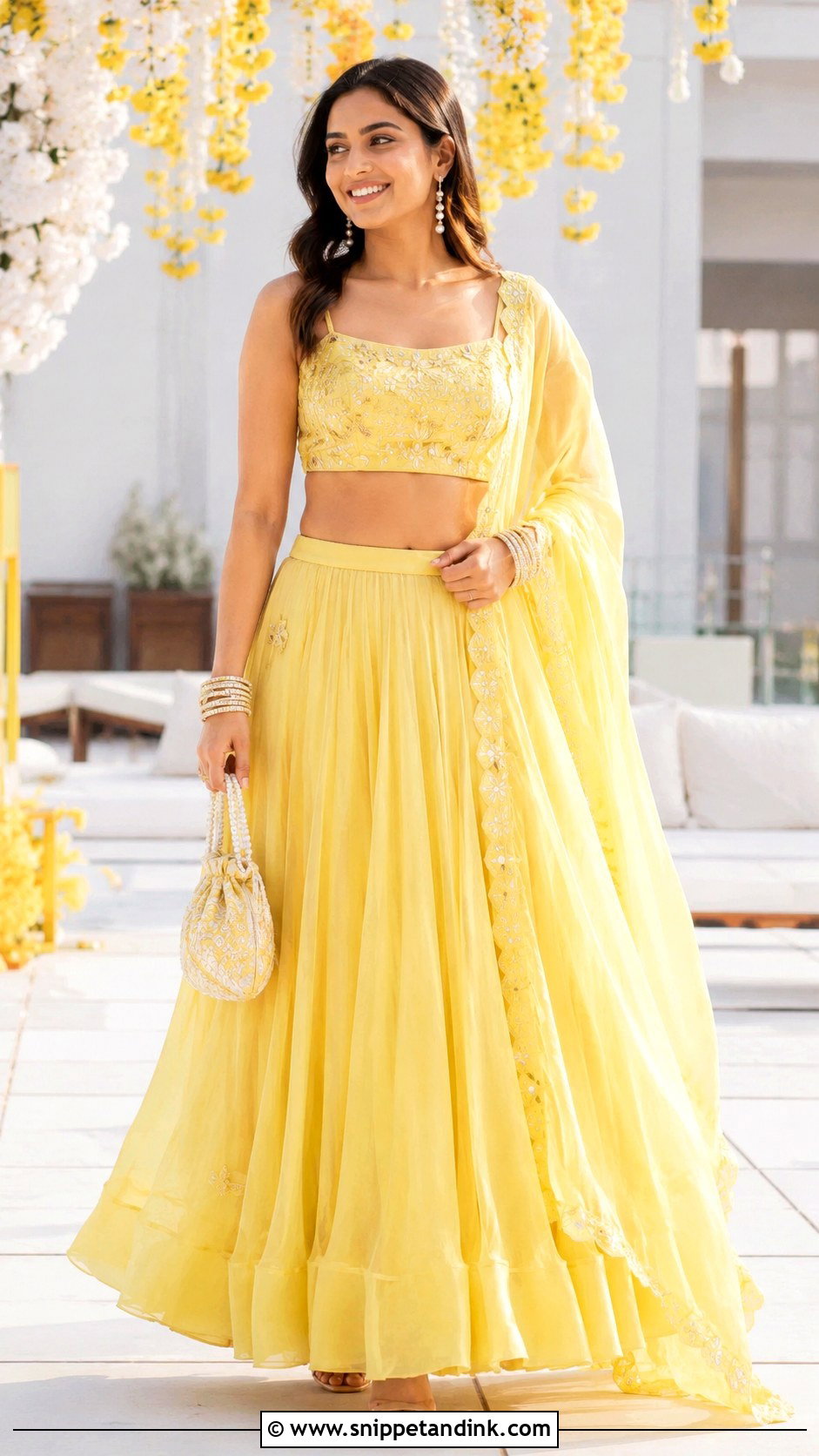
A lemon yellow co ord set is the easiest way to dress a group of bridesmaids with different tastes. Each one picks her own shape, a crop top and skirt, a tunic and pants or a short kurta with flared bottoms, and the matching shade still pulls the photos together. Add a light organza dupatta or cape for a more traditional touch, with pearl earrings, stacked bangles and nude block heels. One honest caution: lemon is the yellow that washes out pale and olive skin fastest, so hold the fabric near your face in daylight before ordering. Of everything here, it’s also the set most likely to get worn again after the wedding.
7. Yellow Ruffle Saree Haldi Outfit
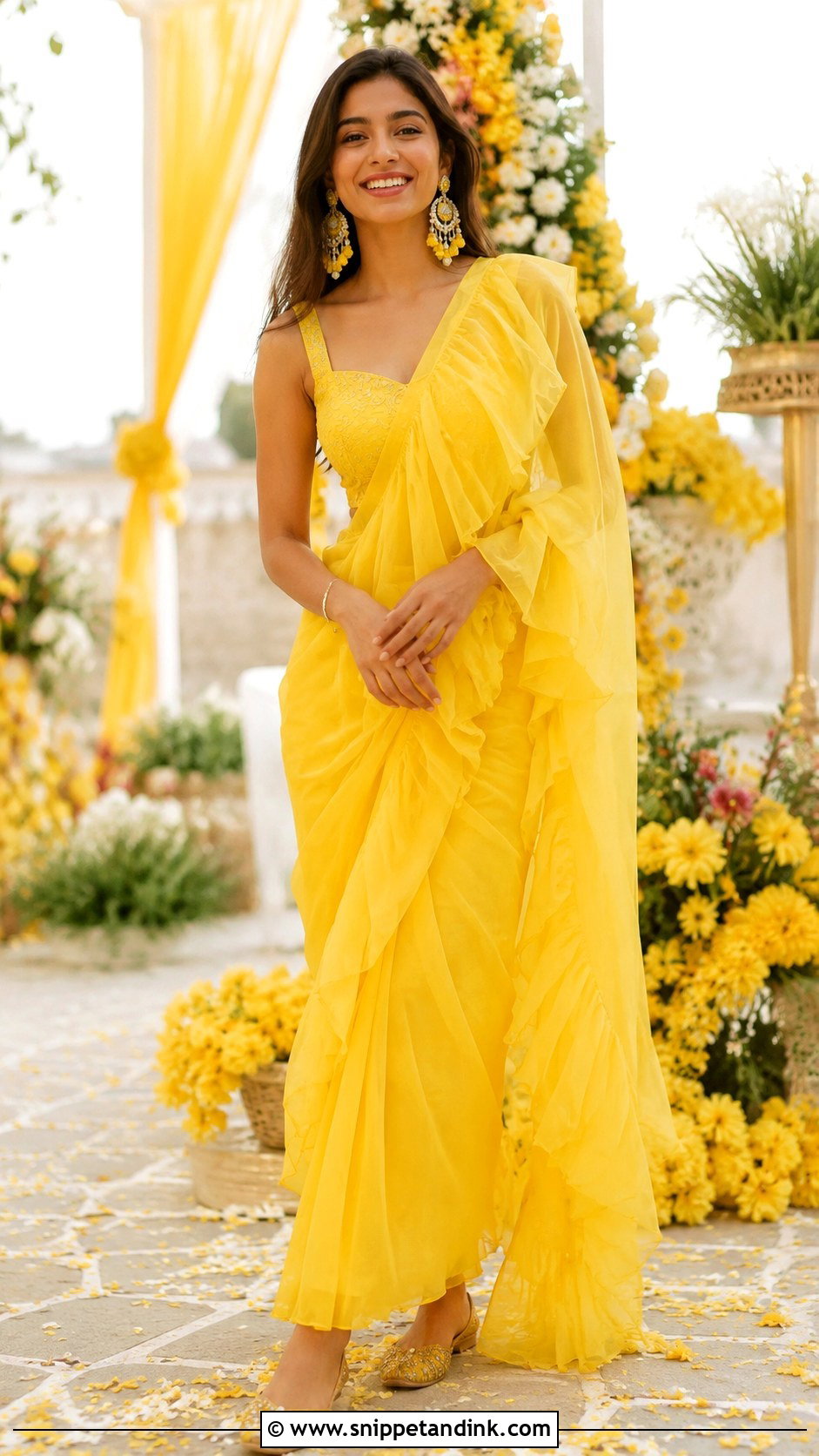
A pre-stitched ruffle saree is what I hand to anyone who has never draped a saree and doesn’t want to learn on the morning of the haldi. It goes on in minutes, and the ruffles hide a pleat that has slipped. Because the hem already carries the texture, I keep the blouse plain, mirror-work or a sleeveless crop, and stop at statement earrings and one delicate bracelet. Clear heels, wedges or embellished flats all work. Check the ruffle length, though. If it brushes the floor, it will drag through wet paste every time you stand up.
8. Ivory Lehenga With Yellow Dupatta Haldi Outfit
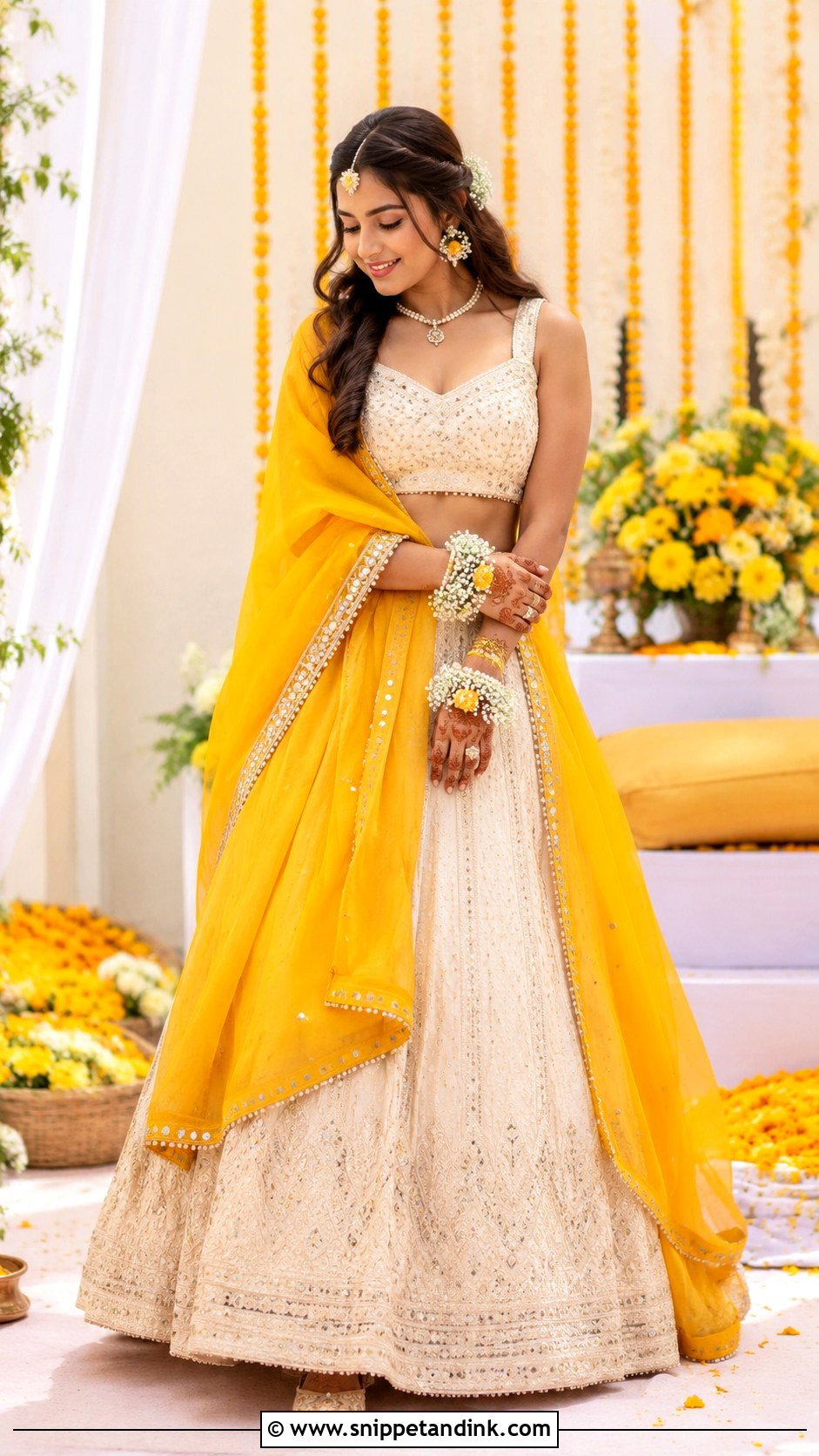
For a bride who doesn’t want to be swallowed by yellow, an ivory lehenga with a yellow dupatta keeps the ceremony color in the frame without going head to toe. The dupatta collects most of the paste, which is handy: it’s the cheapest piece to replace if the stain won’t lift. Keep the skirt to light embroidery, mirror work or floral prints, with either an ivory or a yellow blouse. Pearl jewelry, floral kaleeras or a delicate maang tikka give it a bridal finish, with embroidered juttis or low heels underneath.
9. Yellow Gharara Haldi Outfit
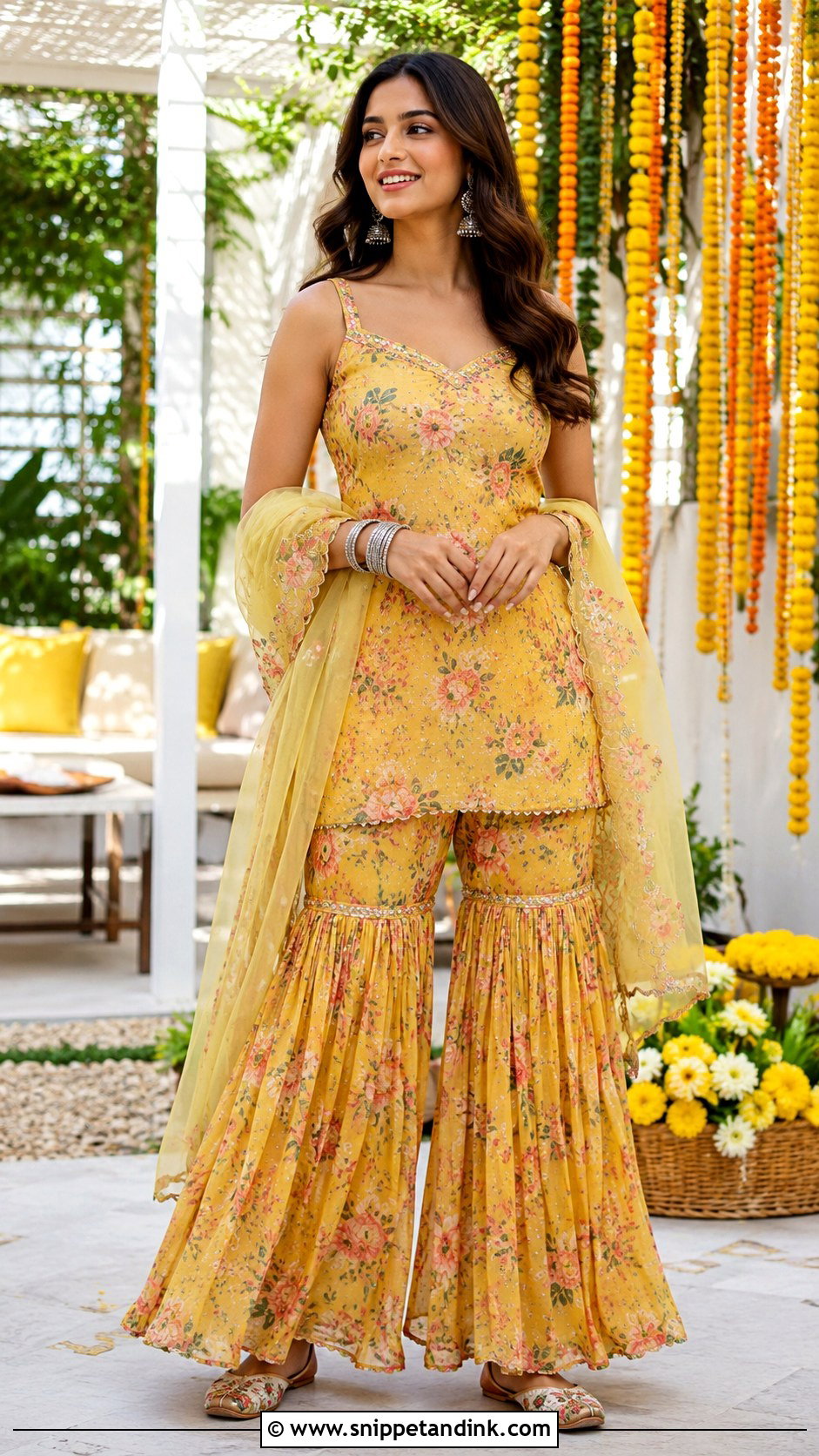
A yellow gharara is fitted through the thigh and flares from the knee, where the panels are joined by a decorative band. It’s more dramatic than a lehenga and easier to walk in, but the fitted section needs a proper sitting test at your last fitting. If it pulls when you cross your legs, have the tailor let it out. Pair it with a short kurti, a light dupatta and a little gota patti or mirror work, then add chandbalis, bangles and juttis. Sisters and close family wear it well when they want to look distinct from the bride.
10. Printed Kaftan Haldi Outfit
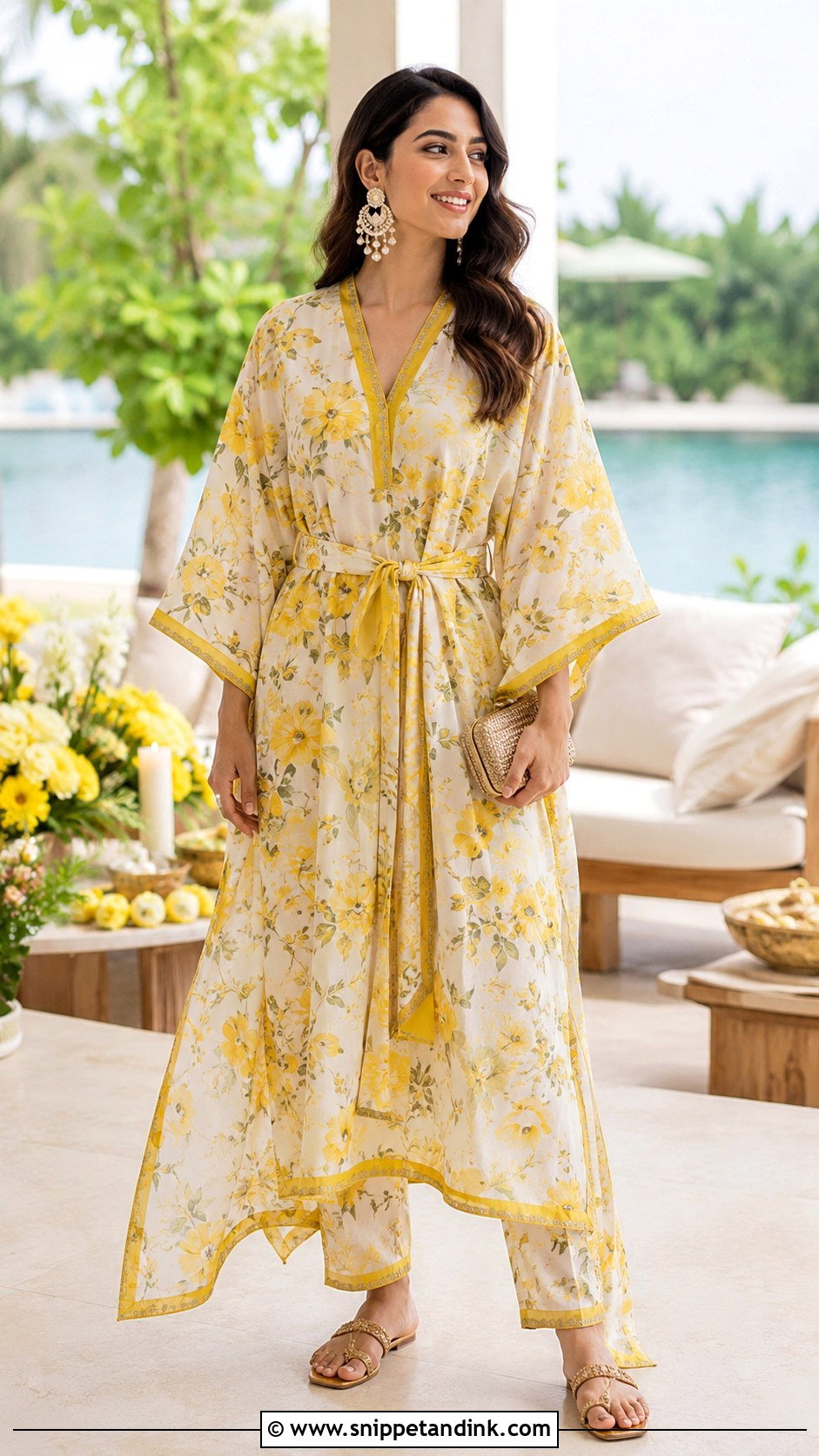
Kaftans belong at the small home haldi or the destination wedding by a pool, where the dress code is relaxed and the afternoon is hot. Yellow, ivory, lime or a tropical floral all fit. A loose kaftan can look shapeless in group photos, so I belt the waist or choose one with a drawstring. If it’s short, layer it over straight or cigarette pants, or a coordinated skirt. Statement earrings, flat sandals and a small clutch are all it needs. I’d skip it for a formal family haldi, though, where it can read as underdressed.
11. Yellow Saree With Floral Jewelry Haldi Outfit
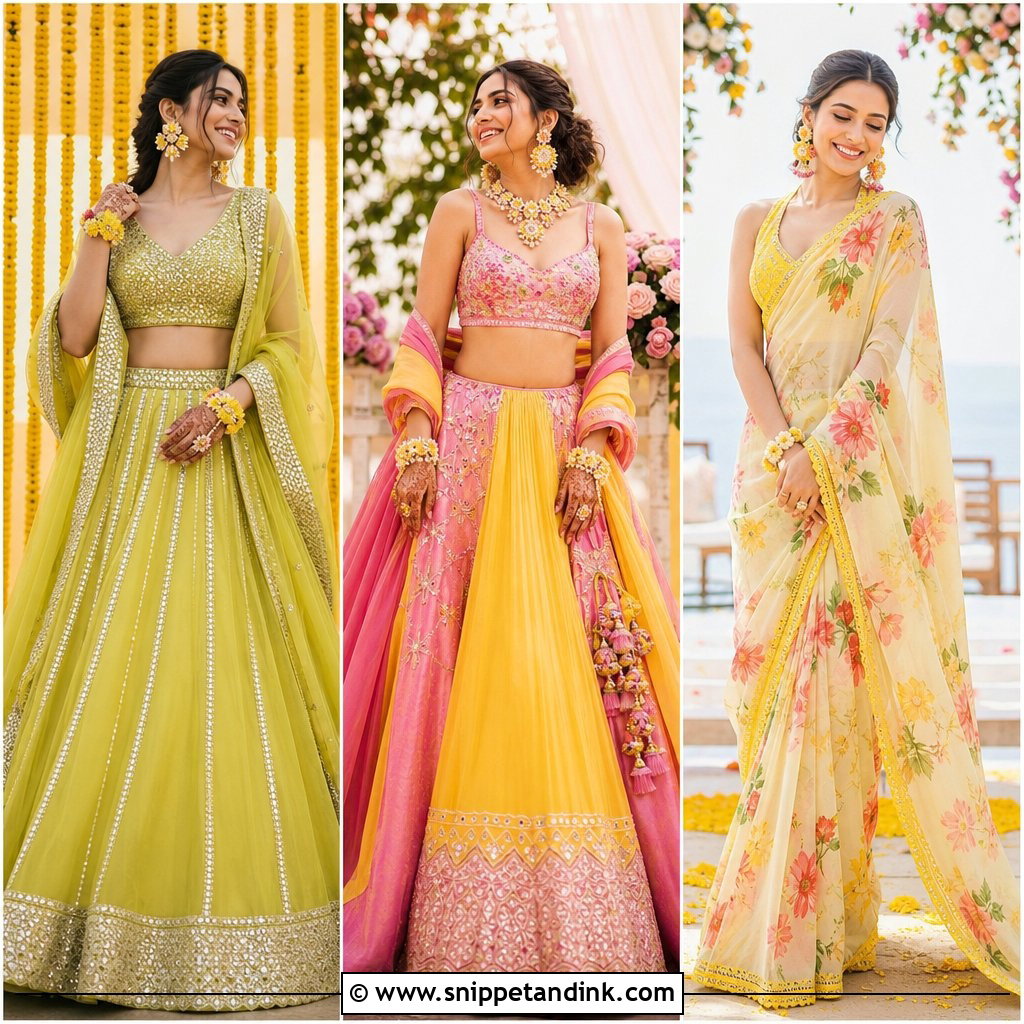
Fresh flower jewelry is the most haldi thing a bride can wear, and the piece that needs the most planning. Real blooms wilt in heat, so I have the florist deliver the earrings, bangles and maang tikka as late as possible and keep them somewhere cool until you dress. Sturdy flowers like marigold last far better than delicate petals. Under it, the saree can be plain, printed, embroidered or lightly embellished, in chiffon, organza, cotton silk or georgette. A sleeveless or short-sleeve blouse keeps the look young, and soft curls, fresh makeup and comfortable sandals finish it.
12. Lime Green Lehenga Haldi Outfit
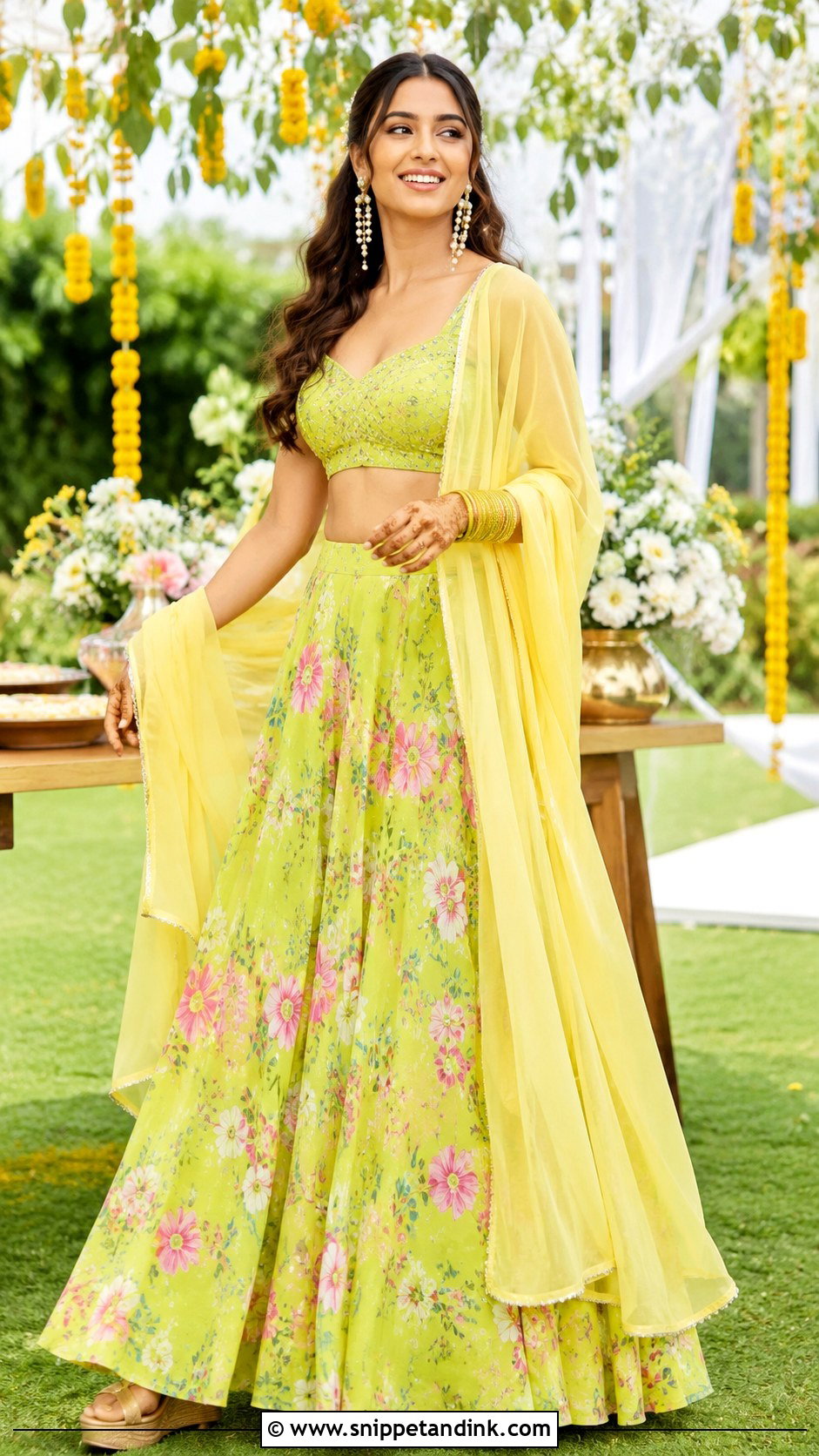
Lime green is the alternative I suggest most to brides who want color but feel yellow fights their skin. It’s still bright and daytime, and turmeric paste on lime is far less glaring than on ivory. Floral prints, mirror work or thread embroidery all suit it and catch the light outdoors. I balance it with a soft yellow or ivory dupatta, then go floral, pearl or light kundan depending on how dressy the event is. Juttis or wedges, glowy natural makeup, and you’re done.
13. Yellow Jacket Lehenga Haldi Outfit
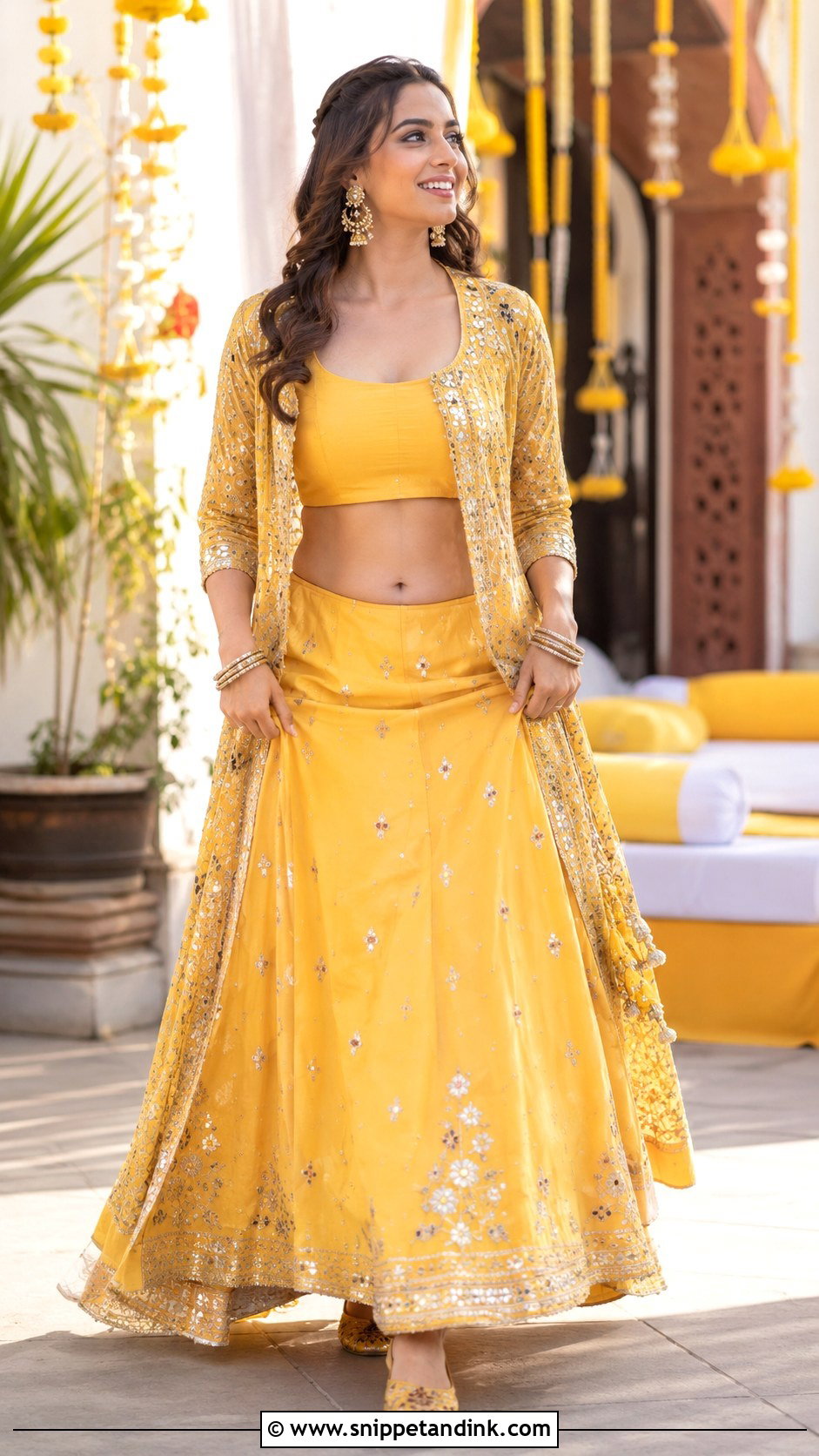
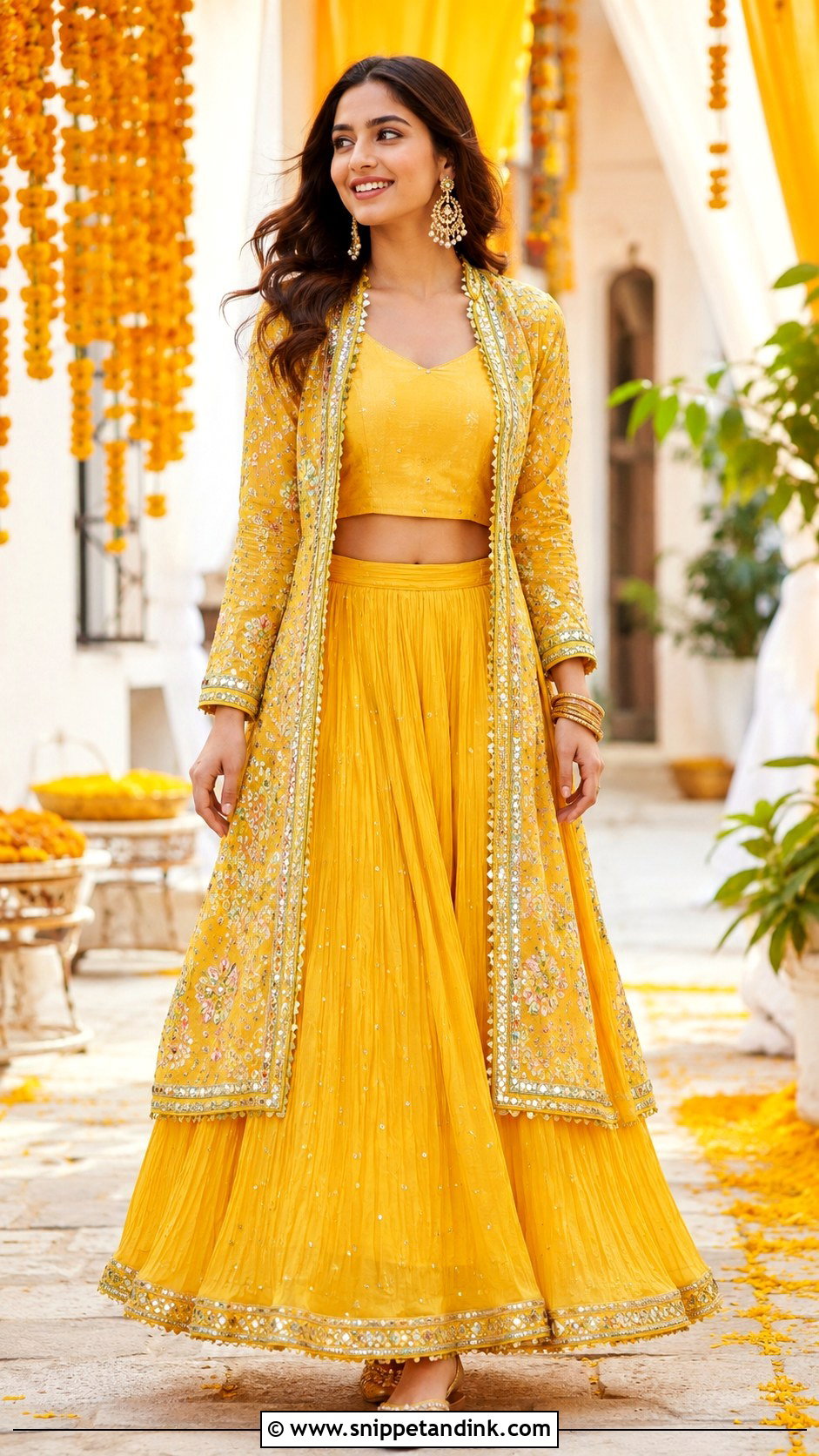
A jacket lehenga solves the dupatta problem. Instead of a length of fabric slipping off your shoulder while relatives apply paste, the jacket stays exactly where you put it and still gives coverage over a simple blouse and skirt. Cropped jackets suit petite frames; a long cape-style jacket adds height but traps heat, so think about the weather. Mirror work, gota or thread embroidery carry the festive detail, with earrings, stacked bangles and comfortable heels or juttis. If you’re the bride, choose a sleeveless jacket, because the paste goes straight onto your arms. The layering also gives a strong outline in photos.
14. Peach And Yellow Haldi Outfit
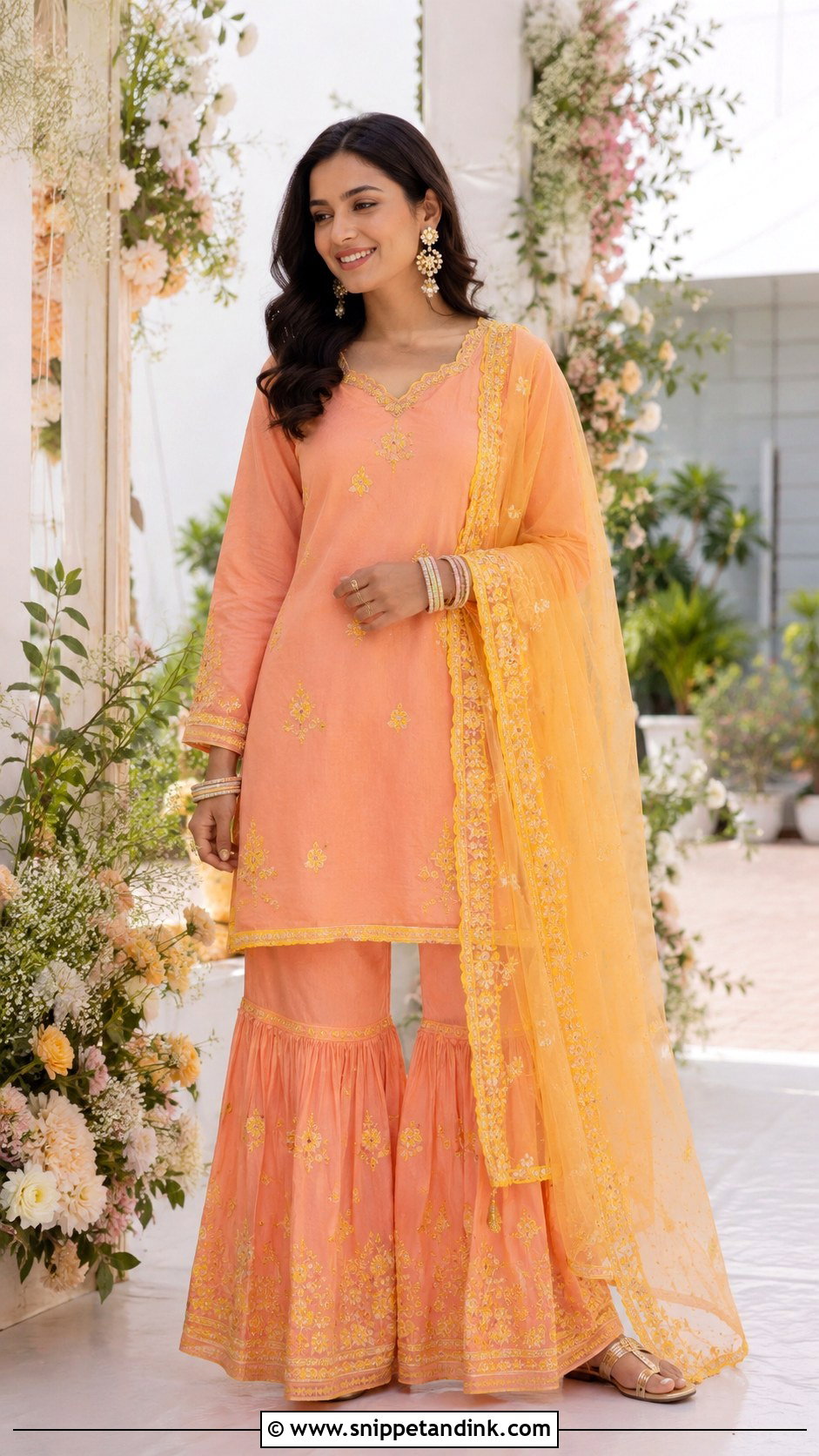
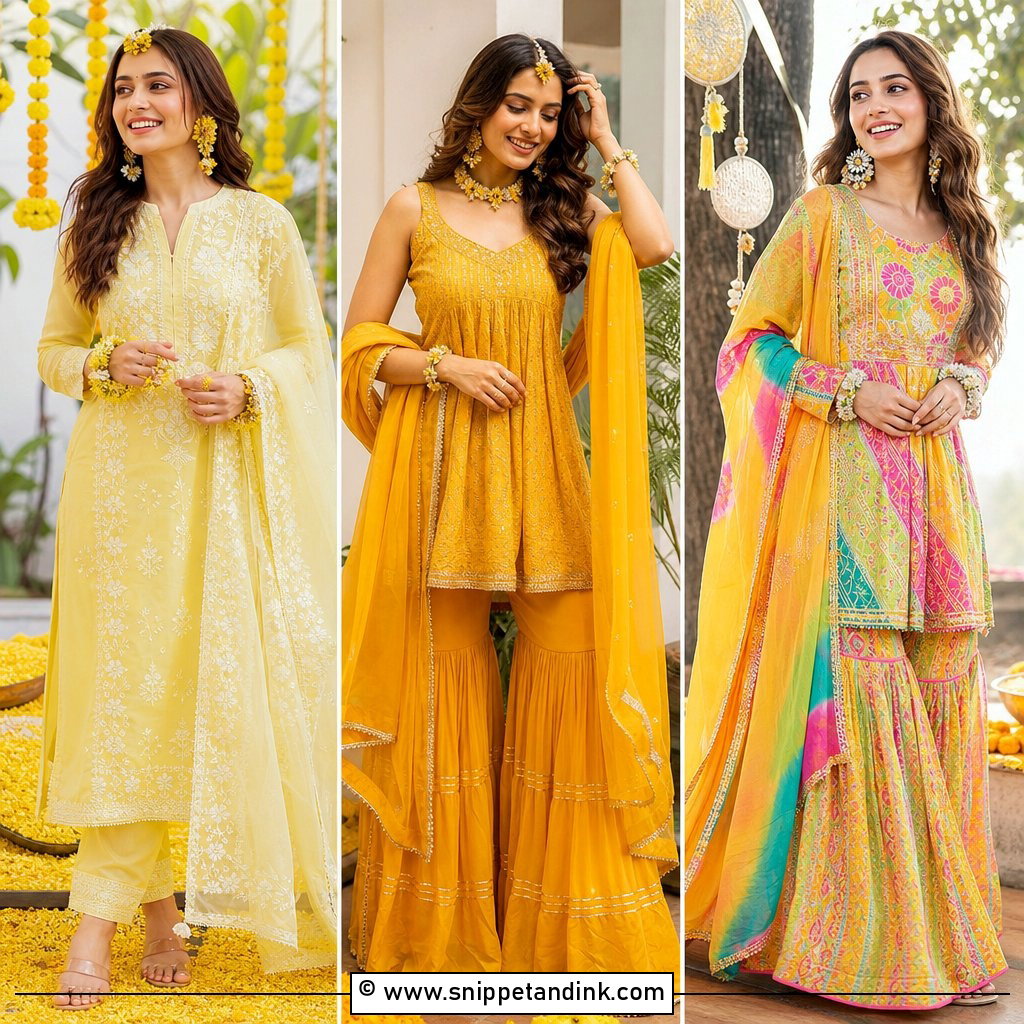
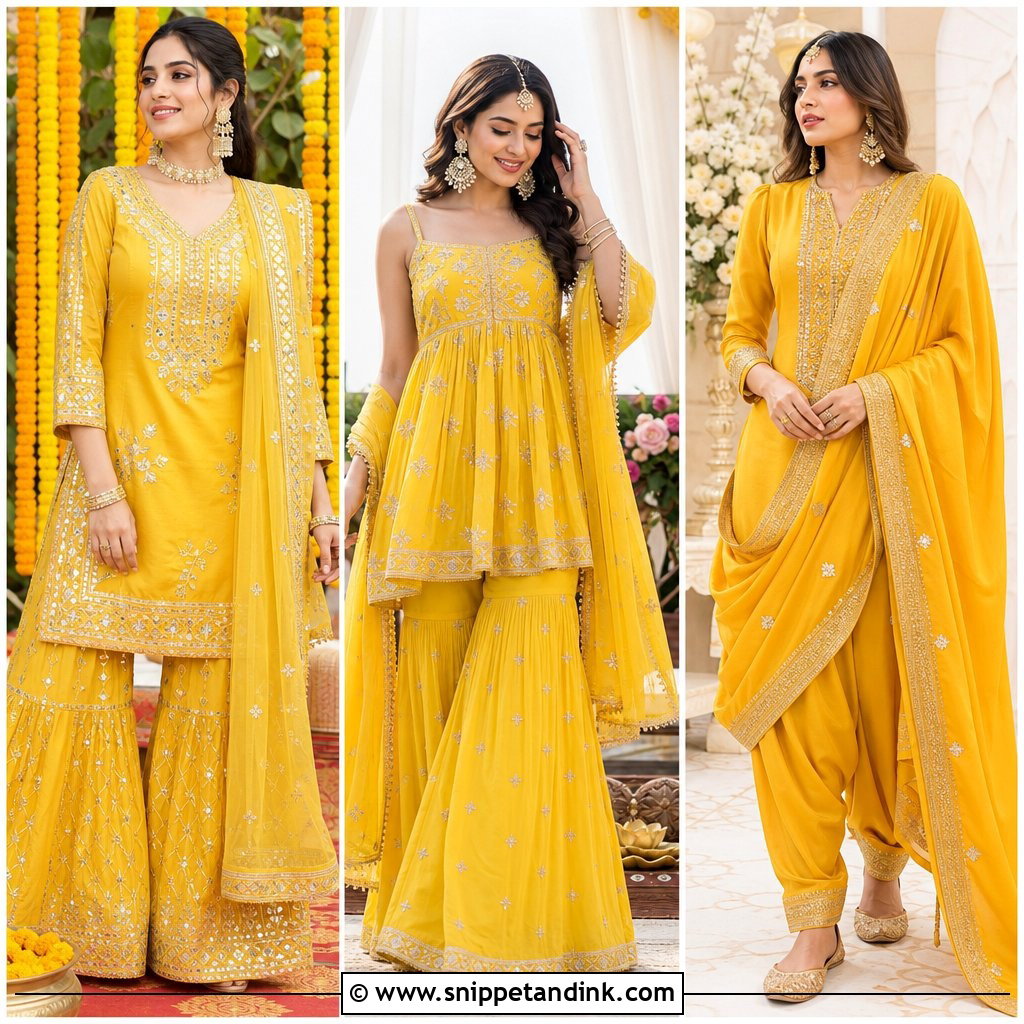
Peach softens yellow, which helps when bright yellow overpowers you or the decor is already loud. Try a peach kurta with yellow pants, a yellow lehenga with a peach dupatta or a peach sharara with yellow embroidery. Against marigold-heavy decor, the peach stops you from blending into the backdrop, and it flatters a wide range of skin tones. Keep it light with pearl earrings, pastel bangles, nude or gold sandals and a soft braid or loose waves.
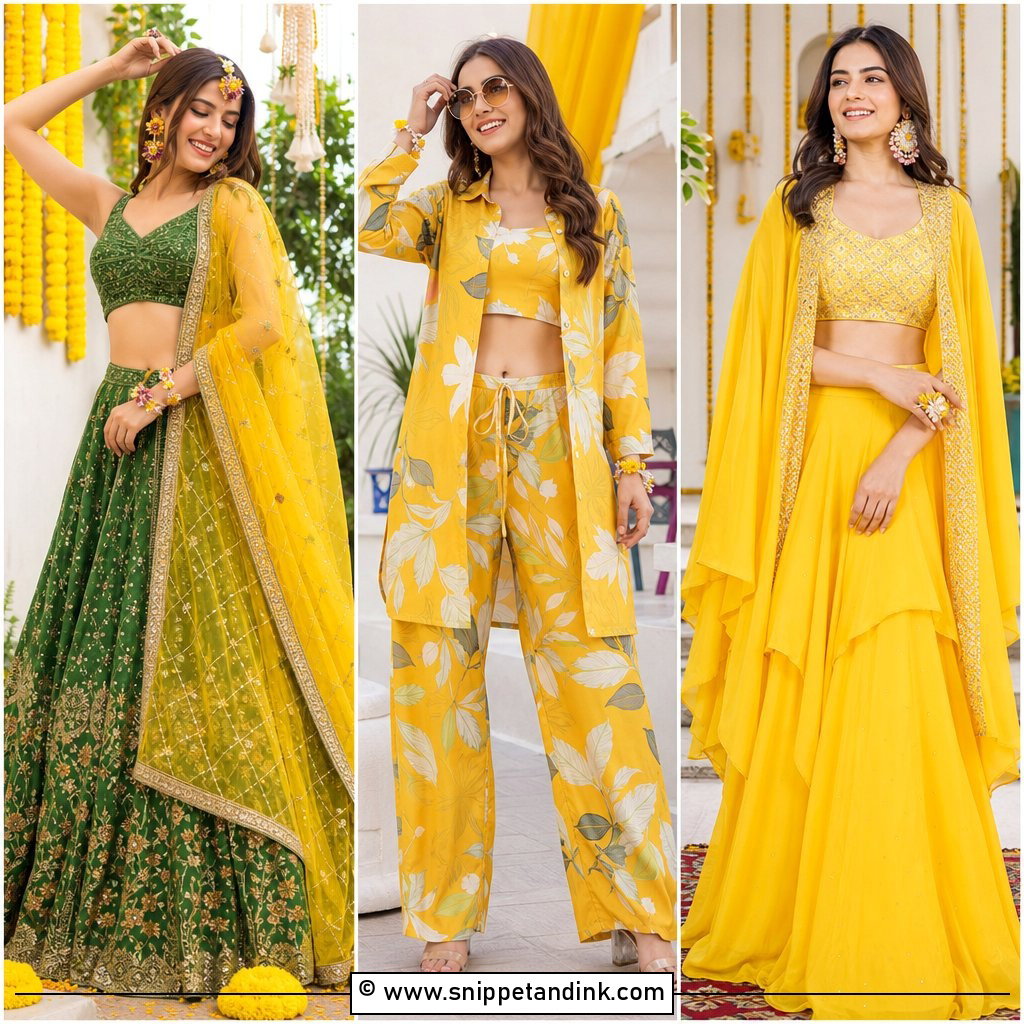
15. Yellow Dhoti Set Haldi Outfit
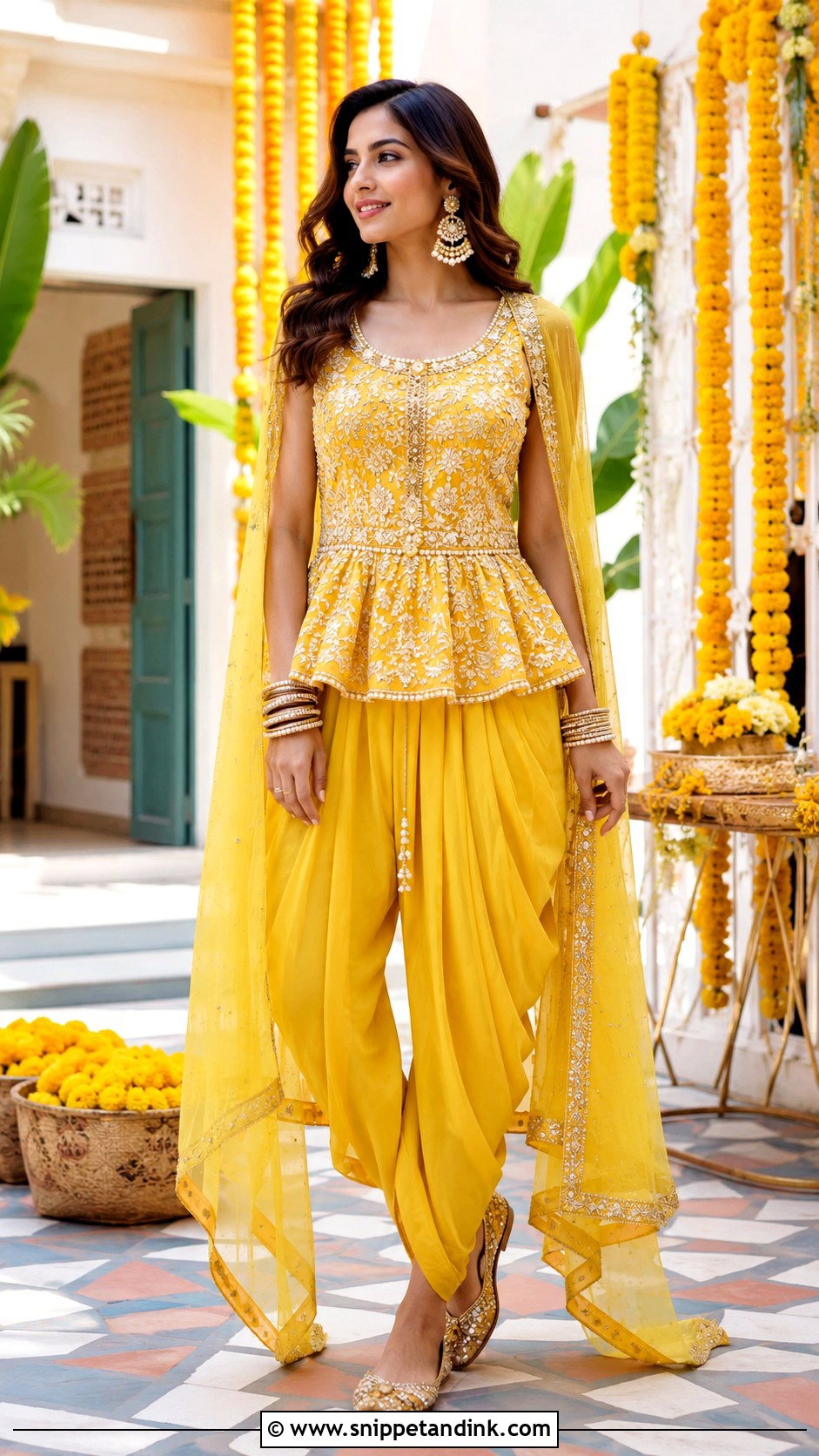
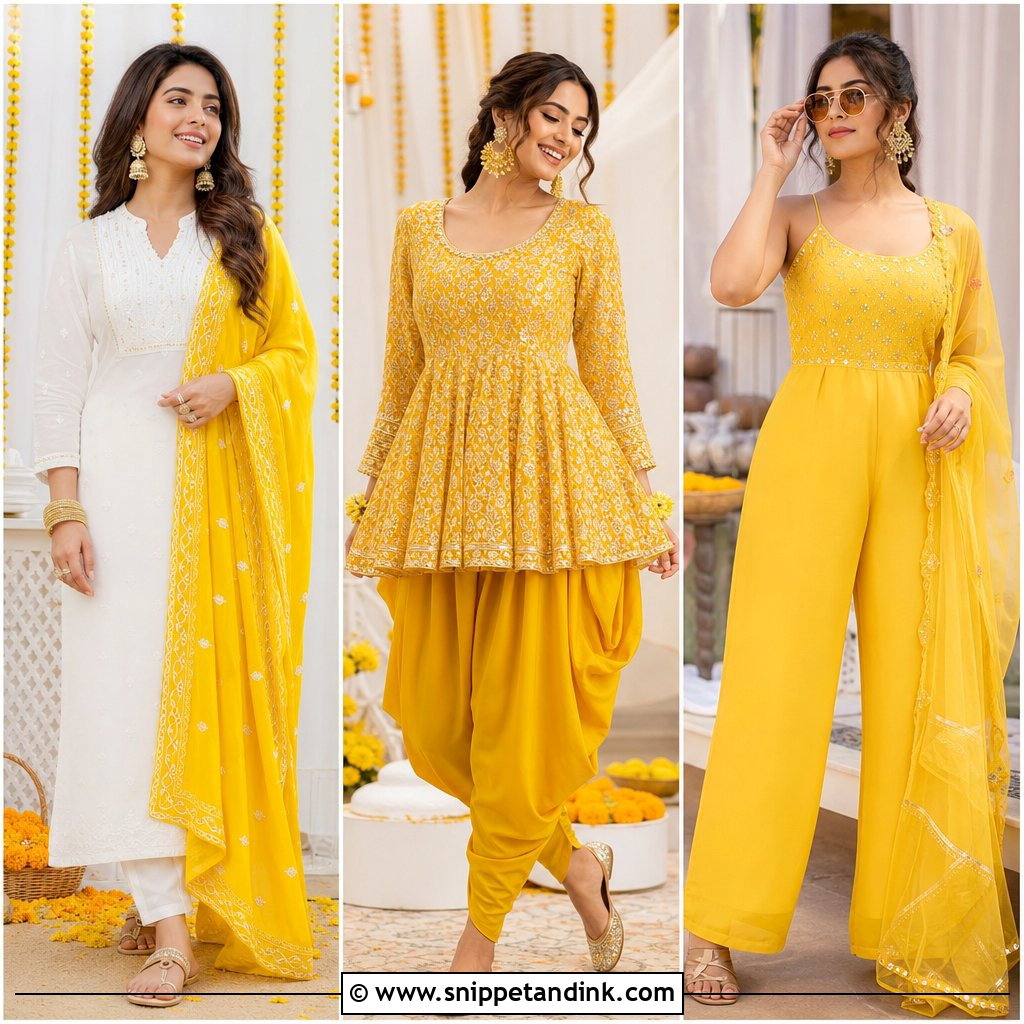
A yellow dhoti set is the dancing outfit. The draped bottoms move with you and there’s no hem to trip on, which matters once the dhol starts. Top it with a kurti, crop top or peplum, and add a cape, jacket or light dupatta for coverage. Mirror work, tassels or small embroidery make it feel wedding-ready, though tassels love to catch on bangles, so try the two together before the day. Statement earrings, stacked bracelets and embellished flats complete it.
16. Yellow Chikankari Kurta Haldi Outfit
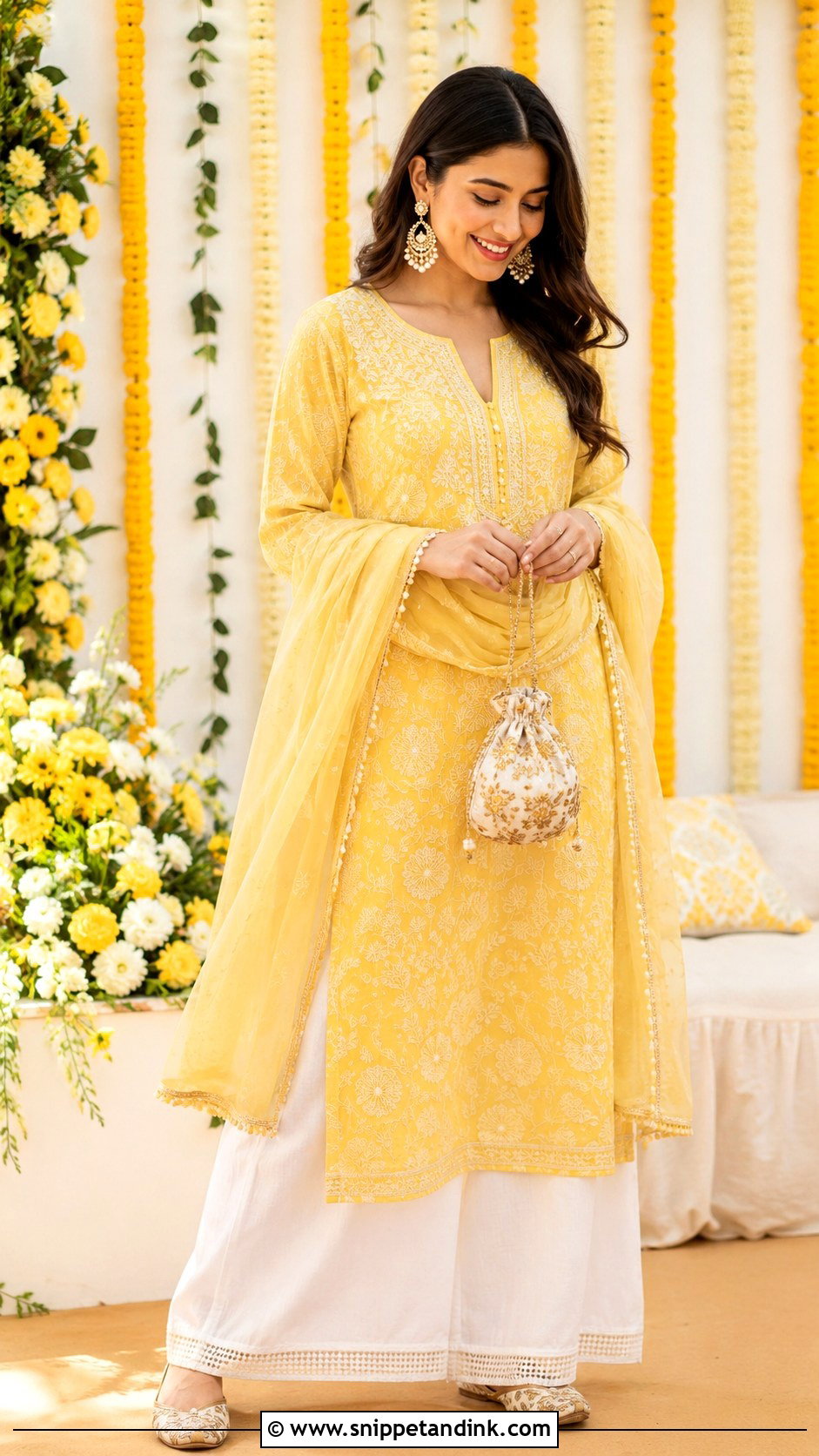
Chikankari is fine hand embroidery, usually on cotton or georgette, and on yellow it looks quietly expensive. It’s what I’d put on a mother or aunt who would rather not wear sequins at a morning ceremony. Pair the kurta with white palazzos, straight pants or a flowy skirt, a white or yellow dupatta, pearl earrings, juttis and a small potli. One care note: those delicate threads snag on rough or mirror-edged bangles, so keep the jewelry smooth.
17. Floral Lehenga Haldi Outfit
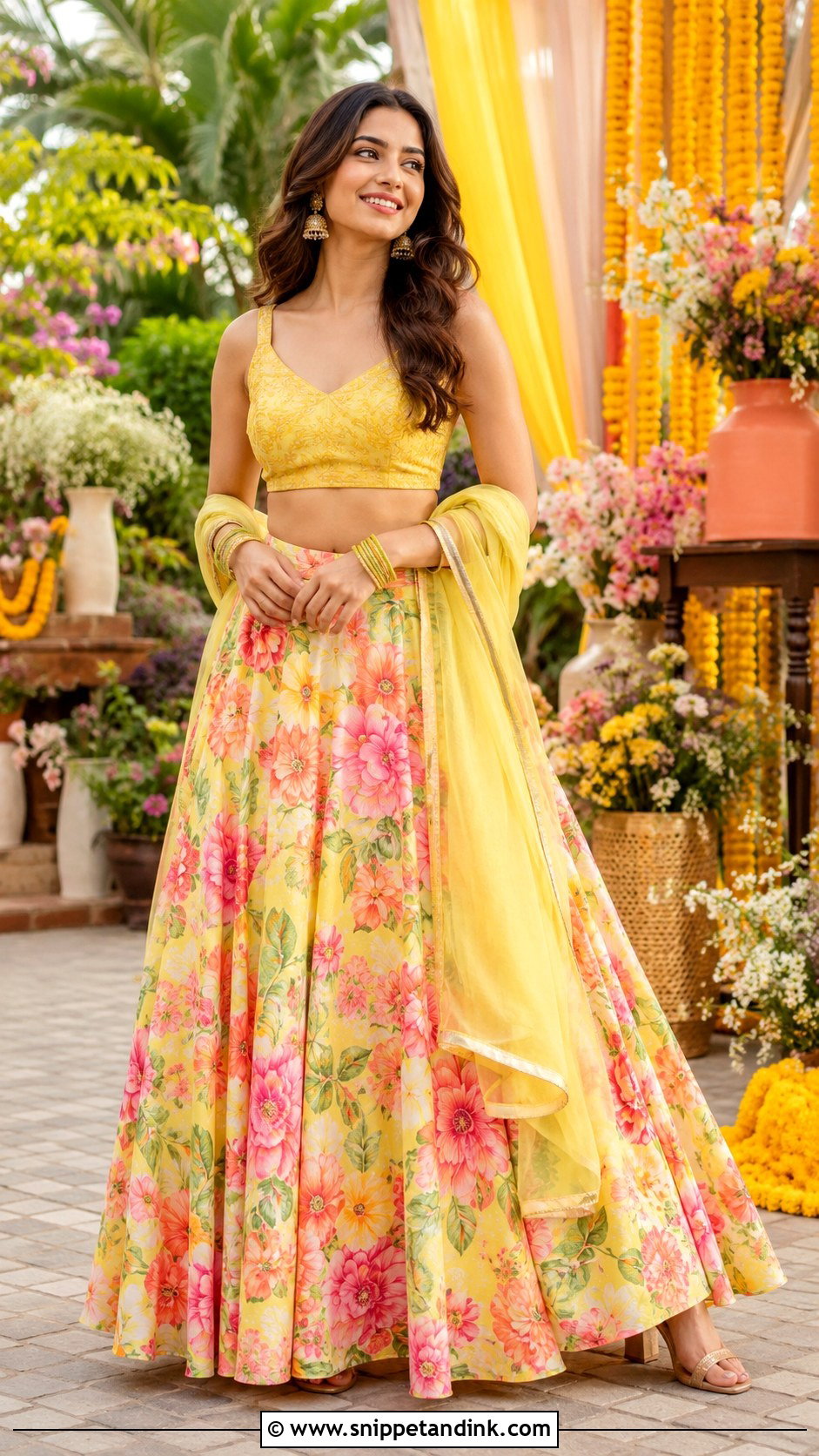
A floral lehenga does the decorating for you, so everything else should stay quiet. If the print is bold, I stop at floral earrings, pearl studs or small jhumkas. Yellow, pink, orange, green and ivory prints sit naturally in a garden setting. A lightweight skirt with a simple blouse and soft dupatta looks dressed up without any embroidery weight, and you’ll get more wear from it at later daytime parties. Juttis, wedges or low block heels go underneath.
18. Yellow Cape Set Haldi Outfit
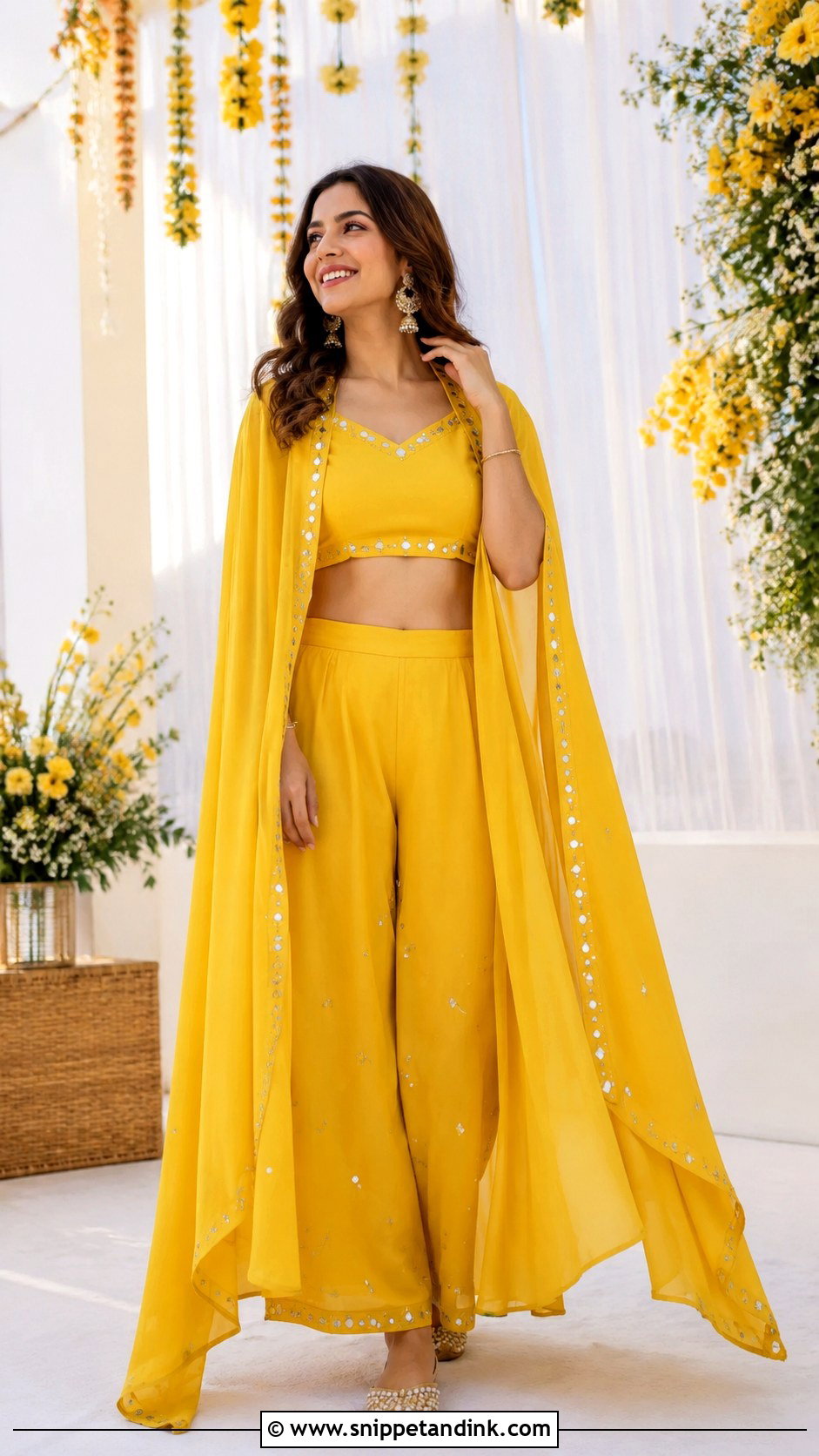
A yellow cape set gives you the movement of a dupatta without the fussing. The cape is fixed at the shoulders, so it swings as you walk and never needs re-pinning. Underneath you can wear a crop top with palazzo pants, a skirt set or dhoti pants. I keep the embellishment light, a little mirror work or sequin, because a heavily worked cape drags the neckline back all day. Statement earrings, clean simple footwear and a sleek or softly curled style suit it.
19. Yellow Bandhani Saree Haldi Outfit
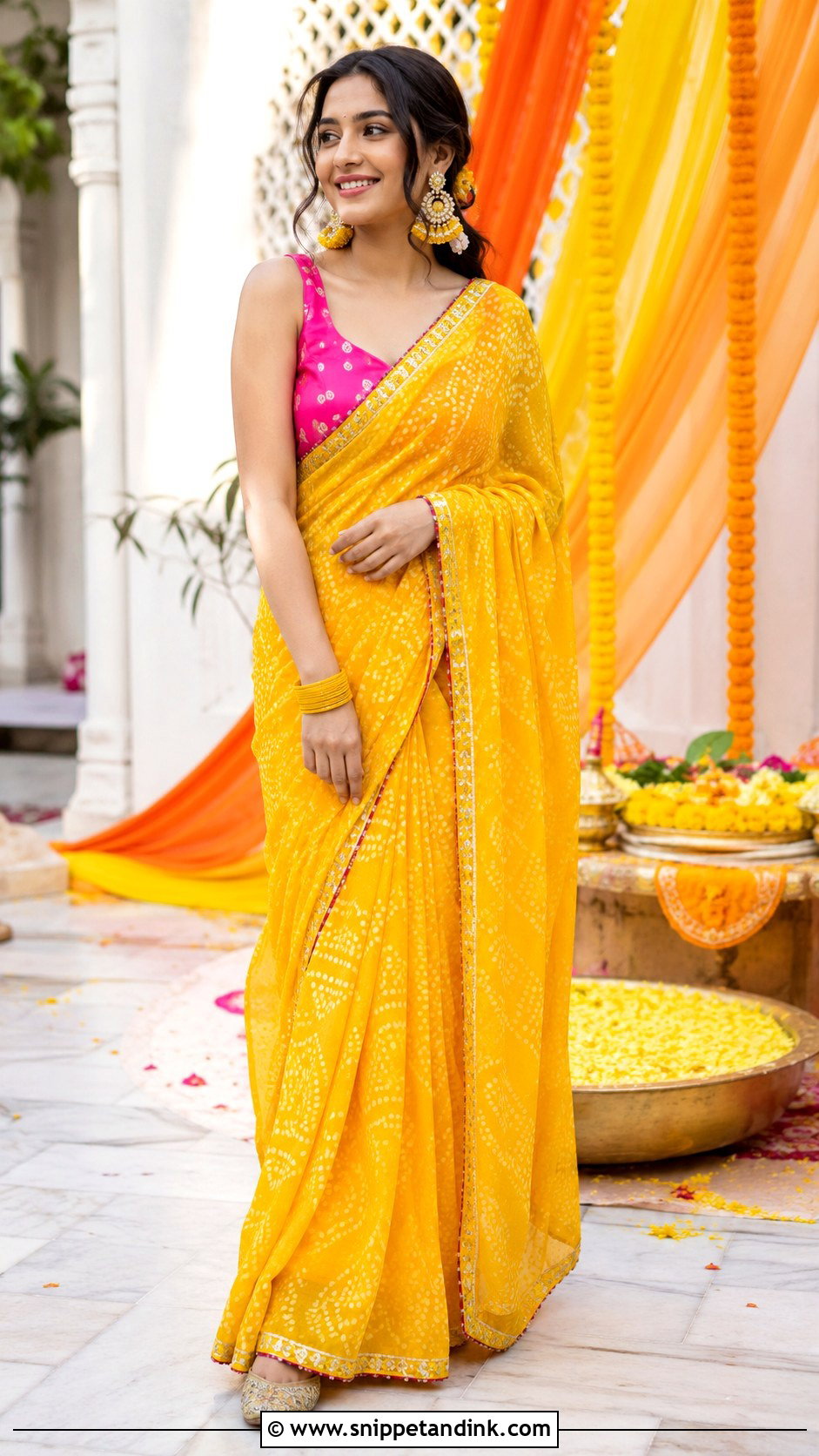
Bandhani is a tie-dye craft: the fabric is pinched into tiny knots and tied before dyeing, which leaves the dotted pattern. It’s festive on its own, so it doesn’t need heavy work. Georgette, chiffon or a silk blend will drape easily. I like a contrast blouse in pink, green, orange or ivory, traditional earrings, bangles and a small bindi, with juttis or simple sandals. A warning from the washing side: hand-dyed bandhani can bleed when wet, so if there’s water play at the end, keep it away from a white blouse. It’s an easy saree to wear again.

20. White Kurta With Yellow Dupatta Haldi Outfit
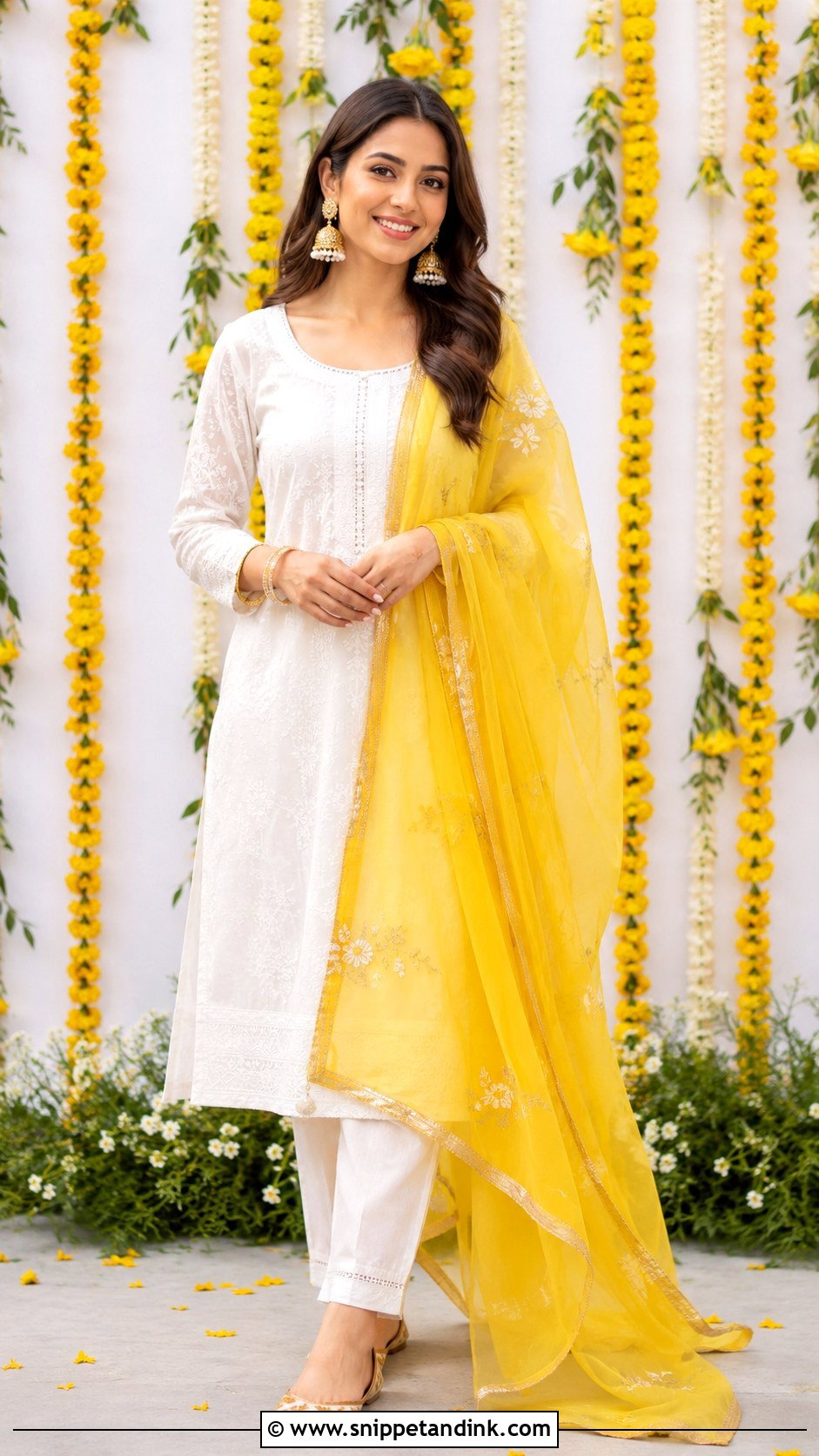
A white kurta with a yellow dupatta is the most rewearable outfit here, since both pieces go straight back into an everyday wardrobe. It suits guests and family who want something simple. Choose a white chikankari, cotton, linen or silk kurta with straight pants or palazzos, and let the dupatta carry the ceremony color; it can be plain, printed, organza or gota-bordered. Jhumkas, bangles and embroidered flats complete it. If you’ll be applying paste to the couple, roll your sleeves up first. White cotton picks up turmeric from the lightest brush.
21. Yellow Skirt And Crop Top Haldi Outfit
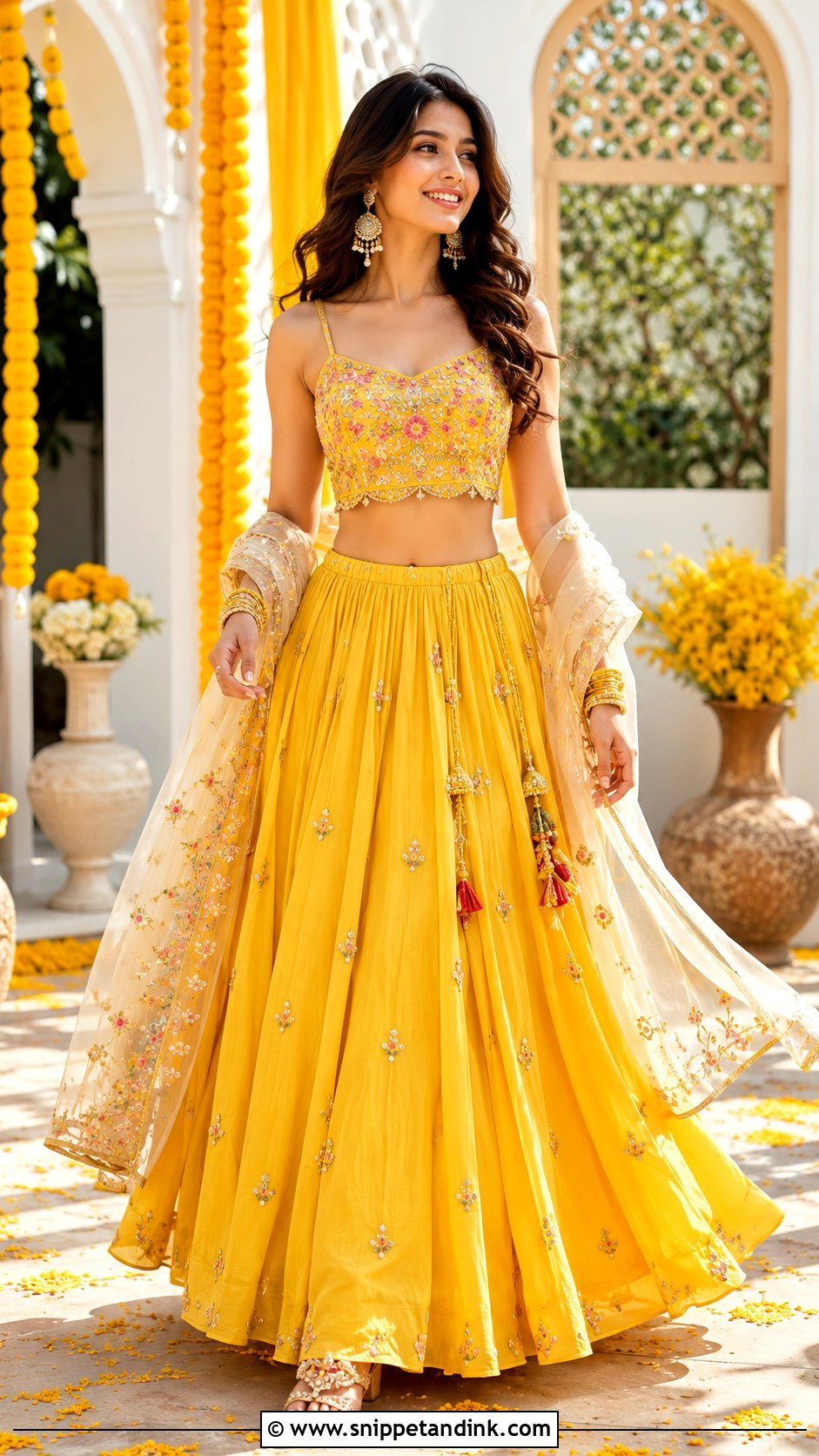
A yellow skirt and crop top is the youngest-feeling outfit on this list. A flowy georgette, cotton silk or organza skirt with a fitted or embroidered crop top works with or without a dupatta. Watch the midriff gap if you’ll be sitting on the floor; a high-waisted skirt and a slightly longer crop keep it tidy. Statement earrings, bangles, embellished sandals and a half-up style or soft curls finish it, and keep the skirt light so it stays comfortable for hours.
22. Yellow Mirror Work Kurta Set Haldi Outfit
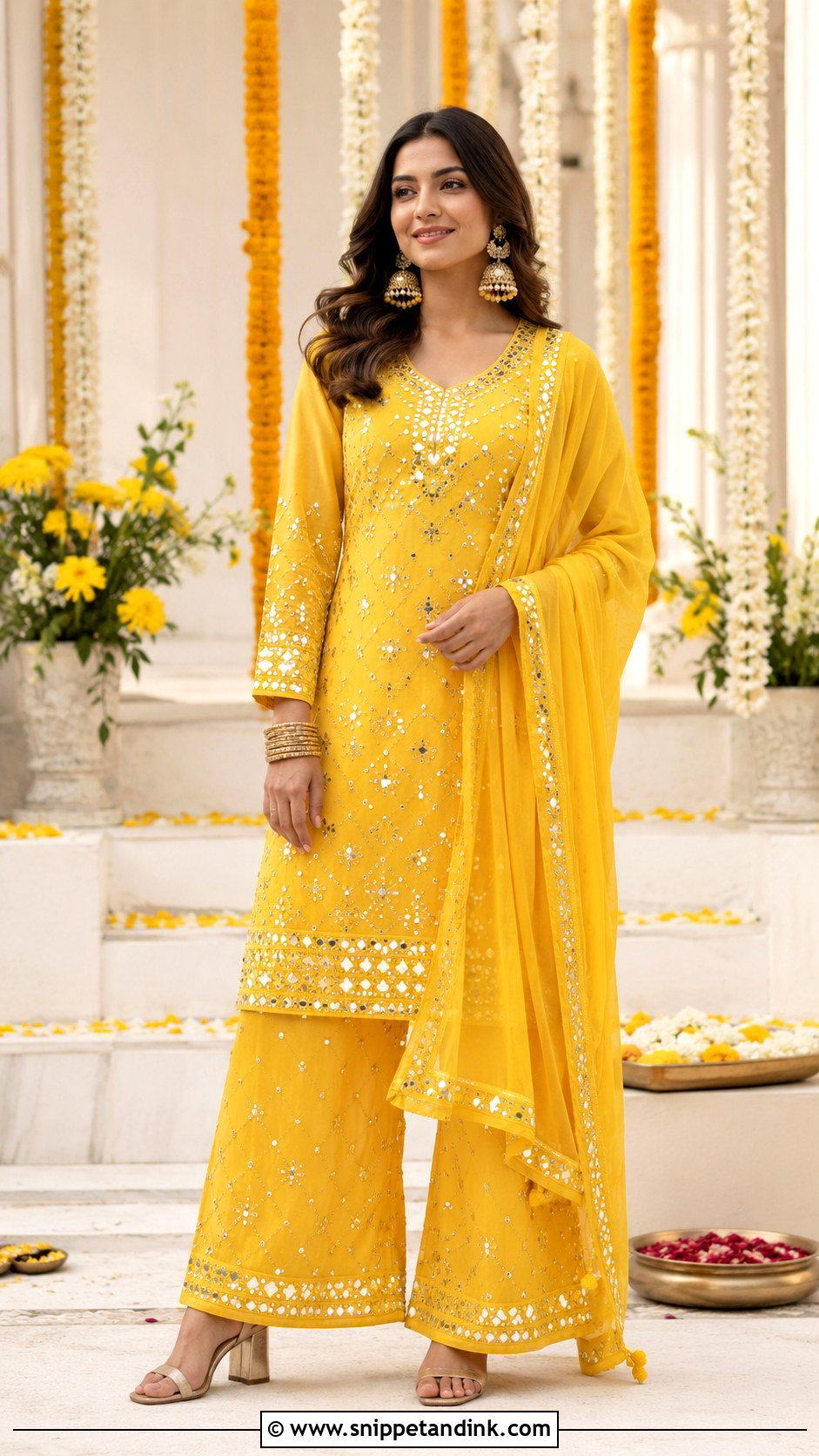
Mirror work is made for daylight. A yellow mirror work kurta set catches the sun without a single sequin. Choose a short or straight kurta with palazzo, sharara or cigarette pants and a matching dupatta with a light border. With that much shine on the fabric, I limit jewelry to jhumkas and a few bangles. Mirrors have edges, so check that the lining is finished where they sit against bare skin, especially under the arm.
23. Pastel Yellow Organza Saree Haldi Outfit
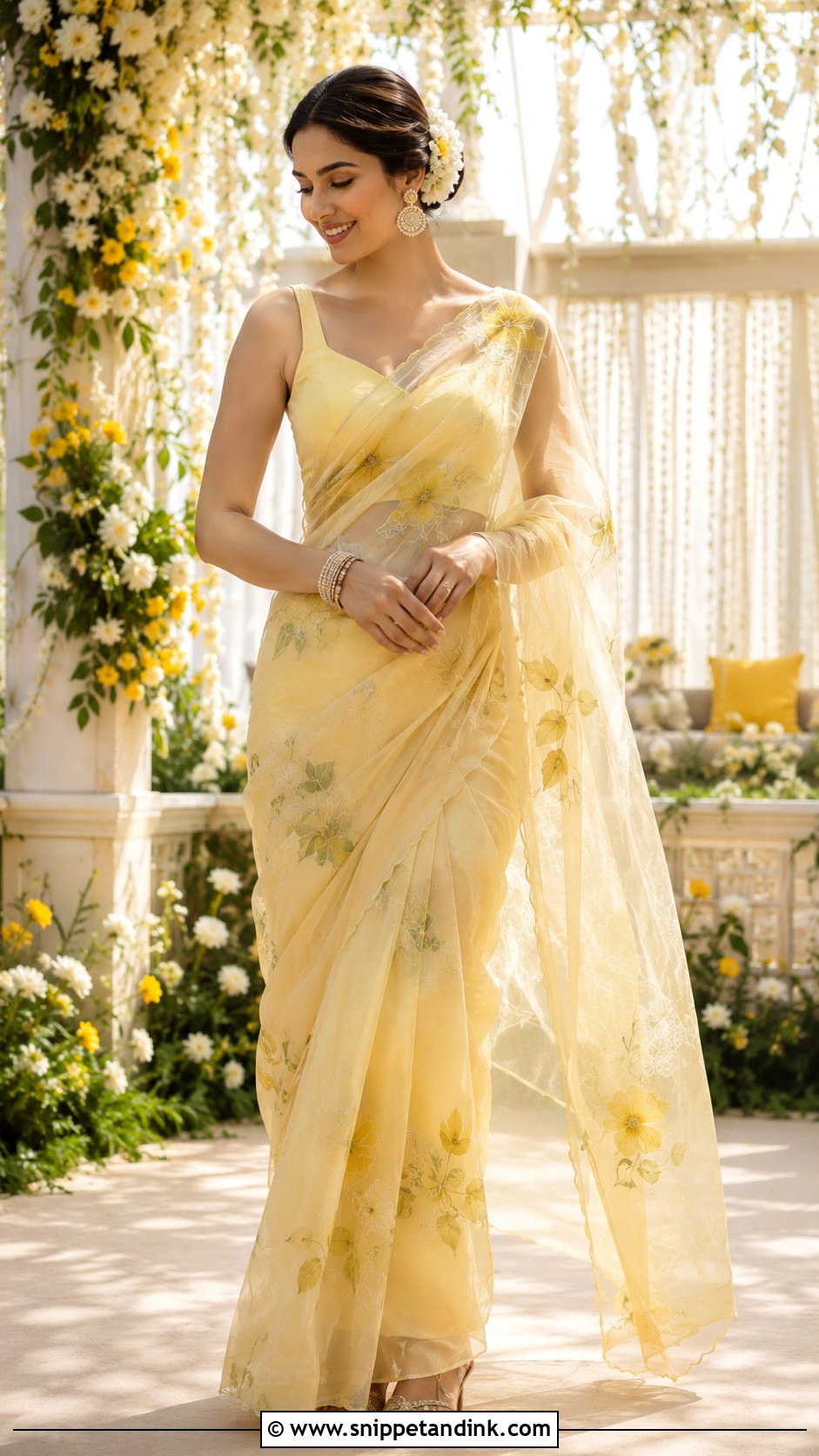
Organza is crisp and sheer, so it photographs light and airy, but it also holds its shape, which means the pleats puff out unless they’re pinned flat. On an organza drape I pin at the shoulder, behind the pleats and at the waist, more than I would on chiffon. Pick floral embroidery, small motifs or a simple border, with a matching blouse or a soft ivory, peach or mint contrast. Pearl earrings, a sleek bun, fresh flowers and low heels or dressy flats keep it refined.
24. Yellow Palazzo Suit Haldi Outfit
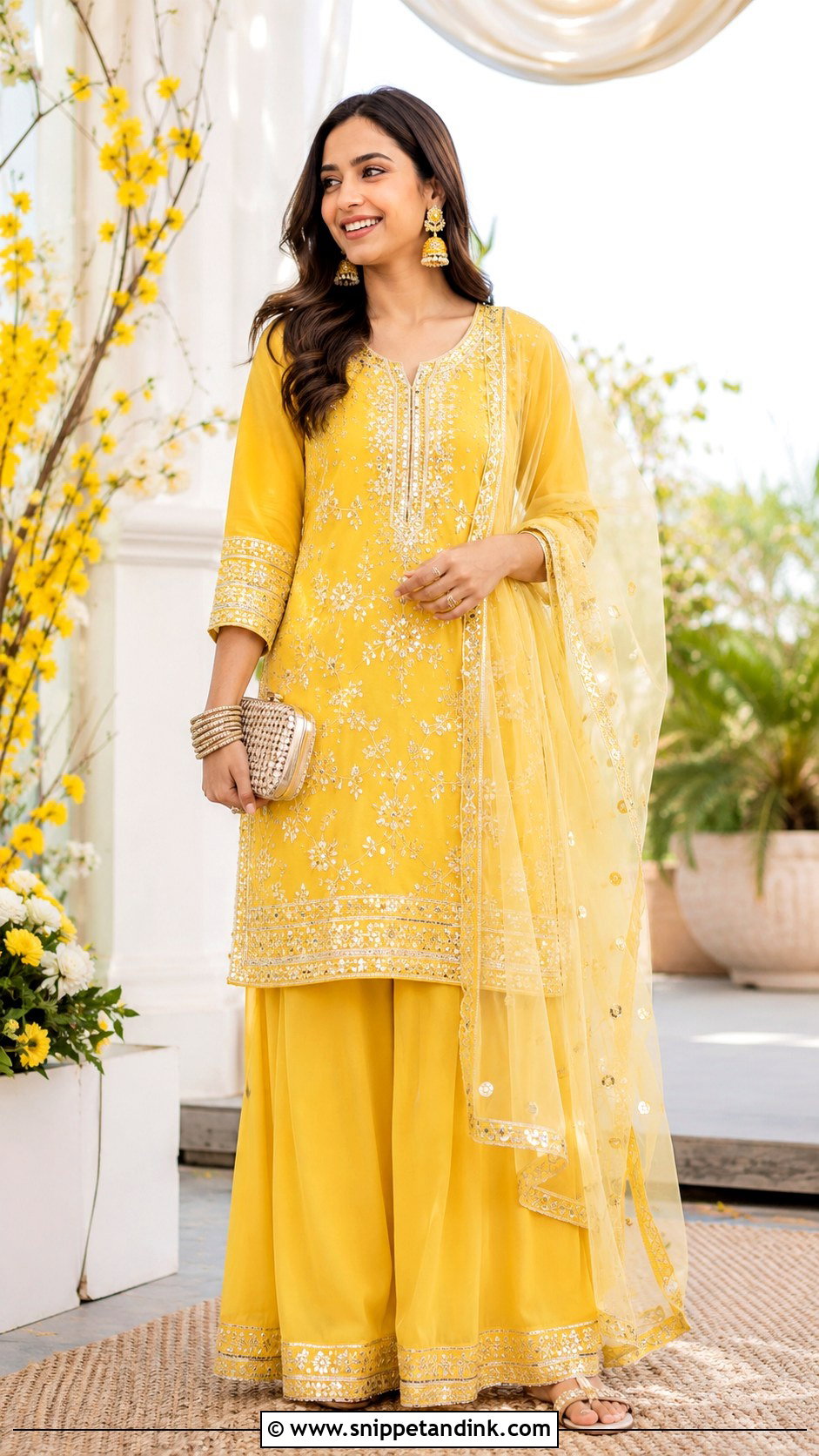
When someone asks me for the no-fuss option, it’s the yellow palazzo suit. You can sit cross-legged, walk across a lawn and dance without adjusting anything. A short or straight kurta or embroidered tunic goes over wide-leg palazzos, with a light organza, chiffon or printed cotton dupatta. Jhumkas, bangles, flat sandals or juttis and a small clutch or potli finish it. Long ceremonies are where this one earns its place.
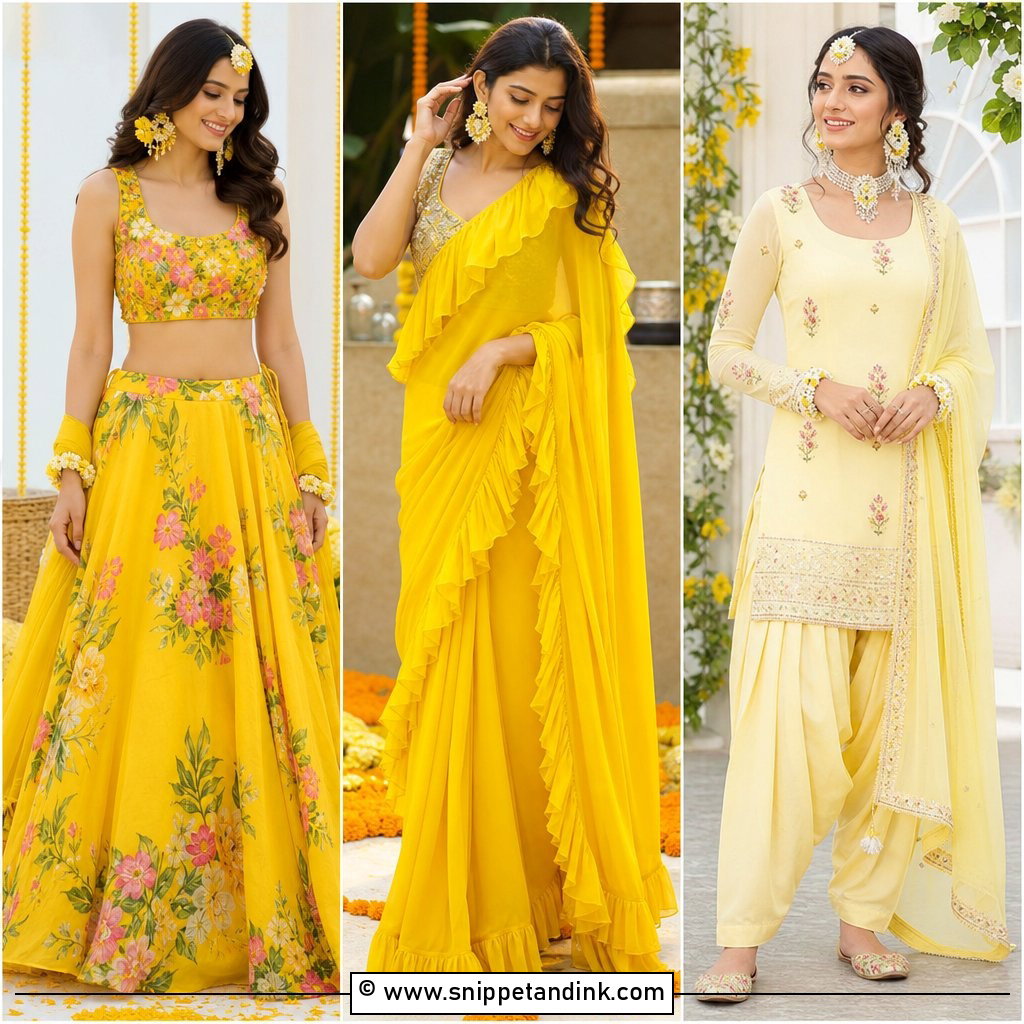

25. Yellow Indo Western Haldi Outfit
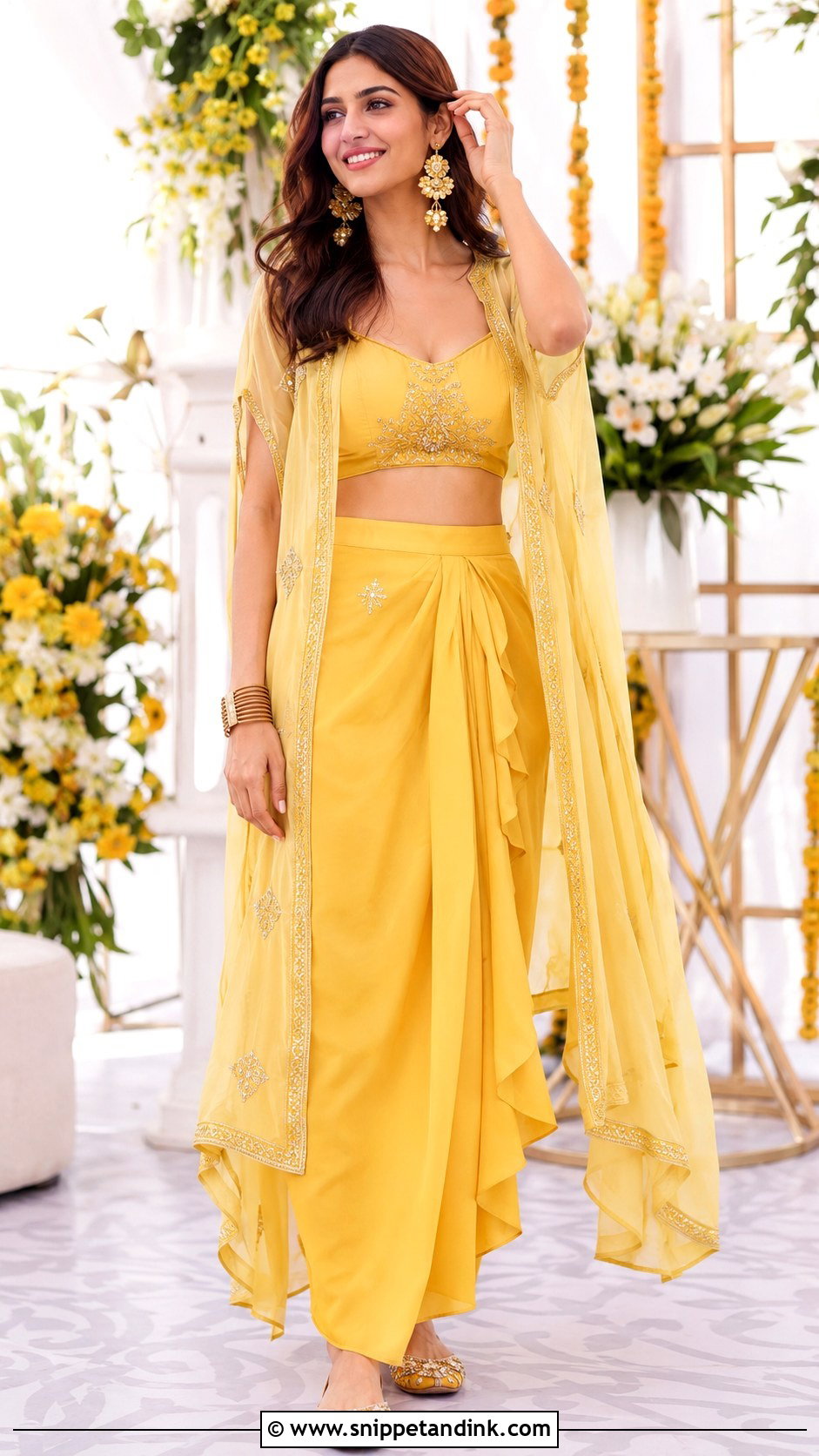
A yellow Indo Western outfit covers a lot of ground: draped skirts with crop tops, peplums with pants, pre-draped saree sets, tunics with flared trousers. The rule I hold to is festive color on a forgiving shape, since anything too fitted fights you the moment you sit on the floor. A cape or light jacket makes it more ceremony-appropriate. Statement earrings, a cuff, modern block heels or embellished flats, glowing makeup and simple hair keep it balanced.
Getting Haldi Out of Fabric the Same Afternoon
Turmeric sets quickly, so the clock starts the moment the ceremony ends. This is the order I follow:
- Let wet paste dry, then lift it off with a blunt knife or an old card. Rubbing wet paste only pushes it deeper.
- Rinse from the back of the fabric with cold water. Hot water sets the stain.
- Work in a little liquid dish soap to break down the oil, then rinse again.
- Dry the garment in direct sun. Turmeric fades in sunlight, and a faint mark often lightens noticeably after a few hours outside.
- Repeat once if needed before anything goes in a machine.
Why the stain suddenly turns red
If you reach for baking soda or a strongly alkaline detergent, the yellow can flash reddish brown. That’s the turmeric reacting, not a new stain, and it usually shifts back with a rinse in plain or slightly acidic water such as diluted lemon or vinegar. Test any of this on an inside seam first, because lemon can lift some dyes.
When to hand it to a dry cleaner
Silk, zari, mirror work and anything with gota should go to a dry cleaner within a day or two. Tell them it’s turmeric with oil, since that changes how they treat it. And be realistic: a dried stain on white cotton may never fully go, which is exactly why I steer brides toward colors where a faint tint is forgiving.
Wear Something You Won’t Mind Turning Yellow
Yellow is the tradition, but ivory, peach, lime, florals and pastels belong at a haldi just as easily. What matters more is that you can sit on the floor, laugh while someone smears paste across your cheek and cross the lawn without thinking about your clothes. Brides tend to suit lehengas, sarees, cape sets or flower jewelry; guests can stay lighter in kurta sets, shararas and co-ords. Whatever you wear, give it breathable fabric, a drape that stays pinned, shoes you can stand in for hours and jewelry that won’t tangle in the dupatta.
You'll Like These Ideas:






Leave a Reply