
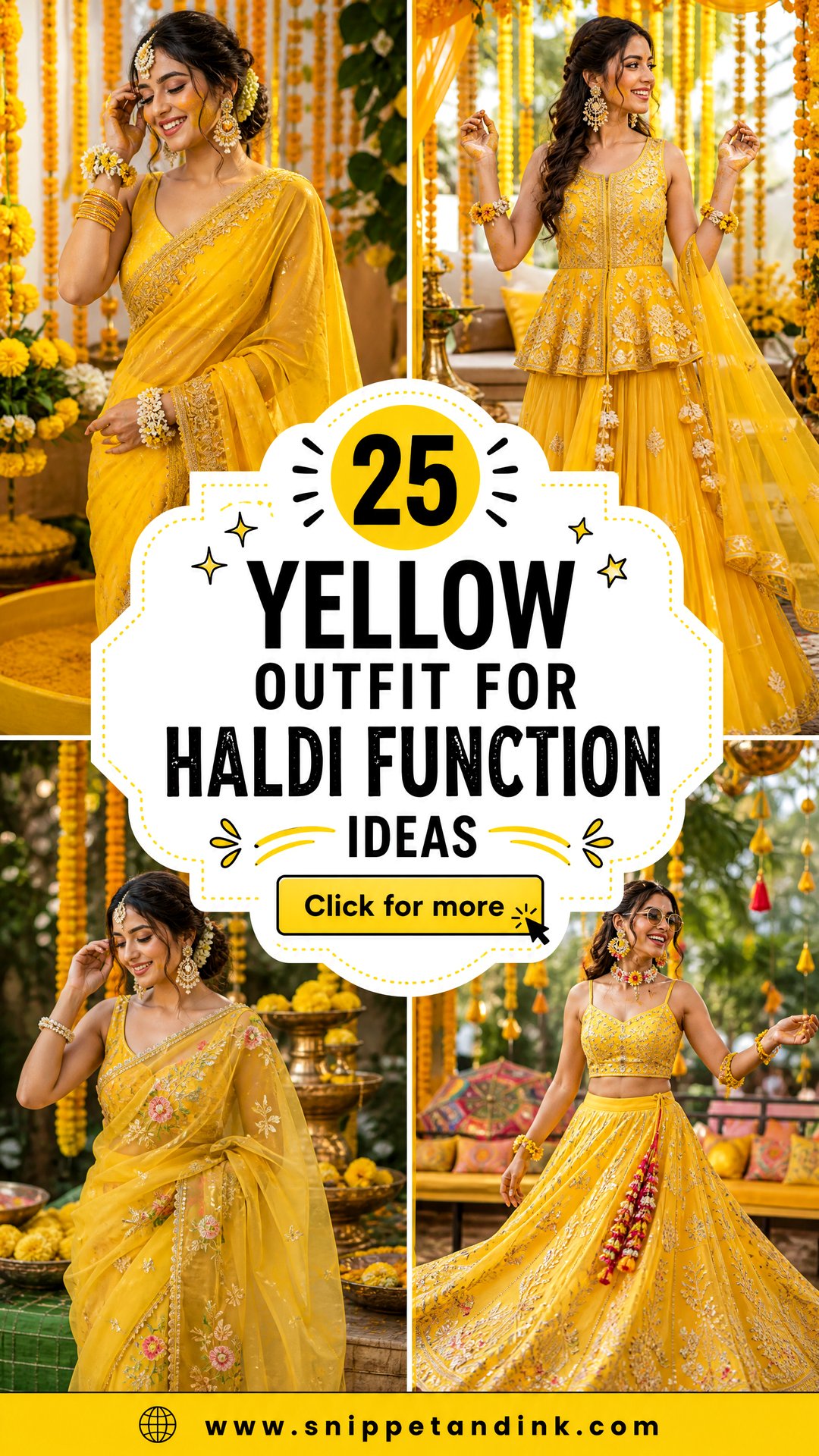
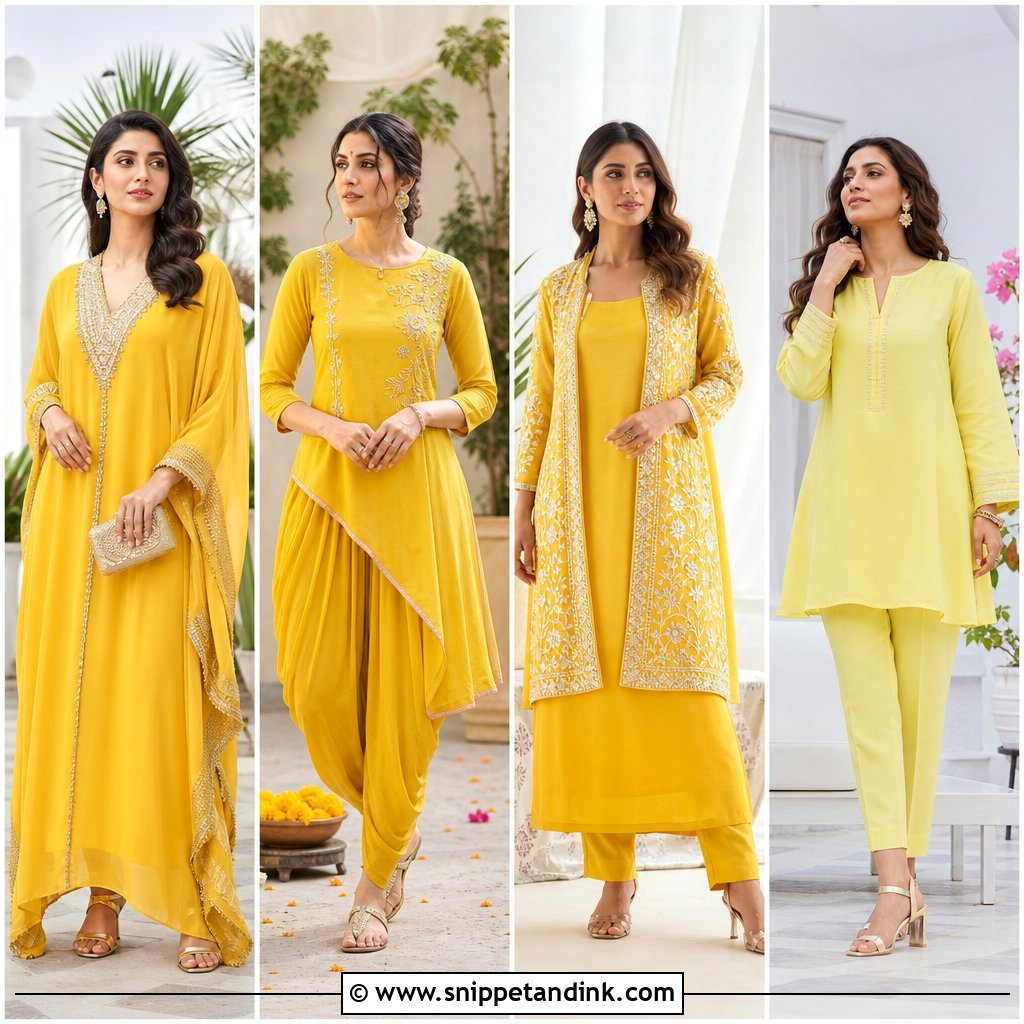
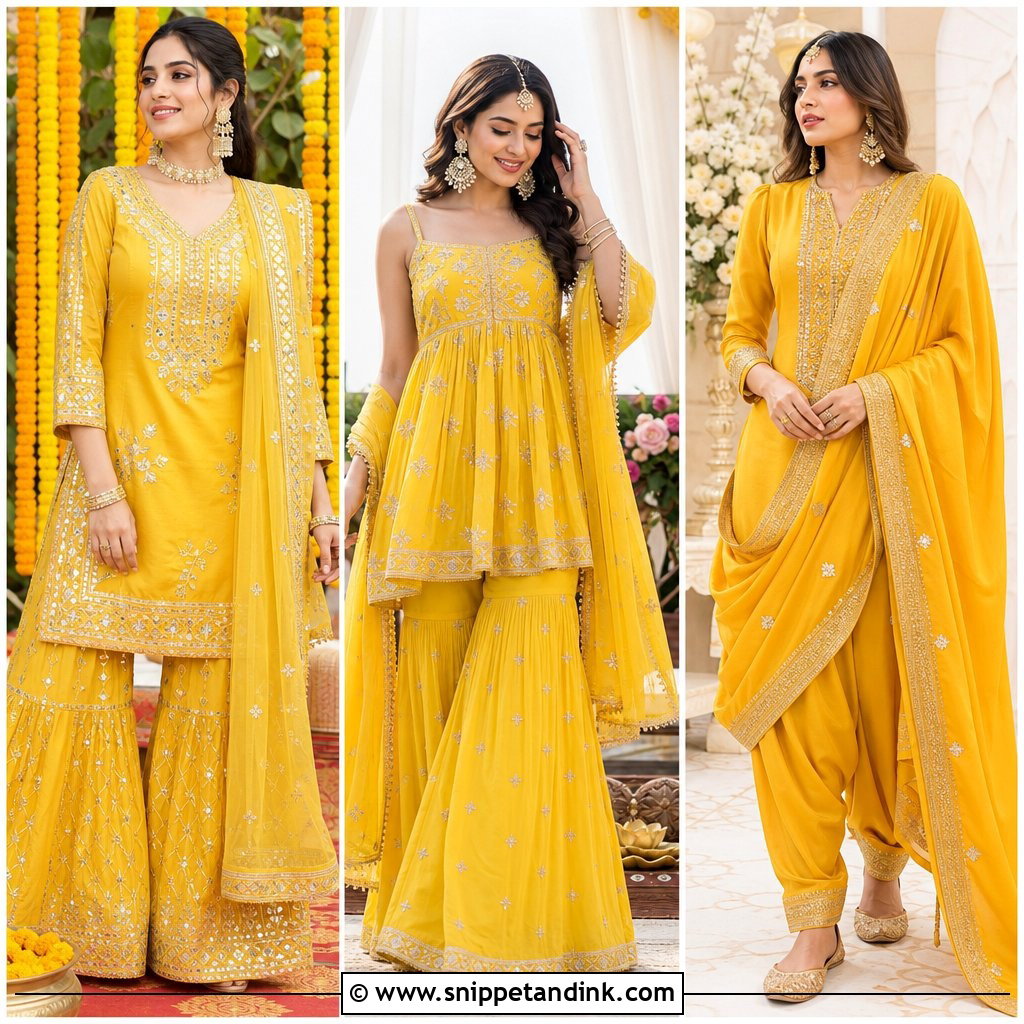
Yellow is the color everyone expects at a haldi, so the real styling work is in the fabric, the cut and how an outfit copes with paste, sun and a lot of sitting on low stools. When I dress families for these mornings, the outfits that go wrong are rarely the wrong shade. They are the ones that are too heavy, too long at the hem or too precious to get turmeric on. Below are 25 yellow looks, from breezy sarees and mirror-work lehengas to shararas, kaftans and modern Indo-western looks, for brides, bridesmaids, sisters, cousins and guests, with notes on who each one suits and where it can let you down.
Dressing for the Paste, Not Just the Photos
Before you compare shades, picture what actually happens at a haldi. The bride sits on a low stool or on the floor while family apply turmeric paste, usually mixed with gram flour, oil and rosewater, to her face, arms and feet. Within minutes the paste is on everyone’s hands, sleeves and the floor around her. When I style a haldi, the first question I ask is who will be touched by paste and who will only be watching, because the answer changes the fabric.
If you’re the bride
Wear something you’re happy to stain or retire. Many brides I dress choose a cotton or rayon set for the ritual and keep a second outfit for lunch and photos afterwards. Sleeves that end above the elbow, an ankle-length hem and a pinned or absent dupatta keep the paste where it’s meant to go.
If you’re family or a guest
You’ll still get paste on your hands and probably someone else’s on your sleeve. Polyester georgette and crepe give up turmeric more easily in the wash than cotton and silk, which soak it in. Skip trailing hems, loose pallus and white panels near your hands. Then run these checks at home:
- Sit on the floor in the outfit, then stand up without using your hands.
- Raise both arms and make sure the blouse or kurta doesn’t ride up past the waistband.
- Check the hem length in the exact shoes you’ll wear.
- Pin anything that hangs loose, including dupatta ends and tassels.
1. Yellow Floral Lehenga For Haldi
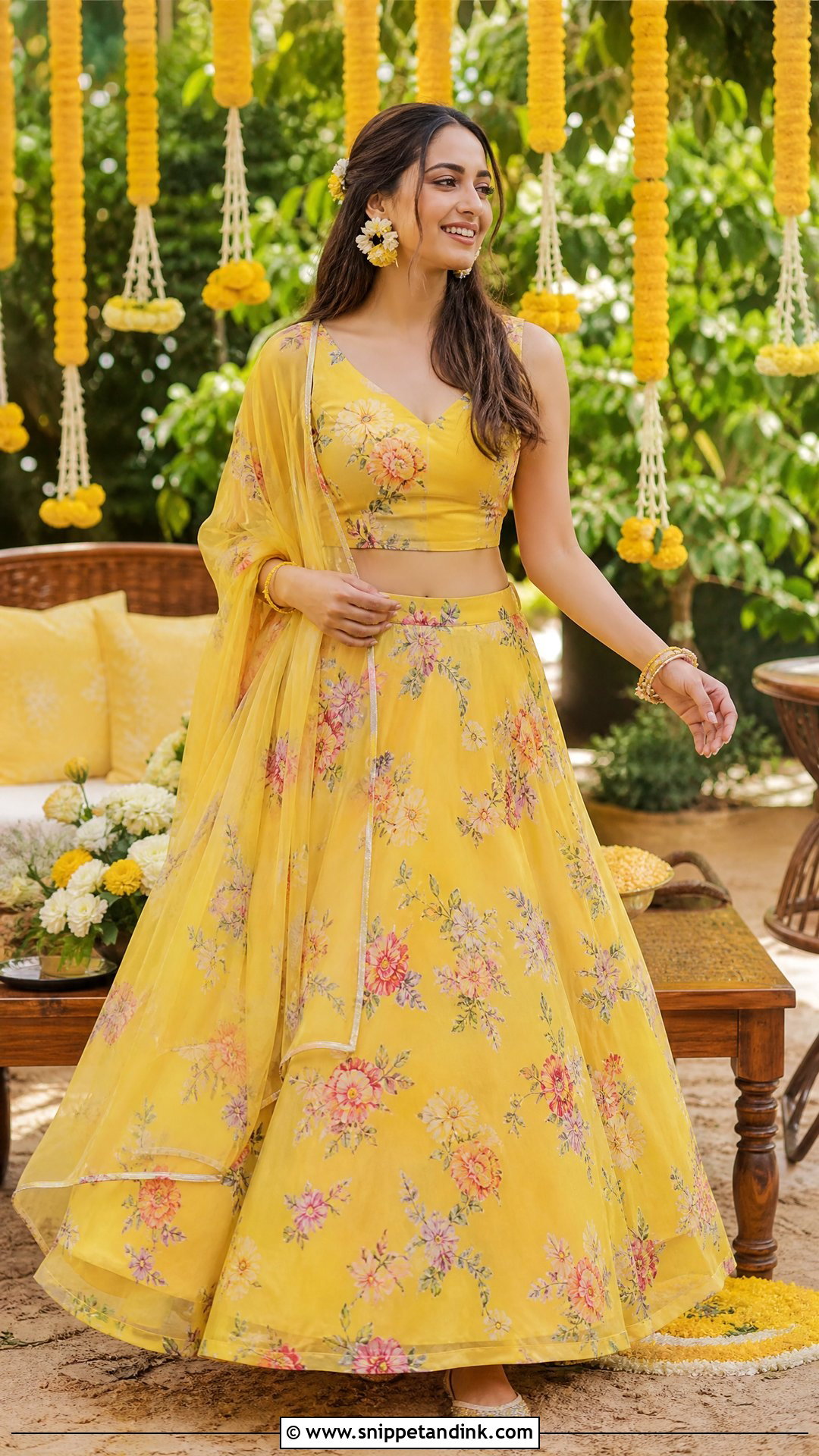
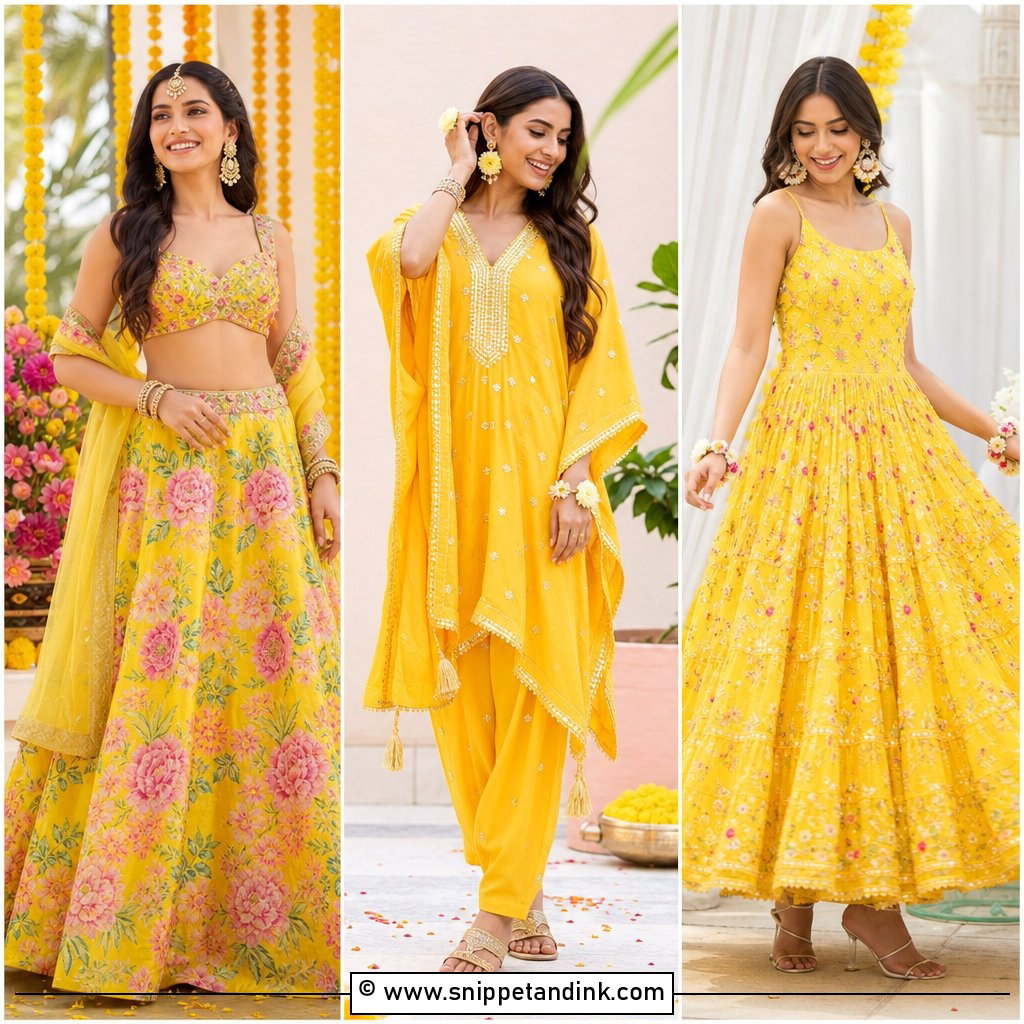
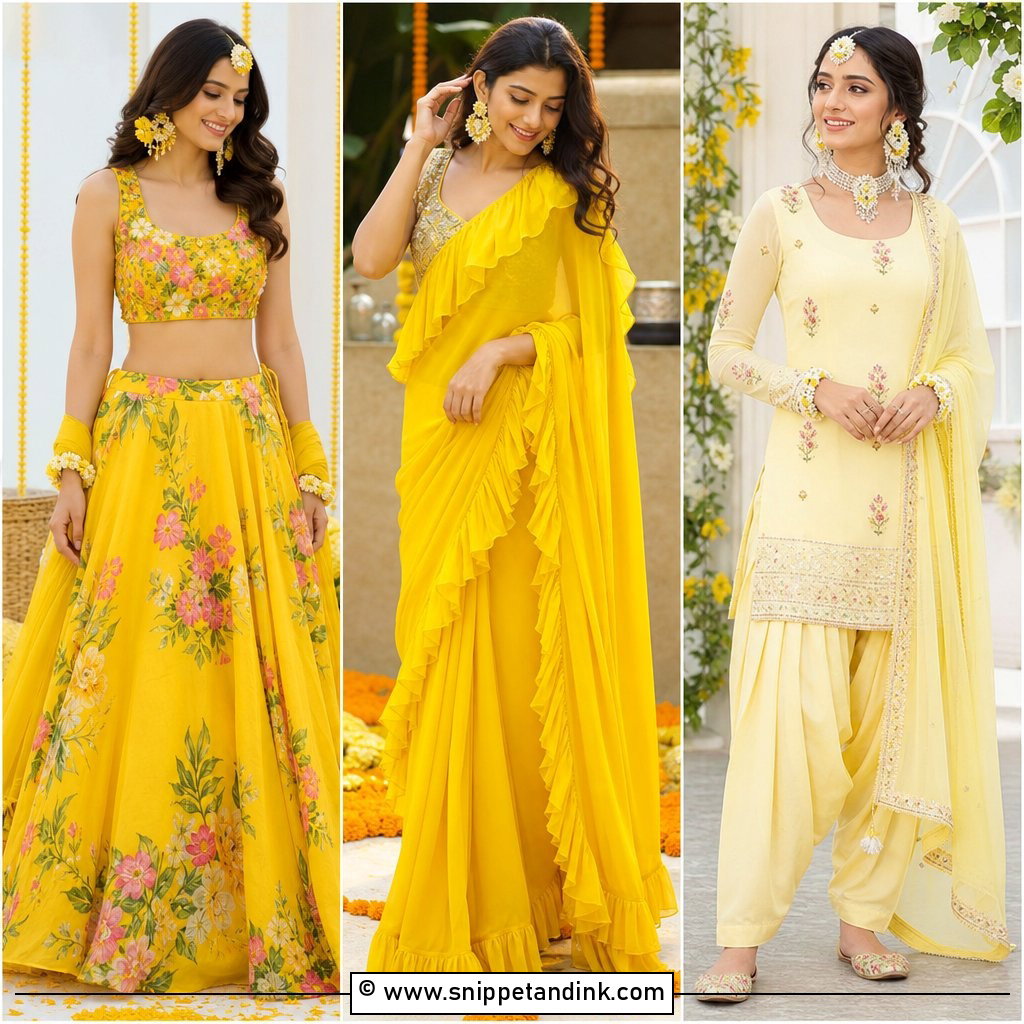
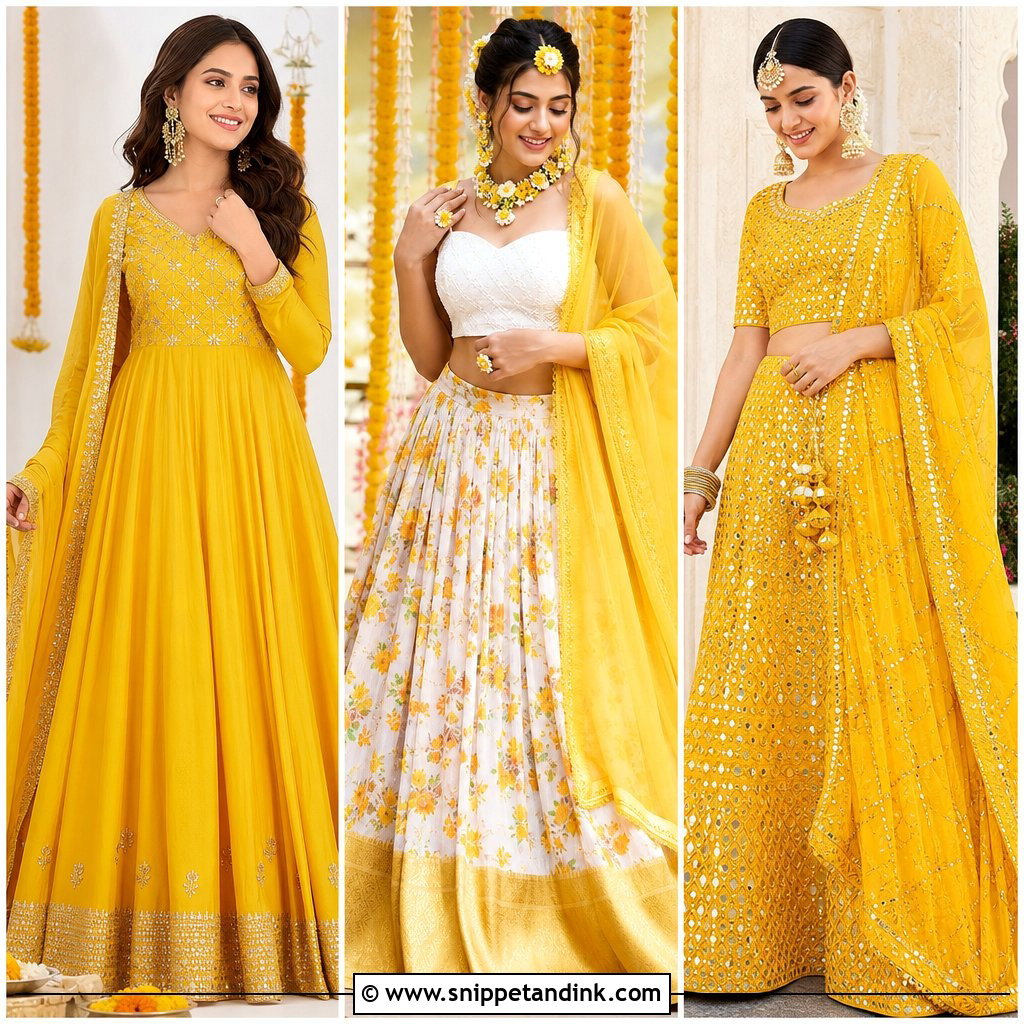
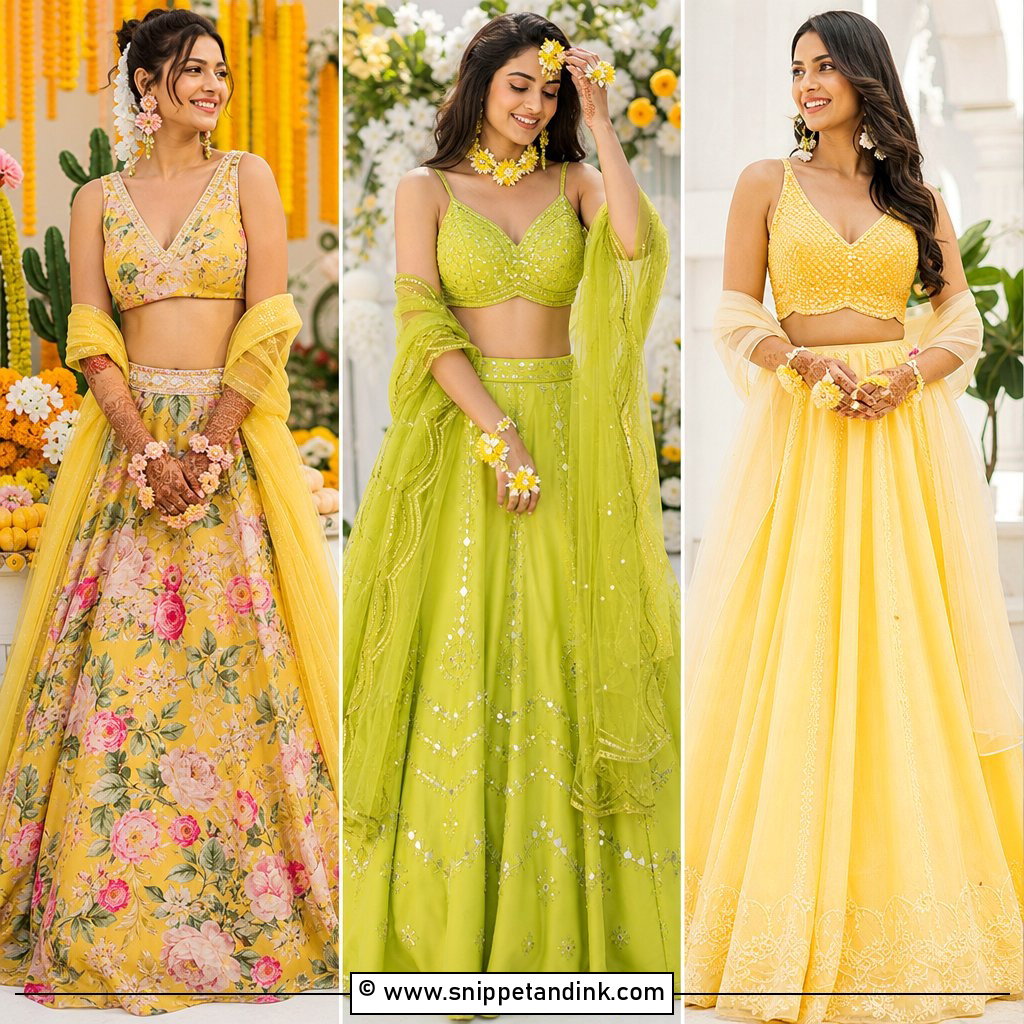
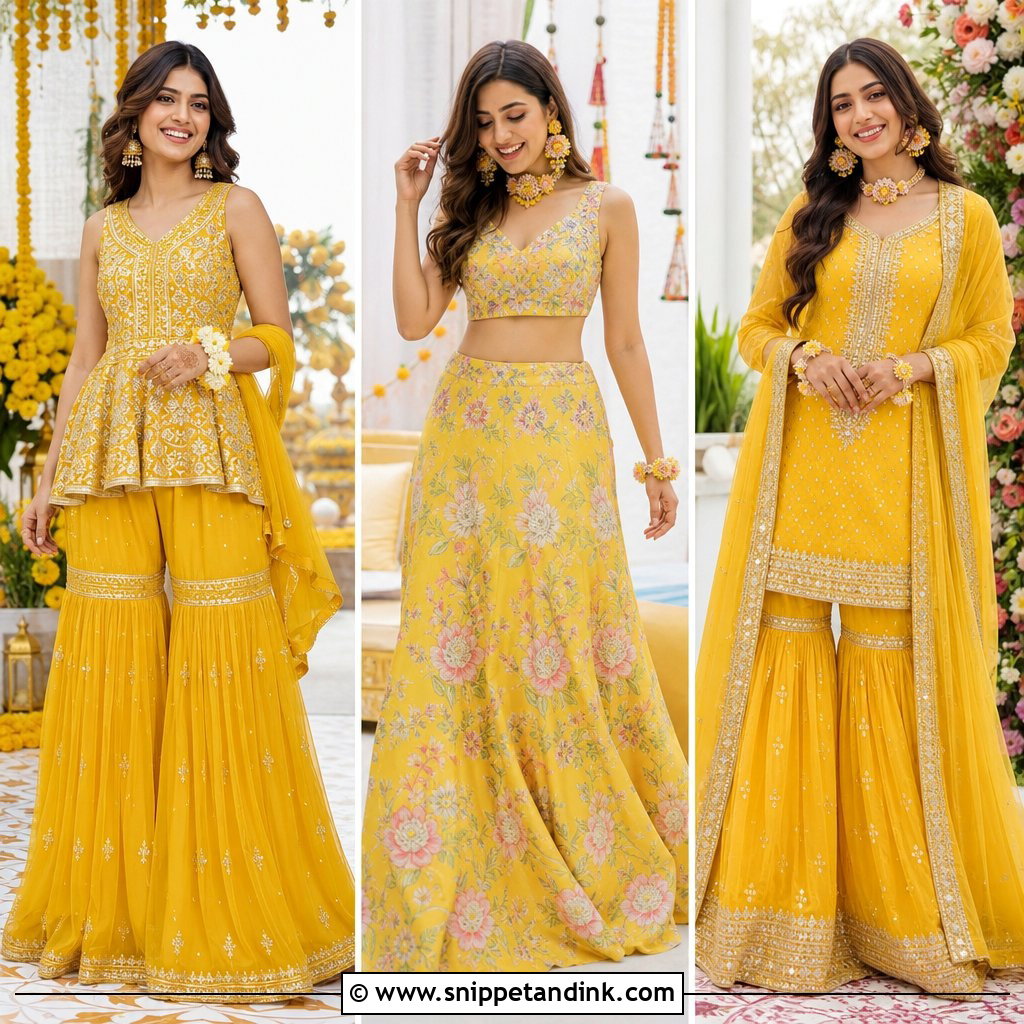
Small florals are the most forgiving pattern you can wear to a haldi, because a smear of turmeric disappears into the print instead of sitting on a plain panel. I’d pick georgette or cotton-silk over net here; net catches on bangles and scratches the waist after a few hours. Keep the skirt ankle length rather than floor length so the hem doesn’t drag through paste. Pin the dupatta on one shoulder, add floral jewelry and soft curls, and wear embellished flats or low block heels. Bridesmaids and sisters suit it, and so does a bride who wants something playful rather than ceremonial.
2. Yellow Saree For Haldi Function
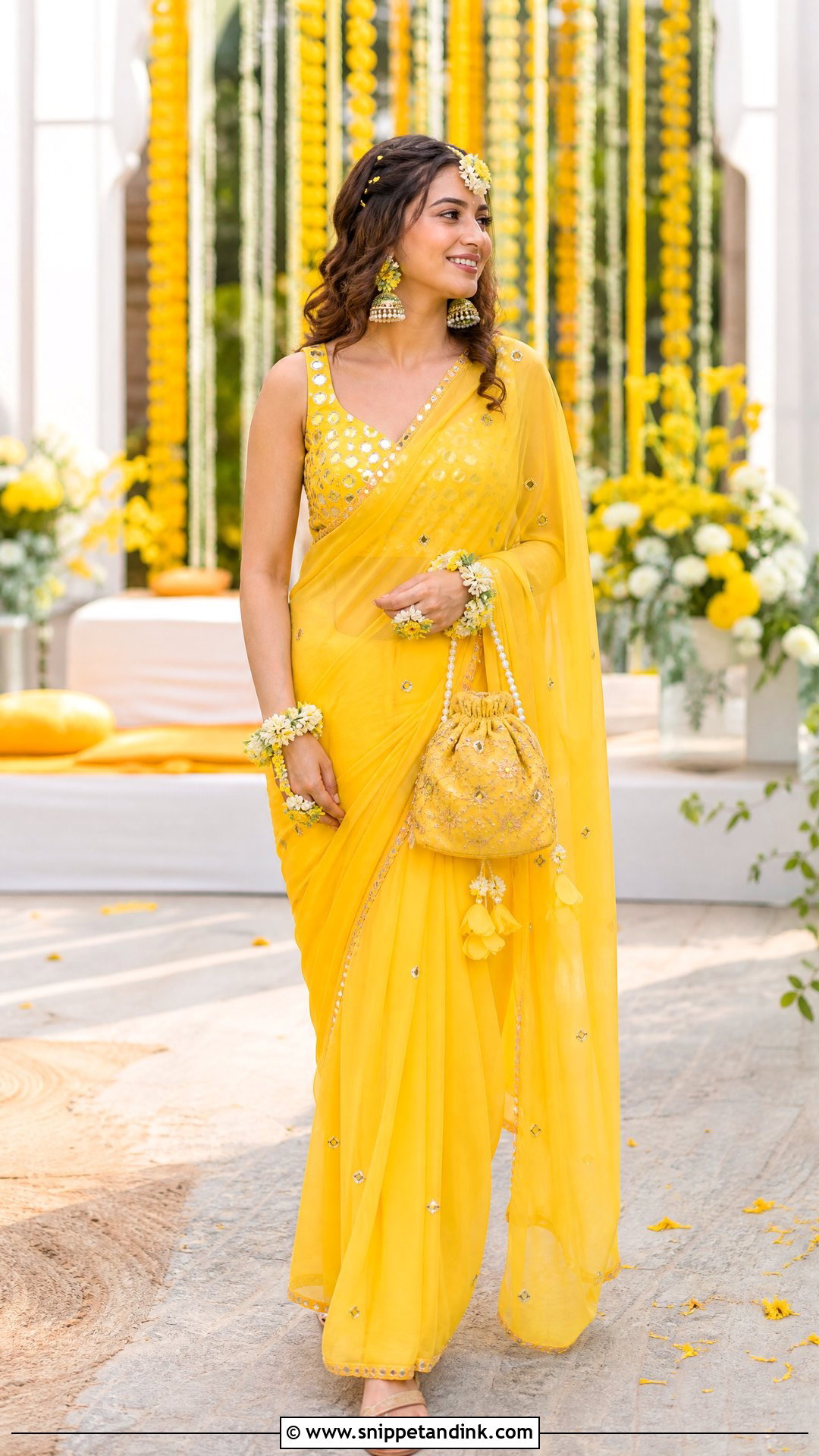
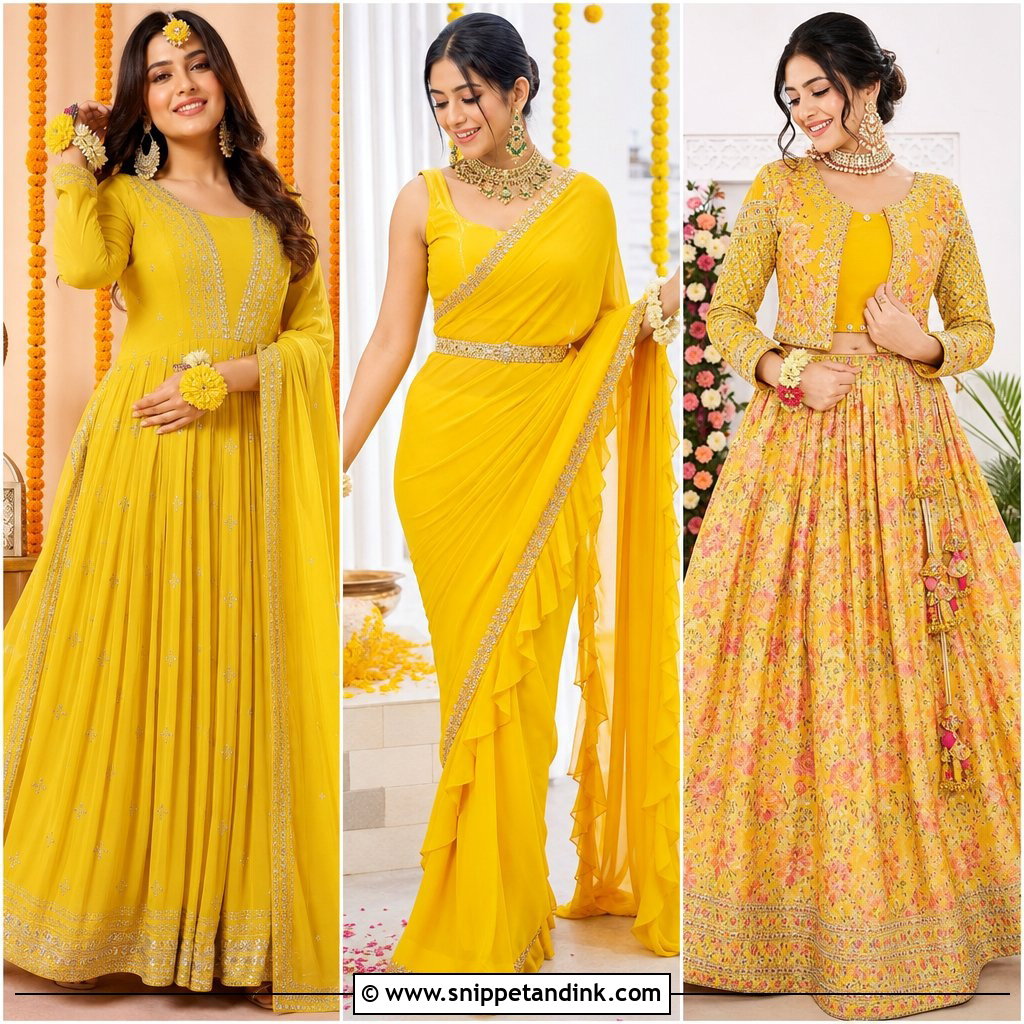
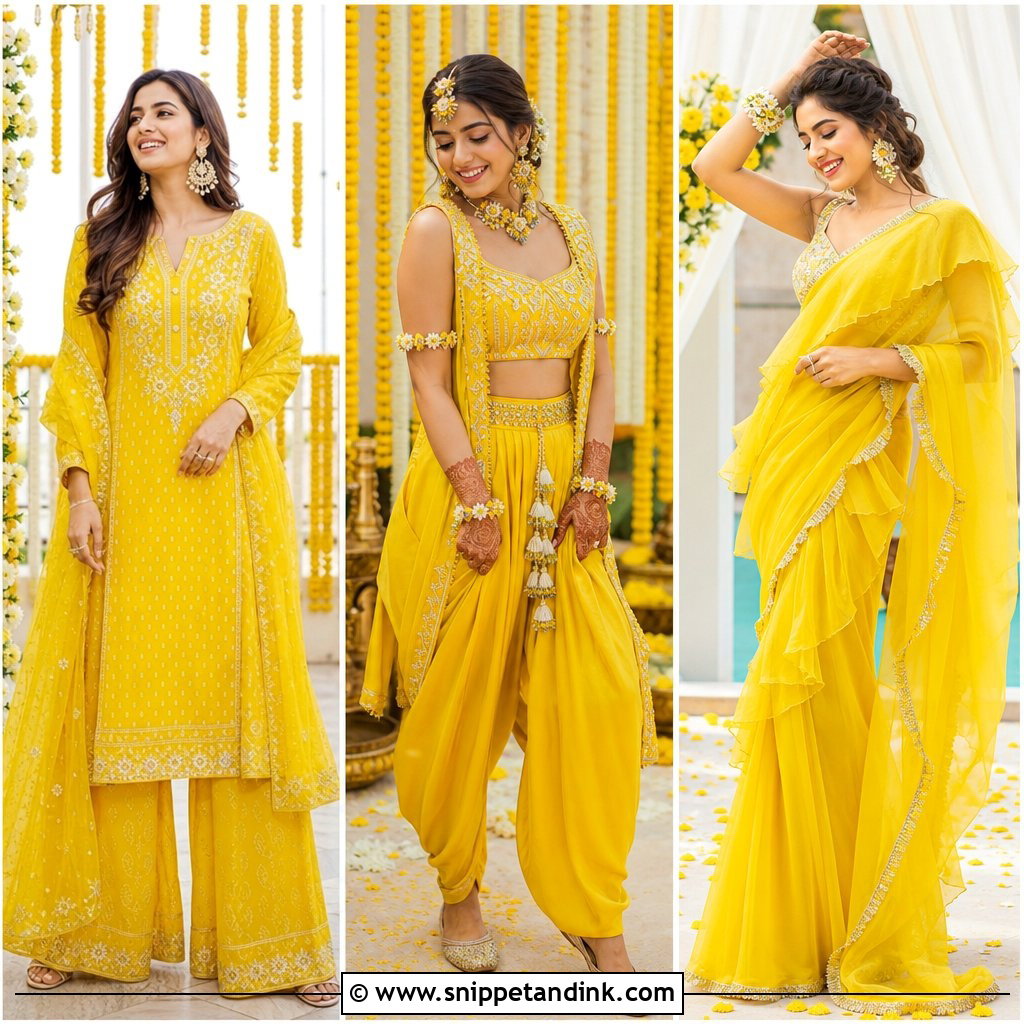
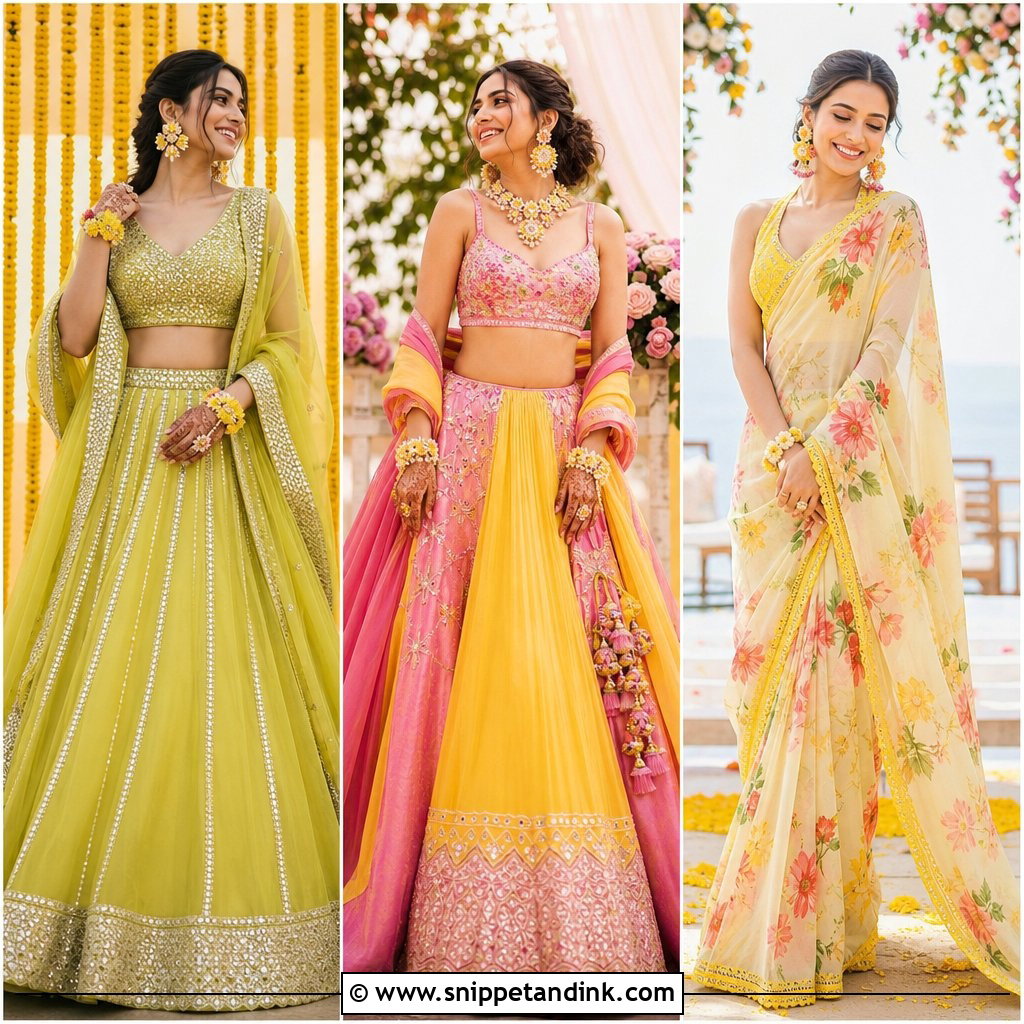
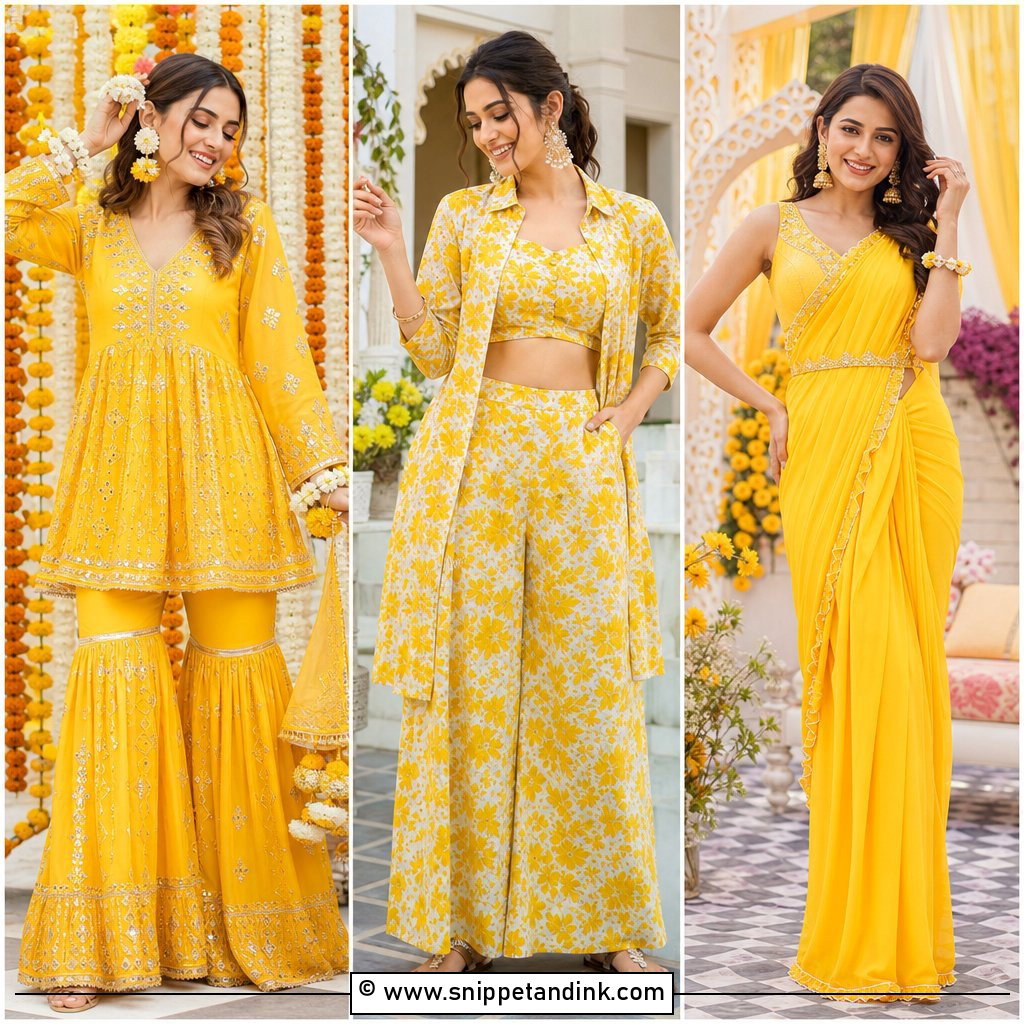
A yellow saree is the traditional answer, and chiffon, linen or a light georgette drapes well without weighing you down in the heat. The thing I watch at fittings is the pallu. A free-flowing pallu ends up in the turmeric bowl, so I tuck or pin it before the ritual starts. Short sleeves make life easier when relatives reach for your arms with paste, and a mirror-work blouse adds festivity without extra jewelry. Finish with floral earrings, bangles and a small potli. Flat sandals, please: stilettos sink into lawns and wobble on the low seating most haldis use. Mothers and aunts tend to feel most at home in this one.
3. Yellow Anarkali Suit For Haldi
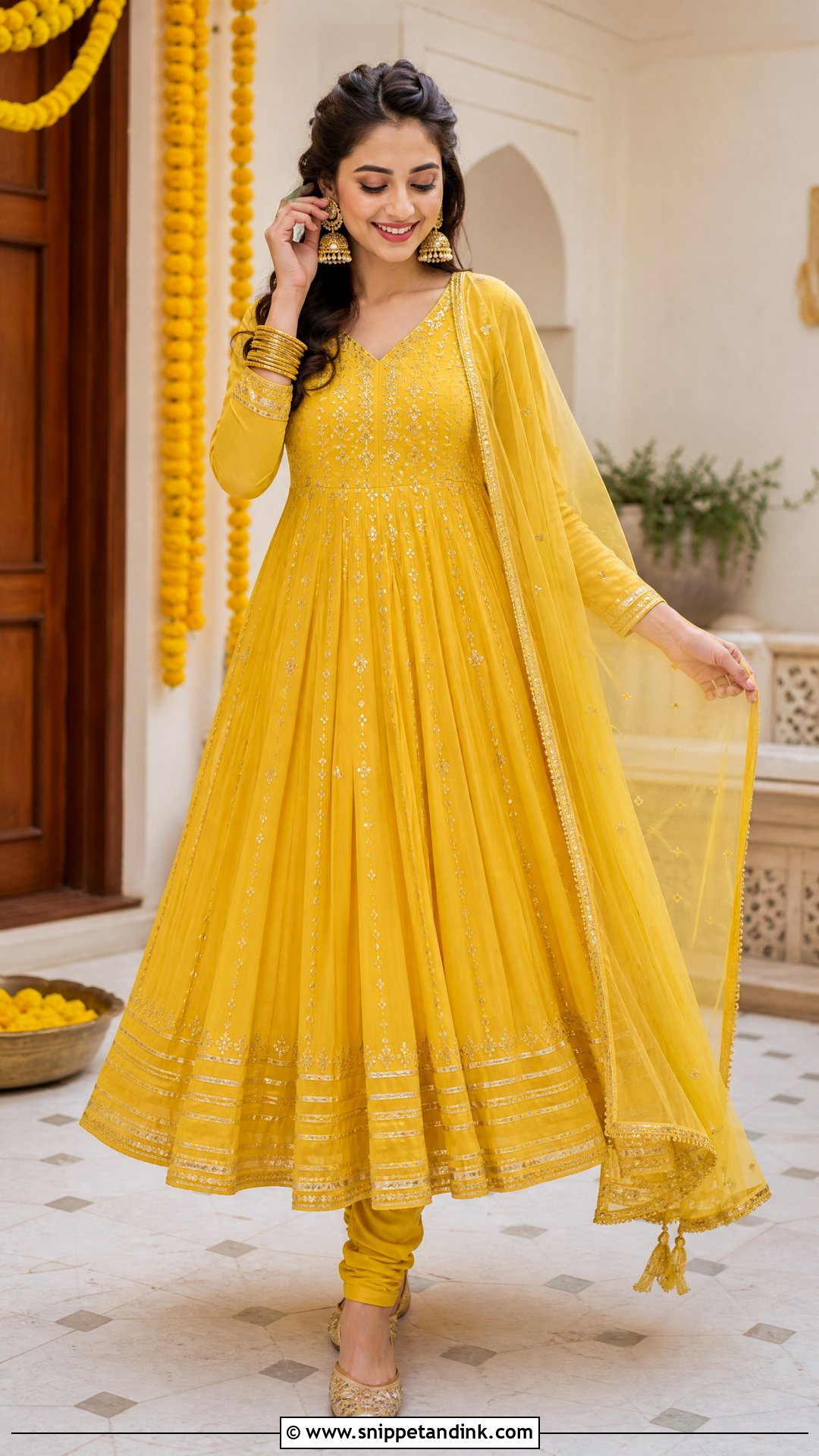
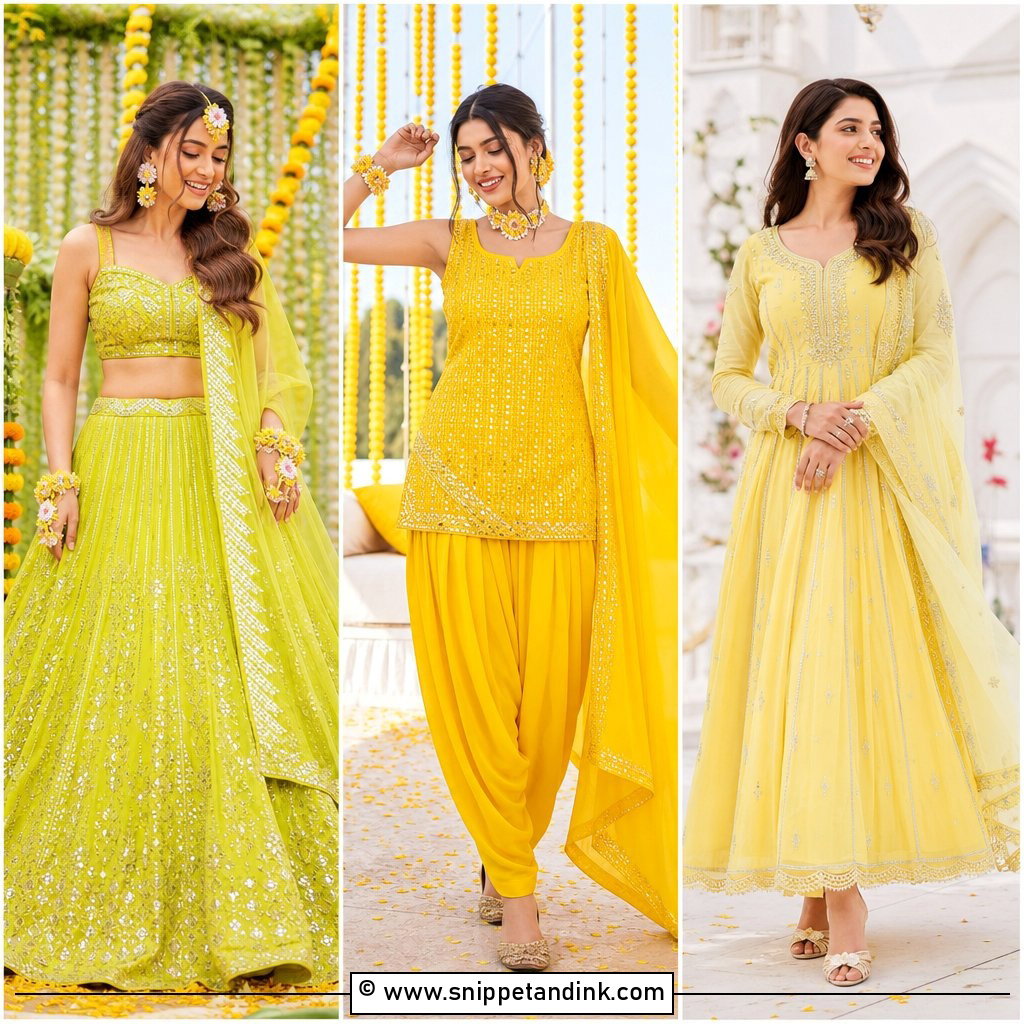
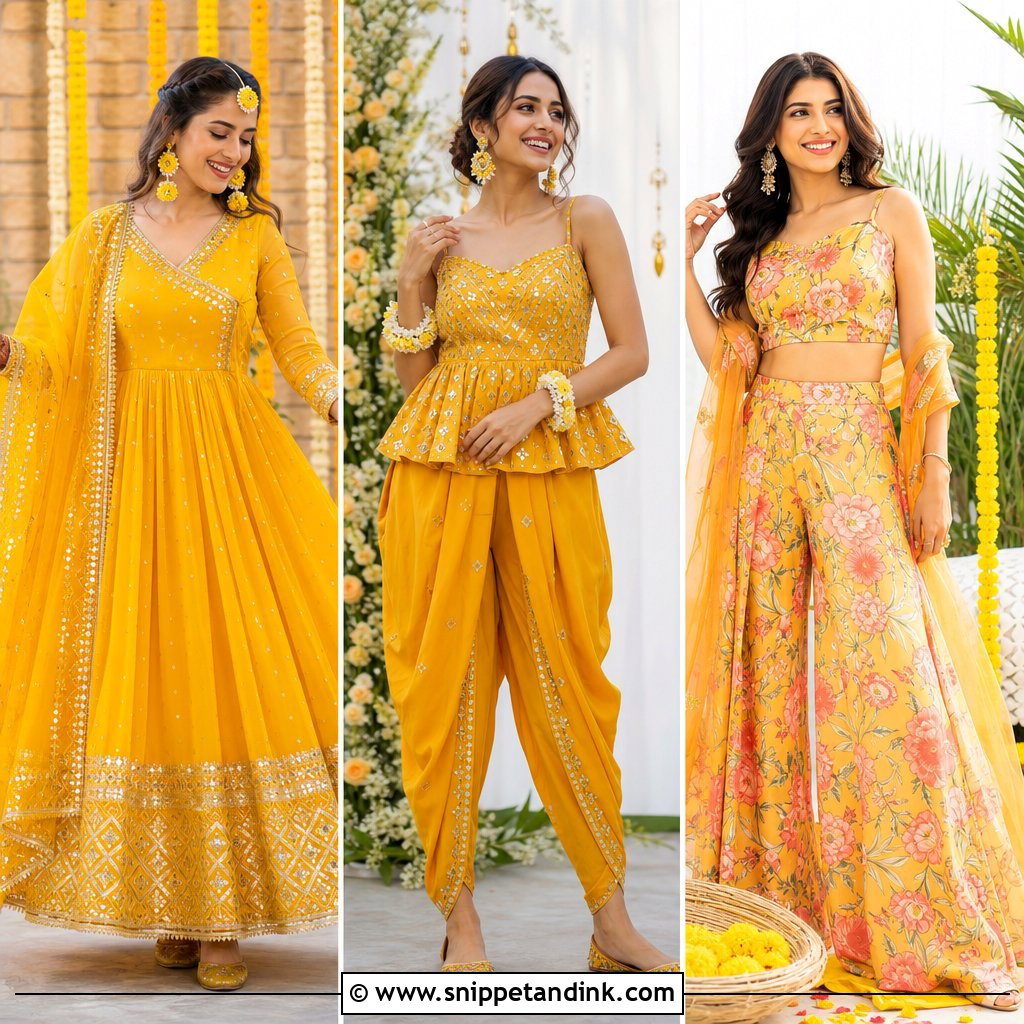
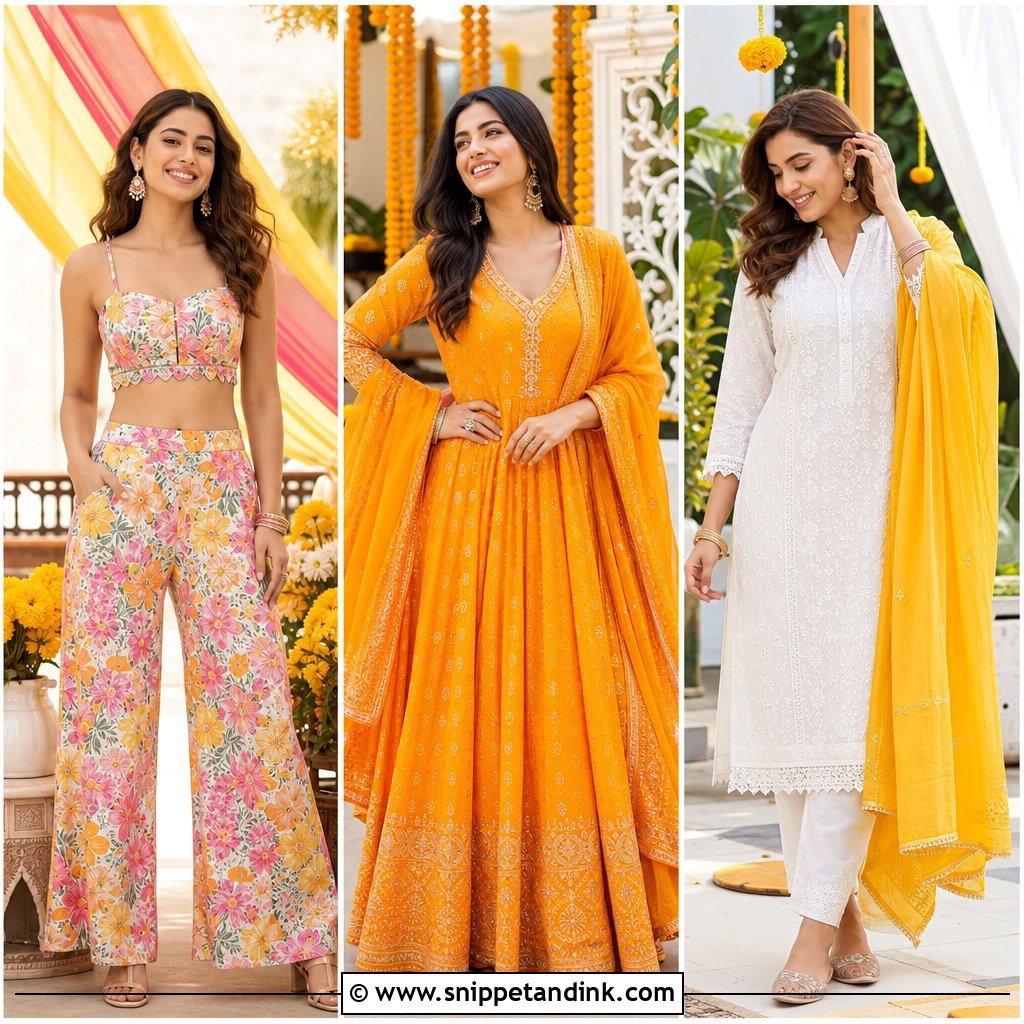
An Anarkali gives coverage and a festive flare without the weight of a lehenga, which is why I often suggest it to relatives who will spend the morning sitting cross-legged. Check where the flare starts. One that begins at the natural waist falls cleanly when you sit; a high empire line rides up and bunches at the tummy. Cotton, georgette or rayon with gota patti or mirror work keeps it light. Pair it with churidar or slim trousers, a light dupatta, jhumkas and embroidered juttis. One honest caveat: very full, many-panelled Anarkalis spread across the floor when you sit and collect paste at the hem.
4. Yellow Sharara Set For Haldi
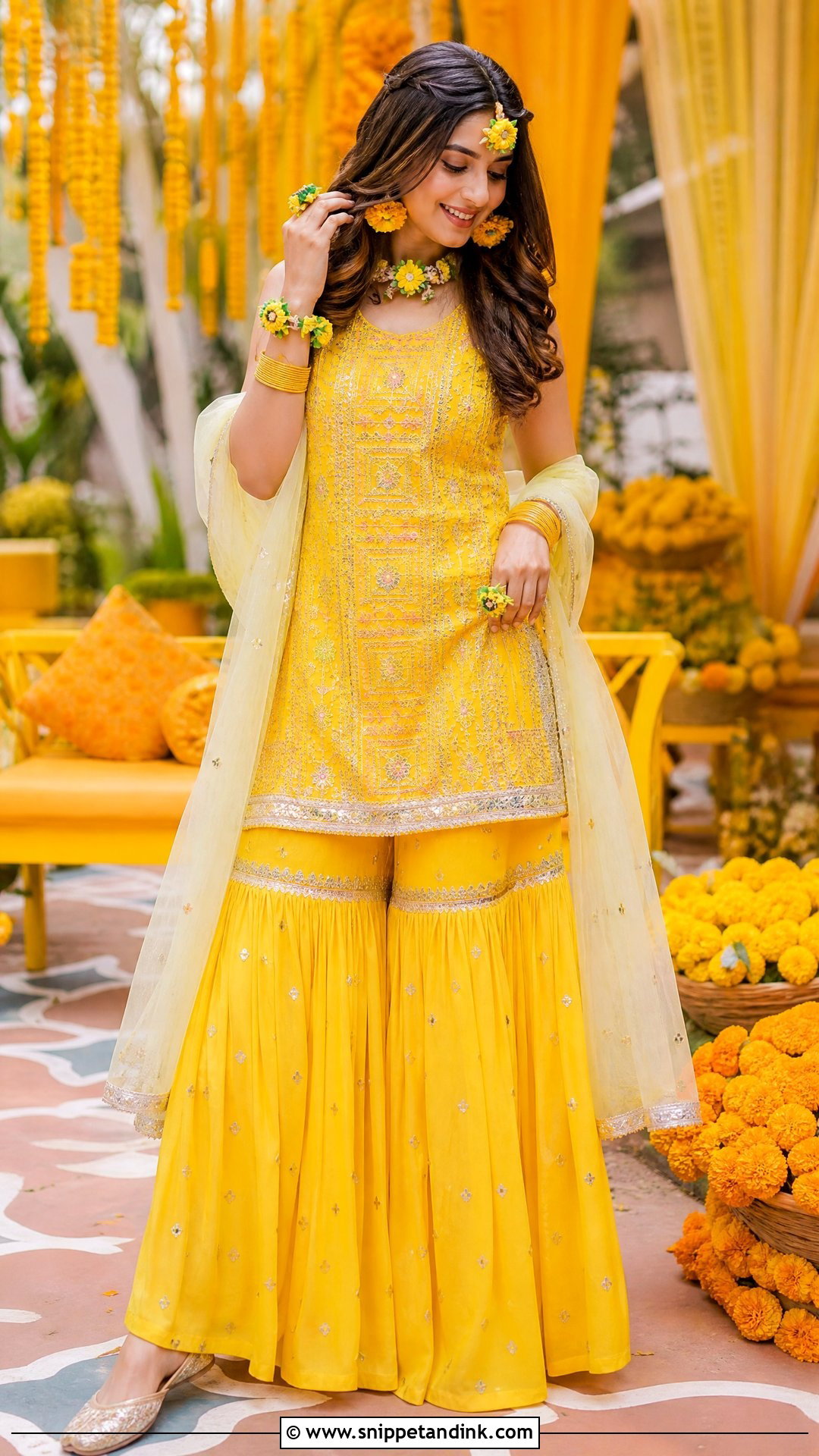
Shararas are what I put on the cousins who plan to dance, since the wide legs move like a skirt but never tangle around your ankles. A short kurti keeps the proportions modern. Cotton silk, georgette or light crepe all work, trimmed with mirror work, lace or floral embroidery. A contrast dupatta in white or pink breaks up a row of all-yellow outfits in group photos. Check the waistband before the day. Many ready-made shararas come with a drawstring that digs in after hours of sitting, and an elasticated back is far kinder. Statement earrings, floral bangles and soft juttis finish it.
5. Yellow Gharara Outfit For Haldi
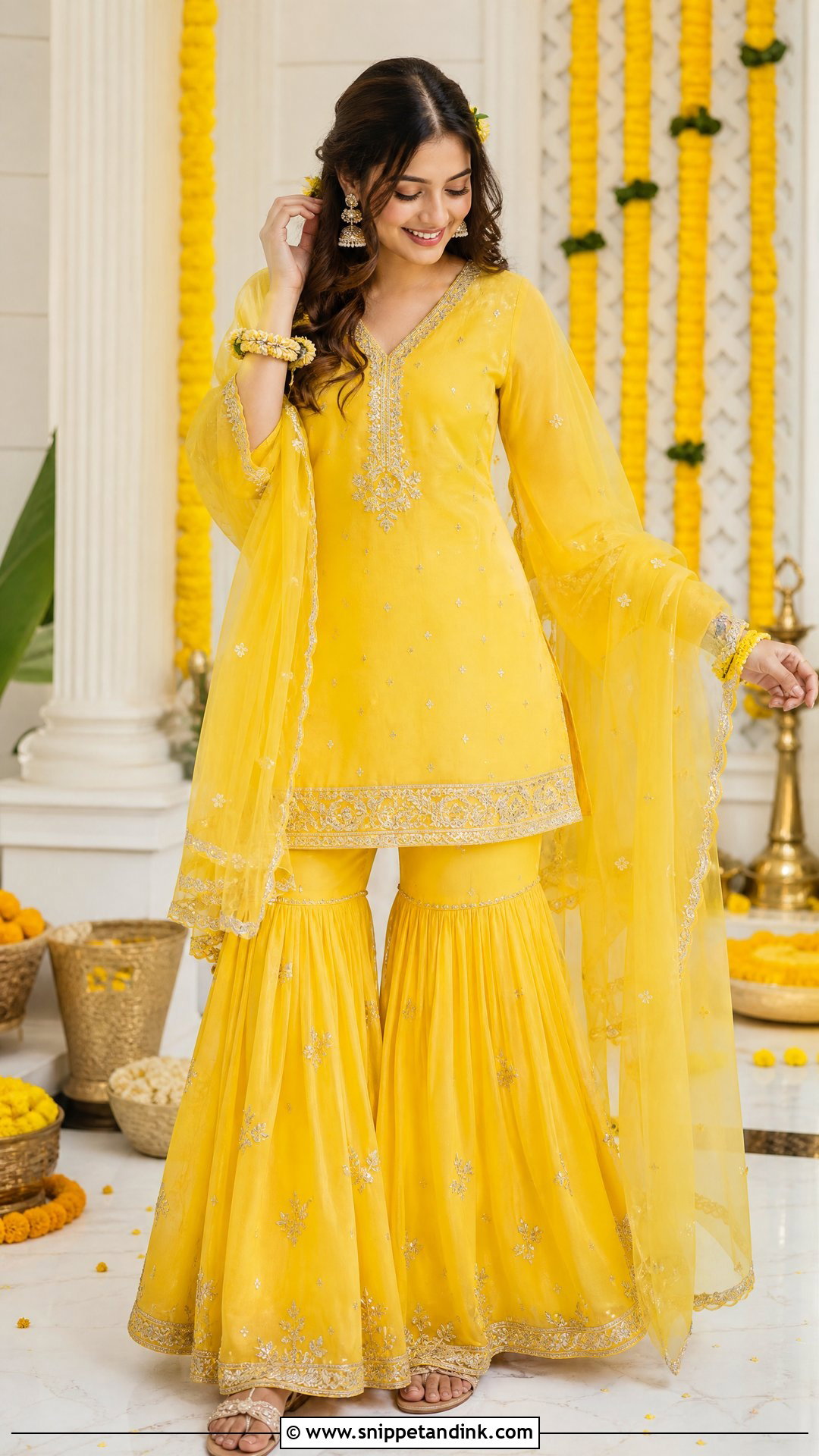
Ghararas feel more regal than shararas because the fitted section runs to the knee before the flare, and that joint, usually covered with a gota band, is where the eye lands in group photos. The same fit is the trade-off. Sitting on a low stool in a gharara is harder, so try it seated at your fitting, not just standing in front of a mirror. Keep the kurta short and neat with scalloped borders or a little mirror detailing, since the bottoms already carry the volume. A soft dupatta with light trim, jhumkas, a passa if you like it, and embroidered flats complete the look. I’d give this one to bridesmaids and sisters who won’t be sitting through the whole ritual.
6. Yellow Kurta Palazzo Set For Haldi
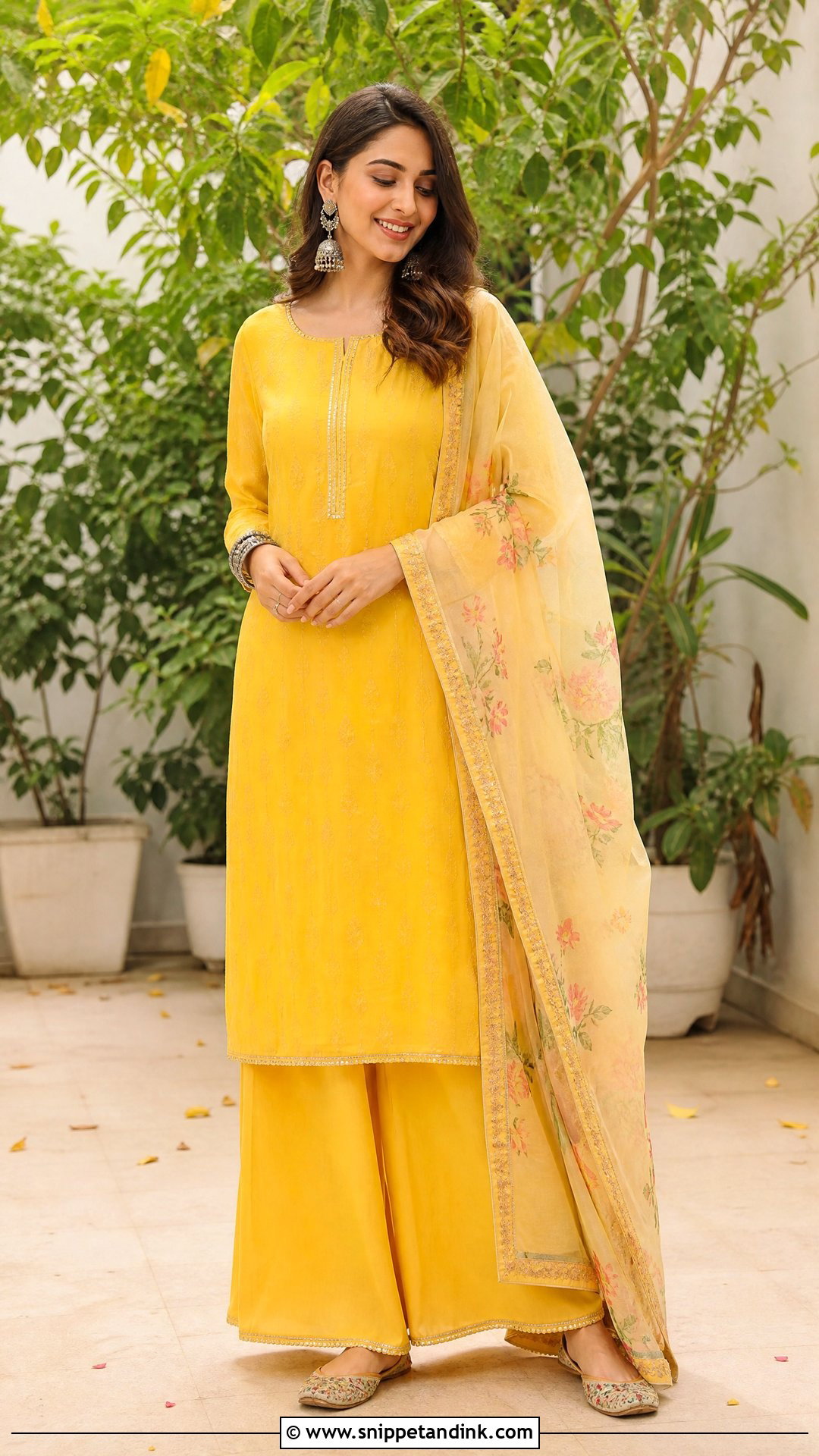
A yellow kurta palazzo set is the outfit I recommend most to guests who are travelling in, because it packs flat and, in rayon or muslin, barely needs an iron. Chanderi and pure cotton look crisper but crease the moment you sit. A straight or A-line kurta gives structure while the palazzos keep air moving around your legs at an outdoor ceremony. Add a printed dupatta, a mirror-work neckline or gota borders for festivity, then oxidized earrings, bangles and flat sandals. Of everything here, this has the best chance of being worn again.
7. Yellow Peplum Top With Lehenga For Haldi
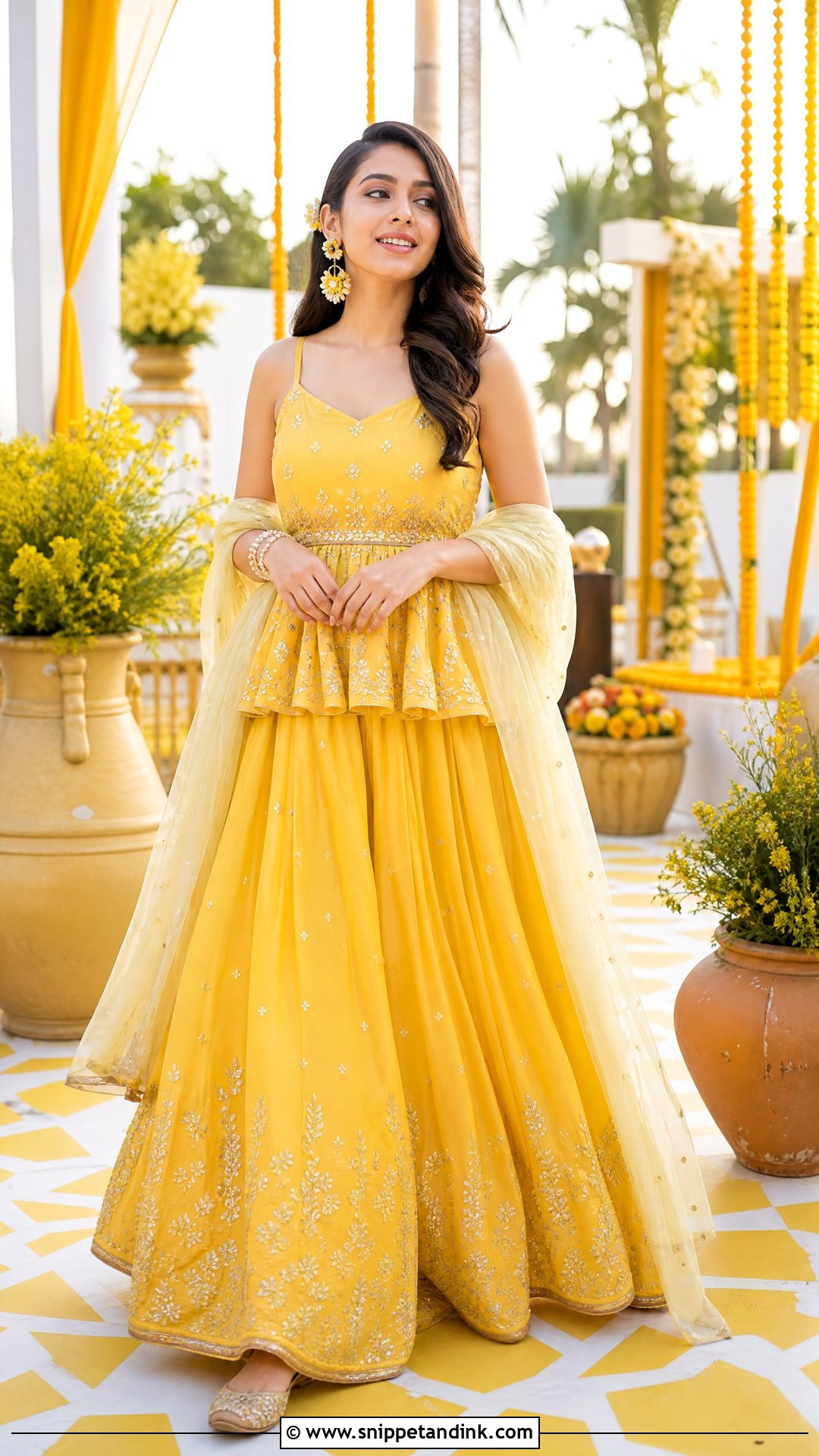
The peplum sits at the waist and flares over the lehenga skirt, hiding the waistband join that normally needs a dupatta to cover it. That makes it the easiest way to go dupatta-free, which I like for anyone dancing. Watch the peplum length: one that ends below the high hip looks boxy over a gathered skirt, so I usually have it taken up an inch. A printed or lightly embroidered skirt suits it, with floral earrings, pearl bangles or a few minimal gold pieces. If you prefer a traditional finish, a sheer dupatta still works on top.
8. Yellow Co Ord Set For Haldi
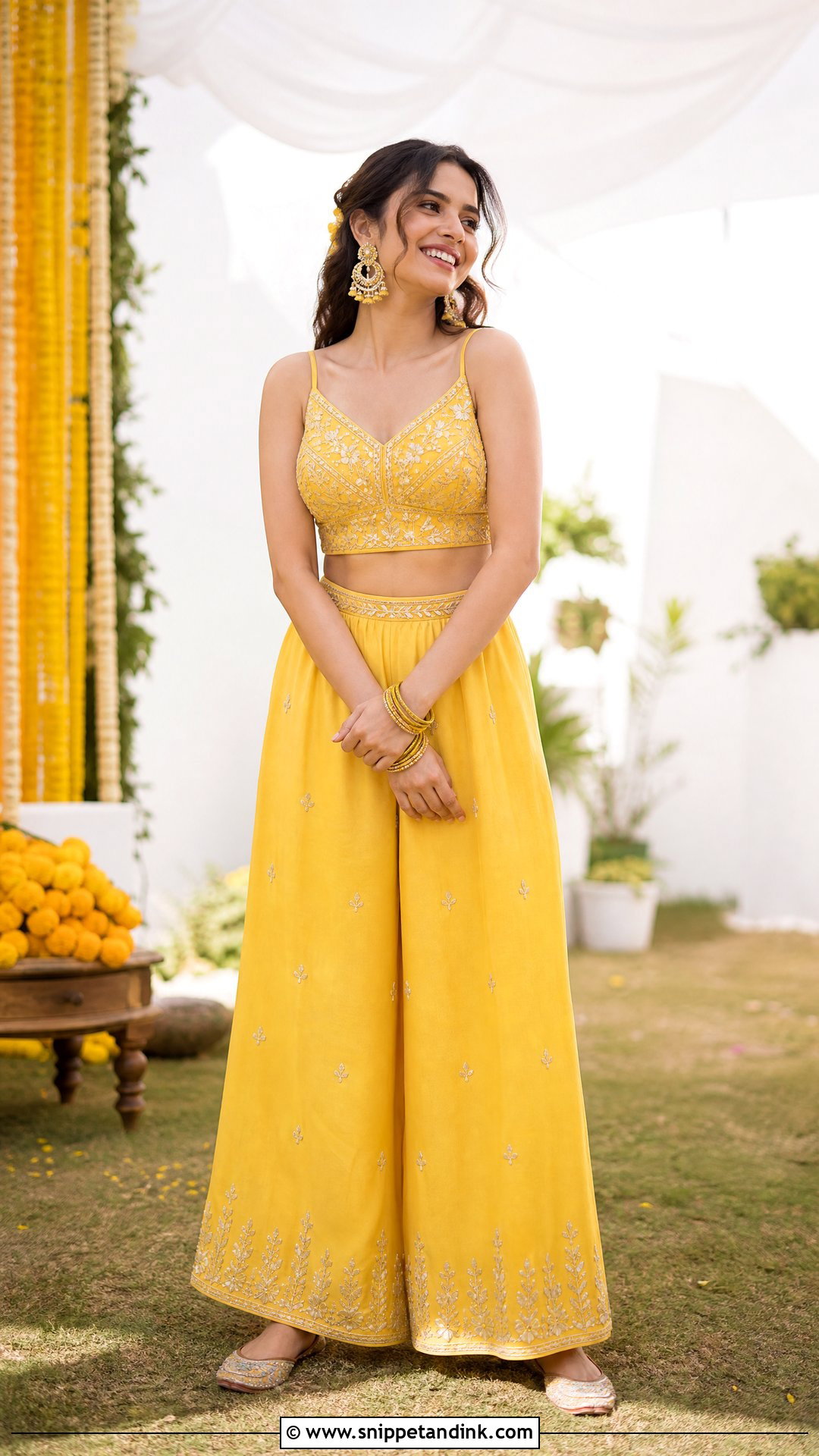
Co-ord sets belong at a garden, poolside or brunch-style haldi where the dress code is relaxed. A crop top and skirt, a kurta and pants, or a printed tunic with wide-leg trousers all count. Matching pieces look finished with almost no styling, which matters when you have a long day ahead. One fabric note from fittings: linen blends wrinkle fast, so if photos matter more to you than airflow, I’d go for muslin or a light silk instead. Statement earrings, stacked bangles and embellished flats bring in the festive side.
9. Yellow Indo Western Outfit For Haldi
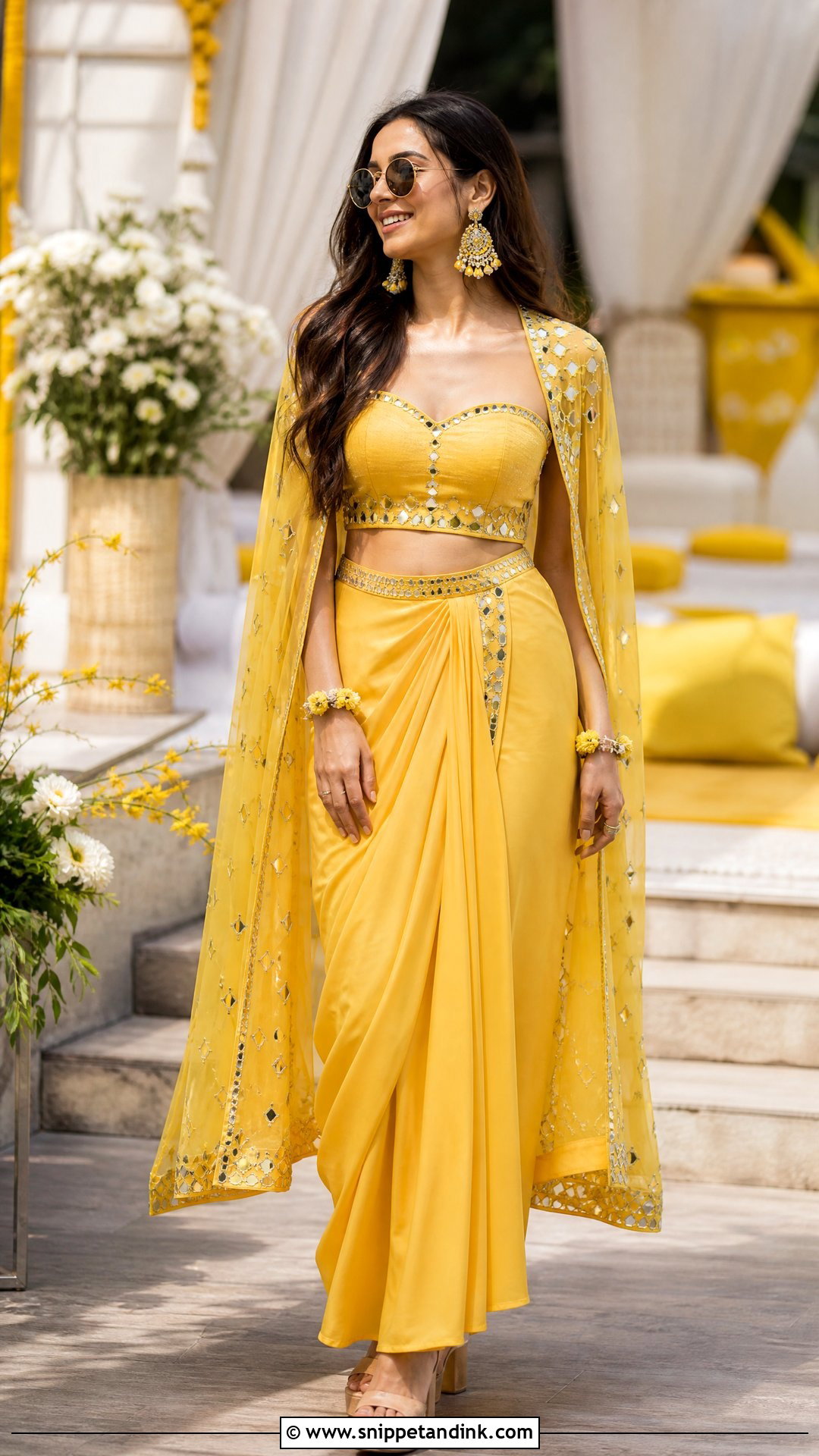
Dhoti skirts with crop tops, cape kurtas over trousers, draped skirts with structured blouses: this is where you can be inventive, as long as the fabric stays light. My rule is the sit test. If you can’t sit on a floor cushion and stand up again without holding the outfit together, it’s wrong for a haldi, however good it looks standing. Mirror work, tassels, floral prints and gota accents keep it festive, and statement earrings with block heels or flats finish it. Fashion-forward cousins and bridesmaids carry this off best.
10. Yellow Dhoti Kurta For Haldi
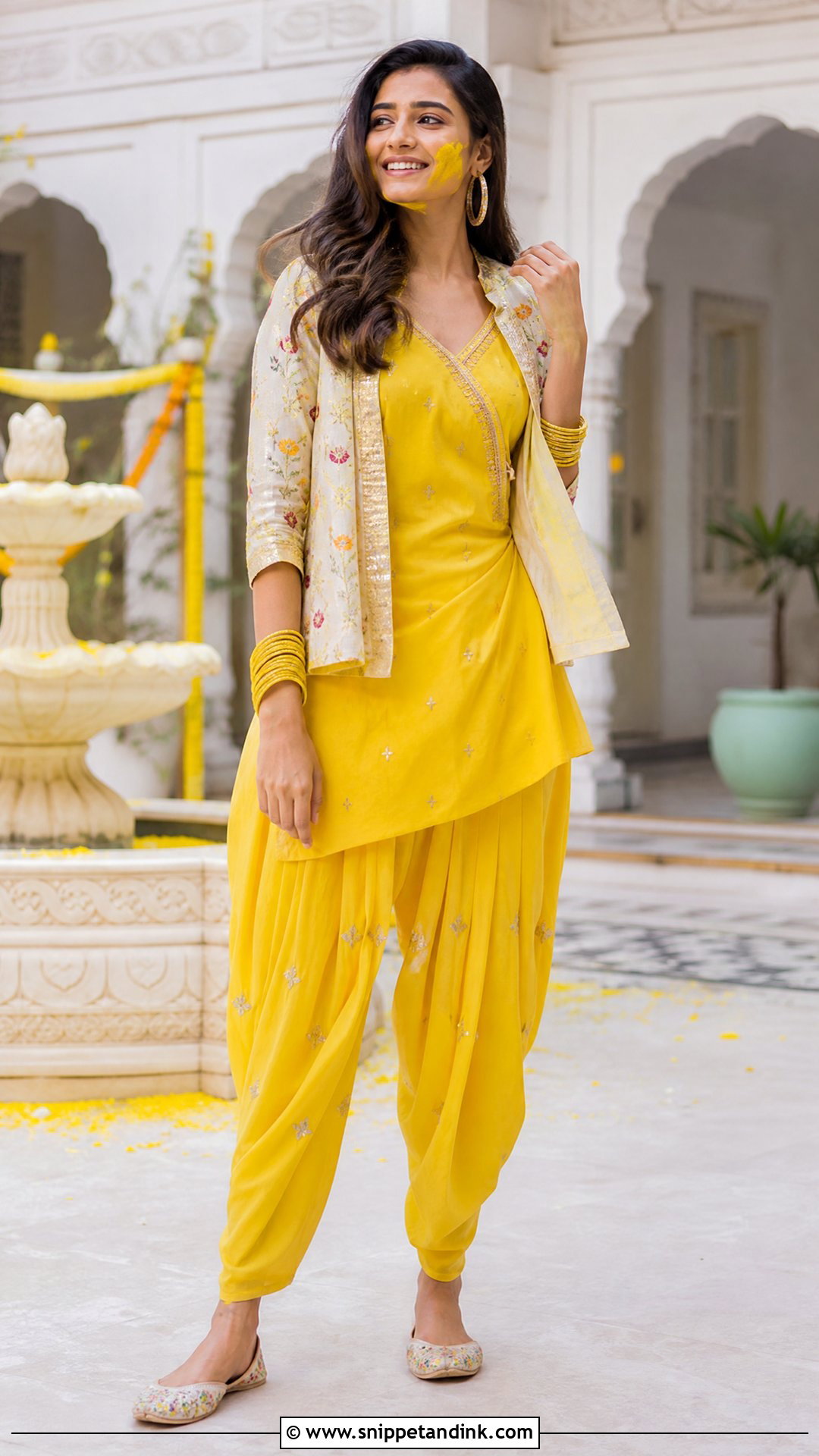
A yellow dhoti kurta look is about the most dance-proof thing you can wear to a haldi. The dhoti drape gives room at the hip and knee, so games, dancing and walking between rooms never strain a seam. Pair the bottoms with a short kurta, an asymmetrical tunic, or a crop top under a light jacket, and let mirror work or tassels add the detail. I’d finish it with juttis, hoops and a small potli. It reads young, so sisters and younger guests wear it more naturally than older relatives.
11. Yellow Mirror Work Lehenga For Haldi
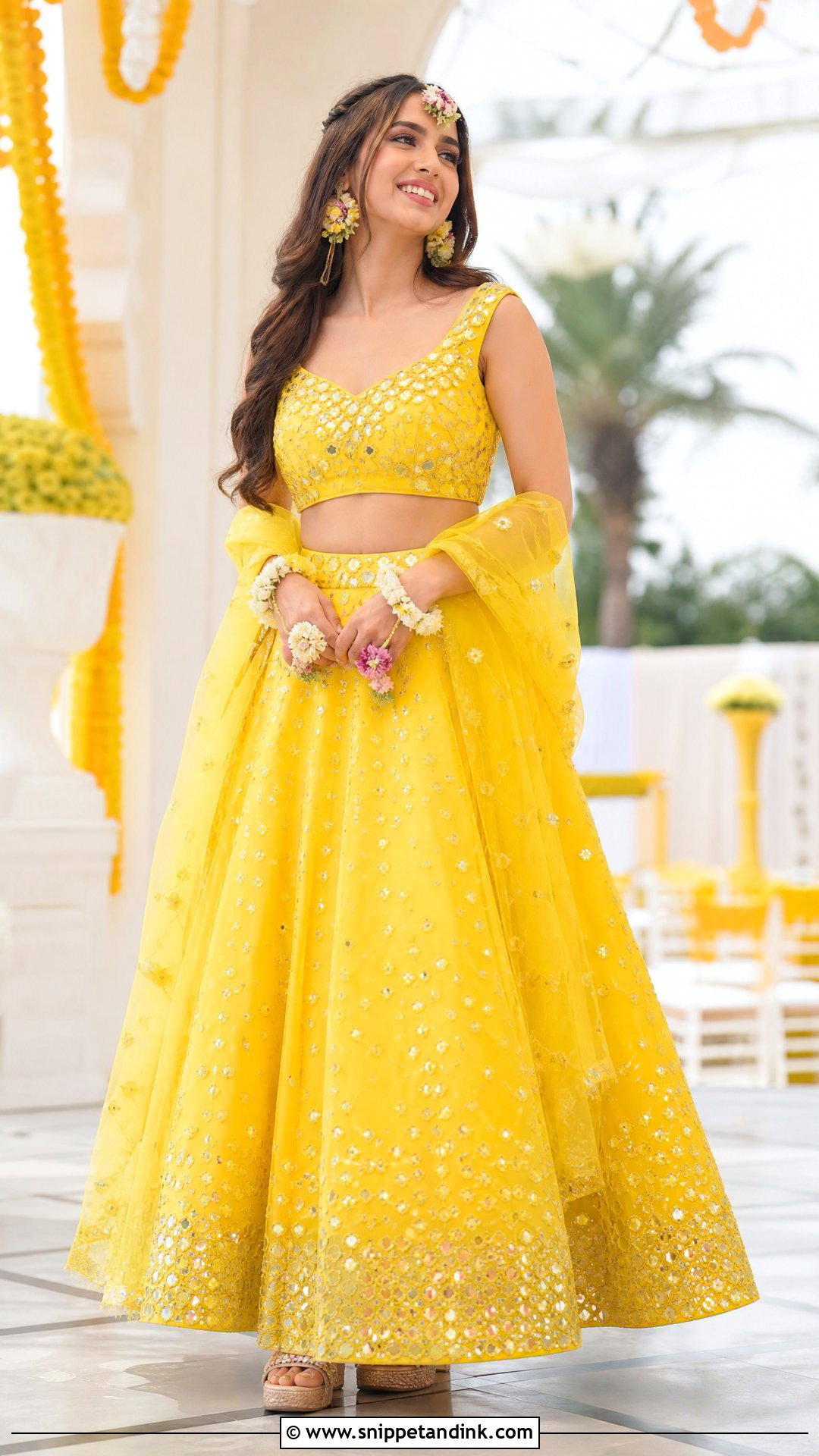
Mirror work earns its place in daylight. Each piece throws back a small flash, so the outfit sparkles on camera without the weight of embroidery. Scattered mirrors are lighter and more comfortable than dense panels, which can scratch the inner arm. Real glass mirrors can also crack when you sit hard on the skirt, so for a function with floor seating I steer people toward stitched acrylic mirrors. Keep the blouse simple, the dupatta soft and the jewelry floral or pearl. Wedges or embellished flats handle uneven outdoor ground.
12. Yellow Organza Saree For Haldi
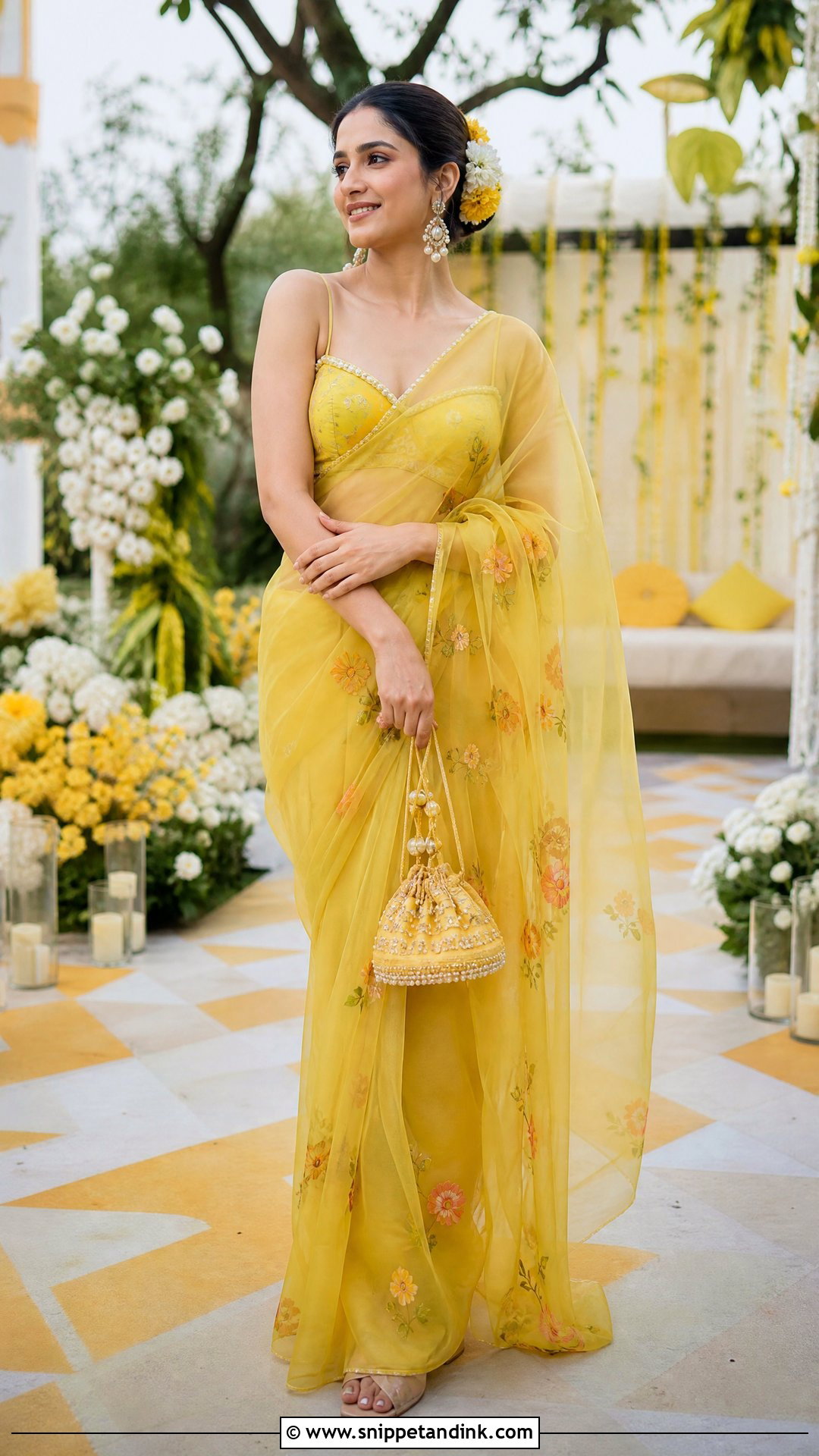
Organza holds its shape, so a yellow organza saree gives volume without weight. What nobody mentions is that it is stiff and slippery: the pleats slide out unless they’re pinned at the waist and again at the shoulder. A floral print or a delicate border is enough decoration, and a fitted white or gold blouse keeps it fresh. Let the sheen lead and keep accessories small, maybe pearl earrings, a floral hair piece and a tiny potli. Turmeric shows clearly on pale organza, so I’d put this on a guest or bridesmaid rather than the bride.
13. Yellow Cotton Suit For Haldi
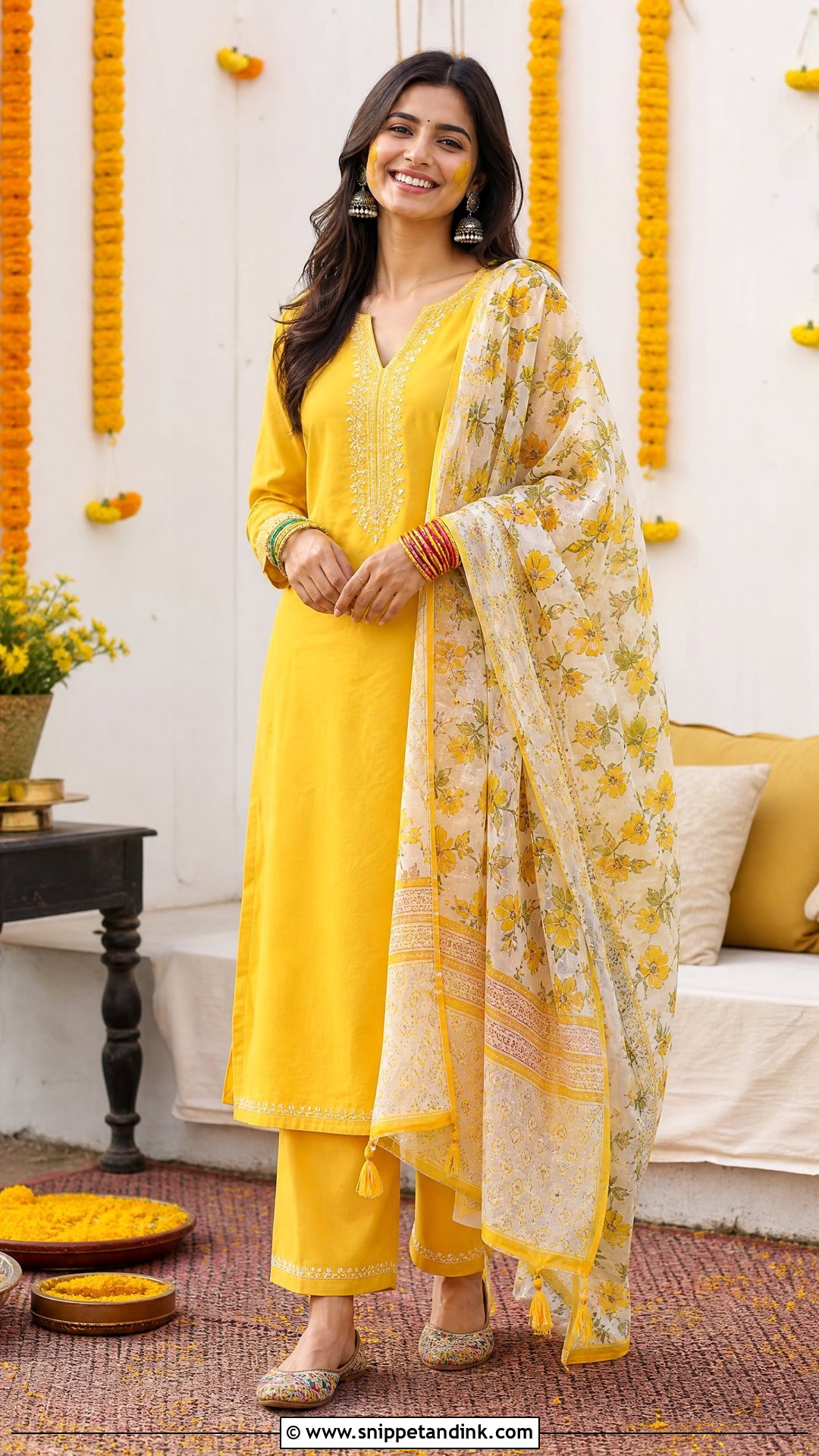
Cotton is the fabric I trust most for a hot-weather haldi, because it breathes and goes straight into the wash afterwards. A straight kurta with pants and a printed dupatta is the base; lace, gota or mirror buttons dress it up, and block prints hide paste better than plain dyed cotton. Be aware that cotton soaks turmeric deep into the fibers, so a faint mark may stay on very pale yellow. Silver jhumkas, colorful bangles and flat juttis suit it. It’s my pick for home functions and intimate ceremonies, and you will wear it again.
14. Yellow Cape Set For Haldi
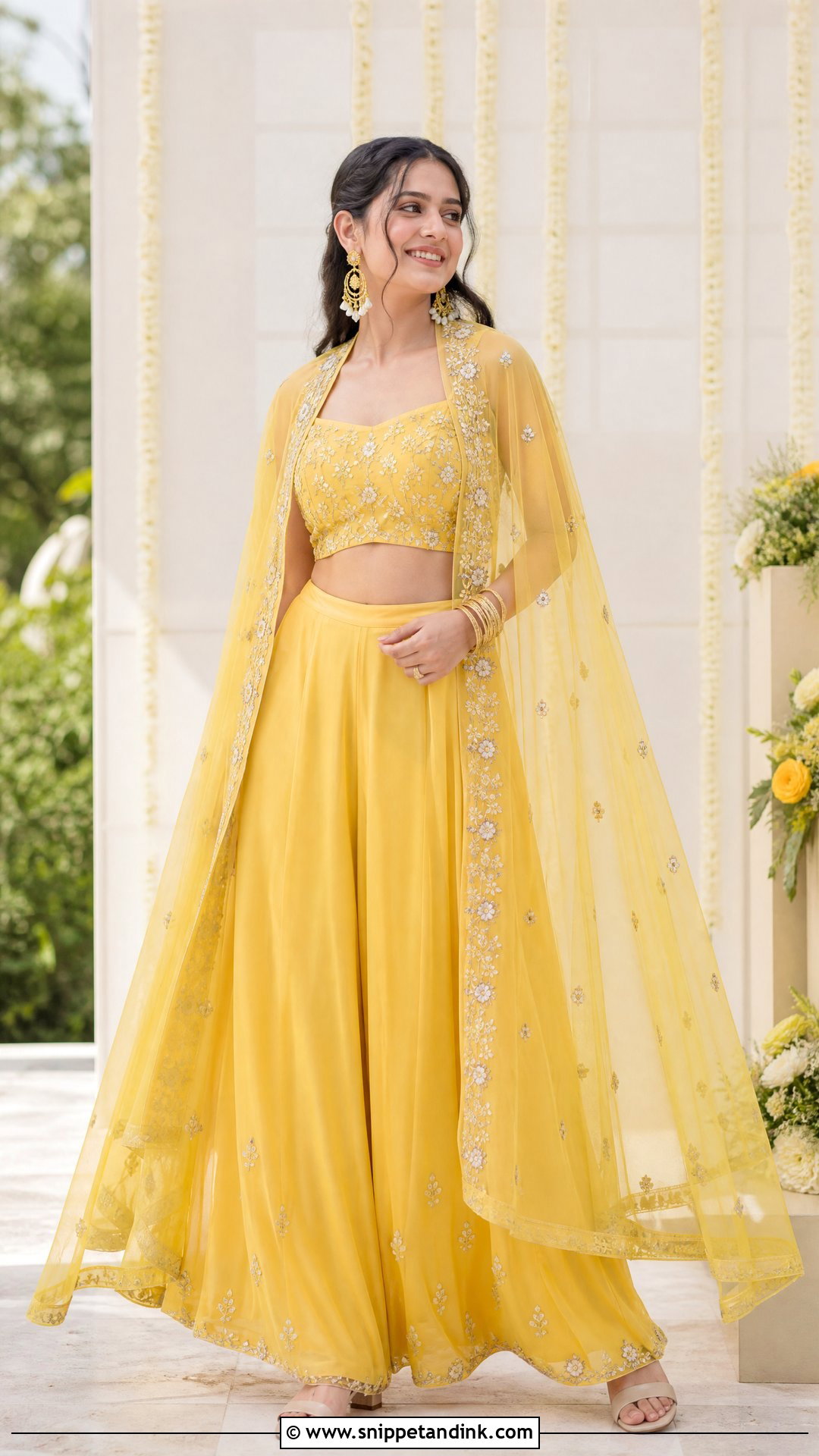
A cape replaces the dupatta, so there’s nothing to pin and nothing sliding off your shoulder mid-ritual. Wear it over a crop top and palazzos or over a fitted kurta. Georgette and chiffon float nicely in walking shots, while organza stands away from the body and can look stiff in a breeze. Because the cape frames the neckline, I keep the jewelry to earrings and bangles and skip the necklace. Low heels or embellished flats are all you need underneath.
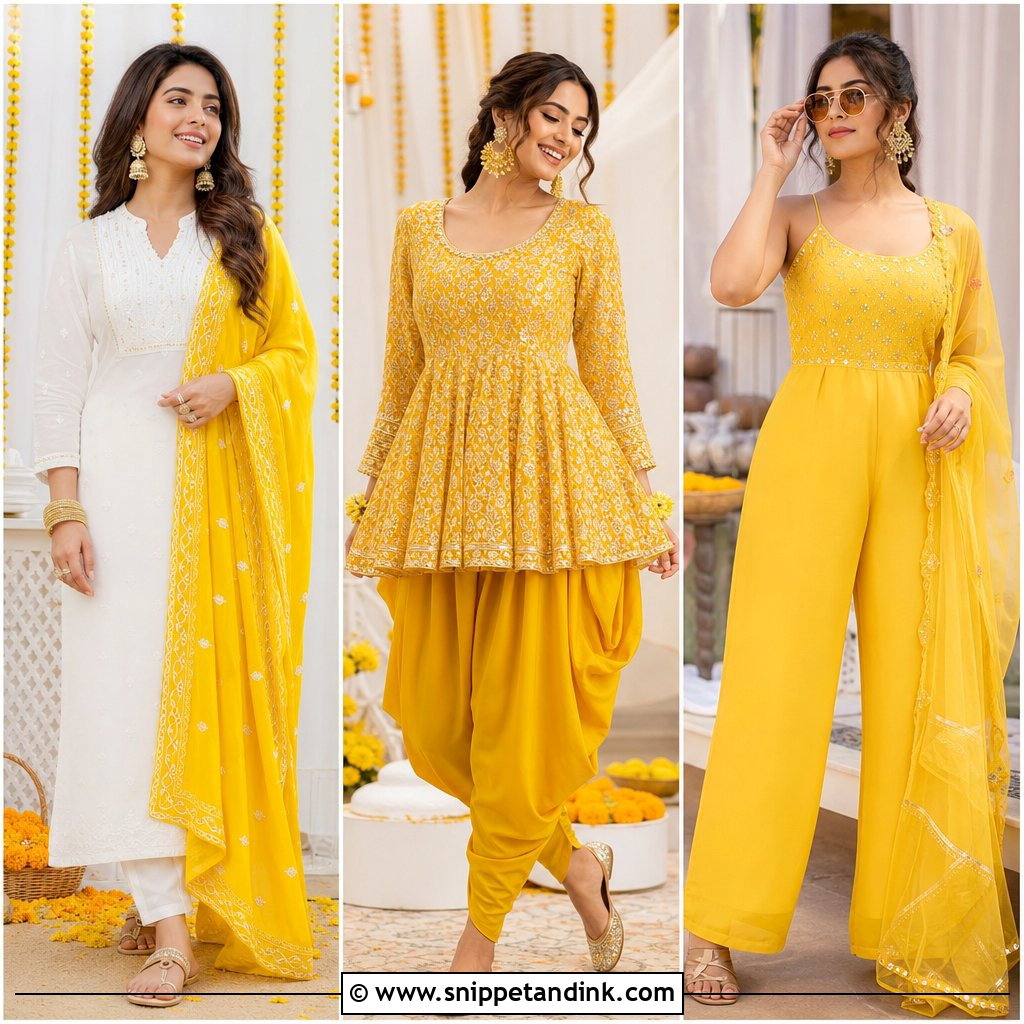
15. Yellow Jacket Lehenga For Haldi
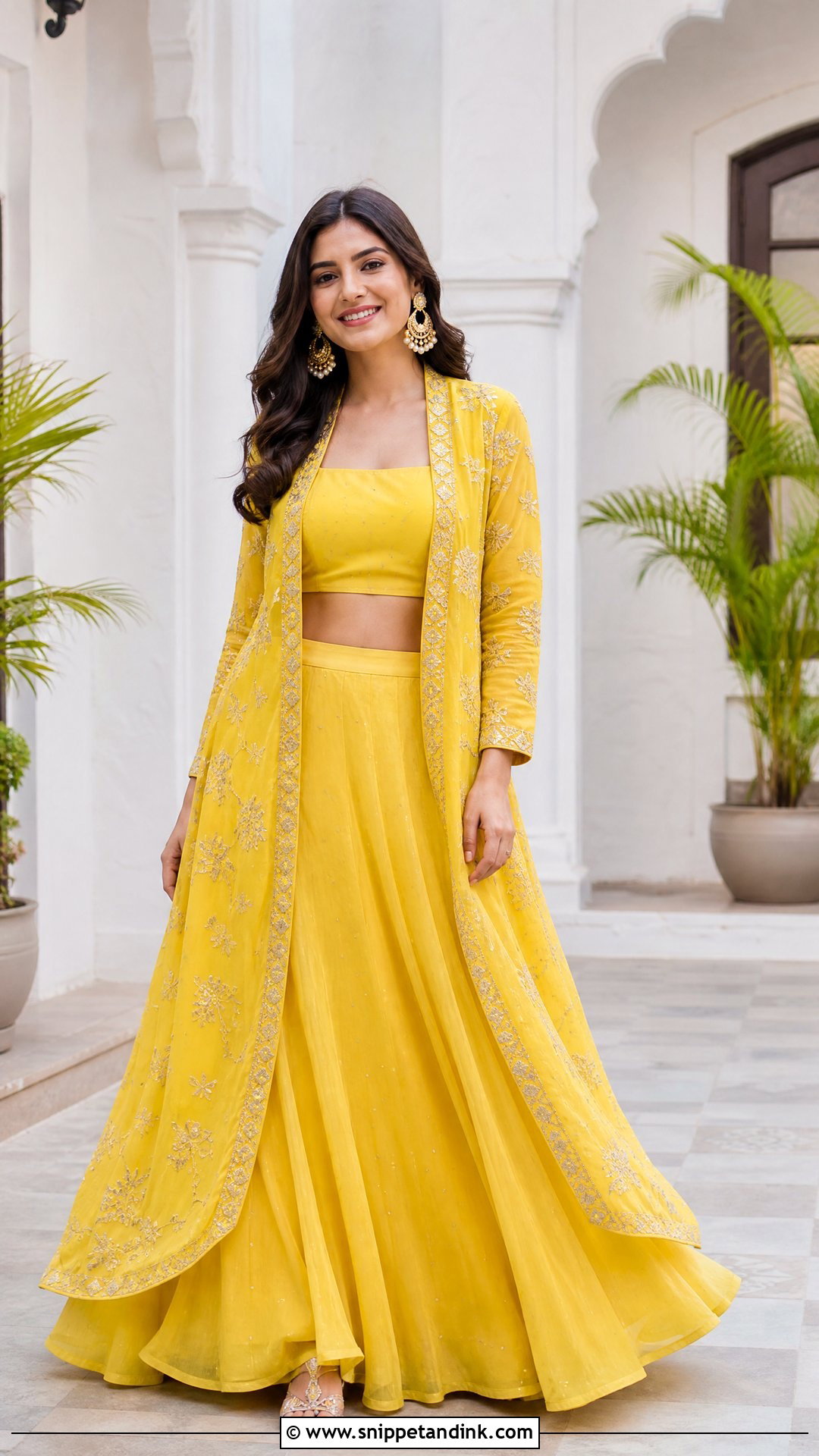
The jacket does the dupatta’s job and stays where you put it, which is why this is my go-to for a bride who hates readjusting fabric all morning. Short jackets read younger; long ones look more formal and cover the waist completely. Sheer jackets get messy fastest, since paste shows through two layers instead of one. Keep the blouse plain and the skirt flowy so the jacket stays the feature, then add statement earrings, soft waves and comfortable sandals.
16. Yellow Ruffle Saree For Haldi
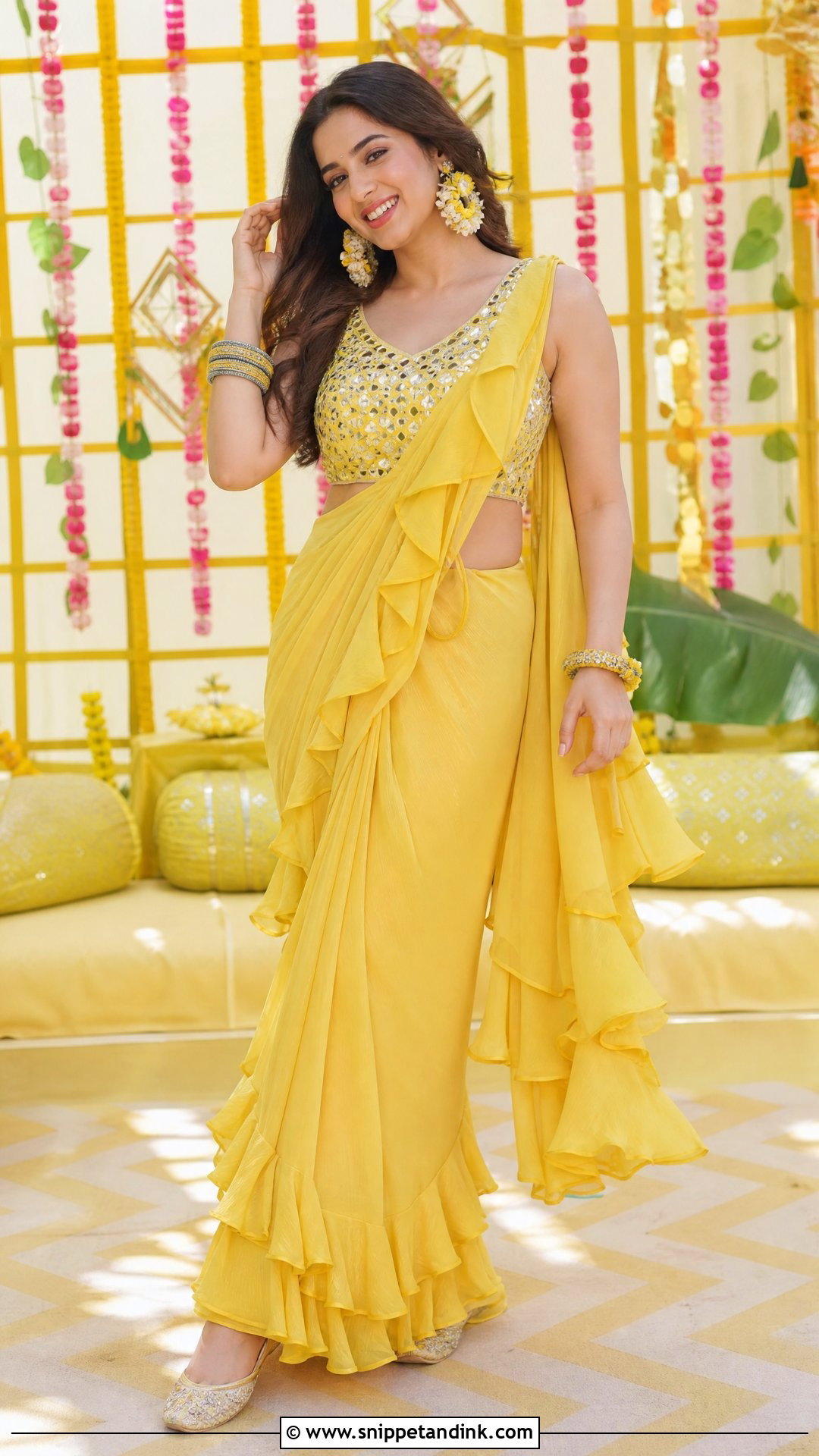
Pre-draped ruffle sarees solve things for anyone who has never draped a saree and doesn’t want to be pinned into one at seven in the morning. They hook or zip on in a minute and the pleats are stitched, so nothing unravels during a dance performance. The ruffled edges add plenty of volume, so skip the heavy necklace. Pair it with a sleeveless or mirror-work blouse, floral earrings, bangles and a potli. Do check the length in your actual shoes, because ready-made drapes are often cut long for a heel.
17. Yellow Printed Lehenga For Haldi
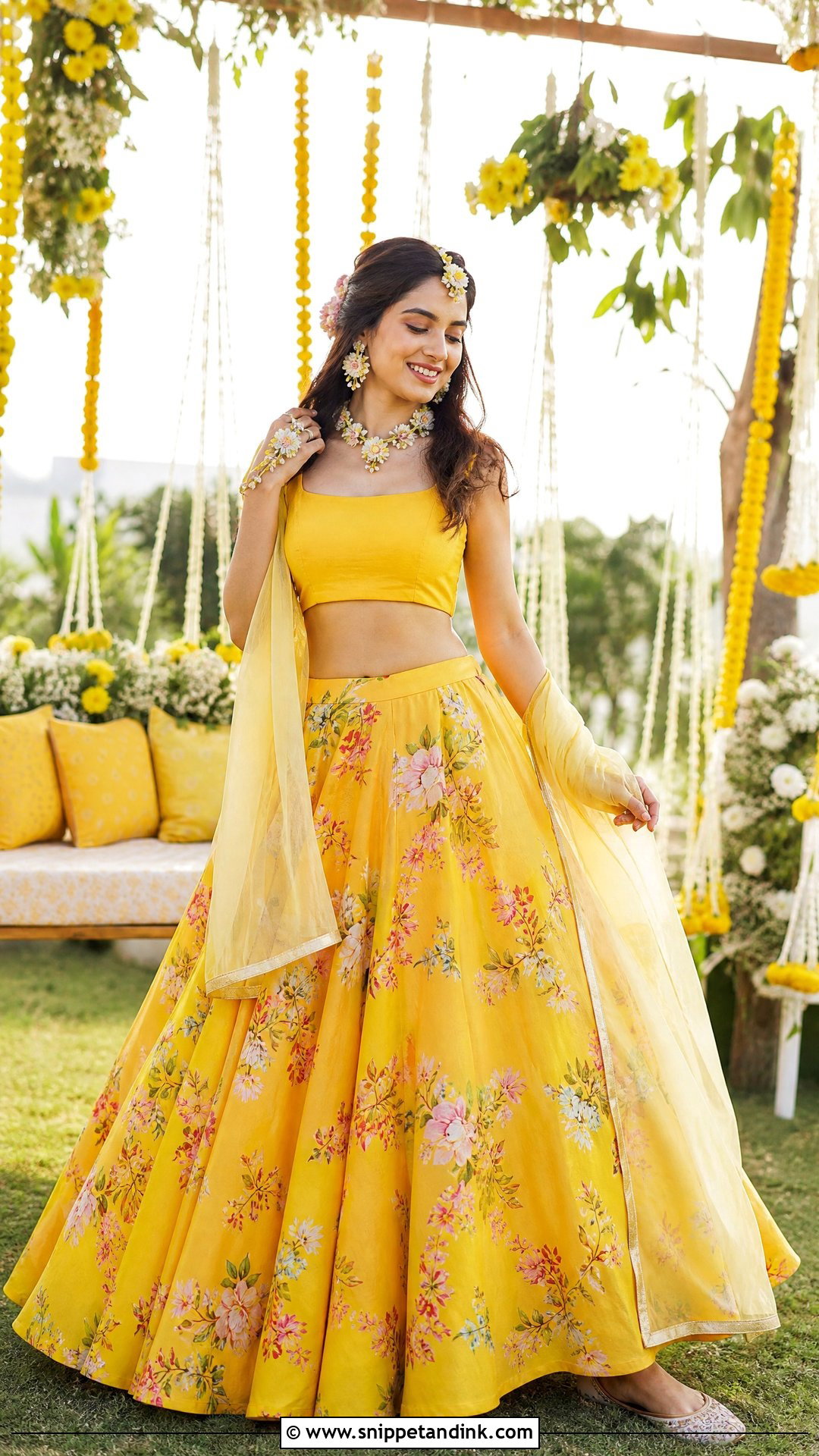
Prints are lighter than embroidery and easier to replace if turmeric wins, which is a practical reason I like them for outdoor haldis. Florals suit a garden, block prints suit a home function and tropical prints look right at a resort. A plain blouse calms a busy print, while a matching printed blouse turns it into a coordinated set. A light dupatta with a thin border is plenty. Fresh floral jewelry, dainty earrings and juttis keep the whole thing relaxed.
18. Yellow Chikankari Kurta Set For Haldi
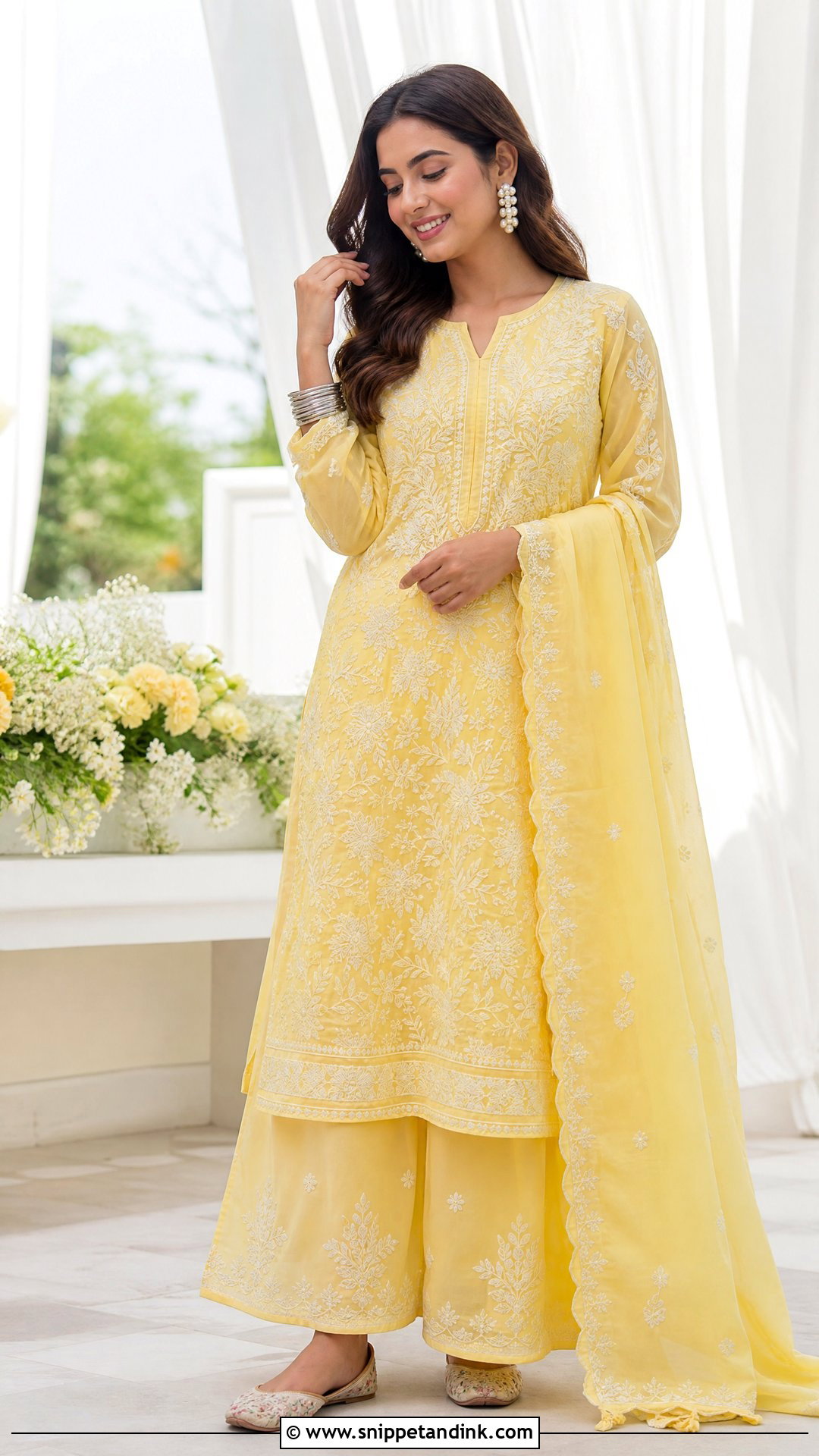
Chikankari is fine shadow-work embroidery, traditionally on cotton or georgette, and it gives texture without sparkle. That suits relatives who would rather not be the loudest outfit in the courtyard. Hand chikankari is delicate, and the threads snag on chunky bangles, so I pair it with pearls or slim silver rather than stacked metal. A straight kurta works with palazzos, cigarette pants or a flowy skirt, plus a white or yellow dupatta and embroidered juttis. Hand-wash it gently afterwards; machine washing loosens the stitches.
19. Yellow Silk Saree For Haldi
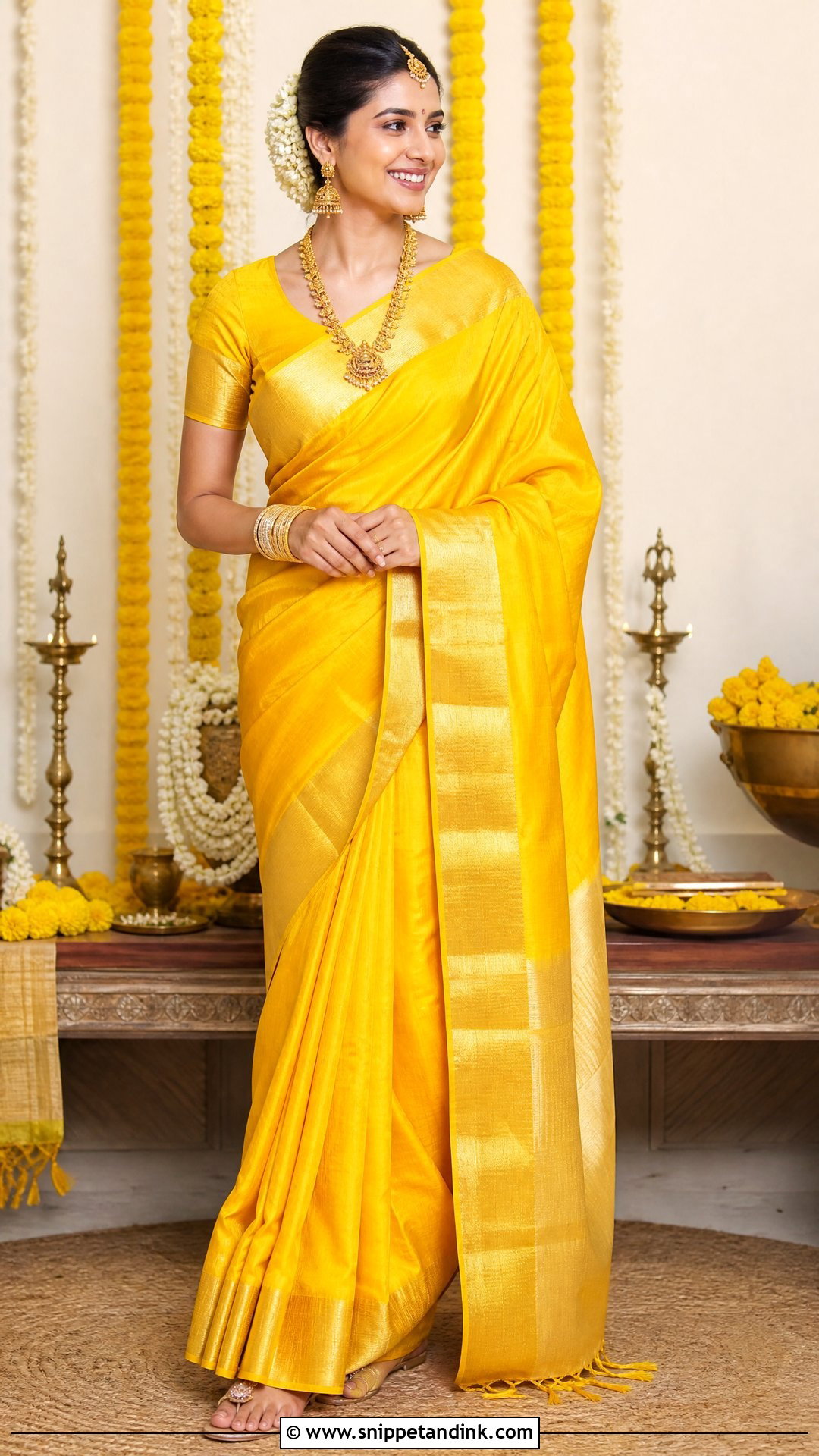
Silk catches warm morning light better than any other fabric on this list, and a yellow silk saree with a gold border is still what many mothers and grandmothers prefer. Choose a soft silk or a silk blend, since heavy wedding-weight silk is hot at a midday function. Temple jewelry and a neat bun with flowers make it festive; for a casual function, drop to lighter jewelry and flats. My caution is cleaning. Turmeric and oil on pure silk usually need a dry cleaner, and zari shouldn’t be soaked, so wear a silk you’re prepared to send out afterwards.
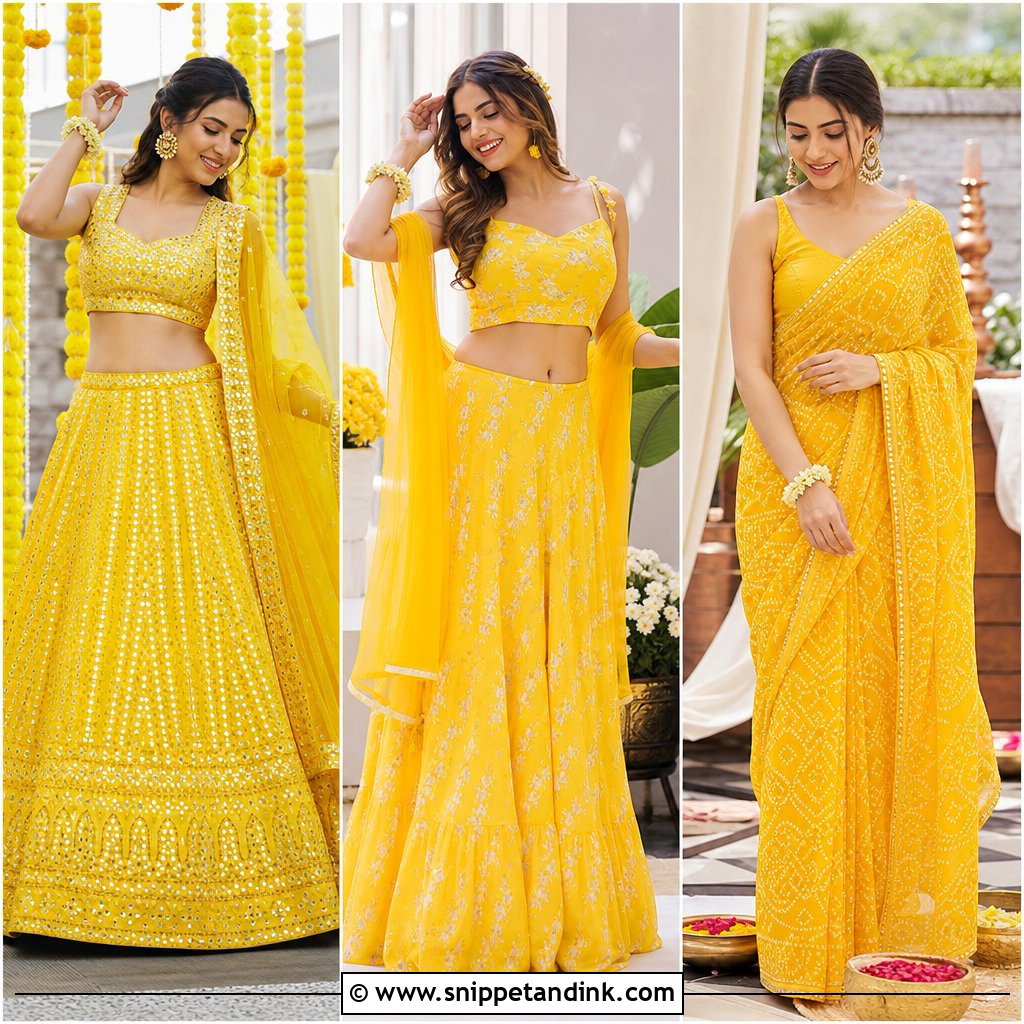


20. Yellow Skirt And Crop Top For Haldi
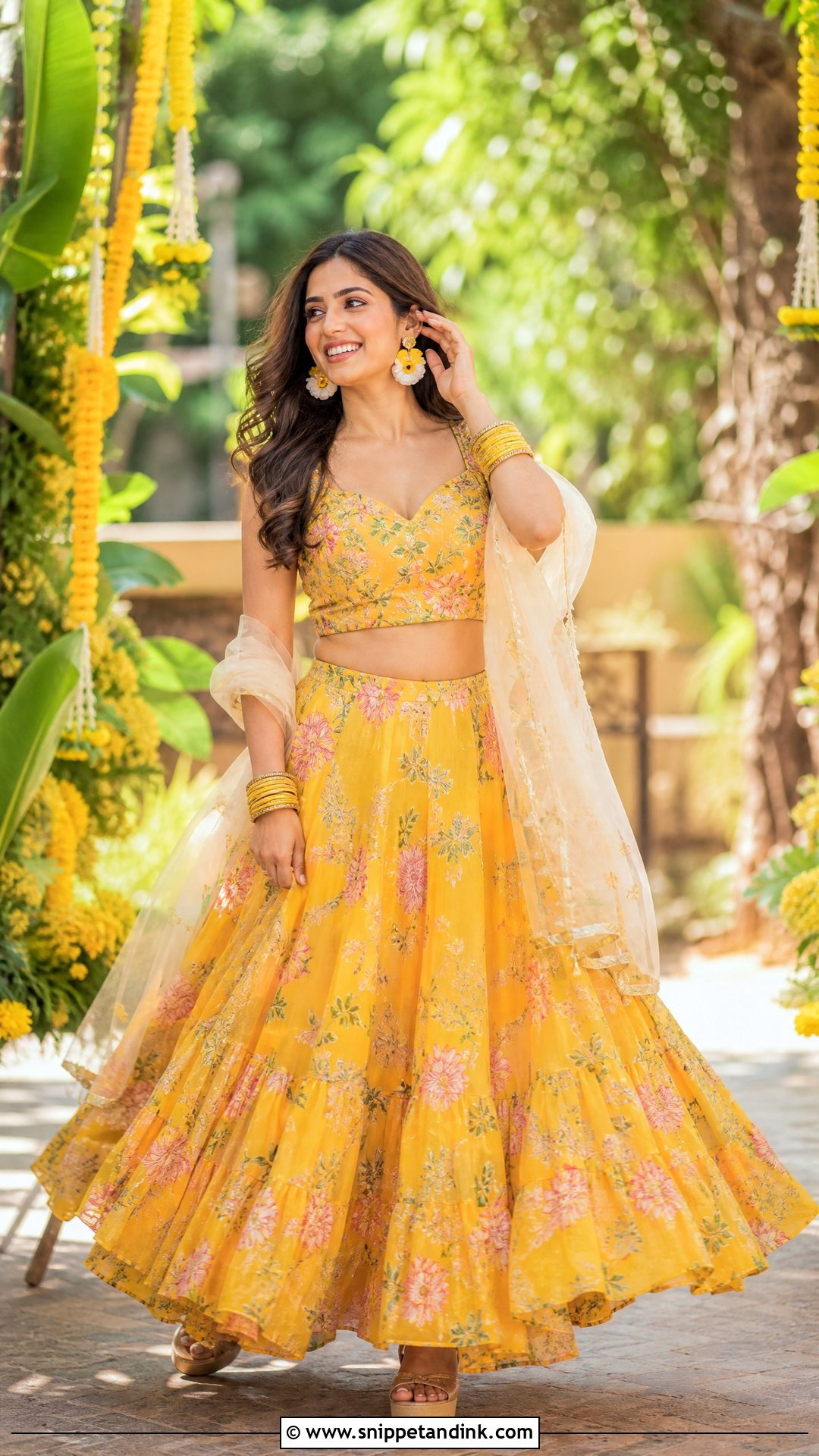
A flared skirt and crop top gives you the lehenga feeling at a fraction of the weight. Gota trim or a print is enough decoration on the skirt. Halter blouses look fresh but leave your back exposed to the sun, so for an outdoor afternoon I keep a light jacket or cape in the bag. Floral earrings, stacked bangles and wedges or flats finish it. Bridesmaids and younger guests wear it best.
21. Yellow Kaftan Dress For Haldi
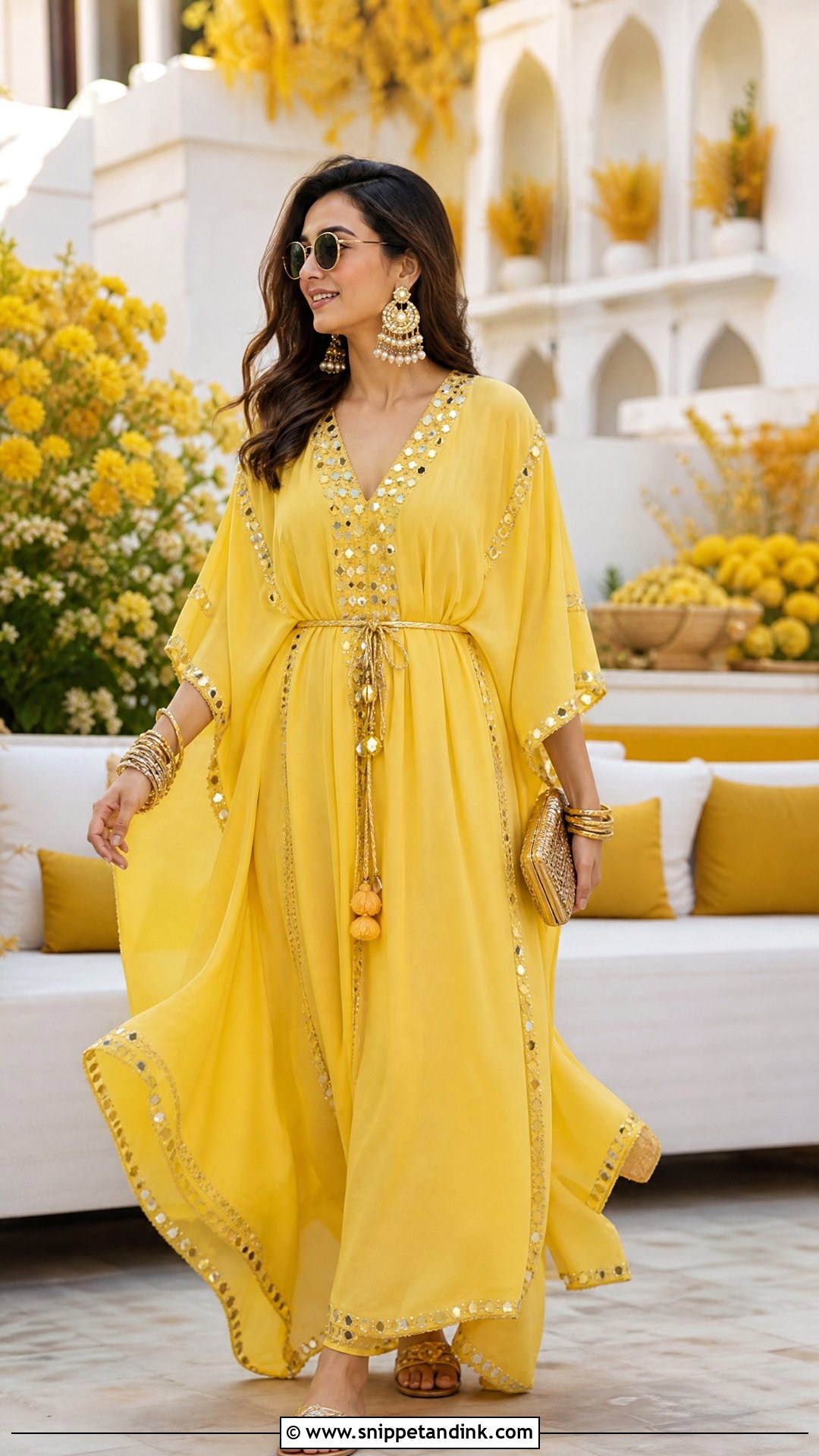
Nothing here asks less of you than a kaftan, and it sits naturally at beach, resort and backyard haldis. Look for embroidery, mirror accents or tassels around the neckline, and a belt or drawstring for shape, because an unbelted kaftan can swallow a petite frame. Flat sandals, statement earrings and a potli are enough; floral jewelry or stacked bangles push it a little more festive. A bride can wear one too if her haldi is small and she plans to change before lunch.
22. Yellow Salwar Suit For Haldi
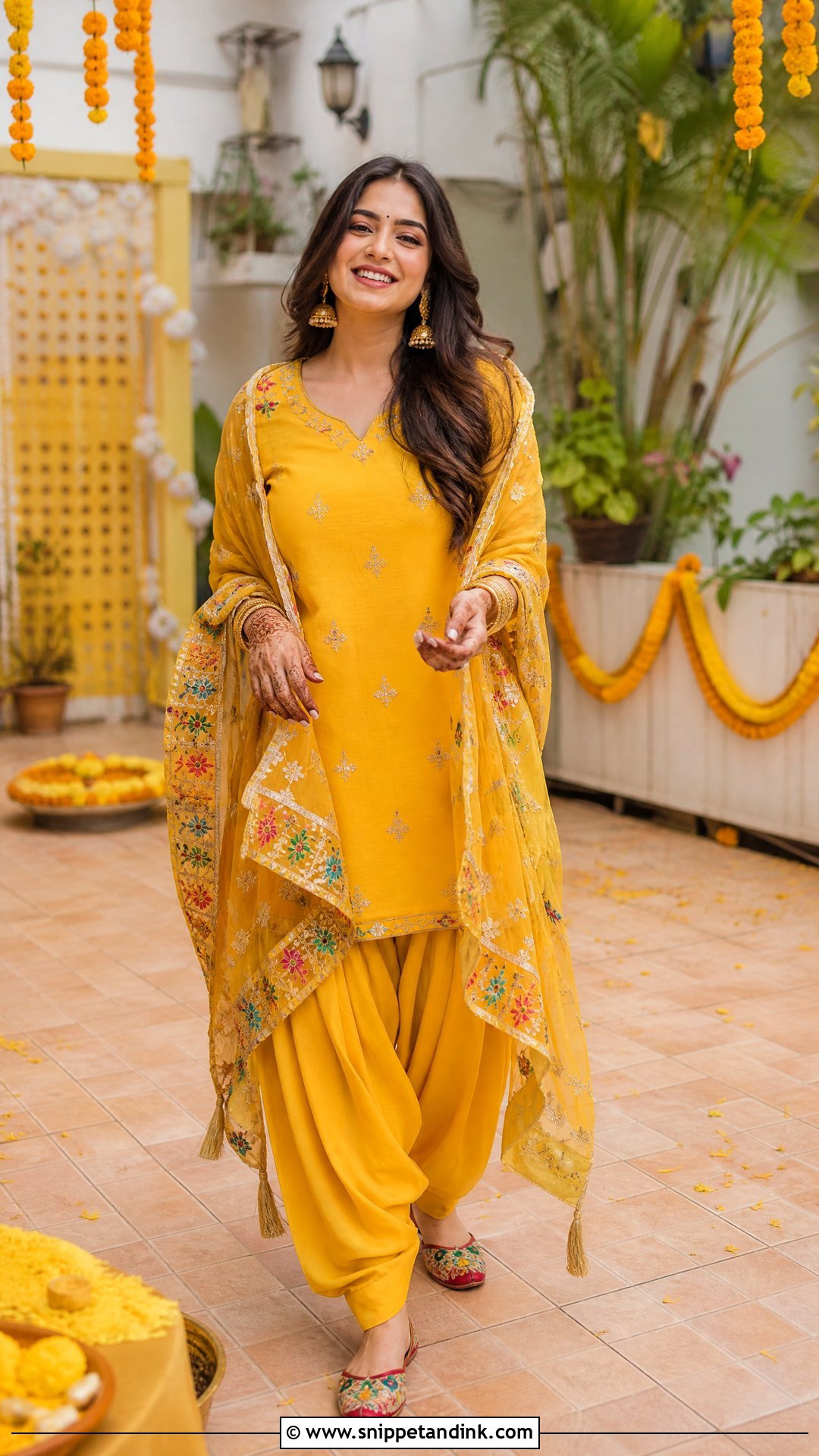
A yellow salwar suit works across every age group, which is why I suggest it when a family wants coordinated outfits across three generations. Patiala pants give the most room for sitting cross-legged, while tapered bottoms look neater on shorter frames. Bring in color with a printed or embroidered dupatta, and festivity with gota patti, phulkari accents or mirror work. Juttis, bangles and small jhumkas complete it.
23. Yellow Maxi Dress For Haldi
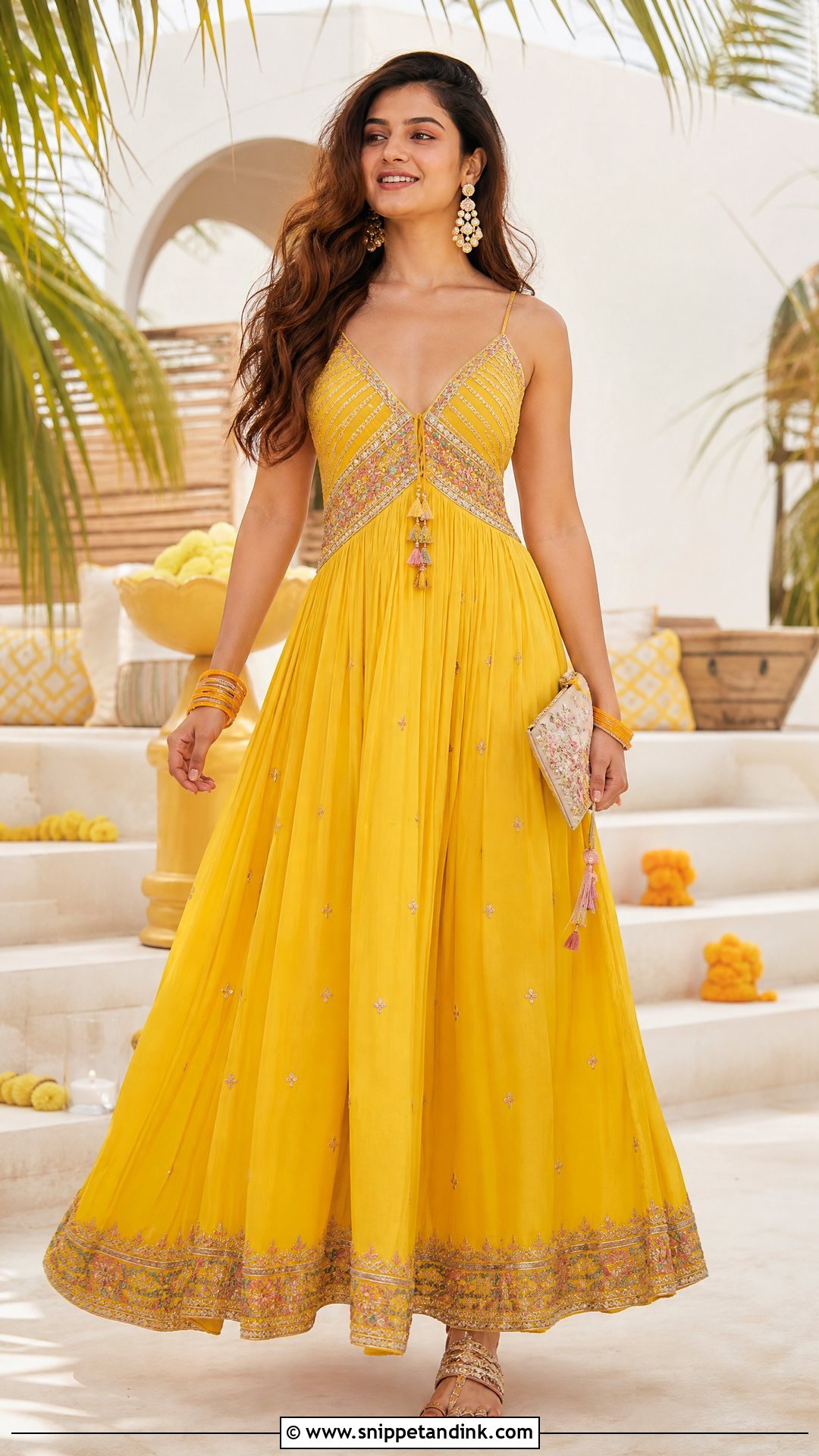
Guests who don’t own Indian wear often ask me what to do, and a yellow maxi dress is my usual answer for a casual or destination haldi. Indian details make it fit the occasion: mirror work, block prints, tassels, or a dupatta-style scarf. Avoid clingy jersey and bias cuts. Turmeric shows more on body-hugging fabric, and a flowy cut stays cooler outdoors. Earrings, bangles and embellished sandals bring it up to ceremony level, and a light jacket or cape turns it into fusion.
24. Yellow White Lehenga For Haldi
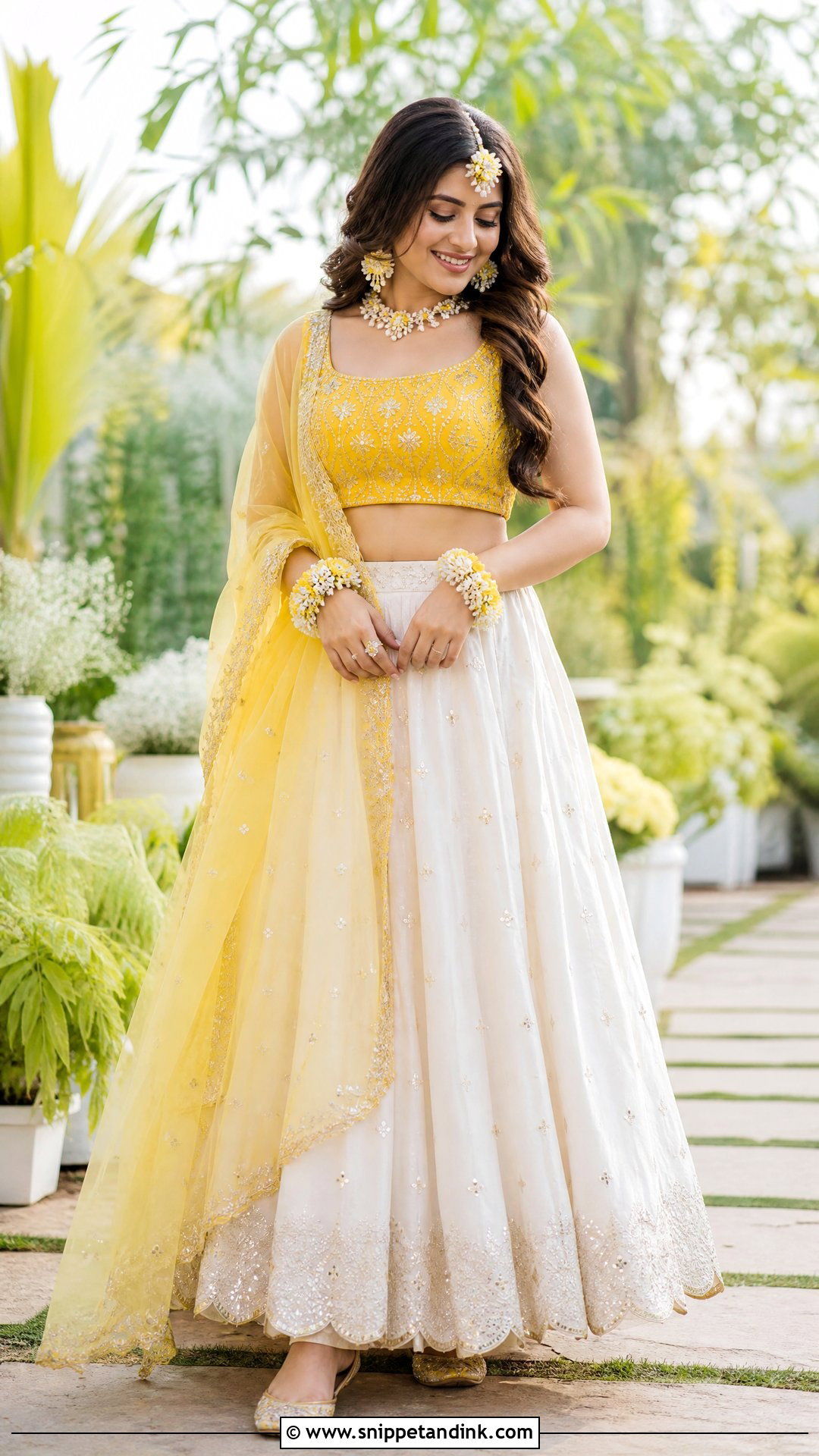
White beside yellow softens the brightness, which helps anyone who finds solid yellow washes them out. You can split it as a white lehenga with a yellow blouse, a yellow skirt with a white dupatta, or a printed yellow-and-white set. Be realistic about white at a haldi, though, because turmeric stains it faster than anything. I keep the white away from the face, arms and feet, where the paste goes. White florals or pearls, soft gold, glowing skin and a soft lip finish it.
25. Mustard Yellow Lehenga For Haldi
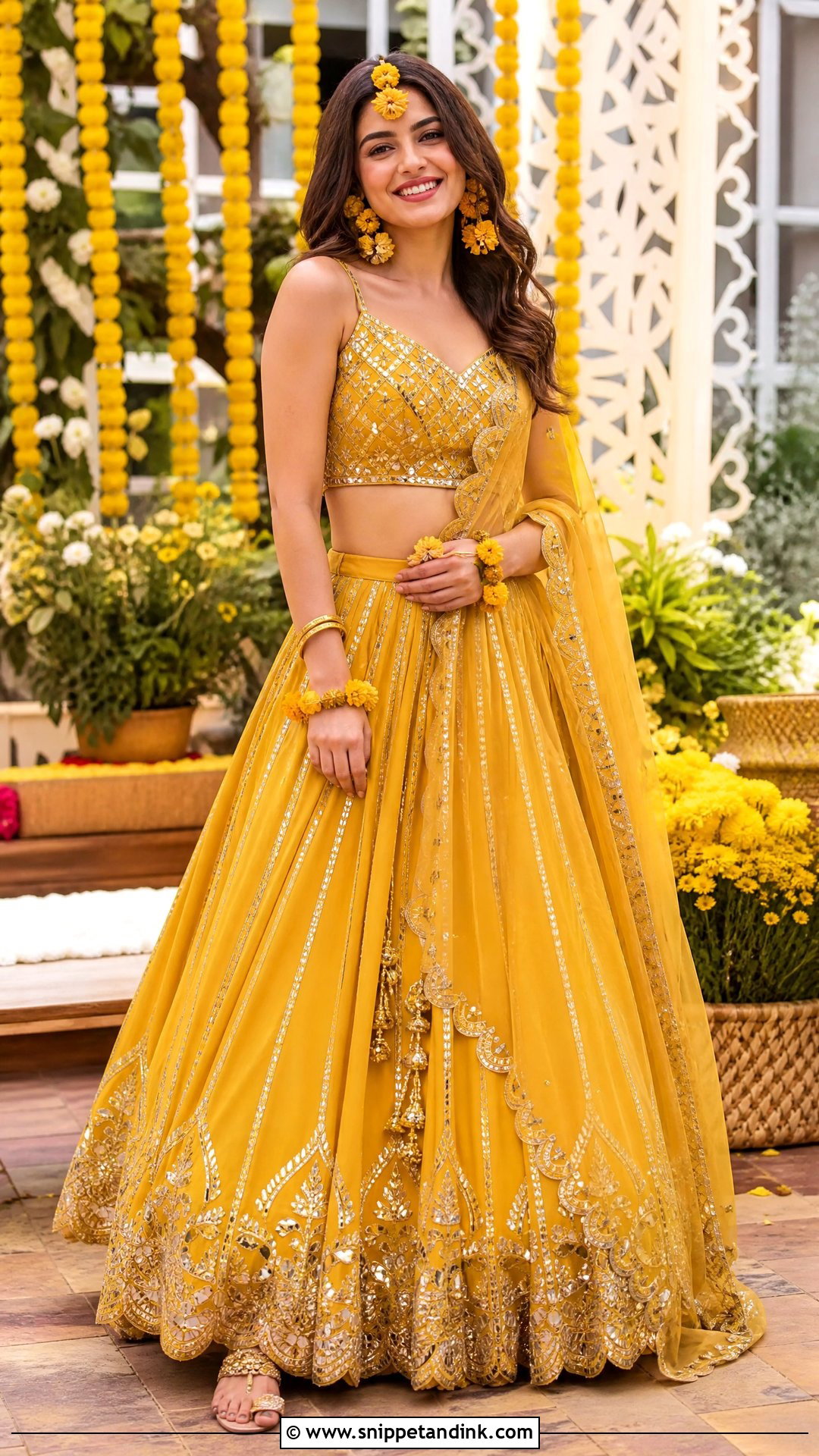
If bright lemon feels loud on you, a mustard yellow lehenga gives a deeper, warmer tone that sits well with gold jewelry and marigold accessories. Mustard flatters medium and deeper skin tones especially, and it hides turmeric smudges because the paste is close to the same color. Gota patti, zari borders, mirror work or traditional prints all suit it; just keep the fabric light. A fitted blouse and a soft dupatta that pins easily finish it, and I’d switch to warm-toned makeup rather than cool pinks with this shade.
Lemon, Marigold or Mustard? Matching Yellow to Your Undertone
Yellow is unforgiving right next to the face, so I always hold the fabric under a client’s chin in daylight before she commits. Cool undertones, where silver jewelry flatters and the veins on the wrist look bluish, usually suit pale lemon and butter yellow; a strong golden yellow can make them look tired. Warm undertones carry marigold, saffron and mustard easily. Deeper skin looks rich in mustard and bright turmeric yellow, while very pale lemon can turn ashy against it.
If the shade you love doesn’t suit your face, keep it below the waist and put a kinder color near your face. An ivory or soft pink blouse or dupatta does the job without breaking the yellow theme.
Getting Turmeric Out Before It Sets
Turmeric’s pigment binds to fabric quickly, and the oil in haldi paste carries it deeper into the fibers. Speed matters more than any product you buy, so deal with it the same evening.
- Scrape off dried paste with a blunt knife or spoon. Rubbing only pushes it in.
- Rinse the stain from the back of the fabric under cold water. Hot water sets it.
- Work a little liquid detergent or dish soap into the mark to break down the oil, leave it for ten minutes, then rinse again.
- Dry the washed piece outdoors in direct sun. Turmeric fades in sunlight, and a few hours outside often lifts what washing missed.
- Send silk, zari, sequin and mirror-work pieces to a dry cleaner, tell them it’s turmeric with oil, and keep chlorine bleach away from them.
Pack a Change of Clothes, Then Enjoy the Mess
Start with the venue and the weather, then be honest about how much you’ll be sitting, dancing and getting covered in paste. Those answers usually cut 25 options down to two or three. A cotton suit, a sharara or a pre-draped saree will carry most people through the morning, while a mirror-work lehenga or a silk saree suits anyone who wants a more formal look. Pin anything that flows, wear flat shoes and bring a change of clothes for after the ritual.
You'll Like These Ideas:





Leave a Reply