
Ask anyone who has sat cross-legged through a Haldi in a fitted lehenga and they’ll tell you why the palazzo suit keeps coming back. Wide legs let you sit, bend and dance without hitching anything up, and a yellow palazzo suit still reads as traditional once the kurta and dupatta are on. The fabric decides most of the rest. Cotton keeps you cool outdoors, georgette looks more dressed for a guest, and silk carries the weight a bride sometimes wants. Below are twenty versions, from plain cotton sets to bridal pieces, with what I’d watch for in each.
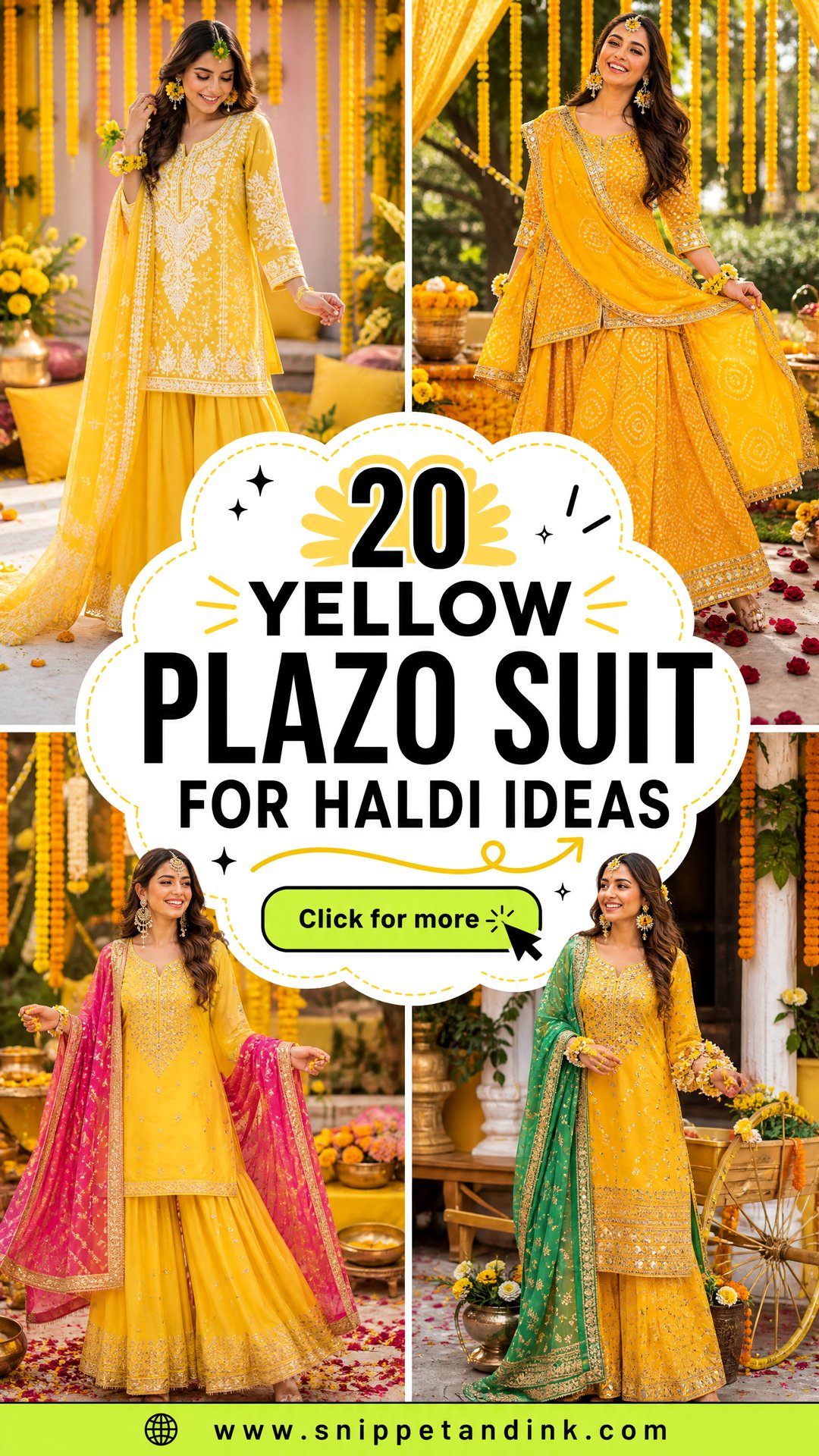
The Palazzo Fit Details Most Tailors Don’t Ask About
A palazzo looks simple, so it often gets cut carelessly. Most of the complaints I hear after a Haldi come from three measurements nobody checked.
Hem length with your actual shoes
Hem the palazzo while you’re wearing the juttis or sandals you’ll have on the day. It should clear the floor by a finger’s width when you stand. Any longer and the back hem collects grass, water and paste; any shorter and the wide leg looks cropped by accident. Flat juttis and block heels need different hems, so don’t swap shoes at the last minute.
Rise and waistband
A high rise keeps the waistband hidden under short and mid-length kurtas when you raise your arms. A flat front with elastic only at the back sits smoother under a fitted kurta than full elastic, which gathers and adds bulk at the stomach.
Width at the hem
Very wide palazzos look graceful standing and swamp you sitting, because all that fabric pools around you on the floor. For a ceremony spent mostly seated, a moderate width falls more cleanly. Ask your tailor to show you the width with you sitting down, not just standing in front of a mirror.
1. Yellow Cotton Palazzo Suit for Haldi
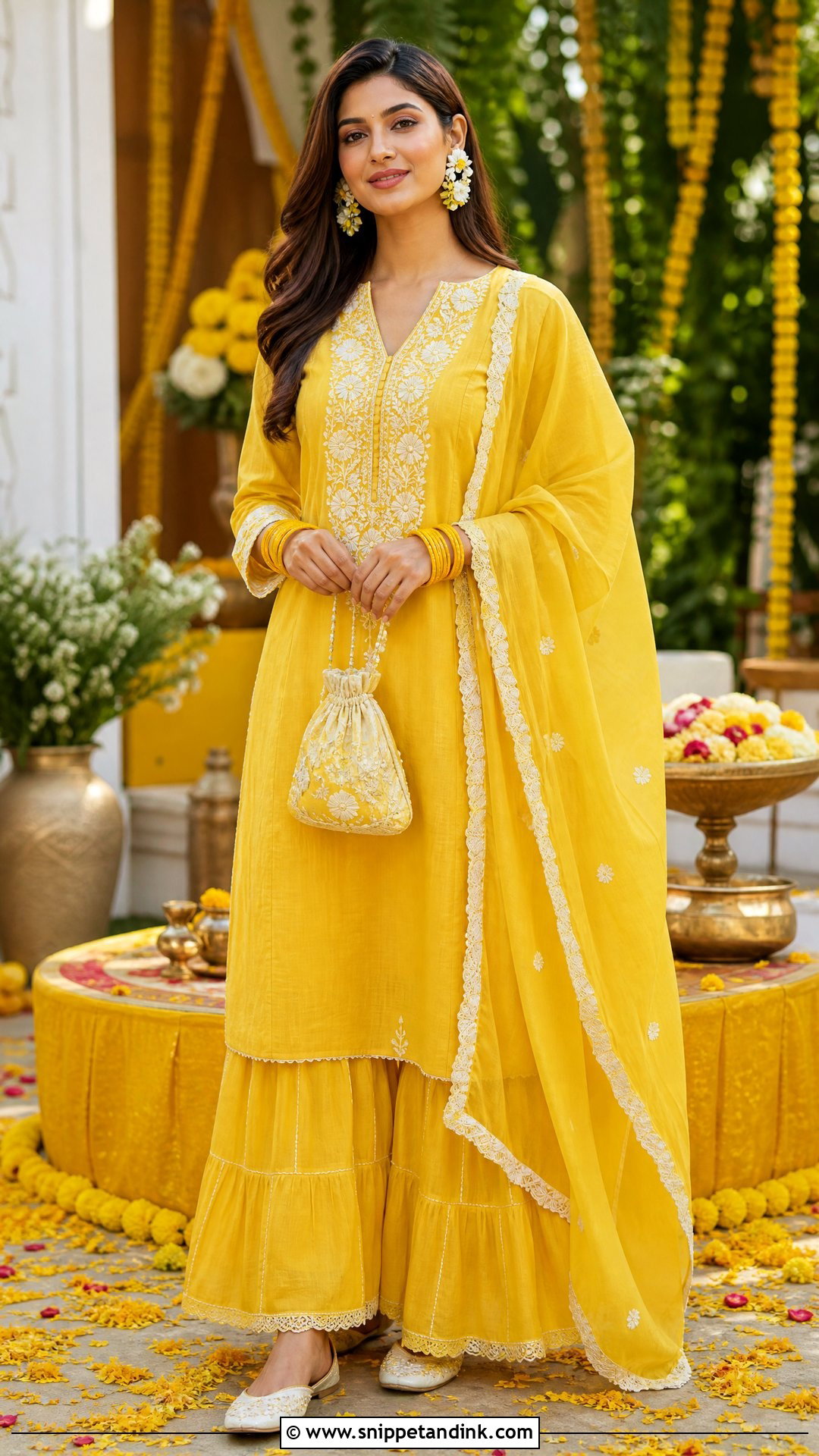
Cotton is my first suggestion for any Haldi held outside in warm weather, because it lets air through and doesn’t cling when you start to sweat. A straight yellow kurta with subtle white embroidery over wide cotton palazzos is about as easy as festive dressing gets. Use a light cotton dupatta with a narrow lace edge, then add white juttis, small floral earrings, a stack of yellow bangles and a potli. A low ponytail or loose braid survives the activity. The bride can build it up with a floral necklace and hair flowers. One fitting point: cotton shrinks, so if the set hasn’t been pre-washed, ask for an extra inch of palazzo length.
2. Mustard Yellow Palazzo Suit With Dupatta
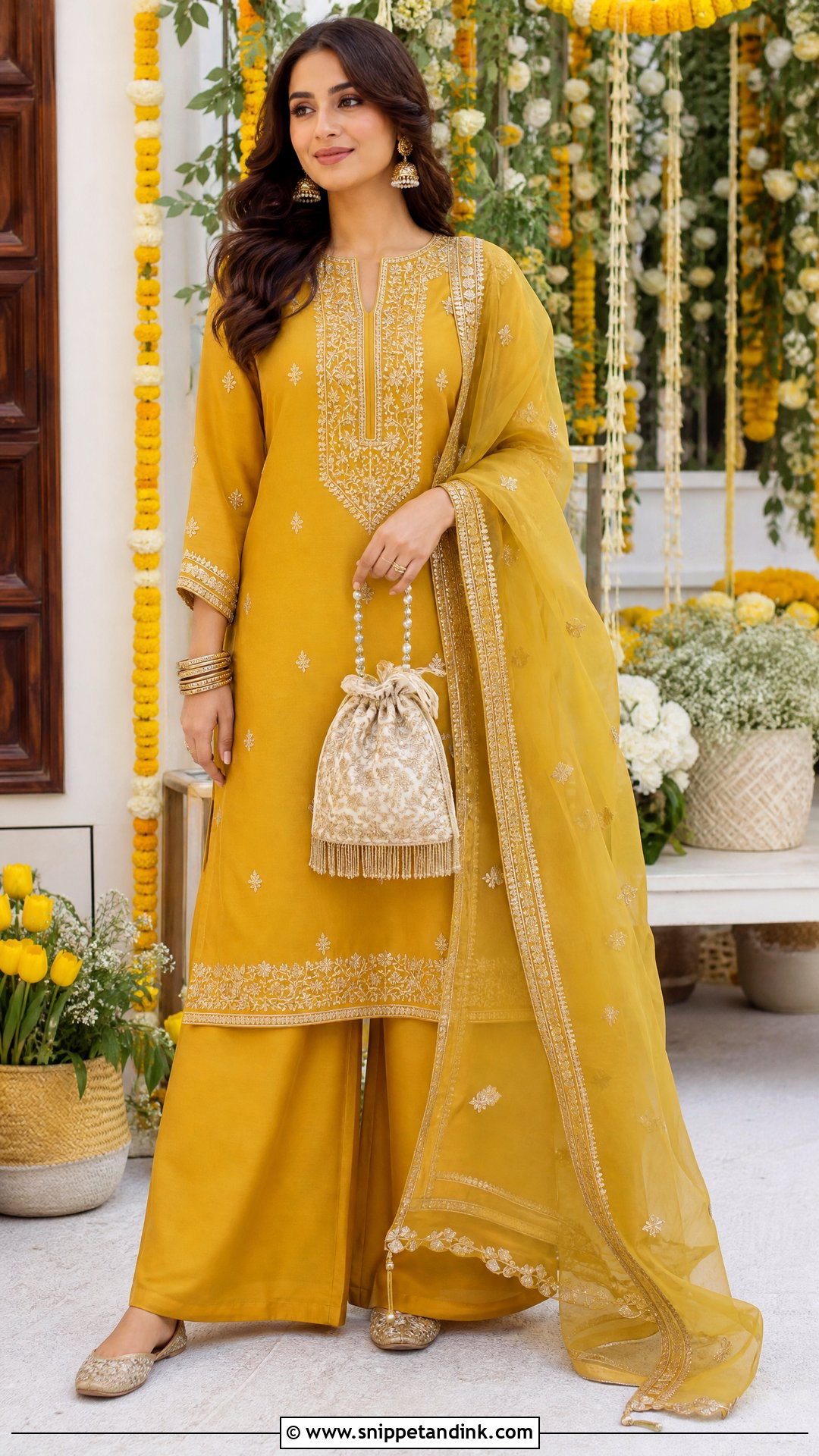
Mustard holds up against marigold garlands in a way paler yellows don’t; next to all that orange, lemon can look faded while mustard stays rich. Start with a knee-length kurta with gold threadwork at the neck and cuffs, matching wide-leg palazzos and a light organza dupatta with a fine embroidered edge. Gold jhumkas, coordinating bangles, embroidered juttis and a cream or gold potli are plenty. A soft bun with fresh flowers keeps hair off the face. Sisters and close relatives tend to like this one, since it looks finished without competing with the bride.
3. Yellow Floral Palazzo Suit for Haldi
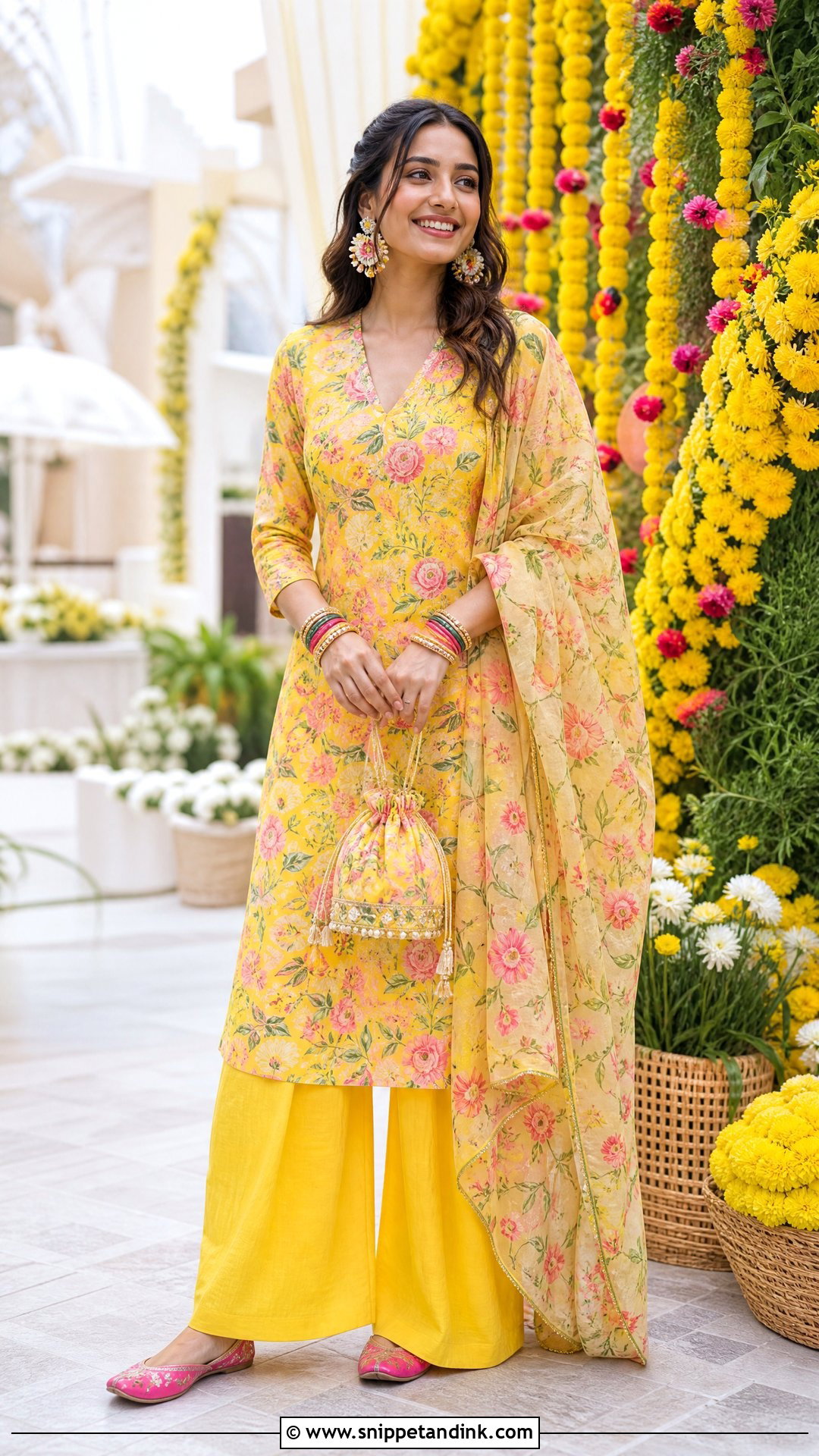
Small florals suit a daytime Haldi function, and they’re forgiving: a print disguises a yellow smudge far better than solid fabric. Pick a yellow kurta with small pink, green or orange flowers over a solid yellow palazzo. If you add a printed dupatta, keep its pattern lighter than the kurta’s. Pink juttis, coloured bangles, floral studs and a fabric potli coordinate easily, with loose waves or a half-up style. Motif size changes the mood more than people think. Tiny prints look neat and grown-up; large botanicals look playful and read better from across a lawn.
4. Yellow Chikankari Palazzo Suit for Haldi
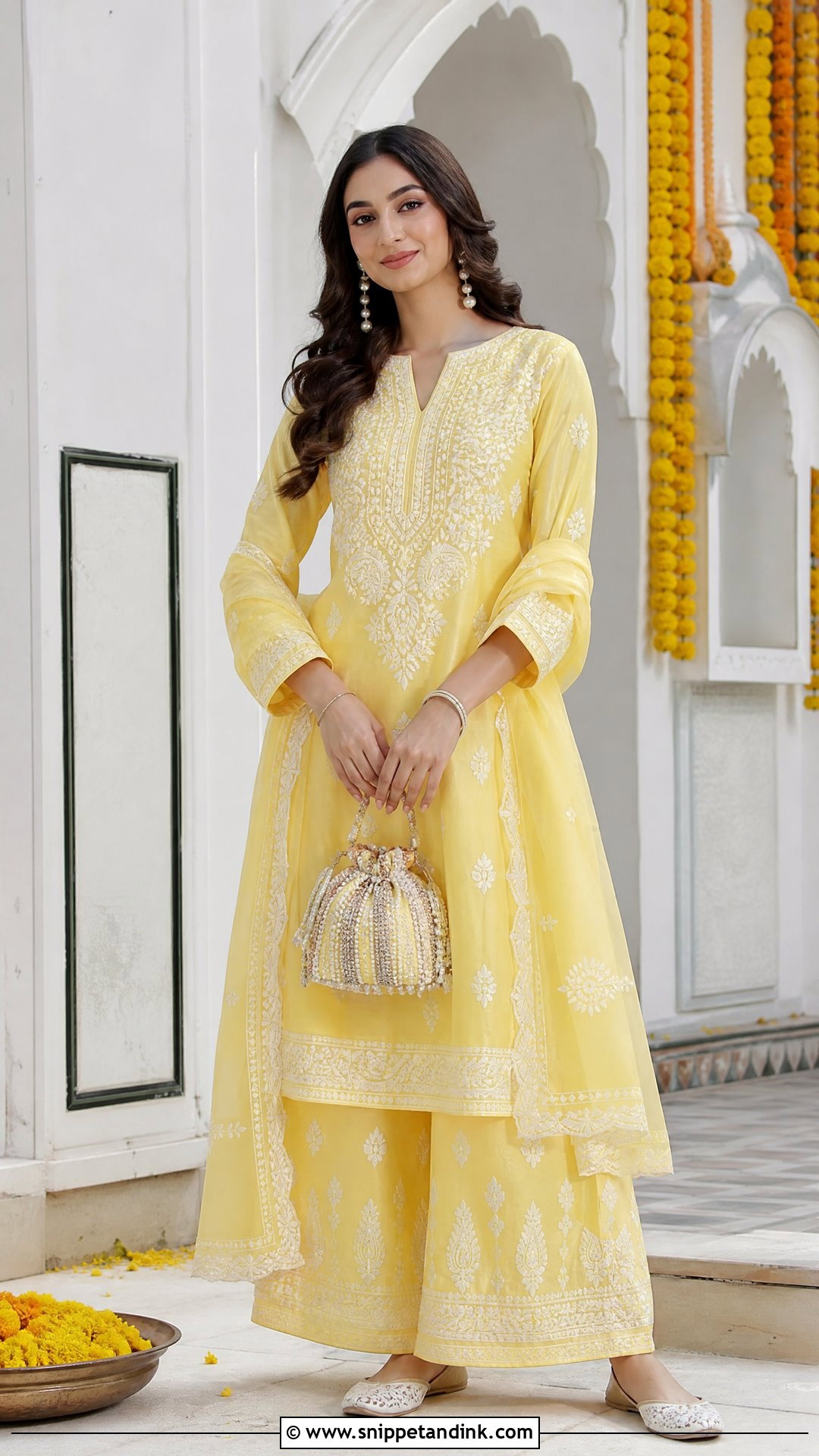
Chikankari is hand embroidery, and its charm is in the shadow work and fine stitching, which disappears under heavy jewellery. So I keep everything around it quiet. Choose a lemon or pastel kurta with tonal or white threadwork, a matching lined palazzo and a light chiffon dupatta. Pearl earrings, white bangles, embroidered juttis and a small structured potli suit it, with fresh skin, defined eyes and a peach or pink lip. A neat braid or low bun shows the neckline. Because chikankari often comes on sheer mul or georgette, check the lining before you buy; in daylight, unlined pieces show far more than you expect.
5. Yellow Mirror Work Palazzo Suit for Haldi
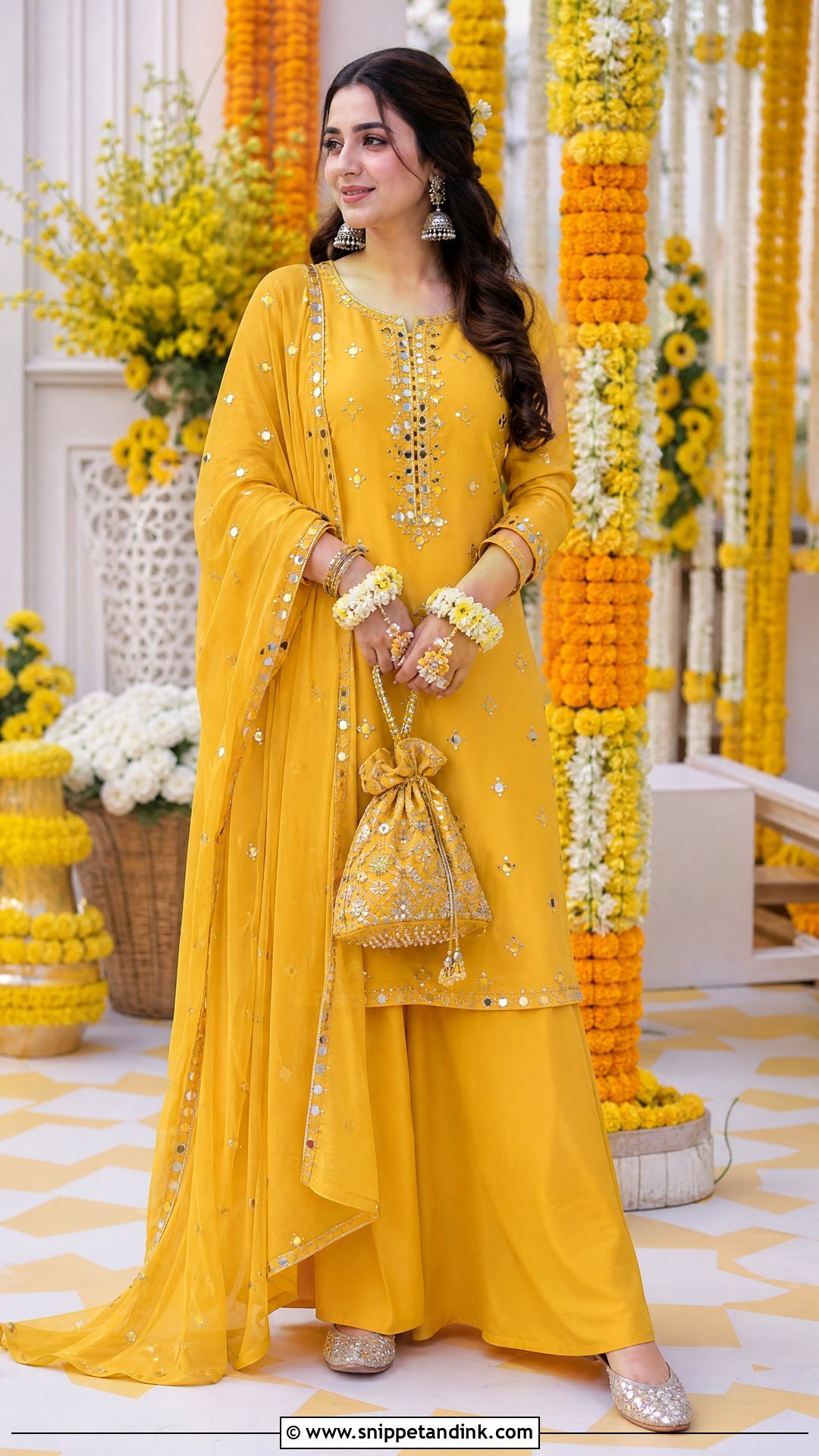
Mirror work is heavier than it looks. A kurta covered in mirrors drags at the shoulders by mid-afternoon, so I look for detailing kept to the neckline, cuffs and hem instead. Pair a short or mid-length yellow kurta with a plain flared palazzo and a sheer dupatta with a few scattered mirrors. Silver jhumkas, metallic bangles, embellished flats and a simple potli suit the cool sparkle better than gold. The mirrors already throw plenty of light, so keep makeup fresh and pull hair into a sleek ponytail. Brides can add floral hand jewellery; guests can stop at earrings.
6. Yellow Peplum Palazzo Suit for Haldi
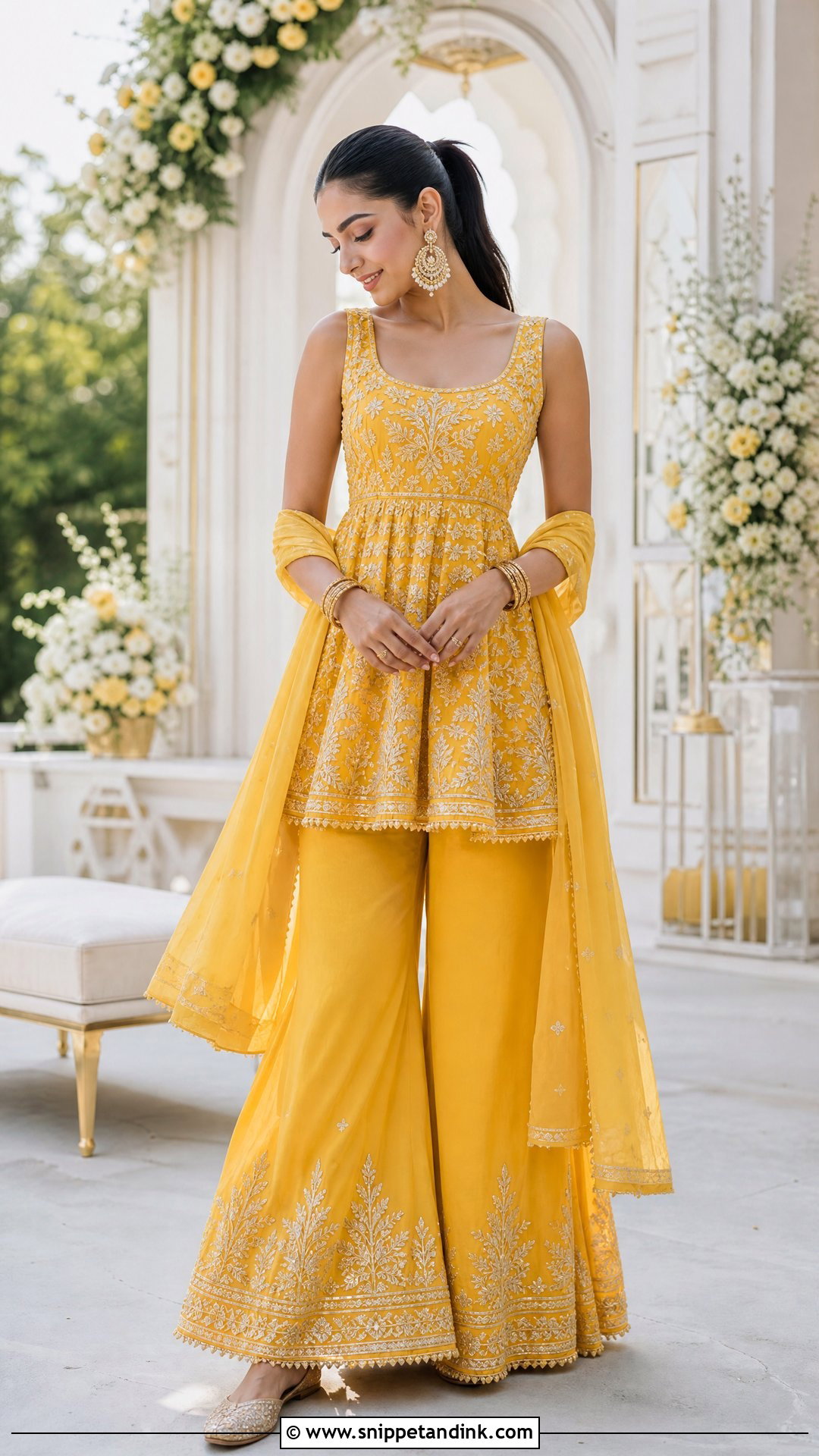
Peplums only look right when the seam sits exactly at the natural waist. Too high and the flare starts under the bust; too low and it widens the hip. Look for a fitted yellow peplum top that flares gently, over a flowing high-waisted palazzo. A square or V-neck defines the upper body and three-quarter sleeves give practical coverage. Add a light dupatta over one shoulder, statement earrings, bangles and pointed juttis, with a high ponytail or soft pinned curls. Keep decoration to the neckline, cuffs and palazzo hem so the shape stays the point.
7. Yellow Short Kurti Palazzo Suit for Haldi
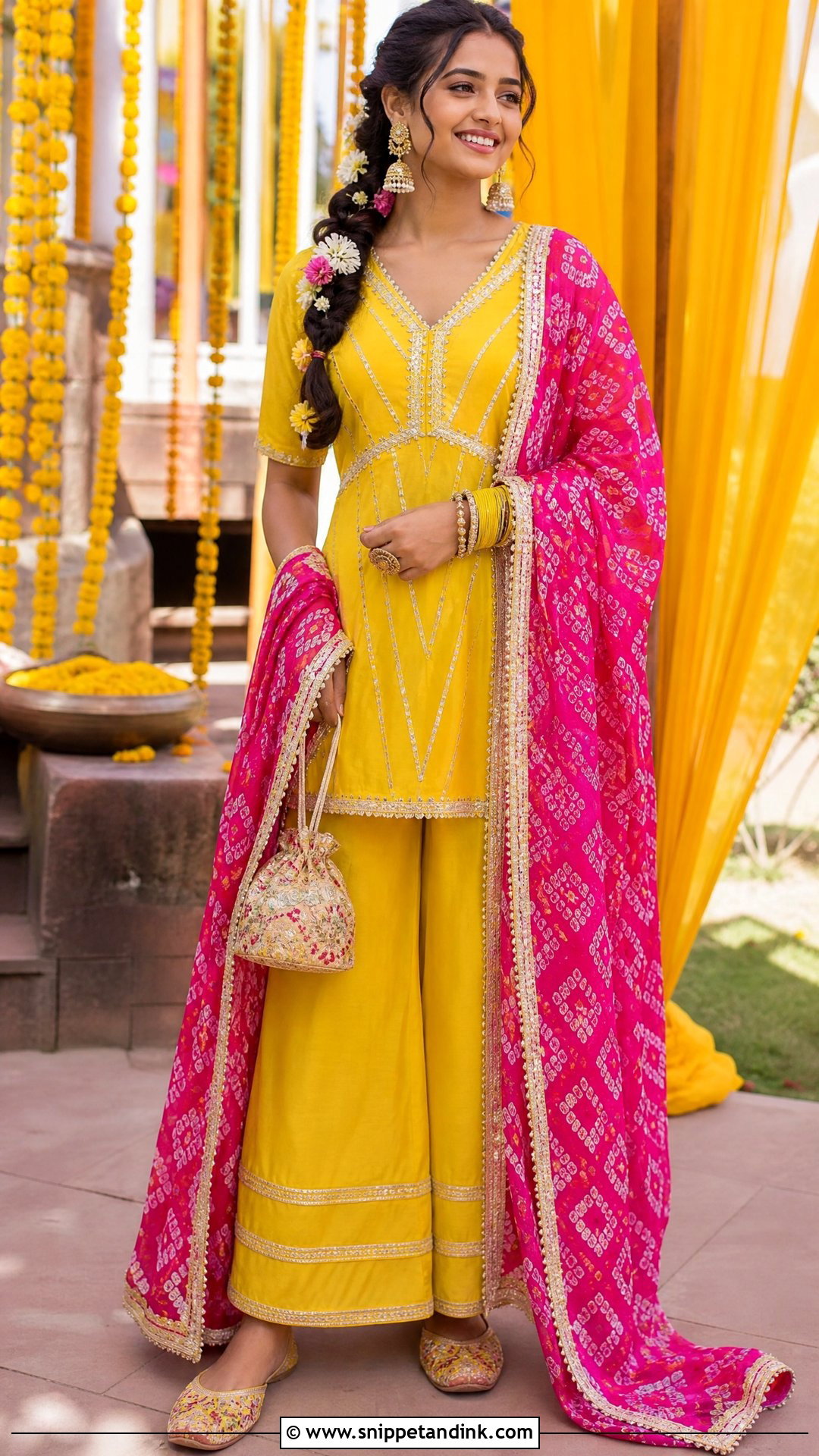
Short kurtis and full palazzos are the dancing outfit. A short yellow kurti ending at the upper thigh, with light embroidery, gota trim or small prints, balances against a high-rise palazzo that flows from the waist. A bandhani dupatta brings contrast, and jhumkas, stacked bangles and flat juttis finish it, with a side braid dressed in tiny flowers. Younger cousins and bridesmaids gravitate to this one. The rise is what matters most: on a low-rise palazzo a short kurti exposes the waistband the moment you lift your arms. For more coverage, wear the dupatta diagonally across the front.
8. Yellow Anarkali Palazzo Suit for Haldi
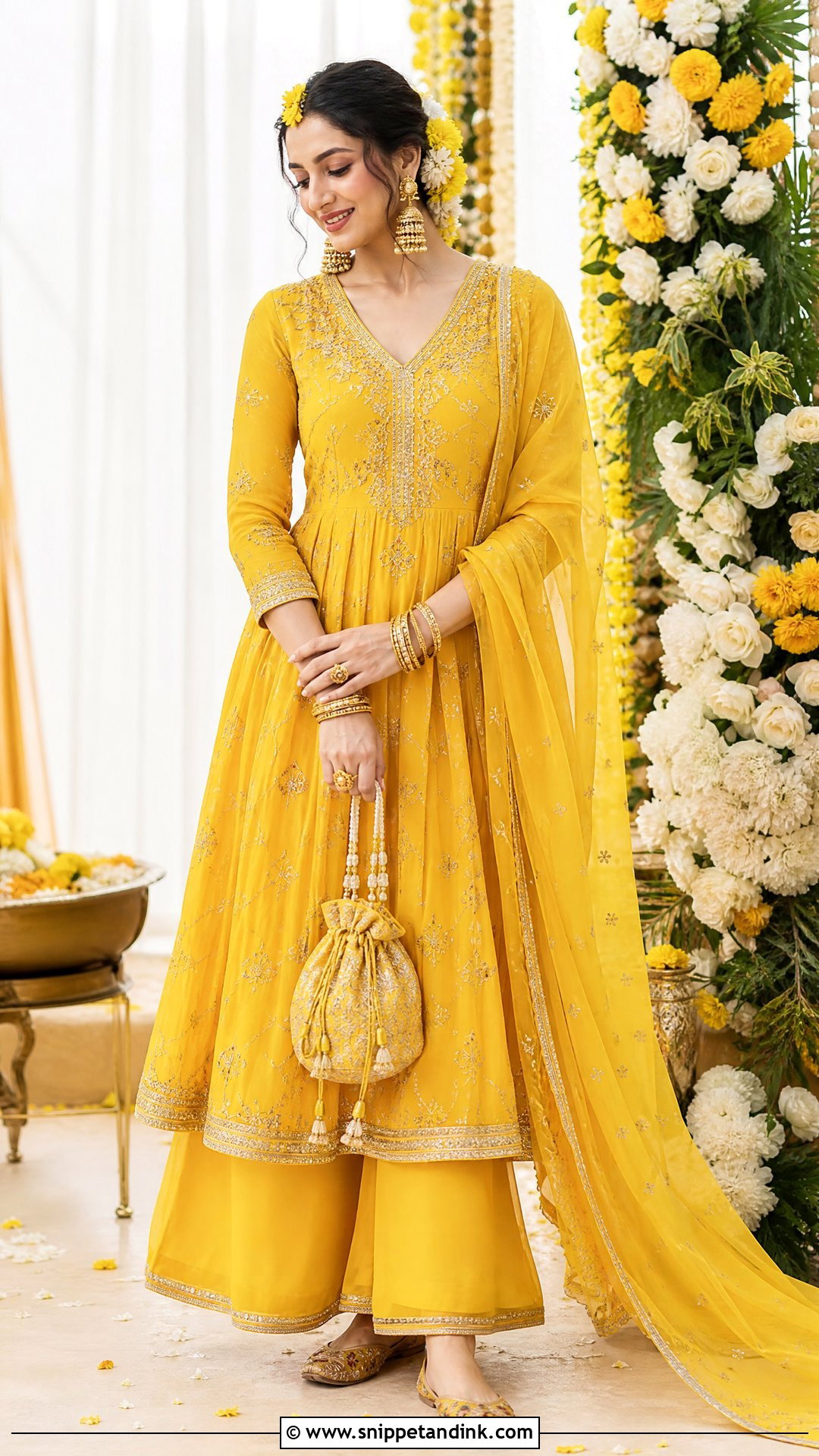
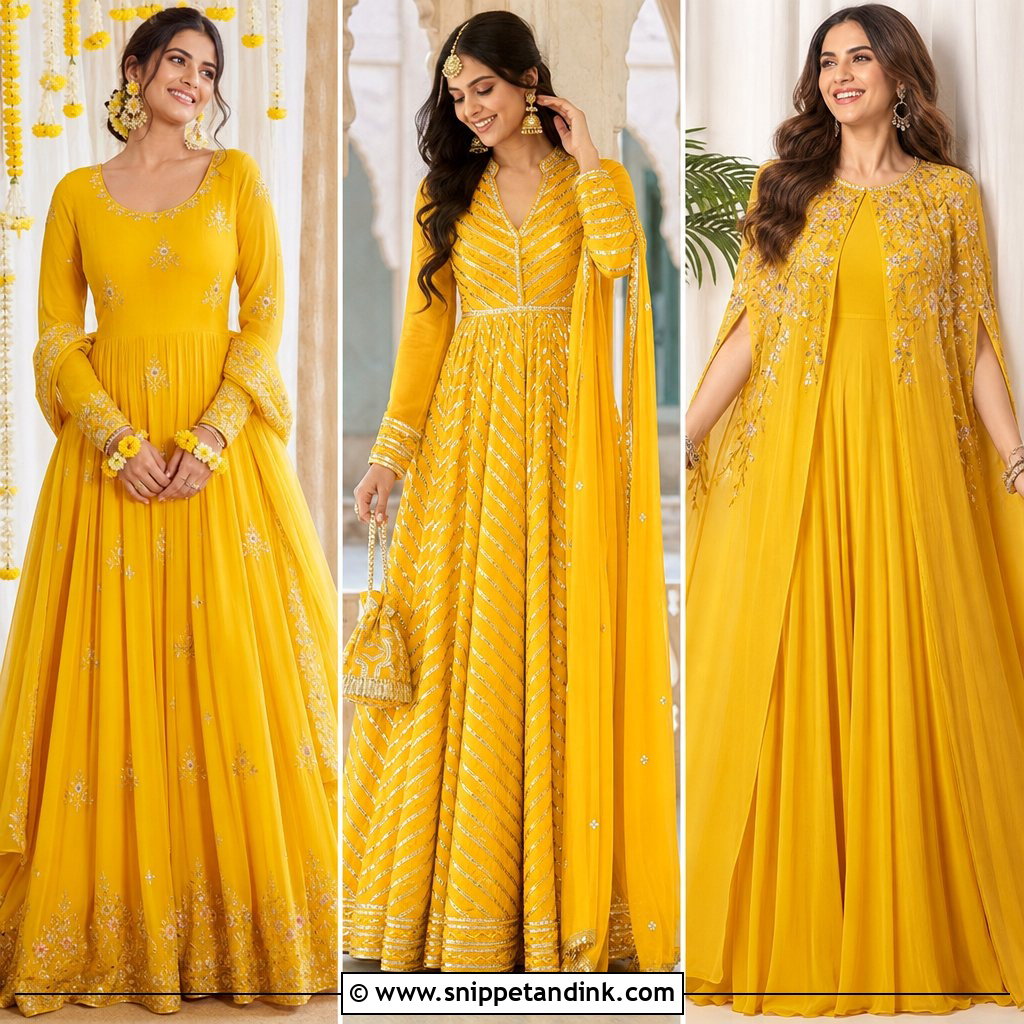
With an Anarkali over palazzos, the flare has to stay controlled or the palazzo vanishes and the outfit just reads as a long dress. Choose a calf-length Anarkali with embroidery on the fitted bodice or neckline, over a plain palazzo, with a soft net, chiffon or organza dupatta. Traditional jhumkas, a few gold bangles, embroidered juttis and a floral hair accessory complete it. This is often what the bride’s sister or mother asks for. Petite women look better in a smaller flare; taller women can carry a longer kurta with a wider embroidered border.
9. Yellow Georgette Palazzo Suit for Haldi
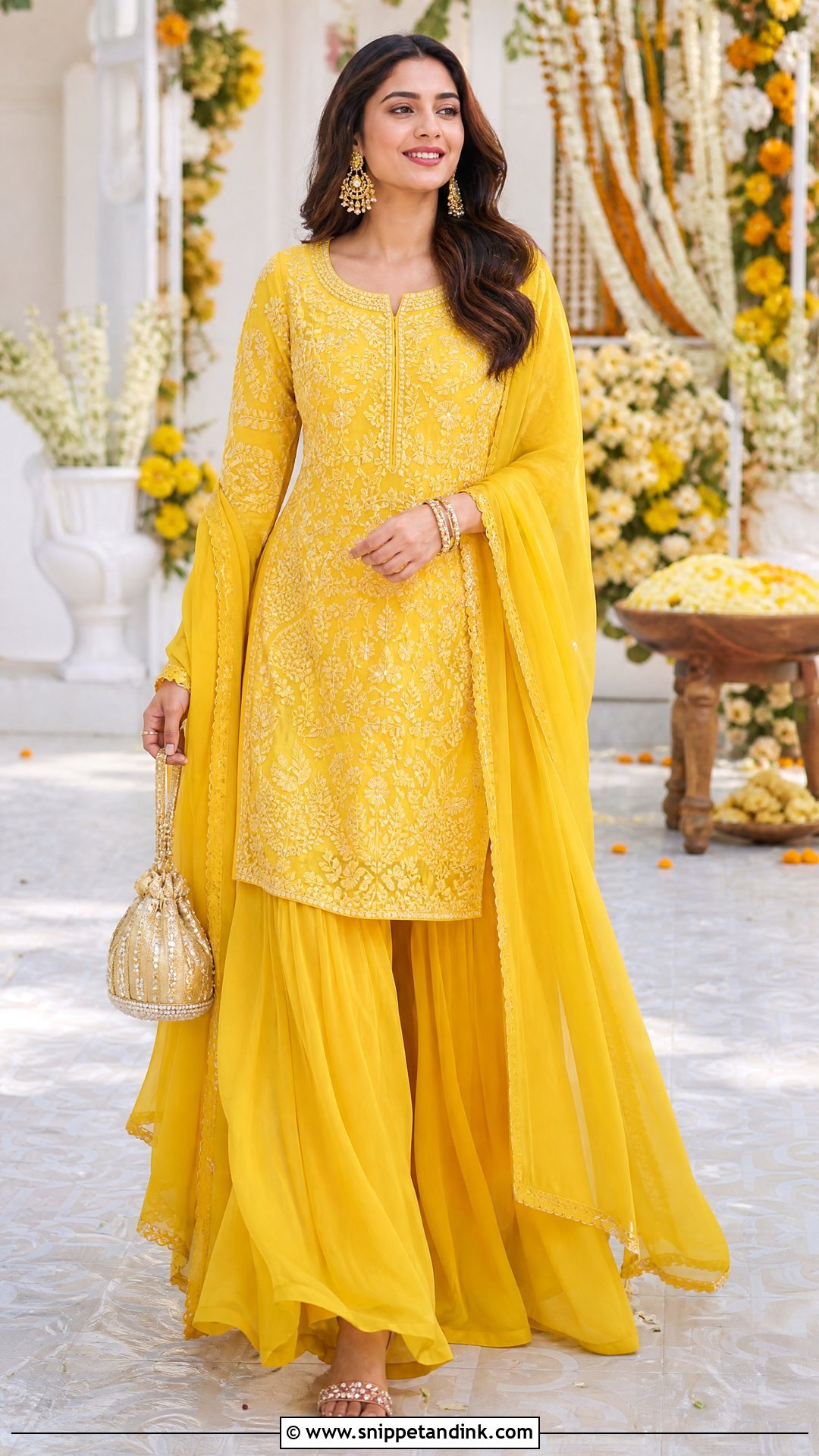
Georgette moves well and doesn’t crease much in a car, which makes it my pick for a Haldi at an indoor venue or a more formal hotel function. Choose a straight-cut yellow kurta with thread embroidery or restrained sequins, a full palazzo in the same fabric and a chiffon dupatta. Gold earrings, fine bangles, embellished sandals and a compact potli suit it, along with soft curls or a low textured ponytail. Georgette is slightly sheer, so lining in both kurta and palazzo is not optional. It sits neatly between cotton, which can look too casual indoors, and silk, which can look overdone.
10. Yellow Silk Palazzo Suit for Haldi
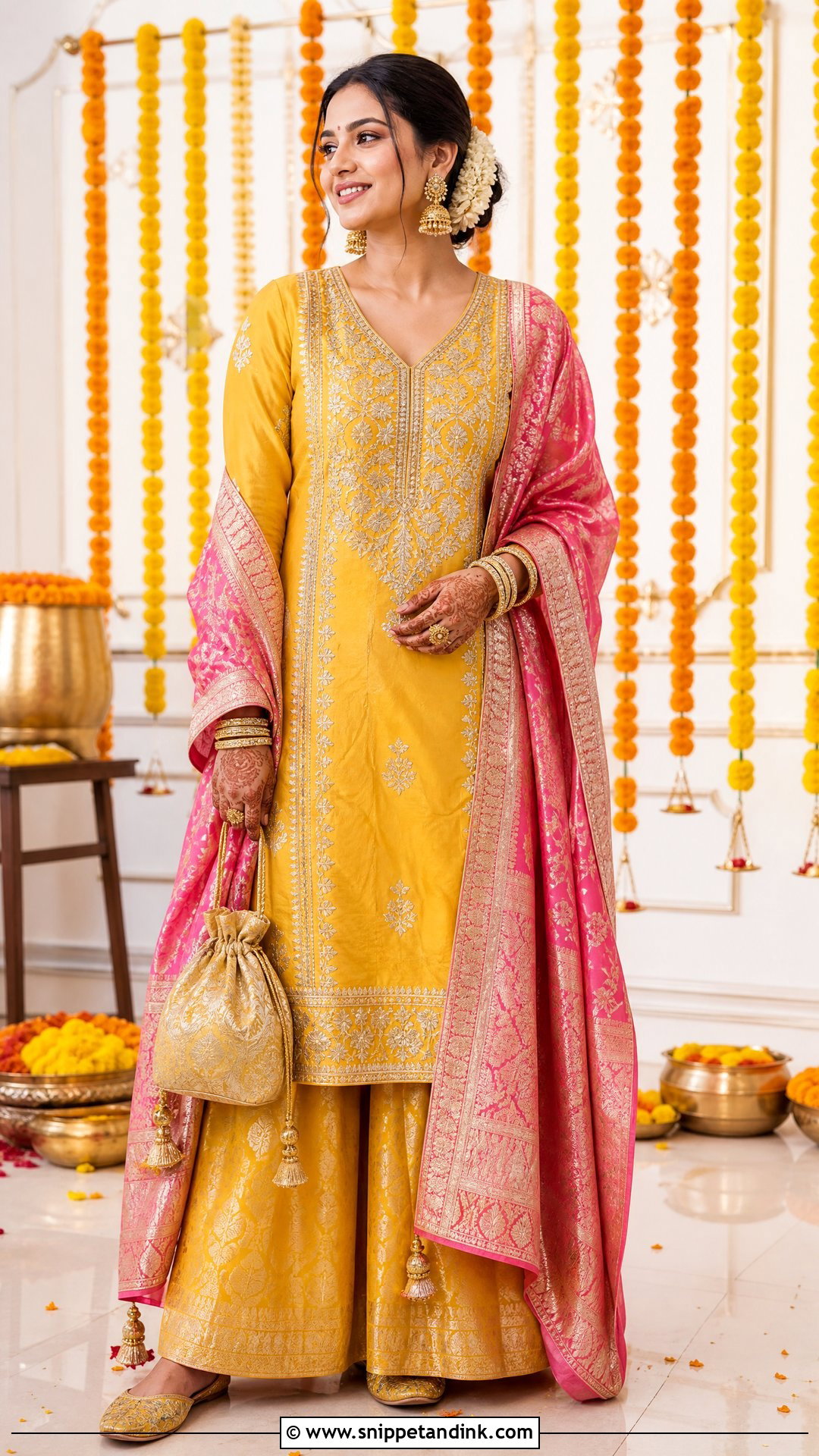
Silk is the bride’s or immediate family’s fabric, and the honest caveat is that turmeric marks it permanently more often than not. Choose a turmeric or mustard yellow silk kurta with zari at the neckline and border, a structured silk palazzo and a pink, green or orange dupatta for depth. Gold jhumkas, matching bangles, embroidered juttis and a brocade potli finish it, with a smooth low bun and white flowers. Silk already has sheen, so a few well-placed details look better than all-over work. I usually suggest doing the formal portraits in it first, before the paste comes out.
11. Yellow Organza Palazzo Suit for Haldi
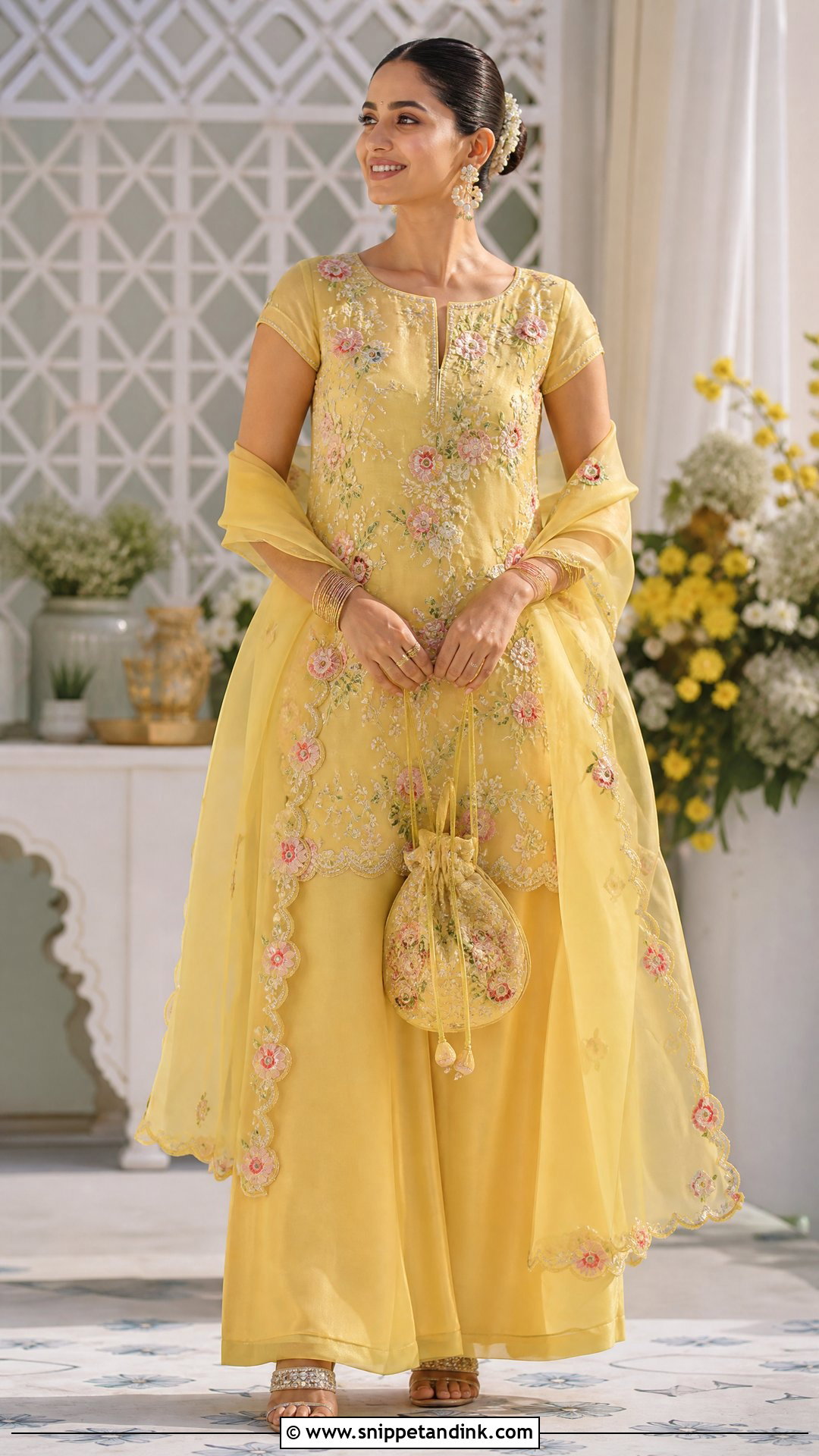
Organza holds a crisp shape, and that’s both its appeal and its problem at a Haldi. It creases sharply, marks with water and doesn’t forgive wet hands. Keep it to the kurta or dupatta and put the palazzo in something softer. A sleeveless or short-sleeve kurta with floral embroidery, an organza dupatta with embroidered edges pinned securely on one shoulder, pearl or kundan earrings, slim bangles and embellished sandals make a clean finish. Carry a small potli rather than a handbag, and wear a sleek bun or half-up style. I’d steer the bride away from this one; it suits a guest who can stand back from the messier rituals.
12. Yellow Bandhani Palazzo Suit for Haldi
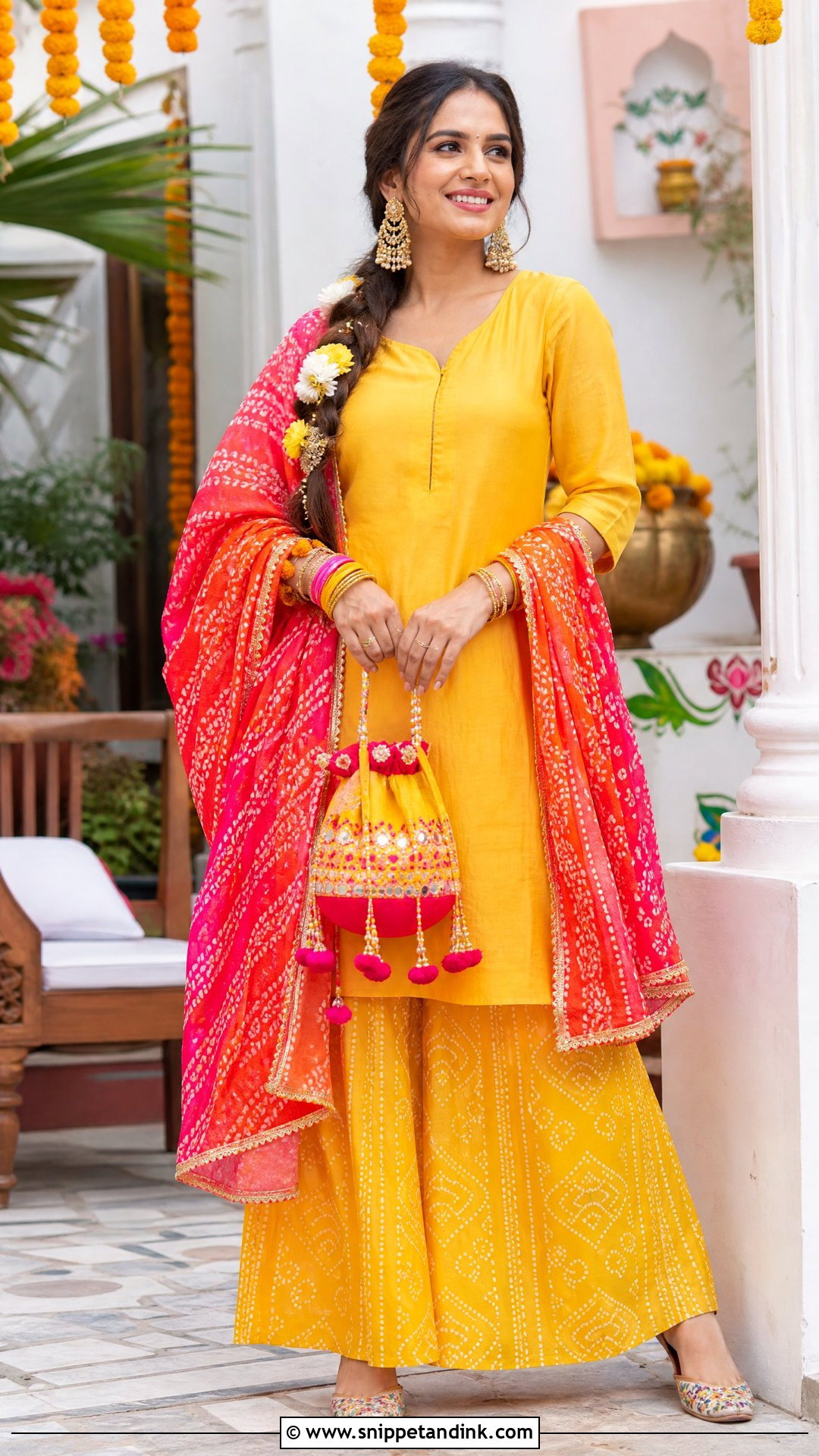
Here the bandhani dupatta is the centrepiece and everything else stays plain. Start with a marigold kurta and wide matching palazzos, then add a red, pink or green bandhani dupatta. The reverse also works: a lightly printed bandhani kurta over solid bottoms. Gold or oxidised jhumkas, coloured bangles, embroidered juttis and a bright potli suit it, with a long braid and floral pins. Each piece can be worn separately later, which bridesmaids appreciate. Match the jewellery to one colour in the dupatta rather than adding new shades.
13. Yellow Gota Patti Palazzo Suit for Haldi
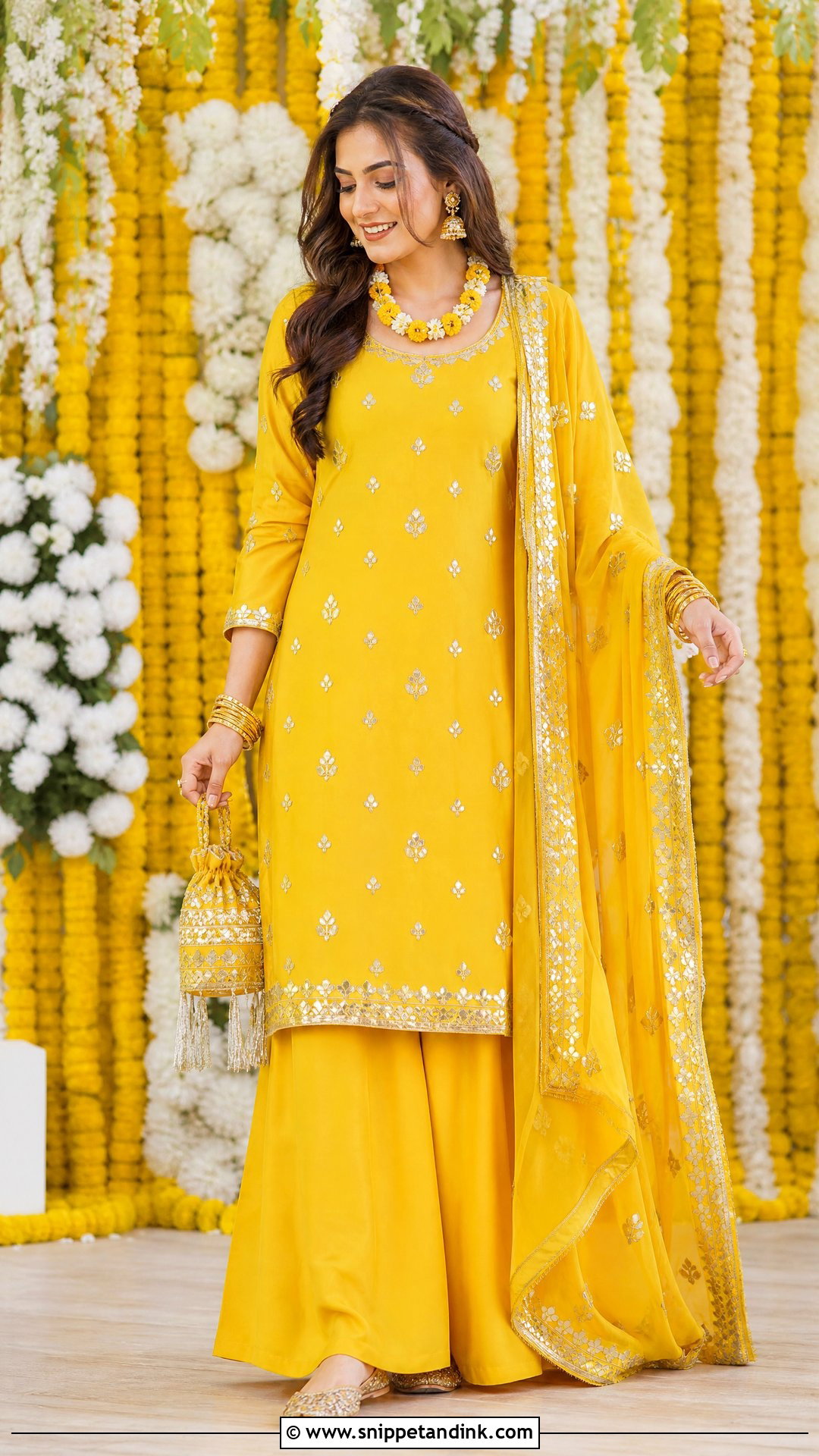
Gota patti is applied ribbon work, so it’s light, flat and shines without the weight of beads. Choose a straight or slightly flared kurta with gota at the neck, cuffs and hem, a plain yellow palazzo and a dupatta with a gota border. Gold jhumkas, slim metallic bangles, traditional juttis and a small potli are enough; brides can add a floral necklace or maang tikka. A centre-parted low bun suits it. Pin the dupatta so the border lies flat and faces the camera. Gota does tarnish if it stays damp, so dry it promptly if water or paste gets on it.
14. Yellow Cape Palazzo Suit for Haldi
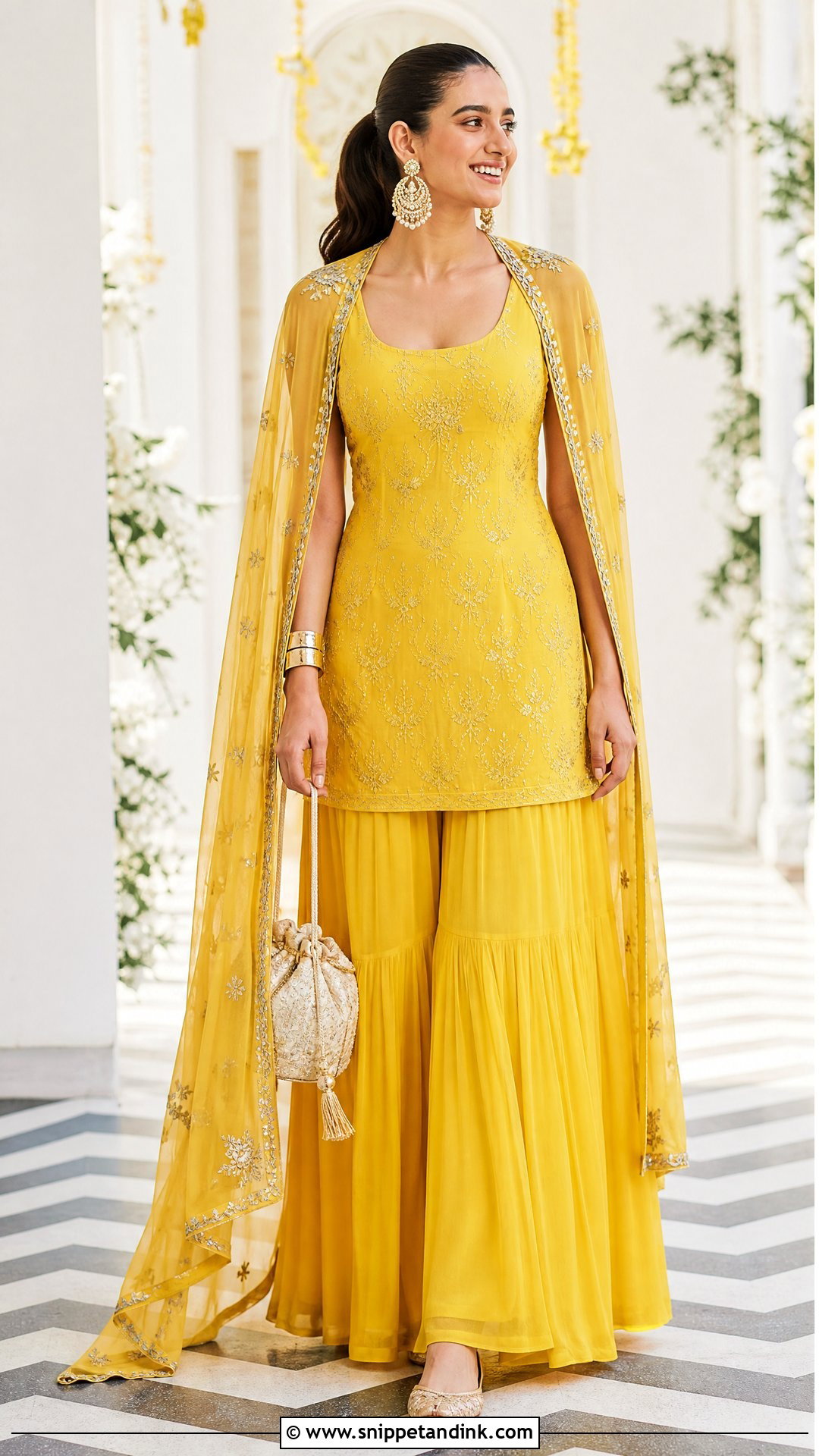
A cape-style palazzo suit is the Indo-Western route, and it removes the dupatta from the equation entirely. Wear a fitted sleeveless kurta or crop top with high-waisted palazzos and layer a sheer embroidered cape on top. Statement earrings, a cuff, metallic flats and a structured mini bag suit it, with a sleek ponytail so the cape line stays clear. Brides can choose floral appliqué or fine mirror work; guests can go shorter and simpler. The hem matters: a cape that stops right at the widest part of the hip adds bulk, so end it above or below that line.
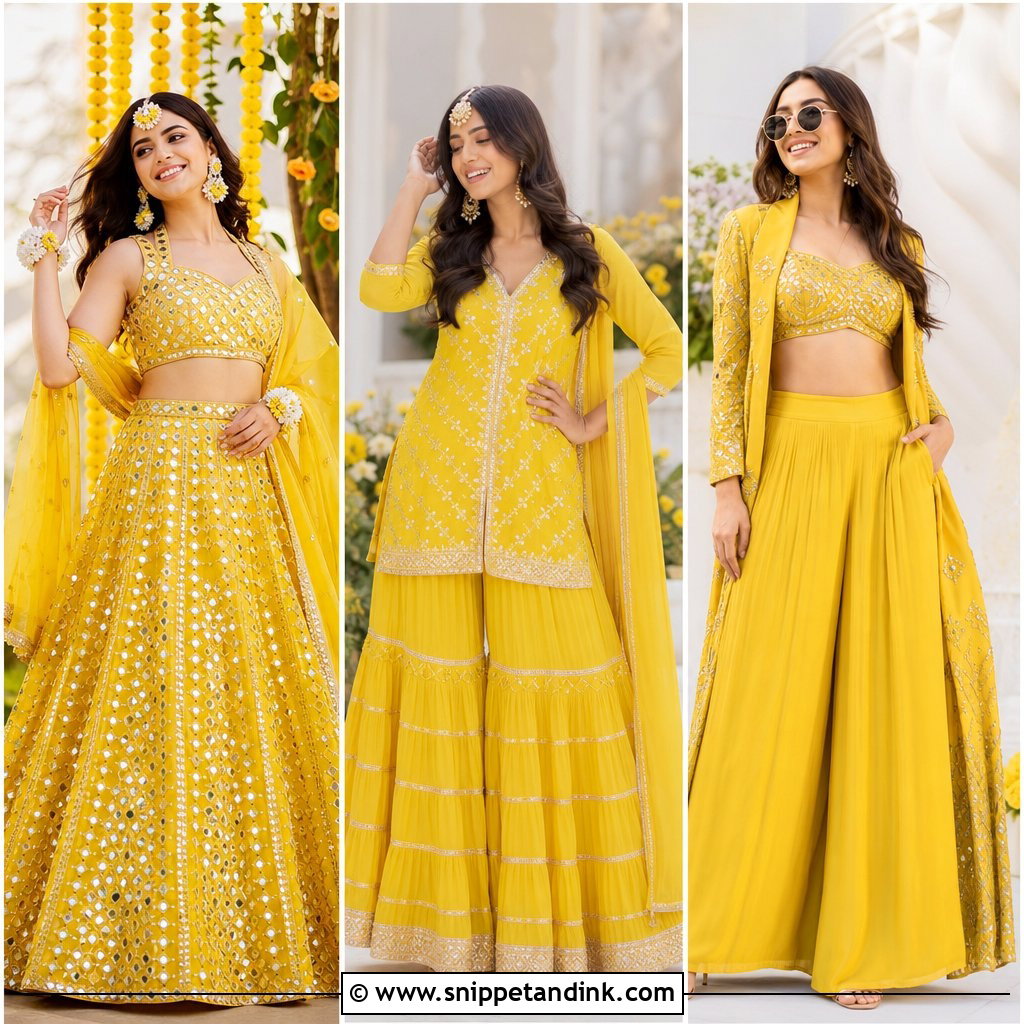
15. Yellow Jacket Palazzo Suit for Haldi
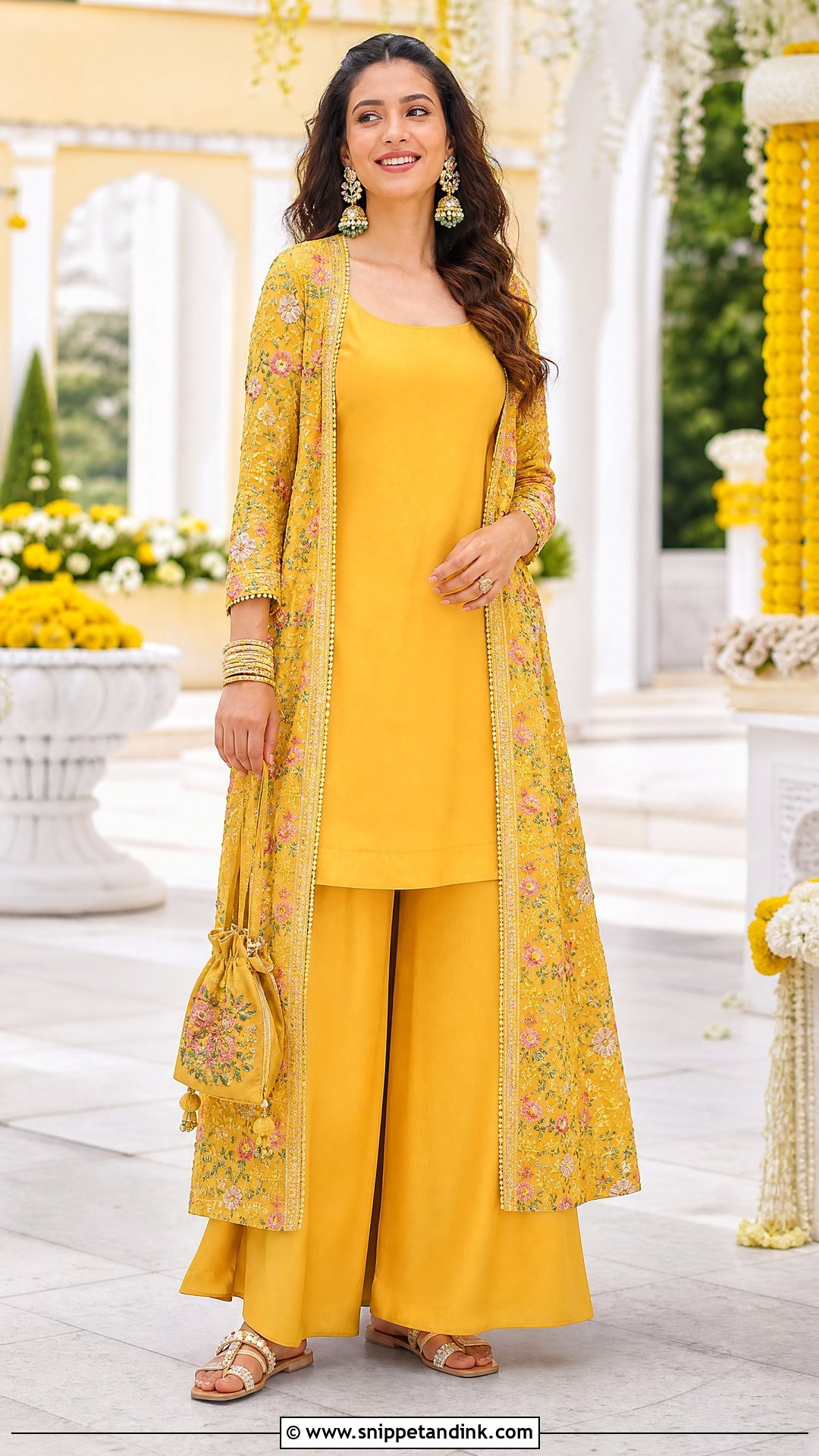
A long jacket over plain layers lets you take the decoration off when you need to. Wear a sleeveless kurta and matching wide-leg palazzos, then add an open embroidered jacket that falls below the knee, with floral threadwork, mirror accents or a patterned border. Drop earrings, coordinated bangles, flat sandals and a small potli finish it, with a tidy ponytail or soft bun so the neckline doesn’t get crowded. How much decoration goes on the jacket decides whether it reads as bride, bridesmaid or guest. Sit down in it at the fitting; a heavy jacket that bunches behind you will annoy you for hours.
16. Yellow Palazzo Suit With Pink Dupatta
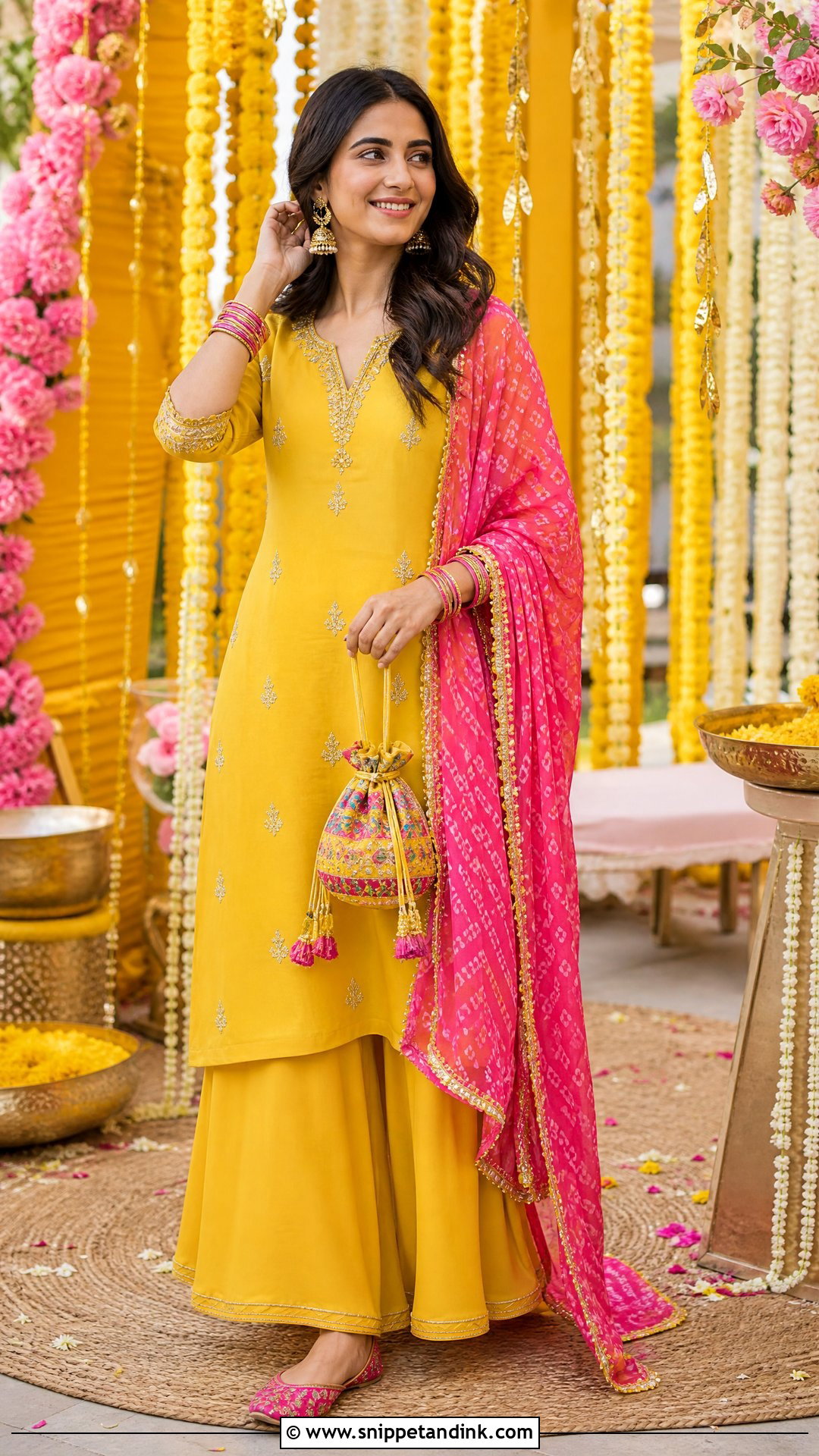
Pink is the easiest partner for yellow, and it suits the riot of colour in most Haldi decor. Start with a plain or lightly embroidered yellow kurta and palazzo, then add a bright pink dupatta with a gold border, bandhani print or small florals. Repeat the pink once more in juttis, bangles or the potli, but don’t match every accessory. Gold jhumkas and a fine ring are enough jewellery. Wear loose waves, a low ponytail or a braid with pink flowers. For a bridesmaid group, this gives a coordinated look; the bride can take a deeper pink with heavier embroidery so she stands out.
17. Yellow Palazzo Suit With Green Dupatta
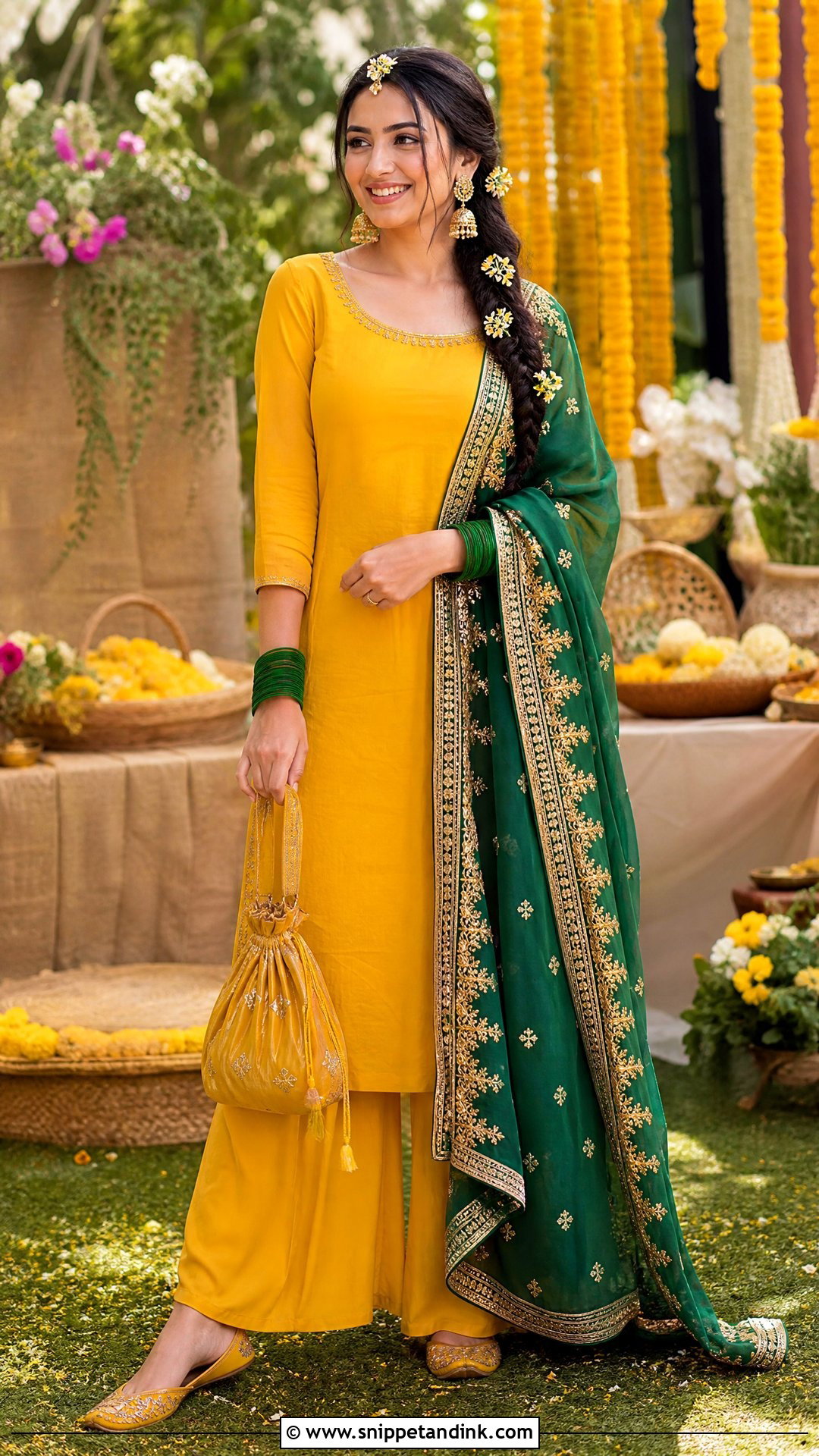
The shade of green changes this outfit more than any other choice. Emerald looks rich and traditional against yellow, leaf green looks festive, and mint looks soft and young in morning light. Choose a streamlined yellow kurta and palazzo, then the dupatta, ideally one with a narrow yellow or gold border so the two pieces connect. Green bangles, gold jhumkas, yellow juttis and a small embroidered potli finish it, with jasmine or tiny yellow flowers in a braid or low bun. It’s a good choice for friends and sisters who want the Haldi colours without going head to toe in yellow.
18. Pastel Yellow Palazzo Suit for Haldi
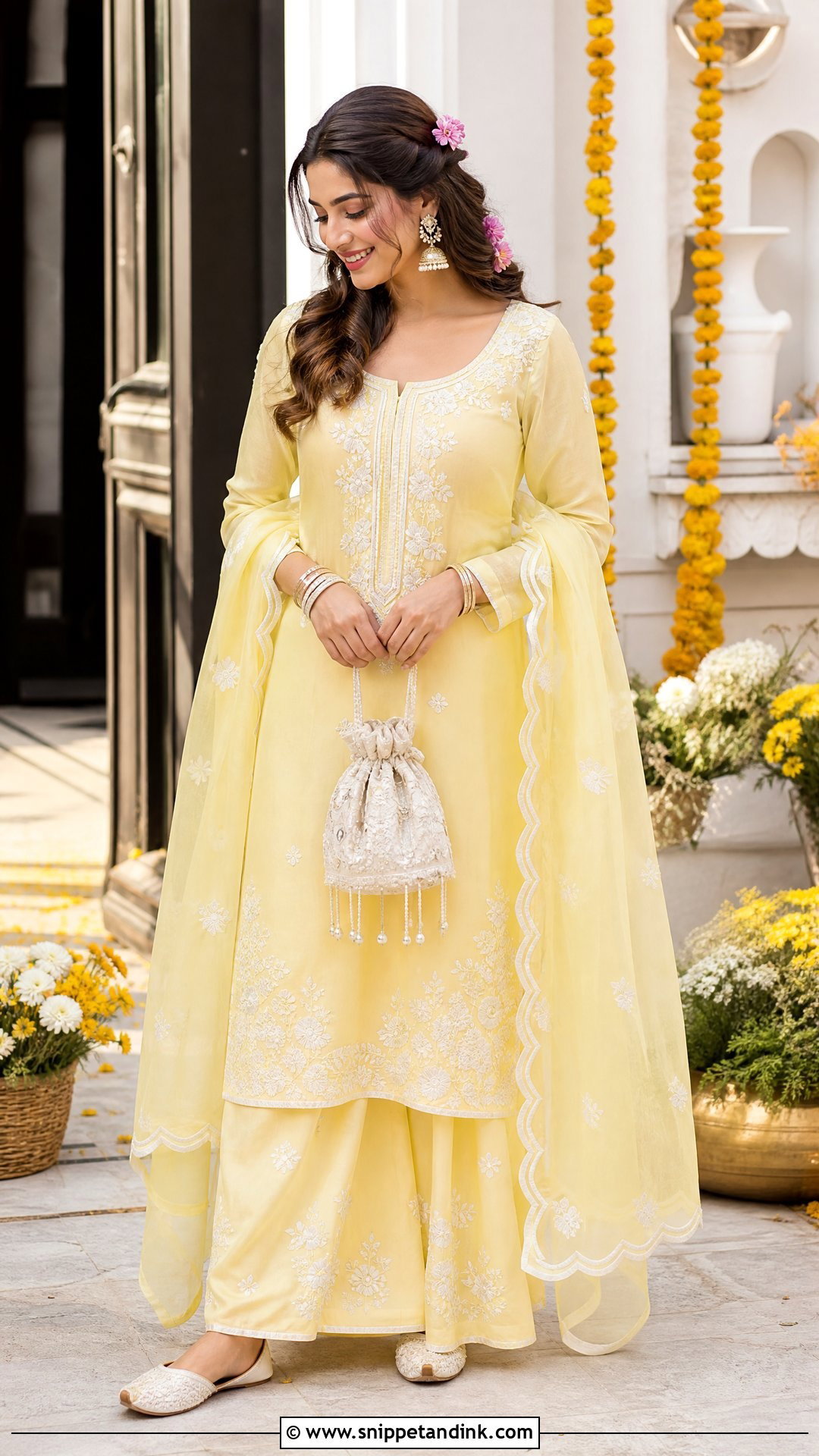
Pastel yellow can disappear in photos. Against a white wall in bright sun it reads almost cream, so the outfit needs one textured element to hold its shape on camera: an embroidered neckline, a scalloped dupatta edge or detailed footwear. Choose a pale kurta with white threadwork, pearls or fine florals, a matching flowing palazzo and a sheer dupatta in the same family. White juttis, pearl earrings, slim bangles and a cream potli keep the palette gentle, with a half-up style or loose curls. Fresh pink flowers add a small, useful contrast. It suits a morning function or a minimalist bridesmaid theme.
19. Plus Size Yellow Palazzo Suit for Haldi
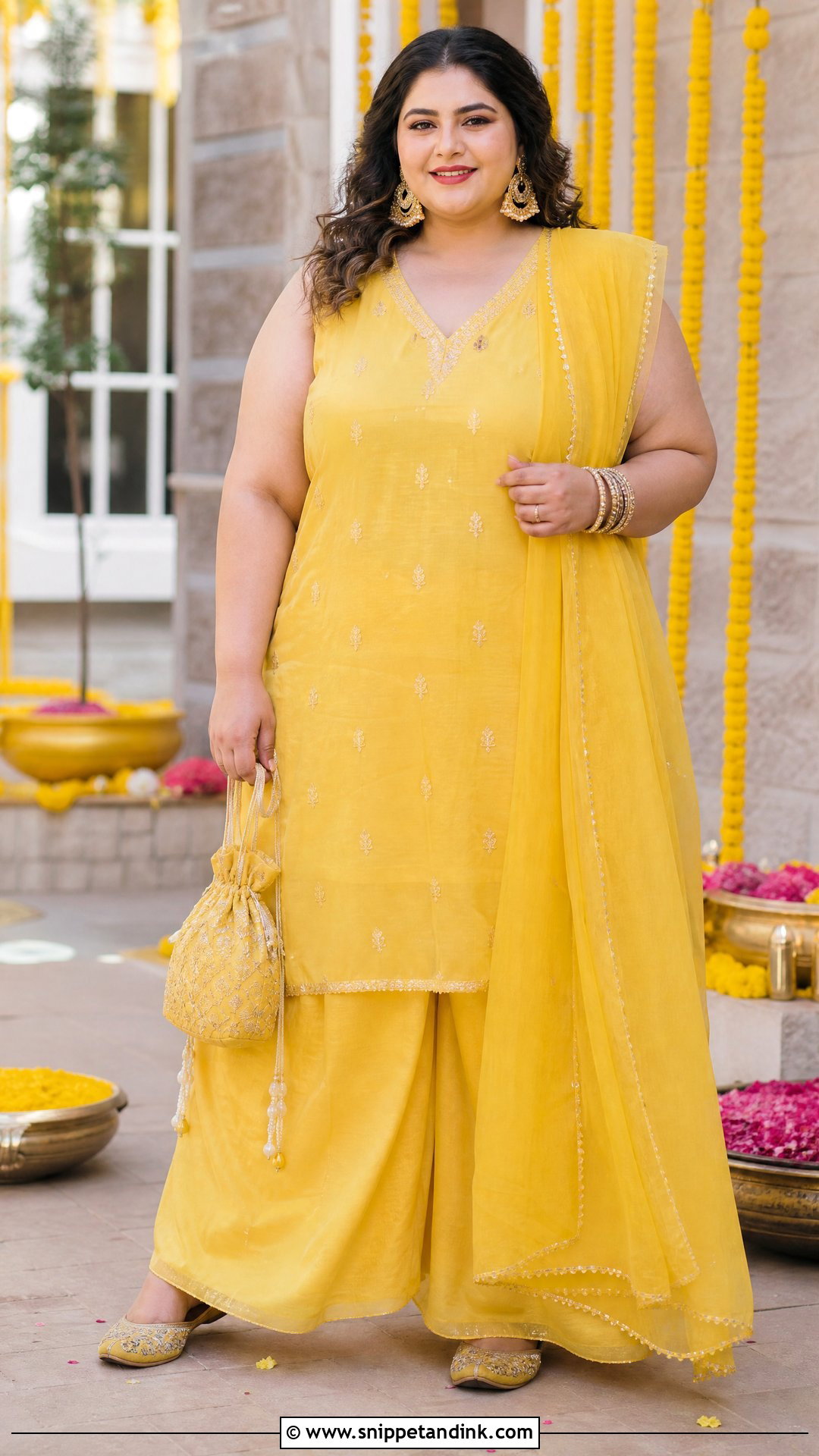
For plus-size women, a palazzo suit is often the most comfortable Haldi outfit there is, provided the kurta skims rather than clings. Choose a straight or gently A-line yellow kurta with side slits for movement and a V or open round neck to draw the eye up. Pair it with a high-rise palazzo that falls straight from the waist, and drape a light dupatta vertically over one shoulder. Statement earrings, stacked bangles, comfortable juttis and a medium potli finish it. A waist seam is optional. What isn’t optional is shoulder fit, breathable lining and a hem set to the shoes you’ll actually wear.
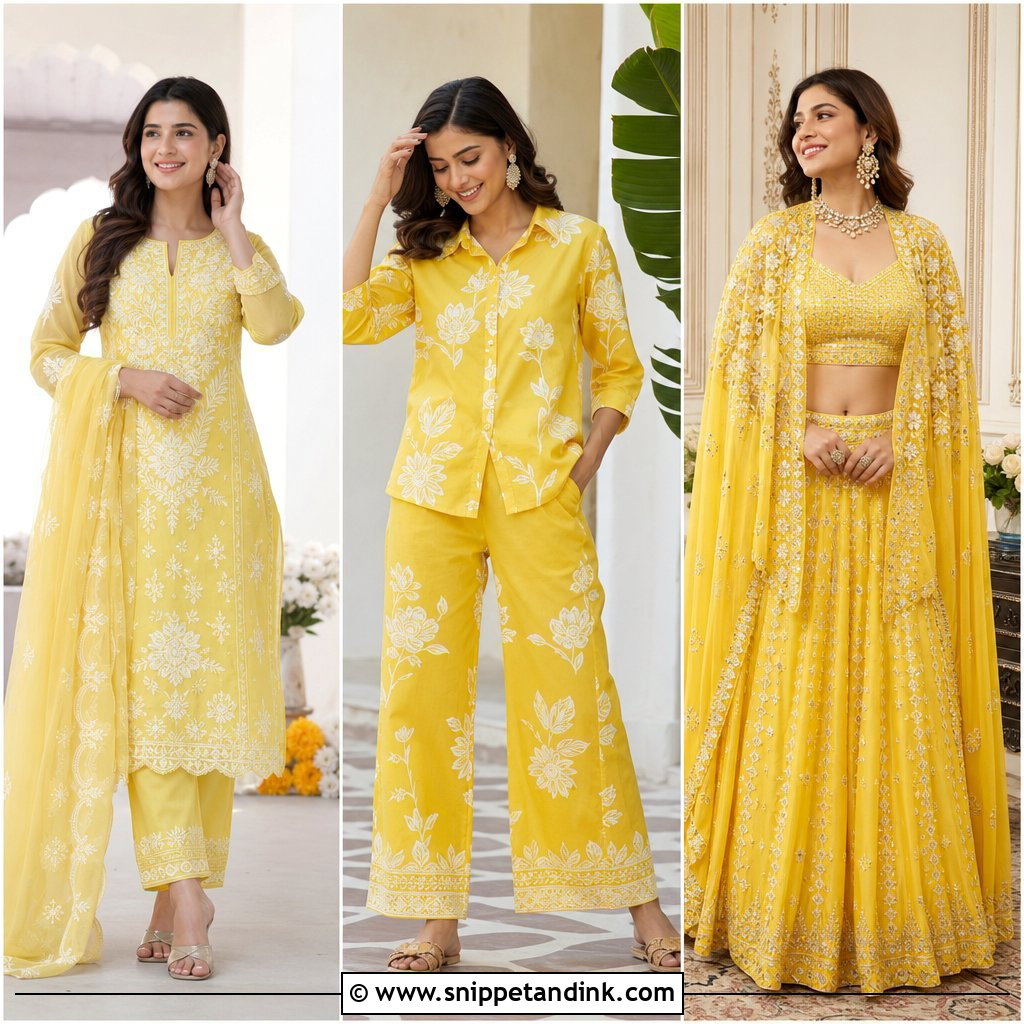
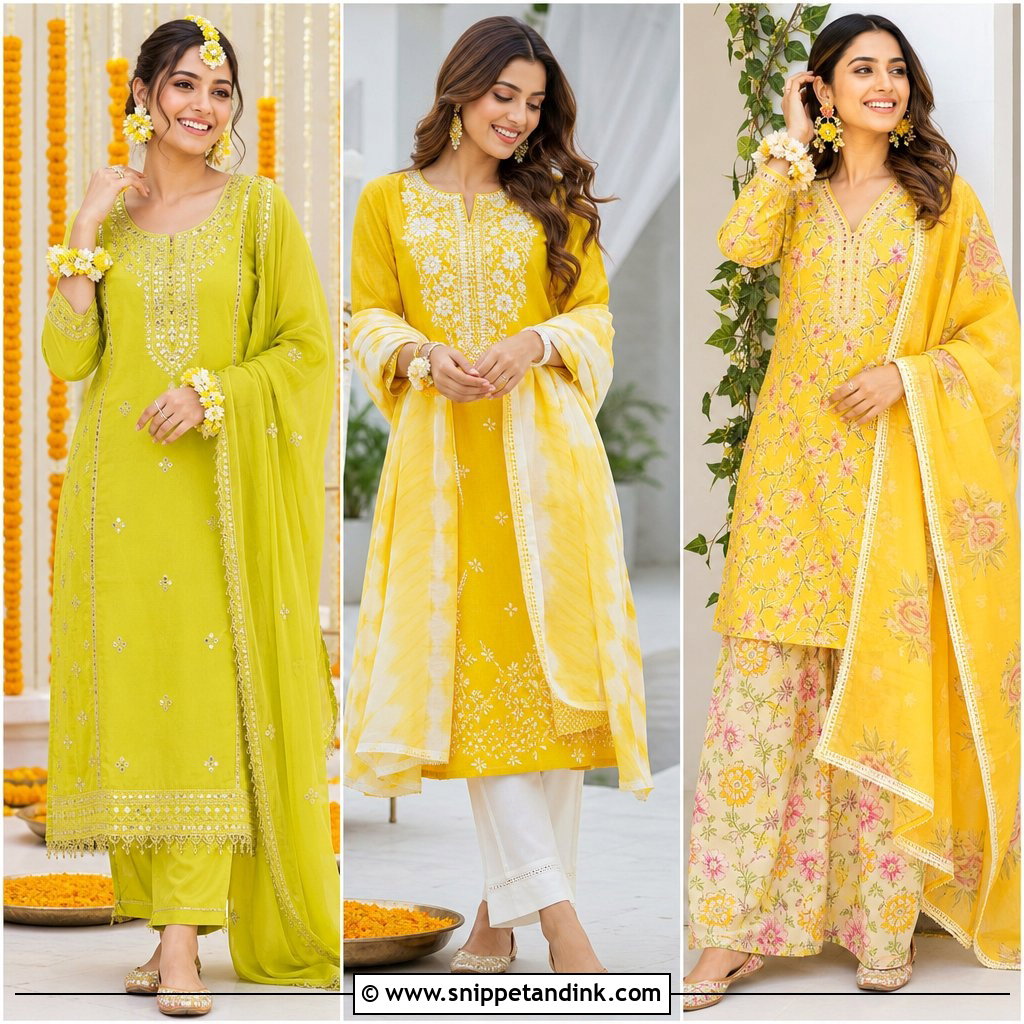
20. Bridal Yellow Palazzo Suit for Haldi
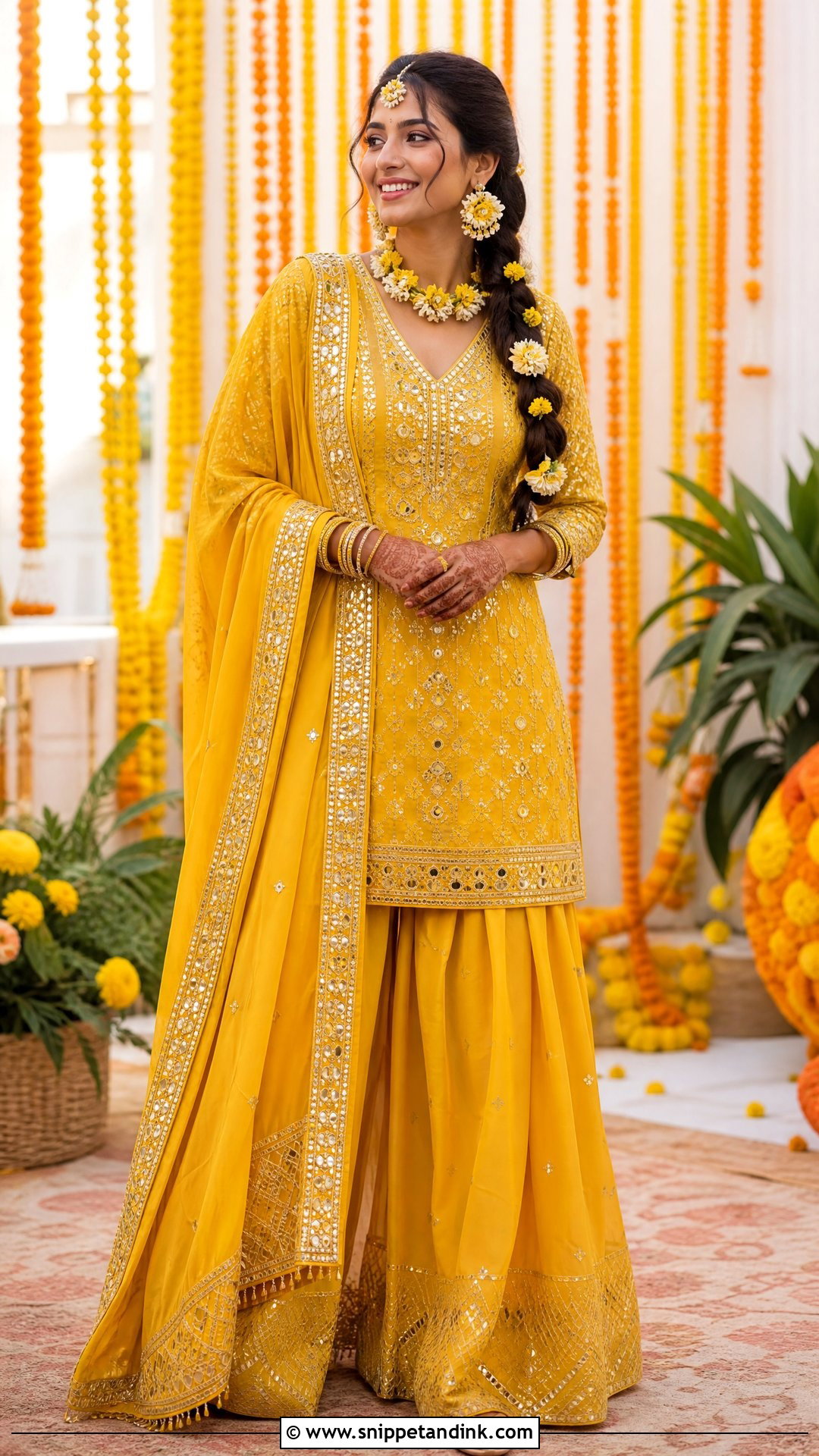
The bridal version has to look special and still be something you can get turmeric on. Choose a well-fitted kurta with floral embroidery, mirror work or gota patti at the neck, sleeves and hem, a full palazzo and an embellished dupatta secured over one shoulder. Add floral earrings, a floral necklace, bangles, a maang tikka and decorated juttis, with a braided bun or long braid covered in fresh flowers. When half the family arrives in yellow, a contrasting dupatta or distinctive floral jewellery is what makes the bride stand apart. I’d rather you wore something lovely you won’t grieve over than something precious you spend the ceremony protecting.
When the Whole Family Turns Up in Yellow
A Haldi with a yellow dress code can look wonderful or like a single block of colour in the group photo. The difference is usually planned a few weeks ahead.
- Give the bride the brightest or most distinct shade. If she’s in marigold, guests can take lemon, mustard and pastel so she isn’t lost among them.
- Let close family share one accent colour, such as pink or green in the dupatta, so they read as a group without wearing identical sets.
- Ask bridesmaids to match fabric weight rather than exact outfits. A row of cottons next to one heavy silk looks uneven on camera.
- Keep white to small doses. A lot of white beside yellow in bright sun can bleach out in photographs.
If the family is large, a short message with two or three reference photos does more than a long list of rules. People like a direction, not a uniform.
Sit, Stand, Dance: Testing Your Palazzo Suit Before Haldi Morning
The palazzo suit wins on comfort, and the fabric is where you dial it up or down. Cotton and chikankari sets suit relaxed outdoor mornings, while silk, georgette, mirror work and gota patti dress the look up. A pink, green or bandhani dupatta adds colour without losing the yellow base. Before deciding, look honestly at the weather, the venue and how much of the ritual you’ll be in the middle of. Then sit down in the outfit, stand up again, lift your arms and walk across the room. If none of that needs adjusting, you’ve got it.
You'll Like These Ideas:





Leave a Reply