
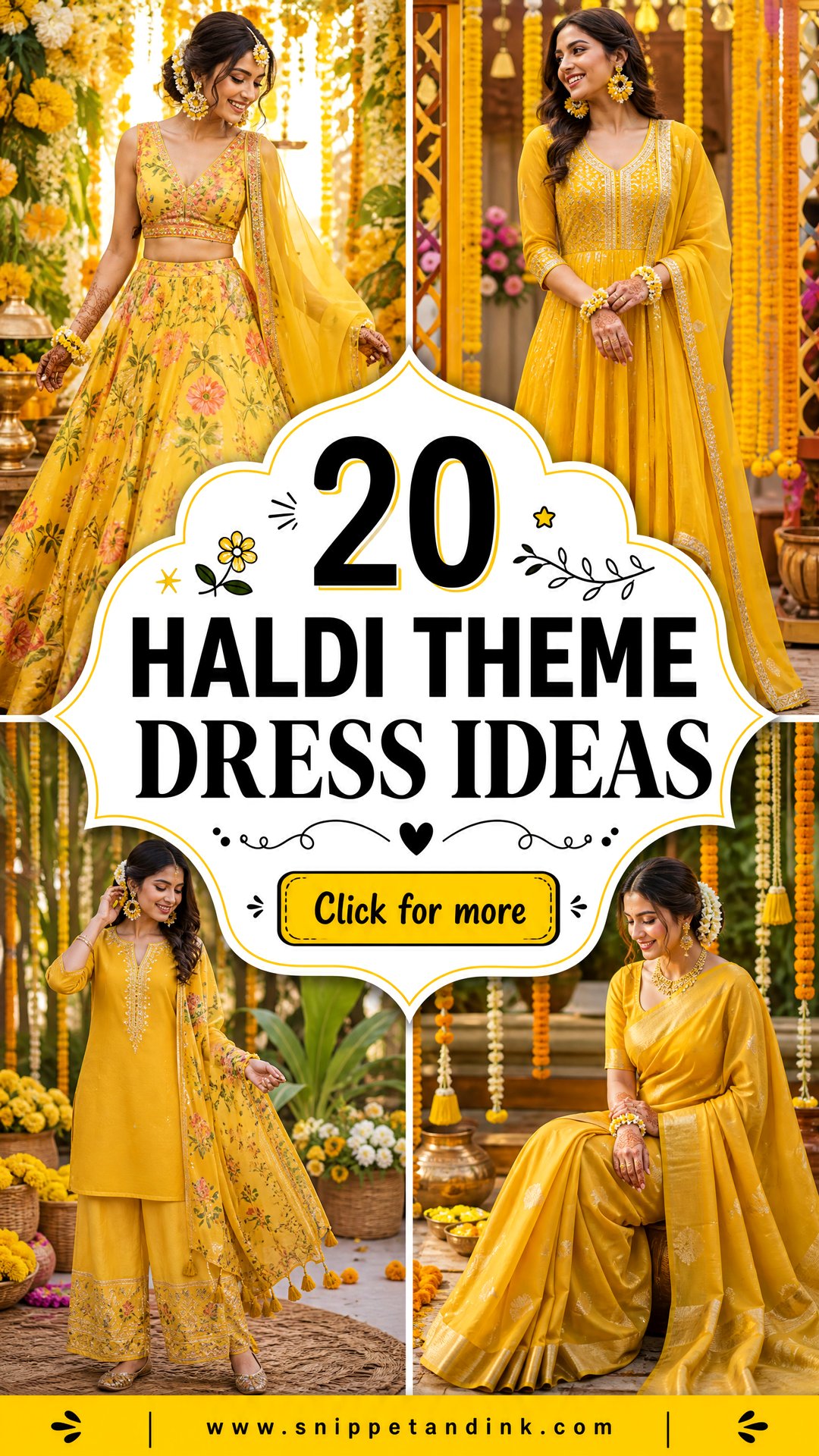
A haldi theme only works if the clothes survive the ritual. I’ve watched carefully planned color schemes fall apart because half the family showed up in heavy silk they were scared to sit down in. Brides and guests now go well past traditional yellow dresses into marigold, mustard, ivory, lime, orange, pink and florals, and light lehengas, shararas, pre-draped sarees, kurta sets and fusion outfits have mostly replaced heavy embroidery at daytime functions. The right pick depends on your role, the venue and how formal the family wants it. Below are twenty complete looks, with notes on where each fits in a coordinated theme.
Writing a Haldi Color Brief Guests Can Actually Follow
Most haldi themes fail on communication, not taste. “Wear yellow” produces everything from neon lemon to brown mustard, plus a few guests in ivory who didn’t read the message. When I set up a theme for a family, I send a short color brief with the invitation or in the family group chat, and it works far better.
- Name two or three shades, not one. Marigold, mustard and soft pink is easier to shop for than “yellow”.
- Say what to avoid. If the bride is in lime or ivory, ask guests to stay out of it so she stands apart.
- Mention the setting and the seating: floor cushions, a lawn, a pool. It tells people what to wear on their feet without a lecture.
- Warn them about the paste. A line like “expect turmeric, wear something washable” saves a lot of ruined silk.
I also share one or two reference photos rather than a mood board of twenty. Older relatives especially find a photo of a real outfit easier to work from than a list of color names.
1. Yellow Floral Lehenga for Haldi
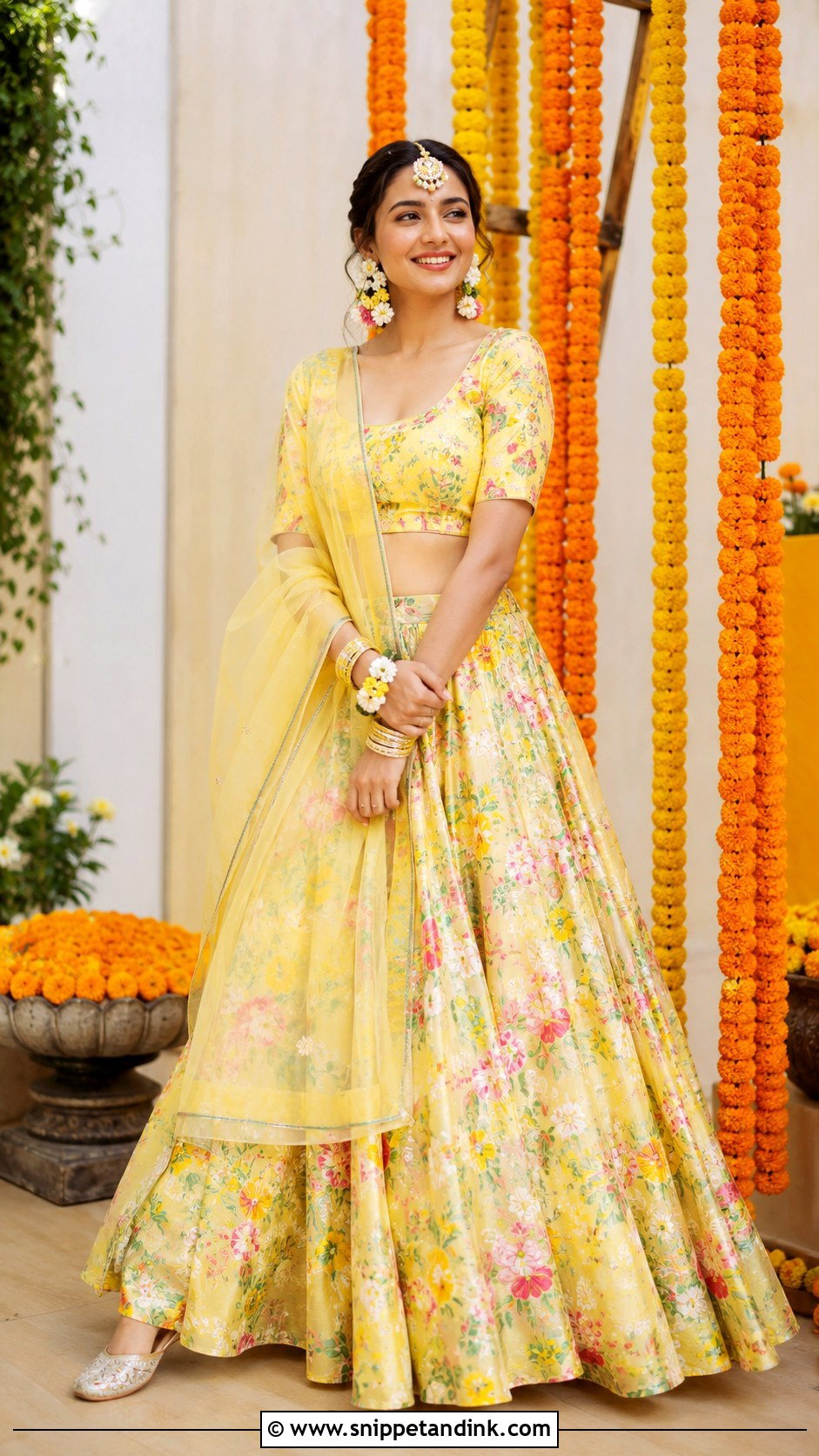
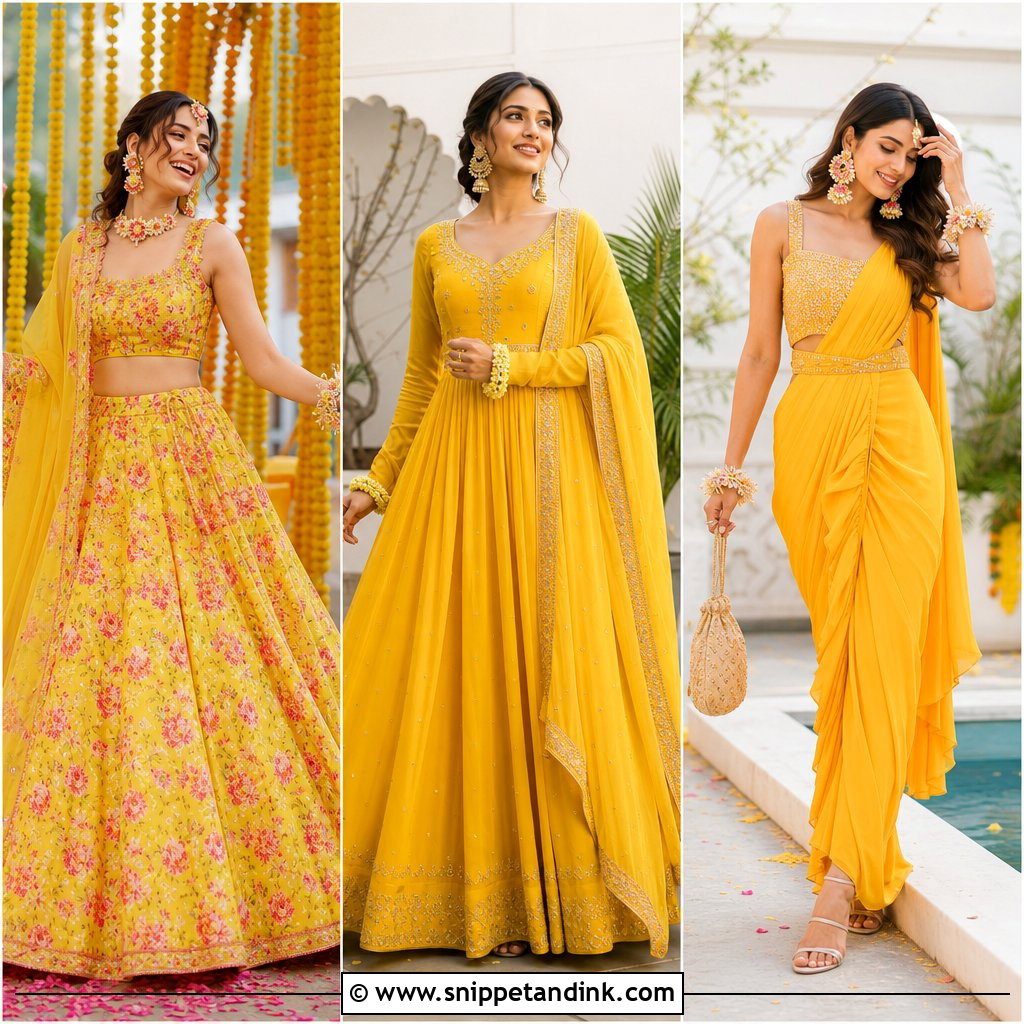
A yellow floral lehenga is the easiest bridal anchor for a theme, because every other color in the palette can be pulled from the print. I ask brides to choose printed or lightly embroidered flowers over beadwork, and a skirt with no can-can, since stiff net makes sitting on a low platform awkward. A short-sleeve blouse and an organza dupatta pinned over one shoulder complete it. Floral earrings, a maang tikka, stacked bangles and embroidered juttis suit it, with a braid or soft waves. For sisters and guests, I suggest a smaller print in the same palette so the bride’s flowers stay the largest in the frame.
2. Mustard Sharara Set for Haldi
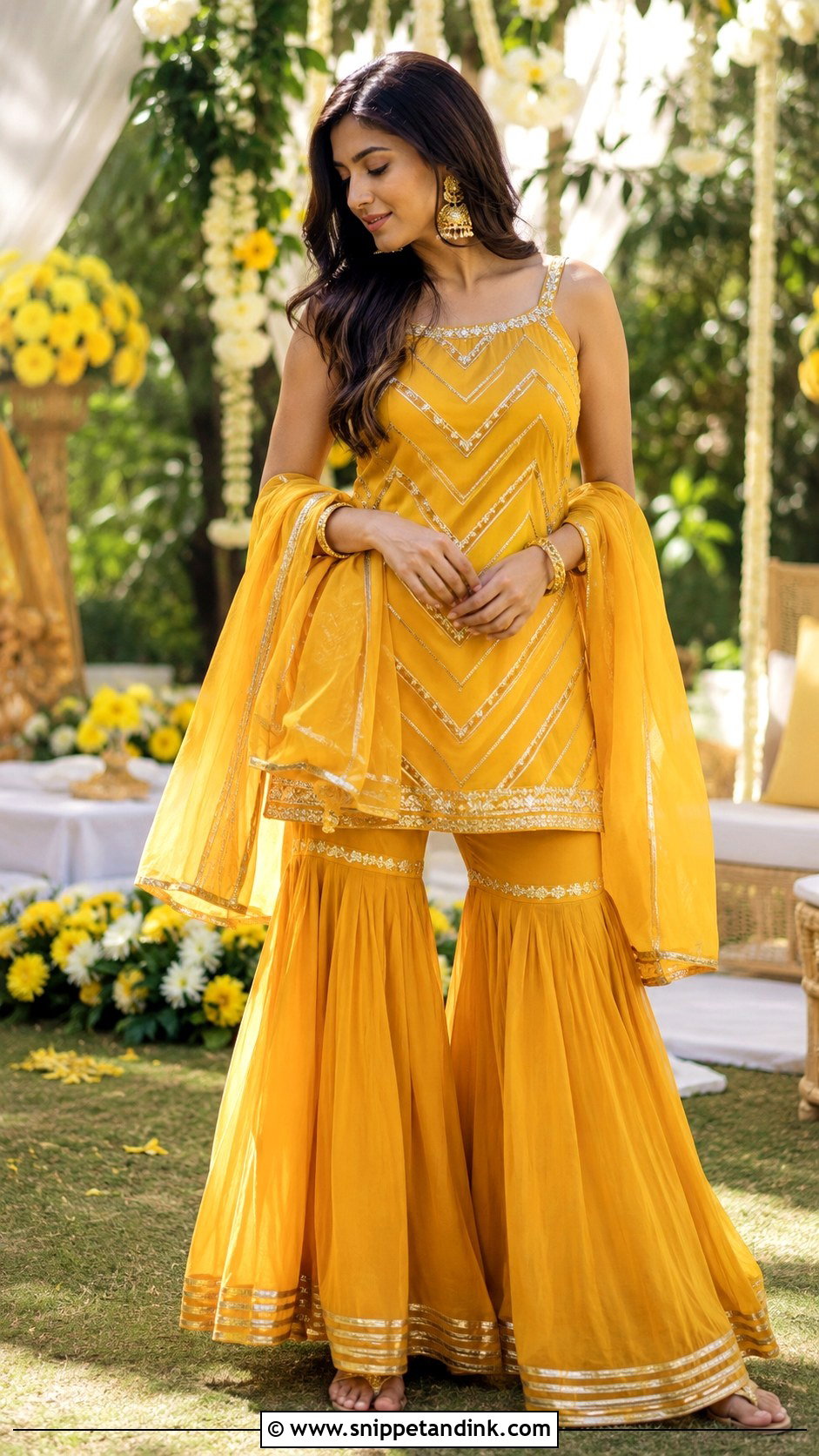
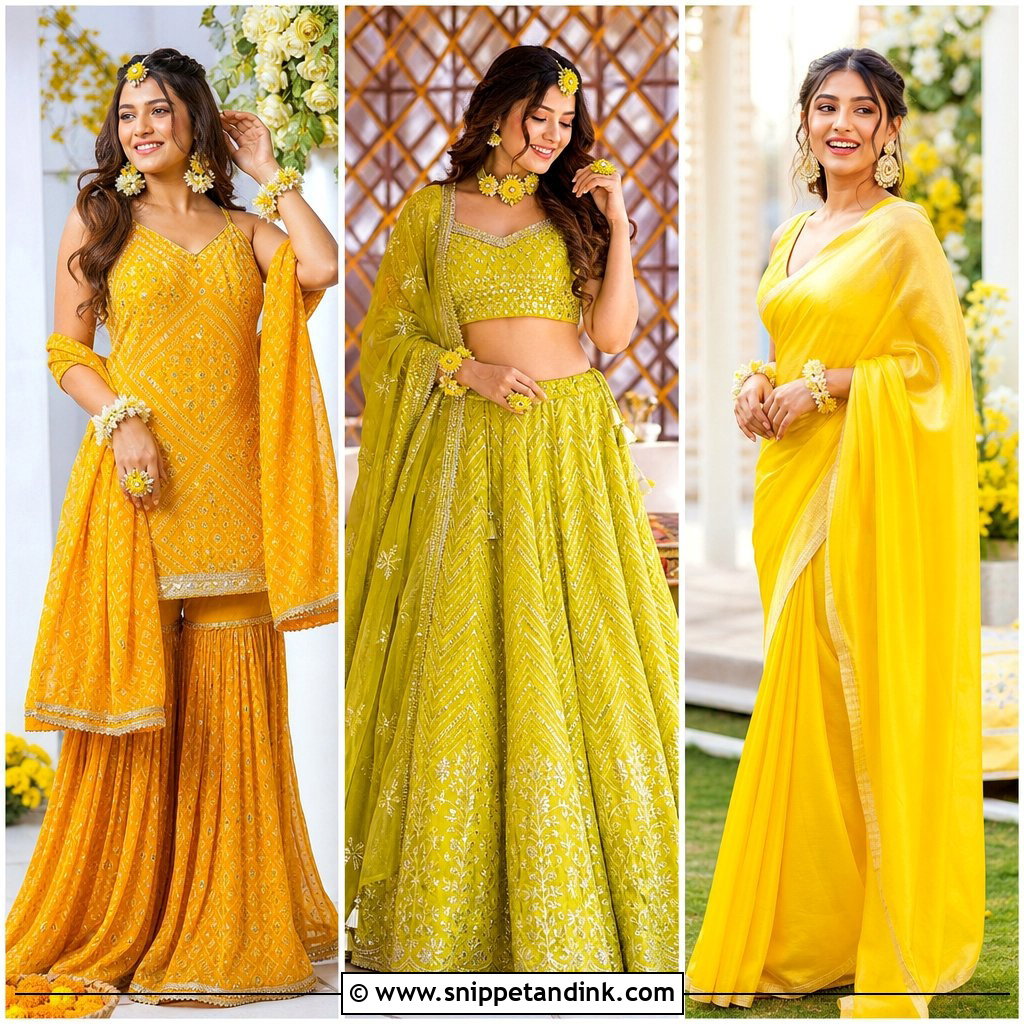
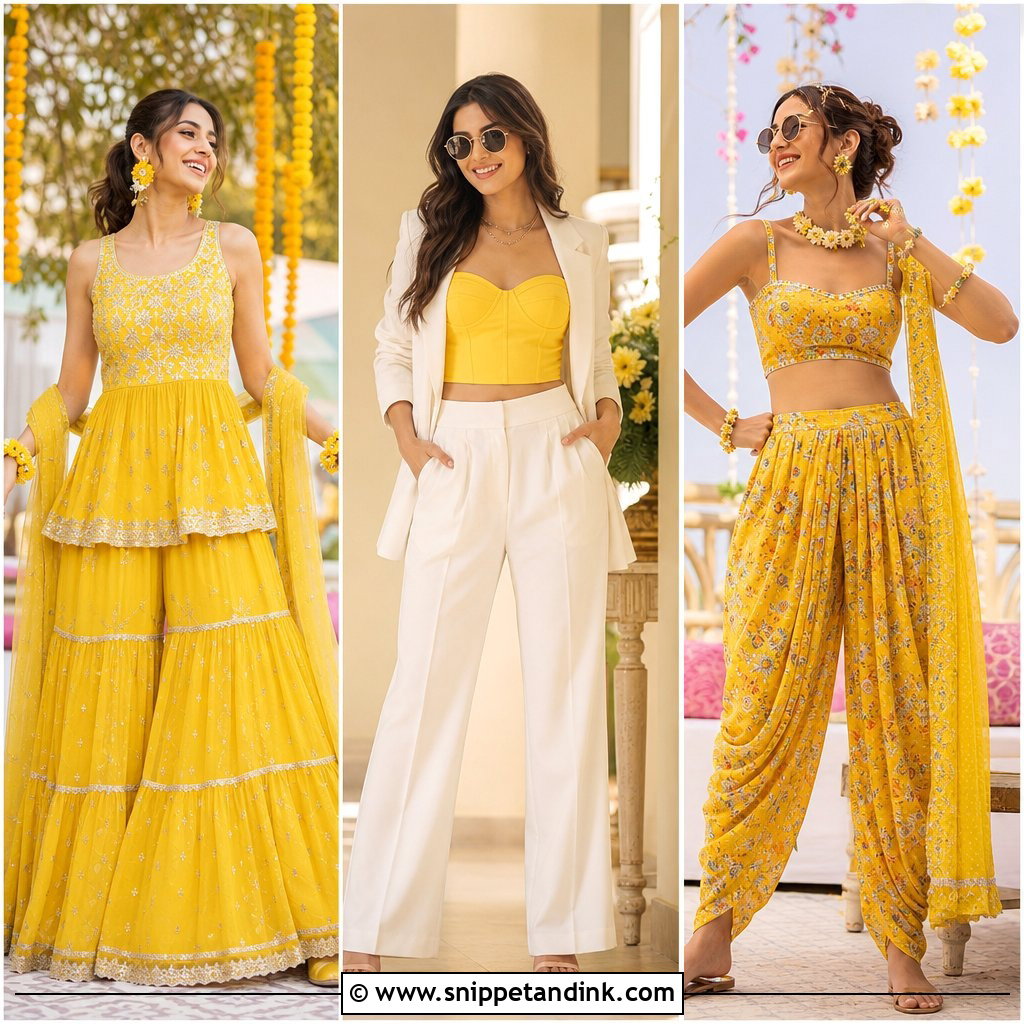
Mustard is the shade I suggest to families who find bright lemon too loud. A short embroidered kurta, very flared sharara pants and a matching light dupatta give plenty of room to dance. Gota borders, small mirrors or restrained threadwork are festive and still easy to clean. Oxidized silver jhumkas give a relaxed finish, gold a more traditional one. If the haldi is on a lawn, I always warn guests about heels. Narrow heels sink into grass and aerate the lawn for you, so flat juttis or Kolhapuris are the better call. A low ponytail with flowers and light makeup complete it.
3. Ivory Floral Saree for Haldi
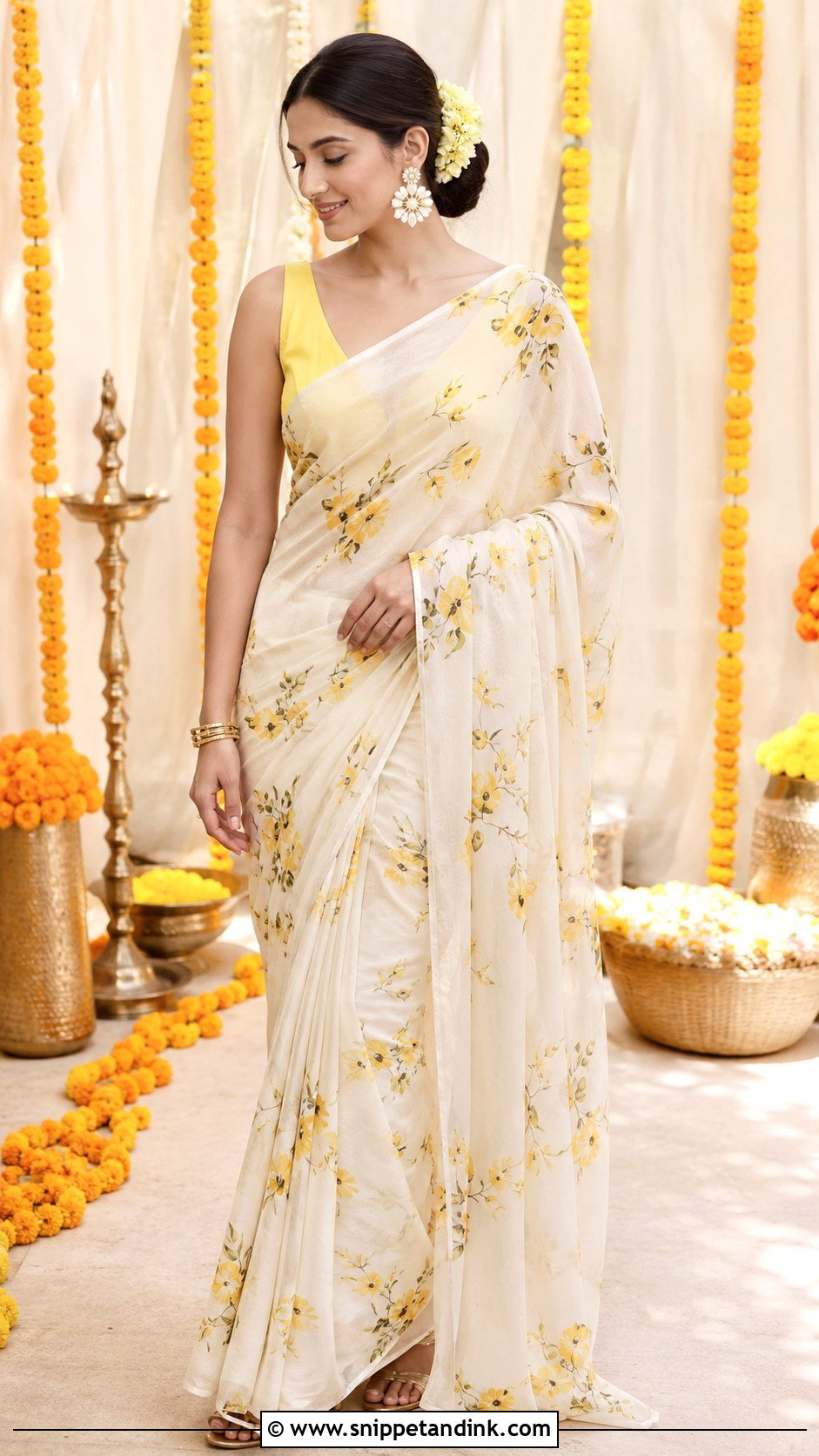
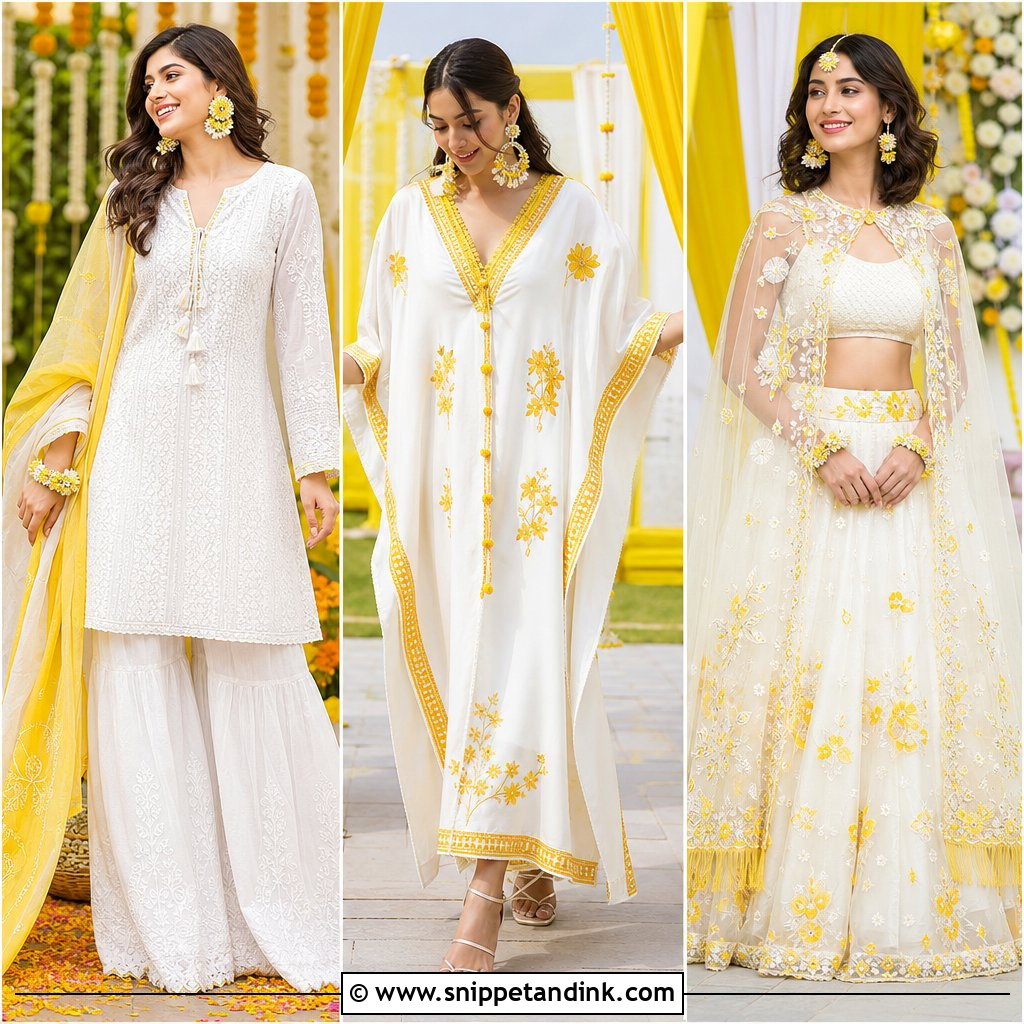
An ivory saree scattered with small yellow flowers looks fresh against marigold decor, and it’s a smart option for a bride who wants to read lighter than her yellow-clad family. Organza gives more structure; georgette moves more softly. A yellow sleeveless blouse ties the print to the theme, and a well-pinned pallu stays put through the ritual. Pearl-and-flower earrings, slim gold bangles and metallic sandals suit it, with a smooth bun and yellow flowers. Ivory shows every turmeric mark, so in my schedules this is a first outfit for welcome photos, or a guest look, not what the bride wears once the paste starts.
4. Marigold Anarkali Suit for Haldi
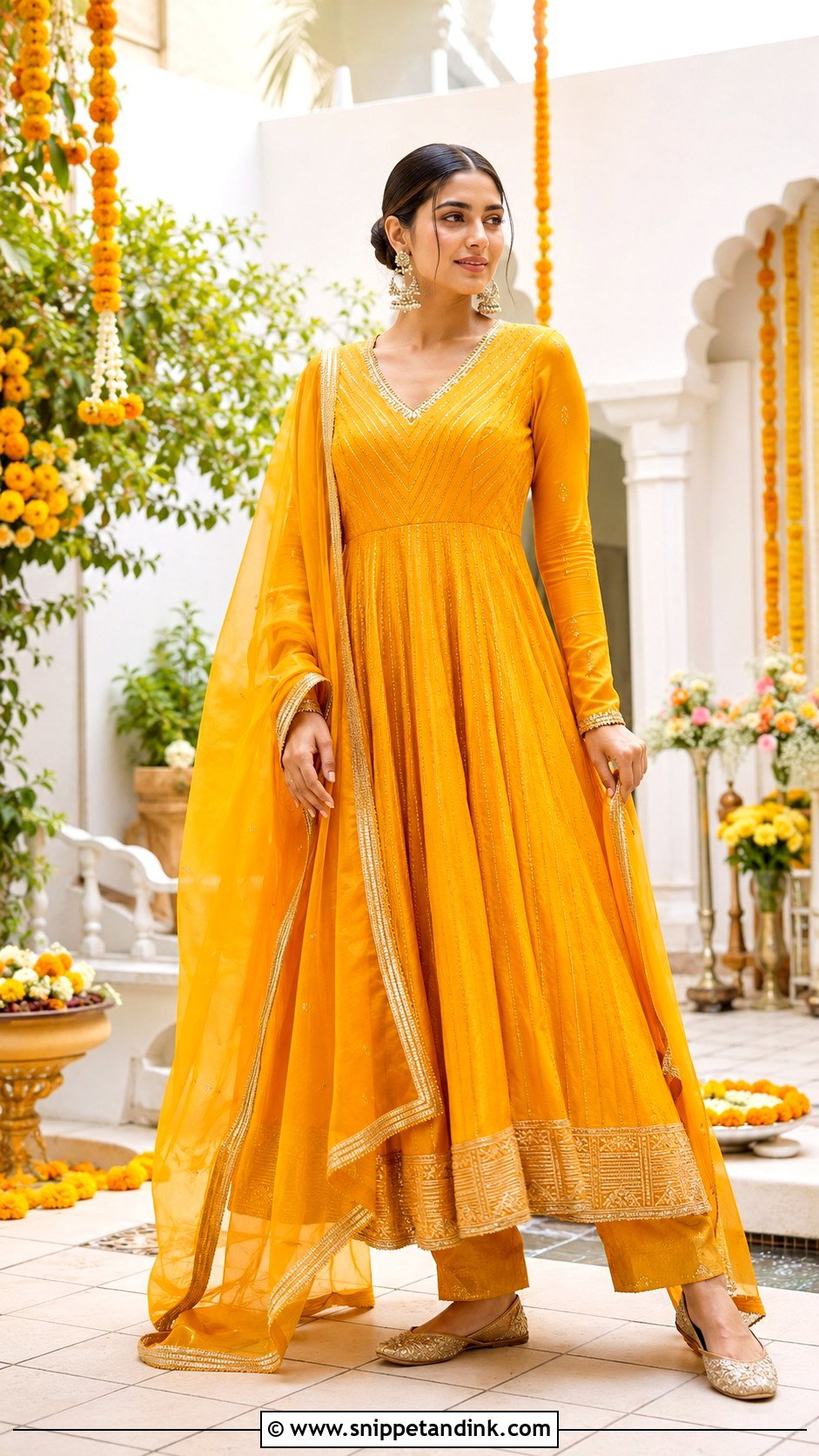
Marigold Anarkalis are what I suggest when a family wants one silhouette across several generations. Calf or ankle length in cotton silk, georgette or light Chanderi, with a fitted bodice and gently flared skirt, flatters most ages. Narrow pants, a sheer dupatta with a gota border and cushioned gold juttis complete it. Statement earrings are usually enough. A center-parted low bun or loose curls suit the shape. For bridesmaids, sisters and mothers, the trick is to vary the embroidery level and sleeve length by role rather than changing the color, which keeps group photos cohesive.
5. Yellow Kurta and Palazzo Set for Haldi
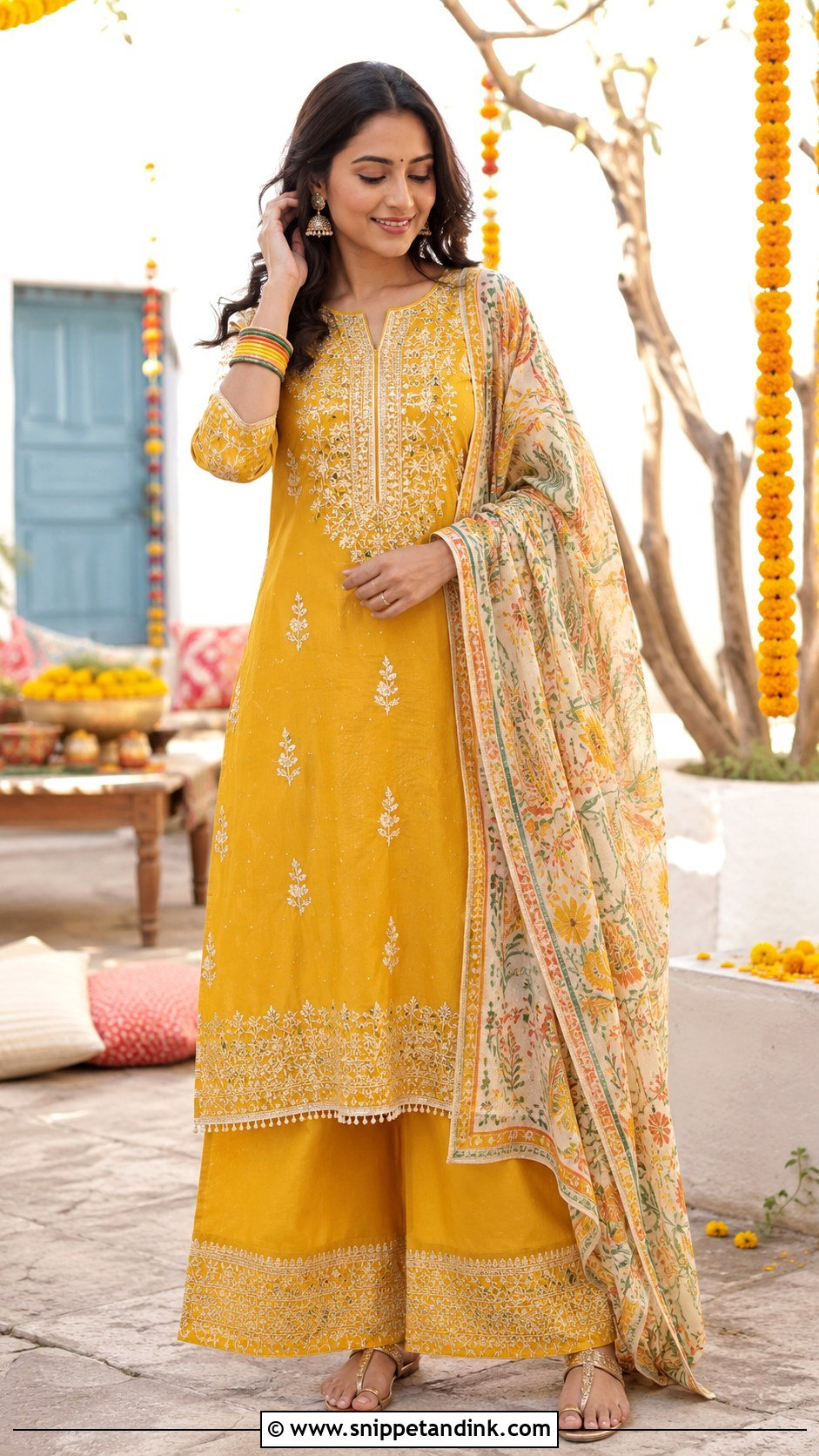
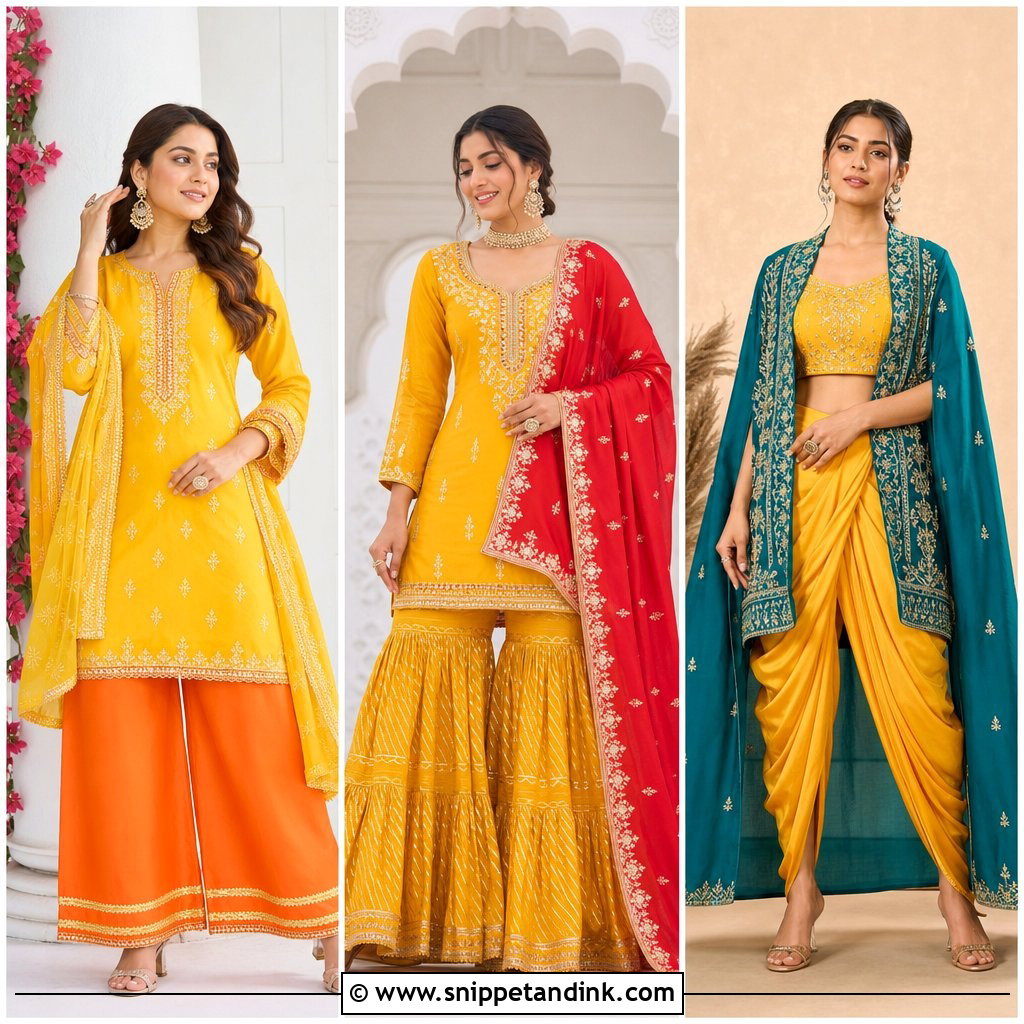
Kurta and palazzo sets are what I recommend for the bulk of guests at a warm outdoor haldi. Cotton, rayon and cotton silk breathe well. A straight or gently shaped kurta below the knee with matching wide-leg palazzos needs only small embroidered motifs or a patterned neckline to look festive. Drape a printed dupatta over both shoulders, then pin it to one side during the ceremony. Jhumkas, colorful bangles and flat sandals finish it, with a half-up style and light makeup. It flatters most ages and gets worn again, which guests appreciate.
6. Yellow Dhoti Pant and Cape Set for Haldi
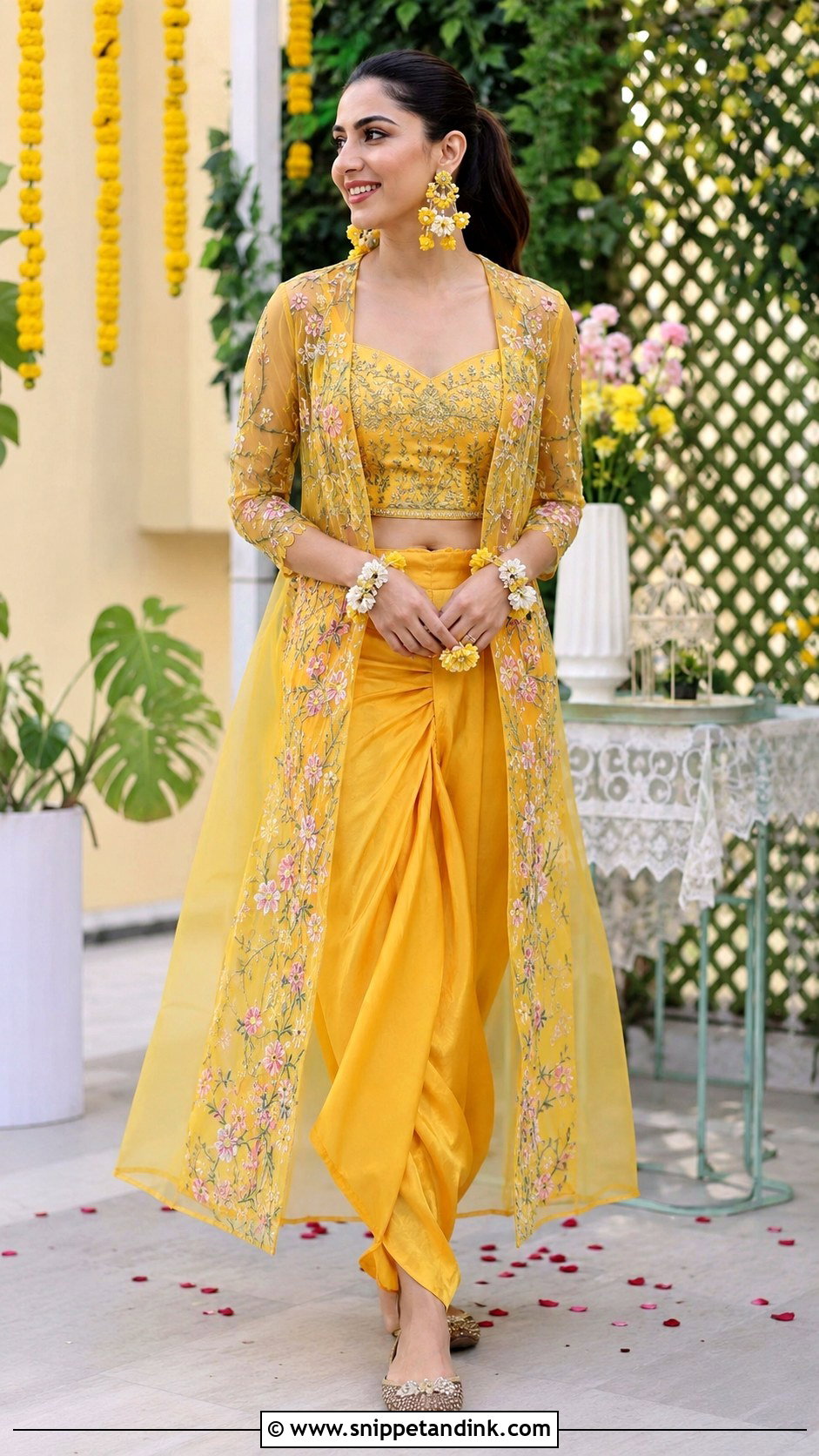
A dhoti pant and cape set keeps the haldi palette but adds a younger, fusion edge. Draped yellow dhoti pants with a fitted crop top or a modest waist-length blouse, plus a sheer floral cape instead of a dupatta, give movement without pinning. Keep the cape at knee or calf length; any longer and it trails through paste, water and the petals that cover the floor by the end. Floral earrings, a slim bracelet stack and embellished flats suit it, with a sleek ponytail. It’s a popular pick for younger brides and bridal parties who want something contemporary.
7. Yellow Bandhani Lehenga for Haldi
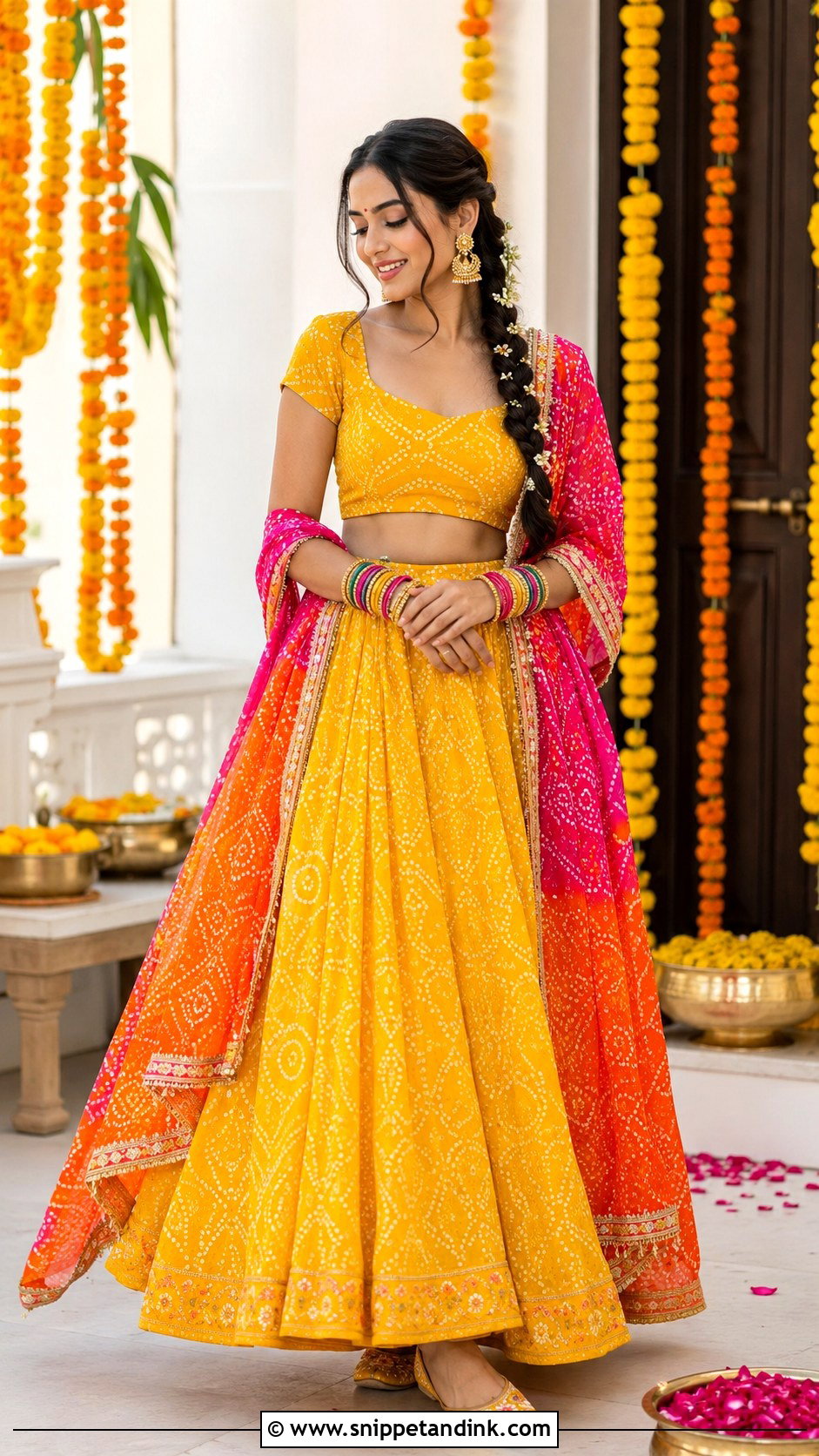
Bandhani is often requested by Gujarati and Rajasthani families, and it suits a theme because the dotted print reads clearly from a distance. Choose a yellow Bandhani skirt with small white dots and a simple matching or contrasting blouse. A red, pink, or orange Bandhani dupatta gives definition. Keep the lehenga light, with a soft lining and minimal volume, so sitting is easy. Gold jhumkas, colorful bangles, a small bindi and juttis suit it. Brides can add a floral maang tikka while guests keep jewelry minimal. It looks particularly sharp against a plain yellow-and-white decor scheme.
8. Yellow Pre-Draped Pant Saree for Haldi
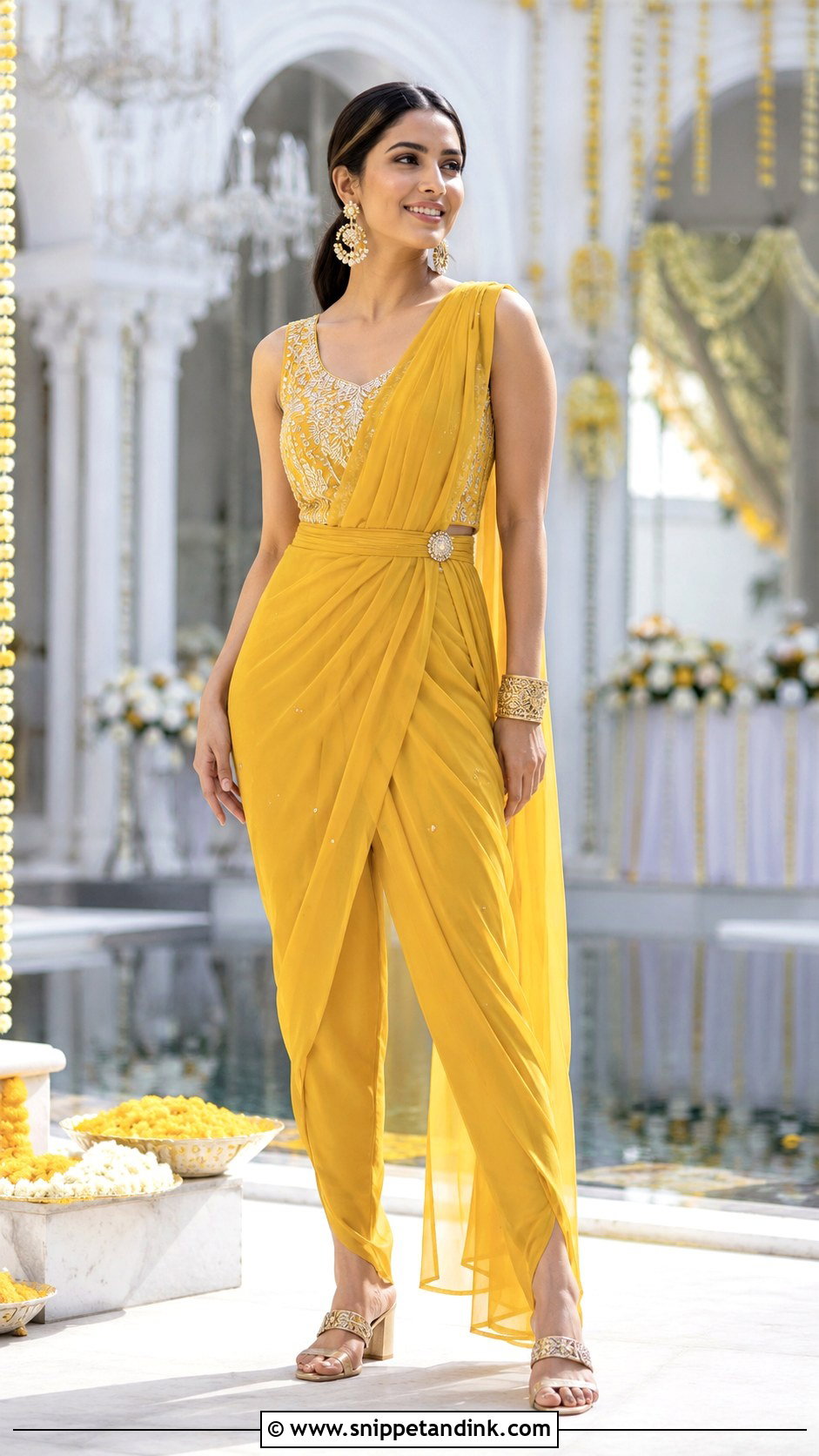
Do you love how a saree looks but dread re-pinning pleats between rituals? A yellow pre-draped pant saree gives the drape of a saree over tapered or fitted pants. Chiffon or georgette with light thread, mirror or shell work at the border keeps it light. A structured blouse with real support and coverage is essential, since you’ll be photographed from every side. Sculptural earrings, metallic block heels or dressy flats and one statement cuff finish it, with a sleek low ponytail. I suggest it to brides who plan to dance and move between guest groups.
9. Yellow and Orange Ombre Gharara for Haldi
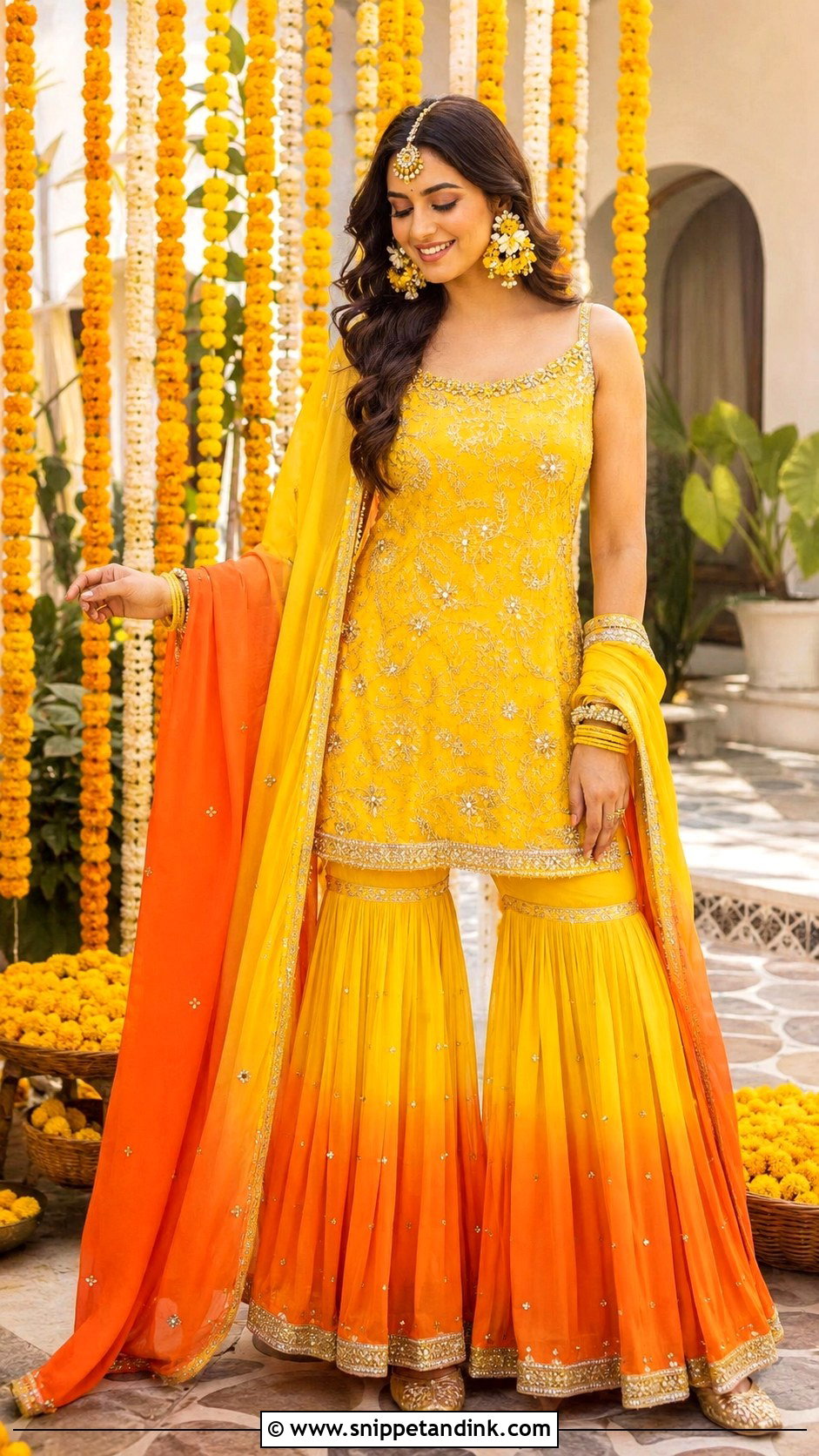
Ombre is the easiest way to bring orange into a yellow theme without breaking it. A short yellow kurti with subtle embroidery over gharara pants that shade from golden yellow to orange at the hem gives a sunset effect that shows up well outdoors. The dupatta can carry both colors through a shaded finish or border. Since the lower half carries the drama, keep the jewelry focused: floral studs, a small maang tikka, a few bangles and orange or gold juttis. Loose waves or a side braid with tiny flowers suit it. It pairs naturally with marigold decor and suits brides or close family who want brighter color without heavy work.
10. White Kurta With Yellow Dupatta for Haldi
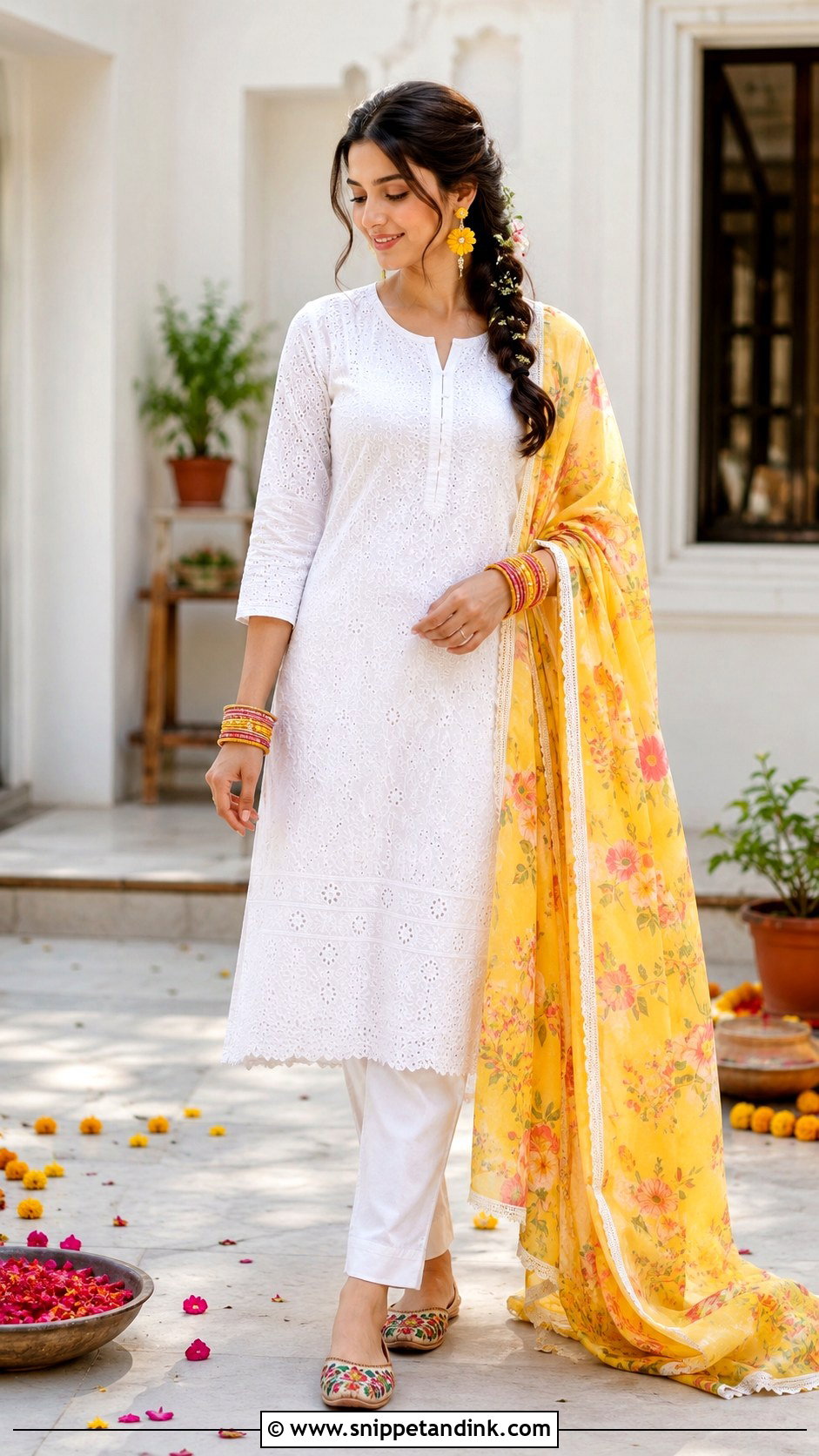
White kurta sets with yellow dupattas are my standard suggestion for guests on a budget. Cotton or chikankari with straight pants or palazzos stays cool, and a yellow dupatta with floral print, tassels or a gota edge makes the theme clear. Yellow earrings, colorful bangles and embroidered juttis repeat the accent. A low braid, ponytail or loose curls keep it natural. Be realistic about the white, though. Guests who join in applying paste will get marked, so this works for people who can tolerate a stain or will keep their distance from the bowl.
11. Lime Green Lehenga for Haldi
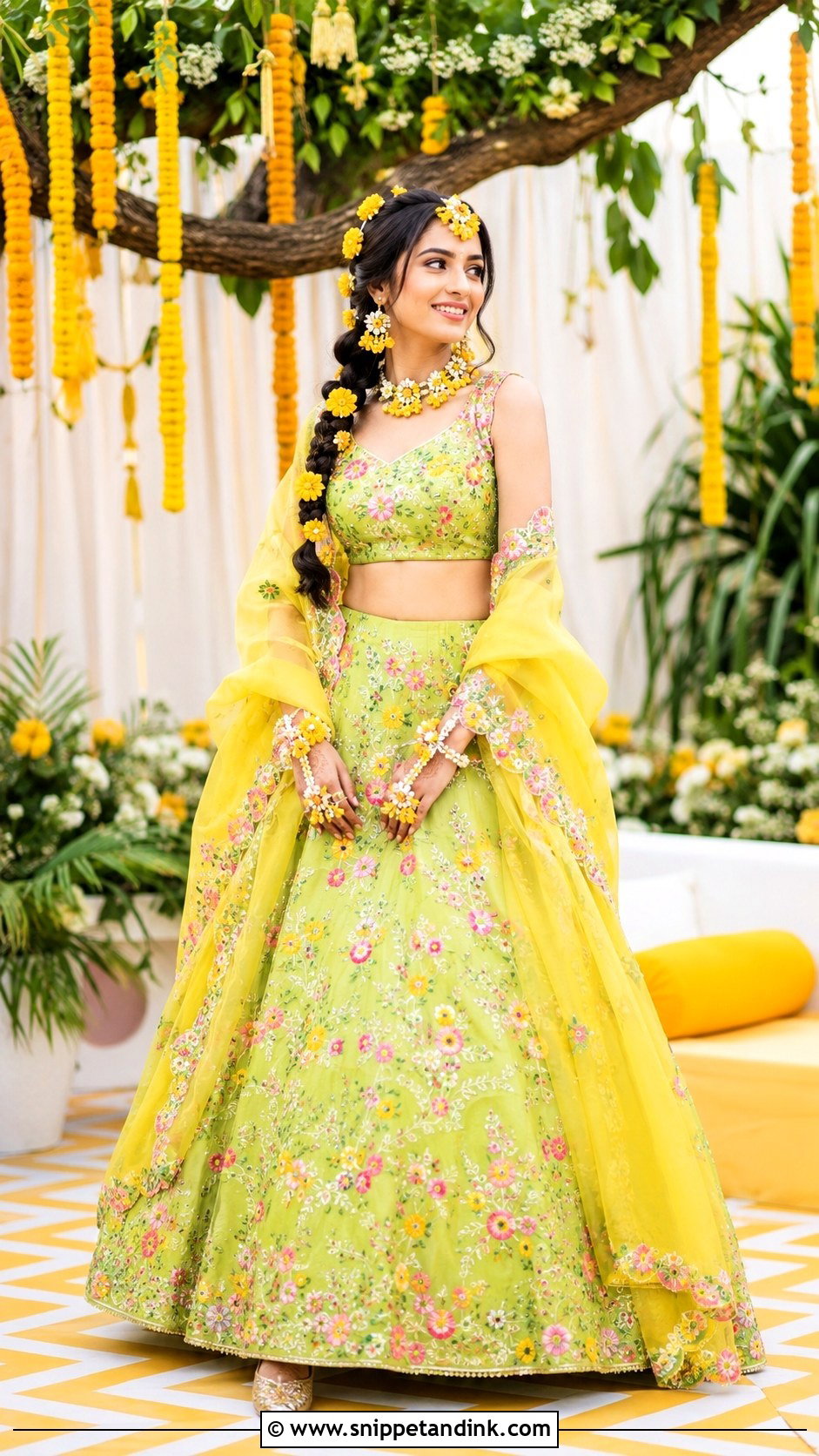
If every guest is in yellow and orange, the bride in lime green is impossible to miss in photos. A light lime lehenga with floral embroidery touched with yellow, pink or ivory, a fitted blouse and a yellow organza dupatta link the contrast back to the theme. Floral earrings, a simple necklace and gold juttis keep it coordinated, and a braid with yellow flowers brings both colors close to the face. Sisters can wear it too, with lighter embroidery and fewer accessories than the bride, so the hierarchy stays clear.
12. Pink and Yellow Lehenga for Haldi
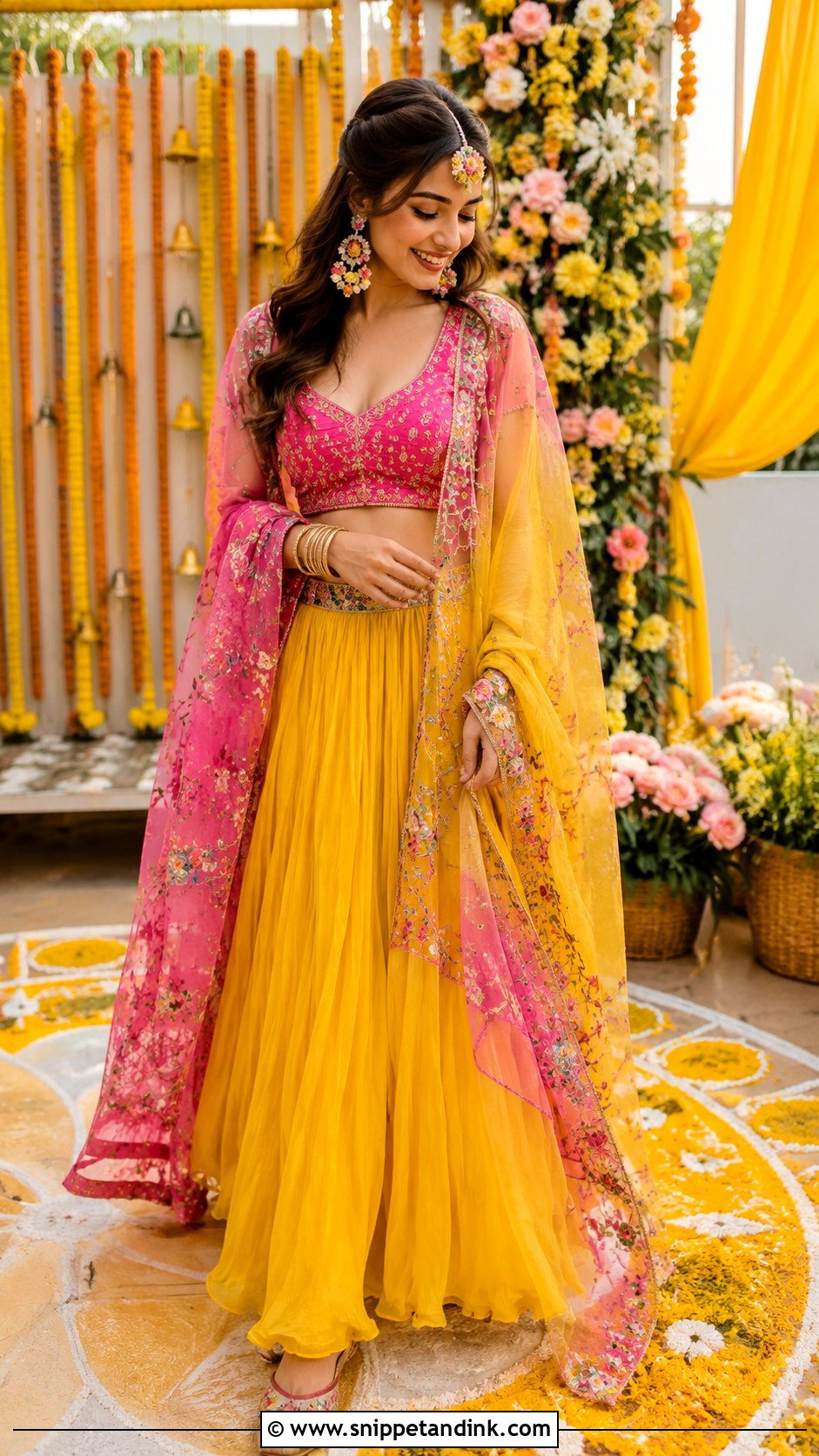
Pink with yellow is the most photographed combination I see at haldis. A yellow flared skirt with a pink blouse and a dupatta carrying both colors keeps it playful. If most attendees are in yellow, flip it: a pink skirt with yellow flowers helps the bride stand apart. Soft fabrics and few skirt layers keep it manageable on the floor. Floral jewelry in pink, white and yellow, gold bangles and embroidered juttis suit it, with fresh makeup and a half-up style. It reads clearly against plain ivory, green or marigold-covered backdrops.
13. Yellow Floral Co-Ord Set for Haldi
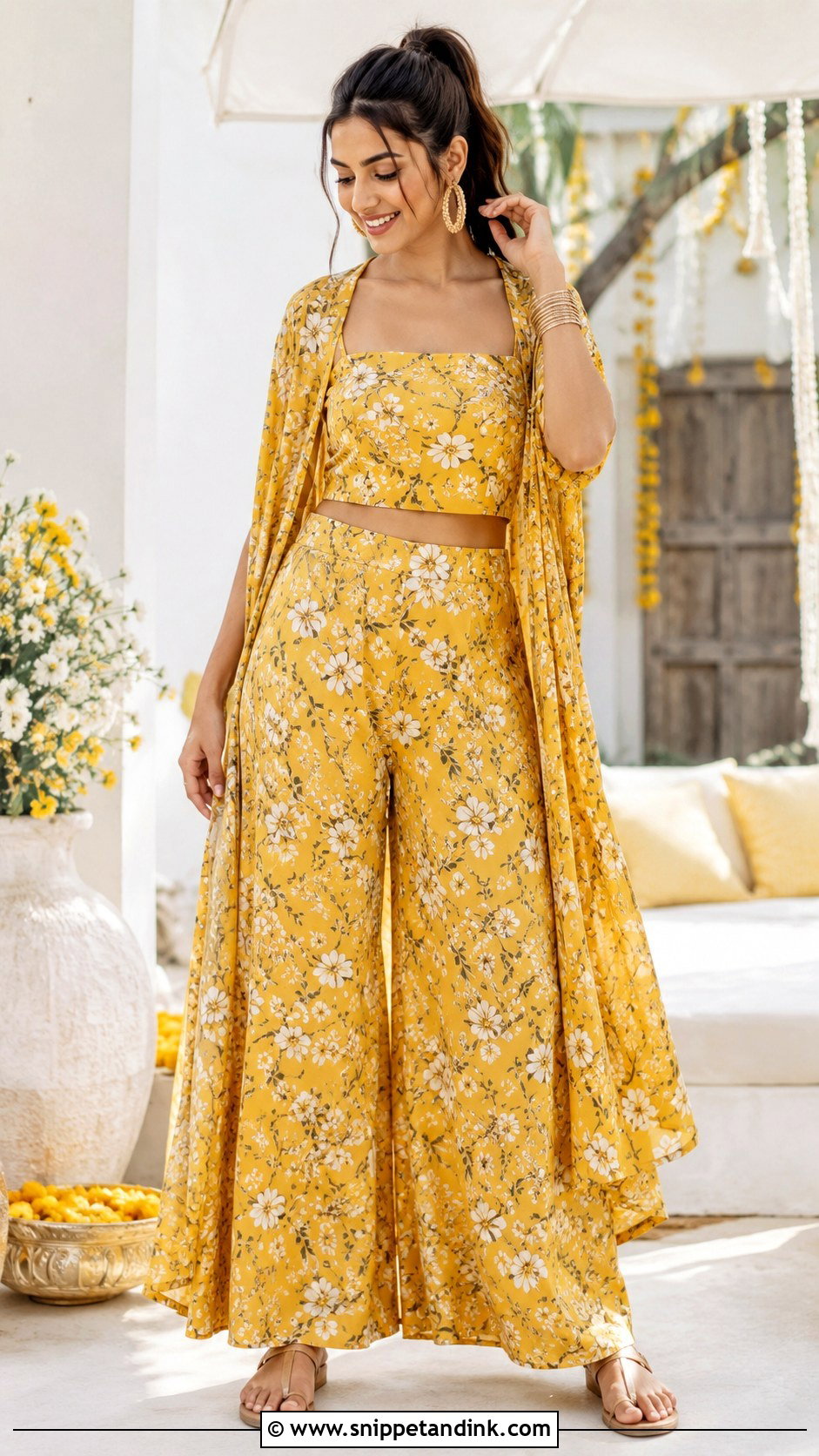
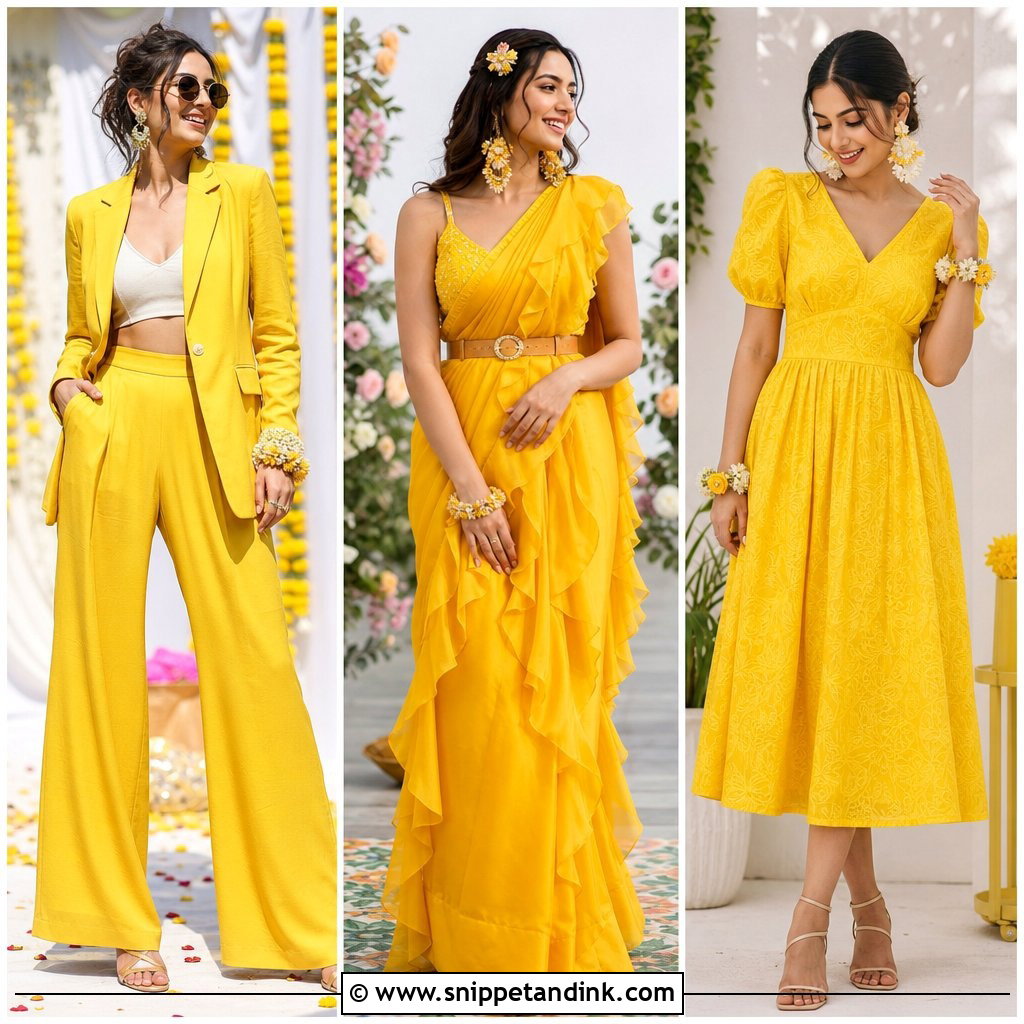
Co-ord sets are what I suggest for small home haldis, destination event, or poolside venue setups where a heavy lehenga would look and feel out of place. A printed crop top or waist-length tunic with matching wide-leg pants, plus a light cape or short jacket, looks intentional with no styling effort. Keep yellow dominant and let white, green, pink or orange flowers add contrast. Hoops or floral studs, stacked bangles and neutral sandals suit it, with a high ponytail or loose waves. The pieces split up and get worn separately afterward.
14. Yellow Chikankari Suit for Haldi
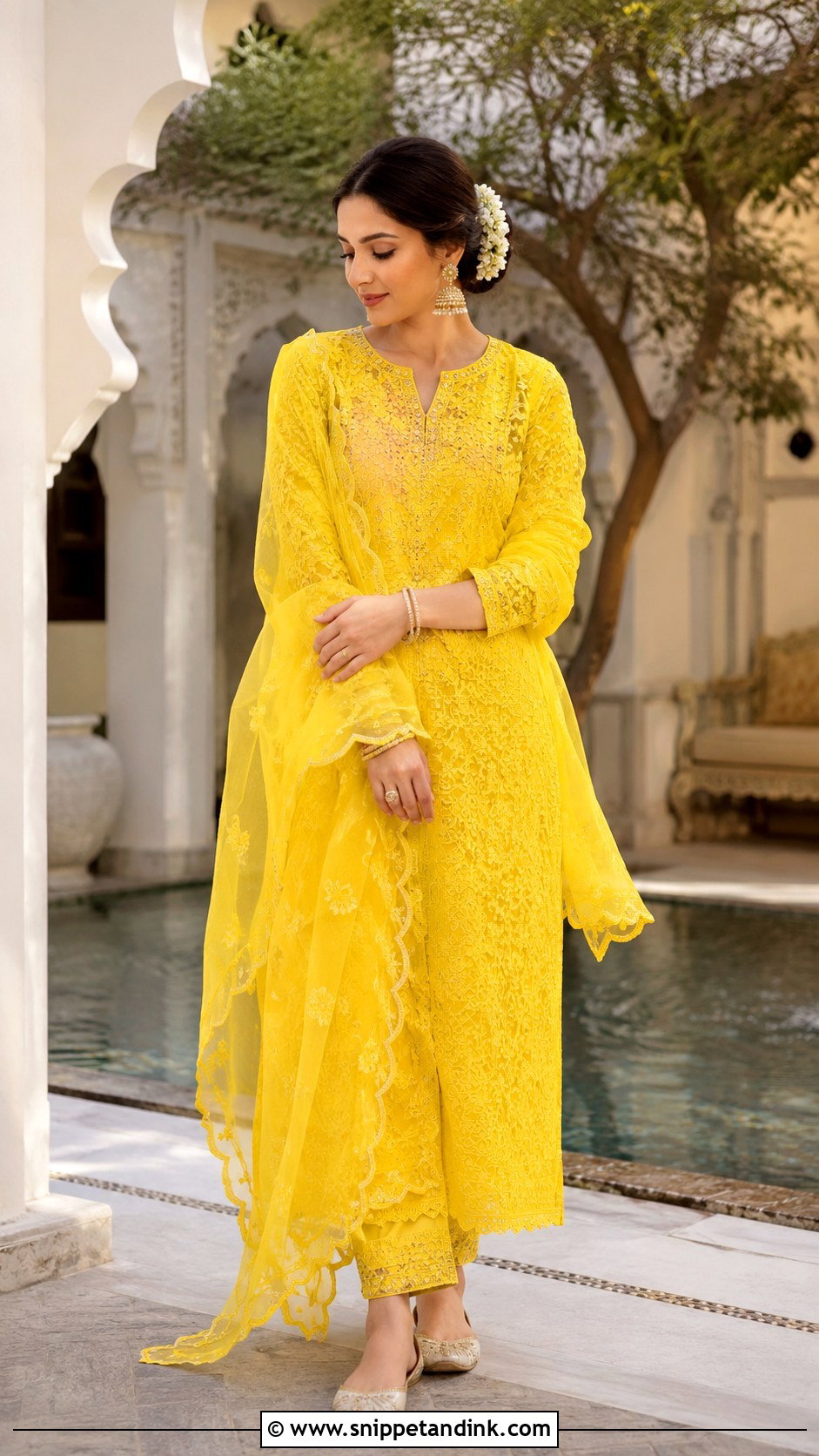
Chikankari brings texture rather than color, so a yellow chikankari suit sits quietly inside a theme without fighting the decor. A breathable straight kurta with tonal threadwork, matching pants and a sheer dupatta with subtle gota or scalloped edging is enough. Pearl jhumkas, slim bangles and ivory or gold juttis suit it, with a neat low bun and a small cluster of white flowers. Choose a relaxed fit across the shoulders and waist. Cotton chikankari is the coolest option for a crowded indoor function in warm weather. It suits mothers, sisters, guests and understated brides.
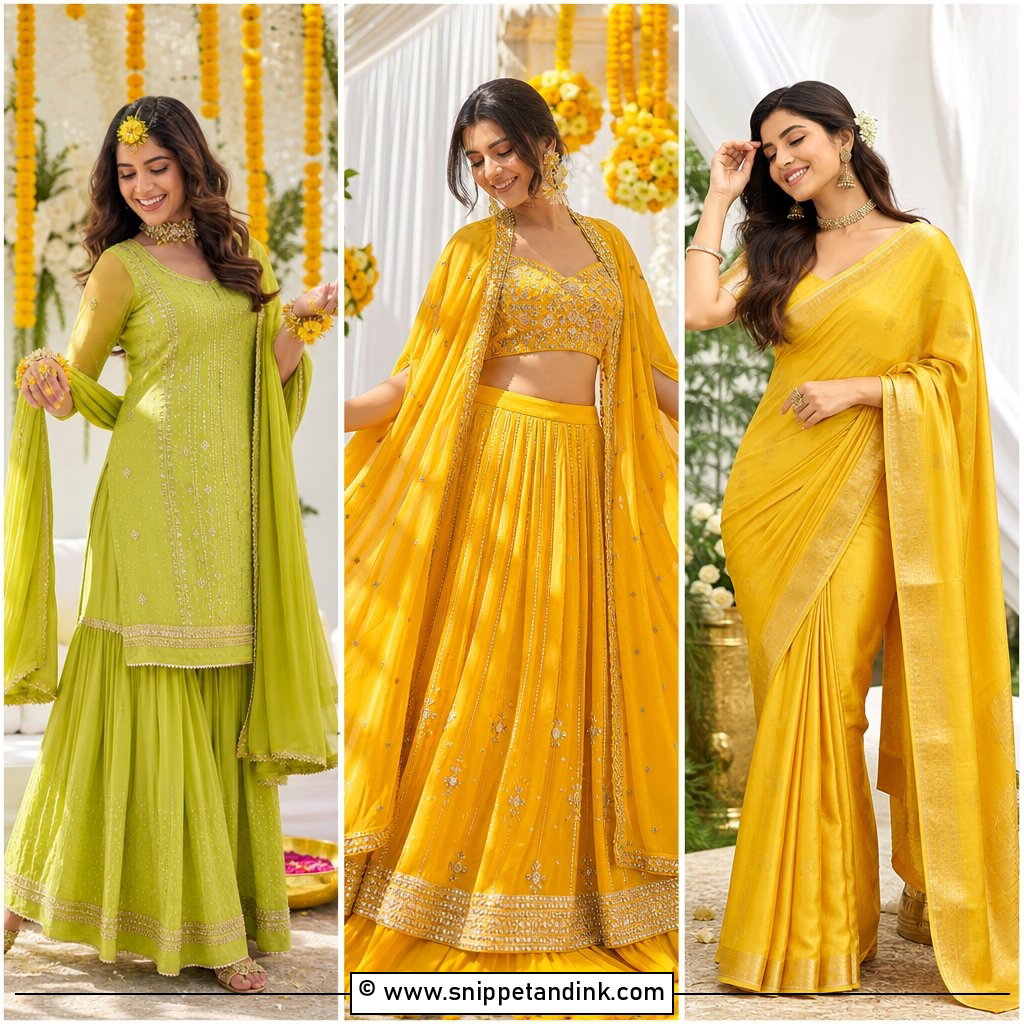

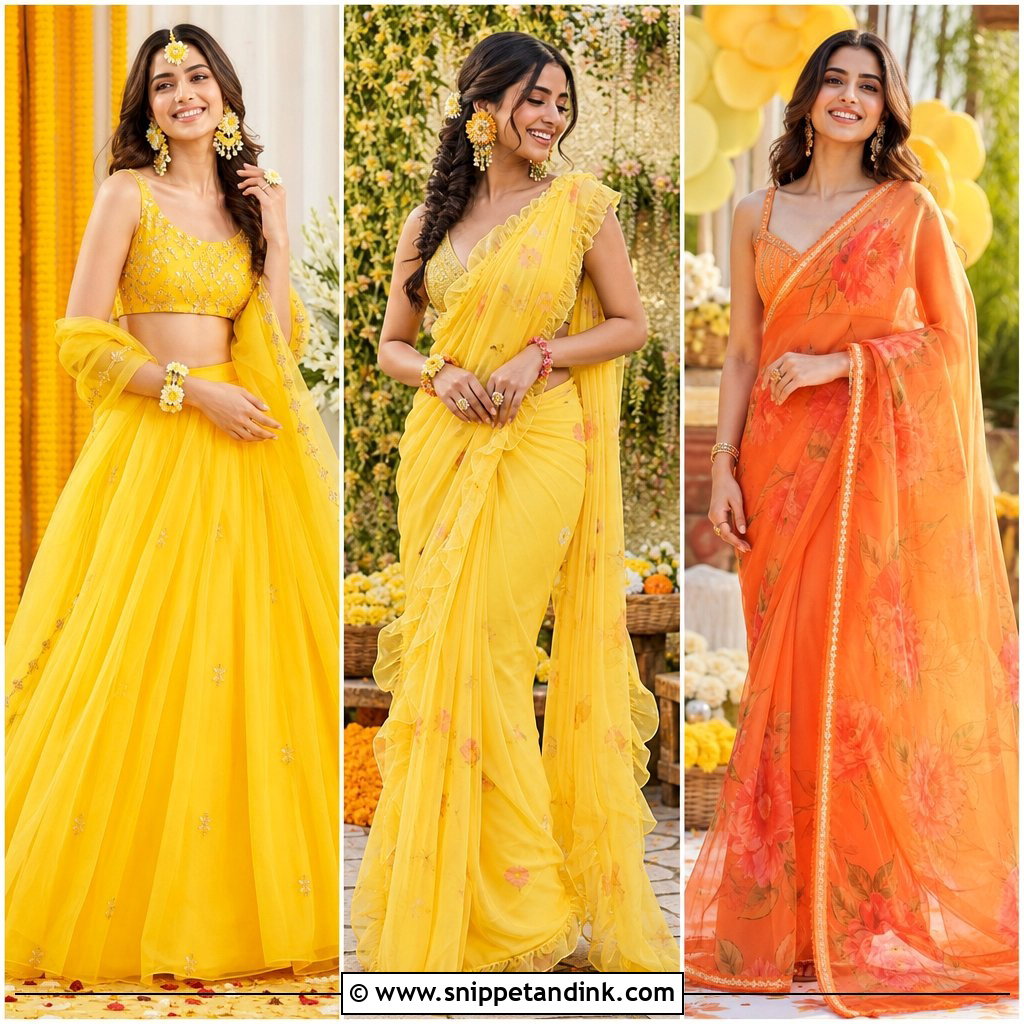
15. Yellow Mirror Work Lehenga for Haldi
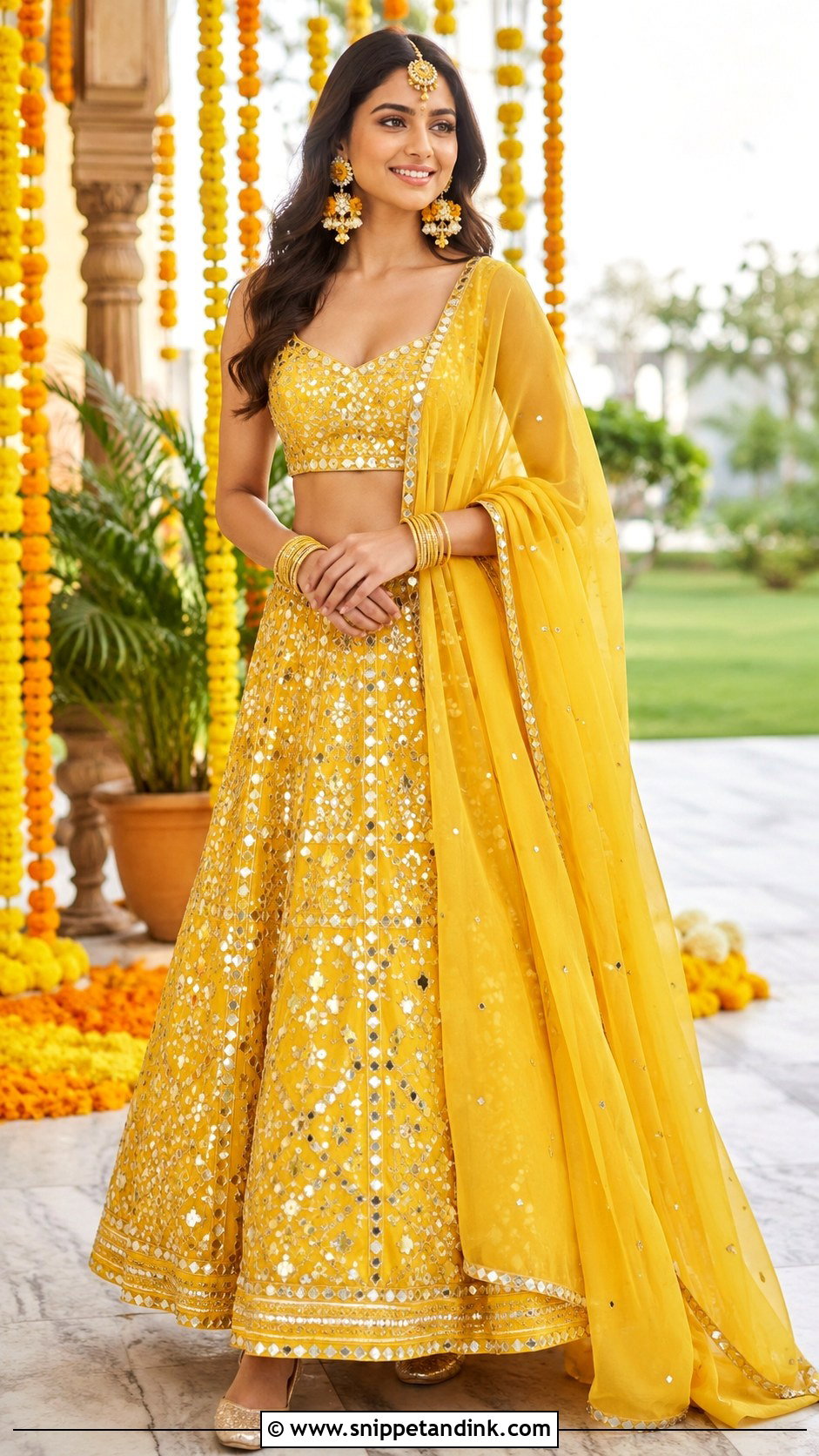
Mirror work catches daylight and gives sparkle without crystals, which are heavy and snag on everything. Choose a light yellow lehenga with spaced mirror motifs, a coordinated blouse and a plain chiffon dupatta. Pin the dupatta at the shoulder and wrist so it stays put. Because the fabric already reflects light, accessories stay simple: floral earrings, a small maang tikka, slim bangles and neutral juttis. A polished braid or center-parted ponytail suits it. It works for brides and close relatives. For guests, a mirror-work kurta set with fewer mirrors gives the same feel at a lower level.
16. Yellow Maxi Dress With Dupatta for Haldi
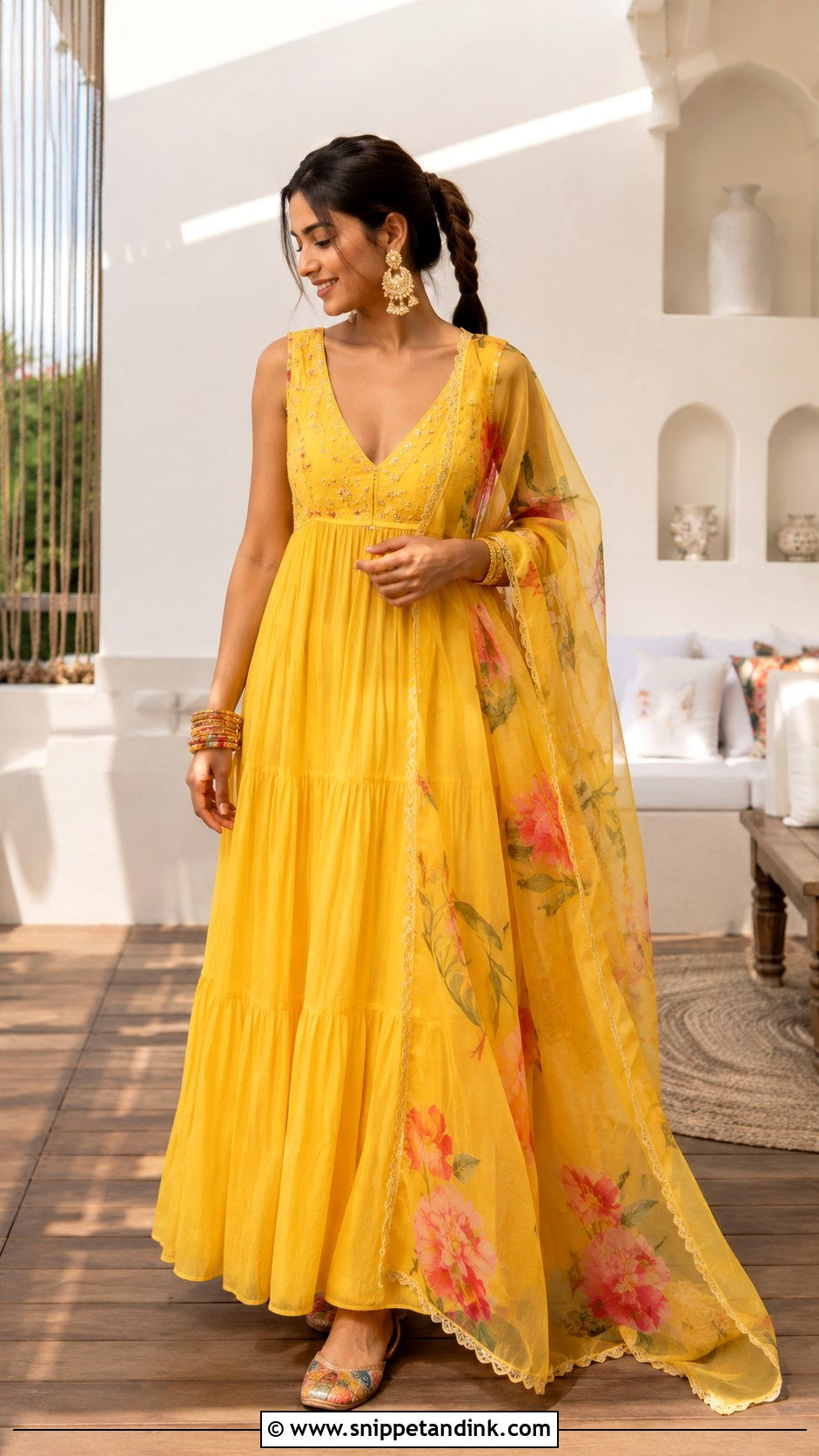
Not every guest is comfortable in Indian occasion wear, and a yellow maxi dress with a dupatta is my go-to suggestion for them. An ankle-length dress with an empire waist, tiered skirt or gently shaped bodice, plus a floral organza dupatta over one shoulder, connects the western shape to the celebration. Statement jhumkas, bangles and embroidered flat sandals finish it, with a braided ponytail or natural curls. It’s also comfortable for pregnant guests, given the flexible waist. Keep the hem at the ankle, not the floor, so it stays clear of water, petals and crowded seating.
17. Yellow Peplum Sharara for Haldi
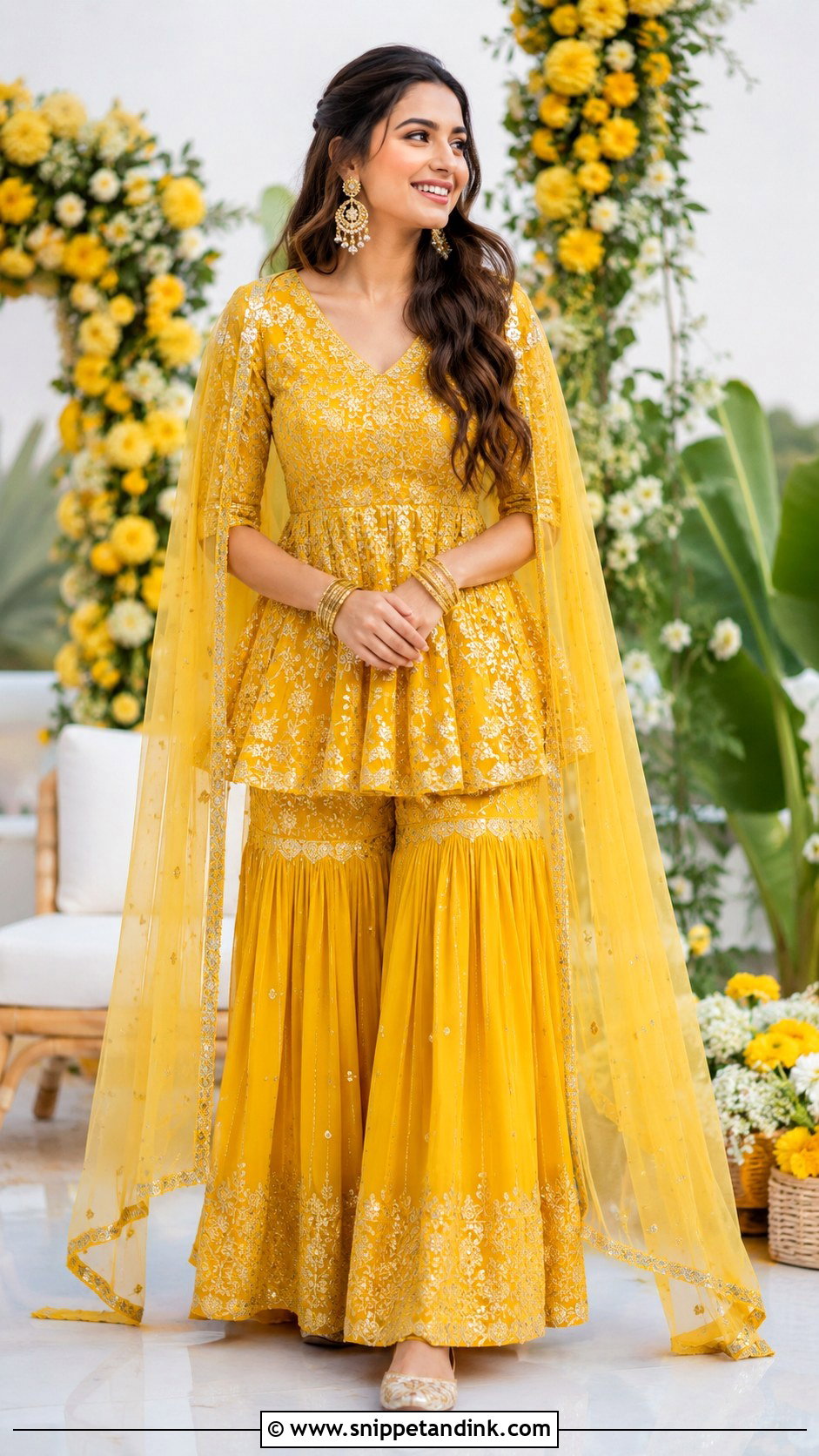
A peplum top over flared shararas balances structure and movement well. Choose a yellow peplum with a shaped neckline, elbow sleeves and light floral or gota work, with flowing shararas and a sheer dupatta pinned behind the shoulders like a cape. The structured top balances the pant volume and flatters many body shapes. Drop earrings, gold bangles and cushioned juttis finish it, with a high ponytail or side-swept waves. It’s festive enough for a bride’s sister and comfortable enough for dancing. A bride wearing it can add floral jewelry and richer neckline embroidery to mark her role.
18. Yellow Ruffle Saree for Haldi
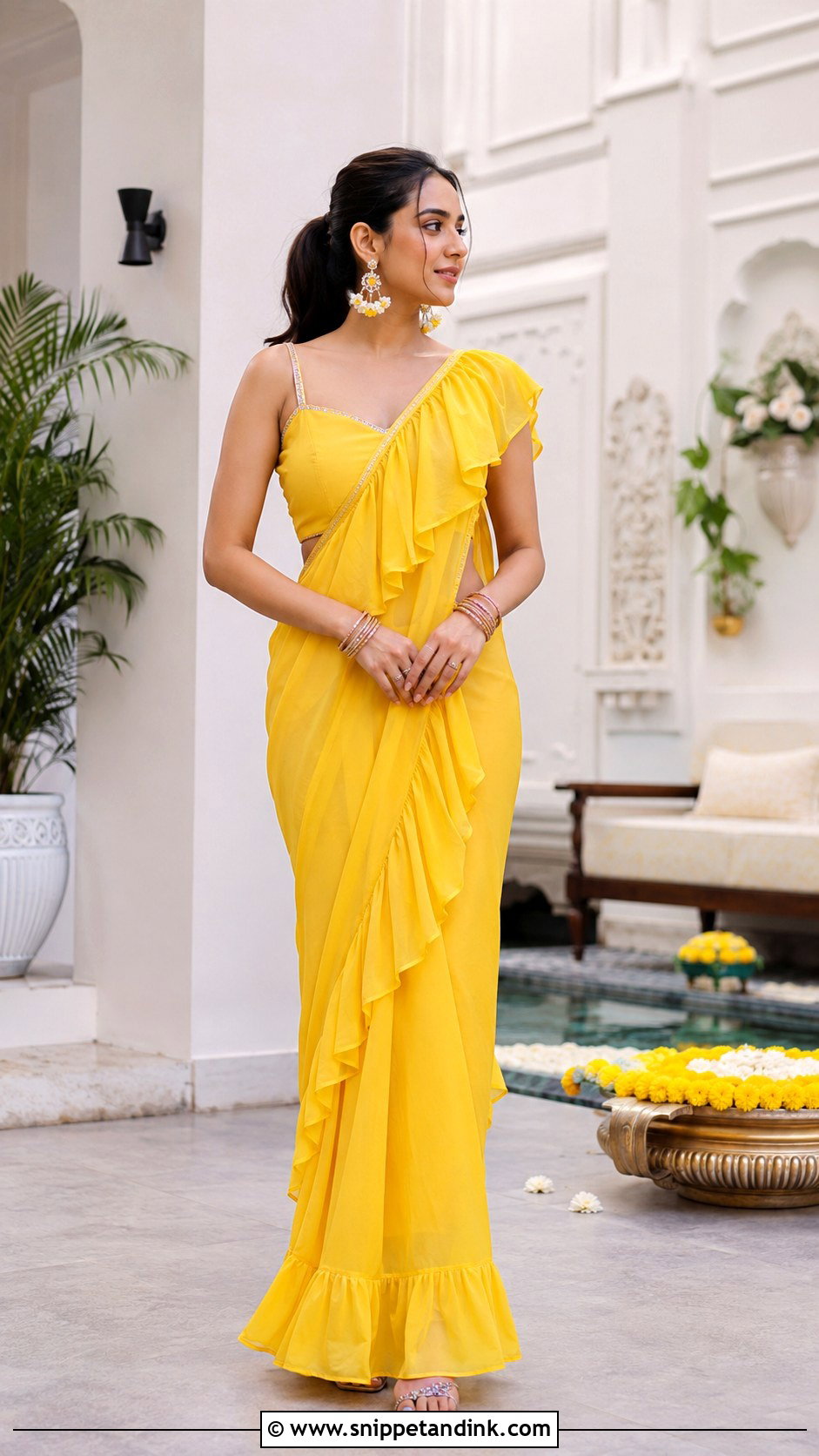
Ruffle sarees suit a polished venue more than a casual courtyard. A pre-stitched or easy-drape yellow saree with controlled ruffles along the pallu and hem, plus a simple fitted blouse, looks playful without overload. An elaborate blouse competes with the ruffles, so keep it plain. Secure the waist and shoulder well so the ruffles don’t shift. Floral earrings, one set of bangles and block heels or embellished flats finish it, with a smooth bun or sleek ponytail. For a smaller gathering, I’d go with light georgette and minimal ruffles over a dramatic floor-sweeping design.
19. Mustard Silk Saree for Haldi
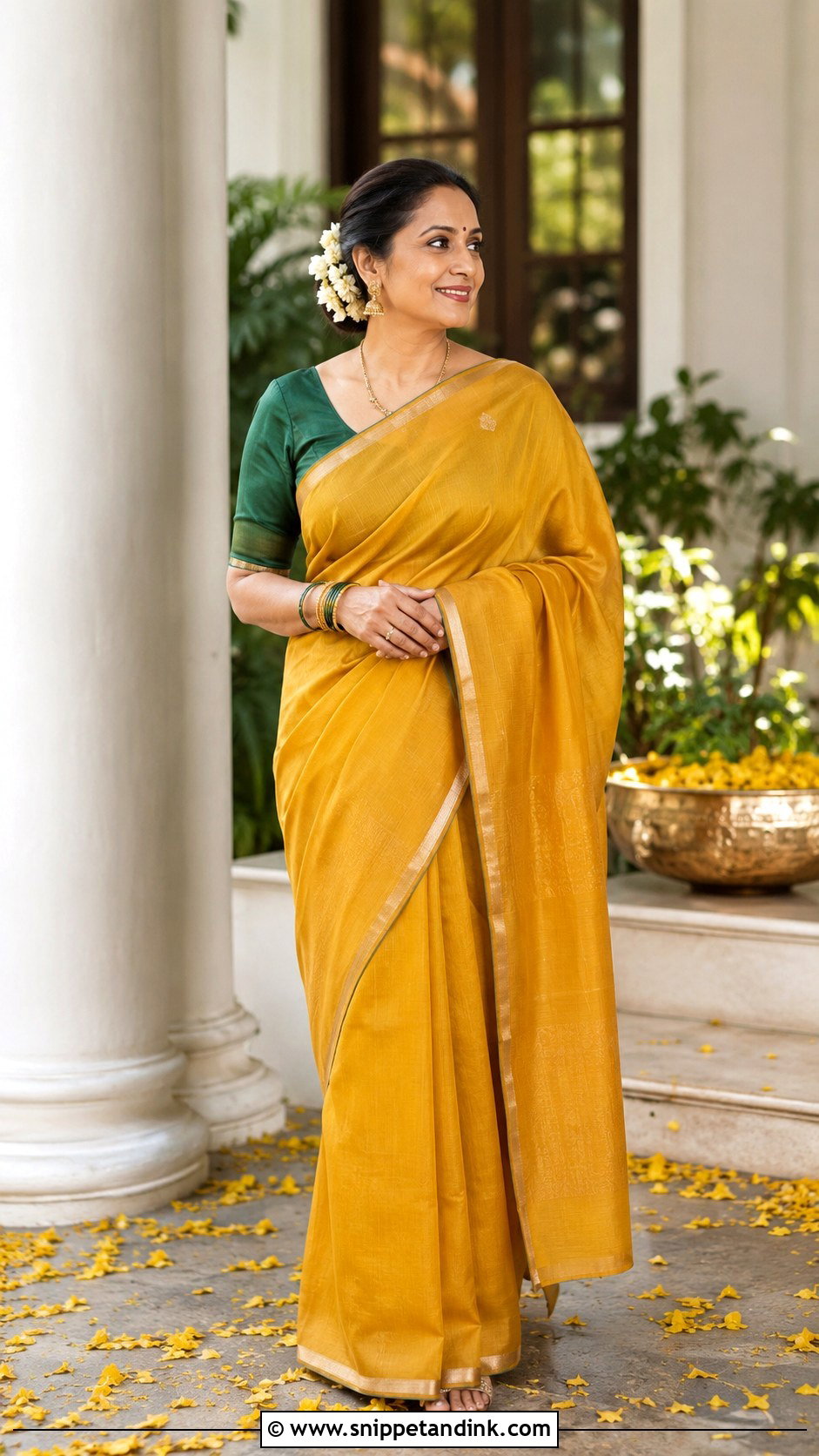
A mustard silk saree suits mothers, married sisters and brides who want the haldi to feel traditional. I’d choose light silk or a silk blend with a narrow gold border over a heavy weave. A green, pink or maroon contrast blouse gives definition in photos. Gold earrings, glass bangles, a small bindi and dressy flats complete it, with a low bun and fresh flowers. Keep the pleats narrow and pin the pallu with hidden pins. Silk needs more care around paste and water than cotton, so this fits best at an orderly, formal ceremony rather than a playful free-for-all.


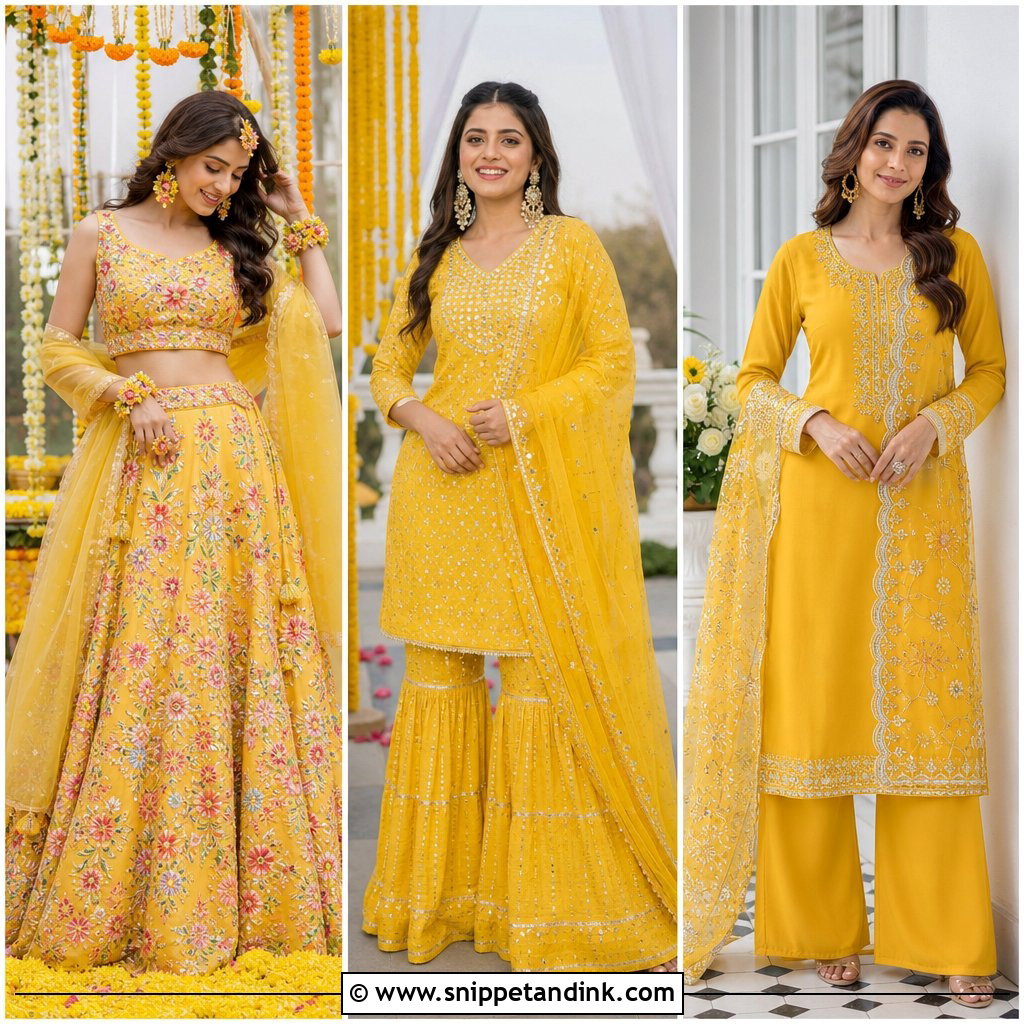
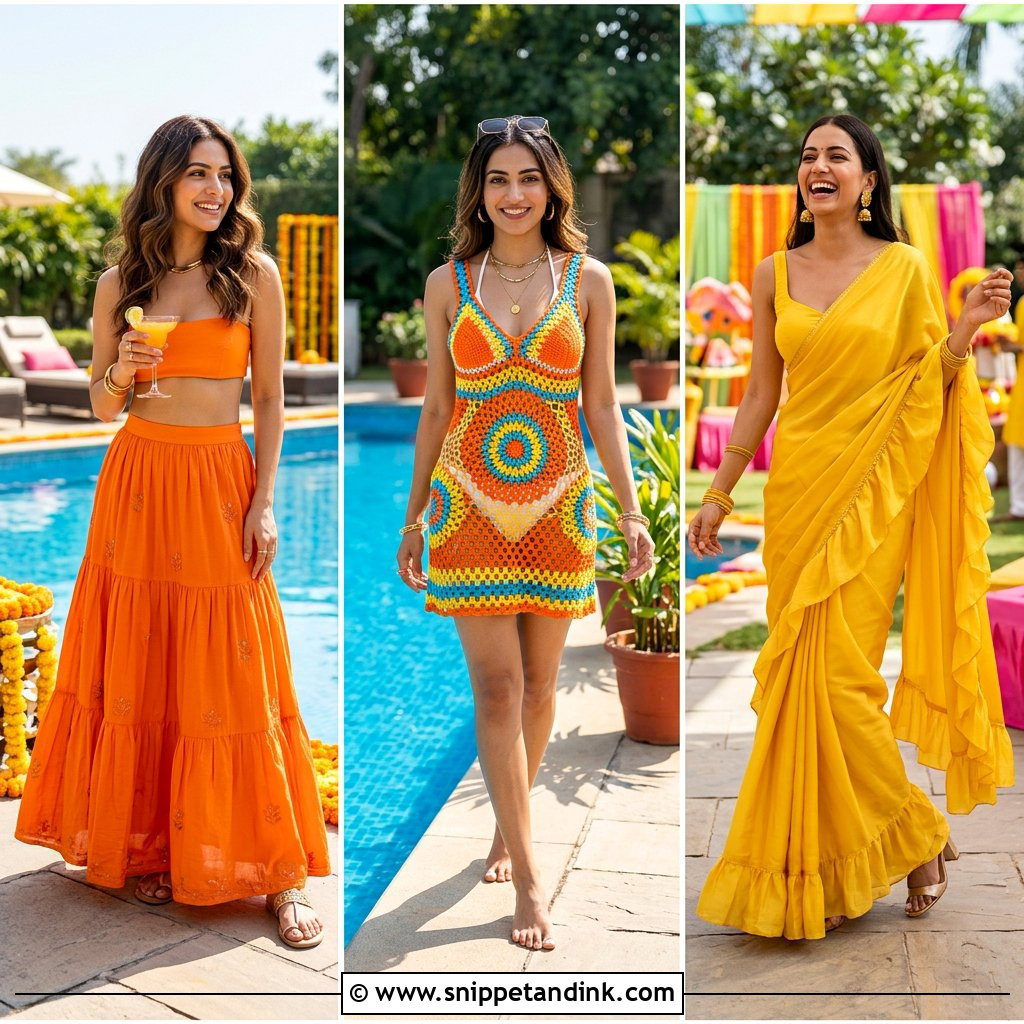
20. Yellow A-Line Kurta Set for Haldi
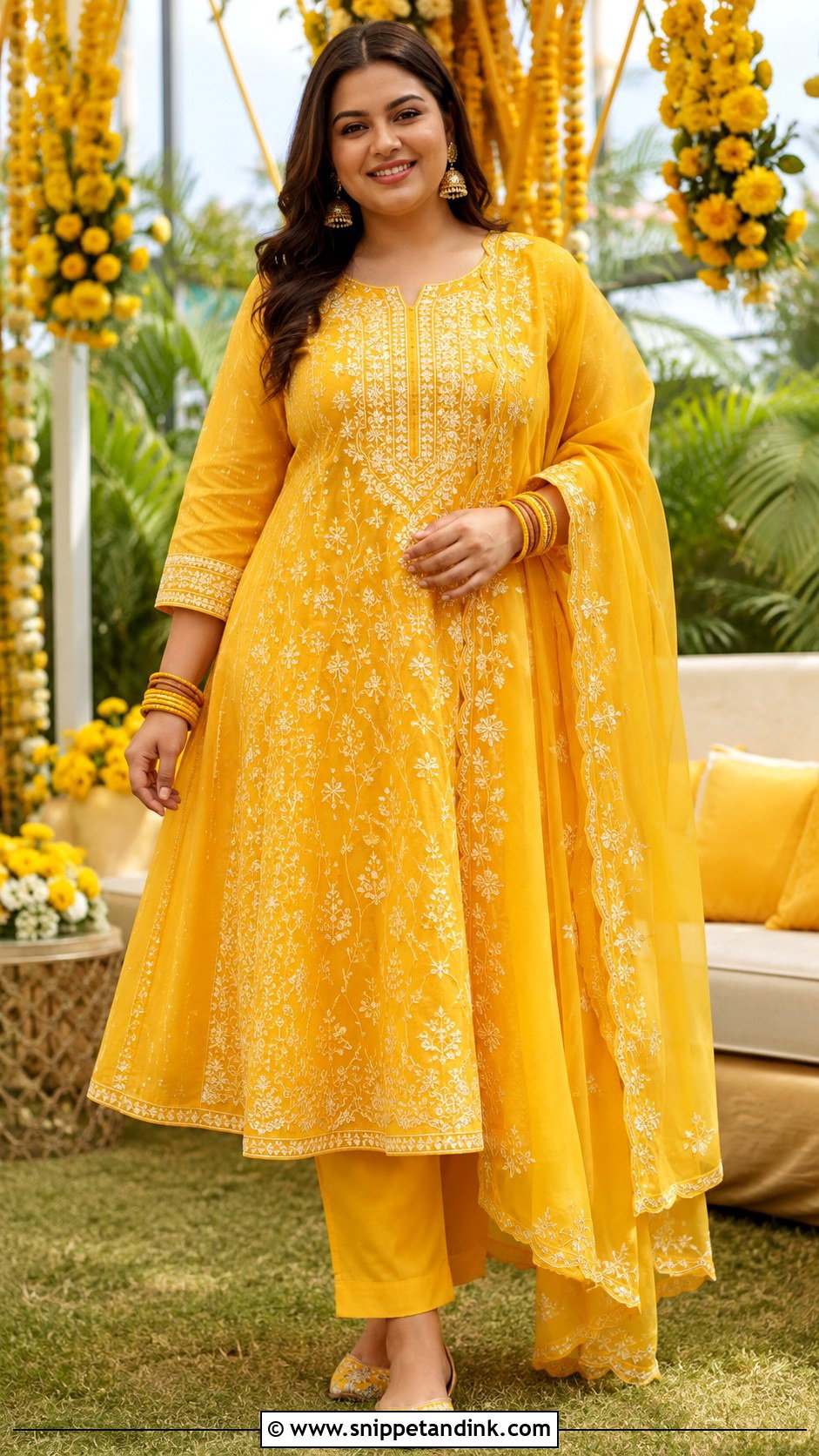
An A-line kurta set is the shape I recommend when a family wants one outfit that works across sizes and ages. A knee or calf length yellow kurta that widens gently from the bust, with straight pants or relaxed ankle trousers, creates a long, balanced line. Vertical embroidery, a defined neckline and side slits keep it from looking bulky. A light dupatta over one shoulder, medium earrings, stacked bangles and supportive juttis finish it. Petite wearers can go shorter and taller women longer. It suits guests who want polish and freedom of movement.
The Hour After the Paste Comes Off
Haldi is often scheduled the morning before the mehendi or sangeet, and people forget how long it takes to get clean. Turmeric tints skin, nails and hair, and the yellow on skin can linger for a day or two. When I build the day’s timeline, I leave at least two hours between the end of the haldi and the next function’s start for the bride and immediate family.
What I set up at the venue
- A changing room or bathroom with old towels the family doesn’t mind staining.
- Labeled bags for stained outfits, so silk doesn’t end up crushed under damp cotton.
- A quick rinse area outdoors, even a hose and a bucket, to get the worst off before people walk through the house.
- Gentle cleansers and a moisturizer for the bride. Scrubbing hard reddens skin before the evening’s makeup.
For the bride’s makeup artist, a heads-up matters too. A faint yellow tint on the skin changes how foundation sits, and they’ll want to know before color-matching for the evening.
One Palette, Many Outfits, No Clashing
A haldi theme works when everyone’s outfit can handle paste, sun and a low seat. Yellow is the base, and mustard, ivory, lime, orange, pink and florals all fit within it when the family agrees on a palette. Let your role set the level of embellishment. Brides can carry the most detail, while guests do best in kurta sets, light sarees or co-ords. Secure draping, breathable fabric, washable finishes and comfortable shoes do more for the day than anything else. From silk sarees to dhoti sets, any of the twenty looks above can fit the theme once those basics are in place.
You'll Like These Ideas:





Leave a Reply