
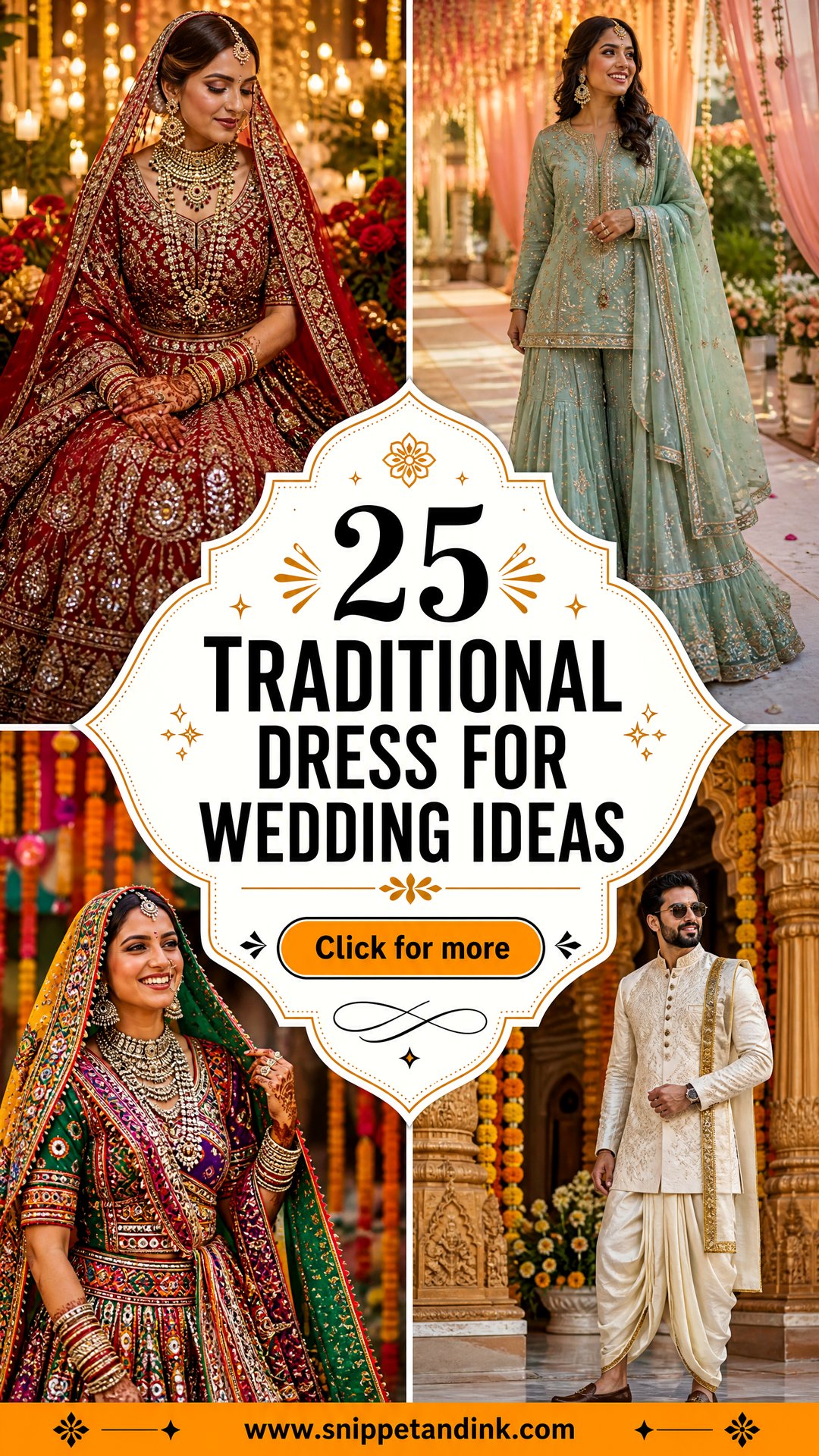
Traditional wedding clothes carry meaning that a Western gown usually doesn’t. A red saree can say ‘bride’ before anyone sees your face, and cream with a gold border can say Kerala to a whole room. When I style someone for a South Asian wedding, the first conversation is never about the garment. It’s about her role, the family’s customs and which function she’s dressing for. The 25 outfits below cover sarees, lehengas, regional drapes and suits for brides, relatives and guests. Sarees, lehenga cholis and Anarkalis are the safest common ground, but expectations shift by region and by event, so read the invitation and ask the hosts about colors, coverage and formality before you buy anything. Guests, stay well clear of the bride’s palette.
Blouse Fittings Start Earlier Than You Think
Almost every outfit below depends on a blouse, choli or kurta stitched to your body, and that is where most last-minute panic comes from. Good tailors get booked solid in wedding season, and a heavily embroidered blouse can take weeks once the work is done by hand. I tell brides to buy the fabric first and get it to the tailor at least two months out; guests can usually manage with four to six weeks. Plan on two fittings, and leave a gap between the last fitting and the wedding for one more round of small fixes.
Take these to the first fitting so the tailor isn’t guessing:
- The saree or dupatta itself, so the blouse color and border placement can be matched in daylight.
- The bra or padding you’ll wear on the day, since a change of underwear changes the whole fit.
- Your heaviest necklace, to set the neckline depth so the pendant doesn’t sit on bare skin or on a seam.
- A photo of the drape you want, because a Nauvari or Bengali drape needs a different sleeve and back than a standard Nivi style.
Ask for extra seam allowance at the sides. Weight shifts in the weeks before a wedding, and I’d rather let a blouse out by a centimeter than start again.
Sitting Cross-Legged Through a Three-Hour Ritual
Many traditional ceremonies happen on the floor or on low seating, and that changes what you can wear. A tight mermaid lehenga or a pre-stitched saree with no ease at the knee will fight you every time you sit. At a trial, I have clients sit cross-legged for ten minutes, stand up without help, and walk a slow circle. If the pleats pull loose or the skirt rides up, we fix the drape or the pinning before the day, not during the vows.
Silk doesn’t breathe like cotton, and a heavy lehenga under ceremony lights gets warm quickly. Wear a cotton underskirt, keep a small fan in the bag, and plan a short break between rituals to loosen the waist if you need it. I also pack a pin kit for every client: a strip of safety pins in two sizes, a few bobby pins for the dupatta, and a small pair of scissors for loose threads.
1. Red Banarasi Saree Wedding Look
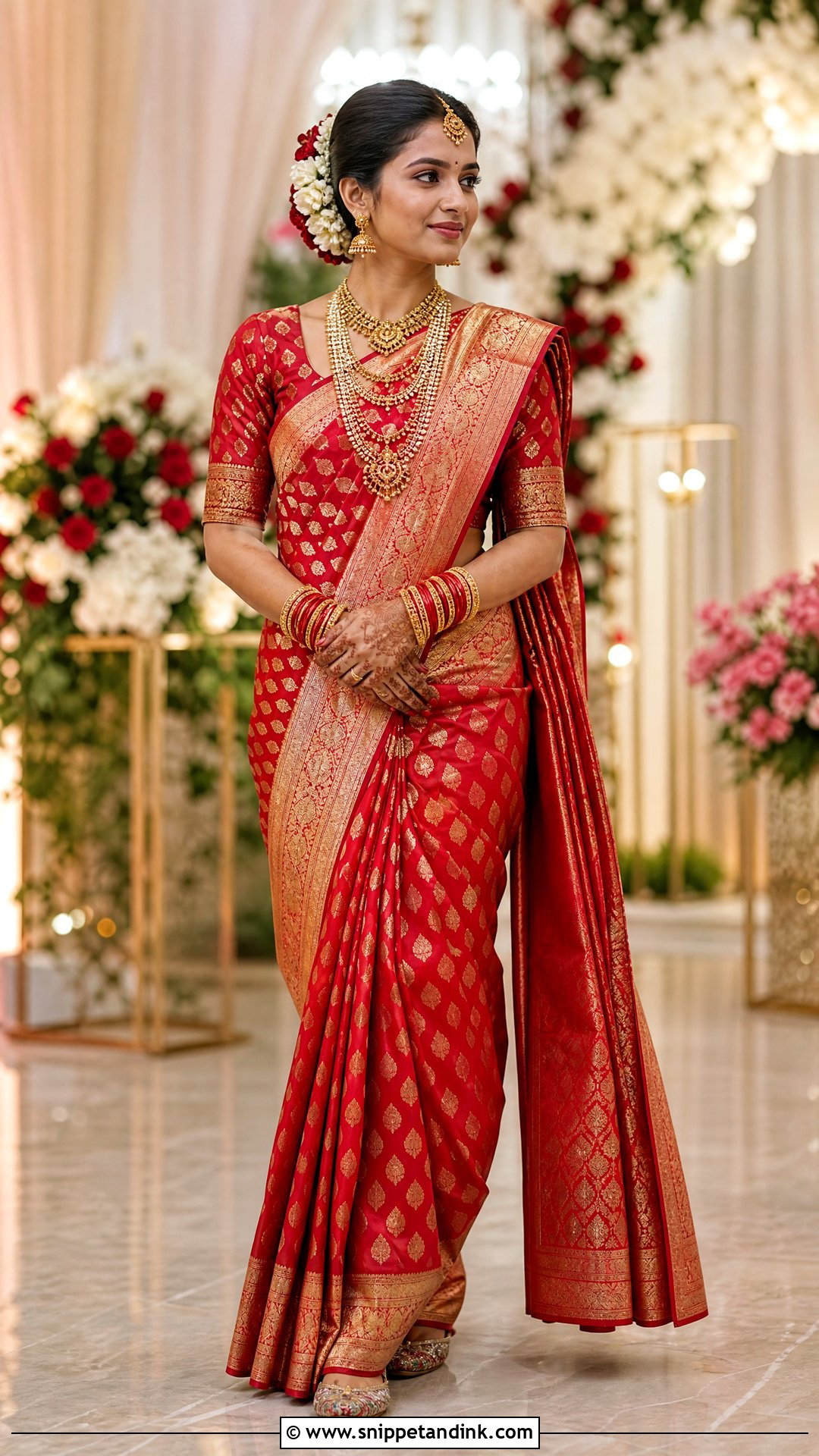
Red Banarasi silk is the bridal classic because the gold zari catches every bit of light during the rituals. I look for real zari motifs on a dense weave, then pair it with an elbow-length fitted blouse, since a sleeveless blouse under heavy silk tends to make the arms look lost. Banarasi is stiff, so the pleats need pressing the night before and pinning at the waist in at least two places. Layer a choker with a longer necklace, add jhumkas, stacked bangles and embroidered juttis, and tuck fresh flowers into a low bun. Red reads as bridal in many Indian communities, so I keep this one for the bride; a guest can wear the same weave in emerald or plum once she’s checked with the family.
2. Kanjivaram Silk Saree Wedding Look
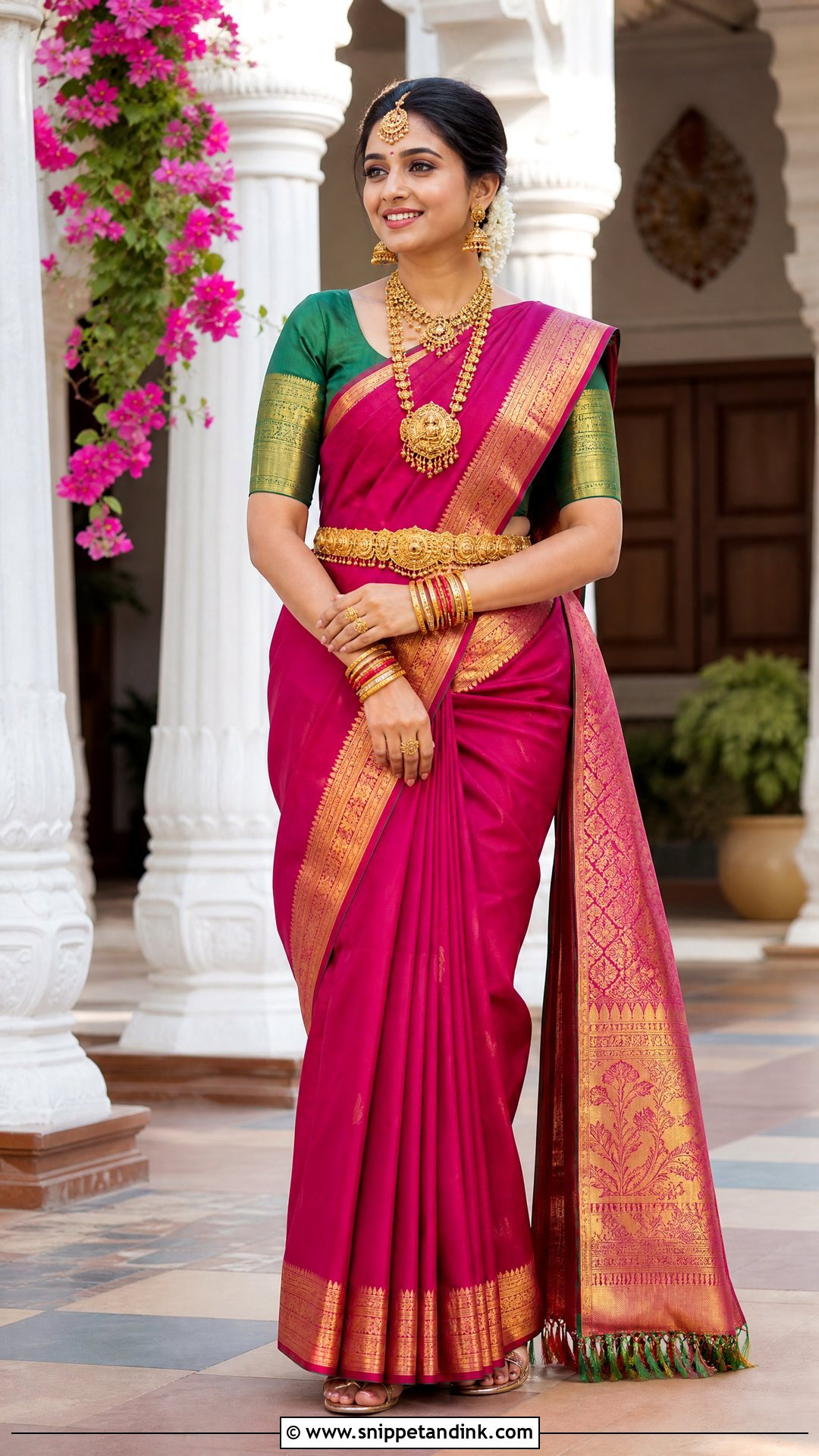
A bridal-weight Kanjivaram can weigh well over a kilo, and that weight is exactly why it drapes so cleanly. Pick a contrasting border such as magenta with gold or purple with mustard. The blouse has to sit smoothly across the shoulders, so I always ask for a fitting with the saree already draped over it, never the blouse on its own. Traditional gold jewelry finishes it: a short necklace, a longer chain, earrings, bangles and a waist belt that also helps hold the pleats. Jasmine in a center-parted bun and low block heels complete the outfit. Brides go heavier on zari and jewelry, while guests can choose a simpler border.
3. Bridal Lehenga Wedding Look
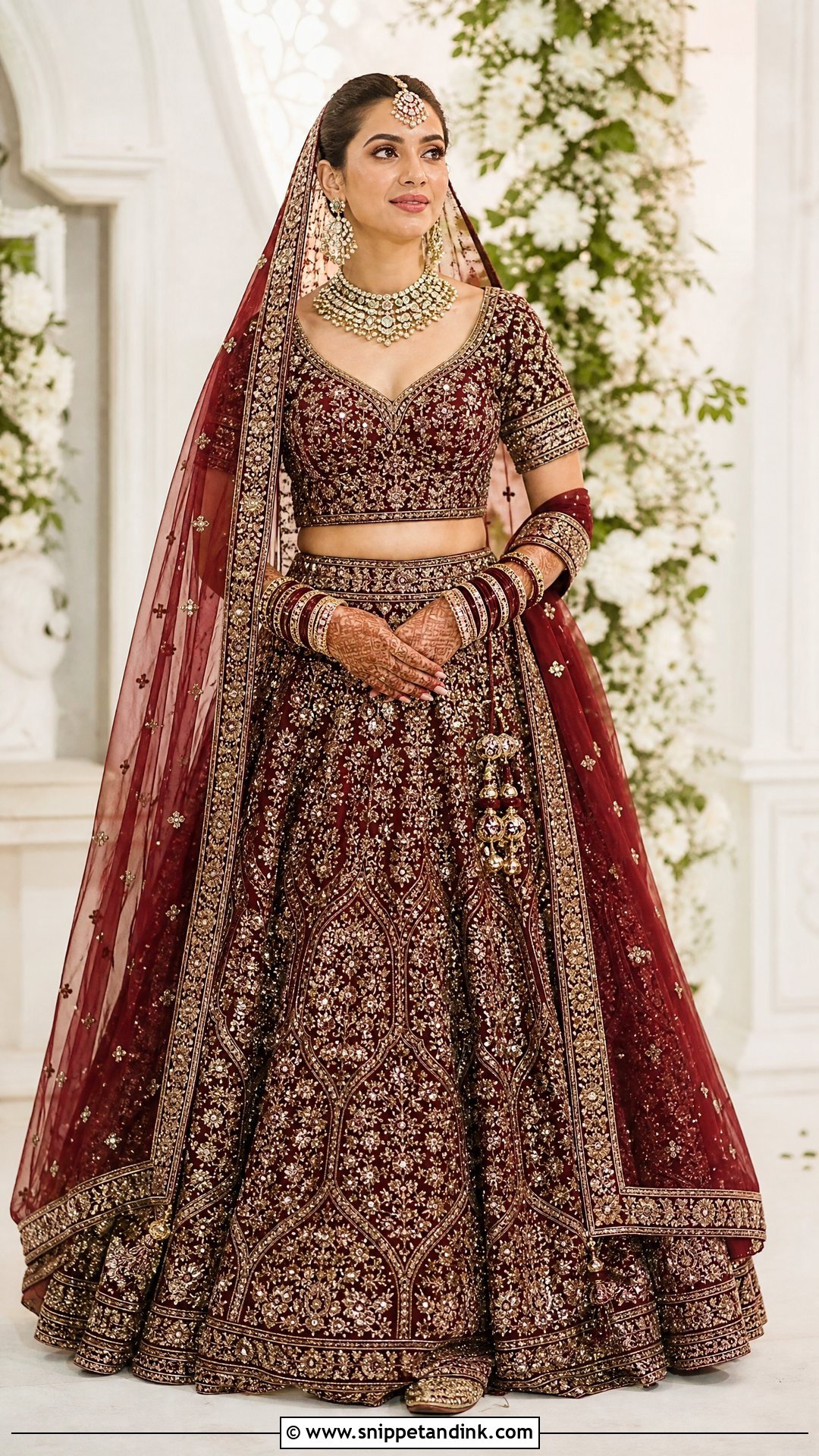
A bridal lehenga gives you the most room to customize, and the most room to go wrong with weight. Heavily embroidered skirts drag on the hips by the end of the night, so I ask brides to wear theirs for a full hour at the final fitting, including time sitting down. Start with a floor-length skirt, a supportive choli and a coordinated dupatta. Red, maroon and rust remain classic, but the color should follow your family’s tradition rather than a trend. For a formal layered finish, drape one dupatta over the head and the second across a shoulder. Add a statement necklace, maang tikka, bangles and embellished juttis, and have the hem set so it skims the floor in the shoes you’ll actually wear. Guests can borrow the shape with lighter embroidery and a non-bridal color.
4. Pastel Lehenga Wedding Look
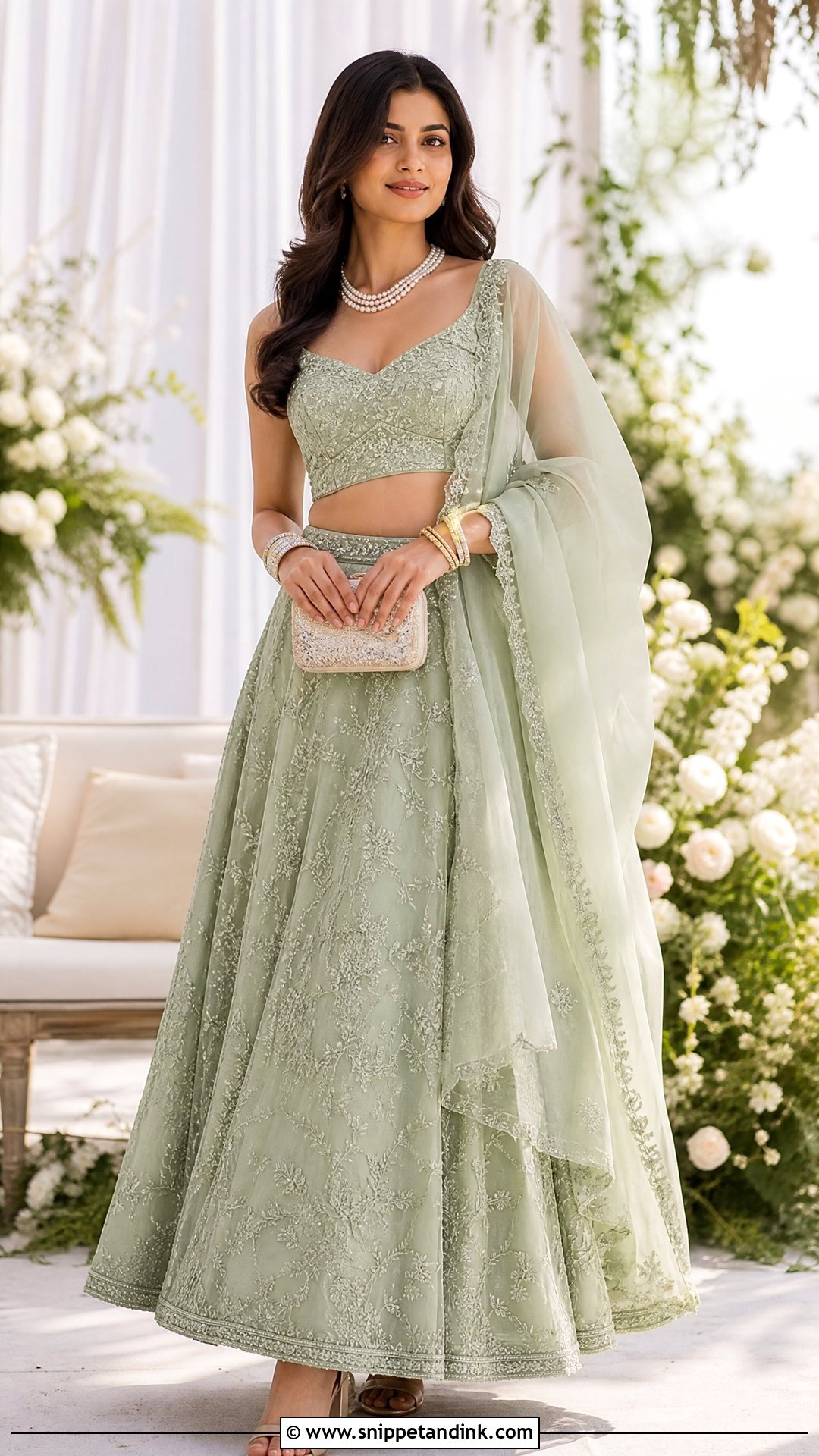
Pastels only work at a wedding if the fabric has depth. Flat pastel net looks washed out beside jewel tones. I look for a pastel lehenga in sage or dusty rose with tonal threadwork, so the embroidery adds shadow instead of glitter. Pair it with a modest fitted blouse and an organza dupatta, which holds its shape better than net in photos. Pearls and champagne block heels keep the palette quiet. Daytime functions and garden venues suit it best, because pastels lose their color under warm evening lighting. Guests should check they aren’t echoing the bride’s own pastel.
5. Anarkali Suit Wedding Look
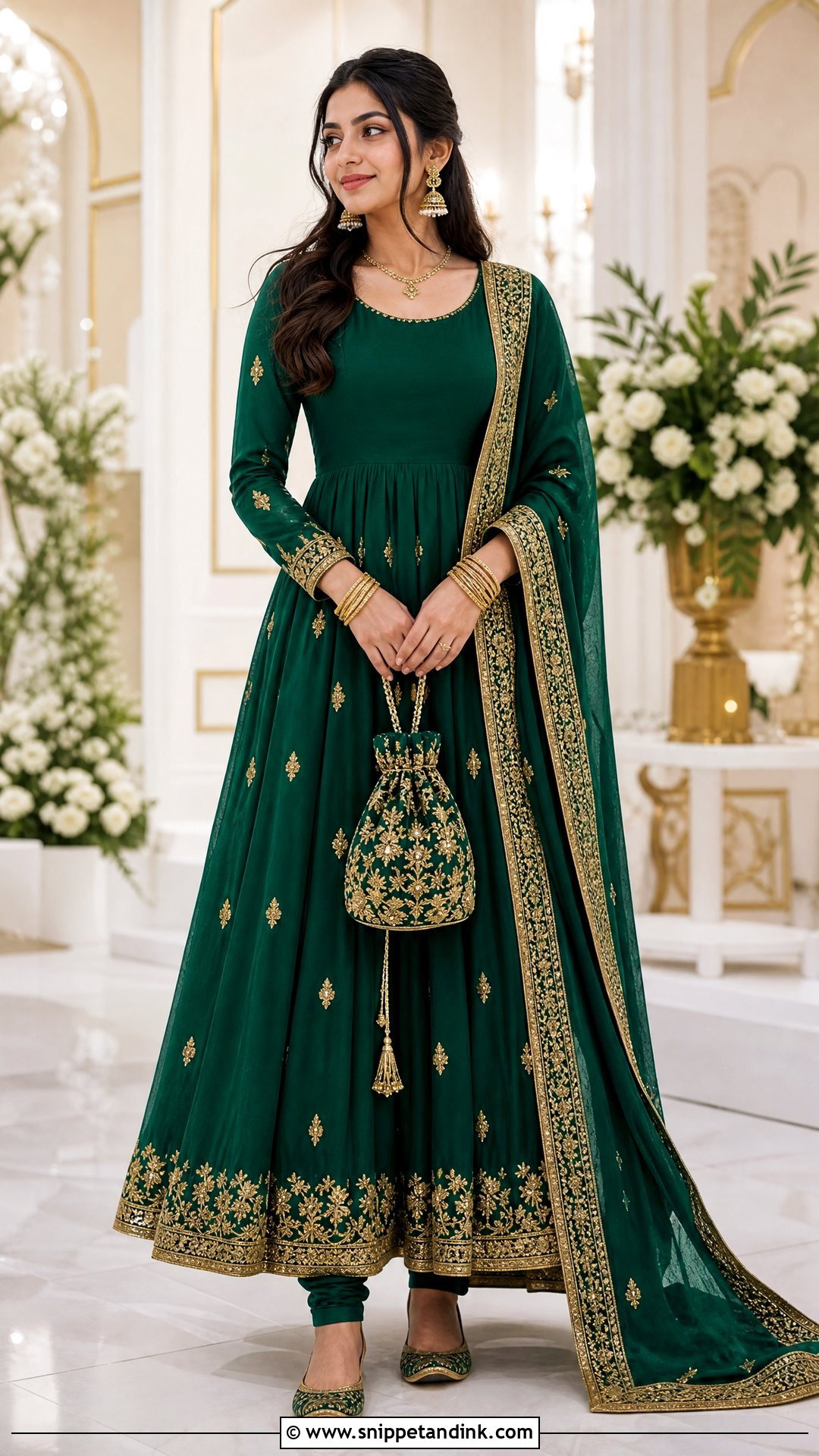
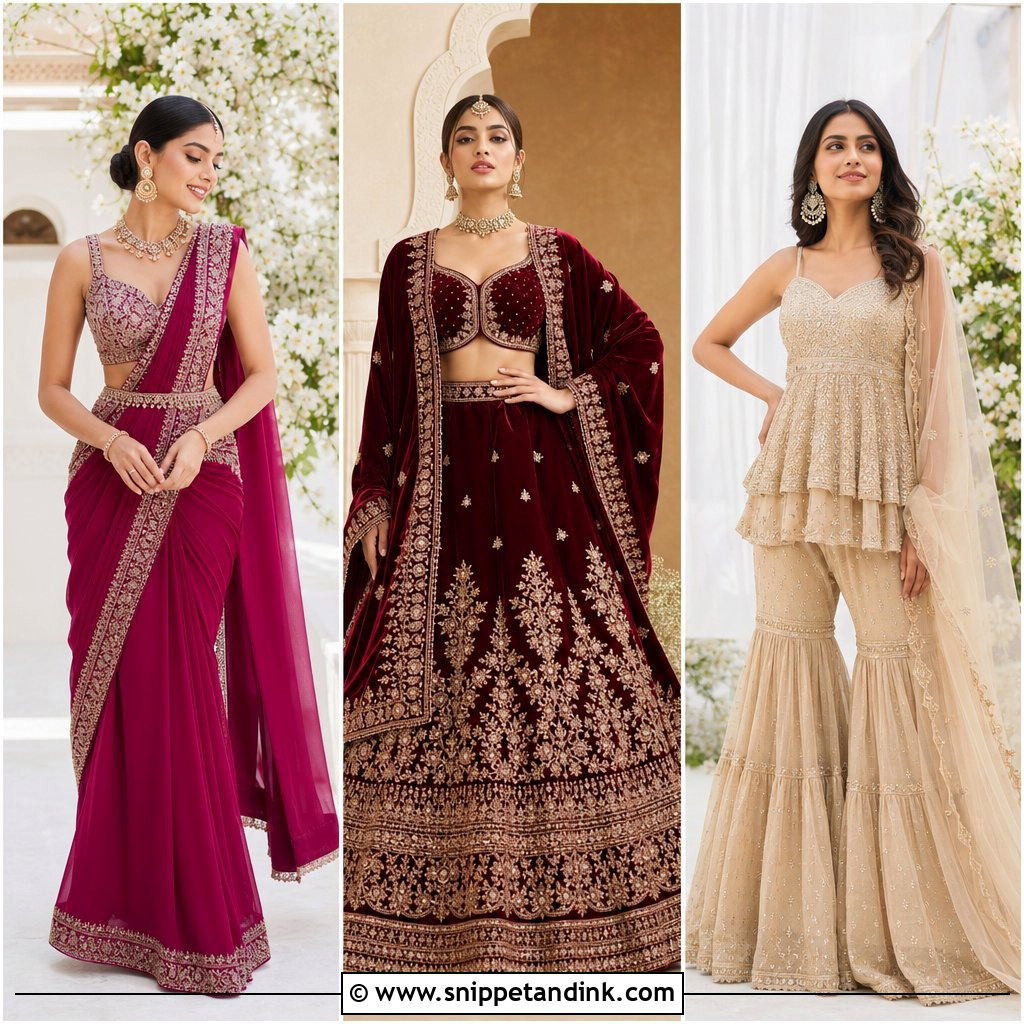
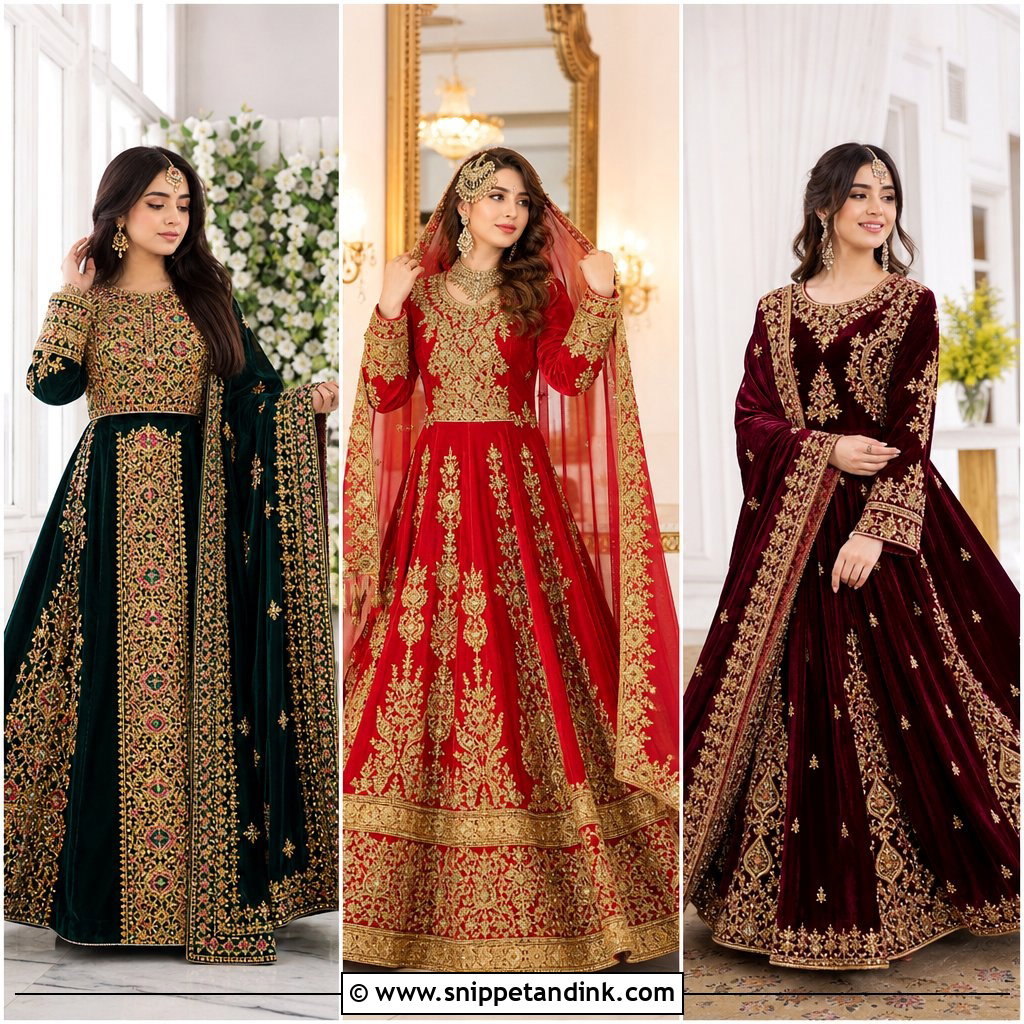
An Anarkali is what I suggest to anyone nervous about managing a saree all day. Nothing comes unpinned, and the long flared skirt moves well. Silk, georgette and brocade in emerald, navy or teal all read as wedding-appropriate. Wear it over narrow churidar with a contrasting dupatta over one shoulder. One fitting detail matters more than the rest: the bodice seam should sit at your natural waist, because a seam that drops too low makes the skirt flare from the hip and swallows a shorter frame. Jhumkas, a slim necklace, a potli and embroidered juttis finish it. Older relatives and first-time guests tend to love this one for how secure it feels.
6. Sharara Suit Wedding Look
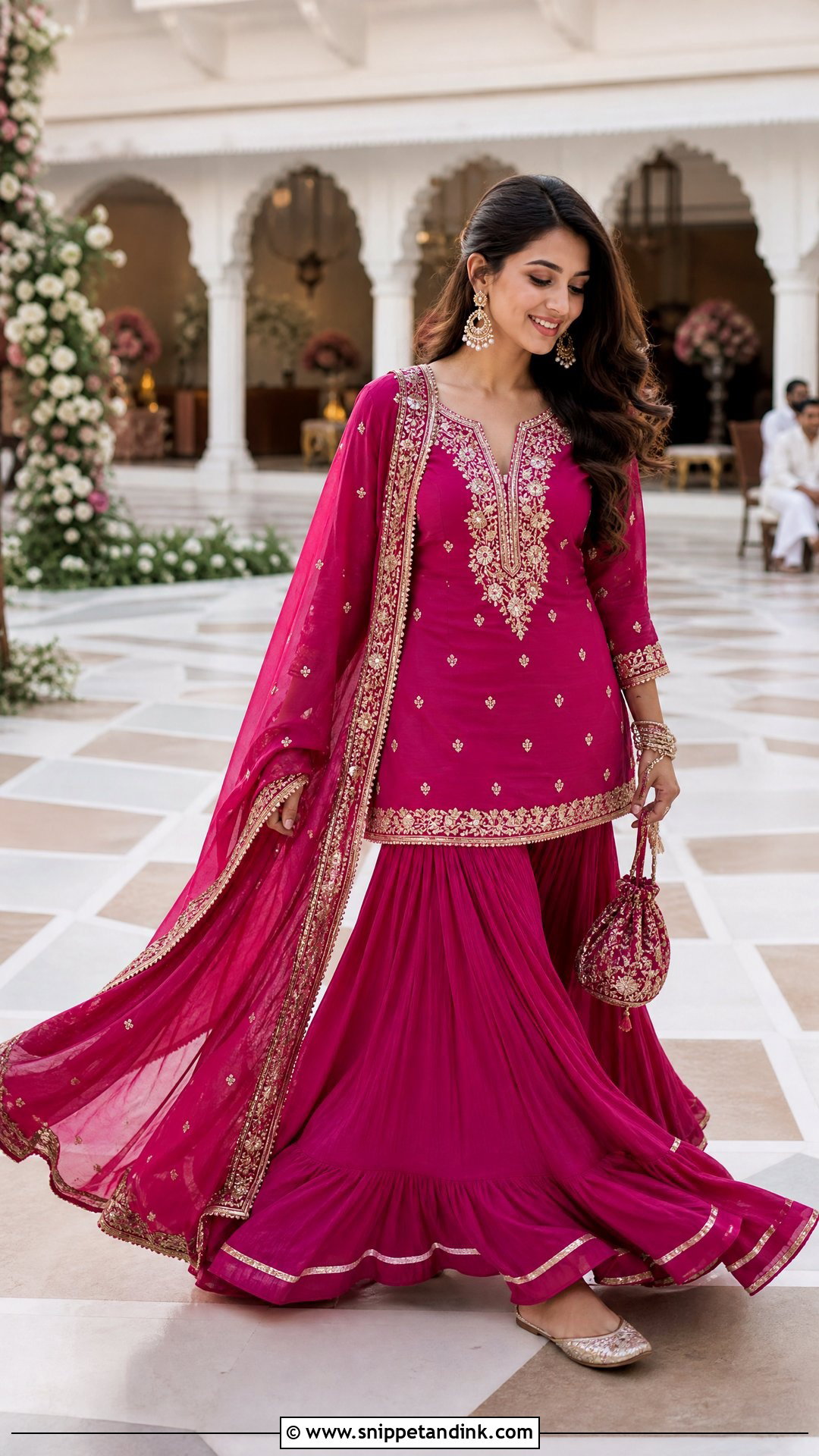
The sharara is the outfit I’d pick for anyone who plans to dance. A shorter kurta lets the flared pants show, and the separates mean you can sit on a floor cushion without fussing with a skirt. Emerald, magenta or midnight-blue sets with fine zari borders look festive without going bridal. The pants are wider than they look on a hanger, so I have them hemmed to clear the floor by a finger’s width in your actual shoes; otherwise you’ll tread on them all night. Drape the dupatta over both arms for photos, then pin it to one shoulder once the music starts. Lighter georgette suits daytime, while silk or velvet accents belong to evening.
7. Gharara Suit Wedding Look
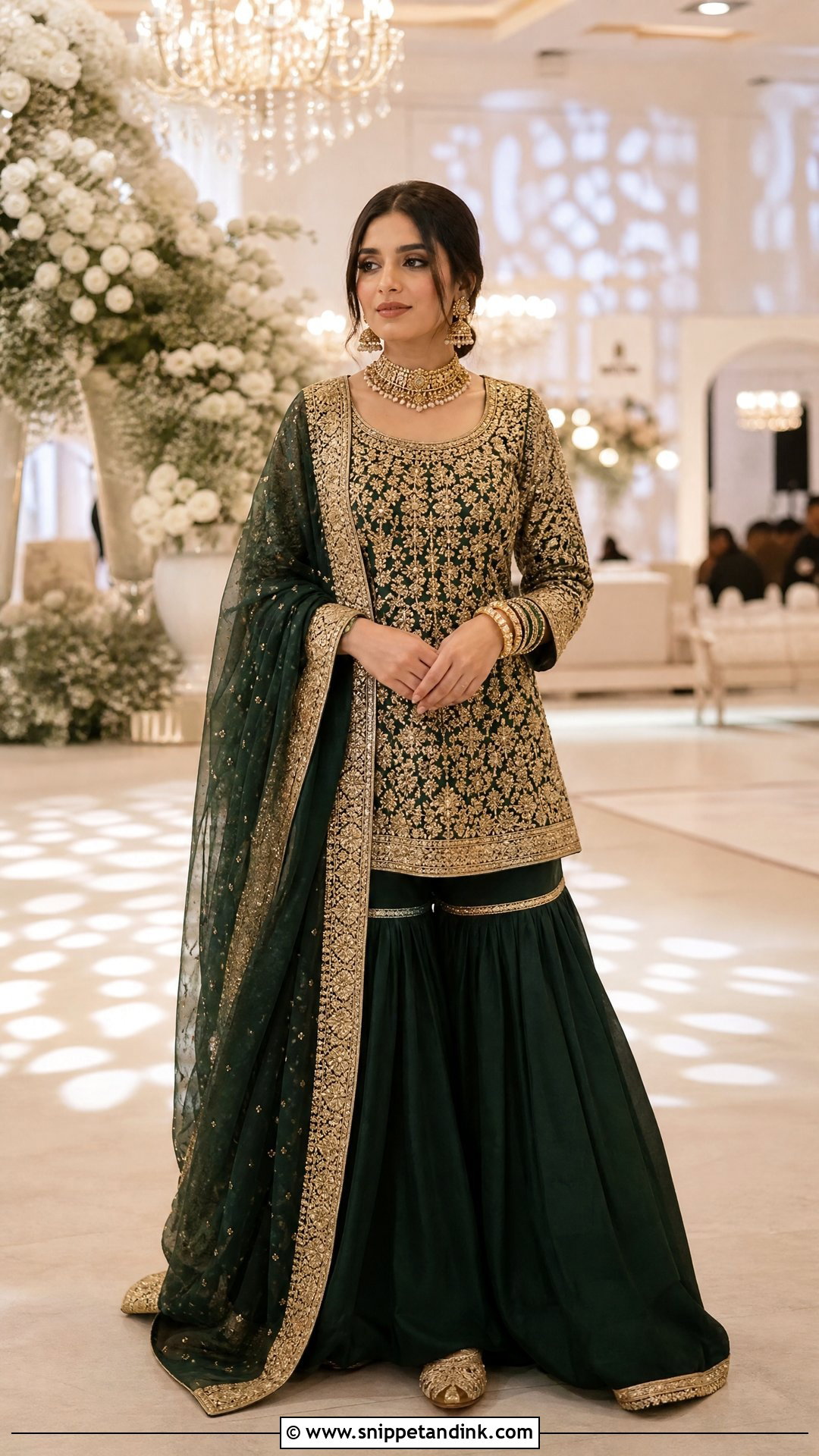
Gharara pants are fitted to the knee and then burst into gathers, and that knee seam is where most fittings fail. If it sits even slightly low, you’ll shuffle all evening, so I check the join by having the client climb a step during the fitting. Wear them with a short kurti ending around the upper thigh, in silk or brocade in deep green, berry or antique gold. Add a bordered dupatta, putting one end over the head if the ceremony calls for coverage. A choker, jhumkas and pointed juttis are enough. The pants already do the talking.
8. Punjabi Patiala Suit Wedding Look
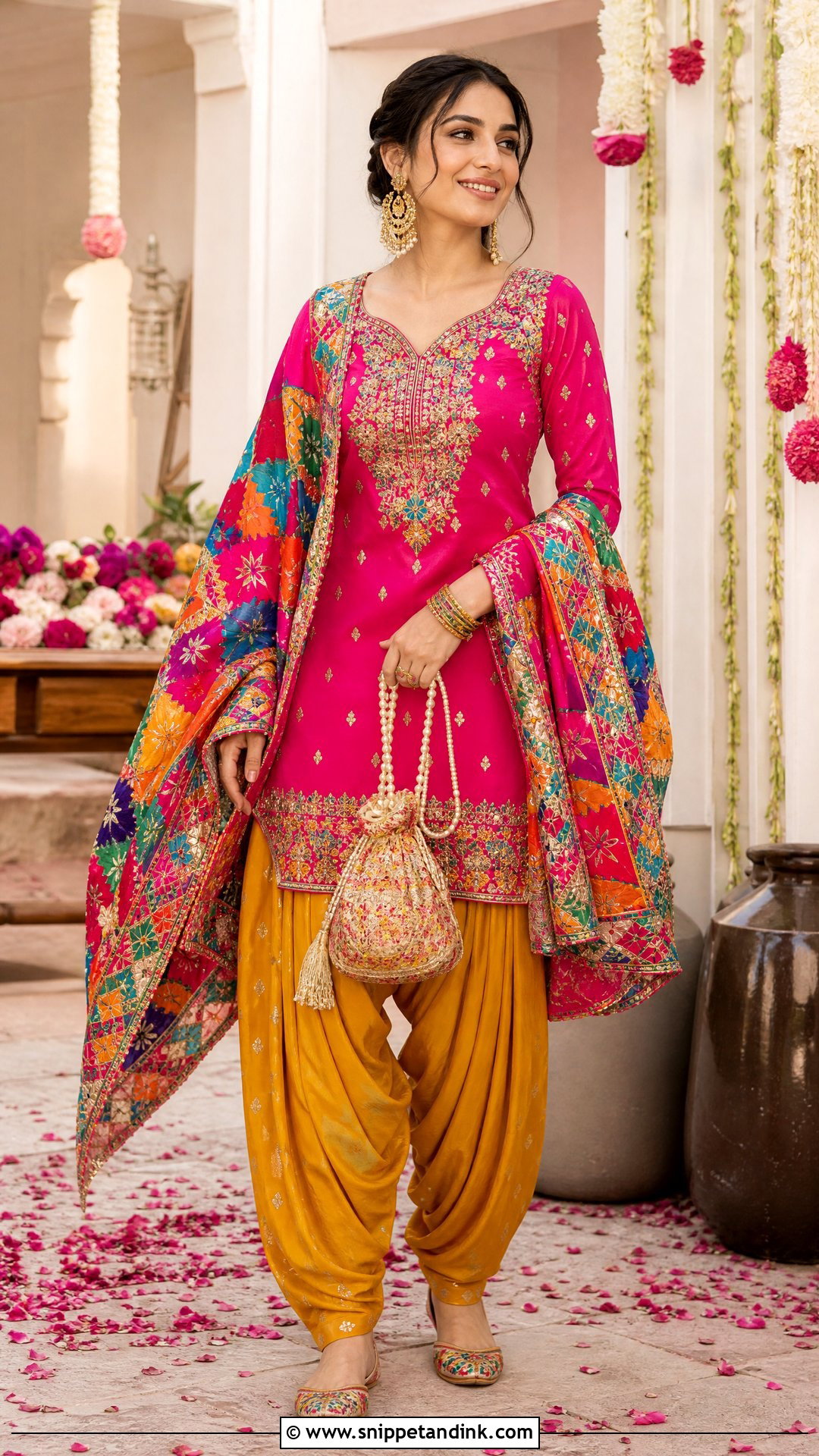
Patiala suits have a bounce that belongs at a sangeet or any lively Punjabi function. Build it around a knee-length embroidered kameez and generously pleated Patiala pants in fuchsia, mustard or cobalt, with a phulkari-inspired dupatta for contrast. Pleat weight is the thing to get right. In a stiff fabric the pleats stand out from the leg, so I steer clients toward silk blends or cotton silk that collapse into soft folds. Keep the hem above your juttis. A braid or low bun works, and gold-toned earrings, bangles and a small potli are plenty.
9. Palazzo Suit Wedding Look
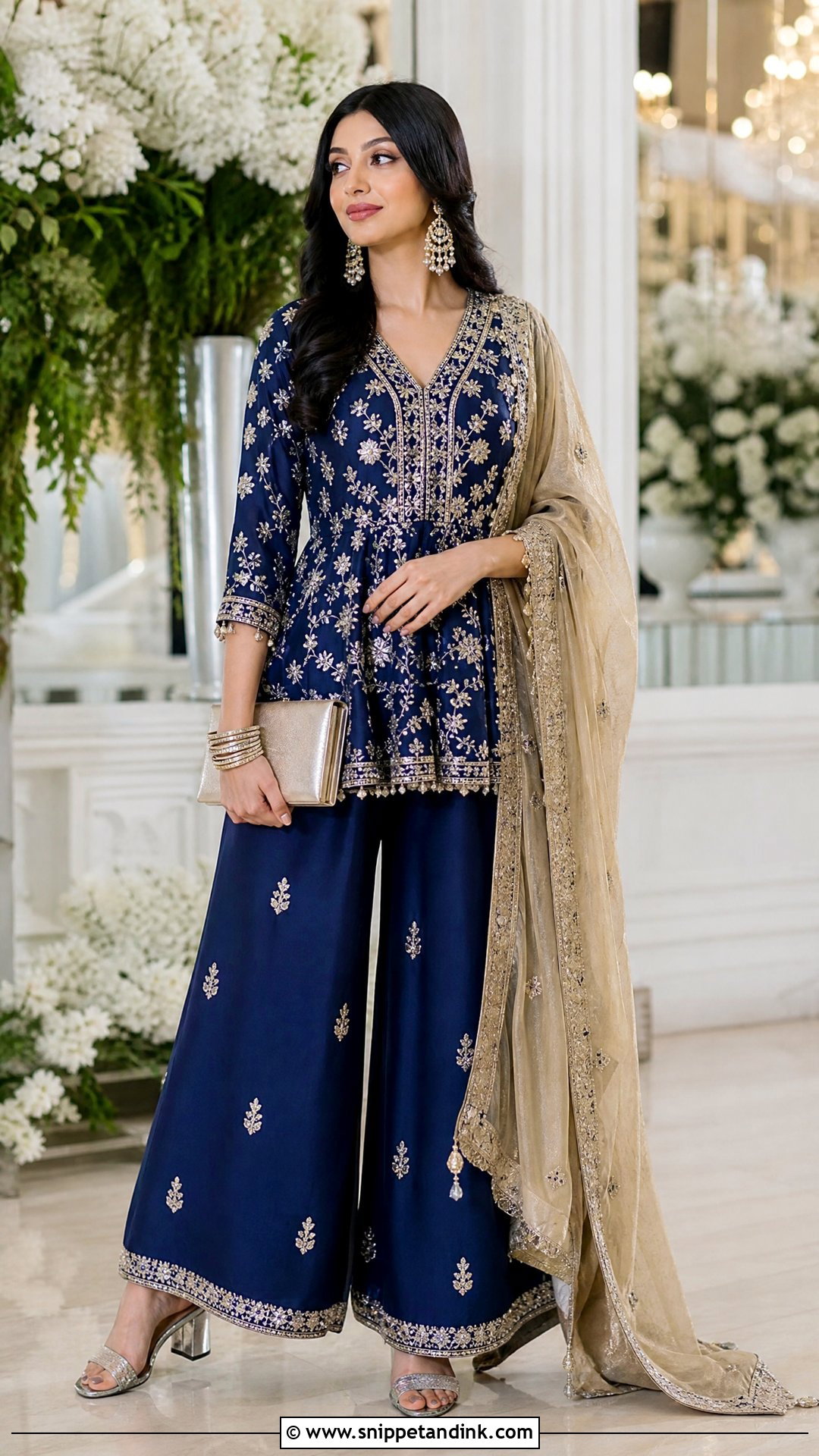
A palazzo suit is the comfortable option that still looks dressed for a wedding, provided the fabric falls rather than stands. Crepe, georgette and soft silk drape well; stiff cotton looks like daywear. Pair the trousers with a straight embroidered kurta, or a peplum top if you want more waist definition. Sapphire, wine and champagne sets look refined with a contrasting dupatta. I hem palazzos to just graze the top of the shoe, since any longer and the stairs at a banquet hall become a hazard. Statement earrings, a structured clutch and low block heels finish it, with the dupatta pinned so it survives dinner.
10. Jacket Lehenga Wedding Look
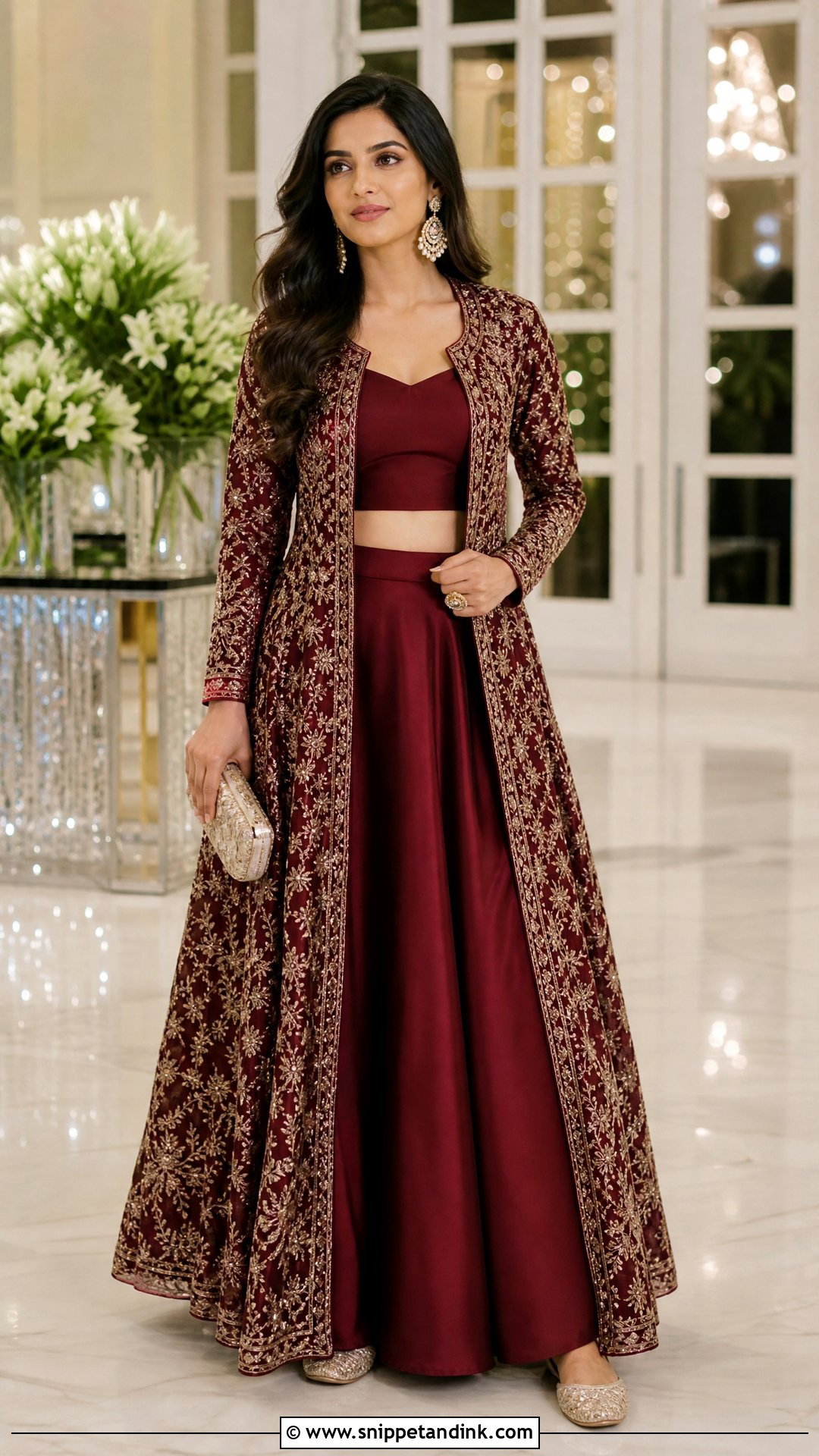
Cool venue, evening reception, or a wish for more coverage without a complicated drape? A jacket lehenga handles all three. Wear a flowing skirt and simple blouse under a long embroidered jacket that reaches the calf or ankle; fitted versions define the waist, open fronts move more freely. Shoulders are the fit point I watch most closely here. Dense embroidery will pull and pucker if the shoulder seam sits even slightly off, and that distortion shows clearly in photographs. The jacket is the statement, so skip the necklace and wear drop earrings, a cocktail ring and metallic juttis.
11. Pre-Draped Saree Wedding Look
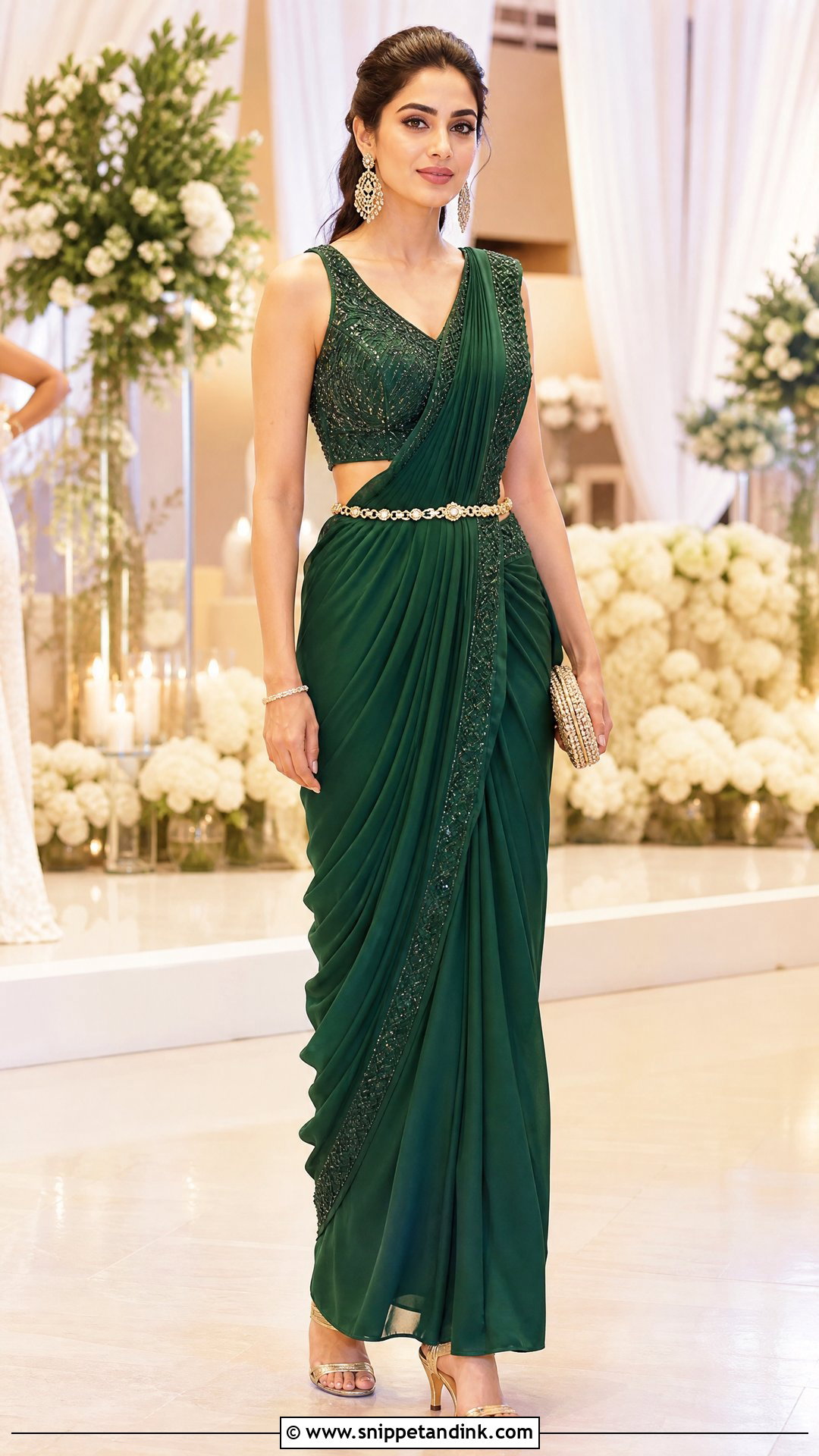
Love the look of a saree but dread the pleats? A pre-draped saree has the pleats and pallu stitched in place, so you step into it, fasten it at the waist and you’re done. That makes it a smart pick for first-time wearers or anyone changing between several functions in one day. Chiffon, satin and lightweight silk drape most naturally, while heavy silk pre-stitched can look boxy at the hip. Jewel tones suit evening events and softer prints suit daytime. A waist belt stops the pallu sliding. I have clients walk, sit and climb stairs in it before the wedding, because a stitched hem length can’t be adjusted on the day the way a hand drape can.
12. Bengali Saree Wedding Look
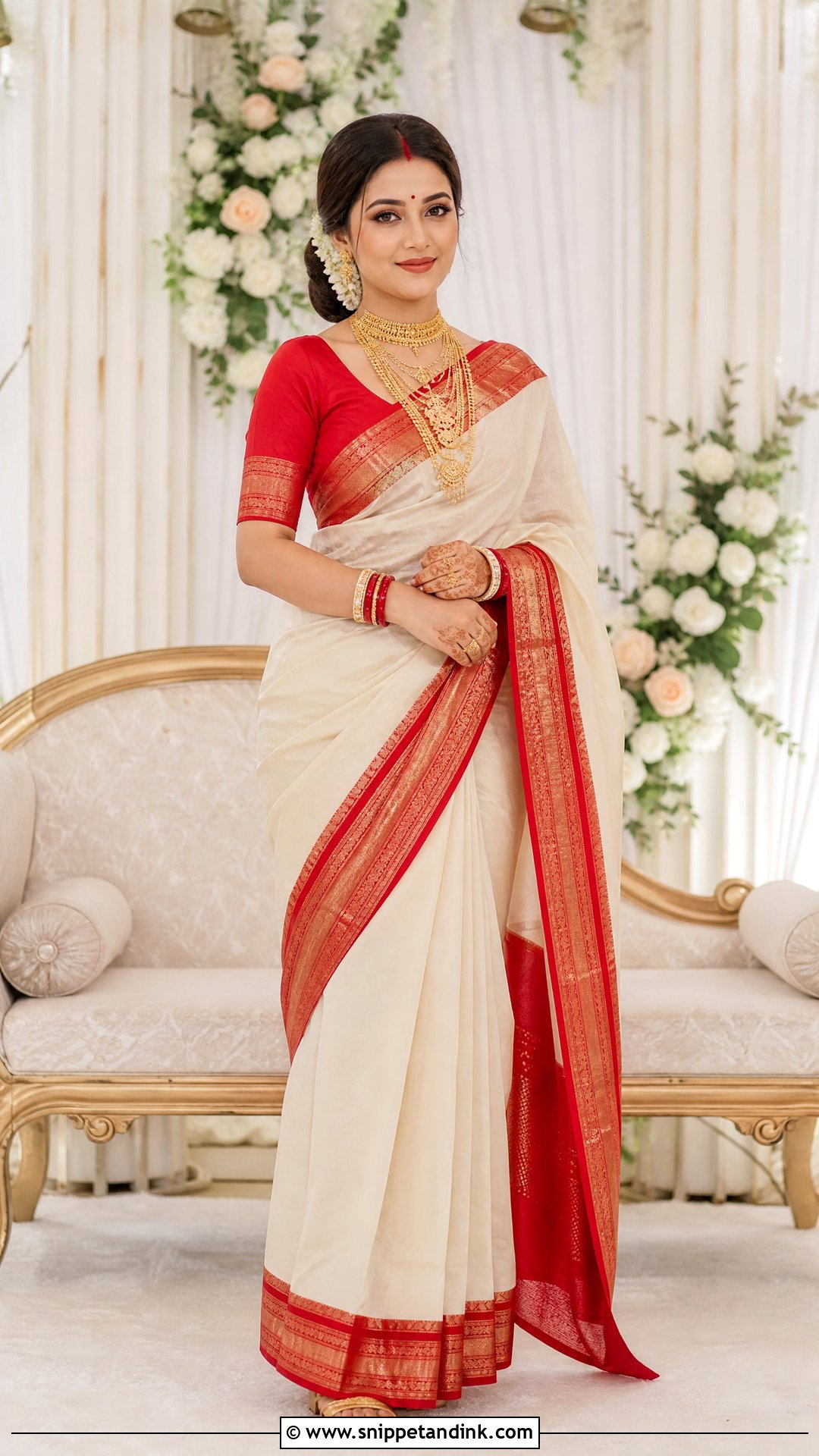
Bengali bridal dressing has its own vocabulary, so I take care over who wears what. A white or cream saree with a red border can be lovely on a family member where it suits her role, while the bride traditionally wears red Banarasi. Pair either with a fitted red blouse with gold detailing, and set the broad pallu with secure pins at the shoulder. Gold jewelry, a small bindi and a flower-decorated low bun complete it. Red-and-white bangles carry real meaning for married women in many Bengali families, so as a guest, ask before wearing them, and keep your jewelry lighter than the bride’s.
13. Gujarati Panetar Wedding Look
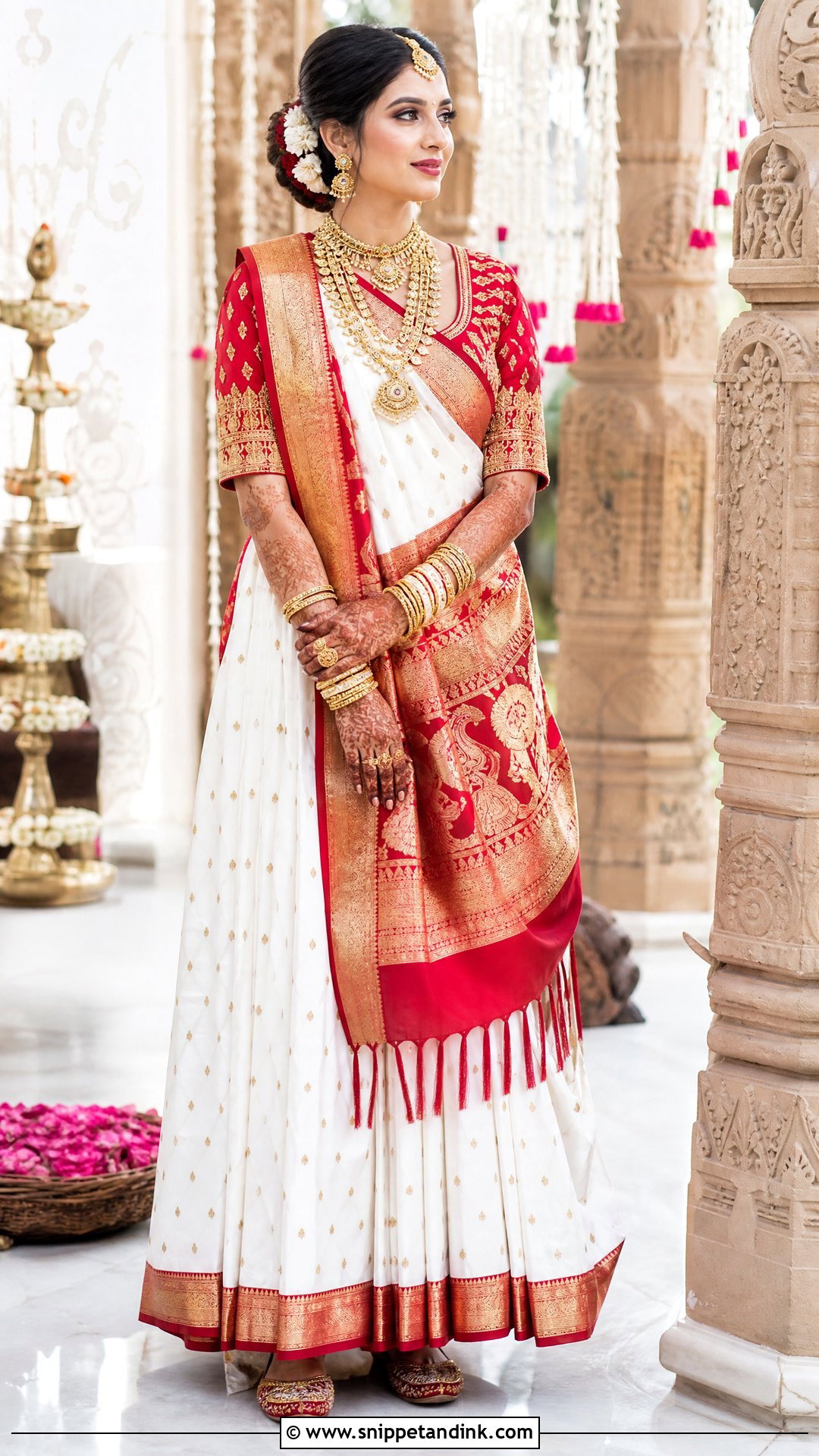
Panetar is a Gujarati bridal saree, white or ivory with a red border, traditionally gifted by the bride’s maternal uncle, so it carries more meaning than its colors alone. Style it with a red blouse with gold detailing, and arrange the pallu so the border sits clearly across the front. Jewelry can include a layered necklace, earrings, bangles, a nose ring and a maang tikka, depending on family custom. I keep footwear flat or low and easy to slip off, because many brides change into a gharchola for later rituals and a quick change goes faster without fiddly straps. Guests shouldn’t copy the full ensemble. A colorful Bandhani saree with lighter jewelry is the respectful alternative.
14. Maharashtrian Nauvari Saree Wedding Look
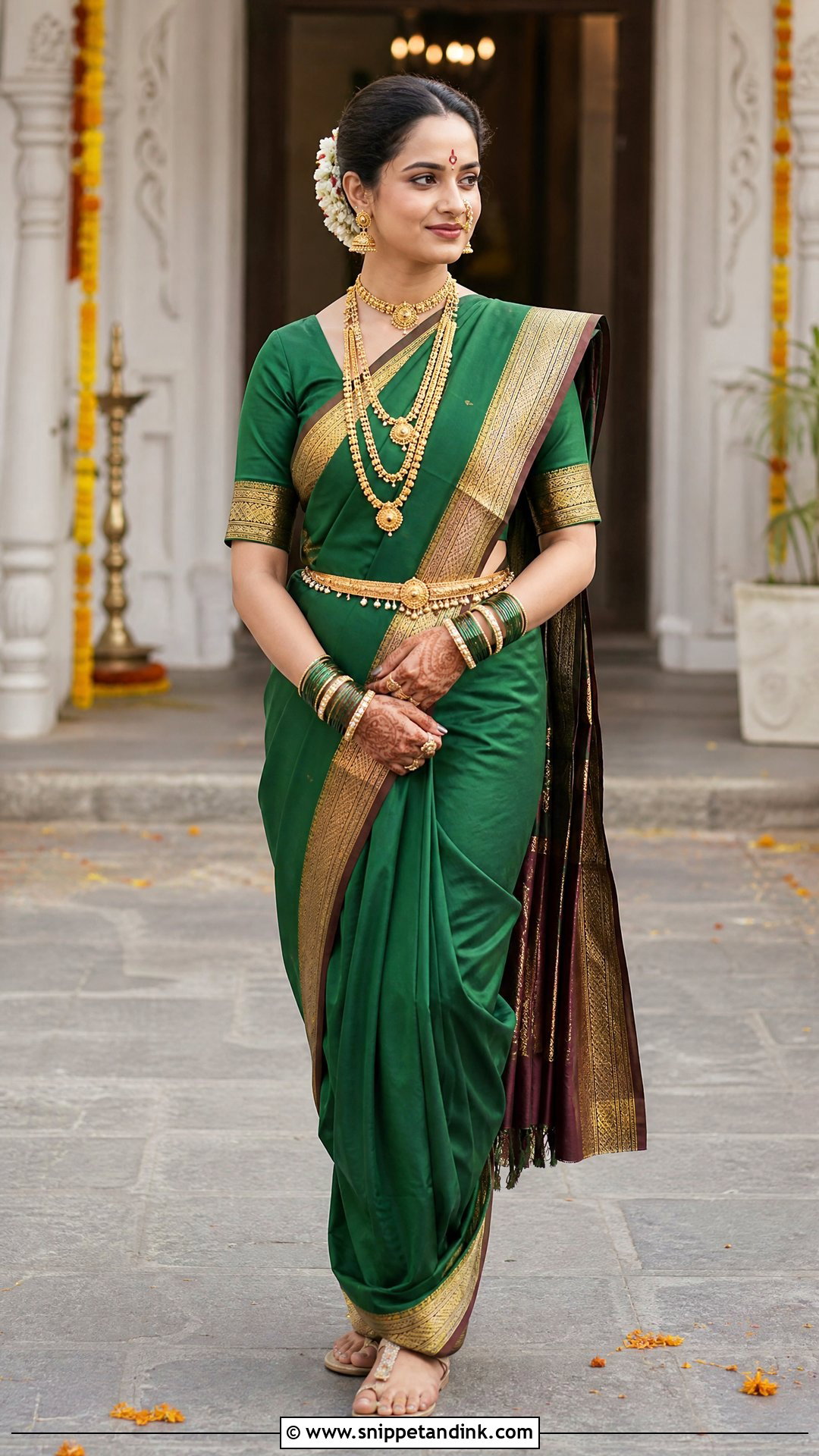
The trouser-like drape of a Nauvari saree gives real freedom of movement, which is why it’s so comfortable for sitting through long rituals. Choose a rich silk in green, purple, yellow or red depending on your role. Nine yards is a lot of fabric, and the drape tucks at the back between the legs, so I never let a client try it for the first time on the wedding morning. Book an experienced draper or practise twice. Add a nath, layered gold necklaces, green bangles and a crescent bindi if they belong to your background, plus a flower-wrapped bun and flat sandals. Guests can scale back the jewelry and avoid the bridal shade.
15. Kerala Kasavu Saree Wedding Look
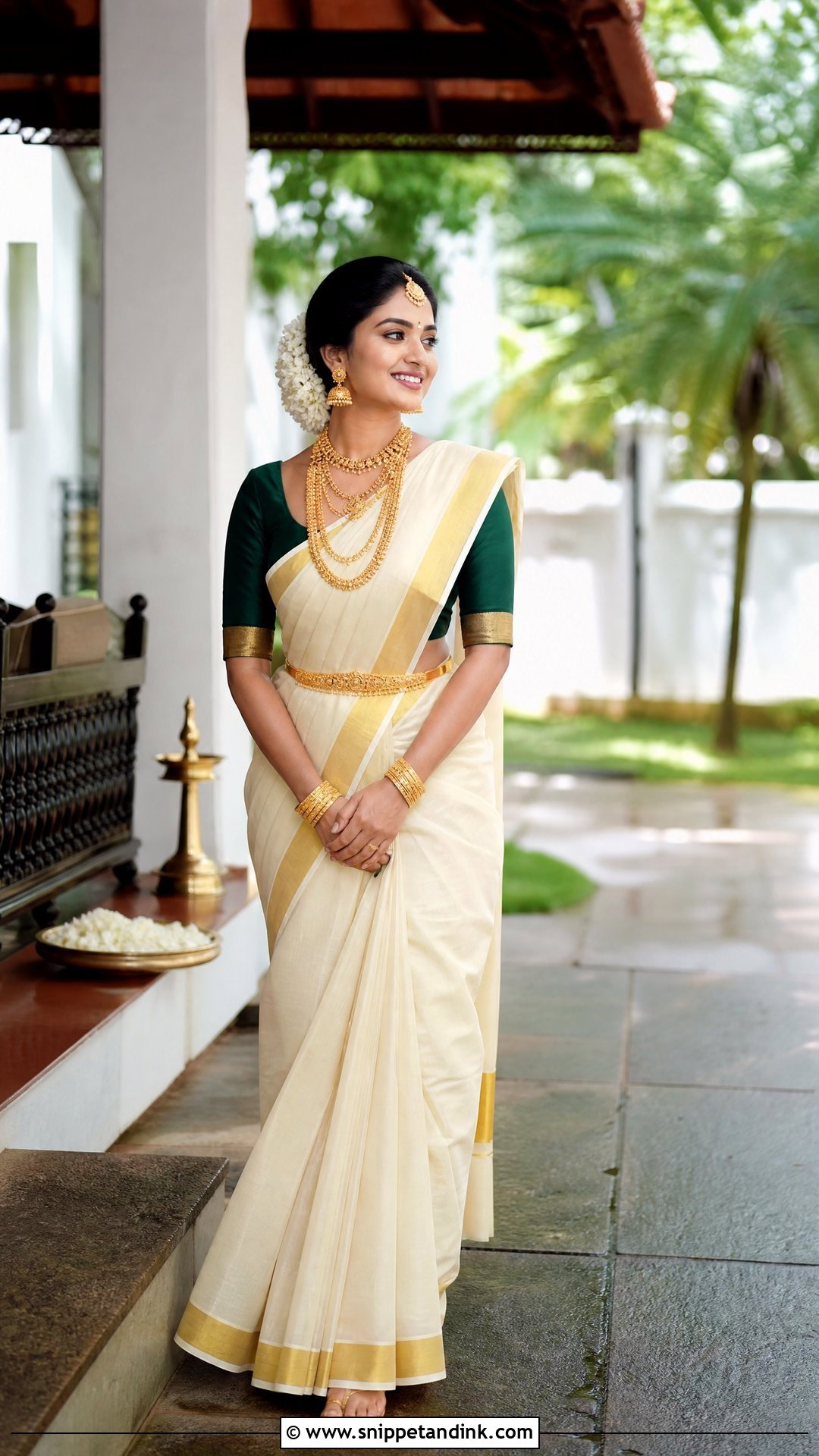
A cream Kasavu saree with a gold border is quiet next to most outfits here, and that restraint is the point. Match it with a cream blouse for a tonal finish, or bring in green or maroon. Kasavu cotton is crisp and slightly sheer, so I always check the underskirt in daylight; a bright petticoat shows straight through and spoils the clean cream. Keep the gold-bordered pallu visible, layer gold necklaces with jhumkas, and wrap jasmine around a low bun. Guests should confirm that cream and gold isn’t being kept for the bride before wearing a highly traditional version.
16. Assamese Mekhela Chador Wedding Look
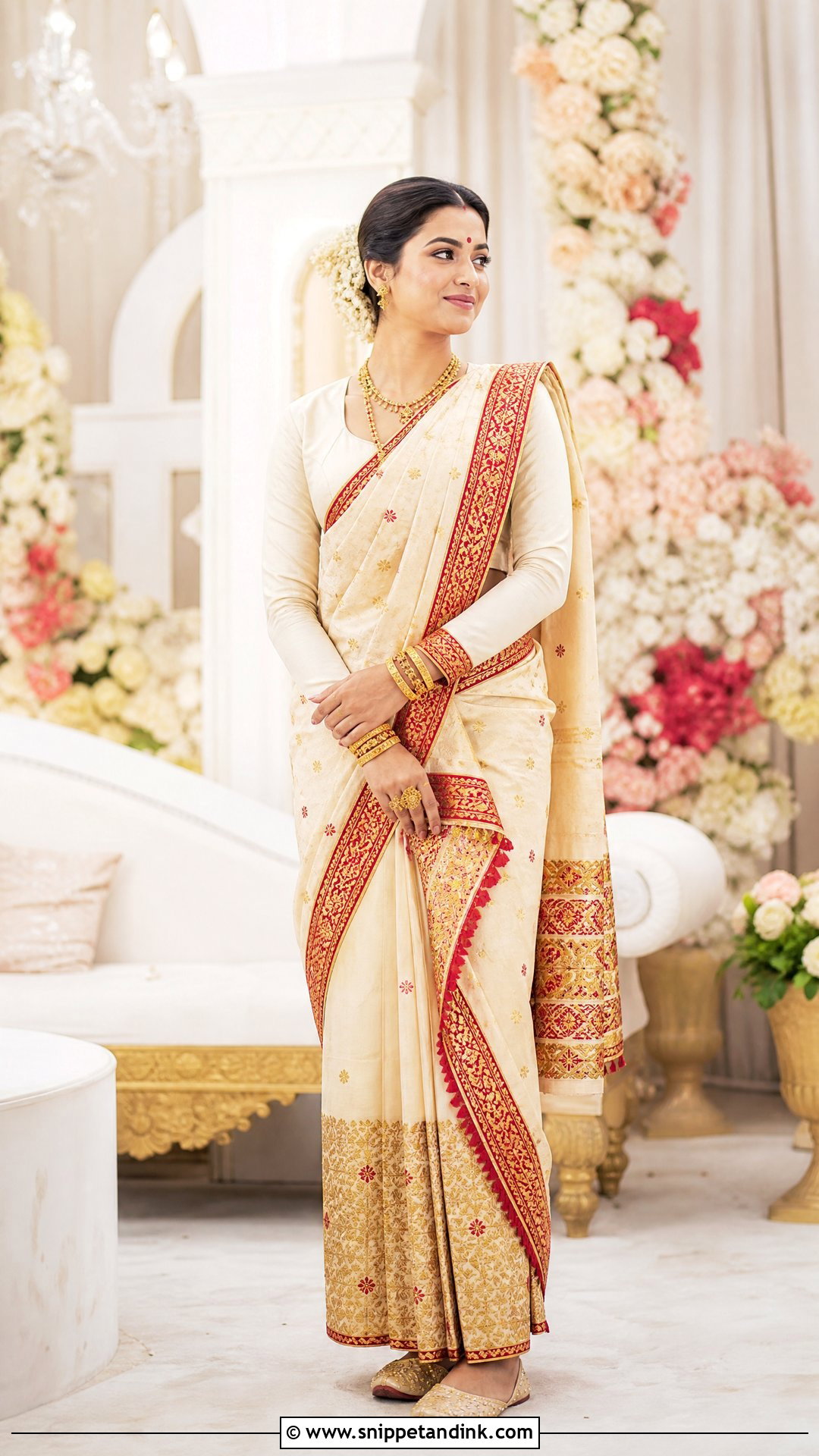
The Mekhela Chador is a two-piece drape: the mekhela wraps like a skirt with pleats at the front, and the chador goes across the upper body over a fitted blouse. Silk in cream, gold or red is common, often Muga or Pat silk. I pin the chador at the shoulder from underneath so the pin never sits on the woven motifs, which are the whole point of the garment. Gold-toned jewelry, bangles, a small bindi and a flower-decorated bun finish it, with low heels under the ankle-length hem. First-time wearers do better with a professional draper, and guests should keep motifs and accessories restrained.
17. Rajasthani Poshak Wedding Look
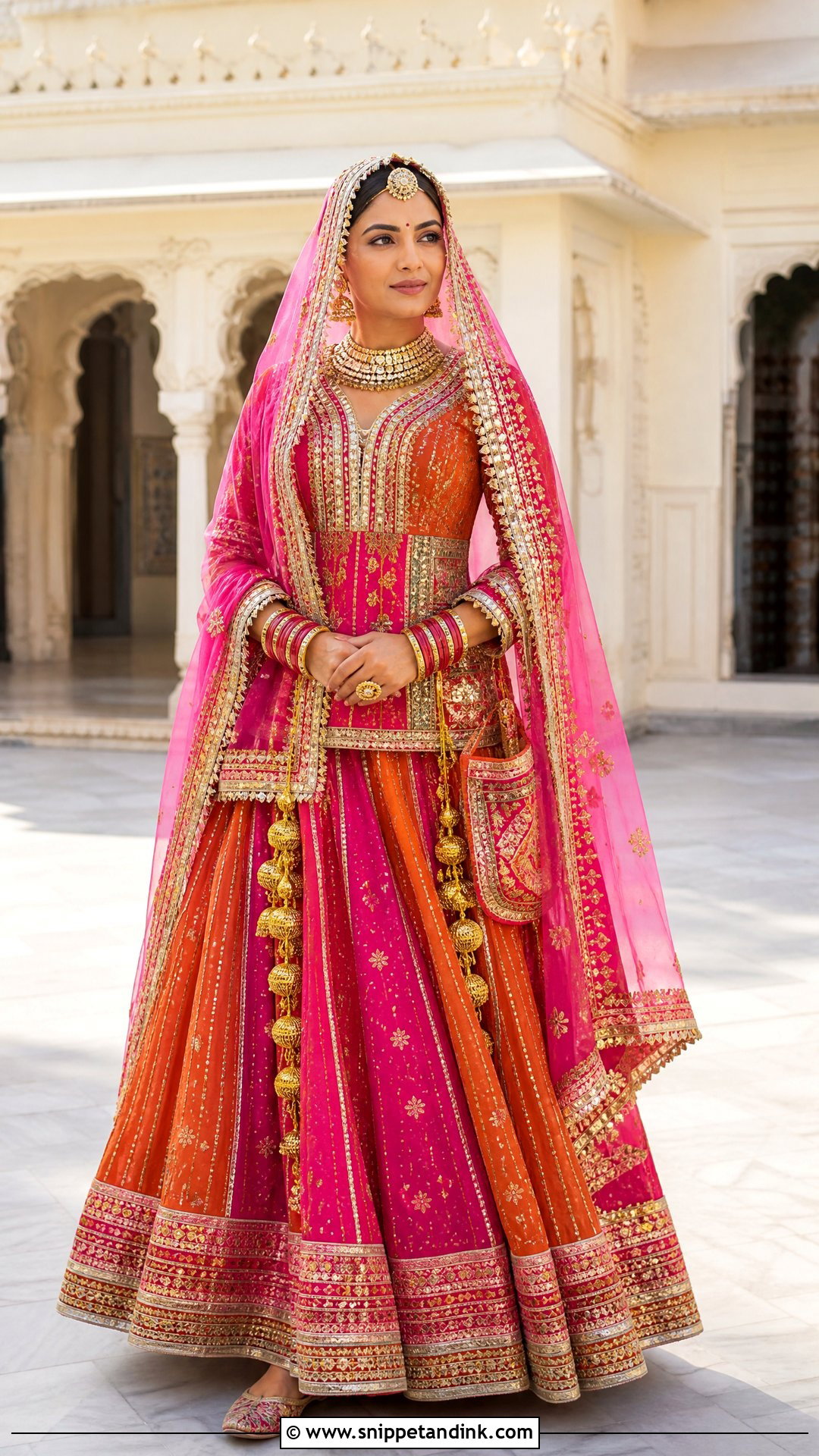
A Rajasthani poshak stacks four pieces: a flared ghagra, a fitted kanchli, a kurti and a long odhni. With that much fabric plus gota work, the outfit is loud before any jewelry goes on, so I edit accessories hard. Pink with orange or green with red are classic pairings. Drape the odhni over the head and across the torso when the ceremony calls for it, and anchor it with hidden pins into the hair, since gota edges are heavy and slide backward. A necklace, maang tikka, bangles and embroidered juttis are enough. Guests should choose lighter embellishment and leave the full ceremonial pieces to the bride.
18. Kashmiri Pheran Wedding Look
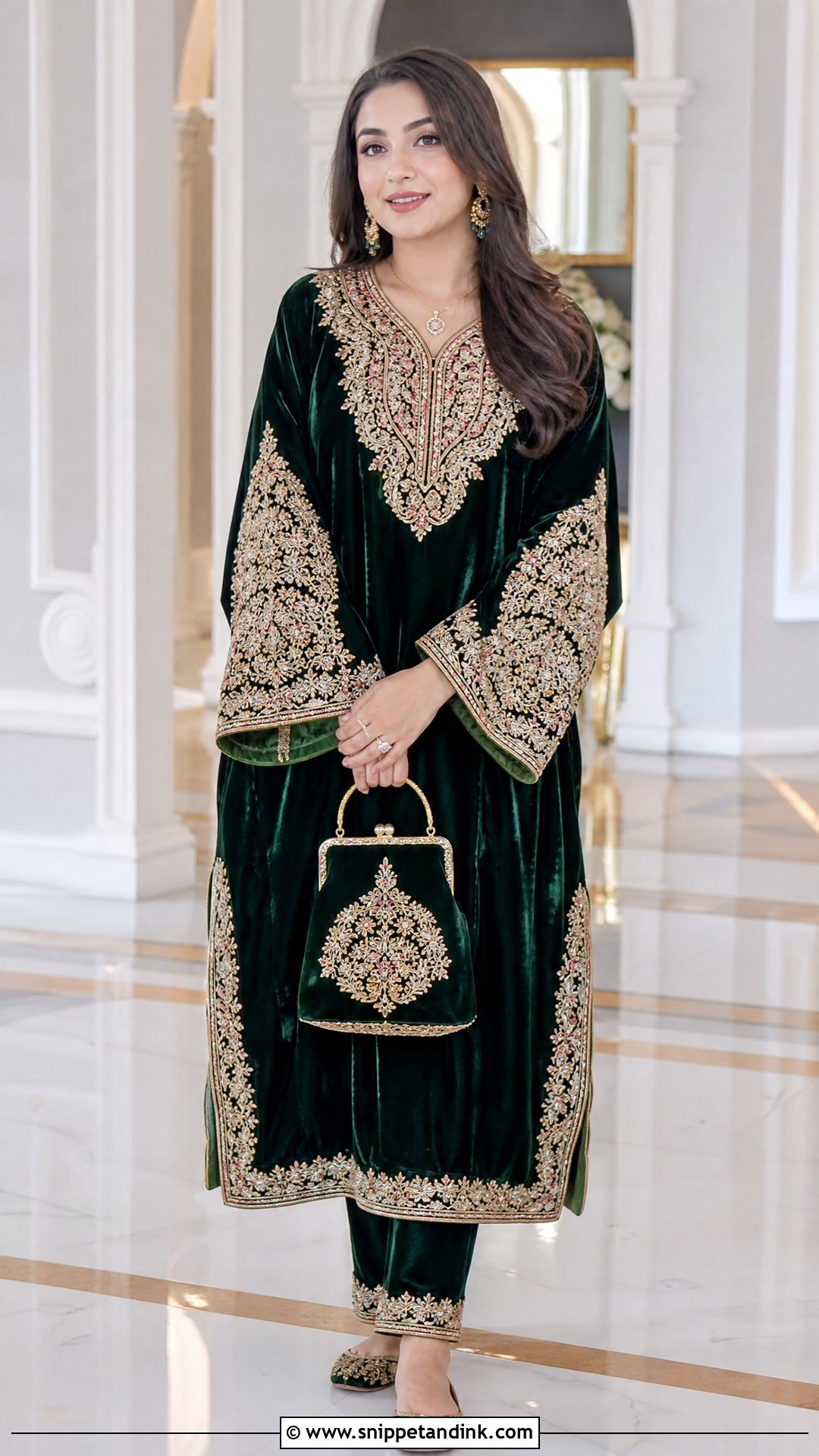
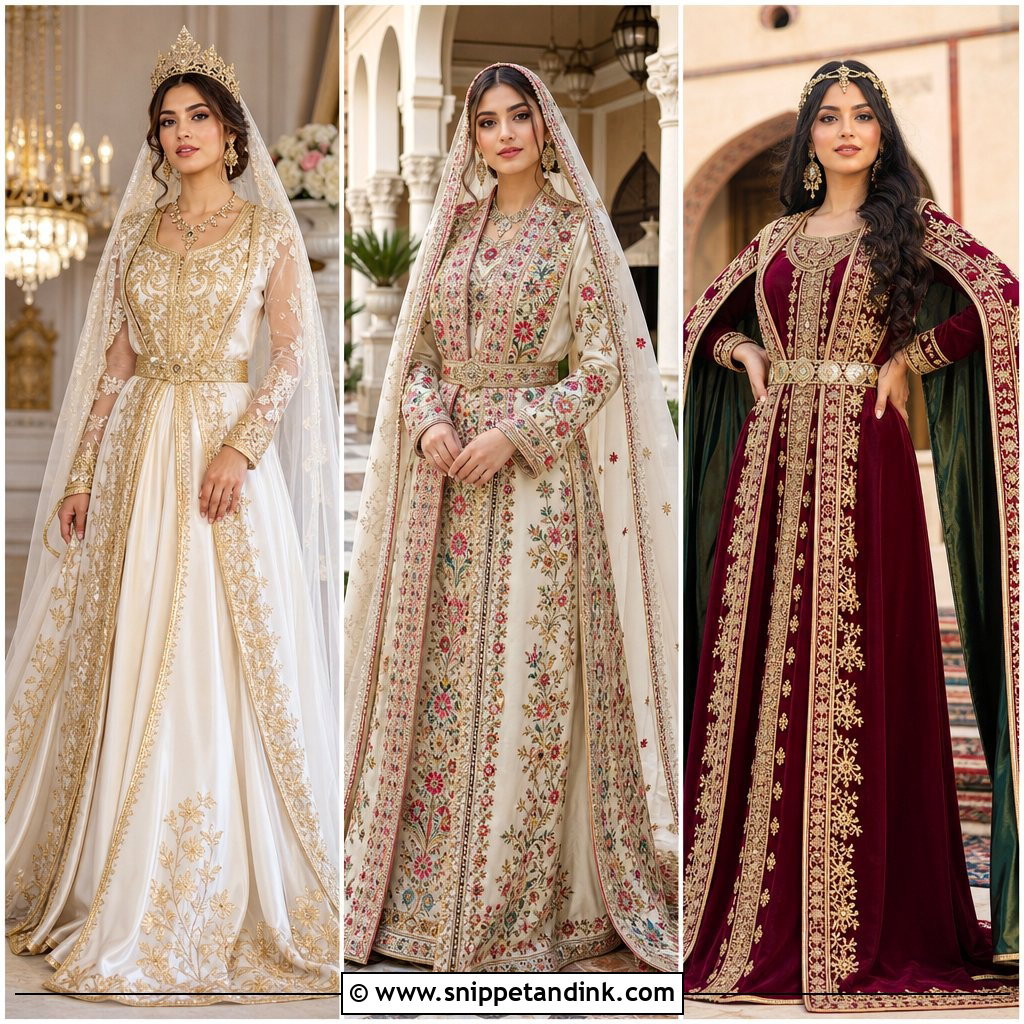
For a winter wedding, a formal Kashmiri pheran is the most practical outfit on this list. Look for velvet, silk or fine wool with tilla or aari embroidery around the neckline, sleeves and front, worn over straight pants or a flowing skirt depending on the cut. The pheran is meant to hang loose, so my only real fit check is the shoulders: if the shoulder seam drops, the neckline embroidery slides off-center. Deep green, burgundy and ivory all look refined. Drop earrings, a delicate necklace and closed-toe flats finish it, and brides may add traditional headwear.
19. Paithani Saree Wedding Look
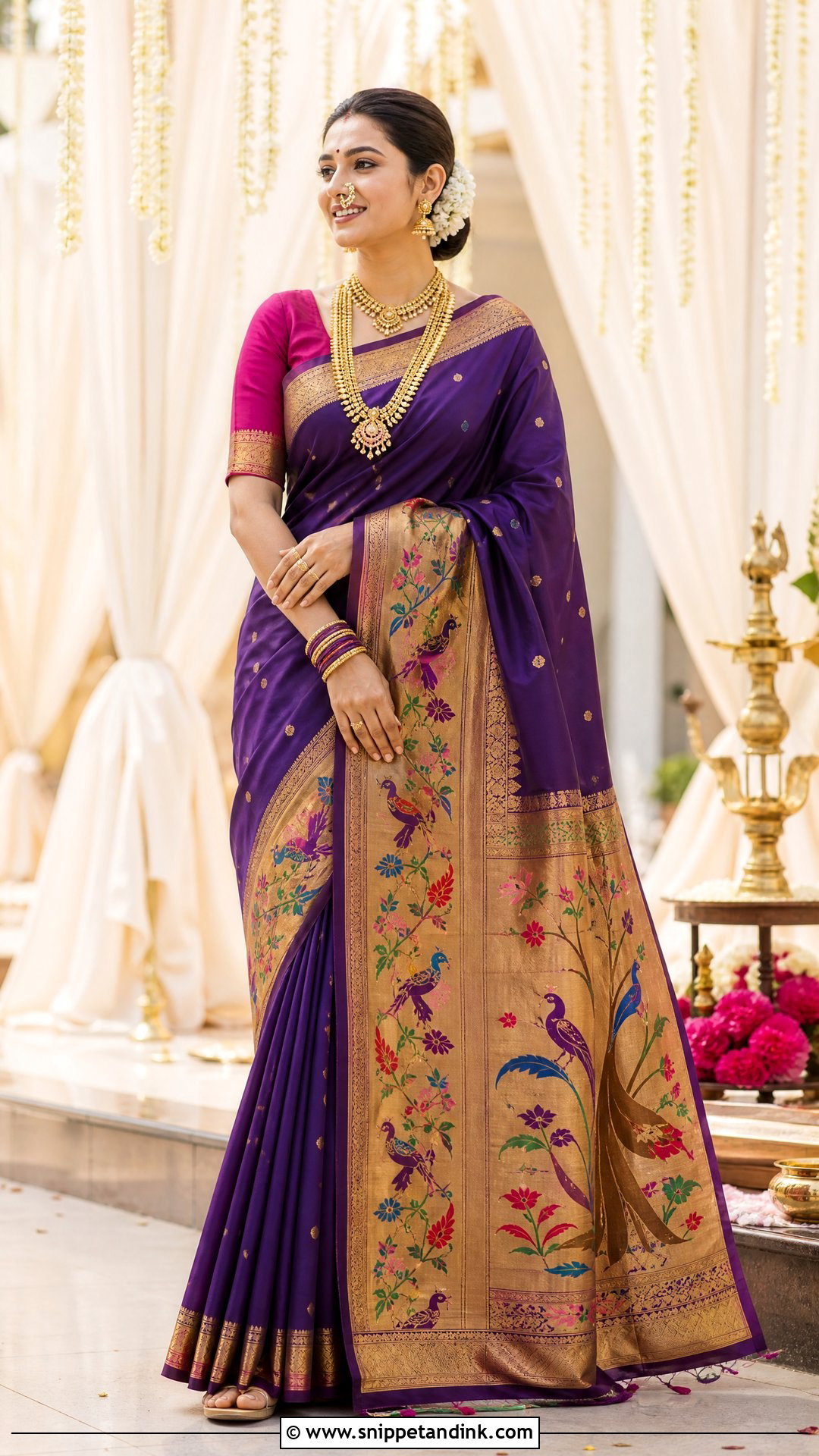
Paithani is known for the peacock and lotus motifs on its pallu, and the color often shifts as you move because the warp and weft are dyed different shades. Purple with gold or green with magenta show that off best. Pair it with a fitted silk blouse in one of the border colors, set the pleats crisp, and let the pallu fall open so its design is visible. That’s also why I tell clients to leave the oversized bag and shawl behind. A short necklace, a longer chain, earrings, bangles and an optional nose ring complete it, with flowers in the bun.
20. Bandhani Saree Wedding Look
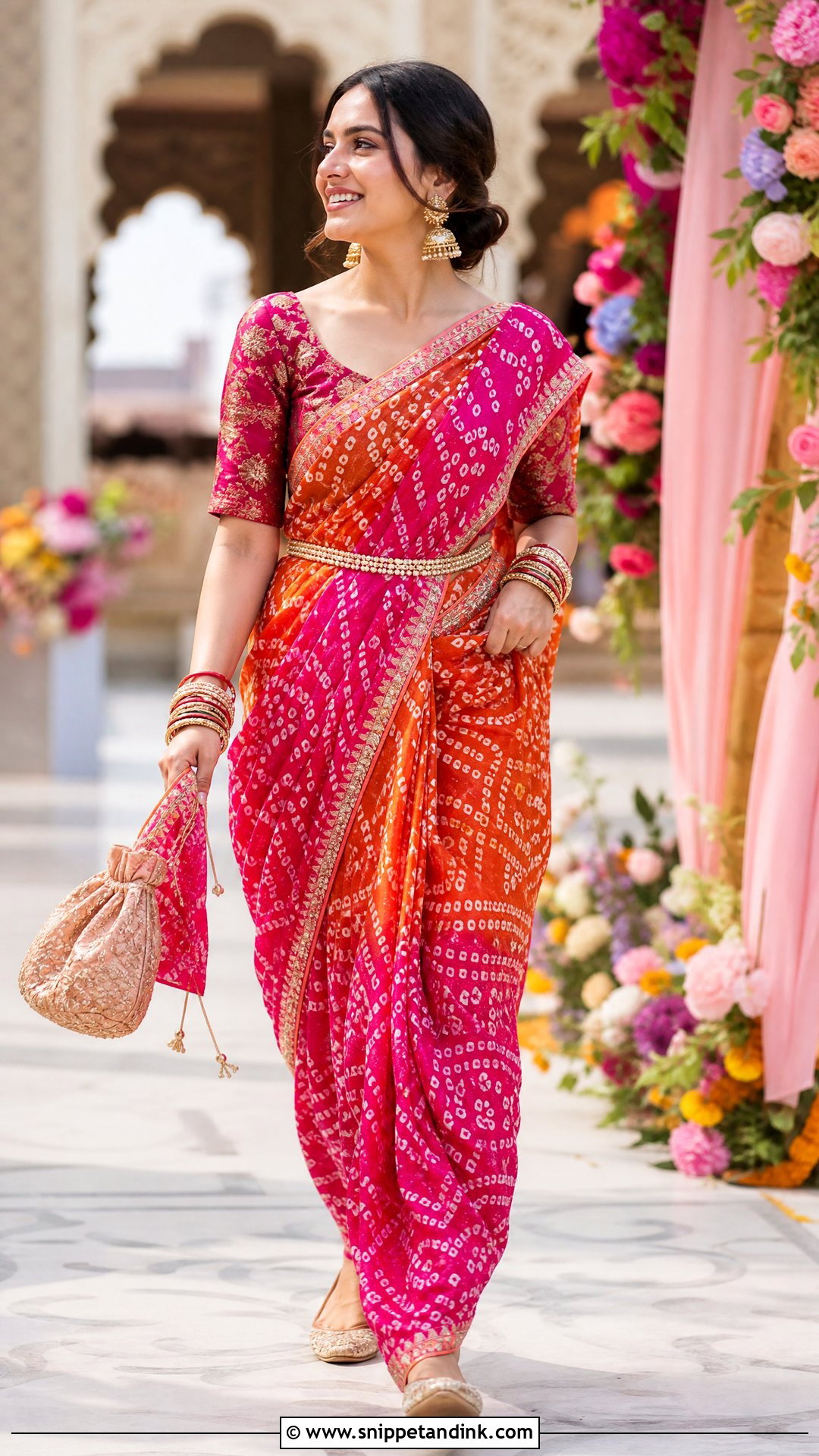
Bandhani gets its dots from tie-resist dyeing: tiny points of fabric are pinched and bound before the dye bath, which leaves a slightly crinkled texture. That texture is part of the charm, so I tell clients not to press it hard with a hot iron. Pink with orange or green with yellow make a cheerful guest outfit. Pair a contrasting silk or velvet blouse, gold jhumkas, a slim waist belt and embroidered juttis, and carry a small potli instead of a large bag. For an evening function, choose a version with a decorative border. Confirm whether red is reserved for the bride, and pin the pleats well if you plan to dance.
21. Chanderi Saree Wedding Look
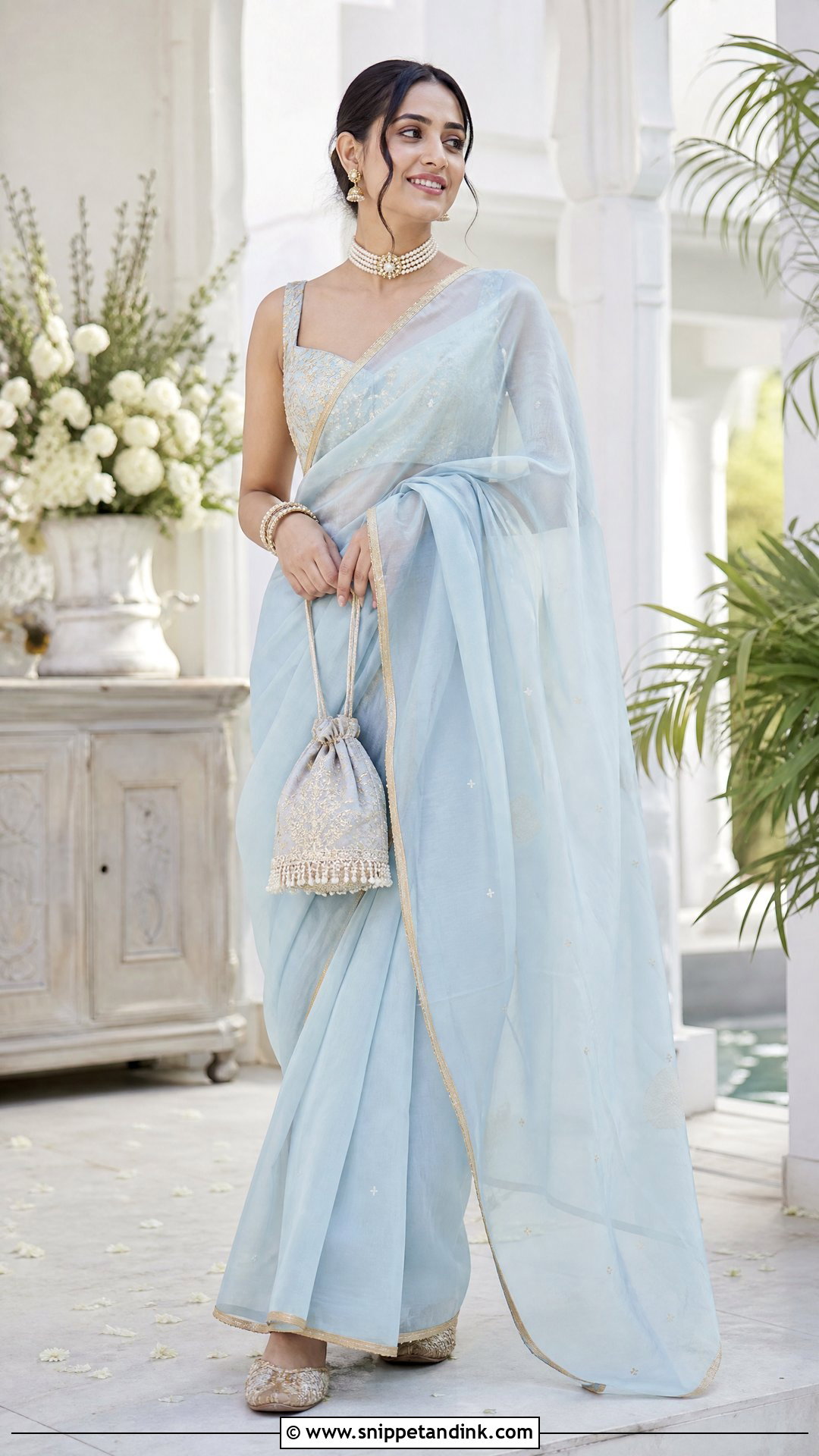
Chanderi is light and slightly sheer, with a soft sheen from its silk-cotton weave, which makes it my first suggestion for daytime and warm-weather weddings. Choose a pastel or muted jewel tone with a delicate woven border, and pair it with a fitted brocade blouse to add formality. Because the fabric weighs so little, the pleats won’t stay unless they’re pinned at the waist and the pallu is pinned at the shoulder; I hide small safety pins inside the folds. A pearl choker, small jhumkas and slim bangles are the right scale. Guests should keep it quiet, and brides can choose a richer border.
22. Pochampally Saree Wedding Look
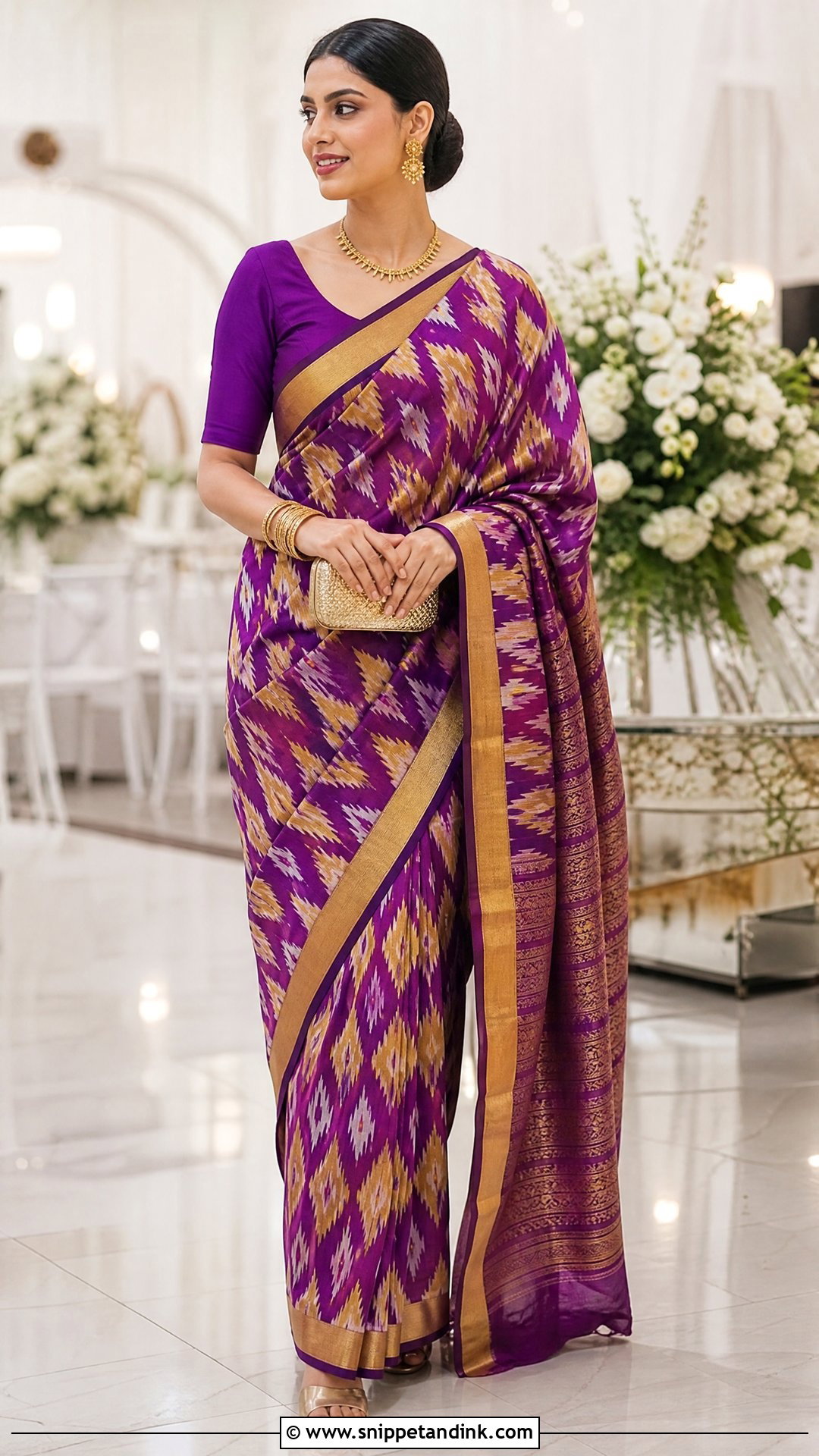
Pochampally is an ikat weave, meaning the threads are dyed before weaving, which gives those soft-edged geometric patterns. It’s bold, so the blouse should be solid and match one shade in the pattern. Black and red appear in many Pochampally sarees, but some families avoid black at weddings, so ask first; purple with gold or green with maroon are safer. I keep jewelry streamlined here, just gold earrings, one necklace and bangles. Pleating has to be precise, because a geometric print bunched at the waist looks messy within minutes. A sleek bun and low metallic heels finish it.
23. Silk Salwar Kameez Wedding Look
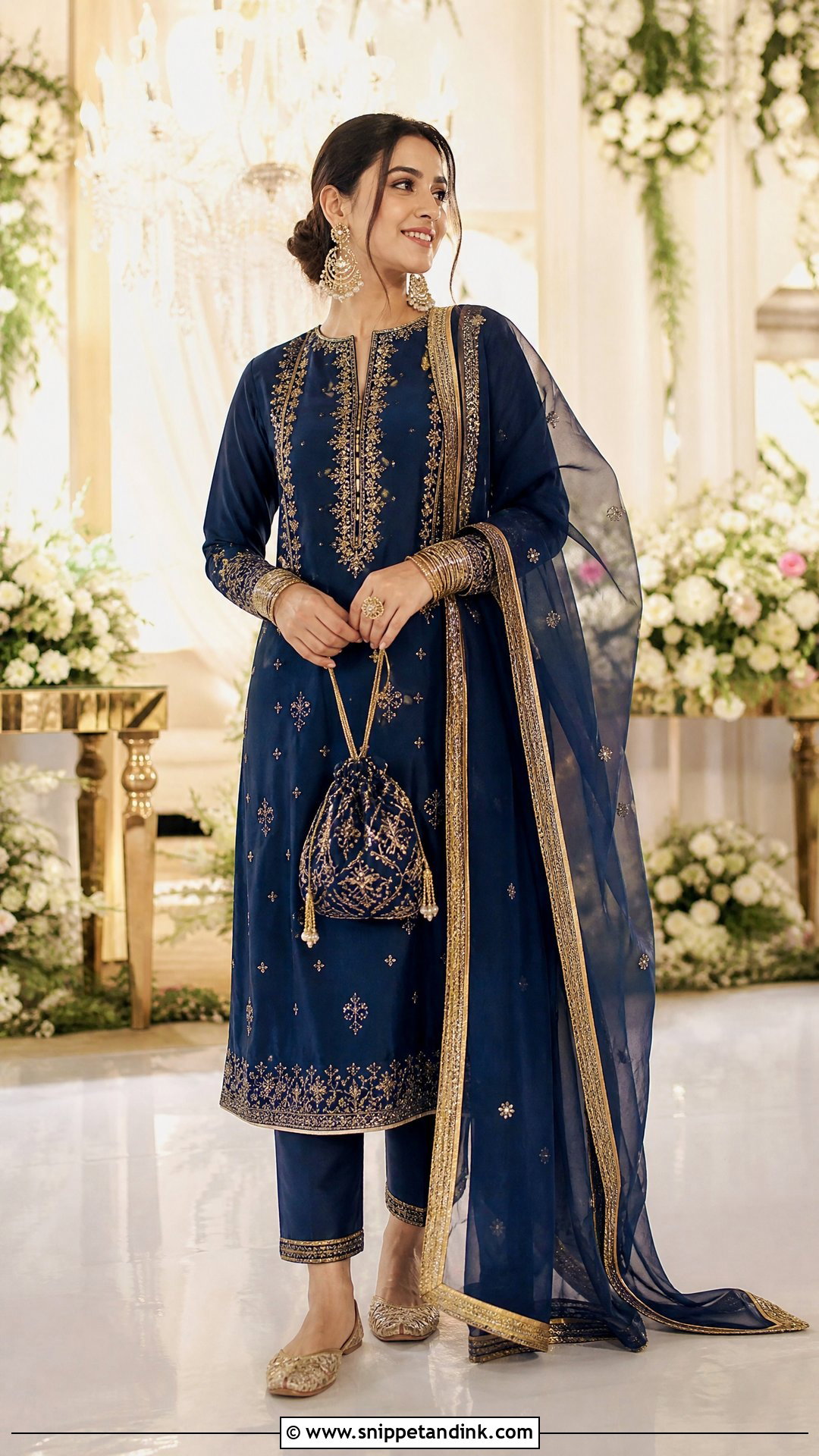
A silk salwar kameez is the outfit I trust for long days of greeting, eating and sitting. Choose a knee- or calf-length kameez with embroidery concentrated at the neckline, sleeves and hem, and pair it with tailored salwar and a bordered dupatta. Emerald, plum and rust feel festive without looking bridal. Pin the dupatta at one shoulder so it stays put when you bend to greet elders or hold a plate. Chandelier earrings, bangles, an embroidered potli and juttis finish it. Sleeve length, fit and trouser cut all adjust easily, so it works across ages and body types.
24. Dhoti Pant Kurta Wedding Look
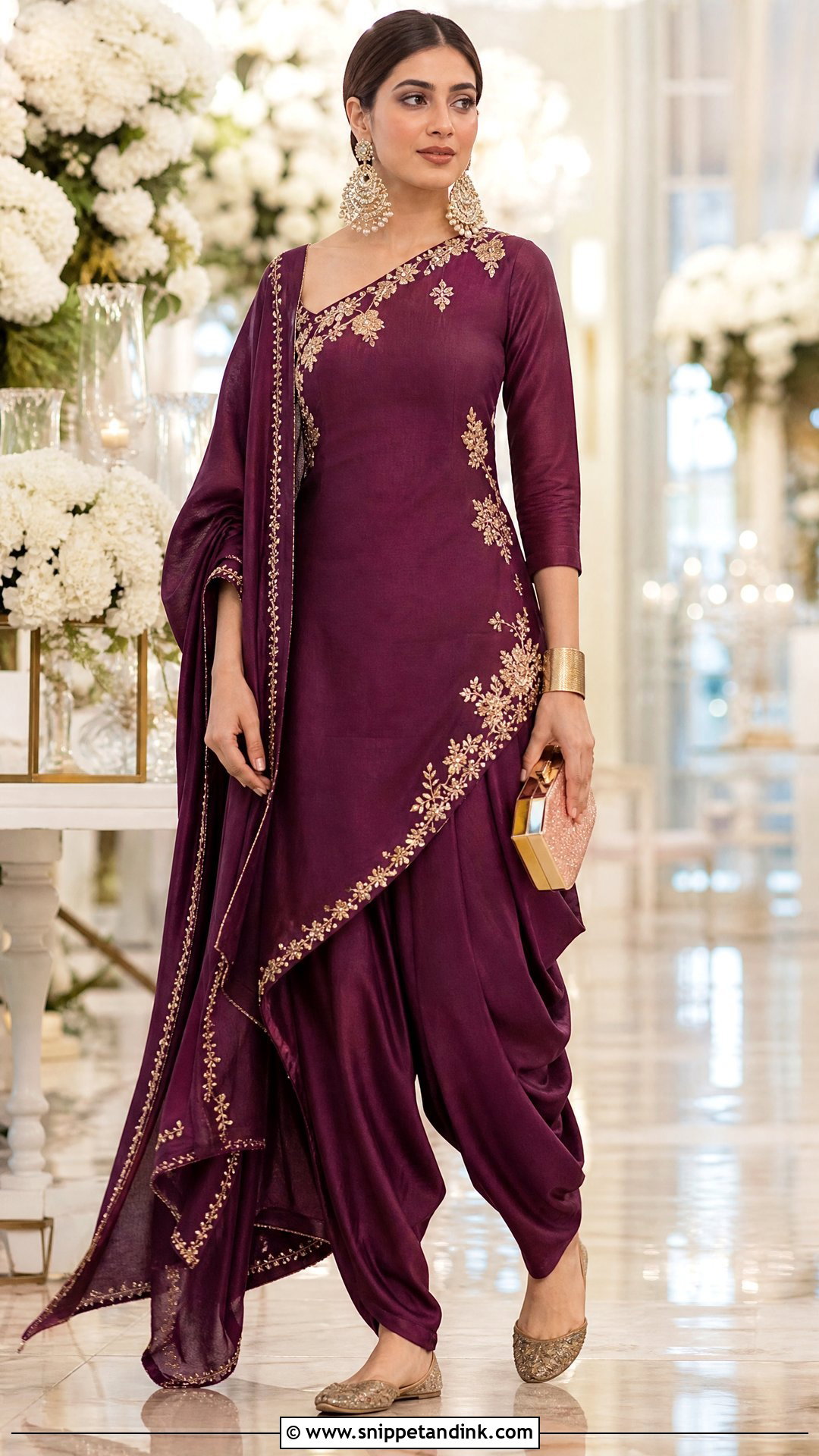
Pair draped dhoti pants with a structured kurta when you want something distinctive that still feels easy to wear. A short asymmetrical kurta, peplum top or knee-length jacket defines the waist and leaves the pants visible. Keep the top fitted. The dhoti already carries volume at the hip, and a loose top over it just adds bulk. Teal or mustard silk works well with an embroidered dupatta, statement earrings, a cuff and pointed juttis. I’d save this for a mehndi, sangeet or reception, and check with the family before swapping it in for a saree or lehenga at a traditional ceremony.
25. Cape Lehenga Wedding Look
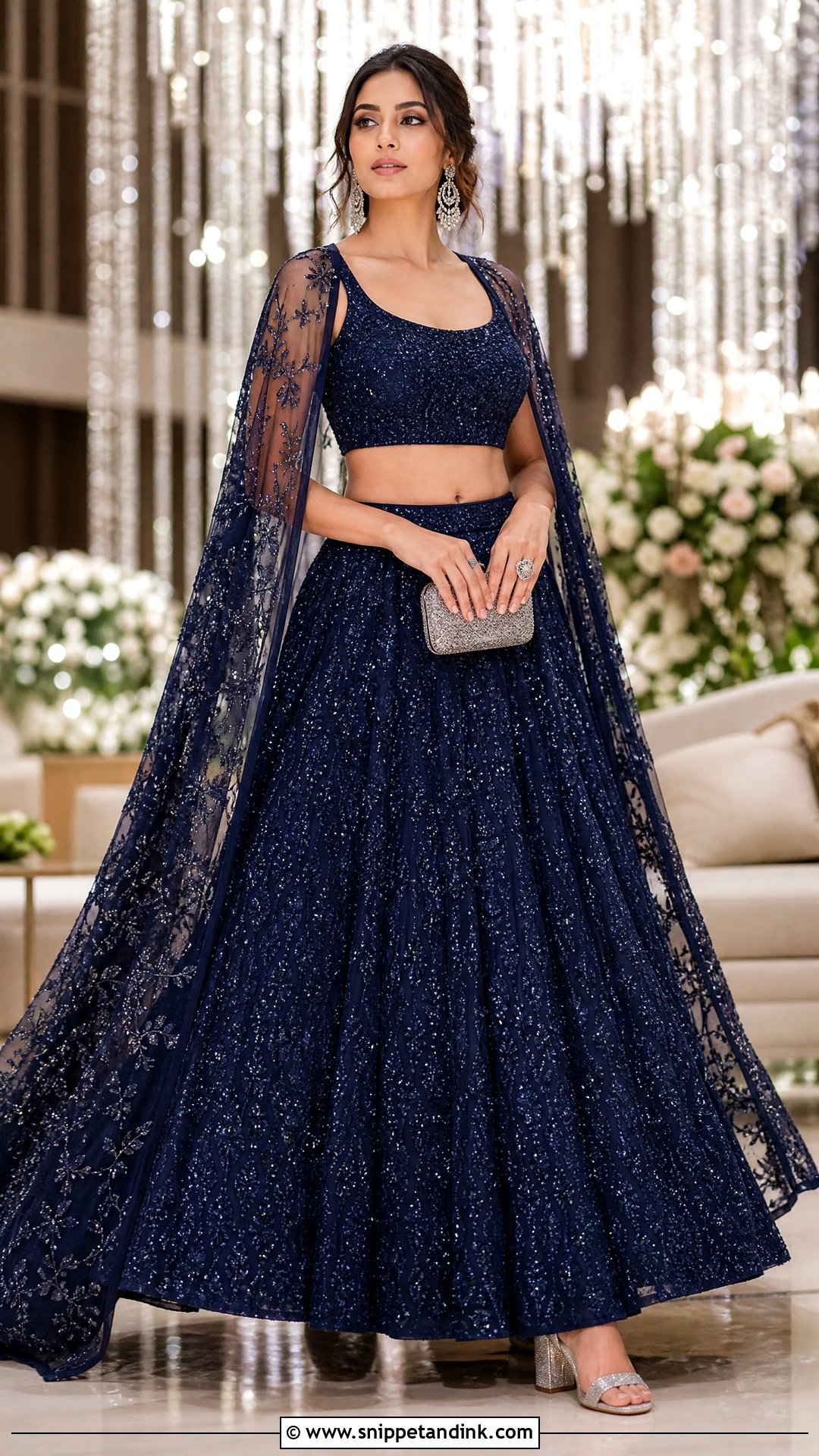
A cape lehenga solves the dupatta problem: the sheer or embellished cape covers the shoulders and stays put all evening. Pair a flowing embroidered skirt with a fitted blouse, in deep jewel tones for evening or pastels for daytime. Cape length changes proportions more than people expect. On petite frames I keep it at the waist or hip, while taller wearers can carry a longer, more dramatic cape. If the cape is embroidered at the neck, skip the necklace and let statement earrings do the work. It’s a smart guest choice for movement and coverage, as long as the modern shape suits the family’s dress code.
Why Zari and Silk Should Never Live in Plastic
A wedding saree or lehenga is often kept for decades and passed down, so how it’s stored in the first month matters. Air it out for a day after the wedding, away from direct sun, and get any food or makeup marks to a dry cleaner who handles heavy silk and zari. Don’t spray perfume near the embroidery; the alcohol and oils can dull metallic threads.
Plastic covers trap moisture, and zari tarnishes faster in a damp, sealed bag. I wrap silk in plain muslin or a soft cotton cloth instead. Sarees should be refolded along different lines every few months, because silk weakens and can split along a crease that never moves. Heavy lehenga skirts store better folded flat in a box than hung by the waistband, which stretches under the weight of the embroidery. Keep the blouse with its saree so the set stays together.
Dressing for the Ceremony, Not Just the Camera
Respect, fit and comfort decide whether a traditional outfit works, far more than how much embroidery it carries. Before you buy, confirm the dress code, the meaning of colors in that family’s tradition, the venue and the formality with the couple. Book the tailor early, because even a fine saree looks unfinished over a loose blouse. Practise the drape, break in your footwear and keep jewelry in proportion to the garment. Above all, wear traditional clothing as a guest of the culture, never as a costume. A thoughtful outfit is remembered far more warmly than a showy one.
You'll Like These Ideas:


Leave a Reply