
Ivory satin is warmer than white and has a soft sheen that looks expensive, but it is also the most honest fabric in bridalwear. Every seam, every pull and every badly placed dart shows. That’s why I spend more time on fit with satin brides than with anyone in lace. The twenty dresses below run from sculpted ball gowns to fluid slips, with square necklines, structured bodices, big bows, columns and vintage details among them, and they suit everything from a minimal ceremony to a ballroom. Before you fall for a shape, think about the venue, how much support you need, how long a train you can manage and how you want to feel moving in it.
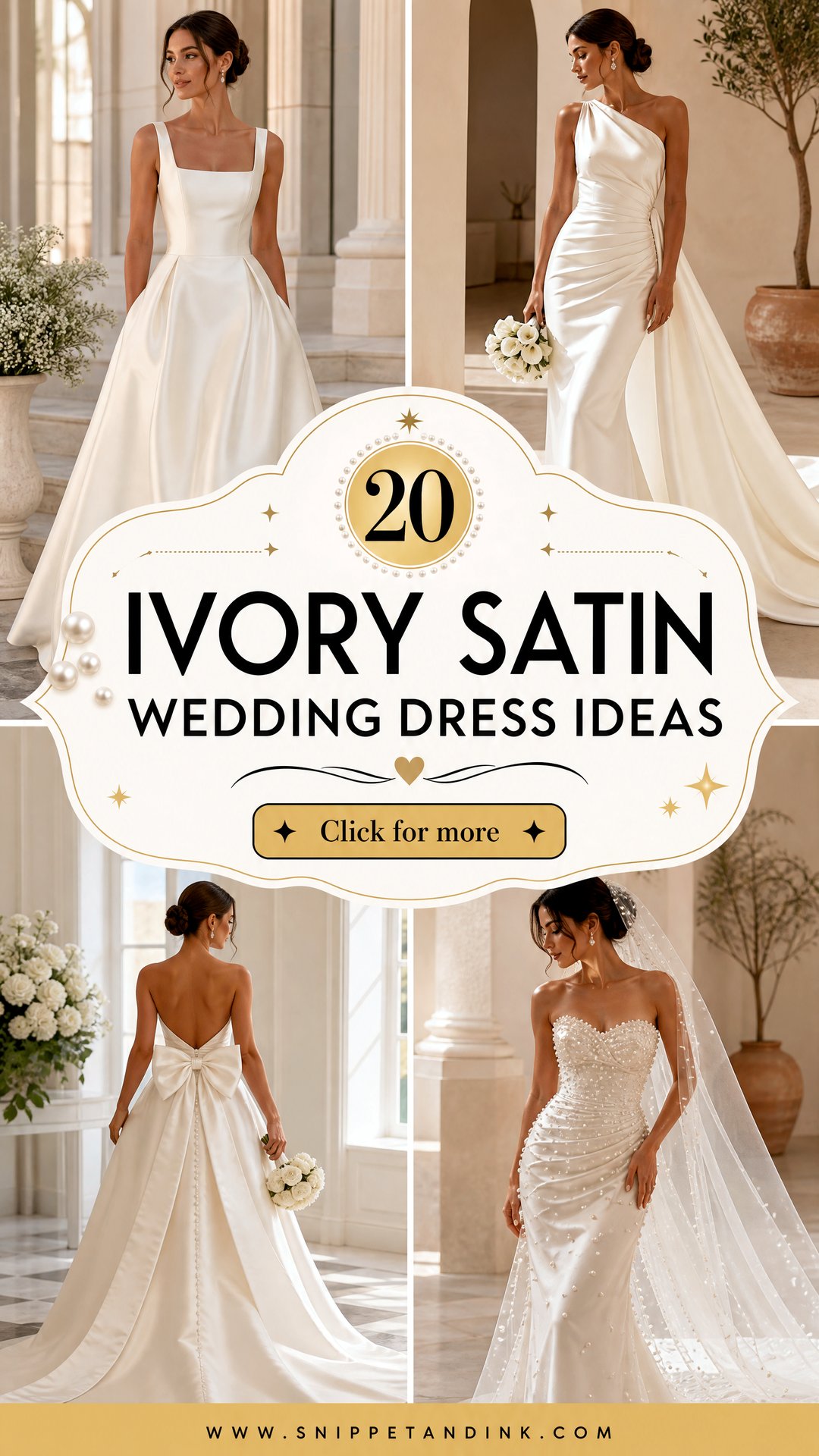
Duchess, Crepe-Back or Charmeuse: Which Satin Is It?
Satin is a weave, not a fibre, and bridal satins behave very differently. Before you choose a silhouette, ask which one you’re looking at, because it decides what the dress can do.
- Duchess satin: heavy, stiff and lustrous. It holds sculpted shapes, so it’s the choice for ball gowns, bows and structured bodices. It’s also warm to wear.
- Crepe-back satin: shiny on one side, matte crepe on the other. It drapes more softly and wrinkles a little less, which suits A-lines and columns.
- Charmeuse or slipper satin: light and fluid with a high shine. It’s what bias-cut slips are made from, and it shows every line underneath.
- Silk versus polyester: silk satin feels cooler and has a deeper glow; polyester costs less and resists water marks better, but can trap heat.
Ivory varies too. Some ivories lean yellow, some pink, some almost grey. Hold the fabric under your chin by a window. The right one makes your skin look rested; the wrong one makes you look tired.
1. Ivory Satin A-Line Wedding Dress
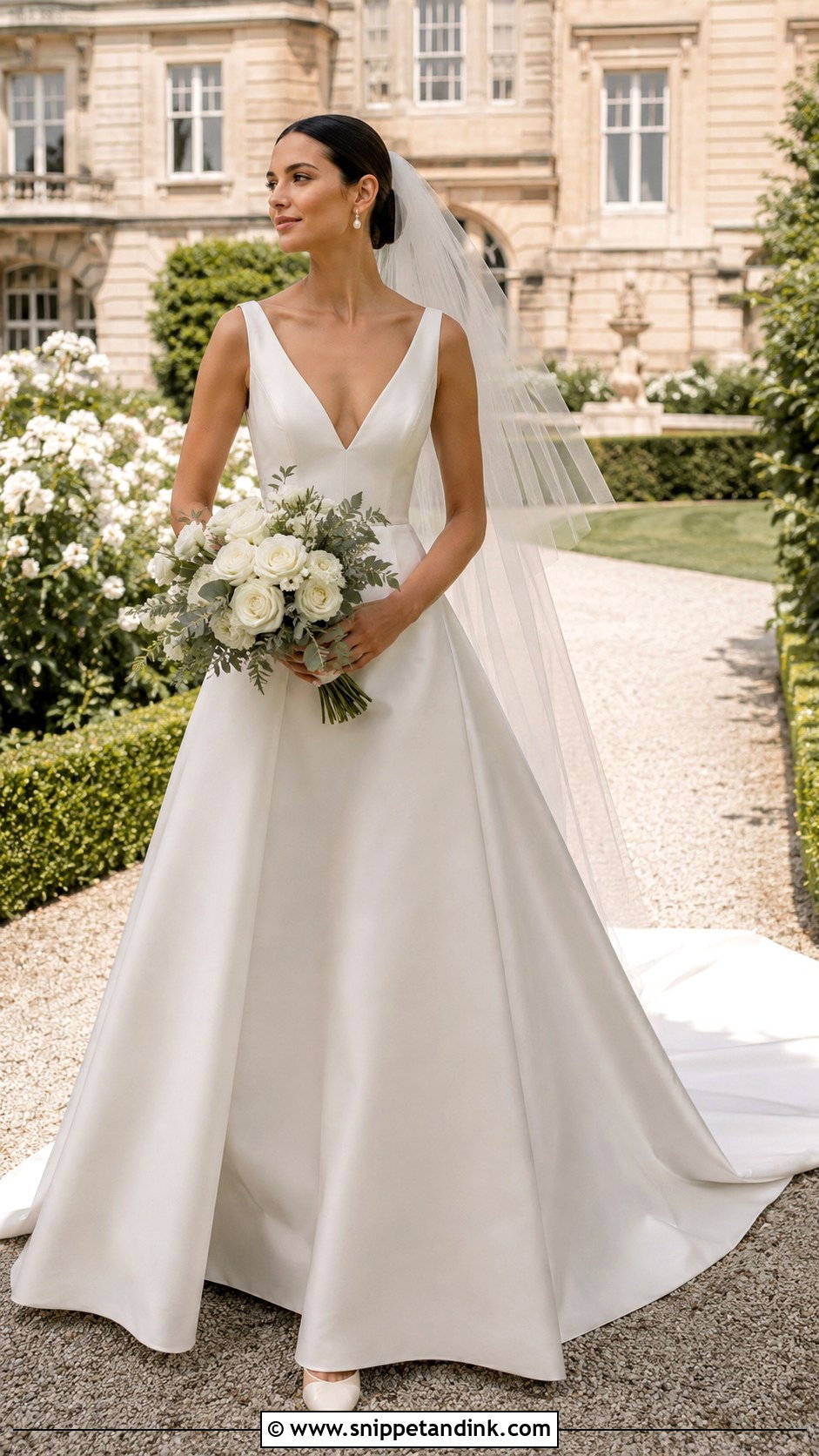
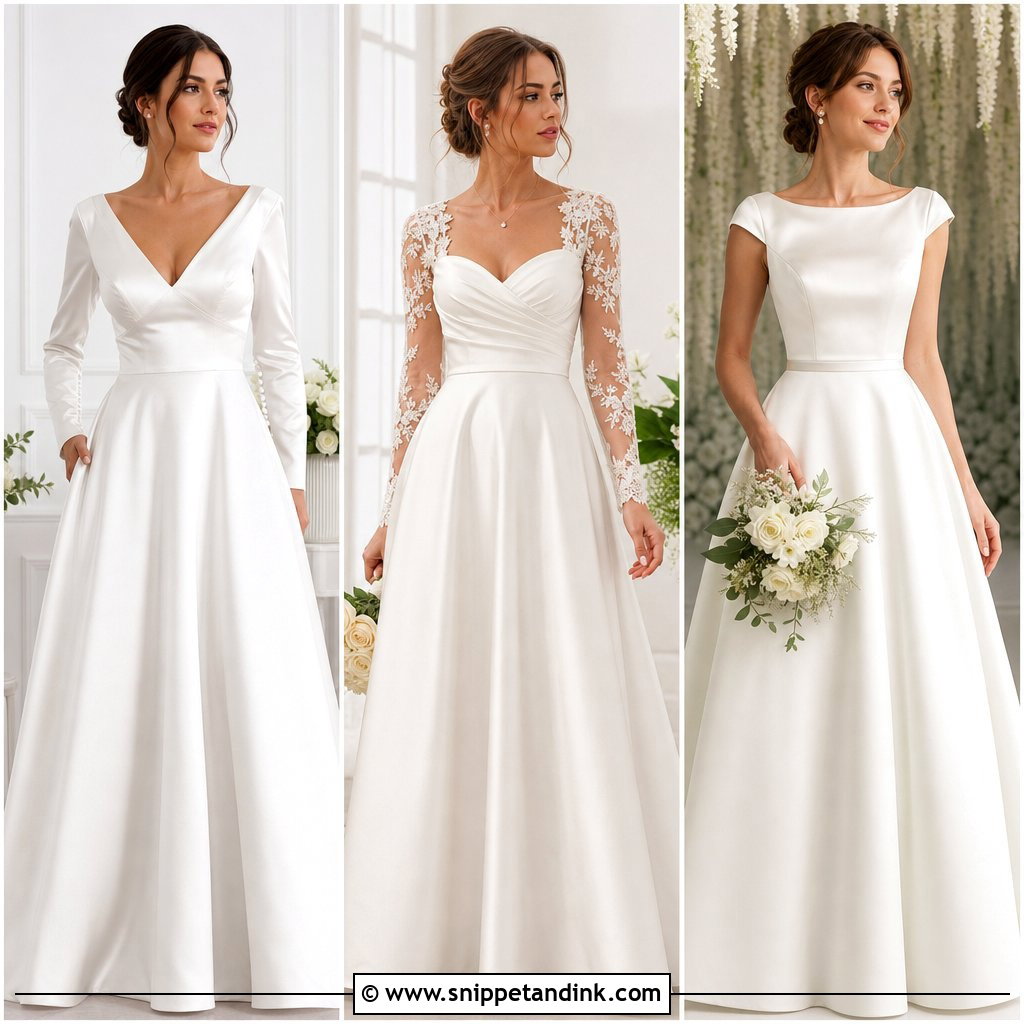
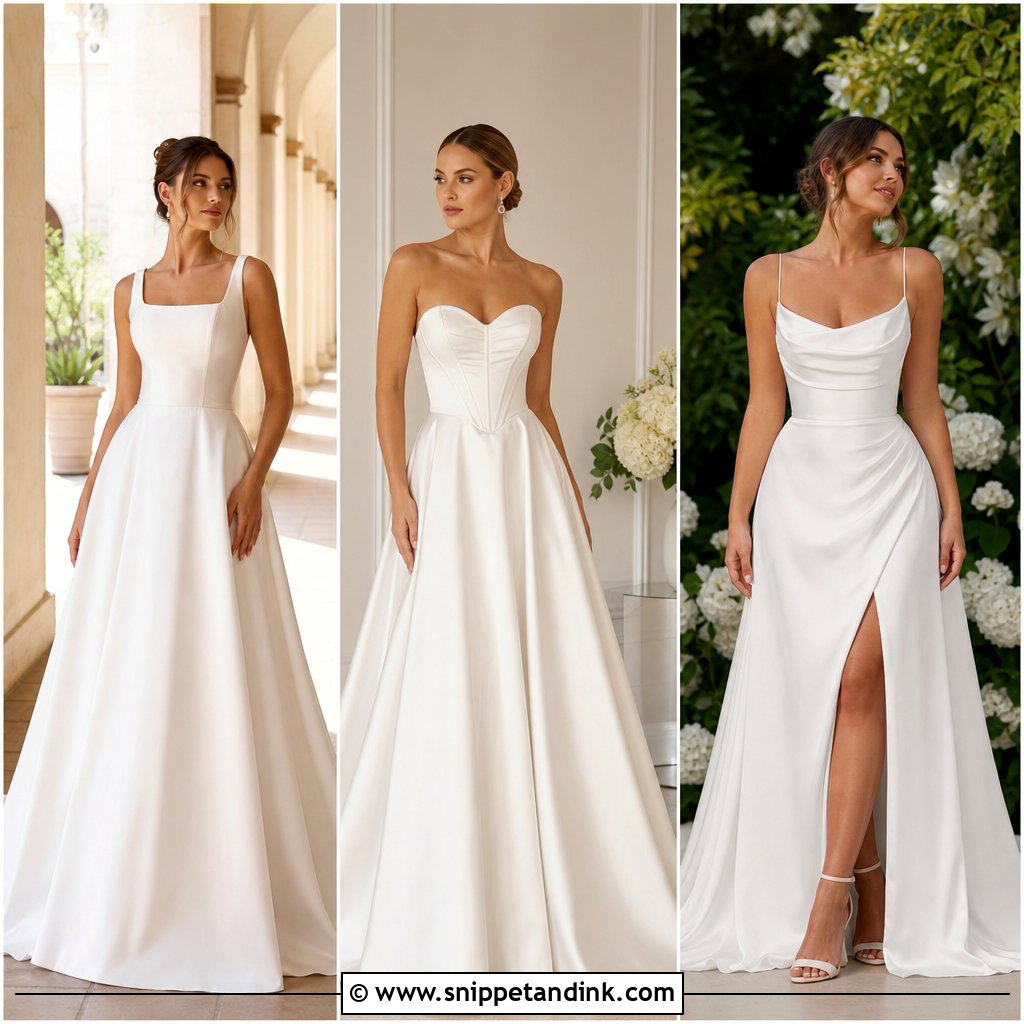
The A-line is the shape I’d put most brides in first, because a fitted bodice and a skirt that releases from the waist flatters almost everyone and still lets you sit. Choose a soft V or a clean scoop neck, and a chapel-length train, which gives you presence without needing a bustle team. Pearl drops, pointed ivory pumps and a fingertip veil with a narrow satin edge suit it, with a compact bouquet of white roses and greenery. Gardens, historic houses and classic hotels all work. Have the hem set while you wear your actual wedding shoes; satin is stiff enough that a half-inch error shows as a kick at the front.
2. Ivory Satin Strapless Ball Gown Wedding Dress
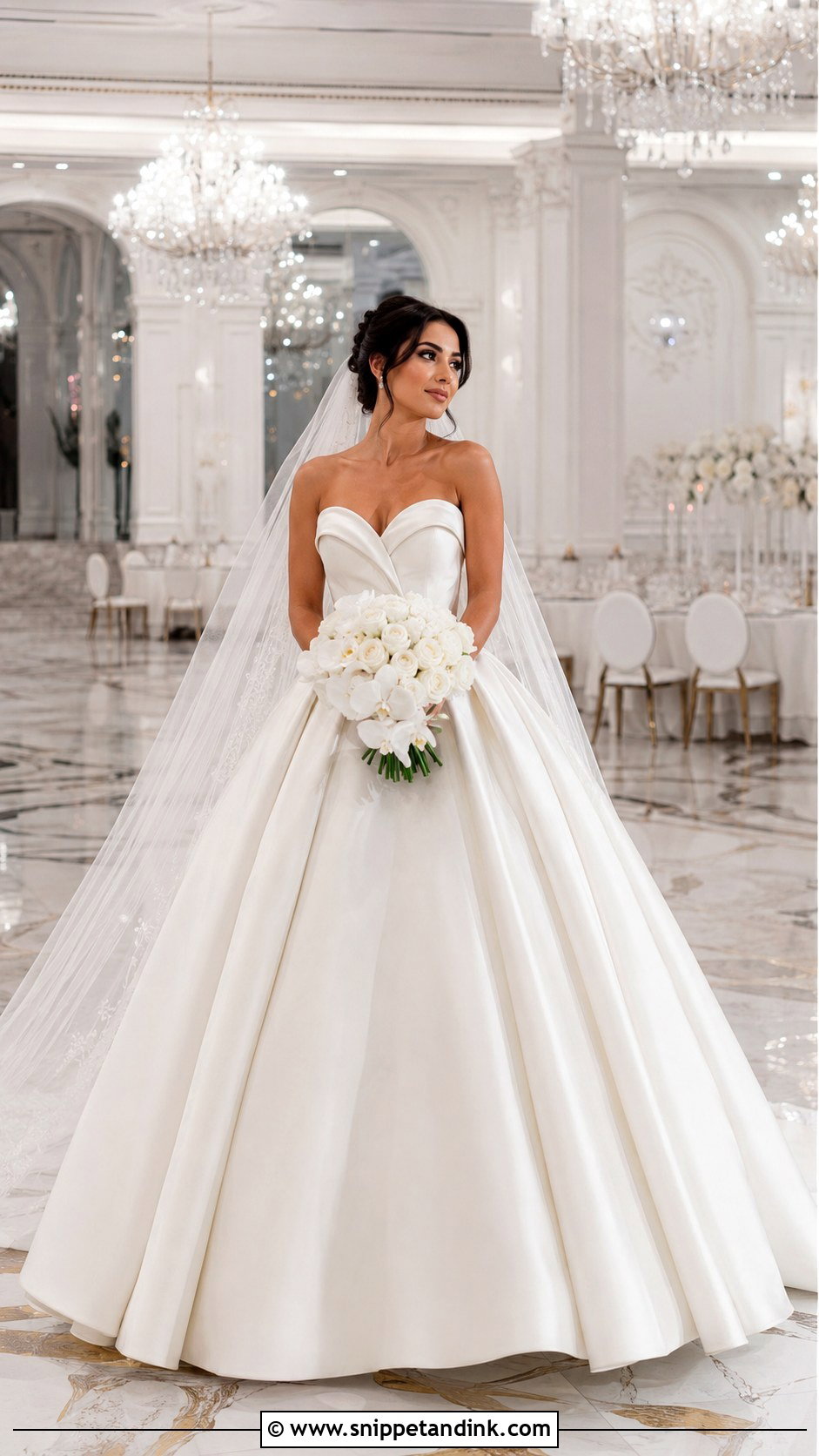
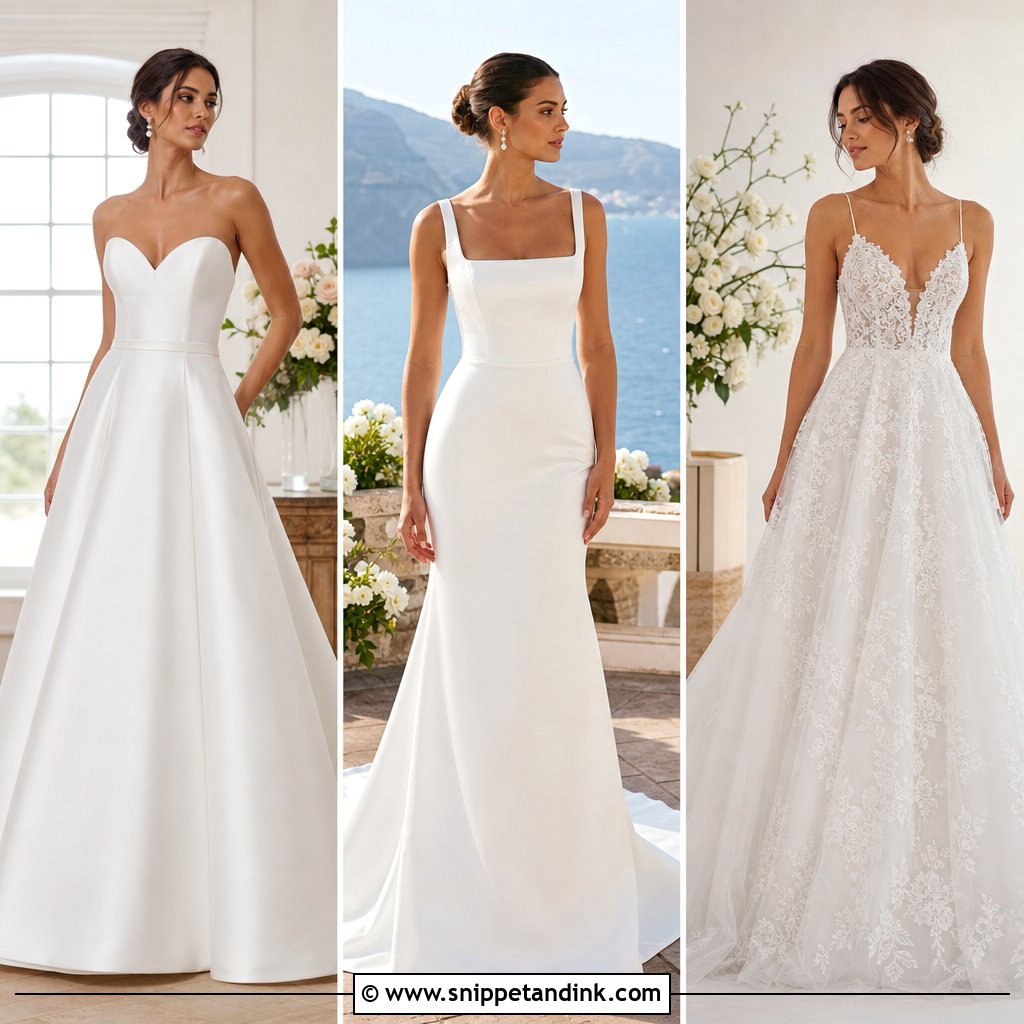
A strapless satin ball gown relies entirely on its inner structure. Without boning and a waist stay anchoring it, the bodice slips every time you raise your arms. When I fit one, the first thing I check is that the bodice stays put while the bride hugs someone. A modified sweetheart softens the shape, and the full skirt makes the entrance. Wear a cathedral veil, crystal studs and comfortable pointed heels under the skirt, with a low bun and little or no necklace. It needs room: a ballroom or a large indoor venue suits it best. Hidden pockets are worth asking for.
3. Ivory Satin Square Neck Wedding Dress
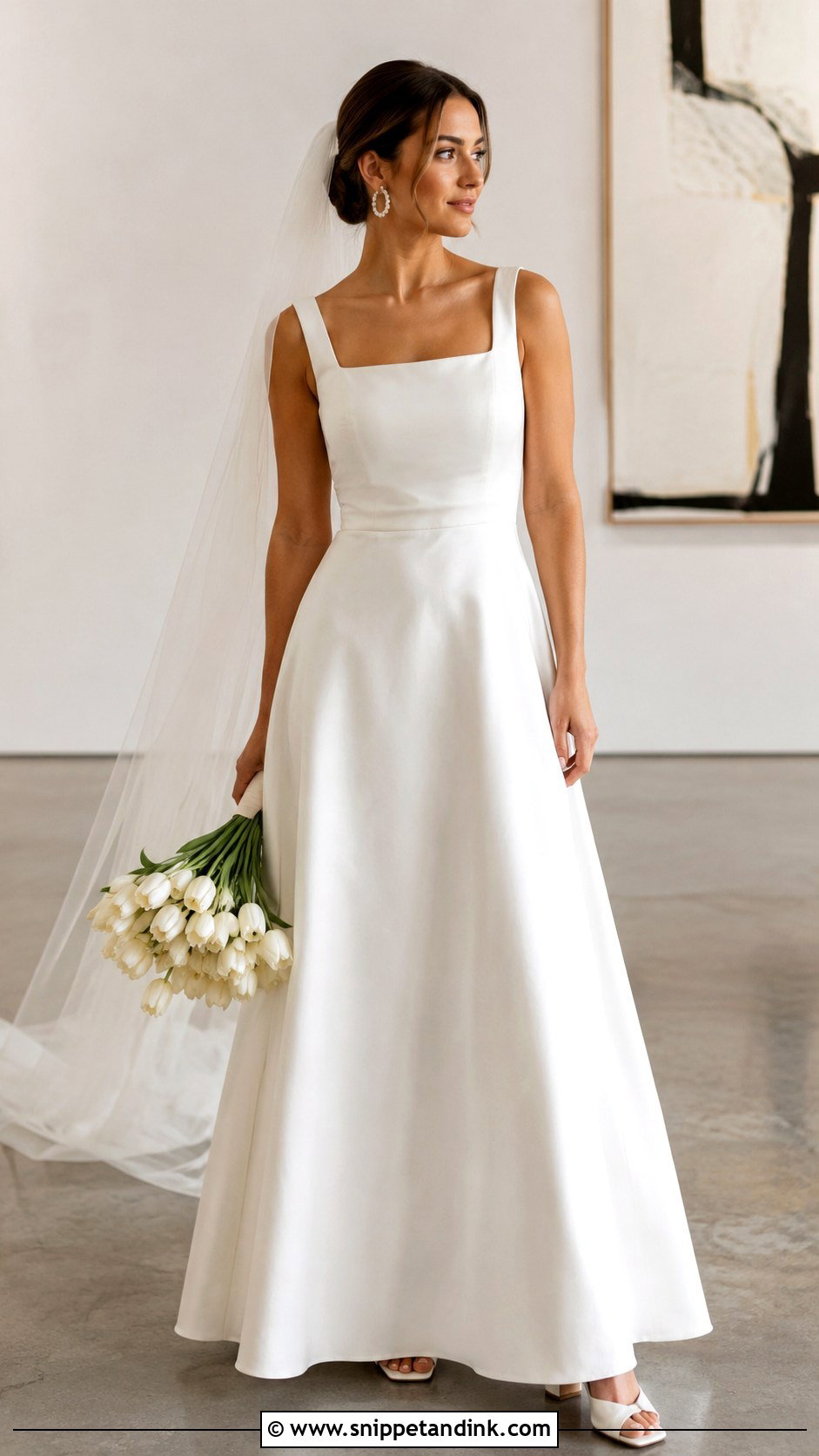
A square neckline frames the collarbone in a clean, architectural line, and satin holds that edge better than softer fabrics. Pair a fitted bodice with wide straps and an A-line or softly flared skirt. Wide straps matter here; thin ones on a square neck tend to slide off the shoulder. A smooth chignon, small pearl hoops and a single-layer chapel veil keep it simple, with ivory block heels for stability. A loose bouquet of white tulips or calla lilies echoes the simplicity. It suits modern estates, galleries, lofts and understated ceremonies, wherever the tailoring is meant to do the talking.
4. Ivory Satin Long Sleeve Wedding Dress
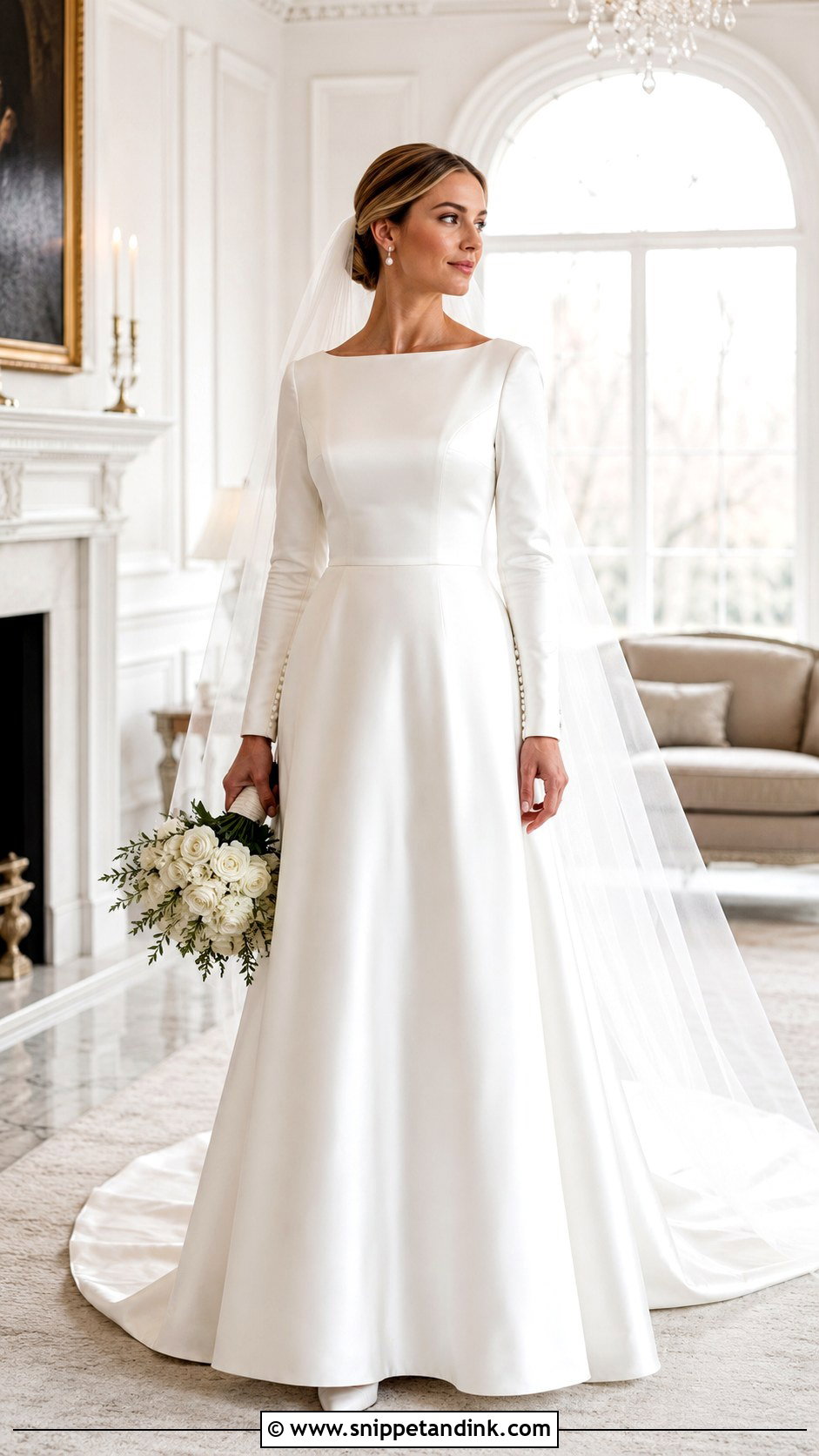
Satin sleeves need more ease than lace sleeves because satin doesn’t stretch, and a tight armhole is the most common complaint I hear after a winter wedding. Look for fitted sleeves with covered buttons at the cuff, a bateau neckline and a softly defined waist, over an A-line skirt with a chapel train. Pearl earrings, satin pumps and a long plain veil that follows the train finish it. A tailored ivory cape or soft faux-fur wrap keeps you warm for outdoor photos, and a low twisted bun shows off the neckline. At alterations, hug someone, raise a glass and reach across a table.
5. Ivory Satin Off-the-Shoulder Wedding Dress
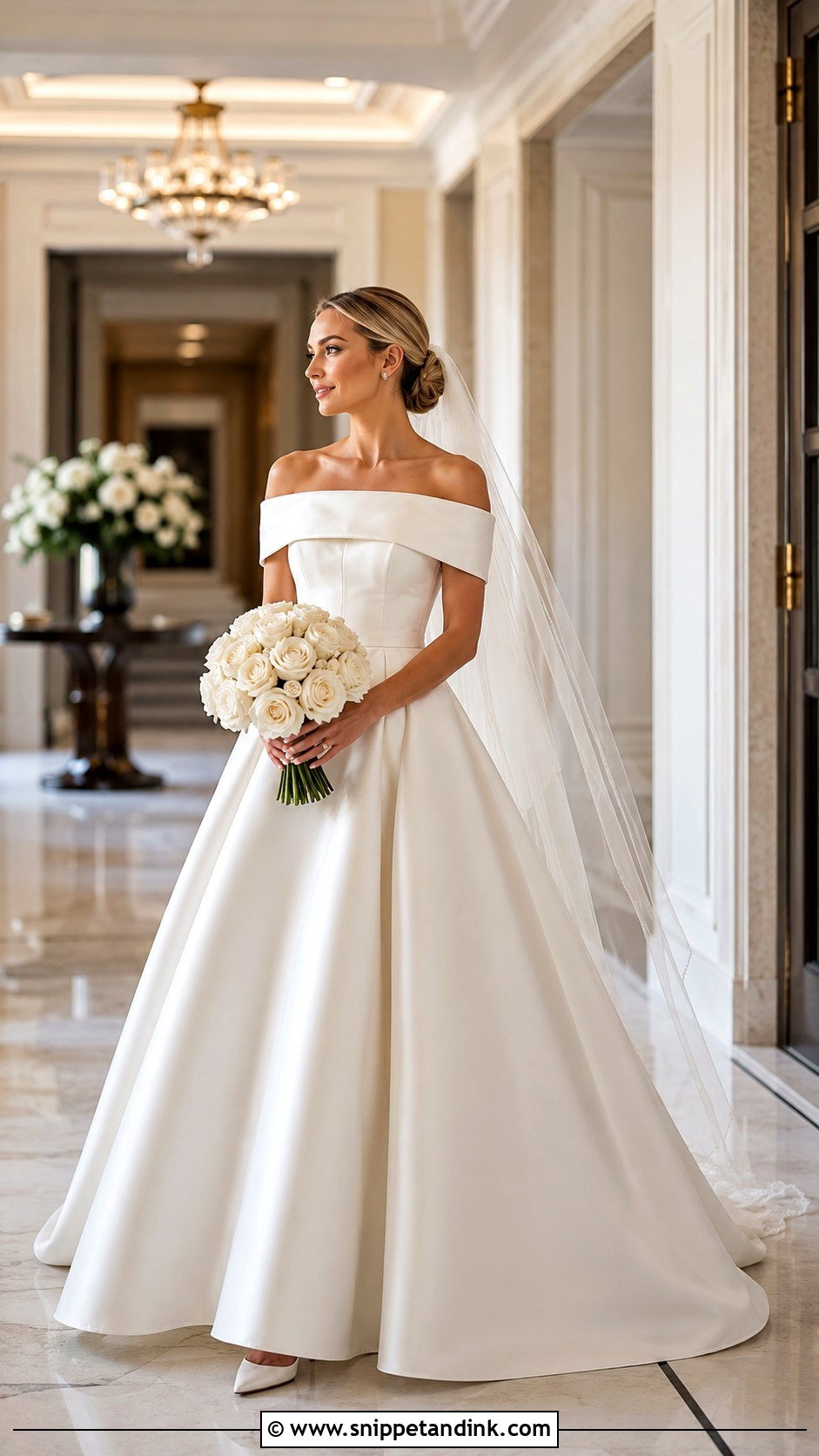
An off-the-shoulder fold-over band looks soft, but it has to be anchored to a structured bodice underneath or it creeps upward every time you lift your arms. A full A-line skirt balances it. Style it with a simple pendant, pearl studs and a low bun with a small comb, plus a sheer cathedral veil that won’t fight the clean satin. Closed-toe satin heels suit a formal venue; embellished flats are fine if comfort comes first. A bouquet of ivory garden roses adds texture. Estates, ballrooms and elegant indoor weddings all suit it.
6. Ivory Satin Mermaid Wedding Dress
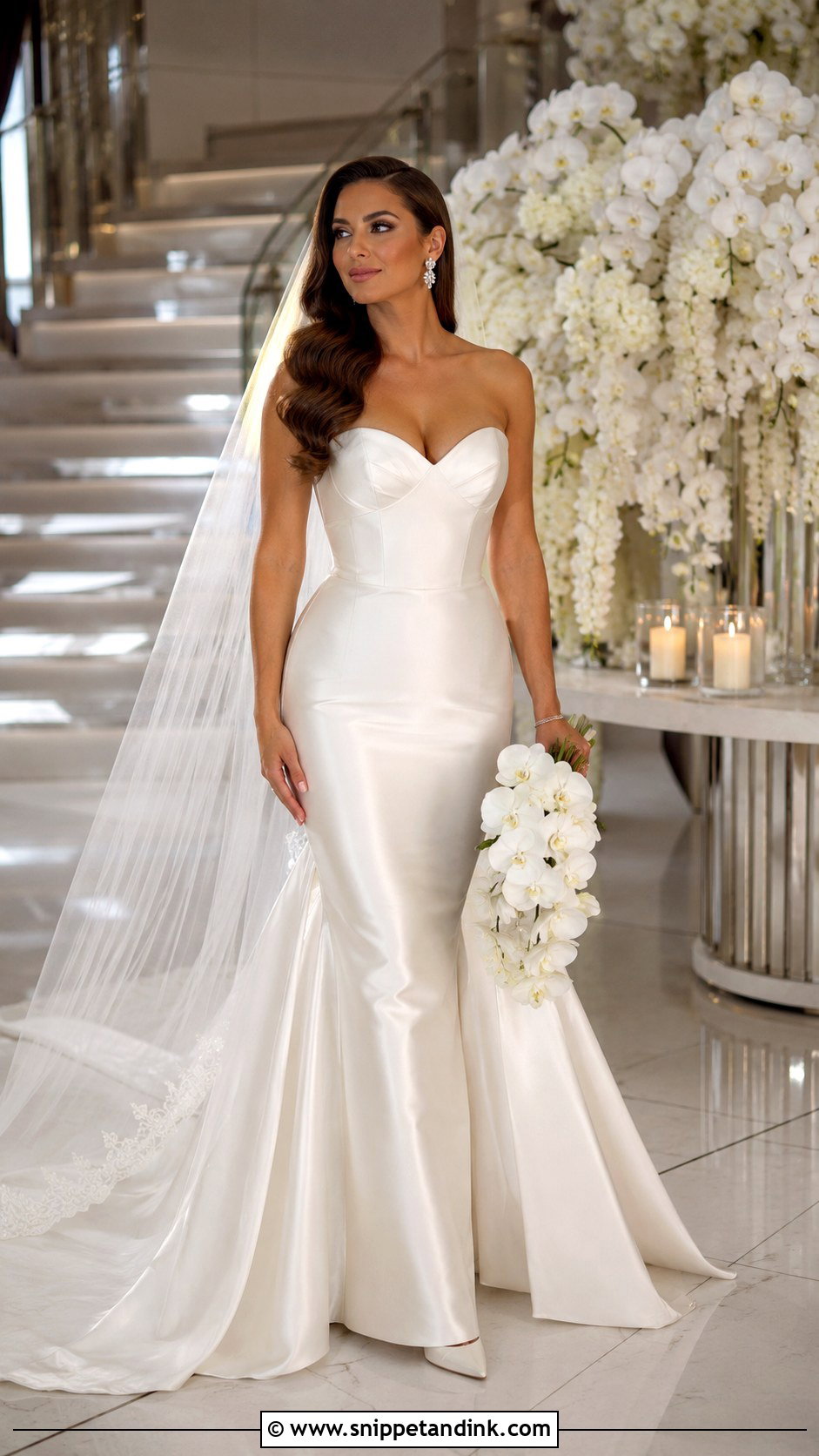
A satin mermaid is glamorous and the least forgiving shape on this list, since heavier satin shows every ripple across the hips. Choose a supportive bodice with a sweetheart or gentle V, and a skirt that flares above or around the knee. The higher the flare, the easier it is to walk and climb stairs. A detachable train gives you drama for the ceremony and freedom after. Crystal earrings, a fingertip veil, pointed pumps and a structured bouquet of white orchids finish it, with soft waves or a sharper updo. Sit and walk in the sample before ordering. If you can’t take a normal stride, it’s too tight at the knee.
7. Ivory Satin Slip Wedding Dress
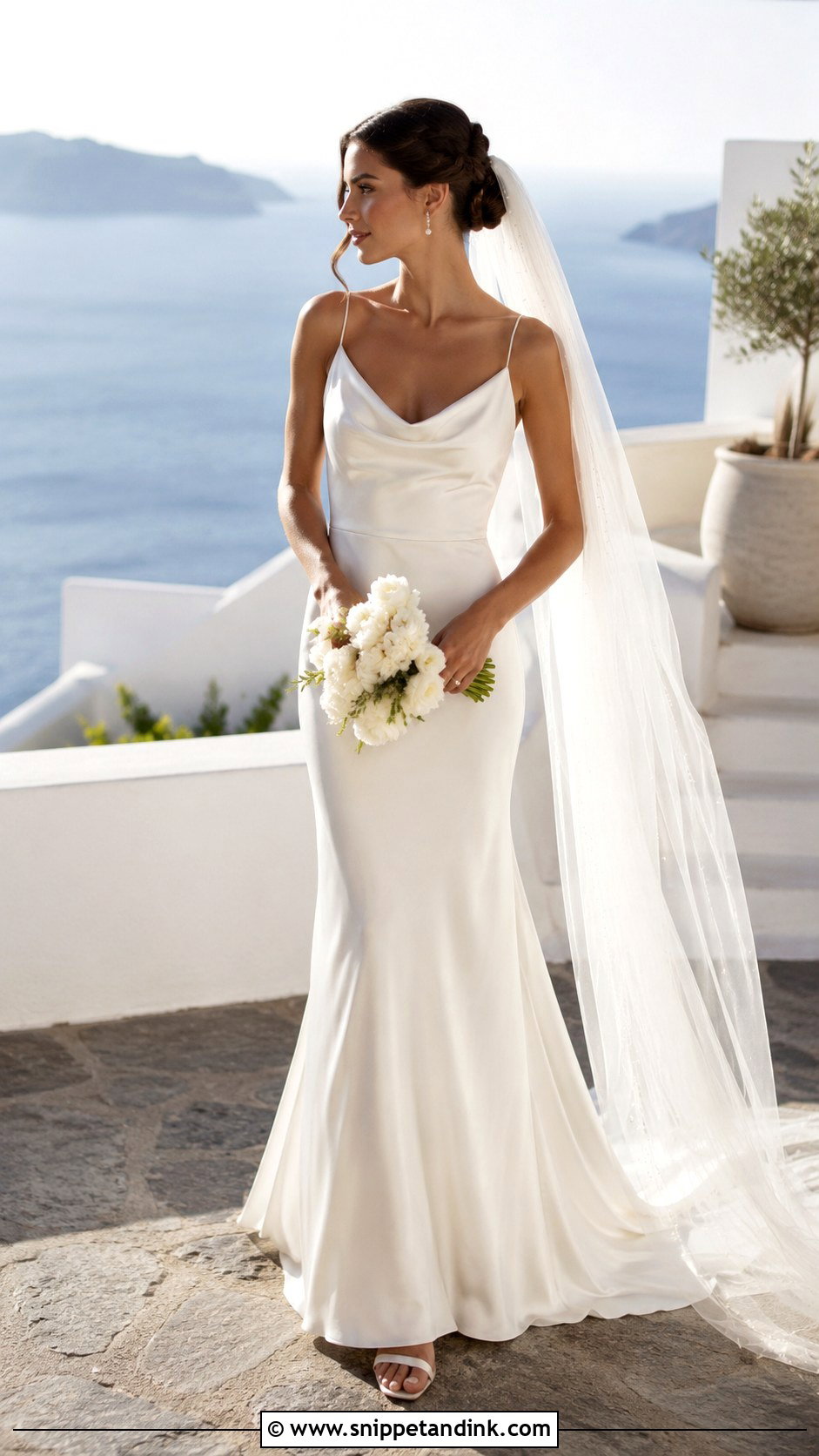
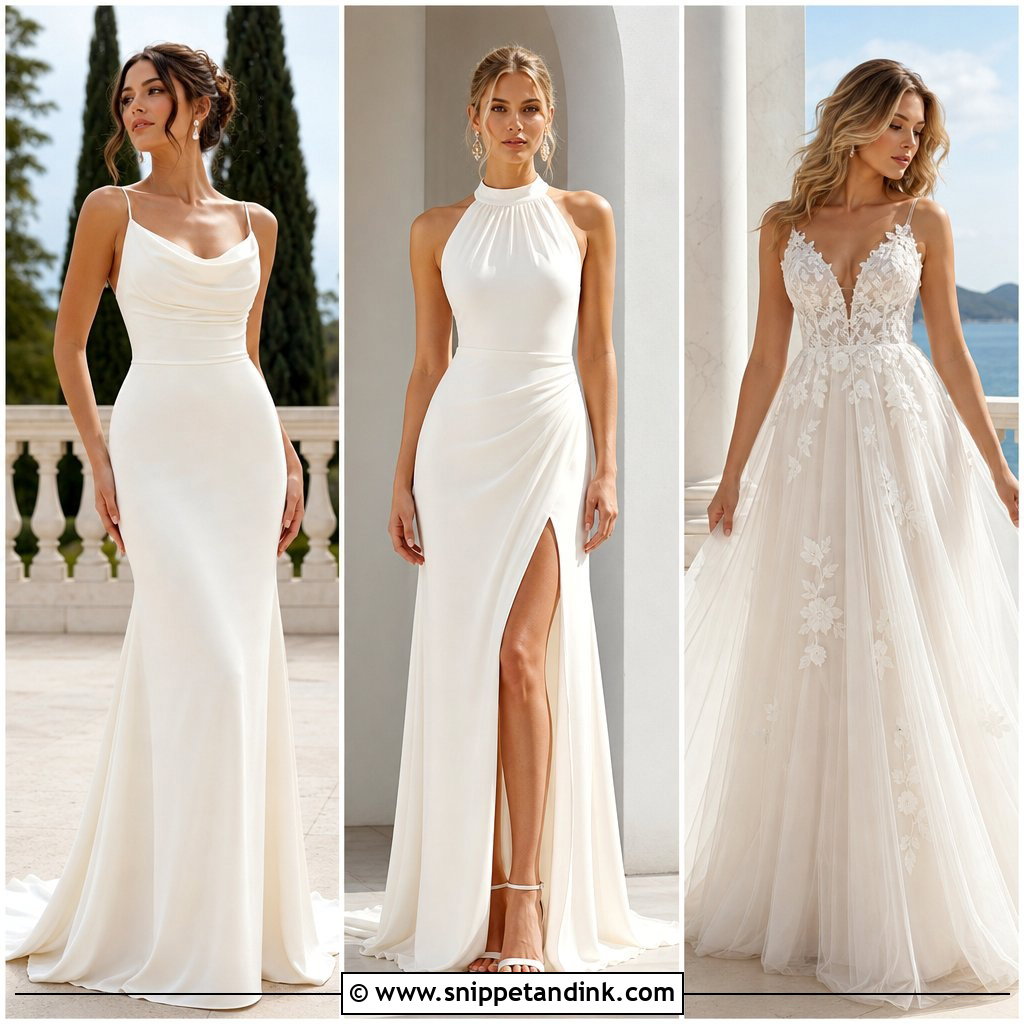
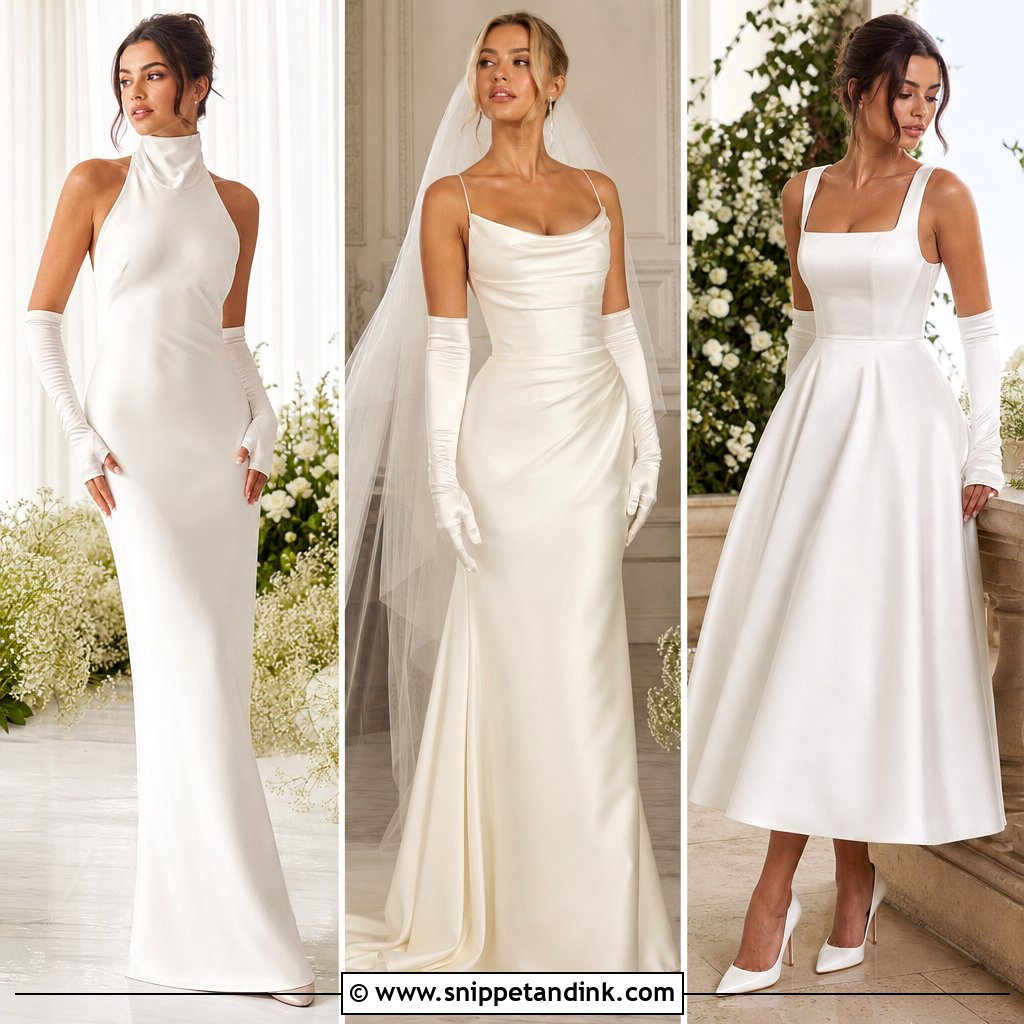
A slip dress looks simple and is anything but. A bias-cut design with fine straps, a draped neckline and a low back skims the body, which means it shows every line underneath, so I plan the foundation layer before anything else. Add a sheer chapel veil, minimal drop earrings and slim ivory sandals, with a bouquet of sweet peas or small roses. A removable satin wrap, cropped jacket or cape gives cover for the ceremony. Beaches, small restaurants, rooftops and destination weddings suit it. Walk on the actual venue surface in your shoes; bias-cut hems on sand or gravel catch fast.
8. Ivory Satin Cowl Neck Wedding Dress
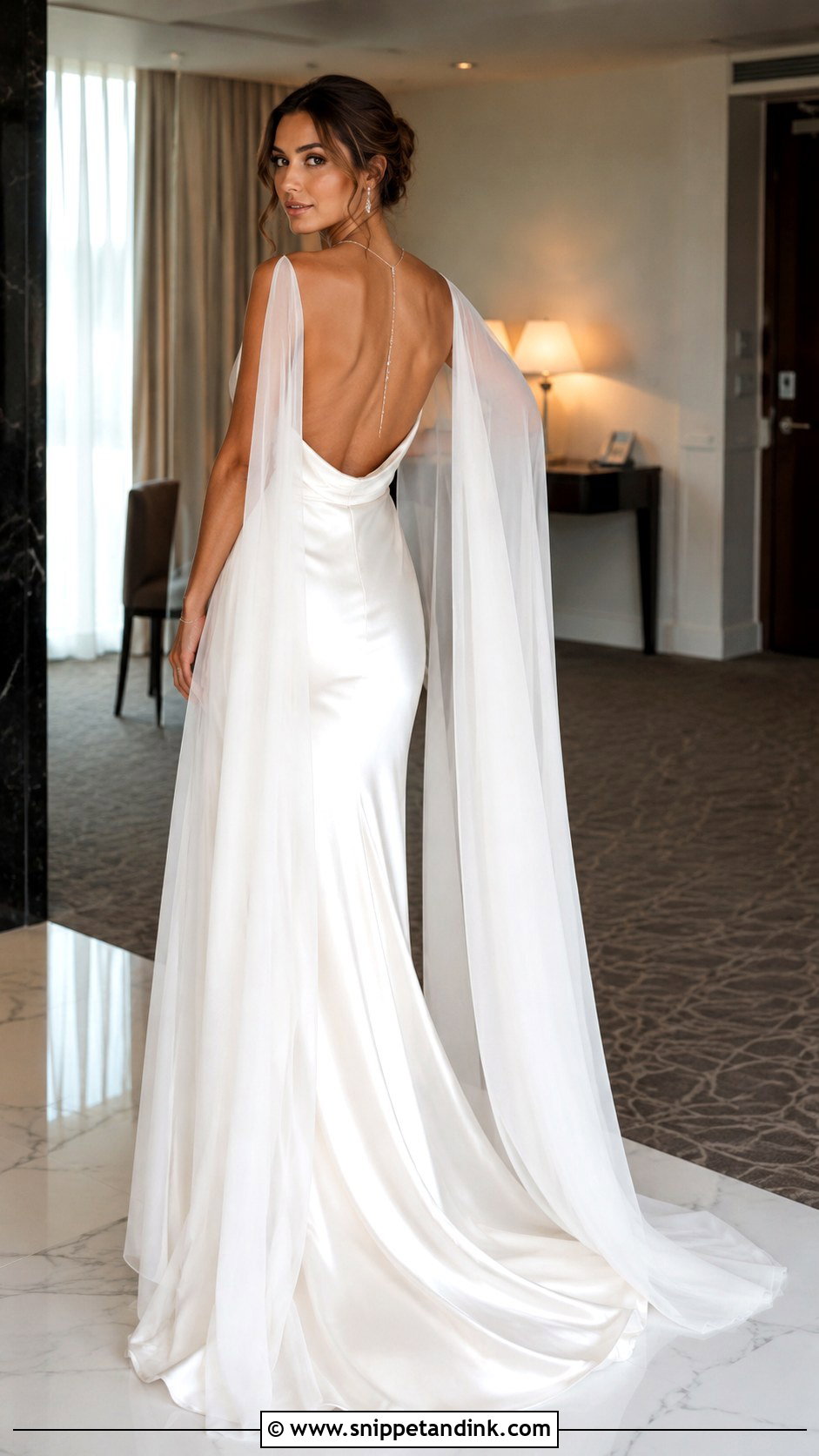
A cowl should fall in soft, even folds, not collapse into a dip. That depends on the satin being heavy enough and cut on the bias. A fitted waist and narrow column skirt keep the rest defined. If the back is open, a delicate back necklace is a nice touch; otherwise small diamond studs and slim satin heels are enough, with a shoulder-length veil or sheer cape and a polished bun or side-swept waves. Cowls shift as you move, so bend, sit and walk at every fitting and have a discreet tack or weight added if the neckline gapes. Soft evening light in a modern hotel or a destination venue suits its sheen.
9. Ivory Satin High Neck Wedding Dress
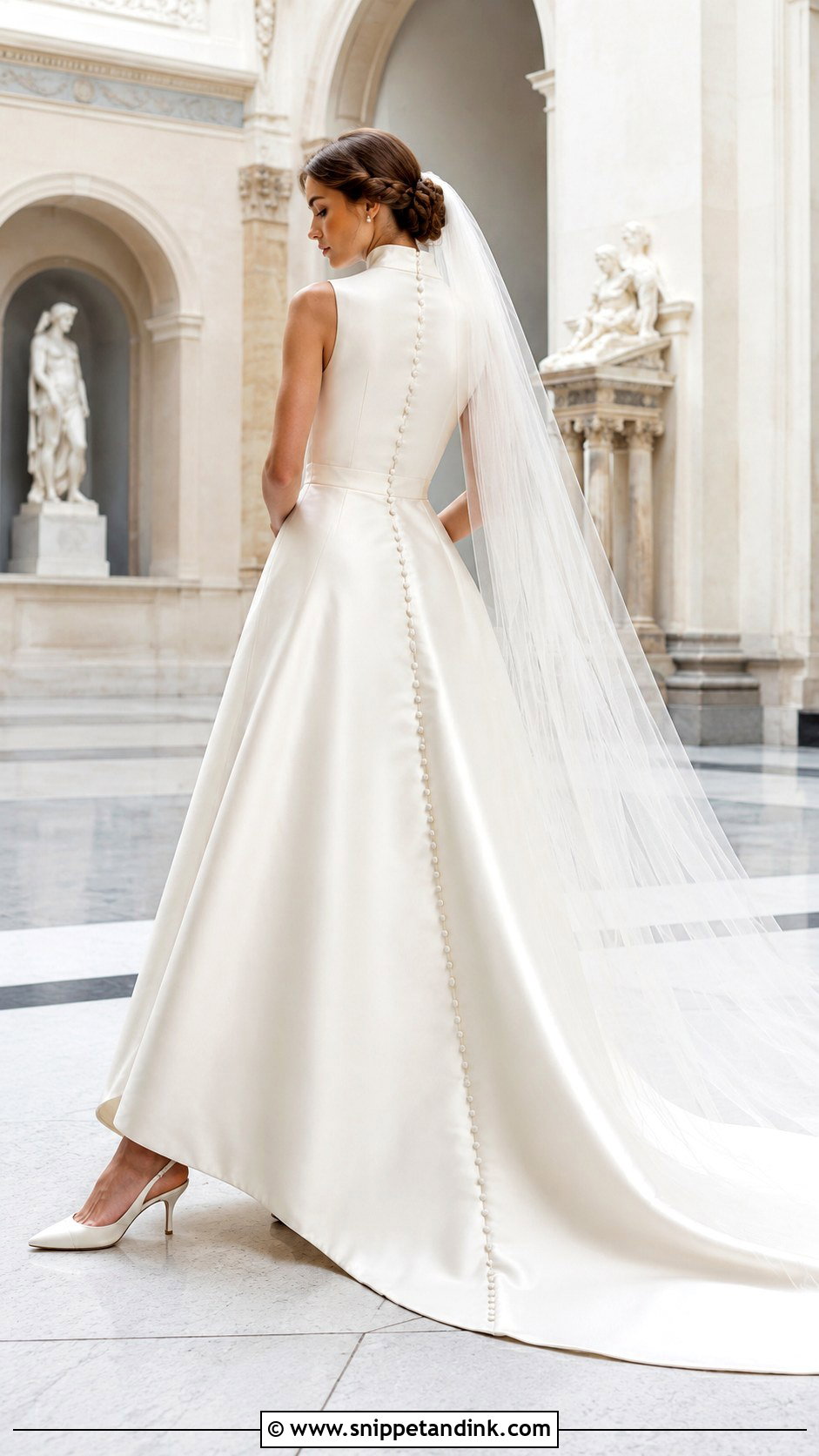
A high neck gives coverage and a formal line, and on a sleeveless satin bodice it stays light rather than heavy. Choose a fitted waist and a column or A-line skirt, with covered buttons down the back and a sweep train you won’t have to manage. Pearl studs, ivory slingbacks and a low braided bun suit it; swap the necklace for a delicate bracelet or an heirloom ring. Attach a simple tulle veil under the bun so the neckline stays visible. Formal daytime ceremonies, museums and architectural venues suit it well. The collar must be tailored precisely, because satin that rubs at the throat for ten hours leaves a red mark.
10. Ivory Satin Halter Wedding Dress
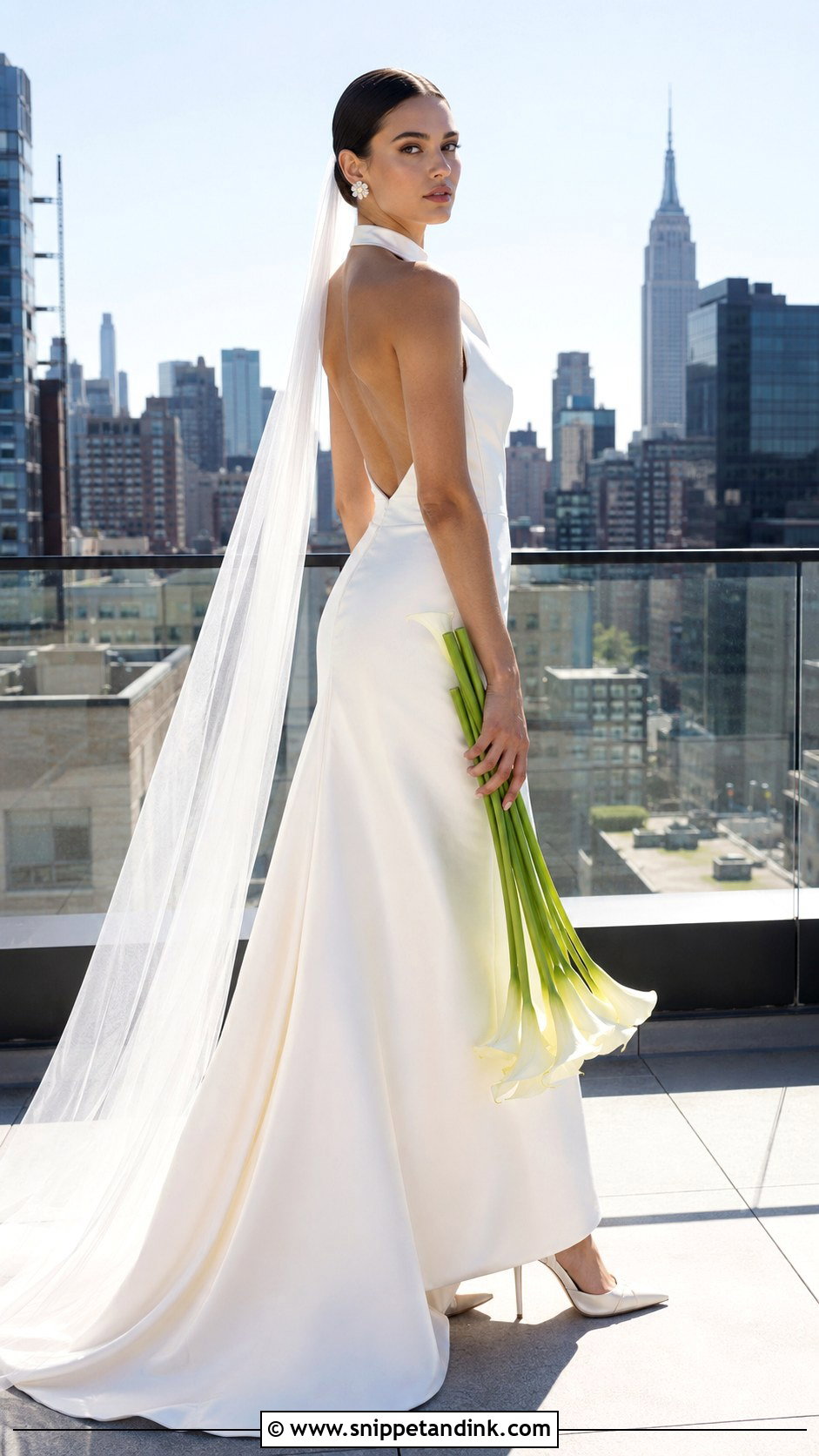
Halter necks are back as an alternative to strapless, and they need one thing checked above all: the neckband. If the weight of the skirt hangs from it, your neck takes the strain all day, so I make sure the bodice carries the dress and the halter only steadies it. Choose a fitted bodice with a clean neckband, open shoulders and a softly flared skirt, ideally with an open or draped back. Statement earrings, a sleek bun, pointed pumps and a narrow cathedral veil placed under the hair finish it. Skip the necklace. A bouquet of white calla lilies suits the long lines. Check the underarm tailoring too; gaping there is common.
11. Ivory Satin Corset Wedding Dress
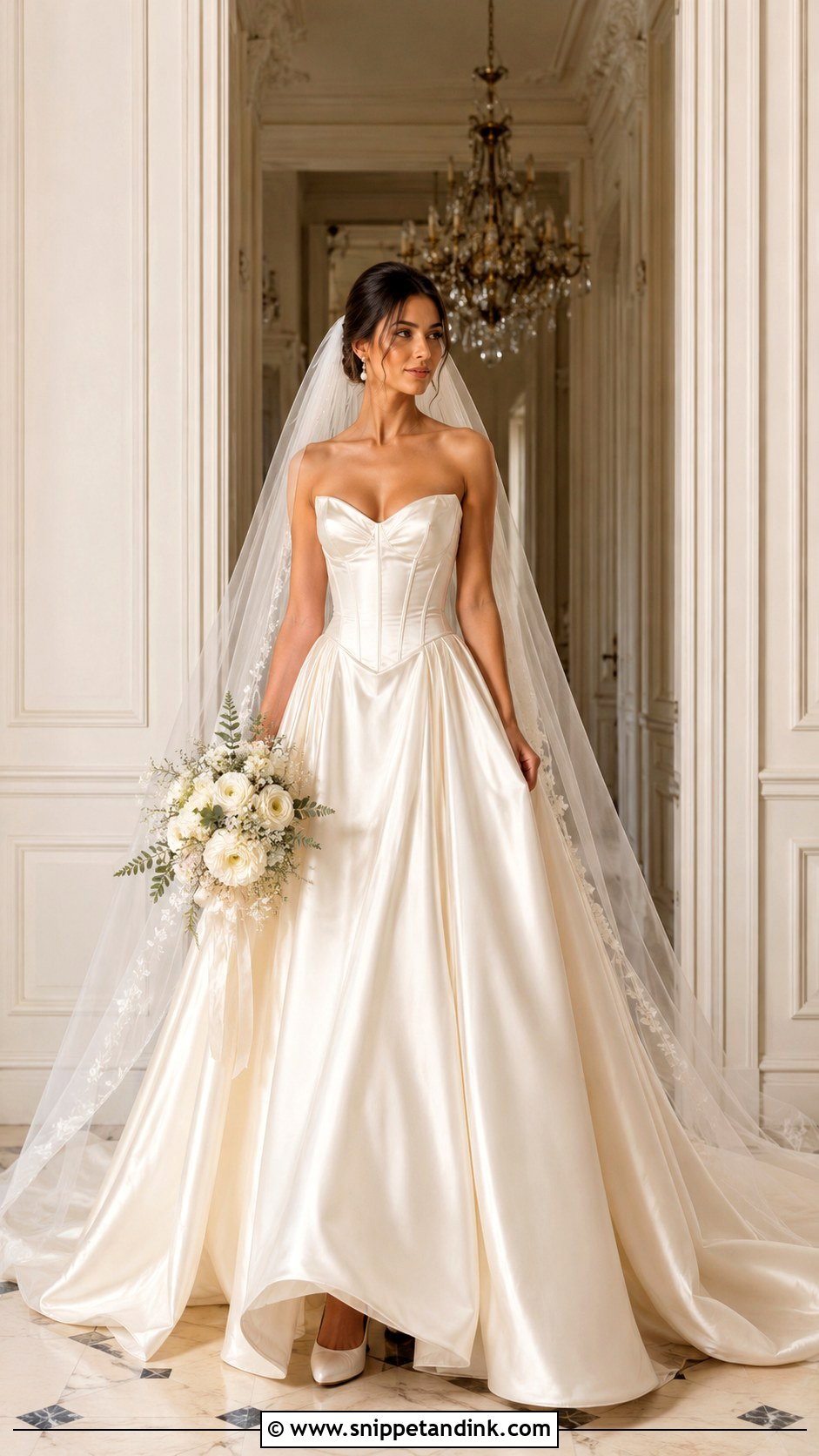
Ask the shop one question about any corset bodice: is it decorative or actually supportive? Some visible corsetry is just seaming on a soft base. A supportive corset uses curved seams, proper cups and boning that holds you without needing a bra, and that’s what I look for. A dipped neckline is softer than a dramatic plunge, and a full satin skirt defines the waist. Pearl drops, satin platforms and a cathedral veil with a clean edge suit it, with a low bun or soft waves and a bouquet of white ranunculus. Sit down and eat something at a fitting. If you can’t breathe through a meal, it’s laced too tight.
12. Ivory Satin Basque Waist Wedding Dress
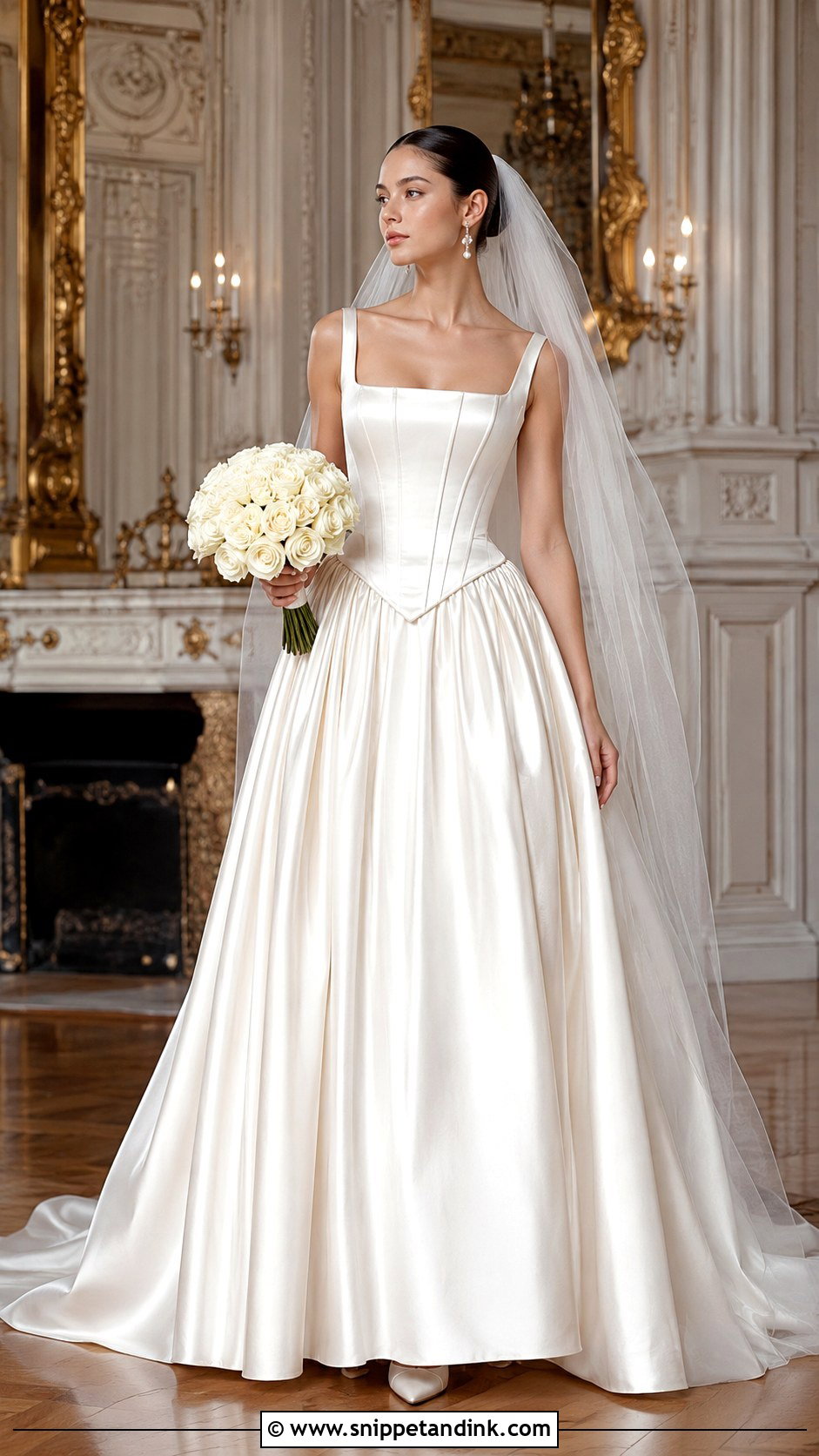
A basque waist dips into a V below the natural waist before meeting a full pleated skirt, which lengthens the torso and gives a vintage shape. A square or scoop neck balances the strong waistline. Style it with a long plain veil, pearl and crystal earrings, ivory pumps and a structured bouquet of roses, and keep everything else minimal. It suits formal estates, historic venues and traditional ballrooms. In satin, the point of the V has to lie flat and stay centred, and the place it tends to fail is when you sit: the point pushes up and buckles. Check it seated at every fitting.
13. Ivory Satin One-Shoulder Wedding Dress
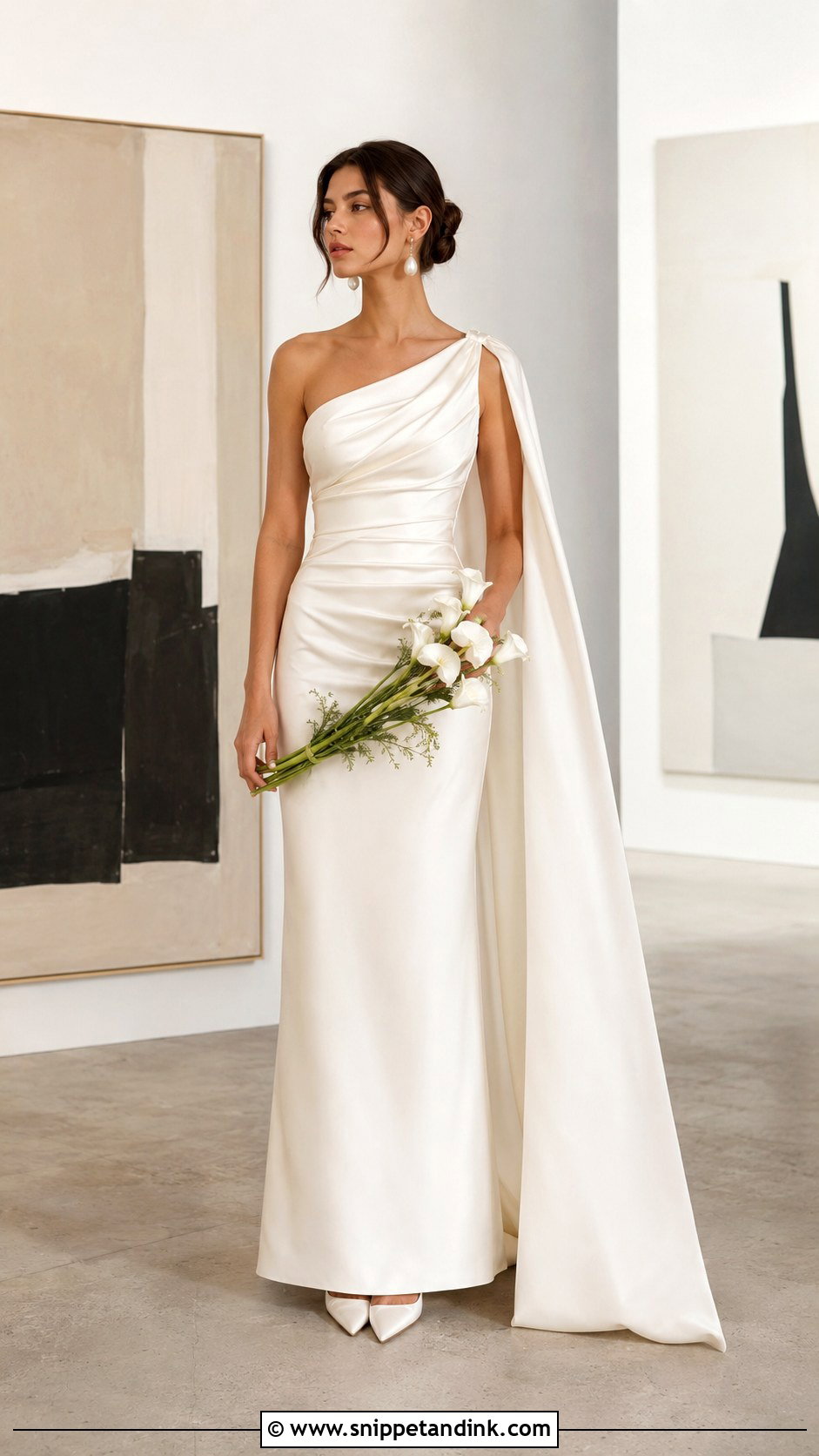
A one-shoulder gown is directional, and the draping is the whole design, so keep the skirt quiet: a fitted column or a controlled A-line. A sleek ponytail or low bun, one statement earring on the bare side and pointed ivory heels finish it. A short veil works, though a detachable shoulder cape follows the asymmetric line better. Carry long-stemmed white flowers. One-shoulder bodices tend to drift toward the strap side over a long day, so a good one has a hidden strap or grip tape and boning on the open side. It suits galleries, city hotels, rooftops and minimal ceremony spaces.
14. Ivory Satin Cape Sleeve Wedding Dress
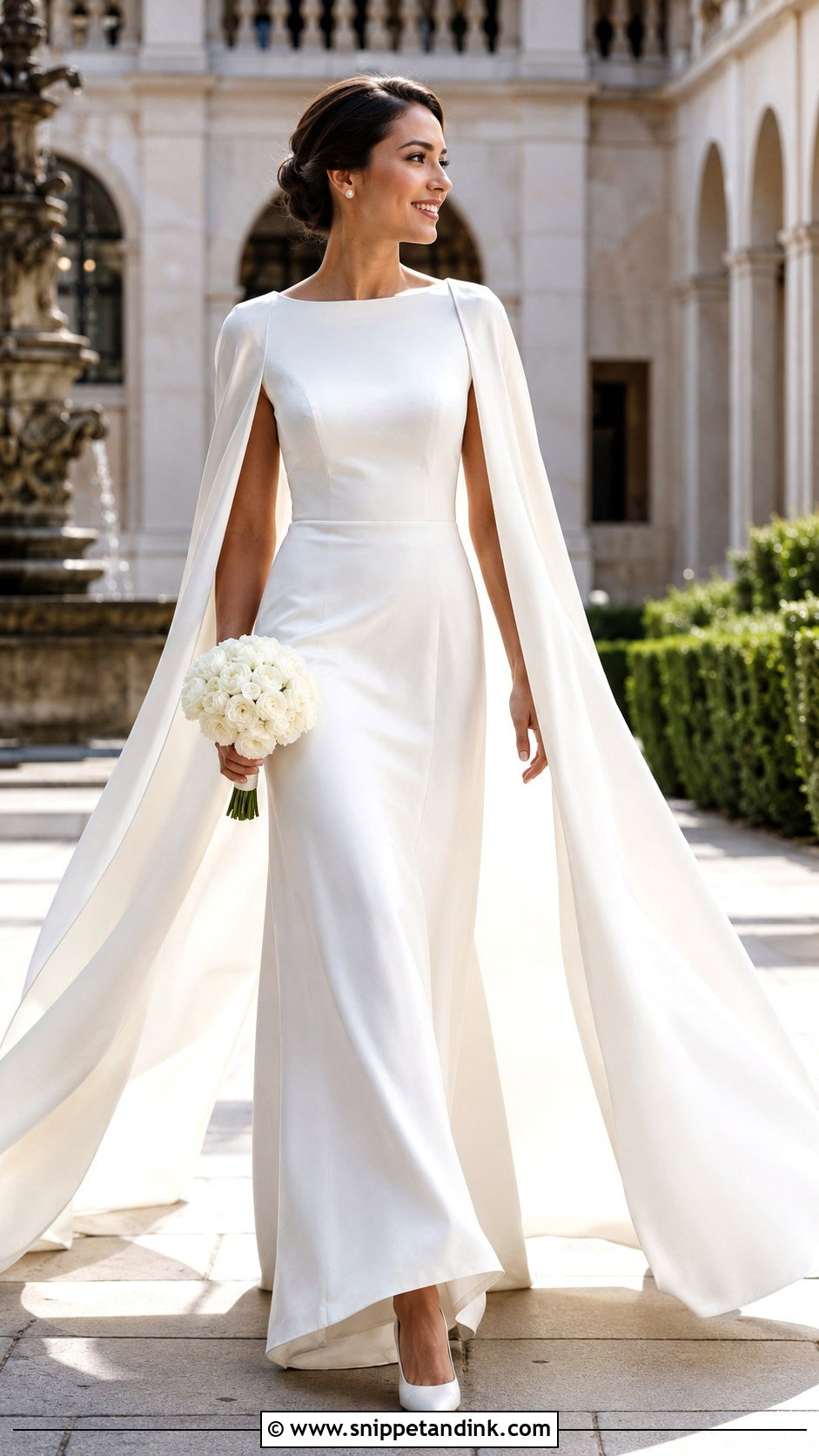
Cape sleeves give coverage and movement without the tight feeling of set-in sleeves, which makes them one of my favourite fixes for brides who hate sleeves but want their arms covered. Choose a simple column or A-line with flowing panels attached at the shoulders; they can replace a veil and come off for the reception. Pearl studs, a small bracelet and comfortable pointed pumps are enough, with a smooth updo so hair doesn’t tangle in the panels. Keep the bouquet compact. Walk past a fan or outside in a breeze when you try it on, and make sure the panels don’t catch under your shoes.
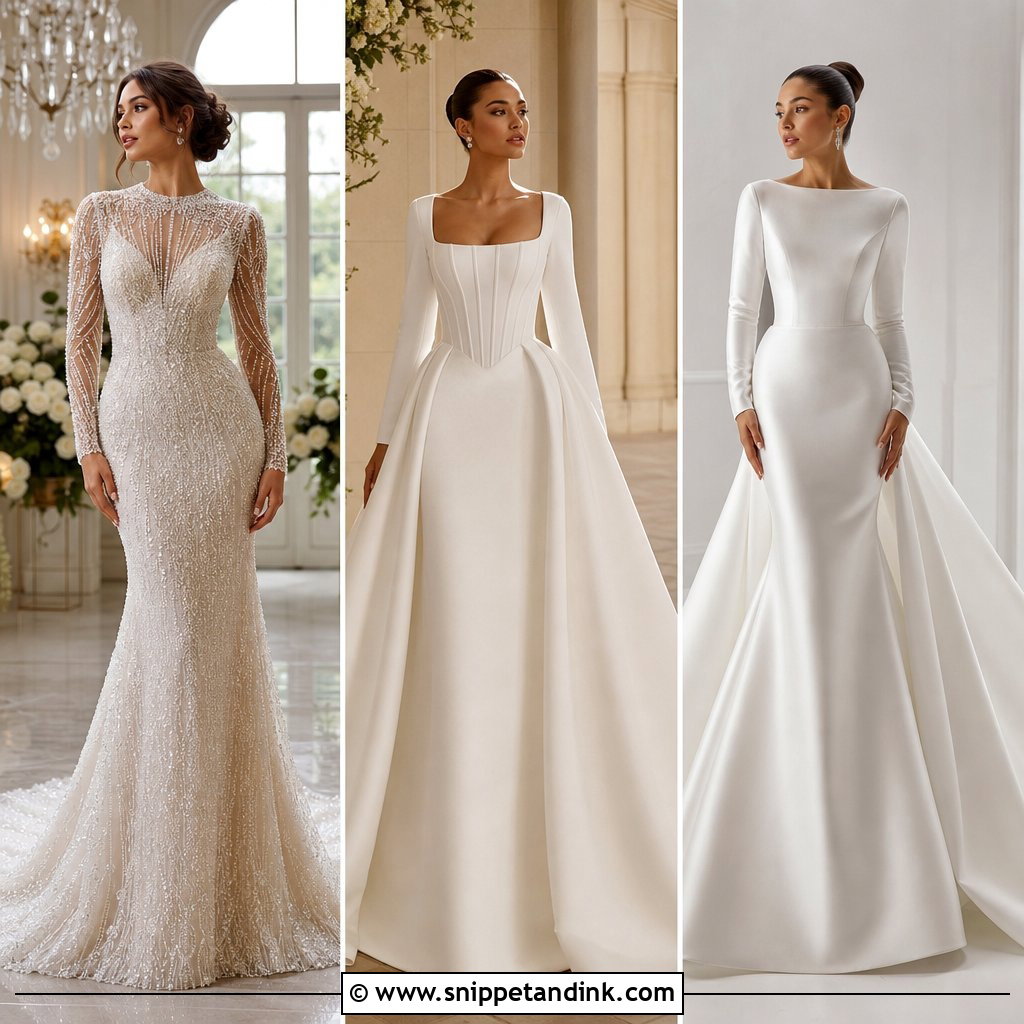

15. Ivory Satin Bow Back Wedding Dress
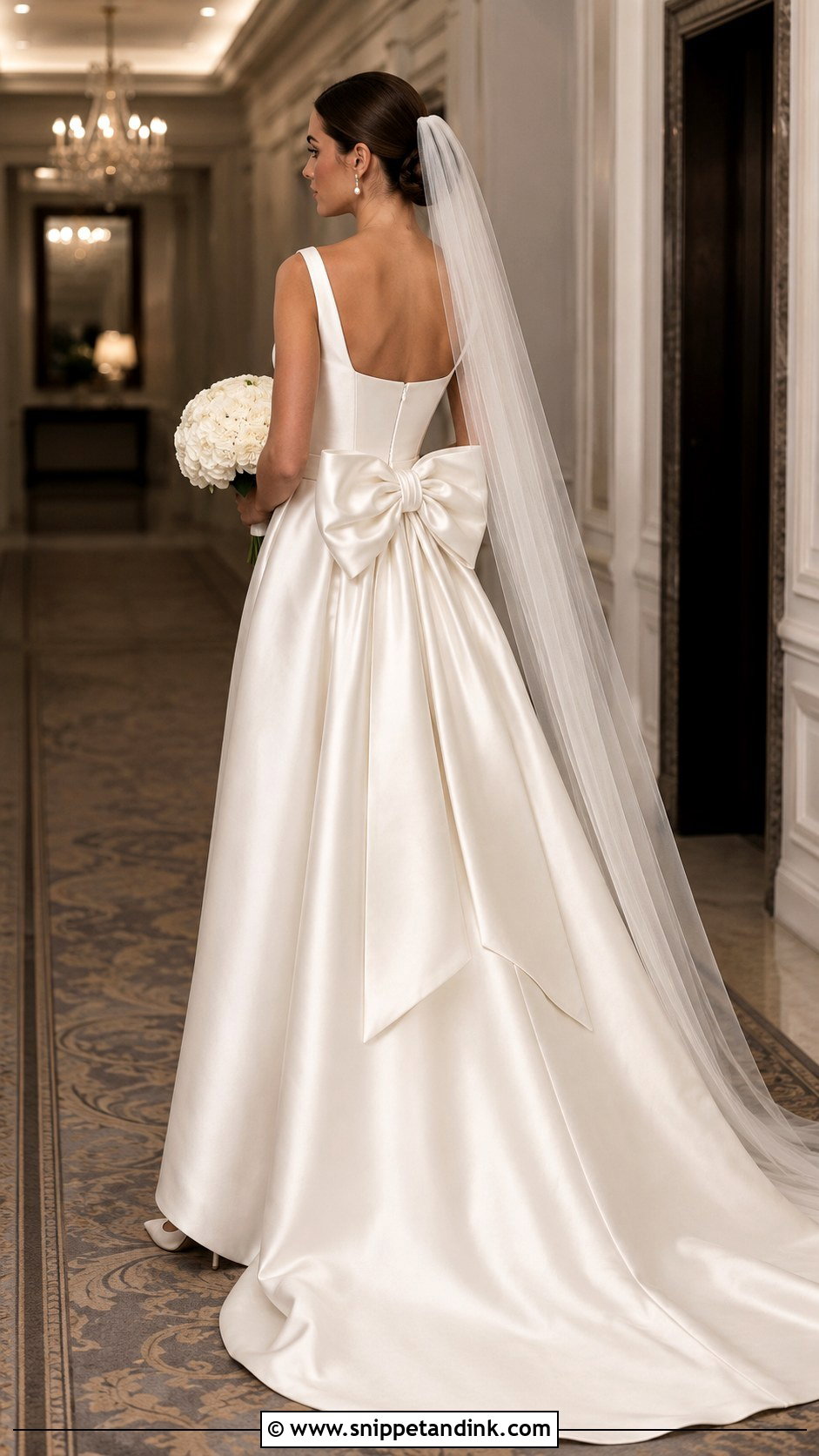
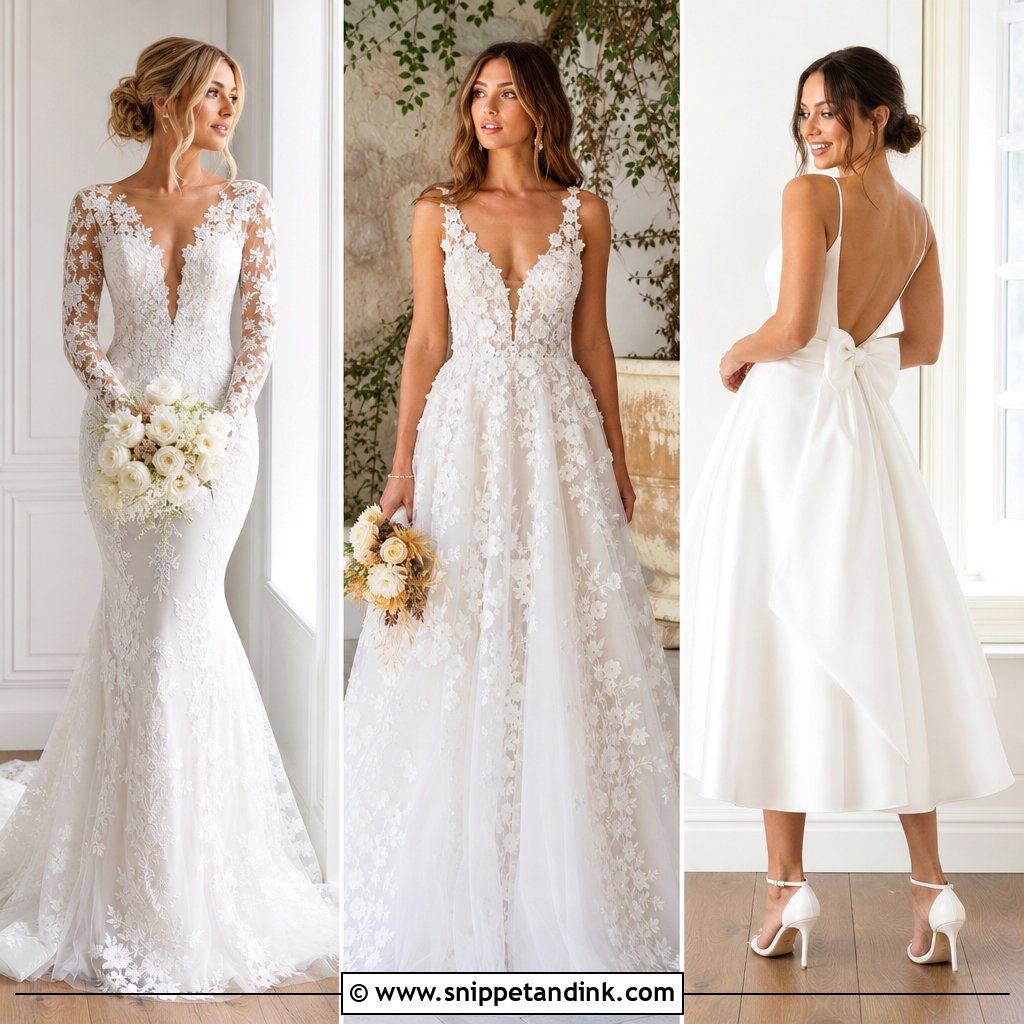
Oversized bows are still a favourite detail, and on satin a bow holds its loops crisply where chiffon would droop. Pick a clean strapless or square-neck gown with a structured A-line skirt and a big bow at the waist or upper back. Keep everything else restrained: pearl earrings, ivory pumps and a plain veil you can take off to reveal the bow fully. A polished bun keeps the back clear, and a rounded bouquet balances it. Ask whether the bow detaches for the reception, and check that it doesn’t sit over the buttons, zip or bustle points, because your seamstress will need to reach them.
16. Ivory Satin Pearl Wedding Dress
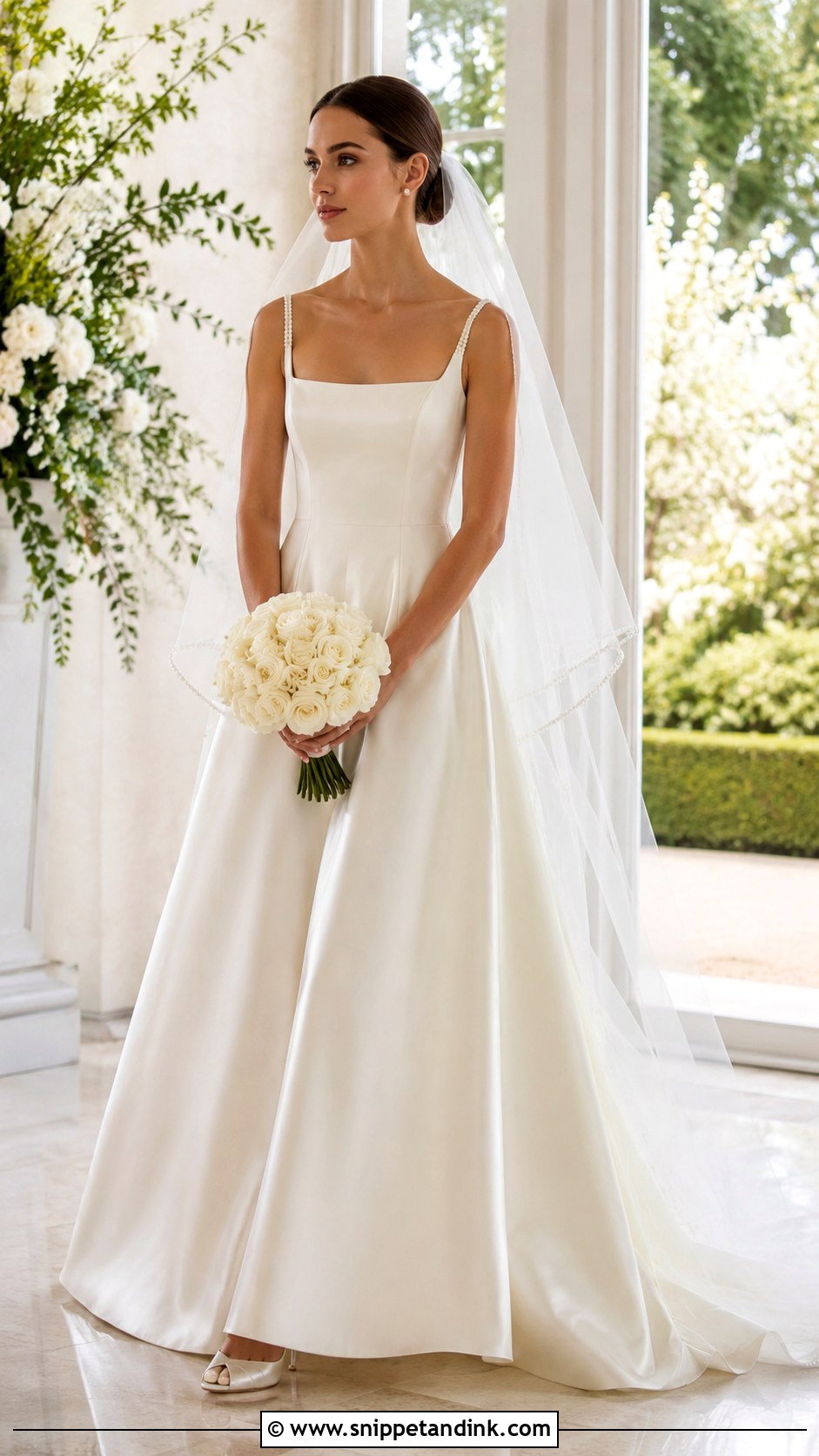
Pearls placed along the neckline, straps, cuffs or back add texture without breaking up the smooth satin. Covering the whole gown in them loses that contrast. A fitted bodice and A-line skirt make the base. Pearl studs, a pearl-edged fingertip veil and simple satin heels finish it; leave out a heavy necklace, since too many matching details feel busy. A low bun, soft makeup and a bouquet of smooth white roses suit it. Hand-sewn pearls do come loose, so I check every attachment at the last fitting and ask the salon for a few spare beads, a needle and matching thread for the day.
17. Ivory Satin Lace Bodice Wedding Dress
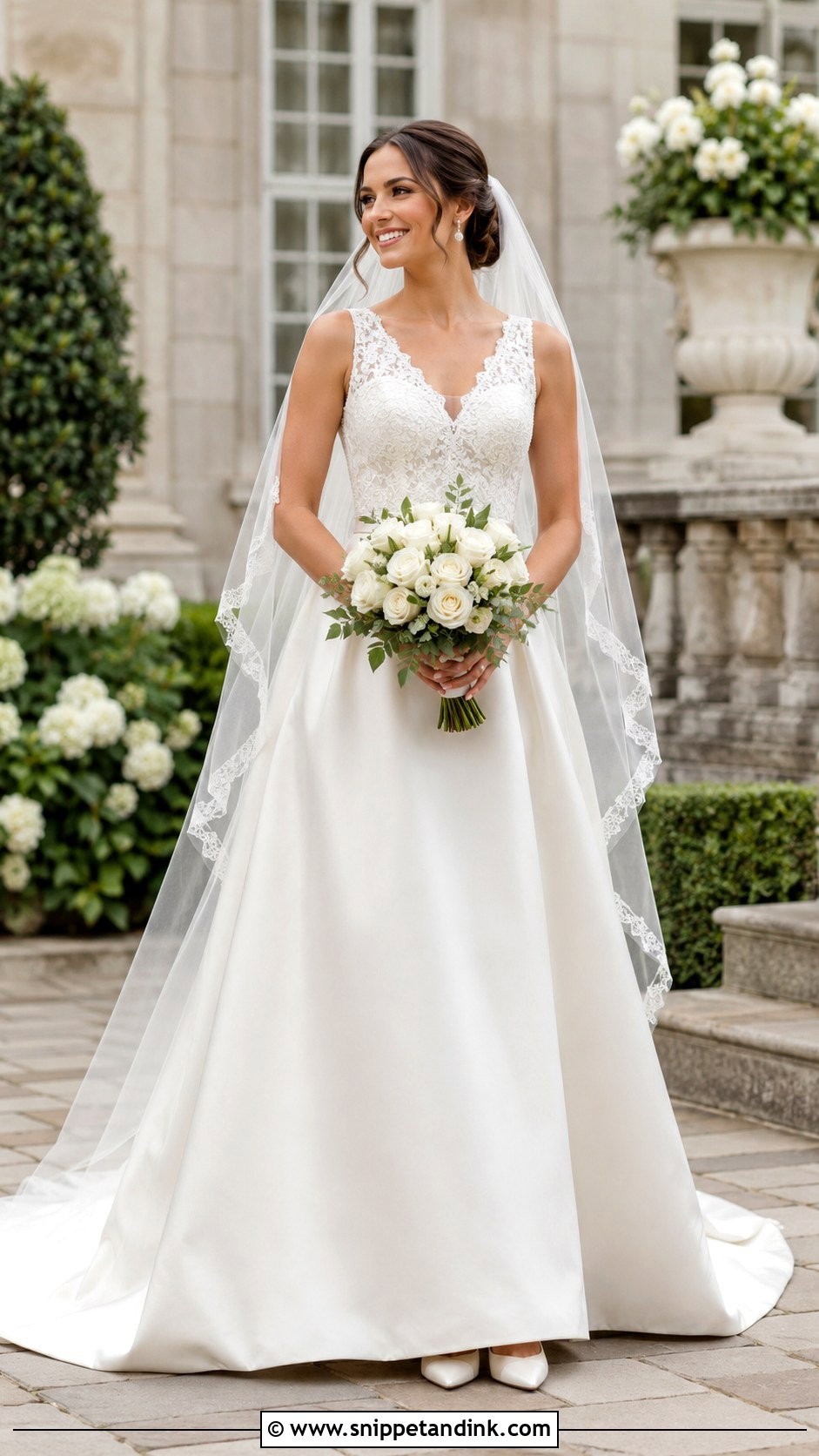
A lace bodice over a satin skirt brings in traditional texture while keeping the skirt smooth. Choose a fitted lace top with a scoop, bateau or soft V, keep the lace above the waist, and pair it with a clean satin A-line. Pearl earrings, closed-toe ivory heels and a chapel veil with a narrow lace edge finish it, with a low chignon and white roses and greenery. The mistake I watch for is colour: lace labelled ivory and satin labelled ivory often don’t match, and the difference shows in daylight. Hold them together by a window. A soft lining under the lace stops it scratching.
18. Ivory Satin Detachable Overskirt Wedding Dress
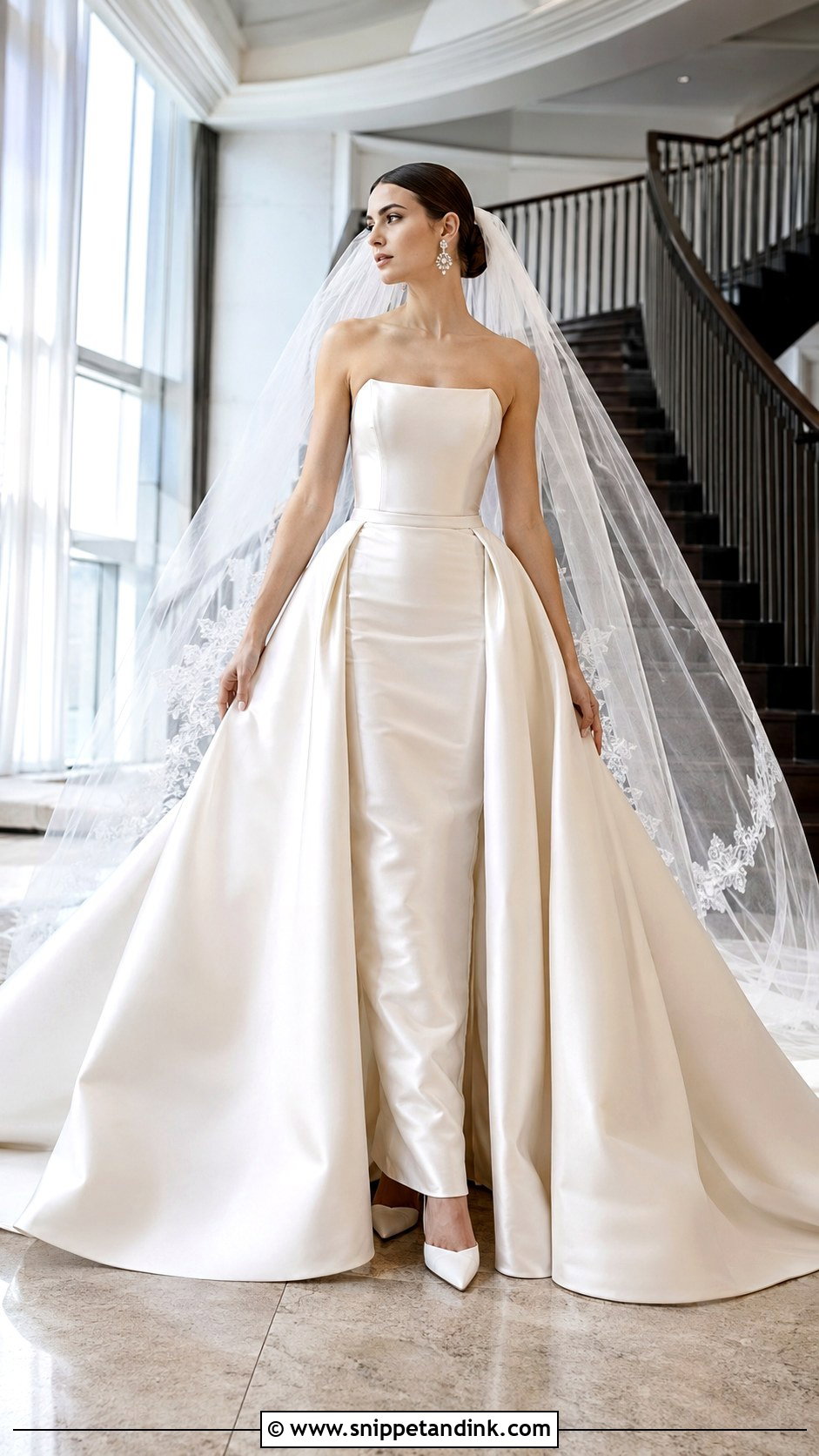
A detachable overskirt gives you two dresses: a fitted column, sheath or mermaid underneath, and a full satin overskirt for the ceremony that comes off after portraits. Crystal earrings, pointed pumps and a cathedral veil matched to the overskirt’s train suit it, with a sleek bun. The closure is where these go wrong; hooks or snaps that show through satin at the waist ruin the line, so look at it from every angle. Practise taking it off with whoever will help you, because a stiff satin overskirt is awkward to unhook in a hurry.
19. Ivory Satin Tea-Length Wedding Dress
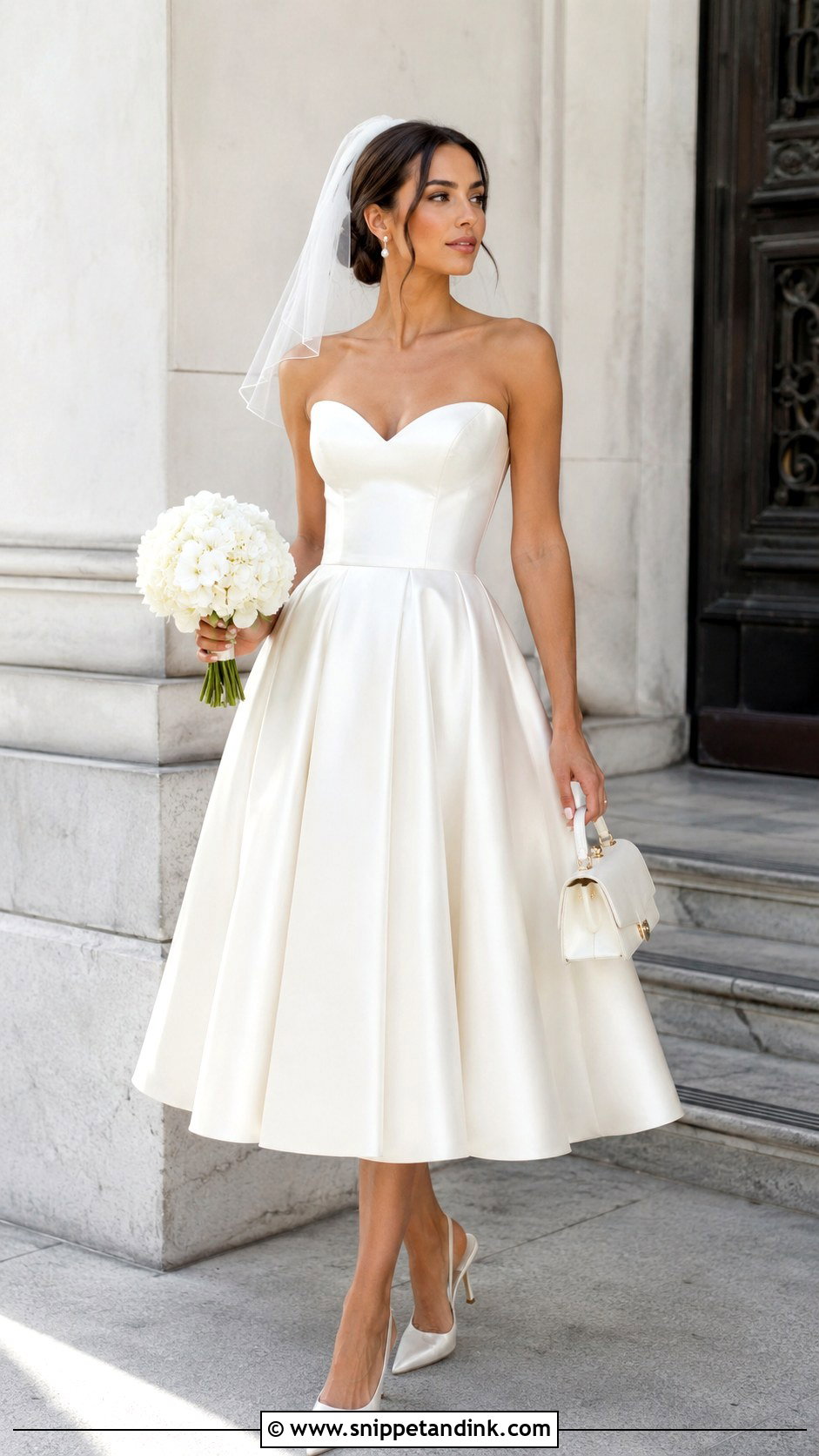
Tea length shows your shoes and ankles, so it suits a courthouse ceremony, a garden or a relaxed reception and feels a little playful. Choose a fitted bodice with a square or sweetheart neck and a skirt ending between the knee and ankle. Pointed slingbacks, embellished flats or classic ivory pumps are all on show, so pick ones you love. A short veil, pearl earrings and a small structured bag finish the vintage feel, with a neat bun or shoulder-length waves. A light petticoat adds volume; a heavy one makes it stiff. Set the hem in your exact shoes, because an inch here changes the whole proportion.


20. Ivory Satin Column Wedding Dress
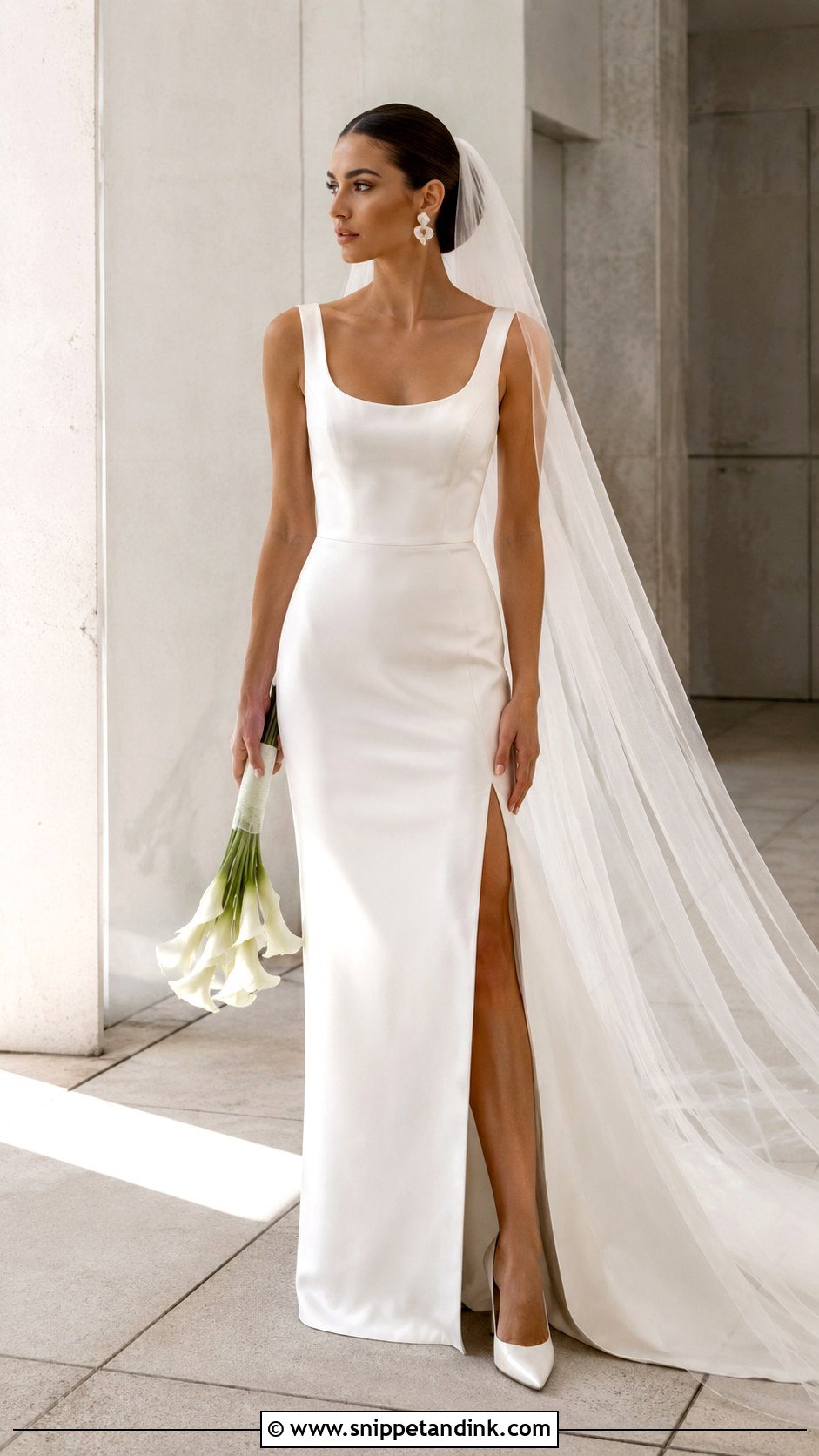
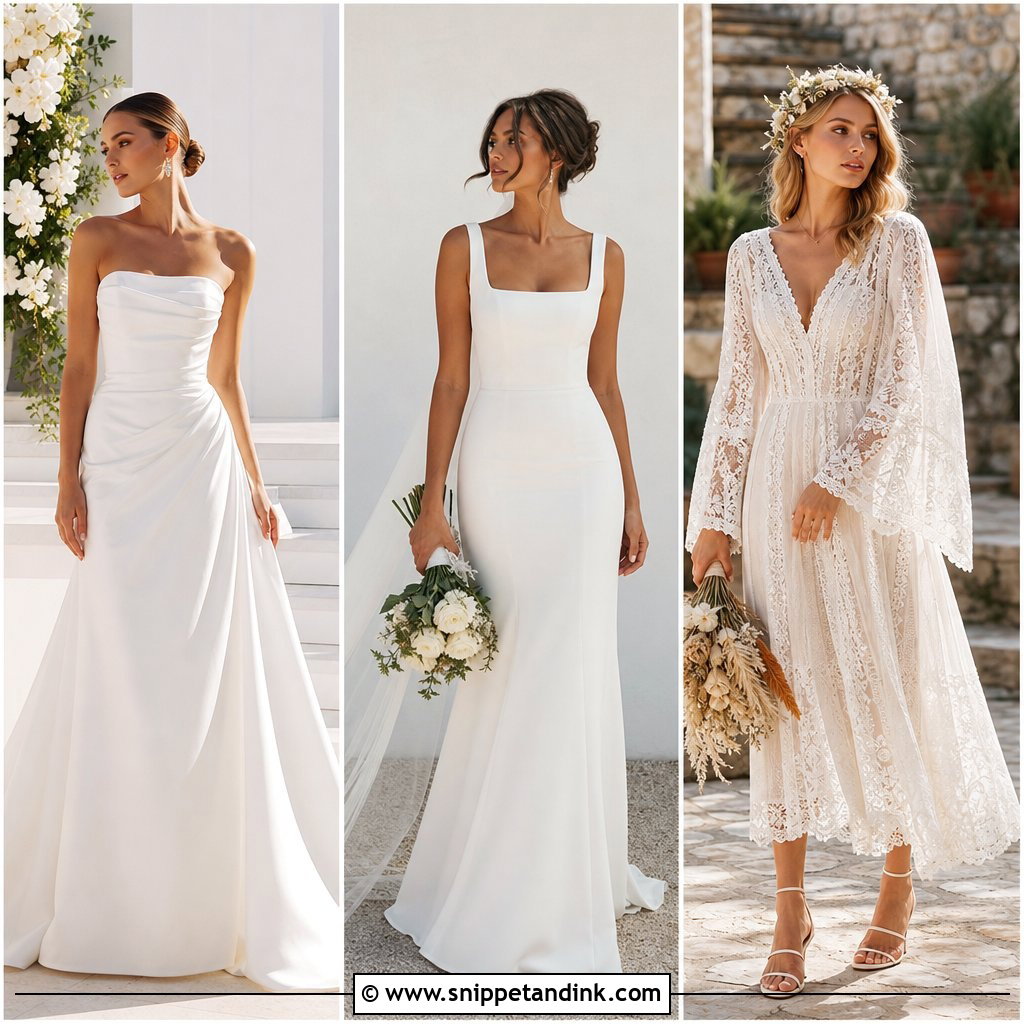
Column gowns are the simplest dress to describe and the hardest to fit. A straight skirt with nothing to hide behind shows every pull and twist. Choose a softly structured bodice, a defined waist and a back vent or controlled slit so you can walk. A scoop, strapless or asymmetric neckline personalises it, and sculptural earrings, pointed pumps and a long sheer veil complete it, with a narrow bouquet of calla lilies or tulips and a smooth low bun. At fittings, I look from the front, side and back. The satin should skim the body. Horizontal folds across the hips mean it’s too tight.
Satin Wrinkles the Moment You Sit Down
Every satin bride gets creases across the lap, especially after the car ride and the ceremony. You can’t stop it completely, but you can limit it.
- Hang the dress the night before and steam it from the inside, holding the steamer away from the fabric. Never iron satin directly; it leaves a permanent shine.
- Keep water away from silk satin. A single drop can leave a ring that’s hard to remove.
- When you sit, smooth the skirt under you from behind and sit near the front edge of the seat.
- In the car, lift the skirt and drape it over your knees rather than sitting on the back of it.
Once the reception is over
Champagne and sugary drinks are the stains that catch brides out. They dry invisibly, then turn yellow-brown months later as the sugar oxidises. Point out every spill to a specialist wedding dress cleaner, even ones you can’t see, and get the dress cleaned within a few weeks.
For storage, use an acid-free box and acid-free tissue in the folds, or a breathable cotton garment bag. Plastic traps moisture and can yellow the fabric. Don’t hang a heavy satin gown by its straps for years; the weight stretches the shoulders. Keep it somewhere cool and dark, and refold it occasionally so the creases don’t set.
Try It On Next to a Window
An ivory satin gown should look like you and still work for a long day of standing, sitting and dancing. The options here run from slips and tea-length dresses to ball gowns, corset bodices and overskirts. Start with the shape you feel comfortable in, then treat neckline, sleeves, train, accessories, shoes and hair as one look. Sit, walk and lift your arms in it every time you try it on. And look at the satin in daylight as well as shop lighting, since ivory changes more than any other shade between the two. Good alterations and restrained accessories do the rest.
You'll Like These Ideas:








Leave a Reply