
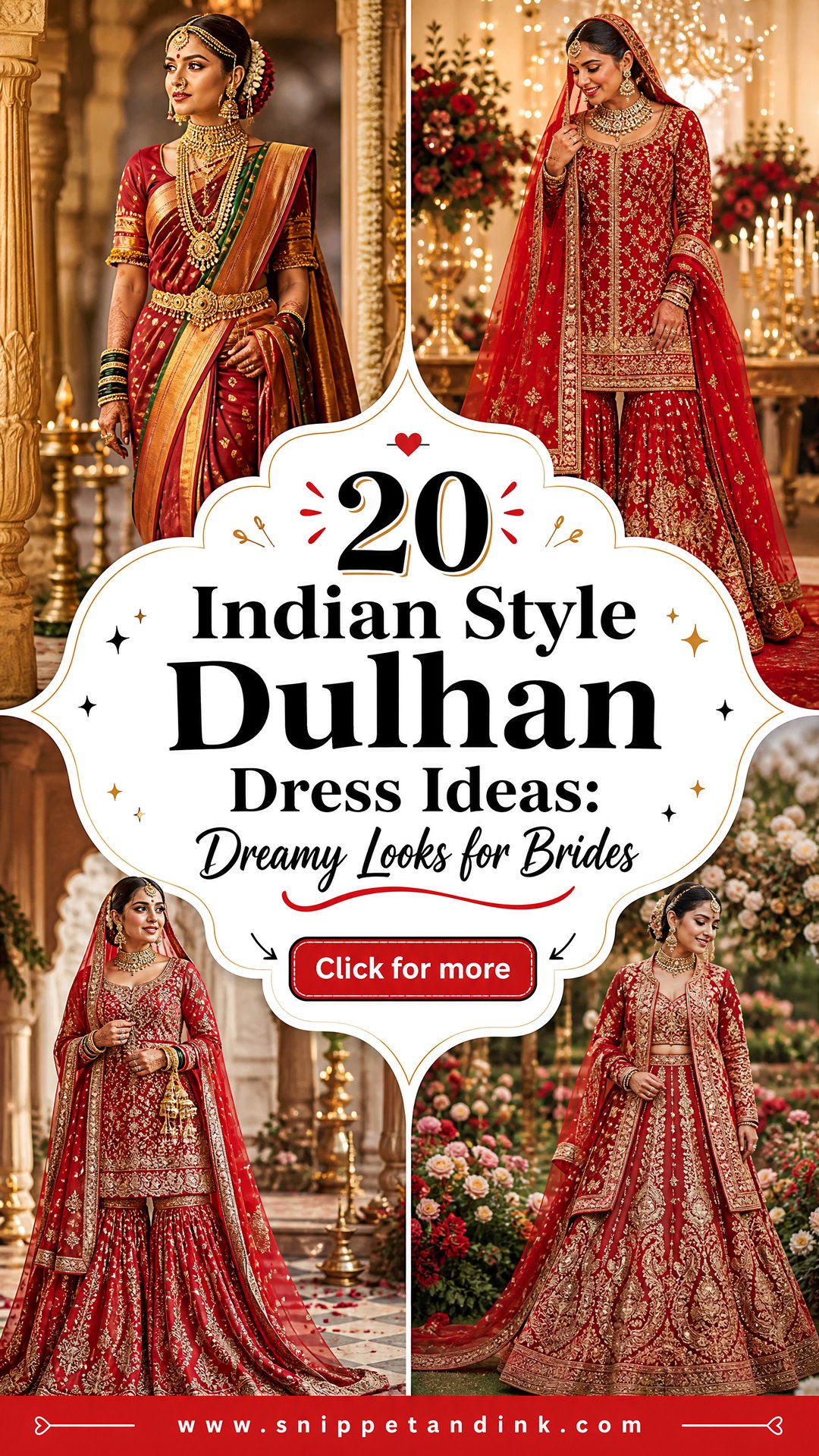
A dulhan’s outfit carries more than fashion: family custom, regional craft and often a grandmother’s opinion all go into it. In my fittings I see brides choosing anything from traditional red zardozi to pastel florals, jacket lehengas, saree gowns and comfortable shararas, along with modern fusion outfits for the reception. The right one suits your venue, season, ceremony length and body, and it lets you sit through the rituals without counting the minutes. Below are twenty bridal looks, each with the construction and draping details I check before a bride walks out in it.
A Bridal Outfit Timeline From First Shop Visit to Last Trial
Most of the bridal emergencies I’m called in to fix come from timing, not design. Custom bridal lehengas and handwoven sarees take a long time to make, and the busy wedding season fills every tailor’s calendar. This is the timeline I suggest, adjusted to how much is being made from scratch.
- Six to nine months out: shortlist the outfit for the main ceremony and order it if it’s custom. Heavy hand embroidery and handloom weaves need the most time.
- Four to five months out: order the reception and pre-wedding outfits, and choose the jewellery so the blouse neckline can be cut to suit it.
- Two to three months out: first fitting. Bring the shoes, the bra and any inner shapewear you plan to wear.
- Three to four weeks out: final fitting and a full trial with jewellery and dupatta draping, ideally with your hairstylist present so the head dupatta and hairstyle are planned together.
- The last week: collect everything, try it on once more, and hang it in a breathable cover in a cool room.
Leave a buffer of a few weeks before the first function. Late alterations are the most common cause of a blouse that doesn’t fit on the day.
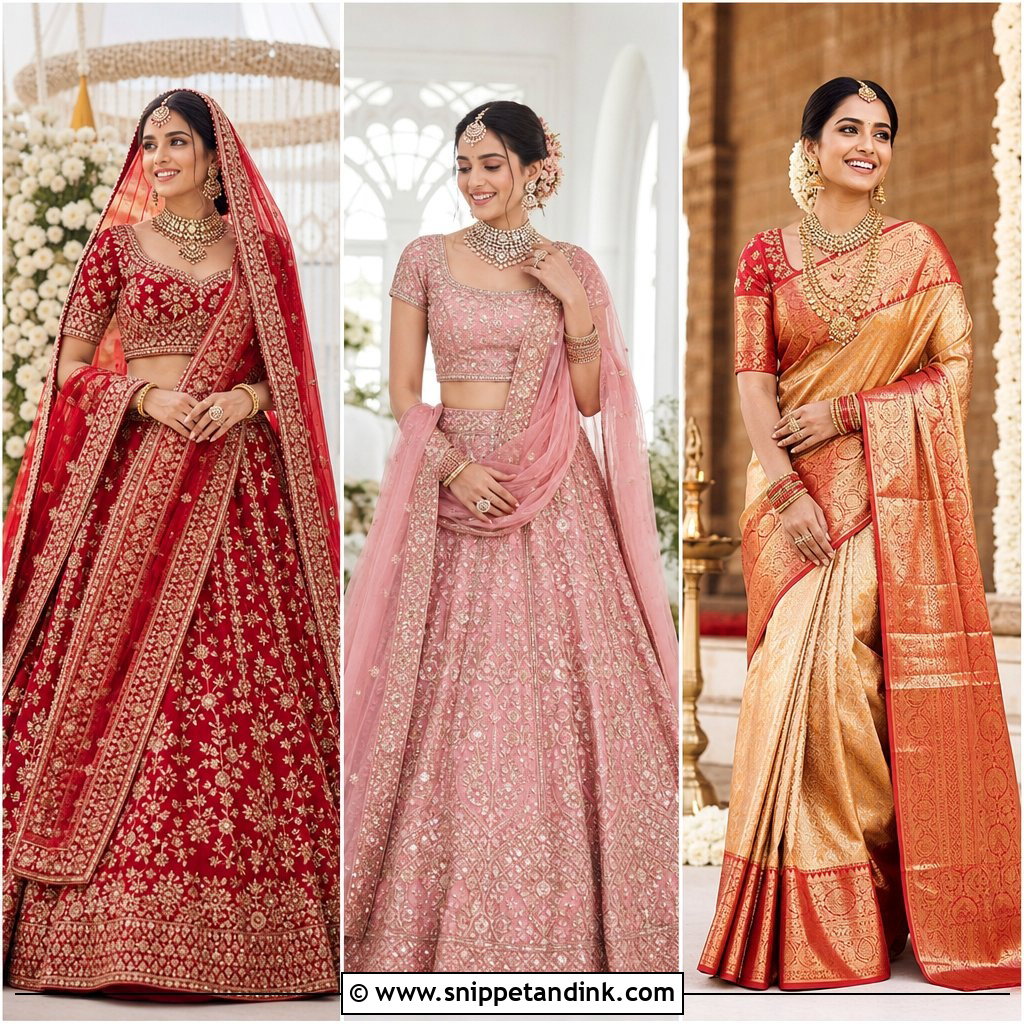
1. Red Zardozi Bridal Lehenga
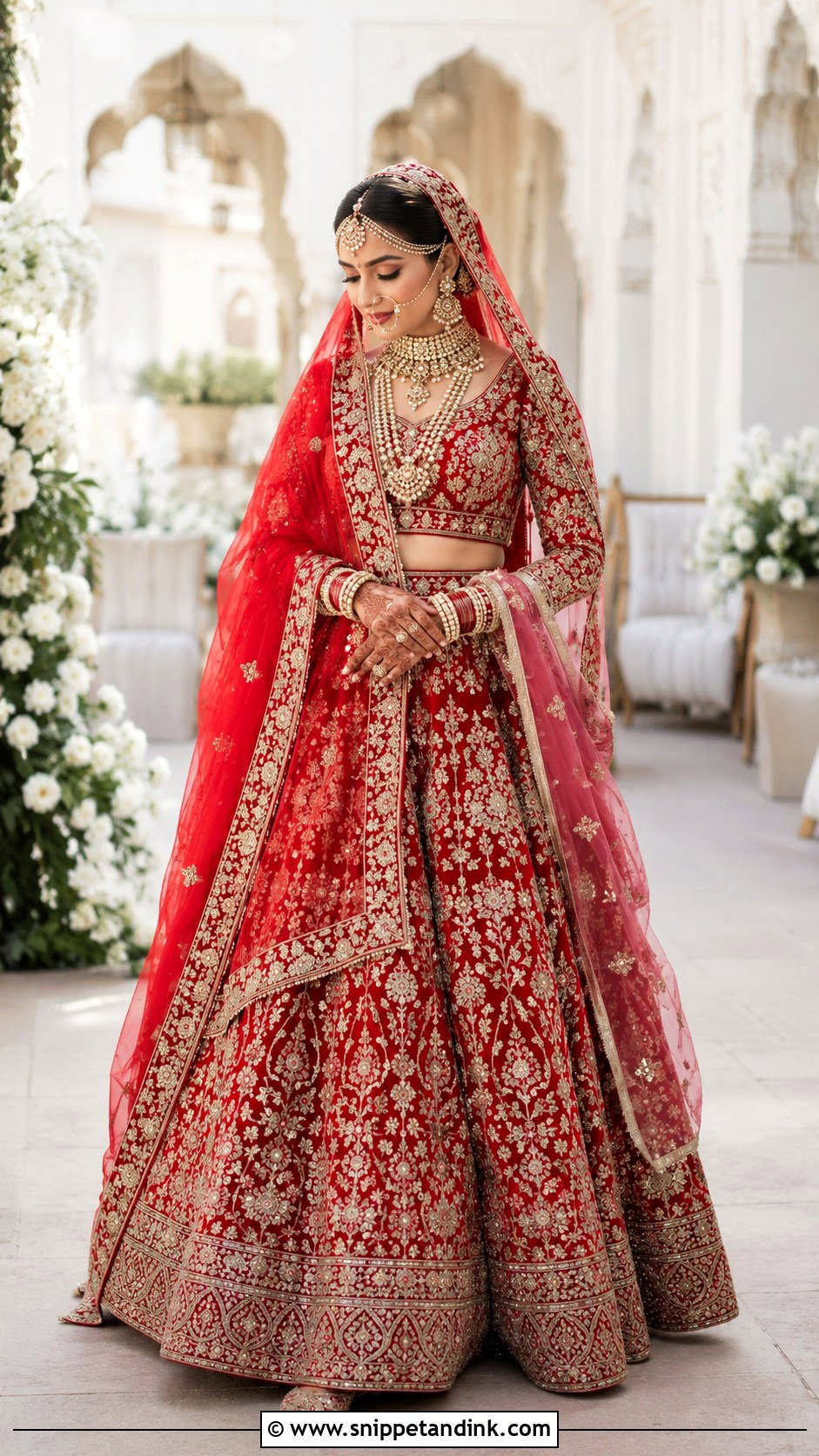
Zardozi is metal-thread embroidery, and on a red silk lehenga it gives the grandeur most families picture for the pheras. It’s also heavy, so I size the motifs to the bride: smaller, closer motifs on a petite frame, and a wide border only for taller brides who can carry it. Pair the skirt with a fitted blouse and a red dupatta, then put a second, much lighter dupatta over the head so you’re not wearing two heavy drapes. A choker, layered necklace, tikka and bangles complete it. Have the hem finished with the exact juttis you’ll wear; zardozi doesn’t forgive a skirt that drags.
2. Maroon Velvet Bridal Lehenga
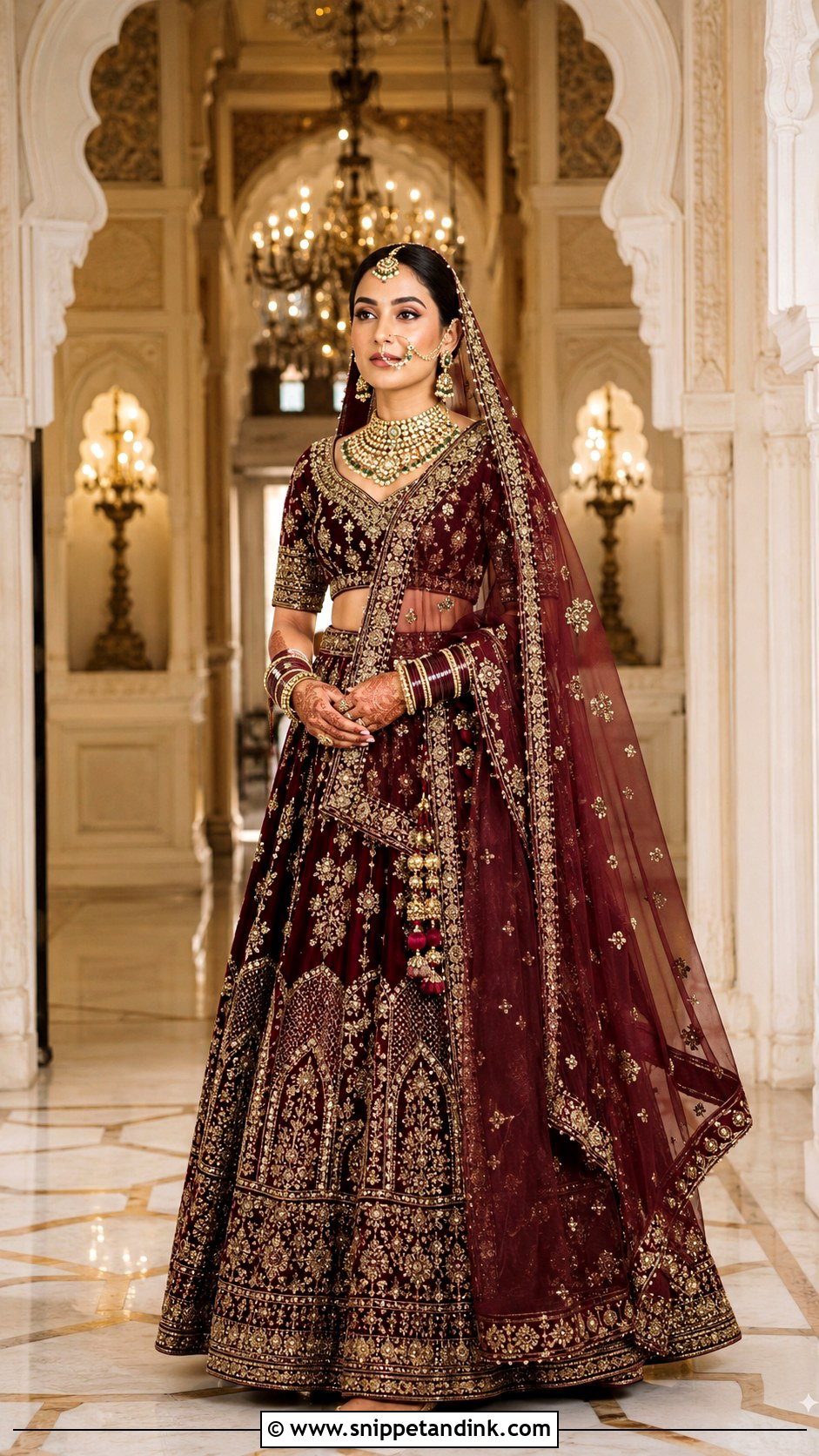
Maroon velvet is what I suggest for a winter evening wedding, because it gives depth and real warmth. The problem is weight: a full velvet skirt with dense antique gold work can be exhausting by the time the vidaai comes. Ask for velvet panels over a lighter lining, keep the embroidery to borders and panels rather than every surface, and pair it with a soft net dupatta. Polki jewellery, a statement nath and brocade juttis suit it. Walk and sit in the full outfit at the trial; brides are often surprised how much a velvet skirt pulls at the waist.
3. Blush Pink Floral Bridal Lehenga
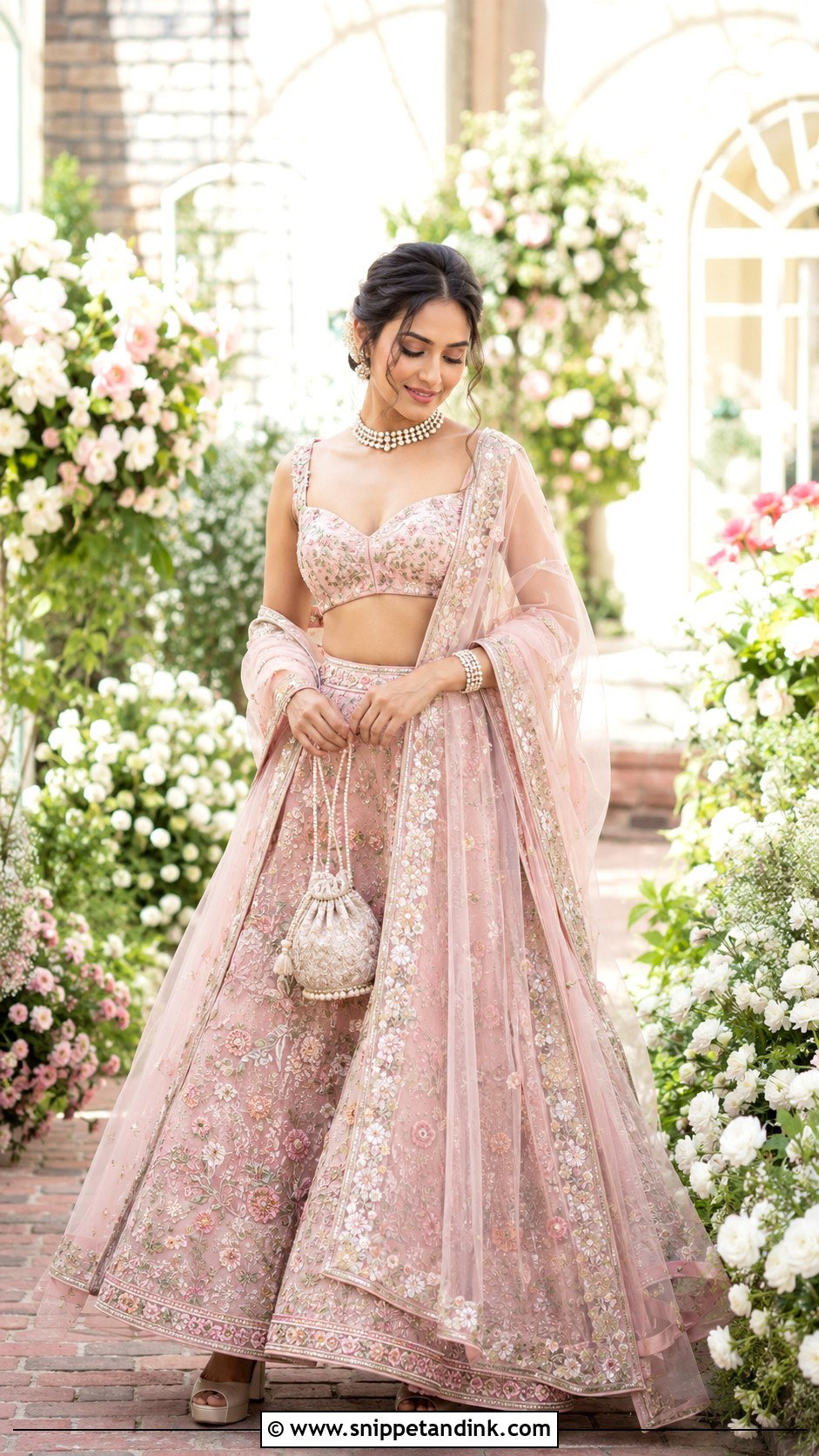
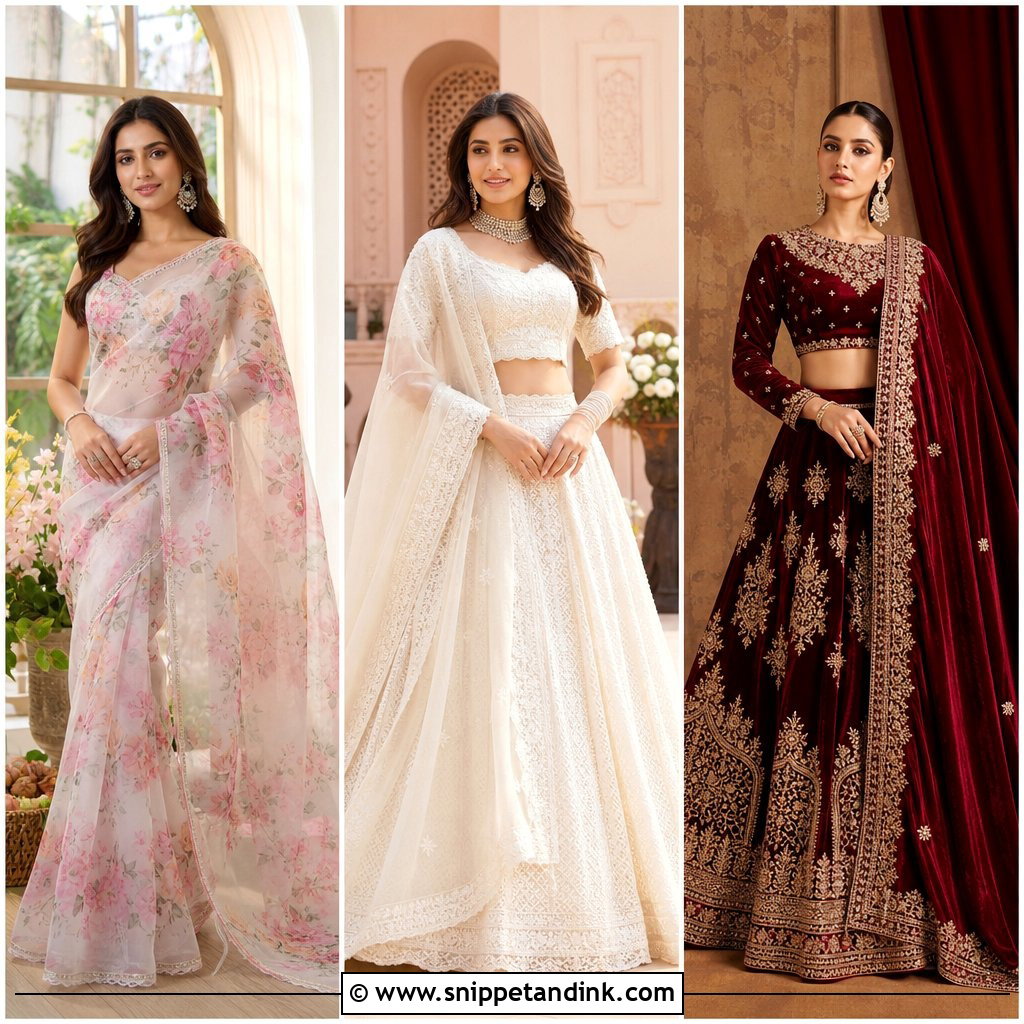
Blush is the colour I see most for daytime and garden ceremonies, and it needs a careful lining. Organza, silk or tulle covered in fine floral embroidery looks delicate, but in bright sun a pale skirt with a white lining can turn see-through. Ask for a lining close to your skin tone so the fabric reads evenly in photos. A structured blouse and a sheer dupatta with a narrow border keep it light. Pearl, kundan or rose-gold jewellery suits the palette; emerald stones or a deeper pink lip give contrast to brides who find pastel too quiet.
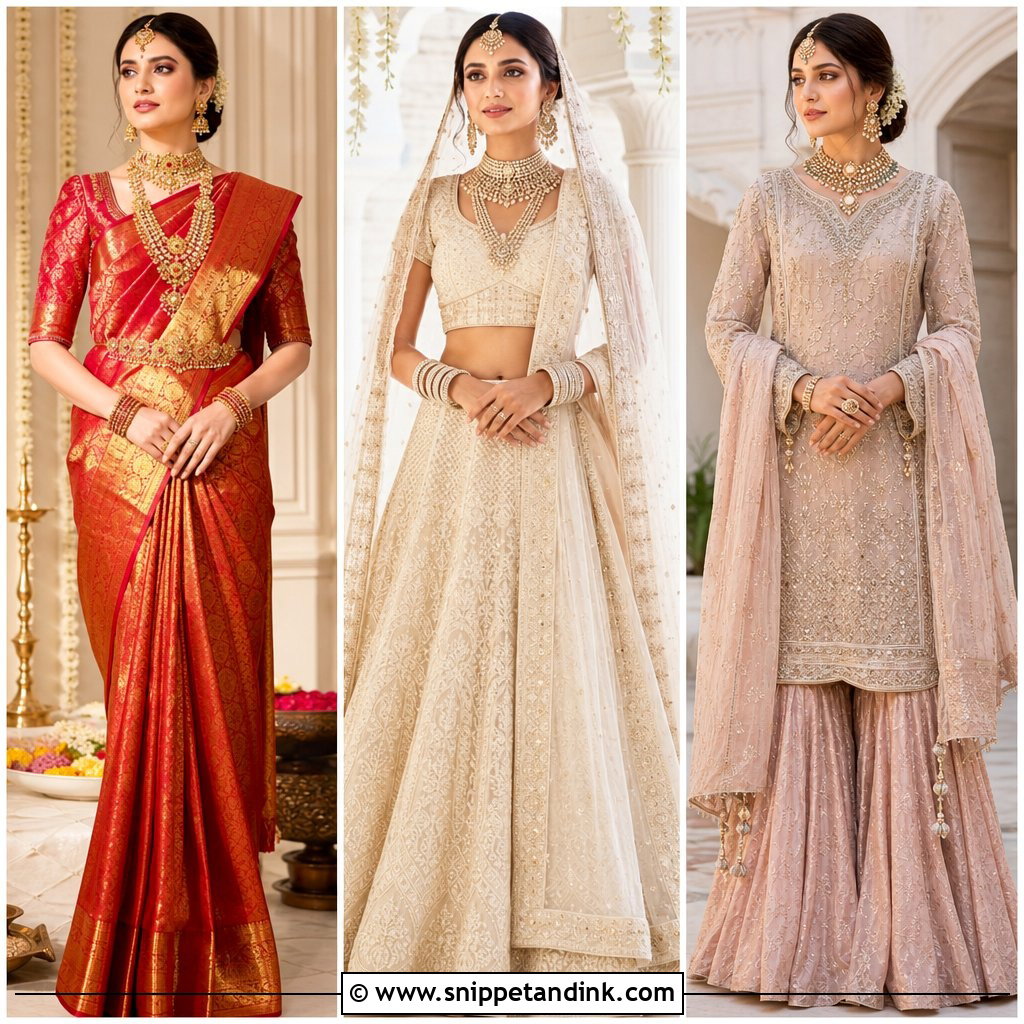
4. Ivory Gold Bridal Lehenga
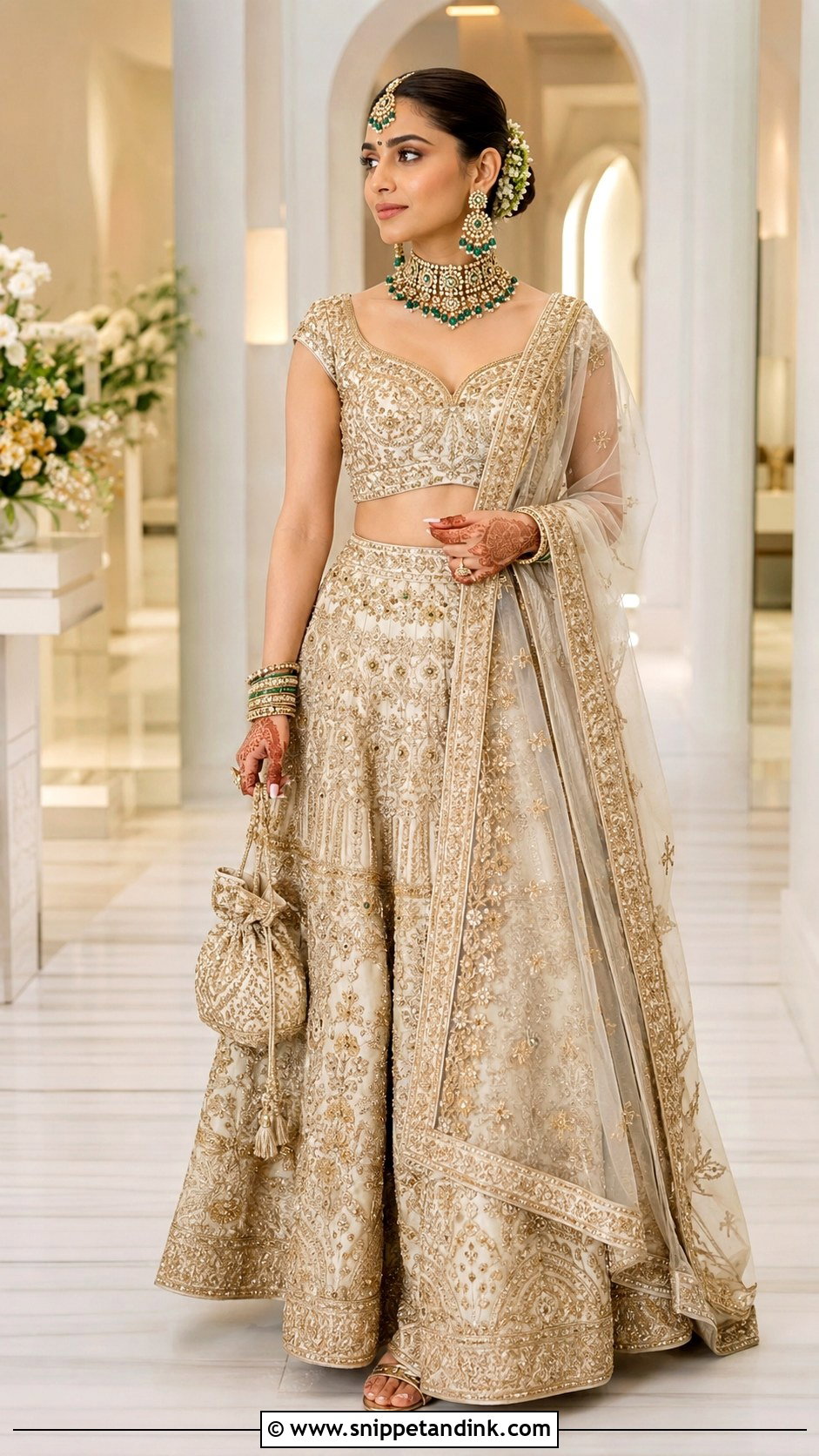
Ivory and gold is quietly regal, and it’s also the hardest bridal palette to match. Ivory varies from cool white to warm cream, and a skirt, blouse and dupatta cut from different bolts can look three shades apart in daylight. Compare all three by a window before approving them. Choose gold threadwork, sequins or raised embroidery, and give the blouse proper support since ivory shows any strain at the seams. A pale gold or muted red second dupatta adds contrast. Temple or emerald-accented jewellery suits it, and a personalised border with initials or a family motif makes a meaningful detail.
5. Emerald Green Bridal Lehenga
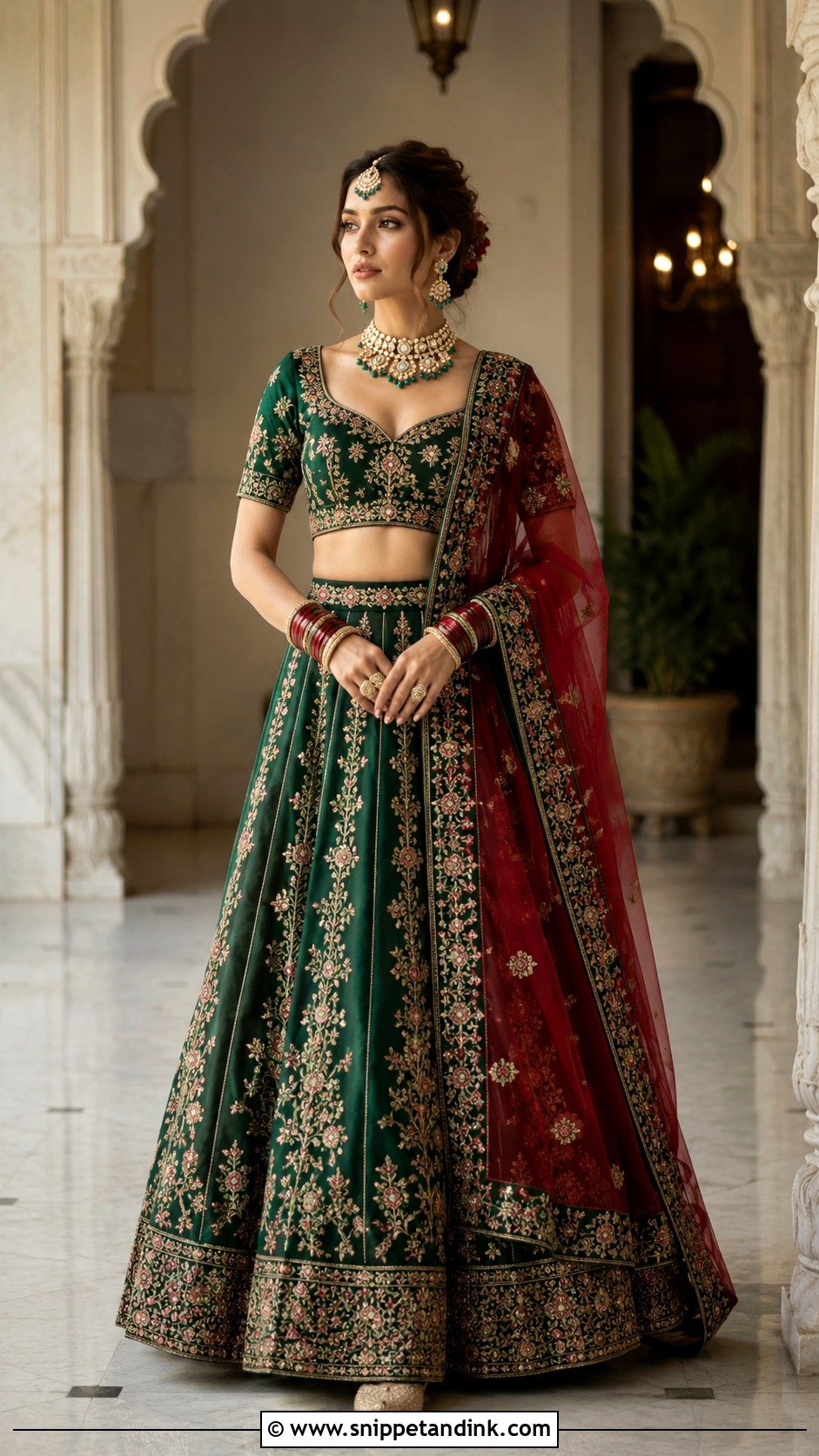
Emerald gives a bride a rich look without the usual red or pink. A silk lehenga with antique gold zardozi or tonal sequins, worn with a matching blouse, makes a strong single-colour base, and a red, rust or muted gold dupatta brings back the traditional contrast. If the skirt is heavily worked, keep the blouse neckline clean so the two don’t compete. Polki, emerald-and-pearl earrings and a centre-parted bun suit it. Green reads very differently under warm evening lights than in daylight, so I check the shade in both before a bride commits.
6. Royal Blue Bridal Lehenga
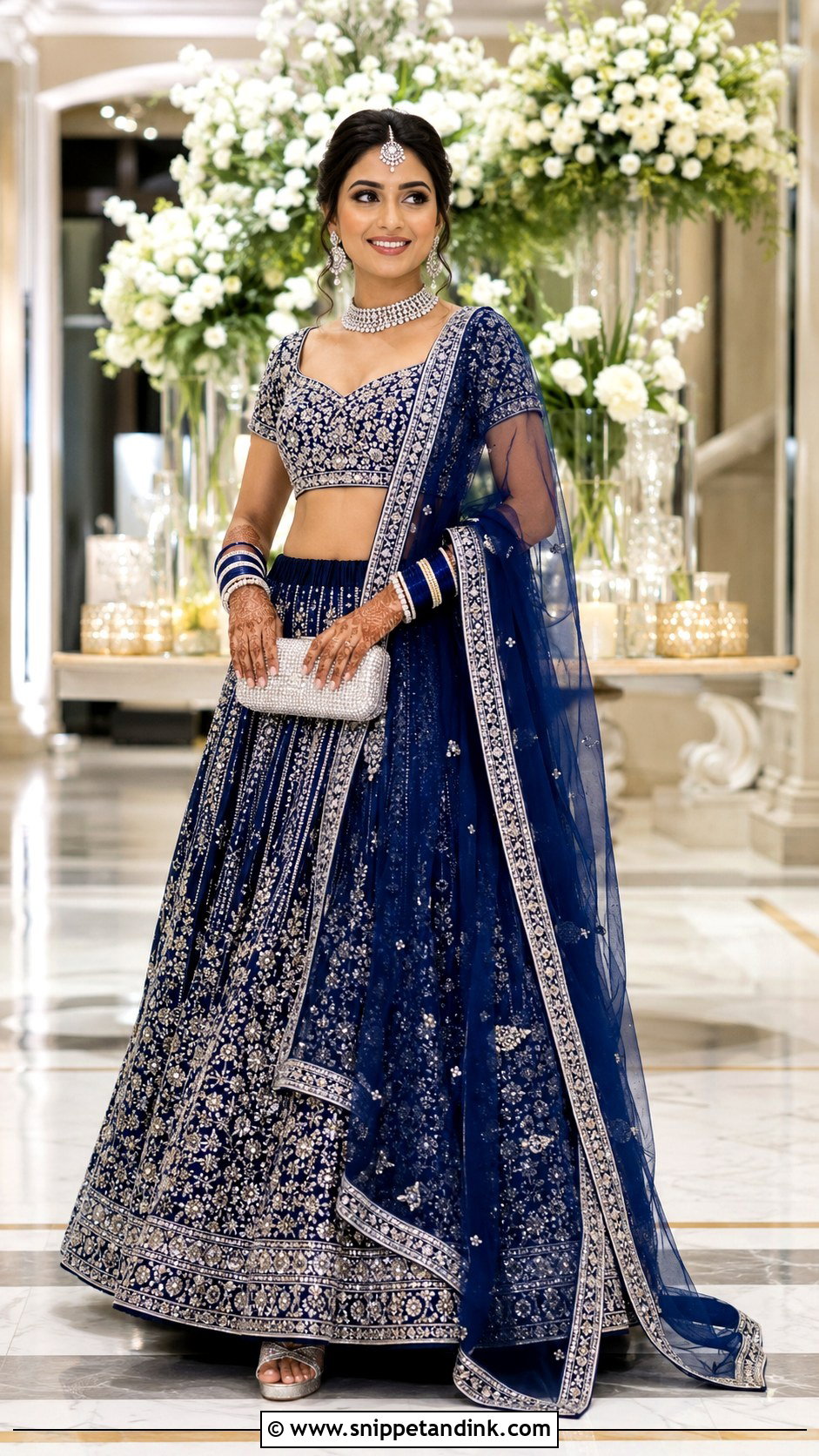
Royal blue is a bold bridal choice, and it looks best under bright evening venue lighting. Choose a circular or A-line skirt with silver embroidery for a cooler, modern finish, or antique gold for something warmer and more traditional. Keep the dupatta light so the skirt detailing stays visible. Diamond-style jewellery, kundan with blue stones or a ruby accent all work. Saturated blue can make skin look sallow in photos if the makeup is too cool, so I ask the makeup artist for a warm base with defined lashes and a rosy or berry lip.
7. Banarasi Silk Bridal Saree
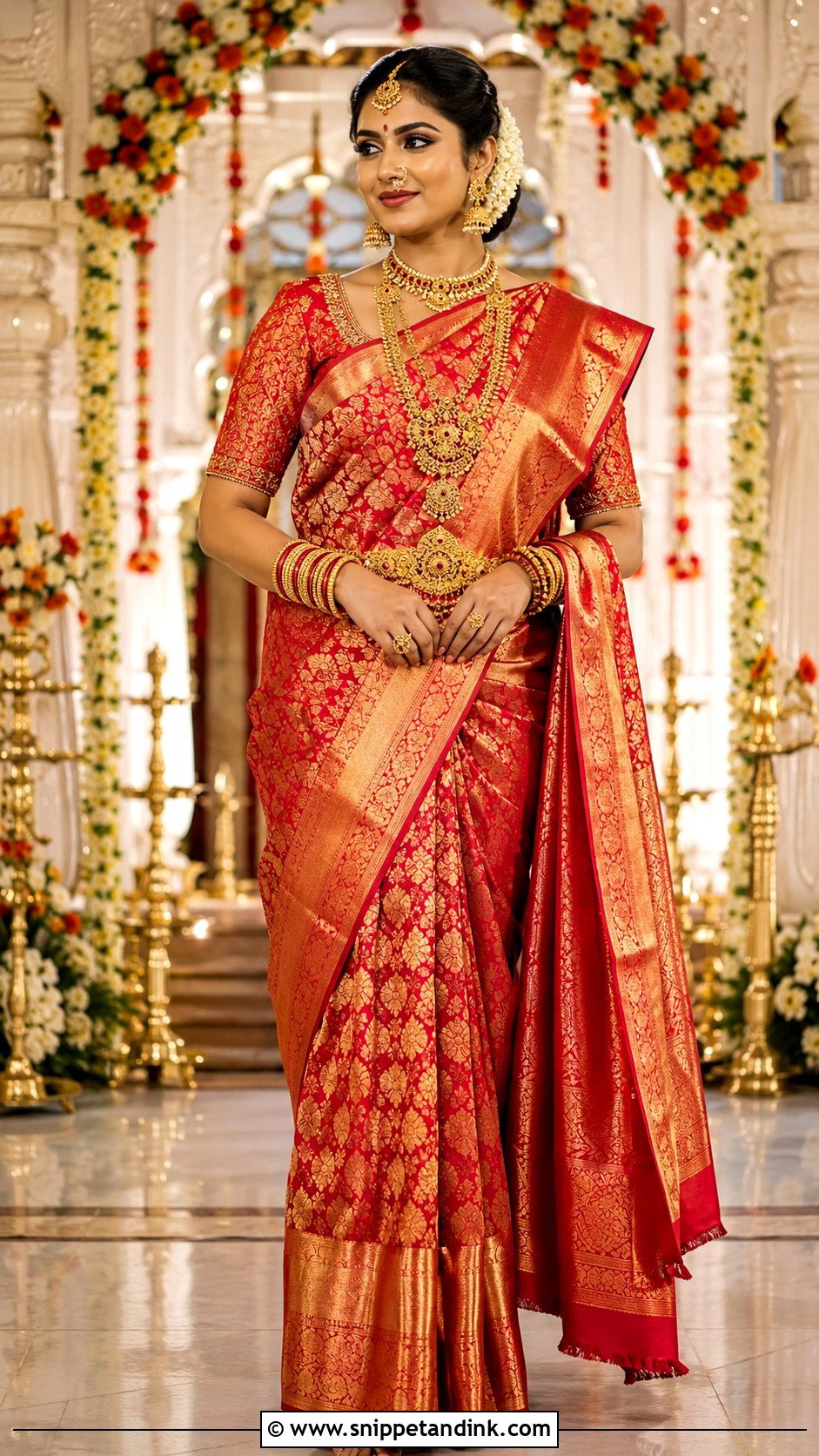
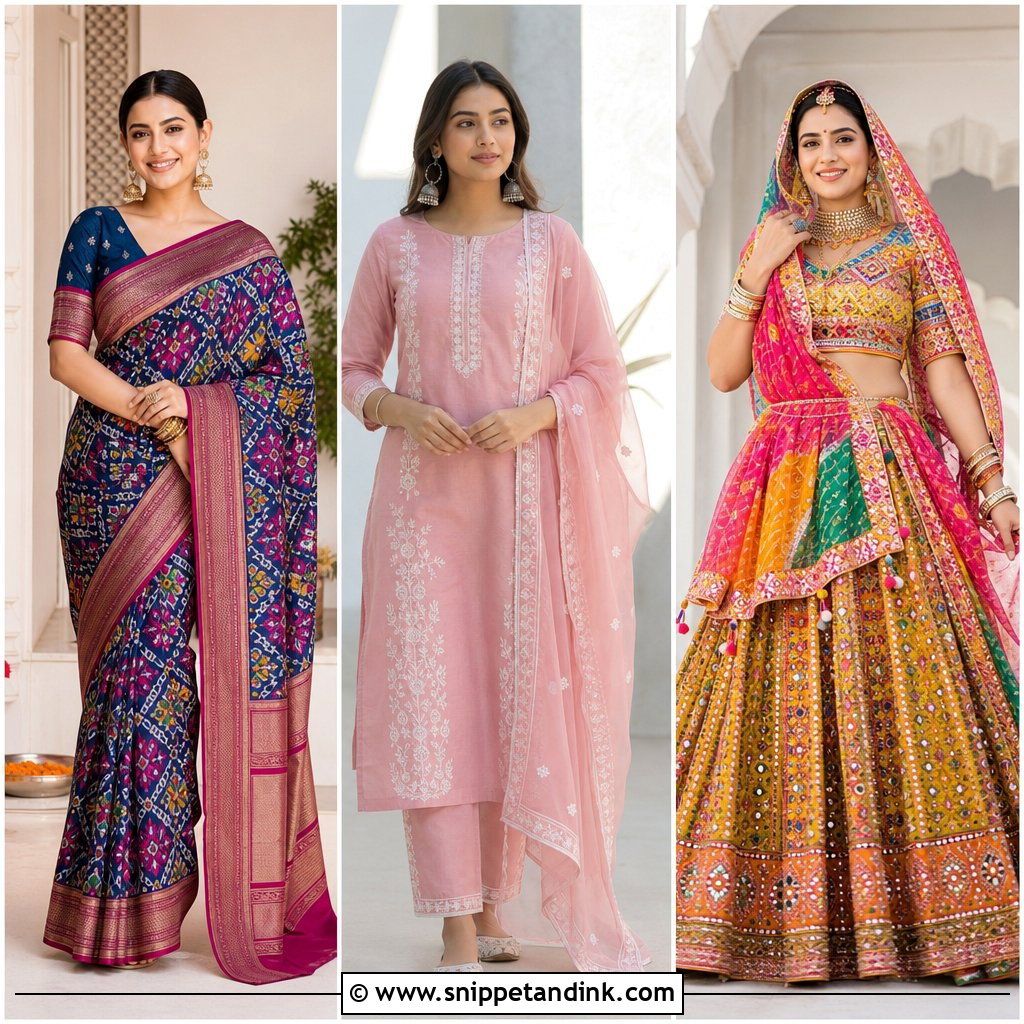
A Banarasi silk saree is heavy, lustrous and woven with zari, which is why it suits a long traditional ceremony. Red, maroon, magenta and green are the classic choices, paired with a brocade or embroidered blouse. A neatly pleated drape makes repeated sitting and standing easier than a loose one. Ask a professional draper to reinforce the pleats and pallu with hidden pins; heavy silk pulls itself loose otherwise. A contrasting blouse or an extra veil over the head personalises it. A choker, long necklace, jhumkas, a floral bun and low block heels complete the look.
8. Kanjeevaram Silk Bridal Saree
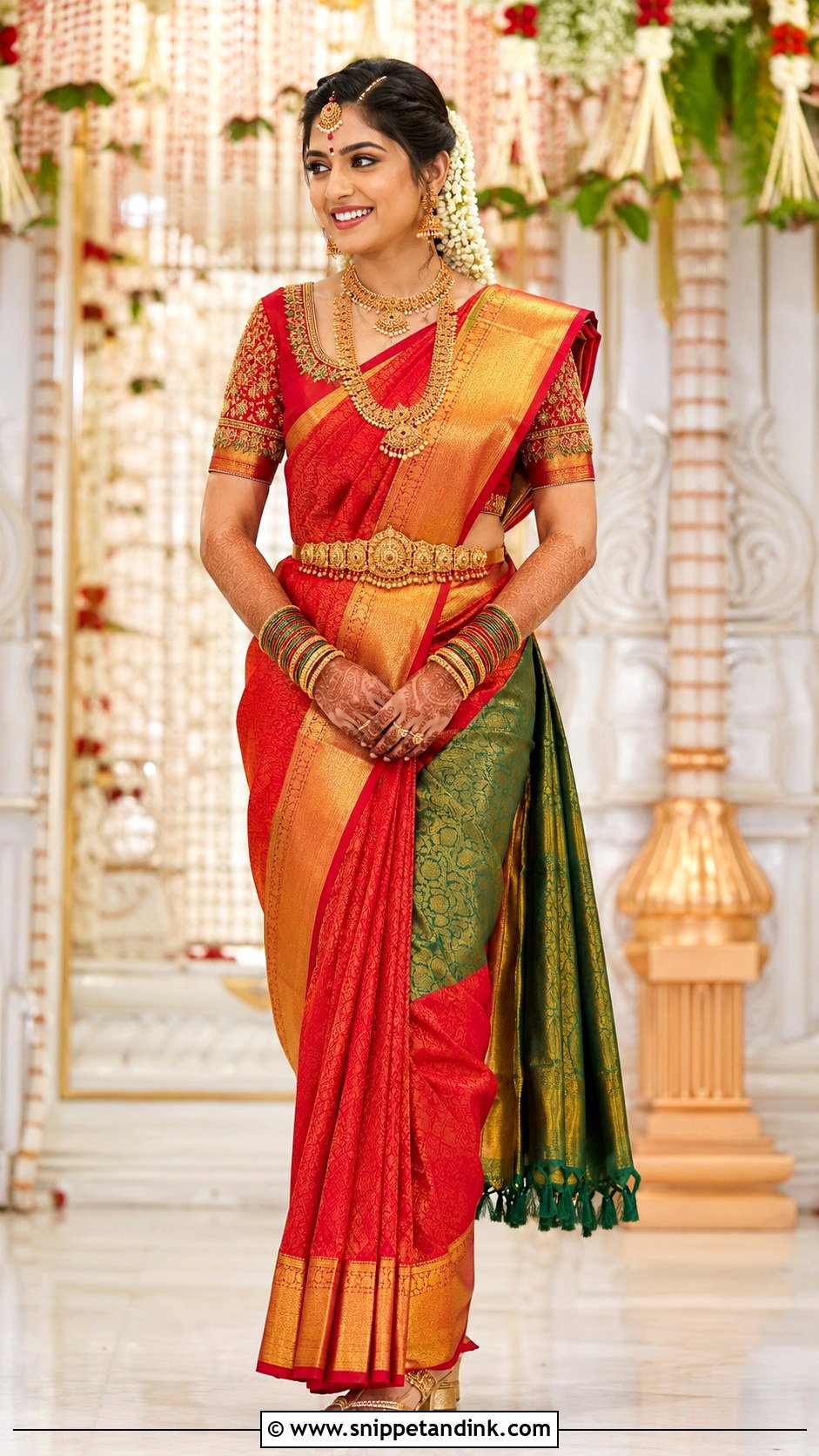
Kanjeevaram silk has a dense weave and a contrasting zari border, and on a bride it looks deeply ceremonial. Red, coral, mustard, green and jewel tones are traditional. The blouse needs room in the armhole: temple necklaces are heavy, and a tight blouse plus layered gold pulls at the shoulders all day. Temple jewellery, a waist belt, jhumkas and anklets make a complete South Indian bridal appearance. The draper should pleat it so the border runs straight down the front. Brides who find the full set too much can cut back on necklaces and keep the earrings and belt. Always check the details against your family’s customs.
9. Paithani Bridal Saree
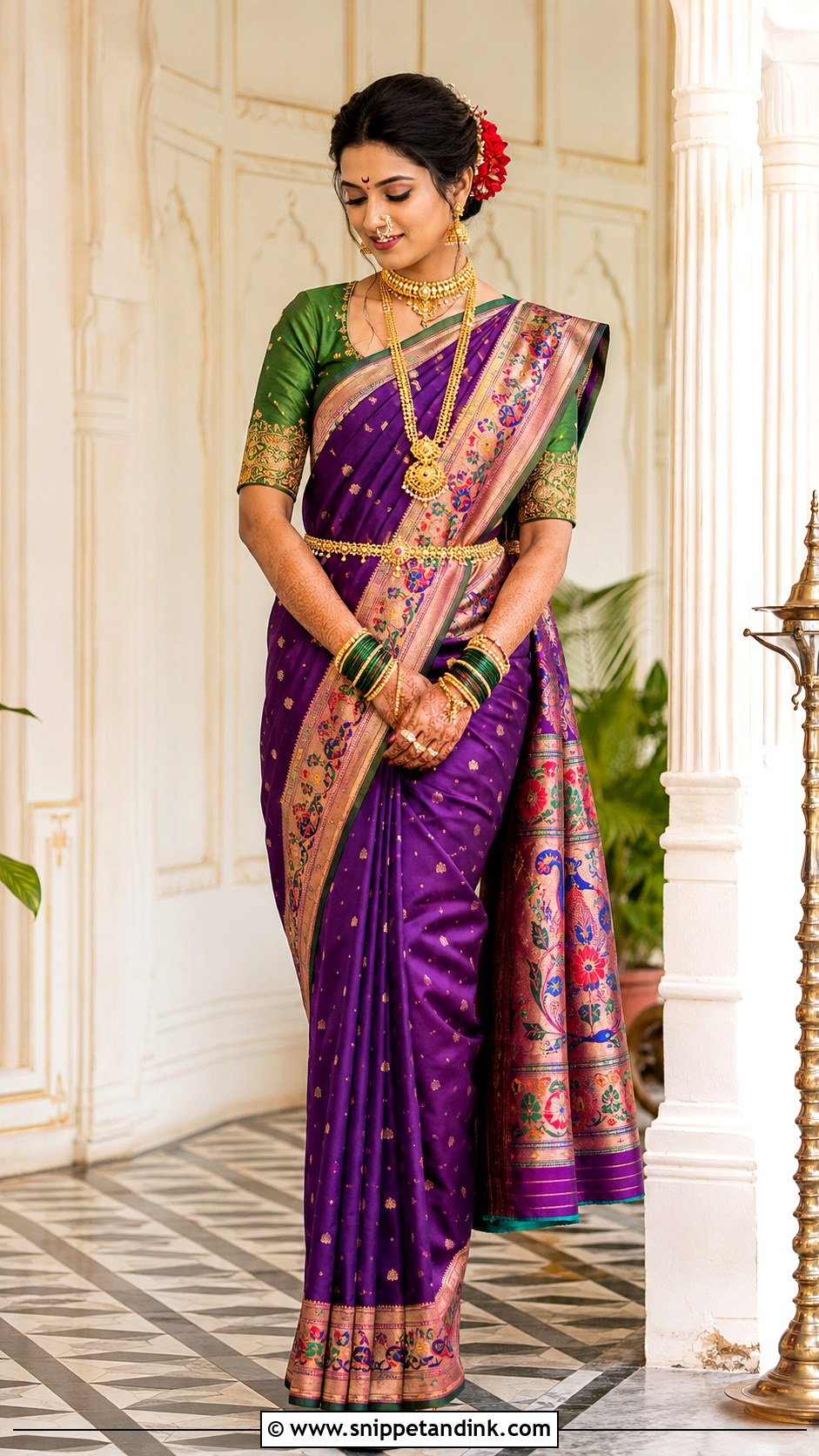
Paithani is recognisable by its woven peacock and lotus motifs on the pallu and border, and it anchors a Maharashtrian-inspired dulhan look. Purple, green, magenta and red are common, with a contrasting blouse that picks up one colour from the border. Keep the blouse neckline simple if you’re layering necklaces. Pin the pallu so the motifs face forward; they’re the part everyone wants in photos. Traditional gold, green glass bangles, a nath and a crescent bindi complete it. Woven silk this rich needs very little glitter in the makeup.
10. Bengali Red And White Bridal Saree
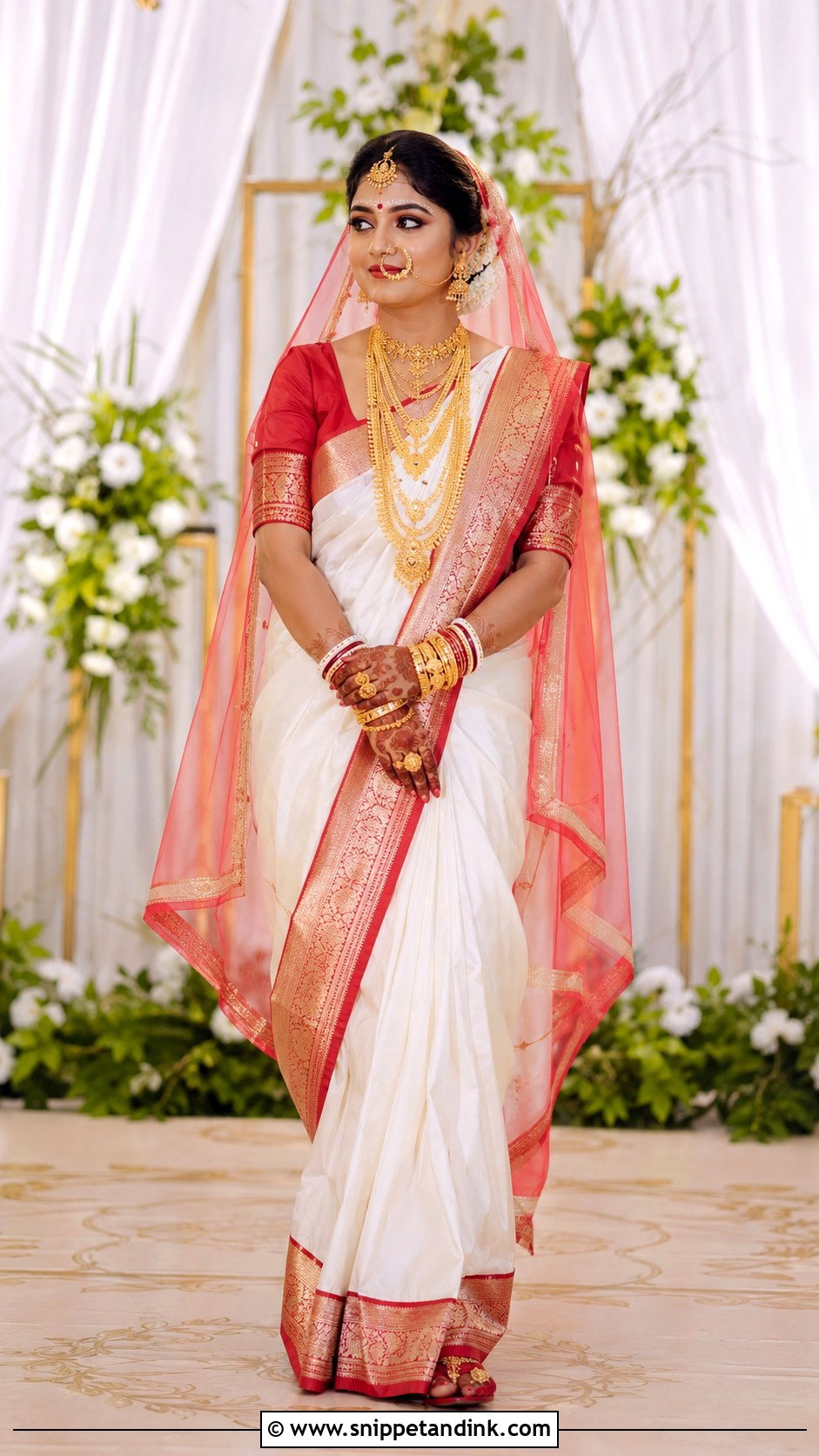
The Bengali red-and-white saree, often a white or cream body with a broad red border, has a contrast that reads clearly from across a room. Pair it with a red blouse and plan the drape around the border: it should fall cleanly over the shoulder and show from the front. Silk gives a formal finish, while a lighter weave is easier through long rituals. Traditional gold, a statement nath, layered necklaces and a forehead design complete the ceremonial look. A firm bun gives the veil something to anchor to. Work with a draper who knows the traditional style, and follow your family’s customs.
11. Gujarati Panetar Bridal Saree
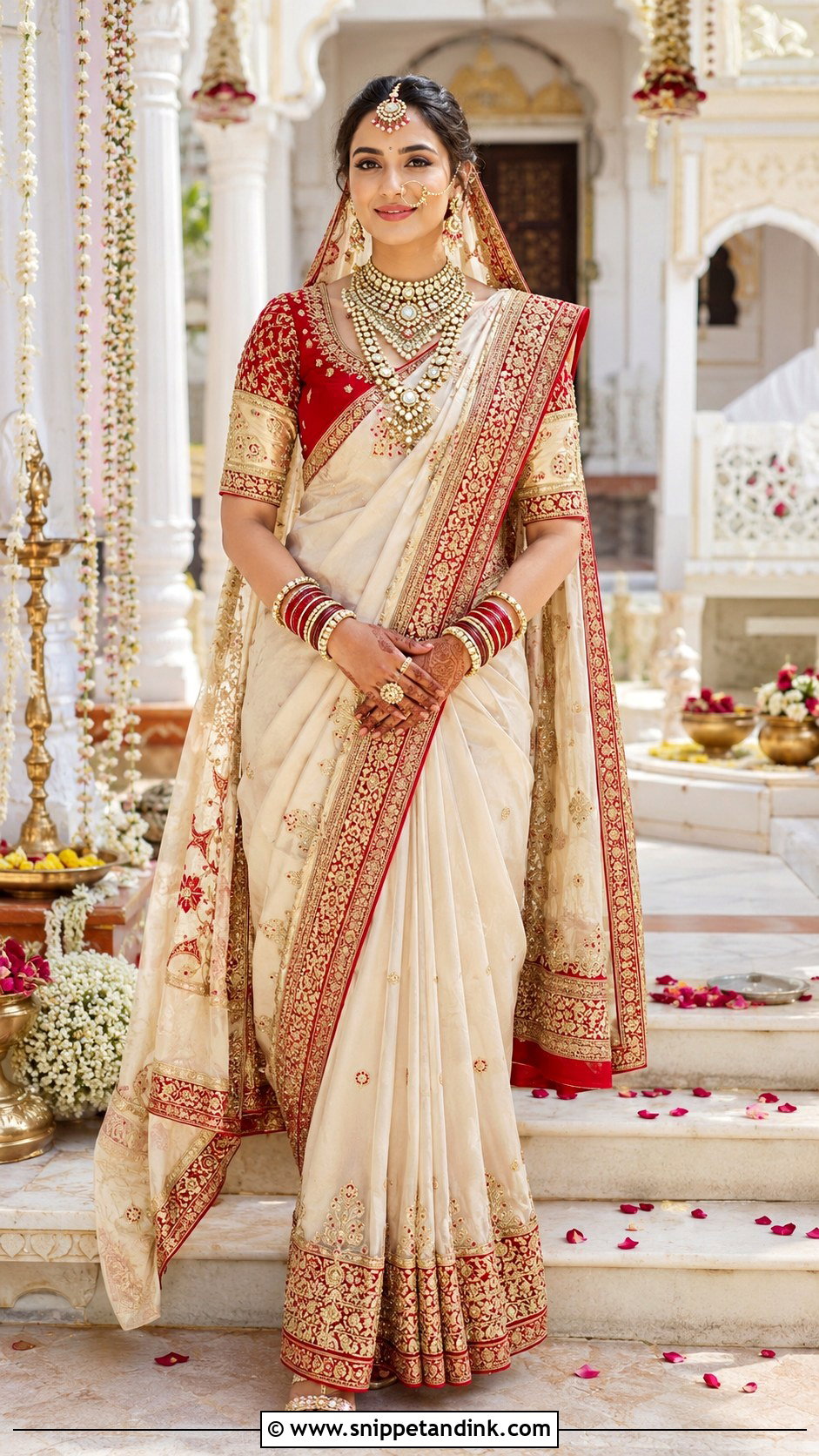
The Panetar is a Gujarati bridal saree, traditionally white or ivory with red accents and gold detail. Style it with a fitted red blouse and drape the pallu as your family’s ceremony requires. The draper’s job is to put the decorative work at the front where it shows. If you add a separate veil, keep it light and pin it to the hair as well as the saree; a heavy veil pinned only to the shoulder drags the pallu out of place. Layered gold or kundan necklaces, red-and-white bangles, a nath and stable embellished sandals suit it.
12. Maharashtrian Nauvari Bridal Saree
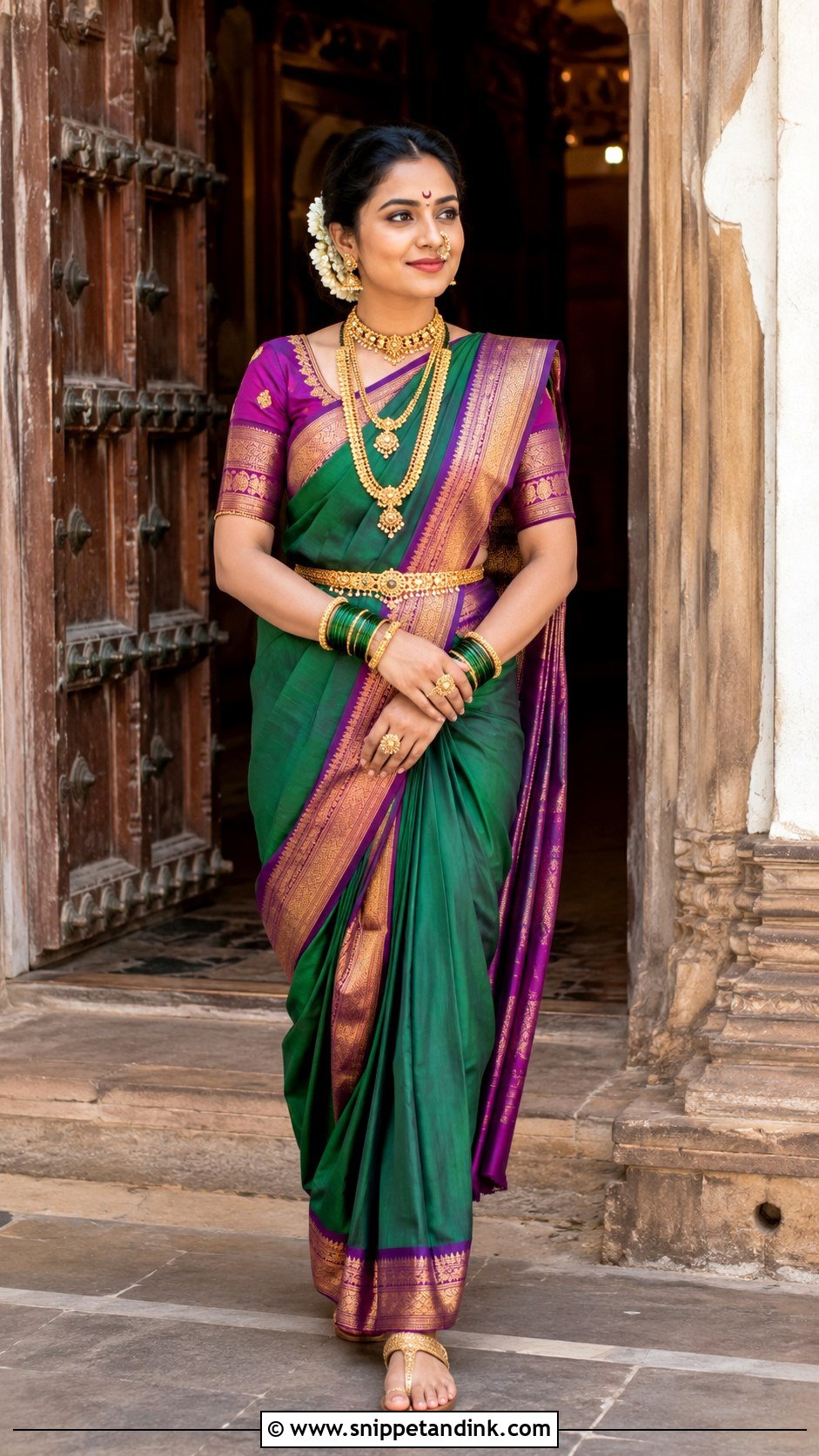
A Nauvari bridal saree is a nine-yard drape tucked between the legs like a dhoti, and it needs a specialist. Choose silk in green, yellow, purple, red or the colour your family considers auspicious, with a contrasting short-sleeved blouse. Book a trial with an experienced draper well before the wedding, then walk, sit and climb steps in it; the waist arrangement takes most of the strain. A traditional nath, layered gold, green bangles and a crescent bindi complete it. Keep jewellery in proportion so the drape stays visible.
13. Gold Kasavu Bridal Saree
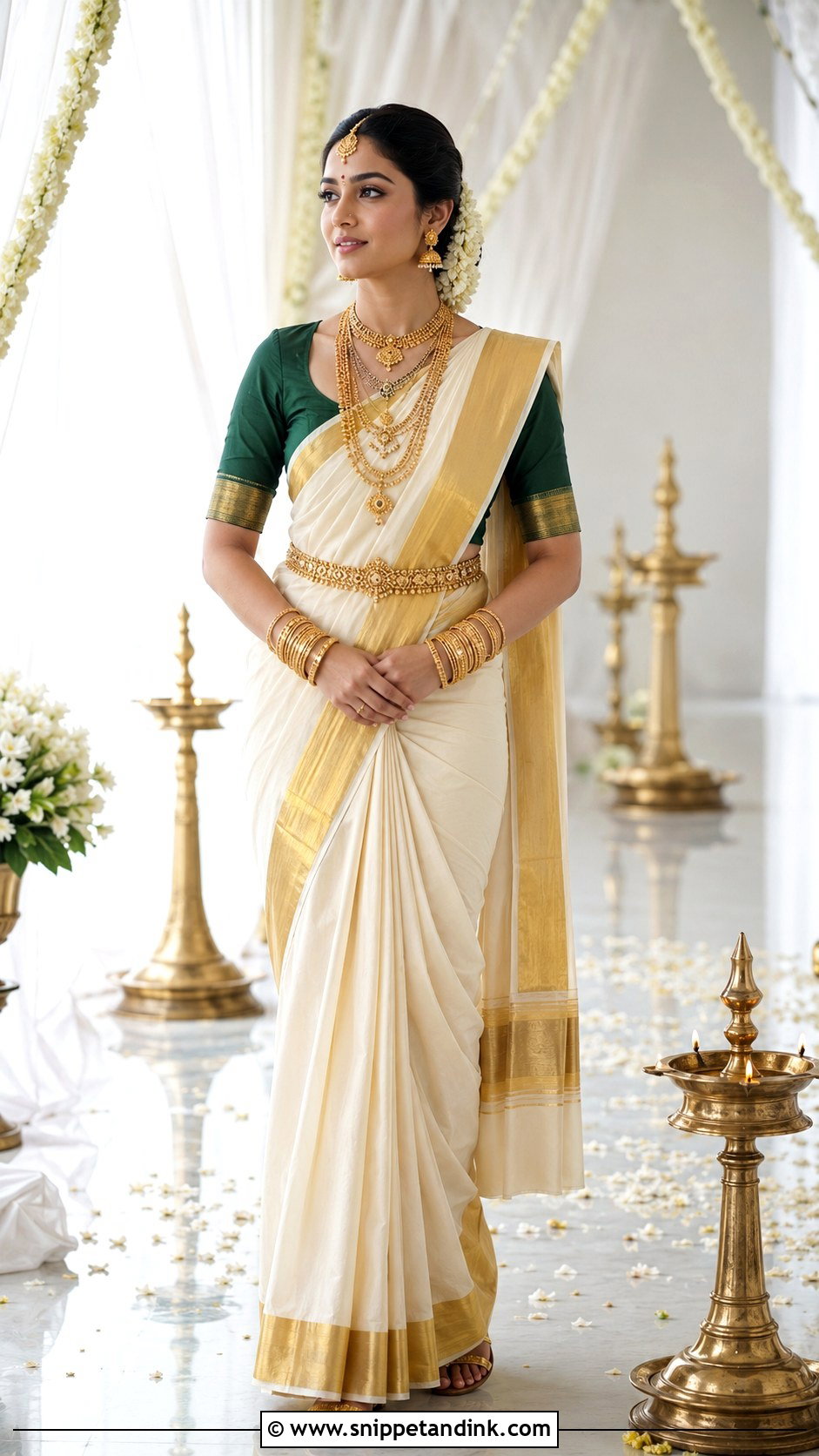
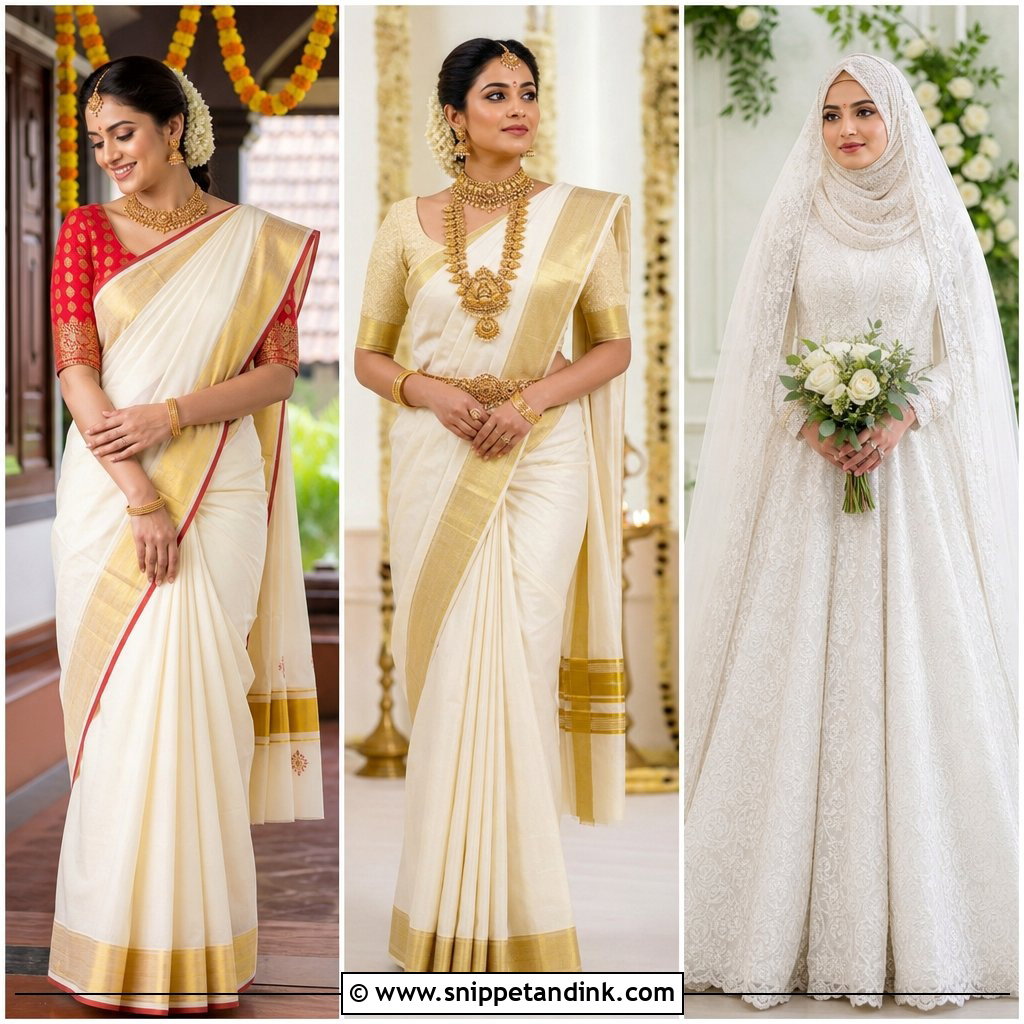
A cream and gold Kasavu saree comes from Kerala and has very little colour, so every flaw in the draping shows. That’s why I insist on a draper for this one: smooth pleats and a clean pallu make it look formal, and loose pleats make it look like day wear. Pair it with a cream blouse for a monochrome look, or green, red or maroon for contrast. Layered gold necklaces, jhumkas, a waist belt and jasmine around a low bun suit the gold border. Warm neutral makeup with a red or rose lip works well with it.
14. Red Bridal Sharara
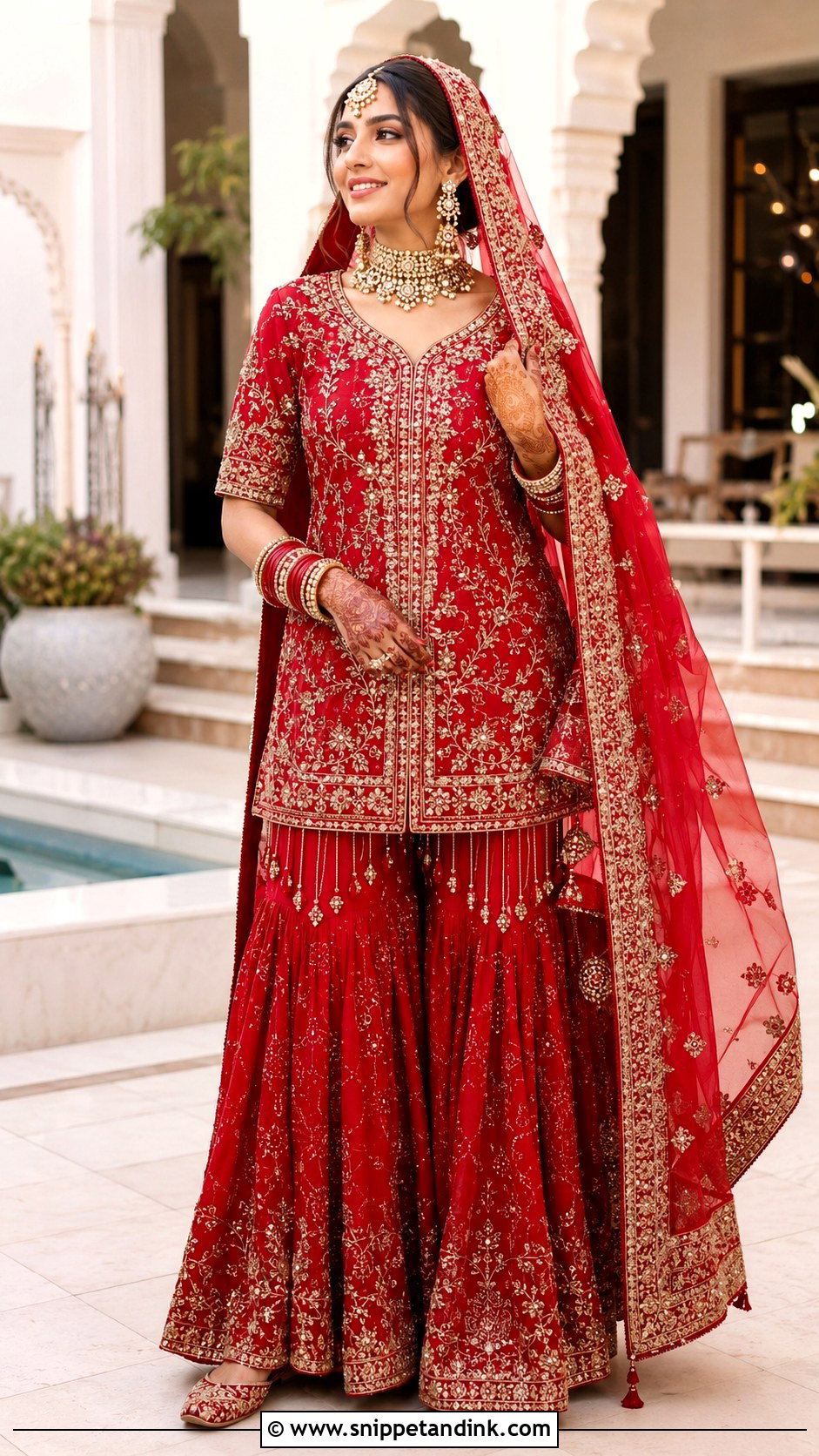
A red bridal sharara gives ceremonial richness with the freedom of wide trousers, and many brides choose it for a nikah or a reception. A short or mid-length kurta with zardozi, a generously flared sharara and a matching dupatta make the base. Concentrate heavy work at the neckline, hem and lower flare rather than everywhere, or the trousers become very heavy. The kurta length matters most: it shouldn’t end at the widest point of the flare, which breaks the line. A choker, long earrings, tikka and embellished juttis finish it.
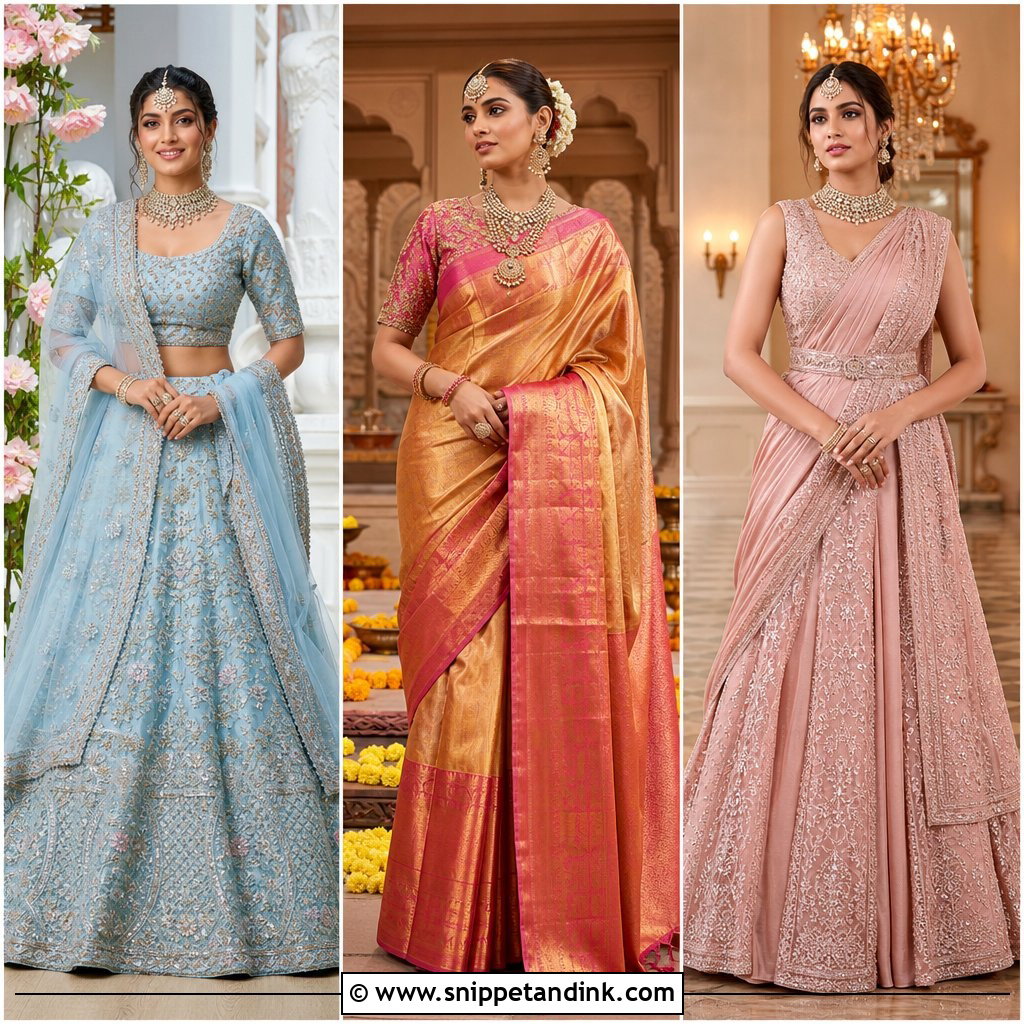
15. Bridal Gharara With Long Kurta
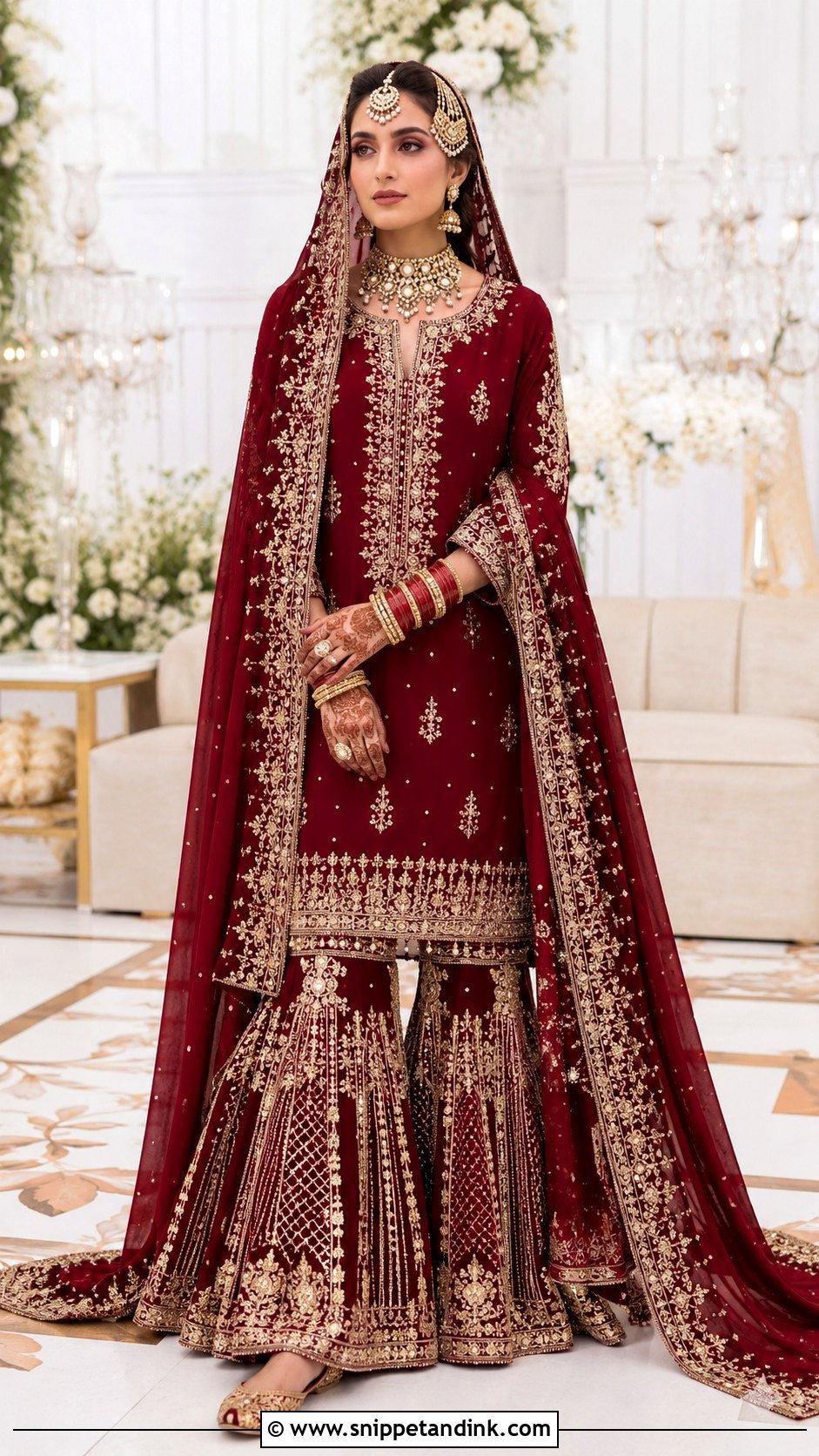
A gharara is fitted to the knee and then flares out from a gathered joint, usually marked with embroidery or gota. On a bride in maroon, red, ivory or a jewel tone, with a long kurta and bordered dupatta, it moves well. The kurta length must leave enough of the gharara visible to read the shape. At the fitting, sit and walk several steps; a knee joint placed too low makes walking awkward. A lighter lining reduces bulk while keeping the lower flare full. Kundan, a passa or tikka and embroidered flats suit it.
16. Bridal Anarkali With Dupatta
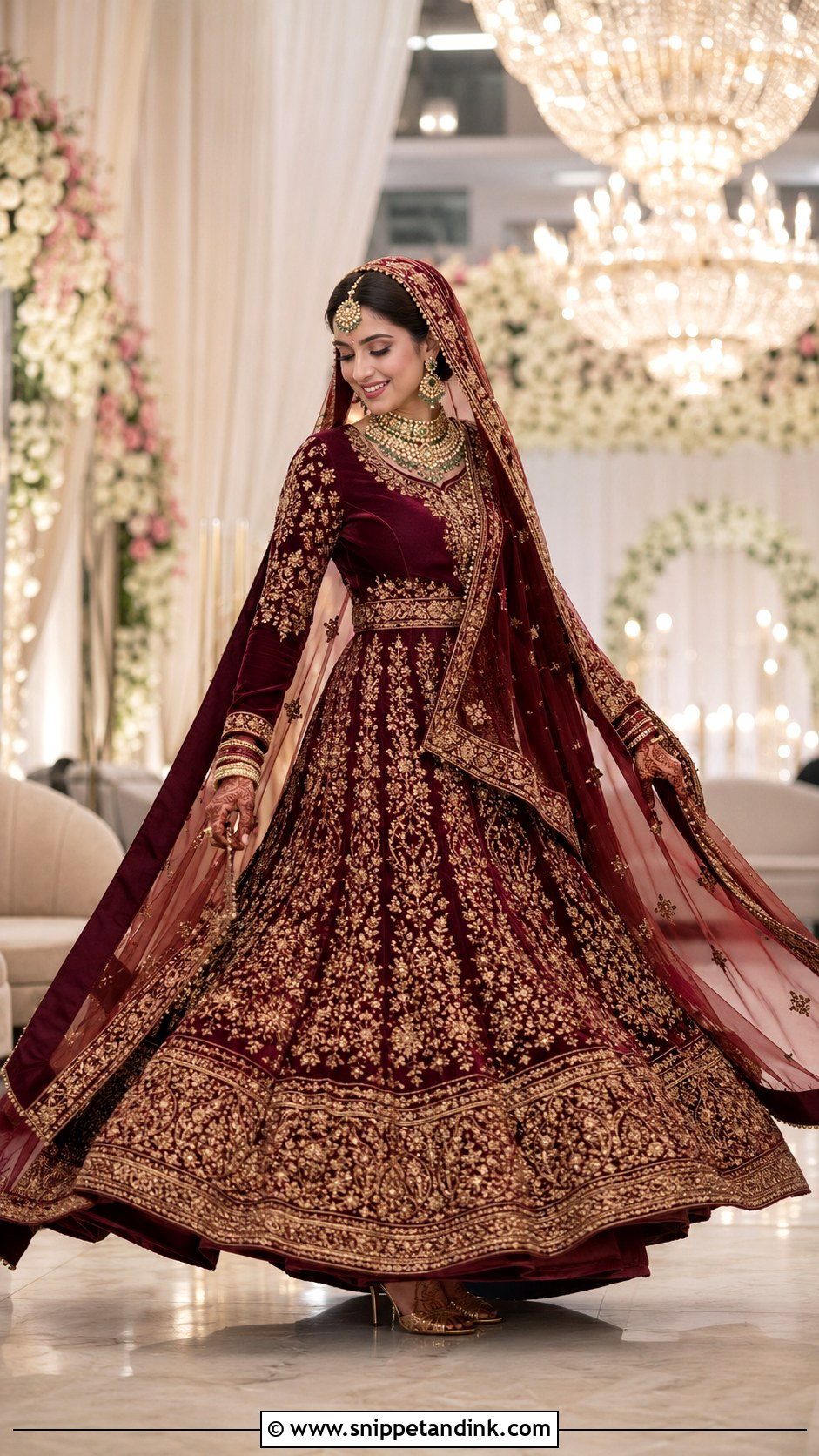
A floor-length bridal Anarkali gives full coverage and spares you a heavy skirt. Red, wine, emerald, ivory and blush all suit it, with a fitted bodice and an evenly distributed flare. Shorter brides look taller with vertical embroidery lines and a moderate border; a very deep border cuts the height. The hem should skim the floor in your shoes, not drag. Ask the tailor for enough ease through the bodice and sleeves to raise your arms for garlands and hugs. Wear the dupatta over one shoulder, or over the head for the ceremony.
17. Bridal Saree Gown
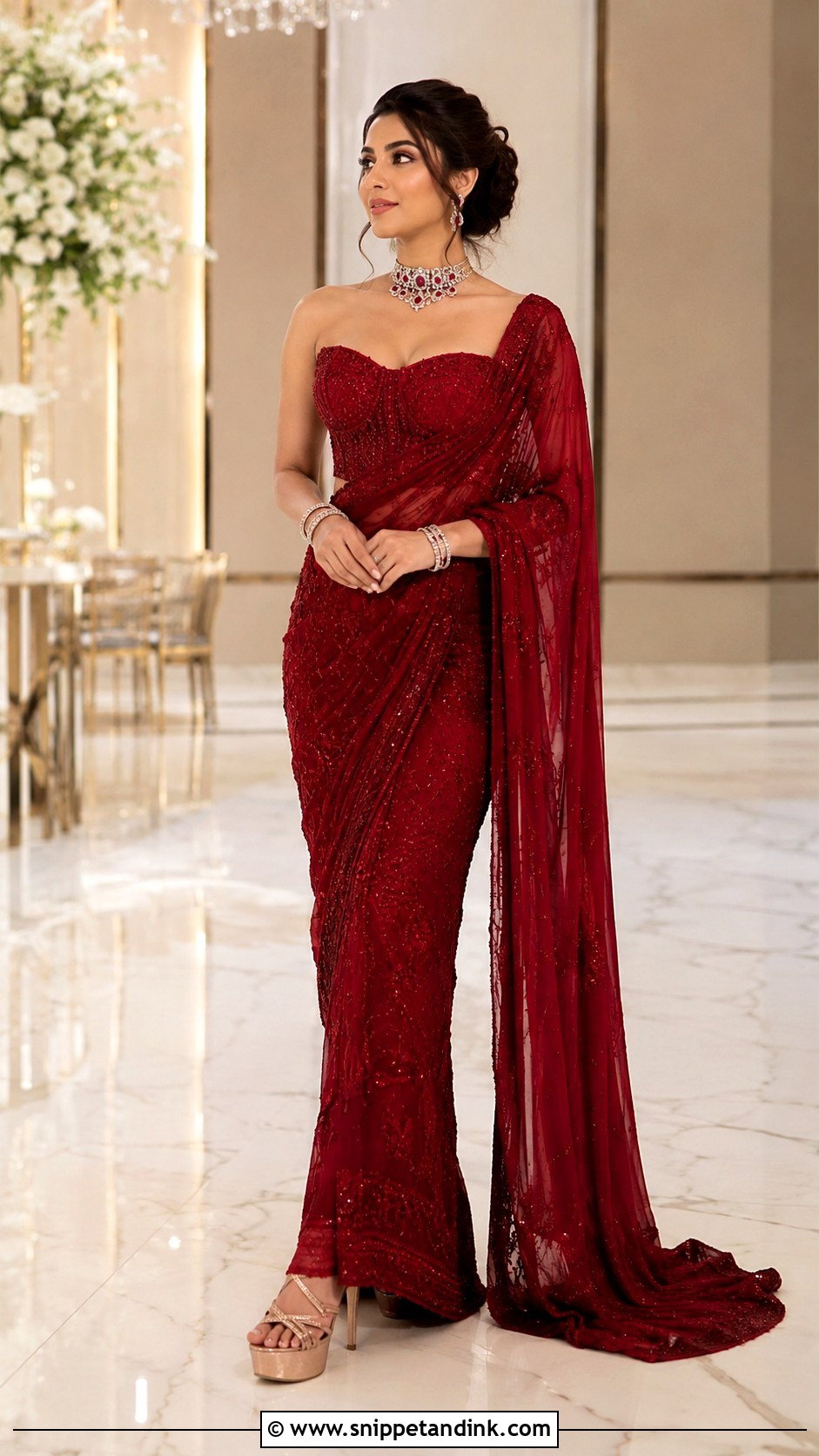
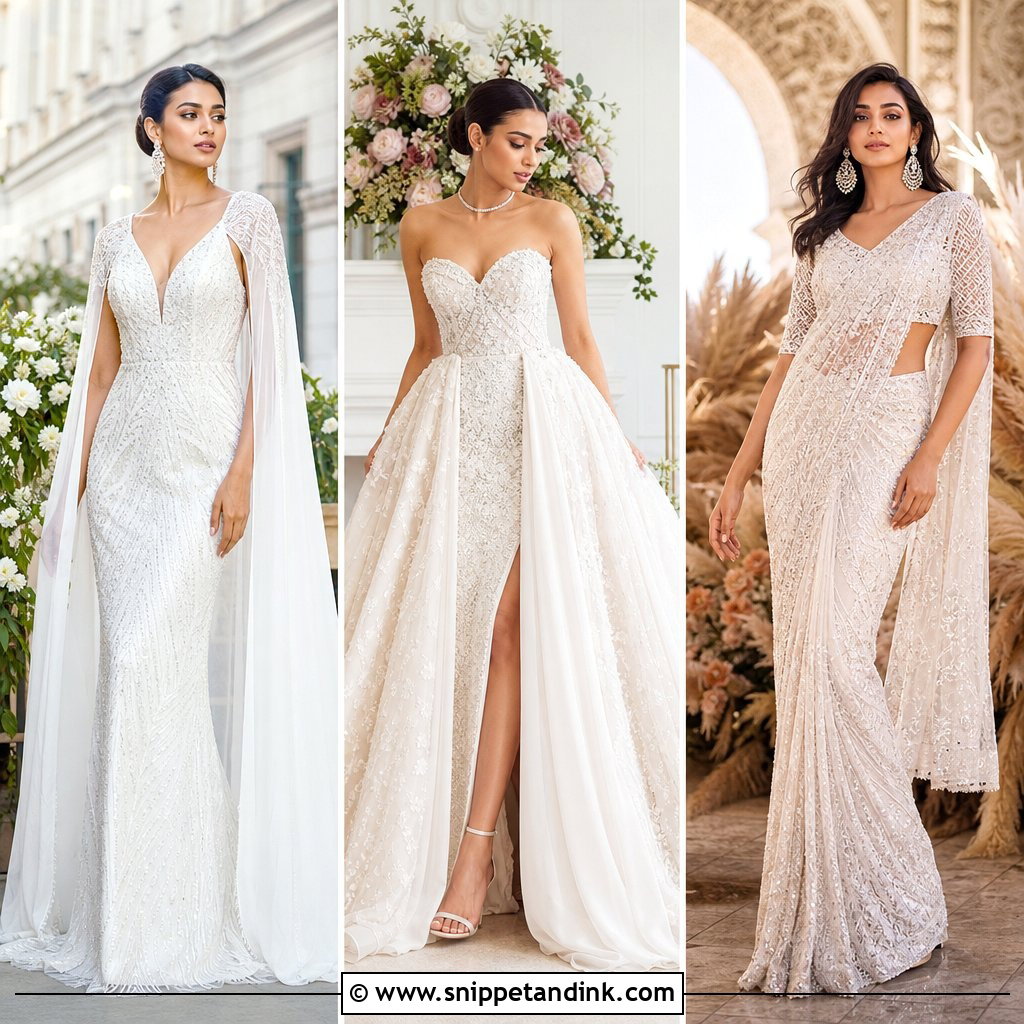
A saree gown is stitched to look like a draped saree, with an attached pallu, defined waist and no loose pleats, which makes it practical for a reception full of greetings and dancing. Jewel tones, champagne, red and ivory all work. Check that the attached drape falls smoothly from the shoulder and doesn’t twist at the waist when you turn. A choker or sculptural necklace, statement earrings and metallic heels suit the contemporary shape. Brides who want more tradition can add a maang tikka, an embroidered veil or heirloom pieces.
18. Jacket Bridal Lehenga
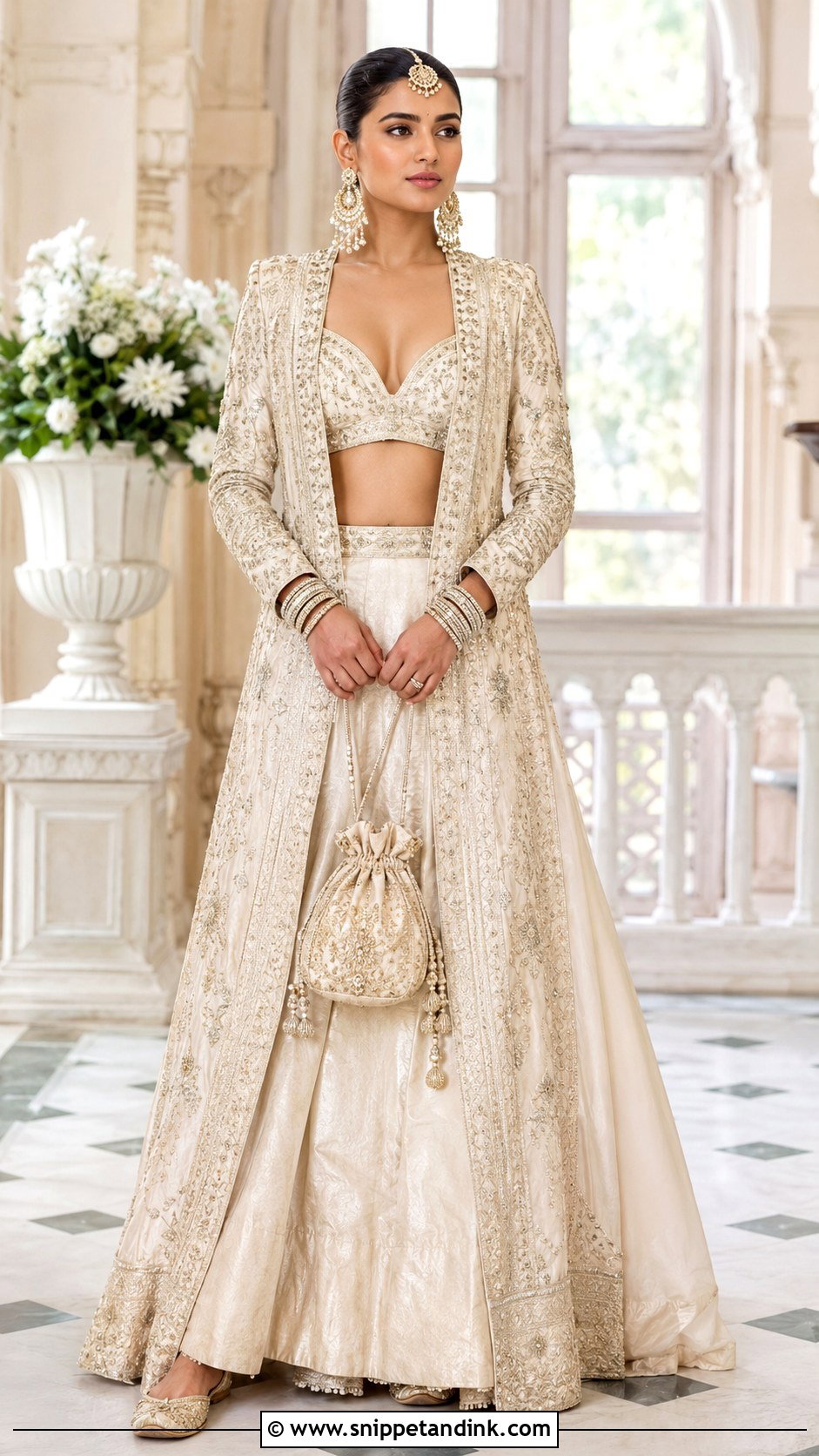
A jacket lehenga keeps the usual skirt and blouse and adds a long embroidered jacket, open at the front or fastened at the waist. It suits a cooler evening or a formal reception. Silk, velvet and organza all work for the base. Since the jacket frames the neckline, a heavy necklace is usually unnecessary; earrings, a tikka and bangles are enough. Match the jacket length to your height, and check that its embroidery lines up with the skirt motifs. Misaligned borders look obvious in full-length photos.
19. Pastel Mirror Work Bridal Lehenga
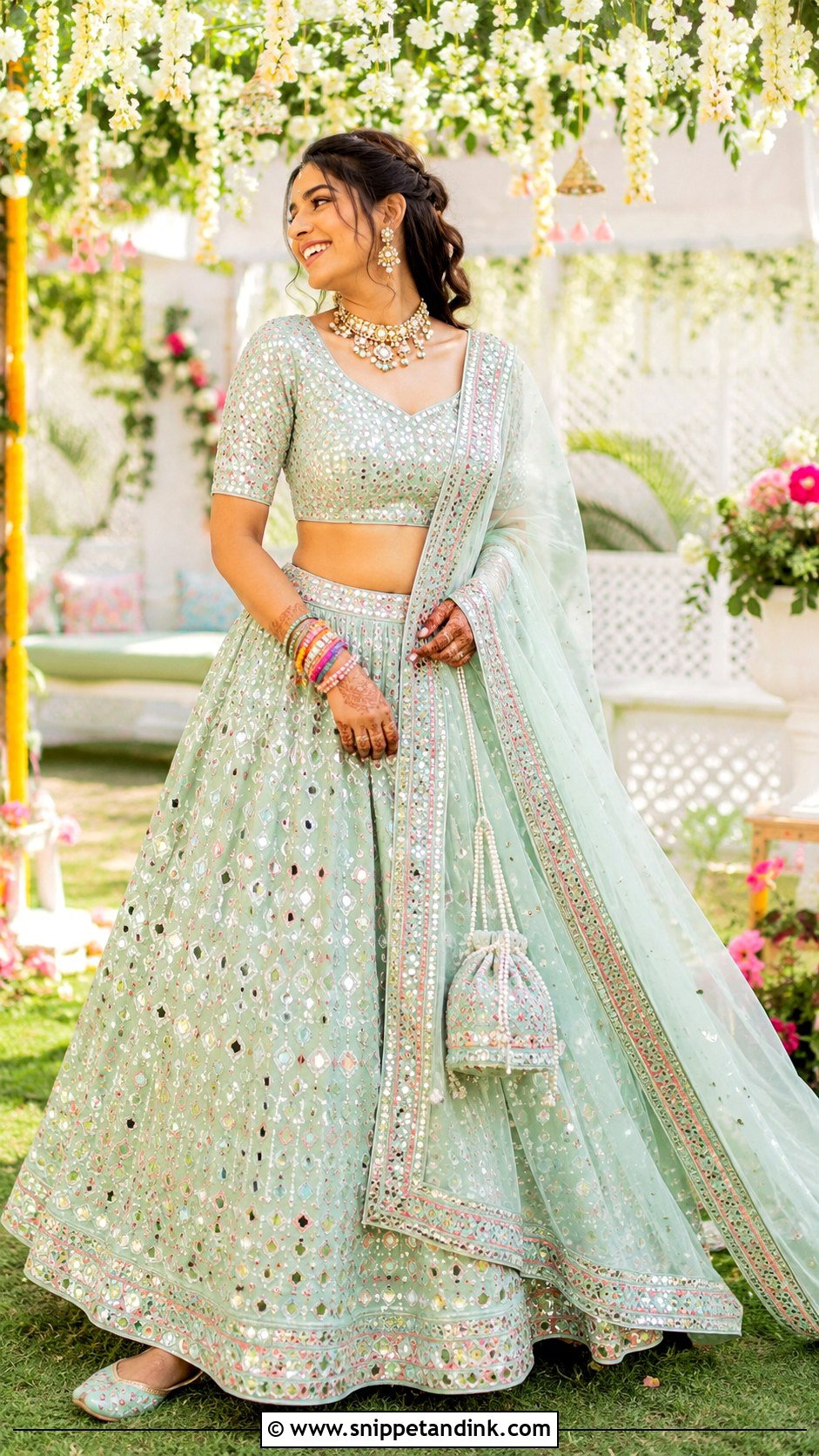
Mirror work on a pastel lehenga suits a daytime ceremony, mehndi or sangeet, in mint, peach, lilac, powder blue or soft pink. Mirrors add weight quickly, so I look for even distribution and a breathable lining. Run your hand over the mirrors before buying: rough or loose edges snag a sheer dupatta and scratch the arms. A dupatta with a controlled mirror border keeps it balanced. Pearl jewellery, silver earrings and comfortable juttis or block heels suit it, with a braid or relaxed bun.
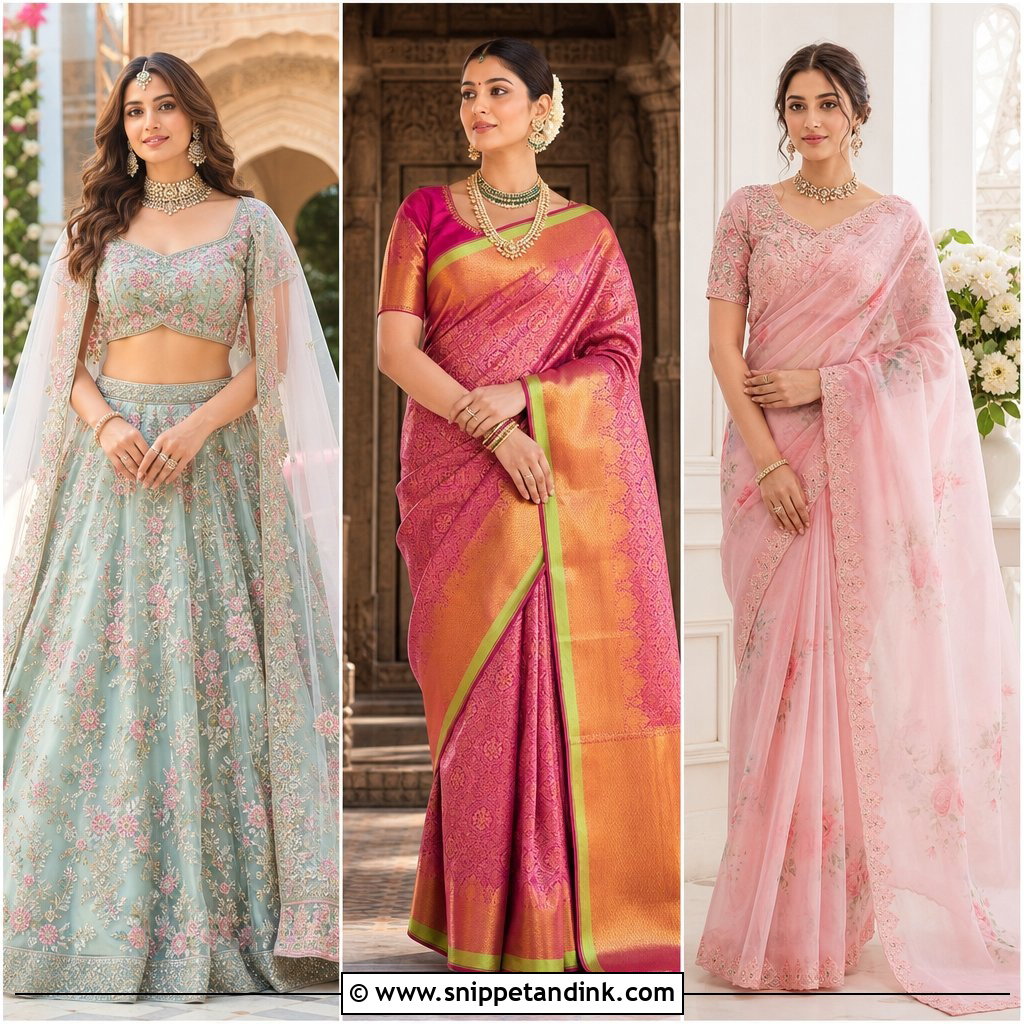
20. Bridal Lehenga With Double Dupatta
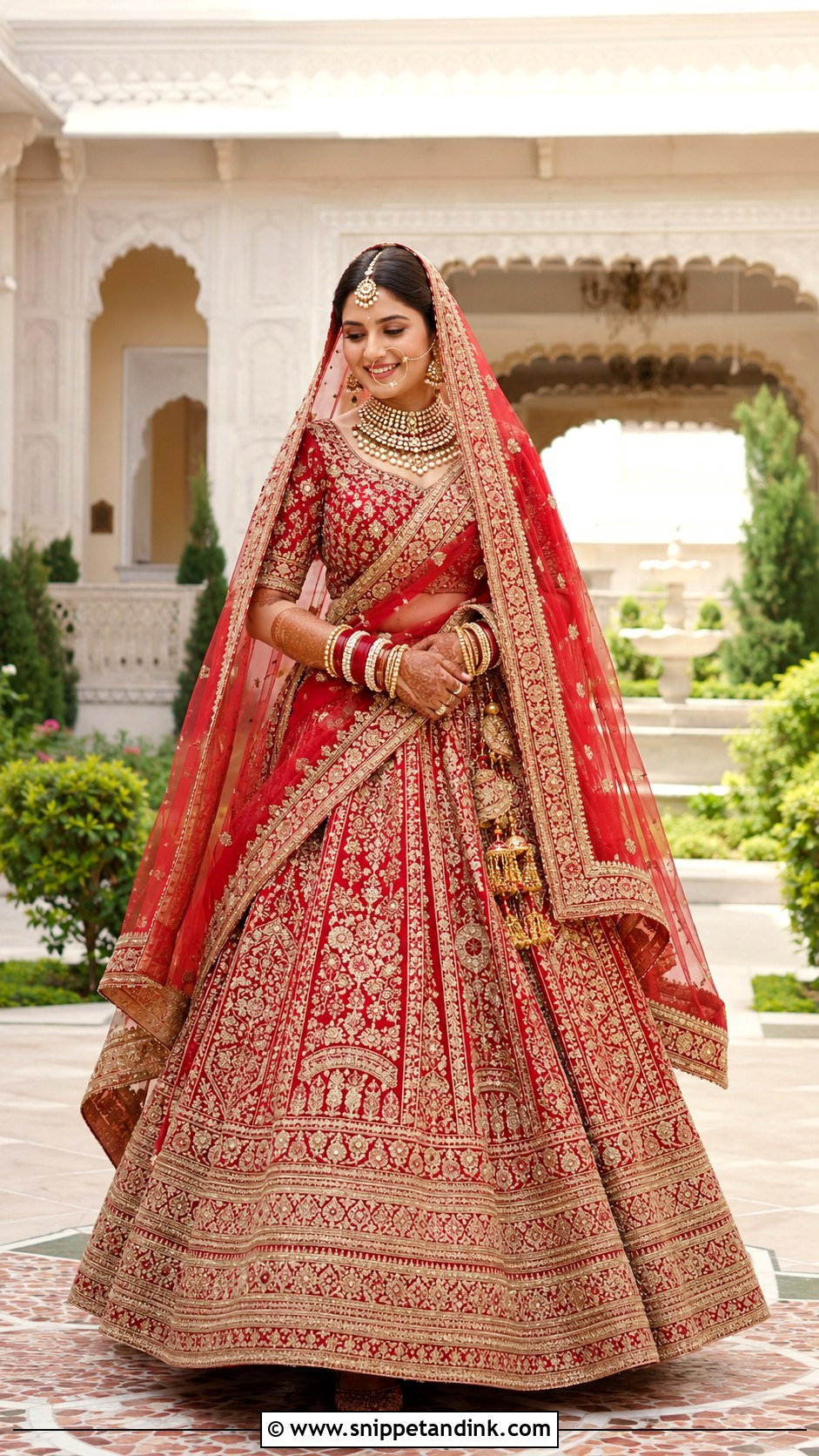
A double dupatta works when each drape has a job: the heavier one across the torso or over the shoulder, the lighter net one over the head. Pair them with a red, maroon, pink, green or ivory lehenga and keep the two related through colour or border, but never make both equally heavy. Pin them at several hidden points, to the blouse, the skirt waistband and the hair, so they stay put through the rituals. At the fitting, turn, bend and sit with both on. If you feel pulled in two directions, the head dupatta needs to be lighter.
How Heavy Is Too Heavy for the Pheras?
A fully embroidered bridal lehenga can weigh several kilos, and you’ll wear it for hours, sitting cross-legged, standing for photos and walking around the fire. Weight is the complaint I hear most from brides afterwards, so I deal with it during the fittings.
Where the weight sits
- Most of it hangs from the waistband. Ask for a wide, padded waistband with hooks, not just a drawstring, so it doesn’t cut in.
- Hidden shoulder straps stitched from the skirt to the blouse can move some of the load off the hips.
- Can-can and flare layers add volume and weight. One soft layer is often enough; three stiff ones make sitting hard.
- A heavy dupatta on the head pulls at the scalp and hairstyle. Pin it to the hair at several points and keep it lighter than the shoulder dupatta.
On the day
Assign one person, a sister or cousin, to help with the skirt whenever you sit, stand or use the bathroom. Give her a small kit with safety pins, double-sided tape, a needle and thread in your outfit’s colour, and blotting paper. Eat something before the ceremony; brides in heavy outfits under hot lights feel faint more often than anyone admits. After the wedding, have the outfit professionally cleaned and store it folded in muslin, with tissue between the embroidered layers.
The Dulhan Look Comes Together at the Final Fitting
A bridal outfit should respect your family’s traditions and still feel like yours. That might be an embroidered red lehenga, a regional silk saree, a sharara or a saree gown. Whatever you choose, think about the season, venue, ceremony length and how much you’ll need to move. Plan the jewellery, shoes, hair and draping at your fittings, not the night before. Comfort and good tailoring are what let you enjoy the day you’ve planned for so long.
You'll Like These Ideas:


Leave a Reply